1. Business performance review
Pursuant to IFRS 8, the Group identified the following operating segments:
Elia Transmission (Belgium), which comprises regulated activities in Belgium (i.e. the regulated activities of Elia Transmission Belgium);
International & holding activities, which comprises non-regulated activities within Elia Transmission Belgium and Nemo Link
The segment previously denominated “Non-regulated segment and Nemo Link” until 31 December 2025 has been renamed “International & holding activities” as from 2026. This change does not affect the scope of the segment, but aims to better reflect the nature of the activities performed, including international operations and the Group’s holding functions.
Rounding – In general, all figures are rounded. Variances are calculated from the source data before rounding, meaning that some variances may not add up.
1.1.1. Segment Elia Transmission Belgium
Highlights
On track to deliver investments supporting power system reliability and sustainable electrification in Belgium.
(Adjusted) profit for the period reached €163.3 million supported by asset growth, higher risk-free rate and equity base, and a solid incentives performance.
Net financial debt increased to €4,417.0 million reflecting the execution of the investment programme and the partial use of proceeds from last year’s capital increase.
Key results
Financial
In the first half of 2026, Elia Transmission Belgium reported total revenue and other income (including net income (expense) from settlement mechanism) of €796.2 million, marking a 4.3% increase compared to the same period in 2025, when the revenue was €763.0 million. The evolution reflects an increase in gross revenue of €141.3 million (from €802.1 million to €943.4 million), primarily driven by the planned tariff increase applied in 2026 and by a higher contribution from international sales (+€117.4 million), reflecting sustained congestion income on cross-border interconnections. The portion of these revenues exceeding the level anticipated in the tariff proposal is deferred to future tariffs through the regulatory settlement mechanism, resulting in a higher net expense from the settlement mechanism of €208.7 million compared to €101.0 million in H1 2025.
(Adjusted) profit for the period rose by 25.8% to €163.3 million, mainly due to the following:
1. A higher fair remuneration (+€21.1 million) due to asset growth and entire remuneration of last year’s equity injection of €1.05 billion. ETB also benefits from a higher equity remuneration compared to last year, reflecting an increase in the underlying 10-year Belgian OLO (3.4% versus 3.1%).
2.A slight increase in incentives (+€2.4 million) from continued solid operational performance.
3.Higher capitalized borrowing costs (+€6.5 million) with growing assets under construction and slight uptick in average cost of debt.
4.Lower regulatory settlements following the saldi 2025 review (+€4.3 million).
5.Other effects (-€0.8 million) mainly comprising tariff compensation for issuance costs related to ETB’s Revolving Credit Facility (+€4.8 million) amortized over the life of the instrument, lower damages to the electrical system (+€5.6 million) and the capitalization of software and hardware costs (+€0.8 million), partly offset by the absence of last year’s one-off tariff coverage of the costs associated with ETB’s capital increase (-€9.9 million) and deferred tax impacts (-€3.0 million).
Net financial debt increased to €4,417.0 million (+14.7%), reflecting the continued execution of ETB’s investment programme (€688.4 million). These investments were funded through strong operating cash flow (€263.1 million) and liquidity accumulated in the previous year. In addition ETB repaid a €500 million bond maturing in early 2026, which had already been refinanced during the second half of 2025. Following these transaction, the average cost of debt increased to 2.78% (+25 bps). ETB continues to maintain a well-balanced debt maturity profile, with all outstanding debt at a fixed coupon. Furthermore, ETB strengthened its liquidity position by signing a new sustainability-linked RCF (€2.0 billion). Both this RCF and the commercial paper (€700 million) remained fully undrawn as of 30 June 2026. ETB is rated BBB+ with a stable outlook by Standard & Poor.
1.1.2. International & holding activities
€31.0 million compared to €27.4 million the first half 2025, since more services have been provided by ETB towards other Elia Group affiliates (mainly 50Hertz and Elia Group).
Equity-accounted investments contributed €15.4 million to the Group’s result, which is almost entirely attributable to Nemo Link, marking a decrease of €0.1 million compared to 2025, Nemo having reached the cap.
EBIT fell to €12.6 million (-€1.5 million). This was mainly driven by the lower contribution from the associate Nemo Link.
Net finance costs remained stable at -€1.2 million and mainly included expenses related to the Nemo Link private placement.
Profit for the period decreased by €1.2 million to €12.3 million, in line with the effects commented here above.
Total assets increased to €286.3 million (+1.1%) while the net financial debt amounts to €144.3 million (+3.5%).
2. Statement on the true and fair view of the condensed consolidated interim financial statements and the fair overview of the interim management report
The undersigned Chairman of the Board of Directors Christophe Peeters and Chief Executive Officer
Frédéric Dunon declare that to the best of their knowledge:
a the condensed consolidated interim financial statements, which have been prepared in accordance with IAS 34 Interim Financial Reporting as adopted by the European Union, give a true and fair view of the equity, financial position and financial performance of the company, and the entities included in the consolidation as a whole
b the interim management report includes a fair overview of the information required under Article 13, paragraphs 5 and 6 of the Royal Decree of 14 November 2007 on the obligations of issuers of financial instruments admitted to trading on a regulated market.
Brussels, 23 July 2026
Frédéric Dunon
Christophe Peeters Chief Executive Officer Chairman of the Board of Directors
3. Condensed consolidated interim financial statements
The accompanying notes are an integral part of these condensed consolidated
financial statements.
Condensed consolidated statement of profit or loss
For a segmentation of the revenue,
Condensed consolidated statement of comprehensive income
Condensed consolidated statement of changes in equity
The accompanying notes are an integral part of these condensed consolidated interim financial statements.
Condensed consolidated statement of cash flows
The accompanying notes are an integral part of
4. Notes to the condensed consolidated interim financial statements
4.1. General information
Elia Transmission Belgium NV/SA (hereinafter the ‘Elia’ or the ‘Company’) is established in Belgium, with its headquarters at 20 Boulevard de l’Empereur, B-1000 Brussels. The condensed consolidated interim financial statements for the first six months of 2026 include those of Elia Transmission Belgium SA/NV and its subsidiaries (together referred to as the 'Group' or 'Elia Transmission Belgium Group’) and the Group's interest in joint ventures and associates.
Elia's core business is managing, maintaining and developing very-high-voltage grids (380 kV, 220 kV and 150 kV) and high-voltage grids (70 kV, 36 kV and 30 kV). It is responsible for transmitting electricity from power generators in Belgium to customers, particularly distributors and major industrial users.
The Group also has a 50% stake in Nemo Link Ltd, which has constructed an electrical interconnector between the UK and Belgium: the Nemo Link interconnector. Nemo Link Ltd is a joint venture with National Grid Ventures (UK) and began commercial operations on 30 January 2019, with a transfer capacity of 1000 MW.
The condensed consolidated interim financial statements were approved by the Board of Directors of Elia Transmission Belgium SA/NV on 23 July 2026
4.2. Basis for preparation and changes to the Group's accounting policies
Basis for preparation
These condensed consolidated interim financial statements have been prepared in accordance with IAS 34 Interim Financial Reporting, issued by the International Accounting Standards Board (IASB) as approved by the European Union.
These condensed consolidated interim financial statements do not include all the information and disclosures required for a complete set of financial statements in accordance with IFRS accounting standards and should be read in conjunction with the Group’s last annual consolidated financial statements for the year which ended on 31 December 2025. These condensed statements include selected explanatory notes to explain events and transactions that are significant in terms of changes to the Group's position and performance that have occurred since the last annual consolidated financial statements were published.
The directors reassessed the going concern assumption of the Company and, at the time of approving the financial statements, held a reasonable expectation that the Group had adequate resources to continue in operational existence for the foreseeable future. The directors will therefore continue to adopt the going concern basis of accounting in the preparation of the financial statements.
No changes to the accounting policies for the Group have occurred when compared with the Annual Report 2025. Please refer to Note 3 of the Annual Report 2025 for a detailed overview of the accounting policies used.
New standards, interpretations and amendments adopted by the Group
The accounting policies applied when preparing these condensed consolidated interim financial statements are consistent with those used to prepare the Group's annual consolidated financial statements for the year which ended on 31 December 2025
The standards, interpretations and amendments effective as from 1 January 2026, can be summarized as follows:
Amendments to IFRS 9 and IFRS 7 Classification and Measurement of Financial Instruments (applicable for annual periods beginning on or after 1 January2026, endorsed on 27 May 2025); Annual Improvements – Volume 11 (applicable for annual periods beginning on or after 1 January2026, endorsed on 9 July 2025);
Amendments to IFRS 9 and IFRS 7 Contracts Referencing Nature-dependent Electricity (applicable for annual periods beginning on or after 1January2026, endorsed on 30 June 2025)
These new amendments did not have a material impact on the condensed consolidated interim financial statements of the Group.
Standards which have been issued but not yet effective
The below standards and interpretations have been published but are not yet applicable for the annual period beginning on 1 January 2026:
IFRS 18 Presentation and Disclosure in Financial Statements (applicable for annual periods beginning on or after 1 January2027, endorsed on 13 February 2026);
IFRS 19 Subsidiaries without Public Accountability – Disclosures (applicable for annual periods beginning on or after 1 January 2027, but not yet endorsed in the EU);
Amendments to IFRS 19 Subsidiaries without public accountability - Disclosures (applicable for annual periods beginning on or after 1 January 2027, but not yet endorsed in the EU);
Amendments to IAS 21 The Effects of Changes in Foreign Exchange Rates: Translation to a Hyperinflationary Presentation Currency (issued on 13 November 2025, applicable for annual periods beginning on or after 1 January 2027, but not yet endorsed in the EU);
IFRS 20 Regulatory Assets and Regulatory Liabilities (issued on 27 May 2026, applicable for annual periods beginning on or after 1 January 2029, but nor yet endorsed in the EU)
Amendments to the Fair Value Option in IAS 28 Investments in Associates and Joint Ventures (issued on 26 June 2026, applicable for annual periods beginning on or after 1 January 2027, but not yet endorsed in the EU)
The Group does not expect that the above-listed standards and amendments will have a material impact on its consolidated financial statements, except for IFRS 18 and IFRS20. We detailed below the impact of both standards adoption that we identified at the date of this report.
IFRS 18 Presentation and Disclosure in Financial Statements
We refer to information given as part of our Annual report 2025 (Note 2.1).
IFRS 20 Regulatory Assets and Regulatory Liabilities
In May 2026, the IASB issued IFRS 20 “Regulatory Assets and Regulatory Liabilities”, which has not yet been endorsed by the European Union.
IFRS 20 introduces a comprehensive accounting model for rate-regulated activities, requiring entities to recognise regulatory assets and regulatory liabilities to reflect timing differences between the delivery of goods or services and the recovery of the related compensation through regulated tariffs. As such, IFRS 20 aims to align reported income with the total allowed compensation for the period by recognising the related regulatory income and expense.
IFRS 20 does not replace or modify the application of existing IFRS standards. Instead, it introduces additional requirements to reflect regulatory rights and obligations, resulting in new timing differences between IFRS accounts and regulatory frameworks.
Following its issuance, the Group has initiated a detailed assessment of the standard. Given the breadth and complexity of the new requirements, its application requires a thorough analysis of both its conceptual framework and its interaction with the Group’s existing accounting policies and regulatory frameworks. At this stage, the Group is still assessing the potential impacts on its consolidated financial statements and is therefore not yet in a position to provide a reliable estimate of such impacts, in particular due to the need to perform detailed qualitative and quantitative analyses.
As such, any impacts are expected to reflect the application of the new accounting requirements, without changing the Group’s underlying economic fundamentals. The objective of IFRS 20 is precisely to reduce certain accounting mismatches between IFRS and regulation and therefore provide a financial performance that better reflects the economics of the Group’s regulated activities.
The Group will continue its assessment in the coming months. As the analysis progresses, the Group will assess whether additional information should be provided in its year-end financial statements.
4.3. Use of estimates and judgements
The condensed consolidated interim financial statements for the first half of 2026 have been prepared using estimates and judgments as indicated in note 2.5 accompanying the Group’s annual consolidated financial statements as of and for the year ended 31 December 2025.
The Group continues to monitor geopolitical developments, including the ongoing conflicts involving Ukraine and Iran. Based on the nature and location of its activities, and in the absence of direct business relationships in these countries, the Group’s operations have not been directly affected by these events during the period.
Management remains attentive to the potential indirect effects of geopolitical tensions on macroeconomic conditions, financial markets and supply chains. No significant impact requiring adjustment of the interim financial statements has been identified as at 30 June 2026
Group structure
The below table provides an overview of our main subsidiaries, joint ventures, associated companies and other shareholdings held across the Group. The Group structure is also available on our
4.5. Segment reconciliation
The Elia Transmission Belgium segment reported total revenue, other income and net income (expense) from settlement mechanism of €796.2 million (Section 1.1.1) and the Internation & holding segment reported revenue and other income of €33.3 million (Section 1.1.2).
Revenue increased by 17.4% to €974.3 million, primarily driven by the tariff increase, reflecting the higher RAB and higher fair remuneration (higher OLO and higher equity base). This increase was largely offset by a corresponding net expense from the settlement mechanism of €208.7 million (compared to €101.0 million in H1 2025), as revenues collected above the allowed regulatory return are deferred to future tariffs through the regulatory settlement mechanism.
Other income remains stable compare to prior period.
No further geographical information is provided as revenue is generated in the countries where the grid infrastructure is located, which largely corresponds to the segments mentioned above.
The Group’s own production relates to time spent on investment projects by group employees.
We refer to the segment reports (1.1.1 Segment Elia Transmission Belgium et 1.1.2 International & holding activities) for further details about the Group’s recognised revenues at segment level.
4.7. Acquisitions and disposals of (in)tangible fixed assets
A net sum of €688.4 million was invested by Elia Transmission Belgium (€0,0 million for International & holding activities) in the first half of 2026
This amount includes acquisitions for €67.8 million of intangible fixed assets (mainly licenses and software) and €620.6 million of tangible fixed assets (mainly cable, overhead lines and other equipment related to the grid).
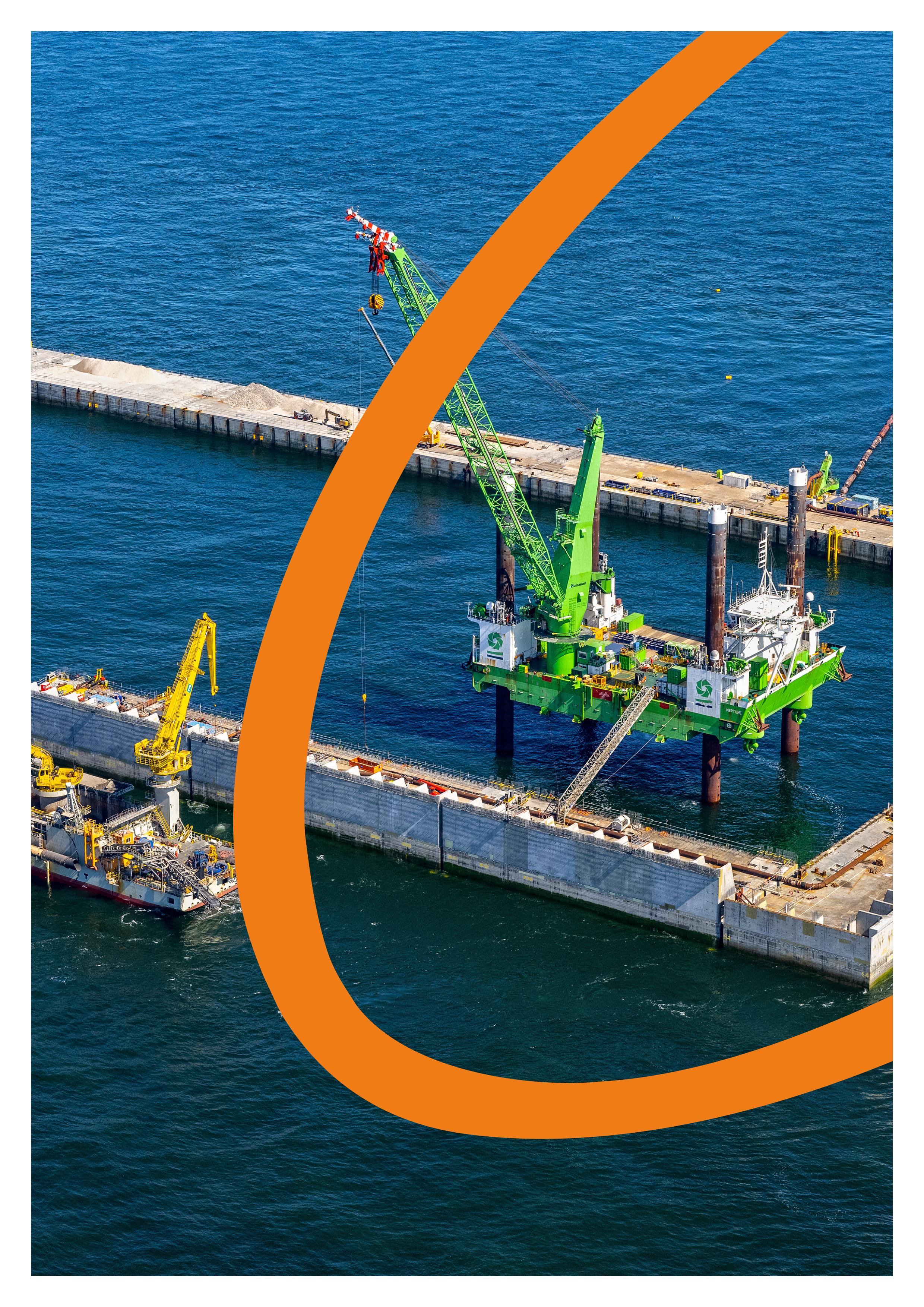
In Belgium, the Group continued to progress on the Princess Elisabeth Island project. In line with the strategic investment plan for Belgium, capital expenditure is expected to accelerate further in the second half of the year. Following the approval of all environmental permits for the Ventilus project on 27 April 2026, works are expected to start in the second half of 2026.
In 2026, the Group has recognised €1.2 million of research and development expenditure recognised as an expense.
4.8. Trade and other receivables
Non current trade and other receivables
Non-current trade and other receivables decreased from €2.3 million at 31 December 2025 to €0.0 million at 30 June 2026, following the reclassification into current receivables of the residual long-term portion of the Recovery and Resilience Facility (RRF) grant receivable related to the Princess Elisabeth Island project (see below).
Current trade and other receivables
Current trade and other receivables remained broadly stable at €561.9 million at 30 June 2026, compared to €561.9 million at 31 December 2025.
Although the overall balance is stable, several notable movements offset each other within this line item: a decrease in VAT receivables of €17.6 million, a decrease in levies receivables of €16.9 million, offset by an increase in trade receivables of €6.4 million (timing effect) and an increase in other receivables of €27.5 million.
The increase in other receivables includes the evolution of the Recovery and Resilience Facility (RRF) grant receivable for the Princess Elisabeth Island project, which increased by €32.1 million over the period.
Evolution of the RRF grant receivable — Princess
Elisabeth Island
As disclosed in the 2025 financial statements, the initially expected grant of €99.7 million had been reduced in 2025 to €47.4 million (pre-tax, including €2.2 million of operational subsidies), reflecting uncertainties regarding the completion of the project by the initial RRF deadline of 30 June 2026.
During the first half of 2026, discussions with the Federal Public Service led to a prorata mechanism, allowing the amount of the grant to be determined based on the actual progress of the works. An amendment to the protocol formalising this mechanism was signed on 30 June 2026, with a primary cutoff date of 15 July 2026 and a limited additional acceptance window until 20 August 2026, subject to certification and governmental approval.
Based on the number of caissons installed at the cut-off date (20 caissons out of 23), the Group has revised its estimate of the grant to approximately €77.2 million (pre-tax), representing an increase of €30.1 million (gross) compared to the amount recognised at 31 December 2025.
The corresponding receivable of €72.5 million (net of amounts already received) is fully classified as current, as it is expected to be collected within the next 12 months. As a result, the €2.3 million previously classified as non-current has been reclassified to current.
The progress of the remaining works and their potential impact on the final grant attribution (caissons 21 to 23) continue to be monitored and, where applicable, will be reflected at year-end 2026.
The corresponding recognition of the capital grant on the liability side, together with the related deferred tax effect, is further described in Note 4.18
4.9. Other financial assets
The total non-current other financial assets remained stable with a slightly decrease by €1.4 million compared with the previous reporting period. This variation is mainly the result of the decrease of the reimbursement rights.
'Other shareholdings' consists of a stake of 3.85% in JAO Joint Allocation Office SA. This investment is measured at fair value through other comprehensive income.
4.10. Derivative instruments
As per 30 June 2026 and as per 31 December 2025, the Group doesn’t have any derivative instruments. All derivatives have been settled and only the remaining hedging reserves remains outstanding.
Hedging reserve
The hedging reserve comprises the effective portion of the cumulative net change in fair value of cashflow hedging instruments.
In 1H 2026, the hedging reserve decreased from a €24.8 million to €23.3 million due to the recycling of the hedging reserve (-€1.6 million net of tax) resulting from the derivatives (IRS 2023 and 2024).
4.11. Deferred tax assets/liabilities
Net deferred tax liabilities increased from €70.5 million at the end of 31 December 2025 to €84.8 million at the end of 30 June 2026, of which €8.2 million is recognised in profit or loss and €1.3 million is recognised in OCI. (in € million)
1H 2026
Property, plant and equipment(81.0)(6.2)——(87.2)
Intangible assets(0.6)———(0.6)
Interest-bearing loans and other noncurrent financial liabilities6.8(1.5)——5.3 Employee benefits(2.6)(0.1)0.8—(1.9) Derivatives(8.3)—0.5—(7.8)
Provisions2.6(0.1)——2.4
Deferred revenue39.31.5——40.9
Deferred tax on investment grants(15.0)——(7.4)(22.3)
Other items(11.8)(1.9)——(13.7) Total
4.12. Cash and cash equivalents
Cash and cash equivalents decreased by €1,142.8 million. The variation is explained in the consolidated statement of cashflows.
Liquidity risk
Management closely monitors the Group's liquidity position through regular cash flow forecasting and liquidity planning processes to ensure that sufficient funds are available to meet obligations as they fall due.
The Group expects to meet its short-term obligations through cash generated from operating activities, available cash balances and committed financing facilities. In particular, Elia Transmission Belgium SA/NV has access to a committed €2.0 billion sustainability-linked revolving credit facility, available for general corporate purposes and fully undrawn as at 30 June 2026, providing significant liquidity headroom. This facility is complemented by a €700 million commercial paper programme used to support short-term liquidity requirements. The combination of available cash resources, expected operating cash flows, the undrawn revolving credit facility and access to short-term funding under the commercial paper programme provides the Group with substantial liquidity headroom. Based on these available funding sources and its current forecasts, management considers that the Group has sufficient liquidity to meet its obligations as they fall due.
4.13. Shareholders
Capital increase
Following the second tranche of the capital increase reserved to the employees of Elia Group and its Belgian subsidiaries, completed by Elia Group on 23 April 2026 for an amount of €722.2 thousand, Elia Group decided to proceed with a corresponding capital increase in Elia Transmission Belgium SA/NV for the same amount (push-down).
Dividends
On 26 March 2026, shareholders approved payment of a gross dividend of €0.66 per share, corresponding to a total gross dividend of €186.4 million. The amount has been entirely paid on the 21st May 2026 to Elia Group SA/NV.
4.14. Loans and borrowings
Loans and borrowings as at 30 June 2026 comprise the
The total loans and borrowings decreased from €5,492.5 million (31 December 2025) to €4,922.3 million (30 June 2026).
This variation is mainly explained by: the nominal repayment of €500.0 million of the Eurobond 2019 (7 years); €22.3 million capital repayment of the amortising bonds in the International activities & holding segment;
€5.4 million of lease payments
Interest of €115.6 million was paid on these financial debts during the period.
Sustainability-linked and Green financing instruments
As part of its sustainable financing strategy, the Group has issued several Green Bonds and has entered into sustainability-linked credit facilities.
In accordance with IFRS 9, the Group has assessed whether these instruments contain contractual features that link their contractual cash flows to sustainability-related performance targets and, consequently, introduce variability in the estimated future cash flows of the underlying financial liability.
The results of this assessment are as follows:
Green Bonds issued by the Group (including the new €500 million 10-year Green Bond issued by Elia Transmission Belgium in Q4 2025): the use of proceeds is contractually earmarked for eligible green projects, but the contractual coupon and cash flows are not indexed to any sustainability performance target. These instruments therefore do not give rise to any variability in contractual cash flows linked to ESG performance.
Sustainability-linked Revolving Credit Facility (RCF) of Elia Transmission Belgium: this €2 billion facility, signed in March 2026 with a consortium of eight banks and currently undrawn at 30 June 2026, contains a pricing mechanism linking the applicable interest margin to the achievement of predefined ESG performance targets. This is currently the only financial instrument within the Group whose contractual cash flows are contingent on sustainability performance.
Description and impact of the ESG pricing mechanism (RCF)
The RCF is assessed annually against three Sustainability Performance Targets (SPTs): the SF6 Leak Rate, the Total Recordable Injury Rate, the Ecological Forest Corridor Rate.
Achievement of these ESG targets may result in an adjustment of the contractual interest margin ranging from +3 basis points to –3 basis points per annum.
For the assessment relating to FY 2025, two of the three SPTs were achieved. As a result, the interest margin was reduced by 1.5 basis points (0.015%) with effect from 15 June 2026. This margin reduction decreases the future interest cash outflows associated with the RCF until the next annual sustainability assessment.
Given that the RCF was fully undrawn at 30 June 2026, this adjustment has no impact on the H1 2026 financial statements but will be reflected in future periods to the extent the facility is drawn.
4.15. Provisions
The Group has various legal and constructive obligations as follows:
Post employment obligations, including defined contribution plans, defined benefit plans and other personnel obligations: the obligation has increased over the period. This increase is mainly driven by experience effects, which more than offset the favourable impact of the higher discount rates. We refer to note 6.15 which accompanies the annual consolidated financial statements as of and for the year which ended on 31 December 2025 for more details.
Provisions which cover the following items:
– Environment – Elia Re
– Dismantling obligations
– Other, including provisions for contractual risks and litigations to cover likely payments where legal proceedings have been instituted against the Group by a third party, or where the Group is itself involved in legal disputes.
Movements over the period
The overall decrease in provisions during H1 2026 is primarily explained by the reversal (€14.0 million) of the provision recognised at year-end 2025 in connection with the descoping of the Princess Elisabeth Island (PEI) project.
As disclosed in the 2025 annual consolidated financial statements, this provision had been recognised to cover the contractual risks arising from the government's decision to reduce the scope of the PEI project – notably the suspension of the HVDC component and the abandonment of two related AC modules –which had led to the termination of certain contracts with suppliers and to the anticipation of potential termination indemnities and commercial settlement discussions.
During H1 2026, the Group obtained increased visibility on both the exit conditions of the HVDC contracts and the nature of the amounts due to suppliers in the context of the PEI project. Consequently, the €14.0 million provision recognised at year-end 2025 has been reversed.
For more information, we refer to note 6.16 of the annual consolidated financial statements as of and for the year which ended on 31 December 2025. More information regarding contingent liabilities is disclosed in note 4.26
4.16. Financial instruments
The table below shows a comparison of the carrying amount and fair value of financial instruments as at 30 June 2026 and 31 December 2025:
The above tables do not include fair value information for cash and cash equivalents, trade and other receivables, or trade and other payables, as their carrying amount is a reasonable approximation of fair value. The fair value of finance lease liabilities and accrued interests are not included as there is no requirement for disclosure.
(in
Fair value hierarchy
Fair value is the amount for which an asset could be exchanged or a liability settled in an arm's-length transaction. IFRS 7 requires, for financial instruments that are measured in the statement of financial position at fair value and for financial instruments measured at amortised cost for which the fair value has been disclosed, the disclosure of fair value measurements by level in the following fair value measurement hierarchy:
Level 1: The fair value of a financial instrument that is traded in an active market is measured based on quoted (unadjusted) prices for identical assets or liabilities. A market is considered active if quoted prices are readily and regularly available from an exchange, dealer, broker, industry group, pricing service or regulatory agency, and those prices represent actual and regularly occurring market transactions on an arm’s-length basis.
Level 2: The fair value of financial instruments that are not traded in an active market is determined using valuation techniques. These maximise the use of observable market data where these are available and rely as little as possible on entity-specific estimates. If all significant inputs required to assess the fair value of an instrument are observable, either directly (i.e. as prices) or indirectly (i.e. derived from prices), the instrument is included in level 2.
Level 3: If one or more of the significant inputs used in applying the valuation technique is not based on observable market data, the financial instrument is included in level 3. The fair value amount included under ‘Other financial assets’ has been determined by referring to either (i) recent transaction prices, known by the group, for similar financial assets or (ii) valuation reports issued by third parties.
The fair value of financial assets and liabilities, other than those presented in the table above, approximates to their carrying amounts largely due to the short-term maturities of these instruments.
Other financial assets
The carrying amount of other financial assets decreased by €1.4 million compared with previous year, resulting from variation in reimbursement rights.
The fair value of SICAV falls into level 1, i.e. valuation is based on the listed market price on an active market for identical instruments.
Loans & borrowings
The fair value of the bank loans and bond issues decreased by €506.2 million, mainly due to the evolution of the loans and borrowings (see note 4.14). Fair value was determined by reference to published price quotations in an active market (classified as level 1 in the fair value hierarchy).
The fair value of other bank loans approximates to their carrying amounts largely due to the short-term maturities of these instruments.
4.17. Trade and other payables
The current trade and other payables decreased compared to 2025 with €239.3 million from €971.3 million at 31 December 2025 to €732.0 million at 30 June 2026. This evolution is mainly explained by a decrease in trade payables of € 275.6 million, reflecting timing effects in supplier invoicing and payments across reporting periods, partly offset by an increase in levies of € 48.1 million.
4.18. Other liabilities
Other non-current liabilities include the deferred portion of the capital grant received under the RRF for the Princess Elisabeth Island project.
Following the amendment signed on 30 June 2026 and the revised estimate based on 20 eligible caissons (see Note 4.8), the capital grant has been increased to approximately €77.2 million (pre-tax), representing an increase of €30.1 million (gross) compared to 31 December 2025. After taking into account deferred taxes, this resulted in an increase of €22.5 million in other liabilities.
4.19. Contract assets/liabilities
Contract assets mainly relate to transmission work performed for third parties As at 30 June 2026, contract assets amount to €2.6 million (31 December 2025: €2.5 million).
Contract liabilities include long-term contributions for major infrastructure projects, last-mile connection payments, and short-term advances for smaller works. They also include prepayments for works in progress (WIP) when the client has paid in advance. Contract liabilities has increased by €73.8 million compared to 2025. As at 30 June 2026 contract liabilities amounted to €235.5 million (31 December 2025: €161.7 million).
The income is released as and when the Group satisfies its performance obligations in accordance with IFRS 15. For last mile connections, revenue is recognised over time, on a straight-line basis, over the period during which the related asset is made available to the customer. For projects, revenue is recognised over time based on the percentage of completion, reflecting the extent of services performed to date.
4.20. Accruals and deferred income
Accruals and deferred income increased from €438.1 million at 31 December 2025 to €554.9 million at 30 June 2026.
The evolution over the period reflects two main movements:
The deferral account related to the regulatory settlement mechanism increased from €239.4 million at 31 December 2025 to €450.9 million at 30 June 2026. This increase reflects the regulatory surplus generated by Elia Transmission Belgium over the period, resulting from actual revenues and costs favourable compared to the tariff proposal (PT). In accordance with the Belgian regulatory framework, this surplus is not retained by the Group but is deferred and transferred to future tariffs through the settlement mechanism, giving rise to a net expense from settlement mechanism of €208.7 million recognised in profit or loss over the period (see Note 4.6).
Other accruals and deferred income decreased to €104 million at 30 June 2026, mainly reflecting the decrease in accrued interest on bonds compared to year-end 2025, following the repayment of the €500 million 2019 bond in January 2026 and the normal semi-annual accrual cycle on the remaining debt portfolio.
4.21. Net finance costs
The net finance costs deteriorated slightly by €1.8 million compared to the first half of 2025, moving from –€36.4 million to –€38.2 million.
The evolution reflects two combined movements: a decrease in finance income of €3.8 million (from €12.8 million to €9.0 million), mainly reflecting lower average cash balances available for investment during the period compared to H1 2025; partly offset by a decrease in finance costs of €1.9 million (from €49.2 million to €47.3 million).
The evolution of finance costs results from two opposite effects: Higher gross interest charges compared to H1 2025, reflecting the refinancing carried out over the last twelve months: the €500 million 2019 bond (7-year, 1.375% coupon) was repaid in January 2026, having been anticipated in October 2025 by the issuance of a new €500 million European Green Bond under the EU Green Bond Regulation, with a 10-year maturity and a fixed annual coupon of 3.50%, maturing on 8 October 2035. The average outstanding debt thus remained broadly stable compared to H1 2025, but at a higher average cost;
more than offset by higher capitalised borrowing costs of €22.5 million (vs €15.8 million in H1 2025, i.e. +€6.7 million), in line with the increased volume of assets under construction, notably on the Princess Elisabeth Island project.
4.22. Income tax
Excluding the share of profit of equity-accounted investees, the effective tax rate for the six months ended 30 June 2026 amounts to 24.2%, compared to 24.1% for the six months ended 30 June 2025
Over the period, the Group's tax position evolved from a net tax receivable of €24.9 million at 31 December 2025 to a net tax liability of €37.9 million at 30 June 2026. This change of €62.8 million is mainly explained by the following movements:
the payment over the period of €18.9 million relating to the final tax returns for financial year 2025 (income year 2024), following the enrollments of the corresponding tax assessments; the refund of €11.0 million related to excess advance tax payments (VA1) previously recognised as a receivable;
and the net current tax movement of €32.9 million for the 2026 financial year, reflecting the current tax charge of approximately €41.9 million for the period, partially offset by €8 million of advance tax payments made in H1 2026 (taking into account €16.5 million of advance tax payments carried forward from prior years) and recoverable withholding tax.
4.23. Settlement mechanism (regulatory framework)
The settlement arising from the tariff regulation mechanism for the year ended 31 December 2025 was finalized in June 2026 by the CREG and was accounted for in the period ended 30 June 2026 affecting the net profit for the period by -€2.4 million.
For further detail about the regulatory framework which was applicable in 2025, we refer to notes 9.1 and 9.2 which accompany the annual consolidated financial statements as at and for the year which ended on 31 December 2025
4.24. Related parties
Controlling entities
The core shareholder of Elia Transmission Belgium is Elia Group SA/NV. Other than the yearly dividend payment (Note 4.13), no transactions occurred with the core shareholder during the six months ended 30 June 2026
Transactions with key management personnel
Key management personnel include Elia's Board of Directors and Elia’s Management Committee, both of which have a significant influence over the entire Group.
Key management personnel did not receive stock options, special loans or other advances from the Group during the period.
There were no significant transactions with entities in which Elia’s key management personnel exercise a significant influence (e.g. holding positions such as CEO, CFO or members of the Management Committee) in the first half of 2026
Transactions with joint ventures and associated companies
Details relating to transactions with joint ventures and associated companies are shown below:
Transactions with other related parties
In addition, Elia's Management Committee also assessed whether transactions occurred with entities in which they or members of the Board of Directors exercise a significant influence (e.g. positions as CEO, CFO, vice-presidents of the Management Committee, etc.).
There were some transactions with parties in which these key persons have a significant influence. All these transactions took place in the normal course of Elia’s business activities. There were expenses for a total amount of €9.0 thousand and €15.6 thousand revenues in the first half of 2026 and €26.5 thousand outstanding receivable per 30 June 2026
Furthermore, we here disclose the transactions of the period between Elia Transmission Belgium and the German segment (Eurogrid GmbH and its subsidiaries): sales of €31.2 million and purchases of €26.9 million resulting in an open position of €9.8 million receivable and €4.6 million payable as per 30 June 2026
4.25. Seasonal fluctuations
Part of the Group's revenue profile follows a seasonal pattern, primarily due to the higher volumes of electricity consumed during the winter that have to be transmitted by the grid operator from power generators to distributors and large industrial customers, and also due to the impact of renewable energy, which is highly sensitive to weather conditions and hence has a considerable effect on revenue inflows and the course of business.
4.26. Commitments and contingencies
Main commitments and guarantees
As of 30 June 2026, the Group had rights and commitments not reflected in the statement of financial position for a total of €4,457.8 million.
They mainly related to CAPEX and OPEX expenditure commitments, as well as various guarantees given to suppliers or public authorities (“performance bonds”, "contractual guarantees",...) and received from customers (contractual guarantees, notably with BRPs).
Contingent liabilities
As stated in Note 4.15, the Group defends litigation matters relating to business interruptions, contractual claims or disputes with third parties. Generally, in line with good business practice, the group does not recognize any pending proceeding which has not matured and/or where the probability of existing or future exposure is unlikely, where financial impact is not estimable and for which no contingent liabilities are able to be quantified.
Nevertheless, at the end of June 2026, it may be relevant to note that, in connection with an open procedure, the group received, in 2023, a judgment that could result in it having to pay compensation amounting to around €14.0 million. The Group decided to file on appeal against the court’s decision. The Group and its lawyers are confident that their arguments will be heard. The probability of an outflow is considered remote and no provision has been recognized in connection with this litigation. As per 30 June 2026, the procedure is still ongoing
Other contingencies and commitments
Project risks and related contingencies
As at 30 June 2026, the situation concerning the Princess Elisabeth Island project remains globally unchanged compared to the disclosure at the end of December 2025
The construction of the artificial island's foundations and the implementation of the previously signed high-voltage alternating current (HVAC) contracts is progressing, although some delays in execution are still observed and may materialise further as the project advances. As disclosed in Note 4.8 and Note 4.18, the potential impact of these delays on the capital subsidy granted to the Group under the Recovery and Resilience Facility has been reflected in the interim financial statements, on the basis of the amended protocol signed on 30 June 2026 and the current best estimate of the number of eligible caissons.
Discussions related to the "variation request" introduced by a contractor and rejected by the Group have continued during the first half of 2026, without reaching a mutual agreement between the parties. As provided in the contract, the process has entered its next phase: third-party expertise before a panel of experts, outside of any court procedure.
The procedure is ongoing and no decision is expected before 2027.
The Group's risk assessment remains unchanged compared to 31 December 2025. The case remains complex, but Elia does not currently anticipate significant impacts on its financial statements. Any potential impact resulting from this process is expected to be capitalisable as part of the project cost.
4.27. Events after the reporting date
No significant events that would result in the financial statement being adjusted occurred after the closing of the financial statements as of 30 June 2026
4.28. Regulatory framework
4.28.1 Regulatory framework in Belgium
In 2026, no significant changes to the regulatory framework applicable for the regulatory period 2024-2027 in Belgium (as described in note 9.1 which accompanies the annual consolidated financial statements as at and for the year ended on 31 December 2025).
4.28.2 Regulatory framework for the Nemo Link interconnector
In 2026, there were no significant changes to the regulatory framework for the Nemo Link interconnector. (as described in note 9.2 which accompanies the annual consolidated financial statements as at and for the year which ended on 31 December 2025).
5. Joint statutory auditor's report to the board of directors of Elia Transmission Belgium
NV on the review of the condensed consolidated interim financial information as at 30 June 2026 and for the six-month period then ended
Introduction
We have reviewed the accompanying condensed consolidated statement of financial position of Elia Transmission Belgium NV as at 30 June 2026, the condensed consolidated statement of profit or loss, the condensed consolidated statement of profit or loss and other comprehensive income, the condensed consolidated statement of changes in equity and the condensed consolidated statement of cash flows for the six-month period then ended, and notes to the interim financial information (“the condensed consolidated interim financial information”). The board of directors is responsible for the preparation and presentation of this condensed consolidated interim financial information in accordance with IAS 34, “Interim Financial Reporting” as adopted by the European Union. Our responsibility is to express a conclusion on this condensed consolidated interim financial information based on our review.
Scope of Review
We conducted our review in accordance with the International Standard on Review Engagements 2410, “Review of Interim Financial Information Performed by the Independent Auditor of the Entity”. A review of interim financial information consists of making inquiries, primarily of persons responsible for financial and accounting matters, and applying analytical and other review procedures. A review is substantially less in scope than an audit conducted in accordance with International Standards on Auditing and consequently does not enable us to obtain assurance that we would become aware of all significant matters that might be identified in an audit. Accordingly, we do not express an audit opinion.
Conclusion
Based on our review, nothing has come to our attention that causes us to believe that the accompanying condensed consolidated interim financial information as at 30 June 2026 and for the six-month period then ended is not prepared, in all material respects, in accordance with IAS 34, “Interim Financial Reporting” as adopted by the European Union.
Brussels, 24 July 2026
Joint statutory auditors
BDO Réviseurs d’Entreprises SRL / Bedrijfsrevisoren BV represented by
Michaël Delbeke*
Partner
*Acting on behalf of a BV/SRL
EY Réviseurs d’Entreprises SRL / Bedrijfsrevisoren BV represented by
Frédéric De Mee*
Partner
*Acting on behalf of a BV/SRL
6. Alternative performance measures
The half-year financial report contains certain financial performance measures that are not defined by IFRS accounting standards and are used by management to assess the financial and operational performance of the Group. The main alternative performance measures used by the Group are explained and/or reconciled with our IFRS measures (Consolidated Financial Statements) in this document.
The following APM’s appearing in the half-year financial report are explained in this appendix:
RAB CAPEX (Capital Expenditures)
EBIT
EBITDA
Free cash flow
Net finance costs
Net financial debt
Equity attributable to the owners of the company (per share)
Reported earnings per share (in €) (Elia share)
RAB CAPEX (capital expenditure)
Capital expenditures represent the value of investments realised by the Group to acquire, construct, upgrade, renew and maintain property, plant and equipment and equipment and intangible assets, which are eligible for inclusion in the Regulated Asset Base (RAB).
It reflects the economic value of investments entering the RAB, independently of IFRS accounting treatments, and therefore excludes the effects of IFRS accounting adjustments (IAS 23 (Borrowing costs), IFRS 15 (Revenue from contracts with customers) and IFRS 16 (Leases)) and, in Belgium, is presented net of customer contributions, as such contributions are not subject to regulatory remuneration and are not included in the RAB.
RAB CAPEX is a key performance metric for the Group, as the Regulated Asset Base constitutes the basis for the calculation of regulatory remuneration.
EBIT
EBIT (Earnings Before Interest and Taxes) = result from operating activities, which is used for the operational performance of the Group. The EBIT is calculated as total revenue less costs of raw materials, consumables and goods for resale, services and other goods, personnel expenses and pensions, depreciation, amortisation and impairment, changes in provision and other operating expense and plus the share of equity accounted investees.
EBITDA
EBITDA (Earnings Before Interest, Taxes, Depreciation and Amortisation) = results from operating activities plus depreciation, amortisation and impairment plus share of profit of equity accounted investees. EBITDA is used as a measure for the operational performance of the Group, thereby extracting the effect of depreciation, amortisation and impairments of the Group. EBITDA excludes the cost of capital investments like property, plant, and equipment.
Free cash flow
Free cash flow = Cash flows from operating activities minus cash flows from investment activities. Free cash flow provides an indication of the cash flows generated by the Group.
Net finance costs
Represents the net financial result (finance costs minus finance income) of the Group.
Net financial debt
Net financial debt = Non-current and current interest-bearing loans and borrowings (incl. lease liability under IFRS 16) minus cash and cash equivalents. Net financial debt is an indicator of the amount of interest-bearing debt of the Group that would remain if readily available cash or cash instruments were used to repay existing debt.
Add: