Driving execution to power tomorrow
Annual Integrated Report 2025
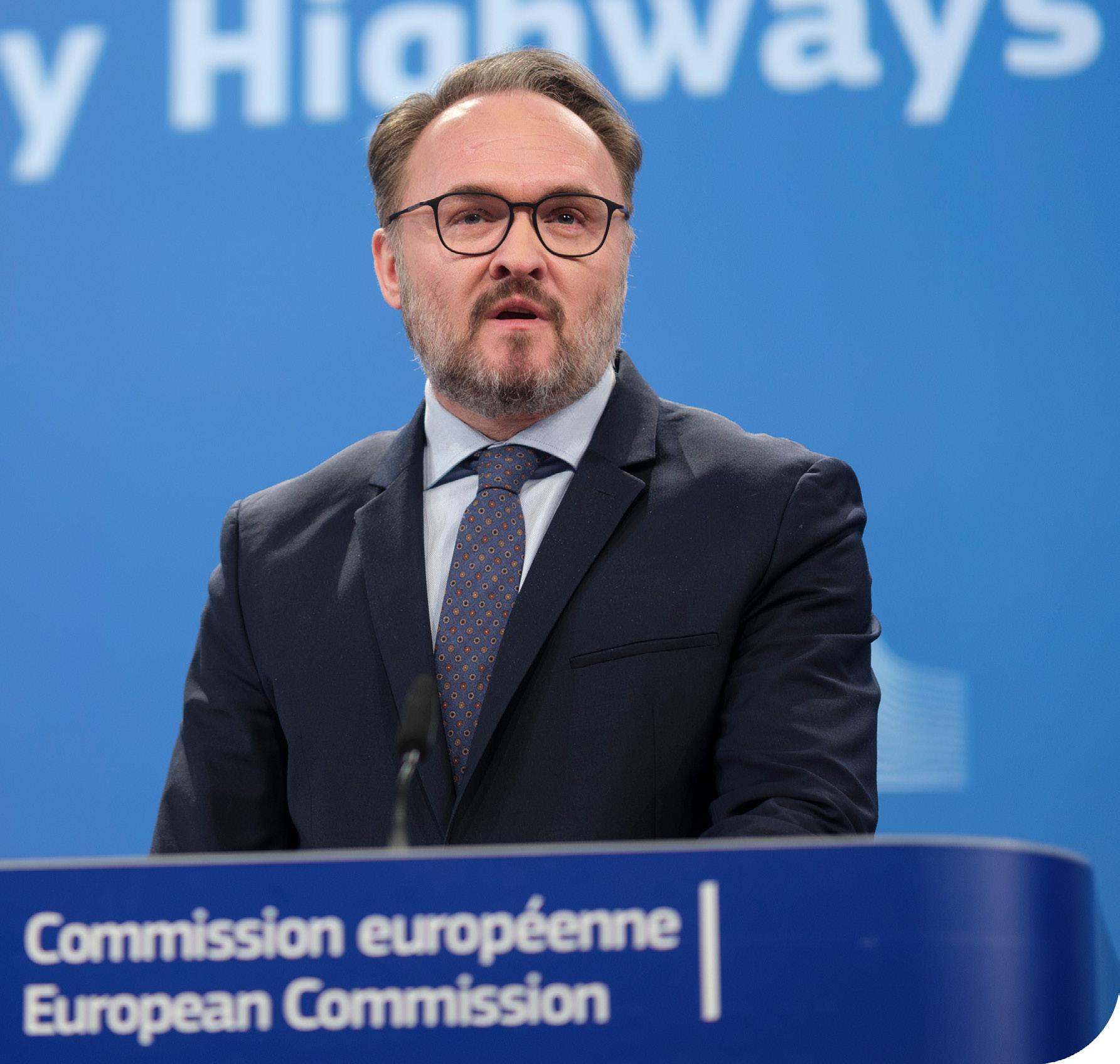
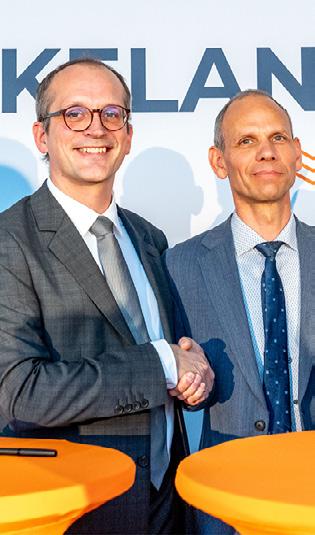
“We said since the very beginning that Europe cannot be competitive, resilient, or fair without a clean, interconnected energy system.
[…] Our grids channel affordable energy directly to where it’s needed most, reducing costs for consumers and businesses. We have entered the new Age of Electricity, and in this age our grids pave the way for the integration of more renewables, and support the electrification of our economy, accelerating our shift away from fossil fuels.”
— DanJørgensen, EU Commissioner for Energy and Housing at the press conference on the European Grids Package
Source: European Commission press corner, “Remarks by Executive Vice-President Ribera and CommissionerJørgensen on the European Grids Package”, Brussels, 10 December 2025
As an international energy group specialising in transmission systems, transparency is not only an expectationit is a responsibility.
By adopting recognised reporting standards and consistently enhancing the quality of our disclosures, we ensure that stakeholders gain a clear, reliable view of how our activities contribute to a secure, sustainable, and affordable electricity system. Through transparent reporting, we demonstrate how our investments, operations, and strategic decisions support society’s transition to a decarbonised future, while safeguarding the long term value creation that defines Elia Group.
Since 2021, we have continuously strengthened our integrated reporting approach.
We began by embedding integrated thinking into how we communicate value creation. In 2022, we advanced this work through a double materiality assessment, TCFD alignment, and the launch of Group-wide ESG assurance. In 2023, we published our first unified Annual Integrated Report, fully aligned with ESRS and ensuring greater data consistency across all entities. By 2024, we achieved full CSRD compliance, integrating financial and sustainability disclosures under the double materiality principle and reinforcing assurance processes.
This year, we focused on clarity and concisenessstreamlining content, refining data presentation, and further integrating financial and nonfinancial information. This evolution reflects our commitment to clear, accountable reporting.
Board approval
The Elia Group Board of Directors applied its collective mind to the preparation of this report. It acknowledges its responsibility for ensuring its integrity and for its alignment with the <IR> Framework.
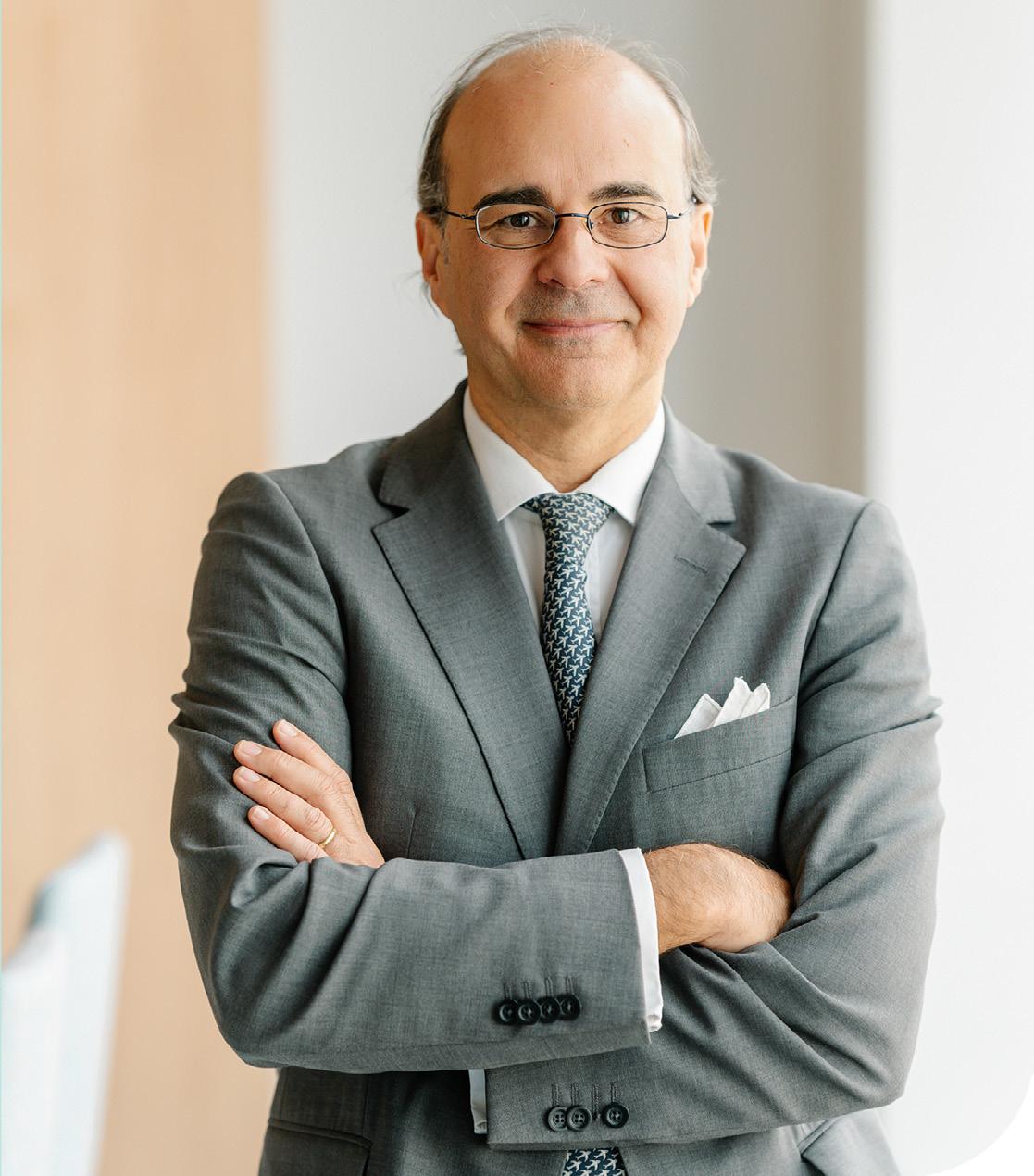
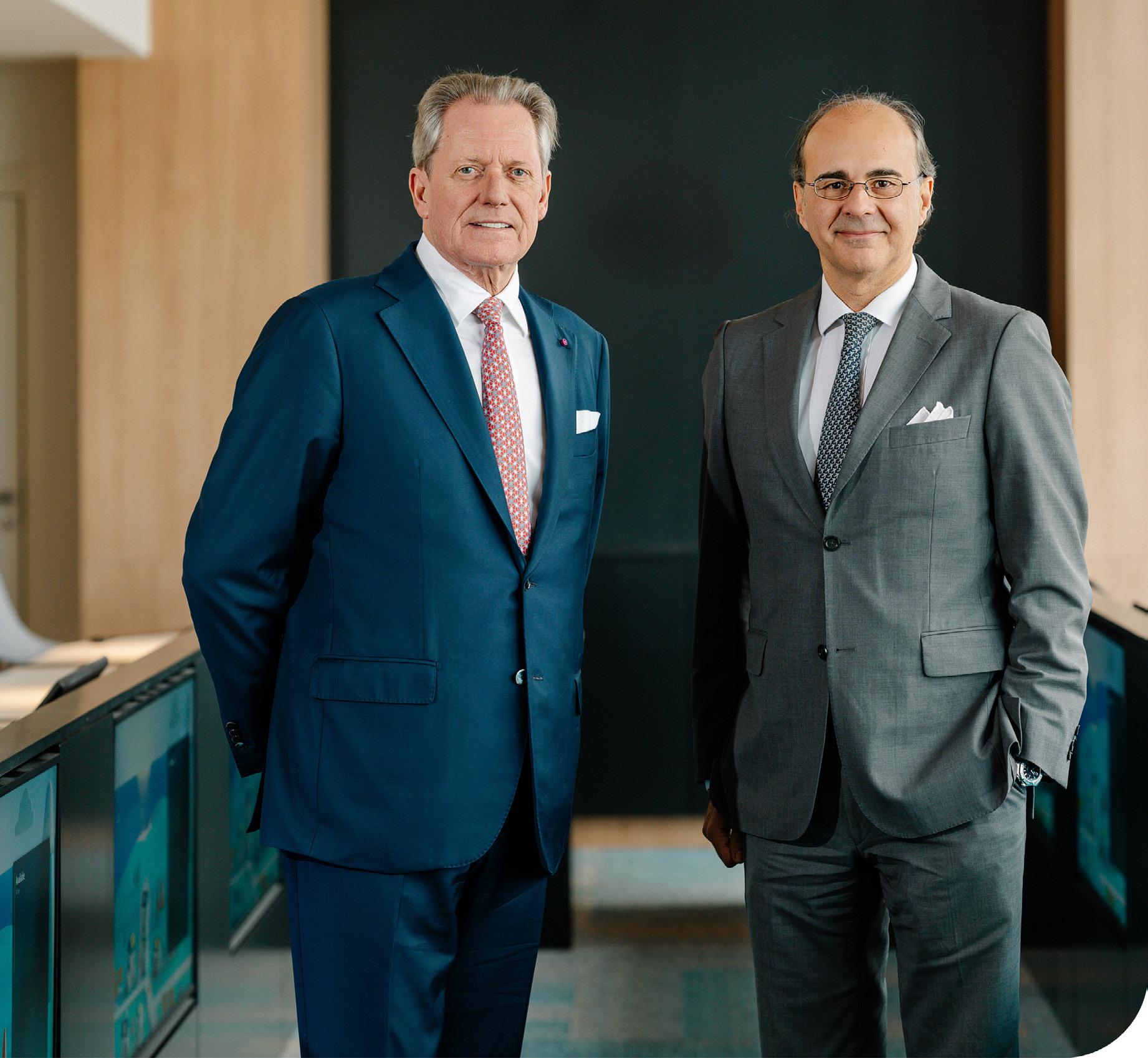
Bernard Gustin CEO
Pieter De Crem Chairman of the Board
Governance and Risk Report
Financial Report
Sustainability Report

Strategic Report
No transition without transmission. Our strategic investments are essential to enable electrification, to meet rising electricity demands, and to increasingly integrate renewable energy sources into the grid. We are committed to operating in the interest of society, ensuring a sustainable, reliable energy future for all.
Honouring the legacy
2025 was a landmark year for Elia Group. We invested €5.2 billion in critical energy infrastructure - more than triple our historical annual average - demonstrating our commitment to enabling Europe’s energy transition. Our successful equity raise and green financing initiatives have positioned us as a leader in sustainable growth, with operational excellence and stakeholder engagement at the heart of a strategy powered by the strength and dedication of our people.
Q: Bernard, before we move on to the Group’s performances, challenges, and ambitions, we would like to begin by inviting you to share the tribute you wished to pay to GeertVersnick, your late President of the Board. What do you see as his most enduring contribution to the company’s success?
Our relationship was built on something quite rare in business: genuine trust and a shared vision. For several years, I served as Chairman of the Board while Geert was Vice-Chairman, which created an extraordinary partnership that shaped the Group’s trajectory. This was more than a formal arrangement; it was a deep collaboration.
His greatest legacy was serving as the vital, enduring bridge to Publi-T, our anchor investor. Geert had the knowledge, credibility, and insight to translate our strategy in ways that resonated with our largest shareholder, securing their ongoing support for our strategy and specific commitment for capital increases at critical moments. Without his ability to champion our vision and bring Publi-T along, our transformation would not have been possible.
Beyond his role with shareholders, he was an exceptional sparring partner in defining our strategy. We could challenge each other constructively because we shared the same vision for the company's future. That alignment, combined with mutual trust, allowed us to tackle difficulties head-on, always confident we were working towards the same goals.
Looking back, what made our partnership work was simple: mutual respect, shared ambition, and complete trust in each other's judgment.
Q: How would you describe him, and what was his greatest talent?
He was a diplomat and a skilled negotiator, always approaching challenges with pragmatism. What truly set him apart was his ability to listen and respect others' opinions. He excelled at finding solutions that accommodated all parties by genuinely listening to different perspectives. He often said, "The solution won't win a beauty contest, but it's a solution." He understood that the best outcomes come from bringing everyone along, not imposing a single view.
Q: On a personal level, what have you learnt from working with him over all these years?
I learnt the value of patience and timing. Even when your solution is right, you sometimes need to wait for the right moment. Geert had a remarkable instinct for sensing when conditions were optimal for a decision. Some saw this as hesitation, but those who knew him understood it was strategic. As the French say, "reculer pour mieux sauter" - to step back in order to leap further. He was always preparing, always positioning us to spring forward at exactly the right moment.
Q: Is there anything else you'd like to add about him?
When Geert made a commitment, his word was his bond. Even when the path was difficult, he honoured his promises.
I never experienced a moment when he said one thing and did another. His integrity was absolute. This quality also made him a true friend. That’s what I’ll miss most - not just the Chairman and strategist, but the man whose word you could always trust.
Q: Looking back at your first year as CEO of Elia Group, what are your main takeaways?
I'm genuinely proud of what we've accomplished this year. Three achievements stand out. First, we secured financing for significant growth and re-established market trust. When I took on this role, there were questions about our capacity to fund ambitious growth and deliver on our promises. Addressing this was my main focus, and I’m pleased to say we succeeded.
Second, we delivered operationally, investing €5 billion in CAPEX. This is a fivefold increase on previous years.
Achieving this level of growth is far from self-evident; it reflects the dedication and expertise of our people, who ensured these projects were delivered on time and within budget despite their scale and complexity. This performance reinforces our ambition to be - and remainthe trusted partner for all our stakeholders.
Third, we are attracting exceptional talent. Despite challenges, young people want to join us because they see Elia Group as a place where they can make a real difference and help build the energy infrastructure of the future. That tells me we have the right people and vision.
Q: What challenges do you see coming up?
The biggest challenge we face is alignment and timing. Investing heavily in infrastructure for the energy transition is essential if we are to become independent of fossil fuels and accelerate decarbonisation. That part is clear. What’s increasingly evident, however, is that the complexity and pace required are testing everyone involved. We need to build tomorrow’s energy system, yet regulatory frameworks, permitting processes, and supply chains are still operating at yesterday’s speed. This mismatch creates real risk. It’s not only Elia Group that must change - our entire environment needs to adapt.
Achieving this paradigm shift demands alignment across stakeholders, from regulators to suppliers, even as they move at different rhythms. That’s why we must explain what we’re doing and why, and be honest about the consequences of inaction. Society has set ambitious decarbonisation goals, and we are committed to delivering them. This will require clear direction, bold action, and collaboration across the whole ecosystem.
Q: How does Elia Group’s financial strategy support its long-term vision?
Our financial strategy is built on balance and resilience. The successful equity raise this year was essential to maintaining a healthy mix of equity, debt, and selffinancing. The positive market response and strong shareholder participation reflect genuine trust in our strategy. Access to green financing further affirms our commitment to sustainability - not as a side project, but as the essence of our business. These achievements position us to fund the energy transition while maintaining the financial strength that has always defined Elia Group.
Q: You've expressed concern about rising costs for the energy island project in Belgium, as well as the fast evolution of CAPEX in Germany. How do you balance cost control with long-term strategic benefits?
Let me be very direct about this: the energy island is essential for Belgium's and Europe’s energy future. We need to invest heavily if we want to succeed in the energy transition, and these investments are justified because it would be far more expensive not to make them. The longterm strategic benefits - energy independence, renewable integration, and decarbonisation - are indisputable.
However, I'm acutely aware of the challenge we face in the interim period. When you build major infrastructure such as the energy island, there's an inevitable delay effect. You need to build the infrastructure first, invest the capital upfront, and only then can society reap the benefits: the ability to integrate much more renewable energy, which is, of course, much cheaper in the long run. But customers will see tariff increases before they see those benefits materialise.
This is where our responsibility becomes critical. Given that tariffs will go up while the benefits aren't immediately visible, we must demonstrate beyond any doubt that these extra costs represent the absolute bare minimum required, and that we're doing our utmost to control costs and minimise the impact on customers.
Q: As regulatory frameworks evolve in Germany and Belgium, how do you see these changes influencing Elia Group’s growth prospects and investor confidence?
Regulatory stability is critical for investor confidence. The upcoming frameworks in Germany and Belgium will shape how we secure the capital needed to deliver the energy transition. Whatever the methodology, returns must remain attractive in a globally competitive market, and predictability is essential to de-risk long-term investments. We’re engaging constructively with regulators and are cautiously optimistic that the outcome will balance societal objectives with the financial conditions required to attract very important capital and sustain growth.
Q: Why is expanding international consultancy and development activities outside the core markets critical for Elia Group as a leading energy group?
Transmission has become the number-one topic in the electricity value chain. With offshore wind, data centres, electrification, and AI, we now find ourselves at the very centre of global attention. The challenges we are tackling in Belgium and Germany are the same as those emerging worldwide. Many countries simply lack the expertise, the international perspective, or the financing capabilities we have built. As one of the few truly international electricity transmission groups - present in fast-growing markets and largely stock-listed - we occupy a genuinely unique position.
Our focus remains firmly on Belgium and Germany. We're not distracted, but we're thinking strategically about the future. Over time, growth will normalise in our home markets, which is why it's essential to build new sources of growth in attractive markets today. This is not just expansion; it's intelligent portfolio management and risk mitigation. Diversifying revenue streams across geographies and regulatory frameworks reduces dependency on the political or economic context of one or two countries.
So yes, we're thinking internationally, but always with our core TSO excellence as the foundation.
Q: 769 hires in 2025. That's impressive. How is Elia Group addressing talent needs and employer branding to support the energy transition?
I’m proud of what this achievement says about Elia Group. Our HR team has done a great job defining who we arenot just for candidates, but for the wider community.
What attracts people to Elia Group is clear: we’re a successful company with a mission that goes beyond profit. We offer purpose - work that matters - and perspective through international opportunities across our three divisions, from TSO operations to consulting and development, creating diverse career paths.
Just as importantly, newcomers are set up to thrive: our experienced colleagues take pride in integrating and mentoring new joiners, sharing their expertise and values from day one. The result is not only a great place to build a career, but a genuinely supportive and enjoyable place to work.
We’re shaping the workforce of tomorrow, building on a remarkably strong foundation: world-class engineers, digital and AI specialists, seasoned finance professionals, expert legal advisers, and highly skilled procurement teams. Technology will transform how we operate, and we’re preparing for that future.
This year’s record-breaking capital raise proved the strength of our team. What seemed “mission impossible” to many was delivered by exceptional professionals - one of the biggest capital operations in Europe's and Belgium’s history. That’s the calibre of people choosing Elia Group, and I’m excited about what we’ll achieve together.
By 2030, I want Elia Group to be recognised as the enabler of the energy transition - a true driver of innovation, affordability, and sustainability. Our infrastructure must become a pillar of national strength, supporting industry, data centres, and society at large. Success will be measured by our ability to deliver reliable, affordable, and sustainable energy, enabling society’s transition and independence. I want people to say: “Elia Group makes it happen. They are the catalyst for our transition, our competitiveness, and our energy independence.”
Bernard Gustin CEO, Elia Group

2025, a year of impact
February
The highlights below showcase the progress made in 2025 — a year marked by strong delivery, meaningful impact, and continued momentum toward a fully decarbonised, reliable, and future-proof energy system.
January
Bernard Gustin appointed CEO of Elia Group
Having served as Chairman since 2017, Bernard Gustin brings deep knowledge of Elia Group and its sector, ensuring continuity and positioning the company for sustained growth.
Eurogrid signs €1 billion green loan for North and Baltic Sea connections
The loan will support Ostwind 4 and LanWin3, reinforcing Germany's offshore transmission capacity and advancing the energy transition.
Elia named Top Employer for the eighth time

Achieving an overall score of 90.87%, Elia excelled in digital HR, flexibility, and employee engagement, confirming its strong people strategy and workplace attractiveness.
European Commission awards €645 million to Bornholm Energy Island
Jointly developed by 50Hertz and Energinet, the project will transform Bornholm into a major electricity hub, enabling offshore wind integration and cross-border power flows between Denmark and Germany.
March
Elia Group secures €2.2 billion equity package
The package includes a secured €850 million PIPE from ATLAS Infrastructure ("ATLAS") with The Future Fund (€234.6 million), BlackRock (€117.3 million), CPP Investments (€117.3 million), and Publi-T/NextGrid Holding (€380.7 million), alongside about €1.35 billion in a rights issue.

SuedOstLink secures full building permit after third approval
The Bundesnetzagentur's decision gives 50Hertz a full building permit for the 270 km DC line through Saxony-Anhalt, Saxony, and Thuringia.
April
Marco Nix steps into CFO role at Elia Group
Following his tenure as CFO of 50Hertz and interim CFO of Elia Group, Marco Nix officially joins the Executive Management Board to support the Group's strategic and financial objectives.

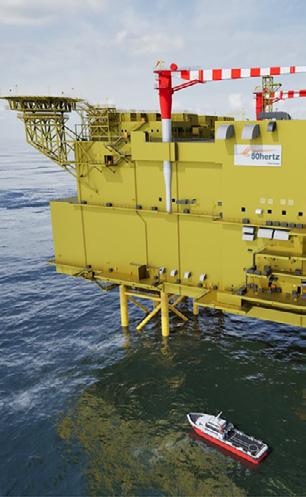
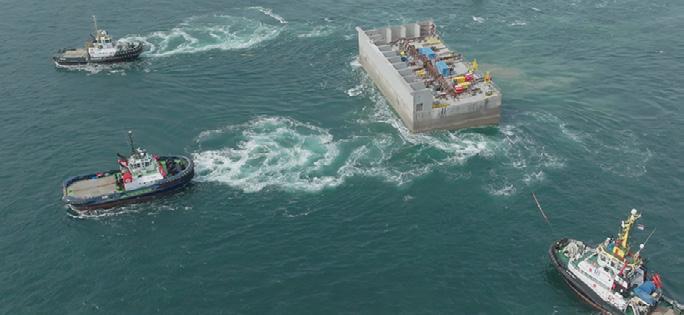
First building blocks of Belgian energy island installed in the North Sea
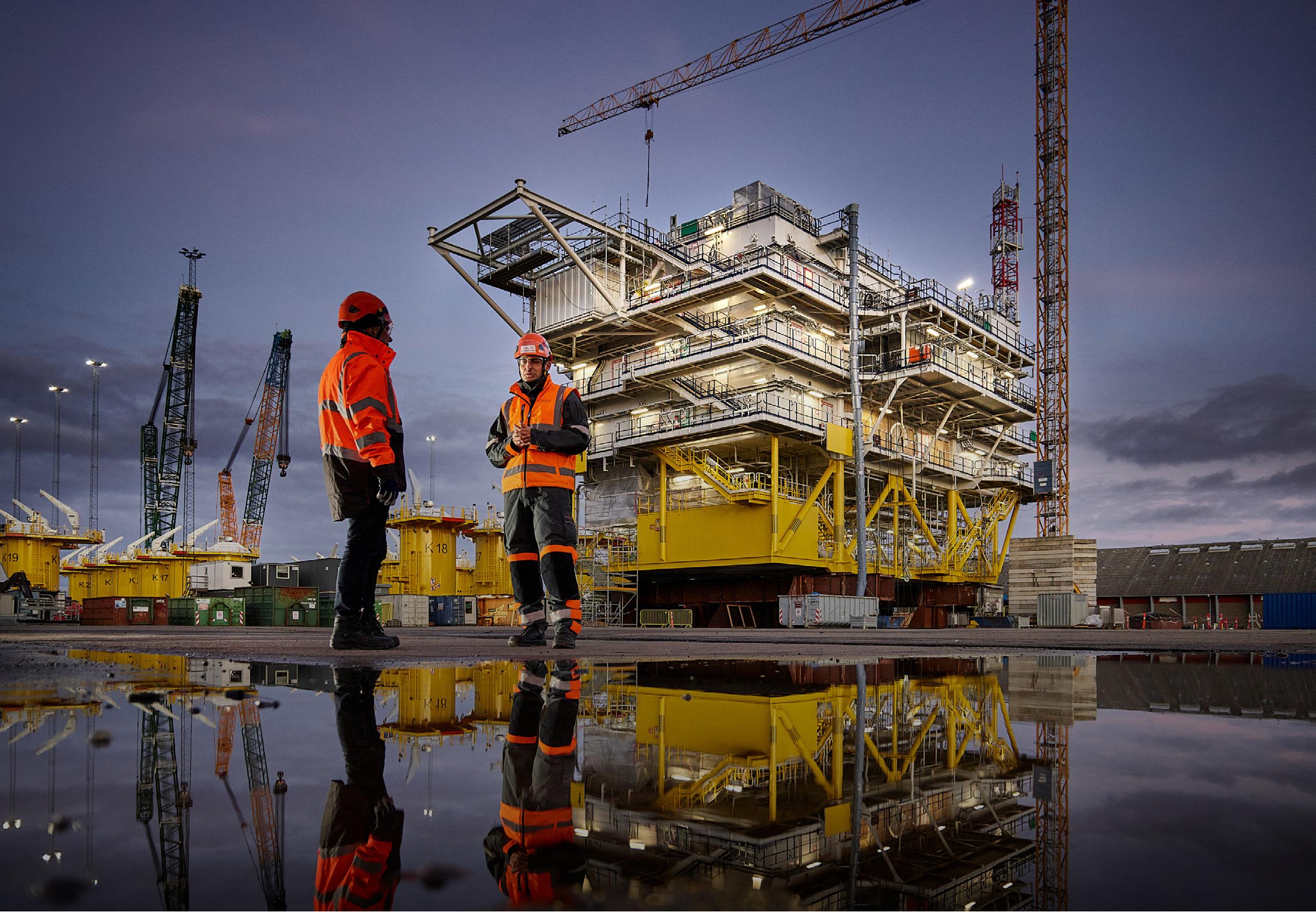
The first two of 23 massive caissons, each weighing 22,000 tonnes, are successfully placed 45 km off the coast, marking a major milestone in the construction of Princess Elisabeth Island, Belgium's future offshore electricity hub.
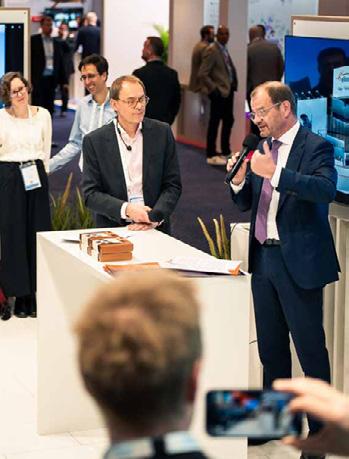
Elia Group, CIP, and GASCADE call for integrated electricity and hydrogen planning
The joint paper launched at WindEurope urges Europe to align grid and hydrogen infrastructure development and to create new financing models to attract private capital for the energy transition.
Elia Transmission Belgium (ETB) joins MARI platform for mFRR balancing energy
Access to the European platform enables Elia to exchange tertiary reserves across borders, improving grid security and reducing imbalance costs.
12 TSOs unveil roadmap for interconnected North Sea grid
The joint study highlights how coordinated offshore development can unlock economic benefits, enhance security of supply, and support Europe's clean energy ambitions.
May
Eight Baltic Sea TSOs publish roadmap for integrated offshore grid
The expert paper outlines cross-border projects and coordinated planning to unlock 93 GW of offshore wind potential and strengthen regional energy security. Eurogrid secures commercial paper programme for €750 million
This initial issuance provides a flexible and costeffective way to support grid investment needs, complementing Eurogrid's long-term funding instruments.
June
Elia Transmission Belgium (ETB) secures commercial paper programme for €700 million
The increase from €300 million to a maximum aggregate amount of €700 million provides ETB with a flexible, cost-effective instrument to meet short-term liquidity needs.
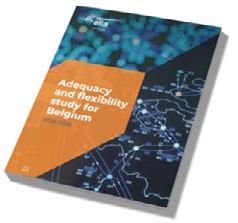
Belgium's adequacy study highlights need for CRM and flexibility
Belgium's Adequacy and Flexibility Study 2026-2036, published by ETB, warns that demand will exceed available capacity from 2028. It calls for continued CRM implementation, accelerated flexibility development, and clarity on the long-term energy mix.
July
Eight European TSOs launch innovation alliance to boost grid resilience
The alliance will develop shared solutions to improve efficiency and drive technological advancement, starting with its first programme focused on weather and grid resilience.
Completion of Brabo grid reinforcement marks milestone for Belgium's energy transition
The €300 million project strengthens the highvoltage grid and Belgium's interconnection with the Netherlands, supporting a doubling of electricity demand in the Port of Antwerp over the next decade.
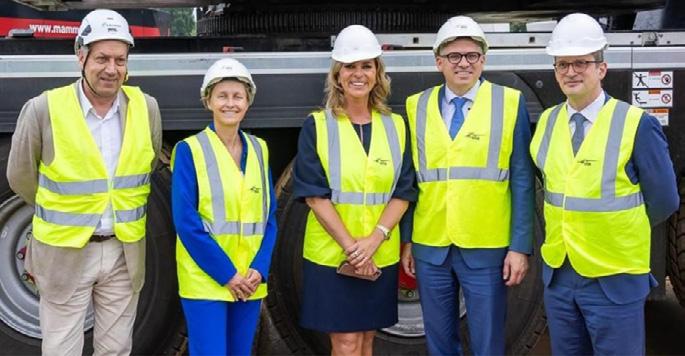
Connection agreement signed for €3 billion VIRTUS data centre near Berlin
50Hertz and VIRTUS sign a grid connection agreement for the Wustermark campus, securing 300 MW of capacity and enabling a green energy supply for one of Europe's largest data hubs.
September
Belgium adopts 15-minute granularity for cross-border capacity allocation
Successful switch to Single Day-Ahead Coupling aligns day-ahead trading with intraday and balancing markets, boosting flexibility and renewable integration.
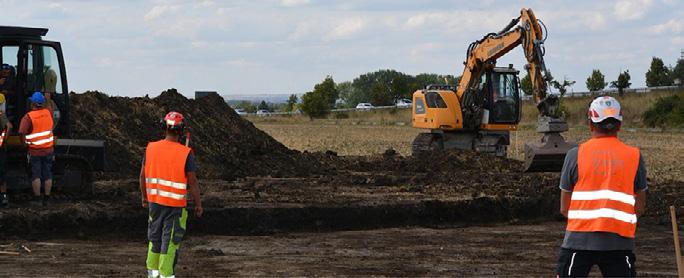
50Hertz starts work on Suedharz 380 kV grid connection to boost Germany's energy backbone
The 145 km overhead line replaces an ageing 220 kV link, increasing transmission capacity and strengthening security of supply for the energy transition.
October
Elia Transmission Belgium (ETB) sets benchmark for green finance with €500 million EU Green Bond issuance
ETB's landmark transaction combines robust investor confidence with a clear commitment to the transparent financing of critical grid infrastructure.
Céline Van Haute joins Elia Group as CHRO
Céline will lead the evolution of our people and culture strategy, strengthening our local foundations while uniting us as one group and fostering collaboration, wellbeing and an inclusive work environment.

Eurogrid succesfully
places €1.1 billion
EU Green Bond
The dual-tranche issuance by Eurogrid GmbH, the parent company of 50Hertz, is oversubscribed up to seven times and will finance grid infrastructure that is fully aligned with the EU Taxonomy and the EU Green Bond Standard - widely regarded as the most rigorous benchmark for asset allocation, reporting transparency, and external verification in sustainable finance.
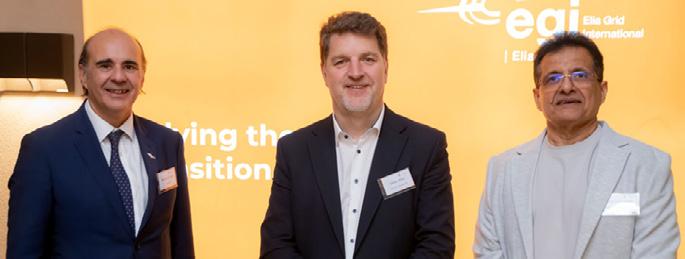
Elia Grid International (EGI) celebrates 15 years of global expertise in Riyadh
The Riyadh celebration showcases EGl's evolution into a global consultancy with projects in 35 countries, combining European expertise with local innovation.
December
Baekeland project reinforces Belgium's energy backbone and industrial competitiveness
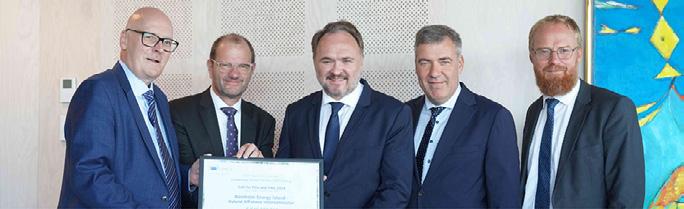
Bornholm Energy Island moves to implementation with major Siemens Energy contract
Energinet and 50Hertz place orders for four converter systems to build the pioneering power hub on Bornholm.
50Hertz commissions two major 380 kV lines, reinforcing Germany's extra-highvoltage network
The Pulgar-Vieselbach and Röhrsdorf-WeidaRemptendorf projects, with a combined investment of over €500 million, strengthen Germany's energy backbone and enable the secure integration of renewables.
November
Elia's fourth academic board strengthens collaboration between industry and academia
Leading Belgian researchers and Elia experts join forces to explore innovations in flexibility, grid reliability, and market design for a future-proof energy system.
The €400 million project, located in Ghent, will strengthen the high-voltage grid, enable greater access to North Sea power, and support industry's shift to electricity-based processes.
European Grids Package sets out €1.2 trillion roadmap for energy independence
The European Commission's Grids Package highlights the backbone role of electricity networks and calls for collaborative planning and innovative financing to deliver the energy transition.
Group
2.1. Getting to know Elia Group
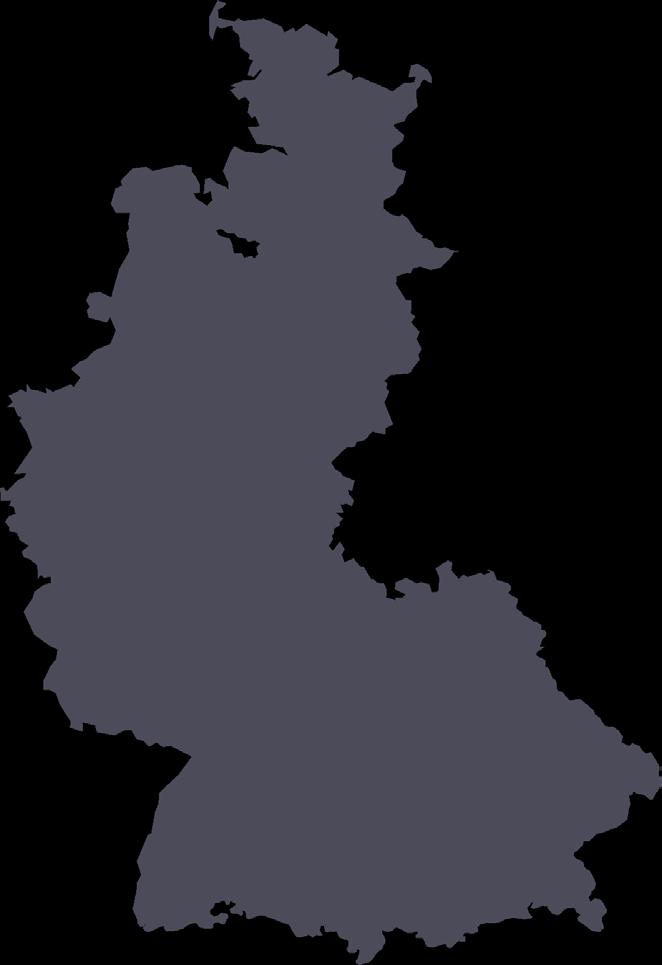
Elia Transmission Belgium (ETB) is Belgium’s sole transmission system operator for high- and extra-high-voltage electricity, driving the country’s energy transition with a highly interconnected grid and pioneering projects. ETB aims to be ready for a 50% increase in electricity consumption by 2032.
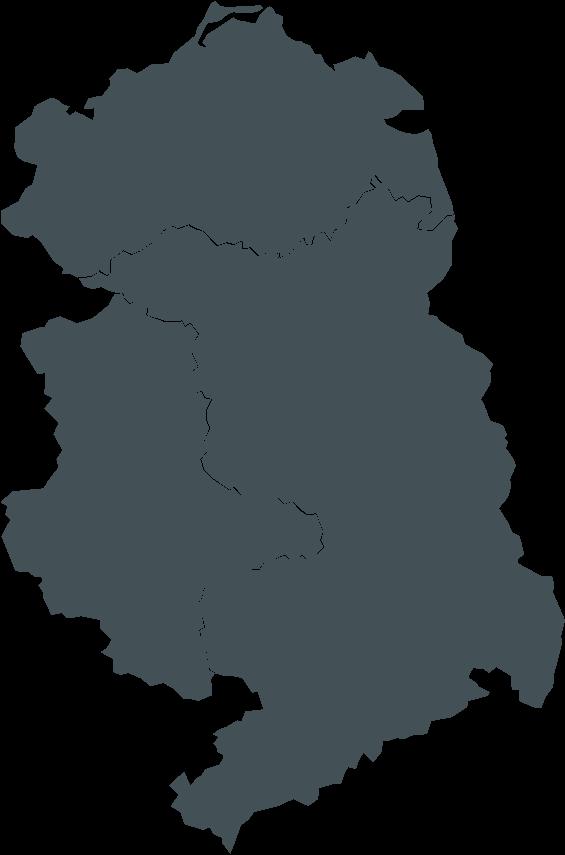
50Hertz is the transmission system operator for northern and eastern Germany, operating an extra-high-voltage grid and leading the energy transition by aiming to cover 100% of the annual electricity consumption in its control area with renewable energy by 2032.
Nemo Link is a high-voltage direct current (HVDC) subsea interconnector, jointly operated by ETB and National Grid, enabling the exchange of up to 1,012 MW of electricity between Belgium and Great Britain since 2019.
WindGrid develops international electricity transmission solutions, accelerates the global energy transition, and expands Elia Group’s reach - including a stake in energyRe Giga in the U.S.
Elia Grid International (EGI) is a global engineering consultancy that provides strategic, technical, and regulatory expertise in onshore and offshore power transmission, leveraging the experience of ETB and 50Hertz to support a wide range of transmission solutions.
Bringing power today and tomorrow
Key projects to turn vision into reality
Ready for 50% increase by 2032
100% by
2032:
Affordable energy for a strong economy
Key projects of Elia Transmission Belgium in 2025
In Belgium, Elia Transmission Belgium advanced several flagship infrastructure projects: Ventilus and Boucle du Hainaut progressed through important permitting and stakeholder milestones, reinforcing the future backbone needed to integrate large volumes of offshore wind. BRABOIII entered its final construction phase, with conductor installation and mast completion preparing the line for commissioning in early 2026. Meanwhile, construction of the Princess Elisabeth Island continued at pace, with major offshore caisson installation and initial HVAC works laying the foundations for Belgium’s first energy island.
Key projects of 50Hertz in 2025
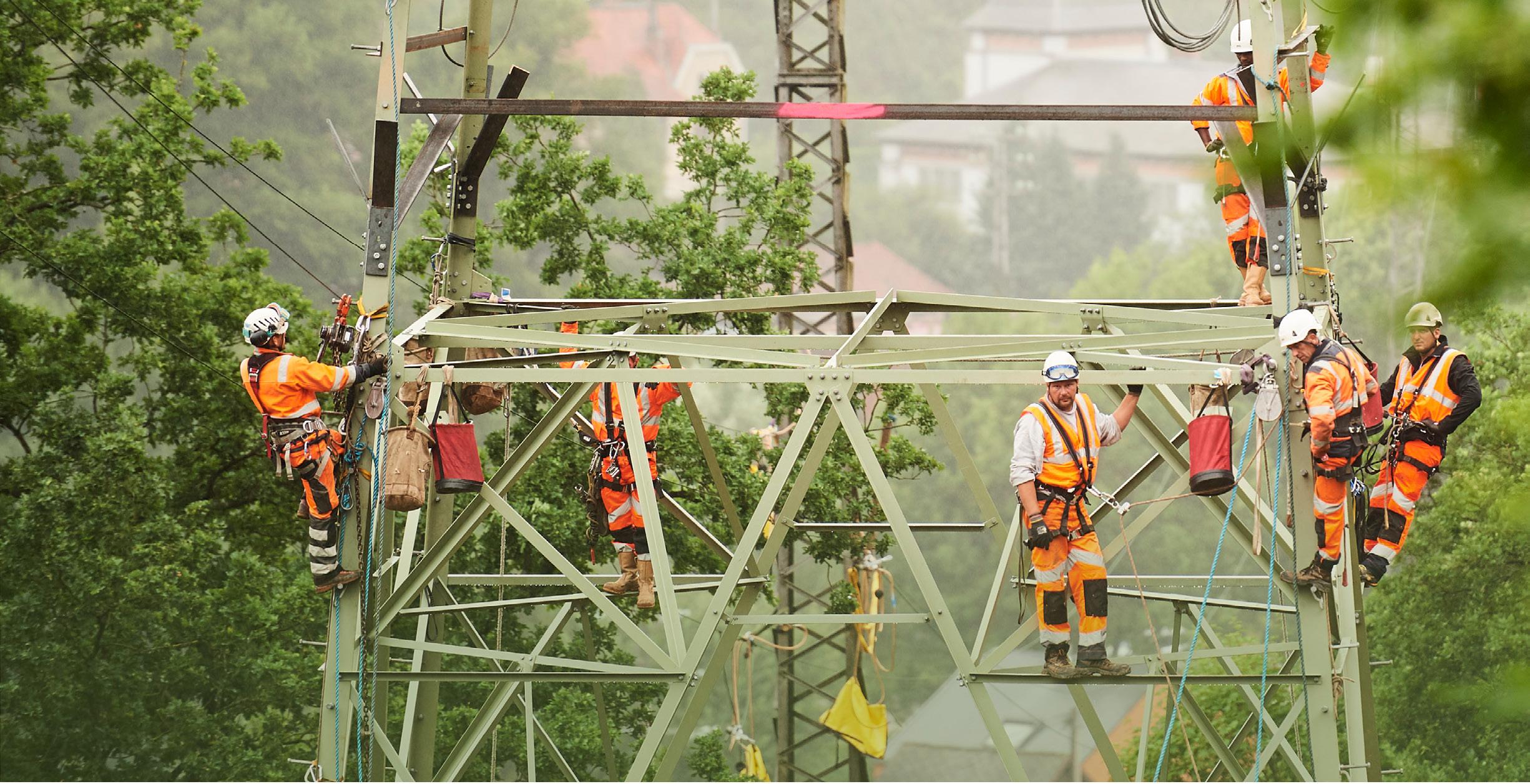
In Germany, SuedOstLink progressed towards implementation with full permitting secured and construction advancing across all sections. Ostwind3 reached the completion of its full cable-laying campaign and continued offshore substation works. The Bornholm Energy Island also moved forward as 50Hertz and Energinet awarded contracts for the HVDC converter systems that will enable future large-scale renewable power flows between Denmark and Germany.
Key projects of our international pillar in 2025
EGI is currently involved in several international projects with a special focus on unlocking new opportunities for cross-border trade and accelerating the clean energy transition, while actively pursuing further growth in these strategic markets. Meanwhile, WindGrid’s HansaLink has been included in the EU’s updated list of Projects of Common and Mutual Interest (PCI/PMI), confirming its strategic role in Europe’s future energy infrastructure. Nemo Link celebrates six years of reliable operation, sustaining a vital electricity bridge between the UK and Belgium that enhances security and enables renewable power flows.
2.2. Key figures
Bonus-Adjusted earnings per share (in €) (Elia share)1 Financial key performance indicators
/ per share
7.3% ROE (adj.)
€5.2 billion
Total investments Elia Group
Non-financial key performance indicators
4,572 26.1%
59
Number of employees Women in total workforce Number of nationalities represented by our staff
3.4 96.6% 99.9%
Total Recordable Incident Rate (TRIR) of employees
2.3. Installed capacity across our control areas
2.4. Electricity generation & consumption
Generation
Elia Transmission Belgium
Belgium reached new records for solar generation in 2025, with annual output rising to 10.1 TWh (+21% vs. 2024) thanks to a 10% increase in installed capacity and exceptionally sunny conditions. This strong solar performance drove renewable generation to an all-time high of 22.4TWh, representing around 34% of the electricity mix, even as wind output fell slightly due to weak wind conditions.
Combined solar and wind generation set a record of 9,957MW on 4October, covering 90% of demand at that moment, and renewables supplied more than half of consumption for 16.2% of the year. Nuclear power’s share also stood at 34.2% despite the shutdown of three reactors, while gas-fired generation remained structurally low at 12.3TWh due to favourable imports, high gas prices, and growing renewable output.
ETB’s electricity generation mix in 2025
50Hertz Transmission Germany
In 2025, total renewable energy generation stayed at roughly the same level as in 2024. Although onshore wind capacity continued to grow, poor wind conditions throughout the year meant this did not translate into higher output. Onshore wind generation fell by nearly 3TWh (around 8%). Offshore wind generation increased by around 0.5TWh (11%), while solar power rose significantly, adding approximately 2.5TWh (15%). Together, these gains compensated for the weaker onshore wind year, keeping overall renewable generation stable.
50Hertz’s electricity generation mix in 2025
Consumption
Elia Transmission Belgium
Electricity consumption in 2025 was 80.1 TWh (81 TWh in 2024). This is still below the average consumption seen during the five-year reference period 2017–2021, although higher than in 2023 (78.9 TWh). This downturn is a temporary phenomenon and we expect to see a significant increase in electricity consumption in the coming years due to the electrification of society. Many studies estimate that electricity consumption could double by 2050.
50Hertz Transmission Germany
In 2025, electricity consumption across the 50Hertz grid area remained low and even decreased further, dropping by around 0.6TWh compared to 2024. As renewable generation remained broadly stable, the lower electricity demand lifted the share of renewables in total consumption by one percentage point to 74%.
Annual changes in renewable electricity consumption across our control areas*
Unit: TWh
from across 50Hertz area came from RES
2.5. Electricity imports & exports
Interconnectors allow electricity trading across borders, enhancing supply security and balancing prices. They help integrate renewable energy by enabling the exchange of surplus green energy. Interconnectors are therefore crucial for building an interconnected European electricity grid and market, supporting the EU's energy and climate goals.
ETB’s grid area

50Hertz's grid area
2.6. Stakeholder interactions
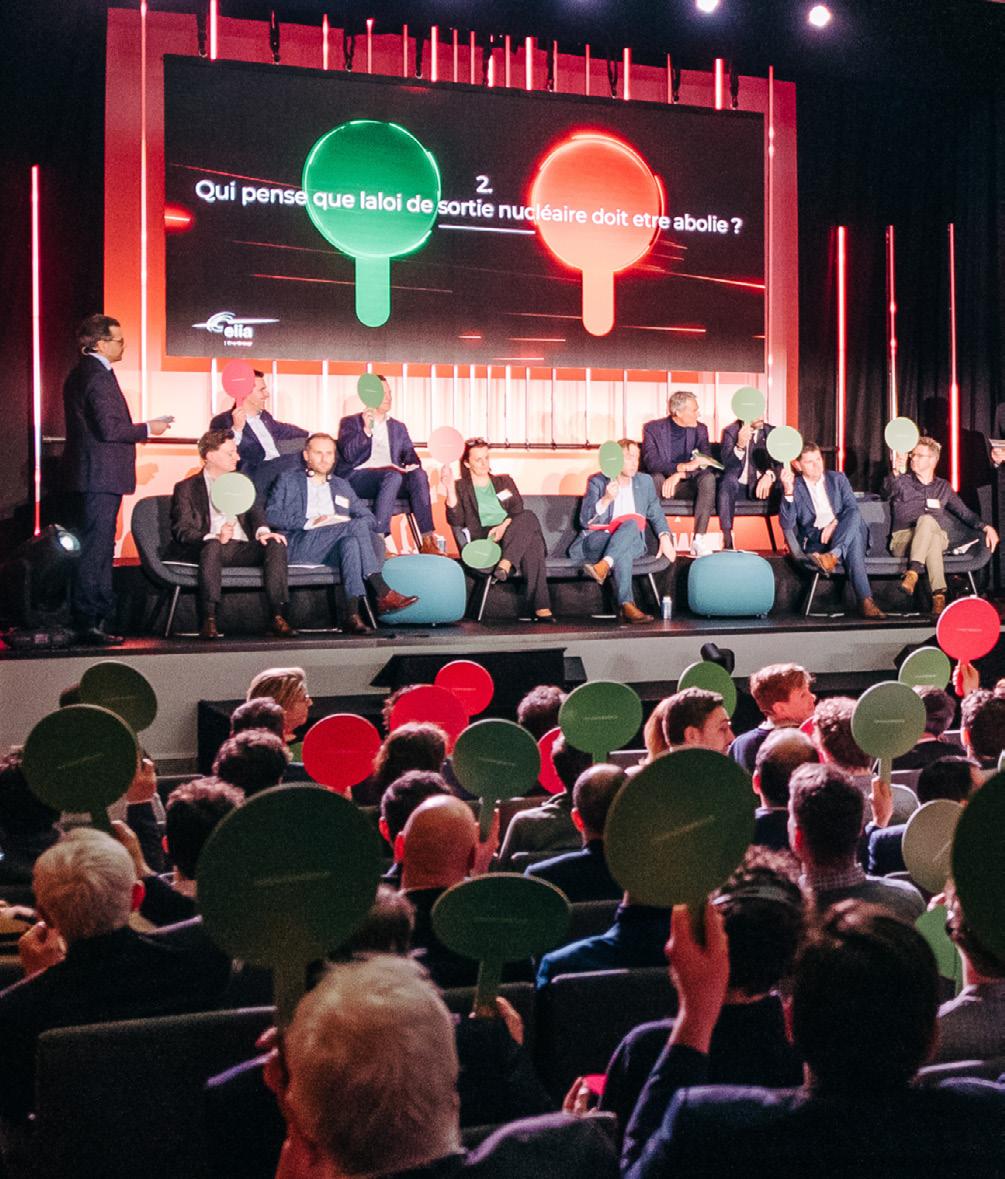
We engage with our stakeholders through open and ongoing dialogue. Their insights help shape our decisions: we listen to their expectations, integrate their feedback into our daily work, and ensure their needs are reflected in what we do. For more information, please refer to 'SBM-2 - Interests and views of stakeholders' in the sustainability report.
Public and social stakeholders
—Local communities
—Press and general public
—Federations, NGOs, and academics
Operating and business environment
Electricity system operators
Employees and their representative bodies
Suppliers
Energy producers
Government and public authorities
Customers and consumers
Financial stakeholders
—Shareholders and investors
3. Elia Group in a
rapidly
evolving environment
3.1. The strategic landscape
The energy system is undergoing a profound transformation, driven by a set of strong, interlinked megatrends. While the core societal mission of transmission system operators remains unchanged, the operating context is evolving rapidly. As a result, the operationalisation of our strategy must be continuously adapted to address growing complexity, uncertainty, and evolving societal expectations.
1. Decarbonisation path reflecting stronger competitiveness, sovereignty, and resilience
The energy transition is no longer perceived solely as a climate imperative; it has become a cornerstone of industrial competitiveness, energy sovereignty, and infrastructure resilience. The 2022 energy crisis highlighted the strategic value of electrification and renewable energy integration in stabilising prices and reducing dependence on unstable fossil fuel markets.
Europe is increasingly coupling its climate objectives with a broader industrial strategy aimed at securing critical supply chains and key technologies. This approach shapes the agenda of the new European Commission, reflecting both global geopolitical developments and the need for strategic international partnerships.
Cross-border cooperation remains essential to achieving decarbonisation efficiently and at scale. In Europeespecially in Germany and Belgium - but also in the United States, Elia Group contributes to a cost-effective clean energy transition by enabling the transport of electricity to consumption hubs, and by supporting the growth of energy-intensive and digital industries.
2. Rising relevance of flexibility
The transition towards a renewables-based energy system is making system operations significantly more complex and challenging. Ensuring adequacy, reliability, and efficiency increasingly depends on unlocking flexibility across the system - from generation and storage to industry, SMEs, households, and consumers.
As renewable penetration further increases, more flexibility becomes indispensable for operating an efficient and secure system. Solutions such as battery storage, powerto-heat, and electrolysis are becoming key to managing variability and absorbing surplus generation, including photovoltaic peaks. Market and technical frameworks must evolve accordingly.
While large industrial players have long provided flexibility through ancillary services, new use cases are emerging at smaller scales, enabled by improved market design and digital tools. Consumers are increasingly becoming active participants who provide flexibility within the energy system and are able to influence their consumption, particularly during price peaks.
Flexible consumption enhances security of supply, reduces system costs, and limits the need for additional assets. Seamless, near real-time access to data is a critical enabler for coordinating these contributions across all market actors.
3. Digitalisation gaining momentum, boosted by AI integration into business processes
Digitalisation and emerging technologies are reshaping the power sector and accelerating its integration with heating, transport, and industry. Managing this growing complexity requires smarter systems and closer collaboration between operational and digital expertisean area where artificial intelligence is also becoming a decisive enabler.
Smart grids, supported by IoT, IT-OT convergence, and AIdriven analytics, are improving asset monitoring, system operations, and market operations. Data-driven decisionmaking strengthens incident response, predictive maintenance, and risk mitigation, ultimately enhancing system resilience.
In this context, access to accurate, secure, and real-time data is a prerequisite for operating a reliable and efficient electricity system, both now and in the future.
4.
Supply chain challenges
As Europe advances its energy transition, supply chains for critical grid components are coming under increasing strain. Global demand growth, geopolitical tensions, and rising asset costs have shifted the market from a buyerdriven to a supplier-driven environment.
To secure timely grid investments, Elia Group is adapting its procurement approach by placing orders earlier, promoting standardisation, and building long-term, strategic partnerships with suppliers. Strengthening supply-chain resilience has become a strategic priority in its own right.
5. Strengthening regional cooperation to accelerate the transition
The energy transition touches every part of our societyfrom the economy and households to the relationships between countries and regions. As Europe advances on this path, each country is navigating its own realities and priorities. Yet more and more examples show how regional cooperation can complement national efforts and bring added value for everyone.
By working together across borders, we can make better use of existing infrastructure, operate the system more intelligently, and reduce overall costs for society and industry. Collaborative approaches help avoid duplicated investments and allow all partners to benefit from more efficient solutions.
Ultimately, combining national strengths with regional coordination can help us reach our shared energy transition goals faster, more affordably, and more sustainably.
The EU’s strategic response to megatrends
In response to emerging global trends, the European Union has reassessed its approach to addressing the energy trilemma - security, equity, and sustainabilityand placing it at the heart of its policy framework. This trilemma guides the development of resilient, inclusive, and climate-aligned energy systems across Member States.
—Energy Security: Strengthening grid infrastructure, diversifying energy sources, and promoting regional interconnectivity to enhance resilience and reduce dependencies. Instruments such as the TEN-E regulation and cross-border Projects of Common Interest (PCIs) play a central role.
—Energy Equity: Ensuring affordability and access through the Just Transition agenda, including mechanisms such as the Social Climate Fund and targeted support for vulnerable consumers.
—Environmental Sustainability: Driving decarbonisation through the European Green Deal, Fit for 55, and REPowerEU, with clear targets for renewables, energy efficiency, and emissions reduction.
Elia Group’s strategic response
Elia Group’s strategy is fully aligned with Europe’s approach to addressing the energy trilemma, strengthening our role as a system-responsible key enabler and facilitator of the transition. In a context of growing complexity and constraints, cooperation with other TSOs, as well as policymakers, authorities, industry, institutions, and societal organisations is key. Elia Group is evolving beyond the traditional boundaries of a system operator to become a global force in the energy landscape. By combining deep expertise in transmission systems with
forward-looking project development and consultancy across diverse regions, we are actively shaping the energy ecosystems of tomorrow and accelerating the world’s transition to a sustainable future.
Our three strategic pillars - covering our activities in Germany and Belgium, and our international venturesare designed to address today’s challenges and megatrends while continuing to deliver value for our stakeholders. In line with these pillars, Elia Group is strengthening its core TSO responsibilities in Belgium and Germany, safeguarding system reliability, and supporting the achievement of national and European climate and energy objectives.
Constructive engagement with regulators and active collaboration with political decision-makers, industry, and the wider energy ecosystem are at the core of our way of working with stakeholders. This cooperation helps mobilise investment, align policies, and unlock the full potential of the energy transition. At the same time, we are developing the grid of the future through targeted investments in resilient, future-proof infrastructure that supports renewable integration, as well as the electrification of society and industry, including sector coupling.
Our initiatives are designed to ensure that the energy transition progresses smoothly, in a technically sound, economically efficient, and socially inclusive way. Innovation and digitalisation play a central role in this effort, with AI, data analytics, and automation deployed to optimise grid operations, improve forecasting accuracy, and reinforce cyber and system security.
Finally, as a strong advocate of European market integration, Elia Group actively promotes regional cooperation, harmonised market design, and efficient cross-border flow management, recognising that coordinated solutions are essential to delivering the energy transition at the best cost for society.
3.2. Regulatory changes
Belgium
In Belgium, discussions to define the regulatory framework for the next period began in early 2026 through a structured, clearly sequenced engagement with the Commission for Electricity and Gas Regulation (CREG). The process started in January with the launch of the tariff methodology discussions, which set out the outline of the framework. This will be followed by a public consultation phase, allowing stakeholders to provide input and ensuring transparency and alignment with broader system needs. Based on this process, CREG is expected to approve the final tariff methodology by the end of the second quarter of 2026.
Our expectation is that the Belgian regulator will continue to favour stability and predictability. Given the maturity of the regulatory framework and the long-term investment needs of the system, we believe the CREG will maintain a cost-plus model supplemented by a series of incentive mechanisms. Such an approach would be consistent with the regulator’s historical preference . As part of this exercise, we expect that the parameters of the remuneration will be analysed and updated, to ensure they remain aligned with market conditions and policy objectives. We therefore anticipate an evolution rather than an overhaul of the current framework, with incentives continuing to play an important role in driving performance and alignment with policy objectives.
In parallel, the process for the new federal development plan is progressing. A first draft is expected in the second quarter, followed by a revised version by the end of the year, reflecting stakeholder feedback and updated system assessments.
Germany
The year 2025 marked an important milestone in the fundamental revision of the regulatory framework for electricity and gas networks in Germany. Following a ruling of the Court of Justice of the European Union, and in view of substantial investment needs, the Federal Network Agency (BNetzA) launched an ambitious reform process to modernise the regulatory framework. In December 2025,
BNetzA published the new regulatory framework, which will apply from 2028 for gas network operators and from 2029 for electricity system operators, largely building on the existing methodology.
For electricity transmission system operators (TSOs), such as 50Hertz, a shift away from the traditional five-year revenue-cap system towards a more dynamic, cost-plus approach is envisaged. The objective is to develop a transparent, robust, and predictable regulatory model that can better respond to rapidly evolving system and market conditions.
Under this proposal, operational expenditures (OPEX) would be adjusted annually and would no longer be fixed for an entire regulatory period. Another key element of the reform is the proposed harmonisation of the regulatory frameworks for offshore and onshore. BNetzA intends to introduce a uniform, WACC-based remuneration level for both new and existing assets, thereby replacing the previous split-rate system, and improving transparency and predictability for long-term investment planning. The return on equity is to be set uniformly for Transmission System Operators (TSOs) and Distribution System Operators (DSOs) for a period of five years, or prospectively three years (from 2034 onwards). By contrast, the cost of debt would be determined annually on the basis of a reference series.
These directions were further confirmed on 10 December 2025, when BNetzA published a draft determination outlining the principles of the new regulatory framework for electricity TSOs. The draft reinforces the shift towards a cost-plus model with a single, WACC-based remuneration and envisages the introduction of additional incentive elements, although the detailed parameters have not yet been defined.
The reform process follows a structured timeline. A final decision on the TSO framework is scheduled for autumn 2026. Further methodological and technical details are expected to be developed during 2027/2028, with the new regime set to apply from 2029 onwards.
Overall, it is positive that BNetzA foresees an extensive consultation process, in which 50Hertz and Elia Group will actively engage.
4. Our vision, mission, and strategy
4.1. Our vision & mission
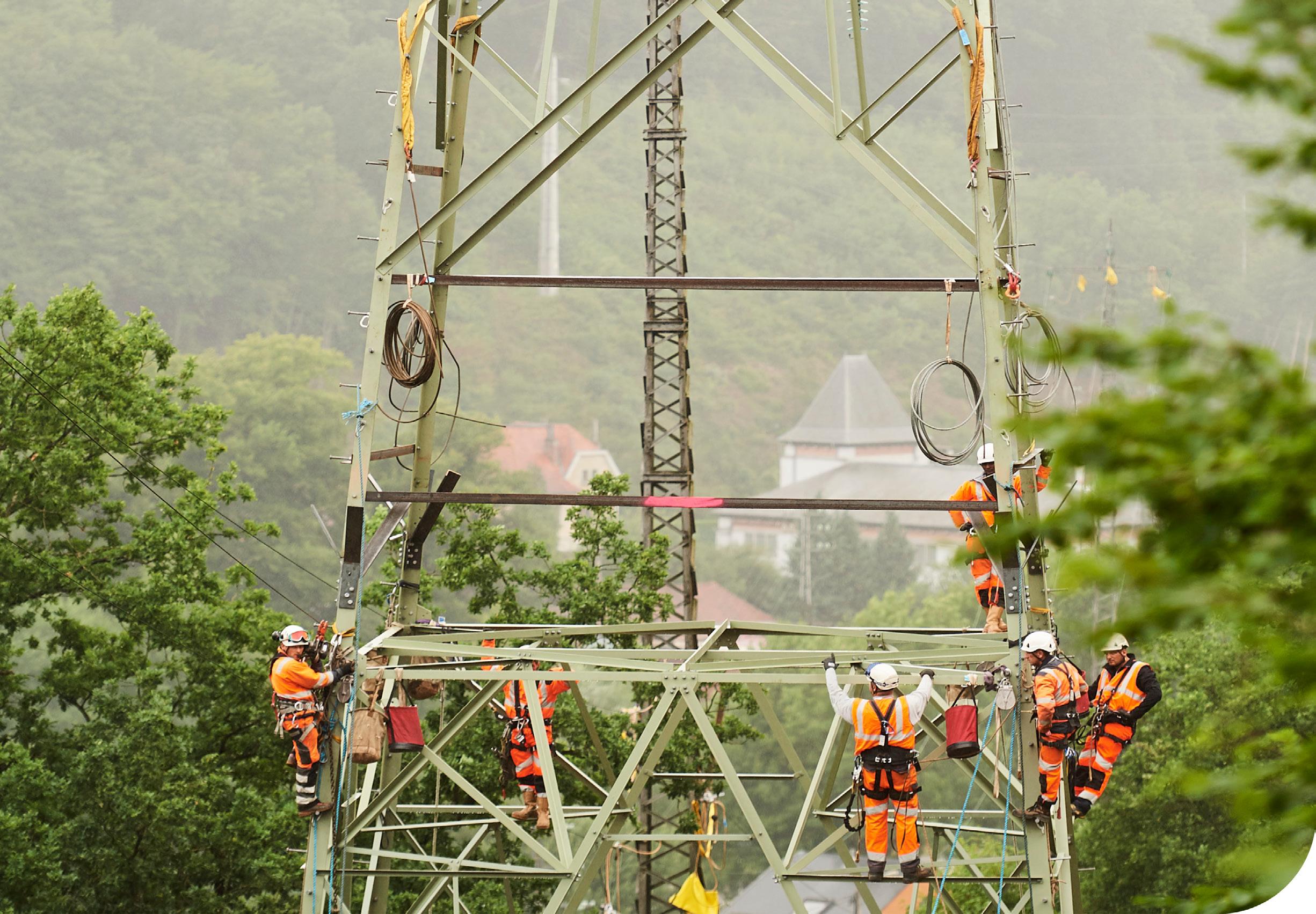
Vision
Mission
A world where everyone can access affordable and sustainable power.
Driving the energy transition by designing, building, operating, and advising on reliable, cost-efficient, and future-proof power systems across borders and sectors.
4.2. Our strategy
Our previous strategy of being one of Europe's top five TSOs evolves into becoming an international energy group specialising in transmission systems.
Drive the energy transition as a frontrunner TSO in our home countries
Changing operating context
—Rising societal expectations
—Competition for funds and human resources
—Affordability concerns
—Geopolitical shifts
Elia Group is evolving from a dual-TSO structure into a fully integrated international energy group specialising in transmission systems. In a fast-changing energy landscape, we continuously seek solutions to create value and advance the energy transition.
set us up to...
—Operational expertise in energy systems
—Multinational footprint (BE, DE, international)
—Financial structures
Develop transmission grids and provide pioneering consulting services outside our home markets
4.3. Sustainability at the heart of our strategy
Our ActNow programme embeds sustainability into our business strategy and all activities of our entities by establishing clear, measurable objectives for Elia Group to achieve - which are implemented through entity-specific actions. As shown in the figure below, ActNow comprises five dimensions, each guided by the UN Sustainable Development goals.
Climate Action Environment & Circular Economy Health & Safety
Diversity, Equity & Inclusion
Business Conduct & Dialogue
01 02 03 04 05
We enable the decarbonisation of the electricity system while also reducing our carbon footprint.
We minimise the environmental footprint of our activities.
We ensure the health, safety, and wellbeing of our employees and contractors.
We create a diverse and inclusive working environment and offer equal opportunities for all staff. We future-proof our organisational structures and conduct our daily activities responsibly and ethically, maintaining close engagement with society.
In 2025, Elia Group reached a number of significant ActNow milestones
Aligned with our ActNow roadmap, we set a Scope 3 emissions intensity reduction target and initiated the process of obtaining validation from the Science Based Targets initiative (SBTi) by signing an official commitment.
Elia Transmission Belgium significantly expanded the scope of its ISO 14001 environmental management certification from 5 to 18 sites. Meanwhile, 50Hertz not only successfully renewed its certifications for occupational health and safety (ISO 45001) and environmental management (ISO 14001), but also achieved ISO 50001 certification for its energy management system. This new certification underscores our commitment to energy efficiency across operational sites and, to create synergies, has been fully integrated into our existing environmental and health and safety management systems, resulting in a robust and unified management framework.
Both TSOs within Elia Group also successfully issued bonds under the new EU Green Bond Standard in 2025, becoming first movers in their respective home countries, Belgium and Germany. These landmark transactions reflect our continued commitment to sustainable finance. They are not only an evidence of our sustainability strategy, but also of the Group’s ability to mobilise high-quality capital aligned with Europe’s decarbonisation objectives and represent a major milestone in supporting the energy transition.
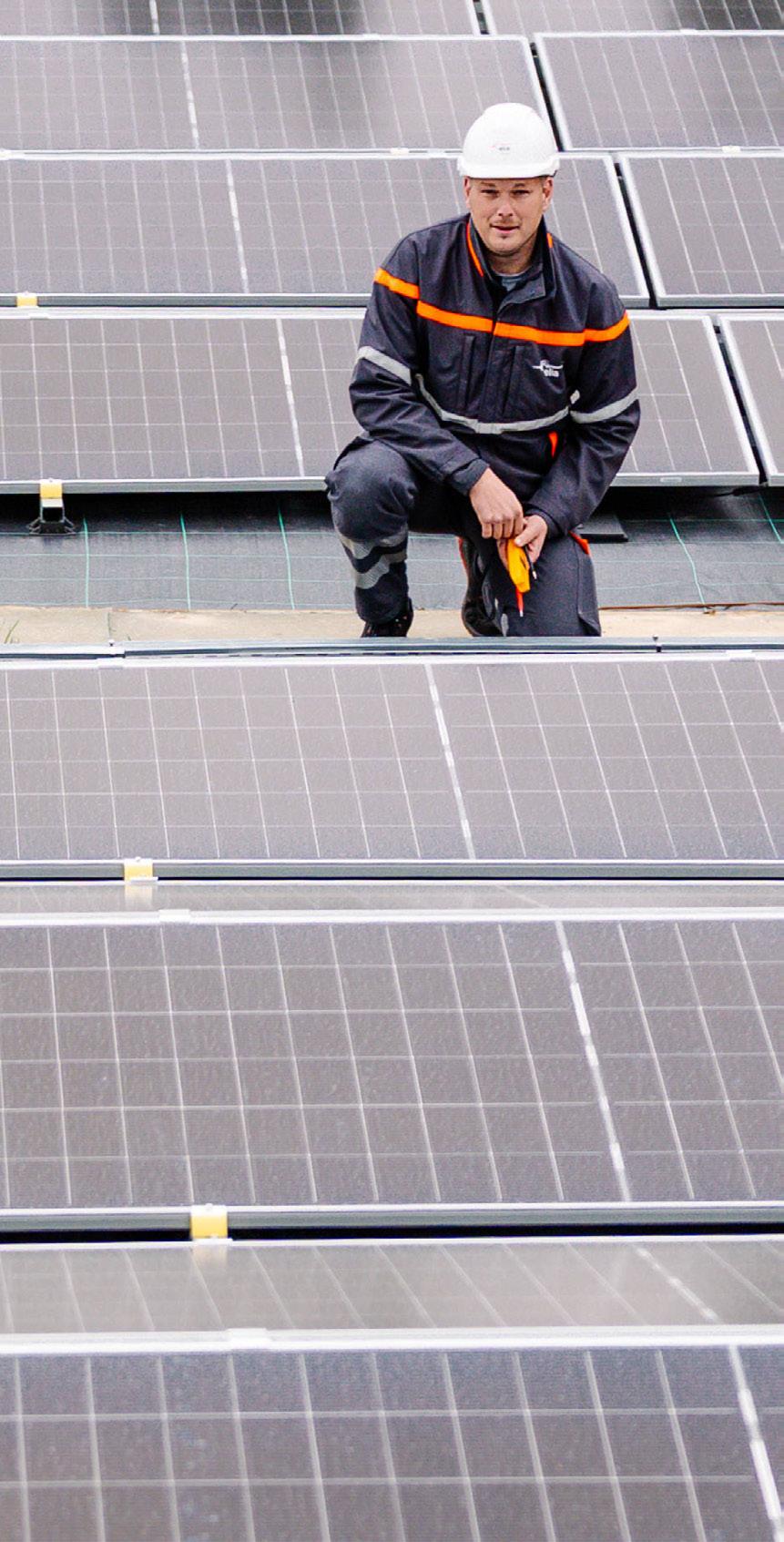
“Because sustainability is woven into every part of our strategy and daily operations, we remain deeply committed to delivering on our ambitions. The growing emphasis on resilience, energy sovereignty, and affordability does not weaken our ActNow journeyit strengthens it. These evolving challenges push us to innovate, rethink boundaries, and find new ways of advancing our sustainable strategy while striking the right balance across all dimensions of sustainability.”
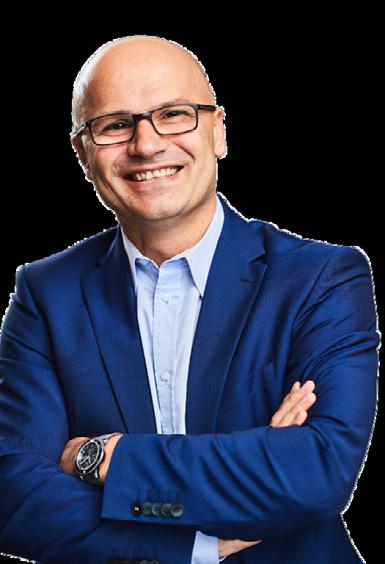
Olivier Feix Head of Group Strategy
We connect generation and consumption
Generation
Renewable energy
Conventional
Presence across the value chain
Governments & regulators
Shareholders/inverstors Press/ general public European system operator
Stakeholders
Electricity generators (classic or renewable)
Services suppliers such as consultants or software Manufacturers of grid equipment and related supply chain
System operation Transmission operation
Employees
Engineers, technicians, data analysts, project managers, support staff… Executives and leadership
Responsible for strategic planning, decision-making, and overall TSO operations
Upstream activities
—Education of labour force
—Generation of electricity
—Provision of ancillary services and congestion management services
—Manufacturing electricity grid assets
—Logistics and transportation
—Reinsurance
Own operations activities
—Operating the electricity system
—Developing and managing the electricity transmission grid infrastructure onshore and offshore
—Facilitating the electricity market
—Selected trusteeship activities
Downstream activities
—Distribution of electricity
—Consumption of electricity
—Generation of electricity
—Activities in other energy sectors (gas, heat…)
—Recycling of material


5.1. Our business model
Input Financial
–Revenues from DSOs, clients who are directly connected to our grid, energy traders, end consumers, and third parties
–Financing means through shareholders, investors, and financial institutions
Assets
–Onshore and offshore assets, including lines, cables, substations, and interconnectors
–Business, industrial, and storage sites
Intellectual
–TSO licences
–Knowledge about the energy sector, past studies, and research
Employees & contractors
–Expertise in a wide range of areas, from grid development through to legal and regulatory environments
–Diverse workforce gives us strength and ensures innovation
Society & relationships
–Information from peers, partners, and networks about energy flows within and across borders
–Community interactions at early stages of our grid projects
Environmental
–Natural landscapes, fauna, and flora
Output

–We draw on raw materials such as copper and steel throughout asset lifecycles
group association memberships
Financial
–Socioeconomic prosperity is generated for local communities
–The returns we make are reinvested to increase our financial strength
Assets
–Our grid and assets are made more resilient, efficient, and sustainable
Intellectual –Knowledge and expertise that is acquired as a result of business experience, training, and network collaboration is shared across the whole of the organisation
Employees & contractors
–Deepened expertise and skills in a wide range of areas, from grid development through to legal and regulatory environments
–Diverse workforce gives us strength and ensures innovation
Society & relationships
–Keeping the lights on around the clock, providing society with a reliable electricity supply
–Strengthened brand reputation that reinforces our partnerships
Environmental
–Biodiversity aspects are addressed through mitigation and compensation measures
–We measure and are working on reducing our corporate impact on the climate
5.2. The resources we rely on
Known as the ‘capitals’ under the <ir> framework (see ‘glossary’), we rely on the following six resources (input) to undertake our activities.
Financial resources
We depend on cash flow financing from a number of sources, such as:
Revenues from:
—DSOs and other parties that have access to our grid;
—clients who are directly connected to our grid;
—energy traders, for energy volumes imported or exported;
—end consumers, supplied via grid tariffs;
—third parties, for consultancy and other energy-related services.
Financing means:
—shareholders and investor base;
—debt investors;
—financial institutions. We are also responsible for processing financial flows (as part of our role as trustees in Belgium and Germany).
Assets
We source and use the following manufactured assets:
—electricity assets and infrastructure, including our grid, substations, lines, and cables;
—technology, from heavy machinery through to digital devices;
—business, industrial, and storage buildings and sites;
—construction tools and equipment;
—public infrastructure and private facilities such as waste treatment plants.
Intellectual resources
The collective intellectual capital that our organisation holds includes:
—our TSO licences, which give us the mandate to operate in Belgium and Germany;
—our past studies and research, which have allowed us to accumulate an in-depth understanding of specific areas related to energy systems;
—our processes, methods, and systems, which ensure quality and uniformity in the way we approach our work.
Employees & contractors
Our skilled workforce, alongside the contractors we hire, hold knowledge and expertise in a wide range of areas, such as:
—the legal and regulatory environments we work in;
—social, political and technological trends;
—(European) energy markets;
—financial, risk and project management;
—cutting-edge technologies and digital tools;
—consumer and societal needs;
—stakeholder engagement
Society & relationships
We foster close interactions with society, engaging with our stakeholders on a regular basis. Examples of the stakeholder input that we rely on include:
—near-constant updates and information related to energy flows within and across borders;
—future electricity needs and socioeconomic changes;
—knowledge and understanding of technical, energy market, and digital changes and innovations;
—knowledge and expertise to help shape our studies, research papers and grid development practices;
—local needs and expectations, to design and build our grid in line with the interests of society.
Environmental resources
As we design and build our grid assets, we use the following natural resources:
—raw materials, including water, minerals, metals, gases, and wood;
—landscapes and habitats, including farmland, forests, and marine environments.
5.3. Our business activities
Dimension
Owning
Value-creating growth for the benefit of Consumers & Stakeholders
Infrastructure Design & Construction
We design and build future-proof assets that enable electrification and a secure grid
Infrastructure ensures the design and delivery of assets that enable electrification, integrate renewable energy, and maintain grid security in Belgium and Germany as we move towards net zero. The focus is on three activities:
—Project clustering – Grouping projects based on feasibility, asset condition, and future system needs.
—Design & permitting – Planning and designing projects, securing permits, and engaging transparently with stakeholders to identify optimal solutions in terms of technology, routing, and the environment.
—Construction & delivery – Overseeing execution through strong governance to ensure projects are completed on time, within budget, and to high standards, while managing risks and supply chain challenges.
These activities are guided by a commitment to health and safety, asset quality, cost efficiency, regulatory compliance, sustainability, and early stakeholder engagement, ensuring the delivery of a resilient and future-proof electricity network.
We take responsibility, stewardship, and accountability for the grid assets we hold
Owning at Elia Group is rooted in the understanding that ownership carries an obligation to act responsibly and transparently for society. We focus on ensuring that Elia Group’s transmission assets are managed effectively from financial, legal, and strategic perspectives. The core tasks include:
—Asset ownership management – Overseeing legal compliance, asset registration, and ownership documentation for transmission infrastructure (lines, cables, substations, interconnectors, and offshore assets).
—Value preservation & enhancement – Safeguarding asset value by ensuring appropriate insurance, protection against risks, and exploring opportunities for upgrades or repurposing.
—Stakeholder & regulatory engagement – Coordinating with stakeholders, regulatory bodies, and authorities to ensure ongoing compliance, licence renewals, and integration of new assets.
These activities ensure that our responsibilities as owners are fully met, supporting accountability, transparency, and the creation of sustained value for the transmission grid throughout its lifespan.
System Planning
We plan a reliable, renewables-ready grid of the future
System Planning ensures the integration of renewable energy, supports fast-paced electrification, facilitates security of supply in Belgium and Germany - and more widely across Europe - and makes market design recommendations to support these changes. The focus is on three activities:
—Scenarios - Identifying and investigating future energy system scenarios based on societal and infrastructural changes.
—Grid & system planning - Developing robust and costefficient grid investment plans to ensure the grid meets societal needs and allows for reliable operations.
—Adequacy studies - Assessing generation, storage, and reserve capacity, and advising governments.
These activities are shaped by a focus on electricity network availability and reliability, taking into account the changing energy landscape; by the proactive planning and buildout of our grid to meet societal demands on time; and by engaging with stakeholders in a transparent manner to ensure recommendations are effective and efficient.
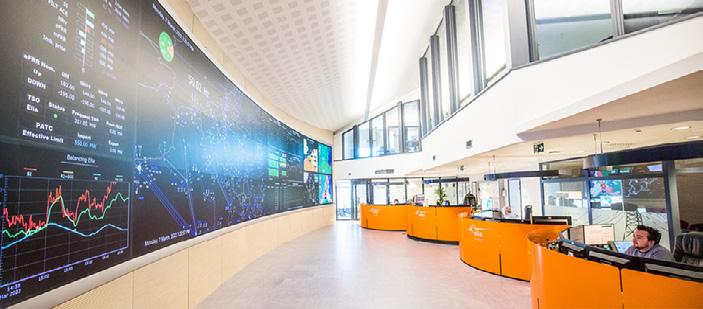
Energy Consulting
We are a global consultancy specialising in transmission systems and addressing the challenges facing the energy industry
Elia Grid International (EGI) is Elia Group’s global engineering and consultancy arm, delivering expert solutions for complex power system challenges beyond our home markets. Drawing on expertise, state-of-the-art solutions, and innovative know-how from our core business, we provide strategic, technical, and regulatory guidance across all aspects of power transmission.
We support system operators and energy players worldwide with cutting-edge expertise in system integration and innovation, helping them accelerate the transition to smarter, more resilient electricity systems. With offices in Belgium, Germany, the United Arab Emirates, Saudi Arabia, Canada, Malaysia, and the United States of America, we operate in over 20 countries, bringing our expertise to clients worldwide.
Reliable, sustainable, and efficient Operations & Digitalisation Grid Operations & Maintenance
We ensure a reliable and resilient grid through smart monitoring and maintenance
Grid Operations & Maintenance ensures the safe, reliable, and efficient functioning of the transmission system to meet the needs of users. The focus is on three activities:
—Asset tracking – Monitoring the condition, performance, and risks of overhead lines, cables, substations, interconnectors, and offshore assets throughout their lifecycle.
—Asset management – Optimising asset use and lifespan, managing costs and risks, and ensuring compliance with sustainability and regulatory requirements.
—Asset maintenance – Performing preventive and corrective maintenance using innovative tools and digital technologies, such as AI-driven predictive maintenance, to avoid outages and swiftly address incidents.
These activities are guided by a focus on asset and workforce flexibility, attracting talented and skilled staff, and implementing smarter and automated operational procedures, tools, and systems.
System Operations
We keep the lights on around the clock by ensuring system stability and reliability
System Operations ensures the continuous balance and stability of the electricity grid, keeping the lights on for more than 30 million people across Belgium and Germany.
The focus is on three activities:
—Balance management – Maintaining real-time equilibrium between electricity supply and demand across our control areas.
—System stability – Managing voltage levels, relieving congestion, and enabling safe maintenance and construction work, while connecting new customers.
—Emergency response – Responding swiftly to incidents to prevent cascading effects and ensuring operational resilience in an increasingly complex system. These activities are driven by cost and process efficiency, regulatory compliance, transparent coordination with TSOs and DSOs, and the use of innovative digital tools to manage growing complexity and integrate renewable energy.
Market Facilitation
We drive market design and integration to enable renewables and empower consumers
Market Facilitation focuses on establishing an integrated European energy market that strengthens security of supply and delivers fair prices for consumers. This approach helps maintain a robust and affordable balance between supply and demand across our control areas. The focus is on three activities:
—Market design & advocacy – Advocating for a stable framework that attracts investment, supports electrification, and enables the integration of renewables and flexible demand.
—System services – Expanding and improving markets for balancing and ancillary services by integrating new types of assets, and ensuring liquidity and efficiency.
—Market integration – Driving the coupling of national and European markets to enhance cross-border electricity flows, improve security of supply, deliver fair prices for consumers, and enable consumers to maximise the value of their flexible appliances.
These activities are guided by a commitment to regulatory compliance, consumer empowerment, and the adoption of innovative digital solutions, ensuring that markets evolve in line with the energy transition.
Additionally, Trusteeship ensures the application and processing of legal levy systems that promote environmentally friendly technologies on behalf of legislators. Our role as trustee involves collecting levies and remunerating producers of electricity generated by renewable energy sources, certain combined heat and power plants, and capacity-providing market participants.
03
Healthy and performing People, Organisation & Culture
Human Resources
We build capabilities and careers for a sustainable energy system
HR ensures that Elia Group attracts, develops, and retains the talent needed to drive the energy transition. The activities we focus on are:
—Recruitment – Hiring skilled professionals and enhancing onboarding through the Elia Group Academy to ensure a smooth integration.
—Performance management – Supporting employees in achieving strategic goals and fostering a culture of growth.
—Learning & development – Providing training in technical skills, safety, and strategic topics such as offshore development, leadership, and diversity, equity, and inclusion (DEI), alongside mentoring programmes to accelerate career development.
By investing in people and skills, HR ensures that our workforce is equipped to meet future challenges and deliver on the Group’s strategic ambitions.
Innovation
We turn challenges into opportunities with breakthrough innovation
Innovation ensures that Elia Group remains at the forefront of technological progress, addressing the challenges of
the energy transition and turning them into opportunities. The activities we focus on are:
—Research & development – Investing in emerging technologies such as AI, cybersecurity, robotics, drones, sensors, and new materials to develop solutions that strengthen our core business.
—Moonshot programme – Driving breakthrough innovations to tackle the most pressing challenges in the energy sector, such as optimising complex offshore assets, by setting measurable goals and delivering visionary solutions within accelerated timeframes.
—Collaboration & ecosystems – Partnering with industry peers, academic institutions, start-up and scale-up ecosystems to share knowledge, conduct research, and shape Europe’s energy future. We foster learning and speed up adoption through innovation ecosystems such as InterOPERA and our academic boards in Belgium and Germany.
—Employee-driven innovation – Cultivating an innovative culture and empowering staff to contribute ideas through our internal incubator (The Nest), supported by agile coaches and developers to enable rapid implementation.
By investing in cutting-edge technologies and fostering collaboration, Innovation ensures that Elia Group is equipped to deliver a reliable, sustainable electricity system and achieve its strategic ambitions.
Digital Transformation
We empower agility, quality, and efficiency through digital solutions
Digital Transformation ensures that Elia Group leverages technology and agility to streamline operations, drive innovation, and deliver value to customers. The activities we focus on are:
—Embedding digitalisation & agility – Laying the foundations for transformation by integrating digital practices and agile ways of working across the organisation.
—Product operating model – Bringing together business and IT specialists in cross-functional teams to deliver digital solutions that create value for both internal and external customers.
—Governance & strategy – Setting clear digital goals through the Digital Committee, with oversight from Elia Group’s Management Board, to ensure alignment with the Group’s strategic ambitions.
—Cultural shift & talent attraction – Driving a change in mindset to foster innovation and attract skilled professionals who will accelerate the Group’s digital journey.
By embracing digitalisation and agility, Digital Transformation ensures that Elia Group is equipped to operate efficiently, innovate continuously, and meet future challenges.
Strategy
We shape the future through strategic foresight, proactive collaboration, and balanced focus Strategy identifies emerging challenges and growth opportunities, continuously refining Elia Group’s direction to align with societal needs and company priorities, while balancing major strategic priorities with day-to-day responsibilities. By analysing trends, scanning the horizon, and translating key insights into five-year business roadmaps, the department operationalises the strategy, drives transformation programmes, supports informed decision-making, and strengthens resilience to political, legal, social, and technological changes. Key areas of focus include:
—Leveraging synergies across the Elia Group ecosystem to support affordability and foster competitive international growth.
—Advancing the international strategy by expanding consultancy services (EGI), driving project development (WindGrid), and collaborating with financial partners.
—Proactively managing strategic partnerships and driving cross-company transformation initiatives to ensure the long-term performance of the Group and its entities.
Through these activities, Strategy ensures that Elia Group addresses critical topics, balances strategic ambition with essential operations, and remains prepared for future developments.
Communications
We connect and build trust through clear, consistent, and accessible communication
Communications builds trust and engagement by sharing clear information, managing Elia Group’s reputation, and strengthening relationships with employees and stakeholders. Through internal updates and events, external transparency on projects, and proactive collaboration with partners, Communications ensures that Elia Group’s purpose and activities are understood and embraced.
04
Strong and robust Finance & Performance Legal
We safeguard the transition through clear, reliable legal expertise
Legal provides teams with timely and practical advice, ensuring that Elia Group’s activities comply with all relevant legal and regulatory requirements in the various jurisdictions in which it operates. Legal also supports teams in managing different types of contracts, helps staff understand legal and regulatory changes that might impact Elia Group, guides teams through permitting procedures, and handles any legal issues or questions that may arise.
Procurement
We secure the energy transition through resilient, strategic procurement
Procurement is driving a strategic transformation to generate long-term value for Elia Group by building a resilient supply chain that supports the energy transition, while taking into account the trilemma of affordability, security of supply, and sustainability.
In 2025, significant progress was achieved across four priority areas:
—Category strategy – Aligns critical purchases with harmonised sourcing priorities to optimise cost efficiency, while ensuring sustainability and security of supply.
—Data analytics – Provides spending visibility and forecasting to support cost control and sourcing plans.
—Supplier Relationship Management (SRM) –Strengthens collaboration with suppliers to secure pricing and supply in an increasingly complex and supplier-driven market.
—Contract & claim management – Applies unified frameworks and tools to improve compliance and financial predictability.
Looking ahead, Procurement will continue to expand these initiatives by rolling out category strategies across all major spend areas, scaling analytics capabilities (including AI), and fully implementing SRM and contract management frameworks and tools to elevate supplier management. These efforts position Procurement as a key contributor to Elia Group’s strategic objectives and will generate long-term shareholder value.
Finance
We power the transition through robust, responsible financing
Finance ensures that Elia Group has the funding and financial stability needed to support daily operations and long-term investments that drive the energy transition. Our work focuses on:
—Treasury & liquidity management – Securing the necessary funding to maintain liquidity and support our investment programme.
—Accounting, controlling, & risk management – Ensuring efficiency, compliance, and value creation, while maintaining a solid risk profile.
—Sustainable financing – Aligning our funding strategy with ActNow and the EU Taxonomy through green finance frameworks, such as EU Green Bonds, directing investments towards projects with clear environmental objectives.
—Financial performance & credit strength – Safeguarding strong financial performance and maintaining a robust credit rating to ensure continued access to capital for our investment programme.
By combining robust financial practices with sustainability commitments, we remain a trusted partner for stakeholders and an attractive investment for the market.

5.4. The output of our activities
Financial resources
Our investors provide the capital that enables Elia Group to pursue its long-term investment programme supporting the decarbonisation and electrification of society. This regulated framework offers stable value creation over time while ensuring efficient access to funding. Those who finance us through our funding instruments benefit from the resilience and predictability embedded in our business model.
Assets
In carrying out our activities, our grid and assets are enhanced and rendered more resilient, efficient, and sustainable. This enables them to support the integration of rapidly growing amounts of renewable energy into the system and to meet society demands for electrification. They are designed to be more resilient to the effects of climate change, while carefully limiting their impact on both onshore and offshore environments. We encourage the development of different assets through our work, as our teams continuously identify useful technologies that could be deployed to meet new and increasing system requirements.
Employees & contractors
Our activities facilitate the development of our staff, enabling them to refine and deepen their skills and knowledge across a wide range of areas. Elia Group’s employment of subcontractors further supports this, facilitating the exchange of new skills and best practices among organisations and across the sector. Our staff need to keep expanding their skill set, which is a challenging task given their demanding responsibilities. We seek to manage this by putting clear health and safety measures in place.
Society & relationships
We provide society with a secure and reliable grid, integrating renewable energy resources (RES) into the system and supporting socioeconomic prosperity. We regularly interact with stakeholders to ensure that the positive impact of our activities can be maximised, to minimise risks and interruptions to the system, and to enable actors to respond to technological, capacity, and flexibility needs. Our grid projects can invite local resistance, so we address their concerns and limit possible harm to communities and landscapes.
Intellectual resources
The knowledge and skills developed within each of our subsidiaries are shared across teams and departments, ensuring that our collective expertise, organisational processes, and systems are continuously refined and harmonised. This collective knowledge places Elia Group at the forefront of technological development in several areas.
Environmental resources
Our infrastructure projects can cause harm to the environments in which they are constructed, which can trigger a need for broader maintenance works. However, we are strongly committed to limiting these effects by adopting innovative approaches, as well as implementing mitigation and compensation measures. We often work alongside local partners and nongovernmental organisations (NGOs) to ensure the measures are as effective as possible and can be scaled up.
In today’s dynamic business landscape, we have been tasked with paving the way for the decarbonisation of society and ensuring that our activities progress in line with the objective to net-zero.
To effectively navigate these challenges and opportunities, we have established three categories of key performance indicators (KPIs): financial, sustainable, and operational. These KPIs will serve as our guiding principles, helping us to take informed decisions that support our growth.
This performance chapter relates to our core TSO business activities, meaning that most of the KPIs include ETB and 50Hertz specifically. Values for ETB and 50Hertz are either presented separately or consolidated for the Group by combining the two figures. As we work on establishing a ‘one Group, one mindset’ approach, some KPIs relate to one or more of our entities. These are highlighted throughout the accompanying notes.
4
6.1. Financial performance KPIs
As we navigate the challenges of the present while charting a course towards a sustainable future, our financial performance acts as a vital compass for our activities. Robust financial performance remains crucial for attracting the necessary resources to fuel our expansion. Our financial stability will provide us with the capacity to roll out our CAPEX plan and will make our business attractive to potential investors and partners. This chapter explores three pivotal KPIs that encapsulate Elia Group's financial strategy. Please refer to the glossary for the definitions of the terms used. The numbers displayed are consolidated for Elia Group.
Analysing the trend
Elia Group's RAB experienced a 22.5% increase in 2025, driven by the realisation of our investment programme. Over the next three years, we expect an annual RAB growth of over 20%. This growth will be driven by a €21.6 billion capital expenditure (CAPEX) plan in both regulated markets.
Analysing the trend
Despite the issuance of 35.6 million new shares in connection to the €2.2 billion capital raise in 2025, EPS increased by 1% driven by 32.1% year on year net profit growth. Given the investment plans we have in place at ETB and Eurogrid over the next years, we expect the net profit Elia Group share to experience a compound annual growth rate of around 20%, based on current interest rate projections starting from year-end 2023 until yearend 2028. In addition, we anticipate that we will achieve a double-digit level of growth in EPS since year- end 2023 to year-end 2028.
Analysing the trend
Elia Group reported an ROE (adj.) of 7.3%. For 2026, Elia Group anticipates that the net profit of Elia Group share will range between €690 million and €740 million.
6.2. Sustainable performance KPIs
As ActNow makes clear, our work on sustainability extends beyond the decarbonisation of the power sector. We are committed to making our activities carbon neutral, making our business processes more sustainable, and establishing a diverse workforce with a high level of wellbeing that is supported by clear organisational structures and procedures. This will enhance our work in the interest of society, strengthen our workforce, and demonstrate to stakeholders that we are a partner worth investing in. The following KPIs therefore track the progress we have made on 13 sustainable performance KPIs.
SF6 leakage rate
Scope 1 emissions
Scope
Analysing the trend
The use of SF₆ as an insulating and extinguishing gas is essential for the operation of many of our assets due to its excellent electrical properties. However, the global warming potential of SF₆ is 24,300 times higher than that of CO₂. Therefore, Elia Group is striving to minimise SF₆ leakage and reduce its usage in new assets. By 2026, we aim to keep the consolidated SF₆ leakage rate below 0.2% -a more ambitious target that builds on our achievement of staying well below the previous threshold of 0.25% in 2030.
In 2025, Elia Group’s SF₆ leakage rate remained stable at a very low level, demonstrating the success of our efforts to minimise emissions. ETB achieved a slight reduction in its leakage rate compared to 2024, thanks to ongoing SF₆ reduction initiatives and close monitoring of all active SF₆ compartments. At 50Hertz, SF₆ leakages remained at the same very low level as in 2024. We continue to monitor the tightness of several switchgears closely, many of which were improved last year.
Analysing the trend
At 50Hertz, Scope 1 emissions decreased slightly in 2025, driven by the two main factors: SF₆ losses declined moderately and car fleet emissions have likely reached their peak. The increasing share of electric vehicles is expected to drive further reductions by 2030.
ETB’s main direct emissions - from both SF₆ and fossil fuels used by the car fleet - decreased compared to 2024. Although the installed volume of SF₆ continues to rise, ongoing improvements in leakage management have reduced absolute SF₆ emissions. Over the past year, fossil fuel consumption by company cars dropped by 50% due to advanced fleet electrification. However, this progress was partly offset by increased consumption from the utility fleet, which now includes more vehicles and for which electrification will only begin in 2026. Despite this, total Scope 1 emissions at ETB decreased by 10% in 2025.
Analysing the trend
Scope 2 emissions in 2025 further decreased at 50Hertz and increased slightly at ETB. Favourably, and contrary to expectations, grid losses - which account for more than 95% of Scope 2 emissionscontinued to decrease slightly in both Belgium and Germany.
However, the previous downward trend in powermix emission factors for Belgium and Germany did not continue. This was due to a lower nuclear contribution to electricity generation in Belgium and unfavourable weather conditions affecting wind, hydro, and biomass generation in Germany. Additionally, own electricity consumption increased slightly in both countries as a result of continued operational expansion.
Biodiversity: High-voltage lines identified as critical for birds equipped with anti-collision devices
Biodiversity: Ecological corridors implemented in forests (based on ETB projects)
Biodiversity: Ecological corridors implemented in forests (based on maintenance performed by 50Hertz)
Analysing the trend
Bird protection remained high on our priority list in 2025, and we continued our efforts to equip the most exposed power lines in our network with anti-collision devices. A notable achievement in 2025 was the installation of bird-protection markers on an overhead line in a bird-sensitive area of Brandenburg in eastern Germany. In both Germany and Belgium, we installed bird markers along 28 km of our lines in 2025.
Analysing the trend
In 2025, we continued to create new ecological corridors in Belgium by adapting the vegetation in our forest corridors. Following the initial intervention, the vegetation is managed ecologically. Over 40 new hectares were developed beneath existing overhead lines. By 2030, we aim to expand our ecological corridors programme to cover 90% of the areas under our overhead lines. We are on track to reach that target.
Analysing the trend
The ecological corridor management approach is our maintenance concept for the safe operation of our overhead lines in forest areas, taking ecological aspects into account. In 2025, numerous forest corridors in Germany were also managed using this ecological approach during maintenance activities, in consultation with landowners and authorities. This is based on the strong awareness of our employees and our close cooperation with contractors.
Total Recordable Incident Rate (TRIR) of employees
Analysing the trend
In 2025, Elia Group maintained a TRIR of 3.4, remaining well below the current limit of 6.15 and aligned with the further reduced target of 5.20 by 2030. This performance highlights the effectiveness of our safety initiatives. As construction activities and high-risk projects continue to increase, we remain committed to ongoing safety enhancements. Safety is a core component of our ActNow sustainability programme, with projects and action plans focused on minimising health and safety risks, and reducing accidents, while the Elia Group workforce continues to grow.
Analysing the trend
Elia Group's annual target is to keep the health rate above 95%. In 2025, we achieved a rate of 96.6%. This is one of the best results recorded over the years, and it is well above our target and the industry average. The improvement compared with 2024 is driven by a decrease in long-term absence. We continually invest in our employees' wellbeing and remain committed to this, especially given the challenges posed by our significant investment plans and digital transformation ambitions. Mental health and wellbeing are integral to the ActNow sustainability programme, and are included in the global prevention plan and annual safety action plans.
Analysing the trend
Employee turnover remains very low and slightly decreased, despite a year in which more than 750 employees were onboarded. To ensure our new employees feel welcome and are well prepared for their roles, we provide an intensive onboarding journey (both at ETB and 50Hertz) that covers strategy, culture, and safety, among other topics. For all employees, we offer numerous development and growth opportunities, including a robust training programme through our "My Academy" platform, internal mobility options, and mentoring. We have also set up communities at ETB, which offer newcomers the opportunity to meet other newly engaged colleagues. Moreover, the newly appointed members of management frequently meet with newcomers to gather their feedback and first impressions.
Analysing the trend
The share of women in leadership rose to 26.7%, compared with 23.5% in 2024. This increase was achieved entirely at 50Hertz, with more than a 5%-point rise in the number of senior managers and the appointment of an additional female Executive Committee member (the new CFO). At ETB, we observed a slight decrease. Across Elia Group, we continue to support our female colleagues in fully developing their potential through role modelling, coaching, mentoring programmes, and a women’s network, at both employee and management levels.
Analysing the trend
The share of women employees in 2025 reached 26.1%, already exceeding our 2028 target of 25%. The increase compared with 2024 was driven by a strong female recruitment inflow of 34%. This progress reflects the impact of several initiatives: positioning ourselves as an attractive employer for women, participating in forums frequented by potential female candidates, using gender-inclusive language in job postings, among others.
Elia Group
Environmental EU taxonomy-aligned
ESG rating
Analysing the trend
Electricity transmission is a key activity enabling the energy transition. As this activity lies at the core of what Elia Group does, our alignment percentage is consistently very high. The share of aligned CAPEX is once again strong this year and is expected to remain at a similarly high level in the coming years. Full details can be found in the EU Taxonomy section of the Sustainability Statements.
Analysing the trend
Elia Group has maintained its AAA MSCI ESG rating - the highest possible score - reflecting strong management of environmental, social, and governance risks. MSCI highlights Elia Group’s leading biodiversity and carbon management practices, robust talent development, strong governance, and the absence of material controversies, positioning the company among the top performers in the global utilities sector.

6.3. Operational performance KPIs
We develop and construct robust, reliable, and innovative grid infrastructure that provides millions of consumers with electricity and will help our home countries to reach net zero. We harness the skills and expertise we have developed in Europe and apply them in new markets, thereby driving forward the energy transition abroad as well. Our high level of operational performance and sector-specific knowledgeillustrated by the 10 operational performance KPIs below - makes us an attractive partner for other TSOs, governments, NGOs, and beyond.
Grid reliability (based on interruption time)
Applies to Elia Transmission Belgium (30-380 kV)
Grid reliability (based on number of incidents)
Applies to 50Hertz (220-380 kV)
Total investments
Length of new and upgraded lines
In 2025, ETB maintained a high level of grid reliability. One major incident had a significant impact on the annual grid reliability value, accounting for more than half of the interruptions recorded this year. While it is not possible to forecast incidents, we strive to reduce interruptions completely.
In 2025, 50Hertz maintained stable, high levels of grid reliability. 50Hertz experienced fewer onshore incidents compared with 2024. Some defects were identified and addressed preventively during inspections, avoiding any potential disruptions.
The total investments are presented as gross CAPEX of Elia Transmission Belgium and 50Hertz, reduced by client contributions. CAPEX is an important metric for the Group, since it affects the RAB that serves as a basis for its regulatory remuneration. In 2025, Elia Group invested a total of €5.2 billion, predominantly in grid infrastructure. For the period 2026-2028, Elia Group plans to invest €21.6 billion across our regulated markets in Belgium and Germany.
In Belgium, a total of 122 km of new and upgraded lines were completed in 2025, encompassing both new overhead lines and the reinforcement of existing lines with hightemperature low-sag (HTLS) conductors. The largest project in 2025 was the HTLS reinforcement of the Massenhoven–Meerhout line, covering two circuits over a distance of 32 km. A total of 128 km of reinforcements and new links are planned for 2026. In Germany, the length of new and upgraded lines for 2025 amounted to 188 km and included key projects such as Güstrow–Wolmirstedt and Pulgar–Vieselbach. This is significantly lower than in 2024, when the big offshore projects Ostwind 2-2 and Ostwind 2-3, with a combined circuit length of over 170 km, as well as 253 km of onshore projects, were placed into operation.
Renewable energy share in electricity consumption across our grid areas
Connected offshore generation capacity
Cost of congestion management (redispatching) Congestion management volumes (redispatching)
Analysing the trend
In Belgium, the renewable energy share increased to 28% compared with 2024, mainly driven by higher generation and stable electricity consumption. In particular, photovoltaic generation increased by 21%, thanks to the very high levels of sunshine. Despite the phase-out of three reactors this year, nuclear power still accounted for 34% of Belgium's electricity generation mix.
In the 50Hertz area, electricity generated from renewable energy sources accounted for 74% of electricity consumption. The share increased slightly compared with previous years, as overall electricity consumption decreased modestly while renewable energy generation remained at the same level. The growth in installed renewable capacity did not translate into higher generation due to unfavourable wind conditions throughout the year.
Analysing the trend
50Hertz continued to make significant progress on its offshore connection projects. The cable-laying for Ostwind 3 was completed. 50Hertz reached a major milestone by installing the first offshore platform at its destination, marking the first time the company has led both its construction and operation. 50Hertz also awarded a contract for converter systems for the Bornholm Energy Island project. Belgium will expand its offshore capacity with the first phase of the Princess Elisabeth Island. Its construction is progressing well, with 11 of the 23 caissons installed as of 2025 and full completion expected by late 2026. The work on the AC infrastructure to connect the initial 2.1 GW of wind capacity is also underway. The project’s second phasefocused on the Nautilus hybrid interconnector, enabling additional wind integration into the Belgian grid - is under review by Belgian and UK authorities. Both countries are examining simpler, lower-cost design options while retaining most of the project's benefits.
Analysing the trend
Redispatch volumes and costs depend on multiple factors. At 50Hertz, the use of redispatch is based on nationwide grid dimensioning and is largely carried out at the request of all four German transmission system operators (TSOs). An expert network calculates a monthly share of the costs to be allocated to each TSO, taking into account the causal relationship to the forecast grid congestion per TSO. In 2025, the average cost share allocated to 50Hertz was higher than in 2024, driven by more frequent and impactful congestion within the 50Hertz area compared with both last year and the other TSOs.
At ETB, we managed to lower congestion management volumes and costs despite the very intense outage planning due to the CAPEX infrastructure and maintenance plan. Congestion costs at ETB are typically driven by specific planned outages in the network combined with particular system events. In 2025, the main effects were: a major maintenance plan on the Stevin axis transformers which required frequent offshore wind redispatching, while high summer temperatures also led to several redispatch activations due to lower asset thermal limits.
Hit rate for consultancy services
Revenues from external clients
(EGI)
(EGI, re.alto energy GmbH, WindGrid SA/NV, and WindGrid USA LLC consolidated figures)
2024 2023 2024 2023
Analysing the trend
The hit rate remained relatively stable compared with the previous year. We continued our strategy of focusing on standard proposals with strong client value and feasibility, as well as the diversification of our business into new markets and opportunities across different regions and customer segments.
Analysing the trend
Revenues from external clients increased compared with the previous year. The drivers were the growth in services supplied to energyRe Giga and the international consulting revenues at EGI.


7. Outlook for 2026
Strengthening energy sovereignty and competitiveness in a changing geopolitical landscape
Global power dynamics are undergoing a profound shift. Heightened geopolitical tensions continue to reshape the European energy agenda. At the same time, the rapid expansion of digital industries and AI is increasing the strategic importance of secure and affordable electricity as a foundation for Europe’s industrial strength. The energy transition has evolved from a climate-driven initiative to a central component of economic sovereignty and longterm resilience. As the EU prepares for its new legislative cycle, priorities are shifting towards effective implementation. Accelerated permitting, strengthened domestic manufacturing, and improved cross-border coordination are gaining relevance, supported by initiatives such as the Clean Industrial Deal and the Affordable Energy Action Plan.
Elia Group will contribute to Europe’s resilience and competitiveness by advancing cross-border and offshore infrastructure, facilitating the integration of more renewable generation, supporting industrial decarbonisation, and contributing to the evolution of wellfunctioning electricity markets.
Safeguarding system security in an increasingly complex environment
The complexity of the power system continues to grow as renewable generation expands, electrification accelerates, and new consumption patterns emerge through data centres and AI-driven industries. Recent incidents in several European grids have underscored the need to reinforce operational preparedness and ensure robust system reliability. The evolving threat landscape places greater emphasis on cyber security, physical protection of critical infrastructure, and secure, resilient supply chains. Meeting these challenges requires advanced operational tools, richer real-time insights, and close coordination with neighbouring system operators and security authorities.
Elia Group will strengthen physical and cyber security by deploying new operational capabilities, including the Modular Control Centre System, enhancing preparedness across system operations and developing reinforced protection concepts for critical assets in close cooperation with national and international authorities.
A diversified strategy to match the financial needs to develop the electricity system
The scale of investment required to deliver Europe’s energy transition continues to rise. In 2025, Elia Group reinforced its capital structure through a successful equity raise and sustained access to green financing, reflecting solid investor confidence in its long-term strategy. Regulatory stability in Belgium and Germany will remain essential to attract private capital as investment volumes stay high for onshore grid reinforcements, offshore developments, HVDC corridors, digital infrastructure, and market-enabling technologies. Predictable remuneration and a clear long-term framework will be key to ensuring the timely delivery of infrastructure and continued access to global capital.
Elia Group will maintain a balanced financing mix across equity, debt, and self-financing, while broadening its investor base through sustainable and innovative instruments. It will pursue a diversified financing strategy that leverages different funding instruments, attracts new categories of investors, and taps into additional financial sources from national and international institutions, ensuring efficient, on-schedule delivery of its investment programme.
Technology, flexibility, and digitalisation become core system enablers
As renewable generation increases, operating the electricity system becomes increasingly data-driven. Digitalisation and AI-supported operational processes enable improved forecasting, faster incident response, and predictive maintenance. New digital capabilities, including the Modular Control Centre System, strengthen operational resilience in an increasingly complex, decentralised, and interconnected system. Elia Group continues to develop innovative solutions such as offshore hybrid assets, multi-purpose power hubs, sector-coupling infrastructure, and flexibility platforms that enable broader participation from industrial and residential consumers. These solutions are essential for managing peak demand, integrate surplus renewable generation, and limit system costs.
Elia Group will expand its digital tools and capabilities, as well as its flexibility platforms, to enhance system efficiency and operational resilience.
Delivering a large-scale investment programme with quality and efficiency
Elia Group enters 2026 following the delivery of a record investment programme, a strengthened balance sheet, and growing trust from stakeholders. Supply-chain challenges continue to affect key components such as converters, cables, and digital equipment, reinforcing the need for early supplier engagement, standardised designs, and efficient project governance. Major projects are progressing through critical delivery phases, including the Princess Elisabeth Island and next-generation Belgian offshore infrastructure, the construction of HVDC corridors in Germany, and the completion of Ostwind 3. Elia Group is also expanding the use of digital twins, advanced asset-health monitoring, and predictive maintenance to enhance asset availability and reduce lifecycle costs.
Elia Group will continue focusing on delivering key grid projects safely, on time, and to high standards of quality, while maintaining strong alignment with stakeholders.
Timely integration of new customers and technologies into the grid with innovative concepts
Connection demand has increased rapidly across renewable generation, utility-scale storage, data centres, electrolysers, and electrified industrial processes. As production and consumption patterns become more dynamic, the grid connection process increasingly influences overall system performance. Faster, transparent, and predictable customer journeys will be essential to keep pace with electrification, while new technical requirements will ensure that connected assets contribute to system stability. These include demand-response capabilities, reactive-power support, and controlled curtailment. Clustering solutions and multi-purpose power hubs can streamline infrastructure development and enhance system efficiency, while local flexibility markets help alleviate congestion and defer costly reinforcements.
Elia Group will develop innovative connection concepts and new technical solutions to enable the timely integration of new customers and technologies, and support the rapid electrification of industry and households.
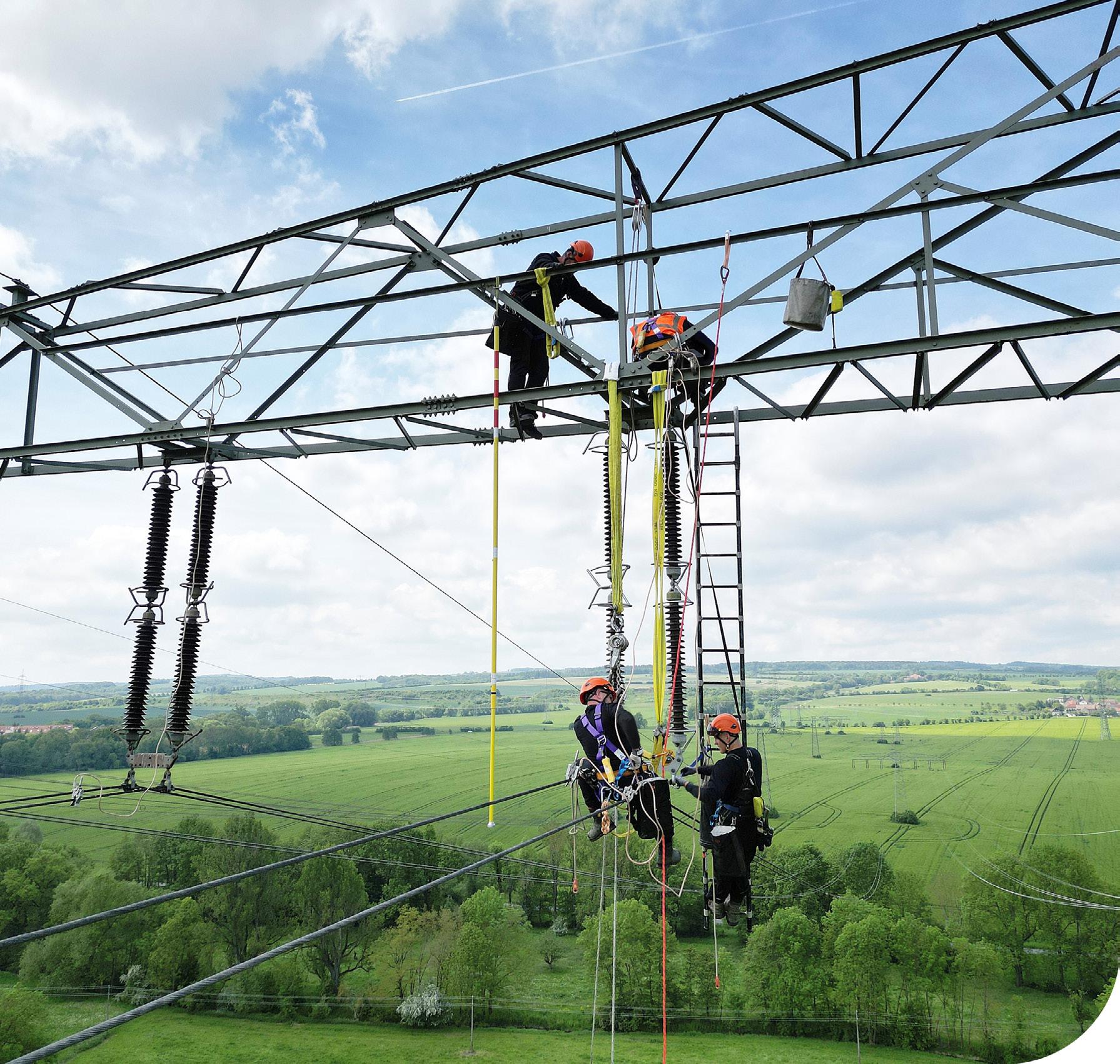
Strengthening
the workforce and expanding international footprint to become a real energy company
Attracting and retaining skilled talent remains essential as the scale and complexity of the energy transition continue to increase. In 2025, Elia Group welcomed a record number of new colleagues, strengthening its engineering, digital, financial, and operational capabilities. International mobility, cross-divisional collaboration, and a culture of innovation continue to shape the organisation across its Belgian, German, and international activities. As growth in core markets stabilises later in the decade, expanding international expertise and strengthening global collaboration will help diversify activities and enhance organisational resilience.
Elia Group will continue to expand its talent base through strong recruitment efforts, intensify upskilling and reskilling programmes, foster greater mobility across departments and entities, and build diverse teams with complementary profiles to deliver on the challenges of the energy transition.

Governance & Risk Report
No transition without transmission. Our strategic investments are essential to enable electrification, to meet rising electricity demands, and to increasingly integrate renewable energy sources into the grid. We are committed to operating in the interest of society, ensuring a sustainable, reliable energy future for all.
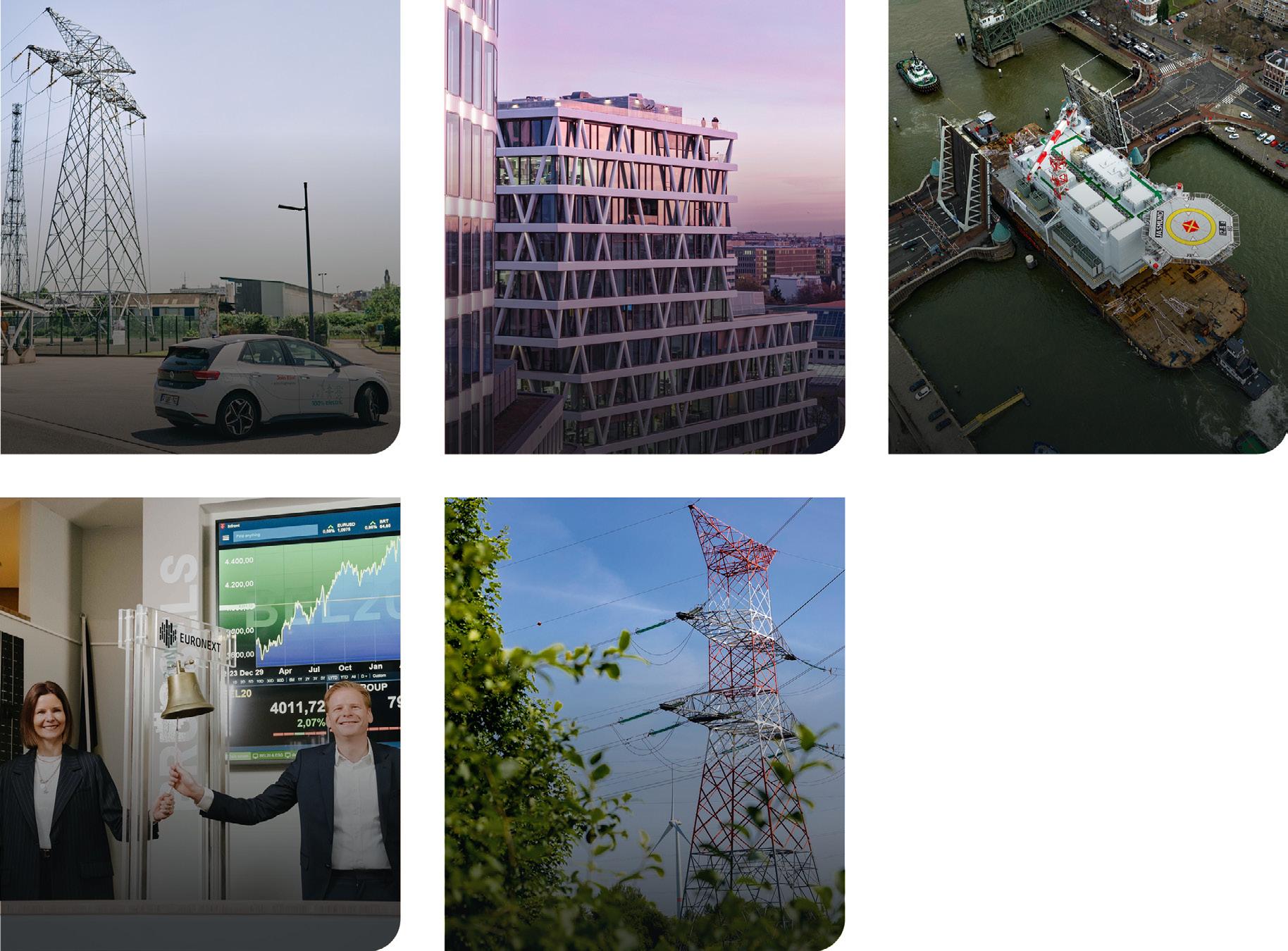
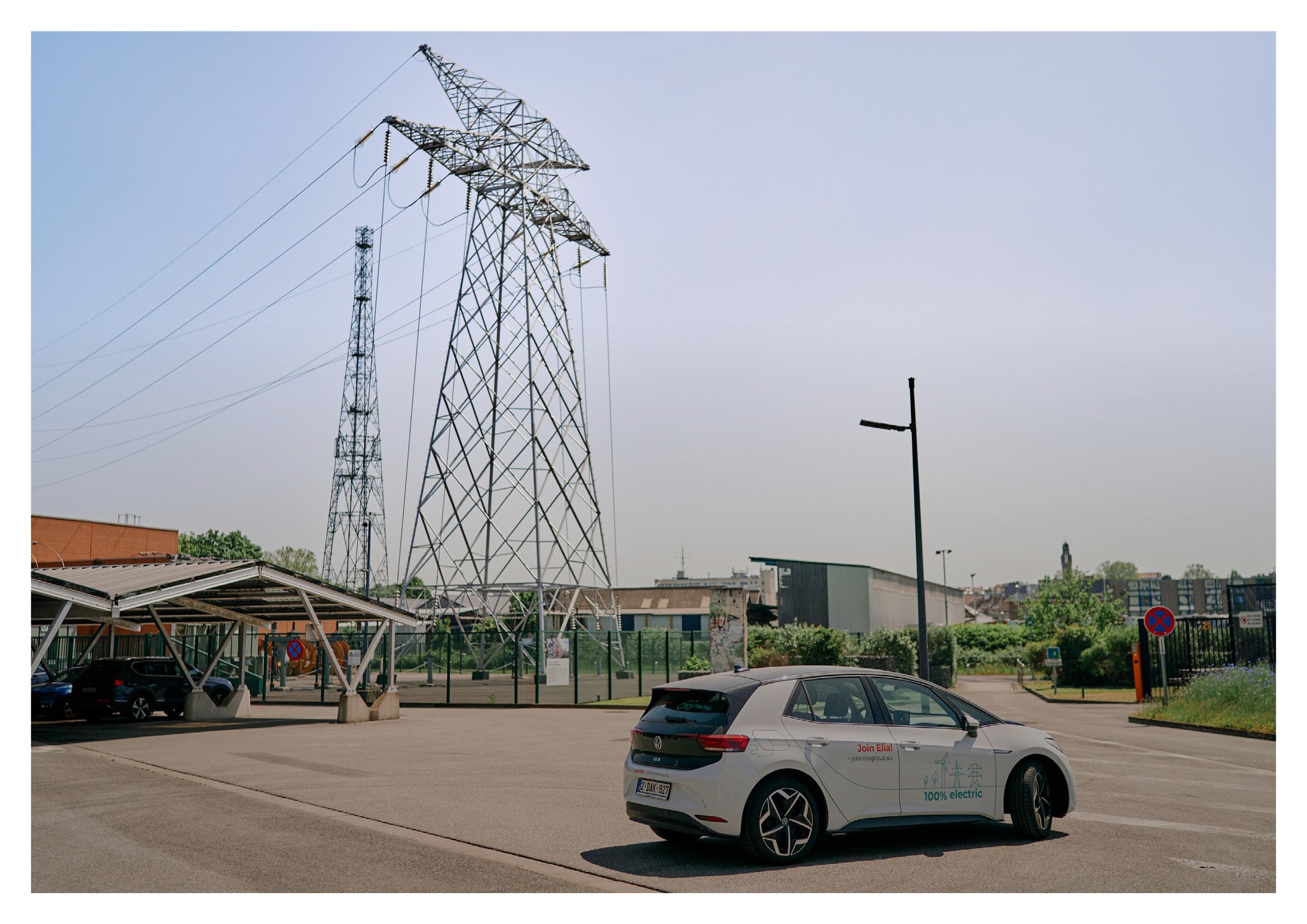
1. Corporate governance statement
1. Corporate governance statement
This corporate governance statement contains the main aspects of Elia Group SA/NV’s corporate governance framework, including all relevant information on events affecting Elia Group SA/NV’s governance during the financial year 2025. As regards the composition of the bodies of Elia Group SA/NV, this corporate governance statement reflects the situation within the company as per 31 December 2025.
In 2025, Elia Group SA/NV’s corporate governance was based on the following pillars:
—The (Belgian) 2020 Code on Corporate Governance7 , which Elia Group SA/NV has adopted as its benchmark code;
—The (Belgian) Code of Companies and Associations8;
—Elia Group SA/NV’s articles of association9;
—The Corporate Governance Charter of Elia Group SA/ NV10 .
This corporate governance statement also includes the reasons for the deviations from the following provisions of the 2020 Code on Corporate Governance:
—Provision 5.6 on the maximum term of office of four years for a director;
—Provision 7.6 on the partial remuneration of a nonexecutive director in shares;
—Provision 7.9 on the setting of a minimum threshold of shares to be held by executives.
In accordance with the Corporate Sustainability Reporting Directive (‘CSRD’) and its implementation under Belgian law, Elia Group SA/NV is required to produce a comprehensive Sustainability Report adhering to the European Sustainability Reporting Standards (‘ESRS’) since its integrated annual report relating to financial year 2024. These standards are applicable on, amongst others, governance and remuneration aspects. In this respect, we also refer to the Sustainability Report and Remuneration Report as part of this integrated annual report.
1.1. Introduction on the changes within the Board of Directors
Following the ordinary general meeting held on 20 May 2025, the Board of Directors underwent several changes. Three new11 directors were appointed with immediate effect: Olivier Chapelle and Michel Sirat, each as independent director for a four-year term and Saskia Van Uffelen as director for a one-year term. Pascale Van Damme was reappointed as an independent director for four years. These appointments follow the voluntary resignation of Bernard Gustin on 12 December 2024, following his appointment as CEO and Chairman of the Executive Management Board of Elia Group SA/NV as from 15 January 2025 as well as the departures of both Michel Allé (independent director) and Laurence de l’Escaille (independent director) on 20 May 2025 further to the end of their respective mandate. Michel Sirat also joined the audit committee as Chairman and the strategic committee as member, while Olivier Chapelle joined the strategic committee as well as the nomination and remuneration committee as member. The new members bring extensive expertise in finance, strategy, digital transformation and international business, as well as in
7 The (Belgian) 2020 Code on Corporate Governance can be found on the website of the Corporate Governance Committee (www.corporategovernancecommittee.be).
8 The (Belgian) Code of Companies and Associations can be found on the website of the ministry of justice. (http://www.ejustice.just.fgov.be/cgi_loi/wet.pl).
9 The articles of association of Elia Group SA/NV can be found on the website of Elia Group SA/NV (https://www.eliagroup.eu/en/about-elia-group/corporate-bodies).
leadership development and management, strengthening the Board’s collective competencies in line with Elia Group SA/NV’s strategic priorities12. The Board of Directors was also deeply affected by the passing of GeertVersnick, Chairman of the Board, who passed away on 8November2025, at age 68. During the interim period, BernardThiry, Vice-Chairman, assumed the Chair’s responsibilities until the appointment of Pieter de Crem as Chairman of the Board of Directors on 2 February 2026. Following the passing of Geert Versnick, ChristophePeeters was coopted as new non-executive director upon proposal of NextGrid Holding SA/NV / Publi-T SC/CV, on 11December2025, in accordance with Article13.6 of Elia Group SA/NV's articles of association. His cooptation will be submitted to the ordinary general meeting to be held on 19May2026. In addition, Frank Donck (independent director) offered his resignation from his director’s mandate with effect on 31 December 2025.
10 The Corporate Governance Charter of Elia Group SA/NV can be found on the website of Elia Group SA/NV (https://www.eliagroup.eu/en/about-elia-group/corporate-bodies).
11 As three new members joined the Board of Directors (and its advisory committees) in 2025, an assessment was carried out to verify whether any of them held similar positions in public administration during the last two reporting periods (i.e., financial years 2023 and 2024). No such positions were identified for Michel Sirat or Olivier Chapelle, while a similar positions in the public administration were identified for Christophe Peeters as described in his biography under section 1.2 below.
12 The press release of the ordinary general meeting held on 20 May 2025 can be found on the website of Elia Group SA/NV (https://investor.eliagroup.eu/en/elia-group-share/shareholder-meetings/2025-may-shareholders-meeting-details).
1.2. Composition of the management bodies on 31 December 2025
Board of Directors
13
Chairman ad interim14 & Vice-Chairman
—Bernard Thiry, non-executive director appointed upon proposal of NextGrid Holding SA/NV/ Publi-T SC/CV15
Directors
—Michel Sirat, non-executive independent director16
—Olivier Chapelle, non-executive independent director17
—Pieter De Crem, non-executive director appointed upon proposal of NextGrid Holding SA/NV/ Publi-T SC/CV18
—Saskia Van Uffelen, non-executive director19
—Frank Donck, non-executive independent director20
—Interfin SC/CV, permanently represented by Thibaud Wyngaard, non-executive director appointed upon proposal of NextGrid Holding SA/NV / Publi-T SC/CV21
—Roberte Kesteman, non-executive independent director22
—Dominique Offergeld, non-executive director appointed upon proposal of NextGrid Holding SA/NV/Publi-T SC/CV23
13 The Board of Directors of Elia Group SA/NV per 31 December 2025 was composed of 12 non-executive directors. The Board of Directors does not include a representation of employees or workers. The workers and employees are duly and adequately represented within the work council established in accordance with the BCCA and the Belgian law of 20 September 1948 organizing the economy.
14 Pieter de Crem, non-executive director appointed upon proposal of NextGrid Holding SA/NV/Publi-T SC/CV was appointed as Chairman of the Board of Directors on 2 February 2026, in replacement of Bernard Thiry, Vice-Chairman of the Board of Directors.
15 Born in 1955, Bernard Thiry obtained a Master’s in economics from the University of Liège in 1979. He graduated at Stanford University (USA) and then obtained a PhD in Economics at the University of Liège in 1985. In 1989, he started his academic career at the University of Liège, which he continues as a professor at HEC-ULg School of Management (currently as professor emeritus). He was director of the CREG, Chairman of Forem’s management committee, and Chairman of the Union nationale des mutualités socialistes. From 2008 to 2016, he was CEO of Ethias. Bernard Thiry currently serves as director of Publi-T, Publipart, Vice-Chairman of Publigaz and director of NextGrid Holding SA/NV. He is also Chairman of the Board of Directors of SOCOFE and of Solidaris Assurances and Intégrale Luxembourg.
16 Michel Sirat is president and founder of Tesuji Conseil. He is also a senior advisor to Greenhill & Co and BCG. From 2011 to 2023, he held senior positions within the CMA-CGM Group, where he was Executive Vice President in charge of Strategy and Mergers & Acquisitions as well as Group Chief Financial Officer. During his tenure he was instrumental in strategically guiding and financing significant international growth and diversification projects. Prior to this Michel Sirat built substantial experience in the energy sector with ENGIE, notably as CEO of Suez Energy Resources North America (Houston) and General Manager of Trading and Portfolio Management (Brussels) at GDF Suez Europe. A graduate from France’s École Nationale d’Administration (ENA), Sciences Po Paris and École Centrale Paris, Michel Sirat brings extensive expertise in finance, strategy, and corporate governance. He currently holds key positions in publicly listed companies, serving as Chair of the audit committee at Maisons du Monde, Board and audit committee member at CMA-CGM and at Kaufman & Broad. His career provides deep insight into regulated industries, especially energy, infrastructure, and telecommunications sectors in which he remains actively involved at an international level.
17 Olivier Chapelle has over 30 years of experience in senior executive roles and governance positions in international companies. He notably served as CEO of Recticel, a publicly listed Belgian industrial group specializing in insulation materials from 2009 to 2023. Prior to this, he held key positions at global companies such as Wagon Automotive, where he was President and CEO in France, Faurecia, where he served as Division Vice President or also Owens Corning Fiberglass and GlaxoSmithKline. Olivier Chapelle possesses extensive international experience, having managed industrial and commercial operations across the entire EMEA region (Europe, Middle East, and Africa).Currently, Olivier Chapelle holds several important mandates as an independent director or Board Chairman. He serves as Chairman of the Board at Schréder, a global leader in outdoor lighting solutions and is a Board member at the publicly listed D’Ieteren Group, a major mobility industry player. Additionally he is on the Board of Cofinimmo, a BEL 20-listed real estate investment trust. Olivier Chapelle is also Chairman of Calyos, a company specializing in advanced thermal management technologies and sits on the Board of IsoHemp, an innovative provider of biosourced construction materials. His broad industrial and strategic expertise is a significant asset for the companies he supports.
18 Pieter De Crem began his political career in 1989 as an attaché to the staff of Prime Minister Wilfried Martens. Pieter DeCrem was mayor of Aalter from 1994 to 2025. He was elected to the Belgian Federal Parliament for the first time in 1995 and then served as President of the CD&V Group in the House of Representatives (2003-2007) and as Chairman of the home affairs committee in 2007. Pieter De Crem has served as Minister of Defense (2007-2014), State’s Secretary of Foreign Trade (2014-2018) and Minister of Home Affairs and Security (2018-2020). He has also served as Deputy Prime Minister (2013-2014) and as the federal government's special envoy for the MYRRHA research project based in the Belgian Nuclear Research Centre (2017-2018). Born in 1962, Pieter De Crem holds a Master in Romance philology from the University of Leuven (KUL), a Master in European and lnternational Law from the University of Brussels (VUB) and a Degree from Harvard Business School (APM). Since 2023, Pieter De Crem has served as Commissioner-General for the International Exhibitions BELEXPO.
19 Saskia Van Uffelen started her career in the IT sector in 1984, holding various positions in various IT companies, including Xerox, Compaq Computer, Hewlett-Packard Belux and NorthgateArinso. She became CEO of Bull Belux in 2008 and served as CEO of Ericsson Belux between 2014 and 2019. She is a director of AXA Insurance Belgium. She is also Chairperson of the Board of Directors of Flanders Future Techfund and Media Invest Flanders. She is Digital Manager of Agoria VZW and director of Cyber Security Coalition VZW. As Belgian Digital Skills Lead, she represents Belgium in DG Connect at the European Commission. Saskia Van Uffelen was named ICT Woman of the Year in 2011. She was born in 1961 and graduated from the Higher Pedagogical Institute and the Higher Institute for Physical Education in Antwerp.
20 Born in 1965, in Aalter, Belgium, Frank Donck holds a Master of Law Degree from the University of Ghent (Belgium) and a Master in Financial Management from the Vlerick Business School, Ghent (Belgium). He started his career as investment manager for Investco SA/NV (later KBC Private Equity SA/NV). He has since 1998 been the managing director of the family-owned investment company 3D SA/NV. He currently serves as Chairman of the Board of Atenor SA/NV. He serves as director of KBC Group and as independent director of Elia Group SA/NV, Barco SA/NV and Luxempart SA/NV. Frank Donck is also a member of Belgium’s Corporate Governance Commission. Frank Donck resigned from his independent director’s mandate with Elia Group SA/NV on 31 December 2025.
21 Thibaud Wyngaard is first alderman of Uccle in charge of Public Works, Mobility, Parking and Sports. Prior to his political functions, he was with the Legal Department of the Royal Belgian Football Association (2006-2008). He served as an assistant and researcher at the Public Law Centre of the University of Brussels (ULB) (2008-2010), where he currently serves as Assistant in the Faculty of Law. He served as political secretary of the Ecolo political group in the Parliament of the Brussels-Capital Region (2010-2018). He served as President of the Port of Brussels (2013-2014). He is Vice-Chairman of the Board of Directors and the executive committee of Sibelga. He is also Chairman of the audit committee of Sibelga. He serves as director (member of the Bureau) of Interfin intermunicipal and Publi-T SC/NV and as director of NextGrid Holding SA/NV since January 2025. Born in 1983, Thibaud Wyngaard holds a Master in Law with a major in public law from the University of Brussels (ULB), a Complementary Master in environmental law and public real estate law from the University Faculty of Saint-Louis.
22 Roberte Kesteman is the former CEO (2008-2012) and CFO and HR Director (2002-2008) of Nuon Belgium SA/NV. She is the former Chairwoman of FEBEG. Born in 1957, Roberte Kesteman holds a Master in Commercial and Consular Sciences from the Vlaamse Economische Hogeschool Brussel and attended the International Corporate Finance Course at INSEAD (France).
23 Dominique Offergeld is the Chief Financial Officer of ORES SRL/BV (since 2008). She is Vice-Chairwoman of the Board of Directors of Publi-T SC/CV and director of NextGrid Holding SA/NV since January 2025. She held the function of deputy chief of staff of the Minister of Mobility (2014-2016) and of the Minister of Energy (2004-2008). She was General Counsel at SNCB Holding (2005-2008) and also Chairwoman of the Board (2004-2005). She has exercised the function of expert of two ViceMinisters of the Walloon Region (1999-2001) and federal State (2001 – 2004) and Credit analyst at the “Generale de Banque” (BNP Paribas Fortis) (1988-1999). She was also appointed as Belgocontrol Government Commissar (2014-2016), as Vice-President of the "Institut des Radio Eléments” (IRE) (2005-2013) and as Fluxys Government Commissar (2004-2008). Born in 1963, Dominique Offergeld holds a Master in Economics and Social Sciences from the University of Namur, a certificate of General Management from INSEAD (France) and a Certificate of Corporate Governance from Guberna.
Directors - continued:
—Pascale Van Damme, non-executive independent director24
—Eddy Vermoesen, non-executive director appointed upon proposal of NextGrid Holding SA/ NV/Publi-T SC/CV25
—Christophe Peeters, non-executive director appointed upon proposal of NextGrid Holding SA/ NV/Publi-T SC/CV26
Advisory committees to the Board of Directors
Nomination and remuneration committee27
—Dominique Offergeld, Chairwoman
—Roberte Kesteman
—Pascale Van Damme
—Olivier Chapelle
Audit committee28
—Michel Sirat, Chairman
—Frank Donck (until 31 December 2025)
—Roberte Kesteman
—Dominique Offergeld
—Eddy Vermoesen
Strategic committee29
—Bernard Thiry, Chairman
—Michel Sirat
—Pieter De Crem
—Olivier Chapelle
—Frank Donck, standing invitee (until 31 December 2025)
—Dominique Offergeld, standing invitee
Joint auditors
—EY Réviseurs d’Entreprises SRL/BV, represented by Paul Eelen until 7 May 2025 and by Frederic De Mee as from 8 May 2025
—BDO Réviseurs d’Entreprises SRL/BV, represented by Michaël Delbeke
Executive Management Board30
—Bernard Gustin (Chief Executive Officer since 15 January 2025)31
—Marco Nix (Chief Financial Officer since 1st April 2025)32
—Stefan Kapferer (Chief Executive Officer of 50Hertz, Elia Group Deputy CEO & Chief Transformation Officer)
—Frédéric Dunon (Chief Executive Officer of Elia Transmission Belgium & Elia Group Chief Operations Officer)
—Celine Van Haute (Chief HR Officer since 1st October 2025)
—Peter Michiels (Co-Chief HR Officer until 31 March 2026 at the latest)
Secretary
General
—Siska Vanhoudenhoven
24 Pascale Van Damme was appointed as CEO Group Cordeel in February 2025. Previously, she used to be Vice-President at Dell Technologies leading the multi-billion VMware business for Europe Middle East & Africa. Prior to her role as Managing Director, she led the Belgian and Luxembourgish Dell Technologies branches for eight years. Pascale Van Damme previously led the company’s public sales team in Belgium and later she was the Sales Transformation lead for Europe, Middle East and Africa, having joined Dell Technologies in 2004. Prior to Dell Technologies, Pascale Van Damme spent five years as Director of Corporate Sales at Base and in key account management positions at Proximus, both key players in the telecom industry and TNT Express. She is actively working across the digital sector in her role as President of Agoria Digital Industries, the digital industries chapter of Belgium's industry and trade association. She has been recognised as a fervent sponsor of women in IT. She received Belgium’s ICT Woman of the Year award (2014) and the European Digital Woman of the Year award (2017) and was named JUMP's Wo.Men@Work 2018 CEO Ambassador for Gender Equality. Pascale Van Damme is also co-founder of BeCentral, the digital hub in Brussels which aims at democratizing access to digital applications and the digital world. Pascale Van Damme is President of the Royal Belgian Football Association.
25 Born in 1952, Eddy Vermoesen received his academic training at the Royal Military Academy and the School for Military Directors. At KU Leuven, he obtained a Master's degree in government management and public administration. Within Defence, he was budget manager of the Medical Service and later administrative director of the Military Hospital in Neder-over-Heembeek. He was also a member of the Board of censors of the National Bank of Belgium. He currently serves as director of PubliT SC/CV, as director of NextGrid Holding SA/NV since January 2025 and Vice-Chairman of IGEAN (autonomy public company active within support services), and Vice-Chairman of FINEG (Financieringsholding voor Elektriciteits- en aardgasverkoop).
26 Christophe Peeters is an alderman of the city of Ghent, his portfolio consists of Finance, Urban Planning, Heritage and Administrative Simplification. He has established an impressive and consistent service record in this role over the years. At the age of 20, he became the youngest municipal council member in Ghent’s history. His career as an alderman started back in 2000 with Personnel Policy and Informatics and a staff base of more than 4,500 individuals. In the years that followed, he had various key portfolios, including Finance, Facility Management, Sport, Port, Trade, Special Events and Innovation. Christophe Peeters was the president of Ghent’s communal council from 2018 to 2025. In 2025, he made his comeback in the municipal Board with broad-ranging powers that will help secure the city’s financial and spatial future. Besides his political commitments, Christophe Peeters has also established a strong professional career. He started at Electrabel where he held various communication and human-resources positions. He has been an independent consultant since 2019. Christophe Peeters also has a number of Board mandates. For example, he is vice-Chair and member of the strategic committee at Eandis/Fluvius (since 2017), President of Vlaamse Energieholding (since 2019), Chairman of Publi-T SC/CV (since 2025) and a director at NextGrid Holding SA/NV (since 2025). He was the Chair of the Ghent Port Authority from 2009 to 2012. Christophe Peeters graduated from Ghent University (UGent) with a degree in civil engineering.
27 Nomination and remuneration committee at 31 December 2025. As of 2 February 2026, Bernard Thiry is also a member of the nomination and remuneration committee.
28 Audit committee at 31 December 2025
29 Strategic Committee at 31 December 2025. As of 2 February 2026, Christophe Peeters is also a member of the strategic committee.
30 As part of Elia Group SA/NV’s strategic review a series of changes to the Executive Management Board took effect on 1 October 2025. These adjustments were designed to strengthen group-wide synergies, enhance operational efficiency and support the delivery of the group’s long-term objectives. Under the leadership of Bernard Gustin, as Elia Group SA/NV CEO, Stefan Kapferer, as CEO of 50Hertz Transmission, assumes the additional role of Chief Transformation Officer and acts as Deputy Chief Executive Officer of Elia Group SA/NV since 1 October 2025, driving initiatives focused on group-level cost reduction and growth. Frédéric Dunon, as CEO of Elia Transmission Belgium SA/NV and Elia Asset SA/NV also became Chief Operations Officer of Elia Group SA/NV, overseeing transversal operational topics, including common security governance. Marco Nix continued as Chief Financial Officer of Elia Group SA/NV with an expanded remit covering legal and audit functions, performance management across all entities, procurement excellence and oversight of the OneSAP+ product cluster.
Céline Van Haute was appointed Group Chief HR Officer of Elia Group SA/NV, as from 1 October 2025 to replace Peter Michiels, as he announced that he would step down with effect on 1 April 2026. In addition, Michael von Roeder left the Executive Management Board on 2 December 2025.
31 Bernard Gustin was appointed as Chief Executive Officer of Elia Group SA/NV by the Board of Directors upon proposal of the nomination and remuneration committee on 12 December 2024 with effect as from 15 January 2025.
32 Marco Nix was appointed as Chief Financial Officer of Elia Group NV/SA by the Board of Directors on 12 December 2024 with effect as from 1 April 2025, upon proposal of the nomination and remuneration committee.
1.3. Board of Directors

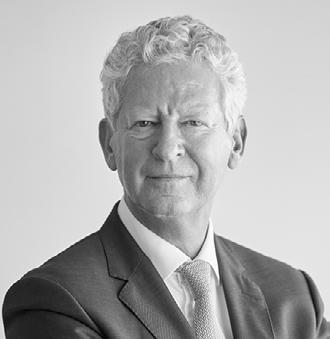





Appointment procedure and term and expiry of directorships
As per 31 December 2025, Elia Group SA/NV's Board of Directors was composed of twelve members33. According to the articles of association, should one or more directorships fall vacant so that the Board of Directors temporarily counts less than twelve (12) members, the Board of Directors may, pending cooptation or appointment of (a) new director(s) in accordance with article 12.3, validly deliberate and adopt decisions with the number of members that the Board of Directors shall have at that time.
All members are appointed by the general meeting of shareholders and may be dismissed by it.
A certain number of directors are appointed upon proposal of NextGrid Holding SA/NV / Publi-T SC/CV, in accordance with article 13.2 of the articles of association of Elia Group SA/NV. The other directors are appointed, after advice from the nomination and remuneration committee, upon proposal of the board of directors by the general meeting in accordance with the applicable legal, regulatory and/or statutory terms and procedures. At least three (3) of these other directors are independent directors within the meaning of Article 7:87 of the Belgian Companies and Associations Code, in accordance with Article 13.3 of the Articles of Association of Elia Group SA.
The directors of Elia Group SA/NV are appointed or reappointed for a maximum term of six years.
The maximum six-year term of the directorships deviates from the maximum four-year term recommended by the 2020 Code on Corporate Governance. The maximum six-year term is justified in light of the technical, financial and legal specificities and complexities that apply within the group and that require a certain level of experience achieved through continuity in the composition of the Board of Directors.
Bernard Thiry Chairman of the Board ad interim & Vice-Chairman
Roberte Kesteman
Dominique Offergeld Michel Sirat
Pieter De Crem Saskia Van Uffelen Frank Donck
Thibaud Wyngaard (as permanent representative of Interfin SC/CV)
Pascale Van Damme Eddy Vermoesen Olivier Chapelle Christophe Peeters
33 Following the voluntary resignation of Frank Donck as independent director of Elia Group SA/NV on 31 December 2025, the Board of Directors was composed of
Specific requirements for members of the Board of Directors
The articles of association stipulate that the Board of Directors is composed exclusively of non-executive directors.
In addition, in accordance with the articles of association, the members of the Board of Directors may not be members of the supervisory board, the Board of Directors or bodies that legally represent an undertaking that fulfils any of the following functions: production and/or supply of electricity, and/or production and/or supply of natural gas. Nor may the members of the Board of Directors carry on any other function or activity, whether remunerated or not, in favour of an undertaking falling under the preceding sentence.
In addition to the legal requirements regarding their independence (see above), the independent directors are appointed partly for their knowledge of financial management and partly for their relevant technical knowledge of the company's activities.
In accordance with the articles of association and the Code of Companies and Associations, at least one third of the directors must be of the opposite sex to the remaining two thirds.
In accordance with the Corporate Governance Charter of Elia Group SA/NV and in line with provision 5.5 of the 2020 Code on Corporate Governance, members of the Board of Directors may not accept more than five directorships in listed companies.
For the composition of the advisory committees, specific skills are required.
In addition to the legal and statutory selection criteria, the Board of Directors approved on 6 April 2023, in application of provision 5.1 of the 2020 Corporate Governance Code, additional criteria applicable to all new directors. All these criteria can be found in the Corporate Governance Charter of Elia Group SA/NV published on the websites www.elia.be (under ‘About Elia’, ‘Corporate Governance’, ‘Articles of association & Corporate Governance Charter’) and www.eliagroup.eu (under ‘About Elia Group’, ‘Corporate governance’, ‘Articles of association & Corporate governance charter’).
The composition of the Board of Directors guarantees that decisions are taken in the interest of Elia Group SA/NV. This composition is based on a gender mix and on diversity in
general, as well as on the complementarity of skills, experience and knowledge. Additionally, when renewing the directorships of the members of the Board of Directors, care must be taken to ensure that a linguistic balance is achieved and maintained within the group of directors of Belgian nationality.
To further enhance the Board of Directors’ social and environmental expertise and guarantee that appropriate skills and expertise are available or will be developed to oversee sustainability matters, customized training programs, focusing on Elia Group SA/NV strategic material topics, are available to the Board members, in collaboration with subject matter experts.
Current composition of the Board of Directors
As per 31 December 2025, the Board of Directors was composed of twelve non-executive directors. Six nonexecutive directors (50%) were appointed upon proposal of NextGrid Holding SA/NV / Publi-T SC/CV by the ordinary general meeting, in accordance with the current shareholding structure and with article 13.2 of the articles of association of Elia Group SA (see also the ‘Shareholder structure’ section of this statement). The other six nonexecutive directors were appointed by the general meeting, upon proposal of the Board of Directors and after the advice of the Nomination and Remuneration Committee. Among these six other non-executive directors, five directors were independent non-executive directors (42%) within the meaning of article 7:87 of the Belgian Companies and Associations Code and provision 3.5 of the 2020 Corporate Governance Code.
Diversity within the Board of Directors
Changes in the composition of the Board of Directors
Following the ordinary general meeting held on 20 May 2025, the Board of Directors underwent several changes. Three new directors were appointed with immediate effect: Olivier Chapelle and Michel Sirat, each as independent director for a four-year term and Saskia Van Uffelen as director for a one-year term. Pascale Van Damme was reappointed as an independent director for four years. These appointments follow the voluntary resignation of Bernard Gustin on 12 December 2024, following his appointment as CEO and Chairman of the Executive Management Board of Elia Group SA/NV as from 15 January 2025 as well as the departures of both Michel Allé (independent director) and Laurence de l’Escaille (independent director) on 20 May 2025 further to the end of their respective director’s mandate. Michel Sirat also joined the audit committee as Chairman and the strategic committee as member, while Olivier Chapelle joined the strategic committee as well as the nomination and remuneration committee as member. The new members bring extensive expertise in finance, strategy, digital transformation and international business, as well as in leadership development and management, strengthening the Board’s collective competencies in line with Elia Group SA/NV’s strategic priorities. The Board of Directors was also deeply affected by the passing of GeertVersnick, Chairman of the Board, who passed away on 8November2025 at age 68. During the interim period, BernardThiry, ViceChairman, assumed the Chair’s responsibilities until the appointment of Pieter de Crem as Chairman of the Board of Directors on 2 February 2026. Following the passing of Geert Versnick, ChristophePeeters was coopted as new non-executive director upon proposal of NextGrid Holding SA/NV/Publi-T SC/CV, on 11December2025, until the ordinary general meeting to be held in 2026 in accordance with Article13.6 of Elia Group SA/NV's articles of association. His directorship will be submitted to the ordinary general meeting to be held on 19May2026. In addition, Frank Donck (independent director) offered his resignation from his director’s mandate with effect on 31 December 2025.
Term and expiry of directorships
The directorship of Saskia Van Uffelen was renewed at the ordinary general meeting of 2025 for a one-year term, starting after the ordinary general meeting held on 20 May 2025 and expiring immediately after the 2026 ordinary general meeting relating to the financial year ending on 31 December 2025.
The independent directorship of Pascale Van Damme was renewed at the ordinary general meeting of 2025 for a four-year term, starting after the ordinary general meeting held on 20 May 2025 and expiring immediately after the 2029 ordinary general meeting relating to the financial year ending on 31 December 2028.
The independent directorships of Michel Sirat and Olivier Chapelle started each at the ordinary general meeting of 2025 for four-year terms, expiring immediately after the 2029 ordinary general meeting relating to the financial year ending on 31 December 2028.
Following the passing of Geert Versnick, Chairman of the Board of Directors, on 8 November 2025, the Board of Directors recorded the termination of his mandate as of that date. The Vice-Chairman, Bernard Thiry, assumed the role of Chairman ad interim until a successor for the Chairmanship was appointed (Pieter De Crem, on 2 February 2026), in line with the Board’s continuity arrangements.
Further to Geert Versnick’s passing, the directorship of Christophe Peeters started on 11 December 2025 (by means of the co-optation mechanism for directors) and expiring immediately after the 2026 ordinary general meeting relating to the financial year ending on 31 December 2025.
Finally, the directorship of Frank Donck - originally renewed at the ordinary general meeting of 2023terminated upon resignation effective 31 December 2025.
For the sake of clarity, the current end of term of the mandate of each director is also mentioned in the following chart:
End of term immediately after the ordinary general meeting to be held in (relating to financial year ending)
Pieter De Crem, Chairman 2026 (2025)
Bernard Thiry, ViceChairman 2029 (2028)
Michel Sirat 2029 (2028)
Olivier Chapelle 2029 (2028)
Saskia Van Uffelen 2026 (2025)
Interfin SC/CV 2026 (2025)
Christophe Peeters 2026 (2025)
Roberte Kesteman 2029 (2028)
Dominique Offergeld 2029 (2028)
Pascale Van Damme 2029 (2028)
Eddy Vermoesen 2029 (2028)
articles of association to the general meeting. Thus, the Board of Directors has inter alia the following powers:
1° approval/amendment of the general, financial and dividend policy of the company, including the strategic orientations or options for the company as well as the principles and problems of a general nature, in particular with regard to risk management and personnel management;
2° approval, follow-up and amendment of the business plan and budgets of the company;
3° without prejudice to other specific powers of the Board of Directors, entering into any commitment where the amount exceeds fifteen million euros (EUR 15,000,000), unless the amount as well as its main characteristics are explicitly provided for in the annual budget;
4° decisions on the corporate structure of the company and of the companies in which the company holds a participation, including the issue of securities;
5° decisions on the incorporation of companies and on the acquisition or transfer of shares (regardless of the manner in which these shares are acquired or transferred) in companies in which the company directly or indirectly holds a participating interest, insofar as the financial impact of this incorporation, acquisition or transfer exceeds two million five hundred thousand euros (EUR 2,500,000);
6° decisions on strategic acquisitions or alliances, significant divestments or transfers of core activities or assets of the company;
7° significant changes to accounting or tax policies;
In accordance with the provisions of the articles of association, the Board of Directors is supported by three advisory committees: the nomination and remuneration committee, the audit committee and the strategic committee. The Board of Directors ensures that these advisory committees operate in an efficient manner.
Competences of the Board of Directors
Elia Group SA/NV has a one-tier (“système moniste/ monistisch systeem”) structure as governance model. The Board of Directors has, in accordance with article 17.2 of the articles of association, the power to perform all acts necessary or useful for achieving the statutory purpose with the exception of those acts reserved by law or by the
8° significant changes in the activities;
9° decisions concerning the launch of or acquisition of participations in activities outside the management of electricity networks;
10° strategic decisions to manage and/or acquire new electricity networks outside Belgium;
11° in relation to (i) Elia Transmission Belgium SA/NV and Elia Asset SA/NV: monitoring their general policy as well as the decisions and matters referred to in 4°, 5°, 6°, 8°, 9° and 10° above; (ii) the key subsidiaries designated by the Board of Directors (other than Elia Transmission Belgium SA/NV and Elia Asset SA/NV): the approval and monitoring of their general policy as well as the decisions and matters referred to in 1° to 10° above; (iii) the subsidiaries other than the key
subsidiaries: the approval and monitoring of their general policy as well as the decisions and matters referred to in the 4°, 5°, 6°, 8°, 9° and 10° above;
12° exercising general supervision on the Executive Management Board; in that context, the Board of Directors shall also supervise the way in which the business activity is conducted and developed in order inter alia to assess whether the company’s business is being conducted in a due and proper way;
13° the powers granted to the Board of Directors by or by virtue of the Belgian Code of Companies and Associations or the articles of association.
In the framework of the risk management competence of the Board of Directors, the Board of Directors approved a reference framework for internal control and risk management, established by the Executive Management Board, that is based on the COSO II framework. The Board of Directors has also appointed a Compliance Officer who is responsible for monitoring the company's compliance with laws and regulations and for applying the relevant internal guidelines. The Compliance Officer reports at least once a year to the Board of Directors on the execution of his mission.
With respect to the exercise of its supervision oversight responsibilities (see item 12° above), the Board of Directors is at least responsible for the following:
—exercising general supervision on the Executive Management Board; in that context, the Board of Directors shall also supervise the way in which the business activity is conducted and developed in order to, inter alia, assess whether the company’s business is being conducted in a due and proper way;
—monitoring and reviewing the effectiveness of the advisory committees of the Board of Directors;
—taking all necessary measures to ensure the integrity and timely publication of the financial statements and other significant financial and non-financial information communicated to shareholders and potential shareholders;
—approving an internal control and risk management framework, set up by the Executive Management Board and evaluating the implementation of this framework. The Board of Directors also describes in the annual report the main features of the internal control and risk management systems of Elia Group SA/NV;
—supervising the performance of the statutory auditors and the internal audit function, taking into account the review carried out by the audit committee.
The special general meeting of shareholders held on 18 May 2021 conferred the power to the Board of Directors to acquire the company’s own shares, without the total number of own shares held by Elia Group SA/NV pursuant to this power exceeding 10% of the total number of shares, for a compensation that cannot be lower than 10% below the lowest closing price in the thirty days preceding the transaction and not higher than 10% above the highest closing price in the thirty days preceding the transaction.
This power was conferred for a period of five years as from 4 June 2021 and will expire on 3 June 2026, unless renewal. It applies to the Board of Directors and to the extent necessary to any third party acting on behalf of the company. See also section “1.12. Capital structure” below in this respect”. A new authorization will be proposed to the annual general meeting of the shareholders to be held on 19 May 2026.
The extraordinary general meeting of Elia Group SA/NV held on 21 June 2024 decided to authorize the Board of Directors to increase the share capital of Elia Group SA/NV, subject to certain conditions set out in the articles of association and in the special report submitted by the Board of Directors to the extraordinary general meeting of Elia Group SA/NV held on 21 June 2024 (the so-called “authorized capital”). One of those conditions relates to the maximum amount of capital increase.
In 2025, the Board of Directors of Elia Group SA/NV made use of the authorized capital granted under Article 7 of its articles of association on two occasions (see section 1.9 “Significant events in 2025” below in this respect).
Meetings and decision-making
The Board of Directors meets whenever required in the interests of the company and at least once per trimester. It must be convened whenever the company’s interests so require and whenever at least two directors so request. It deliberates validly in accordance with the rules that it lays down.
The meetings of the Board of Directors can be held via video conference, conference call or using other means of remote communication, provided that all the members agree and the organizational principles of the Board are adhered to. The decisions of the Board of Directors can be
taken in accordance with article 7:95, second paragraph of the Code of Companies and Associations by unanimous written agreement of the directors.
The Board of Directors constitutes a collegiate body in which the members strive for consensus in their deliberations.
The deliberations of the Board of Directors are set down in minutes. These minutes are filed in a special register.
Activity report
In 2025, the Board of Directors of Elia Group SA/NV met sixteen times of which only eight meetings have been remunerated in line with Elia Group SA/NV's remuneration policy.
The Board of Directors primarily focused on the group’s overall strategy, major investment programs and the 2025 funding plan, including the preparation of the capital increases. The Board of Directors also oversaw the group’s financial performance and reporting, approved governance updates (including amendments to the articles of association and the Corporate Governance Charter), and monitored internal audit, risk management and compliance matters. It addressed key organizational and leadership topics, including senior management appointments and the evolution of the group’s operating model. In addition, the Board reviewed progress on strategic projects and M&A opportunities.
Each year, in collaboration with the Executive Management Board, the Board of Directors reviews and evaluates the strategic topics to be discussed during an annual seminar (“Board Off-site”) and on which advice and recommendations will be provided to the Board of Directors by the advisory committees.
Members who were unable to attend usually granted a proxy to another member. In accordance with article 19.4 of the articles of association of the company, members who are absent or unable to attend may grant a written proxy to another member of the Board of Directors to represent them at a given meeting of the Board of Directors and vote on their behalf at that meeting. However, no member of the Board of Directors can hold more than two proxies.
Attendance rate
Geert Versnick, Chairman until 8 November 2025 14/14
Bernard Thiry, Vice-Chairman 15/16
Michel Allé, until 20 May 2025 9/11
Michel Sirat, as of 20 May 2025 5/5
OIivier Chapelle, as of 20 May 2025 4/5
Saskia Van Uffelen, as of 20 May 2025 5/5
Pieter De Crem 13/16
Laurence de l’Escaille, until 20 May 2025 8/11
Frank Donck, until 31 December 2025 10/16
Interfin SC/CV (permanently represented by Thibaud Wyngaard) 10/16
Roberte Kesteman 13/16
Dominique Offergeld 11/16
Pascale Van Damme 8/16
Eddy Vermoesen 15/16
Christophe Peeters, as of 11 December 2025 1/1
Conflict of interest
The directors of Elia Group SA/NV must strictly comply with the provisions of article 7:96 of the Code of Companies and Associations. The procedure of article 7:96 of the Code of Companies and Associations has not been applied in 2025.
Advisory committees
As set out above, in order to carry out its tasks and responsibilities effectively, the Board of Directors is supported by three advisory committees: the nomination and remuneration committee, the audit committee, and the strategic committee (see below).
In principle, an advisory committee makes recommendations to the Board of Directors in certain specific matters for which it has the necessary expertise. The power of decision itself rests exclusively with the Board of Directors. The role of an advisory committee is therefore limited to providing advice to the Board of Directors. The Board of Directors monitors the effectiveness of the advisory committees.
Members of the executive and senior management may be invited to attend advisory committee meetings to provide relevant information and insights into their areas of responsibility.
Each advisory committee reports to the Board of Directors after each meeting.
Secretary to the Board of Directors
The Board of Directors appointed a Secretary General who advises the Board of Directors on all matters of governance. The Secretary General performs all administrative duties of the Board of Directors (agenda, minutes, filing, etc.) and ensures the preparation of documents necessary to carry out the tasks of the Board of Directors.
The role of the Secretary General includes inter alia:
—supporting the Board of Directors and its committees on all governance matters;
—updating the Corporate Governance Charter as the case may be and preparing the corporate governance statement;
—ensuring a good information flow within the Board of Directors and its committees and between the Executive Management Board and the Board of Directors;
—ensuring that the essence of the discussions and decisions at Board meetings are accurately captured in the minutes; and
—facilitating onboarding and evaluation of directors and assisting with professional development as required.
Directors have individual access to the Secretary General.
Interactions with the Executive Management Board
The Chairman establishes a close relationship with the Chief Executive Officer and provides him/her with support and advice, while respecting the executive responsibility of the Chief Executive Officer.
The Chairman ensures effective interaction between the Board of Directors and the Executive Management Board.
There is a periodic, institutionalized interaction between the Board of Directors and the Executive Management Board in the form of a statutory reporting obligation on the
part of the Executive Management Board to the Board of Directors.
The Chairman (and Vice-Chairman as the case may be) of the Executive Management Board may, together or individually, participate in the meetings of the Board of Directors in an advisory capacity.
Interactions with the shareholders
The Chairman of the Board of Directors ensures effective communication with shareholders and ensures that directors develop and maintain an understanding of the views of the shareholders and other significant stakeholders.
The Elia Group SA/NV website also contains a calendar of periodic information and general meetings
Shareholders and interested parties can always address their questions directly to the Investor Relations department (see here for contact details).
Evaluation
In accordance with provision 9.1 of the 2020 Code on Corporate Governance, the Board of Directors is regularly assessed, in principle at least every three years. The previous evaluation took place in the first half of 2022. The last evaluation happened in the second half of 2025, slightly exceeding the planned timeframe. This limited deviation was explained by the need to ensure an optimal process, considering the Board of Director’s busy agenda during the first half of the year.
The Board of Directors conducted an internal comprehensive evaluation in October 2025, confirming strong overall performance and effective governance. A large majority of areas were rated highly, reflecting broad satisfaction among directors. The review identified opportunities to further strengthen Board effectiveness while strategic oversight remains a key focus, with directors emphasizing deeper challenges related to the ambitious investment program, digital transformation and cybersecurity and Elia Group SA/NV’s international growth strategy in a complex geopolitical environment.
In 2023, the nomination and remuneration committee prepared a new procedure in accordance with principle 9.2 of the 2020 Code on Corporate Governance for the evaluation of directors proposed for reappointment. This evaluation procedure is carried out by the nomination and remuneration committee and concerns:
—the attendance of the director at meetings of the Board of Directors and, if applicable, the advisory committees to the Board of Directors;
—the director’s engagement in discussions and decisionmaking;
—the director's constructive involvement in discussions and decision-making.
The Chairman of the nomination and remuneration committee organizes an exit interview with the directors who are not nominated for reappointment.
The results of the evaluations carried out in accordance with principles 9.1 and 9.2 of the 2020 Code on Corporate Governance are discussed by the Board of Directors and, as the case may be, in accordance with principle 9.3 of the 2020 Code on Corporate Governance, all necessary measures deemed appropriate for the proper functioning of the Board of Directors are taken.
1.4. Nomination & remuneration committee Composition
The nomination and remuneration committee is composed of at least three and maximum five nonexecutive directors of whom the majority are independent and at least one third non-independent.
As per 31 December 2025, the nomination and remuneration committee was composed of four nonexecutive directors, of whom three were independent.
Competences
In addition to its usual support role to the Board of Directors, the nomination and remuneration committee is responsible, pursuant to article 7:100 of the Code of Companies and Associations and to article 16.1 of the articles of association, for advising and supporting the Board of Directors with regards to the appointment of directors, the CEO and the members of the Executive Management Board and making recommendations to the Board of Directors, in particular regarding the remuneration policy and the remuneration of the members of the Executive Management Board and of the Board of Directors.
In particular, the nomination and remuneration committee exercises the following powers:
—formulating proposals to the Board of Directors on the remuneration policy of the directors, the other executives referred to in article 3:6 § 3 last paragraph of the Code of Companies and Associations and the members of the Executive Management Board and, if applicable, on the resulting proposals to be submitted by the Board of Directors to the shareholders’ general meeting;
—formulating proposals to the Board of Directors on the individual remuneration of the directors, the other executives referred to in article 3:6 § 3 last paragraph of the Code of Companies and Associations and the members of the Executive Management Board, including the variable remuneration (including exceptional remuneration in the form of bonuses) and long-term performance bonuses;
—preparing the Remuneration Report which the Board of Directors attaches to the corporate governance statement mentioned in article 3:6 § 2 of the Code of Companies and Associations (that is submitted for consultative vote to the ordinary general meeting);
—Commenting on the Remuneration Report at the ordinary general meeting.
The nomination and remuneration committee ensures that there are appropriate programs for talent development and for promoting diversity in leadership.
Activity report
The nomination and remuneration committee met sixteen times in 2025, of which only five meetings have been remunerated in line with Elia Group SA/NV's remuneration policy.
Once a year Elia Group SA/NV evaluates the members of its Executive Management Board in accordance with its performance management policy. The nomination and remuneration committee has reviewed the proposed collective and individual targets for the Executive Management Board for 2025 for approval by the Board of Directors. Accordingly, the nomination and remuneration committee has reviewed the performance of the members of the Executive Management Board on the basis of a series of collective and individual targets of both a quantitative and qualitative nature also taking into account the feedback from internal and external stakeholders. The remuneration policy for members of the Executive Management Board includes, among other components, an annual variable remuneration and longterm incentives (LTI) spread out over a multi-year period. The annual variable remuneration, which is connected to Elia Group SA/NV’s strategy, consists of two components: the attainment of collective quantitative targets and the individual performances, including progress on net profit, infrastructure projects, safety and culture, security of (electricity) supply linked to sustainability and efficiency targets. In addition, the remuneration policy foresees in the possibility to allocate exceptional cash bonuses for specific projects in specific, non-recurring cases.
In addition, the nomination and remuneration committee prepared the Remuneration Report (financial year 2024) for consultative vote of the ordinary general meeting held on 20 May 2025.
In view of provision 7.6 of the 2020 Code on Corporate Governance, the Board of Directors has decided to follow the recommendation of the nomination and remuneration committee according to which a share-based remuneration is currently not suitable within Elia Group SA/NV as (i) Elia Group SA/NV’s activities are focused on the long term and (ii) the shareholding structure is based on a reference shareholding that naturally pursues fixed longterm objectives and sustainability goals.
Laurence de l’Escaille until 20 May 2025 10/10
Roberte Kesteman 16/16
Geert Versnick until 8 November 2025 11/14
Olivier Chapelle as of 20 May 2025 6/6
Pascale Van Damme 10/16
In addition (and in deviation from provision 7.9 of the 2020 Code on Corporate Governance) the Board of Directors decided not to impose a minimum threshold of shares to be held by the members of the Executive Management Board. The Board of Directors is indeed of the opinion that the way in which the remuneration of the members of the Executive Management Board is structured contributes to the long-term interests and the sustainability of the company (see also the Remuneration Report for
Attendance rate
Dominique Offergeld, Chairwoman 15/16
explanations as to provisions 7.6 and 7.9 of the 2020 Code on Corporate Governance).
1.5. Audit committee Composition
The audit committee is composed of at least three and maximum five non,-executive directors of whom two shall be independent directors.
As per 31 December 2025, the audit committee was composed of five non-executive directors, three of whom are independent. Given the departure of Frank Donck on 31 December 2025 the audit committee is composed of four non-executive directors, two of whom are independent, since 1st January 2026.
The articles of association provide that the members of the audit committee have a collective expertise in the field of the company's activities. At least one member of the audit committee must have sufficient expertise in terms of accounting and audit.
Pursuant to article 3:6 § 1 9° of the Code of Companies and Associations, the annual report must contain justification of the independence and accounting and auditing competence of at least one member of the audit committee. The internal rules of procedure of the audit committee require, in this respect, that all members of the audit committee have a collective expertise in Elia Group SA/NV’s business and that at least one member of the audit committee has the necessary accounting and auditing expertise required to exercise the role of the audit committee. The experience of Michel Sirat, Chairman of the audit committee, and of Dominique Offergeld, member of the audit committee, are described in detail below.
Michel Sirat (non-executive independent director of Elia Group SA/NV, since 20 May 2025 and Chairman of the audit committee) brings extensive financial, accounting, and audit expertise to the audit committee. Graduated from the École Centrale de Paris (1985), Sciences Po Paris/IEP (1985) and the École Nationale d’Administration (ENA, 1989), he combines rigorous analytical training with over 30 years of senior financial leadership. As executive vicepresident and group chief financial officer of CMA-CGM (2011–2023), he oversaw accounting, tax, treasury, risk management and internal controls across a complex multinational environment, led major international M&A
transactions or financial restructurings, and implemented robust financial governance frameworks. He currently also serves as audit committee Chairman at Maisons du Monde as well as audit committee member at Kaufman & Broad and previously held similar roles at Eutelsat and Futuren, reinforcing his deep practical knowledge of audit processes, financial reporting and oversight.
Dominique Offergeld (non-executive non-independent director of Elia Group SA/NV, Elia Transmission Belgium SA/NV and Elia Asset SA/NV, appointed upon proposal of NextGrid Holding SA/NV / Publi-T SC/CV) has a degree in economics and social science (specialisation: public economics) from the Université Notre Dame de la Paix in Namur. She has taken various extra-academic programs, including the General Management Program at Cedep (INSEAD) in Fontainebleau (France). She started her career at the Générale de Banque (now BNP Paribas Fortis) in the corporate finance department in 1988 and was subsequently appointed as specialist advisor to the vicepresident and minister for economic affairs of the Walloon Region in 1999. In 2001 she became advisor to the deputy prime minister and minister for foreign affairs. Between 2004 and 2005, she was deputy director of the office of the minister for energy, subsequently becoming general advisor to the SNCB holding company in 2005. She was previously director of (among others) Publigas and government commissioner at Fluxys. She was also Chairwoman of the Board of Directors and the audit committee of the SNCB. Between 2014 and 2016, she was director of the minister for mobility’s strategy unit with responsibility for Belgocontrol and the SNCB. She has been CFO of ORES since August 2016, a position she also held between 2008 and 2014. She is also vice-President of PubliT SC/CV and director of NextGrid Holding SA/NV.
Competences
In addition to its usual support role to the Board of Directors, the audit committee is, pursuant to article 7:99 of the Code of Companies and Associations and article 15.1 of the articles of association, in particular responsible for:
—examining the accounts and exercising control over the budget;
—monitoring the financial reporting process;
—monitoring the (non-financial) information to be included in the so-called non-financial statements of the annual reports (which are currently included in a
Sustainability Report by the company) according to Belgian and European legislation as well as the financial information requested by the strategic committee and forming the basis for the compliance with the Taxonomy legislation and CSRD by the Elia group;
—monitoring the effectiveness of the company’s internal control and risk management systems;
—monitoring the internal audit and its effectiveness (also including the (consolidated) non-financial information;
—monitoring the statutory audit of the annual accounts, including follow-up on questions raised and recommendations made by the statutory auditors and, as the case may be, by the auditor responsible for monitoring the consolidated accounts;
—reviewing and monitoring the independence of the statutory auditors and, as the case may be, of the auditor responsible for monitoring the consolidated accounts and the assurance regarding the (consolidated) non-financial information, in particular regarding the provision of additional services to the company;
—formulating a proposal to the Board of Directors for the (re)appointment of the statutory auditors, as well as making recommendations to the Board of Directors regarding the conditions of their appointment;
—as the case may be, investigating the issues giving rise to the resignation of the statutory auditors, and making recommendations regarding all appropriate actions in this respect;
—monitoring the nature and extent of the non-audit services provided by the statutory auditors;
—reviewing the effectiveness of the external audit process.
The internal rules of the audit committee foresee that the audit committee is empowered to investigate any topic within its competence (financial or non-financial matters) and shall have the necessary working resources to this extent. The audit committee may also seek the advice of internal and external experts to achieve its missions.
The audit committee makes recommendations on the selection, (re)appointment and resignation of the Head of Internal Audit and Risk Management.
At the beginning of each year, the audit committee asks the Head of Internal Audit and Risk Management for his or her "Annual Work Plan". The audit committee ensures that an appropriate balance is struck between financial and operational audit work. This "Annual Work Plan" is communicated by the Head of Internal Audit and Risk Management to the Executive Management Board at the same time.
The audit committee evaluates at least once a year the effectiveness of the internal control and risk management systems with the Head of Internal Audit and Risk Management, the external auditors and any experts whose intervention the committee considers necessary. The purpose of this evaluation is to ensure that the main risks (including risks related to fraud and compliance with applicable laws and regulations) are properly identified, managed and reported.
The audit committee reviews the comments on internal control and risk management included in this company's annual report.
In addition, the audit committee reviews the specific arrangements in place for the company's employees to raise concerns, in confidence, about possible irregularities in financial reporting or other matters.
The audit committee may investigate any matter that falls within its competences. For this purpose, it can call on internal and external experts for advice.
Activity report
The audit committee met ten times in 2025, of which only five meetings have been remunerated, in line with Elia Group SA/NV's remuneration policy.
Attendance rate
Michel Allé, Chairman until 20 May 2025 8/8
Michel Sirat, Chairman as of 20 May 2025 2/2
Roberte Kesteman 10/10
Dominique Offergeld 8/10
Eddy Vermoesen 9/10
Frank Donck 9/10
In 2025, the audit committee examined the 2024 annual accounts, under both Belgian GAAP and IFRS Accounting Standards as well as the half-yearly results as of 30 June
2025 and the 2025 quarterly results, prepared in accordance with Belgian GAAP and IFRS Accounting Standards. The audit committee also reviewed the yearly budget process and the Elia Group Business Plan for 2026-2030, including the financial policy and funding strategy.
In addition, the audit committee followed up the risk management activity and took note of the internal audits carried out and the recommendations made. The audit committee follows an action plan for each internal audit carried out, in order to improve the efficiency, traceability and awareness of the areas audited and thus reduce the associated risks and assure that the control environment and risk management are appropriate. The audit committee followed the various action plans from a number of perspectives (timetable, results, priorities) on the basis, among other things, of an activity report from the Internal Audit department. The audit committee noted the strategic risks and the ad-hoc risk analyses based on the environment in which the Elia group operates.
The audit committee also reviewed and discussed the ESG KPIs presented in the ESG audit debriefing from Elia Group SA/NV’s joint auditors, the evolution of the costs of the MOG II project (Princess Elisabeth Island) and progress made regarding the CSRD implementation.
The audit committee reviewed matters related to access to affordable and low-carbon energy and monitored progress on reporting obligations under the Corporate Sustainability Reporting Directive (CSRD) and the Sustainability Report. It exercised its supervisory role over ESG commitments and examined issues linked to the energy transition, sustainable financing, and environmental compliance.
The audit committee also oversaw long-term system planning and governance aspects of major infrastructure projects, received regular updates on M&A and business development activities, monitored financing mandates and reviewed internal governance matters. The audit committee also monitored the audit process, including the work of the external auditors, the process for the statutory audit, and the reporting on non-audit services.
Through these discussions, the audit committee reinforced its role in supporting Elia Group SA/NV’s strategic objectives and ensuring robust oversight of financial reporting, internal control, risk management, sustainability disclosures and governance requirements in an evolving regulatory environment.
1.6. Strategic committee Composition
The strategic committee is composed of not more than five non-executive directors, two of whom are independent.
As per 31 December 2025, the strategic committee was composed of five directors, two of whom were independent.
Usually, two directors are invited on a permanent basis to the meetings of the strategic committee.
Competences
The strategic committee has an advisory role and is responsible for providing advice and recommendations to the Board of Directors on the matters entrusted to it. In accordance with provision 4.2 of the Belgian Code on Corporate Governance, the strategic committee has no decision-making powers and has therefore no authority to decide on the strategy of Elia Group SA/NV.
The strategic committee is responsible for providing advice and recommendations to the Board of Directors regarding the company's business development activities and international investment policy in the broad sense of the term, including the method of financing.
In particular, this mandate includes the following elements:
—Reviewing environmental factors and market developments that may contribute in the medium and long term and support the company’s strategic choices and/or priorities;
—Examining the company’s business development activities and international investment policy (in the broad sense, including financing methods) and their impact on the company’s business plan;
—Without prejudice to the audit committee’s responsibilities regarding the company and group reporting on non-financial information in the annual report in accordance with Belgian and European legislation, the strategic committee may also provide opinions on non-financial matters that could impact the evolution of the business, performance, and position of the company and the Group in the context of implementing the strategic policy.
The strategic committee examines these matters without prejudice to the role of other committees established within the Board of Directors.
Activity report
The strategic committee met six times in 2025, of which only five meetings have been remunerated, in line with Elia Group SA/NV's remuneration policy.
Geert
1.7. Executive Management Board





Composition of the Executive Management Board on 31 December 2025
As mentioned above, Elia Group SA/NV has a one-tier structure (“système moniste/monistisch systeem”) as governance model. In accordance with the possibility provided for by article 7:121 of the Code of Companies and Associations and pursuant to its articles of association, the Board of Directors delegated the day-to-day management to an Executive Management Board (Collège de gestion journalière/College van dagelijks bestuur).
As part of Elia Group SA/NV’s strategic review, a series of changes to the Executive Management Board took effect on 1 October 2025. These adjustments were designed to strengthen group-wide synergies, enhance operational efficiency and support the delivery of the group’s long-term objectives.
Under the leadership of Bernard Gustin, as Elia Group SA/NV CEO, Stefan Kapferer, as CEO of 50Hertz Transmission, who assumes the additional role of Chief Transformation Officer and acts as Deputy Chief Executive Officer of Elia Group SA/NV since 1 October 2025, driving initiatives focused on group-level cost reduction and growth.
Frédéric Dunon, as CEO of Elia Transmission Belgium SA/NV and Elia Asset SA/NV also became Chief Operations Officer of Elia Group SA/NV, overseeing transversal operational topics, including common security governance. Marco Nix continued as Chief Financial Officer of Elia Group SA/NV with an expanded remit covering legal and audit functions, performance management across all entities, procurement excellence and oversight of the OneSAP+ product cluster.
Céline Van Haute was appointed Group Chief HR Officer of Elia Group SA/ NV, as of 1 October 2025 to replace Peter Michiels, since he announced that he would step down with effect on 1 April 2026.
In addition, Michael von Roeder left the Executive Management Board on 2 December 2025, while Catherine Vandenborre left Elia Group SA/NV on 30 June 2025, throughout the transition phase following her voluntary resignation as Chief Executive Officer Ad Interim and Chief Financial Officer on 12 December 2024.
Bernard Gustin Chief Executive Officer
Stefan Kapferer Chief Executive Officer of 50Hertz Transmission, Elia Group Deputy CEO & Chief Transformation Officer
Frédéric Dunon Chief Executive Officer of Elia Transmission Belgium & Elia Group Chief Operations Officer
Marco Nix Chief Financial Officer
Céline Van Haute Chief HR Officer
Peter Michiels Co-Chief HR Officer (until 31 March 2026 at the latest)
Competences of the Executive Management Board
In accordance with article 17.3 of the articles of association, the Executive Management Board is responsible for, within the limits of the rules and principles of general policy and the decisions adopted by the Board of Directors of the company, all acts and decisions that do not exceed the needs of the daily management of the company, as well as those acts and decisions that do not justify the intervention of the Board of Directors for reasons of minor importance or urgency, including:
1° the day-to-day management of the company, including all commercial, technical, financial, regulatory and personnel matters related to this day-to-day management of the company, including, inter alia, all commitments (i) when the amount is less than or equal to 15 million euros (EUR 15,000,000) or (ii) when the amount as well as its main characteristics are explicitly provided for in the annual budget;
2° the regular reporting to the Board of Directors on its operational activities in the company in execution of the powers granted in accordance with article 17.3 of the articles of association, with due observance of the legal restrictions regarding access to commercial and other confidential data relating to net users and the processing thereof and the preparation of the decisions of the Board of Directors, including in particular: (a) timely and accurate preparation of the annual accounts and other financial information of the company in accordance with the applicable accounting standards and company policy, and the appropriate communication thereof; (b) preparation of the adequate publication of key non-financial information about the company; (c) preparation of the financial information in the half-yearly statements that will be submitted to the audit committee for advice to the Board of Directors as part of its general task of monitoring the financial reporting process; (d) implementation of internal controls and risk management based on the framework approved by the Board of Directors, without prejudice to the follow-up of the implementation within this framework by the Board of Directors and the investigation conducted by the audit committee for this purpose; (e) submitting to the Board of Directors the financial situation of the company; (f) making available the information necessary for the Board of Directors to carry out its duties, in particular by preparing proposals on the policy issues set
out in article 17.2 of the articles of association (see the competences of the Board of Directors above);
3° the regular reporting to the Board of Directors on its policy in the key subsidiaries designated by the Board of Directors and the annual reporting to the Board of Directors on its policy in the other subsidiaries and on the policy in the companies in which the company directly or indirectly holds a participating interest;
4° all decisions relating to proceedings (both before the Supreme Administrative Court and other administrative jurisdictions, as well as before the ordinary courts of law and arbitration tribunals) and in particular decisions in the name and for the account of the company to file, amend or withdraw an appeal and to appoint one or more lawyers to represent the company;
5° all other competences delegated by the Board of Directors.
The Executive Management Board has all necessary competences, including the power of representation and sufficient margin for manoeuvre to exercise the competences that have been delegated to it and to propose and implement a corporate strategy, without prejudice to the competences of the Board of Directors.
In 2025, the Executive Management Board focused among others, on the financing of the group, the business plan and the budgets, the strategic evolution of the group, the regulation both in Belgium and in Germany, the group communication, the international pillar, internal audits and risk management, the discussion of the Sustainability Report, the setting of collective and individual targets for 2025 and 2026, incorporating environmental, social, and governance (ESG) criteria, on the double materiality assessment in the context of the CSRD, DEI (diversity, equity, inclusion) reporting, the digitalization, the regular reporting to the Board of Directors and the advisory committees.
Meetings and decision-making
The Executive Management Board meets at least once a month. A member of the Executive Management Board who is unable to attend usually grants a proxy to another member of the Executive Management Board. A proxy can be given through every means of written communication (of which the authenticity can be reasonably determined) to another member of the Executive Management Board, in accordance with the internal rules of procedure of the
Executive Management Board. However, no member may hold more than two proxies. In 2025, the Executive Management Board met on twenty occasions.
Each quarter, the Executive Management Board submits a written report to the Board of Directors. The Executive Management Board reports at each meeting of the Board of Directors on all its responsibilities, in particular the management by the Elia group of the transmission system activities in the main Belgian and German affiliates of the Elia group (Elia Transmission Belgium SA/NV, Elia Asset SA/ NV and 50Hertz Transmission GmbH). As part of its reporting in 2025, the Executive Management Board kept the Board of Directors informed on the company’s/the group’s financial situation, the follow-up of its investment program (including the monitoring and development of major investment projects), the follow-up on the infrastructure of the Elia group (including as to maintenance and operations), the evolutions in the energy policy field (including the evolution of the regulatory framework through main decisions taken by regulators and administrations), human resources matters, safety and security issues, M&A/business development matters and the evolution of the share price. The Executive Management Board also follows-up the most important risks of the Elia group and their mitigation measures in this regard as well as the recommendations of the internal audit.
Changes in the composition of the Executive Management Board
The composition of the Executive Management Board changed in 2025, as described above.
The composition of the Executive Management Board is based on diversity, as well as on the complementarity of skills, experience and knowledge. When searching for and appointing new members of the Executive Management Board, special attention is paid to diversity parameters in terms of age, gender and complementarity.
Diversity within the Executive Management Board
Number
1.8. Joint auditors
The ordinary general meeting of Elia Group SA/NV held on 16 May 2023 reappointed EY Réviseurs d’Entreprises SRL/ BV and BDO Réviseurs d’Entreprises SRL/BV as auditors of the company for a period of three years until the ordinary general meeting to be held in 2026. EY Réviseurs d’Entreprises SRL/BV is represented for the exercise of this office by Frederic De Mee since 8 May 2025 (and previously by Paul Eelen). BDO Réviseurs d’Entreprises SRL/BV is represented for the exercise of this office by Michaël Delbeke.
Additionally, the ordinary general meeting held on 21 May 2024 decided to entrust EY Réviseurs d'Entreprise SRL/BV and BDO Réviseurs d'Entreprises SRL/BV with the task of providing assurance on the company's consolidated Sustainability Report, for a two-year period ending immediately after the ordinary general meeting to be held in 2026.
The renewal of their mandates for another term of three years will be submitted to the 2026 ordinary general meeting, relating to the financial year ending 31 December 2025.
1.9. Significant events in 2025
Amendments to the articles of association on 14 March 2025
On 14 March 2025, the extraordinary general meeting of Elia Group SA/NV approved amendments to the articles of association to bring them in line with the Electricity Act as
amended by the law of 5 November 2023. These amendments affected articles 3, 4, 9, 13 and 17.
The revised provisions updated terminology to reflect roles such as “network operator” and “network owner” and strengthened independence requirements for the network operator. In particular, article 4.4 was amended to prevent conflicts of interest by prohibiting shareholders who are active in electricity or gas production or supply from exercising control over the company or appointing members to its governing bodies. The amendments also removed certain clauses related to share transfers and shareholder agreements, simplifying the structure and ensuring compliance with unbundling rules.
Furthermore, the changes reinforced governance safeguards by prohibiting members of the Board of Directors and the Executive Management Board from holding positions or performing functions in companies engaged in electricity or gas production or supply. These measures aim to guarantee transparency, nondiscrimination, and the proper functioning of the market. The resolution was adopted with the required qualified majority.
Use of the authorized capital clause by the Board of Directors
On 21 June 2024, the extraordinary general meeting of Elia Group SA/NV decided to amend the articles of association. The amendments to the articles of association relate to the insertion of a clause authorizing the Board of Directors to increase the share capital of Elia Group SA/NV, subject to certain conditions set out in the articles of association and in the special report submitted by the Board of Directors to the extraordinary general meeting of Elia Group SA/NV held on 21 June 2024 (the so-called “authorized capital”).
In 2025, the Board of Directors of Elia Group SA/NV made use of the authorized capital granted under Article 7 of its articles of association on two occasions.
On 26 March 2025, the Board of Directors executed a “PIPE” capital increase amounting to EUR 342,606,337.68 (with total subscription proceeds of EUR 849,999,954.44 including issue premium) through the issuance of 7,600,529 new class B shares and 6,135,734 new class C shares at a subscription price of EUR 61.88 per share, fully paid upon subscription. The legal preference rights of existing shareholders were cancelled in accordance with Article 7:191 of the Belgian Code of Companies and
Associations. Subscriptions were made in cash by NextGrid Holding SA/NV (including all class C shares) and institutional investors such as Atlas Infrastructure, Canada Pension Plan Investment Board and certain BlackRock funds. The difference between the subscription proceeds and the capital increase, i.e. EUR 507,393,616.76, was allocated to the share premium account. Following this transaction, the Elia Group SA/NV share capital increased to EUR 2,176,368,731.24, represented by 87,258,086 shares still divided into three classes (A, B, and C) and the articles of association were amended accordingly.
On 8 April 2025, Elia Group SA/NV completed a capital increase with preferential rights, for a total amount of EUR 1,349,882,559.48, through the issuance of 21,814,521 new shares at a subscription price of EUR 61.88 per share (including an issue premium of EUR 36.94 per share), fully paid in cash. The subscription period ran from 27 March to 3 April 2025 (with rights) and 4 April 2025 (with scrips). Of the total proceeds, EUR 544,092,170.34 was allocated to the share capital account and EUR 805,790,389.14 to the share premium account. As a result, the Elia Group SA/NV share capital increased from EUR 2,176,368,731.24 to EUR 2,720,460,901.58, represented by 109,072,607 shares, still divided into three classes (A, B, and C). The articles of association were amended to reflect the new capital and share structure.
Both transactions were carried out in compliance with the Belgian Code of Companies and Associations, with the cancellation of statutory preference rights and, in the second transaction, the granting of extra-statutory preferential rights to existing shareholders.
Amendments to the articles of association on 20 May 2025
On 20 May 2025, the extraordinary general meeting of Elia Group SA/NV approved a double capital increase reserved for employees of the company and its Belgian subsidiaries, with the cancellation of preferential subscription rights of existing shareholders. The total maximum amount of the increase was set at EUR 8,000,000 consisting of a first tranche of up to EUR 7,000,000 in 2025 and a second tranche of up to EUR 1,000,000 in 2026. Both increases are implemented through the issuance of new class B shares, fully paid in cash and holding the same rights as the existing class B shares.
The issue price for the 2025 increase was based on the average closing price of the thirty calendar days preceding
7 October 2025, reduced by 16.66%, while the 2026 increase will use the same formula with reference to 10 March 2026. The newly issued shares will be subject to a two-year lockup period. The meeting also granted a mandate to two directors to set the subscription price, determine the number of shares to be issued, define eligibility criteria and subscription periods and record the completion of the capital increases by authentic deed and amend the articles of association accordingly.
On 15 December 2025, Elia Group SA/NV recorded the completion of the capital increase decided by the extraordinary general meeting held on 20 May 2025 (first tranche). The subscription period ran from 8 October to 29 October 2025, at an issue price of EUR 80.59 per new class B share. A total of 86,364 new shares were subscribed, representing an aggregate amount of EUR 6.960.074,76, of which EUR 2,153,918.16 was allocated to subscribed capital and EUR 4.806.156,60 to share premium.
Following this transaction, the company’s share capital was set at EUR 2,722,614,819.74, represented by 109,158,971 shares divided into three classes. The newly issued shares carry the same rights as existing class B shares and are subject to a two-year lock-up period. The capital increase was fully paid up and duly reflected in the amended articles of association.
The latest version of Elia Group SA/NV’s articles of association is available in full on the company’s website (www.eliagroup.eu, under ‘About Elia Group’, ‘Corporate governance’).
Passing of Geert Versnick, director and Chairman of the Board of Directors and subsequent appointment of Pieter De Crem as Chairman
In 2025, Elia Group SA/NV experienced a significant change in its leadership following the passing of Geert Versnick, on 8 November 2025, who served as director and Chairman of the Board of Directors. The Board expressed its deep appreciation for his long-standing contribution to the company’s governance and strategic development. After a period of ad interim Chairmanship from the ViceChairman Bernard Thiry, the Board of Directors appointed Pieter De Crem as Chairman of the Board of Directors as from 2 February 2026.
Changes in governance structure
In addition to the passing of Geert Versnick, the composition of the corporate bodies of Elia Group SA/NV was reviewed further to the ordinary general meeting held on 20 May 2025 leading to the appointment of three new directors (Michel Sirat, Olivier Chapelle and Saskia Van Uffelen), as well as the voluntary resignation of the independent director Frank Donck at 31 December 2025 as described under section 1.3 “Board of Directors” of this corporate governance statement.
The 2025 changes to the Executive Management Board are described under section 1.7 “Executive Management Board” of this corporate governance statement.
The current composition of the corporate bodies is available on the company’s website (www.eliagroup.eu, under ‘About Elia Group’, ‘Corporate governance’).
Other significant events
For the other significant events in 2025, see section Highlights of this report.
1.10. Code of Conduct, code of Ethics and Corporate Governance Charter
Code of conduct
In accordance with European Regulation No. 596/2014 on market abuse (‘Market Abuse Regulation’), Elia Group SA/ NV set up a code of conduct. The code of conduct aims to prevent members of key personnel and persons discharging managerial responsibilities in the group from potentially breaking the law on the abuse of privileged information and market manipulation. The code of conduct lays down a series of regulations and communication obligations for transactions by those individuals in relation to their Elia Group SA/NV securities, in accordance with the provisions of the Market Abuse Regulation and the Act of 2 August 2002 on monitoring of the financial sector and other financial services. The code of conduct was amended for the last time in July 2025 to reflect recent changes introduced by the EU “Listing Act” amending the Market Abuse Regulation and to formalize internal governance practices. The update ensures clearer definitions and enhanced transparency through improved
insider list management and notification obligations. These changes maintain alignment with market standards while supporting Elia Group SA/NV’s commitment to integrity, compliance, and investor confidence.
Code of ethics
Elia Group SA/NV’s code of ethics defines the values, standards and rules that guide the expected ethical conduct of all its employees. It aims to ensure integrity, honesty, fairness, respect and independence in all interactions with our stakeholders: customers, suppliers, shareholders, the community and colleagues. The code also outlines the policy for preventing conflicts of interest and affirms a zero-tolerance approach towards any form of corruption or unlawful behavior.
The Board of Directors and the Executive Management Board are regularly informed about these principles by the Head of Internal Audit and Risk Management and the Compliance Officer, ensuring they are understood, embraced and practiced on a daily basis, thereby clarifying the mutual rights and obligations of the company and its employees.
All rules described in the Corporate Governance Charter and internal procedures reinforce the application of these ethical commitments within the group’s governance.
Corporate Governance Charter
and internal rules of procedure of the Board of Directors, the advisory committees within the Board of Directors and the Executive Management Board.
The Corporate Governance Charter and the internal rules of procedure of the Board of Directors, the advisory committees within the Board of Directors and the Executive Management Board can be found on the website www.elia.be (under ‘About Elia’, ‘Corporate Governance’, ‘Articles of Association & Corporate Governance Charter’). The responsibilities of the Board of Directors and of the Executive Management Board are described in detail in the articles of association of the company and are therefore not exhaustively reiterated in the internal rules of procedure of the Board of Directors and of the Executive Management Board. In July 2025, the Board of Directors approved a series of amendments
to Elia Group SA/NV’s Corporate Governance Charter to reflect the latest statutory changes. The same has happened in 2026 to reflect the latest capital amount, as determined further to the completion of the capital increase decided by the extraordinary general meeting held on 20 May 2025 and recorded on 15 December 2025 (see section ‘1.9. Significant events in 2025’ in this respect).
These updates ensure that the Corporate Governance Charter remains fully aligned with the evolving legal framework and the Group’s governance practices.
1.11. Disclosure obligations
Transparency rules - notifications
DISCLOSURE BASED ON THE ACT OF 2 MAY 2007 ON
MAJOR SHAREHOLDINGS
In 2025, Elia Group SA/NV received several notifications within the meaning of the Act of 2 May 2007 on disclosure of major shareholdings in issuers whose shares are admitted to trading on a regulated market and laying down miscellaneous provisions and within the meaning of the Royal Decree of 14 February 2008 on disclosure of major shareholdings.
On 20 March 2025, Publi-T CV/SC and NextGrid Holding SA/ NV notified that, following a transaction, NextGrid Holding SA/NV held 32,931,025 voting rights, representing 44.79% of Elia Group SA/NV’s total voting rights, with Publi-T CV/SC remaining the controlling shareholder. Subsequently, on 9 April 2025, after the capital increase of 8 April 2025, Publi-T CV/SC and NextGrid Holding SA/NV reported an increased combined holding of 49,313,525 voting rights, corresponding to 45.21% of the total voting rights at that time.
On 16 April 2025, Elia Group SA/NV also received a notification from Katoen Natie Group indicating that, after the same capital increase, its participation amounted to 10,119,150 voting rights, representing 9.28% of the total, which is below the 10% threshold. Earlier in the year, on 24 January 2025, Katoen Natie Group had crossed the 10% threshold, holding 7,361,429 voting rights, or 10.01% of Elia Group SA/NV’s total voting rights, through a chain of entities ultimately controlled by Ferdinand Huts. Finally, on 26 August 2025, ATLAS Infrastructure Partners notified the holding of 5,384,329 voting rights, representing 4.94% of Elia Group SA/NV’s total voting rights at that time.
None of these notifications included equivalent financial instruments.
Transparency notifications received are available on Elia Group SA/NV’s website (Transparency declarations).
Disclosure based on the act on takeover bids of 1 April 2007
On 23 November 2007 Publi-T SC/CV communicated to the company that it held on 1 September 2007 more than 30% of the securities with voting rights in the company. No update of this notification was received.
The shareholder structure on 31 December 2025, based on the transparency notifications received by Elia Group SA/ NV up to that date, is the following:
Items to be disclosed pursuant to article 34 of the Royal Decree of 14 November 2007
In accordance with article 3:6 §2, 7° of the Code of Companies and Associations, Elia Group SA/NV discloses hereafter the items referred to under article 34 of the Royal Decree of 14 November 2007 on the obligations of issuers of financial instruments admitted to trading on a regulated market.
1.12. Capital structure
On 31 December 2025, the capital of the company amounted to EUR 2,722,614,819.74, represented by a total of 109,158,971 shares, among which 1,836,054 Class A Shares (1.68% of the total share capital and voting rights), 58,143,197 Class B Shares (53.26% of the total share capital and voting rights) and 49,179,720 Class C Shares (45.05% of the total share capital and voting rights). All shares have no par value and are fully paid up.
Situation on 31 December 2025
Class A and Class C shares are respectively held by Publipart SA/NV and by Publi-T SC/CV and NextGrid Holding SA/NV. Pursuant to article 4.3 of the articles of association, all shares have the same rights irrespective of the class to which they belong, unless otherwise provided for in the articles of association.
In this context, the articles of association provide that certain specific rights are attached to Class A and Class C shares with respect to (i) the appointment of members of the Board of Directors (article 13.2) and (ii) the approval of decisions of the general meeting (articles 28.2 and 33.1).
Restriction on the transfer of shares
Articles 4.3 and 4.4 of the articles of association provide restrictions as to shareholding by electricity and/or natural gas companies within the meaning of the Belgian Act of 29 April 1999 on the organisation of the electricity market and the Belgian Act of 12 April 1965 on the transport of gaseous and other products through conduits or if otherwise performing any of the functions of production or supply of electricity and/or natural gas.
Besides, Class A and C shares are subject to a preemptive right to the benefit, respectively of Class C and A shareholders, in accordance with article 9 of the company’s articles of association.
Holders of securities with special control rights
See above for Class A and C shareholders rights.
Control mechanism of any employee share
scheme where the control rights are not exercised
directly by the employees
There is no employee share scheme with such a mechanism.
Restrictions on the exercise of voting rights
Article 4.4 of the articles of association provides that voting rights attached to shares held directly or indirectly by electricity and/or natural gas companies within the meaning of the Belgian Act of 29 April 1999 on the organisation of the electricity market and the Belgian Act of 12 April 1965 on the transport of gaseous and other products through conduits, respectively, are suspended. In addition, article 11.2 of the articles of association stipulates that the company may suspend exercise of the rights attaching to securities that are subject to joint ownership, usufruct or pledge until such time as one person has been designated as the holder of these rights vis-a-vis the company.
Shareholders' agreement
The company is not aware of provisions of a shareholders’ agreement that would restrict the transfer of shares or the exercise of voting rights other than as stipulated in the articles of association.
Appointment and replacement of directors
The appointment and replacement of directors are governed by articles 12 and 13 of the articles of association. Their main provisions are described above.
Rules for amendment of the articles of association
The rules governing the amendment of the company’s articles of association are provided by the Code of Companies and Associations as well as by article 29 of the articles of association. The articles of association may be amended by an extraordinary general meeting convened for that purpose. The object of the proposed amendments must be stated on the agenda. The extraordinary general meeting shall only validly adopt such resolution if at least 50% of the share capital is present or represented and with a majority of 75% of the votes cast, whereby abstentions are not taken into account either in the numerator or in the denominator. If the attendance quorum is not met at a first general meeting, a second general meeting may be convened and will decide without any attendance quorum requirement. If the amendments to the articles of association relate to the rights attached to a or several class(es) of shares, the quorum and majority requirements abovementioned apply within each category of shares. For certain specific matters (e.g. amendment of the purpose of the company), higher voting majorities may apply. Pursuant to article 28.2 of the articles of association, as long as the Class A and/or Class C shares represent more than twenty-five per cent (25%) of the total number of shares, no decision can be adopted by the general meeting, without prejudice to the majority provided for in the articles of association and the Code of Companies and Associations, unless such decision is approved by a majority of the Class A and/or Class C shares that are present or represented. If, in the case of an increase in the capital of the company, the Class A and/or Class C shares are diluted and no longer represent more than twenty-five per cent (25%) of the total number of shares, the Class A and/or the Class C shares will retain the aforementioned right as long as the Class C shares represent more than fifteen per cent (15%) of the total number of shares.
Powers of the Board of Directors, in particular
to issue and buy back shares
With regard to the powers of the Board of Directors in general, reference is made to the section ‘Competences of the Board of Directors’ (see above).
The special general meeting of shareholders of 18 May 2021 conferred the power to the Board of Directors to acquire the company’s own shares, without the total number of own shares held by the company pursuant to this power exceeding 10% of the total number of shares, for a compensation that cannot be lower than 10% below the lowest closing price in the thirty days preceding the transaction and not higher than 10% above the highest closing price in the thirty days preceding the transaction.
This power is conferred for a period of five years as from 4 June 2021. It applies to the Board of Directors of the company and, to the extent necessary, to any third party acting on behalf of the company. It also applies to the direct and, to the extent necessary, indirect subsidiaries of the company.
This power does not affect the possibilities of the Board of Directors, in accordance with the applicable legal provisions, to acquire own shares if no power by virtue of the articles of association or power by the General Meeting is required for this purpose.
Within the above framework, Elia Group SA/NV has entered into a liquidity agreement with Exane BNP Paribas providing the latter with the mandate to purchase and sale Elia Group SA/NV shares on the regulated market of Euronext Brussels. Exane BNP Paribas is acting on behalf and for the account of Elia Group SA/NV and within the framework of a discretionary mandate as authorized by the extraordinary general meeting of 18 May 2021. The purpose of the liquidity contract is to support the liquidity of the Elia Group SA/NV shares listed on Euronext Brussels.
The extraordinary general meeting of Elia Group SA/NV held on 21 June 2024 decided to authorize the Board of Directors to increase the share capital of Elia Group SA/NV, subject to certain conditions set out in the articles of association and in the special report submitted by the Board of Directors to the extraordinary general meeting of Elia Group SA/NV held on 21 June 2024 (the so-called “authorized capital”). One of those conditions relates to the maximum amount of the capital increase.
The extraordinary general meeting of Elia Group SA/NV held on 20 May 2025 decided to authorize the Board of Directors to increase the share capital of Elia Group SA/NV for the employees, subject to certain conditions set out in the articles of association and in the special report submitted by the Board of Directors to the extraordinary general meeting of Elia Group SA/NV held on 20 May 2025. One of those conditions relates to the maximum amount of the capital increase. In this respect, the extraordinary general meeting approved a double capital increase for a total maximum amount of EUR 8,000,000 consisting of (i) a first increase in 2025 of up to EUR 7,000,000 and (ii) a second increase in 2026 of up to EUR 1,000,000.
Both increases will be implemented through the issuance of new class B shares, fully paid in cash, with the same rights and benefits as existing class B shares, and with the cancellation of preferential subscription rights of existing shareholders in favor of employees of the company and its Belgian subsidiaries. The issue price for each increase will be determined based on the average closing price of the thirty calendar days preceding the relevant date, reduced by 16.66%. The newly issued shares will be subject to a twoyear lock-up period. If the subscription is not fully taken up, the capital will be increased by the amount actually subscribed.
The Board of Directors was granted a mandate to set the subscription price, determine the number of shares to be issued, define eligibility criteria and subscription periods, and record the completion of the capital increases by authentic deed and amend the articles of association accordingly.
Significant agreements that may be impacted by a change of control of the company
There are no such agreements.
Agreements
between Elia Group SA/ NV and its directors or employees providing compensation if the directors resign or are made redundant without valid reason or if the employment of the employees ceases because of a takeover bid
No specific dismissal arrangements have been agreed outside the legal framework.

2. Remuneration of Board of Directors and Executive Management Board
This remuneration report relates to the remuneration of the members of the Board of Directors and of the Executive Management Board of Elia Group SA/NV during the financial year 2025.
This remuneration report is based on the remuneration policy as last amended by the Ordinary General Meeting of 21 May 2024. This remuneration policy was drafted and approved by the Board of Directors of 29 March 2024 on the basis of a reasoned opinion of the Nomination and Remuneration Committee of Elia Group SA/NV on 21 March 2024.
The remuneration policy can be consulted using the following hyperlink: https://investor.eliagroup.eu/en/eliagroup-share/shareholder-meetings/2024-mayshareholders-meeting-details
2.1. Total remuneration of the members of the Board of Directors
The Board of Directors of Elia Group SA/NV is composed of 12 non-executive board members. The present report gives an overview of their remuneration for all their mandates within the Elia group.
Three members of the Board of Directors of Elia Group SA/ NV are not member of the Board of Directors of Elia Transmission Belgium SA/NV and Elia Asset SA/NV, namely Michel Sirat, Pascale Van Damme and Olivier Chapelle. Until his voluntary resignation as of 31 December 2025, Frank Donck was not a member of the Board of Directors of Elia Transmission Belgium SA/NV and Elia Asset SA/NV either.
2.1.1 Fixed remuneration
The fixed remuneration of the directors consists of an annual base salary of €25,000 for Elia Group SA/NV, €12,500 for Elia Transmission Belgium SA/NV and €12,500 for Elia Asset SA/NV and an attendance fee per meeting of the Board of Directors of €1,000 for Elia Group SA/NV, €500 for Elia Transmission Belgium SA/NV and €500 for Elia Asset SA/NV, starting with the first Board meeting attended by the director. The base salary of the Chairman of the Board of Directors is composed out of an annual
base salary of €60,000 for Elia Group SA/NV, €25,000 for Elia Transmission Belgium SA/NV and €25,000 for Elia Asset SA/NV and an attendance fee per meeting of the Board of Director of €1,500 for Elia Group SA/NV, €750 for Elia Transmission Belgium SA/NV and €750 for Elia Asset SA/NV.
The annual base salary for each member of the Audit Committee is set at €6,000 for the Audit Committee of Elia Group SA/NV, €3,000 for the Audit Committee of Elia Transmission Belgium SA/NV and €3,000 for Elia Asset SA/ NV. The attendance fee, starting with the first meeting attended by the member, for each member of the Audit Committee is set at €1,150 per meeting of Audit Committee of Elia Group SA/NV, at €575 per meeting of the Audit Committee of Elia Transmission Belgium SA/NV and at €575 per meeting of the Audit Committee of Elia Asset SA/NV.
The remuneration of the Chairman of the Audit Committee (Elia Group SA/NV) is composed of an annual base salary of €10,000 and an attendance fee set at €1,300 per committee meeting.
The remuneration of the Chairman of the Audit Committee (Elia Transmission Belgium SA/NV and Elia Asset SA/NV) is composed of an annual base salary of €4,000 and an attendance fee set at €650 per committee meeting.
The annual base salary for each member of the Nomination and Remuneration Committee (Elia Group SA/ NV) and of the Strategic Committee (which only exists in Elia Group SA/NV) is set at €4,000 per committee. The attendance fee, starting with the first meeting of the Nomination and Remuneration Committee / Strategic Committee attended by the member, for each member of such committee is set at €1,000 per committee meeting.
The remuneration of the Chairman of the Nomination and Remuneration Committee (Elia Group SA/NV) and of the Chairman of the Strategic Committee (Elia Group SA/NV) is composed of an annual base salary of €8,000 and an attendance fee set at €1,300 per committee meeting.
The annual base salary for each member of the Remuneration Committee (Elia Transmission Belgium SA/ NV and Elia Asset SA/NV) and of the Corporate Governance Committee (Elia Transmission Belgium SA/NV and Elia Asset SA/NV) is set at €2,000 per committee. The attendance fee, starting with the first meeting of the Remuneration Committee / Corporate Governance
Committee attended by the member, for each member of such Remuneration Committee / Corporate Governance Committee is set at €500 per committee meeting.
The remuneration of the Chairman of the Remuneration Committee (Elia Transmission Belgium SA/NV and Elia Asset SA/NV) is composed of an annual base salary of €3,500 and an attendance fee set at €650 per committee meeting.
The remuneration of the Chairman of the Corporate Governance Committee (Elia Transmission Belgium SA/NV and Elia Asset SA/NV) is composed of an annual base salary of €3,000 and an attendance fee set at €650 per committee meeting.
The above mentioned attendance fees are submitted to the additional following limitation: a maximum of eight attendance fees per year is allowed for the meetings of the Board of Directors and a maximum of five attendance fees per year is allowed for the meetings of an advisory committee, even if there are more than eight meetings of the Board of Directors or more than five meetings of a committee per year.
The members of the Board of Directors or of a Committee of Elia Group SA/NV and/or of Elia Transmission Belgium SA/NV / Elia Asset SA/NV who are domiciled outside Belgium and whose normal travel time (one way) from this domicile to Brussels exceeds three hours and/or whose domicile is located at a distance of more than 300 km, receive an additional attendance fee of €4,000 per meeting of the Board of Directors or of a Committee. If two or more meetings are held on the same day, the total additional attendance fee for these meetings amounts to €4,000. A maximum of twelve additional attendance fees of €4,000 per year applies per director domiciled outside Belgium. This additional attendance fee is granted to compensate for the extra time required for travel.
Notwithstanding the preceding paragraphs, the attendance fees of the directors of Elia Transmission Belgium SA/NV and Elia Asset SA/NV who are also directors of Elia Group SA/NV are limited to 30% of the amounts of the above-mentioned attendance fees at Elia Transmission Belgium SA/NV and Elia Asset SA/NV.
The annual base salaries and attendance fees are indexed each year in January according to the consumer price index for the month of June 2023.
The annual base salaries and attendance fees cover all expenses, with the exception of (a) expenses incurred by
directors domiciled outside Belgium during the exercise of their mandate (such as transport and subsistence expenses), insofar these directors are domiciled outside Belgium at the time of their appointment or, if the directors in question change their domicile after their appointment, after approval of the Nomination and Remuneration Committee (Elia Group SA/NV) and the Remuneration Committee (Elia Transmission Belgium SA/ NV and Elia Asset SA/NV), (b) all expenses incurred by
directors in the event a meeting of the Board of Directors is organized outside Belgium (e.g. in Germany) and (c) all expenses incurred by directors during their travels abroad in the framework of their mandate, at the request of the Chairman or the Vice-Chairmen of the Board of Directors.
All costs and fees are charged to the relevant company's operating expenses.
At the end of each first, second and third quarter an advance on the annual fees is paid to the directors. A final settlement is made in December of the current year.
The table below reflects the total fixed remuneration (including indexation) paid out to each director for all mandates within the Elia group during the financial year 2025 in execution of the rules set out above.
34 The chairmanship of Geert Versnick in Elia Group SA/NV, Elia Transmission Belgium SA/NV and Elia Asset SA/NV ended following his passing on 8 November 2025.
35 Bernard Thiry holds the role of interim chairman of Elia Group SA/NV, Elia Transmission Belgium SA/NV and Elia Asset SA/NV since 27 November 2025. The ad interim Chairmanship ended on 2 February 2026.
36 Saskia van Uffelen was appointed as a director of Elia Group SA/NV at the general meeting of 20 May 2025. She was also a director of Elia Transmission Belgium SA/NV and Elia Asset SA/NV for the entire year 2025.
37 Michel Sirat was appointed as a director at the general meeting of 20 May 2025 and is as a director domiciled outside Belgium whose domicile is located at a distance of more than 300 km, entitled to additional attendance fees per meeting attended of the Board of Directors of Elia Group SA/NV.
38 Olivier Chapelle was appointed as a director of Elia Group SA/NV at the general meeting of 20 May 2025. His remuneration for the reported year 2025 was paid in the beginning of 2026.
39 The mandate of Michel Allé in Elia Group SA/NV, Elia Transmission Belgium SA/NV and Elia Asset SA/NV expired at the general meeting of 20 May 2025.
40 The mandate of Laurence de l'Escaille in Elia Group SA/NV, Elia Transmission Belgium SA/NV and Elia Asset SA/NV expired at the general meeting of 20 May 2025.
The tables below give a detailed overview of the fixed remuneration (including indexation) paid out to each director for their mandates within Elia Group SA/NV and,
where applicable, their mandates in Elia Transmission Belgium SA/NV and Elia Asset SA/NV.
SC/CV - Thibaud WYNGAARD (permanent representative)
43 An attendance fee has been granted for 5 out of the 6 meetings of the Strategic Committee of Elia Group SA/NV held in 2025.
44 An attendance fee has been granted for 5 out of the 16 meetings of the Nomination and Remuneration Committee of Elia Group SA/NV held in 2025.
Elia Group SA/NV Directors
45 Astrid Pieron, Fabienne Bozet, Els Neirynck and Nadine Lemaitre are directors of Elia Transmission Belgium SA/NV but are not directors of Elia Group SA/NV. Their remunerations are therefore not included in the current remuneration report, in accordance with the applicable legislation. Please note however, that their remunerations are in line with the remuneration policy and therefore in line with the remunerations of the other directors of Elia Transmission Belgium SA/NV.
46 An attendance fee has been granted for 8 out of the 10 meetings of the Board of Directors of Elia Transmission Belgium SA/NV held in 2025.
47 An attendance fee has been granted for 5 out of the 8 meetings of the Audit Committee of Elia Transmission Belgium SA/NV held in 2025.
48 An attendance fee has been granted for 5 out of the 15 meetings of the Corporate Governance Committee of Elia Transmission Belgium SA/NV held in 2025.
49 An attendance fee has been granted for 5 out of the 12 meetings of the Remuneration Committee of Elia Transmission Belgium SA/NV held in 2025.
2.1.2 Variable remuneration
The members of the Board of Directors do not receive any variable remuneration.
2.1.3 Pension
The members of the Board of Directors do not receive any additional remuneration or contribution to finance any pension costs.
2.1.4 Other components of remuneration
The members of the Board of Directors do not receive any remuneration other than the fixed remuneration.
2.1.5 Extraordinary items
The members of the Board of Directors have not received any non-recurring remuneration in the financial year 2025.
2.1.6 Total remuneration of the members of the Board of Directors in 2024 and in 2025
The total remuneration of the members of the Board of Directors in 2025 for all their mandates within the Elia group amounted to €953.674,44 and is reflected in the table under heading 2.1.1., as no other remuneration than fixed remuneration has been paid to the members of the Board of Directors during the financial year 2025.
The total remuneration of the members of the Board of Directors in 2024 for all their mandates within the Elia group amounted to €976.338,0. No other remuneration
than fixed remuneration has been paid to the members of the Board of Directors during the financial year 2024.
2.2. Total remuneration of the members of the Executive Management Board
At the end of 2025, the Executive Management Board of Elia Group SA/NV had 6 members.
A number of changes occurred in the composition of the Executive Management Board during 2025. Effective 15 January 2025, Bernard Gustin was appointed Chief Executive Officer, succeeding Catherine Vandenborre, who had been serving in this role on an ad interim basis.
Effective April 1, 2025, Marco Nix was appointed Chief Financial Officer, a position he had held on an ad interim
50 Astrid Pieron, Fabienne Bozet, Els Neirynck and Nadine Lemaitre are directors of Elia Asset SA/NV, but are not directors of Elia Group SA/NV. Their remunerations were therefore not included in the current remuneration report, in accordance with the applicable legislation. Please note, however, that their remunerations are in line with the remuneration policy and therefore in line with the remunerations of the other directors of Elia Asset SA/NV.
51 An attendance fee has been granted for 8 out of the 10 meetings of the Board of Directors of Elia Asset SA/NV held in 2025.
52 An attendance fee has been granted for 5 out of the 8 meetings of the Audit Committee of Elia Asset SA/NV held in 2025.
53 An attendance fee has been granted for 5 out of the 15 meetings of the Corporate Governance Committee of Elia Asset SA/NV held in 2025.
54 An attendance fee has been granted for 5 out of the 12meetings of the Remuneration Committee of Elia Asset SA/NV held in 2025.
basis until that date. On 30 June 2025, Catherine Vandenborre’s term as a member of the Executive Management Board ended. Effective 1 October 2025, Céline Van Haute was appointed Chief Human Resources Officer. From this date, Peter Michiels served as Co-Chief Human Resources Officer; his term as a member of the Executive Management Board will end on 31 March 2026. Finally, Michael Freiherr von Roeder von Diersburg’s term as Chief Digital Officer ended effective 2 December 2025.
Three members of the Executive Management Board were also members of the Executive Management Board of Elia Transmission Belgium SA/NV and Elia Asset SA/NV in 2025: Frédéric Dunon as Chief Executive Officer, Catherine Vandenborre as Chief Financial Officer (until 8 April 2025) and Peter Michiels as (Co-)Chief Human Resources Officer. Two members of the Executive Management Board were also members of the Executive Management Board of 50Hertz Transmission GmbH in 2025: Stefan Kapferer as Chief Executive Officer and Marco Nix as Chief Financial Officer, though only during the first quarter of 2025. Finally, three members were solely members of the Executive Management Board of Elia Group SA/NV: Bernard Gustin as Chief Executive Officer, Céline Van Haute as Chief Human Resources Officer and Michael Freiherr von Roeder von Diersburg as Chief Digital Officer.
All members of the Executive Management Board of Elia Group SA/NV have an employee status55 .
All components of the remuneration are disclosed as gross amounts, before deduction of any withholding taxes and social security contributions.
2.2.1 Fixed remuneration
The table below gives an overview of the total fixed remuneration, i.e. the base salary paid in cash to the members of the Executive Management Board of Elia Group SA/NV for the services rendered by them to any company of the Elia group during the financial year 2025.
Deputy Chief Executive Officer
Chief Transformation Officer
Chief Executive Officer, 50 Hertz Transmission
Frédéric DUNON
Chief
Chief
of Elia Transmission Belgium and Elia Asset
2.2.2 Variable remuneration
The table below provides an overview of the total variable remuneration in 2025 for the members of the Executive Management Board of Elia Group SA/NV for the services they provided to a company of the Elia group during the financial year 2025.
55 The employment contracts of Bernard Gustin, Céline Van Haute, Catherine Vandenborre, Peter Michiels, and Frédéric Dunon are governed by Belgian law, while the contracts of Stefan Kapferer, Marco Nix and Michael Freiherr von Roeder von Diersburg are governed by German law. Certain contracts governed by German law are “Geschäftsführer” contracts.
56 Bernard Gustin has been Chief Executive Officer of Elia Group SA/NV since 15 January 2025.
57 Marco Nix has been Chief Financial Officer of Elia Group SA/NV since 1 April 2025. He had held this position on an ad interim basis since 10 November 2023.
58 Céline Van Haute has been Chief Human Resources Officer of Elia Group SA/NV since 1 October 2025.
59 Michael Freiherr von Roeder von Diersburg’s term as Chief Digital Officer of Elia Group SA/NV ended on 2 December 2025.
60 Catherine Vandenborre’s term ended on 30 June 2025.
61 This amount relates to the multi-year variable remuneration (reference period 2024–2027) that was awarded during the financial year 2025 and will be paid out in part in March 2026 and in part in March 2028, provided that Bernard Gustin is still employed as of 31 March 2026 and 31 March 2028, respectively. No multi-year variable remuneration was paid to Bernard Gustin during the financial year 2025.
62 This amount relates to the multi-year variable remuneration and will be paid in 2028. Stefan Kapferer received a payment of €129,706 during the financial year 2025 in connection with the multi-year variable remuneration awarded during the financial year 2022.
Frédéric
Peter
Michaël
The amount of the reported variable remuneration is paid in cash, with the exception of a portion allocated to the Bonus Pension Plan for members of the Executive Management Board who have an employment contract under Belgian law and are members of the Executive Management Board of Elia Group SA/NV, Elia Transmission Belgium SA/NV and/or Elia Asset SA/NV.
The remuneration policy aims to establish an appropriate balance between fixed and variable remuneration.
In light of provision 7.10 of the 2020 Corporate Governance Code, the variable short-term remuneration is capped. The remuneration policy provides for the following caps on variable short- and long-term remuneration:
—For the short term: max. 34% for the Chief Executive Officer and 29% for the other members of the Executive Management Board of the total fixed and variable remuneration;
—For the long term: max. 20% for the Chief Executive Officer and 22% for the other members of the Executive Management Board of the total fixed and variable remuneration.
The requirements of Article 7:91, paragraph 2 of the Belgian Code of Companies and Associations do not apply, as the Board of Directors of Elia Group SA/NV consists exclusively of 12 non-executive board members.
2.2.3 Pension
The table below provides an overview of the total pension contributions paid during the financial year 2025 for the members of the Executive Management Board of Elia Group SA/NV for the services they rendered to a company of the Elia group between 1 July 2024 and 30 June 2025.
All pension plans for members of the Executive Management Board of Elia Group SA/NV for their services to a company of the Elia group during the financial year 2025 were defined-contribution plans, with the amount paid before tax being calculated on the basis of on the annual fixed remuneration.
All pension contributions are fixed.
63 This amount relates to the multi-year variable remuneration (reference period 2024–2027) that was granted during the financial year 2025 and will be paid out in part in March 2026 and in part in March 2028, provided that Frédéric Dunon is still employed as of 31 March 2026 and 31 March 2028, respectively. No multi-year variable remuneration was paid to Frédéric Dunon during the financial year 2025.
64 This amount relates to the multi-year variable remuneration and will be paid in 2028. Marco Nix received a payment of €73,687 during the financial year 2025 in connection with the multi-year variable remuneration granted during the financial year 2022.
65 This amount relates to the multi-year variable remuneration (reference period 2024–2027) that was awarded during the financial year 2025 and will be paid out in part in March 2026 and in part in March 2028, provided that Céline Van Haute is still employed as of 31 March 2026, and 31 March 2028, respectively. No multi-year variable remuneration was paid to Céline Van Haute during the financial year 2025.
66 This amount relates to the multi-year variable remuneration (reference period 2024–2027) that was awarded during the financial year 2025 and will be paid out in part in March 2026, provided that Peter Michiels is still employed on 31 March 2026. Since Peter Michiels’ term as a member of the Executive Management Board will end on 31 March 2026 (at midnight), the portion of the multi-year variable remuneration that would normally be paid out in March 2028 will not be paid to him. No multiyear variable remuneration was paid to Peter Michiels during the financial year 2025.
67 The amounts listed for Mr. Michael Freiherr von Roeder von Diersburg will be paid in 2026. They were determined under the agreement concluded with him following the termination of his employment. During the financial year 2025, he received a payment of €87,220 relating to the multi-year variable remuneration awarded during the financial year 2022.
68 Since Catherine Vandenborre is no longer a member of the Executive Management Board as of 1 July 2025, she does not meet the conditions for the award of variable remuneration for the 2024–2027 reference period.
69 Since Bernard Gustin’s term of office began on 15 January 2025, the pension contribution paid on his behalf during the financial year 2025 covers only a period of 5.5 months. This is due to the fact that the pension contributions paid during the financial year 2025 for the members of the Executive Management Board of Elia Group SA/NV relate to the services they provided to a company of the Elia group between 1 July 2024, and 30 June 2025.
70 No pension contributions were paid for Céline Van Haute during the financial year 2025, as her term of office began on 1 October 2025. The first contributions to her pension plan will be paid during the financial year 2026.
71 No pension contributions were paid for Michael Freiherr von Roeder von Diersburg, in accordance with the specific provisions of his employment contract.
72 For Catherine Vandenborre, pension contributions were paid during the financial year 2025 for the services she provided between July 1, 2024, and June 30, 2025, to a company within the Elia group. As noted above, her term of office ended on June 30, 2025.
2.2.4 Other components of the remuneration
The other benefits granted during the financial year 2025 to the members of the Executive Management Board of Elia Group SA/NV for their services to a company of the Elia group, including guaranteed income in the event of longterm illness or accident, healthcare and hospitalisation insurance, invalidity insurance, life insurance, energy tariff allowances, reimbursement of public transport costs, provision of a company car or mobility budget and related costs and other minor benefits, are in line with the regulations applicable to all company executives and with local market standards.
2.2.5 Extraordinary items
In recognition of, on the one hand, their exceptional contribution to the successful capital increase that took place in 2025 and on the other hand, their exceptional commitment to the successful integration of the new management team, which resulted in positive synergies within the group and new strategic objectives, a one-time cash bonus of €185,000.00 was awarded to Bernard Gustin and €110,000.00 to Marco Nix. In addition, a one-time cash bonus of €30,000.00 was awarded to Marco Nix for his services as Chief Financial Officer ad interim from 1 January 2025, through 31 March 2025, in accordance with the same arrangement applied in 2024.
Furthermore, a one-time cash bonus of €70,000.00 was awarded to Stefan Kapferer for his services rendered as Chief Financial Officer ad interim at 50Hertz until the full integration of 50Hertz’s new Chief Financial Officer and a one-time cash bonus of €30,000.00 to Frédéric Dunon for his special effort for the further optimization of Capex in the Elia group.
Finally, a one-time cash bonus of €100,000.00 was paid to Catherine Vandenborre in 2025 for her services as Chief Executive Officer ad interim until 15 January 2025 and as (Co-)Chief Financial Officer from 1 January 2025, through 30 June 2025.
2.2.6 The relative share of fixed and variable remuneration and of pension contributions
The table hereafter provides an overview of the relative share of fixed and variable remuneration and of pension contributions paid to the members of the Executive Management Board of Elia Group SA/NV for their services to a company of the Elia group during the financial year 2025.
The relative share of fixed remuneration was calculated by dividing the sum of the fixed components (namely, fixed remuneration including other benefits) by the amount of total remuneration (excluding extraordinary items), multiplied by 100. The relative share of variable remuneration was calculated by dividing the variable remuneration (excluding extraordinary items) by the total remuneration (excluding extraordinary items), multiplied by 100. The relative share of pension contributions was calculated by dividing the pension contribution by the total remuneration amount (excluding extraordinary items), multiplied by 100.
In accordance with the remuneration policy, the aim is to keep the ratios between each component of remuneration within certain percentages. The ratio between fixed remuneration, including other benefits and total remuneration (excluding extraordinary items) must be between 45% and 60%. The ratio between variable remuneration and total remuneration (excluding extraordinary items) must be between 30% and 45% and the ratio between the annual contribution to the pension plan and total remuneration (excluding extraordinary items) must be between 10% and 15%.
Stefan KAPFERER
Deputy Chief Executive Officer
Chief Transformation Officer
Chief Executive Officer, 50 Hertz Transmission
Frédéric DUNON
Chief Operations Officer
Chief Executive Officer of Elia Transmission Belgium
Marco NIX
Céline VAN HAUTE
73 The relative share of pension contributions for Bernard Gustin is below the 10% threshold provided for in the remuneration policy. This is due to the fact that the pension contributions paid during the financial year 2025 for the members of the Executive Management Board of Elia Group SA/NV relate to the services they provided between 1 July 2024 and 30 June 2025, to a company within the Elia group. Since Bernard Gustin’s term of office began on 15 January 2025, the pension contribution paid for him during the financial year 2025 relates only to a period of 5.5 months.
74 The relative share of Michael Freiherr von Roeder von Diersburg’s fixed remuneration exceeds the 60% threshold provided for in the remuneration policy. This is due to the fact that his employment contract stipulates that no pension contributions are paid for him.
75 The relative share of Catherine Vandenborre’s fixed remuneration exceeds the 60% threshold provided for in the remuneration policy. This is due to the fact that she did not receive any variable remuneration for her performance in 2025 because her term as a member of the Executive Management Board ended on 30 June 2025 and she was therefore no longer employed by Elia Group SA/NV as of 31 March 2026
76 The relative share of Catherine Vandenborre’s pension contributions exceeds the 15% threshold set forth in the remuneration policy. This is primarily due to the fact that the pension contributions paid during the financial year 2025 for the members of the Executive Management Board of Elia Group SA/NV relate to the services they provided to a company within the Elia group between 1 July 2024, and 30 June 2025. Consequently, pension contributions were paid for her during the financial year 2025 for the services she provided between 1, July 2024 and 30 June 2025, to a company of the Elia group. Because her term of office ended on 30 June 2025, she no longer received any remuneration during the second half of 2025, which means her fixed remuneration in 2025 is lower. Furthermore, she did not receive any variable remuneration, which further explains why the relative share of pension contributions compared to total remuneration is higher than the normal threshold.
2.2.7 Total remuneration for members of
the Executive Management Board in 2025
Chief Operations Officer
Chief Executive Officer of Elia Transmission Belgium
Marco NIX
Céline VAN HAUTE
Peter MICHIELS
co-Chief Human Resources Officer
Michaël VON ROEDER
Chief Digital Officer
Catherine VANDENBORRE
2.3. Share-based remuneration
Board of Directors
The members of the Board of Directors do not receive any share-based remuneration.
In light of provision 7.6 of the Corporate Governance Code 2020, the Remuneration Committee examined in 2020 whether a share-based remuneration should be granted to the members of the Board of Directors starting in 2021. The Board of Directors of November 2020 has followed the Remuneration Committee’s recommendation and decided that such share-based remuneration is not appropriate within Elia Group SA/NV until further notice because (i) Elia’s activities are, by their nature, organized in such a way that they have a low-risk profile and are focused on the long term, and (ii) the shareholder structure is based on a reference shareholder that, in any case, pursues fixed long-term and sustainability objectives.
Executive Management Board
The members of the Executive Management Board do not receive any share-based remuneration.
Members of the Executive Management Board may, however, acquire shares in Elia Group SA/NV through capital increases reserved for the employees of Elia Group SA/NV and its Belgian subsidiaries, or through an offer to acquire shares made to the employees of 50Hertz Transmission GmbH.
In addition, members of the Executive Management Board are free to purchase Elia Group SA/NV shares on the market, subject to MAR regulations.
Notwithstanding provision 7.9 of the Corporate Governance Code 2020, the Board of Directors has decided that members of the Executive Management Board are not required to hold a minimum number of shares.
As of 31 December 2025, the members of the Executive Management Board held the following number of shares in Elia Group SA/NV:
2.5. Any use of the right to claim-back
Premiums paid for the previous period may be recovered in cases of proven fraud or financial statements containing significant errors.
In the financial year 2025, there was no reason to exercise this right to claim-back.
Stefan KAPFERER
Deputy Chief Executive Officer
Chief Transformation Officer
Chief Executive Officer of 50 Hertz Transmission
Chief Operations Officer
Chief Executive Officer of Elia Transmission Belgium
Frédéric DUNON 12/31/2025 3,376
Marco NIX
Chief Financial Officer
Céline VAN HAUTE
Chief Human Resources Officer
Peter MICHIELS
Co-Chief Human Resources Officer
12/31/2025 550
2.6. Information on how the remuneration complies with the remuneration policy and how performance criteria were
applied
12/31/2025
2.4. Severance pay
No severance pay was paid out in 2025.
Michael Freiherr von Roeder von Diersburg has not been a member of the Executive Management Board of Elia Group SA/NV since 2 December 2025. He will leave the group at the end of April 2026. In accordance with applicable German labor law, a severance payment of €400,000.00 was agreed upon, which will be paid in 2026.
2.6.1 Information on how the remuneration is in accordance with
the remuneration policy
Subject to the provisions set forth under Section 2.7, the total remuneration paid to the members of the Executive Management Board during the financial year 2025 is in line with the remuneration policy and the application of performance criteria. As shown in the table under Section 2.2.7, the total remuneration consisted of (i) fixed annual remuneration, (ii) other benefits, (iii) short-term (one-year) variable remuneration (STI), (iv) long-term (multi-year) variable remuneration (LTI), (v) pension contributions and (vi) exceptional items.
The level of the fixed remuneration (determined using the Hay method and in line with industry practice in the energy/utility sector) ensured that the companies of the Elia group could rely on a professional and experienced management team. The payment of the short-term variable remuneration ensured the achievement of the individual and collective objectives that translate the strategic ambitions of Elia Group SA/NV as set out in the remuneration policy, namely: (i) Financial Performance, (ii) Sustainable Growth, (iii) Sustainable Operations and (iv)
Transformation and Culture. Elia Group SA/NV’s long-term success was further incentivized by the long-term incentive plan, which includes long-term objectives across three distinct categories for the years 2024–2027: (i) Financial Performance, (ii) Sustainable Growth, (iii) Sustainable Operations.
2.6.2 Information on how the performance criteria were applied
Short-term variable compensation
The first pillar of the variable remuneration is based on the achievement of a number of objectives established at the
beginning of 2025 by the Nomination and Remuneration Committee (“short-term incentive plan”) (STI), provided that the variable remuneration linked to short-term objectives (for both individual and collective objectives) may vary between 40% and 60%77 (50% and 75%78 for the CEO) of the fixed remuneration. The total amount of the variable remuneration is capped at:
—max. 24% (25% for the CEO) of the total fixed and variable remuneration if all targets are achieved at 100%;
—max. 29% (34% for the CEO) of the total fixed and variable remuneration if all objectives are achieved at their maximum level.
These amounts are determined at the end of each year based on the degree of achievement of each of the criteria
for the short-term objectives, provided that, in accordance with the strict principles incorporated into the remuneration policy, a result below the threshold is considered not to have been sufficiently achieved and does not entitle the recipient to remuneration. The following minimum thresholds therefore apply to the four categories of short-term objectives:
(i)Financial Performance: at least 90% achieved
(ii)Sustainable Growth: at least 75% achieved
(iii)Sustainable Operations: at least 50% achieved
(iv)Transformation and Culture: at least 90% achieved
With regard to individual short-term objectives, the table below provides an overview of the individual objectives, their relative weight and their degree of achievement.
77 If all short-term objectives are achieved at their maximum (i.e., outperformance relative to the business plan).
78 If all short-term objectives are achieved at their maximum (i.e., outperformance relative to the business plan).
79 Under the agreement concluded with Mr. Michael Freiherr von Roeder von Diersburg following the termination of the collaboration, the results achieved in terms of the individual short-term objectives were determined and incorporated into the agreement reached. Section 2.2.2 above sets forth the amounts to which this specifically led with regard to variable remuneration.
Member of the Executive Management Board79
Given that all members of the Executive Management Board have met or exceeded all individual short-term objectives, the individual short-term remuneration awarded for the financial year 2025 amounts to €113,342 for Bernard Gustin, €63,286 for Stefan Kapferer, €68,290 for Frédéric Dunon, €47,550 for Marco Nix, €12,645 for Céline Van Haute and €50,942 for Peter Michiels.
With regard to the collective short-term objectives, the table below provides an overview of the collective shortterm objectives of the members of the Executive Management Board, their relative weight and their degree of achievement.
Given that all members of the Executive Management Board have partially achieved or exceeded the collective short-term objectives, the collective short-term
remuneration awarded for the financial year 2025 amounts to €208,975 for Bernard Gustin, €125,866 for Stefan Kapferer, €134,298 for Frédéric Dunon, €76,538 for Marco
Nix, €25,646 for Céline Van Haute and €103,316 for Peter Michiels.
80 Under the agreement concluded with Mr. Michael Freiherr von Roeder von Diersburg following the termination of the collaboration, the results achieved in terms of the collective short-term objectives were determined and incorporated into the agreement reached. Section 2.2.2 above specifies the amounts to which this has specifically led with regard to variable remuneration.
Variable long-term remuneration
The second pillar of the variable remuneration is based on multi-year criteria established for a four-year period for members of the Executive Management Board with an employment contract under Belgian law who are members of the Executive Management Board of Elia Group SA/NV, Elia Transmission Belgium SA/NV and/or Elia Asset SA/NV (governed by Belgian law) and for a period of three years for Michael Freiherr von Roeder von Diersburg and for members of the Executive Management Board who are also members of the Executive Management Board of 50Hertz Transmission GmbH (governed by German law) (“long-term incentive plan”) (LTI)), provided that this variable remuneration linked to collective longterm objectives may vary between 30% and 4581 % of the
fixed remuneration. The total amount of the long-term variable remuneration is capped at:
—max. 18% (17% for the CEO) of the total fixed and variable remuneration if all long-term objectives are achieved 100%;
—a maximum of 22% (20% for the CEO) of the total fixed and variable remuneration if all long-term objectives are achieved at their maximum level.
These amounts are determined at the end of each year based on the degree of achievement of each of the criteria for the long-term objectives, provided that, in accordance with the strict principles incorporated into the remuneration policy, a result below the threshold is considered not to have been sufficiently achieved and
does not entitle the recipient to remuneration. The following minimum thresholds therefore apply to the three categories of long-term objectives:
(i)Financial Performance: minimum 90% achieved
(ii)Sustainable Growth: minimum 90% achieved
(iii)Sustainable Operations: at least maintenance of the rating
The table below provides an overview of the general collective long-term objectives for the members of the Executive Management Board for the financial year 2025, their relative weight and their degree of achievement.
Given that all members of the Executive Management Board82 have met or exceeded all collective long-term objectives, the collective long-term remuneration for the financial year 2025 amounts to €191,779 for Bernard Gustin, €174,777 for Stefan Kapferer, €145,102 for Frédéric Dunon, €109,773 for Marco Nix, €28,756 for Céline Van Haute and €116,664 for Peter Michiels.
81 If all long-term objectives are achieved at their maximum level (i.e., outperformance relative to the business plan).
82 Under the agreement concluded with Mr. Michael Freiherr von Roeder von Diersburg following the termination of the collaboration, the results achieved in terms of the collective long-term objectives were determined and incorporated into the agreement reached. Section 2.2.2 above specifies the amounts to which this has specifically led with regard to variable remuneration.
2.7 Deviations from the remuneration policy and the procedure for its implementation
Marco Nix will receive a total one-time cash bonus of €140,000, which exceeds the limit set in the remuneration policy, as it is higher than his one-year variable remuneration of €124,088. More specifically, he was awarded a one-time cash bonus of €110,000 for his exceptional contribution to the successful capital increase that took place in 2025 and his exceptional commitment to the successful integration of the new management team, as well as a one-time cash bonus of €30,000 for his services as Chief Financial Officer ad interim of Elia Group SA/NV from January 1, 2025, through March 31, 2025, in line with the arrangement also applied in 2024 (see section 2.2.5 above).
In view of the two different reasons for the total cash bonus awarded to Marco Nix, the Board of Directors, on the basis of the reasoned advice of the Nomination and Remuneration Committee, has made use of the option to deviate exceptionally from the remuneration policy regarding the maximum amount of a one-time cash bonus for Marco Nix.
2.8. Comparative
information on the evolution of remuneration and the performance of Elia Group
The table below first provides an overview of the evolution over the past five years of, respectively, the total remuneration of the members of the Board of Directors of Elia Group SA/NV for all their mandates within the Elia group and the total remuneration of the members of the Executive Management Board of Elia Group SA/NV for all their mandates within the Elia group.
The table below also provides an overview of the evolution of Elia Group SA/NV’s performance.
Total remuneration of the members of the Board of Directors of Elia Group SA/NV (in €)
Total remuneration of the members of the Executive Management Board of Elia Group SA/NV (in €)
The average remuneration (on a full-time equivalent basis) of the employees of the Elia group in 2025 amounts to €105,430.49. The average remuneration of all employees is calculated as the total labor costs for the full-time equivalents (exclusive social security contributions of the employer) divided by the number of employees on a fulltime equivalent basis.
The ratio between the highest remuneration of a member of the Executive Management Board (whereby only the portion of the long-term variable remuneration that relates to 202583 is taken into account) and the lowest remuneration of an employee of the Elia group, expressed on a full-time equivalent basis, in 2025 was 24.43.
2.9. Information on the shareholders’ vote
The general meeting of shareholders of Elia Group SA/NV held on 20 May 2025, approved (by a non-binding vote) the Elia Group SA/NV remuneration report with a majority of 74.18%.
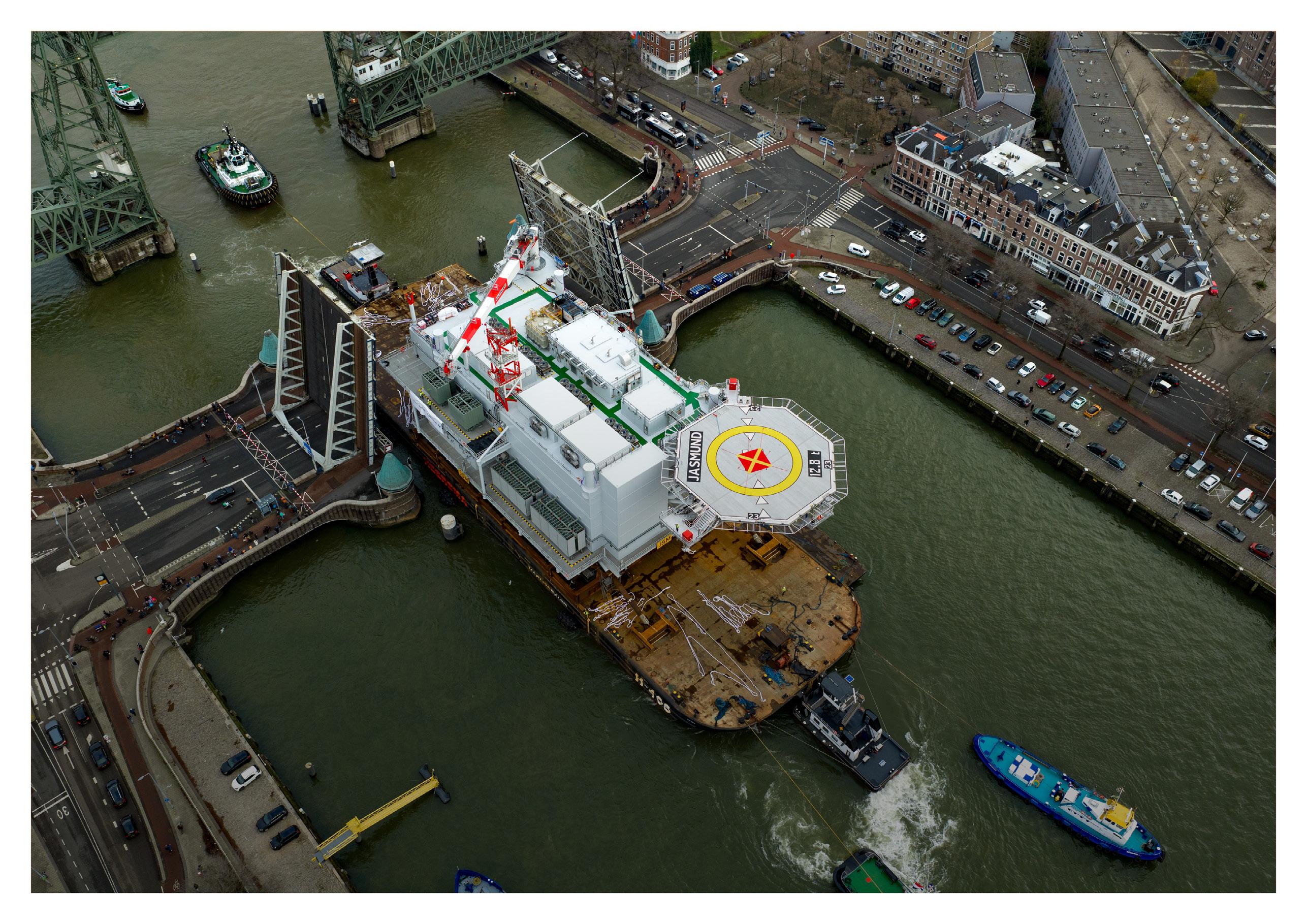
3.1. Risks and opportunities management system
At Elia Group, we view Enterprise Risk Management (ERM) not simply as a mere functional unit but rather as a process that connects our people, who face risks and opportunities in their daily activities, with our governing bodies. They all share a common objective: to provide reasonable assurance regarding the achievement of our strategy and our objectives relating to operations, reporting, and compliance.
By following regulatory standards and industry codes, Elia Group has achieved an effective system of internal control, with all ERM components present and functioning together in an integrated manner.
3.1.1 Our integrated framework
Our enterprise risk management is part of an integrated framework of internal controls that ensures our operations are conducted in a controlled, efficient, and sustainable manner by identifying, assessing, and managing risks.
As developed by the IIA (Institute of Internal Auditors), the framework is a concrete application of the “Three Lines Model”, which distinguishes the following layers:
1st line of defence - Business activities: Those providing products and services to our customers and facing risks on a daily basis have the primary responsibility for managing organisational risks by designing and implementing appropriate mitigating controls. The responsibility rests with Operational Management who own and manage risks.
2nd line of defence – Risk advisory and business monitoring: Reporting to senior management, the second line comprises risk management and compliance functions that help build and/or monitor the first line of defence controls. They review activities and key risks to ensure compliance with company’s objectives, legal and regulatory requirements, and alignment with our strategic objectives.
3rd line of defence – Independent assurance: Internal audit provides independent assurance on the adequacy and effectiveness of our enterprise risk management and broader internal control environment.
The framework puts together the essential components expected from our ERM and is aligned with industry standards and regulatory codes. It is intended to support the systematic creation of checks and balances in a proportionate way to reduce Elia Group’s risk exposure.
By applying this risk management framework, Elia Group reinforces our role as a trusted company, managing risks at all levels of the organisation in a timely, proportionate, and transparent manner, supported by an effective hierarchy of governance bodies. This risk and opportunity management system allows us to identify, understand, and manage the effect uncertainties have on the achievement of our objectives.
There is a close alignment between our ERM and the double materiality assessment performed in line with the Corporate Sustainability Reporting Directive (CSRD). The output of this assessment is fed back into our risk and opportunity process. Similarly, impacts, risks, and opportunities identified during the year serve as input for the annual double materiality assessment. This demonstrates how Elia Group is applying integrated thinking and supports our ability to create and sustain value over time.
Key highlights of our governance framework in respect to enterprise risk management:
Risk
Risk policy Group risk report
Risk policy Group risk report
Maintain corporate risk register
Board of Directors & Audit Committee
Executive Management Boards (both at Group and TSO levels)
Group & local risk departments
Challenge risk reporting
Challenge risk reporting
Validation of the organisation’s risk appetite
Processing of contextual information
Preparation of the Group’s risk reporting exercise
Support for risk assessment
Advice to business
Monitoring of progress on action plans
Oversight from the top of the organisation Tone setting
Oversight from the top Tone setting
Holistic view of risks and uncertainties Consistent risk assessment
Management of business risks
Business continuity plans
Accountable directors and senior management
Maintain business risk register Action owners
Translation of strategy into roadmaps
Oversight of business risks
Input to Group risk reporting
Coordination of action plans
More resilient processes
Carrying out action plans Risk reduction
3.1.2 Risk identification
Risk identification is carried out at different levels across the organisation.
At operational level, our business activities consider risk as part of their daily work and identify emerging and changing risks in a highly dynamic business environment. Management ensures business activities are monitored, internal controls are effective, and gaps to strengthen those internal controls are addressed. Risk Management’s role is to ensure these activities are integrated in a bottomup approach to ensure a true and fair view for our governing bodies.
At strategic level, we continuously identify new threats to the execution of our strategy or unforeseen impediments endangering the progress of our mitigation plans. The Risk Manager and the Executive Management Boards interact and look out for any changes that may call for the relevant risk assessment and associated action plans to be amended. This dialogue takes place as part of the risk management process, typically during the presentation of the Group and Local risk reports or during ad hoc risk exercises. The role of Risk Management in this top-down approach is also to ensure that strategic actions are properly translated into business activities.
Simultaneously employing a top-down and bottom-up approach enables Elia Group to identify and, where possible, anticipate forthcoming threats and react to any incidents that occur inside or outside the organisation which might affect the attainment of our objectives.
3.1.3 Risk assessment
Risk dimensions: Potential damage is expressed in terms of Continuity of Supply, Health & Safety, Reputation, Profit & Loss, or Cash Flow.
Criticality of the risk considers likelihood of occurrence and impact. Likelihood of occurrence:
Impact : (in practice, the scale is translated in specific criteria for each risk dimension):
3.1.4 Risk management
An assessment of the criticality of each substantive risk is carried out by Group and Local Risk Management staff along with relevant internal stakeholders. Criticality is a combination of the likelihood of a risk’s occurrence, its estimated impact, and the effectiveness of control and mitigation measures that would reduce the risk’s likelihood and/or impact.
5
We also assess when a risk is likely to emerge, as outlined in the table below, by assessing the time before material damage is experienced: Actual, short (<1y), medium (<5y) or long term (>5y).
Assessment of the impact of risks in accordance with different time frames (in years)
From To Examples
Shortterm risks
Mediumterm risks
Longterm risks
0 1 Operational risks such as those related to security of supply and cyber-attacks could materialise within a year or two. Exceptions: extreme weather events and climate risks. Their frequency of return is typically in the order of 1 in every 100 years. This justifies the widening of the time frame for shortterm risks: between 0 and 5 years.
2 5 The tariff methodologies are set for periods of 4 years in Belgium and 5 years in Germany. Exception: for climate risks, a different range is used, spanning from 5 to 10 years.
6 10 The network development plans that we publish, which outline the future investments which are needed in the national transmission networks, each span periods of 10-20 years. Our sustainability ambitions, outlined in the ActNow programme, include targets for 2030 and 2040. Exception: as we explore different climate scenarios and undertake vulnerability assessments, longer time horizons are considered: 2050 and 2085. These horizons are aligned with the lifetime of major investments and new assets. This justifies the use of a wider range for what is considered to be 'long term': between 10 to 80 years.
Finally, we assess the development of these risks by assessing how their criticality has changed since the previous reporting exercise.
Risk dimension or equivalent Metrics highlighting the substantive nature of risks
Continuity of Supply Number of people impacted by supply disruption. A threshold of 250 thousand people is considered as substantive.
Reputation An example of a substantive reputational impact would be a failure to deliver transmission infrastructure that supports the integration of renewable energy in a timely way.
Cash Flow Risks which, if they materialise, would lead to at least 10% of our total available liquidity being impacted.
Profit & Loss Risks which, should they materialise, would lead to an impact of 1.5% on our profit and loss.
Health & Safety Risks which, should they materialise, would lead to staff injuries and/or staff absences from work.
Threat to the implementation of our strategy or to value creation
Any threat which, should it materialise, may have an adverse impact on the implementation of our strategy. As an example, a threat to value creation in line with our key strategic initiatives concerning grids, system operations, market facilitation, or to support the energy transition and especially its decarbonisation dimension.
The outcome of the risk assessment is compared with our risk appetite, the level of risk that we are prepared to accept in pursuit of our objectives, and before action is deemed necessary to reduce the risk.If the impact of risks is higher than our appetite, action plans are implemented to mitigate the risks so that their impact decreases to an acceptable level. Risk matrices have been developed per risk dimension to facilitate this assessment. Departments translate the risk matrices into their own business context to ensure consistent and transparent risk management.
The Group Risk Reports were reviewed twice in 2025 by the Board of Directors and Audit Committee; alongside the Executive Management Boards. The latter contributed to the evaluation of the measures adopted in response to different risks. Action plans or specific, theme-based risk assessments were carried out whenever there was a perception of potential threats or opportunities.
Elia Group continually re-evaluates the adequacy of our risk management approach. Evaluation procedures include monitoring activities carried out as part of normal business operations and specific ad hoc assessments of selected topics. The Internal Audit Team plays a key role in these monitoring activities, as it conducts independent reviews of key financial and operational procedures, including risk mitigating actions. The findings of these reviews are reported to the Audit Committee to help it monitor internal control and risk management systems and corporate reporting procedures.
Top Risks 2025
Electrification
The rapid electrification of residential, industrial, and emerging sectors is accelerating demand for grid connections, particularly from batteries, data centres, and flexible energy users. This trend is reshaping infrastructure needs and operational processes, creating potential constraints on capacity and system reliability if not proactively managed.
Root Causes
1.Surge in Connection Requests
Rapid increase in grid connection requests driven by electrification of residential, industrial, and emerging sectors, notably batteries and data centres.
2.Critical Resource Constraints
Shortage of critical human resources, services, and components delaying timely execution of infrastructure projects.
3.Limited
Investment Flexibility
Current portfolio prioritisation leaves little room for new or unplanned projects, reducing adaptability.
4.Rigid Connection Handling
Existing 'First Come, First Served' process lacks flexibility, slowing integration of priority projects and innovative solutions.
5.Grid Capacity & Technical Limits
Congestion and technical constraints restrict ability to accommodate growing demand efficiently.
6.Regulatory Uncertainty
Evolving frameworks and incentives create planning uncertainty and limit responsiveness.
Our Response
As our TSO subsidiaries play a central role in Europe’s energy transition, we are committed to ensuring that grid development keeps pace with accelerating electrification while safeguarding reliability, efficiency, and long-term value creation.
We address this challenge through a combination of operational improvements and strategic initiatives:
Accelerating connection processes via digitalisation, hosting capacity maps, and standardised procedures to reduce lead times.
Introducing prioritisation mechanisms beyond 'First Come, First Served' to integrate critical projects such as batteries and data centres more efficiently.
Enhancing portfolio flexibility through dynamic investment planning and optimised resource allocation.
Maximising existing grid capacity by deploying advanced technologies, including Dynamic Line Rating and AI-based forecasting.
Driving innovation in network design and investment frameworks to future-proof infrastructure and support sustainable growth.
Residual Risk
Criticality
Time to impact
Affordability
The affordability of the energy transition remains a key strategic challenge for Elia Group. Accelerated electrification and a rapidly expanding investment portfolio are essential to enable the transition, but they also drive high infrastructure costs. These developments impact households, industry, and the competitiveness of the Belgian and German economies. Our priority is to balance the energy trilemma while managing substantial capital expenditure and adapting to evolving regulatory frameworks.
Root Causes
1.Significant Investment Needs
Large-scale programmes at both TSOs are essential to enable the energy transition, requiring flexibility to address new or unforeseen projects.
2.Balancing the Energy Trilemma
Achieving long-term sustainability and security while maintaining affordability remains a complex challenge.
3.Global Supply Chain Pressures
Rising demand for critical materials and services creates cost and delivery risks.
4.Technical & Regulatory Requirements
Compliance with strict standards and qualification processes adds complexity.
5.Geopolitical Uncertainties
Trade tensions and regional instability can impact project timelines and costs.
Our Response
As our TSO subsidiaries enable the energy transition in their respective regions, we remain committed to delivering a reliable, sustainable grid while keeping electricity affordable for society. Managing major investments requires a disciplined focus on cost control, efficiency, and innovation.
To achieve this, we have embedded affordability objectives into our planning through key initiatives:
Strengthening investment steering via harmonised budgets and scenario planning for geopolitical risks.
Transforming procurement practices through supplier diversification and stronger contracts to boost resilience.
Standardising technical specifications with marketconform solutions to streamline processes and reduce costs.
Applying a life-cycle cost approach to integrate affordability into planning and procurement.
Enhancing stakeholder engagement by improving transparency and aligning with policymakers.
Prioritising investments based on risk using scenariodriven steering and quantitative models.
Driving innovation and digitalisation with advanced tools and AI for planning and risk detection.
Advocating synchronised development through demanddriven expansion, cost-sharing, and private investment.
Residual Risk
Digitalisation
Elia Group is accelerating its digital transformation to strengthen operational resilience and support the energy transition. Robust digital foundations are essential for managing growing system complexity and ensuring secure, efficient operations. While certain challenges exist, our proactive approach ensures alignment, security, and innovation across the Group.
Root Causes
1.Governance & Coordination
Different priorities across entities can lead to inconsistent approaches and missed synergies.
2.Digital Industry (Hyperscaler) Concentration
High reliance on a small number of (mainly non-European) cloud suppliers raises concerns about digital sovereignty and compliance with evolving regulations.
3.IT/OT Integration
Connecting IT and operational systems increases exposure to cyber risks.
4.Regulatory Requirements
New regulations demand enhanced security and compliance measures.
5.Technology Deployment
Poor governance in the rollout of advanced solutions may impact data quality and efficiency.
Our Response
As a group, we are leveraging synergies across our entities to ensure a consistent and forward-looking approach to digital transformation.
Our actions focus on building secure and efficient digital foundations that support operational resilience and enable the energy transition. Key initiatives include:
Consolidating IT capabilities to create a unified delivery model, ensuring consistent standards and efficient resource allocation across the Group.
Driving innovation through AI and strategic partnerships, unlocking new opportunities for operational excellence and customer-centric solutions.
Implementing structured change management to align digital initiatives with business priorities and promote seamless adoption.
Strengthening cybersecurity and compliance frameworks to safeguard operations and meet evolving regulatory requirements.
Residual Risk
Risk Dimension
Criticality
Financing
Elia Group faces the risk that evolving regulatory frameworks, rating agency requirements, and market conditions could constrain access to financing for its long-term investment programme. This risk is closely linked to the scale of investments required for the energy transition and the need to maintain financial flexibility.
Root Causes
1.Evolving Rating Agency Criteria
Periodic adjustments in rating methodologies may influence our credit profile and financing conditions, potentially impacting financing costs and market access.
2.Large-Scale Investment Requirements
The energy transition necessitates substantial capital over multiple years. These commitments create funding needs and require rigorous planning to preserve financial stability.
3.Regulatory Uncertainty
Changes in the respective regulatory frameworks may affect cash flows and financing flexibility.
4.Market Volatility
Fluctuations in interest rates, inflation, and broader macroeconomic conditions can alter the cost and availability of capital.
Our Response
As Elia Group delivers critical infrastructure for the energy transition, maintaining strong financial resilience and investor confidence is essential. We therefore focus on securing longterm financing and managing short-term liquidity through the following measures:
Proactive regulatory engagement to secure frameworks that enable predictable returns and financing stability.
Strict capital expenditure discipline and scenario planning to adhere to investment plans and anticipate regulatory or market changes.
Flexible and diversified financing strategy combining equity, debt, and alternative instruments to maintain flexibility.
Liquidity management through measures that optimise cash flows and ensure short-term resilience.
Transparent stakeholder communication with investors, rating agencies, and financial partners, reinforcing trust and supporting continued access to capital.
Strengthening internal capabilities to anticipate market trends and make informed funding decisions.
Residual Risk
Criticality
Time to impact
Business Continuity
Elia Group operates in a complex environment with rising physical, cyber, and climate-related risks. Our transmission systems are highly reliable, yet unforeseen events can temporarily affect network elements (contingency events). Thanks to the meshed grid structure, such situations rarely cause major disruptions. Continuous vigilance ensures reliable supply and the protection of critical infrastructure.
Root Causes
1.Physical & Hybrid Threats
Incidents such as vandalism, aggression toward staff, and drone activity are increasing globally, driven by geopolitical tensions.
2.Cybersecurity Risks
Greater reliance on digital systems and connectivity exposes operations to cyberattacks, including malware and denialof-service attempts.
3.Extreme Weather & Climate Change
More frequent and severe weather events can disrupt infrastructure and grid stability.
4. Energy Transition Complexity
Integration of renewables and new technologies adds operational complexity and interdependencies.
5. Regulatory Evolution
Changing compliance requirements across jurisdictions demand continuous adaptation.
Our Response
As a critical operator of electricity transmission systems, Elia Group takes proactive measures to safeguard its infrastructure and ensure uninterrupted service, even in the face of unforeseen events. Our approach combines:
Reinforcing security and cyber protection through advanced monitoring and early detection systems, supported by a 24/7 Cyber Security Operations Centre, conducting regular vulnerability assessments, applying firmware updates, and delivering mandatory training programmes to ensure preparedness against evolving threats.
Strengthening infrastructure and climate resilience by conducting climate risk assessments and scenario planning, applying stringent design standards for new assets, and maintaining spare parts and rapid intervention capabilities for existing infrastructure.
Ensure compliance with regulatory requirements by establishing clear legal frameworks and formal cooperation agreements, while actively collaborating with public authorities and industry partners to share intelligence and enhance collective resilience.
Safeguarding business continuity through agile processes, regular testing, and skilled teams, supported by robust IT systems and contingency planning to enable swift recovery and minimise disruption.
Residual
Health and Safety
At Elia Group, safeguarding the health, safety, and wellbeing of employees, contractors, and partners is a core priority. In a complex energy landscape, we recognise that human, technical, and psychosocial risks require proactive management to prevent incidents. Our commitment extends beyond compliance: we strive to embed a strong safety culture and resilience to protect people and ensure uninterrupted operations.
Root Causes Our Response
1.Safety Risk
Incidents can arise from human error, misaligned safety practices, or varying risk appetite across teams.
2.Employee Wellbeing
High societal and project-related pressure on teams, risk of burnout, and conflicts.
3. Complex Operations
The introduction of new technologies and more construction sites increases the risk of incidents.
4. Contractor Oversight
Extensive reliance on external partners requires strong coordination and shared safety standards.
5. Skills & Training Gaps
Insufficient training or experience can heighten operational risks.
6. Physical Security Threats
Growing number of security incidents and aggression against staff and contractors.
Health and safety are embedded in all aspects of our operations, with a strong emphasis on prevention and continuous improvement to protect people and ensure business resilience. This commitment is reflected in the following actions:
Embedding a safety culture through group-wide awareness programmes and tailored training for employees and contractors.
Strengthening risk controls by applying structured processes for contractor oversight, specific actions plans with regular follow-ups, and dedicated Contractor Safety Days.
Prioritising wellbeing with initiatives that support mental health and encourage engagement across teams.
Adhering to global standards and ensuring transparency via compliance with ISO 45001 and the Safety Culture Ladder, reinforced by audits and clear reporting.
Driving continuous adaptation through risk assessments, lessons learned, and evolving training to address emerging challenges.
Focusing investment on safety technologies and workforce development to reinforce resilience across operations.
Residual Risk
Infrastructure Projects Management
Delivering high-quality infrastructure projects on time and within budget is critical to supporting the energy transition and achieving Elia Group’s strategic objectives. Delays or cost overruns can affect reputation, stakeholder trust, and financial performance, as well as the continuity of supply.
Root Causes
1.Portfolio Expansion & Complexity
The growing investment portfolio requires disciplined prioritisation to ensure timely delivery. Adjustments in investment allocation may influence project timelines and complexity. Offshore developments and new partnerships add further challenges.
2.Regulatory & Permitting Challenges
Lengthy and uncertain permitting processes, combined with stricter environmental standards, can delay project timelines and increase costs.
3.Supply Chain & Resource Constraints
Global market volatility and material shortages create risks for timely delivery and cost control. Furthermore, specialised expertise is increasingly scarce.
4.Operational & Asset Risks
Delaying replacement projects can increase the risk of outages and higher maintenance costs, impacting grid reliability and stakeholder confidence. Timely asset renewal is key to ensuring operational resilience and service continuity.
Our Response
To manage the complexity of our growing investment portfolio and ensure timely delivery of critical projects, Elia Group applies a disciplined and transparent approach:
Permitting and stakeholder management starts with early permitting and anticipating stakeholder expectations. We highlight societal benefits, work closely with regulators to streamline approvals, and involve independent experts in environmental studies. Proactive engagement with communities ensures trust and transparency.
Portfolio and project monitoring includes enhanced tracking of all projects, comprehensive risk management, and structured stage-gate processes to secure timely delivery and strengthen governance.
Resource and supply chain management focuses on securing critical expertise, ordering materials early, and diversifying suppliers. Knowledge sharing and flexible scheduling help maintain resilience during peak periods.
Cost efficiency and financial controls are supported by rigorous technical reviews, cost control measures, and harmonised methodologies. Contingencies and forwardlooking planning safeguard financial discipline and anticipate regulatory changes.
Residual Risk
Supply Chain
Elia Group relies on a global supply chain for critical equipment and services essential to maintaining grid reliability and delivering strategic infrastructure projects. Disruptions (such as delays in component delivery, shortages of specialised materials, or logistical constraints) could impact project timelines, increase costs, and affect the execution of our investment programme.
Root Causes Our Response
1.Geopolitical & Regulatory Uncertainty
Global political developments, trade restrictions, and evolving (EU) regulatory frameworks can affect the availability of critical components and materials. These factors may lead to delays or increased costs in procurement.
2.Commodity Price Volatility
Fluctuations in the prices of raw materials such as steel, copper, and specialised components, driven by global demand and market dynamics, can impact project budgets and financial planning.
3.Concentration of Specialised Suppliers
Certain high-voltage equipment and advanced technologies are produced by a limited number of suppliers worldwide. This dependency increases exposure to potential shortages or delivery delays.
4.Logistics & Transportation Challenges
Global supply chains remain vulnerable to disruptions such as port congestion, labour shortages, and unforeseen events (e.g. natural disasters or health crises), which can affect timely delivery of essential components.
Residual Risk
To strengthen supply chain resilience and ensure timely delivery of critical components, Elia Group has implemented a comprehensive set of measures:
Supplier diversification expands the pool of qualified suppliers, including international partners, reducing dependency and increasing flexibility.
Advanced forecasting and data analytics improve anticipation of supply needs and optimise procurement planning.
Collaboration with European system operators through joint procurement and capacity pooling enhances market leverage and mitigates bottlenecks.
Standardisation and simplification of technical specifications align requirements with market practices, accelerating procurement and easing supplier compliance.
Flexible contract management and price risk mitigation help manage cost volatility and secure continuity of supply.
Inventory management and external storage provide buffers for critical components, ensuring operational readiness during disruptions.
Supplier relationship management and internal alignment foster stronger partnerships and better coordination across procurement, asset management, and engineering teams.
Criticality
Time to impact
Continuity of Supply
Ensuring the continuity of electricity supply is a core responsibility for 50Hertz and ETB as Transmission System Operators (TSOs). Europe’s energy transition is accelerating, driven by rapid electrification, the gradual phase-out of conventional baseload generation, and the integration of increasing shares of renewable energy. These developments bring the grid closer to its technical limits, making system balancing and grid management more complex, and requiring proactive measures to ensure stability and security.
Root Causes
1.Electrification & Renewable Growth
Rapid electrification and a higher share of renewables increase system pressure and balancing challenges.
2.Closure of Conventional Units
The phase-out of baseload generation reduces system flexibility and adequacy.
3.Grid Capacity & Congestion
Limited hosting capacity and rising connection requests from batteries and data centres heighten congestion risks.
4.Distributed Generation Complexity
The growth of distributed photovoltaic units adds operational complexity due to limited controllability.
5.Dependence on External Capacity
Reliance on foreign generation introduces uncertainty from fluctuating availability and lack of long-term agreements.
6.Regulatory & Economic Uncertainty
Changing regulatory frameworks and market mechanisms affect investment decisions, while the long-term viability of certain technologies remains unclear without market support.
Our Response
As part of our core responsibility to ensure the continuity of supply of electricity, both TSOs have implemented targeted measures to safeguard adequacy, strengthen flexibility, and maintain grid stability:
Adequacy and flexibility secure resources for peak demand through robust capacity mechanisms and oversubscribed auctions, supported by European market integration for balancing.
System balancing and market design leverage automation, digital tools, and integrated balancing markets to improve efficiency, while market design lowers barriers for flexible participation.
Congestion and grid hosting are managed with advanced congestion tools, real-time data exchange, and infrastructure planning that integrates flexibility for timely delivery.
Unlocking flexibility taps into consumer solutions (EVs, heat pumps, decentralised generation) alongside battery storage and offshore interconnectors to reduce adequacy gaps and costs.
Regulatory engagement ensures active dialogue with regulators to promote frameworks that support investment and flexibility, complemented by expert groups and continuity planning.
Operational excellence combines automation, real-time monitoring, and scenario analysis with wide-area monitoring and security assessments to reinforce grid stability.
Residual Risk
Regulatory Framework
Elia Group operates in a dynamic regulatory landscape across Belgium and Germany, marked by increasing complexity and evolving requirements. Decisions by regulatory authorities directly influence our revenue model, investment capacity, and strategic development. These changes can create uncertainty and impact affordability and competitiveness in the energy transition.
Root Causes
1.Regulatory Uncertainty
Possible revisions to tariff methodologies and remuneration mechanisms may affect (predictability of) returns.
2.Investment Incentive Shifts
Adjustments in regulatory approaches could influence capital expenditure planning and long-term investment signals.
3. Governance & Centralisation
EU initiatives may reshape responsibilities and decision-making processes for transmission system operators.
Our Response
To address regulatory challenges and maintain stability, Elia Group adopts a proactive and collaborative approach that focuses on four aspects:
Constructive dialogue ensures open and transparent engagement with regulators and policymakers, fostering trust and promoting stable, predictable frameworks that support investment and the energy transition.
Scenario planning and impact assessments anticipate regulatory developments early, enabling strategies that safeguard financial performance and strengthen operational resilience.
European advocacy drives active participation in EU-level discussions, shaping future market design and regulatory evolution to create the conditions for a secure and sustainable energy system.
Benchmarking and best practices foster collaboration with other European transmission system operators, enabling the sharing of insights and alignment with international standards.
Residual Risk
Top Opportunities 2025
1
2 Innovative Financing Solutions
3 Resilience in Home Territories

Elia Group can drive cross-border energy transition by delivering international transmission solutions including offshore, leveraging expertise and partnerships while managing capital exposure.
Strengthening our financial base with diverse funding and robust partnerships empowers Elia Group to achieve its strategic objectives and remain resilient in a rapidly changing sector.
Ensuring energy independence and digital sovereignty in Belgium and Germany by building robust synergies and innovative initiatives that strengthen our energy system against evolving threats.
Elia Group enables decarbonisation through integrated, cost-effective solutions and strong partnerships, positioning itself as a trusted system integrator.
Leveraging digital technologies, innovation, and group-wide collaboration drives resilience, unlocks new value streams, and ensures a future-proof position in the energy sector.
While grid flexibility is seen as a good mitigation for the electrification bottleneck, energy flexibility (demand side response) is key to balancing the grid in the future.
International & Offshore Transmission Needs
Elia Group supports Europe’s energy transition by developing cross-border and offshore transmission infrastructure. Growing electricity flows and offshore generation create a strong need for reliable, efficient, and interconnected networks. Leveraging technical expertise and international partnerships, Elia Group positions itself as a strategic and trusted partner for strengthening system resilience, enabling market integration.
Underlying Drivers Our Response Opportunity Assessment
1.Growing Demand for Cross-Border Transmission
The need for reliable and efficient electricity flows between countries is increasing, driven by market integration and security of supply.
2.Increasing Project Complexity
International infrastructure projects are becoming more complex, requiring advanced technical expertise and coordination across multiple stakeholders.
3.Capital and Risk Management Challenges
Large-scale, non-captive projects require careful management of both capital (equity and debt) and associated risks.
4.Evolving Regulatory and Political Environment
Changes in regulations and political priorities are accelerating the push for interconnection and international collaboration.
Driving cross-border connectivity through expertise, partnerships, and innovation
As international and offshore transmission needs grow, Elia Group is turning this challenge into an opportunity for sustainable growth by taking the following decisive steps:
Strategic partnerships in cross-border infrastructure position the Group as a trusted partner in delivering secure and efficient energy flows across international transmission projects, including initiatives such as WindGrid.
Specialised services through Elia Grid International (EGI) provide engineering, project delivery, and operations and maintenance (O&M) expertise to support global markets with proven solutions.
Prudent capital strategies ensure balanced growth and financial resilience by applying minority investments and flexible structures that optimise returns while managing risk.
Leveraging the Elia Group ecosystem creates synergies across subsidiaries and partners, enabling innovative, costefficient solutions that strengthen our international track record and accelerate the energy transition. Opportunity
Dimension
Innovative Financing Solutions
Ensuring the financeability of our investment programme is a must for Elia Group. By proactively diversifying funding sources, we strengthen our ability to deliver on ambitious growth plans and maintain resilience in a changing regulatory and market environment. This approach positions Elia Group to remain a frontrunner in the energy transition, secure competitive financing, and support long-term value creation for all stakeholders.
Underlying Drivers Our Response Opportunity Assessment
1.Evolving Rating Agency Criteria
Periodic adjustments in rating methodologies may influence our credit profile and financing conditions, potentially impacting financing costs and market access.
2.Regulatory Dependency
The ability to attract funding is increasingly dependent on supportive regulatory frameworks in Belgium and Germany. Uncertainty in future remuneration and regulatory support heightens the need for diversified funding strategies.
3.Need for Partnerships
The Group's ambitious plans demand collaboration with new financial partners at both group and project levels.
4. Investor Diversification
Continuously expanding our investor outreach, engaging new and existing investors to support our equity story and maintain access to capital.
5. Rising Financing Needs
The growing scale and frequency of our funding requirements necessitate tapping into new sources and instruments, including green bonds and climate fund.
Innovative financing strategies to secure growth and enable the energy transition
Elia Group is seizing the opportunity to strengthen financial resilience and support ambitious investments through forwardthinking funding solutions built on five key priorities:
Flexible funding toolkit incorporates equity, hybrid instruments, and innovative models to adapt to changing market and regulatory conditions.
Strategic partnerships with leading financial institutions and investors ensure access to capital for major projects and foster collaboration.
ESG-aligned financing reinforces sustainability credentials and positions Elia Group as a trusted partner for national authorities and critical infrastructure initiatives.
Leveraging subsidies and loans from national and European programmes reduces capital costs and supports long-term growth.
Continuous engagement with investors maintains transparency and builds confidence, while CAPEX planning flexibility safeguards financial stability and protects credit ratings in a dynamic environment.
Resilience in Home Territories
By positioning the TSO as a central driver of energy independence, industrial development, and digital sovereignty, we aim to reinforce resilience in our home markets (Belgium and Germany). Achieving this requires strong collaboration with national authorities, industry partners, suppliers, and other market stakeholders, while advancing innovative solutions to address physical, digital, and supply chain challenges.
Underlying Drivers Our Response
1.Affordability
Increasing scrutiny from regulators and society regarding the affordability of investments impacts our support for territorial industry.
2.Expertise Shortage
There is a growing need for specialised skills and technical knowledge in the market.
3.Hybrid Threats & Digitalisation
The rise of both physical and cyber threats, combined with further digitalization, makes the energy system more vulnerable and requires an integrated security approach.
4.Political Commitment
Strong policy direction from national and European authorities to reduce reliance on foreign energy sources and reinforce control over critical infrastructure.
5.Supply Chain Scarcity & Climate Adaptation
Global supply chain constraints and the necessity to adapt the energy system to more extreme weather events continue to pose significant challenges.
Trusted critical entity operator supporting national sovereignty
Elia Group transforms resilience into a strategic advantage through innovation, collaboration, and security, focusing on four key priorities:
Ensuring digital sovereignty through our EDP platform provides secure digital infrastructure via a private hybrid cloud, creating new commercialisation opportunities for critical infrastructure players.
Strategic partnerships with governments, industry, suppliers, and market players reinforce resilience and position Elia Group as a trusted advisor and backbone of energy infrastructure. Through this advisory role, we deliver cost-benefit analyses and regulatory guidance, enabling informed decisions on key topics such as battery integration and grid planning.
Leveraging the Elia Group ecosystem and synergies fosters collaboration across entities, sharing best practices and developing cost-efficient solutions that pave the way for international growth.
Concrete actions including joint projects in the North Sea and Baltic Sea, redesigning national security architectures, and strengthening supply chain partnerships, further enhance resilience and knowledge exchange.
Decarbonisation Facilitator
Elia Group positions itself as a facilitator of decarbonisation for society, supporting customers and stakeholders on their electrification and decarbonisation journey. Our role is to act as a strategic partner and system integrator, enabling industrial development and energy sovereignty in our home markets and beyond. We focus on realistic, affordable, and integrated solutions, leveraging internal synergies and technical expertise.
Underlying Drivers Our Response Opportunity Assessment
1.Affordability & Transparency
Heightened regulatory and societal expectations for costeffective solutions and transparent infrastructure investments.
2.Technical Expertise Needs
The energy transition requires advanced technical knowledge and experience in grid integration, particularly in non-captive markets.
3.Synergies within Elia Group
Leveraging the Elia Group ecosystem, including entities such as WindGrid and EGI, is essential to drive operational efficiency and support international growth.
4. Market & System Integration
The ongoing shift towards integrated markets and systems is critical to enabling the energy transition and achieving decarbonisation objectives.
5. Stakeholder Expectations
There is a growing emphasis on resilience, sovereignty, and collaboration with authorities, industry partners, and suppliers.
Decarbonisation anchored in affordability, transparency, and system integration
Elia Group is addressing these challenges with a forward-looking strategy that includes:
Aligning grid investments with actual electrification needs ensures plans remain adaptable to evolving requirements and demand growth.
Accelerating customer connections through flexible solutions supports timely integration and strengthens system resilience.
Leveraging the Elia Group ecosystem and Elia Grid International (EGI) expertise drives decarbonisation strategies, enables grid expansion, and fosters efficient collaboration—opening doors for international growth and delivering comprehensive solutions for European and U.S. markets.
Commercialising innovative services provides operational systems and expertise to other transmission system operators and partners, promoting interoperability and efficiency while positioning Elia Group as a strategic partner for project delivery, engineering, and operations and maintenance (O&M).
Strengthening internal collaboration and synergies develops efficient, affordable solutions and creates opportunities for international expansion.
& Safety Continuity of Supply Reputation Profit & Loss Cash Flow
Digitalisation & Innovation
Digitalisation and innovation are core pillars of Elia Group’s strategy. Our ambition is to deliver a secure and efficient digital transformation while fostering innovation through advanced technologies such as AI, cloud-native platforms, and microservices. These efforts support operational excellence and open the door to new business models that create long-term value. Collaboration and knowledge sharing, both within Elia Group and with external partners, are essential to this journey, ensuring that expertise is leveraged and synergies are built across the entire ecosystem.
Underlying Drivers Our Response Opportunity Assessment
1.Increasing System Complexity
The energy landscape is evolving rapidly, driven by the integration of renewable sources and growing flexibility needs.
2.Digital Sovereignty & Security
Safeguarding critical infrastructure is a top priority. There is a growing need for secure, sovereign digital operations to protect data integrity and ensure resilience in an increasingly interconnected environment.
3.Convergence of IT and OT
Traditional operational technologies are being transformed through integration with modern IT systems. This convergence enables smarter, more agile operations but demands innovative approaches.
4.Accelerating Innovation
The sector faces strong expectations for continuous innovation, particularly in areas such as artificial intelligence, cloud technologies, and data-driven processes.
Empowering the energy transition through digitalisation
Elia Group is embracing digitalisation and innovation to strengthen the reliability and efficiency of the energy system. This transformation is driven by five key priorities:
Accelerating cloud and microservices adoption enables the development of flexible, scalable platforms that support faster deployment of new solutions, with the EDP (private hybrid cloud) as a cornerstone.
Integrating AI into operations improves efficiency and unlocks new capabilities, while ensuring responsible use through strong governance and human oversight.
Driving data centricity creates a consistent and robust data platform that supports automation and advanced analytics, enabling smarter decision-making.
Making better use of investments in innovative solutions by working closely with other Transmission System Operators and partners to share resources, reduce costs, and accelerate the adoption of cutting-edge technologies.
Fostering synergies and knowledge sharing across Elia Group and with external stakeholders to create a collaborative environment where expertise is captured, shared, and transformed into actionable insights.
Cash
Criticality
Time to Impact
Energy Flexibility
Flexibility, as a key element of the energy transition, enables us to manage grid constraints, address connection backlogs, and navigate the growing complexity of the energy system. For Elia Group, flexibility represents both a strategic opportunity to create value and a necessity to mitigate operational, reputational, and financial risks. Our approach has evolved beyond consumer participation to a system-wide perspective, incorporating market-driven mechanisms, flexible grid connection solutions, and close collaboration with distribution system operators.
Underlying Drivers Our Response Opportunity Assessment
1.Grid Connection Backlog
High volume of pending grid connection requests, also from distribution system operators, is creating operational challenges and reputational risks.
2.Evolving Demand Dynamics
Rapid electrification and the emergence of new sectors, such as data centres and battery storage, combined with industrial slowdowns, require scalable and adaptive solutions to host new capacities.
3.Accelerated Renewable Integration
The growing share of renewable generation (e.g. offshore wind and solar) connected to the grid introduces balancing complexities that demand innovative flexibility measures.
4.Regulatory Framework Evolution
Continuous changes in regulatory codes and frameworks necessitate agile responses to ensure compliance and foster investment certainty.
5.Challenges in Project Prioritisation
Unclear prioritisation criteria can lead to speculative projects occupying grid capacity, limiting opportunities for strategic and sustainable developments.
6.Societal choices
High demand from specific sectors (especially data centres and batteries) may crowd out other market participants, requiring long term capacity steering in line with societal and industrial goals
Building a flexible and reliable energy system
To keep the energy transition on track, Elia Group is taking concrete steps to make the grid more flexible, efficient, and future-ready.
Evolving market design introduces smarter mechanisms and real-time pricing to enable active participation and unlock flexibility.
Leveraging TSO expertise strengthens our leadership through new capabilities and knowledge-sharing initiatives such as EGI.
—The move towards permanent flexible connection frameworks replaces temporary arrangements with structural, long-term contracts. This ensures efficient capacity management and reduces connection delays.
—To optimise grid access, queue management is being enhanced through stricter criteria and prioritisation of “firstready” projects.
Sector-specific measures are implemented by creating dedicated capacity allocations for high-demand sectors, while offering flexible options when capacity is constrained.
Stakeholder engagement is strengthened through transparent and proactive communication with customers, regulators, and policymakers, aligning expectations and fostering shared responsibility.
—Finally, collaboration with DSOs is deepened to unlock flexibility at all levels of the grid.
Time to Impact
3.2. Internal control system
3.2.1 Organisation of internal control system
Elia Group’s internal control system supports the company’s risk assurance processes and relies on clearly defined roles and responsibilities across all levels of the organisation. Pursuant to Elia Group’s articles of association, the Board of Directors established an Executive Management Board as well as various committees to help it fulfil its duties: the Audit Committee, the Strategic Committee, the Remuneration Committee and the Nomination Committee. The Audit Committee is, pursuant to Article 7:99 of the Belgian Code of Companies and Associations and the articles of association, responsible in particular for items (ii), (iii), (iv) and (v) below. The Board has charged the Audit Committee with the following tasks:
—examining the accounts and exercising control over the budget;
—monitoring the financial reporting process;
—monitoring the effectiveness of the company’s internal control and risk management systems;
—monitoring the internal audit process and its effectiveness;
—monitoring the statutory audit of annual and consolidated accounts, including following up on any issues raised or recommendations made by external auditors;
—reviewing and monitoring the independence of external auditors;
—formulating a proposal for submission to the Board of Directors for the (re-)appointment of the statutory auditors, as well as making recommendations to the Board of Directors regarding the conditions of their appointment;
—monitoring the nature and extent of the non-audit services provided by the statutory auditors;
—reviewing the effectiveness of the external audit process.
The Audit Committee generally meets on a quarterly basis.
3.2.2 Main control activities
Elia Group has established internal control mechanisms across different organisational levels to ensure compliance with standards and internal procedures that are geared towards the proper management of identified risks. These include:
—clear task separation, preventing the same person from initiating, authorising, and recording a transaction –policies have been drawn up regarding access to information systems and the delegation of powers;
—an integrated audit approach, so as to link end results with the transactions supporting them;
—data security and integrity through the appropriate allocation of rights;
—the appropriate documentation of procedures through the use of the Business Process Excellence Intranet, which centralises policies and procedures; departmental managers are responsible for establishing activities that control the risks which are inherent to their departments.
3.2.3 Integrity and ethics
Elia Group’s integrity and ethics are a crucial aspect of our internal control environment. The Board of Directors and the Executive Management Board regularly communicate and revisit these principles in order to clarify the mutual rights and obligations of the company and our employees. These rules are shared with all new employees, and compliance with them is formally included in employment contracts.
Elia Group’s Code of Ethics (the “Code of Ethics”) defines what Elia Group regards as correct ethical conduct and sets out the policy and a number of principles related to the avoidance of conflicts of interest. Acting honestly and independently with respect to all stakeholders is a key guiding principle for all of our employees. The Code of Ethics expressly states that bribery in any form, the misuse of privileged information and market manipulation is prohibited. This is confirmed by Elia Group’s Code of Conduct (the “Code of Conduct”), that helps to prevent employees from breaching any Belgian legislation with regard to the use of privileged information or market manipulation.
Senior management consistently ensures that employees comply with internal values and procedures and – where applicable – takes any actions deemed necessary, as laid down in the company regulations and employment contracts. Elia Group and its employees do not use gifts or entertainment to gain competitive advantage over other organisations. Facilitation payments are not permitted by the Group. Disguising gifts or entertainment as charitable donations is also a violation of the Code of Ethics. Moreover, the Code of Ethics prohibits all forms of racism and discrimination, promotes equal opportunities for all employees, and ensures the protection and confidential use of IT systems.
All parties involved in procurement must abide by the group’s Supplier Code of Conduct and all associated regulations. The Supplier Code of Conduct contains internationally accepted principles regarding ethical conduct, the protection of human rights, health and safety practices, and environmental and social considerations. In order to use this set of principles to positively impact our supply chain, a risk-based approach is in place. For all purchasing categories, we assess the risks based on traditional supply chain risks and supply chain sustainability risks.
Elia Group offers its employees the opportunity to express their concerns about possible breaches of the Code of Ethics without fear of negative repercussions or unfair treatment. Issues can also be raised with local management teams, HR, and the Compliance Officer. In addition to internal reporting channels, external reporting systems exist that allow all internal employees and external stakeholders to anonymously raise issues about possible breaches of the Code of Ethics which may harm the group’s reputation and/or its interests via a dedicated platform (‘EthicsAlert’). All raised issues are handled in an objective and confidential manner, in line with the whistleblowing procedure, which was designed in compliance with EU Directive 2019/1937 and its transposition into national law.
The Internal Audit Team’s annual activities include a number of actions and verification audits designed to act as specific safeguards against fraud. Any findings are reported to the Audit Committee. In 2025, no relevant findings relating to financial fraud were reported in the audits that were part of the 2025 annual audit plan.
3.3. Internal control and risk management system related to the financial reporting process
The Group's financial reporting objectives include:
—ensuring financial statements comply with widely accepted accounting principles;
—ensuring that the information presented in financial results is both transparent and accurate;
—using accounting principles appropriate to the sector and the company’s transactions;
—ensuring the accuracy and reliability of financial results. The activities undertaken by Elia Transmission Belgium SA/ NV and 50Hertz Transmission GmbH, as electricity transmission system operators which own physical assets, contribute in a significant manner to the group’s financial results. Therefore, appropriate procedures and control systems have been established to ensure that an exhaustive and realistic inventory of physical assets can be drawn up.
3.3.1 Roles and responsibilities
Under the supervision of the Chief Financial Officer, the Accounting and Finance Department is responsible for statutory financial and tax reporting and the consolidation of Elia Group’s subsidiaries. The Finance Department helps the Executive Board by providing, in a timely manner, correct and reliable financial information to aid decisionmaking (related to monitoring the profitability of activities) and the effective management of corporate financial services. External financial reporting – one of Elia Group’s duties – includes (i) statutory financial and tax reporting; (ii) consolidated financial reporting; and (iii) specific reporting obligations applicable to listed companies. The Controlling Department monitors the performance of the Group and its subsidiaries. The Investor Relations Department is responsible for specific reporting applicable to listed companies. With regard to the financial reporting process, the tasks and responsibilities of all employees in the Accounting and Finance Department are clearly defined, so enabling the production of financial results that accurately and honestly reflect Elia Group’s financial
transactions. A detailed framework of tasks and responsibilities identifies the main control duties and the frequency with which tasks and control duties are performed. An International Financial Reporting Standards (IFRS) Accounting Manual is used by all entities within the scope of consolidation as a reference for accounting principles and procedures, thus ensuring that all accounting and reporting activities across the group are consistent, comparable and accurate. The Accounting and Finance Department has the appropriate means (including IT tools) to perform its tasks; all entities within the scope of consolidation use the same enterprise resource planning software, which has a range of integrated controls and supports task separation as appropriate. The roles and responsibilities of all employees are clearly defined in line with the Business Process Excellence methodology.
The structured approach developed by Elia Group helps to ensure that financial data is both exhaustive and precise, and takes into account activity review deadlines and the actions of key players, so as to ensure that control and accounting processes are adequate.
3.3.2 Risk management
Financial risk assessments primarily involve the identification of:
1.significant financial reporting data and its purpose;
2.major risks involved in the attainment of objectives;
3.risk control mechanisms, where possible.
3.3.3 Control activities
For all significant financial reporting risks, Elia Group adopts appropriate control mechanisms to minimise the probability of error. Clearly defined roles and responsibilities related to the closing procedure for financial results are in place. Measures that ensure that each stage is appropriately followed up on are in place; this includes the publication of a detailed agenda of all activities undertaken by Elia Group's subsidiaries. Control activities are performed to ensure quality and compliance with internal and external requirements and recommendations. During the financial closing period, a specific test is performed to ensure that unusual and significant transactions, accounting checks and adjustments and company transactions and critical estimates are all under control. The combination of all
these elements ensures that our financial results are reliable. Regular internal and external audits also contribute to the quality of our financial reporting. As it identifies the risks that may affect the achievement of financial reporting objectives, the Executive Board takes into account the possibility of any misreporting associated with fraud and takes appropriate action where internal control needs to be strengthened. The Internal Audit Team performs specific audits based on the risk assessment related to potential fraud, with a view to avoiding and preventing any instances of fraud.
3.3.4 Information and communication
The members of staff who are responsible for financial reporting regularly meet with other internal departments (operational and control departments) to identify financial reporting data. They validate and document the critical assumptions underpinning booked reserves and the company’s accounts. At the group level, the consolidated results are broken down into segments and validated through a comparison with historical figures and through a comparative analysis of forecasts and actual data. This financial information is sent to the Executive Board on a monthly basis and is discussed each quarter with the Audit Committee. The Chairman of the Audit Committee then reports to the Board of Directors.
3.3.5 Monitoring
Monitoring activities in the financial reporting process include:
(i)the monthly reporting of strategic indicators to the Executive Board and management;
(ii)following up on key operational indicators at a departmental level;
(iii)a monthly financial report, including an assessment of variations in relation to the budget, comparisons with preceding periods and events which are liable to affect cost controlling.
Consideration is also given to third-party feedback from a range of sources, such as:
(i)stock market indices and reports published by ratings agencies;
(ii)the share value;
(iii)reports published by federal and regional regulators relating to compliance with legal and regulatory frameworks;
(iv)reports published by financial analysts and insurance companies.
Comparing information from external sources with internally generated data and ensuing analyses allows the group to keep on making improvements to its monitoring activities.
Besides the activities performed by the Internal Audit Team that ensure the effectiveness of the internal control and risk management system of the financial reporting process, Elia Group’s legal entities are also subject to external audits, which generally entail an evaluation of internal control processes and notes relating to their (annual and quarterly) statutory and consolidated financial results. External auditors make recommendations for improving the Group's internal control systems. For subsidiaries that have an Audit Committee, the recommendations, action plans and their implementation are reported annually to that Committee, which in turn reports to the Board of Directors regarding the independence of the auditor or statutory audit firm and drafts a motion for a resolution on the appointment of external auditors.
3.4. Internal control and risk management system related to the non-financial reporting process
Elia Group has established an internal control and risk management system over the sustainability reporting process. Risk management and internal controls over sustainability reporting constitute a critical element for a CSRD - compliant reporting.
Internal control over sustainability reporting
The ESRS sustainability reporting team at the Elia Group level is responsible for defining the reporting needs and the process for the collection, reviewing the input,
consolidation, verification, and compilation of sustainability information.
For the significant and material ESRS topics, together with the business, the team created a standardised set of documentation gathered in the Non-financial Accounting Manuals, where the data source, calculation methods, assumptions, roles and responsibilities and internal controls are described. The team continuously works on increasing the maturity of the reporting, among other things by implementing the recommendations issued by both internal and external auditors.
Constant collaboration and consultations are maintained with key corporate functions: Sustainability, Internal Audit & Risk Management, Strategy, Controlling. Nevertheless, the transversal nature of sustainability matters imposes that the business owners must remain a central stakeholder, with shared ownership and control tasks at the department level.
The quantitative data are mainly sourced from various internal IT systems. For some data sources internal control on data quality are built-in, however for most of the data a manual verification is needed to detect inaccuracies and ensure accuracy. Confirmation of all qualitative data is executed by the internal stakeholders, who are assigned responsibility for each sustainability issue.
For all significant sustainability reporting risks, Elia Group adopts appropriate control mechanisms to minimise the probability of error, such as reasonability tests, variance analysis, reconciliation between data sources, 4-eyes review etc.
The implementation of this reporting process has been defined in close collaboration with the sustainability governance bodies described in the section ESRS 2 GOV 1The role of the administrative, management, and supervisory bodies. Findings resulting from the ESRS preparation process and status has been reported on a quarterly basis to the Group Sustainability Office.
The Group is continuously working on strengthening and increasing its internal control environment. In the future, we will gradually implement an Internal Control over Sustainability Reporting (COSO ICSR) framework for both our internal and external sustainability reporting.
Risk assessment
We have integrated the sustainability risk assessment into the company’s enterprise risk management (ERM) framework. This also includes the identification and management of sustainability reporting risks.
The sustainability reporting risk assessments primarily involves the identification of:
1. Significant sustainability reporting data and its purpose;
2. Major risks involved in the attainment of objectives
—Data derived from multiple systems and data sources, accuracy and completeness of values.
—Correct interpretation of the ESRS;
—Mapping ESG targets with ESRS definition;
—Optimised internal control mechanisms
3. Risk control mechanisms, where possible.
For all significant sustainability reporting risks, Elia Group adopts appropriate control mechanisms to minimise the probability of error. Clearly defined roles and responsibilities related to the closing procedure for sustainability reporting are in place.
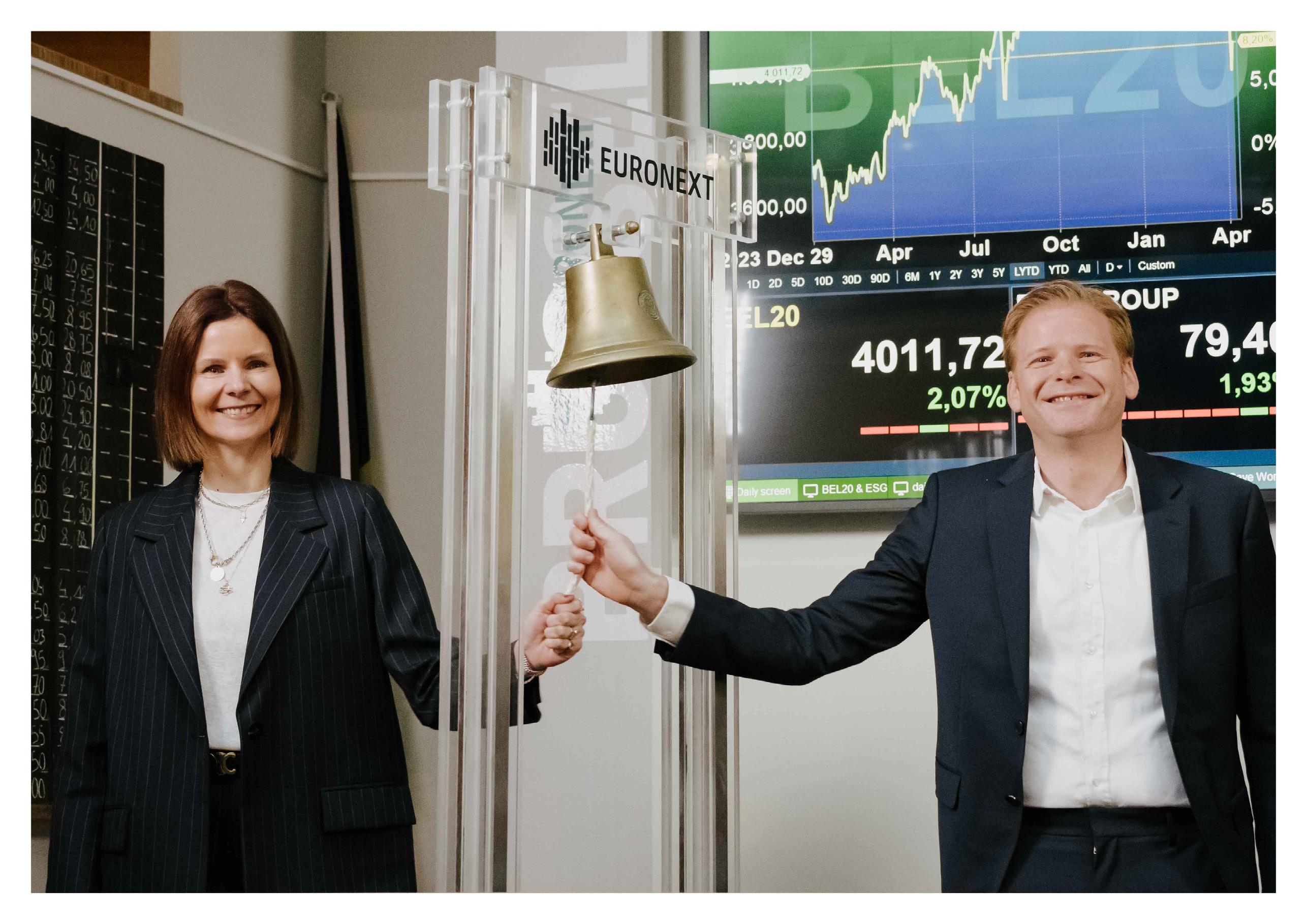
4. Elia Group on the stock exchange
Chances in Price
and Traded Volumes
4.1. Elia Group on the stock exchange
2025 marked a turning point for Elia Group. The successful capital increase and subsequent rebound of our share price strengthened investor confidence in our ability to fund and deliver our strategic ambitions.
2025 macro and geopolitical environment
In 2025, European utilities navigated through a complex environment shaped by both opportunities and challenges. Power prices stabilised, supported by lower gas prices and weaker demand, while three ECB rate cuts provided some relief amid a higher-for-longer interest rate environment. The rapid growth of AI and data centres offered a potential long-term tailwind for electricity demand, though questions remain about its sustainability. At the same time, political shifts across Europe led to more cautious energy and climate policies, slowing the pace of renewable deployment. In this context, electricity networks reinforced their strategic role as the backbone of the energy transition, supporting both system reliability and flexibility in an increasingly electrified economy.
This was reflected in continued strong investment flows into regulated utilities and infrastructure, highlighting investor confidence in long-term regulated assets.
2025 Elia Group achievements
Amid these changes, the focus on electricity networks remained paramount. Policymakers and regulators increasingly recognised the critical role of power grids in the energy transition, prompting greater investment in expanding grid capacity and resilience. At the end of 2023, Elia Group announced equity needs of €4.0bn to €4.5bn to finance its 2024–2028 capex plan. In April 2025, the Group successfully completed a landmark €2.2bn capital increase, attracting several high-profile investors and reinforcing confidence in its strategy. Following the announcement of the equity raise, the share price re-rated strongly, outperforming both sector peers and the SX6E
index (+40% versus SX6E index up to year-end), reflecting a strengthened investment case.
Elia Group also achieved significant milestones in debt financing, with over €3.6 billion raised on the debt markets through a variety of instruments and maturities. Finally, Elia Group has also demonstrated a strong operational performance achieving a record investment of €5.2 billion across Belgium and Germany.
2025 Elia Group share price evolution
Elia Group’s share price closed the year at €109.7, representing a 47.5% increase from last year’s closing price of €74.4. The share price peaked at €110.6 on 30 December 2025 and hit a low of €61.3 on 14 January 2025. The company paid a dividend of €2.05 for 2024 (including a special dividend of €0.10) and maintained its position in the BEL20 index, which it joined on 22 March 2021. The liquidity of the company's shares increased to 147,920 shares traded per day in 2025, compared to 59,577 shares traded per day in 2024. With 109,158,971 shares outstanding, the company’s market capitalisation was €11,974,739,118.7 at the end of December 2025.
Source: © Euroland.com. Please note that this chart does not reflect the large volumes which were traded on the 28/02/2025 (3,188,055) and 30/05/2025 (4,050,575) when Elia Group was deleted from MSCI index and when Elia Group was re-added
Changes in Elia Group’s share tracked against the BEL20 index
Source: © Euroland.com.
Changes in Elia Group’s share tracked against the share prices of its European counterparts
Source: © Euroland.com.
4.2. Information on the treasury share - liquidity agreement
The Special General Meeting of Shareholders held on 18 May 2021 conferred the Board of Directors with the power to acquire the company’s own shares, without the total number of own shares held by Elia Group SA/NV pursuant to this power exceeding 10% of the total number of shares, for a compensation that could not be lower than 10% below the lowest closing price in the thirty days preceding the transaction and not higher than 10% above the highest closing price in the thirty days preceding the transaction.
This power was conferred for a period of five years from 4 June 2021 onwards. It applies to the Board of Directors of Elia Group SA/NV and, where necessary, to any third party acting on behalf of Elia Group SA/NV.
In view of the above, Elia Group SA/NV entered into a liquidity agreement with Exane BNP Paribas, providing the latter with the mandate to purchase and sell Elia Group shares on the regulated market of Euronext Brussels. Exane BNP Paribas is acting on behalf and for the account
of Elia Group SA/NV and within the framework of a discretionary mandate as authorised by the Extraordinary General Meeting of 18 May 2021. The purpose of the liquidity contract is to support the liquidity of the Elia Group SA/NV shares listed on Euronext Brussels.
Table I provides an overview of the treasury shares acquired or disposed of in 2025 within the framework of the liquidity agreement. Table II provides a more specific overview of the disposals of treasury shares in 2025.
27 March 2026 Publication of 2025 Annual Report
19 May 2026 General meeting of shareholders
20 May 2026 Quarterly statement for Q1 2026
1 June 2026 Payment of 2025 dividend
29 July 2026 Publication of 2026 half-year results
27 November 2026 Quarterly statement for Q3 2026
The voting rights of all treasury shares are suspended by law. As of 31 December 2025, Elia Group SA/NV had 22,079 treasury shares that were not entitled to dividend rights.
Table I: treasury shares acquired or disposed of in 2025
Table II: overview of the disposals of treasury shares
Shareholder structure
Based on transparency declarations received by the company (in accordance with the Act of 2 May 2007 and the Royal Decree of 14 February 2008).
Dividend policy
On 21 March 2019, the Board of Directors formally approved the policy it intends to apply when proposing dividends to the general meeting of shareholders. This policy states that the full-year dividend growth is intended not to be lower than the increase in the Consumer Price Index (“inflation”) in Belgium. The policy supports the Group’s long-term ambition to offer a secure dividend in real terms to shareholders while at the same time enabling the Group to sustain a strong balance sheet that is needed to fund the Group’s investment programme.
Nevertheless, future dividends will remain dependent upon the results of the Group (which are affected by a number of factors which are outside of the company’s control) as well as the company’s financial situation, financing needs (capital expenditures and investment plan in particular) and business perspectives
Dividend
For the full-year results of 2025, Elia Group SA/NV’s Board of Directors proposes a nominal dividend of €223.7 million or €2.05 per share (gross) to the general meeting of shareholders on 19 May 2026, in accordance with the dividend policy and subject to approval of the profit appropriation by the annual general meeting of shareholders. This resulted in a net dividend of €1.435 per share.
Investors
For any questions regarding Elia Group and its shares, please contact:
Elia Group
Investor Relations, Boulevard de l’Empereur 20 1000 Brussels, Belgium
E-mail: investor.relations@elia.be
Information about the Group (press releases, annual reports, share prices, disclosures, etc.) can be found on Elia Group's website www.eliagroup.eu
5. Management report and analysis of 2025 results
5.1. 2025 highlights
Highlights
—CAPEX execution amounted to €5.2 billion, driving 22.5% year-on-year RAB growth and keeping Elia Group on track to deliver its CAPEX program through 2028.
—This strong investment delivery, combined with a higher interest-rate environment, supported a net profit Elia Group share of €556.6 million1
—Elia Group net profit was, however, negatively impacted by €33.4 million of adjusted items related to the reassessment of our US portfolio, partly offset by the revaluation of deferred tax in Germany and a tax benefit from tax consolidation in Belgium relating to prior year.
—The balance sheet was further strengthened in 2025, supported by the €2.2 billion of equity raised and €3.6 billion of green debt financing issued.
—For 2026, Elia Group projects a net profit Elia Group share between €690 million and €740 million.
—A dividend of €2.05 per share will be proposed at the General Meeting on 19 May 2026.
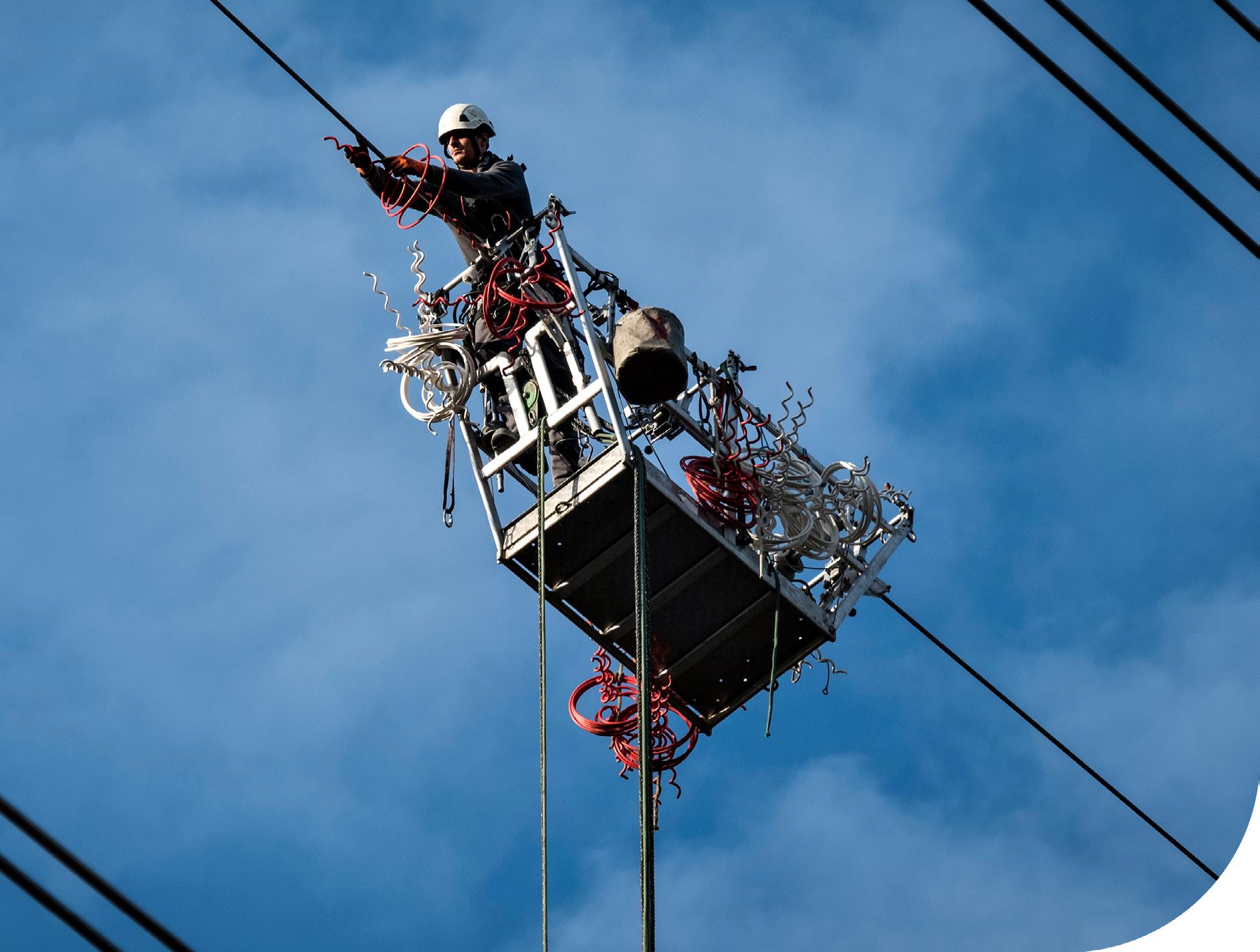
5.2. Elia Group
Results
Elia Group’s adjusted net profit rose by 39.8% to €716.5 million in 2025 (+€204.0 million) reflecting strong operational and financial performance across all business segments.
Elia Transmission (Belgium) delivered solid results supported by a continued growth in its regulated asset base, the increase in equity following the Group’s capital raise, and a higher regulatory return on equity. 50Hertz Transmission (Germany) also reported strong performance, driven by higher investment remuneration from asset growth and the expanding portion of its asset base benefiting from the higher floating rate applied since 2024. While funding costs in Germany increased, this impact was partially offset from higher capitalized borrowings and interest payments from the developer of an offshore project as 50Hertz pre-financed the platform. In addition, the valuation of long-term provisions benefited from increased interest rates in the last quarter of 2025.The nonregulated segment and Nemo Link contributed positively to the adjusted net profit as the holding benefits from a tax consolidation for the fiscal year 2025 while the cumulative cap limited Nemo Link’s net contribution, despite a very strong operational performance.
Elia Group’s net profit rose less pronounced by 33.3% to €683.1 million, as results were impacted by several one-off adjusted items. The main effect was a €99.1 million noncash write-off on the US portfolio of energyRe Giga, reflecting extended project timelines. This was partly offset by a €46.5 million uplift from the revaluation of deferred taxes in Germany, triggered by the planned reduction of the federal corporate tax rate from 15% to 10% between 2028 and 2032. In addition, the Group benefited from €19.2 million through tax consolidation in Belgium for fiscal year 2024.
After deducting the €97.2 million in non-controlling interest and €29.3 million attributable to hybrid securities holders the net profit attributable to owners of ordinary shares, increased to €556.6 million.
Net debt & credit metrics
Net debt, excl. EEG and similar mechanisms/ EBITDA
In 2025, Elia Group invested €5,186.2 million to strengthen the internal backbone of both the German and the Belgian grids, the development of offshore infrastructure and advancing the digitalisation of our systems. The net financial debt, excl. EEG and similar mechanisms, totalled €14,083.0 million (+€924.3 million). This increase was mainly driven by the execution of the capex plan, which exceeded the combined financing provided by the 2025 capital raises (€2,206.8 million) and operating cash flows (€2,090.4 million).
Besides tapping the equity market, Elia Group continued to access the debt market to finance the organic growth. In 2025, total debt financing raised across all Group entities amounted to €3.6 billion. Eurogrid raised €3.1 billion through a combination of loans and bond issuances and successfully redeemed a €500 million bond at maturity. ETB issued its first EU Green Bond of €500 million, taking advantage of favourable market conditions to pre-finance a bond maturing in 2026 while also reimbursing a €100 million EIB loan. Furthermore, the Group increased its commercial paper programmes to €1.55 billion (+€1,215 million). By year-end, the Group maintained strong financial flexibility, with €11.9 billion available across cash-management accounts, undrawn credit facilities and loans, and commercial paper programmes. Elia Group’s average cost of debt rose slightly to 2.9% (+10 bps versus 2024). Standard & Poor’s reaffirmed the Group’s BBB credit rating with a stable outlook.
Equity attributable to owners of the company increased by €2,593.9 million to €8,150.2 million driven mainly by the equity raises in 2025 (+€2,186.6 million net of costs), 2025 net profit (+€585.9 million), 2024 dividend distribution (-€150.7 million) and hybrid debt coupons (-€29.3 million).
5.3. Elia Transmission in Belgium
*Changes in provision are now included in EBITDA, with FY 2024 restated accordingly
(Adjusted) net profit rose by 27.3% to €272.1 million, mainly due to the following:
1.A higher fair remuneration (+€40.0 million) due to asset growth and the strengthened equity position following the €1.05 billion capital raise. ETB also benefitted from a higher equity remuneration compared to last year, reflecting an increase in the underlying risk-free rate (3.19% versus 2.91% in 2024).
2.A slight increase in incentives (+€1.1 million) reflecting continued strong operational performance.
3.Higher capitalized borrowing costs (+€14.3 million) with growing assets under construction and slight uptick in average cost of debt.
4.One-off tariff compensation for the financial costs linked to the capital increases executed in 2025 (+€7.6 million) including the capital increase for personnel.
These effects were partially offset by
5.Regulatory settlements following the saldi 2024 review (-€2.0 million) and other items (-€2.6 million) including notably a negative deferred tax impact (-€3.3 million), lower contribution from employee benefits (-€1.7 million), lower activation of long-term issuance costs
(-€1.6 million) partly compensated by capitalisation of software and hardware (+€3.2 million).
Net financial debt decreased to €3,849.3 million (-11.8%), reflecting enhanced liquidity following the €1.05 billion push-down to ETB from the €2.2 billion capital raise (including personnel tranche), combined with strong operating cash flows (+€948.9 million) exceeding the year’s RAB capex investments (€1.4 billion).
During the year, ETB continued to actively access the capital markets, issuing a new €500million 10-year EU green bond at a 3.50% coupon to refinance a bond maturing in 2026. In addition, the company repaid a €100million EIB loan. Following these transaction,
the average cost of debt increased to 2.53% (+13 bps). ETB continues to maintain a well-balanced debt maturity profile, with all outstanding debt at a fixed coupon. The sustainability-linked RCF (€1,260 million) and the commercial paper (€700 million) remained fully undrawn at the end of 2025. Elia Transmission Belgium is rated BBB+ with a stable outlook by Standard & Poor.
Equity increased to €4,382.8 million (+€1,252.1 million) driven by the net proceeds from the equity injection (after
costs) (+€1,049.4 million), the profit of the year (+€272.1 million) partly offset by the dividend payment to Elia Group (-€69.3 million).
5.4. 50Hertz Transmission in Germany
*Changes in provision are now included in EBITDA, with FY 2024 restated accordingly
Adjusted net profit increased to €439.0 million (+42.6%) as a result of:
1.The asset growth led to a higher remuneration of onand offshore investments (+€173.5 million) due to continued expansion of the asset base. Furthermore, the result benefitted from a higher equity remuneration on investment in 2025 (5.72% vs 5.65% in 2024).
The effects were partially offset by:
2.The Opex outperformance slightly decreased (-€3.4 million), as the increase in Opex and other costsdriven by business expansion, particularly for IT and personnel expenses – was not fully offset by the inflation indexed Base year revenues.
3.Higher depreciations (-€32.1 million) due to the commissioning of projects.
4.Financial costs increased (-€6.9 million), primarily due to the continuous debt raising by Eurogrid (-€74.1 million). This was partly offset by increasing capitalised borrowing costs from asset growth (+€32.4 million), accrued interest revenues from the developer of an offshore platform (+€27.9 million) and discounting effects on long term provisions on the back of increasing interest rates (+€10.3 million).
The net profit saw a stronger increase to €485.5 million (+57.7%), supported by a one off €46.5million uplift from the revaluation of deferred taxes linked to Germany’s planned reduction in federal corporate tax rates from 15% to 10% between 2028 and 2032.
The net financial debt, excl. EEG and similar mechanisms increased by €2,165.5 million compared to year-end 2024, reaching €9,750.1 million. The execution of €3.8 billion RAB capex investment was partly funded through operating cash flow, complemented by proceeds raised on the debt capital market. Furthermore, liquidity was enhanced by the €600 million capital increase allocated to 50Hertz by the shareholders. Including EEG and similar mechanism, the net financial debt rose by €2,072.7 million reflecting the higher cash balances associated with these schemes. As of December 2025, the cash position for EEG and similar mechanism totaled €453.4 million.
In 2025, Eurogrid continued to leverage the debt market to support its investment plan and reinforce its liquidity profile. Over the year, Eurogrid issued €3.1 billion green bonds and loans while redeeming a €500 million bond at
maturity. As a result of these financing activities, the average cost of debt slightly increased to 2.96% (+5bps) at the end of 2025. All back-up facilities (€3.9 billion) and commercial paper program (€750 million) remain undrawn. Additionally, Eurogrid secured a new €850 million green loan, which remained fully undrawn at year-end, further strengthening its liquidity position ahead of the 2026 investment plan. Eurogrid is rated BBB with a stable outlook by Standard & Poors.
The total equity increased by €867.7 million to €3,965.0 million, primarily driven by the injection of €600 million into Eurogrid pro-rata by Elia Group (€480 million) and KfW (€120 million) demonstrating their long-term commitment to the energy transition. Additionally, profit retention in 2025 contributed €275.5 million, after 2024 dividend payments of €210 million to shareholders. Finally, the hedging reserves slightly decreased (-€13.1 million), partly offset by remeasurement of post-employment benefit obligations.
5.5. Non-regulated segment & Nemo Link
*Changes in provision are now included in EBITDA, with FY 2024 restated accordingly.
The Group’s development of US transmission activities has been negatively affected by adverse changes in the regulatory environment and weakening market conditions following the shift in the US administration. As part of a strategic review of our investment, we reassessed the carrying value of our US portfolio considering an extended project timeline and the changing environment. This review resulted in a -€70.8 million non-cash impairment on the energyRe Giga portfolio (split between a loss on associates of -€18.0 million booked at the level of energyRe Giga and a -€52.8 million depreciation at the level of WindGrid US). Additionally, the Group recognised a provision (-€28.3 million) for onerous contract related to the $150 million investment commitment still to be paid. This leads to a total impairment of -€99.1 million on the US assets of the group.
Equity-accounted investees’ contribution to the group’s result decreased by -€20.9 million compared to 2024. This reflects primarily a one-off write-off of US assets (-€18.0 million), a lower contribution from energyRe Giga (-€1.7 million) and a lower contribution from Nemo Link (-€1.2 million).
Nemo Link's strong operational performance benefited from revenues above the cap. The decrease in congestion income compared to 2024, because of lower spreads, was almost completely compensated by the increase in capacity market and ancillary services. In 2025, the interconnector maintained a strong availability rate of 98.7%. Despite this strong operational performance, Nemo Link's contribution (€30.6 million) was slightly lower than in 2024 (-€1.2 million), mainly because of above cap interests which are, together with the cap surplus itself,
payable to the regulators after the assessment period (2024-2028).
The adjusted EBIT declined to €6.4 million (-€22.4 million). This decrease was primarily driven by a lower contribution from the holding (-€12.5 million), reduced contributions from EGI (-€2.4 million) and lower results from the associates Nemo Link and energyRe Giga (-€2.9 million). It was further impacted by higher development costs at WindGrid (-€2.2 million) and increased non-regulated costs including regulatory settlement (-€2.1 million). Overall, the EBIT fell more sharply (-€121.5 million) due to a one-off write off linked to WindGrid’s US portfolio (-€99.1 million).
The net finance cost increased to -€25.5 million (-€4.8 million) primarily driven by increased funding costs (-€9.5 million) as Elia Group SA tapped the debt market in 2024 to finance its growth, variation of the FX results (-€13.3
million) linked to the hedging of Elia Group USD exposure associated to WindGrid US. This was partly compensated by higher interest income linked to the proceeds from the capital raise and the Group’s pro-active liquidity management (+€14.8 million) and the earnout adjustment on the energyRe Giga participation in WindGrid (+€3.4 million).
The evolution of income tax expenses compared to last year is mainly positively affected by a +€19.2 million impact linked to the tax consolidation related to the fiscal year 2024, and +€24.7 million impact related to the current year which is split the between the holding (+€21.7 million) and Eurogrid International (+€3.0 million). This resulted from the law voted at year end 2025 eliminating the discriminatory treatment previously applicable when combining the group contribution regime with the Dividend Received Deduction (DRD) regime. This legislative change supports the application of group contribution (tax consolidation) enabling the use of tax losses at the level of Elia Group SA and Eurogrid International SA.
Adjusted net profit increased by €14.5 million to €5.3 million, due to:
1.Higher contribution from the holding (+€16.7 million) mainly driven by lower tax expense linked to tax consolidation in Belgium (+€21.7 million) and lower opex (+€3.0 million) which were partly offset by higher financial costs (-€8.0 million) linked to debt issuances in the course of 2024.
Partly offset by:
2.Higher rejection of costs following the saldi review by the regulator (-€3.3 million).
3.Lower contributions from EGI (-€2.8 million).
4.Other items (+€4.0 million) including €3.0 million in relation to group contribution linked to Eurogrid International.
The reported net loss amounts to -€74.5 million as it includes -€99.1 million write-off of US assets reflecting a revaluation of their recoverable value following extension of project timelines and €19.2 million positive impact arising from the application of the Belgian tax consolidation mechanism and linked to tax periods prior to 2025 and as such represents a one-off adjustment rather than a recurring tax advantage.
application of the Belgian tax consolidation mechanism and linked to tax periods prior to 2025 and as such represents a one-off adjustment rather than a recurring tax advantage.
Net financial debt decreased by €725.2 million to €483.7 million. Early 2025, the holding liquidity was significantly enhanced by the proceeds of the €2.2 billion capital raise executed in April. The proceeds have progressively been pushed down to operating companies (€1,050 million to ETB and €480 million to 50 Hertz). Similarly to the operating entities, the holding increased its commercial paper programme to €100 million to support its financial flexibility and robustness.
Total equity increased by +€2,401.1 million essentially due to the €2.2 billion capital increase. Consequently, total assets increased by +€2,516.9 million.
5.6. Adjusting items - reconciliation table
Sustainability Report
No transition without transmission. Our strategic investments are essential to enable electrification, to meet rising electricity demands, and to increasingly integrate renewable energy sources into the grid. We are committed to operating in the interest of society, ensuring a sustainable, reliable energy future for all.

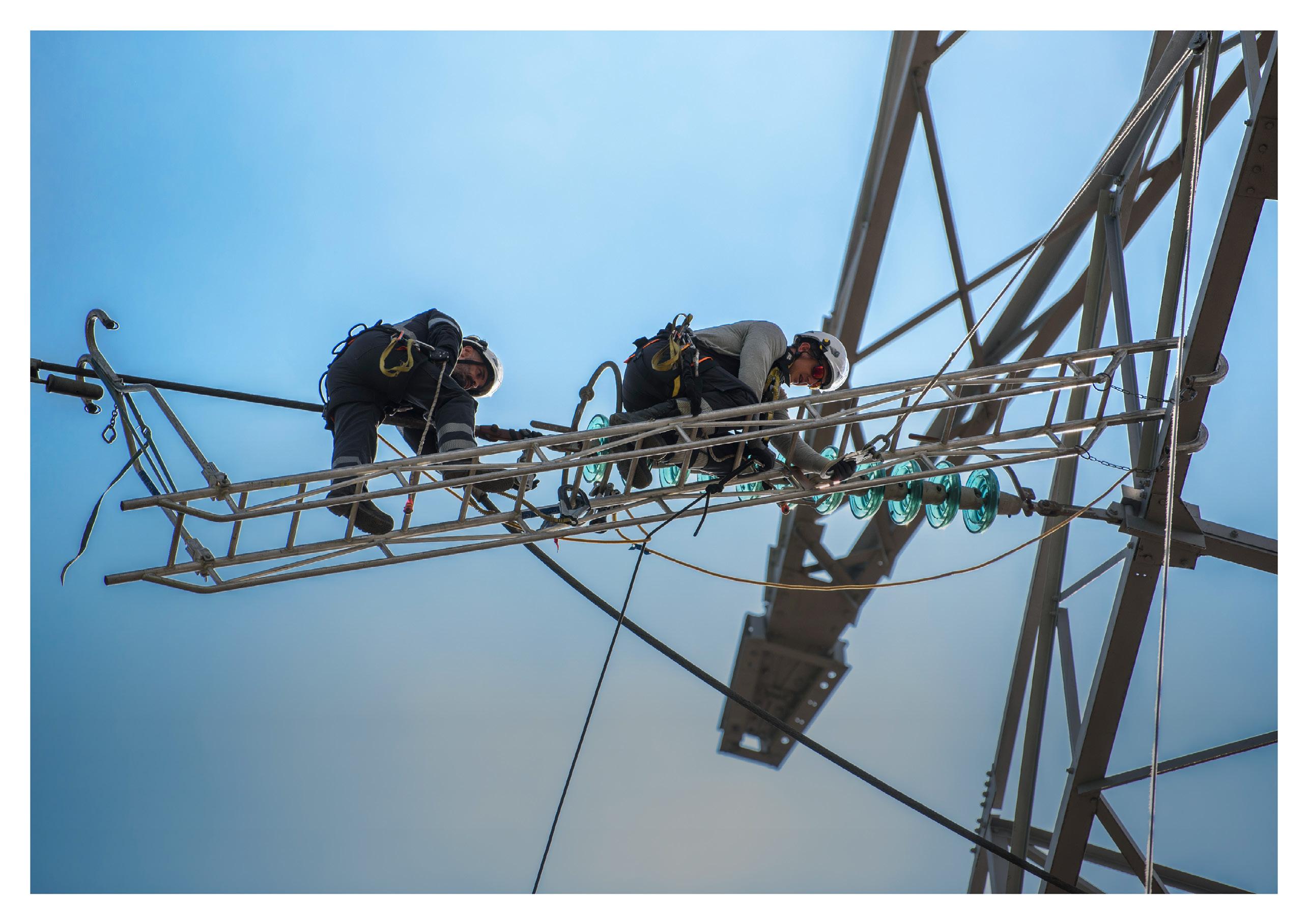
1. General disclosures
1.1. Basis of preparation
BP-1 - General basis of preparation of the sustainability statements
Elia Group's Sustainability statements, which cover the period 1 January 2025 to 31 December 2025, are aligned with the European Sustainability Reporting Standards (ESRS) and provide compliance with the European Corporate Sustainability Reporting Directive (CSRD). They have been externally verified by Elia Group’s joint auditors, as outlined in External Assurance.
Scope of reporting
These consolidated Sustainability statements cover the Group’s entire value chain, including those of its three segments:
—Elia Transmission Belgium;
—50Hertz Transmission Germany;
—Non-regulated segment.
A comparison between the scope assigned to each segment in these statements and the Financial statements can be found in the table below.
Elia Transmission Belgium and 50Hertz Transmission Germany publish standalone consolidated annual reports that include the Sustainability statements, which cover their activities only. These are published on the corresponding website of each company.
Financial statements
The regulated activities of Elia Transmission Belgium SA/NV All activities of Elia Transmission Belgium SA/NV
Elia Engineering SA/NV
Elia Asset SA/NV
Elia Re SA
Elia Engineering SA/NV
Elia Asset SA/NV
Elia Re SA
H.G.R.T S.A.S and Coreso SA/NV Not included. They qualify as investments accounted for using the equity method in the consolidated financial statements.
Other shareholdings Not included. They qualify as investments accounted for using IFRS 9 in the consolidated financial statements.
Sustainability statements
2. 50Hertz Transmission Germany 2. 50Hertz Transmission Germany
50Hertz Transmission GmbH
50Hertz Offshore GmbH
50Hertz Connectors GmbH
Eurogrid GmbH
Link digital GmbH
50Hertz Transmission GmbH
50Hertz Offshore GmbH
50Hertz Connectors GmbH
Eurogrid GmbH
Not included. They qualify as investments accounted for using the equity method in the consolidated financial statements.
Other shareholdings Not included. They qualify as investments accounted for using IFRS 9 in the consolidated financial statements.
3. Non-regulated segment and Nemo Link
Elia Group SA/NV
Eurogrid International SA/NV
EGI (Elia Grid International SA/NV, Elia Grid International GmbH, Elia Grid International LLC
Saudi Arabia, Elia Grid International Inc Canada, Elia Grid International Malaysia, Elia Grid International USA)
WindGrid SA/NV
WindGrid USA Holding LLC
WindGrid USA LLC
re.alto (re.alto Energy SRL/BV, re.alto Energy GmbH)
The non-regulated activities of Elia Transmission Belgium SA/NV
Nemo Link Ltd.
energyRe Giga-Projects USA Holdings LLC
3. Non-regulated segment
Elia Group SA/NV
Eurogrid International SA/NV
EGI (Elia Grid International SA/NV, Elia Grid International GmbH, Elia Grid International LLC Saudi Arabia, Elia Grid International Inc Canada, Elia Grid International Malaysia, Elia Grid International USA)
WindGrid SA/NV
WindGrid USA Holding LLC
WindGrid USA LLC
re.alto (re.alto Energy SRL/BV, re.alto Energy GmbH)
Included in the segment Elia Transmission Belgium
Not included. They qualify as investments accounted for using the equity-method in the consolidated financial statements.
Not included. It qualifies as investments accounted for using the equity methodassociates in the consolidated financial statements.
1. Elia Transmission Belgium 1. Elia Transmission Belgium
Financial statements
Sustainability statements
An overview of the ESRS that were determined as material for the Group can be found in SBM-3 – Material impacts, risks, and opportunities and their interaction with strategy and business model. The list of disclosure requirements which are associated with each of these material topical standards and are covered in these statements can be found in ESRS content index. Note that for the Group’s Non-regulated segment, the only topical standards that were deemed as material are:
—S1 Own workforce;
—E1-5 and E1-6 from E1 Climate change;
—E5-5 from E5 Resource use and circular economy;
—G1 Business conduct.
No omissions were made regarding material topical standards for reasons of intellectual property or innovation results.
Phased-in metrics
For the 2025 Sustainability statements, phased-in provisions from the European Quick Fix Directive were taken into consideration and implemented.
Changes in presentation of the sustainability information
The following changes occurred compared to the Elia Group Sustainability statement 2024: —the text was reviewed, to simplify and to reduce duplication of information; —the reporting of data at segment level is no longer disclosed, to put more focus on the consolidation at the Group.
Measurement basis
Metrics for 2025 are reported on a consolidated Group level. Any deviation from this structure - either due to data unavailability, segment specificity or ESRS application requirements - is stated below the respective table.
Comparables are provided for 2024 and these were also subject to limited assurance engagement. Where the case, restatements of data are marked under the respective table, in the chapters dedicated to topical standards.
Reporting errors in prior period
The following data was restated due to errors:
E5-4 - Resource inflows: the 2024 data for steel inflow
E5-5 - Resource outflows: the 2024 data for waste generated
BP-2 - Disclosures in relation to specific circumstances
Time horizons
Throughout these statements, time horizons (short, medium, and long- term) are used based on their definitions from ESRS 1.
Targets
When providing forward-looking information, it's essential to acknowledge the inherent uncertainty involved. This type of information involves projections or expectations about future events and the potential actions a company might take. However, due to the unpredictable nature of the future, these anticipated events and actions may not occur as expected.
Double materiality process
References to the ‘project team’ throughout denote the Group’s multidisciplinary team, who performed the double materiality assessment and prepared the disclosures included herein.
Elia Group will regularly challenge its double materiality assessment (DMA) process, which may change in time due to new insights, sector-specific discussions and developments. Note that thresholds and judgements were and will be used along this process.
Financial resources for key sustainability actions
Significant financial resources allocated during 2025 for actions related to 'E1 Climate change', 'E4 Biodiversity and ecosystems' and 'E5 Resource use and circular economy' are presented in the respective sections. The analysis for the remaining standards was phased-in.
Estimations and uncertainty
It is outlined in the table below that some of the data provided in these statements is based on estimations or assumptions.
Quantitative datapoints for which assumptions or estimation are used
Energy consumption and mix for the affiliates from the Nonregulated segment
Electricity consumption of Elia Transmission Belgium's substations
Scope 1 and 2 for the affiliates from the Nonregulated segment
Scope 3 Elia Group
Denominator of the ecological corridor rate for Elia Transmission Belgium
Waste data for 50Hertz Transmission Germany
Resource inflows for Elia Group
Waste data for affiliates from the Nonregulated segment
The variable pay built in the remuneration metrics for Elia Group
and mix
E1-5 - Energy consumption and mix
E1-6 - Gross Scopes 1,2,3 and Total GHG emissions
E1-6 - Gross Scopes 1,2,3 and Total GHG emissions
E4-4 - Targets related to biodiversity and ecosystems
E5-5 - Resource outflows
E5-4 - Resource inflows
E5-5 - Resource outflows
S1-16Remuneration metrics
Total Recordable Injury Rate (TRIR) for contractors of Elia Group
S1-14 - Health and safety metrics
A low level of measurement uncertainty and a resulting high level of accuracy mean that there is no material impact on the data from the use of assumptions.
Incorporation by reference
incorporated by reference Report and section for the incorporation by reference
GOV 1 - The role of the administrative, management, and supervisory bodies
Metered data not available.
Use of spend-base assumptions
The use of an average width for the forest corridors.
The data is based partially on estimations, not on actuals
The data for steel inflow is calculated with spendbased assumptions
The data is based on estimations, not on actuals
For employees, an average rate is used. For ExCo members, forecasts are used.
The denominator of worked hours is calculated based on assumptions starting from types of work
GOV 3 - Integration of sustainability-related performance in incentive schemes
GOV 5 - Risk management and internal controls over sustainability reporting
SBM1 - Strategy, business model and value chain
SBM2 - Interests and views of stakeholders
G1-5 - Political influence and lobbying activities
a - c Corporate Governance report / 1.2. Composition of the management bodies on 31 December 2025
29 a - e Remuneration report / 2.6. Information on how the remuneration complies with the remuneration policy and how performance criteria were applied
36 a - e Risk report / 3.4. Internal control and risk management system related to the non-financial reporting process
a-i and ii Strategic report / 4.2. Our strategy
a and b Strategic report / 5.1. Our business model Strategic report / 5.2. The resources we rely on Strategic report/ 5.4. The output of our activities 42 c Strategic report / 4.4. Global value chain 40 e Strategic report / 4.3. Our sustainability programme: ActNow
b Strategic report/ 2.6. Stakeholder interactions
Corporate Governance report / 1.1 Introduction on the changes within the Board of Directors ESRS Disclosure requirement
Other certifications
In order to assure that our management systems meet international standards, the Group works with external auditors for assessments and certifications. The 'environmental management' criterion is used by 50Hertz Transmission Germany and by Elia Transmission Belgium, which are certified in accordance with ISO 14001. Besides this, at 50Hertz Transmission Germany the 'occupational health and safety management' criterion is used in accordance with ISO 45001 and starting with 2025 the 'energy management systems' is applied according to ISO 50001. The corresponding management systems are implemented and recertified in accordance with their audit programmes.
None of the metrics from these Sustainability statements were subject to validation of an external body other than the joint auditors. The 2025 financial-related values that were used to calculate some sustainability datapoints (GHG intensity, Taxonomy alignment) were subject to the validation of the same joint auditors.
Sustainability reporting frameworks used
Elia Group started reporting its sustainability information in 2019 and from 2024 onwards it applies the ESRS framework.
1.2.
Governance
GOV-1 - The role of the administrative, management, and supervisory bodies
Sustainability is embedded in Elia Group's business activities. Our ActNow programme furthers this, explicitly embedding sustainability into our strategy and operations.
Specific sustainability-related roles and responsibilities, outlined in detail in the table below, have been designated throughout the Group. Accountability for sustainability matters is distributed across multiple governance bodies: the Board of Directors validate strategy and issue guidance, the Elia Group Management Board (the Executive Committee) oversees sustainable performance and implements the strategy, and the Group Sustainability Committee steers group-wide targets and key ambitions.
The Group Sustainability Committee shapes its sustainability programme, ActNow, and ensures that the Group makes steady and consistent progress on it through the local roadmaps. Below this, both Elia Transmission Belgium and 50Hertz Transmission Germany have their own sustainability departments and Sustainability Committees, which are responsible for implementing ActNow at the local level and monitoring progress against targets.
For information about the composition and diversity of the Board of Directors, see 1.2. Composition of the management bodies on 31 December 2025 and 1.7. Executive management board in the Governance & Risk report. 1.3. Board of directors contains information about its sustainability-related skills and expertise. For information about worker representation and their interactions with management bodies, see S1-2 - Processes for engaging with own workforce and workers’ representatives about impacts.
Elia Transmission Belgium Board of Directors
Elia Group Board of Directors
Group Board of Directors (BoD) / Audit Committee
Elia Group Management Board (EGMB or ExCo)
–Is accountable for validating the Group's sustainability strategy.
–Is accountable for validating the Group and local Business Plan and the Integrated Annual Report.
–Is accountable for issuing general recommendations and guidance.
Group Sustainability Committee (GSC)
–Is accountable for sustainable performance and reputation.
–Is accountable for validating, on yearly basis, the ActNow programme (dimensions, objectives, Group key result areas and key ambitions)
–Is responsible to report to the Board of Directors and its committees.
–Is responsible for sponsoring the sustainability strategy
ActNow Dimension Leaders
–Is accountable for deciding on Group sustainability matters (that are not relevant to the EGMB according to statutory)
–Is accountable for defining Group key result areas and key ambitions.
–Is accountable for monitoring sustainability trends, regulations and risks linked to the realization of the sustainability strategy
–Is accountable for developing respective approaches/positions to respond and anticipate legislative requirements, reporting standards, application of voluntary frameworks, etc.
–Is accountable for ensuring alignment at Group level via aligned local roadmaps
–Is responsible for reporting to the EGMB via the CFO the progress on ActNow
–Is responsible for steering and monitoring of overall group-wide sustainability targets, including progress on Group key ambitions
–Is consulted for sustainability communication
–Is informed by the Group sustainability reporting team about CSRD legislative evolutions
Each ActNow Dimension is managed locally by a Leader. One of them is in charge of carrying also responsibilities for the Group, such as:
–Proposing Group objectives, Group Key Result Areas and Group Key Ambitions
–Aim for streamlining the Group objectives through the local roadmaps and ensuring the consistency among them towards reaching the Group targets.
Frequency and sustainability-related agenda
Frequency: 10 times
Key topics from the agenda
–Access to affordable and low carbon energy
–CSRD and Sustainability report follow-up
–Supervisory role over ESG performance
–Sustainable finance
–Environmental compliance
–Internal audit of the ActNow programme
Frequency: at least every 2 weeks
Key topics from the agenda
–Elia Group Double materiality exercise
–Collective targets 2025 and 2026 (including ESG)
–Leadership & talent management
–Optimisation of the organisation of security
–Mobility policy
–Results of the internal audit of the ActNow programme
–Affordability of the energy transition
Frequency: quarterly
Key topics from the agenda
–Regular updates on CSRD implementation
–ActNow communication and governance improvements
–Stakeholder expectations and update of ActNow ambitions, especially for Dimension 5
–Target validation for SF6 leakage rate and Scope 3 targets
–Circularity strategy
Monthly exchanges take place between Dimension Leaders and the Sustainability Managers.
Local Board of Directors (BoD) or Supervisory Board // Audit Committee
–Is accountable for validating the local sustainability strategy.
–Is accountable for validating the local Business Plan and the local Annual Report
–Is accountable for issuing general recommendations and guidance.
Executive Management Committee (ExCo)
–Is accountable for validating local key ambition
–Is accountable for validating local roadmap and appropriate resources
–Is accountable for validating local performance and reporting to the GSC
–Is accountable for solving local issues that cannot be decided upon by the Local Sustainability Committees
Local Sustainability Committee (LSC)
–Is accountable for taking decisions on local sustainability matters that do not need to be decided by the ExCo according to statutory
–Is accountable for ensuring alignment with the Group level for defining and executing the local roadmap
–Is accountable for issuing general recommendations, guidance and support on local sustainability matters
–Is responsible for defining local key ambition
–Is responsible for reporting local performance to the ExCo
Sustainability Manager
–Is accountable for leading the local Sustainability Committee
–Is responsible for ensuring alignment with the Group level for defining and executing the local roadmap.
–Is responsible for monitoring the execution of the local roadmap and the data collection.
–Is responsible for reporting performance to LSC and GSC
–Is consulted and provides support to Group Dimension leaders for defining Group objectives, Key result area, Group and local key ambitions.
–Is consulted for organisation of internal and external communication campaigns
Elia Transmission Belgium
Frequency: 10 times
Key topics from the agenda
–The issue of the EU Green Bond
–Integrated Annual Report
–Internal audit on the Safety framework
–Internal audit on physical safety –Update of the CSRD legislative evolution
50Hertz Transmission Germany
Frequency: 6 times
Key topics from the agenda
–Results of internal audit on onboarding procedures (HR)
–Results of internal audit on Occupational Health&Safety
Elia Transmission Belgium
Frequency: every two weeks
Key topics from the agenda
–The "Just Culture" in the context of the Go4Zero programme (Health&Safety) –DEI reporting
–ISO14001 certification
–Follow-up of the "Quick Pulse check" questionnaire
50Hertz Transmission Germany
Frequency: weekly
Key topics from the agenda
–Green Finance framework
–Scope 3 target
–HSEE policy –New composition of the Compliance Committee
Elia Transmission Belgium
Frequency: 5 times
Key topics from the agenda
–Progress on ActNow performance indicators –Environmental Management System - ISO14001 audit results –Recommendations from the CSRD audit
50Hertz Transmission Germany
Frequency: 3 times
Key topics from the agenda –Scope 3 target
–Simplifications in the Elia Group annual report
–Review of the ActNow sustainability programme –Risk analysis for the LkSG (German law for due diligence in the supply chain)
Operational interactions take place regularly with the Dimension Leaders and with members of the GSC or the LSC.
GOV-2 - Information provided to and sustainability matters addressed by the administrative, management, and supervisory bodies
For an overview of the sustainability-related matters that were addressed by the different Group and local administrative, management, and supervisory bodies in 2025 see the last column in the table in GOV-1 - The role of the administrative, management, and supervisory bodies
GOV-3 - Integration of sustainabilityrelated performance in incentive schemes
See 2.6. Information on how the remuneration complies with the remuneration policy and how performance criteria were applied in the Governance & Risk Report.
GOV-4 - Statement on due diligence
Elia Group undertakes due diligence on an ongoing basis; the core elements of this process and the section where they are described in these statements are listed in the table below. For the description of the specific due diligence process that is in place for the suppliers in the upstream value chain, see G1-2 - Management of relationships with suppliers
The core elements of due diligence can be found across these statements, in line with the following table:
Core elements of due diligence Section in the Sustainability statements
Embedding due diligence in governance, strategy and the business model
Engaging with affected stakeholders in all key steps of the due diligence process
GOV-2
GOV-3
SBM-3
GOV-2
SBM-2
IRO-1
S1-2 – Processes for engaging with own workforce and workers' representatives about impacts
S2-2 – Processes for engaging with value chain workers about impacts
S3-2 – Processes for engaging with affected communities about impacts
MDR-P reflected in:
E1-2 - Policies related to climate change mitigation and adaptation
E4-2 - Policies related to biodiversity and ecosystems
E5-1 - Policies related to resource use and circular economy
S1-1 - Policies related to own workforce
S2-1 - Policies related to value chain workers
S3-1 - Policies related to affected communities
G1-1 - Corporate culture and business conduct policies
Identifying and assessing adverse impacts
Taking actions to address those adverse impacts
Tracking the effectiveness of these efforts and communicating
IRO-1
SBM-3
MDR-A reflected in:
E1-3 - Actions and resources in relation to climate change policies
E4-3 - Actions and resources in relation to biodiversity and ecosystems
E5-2 - Actions and resources related to resource use and circular economy
S1-4 - Taking action on material impacts, risks, and opportunities related to own workforce
S2-4 - Taking action on material impacts, risks, and opportunities related to value chain workers
S3-4 - Taking action on material impacts, risks, and opportunities related to affected communities
MDR-M reflected in:
E1-5 to E1-8;
E4-5 - Impact metrics related to biodiversity and ecosystems change
E5-4 and E5-5
S1-9 to S1-17
MDR-T reflected in:
E1-4 - Targets related to climate change mitigation and adaptation
E4-4 - Targets related to biodiversity and ecosystems
E5-3 - Targets related to resource use and circular economy
S1-5 - Targets related to own workforce
S2-5 - Targets related to value chain workers
S3-5 - Targets related to affected communities
GOV-5 - Risk management and internal control over sustainability reporting
See 3.4. Internal control and risk management system related to the non-financial reporting in the Governance & Risk Report.
1.3. Strategy
SBM-1 - Strategy, business model, and value chain
Business model and value chain
See 4.2. Our strategy, 5.1. Our business model and 4.4. Global value chain in the Strategic report for an overview of each. The activity of transmission of electricity shapes Elia Group's business model and its key value chain.
Sections 5.2. The resources we rely on and 5.4. The output of our activities from the Strategic report describe the resources used to support our business activities.
The geographical specificities of Belgium and Germany, where the Group operates, are analysed and operationalised through decision making bodies, as explained in section GOV-1 - The role of the administrative, management, and supervisory bodies
Sustainability-related goals and geographical areas
It is explained in 4.3. Our sustainability programme: ActNow in the Strategic report and in GOV-1 - The role of the administrative, management, and supervisory bodies that the ActNow programme ensures that sustainability is firmly embedded into the Group’s strategy and all of its business activities. The Group's sustainability-related targets are similar for Germany and Belgium, even though the roadmaps and action plans reflect local specificities. See S1-6 - Characteristics of the undertaking's employees for the Group's headcount across geographies.
The sustainability-related targets included in ActNow are described in:
E1-4 - Targets related to climate change mitigation and adaptation
E4-4 -Targets related to biodiversity and ecosystems
E5-3 - Targets related to resource use and circular economy
S1-5 - Targets related to own workforce
S2-5 - Targets related to value chain workers
Group activities and associated revenue
The Group’s activities are not related to the production of chemicals, controversial weapons, or tobacco. Less than 1% of the Group's total annual revenue is generated through the direct connection of fossil fuel power plants to its grid. 2.1. Eligibility and alignment for EU Taxonomy regulation provides information about the Group’s turnover from Taxonomy-aligned economic activities.
SBM-2 - Interests and views of stakeholders
The overview of the Group’s stakeholders is included in 2.6. Stakeholder interactions in the Strategic report, while details about how it engages with them and the outcomes of its interactions are in the table below.
Ultimately, the Group’s continuous interactions with its stakeholders strengthens its strategy, the security and effectiveness of its infrastructure, and the wider energy systems in which it operates.
Customers and consumers
–To ensure the reliable, efficient and affordable transmission of electricity and to facilitate the seamless integration of the energy needs of our directly connected customers
–To ensure that our operating practices are open and transparent and meet consumer and customer needs
–To unlock additional flexibility in the system coming from industry and households
Electricity system operators
Energy producers
–To safeguard system stability by aligning our activities with those of neighbouring DSOs and TSOs
–To develop joint solutions for the (European) grid, system and market as electrification spreads
–To facilitate security of supply, maintain system reliability and coordinate the provision of system services
–To connect them to the grid
Shareholders and investors –To secure the Group's future growth and expansion
–Direct contact via system planning and consumer departments
–Consumer surveys
–Working groups
–Project-specific meetings
–Direct contact through control and regional centres
–Membership in associations
–Conferences and events
–On-demand with directly connected customers
–1-2 times per year during conferences and information sessions
–Direct contact through control and regional centres
–Working groups
–Information sessions
–Conferences and events
–Daily through system operations staff
–Regular interactions
–1-2 times per year during main events
–Understanding consumer and customer needs means that business activities can meet these early on, thus contributing to efficient and effective grid planning, socioeconomic welfare and reputation enhancement
–Unlocking flexibility in the system supports the balancing of the grid
–Grid stability is maintained in real time around the clock
–Our system operation activities are enhanced, particularly given the increasing amounts of RES
–Daily through system operations staff
–1-2 times per year during main events
–Grid stability is maintained in real time around the clock
–Their needs are considered early on when planning the system and grid development
–Better system and grid operations, e.g. ensuring reliability, reducing down-time during maintenance
–External publications –Investor meetings and events
–Regularly via the Investor Relations Team
–At regular intervals, in line with external publication dates (i.e. quarterly, yearly)
–1-2 times per year during main events
–The financing needed to carry out the business activities and to secure the realisation of investment projects
Employees –To strengthen cooperation and enhance effectiveness
–To foster a shared sense of purpose and ensure that the importance of our role in the energy transition is understood
–Performance management and training sessions
–Internal communication campaigns
–Internal events
–Surveys ('Pulse', wellbeing etc.)
–Daily
–Our employees share a strong sense of purpose, enhancing their work
–They are committed and contribute to the Group's performance
Stakeholder group Why we interact
Key interaction along the value chain
How we interact
Results of the engagement Methods Frequency
Suppliers
Local communities
–To ensure the company has access to highquality materials, tools, and services at affordable prices
–To meet the future needs for new materials and tools
–To design projects with the needs and interests of local communities in mind
–To keep local communities informed of the status of projects and their relevance to the energy transition
Key interaction along the value chain How we interact Results of
–Direct interactions, including through tenders and contracts
–Meetings
–In-person and virtual information and consultation sessions during projects
–Dedicated project websites and external publications
–Regularly through procurement and project team
–Access is obtained to the needed technology at the time when it is needed and at affordable prices
–The sustainability of the upstream value chain is enhanced
–Regularly via the project communication teams
Governments and public authorities
–To align our activities with government policy and act as a trusted advisor to policymakers
–To ensure regulatory frameworks deliver value for end consumers and a fair return for the investors
Press and the general public
–To maintain alignment with the interests of society and provide progress updates
–To inform public debate about the best methods for reaching net zero
Federations, NGOs and academics
–To ensure our research is as rigorous as possible and to test innovative technology and approaches
–To explore solutions for minimising negative impacts of our activities
–Meetings with regulatory authorities and policymakers
–Publications and studies
–Frequent
–Press conferences and site visits
–External publications
–Digital channels
–Membership in organisations and associated meetings
–Specific projects and studies
–Daily with the press via direct contact with external communications team or digital channels
–Regular publications
–Daily contact during specific projects
–Monthly or quarterly membership or partnership meetings
–Feedback from communities impacted by our projects is taken into consideration as we carry out our activities
–Regular interactions with local communities ensure they better understand the societal value of our activities
–Governments and regulatory authorities are provided with trusted advice and research related to decarbonisation and the energy system
–Their feedback is taken on board and integrated into the companies activities.
–The general public is kept informed of our work and its importance to the energy transition, thus securing their commitment to our activities.
–Our activities are enhanced through innovation.
–Enriched expertise and perspective, due to co-creation and exchanges.
SBM-3 -
Material impacts, risks, and opportunities and their interaction with strategy and business model
The ESRS that were determined as material for the Group through the double materiality analysis can be found in the chart below. The evolution compared to 2024 is shown in the matrix.
The description of the double materiality assessment (DMA) and the explanation for the evolution compared to 2024 can be consulted in IRO-1 - Description of the processes to identify and assess material impacts, risks, and opportunities.
Evolution of materiality for the ESRS between 2024 and 2025
Current financial effects
In 2025, no stand-alone sustainability-related risk generated a financial impact affecting Elia Group's financial reporting and performance.
Time horizons
During the double materiality assessment, the impacts, risks, and opportunities detailed in the following pages resulted material in the short, medium, and long term. The few exceptions to this are indicated in the table.
Management of material topics
Elia Group's impacts, risks, and opportunities (IROs) corresponding to each ESRS are managed through policies, targets, actions and metrics. Due to their overarching character, a single policy can be representative for multiple material topics and/or multiple IROs. For example, the Supplier Code of Conduct is relevant for managing "GHG emissions" - material topic for E1 Climate change - "Working conditions" - material topic for S2 Workers in the value chain - and "Waste" - material topic for E5 Resource use and circular economy).
The few exceptions of IROs not covered by any formal policy are transparently marked.
The following tables show the overview for a selection of key policies, actions, targets, and metrics corresponding to each ESRS. For a complete understanding, see the respective topical chapter.
E1 Climate change-related material impacts, risks, and opportunities
Material topics Energy transition
GHG emissions
Transition to a low-carbon economy
Climate change and physical adaptation
Impact +
—Climate ambitions trigger a substantial investment programme to deliver the energy transition, including grid investments that will be beneficial for society for several decades.*
—By proactively planning and building a grid that can withstand extreme weather events, Elia Group helps ensure continued reliable power transmission and minimises potential disruptions caused by climate change.*
—In the electricity sector, the transmission grid has a critical role to play in harvesting the potential of renewable energy resources that are often located far away from consumption centres. This includes the need to go offshore but also to develop stronger interconnections with neighbouring countries to accommodate the intermittent nature of the major renewable energy sources to make the green supply cheaper and safer.*
—Convince stakeholders to increase efficiencies and unlock more flexibility in the electricity system in order to lower overall transition costs for society.*
—EGI: shifting from fossil fuel-based systems of energy production and consumption to renewable energy contributes to the reduction of CO2 emissions and helps to mitigate the effects of climate change
Impact -
—Climate ambitions trigger a substantial investment programme to deliver the energy transition, including grid investments that have an immediate impact on the electricity bill via transmission tariffs. This is triggering legitimate concerns from our end users.*
—Indirect greenhouse gas emissions generated within Elia Group's value chain (scope 3) related to our grid construction and maintenance activities.
—Greenhouse gas emissions arise due to grid losses (scope 2) during electricity transmission linked to Elia Group's system operation activities
—EGI has direct emissions and indirect emissions.
—Greenhouse gas emissions arise from Elia Group's own operations, i.e. cars, heating, SF6 leakages and backup systems (scope 1)
Risks
—Size of local grid development plans in Belgium and Germany questions the feasibility of its delivery without delay and Elia Group's ability to keep a healthy balance sheet.*
—The occurrence of extreme weather events such as storms, cold snaps, heatwaves, flooding, drought, and wildfires may lead to asset damages and activation of contingencies for business continuity.*
—Market distortion due to Carbon Border Adjustment Mechanism (CBAM) jeopardising offshore and cross border projects.*
—Costs for technical assets has significantly increased due to a tight supplier market, high inflation, and a surge in interest rates and scarcity of raw material (also in supply chain).*
—Financing risk: The ability of the Group and its affiliates to access global sources of financing to cover their financing needs to fund their plans and refinance their existing debt is a key component of the Group’s business and strategic plan.*
—Regulatory risk: Allowed return on equity in order to achieve investment plans may not reflect nor anticipate macro-economic environment.*
—Risk of delay of the development and delivery of several major projects (Triton Link, Nautilus, Bornholm) related to infrastructure, market development, and system operations to achieve climate targets.*
Opportunities
—Convince stakeholders to increase efficiencies and unlock more flexibility in the electricity system in order to increase our grid hosting capacity.
—Develop innovative solutions including proposals to lower overall grid costs.**
—Showcase how to run a system dominated by variable RES (Demonstrate that regions with high RES-penetration are attractive to future-proof businesses).**
Policies
GHG emissions
—Purchasing conditions
—Supplier code of conduct
—General safety, health, and environmental regulations for contractors carrying out work for Elia Transmission Belgium
—Instructions on guaranteeing occupational safety when contracting with external companies for work in the scope of 50Hertz Transmission Germany
—Asset management policy for substations
Actions
Energy transition
—Grid development and RES integration
—Market development and system operations
—Electrification and sector coupling
GHG emissions
—Reduction of grid losses-related GHG emissions
—Low-carbon technologies for SF6
—Low-carbon mobility
—Increasing the application of an Internal Carbon Price (ICP)
Targets
GHG emissions
—SBTi
—Low carbon mobility
—SF6 leakage rate
Resilience of the business model
The resilience of the Group’s business model was tested in 2024 with the use of a robust climate scenario analysis framework. The outcome of this exercise, which included an exploration of how likely the Group would be able to adapt to risks based on different mitigation measures, indicates that climate physical risks will not have a significant impact on the Group’s activities.
Key metrics
Energy transition
—EU Taxonomy-aligned CAPEX
GHG emissions
—SF6 leakage rate
—Scope 1-2-3 GHG emissions
Climate change and physical adaptation
—CAPEX allocated to grid resilience projects
The Group has a rigorous system in place for continually assessing, planning for, managing and adapting to climate-related risks and their potential impacts; the Group’s relevant policies and action plans are regularly updated as a consequence. In the event of unexpected incidents, the Group addresses them as a matter of priority in order to ensure the resilience of its business model.
E4 Biodiversity and ecosystems-related material impacts,
risks, and opportunities
Material topics
Impact +
Impact -
Risks
Opportunities
Climate change
Land-use change, fresh water-use change, and sea-use change
Soil sealing
Impact on the state of species
—Elia Group facilitates the integration of renewable energy and thus can contribute to mitigating climate change, benefiting biodiversity in the long term.
—Through multiple investments with several partners in long-lasting projects on both land and sea (including research and studies on impacts on biodiversity and landscapes) Elia Group can have a positive net contribution on both biodiversity and the ecosystems surrounding their infrastructure
—Biodiversity and ecosystems are impacted by the presence of our grid infrastructure, e.g. birds by overhead lines or marine life by offshore cable and platform installations. We make use of nature inclusive design principles for developing our grid infrastructure, which is a positive incidence for biodiversity
—Mining activities to extract metals and minerals for grid components (e.g. copper, aluminium) can destroy natural habitats, impacting plant and animal life*
—Greenhouse gas emissions generated within Elia Group's value chain affect indirectly the biodiversity.
—Construction and presence of grid infrastructure can lead to habitat loss and fragmentation, negatively impacting biodiversity.
—Building or expanding existing substations can decrease the permeability of surfaces. In some locations (due to mandatory obligations), re-use infiltration solutions that can reduce/mitigate the negative impact on biodiversity are tested.
—Project delays: Permit delays can postpone construction, especially if appeals are filed or if environmental windows are missed (e.g. start of bird breeding season)
Value chain
Policies
—Purchasing conditions
—Supplier code of conduct
—General safety, health, and environmental regulations for contractors carrying out work for Elia Transmission Belgium
—Instructions on guaranteeing occupational safety when contracting with external companies for work in the scope of 50Hertz Transmission Germany
—Asset management policy for sites and buildings and overhead lines
—Bird markers policy
—Marine Grid Declaration
—HSE Plan offshore
Actions
Climate change
—Sustainable substations
Land-use-change, fresh water-use change, and sea-use change
—Ecological management of forest corridors
Soil sealing
—Vegetation management in substations
Impact on the state of species
—Bird markers on overhead lines
—Compensation measures that are required under the permits
Targets
—Ecological corridors %
Resilience of the business model
Projects must be granted approval from the relevant permitting authorities before the start of the execution.
As part of this, the Group continually assesses the impact of its activities on the environment and ensures that they adhere to relevant laws and regulations.
In the event of unexpected incidents, the Group addresses them as a matter of priority to ensure the resilience of its business model.
Key metrics
—Sites in/near protected zones
E5 Resource use and circular economy-related material impacts, risks, and opportunities
Material topics
Impact +
Impact -
Risks
Opportunities
Policies
Resource inflows
Waste
—In case of decommissioning of the assets/materials, they are being assessed in a warehouse if they can be reused in other streams of the business. This leads to avoiding buying new materials and contributing to society development (through reduced grid fees for electricity transmission).
—Implementing circular economy principles like waste prevention, reuse, and recycling; innovating in equipment design for greater durability and capacity of recycling; and collaborating with partners to manage waste more effectively
—Elia Group's activities rely on non-renewable resources, whose availability is subject to some uncertainty and whose extraction is expected to increase the use of energy. Circularity strategies are developed to reduce the material use in the value chain and limit this potential impact on resource depletion.*
—Elia Group's construction and maintenance activities generate waste (that may harm the environment if not properly handled).
Simultaneous climate action (and related grid investments) question the availability of raw materials needed for transmission infrastructure creates price pressure on equipment costs.
—Implementing circular economy principles like waste prevention, reuse, and recycling; innovating in equipment design for greater durability and capacity of recycling; and collaborating with partners to manage waste more effectively.
—Purchasing conditions for electrical equipment and works
—Supplier code of conduct
—General safety, health, and environmental regulations for contractors carrying out work for Elia Transmission Belgium
—Instructions on guaranteeing occupational safety when contracting with external companies for work in the scope of 50Hertz Transmission Germany
—Asset management policies for grid equipment
—Waste management procedure
—Waste management policy
Actions
Resource inflows
—Grid optimisation
—Preventive maintenance
—Condition-based maintenance of assets
Waste
—Contractors evaluation
Targets
Resource inflows
—% recycled steel in lattice towers
Waste
—% recycled waste
Value chain
Key metrics
Resource inflows
—Inflows volumes
Waste
—Waste volumes
Resilience of the business model
The principles of circularity are embedded in the business practices of the Group.
Following the validation of its circular strategy in 2025, the Group focuses on reducing the environmental impact of its asset needs through grid design, maintenance, and supply chain improvements.
By extending asset lifetime and promoting the use of recycled materials - such as steel and copper - the Group ensures resource efficiency and long-term adaptability to material-related risks and opportunities, and hereby the resilience of its business model.
S1 Own workforce-related material impacts, risks, and opportunities
Material topics
Impact +
Working conditions
Health and Safety
Equal treatment and opportunities for all
—Elia Group is committed to attracting, developing, and retaining top talent. We come to optimal solutions matching people's aspirations with the company's needs while cultivating a culture of safety, wellbeing, and innovation.
—Taken into account the energy transition and the digital transformation of the business, Elia Group foresees different upskilling opportunities to support the employees in the new activities or different activities - through local Academies and a group academy focus.*
—Elia Group has a positive impact on certain social categories (diverse nationalities, ethnicities,…) by hiring and giving them equal opportunities and is committed to undertaking diversity and inclusion actions that go beyond mere compliance.
—Safety Culture: Elia Group prioritises safety, aiming for zero accidents, which benefits both its own workforce and public trust.
Value chain
Impact -
Risks
— Elia Group has a strong engineering focus with a predominantly male driven workforce, hence reaching gender diversity goals is a challenge.
—Working with high-voltage equipment, at heights, and in offshore environments exposes employees to potential accidents and injuries (physical safety risks).
—By not having adequate working conditions, Elia Group risks slowing down ongoing activities and negatively impacting the mental wellbeing of the employees.
—Health & Safety events can delay or disrupt operations on construction and operational sites, extend project working hours, damage assets,m and harm severely employees, which can lead to negative financial effects.
—Talent attraction & retention: if onboarding does not happen efficiently Elia Group risks slowing down ongoing activities and negatively impacting the mental wellbeing of the employees.
Opportunities
Policies
—Human Rights Policy
—Health and Safety Guidelines
—Global Prevention Plan
—DEI Charter
—Working rules
—Company agreements
Actions
Equal treatment and opportunities for all
—Awareness campaigns and training
—Internal networks
—Partnerships
Health and safety
—Awareness campaigns
—Personal protective equipment
—Trainings
Targets
Equal treatment and opportunities for all
—Women in total workforce
—Female Inflow
Health and safety
—Total Recordable Injury Rate - Employees
—Health Rate
Key metrics
Equal treatment and opportunities for all
—Number of employees/ gender
—Gender distribution at top management level
Health and safety
—Total Recordable Injury Rate - Employees Working conditions
—Employees covered by collective bargaining agreements
Resilience of the business model
The Group invests in its workforce to ensure that it holds the right skills to manage an increasingly complex electricity system.
In addition to providing staff with regular learning and development opportunities, the Group fosters a supportive environment and a strong organisational culture which focuses on health and safety, diversity, equity, and inclusion.
In the event of unexpected incidents, the Group addresses them as a matter of priority in order to ensure the resilience of its business model.
S2 Workers in the value chain-related material impacts, risks, and opportunities
Material topics
Impact +
Impact -
Risks
Working conditions in the value chain
Health & Safety
Equal treatment and opportunities for all
—Elia Group implements a Supplier Code of Conduct (SCoC) requiring adherence to international standards in ethical conduct, Health & Safety. This, along with encouraging suppliers to obtain Ecovadis certification, fosters a responsible supply chain promoting safe working conditions.**
—Elia Group's safety culture, focus on contractor safety, and zero-accident goal for all workers contribute to improved safety standards across the value chain.
—Elia Group implements a Supplier Code of Conduct (SCoC) requiring adherence to international standards in ethical conduct & social aspects.**
—Increased risk of work-related injuries and fatalities for workers throughout the value chain due to activities involving high-voltage equipment or working at heights.
—Health & Safety events may harm one of Elia Group's contractors.
—Health & Safety events may lead to contractors retracting from projects. The result would be that infrastructure projects and/or maintenance activities delayed and/or cancelled.**
Opportunities —N/A
Policies
—Supplier Code of Conduct
—Human Rights Policy
—Code of Ethics
—General safety, health, and environmental regulations for contractors carrying out work for Elia Transmission Belgium
—Instructions on guaranteeing occupational safety when contracting with external companies for work in the scope of 50Hertz Transmission Germany
—General Purchasing Conditions
Actions
Health and safety
—Operational monitoring
—External certifications
—Awareness campaigns
Targets
Health and safety
—Total Recordable Injury RateContractors
Value chain
Key metrics
Health and safety
—Total Recordable Injury RateContractors
Resilience of the business model
The Group works with different contractors as part of its business activities.
As outlined in 4.1 G1 Business conduct, the Group ensures that individuals involved in its supply chain operations are protected and treated fairly, and that the standards laid out in its ‘Supplier Code of Conduct’ are met. The health and safety policies in place for the Group's own workforce equally apply to contractors working on sites.
The Group regularly assesses and updates these policies to ensure they are aligned with the latest laws and best practice standards. In the event of unexpected incidents, the Group addresses them as a matter of priority in order to ensure the resilience of its business model.
S3 Affected communities-related material impacts, risks, and opportunities
Material
topics
Impact +
Impact -
Risks
Opportunities
Policies
—Engagement Policy
—Compensation Policy
—Protocol – Farms
—Protocol – Business
Land-related impacts
Communities' civil and political rights – Freedom of expression
—The development of a sustainable infrastructure brings benefits to the local value chain and economic growth.*
—Stakeholder engagement: Elia Group is in an ongoing dialogue with public and regulatory authorities to ensure the legal environment and regulatory framework necessary to achieve its climate objectives.
—Since Elia Group's transmission grid is crossing inhabited areas and its physical footprint has a multitude of local impacts (land-related, noise, visual…)
—Permitting risk: timely permit approval is an important challenge for the implementation of projects supporting the energy transition. The rollout of infrastructure is highly dependent on support from affected communities.
—Close collaboration with local communities and industrial players allow a better understanding and anticipation of the needs and allow a faster grid development and to identify growth opportunities**.
Actions
—Community engagement and project communication
—Compensation & mitigation measures
Targets
N/A
—Grid Development Strategies: overhead lines versus underground cables
—EMF Protocol
Value chain
Key metrics
N/A
Resilience of the business model
As part of the legal obligations and societal role that Elia Transmission Belgium and 50Hertz Transmission Germany have, to build, maintain, and operate the electricity grid, they must engage in a transparent manner with the communities affected by the grid infrastructure.
The responsible project teams seek to build trusted relationships with local communities as early as possible throughout each project lifecycle.
Elia Group engages on a regular basis with affected communities to anticipate and answer to any issues arising and to ensure the resilience of the business model.
G1 Business conduct-related material impacts, risks, and opportunities
Material
topics
Impact +
Impact -
Management of relationship with suppliers
Protection of whistle-blowers
Corporate Culture
Political influence and lobbying activities
Corruption and bribery - Prevention and detection including training
—Good Governance and Compliance: Good corporate governance is aimed at ensuring the responsible conduct of corporate affairs and management of resources.
—Elia Group is expected to disclose its political contributions and lobbying activities, ensuring that these actions align with their sustainability goals and ethical standards.
—The procurement of equipment and services is essential to ensuring the maintenance and grid expansion needed to achieve the Group's strategic objectives. The extensive competition from European TSOs and other industries which have similar expansion plans leads to higher prices for critical equipment, which increases the cost of the energy transition for society.
—Lack of strong preventive measures and whistleblower protection can lead to corrupt practices within the organisation.
—Elia Group is expected to disclose its political contributions and lobbying activities, ensuring that these actions align with their sustainability goals and ethical standards.
—Lack of strong preventive and detective measures (such as training, communication campaigns) can lead to corrupt practices within the organisation.
Risks
—The current competition and high pressure on supply chain ( equipment for large TSO infrastructure projects) , is leading consequently to longer delivery times and limited room for negotiation, which in turn drives prices up. This all can affect the realisation of the delivery of the project portfolio and the investment plan
Opportunities —N/A
Policies
—Code of Ethics
—Anti-Bribery and Corruption Policy
—Human Rights Policy
—Code of Conduct
—Supplier Code of Conduct
—Purchasing Conditions
—Whistleblowing Framework
Actions
Corporate Culture
—Training of employees
—Internal audit procedures
Management of relationship with suppliers
—Supplier due diligence
—Anti-corruption and bribery measures
Targets
N/A
Value chain
Key metrics
—Fraud, corruption and noncompliance infractions
—Indirect political contributions
Resilience of the business model
See 4.1 G1 Business conduct for how the Group’s governance arrangements, internal controls, internal and external audits, policies, and staff training courses ensure it complies with legal, regulatory, and internal requirements whilst preventing fraud and maintaining transparency.
The Group regularly assesses and updates where available all the above to ensure they are aligned with the laws and best practice standards. In the event of an unexpected incident, the Group addresses it as a matter of priority in order to ensure the resilience of its business model.
1.4. Impact, risks, and opportunity management
IRO-1 - Description of the processes to identify and assess material impacts, risks, and opportunities
Overview
Elia Group's core business is the transmission of electricity in Belgium and Germany. Consequently, the majority of the material impacts, risks, and opportunities (IROs) are related to the electricity transmission activity.
Elia Group's key value chain is presented in section 4.4. Global value chain in the Strategic report.
Assessment of the impacts, risks, and opportunities
The 2025 double materiality assessment (DMA) was conducted using the methodology established in 2024.
The assessment involved the following steps:
1.Scope definition: clarifying the boundaries and objectives;
2.Value chain: ensure comprehensive coverage of sustainability impacts and dependencies.
3.Topic identification: compiling a list of potentially material sustainability matters using as a starting basis the risks and opportunities identified through the enterprise risk management (ERM) system
While the identification of material sustainability matters was initiated using the risks and opportunities captured in the ERM system, Elia Group performed an additional completeness check to ensure that significant impacts not reflected as ERM risks were also assessed. Examples of additional checks performed are stakeholder input, peer benchmarking, value chain impact screening and internal workshops held with sustainability experts. This complementary review ensured that the DMA covered all relevant impacts, irrespective of whether they currently generate a risk or an opportunity.
In addition, a sector benchmark exercise was conducted to compare the findings over materiality, providing valuable context and validation.
While the scoring methodology remained unchanged compared to previous year, greater emphasis was placed on ensuring consistent application across all topics. This led to numerous minor adjustments in the final output.
The impacts were assessed and scored based on the following parameters:
Severity X Likelihood
Scale Scope Irremediability (only for negative impacts)
The 'Severity' parameter was calculated as the average of 'Scale', 'Scope', and 'Irremediability'. Multiplying the 'Severity' and 'Likelihood' parameters yielded a score on the impact dimension for each impact.
The risks and opportunities were assessed and scored based on two parameters: 'Financial effect' and 'Likelihood'. Three scales - Profit and Loss (P&L), Capital expenditures (CAPEX), and Health and Safety (H&S) - were used to measure the 'Financial effect'. Depending on the nature of the risk or opportunity, the most appropriate scale was chosen.
The materiality of each sustainability-related topic was determined based on the maximum scores among the IROs of the same ESRS. These highest scores also determine the position in the double materiality matrix of the corresponding ESRS.
Each score of each IRO from each dimension - impact/risk & opportunities - was compared with the determined threshold (>10) to conclude the materiality of the IRO and the material sustainability matters. The threshold was set at 10 to keep the consistency with previous year and with other business practices.
The project team used the same scales and thresholds for the assessment of sustainabilityrelated risks as well as for other types of risks.
Stakeholder engagement
Elia Group engages frequently with its stakeholders, gaining insight into and onboarding their concerns and needs. For more information about how the Group interacts with stakeholders, see SBM-2 - Interests and views of stakeholders. Due to natural processes of onboarding the views of external stakeholders through representatives of internal departments, the double materiality matrix reflected in this report is based on only insights from internal stakeholders.
Targeted enhancements in expert involvement occurred throughout the year on a set of topics: biodiversity, pollution, and circular economy. The objective was to challenge the conclusions of last year's DMA and to gather findings that might have deepened and improved or support the argumentation for it.
Financial effect (P&L, CAPEX, H&S) X Likelihood
Multiplying the above parameters yielded a score on the financial dimension for each risk and opportunity.
Approval and management review
The outcome of the double materiality exercise was approved by Elia Group's Management Board (EGMB).
The outcome of the local double materiality exercises was reviewed and approved by the respective Local Sustainability Committees (LSC) and Executive Management Committees (ExCo).
Integration in the overall management process
We embedded the topics of the double materiality exercise into Elia Group's current management practices.
The main impact, risks, and opportunities reflected in the double materiality exercise are embedded in Elia Group’s corporate strategy and in the management practices through the strategic business review exercise.
Key findings and evolution
Elia Group has been publishing a double materiality matrix since 2022 and since 2024 this was adapted to follow the guidelines stemming from the ESRS. The comparison is hence possible only with the previous year's matrix.
The list of material and not-material ESRS is stable and in line with the benchmark among the sector's peers. Due to the recognition of endangered species as a critical factor for Elia Transmission Belgium, there was an increase in materiality for E4 Biodiversity and ecosystem. The increase is directly linked to permitting processes and infrastructure project execution and was substantiated through targeted expert interviews.
Furthermore, for 50Hertz Transmission Germany, the reduction of the financial risk linked to delays in processes due to participation procedures led to a reconsideration of the materiality for S3 Affected communities.
Other minor adjustments have their source in either improved consistency in the list of IROs, allocation errors, corrections, and formatting.
IRO-2 - Disclosure Requirements in ESRS covered by the undertaking’s sustainability
statement
The list of disclosure requirements that were found 'material' as a result of the double materiality assessment is available in ESRS content index.
For an explanation of how the material topics were identified and which thresholds were used, see IRO-1 - Description of the processes to identify and assess material impacts, risks, and opportunities.
The following standards and their corresponding sustainability-related topics were found to be 'not material' during the double materiality assessment:
Water and marine resources Elia Group's operations do not involve the withdrawal, discharge or consumption of water. Elia Group's primary role as an electricity transmission operator does not directly impact marine resources.
S4 Consumers and end-users The operations of Elia Group do not involve direct engagement with end-users due to the specific of the activity of transmission of electricity.
The list of datapoints that are reported on in this Sustainability statement and that are derived from other EU legislation can be consulted in Index for the datapoints in crosscutting and topical standards that derive from other EU legislation
E2 Pollution
The IROs related to pollution have been reassessed this year through a dedicated and broader exercise. They were considered not material.
E3
Standard Explanation
2. Environmental information
2.1. Eligibility and alignment for EU Taxonomy regulation
2.1.1 Context
The Taxonomy regulation 2020/852 established a European classification system that defines which economic activities can make a substantial contribution to the environment.
The EU Taxonomy - and its disclosure requirements - allows financial and non-financial undertakings to share a common definition of environmentally sustainable economic activities. On the one hand it provides companies with the opportunity to demonstrate that their economic activities are aligned with Europe’s decarbonisation goals and are resilient in the long run. On the other hand, it allows investors to make informed investment decisions on what environmentally sustainable economic activities are. The goal of the Taxonomy is to redirect capital flows to said economic activities.
2.1.2 Elia Group, an early adopter
Elia Group followed the development of the EU Taxonomy very closely and decided to move to reporting in line with its requirements ahead of the required deadline. In 2021, the Group published its EU Taxonomy Case Study, which assessed the proportion of activities that was aligned with the EU Taxonomy, and voluntarily disclosed its associated methodology and implementation process alongside this.
Since then, Elia Group has maintained its commitment for high quality Taxonomy disclosures and continued to improve its methodology and approach. This section of the Sustainability statements aims to provide stakeholders with an update of the Group’s eligibility and alignment percentages with the EU Taxonomy, as well as the supporting evidencing for alignment.
Elia Group’s detailed EU Taxonomy disclosures for 2025 are elaborated on in the rest of this chapter.
2.1.3 Our process
The assessments of Elia Group’s eligibility and alignment with the EU Taxonomy have been prepared in line with the following:
—the EU Taxonomy Regulation 2020/852 of 18th of June 2020 the Climate Delegated Act (Commission Delegated Regulation (EU) 2021/213) and its amendments (Commission Delegated Regulation (EU) 2023/2485);
—the Complementary Climate Delegated Act (Commission Delegated Regulation (EU) 2022/1214);
—the Environmental Delegated Act (Commission Delegated Regulation (EU) 2023/2486);
—the Disclosure Delegated Act (Commission Delegated Regulation (EU) 2021/2178 of 6 July 2021);
—the Report on Minimum Safeguards published on the Platform on Sustainable Finance in July 2022;
—a series of EU Commission FAQ documents on the EU Taxonomy (latest issue: March 2025).
—from financial year 2025 onwards Elia Group also implements the 'Cut the Red Tape Delegated Act' (Commission Delegated Regulation(EU) 2026/73) and Annexes to the Delegated Act amending the Taxonomy Disclosures, Climate and Environmental Delegated Acts of 4th of July 2025.
Assessing the Group’s eligibility and alignment with the EU Taxonomy comprises the sixstep approach outlined below. Economic activities that meet the requirements outlined in the first five steps are considered to be ‘aligned’ with the EU Taxonomy. Step 6 of the assessment is calculating the KPIs for the EU Taxonomy (Turnover, CAPEX, OPEX).
Elia Group Eligibility KPIs in 2025
Elia Group Alignment KPIs in 2025
Methodology – 6-step approach
1.Assessing which activities meet the de minimis threshold of 10% in line with the 'Cut The Red Tape Delegated Act' and are considered for the eligibility and alignment assessment.
2.Eligibility assessment: the Group’s economic activities are assessed to check whether they are 'Taxonomy eligible'. To be considered eligible, activities should be covered by the definition of one or more of the activities described in the Delegated Acts. The activities described in the Delegated Acts are linked to one of the following six environmental objectives:
a.Climate change mitigation;
b.Climate change adaptation;
c.Sustainable use and protection of water and marine resources;
d.Transition to a circular economy;
e.Pollution prevention and control;
f.Protection and restoration of biodiversity and ecosystems.
3.Substantial contribution: the Group’s eligible economic activities are assessed as to whether they make a 'substantial contribution' to the relevant environmental objective(s).
4.Do No Significant Harm analysis: the Group’s eligible economic activities are assessed as to whether they do not cause any significant harm to any of the other environmental objectives while contributing substantially to one.
5.Compliance with Minimum Safeguards: the Group’s economic activities are assessed as to whether they comply with the minimum safeguards outlined by the Taxonomy Regulation.
6.KPIs calculation: the proportion of the Group’s environmentally sustainable economic activities (identified in steps 1-5) is then calculated by identifying the Group’s Taxonomy-eligible and aligned turnover, CAPEX and OPEX.
2.1.4 Taxonomy-eligible and non-eligible economic activities
Decisions regarding the eligibility or non-eligibility of the Group’s economic activities are taken by comparing the economic activities of each of Elia Group’s entities in scope of the Taxonomy regulation with the definition of the activities described in the Delegated Acts of the EU Taxonomy. Note: Section 7 ('Group structure') of the Financial report provides an image of Elia Group’s legal structure.
This exercise was conducted in relation to the affiliates reported on in the different segments, as explained in Section 4 ('Segment reporting') of the Financial report. Based on
Taxonomy guidelines and notices published by the European Commission, the legal entities of Nemo Link, JAO, HGRT SAS, Coreso, TSCNET, EEX, EnergyRe Giga, KurtSanderling-Akademie des Konzerthausorchesters Berlin, LINK digital GmbH, and Decarbon1ze have been excluded from the assessment exercise (both from the numerators and denominators of the KPIs), since they qualify as investments which are taken into account using the equity method (joint ventures and associates) or the International Financial Reporting Standard 9 in the consolidated Financial statements.
The eligibility analysis on the entities included in the assessment showed that the Group's main economic activity - 'Transmission of electricity' - is Taxonomy eligible, more specifically for activity “4.9 Transmission and distribution of electricity” under the environmental objectives of climate change mitigation (from here on CCM) and climate change adaptation (from here on CCA). Starting with reporting on financial year 2025, Elia Group will also be utilizing the de minimis threshold of 10%, which allows companies to no longer report on eligibility for any economic activities that do not amount to 10% of the total turnover, CAPEX or OPEX.
In compliance with art. 1.2.2.2. of the Disclosure Delegated Act "Where an economic activity contributes to several environmental objectives, non-financial undertakings shall, […] only count once the turnover [red. and CAPEX or OPEX] from that activity in the numerator of the KPIs in point 1.1 of this Annex [I] to avoid double counting" .
Elia Group looks to avoid double counting between environmental objectives, so it allocates all of its turnover and corresponding CAPEX and OPEX, to the climate change mitigation objective.
Regarding the CAPEX KPI, the nature and scope of CAPEX in an activity that contributes substantially to CCM could in some cases be differentiated from CAPEX that makes that activity adapted to climate change. This could be the case in situations where the adaptation solution is external to the CCM-aligned asset (i.e. a separately identifiable and implemented measure/project) or where a solution is specified in the adaptation plan of the existing activity/asset. For example, the CAPEX to build a new HTLS-line to strengthen the interconnected grid, which in Elia Group's case is assessed for CCM, could be distinguished from the CAPEX that is specifically allocated to the reinforcement of the pylons to withstand higher future wind speeds, which could be assessed for CCA.
Elia Group differentiates a small portion of its CAPEX under CCM as being eligible under CCA. This is the CAPEX linked to the climate change adaptation features embedded into the construction of its infrastructure following the climate risk and vulnerability assessment performed by Elia Group. Climate change adaptation features are embedded into the construction of Elia Transmission Belgium and 50Hertz Transmission Germany's grids from the design phases onwards to increase reliability. The Group identified all of the CAPEX that is associated with tower reinforcements projects that increase the resilience of its grid to storms and strong winds, corresponding to a value of €55.0 million. Next to this, Elia Transmission Belgium also identifies CAPEX related to improving the resilience of its assets against flooding risk. Adding this amount to the total Group CAPEX linked to tower reinforcements, gives us a total CAPEX amount of €55.1 million that contributes to CCA.
–Elia Transmission Belgium SA/ NV
–Elia Asset SA/ NV
–50Hertz Transmission GmbH
–50Hertz Offshore GmbH
–50Hertz Connectors GmbH
35120 Transmission of electricity
35120 Transmission of electricity
Elia Transmission Belgium SA/NV and Elia Asset SA/NV form the Belgian transmission system operator for extra-high-voltage and high-voltage electricity
4.9 ‘Transmission and distribution of electricity’ Yes
–re.alto (re.alto Energy BV/ SRL, re.alto Energy GmbH)
63110 Data processing, hosting and related activities
– 50Hertz Transmission Germany is the transmission system operator which operates the extra-high-voltage grid in the north and east of Germany. –The business activities of 50Hertz Offshore GmbH cover the planning, construction and maintenance of electricity lines as well as the associated plants and facilities for connecting offshore wind turbines/farms primarily erected in the Baltic Sea to the grid.
–
50Hertz Connectors GmbH Entity that controls a few transmission of electricity assets handed over from the other entities from within the German segment.
A start-up that manages a marketplace which is dedicated to the exchange of energy data and services
4.9 ‘Transmission and distribution of electricity’ Yes
–Eurogrid GmbH
–Elia Group SA/NV
–WindGrid SA/NV
64200 Holding company
– Eurogrid GmbH: 80% of this is owned by Elia Group; it comprises the activities of 50Hertz Transmission Germany, the German TSO. The remaining 20% is held by the German state-owned Bank Kreditanstalt für Wiederaufbau («KfW»).
– Elia Group SA/NV acts as a holding company
– Windgrid SA/NV: Subsidiary that acts as a holding company and that leverages the Group’s expertise in offshore development.
8.1 'Data processing, hosting and related activities' No - non-material economic activity comprising less than 10% of total turnover/ CAPEX/OPEX
No perfect fit identified with the activities described in the Climate Delegated Regulation No
–Elia RE SA 65200 Reinsurance Elia RE SA is an insurance captive No perfect fit identified with the activities described in the Climate Delegated Regulation No
–Eurogrid International SA/NV
–EGI (Elia Grid International SA/NV, Elia Grid International GmbH, Elia Grid International LLC Saudi Arabia, Elia Grid International Inc Canada, Elia Grid International USA)
70220 Business and other management consultancy activities
–Elia Engineering SA/ NV 71121
Engineering and technical consultancy activities, excluding surveying activities
– Eurogrid International SA/NV: invests in electric utility-related companies and provides support services to its customers, including its own daughter companies
– EGI: Consultancy and engineering services in the international power sector
No perfect fit identified with the activities described in the Climate Delegated Regulation No
Engineering and technical consultancy activities
–Windgrid USA holding LLC
–Windgrid USA LLC No NACE code (US-based) Holding activities
No perfect fit identified with the activities described in the Climate Delegated Regulation No
No perfect fit identified with the activities described in the Climate Delegated Regulation No
2.1.5 Substantial contribution to climate change mitigation (SC)
As outlined above, the Taxonomy regulation requires non-financial undertakings to assess whether their eligible economic activities make a ‘substantial contribution’ to one or more of the six environmental objectives whilst not harming any of the remaining five.
The Group's main activity – the transmission of electricity - is eligible for the environmental objectives of CCM and CCA and is assessed for alignment under the CCM objective for activity 4.9 ‘Transmission and distribution of electricity’.
Substantial contribution to climate change mitigation
The contribution that the transmission of electricity makes to climate change mitigation is assessed using the relevant criteria included in Annex I of the Climate Delegated Act85 .
In this, the transmission of electricity is considered to make a substantial contribution to climate change mitigation if the “Transmission and distribution infrastructure or equipment is in an electricity system that complies with at least one of the following criteria:
athe system is the interconnected European system, i.e. the interconnected control areas of Member States, Norway, Switzerland, and the United Kingdom, and its subordinated systems;
bmore than 67% of newly enabled generation capacity in the system is below the generation threshold value of 100 gCO2e/kWh measured on a life cycle basis in accordance with electricity generation criteria, over a rolling five-year period;
cthe average system grid emissions factor, calculated as the total annual emissions from power generation connected to the system, divided by the total annual net electricity production in that system, is below the threshold value of 100 gCO2e/kWh measured on a life cycle basis in accordance with electricity generation criteria, over a rolling fiveyear period.”
Elia Group’s transmission activities meet criterion (a). Interconnectors that link energy transmission grids in different countries together contribute to the sustainability of the European energy sector by enabling the trading of energy and increasing energy efficiency. Interconnectors do this by reducing the cost of meeting electricity demand while improving security of supply and facilitating the cost-effective integration of the growing amount of renewable energy sources into the system.
Furthermore, the Climate Delegated Act highlights two additional points:
1) “Infrastructure dedicated to creating a direct connection or expanding an existing direct connection between a substation or network and a power production plant that is more greenhouse gas intensive than 100 gCO2e/kWh measured on a life cycle basis is not compliant.”
The Group’s revenues, CAPEX and OPEX associated with these identified connection parts were assessed as not making a substantial contribution to the environmental objective of
climate change mitigation and were eliminated from the numerators of the alignment KPIs during the assessment process.
2) “Installation of metering infrastructure that does not meet the requirements of smart metering systems of Article 20 of Directive (EU) 2019/944 is not compliant”. Elia Group’s electricity transmission business activities in Belgium and Germany comply with European and national regulatory requirements regarding smart meter rollout and meet the criteria for substantial contribution.
Based on the above, all of Elia Group's activities contribute substantially to CCM for activity ‘4.9 Transmission and distribution of electricity’ except for the turnover derived from direct connections to polluting power plants that are more greenhouse gas intensive than 100 gCO2e/kWh measured on a life cycle basis, and the CAPEX and OPEX linked to these operations.
2.1.6 Do No Significant Harm (DNSH)
For the Group’s activities confirmed as making a ‘substantial contribution’ to climate change mitigation, the Group needs to assess that in making its substantial contribution it does not cause any harm to the other environmental objectives.
Note that no DNSH criteria for the environmental objective covering ‘sustainable use and protection of water and marine resources’ has been defined for the transmission and distribution of electricity, hence, it is not evaluated.
Climate change adaptation
To ensure no harm is done to the environmental objective of climate change adaptation (CCA) Elia Group should assess how its activities could be affected by physical climate risks and how it plans to mitigate these risks by formulating and implementing adaptation measures.
To comply with this DNSH criterion, a climate risk and vulnerability assessment was carried out in line with the requirements of Appendix A in Annex I of the EU Taxonomy Climate Delegated Act. This assessment highlighted the possible harmful effect of heatwaves, cold snaps/winter incidents, storms, flooding, droughts, and wildfires. With the support of climatologists from the University of Hamburg (Hereon Climate Research Centre), local climate scenarios were developed for Belgium and Germany for the middle and long term for RCP 2.6 and RCP 8.5. More information about the scenarios and the conclusions drawn can be found in section IRO-1 - Description of the processes to identify and assess material impacts, risks, and opportunities
All physical climate risks identified are acute physical risks, which could lead to less favourable operating conditions for the Group’s assets or lead to damage. Such circumstances may trigger business continuity disruption and may need contingency plans to be activated. Given the critical nature of the Group’s infrastructure and the fact that its assets are spread over a wide territory (in particular its overhead line infrastructure), it is considered that the Group’s assets face heightened vulnerability to physical climate risks, as is the case for other system operators and utilities. Elia Group has determined individual and local adaptation measures for these physical climate risks to ensure the
robustness of its assets against the most acute physical climate risks. More concretely these measures consist (not exhaustively) of:
—tower reinforcements;
—flooding protection measures;
—defining stringent climate parameters in electrical equipment specifications;
—developing enhanced climate scenarios for assessments of future grid and market needs;
—aligning with the risk preparedness plan for the electricity sector and with preventive, preparedness and emergency response measures (business continuity plan and restoration plan);
—implementing regular crisis exercises.
Elia Group ensures readiness for climate change adaptation related risks by continuously following up on any new physical climate risks that could affect the Group's activities and constantly monitoring specific and generic adaptation measures.
Transition to a circular economy
To ensure compliance with this DNSH criterion, Elia Group has to have a waste management plan in place and ensure maximum reuse and recycling of materials within its value chain.
The Group complies with relevant laws that cover their respective operating areas and adhere to the waste hierarchy. Waste management practices are in place with regards to separation of (non-) hazardous materials, and the reusability and recyclability of materials in their value chain. Both TSOs work with registered waste collectors and have used the ISO 14001 standard framework as a reference when drafting these policies. The Group complies with relevant laws that cover their respective control areas and adhere to the waste hierarchy (see E5 Resource use and circular economy).
Pollution prevention and control
To comply with the DNSH criterion for Pollution prevention and control, the overhead voltage lines should align with the IFC general environmental, health and safety guidelines, and respect legal electromagnetic field exposures and do not use any PCB in its activities.
Both TSOs have implemented their environmental health and safety systems, and through their certifications (ISO 14001 for both TSOs and ISO 45001 for 50Hertz Transmission Germany), compliance with the International Finance Corporation (IFC) guidelines and legal requirements is confirmed.
For electromagnetic fields (EMF), the activities of both TSOs comply with the applicable standards and regulations to limit the effects of electromagnetic radiation on human health. Thanks to the criteria applied in the design of the assets, the levels of electric and magnetic fields are kept below those recommended by law and regulation.
Finally, nor 50Hertz Transmission Germany, nor Elia Transmission Belgium has any PCB in its assets, hence all criteria to meet this DNSH criterion are met.
Protection and restoration of biodiversity and ecosystems
For this environmental objective, Elia Group should make sure that they have considered the potential negative effect they could have on nature and the environment during its activities. As outlined in the chapter on biodiversity, the Group seeks to protect and preserve biodiversity and mitigate and compensate for the impacts of its activities on the environment.
In general, both TSOs conduct Environmental Impact Assessments (EIA) in the early stages of infrastructure projects as part of the permitting requests and project planning. This process enables the systematic identification, prediction, and analysis of the potential impacts and threats on the physical environment and biodiversity during both the construction and operation phases.
See E4-3 - Actions and resources related to biodiversity and ecosystems for more details on Elia Group’s and the specific TSO’s biodiversity efforts.
2.1.7 Requirements of the Minimum Social Safeguards
As outlined in G1-1 - Corporate culture and business conduct policies and G1-2Management of relationships with suppliers, Elia Group’s policies are aligned with national and international guidelines including:
—the Core Labour Standards of the International Labour Organisation (ILO: C87, C98 and C135);
—workers' rights set out in the UN Global Compact;
—rules pertaining to good governance practices which are applicable to listed companies, including the Belgian Corporate Governance Code (Elia Group is listed in Belgium).
The Group’s Code of Ethics, the Supplier Code of Conduct, the Human Rights Policy, Tax guidelines, and Corporate Governance are available online.
Strategic suppliers entering into new framework agreements are required to have an EcoVadis rating, which evaluates how well a company has integrated the principles of sustainability and corporate social responsibility into its business activities. Purchasing policies are also developed in accordance with the basic principles of the UN Global Compact with respect to human rights, terms of employment, and anti-corruption.
In addition, Elia Group has developed the necessary processes in terms of due diligence to ensure integrity and human rights, both for its own activities and in its relations with third parties.
A supplier due diligence process has been defined for Elia Transmission Belgium and 50Hertz Transmission Germany to comply with the supply chain law in Germany (Lieferkettensorgfaltspflichtengesetz - LkSG), to seek alignment with the Minimum Safeguards and with the potential requirements of the future Corporate Sustainability Due Diligence Directive (CSDDD). It consists of a risk assessment of the supplier base rooted on external indices and internal parameters. All suppliers flagged as ‘potential high risk’ as a result of this screening process are then further evaluated by the responsible buyer. If their
high-risk status is confirmed, measures will be taken in accordance with a mitigation plan and follow-up in the next reporting periods. For more information on the supplier due diligence please see the section on supplier due diligence under G1-2 - Management of relationships with suppliers
Similar efforts are also made for Elia Group’s own employees and workers in the value chain (contractors) to ensure compliance with the same standards. See S1-1 - Policies related to own workforce and S2-1 - Policies related to value chain workers for more information on this.
Elia Group confirmed it has good governance practices in place, in particular with respect to:
—management structures, as described on the Corporate governance pages of its website;
—employee relations: Elia Group is committed to freedom of association, collective bargaining and the protection of employee representatives; particular emphasis is placed on trust and ongoing cooperation with all trade unions;
—staff remuneration: Elia Group transparently discloses management team salaries in its Remuneration report, including fixed and variable total remuneration as well as company pensions and other benefits for management;
—tax compliance and transparency as outlined in the company’s Tax Guidelines, with a particular focus on a risk-averse tax strategy, which always aligns with our general conduct of business.
2.1.8 Taxonomy KPIs and accounting methods
The accounting methods for calculating the shares of eligible and aligned activities were based on the provisions of Annex 1 of Delegated Regulation 2178/2021.
The concepts of ‘numerator’ and ‘denominator’ apply as follows: if X/Y, then X = numerator and Y = denominator.
Double counting in the allocation of turnover, CAPEX and OPEX across economic activities was avoided as each entity undertakes one economic activity only. Consequently, turnover, OPEX and CAPEX cover economic activities that are either completely Taxonomy eligible or not at all.
Turnover
The turnover used in the KPI calculation is based on the accounting policies mentioned in 3.4.1 Income of the Financial Report and the consolidated results reported in 4.5 Reconciliation of information on reportable segments to IFRS amounts, which report the revenues for the different segments under which the following items are considered:
Revenues (including grid revenues, last mile connection and other revenue)
Net income (expense) from settlement mechanism Yes Yes
(*) Numerator is adjusted for the legal entities / activities not qualifying as taxonomy-eligible and for the legal entities / activities qualifying as Taxonomy-eligible but not Taxonomy-aligned.
Therefore, the total considered turnover in 2025 which was included in the denominator of the turnover KPI was €3,893.4 million.
CAPEX
The CAPEX used in the KPI calculation is based on general accounting policies, as mentioned in 3.3.1 ‘Property, plant, and equipment’ ('PPE') (IAS 16), 3.3.2 ‘Intangible assets’ (IAS 38) and 3.3.17 ‘Leases’ (IFRS 16) of the Financial Report.
The movements related to these assets are disclosed in 6.1. Property, plant, and equipment and 6.2. Intangible assets of the Financial Report under the subtitle ‘Capital expenditures’, and are included in the calculation as outlined below .
Additions for PPE (including leases)
Additions for intangible assets (including leases)
(*) Numerator is adjusted for the legal entities / activities not qualifying as taxonomy-eligible and for the legal entities / activities qualifying as Taxonomy-eligible but not Taxonomy-aligned.
The total considered CAPEX in 2025 which was included in the denominator of the CAPEX KPI was €5,376.1 million.
The expenditure funded by the issuance of green bonds is consolidated in the numerators and the denominators of the Group's CAPEX. The following adjusted aligned CAPEX - for use by financial undertakings - was calculated according to the guidelines set out in the European Commission FAQs on EU Taxonomy from December 2022.
—€1,518.5 million were allocated for CAPEX in 2025 from Eurogrid/50Hertz Transmission Germany Green Bond 2022/2031
—the adjusted Taxonomy aligned CAPEX KPI is 71.7%
OPEX
The OPEX covers direct non-capitalised costs that relate to research and development, building renovation measures, short-term leases, maintenance and repairs, and any other direct expenditures relating to the day-to-day servicing of items of property, plant, and equipment that are necessary to ensure the continued and effective functioning of such assets.
The denominator of the OPEX KPI in 2025 was €234.6 million.
2.1.9 Breakdown of Elia Group's KPIs for EU Taxonomy
eligibility and alignment in
2025
The last step taken as part of the Taxonomy analysis was the calculation of the KPIs: Taxonomy-eligible and aligned turnover, CAPEX and OPEX.
A top-down approach was applied when calculating the KPIs, meaning non-eligible and non-aligned turnover, CAPEX and OPEX were excluded from the total figures disclosed in the Financial statements.
A correspondence table is available below.
Elia Group 2025 turnover
Elia Group 2025 CAPEX
5.1. Revenue, net income (expense) from settlement mechanism and other income
6.1. Propriety, plant, and equipment and 6.2. Intangible assets
Net revenue deducted by the net income (expense) from settlement mechanism
Summation of total additions to PP&E and additions to intangible assets
Elia Group’s alignment with the SC, the DNSH criteria and the Minimum Safeguards leads to the conclusion that the Groups alignment is mainly impacted by:
—the non-eligibility of the Group’s non-material (below 10% de minimis threshold) activities not related with electricity transmission;
—the non-alignment of the eligible transmission of electricity activities , which is due in particular to existing direct connections to power plants that do not meet the TSC.
The KPIs had previously been prepared in accordance with the reporting requirements of the Disclosures Delegated Act that were applicable before the amendments introduced by the Omnibus Delegated Act. Elia Group has chosen to adopt these amendments for reporting on the financial year 2025.
CAPEX Elia Group87
See below an overview of the proportion of eligible CAPEX and aligned CAPEX per objective88
OPEX Elia Group89
2.2. E1 Climate change
Elia Group's business activity is quintessentially intertwined with the energy transition and the climate. We are empowered with a leading role in lowering the carbon footprint (the decarbonisation) of the societies where we operate, as we enable the integration of Renewable Energy Sources (RES) into the electricity system, we support a broader electrification (through major investments in grid development) and we collaborate in designing new markets.
E1-1 - Transition plan for climate change mitigation
Elia Group has set itself the target of decarbonising its own operations by 2030, meaning that it is seeking to avoid, reduce or offset its Scope 1 and Scope 2 Greenhouse gases (GHG) emissions, excluding grid losses, by this date. It has also committed to achieving a 28% reduction in absolute Scope 1 and Scope 2 (location-based) GHG emissions including grid losses by the same year (compared with 2019). This target is aligned with a ‘well-below 2°C’ trajectory (see E1-4 - Targets related to climate change mitigation and adaption) and has been validated by the Science Based Targets initiative (SBTi). Furthermore, the Group aims to make its system operations carbon neutral by 2040.
Grid losses are by far the biggest driver of the Group’s Scope 2 carbon footprint. These losses occur because some electrical energy is inevitably lost when transporting power through the grid, primarily dissipated as heat as conductors warm up when current flows through them. As a result, less energy exits the system than enters it — this difference is referred to as grid loss. To compensate for these losses, additional electricity must be generated, leading to greenhouse gas (GHG) emissions if fossil fuels are used for production. The total emissions depend therefore on the carbon intensity of the electricity consumption mix, which is determined by the mix of energy sources in use and falls outside our area of responsibility as a TSO90. In absolute values, grid losses (measured in GWh) tend to increase as the grid expands and transmits greater volumes of dispersed renewable energy across longer distances. As the electricity consumption mix gets ‘greener’, total emissions from grid losses decline.
However, in the short term, it is unlikely that the increasing grid losses will be sufficiently compensated by a decrease in the CO2 intensity of the electricity consumption mix, meaning that more ambitious decarbonisation goals, such as a 1.5°C SBTi pathway, cannot (yet) be set for the Group.
Despite this, the Group’s carbon footprint is relatively low when compared with the emissions it saves through its projects, such as the commissioning of a new offshore connection or the integration of higher levels of renewable energy into the system by increasing transformer capacity. Moreover, as increasing amounts of RES are integrated into the system, the electricity consumption mix emission factor will continue to decrease
and the values for absolute grid losses will remain more stable, resulting in a reduction of the carbon footprint of grid losses in the medium to long term (see E1-3 - Actions and resources in relation to climate change policies below).
With regard to Scope 3 GHG emissions, see E1-3 - Actions and resources in relation to climate change policies and E1-4 - Targets related to climate change mitigation and adaption for information about the Group’s Scope 3 target and the improvements that its suppliers will apply to their CO2 accounting methods.
Our transition plan (including drivers)
The table below outlines the objectives that the Group has set itself as part of Dimension 1 of ActNow – Climate Action that is both the first and most consequential dimension of the sustainability programme (see 4.3. Our sustainability programme: ActNow in the Strategic Report). See E1-3 - Actions and resources in relation to climate change policies for more details regarding the actions.
90 Since the EU’s adoption of the Third Energy Package in 2009, and the unbundling of energy generation and transmission activities, electricity mixes lie outside of TSO responsibilities.
Objectives of the ActNow Programme - Dimension 1 Climate action
Our societal challenge
Decarbonisation of the power sector
Our corporate challenge
Decarbonisation of our own activities
Objective 01 Objective 02 Objective 03
Speed up the decarbonisation of the power sector
Reach carbon neutrality in system operations by 2040
Reach carbon neutrality in own activities by 2030
Environmental objective
Material topic
Actions
Targets
Climate change mitigation
—Energy transition
—Transition to a low-carbon economy
—Grid development and RES
—integration
—Market development and system operations
—Electrification and sector coupling
—Federal development plans for Belgium and Germany Power Flex
—GHG emissions
—Reduction of grid lossesrelated GHG emissions
SBTi alignment <2°C (-28% by 2030) (Scope 2, location-based)
—SF6 mitigation
—Sustainable substations
—Low-carbon mobility
Objective 04
Move towards carbon-neutral value chain for assets and works
—Supplier engagement
—Tailored CO2 accounting platform for suppliers
—Internal Carbon Price (ICP)
Objective 05
Increase climate resilience
Locked-in GHG emissions
For locked-in GHG emissions related to grid losses, see above.
Due to the long lifespan of the Gas Insulated Switchgear (GIS) assets, SF6 gas will still be in use by the Group in 2030, 2040 and beyond. Since SF6 is the most potent greenhouse gas (GHG), the Group’s SF6 strategy focuses on leakage management and on limiting its level of installed volume (see E1-3 - Actions and resources in relation to climate change policies below).
—SF6 leakage rate (< 0.25% yearly)
—Solar panels and control heating/cooling installation (Scope 2) (for Elia
Transmission Belgium: resp. 4.6 ha and 4.3 ha in 2030)
—Reduction of fleet-related GHG emissions (Scope 1) (-90% in 2030)
—Scope 3 Intensity reduction of additional transformer capacity (scope 3) /
Climate change adaptation
Climate change and physical adaptation
Institutionalisation of climate risk management and integration of climate adaptation into processes.
Regarding locked-in GHG emissions related to the electricity consumption of the Group’s substations (elements making it possible to operate the grid) these will be decreased over time as energy efficiency measures and RES production are implemented (see E1-3Actions and resources in relation to climate change policies below). In time, just as for grid losses, the emissions associated with the Group’s substations will decrease in line with the decarbonisation of the electricity consumption mix.
Financial resources
Elia Group’s activities have been identified as highly aligned with the EU Taxonomy; see 2.1 Eligibility and alignment for EU Taxonomy regulation for details. During the period 2025-2028, Elia Group’s CAPEX plans for Belgium and Germany amount to €7.5 billion and €19.3 billion respectively. No significant CAPEX amounts (<1%) were invested in coal, oil or gas-related economic activities during 2025.
Embedding the transition plan in our overall strategy and financial planning
Elia Group does not fall under the exclusion for EU Paris-aligned benchmarks91
Since Elia Group’s core business is linked to the energy transition, the Group’s executive bodies carry sustainability and climate-related responsibilities: they drive the implementation of its strategy, including ActNow, and oversee the Group’s progress. As outlined in GOV-1 - The role of the administrative, management, and supervisory bodies for further information, GOV-2 - Information provided to and sustainability matters addressed by the administrative, management, and supervisory bodies and GOV-3 - Integration of sustainability-related performance in incentives schemes., specific governance structures ensure that ActNow measures are embedded across the organisation, that progress on these is tracked, and that associated targets are met.
The Group first presented ActNow and its climate transition plan to its stakeholders during its 2021 Capital Markets Day. Since then, the Group has used its numerous online and inperson events (a.o. annual general meetings (AGMs) and annual online events held by Executive Management for the investors community) to collect feedback from and provide updates about ActNow to its different stakeholder groups.
We have established processes and controls that ensure regular monitoring, measuring, validating, and reporting. In addition, during the Capital Market Day events, Elia Group's Executive Management presents the Group’s sustainability strategies to shareholders.
The progress made in implementing the transition plan is overseen by the Group Sustainability Committee and the two local Sustainability Committees at Elia Transmission Belgium and 50Hertz Transmission Germany and is tracked through KPIs.
See E1-4 - Targets related to climate change mitigation and adaption for information about the Group’s progress on ActNow targets.
SBM-3 -
Material impacts, risks, and opportunities and their interaction with strategy and business model
Elia Group has assessed its risks and opportunities on climate change. Information regarding the processes to identify and assess these impacts, risks, and opportunities can be found in IRO-1 - Description of the processes to identify and assess material impacts, risks, and opportunities
The climate change-related material impacts, risks, and opportunities identified in 1.3. Strategy - 'Energy transition', 'GHG emissions' and 'Transition to a low-carbon economy' - are all considered as climate-related transition risks. Only the climate change-related material impact 'Climate change and physical adaptation' is considered as a climaterelated physical risk.
The scope of the analysis regarding the resilience of our strategy and business model in relation to climate-related physical risks includes the TSO activities of Elia Transmission Belgium and 50Hertz Transmission Germany.
The analysis, referred to as the vulnerability assessment, has been performed in 2023 - and updated thereafter - as described in IRO-1 - Description of the processes to identify and assess material climate-related impacts, risks, and opportunities The physical climaterelated risks both TSOs are facing fall into two categories: chronic and acute. This assessment highlighted the possible harmful effect of heatwaves, cold waves/winter incidents, storms, flooding and wildfires.
Regarding the climate-related opportunity 'Energy transition' identified in 1.3. Strategy, it has been assessed in the grid development plans, published at regular intervals as described in IRO-1 - Description of the processes to identify and assess material climaterelated impacts, risks, and opportunities The outcome of the exercise is the development plan containing a detailed estimate of transmission capacity requirements, indicating the underlying assumptions, and sets out the investment programme that the system operator pledges to implement to meet those requirements.
IRO-1 – Description of the processes to identify and assess material climaterelated impacts, risks, and opportunities
Climate-related physical risks
All countries in the Central Europe System Operation region (including Belgium and Germany) work together closely in connection with the risk preparedness plan for the energy sector. A list of 31 regional electricity crisis scenarios were identified, including those linked to extreme weather conditions. The assessment specifically highlighted potential impacts from heatwaves, cold snaps, winter incidents, storms, flooding and wildfires — all identified as acute physical risks.
Elia Group's assets and business activities were thoroughly analysed to assess their exposure and sensitivity to these identified climate-related hazards, considering factors such as likelihood, magnitude, and duration. In line with the criteria for EU Taxonomy alignment, Elia Group carried out a climate risk and vulnerability assessment for its core activity ‘transmission of electricity’. The insights gathered from this assessment were used as an input for identifying climate-related physical risks. With support from climatologists at GERICS (Climate Service Center Germany) – an institute at Helmholtz-Zentrum Hereon –local climate scenarios were developed for Belgium and Germany based on time horizons 2050 and 2085, and aligning with the expected lifetimes of their assets, strategic planning horizons, and capital allocation plans. Two state-of-the-art climate scenarios were considered: RCP92 2.6, and RCP 8.5. RCP 2.6 represents a low-emission scenario with stringent policies, while RCP 8.5 represents a high-emission scenario with the least stringent policies.
Climate-related transition risks and opportunities
Climate change and the subsequent energy transition represent an opportunity for Elia Group as integration of renewables requires significant grid reinforcement and expansion, both onshore and offshore. For both TSO's, this opportunity materialises in the short and extends to the long-term as they are both responsible for aligning their activities with the ambitions of the Belgian and German governments respectively (known as the Nationally Determined Contributions), as reflected in Federal Development Plan, for Belgium and the Grid Development Plan, for Germany. Those plans are published at regular intervals93. In parallel, both TSOs have initiated closer exchanges with RES developers and industry to better anticipate their grid needs that often materialise within fewer years than the target dates of the Grid Development Plans.
In order to develop a grid which is suitable for meeting future challenges, multiple scenarios were analysed to better understand the impact on the network and to better foresee the investments needed. The scenarios created for Elia Transmission Belgium encompass those developed by ENTSO-E & ENTSO-G, the European association of electricity (and gas) transmission system operators in the context of the TYNDP (Ten-Year Network Development Plan), which are supported by future climate projections, considering two possible scenarios for 2050: RCP 4.5 and RCP 8.5. The scenarios used by 50Hertz Transmission Germany for the Grid Development Plan are also informed by ENTSO-E's scenarios.
E1-2 - Policies related to climate change mitigation and adaptation
Elia Group has developed and applies the following policies related to climate change. Note that all of the policies are made available to the Group’s employees via its intranet and, where relevant, to contractors, suppliers, and external stakeholders via its website or other electronic tools.
the Procurement
and process compliance
Internal Audit
General safety, health, and environmental regulations for contractors carrying out work for Elia Transmission Belgium
Instructions on guaranteeing occupational safety when contracting with external companies for work in the scope of 50Hertz Transmission Germany
Policies targeting our suppliers
Several policies are directed at suppliers - the upstream value chain - and these include climate change mitigation aspects:
—The 'Purchasing Conditions for Electrical Equipment and Works': these documents describe the conditions that apply to suppliers for specific purchasing categories. In the ones for Electrical Equipment and Works, Elia Transmission Belgium, and 50Hertz Transmission Germany's expectations of their suppliers are expressed regarding the reduction of the environmental impacts of greenhouse gases emissions arising from their services.
—The 'Supplier Code of Conduct' lists a set of sustainable principles both TSOs require their suppliers to follow, including making a rational use of energy and reducing GHG emissions.
—'The 'General Safety, Health, and Environment Rules (GSHER) for Contractors Performing Assignments' and the 'Instructions on guaranteeing occupational safety when contracting with external companies for work in the scope of 50Hertz Transmission Germany': these documents are aimed at suppliers who carry out work for both TSOs or within both TSOs' infrastructure. It requires them to make rational use of energy, reduce GHG emissions, and reduce their use of energy.
These requirements are integral to every contract Elia Group enters into with its suppliers. See G1-1 - Corporate culture and business conduct policies for a more detailed description of the documents listed above.
Asset management policy for substations
Regarding our own operations, the 'Asset management policy for substations' that guides decision-making regarding asset maintenance and replacement, includes energy consumption reduction aspects relating to emissions-reduction goals.
E1-3 - Actions and resources in relation to climate change policies
E1-4 - Targets related to climate change mitigation and adaptation describes how these actions have been translated into targets.
Activities related to the Group's core business
Climate-related actions for own operations
and value chain
development and system operations
Electrification and sector coupling
The Group's core activities and the TSOs' societal mission is the decarbonisation of the energy sector and, subsequently, the electricity consumption mix emission factor (downstream value chain).
Grid development and RES integration
This covers anticipating future energy sector developments in Belgium, Germany, and Europe; defining electricity system needs; and designing and building assets that can integrate higher amounts of renewable energy in the system.
Market development and system operations
This covers the facilitation of demand-side flexibility and the adoption of new digital tools that are able to manage the increasing complexity of electricity systems which carry high levels of renewable energy.
Electrification and sector coupling
This covers anticipating future energy sector developments such as the digital and technological changes happening across industry and society and changes in the demand for electricity, including those of the direct customers of the Group’s two TSOs.
Neither the achieved, nor the expected GHG emission reductions from these actions have been calculated yet.
For more details, see 2.1. Eligibility and alignment for EU Taxonomy regulation.
Tailored CO2 accounting platform for suppliers Intensity reduction of scope 3 per additional transformer capacity (scope 3)
Internal Carbon Price (ICP)
Green works
Own operations
Reduction of grid losses-related GHG emissions
As explained above, grid losses — the electrical energy lost during transmission across power grids — are an inherent and inevitable aspect of transporting electricity. See E1-1 Transition plan for climate change mitigation for a detailed explanation of how the setting of strict reduction pathways is at odds with a TSO’s role of decarbonising society via electrification and the integration of renewable energy into the system, and how it depends on national policy decisions taken about electricity mixes.
See E1-4 - Targets related to climate change mitigation and adaptation for data related to the achieved and expected Group’s GHG emission reductions.
SF6 mitigation
As outlined above, Elia Transmission Belgium and 50Hertz Transmission Germany employ SF6 in their assets as it has excellent electrical properties, is non-toxic and is chemically stable. However, the gas has a very high global warming potential. Both TSOs have designed and approved new asset policies that favour alternatives to SF6. Resources are allocated to proof of concept projects to test these alternatives.
In the long term, the Group will fully phase out the use of SF6 in new installations in line with the EU F-gas Regulation. As of 2025, SF6-free options for electrical assets remain
limited, and are not yet available for the highest voltage levels. Both TSOs are actively engaged in research and development programmes to advance these alternatives. With the ongoing EU debate on a potential PFAS ban, the Group is prioritising PFAS-free solutions in its R&D activities and, in some cases, has chosen not to adopt PFAS-based alternatives.
For existing assets containing SF6, enhanced monitoring systems are being implemented to enable faster detection of leaks. 50Hertz Transmission Germany’s installations are already equipped with digital SF6 monitoring, and similar sensors are being rolled out across Elia Transmission Belgium’s assets. Dedicated resources have been allocated to support the installation of these sensors on all relevant SF6 systems.
Given the above, and the fact that SF6 leakages are unpredictable, neither the achieved nor expected GHG emission reductions related to the phase-out of SF6 can be calculated. Nevertheless, the Group strives to keep the SF6 leakage rate below the threshold mentioned in E1-4 - Targets related to climate change mitigation and adaptation.
Sustainable substations
Elia Transmission Belgium and 50Hertz Transmission Germany have developed new building standards to make their substations more energy efficient, focusing on heating and cooling. At the same time, renovation efforts are underway to further improve the efficiency of existing substation buildings. In Belgium, resources are allocated to installing 7 MW of solar panels by 2030 and implementing remote heating control in about 600 substations, covering a total heated area of roughly 130,000 m². Similar initiatives are also being carried out at 50Hertz Transmission Germany sites in Germany.
Neither the achieved, nor the expected GHG emission reductions from these actions have been calculated, the progress of the installations mentioned below is followed up in E1-4 Targets related to climate change mitigation and adaptation
Optimising grid efficiency through advanced temperature monitoring
Both TSOs of the Elia Group are working on enhancing the efficiency of their grid, for example by monitoring the temperature of specific grid components and optimising energy flows across the grid whenever thermal conditions are favourable. Ultimately, this supports to the grid’s stability and performance.
Neither the achieved, nor the expected GHG emission reductions from these actions have been calculated.
Low-carbon mobility
Elia Group is currently electrifying its fleet of company cars and technical vehicles. A budget is allocated to the replacement of the vehicles and the installation of charging stations on the technical sites and at employees’ homes.
See E1-4 - Targets related to climate change mitigation and adaptation for achieved and expected GHG emission reductions related to the Group’s fleet of vehicles.
Supplier engagement
Tailored CO2 accounting platform for suppliers
Upstream value chain GHG emissions from new assets and construction work are classified under Scope 3 Category 1 (Purchased Goods and Services) and Scope 3 Category 2 (Capital Goods). Accurately collecting data for these categories is challenging, as it relies on obtaining detailed information directly from suppliers.
In late 2023, the Group launched a supplier-focused CO2 accounting platform (named ‘Upstream’) to increase the maturity of its Scope 3 GHG emissions data through close collaboration with suppliers. This allows Elia Transmission Belgium and 50Hertz Transmission Germany to more effectively assess the GHG reduction efforts of their suppliers in design, production, and project execution, the resulting impact on Scope 3 emissions, and the key levers for improvement. The Group’s Scope 3 GHG emissions target, outlined in E1-4 - Targets related to climate change mitigation and adaptation, is based on this information. The resources allocated to this action are related to the development of the software solution.
Internal Carbon Price (ICP)
See E1-8 - Internal carbon pricing.
Green works
To complement the data collected via 'Upstream', Elia Transmission Belgium undertook an exercise with several of its infrastructure work suppliers to better quantify the emissions related to different types of construction works and identify the best ways of reducing these. Projects covering the Group’s main types of infrastructure were selected for the pilot and a large amount of data related to everything from waste through to transport was collected. The main drivers behind the Group’s Scope 3 emissions were then identified, with proofs of concept being developed to test out how they could best be reduced. A similar exercise for two pilot projects has been performed in Germany in 2025.
The three actions described above are enablers to estimate more accurately the supply chain-related GHG emissions as an initial step to targeting possible emissions reductions.
Related resources
This year, Elia Group refined its methodology for identifying significant operational expenditures (OPEX) and/or capital expenditures (CAPEX) linked to its sustainability action plans.
The analysis focused on the actions included in the two TSOs' local roadmap that contribute to the ActNow programme. CAPEX or OPEX related to ‘significant actions’ are considered material when one of these amounts exceeds the threshold defined in the double materiality assessment (0.5% of the total CAPEX or, respectively, total OPEX of the TSO that performed that action).
The analysis showed that within 'E1 Climate change' the actions exceeding this threshold were those contributing to strengthening the resilience of the grid.
resilience Investments related to projects that strengthen the resilience of the Elia Group infrastructure against climate change.
See 2.1.4. Taxonomy-eligible and non-eligible economic activities for more information about climate change adaptation and the resources (CAPEX) allocated to these actions.
Elia Group will continue to monitor its actions linked to the ActNow programme and will report updated conclusions and additional actions, if they exceed the defined materiality thresholds.
E1-4 - Targets related to climate change mitigation and adaptation
Please see the information above about the Group’s ActNow programme to understand how these targets relate to its objectives.
due to fleet electrification, though partially offset by fleet growth.
Low level maintained despite continuous increase in total installed volume, thanks to effective emission reduction efforts.
(the first developments to occur in 2025)
Note that the boundaries of the GHG emissions reduction target are the same as those in E1-6 - Gross scopes 1, 2, 3 and Total GHG emissions.
Note: since ActNow was established in 2019, and both 2020 and 2021 were atypical years due to the COVID-19 pandemic, 2019 was selected as the base year for all of the targets below, except for the last three.
The target-setting process involved both internal stakeholders — including asset and grid development experts as well as procurement teams — and external stakeholders, such as SBTi and regulators.
Unless stated otherwise, the targets are monitored by the Group and local Sustainability Committees and via the Group’s annual carbon accounting.
Reduction of GHG emissions related to grid losses
As outlined in E1-1 - Transition plan for climate change mitigation, Elia Group is committed to reducing its absolute Scope 1 and Scope 2 (location-based) emissions by 28% by 2030 (in comparison with 2019). The target was set following SBTi methodology that is aligned with best practice in climate science and validated, in line with a ‘well-below 2°C trajectory'.
Reduction of fleet-related GHG emissions
This target relates to ‘low-carbon mobility’ outlined above (see E1-3 - Actions and resources in relation to climate change policies). The Group is aiming to achieve a 90% reduction in scope 1 GHG emissions related to gasoline and diesel consumption for fleet by 2030, primarily by electrifying its vehicles. The target was set based on an achievable pace of electrification and takes into account practical staff requirements.
SF6 leakage rate
The amount of SF6 which is leaked throughout the year is calculated based on the weight registration of SF6 bottles and containers when manipulations (such as refills) are carried out. The leakage rate is calculated as the amount of SF6 which is leaked during the year divided by the average amount of SF6 gas stored in assets. The target threshold is based on the industry threshold. It is monitored by the Asset Lifecycle Committee at Elia Transmission Belgium and by 50Hertz Transmission Germany’s Executive Committee. Both TSOs are also investigating alternatives to SF6 equipment by taking part in proof of concept projects to test SF6-free solutions.
Scope 3 intensity reduction target
Elia Group commits to reducing Scope 3 GHG emissions by 66.4% per mega volt-ampere (MVA) of additional transformer capacity by 2035, using 2024 as the base year. 67% of the baseline scope 3 GHG emissions are covered by this target. Progress will be measured by dividing Scope 3 GHG emissions from categories 1 and 2 (partly) — identified as significant for our activities — by the additional transformer capacity. Transformer capacity serves as a meaningful proxy for electrification capacity and supports our supply chain decarbonisation efforts. The base year 2024 was selected because the 'Upstream platform' began providing sufficiently robust data for target setting. Elia Group has committed to set near-term company-wide emission reductions in line with climate science with the SBTi, preparations to enter the validation process are ongoing.
Installation of solar panels and smart cooling/heating systems
These two targets were set in 2022 as part of the sustainable substations programme being rolled out by Elia Transmission Belgium. 2024 was selected as the base year for the final two targets as this was the year the Sustainable Substations Programme was initiated. These reflect the progress made in shifting to the use of renewable energy in substations and improving energy efficiency by deploying a smart heating/cooling system with centralised monitoring and control. The GHG emissions targeted are Scope 2 emissions. Such targets have not been set up for 50Hertz Transmission Germany.
Note: The baseline value has been revised to account for implementation steps that took place during 2024, whereas the initial value was zero at the beginning of the year; the target value has been updated, as last year’s published figure represented only the annual target rather than the overall target.
Regarding the targets already disclosed for the previous period, no changes were made to the targets, metrics, measurement methodologies, significant assumptions, limitations, sources, or data collections processes in 2025.
E1-5 - Energy consumption and mix
(1)
(4) Fuel consumption from other fossil sources (MWh) Not applicable Not applicable
(5a)
(5b) Consumption of purchased or acquired heat/steam/cooling from fossil sources (MWh)
Total fossil energy consumption (MWh) (calculated as the sum
Not applicable Not applicable
of consumption from nuclear sources in total energy consumption
(8) Fuel consumption for renewable sources, including biomass (also comprising industrial and municipal waste of biologic origin, biogas, renewable hydrogen, etc.) (MWh) Not applicable Not applicable
(9) Consumption of purchased or acquired electricity, heat, steam, and cooling from renewable sources (MWh)
(10) The consumption of self-generated non-fuel renewable energy (MWh) Not applicable Not applicable
(11) Total renewable and low carbon energy consumption (MWh) (calculated as the sum of lines 8 to 10)
energy consumption (MWh) (calculated as the sum of lines 6, 7 and 11)
Calculation method:
Petrol and diesel consumption levels are converted into MWh using conversion factors from the IEA Statistics Manual.
A location-based approach was adopted for splitting the electricity, as this methodology aligns best with the role and responsibilities of a TSO.
For Elia Transmission Belgium, electricity consumption is based on the estimated level of consumption and (to a lesser extent) physical values. The estimated level of consumption relates to the consumption of 447 high-voltage substations that are not equipped with meters. For 2025, the estimation was adjusted based on changes to these substations (e.g. the installation of batteries, increase in surface area and number of field boxes).
Notes:
–The methodology for natural gas and electricity consumption has been adjusted to provide a more accurate estimate for months where data was not yet available at the time of collection.
–The assumptions used to estimate the consumption of the non-regulated segment have been refined to better reflect actual conditions.
Energy intensity based on net revenue
The activity carried out by the Group’s TSOs is the transmission of electricity, meaning that they belong in the category of high climate impact sectors. The non-regulated segment covers a mix of activities that do not belong to these sectors.
The net revenue used in the calculations above is based on the accounting policies outlined in 3.4.1 Income and the consolidated results reported in 4.5 Reconciliation of information on reportable segments to IFRS amounts in the Financial report.
Sector-specific energy-related metrics
E1-6 - Gross Scopes 1, 2, 3 and Total GHG emissions
The Non-regulated segment values are only included as from 2024.
Note: There are no biogenic emissions of CO2 from the combustion or biodegradation of biomass to disclose.
Scopes 1, 2, 3 GHG emissions
Scope 1, 2 and 3 GHG emissions are quantified using the Greenhouse Gas Protocol methodology. Scope 1 and 2 activity data is collected and converted into CO2 equivalents using relevant emission factors. Scope 3 data is collected from different sources, after which appropriate emission factors are applied to estimate CO2 equivalents.
Definitions and calculation methods:
Scope 1 GHG emissions
As outlined in E1-4 - Targets related to climate change mitigation and adaptation, the amount of SF6 which is leaked throughout the year is calculated based on the weight registration of SF6 bottles and containers when manipulations (such as refills) are carried out.
The emission factors used in the calculations are as follows:
—SF6 Intergovernmental Panel on Climate Change (IPCC) Sixth Assessment Report (2024) (AR6).
—Elia Transmission Belgium: gasoline, diesel, natural gas, air conditioning leakages – Bilan GES Ademe.
—50Hertz Transmission Germany: gasoline, diesel – German Environment Agency (UBA); natural gas – German Federal Office for Economic Affairs and Export Control.
Notes:
–The methodology for natural gas and electricity consumption has been adjusted to provide a more accurate estimate for months where data was not yet available at the time of collection.
–The methodology for calculating fleet-related GHG emissions has been updated to ensure greater accuracy.
–The assumptions used to estimate non-regulated entities have been refined to better reflect actual conditions.
Scope 2 GHG emissions
–Location-based Scope 2 GHG emissions are calculated using the emission factors which are based on Belgium and Germany’s annual electricity consumption mixes, which are published on the Green Grid Compass 95
–Market-based Scope 2 GHG emissions are calculated using the AIB European Residual Mixes emission factors for Belgium and Germany. Note that, since the residual emission factors for 2025 were not published in time by AIB, the previous year emission factors have been used.
Note: the Group uses bundled instruments for the purchase of energy for its sites where physical values are collected in Belgium and for its administrative sites in Germany.
For Elia Transmission Belgium:
–Only regional grid losses are taken into account. Federal grid losses are excluded, in accordance with Article 104 of the Code of Conduct published by the Belgian electricity regulator (the CREG).
–GHG Emissions related to electricity consumption are based on the estimated level of consumption and (to a lesser extent) physical values. The estimated level of consumption relates to the consumption of 447 high-voltage substations that are not equipped with meters. For 2025, the estimation was adjusted based on changes to these substations (e.g. the installation of batteries, increase in surface area, and number of field boxes).
Scope 3 GHG emissions
Three categories of Scope 3 GHG emissions are considered significant for Elia Group’s activities: ‘Purchased Goods and Services’, ‘Capital Goods’ and 'Fuel and energy-related Activities (not included in Scope 1 or Scope 2) (FERA)'. This last category was identified as significant following recalculation and is now being disclosed from this reporting exercise onward. The motivation for the nondisclosed Scope 3 categories is detailed in the table below.
The two first categories of scope 3 GHG emissions are calculated using two methods: first, the spend-based approach with external, category-specific emission factors when no supplier data is available; and second, a method that uses physical values based on information provided by suppliers.
The emissions related to the FERA category are calculated based on collected activity data multiplied by well-to-tank emission factors.96
Currently, 19.8% of the Group’s Scope 3 GHG emissions is calculated using primary data.
The 2024 Scope 3 GHG emissions for the two first categories were updated based on new information that improves the accuracy of the data points.
95 The Green Grid Compass is a joint project of the transmission system operators 50Hertz and TenneT and the “Forschungsstelle für Energiewirtschaft e.V. (FfE)”. The aim is to provide free information on electricity generation and consumption and the associated CO₂ emissions in European bidding zones. At the time this report was prepared, the emission factors used were sourced from a CSV file uploaded to the GGC website, as certain calculation adjustments were still being processed. 96 A country average mix is used for the upstream electricity and distribution losses are not calculated as they represent a negligible part of these emissions.
Non-disclosed Scope 3 categories Motivation
[Optional sub-category: Cloud computing and data centre services] Not applicable
Upstream transportation and distribution There are no significant upstream transportation and distribution activities.
Waste generated in operations
This is not a significant Scope 3 GHG emission category for Elia Group’s activities.
Business travel This is not a significant Scope 3 GHG emission category for Elia Group’s activities.
Employee commuting This is not a significant Scope 3 GHG emission category for Elia Group’s activities.
Upstream leased assets No upstream leased assets are identified.
Downstream transportation and distribution No downstream transportation and distribution activities could be identified. We do not sell any physical product that is not distributed through the electricity grid.
Processing of sold products Elia Group's business does not include the sale of products. Electricity transported is used directly with no further processing.
Use of sold products Elia Group’s business does not include the sale of products.
End-of-life treatment of sold products Elia Group’s business does not include the sale of products.
Downstream leased assets
There are no downstream leased assets within Elia Group’s financial control boundary for which emissions can be identified.
Franchises There are no franchises within Elia Group’s financial control boundary for which emissions can be identified.
Investments This is not a significant Scope 3 GHG emission category for Elia Group’s activities.
Elia Group
GHG emissions (Scope 1 , Scope 2 , Scope 3)
GHG Intensity based on net revenue
The revenue used in the calculations above is based on the accounting policies outlined in 3.4.1 Income and 4.5 Reconciliation of information on reportable segments to IFRS amounts from the Financial report.
E1-7 - GHG removals and GHG mitigation projects financed through carbon credits
The Group does not undertake any GHG removal (and subsequently no reversal) or storage as part of projects that fall within the scope of its own operations or in its upstream and downstream value chains.
The Group purchases high-quality project-based carbon credits on the voluntary market according to its own compensation principles.
E1-8 - Internal carbon pricing
The Group uses an internal carbon pricing (ICP) mechanism for internal decisions related to:
—investments: when developing internal policies and standards, the CO2 impact is considered by incorporating Internal Carbon Pricing (ICP) into the relevant cost-benefit analyses;
—its supply chain: for tenders for electrical equipment and large infrastructure projects (with exceptions); the ICP influences the total cost of ownership, which may in turn influences the ranking of suppliers.
The Group uses shadow pricing which is aligned with the price of allowances under the EU Emissions Trading Scheme and the social cost of carbon. The activities of both of the Group’s TSOs are covered by its ICP mechanism, meaning that it covers Scope 1, 2 and 3 emissions. The Group has opted for a flat pricing model that uses a constant (after actualisation of future costs) price, which amounts to €200/tCO2eq ).
Two models are currently used:
—a status quo model for high-voltage equipment: the CO2 footprint is priced in awarding criteria as surplus and suppliers must provide a certified footprint estimation.
Share of carbon credits that qualify as corresponding adjustments
—an anticipation model for large infrastructure projects: suppliers price their CO2 footprint during the tendering process and provide real figures after they have been awarded a contract and have executed the project in question, resulting in a financial bonus or malus.
Notes: No data can currently be disclosed relating to the Scope 1, 2 and 3 emission volumes covered by the ICP. No ICP is used in the Group’s financial statements.
2.3. E4 Biodiversity and ecosystems
Elia Group contributes on a continuous basis towards the realisation of the energy transition by expanding and strengthening the high-voltage grid. These activities and assets have an impact on biodiversity and the ecosystems of the natural environments in which they are located. The Group’s ActNow sustainability programme aims to protect and preserve biodiversity.
E4-1 - Transition plan and consideration of biodiversity and ecosystems in strategy and business model97
The construction, upgrading, and operation of the grid by both TSOs of Elia Group — as well as the presence of these infrastructures — can affect biodiversity and ecosystems. Elia Group has conducted a materiality assessment to identify its impacts on biodiversity, they are outlined in the table below. Information regarding the processes to identify and assess these impacts, risks, and opportunities can be found in IRO-1 - Description of processes to identify and assess material biodiversity and ecosystem-related impacts, risks, and opportunities
Climate change
Land-use change, fresh water-use change, and sea-use change
Soil sealing
Impact on the state of species
–Onshore and offshore substations
–Overhead lines and cables
–Onshore and offshore substations
–Onshore substations
–Onshore and offshore substations –Overhead lines
Climate change impacts aspects are already covered in the previous section, see 2.2. E1 Climate change. The use of land and sea by the two TSOs depends on policy decisions taken by the Belgian and German governments about the energy transition and the subsequent grid development, having also soil sealing as a consequence. During the construction and operation of transmission infrastructure, biodiversity and ecosystems can be negatively impacted , which can lead to habitat disturbance and a potential threat to species. Specific impacts at site level are also identified as part of the Environmental Impact Assessments (EIA) that are carried out for infrastructure projects.
The dependencies identified for the activities of both TSOs are flood and storm mitigation services for both onshore and offshore assets; and mass stabilisation and erosion control for overhead lines, cables and substations. The identified dependencies are generic to the TSO activity and need to be confirmed via specific operational data.
Our biodiversity strategy
Objectives to reduce the impact of TSO activities on biodiversity and ecosystems are an integral part of Dimension 2 – Environment and Circularity within the ActNow programme (see 4.3. Our sustainability programme: ActNow in the Strategic Report). The overarching goal is to preserve and strengthen ecosystems and biodiversity, addressed in two main ways. First, by reducing the impact of our activities on species and habitats, and second, by actively improving biodiversity on properties managed by Elia Group.
Both TSOs implement avoidance, mitigation, and compensation measures to address the negative effects of their projects and operations. These actions include habitat restoration, replanting, and the establishment of ecological corridors and bird markers. When affected species are identified at a site, targeted measures are adopted — such as adjusting project timelines to avoid sensitive breeding seasons and restoring habitats after construction to their original state. To further reduce negative impacts, the Group seeks to limit soil sealing during infrastructure development by incorporating permeable surfaces wherever possible, since the use of impermeable materials (such as concrete in substations) can affect local hydrology. See E4-3 - Actions and resources related to biodiversity and ecosystems for more details.
The biodiversity strategy has been aligned with the vision and targets of the KunmingMontreal Global Biodiversity Framework (GBF) and the derived Belgian and German biodiversity policies. The specific GBF targets98 that correspond to our current actions are referenced in section E4-3 - Actions and resources related to biodiversity and ecosystems
SBM-3 - Material impacts, risks, and opportunities and their interaction with strategy and business model
The biodiversity impacts and dependencies of Elia Transmission Belgium and 50Hertz Transmission Germany are outlined in the previous section. They apply equally to all of the onshore and offshore sites owned by the Group, whether these are located near to or cross biodiversity-sensitive areas or protected areas. The only driver of biodiversity loss which is not relevant when considering specifically biodiversity-sensitive areas is climate change, since this is a global impact rather than one which is specific to Elia Group. Information about both TSOs' sites located in or near biodiversity-sensitive areas is provided in E4-5Impact metrics related to biodiversity and ecosystems
Both TSOs acknowledge that their activities can contribute to land degradation and soil sealing, particularly during the construction of new infrastructure and substations. Indeed, soil compaction and vegetation removal can lead to erosion or reduced soil quality, whilst the use of impermeable materials (e.g. concrete) can affect local hydrology. Desertification, on the other hand, has not been identified as a material risk for the Group’s operations. In some cases, depending on the location of our sites, threatened species and their habitats can be affected. These impacts are identified at site-level.
IRO-1 - Description of processes to identify and assess material biodiversity and ecosystem-related impacts, risks,
and opportunities
Identification and assessment processes
The biodiversity-focused materiality analysis relies on industry data from relevant databases, such as ENCORE, to identify likely impacts and dependencies based on Elia Transmission Belgium and 50Hertz Transmission Germany's activities and value chain. Actual and potential impact on biodiversity and ecosystems from Elia Group's two TSOs own sites are also structurally assessed through Environmental Impact Assessments (EIAs), required for permit requests. This encompasses further analysis on land-use changes, proximity to protected areas, and biodiversity-related elements.
Elia Group's two TSOs have conducted assessments to identify transition and physical risks and opportunities related to biodiversity and ecosystems. Transition risks are identified through monitoring of regulations on biodiversity protection, aiming to reduce the ecological footprint of infrastructure projects. Additionally, stakeholder consultations and collaboration with environmental experts, local conservation authorities and NGOs are performed to ensure compliance with biodiversity regulations and alignment with conservation priorities. Physical risks are identified based on dependencies.
Elia Group recognises the impact of systemic risks on the energy systems. To address these interconnected risks, Elia Group participates in worldwide experts' forum in the sector of electricity transmission (e.g. CIGRE99) on the impacts of climate change on energy systems, supporting the energy transition to mitigate environmental pressures.
Consultation with affected communities
Elia Group's two TSOs ensure that communities affected by its activities are engaged with and consulted as part of their sustainability assessments. See 3.3. S3 Affected communities for more information.
Note: The assessments currently do not extend to raw material production and sourcing (upstream value chain).
Sites located in or near biodiversity-sensitive areas
Elia Group's two TSOs operate sites located in or near biodiversity-sensitive areas and have identified these locations through geospatial analyses, detailed information on the process and its results is provided in E4-5 - Impact metrics related to biodiversity and ecosystems
E4-2 - Policies related to biodiversity and ecosystems
The Group has a number of policies and guidelines in place related to biodiversity and ecosystems. See E1-2 - Policies related to climate change mitigation and adaptation for matters concerning climate-change related impacts. Note that all of the policies are made available to the Group’s employees via its intranet and, where relevant, to contractors, suppliers, and external stakeholders via its website or other electronic tools.
Supplier Code of Conduct
risk analysis by the Procurement department and process compliance monitoring by Internal Audit
General safety, health, and environmental regulations for contractors carrying out work for Elia Transmission Belgium Operational monitoring; Contractual agreement and post-contract scoring
Instructions on guaranteeing occupational safety when contracting with external companies for work in the scope of 50Hertz Transmission Germany Operational monitoring; Contractual agreement, continuous meetings, regular reports, supervised on the site by supervisors
system Nature policy
Policy for approval-compliant construction and maintenance measures - overhead lines
Policy for planning, implementation, and maintenance of compensation measures
Manual for obtaining approvals
audit to check if the policy is live and well known
Policies targeting our suppliers
Several policies are directed at suppliers - the upstream value chain - and these include biodiversity and ecosystems-related aspects:
—The Purchasing Conditions for Electrical Equipment and Works: these documents describe the conditions that apply to suppliers for specific purchasing categories. The General Purchasing Conditions: This document describes Elia Group's expectations regarding our suppliers' environmental management, including biodiversity aspects. In the ones for Electrical Equipment and Works, Elia Transmission Belgium and 50Hertz Transmission Germany's expectations of their suppliers are expressed regarding the reduction of the environmental impacts of greenhouse gases emissions arising from their services; including the requirement to reduce and monitor the biodiversity impacts of their services.
—The Supplier Code of Conduct lists a set of sustainable principles both TSOs require their suppliers to follow, including paying attention to and controlling the impact on biodiversity and natural habitats.
—‘The General Safety, Health, and Environment Rules (GSHER) for Contractors Performing Assignments’ and the ‘Instructions on guaranteeing occupational safety when contracting with external companies for work in the scope of 50Hertz Transmission Germany’: these documents are aimed at suppliers who carry out work for both TSOs or within both TSOs' infrastructure. It sets out the environmental protection rules that suppliers are required to follow, starting with full compliance with all regional environmental legislation. This includes specific requirements related to biodiversity and the reporting of environmental incidents. For Elia Transmission Belgium, the required efforts include banning the use of herbicides, using local species for replanting, restoring green areas to their original state, and avoiding activities during the nesting season. For 50Hertz Transmission Germany, suppliers are required to keep noise and dust emissions to a minimum.
These requirements are integral to every contract Elia Group enters into with its suppliers.
See G1-1 - Corporate culture and business conduct policies for a detailed description of all the documents listed above.
Mandatory and site-specific policies
In the areas where we operate as TSOs, an environmental impact assessment (EIA) is required for permitting and is conducted early in infrastructure projects. This process systematically identifies, predicts, and analyses potential impacts on the environment and biodiversity throughout construction and operation. Permits include mandatory, sitespecific biodiversity actions for both the construction phase and ongoing operation, which must be implemented. For sites owned, leased, or managed in or near protected or biodiversity-sensitive areas, strict compliance with legal requirements is mandatory. At Elia Transmission Belgium, nature management is addressed in the 'Nature Procedure' within the Environmental Management Systems. At 50Hertz Transmission Germany, environmental protection — including consideration for protected areas—is ensured as outlined in the ‘Manual for obtaining approvals’. Additionally, for overhead line or cable projects in Natura 2000 areas, an appropriate impact assessment must be carried out and added as an appendix to the EIA study. For major infrastructure projects, an expert is appointed to oversee the implementation of environmental recommendations during the
construction phase. The implementation is therefore a legal requirement that is monitored by the company.
Policies regarding sustainable land practices and impacts on species
Regarding our own operations, sustainable land practices are embedded in the following policies.
—The 'Asset management policy for overhead line management' covers the management of ecological corridors, a concept developed in partnership with ecological consultants to maintain vegetation and address deforestation. Their expertise also supports the implementation process (for further information, see E4-3Actions and resources related to biodiversity and ecosystems).
—For Elia Transmission Belgium, the 'Asset management policy for sites and buildings' includes a ban on pesticide use.
—Both TSOs also have policies specifying the placement of bird beacons
Offshore policies
For our offshore activities, we follow sustainable sea practices through the following policies.
—Both TSOs have endorsed the 'Marine Grid Declaration', a voluntary policy setting key principles to respect the marine environment — available via the Renewables Grid Initiative (RGI), a collaboration between TSOs and NGOs.
—At 50Hertz Transmission Germany, the 'HSE Plan Offshore defines minimum requirements for occupational health, safety, and environmental protection across all phases of offshore projects, with binding rules from preparation to completion. For further details, see E4-3 - Actions and resources related to biodiversity and ecosystems.
None of the policies support the traceability of products, components, and raw materials with significant actual or potential impacts on biodiversity and ecosystems throughout the value chain. None address production, sourcing, or consumption from ecosystems that are managed in order to maintain or enhance conditions for biodiversity.
Note: For policies addressing the social consequences of biodiversity and ecosystemsrelated impacts on local communities, see S3-1 - Policies related to affected communities.
E4-3 - Actions and resources related to biodiversity and ecosystems
The biodiversity and ecosystem-related actions carried out by Elia Transmission Belgium and 50Hertz Transmission Germany are outlined in the table below.
Ecological corridor management
We implement targeted management practices beneath our overhead lines that cross forested areas, ensuring safe operation of the grid. Traditionally, vegetation in these zones was cleared entirely through mulching - everything within a specific buffer zone underneath an overhead line was razed to the ground — leading to biodiversity loss.
Climate changerelated actions
Bird protection
See E1-3 - Actions and resources in relation to climate change policies 8
markers policy
Ecological corridors See E4-4 - Targets related to biodiversity and ecosystems
Vegetation management in substations
Compensation measures/Actions required under the permit (including offshore)
management policy for sites and buildings
with the permitting conditions
action 1, 4
11
Since 2012, Elia Transmission Belgium adopted an ‘ecological management’ approach, which involves cutting down selected and particularly tall trees or open habitat vegetation management (which involves grazing or grass mowing). As part of this, the area underneath the overhead line first needs to be transformed into an open habitat or has shrubs planted across it. The approach was adopted as part of a seven-year LIFE project. The project100 was extended without funding in 2018.
The approach undertaken by 50Hertz Transmission Germany especially involves targeted thinning, the removal of single tall trees and mowing of forest meadows. Mulching (removing all vegetation) is used as an exception for maintenance paths, owner agreements regarding keeping corridors free and in the case of uncontrollable vegetation (for example, due to alien species).
For information about how these actions translate into specific targets for the Group, see E4-4 - Targets related to biodiversity and ecosystems
Vegetation management in substations
12
action
None of the actions described below uses biodiversity offsets.
Climate change-related actions
See E1-3 - Actions and resources in relation to climate change policies.
Bird protection
Overhead lines pose a collision risk for birds. Aided by local and European environmental organisations, both Elia Transmission Belgium and 50Hertz Transmission Germany drew up ‘bird risk maps’ which assigned collision risk levels to different grid areas across their control zones. This bird risk map is the basis for gradually fitting these sections with bird markers where it is technically possible. In line with this, the Group has been fitting overhead lines in these areas with bird markers. Additionally, nesting boxes are installed on pylons for different species.
We foster the growth of green areas in and around our existing assets to reduce their negative impacts on the environment and support biodiversity. Since 2022, we banned the use of all herbicides across our sites in Belgium and Germany. Exceptions are only permitted due to occupational safety regulations and/or construction-related considerations.
Compensation measures/actions required under the permit (including offshore)
As outlined in E4-2 - Policies related to biodiversity and ecosystems, Elia Transmission Belgium and 50Hertz Transmission Germany must include site-specific measures in their project permitting requests which are aimed at avoiding and mitigating the impact of their activities on biodiversity. These measures can include a variety of actions, such as the implementation of ecological features (e.g. ponds, branch piles), the installation of bird markers, or scheduling construction activities to avoid the nesting and migration seasons of specific species.
Mitigation measures implemented as part of our offshore projects are generally carried out during the construction phase, for example to deter marine life from approaching our assets as they are built.
Elia Transmission Belgium adopted a nature-inclusive design (NID) approach to the Princess Elisabeth energy hub in the North Sea; this means the artificial island is being built in such a way that its features will enhance biodiversity and encourage marine life to flourish around it. The approach was developed with nature conservation and marine
environment experts. The NID partnership also aims to enhance scientific knowledge in this area. An overview of the envisioned biodiversity measures is available on our website.
Other actions
In the future, supplier engagement will be strengthened to better understand biodiversityrelated remediations.
Related resources
This year, Elia Group refined its methodology for identifying significant operational expenditures (OPEX) and/or capital expenditures (CAPEX) linked to its sustainability action plans.
The analysis focused on the actions included in the two TSOs' local roadmap that contribute to the ActNow programme. CAPEX or OPEX related to ‘significant actions’ are considered material when one of these amounts exceeds the threshold defined in the double materiality assessment (0.5% of the total CAPEX or, respectively, total OPEX of the TSO that performed that action).
The analysis showed that the following action of 50 Hertz Transmission Germany for 'E4 Biodiversity and ecosystem' exceeded this threshold.
E4-4 - Targets related to biodiversity and ecosystems
We currently have one biodiversity-related target which is aligned with the actions explained in section E4-3 - Actions and resources related to biodiversity and ecosystems.
Compensation measures Investments associated with compensation and replacement measures, that are a consequence of unavoidable impacts. These are required by the permits for new construction projects.
See "Our biodiversity strategy", "Compensation measures/actions required under the permit (including offshore)" and "Policy for planning, implementation, and maintenance of compensation measures" in this chapter for more information about this type of actions.
Elia Group will continue to monitor its actions linked to the ActNow programme and will report updated conclusions and additional actions, if they exceed the defined materiality thresholds.
The process for target setting is different for Elia Transmission Belgium and 50Hertz Transmission Germany due to the country-specific method that each TSO uses for undertaking ecological management. Neither ecological thresholds, nor biodiversity offsets are used as part of these processes.
Ecological corridor management is aligned with the Kunming-Montreal Global Biodiversity Framework (see E4-3 - Actions and resources related to biodiversity and ecosystems for the mapping with the GBF targets) and the derived Belgian and German biodiversity frameworks.
Definition and calculation method for Elia Transmission Belgium
Ecological corridors implemented in forests (based on projects)
Our ecological expert partners conduct site-specific studies to determine and initiate actions that enhance biodiversity. The progress against the target is calculated by dividing the total surface of realised ecological corridors by the total potential surface of corridors in forested areas under overhead lines. In 2025, this latter element - the denominator used to calculate the percentage - has been updated based on a geospatial analysis reflecting the current state of the grid.
2019 was selected as the base year for the target to align with the ActNow programme.
Target name
Ecological corridors implemented in forests Land-use change
Respective grid areas Restore
Ecological corridors implemented in forests (based on projects) (%)
and on track to achieve the target.
The 2024 value of the ecological corridors implemented in forests for Elia Transmission Belgium is restated this year due to the 2025 update of the denominator used to calculate the target101 .
Definition and calculation method for 50Hertz Transmission Germany
Ecological corridors managed in forests (based on maintenance)
The suppliers responsible for maintaining the vegetation in the corridors under the lines in forested areas apply an ecology-driven approach to this; see E4-3 - Actions and resources related to biodiversity and ecosystems
The progress against the target is calculated by dividing the total surface under the overhead lines in forested areas that have been subject to ecological maintenance by the total surface under the overhead lines maintained during a specific year. Whilst the total number of maintained overhead lines changes from year to year, the target for the management of ecological corridors remains the same: 90%.
E4-5 - Impact metrics related to biodiversity and ecosystems change
Sites located in or near biodiversitysensitive areas
The sites that both TSOs operate are distributed across their grid areas in Belgium and Germany and include both substations and transmission lines. Given their number, whilst an exhaustive list of all of the Group’s sites and biodiversity-sensitive areas which are impacted by their activities is not listed here, a breakdown per type of site - rather than per site has been preferred.
Definition and calculation method
The two TSOs of Elia Group have conducted a comprehensive mapping of all the sites under their operational control, including transmission lines and substations, along with associated land occupation data. To identify sites located in or near biodiversity-sensitive areas, both TSOs use a geographic information system (GIS) to overlay maps of its grid with different layers representing different types of protected areas.
The 'near protected areas' were defined by delineating a buffer of 30 metres around overhead lines (the average safety distance) and 500 metres around substations.
The protected areas which were taken into account are the following:
Elia Transmission Belgium
contractor collaboration and
awareness raising.
—International: Natura 2000 network, Ramsar, UNESCO natural heritage
—Flanders Region: Historical permanent grasslands (HPG) and other permanent grasslands in Flanders protected by nature legislation, Nature reserves, Flemish Ecological Network (VEN/IVON areas), Public forests and natural domains managed by ANB on behalf of the Flemish government, Dune Decree, Birds Directives areas and Habitats Directives areas
—Wallonia Region: Wetlands of biological interest, State nature reserves, Recognised nature reserves, Cavities of scientific interest (CSIS), Forest reserves, Natural parks
—Brussels Region: Nature reserves and forest reserves
—Offshore: Nature conservation areas in the Belgian Part of the North Sea
50Hertz Transmission Germany
—International: Biosphere Reserves, Natura 2000 (FFH areas, SPA areas), Ramsar areas
—Germany: Landscape conservation areas, National parks, Nature parks, Nature protection areas, Water protection areas
The results of the exercise are included in the table below.
2.4. E5 Resource use and circular economy
The principles of circularity have long been integrated into the business practices of Elia Group's two TSOs, as grid optimisation and equipment reliability are key for the security of electricity supply. Circularity practices also support climate actions, nature preservation, and supply chain resilience for strategic materials facing scarcity risk.
Note: Substations that have parts "in" and "near" are counted "in".
Othermetrics
The implementation of ecological corridors in forested areas is a realisation-bound target (see E4-4 - Targets related to biodiversity and ecosystems), so enabling the effective monitoring of its onsite implementation. The effects of such corridors are only observable in the medium to long term. Since their implementation in 2012, Elia Transmission Belgium has monitored changes at site level by carrying out bio-monitoring studies102
Alongside ecological experts, both TSOs of Elia Group are investigating to identify appropriate impact metrics. Elia Transmission Belgium is developing an indicator for accurately assessing the impact of its ecological management work at national level. This indicator will allow the TSO to evaluate the quality of biodiversity in habitats located in the corridors at different times (e.g. before and after the adoption of ecological practices). Once validated and once the baseline is known, the goal is to use this indicator as information on the quality of biodiversity in our forest corridors.
IRO-1 – Description of the processes to identify and assess material resource use and circular
economy-related impacts, risks, and opportunities
Objectives to reduce the impact of TSO activities on resource use are an integral part of Dimension 2 – Environment and Circularity within the ActNow programme (see 4.3 Our sustainability programme: ActNow in the Strategic Report). The overarching goal is to reduce the environmental impact of our asset needs.
To establish a circularity programme, Elia Group conducted a comprehensive screening of activities across its value chain, with internal experts identifying risks and opportunities based on a market analysis to enhance circularity within its operations. Building on its existing approach, Elia Group continues to optimise the grid through thoughtful design, construction, and operation by applying key principles in decision-making, and maintains its focus on extending the lifetime of assets through robust maintenance practices. In addition, particular attention is now being given to reducing the environmental impact of the supply chain.
See E5-2 - Actions and resources related to resource use and circular economy for more details regarding the actions associated to this objective and E5-3 - Targets related to resource use and circular economy for the targets.
The assessment relied on input from internal subject matter experts who are well-informed and experienced in understanding stakeholder concerns and the company’s related impacts. In parallel, internal experts take part in CIGRE103 working groups to clarify and support the implementation of eco-design for assets.
103 CIGRE stands for Conseil International des Grands Réseaux Electriques or International Council on Large Electric Systems
E5-1 - Policies related to resource use and circular economy
Elia Group has developed and applies the following policies related to resource use and circular economy practices. Note that all of the policies are made available to the Group’s employees via its intranet and, where relevant, to contractors, suppliers, and external stakeholders via its website or other electronic tools.
Purchasing Conditions Contractual agreement
Post-contract scoring
Supplier Code of Conduct
General safety, health, and environmental regulations for contractors carrying out work for Elia Transmission Belgium
risk analysis by the Procurement department and process compliance monitoring by Internal Audit
Post-contract scoring Site visits
monitoring; Contractual agreement Post-contract scoring
Instructions on guaranteeing occupational safety when contracting with external companies for work in the scope of 50Hertz Transmission Germany Operational monitoring; Contractual agreement, site visits
Policies targeting our suppliers
Several policies outline the resource and waste management practices that the Group’s suppliers — our upstream value chain — must adhere to.
—The 'Supplier Code of Conduct' lists a set of sustainable principles both TSOs require their suppliers to follow, including waste minimisation and the favouring of recycling and circular models.
—The ‘Purchasing Conditions for Electrical Equipment and for Works outline the expectations of both TSOs regarding supplier compliance with waste management legislation.
—Elia Transmission Belgium’s ‘General Safety, Health, and Environmental Rules (GSHER) for Contractors Performing Assignments’ and ‘Instructions on guaranteeing occupational safety when contracting with external companies for work in the scope of 50Hertz Transmission Germany’ require suppliers to comply with waste management legislation, apply the waste hierarchy and pay attention to the use of recycled materials or materials which have a long service life.
These elements form an integral part of every contract that both TSOs conclude with suppliers. See G1-1 - Corporate culture and business conduct policies for a detailed description of the documents listed above.
At the end of projects undertaken by one of the Group’s contractors, the latter are assigned a score that takes into account their compliance with environmental legislation.
Asset management policies
The asset management policies of Elia Transmission Belgium and 50Hertz Transmission Germany prioritise the avoidance and minimisation of waste above its treatment to promote cost optimisation, operational excellence, and safety – with the added bonus of circularity benefits.
Ensuring that the Group’s assets are operating reliably is key to the role it plays in security of supply. Failures must be anticipated, maintenance and repairs scheduled, and particular attention is placed on the end of an asset’s lifetime and how it can be extended. See E5-2Actions and resources related to resource use and circular economy.
It should be noted that 50Hertz Transmission Germany’s asset fleet is younger than Elia Transmission Belgium’s, meaning that its assets do not yet require the same advanced level of end-of-life management practices as those in Belgium.
Moreover, both TSOs comply with the waste management laws and regulations that apply across their control zones. They apply the waste hierarchy and remove, sort and arrange for the collection of the waste they generate. This covers both the Group’s own operations and a part of its upstream value chain: its construction sites, where its contractors are responsible for waste removal.
Waste guidelines and procedures in the Group’s Environmental Management System
Waste prevention and disposal procedures and responsibilities according to the applicable laws are outlined in Elia Transmission Belgium’s 'Waste Management Procedure' and 50Hertz Transmission Germany’s 'Waste Management Policy'. The ISO 14001 standard framework was used as a reference for these policies.
Waste volume estimation exercises are performed before the start of infrastructure construction projects. Waste collectors provide information about the way waste is either recovered or disposed of, alongside the relevant certificates. In some areas across their control zones, the Group’s TSOs are also required to report their annual waste type volumes to the local authorities.
None of the Group’s policies address transitioning away from the extraction of virgin resources or the use of sustainable, renewable or recycled resources. However, the use of recycled resources is permitted for most materials, provided that electrical transmission and mechanical resistance are guaranteed. The market for this is not yet mature enough for the Group to publish a policy document on this matter.
E5-2 - Actions and resources related to resource use and circular economy
Grid Optimisation
The primary approach to reducing resource use is to focus on grid optimisation when designing, constructing, and operating the grid. This involves applying the NOVA principle — optimising existing assets before reinforcement, and reinforcing before new build-out — reevaluating investments when key parameters change, and continuously improving planning processes. Adherence to these principles is reviewed annually.
Asset management-related actions
The Group applies circularity business practices in the management of its cables, lines, and other high-voltage assets and has optimised its approach to their replacement. As previously mentioned, the primary reason for these practices is cost efficiency. They also address the identified lack of resources risk by reducing the demand for new materials and easing pressures on the supply chain. Consequently, these practices are fully embedded into the Group’s asset management activities, meaning that no additional resources are allocated to them.
Preventive maintenance
Asset management teams closely monitor the condition of the Group’s assets using health indicators and adjusting their lifetimes in line with the data.
Condition-based maintenance of assets
Grid impact scores are assigned to the Group’s assets, reflecting the level of risk associated with these and equipment failure rates are closely monitored for equipment in service, so that the most appropriate actions can be taken at the right time. These practices allow high-scoring assets to be kept in use for longer and guide maintenance and replacement decisions.
Higher usage of existing assets
As the Group’s assets reach the end of their lifetimes, its maintenance teams explore whether the latter can be extended through retrofitting104 or upgrade105 work. The Group is deploying digital technologies to monitor its assets in near real time, so maximising their efficiency.
Spare parts stock management
Functional parts of assets which have been decommissioned, as well as entire assets, are stored and made available for use in another of the Group’s assets.
Other actions
Evaluation of contractors
At the end of each project, contractors are evaluated on their adherence to environmental legislation, including waste management; this information is taken into consideration during subsequent tendering procedures.
In the future, the Upstream platform mentioned in E1-3 - Actions and resources in relation to climate change policies will be expanded to include the resource material inflow volumes.
Related resources
This year, Elia Group refined its methodology for identifying significant operational expenditures (OPEX) and/or capital expenditures (CAPEX) linked to its sustainability action plans.
The analysis focused on the actions included in the two TSOs' local roadmap that contribute to the ActNow programme. CAPEX or OPEX related to ‘significant actions’ are considered material when one of these amounts exceeds the threshold defined in the double materiality assessment (0.5% of the total CAPEX or, respectively, total OPEX of the TSO that performed that action).
The analysis showed that no actions relevant for 'E5 Resource use and circular economy' exceeded this threshold.
Elia Group will continue to monitor its actions linked to the ActNow programme and will report updated conclusions and additional actions, if they exceed the defined materiality thresholds.
E5-3 - Targets related to resource use and circular economy
For Dimension 2 of the ActNow sustainability programme relating to Environment & Circular Economy, the following voluntary targets have been set.
Note that the boundaries of the targets are the same as those in E5-4 - Resource Inflows and E5-5 - Resource outflows.
The targets are based on an analysis of existing data, market realities, and future projections — including demand, supply, and prices. We have chosen to focus initially on
copper and steel, while also maintaining our already high waste recycling rate, in order to support supply chain resilience and reduce our carbon footprint.
Recycled materials
The percentage of recycled material varies by asset type and supplier. To determine the overall recycled percentage of a material, we start at the most granular level, calculating the recycled content of each asset and then dividing the total recycled material by the total material inflows. Gathering information on recycled material percentages is a slow and complex process due to the sheer volume and granularity of data required. Obtaining this information involves significant effort from the company and active engagement with suppliers. In order to move forward effectively, data collection is currently focused on the most relevant material used in high-consumption assets, this is the reason why only recycled steel in lattice towers (see table below) will be disclosed in the current report. The percentage of recycled copper will be calculated as part of future data collection efforts.
Waste management
The final waste percentage is the Non-recycled percentage (see E5-5 - Resource outflows). It is calculated by dividing the total weight of non-recycled waste by the total weight of waste.
E5-4 - Resource inflows
Definition and calculation method
Resource inflows cover the weight in tonnes of raw material used for the electrical parts and assets that are integrated into the Elia Transmission Belgium and 50Hertz Transmission Germany grids during infrastructure projects. The most significant assets needed by both TSOs and which are therefore the focus of these calculations are transformers, conductors, cables, lattice towers, and gas-insulated switchgear. The principal materials involved are metals (aluminium, copper, and steel).
Suppliers of the Group’s TSOs offer information about figures, outlining the weight of the raw materials used in the assets that the Group purchases. These data are sourced from direct measurement i.e. the invoices from the received assets and datasheets from the Original Equipment Manufacturers (OEMs). These figures are then multiplied by the number of assets delivered by each supplier during the reporting period.
Notes:
—As described above in E5-3 - Targets related to resource use and circular economy, it is currently not possible to calculate either the weight or percentage of secondary reused or recycled components used to manufacture the inflows in all assets. There is therefore no overlap between categories of reused and recycled to be disclosed. For now, only the percentage of recycled steel in lattice towers can be disclosed.
—The Group does not use any biological materials (or biofuels used for non-energy purposes). The percentage of biological materials (and biofuels used for non-energy purposes) therefore equals 0%.
—The 2024 steel inflow is restated this year due to the later discovery that a part of the delivered steel had not been taken into account during the previous reporting exercise.
As mentioned above, the Upstream platform mentioned in E1-3 - Actions and resources in relation to climate change policies will be expanded in future to include the resource material inflow volumes generated by construction work.
E5-5 - Resource outflows
Elia Group does not generate any outflows other than waste from its administrative, technical, and infrastructure sites106. Infrastructure projects generate the Group’s biggest waste volumes, with non-hazardous waste streams mainly consisting of excavated soil, concrete, demolition waste, and (to a lesser extent) metals; hazardous waste streams mainly consist of soil, rubble, and waste from electrical and electronic equipment.
Definition and calculation method
Elia Transmission Belgium collects its data via direct measurement from waste collectors and contractors.
For 50Hertz Transmission Germany, the data is sourced from a mix of direct measurement (waste weight) and estimations (legal requirement to do prior an infrastructure project). The estimated volumes are not adjusted or revised in the following reporting period.
Waste data for the Non-regulated segment is estimated using industry data.
Hazardous and non-hazardous waste is identified based on its EURAL/CED category, which by law must be stated on the relevant waste collection documents. Waste collectors and contractors are responsible for recovering and/or disposing of the waste offsite and for recording their actions. They must report on the absolute values and percentages of non-recycled waste.
Resource
outflows: waste (in tonnes)
Note: Following a reassignment of recovery and disposal categories, the 2024 figures for non-recycled waste—and, consequently, the non-recycled waste percentage—for Elia Transmission Belgium have been restated.

3. Social information
3.1. S1 Own workforce
The Group’s workforce is due to grow significantly over the next few years; this year, it increased by 13.7% through organic growth. The Group is bolstering its onboarding, engagement, and development processes to promote a strong, shared understanding of its culture, operating procedures, and compliance framework – ultimately, helping it to realise its strategy and master future challenges.
SBM-3 - Material impacts, risks, and opportunities and their interaction with strategy and business model
All of the Group’s own workforce – employees and non-employees alike – is subject to material impacts. The Group’s staff are spread across the Group’s regulated and nonregulated segments as follows.
Regulated segment
These staff members:
—work on the construction and maintenance of the Group’s grid, technical sites, substations, and their surroundings;
—work on the operational management and development of the Group’s grid, ensuring it is balanced at all times and designing its infrastructure and assets;
—work in the Group’s corporate service departments, from human resources through to finance, IT, communications, and risk and governance.
Non-regulated segment
These staff members provide energy sector management, consulting, and data services.
Positive material impact
The physical safety of the Group’s workforce is of paramount importance. The Group instils a strong culture of safety across its sites via regular internal awareness campaigns, feedback sessions, and training sessions.
Staff are also provided with wider continuous professional development opportunities, such as training sessions, workshops, and online courses.
The Group also promotes good working conditions, opportunities for development and a positive and inclusive work environment for its staff, so supporting them to thrive.
Negative material impact
Staff involved in infrastructure design and construction and grid operations and maintenance activities work in sites which carry inherent health and safety risks that arise on an individual (rather than a systemic) basis.
Elia Group’s activities require staff who hold science, technology, engineering, or mathematics (STEM) qualifications or backgrounds – areas in which women have been and continue to be under-represented. This has an impact on gender equality and means the Group’s talent pool is more restricted.
Risks, opportunities, and dependencies on the workforce
Dependencies stemming from negative impacts in the area of health and safety are most relevant for staff involved in infrastructure design and construction and grid operations and maintenance activities.
The Group’s growth, and the growth of the power sector more widely, has led to a scarcity of skilled job candidates, which could in turn limit the acceleration of the grid’s delivery.
ActNow, the Group’s sustainability programme as detailed in 4.3 of the Strategic report, includes five dimensions. Two of these – Health & Safety and Diversity, Equity, & Inclusion (DEI) – cover areas which are considered to carry material impacts, risks, and opportunities for the Group’s staff.
The Group’s activities are not at significant risk of involving forced, compulsory, or child labour.
S1-2 - Processes for engaging with own workforce and workers representatives about impacts and S1-4 - Taking action on material impacts, risks, and opportunities related to own workforce provide an overview of how certain members of staff may be at a greater risk of harm.
S1-1 - Policies related to own workforce
For matters related to own workforce, Elia Group has developed and applies the following policies. Note that all of the policies are made available to the Group’s employees via its
intranet and, where relevant, to contractors, suppliers, and external stakeholders via its website or other electronic tools.
Health, occupational safety, and environment protection policy + Internal specific health and safety regulations
Operational monitoring; Health and safety target (see S1-5 - Targets related to own workforce)
Global Prevention Plan + health and safety guidelines for specific operations Operational monitoring; Health and safety target (see S1-5 - Targets related to own workforce)
Diversity, Equity, and Inclusion Charter Business target (see S1-5 - Targets related to own workforce)
Working rules /
50Hertz Transmission Germany Head of Corporate Governance –Applicable health and safety regulations; –ISO 45001:2023
Transmission Belgium Head of Health, Safety and Security –Applicable health and safety regulations
Transmission Belgium Chief Human Resources Officer –Applicable social regulations
Company agreements / 50Hertz Transmission Germany Chief Corporate Officer –Applicable social regulations
Human Rights Policy See G1-1 - Corporate culture and business conduct policies
Chief Human Resources Officer –Universal Declaration of Human Rights of the United Nations and the two Covenants that implement it; –International Labour Organization’s Declaration on Fundamental Rights and Principles at Work; –United Nations Global Compact.
Health and safety policies
Health and safety is a priority for Elia Group. Both Elia Transmission Belgium and 50Hertz Transmission Germany have clear policies that cover this area.
Health and Safety at Work Guidelines
This document defines the core principles of 50Hertz Transmission Germany’s approach to managing and mitigating impacts stemming from health and safety matters, including the prevention of workplace accidents. On top of these guidelines, the company has a number of complementary internal health and safety regulations, such as the ‘Guideline on First Aid’, ‘Accidents and Incidents’, and the ‘Directive on Fire and Explosion Protection’.
Global Prevention Plan
The ‘Global Prevention Plan’ of Elia Transmission Belgium, which is drafted in consultation with senior managers and the prevention department, outlines all of the health and safety risks and business priorities for the following five-year period and covers risk analyses, objectives, prevention measures, and adopted measures and tools. The document focuses on areas such as the physical safety of staff, their mental health and wellbeing, the company’s safety culture, and associated governance arrangements.
Diversity, equity, and inclusion policies
In accordance with Convention 111 of the International Labour Organisation (ILO), Elia Group is committed to promoting diversity and strongly condemns all discrimination at work.
Diversity, Equity, and Inclusion Charter
This Charter outlines how the Group is committed to ensuring that all staff are supported to flourish and contribute to its sustainable success regardless of gender, country of origin, age, ethnicity, religion, and sexual orientation; the only areas that members of staff are evaluated on are their performance, leadership, behaviour, skills, and competencies. See S1-4 - Taking action on material impacts, risks, and opportunities related to own workforce for more insights on how discrimination is prevented in the Group.
Note that the Group’s Code of Ethics underlines this same commitment; see G1-1Corporate Culture and business conduct policies for more details.
Policies on working conditions
Policies on working conditions are designed to ensure a safe, inclusive, and supportive environment for all employees.
Working Rules
The Working Rules for Elia Transmission Belgium outline how employees work and interact with their employer. They include details about interactions between senior management and employees’ representatives, and sectoral collective bargaining agreements.
Elia Transmission Belgium’s rules enforce equal opportunities and pay equity for male and female workers. The document also states that jobs are open to, and accessible for, any gender and that the company offers equal treatment to all candidates in terms of recruitment, pay scales, promotions, and job roles.
Company agreements
At 50Hertz Transmission Germany, practicalities related to the ways employees work and interact with their employer are outlined in the collective bargaining agreement and the company agreement.
Policies for ethical behaviour and human rights
Please see section G1-1 - Corporate culture and business conduct policies for descriptions of the Group’s Code of Ethics, Whistleblowing Framework, and Human Rights Policy.
S1-2 - Processes for engaging with own workforce and workers’ representatives about impacts
Collective bargaining approach
Elia Group is committed to freedom of association, collective bargaining and the protection of workers’ representatives. Emphasis is placed on trust and ongoing cooperation with trade unions.
Employee consultation, negotiation, and information on organisational changes
Information about relevant impacts is shared with staff via direct channels (the intranet and email campaigns) and through workers’ representatives, who are part of works councils: the General Works Council at Elia Transmission Belgium; the two local works councils and (national-level) General Works Council at 50Hertz Transmission Germany; and the Elia Group European Works Council.
Employee representatives regularly meet with senior management to ensure that employment-related decisions are made in an impartial and non-discriminatory manner. Elia Transmission Belgium’s Chief Human Resources Officer and 50Hertz Transmission Germany’s Chief Corporate Officer are responsible for facilitating this engagement.
In addition to these formal bodies and representatives, which are outlined below, different networks (focusing on areas such as DEI, the representation of women, and people with disabilities) exist throughout the Group, whose members meet regularly to discuss management, operational and leadership topics.
More information about interactions between Elia Group and its workforce is included in SBM-2 - Interests and views of stakeholders
Elia Transmission Belgium
Collective bargaining and social dialogue take place in line with relevant regulations via the bodies outlined below; the Federal Administration periodically audits Elia Transmission Belgium’s practices in this area:
—The Works Council through which the employer communicates economic and financial information.
—The Committee for Prevention and Protection at Work which oversees the well-being and safety of workers.
—The trade union delegation which carries out consultations about and negotiates collective agreements (regarding benefits, compliance with legislation, etc.).
Workers’ representatives are involved in the definition and monitoring of the company’s performance with regard to non-financial company targets that are linked to collective bonus schemes for staff; for example, the TRIR (see S1-5 - Targets related to own workforce). Moreover, in addition to legally defined levels of representative involvement, workers’ representatives are proactively engaged with when key projects arise, so as to embed their feedback into these as early on as possible.
As described in S1-1 - Policies related to own workforce, policies discussed with workers’ representatives, such as the ‘Working Rules’, contain articles aimed at fostering an inclusive work environment for more vulnerable members of staff.
Very few strikes have been organised by workers’ representatives over the years, and bargaining agreements are regularly concluded.
50Hertz Transmission Germany
The company is subject to collective bargaining and has its own company-level labour agreement that governs many of the working and remuneration conditions. This collective labour agreement is negotiated between the employer association (AVEU) and the union (IGBCE).
The Works Council is responsible for representing the interests of employees and ensures that the company adopts transparent corporate governance practices, in line with the Works Constitution Act. It also has co-determination rights over social matters such as working time regulations, recruitment practices, leave, and occupational health and safety. It is regularly informed about economic matters and work processes; ensures that 50Hertz Transmission Germany adheres to legal and social regulations; and is consulted when changes occur at the company. Union representatives are part of the Supervisory Board and the Economic Committee, and are involved in approving goals, tracking performance, and proposing corrective actions.
The Works Council has several working groups which cooperate closely with the company’s HR Department to ensure that both employee interests and the operational needs of the company are covered. It organises an annual convention for 50Hertz Transmission Germany staff, in line with Section 80 (2) of the German Works Constitution Act.
Other guidelines
Elia Group is committed to internationally established guidelines, such as the labour standards and rights laid out by the International Labour Organisation and the UN Global Compact. It is committed to promoting diversity out of conviction and in accordance with ILO Convention 111. Every employee pledges to comply with these standards and principles when signing their employment contract.
S1-3 - Processes to remediate negative impacts and channels for own workers to raise concerns
Breaches of integrity
See G1-1 - Corporate culture and business conduct policies for information about the Group’s Whistleblowing Framework.
Health and safety topics
For specific negative impacts related to health and safety at work, both staff at Elia Transmission Belgium and 50Hertz Transmission Germany can use dedicated tools for reporting incidents or high-risk situations to their local health and safety teams. These tools help the two TSOs keep precise records about safety-related matters, monitor any trends that might emerge and take appropriate action where necessary.
Such impacts can also be raised by workers’ representatives, particularly if they relate to working conditions; see S1-2 - Processes for engaging with own workers and workers’ representatives about impacts
S1-4 - Taking action on material impacts, risks, and opportunities related to own workforce
The ActNow sustainability programme provides a framework for actions related to sustainability topics. As outlined above, two dimensions of ActNow – Health & Safety and Diversity, Equity, & Inclusion (DEI) - relate to the Group’s workforce.
In accordance with ISO 45001:2023, 50Hertz Transmission Germany employs an occupational health and safety management system that covers the operation, maintenance, planning and expansion of its grid. The certificate is available on the company’s website
Health and safety awareness campaigns
The TSO entities run regular awareness campaigns about health and safety at work. For example, the health and safety department of Elia Transmission Belgium holds two safety weeks per year, during which specific themes are focused on, in line with the annual action plan.
Personal protective equipment
Health and safety
Awareness campaigns See health and safety targets in section S1-5Targets related to own workforce
Group Continuous actions
Personal protective equipment
Health and safety projects
Well-being projects
Health and safety training
Diversity, equity, and inclusion
Both Elia Transmission Belgium and 50Hertz Transmission Germany have strict personal protective equipment guidelines in place. Technical teams are expected to undertake risk analyses in order to clearly determine which pieces of protective equipment they need to wear whilst working.
Health and safety projects
Group Continuous actions Internal networks
Awareness campaigns and training See diversity, equity, and inclusion targets in section S1-5 - Targets related to own workforce
Partnerships
Actions for health and safety
Given that the Group’s activities involve staff working with electrical equipment, at height, and in marine environments, this dimension is crucial. The Group’s aim is to have zero accidents across its sites, maintain a strong culture of safety across the organisation, and for staff’s health and wellbeing to be protected.
Developments in the Group’s approach to health and safety can be triggered by ad hoc incidents, which are reported on and tracked; suggestions from expert managers; site audits; structural risk assessments undertaken before a project, or changes to project tasks; and working groups which are responsible for specific projects. See also S1-2 - Processes for engaging with own workers and workers’ representatives about impacts
Elia Transmission Belgium publishes an annual action plan for health and safety matters which is a legally required document and is aligned with its five-year ‘Global Prevention Plan’. Clear objectives are outlined in its yearly plans, alongside the actions, methods and means required to achieve these. The TSO regularly tracks the effectiveness of the health and safety measures it has adopted with support from the health and safety committee and against the health and safety target (see S1-5 - Targets related to own workforce).
The Group’s TSOs carry out specific health and safety projects throughout the year. Elia Transmission Belgium organises these as part of its ‘Go for Zer0’ programme, which has been running since 2015 and focuses on three pillars: continuous improvement, skills and behaviour. 50Hertz Transmission Germany has run its own ‘Gib8!’ (Take care!) campaign since 2018. The campaign aims to prevent work-related accidents from occurring by embedding a culture of continuous improvement across the company. 50Hertz Transmission Germany also works closely with the other German TSOs to establish uniform safety standards. A first project was implemented in 2025 with the introduction of a joint brochure which offers practical guidelines for identifying safety risks early on sites and taking preventive actions.
Wellbeing projects and initiatives
The Group also organises wellbeing projects throughout the year, such as the ‘Care4Energy’ challenges that promote staff’s mental, physical, emotional, and personal development. The Group also hosts regular meetings about the prevention of burnout, and staff who have been away from work for extended periods of time are provided with support for their mental wellbeing. Staff from across the Group are also invited to periodically fill out a psychosocial survey that aims to understand their mental and emotional needs.
Training
All newly-hired staff at both TSOs must undergo training about health and safety, with additional levels of training offered to employees throughout their careers, depending on their roles and exposure to risk. Extra training is also offered to staff when their responsibilities change, when a workplace accident or near-miss has occurred, or when staff have not complied with either TSO’s regulations.
Actions for diversity, equity, and inclusion
Dimension 4 of ActNow is essential for ensuring that the Group has the skilled employees it needs to drive the energy transition: DEI involves the development of an inclusive work environment that promotes diversity and provides equal opportunities for all staff. The Group’s DEI charter covers age, ethnic background and nationality, gender identity, physical and mental abilities, religion, and sexual orientation.
DEI actions are determined by internal experts who are supported by external advisory teams. With regards to effectiveness, information on DEI targets can be found in S1-5Targets related to own workforce.
Awareness campaigns and training
The Group raises awareness of DEI-related matters during regular training sessions and workshops, communication campaigns, and ad-hoc events. The Group developed a DEI training programme which is mandatory for all staff to complete.
Internal networks
The Group has several DEI-related networks. For example, the DEI network is made up of ambassadors who champion DEI, meet regularly to discuss ways in which the Group’s DEI policy could be developed, and provide staff with opportunities to share their personal experiences of working at the Group.
In addition, both Elia Transmission Belgium and 50Hertz Transmission Germany have their own women’s networks to encourage, support, and inspire women from across the Group to succeed. The two Women’s Networks meet once or twice a year in a common event at Group level.
Moreover, in accordance with German Social Code IX, 50Hertz Transmission Germany has established a Representative Body for Severely Disabled Employees, with staff being elected every four years to serve on this, supervising the implementation of measures to promote healthy working conditions.
Staff who wish to discuss confidential information about their experiences are able to speak to members of a specific network of trusted staff at Elia Transmission Belgium or to the Equal Opportunities Officer at 50Hertz Transmission Germany. These trusted sources can also act as mediators if necessary.
Partnerships
Both TSOs have formed close partnerships with external organisations to enhance their DEI measures.
For example, 50Hertz Transmission Germany is partnered with organisations including Annedore-Leber-Berufsbildungswerk, Klischee frei, Charta der Vielfalt, Gemeinsam gegen Sexismus, and EnterTechnik, which focus on areas such as supporting young people with disabilities in the corporate world and fighting sexism in the workplace.
Elia Transmission Belgium works with organisations that encourage young people to take an active interest in STEM and the energy sector, and is involved in the ‘A Seat at the Table’ initiative, which connects CEOs with young students. The Group is also a member of the ‘Equality platform for the energy sector’, which was established by the European Commission in 2021.
S1-5 - Targets related to own workforce
Diversity, equity, and inclusion
For Dimension 4 of the ActNow sustainability programme relating to diversity, equity, and inclusion, the following targets have been set for the Group's workers:
These targets were set by Elia Group's management and aim to increase the balance between male and female employees in the company. The level of the target was set based on historical performance, the context of a traditionally male-dominated industry, and taking into consideration the performance of peers in this area. Elia Group's performance in respect of this target is closely monitored by the business and reported to senior management.
Definition and calculation method
Elia Group = Elia Transmission Belgium, 50Hertz Transmission Germany, Elia Group SA/NV, Elia Grid International SA/NV, Elia Grid International GmbH, Eurogrid International SA/NV, and WindGrid SA/NV
Women in total workforce = (female contractual headcount/total contractual headcount)
Employee headcount = total contractual headcount on 31 December of the reporting year. Contractual headcount refers to the overall count of individuals holding active contracts within an organisation on a specified date, encompassing all employees, including those on sick leave and directors, but does not encompass suspended contracts to avoid double counting. The gender used is as specified by the employees themselves.
Female inflow = (female new hires/total new hires)
New hires = workers who have joined any entity in scope during the reporting year. New hires are accounted for on their start date.
Health and safety
For Dimension 3 of our ActNow sustainability programme relating to health and safety, the following targets have been set for the Group's workers.
Total Recordable Injury
(TRIR) of employees
(TRIR) of non-employees
Total Recordable Injury Rate (TRIR) of employees, nonemployees and contractors
Definition and calculation method
Elia Group = Elia Group SA/NV, Elia Transmission Belgium and 50Hertz Transmission Germany
Elia Transmission Belgium = Elia Group SA/NV, Elia Transmission Belgium SA/NV, Elia Asset SA/NV, Elia Engineering SA/NV
TRIR = [(total number of recordable work-related injury/number of hours worked) x 1,000,000]
Recordable injury = any work-related injury or illness that requires more than firstaid treatment and/or restriction of work motion.
Health Rate = 1 - Absenteeism Rate
The Absenteeism Rate measures for all active employees the hours not worked due to illnesses and work accidents against the theoretical number of working hours. The theoretical number of working hours is defined as contractual hours without overtime.
(currently being
In 2025, Elia Group’s TRIR remained below the limit, reflecting effective safety initiatives amid rising project activity and workforce.
In
Elia Group achieved a strong health rate, above target, due to reduced longterm absences and ongoing wellbeing investments.
Absenteeism Rate = Number of hours not worked / Theoretical number of working hours
More information on how the Group's own workers and their representatives are involved in setting and monitoring the targets as well as in proposing and identifying improvements can be found in section S1-2 - Processes for engaging with own workers and workers’ representatives about impacts
These targets have been set by the management of Elia Group based on historical performance, the context of operations, increasing CAPEX and workforce. The targets can be reviewed and will be reviewed for the period after 2030. Elia Group's performance in respect of this target is closely monitored by the business and reported to senior management. In addition, the TRIR is reported monthly to the Safety Committee and quarterly to the respective management boards.
S1-6 - Characteristics of the undertaking's employees
Definition and calculation method
Gender is specified by the employees themselves.
Employee headcount = total contractual headcount on 31 December of the reporting year. Contractual headcount refers to the overall count of individuals holding active contracts within an organisation on a specified date, encompassing all employees, including those on sick leave and directors, but does not encompass suspended contracts to avoid double counting.
Breakdown of type of employees per gender
and calculation method
Employee headcount = total contractual headcount on 31 December of the reporting year. Contractual headcount refers to the overall count of individuals holding active contracts within an organisation on a specified date, encompassing all employees, including those on sick leave and directors, but does not encompass suspended contracts to avoid double counting.
headcount = total contractual headcount on 31 December of the reporting year. Contractual headcount refers to the overall count of individuals holding active contracts within an organisation on a specified date, encompassing all employees, including those on sick leave and directors, but does not encompass suspended contracts to avoid double counting.
Turnover rate
Definition and calculation method
The methodology includes workers who have left any entity in the reporting scope without distinguishing if they were exiting the Group or transitioning to another entity within the Group. For intercompany ins and outs, each legal entity must categorise them as either inflows or outflows. The inaccuracy induced is considered negligible and immaterial.
Formula: Turnover rate (%) = (annual number of leavers) / ((number of employees beginning of year + number of employees end of year)/2) * 100
Where the annual number of leavers relate to all employees (defined as contractual headcount from 1 January to 31 December) leaving the company due to voluntary and involuntary reasons - resignation, end of temporary contract, dismissal, retirement or death - for 1 January to 31 December of the reporting year. Employees are counted as leavers on the first calendar day after the last day of their employment contract.
Where number of employees beginning of the year = contractual headcount on 1 January of the reporting year.
Where number of employees end of the year = contractual headcount on 31 December of the reporting year.
Breakdown of type of employees per region
Definition and calculation method
Employee headcount = total contractual headcount on 31 December of the reporting year. Contractual headcount refers to the overall count of individuals holding active contracts within an organisation on a specified date, encompassing all employees, including those on sick leave and directors, but does not encompass suspended contracts to avoid double counting.
Employee headcount by contract type, broken down by region
Definition and calculation method
Employee headcount = total contractual headcount on 31 December of the reporting year. Contractual headcount refers to the overall count of individuals holding active contracts within an organisation on a specified date, encompassing all employees, including those on sick leave and directors, but does not encompass suspended contracts to avoid double counting.
S1-8 - Collective bargaining coverage and social dialogue
100% of Elia Transmission Belgium employees are covered by collective bargaining agreements and social dialogue as per applicable legislation. All workers of Elia Transmission Belgium SA/NV, Elia Asset SA/NV, and Elia Group SA/NV work under the collective bargaining agreements decided in the joint committee 326 related to the gas and electricity industry. All workers of Elia Engineering SA/NV and Elia Grid International SA/NV are working under the collective bargaining agreements decided in the joint committee 200 related to employees.
At 50Hertz Transmission Germany, only senior managers and directors are covered by a specific regime for working conditions that are based on negotiation and rely on national guidelines. Other employees of the TSO activities are covered by collective bargaining agreements of the electrical trade sector and by social dialogue. Working conditions of the employees of the non-regulated segment are not defined by a collective bargaining agreement, but are aligned on those of the TSO activities.
S1-9 - Diversity metrics
Gender distribution at top management
For more information on collective bargaining and social dialogue processes at Elia Transmission Belgium and 50Hertz Transmission Germany, including the representation of employees by a European Works Council, see section S1-2 - Processes for engaging with own workforce and workers' representatives about impacts
Definition and calculation method
Employee headcount = total contractual headcount on 31 December of the reporting year. Contractual headcount refers to the overall count of individuals holding active contracts within an organisation on a specified date, encompassing all employees, including those on sick leave and directors, but does not encompass suspended contracts to avoid double counting.
At Elia Group, the top management layer, acting one level below the administrative and supervisory bodies of the entities, comprises the Directors designated by the Board. The management layer active two levels below the administrative and supervisory bodies comprises the Senior Managers. Leadership positions are functions held by employees within one of those two layers of management
For consolidation at Elia Group, numbers and percentages for directors were manually adjusted to avoid double counting due to dual contracts at the Group and local level.
Definition and calculation method
Employee headcount = total contractual headcount on 31 December of the reporting year. Contractual headcount refers to the overall count of individuals holding active contracts within an organisation on a specified date, encompassing all employees, including those on sick leave and directors, but does not encompass suspended contracts to avoid double counting.
S1-10 - Adequate wages
All employees of Elia Transmission Belgium, 50Hertz Transmission Germany, and of the Non-regulated segment are paid an adequate wage for their work, in line with national and sectoral benchmarks. The national benchmark considers the level of minimum wage guaranteed at country level and the sectoral benchmarks relate to the minimum wage level set by collective bargaining agreements for each sector of operation.
S1-14 - Health and safety metrics
Employees
Fatalities
Total
Ill-health
Number of cases of recordable work-related ill-health Not available for legal reasons Not available for legal reasons Days
Number of days lost from work-related ill health
Non-employees
Total recordable injury rate (TRIR)
Number of recordable work-related injury (TRI) Not available Not available
Rate of recordable work-related injury (TRIR) Not available Not available
Contractors
Fatalities
Total number of fatalities
Fatalities from work-related injuries
Fatalities from work-related ill-health Not available for legal reasons Not available for legal reasons
Total recordable injury rate (TRIR)
The consolidation of the Total Recordable Injury Rate (TRIR) at Group level includes only Elia Group SA/NV, Elia Transmission Belgium, and 50Hertz Transmission Germany in order to remain in line with the methodology used to set the related targets presented in section S1-5 - Targets related to own workforce
Definition and calculation method
In Germany, no distinction is made in the system between work-related and nonwork-related illnesses for confidentiality reasons (as per legal requirements). All information related to those data points has thus been marked as 'not-available for legal reasons' in the table.
TRIR = number of recordable injuries*1,000,000/number of hours worked.
Recordable injury = any work-related injury or illness that requires more than firstaid treatment and/or restriction of work motion.
S1-16 - Remuneration metrics (pay gap and total remuneration)
Gender pay gap
Definition and calculation method
The gender pay gap is reported for all employees with an active contract at yearend, including directors.
This means that employees on long-term sick leave or full-time suspension are not included as they are not active on the payroll systems at year-end.
It also means that new joiners who are active as per 31 December are included in the scope of the datapoint: their remuneration is extrapolated to full-year. This is a change compared with last year, where new joiners were not included.
Pay levels at individual level includes fixed and variable remuneration. At 50Hertz Transmission Germany, the variable remuneration is standardised across employee groups according to the company agreement. At Elia Transmission Belgium, the variable remuneration for each individual is calculated based on a percentage on top of the fixed remuneration. This percentage was obtained through analysing historical accounting data, with a breakdown by joint committee and employee type (exempt/non-exempt). The methodology controls for full-time and part-time contracts remuneration.
The 2024 value of the gender pay gap was restated this year due to a change in calculation method.
Formula: Gender pay gap = ((Average gross hourly pay level of male employees – average gross hourly pay level of female employees)/ Average gross hourly pay level of male employees)*100
Annual total remuneration ratio
Definition and calculation method
The annual total remuneration ratio is reported for all employees with an active contract at year-end, including directors.
This means that employees on long-term sick leave or full-time suspension are not included as they are not active on the payroll systems at year-end.
It also means that new joiners who are active as per 31 December are included in the scope of the datapoint: their remuneration is extrapolated to full-year. This is a change compared with last year, where new joiners were not included.
Total remuneration at individual level includes fixed and variable remuneration. At 50Hertz Transmission Germany, the variable remuneration is standardised across employee groups according to the company agreement. At Elia Transmission Belgium, the variable remuneration for each individual is calculated based on a percentage on top of the fixed remuneration. This percentage was obtained through analysing historical accounting data, with a breakdown by joint committee and employee type (exempt/non-exempt). The methodology controls for full-time and part-time contracts remuneration.
The 2024 value of the annual total remuneration ratio was restated this year due to a change in calculation method.
Formula: Annual total remuneration ratio = Annual total remuneration of highest paid individual/Median individual annual total remuneration excluding highest-paid
S1-17 - Incidents, complaints, and severe human rights impacts
This section aims to allow an understanding of the extent to which work-related incidents and severe cases of human rights impacts are affecting our workforce.
3.2. S2 Workers in the value chain
Ensuring safe and fair working conditions in our upstream value chain is critical for the realisation of the Group's project activities.
SBM-3 - Material impacts, risks, and opportunities and their interaction with strategy and business model
In line with the ESRS nomenclature, two categories of value chain workers are applicable for Elia Group:
(i)workers in the value chain directly involved in Elia Group’s sites but who are not part of its own workforce, especially those involved in infrastructure design and construction, and grid operations and maintenance (or contractors);
(ii)workers in the value chain who work for entities in the Group's upstream value chain (or upstream workers).
Negative material impact
Contractors involved in infrastructure design and construction, and grid operations and maintenance activities operate in industrial environments which carry inherent health and safety risks that arise from an individual (rather than a systemic) basis.
Positive material impact
The safety culture that Elia Group promotes also extends to workers in the value chain. See G1-2 - Management of relationship with suppliers for information about the Group’s Supplier Code of Conduct and the EcoVadis rating system.
Risks, opportunities, and dependencies for workers in the value chain
Dependencies stemming from negative impacts in the area of health and safety are most relevant for staff involved in infrastructure design and construction and grid operations and maintenance activities.
Workers in the Group’s value chain are not at significant risk of involving forced, compulsory, or child labour.
Sections S2-2 - Processes for engaging with value chain workers about impacts and S2-4Taking action on material impacts, risks, and opportunities related to value chain workers provide an overview of how certain value chain workers may be at a greater risk of harm.
Note that the material risks identified pertain to Elia Group’s TSO activities, not to specific groups of value chain workers.
S2-1 - Policies related to value chain workers
Unless otherwise specified, the policies described in this section cover contractors who carry out duties on sites belonging to Elia Transmission Belgium or 50Hertz Transmission Germany.
The health and safety policies developed for Elia Group's own workforce also apply to its contractors; see S1-1 - Policies related to own workforce.
For workers in the value chain, Elia Group has developed and applies the following policies:
Supplier Code of Conduct
Human Rights Policy
Risk analysis by Procurement department and process compliance monitoring by Internal audit. See S2-3Processes to remediate negative impacts and channels for value chain workers to raise concerns
See S2-3 - Processes to remediate negative impacts and channels for value chain workers to raise concerns
Group Chief Procurement Officer –United Nations Global Compact's Ten Principles; –United Nations Guiding Principles on Business and Human Rights; –OECD Guidelines for Multinational Enterprises on Responsible Business Conduct; –German Supply Chain Due Diligence Act (Lieferkettensorgfaltspflichtengesetz – “LkSG”); –Directive (EU) 2022/2464 (Corporate Sustainability Reporting Directive).
Group Group Chief Human Resources Officer –Universal Declaration of Human Rights of the United Nations and the two Covenants that implement it
–International Labour Organization’s Declaration on Fundamental Rights and Principles at Work;
–United Nations Global Compact.
Code of Ethics
General safety, health, and environmental regulations for contractors carrying out work for Elia Transmission Belgium
Instructions on guaranteeing occupational safety when contracting with external companies for work in the scope of 50Hertz Transmission Germany
Purchasing Conditions
See S2-3 - Processes to remediate negative impacts and channels for value chain workers to raise concerns Group Group Chief Human Resources Officer
Operational monitoring; See S2-5 - Targets related to value chain workers
Operational monitoring; See S2-5 - Targets related to value chain workers
Operational monitoring; See S2-5 - Targets related to value chain workers
Elia Transmission Belgium
50Hertz Transmission Germany
Head of Health, Safety & Security
–Applicable social and environmental regulations; –United Nations' Sustainable Development Goals.
Head of Corporate Governance
–Applicable laws on labour, working conditions and safety
Policies on ethical behaviour and human rights
See G1-1 - Corporate culture and business conduct policies and G1-2 - Management of relationships with suppliers for descriptions of the Group’s Code of Ethics, Human Rights Policy, and Supplier Code of Conduct.
Policies on health and safety
See G1-1 - Corporate culture and business conduct policies for information on the 'General safety, health, and environmental regulations for contractors carrying out work for Elia Transmission Belgium' and the 'Instructions on guaranteeing occupational safety when contracting with external companies for work in the scope of 50Hertz Transmission Germany'.
See G1-2 - Management of relationships with suppliers for information about the health and safety requirements included in the Group-wide Purchasing Conditions for contracts with suppliers.
More information on the Group's general approach to engaging with value chain workers can be found in S2-2 - Processes for engaging with value chain workers about impacts, whilst S2-3 - Processes to remediate negative impacts and channels for value chain workers to raise concerns covers measures that remedy negative human rights impacts.
In 2025, no cases of non-compliance with the UN ‘Guiding Principles on Business and Human Rights’, ILO ‘Declaration on Fundamental Principles and Rights at Work’ or OECD ‘Guidelines for Multinational Enterprises’ were reported by the Group in relation to suppliers.
At 50Hertz Transmission Germany, a yearly process has been established since 2024 to reach compliance with the German Supply Chain Due Diligence Act (LkSG). This methodology and best practices are applied also at Elia Transmission Belgium to achieve a high maturity in supply chain due diligence practices.
S2-2 - Processes for engaging with value chain workers about impacts
Health and safety at Elia Transmission Belgium
Elia Transmission Belgium engages with its value chain workers on a regular basis throughout its projects, as follows:
daily the TSO collects feedback from its own teams about health and safety practices across its sites;
weekly the TSO employs external health and safety coordinators for each of its projects, who meet with the company’s contractors on a weekly basis (as required by law) to provide them with recommendations about their work. These coordinators then report back to the TSO on health and safety matters across its sites, with their expertise and insights informing the development of health and safety policies. These coordinators also collect feedback from contractors during their weekly meetings.
quarterly Elia Transmission Belgium shares general information on health and safety through regular newsletters.
periodically the TSO’s safety department also conducts audits to ensure application of safety requirements on site.
yearly in 2025, the company organised its second Contractors Safety Day, during which it discussed processes, shared best practices, and debated issues with its contractors, collecting feedback from the latter throughout.
ad hoc Elia Transmission Belgium’s health and safety department intervenes when undesirable health and safety-related events – such as high-risk behaviours or work-related accidents – occur or are repeatedly observed across its sites. The department then works with contractors to improve their working practices.
ongoing project leaders or any Elia Transmission Belgium representative can make use of the health and safety system (SMASH) to report any concerns they may have about health and safety situations involving contractors.
For contractors, Elia Transmission Belgium applies a qualification system which includes safety checks and audits applicants’ health and safety management system. The Chief Assets Officer is ultimately responsible to operationalise these health and safety matters.
Health and safety at 50Hertz Transmission Germany
50Hertz Transmission Germany engages with its value chain workers as follows:
weekly the TSO conducts site meetings every week, during which the project leader discusses health and safety matters; specific auditing tools have been set up to support this. Coordinators from the company occasionally attend these meetings.
periodically inspections of the company’s sites are carried out, with examiners auditing health and safety procedures and contractors’ working practices.
yearly the Procurement Department holds supplier meetings on an annual basis with support from the health and safety department. Accidents and incidents are discussed during these meetings, and participants agree on specific measures to prevent these.
Due to the increasing number of electricity grid projects, the number of contractors employed by 50Hertz Transmission Germany is rising. A pre-qualification procedure is used to compare contractor performance with 50Hertz Transmission Germany’s requirements, including those related to health and safety. Health and safety information included in the tender documents are carefully examined before contractors are appointed.
The Head of Corporate Governance is responsible for health and safety matters.
Sustainable procurement
The sustainability practices of strategic suppliers are assessed by an external service provider: EcoVadis. For more information on the use of EcoVadis, see section G1-2Management of relationships with suppliers.
S2-3 - Processes to remediate negative impacts and channels for value chain workers to raise concerns
Breaches of integrity
Value chain workers can express their concerns regarding negative material impacts or alleged breaches of the Group’s Code of Ethics or Human Rights Policy or laws and regulations without fear of reprisal or unfair treatment. See G1-1 - Corporate Culture and business conduct policies for information about whistleblowing procedures and the Group’s EthicsAlert tool, which is available online.
Alongside the electronic EthicsAlert whistleblowing system, workers in the value chain of 50Hertz Transmission Germany can also reach out to an external and independent ombudsman to raise their concerns. Contact information is available to all stakeholders on the company website
Health and safety
The Group’s Supplier Code of Conduct sets out the general principles for contractors regarding health and safety impacts. Sanctions can be imposed in instances where violations to health and safety rules are found to have occurred. Action plans designed to prevent such risks are then implemented, primarily through discussions with the partners involved. See S2-1 - Policies related to value chain workers and S2-4 - Taking action on material impacts, risks, and opportunities related to value chain workers for more information on policies and actions taken to mitigate health and safety risks for contractors.
Both TSO companies have clear processes for when accidents at work occur. They trigger a reactive process to understand and report on each accident. They apply the learning from these to inform related measures.
S2-4 - Taking action on material impacts, risks, and opportunities related to value chain workers
Operational monitoring
External certifications
Health and safety programmes
Awareness campaigns
See health and safety target in section S2-5Targets related to value chain workers
See health and safety target in section S2-5Targets related to value chain workers
See health and safety target in section S2-5Targets related to value chain workers
See health and safety target in section S2-5Targets related to value chain workers
Elia Transmission Belgium
50Hertz Transmission Germany
Elia Transmission Belgium
50Hertz Transmission Germany Continuous action
Elia Transmission Belgium
50Hertz Transmission Germany Continuous action
Elia Transmission Belgium
50Hertz Transmission Germany
The effectiveness of the actions described in this section is ultimately assessed through the performance of the TRIR Contractors indicator, as described in S2-5 -Targets related to value chain workers
Operational monitoring
At Elia Transmission Belgium, a dedicated Contractor Safety Team is responsible for supporting, inspiring, and improving the safety performance of contractors. To this end, the
team interacts with and coaches contractors, in particular in the case of undesirable health and safety events. Elia Transmission Belgium has started a process to integrate and digitise the monitoring of contractors (general management, training and access) into a single system. See S2-2 - Processes for engaging with value chain workers about impacts for more information about how the operational processes of contractors are monitored and improved.
Similarly, as outlined in S2-2 - Processes for engaging with value chain workers about impacts, 50Hertz Transmission Germany monitors the health and safety practices of contractors via operational monitoring throughout the year. The company also organises occupational safety events with workers from the field in which safety topics and possible solutions are discussed. 50Hertz Transmission Germany has awarded a health, safety, environment, and quality prize to its best contractors since 2022; contractors are assessed on the basis of their inspection results and accident data.
External certifications
Elia Transmission Belgium uses the ‘Safety Culture Ladder’ method to assess the level of awareness of health and safety across the organisation. The method helps to embed health and safety best practices across the company’s culture. Elia Transmission Belgium holds a Level 3 Safety Culture Ladder certification in terms of its safety maturity. The company promotes the Safety Culture Ladder framework in its interactions with contractors. 50Hertz Transmission Germany is certified in accordance with ISO 45001:2023, reflecting the fact that it has a high quality occupational health and safety management system in place. It is required to undergo a recertification process, led by an accredited external company, every three years.
Health and safety programmes
At Group level, the ‘Safety with Contractors’ project aims to ensure that the company’s vision and management strategy for relating to contractors’ approaches to health and safety is aligned across the Group.
Awareness campaigns
In addition to the campaigns mentioned in S1-4 - Taking action on material impacts, risks, and opportunities related to own workforce, the health and safety teams of both TSOs regularly run awareness campaigns about the health and safety of contractors.
S2-5 -Targets related to value chain workers
Elia Group has set itself a target related to the total recordable injury rate (TRIR) of its contractors. The performance of TRIR contractors serves as a compass to monitor the evolution of the effectiveness of health and safety policies, processes and actions taken to protect contractors.
The TRIR contractors target is set by senior management alongside the health and safety teams; the latter work closely with project teams, and help to improve their approach to health and safety on a regular basis (see S2-2 - Processes for engaging with value chain workers about impacts and S2-4 - Taking action on material impacts, risks, and opportunities related to value chain workers). Performance is measured annually based on data collected from contractors. Contractors are not involved in setting the TRIR target.
Definition and calculation method
Elia Group = Elia Group SA/NV, Elia Transmission Belgium, and 50Hertz Transmission Germany
TRIR = number of recordable injuries*1,000,000/number of hours worked.
Note: A 'recordable injury' is any work-related injury or illness that requires more than first-aid treatment and/or restriction of work motion.
For contractors, the worked hours are estimated starting from actual invoices and based on an allocation key for labour cost and a monthly indexed hourly rate (average rate for financial year 2025: € 65.75/hour).
Total Recordable Injury Rate (TRIR) of contractors
Elia Group –Supplier Code of Conduct; –General safety, health, and environmental regulations for contractors carrying out work for Elia Transmission Belgium; –Instructions on guaranteeing occupational safety when contracting with external companies for work in the scope of 50Hertz Transmission Germany.
3.3. S3 Affected communities
The Group is committed to driving the energy transition forward in a way that benefits society as a whole while proactive managing the potential impacts of its activities, projects, and assets
SBM-3 - Material impacts, risks, and opportunities and their interaction with strategy and business model
‘Affected communities’ are communities which live and work around the Group’s electrical operating sites and facilities. They can be grouped into the following categories:
—Local residents: individuals living near infrastructure projects who may be impacted by construction or operational activities.
—Agricultural and forestry community: farmers and landowners whose lands and activities may be affected by infrastructure development or presence.
—Businesses: companies operating in the vicinity of infrastructure projects whose operations may be disrupted by infrastructure projects.
—Local communities: communities near infrastructure projects that may be impacted by construction or operational activities.
No one community is at greater risk of harm than any other.
Positive material impacts
By building out their grid to integrate increasing amounts of renewable energy into the system, Elia Transmission Belgium and 50Hertz Transmission Germany make the areas across their grid areas attractive to industrial players. The two TSOs also stimulate growth by contracting companies to undertake some of their construction work. Moreover, as outlined below, both TSOs proactively engage with affected communities about their projects in order to ensure that their feedback is integrated.
Negative material impacts
The infrastructure owned by Elia Transmission Belgium and 50Hertz Transmission Germany covers wide areas in Belgium and Germany. Given that both TSOs are due to reinforce and expand their grids in the future, and despite the aim to use existing infrastructure when expanding their grids, more communities will be affected by their activities in the future. Negative impacts of the Group’s infrastructure persist once projects are completed: its electricity assets can impact the use of the land, cause noise, impact the visual appearance of landscapes, and may pose health concerns. The Group aims to
mitigate and compensate for these issues, and works closely with its affected communities as part of this.
Risks, opportunities, and dependencies related to affected communities
The construction of electricity infrastructure is highly dependent on support from affected communities, especially during the permitting phase. The timely approval of infrastructure projects is key for the Group’s TSOs. No material risks or opportunities linked to a specific group of affected communities were identified.
S3-1 - Policies related to affected communities
Elia Group has developed and applies the following policies relating to affected communities
Engagement Policy Multiple indicators are in place (e.g. the number of public information sessions, publications, questions and answers provided, etc.).
Compensation Policy Category and cost reporting is in place.
Protocol - Farms Category and cost reporting is in place. Regular meetings (round tables) are organised with farming associations to monitor the implementation of the agreement, to discuss new or existing issues (e.g. changes in working methods).
Protocol - Business Category and cost reporting is in place. This protocol is being discussed and drafted in 2024/2025 with business associations. Monitoring will be decided in due time.
Grid Development Strategies: overhead lines versus underground cables
Choices and coherence with grid development strategies are monitored by the IPC (Infrastructure Portfolio Committee) when validating project scopes (in the presence of the Head of Community Relations)
EMF Protocol Controlled by the Flemish authority in each project.
The planning and construction of extra-high-voltage grid assets are subject to strict legal requirements, which vary depending on the country (or region) in which the project is being realised.
Elia Transmission Belgium
Head of Community Relations Applicable regulation regarding public participation
50Hertz Transmission Germany Head of Nature Conservation and Permits Applicable regulation regarding regional planning
Elia Transmission Belgium Head of Community Relations Electricity Supply Act 1925, Reporting obligation to CREG according to tariff methodology
50Hertz Transmission Germany Head of Nature Conservation and Permits Bundeskompensationsverordnung (Federal Compensation Regulation)
50Hertz Transmission Germany Head of Community Relations /
50Hertz Transmission Germany Head of Community Relations /
Elia Transmission Belgium Head of Grid Development Applicable regulation in Wallonia regarding the regional development plan
Elia Transmission Belgium, Flanders (no detailed protocol in Wallonia)
Head of Community Relations + Head of Environment /
Stakeholder dialogue
Elia Group believes that the early involvement of different stakeholders in its projects is vital for minimising the impact of its activities on affected communities, for ensuring that its projects are successful and, ultimately, for driving the energy transition forward. Elia Transmission Belgium and 50Hertz Transmission Germany communicate openly with affected communities in line with the legal requirements in either country and with the Group’s ‘Code of Ethics’ and ‘Human Rights Policy’ (see G1-1 - Corporate culture and business conduct policies).
Both TSOs are founding members of the Renewables Grid Initiative (RGI ensures that best practice shared through RGI is incorporated into their approaches) to promote fair, transparent, and sustainable grid development. Furthermore, Elia Group acknowledges its responsibility regarding respect for human rights and the rights of its affected communities. Elia Group's 'Human Rights Policy' specifies this objective and sets out the underlying frameworks. These include the ten principles of the UN Global Compact, the United Nations Universal Declaration of Human Rights, and the International Pact on Civil and Political Rights.
Both TSOs have dedicated departments which are responsible for managing their relationship with affected communities and raising public acceptance of their projects. At Elia Transmission Belgium, the Chief Infrastructure Officer holds the ultimate responsibility for engagement with affected communities, and the Community Relations Department has developed both a Community Relations Plan and a five-step methodology for project communication. At 50Hertz Transmission Germany, the Head of Nature Protection and Permits leads this work; the TSO’s approach is outlined in its project management guidelines and modular implementation toolkit. It applies the principles of the Diverse Democracy Alliance in approach, and has developed an internal toolbox of measures that lays out the minimum expected standard of actions for each project; teams build on these depending on the project in question and its location. Moreover, 50Hertz Transmission Germany has signed agreements with the states of Brandenburg, Mecklenburg-Western Pomerania, Saxony, and Saxony-Anhalt which highlight its voluntary commitment to communication with affected communities.
See S3-3 - Processes for engaging with affected communities about impacts for further information.
Electromagnetic fields (EMFs) and noise regulation
In Belgium and Germany, the recommended values for EMFs are defined by decrees. Elia Transmission Belgium adheres to limits for EMFs by respecting the values that are in the regional decrees. They define how public health recommendations on EMF exposure must be applied in projects. Although no direct causal link can be established between exposure to EMFs and impacts on human health, Elia Transmission Belgium considers each grid project carefully and supports scientific studies that improve understanding in this area. Elia Transmission Belgium excels in developing and reinforcing the electricity network. Matters related to health, however, fall outside our area of expertise and are addressed by the appropriate institutions or qualified specialists.
50Hertz Transmission Germany complies with these limits by taking stakeholder concerns seriously and monitoring levels via regular on-site measurements. The Competence Centre for Electromagnetic Fields (KEMF) of the Federal Office for Radiation Protection (BFS) is
regularly consulted by 50Hertz Transmission Germany in the project-related stakeholder dialogue.
Moreover, both TSOs must adhere to environmental regulations which stipulate that they cannot create any noise pollution. Transformers are the main source of noise pollution for both companies; they therefore undertake soundproofing measures during the design phase of projects so that their assets meet the noise standards.
Maximum use of existing infrastructure
Both TSOs prioritise project approaches that reduce their impact on affected communities, landscapes, and the environment as far as possible; this means that new infrastructure is only built after all other options for increasing the grid’s capacity have been exhausted. Moreover, when new infrastructure is considered necessary, both TSOs aim to use existing grid corridors or build new sections in the same place as old ones.
Compensation measures
Both TSOs adopt mitigation and compensation measures for their projects and activities in cases where impacts are unavoidable. As a system operator, Elia Transmission Belgium strives first and foremost to prevent its infrastructure activities from having any impact. If prevention is not possible, then we try to minimise that impact. Since mitigation is sometimes not possible, Elia Transmission Belgium has developed a compensation policy. Those measures are outlined in its compensation policy, which is overseen by the Belgian Federal Commission for Electricity and Gas Regulation (CREG). Compensation measures implemented by 50Hertz Transmission Germany are outlined in its policy and are undertaken in line with the Federal Nature Conservation Act. Financial compensation measures are undertaken in line with the Electricity Grid Charges Ordinance. See S3-4Taking action on material impacts, risks, and opportunities related to affected communities
S3-2 - Processes for engaging with affected communities about impacts
As mentioned above, Elia Transmission Belgium and 50Hertz Transmission Germany systematically communicate with affected communities about their grid development and construction projects from an early stage onwards, ensuring that their feedback and concerns are addressed and used to guide strategic and operational decisions. Mutual understanding based on open discussions is key.
Methods and frequency of communication
To maximise accessibility and participation, both TSOs use a mix of traditional and digital engagement methods – from in-person information meetings, newsletters, and community information buses through to webinars, virtual one-to-one consultation sessions, digital maps, and 3D models. Both the Elia Transmission Belgium website and the 50Hertz Transmission Germany website provide information about their ongoing infrastructure projects.
Public consultations about their grid development plans are launched up to 10 years in advance of their implementation. As projects in these plans become more concrete,
information and dialogue sessions are organised for local citizens and communities about them and their associated environmental assessment results, which cover information about project impacts and associated mitigation and compensation measures.
During the very early stages of a project’s design phase, both TSOs work with civil society, local authorities, NGOs, and representatives from academia on their plans.
In Germany, the rise in the number of overhead line projects and grid acceleration measures introduced by the government in the year 2024 have triggered an increase in the number of public participation activities that TSOs are required to carry out. For example, the construction measures that 50Hertz Transmission Germany adopts for its projects must be communicated to local authorities, local residents, and the media, meaning that it receives more external queries and tasks that have to be managed. In addition to nature conservation measures, affected communities must be kept informed of developments linked to planning approval and authorisation procedures.
As project work is undertaken, both TSOs keep affected communities informed about impacts on local transport infrastructure, the environment and noise.
Both TSOs monitor the effectiveness of their communication with the different stakeholders of their infrastructure projects. This evaluation is carried out internally in the regular project meetings as well as in direct contact with the specific stakeholders. Results are fed into refining engagement approaches for subsequent projects.
S3-3 - Processes to remediate negative impacts and channels for affected communities to raise concerns
In addition to the methods outlined in the previous section, both TSOs have specific measures and remediation processes in place for encouraging affected communities to report any needs or concerns they might have and for addressing the impacts of their activities.
Both TSO’s proactively engage with landowners whose land is being used temporarily during construction or for the long-term relocation of infrastructure. This engagement takes place both before and after the project works to assess the impact and ensure fair treatment.
Affected communities can voice their concerns or needs during public information sessions; through specific (free) project telephone number and email address; or by phoning or emailing the dedicated contact person for each project. Moreover, stakeholders can report violations of laws, regulations, or the Group’s ‘Code of Ethics’ via the 'EthicsAlert' reporting tool; see G1-1 - Corporate culture and business conduct policies for information about 'EthicsAlert' and the Group’s ‘Whistleblowing Framework’. Data is collected and centralised for each project and discussed during internal meetings.
Elia Transmission Belgium and 50Hertz Transmission Germany keep a close eye on the issues raised through the channels above and employ media monitoring tools to keep abreast of community and public concerns.
Moreover, a dedicated social media team analyses online conversations to gain insights into community perspectives.
S3-4 - Taking action on material impacts, risks, and opportunities related to affected communities
See sections above for information about how Elia Transmission Belgium and 50Hertz Transmission Germany engage with affected communities about their projects, including any associated negative impacts, in a proactive and open manner. At this point in time Elia Transmission Belgium is not yet publishing an external indicator to track the effectiveness of our actions and initiatives in delivering the intended outcomes.
Public information sessions Reach mutual understanding and limit the potential impact of new infrastructure projects by engaging in transparent, clear, and constructive dialogue with our stakeholders
Compensation measures Compensate affected communities (land and property owners, farmers, other businesses, and communities/ municipalities) for negative impact resulting from new infrastructure projects Elia Transmission Belgium 50Hertz Transmission Germany
Landscape integration measures
Compensate affected communities (land and property owners, farmers, other businesses, and communities/ municipalities) for negative impact resulting from new infrastructure projects
Mitigation measures
Both TSOs seek to minimise the impact their projects and assets have on affected communities by building these within the framework of the applicable regulations as far away as possible from areas which are inhabited or protected and by using existing infrastructure pathways. Internal and external experts weigh up different options and identify appropriate mitigation measures.
To limit the visual impact of its assets, Elia Transmission Belgium employs a landscape expert to integrate its overhead lines into the surrounding landscape. In consultation with local stakeholders, this expert determines the measures that need to be taken. Elia
Actions Related policy objective or target
Transmission Belgium then decides on the final measures to be adopted alongside the local authority, ultimately planting hedges, rows of trees, or shrub borders in appropriate locations.
Compensation measures
In line with their compensation policies (see above), both TSOs adopt appropriate measures for different affected stakeholders, including landowners, residents, farmers, forest owners, and local authorities, and also adopt nature-based compensation measures. Teams proactively communicate with individuals who are eligible for compensation. Factors such as proximity to overhead lines, voltage level, and project type (and in Belgium, property value), are assessed by certified valuation experts. Elia Transmission Belgium offers compensation to cover the full loss of property value due to visual and other impacts associated with its infrastructure projects.
For agricultural and commercial activities specifically, possible impacts are assessed by experts in connection with a relevant framework agreement.
In Belgium, this agreement outlines compensation measures for owners of agricultural land that cover occupation (loss of revenue), damage to, and restoration of this land.
In Germany, project-related information events are held for farmers to provide information on offsets and structural impacts. The interests of companies are also surveyed in the strategic stakeholder dialogue and included as information in further planning.
Elia Transmission Belgium provides financial support for nature-based compensation measures in areas where construction work is underway and in areas where high-impact projects have caused disruptions. In the former case, Elia Transmission Belgium supports citizen-led ecological transition projects in partnership with Be Planet; in the latter case, it makes a financial contribution to local community funds, so supporting the creation of sustainable living environments.
Findings and breaches in 2025
No severe human rights issues or incidents connected to affected communities were reported in 2025.
Elia Group reported no cases of non-compliance with the UN ‘Guiding Principles on Business and Human Rights’, the ILO ‘Declaration on Fundamental Principles and Rights at Work’, or the OECD ‘Guidelines for Multinational Enterprises’ involving affected communities within its own operations. In addition, adherence to these standards was evaluated in the context of the EU Taxonomy assessment.
In the context of the requirements for the Minimum Safeguards (EU Taxonomy regulation), a group-wide due diligence assessment is implemented to check for human rights incidents throughout Elia Group’s supply chain. See G1-2 - Management of relationship with suppliers for more details.
S3-5 - Targets related to affected communities
Until now, Elia Group has not set any measurable time-bound outcome-oriented targets regarding affected communities.
See S3-3 - Processes to remediate negative impacts and channels for affected communities to raise concerns for information related to the ways Elia Transmission Belgium and 50Hertz Transmission Germany track the effectiveness of our work with affected communities.

4. Governance information
4.1. G1 Business conduct
Elia Group commits to conducting business with integrity throughout all of its operations and to act in compliance with all laws and regulations. We continually strive to enhance our compliance programme and encourage our own employees and contractors, as well as suppliers to propagate the same message.
G1-1 - Corporate culture and business conduct policies
Elia Group has high professional and ethical standards in place for the way its employees undertake their activities and interact with partners and stakeholders. As part of this, in addition to its solid governance structure, the Group’s internal controls, audit procedures, and management of risks ensure that it operates in line with its internal, legal and regulatory requirements.
The sections that follow outline the relevant documents in this regard. Unless otherwise stated, these documents are made available to Elia Group’s staff via its intranet or to its staff and external stakeholders via its website.
Human Rights Policy Compliance with the Human Rights policy is mainly monitored by Internal Audit.
Whistleblowing Framework Process monitoring is performed by the respective Whistleblowing Commissions.
Supplier Code of Conduct Annual risk analysis by the Procurement department and process compliance monitoring by Internal Audit
Group Group Chief Human Resource Officer
–Universal Declaration of Human Rights of the United Nations and the two Covenants that implement it;
–International Labour Organization’s Declaration on Fundamental Rights and Principles at Work;
–United Nations Global Compact.
Group Compliance Officer –Applicable law transposing Directive (EU) 2019/1937; –German Supply Chain Due Diligence Act (LkSG).
Group Chief Procurement Officer
–Ten principles of the United Nations Global Compact;
–United Kingdom Bribery Act; –United Nations Convention against Corruption; –OECD principles against corruption and bribery; –Principles and conventions of the United Nations in the area of Human Rights and Decent Work; –ILO convention for the prohibition of child and forced labour.
Purchasing Conditions Contractual agreement
General safety, health, and environmental regulations for contractors carrying out work for Elia Transmission Belgium
Operational monitoring
Group (legal adoptions for each country)
Elia Transmission Belgium
Chief Procurement Officer
Applicable regulations
Head of Health, Safety & Security
–Applicable social and environmental regulations; –United Nations' Sustainable Development Goals.
Code of Conduct Compliance with the Code of Conduct by our employees is mainly monitored by Internal Audit and by the Secretary General as process owner.
Group Secretary General /
Instructions on guaranteeing occupational safety when contracting with external companies for work in the scope of 50Hertz Transmission Germany
Anti-Bribery and Corruption Policy The monitoring of the compliance with the Anti-Bribery & Corruption policy by our employees is mainly done by Internal Audit.
The following policies are also included in other topical standards. Please see below the cross cutting overview:
Purchasing conditions
Supplier Code of Conduct
Human Rights Policy
General safety, health, and environmental regulations for contractors carrying out work for Elia Transmission Belgium
Instructions on guaranteeing occupational safety when contracting with external companies for work in the scope of 50Hertz Transmission Germany
E1 Climate Change
E4 Biodiversity and ecosystems
E5 Resource use and circular economy
S2 Workers in the value chain
E1 Climate Change
E4 Biodiversity and ecosystems
E5 Resource use and circular economy
S2 Workers in the value chain
S1
S2 Workers in the value chain
E1 Climate Change
E4 Biodiversity and ecosystems
E5 Resource use and circular economy
S2 Workers in the value chain
E1 Climate Change
E4 Biodiversity and ecosystems
E5 Resource use and circular economy
S2 Workers in the value chain
Elia Group Corporate Governance Charter
This document outlines Elia Group’s structure and organisation, shareholder structure, Board of Directors, Advisory Committees, Executive Management Board, and its obligations as a listed company. For more on this (see 2. This is Elia Group)
of Corporate Governance –Applicable laws on labour, working conditions and safety.
Group Head of Internal Audit & Risk Management
Anti-bribery and corruption laws such as the Foreign Corrupt Practices Act, UK Bribery Act and all other applicable legislation (the Belgian and German ‘Criminal Code) form the foundation of our Policy.
The Group’s commitment to responsible corporate governance practices is also described in its sustainability programme, ActNow (see 1.2 Governance).
Code of Conduct and legal obligations
As Elia Group’s shares are listed on Euronext Brussels, its ‘Code of Conduct’ helps to prevent employees from breaching the Belgian legislation regarding the use of privileged information or market manipulation (see 1.10 Code of Conduct, Code of Ethics and Corporate Governance Charter from the Governance and risk report).
As transmission system operators in Belgium and Germany, Elia Transmission Belgium and 50Hertz Transmission Germany are subject to a vast number of legal and regulatory conditions in their respective countries. These outline three fundamental principles that their staff must adhere to:
—non-discriminatory conduct;
—the confidential treatment of information;
—transparency towards all electricity market participants regarding non-confidential market information.
Code of Ethics
The Group’s ‘Code of Ethics’ is based on the core labour standards of the International Labour Organisation and the ten principles of the UN Global Compact (UNGC), of which both Elia Transmission Belgium and 50Hertz Transmission Germany are participants. The document outlines what constitutes acceptable corporate behaviour for the Group and emphasises legal compliance and a zero-tolerance approach to corruption. A dedicated elearning has been developed and launched in 2025 to train our staff and long-term contractors on the core principles of our 'Code of Ethics' and the main corporate policies.
Human Rights Policy
This document outlines the Group’s commitment to upholding and promoting human rights, including associated laws and regulations, when undertaking its activities. It was drawn up based on guidance from the UNGC.
The policy lays out the Group’s support for international principles, such as the Universal Declaration of Human Rights and supplementing covenants, and the International Labour
Organisation’s Declaration on Fundamental Rights and Principles at Work. It also outlines the Group’s priority areas, which are related to its sustainability programme, ActNow: Health & Safety; Diversity, Equity, & Inclusion; and Business Conduct & Dialogue. (see: 4.3. Our Sustainability programme: ActNow for more information)
For further information about the Group’s measures related to providing or enabling remedies for impacts on human rights, see S1-3 - Processes to remediate negative impacts and channels for own workers to raise concerns. Moreover, S1-2 - Processes for engaging with own workers and workers representatives about impacts provides information about the Group’s engagement with its own staff.
Whistleblowing Framework
Elia Group’s ‘Whistleblowing Framework’, which complies with European and national laws107, outlines the Group’s approach to enabling internal and external stakeholders to express their concerns about alleged breaches of its ‘Code of Ethics’ and ‘Human Rights Policy’, and this without fear of reprisal and/or unfair treatment.
Where possible, the Group encourages stakeholders to express concerns about alleged breaches with their immediate superior, line manager, HR Business Partner, or local Internal Auditor. If this is not possible, or if the whistleblower feels that the discussion does not lead to an acceptable course of action, they are invited to use 'EthicsAlert'. This external system, managed by an independent third party, enables both internal and external stakeholders to report any violations of laws, regulations, or our ‘Code of Ethics’ confidentially and securely. Reports can be submitted anonymously, and whistleblowers are protected from retaliation and/or unfair treatment.
At 50Hertz Transmission Germany, the whistleblower system has been expanded to include the requirements of the German Supply Chain Due Diligence Act (Lieferkettensorgfaltspflichtengesetz - LkSG) for establishing a grievance procedure for human rights and environmental violations. In addition to the web-based platform, a legal ombudsman is available as external contact. The latter only shares information with the internal and impartial reporting officer of 50Hertz Transmission Germany with the whistleblower’s express consent.
Once a report has been submitted, its validity and severity are then assessed. Inadmissible reports are rejected, with clear reasons supplied, and irrelevant reports are redirected to the correct channel. Valid reports are officially accepted, with further information gathered about them. The report and associated follow-up actions may be assigned to another relevant unit, such as one of the Internal Audit teams, and may involve the Audit Committee. If reports are urgent, preventive, or remedial measures are taken immediately. The Whistleblowing Commission provides the reporter feedback, except in case of an anonymous report, about the follow-up of the report in writing within three months following the receipt confirmation on the taken or planned actions and measures; and the main reasons for such actions and measures.
The status of in-depth investigations is tracked, as they are generally legally required to be completed within three months. All final reports must be anonymised, and are submitted to the Group’s senior management team, which then implements any necessary actions in line with the investigation’s results. Furthermore, the Group publishes annual KPIs that cover the number of reports received and their outcomes. The final reports are also
discussed with the Elia Transmission Belgium and 50Hertz Transmission Germany works councils.
Internal controls
Elia Group has a number of mechanisms in place which enable unlawful behaviour or actions which contravene the policies above to be identified, reported, and investigated. In addition to the whistleblowing procedure, compliance with business conduct policies is a standard part of the audit procedures performed by the Group’s Internal Audit teams. These teams report to the Audit Committees of Elia Transmission Belgium and 50Hertz Transmission Germany respectively, in order to avoid any possible influence from the Executive Management Board. Depending on the nature and/or complexity of the incidents being investigated, these teams may choose to seek assistance from external experts.
Corporate culture
Elia Group has six 'Make A Difference' (MAD) behavioural anchors that are embedded into its HR processes (including recruitment processes and performance reviews) and are aimed at promoting a shared culture across the company and so facilitating the delivery of its strategy. These are:
—Simplification;
—Impact;
—Co-Creating the Future;
—One Voice;
—One Company;
—Feedback.
Elia Group also aims to create a culture where people feel safe to speak out.
Training on policies and awareness
The mutual rights and responsibilities of Elia Group and its staff are (regularly) communicated to new and existing employees and are included in labour agreements.
A Group-wide staff training programme is available, which covers the 'Code of Ethics' and the main policies referred to in this chapter. Completing this programme is mandatory for all newcomers. Moreover, employees and long-term contractors of the Group must complete it on an annual basis.
G1-2 - Management of relationships with suppliers
Suppliers and contractors are required to adhere to several conditions when tendering for work with Elia Transmission Belgium or 50Hertz Transmission Germany and once they have been officially contracted.
Procurement stage
Tender criteria
Suppliers and contractors must meet certain criteria when applying to undertake work on behalf of Elia Transmission Belgium or 50Hertz Transmission Germany as follows:
—Environmental and Health and Safety pass/fail criteria are included in the prequalification questionnaire that interested parties must fill out in order for their suitability to be assessed ahead of tendering processes managed by the Group Procurement .
—Environmental and/or social criteria are often included in requests for proposals which are overseen by the Group Procurement. The Group Procurement Team is invited to review and score responses to such requests when environmental criteria are involved.
—Internal carbon pricing is considered as part of the award criteria or is included as a contractual requirement for projects managed by the Group Procurement team. See E1-8 - Internal carbon pricing for further information.
Supply Chain Due diligence
Elia Group has developed a supply chain due diligence process aiming to comply with both the German Supply Chain Due Diligence Act (Lieferkettensorgfaltspflichtengesetz - LkSG) as well as the EU Taxonomy regulation. The supply chain due diligence encompasses an annual analysis of all the suppliers of Elia Transmission Belgium and 50Hertz Transmission Germany.
The due diligence process consists of a risk assessment of the supplier base rooted on external indices and internal parameters. Most of Elia Group’s suppliers are located inside the EU, which usually leads to a lower risk of violations of human and labour rights and environmental infractions. The risk assessment identifies four risk areas related to the direct supply chains: health and safety at work; environmental protection and health; employment and working conditions; and freedom of assembly and expression. An assessment of these risk areas alongside an analysis of the EcoVadis ratings (where available) forms the risk inventory. All suppliers flagged as ‘potential high risk’ as a result of this screening process are then further evaluated by the responsible buyer. If their high-risk status is confirmed, measures will be taken in accordance with a mitigation plan that was rolled out as from 2025 and which includes among other things:
—asking suppliers to sign a binding code of conduct before starting their assignment;
—requesting suppliers to undertake a self-declaration;
—requesting an EcoVadis rating;
—carrying out additional risk assessments;
—carrying out on-site (incident) inspections.
Based on this, 2.9% of Elia Group's suppliers were subjected to further analysis: they were assigned to the relevant Procurement teams, where they are subjected to a more detailed risk assessment and put on a remediation trajectory of mitigating actions. Every year, the mitigation measures per high-risk supplier are evaluated to see whether the supplier has actually implemented the measure. Should this not be the case there is an escalation procedure in place to address this, based on the risk profile of the supplier.
For more information on risks and opportunities linked to the supply chain please refer to 3. Internal control & risk management
Contract execution stage
Supplier Code of Conduct
Elia Group’s ‘Supplier Code of Conduct’, based on the United Nations Global Compact (UNGC), outlines the requirements that all the Group’s suppliers must sign and adhere to upon receipt of a contract with Elia Transmission Belgium or 50Hertz Transmission Germany. New suppliers must also confirm their adherence to the ‘Code of Conduct’ when registering via the Group’s system.
The document includes details of local and international legal frameworks related to antibribery and money laundering measures, conflicts of interest, the confidentiality of information, fair competition, and the fair handling of intellectual property rights. It explicitly mentions the UN Convention against Corruption and relevant principles outlined by the Organisation for Economic Co-operation and Development.
Regarding social considerations, suppliers must comply with relevant local laws and international principles, including those related to the human rights and decent work from the UN. Should no local laws exist, suppliers are required to follow the standards of the International Labour Organisation. Suppliers are also required to ensure that their contractors adhere to these same rules.
Regarding health and safety considerations, the ‘Supplier Code of Conduct’ includes clear guidelines which support the Group’s zero-accident goal. Suppliers which have excellent safety records and associated management systems are highly valued.
Suppliers are required to comply with environmental and site-specific regulations in the areas they operate in. Furthermore, suppliers are strongly encouraged to mitigate their environmental impacts and implement management systems to measure, manage, and report on them (eg. ISO 14001, EMAS or similar). Note that Elia Transmission Belgium and 50Hertz Transmission Germany are in the process of requesting some of their current suppliers to complete a CO2 passport via the Group’s Upstream Platform; see E1-3 - Actions and resources in relation to climate change policies.
Elia Group may either terminate their relationship with a supplier who does not adhere to the ‘Code of Conduct’ or with a supplier whose risk exposure is considered to be too high based on the supply chain due diligence process. Most often, Elia Group will establish an action plan alongside clear deadlines with them to keep working with them.
Purchasing conditions
The requirements of the ‘Supplier Code of Conduct’ are integrated into the Group-wide ‘Purchasing Conditions’. The payment terms for all of Elia Groups’ suppliers and late payments are defined in the ‘Group’s General Terms and Conditions’ or in individual purchase orders; the Group has 30-day payment terms policy.
The purchasing conditions also includes, a.o., health and safety, environmental, permitting, and confidentiality requirements for contracting parties.
Health and safety
Contractors working for Elia Transmission Belgium must adhere to the company’s ‘General Safety, Health, and Environmental Rules (GSHER)’ which apply to all external companies. These rules supplement Elia Group’s ‘Purchasing Conditions’. Elia Transmission Belgium manages and has made available a comprehensive digital library which contains all procedures, risk analyses, and relevant documents that all employees, non-employees, and contractors must comply with.
Contractors working for 50Hertz Transmission Germany must adhere to its 'Instructions related to guaranteeing occupational safety' when working with the company, which are based on German laws and working conditions, and part of which focus specifically on offshore operations work.
G1-3 - Prevention and detection of corruption/bribery
As described earlier in this chapter, Elia Group has established channels for internal and external stakeholders to report violations of guidelines outlined in the 'Code of Ethics', the 'Code of Conduct', and the 'Human Rights Policy'.
The Compliance Officer leads investigations into whistleblowing reports (see ‘Whistleblowing Framework’ above) which concern alleged violations of the Group’s ‘AntiBribery and Corruption Policy’ and chairs the whistleblowing commission. The Compliance Officer is separate from the company's operational chain of management: the Officer who acts on behalf of Elia Group and its Belgian-based subsidiaries works in the Internal Audit and Risk Management Department; in turn, the head of this department reports to the Chair of Elia Group’s Audit Committee. At 50Hertz Transmission Germany, this function is carried out by the compliance coordinator who is a member of the Compliance Committee and is located in the Board Office of 50Hertz Transmission Germany.
The Compliance Officer is also responsible for providing updates about the nature of reports related to alleged corruption and bribery to the Audit Committee – but only the information about the case can be communicated without revealing the identity of the reporter.
The following roles and departments have been identified as being most at risk of corruption or bribery:
—Senior managers of the Group and its subsidiaries;
—The Procurement Department;
—The Community Relations Department;
—The Public and Regulatory Affairs Department (or Kommunikation und Politik Department at 50Hertz Transmission Germany);
—The Group EU & International Public & Policy Affairs;
—Customer management roles;
—Individuals who occupy commercial positions within the Group’s non-regulated subsidiaries, or who work in 50Hertz Transmission Germany's front office (or Stromhandel).
The 'Code of Ethics' e-learning, which also covers the topics of bribery and corruption, covers all of the employees and long term contractors working in these functions-at-risk.
In 2025 the Compliance Officer also organised training on the US Foreign Corrupt Practices Act (FCPA) for all people involved in (commercial) activities in the USA.
No violations of the Group’s ‘Anti-Bribery and Corruption Policy’ were reported throughout 2025 relating to Elia Transmission Belgium, 50Hertz Transmission Germany or their employees. Furthermore, no supplier contracts were terminated or reviewed in connection to such issues.
As stated in G1-1 - Corporate culture and business conduct policies Elia Group has developed a Group-wide interactive training programme covering all the employees and long-term contractors working in the functions at risks. This training, covering various business conduct matters such as anti-bribery and corruption was completed by 80% of all functions-at-risk within Elia Group.
Elia Group
G1-5 - Political influence and lobbying activities
As legal monopolies within their respective geographical areas that carry significant public duties, Elia Transmission Belgium and 50Hertz Transmission Germany are responsible for conducting research and contributing to debates about energy sector developments whilst keeping the best interest of society in mind. Indeed, as stated in the Group’s ‘Code of Ethics’, it “make[s] sure that [it has] a comprehensive understanding of each of [its] different stakeholders, and [...] constantly [asks itself] what society wants and what value [it is] offering it.” Both Elia Transmission Belgium and 50Hertz Transmission Germany are listed in the EU Transparency Register, with their entries being listed here and here respectively. Elia Group's positions are communicated transparently on the respective website.
The Group’s Communication and Reputation Department, the Group EU & International Public & Policy Affairs and (at 50Hertz Transmission Germany) the Political Communications Team lead on activities in this regard. They build strong relationships with external stakeholders, closely monitor legislative and regulatory developments, and regularly publish position statements and research papers in order to strengthen the Group’s position as a leading European energy company.
These departments also regularly organise for staff from across the Group to take part in panel discussions or host information stands during external events which are developed by associations. The audiences at such events are generally comprised of representatives from the political or business world.
Entity Topic Main Positions
Elia Group International Offshore Collaboration
Elia Transmission Belgium Belgium’s Long-Term Energy Vision
Support international cooperation and innovative solutions for offshore wind and grid development to achieve Europe’s Green Deal goals.
Urge development of a long-term energy strategy to avoid energy crises and guarantee necessary investments.
Elia Transmission Belgium Flexible consumption Promote participation of homes and businesses in energy flexibility to manage costs effectively.
Elia Transmission Belgium Digital sovereignty Stress the need for robust digital infrastructure management and legislative protection.
50Hertz Transmission Germany Germany’s Energy Policies Support regulations for converting decommissioned plants, grid stability, and expand renewable energy regulations.
50Hertz Transmission Germany Equity Interest Rate Methodology
Call for thorough discussions on scientific approaches to equity interest rates
50Hertz Transmission Germany Electricity Market Design Favour proposals to enhance market design and demand flexibility.
50Hertz Transmission Germany Renewable Energy Directive (RED III)
Support national implementation to simplify grid expansion and stabilise regulations.
Throughout 2025 no direct financial contributions were made to political parties by Elia Transmission Belgium nor 50Hertz Transmission Germany. An overview of the participation fees that 50Hertz Transmission Germany paid for events of foundations associated with parties can be found in the table below.
CDU (Christian Democratic Union) Company presentation and participation at the Economic Day of CDU Economic Council
CDU (Christian Democratic Union) Company presentation and participation on the 23rd Retreat on Energy and Environmental Policy
SPD (Social Democratic Party) Sponsorship of the General Assembly of the SPD Economic Forum
SPD (Social Democratic Party) Sponsorship of the General Assembly of the SPD Economic Forum
1.1. Introduction on changes within the Board of Directors includes information regarding newly appointed members of the Group’s Board of Directors and Audit Committee throughout 2025 and their previous positions.

5. Appendices
5.1. ESRS content index
The tables below list the ESRS Disclosure Requirements that this sustainability statement complies with, pursuant to the outcome of the materiality assessment and the section where these can be found if they are material.
Cross-cutting standards General
GOV-1 The role of the administrative, management, and supervisory bodies
GOV-2 Information provided to and sustainability matters addressed by the company’s administrative, management, and supervisory bodies
GOV-3
of sustainability-related performance in incentive schemes
GOV-4 Statement on due diligence
GOV-5 Risk management and internal controls over sustainability reporting
SBM-1 Strategy, business model and value chain
SBM-3
IRO-1
IRO-2
the
E1-9
E3 Water and marine resources
E5 Resource use and circular economy
Social standards
S1-2
S1-8
S1-9
S2 Workers in the value chain
S3 Affected communities
ESRS 2 SBM-2 Interests and views of stakeholders
ESRS 2 SBM-3 Material impacts, risks, and opportunities and their interaction with strategy and business model
S3-1 Policies related to affected communities
S3-2 Processes for engaging with affected communities about impacts
S3-3 Processes to remediate negative impacts and channels for affected communities to raise concerns
S3-4 Taking action on material impacts on affected communities and approaches to managing material risks and pursuing material opportunities related to affected communities, and effectiveness of those actions
S3-5 Targets related to managing material negative impacts, advancing positive impacts and managing material risks and opportunities
S4 Consumers and end users
ESRS 2 SBM-2 Interests and views of stakeholders
ESRS 2 SBM-3 Material impacts, risks, and opportunities and their interaction with strategy and business model
S4-1
S4-2 Processes for engaging with consumers and end-users about impacts
S4-3 Processes to remediate negative impacts and channels for consumers and end-users
S4-4
G1-5
G1-6
G1 Business Conduct
5.2. Index for the datapoints in cross-cutting and topical standards that derive from other EU legislation (ESRS 2 Appendix B)
The table below includes the datapoints that derive from other EU legislation as listed in ESRS 2, Appendix B, indicating where these can be found in the Annual Report and which data points were deemed ‘not material’ during the double materiality assessment.
reference Pillar 3 reference Benchmark regulation reference EU Climate Law reference Section where the datapoint is available
ESRS 2 GOV-1 §21d) – Board gender diversity
ESRS 2 GOV-1 §21e) – Percentage of board members who are independent
ESRS 2 SBM-1 §40d) i. – Involvement in activities related to fossil fuel activities X
ESRS 2 SBM-1 §40d) ii. – Involvement in activities related to chemical production X
ESRS 2 SBM-1 §40d) iii. – Involvement in activities related to controversial weapons X
ESRS 2 SBM-1 §40d) iv. – Involvement in activities related to the cultivation and production of tobacco
Governance report / 1.3. Board of directors and 1.7. Executive management board
Corporate Governance report / 1.3. Board of directors
ESRS 2 GOV-4 §30) – Statement on due diligence X GOV-4 - Statement on due diligence
Negative statement in SBM-1 - Strategy, business model and value chain
Negative statement in SBM-1 - Strategy, business model and value chain
Negative statement in SBM-1 - Strategy, business model and value chain
Negative statement in SBM-1- Strategy, business model and value chain
ESRS E1-1 §14) – Transition plan to reach climate neutrality by 2050 X E1-1 - Transition plan for climate change mitigation
ESRS E1-1 §16g)– Undertakings excluded from Paris-aligned Benchmarks X
ESRS E1-4 §34) – GHG emission reduction targets
ESRS E1-5 §38) – Energy consumption from fossil sources disaggregated by sources (only high climate impact sectors)
ESRS E1-5 §37) – Energy consumption and mix
ESRS E1-5 §40-43) – Energy intensity associated with activities in high climate impact sectors
ESRS E1-6 §44) –Gross Scope 1, 2, 3 and Total GHG emissions
ESRS E1-6 §53-55) – Gross GHG emissions intensity
Negative statement in E1-1 - Transition plan for climate change mitigation
E1-4 - Targets related to climate change mitigation and adaptation
The Elia Transmission Belgium and 50Hertz Transmission Germany segments from the table at E1-5 - Energy consumption and mix
E1-5 - Energy consumption and mix
Energy intensity based on net revenue
E1-6 - Gross Scopes 1,2, 3 and Total GHG emissions
GHG intensity based on net revenue
ESRS E1-7 §56) – GHG removals and carbon credits X E1-7 - GHG removals
This datapoint is phased in according to the ESRS Disclosure requirement Data point and description
ESRS E1-9 §66) – Exposure of the benchmark portfolio to climate-related physical risks
Disclosure requirement Data point and description SFDR reference Pillar 3 reference Benchmark regulation reference EU Climate Law reference Section where the datapoint is available
ESRS E1-9 §66) – Exposure of the benchmark portfolio to climate-related physical risks X This datapoint is phased in according to the ESRS
ESRS E1-9 §66a) – Disaggregation of monetary amounts by acute and chronic physical risk X This datapoint is phased in according to the ESRS
ESRS E1-9 §67c) – Breakdown of the carrying value of its real estate assets by energy-efficiency classes X This datapoint is phased in according to the ESRS
ESRS E2-4 §28) – Amount of each pollutant listed in Annex II of the E-PRTR Regulation (European Pollutant Release and Transfer Register) emitted to air, water and soil
The E2 standard is not material for Elia Group
ESRS E3-1 §9) – Water and marine resources policies X The E3 standard is not material for Elia Group
ESRS E3-1 §13) – Dedicated policy X The E3 standard is not material for Elia Group
ESRS E3-1 §14) – Sustainable oceans and seas X The E3 standard is not material for Elia Group
ESRS E3-4 §28c) – Total water recycled and reused X The E3 standard is not material for Elia Group
ESRS E3-4 §29) – Total water consumption in m3 per net revenue on own operations X
ESRS 2 SBM-3 E4 §16a) X
ESRS 2 SBM-3 E4 §16b)
ESRS 2 SBM-3 E4 §16c)
ESRS E4-2 §24b) – Sustainable land/agriculture practices or policies
ESRS E4-2 §24c) – Sustainable oceans/seas practices or policies
ESRS E4-2 §24d) – Policies to address deforestation
ESRS E5-5 §37d) – Non-recycled waste
ESRS E5-5 §39) – Hazardous waste and radioactive waste
ESRS 2- SBM3 – S1 §14f) – Risk of incidents of forced labour
ESRS 2- SBM3 – S1 §14g) –Risk of incidents of child labour
ESRS S1-1 §20) – Human rights policy commitments
ESRS S1-1 §21) – Due diligence policies on issues addressed by the fundamental International Labour Organisation Conventions 1 to 8
ESRS S1-1 §22) – Processes and measures for preventing trafficking in human beings
ESRS S1-1 §23) – Workplace accident prevention policy or management system
The E3 standard is not material for Elia Group
SBM-3 - Material impacts, risks, and opportunities and their interaction with strategy and business model
SBM-3 - Material impacts, risks, and opportunities and their interaction with strategy and business model
SBM-3 - Material impacts, risks, and opportunities and their interaction with strategy and business model
Not a material topic
Not a material topic
E4-2 - Policies related to biodiversity and ecosystems
E5-5 - Resource outflows
E5-5 - Resource outflows
S1-1 - Policies related to own workforce
S1-1 - Policies related to own workforce
S1-1 - Policies related to own workforce
Disclosure requirement Data point and description SFDR reference Pillar 3 reference
Benchmark regulation reference EU Climate Law reference Section where the datapoint is available
ESRS S1-3 §32c) – Grievance/complaints handling mechanisms X S1-3 - Processes to remediate negative impacts and channels for own workers to raise concerns
ESRS S1-14 §88b&c) – Number of fatalities and number and rate of work-related accidents
S1-14 - Health and safety metrics
ESRS S1-14 §88e) – Number of days lost to injuries, accidents, fatalities or illness X S1-14 - Health and safety metrics
ESRS S1-16 §97a) – Unadjusted gender pay gap
S1-16 - Remuneration metrics
ESRS S1-16 §97b) – Excessive CEO pay ratio X S1-16 - Remuneration metrics
ESRS S1-17 §103a) – Incidents of discrimination
ESRS S1-17 §104a) – Non-compliance with UNGPs on Business and Human Rights and OECD
S1-17 - Incidents, complaints and severe human rights incidents
S1-17 - Incidents, complaints and severe human rights incidents
ESRS 2- SBM3 – S2 §11b) – Significant risk of child labour or forced labour in the value chain X No identified risk
ESRS S2-1 §17) – Human rights policy commitments X S2-1 - Policies related to value chain workers
ESRS S2-1 §18) – Policies related to value chain workers X S2-1 - Policies related to value chain workers
ESRS S2-1 §19) Non-compliance with UNGPs on Business and Human Rights principles and OECD guidelines
X S2-1 - Policies related to value chain workers
ESRS S2-1 §19) – Due diligence policies on issues addressed by the fundamental International Labour Organisation Conventions 1 to 8 X S2-1 - Policies related to value chain workers
ESRS S2-4 §36) – Human rights issues and incidents connected to its upstream and downstream value chain
S2-4 - Taking action on material impacts, risks, and opportunities related to value chain workers
ESRS S3-1 §16) – Human rights policy commitments X S3-1 - Policies related to affected communities
ESRS S3-1 §17) – Non-compliance with UNGPs on Business and Human Rights, ILO principles or and OECD guidelines
ESRS S3-4 §36) – Human rights issues and incidents
ESRS S4-1 §16) – Policies related to consumers and end-users
ESRS S4-1 §17) – Non-compliance with UNGPs on Business and Human Rights and OECD guidelines
ESRS S4-4 §35) – Human rights issues and incidents
ESRS G1-1 §10b) – United Nations Convention against Corruption paragraph
ESRS G1-1 §10d) – Protection of whistle-blowers
S3-1 - Policies related to affected communities
S3-4 - Taking action on material impacts, risks, and opportunities related to affected communities
The S4 standard is not material for Elia Group
The S4 standard is not material for Elia Group
The S4 standard is not material for Elia Group
G1-1 - Corporate culture and business conduct policies
G1-1 - Corporate culture and business conduct policies
ESRS G1-4 §24a) – Fines for violation of anti-corruption and anti-bribery laws X X Not material topic
ESRS G1-4 §24b) – Standards of anti-corruption and anti- bribery X Not material topic

Financial Report
No transition without transmission. Our strategic investments are essential to enable electrification, to meet rising electricity demands, and to increasingly integrate renewable energy sources into the grid. We are committed to operating in the interest of society, ensuring a sustainable, reliable energy future for all.
Consolidated financial statements
Consolidated statement of profit or loss and comprehensive income
Consolidated statement of financial position
The accompanying notes (1-9) form an integral part of these consolidated financial statements. Rounding – In general, all figures are rounded. Variances are calculated from the source data before rounding, implying that some variances may not add up. A new line item, "Contract Assets" has been added compared to the 2024 annual report. The amount presented as comparative figures as of 31 December 2024 was previously included in "Trade and Other Receivables".
The accompanying notes (1-9) form an integral part of these consolidated financial statements. Rounding – In general, all figures are rounded. Variances are calculated from the source data before rounding, implying that some variances may not add up. A new line item, "Contract Liabilities," has been added compared to the 2024 annual report. The amount presented as comparative figures as of 31 December 2024 was previously included in "Non-current Other Liabilities,".
Consolidated statement of changes in equity
The accompanying notes (1-9) form an integral part of these consolidated financial statements. Rounding – In
Consolidated statement of cash flows
Notes accompanying the consolidated financial statements
1. Reporting entity
The registered office of Elia Group SA/NV (hereafter referred to as the “Company” or “Elia”) is established in Belgium and located at 20 Boulevard de l’Empereur, 1000 Brussels. Elia Group SA/NV is a public limited company listed on Euronext Brussels, under the symbol ELI.BB Its reference shareholder is NextGrid Holding SA/NV, a partnership formed in January 2025 between Publi-T SCRL/CVBA, and the international industrial group Fluxys SA/NV.
The consolidated financial statements for the financial year 2025 include those of Elia Group SA/NV and its subsidiaries (collectively referred to as ‘the Group' or 'Elia Group') and the group's interests in joint ventures and associates.
Elia Group comprises two electricity transmission system operators (TSOs): Elia Transmission Belgium SA/NV ("ETB") in Belgium and 50Hertz Transmission GmbH ("50HertZ"), in which Elia Group holds an 80% stake through Eurogrid International SA/NV (fully owned) and Eurogrid GmbH (80%). 50Hertz Transmission GmbH is one of Germany’s four transmission system operators; it operates in the north and east of the country. We refer to the Group structure in Note 7 for further details.
The Group also has a 50% stake in Nemo Link Ltd, which constructed an electrical interconnector between the UK and Belgium: the Nemo Link interconnector. Nemo Link Ltd is a joint venture between Elia Transmission Belgium SA/NV and National Grid Ventures (in the UK). It began its commercial operations on 30 January 2019, with a transfer capacity of 1000 MW.
With around 4,572 employees and a transmission system that comprises some 19.559 km of high-voltage connections and serving 30 million end consumers, Elia Group is one of Europe’s top five TSOs. It efficiently, reliably and securely transports electricity from generators to distribution system operators and major industrial consumers, while also importing and exporting electricity to and from neighbouring countries. The Group is a driving force behind the development of the European electricity market and the integration of energy generated from renewable sources. In addition to its transmission activities in Belgium and Germany, the Group offers businesses a range of consultancy and engineering services.
Since 2025, Elia Group has pursued its ambition to play a leading role in the accelerated development of offshore energy infrastructure, primarily through its dedicated subsidiary, WindGrid. While the United States theoretically offers significant potential in terms of energy transition, practical developments have been slowed by the absence of stable, proactive federal policies for decarbonisation and electrification. Consequently, WindGrid’s activities in the US have progressed gradually and remain primarily focused on essential
onshore transmission projects, while maintaining cautious engagement in offshore initiatives.
Elia Group and WindGrid have therefore proactively intensified its positioning and growth strategy in other markets, with a particular focus on Europe, where supportive regulatory frameworks and ambitious climate commitments have fostered greater momentum for offshore grids. The Group is leveraging its core expertise, building on successful projects in Belgium and Germany, and actively exploring opportunities in other European countries to further expand its footprint.
At the same time, Elia Grid International (EGI), Elia Group’s consultancy pillar, continues to deliver high-level strategic, technical, and regulatory advice to clients in power transmission and grid development. EGI’s international profile progressed further during the year, with business development activities translating into new mandates primarily in regions where the Group already has a presence through subsidiaries or branches — notably in the Middle East (including Saudi Arabia), Malaysia, and North America (USA and Canada). This targeted expansion supports Elia Group’s strategy to diversify its revenue streams, reinforce its relevance, and deploy its expertise globally. The increasing prominence of EGI reflects the Group’s commitment to delivering value through consultancy, knowledge sharing, and innovation in support of the energy transition..
2. Basis of preparation
2.1. Statement of compliance
These consolidated financial statements were prepared in accordance with the International Financial Reporting Standards (IFRS), which have been adopted by the European Union. In doing so, the Group applied all new and revised standards and interpretations published by the International Accounting Standards Board (IASB), including those which came into effect for the financial year starting on 1 January 2025, which are applicable to the Group’s activities.
New and amended standards and interpretations
The standards, amendments and interpretations listed below came into effect in 2025, with little or limited impact on the Group:
—Amendments to IAS 21 The Effects of Changes in Foreign Exchange Rates: Lack of Exchangeability
The new and amended standards and interpretations that are issued, but not yet effective, up to the date of issuance of the Group’s consolidated financial statements are disclosed
below. The Group intends to adopt these new and amended standards and interpretations, if applicable, when they become effective.
—IFRS 18 Presentation and Disclosure in Financial Statements (applicable for annual periods beginning on or after 1 January 2027, endorsed on 13 February 2026);
—IFRS 19 Subsidiaries without Public Accountability – Disclosures (applicable for annual periods beginning on or after 1 January 2027, but not yet endorsed in the EU);
—Amendments to IFRS 19 Subsidiaries without public accountability - Disclosures (applicable for annual periods beginning on or after 1 January 2027, but not yet endorsed in the EU);
—Amendments to IFRS 9 and IFRS 7 Classification and Measurement of Financial Instruments (applicable for annual periods beginning on or after 1 January 2026, endorsed on 27 May 2025);
—Annual Improvements – Volume 11 (applicable for annual periods beginning on or after 1January2026, endorsed on 9 July 2025);
—Amendments to IFRS 9 and IFRS 7 Contracts Referencing Nature-dependent Electricity (applicable for annual periods beginning on or after 1January2026, endorsed on 30 June 2025)
—Amendments to IAS 21 The Effects of Changes in Foreign Exchange Rates: Translation to a Hyperinflationary Presentation Currency (issued on 13 November 2025, applicable for annual periods beginning on or after 1 January 2027, but not yet endorsed in the EU)
The Group does not expect that the above-listed standards and amendments will have a material impact on its consolidated financial statements, except for IFRS 18. We detailed below the impact of IFRS 18 adoption we identified at the date of this report.
Elia Group assessed possible impacts of this new IFRS Accounting Standards as well as related amendments to other applicable IFRS Accounting Standards on our financial statements at initial application.
IFRS 18 introduces a new classification system that will affect the presentation of the consolidated income statement as follows:
—The operating category will include all items of income or expense that are not classified in one of the other four categories. Most items currently included in our EBIT will be allocated to this operating category;
—The investing category will mainly include income and expenses from investments accounted for using the equity method as well as cash and cash equivalents. Those items are currently presented within our financial result and will be moved to the investing category;
—The financing category will mainly comprise income and expenses arising from transactions that involve only the raising of finance or items that arise from transactions that do not involve only the raising of finance. This will mainly include items that are currently presented in our financial result, e.g. interest expenses on convertible bonds and lease liabilities.
Foreign exchange differences (currently reported in financial result) will be allocated based on nature to the underlying items:
—Foreign exchange differences (income and expenses) related to financing items will be presented in the financing category;
—Foreign exchange differences related to cash and cash equivalents will be presented in the investing category;
—Foreign exchange differences related to trade receivables or trade payables will be classified in the operating category;
The income taxes category will include those items currently presented as income taxes. This will result in three new subtotals:
—The operating profit or loss shall comprise all income and expenses classified in the operating category;
—The profit before financing and interest expenses will include all income and expenses classified in the operating or investing category. This is not equivalent to our EBIT due to the items that will be moved from the financial result into the operating or investing category;
—The profit or loss subtotal which is equal to our net income/loss for the period.
New disclosure will be added:
—Management-defined performance measures
—Specified expense by nature if expenses are presented by function in the operating category of the statement of profit or loss
Additionally, amendments to IAS 7 will affect the consolidated statement of cash flows . Under the indirect method, the cash flow from operating activities will no longer be based on net income/loss for the period but will be calculated on the new subtotal operating profit or loss. In addition, interests paid and received currently presented solely in the cash flow from operating activities will be shifted to cash flow from financing activities (interest paid) or to cash flow from investing activities (interests and dividends received). With these reclassifications, the free cash flow currently derived from the cash flow from operating activities will be affected.
The Group will apply IFRS 18 and related amendments of other standards for the annual reporting period beginning on 1 January 2027. The standard will be applied retrospectively according to IAS 8, which requires a reconciliation for each line item of the prior period presented in the annual report 2027. We will also prepare our interim financial statements in financial year 2027 in accordance with the new standard.
Expected impacts are based on reasonable information available before this annual report was authorised for issue. They may evolve due to new information available at a later date.
In addition, the Group is closely monitoring the developments related to the upcoming IFRS 20 standard for rate-regulated activities. The final standard is expected to be published in Q2 2026.
2.2. Functional and presentation currency
These consolidated financial statements are presented in millions of euros, rounded to the nearest hundred thousand, unless otherwise stated.
2.3. Basis of measurement
In general, these consolidated financial statements were prepared on a historical cost basis. However, reporting related to the following categories deviate from this general rule:
—Subsidiaries: acquisitions are accounted for using the acquisition method, where the purchase price is allocated to the identifiable assets acquired and liabilities assumed on a fair value basis and the remainder recognised as goodwill;
—Equity accounted investees: the equity method was applied to determine the value of a shareholding over which the group has a significant influence. On initial recognition the investment in an associate or a joint venture is recognised at cost;
—Other shareholdings: entities in which the group has a shareholding but over which it does not have a significant influence were valued at fair value through other comprehensive income (OCI);
—Employee benefits were valued at the present value of the defined benefit obligations, minus the fair value of the plan assets (see also Note 6.15);
—Derivative financial instruments were measured at fair value through OCI or profit and loss (P&L), depending on whether the derivative can be designated as a hedging instrument (see also Note 6.7);
—Decommissioning provisions were valued at present value (see also Note 6.16).
2.4. Going concern
The directors reassessed the going concern assumption of the Company and, at the time of approving the financial statements, held a reasonable expectation that the Group had adequate resources to continue in operational existence for the foreseeable future. The directors will therefore continue to adopt the going concern basis of accounting in the preparation of the financial statements.
In the current context of inflation and volatile market conditions, the Group paid particular attention to adequately reflecting the current and expected impact of the situation on the financial position, performance and cash flows of the company, applying the IFRS Accounting Standards in a consistent manner. In general, since Elia Group is acting in accordance with the regulatory frameworks in Belgium and Germany, the profitability and the financial position of the Group have not been affected.
2.5. Use of estimates and judgements
The preparation of these consolidated financial statements in accordance with IFRS Accounting Standards requires management to make judgements, estimates and assumptions that could affect the reported amounts of assets and liabilities and revenue and expenses. The estimates and underlying assumptions are based on historical experience and various other factors that are believed to be reasonable under the circumstances: the results of these estimates and assumptions form the basis for making judgements regarding the carrying amounts of assets and liabilities. Actual results could therefore differ from these estimates. The estimates and underlying assumptions are reviewed on an ongoing basis. Revisions to accounting estimates are recognised either: in
the period during which the estimate is revised if the revision only affects this period; or in the period during which the estimate is revised and throughout future periods if the revision affects both current and future periods.
The following points include information about significant areas of estimation uncertainty and critical judgements in applying accounting policies that have the most significant effect on the amounts recognised in the consolidated financial statements:
—The total allowed remuneration for the Group’s role as TSO in the Belgian and German segments is mainly determined by calculation methods set by the Belgian federal regulator (the Commission for Electricity and Gas Regulation or CREG) and the German federal regulator (the Federal Network Agency or BNetzA) respectively. The recognition of deferral regulatory accounts is also based on the different regulatory schemes. For certain calculations, a level of professional judgement needs to be applied. More disclosures are provided in Notes 6.22, 9.1.4 and 9.2.3.
—Entities in which the Group holds less than 20% of the voting rights but has significant influence are accounted for under the equity method. Following the guidance in IAS 28, the Group assesses whether it has significant influence over its associates and therefore needs to account for them under the equity method (rather than applying IFRS 9) and reassesses this in each reporting period (see also Note 6.5).
—Deferred tax assets are recognised for the carry-forward of unused tax losses and unused tax credits in so far as it is probable that future taxable profit will be available against which the unused tax losses and unused tax credits can be utilised. In making a judgement on this, management takes into account elements such as long-term business strategy and tax planning opportunities (see Note 6.8).
—Credit risk related to customers: management closely reviews the outstanding trade receivables, including by considering ageing, payment history and credit risk coverage (see Note 8.1).
—Employee benefits including reimbursement rights - See Note 6.15:
–The Group has defined benefit plans and defined contribution plans which are disclosed in Note 6.15. The calculation of the liabilities or assets related to these plans is based on actuarial and statistical assumptions. For example, this is the case for the present value of future pension liabilities. The present value is, among other factors, impacted by changes in discount rates, and financial assumptions such as future increases in salary. In addition, demographic assumptions, such as average assumed retirement age, also affect the present value of future pension liabilities.
–In determining the appropriate discount rate, management considers the interest rates of corporate bonds in currencies consistent with currencies of the postemployment benefit obligation, i.e. euro, with at least an AA rating or above, as set by at least one leading rating agency and extrapolated along the yield curve to correspond with the expected term of the defined benefit obligation. Higher and lower yielding bonds are excluded in developing the appropriate yield curve.
–Each plan's projected cash flow is matched to the spot rates of the yield curve to calculate an associated present value. A single equivalent discount rate is then determined that produces that same present value. The resulting discount rate therefore reflects both the current interest rate environment and the plan's distinct liability characteristics.
—Provisions for environmental remediation costs: at each year-end, an estimate is made regarding future expenses with respect to soil remediation, based on the expert advice. The extent of remediation costs is dependent on a limited number of uncertainties, including newly identified cases of soil contamination (see Note 6.16).
—Other provisions are based on the value of the claims filed or on the estimated amount of the risk exposure. The expected timing of the related cash outflow depends on the progress and duration of the associated process/procedures (see Note 6.16).
—In determining the appropriate discount rate to discount the future dismantling obligation, management considers the interest rates of corporate bonds in euro with at least an AA rating or above as set by at least one leading rating agency and extrapolated along the yield curve to correspond with the expected term of the dismantling obligation. A sensitivity analysis is performed to measure the impact of a differing discount rate.
—Goodwill impairment testing: the Group performs impairment tests on goodwill and on cash-generating units (CGUs) at the reporting date, and whenever there are indications that the carrying amount might be higher than the recoverable amount. This analysis is based on assumptions such as estimated investment plans, remuneration defined in the regulatory frameworks, market evolution, market share, margin evolution and discount rates (see Note 6.3).
—At each annual reporting date, and whenever indications of impairment are identified, management assesses whether the carrying amount of investments in associates— including any goodwill embedded in their value—may exceed their recoverable amount, in accordance with IAS 28 and IAS 36 requirements. As part of this assessment, management identifies both external and internal indicators suggesting that a specific investment may be impaired (e.g., adverse market developments, significant regulatory changes, material underperformance against approved forecasts, etc.). When such indicators exist, the recoverable amount of the investment is estimated. The value in use is determined based on the most recent cash flow projections, derived from up-to-date business plans approved by management, and, where relevant, challenged by independent external experts. The key underlying assumptions—such as market trends, expected growth, applied discount rates and industry outlook—are systematically benchmarked against internal and external expert analyses to ensure the robustness and reliability of the scenarios retained. In accordance with IFRS, any goodwill included in the investment’s carrying amount is not tested separately, but forms part of the overall impairment assessment of the associate. If the recoverable amount, determined as either value in use or fair value less costs of disposal, is lower than the carrying amount, an impairment loss is recognised immediately in profit or loss (see Note 6.5).
—Fair value measurement of financial instruments: when the fair values of financial assets and financial liabilities recorded in the statement of financial position cannot be measured based on quoted prices in active markets, their fair value is measured using valuation techniques. The inputs for these valuation techniques are taken from observable markets where possible. Where this is not feasible, a certain level of professional judgement is required in establishing fair values. Changes in the fair value of the derivative hedging instrument designated as a cash flow hedge are recognised directly in OCI to the extent that the hedge is effective. If the hedge is ineffective, changes in fair value are recognised in profit or loss (see Note 6.20).
—The useful life of the fixed assets is defined to reflect the real depreciation of each asset. The depreciation of property, plant, and equipment is mainly calculated based on the useful lives determined by the regulatory frameworks in Belgium and Germany, which are considered to be the best possible approximation of expected economic lives in the light of current events. (see Note 3.3.1 and 6.1)
—The Group makes use of practical expedients when applying IFRS 16 (Leasing):
–The Group applies a single discount rate per type of contracts, summarised per their duration. Those leases are assumed to have similar characteristics. The discount rate used is the Group's best estimate of the weighted average incremental borrowing rate. Each lease contract is classified in a duration bucket (<5 years, between 5 and 10 years, etc.) for which an interest rate is derived equal to the interest rate of a traded bond with the same rating as Elia Group SA/NV in the same sector with a similar duration. The interest rate is fixed over the lifetime of the lease contract.
–The Group assesses the non-cancellable period of each of the contracts falling within the scope of IFRS 16. This includes the period covered by an option to extend the lease, if the lessee is reasonably certain that they will exercise that option. Certainly, where it relates to office rent contracts, the Group makes its best estimate of the non-cancellable period based on all information at its disposal (see Note 6.21).
2.6. Declaration by responsible persons
These consolidated financial statements were authorised for publication by the Board of Directors on 26 March 2026.
The undersigned declare that to the best of their knowledge :
—the financial statements, which have been prepared in accordance with applicable accounting policies for financial statements, give a true and fair view of the assets, the financial position and results of Elia and of its subsidiaries included in the consolidation; —the annual report gives a true and fair view of the evolution and the results of the Group and of the situation of Elia and of its subsidiaries included in the consolidation, as well as a description of the most significant risk and uncertainties they are facing.
Brussels, 26 March 2026
Bernard Gustin
Pieter De Crem Chief Executive Officer President of the Board of Directors
3. Material accounting policies
3.1. Basis of consolidation
Subsidiaries
A subsidiary is an entity that is controlled by Elia Group. The Group controls an entity when it is exposed, or has rights, to variable returns from its involvement with the entity and has the ability to affect those returns through its power over the entity. The financial statements of subsidiaries are included in the consolidated financial statements from the date this control commences until the date that it ceases. The accounting policies of subsidiaries are changed when necessary, in order to align them with the policies adopted by the Group. Losses applicable to the non-controlling interests in a subsidiary are allocated to the noncontrolling interests even if this results in a deficit balance of the non-controlling interests. Changes to the Group's interest in a non-wholly-owned subsidiary that do not result in a loss of control are accounted for as equity transactions.
Associates
Associates are those companies over which Elia Group exerts significant influence, but not control, in terms of their financial and operating policies. Investments in associates are accounted for in the consolidated financial statements in accordance with the equity method. They are initially recognised in the consolidated statement of financial position at cost, with all transaction costs incurred with the acquisition included, and are adjusted thereafter to reflect the Group’s share of the profit or loss and other comprehensive income of the associate. This accounting under the equity method is done from the date that significant influence commences until the date that it ceases. When the Group's share of the losses exceeds its interest in an associate, its carrying amount is reduced to nil and further losses are not recognised except to the extent that the Group has incurred legal or constructive obligations or has made payments on behalf of an associate.
Interests in joint ventures
A joint venture is an arrangement under which Elia Group has joint control and has rights to the net assets of the arrangement, as opposed to joint operations, under which the Group has rights to its assets and obligations for its liabilities. Interests in joint ventures are accounted for using the equity method. They are initially recognised at cost price, with all transaction costs incurred with the acquisition included. Subsequent to initial recognition, the consolidated financial statements include the Group's share of the total recognised profits and losses of joint ventures on the basis of the equity method, from the date that joint control commences until the date that it ceases. When the Group's share of the losses exceeds its interest in joint ventures, its carrying amount is reduced to nil and further losses are not recognised except to the extent that the Group has incurred legal or constructive obligations or has made payments on behalf of a joint venture.
Non-controlling interests
Non-controlling interests are measured in line with their proportional share of the acquiree's identifiable net assets on the acquisition date.
Elimination of intra-group transactions
Intra-group balances and any unrealised gains or losses or income and expenses arising from intra-group transactions are eliminated when preparing the consolidated financial statements.
Unrealised gains from transactions with associates are eliminated to the extent of the Group's interest in the entity. Unrealised losses are eliminated in the same way as unrealised gains, but only to the extent that there is no evidence of impairment.
3.2. Foreign currency translation
Foreign currency transactions and balances
Transactions in foreign currencies are converted into the functional currency of the Company at the foreign exchange rate on the date of the transaction. Monetary assets and liabilities denominated in foreign currencies on the reporting date are converted at the foreign exchange rate on that date. Foreign exchange differences arising on conversion are recognised in profit or loss, except where the application of hedge accounting requires inclusion in other comprehensive income.
Non-monetary assets and liabilities denominated in foreign currencies that are valued in terms of historical cost are converted at the exchange rate on the date of the transaction. As a result, they are not retranslated unless they are carried at fair value.
Foreign operations
A foreign operation is an entity that is a subsidiary, an associate, an interest in a joint venture or a branch of the reporting entity whose activities are based or conducted in a country or currency other than those of the reporting entity.
The financial statements of all group entities that have a functional currency which differ from the Group's presentation currency are translated into the presentation currency as follows:
—assets and liabilities are translated at the exchange rate at the reporting date; —income and expenses are translated at the average exchange rate of the year.
Exchange differences arising from the translation of the net investment in foreign subsidiaries, interests in joint ventures and associates at closing exchange rates are included in shareholder's equity under OCI. Upon the (partial) disposal of foreign subsidiaries, joint ventures and associates, (partial) cumulative translation adjustments are recognised in the profit or loss as part of the gain or loss on the sale.
3.3. Statement of financial position
3.3.1 Property, plant, and equipment
The Group has opted for the historical cost model.
Depreciation is recognised in profit or loss on a straight-line basis over the estimated useful life of each component of an item of property, plant, and equipment. The useful lives are determined by the regulatory frameworks in Belgium and Germany, which are considered to be the best possible approximation of expected economic lives in the light of current events. For right-of-use assets, the Group uses the lease term to calculate the depreciation, except if its is much longer than the asset's useful life. The residual values, useful lives, and methods of depreciation of property, plant, and equipment are reviewed at each year end and adjusted prospectively, if appropriate.
The Group recognises in the carrying amount of an item of property, plant, and equipment the subsequent costs of replacing part of such an item when that cost is incurred, but only when it is probable that the future economic benefits embodied in the item will flow to the Group and the cost of the item can be measured reliably. All other costs, such as repair and maintenance costs, are recognised in profit or loss as and when they are incurred.
recorded for the amount of the asset component (the dismantling asset) and depreciated over the asset's entire useful life (see also 3.3.13 Provisions).
Derecognition
An asset is no longer recognised when it is subject to disposal or when no future economic benefits are expected from its use or disposal. Gains or losses arising from the derecognition of the asset (determined as the difference between the net disposal proceeds and the carrying amount of the asset) are included in profit or loss, under other income or other expenses, during the year in which the asset was derecognised.
3.3.2 Intangible assets
Computer software
The Group capitalizes development costs associated with internally generated intangible assets, specifically software, in accordance with IAS 38 Intangible Assets.
Development costs are capitalised when all the following conditions are met:
—Technical Feasibility: Completion of the software is technically feasible, ensuring its availability for use or sale.
—Intention to Complete and Use or Sell: The Group intends to complete the software for use or sale.
—Ability to Use or Sell: There is an ability to use or sell the completed software.
—Market Availability or Internal Usefulness: Evidence of a market for the software exists or, if for internal use, the software is deemed useful.
—Availability of Resources: Sufficient technical, financial, and other resources are available to complete the development.
—Measurement of Costs: The costs related to the development of the software can be measured reliably.
Capitalised development costs are amortised over their estimated useful lives on a straightline basis from the date the software is available for use. Capitalised software development costs relate exclusively to activities that enhance existing software or contribute to new functionalities. These costs are capitalised when the recognition criteria for intangible assets are met and are amortised when the related developments become operational, either upon completion of a minimum viable product or as part of further enhancements to an already deployed solution.
These different types of assets are divided into six main classes: (i) Land and buildings, (ii) Machinery and equipment, (iii) Furniture and vehicles, (iv) Leasing, (v) Other tangible assets and (vi) Assets under construction.
Borrowing costs are capitalised when they are directly attributable to the acquisition, contribution or production of an asset that necessarily takes a substantial period of time to get ready for its intended use or sale.
In accordance with IAS 16, when Elia Group has a present, legal, or constructive obligation to dismantle the item or restore the site, the initial cost of the item of property, plant and equipment includes an initial estimate of the costs of dismantling and removing the item and restoring the site on which it is located. A corresponding provision for this obligation is
Costs associated with cloud computing arrangements are capitalised if the Group controls the software. This control may be indicated by the right to take possession of the software or having exclusive rights of use. Configuration or customisation costs in such arrangements are capitalised if they create or enhance a separate intangible asset.
Costs incurred before fulfilling the capitalisation criteria are recognised as expenses in the period in which they are incurred. Similarly, costs associated with maintaining or servicing developed software are recognised as expenses as incurred.
Licences, patents and similar rights
Expenditure on acquired licences, patents, trademarks and similar rights are capitalised and amortised on a straight-line basis over the contractual period, if any, or the estimated useful life.
Licences may be linked to administrative management software or, in most cases, to tools related to the Group's core business.
Other intangible assets
The Group is also developing innovative tools, outside its core business, in energy-related fields to help companies make the most of their energy-related data.
Research costs are expensed as incurred.
Development costs are capitalised when the asset recognition criteria set out in IAS 38 are met. Capitalised development costs are amortised over the useful life of the intangible asset.
Amortisation
The estimated useful lives are as follows:
Amortisation methods, remaining useful lives and residual values of intangible assets are reassessed annually and are prospectively adjusted as the occasion arises.
Derecognition
An intangible asset is derecognised upon disposal or when no future economic benefits are expected from its use or disposal. Any gains or loss arising upon the derecognition of the asset is included in the profit or loss.
3.3.3 Goodwill
Goodwill is stated at cost, less accumulated impairment losses. Goodwill is allocated to cashgenerating units and is not amortised but is tested annually for impairment (see Section 3.3.7 'Impairment of non-financial assets'). In the case of associates, the carrying amount of goodwill is included in the carrying amount of the investment in the associates.
3.3.4 Trade and other receivables
Trade and other receivables
Trade receivables and other receivables are initially recognised at fair value, except for trade receivables that do not have a significant financing component which are measured at transaction price and are subsequently measured at amortised cost.
Levies
In their role as TSOs, Elia Transmission Belgium SA/NV and 50Hertz Transmission GmbH are subject to various public service obligations (trusteeship) imposed by their respective governments and/or by regulation mechanisms. These identify public service obligations in various areas (such as promoting the use of renewable energy, social support, fees for the use of the public domain, offshore liabilities) that should be fulfilled by TSOs. The costs incurred by TSOs as they undertake these obligations are fully covered by the tariff ‘levies’ approved by the regulators in Belgium and Germany. The amounts outstanding (deficit) are reported as a trade and other receivables.
Throughout this process, as the TSOs are agents, the Group opted for a net presentation both at profit or loss and at balance sheet level. These transactions are fully “passed through”.
See also Note 9.1.4.
Impairment
For trade receivables and contract assets, the impairment model is based on the expected credit loss model (ECLs). Under IFRS 9 standard, the Group applies a group-wide methodology when calculating the Expected Credit Losses (ECLs). An individual approach is used for customers and other counterparties, for which the change in credit risk is monitored on an individual basis.
See Note 8.1 ‘Credit risk’, for a detailed description of the model.
3.3.5 Inventories
Inventories (spare parts) are stated at the lower of cost and net realisable value. Net realisable value is the estimated selling price minus the estimated costs of completion and selling expenses. The cost of inventories is based on the weighted-average-cost-price method. The cost includes the expenditure incurred in acquiring the inventories and the direct costs of bringing them to their location and making them operational.
Write-downs of inventories to net realisable value are recognised in the period in which the write-offs occurred.
3.3.6 Cash and cash equivalents
Cash and cash equivalents comprise cash balances, bank balances, commercial paper and deposits that can be withdrawn on demand. Overdrafts that are repayable on demand form an integral part of the Group's cash management and are included as a component of cash and cash equivalents for the purpose of the statement of cash flows.
The Group invests in money market funds (MMFs) having a high credit rating, daily liquidity, and are classified as cash and cash equivalents in the consolidated financial statements.
These MMFs are used as a short-term cash management instrument. Their primary objectives are:
—Preservation of principal
—High liquidity
—Modest incremental return over short-term interest rates or a benchmark rate
The MMFs are measured at fair value through profit or loss in accordance with IFRS 9. Given their LVNAV (Low Volatility Net Asset Value) structure and daily liquidity, they are considered equivalent to cash for presentation purposes.
3.3.7 Impairment of non-financial assets
The carrying amount of the Group's assets, excluding inventories and deferred taxes, is reviewed at the end of the reporting period for each asset to determine whether there is any indication of impairment. If any such indication exists, the recoverable amount of the asset is estimated.
The recoverable amount of goodwill is estimated at the end of each reporting period.
An impairment loss is recognised whenever the carrying amount of such an asset or its cash-generating unit exceeds its recoverable amount. Impairment losses are recognised in profit or loss. Recognised impairment losses relating to cash-generating units are allocated first to reduce the carrying amount of any goodwill allocated to cash-generating units and then to reduce the carrying amount of the other assets in the units on a pro-rata basis.
After recognition of impairment losses, the depreciation costs for the asset will be prospectively adjusted.
Calculation of the recoverable amount
The recoverable amount of intangible assets and property, plant and equipment is determined as the higher of their fair value less costs of disposal and their value in use. In assessing value in use, the expected future cash flows are discounted to their present value using a pre-tax discount rate that reflects both the current market assessment of the time value of money and the risks specific to the asset.
The Group's assets do not generate cash flows that are independent from other assets. The recoverable amount is therefore determined for the cash-generating unit (i.e. the entire high-voltage grid) to which the asset belongs. This is also the level at which the Group administers its goodwill and gathers the economic benefits of acquired goodwill.
Reversals of impairment
An impairment loss with respect to goodwill is not reversed. Impairment loss on other assets is reversed if there have been changes in the estimates used to determine the recoverable amount.
An impairment loss is reversed only to the extent that the asset's carrying amount does not exceed the carrying amount that would have been determined, net of depreciation or amortisation, if no impairment loss had been recognised.
3.3.8 Financial assets
Initial recognition and measurement
The classification of financial assets at initial recognition depends on their contractual cash flow characteristics and the Group’s business model for managing them. The Group initially measures a financial asset at its fair value (for financial assets measured at FVTOCI transaction costs are added).
Subsequent measurement
For purposes of subsequent measurement, financial assets are classified in three categories:
—Financial assets at amortised cost (debt instruments)
—Financial assets measured at fair value through OCI (equity instruments)
—Financial assets measured at fair value through profit and loss
Financial assets at amortised cost
Financial assets at amortised cost are managed with a view to holding them to maturity and collecting contractual cash flows. The financial assets give rise to cash flows that are solely payments of principal and interest on the principal amount outstanding.
Financial assets at amortised cost are subsequently measured using the Effective Interest Rate (EIR) method and are subject to impairment. Gains and losses are recognised in profit or loss when the asset is derecognised, modified or impaired.
Financial assets measured at fair value through OCI (equity instruments FVOCI)
Upon initial recognition, the Group irrevocably classifies its equity investments as equity instruments measured at fair value through OCI when the Group does not have significant influence and the assets are not held for trading. This classification is determined on an instrument-by-instrument basis.
Gains and losses on these financial assets are never recycled to profit or loss. Dividends are recognised as other income in the statement of profit or loss when the right of payment has been established, except when the Group benefits from such proceeds as a recovery of part of the cost of the financial asset, in which case any such gains are recorded in OCI. Equity instruments measured at fair value through OCI are not subject to impairment assessment. In case of disposal, any balance within fair value through comprehensive income reserve is reclassified directly to retained earnings and not recycled to the profit and loss.
The Group has elected to irrevocably classify non-listed equity investments over which the Group does not have significant influence in this category.
Financial assets measured at fair value through profit and loss (FVTPL)
All financial assets not classified as measured at amortised cost or FVOCI as described above are measured at FVTPL. At Elia, this mainly concerns equity instruments (SICAVs) at fair value through income.
Impairment of financial assets
The Group recognises an allowance for expected credit losses (ECLs) for its debt instruments. See Note 8.1 ‘Credit risk’, for a detailed description of the approach.
3.3.9 Derivative financial instruments and hedge accounting
Derivative financial instruments
The Group sometimes uses derivative financial instruments to hedge its exposure to foreign exchange, interest rate and commodity prices risks arising from operating, financing and investment activities. In accordance with its treasury policy, the Group neither holds nor issues derivative financial instruments for trading purposes. However, derivatives that do not qualify for hedge accounting are accounted for as instruments held for trading purposes.
Derivative financial instruments are initially recognised at fair value. Any gain or loss resulting from changes in the fair value is immediately booked in the statement of profit or loss. Where derivative financial instruments qualify for hedge accounting, the reflection of any resulting gain or loss depends on the nature of the item being hedged.
The fair value of interest rate swaps is the estimated amount that the Group would receive or pay to terminate the swap at the end of the reporting period, taking into account the current interest rates and the current creditworthiness of the swap counterparties and the Group. The fair value of forward exchange contracts is their quoted market price at the end of the reporting period, i.e. the present value of the quoted forward price.
Derivatives used as hedging instruments
Cash flow hedges
Changes in the fair value of the derivative hedging instrument designated as a cash-flow hedge are recognised directly in OCI to the extent that the hedge is effective. If the hedge is ineffective, changes in fair value are recognised in profit or loss.
The Group uses forward currency contracts as hedges of its exposure to foreign currency risk in forecast transactions and firm commitments, as well as forward commodity contracts for its exposure to volatility in the commodity prices. The Group designates only the spot element of forward contracts as a hedged risk. The forward element is considered the cost of hedging and is recognised in OCI and accumulated in a separate component of the statement of financial position under hedging reserves.
If the hedging instrument no longer meets the criteria for hedge accounting, expires or is sold, terminated or exercised, hedge accounting is prospectively discontinued. The cumulative gain or loss previously recognised in OCI remains there until the forecast transaction occurs. When the hedged item is a non-financial asset, the amount recognised in OCI is transferred, where justified, to the carrying amount of the asset. In other cases, the amount recognised in OCI is transferred to profit or loss in the same period that the hedged item affects profit or loss.
When a derivative or hedge relationship is terminated, cumulative gains or losses still remain in OCI, provided that the hedged transaction is still expected to occur. If the hedged transaction is no longer expected to take place, the cumulative unrealised gain or loss is removed from OCI and is immediately recognised in profit or loss.
The Group recognises derivatives to hedge the price for the future procurement of the physical requirement for grid losses that is expected in subsequent periods and is covered in each case by short-term procurement transactions on the spot market. These derivatives are measured at fair value in OCI with no effect on profit or loss as part of cash flow hedge accounting; they serve as price hedging of the physical demand for electrical energy to cover grid losses (underlying transaction). Due to the availability and liquidity of futures trading, the hedging period for intended price hedging covers a period of up to two years from the balance sheet date. In this context, the Group pursues a conservative hedging strategy oriented towards the regulatory framework and the ability to roll over the electricity procurement costs incurred, which enables timely and predictable price hedging.
The critical term match method measures effectiveness. If the valuation-relevant parameters of the hedged item and hedging instrument match, it is assumed that an effective hedging relationship exists and that changes in value from both items offset each other. The Group strives for full price hedging of the expected volume of grid loss energy (hedge ratio 1:1).
Hedging of monetary assets and liabilities
Hedge accounting is not applied to derivative instruments that economically hedge monetary assets and liabilities denominated in foreign currencies. Changes in the fair value of such derivatives are recognised in profit or loss as foreign currency gains and losses.
3.3.10 Equity
Share capital and share premium - transaction costs
Prior to 2025, transaction costs related to capital increases were deducted from share capital. When necessary, these costs could be deferred and recognised in a subsequent period, once the capital increase was finalised.
In the context of the 2025 capital increases, the Group has reviewed and updated its accounting policy regarding transaction costs for capital increases. As a result, transaction costs (from both 2025 and previous years) have been reclassified from share capital to share premium. Going forward, all transaction costs related to capital increases will be presented as a deduction from share premium, rather than from share capital.
Dividends
Dividends are recognised as a liability in the period in which they are declared (see note 6.13.1).
Hybrid securities
Hybrid securities are deeply subordinated securities. With the exception of ordinary shares, hybrid securities rank as the most junior instruments in the capital structure of the Group in an insolvency hierarchy. Hybrid securities are perpetual instruments and do not default on non-payment of coupons (unless such payment was mandatory following a resolution or payment of a dividend to ordinary shareholders).
The holders of hybrid securities have limited influence on the outcome of a bankruptcy proceeding or restructuring outside bankruptcy. Consequently, the holders cannot oblige the Group to pay distributions or redeem the securities in part or in full. Payment of
distributions on and redemption of the securities is at our sole discretion. In light of their characteristics, hybrid securities are classified as an equity instrument under IFRS Accounting Standards. The associated issue costs are recognised directly in retained earnings.
Treasury shares
When shares recognised as equity are repurchased, the amount of the consideration paid, which includes directly attributable costs, is recognised as a change in equity. Repurchased shares are classified as treasury shares and are deducted from equity. The amount of treasury shares held is disclosed in the treasury share reserve. When treasury shares are subsequently sold or reissued, the amount received is recognised as an increase in equity and the resulting surplus or deficit on the transaction is presented within retained earnings. No gain or loss is recognised in profit or loss on the purchase, sale, issue or cancellation of treasury shares.
3.3.11 Financial liabilities
Financial liabilities consist of interest-bearing loans and borrowings in the Group. They are initially recognised at fair value, less related transaction costs. Subsequent to initial recognition, interest-bearing loans and borrowings are stated at amortised cost price with any difference between amount at initial recognition and redemption value being recognised in profit or loss over the period of the loans on an effective interest basis.
A financial liability is derecognised when the obligation under the liability is discharged or cancelled or expires.
3.3.12 Employee benefits
Defined-contribution plans
In Belgium, contribution-based promises, called defined-contribution pension plans under Belgian pension legislation, are classified as defined-benefit plans for accounting purposes due to the legal minimum return to be guaranteed by the employer.
Before 1 January 2016, the legal minimum return was 3.75% on employee contributions, 3.25% on employer contributions and 0% for inactive plan participants.
From 1 January 2016 onwards, the legal minimum return is a variable rate between 1.75% and 3.75%. The interest rate is automatically adapted on 1 January each year based on the average return OLO 10 years over 24 months, with 1.75% as a minimum. As of 1 January 2016, the legal minimum return has been 1.75% on employee and employer contributions and 0% for inactive plan participants. Effective 1 January 2025, this minimum return increased to 2.5% for both employee and employer contributions, while remaining 0% for inactive participants.
As the plans are funded via a pension fund, the vertical approach is applied, meaning that 2.5% is applied on all the reserves.
The employer needs to finance the deficits related to the “Law on Supplementary Pensions" (LSP) guarantee at any time for the employee contract and at the moment the vested reserves are transferred in case of departure, retirement or liquidation of the pension for the employer contract.
For each plan, the fair value of assets equals the sum of the accrued individual reserves (if any) and the value of the collective fund(s) (if any).
The Defined-Benefit Obligation (DBO) was determined following the Projected Unit Credit (PUC) method. The plan formula (backloaded or not) determines whether the premiums are projected.
In Germany, the defined-contribution plan comprises a fixed pension to be paid to an employee upon retirement, which is usually based on one or more factors such as the employee’s age, years of service, and salary.
In both countries, the calculation is performed by an accredited actuary.
Defined-benefit plans
For defined-benefit plans, which exist in both Belgium and Germany, the pension expenses for each plan are assessed separately on an annual basis by accredited actuaries using the PUC method. The estimated future benefit that employees have earned in return for their service in the current and previous periods is discounted to determine its present value, and the fair value of any plan assets is deducted. The discount rate is the interest rate, at the end of the reporting period, on high quality bonds that have maturity dates approximately equivalent to the terms of the Group's obligations and that are denominated in the currency in which the benefits are expected to be paid.
When the benefits of a plan are improved, the portion of the increased benefit relating to past service by employees is recognised as an expense in profit or loss at the earlier of the following dates:
—when the plan amendment or curtailment occurs; or
—when the entity recognises related restructuring costs under IAS 37 or termination benefits.
Where the calculation results in a benefit to the Group, the recognised asset is limited to the present value of any future refunds from the plan or reductions in future contributions to the plan.
Remeasurements – comprising actuarial gains and losses, the effect of the asset ceiling (excluding amounts included in net interest on the net defined-benefit liability) and the return on plan assets (excluding amounts included in net interest on the net definedbenefit liability) – are recognised immediately in the statement of financial position with a corresponding debit or credit to retained earnings through OCI in the period in which they occur. Remeasurements are not reclassified to profit or loss in subsequent periods.
Reimbursement rights Belgium
Reimbursement rights are recognised as a separate asset when, and only when, it is virtually certain that another party will reimburse some or all of the expenditure required to settle the corresponding benefit obligation. Reimbursement rights are presented as non-current assets under other financial assets and are measured at fair value. These rights are handled the same way as the corresponding defined-benefit obligation. When the changes in the period result from changes in financial assumptions or from experience adjustments or changes in demographic assumptions, then the asset is adjusted through OCI. The components of the defined-benefit cost are recognised net of amounts relating to changes in the carrying amount of the rights to reimbursement.
Other long-term employee benefits
The Group's net obligation regarding long-term service benefits other than pension plans is assessed on an annual basis by accredited actuaries. The net obligation is calculated using the PUC method and is the amount of future benefit that employees have earned in return for their service in the current and previous periods. The obligation is discounted to its present value, and the fair value of any related assets is deducted. The discount rate is the yield, at the end of the reporting period, on high quality bonds that have maturity dates approximately equivalent to the terms of the Group's obligations and that are denominated in the currency in which the benefits are expected to be paid.
Short-term employee benefits
Short-term employee benefits are measured on an undiscounted basis and are expensed as the related service is provided. A liability is recognised for the amount expected to be paid out under a short-term cash bonus or profit-sharing plans if the Group has a legal or constructive obligation to pay this amount as a result of the employee’s past service and the obligation can be reliably estimated.
3.3.13 Provisions
A provision is recognised in the balance sheet when the Group has a current legal or constructive obligation as a result of a past event and it is likely that an outflow of economic benefits – of which a reliable estimate can be made – will be required to settle the obligation. If the effect is material, provisions are determined by discounting the expected future cash flows at a pre-tax rate that reflects the current market assessment of the time value of money and, where appropriate, of the risks specific to the liability. When discounting is used, the increase in the provision due to the passage of time is recognised as a finance cost.
The Group’s main long-term provisions are provisions for dismantling obligations. The present value of the obligation at the time of commissioning represents the initial amount of the provision for dismantling with, as the counterpart, an asset for the same amount, which is included in the carrying amount of the related property, plant, and equipment and is depreciated over the asset's entire useful life.
Factors having a significant influence on the amount of provisions include:
—cost estimates
—the timing of expenditure ; and —the discount rate applied to cash flows. These factors are based on information and estimates deemed by the Group to be the most appropriate as of today.
3.3.14 Trade and other payables
Trade and other payables are initially recognised at fair value and subsequently measured at amortised cost.
Levies
In its role as a TSO, Elia Transmission Belgium SA/NV and 50Hertz Transmission GmbH are subject to various public service obligations imposed by the Government and/or by regulation mechanisms. These identify public service obligations in various fields (such as promoting the use of renewable energy, social support, fees for the use of the public domain, offshore liability) for fulfilment by TSOs. The costs incurred by TSOs in accordance with these obligations are fully covered by the tariff ‘levies’ approved by the regulator. The amounts outstanding (surplus) are reported as a trade and other payable.
In this process, as the TSOs are agents, the Group opted for a net presentation both at profit or loss and at balance sheet level. These transactions are fully “passed through”.
See also Note 9.1.4.
3.3.15 Other non-current liabilities
Government grants
Government grants are recognised when it is reasonably certain that the Group will receive such grants and that all underlying conditions will be met. Grants related to an asset are presented under other liabilities and will be recognised in the statement of profit or loss on a systematic basis over the expected useful life of the asset in question. Grants related to expense items are recognised in the statement of profit or loss in the same period as the expenses for which the grant was received. Government grants are presented as other operating income in the statement of profit or loss.
3.3.16 Contract assets and liabilities
A contract asset is an entity’s right to consideration in exchange for goods or services that have been transferred to a customer but for which payment is not yet due or is contingent on the satisfaction of a specific condition stipulated in the contract. When an amount becomes due, it is transferred to receivables.
A contract liability is an entity’s obligation to transfer goods or services to a customer for which the entity has already received consideration from the customer. The liability is derecognised upon recognition of the corresponding revenue.
The Group's main contract assets and liabilities arise from contracts related to consultancy activities, for which performance obligations are fulfilled over time. The net contract position may be either an asset or a liability depending on the timing of customer payments. In addition, contract liabilities result from last mile connection agreements, where consideration is paid upfront while revenue is recognised over the lifetime of the underlying asset (see also note 3.4.1).
3.3.17 Leases
Upon the inception of a contract, the Group assesses whether a contract is, or contains, a lease. A contract is, or contains, a lease if the contract conveys the right to control the use of an identified asset for a period of time in exchange for consideration. To assess whether a contract conveys the right to control the use of an identified asset, the Group uses the definition of a lease included in IFRS 16.
The Group as a lessee
The Group recognises a right-of-use asset and a lease liability on the lease commencement date. Assets and liabilities arising from a lease are initially measured on a present value basis and discounted using the Group's best estimate for the weighted average incremental borrowing rate, in case the rate implicit in the lease cannot be readily determined. The Group applies a single discount rate per group of similar contracts, summarised per their duration.
Lease payments included in the measurement of the lease liability comprise fixed payments, including in-substance fixed payments. Variable lease payments are expensed as incurred. As a practical expedient, no distinction is made between lease and non-lease components. Components that do not transfer any goods or services (initial direct costs, prepayments) are excluded from the lease price.
Right of use assets are subsequently reduced by accumulated depreciation, impairment losses and any adjustments resulting from the remeasurement of the lease liability. These assets are depreciated using the straight-line method from the commencement date to the end of the lease term, unless the lease transfers ownership of the underlying asset to the Group by the end of the lease term or the cost of the right-of-use asset reflects the fact that the Group will exercise a purchase option. In that case the right-of-use asset will be depreciated over the useful life of the underlying asset, which is determined on the same basis as that of property and equipment.
The lease liability is subsequently increased by the interest cost on the lease liability and reduced by lease payments made. It is remeasured when there is a change in future lease payments arising from a change in an index or rate, a change in the estimate of the amount expected to be payable under a residual value guarantee, or a change in the reassessment of whether a purchase or extension option is reasonably certain to be exercised or a termination option not to be exercised.
The Group presents right-of-use assets within ‘property, plant, and equipment’ and lease liabilities within ‘loans and borrowings’ (current and non-current) in the statement of financial position.
The Group has elected not to recognise right-of-use assets and lease liabilities for leases of low-value assets and short-term leases, including IT equipment. The Group recognises the lease payments associated with these leases as an expense on a straight-line basis over the lease term.
3.3.18 Regulatory deferral accounts
The Group operates in a regulated environment in which tariffs are meant to realise total revenue/income consisting of:
—a reasonable return on invested capital; —all reasonable costs which are incurred by the Group. Since the tariffs are based on estimates, there is always a difference between the tariffs that are actually charged and the tariffs that should have been charged (tariff setting agreed with regulator) to cover all reasonable costs of the system operator including a reasonable profit margin for its shareholders.
If the applied tariffs result in a surplus or a deficit at the end of the year, this means that the tariffs charged to end consumers should have been lower or higher respectively (and vice versa). This surplus or deficit is therefore reported in the regulatory deferral account.
The release of the regulatory deferral account will impact future tariffs: incurred regulatory liabilities will decrease future tariffs, whilst incurred regulatory assets will increase future tariffs.
In the absence of an IFRS Accounting Standards which specifically applies to the treatment of these regulatory deferral accounts, Elia Group management referred to the requirements of IFRS 14 and the Conceptual Framework for Financial Reporting alongside the latest changes in the IASB project on Rate-regulated Activities to develop the following accounting policy:
—a liability is recognised in the statement of financial position and presented as part of “accruals and deferred income” with respect to Elia Group’s obligation to deduct an amount from the tariffs to be charged to customers in future periods because the total allowed compensation for goods or services already supplied is lower than the amount already charged to customers, or excess revenues has been generated due to higher volumes than initially estimated (regulatory liability);
—an asset is recognised in the statement of financial position with respect to the Elia Group’s right to add an amount to the tariffs to be charged to customers in future periods because the total allowed compensation for the goods or services already supplied exceeds the amount already charged to customers or shortage in revenues has occurred due to lower volumes than initially estimated (regulatory asset); and —the net movement in the regulatory deferral accounts for the period is presented separately in the statement of profit or loss within the line item “net regulatory income (expense)”.
The amount in the regulatory deferral accounts is reported on an annual basis and assessed by the regulator.
The sum of revenue from contracts with customers (as defined in IFRS 15), other income and the net income (expense) from the settlement mechanism is also presented as a subtotal headed “Revenue, other income and net income (expense) from settlement mechanism”, as in substance it represents the revenue that is economically earned during the period taking into account the regulated environment in which the Elia Group operates. The effect of discounting is reflected in the financial result. See Note 9.
3.4. Items in the statement of profit or loss
3.4.1 Income
Revenues
The Group’s main revenues are realised by TSOs which operate in accordance with regulatory frameworks and which have de facto/legal monopolies in their respective control zones. The frameworks which apply in the Group’s main countries of activity are detailed in Note 9 ‘Regulatory framework and tariffs’.
With regard to the regulated business, each service is based on a standard contract with the customer, mostly with a predefined regulated tariff (unit price multiplied by the volume (injection or offtake) or the reserved capacity (depending on the type of service)), so pricing is not variable. The allocation of the transaction price over the different performance obligations is therefore straightforward (one-to-one relationship). Most of these contracts are concluded for an indefinite period and have general payment terms of 15-30 days.
Considering the business of Elia Group, there are no relevant right-of-return and warranty obligations.
For all services provided by the Group, Elia is the sole and primary party responsible for executing the service and is thus the principal.
However, in its role as a TSO, Elia Transmission Belgium SA/NV and 50Hertz Transmission GmbH are subject to public service obligations imposed by the government/regulation mechanisms. These obligations mainly relate to financial support for the development of renewable energy. TSOs act as agents for these activities, and since the expense/income streams are fully covered by tariffs, they have no impact on the statement of profit and loss. See section ‘Levies’ of Note 3.3.14 for more information on the accounting treatment.
The Group’s main performance obligations/contract types, their pricing and the revenue recognition method for 2025 can be summarised as follows:
Revenue by category for Elia Transmission Belgium
Revenue stream Nature, customer and timing of satisfaction of performance obligations
Grid revenues
Grid connection
Technical studies conducted at the request of grid users, connected directly to the grid with a view to having a new connection built or an existing connection altered. The revenue is recognised at the point in time when the study is delivered.
Last-mile connection is a component of the grid connection contract. At the request of a future grid user, ETB constructs/adjusts a dedicated/ physical connection, known as a last-mile connection, to connect the customer’s facility to ETB’s grid. Although control of the asset is not transferred as such to the grid user, the grid user obtains direct access to the high-voltage grid. The access right transferred by Elia is valuable to the grid user, hence why the grid user compensates ETB in cash. Since the grid user simultaneously enters into a grid connection contract, the two activities (access right and grid connection services) are not distinct and constitute a single performance obligation and interdependence between the contracts.
As the total amount of revenue recognised for this single performance obligation, which includes grid connection services, is recognised over the life of the assets, the contract has no specific end date. This component of the grid connection/grid user contract is presented separately (not part of the grid connection/revenues from the revenue cap) because the tariff-setting method is very specific from a regulatory perspective.
The fees charged to grid users/distribution system operators (DSOs) cover the maintenance and operating costs relating to the dedicated connection facilities. The revenue is recognised over time, as this service is performed continuously throughout the contractual term.
Contract – Price setting
Contract and tariff approved by regulator. Fixed amount per type of study.
Standard contract approved by regulator, but the price is set on the basis of the budget for implementing the connection.
Management and development of grid infrastructure
Management of the electricity system
Market integration
Compensation for imbalances
This component of the access contract signed with access holders/DSOs covers the development and management of the grid with a view to meeting capacity needs and satisfying demand for electricity transmission. The revenue is recognised over time, as providing sufficient capacity and a resilient grid is a service performed continuously throughout the contractual term.
This component of the access contract signed with access holders/DSOs covers the management and operation of the electricity system and the offtake of additional reactive energy relating to Elia’s grid (different from the connection assets). The revenue is recognised over time, as these services are performed continuously throughout the contractual term.
This component is part of the access contract signed with access holders/DSOs, and covers (i) services to facilitate the energy market; (ii) services to develop and enhance the integration of an effective and efficient electricity market; (iii) the management of interconnectors and coordination with neighbouring countries and the European authorities; and (iv) the publication of data, as required by transparency obligations. The revenue is recognised over time, as these services are performed continuously throughout the contractual term.
As defined in the BRP contract, the BRP (Balance Responsible Party) has a commitment to ensure a perfect balance between offtake and injection on the grid. In the event of an imbalance caused by a BRP, Elia has to activate the ancillary services, which are then invoiced to the BRP. The revenue is recognised at the point in time when an imbalance occurs.
International revenues Grid use along borders is organised through half-yearly, quarterly, monthly, weekly, weekend, daily and intra-day auctions. Elia and the regulators decide which auctions are conducted along each border. Auctions are organised through an auction office, which acts as an agent. The auction office collects the revenues paid by the European energy traders, which are ultimately shared between neighbouring TSOs based on the volumes imported/exported on the border. The revenue is recognised at the point in time when an import/export activity occurs.
Contract and tariff approved by regulator. Tariff is set per asset type (e.g. bay, km of cable).
Contract and tariff approved by regulator. EUR per kW/KVA for yearly/monthly peak and power available at access point.
Contract and tariff approved by regulator. EUR per kW/kVArh at access point.
Contract and tariff approved by regulator. EUR per kW at access point.
Contract and tariff/mechanism approved by regulator. Based on market prices, EUR per kW imbalance at access point.
Framework agreement with parties and auction office. Price is set based on price difference in cross-border market prices.
Revenue by category for 50Hertz Transmission
Revenue stream Nature and timing of satisfaction of performance obligations
Grid revenues
Revenues from incentive regulation
The ‘grid use fee’ is charged to grid users/DSOs connected to the grid for the offtake on the onshore grid. This contract is signed with grid users.
The revenue is recognised over time, as this service is a performed continuously throughout the contractual term.
Last-mile connection ("client contribution") is a component of the ‘grid use fee’ contract. At the request of a future grid user, 50Hertz constructs a dedicated/physical connection, known as a last-mile connection, to create an interface point to the grid.
Although control of the asset is not transferred as such to the grid user, the grid user obtains direct access to the high-voltage grid.
The access right transferred by 50Hertz is valuable to the grid user, hence why the grid user compensates 50Hertz in cash.
Since the grid user simultaneously enters into a grid connection contract, the two activities (access right and grid connection services) are not distinct and constitute a single performance obligation and interdependence between the contracts.
As the total amount of revenue recognised for this single performance obligation, which includes grid connection services, is recognised over the life of the assets, the contract has no specific end date.
This component of the grid connection/grid user contract is presented separately (not part of the grid connection/revenues from the revenue cap) because the tariff-setting method is very specific from a regulatory perspective.
Contract – Price setting
Standard contract and grid tariffs defined by regulator.
Standard contract approved by regulator, but the price is set on the basis of the budget for implementing the connection.
Revenues from offshore regulation
This component comprises tariffs charged to grid users/DSOs to cover grid connection costs for offshore wind farms.
The revenue is recognised over time, as this service is performed continuously throughout the contractual term
Energy revenues This revenue stream consists of different components
Congestion management and redispatch fees are paid by market participants for use of the capacity made available by 50Hertz on specific lines (including use of cross-border assets). This allocation mechanism is governed by transparent, market-oriented procedures.
The revenue is recognised at the point in time when it is generated
Compensation for imbalances
Market participants (BRPs) have a commitment to ensure a perfect balance between offtake and injection on the grid. In the event of an imbalance, Elia invoices the market participant to compensate for the costs incurred.
The revenue is recognised at the point in time when an imbalance occurs.
Horizontal reimbursement of lignite back-up costs
In its role as a TSO, 50Hertz charges fees to other TSOs for services related to the reserve power required by the legal framework. The revenue is recognised over time, as this service is performed continuously throughout the contractual term.
Contract and tariffs predefined in regulatory mechanism.
Standard contracts approved by regulator and tariff mechanism defined in regulatory schemes.
Standard contracts approved by regulator and tariff mechanism defined in regulatory schemes.
Other revenues
Revenue stream Nature and timing of satisfaction of performance obligations
Other revenues
Third-party services Elia Grid International provides consultancy services to third parties around the world. The revenue is recognised over the completion of the contract. Third-party services are presented in other revenues.
Commission fee Re.alto provides a platform through which energy actors (e.g. traders, prosumers) can exchange energy data. re.alto receives a commission on transactions undertaken via the platform. The revenue is recognised at the point in time when the transaction occurs. The commission fee is presented in other revenues.
Others This mainly covers other services than those described above. The revenue is recognised at the point in time when the service is complete.
As a result, all reported revenue items arise from contracts with customers—that is, parties that have entered into agreements with the Group to receive services delivered in the course of the Group’s ordinary activities, in exchange for consideration.
Other income
Other income primarily comprises items that are not directly related to the Group’s core activities. These include:
—Capitalised production: internal costs capitalised as part of property, plant and equipment construction projects;
—Insurance recoveries: reimbursements received from insurance claims.
—Miscellaneous revenues: such as compensation for damages, penalties, and other recoveries, both regulated and non-regulated.
Other income is recognised when it is probable that the economic benefits will flow to the Group and the amount can be measured reliably. Measurement principles follow the relevant IFRS Accounting Standards applicable to the nature of the income (e.g., IAS 16 for capitalised production, IAS 37 for recoveries, IAS 20 for government grants if applicable).
Net regulatory income (expense) from settlement mechanism
Since the tariffs are based on estimates, there is always a difference between the tariffs that are actually charged and the tariffs that should have been charged (tariff setting is agreed with the regulator) to cover all the system operator’s reasonable costs, including a reasonable profit margin for the shareholders.
If the applied tariffs result in a surplus or deficit at the end of the year, this means that the tariffs charged to consumers/the general public could have been lower or higher. This surplus or deficit is therefore reported in the settlement mechanism deferral account.
Contract – Price setting
Contract negotiated between EGI and customer. The contract price is set when the contract is concluded with the customer.
The payment term is generally 30 days from the invoice date.
The commission fee is a fixed percentage on each transaction.
The release of this deferral account will impact future tariffs: where regulatory liabilities are incurred, future tariffs will be lower, and where regulatory assets are incurred, future tariffs will be higher. The net movement in the regulatory deferral accounts for the period is presented separately in the statement of profit or loss in the line 'Net income (expense) from settlement mechanism'. See also Note 3.3.18.
3.4.2 Expenses
Other expenses
Property taxes are directly recognised in full as soon as ownership is certain (generally on 1 January of the year in question). However, these costs, which are considered to be noncontrollable costs under the regulatory framework, are recorded as revenue through the settlement mechanism for the same amount, resulting in zero impact in terms of profit or loss.
Finance income and expenses
Finance expenses comprise interest payable on borrowings (calculated using the effective interest rate method), interest on lease liabilities, foreign-exchange losses, gains on currency hedging instruments that offset currency losses, results on interest-rate hedging instruments, losses on hedging instruments that are not part of a hedge accounting relationship, losses on financial assets classified as being for trading purposes and impairment losses on financial assets as well as any losses from hedge ineffectiveness.
Finance income includes interest receivables on bank deposits, which are recognised in profit or loss using the effective interest rate method as they accrue.
Borrowing costs that are not directly attributable to the acquisition, construction or production of a qualifying asset are recognised in profit or loss using the effective interest method.
Income taxes
Income taxes comprise current and deferred tax. Income tax expense is recognised in profit or loss, except where it relates to items recognised directly in equity. Taxes on hybrid coupons are recognised in the statement of profit and loss as these are a tax on profits whereas the hybrid coupon itself is recognised directly in equity.
Current tax is the expected tax payable on taxable income for the year, using tax rates enacted or substantively enacted at the end of the reporting period, and any adjustments to tax payable in relation to previous years.
Deferred tax is recognised, using the balance sheet method, on temporary differences arising between the carrying amounts of assets and liabilities for financial reporting purposes and the amounts used for taxation purposes. Deferred tax is not recognised for the following temporary differences: the initial recognition of assets or liabilities in a transaction that is not a business combination and that affects neither accounting nor taxable profit; and differences relating to investments in subsidiaries and joint ventures where these will probably not be reversed in the foreseeable future. In addition, deferred tax is not recognised for taxable temporary differences arising from initial recognition of goodwill. Deferred tax is measured at the tax rates that are expected to be applied to the temporary differences when they are reversed, based on the laws that have been enacted or substantively enacted by the reporting date. Deferred tax assets and liabilities are offset if there is a legally enforceable right to offset current tax liabilities and assets and the deferred items relate to income taxes levied by the same tax authority on the same taxable entity or on different tax entities, but they are intended to settle current tax liabilities and assets on a net basis, or their tax assets and liabilities will be realised simultaneously.
A deferred tax asset is recognised only to the extent that it is likely that future taxable profits will be available against which the asset can be utilised. Deferred tax assets are reduced to the extent that it is no longer likely that the related tax benefit will be realised.
Additional income taxes that arise from the distribution of dividends are recognised at the same time as the liability to pay the related dividend.
3.5. Statement of comprehensive income and statement of changes in equity
The statement of comprehensive income presents an overview of all revenues and expenses recognised in the consolidated statement of profit or loss and in the consolidated statement of changes in equity. The Group has elected to present comprehensive income using the two-statement approach, i.e. the statement of profit or loss immediately followed by the statement of other comprehensive income. As a result of this approach, the content of the statement of changes in equity is restricted to owner-related changes.
4. Segment reporting
There were no changes made to the basis of preparation and therefore no restatements of figures from previous years were required.
4.1. Basis for segment reporting
The Group has opted for segment reporting, in conformity with the different regulatory frameworks that currently exist within the Group. This reporting approach closely reflects the Group’s operational activities and is also in line with the Group’s internal reporting to the Chief Operating Decision Maker (CODM), enabling the CODM to better evaluate and assess the Group’s performance and activities in a transparent way.
Pursuant to IFRS 8, the Group has identified the following operating segments based on the aforementioned criteria:
—Elia Transmission Belgium, which comprises the activities based undertaken in line with the Belgian regulatory framework: the regulated activities of Elia Transmission Belgium SA/NV, Elia Asset SA/NV, Elia Engineering SA/NV, Elia Re SA, HGRT SAS and Coreso SA/ NV, whose activities are directly linked to the role of the Belgian transmission system operator and are subject to the regulatory framework applicable in Belgium – see Section 9.1.4.
—50Hertz Transmission Germany, which comprises the activities undertaken in line with the German regulatory framework: Eurogrid GmbH, 50Hertz Transmission GmbH, 50Hertz Offshore GmbH and 50Hertz Connectors, whose activities are directly linked to the role of the transmission system operator in Germany – see Section 9.2.3.
—Non-regulated activities and Nemo Link, comprising:
–Elia Group NV/SA, mainly consisting of the holding activities in the Elia Transmission Belgium and 50Hertz Transmission Germany segment;
–Eurogrid International NV/SA;
–Nemo Link Ltd., which connects the UK and Belgium using high-voltage electricity cables, enabling power to be exchanged between the two countries and for which a specific regulatory framework has been set up – see Section 9.3 for more details;
–the non-regulated segment of the Elia Transmission Belgium segment. ’Nonregulated segment’ refers to activities which are not directly related to the role of a TSO – see Section 9.1;
–EGI (Elia Grid International NV/SA, Elia Grid International GmbH, Elia Grid International LLC Saudi Arabia and Elia Grid International Inc Canada, which are companies that supply specialists in consulting, services, engineering and procurement, creating value by delivering solutions based on international best practice while fully complying with regulated business environments;
–re.alto-Energy BV/SRL and re.alto-Energy GmbH, entities incorporated in 2019, whose initial business model is no longer actively pursued. The intellectual property developed has been transferred to Elia Transmission Belgium (non-regulated). The entities are currently dormant and their future use is under review.;
–WindGrid (WindGrid NV/SA, WindGrid USA Holding LLC and WindGrid USA LLC, EnergyRe Giga Projects), founded in 2022, which was established to manage expected increase in investments in electricity transmission systems.
The CODM has been identified by the Group as the Boards of Directors, CEOs and Management Committees of each segment. The CODM periodically reviews the performance of the Group's segments using various indicators such as revenue, EBITDA and results from operating activities.
The information presented to the CODM follows the Group's IFRS Accounting Standards, so no reconciling items have to be disclosed.
4.2.
Elia Transmission Belgium
The table below shows the 2025 consolidated results for Elia Transmission Belgium:
Elia Transmission
The tariff methodology approved by the CREG on 29 February 2024 came into force in 2024. The methodology is applicable for a four-year period (2024 – 2027). See Note 9.1 for more information about the regulatory framework.
Financial
Net profit rose by 27.3% to €272.1 million, mainly due to the following:
1.A higher fair remuneration (+€40.0 million) due to asset growth and the strengthened equity position following the €1.05 billion capital raise. ETB also benefitted from a higher equity remuneration compared to last year, reflecting an increase in the underlying riskfree rate (3.19% versus 2.91% in 2024).
2.A slight increase in incentives (+€1.1 million) reflecting continued strong operational performance.
3.Higher capitalised borrowing costs (+€14.3 million) with growing assets under construction and slight uptick in average cost of debt.
4.One-off tariff compensation for the financial costs linked to the capital increases executed in 2025 (+€7.6 million) including the capital increase for personnel.
These effects were partially offset by:
5.Regulatory settlements following the saldi 2024 review (-€2.0 million).
6.Other items (-€2.6 million) including notably a negative deferred tax impact (-€3.3 million), lower contribution from employee benefits (-€1.7 million), and lower activation of long-term issuance costs (-€1.6 million) partly compensated by capitalisation of software and hardware (+€3.2 million).
Net financial debt decreased to €3,849.3 million (-11.8%), reflecting enhanced liquidity following the €1.05 billion push-down to ETB from the €2.2 billion capital raise (including personnel tranche), combined with strong operating cash flows (+€948.9 million) exceeding the year’s capex investments (€1.4 billion).
During the year, ETB continued to actively access the capital markets, issuing a new €500 million 10-year EU green bond at a 3.50% coupon to refinance, under favourable conditions, a bond maturing in 2026. In addition, the company repaid a €100 million EIB loan. Following these transaction, the average cost of debt increased to 2.53% (+13 bps). ETB continues to maintain a well-balanced debt maturity profile, with all outstanding debt at a fixed coupon. The sustainability-linked RCF (€1,260 million) and the commercial paper (€700 million) remained fully undrawn at the end of 2025. Elia Transmission Belgium is rated BBB+ with a stable outlook by Standard & Poor.
The table below provides more details about revenue component changes:
4.3. 50Hertz Transmission Germany
The table below shows the 2025 consolidated results for 50Hertz Transmission Germany system operator activities in Germany:
*Changes in provisions are now included in EBITDA, with financial year 2024 restated accordingly ** The definition and table with reconciliation to the main tables can be found in the Financial Terms or Alternative Performance Measures section.
Financial
50Hertz Transmission’s total revenue and other income increased compared with 2024 (+8.0%). Total revenues are detailed in the table below:
Net profit increased to €485.5 million (+57.7%) as a result of:
1.The asset growth led to a higher remuneration of onshore and offshore investments (+ €173.5 million) due to continued expansion of the asset base. Furthermore, the result benefits from higher equity remuneration on investment this year (5.72% vs 5.65% in 2024).
2.The Opex outperformance slightly decreased (-€3.4 million), as the increase in Opex and other costs - driven by business expansion, particularly for IT and personnel expenses –was not fully offset by the inflation indexed Base year revenues.
3.Higher depreciations (-€32.1 million) due to the commissioning of projects.
4.Higher financial costs (-€6.9 million), primarily due to the continuous debt raising by Eurogrid (-€74.1 million), partly compensated by increasing capitalised borrowing costs from asset growth (+€32.4 million), accrued interest revenues from the developer of the Gennaker offshore platform (+€27.9 million), and discounting effects on long-term provisions on the back of increasing interest rates (+€10.3 million).
5.A one-off €46.5 million uplift from the revaluation of deferred taxes linked to Germany’s reduction in federal corporate tax rates, enacted in July 2025, from 15% to 10% between 2028 and 2032.
The net financial debt, excl. EEG and similar mechanisms increased by €2,165.5 million compared to year-end 2024, reaching €9,750.1 million. The execution of €3.8 billion capex investment as partly funded through operating cash flow, complemented by proceeds raised on the debt capital market. Furthermore, liquidity was enhanced by the €600 million capital increase allocated to 50Hertz by the shareholders. Including EEG and similar mechanism, the net financial debt rose by €2,072.7 million reflecting the higher cash balances associated with these schemes. As of December 2025, the cash position for EEG and similar mechanism totaled €453.4 million.
In 2025, Eurogrid continued to leverage the debt market to support its investment plan and reinforce its liquidity profile. Over the year, Eurogrid issued €3.1 billion green bonds and loans while redeeming a €500 million bond at maturity. As a result of these financing activities, the average cost of debt increased to 2.96% (+5bps) at the end of 2025. All back-up facilities (€3.9 billion) and commercial paper programme (€750 million) remain undrawn. Additionally, Eurogrid secured a new €850 million green loan, which remained fully undrawn at year-end, further strengthening its liquidity position ahead of the 2026 investment plan. Eurogrid is rated BBB with a stable outlook by Standard & Poors.
4.4. Non-regulated segment and Nemo Link
The table below shows the 2025 consolidated results for the ‘Non-regulated segment and Nemo Link.
Nemo
Financial
The Group’s development of US transmission activities has been negatively affected by adverse changes in the regulatory environment and weakening market conditions following the shift in the US administration. As part of a strategic review of our investment, we reassessed the carrying value of our US portfolio considering an expanded project timeline and the changing environment. This review resulted in a -€70.8 million impairment on the energyRe Giga portfolio (split between a loss on associates of -€18.0 million booked at the level of energyRe Giga and a -€52.8 million depreciation at the level of WindGrid US). Additionally, the Group recognised a provision (-€28.3 million) for onerous contract related to the $150 million investment commitment still to be paid. This leads to a total of -€99.1 million on the US assets of the group.
Equity-accounted investees’ contribution to the Group’s result decreased by -€20.9 million compared to 2024. This reflects primarily a one-off write-off of US assets (-€18.0 million), a lower contribution from energyRe Giga (-€1.7 million) and a lower contribution from Nemo Link due the cumulative cap (-€1.2 million).
Nemo Link's strong operational performance benefited from revenues above the cap. The decrease in congestion income compared to 2024, because of lower spreads, was almost completely compensated by the increase in capacity market and ancillary services. In 2025, the interconnector maintained a strong availability rate of 98.7%. Despite this strong operational performance, Nemo Link's contribution (€30.6 million) was slightly lower than in 2024 (-€1.2 million), mainly because of above cap interests which are, together with the cap surplus itself, payable to the regulators after the assessment period (2024-2028).
The adjusted EBIT declined to €6.4 million (-€22.4 million). This decrease was primarily driven by a lower contribution from the holding (-€12.5 million), reduced contributions from EGI (-€2.4 million), and lower results from the associates Nemo Link and energyRe Giga (-€2.9 million). It was further impacted by higher development costs at WindGrid (-€2.2 million) and increased regulatory settlement (-€2.1 million). Overall, the EBIT fell more sharply (-€121.5 million) due to a one-off write off linked to WindGrid’s US portfolio (-€99.1 million). An impairment on the intangible assets developed by Realto was recognised in the context of the transfer of the IP to ETB (non-regulated). Realto is now a dormant entity, and its future business prospects are still under review.
The net finance cost increased to -€25.5 million (-€4.8 million) primarily driven by increased funding costs (-€9.5 million) as Elia Group SA tapped the debt market in 2024 to finance its growth, variation of the FX results (-€13.3 million) linked to the hedging of Elia Group USD exposure associated to WindGrid US. This was partly compensated by higher interest income linked to the proceeds from the capital raise and the Group’s pro-active liquidity management (+€14.8 million) and the earnout adjustment on the energyRe Giga participation in WindGrid (+€3.4 million).
The evolution of income tax expenses compared to last year is mainly positively affected by a +€19.2 million impact linked to the tax consolidation related to the fiscal year 2024 and + €24.7 million impact related to the current year which is split between the holding (+€21.7 million) and Eurogrid International (+€3.0 million). This resulted from the law voted year end 2025 eliminating the discriminatory treatment previously applicable when combining the group contribution regime with the Dividend Received Deduction (DRD) regime. This legislative change supports the application of the group contribution (tax consolidation) enabling the use of tax losses at the level of Elia Group SA and Eurogrid International SA..
Adjusted net profit increased by €14.5 million to €5.3 million, due to:
1.Higher contribution from the holding (+€16.7 million) mainly driven by lower tax expense linked to tax consolidation in Belgium (+€21.7 million) and lower opex (+€3.0 million) which were partly compensated by higher financial costs (-€8.0 million) linked to debt issuances in the course of 2024.
Partly offset by
2.Higher rejection of costs following the saldi review by the regulator (-€3.3 million)
3.Lower contributions from EGI (-€2.8 million)
4.Other items (+€4.0 million) including €3.0 million in relation to group contribution linked to Eurogrid International
The reported Net loss amounted to -€74.5 million, as it includes -€99.1 million write-off of US assets reflecting a revaluation of their recoverable value following the extension of project timelines and €19.2 million positive impact arising from the application of the Belgian tax consolidation mechanism and linked to tax periods prior to 2025 and as such represents a one-off adjustment rather than a recurring tax advantage.
Net financial debt decreased by €725.2 million to €483.7 million. Early 2025, the holding liquidity was significantly enhanced by the proceeds of the €2.2 billion capital raise executed in April. The proceeds have been progressively pushed down to operating companies (€1,050 million to ETB and €480 million to 50 Hertz). Similarly to the operating entities, the holding increased its commercial paper programme to €100 million to support its financial flexibility and robustness.
4.5. Reconciliation of information on reportable segments to IFRS amounts
*Changes in provisions are now included in EBITDA, with financial year 2024 restated accordingly ** The definition and table with reconciliation to the main tables can be found in the Financial Terms or Alternative Performance Measures section.
4.6. Key indicators by geographic area
The amounts are analysed by:
—destination of services sold for revenues
—geographic location of consolidated companies for our non-current assets
4.7. Adjusted items
In 2025 the Group identified the following adjusted items:
No external customer represents individually 10% or more of the Group’s consolidated revenues.
The Group’s development of US transmission activities has been negatively affected by adverse changes in the regulatory environment and weakening market conditions following the shift in the US administration. As part of a strategic review of our investment, we reassessed the carrying value of our US portfolio considering an expanded project timeline and the changing environment. This review resulted in a -€70.8 million impairment on the energyRe Giga portfolio (split between a loss on associates of -€18.0 million booked at the level of energyRe Giga and a -€52.8 million depreciation at the level of WindGrid US). Additionally, the Group recognised provision (-€28.3 million) for onerous contract related to the $150 million investment commitment still to be paid.
Change in German tax relates to the revaluation of deferred taxes linked to Germany’s reduction in federal corporate tax rates, enacted in July 2025, from 15% to 10% between 2028 and 2032.
The Group contribution resulted from the law voted year end 2025 eliminating the discriminatory treatment previously applicable when combining the group contribution regime with the Dividend Received Deduction (DRD) regime. This legislative change supports the application of the group contribution within the Elia Group of a tax consolidation enabling the use of tax losses at the level of Elia Group SA and Eurogrid International SA.
In 2024, there were no adjusted items incurred.
5. Items in the consolidated statement of profit or loss and other comprehensive income
There were no changes made to the basis of preparation and therefore no restatements of figures from previous years were required.
5.1. Revenue, net income (expense) from settlement mechanism and other income
addition, international (border) revenues increased, particularly in Belgium, in the context of an increasingly interconnected electricity market. This development is largely explained by higher congestion rents on the southern border, reflecting a wider price spread with France due to the strong availability of the French nuclear fleet.
Geographical information is provided in note 4.6.
The Group’s own production relates to time spent by Group employees on the development of fixed assets (infrastructure and IT projects). The increase in own production is aligned with the successful implementation of the Group’s ambitious investment plan both in Belgium and Germany.
Other controllable income comprises various recoveries, including reductions in withholding taxes and the recovery of costs related to levies management.
In 2025, the Group recognised other non-controllable income primarily arising from insurance recoveries and the excess cap provision for the current regulatory period made by Nemo Link to Elia Transmission Belgium (€20.0 million of within-period adjustment 2025, compared to €40.0 million settled in 2024 for the previous regulatory period). The insurance recoveries in 2025 resulted from several technical incidents during the year which required intervention by insurance companies, leading to recoverable amounts being recognised in 2025.
As further described in Note 5.4, the Group applied the Belgian tax mechanism known as the “Group contribution” regime, which operates in a manner similar to a tax consolidation scheme. In 2024, this mechanism gave rise to the recognition of an indemnity that offsets the related tax charge recognised within income taxes (€15.0 million). In 2025, additional amounts relating to fiscal year 2024 (€13.0 million) were recognised within income taxes (and no longer within Other income), reflecting the timing of the fiscal impact. Please refer to Note 5.4 for further detail.
Under "Other," the Group recognizes additional recoveries, mainly generated by nonregulated entities or activities.
The Group has recognised €7.5 million of revenue in the reporting period that was included in the contract liability balance at the beginning of the period (€164.5 million). Additional information is provided in Note 6.17. The Group did not recognise any substantial revenues in the reporting period with respect to performance obligations in previous periods
5.2. Operating expenses
The total reported revenue, including net expense from settlement mechanism and other income amount to €4,273.1 million. The Elia Transmission Belgium segment reported revenue and other income of €1,603.9 million (Note 4.2), the 50Hertz Transmission Germany segment reported revenue and other income of €2,720.9 million (Note 4.3) and the Nonregulated segment and Nemo Link reported revenue and other income of €83.4 million (Note 4.4).
The increase in Elia Group’s revenue for the period is mainly driven by the rise in grid revenue, which grew from €3.8 billion to €4.4 billion, representing an increase of approximately 15.8%. All other revenue components remained broadly stable over the period. The higher grid revenue is primarily attributable to a price effect, as expected in both Belgium and Germany based on the applicable tariff parameters for the financial year. In
Cost of materials, services and other goods
(in € million)
The Group’s costs for ‘Raw materials, consumables and goods for resale’ decreased to €17.9 million for the financial year 2025. In 2025, the costs are attributable to the Belgian segment
for €8.1 million (€6.9 million in 2024), the German segment for €9.7 million (€15.9 million in 2024) and the Non-regulated segment and Nemo Link for €0.1 million (€0.2 million in 2024).
Purchase of ancillary services includes the costs for services which enable the Group to balance generation with demand, maintain constant voltage levels and manage congestion across its grids. The cost incurred in 2025 by Elia Transmission Belgium decreased to €210.1 million (from €390.6 million in 2024). This significant decrease is primarily attributable to the go-live of the European PICASSO platform, which has facilitated more efficient cross-border balancing and contributed to lower aFRR (activated Frequency Restoration Reserve) procurement costs. In addition, improved performances and increased participation of battery storage systems have provided cost-effective flexibility solutions, further contributing to the overall reduction in ancillary service costs.
50Hertz Transmission Germany incurred decreased costs of €936.8 million in 2025 compared to €1,061.5 million in 2024, mainly driven by a reduction in electricity prices, which more than offset the volume effect. The overall decrease is mainly due to lower expenses for grid losses. These savings were partly offset by increased costs related to national redispatch measures and control power, reflecting heightened grid management needs.
Services and other goods relates to maintenance of the grid, services provided by third parties, insurance and consultancy fees, and others. The cost of these increased by €32.9 million (+5.32%) to €652.7 million. The increase is mainly explained by the increased level of activities (in the regulatory business but also in EGI activities) in an inflationary environment.
Personnel expenses
Personnel expenses increased by €84.4 million in 2025 as a consequence of the indexation and the continued growth in headcount in the various segments, . For Elia Transmission Belgium the personnel expenses amounted to €245.2 in 2025 compared to €215.8 million in 2024. 50Hertz Transmission Germany accounted for €275.9 million of the Group’s personnel expenses for 2025 (previous year: €233.0 million) and the non-regulated segmented and Nemo Link accounted for €34.6 million (previous year: €22.3 million). The segments Elia Transmission Belgium and 50Hertz Transmission Germany have experienced a growth in the number of full-time equivalents to support the acceleration of the energy transition and the development opportunities linked to the expansion of its international offshore activities. The non-regulated segment and Nemo Link have experienced a increase of €12.3 million compared to 2024. This increase is mainly linked to higher costs in the nonregulated segment of Elia Transmission Belgium and the higher payroll costs incurred by EGI.
See Note 6.13.1 for more information about share-based payments expenses and Note 6.15 ‘Employee benefits’ for more information about pension costs and employee benefits.
Depreciation, amortisation and impairment
The total ‘depreciation, amortisation, and impairment increased from €619.4 million in 2024 to €741.6 million in 2025, mainly because of an increase in depreciation of property, plant, and equipment due to increasing fixed assets and the Impairment of equity-accounted investee investments.
A detailed description and movement schedule is provided in other sections for 'Intangible assets' (see Note 6.2),'Property, plant, and equipment' (see Note 6.1) and Equity-accounted investees (see Note 6.5.).
The changes in provisions increased from €0.3 million in 2024 to €47.9 million in 2025, mainly due to the recognition by the Group of an 'other provision' for an onerous contract. This provision (€28.3 million) was recorded following the $150 million commitment made by the Group as part of its acquisition of energyRe Giga in the US in 2024, as the value set at acquisition is no longer supported by the company’s re-estimated value as at 31 December 2025. Additionally, the overall increase in provisions also reflects a project-related (Princess Elisabeth Island) provision for contractual discussions with suppliers (€14.0 million) and higher environmental obligations.
For further details, see Note 6.16 Provisions.
Other expenses
In 2025, the share of Elia Transmission Belgium in the Group’s other expenses was €49.4 million (€21.0 million in 2024), 50Hertz Transmission Germany’s total share amounted to €20.6 million (€15.1 million in 2024) and the share of the non-regulated segment and Nemo Link segment accounted for €0.2 million (€2.2 million in 2024).
Taxes other than income tax mainly consist of property taxes. The decrease is mainly due to lower property taxes paid in 2025 by the Group in Germany.
Losses on disposal for property, plant, and equipment totalled €36.2 million for Elia Transmission Belgium, compared with €7.3 million in the previous year. 50Hertz Transmission Germany recorded €12.2 million of losses on disposal for property, plant, and equipment in 2025, from €8.7 million in 2024.
Losses on disposal/sale of property, plant and equipment increased significantly from €16.0 million to €48.4 million in 2025. This sharp rise is primarily due to the impact of governmental decisions made in 2025 not to develop the integration of an HVDC converter on the Princess Elisabeth Island (€9.0 million), as well as to reduce its AC (Alternating Current) capacity (€15.4 million). These strategic adjustments resulted in the derecognition of previously capitalised assets related to these components, thereby driving up the reported losses on disposal for the year.
The losses on realisation trade debtors are immaterial and explained in Note 8.1 ‘Financial risk and derivative management’.
5.3. Net finance costs
Finance income increased from €104.1 million in 2024 to €173.1 million in 2025. The global variation results from:
—Increase in interest income mainly due to higher interest rates and higher cash balances over the year especially following fund raising;
—The profit from derivatives not qualified as hedges includes the impact of a derivative recognised through profit and loss following a contract entered into in 2025 (+€19.6 million);
—Increase in other financial income from €24.4 million in 2024 to €72.4 million in 2025 was mainly driven by interest income related to a loan granted to Skyborn as part of a development project (+€39.9 million), higher interests earned on regulatory balances in Germany (+€12.4 million), and a positive foreign exchange result on group level (+€1.4 million). Moreover, in 2024, profit from derivatives was disclosed under other financial income and then represent a decrease in that category for €9.1 millions. Note that profit from derivative are now disclosed under a specific line in the table above. Finally, in 2025, we reversed the CPNY Generation earn-out for €3.5 millions.
The interest expenses on Eurobonds and other bank borrowings increased by €53.5 million compared to the previous year. See Note 6.14 for more details regarding the loans outstanding and the interest paid in 2025.
The interest cost on leasing is stable compared to previous year.
Other financial costs increased from €46.4 million in 2024 to €71.8 million in 2025 (+€25.4 million) due higher exchange losses +€27.2 million).
Please see Note 6.14 for more details about outstanding loans and the interest.
5.4. Income taxes
Recognised in profit or loss
The consolidated statement of profit or loss includes the following taxes:
Reconciliation of the effective tax rate
The tax on the Group's profit (loss) before tax differs from the theoretical amount that would arise using the Belgian statutory tax rate applicable to profits (losses) of the consolidated companies:
Total income tax expenses in 2025 are lower than in 2024, despite a higher profit before tax. This is mainly explained by a lower effective tax rate, driven by tax optimisation measures— particularly in Belgium, where the Group further extended the use of the Group contribution regime (similar to a tax consolidation mechanism). In addition, another contributing factor is the expected gradual reduction of the corporate tax rate in Germany, which led to a positive impact of €46.5 million due to the remeasurement of deferred taxes. For more details, see below.
Deferred income taxes are discussed further in Note 6.8.
of unrecognised deferred tax assets on tax loss carry-
The effective tax rate of the Group decreased to 21.31% in 2025 compared to 30.72% in 2024. This significant reduction is mainly explained by two factors.
—Firstly, there was a positive impact of €46.5 million included in the ‘effect of the foreign tax rate’ line, resulting from the expected gradual decrease of the corporate tax rate in Germany by 5% starting in 2028, which led to a remeasurement of deferred taxes. The “effect of the foreign tax rate” also includes an offsetting impact of approximately €32.5 million, which reflects the structural difference between the domestic tax rates in Belgium and Germany.
—Secondly, in Belgium, the increased use of the Group Contribution mechanism—similar to a tax consolidation scheme—resulted in a positive effect of €37.7 million for the year.
The Group has applied the temporary exemption issued by the IASB in May 2023 regarding the accounting requirements for deferred taxes under IAS 12. As a result, the Group does not recognise or disclose deferred tax assets and liabilities related to Pillar Two income taxes.
On 14 December 2023, the Belgian government enacted Pillar Two income tax legislation, effective from 1 January 2024. This legislation requires the parent company to pay a top-up tax in Belgium on profits of its subsidiaries that are taxed at an effective rate of less than 15%. However, based on thorough analyses and applying the Transitional Safe Harbour rules, the Group does not expect to be subject to this top-up tax for any of its operations. According to current income tax forecasts, this conclusion remains valid at least through 2026.
The Group continues to monitor and assess the potential impact of the Pillar Two income tax legislation on its future financial performance.
5.5. Earnings per share (EPS)
Basic EPS
Basic earnings per share are calculated by dividing the net profit attributable to the Company’s shareholders (after adjustment for the distribution on hybrid securities) (€556.6 million) by the weighted average number of ordinary shares outstanding during the year.
5.6. Other comprehensive income
Total comprehensive income includes both the result of the period recognised in the statement of profit or loss and other comprehensive income recognised in equity. ‘Other comprehensive income’ includes all changes in equity other than owner-related changes, which are reported in the statement of changes in equity.
The total other comprehensive income for 2025 amounts to €5.1 million negative impact, representing a significant decrease compared with the previous year (€241.7 million positive impact). The most important drivers of this are described below.
Cash flow hedges
Since 2021, 50Hertz has applied hedge accounting to reduce the risk of fluctuations in the expected amount of grid losses. Due to energy price developments during the year, the fair value of these contracts decreased from €11.5 million at the beginning of 2025 to -€7.2 million at the end of 2025, representing a decrease of €18.7 million (pre-tax). This effect was combined with the negative fair value variation of derivatives contracted in Belgium (including pre-hedge and FX hedge instruments). The net fair value of these Belgian derivatives decreased from €30.7 million in 2024 to €28.9 million (pre-tax) at the end of 2025. We refer to notes 6.7 and 6.20 for further details.
The related tax impact on these items amounts to €6.1 million (positive net effect).
Financial assets measured at fair value through other comprehensive income
The measurement at fair value of financial assets did not result in a significant impact in 2025, as the revaluation of the EEX participation—of which 50Hertz Transmission holds a 5.4% stake is only carried out every two years (see note 6.6).
Remeasurements of post-employment benefit obligations
The other comprehensive income on post-employment obligations had a positive impact amounting to €12.1 million. This impact is mainly explained by the increase in the discount rate and the positive return on the plan assets. See Note 6.15 for more details.
The related tax on these elements amounts to €3.3 million.
Diluted EPS
Diluted earnings per share are determined by adjusting the profit or loss attributable to ordinary shareholders and the weighted average number of ordinary shares outstanding for the effects of all dilutive potential ordinary shares, which comprise share options and convertible bonds.
Diluted earnings per share are equal to basic earnings per share, since there are no share options or convertible bonds.
6. Items in the consolidated statement of financial position
6.1. Property, plant, and equipment
Large-scale (onshore and offshore) infrastructure projects in both Belgium and Germany are under construction. These projects are focusing on strengthening both the Belgian and German grids, developing the necessary offshore infrastructures to allow the integration of increasing amounts of renewable energy into the grid and the digitalisation of the infrastructure. The acceleration of the energy transition and the current inflationary environment are driving the investments of the Group.
Throughout 2025, Elia Transmission Belgium made investments totalling €1.301,6 million in property, plant, and equipment. The primary focus remained on fortifying and expanding the 380 kV grid, laying the groundwork for offshore grid expansion and the seamless integration of renewable energy. Specifically, €484.8 million was allocated to offshore developments, €816,8 million to grid reinforcements and client connections and replacement projects across the Belgian grid.
In Germany, 50Hertz Transmission invested €3,102.6 million in property, plant, and equipment. Significant investments include the DC line SuedOstLink (€1,225.7 million), crucial for connecting growing offshore production in northern Germany to southern consumption centres and Ostwind 6 (€341,5 million). The main commissioning projects in 2025 were the Pulgar-Vieselbach with €184.3 million and the extension of the headquarter with €68.6 million in the 50Hertz Transmission and the extension of the service point in Greifswald (€3,7 million) and CWA 2grid with €1,5 million in the 50Hertz Offshore.
During 2025, €152.4 million of borrowing costs were capitalised on assets under construction. An amount of €31.5 million based on an average interest rate of 2.53% originated from the Elia Transmission Belgium segment (€17.7 million at 2.37% in 2024). An amount of €120.9 million based on an average interest rate of 3.0% was accounted for in the 50Hertz Transmission segment (€76.1 million at 2.8% in 2024).
For the Group as a whole, energy transition represents a challenge, but also opportunities. Climate goals merely confirm the strategic and economic value of the current asset base without significant impact on the useful life of the existing assets. Asset base will continue to be modernised and developed.
There were no mortgages, pledges or similar securities on PP&E relating to loans.
Outstanding capital expenditure commitments are described in Note 8.2. The analysis of lease liabilities is presented in note 6.21.
6.2. Intangible assets
The Group invested a total amount of €326.1 million, of which €166.7 million in Elia Transmission Belgium, €158.2 million in 50Hertz Transmission and €1.2 million in the nonregulated segment and Nemo Link segment.
Development costs of software comprise IT applications developed for operating the grid and for the Group’s normal business operations. These developments include software developed internally as well as developments involving external consultants. Internally generated intangible assets are recognised when the Group retains control over the software and the related intellectual property rights. In this respect, differences exist between jurisdictions. In Belgium, development costs are generally considered internally generated, as the Group retains full ownership of the intellectual property. In Germany, internally generated intangible assets are recognized when the Group retains control over the software
Internally generated intangible assets with a carrying amount of €222.7 million are reported under "Development costs of software" (prior year: €94.8 million).
Additions to internally generated intangible assets in the financial year amounted to €.165.9 million (prior year: €62.0 million), They have mainly consisted in the development of the hybrid could platform (EDP project) and the development of system platform for the control and operation of the power grid (GrAS project in Germany and GridFlex in Belgium).
During 2025, €4.1 million in borrowing costs were capitalised on software in development (compared with €2.2 million in 2024) in the Elia Transmission Belgium segment, based on an average interest rate of 2.53% (2.37% in 2024). An amount of €3.5 million based on an average interest rate of 3.0% was accounted for in the 50Hertz Transmission segment (2.8% in 2024).
The Group has the following material intangible assets, capacity entitlements in the Kontek cable (Denmark) that amount to €10.8 million (with a remaining useful life of 8 years (which is until 2033)) and the ERP (€38.6 million with a remaining useful life of 5 years (which is until 2030). In addition, an amount of €79.5 million is attributable to internally developed system platforms for controlling and operating the electricity grid and to private cloud solutions (€167.5 million), which are still under development as of 31 December 2025.
6.3. Goodwill
There were no changes in goodwill during 2024-2025. The carrying amount is the
Engineering and to the CGU 50Hertz Transmission for the acquisition of the 20% stake in Eurogrid International:
Goodwill relates to the following business combinations and is allocated to the cash generating unit (CGU) Elia Transmission for the acquisition of Elia Asset and Elia
Impairment test for cash-generating units containing goodwill
According to IFRS Accounting Standards, goodwill should be tested for impairment on at least an annual basis or upon the occurrence of a triggering event. Goodwill is allocated to the CGUs Elia Transmission and 50Hertz Transmission for impairment testing. Cashgenerating units to which goodwill has been allocated are tested for impairment at least annually.
The recoverable amount of CGUs is determined by reference to a value in use that is calculated based on different methods (Discounted Cash Flow and Discounted Dividend Model) using cash flow projections drawn up on the basis of the 2025 updated forecast and the 2026-2030 business plan, as approved by the Management Committee and the Board of Directors, and on extrapolated cash flows beyond that time frame.
The forecasts and projections included in the reference scenario were determined on the basis of the estimated investment plans, remuneration defined in the regulatory frameworks, market evolution, market share and margin evolution. As the Group’s asset base consists of assets with long useful lives, the business plan’s projection period was set to encompass the coming two regulatory periods.
The discount rates used correspond to the weighted average cost of capital, which is adjusted to reflect the business, market, country and currency risk relating to each goodwill CGU reviewed. The discount rates used are consistent with available external information sources.
The growth rates associated with the terminal values do not exceed the inflation rate or the long-term average growth rate for the market to which the CGU is dedicated.
More details are provided below by CGU.
Acquisition of Elia Asset and Elia Engineering
The acquisition of Elia Asset (in 2002) and Elia Engineering (in 2004) by the Company resulted in a positive consolidation difference of respectively €1,700.1 million and €7.7 million that could not be allocated to specific assets. This difference has consequently been recognised as goodwill assigned to the regulated activity in Belgium. Since 2004, annual impairment tests have been conducted and have not resulted in the recognition of any impairment losses.
The impairment test was conducted by an independent expert. This impairment test is based on the value in use and uses two main valuation methods to estimate the
recoverable amount: 1) a discounted cash flows method (DCF); and 2) a dividend discount model (DDM), both of which are further detached in valuation variants depending on the terminal value calculation.
Future cash flows and dividends are based on a business plan for the period 2025-2035. This business plan is based on the assumptions confirmed by the Board of Directors. As the Group’s asset base consists of assets with long useful lives, the business plan’s projection period was set to encompass the coming two regulatory periods. Note that the regulatory framework within which Elia operates is characterised by an allowed revenues basis structured around: 1) a fair remuneration of the regulated asset base; and 2) incentives to guarantee the continuity of supply and improve efficiency. Considering that the regulator will allow a fair remuneration of the regulated asset base consistent with market expectations, the estimated regulated asset base for the last forecast year can be considered an indication of the terminal value. This approach does not take into account potential cash flows generated by meeting or beating future efficiency targets.
The valuation methods are subject to different assumptions, the most important of which are outlined below.
1. Discounting of future cash flows (DCF-models):
—Cost of equity of 7.6%
–Risk-free-rate: 3.2%
–Beta: 1.06
–Equity market risk premium: 5.0%
–Country risk premium: 0.7%
–Small firm premium: 0.0%
–Operational risk premium of -1.7%
—Pre-tax cost of debt of 3.9%;
—Corporate tax rate of 25%;
—Target gearing (D/(D+E)): 60%;
—Post-tax WACC: 4.8%.
—Terminal value based on two variants:
–Terminal value based on a 1.14x RAB multiple in 2035.
NB: as such, the RAB itself does not take into account the contribution that the incentive remuneration makes to the value creation process.
–Terminal value based on a perpetual growth rate of 3.5%. This long-term growth rate is higher than long term expected inflation to capture the returns generated from the significant investments in the business plan.
2. Discounting of future dividends (DDM-models):
—Discount rate:
–Cost of equity of 7.6%
—Terminal value based on two variants:
–Terminal value based on 1.14x RAB multiple in 2035.
NB: as such, the RAB itself does not take into account the contribution of the incentive remuneration to the value creation process.
–Terminal value based on a perpetual growth rate of 3.5%. This approach assumes that the residual value consists of profit after tax less investments and considers net borrowings (in relation to the investments). However, profit and thus dividend payments in FY35 most likely does not yet reflect the (positive) impact of the investments planned in FY28-FY35.
Conclusion:
—The independent analysis, which was based on a (€6,067 million) midpoint of the different valuation approaches and variants used did not result in the identification of an impairment of goodwill in the financial year 2025. Moreover, market multiples (based on current enterprise values and current/forecasted EBITDA) were applied for plausibility.
—As the median and the average of the different methods presented above were relatively far apart (€6.127 million and €5.888 million respectively), mainly due to differences in assumptions for the terminal value, the expert’s mid-point is based on 75% of the median and 25% of the average, bearing in mind, among other factors, that the median alone might not appropriately reflect the impact of incentive remuneration on the terminal value (see above for more details).
—Compared to 2024, the method and the assumptions have been consistently applied. The discussions on the tariffs methodology (2024-2027) have led to a mechanism designed to protect ROE against a rise of interest rates. An additional remuneration is foreseen in the methodology in connection with the OLO level. The fact that the regulated return on equity is now directly linked to the evolution of the risk-free rate triggers the use of a negative operational risk premium. This negative premium results from the difference between the average of ROE and the cost of equity, taking into account the beta derived from the peer group (0.77 = market view) and this COE.
—Considering this evolution and the regulated nature of the businesses grouped with the CGU, a reasonable change in any of the valuation inputs would not result in impairment losses. Nevertheless, the Group concluded a series of sensitivity analysis to evaluate the impact of key factors on the equity value:
–DCF/DDM with residual value based on RAB
–RAB multiple TV: the EV/RAB multiples in the market range between 1.18x and 1.35x for TSOs, with the median at 1.27x (we are using 1.14x, the median between 1.00x and 1.27x). When applying 1.27x on the RAB in the residual value, the equity value increases by 35.9% (DCF) or 17.2% (DDM). Applying a lower multiple (1.00x) would result in a decrease by respectively
–-35.9% and a negative headroom of €0.1 million for the DCF model
–-17.3% and a negative headroom of €0.7 million for the DDM model
–The equity value is only marginally sensitive to reasonably possible changes in capital expenditure assumptions and does not affect the conclusion that no impairment is required.
–DCF/DDM with residual value based on perpetuity
–Growth rate: a decrease by 0.25% of the 3.5% growth rate would result in a variation of respectively -53.9% (DCF) and -7.5% (DDM). This change would lead to an impairment under the DCF method, but would not result in an impairment under the DDM.
Acquisition of Eurogrid International
—In April 2018, the acquisition of an extra 20% stake in Eurogrid International by the Group resulted in a goodwill of €703.4 million. This consolidation difference has been allocated to the CGU 50Hertz Transmission, since it comprises all income and expenses generated thereof.
—The impairment test was conducted by an independent expert. This impairment test is based on two main valuation methods: 1) a discounted cash flows (DCF) method; and 2) a dividend discount model (DDM). The main method used to determine the equity value is the DCF - RV RAB. Other methods were analysed as a cross-check and are in line with the estimates of the DCF - RV RAB. Both methods are further detached in valuation variants depending on the terminal value calculation. Future cash flows and future dividends are based on a business plan for the period 2025-2035 (two regulatory periods). As the Group’s asset base consists of assets with long useful lives, the business plan’s projection period was set to encompass the next two regulatory periods.
The valuation methods are subject to different assumptions, most importantly:
1. Discounting of future cash flows (DCF-models):
—Cost of equity of 7.2%
–Risk-free-rate: 3.2%
–Beta 1.06
–Equity market risk premium 5.0%
–Small firm premium 0.0%
–Operational risk premium of -1.3%
—Pre-tax cost of debt of 4.0%;
—Corporate tax rate of 30%;
—Target gearing (D/(D+E)): 60%;
—Post-tax WACC: 4.6%.
—Terminal value based on two variants:
–Terminal value based on a 1.14x RAB multiple in 2035;
–Terminal value based on a perpetual growth rate of 2.0%.
2. Discounting of future dividends (DDM-models):
—Discount rate:
–Cost of equity: 7.2%
—Terminal value based on two variants:
–Terminal value based on 1.14x RAB multiple in 2035;
–Terminal value based on a perpetual growth rate of 2.0%.
Conclusion:
—Neither the independent analysis, which was primarily based on a (€6,906 million) midpoint of the retained valuation method and variants used, nor the sensitivity analysis resulted in the identification of an impairment of goodwill in the financial year 2025. Moreover, market multiples (based on current enterprise values and current/forecasted EBITDA) were applied for plausibility.
—The median and the average of the different methods presented above were relatively close (€8,206 million and €8,881 million respectively), as the assumptions for the terminal value were similar. Neither the independent analysis based on a median of the different valuation approaches and variants used, nor the sensitivity analysis resulted in the identification of an impairment of goodwill in the financial year 2025.
—Compared to 2024, the method and the assumptions have been consistently applied. The discussions on the tariffs methodology have led to a mechanism designed to protect return in equity (ROE) against a rise of interest rates. ROE will be linked to the German risk-free rate for all new assets. The fact that the regulated return on equity is now directly linked to the evolution of the risk-free rate triggers the use of a negative operational risk premium. This negative premium results from the difference between the average of ROE and the cost of equity, taking into account the beta derived from the peer group (0.77 = market view) and this COE.
—Considering this evolution and the regulated nature of the businesses grouped with the CGU, a reasonable change in any of the valuation inputs would not result in impairment losses. the Group concluded a series of sensitivity analysis to evaluate the impact of key factors on the equity value:
–DCF/DDM with residual value based on RAB
–RAB multiple TV: the EV/RAB multiples in the market range between 1.18x and 1.35x for TSOs, with the median at 1.27x (we are using 1.14x, the median between 1.00x and 1.27x). When applying 1.27x on the RAB in the residual value, the equity value increases by 60.5% (DCF) or 15.2% (DDM). Applying a lower multiple (1.00x) would result in a decrease by respectively
–-60.5% and a negative headroom of €0.4 million for the DCF model –-15.2% and a positive headroom of €4.0 million for the DDM model
–The equity value is only marginally sensitive to reasonably possible changes in capital expenditure assumptions and does not affect the conclusion that no impairment is required.
–DCF/DDM with residual value based on perpetuity
–Growth rate: a decrease by 0.5% of the 2.0% growth rate would result in a variation of respectively -55.8% (DCF) and -11.6% (DDM) and would not lead to an impairment.
6.4. Non-current trade and other receivables
Non-current trade and other receivables increased significantly, rising from €55 million on 31 December 2024 to €353.7 million on 31 December 2025. This variation is mainly due to the granting of a project-related loan by Eurogrid GmbH for an amount of €351.4 million in the context of the Genaker project(Skyborn). At Eurogrid GmbH level, this loan is presented as an other receivable.
Meanwhile, the receivable for the capital grant under the Recovery and Resilience Facility (RRF) for the Princess Elisabeth Island project decreased sharply, from €55 million as of 31 December 2024 to €2.3 million as of 31 December 2025, reflecting the downward adjustment in the total grant expected due to project delays and the revision of the Belgian
Recovery and Resilience Plan. The total grant amount, initially set at €99.7 million, was revised down by €52.7 million to €47 million following a prudent reassessment, due to the risk of not meeting the original project timelines.
The total revised subsidy amount of €47 million is presented under other non-current liabilities, along with the corresponding receivables.
The capital grant receivable as of 31 December 2025 is now split between €2.3 million as a long-term receivable and €40 million as a short-term receivable, compared to €55 million and €40 million for the prior period.
This decrease in the capital grant receivable is more than offset by the newly granted Genaker project loan, resulting in a substantial overall rise in non-current receivables.
The recoverability of both the grant and the loan is contractually secured, with no credit risk considered on the long-term portions.
6.5. Equity-accounted investees
The movements in the equity-accounted investees are summarised as follows:
Details are given in the subchapters below.
6.5.1 Joint ventures
Nemo Link Ltd
On 27 February 2015, Elia System Operator and National Grid signed a joint venture agreement to build the Nemo Link Interconnector between Belgium and the UK. This project consists of subsea and underground cables connected to converter stations and an electricity substation in each country, allowing electricity to flow in either direction between the two countries, so giving the UK and Belgium improved reliability and access to electricity and sustainable generation. Each shareholder holds a 50% stake in Nemo Link Ltd, a UK company. The interconnection was commissioned in late January 2019.
To finance the project both shareholders have provided funding to Nemo Link Ltd since 2016 via equity contributions and loans (divided on a 50/50 basis). In June 2019, the loans were incorporated in the share capital (loan swap to equity).
In 2025, Nemo Link Ltd paid out dividends totalling €60.0 million (€61.7
in 2024) to its shareholders.
The joint ventures had no contingent liabilities or significant capital commitments as on 31 December 2025 and 2024.
The following table summarises the financial information of the joint venture, based on its IFRS financial statements and reconciliation with the carrying amount for the Group's interest in the consolidated financial statements.
6.5.2 Associates
As of 31 December 2025, the Group has four associates, all being equity-accounted investees. None of these companies are listed on any public exchange.
Coreso
The Group has a 22.16% stake in Coreso SA/NV. Coreso SA/NV is a company that provides coordination services aimed at facilitating the secure operation of the high-voltage grid in several European countries.
HGRT
The Group holds a 17.0% stake in HGRT SAS. HGRT SAS is a French company with a 49.0% stake in Epex Spot, the exchange for power spot trading in Germany, France, Austria, Switzerland, Luxembourg and (through its 100% associate APX) the UK, Netherlands and Belgium. As one of the founding partners of HGRT, the Group has a 'golden share', giving it a minimum number of representatives on HGRT’s Board of Directors. This constitutes a significant influence and therefore HGRT is accounted for using the equity method. In 2025, the Group received a dividend of €3.1 million from HGRT (€2.7 million in 2024).
Link Digital Gmbh
50Hertz Transmission also holds 33.33% or €50k of the Link digital GmbH, Würzburg, share capital. This entity was established in 2024. No figures are available at the reporting date.
energyRe Giga
As from 1 February 2024, the Group has a 25.25% stake in energyRe Giga Projects USA Holdings LLC, acquired from energyRe. energyRe Giga had been formed in 2023 through the contribution by energyRe of portfolio of assets, consisting of energyRe’s onshore transmission, offshore transmission, offshore wind projects and onshore renewable generation projects to be connected to the Clean Path New York transmission line. It is expected that Elia Group will invest US$400 million over three years into energyRe Giga. US$250 million out of the US$400 million have been paid as part of the closing and Elia Group’s equity stake will increase as the amount is deployed over time, reaching 35.1% once the US$400 million is fully deployed (by 31 December 2026 at latest). An earn-out clause is contractually provided for and can be triggered by the completion of certain milestones in projects development. This obligation is remeasured at each reporting date. As of 31 December 2025, the earn out is accounted for US$4.3 million (US$7.9 million at 31 December 2024).
Following the first investment tranche, the Group holds 25.25% of energyRe Giga.
The investment is classified as an associate and measured using the equity method. Elia does not control energyRe Giga but has a significant influence. Even if protective rights exist to protect Elia's rights as a project partner, the Group has concluded that they are not such as to confer (co)-control.
The investment value as per 31 December 2024 was €242.1 million including a goodwill of €67.2 million, embedded in the value. This goodwill included as part of the carrying amount of the investment in the associate is not tested separately for impairment but, instead, as part of the test for impairment of the investment as a whole.
In 2025, the Group’s development of its activities in the United States has been negatively impacted by adverse changes in the regulatory environment, as well as a market slowdown following the change in US. administration.
The energyRe Giga portfolio historically consisted of two transmission projects (CPNY and SOO Green) and two generation projects (one offshore wind project — Leading Light Wind — and a generation component linked to the CPNY project). The US. administration’s stance against offshore wind and the introduction of the so-called “Big Beautiful Bill” sent strong signals of a deteriorating geopolitical and regulatory environment.
The offshore wind project (Leading Light Wind) secured a Power Purchase Agreement (PPA) and was not negatively impacted by the “Big Beautiful Bill”, as it obtained the Investment Tax Credit (ITC) at an early stage, while many other developers had not secured a PPA or had lost the benefit of the ITC. Considering market fundamentals in the region and the project’s advanced development status, the Group and its partners have confirmed the project’s long-term relevance and viability. However, an estimated five-year delay, combined with remaining uncertainties, resulted in a reduction in the updated net present value included in the overall valuation of the US. segment.
The development of the CPNY transmission project in 2025 was adversely impacted by the decision of the New York Public Service Commission (PSC) in August 2025 not to grant the project “Priority Transmission Project” status. As a result, there is currently no guaranteed pricing mechanism for the construction of the transmission line. Actions are underway to re-orient the project. A reassessment of the project and its potential timelines resulted in a four-year delay to the commercial operation date (COD). This postponement also entails additional permitting and execution risks, which have been reflected in the revised timeline. Management continues to consider the probability of successful project completion to be more likely than not, while applying an appropriate level of prudence in the valuation assumptions.
The generation component of the CPNY project did not experience any favourable developments. The Group and its partners no longer have sufficient confidence in the project’s ability to generate a profitable outcome. As a result, the net present value of this component has been reduced to zero.
With respect to the SOO Green project, the development timeline has been postponed by approximately three years during the planning phase. Nevertheless, the project remains classified as a key project due to its advanced stage and the increasing need for electrification and transmission capacity. While certain potential upsides have been identified, the assumptions used in the valuation remain consistent with those applied under the original PPA. Given the extended timeline and the prevailing uncertainties, the project contributed to the overall reduction in the valuation of the portfolio.
In light of these developments, the Group identified triggering events requiring an impairment test. As energyRe Giga is accounted for an associate under the equity method in accordance with IAS 28, the Group assessed the recoverability of its investment in accordance with IAS 36.
The recoverable amount of the investment was determined based on a value-in-use approach, using a discounted cash flow (DCF) methodology. Cash flow projections are based on project-by-project forecasts reflecting management’s best estimate of future economic conditions. The valuation horizon is aligned with the economic life (estimated at approximately 30 to 35 years) of the underlying projects, including existing projects and identified future projects. No terminal value or perpetual growth assumption has been applied, as the valuation is limited to identified projects and does not rely on extrapolated cash flows beyond their contractual or economic duration.
Depending on the nature of the projects (transmission or generation), the discount rates applied were as follows:
—for the holding period: between 12.5% and 12.7%;
—for the exit period: between 7.6% and 9.6%.
Based on this assessment, a value of US$655 million (100%) was determined, corresponding to US$165 million for Elia’s share of 25.25% (converted approximately €140 million).
This review resulted in the recognition of an impairment loss of EUR 70.8 million on the energyRe Giga portfolio, comprising:
—€18.0 million recognised through the share of results of equity-accounted investees, reflecting losses recognised locally in the accounts of energyRe Giga; and
—€52.8 million recognised by Elia in its consolidated financial statements.
The latter amount is presented separately in the consolidated statement of profit or loss under “Depreciation, amortisation and impairment” and is allocated to the “Non-regulated and Nemo Link” segment.
In addition, following the decrease in the fair value of the investment, the Group recognised a provision for an onerous contract in relation to its remaining funding commitment of $ 150.0 millions, which is required to be honoured by the end of 2026. This commitment will increase the Group’s ownership interest in energyRe Giga from 25.25% to 35.1%. As part of the 2025 impairment assessment, the fair value of the participation was revised downwards, indicating that the contractually committed cash contribution exceeds the estimated recoverable amount of the additional equity interest. Consequently, the contract meets the definition of an onerous contract under IAS 37, and the expected loss on the future contribution has been recognised. The provision was measured as the difference between the contractual cash contribution (US$150.0 millions, corresponding to approximately €128.0 millions) and the estimated increase in value based on the most recent market valuation (€99.7 millions). Accordingly, a provision of €28.3 millions was recognised in the balance sheet, with a corresponding charge recognised in the consolidated statement of profit or loss under “Change in provisions”.
As stated here above, a remeasurement of the earn outs has also been carried out, resulting in a reversal of €3.6 million. Outstanding earn out as at 31 December 2025 is US$4.3 million (US$7.9 million at 31 December 2024).
Management believes that the assumptions applied in assessing the impairment and related provision appropriately reflect the current level of uncertainty affecting the U.S. activities, although the future evolution of this segment remains subject to significant external factors.
Summarised financial information
The following table illustrates the summarised financial information of the Group's investment in these companies, based on their respective financial statements prepared in accordance with IFRS Accounting Standards.
As per 31 December 2025, figures of energyRe Giga are the figures from the third quarter 2025 with estimates for the three last months of the year. The operational capacity of the associate does not enable the entity to meet the reporting's deadline from the group. A reconciliation between estimates and actuals is performed on a regular basis.
Coreso, HGRT and energyRe Giga had no contingent liabilities or significant capital commitments as of 31 December 2025 and 2024.
As per 31 December 2025, energyRe has contingent consideration clauses arising from its investments in project companies. These contingent consideration obligations have been initially recognised at fair value and are remeasured at each reporting date, the changes in fair value being recognised in profit or loss. At year ended 2025, the liability amounts to €14.2 million (€19.4 million in 2024).
6.6. Other financial assets
The total other financial assets decreased by €2.5 million compared with the previous year.
Immediately claimable deposits are measured at fair value. The risk profile of these investments is discussed in Note 8.1. The value as of 31 December 2025 is stable compared to 2024.
Reimbursement rights are linked to the obligations regarding (i) the retired employees falling under specific benefit schemes (Scheme B - unfunded plan); and for (ii) health plan and reduced energy pricing plans for retired staff members. See Note 6.15: ‘Employee benefits’. The reimbursement rights are recoverable through the regulated tariffs. The following principle applies: all incurred pension costs for 'Scheme B' retired employees and the costs linked to healthcare and reduced energy pricing plans for retired Elia staff members are defined by the regulator (CREG) as non-controllable expenses that are recoverable through the regulatory tariffs. The decrease in the carrying value of this asset is disclosed in Note 6.15: ‘Employee benefits’ and mainly explained by the change in discount rate. Considering the nature (regulatory asset) of these financial assets, they are not considered to be at risk of impairment.
Other shareholdings and investments
6.7. Derivative instruments
Derivatives instruments measured at fair value in the consolidated statement of financial position
The following table gives an overview of the carrying amount of all derivatives instruments by category as defined by IFRS 9, all of them being measured at fair value (carrying amount = fair value).
Stiftung Kurt-SanderlingAkademie des Konzerthausorchesters
Other investments are measured at fair value. At each reporting date (except for EEX for which the reassessment is carried out each two years - see also note 6.20), a remeasurement is performed to re-evaluate these investments. Deviation from the previous period is recorded under other comprehensive income (+€0.3 million in 2025) or under profit and loss (+€0.5 million in 2025).
In 2024, Elia Group committed to investing €12.5 million in SET Fund IV, a international venture capital fund managed by SET Ventures. As a leader in the field of digital energy innovation, SET Ventures actively monitors European start-up companies in relevant sub sectors such as distributed energy systems, flexibility, energy efficiency and electric vehicle charging. SET’s fund is focusing on growth companies that have proven their technology or services and now seek to scale up. This capital will be invested progressively over the next 4 years in European start-ups that are developing digital technologies and services and are mature enough to be scaled up. This investment is measured at fair value through P&L.
As per 31 December 2025, Elia Group has an investment of €2.5 million (2024: €1.6 million) in SET Fund IV remeasured at €1.8 million (2024: €1.3 million) at fair value through P&L..
* The Group reassessed the level under which each derivative falls and noticed that some of them should have been classified under level 2, with 2024 restated accordingly.
The Group is exposed to certain risks relating to its ongoing business operations, meaning commodity risks, interest rate and foreign currency risks. Refer to note 8.1.
As per 31 December 2025, the Group had derivative instruments in two categories (commodities and financial derivatives), all of them being designated as hedging instruments:
Commodities - Grid losses
The Group recognises derivatives to hedge the price for the future procurement of the physical requirement for grid losses in Germany that is expected in subsequent periods and is covered in each case by short-term procurement transactions on the spot market. These derivatives are measured at fair value in OCI as part of cash flow hedge accounting. They fall under level 1 of the measurement hierarchy. Their value is determined based on the reporting date valuation of the existing futures contracts, which are fully contracted via the EEX electricity exchange and quoted there. As a result of de-designation, futures must be treated as stand-alone derivatives and measured in full through profit or loss. It is then necessary to remove cumulative effects on profit or loss from OCI accordingly and recognise them in profit or loss.
Credit and default risks are avoided with this form of price hedging via exchange transactions. They serve as price hedging of the physical demand for electrical energy to cover grid losses (underlying transaction). Due to the availability and liquidity of futures trading, the hedging period for intended price hedging covers a period of up to two years from the balance sheet date. In this context, the Group pursues a conservative hedging strategy oriented towards the regulatory framework and the ability to roll over the electricity procurement costs incurred, which enables timely and predictable price hedging.
The critical terms match method measures effectiveness. If the valuation-relevant parameters of the hedged item and hedging instrument match, it is assumed that an effective hedging relationship exists and that changes in value from both items offset each other. The Group strives for full price hedging of the expected volume of grid losses (hedge ratio 1:1).
On 31 December 2025, the Group reported derivative financial instruments with a negative net amount of €7.2 million (previous year: positive net amount of €11.4 million) as part of hedge accounting. The forward contracts were concluded in the financial year at prices between €84.97 and €86.95 per MWh.
As a result of the shortfall in the price hedging volume to hedge grid losses for 2025, it was decided to remove some futures contracts from hedge accounting. These contracts were recognised as freestanding derivatives on the liabilities side for the first time on the 2024 balance sheet date. As part of the de-designation, OCI was adjusted by €0.4 million. The subsequent measurement of these freestanding derivatives as on 31 December 2025 results in an effect on profit or loss for the period of -€0.1 million.
In the financial year, a negative result of €9.1 million was realised from hedging with futures contracts (prior year: €233.6 million), which is included in the cost of materials.
Cash flow hedges - financial derivatives
In Belgium, the Group also uses cash flow hedging (CFH) derivative contracts to hedge (future) financial transactions and to manage interest rate or foreign currency risks. All the financial derivatives are measured at fair value in OCI and are reported in level 1 based on market-to-market values. The hedging reserves are recycled into profit and loss over the lifetime of the underlying hedged item.
—In 2018, the Group hedged the interest rate risk linked to the acquisition of a 20% stake in 50Hertz Transmission Germany for which a bridge loan was initially put in place. To cover the potential exposure to interest rate risk, the Group entered into a pre-hedge interest rate swap agreement in June 2018 to lock in market interest rates at the moment of the issuance of the €300 million senior bond. The Group applied hedge accounting as the derivative transaction met the requirements under IFRS 9. Upon the settlement of the transaction in September 2018, the portion of the loss on the derivative was recognised within hedging reserves and had an impact of -€5.7 million. The remaining reserve as per 31 December 2025 amounted to -€1.6 million (see Section 6.13Hedging reserve).
—In 2022, the Group entered into Interest Rate Swaps contracts as pre-hedge for probable forecast debt transactions. The purpose of those instruments was to fix the rate at which the Group will borrow in the context of future bond issuances planned in 2023 and 2024. Upon the settlement of the transactions, the gain resulting from the hedge was recognised within hedging reserves for a total of respectively €36.5 million (in 2023) and €8.4 million (in 2024). The remaining reserve as per 31 December 2025 amounted to €33.1 million (see Section 6.13 - Hedging reserve).
—In March 2024 the Group entered into an IRS agreement to fix the rate of the new €300.0 million term loan (-€2.7 million fair value as per 31 December 2025)
—End of 2024, the Group entered into forward contracts to lock in the exchange rate on the intercompany loan issued in 2023 to finance the acquisition of the minority stake in energyRe Giga Projects USA Holdings (-€1.4 million fair value as per 31 December 2024). In January 2025, the Group has renewed this intercompany loan for one year and for the same amount. The forward contract has been also renewed for the same amount. The fair value of this forward contract as per 31 December 2025 amounts to €19.6 million.
All these instruments have been concluded with terms that perfectly match those of the hedged item. As per 31 December 2025, no ineffectiveness has resulted from the financial derivatives.
Income and expenses of financial instruments recognised in the consolidated statement of profit or loss and other comprehensive income
Income and expenses on financial instruments recognised in other comprehensive income include the following:
6.8. Deferred tax assets and
Notional amounts
Notional
The changes in deferred tax assets and liabilities can be presented as follows:
Changes in deferred tax assets and liabilities resulting from movements in temporary differences during the financial year
The deferred tax liability on right-of-use assets from IFRS 16 leases is shown under ‘Property, plant, and equipment’, whilst the deferred tax asset on finance lease liability is shown under ’Interest-bearing loans and other non-current financial liabilities’.
Unrecognised deferred tax assets or liabilities
As on 31 December 2025, the Group had unrecognised deferred tax assets for a total of €33.9 million. This amount can be summarised follows:
Write-downs are recorded following the non-utilisation of stock items based on their underlying rotation. These were slightly higher than in 2024 (€1,3 million as an expense during the period).
6.10. Current trade and other receivables, deferred charges and accrued revenues
These unused tax losses carried forward, Dividend Received Deduction carried forward and non-deductible interests carried forward (Corporate Interest Restriction rule) have no expiry date. An assessment is conducted each year to determine the probability that these fiscal deductions could be used in the future to lower the tax base.
6.9. Inventories
The warehouse primarily stores replacement and spare parts for maintenance and repair work carried out along the Group's high-voltage substations, overhead lines and underground cables.
The share of the wind farm operator Skyborn in the two offshore platforms in the 'OST 6-1' project (€350.8 million in 2025; €195.9 million in 2024) in Germany will be reported as work in progress until acceptance.
The value of inventories increased compared to 31 December 2024. This is essentially caused by the construction progress of these two offshore platforms (+€154.9 million).
Total current trade and other receivables, deferred charges and accrued revenues increased by €156.9 million compared to previous year. This is mainly driven by higher trade receivables, advance payment and VAT, partly offset by a decrease in levies.
Trade receivables are non-interest-bearing and generally have payment terms ranging from 15 to 30 days. The increase is driven by both Belgian and German segments. This increase is mainly attributable to timing effects, combined with a decrease in the allowance for expected credit losses.
Outstanding levies relate to Belgium (€21.4 million) and Germany (€50.8 million). The decrease mainly reflects a price effect, notably for federal levies in Belgium, which moved from a receivable position to a payable position in 2025, also driven by lower costs than initially expected.
The higher VAT receivables result from the advance VAT returns in the fourth quarter of 2025. A high number of invoices received at the end of the year led to an increase of VAT receivables as at end of December 2025.
‘Other receivables’ mainly relate to margin calls arising from collateralisation agreements entered into by the Group to manage counterparty risk on commodity transactions in the German segment (€35.6 million in 2025, €50.3 million in 2024), as well as indemnities receivable from insurance companies.
The Group's exposure to credit and currency risks, as well as impairment losses related to trade receivables are disclosed in Note 8.1.
On 31 December 2025, the ageing analysis of trade receivables is as follows:
See Note 8.1 for a detailed analysis of the credit risk incurred in connection with these trade receivables.
Considering the nature (as regulatory assets) and/or the risk profile of the counterparties (Belgian/German state) of the most significant other receivables, there is a low impairment risk and thus it is not needed to record a loss allowance.
6.11. Current tax assets and liabilities
Cash and cash equivalents increased by €2,111.6 million. The variation is explained in the consolidated statement of cashflows.
Short-term deposits are invested for periods varying from a few days or weeks to several months (generally not exceeding three months), depending on immediate cash requirements, and earn interest in accordance with the interest rates for short-term deposits. Since 2025, the Group has invested in money market funds (€94.7 million at year-end 2025). These funds have a high credit rating, offer daily liquidity and are classified as cash and cash equivalents. They are used as a short-term cash management instrument, with the primary objectives of preserving capital, ensuring high liquidity and generating a modest return above short-term interest rates or a benchmark rate.
Bank account balances earn or pay interest in line with the variable rates of interest on the basis of daily bank deposit interest rates. The Group's interest rate risk for financial assets and liabilities are discussed in Note 8.1.
The cash and cash equivalents disclosed above and in the statement of cash flows include restricted cash for a total of €453.4 million held by 50Hertz Transmission GmbH and €2.2 million held by Elia Re.
6.13. Shareholders
6.13.1 Equity attributable to the owners of the company
Share capital and share premium
The Group shows a net tax asset position of €39.4 million. This position decreased compared with the previous year following a higher level of tax prepayments. The €83.2 million income tax receivables recorded on 31 December 2025 mainly relates to advances on corporate tax to be recovered in the financial year 2026. Income tax liabilities increased to €43.9 million and are also payable within one year. The increase is related to a change in trade tax regulation in Germany.
6.12. Cash and cash equivalents
Elia Group completed a €2.2 billion equity increase package consisting of a €850 million private placement (PIPE) followed by a rights issuance of €1.4 billion to fund infrastructure investments, ensuring grid reliability and advancing clean energy competitiveness.
Private Investment in Public Equity (PIPE)
The PIPE transaction was completed with the following investors:
—ATLAS Infrastructure with The Future Fund: €234.6 million
—BlackRock: €117.3 million
—CPP Investments: €117.3 million
—NextGrid Holding: €380.7 million (maintaining its 44.79% ownership interest)
The PIPE resulted in the issuance of approximately 13.7 million new shares, allocated as follows:
—Approximately 7.6 million new Class B shares were issued to ATLAS Infrastructure with The Future Fund, BlackRock and CPP Investments.
—Approximately 6.2 million new shares were issued to NextGrid Holding, consisting of 16.9 thousand new Class B shares and 6.1 million new Class C shares.
In total, 13,736,263 new shares were issued under the PIPE transaction.
Rights issue
The closing of the PIPE placement formed part of a broader equity raise transaction, which also comprised a rights issue successfully completed on 4 April 2025.
The rights issue resulted in gross proceeds of €1,349.9 million (including issue premium) through the issuance of 21,814,521 new shares at an issue price of €61.88 per share.
Transaction costs
Costs directly attributable to the transaction amounted to €20.2 million booked in deduction of the share premium.
Employee reserved capital increase
In addition, a first tranche of the capital increase reserved for employees was completed in December 2025, in accordance with the authorisation granted by the Extraordinary General Meeting of 20 May 2025. This Meeting approved an employee-reserved capital increase for a total amount of €8.0 million, to be implemented in two tranches:
—€7.0 million (first tranche),
—€1.0 million (second tranche).
The first tranche, executed in 2025, resulted in total subscriptions of €7.0 million, allocated as follows:
—€2.2 million to the “Subscribed capital” account,
—€4.8 million to the “Share premium” account.
This transaction resulted in the issuance of 86.364 new shares.
The issue price for the employee share offer corresponded to the average closing price of the Company’s shares over the thirty calendar days preceding 7 October 2025, reduced by 16.66%.
The subscription period ran from 8 October 2025 to 29 October 2025 (until 4:00 p.m.).
The offer was open to employees of the Company and its Belgian subsidiaries who received an individual invitation on 7 October 2025 and held an open-ended contract or a fixed-term contract of more than eighteen months.
The subscription price amounted to €80.59 per share, with a total of 86,364 shares subscribed, corresponding to an issued capital of €7.0 million.
In accordance with IFRS 2 Share-based Payment, the benefit granted to employees— represented by the difference between the market price of the Company’s share at the subscription date and the discounted subscription price paid by employees—was recognised as an equity-settled share-based payment within share premium. This benefit amounted to €2.1 million.
There were no equity transactions in 2024.
Reserves
In line with Belgian legislation, 5% of the Company's statutory net profit must be transferred to the legal reserve each year until the legal reserve represents 10% of the capital. From the statutory net profit of 2024, €3.4 million was transferred to the legal reserve in 2025.
The Board of Directors can propose the pay-out of a dividend to shareholders totalling up to a maximum of the available reserves plus the profit carried forward from the Company’s previous financial years, including the profit for the financial year ending on 31 December 2025. Shareholders must approve the dividend payment at the Annual General Meeting of Shareholders.
Hedging reserve
The hedging reserve comprises the effective portion of the cumulative net change in fair value of cash flow hedging instruments. The Group has commodity derivatives (in Germany to hedge grid losses) and financial derivatives (in Belgium to hedge probable expected transactions).
In 2025, the hedging reserve decreased from a positive/credit amount of €29.4 million to a positive/credit amount of €17.6 million. This variation is mainly explained by the negative variation in commodity derivatives in Germany, where the evolution in energy prices had a negative impact on contracts concluded to hedge grid losses.
As the costs for grid losses are almost fully passed through to the tariffs, the fair value of the future contracts has no relevance for the current or future profitability of the company.
The cash flow hedging (CFH) reserve for financial derivatives in Belgium slightly decreased (€1.8 million) compared to 31 December 2024.
We refer to Note 6.7 for further details about derivatives.
Treasury shares
The reserve for the Company’s treasury shares comprises the cost of the Company’s shares held by the Group. On 31 December 2025, the Group held 10,705 of the Company’s shares.
6.13.2 Hybrid securities
On 9 March 2023, Elia Group SA/NV (“Elia Group”) successfully placed €500 million hybrid securities to be admitted to trading on the Luxembourg Stock Exchange's Euro MTF market.
This transaction was part of a liability management exercise including the refinancing of the existing hybrid bond of €700 million issued in 2018 to finance the additional 20% stake in 50Hertz Transmission Germany through Eurogrid International SA/NV.
The hybrid securities will carry a fixed coupon of 5.85% until 15 June 2028, with a reset every five years thereafter and will be callable from 15 March 2028.
In 2025, the consideration for the acquired or sold shares amounted to respectively €32.4 million (€36.4 million in 2024) and €35.1 million (€35.0 million in 2024).
Share-based payments
Eurogrid International SA/NV has granted 1,640 stock options to the employees of re.alto BV/SRL and re.alto GmbH at a strike price of €100 per stock option at exercise date 31 March 2024. Subsequently, 940 additional stock options have been granted to new employees at the same terms and conditions. In total, 2,560 stock options were granted out of a total of 4.000 options to be offered in the plan.
The stock option plan for employees of re.alto BV/SRL and re.alto GmbH expired at the end of 2024, with no options exercised. Although the plan is no longer active, a share-based payment cost is presented in the comparative figures for 2024 (€0.1 million) and 2023 (€0.1 million). As previously, these costs are not presented separately in the statement of equity.
Dividend
After the reporting date, the Board of Directors will put forward the dividend proposal outlined below.
As of 31 December 2025, the unpaid cumulative dividend related to the new hybrid bond amounts to €15.9 million. A coupon of €29.3 million was paid to the holders of hybrid securities in 2025.
The hybrid securities are structured as perpetual instruments, have junior ranking to all senior debt and are recorded as equity in the Group’s accounts pursuant to IFRS Accounting Standards.
6.14. Interest-bearing loans, borrowings and lease liabilities
It was proposed and approved, at the Shareholders’ Meeting convened to approve the Elia Group SA/NV financial statements for the year ended 31 December 2024, to pay a dividend of €2.05 per share, representing a payout of €150.7 million.
The Board of Directors meeting on 26 March 2026 proposed a gross dividend of €2.05 per share with regard to 2025. This dividend is subject to approval by shareholders at the Annual General Meeting on 19 May 2026 and is not included as a liability in the Group’s consolidated financial statements.
The total dividend, calculated based on the number of shares outstanding on 13 March 2026 corresponds to a total of €223.7 million.
An amount of €42.0 million was paid to non-controlling interests, being the NCI part of the dividend paid by Eurogrid GmbH.
The tables below show the changes in the group's liabilities arising from financing activities, including changes arising from both cash flows and non-cash changes.
—€14.0 million of nominal amount repayment of the amortising loan (Elia Transmission Belgium SA/NV);
—€556.4 million in the segment 50Hertz (Germany);
—€8.4 million of nominal amount repayment of the amortising bond in the segment Nonregulated and Nemo Link;
(in € million)
The total loans and borrowings increased from €14,828.5 million (31 December 2024) to €17,771.5 million (31 December 2025).
This variation is mainly explained by new debt issuances in 2025
—Eurogrid GmbH issued three bonds on the Luxembourg Stock Exchange, one with a nominal amount of €800 million. The coupon is 4.056% with twelve years maturity. A second one with a nominal value of €600 million with a coupon of 4.17% and a fifteen year maturity. The third one with a nominal value of €500 million with a coupon of 2.89% and a maturity of four year
—Eurogrid GmbH entered into a contract with twelve banks for a redeemable loan of EUR 1.0 billion with a term of ten years as part of the green financing supported by KfW. In June 2025, the loan has been drawn in the full amount.
—Eurogrid GmbH increased the bond issued in 2024 (maturity 2035) by €200 million in 2025, standing now at €1,075 million.
—Elia Transmission issued a new green bond with a nominal value of €492,4 million. the coupon is 3.50% with 10 years of maturity. The intend of this green bond is to allocate an equivalent amount to capital and/or operating expenditures aligned to activities that are environmentally sustainable as described under Article 3 of Regulation (EU) 2020/852.
This increase has been partially offset by the repayments of loans and borrowings in 2025 for €697.5 million, of which:
—€100.0 million repayment of a European Investment loan (Elia Transmission Belgium SA/ NV);
—€18.7 million of lease payments;
Interest of €429.9 million was paid on these financial debts during the period.
Changes in ‘Other’ are mainly composed of the transfer of non-current liabilities to current liabilities and the movements in lease liabilities resulting from additions of new lease contracts and disposals due to lease terminations.
Information on the terms and conditions related to outstanding interest-bearing loans and borrowings is outlined below:
As of 31 December 2025:
As per 31 December 2024:
6.15. Employee benefits
The Group has various legal and constructive defined benefit obligations linked to its Belgian and German operations.
The total net liability for employee-benefit obligations is as follows:
Of the €44.3 million in employee benefits provisions recognised at the end of the financial year 2025, €39.8 million is presented in the long term and €4.5 million in the short term which is part of the provision discussed in note 6.16.
Belgium
Defined-contribution plan
Employees remunerated based on a salary scale and recruited after 1 June 2002, as well as management staff recruited after 1 May 1999 are covered by two defined-contribution pension plans (Powerbel and Enerbel):
—The Enerbel plan is a plan for salaried employees hired after 1 June 2002, to which the employee and the employer contribute based on predefined formula.
—The Powerbel plan is a plan for managers hired after 1 May 1999. The contributions of the employee and employer are based on a fixed percentage of the employee’s salary.
The law regarding occupational pension plans, published at the end of 2015, made various changes to the guaranteed return on defined-contribution plans. For payments made after 1 January 2016, the law requires employers to guarantee an average annual return of at least 1.75% (up to 3.75% depending on who contributes) over the course of each employee’s career. As from 1 January 2025, this guaranteed return has been increased to 2.5%.
As the plans are funded via a pension fund, the vertical approach is applied, meaning that 2.5% is applied on all the reserves.
As a result of the above changes and as mentioned in the accounting policies, all definedcontribution pension plans under Belgian pension legislation are classified as definedbenefit plans for accounting purposes, due to the legal minimum return to be guaranteed
by the employer, which represents a plan amendment. They are accounted for using the Projected Unit Credit method (PUC-method). For each plan, the fair value of assets equals the sum of the accrued individual reserves (if any) and the value of the collective fund(s) (if any), hence no application of IAS 19 § 115. In addition, with the exception of Enerbel, the defined-contributions (DC) plans are not backloaded, as such these plans are valued without projection of future contributions. The Enerbel DC plan is backloaded and this plan is valued with projection of future contributions.
Elia Transmission Belgium has transferred certain acquired reserves guaranteed by the insurers to 'Cash balance – best of' plans since 2016. The main objective of these plans is to guarantee for every subscriber a minimum guaranteed return of 3.25% on the acquired reserves until retirement age.
Both employee' and employer' contributions are paid on a monthly basis for the base plans. The employee' contribution is deducted from their salary and paid to the insurer by the employer. The amount of future cash flows depends on wage growth.
Defined-benefits plans
For a closed population, collective agreements in the electricity and gas industries provide ‘pension supplements’ based on the annual salary and an employee’s career within a company (partially revertible to the inheritor in case of early death of the employee). The benefits granted are linked to Elia’s operating result. There is no external pension fund or group insurance for these liabilities, which means that no reserves are constituted with third parties. The obligations are classified as a defined-benefit.
The collective agreement determines that active staff hired between 1 January 1993 and 31 December 2001 and all managerial/executive staff hired prior to 1 May 1999 will be granted the same guarantees via a defined-benefit pension scheme (Elgabel and Pensiobel – closed plans). Obligations under these defined-benefit pension plans are funded by a number of pension funds for the electricity and gas industries and by insurance companies.
As mentioned above, Elia Transmission Belgium has transferred certain acquired reserves guaranteed by the insurers to 'Cash balance – best of' plans since 2016. As this guarantee is an employer obligation, these plans represent defined-benefit plans.
Both employees' and employers' contributions are paid on a monthly basis for the base plans. The employee's contribution is deducted from the salary and paid to the insurer by the employer.
Other personnel obligations
Elia Transmission Belgium has also granted staff certain early-retirement schemes and other post-employment benefits such as reimbursement of medical expenses and a contribution to their energy bills, as well as other long-term benefits (seniority payments). Not all of these benefits are funded and, in accordance with IAS 19, these post-employment benefits are classified as defined-benefit plans.
Germany
Defined contribution plans
In the case of externally financed defined contribution plans, 50Hertz Transmission Germany’s obligation is limited to paying the agreed contributions. For those defined contribution plans recognised in the form of direct guarantees, there are pledged congruent employer’s liability insurance policies in place.
—Pension obligations for executives (agreement with staff representatives from 2003 onwards): individual contractual pension obligations based on an agreement with representatives;
—Pension obligations for executives (agreement with staff representatives from 19 August 2008 onwards): individual contractual pension obligations relating to a company pension plan with the Vattenfall Europe Group;
—Collective bargaining agreement on the company pension scheme: obligations based on the collective bargaining agreement made in relation to 50Hertz Transmission’s company pension scheme, concluded on 28 November 2007;
—Direct insurance: direct insurance policies for all former employees who worked at Vereinigte Energiewerke AG (VEAG) from 1993 to 31 December 2004, with the exception of managers;
—Individual commitments: individual commitments which are financed exclusively by external pension funds (welfare fund and pension fund).
Defined-benefit plans
Defined-benefit plans entitle employees to submit direct pension claims to 50Hertz Transmission. Provisions for these are recognised in the statement of financial position. If plan assets are created for the sole purpose of fulfilling pension obligations, the amount is offset against the present value of the obligation. The following defined-benefit plans exist in Germany:
Group works agreement regarding the company pension scheme
In accordance with the Group works agreement regarding the company pension scheme, employees are granted a company pension plan on the basis of a defined-contribution plan (effective 1 January 2007). This agreement applies to all employees within the meaning of Sec. 5 (1) of the German Work Constitution Act (BetrVG) and came into effect at the Company on 1 January 2007. Participation in the scheme is voluntary. The scheme grants pension benefits to employees once they reach the statutory retirement age, once they take early retirement from statutory pension insurance, and in the event of occupational disability for death. Current pension benefits are increased by 1% p.a., so the scheme is classified as a defined-benefit plan.
TVV Energie
This pension plan relates to direct guarantees resulting from a collective bargaining agreement concluded on 16 October 1992. It was closed to new hires on 1 January 1993. This contribution plan applies to employees who worked at Vereinigte Energiewerke AG until 30 November 2001 and whose vested benefits were allocated to Vattenfall Europe Transmission GmbH (now 50Hertz Transmission GmbH). The scheme covers pension
obligations, based on years of service and remuneration level and grants retirement and disability pensions, but no pension for surviving dependants. It is not possible to index current post-employment benefits falling due for the first time after 1 January 1993.
Other personnel obligations
50Hertz Transmission also has following obligations, which are listed under ‘Other personnel obligations’:
—Obligations for long-service benefits;
—Obligations from German phased retirement schemes;
—Obligations for working lifetime accounts.
Not all of these benefits are funded and, in accordance with IAS 19, these post-employment benefits are classified as defined-benefit plans.
Employee benefit obligations at group level
The Group’s net liability for employee benefit obligations is as follows:
The net employee benefit liability decreased in total by €20.6 million, of which €10.5 million on German level and €10.1 million on Belgian level.
The net impact is mainly explained by the increase in discount rate compared with 2024 and experience adjustments following salary evolution and inflation.
Actuarial gains(/losses) on defined obligations arising from:
Remeasurements of net defined benefit (liability)/asset recognised in
Considering the actuarial gains or losses recognised in other comprehensive income for the reimbursement rights (€-1.4 million for 2025 - see hereafter), the net impact of the remeasurement of post-employments benefit obligations amounts to €13.4 million.
When determining the appropriate discount rate, the Group considers the interest rates of corporate bonds in currencies consistent with the currencies of the post-employment benefit obligation with at least an 'AA' rating or above, as set by an internationally acknowledged rating agency, and extrapolated as needed along the yield curve to correspond with the expected term of the defined benefit obligation.
A stress test is performed annually. This test verifies that the minimum funding requirements are covered to deal with 'shocks' with probabilities of occurrence of 0.5%.
The members (mostly) contribute to the financing of the retirement benefits by paying a personal contribution.
The annual balance of the defined benefit lump sum is financed by the employer through a recurrent allowance, which is expressed as a percentage of the total payroll of the participants. This percentage is defined by the aggregate cost method and is reviewed annually. This method of financing involves smoothing future costs over the remaining period of the plan. The costs are estimated on a projected basis (taking into account salary growth and inflation). The assumptions related to salary increase, inflation, employee turnover and age term are defined on the basis of historical data from the Company. The mortality tables used are those corresponding to the observed experience within the financing vehicle and take into consideration expected changes in mortality. The Group calculates the net interest on the net defined benefit liability (asset) using the same highquality bond discount rate (see above) used to measure the defined benefit obligation (net interest approach). These assumptions are challenged on a regular basis.
Exceptional events (such as modifications made to the plan, changes in assumptions and overly short coverage terms) can lead to outstanding payments from the sponsor.
The defined benefit plans expose the Company to actuarial risks such as investment risk, interest-rate risk, longevity risk and salary risk.
Investment risk
The present value of the defined benefit plan liability is calculated using a discount rate which is determined based on high-quality corporate bonds. The difference between the actual return on assets and the interest income on plan assets is included in the remeasurements component (OCI). Currently the plan has a relatively balanced range of investments, as shown below:
Due to the long-term nature of the plan liabilities, it is considered appropriate that a reasonable portion of the plan assets be invested in equity securities to leverage the return generated by the fund. In Germany, all plan assets are invested in insurance agreements.
Interest risk
A decrease in the bond interest rate will increase the plan liability. However, this will be partially offset by an increase in the return on the plan’s assets, of which approximately 90% is now invested in pension funds with an expected return of 4.60%.
Longevity risk
The present value of the defined benefit plan liability is calculated based on the best estimate of the life expectancy of plan participants both during and after their employment. An increase in the life expectancy of the plan participants will increase the plan's liability. The prospective mortality tables from the IA/BE are used in Belgium and the 2018 Heubeck tables are used in Germany.
Salary risk
The present value of the defined benefit plan liability is calculated based on the future salaries of plan participants. As such, an increase in the salary of the plan participants will increase the plan’s liability.
Actuarial assumptions
Pensions - defined benefit plans and cash balance - best off
(excluding
Life expectancy in years of a pensioner retiring at age 65 at closing date:*
tables used: IABE in Belgium, 2018 Heubeck in Germany
In Germany, the liability of the defined contribution plans is completely covered by the plan assets. Therefore, no weighted average duration is necessary and thus not calculated.
The actual return on plan assets in percentage terms for 2025 was positive, ranged between 2.5% and 8.0% (compared with a range of 2.6% to 8.5% in 2024).
Below is an overview of the expected cash outflows for the DB plans:
There is some degree of uncertainty linked to the above expected cash outflows which can be explained by the following factors:
—differences between assumptions and actual data can occur, e.g. retirement age and future salary increase;
—the expected cash outflows shown above are based on a closed population and therefore do not incorporate future new hires;
—future premiums are calculated based on the last known aggregate cost rate, which is reviewed on an annual basis and varies depending on the return on plan assets, the actual salary increase as opposed to the assumptions, and unexpected changes in the population.
Sensitivity analysis
Reimbursement rights Belgium
As described in Note 6.6, a non-current asset (within other financial assets) is recognised as reimbursement rights linked to the defined benefit obligation for the population benefitting from the interest scheme and medical plan liabilities and tariff benefits for retired Elia employees. Each change in these liabilities equally affects the corresponding reimbursement rights under non-current other financial assets.
The change in reimbursement rights is presented below:
in the present value of the
Actuarial gains(/losses) on defined obligations arising from:
1) Changes in demographic assumptions 2)
6.16. Provisions
The sum of ‘Pensions’ (€11.4 million) and ‘Other’ (€19.7 million) reimbursement rights amounted to €31.1 million in 2025 (2024: €34.6 million), which reconciles with the reimbursement rights listed in Note 6.6.
The expected utilisation of provisions is summarised below:
The Group has recognised provisions for the following:
Environment: The environmental provision covers existing exposure related to land decontamination. The total provision amounts to €13.8 million, of which the majority (€12 million) relates to the Belgian segment, while €1.8 million concerns the German segment. In 2025, there were notable movements, mainly in Belgium.
In Belgium, the provision increased from €7.5 million at year-end 2024 to €12 million at year-end 2025. This rise is primarily attributable to the consequences of a fire at one of the Group’s sites, as well as a revision of obligations concerning soil remediation related to the painting of pylons.
More specifically, Elia has conducted soil surveys on various sites in Flanders in line with Flemish legislation. Significant soil contamination was discovered on several sites, mainly due to historical pollution from former or neighbouring industrial activities (such as gas plants, incinerators, and chemical plants). Similar analyses were performed in the BrusselsCapital and Walloon Regions at various substations and plots occupied by overhead line pylons. Based on these surveys and studies, Elia recognised provisions to cover potential future soil remediation costs in accordance with the relevant legislation.
Environmental provisions are assessed and recognised based on expert appraisal, considering BATNEEC (Best Available Techniques Not Entailing Excessive Costs) and all circumstances known at the end of the reporting period. The timing of the settlement of
the underlying obligations remains uncertain; where expenditure is expected in the short term, the corresponding provision is classified as a short-term liability.
Elia Re: An amount of €3.0 million is included at year-end for Elia Re, a captive reinsurance company. €0.4 million of this is linked to claims for overhead lines, whilst €2.6 million is linked to electrical installations. The expected timing of the related cash outflow depends on the progress and duration of the respective procedures.
Dismantling provisions: As part of the Group’s CAPEX programme, the Group is exposed to decommissioning obligations; most of which are related to offshore projects. These provisions take into account the effect of discounting and the expected cost of dismantling and removing the equipment from sites or from the sea. The carrying amount of the provision as at 31 December 2025 is €157.0 million. The provision decreased due a higher discount rate partly offset by the reassessment of the costs (inflation). The Group has applied a case-by-case approach to estimate the cash outflow needed to settle the liability.
Elia Group uses corporate bond rates (minimum AA rating) and sets them out to match the lifetime of the provisions in order to discount the dismantling provisions. In case the discount rate is below 0%, the rate is floored at 0%. The discount rates used in 2025 ranged between 2.89% and 4.39%, depending on the lifetime of the asset to dismantle. Should the discount rate increase by 1%, the dismantling provisions would decrease by €20.0 million.
Employee benefits: See Note 6.15 for more details of these short-term employee benefits.
‘Other’ consists of various provisions for contractual risks and litigations to cover likely payments where legal proceedings have been instituted against the Group by a third party or where the Group is itself involved in legal disputes. These estimates are based either on the value of claims filed or on the estimated level of risk exposure. The expected timing of the related cash outflows depends on the progress and duration of the associated proceedings.
The increase recognised in 2025 is mainly explained by the following elements:
(i) Onerous contract – energyRe Giga (€28.3 million).
The Group recognised a provision for an onerous contract in relation to its remaining commitment to invest US$150 million in energyRe Giga in the United States, which will increase its shareholding from 25.25% to 35.1% (see also Note8.2).
Following the impairment assessment performed in 2025, the fair value of this participation was revised downwards (see also Note 6.5). As a result, the contractually committed cash contribution exceeds the current estimated recoverable amount of the additional equity interest. The provision was therefore measured as the difference between the contractual investment amount (approximately €128.0 million) and the estimated increase in value based on the latest market valuation (€99.7 million), reflecting an expected loss on the future contribution.
(ii) Contractual risks – Belgium (€14.0 million).
A provision was also recognised in Belgium for contractual risks arising from recent government decisions to reduce the scope of the Princess Elisabeth Island (PEI) project, including the suspension of the HVDC component and the abandonment of two related AC modules. These changes led to the termination of certain contracts with suppliers, giving rise to potential termination indemnities and commercial settlement discussions.
The provision reflects management’s best estimate of the risks incurred, based on an assessment performed jointly with the procurement and legal teams.
No assets have been recognised in connection with the recovery of certain provisions.
6.17. Contract assets/liabilities
New line items, "Contract assets" and "Contract liabilities" have been added in the consolidated statement of financial position compared to the 2024 annual report. The amounts presented as comparative figures as of 31 December 2024 were previously included in "Trade and other receivables" for the assets and "Non-current other liabilities" for the liabilities.
Contract assets primarily arise from EGI’s consulting activities and transmission services provided to third parties. As of 31 December 2025, these assets total €5.4 million, compared with €5.0 million in the prior year.
Contract liabilities arise from upfront payments for last-mile connections as well as from one specific project (Gennaker).
As at year-end 2025, Elia Transmission Belgium reported contract liabilities of €161.7 million (2024: €134.5 million), while 50Hertz Transmission Germany reported €503.9 million (2024: €30.0 million). The sharp increase in the 50Hertz balance is primarily driven by the Gennaker project, representing €467.5 million.
The income is released as and when the Group satisfies its performance obligations in accordance with IFRS 15. For last mile connections, revenue is recognised over time, on a straight-line basis, over the period during which the related asset is made available to the customer. For projects, revenue is recognised over time based on the percentage of completion, reflecting the extent of services performed to date. As already disclosed in Note 5.1, the Group has recognised €7.5 million of revenue in the reporting period that was included in the contract liability balance at the beginning of the period (€164.5 million).
We provide here below the timing in which the Group expects to recognise as revenue the outstanding contract liabilities:
6.18. Other current and non-current liabilities
Of the total investment grants, €153.1 million relates to 50Hertz Transmission Germany and €45,2 million to Elia Transmission Belgium. The investment grants are spread over several assets. The most significant projects are:
—In Belgium, the Princess Elisabeth Island ("PEI") project is intended to extend the electricity grid in the North Sea. The grant for this project, signed in December 2022, originally amounted to €99.7 million (pre-tax, including €2.2 million in operational subsidies). However, as detailed in Note 6.4, the investment grant was reduced following a downward reassessment of the capital grant for the Princess Elisabeth Island. Due to uncertainties regarding the completion of the project by the end of June 2026, a portion of the subsidy received under the Recovery and Resilience Facility (RRF) for this project could be at risk. Consequently, the capital grant has been reduced to €47,4 million (pretax, including €2.2 million in operational subsidies). Of this adjusted amount, €34 million is reported under Other non-current liabilities (post-tax).
—In Germany: Investment grants are spread over several assets. The most significant projects are Suedwestkuppelleitung , Kriegers Flak Combined Grid Solution and South East Link.
All were subsidised by the European Union or the Belgian State. The grants are released in profit and loss based on the useful lives of the assets to which they relate. The terms and conditions of the grants were monitored and met as per 31 December 2025.
As per 31 December 2025, the Group is liable for a debt under an earn out clause following the acquisition of energyRe Giga for €3.7 million.
6.19. Trade and other payables
Other payables
The other payables mainly related to penalties as well the liabilities to the administration of the German segment.
Other payables mainly relate to penalties as well as liabilities towards the public administration of the German segment.
Accrued liabilities
Accrued liabilities mainly relate to:
—Project-related accruals for the German segment, amounting to €263.7 million as of 31 December 2025, compared to €143.0 million in the previous year;
—Cash guarantees received, totalling €18.7 million;
—Other liabilities in Belgium, amounting to €20.8 million.
Trade payables, levies and accrued liabilities
Trade payables increased by €450.6 million, reflecting higher activity levels, an ambitious CAPEX programme, and continued volatility in energy prices.
Levies
The amount of levies can be split between:
—50Hertz Transmission: €136.4 million
—Elia Transmission: €69.0 million
Levies related to Elia Transmission increased compared with the previous year (€25.5 million). They include:
—Federal levies, amounting to €10.5 million as of 31 December 2025 (€0.0 million in 2024 –see Note 6.10 for further details on the 2024 debit position);
—Levies for renewable energies in Wallonia, totalling €49.2 million, which increased due to a lower number of green certificates than forecast and favourable auction results;
—Levies for renewable energies in Brussels, amounting to €0.3 million.
—The remaining balance mainly consists of CRM reserves of €7.3 million.
Levies related to 50Hertz Transmission decreased significantly, from €428.8 million in the prior year to €136.4 million at year-end 2025, mainly due to the continuous reduction of the EEG balance following changes in the regulatory mechanism.
6.20. Financial instruments - fair values
The following table shows the carrying amounts and fair values of financial assets and liabilities, including their levels in the fair value hierarchy.
Balance at 31 December 2024
The above tables do not include fair value information for financial assets and liabilities not measured at fair value, such as cash and cash equivalents, trade and other receivables, and trade and other payables, as their carrying amount is a reasonable approximation of fair value. We consider that the carrying amount approximates the fair value considering the financial and short-term nature.
Fair value hierarchy
Fair value is the amount for which an asset could be exchanged or a liability settled in an arm's-length transaction. IFRS 7 requires, for financial instruments that are measured in the statement of financial position at fair value and for financial instruments measured at amortised cost for which the fair value has been disclosed, the disclosure of fair value measurements by level in the following fair value measurement hierarchy:
—Level 1: The fair value of a financial instrument that is traded in an active market is measured based on quoted (unadjusted) prices for identical assets or liabilities. A market is considered active if quoted prices are readily and regularly available from an exchange, dealer, broker, industry group, pricing service or regulatory agency, and those prices represent actual and regularly occurring market transactions on an arm’s-length basis.
—Level 2: The fair value of financial instruments that are not traded in an active market is determined using valuation techniques. These maximise the use of observable market data where these are available and rely as little as possible on entity-specific estimates. If all significant inputs required to assess the fair value of an instrument are observable, either directly (i.e. as prices) or indirectly (i.e. derived from prices), the instrument is included in level 2.
—Level 3: If one or more of the significant inputs used in applying the valuation technique is not based on observable market data, the financial instrument is included in level 3. The fair value amount included under ‘Other financial assets’ has been determined by referring to either: (i) recent transaction prices, known by the Group; for similar financial assets or (ii) valuation reports issued by third parties.
The fair value of financial assets and liabilities, other than those presented in the above table, approximates to their carrying amounts largely due to the short-term maturities of these instruments. As specifically states in paragraph 29 of IFRS 7, disclosures of fair values are not required for lease liabilities and are therefore an excluded item for fair value disclosure.
Other financial assets
In 2024, the Group revalued the shares held in EEX (+€65.9 million). The fair value has been determined applying the capitalised earning values method and therefore using nonobservable market data. The Group uses third party qualified valuers to perform the valuation. The expert opinion is commissioned by EEX every two years. Therefore, no revaluation in 2025. The valuation (in 2024) was performed using a risk-free rate of 2.70%, a marked risk premium of 7.50% and a terminal growth rate of 1.00%. In fiscal year 2024, the valuation led to a remeasurement gain of €65.9 million.
The fair value of SICAVs falls into level 1, i.e. valuation is based on the listed market price on an active market for identical instruments.
Derivatives
The fair value of the derivative is reported in level 1 based on market-to-market values. We refer to Note 6.7 for further details.
Loans and borrowings
The fair value of the bonds is €14,207.4 million (prior period: €12,108.2 million). It increased following the changes in the financial debt and a better pricing on the market. Fair value was determined by reference to published price quotations in an active market (classified as level 1 in the fair value hierarchy).
In level 2, the Group reports the fair value of the private placement (€48.9 million) and the registered bond (€39.9 million), both of which were derived from observable prices for comparable bonds.
The fair value of other bank loans approximates to their carrying amounts largely due to the short-term maturities of these instruments.
Other (non)-current liabilities
In other liabilities, the Group reports third party liabilities which fall into level 3. They relate to variable and contingent considerations in connection with acquisitions. The valuation is based on management judgement on the probability of reaching certain milestones in projects in development. The judgement is the result of a thorough analysis with technical advisors at the time of the acquisition. The assessment on the probability is done at each reporting period and reflected in the liability. The liability is discounted for net present value based on the expected rate of return of the underlying project in development. The net present value of the liability as per 31 December 2025 was estimated at €3.7 million.
6.21. Leasing
The Group as a lessee
The Group mainly leases buildings, cars and optical fibres. It also has some rights to use (portions) of land and overhead lines. The valuation period used is based on the contractual term. Where a fixed term has not been set and an ongoing extension is subject to the contract, the relevant department has set an assumed termination date. In the event that the lease contract contains a lease extension option, the Group assesses whether it is reasonably certain of exercising the option and makes its best estimate of the termination date.
Information about leases for which the Group is a lessee is presented below.
Right-of-use assets
Right-of-use assets are presented separately within ‘Property, plant, and equipment’ and can be broken down in the table below, with the discounted lease liability for comparison. The split between current and non-current lease liabilities also provided.
The right-of-use assets are briefly described below:
—The use of land and overhead lines constitutes a right for the Group to use a well identified piece of land to build on someone’s property. Only the contracts under which the Group has the full right to control the use of the identified asset are in scope.
—The Group leases buildings and offices in which corporate functions are performed.
—The Group has car leasing contracts which are used by employees for business and private activities.
—The Group leases optical fibres to transmit data. Only cables that are clearly identified are in scope.
—Other lease contracts: printer lease contracts and strategic reserves contracts. Strategic reserves are contracts where the Group has the right to control the use of a power plant to maintain a balance on the grid.
The Group only has lease contracts with fixed lease payments and assesses whether it is reasonable to extend a lease contract. If so, the lease contract is valued as if the extension were exercised.
Lease liabilities
Information concerning the maturity of the contractual undiscounted cash flows is provided below:
The discount rate used to discount the lease liabilities is the Group’s best estimate of the weighted average incremental borrowing rate. The Group made use of the practical expedients, i.e. a single discount rate per group of contracts, summarised per their duration.
The Group has assessed the extension options concluded in the lease contracts and considers it reasonably likely that these extension options will be executed. The Group has therefore considered the lease contract as if the extension option is exercised in the lease liability.
The Group has no lease contracts with variable payments nor residual value guarantees. The Group did not commit to any lease that has not yet commenced. The Group has no contracts which include contingent rental payments nor include any escalation clauses or restrictions that are significant regarding the use of the asset in question.
Amounts recognised in profit and loss
The
A total of €22.2 million in lease expenses was recognised in the statement of profit or loss in 2025. There were no variable lease payments included in the measurement of lease liabilities.
The total cash outflow for leases remained stable and amounted to €18.7 million in 2025 (€16.3 million in 2024). This amount is included in the “Repayment of borrowings” of the cash flow statement.
The Group as a lessor
The Group leases out optical fibres, land, and buildings, which are presented as part of ‘Property, plant, and equipment’. Leasing is only an ancillary business. Rental income is presented under ‘Other income’.
Contracts that do not relate to separately identifiable assets or under which the customer cannot directly the use of the asset or does not substantially obtain all the economic benefits associated with the use of the asset do not constitute a lease. The new lease definition led to the exclusion of some telecommunication equipment
The Group has classified these leases as operating leases as they do not substantially transfer all the risks and rewards incidental to the ownership of the assets.
The following table sets out a maturity analysis of lease payments, showing the undiscounted lease payments to be received after the reporting date and considering the best estimate of the contractual term:
In the Elia Transmission Belgium (ETB) segment, the deferral account from the settlement mechanism increased from €66.0 million at the end of 2024 to €239.4 million at year-end 2025. This increase mainly reflects the review of the prior year’s settlement mechanism by the regulator (+€10.0 million) and the operating surplus generated in the current year above the budget approved by the regulator (+€163.5 million). By regulatory design, any operating surplus or deficit compared to the budgeted costs and revenues authorised by the regulator must be returned to or recovered from consumers and therefore is not recognised as group revenue.
For 2025, an operational surplus of €163.5 million has been reported as an additional regulatory obligation. This surplus is mainly driven by lower controllable and noncontrollable costs (+€248.7 million) and higher non-controllable revenue (+€80.9 million), partially offset by lower tariff sales (-€135.7 million).
In Germany, the deferral accounts from the settlement mechanism rose to €957.5 million at year-end 2025. This corresponds to a nominal amount of €1,061.0 million (previous year: €659.5 million), less an interest effect of €103.5 million (previous year: €84.0 million). Regulatory obligations increased by €382.0 million over the year (previous increase: €290.7 million to €575.5 million). The increase was mainly due to allocations to the regulatory account (+€155.1 million) and return obligations from congestion management for the past calendar year (+€90.2 million). These increases were partially offset by returns related to previous regulatory account periods (-€87.0 million), congestion management (-€25.2 million), and FSV Unwanted Exchange (-€39.7 million).
6.22. Accruals and deferred income
The deferral accounts are released during the tariff-setting process according to regulatory rules: while some balances are cleared in the subsequent year (T+1), others may take two years (T+2) or even longer, depending on their origin and regulatory requirements.
The future release of the deferral account from the settlement mechanism to the future tariffs is set out in the table below (situation on 31 December 2025):
Please note that the current regulatory periods in Belgium and Germany are respectively 2024-2027 and 2024-2028
7. Group structure
Overview of group structure at year-end 2025
Belgian segment
German segment
Non-regulated segment and Nemo Link
Interest in other entities
Elia Group SA/NV has direct and indirect control of the entities listed below.
In 2025, the scope of consolidation changed compared to the previous year solely as a result of the incorporation of EGI USA at the end of the year. EGI USA was established to support the Group’s stated ambition to further develop its non-regulated activities. As of 31 December 2025, EGI USA had not yet commenced any operational activities and therefore did not have a material impact on the consolidated financial statements. Elia did not participate in the capital increase in JAO and thus diluted our interest in this company.
No significant other changes in the scope of consolidation occurred during the year.
All the entities keep their accounts in euros (except Windgrid USA Holding LLC, Windgrid USA LLC and energyRe Giga USA which are in US dollars) and have the same reporting date as Elia Group SA/NV.
Subsidiaries
Elia Transmission Belgium
Elia Re SA Luxembourg Rue de Merl 65, 2146 Luxembourg 100.00 100.00
Elia Grid International SA/ NV Belgium Bd de l’Empereur 20, 1000 Bussels
Elia Grid International GmBH Germany Heidestraße 2, 10557 Berlin
Elia Grid International LLC Saudi Arabia Al Akaria Plaza Olaya Street, Al Olaya Riyadh 11622
Elia Grid International Inc. Canada 1500-850 2 ST SW, T2P0R8 Calgary
Elia Grid International USA Inc. USA 1601 Thompson Street, Raleigh, North Carolina 27603 90.00 0.00
Eurogrid International SA/ NV Belgium Bd de l’Empereur 20, 1000 Brussels 100.00 100.00
Eurogrid GmbH Germany Heidestraße 2, 10557 Berlin 80.00 80.00
50Hertz Transmission
GmbH Germany Heidestraße 2, 10557 Berlin 80.00 80.00
50Hertz Offshore GmbH Germany Heidestraße 2, 10557 Berlin 80.00 80.00
50Hertz Connectors
GmbH Germany Heidestraße 2, 10557 Berlin 80.00 80.00
Re.Alto-Energy BV/SRL Belgium Bd de l’Empereur 20, 1000 Brussels 100.00 100.00
Re.Alto-Energy GmbH Germany Ratingstraße 9, 40213 Dusseldorf 100.00 100.00
8. Other notes
8.1. Financial risk and derivative management
Principles of financial risk management
The Group aims to identify each risk and sets out strategies to control their economic impact on the Group's results.
The Risk Management Department defines the risk management strategy, monitors risk analyses and reports to management and the Audit Committee. The financial risk policy is implemented by determining appropriate policies and setting up effective control and reporting procedures. Selected derivative hedging instruments are used depending on the assessment of the risk involved. Derivatives are used exclusively as hedging instruments. The regulatory framework in which the Group operates significantly restricts their effects on profit or loss (see the section 'Regulatory framework and tariffs'). The major impact of increased interest rates, credit risk, etc. can be settled in the tariffs, in accordance with the applicable legislation.
Market risk
The market risk takes into account negative effects on the financial position and cash flows of the Group arising as a result of price changes on the market which cannot be otherwise avoided. The activities of the Group extend to the electricity market – in particular through selling electricity generated from renewable energy as well as the procurement of energy to cover grid energy losses – as well as to the market for short-term deposits. In Germany, the Group counteracts the procurement price risk for grid loss energy by hedging prices at an early stage using futures contracts on the EEX electricity exchange.
As the financial costs and the costs for grid losses are passed through to the tariffs, the Group is not really exposed to a change in market conditions. There is no sensitivity analysis to provide on that respect.
Foreign currency risk
Up to and including 2023, the Group was not exposed to any significant currency risk, either from transactions or from exchanging foreign currencies into euro, since it had no material foreign investments or activities expressed in currencies other than euros.
In 2024, following the acquisition of a minority stake in the US company energyRe Giga Projects USA Holdings as well as the development of Elia Grid International's activities, the exposure of the Group to foreign currency risk increased. In 2025, the Group was mainly exposed to the US Dollar.
The Group's currency risk can be split into two categories:
Transactional risk: the transactional risk is the exchange risk related to a specific transaction;
Translation risk: the translation exchange risk is the risk affecting the Group's consolidated financial statements related to investees operating in a currency other than the group's currency (€).
In connection with the transaction with energyRe Giga, the Group had entered into forward contracts to lock in the exchange rate USD-EUR to the date of acquisition. The goal was to fully hedge the first tranche of $250,0 million. This instrument was unwound on the acquisition date and is fully settled.
End of 2024, the Group entered into forward contracts to lock in the exchange rate on the intercompany loan issued in 2023 to finance the acquisition of the minority stake in energyRe Giga Projects USA Holdings. In 2025, this intercompany loan has been renewed and the related forward contracts has been renewed for the same amount in US$.
The translation risk of the net investment in foreign operation is not hedged as per 31 December 2025. Exchange differences arising on the consolidation of this net asset are deferred in equity until the associate is disposed of or liquidated (CTA).
See Note 6.7 for more information on the forward contracts.
Interest rate risk
Interest rate risk is the risk that the fair value or future cash flows of a financial instrument will fluctuate because of changes in market interest rates. The Group's exposure to the risk of changes in market interest rates relates primarily to its long-term debt obligations with floating interest rates.
In fiscal year 2025 and at the reporting date, all Group's debt was contracted at fixed rate except one term loan (nominal of €300,0 million) hedged with an interest-rate swap to fix the rate. This interest-rate swap is 100% effective. The interest rate risk is therefore very limited at Elia Group's level.
See Note 6.14 for a summary of the outstanding loans and their respective interest rates and Note 6.7 for more information on the interest-rate swap.
Risks from energy procurement
The Group counters the procurement price risk for grid loss energy by hedging prices at an early stage using futures contracts on the EEX power exchange. To cover the required grid loss volumes, the Group enters into daily day ahead transactions on the spot market (EPEX Spot). Due to the availability and liquidity of futures trading, the hedging period for the intended price hedging covers a period of up to two years from the balance sheet date. Credit and default risks are avoided with this form of price hedging via exchange transactions.
Spot market procurement is a highly probable transaction because the actual occurrence of grid losses is physically determined and must necessarily be compensated for by the grid operator through the purchase of energy. The Group pursues a conservative recovery strategy aligned with the regulatory framework and regulatory recognition of the electricity procurement costs incurred, which enables timely and predictable price hedging. The Group aims at fully hedging the price of the expected volume of grid loss energy.
Price hedging of future required spot market procurement of grid loss energy volumes using futures provides a highly effective hedging method. The price development of the settlement price of EEX fully reflects the price change of the spot price on the EPEX spot
market, so that a 100% effectiveness of the hedging relationship can be assumed in this respect. As the volume of electricity required for the grid losses that will arise in the future is not known at the time the hedging transactions are entered into, the Group determines the highly probable volume required (expected value) and derives the procurement strategy for price hedging from this; this expected value forms the basis for the hedging transactions under hedge accounting.
The forecast of the future volume of electricity required to cover grid losses is naturally subject to uncertainties relating to external factors, in particular wind feed-in, electricity generation mix and the overall grid situation (influenced by generation, consumption and interventions such as redispatch measures). The expected value for grid loss procurement determined with the aid of a model is based on historical experience values, taking into account as best as possible any future changes in the relevant factors and foreseeable events on the basis of available information at the time of procurement planning. Changes in the forecast quantity are monitored on an ongoing basis and lead to an adjustment of the procurement strategy as far as possible.
See Note 6.7 for more information.
Credit risk
Credit risk encompasses all forms of counterparty exposure, i.e. where counterparties may default on their obligations to the Group in relation to lending, hedging, settlement and other financial activities. The Group is exposed to credit risk from its operating activities and treasury activities. With regards to its operating activities, the Group has a credit policy in place which takes into account customer’s risk profiles. The exposure to credit risk is monitored on an ongoing basis, resulting in a request to issue bank guaranties from the counterparty for some major contracts.
At the end of the reporting period there were no significant concentrations of credit risks. The maximum credit risk is the carrying amount for each financial asset, including derivative financial instruments.
The movement in the allowance for expected credit losses in relation to trade receivables during the year was as outlined in the table below:
Almost all bad debtors are related to outstanding receivables linked to the regulatory levies in Germany. If a debtor goes bankrupt, 50Hertz Transmission is compensated by the levy system for the loss incurred.
The Group believes that the unimpaired amounts overdue by more than 30 days are still collectible, based on historical payment behaviour and extensive analysis of customer credit risk, including customers' underlying credit ratings, when available. The credit quality of trade and other receivables is assessed based on a credit policy.
IFRS 9 requires the Group to impair financial assets based on a forward-looking expected credit loss (ECL) approach.
As of 2022, the Group applies an individualised approach for trade receivables, for which the Group has set rules for defining the stage of the concerned asset for Expected Credit Loss (ECL) calculations.
—stage 1 covers financial assets that have not deteriorated significantly since initial recognition. The ECL for stage 1 is calculated on a 12-month basis,
—stage 2 covers financial assets for which the credit risk has significantly increased. The ECL for stage 2 is calculated on a lifetime basis. The decision to move an asset from stage 1 to stage 2 is based on certain criteria such as:
–a significant downgrade in the creditworthiness of a counterparty and/or its parent company and/or its guarantor (if any),
–significant adverse changes in the regulatory environment,
–changes in political or country-related risks, and
–any other aspect the Group may consider relevant.
Regarding financial assets that are more than 30 days past due, the move to stage 2 is not systematically applied as long as the Group has reasonable and supporting information that demonstrates that, even if payments become more than 30 days past due, this does not represent a significant increase in the credit risk since initial recognition.
—stage 3 covers assets for which default has already been observed, such as:
–when there is evidence of failure in credit support from a parent company to its subsidiary (in this case the subsidiary is the Group’s counterparty at risk),
–when a Group entity has initiated legal proceedings against the counterparty for non-payment.
Regarding financial assets that are more than 90 days past due, the presumption can be rebutted if the Group has reasonable and supportable information that demonstrates that even if payments become more than 90 days past due, this does not indicate counterparty default.
The ECL formula applicable in stages 1 and 2 is ECL = EAD x PD x LGD, where:
—for 12-month ECL, Exposure At Default (EAD) equals the carrying amount of the financial asset, to which the relevant Probability of Default (PD) and the Loss Given Default (LGD) are applied;
—for lifetime ECL, the calculation method consists in identifying changes in exposure for each year, especially the expected timing and amount of the contractual repayments, and then applying to each repayment the relevant PD and the LGD, and discounting the figures obtained. ECL is then the sum of the discounted figures; and —probability of default is the likelihood of default over a particular time horizon (in stage 1, this time horizon is 12 months after the reporting period; in stage 2 this time horizon is the entire lifetime of the financial asset). This information is based on external data from a well-known rating agency. The PD depends on the time horizon and of the rating of the counterparty.
The Group uses external ratings if they are available; or an internal rating for major counterparties with no external rating.
Subsequently, a loss given default is calculated as the percentage of the amount of trade receivables that is not covered by a bank guarantee. The total outstanding amount of trade receivables covered by a bank guarantee totals €33.9 million. The loss given default is multiplied by the probability of default and the outstanding trade receivables.
This approach is deemed more relevant than the portfolio approach to provide a better assessment of the risk, especially in the current context of volatile market conditions. The impact of this new approach is not significant. Furthermore, any losses would be recoverable through the tariffs.
The model is applied to the trade receivables, all other financial assets being not assessed at risk of impairment considering their nature (regulatory assets, amounts recoverable through future tariffs in compliance with the regulatory frameworks), risk profile (reliable counterparty being for the levies the Belgian/German state) or measurement method (at fair value). More details are provided in the different notes.
Liquidity risk
Liquidity risk is the risk that the Group may be unable to meet its financial obligations. The Group limits this risk by constantly monitoring cash flows and ensuring that there are always sufficient credit-line facilities available.
The Group’s objective is to maintain a balance between continuity of funding and flexibility through the use of bank loans, confirmed and unconfirmed credit facilities, commercial paper programmes, and so on. For medium- to long-term funding, the Group uses bonds. The maturity profile of the debt portfolio is spread over several years. The Group Treasury frequently assesses its funding resources taking into account its own credit rating and general market conditions.
Bond issuances realised over the last years, various loan contracted with investors and different banks prove that the Group has access to different sources of funding.
The Group has several bank facilities and credit lines available to guarantee the financing of its activities and to cushion possible variations in levies or derivatives. Indeed, the high volume of futures contracts contracted by 50Hertz Transmission Germany also has an impact on the Group's liquidity management. The daily cash settlement of futures contracts with the exchange can have short-term effects on liquidity, which largely follow the general price trend on the electricity market.
In accordance with agreed maturity dates and interest due, the contractually agreed cash outflows from financial liabilities will be as follows in the future:
Non-derivative financial liabilities
Details of the used and unused back-up credit facilities (Revolving Credit Facilities, credit lines and overdraft facilities) are set out below. The Group also discloses below the loans that have not yet been drawn.
Hedging activities and derivatives
The Group is exposed to certain risks relating to its ongoing business operations. We refer to the Note 6.7 for more information.
Capital risk management
The purpose of the Group's capital-structure management is to ensure that the debt and equity ratios related to its regulated activities are as closely aligned as possible with the recommended level set by the relevant regulatory frameworks.
The Company's dividend guidelines involve optimising dividend payments while bearing in mind that self-financing capacity is needed to carry out its legal mission as transmission system operator, finance future CAPEX projects and, more generally, implement the Group’s strategy.
The Company offers its employees the opportunity to subscribe to capital increases that are exclusively reserved for them.
the acquisition of additional shares into energyRe Giga, the Group has recognised an onerous contract for €28.3 million. Following the impairment test performed on energy.Re Giga, the Group concluded that this future investment will not be recoverable at its book value. For more information, please refer to the Section 4.7 "Adjusted items" and Note 6.5 "Equity-accounted investees".
As part of the financing of energyRe Giga's activities, the Group has also pledged its shares in energyRe Giga as collateral for €212.6 million ($250 million).
Contingent liabilities
As stated in Note 6.16, the group defends litigation matters relating to business interruptions, contractual claims or disputes with third parties. Generally, in line with good business practice, the group does not recognise any pending proceeding which has not matured and/or where the probability of existing or future exposure is unlikely, where financial impact is not estimable and for which no contingent liabilities are able to be quantified.
Nevertheless, at the end of 2025, it may be relevant to note that, in connection with an open procedure, the group received, in 2023, a judgement that could result in it having to pay compensation amounting to around €14.0 million. The Group decided to file on appeal against the court’s decision. The Group and its lawyers are confident that their arguments will be heard. The probability of an outflow is considered remote and no provision has been recognised in connection with this litigation. As per 31 December 2025, the procedure is still ongoing.
8.2. Commitments and contingencies
Main commitments and guarantees
Other contingencies and commitments
Project risks and related contingencies
In the context of the Princess Elisabeth Island project (PEI), the construction of the foundations of the artificial island and the implementation of the previously signed alternating current (HVAC) contracts continues and some delays in completion cannot be excluded.
As of 31 December 2025, the Group had rights and commitments not reflected in the balance sheet for a total of €18,940.6 million.
They mainly related to CAPEX and OPEX expenditure commitments, as well as various guarantees given to suppliers or public authorities (“performance bonds”, "contractual guarantees") and received from customers (contractual guarantees, notably with BRPs).
At the end of 2025, it is also important to note that the Group has an open capital commitment of €10.0 million as part of its investment in SET Fund and €127.6 million ($150 million) as part of the acquisition of energyRe Giga. In connection with this commitment for
It is to be noted that discussions are currently ongoing with a contractor for the Princess Elisabeth Island who recently introduced a “variation request”. Based on a preliminary analysis, the Group does not believe there to be grounds for such request, but the analysis is still ongoing and further information is being gathered. At this stage, considering the contractual terms, the Group intends to formally reject this request. The contractor will still have the possibility of initiating an amicable settlement procedure before potentially proceeding to court. The Group will continue to assess the consequences of this request, which, in view of the complexity of such a case, are at the time of this report impossible to assess reliably. The Group does not expect a material consequence on its financial position, and it is also important to note that any impact resulting from the variation request that might still materialise would be of a capitalisable nature.
8.3. Related parties
Controlling entities
The core shareholder of Elia Group is NextGrid Holding (formerly Publi-T). Other than the yearly dividend payment and capital increase, no transactions occurred with the core shareholder in 2025.
The shareholder structure of the Group can be found in Note 7.
Transactions with key management personnel
Key management personnel include Elia's Board of Directors and Elia’s Management Committee, both of which have a significant influence across the entire Elia Group.
The members of Elia’s Board of Directors are not employees of the Group. The remuneration for their mandate is detailed in the Corporate Governance Statement, which forms part of this Annual Report (see the remuneration report).
The other members of key management personnel are hired as employees. The components of their remuneration are detailed below (i.e. excluding the directors who are not employees).
The names of the key management personnel are included in the Corporate Governance report.
Key management personnel did not receive stock options, special loans or other advances from the Group throughout the year.
Transactions with joint ventures and associates
Transactions between the Company and subsidiaries that are related parties were eliminated during consolidation and therefore are not recognised in this note.
Transactions with joint ventures and associates (as defined in Note 7) were not eliminated, so details of these transactions are shown below:
In 2024 and 2025, entities of the Elia Group had transactions with Nemo Link Ltd. and Coreso SA/NV. The sale of goods relates to corporate services (SLAs) rendered by Elia to Nemo Link Ltd and Coreso SA/NV. In 2025, Nemo Link Ltd. also paid to Elia Transmission Belgium the cap surplus 2025 (within period adjustment) in accordance with the regulatory framework for an amount of €20.0 million. This amount has been recognised by the Group as a non-controllable revenue returned in full to the tariffs.
Nemo Link Ltd. also rents a building (Herdersbrug) from Elia Asset SA/NV (see also Note 6.21). Purchases of goods mostly relates to services rendered by Coreso SA/NV to the group.
Transactions with shareholders
There were no transactions with shareholders in 2025, except for the dividend payment and capital increase.
Transactions with related parties
Elia's Management Committee also assessed whether transactions occurred with entities in which they or members of the Board of Directors exercise a significant influence (e.g., positions such as CEO, CFO, vice-chair of the Management Committee, and so on.).
There were a few transactions in 2025 in which the key management personnel of the Group had a significant influence. All these transactions took place in the normal course of Elia’s business activities. The total value of expenses amounted to €0.5 million. There were sales during 2025 for €37.6 thousand. As of 31 December 2025, there were outstanding trade-debt positions for €7.1 thousand. There were no outstanding trade-receivable positions with related parties.
8.4. Subsequent events
No significant events that would result in the financial statements being adjusted occurred after the closing of the financial statements as of 31 December 2025.
However, the following non-adjusting subsequent event can be reported:
Additional facility in Germany
After the reporting date, the Group signed a new €5.25 billion Green Revolving Credit Facility (“Green RCF 2026”), replacing the former €750 million and €3.0 billion credit facilities. The new agreement has a five-year duration with two possible one-year extension options. The transaction marks the issuance of the first large-cap Green RCF in Europe.
The new RCF enhances the Group’s financial flexibility and reflects the solid support of its banking partners.
Additional facility in Belgium
After the reporting date, in March 2026, the Group signed a new €2.0 billion sustainability-linked Revolving Credit Facility with a consortium of banks, replacing the existing €1.3 billion facility. The new facility has an initial maturity of five years, with two one-year extension options, and is intended to support the Group’s general corporate financing and liquidity needs.
8.5. Macroeconomic, geopolitical and climate-related aspects
Geopolitical uncertainties and macroeconomic context
Throughout 2025, financial markets operated in an environment characterised by persistent macroeconomic volatility and heightened geopolitical tensions.
The ongoing conflict in Ukraine continues to contribute to global uncertainty and geopolitical instability. Due to the nature and geographic scope of its activities, and in the absence of any business relationships with Russia, Ukraine or affiliated entities, Elia Group’s operations are not directly impacted. Nevertheless, the conflict has accelerated energy transition initiatives across Europe—particularly in Belgium and Germany—driven by the objective of reducing dependency on Russian gas and other fossil fuels. These developments support the long-term strategic relevance of regulated electricity transmission infrastructure.
Beyond the war in Ukraine, global uncertainty is further amplified by frequent changes in climate and energy policies, shifts in public support mechanisms for renewable energy (notably in the United States), and the emergence of trade barriers and commercial tensions. These factors influence key macroeconomic variables such as interest rates and exchange rates, which remain difficult to forecast and may affect the valuation and development of certain projects, particularly in the United States.
As at 31 December 2025, changes in US macroeconomic assumptions were reflected in the valuation of the Group’s assets and liabilities. For further details regarding the value
adjustment of Elia Group’s interest in EnergyRe Giga in the United States, reference is made to Note 6.5.2.
Supply chain challenges
The supply chain for key materials and components remained constrained during 2025. Ongoing geopolitical tensions, including the war in Ukraine, combined with adverse macroeconomic trends, continued to intensify these challenges. This resulted in sustained pressure on the prices of equipment and works, leading to higher project costs and impacting both incurred and forecast capital expenditures and, consequently, the regulated asset base.
The financial implications of these developments are reflected in capital expenditure levels and, where applicable, in asset valuations. Further information is provided in Note 6.3 (Goodwill).
Climate-related matters
Elia Group has committed to an absolute greenhouse gas (GHG) emissions reduction target of 28% for Scope 1 and Scope 2 emissions, including grid losses, by 2030, using 2019 as the base year. In addition, the Group aims to achieve full carbon neutrality in system operations by 2040.
In 2025, Elia Group established a Scope 3 GHG emissions reduction target, reflecting its commitment to supply chain decarbonisation. Based on 2024 data, this target aims for a two-thirds reduction in emissions intensity, measured relative to additional transformer capacity. This methodology aligns with recognised best practices and supports the Group’s broader climate transition objectives.
During 2025, 99.91% of Elia Group’s investments (CAPEX) were EU Taxonomy-aligned with the climate change mitigation environmental objective, underscoring the strong alignment between the Group’s investment strategy and its climate commitments.
Climate resilience represents a critical consideration for the Group’s two Transmission System Operators, given that grid infrastructure and technical assets may be exposed to physical climate risks such as severe storms or flooding. In 2025, Elia Group invested €55.1 million in adaptation measures aimed at enhancing grid resilience against climate-related physical risks.
ESG objectives and financial impacts
The execution of the Group’s ESG objectives is primarily reflected through the deployment of its capital expenditure plan, which amounted to €5.4 billion in 2025. Of this amount, 99.9% qualifies as EU Taxonomy-eligible CAPEX.
Impairments recognised during the year are attributable to business or political decisions rather than ESG-related factors. These include the impairment of EnergyRe for a total amount of €70.8 million (see Note 6.5), and the loss on property, plant and equipment related to the PEI project amounting to €24.4 million (see Note 5.2). The Group does not identify any increased impairment risk arising from its ESG objectives. On the contrary, the strong focus on taxonomy-eligible activities significantly mitigates such risks.
Services and other goods expenses increased over the period, in line with the expansion of regulated activities supporting the electrification process (see Note 5.2 of the financial statements).
Over the 2025–2028 period, Elia Group’s planned capital expenditures amount to €7.5 billion in Belgium and €19.3 billion in Germany. In 2025, no material capital expenditures (less than 1%) were invested in coal-, oil- or gas-related economic activities, further confirming the Group’s alignment with the energy transition and climate objectives.
8.6. Services provided by the Auditors
The General Meeting of Shareholders appointed as joint auditors BDO Bedrijfsrevisoren BV (represented by Mr. Michaël Delbeke) and EY Bedrijfsrevisoren BV (represented by Mr. Frédéric De Mee) for the audit of the consolidated financial statements of Elia Group SA/NV and Elia Transmission Belgium SA/NV. The statutory financial statements of Elia Group SA/ NV, Elia Transmission Belgium SA/NV, Elia Asset SA/NV, and Elia Engineering SA/NV are jointly audited by BDO Bedrijfsrevisoren BV and EY Bedrijfsrevisoren BV. The statutory financial statements of Elia Grid International SA/NV, Eurogrid International SA/NV, WindGrid SA/NV and Coreso SA/NV are solely audited by BDO Bedrijfsrevisoren BV, while Re.Alto BV/SRL is solely audited by EY Bedrijfsrevisoren BV.
50Hertz Transmission Germany appointed BDO AG Wirtschaftsprüfungsgesellschaft for the audit of the consolidated financial statements of Eurogrid GmbH and the statutory financial statements of Eurogrid GmbH, 50Hertz Transmission GmbH, 50Hertz Offshore GmbH and Elia Grid International GmbH.
The following table sets out the fees of the joint auditors and their associates in connection with services delivered with respect to the financial year 2025:
9. Regulatory framework and tariffs
9.1. Regulatory framework
in Belgium
9.1.1 Federal legislation
The Electricity Act, which forms the general basis of federal legislation, lays down the core principles of the regulatory framework governing Elia’s activities as a transmission system operator in Belgium.
The act was heavily amended on 8 January 2012 by the transposition at federal level of the third package of European directives. These changes ensure that the Electricity Act:
—sets out the unbundling of transmission operations from generation, distribution and supply activities;
—sets out in greater detail the rules for operating and accessing the transmission system;
—redefines the transmission system operator's legal mission, mainly by expanding it to the offshore areas over which Belgium has jurisdiction; and
—strengthens the role of the regulatory authority, particularly with regards to the determination of the transmission tariffs.
A number of royal decrees provide more details relating to the regulatory framework that applies to the transmission system operator, particularly the Royal Decree on the Federal Grid Code. Similarly, the decisions passed by the CREG supplement these provisions to form the regulatory framework within which Elia operates at federal level.
9.1.2 Regional legislation
Belgium's three regions are primarily responsible for the local transmission of electricity through grids with a voltage of 70 kV or less across their respective territories. Whilst the regional regulators are in charge of all non-tariff aspects of local transmission-system regulation, the setting and monitoring of tariffs falls under federal jurisdiction.
The Flemish Region, the Brussels-Capital Region and the Walloon Region have also transposed into their legislative frameworks the provisions of the third European package that applies to them. The regional decrees have been supplemented by various other rules and regulations relating to matters such as public service obligations, renewable energy and authorisation procedures for suppliers.
9.1.3 Regulatory agencies
As required by EU law, the Belgian electricity market is monitored and controlled by independent regulators.
Federal regulator
CREG is the federal regulator, and its powers with regard to Elia include:
—approving the standardised terms in the three main contracts used by the company at federal level: the connection contract, the access contract and the ARP contract;
—approving the capacity allocation system at the borders between Belgium and neighbouring countries;
—approving the appointment of the independent members of the Board of Directors;
—determining the tariff methodology to be observed by the system operator when calculating the various tariffs which apply to grid users;
—certifying that the system operator actually owns the infrastructure it operates and that it meets the regulatory requirements for independence from generators and suppliers.
Regional regulators
The operation of electricity networks with voltages of 70 kV or less falls under the jurisdiction of the regional regulators. Each of these may require any operator (including Elia if it operates such networks) to abide by any specific provision of the regional electricity rules on pain of administrative fines or other sanctions. However, the regional regulators do not have the power to set tariffs for electricity transmission systems, as tariff setting falls under the exclusive remit of the CREG for these networks.
9.1.4 Tariff setting
General principles of tariff setting
The essential part of ETB’s income and profits come from regulated tariffs charged for the use of the electricity transmission system.
Transmission tariffs are set pursuant to specific regulations and approved by the CREG, based on a methodology, which, is based on tariff guidelines set out in the Electricity Law. These tariff guidelines in the Electricity Law have been amended several times, amongst others, to allow tariff methodologies to take into account elements such as incentives for storage or measures aimed at protecting competitiveness of the electro-intensive grid users, the efficiency of the market and the energy system. Whether and how these objectives are reflected in the actual tariff methodology depends on the specific regulatory framework applied.
Once approved, tariffs are published and are non-negotiable between individual network users and ETB. If the applicable tariffs are, however, no longer proportionate due to changed circumstances, the CREG may require ETB to, or ETB may at its own initiative, submit an updated tariff proposal for approval to the CREG.
The actual volumes of electricity transmitted may differ from the forecasted volumes. Deviations between real volumes of electricity transmitted and budgeted volumes and between effectively incurred costs/revenues and budgeted costs/revenues can result in a so-called “regulated debt” or a “regulated receivable”, which is booked on an accrual account. This mechanism applies to all of the above-mentioned key parameters for tariffsetting (i.e. fair remuneration, controllable elements, non-controllable elements, influenceable costs and other incentive components), although the way it operates differ
depending on the nature of costs. The financial settlement of any such deviations is taken into account when setting the tariffs for the next period.
Regardless of deviations between forecasted parameters and actually incurred costs and revenues, the CREG takes the final decision as to whether the incurred costs and revenues are deemed reasonable, in order to be included in the tariff calculation. This decision can result in the acceptance or rejection of such costs or revenues. To the extent that certain elements are rejected, the corresponding amounts will not be taken into account for the setting of tariffs for the next period.
Tariff methodology applicable for the tariff period 2024-2027
This section describes the tariff methodology that will be applied from 2024 to 2027. As foreseen by the Electricity Law, the CREG and ETB agreed in December 2021 on the formal process in relation to the organisation of the steps to be taken (i) to define the tariff methodology for the period 2024-2027, and (ii) to define the effective tariffs applicable for the tariff period 2024-2027.
The process relating to the definition of the tariff methodology for the period 2024-2027 was completed on 30 June 2022. On that date, the CREG published its tariff methodology for the period 2024-2027. At the end of November 2023, the CREG launched a public consultation until 22 December 2023 on a proposed decision to adapt the tariff methodology in order to (i) reevaluate the remuneration with respect to the calculation of the fair margin, and (ii) introduce a regulatory framework for the expansion of the Modular Offshore Grid (“MOG II”).
The tariff methodology for the period 2024-2027 is very similar to the previous tariff methodology (2020-2023), but the parameters of the fair margin calculation and the incentive framework have been reviewed with one significant change: the risk free rate (OLO) used in the calculation of the fair margin is no longer fixed as in the period 2020-2023 which was initially planned in the June 2022 decision - but has become floating.
The methodology is “service driven” (cost +) and is largely determined by a “fair remuneration” mechanism combined with certain “incentive components”. The tariffs are based on budgeted costs reduced by non-tariff revenues and based on the estimated volumes of electricity transported through the grid. The different drivers for tariff setting are determined based on the following key parameters: (i) fair remuneration; (ii) “noncontrollable elements” (costs and revenues not subject to an incentive mechanism); (iii) “controllable elements” (costs and revenues subject to an incentive mechanism); (iv) “influenceable costs” (costs and revenues subject to an incentive mechanism under specific conditions); (v) “incentive components”; and (vi) the settlement of deviations from budgeted sales volumes.
Fair remuneration
Fair remuneration is the return on capital invested in the grid based on the Capital Asset Pricing Model (CAPM). It is based on the average annual value of the regulated asset base (RAB), which is calculated annually, taking into account new investments, divestments, depreciations, and changes in working capital.
For the period 2024-2027, the formula for the calculation of fair remuneration has been defined for any one year (n) as follows:
A: [S x average RAB x [(OLO(n)+(β x risk premium)]]
plus, if the TSO financial structure is greater than 40%, the variable S in the formula in the previous paragraph is set at 40%. and the result of the following formula is added:
B: [(S – 40%) x average RAB x (OLO(n) + 0,70%]
for which:
—RAB(n) = RAB(n-1) + investments(n) – depreciation(n) – divestments(n) –decommissioning(n) +/- change in working capital needs;
—average RAB = average of RAB(n) and RAB(n-1);
—OLO(n), which is also referred to as the risk-free rate, is set at 1.68%;
—S = the aggregated capital and reserves/average RAB, in accordance with Belgian GAAP; —beta (β) is now fixed and set at 0.69;
—risk premium = 3.5%
The formula which includes the risk-free rate, the beta (β) factor and the risk premium applies to the equity component applied to 40%. of the RAB of the relevant year. Any equity above 40% threshold is remunerated at the risk-free rate plus 0.70%.
It is to be noted that, in the final tariff methodology for the period 2024-2027 published on 29 February 2024, additional remuneration mechanism linked with the evolution of the Belgian ten-year linear bond rate is included, as further described below under “Characteristics of the proposed additional remuneration mechanism”.
Non-controllable elements
A number of costs are considered to be non-controllable by the tariff methodology. These include items such as depreciation of tangible fixed assets, ancillary services (except for the reservation costs of ancillary services excluding black start, which qualify as influenceable costs), costs related to line relocation imposed by a public authority, and taxes partially compensated by revenues from non-tariff activities (for example cross-border congestion revenues). The costs related to seabed surveys and the repair of offshore installations are also considered non-controllable. Finally, the costs relating to the open integration (e.g. Coreso and JAO) are also non-controllable.
ETB is deemed to have very limited or no impact on these items. Accordingly, they can be covered by the transmission tariffs whatever the amount, as long as they are considered to be “reasonable”. Under the previous tariff methodology, certain exceptional costs specific to offshore assets (e.g. the Modular Offshore Grid) have been added to the list of noncontrollable costs (see above). This was maintained under the new methodology (relevant e.g. for MOG II). Non-controllable costs also include financing costs incurred in relation to indebtedness to which the so-called “embedded debt principle” is applied. As a consequence, all actual and reasonable financing costs related to debt issued by ETB are included in the tariffs.
Controllable elements
Controllable elements are costs that are considered by the tariff methodology to be under the ETB’s control. The CREG pre-defines a yearly allowance for the period 2024-2027, taking inflation into account. The Company is incentivised to decrease these costs compared to the pre-defined allowance, meaning that they are subject to a sharing rule of productivity and efficiency improvements which may occur during the regulatory period. The sharing factor
remains at 50%. Therefore, ETB is encouraged to control its costs and revenue for those controllable elements.
The possible reduction of this pre-defined amount leads to an additional profit equivalent to 50% of the reduction. The remaining 50% is reflected in a reduction of future tariffs. Conversely, cost overruns are non-recoverable (and therefore at the expense of the ETB’s shareholders) for 50% and covered by the (future) tariffs for the remaining 50%.
Influenceable costs
The reservation costs for ancillary services, except for black-start and voltage control, and the costs of energy to compensate for grid losses are considered as influenceable costs, meaning that budget overruns or efficiency gains will create a negative or positive incentive, insofar as they are not caused by a certain list of external factors. 20% of the difference between a reference established for the period and the year Y (corrected by external factors) constitutes a profit (pre-tax) for ETB. The established reference includes a “natural” improvement factor of 10% every year making the saving more difficult to reach year after year. For each of the two categories of influenceable costs (power reserves and grid losses), the total annual amount of the incentive before taxes cannot be negative or exceed €5 million per year.
Other incentive components
The methodology maintains the incentives as defined for the tariff period 2020-2023 (see below), while adapting the technical parameters for some of them, and adding two new incentives to the current list (one relating to the maximisation of the intraday transmission capacity and the other relating to the improvement of the energy efficiency of Elia Transmission Belgium’s substations).
If Elia Transmission Belgium does not perform in line with the targets for these incentives, as set by the regulator, the amount of the incentive allocated to Elia Transmission Belgium will decrease. The impact is reflected in the deferred revenues which will generate future tariff decreases, see the description of the settlement mechanism below (all amounts are pre-tax).
—Market integration: This incentive consists of three elements: (i) financial participations, (ii) increase of cross-border commercial exchange capacity and (iii) the timely commissioning of investment projects contributing to market integration. These incentives can contribute positively to the ETB’s profit (€0 to €33.8 million for crossborder capacity (including a new incentive on the intra-day capacity optimisation), % 0 to €8.4 million for timely commissioning). The profit (dividends and capital gains) resulting from financial participations in other companies, which the CREG has accepted as being part of the RAB, is allocated as follows: 60% is allocated to future tariff reductions and 40% is allocated to the ETB’s profit (amounts are pre-tax).
—Network availability: The incentive for ETB consists of: (i) if the average interruption time (“AIT”) reaching a target predefined by the CREG, ETB’s net profit (pre-tax) could be impacted positively with a maximum of €8.8 million; (ii) in case that the availability of the Modular Offshore Grid is in line with the level set by the CREG, the incentive could contribute to ETB’s profit from €0 to €4.2million; and (iii) ETB could benefit from €0 to €3.4 million in case that the predefined portfolio of maintain and redeploy investments is realised on time and on budget (amounts are pre-tax).
—Innovation and grants: The content and the remuneration of this incentive covers: (i) the realisation of innovative projects which could contribute to ETB’s remuneration for €0 to
€5.4 million (pre-tax); and (ii) the subsidies granted on innovative projects could impact ETB’s profit with a maximum of €0 to €1 million (pre-tax).
—Quality of customer-related services: This incentive relates to three sub-incentives: (i) the level of client satisfaction related to the realisation of new grid connections which can generate a profit for ETB of €0 to €2.3 million; (ii) the level of client satisfaction for the full client base which would contribute with €0 to €4.2 million to ETB’s profit; and (iii) the data quality that ETB publishes on a regular basis which can generate a remuneration for ETB of €0 to €8.4 million (amounts are pre-tax).
—Enhancement of system balancing mechanisms: ETB gets a reward if certain projects related to system balancing as defined by the CREG are realised. This incentive can generate a remuneration between €0 and €4.2 million (pre-tax).
—A new incentive relating to the improvement of the energy efficiency of ETB’s substations, amounting to a maximum of €0.8 million.
Based on hypotheses of performance, the contribution of the incentive is estimated at a net remuneration of 1.3-1.4% to be applied to 40% of the RAB, as long as Elia Transmission Belgium succeeds in reaching a reasonable target of 65-70% of the maximum amount on average for all the incentives.
Regulatory framework for the Modular Offshore Grid
Since 2020, the CREG has amended the tariff methodology to create specific rules applicable to investment in the MOG.
The tariff methodology 2020-2023 included specific rules applicable to the investment in the first stage of the Modular Offshore Grid (“MOG I”). The main features of those rules were (i) a specific risk premium to be applied to this investment (resulting in an additional net return of 1.4% applicable to equity invested in MOG I assets, (ii) specific depreciation rates applicable to the MOG I assets, (iii) certain costs specific to the MOG I assets being treated differently compared to the costs for onshore activities and (iv) a dedicated incentive based on the availability of the MOG I assets.
For the tariff period 2024-2027, the CREG confirmed the regulatory framework as defined in the previous tariff methodology.
For MOG II, the CREG has defined the risk premium at around 1.4% (applicable to 40% of the MOG II regulated asset base), taking into account the fact that MOG II will be part of the larger Princess Elisabeth island. For the island, the CREG proposes a depreciation period of 60 years. For MOG I and II, Elia Transmission Belgium expects that the risk premium will contribute around 0.2% to the regulatory return on equity of Elia Transmission Belgium.
Characteristics of the fair margin impacted by market evolution
For each year of the new tariff period 2024-2027, the annual daily average of the Belgian ten-year linear bond rate (“OLO10Y”) is determined. Depending on the OLO10Y, the fair margin will be determined based on a three-step, cumulative assessment:
—Step 1: if the OLO10Y falls below 1.68%, the fair margin remuneration rate is fixed at 4.1%, ensuring a floor return;
—Step 2: if the OLO10Y fluctuates between 1.68% and 2.87%, the entire average equity will receive an additional compensation equal to the difference between the OLO10Y and 1.68% At the upper end of this range, this translates into an additional remuneration of 1.19%.; and
—Step 3: if the rate surpasses 2.87%., the entire average equity will benefit from the remuneration of step 1 & step 2, plus a contribution proportional to the difference between the OLO10Y and 2.87%. Hereby, the CREG has decided to differentiate the remuneration between the old RAB and the new RAB. The old RAB, i.e. assets commissioned until and including 31 December 2021, will receive 50%. of the difference, while the new RAB, i.e. assets commissioned on or after 1 January 2022, will receive the full 100% of the difference.
Based on the parameters as described in the tariff methodology for the period from 2024 to 2027, the average regulatory return on equity for that period is expected to be around 7.2%, depending in part on the actual results, the evolution of the annual daily average of the 10year Belgian linear bond rate (assuming a OLO10Y of 3.27% over the period 2024-2027), the performance in relation to the various incentives, the respective weight of the new and the old RAB and assuming a target equity/debt gearing ratio of 40/60. Where the assumptions in relation to any of such elements are not met, this can have an adverse impact on the expected average regulatory return on equity. This could in particular be the case if the OLO10Y were to fall (and be lower than 3.27% over a sustained period, which has been assumed for purposes of arriving at an expected average return of 7.2% for ETB).
Regulatory deferral account: deviations from budgeted values
Over the course of a year, the actual volumes of electricity transmitted may differ from the volumes which are forecasted. If the transmitted volumes are higher (or lower) than those forecast, the deviation is booked to an accrual account during the year in which it occurs. These deviations from budgeted values (a regulatory debt or a regulatory receivable) are accumulated and will be taken into account when the tariffs are set for the subsequent tariff period. Regardless of deviations between the forecast parameters for tariff-setting (fair remuneration, non-controllable elements, controllable elements, influenceable costs, incentive components, and cost and revenue allocation between regulated and nonregulated segments) and the actual incurred costs or revenues related to these parameters, the CREG takes the final decision each year as to whether the incurred costs/revenue can reasonably be borne by the tariffs. This decision may result in the rejection of incurred elements. In the event that any incurred elements are rejected, the relevant amount will not be taken into account when the tariffs are set for the next period. Although Elia Transmission Belgium can ask for a judicial review of any such decision, if this judicial review were to be unsuccessful, a rejection may well have an overall negative impact on Elia Transmission Belgium’s financials.
Cost
and revenue allocation between regulated and non-regulated segments
The tariff methodology for 2024-2027 features a mechanism enabling Elia Transmission Belgium to develop activities outside the Belgian regulated perimeter and whose costs are not covered by grid tariffs in Belgium. This methodology establishes a mechanism to ensure that Elia Transmission Belgium's financial participation in other companies not considered part of the RAB by the CREG (e.g. stakes in regulated or non-regulated segments outside Belgium) has a neutral impact on Belgian grid users.
Public
service obligations
In its role as a TSO, Elia Transmission Belgium is subject to various public service obligations imposed by the government and/or by regulation mechanisms. Public authorities/ regulation mechanisms identify public service obligations in various fields (such as the promotion of renewable energy, green certificates, strategic reserves, social support, fees for
the use of the public domain, offshore liability) for fulfilment by TSOs. The costs incurred by the TSO with respect to these obligations are fully covered by tariff ‘levies’ as approved by the regulator or by a specific financing by the Belgian state (under the supervision of the regulator). The amounts outstanding are reported as levies.
9.2.
Regulatory framework in Germany
9.2.1 Relevant legislation
The German legal framework is laid down in various pieces of legislation. The key law is the German Energy Act (Energiewirtschaftsgesetz, EnWG), which defines the overall legal framework for the gas and electricity supply industry in Germany. The EnWG is complemented by a number of additional laws, ordinances and regulatory decisions, which provide detailed rules regarding the current system of incentive regulation, accounting methods and grid access arrangements, including:
—the Ordinance on Electricity Network Tariffs (Verordnung über die Entgelte für den Zugang zu Elektrizitätsversorgungsnetzen (Stromnetzentgeltverordnung, StromNEV)), which establishes, among other things, the principles and methods for the grid-tariff calculations and other obligations applying to system operators;
—the Ordinance on Electricity Network Access (Verordnung über den Zugang zu Elektrizitätsversorgungsnetzen (Stromnetzzugangsverordnung, StromNZV), which, among other things, sets out further details about how to grant access to the transmission systems (and other types of networks) by way of establishing the balancing groups, the scheduling of electricity deliveries, control energy and other general obligations, e.g. congestion management (Engpassmanagement), publication obligations, metering, minimum requirements for various types of contracts and the duty of certain system operators to manage the balancing amount system for renewable energy;
—the Ordinance on Incentive Regulation (Verordnung über die Anreizregulierung der Energieversorgungsnetze (Anreizregulierungsverordnung, ARegV)), which sets out the basic rules for incentive regulation for TSOs and other system operators (as outlined in more detail below). It also describes in general terms how to benchmark efficiency, which costs are included in the efficiency benchmarking, how to determine inefficiency and how this translates into yearly targets for efficiency growth.
9.2.2 Regulatory agencies in Germany
The regulatory agencies for the energy sector in Germany are the Bundesnetzagentur (BNetzA, or Federal Network Agency) in Bonn for grids to which over 100,000 grid users are directly or indirectly connected; and the specific regulatory authorities in the various federal states for grids to which fewer than 100,000 grid users are directly or indirectly connected. The regulatory agencies are, among other things, in charge of ensuring non-discriminatory third-party access to grids and monitoring the grid-use tariffs levied by the TSOs. 50Hertz Transmission and 50Hertz Offshore are subject to the authority of the Federal Network Agency.
9.2.3 Tariff setting in Germany
The tariff regulation mechanism in Germany is currently determined by EnWG, StromNEV and ARegV. The grid tariffs are calculated based on the revenue cap (Section 17 ARegV) and comprise the onshore business. If network operators retain revenues in excess of their individually determined revenue cap, a compensation mechanism applies (Section 5 ARegV).
The initial level of the revenue cap is determined by BNetzA for each TSO for a five-year regulatory period based upon a cost assessment for a "base" year. However, the initial level of the revenue cap is adjusted annually to account for specific cases provided for in the ARegV (see below: permanently non-influenceable costs, capital cost surcharge, adjustment for inflation, Xgen). The fourth regulatory period started on 1 January 2024 and will end on 31 December 2028.
Tariffs are public and fixed for one year. Only certain customers (under specific circumstances that are accounted for in the relevant laws) are allowed to agree to individual tariffs according to Section 19 StromNEV (for example, in the case of sole use of a network asset). As of 2023 nationwide uniform network tariffs for all German TSOs with control area responsibility are calculated based on an aggregation of their respective cost basis.
To determine the revenue cap for each year within the regulatory period, the costs of TSOs are classified into the following categories.
—Permanently non-influenceable costs (“PNIC”): these costs are generally direct passthrough costs to customers and are recovered fully, with a two-year time lag, unless stated otherwise. The cost items recognised as PNIC are defined in the ARegV. Examples for PNIC are worker council costs, operational taxes and costs and revenues resulting from so-called procedural regulations inter alia for grid losses, redispatch, costs for European initiatives, ITC or grid reserves, etc. Prior to the fourth regulatory period, the remuneration regime for onshore investments “investment measures” ("IM") were valid for predefined expansion and restructuring investments in the onshore grid, which were considered PNIC. However, the ARegV revision in 2021 introduced the capital cost adjustment (CCA) regime as the new remuneration regime for onshore transmission network investments. The new regime replaced the regime of investment measures as of 2024. On 7 March 2024, 50Hertz notified the BNetzA that all investment measures will be transferred to the CCA with retroactive effect from 1 January 2024.
—Temporarily non-influenceable costs ("TNIC") and influenceable costs ("IC"): TNIC are determined and fixed by BNetzA for one regulatory period during the cost assessment. Examples for TNIC are maintenance costs, IT-OPEX, legal and consulting costs, and so
on. They are included in the revenue cap considering an annual adjustment for inflation and the Xgen. The Xgen reduces the revenue cap as part of the regulation formula. Pursuant to Section 9 paragraph 3 ARegV BNetzA had to determine a new Xgen for the fourth regulatory period. The regulator's final decision on the Xgen was published on 8 January 2025 with value of 0.86 %.
In addition, the regulatory framework provides for an individual efficiency value. The efficiency value specifies how the influenceable costs (IC) are to be reduced over the course of the regulatory period. 50Hertz is 100% efficient, so actually this regulation does not apply.
The TNIC include capital costs (i.e. remuneration for return on equity (based on a cap of 40 %), cost of debt (also subject to a cap if it cannot be proven as being in line with the market), depreciation and imputed trade tax for assets which are included in the base year mechanism with the capital cost deduction as one element of the CCA regime).
—Capital cost surcharge: The capital cost surcharge as second element of the CCA regime enables an annual adjustment of the revenue cap for cost of capital for new investments. However, this is neither a PNIC nor a TNIC. The capital cost surcharge is calculated in accordance with Section 10a ARegV. It consists of imputed depreciation, imputed interest and imputed trade tax calculated based on the acquisition and production costs of the assets required for operations. The imputed interest rate consists of the return on equity (see below) as well as a fixed interest rate for cost of debt. The capital cost surcharge is an application procedure. The application for the capital cost surcharge has to be submitted annually by June 30 to BNetzA. When calculating the capital cost surcharge, the capitalised assets necessary for operations are considered if they were capitalised from 1 January of the year following the base year of the revenue cap to be adjusted and are expected to be capitalised by 31 December of the year for which the capital cost surcharge is approved. Only investments that are operationally necessary in accordance with Section 10a ARegV are approved.
With regard to return on capital, BNetzA provides separate revenue allowances for the return on equity and cost of debt, based on 40 % of the total asset value regarded as "financed by equity" with the remainder of the investment treated as "quasi-debt".
The return on equity (RoE) rate is determined by BNetzA for every regulatory period. In October 2021 BNetzA determined the RoE for the fourth regulation period. The RoE is set at 5.07 % (post tax being 4.13 %) for investments realised after 2006 (3.51 % for investments until 2006), confirmed by the Federal Court of Justice in its final decision of December 17, 2024.
On 24 January 2024, BNetzA announced another decision regarding the regulatory RoE for onshore investments in response to an unexpected and substantial rise in interest rates. According to this decision, the RoE for new onshore investments within the CCA from 2024 onwards will be determined annually, incorporating a fixed risk premium (3 %) and an updated base interest rate (“Base Rate”) for that specific year. This Base Rate depends on the performance of the risk-free rate in the underlying year published by the German Federal Bank. This leads to an adjustment from 4.13 % to 5.72 % post tax (which corresponds to 7,01 % before corporate income tax) for the year 2025. As for existing investments up to 2023 and projects that have already been commissioned, the initial unadjusted rate of 4.13 % after tax (which corresponds to 5.07 % before corporate income tax) will be applied throughout the entire regulatory period. With decision from 2 October 2024 BNetzA extended the same regulations to offshore assets. 50Hertz appealed against the BNetzA decision. The process is still pending on the level of the higher regional court.
The fixed interest rate for cost of debt for the respective year of acquisition is to be used in accordance with Section 10a ARegV and is to be calculated as arithmetic mean of following interest rate series published by the German Federal Bank:
1.current yields on domestic bearer bonds - corporate bonds;
2.loans to non-financial corporations over €1 million, with an initial fixed interest rate with a term of more than one year and up to five years.
In addition to the grid tariffs, costs and revenues regarding the offshore business are subject to the Offshore Grid Surcharge as of 2019. The Offshore Grid Surcharge comprises CAPEX (including return on equity) and actual OPEX according to the StromNEV and the ARegV as well as payments to offshore wind farms following the offshore liability provisions established in the EnWG to compensate for interruptions or delays of offshore grid connections. The Offshore Grid Surcharge is calculated annually based on planned costs for year t with a later actual cost settlement in year t+1 and corresponding compensation for deviations between planned and actual costs in the Offshore Grid Surcharge of the year t+2.
Furthermore, 50Hertz is compensated for costs incurred related to its renewable energy obligations, including EEG and CHP/KWKG, and other obligations like the individual grid tariffs mechanism according to Section 19 StromNEV, for EEG via governmental grant payments and otherwise as subject to surcharges. With a new regulation to reallocate additional cost of distribution system operators for the integration of Renewable Energy systems BNetzA entitles network operators with substantial financial burden to pass on parts of their network costs for the integration of RE systems also to the surcharge for individual grid tariffs.
Following the ruling of the Court of Justice of the European Union, and in view of substantial investment needs, BNetzA launched an ambitious reform process to modernise the regulatory framework. In December 2025, BNetzA published the new regulatory framework for DSOs and gas TSOs to apply from 2028/2029 onwards, largely building on the existing methodology. For electricity TSOs, such as 50Hertz, a shift away from the traditional five-year revenue cap system towards a more dynamic cost-plus approach is envisaged. The objective is to develop a transparent, robust and predictable regulatory model that can better respond to rapidly evolving system and market conditions. Under this proposal, operational expenditures (OPEX) would be adjusted annually and would no longer be fixed for an entire regulatory period. Another key element of the reform is the proposed harmonisation of the regulatory frameworks for offshore and onshore. BNetzA intends to introduce a uniform WACC-based remuneration level for both new and existing assets, thereby replacing the previous split-rate system and improving transparency and predictability for long-term investment planning. The return on equity is to be set uniformly for TSOs and DSOs for a period of five years, or prospectively three years (from 2034 onwards). By contrast, the cost of debt would be determined annually on the basis of a reference series. These directions were further confirmed on 10 December, when BNetzA published a draft determination outlining the principles of the new regulatory framework for electricity TSOs. The draft reinforces the shift towards a cost-plus model with a single WACC-based remuneration and envisages the introduction of additional incentive elements, although the detailed parameters have not yet been defined. A final decision on the TSO framework is scheduled for autumn 2026. Further methodological and technical details are expected to be developed during 2027/2028, with the new regime is set to apply from 2029 onwards.
9.3. Regulatory framework for the Nemo Link interconnector
A new five-year period started in 2024 (period under which the regulators assess the cumulative interconnector revenues) but there have been no significant changes to the regulatory framework for the Nemo Link interconnector itself.
For the sake of completeness, below is the detailed description of the regulatory framework applicable to the Nemo Link interconnector.
A specific regulatory framework is applicable to the Nemo Link interconnector from the date of operation which took place on 31 January 2019. The framework is part of the tariff methodology issued on 18 December 2014 by the CREG. The cap and floor regime is a revenue-based regime with a term of 25 years. The national regulators of the UK and Belgium (Ofgem and the CREG, respectively) determined the return levels of the cap and floor ex-ante (before construction) and these remain largely fixed (in real terms) for the duration of the regime. The cap return level can be increased or decreased with maximum 2 per cent on availability incentives. Consequently, investors will have certainty about the regulatory framework during the lifetime of the interconnector.
The interconnector is currently operational (as from 31 January 2019) and as a result the cap and floor regime has started. Every five years, the regulators will assess the cumulative interconnector revenues (net of any market-related costs) over the period against the cumulative cap and floor levels to determine whether the cap or floor is triggered. Any revenue earned above the cap is returned to the national TSOs in the UK (National Grid plc) and in Belgium (ETB) on a 50/50 basis. The TSOs can then reduce the network charges for network users in their respective jurisdictions. If revenue falls below the floor, then the interconnector owners are made whole by the TSOs which top up the difference. The TSOs can, in turn, recover those costs through the national transmission tariffs in their respective jurisdictions.
Each five-year period will be considered separately. Cap and floor adjustments in one period will not affect the adjustments for future periods, and total revenue earned in one period will not be taken into account in future periods.
The high-level tariff design is as follows:
Regime length 25 years
Cap and floor levels
Assessment period (assessing whether interconnector revenues are above/below the cap/ floor)
Levels are set at the start of the regime and remain fixed in real terms for 25 years from the start of operation. Based on applying mechanistic parameters to cost-efficiency: a cost of debt benchmark was applied to set the floor, and an equity return benchmark was applied to set the cap.
Every five years, with infra-period adjustments if needed and justified by the interconnection company (Nemo Link Ltd). Infra-period adjustments will let the interconnector company (and its shareholders) recover revenue during the assessment period if revenue is below the floor (or above the cap) but will still be subject to true-up at the end of the fiveyear assessment period.
Mechanism If revenue is between the cap and floor at the end of the five-year period, no adjustment is made. Revenue above the cumulated cap is returned to the end consumers (via a reduction of the national transmission tariffs by the TSOs) and any shortfall of revenue below the cumulated floor will be topped up by the network users (via an increase of the national transmission tariffs by the TSOs).
The cap and floor revenue levels for Nemo Link were fixed by Ofgem and the CREG on 17 December 2019. Nemo Link is the first interconnector project to be regulated under the cap and floor regime, and reached, at the end of 2019, the final assessment stage of the regime i.e. the Post Construction Review (PCR), where Ofgem and the CREG determined the values of the Post Construction Adjustment (PCA) terms that formed the final cap and floor levels for the project. The determined values for the final cap and floor levels are £77.0 million and £43.9 million respectively (in 2013/14 prices).
Information about the parent company
Extracts from the statutory annual accounts of Elia Group SA/NV, drawn up in accordance with Belgian accounting standards, are provided hereafter in abbreviated form.
Pursuant to Belgian company legislation, the full financial statements, the annual report and the joint auditors' report are filed with the National Bank of Belgium.
These documents will also be published on the Elia website www.eliagroup.eu and can be obtained upon request from Elia Group SA/NV, Boulevard de l’Empereur 20, 1000 Brussels, Belgium.
Statement of financial position after distribution of profits
Statement of profit or loss
Financial terms or alternative performance measures
The Annual Report contains certain financial performance measures that are not defined by IFRS Accounting Standards and are used by management to assess the financial and operational performance of the Group. The main alternative performance measures used by the Group are explained and/or reconciled with our IFRS measures (Consolidated Financial Statements) in this document.
The following APM’s appearing in the Annual Report are explained in this appendix:
—Adjusted items
—Adjusted EBIT
—Adjusted net profit
—RAB CAPEX (Capital Expenditures)
—EBIT
—EBITDA
—Free cash flow
—Net finance costs
—Net financial debt
—Regulatory Asset Base (RAB)
—Return on Equity (adj) (%)
Adjusted items
Adjusted items include income and expenses arising from material transactions or events that are not linked to the Group’s recurring business activities and that, due to their nature or size, are relevant for users to understand the Group’s underlying performance.
These may include:
—Impairments or reversals of impairments;
—Effects from changes in tax legislation or tax rates affecting fiscal years other than the current reporting period;
—Restructuring or reorganisation costs;
—Remeasurements related to business combinations (e.g., contingent consideration);
—Other significant non-recurring items that affect comparability.
Adjusted EBIT
Adjusted EBIT is defined as EBIT excluding the adjusted items.
EBIT (Earnings Before Interest and Taxes) = adjusted result from operating activities, which is used to compare the operational performance of the Group over the years.
The adjusted EBIT is calculated as total revenue less costs of raw materials, consumables and goods for resale, services and other goods, personnel expenses and pensions, depreciations, amortisations and impairments, changes in provisions and other operating expense, plus the share of equity accounted investees – net and plus or minus adjusted items.
Adjusted net profit
Adjusted net profit is defined as net profit excluding the adjusted items. The adjusted net profit is used to compare the performance of the Group over the years.
RAB CAPEX (capital expenditure)
Capital expenditures represent the value of investments realised by the Group to acquire, construct, upgrade, renew and maintain property, plant and equipment and equipment and intangible assets, which are eligible for inclusion in the Regulated Asset Base (RAB).
It reflects the economic value of investments entering the RAB, independently of IFRS accounting treatments, and therefore excludes the effects of IFRS accounting adjustments (IAS 23 (Borrowing costs), IFRS 15 (Revenue from contracts with customers) and IFRS 16 (Leases)) and, in Belgium, is presented net of customer contributions, as such contributions are not subject to regulatory remuneration and are not included in the RAB.
RAB CAPEX is a key performance metric for the Group, as the Regulated Asset Base constitutes the basis for the calculation of regulatory remuneration..
Adjusted EBIT
EBIT (Earnings Before Interest and Taxes) is the result from operating activities, which is used for the operational performance of the Group. The EBIT is calculated as total revenue less costs of raw materials, consumables, and goods for resale, services and other goods, personnel expenses and pensions, depreciations, amortisations and impairments, changes in provision and other operating expense, plus the share of equity accounted investees.
Adjusted EBITDA
EBITDA (Earnings Before Interest, Taxes, Depreciation and Amortisations) are the results from operating activities plus depreciations, amortisation and impairment plus share of profit of equity accounted investees. EBITDA is used as a measure for the operational performance of the Group, thereby extracting the effect of depreciations, amortisation and impairment of the Group. EBITDA excludes the cost of capital investments like property, plant, and equipment. Please note that until 31 December 2024, the changes in provisions were also excluded from EBITDA. This has been amended for the annual report as at 31 December 2025 to better comply with the commonly accepted definition of EBITDA.
* Changes in provisions are now included in EBITDA, with financial year 2024 restated accordingly
Adjusted net profit
Free cash flow
Net finance costs
Represents the net financial result (finance costs minus finance income) of the company.
Net financial debt
Net Financial Debt is the non-current and current interest-bearing loans and borrowings (including lease liability under IFRS 16) minus cash and cash equivalents. Net financial debt is an indicator of the amount of interest-bearing debt of the Group that would remain if readily available cash or cash instruments were used to repay existing debt.
Regulated asset base (RAB)
The regulated asset base (RAB) is a regulatory concept and an important driver to determine the return on the invested capital in the TSO through regulatory schemes. The RAB is determined as follows: RABi (initial RAB determined by the regulator at a certain point in time) which evolves with new investments, depreciations, divestments and changes in working capital on a yearly basis using the local GAAP accounting principles applicable in the regulatory schemes. In Belgium, when setting the initial RAB, a certain amount of revaluation value (i.e. goodwill) was taken into account, which evolves from year to year based on divestments and/or depreciations.
Elia Group RAB is disclosed as closing RAB including 100% of Belgium and Germany.
Return on equity (Adj.) (%)
Return on Equity (RoE adj.) is the net profit attributable to ordinary shareholders divided by equity attributable to ordinary shareholders. The return on equity is adjusted to exclude the accounting impact of hybrid securities in IFRS Accounting Standards (i.e. exclude the hybrid security from equity and consider the interest costs as part of comprehensive income). The RoE adj. provides an indication of the ability of the Group to generate profits relative to its invested equity.
Appendices
No transition without transmission. Our strategic investments are essential to enable electrification, to meet rising electricity demands, and to increasingly integrate renewable energy sources into the grid. We are committed to operating in the interest of society, ensuring a sustainable, reliable energy future for all.
Joint auditors’ report to the general meeting of Elia Group NV/SA for the year ended 31 December 2025
In the context of the statutory audit of the Consolidated Financial Statements of Elia Group NV/SA (the “Company”) and its subsidiaries (together the “Group”), we report to you as joint statutory auditors. This report includes our opinion on the consolidated statement of the financial position as at 31 December 2025, the consolidated statement of profit or loss, the consolidated statement of profit or loss and comprehensive income, the consolidated statement of changes in equity and the consolidated statement of cash flows for the year ended 31 December 2025 and the disclosures including material accounting policy information (all elements together the “Consolidated Financial Statements”) as well as our report on other legal and regulatory requirements. These two reports are considered one report and are inseparable.
We have been appointed as joint statutory auditors by the shareholders’ meeting of 16 May 2023, in accordance with the proposition by the Board of Directors following recommendation of the Audit Committee and following recommendation of the workers’ council. Our mandate expires at the shareholders’ meeting that will deliberate on the Consolidated Financial Statements for the year ending 31 December 2025. The audit of the Consolidated Financial Statements of the Group was performed during respectively 24 consecutive years for EY Bedrijfsrevisoren BV and 6 consecutive years for BDO Bedrijfsrevisoren BV
Report on the audit of the Consolidated Financial Statements
Unqualified opinion
We have audited the Consolidated Financial Statements of Elia Group NV/SA, that comprise of the consolidated statement of the financial position on 31 December 2025, the consolidated statement of profit or loss, the consolidated statement of profit or loss and comprehensive income, the consolidated statement of changes in equity and the consolidated statement of cash flows of the year and the disclosures including, material accounting policy information, which show a consolidated balance sheet total of € 32,148.6 million and of which the consolidated income statement shows a profit for the year of € 683.1 million.
In our opinion, the Consolidated Financial Statements give a true and fair view of the consolidated net equity and financial position as at 31 December 2025, and of its consolidated results for the year then ended, prepared in accordance with the IFRS
Accounting Standards as adopted by the European Union and with applicable legal and regulatory requirements in Belgium.
In our opinion, the Consolidated Financial Statements give a true and fair view of the consolidated net equity and financial position as at 31 December 2025, and of its consolidated results for the year then ended, prepared in accordance with the IFRS Accounting Standards as adopted by the European Union and with applicable legal and regulatory requirements in Belgium.
Basis for the unqualified opinion
We conducted our audit in accordance with International Standards on Auditing (“ISA’s”) applicable in Belgium. In addition, we have applied the ISA's approved by the International Auditing and Assurance Standards Board (“IAASB”) that apply at the current year-end date and have not yet been approved at national level. Our responsibilities under those standards are further described in the “Our responsibilities for the audit of the Consolidated Financial Statements” section of our report.
We have complied with all ethical requirements that are relevant to our audit of the Consolidated Financial Statements in Belgium, including those with respect to independence.
We have obtained from the Board of Directors and the officials of the Company the explanations and information necessary for the performance of our audit and we believe that the audit evidence we have obtained is sufficient and appropriate to provide a basis for our opinion.
Key audit matters
Key audit matters are those matters that, in our professional judgment, were of most significance in our audit of the Consolidated Financial Statements of the current reporting period.
These matters were addressed in the context of our audit of the Consolidated Financial Statements as a whole and in forming our opinion thereon, and consequently we do not provide a separate opinion on these matters.
Calculation of net result
Description of the key audit matter
As described in the notes 3.3.18. ‘Regulatory deferral accounts’, 6.22 ‘Accruals and deferred income’, 9.1.4 ‘Tariff Setting’ and 9.2.3 ‘Tarif Setting in Germany’ of the Consolidated Financial Statements, the net result of the Belgian and the German segments is determined by applying calculation methods set by the Belgian federal regulator, the
Commission for Electricity and Gas Regulation (the “CREG”) and the German federal regulator, the Federal Network Agency (the “BNetzA”) (together the “Tariff Mechanisms”).
Those tariff mechanisms are based on calculation methods that are complex and require the use of parameters (such as Beta, risk premium and average Belgian ten-year linear bond rate), accounting data of the regulated activities (the Regulated Asset Base, the regulated equity, capital expenditure, subsidies received) and external operating data (such as hourly import capacity, consumer and producer surpluses).
Both Tariff Mechanisms make a distinction between income and expenses based on the level of control that the Group has over the expenses and income. The first type are the non-controllable elements for which deviations are fully passed on to future tariffs. The second type are the controllable elements that the Group can control, and for which under-and overspending is (partly) attributable to the shareholders.
Therefore, the determination of an income and expense as either controllable or noncontrollable, can have a significant impact on the Group’s net result. The calculation methods of the Group’s net result in this respect are complex and require judgement from management, more particularly related to the use of correct accounting data, operating data, and parameters imposed by the regulator. The use of incorrect accounting and operating data, and deviations in used assumptions, can have a material impact on the Group’s net result, and therefore the calculation of the net result is a key audit matter.
Summary of the procedures performed
Amongst others, we have performed the following procedures:
—Assessing the design and implementation of key controls relating to the calculation of the net result, including those related to (i) the completeness and accuracy of the underlying data used in the calculation and (ii) management review controls;
—Evaluating the adequate and consistent classification of income and expenses by nature (controllable and non-controllable) as described in the Tariff Mechanisms;
—Performing independent mathematical recalculations of the regulated results based on underlying internal documentation and external information, and taking into account the formulas as described in the Tariff Mechanisms;
—Reading minutes of board meetings and evaluate the consistency of the discussions in these meeting with the information and evidence obtained in our audit;
—Reading and evaluating the accounting implications of communications and decisions taken by the CREG and the BNetzA;
—Assessing the adequacy of notes 3.3.18, 6.22, 9.1.4 and 9.2.3 of the Consolidated Financial Statements.
Capitalization of property, plant and equipment
Description of the key
audit matter
Given the current evolution in the electricity environment towards green energy production, the Group has very significant investment projects ongoing to connect these new productions sites on the Group’s network. The timely and on-budget progress of these investment projects is one of the key performance goals for management as set by the Board of Directors. The progress of these network projects is equally a key performance
indicator for investors as a key driver of their return on investment is the maintenance and expansion of the network. It is also an important quantitative and qualitative measure for the regulators. This is further explained and evidenced in Note 6.1 ‘PPE’ and in Note 4 ‘Segment reporting’ of the Consolidated Financial Statements.
These assets are classified as Property, Plant and Equipment (“PP&E”), with a total additions of € 5,050.0 million in 2025 and a net book value of € 22,099.5 million as at 31 December 2025 or 68.7% of total balance sheet.
The accounting policies describe that all maintenance expenses are considered to be operating expenses (“OPEX”) and all new project or replacement investments are considered capital expenditure “CAPEX”. As network projects can include both maintenance and investments, the classification as either OPEX or CAPEX requires judgement from management. Given this judgement, the importance of the amount of PP&E on the total balance sheet, and its relevance to the users of the financial statements as well as the prominence in the Group’s communication in press releases and in investor presentations on the progress on new projects, this matter is considered a key audit matter.
Summary of the procedures performed
Amongst others, we have performed the following procedures:
—Assessing the design and evaluating the operating effectiveness of key controls, including management review controls, over (i) the appropriate authorization of capitalization, (ii) the compliance of capitalization criteria used with the accounting policies and (iii) the correct classification of expenditure as CAPEX or OPEX;
—Assessing relevant IT application controls with the support of our IT specialists;
—Performing substantive analytical procedures on CAPEX and OPEX by comparing current year figures with the budgeted figures as approved by the regulator at the level of asset classes and projects;
—Testing a selection of additions to PP&E, including those under construction, and assessing whether the expenditure met the criteria for capitalization under IFRS as adopted by the European Union and the Group’s accounting policies and whether the CAPEX were allocated to the correct projects, including the assessment of management judgement in case of a project including both maintenance and investments;
—Assessing the adequacy of note 4 and 6.1 of the Consolidated Financial Statements.
Responsibilities of the Board of Directors for the preparation of the Consolidated Financial Statements
The Board of Directors is responsible for the preparation of the Consolidated Financial Statements that give a true and fair view in accordance with the IFRS Accounting Standards and with applicable legal and regulatory requirements in Belgium and for such internal controls relevant to the preparation of the Consolidated Financial Statements that are free from material misstatement, whether due to fraud or error.
As part of the preparation of Consolidated Financial Statements, the Board of Directors is responsible for assessing the Company’s ability to continue as a going concern, and provide, if applicable, information on matters impacting going concern, The Board of Directors should prepare the financial statements using the going concern basis of accounting, unless the Board of Directors either intends to liquidate the Company or to cease business operations, or has no realistic alternative but to do so.
Our responsibilities for the audit of the Consolidated Financial Statements
Our objectives are to obtain reasonable assurance whether the Consolidated Financial Statements are free from material misstatement, whether due to fraud or error, and to express an opinion on these Consolidated Financial Statements based on our audit. Reasonable assurance is a high level of assurance, but not a guarantee that an audit conducted in accordance with the ISA’s will always detect a material misstatement when it exists. Misstatements can arise from fraud or error and considered material if, individually or in the aggregate, they could reasonably be expected to influence the economic decisions of users taken on the basis of these Consolidated Financial Statements.
In performing our audit, we comply with the legal, regulatory and normative framework that applies to the audit of the Consolidated Financial Statements in Belgium. However, a statutory audit does not provide assurance about the future viability of the Company and the Group, nor about the efficiency or effectiveness with which the board of directors has taken or will undertake the Company's and the Group’s business operations. Our responsibilities with regards to the going concern assumption used by the board of directors are described below.
As part of an audit in accordance with ISA’s, we exercise professional judgment and we maintain professional skepticism throughout the audit. We also perform the following tasks:
—identification and assessment of the risks of material misstatement of the Consolidated Financial Statements, whether due to fraud or error, the planning and execution of audit procedures to respond to these risks and obtain audit evidence which is sufficient and appropriate to provide a basis for our opinion. The risk of not detecting material misstatements resulting from fraud is higher than when such misstatements result from errors, since fraud may involve collusion, forgery, intentional omissions, misrepresentations, or the override of internal control;
—obtaining insight in the system of internal controls that are relevant for the audit and with the objective to design audit procedures that are appropriate in the circumstances, but not for the purpose of expressing an opinion on the effectiveness of the Company’s internal control;
—evaluating the selected and applied accounting policies, and evaluating the reasonability of the accounting estimates and related disclosures made by the Board of Directors as well as the underlying information given by the Board of Directors;
—conclude on the appropriateness of the Board of Directors’ use of the going-concern basis of accounting, and based on the audit evidence obtained, whether or not a material uncertainty exists related to events or conditions that may cast significant
doubt on the Company’s or Group’s ability to continue as a going concern. If we conclude that a material uncertainty exists, we are required to draw attention in our auditor’s report to the related disclosures in the Consolidated Financial Statements or, if such disclosures are inadequate, to modify our opinion. Our conclusions are based on audit evidence obtained up to the date of the auditor’s report. However, future events or conditions may cause the Company to cease to continue as a going-concern;
—evaluating the overall presentation, structure and content of the Consolidated Financial Statements, and evaluating whether the Consolidated Financial Statements reflect a true and fair view of the underlying transactions and events.
We communicate with the Audit Committee within the Board of Directors regarding, among other matters, the planned scope and timing of the audit and significant audit findings, including any significant deficiencies in internal control that we identify during our audit.
Because we are ultimately responsible for the opinion, we are also responsible for directing, supervising and performing the audits of the subsidiaries. In this respect we have determined the nature and extent of the audit procedures to be carried out for group entities.
We provide the Audit Committee within the Board of Directors with a statement that we have complied with relevant ethical requirements regarding independence, and to communicate with them all relationships and other matters that may reasonably be thought to bear on our independence, and where applicable, related safeguards.
From the matters communicated with the Audit Committee within the Board of Directors, we determine those matters that were of most significance in the audit of the Consolidated Financial Statements of the current period and are therefore the key audit matters. We describe these matters in our report, unless the law or regulations prohibit this.
From the matters communicated with the Audit Committee within the Board of Directors, we determine those matters that were of most significance in the audit of the Consolidated Financial Statements of the current period and are therefore the key audit matters. We describe these matters in our report, unless the law or regulations prohibit this.
Report on other legal and
regulatory requirements
Responsibilites of the Board of Directors
The Board of Directors is responsible for the preparation and the content of the Board of Directors’ report on the Consolidated Financial Statements, and other information included in the annual report.
Responsibilities of the joint auditors
In the context of our mandate and in accordance with the additional standard to the ISA’s applicable in Belgium, it is our responsibility to verify, in all material respects, the Board of Directors’ report on the Consolidated Financial Statements, and other information included in the annual report, as well as to report on these matters.
Aspects relating to Board of Directors’ report and other information included in the annual report
The Board of Directors’ report on the Consolidated Financial Statements contains the consolidated sustainability information that is subject to our separate limited assurance report. This section does not cover the assurance on the consolidated sustainability information included in the annual report.
In our opinion, after carrying out specific procedures on the Board of Directors’ report, the Board of Directors’ report is consistent with the Consolidated Financial Statements and has been prepared in accordance with article 3:32 of the Code of companies and associations.
In the context of our audit of the Consolidated Financial Statements, we are also responsible to consider whether, based on the information that we became aware of during the performance of our audit, the Board of Directors’ report and other information included in the annual report, being:
—2.3 Key figures - Financial key performance indicators
—2.5. Highlights
contain any material inconsistencies or contains information that is inaccurate or otherwise misleading. In light of the work performed, there are no material inconsistencies to be reported.
Independence matters
Our audit firms and our networks have not performed any services that are not compatible with the audit of the Consolidated Financial Statements and have remained independent of the Company during the course of our mandate.
The fees related to additional services which are compatible with the audit of the Consolidated Financial Statements as referred to in article 3:65 of the Code of companies and associations were duly itemized and valued in the notes to the Consolidated Financial Statements.
European single electronic format (“ESEF”)
In accordance with the standard on the audit of the conformity of the financial statements with the European single electronic format (hereinafter "ESEF"), we have carried out the audit of the compliance of the ESEF format with the regulatory technical standards set by
the European Delegated Regulation No 2019/815 of 17 December 2018 (hereinafter: "Delegated Regulation").
The board of directors is responsible for the preparation, in accordance with the ESEF requirements, of the consolidated financial statements in the form of an electronic file in ESEF format (hereinafter 'the digital consolidated financial statements') included in the annual financial report available on the portal of the FSMA (https://www.fsma.be/eng/dataportal).
It is our responsibility to obtain sufficient and appropriate supporting evidence to conclude that the format and markup language of the digital consolidated financial statements comply in all material respects with the ESEF requirements under the Delegated Regulation.
Based on the work performed by us, we conclude that the format and tagging of information in the digital consolidated financial statements included in the annual financial report available on the portal of the FSMA (https://www.fsma.be/eng/data-portal) of Elia Group NV/SA per 31 December 2025 are, in all material respects, in accordance with the ESEF requirements under the Delegated Regulation.
Other communications
This report is consistent with our supplementary declaration to the Audit Committee as specified in article 11 of the regulation (EU) nr. 537/2014.
The joint statutory auditors
Brussels, 27 March 2026
EY Bedrijfsrevisoren BV
Statutory auditor
Represented by
BDO Bedrijfsrevisoren BV
Statutory auditor
Represented by
Frédéric De Mee*
Michaël Delbeke*
Partner Partner
*Acting on behalf of a BV/SRL
Joint Auditor’s limited assurance report on Elia Group NV/SA’s consolidated Sustainability statement for the year ended 31 December 2025
At the attention of the general meeting of the shareholders
As part of the limited assurance engagement on the consolidated sustainability statement of Elia Group NV/SA (the “Company” or the “Group”), we are providing you with our report on this engagement.
We were appointed by the General Meeting of 21 May 2024, in accordance with the proposal of the Board of Directors following recommendation of the Audit Committee and following recommendation by the Works Council of Elia Group NV/SA, to carry out a limited assurance engagement on the Company's sustainability information, included in the Sustainability Report of the Annual Integrated Report 2025 as of 31 December 2025 and for the year ended on that date (the "sustainability statement").
Our mandate expires on the date of the general meeting deliberating on the annual financial statements closed as at 31 December 2025. EY Bedrijfsrevisoren BV and BDO Bedrijfsrevisoren BV have carried out the assurance engagement on the sustainability statement of Elia Group NV/SA for 2 consecutive years.
Limited assurance conclusion
We have conducted a limited assurance engagement on the sustainability statement of Elia Group NV/SA.
Based on the procedures we have performed and the evidence we have obtained, nothing has come to our attention that causes us to believe that the sustainability statement, in all material respects:
—is not prepared in accordance with the requirements referred to in Article 3:32/2 of the Belgian Code of Companies and Associations, including compliance with applicable European sustainability information standards (the European Sustainability Reporting Standards (“ESRSs”));
—Is not compliant with the process carried out by the Company (“the Process”) to identify the information included in the sustainability statement in accordance with the ESRS’s as set out in note ESRS 2 IRO-1 Description of the Processes to identify and assess material impacts, risks, and opportunities; and
—is not compliant with the requirements of Article 8 of EU Regulation 2020/852 (the “Taxonomy Regulation”) as disclosed in 2.1. Eligibility and alignment for EU Taxonomy regulation of the management report.
Basis for conclusion
We conducted our limited assurance engagement in accordance with International Standard on Assurance Engagements (ISAE) 3000 (Revised), Assurance engagements other than audits or reviews of historical financial information (“ISAE 3000 (Revised)”), applicable in Belgium and issued by the International Auditing and Assurance Standards Board.
Our responsibilities under this standard are further described in the Joint Auditors’ responsibilities section of our report related to our limited assurance engagement under the section “Joint Auditors’ responsibilities relating the limited assurance engagement on the sustainability information”.
We have complied with all ethical requirements relevant to the assurance of sustainability engagement in Belgium, including those relating to independence.
The firm applies International Standard on Quality Management 1 (“ISQM 1”), which requires the firm to design, implement and operate a system of quality management including policies or procedures regarding compliance with ethical requirements, professional standards and applicable legal and regulatory requirements.
We have obtained from the Company's Board of Directors and its appointees the explanations and information necessary for our limited assurance engagement.
We believe that the evidence we have obtained is sufficient and appropriate to provide a basis for our conclusion.
Responsibilities of the Board of Directors in relation to the preparation of sustainability information
The Board of Directors of the Company is responsible for designing and implementing a process to identify the information reported in the sustainability statement in accordance with the ESRS and for disclosing this Process in note ESRS 2 IRO-1 Description of the Processes to identify and assess material impacts, risks, and opportunities of the sustainability statement. This responsibility includes:
—understanding the context in which the Company’s activities and business relationships take place and developing an understanding of its affected stakeholders; —the identification of the actual and potential impacts (both negative and positive) related to sustainability matters, as well as risks and opportunities that affect, or could
reasonably be expected to affect, the entity’s financial position, financial performance, cash flows, access to finance or cost of capital over the short-, medium-, or long-term;
—the assessment of the materiality of the identified impacts, risks and opportunities related to sustainability matters by selecting and applying appropriate thresholds; and —making assumptions that are reasonable in the circumstances.
The board of directors of the Company is further responsible for the preparation of the sustainability statement, which contains the sustainability information as determined in the Process:
—in accordance with the requirements referred to in Article 3:32/2 of the Belgian Code of Companies and Associations, including compliance with applicable ESRS’s;
—in compliance with the requirement provided by Article 8 of EU Regulation 2020/852 (the “Taxonomy Regulation”) as described in the disclosures in 2.1 Eligibility and alignment for EU Taxonomy regulation of the management report.
This responsibility includes:
—designing, implementing and maintaining such internal control that the Board of Directors determines is necessary to enable the preparation of the Sustainability statement that is free from material misstatement, whether due to fraud or error; and —the selection and application of appropriate sustainability reporting methods and making assumptions and estimates that are reasonable in the circumstances.
The Board of Directors are responsible for overseeing the Company’s sustainability reporting process.
Inherent limitations in preparing the sustainability statement
In reporting forward-looking information in accordance with ESRS, the board of directors of the Company is required to prepare the forward-looking information on the basis of disclosed assumptions about events that may occur in the future and possible future actions by the Company. Actual outcomes are likely to be different since anticipated events frequently do not occur as expected. Actual results are likely to differ from projections because the future events will not generally occur as expected, and such differences could be material.
In order to define sustainability information, the Company's Board of Directors interprets non-legally defined and other terms. Non-legally defined and other terms may be interpreted differently, including with respect to consistency of their interpretation with the law, and are therefore subject to uncertainty.
Joint Auditors’ responsibilities relating the limited assurance engagement on the sustainability information
Our responsibility is to plan and perform the assurance engagement to obtain limited assurance about whether the sustainability statement is free from material misstatement, whether due to fraud or error, and to issue a limited assurance report that includes our conclusion. Misstatements can arise from fraud or error and are considered material if, individually or in the aggregate, they could reasonably be expected to influence decisions of users taken on the basis of the sustainability statement as a whole.
As part of a limited assurance engagement in accordance with ISAE 3000 (Revised), as applicable in Belgium, we exercise professional judgment and maintain professional skepticism throughout the engagement. The work performed in an engagement with a view to obtaining limited assurance is less extensive than in the case of an engagement with a view to obtaining reasonable assurance. The procedures performed in a limited assurance engagement for which we refer to the ‘Summary of work carried out’ section which differ in nature and timing are less extensive compared to a reasonable assurance engagement. We therefore do not express a reasonable audit opinion in the frame of this engagement.
As the forward-looking information included in the Sustainability Information, and the assumptions on which it is based, relate to the future, they may be affected by events that may occur and/or by actions taken by the Company. Actual results are likely to differ from the assumptions made, as the events assumed will not necessarily occur as expected, and such differences could be material. Accordingly, our conclusion does not guarantee that the actual results reported will correspond to those contained in the forward-looking sustainability information.
Our responsibilities in respect of the Sustainability statement, in relation to the Process, include:
—Understanding the Process but not for the purpose of providing a conclusion on the effectiveness of the Process, including the outcome of the Process; and
—Designing and performing procedures to evaluate whether the Process is consistent with the Company’s description of its Process, as disclosed in note ESRS 2 IRO-1 Description of the Processes to identify and assess material impacts, risks, and opportunities.;
Our other responsibilities in respect of the Sustainability statement include:
—To understand the Company's control environment and the processes and information systems relevant to the preparation of sustainable information, but without evaluating the design of specific control activities, obtaining substantive information on their implementation or testing the effectiveness of the internal control measures in place;
—Identify areas where material misstatements of sustainability information are likely to occur, whether due to fraud or error; and
—Designing and performing procedures responsive to where material misstatements are likely to arise in the sustainability statement. The risk of not detecting a material
misstatement resulting from fraud is higher than for one resulting from error, as fraud may involve collusion, forgery, intentional omissions, misrepresentations, or the override of internal control.
Summary of the work performed
A limited assurance engagement involves performing procedures to obtain evidence about the Sustainability statement. The procedures in a limited assurance engagement vary in nature and timing from, and are less in extent than for, a reasonable assurance engagement. Consequently, the level of assurance obtained in a limited assurance engagement is substantially lower than the assurance that would have been obtained had a reasonable assurance engagement been performed.
The nature, timing and extent of procedures selected depend on professional judgement, including the identification of disclosures where material misstatements are likely to arise in the Sustainability statement, whether due to fraud or error.
In conducting our limited assurance engagement, with respect to the Process, we:
—Obtained an understanding of the Process through:
–Requesting information to understand the sources of the information used by management (e.g., stakeholder engagement, business plans and strategy documents), as well as assessing the Company’s internal documentation of its Process.
—Evaluated whether the evidence obtained from our procedures with respect to the Process implemented by Elia Group NV/SA was consistent with the description of the Process set out in note ESRS 2 IRO-1 Description of the Processes to identify and assess material impacts, risks, and opportunities
In conducting our limited assurance engagement, with respect to the sustainability statement, we:
—Obtained an understanding of the Company’s reporting processes relevant to the preparation of its sustainability statement by:
–Interviewing management and relevant staff responsible for consolidating and implementing internal control measures related to sustainability information;
–When deemed appropriate, obtaining supporting documentation for the relevant reporting processes
—Evaluated whether the information identified by the Process is included in the sustainability statement;
—Evaluated the compliance of the structure and the preparation of sustainability information with ESRS standards;
—Performed inquires of relevant personnel and analytical procedures on selected information in the sustainability statement;
—Performed substantive assurance procedures, based on a sample, on selected information in the sustainability statement;
—Evaluated assurance information on the methods for developing estimates and forward-looking information; evaluated as described in the section “Joint Auditors’
responsibilities relating the limited assurance engagement on the sustainability information”.
In conducting our limited assurance engagement, with respect to the EU Taxonomyrelated disclosures, we:
—Obtained an understanding of the Company’s process to identify taxonomy-eligible and taxonomy-aligned economic activities and the corresponding disclosures in the Sustainability statement;
—Reconciled on a sample basis, the economic activities with supporting documentation that substantiates the substantial contribution, the do not significant harm contribution, and the minimum safeguard requirements;
—Reconciled inputs to revenue, capital expenditure, and operating expenses, with underlying financial information of the Company;
Statements regarding independence
Our audit firms and our networks have not performed any engagements that are incompatible with the limited assurance engagement, and our audit firms have remained independent of the company during our term of office.
Brussels, 27 March 2026
The Joint Statutory Auditors
EY Réviseurs d’Entreprises SRL
Statutory auditor
Represented by
BDO Bedrijfsrevisoren BV
Statutory auditor
Represented by
Frédéric De Mee*
Michaël Delbeke* Partner Partner
*Acting on behalf of a BV/SRL
Acronyms
Below is a list of the acronyms used throughout the Sustainability Report.
Acronym Full form expression
AA Appropriate Assessment
AGM Annual General Meeting
AIT Average Interruption Time
AR Application Requirement
BBEMG Belgian BioElectroMagnetics Group
BoD Board of Directors
CAPEX Capital Expenditure
CEO Chief Executive Officer
CR Pass Community Relations Passport
CREG Commission for Electricity and Gas Regulation
CSDDD Corporate Sustainability Due Diligence Directive
CSRD Corporate Sustainability Reporting Directive
DEI Diversity, Equity and Inclusion
DNSH Do No Significant Harm
DR Disclosure Requirement
DSO Distribution System Operator
EGMB Elia Group Management Board
EIA Environmental Impact Assessments
EMFs Electric and Magnetic Fields
ENTSO-E European Network of Transmission System Operators for Electricity
ENTSO-G European Network of Transmission System Operators for Gas
EPRI Electric Power Research Institute
ESG Environmental, Social and Governance
ESMA European Securities and Markets Authorities
ESRS European Sustainability Reporting Standards
EU European Union
EV Electric Vehicle
ExCo Local Executive Management Committees
GERICS Climate Service Center Germany
GES Gaz à Effet de Serre
GHG Greenhouse Gas
GRI Global Reporting Initiative
GSO Group Sustainability Office
H&S Health and Safety
HR Human Resources
HSE Health, Safety & Environment
HV High-Voltage
HVDC High-Voltage Direct Current
ICP Internal Carbon Price
IFC International Finance Corporation
IFRS International Financial Reporting Standards
ILO International Labour Organisation
IPCC Intergovernmental Panel on Climate Change
ISO International Organization for Standardisation
KfW Bank Kreditanstalt für Wiederaufbau
KPI Key Performance Indicator
LIFE L’Instrument Financier pour l’Environnement
MCCS Modular Control Center System
NACE Nomenclature of Economic Activities
NGO Non-governmental organisation
NID Nature Inclusive Design
OECD Organisation for Economic Co-operation and Development
OPEX Operational Expenses
PCB Polychlorinated Biphenyls
PFAS Per-and Polyfluoroalkyl Substances
PPE Property, Plant, and Equipment
RCP Representative Concentration Pathway
RES Renewable Energy System
SBTI Science Based Targets Initiative
SCoC Supplier Code of Conduct
SEPPs Standardised Emergency Preparedness Plans
TCFD Task Force on Climate-related Financial Disclosures
TCO Total Cost of Ownership
TRIR Total Recordable Injury Rate
TSC Technical Screening Criteria
TSO Transmission System Operator
TYNDP Ten-Year Network Development Plan
UNGC United Nations Global Compact
Acronym Full form expression
Glossary
Below are two lists, as follows: the first includes the most frequent technical terms, each one accompanied by an explanation of their meaning (please note that these explanations are not the legal definitions of each term). The second list includes Integrated Reporting terms, which aim to support our stakeholders as we progress on our <IR> journey.
General terms
Absenteeism rate:
This is calculated as the number of days of absence (due to illness, work accidents, or hospitalisation) divided by the number of available workdays.
Adequacy:
This is a measure of whether an electricity system carries enough capacity to meet the demand for electricity under normal conditions. A system is considered 'adequate’ if it has sufficient capacity; this capacity can come from generation sources (such as a wind farm); electricity imports; and (increasingly) flexible assets.
Adjusted net profit:
Adjusted net profit is defined as the net profit excluding adjusted items. Adjusted net profit is used to compare the Group’s performance between years.
Alternating current (AC):
AC is a type of electrical current which regularly reverses its direction: the direction of the flow of its electrons switches back and forth on a regular basis. A typical household plug is usually an AC plug.
Balancing services:
One of the services that system operators have to ensure in order to maintain the balance between supply and demand in real time across the electricity system.
Biodiversity:
Biodiversity is the diversity of living organisms, which is assessed by considering the diversity of species, the diversity of genes within each species, and the organisation and distribution of ecosystems.
CAPEX:
Abbreviation of ‘capital expenditure’. This is the amount a company spends on building or upgrading its assets; for Elia Group, this includes our lines, pylons, and substations.
Carbon dioxide equivalent (CO2e):
A measure of how much a greenhouse gas (GHG) contributes to global warming when compared with carbon dioxide (CO2).
Carbon footprint:
This is a measure of the amount of greenhouse gases (GHG) emitted as a result of an individual’s or organisation’s activities.
Capacity Remuneration Mechanism
(CRM):
This is one of several measures that can be adopted to ensure a country’s security of electricity supply. Such mechanisms provide payments to electricity generators which guarantee that they will be available for electricity generation if this is needed at some future point in time. These payments are in addition to the earnings that power plants make by selling electricity on the market.
Connected offshore generation capacity:
Total installed capacity of all offshore wind farms located in the Elia and 50Hertz control areas which are connected to the onshore grid.
Congestion management volumes (redispatch):
Volumes of energy which are activated by Elia, 50Hertz and neighbouring TSOs in order to undertake congestion measures both within our own control zones and across borders.
Cost of congestion management (redispatch):
Costs related to the activation of congestion measures within our control zones and our share of cross-border congestion measures.
Double materiality:
‘Materiality’ is a principle that guides organisations as they define what is significant for their businesses and, therefore, should be disclosed in their reporting. A topic meets the criteria of double materiality if it is significant from a financial perspective, impact perspective, or both.
Direct current (DC):
DC is a type of electrical current which flows in one direction only. Household appliances that run on batteries employ DC.
Distribution system operator (DSO):
An organisation which is responsible for the transportation of energy (gas or electricity) across fixed infrastructure, generally on a regional level within a country.
E-mobility:
Shortened term for electromobility, which is the umbrella term for methods of transportation which are powered by electricity.
Earnings per share, adjusted (EPS):
Result attributable to owners of ordinary shares divided by the weighted average number of shares over the period.
EBIT:
Abbreviation of 'earnings before interest and taxes', which result from operating activities, which are used for the Group’s operational performance. EBIT is calculated as total revenue less costs of raw materials, consumables and goods for resale, services and other goods, personnel expenses and pensions, depreciations, amortisations and impairments, changes in provision and other operating expenses, plus the share of equity-accounted investees.
EBITDA:
Abbreviation of 'earnings before interest, taxes, depreciation and amortisations', which result from operating activities plus depreciations, amortisation and impairment plus changes in provisions plus share of profit of equity-accounted investees. EBITDA is used as a measure of the Group’s operational performance, thereby extracting the effect of depreciations, amortisation and changes in provisions of the Group.
Electrification:
This is the process of powering a system or machine via the use of electricity (instead of another energy source, which the electricity replaces).
End consumer:
An individual who buys and uses a product or service. In the electricity sector, the term is generally used to refer to household consumers.
Electricity mix:
This is the breakdown of primary energy sources (such as fossil fuels or renewable energy sources) used to produce secondary energy (such as electricity) for direct use by consumers.
Environmental EU Taxonomy aligned CAPEX:
Percentage of Elia Group’s CAPEX which is considered aligned according to the EU Taxonomy terminology and the technical screening criteria for “Transmission and distribution of electricity”.
Environmental, social and corporate governance (ESG) matters:
These are the three broad categories used to assess the impact of a company’s practices on the external environment (beyond simply looking at a company’s profitability). Companies are increasingly being expected to include ESG metrics in their external reports.
Flexibility:
This is a measure of how much an energy system is able to cope with short-term fluctuations in production and consumption. These fluctuations are associated with the integration of increasing amounts of intermittent renewable energy sources into energy systems. It is expected that flexibility assets will play an increasing role in the stabilisation of the grid as RES amounts rise.
Flexible assets:
These are household-level assets - such as electric vehicles and heat pumps - that are due to play an important role in maintaining the balance between the
supply of electricity and the demand for electricity. For example, the battery of an electric vehicle could be charged and then be used to store that energy temporarily, re-injecting it back into the grid when needed.
Global Reporting Initiative (GRI) standards:
These voluntary standards provide a framework for governments and organisations to use when demonstrating accountability for the impact they have on the environment, economy and people.
Global warming potential (GWP):
This is a measure of how much a particular gas contributes to global warming relative to CO2. The larger the GWP of a given gas, the more this gas warms the Earth compared to CO2 over the same time period.
Green bond:
This is a type of debt instrument which is used to channel investments into projects that have positive impacts on the environment or on climate-related targets.
Greenhouse gas (GHG):
Gases that contribute to the warming of the Earth’s temperature. GHGs which are produced as a result of human activities include carbon dioxide, methane and sulphur hexafluoride (SF6).
Grid losses:
Grid losses are by far the biggest driver of the Group’s Scope 2 carbon footprint. These losses occur because some electrical energy is inevitably lost when transporting power through the grid, primarily dissipated as heat as conductors warm up when current flows through them. As a result, less energy exits the system than enters it—this difference is referred to as grid loss. To compensate for these losses, additional electricity must be generated, leading to greenhouse gas (GHG)
emissions if fossil fuels are used for production
Grid reliability (based on interruption time):
This refers to the availability of the onshore grid's connection points. It is calculated based on the average interruption time at these points due to internal and external factors.
Grid reliability (based on number of incidents):
This is calculated based on the number of incidents that occur across our grid which do not involve automatic reclosing compared to the total length of the grid (380 kV lines and 220 kV lines, without offshore, without auxiliary supply faults).
GW:
Abbreviation of ‘gigawatt’, which is a unit of energy that measures the amount of energy transferred each second. 1 GW of electricity is roughly enough to power about 750,000 homes.
GWh:
Abbreviation of ‘gigawatt hour’, which is a unit of energy that is equivalent to a steady power of one gigawatt running for one hour.
Hit rate for consultancy services:
Calculated as the number of offers contracted divided by the number of offers submitted.
HVDC:
Abbreviation of ‘high-voltage direct current’, which is a type of current that allows power transmission across long distances and between AC transmission systems whose frequencies are not matched.
Interconnector:
A high-voltage cable that connects the electricity grids of two countries together.
Interconnectors enable power exchanges to occur across borders, contributing to each country’s security of supply.
Intermittency:
Volatility. Some renewable energy sources are associated with high levels of intermittency, given that they are affected by environmental, daily and seasonal factors.
Net zero:
A term indicating balance being achieved between the amount of greenhouse gases emitted into the atmosphere and GHG emissions being removed from the atmosphere.
OPEX:
Abbreviation of ‘operating expense’. These are a company’s costs associated with the day-to-day running of its operations, such as grid maintenance, staff salaries, business travel and rent for office space.
Power-to-X (PtX):
This term comprises the group of technologies that use electricity to generate heat (PtH), gas (PtG) or synthetic fuels.
Prosumer:
An individual who both consumes and produces value. In the energy sector, such individuals both consume electricity and produce it through the use of their own individual power generators (such as a solar panel, for example). Prosumers may also sell any excess electricity that they produce.
Renewable energy ratio:
Total electricity production from RES with respect to total electricity consumption across our grid areas.
Renewable energy sources (RES):
Energy which is generated from natural processes or sources that are continuously replenished, such as wind energy, solar energy or hydropower. Some of these sources - such as wind and solar energyare intermittent.
Regulatory Asset Base (RAB):
The RAB of Elia Group is an important driver for determining the return on the invested capital in the TSOs through regulatory schemes. It reflects 100% of ETB’s RAB and 50Hertz’s RAB.
Return on Equity adjusted (RoE adj.):
The Return on Equity is the net profit attributable to the owners of ordinary shares divided by the equity attributable to ordinary shares adjusted for the value of the future contracts (hedging reserve).
Revenue from external clients:
Consolidated revenue from third party activities in non-regulated business.
Scope 1 emissions:
Direct greenhouse gas (GHG) emissions that occur from our controlled or owned sources. Calculations are GHG Protocol standard based.
Scope 2 emissions:
Indirect greenhouse gas (GHG) emissions from the generation of purchased energy. Calculations are GHG Protocol standard based.
Scope 3 emissions:
All indirect greenhouse gas (GHG) emissions (not included in scope 2) that occur in our value chain, including both upstream and downstream emissions. Calculations are GHG Protocol standard based.
Sector coupling:
This refers to the integration of the energy supply sector with end use sectors such as heating, transport and industry; ultimately, sector coupling seeks to decarbonise these sectors of society through the use of green electricity. It includes, for example, the electrification of devices in the areas of heating or transport, so that these electrified devices can operate as flexibility assets; and the production of green hydrogen for industrial use.
SF6:
Chemical formula of ‘sulphur hexafluoride’. SF6 is used as an insulation and switching gas in gas-insulated high voltage switchgear. It has excellent electrical properties, is non-toxic, and is chemically stable. However, the global warming potential of SF6 is 24,300 times higher than CO2.
Sustainable Development Goals (SDGs):
A collection of 17 global goals that were adopted by all United Nations (UN) member states in 2015.
‘Sustainalytics’ risk index score:
A privately-owned risk rating, which captures an issuer’s exposure to material ESG risks and the maturity of the management of those risks.
Total investments:
Gross CAPEX of Elia and 50Hertz minus client contributions. CAPEX is an important metric for the Group, since it affects the Regulatory Asset Base that serves as basis for its regulatory remuneration.
Total Recordable Injury Rate (TRIR) of own staff:
Number of work accidents with and without lost time X 1,000,000 divided by
total number of hours worked over the year.
Transmission system operator (TSO):
An organisation which is responsible for the transportation of energy (gas or electricity) across fixed infrastructure, generally on a national level within a country. TSOs link generation sources with infrastructure belonging to Distribution System Operators.
Turnover rate:
This refers to the percentage of staff who leave the organisation due to planned and unplanned reasons.
Upstream platform:
Upstream by Elia Group108 (formerly the 'Scope 3 platform') is a digital platform designed to enable TSOs and other utilities to collect, process and report on supplychain-related data from suppliers.
Value chain:
Term used to describe the whole range of a company’s activities that contribute to its delivery of a service or creation of a product.
Women in leadership positions:
This is equal to the share of director and senior manager roles that are occupied by women.
Integrated reporting terms
Business model:
The system of transforming inputs through business activities into outputs and outcomes to fulfil an organisation’s strategic purpose and create value over the short, medium and long term.
Capitals:
Resources and relationships that an organisation depends on to create value. The Integrated Reporting Framework includes six categories of capitals: financial; manufactured (which we have termed ‘assets’ throughout this report); intellectual (including organisational know-how and its brand and reputation); human (which we have termed ‘employees and contractors’); social and relationship; and natural (termed ‘environmental’).
Inputs:
The six capitals which are transformed through business activities into outputs and outcomes.
Integrated reporting:
An approach to corporate reporting that provides a complete picture of how each of a company’s activities creates, preserves or erodes value for its stakeholders in the short, medium and long term.
Materiality:
This refers to the influence an issue has on an organisation’s ability to create value. Material topics are identified and ranked based on the importance for our stakeholders. For example, the integration of a high amount of renewable energy sources into the energy system is a material issue for Elia Group.
Outcomes:
Internal and external consequences of our business activities on the six capitals, which can be positive or negative.
Outputs:
Products and services coming from our business activities, as well as any byproducts and waste.
Reporting Parameters
Registered offices
The registered office of Elia Transmission Belgium and Elia Asset is located at Boulevard de l’Empereur 20 1000 Brussels, Belgium
The registered office of 50Hertz GmbH is established at Heidestraße 2 D-10557 Berlin, Germany
The registered office of Eurogrid International is located at Rue Joseph Stevens, 7 1000 Brussels, Belgium
The registered office of Elia Grid International is located at Rue Joseph Stevens, 7 1000 Brussels, Belgium
The registered office of WindGrid is located at Boulevard de l’Empereur 20 1000 Brussels, Belgium
The registered office of re.alto is located at Boulevard de l’Empereur 20 1000 Brussels, Belgium
Reporting period
This annual report covers the period from 1 January 2025 to 31 December 2025.
Contact
Head of Investor Relations
Stéphanie Luyten
Boulevard de l’Empereur 20 1000 Brussels info@elia.be investor.relations@elia.be
We would like to thank everyone who contributed to this annual report.
Headquarters Elia Group
Boulevard de l’Empereur 20, B-1000 Bruxelles
T +32 2 546 70 11
F +32 2 546 70 10
info@elia.be
Heidestraße 2 10557 Berlin
T +49 30 5150 0
F +49 30 5150 2199
info@50hertz.com
Concept and editorial staff
Investor relations
Risk Management
Communication & Reputation
Strategy
Sustainability
Finance
Graphic design & Workiva integration
KentieDesign www.kentiedesign.eu
Editor
Bernard Gustin
Ce document est également disponible en français.
Dit document is ook beschikbaar in het Nederlands