NUEVA ERA AÑO. 3 NO. 64 MONDAY OCTOBER 5 2026 heraldousa.com/
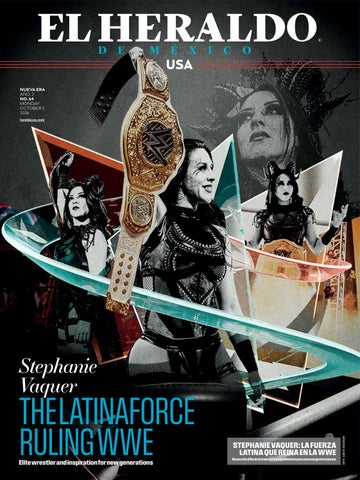
THELATINAFORCE RULING WWE Elite wrestler and inspiration for new generations
STEPHANIE VAQUER: LA FUERZA LATINA QUE REINA EN LA WWE Alcanzó la élite de la industria y es referente para nuevas generaciones
ARTE: DANTE ESCOBAR
Stephanie Vaquer
STEPHANIE VAQUER
THE DREAM OF A LITTLE GIRL WHO BECAME A WWE CHAMPION The Chilean wrestler has become one of the most prominent figures in professional wrestling in the United States after reclaiming the world championship in her native Chile. BY IVÁN NAVARRO PHOTO:WWE
S
tephanie Vaquer fulfilled a dream she began building as a child. The Chilean wrestler, who once sold completos — her country’s traditional hot dogs — to raise enough money to attend WWE’s first event in Chile, returned to her homeland years later to reclaim the Women’s World Championship. “This belt is the most important one in WWE. For me, it is the dream of my life. I can’t explain what it represents because it’s not just something beautiful; you really have to represent it, and being champion puts pressure on you.” Her journey began as a fan. When she was 12, WWE held its first event in Chile, and Vaquer had to work to earn enough money to attend. “That year was WWE’s first event in Chile. I had to sell completos, which are like hot dogs, door to door in my neighborhood to save enough money to go. Back then, I went to see Rey Mysterio, who was my idol, and now he is my coworker. I can’t explain how something goes from being a dream to actually becoming a reality.” Years later, Vaquer shared a video on social media from that event in Chile, in which she can be seen wearing a Triple H T-shirt. He was another of her wrestling idols. “That video was from 17 years ago. I was wearing a Triple H shirt, and now he is my boss. I keep growing, and now the people who inspired me are in the same locker room.” Determined to turn her fan dream into a
career, Vaquer trained in Chile before moving to Mexico in 2013 to continue learning the craft of professional wrestling. After working on the independent circuit and eventually joining CMLL, as well as touring Japan, she developed a style that combined elements of martial arts and professional wrestling. “Mexico made me who I am today. I learned here in Mexico, I started here in Mexico, and I created this style here. With great pride and respect, I represent Mexican lucha libre wherever I go. “Every day you learn something new from defeats and victories, so every day I keep improving. I try to be like a little sponge and, everywhere I go, with every style I encounter, learn as much as I can and create a mix that becomes my own style.” Joining WWE brought another challenge: competing in a new company, adapting to a different style, and learning a new language. “I debuted in Mexico two years ago, where I became who I am and where I grew. Joining the company is something good, but at the same time there is pressure: having to represent in some way, learn a new language, learn a new style, push back against criticism, go against everything that is expected, and emerge through all of that. “I still have so many things I want to accomplish. I don’t want to say or give anything away, but I think my goal is always to be the best. If that brings more championships, if it brings another WrestleMania, if it brings Money in the Bank, whatever comes with it is welcome. My focus will always be on being the best in the world.” After her time in NXT, Vaquer moved to WWE RAW and became the first Chilean and
South American woman to win a WWE world championship. In April, she lost the Women’s World Championship to Liv Morgan at WrestleMania 42. Her chance for revenge came in September. On Sept. 12, during a WWE Live Event in Santiago, Chile, Vaquer defeated Morgan to reclaim the world title in her home country. It was WWE’s first championship change at a non-televised event since 2019. “I still feel like I’m dreaming. It even felt a little unreal because everything suggested it would be impossible, but we did it. After so many years, winning a title at a Live Show and making history, while also experiencing that energy in my country, is something I will never forget. “This was also very important for me and for the fans. The truth is, I never thought about being the first. Fortunately, I got to be the first Latina WWE world champion, but yes, this was my dream as a little girl. It was the dream of my entire life, and we made it happen.” With the championship back in her hands, Vaquer thought about the little girl who once sat in the stands watching her idols and who, years later, would end up sharing a locker room with them. “I think I would tell her that it can be done. Sometimes it seems impossible, but, as Penta says, we’re going to make the impossible possible. The first one was the first time this dream came true. The second was at home and with incredible energy. No, I couldn’t choose. “I think they both have their own special moment that I will remember forever.” Vaquer also acknowledged the growing presence of Latino wrestlers within one of the world’s biggest professional wrestling companies. “I think that, more than being given an opportunity, we have earned it. I became who I am here in Mexico. I saw Penta, I saw Fénix; I saw how they had to work their way up and earn that opportunity. I also see so many talented wrestlers earning that opportunity and proudly representing the entire Latino community. So I’m proud and happy about that.” Finally, Vaquer shared a message for Latina girls and women pursuing dreams of their own: “Don’t give up. Don’t let anyone silence you. You are not alone, and you can accomplish whatever you want.”
ANGEL MIERES ZIMMERMANN
ANTONIO HOLGUIN ACOSTA
FRANCO CARREÑO OSORIO
ALFREDO GONZÁLEZ CASTRO
ALEJANDRA ICELA MARTÍNEZ RODRÍGUEZ
CHAIRMAN OF THE BOARD
VICE PRESIDENT OF INSTITUTIONAL RELATIONS
GENERAL DIRECTOR
EDITORIAL DIRECTOR
COORDINATOR, HERALDO USA
DANIEL ERNESTO BENET SÁNCHEZ NORIEGA EDITOR, HERALDO USA
alejandra.martinezr @heraldodemexico.com.mx
daniel.benet @heraldodemexico.com.mx
FACTS
Stephanie Vaquer has won championships in Mexico,Japan and the United States.
The Chilean wrestler was sidelined for four months due to a series of injuries following WrestleMania 42.
“La Primera” was trained in Mexico by Gran Apache,Ricky Marvin,and Villano IV.
33
years old Stephanie Vaquer’s age.
3
titles She has won three championships in WWE: the NXT Women’s Championship,NXT Women’s North American Championship,and Women’s World Championship.
16,000
people attended her match in Santiago,Chile.
The South American wrestler won the world championship for the first time in October 2025
Stephanie Vaquer: el sueño de una niña que terminó como campeona de WWE a WWE RAW y se convirtió en la primera mujer La chilena es una de las chilena y sudamericana en conquistar un camfiguras más importantes de la peonato mundial de WWE. En abril perdió el WoWorld Championship ante Liv Morgan en lucha libre en Estados Unidos, men’s WrestleMania 42. tras recuperar el campeonato La revancha llegó en septiembre. El 12 de septiembre, durante un WWE Live Event en Santiago mundial en su natal Chile. de Chile, Vaquer derrotó a Morgan para recuperar POR IVÁN NAVARRO FOTO:WWE
S
tephanie Vaquer cumplió uno de los sueños que comenzó a construir desde niña. La chilena que vendía completos —los tradicionales hot dogs de su país— para reunir dinero y asistir al primer evento de WWE en Chile regresó, años después, a su nación para recuperar el Women’s World Championship. “Este cinturón es el más importante de WWE. Para mí es el sueño de mi vida. No te puedo explicar lo que representa, porque no solamente es algo muy bonito; tienes que realmente representarlo y te presiona el tener que ser campeona”. Su camino comenzó como aficionada. Cuando tenía 12 años, WWE realizó su primer evento en Chile y Vaquer tuvo que trabajar para conseguir el dinero que le permitiera asistir. “En ese año fue el primer evento de WWE en Chile. Yo tuve que vender completos, que son como hot dogs, casa por casa en mi barrio para poder juntar el dinero para ir. En ese tiempo fui a ver a Rey Mysterio, que era mi ídolo, y ahora es mi compañero de trabajo. No te podría explicar cómo pasa de ser un sueño hasta lograr que sea realidad”. Años después, Vaquer compartió en redes sociales un video de aquel evento en Chile, donde aparece con una camiseta de Triple H, otro de sus referentes. “Ese video fue hace 17 años. Yo tenía una playera de Triple H y ahora él es mi jefe. Sigo creciendo y ahora los que me inspiraban están en el mismo vestidor”. En busca de convertir el sueño de aquella aficionada en una carrera, Vaquer comenzó su formación en Chile y posteriormente llegó a México, en 2013, para continuar su aprendizaje en la lucha libre. Después de pasar por el circuito independiente y llegar al CMLL, además de realizar giras por Japón, desarrolló un estilo en el que combinó elementos de las artes marciales y la lucha libre. “México me hizo ser lo que soy hoy en día. Yo aprendí aquí en México, empecé aquí en México y este estilo se hizo aquí. Con mucho orgullo y respeto, represento a la lucha libre mexicana en cualquier lugar. “Todos los días se aprende algo nuevo de las derrotas y de las victorias, así que cada día voy superándome. Yo trato de ser una esponjita y, en cada lugar donde voy, con cada estilo, aprender lo que más pueda y hacer una mezcla de mi propio estilo”. Su llegada a WWE representó otro reto: competir en una nueva empresa, adaptarse a otro estilo y aprender un idioma. “Debuté en México hace dos años, donde me hice y donde crecí. Llegar a la empresa es algo bueno, pero al mismo tiempo una presión: tener que representar de alguna forma, aprender un nuevo idioma, aprender un nuevo estilo, ir en contra de las críticas, ir en contra de todo lo esperado y surgir dentro de todo eso. “Tengo muchas cosas más que lograr. No quiero decir ni adelantar nada, pero creo que siempre mi meta es ser la mejor. Si eso trae más campeonatos, si eso trae otro WrestleMania, si eso trae Money in the Bank, lo que sea que traiga, bienvenido sea. Mi foco siempre va a ser ser la mejor del mundo”. Después de su paso por NXT, Vaquer llegó
el título mundial en su país. Fue el primer cambio de campeonato de WWE en un evento no televisado desde 2019. “Todavía siento que estoy en un sueño. Siento que fue incluso un poco irreal, porque todo hacía pensar que iba a ser imposible, pero se logró. Después de muchísimos años, lograr un título en un Live Show y hacer historia, además de vivir esa energía en mi país, es algo que jamás voy a olvidar. “Esta parte también fue muy importante para mí y para la afición. La verdad es que nunca pensé en ser la primera. Por suerte me tocó ser la primera latina campeona mundial de WWE, pero sí, este era mi sueño de chiquita, era mi sueño de toda la vida y lo logramos”. Con el campeonato nuevamente en sus manos, Vaquer recordó a la niña que alguna vez estuvo en las gradas viendo a sus ídolos y que, años después, terminó compartiendo vestidor con ellos. “Yo creo que le diría que sí se puede. Que a veces se ve imposible, pero, como dice Penta: vamos a hacer posible lo imposible. El primero fue la primera vez que se cumplió este sueño. El segundo fue en mi casa y con una energía increíble. No, no podría elegir. “Creo que los dos tienen su momento especial que voy a recordar por siempre”. Además, reconoció el crecimiento de la escena latina dentro de una de las empresas de lucha libre más importantes del mundo. “Yo creo que, más que la oportunidad que se brinda, nosotros nos la hemos ganado. Me hice aquí en México. Yo vi a Penta, a Fénix; vi cómo tuvieron que surgir y cómo ellos se ganaron esa oportunidad. También veo cómo un montón de talentos se está ganando esa oportunidad y representando con orgullo a toda la raza latinoamericana. Así que estoy orgullosa y contenta de eso”. Finalmente, Vaquer dirigió un mensaje a las niñas y mujeres latinas que buscan cumplir sus propios sueños: “Que no se rindan, que no las callen, que no están solas y que pueden lograr lo que ellas quieran”.
Datos Stephanie Vaquer ha conseguido títulos en México,Japón y Estados Unidos. La chilena estuvo cuatro meses sin actividad por una serie de lesiones tras WrestleMania 42. “La Primera” fue entrenada en México por Gran Apache,Ricky Marvin y Villano IV. La sudamericana se coronó por primera vez en octubre de 2025 ante Iyo Sky.
33 3 16,000 Monday / 10 / 5 / 2026 heraldousa.com/
años tiene Stephanie Vaquer.
títulos ha conseguido en WWE: NXT Femenil,Norteamericano Femenil y Mundial Femenil. personas asistieron a su lucha en Santiago de Chile.
3
OPINION
BY BERNARDINO ESPARZA MARTÍNEZ* x: @LEYPOLITICA
BLACK NOVEMBER? T TRIAL BY FIRE FOR TH ADMINISTRATION
The November midterms will test Donald Trump’s grip on power. Control of Congress will determine whether he can advance his America First agenda or face tougher oversight, with serious consequences for immigration, trade and relations with Mexico.
T
he outcome of this year’s elections in November will be the true political barometer for measuring Donald Trump’s ability to preserve his political power.In these elections,all 435 seats in the House of Representatives and 35 of the 100 seats in the Senate will be contested.The battle for control of Congress will once again pit Republicans against Democrats in a contest that will determine the White House’s room for maneuver during the final two years of the presidential term. Following the 2024 elections, the House of Representatives was composed of 220 Republicans and 215 Democrats,while the Senate consisted of 53 Republicans, 45 Democrats,and two independents. The midterm elections represent a genuine trial by fire for the Trump administration.The outcome could be unfavorable for Republicans because of the narrow margin they hold over Democrats in terms of seats.If the opposition makes gains,the second half of the administration could be marked by stronger institutional checks and balances.A change in the composition of Congress could translate into an effective limit on presidential power. The most comfortable scenario for Trump would be for his party to retain at least its majority in the House of Representatives.If that happens,the second half of his administration would likely be shaped by the continuation of the course followed between January 2025 and August 2026: strengthening the Executive Branch,consolidating the “America First” doctrine, pursuing a strict immigration policy,and using trade and diplomatic tools as instruments of international pressure.However,the continuation of this scenario is far from guaranteed. There is also a factor that could influence the president’s political behavior.Aware that he is entering the final two years of his administration,Trump could choose to further harden his positions in an effort to consolidate a historical legacy.His objective would be to turn his main political convictions into reality and reaffirm the geopolitical and economic leadership of the United States.Ultimately,every leader aspires to leave a lasting mark and to be remembered as a decisive figure in the history of their nation. The implementation of Donald Trump’s agenda has relied,to a large extent,on the use of executive orders, a tool that has allowed him to move forward without depending on congressional approval.As of August of this year,he had signed 49 executive orders and had accumulated 274 since the beginning of his second term (Federal Register Executive Orders).This strategy demonstrates a way of exercising power with broad autonomy.However,it has also led to numerous legal controversies,particularlyovertheconstitutionallimits that the Executive Branch is required to respect and that,according to his critics,it does not always observe. Conversely, if Democrats were to win both cham-
4
Monday / 10 / 5 / 2026 heraldousa.com/
bers,the political environment for the Trump administration during 2027–2028 could become hostile. The challenges would unfold on two fronts: the first would be the judicial front,involving the resolution of disputes arising from the executive orders issued during the first part of his administration,as well as those that could emerge during the second; and the second would be the legislative front,where a Democratic majority could intensify oversight of his government through the establishment of committees and reviews of budgetary spending. Donald Trump’s ability to maintain the support of his voters and the general population will be put to the test in the midterm elections.The outcome will make it possible to measure not only his level of approval but also the cumulative wear and tear of his administration.His immigration and economic policies are two of the main factors that could influence public perception,although they would not be the only ones; and it is important to mention that both issues have been present since the beginning of his administration and contributed to defining his electoral victory.However, exercising power takes its toll when public policies fail to produce efficient and effective results for the population they are intended to serve.That assessment, more than political rhetoric,could prove decisive for the Republican Party’s electoral future. Ultimately, in the upcoming elections, Americans will not vote on whether Donald Trump remains president,but rather for candidates seeking seats in Congress.Nevertheless,the performance of his administration,its policies,and the results achieved will be subject to voters’ judgment and could determine the fate of the candidates of the “Grand Old Party” and,with it,the White House’s room for maneuver during the final years of his term. The outcome will have repercussions that extend beyond the borders of the United States.For Mexico,the consequences could be felt particularly in the areas of immigration,trade,and security.If Republicans retain their majority in Congress,Trump will have greater political latitude to pursue a tougher agenda; if they lose it,he will face stronger checks and balances in sustaining it.Nevertheless,the course has already been set:the “America First” doctrine will continue to shape U.S.policy and create new challenges for the bilateral relationship.In this scenario,Democrats will seek to contain or redirect that agenda,while Mexico will have to confront its effects at a particularly complex moment,as it is itself immersed in its 2026–2027 federal electoral process.What happens at the U.S.polls will not only define the balance of power in Washington; it could also usher in a new stage in the relationship with Mexico.Will November be black for Trump,or the beginning of a new period of tension for Mexico? *Professor at the School of Law of Universidad La Salle and specialist in Electoral Law
THE HE TRUMP
¿Noviembre negro? La prueba de fuego para la administración de Trump Las elecciones de noviembre pondrán a prueba el poder de Donald Trump. El control del Congreso definirá si puede profundizar su agenda America First o si enfrenta mayores contrapesos, con efectos directos en la migración, el comercio y la relación con México. POR BERNARDINO ESPARZA MARTÍNEZ*
E
l resultado de las elecciones de este año en noviembre será el verdadero termómetro político para medir la capacidad de Donald Trump para preservar su poder político. En estos comicios estarán en disputa los 435 escaños de la Cámara de Representantes y 35 de los 100 lugares del Senado.La batalla por el control del Congreso enfrentará nuevamente a republicanos y demócratas en una contienda que definirá el margen de maniobra de la Casa Blanca durante los dos últimos años del mandato presidencial. Tras las elecciones de 2024,la Cámara de Representantes quedó integrada por 220 republicanos y 215 demócratas,mientras que el Senado se conformó con 53 republicanos,45 demócratas y dos independientes. Los comicios intermedios representan una auténtica prueba de fuego para la administración Trump.El resultado podría ser adverso para los republicanos debido a la estrecha diferencia de escaños que mantienen frente a los demócratas. Si la oposición logra avanzar,la segunda mitad del mandato podría estar marcada por mayores contrapesos institucionales. Un cambio en la composición del Congreso podría traducirse en un límite efectivo al poder presidencial. El escenario más cómodo para Trump consiste en que su partido conserve,al menos,la mayoría en la Cámara de Representantes.De ser así,la segunda parte de su administración tendría como factor político relevante la continuidad de la línea seguida entre enero de 2025 y agosto de 2026: el fortalecimiento del Poder Ejecutivo,la consolidación de la doctrina “America First”,una política migratoria estricta y el uso de las herramientas comerciales y diplomáticas como instrumentos de presión internacional. Sin embargo, la continuidad de ese panorama dista mucho de estar asegurada. Existe,además,un factor que podría influir en el comportamiento político del presidente.Consciente de que transita los últimos dos años de su gestión,Trump podría optar por endurecer aún más sus posiciones con el propósito de consolidar un legado histórico.Su objetivo sería materializar sus principales convicciones políticas y reafirmar el liderazgo geopolítico y económico de Estados Unidos.Al final,todo gobernante aspira a dejar una huella perdurable y a ser recordado como una figura decisiva en la historia de su nación. La implementación de la agenda de Donald Trump ha descansado,en buena medida,en el uso de órdenes ejecutivas,una herramienta que le ha permitido avanzar sin depender de la aproba-
ción del Congreso.Hasta agosto de este año había firmado 49 órdenes ejecutivas y acumulaba 274 desde el inicio de su segundo mandato (Federal Register Executive Orders). Esta estrategia evidencia una forma de ejercer el poder con amplia autonomía.Sin embargo,también ha derivado en múltiples controversias judiciales, particularmente por los límites constitucionales que el Ejecutivo está obligado a respetar y que,según sus críticos,no siempre observa. Por el contrario,si los demócratas lograran el triunfo en ambas cámaras,el escenario político para la administración de Trump durante 2027-2028 podría volverse hostil.Los frentes se dividirían en dos escenarios: el primero sería el judicial,con la resolución de controversias derivadas de la expedición de órdenes ejecutivas durante la primera parte de su administración,así como de las que pudieran surgir en la segunda; y en el segundo escenario tenemos el del legislativo,donde una mayoría demócrata podría intensificar la fiscalización de su gobierno mediante la integración de comités y la revisión del ejercicio presupuestario. La capacidad de Donald Trump para mantener la simpatía de sus electores y de la población en general será puesta a prueba en las elecciones intermedias.El resultado permitirá medir no solo su nivel de aceptación,sino también el desgaste acumulado durante su administración.Sus políticas,migratoria y económica,constituyen dos de los principales factores que podrían incidir en esa percepción, aunque no serían los únicos; y es importante mencionar que ambos temas estuvieron presentes desde el inicio de su gobierno y contribuyeron a definir su triunfo electoral.Sin embargo,el ejercicio del poder desgasta cuando las políticas públicas no se traducen en resultados eficientes y eficaces para la población a la que están dirigidas.Esa evaluación,más que el discurso político,podría ser determinante para el futuro electoral del Partido Republicano. En definitiva,en las próximas elecciones,los estadounidenses no votarán por la continuidad de Donald Trump en la presidencia,sino por los candidatos al Congreso.Sin embargo,el desempeño de su administración,sus políticas y los resultados obtenidos serán sometidos al juicio de los electores y podrían definir la suerte de los candidatos del “Gran Viejo Partido” y,con ello,el margen de maniobra de la Casa Blanca durante los últimos años de su mandato. El resultado tendrá repercusiones que trascenderán las fronteras de Estados Unidos.Para México, las consecuencias podrían sentirse particularmente en materia migratoria,comercial y de seguridad.Si los republicanos conservan la mayoría en el Congreso,Trump dispondrá de mayor margen político para endurecer su agenda;si la pierde, enfrentará mayores contrapesos para sostenerla. No obstante,el rumbo ya está trazado: la doctrina “America First” seguirá marcando la política estadounidense y planteará nuevos desafíos para la relación bilateral.En este escenario,los demócratas buscarán contener o reorientar esa agenda, mientras México deberá enfrentar sus efectos en un momento particularmente complejo,al encontrarse inmerso en su propio proceso electoral federal de 2026-2027.Lo que ocurra en las urnas estadounidenses no solo definirá el equilibrio de poder en Washington; también podría marcar una nueva etapa en la relación con México.¿Será noviembre negro para Trump o el inicio de una nueva etapa de tensión para México? *Catedrático de la Facultad de Derecho de la Universidad La Salle y especialista en Derecho Electoral
Monday / 10 / 5 / 2026 heraldousa.com/
5
THE FUTURE IS INMOBILITY Girls, boys, and adolescents on the move have chosen, or have been forced to choose, Mexico as their destination in search of opportunities. Do we have the capacity and the vision to offer them the Mexican dream?
INTERVIEW WITH GONZALO RIVERA* BY DANIEL BENET ARTWORK: DANTE BARRERA
D
aniel Benet - We can say that Mexico is experiencing a phenomenon of reverse migration. Many cities, including Mexico City, Ciudad Juárez, Tijuana, and several cities in the southeast of the country, have gone from being places of transit for migrant communities from Central and South America to becoming places where people wait for extended periods or are forced to settle. Mexico built its response to migratory flows around the idea that it was primarily a country of transit. What does this new reality mean specifically for girls, boys, and adolescents who are going through this migration process? And what are the main gaps that Mexican institutions addressing this phenomenon still need to address in order to adapt to this new migratory reality in the country? Gonzalo Rivera - The first thing is to recognize this new migratory dynamic: Mexico is moving from being a country of transit to being a country of destination. We have a population on the move that is looking to Mexico for an opportunity to settle, to work, to live, and to achieve the dreams they had when they left their communities of origin. What does this mean? What have we identified at Plan International based on the studies we have conducted as part of the Eco project? First, the reasons why people left their communities of origin remain the same. First, economic needs, and second, violence. This is a paradox, because they leave their communities because of these problems, but they encounter them again along the way, and when they arrive in Mexico, they continue to be among the main challenges they face. Finding a way to integrate socially, economically, and culturally into the country under this new dynamic is a major challenge. It starts with the requirements they have to meet to regularize their status or obtain refugee status.
6
Then there is the question of how they can access employment or entrepreneurship opportunities. In the case of girls, boys, and adolescents, one of the main challenges we are seeing is access to health and education services, including access to schools. On top of that, child protection systems are overwhelmed. So we need to continue strengthening them, but with this new perspective. This is not only about responding to a humanitarian emergency. It is also about the need for social, economic, and cultural integration. DB - You touch on a crucial point, because migrant children are subject to a certain degree of media and institutional invisibility. One of the key aspects of this population is that, among these migrant communities of children and adolescents, only about 30% report being connected to some form of formal or relatively flexible education. What happens to minors who are not part of these educational systems? And, above all, what are the medium- and long-term consequences for these young people? GR - When the right to education is violated, it affects other rights of children as well. Without access to education services, they are exposed to other risks, such as child labor. We see girls and boys in situations of mobility on the streets, asking for money or working. And when they are outside a safe environment such as a school, they are exposed to other risks that can cause both physical and psychosocial harm. DB - That is another key and paradoxical point, because Mexico has spent decades fighting the idea that the Mexican migrant population in the United States is dispensable or cheap labor. It is also paradoxical that, despite all the migration-related challenges that Mexican women and men face in the United States, migrant girls and boys can relatively easily access schools, even without documentation. Yet it seems that the same is not happening in Mexico with migrant children from Central and South America. There are documented cases in Tapachula of child labor exploitation, particularly on coffee farms, where children work shifts of more than 12 hours for around 100 pesos a day.
Monday / 10 / 5 / 2026 heraldousa.com/
To what extent are the lack of access to education and the economic needs of girls, boys, and adolescents turning them into a workforce that is vulnerable to exploitation? And what could specifically be done to address child labor exploitation? GR - There are several elements. First, when we talk about child labor among people on the move, we have to consider its multidimensional nature and the different circumstances involved. Integrating into Mexico is difficult when there are barriers to accessing education services. And some of those barriers are not administrative but cultural. For example, some people speak another language. Our schools are not prepared to receive populations that speak other languages. We also face challenges when it comes to academically integrating people in situations of mobility, because there is not necessarily an equivalence between their previous academic levels and those in Mexico. So this academic leveling process is necessary, and ultimately it represents an additional effort and additional work for teachers. There are also economic factors, such as having the resources to buy uniforms, pay school fees, and purchase school supplies. In fact, these are among the main needs we identify when we manage cases: the need for immediate resources so that children can enter and remain in school. And after that, there needs to be continued support. As long as these barriers to education are not addressed, and families do not have access to jobs with decent wages, it will be very difficult to prevent girls, boys, and adolescents from falling into situations of labor exploitation. The same applies to adults. DB - There are positive efforts, such as the Migrant Education Program in Chiapas, which facilitates access for people on the move. Tell us how these efforts came about and what could be done to replicate them, particularly in areas along the northern and southern borders. GR - This was an initiative that emerged from an educational institution, and we have had the opportunity to coordinate with them. What are the factors behind its success? First, having sensitivity to the needs of the migrant population and an intercultural perspective that allows us to look for ways to help people integrate into schools. Coordination among different services is also essential. Because even when a school opens its doors, there are all these other needs that have to be addressed through different services, such as health care and employment. That is why coordination among different government agencies and with other civil society organizations is so important in order to provide the necessary support. DB - You have many years of experience working on children’s rights, child labor, emergencies, and humanitarian assistance. From your perspective, what should be the priorities, particularly when it comes to the legal and institutional gaps in Mexico, to adapt to this new reality? GR - First, we need to shift from an emergency-response perspective to an approach focused on social, cultural, and economic integration. That has implications across the board, including child protection systems and health, education, and employment services specifically designed for people on the move. Then we have the challenge of unaccompanied children. It is important to strengthen the capacity of the institutions responsible for protecting children’s rights so that they can provide care and, above all, represent these unaccompanied children. Third, in the case of adults—fathers, mothers, and caregivers of these girls and boys—they need access to employment opportunities and decent jobs. *Country Representative for Plan International Mexico.
El futuro está en movilidad Entrevista con Gonzalo Rivera* Niñas, niños y adolescentes en movilidad han elegido, o se vieron forzados a elegir, México como su destino para buscar oportunidades. ¿Tenemos la capacidad y la visión para ofrecer el sueño mexicano? POR DANIEL BENET ARTE: DANTE BARRERA
D
aniel Benet - Podemos afirmar que México está viviendo un fenómeno de migración inversa, que hay muchas ciudades como la Ciudad de México, Ciudad Juárez, Tijuana y también varias ciudades en el sureste del país que pasaron de ser lugares de tránsito de comunidades migrantes de Centroamérica y Sudamérica a ser lugares de espera prolongada o de asentamiento forzado. México es un país que construyó su respuesta a los flujos migratorios bajo la concepción de ser un país de tránsito. Esta nueva circunstancia, ¿qué significa en particular para niñas niños y adolescentes que están en este proceso de migración y cuáles serían los pendientes de las instituciones mexicanas que atienden el fenómeno para adaptarse a esta nueva realidad migratoria en el país. Gonzalo Rivera - El primer punto es reconocer esta nueva dinámica migratoria, que México pasa de ser de un país de tránsito a un país de destino. Tenemos una población en movilidad que está buscando en México la oportunidad para establecerse, para poder trabajar, para vivir, para alcanzar los sueños que tenían en el momento que dejaron sus comunidades de origen. ¿Qué representa esto, qué es lo que hemos identificado desde Plan International a partir de los estudios que hemos hecho en el marco del proyecto Eco? En primer lugar, los motivos de por qué dejaron su comunidad de origen siguen siendo los mismos. Primero, las necesidades económicas y segundo, los temas de violencia. Esto es una paradoja, porque dejan sus comunidades por estos motivos, pero en el camino lo van enfrentando también y al llegar a México continúa siendo una de las principales limitantes que enfrentan. Cómo poder, bajo esta nueva dinámica, integrarse social, económica y culturalmente al país es un gran reto. Empezando por los requisitos que tienen que cumplir para su regularización o para obtener estatus de persona refugiada. Cómo poder optar a oportunidades de empleo o de emprendimiento y en el caso de niñas, niños y adolescentes, uno de los principales retos que estamos viendo es el acceso a servicios de salud y de educación, el acceso a las escuelas. Además de eso, los sistemas de protección de las niñas y niños están rebasados, entonces tenemos que continuar fortaleciéndolos, pero con esta perspectiva.
No solamente es la situación de emergencia humanitaria, sino la necesidad de la integración social, económica y cultural. DB - Tocas un punto crucial, porque la población migrante de las infancias sufre de cierta invisibilización mediática e institucional. Uno de los puntos medulares de esta demografía es que, de estas comunidades migrantes en infancia y adolescencia, cerca del 30% nada más son quienes reportan que están vinculados con algún tipo de educación formal o relativamente flexible. ¿Qué pasa con personas menores que no están incorporadas a estos esquemas de educación? Y, sobre todo, ¿qué consecuencias tiene esto en el mediano y largo plazo para estas personas? GR - La vulneración del derecho a la educación impacta en los otros derechos de la niñez. Al no tener acceso a los servicios de educación se ven expuestos a otros riesgos como el trabajo infantil. Vemos a niñas y niños en situación de movilidad que se encuentran en las calles pidiendo dinero o trabajando. Además, al estar fuera de un espacio seguro, como son las escuelas, están expuestos a otros riesgos que pueden ocasionar daños tanto de manera física o psicosocial. DB - Ese es otro punto clave y paradójico, porque México lleva décadas luchando contra la concepción de que la población migrante mexicana en Estados Unidos es una mano de obra prescindible o barata. También resulta paradójico que, dentro de todos los conflictos migratorios que tienen las mexicanas y los mexicanos en Estados Unidos, el acceso a las escuelas de las niñas y niños migrantes, aunque sea sin documentación, es relativamente sencillo y parece que eso no está pasando en México con las infancias migrantes de centro y Sudamérica. Hay casos documentados en Tapachula de explotación laboral infantil, sobre todo en fincas cafetaleras en donde trabajan jornadas de más de 12 horas por alrededor de 100 pesos diarios. ¿Hasta qué punto la falta de acceso a la educación y la necesidad económica de niñas, niños y adolescentes está convirtiéndolos en una fuerza laboral vulnerable a la explotación? y ¿qué se podría hacer para el tema de la explotación laboral infantil en particular ? GR - Hay varios elementos; en primer lugar, al hablar de trabajo infantil de población en movilidad, hay que considerar esta multidimensionalidad, que tiene que ver por las situaciones que implica. Para integrarse en México donde hay dificultades para el acceso a servicios de educación, hay barreras que no son administrativas, sino culturales, por ejemplo, hay población que habla otro idioma. Nuestras escuelas no están listas para recibir a las poblaciones que hablan otros idiomas. Tenemos retos en cuanto a la nivelación académica de personas que están en situación de movilidad y que no necesariamente existe una equivalencia entre los niveles académicos. Entonces se necesita hacer este proceso de nivelación académica, lo que al final representa un esfuerzo y un trabajo adi-
cional para los maestros y las maestras. También hay elementos económicos, como la disponibilidad de recursos para comprar uniformes, para pagar cuotas que se requieren en las escuelas, para comprar los útiles escolares y que de hecho estas son de las principales necesidades que identifican cuando hacemos la gestión de casos, esta necesidad de recursos inmediatos para poderse integrar a las escuelas y luego tiene que existir acompañamiento. Mientras no se resuelvan estas barreras hacia el acceso a la educación y no se resuelva que las familias tengan empleos con salarios dignos, va a ser muy difícil el que no caigan en una situación de explotación laboral las niñas, los niños. y adolescentes y de igual forma también las personas adultas. DB - Hay esfuerzos positivos como es el Programa de Educación Migrante en Chiapas en el cual se dan facilidades de acceso a personas en movilidad. Descríbenos cómo surgieron estos esfuerzos y qué se podría hacer para replicarlos, sobre todo en puntos de la frontera norte y sur. GR - Esta fue una iniciativa que surge de una institución educativa, y que hemos tenido la oportunidad de coordinar con ellos. ¿Cuáles son los factores de éxito? En primer lugar, tener esa sensibilidad a las necesidades de la población migrante, tener la perspectiva de interculturalidad para poder buscar opciones para que se puedan ir integrando a las escuelas y también es fundamental la coordinación entre servicios. Porque, aunque la escuela abra las puertas, por todas estas otras necesidades que existen, se requiere que puedan ser cubiertas a través de diferentes servicios, como el de salud y empleo, y de ahí la importancia de la coordinación entre diferentes instancias de gobierno y con otras organizaciones de sociedad civil para poder atenderlos. DB - Tienes muchos años de experiencia trabajando con derechos de la niñez, trabajo infantil y temas de emergencias y ayuda humanitaria. Desde tu perspectiva, ¿cuáles serían las prioridades que deberían de atenderse en particular con vacíos legales e institucionales de México para adaptarse a esta nueva realidad? GR - En primer lugar, cambiar la perspectiva de una atención de emergencia a un enfoque de integración social, cultural y económica. Eso tiene implicaciones en todo, tanto en los sistemas de protección de la niñez como en los servicios de salud, de educación, de empleabilidad destinada específicamente a la población de movilidad. Luego tenemos el reto de la niñez no acompañada, que es importante fortalecer las capacidades de las instancias que protegen los derechos de la niñez para que puedan atender y sobre todo representar a esta niñez no acompañada. Tercero, en el caso de las personas adultas, padres, madres, cuidadores de estas niñas y niños que puedan tener acceso a oportunidades laborales y tener un empleo digno. *Representante de país de Plan International México.
Monday / 10 / 5 / 2026 heraldousa.com/
7
The end of a federal legal representation contract leaves about 24,000 unaccompanied minors navigating a complex immigration system. Without legal representation, many could lose their cases and be deported, even though they have the right to remain in the United States. The move also threatens the future of nearly 90 specialized organizations. BY KARINA RAMOS* ARTWORK: DANTE ESCOBAR
F
or nearly two decades, Democratic and Republican administrations upheld a basic agreement: no matter how controversial immigration became, unaccompanied children should have access to legal advice and representation. That commitment is disappearing as the federal contract enabling dozens of organizations to defend them across the United States expires. The Acacia Center for Justice administered the contract and distributed funds to legal service providers nationwide. This enabled attorneys like us to enter shelters, explain children’s rights, accompany children to court, and seek asylum or other protections when a legal option was available. That support helped us identify each child’s options and carry each case through every stage. Explaining the process was not enough: we had to gather evidence, prepare applications, and remain by each child’s side until a final decision was issued. Representation began when a child arrived at a shelter operated by the Office of Refugee Resettlement (ORR) and could continue until the case was fully resolved, sometimes even until the child obtained permanent residency. It was long-term, critical support—not merely assistance with paperwork. Unaccompanied children arrive at the bor-
der without a parent or guardian. From the moment they enter the country, they are subject to deportation: placement in a shelter does not grant them permission to remain. MUCH MORE THAN LAWYERS
Those of us who do this work know immigration law and are trained to assist children who have experienced trauma. Many have endured abandonment, abuse, human trafficking, violence, or persecution. Defending them therefore also requires specialized social services. That expertise cannot be replaced overnight. Learning the case, earning a child’s trust, and helping the child recount painful events take time. Transferring thousands of cases to an inexperienced provider would cause delays and result in inadequate representation. The conflict began in early 2025, when the Trump administration sought to cancel an active contract. Several organizations sued, and a judge ordered the government to fulfill its obligations. However, the government stopped reimbursing expenses in November and December. The government owes the organizations $65 million. For nonprofits, withholding those funds can lead to program closures, layoffs, and the loss of legal representation for children. Some organizations will try to continue representing their current clients, but doing so will become increasingly difficult without funding. We will also not have guaranteed access to children in
Theimpactonchildren Without a clear transition,thousands of cases could lose their legal representation.
1,500 4 3 1
children are represented by ImmDef. states have the most cases (California,New York,Texas y Florida).
times as many deportations.
lawyer can change the outcome of a case.
8
Monday / 10 / 05 / 2026 heraldousa.com/
MIGRANT CHILDREN LEFT WITHOUT LEGAL DEFENSE
shelters or to those who arrive later. However, the courts and deportation proceedings will continue. A NETWORK AT RISK
Nearly 90 organizations were part of the national network. Some will seek donations to keep some of their services running, while others will shut down their children’s representation programs. What is disappearing is not only a source of funding but also a structure built over 20 years. The government could have ended the contract through an orderly transition to a qualified new provider. So far, it has not explained who will take over the cases or how it will ensure continuity of representation. Children, families, and organizations remain in limbo.
The law requires that these children receive legal guidance, but general information cannot replace an attorney who can analyze the case, gather evidence, and appear before a judge. Basic guidance would be inadequate in the face of one of the country’s most complex legal systems. THE RISK OF FACING COURT ALONE
A child who appears alone in immigration court has little chance of mounting a defense. Even with a strong asylum case, the child is unlikely to identify the right legal path, prepare the application, and present the case without help. Without a lawyer, the child may face a deportation order. We have also seen attempts to get children to sign voluntary departure papers. Asking them
Adefenseatrisk The end of the contract affects children and organizations across the United States.
24,000 90
children could be affected.
organizations made up the network.
20
years,the program was in operation.
65
US$ million remains unpaid.
to make such a decision without understanding their rights can change their lives: some would be sent back to the places they fled because of violence, threats, abuse, or abandonment. The contract’s expiration is part of a series of changes that weaken protections for unaccompanied children. The government imposed new requirements on relatives seeking to receive them after they leave a shelter; some are impossible for undocumented people to satisfy. As a result, some children spend months in custody and request to return to their countries out of exhaustion or desperation. In other cases, after children are released to relatives, immigration agents detain other family members. There are also plans to change how certain asylum applications are evaluated. An office interview with an attorney makes it easier for a child to recount traumatic events. Taking the child directly before a judge increases pressure and makes it harder to testify. Immigration application fees add yet another barrier. Someone fleeing an extreme situation is unlikely to be able to pay for the process. Each obstacle limits access to a protection system built over many years. The impact will be nationwide. California, New York, Texas, and Florida have large immigrant communities, but shelters and foster families are also present in many other states. Children without relatives remain in custody while their cases move forward. At the Immigrant Defenders Law Center, we represent about 1,500 unaccompanied children. We will continue fighting for their rights and, to the extent possible, handling the cases we have taken on. But no single institution can replace a network of nearly 90 providers. This issue is not merely about contracts, invoices, or political disputes. These are children who must appear before a judge to make their case to remain in the United States. Leaving them alone sets them up to fail. Guaranteeing them a lawyer does not mean they will win, nor does it grant them immigration status. It allows them to understand the process, make their case, and exercise their rights. That basic principle, supported by both parties for decades, is now at risk. * Karina Ramos serves as Director of Legal Advocacy at the Immigrant Defenders Law Center.
Niños migrantes, sin defensa Elfindelcontratofederalderepresentación legaldejaaunos24,000menoresno acompañadosfrenteaunsistema migratoriocomplejo.Sinabogados, muchospodríanperdersuscasosyser deportados,inclusocuandotenganderecho apermanecerenEstadosUnidos.Lamedida tambiénamenazalacontinuidaddecasi90 organizacionesespecializadas. POR KARINA RAMOS* ARTE: DANTE ESCOBAR
D
urante casi dos décadas, gobiernos demócratas y republicanos mantuvieron un acuerdo básico: por mucha polémica que provocara la inmigración, los niños no acompañados debían contar con asesoría y representación legales. Ese compromiso está desapareciendo con el vencimiento del contrato federal que permitía a decenas de organizaciones defenderlos en distintas regiones de Estados Unidos. Acacia Center for Justice administraba el contrato y distribuía los recursos entre los proveedores legales del país. Así,losabogadospodíamosentraralosalbergues,explicarles los derechos de los menores, acompañarlos ante las cortes y solicitar asilo u otra protección cuando existía una vía legal. Este acompañamiento permitía identificar las alternativas disponibles para cada menor y sostener el caso a lo largo de sus etapas. No bastaba con explicar el procedimiento: había que reunir pruebas, preparar solicitudes y permanecer junto al niño hasta que se dictara una resolución definitiva. La representación comenzaba cuando el niño llegaba a un albergue de la Oficina de Reasentamiento de Refugiados (ORR) y podía extenderse hasta la resolución definitiva de su caso, incluso hasta obtener la residencia. Era un acompañamiento largo y decisivo, no solo la presentación de documentos. Los niños no acompañados llegan a la frontera sin un padre, una madre o un tutor que pueda hacerse cargo de ellos. Desde que ingresan, quedan sujetos a deportación: entrar a un albergue no significa que tengan autorización para quedarse. MUCHOMÁSQUEABOGADOS
Quienes hacemos este trabajo conocemos la ley migratoria y estamos preparados para atender a menores con experiencias traumáticas. Muchos han sufrido abandono, abuso, trata de personas, violencia o persecución; por ello, la defensa también requiere apoyo social especializado. Esa experiencia no se sustituye de un día para otro. Conocer el expediente, ganarse la confianza del niño y ayudarlo a narrar hechos dolorosos exige tiempo. Transferir miles de casos a un proveedor sin experiencia provocaría retrasos y una defensa deficiente. El conflicto comenzó a principios de 2025, cuando la Administración Trump intentó cancelar un contrato vigente. Varias organizaciones acudimos a los tribunales, y una jueza ordenó al gobierno cumplir con sus obligaciones. Sin embargo, en noviembre y diciembre dejó de reembolsar los gastos. La deuda con las organizaciones asciende a 65 millones de dólares. Para las entidades sin fines de lucro, retener esos recursos puede provocar el cierre de programas, despidos y la pérdida de la representación de los niños. En algunas organizaciones, trataremos de seguir representando a nuestros clientes actuales, pero sin financiamiento será cada vez más difícil. Tampoco tendremos acceso asegurado a los menores en los albergues ni a quienes lleguen después. Las cortes y los procesos de deportación, en cambio, seguirán adelante. UNAREDENRIESGO
Casi 90 organizaciones integraban la red nacional. Algunas buscarán donaciones para mantener parte de sus servicios; otras cerrarán sus áreas de representación infantil. No desaparece solo una fuente de ingresos, sino una estructura construida durante 20 años. El gobierno pudo concluir el contrato con una tran-
sición ordenada y un nuevo proveedor capacitado. Hasta ahora, no ha aclarado quién asumirá los casos ni cómo garantizará la continuidad de la defensa. Niños, familias y organizaciones seguimos en un limbo. La ley establece que estos menores deben recibir asesoría legal, pero la información general no sustituye a un abogado que analice el caso, reúna pruebas y comparezca ante un juez. Una orientación básica sería insuficiente ante uno de los sistemas jurídicos más complejos del país. EL RIESGO DE ENFRENTAR SOLOS A LA CORTE
Un menor que comparece solo ante una corte migratoria tiene pocas posibilidades de defenderse. Aunque tenga un caso sólido de asilo, difícilmente podrá identificar la vía legal, preparar la solicitud y argumentarla sin ayuda. La ausencia de abogado puede derivar en una orden de deportación. También hemos visto intentos de que los niños firmen su salida voluntaria. Pedirles una decisión así, sin comprender sus derechos, puede cambiarles la vida: algunos volverían a los lugares de los que huyeron por violencia, amenazas, abuso o abandono. El fin del contrato forma parte de otros cambios que debilitan la protección de los menores no acompañados. El gobierno impuso nuevos requisitos a los familiares que buscan recibirlos al salir del albergue; algunos son imposibles de cumplir para una persona indocumentada. Por ello, algunos niños pasan meses bajo custodia y piden regresar a sus países por cansancio o desesperación. En otros casos, tras entregarlos a sus familiares, los agentes migratorios detienen a los demás integrantes de la familia. También se pretende modificar la evaluación de determinadas solicitudes de asilo. Una entrevista en una oficina, acompañado por un abogado, facilita que el menor relate hechos traumáticos. Llevarlo directamente ante un juez aumenta la presión y dificulta su testimonio. A estas barreras se suman los costos de las solicitudes migratorias. Quien huye de una situación extrema difícilmente puede pagar un trámite. Cada obstáculo reduce el acceso al sistema de protección construido durante años. El impacto será nacional. California, Nueva York, Texas y Florida concentran grandes comunidades inmigrantes, pero también hay albergues y familias de acogida en muchos otros estados. Los niños sin familiares permanecen bajo custodia mientras avanzan sus casos. En Immigrant Defenders Law Center representamos a cerca de 1,500 menores no acompañados. Seguiremos luchando por sus derechos y atendiendo, en la medida de lo posible, los casos asumidos. Pero ninguna institución puede reemplazar por sí sola una red de casi 90 proveedores. La discusión no se limita a contratos, facturas ni disputas políticas. Son niños que deberán comparecer ante un juez y responder por su permanencia en Estados Unidos. Dejarlos solos es encaminarlos al fracaso. Garantizarles un abogado no implica que ganarán ni les otorga estatus migratorio. Les permite comprender el proceso, presentar argumentos y ejercer sus derechos. Ese principio básico, respaldado durante décadas por ambos partidos, está hoy en peligro. Karina Ramos es directora de Defensa Legal en el Immigrant Defenders Law Center.
Unadefensaenriesgo El fin del contrato afecta a menores y organizaciones en todo Estados Unidos.
24,000 90 20 65
menores quedarían afectados.
organizaciones integraban la red.
años llevaba vigente el programa.
millones de dólares siguen pendientes.
Monday / 10 / 05 / 2026 heraldousa.com/
9
REBORN AT A THE BORDER:
BY PAOLA PEREYRA ECHEVARRÍA
ARTWORK: ALEJANDRO OYERVIDES
TURNING SEXUAL AND GENDER DIVERSITY INTO DIGNITY LGBTIQ+ migrants face heightened vulnerability as they seek safety at the border. In the absence of sufficient institutional support, civil society organizations turn statistics into food, medical care, protection, and dignity.
10
Monday / 10 / 5 / 2026 heraldousa.com/
ll of us—women, men, and nonbinary people—have roots, a sense of belonging, and a place we remember with longing: the place where we first opened our eyes. However, when external circumstances force you to leave the place where you built your earliest memories alongside the people who shared them, the pain is profound. Leaving your country or city means facing uncertainty, enduring a journey marked by extreme vulnerability, and learning to begin again from scratch—embarking on a true “hero’s journey.” When a person’s sexual orientation or gender identity is added to that experience, the risks increase. Finding a safe place is no longer merely a hope; it becomes a necessity. Adapting to new customs while carrying the weight of watchful, judgmental eyes, learning another language when the destination lies across the border, and seeking opportunities to rebuild one’s life are all part of a process that is almost always misunderstood. CRITICISM OF THE APPROACH
These realities can be told in many ways. From an academic perspective, the approach is often contemplative and formal, and, as we say colloquially, somewhat superficial. The situation on the ground is different. Civil society organizations are often much closer to stories that rarely make their way into books, the press, or public debate. In Mexicali, Baja California—one of the cities with the largest populations of people in transit—we activists interact every day with LGBTIQ+ migrants seeking protection, stability, and an opportunity to move forward. In this context, academia has been criticized for its analysis of the phenomenon, while
Volver a nacer en la frontera: Cómo transformar la estadística sexogenérica en dignidad
Supportwithdignity During the first half of fiscal year 2026,the U.S. Border Patrol recorded 42,757 apprehensions along the southwest border,the lowest level in decades. More than 65 million people of Latino origin live in the United States.Thousands are members of the LGBTIQ+ community and face additional barriers due to their immigration status and identity.
governments have been criticized for tightening border restrictions. In early February 2026, the Strauss Center reported that approximately 5,200 migrants were waiting in northern Mexican border cities for an opportunity to continue their journeys. Between 77% and 78% of them were concentrated in Tijuana, Ciudad Juárez, and Mexicali. Among this mobile population, the need for specialized assistance for LGBTIQ+ people is even more urgent. IN THE UNITED STATES
According to the Williams Institute (2026), an estimated 1.4 million Hispanic people in the United States and the border region are members of the LGBTIQ+ community. Understanding migration through a diversity lens requires recognizing that not everyone faces the same obstacles. Transgender, nonbinary, intersex, lesbian, and gay people often face additional vulnerability fueled by prejudice that restricts their access to housing, education, employment, and basic services. This exclusion ultimately pushes many people toward survival strategies that put their safety and well-being at risk. The border also reflects another reality. Thousands of Latinos who are members of the LGBTIQ+ community now live in the United States while maintaining their cultural identity. For many, community networks and civil society organizations provide the first line of support against the discrimination, isolation, and uncertainty that accompany the migrant experience on both sides of the border. This situation becomes even more difficult at the Mexico–United States border. Recent changes in immigration policy have turned many border cities into places of forced permanence, where uncertainty shapes the daily lives of thousands of people. The waiting continues as farright rhetoric gains ground, exposing people to violence and attacking the dignity of those simply seeking a safe place to rebuild their lives. Behind every bureaucratic procedure, every administrative decision made by the United States, and every wall, there is a person who has been forced to sacrifice part of their life to survive. Migration requires enormous resilience, but for people of diverse sexual orientation or gender identity, it also means confronting a double barrier—one that often remains even after the border has been crossed. THE ROLE OF CIVIL SOCIETY ORGANIZATIONS
Daily life at the border appears to be sustained largely by civil society organizations, which translate statistics into concrete assistance. One of the most pressing needs is food, followed by medical care, including consultations, medication, and ongoing support. There is also a need for protected spaces for sexually and gender-diverse people, families, people traveling alone, and single mothers and fathers. Sustaining this work requires resources, labor, and social commitment. Every contribution provides food, medical care, guidance, and shelter for people who arrived at the border after losing almost everything. Dignity can also be restored when a community chooses not to abandon those who need its help most.
Las personas migrantes LGBTIQ+ enfrentan una doble vulnerabilidad al buscar seguridad en la frontera. Ante la falta de respuestas suficientes, las organizaciones civiles convierten las estadísticas en alimento, atención médica, protección y dignidad. POR PAOLA PEREYRA ECHEVARRÍA
T
odas, todes y todos tenemos raíces, sentido de pertenencia y un lugar al que nos aferramos con añoranza: ese espacio donde, por primera vez, abrimos los ojos. Sin embargo, cuando, por circunstancias externas, te ves en la necesidad de desplazarte del lugar donde construiste tus primeras memorias junto a quienes las protagonizaron, el golpe es sumamente duro. Salir de tu país o de tu ciudad implica enfrentar la incertidumbre, sobrevivir al trayecto en condiciones de extrema vulnerabilidad y aprender a comenzar desde cero, enfrentándote a un auténtico “camino del héroe”. Cuando a esa experiencia se suma el hecho de ser una persona diversa, el riesgo aumenta. Encontrar un lugar seguro deja de ser un anhelo para convertirse en una necesidad. Adaptarse a nuevas costumbres bajo el peso de miradas que observan y juzgan, aprender otro idioma si el destino está al otro lado de la frontera y buscar oportunidades para reconstruir la vida forman parte de un proceso casi siempre incomprendido. LAS CRÍTICAS AL ABORDAJE
Estas realidades pueden contarse de muchas maneras. Desde la academia, el enfoque a menudo es contemplativo, formal y, como decimos coloquialmente, “por encima”. En el terreno, ocurre algo distinto. Con frecuencia, las organizaciones civiles se encuentran más cerca de estas historias que rara vez llegan a los libros, a la prensa o a los debates públicos. En Mexicali, Baja California, una de las ciudades con mayor presencia de personas en tránsito, las y los activistas convivimos todos los días con personas migrantes de la comunidad LGBTIQ+ que buscan protección, estabilidad y la posibilidad de seguir adelante. En este sentido, la academia y los gobiernos son señalados por su análisis del fenómeno y por endurecer las fronteras, respectivamente. A principios de febrero de 2026, el Strauss Center reportó que cerca de 5,200 personas migrantes en total esperaban transitar por las ciudades fronterizas del norte de México, concentradas en un 77 % a 78 % en Tijuana, Ciudad Juárez y Mexicali. En este grupo en movilidad, las necesidades de atención específica de las personas LGBTIQ+ resultan aún más urgentes. EN ESTADOS UNIDOS
Según el Williams Institute (2026), se estima que en Estados Unidos y la zona fronteriza, 1.4 millones de personas hispanas forman parte de la comunidad LGBTIQ+. Comprender la migración desde la diversidad implica reconocer que no todas las personas enfrentan los mismos obstáculos. Las personas trans,
no binarias, intersexuales, lesbianas y gays suelen cargar con una vulnerabilidad adicional alimentada por prejuicios que limitan el acceso a un techo, a la educación, al empleo y a servicios básicos. Esa exclusión termina empujando a muchas personas hacia formas de supervivencia que ponen en riesgo su integridad. La frontera también refleja otra realidad. Miles de personas de origen latino que forman parte de la comunidad LGBTIQ+ viven hoy en Estados Unidos sin dejar de lado su identidad cultural. Para muchas de ellas, las redes comunitarias y las organizaciones civiles representan el primer espacio de acompañamiento frente a la discriminación, el aislamiento y la incertidumbre que acompañan la experiencia migratoria en ambos lados de la frontera. Esta realidad se agrava al llegar a la frontera entre México y Estados Unidos. Los cambios en las políticas migratorias de los últimos años han transformado muchas ciudades fronterizas en espacios de permanencia forzada, donde la incertidumbre marca la vida cotidiana de miles de personas. La espera continúa mientras el discurso de la extrema derecha gana terreno, exponiendo y violentando la dignidad de quienes únicamente buscan un lugar seguro para reconstruir sus vidas. Detrás de cada trámite burocrático, de cada decisión administrativa tomada por Estados Unidos y de cada muro, existe una persona que ha tenido que renunciar a parte de su vida para sobrevivir. Si migrar exige una enorme capacidad de resistencia, hacerlo desde la diversidad sexogenérica implica enfrentar una doble barrera que persiste incluso tras cruzar la frontera. EL PAPEL DE LAS ORGANIZACIONES CIVILES
La realidad cotidiana parece sostenerse, en gran medida, por el trabajo de las organizaciones civiles, que convierten las estadísticas en atenciones concretas. Una de las necesidades más importantes por cubrir es la alimentación; después, la atención médica mediante consultas, medicamentos y acompañamiento. Además, se requieren espacios de protección para personas de la diversidad, familias, personas que viajan solas y madres y padres solos. Sostener este trabajo requiere recursos, mano de obra y compromiso social. Cada apoyo recibido se convierte en alimento, atención médica, asesoría y refugio para quienes llegaron a la frontera tras haber perdido casi todo. La dignidad también se reconstruye cuando una comunidad decide no abandonar a quienes más lo necesitan. @olvidoalmodovar
Dignidadenfrontera
En el primer semestre del año fiscal 2026, la Patrulla Fronteriza de Estados Unidos registró 42,757 detenciones en la frontera suroeste,la cifra más baja en décadas. En Estados Unidos viven más de 65 millones de personas de origen latino.Miles de ellas forman parte de la comunidad LGBTIQ+ y enfrentan barreras adicionales debido a su condición migratoria y a su identidad.
@olvidoalmodovar
Monday / 10 / 5 / 2026 heraldousa.com/
11
The Mexican actress graces the cover of USA TODAY’s Hispanic Heritage Month publication and acknowledges that she built her career in Mexico.
ADRIANA PAZ
CELEBRATES HISPAN 12
Monday / 10 / 5 / 2026 heraldousa.com/
BY NAYELY RAMÍREZ MAYA
Adriana Paz celebra la hispanidad
PHOTOS: SPECIAL
M
exican actress Adriana Paz graces the cover of USA TODAY’s Hispanic Heritage Month 2026 special edition this year, a publication dedicated to celebrating the culture, stories, and contributions of the Latino community in the United States. Under the headline “Adriana Paz: Rising Star Brings Magic to the Big Screen,” the publication features a story about the Mexican actress’s rising career, coinciding with Hispanic Heritage Month, which is celebrated in the United States from Sept. 15 to Oct. 15. In an interview with El Heraldo, the Mexico City native said: “This cover means a lot to me. It’s not about vanity; I think it represents recognition of your work and all the years you’ve put into it. It’s not easy to get there. Also, successful Latin American women in the United States such as Eva Longoria, Camila Cabello and Sofía Vergara have been featured before. So for me to be there now, during a month when we are celebrating Hispanic heritage as well as Mexico’s national celebrations, is really special.” She added: “I love that people in the United States who don’t know me can discover my work and that, through this and Animals, they can learn about other projects that may not be recent but are part of my career and part of Mexican cinema.” The publication also comes at a pivotal moment in her career. In 2024, Paz made history by becoming the first Mexican woman to receive the Best Actress Award at the Cannes Film Festival, an honor shared by the four leading actresses in Jacques Audiard’s Emilia Pérez. That same year, the French government named her a Chevalier de l’Ordre des Arts et des Lettres. Reflecting on that recognition, Adriana said: “If I can get people in the United States to watch movies in Spanish, imagine what that could mean. It’s incredible that they recognized me in that way. Besides, I didn’t build my career there; I built it in Mexico. And, of course, thanks to the production Animals, I’m being given that place and that opportunity. Also thanks to what happened with Emilia Pérez. But how incredible is it that people can discover part of Mexican cinema by discovering my work?” In 2026, her international presence continues to grow. Suzanne Andrews Correa’s La Cazadora had its world premiere at the Sundance Film Festival, while Ceniza en la boca, directed by Diego Luna, was presented at the Cannes Film Festival as part of the Special Screenings section. Both films are part of the Official Competition at the upcoming edition of the Morelia International Film Festival. Adding to those projects is Animals, a production directed and produced by Ben Affleck, who also stars in the film in which Adriana Paz is part of the cast. The film premieres on Netflix in October. Speaking about the situation facing migrants in the United States, she said: “It’s very meaningful that a Mexican woman who hasn’t migrated, not necessarily to the United States, can be a point of reference for the community, especially at a time when people are being persecuted as criminals simply because they moved from one country to another and because they are working somewhere else. Whether you have papers or not, everyone is being treated the same way right now. What is happening is very serious and very sad, and it makes you very angry. So I think that gives this even greater significance, and I love that it is happening at this moment.”
La actriz mexicana protagoniza la portada de la publicación Hispanic Heritage Month de USA TODAY. Y reconoce que su carrera la ha hecho en México. POR NAYELY RAMÍREZ MAYA FOTOS: ESPECIAL
L
Facts Paz added another international release with Perdida,an Atresmedia thriller that premiered on Atresplayer Internacional on Sept.6. Filmed in Spain and Colombia,the series is an emotional thriller that combines the mystery surrounding a disappearance with the suspense of a prison story. Ceniza en la boca,directed by Diego Luna,was presented at the Cannes Film Festival. Her career includes more than 25 films,including feature films and shorts. In 2013,she had her first leading role in Las horas muertas, directed by Aarón Fernández Lesur. She has worked with directors including Carlos Cuarón and Carlos Carrera.
IC HERITAGE
a actriz mexicana Adriana Paz protagoniza este año la portada de Hispanic Heritage Month 2026, de USA TODAY, edición especial dedicada a celebrar la cultura, las historias y las aportaciones de la comunidad latina en Estados Unidos. Bajo el encabezado “Adriana Paz: Rising Star Brings Magic to the Big Screen”, la publicación dedica una historia a la trayectoria ascendente de la mexicana, coincidiendo con el Mes de la Herencia Hispana, que se celebra en Estados Unidos del 15 de septiembre al 15 de octubre. En entrevista con El Heraldo, la actriz originaria de la Ciudad de México aseguró: “Esta portada significa mucho. No es por un motivo de vanidad; creo que habla del reconocimiento a tu trabajo, a los años. No es fácil eso de estar ahí. Además, han estado mujeres latinoamericanas exitosas en Estados Unidos como Eva Longoria, Camila Cabello y Sofía Vergara. Entonces, estar yo ahora, y en un mes en el que estamos celebrando la hispanidad y el mes patrio, está bonito”. Y agregó: “Me encanta que la gente en Estados Unidos que no me conoce pueda acercarse a lo que es mi trabajo, que a partir de eso y de Animals puedan conocer otros proyectos que no necesariamente se hicieron ahora, pero que son parte de mi carrera y del cine mexicano”. La publicación llega, además, en un momento clave de su carrera. En 2024, Paz hizo historia al convertirse en la primera mexicana en recibir el Premio a Mejor Actriz en el Festival de Cannes, reconocimiento otorgado a las cuatro protagonistas de Emilia Pérez, de Jacques Audiard. Ese mismo año fue nombrada Chevalier de l’Ordre des Arts et des Lettres por el Gobierno de Francia. Ante ello, Adriana compartió: “Si puedo hacer que la gente vea cine en español en Estados Unidos, imagina que se pueda hacer eso, porque está increíble que me vieran en ese lugar. Además, mi carrera no la he hecho ahí, se ha hecho en México y, por supuesto, gracias a la producción Animals, se me está dando ese lugar y esa oportunidad. Gracias también a lo que pasó con Emilia Pérez, pero qué increíble que puedan conocer parte del cine mexicano a través de mi trabajo”. En 2026, su presencia internacional continúa creciendo. La Cazadora, de Suzanne Andrews Correa, tuvo su estreno mundial en el Festival de Sundance, mientras que Ceniza en la boca, dirigida por Diego Luna, fue presentada en el Festival de Cannes dentro de la sección Proyecciones Especiales. Ambas películas forman parte de la Competencia Oficial de la próxima edición del Festival Internacional de Cine de Morelia. A estos proyectos se suma Animals, producción dirigida, producida y protagonizada por Ben Affleck, en la que Adriana Paz forma parte del elenco y que se estrena en octubre en Netflix. Sobre su visión de la situación de los migrantes en Estados Unidos, comentó: “Es muy relevante que una mexicana que no ha migrado, pueda ser un referente para la comunidad, y en este momento en que están siendo perseguidos como criminales simplemente porque se movieron de país y porque están trabajando en otro lugar. Porque tengas o no tengas papeles, ya ahorita es parejo. Lo que está pasando es muy fuerte, triste y da mucho coraje. Entonces, creo que eso hace que cobre más relevancia y me encanta que suceda en este momento”.
Datos Sumó un nuevo estreno internacional con Perdida,thriller de Atresmedia que llegó a atresplayer Internacional el 6 de septiembre, con 11 episodios. Rodada entre España y Colombia,la serie construye un thriller emocional que combina el misterio de una desaparición con el suspenso de una historia carcelaria. Ceniza en la boca,dirigida por Diego Luna,fue presentada en el Festival de Cannes. Su trayectoria comprende más de 25 películas,entre largometrajes y cortometrajes. En 2013 tuvo su primer papel protagónico en Las horas muertas,del director Aarón Fernández Lesur. Ha trabajado con directores como Carlos Cuarón y Carlos Carrera.
Monday / 10 / 5 / 2026 heraldousa.com/
13
DC FOLKLÓRICO DANCES WITH ROOTS
ANDFLAVOR Yanet Juárez and Alfonso Prado founded a company that brings Mexico’s cultural diversity to stages across Washington. Through footwork, classes, and post-rehearsal get-togethers, they have also built a community. BY OSO OSEGUERA ARTWORK: ALEJANDRO OYERVIDES
I
n Washington, D.C., a city where people are always coming and going, Yanet Juárez and Alfonso Prado found a joyful way to put down roots: dancing. That is how DC Folklórico Dance Company was born. In just two years, the young company has brought Mexican sones, huapangos and traditional dances to museums, schools, government offices and stages across the U.S. capital. The idea took shape after the pandemic. Both had spent years with Maru Montero Dance Company, a pioneering company that promoted Mexican folk dance in Washington. When activities resumed, Yanet—a biologist by profession and a dancer since childhood—knew she did not want to leave the stage. She and Alfonso decided to open their own space to continue growing, create choreography, and carry that legacy forward. A CELEBRATION TO SHARE
One of their best-known productions is the Day of the Dead celebration at the Smithsonian’s National Portrait Gallery. The program featured live music, dance numbers and a procession in which performers appeared in colorful attire, elaborate headpieces and Catrina makeup. The event has drawn about 5,000 visitors who come and go, watch and, almost without realizing it, become part of the celebration. Beyond presenting a colorful spectacle, the company aims to convey the tradition’s deeper meaning: remembering those who are no longer here and inviting the audience to take part in the celebration. Its schedule is also packed during Hispanic Heritage Month in September and on Cinco de Mayo—a date that, they admit with a laugh, is often celebrated with greater enthusiasm in the United States than in Mexico.
Voicesinstep YANET JUÁREZ
“ALTHOUGH I GREW UP FAR FROM MEXICO, DANCE HAS HELPED ME REMAIN CONNECTED TO MY ROOTS AND IDENTITY.” ALFONSO PRADO
“WE CANNOT LIVE WITHOUT DANCING, TEACHING, AND SHARING WITH PEOPLE THE JOY WE FEEL WHEN WE PERFORM OUR FOLK DANCES.”
A COMPANY IN MOTION
DC Folklórico currently brings together 12 to 15 children, teens, and adults. Maintaining a steady cast is not always easy in a city filled with students, temporary workers, and people who stay for a few months before moving on. Alfonso jokes that they drank water from the Potomac River, which is why they stayed.
14
Monday / 10 / 5 / 2026 heraldousa.com/
Choosing which region to bring to the stage requires both creativity and practical judgment. The costumes are made to order in Mexico and represent a major investment, so each program depends on its theme, repertoire, and available wardrobe. Veracruz, Jalisco, or huapango may take the stage, always with careful attention to each region’s technique and style. The company’s vision, however, is not limited to a single nationality. Its students have included Anglo-Americans, Salvadorans, Vietnamese, Chinese, Hawaiians, Russians, and African Americans. For Alfonso, dance is universal: anyone who feels the need to express themselves eventually finds rhythm in their feet, ears, or movement. DANCE ALSO BUILDS COMMUNITY
The classes welcome everyone, from beginners to intermediate and advanced dancers. Yanet and Alfonso are demanding about posture, footwork, and discipline, but they also want the studio to be a place where people can have fun. Rehearsals often begin with half an hour of catching up and end with plans to go out for a meal. Between bursts of footwork, there is time to chat and unwind, leaving the week’s stress behind. That sense of togetherness holds special meaning for Mexican and Latino communities. Amid uncertainty for many immigrant families, Yanet believes Mexican culture should proudly occupy public spaces and remind people that these communities are part of the city. For Yanet, who immigrated with her mother as a child, folk dance has also been a bridge to the country where she couldn’t grow up. Alfonso, the son of a dancer, director, and choreographer, says the calling runs in his blood. His career includes three performances at the White House, including one before President Barack Obama in 2010, when he performed a Jalisco number in the Rose Garden accompanied by the United States Marine Band. Yanet treasures another recent memory: sharing the stage at Strathmore with Lila Downs. The choreography created for that performance is now part of the company’s repertoire. That is how DC Folklórico moves forward: with memory, discipline, and a joy that needs no translation.
DC Folklórico baila con raíces y sabor Yanet Juárez y Alfonso Prado fundaron una compañía que lleva la diversidad de México a los escenarios de Washington. Entre zapateados, clases y sobremesas después del ensayo, también han formado una comunidad. POR OSO OSEGUERA
Vocesquezapatean
E
n Washington, D.C., una ciudad donde siempre hay gente que llega y se va, Yanet Juárez y Alfonso Prado encontraron una manera alegre de echar raíces: bailar. Así nació DC Folklórico Dance Company, un proyecto joven que, en apenas dos años, ha llevado sones, huapangos y estampas mexicanas a museos, escuelas, oficinas públicas y escenarios de la capital estadounidense. La idea tomó forma después de la pandemia. Ambos habían pertenecido durante años a Maru Montero Dance Company, una agrupación pionera en la difusión de la danza folclórica mexicana en Washington. Cuando las actividades se reanudaron, Yanet —bióloga de profesión y bailarina desde niña— tuvo claro que no quería dejar el escenario. Con Alfonso decidió abrir un espacio propio para seguir creciendo, crear coreografías y dar continuidad a ese legado. UNA FIESTA PARA COMPARTIR
Uno de sus montajes más reconocidos es la celebración del Día de Muertos en la National Portrait Gallery del Smithsonian. La jornada combinó música en vivo, números de danza y una procesión en la que los integrantes aparecieron con vestimenta colorida, tocados y rostros de Catrina. El evento ha recibido alrededor de 5,000 visitantes que entran, salen, miran y, casi sin darse cuenta, terminan sumándose a la fiesta. Más que ofrecer una postal vistosa, la compañía busca transmitir el sentido de la tradición: recordar a quienes ya no están y hacer que el público se sienta parte de la celebración. También vive una agenda intensa durante el Mes de la Herencia Hispana (septiembre) y el Cinco de Mayo, fecha que, reconocen entre risas, suele celebrarse con más entusiasmo en Estados Unidos que en México. UNA COMPAÑÍA EN MOVIMIENTO
DC Folklórico reúne actualmente entre 12 y 15 niños, jóvenes y adultos. Mantener un elenco estable no siempre es sencillo en una ciudad poblada por estudiantes, trabajadores temporales y personas que pasan unos meses antes de continuar su camino. Alfonso bromea diciendo que tomaron agua del río Potomac y que por eso se quedaron. Elegir qué región llevar al escenario exige creatividad y sentido práctico. Los trajes se mandan hacer en México y representan una inversión importante, por lo que cada programa depende del tema, del repertorio y del vestuario disponible. Veracruz, Jalisco o el huapango pueden entrar en escena, pero siempre con atención a la técnica y al estilo de cada región.
YANET JUÁREZ
“Aunque crecí lejos de México, a través de la danza siento que he podido mantenerme cerca de mis raíces y de mi identidad.” ALFONSO PRADO
“No podemos vivir sin bailar, sin enseñar y sin darle a la gente esa alegría que sentimos cuando presentamos nuestro folclor.”
La propuesta, sin embargo, no está cerrada a una sola nacionalidad. Por sus clases han pasado alumnos anglosajones, salvadoreños, vietnamitas, chinos, hawaianos, rusos y afroamericanos. Para Alfonso, la danza es universal: quien siente la necesidad de expresarse acaba encontrando ritmo en los pies, en el oído o en el movimiento. BAILAR TAMBIÉN ES HACER COMUNIDAD
Las clases reciben desde principiantes hasta bailarines de nivel intermedio y avanzado. Yanet y Alfonso son exigentes con la postura, el paso y la disciplina, pero también quieren que el salón sea un lugar para disfrutar. Por eso el ensayo suele comenzar con media hora de “chisme” y terminar con planes para ir a comer. Entre zapateados aparece una pequeña sobremesa que ayuda a quitarse de encima la semana. Esa convivencia cobra un significado especial para las comunidades mexicana y latina. En tiempos de incertidumbre para muchas familias inmigrantes, Yanet considera importante que la cultura mexicana ocupe espacios públicos con orgullo y recuerde que sus comunidades forman parte de la ciudad. Para ella, quien emigró con su madre cuando era niña, el folclor ha sido, además, un puente con el país en el que no pudo crecer. Alfonso, hijo de bailarín, director y coreógrafo, dice que lleva esta vocación en la sangre. Su trayectoria incluye tres presentaciones en la Casa Blanca, una de ellas ante el presidente Barack Obama en 2010, cuando interpretó un número de Jalisco en el Jardín de las Rosas, acompañado por la Banda de Marines de Estados Unidos. Yanet guarda otro recuerdo reciente: compartir el escenario de Strathmore con Lila Downs. Las coreografías creadas para aquella presentación ahora forman parte del repertorio de la compañía. Así avanza DC Folklórico: con memoria, rigor y una alegría que no necesita traducción.
Monday / 10 / 5 / 2026 heraldousa.com/
15
DE MEXICO A LA
Una trayectoria que llevamos años acompañando.