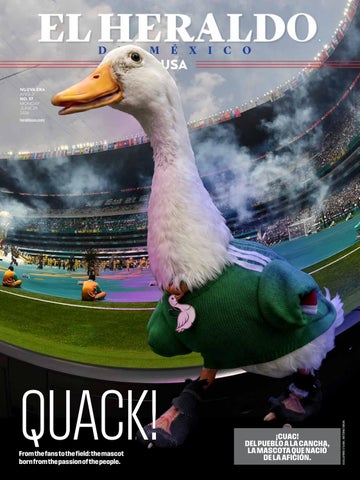
QUACK!
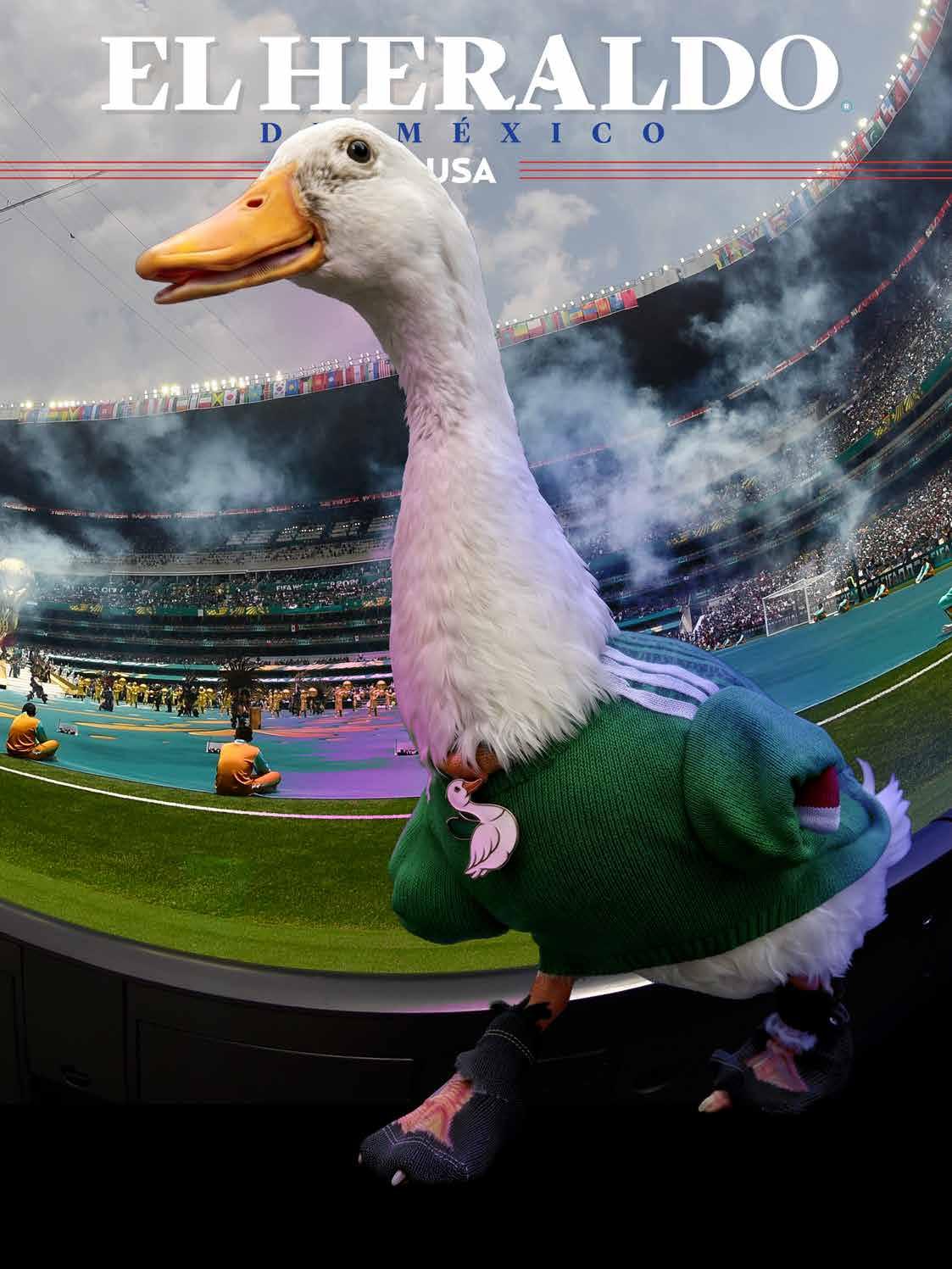
Merlin the Duck made history as the first mascot to attend Mexico’s presidential morning press conference at the National Palace. His visit prompted President Claudia Sheinbaum to highlight the value of hardworking families and the unexpected impact a simple story can have across the country.
THE DUCK
THAT BECAME A WORLD CUP ICON
BY CARLOS NAVARRO
PHOTOS: ESPECIAL
For the first time ever, a mascot entered the National Palace’s Treasury Hall through the front doorofMexico’sdailypresidentialpressbriefing: Merlin the Duck.
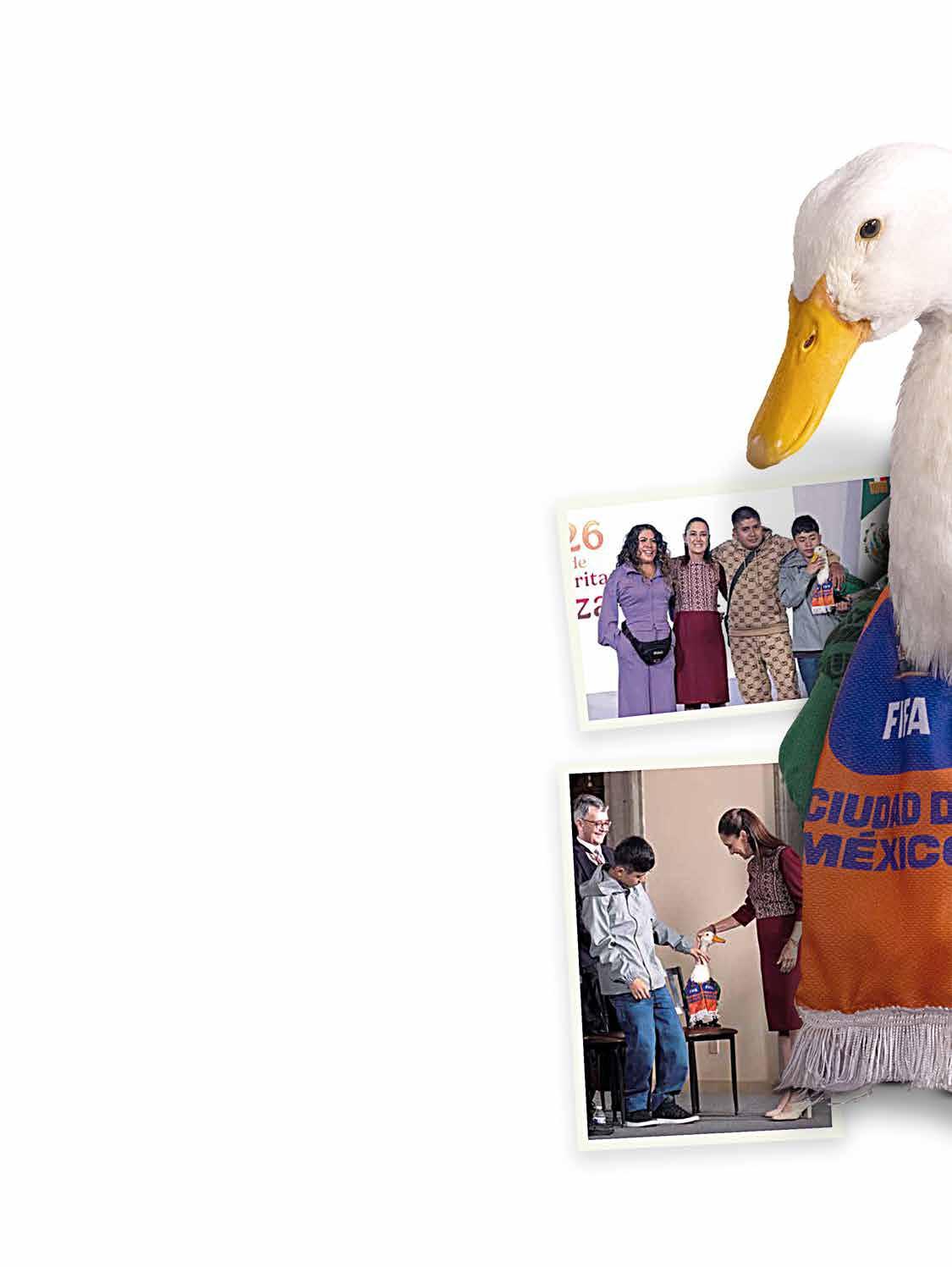
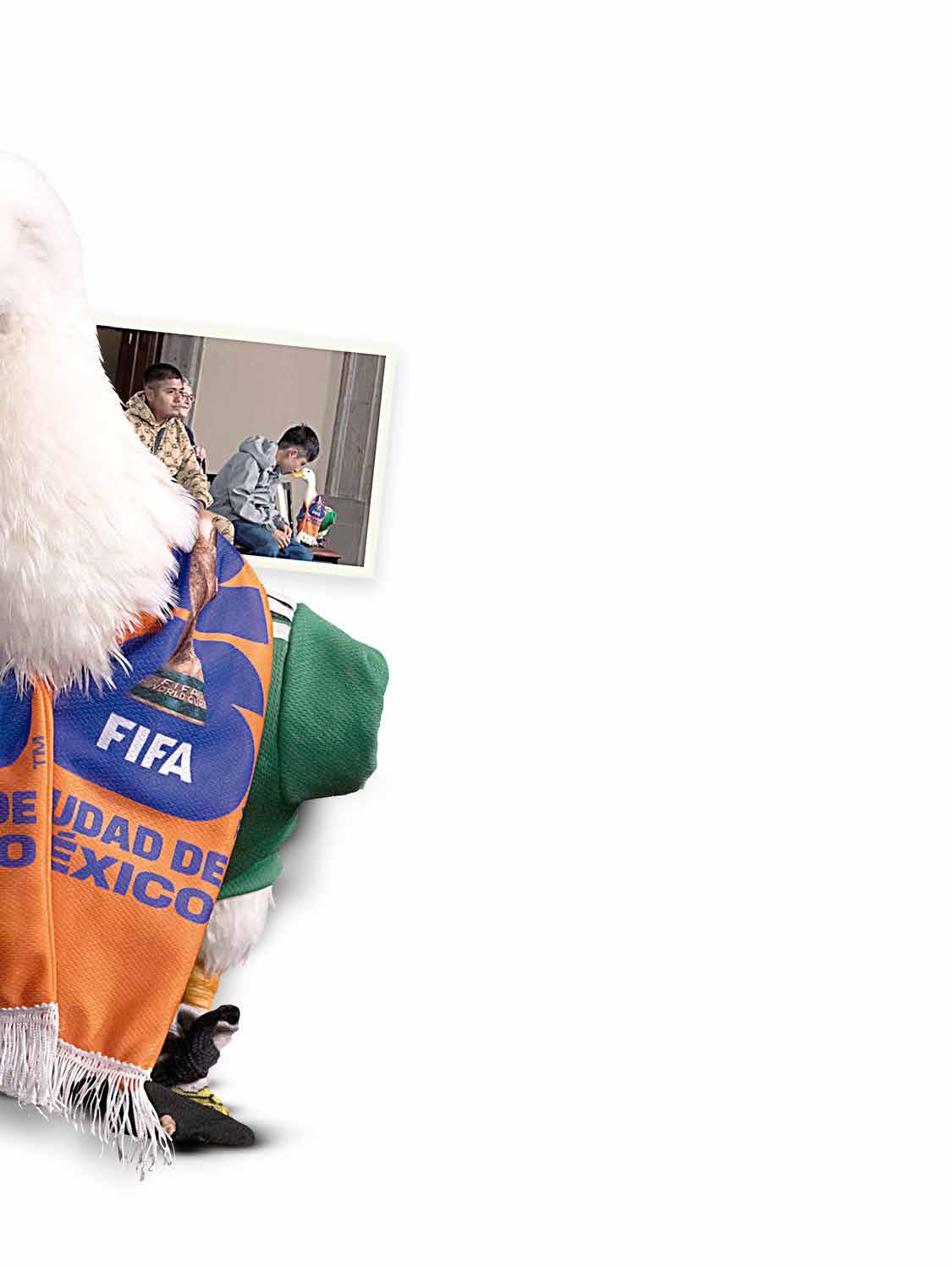
Although he is not the first animal to appear during this communication exercise—former President Andrés Manuel López Obrador once had anunexpectedvisitfromacatnamedZeus—Merlin, the sensation of the moment, earned a seat on the conferencestage.DressedinMexico’snationalsoccer teamjersey,wearingascarfidentifyinghimasaFIFA ambassador,andwearingprotectivefootwear,Merlin appearedbeforethecamerasonJune22alongsidehis family and President Claudia Sheinbaum.
Breaking protocol, Karla Ivette Gómez stepped up to the presidential podium to address viewers tuning in to the morning briefing.
“Hello, good morning. My name is Karla. I’m here to introduce my family: my sons Carlos and Cristian, and the baby of the house, Merlin,” said the street vendor who sells bottled water in Mexico City’s Historic Center.
The President approached her, patted her on the back, and stood beside her. As Merlin quacked, Sheinbaum watched him closely. Karla used the opportunity to share part of her story and to deliver a special message: Mexico is not violent.
“What people have seen is a hardworking family, one that gets up every day to earn a living and support one another. That’s why the world is paying attention.They’reseeingthebeautifulsideofwhowe really are. We are not what people say when they talk about deaths or difficult things. We are hardworking people. We are good families. We are the Mexican family,” said the 48-year-old woman.
At Sheinbaum’s request, Karla once again introduced her family: Carlos, 22; Cristian, 14; and the baby of the house, Merlin. Each took a seat on stage.
That is how the first three minutes of Sheinbaum’s 425th morning press conference went.
A few days earlier, during Mexico’s opening match victory over South Africa at the World Cup, Merlin’s popularity had exploded. Although he was alreadyknownonsocialmediaas“theduckthatsells water downtown,” videos of him waddling through crowds of fans along Paseo de la Reforma, wearing a Mexico jersey, turned him into a viral sensation.
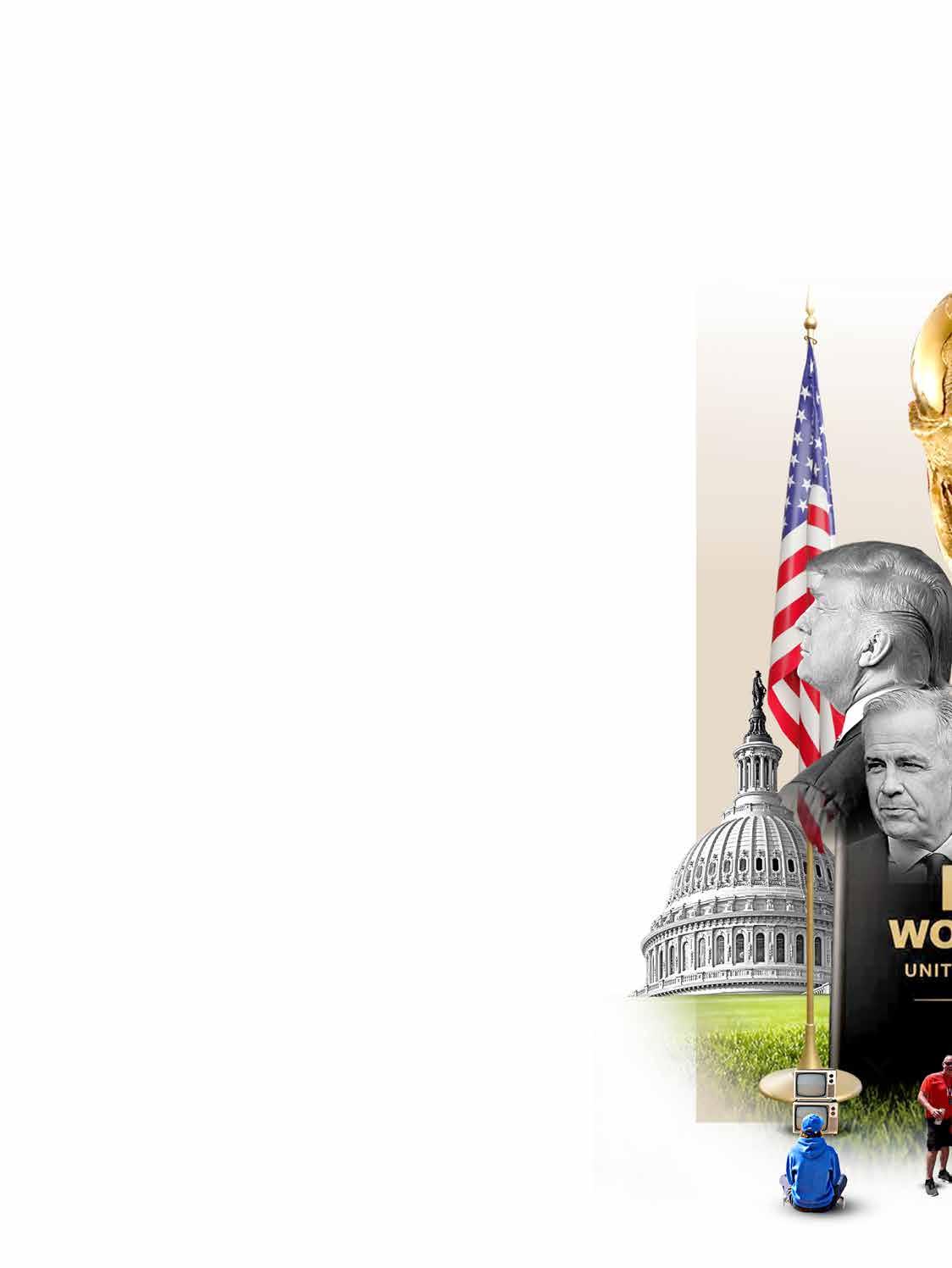
Memes,videos,andillustrationsquicklyelevated Merlin above Maple, Zayu, and Clutch—the moose, jaguar, and eagle that serve as the tournament’s official mascots. That surge in popularity ultimately led
What does Mexico’s most famous duck eat?
Merlin’s diet includes live minnows and crickets,and, according to his family,a carnitas taco every Sunday.
Merlín
from the Historic Center to the National Palace
2 2-0 4
years since hatching the score that made him viral
contenders for the "Pato Merlín" trademark — his family came out on top
totheideaofbringinghimtothepresidentialbriefing.
Back at the National Palace, President Sheinbaum explained why the family had been invited.
“Itreflectswhoweare.It’sabouthumanismand helping people get to know this family, understand who they are, and recognize the challenges they face. The connection we establish is human,” she said.
“Karla has shared many aspects of her life with us.Ofcourse,wewillhelpensurethattherecognition theyhavegainedtranslatesintoabetterqualityoflife.”
“What is remarkable is that, like so many Mexican families, they move forward through honest hard work. Our job is to help, just as the Mexican government does. That is what the Well-Being Programs are about: support, assistance, and leaving no one behind.”
Asiscustomarywhenspecialguestsattend,the President opened the floor to questions. The first— and perhaps most obvious—question was whether the family planned to trademark Merlin’s image.
“Yes, we are in the process. In fact, we are registering it today,” Karla replied.
Another question followed: What does the duck eat?
“We feed him live minnows in his water. We alsogivehimcrickets.OnSundays,heeatsacarnitas taco—he really does,” she revealed.
Karla answered nearly a dozen questions from reporters,leavingapositiveimpressionwithherarticulate,thoughtfulresponses.Laterthatday,she,Cristian, andMerlinvisitedtheMexicanInstituteofIndustrial Propertytobeginthetrademarkregistrationprocess.
BeforeleavingtheTreasuryHall,however,there was time for a commemorative photo with the President.Injustafewweeks,theGómezfamily’slifehad changed because of Merlin.
“It was an honor—it is an honor—to be here and speak with the President. Honestly, someone needs to pinch me. I still can’t believe it,” Karla said.
A family of four
The family that captured social media’s attention includes Karla,Carlos (22),Cristian (14),and the famous duck,Merlin.
Three minutes for the record books
The first three minutes of the presidential briefing were devoted entirely to introducing Merlin and his family to the nation.
From viral star to registered brand
After visiting the National Palace,the family headed to Mexico’s intellectual property o ce to file for trademark protection of Merlin’s image.
El pato Merlín se volvió símbolo del Mundial
El pato Merlín hizo historia al convertirse en la primera mascota en asistir a la conferencia matutina del Palacio Nacional. Su visita llevó a la presidenta Claudia Sheinbaum a destacar el valor de las familias trabajadoras y el impacto inesperado que una sencilla historia puede tener en todo un país.
POR CARLOS NAVARRO
FOTOS: ESPECIAL
Por primera vez y por la puerta grande del Salón Tesorería, una mascota ingresó a la Mañanera del Palacio Nacional: el pato Merlín.
Aunque no es el primer animal que aparece en este ejercicio de comunicación —pues el gato Zeus se coló en una ocasión con el exmandatario Andrés Manuel LópezObrador—,estaave,queeselpersonajedelmomento, ocupó una silla en el templete de la conferencia matutina. Con su indumentaria de la Selección Mexicana, su bufanda como embajador de la Federación Internacional de Futbol Asociación (FIFA) y sus protecciones en las patas, Merlínaparecióantelascámaras pordelantede su familia y de la presidenta Claudia Sheinbaum Pardo este 22 de junio. Rompiendo el protocolo, Karla Ivette Gómez tomó el micrófonoenelatrilpresidencialysedirigióalosmexicanos que sintonizan la Mañanera a temprana hora. “Hola, qué tal. Buenos días. Mi nombre es Karla. Vengo a presentarles a mi familia: a mi hijo Carlos, a mi hijo Cristian y al bebé de la casa, que se llama Merlín”, afirmó la comerciante que deambula por las calles del Centro Histórico vendiendo agua.
La Presidenta la alcanzó, le sobó la espalda y se quedó junto a ella, en su flanco izquierdo; segundos después cambió de lugar hacia su derecha. Mientras Merlín graznaba, la titular del Ejecutivo lo observaba con especial atención.
Karla aprovechó para contar parte de su vida y lanzar un mensaje muy especial: México no es violencia.
“Han visto a una familia trabajadora, una familia que se levanta todos los días para ir por ese sustento y mantener a su familia. Entonces, creo que el mundo… por eso tenemos los ojos ahí, porque están viendo esa parte bonita —como lo dijo la Presidenta—, esa parte chiquita de lo que somos realmente. Nosotros no somos esa parte que dicen que ‘son muertes’, que ‘son cosas difíciles’. No. Somos la parte trabajadora, somos esa parte de la buena familia, la familia mexicana”, remarcó la mujer de 48 años.
Después, habló para presumir, de nuevo, de su familia, a petición de Sheinbaum: Carlos, de 22 años; Cristian, de 14; y el bebé de la casa. Cada uno de ellos ocupó una silla del presídium.
Así transcurrieron los primeros tres minutos de la conferencia matutina número 425 en la era de Sheinbaum. Vale la pena recapitular, dar marcha atrás unos días. FuedurantelavictoriadelaSelecciónMexicanacontraSudáfrica, en la inauguración de la justa mundialista, cuando Merlín se volvió aún más viral.
Aunque en redes sociales ya se le conocía como el pato que vende aguas en el Centro, su caminar, en medio de ríos verdes de aficionados, contoneándose por Paseo de la Reforma, con la playera de la escuadra azteca, fue lo que lo catapultó.
Memes, videos e ilustraciones pusieron en redes sociales a Merlín como la imagen de la justa mundialista, por encima de Maple, Zayu y Clutch, el alce, el jaguar y el águila, quesonlasmascotasoficialesdeleventodeportivo.Fueeste escenarioelquedioorigenalaideadellevarloalaMañanera.
Regresamos a Palacio Nacional, donde la presidenta Sheinbaum justificó la presencia de la familia.
“Ycomosomosnosotros,esunasuntodehumanismo, de que se conozca a la familia: quiénes son, su problemática. Y, obviamente, el vínculo que establecemos es humanista”.
Merlín
del Centro Histórico a Palacio Nacional
2 2-0
años desde que salió del cascarón el marcador que lo hizo viral
4
competidores por la marca "Pato Merlín"; ganó su familia
Una familia de cuatro
La familia que conquistó las redes está integrada por Karla,Carlos (22 años),Cristian (14) y el famoso pato Merlín.
Tres minutos para la historia
Los primeros tres minutos de la conferencia estuvieron dedicados a presentar a Merlín y a su familia ante todo México.
De viral a marca registrada
Tras su paso por el Palacio Nacional,la familia acudió al Instituto Mexicano de la Propiedad Intelectual para iniciar el registro de la imagen de Merlín.
¿Qué come el pato más famoso de México?
La dieta de Merlín incluye charales vivos,grillos y, según confesó su familia en el Palacio Nacional,un taco de carnitas los domingos.
“Karla nos platicó sobre distintos temas de la vida. Y, por supuesto, les vamos a ayudar a que esta fama que han adquirido, a través de nosotros, se traduzca en una mejora de su calidad de vida, siempre.
“Y lo que es increíble, como muchas familias mexicanas:siempresalenadelantedemanerahonesta,trabajando duro. Y pues lo que hay que hacer es ayudar, como hacemos en el gobierno de México. Los Programas de Bienestar son eso: apoyo, ayuda, no dejar a nadie atrás”, explicó la mandataria.
Comoacostumbracuandohayinvitados,laPresidenta abrió una ronda especial de preguntas sobre el tema. Los reporteros levantaron la mano: el primer cuestionamiento y el más necesario: ¿van a registrar la imagen del pato?
“Sí, estamos haciendo el registro; se va a hacer el día de hoy, precisamente se va a registrar”, afirmó Karla. Ahora, ¿cuál es la dieta del pato? “Le damos charales vivos en su agua. Y también le damos grillos. Y también los domingos se come un taco de carnitas, porque sí lo hace”, reveló.
Casi una decena de preguntas de los medios de comunicación atendió. La impresión que dejó la madre no biológica de Merlín fue grata; su forma de hablar fue fluida y estructurada.
Más tarde, Karla, Cristian y Merlín visitaron el Instituto Mexicano de la Propiedad Intelectual para registrar la marca del ave.
PeroantesdesalirdelsalónTesoreríadePalacioNacional,lafotodelrecuerdoconlaPresidentaantelosmediosde comunicación. En un par de semanas, la vida de la familia Gómez cambió gracias a Merlín.
“Fue un honor; es un honor estar aquí y platicar con la Presidenta. O sea, necesito que me pellizquen, no lo puedo creer”, remató Karla

DRA. ANABEL ORTEGA MUÑOZ*
THE GEOPOLITICS OF CUP AND SPORTS DIPLOMACY:
A WORLD CUP FOR
TheFIFAWorldCupisnotmerelyasportingevent;itisa spacewherenationalidentities,powerrelations,andshared meaningsareconstructed,negotiated,andtransformedon theinternationalstage.
Fromtheperspectiveofconstructivismininternational relations,relationshipsamongstatesarenotdeterminedexclusivelybymaterialfactorssuchasmilitaryor economicpower,butaresociallyconstructedthrough identities,norms,andsharedmeanings.Accordingto oneofthefundamentalprinciplesofthisschoolofthought,states seekrecognitionfromothersaslegitimatemembersoftheinternationalcommunity.Withinthisframework,sportsdiplomacy transcendsitsroleasatoolofsoftpowerandbecomesamechanismofsymbolicinteractionthroughwhichcommonnarratives arestrengthened,identitiesarelegitimized,andpowerrelations aretransformed.
TheWorldCupfunctionsasaspacefortheconstructionof nationalidentityandasaninternationalritualinwhichidentities aredisplayed,confronted,andreaffirmed.OneexamplewasQatar duringthe2022FIFAWorldCup,whenthecountryinvestedmassivelyinhostingglobaleventsandrecruitingsportsstarswiththe goalofovercomingitsgeopoliticalisolationandbuildinganew internationalidentity.Byhostingthetournament,Qatargained anunprecedentedshowcasethattransformeditspositiononthe globalgeopoliticalmap,projectingitselfasalegitimateinternationalactorratherthanaperipheralGulfstate.
The2026WorldCuphashighlightedthecontradictionsofthe globalorder.First,itisthefirsteditiontobejointlyhostedbythree countries:Mexico,theUnitedStates,andCanada.Atthesametime, theexclusionofRussiaasaconsequenceofthewarinUkraine,as wellastherestrictionsimposedonIran’snationalteamandonnumerousfansseekingentryintotheUnitedStates,standincontrast tothespiritofunitypromotedbythetournament.Thesedecisions donotrespondsolelytomaterialorstrategicconsiderations;they alsoconstructmeaningsaboutwhobelongstotheinternational footballcommunityandwhoisexcludedaccordingtothedynamicsofgeopoliticalpower.
Additionally,relationsamongthethreeNorthAmerican countrieshavebeenmarkedbytensionsstemmingfromPresidentDonaldTrump’stradethreatstowardhistwopartners.Added tothisarehisadministration’simmigrationpolicies,Immigration andCustomsEnforcement(ICE)raids,andongoingsecurityconcernsinMexico,allofwhichcontinuetocastashadowoverthe sportingevent.Together,thesefactorsdemonstratehowFIFA,despitepromotinganarrativeofunitythroughsport,hasbeenunable tomitigatethesegeopoliticaltensions.
ThesharedorganizationoftheWorldCuphasnotonlyalteredthegeographicaldynamicsofthetournament,buthasalsoimposedconditionsthatreinforcemechanismsofeconomicexclusion.Highticketpricesandthecostofairtravelbetweenhostcities representbarriersthatasignificantportionoffanscannotafford. Atthesametime,thismodelstrengthenscorporateconcentration throughtransnationalsponsorships,alogicthatultimatelyovershadowstheprinciplesofsportsdiplomacy.Sportsdiplomacyseeks toopenchannelsofdialogue,generatetrust,redefinerelationships amonginternationalactors,andtransformperceptionsofthe “enemy”intothoseofa“potentialfriend,”therebycontributingto thesocialconstructionofmorecooperativeformsofcoexistence.
Inthisregard,Mexico,despitehostingarelativelysmallnumberofmatches,hasbeenoneofthecountriesthathasbenefited mostfromtheWorldCup.Notonlydiditbecomethefirstnation inhistorytohostthetournamentforathirdtime,butithasalso succeededinprojectingandconsolidatinganinternationalimage closelylinkedtoitspassionforfootball.Thepopulationhasmobilizedtoparticipateincelebrationsandembraceasportthathas occupiedacentralplaceinMexicancultureforgenerations.Inthis
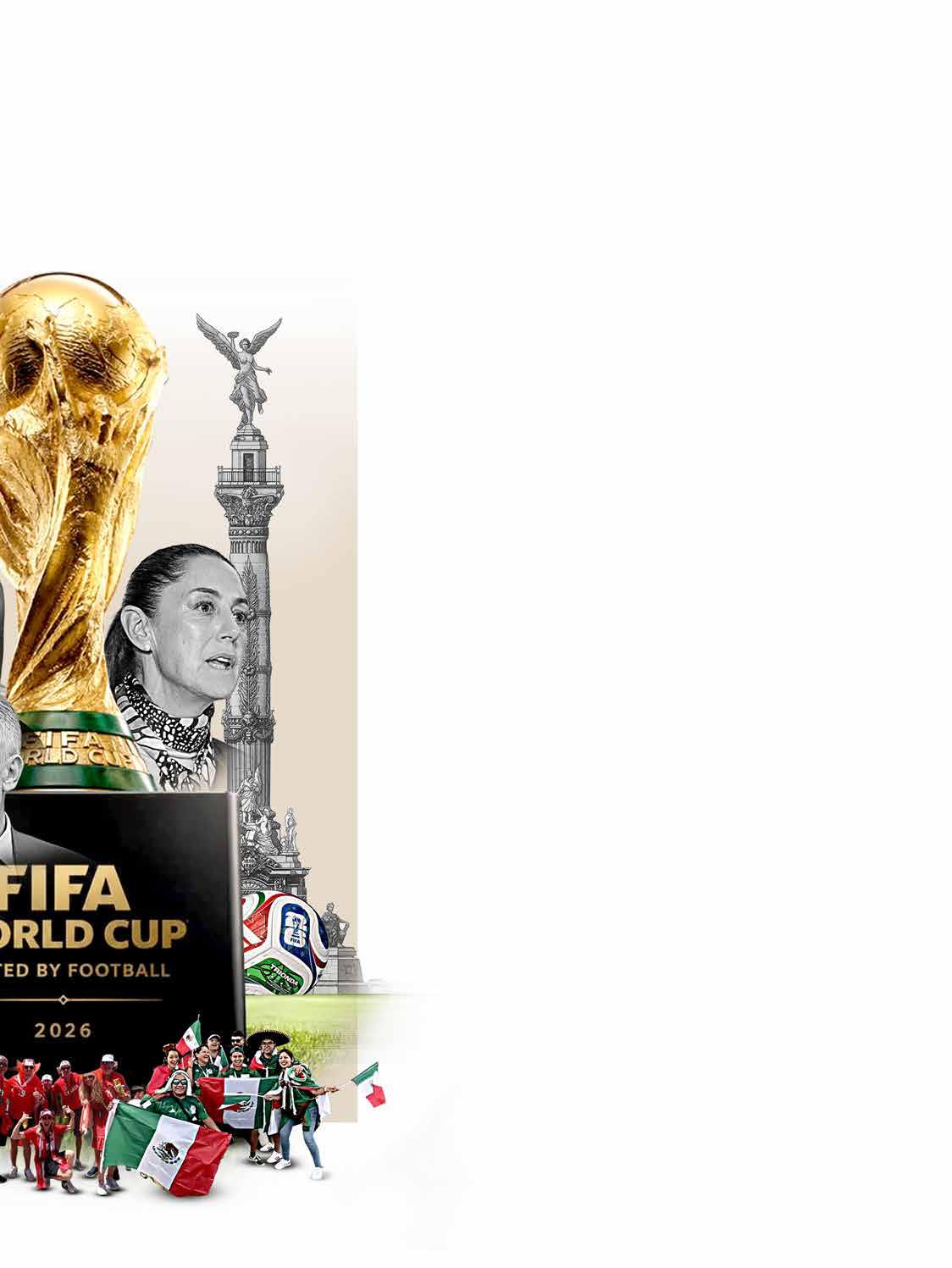
way,MexicohaswrestedthepassionawayfromFIFAandreframed theissueofmassexclusion,redefiningtheWorldCupexperience byshiftingthespotlightfromtheorganizationitselftothepublic’s socialappropriationoffootball.Themassivepresenceofcrowdsat officialeventsandpublicspacessuchastheAngelofIndependence andgatheringplacesthroughoutthecountrydemonstratesthat footballhastranscendeditssportingdimensiontobecomean expressionofcollectiveidentityandsocialcohesion.
Mexicohaspositioneditselfasthetournament’sgreathost, incontrasttoitsnorthernneighbor,showingtheworldthemany interactionsbetweenMexicansandvisitorsthroughoutthecompetition.FromdisplaysofsupportbyMexicanfansforothernationalteams,suchasIraninTijuana,tothecamaraderiebetween KoreanandMexicansupportersinGuadalajara,theseexpressions ofhospitalityandinterculturalencounterhavehelpedstrengthen apositiveperceptionofthecountry.Contrarytomanypredictions, internationalattentionhasfocusedmoreontheculturalexchangesfosteredbythetournamentthanonthepolitical,migration, andsecuritytensionsthatmarkeditsorganization.
ComparedwiththeUnitedStates,whoseorganizationofthe eventhasbeenaccompaniedbycriticismoverstrictimmigration controlsappliedtodelegationsfromAfricaandtheMiddleEast,the controversysurroundingIran’sparticipationandthedifficulties manyfanshavefacedenteringthecountry,andcomparedwith Canada,wheretherelativelysmallnumberofmatcheshaslimitedfanmobilization,MexicohassucceededincreatingaWorld Cupexperiencecharacterizedbygreaterpublicownershipofthe tournamentandaprominencethatextendsbeyondthestadiums.
From the perspective of sports diplomacy,this scenario representsanopportunitythattheUnitedStateshasfailedtocapitalizeon.Onthecontrary,theorganizationofthetournament hasdemonstratedthatitsprioritiesremainorientedtowardthe dynamicsofgeoeconomicpowerandnationalsecurityrather thantowardbuildinganarrativeofunity,dialogue,andpeace throughsport.ThisperceptionpersistsevenasFIFAhassoughtto acknowledgetheroleoftheU.S.administrationthroughsymbolicgestures,suchaspresentingPresidentDonaldTrumpwithan awardrecognizinghiscontributiontopeace.
ThegeopoliticsoftheWorldCupandsportsdiplomacyare notmerelytoolsofsoftpower;theyaremechanismsofsocialconstructionthroughwhichidentitiesarenegotiated,powerrelations aretransformed,andtheinternationalcommunityisshaped. Theircapacityforinfluencedoesnotrestsolelyoncoercion,butalso ontheattraction,recognition,andlegitimacythatstatesareableto projectbeforeglobalpublicopinion.Inacontextwhereinformationislessmonopolizedbygovernments,majorsportingevents havebecomeoneofthemosteffectiveinstrumentsforgenerating prestige,legitimacy,andinternationalappeal.
Footballis,atthesametime,bothsportandgeopolitics.It cannotbereducedtomaterialpower;rather,itconstitutesaspace forthesocialconstructionofidentities,relationships,andshared meanings.InthisjointlyhostedWorldCup,Mexicohasalready achievedoneofitsgreatestvictories:establishingitselfastheface offootballpassion.Evenifthenationalteamdoesnotreachthe quarterfinals,thecountryhasdemonstratedthatthegreatest triumphcanalsobebuiltoffthepitch.Anddespiteexistingtensions,MexicohasalreadybecometheWorldCupofthemasses ratherthanoneofexclusion:
AWorldCupforEveryone!
*Political scientist and international affairs specialist at La Salle University,specializing in global governance,geopolitics,human mobility,international organizations,and diplomacy.
X: @AnabelOrtega2 Facebook: Anabel Ortega
OF THE WORLD
ElCampeonatoMundialdefutbolno essimplementeuneventodeportivo; esunespaciodondeseconstruyen, negocianytransformanidentidades nacionales,relacionesdepodery significadoscompartidosenelescenario internacional.
POR DRA. ANABEL ORTEGA MUÑOZ*
Desdelaperspectivadelconstructivismoen lasrelacionesinternacionales,losvínculos entrelosEstadosnoestándeterminados exclusivamenteporfactoresmateriales, comoelpodermilitaroeconómico,sinoque seconstruyensocialmenteapartirdeidentidades,normasy significadoscompartidos.Conformeaunodelosprincipios fundamentalesdeestacorriente,losEstadosbuscanserreconocidosporotroscomomiembroslegítimosdelacomunidadinternacional.Enestemarco,ladiplomaciadeportiva trasciendesupapelcomounaherramientade“softpower” paraconvertirseenunmecanismodeinteracciónsimbólica medianteelcualsefortalecennarrativascomunes,selegitimanidentidadesysetransformanlasrelacionesdepoder. ElMundialfuncionacomounespaciodeconstrucción deidentidadnacionalycomounritualinternacionalenel quelasidentidadesseponenenescena,seconfrontanysereafirman.UnejemplodeellofueQatardurantelaCopaMundialde2022,dondeestepaísinvirtiódemaneramasivaen laorganizacióndeeventosglobalesyenlacontrataciónde figurasdeportivasconelobjetivodesuperarsuaislamiento geopolíticoyconstruirunanuevaidentidadinternacional. Porlarealizacióndeestetorneo,Qatarobtuvounescaparatesinprecedentesquetransformósuposiciónenelmapa geopolíticoglobal,proyectándosecomounactorinternacionallegítimoynocomounEstadoperiféricodelGolfo.
Lajustamundialistade2026hapuestodemanifiesto lascontradiccionesdelordenglobal.Enprimerlugar,serála primeraediciónorganizadademaneraconjuntaportres países:México,EstadosUnidosyCanadá.Almismotiempo, laexclusióndeRusiacomoconsecuenciadelaguerraen Ucrania,asícomolasrestriccionesimpuestasalaselección deIrányanumerososaficionadosparaingresaraEstados Unidos,contrastanconelespíritudeunidadquepromueveeltorneo.Estasdecisionesnorespondenúnicamentea consideracionesmaterialesoestratégicas,sinoquetambién construyensignificadossobrequiénpertenecealacomunidadinternacionaldelfutbolyquiénquedaexcluidoen funcióndelasdinámicasdelpodergeopolítico.
Adicionalmente,larelaciónentrelostrespaísesdeNorteaméricahaestadomarcadaportensionesderivadasdelas amenazascomercialesdelpresidenteDonaldTrumphacia susdossocios.Aellosesumanlaspolíticasmigratoriasde suadministración,lasredadasdelServiciodeInmigracióny ControldeAduanas(ICE)ylaspreocupacionesenmateria deseguridadenMéxico,factoresquecontinúanamenazandolacelebracióndeportiva.TodoellomuestracómolaFIFA, peseapromoverunanarrativadeunidadatravésdeldeporte,hasidoincapazdemitigarestastensionesgeopolíticas. LaorganizacióncompartidadelaCopadelMundono solohamodificadoladinámicageográficadeltorneo,sino quetambiénhaimpuestocondicionesquerefuerzanmecanismosdeexclusióneconómicacomoloselevadoscostosde losboletosylosdesplazamientosaéreosentrelasdistintas sedesrepresentanbarrerasqueunaparteimportantedela aficiónnopuedecostear.Almismotiempo,estemodelofortalecelaconcentracióncorporativamediantelospatrocinios transnacionales,unalógicaqueterminaporsuperponersea losprincipiosdeladiplomaciadeportiva.Estaúltimabusca abrircanalesdediálogo,generarconfianza,resignificarlas relacionesentrelosactoresinternacionalesytransformar lapercepcióndel“enemigo”enladeun“posibleamigo”, contribuyendoasíalaconstrucciónsocialdeformasde convivenciamáscooperativas.
Enestesentido,México,apesardecontarconunnúmeroreducidodepartidos,hasidounodelospaísesmás beneficiadosporlaCopadelMundo.Nosoloseconvirtióenla
primeranaciónenorganizareltorneoporterceraocasión,un hechosinprecedentes,sinoquetambiénhalogradoproyectaryconsolidarunaimageninternacionalestrechamente vinculadaconlapasiónporelfutbol.Lapoblaciónsehamovilizadoparaparticiparenlosfestejosycelebrarundeporte que,durantegeneraciones,haocupadounlugarcentralen laculturamexicana.Deestamanera,Méxicolearrebatóla pasiónalaFIFA,yledioungiroaltemadelaexclusióndelas masasyresignificólaexperienciamundialistaaldesplazarel protagonismodelaorganizaciónhacialaapropiaciónsocial delfutbolporpartedelaciudadanía.Lamasivapresenciade multitudeseneventosoficialesyespaciospúblicoscomoel ÁngeldelaIndependenciayloslugarespúblicosalolargo detodoelpaísevidenciaqueelfutbolhatrascendidosudimensióndeportivaparaconsolidarsecomounaexpresión deidentidadcolectivaycohesiónsocial.
Méxicosehaposicionadocomoelgrananfitrióndel torneo,encontrasteconsuvecinodelnorte,mostrandoal mundolasmúltiplesinteraccionesentremexicanosyvisitantesalolargodeltorneo.Desdelasmuestrasdeapoyode laaficiónmexicanahaciaotrasselecciones,comoladeIrán enTijuana,hastalaconvivenciaentreaficionadoscoreanos ymexicanosenGuadalajara,estasexpresionesdehospitalidadyencuentrointerculturalhancontribuidoafortalecer unapercepciónpositivadelpaís.Contramuchospronósticos, laatencióninternacionalsehacentradoenlosintercambios culturalespropiciadosporeltorneomásqueenlastensionespolíticas,migratoriasydeseguridadquemarcaronsu organización.
EncomparaciónconEstadosUnidos,cuyaorganizaciónhaestadoacompañadaporcríticasderivadasdelos rigurososcontrolesmigratoriosaplicadosadelegaciones provenientesdeÁfricayMedioOriente,lacontroversiaentornoalaparticipacióndelaseleccióndeIránylasdificultades quenumerososaficionadoshanenfrentadoparaingresar alpaís,asícomoconCanadá,dondeelreducidonúmerode partidoshalimitadolamovilizacióndeaficionados,México halogradoconsolidarunaexperienciamundialistaconuna mayorapropiaciónsocialdeltorneoyunprotagonismoque trasciendelosestadios.
Desdelaperspectivadeladiplomaciadeportiva,este escenariorepresentaunaoportunidadqueEstadosUnidos nohalogradoaprovechar.Porelcontrario,laorganización deltorneohaevidenciadoquesusprioridadescontinúan orientadashacialasdinámicasdelpodergeoeconómicoy delaseguridadnacional,másquehacialaconstrucciónde unanarrativadeunidad,diálogoypazatravésdeldeporte.EstapercepciónsemantieneinclusocuandolaFIFAha buscadoreconocerelpapeldelaadministraciónestadounidensemediantegestossimbólicos,comoelotorgamiento deunreconocimientoalpresidenteDonaldTrumpporsu contribuciónalapaz.
LageopolíticadelMundialyladiplomaciadeportiva nosonsimplementeherramientasdesoftpowerodepoder blando,sinomecanismosdeconstrucciónsocialmediante loscualessenegocianidentidades,setransformanrelacionesdepoderyseconfiguralacomunidadinternacional. Sucapacidaddeinfluencianodescansaúnicamenteenla coerción,sinotambiénenlaatracción,elreconocimientoyla legitimidadquelosEstadoslogranproyectarantelaopinión públicaglobal.Enuncontextoenelquelainformaciónesta menosmonopolizadaporlosgobiernos,losgrandeseventos deportivossehanconvertidoenunodelosinstrumentos máseficacesparagenerarprestigio,legitimidadyatractivo internacional.
Elfutboles,almismotiempo,deporteygeopolítica.No sereducealpodermaterial,sinoqueconstituyeunespacio deconstrucciónsocialdeidentidades,relacionesysignificadoscompartidos.EnestaCopadelMundoorganizadade maneraconjunta,Méxicoyahaobtenidounadesusprincipalesvictorias:consolidarsecomoelrostrodelapasión futbolera.Aunquelaselecciónnacionalnoalcanceelquintopartido,elpaíshademostradoqueelmayortriunfotambiénpuedeconstruirsefueradelacanchayaunqueexistan tensiones,Méxicoyaeselmundialdelasmasasynoeldela exclusión:un¡Mundialparatodos!
*Politóloga e internacionalista de la Universidad La Salle, especialista en gobernanza global,geopolítica,movilidad humana,organismos internacionales y diplomacia.
BY LEO COLLADO
ARTWORK: DANTE ESCOBAR
Colombia’s presidential runoff has already taken place. Preliminary results have been announced; headlines have begun moving on, and political commentators have already started assigning victories and defeats. Yet there are moments in history when numbers alone fail to settle the questions that truly matter… and Colombia remains an open question.
When a deeply divided nation reaches the conclusion of an election by such a narrow margin, the debate ceases to belong solely to political parties and begins to occupy a much larger space: the collective memory of a people.
The preliminary count favored Colombia’s political right by a slim margin; only a few hundred thousand votes separated two fundamentally different visions of the country. Yet alongside the results came allegations, concerns and unanswered questions that continue to circulate across media outlets, social networks and political forums. Scrutinized tally sheets, questions surrounding overseas voting, concerns regarding vote-transmission systems and growing calls for a comprehensive review of the process have all become part of the public conversation.
Without attempting to render legal judgments, we must ask a political question: can Latin America afford to ignore any warning sign when the sovereign will of its peoples is at stake?
That question becomes even more relevant when viewed against the international backdrop in which this election took place. Over the past several years, Latin America has once again become a theater of geopolitical competition. Progressive governments elected through the popular vote have faced increasing pressure from economic, media and political actors whose reach extends far beyond national borders. Gustavo Petro has publicly warned of international interests determined to weaken transformative political projects throughout the region. Other Latin American leaders have expressed similar concerns.
Some regard these warnings as exaggerated; history, however, compels us to think otherwise. Latin America knows the consequences of foreign interference all too well. It has experienced them in the form of military interventions, covert operations, economic blockades, disinformation campaigns, foreign political financing and diplomatic pressure designed to shape the destiny of entire nations.
The methods change; the rhetoric changes; the actors change; yet the logic remains the same. The notion that certain centers of power are entitled to decide which governments are acceptable and which must be opposed.
That is why Colombia matters.
It matters because the debate is no longer confined to who will occupy the presidential office. Rather, it represents another chapter in a much broader struggle: the right of peoples to determine their own future. Those of us who believe in democracy must defend it at all times. When our preferred candidates win and when they lose. When results favor our convictions and when they do not. For precisely that reason, every allegation, every concern and every reasonable doubt deserves to be examined with complete transparency.
Democratic legitimacy is not built solely upon the counting of ballots; it also rests upon the collective confidence that those ballots belong exclusively to citizens and to no one else.
200,000+
votes separated two competing visions for Colombia's future.
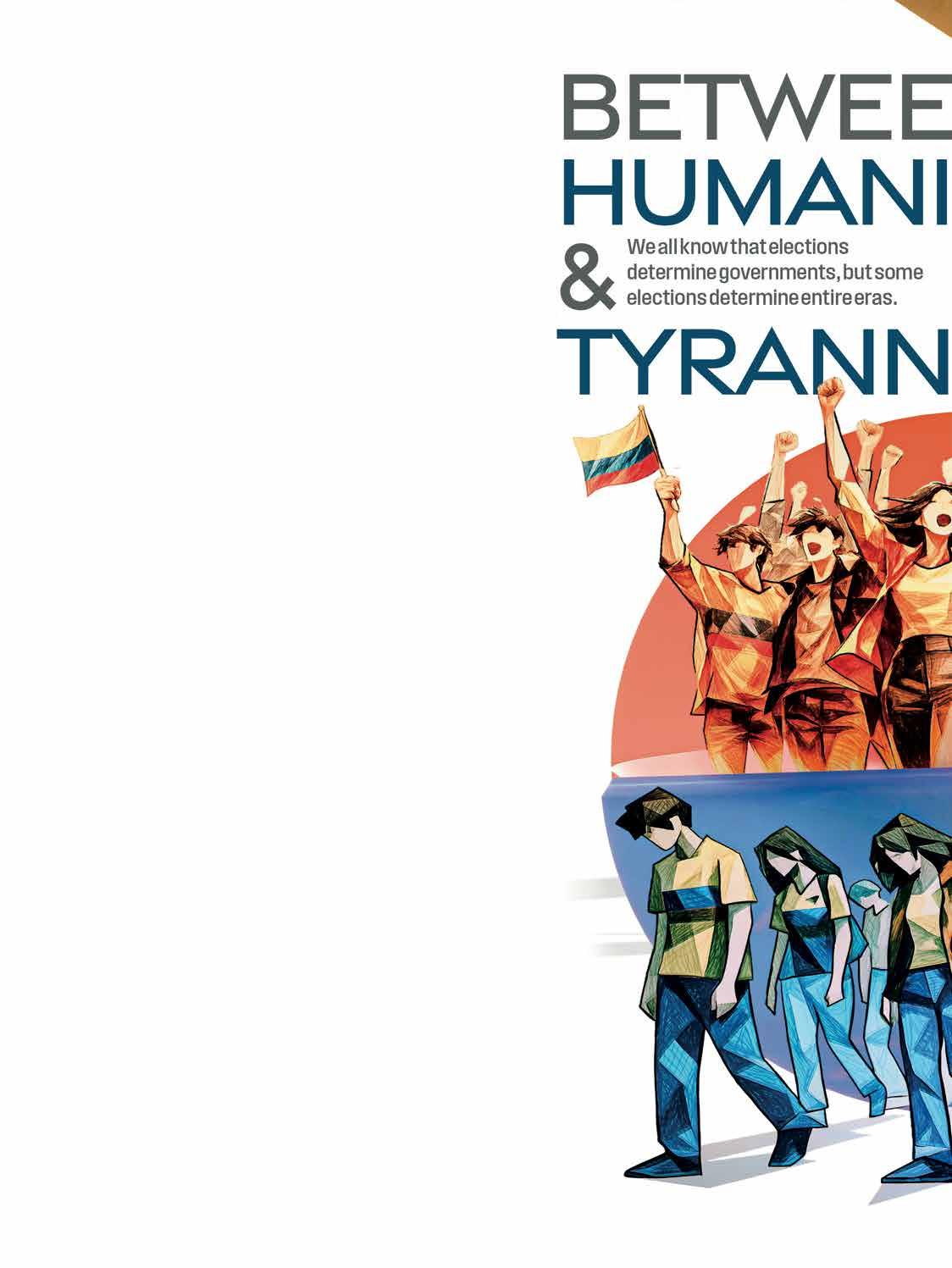
The Colombian vote has concluded; the electoral process continues; but the debate over Latin American sovereignty is only beginning. Perhaps, years from now, we will discover that what was truly at stake in Colombia was not merely a presidency, but once again the enduring dispute
between those who believe peoples have the right to govern themselves and those who continue to believe Latin America requires guardians.
nations have raised concerns about external intervention in politics. region faces renewed pressure from tari s, sanctions, and foreign influence.
SEVERAL 1 1
principle anchors the debate: people must choose their own destiny.
Over recent months, we have watched with growing concern as the current U.S. administration has taken a harder line toward several Latin American nations. Tariff threats have been employed as instruments of political pressure, economic sanctions have become recurring tools of negotiation, and rhetoric suggesting intervention, influence or political conditioning has returned to the international stage with a force many believed had been left behind.
What is troubling is not merely the existence of such practices. What is troubling is their normalization; the ease with which pressure on foreign governments is discussed as though it were simply another trade negotiation. What is troubling is the willingness to impose economic hardship upon entire populations in pursuit of political objectives, and the tendency to portray national sovereignty as an obstacle when it should be regarded as one of the fundamental principles of international coexistence.
Yet it would be profoundly unfair to confuse an administration with an entire people. Some of the strongest criticisms of modern interventionism have emerged from within the United States itself.
Bernie Sanders, one of the most prominent figures in progressive American politics, articulated a truth that remains just as relevant today: “The United States has a long history of inappropriately intervening in Latin American countries.”
And when the Venezuelan crisis once again raised the prospect of regime change, Sanders was equally unequivocal:
“We should not be in the business of regime change.”
He was not speaking from Bogotá. He was not speaking from Caracas. He was not speaking from Mexico City. He was speaking from Washington.
His words matter because they remind us of something essential: the defense of sovereignty is not merely a Latin American cause; it is a democratic cause.
This is not about agreeing with Gustavo Petro, Claudia Sheinbaum, Lula da Silva or any other political leader. Nor is it about endorsing every decision made by their governments. It is about recognizing that Colombians must decide Colombia; Mexicans must decide Mexico; Brazilians must decide Brazil; Argentinians must decide Argentina; and every people must retain the right to write its own history.
Sovereignty at stake
Colombia's vote reopened debate over democratic legitimacy.
Narrow margins intensified scrutiny of the electoral process.
Sovereignty remains central to Latin America's political future.
Democracy requires trust beyond the counting of ballots.
Self-determination was not created to protect governments we happen to like; it was created to protect peoples from the ambitions of the powerful.
That is why Colombia’s election deserves close attention throughout the continent; because beyond the final result, Colombia has become the latest setting for a question Latin America has spent generations trying to answer:
Will we truly be masters of our own destiny?
Peoples may need cooperation; they may need investment; they may need trade; they may need dialogue; they may even require humanitarian assistance. What they do not need is a guardian. Cooperation is built among equals. Solidarity is offered. Dignity is respected. Sovereignty is not negotiated.
Elections certainly determine governments; but some elections determine eras. And perhaps the most important decision facing Colombia is not simply who will occupy the presidency in the years ahead. Perhaps the greater question is what message Latin America intends to send the world about its determination to remain free to think, to choose and to chart its own course.
Because offering assistance is an act of humanity.
Imposing decisions is an act of tyranny.

Entre humanidad y tiranía
Sabemos bien que las elecciones definen gobiernos, pero hay algunas que definen épocas
POR LEO COLLADO
ARTE: DANTE ESCOBAR
Lasegundavueltapresidencialcolombianayaocurrió. Los resultados preliminares han sido anunciados; los titulares han comenzado a cambiar de tema y los analistas han empezado a repartir victorias y derrotas.Sinembargo,haymomentosenlahistoria en los que las cifras no logran clausurar las preguntas… Colombia sigue siendo una pregunta abierta. Porquecuandounanaciónprofundamentedividida llega al desenlace de una elección por una diferencia tan estrecha,ladiscusióndejadepertenecerexclusivamente a los partidos políticos y comienza a formar parte de algo más grande: la memoria colectiva de un pueblo.
El preconteo favoreció a la derecha colombiana por un margen reducido; apenas unos cientos de miles de votos separaron dos proyectos de nación radicalmente distintos. Pero junto con los resultados también aparecieron denuncias, observaciones y cuestionamientos que continúan recorriendo medios de comunicación, redessocialesyespaciosdeanálisispolítico.Actasobservadas, cuestionamientos sobre el voto en el extranjero, señalamientos relacionados con los mecanismos de transmisión de resultados y múltiples voces que han exigido una revisión exhaustiva del proceso. Sinintentaremitirsentenciasjurídicas,debemosde formular una pregunta política: ¿Puede América Latina darseellujodeignorarcualquierseñalamientocuandolo queestáenjuegoeslavoluntadsoberanadesuspueblos?
Lapreguntaadquiereunarelevanciatodavíamayor cuando se observa el contexto internacional en el que ocurrió esta elección. Durante los últimos años, América Latina ha vuelto a convertirse en un escenario de disputa geopolítica. Los gobiernos progresistas que llegaron al poder mediante el voto popular han enfrentado una presión creciente proveniente de actores económicos, mediáticos y políticos que operan mucho más allá de las fronteras nacionales. Gustavo Petro ha denunciado públicamente la existencia de intereses internacionales empeñados en debilitar los proyectos transformadores de la región. Diversos dirigentes latinoamericanos han expresado preocupaciones similares.
Algunosconsideranexageradasestasadvertencias; sin embargo, la historia de América Latina nos obliga a pensar lo contrario. Nuestra región conoce demasiado bien las consecuencias de la injerencia. Las ha conocido bajolaformadeintervencionesmilitares,deoperaciones encubiertas, de bloqueos económicos, de campañas de desinformación, de financiamiento político extranjero y de mecanismos de presión diplomática diseñados para moldear el destino de naciones enteras.
Cambianlosmétodos;cambianlosdiscursos;cambian los protagonistas; pero la lógica permanece. La idea de que ciertos centros de poder pueden decidir qué gobiernos son aceptables y cuáles deben ser combatidos.
Por eso Colombia importa.
Importaporque la discusión ya no se limita a quién ocupará una oficina presidencial. Más bien, porque representa una nueva batalla dentro de una disputa mucho más amplia: la del derecho de los pueblos a decidir librementesudestino.Quienescreemosenlademocracia debemos defenderla siempre. Cuando gana nuestro candidato y cuando no gana. Cuando los resultados nos favorecen y cuando nos son adversos. Precisamente por eso toda observación, toda denuncia y toda duda razonable merece ser revisada con transparencia absoluta.
Porque la legitimidad democrática no nace únicamente del conteo de votos; nace también de la confianza colectiva en que esos votos pertenecen únicamente a los ciudadanos y a nadie más.
La votación colombiana ha terminado; el proceso electoral sigue; pero la discusión sobre la soberanía latinoamericana apenas comienza. Y quizá, dentro de
algunos años, descubramos que lo que estaba en juego en Colombia no era solamente una presidencia; sino, una vez más, la vieja disputa entre quienes creen que los pueblos deben gobernarse a sí mismos y quienes siguen pensando que América Latina necesita tutores. Durante los últimos meses hemos observado con preocupacióncómolaactualadministraciónestadounidense ha endurecido su relación con diversas naciones de América Latina. Las amenazas arancelarias han sido utilizadas como mecanismo de presión política, las sanciones económicas se han convertido en herramientas recurrentes de negociación, y los discursos que sugieren intervenir,influirocondicionarelrumbopolíticodeotras naciones han regresado al escenario internacional con una fuerza que muchos creíamos superada. Lo preocupante no es únicamente la existencia de estas prácticas. Lo preocupante es la normalización de estas prácticas; que se hable de presionar gobiernos extranjeros con la misma ligereza con la que se habla de una negociación comercial. Lo preocupante es que se pretenda castigar económicamente a pueblos enteros para obtener objetivos políticos, y que la soberanía de las naciones sea presentada como un obstáculo cuando deberíaserconsideradaunodelosprincipiosfundamentales de la convivencia internacional.
Sin embargo,seríaprofundamenteinjustoconfundir a una administración con un pueblo entero. Porque algunas de las críticas más contundentes contra el intervencionismocontemporáneohansurgidoprecisamente desde los propios Estados Unidos.
Bernie Sanders, una de las figuras más reconocidas de la política progresista norteamericana, advirtió hace añosunaverdadqueconservaplenavigencia:“TheUnited States has a long history of inappropriately intervening in Latin American countries”.
Estados Unidos tiene una larga historia de intervenir inapropiadamente en los países latinoamericanos; y cuando la crisis venezolana colocó nuevamente sobre la mesalaposibilidaddeunapolíticadecambioderégimen, Sanders volvió a ser categórico:
“No debemos estar en el negocio del cambio de régimen.”
No hablaba desde Bogotá. No hablaba desde Caracas. No hablaba desde Ciudad de México. Hablaba desde Washington.
Sus palabras son importantes porque recuerdan algo fundamental: la defensa de la soberanía no es una causa latinoamericana; es una causa democrática.
No se trata de estar de acuerdo con Gustavo Petro, con Claudia Sheinbaum, con Lula da Silva o con cualquier otro dirigente. Tampoco se trata de compartir cada decisión de sus gobiernos. Se trata de reconocer que corresponde a los colombianos decidir Colombia; a los mexicanos decidir México; a los brasileños decidir Brasil; a los argentinos decidir Argentina; y a cada pueblo escribir su propia historia.
La autodeterminación no fue creada para proteger a los gobiernos que nos agradan; fue creada para proteger a los pueblos del abuso de los poderosos.
Por eso, la elección colombiana merece ser observada con atención desde todo el continente; porque más allá del resultado final, Colombia se ha convertido en el escenario donde vuelve a discutirse una pregunta que AméricaLatinallevageneracionesintentandoresponder: ¿Seremos verdaderamente dueños de nuestro destino?
Lospueblospuedennecesitarcooperación;pueden necesitar inversión; pueden necesitar comercio; pueden necesitar diálogo; incluso, pueden necesitar ayuda humanitaria. Lo que no necesitan es un tutor. Porque la cooperación se construye entre iguales. La solidaridad se ofrece,ladignidadserespeta,ylasoberaníanosenegocia. Claroquelaseleccionesdefinengobiernos;perohay algunasquedefinenépocas;y,quizá,laverdaderadecisión queestáfrenteaColombianoseaúnicamentequiénocupará la presidencia durante los próximos años. Quizá la decisiónmásimportanteseaquémensajeenviaráAmérica Latina al mundo sobre su voluntad de seguir siendo una regiónlibreparapensar,elegiryconstruirsupropiocamino. Porque ofrecer ayuda es humano. Imponer decisiones es tirano.
Immigrants are often blamed for crime, job losses, and pressure on public services. However, o cial data and academic research paint a very di erent picture, challenging some of the most persistent myths about immigration.
BY MARÍA CRISTINA HALL*
ELIHU GALAVIZ
ARTWORK:
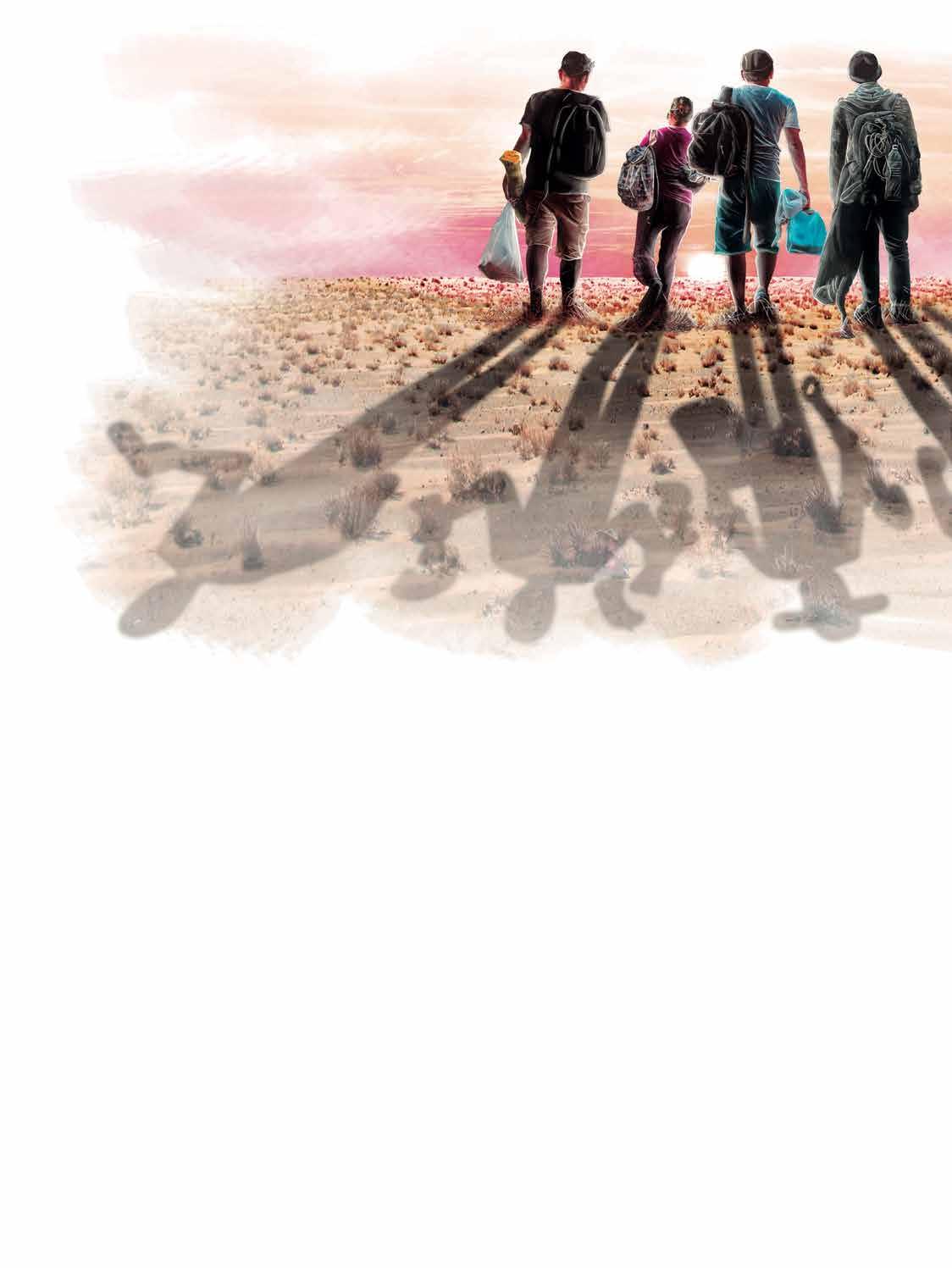
We have all heard myths about migration. Are migrants people who leave everything behind, work tirelessly to succeed, and serve as role models? Or do they come to take jobs, overwhelm public services, sell drugs, and invade communities? Today’s politicians would have us believe that everything is on the verge of collapse. Let’s examine four common myths and see what the data show.
ABOUT IMMIGRANTS 4 MYTHS
MYTH NO.1: MIGRANTS ARE CRIMINALS
Since Donald Trump’s first presidential campaign, the idea that migrants are criminals has gained traction. “When Mexico sends its people,” Trump said, “they’re not sending their best... They’re bringing drugs. They’re bringing crime.”
Now, under Trump 2.0, border czar Thomas Homan says he will deport individuals who pose a threat to public or national security. But how much of this narrative is backed by the facts?
According to the TRAC Immigration database, only 1.6% of new deportation cases filed in 2025 were based on criminal allegations. There is also the issue of fentanyl. While Mexico has surpassed China as the primary producer of the drug, 83.5% of those caught trafficking fentanyl into the United States between 2020 and 2024 were U.S. citizens. Drug traffickers often recruit people with legal freedom of movement to transport their products.
Ironically, the federal budget devoted to pur-
suing migrants is now 1,300 times larger than the budget for the Drug Enforcement Administration (DEA).
MYTH NO.2: MIGRANTS DO NOT PAY TAXES
“They’re going to destroy your Social Security... Vote for Trump so there are no tax benefits for illegal aliens,” Trump declared in his 2024 campaign.
But are migrants really a burden on the U.S. tax system?
In 2022, undocumented immigrants paid nearly $97 billion in taxes. Furthermore, the Institute on Taxation and Economic Policy (ITEP) reports that undocumented immigrants cannot access roughly one-third of the public services they help fund through taxes.
In fact, these migrants pay more in taxes than the wealthiest 1% of residents in 40 of the country’s 50 states because they are generally ineligible for many tax credits and refunds.
MYTH NO.3: IMMIGRANTS TAKE JOBS AWAY
One of the most frequently repeated claims during the most recent presidential election was that migrants take jobs away from Americans.
It is true that, before the current administration, most newly created jobs were filled by foreign-born workers. However, as the Cato Institute points out, this largely reflects the fact that the foreign-born population was growing while the native-born population was not.
Even a review of the Department of Labor’s JOLTS (Job Openings and Labor Turnover Survey) reports shows that there were 7.6 million job openings at the end of the Biden administration, excluding positions in the agricultural sector. Employment opportunities did not disappear despite record migration levels during those years.
Economically speaking, when new workers arrive, they also consume goods and services, creating additional demand and generating jobs across the economy.
Jobs performed by undocumented immigrants tend to be concentrated in industries where native-born workers are generally unwilling to work. This trend is becoming increasingly problematic. According to the Pew Research Center, more than 750,000 foreign workers left their jobs during the first six months of 2025 due to immigration enforcement raids.
Farmers have tried to recruit native-born workers, but few are willing to work in the fields, milk cows, or pull weeds. A widely cited study by Michael Clemens examined nearly 500,000 North Carolina residents who were required to seek employment to receive public benefits.
Cuatro mitos sobre inmigrantes
POR MARÍA CRISTINA HALL*
ARTE: ELIHU GALAVIZ
Todos hemos escuchado uno u otro mito sobre la migración. ¿Los migrantes lo dejan todo atrás, se esfuerzan al máximo por triunfar, son, en fin, ejemplos a seguir? ¿O vienen a robar trabajo, a saturar los sistemas públicos, a vender droga e invadir? Los políticos de hoy nos quieren hacer creer que todo está al borde del quiebre. Examinemos cuatro mitos y veamos qué dicen los datos.
MITO NÚMERO 1: LOS MIGRANTES SON CRIMINALES
Desde la primera campaña de Donald Trump, empezó a sonar la idea de que las personas migrantes son criminales. “Cuando México manda a su gente”, dijo Trump, “no nos mandan a los mejores… Traen drogas. Traen crimen”, expresó. Ahora, bajo Trump 2.0, el “zar fronterizo” Thomas Homan dice que deportará a quienes representen una amenaza para la seguridad pública o nacional. ¿Pero a qué corresponde todo esto? Según la base de datos TRAC Immigration, solo el 1.6% de los casos nuevos presentados para deportación se basaron en acusaciones penales en 2025. Luego está el tema del fentanilo. Si bien México ha desplazado a China como el principal productor de la sustancia, el 83.5% de los sorprendidos traficando fentanilo hacia Estados Unidos entre 2020 y 2024 fueron ciudadanos estadounidenses. Los narcotraficantes buscan a quienes tienen derecho a la movilidad para transportar sus productos. Pero ahora, ironías de la vida, el presupuesto para perseguir a migrantes es 1,300 veces mayor que el de la DEA.
MITO NÚMERO 2: LOS MIGRANTES NO PAGAN IMPUESTOS
Myth or fact? Testing immigration claims
Only 1.6% of deportations involve criminal charges (TRAC Immigration Database, 2025)
Undocumented immigrants paid
$97 billion in taxes in 2022 (Institute on Taxation and Economic Policy)
750,000 foreign workers left jobs due to immigration raids in the first six months of 2025 (Pew Research)
Fewer than 300 applied for agricultural jobs. Although 90% were hired, only seven workers remained through the full season.
By contrast, 90% of Mexican workers holding H-2A visas completed the season. The study also found that foreign labor creates jobs for native-born workers by boosting agricultural productivity.
Ironically, large farms have increasingly invested in robotics, yet the agricultural sector faces a critical labor shortage.
MYTH NO.4: IMMIGRANTS ARE INVADING THE COUNTRY
During the Biden administration, an average of 2.4 million migrants arrived each year, the highest on record.
At first glance, the number may seem overwhelming, but the figure of more than 8 million people who entered during Biden’s presidency requires context. According to the data, those immigrants represent just 0.02% of the current U.S. population.
Migration must also be viewed through a historical lens. People of European descent began arriving on the continent in the 15th century, while Indigenous peoples have always been here.
Why do these myths persist?
Why do so many people continue to believe that migrants are dangerous—or at least an inconvenience?
We are often told that removing migrants will solve society’s problems. Many people accept that argument and vote that way.
But the choice is simple: either we look at the data or we allow ourselves to be misled.
* María Cristina Hall is a researcher at the National Autonomous University of Mexico (UNAM).
The data shows
What academic research reveals about immigration in the United States.
Foreign labor creates jobs for native workers by boosting agricultural productivity and economic growth
Immigrants represent only 0.02% of the U.S.population, yet contribute $97 billion annually in taxes
“Van a destruir tu seguridad social […] Vota por Trump para que no haya beneficios fiscales para aliens ilegales”, clamó el ahora presidente en su campaña del 2024. ¿Pero realmente es cierto que los migrantes son una carga para los sistemas tributarios de Estados Unidos? En 2022, los inmigrantes indocumentados pagaron casi 97 mil millones de dólares en impuestos. Además, el Instituto sobre Impuestos y Política Económica (ITEP) reporta que los migrantes irregulares no pueden siquiera acceder a una tercera parte de los servicios a los que contribuyen fiscalmente. De hecho, estos migrantes pagan más que el 1 por ciento de la población más adinerada en 40 de los 50 estados del país, ya que no tienen derecho a créditos ni a reembolsos fiscales.
MITO NÚMERO 3: LOS INMIGRANTES ROBAN TRABAJOS
Una de las ideas que más resonaron en la última elección presidencial fue la de que los migrantes
¿Mito o realidad? Verificación de afirmaciones sobre inmigración
Solo el 1 6 % de las deportaciones conlleva cargos penales (Base de datos de inmigración TRAC,2025)
Los inmigrantes indocumentados pagaron 97,000 millones de dólares en impuestos en 2022 (Institute on Taxation and Economic Policy)
750,000 trabajadores extranjeros abandonaron sus empleos debido a redadas migratorias durante los primeros seis meses de 2025 (Pew Research)
roban empleos. Y es verdad que la mayoría de los nuevos trabajos, al menos antes de esta presidencia, los tomaban a los nacidos en el extranjero. Pero, como señala el Cato Institute, esto es porque la población extranjera aumentó, mientras que la nativa, no. Incluso si revisamos los reportes del Departamento del Trabajo, conocidos como JOLTs (Job Openings and Labor Turnover), se aprecia que hubo 7.6 millones de aperturas laborales al final de la presidencia de Biden, sin contar las de los puestos en el sector agrícola. El trabajo no escaseó pese a la migración récord registrada durante su presidencia. Por otro lado, es un hecho económico que, cuando llegan personas nuevas a trabajar, estas también demandan servicios y crean empleos a su alrededor, por lo que las economías crecen. Cuandosetratadelostrabajosquerealizanlas personasindocumentadas,estosestánmuysegmentados en industrias en las que las personas nativas generalmente no quieren participar. Y esto se está convirtiendo en un problema. Con las redadas migratorias, más de 750,000 trabajadores extranjeros abandonaronsuspuestosdetrabajoenlosprimeros 6 meses de 2025, según el Pew Research Center. Los agricultores han buscado trabajadores nativos, pero nadiequieretrabajarenloscampos,ordeñarvacasni arrancarmaleza.Unreporteampliamentedifundido deMichaelClemensanalizaelcasodecasi500,000 ciudadanos de Carolina del Norte que tuvieron que buscartrabajoparaaccederabeneficiospúblicos.Menosde300pidierontrabajosagrícolas;deestos,el90 porcientofuecontratado,perosolosietepersonasse quedaronatrabajardurantelatemporada.Encambio, el 90 por ciento de los trabajadores mexicanos con visaH-2Acompletólatemporada.Incluso,elreporte encuentra que el trabajo extranjero genera empleos para personas nativas, debido a sus aportaciones a la industria agrícola. Ahora, irónicamente, los grandes granjeros han tenido que invertir en robots y la industria se encuentra en una situación crítica por falta de mano de obra.
MITO NÚMERO 4: LOS INMIGRANTES NOS ESTÁN INVADIENDO
Durante la presidencia de Biden, llegaron 2.4 millones de migrantes al año, la cifra más alta de la historia. Sin duda, el número parece apabullante. Pero esa cifra de más de 8 millones de personas que entraron bajo Biden tiene que contextualizarse. Estos inmigrantes representan el 0.02% de la población estadounidense actual. Y acordémonos de que los tiempos de la migración son relativos. Las personas de ascendencia europea llegaron a partir del siglo XV. Los de ascendencia indígena, en cambio, siempre estuvimos en el continente. ¿Entonces, por qué persisten estos mitos? ¿Por qué nos quieren hacer creer que los migrantes son malos o, al menos, inconvenientes? Nos dicen que, si sacamos a los migrantes, todo estará mejor. Y muchos nos la creemos y vamos a las urnas. Las cosas son así: o vemos los datos o nos ven la cara. * La autora es investigadora de la UNAM
Los datos muestran
Lo que revela la investigación académica sobre la inmigración en Estados Unidos.
La mano de obra extranjera genera empleos para los trabajadores nativos al impulsar la productividad agrícola y el crecimiento económico.
Los inmigrantes representan solo el 0.02 % de la población de los Estados Unidos,pero aportan 97,000 millones de dólares anuales en impuestos.
From a garage in Tepic to the biggest stages in women’s soccer, Alexia Delgado reflects on the discipline, sacrifices, and experiences that shaped her into a key player for Tigres and the Mexican National Team on the road to the 2027
Women’s World Cup
BY ALAN VARGAS
ARTWORK: ALEJANDRO OYERVIDES
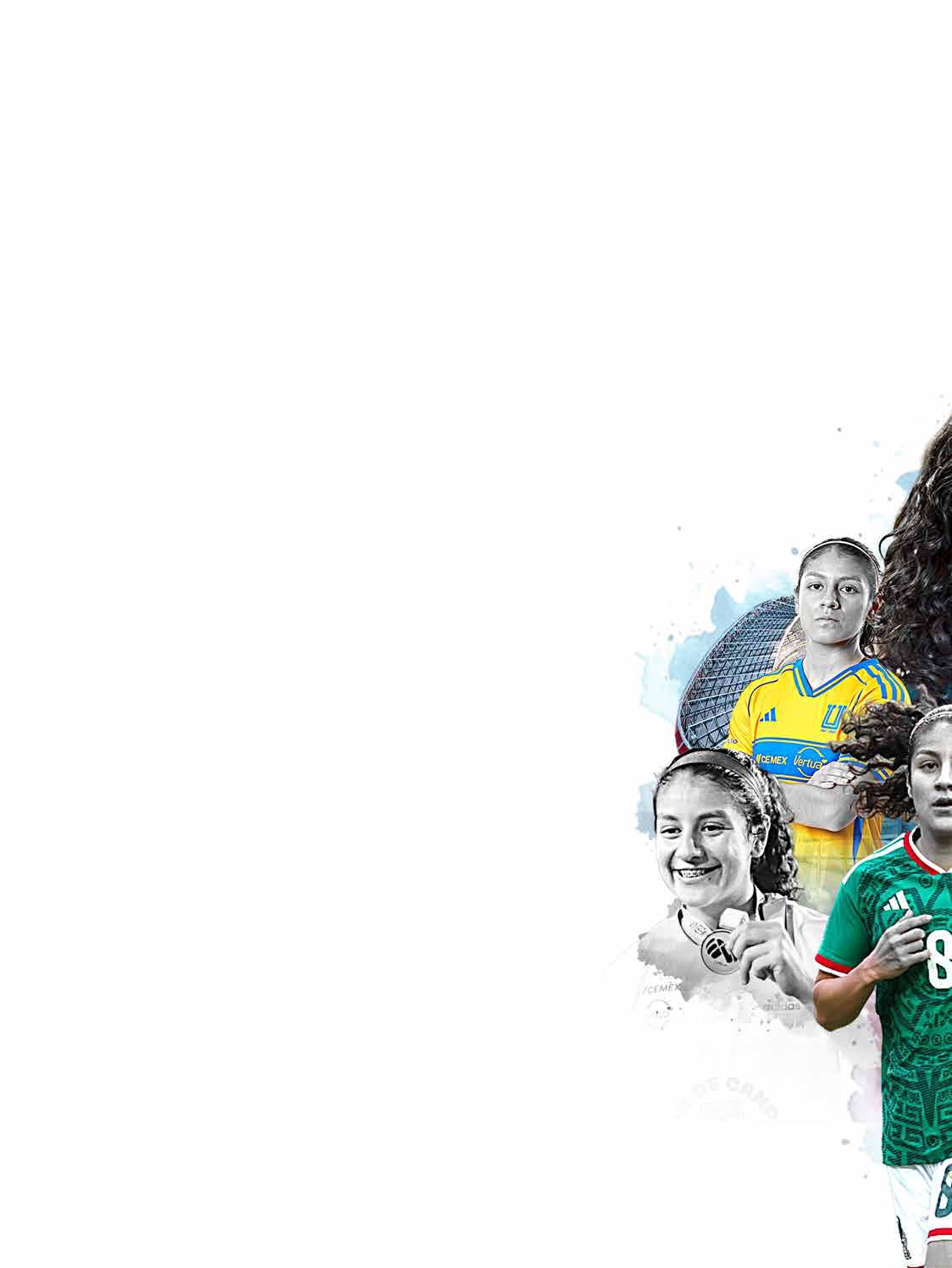
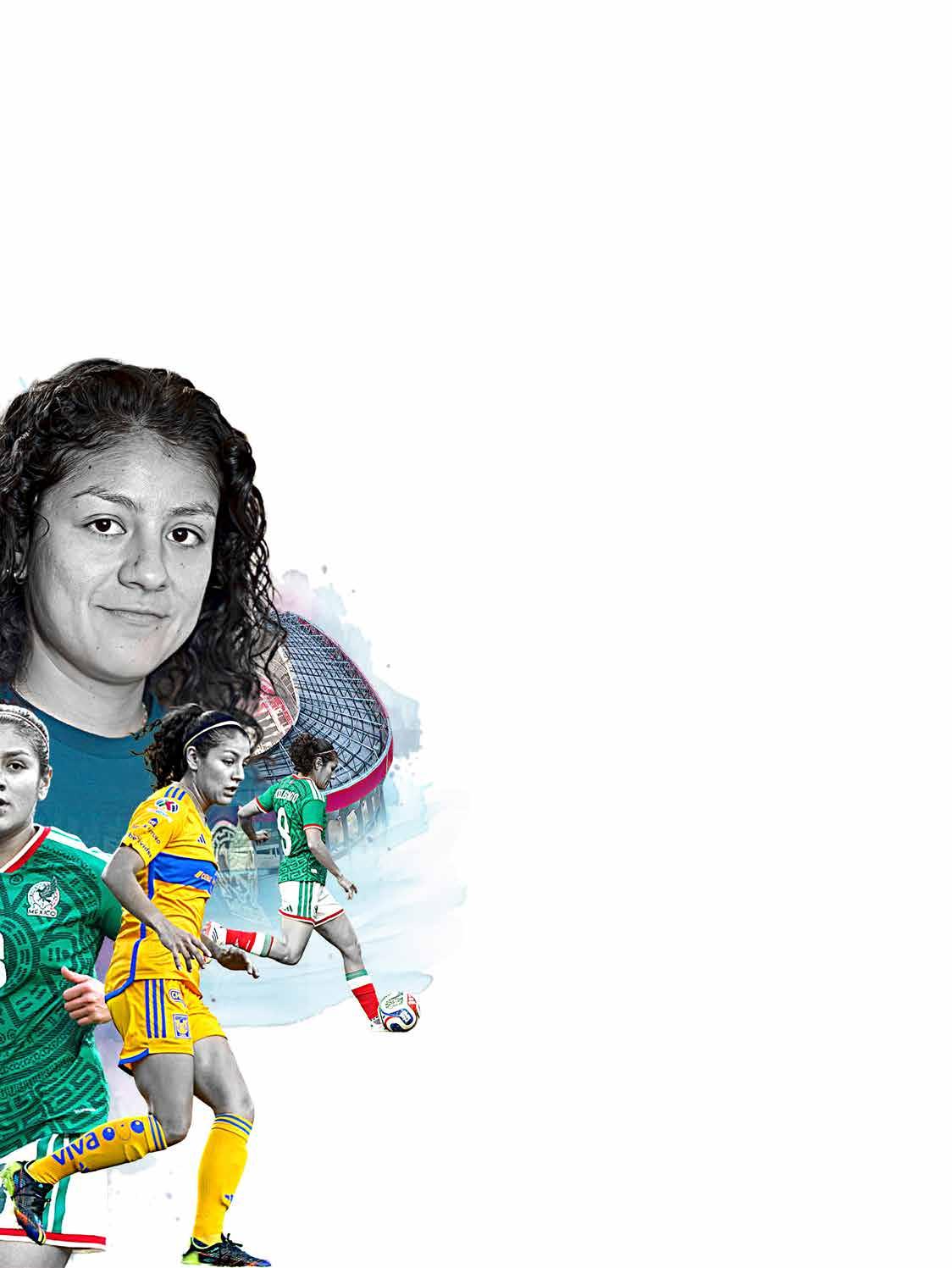
Alexia Delgado discovered soccer as a child in a garage in Tepic, Nayarit, following in the footsteps of her older brother. Fourteen years later, she is a starting midfielder for Tigres Femenil, a key figure for the Mexican National Team, and already has her ticket secured for the 2027 Women’s World Cup. Along the way, she also earned both a bachelor’s and a master’s degree from the University of Arizona, where she describes, without hesitation, the best years of her life. In this exclusive interview with Heraldo USA, she discusses her beginnings, her experience in the United States, and what it means to wear Mexico’s green jersey.
You’ve been playing soccer for fourteen years.How did it all begin?
Alexia Delgado: It all started because my brother played soccer. He’s older than me and used to practice at school, then invite me to play in the garage. From that moment, I knew I really liked it. When I told my mom I wanted to play, her reaction was a firm “no.” My dad stepped in and said, “Let her. She’ll probably get over it just like the other sports.” Fourteen years later, I still haven’t gotten over it.
Before soccer, I tried other sports, but none of them hooked me the way this one did. There was something different about that first touch of the ball—something immediate—and from then on, I knew it was what I wanted to do.
You went from Tepic to Guadalajara and then to the United States.What was that journey like?
Alexia Delgado: I joined the training center in Guadalajara, where I became part of Mexico’s first Under-15 national team. We went to the Youth Olympic Games in Nanjing, China, and won the bronze medal. That was my first step with the national team.
When the league was announced in 2017, I hesitated about going to the United States. We finally had a professional league, which was what we had all been hoping for. At the time, I was offered an academic opportunity, but because of our schedules, there were very few degree options available. There wasn’t much flexibility.
Still, I already had an official visit scheduled at the University of Arizona, and my mom was very clear: “You made a commitment. You need to honor it. Go and listen.”
I went, and I loved it. I spent one year with Club América when the league launched. After that season, I left for Arizona. Saying no would have been a mistake.
Facts
ALEXIA DELGADO: A WARRIOR, BINATIONAL, &DISCIPLINED
Social media:
@alexia. delgado8
She says it before a Clásico Regio She says it before a final.And she will say it again before the 2027 Women’s World Cup.
In a sport traditionally dominated by men,Alexia Delgado speaks with quiet confidence,trains every day,and serves as an example of discipline and commitment.Her comments to the media about schedules,upcoming matches, tournaments,and competitions consistently draw attention because they stem from a simple philosophy: hard work and a deep understanding of the game.
What was your experience like living in Arizona as a young Mexican female athlete?
Alexia Delgado: I can sum it up in one word: incredible. Those were the best years of my life, without a doubt. By then, I had already spent five years living away from home, so independence itself wasn’t the hardest part. Moving to another country is a completely different challenge: a new language, a different culture, and a very different way of life.
I played alongside teammates from the Netherlands, Germany, England, and Canada. There wasn’tasingleMexicanonmyteam,soIhadtospeak English all the time. That experience helps you grow as a person, as a soccer player, and as a professional in every sense. You no longer have your mom doing your laundry or anyone reminding you about things. That process of maturing and becoming more independent is what I value most from my time there. If someone invited me back today, I’d go for another five years without hesitation.
What was it like living alone in another country during the COVID pandemic?
AlexiaDelgado:Iknowitwasn’tpleasantforanyone, but for me, it brought something positive. We were granted an extra year of eligibility, which allowed me to play another season and complete my master’s degree. I finished my time in the United States, returned to Liga MX for a semester with Cruz Azul, and then moved to Tigres. This July, I’ll celebrate three years with the club.
What did it mean to play at Estadio Azteca with Club América?
AlexiaDelgado: The first time I went to the Azteca, I wasthereasafan,andmyreactionwasalready“wow.” We weren’t even sitting close to the field—we were high up in the stands—and that somehow made it feel even more impressive. Less than a month later, I had the honor of playing on that field. When we walked out for the pregame inspection, before the fans had arrived, you felt tiny. It’s a stadium with an incredible presence. It’s beautiful, and it’s where my professional career began. That’s why it remains one of the experiences I enjoy the most.
Central midfielder –Tigres UANL Femenil
Wears jersey No.8.Joined Tigres in January 2023 after transferring from Cruz Azul.Tigres is the most successful club in Liga MX Femenil history,with seven league titles.
Arizona State Sun Devils
Played four seasons with the Arizona State Sun Devils (2018–2022).Graduated with a degree in Sports Business in December 2021 and completed a master’s degree thanks to the extra year of eligibility granted during the COVID-19 pandemic.
WARRIOR, BINATIONAL, &DISCIPLINED
Profile
Since joining Tigres in the Apertura 2023 tournament,Alexia Delgado has accumulated more than 100 appearances in Liga MX Femenil throughout her professional career.
With Mexico’s senior national team,she has played 43 international matches,including the 2024 Concacaf W Gold Cup and several friendlies in preparation for the 2027 Women’s World Cup.
She was part of Tigres’ championship-winning squad in the Apertura 2025 season, securing the club’s seventh league title.
Now,she is aiming to help the team capture back-to-back championships in the Clausura 2026 tournament.
Mexico National Team
A full international since March 1,2019. Regularly called up by head coach Pedro López. Won the 2018 Concacaf Women’s U-20 Championship and has already qualified for the 2027 Women’s World Cup.
A pioneer for Mexico
Member of the first Under-15 women’s national team in Mexican soccer history.Won the bronze medal at the 2014 Youth Olympic Games in Nanjing,China,and finished as runner-up at the 2016 Concacaf Women’s U-17 Championship.
Alexia Delgado: Guerrera, binacional y disciplinada
DesdeunacocheraenTepic hastalosescenarios másimportantesdelfutbolfemenil,Alexia Delgado comparteladisciplina,lossacrificios ylasexperienciasquelallevaronaconvertirse enreferentedelequipo Tigresyde laSelección Mexicanarumbo alMundialde2027.
POR ALAN VARGAS
ARTE: ALEJANDRO OYERVIDES
AlexiaDelgadollegóalfutboldesdepequeña, en una cochera en Tepic, Nayarit, siguiendo los pasos de su hermano mayor. Hoy, catorce años después, es mediocampista titular de Tigres Femenil, una figura clave de la selección mexicana y ya tiene asegurado su boleto al Mundial Femenil de 2027. En el camino, tambiénobtuvounalicenciaturayunamaestríaen la Universidad de Arizona, donde vivió, sin duda, los mejores años de su vida. Habla en exclusiva paraHeraldoUSAsobresusorígenes,suexperiencia en Estados Unidos y lo que significa ponerse la camiseta verde.
Llevas catorce años jugando futbol.¿Cómo empezó todo?
AlexiaDelgado: Todo empezó porque mi hermano jugaba fútbol. Él es mayor que yo; practicaba en la escuela y me invitaba a jugar en la cochera. Desde ahí dije: esto me gusta mucho. Cuando le dije a mi mamá que quería jugar, su reacción fue un rotundo ‘no’. Mi papá fue quien metió mano: “Déjala, de seguro se le va a pasar igual que con los otros deportes.” Catorce años después, no se me pasó. Antes de llegar al futbol, practiqué otros deportes, pero ninguno me enganchó tanto como este. Hubo algo en ese primer contacto con el balón que fue diferente, inmediato, y desde ahí supe que era lo mío.
De Tepic te fuiste a Guadalajara,luego a Estados Unidos.¿Cómo fue tu camino? AD:Me fui al centro de formación en Guadalajara y ahí me tocó formar parte de la primera Sub-15 de lahistoriadeMéxico.FuimosalosJuegosOlímpicos de la Juventud en Nanjing, China, y ganamos el bronce. Fue mi primer paso con la selección. Cuando se anunció la liga, en 2017, dudé en irme a Estados Unidos. Ya había una liga que, al final, era lo que estábamos buscando, lo que esperábamos.Meofrecíanescuelaeneseentonces,peroera prácticamentelaúnicacarreraquepodíasestudiar por los tiempos que manejábamos. No eran muy flexiblesconeso.Peroyateníaagendadaunavisita oficial a la Universidad de Arizona, y mi mamá fue muy clara: ya tienes un compromiso; tienes que ir a cumplirlo. Ve y escucha. Fui encantada. Estuve un año en el Club América cuando arrancó la liga; terminé ese año y me fui a Arizona. Hubiera sido un error decir que no.
¿Cómo fue vivir en Arizona siendo una mujer joven,mexicana,deportista?
AD:Te lo puedo resumir en una palabra: increíble. Fueron mis mejores años, sin dudar. Ya llevaba cinco años viviendo fuera de casa, así que la independencia en sí no era lo más difícil, pero mudarte a otro país es otra cosa: otro idioma por completo, otracultura,estilosdevidasumamentediferentes. JugamosconcompañerasdeHolanda,Alemania, Inglaterra, Canadá. En mi equipo no había nadie de México, así que tenía que hablar inglés sí o sí.
Eso te hace crecer como persona, como futbolista, como profesionista, en todos los sentidos. Ya no tienesatumamáparaquetelavelaropa,nianadie que te recuerde nada. Esa parte de madurar, de ir creciendo como persona, es lo que más me llevo de allá. Si me volvieran a invitar hoy, me iría sin dudarlo otros cinco años.
Los retos de vivir sola en otro país durante la pandemia de COVID.¿Cómo lo viviste?
AD:Sé que no fue agradable para nadie, pero a mí me trajo algo positivo. Nos agregaron un año extra que me permitió jugar otra temporada más y cursar mi maestría. Terminé en Estados Unidos, regresé a la liga por un semestre en Cruz Azul y de ahí di el paso a Tigres. En julio cumplo tres años con el equipo.
¿Qué significó jugar en el Estadio Azteca con el América?
AD: La primera vez que fui al Azteca, fui como aficionada; ya tenía una reacción tipo “wow”. Ni siquiera estábamos abajo; nos tocó arriba, y eso lo haceaúnmásimponente.Nopasóniunmesytuve el honor de jugar en esa cancha. Cuando salimos al reconocimiento, sin gente todavía, te sientes chiquita. Es un estadio que impone mucho, una belleza, y es donde empezó mi carrera profesional. Por eso es de lo que más disfruto.
DATOS
En un deporte dominado por hombres, Alexia Delgado habla con una seguridad esperanzadora, entrena todos los días y es un ejemplo de disciplina. Las declaraciones que da a la prensa sobre las fechas,los próximos partidos,las copas y los calendarios son muy claras y siempre llaman la atención porque parten de su filosofía:trabajo duro y un profundo entendimiento del futbol.Lo dice antes de un Clásico Regio,lo dice antes de una final,y lo dirá antes del Mundial Femenil 2027.
PERFIL
Con Tigres desde el torneo Apertura 2023,Alexia Delgado acumula más de 100 partidos en la Liga MX Femenil a lo largo de su carrera. Con la selección mayor ha disputado 43 encuentros internacionales,incluidos la Copa Oro 2024 y amistosos de preparación rumbo al Mundial de 2027.
Fue parte del título de Tigres en el Apertura 2025,el séptimo campeonato del club,y ahora apunta al bicampeonato en el Clausura 2026. Las redes sociales de Alexia Delgado son: @ alexia.delgado8
Mediocampista central del Tigres UANL Femenil
Portaeldorsal
procedentede
enenerode
Internacional absoluta con México
Desde el 1 de marzo de 2019.Convocada regularmente por Pedro López.Fue campeona de la Concacaf Sub-20 en 2018 y tiene boleto para el Mundial Femenil 2027.
Jugó cuatro temporadas con los Arizona State Sun Devils
(2018–2022) Se graduó en Sports Business en diciembre de 2021 e hizo una maestría gracias al año extra que el COVID-19 otorgó.
Formó parte de la primera Sub-15 de la historia de México.
GanólamedalladebronceenlosJuegosOlímpicos delaJuventuddeNanjing2014.Subcampeonadel CampeonatoFemenilSub-17delaConcacaf2016.
#8.Llegóalequipo
2023,
CruzAzul.Tigreseselclubmás campeóndelaLigaMXFemenilcon7títulos.
MONTE CRISTO REY:
MUCH MORE THAN A MOUNTAIN
Monte Cristo Rey marks the end of the land
border between the United States and
Mexico and the point where the Rio Grande becomes the dividing line. This place, known for centuries as Paso del Norte, has been a crossroads for Indigenous peoples, Spanish colonizers, and later settlers who traveled westward on the first transcontinental railroads.
BY JOSEPH BACH*
ARTWORK: ELIHU GALAVIZ
Along the U.S.-Mexico border, there are places whose value cannot be measured by size alone. Monte Cristo Rey is one of them: a sanctuary where thousands have come for generations to pray, give thanks, and find comfort. Those who make the journey there discover something increasingly rare: silence, reflection, and hope.
I am deeply concerned about what is happening at this sanctuary today. Federal authorities believe the border requires additional security measures. That is a legitimate debate. However, when the pursuit of security puts religious and community spaces at risk, we must ask what we are willing to sacrifice.
Monte Cristo Rey is part of this region’s spiritual history. The cross and the image of Christ that dominate the landscape are visible from both sides of the border. For decades, they have symbolized the unity of communities that share roots, culture, and faith. The border is often portrayed as a dividing line, but for those of us who live here, it is also a
Sacred border
Centuries of history have made Paso del Norte a crossroads of peoples,faiths,and cultures.
bridge that connects.
Thousands of pilgrims visit Monte Cristo Rey to seek prayer, hope,and spiritual renewal.
What is at stake is not merely land. What is at stake is people’s religious freedom and respect for traditions that are part of our identity. In the United States, we constantly proclaim the importance of religious freedom as a fundamental principle of our democracy. For that very reason, we must ask whether we are being consistent by allowing sacred spaces to be treated like any other piece of property.
FAITH NEEDS PLACES
People need spaces where they can encounter God, celebrate their traditions, and pass on to future generations what they hold sacred. Churches, temples, and pilgrimage sites carry meaning that extends far beyond their physi-
cal structures. Monte Cristo Rey serves that purpose for thousands of people throughout this region.
The Diocese of Las Cruces has made it clear that this place is priceless, and it is right. Some things cannot be measured in dollars because they belong to a community’s collective memory.
The people who make pilgrimages to Monte Cristo Rey respect this space. For decades, they have climbed the mountain peacefully, prayed without causing conflict, and upheld a tradition that is theirs. They are not a threat to anyone. They are mothers praying for their children’s health, elderly people offering their final prayers, and young people seeking answers amid uncertainty. They are people whose faith deserves respect.
Over the years, I have accompanied migrants through immigration courts, detention centers, and deportation proceedings. That experience has repeatedly reminded me that behind every political debate are real human beings: parents separated from their children, sick people in detention, and families consumed by uncertainty. I have witnessed fear growing in the hallways of immigration courts.
Many people attend their hearings without knowing what will happen to their lives. Others have spent years in the United States only to face the loss of everything they have built. As a society, we have the right to debate our immigration laws. What we must not lose is our ability to recognize the human dignity of those caught in that system.
Security matters. The law matters. But so do compassion, justice, and religious freedom. Monte Cristo Rey reminds us of exactly that. It reminds us that some values should not be set aside by the political urgency of the moment. It reminds us that communities need places to nourish their spirits. And it reminds us that borders do more than separate territories; they also connect histories, cultures, and people.
When a community loses one of its sacred places, it loses far more than a piece of land. It loses a part of its soul.
* Joseph Bach serves as the Director of Vocations (Recruitment, Marketing, and Communications) for the Franciscan Brothers of Brooklyn.

Sacred places preserve faith,identity, and traditions across generations.
Monte Cristo Rey symbolizes unity across the U.S.-Mexico border. Protecting security should never come at the expense of religious freedom. Why it matters

Monte Cristo Rey: mucho más que una montaña
El Monte Cristo Rey es el lugar donde termina la frontera terrestre entre Estados Unidos y México y donde el río Grande se convierte en la línea divisoria. Este punto, conocido durante siglos como Paso del Norte, ha sido una encrucijada para los pueblos indígenas, los colonizadores españoles y, más tarde, los colonos que viajaban hacia el oeste en los primeros ferrocarriles transcontinentales.
POR JOSEPH BACH*
ARTE: ELIHU GALAVIZ
En la frontera entre Estados Unidos y México hay lugares cuyo valor no puede medirse únicamente por su extensión territorial. Monte Cristo Rey es uno de ellos: un santuario al que miles de personas han acudido durante generaciones para orar, agradecer y encontrar consuelo. Quienes llegan hasta allí descubren algo cada vez más escaso: silencio, reflexión y esperanza.
Me preocupa profundamente lo que ocurre hoy en este santuario. Las autoridades federales consideran que la frontera requiere medidas de seguridad adicionales. Esa es una discusión legítima. Sin embargo, cuando esa búsqueda de seguridad pone en riesgo los espacios religiosos y comunitarios, debemos preguntarnos qué estamos dispuestos a sacrificar.
Monte Cristo Rey forma parte de la historia espiritual de esta región. La cruz y la imagen de Cristo que dominan el paisaje son visibles desde ambos lados de la frontera. Desde hace décadas simbolizan la unión de comunidades que comparten raíces, cultura y fe. La frontera suele presentarse como una línea divisoria, pero para quienes vivimos aquí también es un puente que conecta.
Lo que está en juego no son solo terrenos. Lo que está en juego es la libertad religiosa de las personas y el respeto a las tradiciones que forman parte de nuestra identidad. En Estados Unidos proclamamos constantemente la importancia de la libertad religiosa como principio fundamental de nuestra democracia. Precisamente por eso, debemos preguntarnos si somos coherentes al permitir que los espacios sagrados sean tratados como cualquier otra propiedad.
LA FE NECESITA LUGARES
Las personas necesitan espacios donde encontrarse con Dios, celebrar sus tradiciones y transmitir a las nuevas generaciones aquello que consideran sagrado. Los templos, iglesias y sitios de peregrinación tienen un significado que trasciende sus estructuras físicas. Monte Cristo Rey cumple esa función para miles de personas de esta región.
La Diócesis de Las Cruces ha dejado claro que este lugar no tiene precio. Y tiene razón. Hay cosas cuyo valor no puede calcularse en dólares porque pertenecen a la memoria colectiva de una comunidad.
Las personas que peregrinan a Monte Cristo Rey respetan ese espacio. Durante décadas han subido la montaña en paz, han rezado sin provocar conflictos, han cumplido con una tradición que es suya. No son una amenaza para
nadie. Son madres que piden por la salud de sus hijos, ancianos que ofrecen sus últimas oraciones, jóvenes que buscan respuestas en momentos de incertidumbre. Son personas que merecen que su fe sea respetada.
Durante años he acompañado a migrantes en tribunales, centros de detención y en procesos de deportación. Esa experiencia me ha recordado constantemente que detrás de cada debate político hay seres humanos reales: padres separados de sus hijos, personas enfermas detenidas, familias consumidas por la incertidumbre. He visto crecer el miedo en los pasillos de las cortes migratorias.
Muchas personas acuden a sus audiencias sin saber qué ocurrirá con sus vidas. Otras llevan años en Estados Unidos y enfrentan la pérdida de todo lo que construyeron. Como sociedad tenemos derecho a discutir nuestras leyes migratorias. Lo que no debemos perder es nuestra capacidad para reconocer la dignidad humana de quienes están atrapados en ese sistema. La seguridad es importante. La ley es importante. Pero también lo son la compasión, la justicia y la libertad religiosa. Monte Cristo Rey nos recuerda precisamente eso. Nos recuerda que hay valores que no deberían quedar relegados por la urgencia política del momento. Nos recuerda que una comunidad necesita espacios para nutrir su espíritu. Y nos recuerda que las fronteras no solo separan territorios; también unen historias, culturas y personas. Cuando una comunidad pierde uno de sus lugares sagrados, pierde mucho más que un pedazo de tierra. Pierde una parte de su alma. Nos recuerda tres importantes conceptos: que hay valores que no deberían quedar relegados por la urgencia política del momento; que una comunidad necesita espacios para nutrir su espíritu, y que las fronteras no solo separan territorios, sino que también unen historias, culturas y personas.
* El autor es director de Vocaciones (reclutamiento, marketing y comunicaciones) para los Hermanos Franciscanos de Brooklyn
Frontera sagrada
Siglos de historia han convertido a Paso del Norte en un punto de encuentro de pueblos, creencias y culturas.
Miles de peregrinos visitan Monte Cristo Rey en busca de oración,esperanza y renovación espiritual.
Por qué es importante
Los lugares sagrados preservan la fe,la identidad y las tradiciones a través de las generaciones.
Monte Cristo Rey simboliza la unidad a ambos lados de la frontera entre Estados Unidos y México.
La protección de la seguridad nunca debe lograrse a costa de la libertad religiosa.