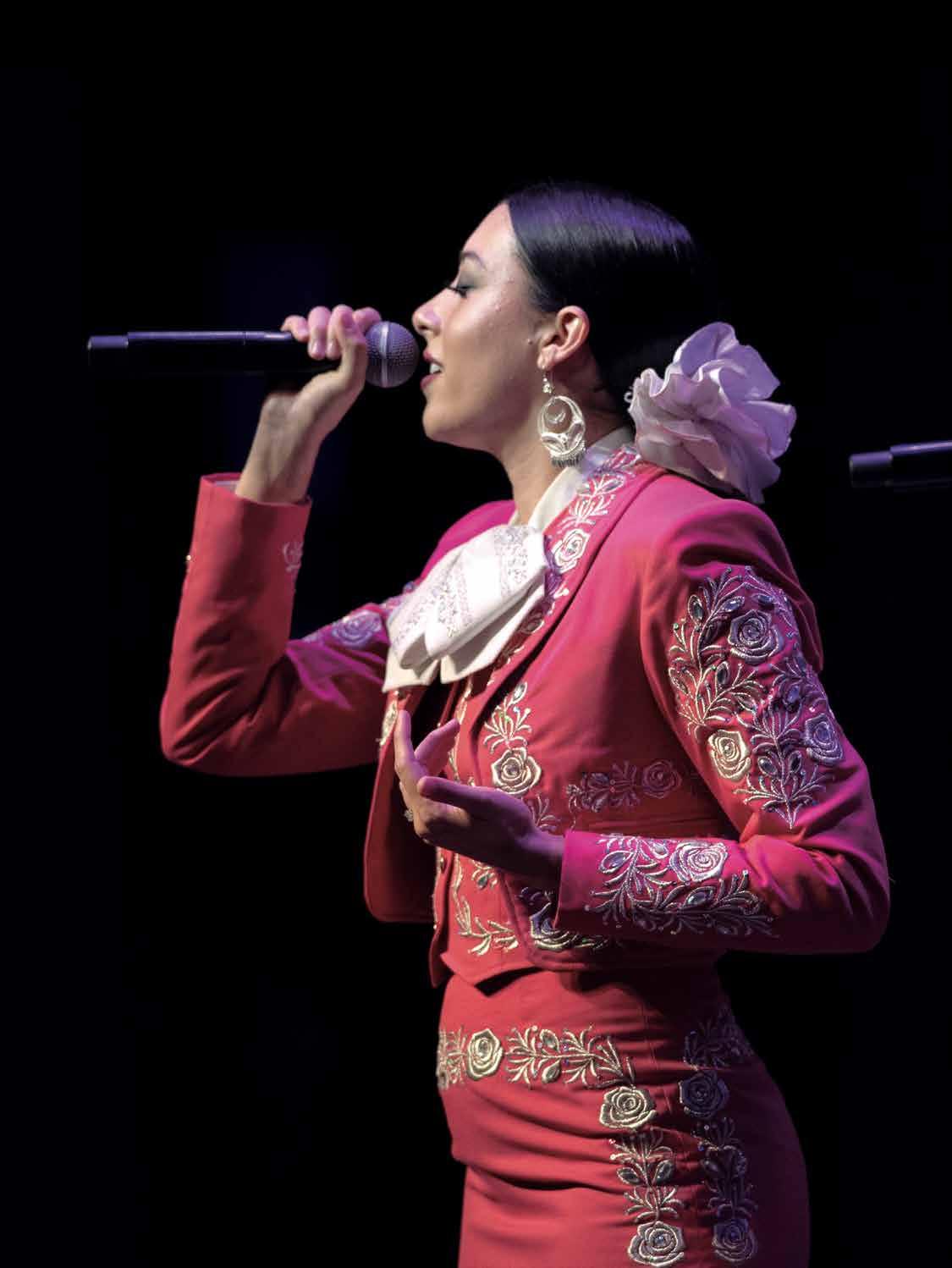
MUSICAL REVOLUTION
Mariachi Reyna of Los Angeles breaks stereotypes while upholding the
MEXICO AND THE UNITED STATES:
TWO DIFFERENT STRATEGIES TO SUPPORT
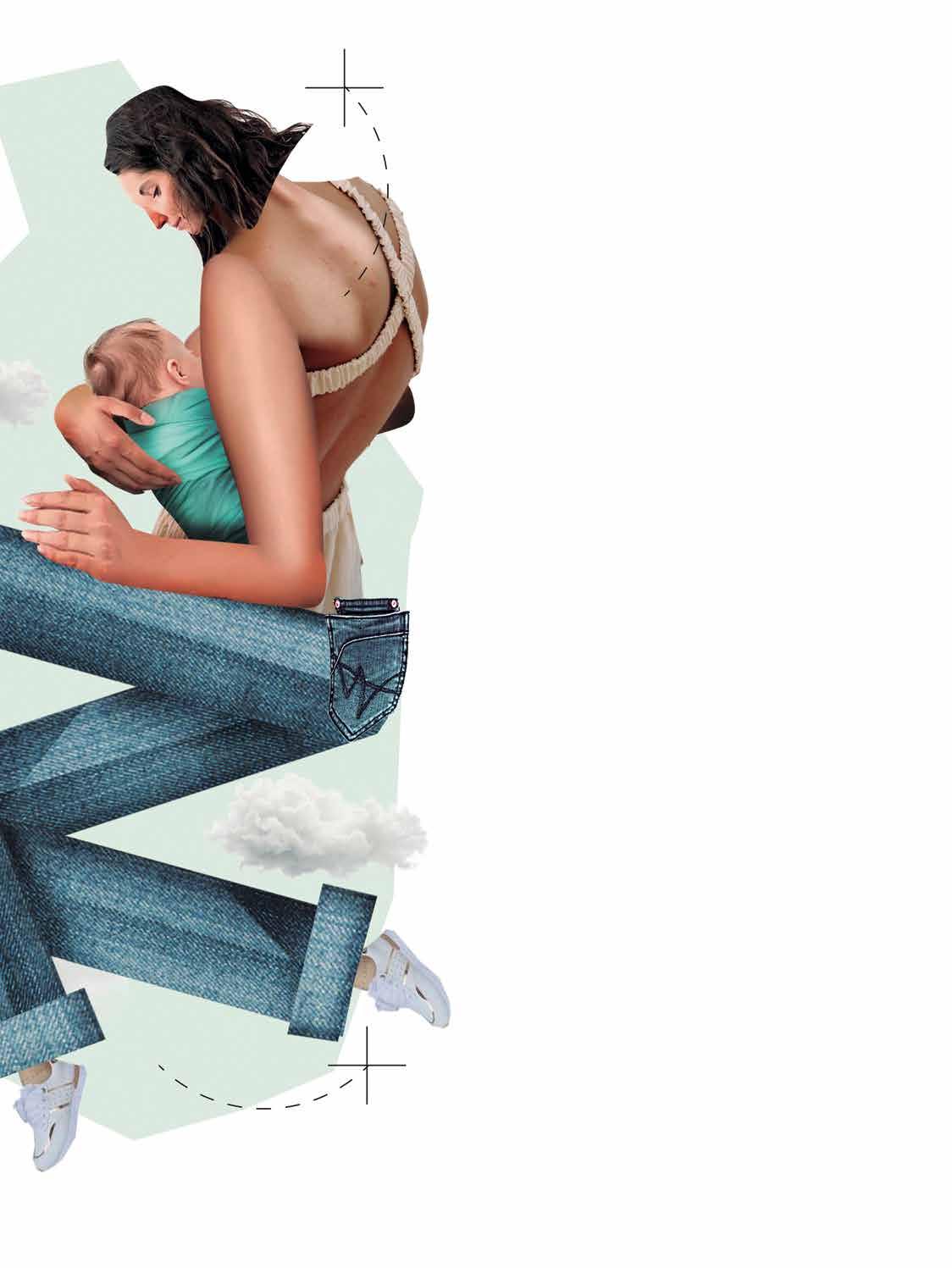
BREASTFEEDING
Mexico
and the United States have taken different paths to promote breastfeeding,
yet both continue to face
low rates of exclusive breastfeeding and major public health challenges. From hospital certifications to the regulation of breast milk substitutes, the two countries reveal contrasting strategies that share common goals.
BY VIRINA VALDERRAMA
ARTWORK: ALEJANDRO OYERVIDES
Support for breastfeeding is among the most effective public health strategies for reducing childhood illnesses and improving maternal health worldwide. According to the World Health Organization (WHO), breast milk is the ideal food for infants because it is safe and clean, contains antibodies that protect against many diseases, and provides all the energy and nutrients needed during the first six months of life. However, despite WHO recommendations, fewer than half of infants worldwide are exclusively breastfed during that period.
Since the 1970s, warnings have been raised about the decline of breastfeeding practices across different regions of the world, prompting global initiatives such as the International Code of Marketing of Breast-milk Substitutes, the Baby-Friendly Hospital Initiative (BFHI), and World Breastfeeding Week, which seeks to raise awareness of specific breastfeeding-related issues each year.
Mexico and the United States share a deep, complex, and multidimensional relationship that is among the most dynamic in the world. The two nations are linked by geographic, economic, cultural, and social interdependence. Low breastfeeding rates and their impact on public health are not differences between them; they are another shared challenge.
According to the 2022 ENSANUT survey, exclusive breastfeeding rates among infants under 6 months in Mexico are estimated at 33.2%. In comparison, the United States reports a rate of 27%, according to the CDC. These figures reflect at least three decades of government efforts. For breastfeeding at one year of age, Mexico reports a rate of 42.7%, while the United States reaches 35%.
Using these figures as benchmarks, it is valuable to compare how each country has approached breastfeeding support.
The United States voted against the International Code of Marketing of Breast-milk Substitutes, which sought to regulate the marketing of products intended to replace breastfeeding. Mexico, meanwhile, voted in favor of the initiative, though over the past 45 years, implementation of the Code in national legislation has been limited and enforcement has been weak.
The 34th World Health Assembly, which

adopted the Code, called on signatory countries to commit to implementing national laws and regulations governing the promotion of dairy products intended to substitute for breast milk up to age three, as well as the promotion of other foods or beverages, such as juices, herbal infusions, or water, for infants under six months old, and the promotion of bottles and artificial nipples. Countries were also urged to monitor compliance with these regulations and to impose sanctions on brands that violated them.
Another key strategy over the past 30 years to support breastfeeding has been the certification of birth centers under the Baby-Friendly Hospital Initiative (BFHI). Launched in 1991 by the World Health Organization (WHO) and the United Nations Children’s Fund (UNICEF), the initiative has shown that residents and healthcare professionals in accredited hospitals receive more specialized breastfeeding education and training than those in non-accredited hospitals. Women cared for in these facilities also receive more consistent support, leading to improved breastfeeding rates.
The United States stands out for having a significantly higher number of certified hospitals across its territory: 593 hospitals have been certified, of which 157 currently maintain active certification. Mexico, meanwhile, has been less consistent in reporting the status of its certified hospitals. Mexico had a strong start but struggled with long-term maintenance, unlike its northern neighbor, which began slowly but accelerated expansion between 2011 and 2015 through the federal Best Fed Beginnings program.
Both nations deserve recognition for their efforts. However, given the realities on both sides of the border, it would be highly meaningful to coordinate strategies, increase the number of certified hospitals serving families from birth, and strengthen controls on the advertising of breast milk substitutes. Such measures could help improve not only breastfeeding initiation rates but also breastfeeding continuity, yielding significant benefits for population health.
In the coming years, both countries are likely to continue making gradual progress on breastfeeding, as it will remain a priority public health issue. Both Mexico and the United States will need to strengthen public policies to ensure adequate conditions that make breastfeeding a viable and sustainable option for families, while also promoting cultural and workplace changes that protect the rights of women and children to healthy nutrition from birth onward.
babies in Mexico
babies in the United States 1 IN 3 1 IN 4
The pending challenge in Mexican hospitals
The United States has 15 to 20 times as many Baby-Friendly certified hospitals as Mexico. Specialists have noted that breastfeeding in Mexico could reduce neonatal mortality by as much as 51%.
The percentage of births in hospitals that support breastfeeding increased from 3.8% in 2010 to 28.9% in 2021.
Breastfeeding continuation at one year
United States: Mexico 35% 42.7%
Sources
consulted
Lactancia Materna. (2024) Centro de Investigación en Nutrición y Salud,Instituto Nacional de Salud Pública https://ensanut.insp.mx/encuestas/ensanutcontinua2023/ doctos/analiticos/15898-Texto%20del%20art%C3%ADculo-82498-2-10-20240821.pdf
Breastfeeding in the United States.(2025).National Academies Press https://www-ncbi-nlmnih-gov.translate.goog/ books/NBK619950/?_x_tr_ sl=en&_x_tr_tl=es&_x_tr_ hl=es&_x_tr_pto=tcaborerum
México y Estados Unidos, dos estrategias
distintas de apoyo a la lactancia materna
México y Estados Unidos han adoptado enfoques diferentes para promover la lactancia materna, pero ambos países siguen enfrentando bajas tasas de lactancia materna exclusiva e importantes desafíos de salud pública. Desde la certificación de hospitales hasta la regulación de los sucedáneos de la leche materna, ambos países revelan estrategias contrastantes que, sin embargo, comparten objetivos comunes.
POR VIRINA VALDERRAMA
ARTE: ALEJANDRO OYERVIDES
El apoyo a la lactancia materna es una de las estrategias de salud pública más efectiva para reducir enfermedades infantiles y mejorar la salud materna a nivel mundial. Según la Organización Mundial de la Salud (WHO), la leche materna es el alimento ideal para los lactantes porque es segura, limpia, contiene anticuerpos que protegen de muchas enfermedades y suministra toda la energía y nutrientes necesarios durante los primerosseismesesdevida.Sinembargoycontrario a sus recomendaciones, menos de la mitad de la población mundial tiene lactancia materna exclusiva durante este periodo. Desde la década de 1970 se ha alertado sobre la disminución de la práctica de lactancia materna en diferentes regiones del mundo y se han puesto en marcha estrategias globales como el Código Internacional de Comercialización de Sucedáneos de la Leche Materna, la Iniciativa de Hospitales Amigos del Niño y de la Niña (BFHI) así como la Semana Mundial de lactancia que busca hacer difusión y concientización sobre temas específicos cada año.
México y Estados Unidos comparten una relación profunda, compleja y multidimensional que podríamosdeciresdelasmásdinámicasdelmundo. Son dos naciones que viven una interdependencia geográfica, económica, cultural y social. Los retos de la baja práctica de lactancia materna y su impacto en la salud poblacional no es una diferencia sino otro rasgo común.
Actualmente en México la lactancia materna exclusiva en menores de seis meses se calcula en el 33.2% de la población según la encuesta ENSANUT 2022. En comparación, Estados Unidos reporta una tasa de 27% según la CDC. estos números son resultado de al menos tres décadas de esfuerzos gubernamentales. Con respecto a la continuidad de la lactancia hasta el año, en México se reporta un 42.7% mientras que en EE UU. Alcanza el 35%.
Teniendo como parámetro estos números es muy valioso contrastar algunas diferencias en el abordaje que han dado ambos países a la lactancia.
Estados Unidos votó en contra del Código InternacionaldeComercializacióndeSucedáneosdela LecheMaternaqueproponíaregularlacomercializacióndeproductosquebuscansustituirlalactanciamaterna.Méxicoencambiofirmóafavordelainiciativa peroalolargodeestos45añoshahabidopocaytenta implementacióndeCódigoenlasleyesnacionalesasí como poca vigilancia del cumplimiento.
La trigésimo cuarta Asamblea Mundial de Salud en donde se adoptó este código hizo un llamado al compromiso de los países firmantes para implementar leyes y regulaciones nacionales sobre la promoción de productos lácteos que sustituyan la leche materna hasta los 3 años, otros alimentos o bebidascomozumos,infusionesoaguasparamenor de 6 meses así como la promoción de biberones y tetinas. También les instó a supervisar el cumpli-
miento dichas regulaciones y a aplicar sanciones a las marcas que las violaran. Otra de las estrategias fundamentales de los últimos 30 años para apoyar la lactancia materna ha sido la certificación de centros de nacimiento dentro de la Iniciativa Hospital Amigo del Niño (IHAN) o Baby-Friendly (BFHI). Esta iniciativa fue lanzada en 1991 por la Organización Mundial de la salud (WHO) y el Fondo de la Naciones Unidas para la infancia (UNICEF) y ha demostrado que los residentes y profesionales tienen más conocimiento y reciben más formación específica en lactancia que el personal de loshospitalesnoacreditadosylasmujeresatendidas en estos hospitales reciben apoyo más consistente que resulta en mejores tasas de lactancia materna. Estados Unidos destaca por tener un número significativamente alto de hospitales que se han certificado a lo largo de todo su territorio, 593 de los cuales157sereportanactivosconcertificaciónvigentemientrasqueMéxicohasidopococonsistentecon elreportedesituacióndeloshospitalesactualmente certificados. México mostró un inicio robusto pero bajo en mantenimiento a diferencia del vecino del nortequeiniciólentamenteperoimpulsóunaexpansiónaceleradaentre2011yel2015conlainstauración des programa federal Best Fed Beginnings.
Es de reconocer que ambas naciones han realizados esfuerzos claros, sin embargo consolidando las situaciones a ambos lados de la frontera, sería muy significativo sumar estrategias y lograr más hospitales certificados que atiendan a más familias desde el nacimiento y sumar el control de la publicidad de sucedáneos para lograr no sólo una mayor tasa de inicio sino una continuidad de la lactancia que impacte en la salud de la población.
Es probable que en los años por venir ambos países experimenten avances graduales en materia de lactancia materna porque esta seguirá siendo un temaprioritariodesaludpública.TantoMéxicocomo Estados Unidos deberán fortalecer sus políticas públicas para garantizar condiciones adecuadas para que la lactancia sea una opción viable y sostenible para las familias y se generen cambios culturales y laborales que permitan proteger el derecho de las mujeres e infancias a una alimentación saludable desde el nacimiento.
Lactanciamaternaexclusiva
bebés mexicanos
1 DE CADA 4
bebés en Estados Unidos 1 DE CADA 3
El reto pendiente en los hospitales mexicanos
Estados Unidos tiene entre 15 y 20 veces más hospitales certificados como “Amigos del Niño y de la Niña” que México.
Especialistas han señalado que la lactancia materna en México podría reducir la mortalidad neonatal hasta en 51%.
El porcentaje de nacimientos en hospitales que apoyan la lactancia materna aumentó de 3.8% en 2010 a 28.9% en 2021.
Continuidaddelalactanciaalaño
Estados Unidos México 35% 42.7%
This year, the theme for International Museum Day is “Museums uniting a divided world.” It sounds very nice, but also wildly idealistic.
BY ARIEL HAMMOND, M.I.* PHOTO: SPECIAL
Can museums unite the world? It seems impossible, but most of the best dreams are. Protecting important objects in perpetuity and standing strong over centuries while still adapting to changing times—these are the impossible things museums aim for. Museum workers spend countless unsung hours trying to achieve these goals because museums are bigger than any individual—they’re a love letter to the public and to the future.
Museums have such a history of being ivory towers; I’m still surprised I’m allowed to work in one. I was one of the many kids who grew up coming to the San Diego Natural History Museum on field trips and family visits. I hope that I minded my manners, walked slowly and used my “inside” voice, but I can’t promise that. Shouting and running is not ideal museum behavior, but it means that kids are excited about what they see. I can’t imagine how I would have reacted to our museum’s nature-focused library as a child—probably like Belle seeing her dream library in Beauty and the Beast. So, now, as The Nat’s Director of Research Library & Archives, when I see overly excited kids in the museum, I don’t scold. I encourage them to pursue their interests, because you never know which one will grow to be a future museum leader.
It’s also important that everyone feels welcome at our museum, because it’s a place we have made specifically for them. One of the core standards from the American Alliance of Museums is that “The museum demonstrates a commitment to providing the public with physical and intellectual access to the museum and its resources,” or, basically: “Share your toys.” We have cool toys! And we want to share them with people! Few people will ever own one of the rarest books in the world, or see an endangered kangaroo rat, or hold an insect collected by Charles Darwin. Yet, what a great opportunity for a museum to share these treasures with everyone who visits.
We’re also constantly striving to make our museum and nature more accessible to everyone—from helping people with different abilities navigate our building and native plant garden, to digitizing and sharing our resources freely online, to making every exhibit bilingual. We also offer reduced fare programs, monthly free days for San Diego County residents, and Museum Access Funds for qualified schools. And while these measures never feel like enough, we’d rather keep striving to give the public opportunities to connect with the natural world than give up.
Our museum is dedicated to conserving nature through science and discovery, and my work overseeing the Museum’s archives is to preserve the history of these efforts. It helps us discover more about the natural world and those who helped shape it. The problem is that people never realize that they’re making history. Rosa Smith Eigenmann, our museum’s first female full member, became a pioneering Ichthyologist. When she joined in 1879, she was just a young woman interested in fish. Now, her archives are important to many in the natural sciences, and we’re lucky she saved them. This is why community members taking an interest in nature is so important. Something as simple as a photo of your neighborhood may seem unimportant, but
MUSEUMS AREN’T JUST BUILDINGS,
THEY’RE ABOUT BUILDING COMMUNITY
that photo may capture a species that goes extinct in the future. We never know the impact of the things we do, create, and collect, but we move forward trusting that our work will help eventually. This is what our museum collections represent: a library of life, cared for by many people over time, who hope to preserve them for the future.
We also work to promote local efforts for positive change—from canyon cleanups to conservation planning on both sides of the border. In our multinational area, borders are semipermeable membranes: fluctuating barriers that connect our communities. However, these barriers have real consequences for the plants and animals that live in the region. Creating conservation solutions requires people from all nations and disciplines to come together to share ideas and research. Protecting our region for future generations is an important tenet of The Nat.
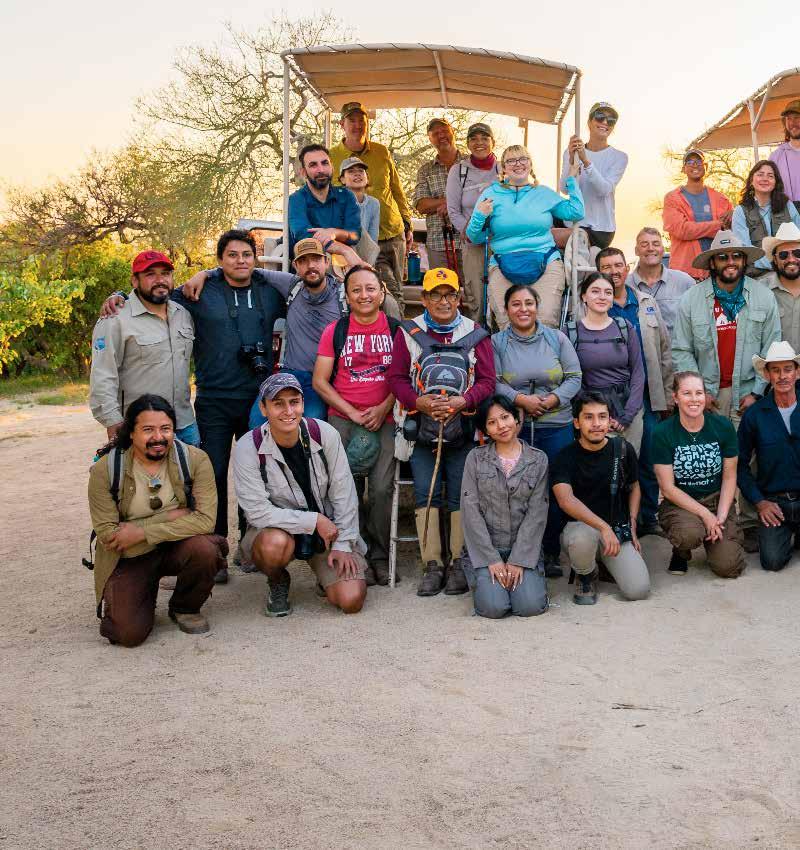
Our first transnational expedition came about in 1923 through friends Lawrence Huey and José Maria Gallegos, one from each side of the U.S.-Mexico border, who worked together to document the flora and fauna of Baja California. That expedition was over 100 years ago, and we continue working together this way. Last fall, we partnered with 10 Mexican organizations on a transdisciplinary expedition in Sierra de las Cacachilas in Baja California Sur. Our goal is to help
Top 10 Most Commonly Observed Species
California Buckwheat (ERIOGONUM FASCICULATUM)
Golden Yarrow (ERIOPHYLLUM CONFERTIFLORUM)
House Finch (HAEMORHOUS MEXICANUS)
Song Sparrow (MELOSPIZA MELODIA)
Lemonade Berry (RHUS INTEGRIFOLIA)
Western Fence Lizard (SCELOPORUS OCCIDENTALIS)
Tornleaf Goldeneye (BAHIOPSIS LACINIATA)
Western Honey Bee (APIS MELLIFERA)
Blue Dicks (DIPTEROSTEMON CAPITATUS)
California Sagebrush (ARTEMISIA CALIFORNICA)
shape a future where plants, wildlife, and people thrive together and where everyone feels connected to our extraordinary region, and strong multinational partnerships are key to achieving this goal. We feel so strongly about this that we created an entire exhibition dedicated to this topic: Expedition Baja.
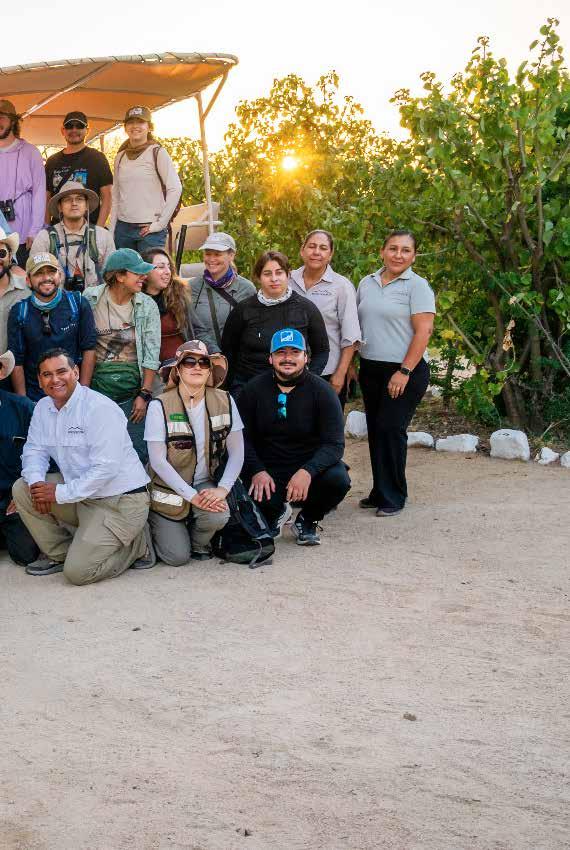
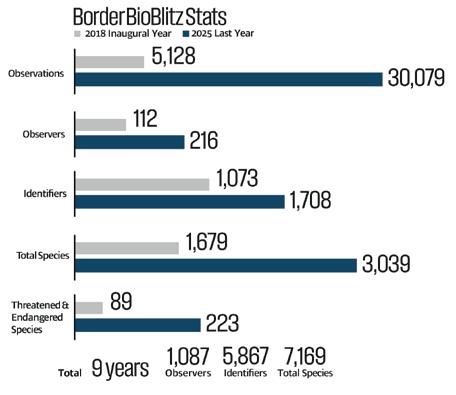
From community science projects to guided hikes, we’re always working to bring our community together, both inside the museum and out in nature. One of the projects we’re most proud of is the Border BioBlitz. While our scientists and partners work on both sides of the border to document species, they can’t have eyes on everything. This is why we are key partners in the Border BioBlitz, an iNaturalist community science project that encourages everyone to document species within 15 kilometers of the U.S.-Mexico border. Projects like these let everyone take ownership of the science that happens in their own backyard and help us determine the species that need the most protection in such a dynamic area.
So, yes, while it may be wild to dream that museums can unite a divided world, that’s exactly what we are trying to do. Museums aren’t just buildings; they’re about building community. And bringing our community together in support of nature is something we always aspire to.
*Director of Research Library & Archives at the San Diego Natural History Museum
ABOUT COMMUNITY
Los museos no son solo construcciones, se trata de construir
Este año, el tema del Día Internacional de los Museos es “Los museos unen a un mundo dividido”. Suena muy bien, pero también tremendamente idealista.
POR ARIEL HAMMOND, M.I.*
PHOTO: SPECIAL
¿Pueden los museos unir al mundo? Parece imposible, pero la mayoría de los mejores sueños lo son. Proteger objetos importantes a perpetuidad y mantenerse firmes durante siglos mientras se adaptan a los tiempos cambiantes: esas son las cosas imposibles a las que aspiran los museos. Los trabajadores de los museos dedican incontables horas silenciosas a intentar alcanzar estos objetivos porque los museos son más grandes que cualquier individuo: son una carta de amor al público y al futuro. Los museos tienen una larga historia de ser torres de marfil; todavía me sorprende que se me permita trabajar en uno. Yo fui una de las muchas niñas que crecieron visitando el Museo de Historia Natural de San Diego en excursiones escolares y visitas familiares. Espero haber tenido buenos modales, haber caminado despacio y haber usado mi “voz de interior”, pero no puedo asegurarlo. Gritar y correr no es el comportamiento ideal en un museo, pero significa que los niños están emocionados por lo que ven. No puedo imaginar cómo habría reaccionado de niña a la biblioteca del museo enfocada en la naturaleza; probablemente como Bella al ver la biblioteca de sus sueños en La Bella y la Bestia. Así que ahora, como Directora de la Biblioteca y Archivos de Investigación de The Nat, cuando veo niños demasiado emocionados en el museo, no los regaño. Los animo a seguir sus intereses, porque nunca se sabe cuál de ellos crecerá para convertirse en un futuro líder de museo. También es importante que todos se sientan bienvenidos en nuestro museo, porque es un lugar que hemos creado específicamente para ellos. Uno de los estándares fundamentales de la American Alliance of Museums es que “El museo demuestra un compromiso de proporcionar al público acceso físico e intelectual al museo y a sus recursos”, o, básicamente: “Compartan sus juguetes”. ¡Tenemos juguetes increíbles! ¡Y queremos compartirlos con la gente! Muy pocas personas llegarán a poseer uno de los libros más raros del mundo, o ver una rata canguro en peligro de extinción, o sostener un insecto recolectado por Charles Darwin. Sin embargo, qué gran oportunidad tiene un museo de compartir estos tesoros con todas las personas que lo visitan.
También nos esforzamos constantemente por hacer que nuestro museo y la naturaleza sean más accesibles para todos: desde ayudar a personas con diferentes capacidades a recorrer nuestro edificio y jardín de plantas nativas, hasta digitalizar y compartir gratuitamente nuestros recursos en línea, o hacer que cada exposición sea bilingüe. También ofrecemos programas de tarifas reducidas, días gratuitos mensuales para residentes del condado de San Diego y fondos de acceso al museo para escuelas calificadas. Y aunque estas medidas nunca parecen suficientes, preferimos seguir esforzándonos para dar al público oportunidades de conectarse con el mundo natural antes que rendirnos.
Nuestro museo está dedicado a conservar la naturaleza mediante la ciencia y el descubrimiento, y mi trabajo supervisando los archivos del museo consiste en preservar la historia de esos esfuerzos. Esto nos ayuda a descubrir más sobre el mundo natural y sobre quienes ayudaron a darle
comunidad
forma. El problema es que las personas nunca se dan cuenta de que están haciendo historia. Rosa Smith Eigenmann, la primera mujer miembro de pleno derecho de nuestro museo, se convirtió en una pionera de la ictiología. Cuando se unió en 1879, era solo una joven interesada en los peces. Ahora, sus archivos son importantes para muchas personas en las ciencias naturales, y tenemos la fortuna de que los haya conservado. Por eso es tan importante que los miembros de la comunidad se interesen en la naturaleza. Algo tan simple como una fotografía de tu vecindario puede parecer poco importante, pero esa foto podría capturar una especie que se extinga en el futuro. Nunca sabemos el impacto de las cosas que hacemos, creamos y coleccionamos, pero seguimos adelante confiando en que nuestro trabajo eventualmente ayudará. Esto es lo que representan las colecciones de nuestro museo: una biblioteca de la vida, cuidada por muchas personas a lo largo del tiempo, que esperan preservarla para el futuro.
También trabajamos para promover cambios positivos a través de esfuerzos locales, desde limpiezas de cañones hasta la planeación de conservación a ambos lados de la frontera. En nuestra zona multinacional, las fronteras son membranas semipermeables: barreras fluctuantes que conectan a nuestras comunidades. Sin embargo, estas barreras tienen consecuencias reales para las plantas y animales que habitan la región. Crear soluciones de conservación requiere que personas de todas las naciones y disciplinas se unan para compartir ideas y esfuerzos de investigación. Proteger nuestra región para las futuras generaciones es un principio fundamental de The Nat. Nuestra primera expedición transnacional surgió en 1923 gracias a los amigos Lawrence Huey y José María Gallegos, uno de cada lado de la frontera entre Estados Unidos y México, quienes trabajaron juntos para documentar la flora y fauna de Baja California. Esa expedición ocurrió hace más de 100 años, y seguimos trabajando juntos de esta manera. El otoño pasado, nos asociamos con 10 organizaciones mexicanas en una expedición transdisciplinaria en la Sierra de las Cacachilas, en Baja California Sur. Nuestro objetivo es ayudar a construir un futuro donde las plantas, la vida silvestre y las personas prosperen juntas y donde todos se sientan conectados con nuestra extraordinaria región, y las sólidas alianzas multinacionales son clave para lograr este objetivo. Sentimos tanta convicción sobre esto que creamos toda una exposición dedicada al tema: Expedition Baja. Desde proyectos de ciencia comunitaria hasta caminatas guiadas, siempre trabajamos para unir a nuestra comunidad, tanto dentro del museo como en la naturaleza. Uno de los proyectos de los que nos sentimos más orgullosos es el Border BioBlitz. Mientras nuestros científicos y socios trabajan a ambos lados de la frontera documentando especies, no pueden tener la mirada puesta en todo. Por eso somos socios clave del Border BioBlitz, un proyecto de ciencia comunitaria en iNaturalist que alienta a todas las personas a documentar especies dentro de 15 kilómetros de la frontera entre Estados Unidos y México. Proyectos como este permiten que todos se apropien de la ciencia que ocurre en su propio entorno y nos ayudan a determinar qué especies necesitan mayor protección en una zona tan dinámica.
Así que sí, aunque pueda parecer una locura soñar que los museos pueden unir a un mundo dividido, eso es exactamente lo que estamos intentando hacer. Los museos no son solo construcciones; se trata de construir comunidad. Unir a nuestra comunidad en apoyo de la naturaleza es algo a lo que siempre aspiramos.
*Directora de la Biblioteca y Archivos de Investigación del Museo de Historia Natural de San Diego
JOSÉ CARREÑO FIGUERAS
jose.carreno@heraldodemexico.com.mx / @carrenojose1
OZYMANDIAS IN WASHINGTON
Betweenballrooms,goldenstatues,and monumentsdesignedtoimmortalizehis presidency,DonaldTrumprevivesanold temptationofpower:thebeliefthatgreatness canoutlasttimeitself.Theshadowof OzymandiasonceagainloomsoverAmerican politics.
The construction of a ballroom adjacent to the White House,intended to host official receptions and celebrations,is at the center of a political controversy that largely reflects PresidentDonaldTrump’sgoverningstyle.
The president’s fascination with displays of power and luxury is part of his personality and has long been well known, datingbacktohisformalentryintopolitics in 2015.
His critics say Trump is probably the vainest president the United States has ever had.
But whereas before becoming presidentheplacedhisnameonhotels,airlines, casinos,shirts and ties,apartment buildings,universities,andgolfcourses,henow seeks — either personally or through his followers—toattachittogovernmentbuildingsandinstitutions,suchastheKennedy Center for the Performing Arts and the U.S. InstituteofPeace,whichbecametheTrump InstituteforPeace.Henowwantstogoeven further.
TheWhiteHouseballroomnowsitson land once used for the First Lady’s offices. Constructionbegandespiteobjectionsfrom preservationist groups,with assurances thatthe$400millioncostwouldbecovered byprivatedonations.
But the plans changed on April 26, shortly after the annual White House Correspondents’DinnerwasheldataWashingtonhotel,whenanassassinationattempt onthepresidentwasreported.
Trump seized the moment to underscore the need for the ballroom,which suddenly also became framed as a security installation,prompting a $1 billion budget requestsenttoCongress.
By tradition,the addition to the White House would at least unofficially bear Trump’sname.
In reality,Trump has proposed a series of monumental projects to celebrate his presidency and associate it with the festivitiesmarkingthe250thanniversaryofthe United States Declaration of Independence:from a proposed Arc de Triomphe near Arlington National Cemetery — explicitly intendedto“surpass”theoneinParis—to placing his face on commemorative passportsalongsidethatofthenation’sfounder,
GeorgeWashington,andevenhissignature onbillstobeissuedthisyear.
Just days ago,Trump and his supporters celebrated the unveiling of a three-meter-tall,gold-plated statue at his Doral golf course in a Miami suburb.It was a lifetime tribute unlike any previously bestowed in the United States.
According to political scientist Bill Schneider,“Trump’svaintendenciesarecausing many Americans to lose confidence in the president and in his policies.” Most damaging,Schneider argues,is that Trump’s policiesexplicitlyfavorthewealthy.Itisnotonly his economic policies but also his social policies that benefit and create opportunities for affluent people,especially those who financehisextravagantventures.
At his personal residence,in his hotels and buildings,and now in his White House office,Trump has tended to fill spaces with gold or even gold plating whenever possible,as a display of wealth and prosperity.But some say it is merely a matter of appearances.
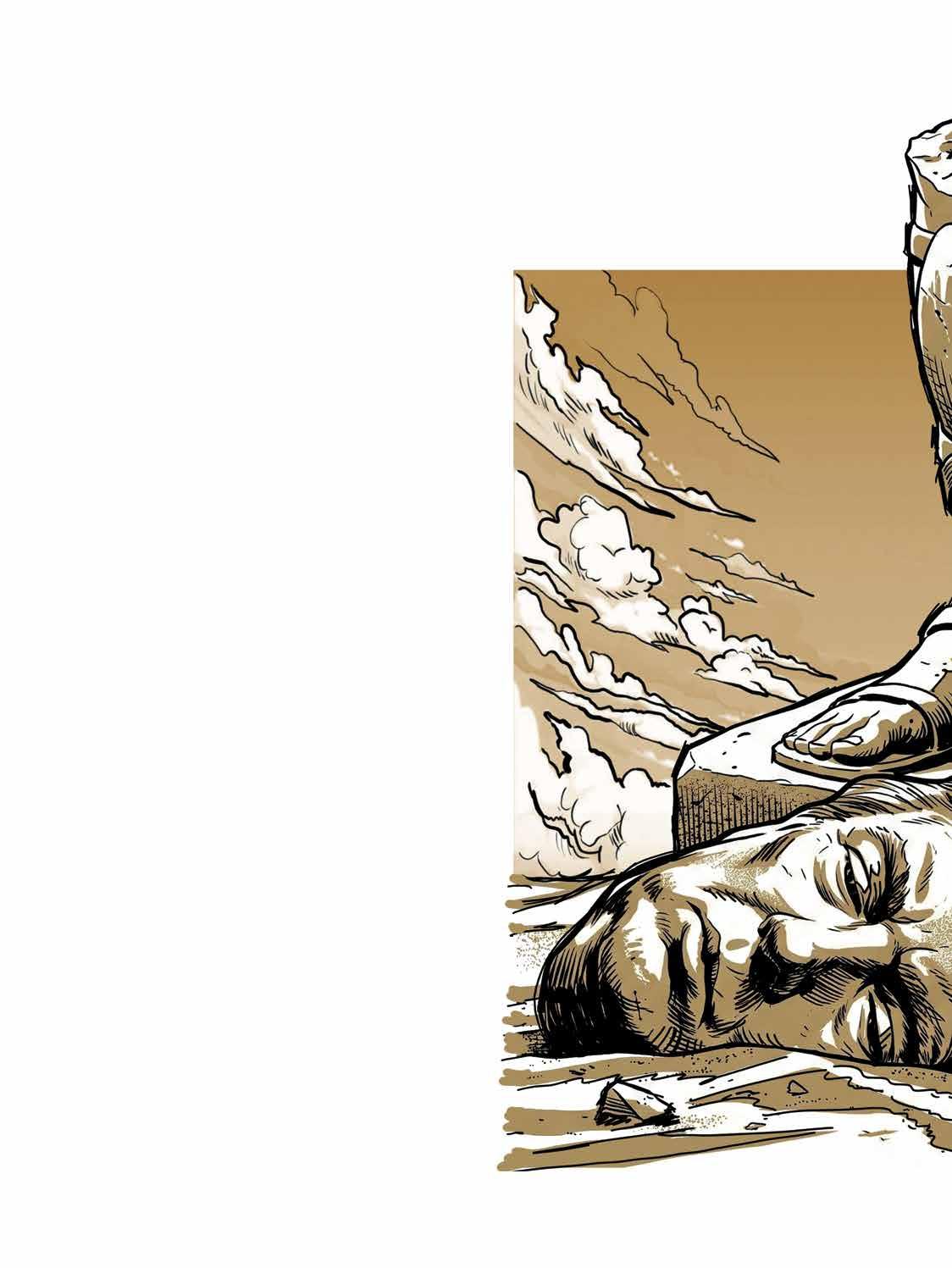
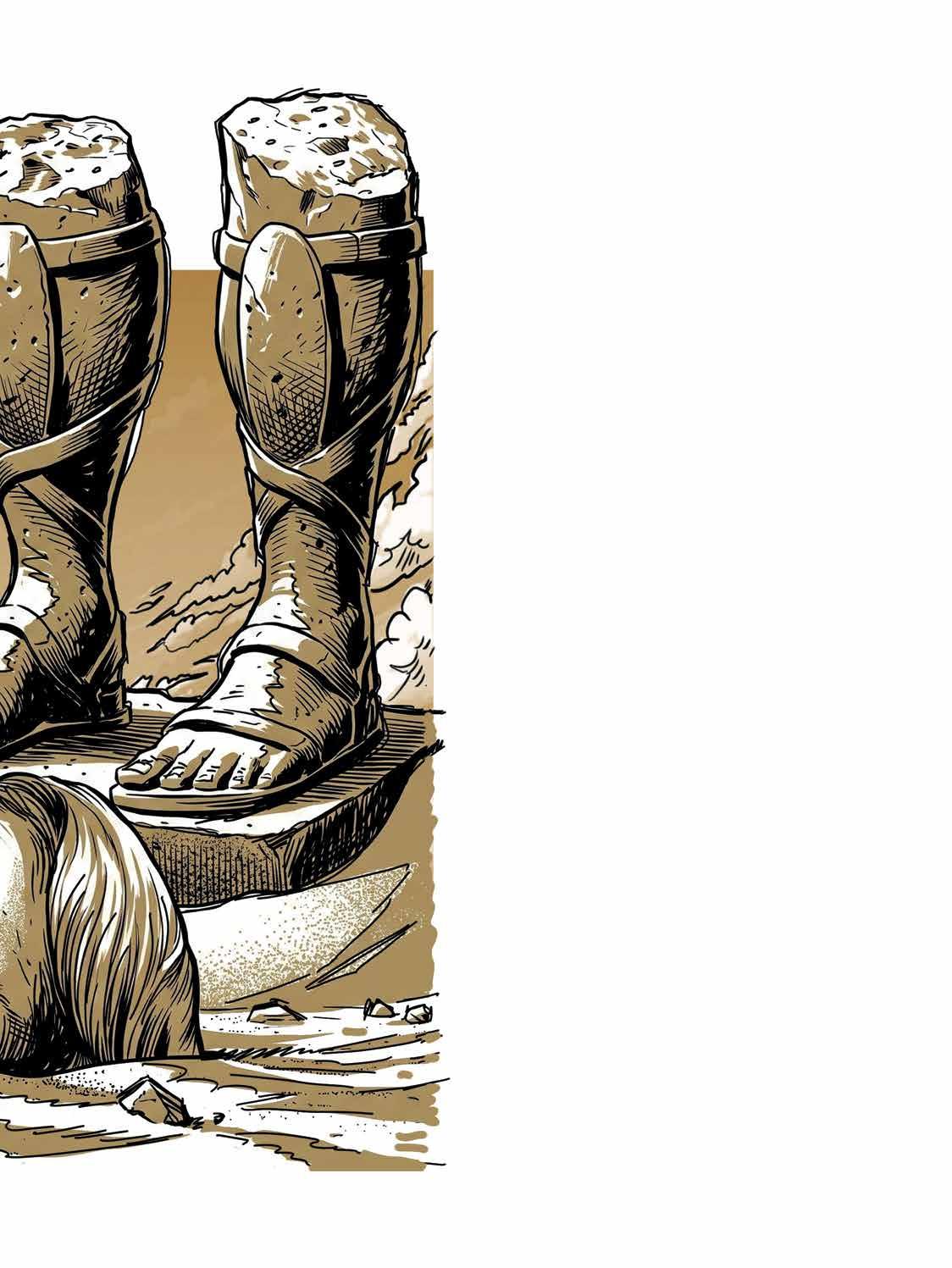
HistorysuggeststhatPharaohRamses IImayhavebeenEgypt’sgreatestruler.Also known as Ozymandias,he inspired poet PercyShelleytowritewhatisnowoneofthe mostfamoussonnetsintheEnglishlanguage after his statue was discovered in Egypt in the early 19th century and arrived at the BritishMuseum.Writtenin1817,thesonnet is considered an allegory about the fleeting natureofpowerandtheravagesoftime.
“I met a traveler from an antique land, Who said—‘Two vast and trunkless legs of stone Stand in the desert…Near them,on the sand, Half sunk,a shattered visage lies,whose frown, And wrinkled lip,and sneer of cold command, Tell that its sculptor well those passions read Which yet survive,stamped on these lifeless things, The hand that mocked them, and the heart that fed.’
“And on the pedestal,these words appear: ‘My name is Ozymandias,king of kings: Look on my works,ye Mighty,and despair!’
“Nothing beside remains.
Around the decay
Of that colossal wreck,boundless and bare, The lone and level sands stretch far away.”
Ozymandias enWashington
Entre salones de baile, estatuas doradas y monumentos para inmortalizar su presidencia, Donald Trump revive una vieja tentación del poder: creer que la grandeza puede resistir el paso del tiempo. La sombra de Ozymandias vuelve a recorrer la política estadounidense.
POR JOSÉ CARREÑO FIGUERAS
ARTE: ALEJANDRO OYERVIDES
La construcción de un salón de baile adyacente a la Casa Blanca,destinado a servir de escenario para recepciones y festejos oficiales,está en el centro de una polémica política que refleja en gran medida el estilo de gobierno del presidente Donald Trump.
La afición del mandatario por las apariencias de poder y lujo forma parte de su personalidad y es bien conocida desde mucho antes de su entrada formal en política,en 2015.
Trump,dicen sus críticos,es probablemente el presidente más vanidoso que los Estados Unidos hayan tenido jamás.
Pero si antes de ser mandatario ponía su nombre en hoteles,aerolíneas,casinos, camisas y corbatas,edificios de departamentos,universidades,campos de golf, ahora trata — él o sus seguidores — de hacerlo en edificios e instituciones del gobierno,como el Centro Kennedy para las Artes,el Instituto estadounidense de Paz Internacional,que pasó a ser el Instituto Trump para la Paz,y ahora busca ir más allá.
El salón de baile de la Casa Blanca ocupa ahora un terreno que antes servía para las oficinas de la Primera Dama,y su construcción se inició a pesar de las objeciones de grupos preservacionistas,con la afirmación de que el costo de 400 millonesdedólaresseríacubiertopordonativos privados.
Pero los planes cambiaron el 26 de abril,poco después de que se celebrara la cena anual de Corresponsales de la Casa Blanca en un hotel de Washington,cuando se registró un intento de atentado contra el mandatario.
Trump aprovechó el momento para subrayar la necesidad del salón de baile, que súbitamente pasó a convertirse también en una instalación de seguridad,con un costo de mil millones de dólares solicitado al Congreso.
Según la costumbre,el añadido a la Casa Blanca llevaría,al menos extraoficialmente,el nombre de Trump.
Trump ha propuesto una serie de obras monumentales para celebrar su presidencia y asociarla a los festejos del 250 aniversario de la Declaración de IndependenciadelosEstadosUnidos,desdeun Arco de Triunfo cerca del Cementerio Nacional de Arlington,con la expresa intención de “superar” al de París,hasta poner su rostro en los pasaportes conmemorati-
vos,al lado del fundador del país,George Washington,y eso sin olvidar su firma en los billetes a emitirse este año.
Hace apenas unos días,la develación de una estatua de tres metros de alto,chapada en oro,en su campo de golf de Doral (un suburbio de Miami),fue festejada por él y sus seguidores.Fue un homenaje en vida que nunca se había otorgado en los Estados Unidos.
El problema es que,de acuerdo con el politólogo Bill Schneider,“las tendencias vanidosas de Trump están provocando que muchos estadounidenses pierdan la confianza en el presidente y en sus políticas”. Lo más perjudicial es que las políticas del presidente Trump favorecen explícitamentealosmásricos.Nosoloson suspolíticaseconómicas,sinotambiénsus políticas sociales,que ofrecen beneficios y oportunidades a las personas adineradas, especialmente a quienes financian sus extravagantes aventuras.
En su residencia personal,en sus hoteles y edificios,y ahora en su despacho de la Casa Blanca,la tendencia de Trump ha sido llenarlos de dorado o incluso de chapa de oro cuando sea posible,como señal de riqueza y prosperidad.Pero también, dicen algunos,es una mera cuestión de apariencias.
La historia dice que el faraón Ramsés II fue posiblemente el soberano más grandedeEgipto.TambiénconocidocomoOzymandias,el descubrimiento de su estatua en Egipto a principios del siglo XIX y su llegada al Museo Británico llevaron al poeta Percy Shelley a escribir lo que hoy es uno de los sonetos más famosos de la lengua inglesa.Escrito en 1817,se considera una alegoría de la fugacidad del poder y de los estragos del tiempo.
“Conocí a un viajero de una tierra antigua que dijo: ‘Dos enormes piernas pétreas, sin su tronco, se yerguen en el desierto.’
A su lado, en la arena, semihundido, yace un rostro hecho pedazos, cuyo ceño y mueca en la boca, y desdén de frío dominio, cuentan que su escultor comprendió bien esas pasiones, las cuales aún sobreviven, grabadas en estos inertes objetos, a las manos que las tallaron y al corazón que las alimentó.
“Y en el pedestal se leen estas palabras: ‘Mi nombre es Ozymandias, rey de reyes: ¡Contemplad mis obras, poderosos, y desesperad!’.
“Nada queda a su lado. Alrededor de la decadencia de estas colosales ruinas, infinitas y desnudas, se extienden, a lo lejos, las solitarias y llanas arenas.”
Interview with Felipe Galindo Gómez “Feggo,”
Mexican illustrator, cartoonist, and writer in New York
MANHATITLÁN:
WHERE TWO WORLDS MEET, AND NO ONE IS “ILLEGAL”
BY ALAN VARGAS
OYERVIDES
ALEJANDRO
ARTWORK:
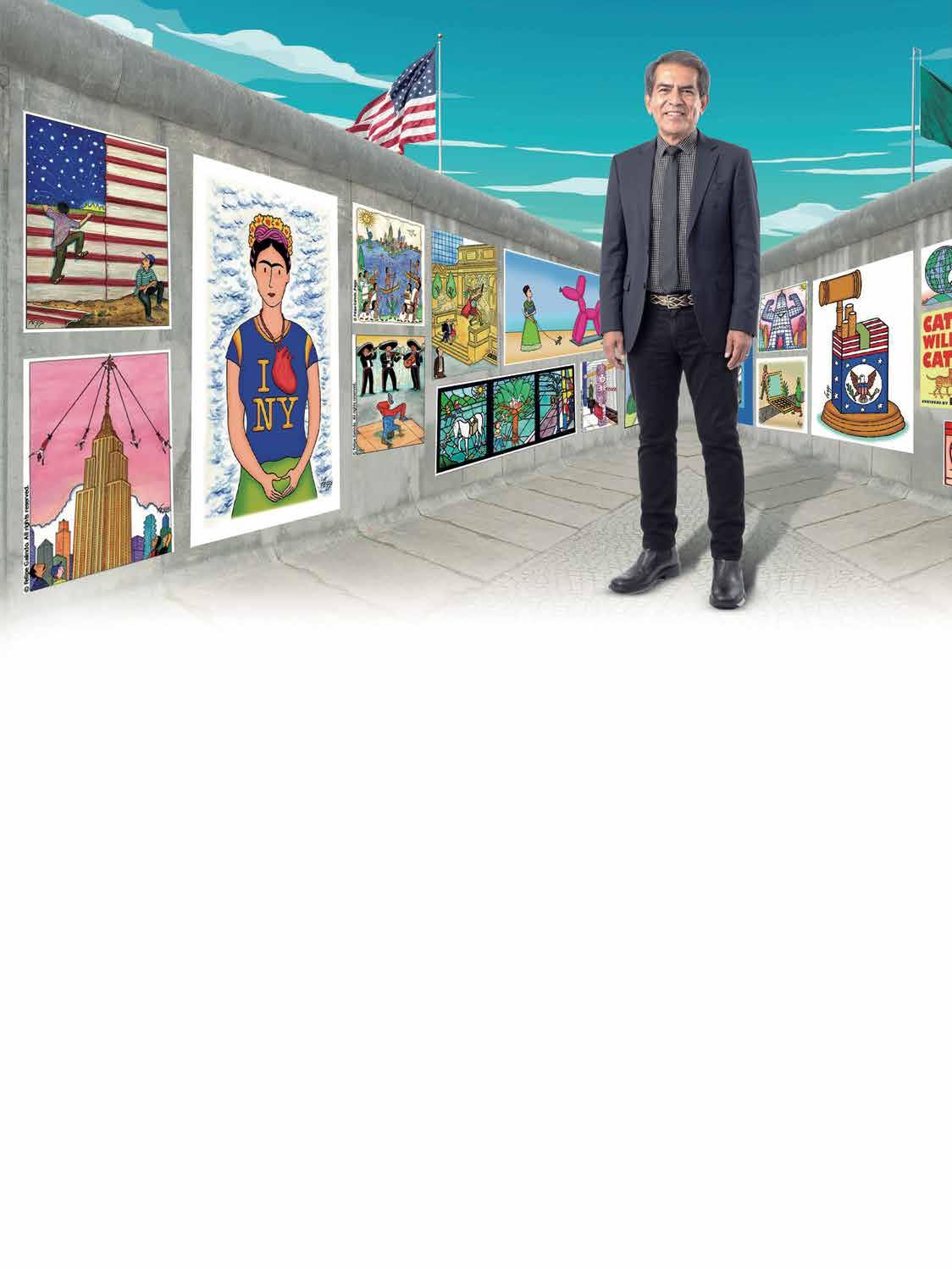
Felipe Galindo arrived in New York 43 years ago with a portfolio, six months’ savings, and no intention of staying. Today, his illustrations have appeared in The New Yorker and The New York Times, are part of the U.S. Library of Congress collection, and his stained-glass pieces remain in the Manhattan subway. His work was recently removed from the Smithsonian by order of the Trump administration. Feggo, known in the international cartooning world, speaks exclusively with Heraldo USA about migration, censorship, artificial intelligence, and the value of nurturing a passion.
You once said:“Those were the longest six months of
my life.”After 43 years there,how did you arrive in New York,and how did the idea of staying come about?
Feggo: My intention was to explore, make contacts with publications, and plant seeds. The plan was to return to Mexico and collaborate by mail—there was no fax, express delivery, or internet. The consensus was that if I wanted to stay connected to these markets, I had to live here. Just as I was about to return, I received an offer to create comic strips for a couple of bilingual books. The project lasted two years, and I grew to like them. I became an accidental migrant. It wasn’t my original plan to stay, but here I am—and now I celebrate it as another title in my collection: I am an immigrant artist.
How do you use humor and art as a language? You’ve said in other interviews that “art tends to be very serious.”
Feggo: That curiosity started in middle school. I discovered two very important figures: Ríus, the cartoonist who questioned and proposed political ideas, and Quino, the creator of Mafalda—not just his drawings, but his wordless humor books. It felt like a philosopher drawing. That left a strong mark on me.
At UNAM, I received incredible training, but the gallery art path required securing representation and producing consistently. It was a difficult path. Halfway through my studies, I began publishing cartoons in the university newspaper, and that’s when I started earning enough to live. I decided to fully commit to it.
When you arrived in New York,how did you adapt that language to such a different market?
Feggo: If I only referred to things from Mexico, it wouldn’t resonate here. So, I looked for universality—humor that doesn’t require cultural
explanation. That has always been the challenge: packing a lot of information into a cartoon that can be understood here and anywhere else in the world. That’s what opened doors for me.
About Manhatitlán.How did that series come about?
Feggo: Mainly out of nostalgia. After a few years here, I began to miss Mexico deeply, and I imagined Mexican cultural symbols in New York. I published them in La Jornada as Postcards from Manhatitlán, and later I had a full page in a local newspaper called Águila o Sol.
My idea was for Americans to ask, “What is this?” and then look it up—sparking curiosity about Mexican culture, especially by placing it here in New York. About ten years after I arrived, a strong wave of Mexican migration hit the area, and people said I had predicted it. For me, they were simply curious images when I created them.
What happened to your piece July 4th,Seen from the Southern Border,at the Smithsonian?
Feggo: It’s a drawing of the metal border fence, with a young man looking toward the United States as July 4th is celebrated. The metal bars resemble the stripes of the American flag, and the city on the other side I drew in gold, like the gold the Spanish once sought and what immigrants seek today. I always leave it up to the viewer’s interpretation.
The Library of Congress acquired it, and the Smithsonian’s National Museum of American History requested it for its section on Latino history in the U.S. Then people from the current administration visited museums, noting what they didn’t like—and my drawing was among the few they flagged. I rushed to Washington to document it, and I was surprised to find that not only was my piece removed, but the entire section dedicated to Latin Americans had been taken down.
Do you consider that censorship?
Feggo: There’s pressure on institutions—if they keep the work, funding gets cut. They do it this way because they can’t directly restrict freedom of expression. People asked me, “Were you censored?” Not literally—but I was silenced. The difference is that I will keep speaking out.
There’s a huge irony here: thanks to freedom of expression, this president is in power. He says all kinds of lies and still won again. So, there’s a real struggle over how we can keep speaking without being silenced.
What do you think about the rise of artificial intelligence in the creative field?
Feggo: Some are for it, some are against it, and there’s significant investment behind it. What’s already clear is that it’s causing damage: misinformation and the displacement of creative work.
My stance is this: instead of artificial intelligence, we need to be intelligent artists to overcome those two letters. It’s a major challenge, but we need to stay ahead of it—use it as a tool, not a replacement. Always be skeptical: anything that feels free isn’t. They’re taking your data.
FACTS
Mexican art reshaped New York life
Humor without borders or barriers
Feggo turned migration into art

Manhatitlán: la unión de dos mundos donde nadie es “ilegal”
Entrevista a Felipe Galindo Gómez“Feggo” ilustrador, caricaturista y escritor mexicano en Nueva York.
POR ALAN VARGAS
ARTE: ALEJANDRO OYERVIDES
FelipeGalindollegóaNuevaYorkhace43añoscon unportafolio,seismesesdeahorrosyningunaintencióndequedarse.Hoy,susilustracionesestán enTheNewYorker,TheNewYorkTimesyforman partedelaBibliotecadelCongresodeEstadosUnidos,susvitralespermanecenenelMetrodeManhattan ysuobraacabadeserretiradadelSmithsonianpororden delaadministraciónTrump.Feggo,comoledicenenel mundodelacaricaturainternacional,hablaenexclusiva paraHeraldoUSAsobremigración,censura,inteligencia artificial y el valor de cultivar una pasión.
Tú dijiste: “son los 6 meses más largos de mi vida”. Luego de 43 años allá ¿Cómo llegaste a Nueva York y cómo surge el plan de quedarte?
Feggo:Miintencióneraveniraexplorar,hacercontacto con publicaciones, plantar semillas. La idea era regresar a México y colaborar por correo, porque no existía ni el fax, ni el correo express, ni internet. El consenso fue que si quería estar conectado con estos mercados, tendría que vivir aquí. A punto de regresar, me cayó una oferta para hacer tiras cómicas en un par de libros bilingües, el proyecto fue por dos años, y esos dos años me empezaron a gustar. Me convertí en un migrante accidental. No era mi idea principal quedarme, pero aquí estoy, y ahora lo celebro como un nombre más en mi colección: soy un artista inmigrante.
¿Cómo usas el humor y el arte como lenguaje? “El arte suele ser muy serio”,es un comentario que has dicho en otras entrevistas.
Feggo: Mi inquietud viene desde la secundaria. Descubrí dos personas muy importantes: el caricaturista Ríus, que cuestionaba y proponía cosas políticas, y Quino, el creador de Mafalda, no solo sus dibujos, sino sus libros de humor sin palabras. Era como si un filósofodibujara.Esomemarcómucho.EnlaUNAMtuve una formación increíble, pero en el camino del arte de galería requería conseguir representación, producir obra constantemente. Era una ruta muy difícil. A la mitad de la carrera empecé a publicar cartones en el periódico universitario y ahí empecé a ganar dinero para poder vivir. Decidí meterme de lleno.
Cuando llegaste a Nueva York,¿cómo adaptas ese lenguaje a un mercado tan distinto al mexicano?
Feggo: Si me refería solo a cosas de México, aquí no iba a tener eco. Entonces busqué una universalidad, un humor que no necesita explicación cultural. El reto siempre ha sido ese: poner mucha información en un cartón y que se pueda entender aquí y en el otro lado del mundo. Eso fue lo que me abrió puertas.
Sobre Manhatitlán.¿Cómo surge esa serie?
Manhatitlán
What message would you give to Mexicans and Latinos living in the United States today?
Feggo: Be very careful, stay informed, and go to centers that can help you. And don’t be afraid. Be firm and strong in what you believe and feel.
And for those who are creative or drawn to the arts: nurture your passion—whether it’s music, art, math, or anything else. If you have a passion and cultivate it, something surprising will happen. That’s what happened to me: I nurtured my passion, and here I am.
¿Qué pasó con tu obra 4 de julio visto desde la frontera sur en el Smithsonian?
Feggo: Es un dibujo de la valla metálica en la frontera, con un chico que está mirando hacia Estados Unidos mientras se celebra el 4 de julio. Las franjas de metal semejaban las franjas de la bandera americana, y la ciudad del otro lado la dibujé como dorada, como el dorado (oro) que venían a buscar los españoles, como el que buscan los inmigrantes hoy. Siempre lo dejo al criterio del espectador.
LaBibliotecadelCongresomelacompró,yelMuseo de Historia del Smithsonian me pidió usarla para su sección dedicada a la historia de los latinos en Estados Unidos. Llegó gente de la administración actual a recorrer los museos anotando lo que no les gustaba, y entre las pocas cosas que señalaron estaba mi dibujo. FuicorriendoaWashingtonadocumentarlo,ymellevé la sorpresa de que no solo quitaron mi obra: quitaron toda la sección dedicada a los latinoamericanos.
¿Lo consideras censura?
Feggo: Es presión a las instituciones, si quitan la obra, habrá recortes. Lo hacen así porque no pueden cortar directamente la libertad de expresión. Me preguntaban: ¿te censuraron? No, en el sentido literal, pero me callaron. La diferencia es que seguiré denunciando, seguiréhablando.Yhayunaironíamuygrandeentodo esto: gracias a la libertad de expresión, este presidente está en el poder. Dice todas las mentiras y ganó nuevamente.Entonceshayunagranluchaporverpordónde podemos hablar sin que nos silencien.”
¿Qué opinas del avance de la inteligencia artificial en el campo creativo?
Feggo:Haygenteafavorycontra,ymuchainversiónde por medio. Lo que ya es un hecho es que está causando estragos: desinformación, desplazamiento de áreas creativas.Miposturaesesta:enlugardequeseainteligencia artificial, tenemos que ser artistas inteligentes para poder vencer esas dos letras. Es un gran reto, pero creoquetenemosqueestarencimadeeso,queseauna herramienta y no un sustituto. Y siempre hay que ser escéptico: todo lo que sentimos que es gratis, no lo es. Te están sacando toda la información.
AV: ¿Qué mensaje le das a los mexicanos y latinos que viven en Estados Unidos en este momento?
Feggo: Tener mucho cuidado, estar muy informados, acudir a los centros que puedan ayudarlos. Y no tener miedo.Serfirmesyfuertesenloqueunocreeyenloque unosiente.Yparalosquesoncreativosolesgustanlas artes: nutrir mucho la pasión que tengan, ya sea música, arte, matemáticas, lo que sea. Si tienen una pasión y la cultivan, algo sorprendente va a pasar. Un poco lo que me pasó a mí: cultivé mi pasión y aquí estoy *EltrabajodeFelipeGalindoFeggopuedeconsultarseenhttp://feggo.com yenInstagramcomo@ feggorama.*
Datos
El arte mexicano transformó la vida neoyorquina
Humor sin fronteras ni barreras Feggo convirtió la migración en arte
Manhatitlán Art,exile,and humor in NYC. Arte,exilio y humor en Nueva York.
43
years after a “6-month” stay
Feggo: Por nostalgia, principalmente. A los pocos años de estar aquí empecé a extrañar mucho México y se me ocurrió imaginar símbolos culturales mexicanos dentro de Nueva York. Los publiqué en La Jornada, los llamaba Postales de Manhatitlán, y luego tuve una página entera en un periódico de aquí que se llamaba Águila o Sol. Mi idea era que el americano dijera: ¿por qué es esto? Y que investigara al respecto. Generar curiosidad por lo mexicano, sobre todo si lo ponía aquí en Nueva York. Lo curioso es que, diez años después de que llegué empezó a haber una migración fuerte de mexicanosalárea,ydecíanqueyoprofeticéesallegada de mexicanos aquí. Para mí también eran imágenes curiosas cuando las hice.
43
años después de una estancia de “6 meses” Smithsonian removed his artwork el Instituto Smithsoniano retiró su obra de arte.
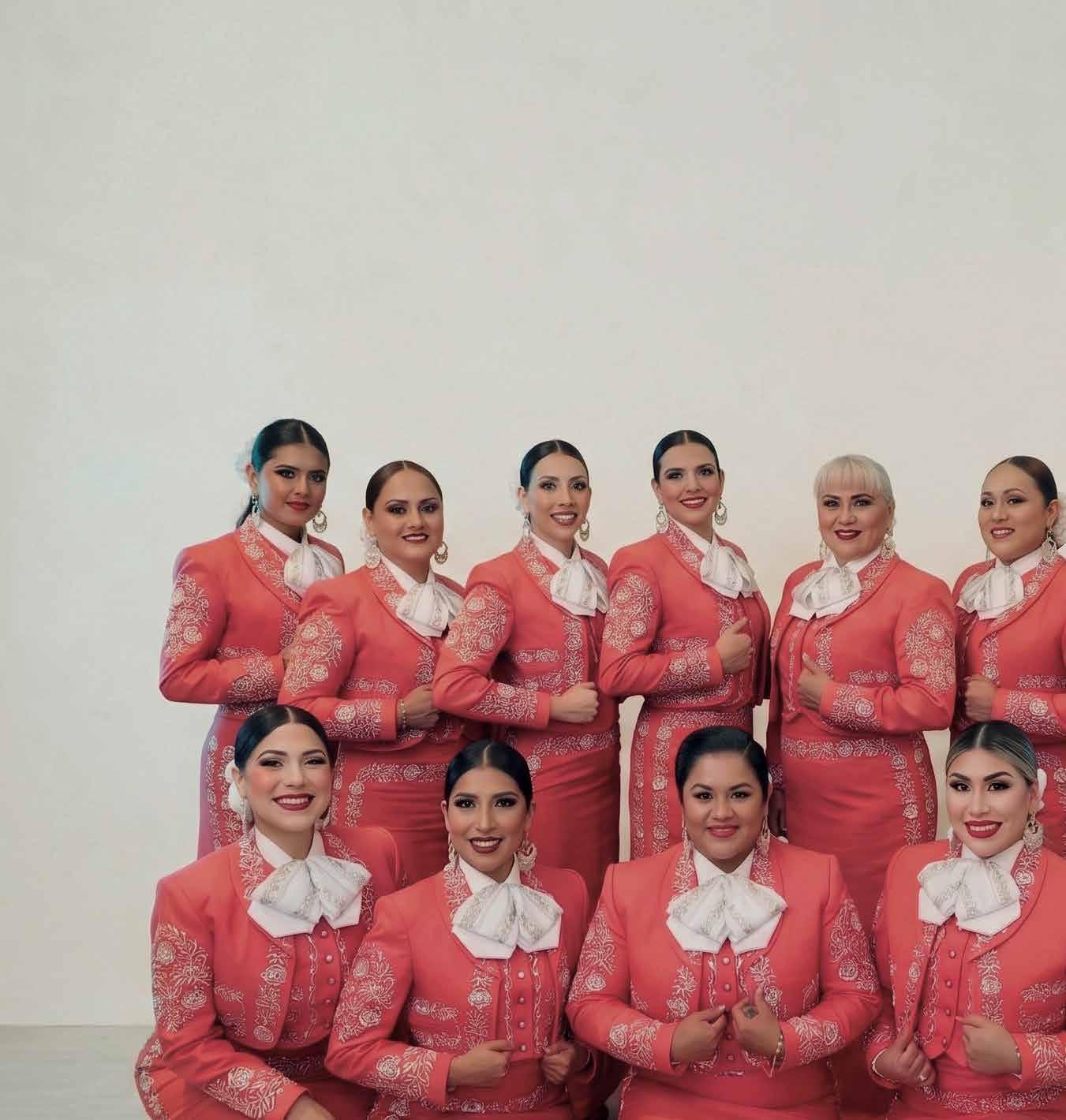
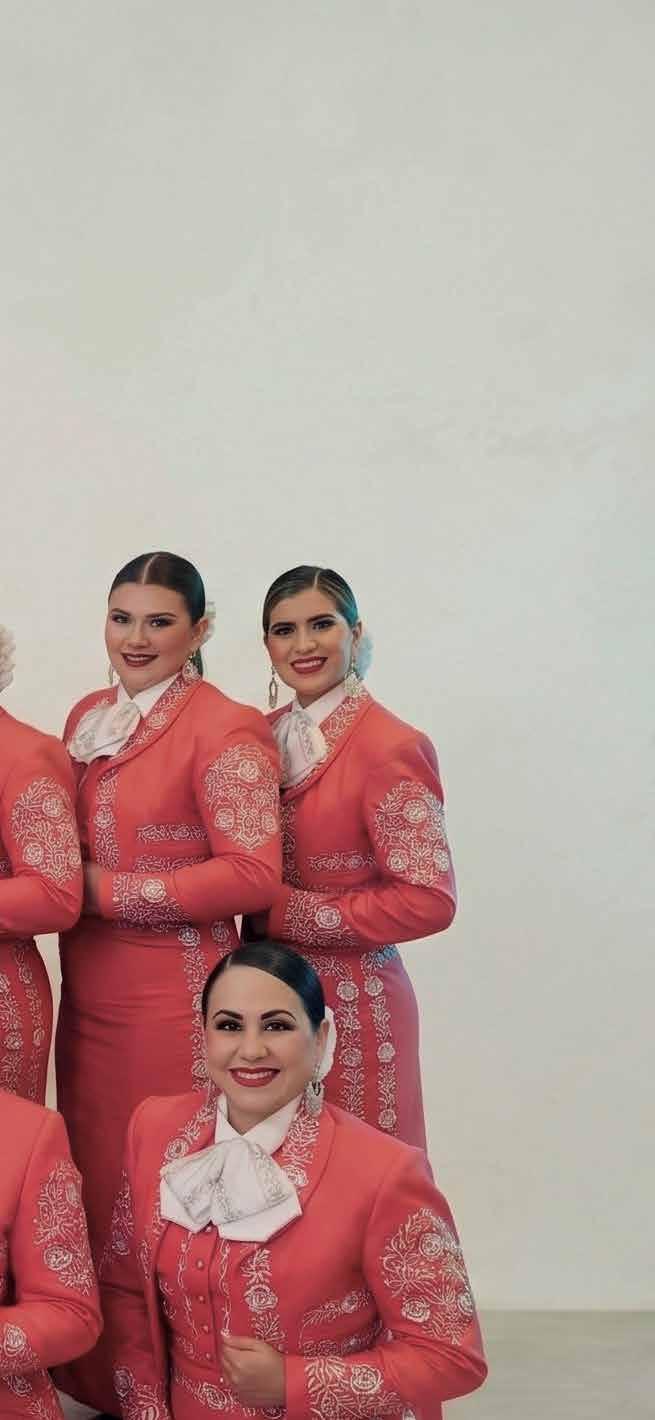
Mariachi Reyna de Los Ángeles, an all-female ensemble that broke new ground, has been officially recognized by California for its cultural significance. With voices like Crystal Hernández, the group carries on a legacy that combines tradition, education, and representation.
BY OSO OSEGUERA
PHOTOS: ESPECIAL
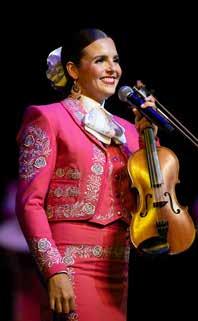
When Crystal Hernández first played a violin at age five, it didn’t seem like the start of a career—more like something natural, almost inevitable. Music was not just in her life; it was everywhere. It filled family gatherings, the walls of her family’s restaurant, and stages where mariachi music connected deeply with audiences,
SEVEN GENERATIONS, ONE STAGE:
THE MARIACHI THAT CHANGED THE RULES
no matter their language or background.
“I grew up watching how people experienced the music,” she recalls. “Even those who didn’t speak Spanish could connect with it. That’s when I knew I wanted to be part of it.”
Today, Hernández is part of Mariachi Reyna de Los Ángeles, one of the most influential mariachi groups in the United States—and one that has just received a major honor: official recognition from the state of California, including induction into a Hall of Fame in Sacramento. The distinction is not only symbolic; it also places the group firmly within the state’s cultural history.
For Hernández and her fellow musicians, the recognition holds a deeper significance. “We feel so honored that the governor has recogni-
zed Mariachi Reyna as trailblazers for women in mariachi,” she says. “Now we have a place in California’s history books.”
Founded by José Hernández, Mariachi Reyna de Los Ángeles broke barriers in a genre traditionally dominated by men. During a time when women were seldom seen on mariachi stages, the group created space—not just for performers, but for future generations.
Crystal Hernández exemplifies that legacy. She is the seventh generation in a mariachi family, understanding the responsibility—and pride—that comes with it. “I feel responsible, but also very proud. I know this doesn’t end with me,” she explains.
Her path was shaped not only by tradition
but also by formal training. She studied music education at Texas Christian University, honing her skills in violin, voice, and performance. Along the way, she explored musical theater, orchestra, and choir—experiences that helped her refine her craft and broaden her artistic repertoire. That mix of heritage and discipline now shapes her stage work.
“When I perform, I want people to feel proud,” she says. “Proud to be Mexican, proud to see women doing this, proud of the music. And I want them to feel inspired.”
Beyond performance, Hernández is also dedicated to education. Through the José Hernández Mariachi Academy, she teaches young students across California, ensuring that ma-
Key facts & figures
7 generations of mariachi tradition in Hernández’s family.
She was 5 years old when Crystal first picked up the violin.
1 historic milestone: first professional all-female mariachi in the U.S.
1 Hall of Fame induction in Sacramento,California.
Dozens of California school districts have adopted mariachi education.
100% female ensemble redefining a traditionally male-dominated genre.
riachi music continues to grow while remaining grounded in its traditions.
“I always knew I wanted to teach,” she says. “Passing on this music is just as important as performing it.”
This dual role—performer and educator— emodies a broader mission shared by Mariachi Reyna: to preserve cultural identity while welcoming new opportunities.
Their influence extends beyond music. In cities like Los Angeles, mariachi has become a vital part of the cultural fabric, symbolizing the connection between Mexican heritage and American identity. Mariachi Reyna stands at that intersection, demonstrating that tradition can evolve, expand, and welcome new voices. Their performances showcase that mix. From traditional mariachi tunes to California-inspired tracks like “Lowrider,” the group offers a repertoire that resonates with multiple generations and communities.
Siete generaciones, un escenario: el mariachi que cambió las reglas
Mariachi Reina de Los Ángeles, un ensamble totalmente femenino que abrió camino, ha sido reconocido oficialmente por California por su relevancia cultural. Con voces como la de Crystal Hernández, el grupo continúa un legado que combina tradición, educación y representación.
POR OSO OSEGUERA
For Hernández, emotional connection stays at the heart of everything. She still recalls the first time she performed with Mariachi Reyna—a moment she describes as surreal, filled with pride and disbelief after years of hard work.
“It felt like the start of something beautiful,” she says.
That sense of purpose continues to guide her—and the group—as they enter a new chapter marked by recognition and visibility.
The Hall of Fame honor isn’t just about reflecting on the past; it’s about what lies ahead. It recognizes decades of effort while emphasizing the importance of representation in the arts.
And for young musicians watching from the audience, the message is clear. “Follow your passion, work hard, and take every opportunity to learn,” Hernández says. “You never know—one day you might be here too.”
CARTE: ESPECIAL
uando Crystal Hernández tomó un violín por primera vez, a los cinco años, no parecía ser el inicio de una carrera, sino algo natural, casi inevitable. La música no solo formaba parte de su vida; estaba en todas partes. Llenaba las reuniones familiares, las paredes del restaurante de su familia y los escenarios donde el mariachi conectaba profundamente con el público, sin importar el idioma o el origen.
“Crecí viendo cómo la gente vivía la música”, recuerda. “Incluso quienes no hablaban español lograban conectar con ella. Ahí supe que quería ser parte de eso”.
Hoy, Hernández forma parte de Mariachi Reyna de Los Ángeles, uno de los grupos de mariachi más influyentes en Estados Unidos, que recientemente recibió un importante reconocimiento: el aval oficial del estado de California, incluido su ingreso al Salón de la Fama en Sacramento. La distinción no es solo simbólica; también sitúa al grupo en la historia cultural del estado.
Para Hernández y sus compañeras, el reconocimiento tiene un significado más profundo. “Nos sentimos muy honradas de que el gobernador haya reconocido a Mariachi Reyna como pioneras para las mujeres en el mariachi”, dice. “Ahora tenemos un lugar en los libros de historia de California”.
Fundado por José Hernández, Mariachi Reyna de Los Ángeles rompió barreras en un género tradicionalmente dominado por hombres. En una época en la que pocas mujeres subían a los escenarios de mariachi, el grupo abrió espacios no solo para intérpretes, sino también para futuras generaciones.
Crystal Hernández encarna ese legado. Es la séptima generación de una familia de mariachis, consciente de la responsabilidad — y el orgullo — que eso implica. “Me siento responsable, pero también muy orgullosa. Sé que esto no termina conmigo”, explica.
Su camino ha estado marcado tanto por la tradición como por la formación académica. Estudió educación musical en la Texas Christian University, donde perfeccionó sus habilidades en violín, canto y actuación escénica. En el proceso, también exploró el teatro musical, la orquesta y el coro, experiencias que ampliaron su repertorio y fortalecieron su estilo.
Esa mezcla de herencia y disciplina hoy define su trabajo en el escenario.
“Cuando me presento, quiero que la gente se sienta orgullosa”, dice. “Orgullosa de ser mexicana, orgullosa de ver a mujeres haciendo esto, orgullosa de la música. Y quiero que se sientan inspirados”.
Más allá del escenario, Hernández tam-
bién está comprometida con la enseñanza. A través de la Academia de Mariachi José Hernández, imparte clases a jóvenes en distintas zonas de California, asegurando que el mariachi siga creciendo sin perder sus raíces. “Siempre supe que quería enseñar”, afirma. “Transmitir esta música es tan importante como interpretarla”.
Este doble papel —intérprete y educadora— refleja una misión más amplia que comparte Mariachi Reyna: preservar la identidad cultural mientras abre nuevas oportunidades.
Su influencia va más allá de la música. En ciudades como Los Ángeles, el mariachi se ha convertido en parte esencial del tejido cultural, símbolo de la conexión entre la herencia mexicana y la identidad estadounidense. Mariachi Reyna se sitúa justo en ese punto, demostrando que la tradición puede evolucionar, expandirse y dar la bienvenida a nuevas voces.
Sus presentaciones lo reflejan. Desde piezas tradicionales de mariachi hasta temas con influencia californiana como “Lowrider”, el grupo ofrece un repertorio que conecta con distintas generaciones y comunidades.
Para Hernández, la conexión emocional sigue siendo el eje de todo. Aún recuerda la primera vez que se presentó con Mariachi Reyna, un momento que describe como irreal, lleno de orgullo e incredulidad tras años de esfuerzo.
“Se sintió como el inicio de algo hermoso”, dice.
Ese sentido de propósito sigue guiándolas a ella y al grupo, ahora en una nueva etapa marcada por el reconocimiento y la visibilidad.
El ingreso al Salón de la Fama no solo mira al pasado; también apunta hacia lo que viene. Reconoce décadas de trabajo y subraya la importancia de la representación en las artes.
Y para las jóvenes músicas que observan desde el público, el mensaje es claro: “Sigan su pasión, trabajen duro y aprovechen cada oportunidad para aprender”, dice Hernández. “Nunca saben; algún día podrían estar aquí también”
Datos clave
7 generaciones de tradición mariachera en la familia Hernández.
Tenía 5 años cuando tomó el violín por primera vez.
Hito histórico: primer mariachi profesional femenino en EE.UU.
Ingreso al Salón de la Fama de Sacramento, California.
Decenas de distritos escolares en California han adoptado la enseñanza del mariachi. Ensamble 100% femenino que redefine un género históricamente dominado por hombres.