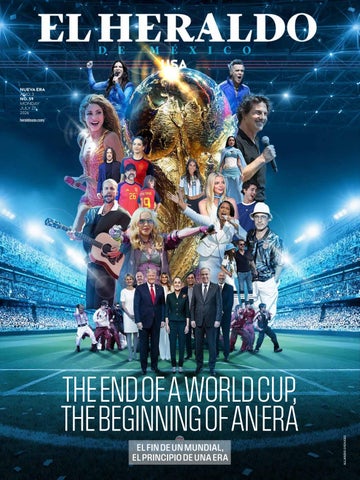
The World Cup final went far beyond sports, generating an unprecedented social and cultural impact. It became an event that broke every global convention and shattered virtually every record, from television ratings to the staggering prices of stadium tickets.
BY DAMIÁN MARTÍNEZ GARCÍA
PHOTOS: ESPECIAL
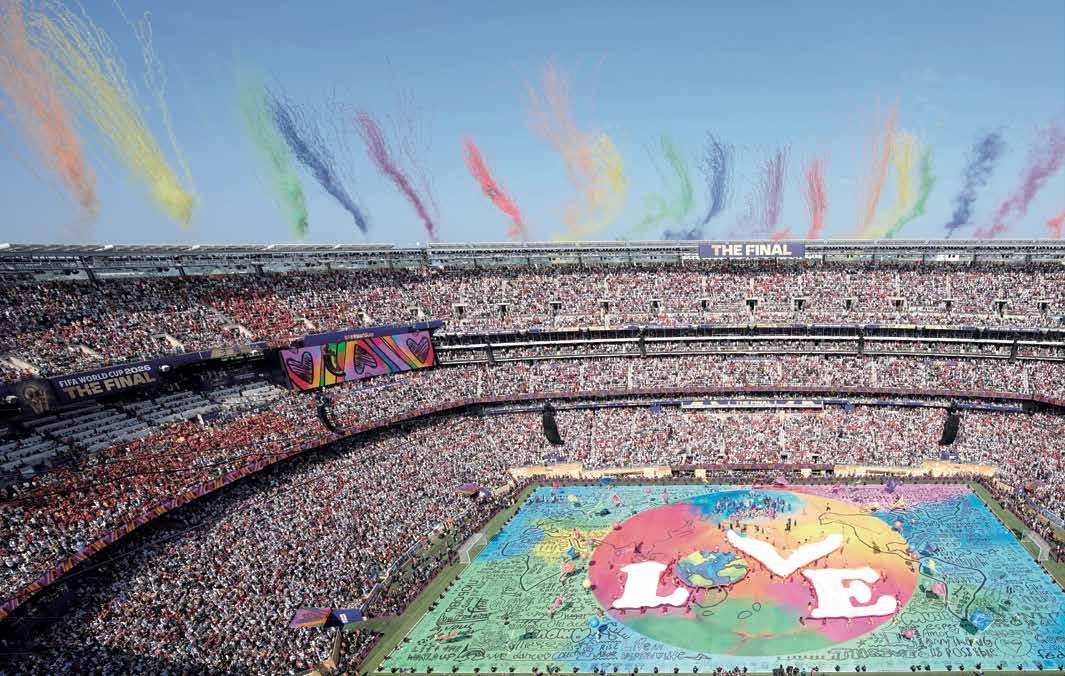
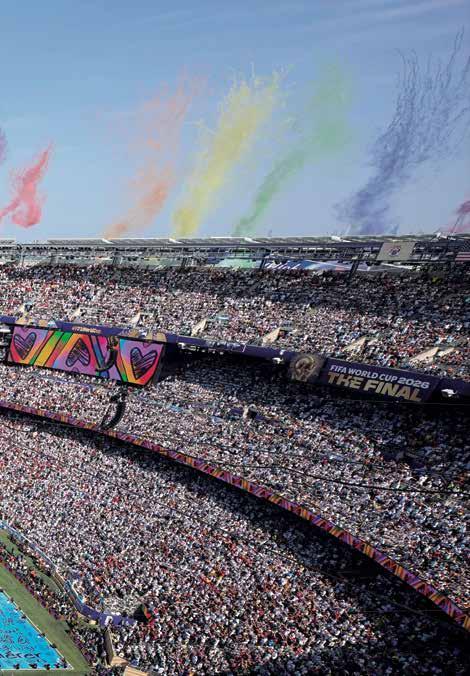
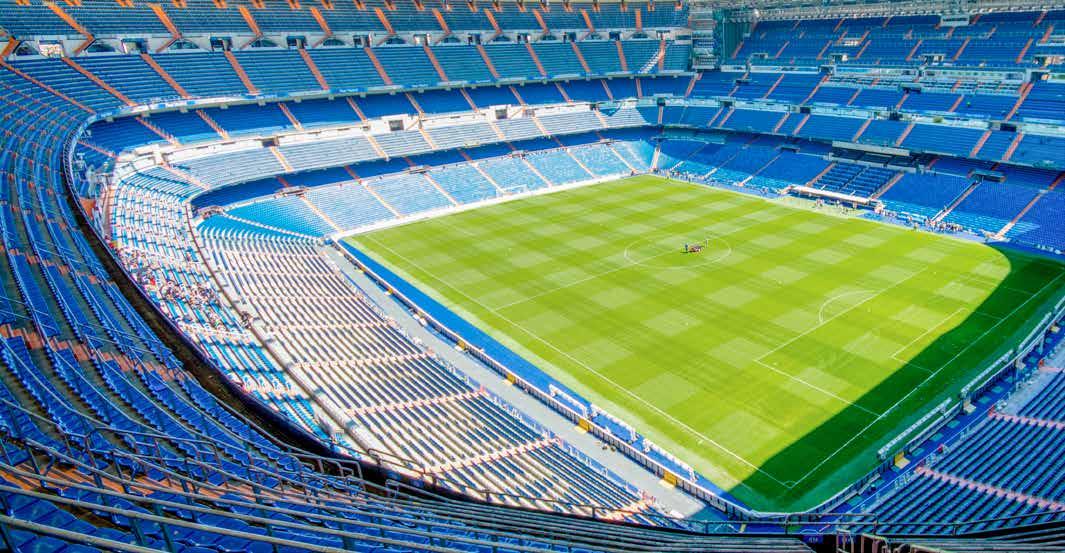
The home of the New York Giants and Jets in New Jersey became the center of the world, drawing more than 80,000 fans.
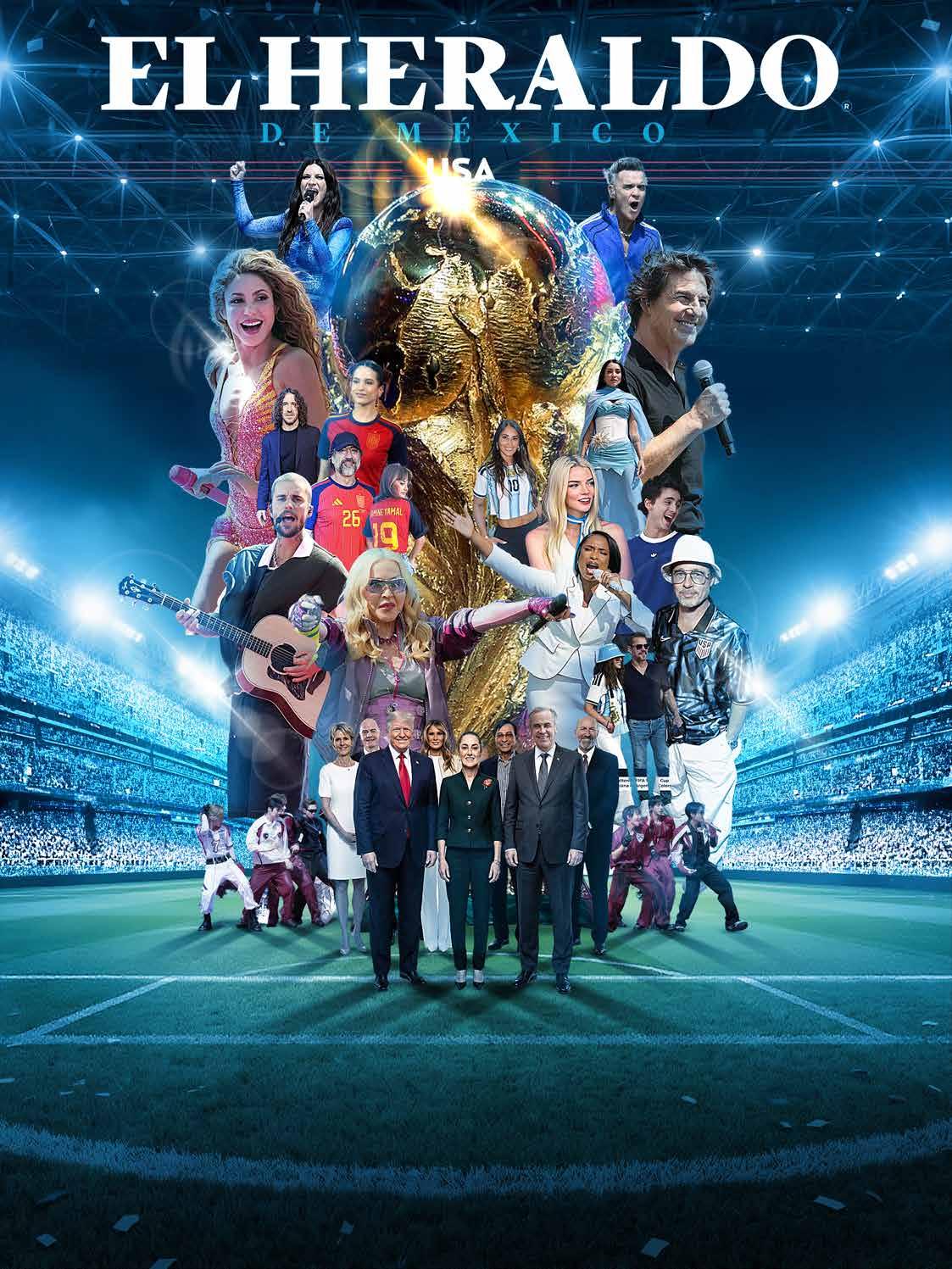
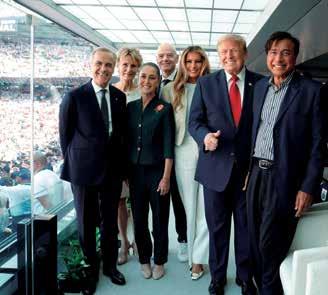
It was also, without question, one of the largest gatherings of political leaders, royalty, business executives, celebrities, sports figures, and artists ever seen at a sporting event. They witnessed the closing ceremony of the first World Cup featuring 48 national teams and jointly hosted by three countries: Mexico, the United States, and Canada.
Expectations for the match between Spain and Argentina were unprecedented. The game was accompanied by a massive security operation, unlike anything previously seen at a World Cup, allowing some of the world’s most prominent guests to attend.
Among those seated in the main suites were U.S. President Donald Trump; Mexican President Claudia Sheinbaum Pardo; Canadian Prime Mi-
THE 2026
WORLD CUP
THE BEGINNING OF A NEW ERA
nister Mark Carney; Argentine President Javier Milei; Spanish Prime Minister Pedro Sánchez; and King Felipe VI of Spain. They were joined by United Nations Secretary-General António Guterres and FIFA officials, led by Gianni Infantino.
Political leaders and heads of state were not the only notable guests at MetLife Stadium. Legends of world soccer also attended a match that defined a generation. Federation presidents, sponsors and entertainment personalities were welcomed several hours before kickoff, as a multicultural atmosphere spread throughout the New York metropolitan area.
Planning and logistics for the presidents and
official delegations were extensive. The operation involved not only FIFA volunteers but also extensive coordinationamongfederal,state,andlocalagencies.
Access to the stadium was controlled through strict security checkpoints, perimeter closures, and even aerial surveillance, making the area surrounding the venue one of the most heavily protected zones in the United States.
However, one of the night’s most iconic and anticipated moments came before the match. Millions of viewers waited for the closing ceremony, which featured Robbie Williams, Tom Cruise, Laura Pausini and Post Malone.
The performance was only a preview of what
would unfold in this unprecedented World Cup final. At halftime, the tournament delivered another historic moment: the first halftime show ever staged at a World Cup final.
Inspired by the Super Bowl format, FIFA invested in a large-scale musical production to broaden the tournament’s reach and attract new audiences. The halftime show quickly trended on social media. It was praised by many and criticized by others, but it demonstrated that sports and the entertainment industry now go hand in hand. The production combined technology, giant screens, special effects, drones, synchronized lighting, and an audiovisual display rarely seen in soccer.
Global pop superstar Madonna opened the halftime show alongside two soccer legends, Ronaldinho and Ronaldo Nazário. Conductor Gustavo Dudamel then appeared with Sesame Street characters.
Next came K-pop group BTS, electrifying the stadium. Characters from Ted Lasso introduced Justin Bieber, while Shakira added a Latin flair to the celebration alongside Uganda’s Ghetto Kids, known worldwide for their viral dance routines.
The halftime show itself lasted approximately 11 minutes. However, about 27 minutes passed between the end of the first half and the start of the second half, violating established agreements and broadcast protocols for the match.
As millions of people around the world watched the broadcast, the halftime performance quickly became one of the most talked-about moments of the entire tournament—even be fore the new world champion had been crowned.
That was how this World Cup ended: exactly as it began, surrounded by controversy and on everyone’s lips.
It was an unprecedented tournament that confirmed how soccer has evolved into an event that transcends every border. It now extends far beyond sports, encompassing economic, cultural and social dimensions.
Facts
The World Cup final became a global stage where heads of state,soccer legends, and pop superstars shared the spotlight.
FIFA borrowed from the Super Bowl playbook,proving that modern soccer is as much spectacle and business as it is competition.
fans packed MetLife Stadium for a final that brought together soccer,politics, royalty,and entertainment. minutes passed between halves, although the historic World Cup halftime performance lasted only about 11 minutes.
El Mundial 2026, el inicio de una nueva era
El Mundial dejó a México más que una ilusión deportiva: una memoria colectiva de unión, orgullo y celebración. La selección no alcanzó el quinto partido, pero logró que millones de mexicanos volvieran a reconocerse como un solo equipo dentro y fuera de la cancha.
POR DAMIÁN MARTÍNEZ GARCÍA
FOTOS: ESPECIAL
La gran final de la Copa Mundial trascendió lo deportivo y tuvo un impacto social y cultural sin precedentes; se convirtió en un acontecimiento que rompió todos los paradigmas a nivel global. Un evento que rompió todos los récords posibles, desde el rating televisivo hasta los precios, que fueron una locura total, para las entradas a los estadios.
La casa de los Gigantes y de los Jets de Nueva York, en Nueva Jersey, fue el epicentro del planeta donde se reunieron más de 80 mil aficionados y fue, sin duda, una de las concentraciones más importantes de líderes políticos, miembros de la realeza, empresarios, celebridades, figuras del deporte y diversos artistas, quienes presenciaron una ceremonia que marcó el cierre del primer Mundial con 48 selecciones, organizado de manera conjunta por tres países: México, Estados Unidos y Canadá. La expectativa por el partido entre España y Argentina fue un evento deportivo sin precedentes, acompañado de un imponente dispositivo de seguridad nunca visto en un Mundial, lo que permitió la asistencia de invitados de altísimo nivel. En los palcos principales destacaron el presidente de Estados Unidos, Donald Trump; la presidenta de México, la doctora Claudia Shiembaum Pardo; el primer ministro de Canadá, Mark Carney; el mandatario de Argentina, Javier Milei; el presidente de España, Pedro Sánchez; y el rey Felipe VI. A ellos también acompañaron el secretario general de las Naciones Unidas, António Guterres, y los dirigentes de la FIFA, encabezados por Gianni Infantino. No solo políticos y jefes de Estado se dieron cita en el MetLife Stadium; grandes leyendas del futbol mundial acudieron a un partido que ha marcado a toda una generación. Presidentes de federaciones, patrocinadores y personalidades del espectáculo y del entretenimiento fueron recibidos varias horas antes del silbatazo inicial, en un ambiente multicultural que invadió Nueva York. La planeación y la logística para albergar a los mandatarios y a las delegaciones oficiales fueron exhaustivas; se tuvo que desplegar no solo a los voluntarios de la FIFA, sino también un amplio operativo coordinado por agencias federales, estatales y locales. El acceso al estadio fue controlado mediante estrictos filtros de seguridad, cierres perimetrales e incluso vigilancia aérea, lo que convirtió los alrededores del estadio en una de las zonas más protegidas de Estados Unidos. Sin embargo, uno de los momentos más icóni-
cos y esperados de la noche llegó antes del partido: millones de televidentes aguardaban la ceremonia de clausura encabezada por Robbie Williams, Tom Cruise, Laura Pausini y Post Malone. Un espectáculo que fue solo una probadita de lo que sería esta final inédita en mundiales, pues en el descanso del encuentro también se daría otro momento que quedaría marcado en la historia: el primer espectáculo de medio tiempo de una final de la Copa del Mundo. Inspirado en el formato del Super Bowl, la FIFA apostó por un evento musical de gran producción para ampliar el alcance del torneo y, con ello, atraer nuevas audiencias. Un medio tiempo que se volvió tendencia en redes sociales, aplaudido por muchos y criticado por otros, pero que demuestra que el deporte y la industria, hoy por hoy, van de la mano.
El espectáculo combinó tecnología, pantallas gigantes, efectos especiales, drones, iluminación sincronizada y una producción audiovisual poco vista en el mundo del futbol.
La encargada de abrir el show del medio tiempo fue la superestrella y reina del pop mundial, Madonna, acompañada de dos figuras del balompié, Ronaldinho y Ronaldo Nazario, para después dar paso al director de orquesta, Gustavo Dudamel, a quien acompañaron los personajes de Plaza Sésamo. Después, fue el turno de la banda de K-pop BTS, que hizo vibrar a todo el estadio. Los personajes de Ted Lasso presentaron a Justin Bieber, y quién mejor que Shakira para poner el ambiente latino junto con el grupo ugandés Ghetto Kids, conocido por sus coreografías que se volvieron virales en redes sociales.
Un show de medio tiempo que duró aproximadamente 11 minutos. Sin embargo, transcurrieron alrededor de 27 minutos desde que se pitó el final del primer tiempo hasta el silbatazo de la segunda mitad, lo que rompió el acuerdo y los protocolos establecidos para la transmisión del partido. Mientras millones de personas seguían la transmisión en todo el planeta, el espectáculo del medio tiempo se convirtió rápidamente en tendencia en redes sociales y fue uno de los momentos más comentados de todo el Mundial, incluso antes de conocerse al nuevo campeón del mundo.
Así terminó esta Copa del Mundo: tal como había iniciado, con gran controversia y en boca de todos. Un Mundial sin precedentes que confirma que este deporte ha evolucionado hasta convertirse en un evento que rebasa todas las fronteras del planeta, elevándose desde lo deportivo, pasando por lo económico y lo cultural, hasta encumbrarse en lo social
aficionados llenaron el MetLife Stadium en una final que reunió futbol,política,realeza y espectáculo.
La final se convirtió en un escenario global en el que jefes de Estado,leyendas del futbol y estrellas del pop compartieron los reflectores.
Datos
minutos transcurrieron entre ambos tiempos,aunque el histórico show de medio tiempo duró aproximadamente 11 minutos.
La FIFA tomó inspiración del Super Bowl y confirmó que el futbol moderno es competencia,espectáculo y negocio.
BY DANIEL BENET
ARTWORK: GERALDINE CRUZ
Interview with Dr. Moisés Vargas Cerán. Veterinary physician and animal scientist from the National Autonomous University of Mexico (UNAM). He has worked on the control and eradication of the New World screwworm in the United States, Mexico, Central America, and North Africa.
Could you explain what the New World screwworm is and the damage it causes to animals?
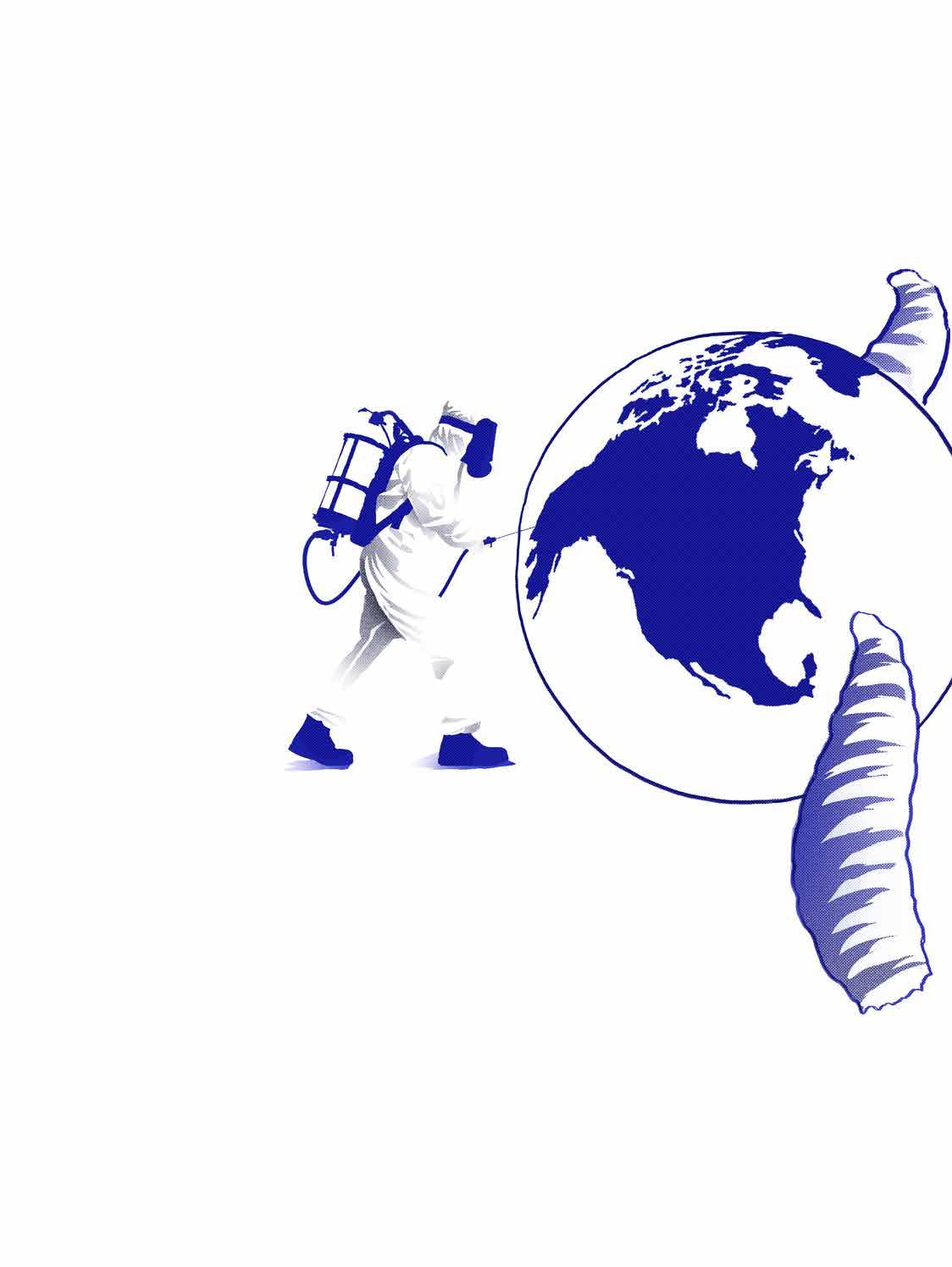
The New World screwworm, whose scientific name is Cochliomyia hominivorax, causes a parasitic disease. It produces myiasis, the infestation of wounds by fly larvae. This screwworm affects only living warm-blooded animals: livestock, companion animals, wildlife, and humans.
It infests animal wounds, from something as small as a tick bite to those caused by dehorning, animal bites, lacerations from barbed-wire fences, or any other break in the skin. Any interruption in the continuity of the skin provides an entry point for the screwworm.
The fly lands on the wound and lays between 200 and 400 eggs. Within six to twelve hours, tiny larvae begin to hatch. Using their oral hooks, they penetrate the tissue and tear through it as they burrow deeper into the wound. This causes severe inflammation, and blood-tinged fluids mix with metabolites produced by the larvae, creating a substance that causes tissue necrosis and attracts other flies—not only screwworm flies, but also other species that feed on dead tissue.
The screwworm fly feeds exclusively on living tissue. Other flies then arrive and lay their eggs, producing additional larvae, so the wound eventually becomes populated by many different kinds of larvae. That is why, for diagnostic purposes, samples must be collected from the bottom of the wound, because the larvae found near the surface generally belong to other fly species that feed on dead tissue.
You have worked with this parasite since the 1970s. It is an organism you know extremely well,and you were telling us that all warm-blooded animals can serve as hosts for this parasite.Could this become a public health issue for people?
It is a zoonotic disease; it is a public health issue. People with poor hygiene or who neglect their personal care are particularly vulnerable. This includes individuals with impaired mental capacity, people with severe obesity, and children who are playing outdoors, sustain a wound anywhere on their body, and are then exposed to the fly, which lays its eggs in the wound.
More than 150 human cases have been diagnosed in Mexico. So yes, it is a public health issue. However, it is a public health problem that disappears once the parasite has been eliminated from animals.
In humans, it also has psychological implications because people who discover they are infested with larvae usually try to hide the condition. As a result, they often resort to veterinary medicines— even the very same medications being used to treat animals. The best course of action is to seek medical attention from a physician. This situation also means that many cases go unreported.
These cases are severe, and the consequences often include the loss of organs. The eyes are among the most commonly affected. The nasal cavities are another frequent site of infestation. The gums can also be affected because people sometimes sleep outdoors with their mouths open, and if they have a small laceration or a cavity, the fly can lay its eggs there. It is common; it is not a rare occurrence. Infestations of the ears and the genital area are also common.
This truly is a public health issue, which is why this parasitic disease fits perfectly within the concept known as One Health. In other words,
NEW WORLD SCREWWORM
The New World Screwworm is an ecological, economic, and public health challenge that has the potential to either bring Mexico and the United States closer together or drive them further apart. It is also indicative of deeper underlying problems that are fueling the spread of this and other diseases— problems that are only getting worse.
animal health, human health, public health, and environmental health are all interconnected. One affects the others.
Seventy-five percent of the diseases that affect human beings originate in animals. Ebola, which is currently a major concern in Africa, is of animal origin. That is why the One Health approach is the best course of action. Health sectors must work together, coordinate their efforts, and share information in order to prevent, control, and eradicate diseases.
The distribution of many diseases is closely linked to climate,humidity,and temperature.The New World screwworm has become a major headline because of the political and economic pressure exerted by the United States.
What scenario are we facing when there are clear e ects of climate change—changes in temperature and humidity patterns that alter the distribution of vectors,parasites,and diseases—while,at the same time,there are political positions that deny climate change and withdraw funding to address it?
All insect populations increase or decrease according to fluctuations in temperature and relative
humidity. If the temperature rises by half a degree or one degree, their populations expand into those areas because the conditions become favorable for reproduction.
In the case of this screwworm, in regions where the seasons are well defined—spring, summer, fall, and winter—the population declines during the fall and winter because temperatures are no longer suitable for its development. Conversely, when temperatures become favorable, the parasite expands into new areas.
The same is true for certain disease vectors. For example, the long-tailed mouse that transmits hantavirus in South America used to be confined to the southernmost regions of the continent, in Chile and Argentina. However, changes in the climate favored the expansion of a particular type of vegetation. As that vegetation spread because the climate had become more favorable, the mouse followed it, along with the climatic conditions it requires.
As a result, the disease spread into areas that had previously been unaffected. That is why populations must always be monitored. We need extensive field data to understand how these organisms behave and how fluctuations in humidity and
temperature influence vectors—or, in this case, the screwworm, which is a parasite in the strict sense.
What technique is used to stop the spread of the New World screwworm?
There is a system known as integrated holistic control, which requires the implementation of multiple control measures. The first is prevention. The objective is to prevent animals from being injured by maintaining sound livestock management practices. If wounds do occur, they must be monitored carefully because livestock operations in Mexico are generally very large and rely on extensive grazing systems.
Animals must be inspected every day, and this is one of the most expensive components of the program. In most cases, the work requires two people on horseback covering vast areas while inspecting between 60 and 100 animals. Once an infested animal is identified, it is restrained, brought down, and treated.
It is also essential to control ectoparasites on livestock operations. Ticks, lice, and mange are very common and all cause wounds. The common vampire bat (Desmodus rotundus), famous because of the Dracula legend, also inflicts numerous wounds.
Once the screwworm population has been reduced, a residual population remains, primarily among wildlife. Two American scientists, Dr. Edward F. Knipling and Dr. Raymond C. Bushland, studied the biological characteristic that the female fly mates only once, while the male mates multiple times. This research took place during the 1950s, after the use of atomic energy in the bombings of Hiroshima and Nagasaki, when countries began exploring peaceful applications of nuclear technology.
After another scientist, Dr. Hermann J. Müller, successfully conducted experiments to sterilize fruit flies, Drs. Knipling and Bushland applied the same principle to the New World screwworm.
This led to the development of the Sterile Insect Technique (SIT). Under this method, the fly is mass-reared under artificial conditions. When it reaches the pupal stage, it is exposed to radiation, which may come from several sources, including cobalt-60, cesium-137, or X-rays. The radiation induces sexual sterility, while the rest of the insect remains completely unaffected. It can still fly, walk, mate, and behave normally.
Large numbers of these insects are produced at insect-rearing facilities, such as the one that was recently inaugurated in Mexico. Both males and females are produced and released into endemic or infested areas.
The sterile males mate with fertile females, but no offspring are produced. The flies may still lay eggs, but the eggs are infertile. They are comparable to table eggs produced on poultry farms—they are sterile.
By releasing sterile insects on a regular basis into an affected area, the reproductive capacity of the wild population can be progressively reduced until it eventually disappears. Using this method, Mexico succeeded in eradicating the New World screwworm between 1972 and 1991.
It took 17 years to achieve eradication.
What should people look for in their animals, whether livestock or pets,and what should they do if they suspect an infestation?
Pet owners should inspect their animals every day. Their coats should be kept clean and free of mats so that any wounds can be detected, because injuries can easily be hidden beneath tangled fur, providing an ideal place for the fly to lay its eggs. One of the hallmark signs of this disease is that an infested animal develops a very foul odor. It has a putrid, nauseating smell. As soon as this is detected, the animal should be taken to a veterinary clinic or a veterinarian should be called immediately for treatment.
The same recommendation applies to livestock. Daily inspection is essential. Suspected cases should also be reported to Mexico's Ministry of Agriculture and Rural Development.
El gusano barrenador
El gusano barrenador es un reto ecológico, económico y sanitario que puede unir o distanciar a México y Estados Unidos. También es indicativo de problemas que subyacen a la expansión de esta y otras enfermedades y que solo están empeorando.
POR DANIEL BENET
GERALDINE CRUZ
ARTE:
Entrevista con el Dr. Moisés Vargas Cerán, médico veterinario zootecnista de la UNAM, ha trabajado en el control y la erradicación del gusano barrenador en Estados Unidos, México y Centroamérica, así como en el norte de África.
¿Podría explicarnos qué es el gusano barrenador y cuál es el daño que causa en animales? El gusano barrenador, cuyo nombre científico es Cochliomyia hominivorax, causa una enfermedad parasitaria. Produce una miasis, que es la presencia de larvas de moscas en las heridas de los animales. El gusano barrenador solamente afecta animales vivos de sangre caliente: animales de granja, animales de compañía, animales silvestres y al ser humano. Afecta las heridas de los animales, desde el piquete de una garrapata hasta el que se produce por la descornadura de un animal, una mordedura, laceración por las cercas de alambre de púas, cualquier falta de continuidad en la piel es puerta de entrada del barrenador. Esta mosca llega a la herida y oviposita entre 200 y 400 huevecillos. Después de 6 a 12 horas, empiezan a emerger pequeñas larvitas que penetran en el tejido con unos ganchos orales y a desgarrar el tejido para penetrar en lo más profundo de la herida. Esto produce una inflamación severa y hay presencia de líquidos sanguinolentos que se mezclan con los metabolitos que producen las larvas y es una sustancia que causa necrosis en los tejidos que atrae a otras moscas. No solo del gusano barrenador, sino otras moscas que se alimentan de tejido muerto.
La mosca del gusano barrenador se alimenta exclusivamente de tejido vivo. Llegan otras moscas y ponen sus huevecillos y nacen más larvas, entonces la herida está poblada con muchos tipos de larvas. Por eso para el diagnóstico, se tiene que tomar muestras de larvas del fondo de la herida porque en la parte superficial están otras larvas que se alimentan de tejido muerto.
Usted ha trabajado con este parásito desde los años 70,es un bicho que conoce muy bien y nos compartía que todos los animales de sangre caliente pueden ser hospederos de este parásito. ¿Podría ser un tema de salud pública para las personas?
Es una zoonosis, es un problema de salud pública.
Las personas que tienen una higiene pobre, se descuidan en sus hábitos, como pueden ser, gentes que están privadas de sus facultades mentales, gente muy obesa, niños que están jugando, se hacen una herida en donde sea y entonces llega esta mosca y oviposita.
En México son más de 150 casos que se han diagnosticado. Entonces sí es un problema de salud pública, pero es un problema de salud pública que desaparece cuando se elimina el parásito en los animales.
En humanos tiene connotaciones psicológicas, porque una persona que se ve agusanada, parasitada, lo esconde normalmente. Entonces, esta persona recurre a medicamentos veterina-
rios, incluso los mismos medicamentos que con que están tratando los animales. Lo mejor es que vea un médico. Lo anterior conlleva que no se tiene un buen registro de los casos. Los casos son severos y generalmente las consecuencias son que llegan a perder órganos. Los ojos, es muy común que se vean parasitados, los senos nasales son otra área muy frecuente. Las encías también se ven afectadas porque a veces la gente duerme en el campo con la boca abierta y si tienen una pequeña laceración, una caries llega la mosca y oviposita. Es frecuente, no es algo raro. También en los oídos y en los genitales es común que se presente. Realmente es un problema de salud pública y por eso esta parasitosis se enmarca muy bien en un concepto que se llama “una sola salud”. Es decir, que la salud animal, la de las personas, la salud pública y la salud del medio ambiente se interrelacionan. Una afecta la otra. El 75% de las enfermedades que afectan a los seres humanos provienen de los animales. El ébola que ahorita precisamente es un problema en África es de origen animal. Por eso el concepto de “una salud” es lo mejor que se tiene que hacer. Que los sectores de la salud se unan y estén coordinados e intercambien información para prevenir, controlar y erradicar enfermedades. La distribución de varias enfermedades está relacionada con el clima,con la humedad y con la temperatura.El caso del gusano barrenador ha sido un tema que ocupa los encabezados de las noticias por la presión política y económica de los Estados Unidos.¿Qué escenario enfrentamos cuando hay efectos claros de cambio climático, de cambios en los patrones de temperatura y de humedad que modifican la distribución de vectores,parásitos y de enfermedades y al mismo tiempo hay posturas políticas que niegan el cambio climático y retiran el financiamiento para combatirlo?
Todas las poblaciones de insectos aumentan y disminuyen de acuerdo con las fluctuaciones de temperatura y la humedad relativa, si se incrementa medio grado o un grado la temperatura, sus poblaciones se expanden hacia esas zonas porque son adecuadas para su reproducción.
En el caso del gusano barrenador en lugares donde las temperaturas son marcadas, las estaciones primavera, verano, otoño e invierno, en época de otoño e invierno disminuye la población porque las temperaturas no le son las adecuadas. Y a la inversa, cuando las temperaturas son favorables, se expande el parásito hacia otras áreas.
También algunos vectores, por ejemplo, un ratón cola larga que transmite el hantavirus en América del Sur. Estaba recluido en las regiones más al sur del continente, en Chile y Argentina. Pero hubo algunos cambios en el clima, un tipo de vegetación empezó a aumentar, porque el clima era favorable y se expandió y este ratoncito seguía ese tipo de vegetación y condiciones climáticas.
La enfermedad se extendió a áreas que antes no se veían afectadas. Hay que monitorear siempre las poblaciones, se debe tener mucha información de campo, de cómo se están comportando, las fluctuaciones que se dan con el aumento de humedad y de temperatura en los vectores o en este caso que es el barrenador que es un parásito propiamente dicho.
¿Cuál es la técnica que se utiliza para detener la dispersión del gusano barrenador?
Hay un sistema que se llama control integrado holístico que requiere de muchas actividades de control. La primera es la prevención.
Evitar que los animales se produzcan heridas, un manejo de calidad zootécnica. Si se producen las heridas, entonces hay que vigilar porque generalmente los predios ganaderos en México son muy extensos, se practica la ganadería extensiva.
Se tiene que hacer inspección diaria de los animales y esto es uno de los factores económicos más costosos. Generalmente tienen que hacerlo dos personas que van a caballo, tienen que recorrer grandes extensiones y vigilar un promedio de entre 60 y 100 animales. Una vez que lo detectan lo manejan, lo derriban y lo tratan.
Tener el control de los ectoparásitos en los predios. Garrapatas, piojos, sarna, que es muy común y producen heridas. El murciélago hematófago o Desmodus rotundus que es famoso por la novela de Drácula, produce muchas heridas. Una vez que se reduce la población de gusano barrenador, queda un remanente de población principalmente en los animales silvestres. Hubo dos científicos estadounidenses, el doctor Knipling y el doctor Bushland, que estudiaron la característica de que la hembra es monógama y el macho es polígamo. Esto fue en los años 50, después de que ocurrió el uso de la energía atómica para las bombas atómicas de Hiroshima y Nagasaki, los países buscaban qué aplicaciones tenía la energía atómica, benéficas para el hombre.
El doctor Knipling y el doctor Bushland, después de que otro doctor, Müller, hizo experimentos para esterilizar sexualmente unas moscas de la fruta, utilizaron eso para el gusano barrenador.
Se desarrolló la técnica del insecto estéril, que consiste en que esta mosca se cultiva artificialmente y cuando llega a la fase de pupa, se somete a radiación, que puede ser de varias fuentes, cobalto-60, cesio-137 rayos X, y se produce la esterilización sexual. Todo lo demás del organismo queda íntegro, queda bien, puede volar, caminar, etc.
Se producen grandes cantidades de estos insectos en las plantas productoras de insectos como la que recientemente se acaba de inaugurar en México. Se producen machos y hembras y se liberan en el campo donde están las áreas endémicas o las áreas parasitadas.
Los machos estériles copulan con las hembras fértiles, pero no hay descendencia. Las moscas pueden ovipositar, pero los huevecillos ya no son fecundos. Son como los huevos de granja que son estériles.
De esta manera, con la introducción periódica en una zona afectada, se puede reducir la capacidad reproductiva de la población silvestre hasta que se extingue. Utilizando estos métodos se logró erradicar en México el gusano barrenador entre 1972 a 1991. Tomó 17 años lograr la erradicación.
¿Qué tiene que observar la gente en sus animales, ya sean de granja o de compañía para darle seguimiento y qué pueden hacer?
En los animales de compañía tienen que inspeccionarlos diariamente. Cuidar el pelo, que no esté enredado para ver si tienen alguna herida porque pueden estar ocultas y ahí puede ovipositar la mosca. Una característica de esta enfermedad es que cuando un animal está parasitado, huele muy mal. Tiene un olor putrefacto, nauseabundo. Inmediatamente que lo detecte, llevarlo a una clínica veterinaria o llamar a un médico veterinario para que lo atienda. Lo mismo en los animales de granja, se recomienda la inspección diaria. También reportarlo a la Secretaría de Agricultura y Desarrollo Rural.
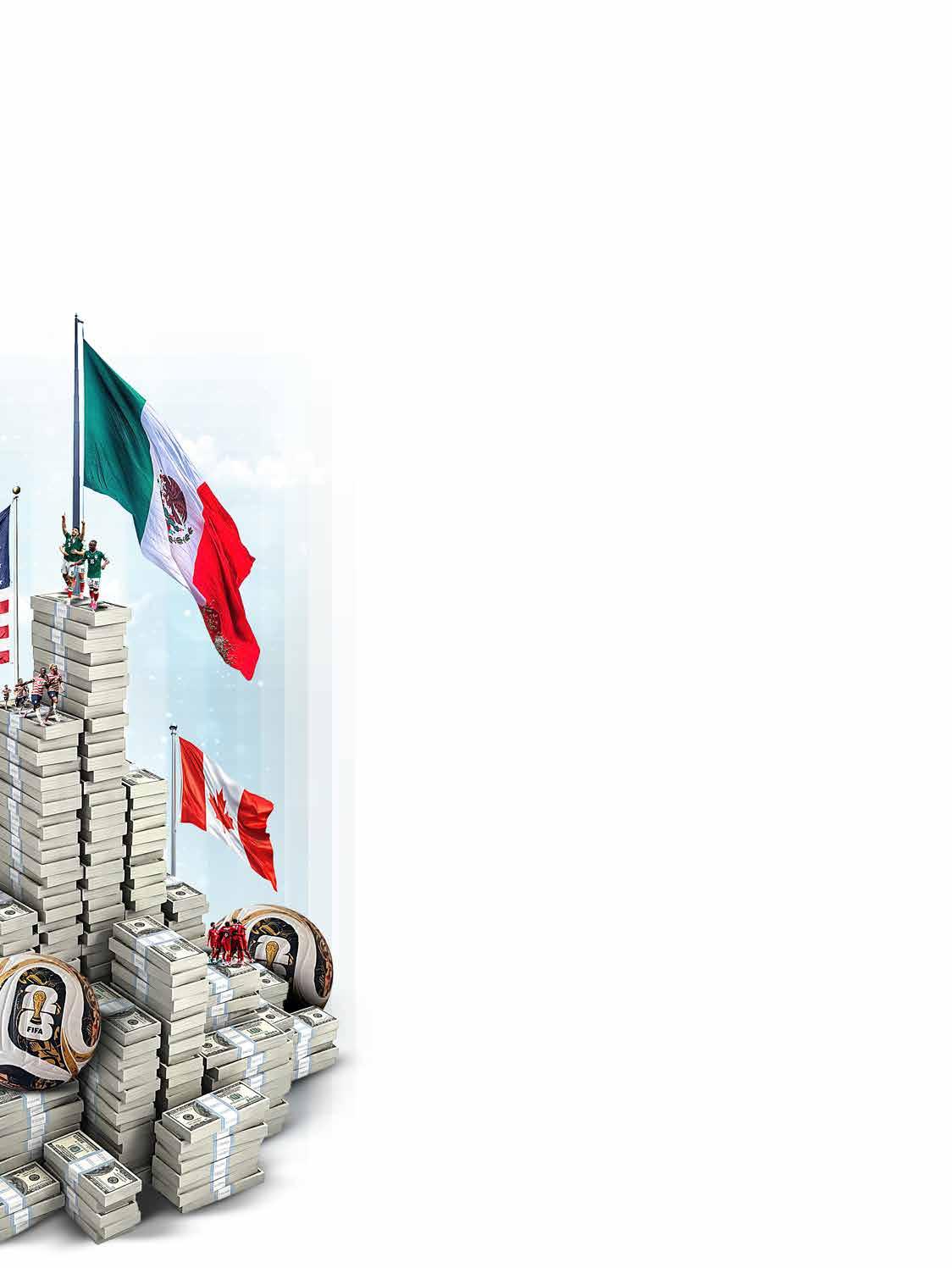
The largest tournament in history has ended: 48 teams,104 matches,and three host countries.Spain lifted the trophy at MetLife Stadium in New York,but the economic contest followed a di erentlogic.TheUnitedStatescaptured thelargesteconomicimpactindollarterms;Mexico recorded the greatest relative e ect; and Canada stood in the middle,with significant benefits but alsosubstantialhost-citycostoverruns.
THE ABSOLUTE FIGURE DOES NOT TELL THE WHOLE STORY
Whentheavailableeconomic-impactestimatesare considered in relation to Gross Domestic Product, MexicoisthecountrywheretheWorldCupcarried the greatest weight,even though it received fewer dollars.Thefiguresconvergeononeconclusion:the
THE WORLD CUP’S SCOREBOARD:
WHO THE ECONOMIC GAME?
United States concentrated the largest economic volume,whileMexicorecordedthegreatestrelative weightonitseconomy.
THE TOURNAMENT WAS DESIGNED TO CONCENTRATE VALUE
The 48-team format increased the number of matches from 64 to 104,a 62% rise.At the same time,FIFA revenues for the 2023–2026 cycle were estimated at USD 11 billion,around 70% above Qatar 2022.The World Cup was larger,longer,and morecommerciallyprofitable.
But the distribution was not neutral.The United States hosted the largest number of matches and the stages with the highest commercial value.This concentrated hotel nights,premium tickets,corporate hospitality,flights,financial services,digital platforms,andentertainment.Mexicocontributed fans,consumption,andvisibility;theUnitedStates capturedthemostprofitablepartofthevaluechain.
THE
UNCOMFORTABLE FACT: ECONOMIC
IMPACT IS NOT RETURN ON INVESTMENT
Previous estimates indicate that Mexico mobilized more than USD 13 billion in public and private investment associated with the tournament, comparedwithdirecteconomicactivityofapproximatelyUSD4billion.Usingthesecentralestimates, thedirectimpactequalsroughly31%oftherelated investment.Thefigureisrevealing,butitshouldnot be presented as a definitive rate of return: part of the investment relates to infrastructure that will continueoperatingaftertheWorldCup.
Canada illustrates the fiscal risk:in Toronto,a budgetinitiallyestimatedatbetween30and45million Canadian dollars ultimately approached 380 million,faraboveprojections.Vancouveralsofaceda significantincreaseincosts.TheUnitedStatesshows thereverse:thenationalbalanceappearsfavorable, although some host cities assumed expenses that werenoto setlocally.
MEXICO’S NATIONAL TEAM KEPT THE ECONOMIC PARTY GOING
were extraordinarily optimistic,and there was one factor that aggregate figures do not fully capture: the performance of Mexico’s national team.The team advanced beyond the group stage,defeated Ecuador,and pushed England to the limit in the roundof16.Eachadditionalmatchkeptthenational conversation alive and extended the consumptioncycleacrossrestaurants,bars,hotels,transport, retail,and entertainment.
From a behavioral-economics perspective,this “World Cup e ect” can be understood as a temporary consumption multiplier: as a national team advances,millions of people prolong gatherings, travel,and tournament-related spending.It does not replace structural growth or guarantee a publicreturn,butitdoestemporarilyexpandactivityin thesectorsmostexposedtosportingenthusiasm. Thatiswheretheparadoxemerges.Mexicohelped keep the celebration and regional interest alive; however,the matches with the highest commercial value and the decisive stages remained in the United States. Mexico’s national team boosted consumption and conversation;the United States retained most of the business.
THE REAL GAIN DEPENDS ON WHO RETAINS THE SPENDING
Gross economic impact can overstate the national benefit.Part of the spending leaves the economy through FIFA,international chains,platforms,airlines,intermediaries,andforeignsuppliers.Thedecisive indicator,therefore,is not merely how much money enters,but how much remains in the form of wages,local profits,domestic purchases,taxes, andproductiveassets.
Sources: FIFA,2026 schedule; FIFA-WTO,socioeconomic analysis; FIFA,2023–2026 revenue target; FIFA-Deloitte Canada; El País/Deloitte Mexico, July 18,2026; Toronto Budget Notes 2026; Government of British Columbia,May 29,2026; Dohmen et al.,IZA Discussion Paper No.2275. Methodological note: Several figures remain preliminary.
Terminóeltorneomásgrande delahistoria:48selecciones, 104 partidos y tres países anfitriones.España levantó la copa en el MetLife Stadium en Nueva York,pero la competencia económica tuvo otra lógica. Estados Unidos concentró la mayor derrama en dólares; México obtuvo el mayor efecto relativo; Canadá quedó en una posición intermedia,conbeneficiosrelevantespero tambiénconfuertessobrecostosporsede.
LA CIFRA ABSOLUTA NO CUENTA
TODA LA HISTORIA
Alrelacionarlasestimacionesdisponibles dederramaconelProductoInternoBruto, MéxicoeselpaísdondeelMundial“pesó” más,aunqueregistróunmenorvolumen en dólares.Estados Unidos concentró la mayorderramaeconómica,estimadaentre 17,000 y 30,500 millones de dólares; sin embargo, su impacto representó únicamente entre 0.05 y 0.10 puntos porcentuales del PIB.México registró una derrama de entre 3,000 y 7,600 millones dedólares,peroalcanzóelmayorimpacto relativo,de entre 0.14 y 0.30 puntos porcentualesdelPIB.Canadáseubicóenuna posición intermedia,con 3,800 millones de dólares canadienses y un efecto estimadodeentre0.08y0.20puntosporcentuales del PIB.
EL TORNEO SE DISEÑÓ PARA CONCENTRAR EL VALOR El formato de 48 selecciones elevó el
número de partidos de 64 a 104:un crecimiento de 62%.En paralelo,los ingresos deFIFAparaelciclo2023–2026seestimaronenUSD11,000millones,alrededorde 70%porencimadeQatar2022.ElMundialfuemásgrande,máslargoycomercialmente más rentable.
Pero el reparto no fue neutral.Estados Unidos recibió la mayor cantidad de partidosylasfasesdemayorvalorcomercial.Eso concentró noches de hotel,boletos premium,hospitalidad corporativa, vuelos, servicios financieros, plataformas digitales y entretenimiento.México aportó afición,consumo e imagen;EstadosUnidoscapturólapartemásrentable de la cadena.
EL DATO INCÓMODO: DERRAMA NO ES RETORNO EstimacionespreviasrevelanqueMéxico movilizó más de USD 13,000 millones en inversión pública y privada asociada al torneo,frente a una derrama directa cercana a USD 4,000 millones.Con esos valores centrales,la derrama equivale a alrededor de 31% de la inversión vinculada.El dato es revelador,pero no debe presentarse como una tasa definitiva de retorno:parte de la inversión correspondeainfraestructuraqueseguiráoperando despuésdelMundial.
Canadá ilustra el riesgo fiscal:en Toronto,un presupuesto inicialmente estimado entre 30 y 45 millones de dólares canadienses terminó acercándose a 380 millones,muy por encima de lo previsto. Vancouver también enfrentó un incremento significativo de sus costos.Estados Unidos muestra el reverso:el balance nacional luce favorable,aunque algunas ciudades sede asumieron gastos que no secompensaronlocalmente.
LA SELECCIÓN PROLONGÓ LA FIESTA ECONÓMICA
PeroMéxicoofreceelángulomáscercano alagente.Lasexpectativaspreviasfueron extraordinariamente optimistas y hubo unfactorquelascifrasagregadasnocapturan por completo:el desempeño de la Selección Mexicana.El equipo superó la
País
México
Estados Unidos
Canadá
fase de grupos,venció a Ecuador y llevó a Inglaterra al límite en octavos de final. Cada partido adicional mantuvo viva la conversación nacional y extendió el ciclo de consumo en restaurantes, bares, hoteles, transporte, comercio y entretenimiento.
Desde la economía del comportamiento,este “efecto Mundial” puede entenderse como un multiplicador temporal del consumo: mientras una selección avanza,millones de personas prolongan reuniones,viajes y gastos vinculados al torneo.Nosustituyeelcrecimientoestructural ni garantiza rentabilidad pública, pero sí amplía durante algunos días la actividad de los sectores más expuestos alentusiasmodeportivo. Ahí aparece la paradoja. México ayudó a mantener viva la fiesta y el interés regional; sin embargo,los partidos de mayor valor comercial y las fases decisivas permanecieron en Estados Unidos. LaSelecciónimpulsóelconsumoylaconversación;EstadosUnidosretuvolamayor partedelnegocio.
LA GANANCIA REAL DEPENDE DE QUIÉN RETIENE EL GASTO
La derrama bruta puede sobreestimar el beneficio nacional.Una parte del gasto sale de la economía a través de FIFA, cadenas internacionales,plataformas, aerolíneas,intermediarios y proveedores externos.Por eso,el indicador decisivo no es solo cuánto dinero entra,sino cuánto permanece en forma de salarios,utilidades locales,compras nacionales,impuestosyactivosproductivos.
EstadosUnidosganóporescalaypor sucapacidadpararetenerymultiplicarel gasto.Méxicodestacóporelimpactorelativo del torneo y por la movilización temporal del consumo,pero registró una derrama directa menor frente a la inversión asociada.
La principal lección es sencilla:organizar la fiesta no basta.El verdadero éxito consiste en lograr que una mayor parte delgastosequedeencasa,setransforme en empleos,impuestos e inversión,y continúe generando beneficios cuando el partidotermine.
Inversión asociada Derrama estimada Balance preliminar
USD 13,000 M ~USD 11,000 M >CAD 1,000 M CAD 3,800 M
Alta incidencia relativa,baja recuperación directa.
Positivo en agregado; desigual por sede.
Positivo,pero con sobre costos relevantes.
Fuentes: FIFA,calendario 2026; FIFA-OMC,análisis socioeconómico; FIFA,meta de ingresos 2023–2026; FIFA-Deloitte Canada; El País/ Deloitte México,18 jul.2026; Toronto Budget Notes 2026; Gobierno de Columbia Británica,29 may.2026; Dohmen et al.,IZA DP 2275. Nota metodológica: varias cifras siguen siendo preliminares.
WEAVES NETWORKS OF RESISTANCE
ART, SOCCER, AND MIGRATION UNITE COMMUNITIES ACROSS MEXICO, THE UNITED STATES, AND CANADA
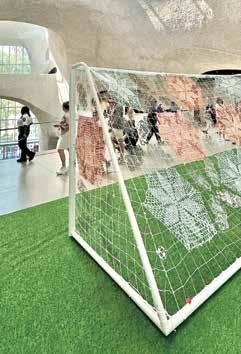
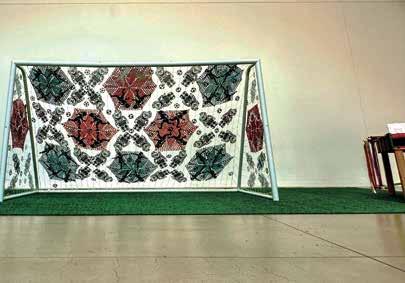
During the 2026 World Cup, Betsabeé Romero transformed 19 handwoven goals into a network of memory, identity, and cultural resistance. Her project brought together migrant communities across Mexico, the United States, and Canada through art and soccer
BY ALEJANDRA ICELA MARTÍNEZ RODRÍGUEZ
ARTWORK: ALEJANDRO OYERVIDES
NEW YORK — Amid tighter immigration policies and growing debates over identity, belonging, and borders, Mexican artist
Betsabeé Romero found in soccer a universal language for building more than an art installation: a network of community, memory, and cultural resistance.
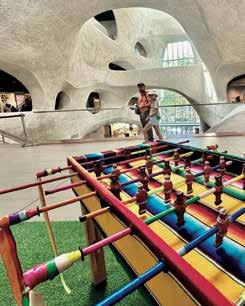
Her traveling project of handwoven soccer goals toured Mexico, the United States, and Canada during the 2026 World Cup and concluded in New York, the host city of the tournament final. There, first at the Queens Museum and later at the American Museum of Natural History, Romero brought together migrants, artists, families, musicians, and visitors from diverse backgrounds around a simple but powerful idea: weaving together.
final goal was truly there, in all that participation,” Romero said.
The work drew on references to the Mesoamerican ball game, Maya decorative patterns, and elements inspired by Chichén Itzá, linking contemporary soccer to a tradition dating back more than 3,000 years in Mesoamerica.
The nets woven by participating communities were intertwined with metal figures the artist created, representing both present-day players and pre-Hispanic ballplayers, forming a visual bridge between past and present.
NINETEEN GOALS,THREE COUNTRIES,AND HUNDREDS OF HANDS
The project spanned three countries and created a cultural map that, in many ways, mirrored the migration routes and the World Cup itself.
A total of 19 woven goals were installed.
The journey began in Mexico City, with interventions in Coyoacán, Santa Úrsula, and the Papalote Children’s Museum. It then traveled to Cuernavaca, where children in vulnerable situations participated, and continued to Dolores Hidalgo, Guanajuato, where a special piece was created at the José Alfredo Jiménez Museum. That installation included musical references to El Rey, the composer’s emblematic song. Jiménez himself had once played as a soccer goalkeeper.
The route continued through Tijuana, San Diego, Los Angeles, Kansas City, Dallas, Brownsville, Montreal, and New York. Each goal was woven by local communities. In many cases, participants had never woven before.
“It didn’t matter. What was interesting was that everyone was weaving right there, together,” Romero said.
In New York, an open call issued by the Mexican Consulate initially drew about 80 people interested in participating. About 20 ultimately worked directly on weaving and assembling the goal.
MEXICAN CULTURE IN THE UNITED STATES:A PRESENCE THAT ENDURES
From that perspective, the artist sought to use the World Cup as an opportunity to highlight the historic contributions of Mexican and Latin American cultures.
“It seemed to me that Mexico, as one of the three participating countries and the Spanish-speaking country, had to make a gesture of peace, friendship, and inclusion,” she said.
CULTURE AS RESISTANCE
At a particularly difficult political moment for migrant communities, Romero believes culture plays a fundamental role as a space for encounter and for resistance.
“The presence and dignity of our culture and our participation in every sphere” is one of today’s most important tasks,” she said.
The artist has no doubt that migration is one of the defining phenomena of the past decades.
“I believe migration is the most important phenomenon since the second half of the 20th century, yet governments, policies, and the economy do not recognize it as such,” she said.
For that reason, she believes community projects such as the woven goals take on political and social meaning that extends far beyond museums. During her time in New York, she observed a particularly meaningful response from the community.
“They thank me a great deal. There is a strong sense of gratitude that something so open and ultimately so generous is being done,” she said.
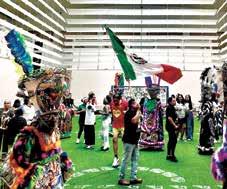
The scene that affected her most occurred during the opening in Queens: Latin American migrants, U.S. visitors, young Koreans, and people of many nationalities danced together with the chinelos.
“It became a space where we all joined hands,” she said.
AN ARTIST WHO TURNS TIRES INTO A MEMORY
+15 +100
“In this specific case, the idea was the act of weaving together and symbolically weaving these nets,” the artist explained in an interview with El Heraldo USA.
solo exhibitions across five continents attest to Betsabeé Romero's career.
Their work is part of museum collections ranging from the British Museum to LACMA in California.
The initiative, which received financial support from Heraldo Media Group, became one of the most meaningful community-based cultural expressions linked to the World Cup, not only for its artistic dimension but also because dozens of migrants directly contributed to creating the pieces.
A GOAL THAT BRINGS PEOPLE TOGETHER
The final goal was unveiled at the Queens Museum, near Corona Park and one of the World Cup venues. The installation was accompanied by an intervention titled Green Carpet for Everyone, a reinterpretation of the traditional museum red carpet, transformed into a “green carpet” inspired by the green card and symbolically intended for everyone.
Acommunitypicnicwasheldinthelargegreen space,featuringmariachimusic,poetry,chinelodances, and other cultural activities open to the public.
“Everything I could have dreamed of for that
For Romero, the project goes far beyond sports. Her work stems from years of reflection on the relationship between soccer and migration.
“I have spent years studying and working with the idea of migration’s importance as a phenomenon in soccer and how soccer is a global, universal language for migrants. Even when they arrive in countries where they do not speak the language, they speak soccer,” she said.
The artist believes sports often serve as one of the first tools for integration for people arriving in a new country.
“It is one of the earliest ways to make contact with a community and to build social bonds,” she explained.
That reflection takes on a particular dimension in North America. Romero noted that the World Cup arrived in the United States, Mexico, and Canada at a time when millions of Latin American migrants are an essential part of the region’s economic, cultural, and social life.
“Obviously, this World Cup came to the United States and the two English-speaking countries for a reason: there are more than 85 million Latino fans,” she said.
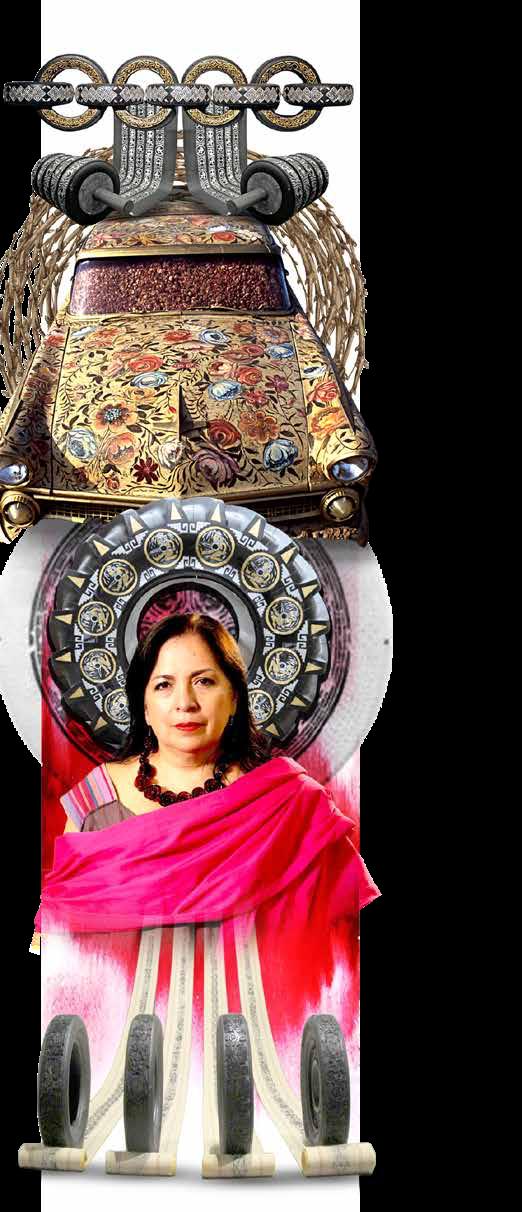
Betsabeé Romero is among Mexico’s most internationally recognized contemporary artists. Born in Mexico City, she studied communications at Universidad Iberoamericana and later earned a master’s degree in visual arts from UNAM’s National School of Visual Arts.
Her work has been exhibited in museums and cultural spaces across the Americas, Europe, Asia, and the Middle East. She is especially known for transforming tires, automobiles, and other objects associated with transit and mobility into sculptures and installations that reflect on migration, identity, displacement, borders, and collective memory.
Over more than three decades, she has developed projects that center migrant communities and their experiences, turning art into a tool for social dialogue. The series of woven goals seems to bring together much of that lifelong exploration.
“It was important to do it, and people are attuned to that, to culture,” Romero concluded.
At a time of hardened borders, exclusionary rhetoric, and political tension, her goals do more than celebrate soccer. They also remind us that communities are built like nets: knot by knot, hand by hand, person by person.
And sometimes, culture can become the place where everyone finds each other again.
Knitting is resistance
19 goalposts, 3 countries, and more than 3,000 years of history link modern soccer with Mesoamerica.
In New York, 80 people answered the call; 20 wove the final goalpost together.
Betsabeé Romero teje redes de resistencia: arte, futbol y migración unen comunidades de México, Estados Unidos y Canadá
Durante el Mundial de 2026, Betsabeé Romero convirtió 19 porterías tejidas en una red de memoria, identidad y resistencia cultural. Su proyecto unió a comunidades migrantes de México, Estados Unidos y Canadá a través del arte y del futbol.
POR ALEJANDRA ICELA MARTÍNEZ RODRÍGUEZ
ARTE: ALEJANDRO OYERVIDES
NUEVA YORK.- En medio de un contexto marcado por el endurecimiento de las políticas migratorias y los debates sobre identidad,pertenenciayfronteras,laartistamexicanaBetsabeé Romero encontró en el futbol un lenguaje universal para construir algo más profundo que una instalación artística: una red de comunidad, memoria y resistencia cultural.
Suproyectoitinerantedeporteríastejidas,querecorrióMéxico, Estados Unidos y Canadá durante el Mundial de Futbol de 2026, culminó en Nueva York, ciudad sede de la final del torneo. Allí, en el Queens Museum y posteriormente en el American Museum of Natural History, Romero reunió a migrantes, artistas, familias, músicosyvisitantesdedistintasnacionalidadesentornoaunaidea sencilla pero poderosa: tejer juntos. “En este caso específico, la idea era la acción de tejer juntos y de tejer estas redes simbólicamente”, explicó la artista en entrevista con el Heraldo USA.
La iniciativa, que contó con el apoyo financiero de Heraldo Media Group, se convirtió en una de las expresiones culturales comunitarias más significativas vinculadas al Mundial, no solo por su dimensión artística, sino también por la participación directa de decenas de personas migrantes que colaboraron en la construcción de las piezas.
UNA PORTERÍA PARA ENCONTRARSE
La última de las porterías fue inaugurada en el Queens Museum, muy cerca del Corona Park y de una de las sedes mundialistas. La instalación estuvo acompañada de una intervención denominada Green Carpet for Everyone, una reinterpretación de la tradicional alfombrarojadelosmuseos,transformadaenuna“greencarpet”inspirada en la green card, pero concebida simbólicamente para todos. Sobre esa enorme superficie verde se realizó un picnic comunitario, acompañado de mariachi, poesía, danzas de chinelos y actividades culturales abiertas al público. “Todo lo que yo hubiera soñadoparaesaúltimaporteríafue,deveras,todaesaparticipación”, relató Romero.La obra integró referencias al juego de pelota mesoamericano, cenefas mayas y elementos inspirados en Chichén Itzá, conectandoelfutbolcontemporáneoconunatradiciónmilenariade más de tres mil años vinculada al juego de pelota en Mesoamérica. Las redes tejidas por las comunidades participantes se entrelazan con figuras metálicas creadas por la artista, que representan tanto a jugadores contemporáneos como a jugadores prehispánicos, y establecen un puente visual entre pasado y presente.
DIECINUEVE PORTERÍAS,TRES PAÍSES Y CIENTOS DE MANOS
El proyecto se extendió a lo largo de tres países y dejó un mapa cultural que, de alguna manera, siguió las rutas de la migración y del propio Mundial.
En total, se instalaron 19 porterías tejidas.
ElrecorridocomenzóenlaCiudaddeMéxico,conintervenciones en Coyoacán, Santa Úrsula y en el Museo del Niño. Posteriormente,llegóaCuernavaca,dondeparticiparonniñosensituaciónde vulnerabilidad;continuóhaciaDoloresHidalgo,Guanajuato,donde se desarrolló una pieza especial en el Museo José Alfredo Jiménez, incorporando referencias musicales a El Rey, canción emblemática del compositor, quien en algún momento también fue portero de futbol. La ruta siguió por Tijuana, San Diego, Los Ángeles, Kansas City, Dallas, Brownsville, Montreal y, finalmente, Nueva York.
Cada una de las porterías fue tejida colectivamente por las comunidades locales. En muchos casos, las personas participantes nunca habían tejido antes. “No importa. Lo que era interesante era que todos tejían allí mismo y juntos”, señaló Romero.
En Nueva York, una convocatoria abierta lanzada por el ConsuladodeMéxicoreunióinicialmenteacercade80personasinteresadasenparticipar.Finalmente,unas20colaborarondirectamente en el tejido y el montaje de la portería.
CULTURA MEXICANA EN ESTADOS UNIDOS: UNA PRESENCIA QUE RESISTE
Para Romero, el proyecto trasciende el deporte. Su trabajo parte de una reflexión que ha desarrollado durante años sobre la relación entre futbol y migración. “Yo llevo años estudiando y trabajando la idea de la importancia de la migración como fenómeno en el futbol y cómo el futbol es un lenguaje global, universal para los migrantes, que, aunque lleguen a países donde no hay idioma, hablan futbol”, afirmó. La artista sostiene que el deporte suele convertirse en una de las primeras herramientas de integración para quienes llegan a un nuevo país. “Es una de las primeras maneras de tener contacto con una comunidad. Y hacer tejido social”, explicó. La reflexión adquiere una dimensión particular en América del Norte. Romero recuerda que el Mundial llegó a Estados Unidos, MéxicoyCanadáenuncontextoenelquemillonesdepersonasmigranteslatinoamericanasformanparteesencialdelavidaeconómica, cultural y social de la región. “Evidentemente, este Mundial llegó a Estados Unidos y a los dos países anglosajones no por casualidad, sino porque hay más de 85 millones de aficionados latinos”, señaló.
Desde esa perspectiva, la artista buscó convertir el Mundial en una oportunidad para visibilizar las aportaciones históricas de la cultura mexicana y latinoamericana. “Me parecía que México, uno de los tres países de habla hispana, tenía que hacer un gesto de paz, amistad e inclusión”, dijo.
LA CULTURA COMO RESISTENCIA
En un momento político especialmente complejo para las comunidades migrantes, Romero considera que la cultura desempeña un papel fundamental como espacio de encuentro y de resistencia. “La presencia y la dignificación de nuestra cultura y de nuestra participación en todo” es una de las grandes tareas del presente, sostuvo. La artista no duda en considerar la migración uno de los fenómenos más importantes de las últimas décadas. “Yo creo que, definitivamente, la migración es el fenómeno más importante desde la segunda mitad del siglo XX y los gobiernos, las políticas y la economía no lo reconocen como tal”, afirmó.
Porello,consideraqueproyectoscomunitarioscomolasporterías tejidas adquieren un significado político y social que trasciende los museos. Durante su estancia en Nueva York, percibió una respuesta particularmente significativa por parte de la comunidad. “Meagradecenmucho.Haymuchoagradecimientoporquesehaga algo tan abierto y, finalmente, tan generoso”, comentó.
Laescenaquemáslamarcóocurriódurantelainauguraciónen Queens: migrantes latinoamericanos, visitantes estadounidenses, jóvenes coreanos y personas de distintas nacionalidades bailaban juntos con los chinelos. “Se convirtió en un territorio donde todos nos estamos dando la mano”, resumió.
UNA ARTISTA QUE CONVIERTE NEUMÁTICOS EN MEMORIA BetsabeéRomeroesunadelasartistasmexicanascontemporáneas con mayor reconocimiento internacional. Nacida en la Ciudad de México, estudió Comunicación en la Universidad Iberoamericana y posteriormente obtuvo una maestría en Artes Visuales en la Escuela Nacional de Artes Plásticas de la UNAM.
Su obra ha sido exhibida en museos y espacios culturales de América,Europa,AsiayMedioOriente.Esespecialmentereconocida por transformar neumáticos, automóviles y objetos asociados al tránsitoylamovilidadenesculturaseinstalacionesquereflexionan sobre migración, identidad, desplazamiento, fronteras y memoria colectiva. A lo largo de más de tres décadas de trayectoria, ha desarrollado proyectos que sitúan en el centro las experiencias de las comunidades migrantes, convirtiendo el arte en una herramienta dediálogosocial.Laseriedeporteríastejidasparecesintetizarbuena parte de esa búsqueda. “Era importante hacerlo y la gente está en sintonía con eso, con la cultura”, concluyó Romero.
En tiempos de fronteras endurecidas, discursos de exclusión y tensiones políticas, sus porterías no solo celebran el futbol. También recuerdan que las comunidades se construyen igual que las redes: nudo a nudo, mano a mano, persona a persona. Y que a veces la cultura puede ser el espacio donde todos vuelven a encontrarse.
En Nueva York,80 personas respondieron la convocatoria; 20 tejieron juntas la última portería. Tejer es resistir
19 porterías,3 países y más de 3,000 años de historia unen el futbol moderno con Mesoamérica.
WE ALL COME FROM SOMEWHERE
The World Cup confirmed that soccer remains a powerful expression of identity and belonging, especially for those living between two countries. But it also exposed how FIFA is pushing the game away from working- and middle-class fans through increasingly expensive tickets, broadcasts, and merchandise.
FARID BARQUET CLIMENT
PHOTO: ALESSANDRA BARBIERI
The power of the World Cup to capture the planet’s attention every four years was once again on full display during the tournament hosted by Mexico, the United States, and Canada. Its appeal lies in the chance to watch those we consider—or those each national team’s coaches consider—the finest representatives of each country’s distinctive way of interpreting and expressing itself through soccer. After all, we are the way we play, and we play the way we are.
That is why the World Cup, organized by Mexico, the United States, and Canada, went far beyond the logistics of a three-country event. For millions of Mexicans living in the United States, it offered the possibility of embracing, without contradiction, both the country they left behind and the one they now call home.
During the weeks of the tournament, millions of people rallied around their national identities because the World Cup remains the ideal occasion to indulge our desire to measure ourselves against others and discover what we are made of in a sport played throughout the world. The question of how far our teams could go once again captivated and inspired us, only to remind us that the result on the field never erases our sense of belonging.
For Robert McKim, professor emeritus at the University of Illinois, a passport can become a “salient feature” in how many people see themselves. I agree with the American scholar because the anticipation surrounding this World Cup stemmed from something basic, obvious, and undeniable, yet far from trivial: “We all come from somewhere,” as Pepe Mujica, president of Uruguay from 2010 to 2015, once said.
Without delving too deeply into the complexities of social anthropology, I am convinced that soccer has become an object of cultural appropriation that nearly all humanity can embrace. This is because it is inexpensive to play, its rules
are simple, the conditions needed to enjoy it are easy to find, and it is a pleasure to watch when skilled players perform well.
It also creates a harmless tension when we assign an identity to one of the teams—whether tied to a neighborhood, an institution, or, of course, a nation, as happens during World Cups. Soccer is a game within reach of the poorest people, among whom many of its greatest players have emerged. They are the ones who have elevated it to its highest expression of playfulness, visual artistry, and emotion.
The poor have also produced the millions of fans who fill their lives with the sporting fortunes of those teams of young players. With them, supporters enter an unspoken pact of trust. We stand proudly beside them in victory and commit ourselves to remaining loyal in defeat, even when it is difficult and we are reluctant.
Precisely because soccer belongs to the people, one of the most obvious conclusions from this World Cup is that it is outrageous for FIFA—with the approval of obedient governments and complicit television networks—to continue taking the game away from the middle and working classes, without showing the slightest embarrassment over its excessive and greedy pursuit of profit. The exorbitant cost of tickets and the restriction of match broadcasts to paid services that not everyone can afford made it clear that, contrary to its stated mission, FIFA no longer promotes soccer.
FROM SOMEWHERE
The costs of the World Cup
According to data from the o cial FIFA website, these are the o cial costs
De algún lado somos
Costly game
The 2026 World Cup highlighted the rising cost of access to elite soccer and drew criticism for the high cost of attending matches.
As of July 2, 2026, a ticket for the July 19 final at New Jersey Stadium was listed on FIFA’s o cial website approximately 165,908 Mexican pesos.
As of July 2, 2026, a ticket to the July 14 semifinal at Dallas Stadium equivalent to approximately 141,458 Mexican pesos.
According to FIFA’s o cial website, global revenue from the sale of World Cup broadcasting rights totals $3,925 million.
To spread something means to make it available to the public. We have seen that FIFA is doing the opposite: it is taking soccer away from the public.
The persecution of those who sell imitation jerseys, the stigmatization of people who buy them because they cannot afford the high cost of official merchandise, and the threats to bring legal action against those who share images of brands that FIFA has claimed as its own—with the willing support of public authorities—are all part of the same pattern.
So, is FIFA’s intention to register, for its own benefit, even the mascots from the World Cups held in Mexico 56 and 40 years ago?
Considering the tournament that has just ended, I conclude that perhaps the real pirates are not the people who turn to the underground market. Instead, they may be the leaders of that organization headquartered in Switzerland, which, under the guise of managing soccer, has ended up expropriating the game from the fans who truly sustain it.
El Mundial confirmó que el futbol sigue siendo una poderosa expresión de identidad y pertenencia, especialmente para quienes viven entre dos países. Pero también mostró cómo la FIFA aleja el juego de las clases populares mediante boletos, transmisiones y productos cada vez más costosos.
Los costos del Mundial
$9,500 9,500 $8,100 8,100 $3,925 3,925
De acuerdo con datos del sitio oficial de la FIFA,estos son los costos oficiales
Más allá de la fiesta
El Mundial de 2026 confirmó el encarecimiento del acceso al futbol de élite y fue señalado por los altos costos de asistir a los partidos.
POR FARID BARQUET CLIMENT
FOTO: ALESSANDRA BARBIERI
El poder que tienen los mundiales de futbol para concentrar cada cuatro años la atención del planeta quedó nuevamente de manifiesto con la Copa del Mundo organizada por México, Estados Unidos y Canadá. Su fuerza radica en la oportunidad que nos brindan de ver a quienes consideramos —o a quienes los entrenadores de cada selección consideran— como los mejores exponentes de la peculiar manera en que cada país interpreta el futbol y se proyecta en su práctica. Porque no hay que olvidar que somos como jugamos y jugamos como somos. De ahí que el Mundial organizado por México, Estados Unidos y Canadá haya trascendido la mera logística tripartita. Para millones de mexicanos que viven en Estados Unidos representó la posibilidad de abrazar, sin contradicción alguna, el país que dejaron y el que hoy habitan.
Durante las semanas del torneo, millones de personas nos encolumnamos en torno a nuestras nacionalidades porque los mundiales siguen siendo la ocasión por excelencia para dar rienda suelta al gusto de medirnos con otros, de comprobar de qué estamos hechos en esto del futbol que todo el mundo juega. La pregunta de hasta dónde llegarían los nuestros volvió a cautivarnos e ilusionarnos, para terminar recordándonos, una vez más, que el desenlace deportivo nunca cancela el sentido de pertenencia.
Para Robert McKim, profesor emérito de la Universidad de Illinois, el pasaporte deviene un “rasgo destacado” del concepto que muchas personas tienen de sí mismas. Coincido con el académico estadounidense, pues la expectativa que despertó este Mundial provino de algo elemental, palmario e incontrovertible, pero no trivial: que “de algún lado somos”, como dijo Pepe Mujica, presidente de Uruguay de 2010 a 2015. Sin adentrarme demasiado en los meandros de la antropología social, estoy convencido de que por lo barato que resulta jugarlo; por la sencillez de sus reglas; por las condiciones tan fáciles de encontrar para que nos abandonemos a su disfrute y por lo placentero que resulta verlo cuando sus exponentes lo hacen con destreza así como también por la tensión inofensiva que nos genera cuando depositamos en alguno de los contendientes alguna representación identitaria ya sea barrial, institucional y desde luego
dólares fue el precio máximo de un boleto para la final del 19 de julio en el Estadio Nueva Jersey,según FIFA; unos 165,908 pesos mexicanos.
dólares: costo de un boleto para la semifinal del 14 de julio en el Estadio Dallas,según consulta del 2 de julio; unos 141,458 pesos.
millones de dólares: recaudación global estimada de la venta de derechos de transmisión de la Copa del Mundo, según cifras de la FIFA.
nacional como ocurre durante las Copas del Mundo, el futbol se ha convertido en un objeto de apropiación cultural susceptible de ser abrazado prácticamente por toda la humanidad.
Juego al alcance de los más pobres, de entre los cuales han salido tanto sus mejores exponentes, los que han sabido elevarlo a su máxima expresión lúdica, plástica y emocional, como también los millones que llenan sus vidas con los avatares deportivos por los que atraviesan esas oncenas de jóvenes con las que los aficionados celebramos un pacto tácito de confianza, al que comparecemos con pecho erguido en las buenas, pero que nos comprometemos a mantener incólume también en las malas, aunque a veces nos cueste y lo hagamos a regañadientes.
Precisamente porque el futbol es de la gente, una de las conclusiones más evidentes que dejó este Mundial es que resulta indignante que la FIFA, con la anuencia de gobiernos obedientes y televisoras cómplices, continúe confiscándole el futbol a las clases medias y populares sin ruborizarse siquiera por su lucro desmedido y avaricioso. Los precios exorbitantes de los boletos y la restricción de la televisación de los partidos a través de señales de paga que no todos pueden costear evidenciaron que, en contra de su cometido estatutario, la FIFA ya no divulga el futbol. Porque divulgar significa difundir entre el vulgo. Ya vimos que, por el contrario, la FIFA le quita el futbol al pópulo. La persecución contra quienes expenden camisetas de imitación, la estigmatización contra quienes las adquieren por no poder sufragar los costos elevados del merchandising oficial y la amenaza de iniciar procedimientos ante autoridades contra quienes difundan imágenes de marcas que la FIFA se ha arrogado con la obsecuencia del poder público así como su intención de registrar a su favor hasta a las mascotas de los mundiales celebrados en México hace 56 y 40 años, me llevan a concluir, a la luz del torneo recién terminado, que acaso los verdaderos piratas, antes que quienes acuden al mercadeo underground, son más bien los cabecillas de esa sociedad acantonada en Suiza que, bajo el parapeto de velar por la administración del futbol, ha terminado por expropiárselo a los aficionados, que son quienes verdaderamente lo alimentan.
The 2026 World Cup was much more than a battle for the title. The tournament transformed cities, shattered attendance records, set trends, and delivered moments that transcended the sport.
BY ÉRIKA MONTOYA
After 39 days of competition, the 2026 World Cup concluded, bringing together 48 national teams and more than 6,810,966 fans for 104 matches. For the first time, the tournament was held across three host countries: Mexico, Canada and the United States.
The world’s most important national team competition not only produced historic numbers but also delivered moments that transcended the game, leaving a lasting mark on millions of people around the world.
On the field, Spain wrote one of the most brilliant chapters in tournament history, securing its second title with a 1-0 win over Argentina in the final.
The team coached by Luis de la Fuente put together a dominant run, eliminating Saudi Arabia, Uruguay, Austria, Portugal, Belgium, France, Cape Verde, and Argentina. It also conceded only one goal throughout the tournament, an unprecedented feat in the World Cup’s 100-year history.
Spain’s dominance was also evident in the individual awards: Rodri won the Golden Ball, Unai Simón earned the Golden Glove, and Pau Cubarsí was named Best Young Player.
Yet the legacy of this World Cup cannot be captured by statistics alone. Here are some of the stories and moments that made the tournament truly epic.
A HEARTFELT THANK-YOU
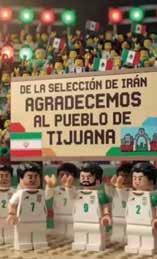
In an AI-generated video inspired by the LEGO universe, Iran’s national team thanked Mexico — especially Tijuana — for the support it received amid visa issues and exclusion from the United States,a gesture that moved millions
THE DUCK THAT STOLE THE SHOW
Not even Zayu,Maple,or Clutch generated as much excitement as Merlin.The Gómez family’s duck became a viral sensation after walking through the streets of Mexico City wearing a Mexican national team jersey and winning over social media.
A HEARTFELT THANK-YOU
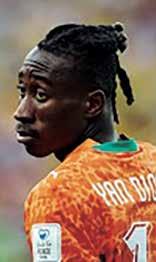
Beyond his goals,19-year-old Yan Diomandé touched people around the world by sharing a letter about the promise that drives his career.The Ivory Coast rising star dedicated the World Cup to his sister Roxane, who was murdered at 15,and vowed to honor her memory with every goal he scored.
A SPELL THAT WORKED
grabbed the spotlight after claiming he had cast a voodoo spell on England captain Harry Kane to keep him from scoring against Ghana. After the scoreless draw,he said he decided to “release” Kane so he could score for the rest of the tournament.England went on to beat France and finish third.
#WORLD CUP 2026
THE GREATEST SOCCER CELEBRATION
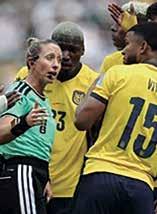
For the first time in the men’s World Cup’s history,two matches were o!ciated by all-women referee crews, marking a historic step toward greater female representation on soccer’s biggest stage.
FAN NO. 1
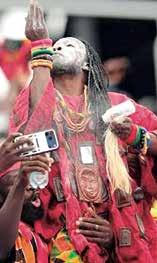
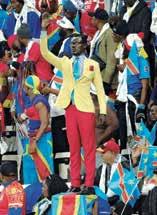
Michel Kuka Mboladinga, known as “Lumumba Vea,” became one of the tournament’s most striking fans.At every match for the Democratic Republic of the Congo,he stood completely still,one arm raised in tribute to independence leader Patrice Lumumba.
HE STOLE HEARTS VASCO,
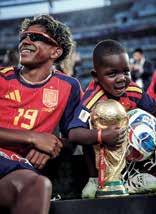
While Lamine Yamal dazzled with the ball,his brother Keyne captivated social media.At just 3 years old,he became one of the most beloved figures of the 2026 World Cup and celebrated Spain’s second title alongside the national team.
VIKING FEVER
Norway was one of the tournament’s biggest surprises.In addition to earning a historic fifth-place finish in its return to the World Cup after 28 years, Erling Haaland’s national team went viral for an o!cial photo in Viking attire and for its spectacular supporters.
Mexico coach Javier Aguirre delivered a comic moment when he shouted,“Gordon… fuck you!” at England’s Anthony Gordon after El Tri was eliminated.What looked like a confrontation ended in smiles when the British player said he took it as a compliment.
THE TRUE CHAMPION
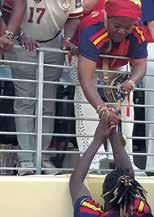
Nico Williams delivered one of the most emotional moments after the final,when he placed his championship medal around his mother’s neck.The gesture recalled his family’s story: his parents migrated from Ghana to Spain,crossing the Sahara Desert barefoot while his mother was pregnant with his brother.
Ghanaian witch doctor Nana Kwaku Bonsam
AI CREATED GEMS
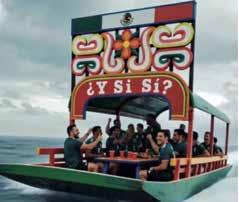
One of the tournament’s most viral videos imagined the quarterfinalists traveling in vessels inspired by each country’s identity.But Mexico’s appearance — aboard a trajinera bearing the words “What if we can?” — drew thousands of reactions.
#MUNDIAL2026
La mejor fiesta del futbol
El Mundial 2026 fue mucho más que una competencia por el título. La Copa del Mundo transformó ciudades, rompió récords de asistencia, marcó tendencias y regaló momentos que trascendieron el deporte.
POR ÉRIKA MONTOYA
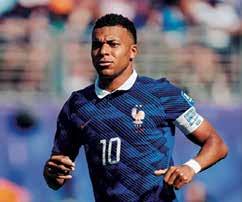
Kylian Mbappé became the focus of one of the biggest controversies of the 2026 World Cup after responding to racist remarks by Paraguayan senator Celeste Amarilla,a dispute that eventually escalated into a legal battle.
FROM THE FIELD TO COURT A PROTEST ALLOWED
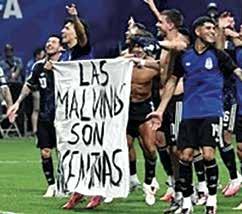
Argentina’s celebration after defeating England in the semifinals sparked an international dispute. A banner reading “The Malvinas are Argentine” prompted a protest from the British government and reignited debate over FIFA’s enforcement of its rules,which have blocked political expressions in other cases.
CELEBRATION
THE WORLD CUP GRANDMA
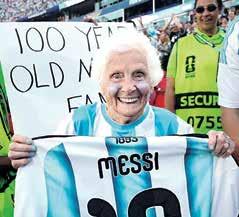
Pauline Kana proved that passion for soccer has no age limit.At 100,she traveled from stadium to stadium with her grandson,carrying a sign that read: “I am 100 years old and I am a Messi fan.” Her dream had an unforgettable ending when the Argentine captain presented her with his jersey.
WORLD CUP RHYTHM
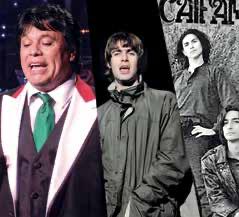
The 2026 World Cup showed that music is also part of national identity.England embraced Oasis’ “Wonderwall,” while Mexico found in Juan Gabriel’s songs and Caifanes’ “Aquí no es así” a way to unite its supporters and showcase its culture at soccer’s greatest celebration.
Tras 39 días de competencia, la Copa del Mundo 2026 llegó a su fin luego de reunir a 48 selecciones y a más de 6 millones 810 mil 966 aficionados en torno a los 104 partidos y celebrarse por primera vez en tres países sede: México, Canadá y Estados Unidos.
La competencia de selecciones más importante no solo dejó cifras históricas, también entregó momentos que trascendieron lo deportivo y marcaron a millones de personas alrededor del planeta.
En la cancha, España escribió una de las páginas más brillantes de la historia del torneo al conquistar su segunda estrella con un triunfo por 1-0 sobre Argentina en la final.
DESDE EL CORAZÓN
Con un video en el universo LEGO generado con IA, Irán agradeció a México,en especial a Tijuana,el apoyo cuando enfrentó problemas con las visas y la exclusión de Estados Unidos,un gesto que conmovió a millones.
MAGIA EFECTIVA
El brujo ghanés Nana Kwaku Bonsam acaparó reflectores al asegurar que lanzó un hechizo vudú contra Harry Kane para que no anotara ante Ghana.Tras el empate, dijo que lo "liberó".Inglaterra acabó tercero.
PROTESTA PERMITIDA
El festejo de Argentina tras vencer a Inglaterra en semis se convirtió en conflicto internacional.La pancarta "Las Malvinas son argentinas" provocó la protesta británica y reavivó el debate sobre las normas de la FIFA.
VASCO, SIN FILTROS
Javier Aguirre dejó un momento cómico al gritarle "¡Gordon…fuck you!" al inglés Anthony Gordon tras la eliminación.Lo que parecía un encontronazo terminó en sonrisas: el futbolista británico lo tomó como un cumplido.
FUROR VIKINGO
Noruega fue una de las grandes revelaciones: logró un histórico quinto lugar en su regreso al Mundial tras 28 años,y Haaland y compañía se volvieron virales por su foto oficial de vikingos y su espectacular afición.
El conjunto dirigido por Luis de la Fuente firmó una campaña dominante tras eliminar a Arabia Saudita, Uruguay, Austria, Portugal, Bélgica, Francia, Cabo Verde y Argentina. Además, recibió un solo gol durante todo el certamen, una hazaña sin precedentes en los 100 años de historia de la Copa del Mundo. El dominio español también se reflejó en los premios individuales: Rodri fue elegido Balón de Oro; Unai Simón ganó el Guante de Oro; y Pau Cubarsí fue reconocido como el Mejor Jugador Joven.
Sin embargo, el legado de este Mundial no se explica solo con estadísticas. Estas son algunas de las historias y momentos que hicieron de esta Copa del Mundo una competencia épica.
SU MAYOR INSPIRACIÓN
Más allá de sus goles,Yan Diomandé (19) conmovió al mundo con una carta sobre la promesa de su carrera.Dedicó el Mundial a su hermana Roxane,asesinada a los 15,y juró honrar su memoria con cada gol que marcara.
LA IA CREO JOYAS
Un video viral imaginó a los cuartosfinalistas viajando en embarcaciones inspiradas en cada país.México apareció en una trajinera con la leyenda "¿Y si sí?", desatando miles de reacciones.
GIRL POWER
Por primera vez en el Mundial masculino,dos partidos fueron dirigidos por equipos arbitrales exclusivamente femeninos,un paso histórico hacia mayor representación femenina en el máximo escenario del futbol.
LA ABUELITA DEL MUNDIAL
Pauline Kana demostró que la pasión por el futbol no tiene edad.Con 100 años, recorrió estadios con su nieto y un cartel: "Tengo 100 años y soy fan de Messi".Su sueño: el capitán argentino le obsequió su camiseta.
EL PATO DE LA FAMA
Ni Zayu,Maple ni Clutch generaron tanto furor como Merlín.El pato de la familia Gómez se volvió viral al recorrer la Ciudad de México con la camiseta de la Selección,conquistando las redes.
DE LA CANCHA A LA CORTE
Kylian Mbappé protagonizó una de las mayores controversias del Mundial 2026 al responder a comentarios racistas de la senadora paraguaya Celeste Amarilla,en un conflicto que escaló a lo legal.
ROBO CORAZONES
Mientras Lamine Yamal brillaba con el balón,su hermano Keyne conquistaba las redes.Con solo tres años, se convirtió en uno de los personajes más queridos del Mundial 2026 y celebró junto a España la segunda estrella.
FAN #1
Michel Kuka Mboladinga, "Lumumba Vea",fue uno de los aficionados más llamativos: en cada partido del Congo permanecía completamente inmóvil,con el brazo en alto, en homenaje al líder independentista Patrice Lumumba.
LA VERDADERA CAMPEONA RITMO MUNDIALISTA
Uno de los momentos más emotivos lo protagonizó Nico Williams al colgarle la medalla a su madre.El homenaje recordó que su familia emigró de Ghana a España descalza por el Sáhara,su madre embarazada de su hermano. La Copa del Mundo 2026 demostró que la música también forma parte de la identidad.Inglaterra hizo suyo "Wonderwall" de Oasis; México encontró en Juan Gabriel y "Aquí no es así" de Caifanes la forma de unir a su afición.
SOCCER SOCCER IS NEVER JUST
Soccer also o ers a way to understand a society’s identity, politics, memory, and power relations. Five books show that every match can reveal far more than the final score.
BY SOLEDAD ACOSTA OVIEDO*
ARTWORK: ANI
CORTÉS
Few human activities can bring an entire country to a standstill; soccer is one of them.
Just look at what happens during the World Cup: suddenly, we want to know who those players we had never seen before are, how a national team from a small country manages to compete with the great powers, why a victory sparks massive celebrations, and why a defeat is felt as a national tragedy. We think we are talking about soccer, but in fact we are also talking about identity, politics, memory, culture, and power.
For a long time, academia viewed sports only as entertainment. It seemed difficult to imagine that a match could say anything meaningful about society. Yet beginning in the late 20th century, historians, anthropologists, sociologists, and political scientists began asking a different question: What if soccer were much more than a sport?
The answer completely transformed the way the sport was studied. Soccer stopped being the final object of research and became a lens for understanding how national identities are built, how power relations operate, how ideas of masculinity are produced, why women were excluded from the field for decades, and how a sports organization gained political influence on a global scale. In other words, soccer began to be understood as a gateway to studying societies.
Perhaps that is why it remains an inexhaustible phenomenon. It changes because societies change. Fans evolve, the institutions that govern the sport change, the ways people consume it shift, and so do the meanings millions of people attach to it. Each transformation raises new questions and, with them, new areas of research.
Capitalizing on the World Cup fever shared by Mexico, the United States, and Canada, the following books show why soccer has never been merely 22 players chasing a ball.
How did FIFA come to govern world soccer?
If you have ever wondered how a sports organization became one of the most influential inter-
match merely lit a fuse that was already in place. The book shows that, under certain circumstances, a stadium can become the setting in which a society expresses conflicts that extend far beyond the field.
What can soccer teach us about ourselves?
Another unavoidable question is why soccer elicits such powerful emotions and identities. Much of the answer lies in the work of anthropologist Eduardo Archetti, especially Futbol y Ethos and Masculinidades: futbol, tango y polo en la Argentina.
His major contribution was challenging the idea that sports should be studied only as spectacle. For Archetti, soccer is one of the spaces where societies shape ideas of masculinity, build national symbols, and foster a sense of collective belonging.
His research helped establish a field of study that is now essential to understanding sports through the social sciences.
What does it mean to be part of a supporters’ group?
Shifting the focus from the field to the stands, Roger Magazine offers a revealing perspective in Azul y Oro: Masculinidad, juventud y poder en una porra de los Pumas de la UNAM.
Through extensive fieldwork among members of one of the most representative supporters’ groups in Mexican soccer, the anthropologist shows that these communities cannot be understood solely in terms of violence or fanaticism.
They create codes of belonging, hierarchies, emotional bonds, and specific ways of experiencing soccer as part of everyday identity. More than simply studying a supporters’ group, Magazine ultimately explains a form of social organization.
Reading soccer
FIFA turned soccer into a powerful instrument of global influence.
The so-called Soccer War had political,migration-related,and territorial causes.
Soccer helps explain national identities and ideas about masculinity.
Supporters’ groups also foster bonds,hierarchies,and a sense of belonging.
Women played soccer long before they received institutional recognition.
Galeano turned the emotion of a match into memory,chronicle,and literature.
national actors, Alan Tomlinson offers one of the most comprehensive answers in FIFA: The Men, the Myths and the Money.
Beyond the corruption scandals that often dominate public discussion, the author traces FIFA’s evolution from its founding to its transformation into an organization with a complex governance structure and enormous power to influence federations, governments, and international institutions.
His analysis shows that FIFA’s power did not emerge overnight. It was the result of a long process of institutional development, during which soccer also served as a tool for international recognition for many countries during decolonization.
Can a match change history?
For those seeking to understand the symbolic power of soccer, Ryszard Kapuściński’s The Soccer War and Other Reports is essential reading.
Drawing on his experience as a correspondent during the 1969 conflict between Honduras and El Salvador, the journalist dismantles one of the most repeated claims about that episode: that soccer did not cause the war.
The real causes were territorial disputes, migration tensions, and political decisions that had accumulated over many years. The
Why do we still believe women’s soccer is a recent phenomenon?
For those who still believe women’s soccer is new, Futbolera: A History of Women and Sports in Latin America, by Brenda Elsey and Joshua Nadel, offers one of the most valuable historical accounts in recent years.
Using newspaper archives and historical documents, the authors show that women played on soccer fields far earlier than commonly believed. The problem was not the absence of female players but the systematic erasure of their stories.
From Brazil’s ban on women’s soccer to the growth of Mexico’s first women’s leagues in the 1960s and 1970s, the book shows that the development of the women’s game was shaped by political decisions, cultural prejudice, and institutional structures that limited its recognition. Recovering that histry also helps us understand the present.
How do you write about a match’s beauty? Naturally, no list would be complete without Eduardo Galeano’s Soccer in Sun and Shadow. Unlike the previous books, Galeano does not seek to answer an academic question. His purpose is different: to remind us why we fall in love with soccer.
With prose that blends chronicle, essay, and literature, the Uruguayan author turns every story into a celebration of the game. He does not try to explain soccer through social research but to convey the emotion, memory, and beauty millions of people find in a ball.
These recommendations aim to spark curiosity about a field of study as broad as it is fascinating. They are only a small sample of the vast body of literary and academic work that has used soccer to unders-tand societies.
At a time when conversations are often reduced to scores, transfers, or refereeing controversies, these books remind us that every match can also be read as a chapter in a society’s history. In the end, soccer was never the destination. It was always the path to understanding something much broader: ourselves.
*The author is an international relations specialist and sociologist whose research focuses on gender,sports,and society.
El futbol nunca es solo futbol
El futbol también permite leer la identidad, la política, la memoria y las relaciones de poder de una sociedad. Cinco libros muestran por qué cada partido puede decir mucho más que el marcador.
POR SOLEDAD ACOSTA OVIEDO*
ARTE ANI CORTÉS
Hay pocas actividades humanas capaces de detener a un país entero; el futbol es una de ellas. Basta mirar lo que ocurre durante la Copa del Mundo: de pronto queremos saber quiénes son esos jugadores que nunca habíamos visto, cómo una selección de un país pequeño logra competir con las grandes potencias, por qué una victoria provoca celebraciones multitudinarias o por qué una derrota se vive como una tragedia nacional. Creemos que estamos hablando de futbol, cuando en realidad también hablamos de identidad, política, memoria, cultura y poder.
Durante mucho tiempo, la academia consideró al deporte únicamente como entretenimiento. Parecía difícil imaginar que un partido pudiera decir algo sobre la sociedad. Sin embargo, desde finales del siglo XX, historiadores, antropólogos, sociólogos y politólogos comenzaron a formular una pregunta distinta: ¿y si el futbol fuera mucho más que futbol?
La respuesta transformó por completo la forma de estudiarlo. El futbol dejó de ser el objeto final de investigación para convertirse en el pretexto. Un pretexto para comprender cómo se construyen las identidades nacionales, cómo operan las relaciones de poder, cómo se producen las masculinidades, por qué las mujeres fueron excluidas durante décadas de las canchas o cómo una organización deportiva adquirió influencia política a escala global. En otras palabras, el futbol comenzó a entenderse como una puerta de entrada para estudiar las sociedades.
Quizá por eso resulta un fenómeno inagotable. Cambia porque cambian las sociedades. Evolucionan las aficiones, las instituciones que rigen el deporte, las formas de consumirlo y los significados que millones de personas le otorgan. Cada transformación abre nuevas preguntas y, con ellas, nuevas investigaciones. Aprovechando la fiebre mundialista que compartieron México, Estados Unidos y Canadá, estas son algunas lecturas que demuestran por qué el futbol nunca ha sido solo veintidós jugadores persiguiendo un balón.
¿Cómo llegó la FIFA a gobernar el futbol mundial?
Si alguna vez te has preguntado cómo una organización deportiva llegó a convertirse en uno de los actores con mayor influencia internacional, Alan Tomlinson ofrece probablemente una de las respuestas más completas en FIFA: The Men, the Myths and the Money. Más allá de los escándalos de corrupción que suelen dominar la conversación pública, el autor reconstruye la evolución histórica de la FIFA desde su fundación hasta convertirse en una organización con una compleja estruc-
comprender el deporte desde las ciencias sociales.
Para leer el futbol
La FIFA convirtió el futbol en una poderosa herramienta de influencia global. La llamada Guerra del Futbol tuvo causas políticas,migratorias y territoriales. El futbol ayuda a explicar identidades nacionales y modelos de masculinidad.
Las barras también construyen afectos, jerarquías y sentidos de pertenencia.
Las mujeres jugaron futbol mucho antes de obtener reconocimiento institucional.
Galeano convirtió la emoción de un partido en memoria,crónica y literatura.
tura de gobierno y una enorme capacidad para influir en federaciones, gobiernos y organismos internacionales. Su análisis permite entender que el poder de la FIFA no surgió de un día para otro, sino que fue el resultado de un largo proceso de construcción institucional en el que el futbol también funcionó como una herramienta de reconocimiento internacional para numerosos países durante el proceso de descolonización.
¿Puede un partido cambiar la historia? Si la inquietud es entender hasta dónde puede llegar el poder simbólico del futbol, entonces vale la pena detenerse en La guerra del futbol y otros reportajes, de Ryszard Kapuściński. A partir de su experiencia como corresponsal durante el conflicto entre Honduras y El Salvador de 1969, el periodista desmonta una de las ideas más repetidas sobre aquel episodio: el futbol no provocó la guerra. Las verdaderas causas radicaban en disputas territoriales, tensiones migratorias y decisiones políticas acumuladas durante años. El partido únicamente encendió una mecha ya preparada. El libro demuestra que, en determinadas circunstancias, un estadio puede convertirse en el escenario en el que una sociedad expresa conflictos que trascienden por completo el terreno de juego.
¿Qué puede enseñarnos el futbol sobre quiénes somos?
Otra pregunta inevitable es por qué el futbol despierta emociones e identidades tan profundas. Buena parte de esa respuesta puede encontrarse en la obra del antropólogo Eduardo Archetti, particularmente en Futbol y Ethos y en Masculinidades: futbol, tango y polo en la Argentina. Su gran aportación consistió en romper con la idea de que el deporte debía estudiarse únicamente como espectáculo. Para Archetti, el futbol es uno de los espacios en los que las sociedades producen formas de entender la masculinidad, construyen símbolos nacionales y generan sentidos de pertenencia colectiva. Sus investigaciones marcaron el inicio de una línea de trabajo que hoy resulta indispensable para
¿Qué significa pertenecer a una barra? Si el interés se traslada de la cancha a las tribunas, Roger Magazine ofrece una mirada privilegiada sobre Azul y Oro. Masculinidad, juventud y poder en una porra de los Pumas de la UNAM. A través de un profundo trabajo de campo con integrantes de una de las barras más representativas del futbol mexicano, el antropólogo muestra que estos grupos difícilmente pueden entenderse únicamente desde la violencia o el fanatismo. Son comunidades que construyen códigos de pertenencia, jerarquías, afectos y formas particulares de vivir el futbol como parte de su identidad cotidiana. Más que estudiar a una porra, Magazine termina por explicar una forma de organización social.
¿Por qué seguimos creyendo que el futbol femenil es un fenómeno reciente? Para quienes aún consideran que el futbol femenil es un fenómeno reciente, Futbolera: A History of Women and Sports in Latin America, de Brenda Elsey y Joshua Nadel, ofrece una de las reconstrucciones históricas más valiosas publicadas en los últimos años. A partir de archivos periodísticos y documentos históricos, los autores demuestran que las mujeres han estado presentes en las canchas mucho antes de lo que suele imaginarse. El problema no fue la ausencia de futbolistas, sino el olvido sistemático de sus historias. Desde la prohibición del futbol femenino en Brasil hasta el crecimiento de las primeras ligas mexicanas durante las décadas de 1960 y 1970, el libro evidencia que el desarrollo del futbol practicado por mujeres estuvo marcado por decisiones políticas, prejuicios culturales y estructuras institucionales que limitaron su reconocimiento. Recuperar esa memoria también implica comprender mejor el presente.
¿Cómo se escribe la belleza de un partido? Naturalmente, cualquier lista quedaría incompleta sin mencionar El futbol a sol y sombra, de Eduardo Galeano. A diferencia de los libros anteriores, Galeano no pretende responder una pregunta académica. Su intención es otra: recordarnos por qué nos enamoramos del futbol.
Con una prosa que combina crónica, ensayo y literatura, el autor uruguayo convierte cada relato en una celebración del juego. No busca explicar el futbol desde la investigación social, sino transmitir la emoción, la memoria y la belleza que millones de personas encuentran en un balón. Estas recomendaciones buscan despertar la curiosidad por un campo de estudio tan amplio como apasionante. Son apenas una pequeña muestra de la vasta producción literaria y académica que ha encontrado en el futbol una forma de comprender a las sociedades. En tiempos en que las conversaciones suelen reducirse a resultados, fichajes o polémicas arbitrales, estos libros recuerdan que cada partido también puede leerse como un capítulo de la historia de una sociedad. Al final, el futbol nunca fue el destino. Siempre fue el camino para comprender algo mucho más amplio: a nosotros mismos.
*La autora es internacionalista y socióloga,investigadora en género, deporte y sociedad.
TIGER MASK BIDS FAREWELL TO MEXICO AS A PURORESU LEGEND NEARS THE END OF THE ROAD
Tiger Mask bid farewell to Mexican fans after more than three decades in the ring. The Japanese wrestling legend is preparing to retire for health reasons, leaving behind an enduring bond between puroresu and lucha libre.
Japanese wrestling icon Tiger Mask—one of the most recognizable masked performers in sports entertainment history—recently said goodbye to his Mexican fanbase. This final tour marks the impending conclusion of a legendary career spanning more than three decades.
Originally born from a manga series and later popularized through anime, the Tiger Mask persona evolved beyond fiction, cementing its status as one of the most influential junior heavyweight attractions of his generation. During FantasticaMania at the historic Arena México, the iconic luchador shared the squared circle one last time with lucha libre legends Místico and Blue Panther, closing a transatlantic chapter that left an indelible mark on both Japanese and Mexican wrestling.
“I’ve had the opportunity to come to Mexico for many years and compete in countless matches. When the time comes to say goodbye, there is naturally a feeling of sadness,” Tiger Mask told El Heraldo de México.
“Over time, I gained experience and developed a deeper understanding of the Mexican style. Adapting to lucha libre is no easy feat. You need to log serious time here to truly grasp its essence.”
While Yoshihiro Yamazaki is the fourth man to wear the legendary hood, he acknowledges that the future of the moniker remains up in the air. Unlike most wrestling personas, Tiger Mask carries a legacy deeply tied to corporate intellectual property and a cultural lineage that extends far beyond the ring.
“Tiger Mask is not just a gimmick. It started as a manga and became an anime. There are rights, trademarks, and specific protocols involved. It’s not as simple as a wrestler deciding he wants to be Tiger Mask.”
“That’s why I can’t say who the next Tiger Mask will be—or even whether there will be one. That decision is entirely out of my hands.”
With the end of his in-ring career in sight, the physical toll and injuries ultimately led him to step away. “I can’t look too far ahead right now. My absolute priority is my health. I need lower-back surgery, and I want to focus 100% on it.”
“I’ve been offered several opportunities for life after the ring, but I need to heal first. Once the surgery is behind me, I’ll take the time to map out my next chapter.”
As the direct successor to Satoru Sayama—
Key moments of his career
Six-time IWGP Junior Heavyweight Champion. Named Best Junior Heavyweight Wrestler in 2005.
Capped o his final Mexican tour with a victory alongside Místico and Blue Panther over the team of Black Tiger,Volador Jr.,and Averno.
He is still scheduled for one final match in Japan against Rocky Romero,who will compete as Black Tiger.
The masked star is expected to undergo several surgeries following his retirement tour.
1966
the original trailblazer—Yamazaki believes he accomplished nearly everything he set out to do, with highly successful runs across Japan, Mexico, and the United States.“There isn't much left for me to achieve in this business. But there is also life after wrestling, and I don’t want to jeopardize my long-term health.”
“I’m dealing with severe lower-back issues, along with chronic wear and tear in my neck and shoulders. If it weren’t for these physical limitations, I’d probably keep bumping. But my body made the decision for me.”
Since making his debut on July 15, 1995, Yamazaki established himself as one of New Japan Pro-Wrestling’s (NJPW) most respected pillars. He became the most successful worker to carry a mantle that had transcended the sport, becoming a full-fledged cultural phenomenon.
His impact resonated far beyond Tokyo. Tiger Mask IV forged a deep, lasting connection with Mexican crowds through his appearances at Arena México and at various CMLL (Consejo Mundial de Lucha Libre) co-promoted events, anchoring the historic alliance between puroresu and lucha libre. “My only real regret is not having seen more of the country.”
events were wrestled in Mexico during his farewell tour.
Best of the Super Juniors tournament victories (2004 and 2005). championships won over his career.
years old. the year of Tiger Mask's first appearance in manga, marked the beginning of the franchise that would later become a wrestling phenomenon. 2 10 4 55
“I would have loved to travel across Mexico, work in different territories, and spend more time connecting with the fans here. That’s probably the one piece of unfinished business I’m leaving behind.” Crucial to that legacy was his storied rivalry with Black Tiger, a dark counterpart to Tiger Mask that has mirrored Tiger Mask for decades and now lives on through a new iteration in Mexico.
“We went to war for major championships, including the IWGP Junior Heavyweight and NWA World Junior Heavyweight titles. I’ve known him since we were young boys, and we spent years building our careers together.”
“The story of Tiger Mask has always required Black Tiger to serve as the perfect foil.”
Riding off into the sunset with a final victory in Mexico, Tiger Mask IV, backed by decades of memories spanning continents and generations, officially takes his rightful place among the immortal icons of a sport deeply woven into the fabric of both Japanese and Mexican culture.
POR IVÁN NAVARRO
Tiger Mask se despide de México: una leyenda del puroresu se acerca al final del camino
Tiger Mask se despidió de la afición mexicana tras más de tres décadas de carrera. El legendario luchador japonés prepara su retiro por motivos de salud y deja un vínculo imborrable entre el puroresu y la lucha libre.
POR IVÁN NAVARRO
Tiger Mask, ícono de la lucha libre japonesa y uno de los personajes enmascarados más reconocidos de la historia del entretenimiento deportivo, se despidió recientemente de la afición mexicana. Esta última gira marca el inminente cierre de una carrera legendaria que se ha extendido durante más de tres décadas.
El personaje de Tiger Mask nació originalmente en una serie de manga y luego se popularizó a través del anime. Con el paso del tiempo, trascendió la ficción y se consolidó como una de las figuras más influyentes de la división de peso junior de su generación.
Durante FantasticaMania, en la histórica Arena México, el emblemático luchador compartió el cuadrilátero por última vez con leyendas de la lucha libre como Místico y Blue Panther. Así cerró un capítulo transatlántico que dejó una huella imborrable tanto en la lucha japonesa como en la mexicana.
“He tenido la oportunidad de venir a México durante muchos años y participar en una gran cantidad de combates. Cuando llega el momento de despedirse, naturalmente aparece un sentimiento de tristeza”, declaró Tiger Mask a El Heraldo de México.
Y añadió: “Con el tiempo adquirí experiencia y comprendí mejor el estilo mexicano. Adaptarse a la lucha libre no es sencillo. Es necesario pasar mucho tiempo aquí para entender verdaderamente su esencia”.
Aunque Yoshihiro Yamazaki es el cuarto hombre en portar la legendaria máscara, reconoce que el futuro del personaje sigue siendo incierto. A diferencia de la mayoría de las identidades en la lucha libre, Tiger Mask representa un legado estrechamente vinculado a los derechos de propiedad intelectual y a una tradición cultural que trasciende el cuadrilátero.
“Tiger Mask no es cualquier personaje. Comenzó como manga y luego se convirtió en anime. Existen derechos, marcas registradas y protocolos específicos. No es tan sencillo como que un luchador decida convertirse en Tiger Mask.
“Por eso no puedo decir quién será el próximo Tiger Mask, ni siquiera si habrá otro. Esa decisión está completamente fuera de mis manos”.
Con el final de su carrera sobre el ring cada vez más cerca, el desgaste físico y las lesiones acabaron por definir su decisión de retirarse.
“En este momento no puedo pensar demasiado en el futuro. Mi prioridad absoluta es mi salud. Necesito una cirugía en la zona lumbar y quiero concentrarme al cien por ciento en ello.
“He recibido varias propuestas para mi
Claves de su carrera
Fue seis veces campeón junior de peso completo de la IWGP. Fue nombrado mejor luchador junior de peso completo en 2005.
Cerró su última gira por México con una victoria junto a Místico y Blue Panther sobre Black Tiger,Volador Jr.y Averno. Todavía tiene programado un último combate en Japón contra Rocky Romero,quien luchará como Black Tiger. Se espera que el luchador enmascarado se someta a varias cirugías tras su gira de retiro.
1966
vida después de la lucha, pero primero necesito recuperarme. Una vez que haya concluido la operación, me tomaré el tiempo necesario para planear cuidadosamente mi siguiente etapa”.
Como sucesor directo de Satoru Sayama, el pionero del personaje, Yamazaki considera que cumplió prácticamente todos sus objetivos tras exitosas etapas en Japón, México y Estados Unidos.
“No me queda mucho por conseguir en este negocio. Pero también existe una vida después de la lucha y no quiero poner en riesgo mi salud a largo plazo.
“Tengo problemas graves en la parte baja de la espalda, además de desgaste crónico en el cuello y los hombros. De no ser por estas limitaciones físicas, probablemente seguiría luchando. Pero mi cuerpo tomó la decisión por mí”. Desde su debut, el 15 de julio de 1995, Yamazaki se consolidó como uno de los pilares más respetados de New Japan Pro-Wrestling (NJPW). Se convirtió en el luchador más exitoso al portar una identidad que trascendió el deporte y se convirtió en un fenómeno cultural.
Su impacto llegó mucho más allá de Tokio. Tiger Mask IV forjó una conexión profunda y duradera con la afición mexicana mediante sus presentaciones en la Arena México y en diversos eventos organizados en conjunto con el Consejo Mundial de Lucha Libre (CMLL). Con ello, ayudó a fortalecer la histórica alianza entre el puroresu y la lucha libre. “Mi único verdadero arrepentimiento es no haber conocido más del país.
victorias en el torneo Best of the Super Juniors,en 2004 y 2005.
funciones disputadas en México durante su gira de despedida.
campeonatos conquistados a lo largo de su carrera.
año de la primera aparición de Tiger Mask en el manga, marcó el inicio de la franquicia que después se convertiría en un fenómeno de la lucha libre. 2 10 4 55
años.
“Me habría encantado recorrer todo México, luchar en distintas plazas y pasar más tiempo conviviendo con la afición. Probablemente ese sea el único asunto pendiente que siento que estoy dejando”. Una parte fundamental de su legado fue la histórica rivalidad con Black Tiger, su contraparte oscura, un personaje que ha acompañado la historia de Tiger Mask durante décadas y que actualmente continúa a través de una nueva versión en México.
“Libramos grandes batallas por campeonatos importantes, entre ellos el Campeonato Junior de Peso Completo de la IWGP y el Campeonato Mundial Junior de Peso Completo de la NWA. Lo conozco desde que éramos muy jóvenes y pasamos años construyendo nuestras carreras juntos.
“La historia de Tiger Mask siempre ha necesitado a Black Tiger como su contraparte perfecta”. Después de cerrar su recorrido por México con una última victoria y respaldado por décadas de recuerdos forjados entre continentes y generaciones, Tiger Mask IV ocupa oficialmente su lugar entre los íconos inmortales de un deporte profundamente arraigado en las culturas japonesa y mexicana.