ALTITUDE
AN ELEVATE ADVISORS PUBLICATION


THE TALENT SHIFT
SPRING 2026


THE TALENT SHIFT
SPRING 2026
CONTACT US
info@elevate2win.com
elevate2win.com

https://www.linkedin.com/company/ elevate2win
SERVICES
Strategic Visioning
• Business Development, Marketing, and Social Strategy
Business Development and Marketing Plans
• Business Development, Marketing, and Team Audits
Training
• Coaching Client Experience Programs
Client Perception Studies
• Market and Client Research
• Brand Development Marketing Campaigns
• Cohort Programs
Fractional Leadership

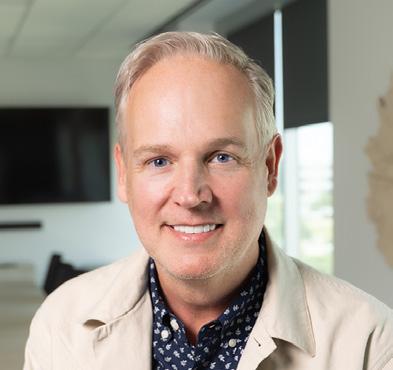



At Elevate Advisors, we push firms to uncover their true differentiators based on purpose, culture, and experience. We’re driven to help people and firms realize their beyond.
Jen Newman, FSMPS, CPSM CEO + Founder
Doug Parker, FSMPS COO + Founder
Rebecca Price President
Julia Lang Vice President
Mhari Reid Marketing Coordinator

If you’ve been following Elevate Advisors, you may notice something a little different in this issue, starting with who’s signing this letter. As Jen and Doug step into expanded roles focused on firm growth and strategy, we’re stepping into our roles as President and Vice President. It reflects how Elevate develops its team by trusting people with responsibility and creating space for them to grow into new roles.
And honestly, it feels like the right moment to be talking about talent.
This edition builds on the conversation we started in Volume 5 around the evolving role of talent in shaping the future of our industry. Here, we go deeper into what it takes to attract, develop, and retain the people who will define what’s next.
This issue focuses on one of the most pressing challenges and opportunities facing AEC firms today. Talent is no longer just an HR function. It is a core business strategy. The firms getting this right go beyond filling roles, they build environments where the right people want to come and stay. Inside, you’ll hear from leaders navigating this in real time, along with insights from our AEC Talent Decision Drivers Survey.
The through line is clear. Progress comes from intentional decisions aligned with where your firm is going.
Respondent
GENERATION
36% Millennials 29-44
34% Gen X 45-60
22% Gen Z 13-28 8% Baby Boomers 61+
CAREER LEVEL
47% Senior-Career 15+ years
22% Mid-Career 8-14 years
14% Entry-Level 0-3 years
13% Early-Career 4-7 years
3% Student/Intern
FIRM SIZE
43% Small 50-99
26% Midsize 100-499
22% X-Small 0-49
8% Large 500+
Small firm advantage: respondents from smaller firms showed significantly higher responsiveness to leadership outreach.
1 HIGHEST ENGAGEMENT
» Relationship-based outreach:
• Friends or colleagues
• Firm leaders
• Hiring managers
The Hiring Process
2 MODERATE ENGAGEMENT
» Internal HR/ talent acquisition
Silence kills, not duration.
TOP FRUSTRATIONS
» Slow or disorganized communication
» Lack of transparency
» Process too long
» Unclear expectations
» Feeling like just a number
74% Said the hiring process influenced their decision to accept an offer.
40% Said four weeks is when it feels too long.
35% Said timeline matters less than communication.
3 LOWER ENGAGEMENT
» External recruiters
» Job boards
» Career fairs
Why People Leave
Compensation ranked first when evaluating a new role, but when asked why people leave, it fell well below leadership and burnout factors.
30% Poor direct management
29% Poor firm leadership
26% Lack of clear career path
26% Workload or burnout
23% Compensation misalignment
22% Feeling undervalued
19% Misalignment with culture
18% Lack of mentorship
*Respondents could select multiple factors.
1 LEADERSHIP CREDIBILITY
Trust in leadership is foundational across every career level and generation. Senior professionals ranked leadership trust as more influential than compensation in their decision to stay or go. This means being honest about firm direction, acknowledging challenges, and not overpromising on growth, flexibility, or culture.
2 CAREER PATH CLARITY
76% of respondents said career clarity meaningfully impacts their decision to stay. Professionals don’t just want to grow, they want to know how. Mid-career professionals (8-14 years) are most sensitive to this. If the path is invisible, they assume it doesn’t exist.
3 WORKLOAD SUSTAINABILITY
Burnout is a consistent departure driver. People can handle hard seasons. What they cannot tolerate is a culture that pretends the hard season is normal and permanent.
4 FLEXIBILITY (BUT NOT WHAT YOU THINK)
When asked what flexibility means, the top answer was not remote work. It was the ability to attend family and personal life events. Followed by adjustable start/end times, then remote/hybrid options. Flexibility is not a policy. It is daily manager behavior.
5 TRANSPARENT COMMUNICATION
Professionals at every career stage want leaders who communicate strategy clearly and honestly. When communication breaks down, trust erodes. When trust erodes, your best people start making calls.
EXPECTED: absence creates friction
» Parental Leave
» 401(K) Match/Profit Sharing
» PTO
» Bonus/Incentive Compensation
» Clear Path to Advancement
» Strong Onboarding
» Professional Development
» Paid Licensure Support
NICE TO HAVE: appreciated but rarely decisive
» Company-Paid Medical Insurance
» Wellness Benefits
» Gym Memberships
» Compressed Schedule
» Tuition Reimbursement
» Student Loan Assistance
» Mentorship Programs
» Volunteer Time Off
» Floating Holidays
If these expected benefits aren’t in your package, you’re not competing.
HOW PROFESSIONALS FORM THEIR PERCEPTION OF A FIRM AS AN EMPLOYER
#1 Word of mouth
#2 Leadership visibility
#3 Industry recognition
#5 LinkedIn ranked #9 Instagram #10 Facebook
Your retention strategy is your recruiting strategy. Every person who leaves your firm is out there talking.
1
Is your hiring process a credit to your firm or a liability? Do you have a defined process with clear communication standards?
2
Do your people know how to advance? Not in theory, in writing. Is there a documented career path?
3
Are your managers equipped to lead, or just manage? Are you developing them and holding them accountable for retention?
4
Is your flexibility real or symbolic? Do your leaders model it? Do your managers normalize it?
5
What does a long-term financial future look like for someone who commits to your firm?
The talent war is not won through postings and perks. It is won through trust.

Dana Klein CAGE Engineering
As the talent pool continues to shrink and competition intensifies, firms across the AEC industry are under growing pressure to hire quickly. One of the biggest risks organizations are making right now is filling an empty seat with anyone available rather than the right person for the culture. While this approach may offer short-term relief, it often leads to long-term challenges, including disengagement, strained team dynamics, and increased turnover.
CAGE Engineering, a 95-person civil engineering firm headquartered in Illinois with additional presence in Colorado, Arizona, North Carolina, and Florida, offers a compelling example of how firms can address this challenge by treating cultural alignment as a core component of talent strategy rather than a secondary consideration. As the firm expanded into multiple markets, leadership took a deliberate pause. In 2025, CAGE engaged in a strategic planning process, led by Elevate Advisors, that set the foundation for its next phase of
growth. Rather than defining success primarily through revenue targets, the firm aligned around clear goals centered on people, culture, and longterm sustainability, operating from the belief that financial performance is an outcome of a well-defined strategy, not the strategy itself.
That planning effort created clarity around what success looks like at CAGE, how teams are expected to work together, and what kind of talent the firm needs to support its future. With those expectations defined, cultural alignment became a measurable priority rather than an abstract ideal. Organizational culture plays a defining role in how work gets done, how teams collaborate, and how decisions are made. Yet many firms struggle to translate stated values into daily behavior, particularly during periods of growth. At CAGE, culture is not aspirational or abstract. It is operational. It shows up in cross-discipline collaboration, leadership expectations, and individual ownership across the organization.
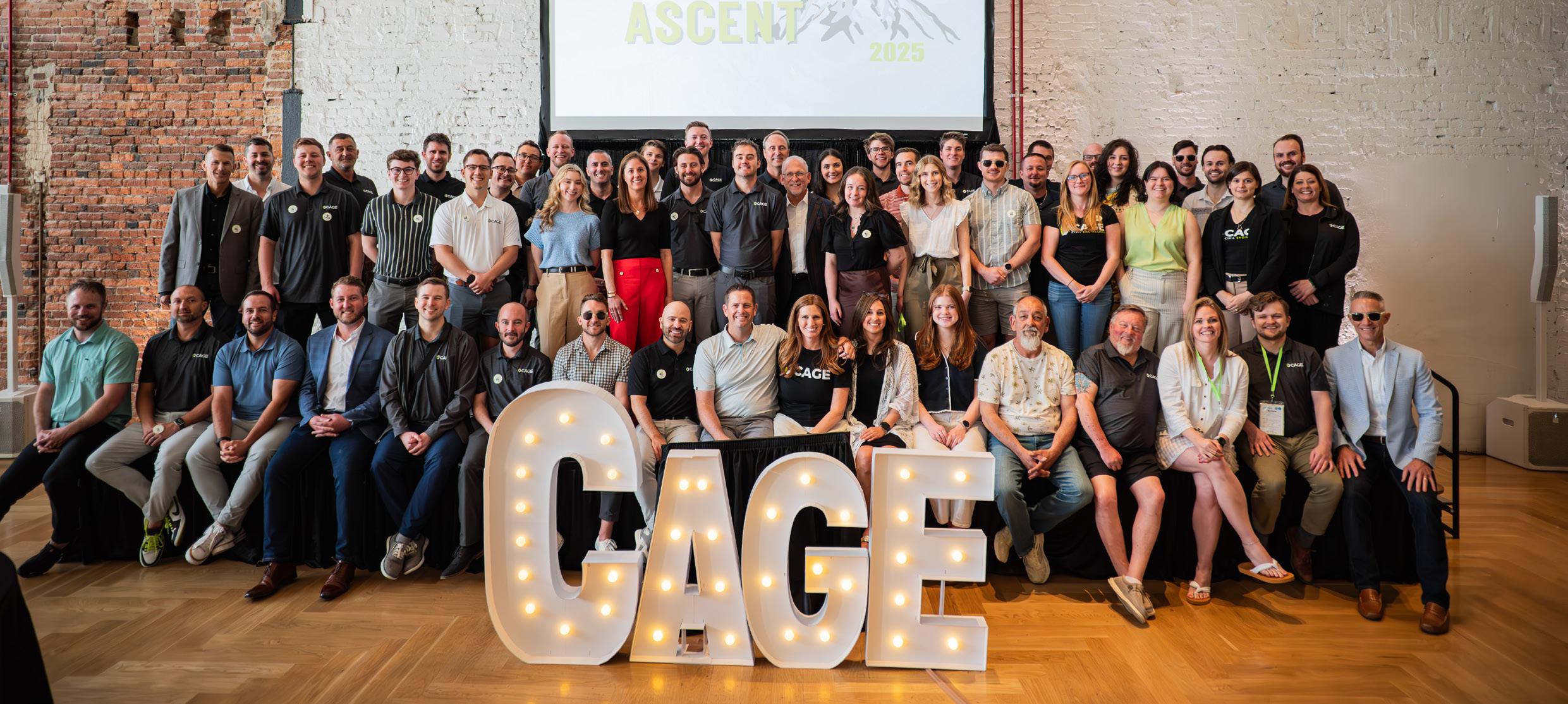
CAGE reinforces its commitment to alignment and shared ownership through Ascent, an annual all-team experience designed to build camaraderie, develop the team, and communicate a clear vision for the future. Following the Strategic Plan, leadership recognized that true cultural alignment requires more than direction. It requires engagement. To activate this, CAGE hosted a strategic planning fair where each of the 10 initiative champions shared their plans and invited participation. Every team member selected and joined a committee, ensuring that strategy was not just defined at the top, but carried forward across the organization through active involvement and accountability. This directly reflects the firm’s belief that culture is operational, not aspirational, and must be consistently reinforced through intentional actions and shared ownership.
The consequences of ignoring cultural alignment are increasingly visible across the industry. While technical expertise remains essential, many firms discover that engagement issues, communication breakdowns, and team friction stem from value misalignment rather than skill gaps. In contrast, organizations that prioritize culture during hiring tend to see stronger engagement, greater adaptability, and improved long-term retention.
CAGE approaches talent acquisition as a future-focused, strategic function rather than a transactional process. Interviews are designed to go beyond resumes, exploring how candidates think, collaborate, and respond to challenges. Evaluation focuses on accountability, communication, and adaptability, providing insight into how individuals will perform within teams over time.
This approach also strengthens employer branding. In a competitive talent market, firms often struggle to differentiate
themselves beyond compensation and project type. CAGE’s transparency about its people-first culture gives candidates a realistic understanding of expectations and working dynamics. That transparency builds trust and allows candidates to self-select into an environment where they are more likely to succeed.
CAGE’s experience highlights three practices that other firms should ensure are embedded in their talent acquisition efforts:
1. Clearly define what culture looks like in action. Values must be translated into observable behaviors, decision-making norms, and expectations. This clarity allows hiring teams to assess alignment consistently rather than relying on intuition.
2. Design interviews to evaluate behaviors, not just experience. Resumes reflect past roles, but interviews should reveal how candidates collaborate, take ownership, and navigate challenges. Behavioral, value-aligned questions are stronger predictors of long-term success.
3. Maintain alignment between leadership, hiring managers, and talent teams. When these groups operate in silos, cultural alignment breaks down. Ongoing collaboration ensures consistency and reinforces the culture with every hire.
Importantly, hiring for cultural alignment does not mean hiring for sameness. At CAGE, alignment is about shared values, not identical backgrounds or experiences. Diverse perspectives strengthen innovation and problem solving when anchored in a common cultural foundation.
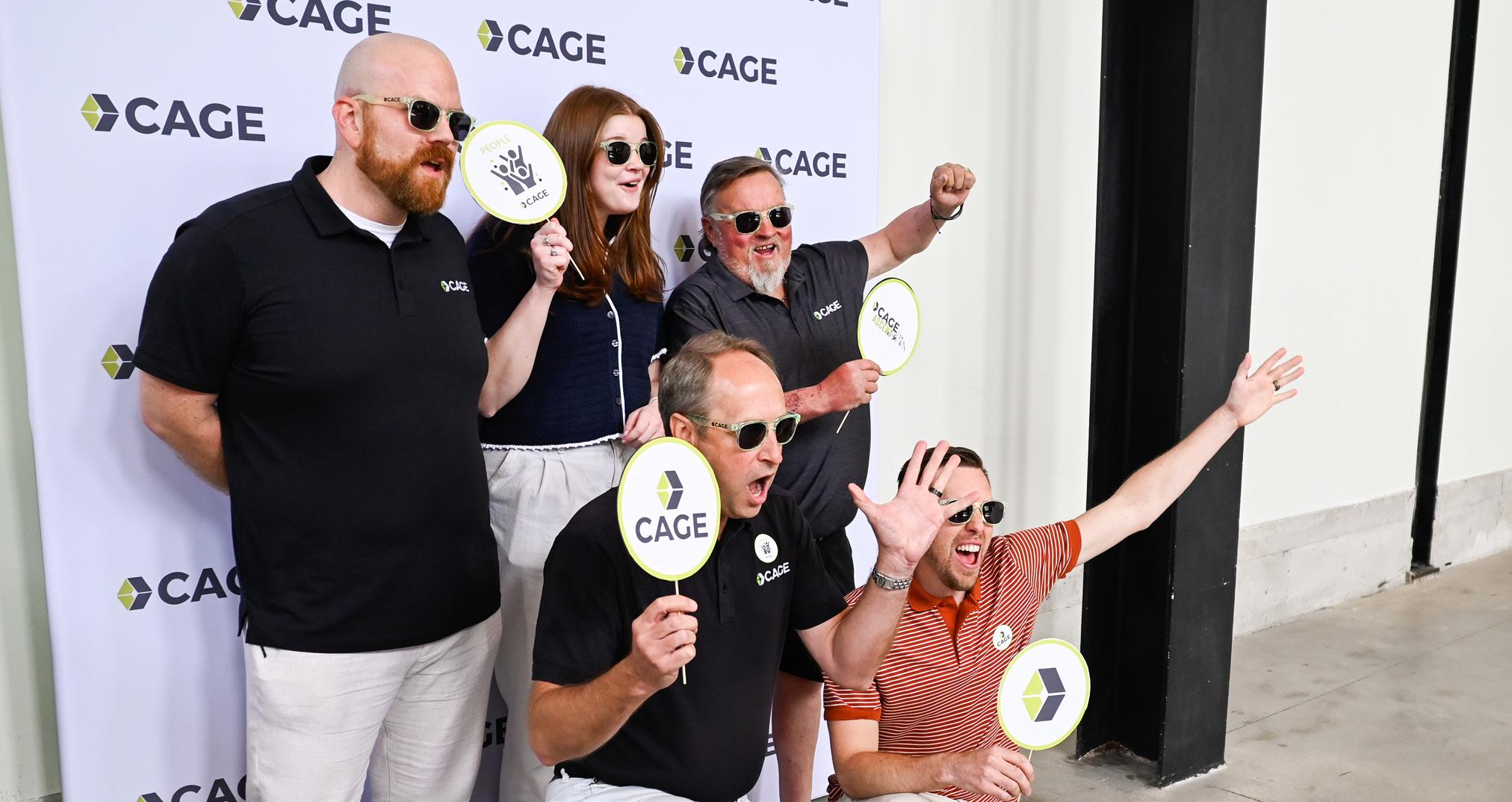
CAGE’s approach underscores that hiring for culture is not a one-time initiative or the responsibility of the talent team alone. It requires sustained commitment across the organization.
Leadership plays a critical role by clearly defining cultural expectations and modeling them consistently. When leaders reinforce values through decisions and behavior, hiring managers are better equipped to identify alignment and address misalignment early.
Hiring managers are central to execution. At CAGE, managers are trained to evaluate behavioral indicators of success, conduct consistent, value-aligned interviews, and assess how candidates will contribute to team dynamics. This shared understanding improves decision-making and reduces subjectivity.
Team members also play an important role. Involving teams in interviews provides
additional perspective and reinforces shared accountability for maintaining the culture. It also signals to candidates that collaboration and ownership are central to how work gets done. Training is the connective tissue that makes this system work. Firms that successfully hire for culture invest in developing hiring managers, aligning interview practices, and calibrating expectations across teams. Without this investment, cultural alignment becomes inconsistent and difficult to sustain.
CAGE’s commitment to cultural alignment extends beyond interviews and onboarding. One of the firm’s talent strategies is its emphasis on internal referrals, supported by a highly visible refer-and-earn program that is actively promoted across the organization. Rather than treating referrals as a policy tucked away in a handbook, CAGE reinforces the program through ongoing internal communication, leadership endorsement, and consistent reminders that team members play a direct role in shaping the future of the firm.
This approach addresses a critical advantage as referrals offer: cultural insight. Team members understand the realities of the work, the expectations of collaboration, and the behaviors that define success at CAGE. As a result, referrals tend to come from individuals who already understand and align with the firm’s values.
For candidates, this signal matters. Knowing they were referred by someone inside the organization provides early insight into the culture and expectations, often leading to stronger engagement and more informed decision-making on both sides.
By empowering team members to participate in talent acquisition, CAGE reinforces shared ownership of the culture while strengthening its ability to attract individuals who are positioned to succeed long term.
The pressure to fill roles quickly is real, particularly in a shrinking talent market. However, CAGE’s experience demonstrates that resisting the urge to simply fill seats and instead committing to cultural alignment, grounded in a clear strategic plan, leads to stronger engagement, healthier teams, and more sustainable growth.
For firms navigating labor shortages, rapid expansion, or rising turnover, the lesson is clear: when people are the strategy and profit is the outcome, aligning talent with culture becomes one of the most powerful drivers of long-term success.
. DANA KLEIN CAGE Engineering dklein@cagecivil.com
Dana Klein is the Director of People at CAGE Engineering, where she leads HR strategy, talent development, and organizational growth initiatives with a strong focus on culture and people-first practices. With extensive experience in human resources, including talent acquisition, retention, and strategic HR leadership across diverse organizational settings, she brings a thoughtful blend of operational expertise and strategic vision to her work. Dana also leads CAGE Talent, providing A/E firms with highimpact, people-first talent acquisition solutions. Reach out to Dana to learn more. Dana holds a Master’s Degree in Human Resources Management and Organizational Development from Washington University in St. Louis and a Bachelor’s Degree in Industrial and Organizational Psychology from John Carroll University. She is passionate about building scalable people practices that empower team members and drive lasting impact.

Julia Lang Elevate Advisors
You don’t need to be a content creator or post every week to attract strong talent. But before a candidate ever applies (or responds to a recruiter), there’s a good chance they’ve already looked you up. What they see shapes how they view your team, your leadership, and your firm.
Industry data from our recent 2026 AEC Talent Decision Drivers Survey shows that leadership visibility is one of the most influential factors shaping early perception, ranking above websites, job postings, and other marketing channels.
In today’s market, leadership visibility isn’t about self-promotion; it’s about showing the kind of work you lead and the team people would be joining. Recruiting success is relationship-driven. Leadership visibility is often where those relationships begin.
» Your profile clearly reflects your role, expertise, and the type of work you lead.
» You occasionally share or highlight projects, team wins, or company updates.
» You engage with your company’s content and support team visibility.
» You recognize and celebrate your team’s contributions.
» Your presence gives candidates a sense of your leadership style and culture.
» Profile is minimal, outdated, or doesn’t reflect your current leadership role.
» No visibility into the type of projects or teams you lead.
» Little to no engagement with company or industry content.
» Team achievements and project wins go unrecognized publicly.
» Candidates can’t get a sense of your leadership style or team environment.
» Make sure your profile clearly reflects your expertise and leadership style.
» Share or reshare content from your company, clients, or team.
» Recognize and highlight your team’s contributions and project wins.
» Highlight projects and milestones that reflect the work your team is doing.
You don’t need to be highly active on LinkedIn, but in a competitive hiring market, visibility matters. Candidates don’t just evaluate your firm. They evaluate the people they may work for. When leaders show up consistently and authentically, it reinforces the quality of your work, your team, and your leadership. Even a few intentional actions can go a long way.

Elevate Advisors has named Julia Lang as Vice President, recognizing her role in connecting strategy, execution, and client experience.
Julia leads work across digital strategy, client perception studies, and thought leadership initiatives, with a focus on helping firms not only define the right direction, but follow through with clarity and consistency.
Her strength lies in execution. She works closely with clients to translate strategy into structured, actionable plans, aligning teams, managing complexity, and ensuring initiatives move forward with purpose. From early insight through implementation, Julia brings a level of organization and accountability that keeps work on track and outcomes aligned with intent.
That same approach shapes her leadership within Elevate. She plays a key role in how projects are delivered, how teams collaborate, and how client relationships are managed across engagements.
As Vice President, Julia will continue to strengthen Elevate’s ability to deliver high-quality, client-centered work that is both strategic and executable.
Julia Lang Vice President julia@elevate2win.com

Rebecca Price Elevate Advisors
The AEC talent market isn’t just tight. It’s structurally strained from the field to the executive suite. Deloitte projects a need for 499,000 new engineering and construction workers in 2026 alone, and a 2025 AGC workforce survey found 92% of firms struggling to fill both craft and salaried positions.
The pressure runs deeper than headcount. The ACEC Research Institute reports a structural annual shortfall of 18,000 engineers, and that gap is already showing up in firm capacity: 51% of engineering firms are turning down work due to staffing shortages, and 26% are declining profitable projects because they lack the personnel to deliver them. On the architecture side, NCARB’s 2025 report confirms the number of licensed architects fell 4% to 116,000 in 2024, the first significant drop in years, as baby boomers move out of practice.
Only 9% of workers aged 19 to 24 are entering the trades, and 40% of the construction workforce is over 45, with nearly half expecting to retire within the decade.
Firms aren’t losing the talent war because they’re not trying hard enough. They’re losing because their approach hasn’t evolved. Here are 10 strategies to elevate your recruiting efforts and start attracting the right people, faster.
Compensation ranks first when candidates evaluate a new role, but it’s not why they leave. Poor direct management (30%), poor firm leadership (29%), and lack of a clear career path (26%) are the top turnover drivers.
Compete on culture, clarity, and leadership credibility. Compensation is the price of entry, not the differentiator. Industry research confirms that in 2026, many firms are setting themselves apart through more realistic workload planning to reduce burnout.
The firms winning the talent war aren’t waiting for candidates to find them. They are building systems, clarity, and consistency that make the right people want to join and, more importantly, stay.
2. BUILD YOUR EMPLOYER BRAND BEFORE YOU NEED IT
Candidates form opinions about your firm long before you post a position. Word of mouth ranks first as an influence channel, and leadership visibility ranks second.
According to Stambaugh Ness’ 2025 AEC Strategic Planning Survey, 81% of firms identified recruitment as a moderate or extreme concern. The firms that show up consistently are the ones candidates think of first when they’re ready to move.
3. FIX YOUR HIRING PROCESS. COMMUNICATION IS THE DIFFERENTIATOR.
Communication is the issue, not how quickly you make a decision. Candidates cite slow responses, unclear expectations, and lack of transparency as their biggest frustrations. While 40% say four weeks feels too long, 35% say timeline matters less than communication. Consistent, honest touchpoints matter more than shaving days off the process.
4. PRIORITIZE RELATIONSHIPS BEFORE JOB BOARDS
The highest candidate engagement comes from direct, relationship-based outreach. Before posting a position, look inward. Who on your team already knows the right people? Your next hire is more
likely to come from a conversation than an application. Candidate relationship development should also be a part of your conference and event strategy. It’s not just for business development anymore! Your next project manager probably isn’t sitting in an active job search. They’re working for someone else, and they need to hear from you directly.
5. DEFINE CULTURE IN OBSERVABLE, SPECIFIC
You can’t recruit for culture if you can’t explain it. Values need to show up in behaviors, decisions, and expectations, not just on a website.
When your team can clearly describe what it’s like to work at your firm, candidates can better assess fit and self-select into the right environment. That cuts down on early attrition, which is costly in any market. Research shows that 86% of new hires decide how long they’ll stay with a company within their first six months, so your hiring process is your first culture demonstration.
Resumes reflect history. Interviews should reveal how someone thinks and responds.
Behavioral questions focused on accountability, collaboration, and decision-making are stronger predictors
of long-term success than technical checklists. A structured conversation signals to candidates that you’re thoughtful about fit, not just filling a seat.
76% of candidates say career path clarity influences their decision to stay. AEC firms with stronger retention are increasingly making career pathing, learning programs, and performance management visible and structured rather than leaving them as aspirational talking points for managers to interpret on their own.
If growth paths exist only in leadership’s heads, your team assumes they don’t exist. Define them, document them, and share them early.
PSMJ’s 2025 AEC industry data shows that voluntary turnover has dropped to 11.3%, the lowest since 2019, and that firms achieving the lowest turnover rates share one consistent characteristic: strong onboarding. The others on that list are clear career paths, meaningful work, competitive compensation, and genuine work-life balance. All of them are things a structured onboarding process introduces and reinforces from day one.
Four in five workers say they’d stay longer in a role with a better onboarding experience, and yet most firms still compress onboarding into the first week and move on. A structured first 90 days, clear expectations, and early connection to leadership shows candidates you’re invested in their long term success.
Employee referrals consistently outperform every other sourcing channel. According to SHRM, employee referrals deliver more than 30% of all hires, and 82% of employers rate them as generating the best ROI of any recruitment source. Most firms have a referral program on paper. Very few treat it like the strategic asset it actually is.
Make referrals easy. Talk about them often. Recognize participation, not just outcomes. Your team is your most credible recruiting engine, so give them a reason to use it.
Flexibility is defined by daily behavior, not by policy. For most candidates, flexibility means being able to show up for life events, adjust schedules, and work with trust. Flexible schedules and remote options are increasingly cited as a factor in hiring decisions across office-based AEC roles. But, if leadership doesn’t model it, the policy is just decoration.
The firms winning the talent war aren’t waiting for candidates to find them. They are building systems, clarity, and consistency that make the right people want to join and, more importantly, stay. In 2026, retention has moved from an HR initiative to a project delivery and business performance conversation.
Recruiting isn’t a moment ... it’s an operating system.
To build a recruiting approach that reflects your firm’s culture and positions you to win the right talent, reach out to Rebecca at rebecca@elevate2win.com

Elevate Advisors has named Rebecca Price as President, marking a natural next step in the firm’s continued growth and evolution.
Rebecca brings more than 20 years of in-house experience, giving her a perspective that is both strategic and grounded in execution. She understands how decisions are made inside AEC firms, what constraints teams face, and where strategy often breaks down in practice.
That lens shapes how she leads. Rather than approaching strategy as a standalone exercise, Rebecca focuses on alignment between vision, operations, and execution. Her work centers on helping firms make decisions that are not only ambitious, but actionable within the realities of their business.
In her role as President, Rebecca will lead day-to-day operations while continuing to refine how Elevate delivers value to clients. Her focus remains on building systems, strengthening partnerships, and ensuring that strategy translates into measurable progress.
Rebecca Price President rebecca@elevate2win.com


Celeste Sweet Tamarack Grove
As leaders, the most important decisions we make are about people. Who we hire, how we develop them, and why they choose to stay ultimately defines our success. Behind every accomplishment, client win, and milestone are individuals whose talent and dedication move the organization forward.
Talent acquisition and retention is the way we attract, develop, and keep exceptional people. It’s the driving force behind performance, growth, and long-term sustainability. Great companies are built by great people, and the effort to attract and retain talent is more than a process, it’s the foundation of culture and the defining force behind who we are.
In Human Resources, our responsibility goes beyond hiring; we are stewards of employee experience. Our role is to create an environment where people don’t just come to work, they thrive. They are challenged, supported, and given room to grow. Where they feel valued, inspired, and proud to be part of something meaningful.
I have always believed that people are the true drivers of success. Great companies are built by great people! The effort behind attracting and retaining exceptional talent isn’t simply a process or a function; it is the foundation of our culture and the defining force behind who we are. Securing talent goes beyond salary. Employees are looking for flexible work arrangements, performance incentives, licensure support, and clear career paths. Compensation matters, but it’s only one piece of the puzzle. What engages and motivates people is the overall experience: the environment where they work, opportunities to grow, and the sense that their contributions matter. When that experience aligns with their values, employees commit long-term.
Because revenue drives headcount, talent acquisition begins with a plan. Every hiring decision starts with clear annual revenue and growth targets, broken down by quarter to forecast workload and staffing

needs. This intentional planning allows us to hire proactively, prevent burnout, and staff teams for performance, not survival. When recruitment aligns with strategic objectives, we aren’t scrambling to fill seats—we’re deliberately building the teams needed to deliver on commitments, protect culture, and grow sustainably.
Hiring engineers today is fiercely competitive. Top talent has options, and candidates evaluate us long before we evaluate them. How we show up matters. Our employer brand isn’t a marketing accessory; it’s a strategic advantage.
Our website and digital presence, across Facebook, Instagram, and LinkedIn, tell our story long before a resume hits the desk. Candidates see our mission, vision, culture, and the people behind the work. Project spotlights, team features, and storytelling highlight both innovation and the environment that makes it possible. A strong online presence ensures candidates understand not just what we do, but who we are, and why they would want to join us.
At Tamarack Grove Engineering, our leadership team adopted the
Entrepreneurial Operating System (EOS), which focuses on vision, people, data, issues, processes, and traction. At the heart of EOS is “Right People, Right Seats.” This principle shifts hiring from asking, “Do they have the skills?” to, “Do they align with our values, and can they thrive in this role?” This approach reduces mis-hires, strengthens teams, and improves long-term retention. Rather than relying on job descriptions during the interview process, we define clear expectations. We structure interviews around accountability, and evaluate candidates against measurable outcomes, starting with a technical questionnaire. This ensures clarity, builds purpose-driven teams, and transforms interviews into strategic conversations. Our goal is for candidates to know exactly what success looks like before they even join the team.
Recruitment is also as much about relationships as resumes. Partnerships with universities, professional associations, and industry events give us access to emerging and experienced talent. For a small firm, these strategies aren’t just helpful, they’re essential. Nurturing these relationships over time creates a sustainable pipeline of culturally aligned engineers.
Employee referrals are another highly effective recruiting tool. Our team knows our culture best, and their networks connect us with candidates who fit our values. Referrals increase engagement, improve performance, and strengthen retention by bringing in people who are also a strong cultural fit, which increases the likelihood of engagement, performance, and retention.
In our industry, investing in internships is also very important. It is more than training, it’s a window into potential talent. Interns work on real projects, experience our culture, and learn our values firsthand. At the same time, we see how they approach challenges, collaborate, and grow. This two-way exposure allows us to hire with confidence, build stronger teams and cultivate the next generation of engineers.
Retention is simple in principle but profound in practice: people stay where they feel valued, supported, and connected to something bigger than themselves. My approach is not about holding onto employees, it’s about creating a place they genuinely want to stay.
For small firms like ours, culture is everything. While we may not always match salaries offered by larger companies, we provide a supportive, collaborative team environment; meaningful projects; opportunities for mentorship; and the chance to see work make a real impact. This attracts professionals who care about more than a paycheck, people who want to grow, contribute, belong, and love both what they do and who they do it with. People stay not for benefits or salary, but because they feel respected, inspired, and part of something bigger than themselves. Another cornerstone of retention is one-onone meetings. These conversations build trust, provide feedback, create alignment,
and allow early problem-solving. Short, frequent check-ins are far more powerful than annual reviews alone. Recognizing achievements, offering guidance, and truly listening keeps our team engaged, motivated, and continuously growing.
Mentorship is also a critical catalyst for growth and engagement. Employees want to learn, advance, and see a clear career path. Mentorship strengthens skills, builds leadership pipelines, and fosters loyalty by pairing guidance with advocacy. When combined with structured career pathways, professional development, and licensure support, mentorship gives employees a vision for their future and deepens their connection and commitment to the company.
For me, talent acquisition and retention are deeply personal. They’re about creating an environment where people can thrive, feel connected, and build meaningful careers. It’s about helping employees see not just what they do, but why it matters, and how their contributions fit into the bigger picture. It’s about more than filling positions, it’s about shaping a community of people who inspire, challenge, and support one another. It’s about recognizing, nurturing, and celebrating talent and creating a legacy that honors the people who are the heart of our company.
Celeste Sweet, PHR, serves as Director of Human Resources at Tamarack Grove Engineering. She began her college career pursuing accounting, drawn to the structure of numbers, but quickly realized her true passion was people, leading her to shift into Human Resource Management. Today, beyond payroll and benefits, Celeste is most energized by understanding what inspires and motivates others. She is passionate about helping individuals connect to their purpose, believing that when people do, they are driven to achieve something greater than themselves.

limited availability | early bird pricing ends August 1st

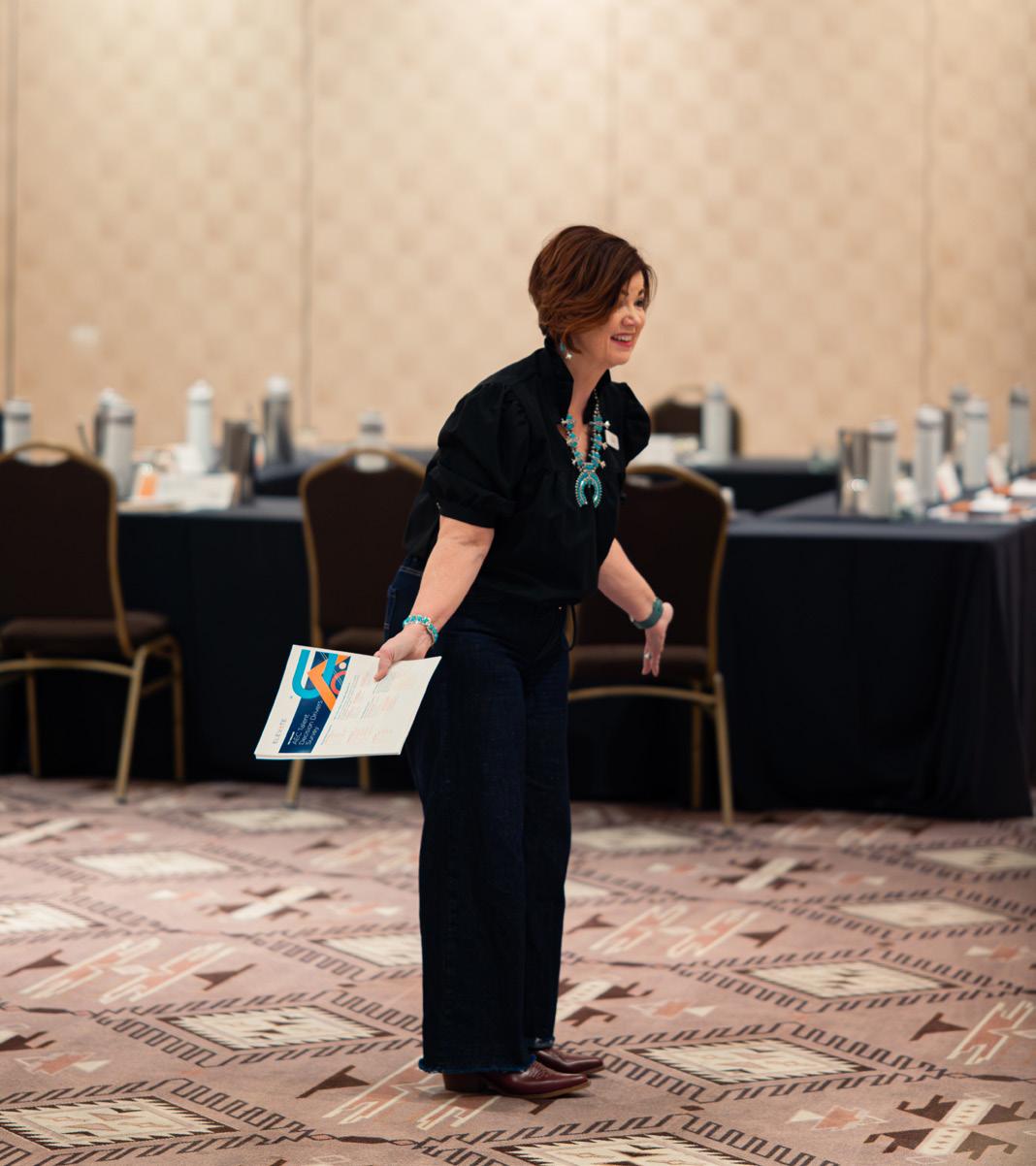
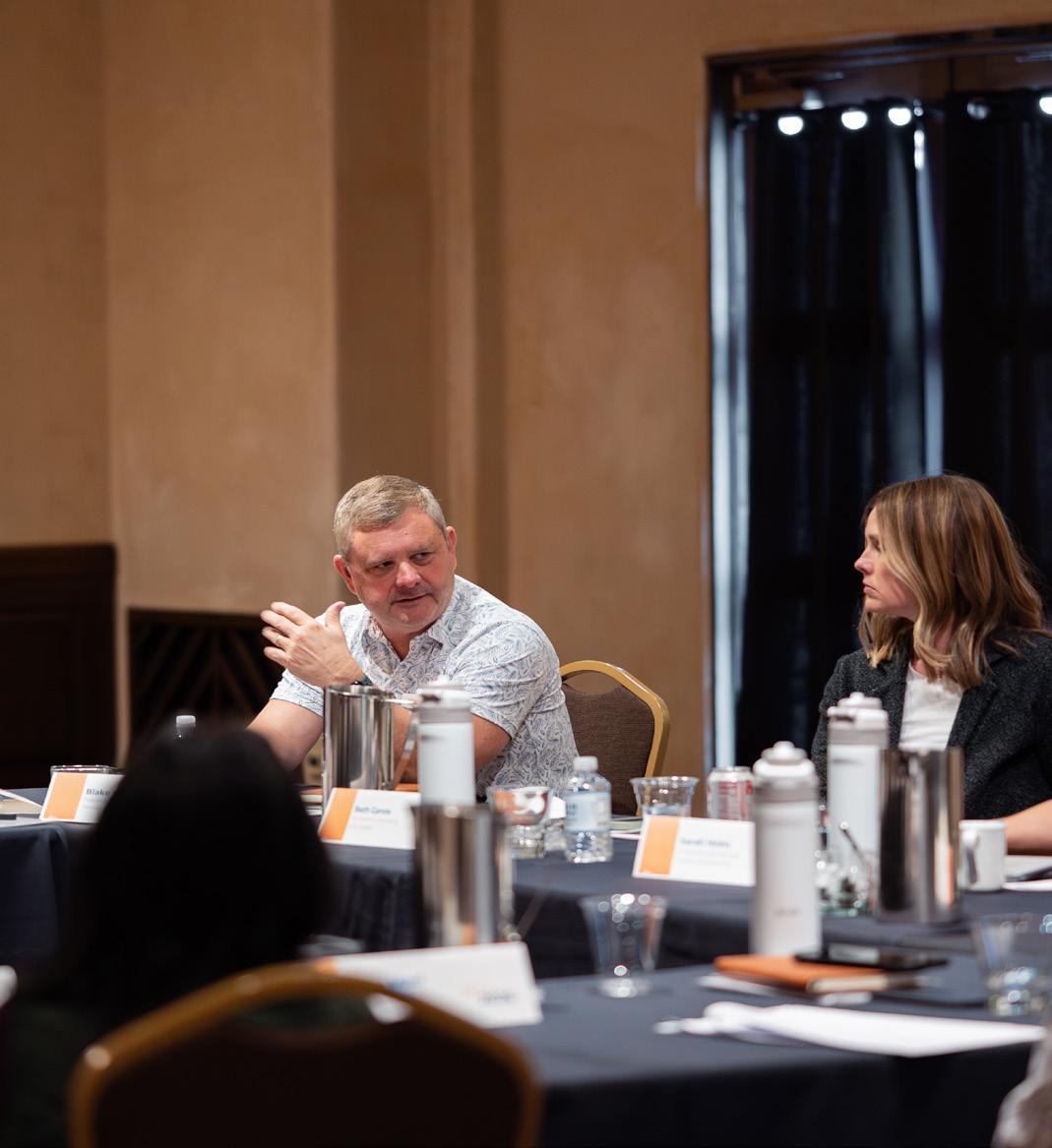
There’s something magical that happens when you put the right people in a room together and give them space to be honest. The conversations get real, fast.
That’s what Altitude 2026 was. A carefully curated group of AEC firm leaders (CEOs, principals, and executives) came together for a couple of days of unfiltered dialogue, genuine reflection, and the kind of strategic thinking that’s hard to do alone. No presentations. No performance. Just leaders who care deeply about their firms, working through the things that actually keep them up at night.
And honestly? It was our favorite year yet!
Across sessions on talent, recruiting, and leadership development, one theme kept surfacing: the firms getting it right aren’t reacting, they’re building systems. Participants had candid conversations about the “missing middle,” the urgent need to develop leaders who think like owners, and what it actually takes to compete for talent without a big ESOP or a household name. The energy in these sessions was high because the stakes are real, and everyone in the room felt it.
Some of the most honest moments of the event happened here. Founders opened up about the gap between where they are and where they need to be, on succession, on transition, on scaling without losing the culture they’ve spent years building. There were no easy answers, but there was a lot of clarity. And sometimes that’s exactly what you need to move forward.
The group brought a healthy mix of optimism and discipline to these conversations. Participants shared how they’re protecting margins, thinking about risk, and approaching AI practically, focused on real gains today rather than chasing the next shiny object. The through-line was the same as every other session: intentionality wins.
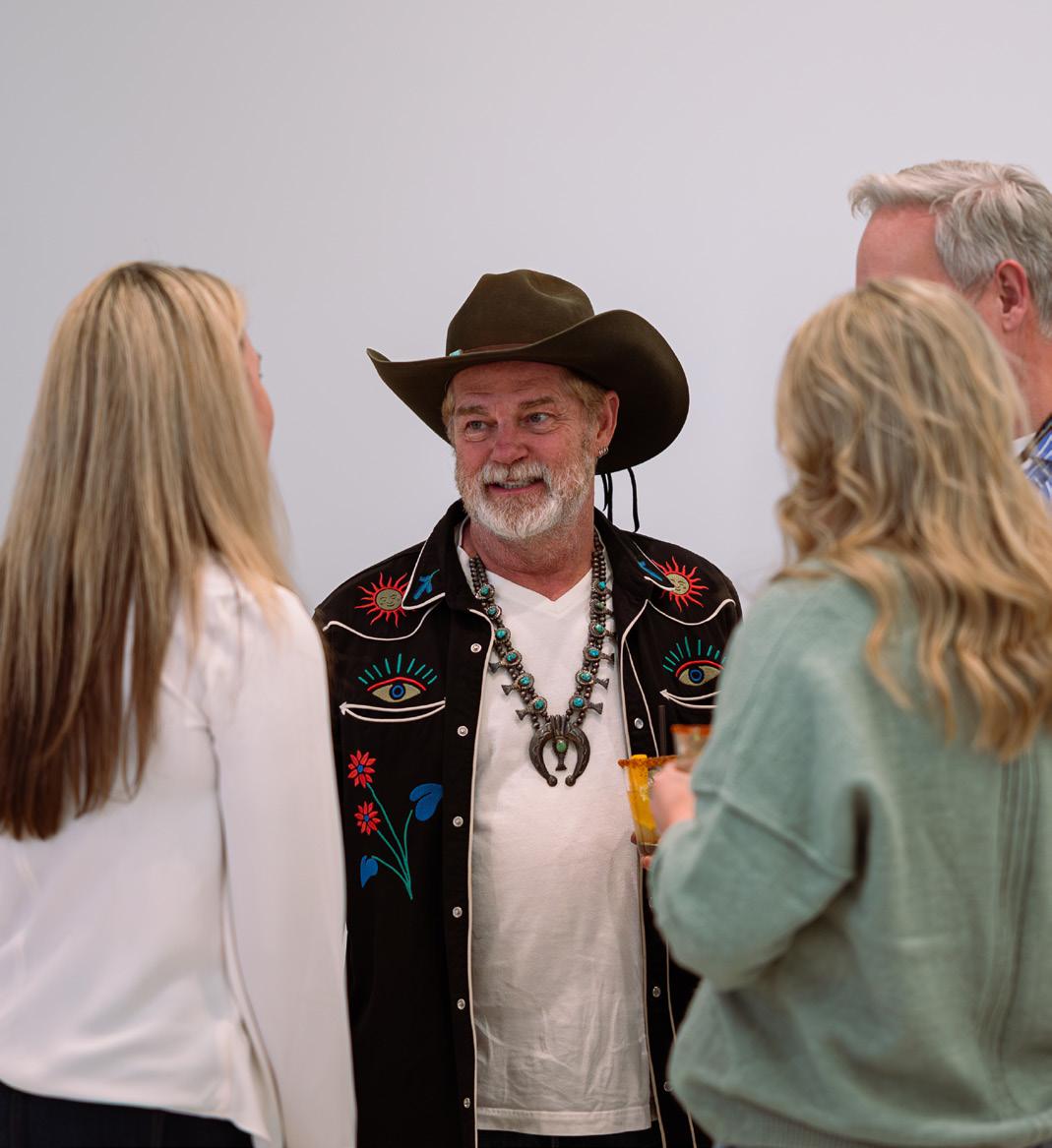
As a close to a day centered on transformation, attendees spent an afternoon at Box Studio Sculpture Garden with artists Kevin and Jennifer Box - hearing firsthand how a single folded square of paper becomes a monumental metal sculpture. It was the kind of experience that quietly shifts your perspective. The most enduring things, in art and in business, begin with one intentional fold.
What made Altitude 2026 so meaningful wasn’t the agenda, it was the room. The willingness of every person there to show up openly, share what’s hard, and think alongside peers who get it.
If any of this resonates with where you are right now, we’d love to have you at Altitude 2027! These conversations are better with you in them.
Join us for our FIFTH year at Altitude, a retreat-style experience designed to pull you out of the day-to-day and into meaningful growth. Set in Asheville, North Carolina, with the iconic Biltmore Estate as your backdrop, the Altitude 2027 retreat is built for reflection, realignment, and what’s next. Early Bird pricing available until August 1st!



Rebecca Price
Elevate Advisors

Jen Newman FSMPS, CPSM
Elevate Advisors
Ask any AEC firm leader where their best hires came from and the answer is almost always the same: “someone on our team knew them”.
A project manager who mentioned an opportunity to a former colleague. A principal who met someone at a conference and thought, they’d be great here.
These moments are not accidental. But in most firms, they are not a strategic either. That’s the gap a culture of doer-recruiters is designed to close.
A doer-recruiter is a technical or billable professional who actively participates in identifying, referring, and attracting talent. Not as a second job or a formal HR responsibility, but as a natural extension of how they work, build relationships, and show up in the industry.
In today’s market, where nearly every firm is competing for the same
limited pool of talent, this approach is a differentiator.
Elevate’s 2026 AEC Talent Decision Drivers Survey reinforces this: The most successful candidate engagement comes from relationship-based outreach, including friends, colleagues, firm leaders, and hiring managers. Job boards, external recruiters, and career fairs rank at the bottom.
This means your most powerful recruiting channel is already inside your firm.
Your technical staff bring credibility, which no HR team or recruiting platform can replicate.
When a senior project manager tells a peer that your firm is doing meaningful work, or that the culture genuinely supports its people, that message carries weight. It is trusted because it is real.

These conversations are happening in the environments where your people naturally operate:
» Conferences and industry events.
» Client meetings.
» Mentorship relationships.
» Informal peer conversations.
Every one of these moments is both a business development opportunity and a recruiting opportunity. The same behaviors that drive strong business development –connecting, building relationships, following up, and creating trust - are the exact same behaviors that drive effective recruiting. If your team is already acting as doer-sellers, they are already positioned to be doerrecruiters.
LEADERSHIP VISIBILITY DRIVES TALENT ATTRACTION
One of the most compelling findings from Elevate’s 2026 AEC Talent Decision Drivers Survey is how professionals form their perception of a firm.
» Word of mouth ranks as the number one influence.
» Leadership visibility ranks second.
People are drawn to firms where leadership is present, visible, and engaged, not just internally, but in the industry and the community. When leaders are speaking at conferences, participating in associations, mentoring, and actively engaging with peers, they are not just building brand awareness, they are building trust. And trust is what drives recruiting.
This is where business development and talent acquisition intersect in a powerful way. The same presence that strengthens client relationships also strengthens your ability to attract talent. When your leaders and staff show up consistently in the industry, they create visibility, credibility, and connection.
And people want to be part of what they can see and believe in.
Creating a genuine culture of doerrecruiters requires alignment across three areas.
1. Give People the Language and the Story
Your technical staff need to know how
to talk about your firm in a way that is authentic and consistent.
» What makes your firm different?
» What does your culture actually feel like?
» What types of people succeed there?
When your team can confidently share that story, they become your strongest ambassadors.
Without that clarity, even the most connected team members will struggle to translate their relationships into meaningful recruiting conversations.
2. Develop the Relationship-Building Habit
Recruiting doesn’t happen in isolated moments. It happens through relationships built over time.
Encourage and normalize behaviors such as:
» Staying connected with former colleagues.
» Engaging at conferences and industry events.
» Having informal career conversations.
» Mentoring students and early-career professionals.
These activities are core to professional growth, business development, and longterm firm sustainability. And firms that do this well make relationship-building part of how success is defined, not just something that some people do on the side.
3. Connect Recruiting to Your Growth Strategies
A doer-recruiter culture works best when it is aligned with where your firm is going. When your people understand:
» Your target markets.
» Your strategic priorities.
» The roles needed to support growth.
They can have more focused, relevant conversations with the right people.
This is where recruiting becomes proactive rather than reactive. Instead of filling roles after the need arises, your team is continuously building a pipeline of aligned talent. When business development and recruiting are treated as connected strategies, the impact compounds.
The firms doing this well share a few consistent practices:
» They openly talk about recruiting, and often.
» They make referring simple, visible, and accessible.
» They close the loop with employees who refer candidates, regardless of the outcome.
» They recognize effort and engagement, not just hires.
Beyond increasing referrals, the goal is to build a mindset.
When people feel they have in impact in who joins their team, they invest more deeply in both the people and the firm itself. Recruiting becomes a natural extension of pride in where they work.
At the same time, firms must recognize that referral behavior is rooted in trust. Employees are more likely to refer when they believe in the firm’s leadership, clearly understand the role, and feel confident in the experience the candidate will have.
That means internal culture and leadership credibility are foundational to recruiting strategy.
Recruiting success is relationship-driven, and retention success is leadership-driven.
The firms that will outperform in the coming decade are the ones building:
» Visible, credible leadership.
» Strong internal trust.
» Clear growth pathways.
» Consistent market presence.
Remember, recruiting may begin with visibility. Retention is sustained through credibility.
The talent war is won through trust. And trust starts from the inside out.
Elevate Advisors partners with AEC firms to build intentional, results-driven growth strategies that integrate business development, talent acquisition, and brand positioning.
WE HELP FIRMS:
» Develop strategic plans for sustainable growth.
» Align business development and recruiting strategies.
» Activate their people as a growth engine.
» Strengthen leadership visibility and market presence.
» Create strategies that attract top talent and keep them.
Creating a People-First Culture: Resulting in Great Retention
Winning the AEC Talent War: 5 Innovative Strategies for Attracting and Retaining Top Talent
Because your people are your greatest differentiator and your greatest opportunity.
To learn more, contact: Rebecca Price rebecca@elevate2win.com
Jen Newman jen@elevate2win.com