
MONTA VISTA HIGH SCHOOL
VOLUME 56 ISSUE 7

JUNE 2026
38 PROM LOOKBOOK
MVHS couples describe their prom outfits


MONTA VISTA HIGH SCHOOL
VOLUME 56 ISSUE 7
JUNE 2026
38 PROM LOOKBOOK
MVHS couples describe their prom outfits
Editors-in-Chief:
Jonah Chang, Radhika Dharmapurikar, Meghna Dixit, Sana Karkhanis, Zaid Naqvi, Aprameya Rupanagunta
Head of Design:
Angela Poon
Head of Graphics:
Grace Lin
Visuals Editor:
Elizabeth Yang
News Editor:
Grishma Jain
Features Editors:
Maahi Dev, Suryansh Gupta, Lora Lee, Emma Ma
Opinion Editors:
Shreejay Arja, Fiona Chen, Olivia Zhang
Entertainment Editors:
Emmy Harimoto, Alexandra Qiu
Sports Editors:
Nylah Gehani, Leo Lee, Ritik Shenoy
Staff Writers:
Sophia D’Sa, Leah Desai, Rafaella Fantine Vargas
Machuca Vento, Jillian Ju, Vaishnavi Katukam, Anish Khinvasara, Isabelle Kok, Corinna Kuo, Joyce Li, Melody Lin, Juju Ling, Liz Liu, Lucas Liu, Owen Liu, Suhana Mahabal, Sania Nadkarni, Divina Pandita-Raina, Alex
Perrault, Stella Petzova, Ananda Singh, Amberly Sun, Raj Thapliyal, Kai Tsuchida, Ellie Wang, Asha Wojciechowski, Ethan Yang, Kate Yang, Benjamin Zhang
Advisers:
Vennessa Nava, Julia Satterthwaite, MJE
Mission Statement:
El Estoque will accurately inform our community through well-researched, unbiased and in-depth accounts of stories of the student body and staff, local news and developments and taboo topics prevalent in and near the MVHS realm. By investigating a variety of voices and credible perspectives, we hope to foster active discussion, effect positive change and spread awareness of timely and relevant content. As a trustworthy, consistent and reliable source of information, we strive to be accountable, adaptable and ready to correct and address our mistakes. Constantly striving for improvement, we will uphold integrity and ethics to be respectful and empathetic to one another, our sources and our readers. We will exercise our press freedoms guaranteed by the First Amendment and California Ed Code 48907 while maintaining a community of reporters with a strong passion for our work and journalism as a whole.

21840 McClellan Rd. Cupertino, CA 95014 elestoque.org mv.el.estoque@gmail.com COVER
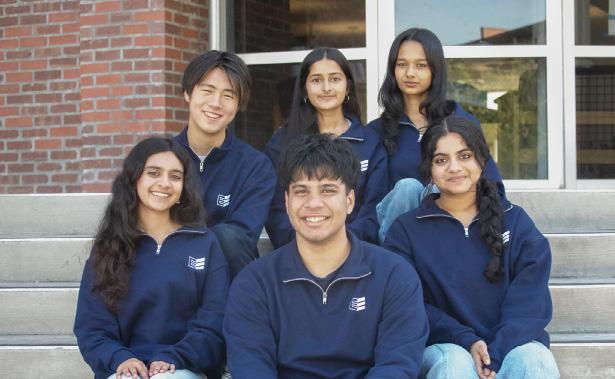
To the Class of 2026 —
After swinging your way into the year with your “Spider-Verse” homecoming skit, we have seen you navigate the next stage of your life with poise and precision. Even as acceptance letters, waitlists and portal astrology turned your futures into question marks, you still showed up every day with resilience and humor.
In this issue, our Arts and Entertainment section dives into di erent aspects of your interests, from music taste to fashion sense. Our Features section also examines your high school experiences, forever embedding your unique personalities into each one of our lives.
As you leave behind what seems like emptier MVHS parking lots and hallways, you’ve set the standards we aspire to live up to. Our Opinion section’s senior columns guide us through your high school journeys and impart us with your wisdom.
Whether you noticed it or not, underclassmen were always paying attention to how you handled pressure and carried yourself through uncertainty. Our Sports section highlights your sporting careers as they come to an end, forever a part of MVHS history.
We’d like to dedicate this year’s final issue to the graduating editors. From bus rides around San Francisco to friendly banter inside our second home, A111, you have instilled in us the maturity to lead El Estoque, and we will forever be grateful for your contributions.
As we prepare to walk in your footsteps, it’s impossible not to recognize how di shoes will be to fill.

Jonah Chang

Zaid Naqvi


Trigger warning: This story mentions gunviolence.
A student source will remain anonymous due to potential legal concerns and will be referred to as Source A.
Senior Assassin, a game commonly played by high school seniors across the country, faces scrutiny by the community after a social media post on April 18 by the Fremont Police Department warned residents about students carrying realistic-looking toy guns during gameplay. The post was a response to an incident in Fremont where o cers reportedly drew guns on students participating in the game, sparking discussions among community members regarding safety risks surrounding the senior tradition and proposed regulations.
The Senior Assassin game involves students “eliminating” assigned targets using water guns while protecting themselves from getting eliminated. Players gain immunity to elimination by wearing designated safety items such as goggles, floaties or helmets. Some rounds, referred to as “purges,” temporarily allow participants to eliminate any participant in the game rather than only assigned targets. According to

Student A, the co-host of the MVHS game, 128 seniors participated in this year’s independently organized game, which costs $10 to join.
“We had everyone fill out a Google Form, and then they paid us through Venmo,” Student A said. “We randomly give them their assignments, and then we’ll text them with their assignments every week.”
According to Student A, the game is specifically organized to prevent dangerous situations and misunderstandings; it includes rules, regulations and a requirement for brightly colored equipment to show they are toys and not real weapons. Student A adds that locations such as libraries, school campuses and extracurricular activities are considered to be safe zones, with players notifying the hosts beforehand about private spaces so hosts can update the players and
“ WE’RE RESPONDING TO SOMEBODY GETTING SHOT VERSUS SOMEBODY GETTING SHOT WITH AN ORBEEZ GUNS AS A PRANK
discourage them from trespassing. To ensure these rules are followed, the hosts have everyone participating share their location on Life360, a location-sharing app, so their activity can be monitored during the game.
However, Santa Clara County Sheri ’s O cer School Resource Deputy Aalok Patel believes even senior traditions with good intentions can have unintended consequences if students fail to consider how their actions might appear to others. He says situations involving realistic-looking toy guns can quickly escalate if community members believe a real weapon is involved.
“The issues that we deal with are when kids sometimes dress up and approach somebody and sneak up on them,” Patel said. “Parents have no idea what it is, and it comes o as, ‘Oh my gosh, my daughter just got shot,’ and now we’re responding to somebody getting shot
After police confronted Fremont students, discussions of the risks, rules and culture surrounding the popular senior tradition rise with the game being played at MVHS
BY GRISHMA JAIN AND KAI TSUCHIDA
versus somebody getting shot with Orbeez guns during a senior prank.”
Patel says o cers responding to reports involving possible firearms are trained to assume weapons are real until proven otherwise. Although participants may see toy guns as part of a harmless game, Patel says o cers are forced to judge the situation based on what appears dangerous in the moment, not what students intended.
“Even if it has an orange tip on it, you can spray paint an orange tip on a real gun,” Patel said. “Every day in America a police o cer gets killed. We watch a lot of training videos, and we train to react to that threat. No police o cer wants to hurt somebody. But when someone presents a weapon to us, it is concerning, and we just hope that the kids drop the weapon right away and realize what they’re doing is a mistake. ”
situations. However, she says that the debate around the senior assassin game reveals a larger problem between how students experience the game and how it can appear to the larger community. While Moore sees the activity as a lighthearted senior tradition that should continue, she understands why realistic-looking equipment should bring up safety concerns.
“With the current state of everything in America, seeing someone run around with what you could deem as a realistic gun is very concerning for the community,” Moore said.

“But I do think that a majority of kids do not have a realistic gun. Even if they do have a realistic gun, it’s a crazy color. And banning the whole activity would be overkill. But I do think that the police department is right to worry about the safety of both the kids and the community.”

Total participants
Law enforcement emphasizes dangers surrounding water guns, noting that any weapon-like object, especially dark or metal replicas, can prompt a defensive reaction. While bright-colored water guns are less likely to be confused for real firearms, it can be risky in low-light and highstress situations. Student A says they warn participants using realisticlooking water guns, especially after similar incidents involving senior assassin games were reported in other communities.
“We genuinely advise this at the beginning to please have brightly colored guns and not carry them around and have your equipment on too, so it looks a little more playful,” Student A said. “We’ve seen it on the news. The students also know about incidents like this that happen. So we try our best to avoid it.”
Senior and participant Lauren Moore agrees with Student A and emphasizes that the organizers actively try to avoid dangerous
Moore says she joined the game after hearing upperclassmen discuss it last year in her AP Chemistry class. She recalls one of her most memorable moments from the game was when she was caught by one of her attackers after visiting Ranch 99, resulting in her running a mile barefoot. Despite the controversy surrounding the game, Moore hopes the tradition continues in the future, provided students remain responsible and aware of safety concerns.
“It just sounded really fun,” Moore said. “Especially with really not having anything to do second semester senior year, it gave me something fun to fill my time. Some people take it too seriously, and some administrations don’t like the game, but it doesn’t take away from my school time at all. I know a lot of parents don’t like their kids playing it and see it as distracting, but I think having fun is never a waste of time. I just hope that future generations can continue to play Senior Assassin and have fun.”
47got out in the first week
HOW I GOT OUT

I ran for almost a half a mile barefoot but I ended up getting out
MVHS students and staff discuss the CSU AI initiative and the impact of AI on education
BY GRACE LIN
California State University launched an AI initiative to provide free access to AI tools and training through its CSU AI Commons program in February 2025 to all students, faculty and sta . The initiative is part of a broader e ort to integrate artificial intelligence into higher education, designed to prepare students for an increasingly AI-driven workforce while also promoting ethical and responsible use of the technology.
According to CSU’s recent AI survey, “over 4,300 faculty have completed voluntary professional development in ethical and e ective AI use. Training emphasizes equity, critical thinking, and academic integrity.” With CSU’s 18-month contract with OpenAI to license ChatGPT for campuses approaching its expiration in July of 2026, the $17 million partnership has divided students and educators across California, with some calling for CSU to end its partnership with OpenAI due to skepticism surrounding AI’s e ectiveness compared to its risks in education, while others argue that AI literacy is essential in modern education and the workforce. For many students, the debate centers less on whether AI should exist in education and more on its responsible usage.
wariness about fully relying on AI. As a result, Carpenter notes they never trust AI to provide final drafts or versions of any project, instead asking the program for opinions on the e ectiveness of certain assignments. Regarding student usage of AI, Carpenter believes that relying on such programs hinders true learning and development.
“ THE QUESTION HAS TO BE, ‘IS THIS ABOUT THE WORK, THE PROCESS OR THE PRODUCT?’
ENGLISH
MARK CARPENTER
Moreover, Carpenter says the challenge is ensuring students continue to develop critical thinking skills as AI tools become more advanced and accessible.
“The question has to be, ‘Is this about the work, the process or the product?’” Carpenter said. “If students are supposed to be learning a process, and they hand that process over to AI and it generates a product, that’s not acceptable. I want them to be able to construct a strong argument. And if they’re not actually practicing doing it, they’re not going to be able to recognize it, and they’re ultimately going to be ignorant and be easy to take advantage of.”
excuses, saying they’re using it to help them,” Bergendahl said. “I think it’s obvious when you’re using it to make study guides versus giving answers to get full credit on homework. There’s a very big di erence between using it to scrape by and cheat your way through high school versus using it to help you.”
Senior Noora Kiiski, who is committed to San Jose State University for Mechanical Engineering, shares a similar opinion regarding the implementation of AI into everyday life. As a student entering a STEM field, Kiiski recognizes the growing role AI will likely play in engineering and other technical careers. Kiiski also believes misconceptions surrounding lazy dependence on AI contribute to the negative reactions many students and educators have towards its use in academics.
“I think AI overall just has this bad stigma to it,” Kiiski said. “People immediately have the thought like, ‘Oh, you’re using AI. You didn’t do it yourself, so that means you don’t actually know how to use it.’ But the issue is, in the real world, people do use it. And if you don’t use it, you’re behind in a way.”
For English teacher Mark Carpenter, AI serves as a tool that students can easily manipulate. Carpenter, who began using AI for curriculum-based project testing after the FUHSD provided a free ChatGPT subscription for all teachers, quickly discovered the unreliability of AI as an undeveloped program. ChatGPT frequently hallucinates answers to fact-based questions, contributing false responses that can mislead users, paralleling Carpenter’s
The CSU AI survey revealed widespread acceptance of AI’s growing role, but also reported concerns about its consequences, with “about 82% of sta respondents, 78% of faculty and 69% of students

SCAN FOR MORE COVERAGE
believing AI will become an essential part of most professions … 82% of students, 78% of faculty and 74% of sta express concern about AI’s impact on job security.” Similarly, senior Jenna Bergendahl, who is committed to Cal Poly for Agricultural Business, believes AI remains a controversial tool that should be strongly regulated.
“A lot of people don’t think there’s a hard line because they just make up
However, as universities such as CSU continue adapting to rapidly advancing technology, educators like Carpenter, as well as students like Kiiski and Bergendahl, agree that the focus on the implementation of AI into education systems should not only be on teaching students how to use AI, but also ensuring that they continue to develop critical thinking and independent problem-solving skills alongside it.
“The position that I have taken with my students recently is that AI is a powerful tool that is only going to get better, and it isn’t going anywhere,” Carpenter said. “The main question that I then raise for them is, ‘Do they want to be able to say the same thing about their brains?’”
BY ANISH KHINVASARA
A student source in this story is anonymous due to potential backlash and will be referred to as Student A.
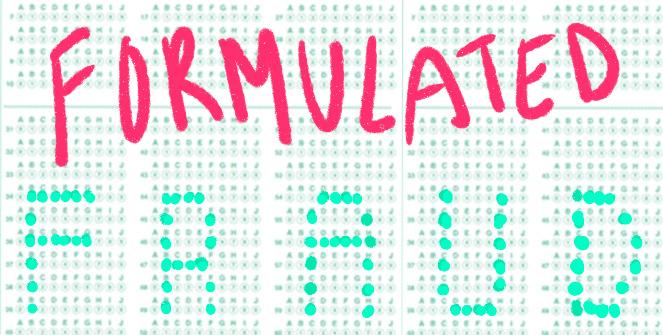
After the 2023 American Mathematics Competition exams were leaked online and circulated by thousands of students before the test, many students and educators began to question the legitimacy of the results. A few years later, skepticism has only risen as score distributions on these exams have shown an unusually high number of perfect and near-perfect scores, fueling allegations of widespread cheating on some of the nation’s most prestigious exams. The American Mathematics Competition series, F=MA and other academic olympiad competitions are seen by many as rigorous indicators of strong problem-solving and STEM skills as well as prestige for the nation’s top high school students. Many of these exams serve as a part of the selection

process for the country’s numerous national olympiad teams.
Student A, a high school student who has participated in the AMC and the American Invitational Math Examination, was made aware of the cheating issue in late 2024, posting about it on the Art of Problem Solving forums, attracting attention from many like-minded students. He then started amcchange, an initiative to petition the Mathematical Association of America — which administers the AMC and AIME exams — to strengthen cheating prevention. The website features score distribution graphs displaying a disproportionate number of perfect scores on recent exams, significantly higher in comparison to older exams. Student A alleges that it is evidence of cheating.
“The score distributions show that the mean, median and the shape of the middle of the graph haven’t changed much between 2023 and 2018,” Student A said. “The issue comes with the right tail of the graph,
with the extremely high and perfect scores that weren’t there in the 2018 score distributions. It isn’t definitive evidence, but it’s still suspicious.”
In addition to analyzing score distributions, Student A says there are groups of students on Discord and other platforms dedicated to distributing exam leaks. Student A says they have heard rumors that these groups include students who own proctor accounts to get the tests beforehand and international students who take the tests early and distribute the exam to test-takers in the U.S.
One way Student A hopes to prevent these incidents is by limiting testing sites to schools and trusted centers. Similarly, Manish Mishra — chief operating o cer and co-founder of Random Math, a math school in Cupertino — believes that the strict testing regulations at his center should be the standard nationwide. This includes transitioning competitions to paper-only and mandating that devices be put away during testing, instead of allowing testing centers to choose between paper or digital formats. He also calls for more transparency from
the organizations that host the tests. This year, cuto scores to qualify for the USA (Junior) Math Olympiad were not publicly announced and individual scores from the F=MA exam were not released to students, leaving many confused about their scores.
“Not publishing cuto scores is pathetic to say the least — they should be published,” Mishra said.
“In addition, the scores of each USA(J)MO qualifier should be published. People should know that if somebody had 150 in AMC 12 and 12 or 13 in AIME, what was the reason that they got a zero in USA(J) MO? We want to know who those students are. We want to get their names. Even if MAA publishes its intent to do that, cheating will stop to a large extent. People will not want to go to USA(J)MO and show that, ‘I was a cheater and I got a zero.’”
then the integrity of the test is their responsibility.”
The MAA was not available for comment within the timeframe provided. Sophomore Rohan Agarwal, who has participated in the AMC, AIME, F=MA and teaches competitive math to younger students, says he has spent years since middle school studying for these exams, even working up to 15 to 20 hours a week during peak competition season. He enjoys the problemsolving nature of competitive math.
“ THOSE WHO FORCE THEIR WAY INTO SELECTIVE UNIVERSITIES WITHOUT DESERVING TO WILL SUFFER.
COO OF RANDOM MATH
MANISH MISHRA
In the past, the MAA has made changes to its policies by shortening the test-taking window for the USA(J)MO in 2024 and using human resources and artificial intelligence to detect anomalies in individual scores, according to an email from the MAA. Student A believes that although the MAA has taken some steps to address the cheating, they still need to go further by further shortening the testing window. Mishra adds that he has witnessed students lose interest in competitive math due to the lack of integrity.
“Now, I do not know the goal of the MAA,” Mishra said. “Is it to encourage mathematics in society or is it to just select the six students for the U.S. International Math Olympiad team? If their goal is just to select a few top students, then they are fulfilling their objective. But if the objective is to promote problem-solving and math,
“It’s definitely a morale hit,” Agarwal said. “It’s demotivating to see yourself have so much experience and exposure to the competition, only to find people who’ve not spent as much — or any — time preparing and still do well. Obviously, some people just take to it really quickly, but I’ve seen the score distributions and what they suggest makes me think a little bit more is involved.”
Agarwal acknowledges that although it can be tempting to get sucked into cheating, one should stay honest to get more out of the process of preparing for Olympiads. Mishra agrees, believing that, in the long term, honest kids will benefit much more from studying hard and developing their problem-solving skills rather than cheating and not gaining anything from it other than a resume-booster.
“We live in the world of AI now,” Mishra said. “Capability is important, result is not. Your college is not important. Your degree is not important. What you are capable of doing is important and motivated, honest students are just going to work even harder because the number of seats for honest
students has shrunk further.”
According to Mishra, cheating doesn’t just hurt honest students’ motivation — it’s disastrous to cheaters in the future. According to a study by researchers from Harvard University and Duke University, cheating allows many students to trick themselves into believing that they are more capable than they actually are and go through mental gymnastics to justify their actions, which damages professional and academic habits in the future.
“I know many students at MIT, and many of my students attend MIT,” Mishra said. “From them, I know a lot about what happens not only at MIT, but at many of the top universities. Those who force their way into these colleges without deserving to get there su er. They su er from depression, are not able to graduate and are not able to socialize properly because if you speak to other genius students, they will figure out who you are — you will feel isolated.”

BY LIZ LIU AND EMMA MA
KAIA YUAN
MVHS alum ‘25 Kaia Yuan has enjoyed capturing and recording the moments around her since she was very young, but her interest in professional filmmaking was first sparked when she attended a church summer retreat. Someone from her church created a video detailing what
give to people, and it will give them an emotional reaction.”
As a freshman at Biola University in the film and Torrey Honors program, Yuan is taking two film classes, Production One and Production Two. These courses cover documentary, narrative and short form or commercial media. Currently, Yuan is directing a
STEM and academics. However, she acknowledged that low student interest made it di cult for the school to o er more courses. Despite few opportunities at MVHS to foster her interest, Yuan’s filmmaking passion remained strong throughout her high school years, serving as a way for her to connect with other people.

“The chance that I make it big and successful is not fantastic,” Yuan said. “The starving artist stereotype is very real. There’s always a little small question of, will I go into financial debt if I pursue something that gives me a lot of joy? But I think my purpose in life is to love God and to love others well, and filmmaking is how I express that. The films I want to make are things that will connect people or raise awareness or raise empathy. I have a very strong funneling purpose towards why I want to make films.”
MVHS alum ‘24 Noah Vin first started playing cello when he was 5 years old. By the time he was in sixth grade, he was committed to playing for the rest of his life. Now, as a sophomore majoring in cello performance at the New England Conservatory of Music in Boston, Vin aspires to become a professional
“As soon as I started playing in the orchestra in Kennedy Middle School, I really loved it,” Vin said. “I don’t think
there was a specific moment in which it clicked. Over time, I just saw myself pursuing this, and I couldn’t really see myself doing anything else. My parents were extremely supportive, and I’m very grateful for them and the mentors I’ve had.”
During Career Days at MVHS, Vin found himself disappointed by the lack of arts professionals presenting on their experiences. Although Vin deeply appreciates the instrumental music department at MVHS, which played an important role in solidifying his passion for cello, he also notes that it was di him to ask questions and find answers about a musical career in an environment where pursuing music wasn’t viewed as a possibility.
“I felt like I was alone going into music,” Vin said. “People don’t see this great music department as something that’s a possibility to explore after high school. They just see it as an extracurricular, as something to put on their resume for college. I was weird for not doing the norm.”
decision to pursue a career as a cellist.
“I want to make it known that majoring in the arts is definitely a possibility,” Vin said. “There are so many opportunities that people can explore besides what’s expected of them at MVHS. I think it’s important to really use the resources you have at MVHS. There’s Mr. Gilchrist and these great teachers you can talk to that will help explain and debunk some of the myths that are around these kinds of subjects.”

Growing up, senior Claire Ma noticed her favorite Disney princesses had the same “hourglass” figure. Despite dressing up as them every Halloween, she was never able to truly identify herself
families working in Hollywood. She says her path to the prestigious college was supported by MVHS art teachers and private instructors, who broadened her exposure to di erent art forms and helped her develop her art portfolio. For example, Ma says Art teacher Brian Chow was the first person to teach her to draw a selfportrait.
“Before, I avoided self-portraits because I was scared that I would be unable to capture my features, but then I realized the importance of selfportraits isn’t about that,” Ma said. “It’s about the story you tell based on your own experiences. For example, I have an art piece called ‘Looking Back Into The Past,’ and that art piece is me opening a childhood drawing, looking through it, and looking back into the past. Specifically, it’s just me
Now at NEC, Vin feels at home connecting with fellow music students who share similar interests and passions. Compared to traditional universities, he explains that conservatories like NEC expose students to world-class musicians and are more tight-knit and musicfocused, with classes centered on performance, theory, orchestra and one-on-one lessons with a primary instructor. Although Vin has faced rejection, he has never regretted his



BY LORA LEE AND STELLA PETZOVA

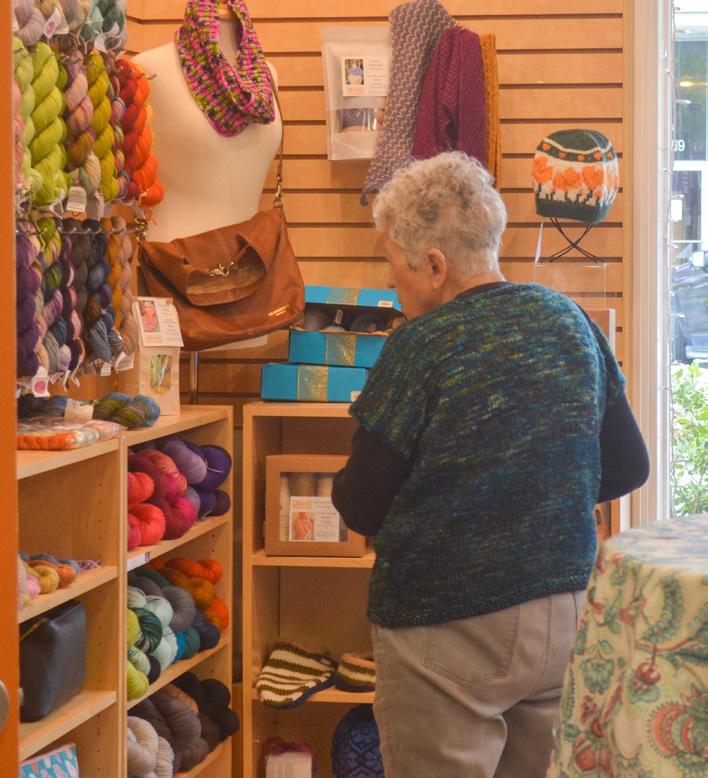
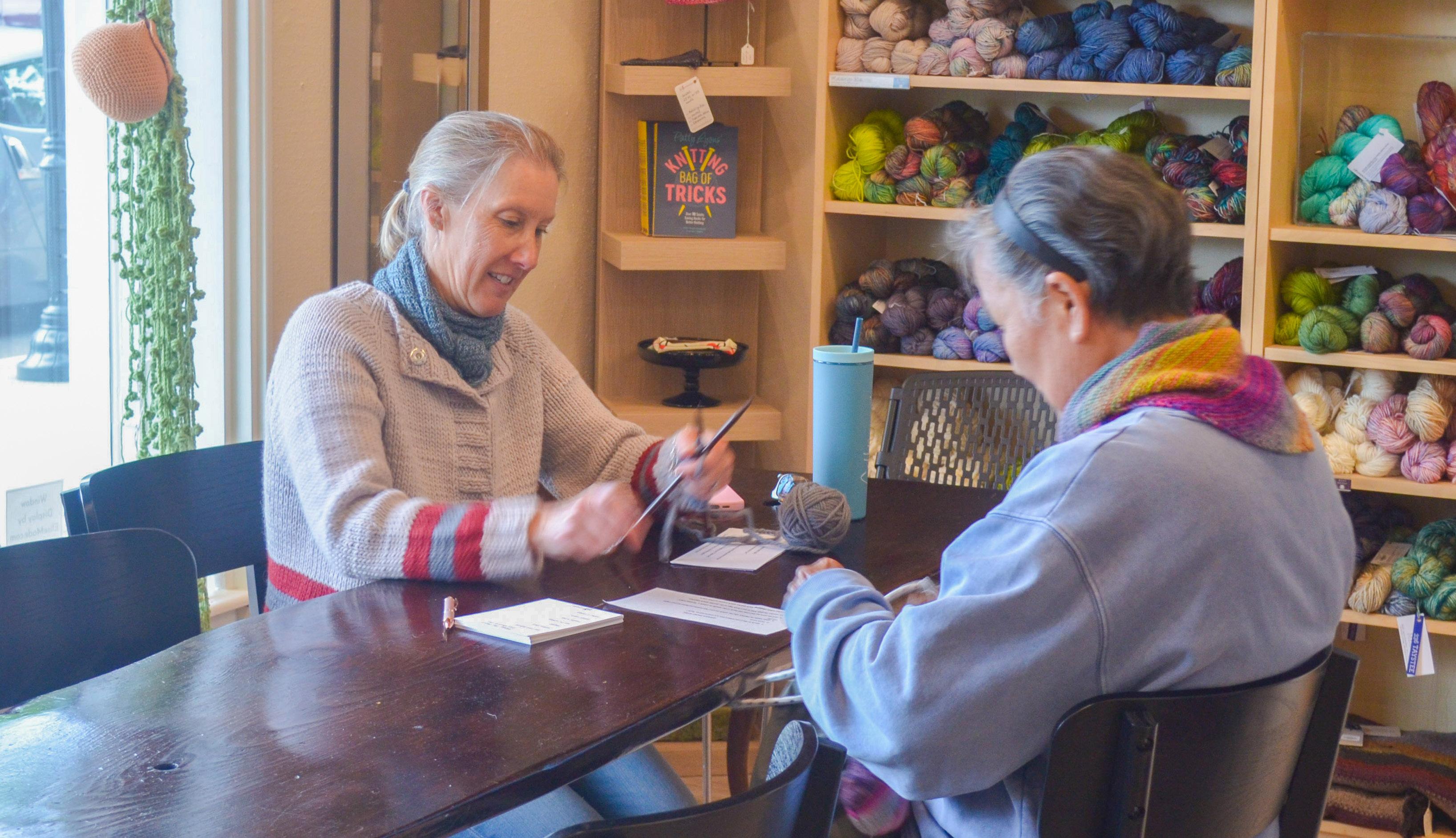
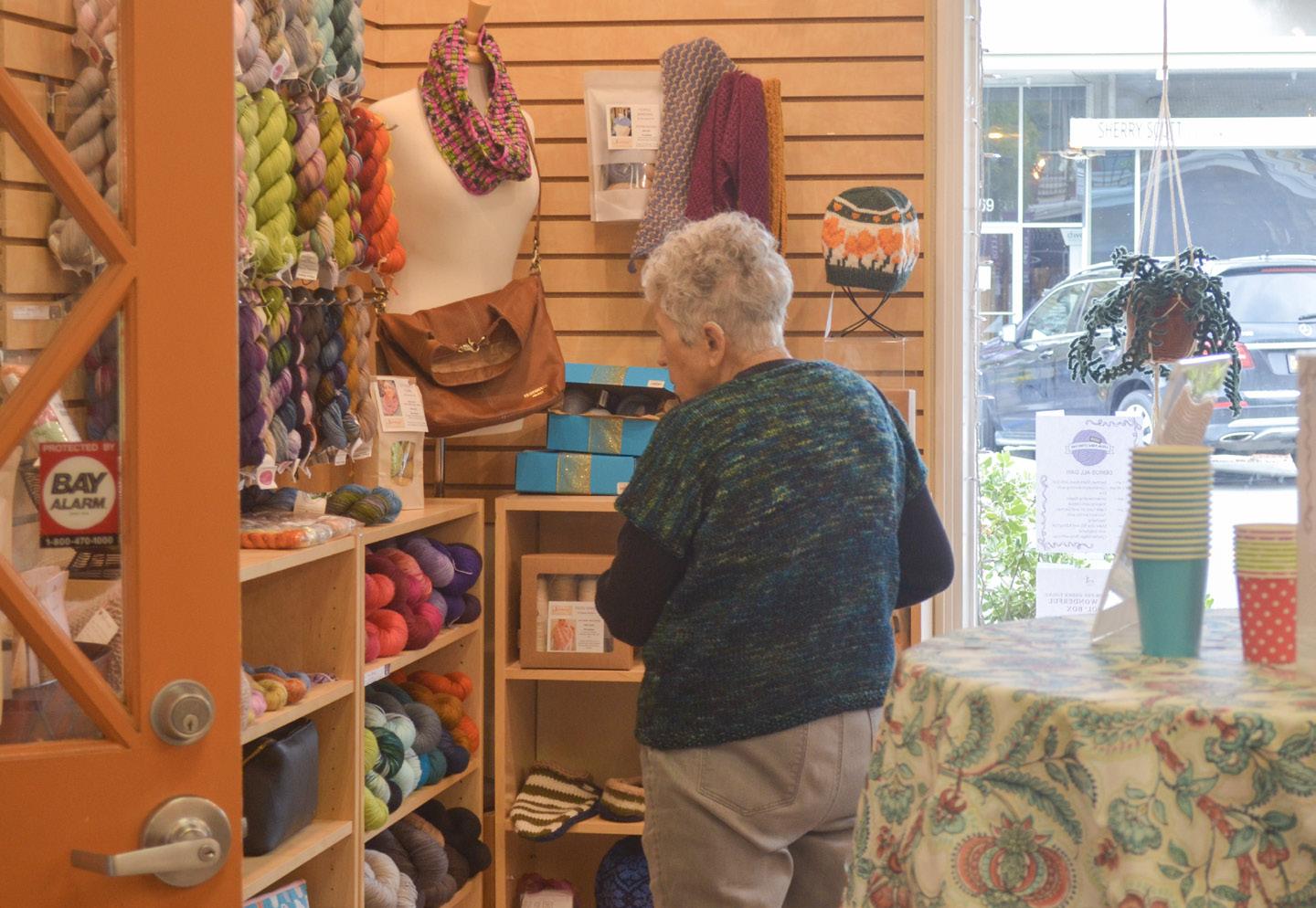
raft store owners in Palo Alto look up from their stations as a quiet bell rings from their store doors. As new and familiar customers walk in, perusing folds of fabric, unique selections of yarn and piles of colorful buttons, a heartwarming smile blooms across the owners’ faces at the tightknit community they’ve created with their love for hands-on art — one that continues to bloom amid a di cult time for small businesses.
For fabric store Needles Studio founder and owner Erica Harrington, opening a fabric store has always been about encouraging inclusivity in a field that has been limited by categorical labels — regarding gender, profession and age — throughout her life.
“When I went to high school in the 80s, girls took Home Economics, which was cooking, cleaning and textile arts, and boys took Auto Shop
and Welding,” Harrington said. “It was a lane that you had to be in, and I was enraged by it as a kid. I went to the principal’s o ce and said, ‘I don’t think girls should have to take that class. That’s baloney.’ So, I went to the auto shop class instead and did welding, which was really fun. Ultimately, I probably would have enjoyed Home Economics. I just resented being told that that’s what I needed to take.”
As a Bay Area resident, Harrington saw an opening in the broadly tech-focused market to found a store that challenged stereotypical biases. Her goal was to give diverse, everyday people the opportunity to learn how to sew, not just the conventional older female generation or fashion students. To create a welcoming environment in her store, Harrington shares that

she developed a gender-neutral curriculum with gender-objective materials such as utilitarian sewing machines and classes ranging from sewing shirts to carving wooden
“A lot of times when I see beginner classes, it’s like, ‘Here’s your first class, make a skirt,’” Harrington said. “But not everybody wants to make a skirt. So I try to have our beginner class very neutral. We might sew a sunglass case or a pillowcase — something that all humans need. So it’s something that everyone can relate to and be excited about. Ultimately, when you sew something, nobody wants to sit down and spend their time sewing something that they’re not excited to create.”
Owner of yarn store Uncommon Threads Stephanie Heim shares that crafting activities — namely knitting, sewing and crocheting — have been gaining popularity among Gen Z and younger Millennials in the Bay Area. At MVHS, interest in hands-on crafts can be seen at Crochet Club meetings, where students learn new crocheting techniques while conversing every week, according to sophomore and Crochet Club o cer Adeline Fam.
but strong form of connection and expression. For club activities, Fam says that the club’s o cers buy all the supplies for members and spend a whole semester going over the basics, removing the barrier to entry into textile arts.
CROCHET IS OPEN TO ANYBODY OF ALL AGES AND GENDERS, BECAUSE IT’S JUST A SAFE SPACE FOR YOU TO EXPRESS YOURSELF.
“I do think that the youth are becoming more involved in crocheting, but it’s still primarily considered an ‘old woman’ activity,” Fam said. “I think it’s really important to let people know that crochet is open to anybody of all ages, and of all genders — it doesn’t matter who you are, because it’s just a safe space for you to express yourself.”
Fam also shares that she sees the art form as an often overlooked
“It forms a welcoming environment for anybody, because we want to just spread the joy of crocheting to everybody,” Fam said. “Even if you aren’t a beginner, you do get to meet beginner crocheters, and that’s really fun, because you can help teach them.”
Like the club, Heim shares that the craft stores in the Bay Area have also built a “third space” community. She defines this “third space” as a place outside of work and home, where people can connect with one another by bonding through a shared interest in crafts. In this space, individuals feel more comfortable sharing details about their lives, which
helps foster the formation of a close community.
“We get to know more about their lives,” Heim said. “The reason that brings customers in is not always good. Sometimes it’s sad, but it’s still something that ties them together. Sometimes it will be that someone is having a new baby, going through chemotherapy or celebrating a new daughter-in-law or son’s wedding. They say, ‘I need to make this thing for that life event.’ It’s really special.”
However, a rise in technological advancements and import pricing threatens the closure of craft stores like Needles Studio and Uncommon Threads. Crafts chain Joann Fabrics closed over 500 locations in the past year, including one on Stevens Creek Boulevard, due to bankruptcy. As a result of these recent changes, Uncommon Threads teacher Erin Laser emphasizes the unique individuality each of these shops brings to their towns.
“I still want to foster the teaching community and the knitting community instead of just doing it all online, because it will bring people into the shop,” Laser said. “The faceto-face connections you get in-store create a community that you’re not going to get online.”

Heim agrees that locally owned craft stores still hold their value, not only materialistically and in terms of quality and expertise, but also socially, as a place for people to come together, support one another and make new experiences as a community.
“I love that there’s so much to learn about yarn, knitting, crocheting and all that stu , so we always have a lot of classes running,” Heim said. “I think we forget, as adults, how humbling it is to not be good at something. So in these stores, you’re kind of in a space where you have to be vulnerable, and it opens you up to making connections with other people. My customers say, ‘We had such a great experience. What are we doing next?’ and they come back again and again.”



Every spring, seniors across the nation wait anxiously for the moment they learn which college they will attend for the next four years of their lives — and when the time comes, college portals crash, cursors hover hesitantly over the “status update” button, and finally, the decision appears. Whether it’s showering confetti or the dreaded, “We regret to inform you…” behind the button, anxiety-inducing wait is often overwhelming as students anticipate their decision.
To deal with many of these emotions, especially anticipation, student applicants might turn to portal astrology to find out their admissions status earlier. Portal astrology is an uno cial term invented by various students on platforms such as Reddit and College Confidential to describe the act of “scrutinizing” or “investigating” university applications or student portals to observe slight changes between admissions pages to predict a student’s acceptance or rejection before the o cial admissions
decision date. These changes range from the ability to view a student ID to the presence or disappearance of a banner on an admissions page, and are often unreliable.
Senior Mahathi Rajkumar utilized Reddit to meet students with similar grades and extracurriculars to hers, in order to compare portal astrology results. While she has only tried a few college portal astrology tips that involve logging into o cial, public student portals, such as financial aid or student account portals, she

emphasizes the confusion and uncertainty that portal astrology still
Additionally, Rajkumar emphasizes cial results or correlation, there will always erent college portals. She mentions how communities online, such as the ApplyingToCollege thread on Reddit, often create forms for applicants to fill in their GPA or extracurricular ratings, and use the data to make histograms to see if there is a correlation between their ability to log in to a page, the strength of the applicant and their
According to MVHS ‘23 alum and UC Berkeley junior Anusha Sainarayanan, portal astrology has become increasingly prevalent with the expansion of social media. She cites that she would occasionally come across videos or articles featuring various ways students are experimenting with college portals to find a pattern and correlation with their admissions status. However, when Sainarayanan was applying for colleges, she never thought about trying any portal astrologies, as she
things you can’t control, and because of that, you should just try your best, and just leave it.”
Although MVHS College and Career Counselor Rogelio Calderon has no personal experience with portal astrology in college admissions, he has still heard students talk about it in his classroom during breaks. Calderon believes students turn to portal astrology because of the overwhelming buildup of anticipation leading up to college admission decision dates.
“There was one time where I asked the students who were talking about trying portal astrology, ‘Why were they focusing on these things?’” Calderon said. “A decision is a decision, and for some students, trying portal astrology might not necessarily be helping the students at all, and instead, it induces a little bit more stress added to their plate by paying attention to those details.”

a di erence, then I think that’s where it’s worth thinking about, ‘What’s the point of looking at it this way?’”
Calderon acknowledges that some students will still choose to invest their time after college applications on the internet, but cautions them to ensure they are taking care of their mental health.
“ THERE ARE CERTAIN THINGS YOU CAN’T CONTROL, AND BECAUSE OF THAT, YOU SHOULD JUST TRY YOUR BEST, AND JUST LEAVE IT.
applied to college, but it’s definitely getting harder and harder in recent years, because people care more and more about which schools they get into,” Sainarayanan said. “Many people might find their happiness or worth through acceptances into these schools — especially because of all the hard work they’ve done — but at the same time, there are certain
MVHS ‘23 ALUM ANUSHA SAINARAYANAN
He also notes that it’s important for students to focus on other aspects of their application journey as well, such as investing time with family and friends, or exploring new opportunities, rather than fully focusing on uno cial research and sources on patterns between portals and admissions decisions.
“When you decide to try these things, such as portal astrology tips for college admissions, you usually have to think, ‘To what extent is doing all this worthwhile?’, and if you feel
Although she did not initially intend to try portal astrology, Sainarayanan ultimately says she does not regret the one time that she did. As she videotaped herself opening all of her admissions results, she says her uncertainty about the portal astrology’s legitimacy still allowed her to experience her full, raw reactions. However, she also feels that people should wait to open decisions on their intended date.
“I’m a firm believer of the idea that if you work hard, then you’re going to go where you’re meant to go, especially because you can only work so hard,” Sainarayanan said. “I feel like part of that feeling of college decisions is from opening the actual letter on the day of the decision, and it doesn’t make sense for colleges to tell you, ‘Oh, a decision is going to be available on the 22nd,’ and you going on the third of that month and finding out beforehand. There’s a beauty in getting the decision, and then you start following all the social media pages, and ultimately, you get to experience what it’s like to open your decision with millions of other people.”

MVHS seniors balance summer plans with their ambivalence about the transition ahead
BY YIXUAN (JOYCE) LI
For seniors, the weeks between graduation and college move-in carry a particular weight — too short to waste and too long to hold their breath through. This summer, students are filling that space with symphonies, sur oards, part-time jobs and flights abroad. Underneath each plan is the quiet reckoning of who they’ve been in high school and who they’re about to become in college.
The feelings universally resist easy categorization. Excitement and nervousness go together in roughly equal measure, according to senior Dan Cooper, who is heading to Northwestern University for music performance and economics.
“I feel like it will be very scary, and in college, I’ll definitely miss my high school days when I look back with a nostalgic lens,” Cooper said. “But I’m ready for the next step.”
For others like senior Abhi Kotari, a Computer Engineering major heading to the University of Illinois Urbana-Champaign, the transition reads as a step that simply needs to be taken. What he’ll miss most though, Kotari said, is the way high school consolidates around a shared moment. Events like Homecoming still exist in college, but fragment across a bigger campus and larger student body, relinquishing the unified quality that makes it feel like something everyone is doing together.
For senior Tashvi Bansal, heading out of state for college is its own kind of challenge: no familiar places and no existing social sca olding.
“It’s a completely new environment,” Bansal said. “I’m going to miss being in the Cupertino bubble that I’ve been in for the last four years. Cupertino definitely keeps you sheltered: You have your parents with you throughout high school. I’m going to miss them, and I’m going to miss all the familiar places.”
Therefore, Bansal plans to treat this summer as one of the last stretches of time that belongs entirely to her.
“My goal for the summer is to maximize all the relaxing time, since it’s probably gonna be the last
summer in the next four years that I’ll get to relax and re-energize,” Bansal said. “I’m trying to table those other expectations and pressures.”
The common thread is an awareness that this finite window — where high school is finished but college hasn’t started — is unlike any summer before it.
For Cooper in particular, the priority is presence over preparation.
“ I’M TRYING
For Cooper, the value of the summer extends beyond the concerts themselves. He sees all of it — playing his instrument for a month straight, navigating foreign cities, being away from home — as preparation for what’s coming in September.
“By being away from my parents for a while and having to find my way in the world, these two tours will definitely help me mentally prepare for college,” Cooper said.
“I want to remember just how grateful I am for the people around me,” Cooper said. “I want that peace of mind, being able to live freely without any of those worries bothering me.”
Senior
Tashvi Bansal’s summer has three chapters.
First: Los Angeles with friends. Then: a month in India with family. Finally: college.
focused on L.A., India, her friends, and on protecting this summer from expectation and pressure.
“I want to remember all the fun I had in the second semester of my senior year,” Bansal said. “Senior ditch day, senior sunrise, all the rallies — all the senior things. That’s what I want to remember most about at this moment.”
Senior Abhi Kotari’s summer started with a job o er that never materialized. He had applied to HMart, gotten the position, then waited on an o er letter that never came. He moved on, found a lifeguard listing at the Cupertino Sports Center and submitted an application to work for the city. If it comes through, he’ll undergo CPR and water rescue training before taking on pool rotations.
Senior Dan Cooper wasn’t supposed to be a member of the California Youth Symphony. But when the ensemble needed extra French horns for their Japan tour, his name came up through friends in the San Francisco Symphony Youth Orchestra. He auditioned and got in.
This summer, Cooper will perform across Tokyo, Osaka, Kobe and Nara — immediately following a separate European tour with the MVHS Orchestra, with only three days between them. The back-to-back itinerary wasn’t accidental. Cooper has been deliberate about the kind of musician — and person — he wants to be going into college, and both tours fit cleanly into that vision.
“If you pursue a professional career in music, musicians have to tour around the world with their symphony and perform at various venues,” Cooper said. “I feel like it’s going to be a good opportunity to get experience as a musician and get immersed in di erent cultures.”
The L.A. trip came together the way most senior trips do — group chats, competing suggestions and eventual consensus. Hawaii was ruled out over cost; L.A. won for having “the best vibes.” Each person took a day to plan, mapping out everything from downtown shopping to Disneyland. Coordinating it all while finishing senior year proved its own struggle.
“It’s been a little challenging in the sense that school’s ending and we’re all kind of second-semester seniors, totally demotivated,” Bansal said. “None of us wants to sit down and plan anything.”

His motivation is straightforward: he wants money for the parts of college that don’t show up on a tuition bill, the parts of college that happen outside of class. He plans to find another job once he gets to campus, too.
“I want money going into college,” Kotari said. “I think it’ll be more like finding a balance between my job and school. By having extra money, I plan to go to a decent number of sporting events at UIUC, and there is definitely going to be some cost to that.”
The India trip carries di erent stakes. It’s been five years since Bansal’s family last visited, and the plan is to see as many relatives as possible, especially her maternal grandparents. Since she’s heading out of state for college, Bansal wants to reconnect with the people who matter most before distance makes even a phone call harder to find time for. For now, though, Bansal isn’t focused on what comes after. She’s
Before that, there’s San Diego. Kotari and his friends have been loosely planning a senior trip since around November, gradually booking an Airbnb and locking in flights. Beyond the trip, his goals for the summer are mostly practical.
“I think for me it’s going to be more like achieving self goals, maybe learning some curricula before I go to college,” Kotari said. “I also have to somehow figure out how to force my friends to meet up.”
BY ELLIE WANG
AMANDA CHEN — “WILD KRATTS”
Growing up, senior Amanda Chen’s main TV network was PBS Kids. Out of all the shows on the network, she gravitated most toward the fast-paced adventures of “Wild Kratts,” an animated series following zoologist brothers Chris and Martin Kratt as they learn about animals with futuristic technology. Because of the show, Chen notices how she can often corroborate what she learned from “Wild Kratts” with her own experiences while exploring wildlife and traveling.
“One episode I recently recalled is this orb weaver spider episode where the fashion villain tried to steal all spiders’ silk to make clothing,” Chen said. “The main characters stated facts, like, ‘These are some of the strongest webs on Earth, and it can catch birds for the spiders to eat.’ I just recently remembered it because I’m going to Taiwan over the summer, and they have a lot of orb weaver spiders over there.”
One of Guided Studies and Study Buddies coordinator Shawn Voigt’s most memorable childhood shows is “Hey Arnold!” The series follows Arnold, a young boy navigating life in a city. According to Voigt, the show stood out because of its oddness — a defining feature of Nickelodeon shows.

“It wasn’t typical in the family dynamics,” Voigt said. “I liked the main character, Arnold, who lived in a boarding house with his grandparents, who were very quirky. I also liked Arnold’s best friend, Gerald. He had a pet pig named Amber, and, you know, it wasn’t a dog. It was a pig.”

Dash for her energetic personality and Rarity for her sassy, queen-like attitude. Beyond the main series, she also watched the franchise’s “My Little Pony: Equestria Girls” movies and particularly enjoyed the animated muscal “Rainbow Rocks.” Tie believes she would still enjoy the franchise if she rewatched it today.
Beyond the series’ educational aspect, Chen also appreciates its characters. She explains how each character was distinct enough that viewers could connect with them for di!erent reasons. She particularly enjoyed the four recurring villains Zach Varmitech, Donita Donata, Gaston Gourmand and Paisley Paver.
“One of the villains was a tech guy who would chop down nature for his own inventions and technology, and it’s something that even happens to this day for technological advancement,” Chen said. “We also take from nature, and that reminds me of him and how they made that one of the main focuses of the show.”
Voigt says the show remains nostalgic for him and that he hopes to revisit it in the future, both for himself and his son once he is older.
“‘Hey Arnold!’ holds the softest part of my heart because it just kept it real,” Voigt said. “It gave real lessons and explored di!erent emotions in a lighthearted manner. Even if it was Arnold trying to find his parents or something heavy like that, the show made it more digestible and entertaining for a kid. It takes a lot of talent to be able to do that.”
“SportsCenter” was another show Voigt watched frequently. He notes that while he enjoyed the program growing up, he is disappointed with its recent direction — prioritizing profit instead of substance. He hopes that shows like “Hey Arnold!” do not follow a similar path.
“It would go against their essence,” Voigt said. “It would just ruin my appreciation of how cute and mindful the stories were.”
“I might think it’s a little more childish, but I probably will still find it interesting,” Tie said. “I honestly will view my childhood shows the same, but just in a more mature way, because even though I grew up, I still resonate with them. They bring out my inner child.”
Due to the franchise’s popularity, Tie says the show also helped her connect with others who grew up watching it. She adds that the relationships and lessons in the series taught her the importance of acknowledging di!erent perspectives and viewpoints on life.

A closer look at the class of 2026 through a survey of 62 seniors
BY BENJAMIN ZHANG
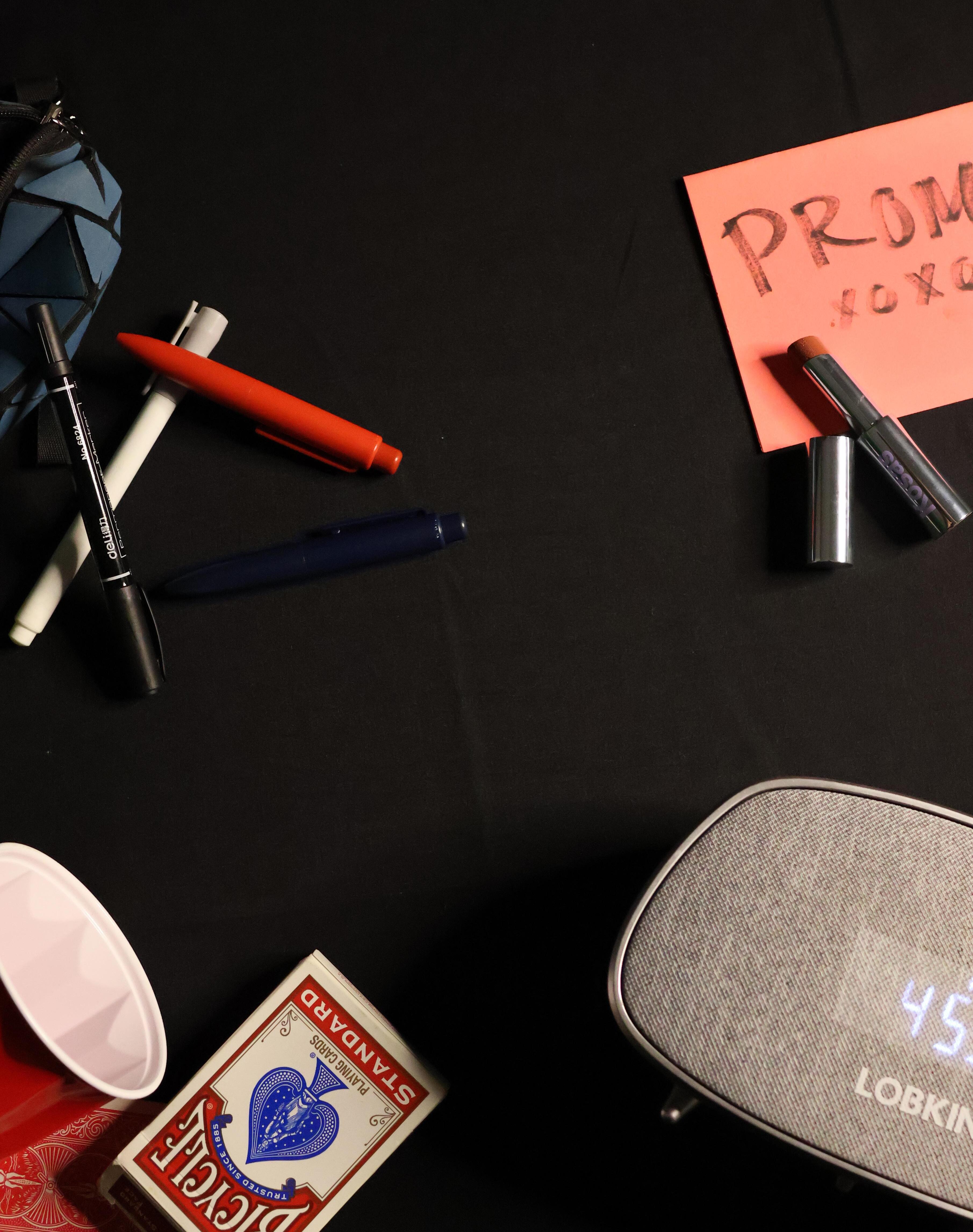
86% of seniors have copied someone else’s homework
81% of seniors have used AI for a homework assignment
27% of seniors have been high
32% of seniors have been drunk
39% of seniors have had their first kiss
26% of seniors have lost their virginity
52% of seniors have pulled an all nighter
73% of seniors have fallen asleep in class

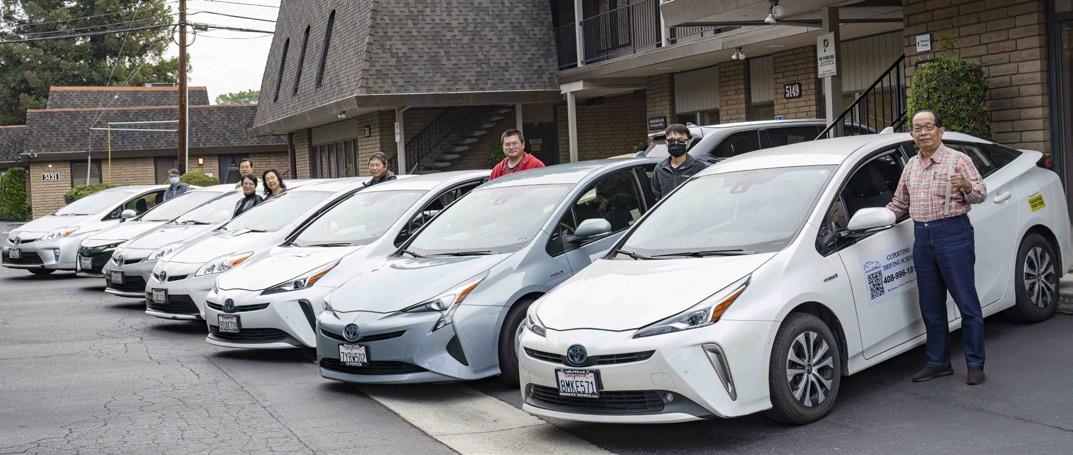



Senior year is often viewed as the pinnacle of the high school experience by students; between senior prom, Senior Assassin and Senior All Night Party, it represents both the end of the academic grind and students’ final chance to fulfill the American laid-back, memorable high school experience. However, the price tag of a socially fulfilling senior year that hits all the “traditions” is a reality we don’t consider until we have to pay up.
This year, a prom ticket cost $190, Senior All Night Party was at least $200 and to participate in Senior Assassin you had to yield $10. Paired with self-driven activities like senior trips, the totals can be daunting. Even though many of these costs are optional, there’s an invisible pressure to participate in the brigade of senior activities. In order to fulfill the American dream of an easy-going high school experience that we’ve grown up seeing, we feel the need to participate. This might be seniors’ last chance to live out their High School Musical dreams, and as human nature dictates, FOMO is rife — we don’t want to miss our last opportunities to spend

While many of us at MVHS are far from economically disadvantaged, spending so much money at once is not something many can do thoughtlessly. Cupertino’s living cost is notoriously high, and some seniors may pay for senior activities with their own earnings. Additionally, while financial aid infrastructure does exist — like fee waivers — it is often unclear who qualifies for aid and social pressure may discourage people from even applying for it.

Experiences like prom are considered central to the high school experience, which many of us plan on participating in at one point, but the price tag can plant a seed of doubt. The prices set by ASB and the school administration are not for profit. High prices mean more amenities, like a bu et table, a photobooth, dinner, the prom boat and more. Without these, people may not enjoy the event as much and may even choose not to attend. And yet, we can’t help but question if the experiences justify the price. It’s a vicious cycle — the higher the prices, the fewer people decide to go and prices may rise again. Still, as many of these prices remain non-negotiable, perhaps we shouldn’t be looking to diminish the cost immediately — especially since financial aid and fee waiver infrastructure already exist — but rather for greater transparency

within the process. After all, students and parents not knowing what they are paying for could contribute to lower attendance, if they don’t feel as though the experience makes up for the price. We often don’t get to see all the amenities behind the price tag in the student store, which can be discouraging. When they are advertised through social media, students who don’t use social media miss out. To tackle this, we should also push for more inschool awareness.
If there were more transparency around the price tags of such activities, it may help students justify the price to themselves, their parents and their wallets. For example, ASB should post a price breakdown of the costs going into each part of an activity so we know what we’re paying for. ASB could also utilize the morning announcements, especially for students who don’t use social media. ASB could also open its planning process to the student body. This could be done by sending out Google Forms to poll people on which amenities they want at activities, allowing them to make budget decisions, and also to gauge attendance numbers. We need to work to ensure that the financial costs of participating in senior traditions aren’t an additional burden.

BY ISABELLE KOK AND ETHAN YANG

n recent years, elite college admissions have grown increasingly competitive. To outcompete other applicants, high schoolers work diligently to form an attractive profile — including a grade point average, standardized tests, essays, extracurriculars and recommendations — that will earn them acceptances. Among these, GPAs are arguably the most crucial component, but its subjectivity has become controversial.
“Grade inflation” refers to when schools adopt overly lenient grading policies so that average grades shift upwards without a corresponding increase in student work quality. Conversely, “grade deflation” refers to when schools have strict grading policies that limit the students that can earn high grades, so that grades fall within a rigid curve. The middle ground between these two poles has been the subject of debate.
While grades are intended to measure mastery of class material, economics teacher Scott Victorine says that teachers often use them to maintain institutional rigor by artificially limiting the amount of high grades that students receive. He says certain policies like capping retake scores or grading by relative performance restricts learning and penalizes student improvement.
“At MVHS, there tends to be an idea that I have to make this hard,” Victorine said. “Students say that college was easier than MVHS. That doesn’t seem right — that seems like the expectations are too high. Why are you doing that to a student?”
Victorine says this is an example of how variable grading policies can be across schools. He believes that colleges can evaluate GPAs as standardized measurements, despite major di erences in grading systems between schools. According to Victorine, this disconnect incentivizes students to optimize grades strategically, since, amid national grade inflation, a B in a challenging MVHS course can feel catastrophic when competing against perfect GPAs from less competitive areas.
“It’s a flawed system because the common thread is, ‘What’s your GPA?’” Victorine said. “Grades look very di erent in West Texas than they do in a competitive area like Cupertino. It makes students obsessed with grades instead of learning.”
Senior Rajvansh Gupta also argues that overemphasis on di cult grading can trade o other aspects of college preparedness, such as interpersonal skills and extracurricular activities. Gupta views curves and relative grading systems as unpredictable because they force students to compete with each other instead of mastering content.
teachers that they get,” Gupta said. “Some teachers overlook students’ stress — students are not robots, and they have a lot of things to do. That class, although it matters, is not the only thing they have on their plates.”
Victorine states that a higher number of strong grades should indicate more prepared students, rather than weaker course rigor.
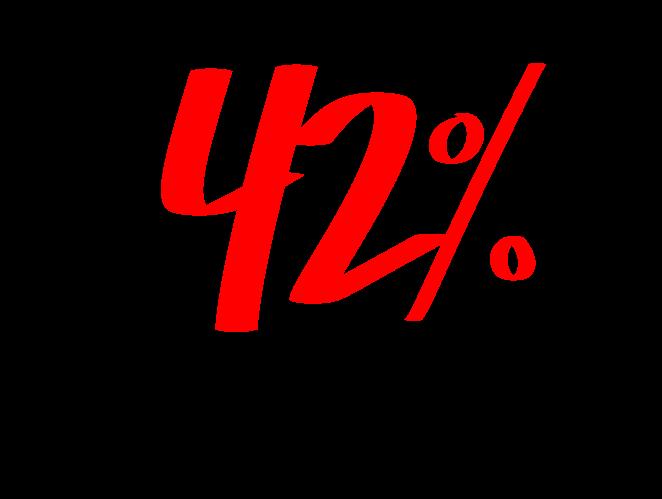
*According to data as of Aug. 25, 2025
“As educators, we forget we’re not the final step in your journey,” Victorine said. “If you’re going to learn it again in college, it’s not necessary to put all that pressure on. I remind myself as a teacher that I’m just one of your classes every day. I’m not so naive to think you’ll go home and keep thinking about economics.” Victorine says that rigid grading limits opportunities for students to participate in other parts of student life, and believes academic expectations can coexist with opportunities for social development.
“The teacher determines your grade in that class, and some students switch courses because of the
“I don’t feel like it’s necessarily a healthy balance,” Victorine said. “I’d like my daughter to get an educational where she’s going to work hard and do well in school, but I don’t want her to feel like, ‘I just spent four years of high school — and I only get to do it once — so focused on academics that I missed the rest.’”
BY FIONA CHEN AND SOPHIA D’SA
When senior Archana Kakar heard that Philz Co ee had removed Pride flags from stores, her reaction was immediate.
“I initially really did not want to keep going,” Kakar said. “I’ve always believed that you don’t just vote with ballots. You vote with dollars as well, and I don’t like giving my money to places that I don’t agree with.”
The controversy began earlier this month, when Philz Co ee removed pride flags that employees had chosen to display in certain stores. CEO Mahesh Sadaragani said in a public statement that the move was intended to create a “more consistent, inclusive experience” across all locations.
Philz, founded in San Francisco in 2003, built much of its reputation around creating a community focused on the culture of co ee. In 2021, founder Phil Jaber stepped away from leadership, and Sadaragani became CEO. In August 2025, private equity firm Freeman Spogli acquired the company while retaining the existing leadership team.

decisions should be made by the workers at each respective store, rather than corporate leaders.
“They’re the ones that are working one-on-one with their customers every day,” said Pangelina. “They’re the ones building the community and setting the vibe for the place, so most of the responsibility and option to put things out there should come from the employees, because they’re the ones on the front lines on a daily basis.”
After backlash from employees and customers, including a Change.org petition that drew thousands of signatures urging the company to reverse course, Philz reconsidered its stance.
“ INCLUSIVITY IS NOT SOMETHING TO BE AFRAID OF. IT’S SOMETHING TO BE EMBRACED, AND PRIDE STANDS FOR THAT.
SENIOR ARCHANA KAKAR

For MVHS library media specialist Maria Pangelina, who frequents Philz several times a week regularly during summers, the company’s explanation contradicted the atmosphere she had long associated with the brand. Pangelina believes that these
Sadaragani later said that the decision to put the flags back up came after a meeting with San Francisco Pride Executive Director Suzanne Ford and Jupiter Peraza, a member of San Francisco’s Trans Advisory Committee. In the same public statement, Sadaragani apologized, referring to the original decision as “a mistake” and announcing that every Pride flag that is up stays up, and any Pride flag that was previously removed can be put back up.
The company reversed course within days, announcing that stores would once again display pride flags. The rapid reversal, however, did not erase questions from customers.

“They’re trying to be politically correct,” Pangelina said. “They did it because they got caught, and they’re trying to backpedal so that repercussions don’t take them down.”
BASIS Independent School student and Philz Co ee customer Vienna Li says that although she noticed the change at the Cupertino location both when the flags were taken down and when they were hung back up, she did not consider it a major issue. To her, the explanation for the takedown and the subsequent petitions to reinstate the flags were justified in their own right.

“I thought it was a bit odd, but considering it’s not Pride Month, I hadn’t thought too much about the constant need to acknowledge or accept LGBTQ+ community members,” Li said. “It’s more of a public space, kind of like a park.”
Ultimately, Li believes that the company’s decision to reinstate the flags is the one that deserves the most weight, and the controversy has not changed her opinion of the company or how much she wants to buy from it. Although Kakar plans to continue buying from Philz, the recent controversy continues to negatively impact her view of the company and its culture. She emphasizes that consistent messaging, especially when trying to portray the company as inclusive, is essential to maintaining consumer trust.
“Always make sure that your company reflects your true values,” Kakar said. “Inclusivity is not something to be afraid of. It’s something to be embraced, and pride stands for that.”

many students in the area to major in computer science, involving several years of analyzing algorithms and advanced mathematics. Enrollment in undergraduate CS programs at UCs even peaked at around 14,000 students in the 2022-23 school year, accounting for nearlyof the UC
BY SHREEJAY ARJA AND JILLIAN JU
repetitive accounting work was automated, transforming a significant part of the industry. Yet, accountants continued to be important, as their skills and work extended beyond just manual calculations. In the same way, AI is unlikely to erase the need for computer scientists altogether,
consider pursuing CS as a profession or major
*According to a survey of 129 people
over 7,000 practicing engineers, a majority of engineers ranked qualities like integrity, responsibility and resourcefulness above pure technical skills, suggesting that success as a computer engineer is not based solely on coding knowledge.
Similar to how communication and collaboration remain important as AI becomes increasingly prevalent in the workplace, qualities like strategic thinking and problem-solving may also grow in significance. Although AI can automate basic tasks e ciently, it struggles to consider the broader implications of a project and make decisions holistically. Adobe VP of AI Transformation GTM Bob Yang argues that these larger design choices will continue to depend on human
decrease in CS enrollment by 8.1%. This decrease in enrollment has often been attributed to AI replacing entry-level CS jobs, as many tasks are easier to automate and utilizing AI can significantly lower company expenses. As AI becomes more ubiquitous, people are beginning to doubt the viability of pursuing CS, especially as unprecedented layo s continue in the tech industry.
Although AI is increasingly automating coding work in the CS industry, history suggests that

the industry. For example, proficiencies like soft skills have proven to be increasingly important in the computer science field. As technical tasks become more automated, engineers who can collaborate, communicate and adapt e ectively amid the growth of AI will have a distinct advantage. Charles Riborg Mann’s book “A Study of Engineering Education,” asserts that in a poll of
“Start in a modular fashion and figure out what high-level thing you’re trying to achieve,” Yang said. “The fundamental design, which is actually the hard part, and the part that requires a lot of higher-order thinking and creativity is going to stay with the software engineers well into

As concerns around AI continue to influence CS enrollment, many students have begun to question the long-term stability of the industry. While changes like the rise of AI will inevitably shift what opportunities are available, MVHS students need to focus on developing adaptability, creativity and strong soft skills. Instead of considering technological developments as a deterrent, we should focus on the strengths that AI is unable to replicate and be prepared to work in tandem with it to progress e ciently in the unpredictable future of CS.
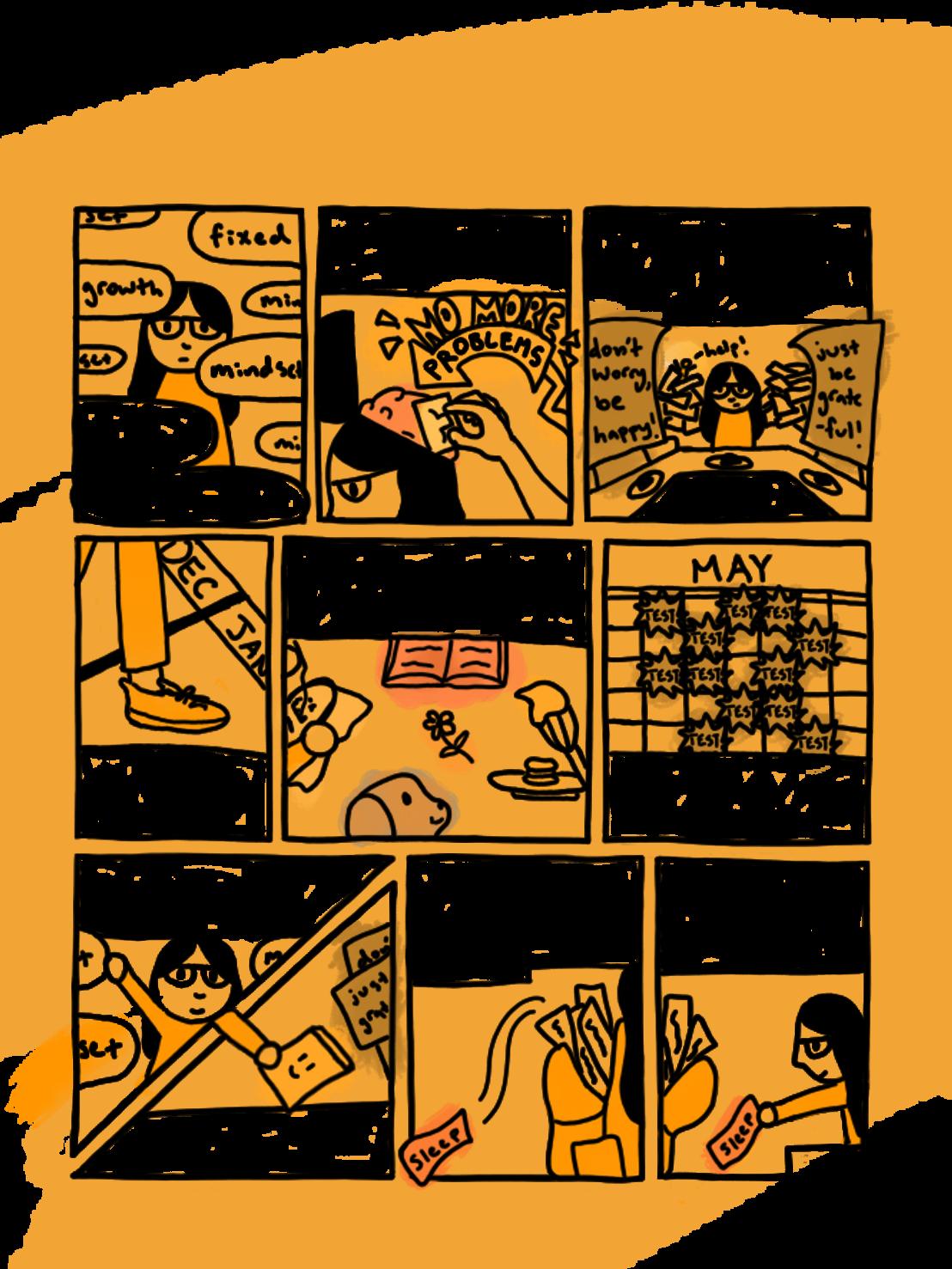
Rethinking what “mindset” means has allowed me to make changes to my life
BY CORINNA KUO
It was the type of word adults liked to throw around, expecting it to fx everything.
I used to hate the word
“mindset.”
... that I realized I needed to slow down and fgure out the methods that worked for me.
During a stressful period of my life, I found myself buried in self-help books from my parents, more relatable to people going through midlife crises.
I left them all half-read.
I’m ashamed to say it was only after the stress abated...
Because changing your mindset doesn’t require you to focus on that scary word, “mindset.”
So, when the stress did eventually increase, I wouldn’t feel so overwhelmed by it.
I hope to bring this realization to college, and though I’ll inevitably lose a few lessons on the way...
I know I can always pick them up again — though hopefully before my next graduation.
What matters is fnding the ways you can improve yourself.

At my first choir camp, my part in my group’s skit was to sit. Just sit. As a sixth grader, I felt awkward doing anything embarrassing in front of even five people, let alone the nearly 300 at camp. Thanks to a very enthusiastic high school boy who went all-out impersonating one of our teachers (complete with a towel on his head for hair), the skit killed. I, on the other hand, walked away feeling exactly as awkward as when I’d walked in.
For most of my school years, I’ve been known for being put-together: taking detailed notes, managing my life on spreadsheets and never getting caught without my power bank. For most of that time, I dreaded anything that felt at odds with that identity — antics that should have felt fun registered to me as embarrassing, too far out of my control or comfort zone.
As a result, in choir, I stayed stuck in a catch-22, lacking friends as well as the self-confidence to make them. Post-pandemic, I started bringing a book to read at break time every rehearsal, finding it preferable to
trying and potentially failing to fit in with a new friend group.
I told myself a whole slew of reasons why I’d rather be alone, one of the most persistent being that I was the only Indian kid in class — my classmates had grown up attending the same after-school programs and coming to choir with family friends. I simply did not fit that bill. Though there was a nugget of truth to that, it didn’t change that I hated the isolation, nor that I was selling myself short by not trying to fix it.
Around my freshman year, I willed myself to attempt conversation with some new people, starting with other freshmen in my section. In a series of events I wish I remembered, we created a story spanning several months, with the main character being one of our pu er jackets. Initially, I was still reserved — I remember my horror at some of their additions to the storyline in comparison to my tame, logical plot points — but this group was wholesome and unapologetically silly in a way I was unfamiliar with, but liked. At various points in the following three years, we put googly eyes and penciled eyebrows on a hotel room lampshade, stayed up until 3 a.m. at camp gossiping and making up unhinged stories, and belted Mariah Carey’s “All I Want For Christmas Is You” on a walk through a very residential, very quiet neighborhood. Though I continued to be the “put-together one,” I had begun learning to balance that with embracing the chaos and quirkiness that allowed me some of my most cherished friendships. I’ve even brought some of that mindset with me to my other activities, and in doing so, I’ve enjoyed
my senior year so much more than I thought I could.
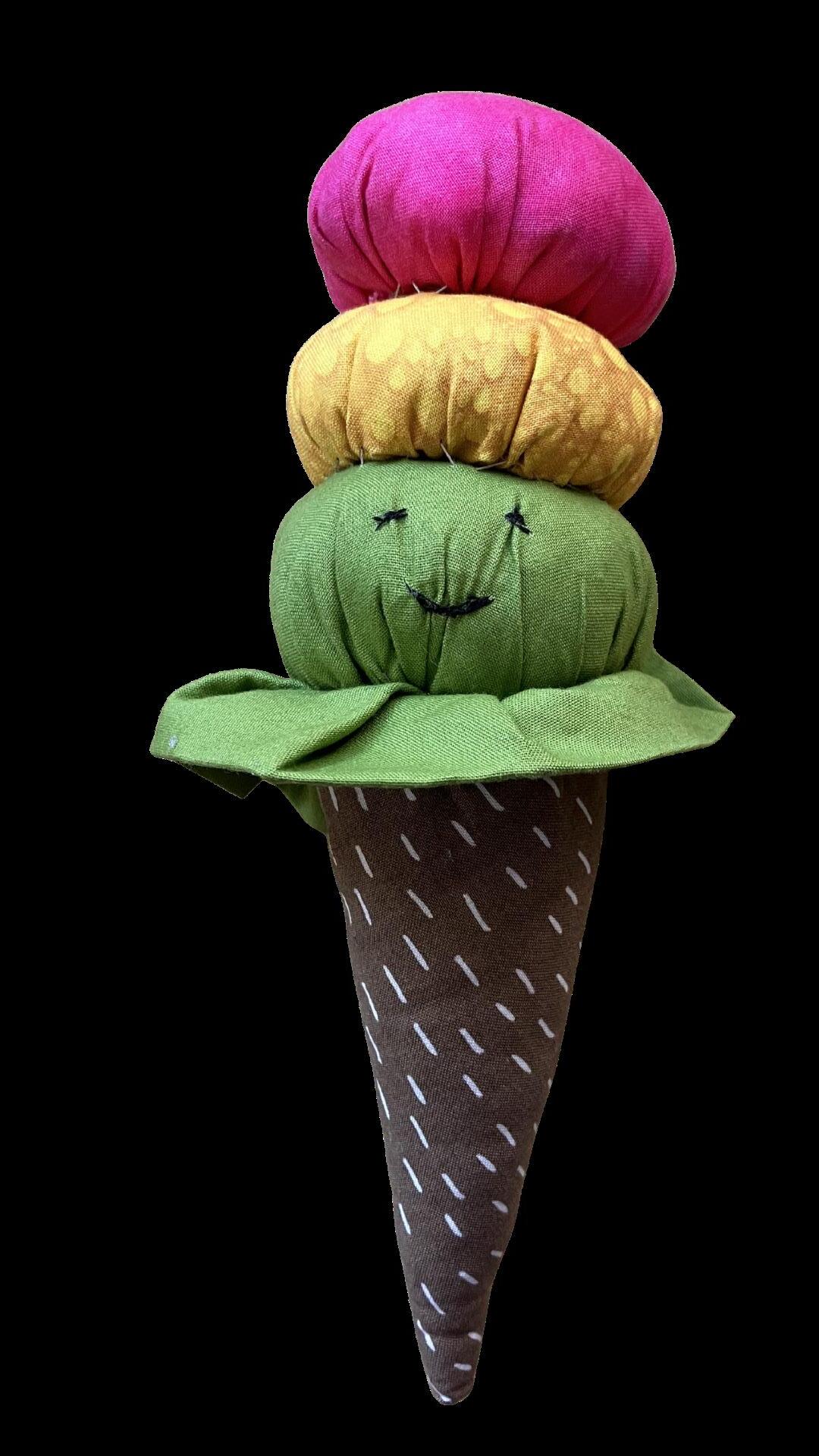

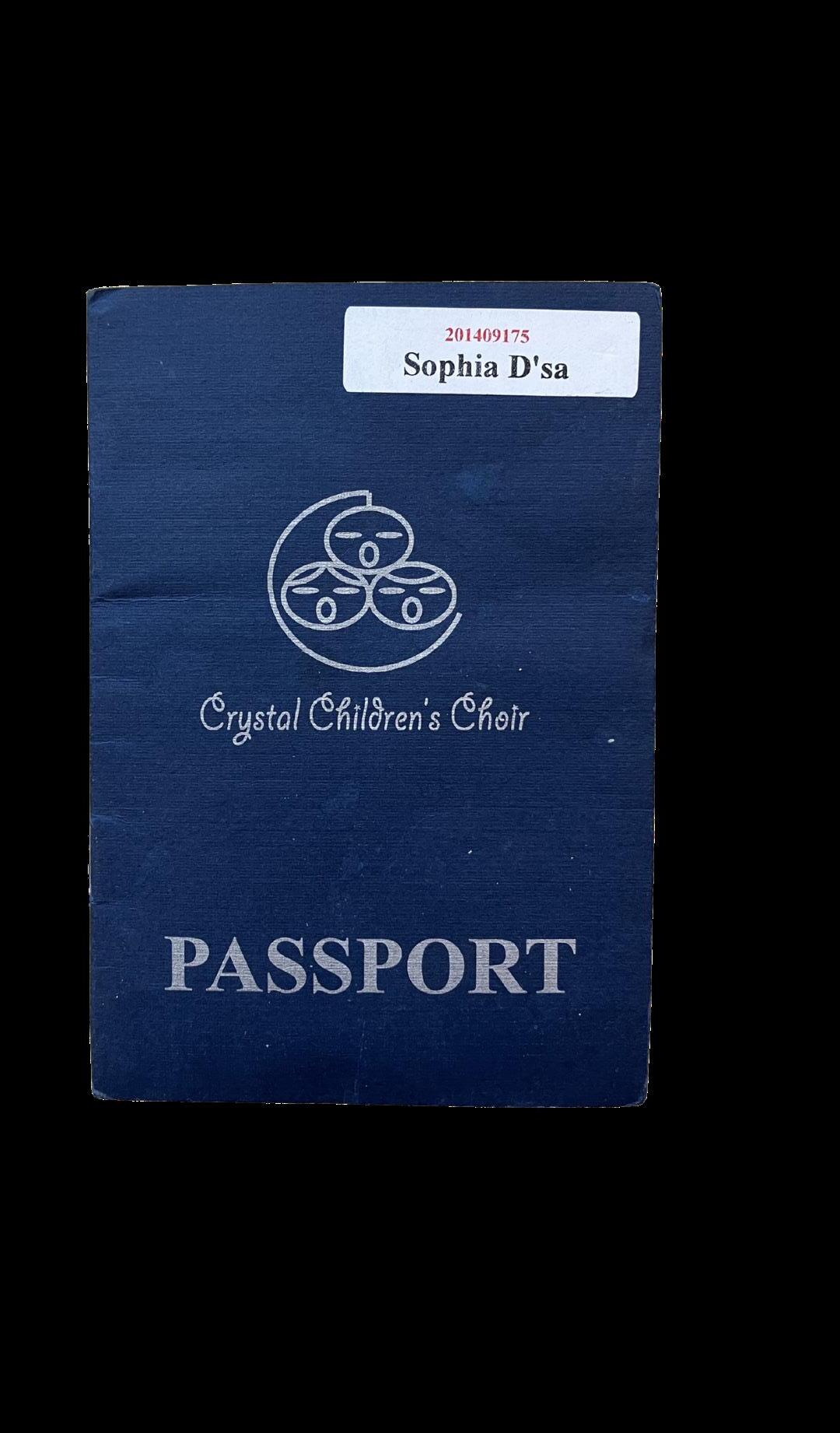

When planning the skit for my final choir camp, I felt the shadow of my sixth-grade awkwardness the entire time, especially since my group planned a nonsensical kidnappingturned-choir-game-show-tragedy based on our ice cream theme. I wanted the plot to make sense and people to know their lines, but more than that, I wanted my group to enjoy camp, even if that meant a fever dream of a script. Although our skit was a mild disaster of unfunny jokes and awkward pauses, we got just enough laughs to walk o stage giggling and satisfied. Seeing my group laugh through the chaos made overcoming my embarrassment worth it — the chaos was what made it fun.
Though I don’t wish for college years defined by chaos, I know building my community from scratch will feel a lot like my early years in choir. Except this time, I’ll go in less reserved, more willing to make friends and explore. I’ll be the first to reach out to more people, finally start my soloing career in a cappella, or, as some of my college friends have been telling me, learn to skateboard. Even if I go in feeling a little silly, at least I know I’ll enjoy it.
How being the “writer kid” taught me the value of iterating
Ihate small talk. My voice gets unnaturally high, I suddenly forget everything interesting about myself and I anguish over whether or not to risk a joke. Unfortunately, my immediate future is full of it.
It’s ironic that, after four years of high school, I’m still exactly where I started when it comes to small talk — exceedingly awkward. But between writing columns and investing more in fashion, I’ve spent a lot of time trying to define myself in increasingly specific ways. Now, I’m about to restart in a new setting, with no established expectations. What’s the first thing people should know about me?
changed. Like the centerline, writing runs through all of it.
But as my confidence developed, so did my fragility. While writing was my “thing,” it was also the extent of my relevance. Coming into high school, I was terminally insecure, convinced that if I didn’t maintain my reputation, I’d become a betrayal to my potential. High school was an intangible test of my willingness to take the plunge, and of my writing habit to continually cushion those falls. I was convinced I’d crash and burn.
THAT WOULD MEAN PEAKING WHEN I STILL HAVE SO MUCH MORE TO LEARN.
Defining myself to others used to feel straightforward. I’ve always been the “writing kid,” a title that originated with an unrecognizable version of me. I picture myself looking back on a long road filled with stills of my life — scribbling in my Claire’s typing up my first poem, leaving comment after comment on my old work just to convince myself that I’d

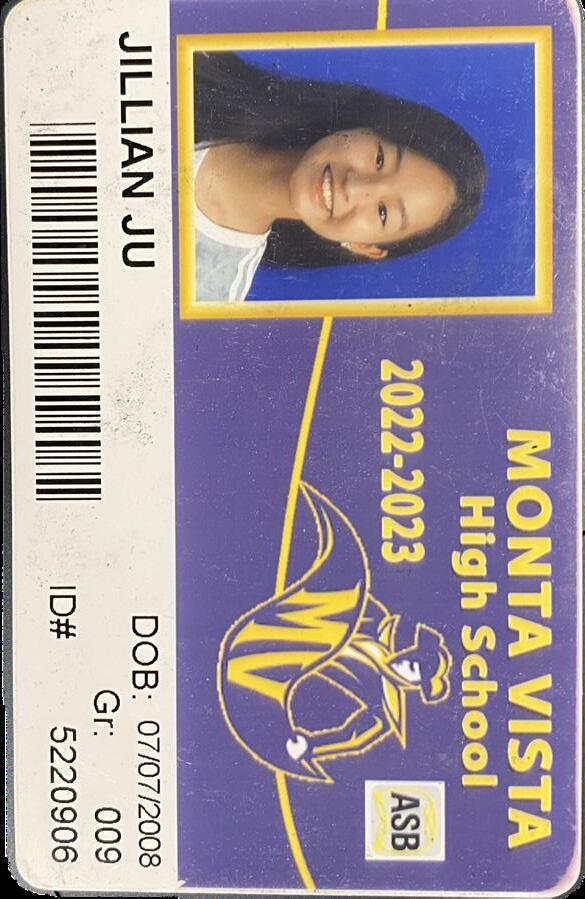
peaking when I still have so much more to learn.
While I can appreciate how far I’ve come, I can’t grow complacent in my cycle of passive reflecting. Toni Morrison famously advised her creative writing class at Princeton that “I don’t want to hear about your little life.” The irony isn’t lost on me, though as I leave the Bay Area bubble, I’ve been aspiring more to this standard — not to rely on writing as an egotistical crutch, but to articulate topics beyond myself and expand past the comfort of self-centered rehashing. Though my little life has gotten me this far, I need to push my skills further, so that my work — and my impact — can create a life of its own.

At the same time, writing’s continual role in my life has shown me how much I’ve grown around it. Now, I’m excited, not intimidated, by my future as a writer. While visiting an advanced poetry course, I was overwhelmed by the feeling that that was the kind of intellectual environment I wanted to be in. Regardless of my proficiency right now, I won’t back down from the challenge of ending up there eventually.
I still grapple with a lot of those writerly crises that I mistakenly thought would define me. After months of procrastinating on my college essays, a friend remarked that I was often paralyzed by the idea of writing one because I didn’t think anything I wrote could be a culmination of everything I was. I still don’t think I can, though I’ve tried, and this column is another version of that. At this juncture — the end of high school, which feels like it

So I’ll bear the temporary awkwardness of small talk if it means being able to connect with someone on that next leg of my journey. Though I know I’ll continue to write, I hope I’ll be just as unrecognizable four years in the future as I am now to my past self. Sometimes, I imagine how I would introduce myself to that version of me. There are a million things I could explain — how to believe in my abilities more, how to layer clothing, how to cherish the priceless moments ahead — but one thing remains consistent: I know she would be proud of me.
How growing into my sister’s position changed
the way I see myself
I’m driving back home from my favorite drink place, Cere Tea, with my favorite drink: a hojicha einspänner topped with Oreo crumbs. My older sister Sarah sits in the passenger seat with her strawberry matcha latte, scrolling on her phone and complaining about a collegerelated problem I only half understand. At the red light, I catch myself glancing at her. She just came home for break, and she is so barely recognizable from the sister I wrote about two years ago, in my first column as a new sta writer on El Estoque.
I wrote about being terrified of her leaving for college. I was scared I would lose my friend, my protector, my teacher and thus to some extent, a part of myself. I am now a senior, an editor-in-chief of El Estoque — the same position she held two years ago.
You wrote about being afraid no one would bake you chocolate chip cookies the way she did. You were right — you’ll miss them awfully (sometimes more than you miss her). It’s this feeling that drives you to learn to make your own, developing a recipe that everyone who tries it agrees is the best they’ve ever had. From there, you’ll move on to brownies, then banana cake, then everything else, which is a good thing because one day she’ll come home having forgotten all her recipes, leaving you as the only baker in the house.
One of the strangest parts will be El Estoque itself. To you right now, this newsroom is her domain. The managing editors are Sarah’s close friends, people you’ve watched grow up alongside her. When you writer, you entered a room whose people knew your name only through hers.

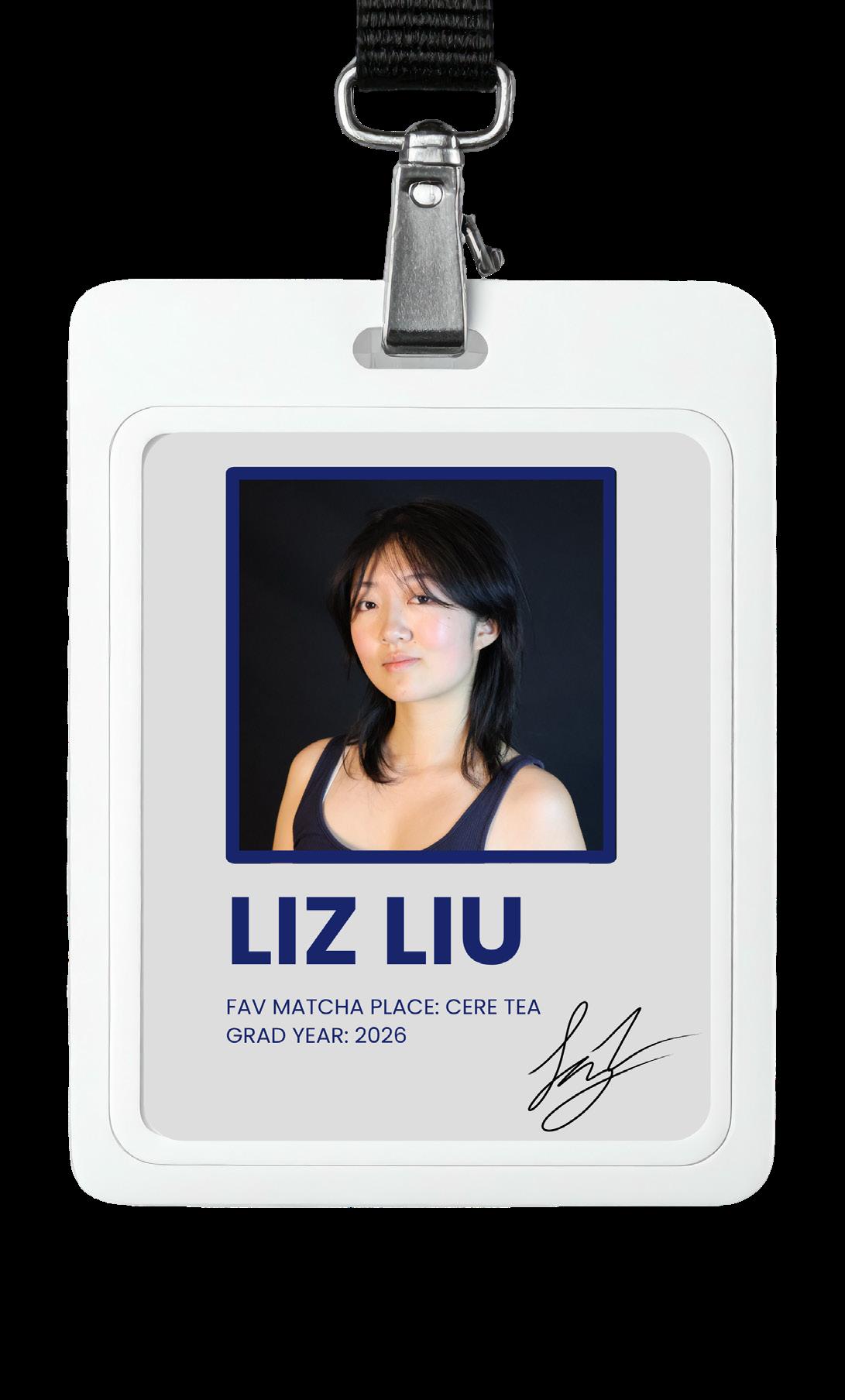
Things change after she graduates. For the first time in your life, a room knows you for you and your actions only, without her shadow hovering. Still, a gap remains between what other people see and how you feel. Externally, you’re making decisions, and everyone sees them as just something you do. Internally, you’re still measuring everything you do against an invisible standard, wondering if your sister would’ve made the same call.
Often and with worry, you don’t think she would’ve, but you still develop your own style in interviews, approach to leading and place in this community. And all of it works, works well, which is actually the most disorienting part because you’re still unsure if you’re doing this right, even as the evidence

Still, for every achievement you’re proud of, you’ll call her. It’s di erent now — before these conversations were like a confirmation to rid yourself of self-doubt — now you’re just letting her know. You’re still worried about growing apart, but even that fear has matured from the desperate, clinging kind into a mellower, I like what we have, and I wouldn’t want to lose it.
In the 16 minutes it takes to drive home from Cere Tea, you still always drain your cup.
As I’m licking my straw, trying to extract the last bit of flavor, I notice Sarah, ever the slow drinker, still has half a cup of matcha. She sees me watching her. She turns to me and says she’s full. Without fail, she always gives the last bit to me. I smile.
I’ll take it.
I’ve learned that what I needed out of high school was not what I wanted
At the beginning of eighth grade, my therapist suggested writing a letter to my future, postmiddle school graduation self: a way to catalog all of my accomplishments, academic or personal. In it, I listed out a handful of goals I wanted to achieve by June. Following suit, I wrote one every year of high school. Since then, I’m proud to say that I have not managed to accomplish almost anything I manifested.
I’ve never been in a relationship. I don’t have a 4.0 GPA. I didn’t get 5s on all of my AP tests. I’ve never had a date to a dance. I didn’t grow any taller. I didn’t make countless new friends. I’m not going to college out of state. I didn’t morph into a social butterfly.
I AM WHO I AM TODAY BECAUSE OF WHAT I’VE DONE AND WHAT’S HAPPENED.
As for my ultimate goal, I didn’t end up loving high school. Sure, it was marginally better than middle school — but I’m not leaving it feeling sad or sentimental.
Despite my list of failed goals, a marked reminder of everything I didn’t achieve, I’m not leaving high school feeling regretful either. I’ve found that what I wanted out of high school as a wistful 13-year-old was not what I needed. My takeaways from high school are things that didn’t even occur to middle school me to consider.
When I started high school, I wholeheartedly believed I was going to go into a STEM field. I was convinced I would go into astrophysics (a dream AP Physics quickly dissuaded), and so the writing clubs and classes I joined
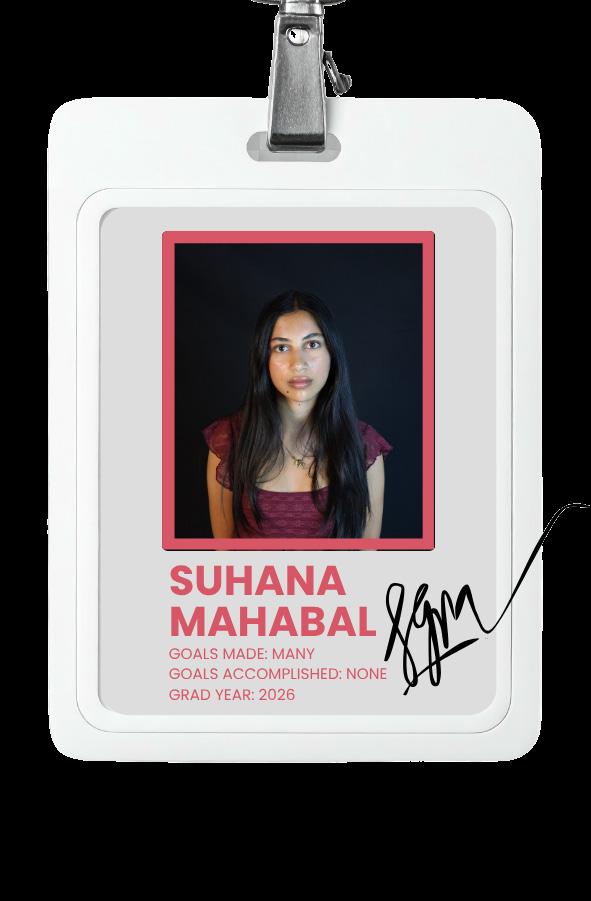
were nothing but a side quest. I hadn’t even heard of El Estoque until the spring of freshman year. Now, I can’t fathom what my high school career would have looked like without El Estoque: I’ve been able to grow as an editor, I went to NYC and spoke in front of 40 other journalists (inconceivable to freshman year me!) and I’ve written stories that I referenced on my college applications. I’ve learned how to be more succinct, rhetorical and vulnerable. Four years ago, I couldn’t have written a column like this one.
I haven’t made countless new friends, but I have made friends that I love and will carry with me in the most unexpected places. From my coeditor, who I initially despised after freshman year, to my sophomore year random roommates at a speech tournament, who I connected with almost immediately, I’ve met people who have taught me so much about the need to put myself out there, and consequently, the kind of person I want to be.
More than anything, when I look back at the past four years, I can see how much I have grown. The experiences that defined me as a preteen don’t anymore. I used to want to go to college out of state because I felt like the only way I would grow was if I ran away. Now I’m going to college an hour away by plane. And yet, I know that location and people don’t define who I am — I do. Maybe that’s a

within my life.
I didn’t achieve what I considered the essential hallmarks of a perfect High School Musical-esque experience, but I did ultimately get what I needed out of high school. I don’t think I would have been more fulfilled if I’d been in a relationship or graduated with a perfect GPA. If someone asked if I wanted to go back and redo these past few years, it would be a resounding no. You truly don’t know where life will lead you until it happens, and I’ve found that more often than not, it will be exactly where you need to be. I am who I am today because of what I’ve done and what’s happened, and I am incredibly happy and proud of myself, something I was markedly not in eighth grade.
When I write a letter to myself at the end of my freshman year, I don’t know if I’m going to accomplish everything in it, and I kind of hope I don’t. I have so much more faith that I will end up where I need to, even if it doesn’t fit into the puzzle I’ve mentally crafted. Whether life fits my set path or it deviates, I will have grown from the experience.
How my Native American step-grandfather influenced my upbringing and identity
When I grow up, I want a tattoo. The best part? My family will allow me to get it. Not that they can prevent me from getting one once I turn 18, but the point still stands.
Some of my fondest childhood memories are of my step-grandfather at his shop, which specialized in traditional Native American — particularly Anishinaabe — tattoos and piercings. I vividly recall the spiraling tree drawn on his arm in rich black ink, its branches seeming almost alive. I used to think grimly that, beside him, I was plain and incomplete. My branches were nothing like the beautiful patterns coiled around his strong arms.
My mom’s side of my family ran away from my abusive biological grandfather by immigrating to the U.S., so growing up, my parents had no intention of assimilating into the new environment’s culture. When I was born, they intended to raise me just like how they were raised: a quiet, perfectly studious daughter who was good at math and would eventually become a doctor of some sort. A tattoo wasn’t even considered in the equation.
When I was 5 years old, my stepgrandfather was introduced to me in the most anti-climactic way. There was no wedding or any grand celebration with all my relatives — the marriage license was simply signed and tucked away. But it was those documents that catalyzed my growth from a stagnant seed to a sapling. After becoming accustomed to my East Asian-saturated environment, his appearance, voice, demeanor and values rattled my world.
He was Ojibwe and had moved to California from Minnesota’s White Earth Nation, so naturally, he was unlike anyone I’d ever known. He lived the word “whimsical” cranked up to the max. Whenever I was with him, my day would be filled with sketching impossible tattoo designs and plastering them on his shop’s walls, skipping along the babbling brook beside his cabin in the woods, playing with his seven dogs and learning about Indigenous folktales.
It wasn’t that my family was against the idea of me forming my own interests, it was that none of us knew how. I explored many di erent hobbies — soccer, piano, swimming, dance and art, which I’ve decided to keep in my life. However, I only viewed them as one-and-done tasks. I never felt a conviction to stick with them. But my step-grandfather’s unconventional lifestyle and ability to appreciate the carefree while staying grounded and passionate inspired me to view each experience as an opportunity to expand my identity.

wondering how to draw horses became nights my mom taught me how to sketch unicorns. I started to view my family, who once felt so distant, as people I could learn from and bond with.
I wasn’t the only one who gained new perspectives on life because of him; my entire family reevaluated what it meant to live and not just survive. Having a personal connection with someone who wasn’t an echo chamber encouraged them to look beyond what they’ve always known. I noticed how, gradually, the tense reservedness my grandmother used like a shield dissipated. My mom, whose interests I couldn’t have guessed before, rediscovered her love for arts and crafts.
Although my step-grandfather has passed, the ways he has inspired me to build my identity remains. I’m shaped by the people I love and admire — my friends, family and even strangers I’ve only met once. Even though I don’t need physical markings on my body to show the intersection of cultures that has made me who I am today, it is something I want to do in memory of my step-grandfather.
As I enter college, the next big step of my life, I will have more opportunities to meet people who are vastly di erent from me. I am moving forward knowing that their experiences and values will teach me more about the world and myself. So, despite being a little afraid, I’m looking forward to growing more branches.
And mark my words; one day, I will get that tattoo. Or two.


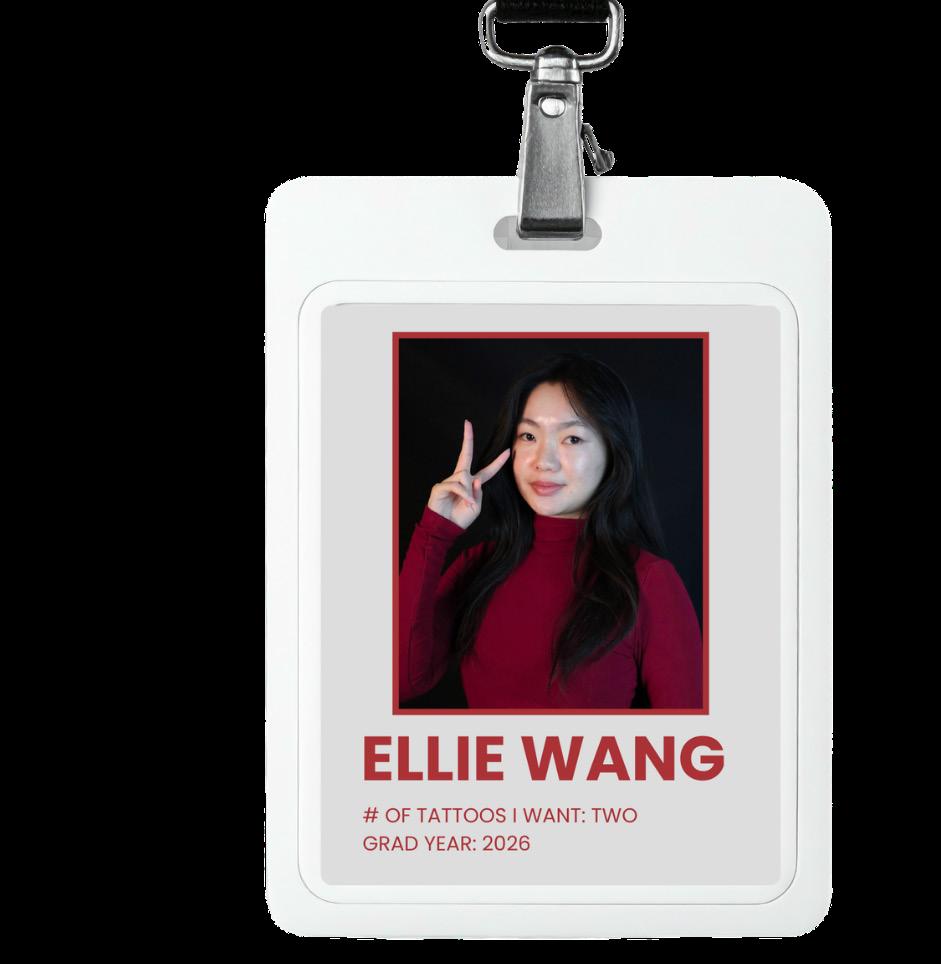
For someone my mom swears can’t stick to anything, I’ve gotten my 11:11 routine down pretty well.
1111 is supposedly an angel number — a recurring number sequence believed to carry messages from higher beings — that represents manifestation. Some people believe that if you make a wish at 11:11 p.m., the universe will listen. I am one of those people.
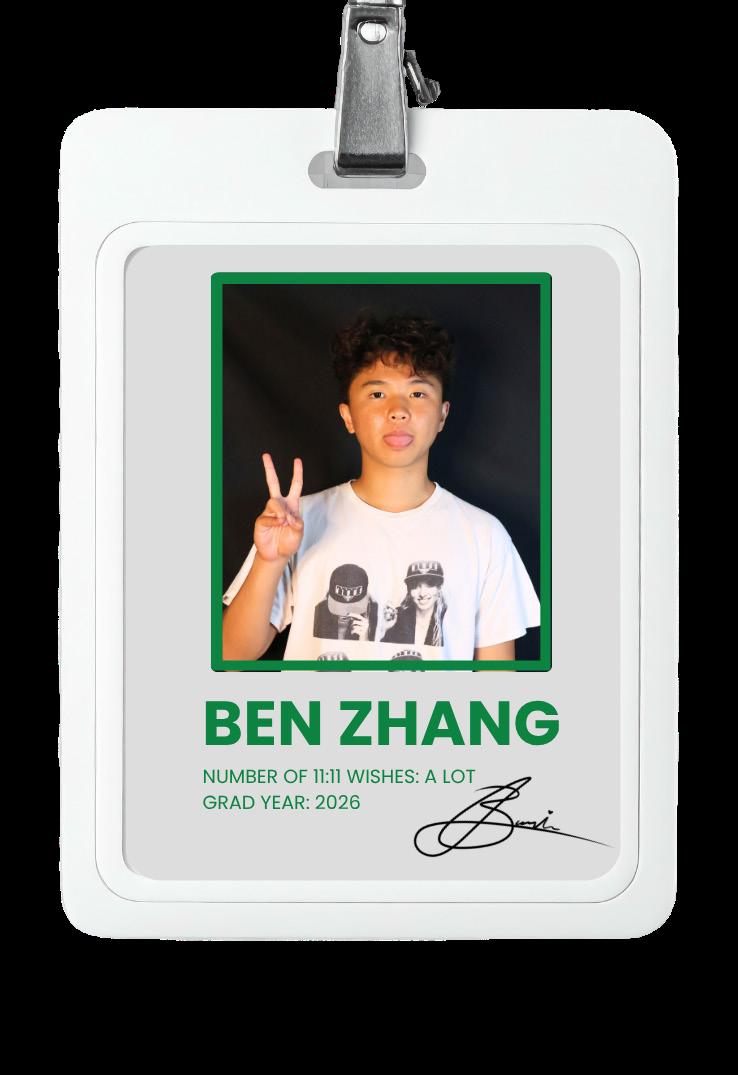
Which is quite surprising, considering that I had never been the typical spiritual type. My closest encounter with religion came from spending an evening with a biblical coloring book after a friend invited me to church.
Instead, I had always considered myself someone grounded in logic. I trusted logic. If I came home from school and noticed my mom giving me a withering glance, for example, I would immediately run a mental calculation. What did I do this time — lose my water bottle for the third time this year? And which response out of the million I saved would give me
of me in certain extracurriculars and of whether my teachers judged me when I just wanted to make small talk. Growing up only amplified the amount and magnitude of uncertainties I faced, but the uncertainty I now faced was no longer rooted in lost water bottles. I had a paralyzing fear that every step I made might ruin my life, and it was even scarier to know that I might already be unknowingly living with the consequences of a bad decision I had made.
One night, after hours of studying for a physics test, I was desperate to go to bed. It was already 11 p.m., but my mind kept circling the idea that one more hour of studying would make or break the score I wanted. Yet, the exhaustion of junior year got the best of me, and I could feel my eyelids dropping. At that moment, I remembered the superstition a friend had mentioned in passing earlier that day. I glanced at my digital clock, its bright green digits cutting through the
just kept making 11:11 wishes. As silly as it is, making a wish every night before I go to bed quiets the overthinking doubts that I used to fall asleep with. It is a small reprieve when I stop trying to calculate a series of unfortunate events, and instead, give myself the luxury of hoping that things would turn out OK. Now, every night at 11:11 p.m., I light a stick of incense and wish for the things that sit heaviest on my mind to end well.
So I closed my eyes and made a
Maybe 11:11 really is a message from angels. I actually did very well on that physics test, and afterward, I

In all honesty, I’m not sure 11:11 has any supernatural powers. It definitely can’t teach me physics, nor does it make any uncertainty disappear. What it does do, however, is remind me that uncertainty doesn’t always have to be a bad thing. Making wishes helps channel my mind to a more positive place, a place where I can put my full e ort without being paralyzed by the fear of being wrong. It was through this process of putting myself in what I used to consider “harm’s way” that I discovered some of the most meaningful experiences I’ve had to date, and found people, classes and conversations I would otherwise be too afraid to choose.
As I look toward my college years, I want to let go of the need to have everything figured out. I’m learning that not everything needs to be calculated or proven, and that sometimes, it’s enough to be confident that it will all work out. And yes, I still don’t know if I entirely believe in the idea of angels — but I’d like to think that they believe in me.


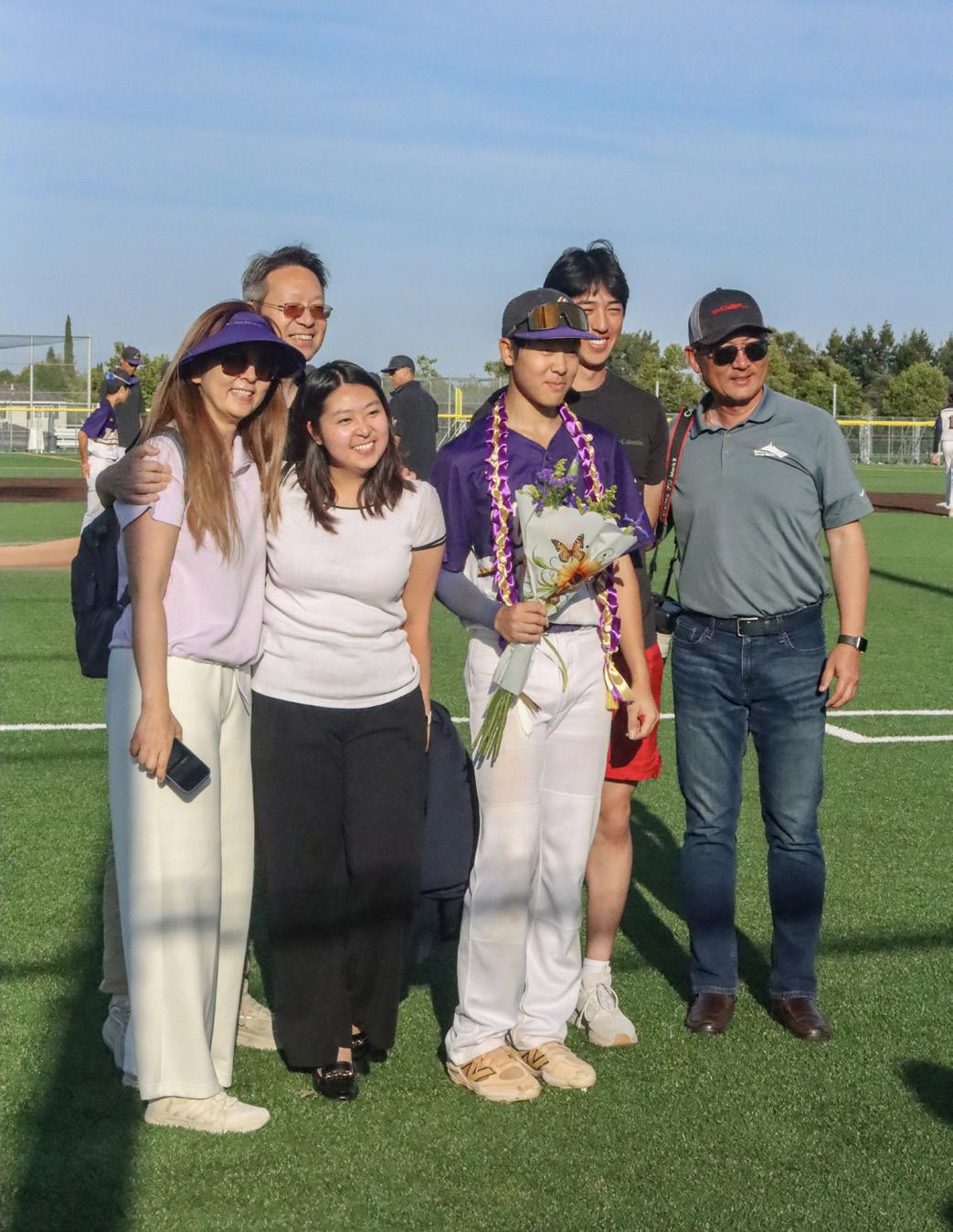

The Class of 2026 reflects on the staples of their senior year
BY EMMY HARIMOTO, ALEXANDRA PERRAULT, ANGELA POON AND DIVINA RAINA
Seniors feature objects that remind them of home and their high school years
BY EMMY HARIMOTO
As the class of 2026 prepares to leave high school and begin a new chapter, many seniors are carrying more than just their dorm essentials with them. From sentimental presents to childhood creations, these objects reflect memories, passions and relationships that shaped their high school experiences. Although each memento showcases something di erent, they all serve as reminders of home — and for the important people and memories that shaped them as they move forward.
Away from her parents and surrounded only by her friends for

one of the first times at a fifth-grade science camp, senior Katie Hwang got her first silver Canon digital camera, which has followed her through every stage of her life since. Passed down to her by her dad, the camera became more than just a way to take photos.
As Hwang captured latenight cabin moments and snapshots with her friends, the camera became a way for her to preserve the memories with the people around her.
“It captured a lot of my high school memories,” Hwang said. “I use it for rallies, Homecoming and other events like
that, and it’s something that I plan to use and bring to college with me as well.”
Among the many photos captured on the camera, Hwang especially cherishes the ones depicting moments she shares with friends, which instantly bring her back to specific memories and milestones of her high school journey.
“One of my favorite pictures is when my friend Courtney won Homecoming Royalty,” Hwang said. “And at that specific football game, we posed with the finger hearts. I just love those pictures with my friends.”
Beyond the photos themselves, the camera has also become a symbol of connection within Hwang’s family. Hwang said the camera now represents a generational bond, once carrying her father’s memories, and now her own.
“My dad captured his memories on it but I’m growing with it now,” Hwang said. “There were so many times where I captured when I felt independent, or when I took pictures with people that maybe I’m not friends with anymore. But still, I love those memories, and the memories I made with them.”
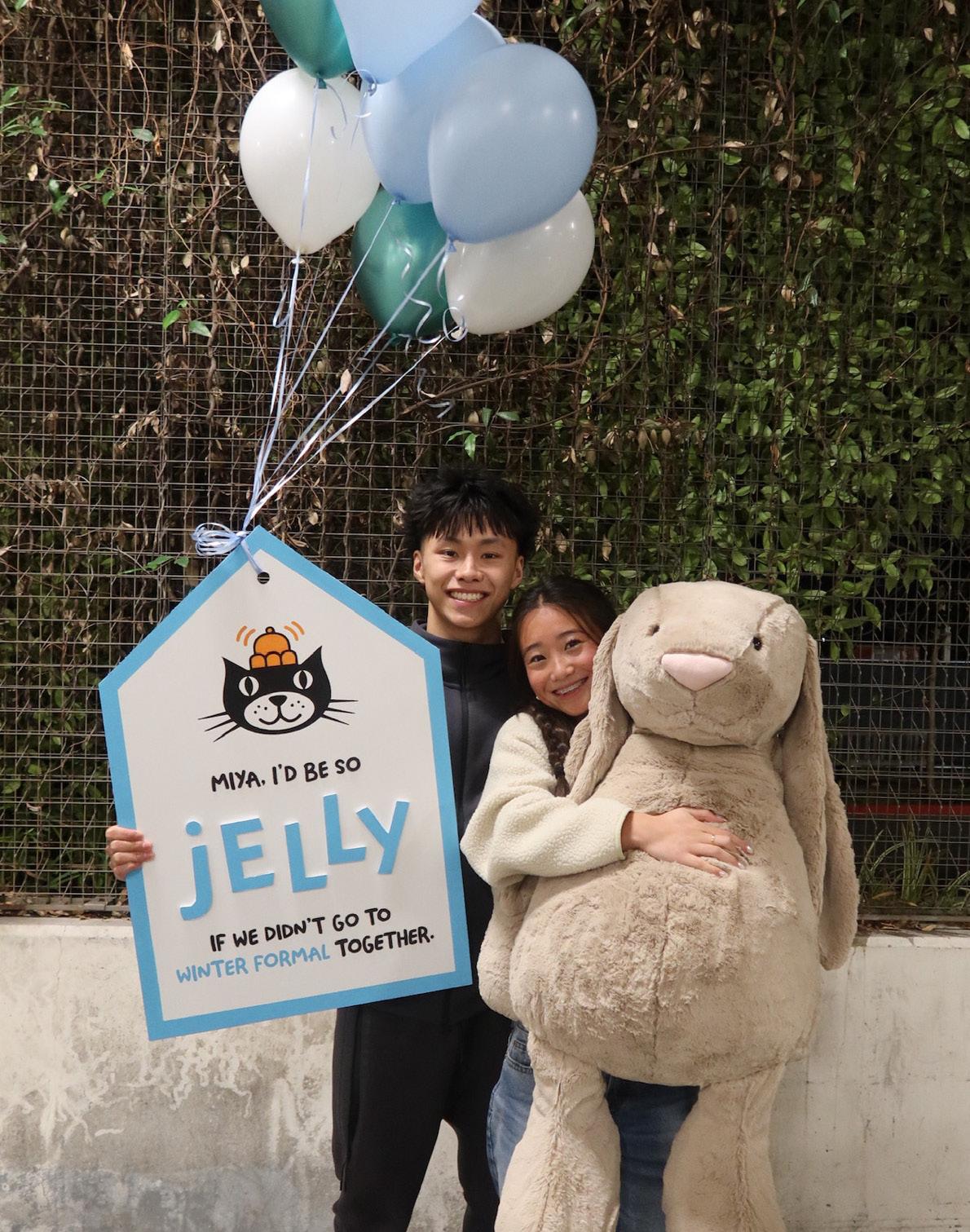
At 10 years old, senior Andrew Zorko sat behind a 3D printing software, searching for something “cool” to create. Among many designs, Zorko chose to print a 3D pyramid, engraving his name and those of his three siblings on each side. For Zorko, the object symbolizes how home is defined less by a place and rather by the people closest to him — his family.
What began as a childhood memory eventually developed into a long-term passion that persists today. Zorko’s passion for 3D printing continued through his involvement in the Project Bridge Club, where mentors from the General Education Department work one-onone with students from the Special Education Department to create passion projects together.
Beyond representing creativity and passion, the pyramid also serves as a reminder of Zorko’s family and how they hold an important factor in his life.
“The pyramid grounds me, because your family is basically the backbone of your existence,” Zorko said. “It supports you all the time, even when anyone else might not support you; it comforts you for the same reason; and it motivates you because you want to make them proud. I think what this will really keep reminding me of is my awesome family and just all the awesome connections that I’ve had with my family over the past many, many years of my life.”
MIYA SAKURAI
Flu y and friendly, senior Miya Sakurai’s memories are represented by a collection of plushies throughout her senior year. Among them, the big bunny plushie from Jellycat especially evokes the memories and comfort of her final year in high school — feelings she hopes to bring with her into college.
“The big plushie is from when my boyfriend asked me to attend his Winter Formal,” Sakurai said. “It’s special to me because I did not know he was planning on doing that at all. We have a smaller bunny, and that’s kind of what it was based on, because he knows how much we really like that bunny.”
Over time, the stu ed animals became connected to many of the memories she made during high school. Another stu ed animal that helps her is a small penguin named Peanut, which wears a mini GAP sweatshirt that Sakurai and her boyfriend bought in San Francisco. Sakurai shares that these plushies will help support her as she adjusts to a new chapter in her life.
“I’ve gotten so many more stu ed animals this year,” Sakurai said. “They’re all very comforting because they hold good memories throughout my high school years. Unfortunately, I definitely won’t have space to bring the big bunny, but I’m going to college close by, so I can always come back and get it whenever I want. But for my smaller ones, I’ll take them with me to college, and they’ll help me ease my way into my new school.”
MVHS seniors describe their senior year with a song
BY ALEXANDRA PERRAULT

SUBIN KO
“Blinding Lights” by The Weekend
“The song starts with a really silent melody and it starts bumping up,” Ko said. That building up represents me and my whole four years in high school because as I built up my career in the U.S., I also created more friends, built friendships and all those crazy events I was able to experience.”

JENNA BERGENDAHL bbb “Rollercoaster” by the Jonas Brothers
“I’ve been wrestling with a lot of excitement and also a lot of sadness,” Bergendahl said. “I’m leaving my family and each little thing that I have to let go of brings a lot of emotions. The song is validating; I can be playful but I also have sadness. I’m moving on to a new stage in life.”
JOCELYN ZOU
“See You Again” by Wiz Khalifa ft. Charlie Puth
“It makes me feel nostalgic,” Zou said. “It talks about looking back and how far you’ve come. Throughout high school you make friends or you become closer with people. I’ve started to talk to more people since freshman year and it’s great to meet new people.”

The Class of 2026 share memories of their most worn outfits
BY DIVINA PANDITA-RAINA
Senior Sayuj Masurkar wears his dad’s brown jacket that he stole in 8th grade. He typically pairs his brown jacket with a V-neck T-shirt, baggy blue jeans, a chunky black belt and bulky white headphones. While Masurkar does not keep up with many fashion trends, he admits to adopting popular fashion trends inspired by an indie aesthetic, styling a white collared shirt under a sweater. Masurkar explains that his indie aesthetic gave him a sense of his personalized style.
“I really like when people incorporate a white collar shirt with a tie,” Masurkar said. “I think it elevates an outfit to make it look 10 times better than it would in a regular situation where you’re wearing everything else without that kind of setup.”
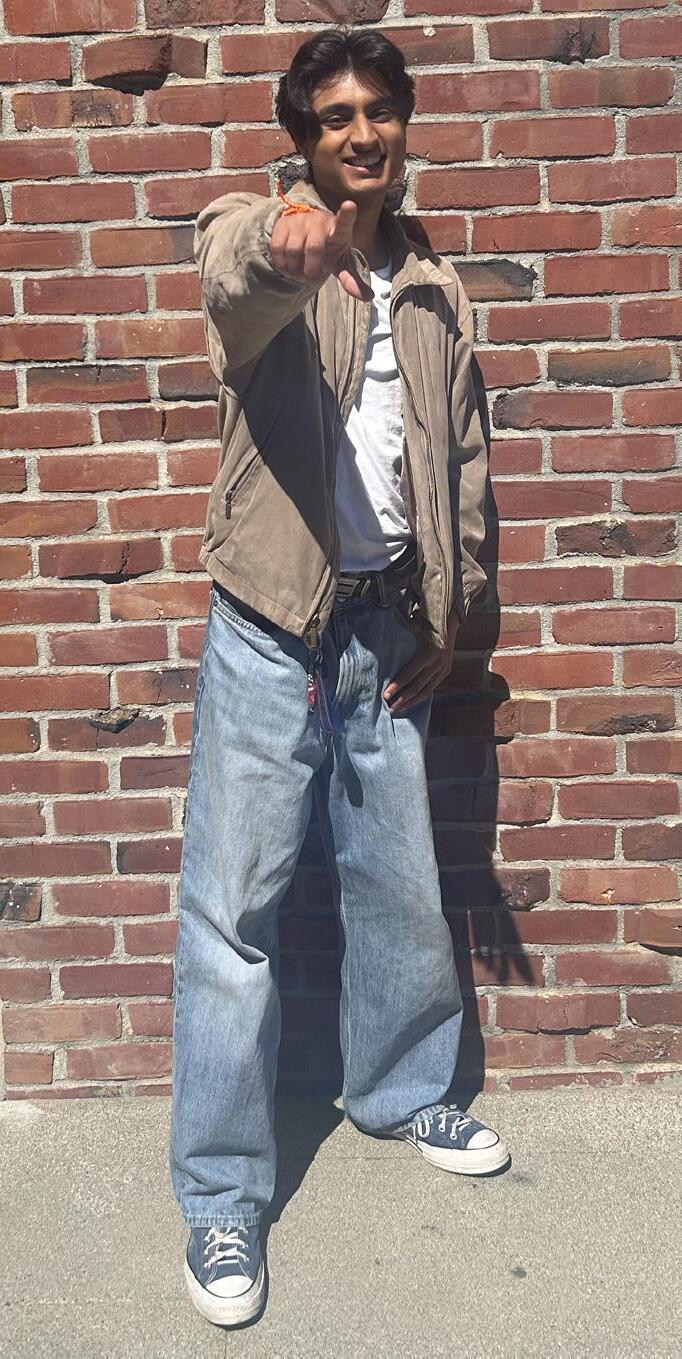
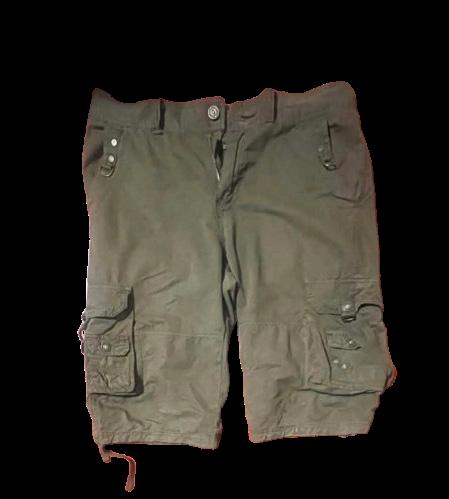
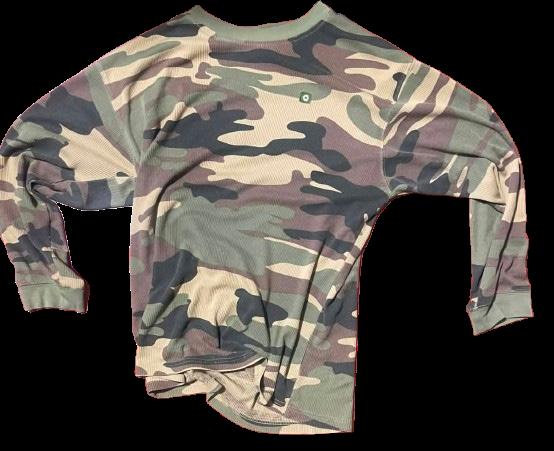
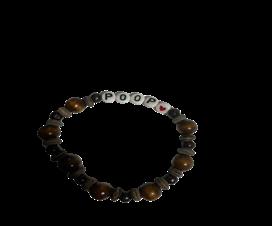
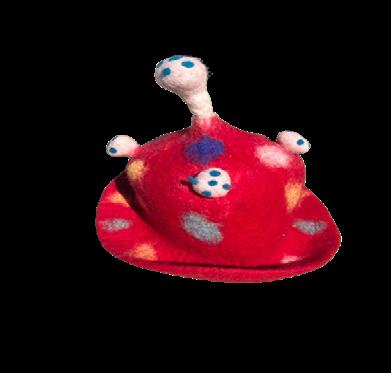




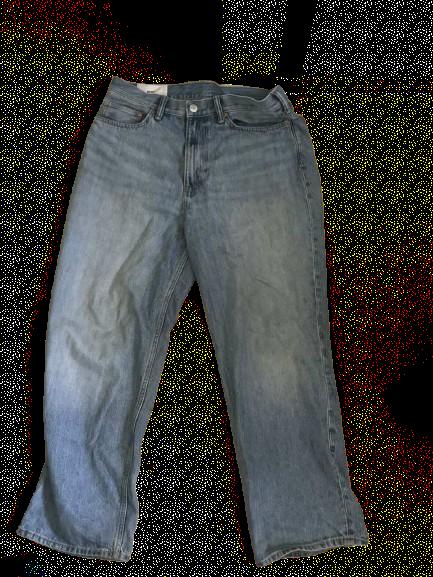
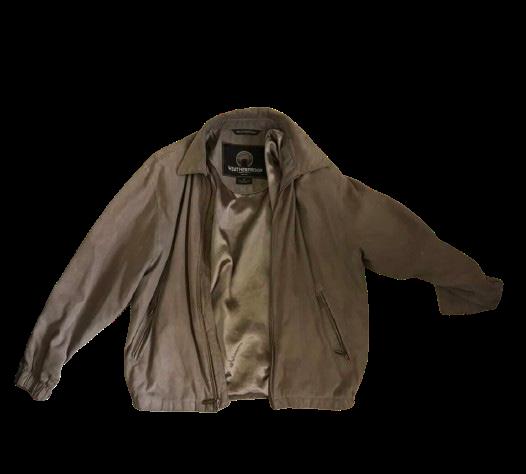
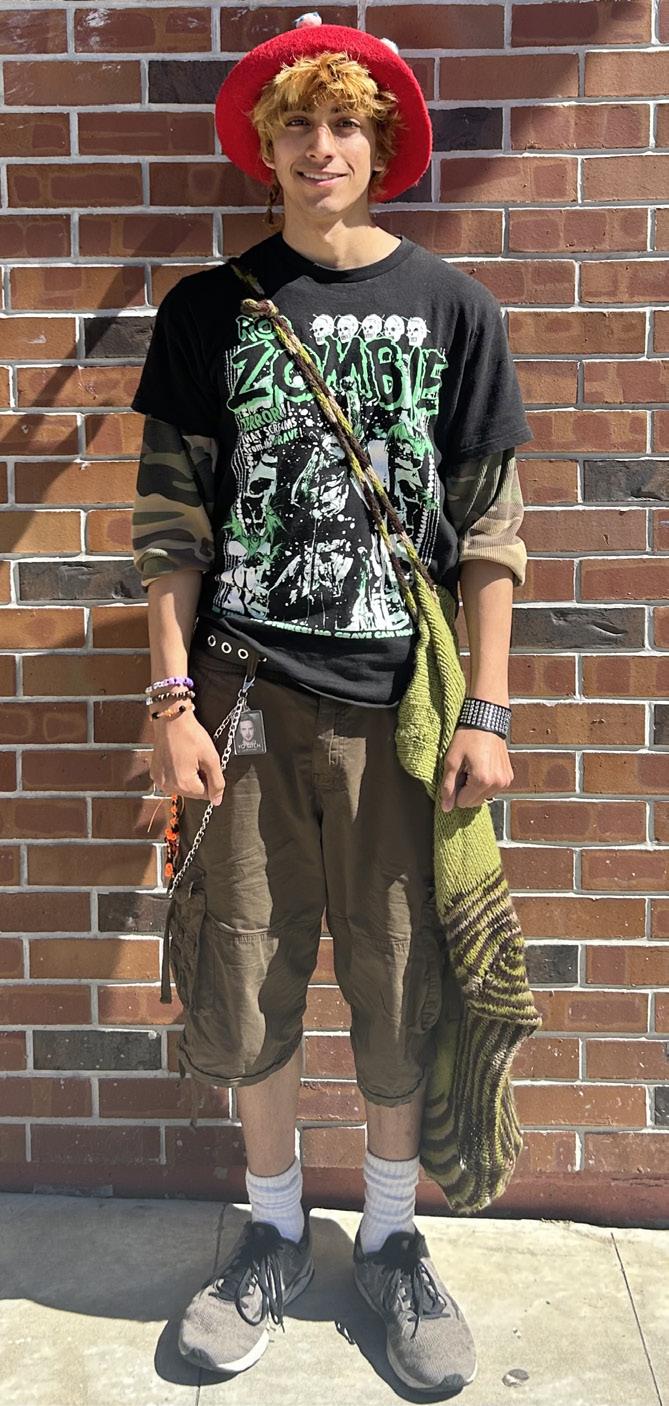
Walking down an archery trail, a nature based walking course consisting of di erent archery targets scattered throughout the path, senior Leonardo Dhamija dons a fish hat, layered shirts and green khaki shorts. Dhamija prefers to wear eyecatching clothing, since it encourages conversation with those around him.
“People say that they dress for themselves sometimes, but I do like to stand out with my hats,” Dhamija said. “There have been a few times that people say my hats look like characters from TV shows. I think it’s really cool that people can make conversation about it. I also feel like this school is a very boring place and no one has whimsy at all. People should wear silly hats and dye their hair to be a little bit colorful.”
BY ANGELA POON
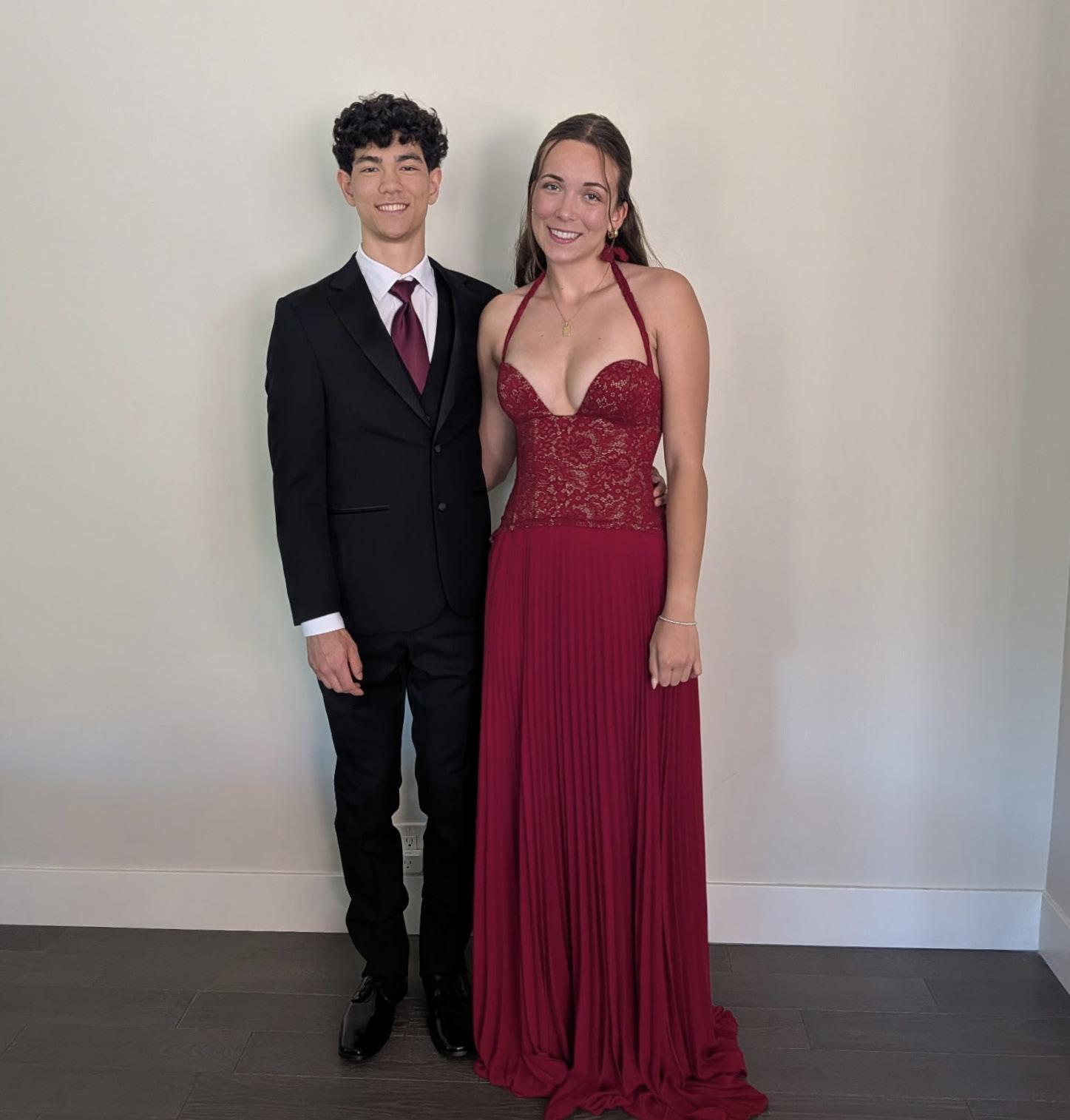
Seniors Nicole Jeleva and Christopher Lamfalusi are attending prom together for the second year in a row. Since Jeleva wanted her dress to be more interesting, she looked for intricate designs or features, such as lace and beading. After seeing a dress on TikTok that she liked, Jeleva decided to order it despite believing the website was questionable: there were no reviews, no tax when she purchased the dress and comments on Reddit were mostly negative. However, she was pleasantly surprised when the dress arrived within a week and was of good quality.
Jeleva’s dress is a burgundy red and has a pleated skirt, a lace top and a halter neck. The dress’s unique style appeals to her, and she chose the color because she believes her junior year’s baby pink prom dress clashed with her skin’s undertone. Jeleva likes burgundy as a color for its versatility, and her volleyball teammates’ choices of red dresses further inspired her to pick a burgundy dress.
‘Wow, everyone’s wearing red this year.’ I feel like red, burgundy and that whole shade of colors is not only timeless, but you also can’t go wrong with it, and it looks good on everyone.”
Lamfalusi is renting a tuxedo from Men’s Wearhouse and complementing it with a white shirt, black pants, a black vest and polished black shoes. He also has a burgundy bow tie to match Jeleva’s dress. Jeleva is pairing her dress with flowery, golden sandals and gold jewelry as she believes gold and red complement each other.
After attending prom together last year, Jeleva and Lamfalusi are doing some things di erently. Lamfalusi intends to get ready earlier, as his hair was still wet when they took photos before prom. Jeleva and her friends also decided not to book a photographer, as this gives them more flexibility on when to take photos.
This year will be Jeleva and Lamfalusi’s first time experiencing prom on the SF Belle, and they each have high expectations. Lamfalusi explains that last year’s prom at Gilroy Gardens was fun because of the plethora of activities, such as the themed rides and carnival games, and hopes for an equivalent amount of entertainment on the boat. While the entertainment piques Lamfalusi’s interest, the more sophisticated energy of the boat appeals to Jeleva.

“Red is such a timeless color,” Jeleva said. “Red’s a really big color, at least for me and all my teammates; they’re all wearing red, and I was like,
“I think it’ll be more elegant, in a way,” Jeleva said. “Because I feel like people had low expectations with Gilroy Gardens last year, and I was pleasantly surprised because I liked it a lot. But this year, it’s a boat in the bay, and it just sounds so much more elegant and elevated. I have a little bit higher expectations than I did last year for sure. I think it’ll be fun.”
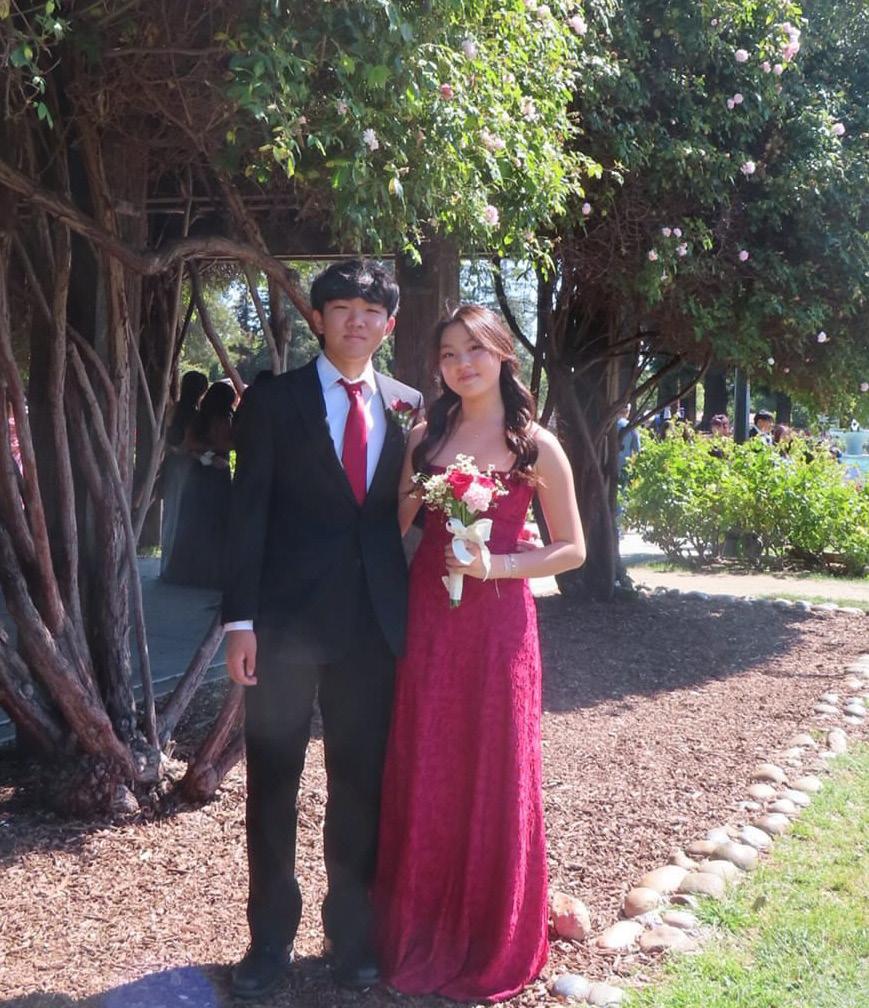
Junior Joseph Murai opted to rent a classic black tuxedo from a store recommended by a friend, who rented their prom suit years earlier. He is pairing it with a crisp white shirt, black trousers and black dress shoes to achieve the classic look. Murai is going to prom with sophomore Emily Guillier Nguyen, who purchased her dress from Windsor.
Nguyen didn’t have many criteria when looking for her dress and wasn’t particularly drawn to any color, so she kept her choices open. However, she knew she wanted a leg slit: a personal stylistic choice she preferred. Nguyen went inperson shopping with her mom and tried on several dresses, especially liking the way a plain and simple yellow dress looked on her. She intends to pair it with her mom’s golden heels, which are open-toed and have an ankle strap, since the colors pair well together.
Although Nguyen doesn’t know which jewelry items she wants to wear yet, she placed an order for a corsage and boutonnière three weeks in advance at a small business. Murai also has a yellow tie to match Nguyen’s dress. Murai and Nguyen agreed on their outfits because Nguyen picked the dress she liked, and Murai just matched his tie to her dress. Still, Murai gives advice on how to coordinate and resolve di erences when choosing prom outfits if one arises.
“Go with what you want,” Murai said. “But also, if you’re going with a date, you should communicate with them in advance because the dress and the tie have to match. Someone would have to be willing to give up what they want. The suit color can di er, but you’d have to compromise on the dress.”
Although sophomore Abigail Ran and junior Jason Kwon were in di erent sections of the marching band last year, they became well-acquainted with each other when a mutual friend brought them closer together. This year, they are attending prom together after Kwon’s promposal.
Kwon will be wearing a black Calvin Klein suit with a red tie to match Ran, who opted for a red dress from Lucy in the Sky. Ran didn’t have specific features or criteria in mind when shopping for her prom dress, but a flowery red fabric ultimately caught her eye due to its vibrant color and textured floral details that popped out from the rest of the dress.
Both Kwon and Ran are borrowing items from their family members out of convenience and to save money. For example, beyond the black heels her mom bought for her and a Kendra Scott bracelet, Ran plans to ask her sister to borrow her Hermès bracelet since it’s a similar color to her dress.
Drawing from her own shopping experience, Ran advises those searching for their prom outfits to stay flexible while shopping because being too selective can make it harder to find a dress that meets their criteria.
“Be open; don’t have an exact style or color you’re specifically looking for, because that makes it a lot harder,” Ran said. “Have an idea of what you want, but don’t completely restrict it to just those aspects of your outfit.”
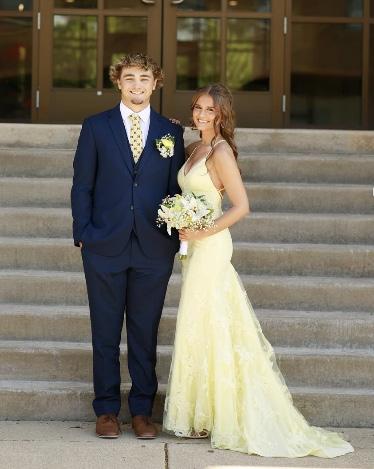
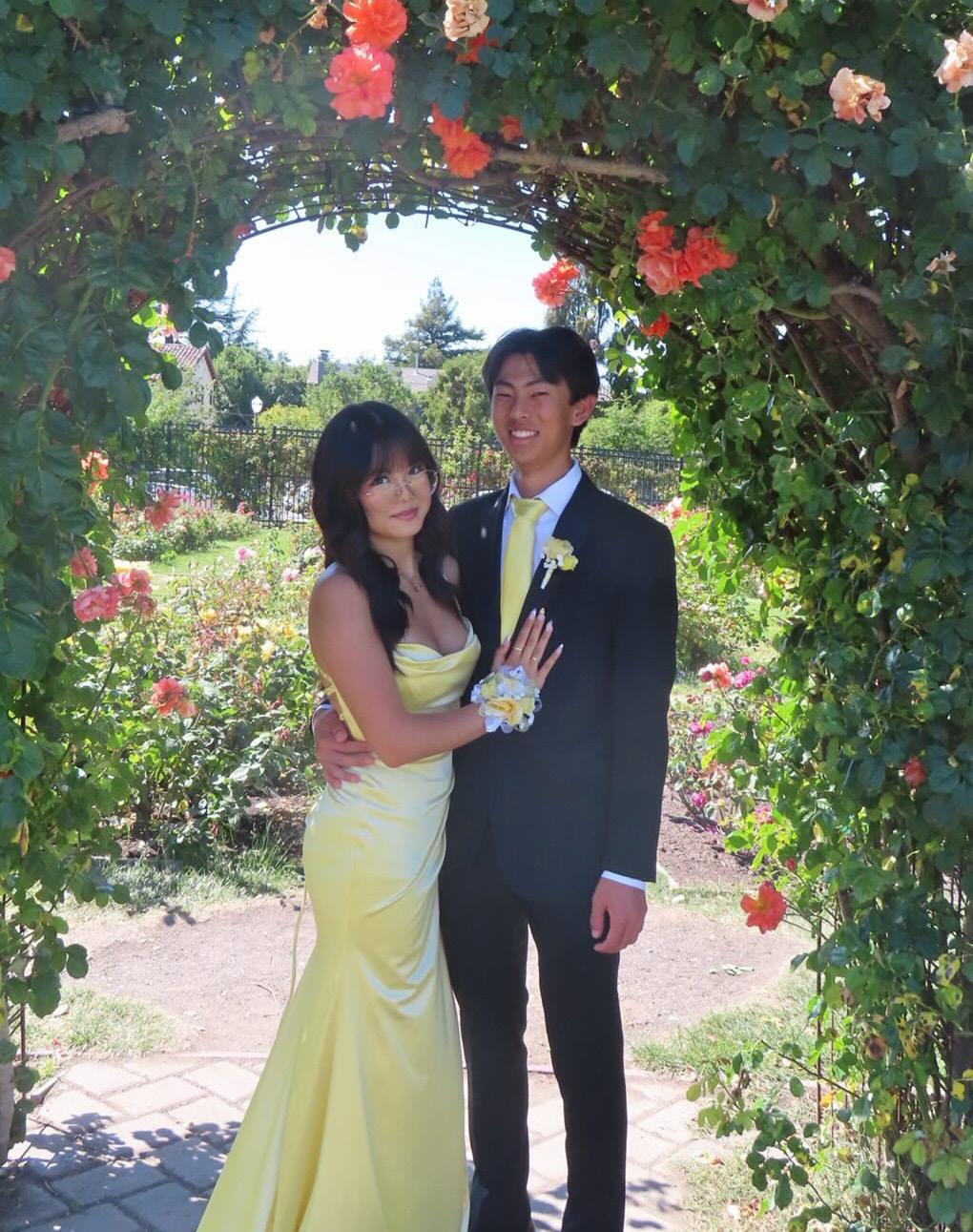
The spring sports wrap up the 2025-2026 MVHS athletic season
BY LUCAS LIU AND SANIA NADKARNI
Sophomore Aidan Wong lunges forward to return a shot. MVHS tied Palo Alto 15-15, but eventually won due to winning more total games in the
on March 17.

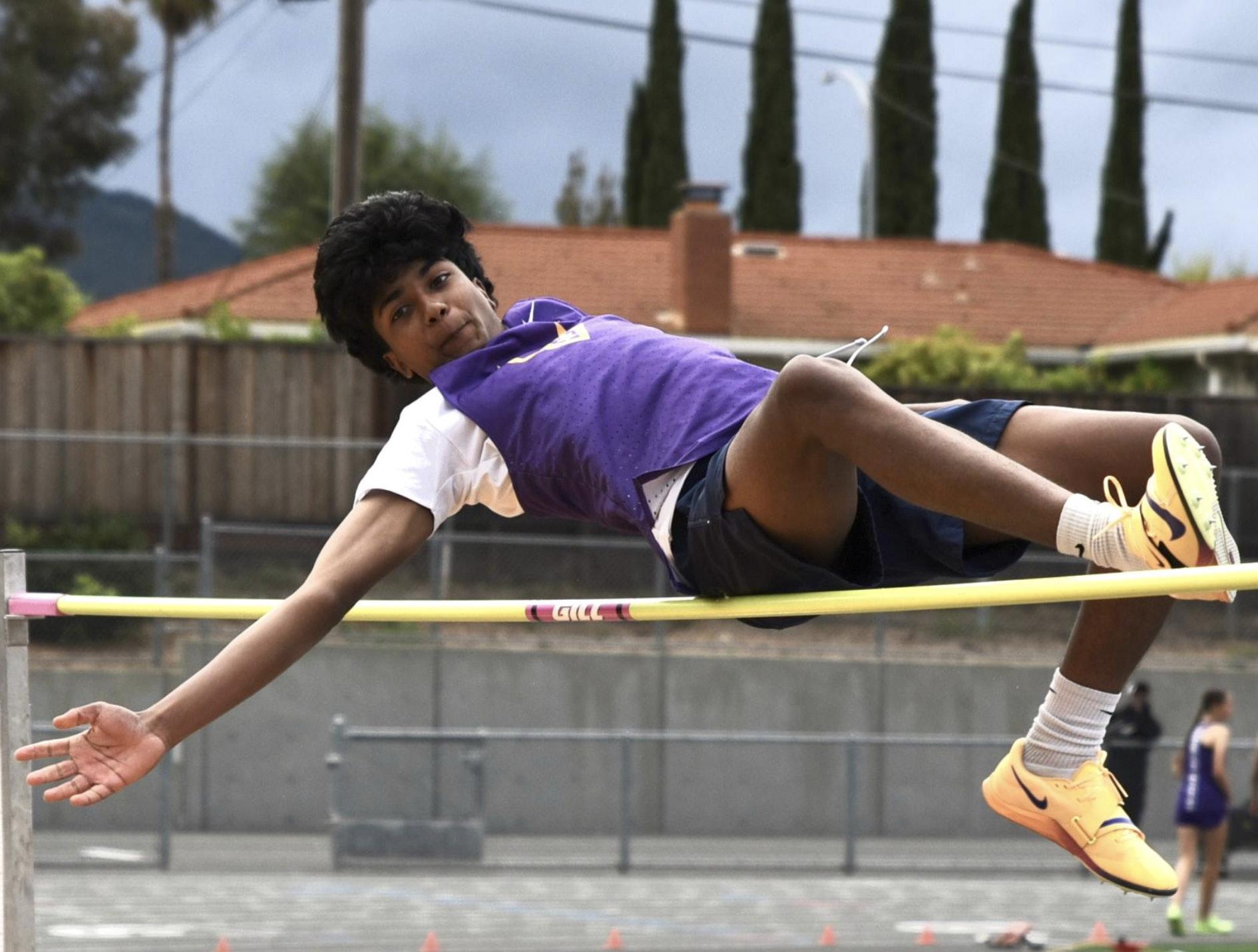
With a tight pass to the
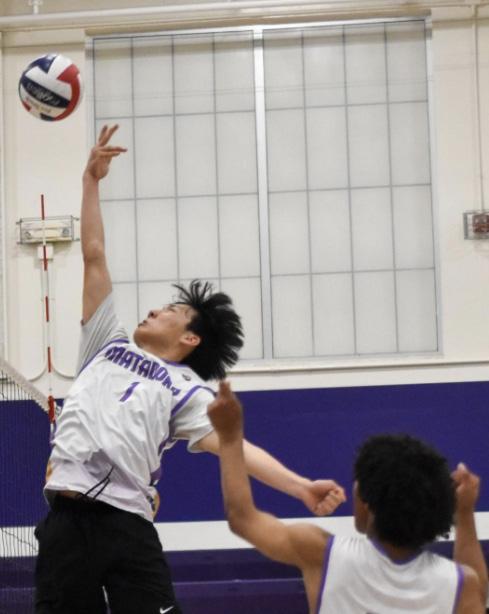



The MVHS Taekwondo Club began last year as a way for sophomores and co-presidents Kolina Law and Kai Tsuchida to spread their love of a relatively uncommon sport to MVHS students. Since then, it has grown into a club with roughly 20 members of varying backgrounds in Taekwondo, a Korean form of martial arts emphasizing kicking techniques.
Law, a third degree black belt that has been doing Taekwondo since 2019, enjoys teaching members di erent techniques. Freshman and Taekwondo Club member Jaime Park says that at their meetings in the MVHS wrestling room on Tuesdays and Thursdays, o cers typically split up into two di erent groups: sparring, which is contact practice with a partner, and poomsae, which focuses more on learning techniques without contact. Park
occasionally teaches technique and is an active club member. She is training to become an o cer for the 2026-27 school year.
“We like to break it up into parts because Taekwondo is a sport with many di erent aspects to it,” Park said. “It’s nice because if someone wants to practice sparring, they can go with Kai, and if they want to practice poomsae, they can go with Kolina.”
“ I HOPE THAT MORE STUDENTS AT MVHS FIND OUT ABOUT TAEKWONDO THROUGH THIS CLUB AND FIND IT AS A NEW PASSION OR INTEREST FOR THEM.
To Park, one of the main goals of the Taekwondo Club is to increase the sport’s exposure among the MVHS community. She hopes that meetings can help teach members new skills from di erent forms that they might not have learned otherwise.
“I hope that more students at MVHS will find out about Taekwondo through this club and find it as a new passion or interest for them,” Park said. Maybe o cers can also teach them how to
do certain skills and techniques that they might find useful in the future.”
Law recalls a time when a new member came in wanting to learn Taekwondo after having experience with other forms of martial arts. To expand on his previous martial arts skills, co-president Kai Tsuchida was there to assist him.
“A new member recently joined us who boxes and does Muay Thai,” Law said. “He joined our club because he wanted to learn more about kicking. We have a lot of members in our club that don’t know Taekwondo at all, and they’re just starting to learn from us.”
The world of Taekwondo comprises multiple di erent styles, the main two being World Taekwondo — the style used to compete in the Olympics — and the International Taekwon-Do Federation, which emphasizes selfdefense and power. As the club grows, Law hopes that the teaching can too.
“We hope that we can eventually expand and teach so that new o cers will know ITF,” Law said. “I hope we can teach ITF in the future as well.”
Outside of their meeting, club members advertise the club through demonstrations to further promote Taekwondo. Law reaches out to local establishments and coordinates dates and times for the club to perform. For sophomore and vice president Antonella Rojas, the club’s trip to the Asian
BY LEAH DESAI
American Community Involvement’s senior wellness center was very memorable.
“We taught the seniors some simple skills and also performed a demonstration,” Rojas said. “We also got to perform board breaking for the audience, which was really fun.”
Law also recently organized an upcoming trip to the One-Stop Learning Center. She hopes that by reaching out to these establishments and choreographing these martial arts demonstrations, she can promote Taekwondo to younger children.
“First, we ask club members to see who would be interested in going to the event,” Law said. “Then we have to coordinate with everyone who is available, and we start to work on choreographing our demonstration and figuring out what music to use. We meet twice a week every week until the demonstration.” Law, Park and Rojas all hope to grow the size of the club as well as the number of community events they attend during their time at MVHS. Rojas points out that the club has become an outlet for her.
“It relieves stress for me because I am able to put a lot of strength into my punches and kicks,” Rojas said. “It is kind of like an art form.”
Similarly, Park finds Taekwondo club to be a great opportunity to share her common interests with people. She is grateful to be able to improve her skills while also learning new ones.
“I feel like Taekwondo is a very niche sport, and not a lot of people know about it at MVHS,” Park said. “I already practice a lot at my studio, but finding opportunities to share this sport with our community through Taekwondo club has made me feel really good.”
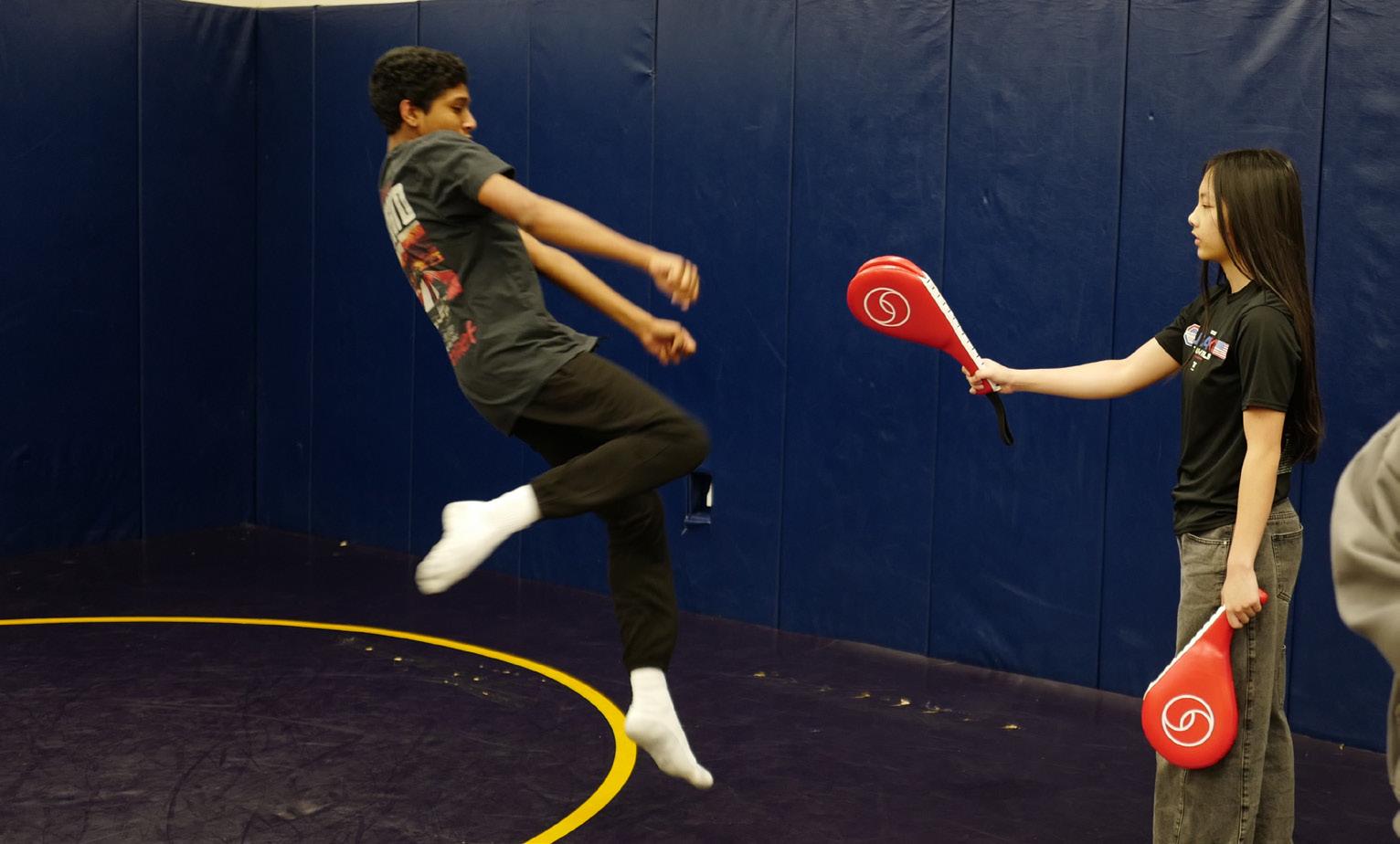
and co-president
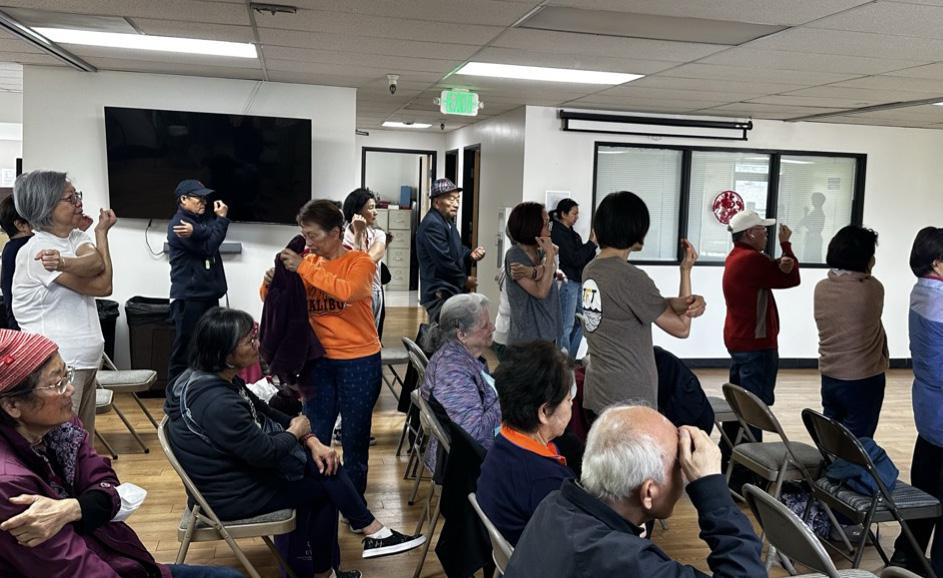
PHOTOS COURTESY OF ANDERSON WANG | USED WITH PERMISSION
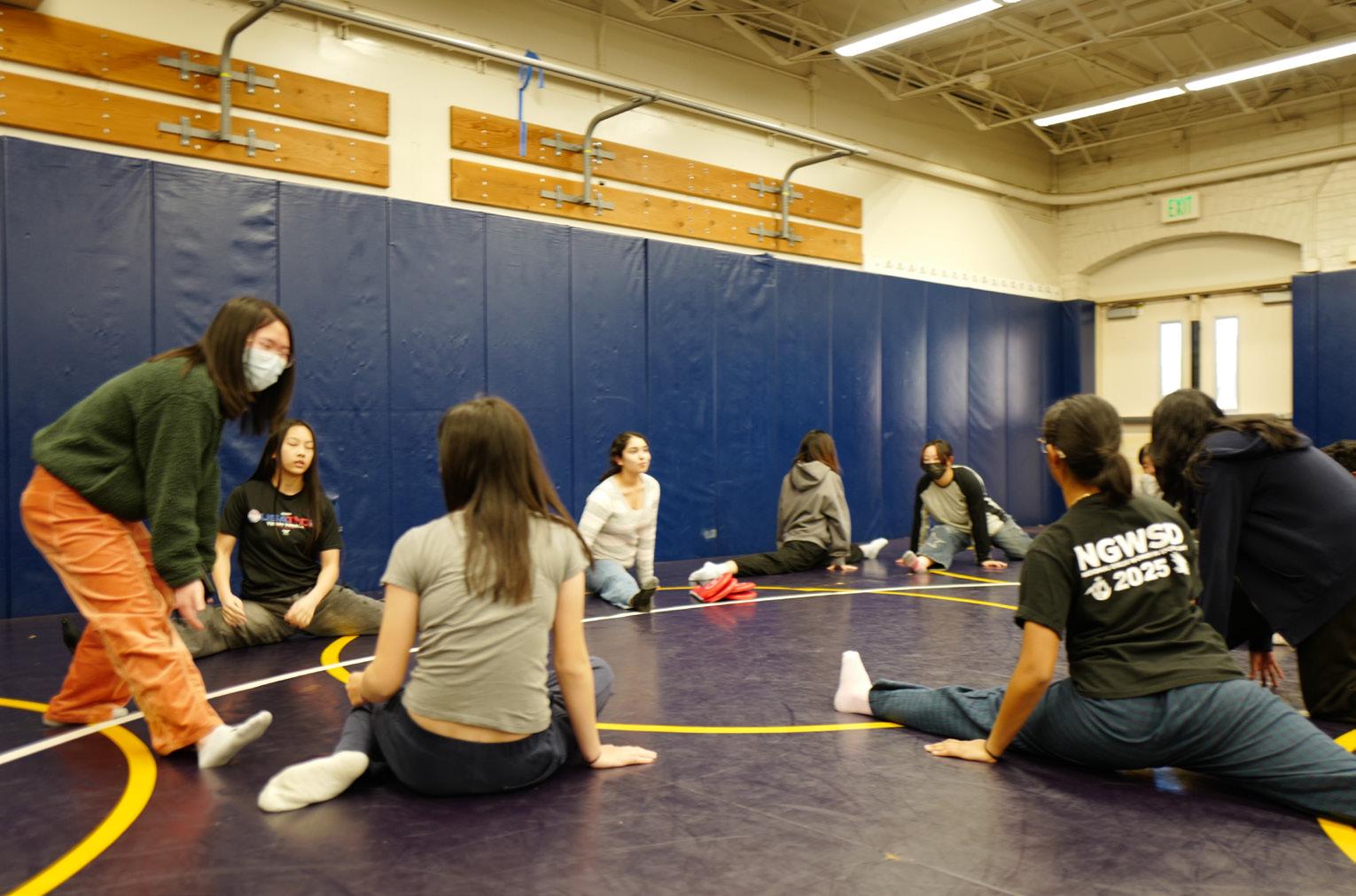

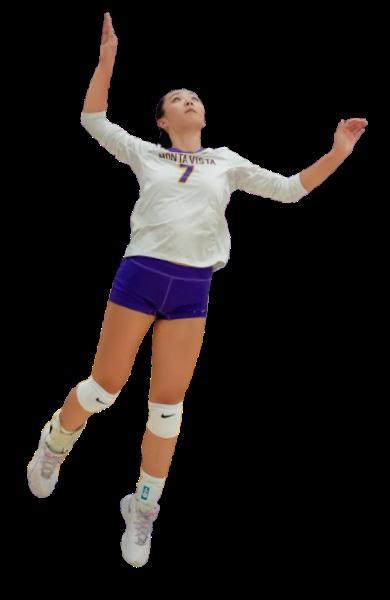
hasing a decade-long goal, senior Chloe Chen committed to play Division III volleyball at Carnegie Mellon University this fall. Chloe, a setter and opposite hitter on the MVHS Girls Varsity Volleyball team, has spent the last nine years of her life working her way up through club and school rosters to earn herself a spot on a collegiate team. As a freshman, she started on the MVHS Junior Varsity team, later moving up to Varsity and eventually leading as a captain for her final two seasons. Chloe grew up watching her sister play volleyball, which initially drew her to the sport. Chloe started taking volleyball lessons when she was 8 years old before joining her first club team when she was 9. Although interested in volleyball, Chloe found cult to commit to training at first, requiring her parents to push her to keep attending practice.
“I think my parents really wanted me to commit to it when I was young,” Chloe said. “They knew that I had the resources and the opportunities to get better and they thought it was something that I could work on long term. They encouraged me, but they would basically force me to go to practices even though I didn’t like it that much at first. But after I met a lot of people on the team and became more familiar with the community, I ended up really liking it, so I continued to pursue it as I got older.”
The sense of community that Chloe felt in her first club became something she’d continue to experience throughout her volleyball journey. From joining the Vision Volleyball Club in San Jose when she
was 11 years old to playing volleyball at Kennedy Middle School, Chloe continued playing for competitive teams before ending up on the MV Girls Varsity Volleyball squad.
“Mixing my middle school friends and volleyball friends made me enjoy it a lot more,” Chloe said. “It made me realize how much I appreciate the community that I found within it. I think I had a similar experience with the community when playing for MVHS.”
Chloe’s mother, Kay Chen, has been a constant presence in her volleyball journey, attending nearly every single game. As one of the driving forces behind Chloe’s early development, Kay noticed Chloe’s interest in watching her sister play back in third grade. She was also the one who first signed her up for lessons and pushed her to stick with it.
“Even back then, she just kind of fell in love with the sport,” Kay said. “She was like: ‘Oh, my dream is to play volleyball in college.’ And of course we didn’t exactly know what that actually meant. It was just like taking one day at a time and then putting in the hard work. And she also had a lot of fun doing it.”
Despite the welcoming community, Chloe’s journey was far from easy, with two serious ankle injuries causing her to be unable to play for much of her first two years in high school. Even then, when she was unable to walk, Kay often found her practicing modified drills at home, doing sets against the walls to keep her skills sharp while she recovered.
“It was kind of demotivating because I saw all my friends practicing and I had to sit on the sidelines,” Chloe said. “But in junior year, when I was able to play a full season, our team did really well. Everyone on the team
got to go to states and our team got a lot closer. Everyone really wanted to work towards a common goal, and everyone was really serious about it. That was a really fun and unique experience.”
Girls Varsity Volleyball Coach Nadia Lan, who coached Chloe during her freshman year on the Junior Varsity team and for her junior and senior year on Varsity, commends Chloe’s diligence and fast recovery from her injuries. Lan’s first impressions of Chloe’s prowess on the court were of her intelligence when it came to volleyball and of her high skill level on the court, often discussing game plans and strategies with her coaches. Moreover, Lan acknowledges Chloe’s dedication to improve, saying that Chloe attended extra practices when o ered and was devoted towards advancing her skills as a hitter.
Lan’s connection with Chloe extends o of the court too — she was able to get closer with Chloe personally due to her friendship with Chloe’s dad, and says that their shared cultural background also draws them closer. Lan says that she is honored whenever Chloe asks her for advice, and has noticed Chloe’s respect for her as a coach.
environment at her volleyball club, where coaches were involved in the commitment process and the majority of players committed to collegiate athletics, served as a motivator for her to be recruited. Being informed of the commitment process by her volleyball club also helped Chloe realize that recruitment was a realistic possibility for her.
and to build a solid foundation when you’re reaching out so coaches know who you are and to have a better first impression that you’re starting so early. Depending on what division you’re trying to commit for, know what to prioritize — your sport or your academics — so that you can commit to the type of school that you’re aiming for.”
“ “ NO MATTER WHEN WINNING OR LOSING, SHE KEEPS HER COMPOSURE, AND THAT’S A VERY IMPORTANT FEATURE OF A GOOD PLAYER AND A GOOD ATHLETE.
In her freshman year, Chloe began connecting with college coaches over email in order to make herself known as a potential recruit, and would send monthly progress updates, including transcripts and test scores. By sophomore year, coaches began attending her tournaments to scout her in person and by junior year she was visiting schools and receiving o ers. After CMU reviewed her junior year grades, they sent her a likely letter, allowing Chloe to o cially commit in July before her senior year.
VOLLEYBALL COACH
NADIA LAN
Chloe begins playing volleyball after seeing her sister play the sport. While she didn't enjoy playing volleyball at first, she grew to like it after she found her place in the community.
Chloe joins her first club team, the Stingray Volleyball Club in San Jose.
Chloe begins playing elevens (for players aged 10 to 11) at Vision Volleyball Club, and has remained with the club since.
Chloe joins the volleyball team at Kennedy Middle School, and plays on it from sixth through eighth grade.
“No matter when winning or losing, she keeps her composure, and that’s a very important feature of a good player and a good athlete,” Lan said. “You need to be able to keep your mental status stable and then be able to react to all kinds of situations.”
Though Chloe has received support and mentorship from Kay and Lan over the course of her volleyball career, the commitment process was ultimately her decision. Chloe says that the
Chloe explains that she was initially attracted to playing at CMU because of the university’s academic rigor, and the warm welcome that others gave her, telling her about their love for the team, coaches and school. When it comes to balancing CMU academics with her volleyball responsibilities, Chloe plans to utilize the discipline and organizational skills that she’s acquired so far to stay on top of her work. For hopeful athletes looking to get recruited, Chloe strongly believes in maintaining relationships with colleges and coaches, and to identify academic and athletic priorities.
“Stay consistent with reaching out to schools and be proactive with it,” Chloe said. “Start as early as you can to make the connections you need,
Chloe joins the Monta Vista Girls Junior Varsity volleyball team; she also begins emailing coaches of collegiate teams with updates on her progression in the sport.
Chloe advances to the Monta Vista Girls Varsity volleyball team, where she serves as a Captain for two years.
Chloe received a collegiate o er from and commits to Carnegie Mellon University. Chen appreciates the academic o erings and sports community at CMU, and has committed to playing D3.
Seniors who have participated in a high school sport for four years reflect on the ways their respective sport has impacted them
BY VAISHNAVI KATUKAM
NAVYA PARVATHANENI
Senior Navya Parvathaneni began playing basketball with her older brother on her elementary school’s courts. Soon after, in middle school, she began playing for a local league called Cupertino Hoops, an experience that set the foundation for her involvement in basketball as she grew older. Although she didn’t make her eighth-grade school team, this setback only motivated her to practice harder and refine her skills, leading her to land a spot on the MVHS Junior Varsity Girls Basketball team her freshman year. Parvathaneni’s main motivation for pursuing basketball in high school was to find a community.
”I just did a bunch of stu to

find a place that I liked,” Parvathaneni said. “I did cross country and I liked the community that came with it, but I didn’t have the time to do both cross country and basketball. I picked basketball. I thought it was the most fun and tight-knit sport for me.”
As the only senior on the varsity team this year, Parvathaneni shares how she was initially sad to see so many of her former teammates, last year’s seniors, leave. With less stress about academics her senior year, she was able to commit more of her time and fully enjoy her last season. Girls Varsity Basketball Coach and English teacher Sara Borelli was instrumental to Parvathaneni’s high school experience, propelling
her to expand her abilities and work better with the team. Now, as Parvathaneni goes o to college, she hopes to continue to play basketball intramurally so she can have fun with the sport, acknowledging how playing for a college or club is a significant commitment.
“I learned a lot of discipline,” Parvathaneni said. “If I played any other sport I wouldn’t be as disciplined because Borelli really pushed us to be on time, to put our all into it. She’s always said, ‘be a necessity not an accessory, to be someone the team needs, not just someone on the team.’”

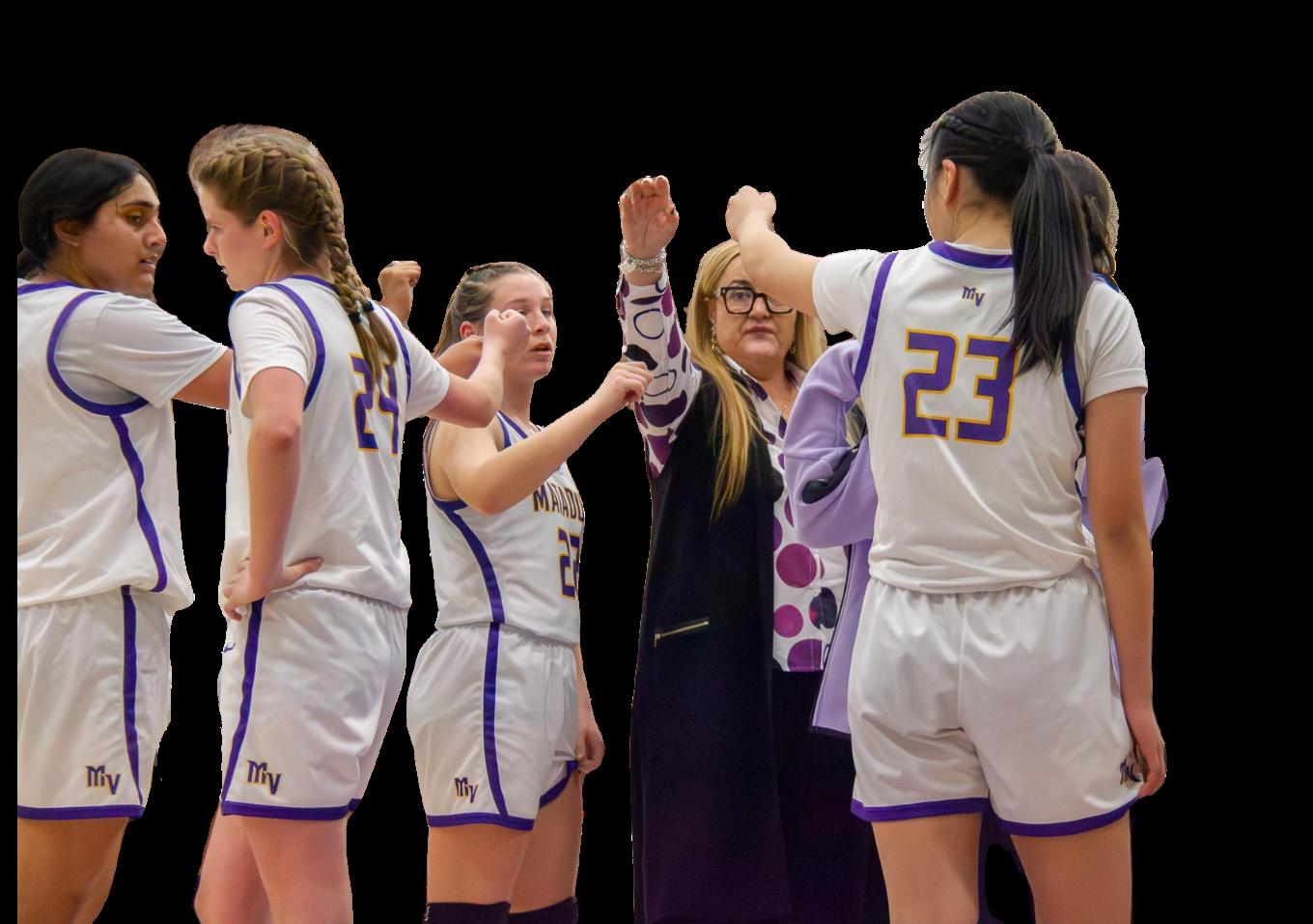
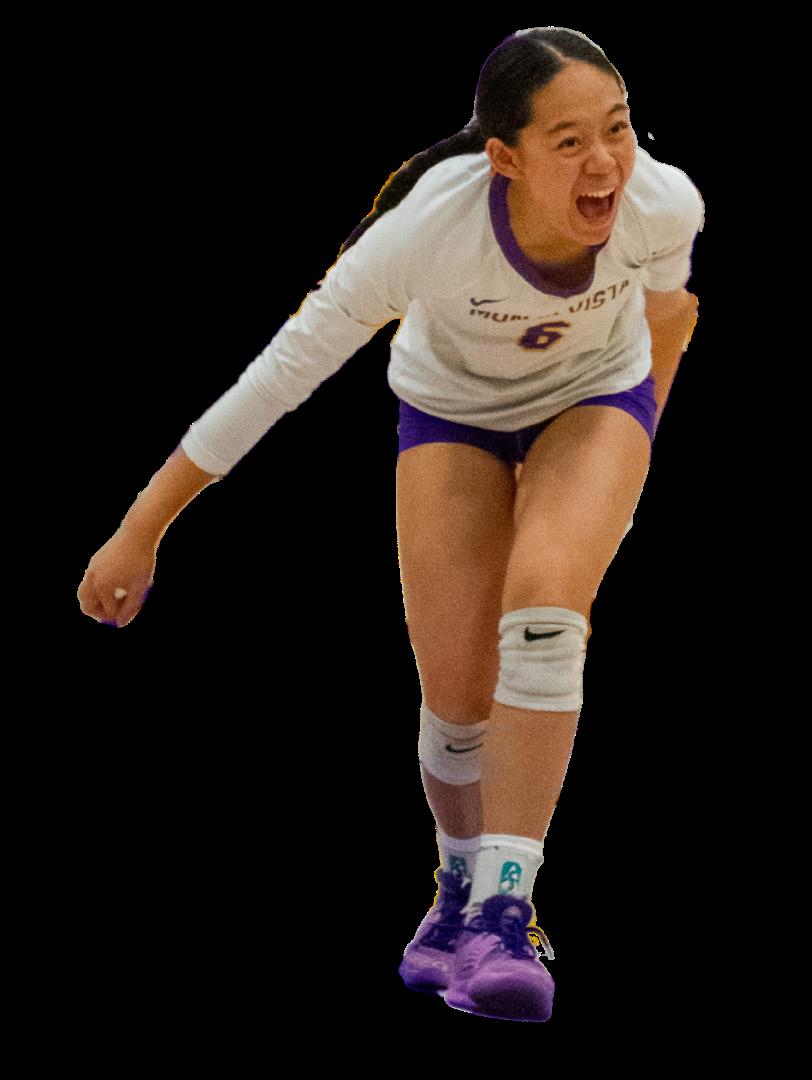
Senior Jocelyn Zou has been playing volleyball since the sixth grade, on both school and club teams. Her elementary school summer camp experience playing volleyball made Zou curious enough to try out for her school team. Being part of both club and school teams keeps Zou on the court yearround and ensures that she constantly works to improve her skills.
“Club volleyball was definitely more competitive and we would travel to go to tournaments,” Zou said. “But in school volleyball our

team was a lot closer, because we would often have class together and practice everyday.”
In Zou’s experience, club volleyball helped her refine and improve her skills, which she could then showcase on the school team. Even with volleyball occupying her time year-round, balancing volleyball with academics hasn’t been a struggle for her. Zou looks back at the moments she got to bond with her team outside of games and practices fondly.
Some of my favorite moments include traveling with my team last year,” Zou said. “We got the opportunity to go to Southern California to play in state championships, which was really cool. Just being able to be there on such a big stage, being able to go to Irvine Spectrum and hang out was really fun.”


Although senior Sara Lele ended up on the water polo team all four years of high school, she initially thought her mother was signing her up for synchronized swimming. She was in eighth grade when she arrived at the class, and was shocked and confused to see people moving around with a ball. Regardless, combining swimming with other skills in a team sport sparked her interest and she began regularly attending classes. She says she was drawn to water polo because she found it more fun being a collaborative sport.
“My favorite moment was making my first goal freshman year because my whole team was celebrating,” Lele said. “My last goal was also amazing because we were behind during that game and it gave us a chance to turn the game around.”
Although Lele looks back at her experience with water polo fondly, playing the sport left her with little free time on her hands. Despite
this, it taught her to study around her schedule, because her time during the season was largely consumed by practices and games. As she heads o to college, Lele plans to focus more on her academics, but is open to being involved with water polo recreationally.
“I had to learn how to manage my time e ectively,” Lele said. “Walk into my house, start studying and not just slack o after practice. Having friends on the team, I was able to connect with them and we were able to support each other academically as well.”

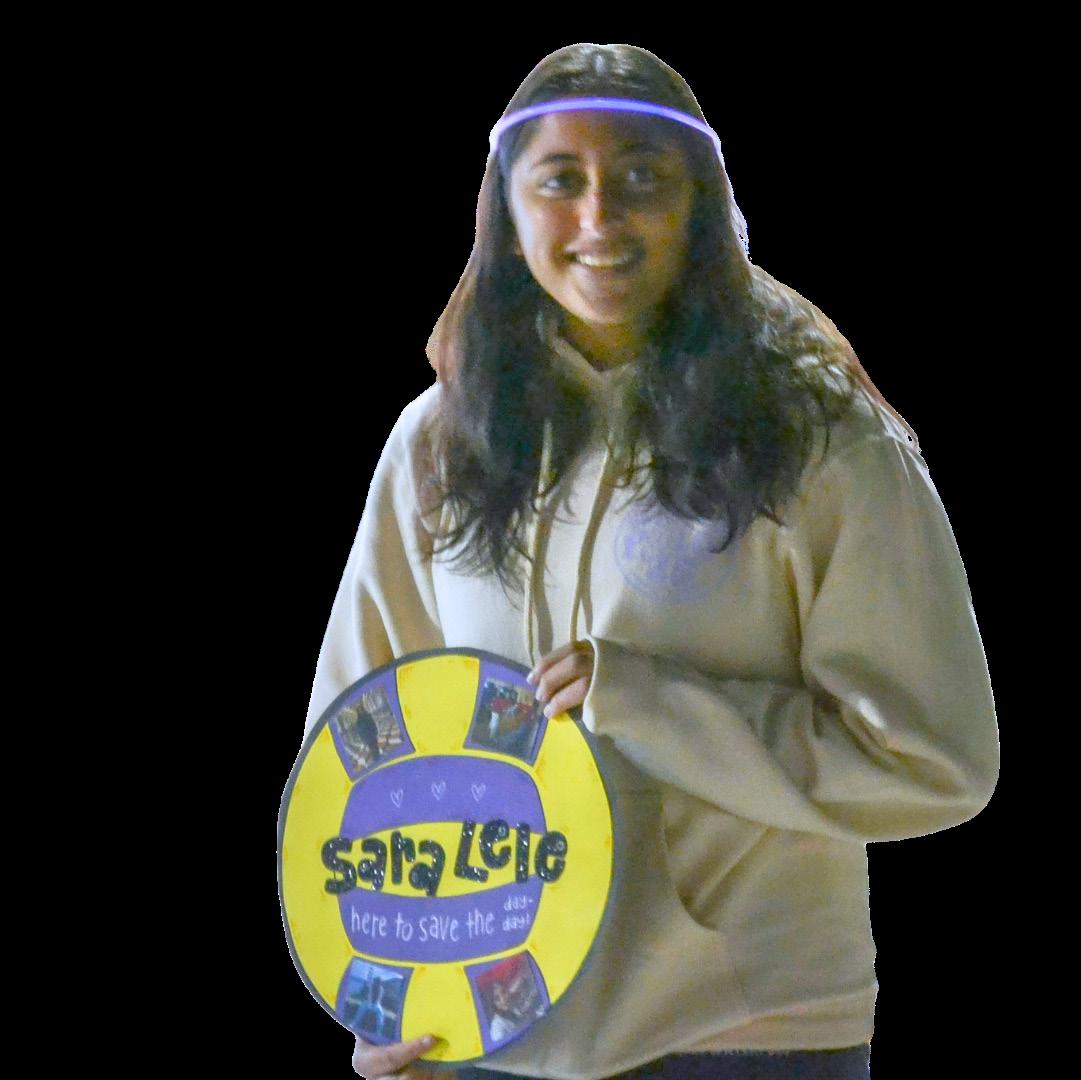
Fast Amtrak train
Score after deuce
Temporary break
“Tiny Bubbles” singer
Houses known as “hop kilns”
To complete
World’s largest coral reef system
Orch. section: Abbr.
Spielberg sci-fi character
T-shirt size: Abbr.
Portal ____ (pg. 16-17)
Grade _______ (pg. 24)
National Aviation Academy: Abbr.
Early action: Abbr.
Last name of “Diet Pepsi” singer
What gets the worm
Referring to public image
Golfer ____ Palmer, to fans
Artifact
State north of Calif.
Sister’s daughter
That is, in Latin
Media type attributed to the depletion of creative majors
One who inspects a location prior to a crime
“At Last” singer ______ James
Desire
“__ It Was” by Harry Styles
Postcard essential: Abbr.
Way out
Light switch position
Hesitant sound
Honors program that MVHS alum ‘25 Kaia Yuan attends (pg. 12-13)
Doesn’t share
To improve
Of the heart’s upper chamber U.N. workers’ grp. Frittata ingredient
Cape Town, _____: Abbr.

Natural log in math: Abbr. Apprentice
Another way of saying no Mythical winged beings
What a telephone does What you might call someone hilarious
Biblical garden where Eve took the forbidden fruit
Super cool
Research nonprofit located in Cairo: Abbr.
Equals three feet
____ Van de Kamp from “Desperate Housewives” Per the jingle, order of vowels only after C French definite article (masculine)
slang to grab one’s
PLATINUM SPONSORS: Syed Askari
Raza Baqar, Avik Basu, Yan Cen, Lili Chen, Jake Dutton, Bhaskar Katukam, Anoushka Nadkarni, Dinesh Nettar, Purneet Thapliyal, Sandy Wang, Jie Yao
GOLD SPONSORS: Fazia Batool, Jane Bugarin, Ting Chen, Jignesh Desai, Saritha Koduri, Isabelle Kok, Renuka Nadkarni, Naren Nayak, Dinesh Prabhu, Anusha Sai, Caibing Wang, Freda Wong
SILVER SPONSORS: Danny Choi, Tyler Enderwick, Sudeshna Saha, Le Zhai


S. KARKHANIS & A. RUPANAGUNTA: If the answers are just out of sight, scan this QR code to find the light!