
EMPOWERING TEACHERS AND YOUNG ENTREPRENEURS
How STARTedUP is transforming education and inspiring innovation in Indiana

Your well could lower your heating and cooling costs.
If your home has a well, you may be halfway to a geothermal HVAC system.
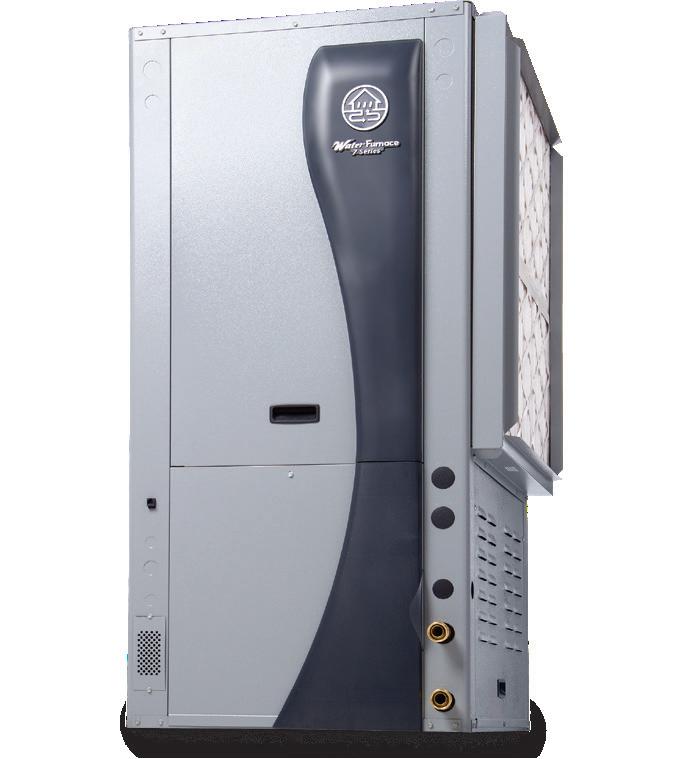
Your water well can make switching to a WaterFurnace geothermal heating and cooling system easier and more affordable. An existing well can often serve as part of the geothermal loop field, reducing installation timelines and costs. WaterFurnace delivers:
• Steady, year-round heating and cooling that’s twice as efficient and lasts 40% longer than traditional HVAC
• Savings of up to 70% on home energy costs
• Long-lasting HVAC system that adds home value Contact your local WaterFurnace dealer to schedule a no-pressure home assessment for a personalized estimate.
Contact Your Local WaterFurnace Dealer
Delphi
Blue Fox Htg & Clg (765) 822-2200 bluefoxhvac.com
Farmersburg
Heady Htg & Clg (812) 696-2396
Flora
Camflo Htg & Clg (574) 967-4200 camfloheatingandcooling.com
Fort Wayne
Masters Htg & Clg, Inc. (866) 824-4328 mastersingeothermal.com
Greensburg Wallpe Htg & Clg (812) 663-7252 wallpegeothermal.com
Indianapolis Masters Htg & Clg by Van Valer, Inc. (317) 881-9074 mastersingeothermal.com
Jasper Hulsman Refrigeration, Inc. (812) 634-1492 hulsmanrefrigeration.com
Laotto T&T Plbg, Htg, A/C & Geothermal (260) 200-4003 tt-ph.com
Lebanon Blue Fox Htg & Clg (765) 859-0880 bluefoxhvac.com
Nappanee Crist Plbg, Htg, Electrical (574) 831-4630 cristnappanee.com
North Manchester Mars Refrigeration, LLC (260) 901-0057
North Vernon Air One Htg & Clg, Inc. (888) 346-1790 aironehvac.com
Ossian Collier’s Comfort Services (260) 622-6622 collierscomfort.com
Warsaw Colliers Htg & Air Conditioning (574) 203-2492 trustcolliers.com
Waterloo Gibson’s Htg & Plbg, Inc. (888) 754-1668 gibsonsgeothermal.com
Westfield Precision Comfort Systems, Inc. (317) 867-2665 precisioncomfort.com
West Lafayette Blue Fox Htg & Clg (765) 252-0051 bluefoxhvac.com

VOLUME 75 | NUMBER 12
ISSN 0745-4651 | USPS 262-340
Published monthly by
INDIANA ELECTRIC COOPERATIVES
Indiana Connection is for and about members of Indiana’s locally-owned, not-for-profit electric cooperatives. It helps consumers use electricity safely and efficiently; understand energy issues; connect with their co-op; and celebrate life in Indiana. Over 300,000 residents and businesses receive the magazine as part of their electric co-op membership. The average printed and mailed cost per issue is 54 cents.
CONTACT US
11805 Pennsylvania Street Carmel, IN 46032 317-487-2220 | info@indianaconnection.org IndianaConnection.org
INDIANA ELECTRIC COOPERATIVES OFFICERS
Dr. Richard Leeper President Jamey Marcum Vice President
Melissa Menchhofer Secretary/Treasurer John Cassady CEO
EDITORIAL STAFF
Britt Davis Editor
Mandy Barth Vice President of Communication and Member Engagement
Lauren Carman Director of Events, Engagement, and Communication
Ashley Curry Production and Design Coordinator
Holly Huffman Communication Support Specialist
Amber Knight Creative Manager Kiley Lipps Graphic Designer
UNSOLICITED MATERIAL
Indiana Connection does not use unsolicited freelance manuscripts or photographs and assumes no responsibility for the safekeeping or return of unsolicited material.
SUBSCRIPTIONS
$12 a year for individuals not subscribing through participating REMCs/RECs.
CHANGE OF ADDRESS
If you receive Indiana Connection through your electric co-op membership, report address changes to your local co-op.
POSTAGE
Periodicals postage paid at Indianapolis, Indiana, and at additional mailing offices.
POSTMASTER
Send change of address to: Indiana Connection
11805 Pennsylvania Street, Carmel, IN 46032 Include key number.
No portion of Indiana Connection may be reproduced without permission of the editor.
FOLLOW US ON SOCIAL MEDIA
Award-winning stories
In April, the Indiana Professional Chapter of the Society of Professional Journalists (SPJ) held its annual Best of Indiana Journalism Awards. Indiana Connection was honored with three awards. We received second place in Best Magazine Features Writing for our November feature on Pets Healing Vets, and both first and third place in Best Magazine Personality Profile. Our April feature on Ernie Pyle took third place, while our August feature on Human Rocket Skyler Miser earned first place.
The Journal Gazette, and Terre Haute’s Tribune-Star.
Brian D. Smith, the author of these three stories, is a talented writer with decades of experience. Brian always uncovers little gems in his interviews, and the way he crafts his sentences elevates his stories. We are fortunate to have him on our team.


I’m honored to be recognized by such a prestigious organization and to be included alongside other talented Indiana media outlets, including Indianapolis Monthly, the Indianapolis Star, Fort Wayne’s
Each month, we strive to create engaging articles that showcase something remarkable in the Hoosier State. These three stories are prime examples. We don’t produce our magazine to win awards, but as a competitive person, I can’t say the recognition isn’t appreciated. These awards are a testament to the work our team does every day, and I’m sincerely proud of it.
BRITT DAVIS | editor bdavis@indianaec.org
EMAIL: info@indianaconnectin.org
WEB: indianaconnection.org (fill out forms)
MAIL: 11805 Pennsylvania Street, Carmel, Indiana 46032
ON THE MENU: Submit your favorite recipes featuring apples, deadline July 1. If we publish your recipe on our food pages, we’ll send you a $10 gift card.
GIVEAWAY: Enter to win a gift basket courtesy of Wilson's Farm Market. Visit indianaconnection.org/talk-to-us/contests or send your contact information to our office address. The deadline to enter is June 30.
Skyler Miser joins the family business as the Human Rocket for Ringling Bros. Circus



THE COVER: The STARTedUP Challenge is the nation’s premier high school entrepreneurial pitch competition. The 2024 winner, Caseflood.ai, was launched by Ethan Hilton, Tolen Schreid, and Emily Rudolph of Evansville and is a multilingual AI receptionist for lawyers, designed to effectively qualify potential clients. Learn more about STARTedUP and the innovative students who were part of the program in this month’s cover story.

Travel worry-free this summer
Traveling can be one of life’s greatest joys, offering new experiences and unforgettable memories. Ensuring your health and safety while on vacation makes for a stress-free adventure. Whether you’re jet-setting to a tropical paradise or embarking on a classic road trip, being prepared for potential health risks and safety concerns is essential. Read on for tips on how to effectively plan before you go, protect your home while you’re away, and stay safe during your travels.
A survival guide to safe and healthy travel
Wherever your travels may take you, be prepared when it comes to your health before and during travel with these tips from the U.S. Centers for Disease Control and Prevention (CDC).
BEFORE YOU GO
Check your destination for countryspecific health risks and safety concerns. You should also know your health status before you make travel plans. When you are sick, you can spread diseases to others. Postpone your travel and stay home if you are sick.

Make an appointment with your health care provider to get destination-specific vaccines, medicines, and advice at least a month before you leave. Discuss your itinerary and planned activities with your provider so they can make customized recommendations to ensure a healthy, safe journey.
Plan for unexpected health and travel issues. Find out if your health insurance covers medical
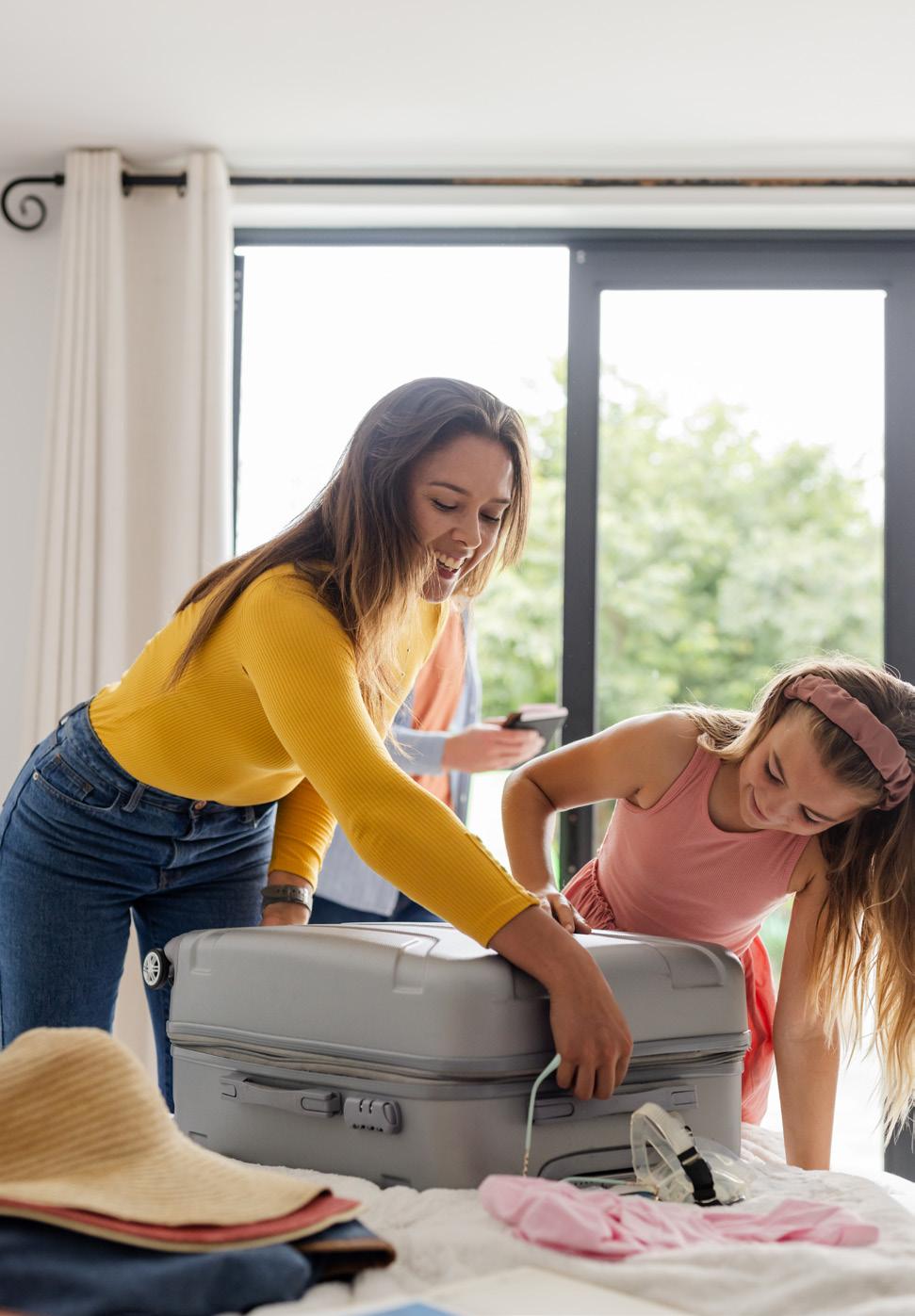
care abroad — many plans don’t! Make sure you have a plan to get care overseas, in case you need it. Consider buying travel insurance that covers health care and emergency evacuation, especially if you will be traveling to remote areas.
Prepare for emergencies. Leave copies of important travel documents, such as itinerary, contact information, credit cards, and passport, with someone at home, in case you lose them during travel. Make sure someone at home knows how to reach you in an emergency, and always carry your emergency contacts with you.
Monitor travel warnings for your destination. Enrolling also ensures that the U.S. Department of State knows where you are if you have serious legal, medical, or financial difficulties while traveling. In the event of an emergency at home, STEP can also help friends and family contact you.

Register with the Department of State’s Smart Traveler Enrollment Program (STEP).
Pack smart. Prepare a travel health kit with items you may need, especially those that are difficult to find on your trip. Fill your travel health kit with your prescriptions and over-the-counter medicines (enough to last your whole trip, plus a little extra), a first aid kit, insect repellent, sunscreen (SPF 15 or higher), aloe, alcohol-based hand sanitizer, water disinfection tablets, and your health insurance card.
DURING YOUR TRIP
Choose safe transportation. Always wear a seat belt, and children should ride in car seats. Motor vehicle crashes are the leading cause of death among healthy travelers. Be alert when crossing the street, especially in countries where people drive on the left.
Avoid bug bites. Use insect repellent and take other steps to avoid bug bites. Bugs, including mosquitoes, ticks, and fleas, can spread diseases such as malaria, yellow fever, Zika, dengue, chikungunya, and Lyme. These bugs are typically more active during warm weather.
Choose safe food and drinks. Contaminated food or drinks can cause travelers’ diarrhea and other illnesses. Travelers to low or middleincome destinations are especially at risk. Generally, foods served hot are usually safe to eat, as well as dry and packaged foods. Bottled, canned, and hot drinks are usually safe to drink.
Protect yourself from the sun. Apply sunscreen with SPF 15 or higher when traveling. Protecting yourself from the sun isn’t just for tropical beaches. You can get a sunburn even if it’s cloudy or cold. You are at the highest risk for UV exposure when you are traveling during summer months, near the equator, at high altitudes, or between 10 a.m. and 4 p.m.
Wash your hands. Regular handwashing is one of the best ways to remove germs, avoid getting sick, and prevent the spread of germs to others. Wash your hands with soap and water. If soap and water are not available, use hand sanitizer containing at least 60% alcohol.
Be safe around animals. Avoid animals, including pets, farm animals, and wildlife. In addition to the risk of rabies, all animal bites carry a risk of bacterial infection.
Be careful during water activities. Drowning is a major cause of death when traveling. Follow water safety recommendations, including while swimming, boating, and diving, especially in countries where emergency services may not be readily available.


Keep your home safe while on vacation
Planning a vacation is exciting, but it can also raise concerns about leaving your home. A little preparation can go a long way in ensuring that your home remains safe and secure while you’re away. Here are six tips to help keep your home safe while you enjoy some time off:
SECURE YOUR DOORS AND WINDOWS
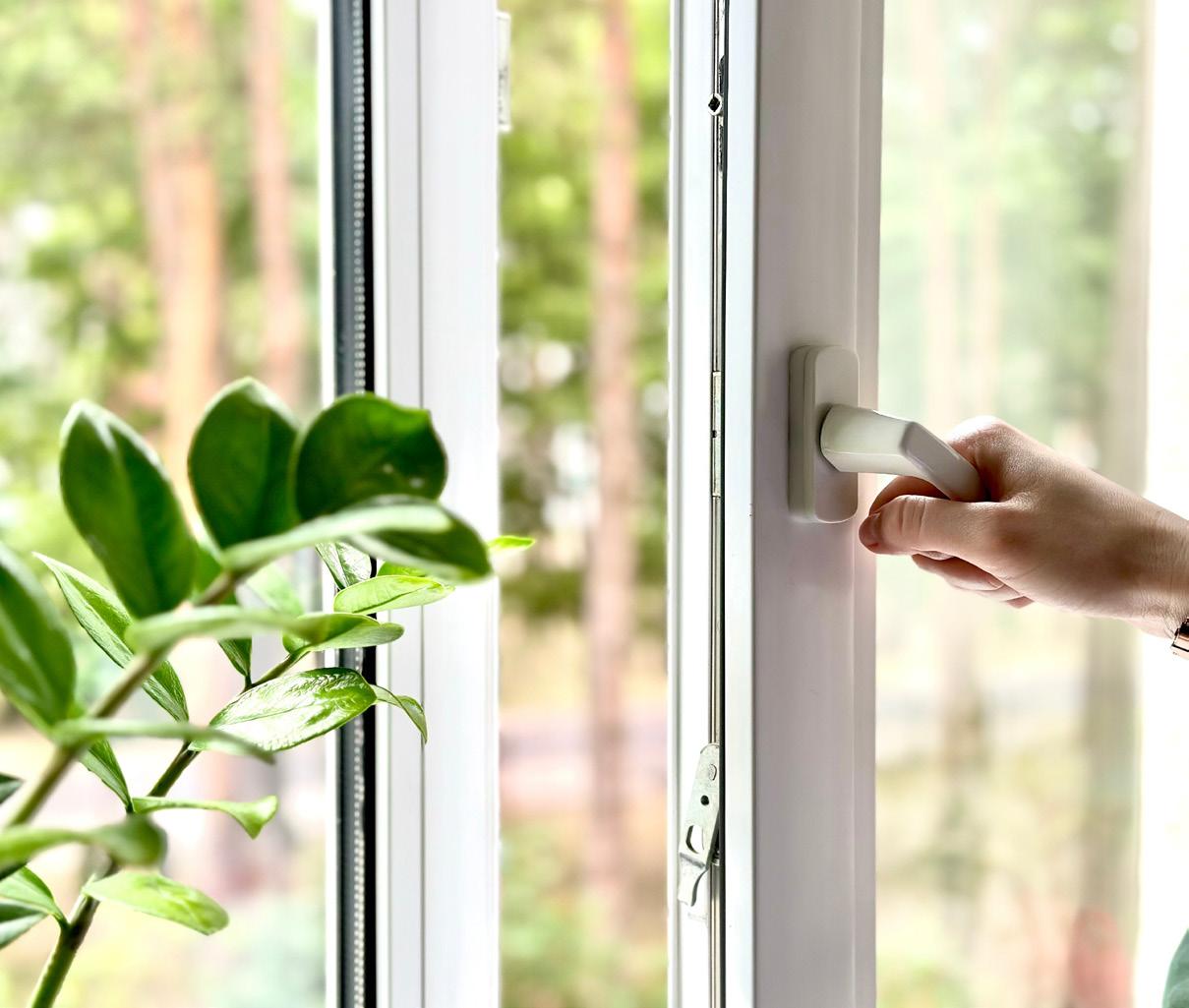
Before leaving, double-check that all doors and windows are locked securely. This includes sliding doors and any basement windows. Consider installing deadbolts or additional security measures for added protection. Make sure that any spare keys are removed from under mats or fake rocks, as intruders often know these common hiding spots.
INSTALL SMART HOME DEVICES
Smart home technology offers peace of mind while you’re on vacation. Consider investing in smart security

cameras, motion-detecting lights, or a smart doorbell to monitor activity around your home from your smartphone. These devices can deter intruders and provide real-time alerts if unusual activity is detected.
NOTIFY A TRUSTED NEIGHBOR
Let a trusted neighbor know that you will be away and ask them to keep an eye on your property. They can collect your mail, adjust outdoor lights, and even park their car in your driveway occasionally, which can help create the illusion that someone is home. Provide them with your contact information in case they notice anything suspicious.
HOLD YOUR MAIL AND NEWSPAPER DELIVERY
An overflowing mailbox or piles of newspapers can signal to potential burglars that you’re not home. Consider requesting a hold on your mail through the postal service and pausing any newspaper deliveries while you’re away. This step will help prevent any obvious signs that your home is unoccupied.
USE TIMER LIGHTS
To make it look like someone is home, use timer switches for your indoor and outdoor lights. Program them to turn on and off at various intervals in the evening. This simple trick can create the illusion of occupancy and deter potential intruders who may be watching your home.
REMOVE VALUABLES FROM SIGHT
Do not leave valuable items visible from windows. This includes electronics, jewelry, or anything else that might attract attention. Consider using a safe for important documents and smaller valuables. Also, be mindful of what you share on social media. Announcing your vacation plans publicly can alert potential thieves that your home will be empty. By taking these precautions, you can enjoy your vacation with the peace of mind that your home is secure. With a bit of planning and a few simple measures, you can focus on making beautiful memories without worrying about what’s happening at home.
Stay safe around water and electricity
BY CHRIS ADAM
Summer means more time at pools, lakes, and rivers, but with that comes a risk many people don’t think about — electricity around water. Whether at home or on a boat, electrical safety should always be part of your plans.
POOLS AND SPAS
Electrical devices should never be near pools. Keep fans, speakers, and other appliances away from the water. Use battery-powered or waterproof equipment instead.
If someone feels a stinging or tingling sensation in the water, it may indicate electricity is present. Do not enter the pool to help. Instead, shut off the power and use a non-metal shepherd’s hook to pull the person to safety.
Before using long-handled pool equipment, always check for nearby power lines. Pools and hot tubs should be at least 25 feet away from overhead lines.
LAKES AND RIVERS
Avoid using extension cords near the shoreline or docks. Never swim near boats connected to shore power or near docks with electrical services. Faulty wiring can leak electricity into the water, causing paralysis and drowning.
If you notice tingling while swimming, exit the water quickly
but do not touch ladders or other metal objects. If someone is shocked in the water, do not jump in after them. Turn off the power source and use an insulated object to assist from land. Call 911 immediately.
BOATING SAFETY
Boaters should always know where power lines are located. Use caution when raising masts or fishing poles to avoid accidental contact. When docking, enlist someone to guide the boat and ensure it remains at least 10 feet from power lines.
Boats should be equipped with ground fault circuit interrupters (GFCIs) and equipment leakage circuit interrupters (ELCIs). Portable GFCIs used near water should be labeled “UL-Marine Listed” and tested monthly.
To ensure safety, have your boat’s electrical system inspected by a certified marine electrician. Wiring should meet local and state codes, and all connections should be secured in a panel box.
Sources: Electrical Safety Foundation International, U.S. Coast Guard

Optimize electricity use to enhance grid reliability and maximize renewable energy
Not all electric generation resources are created equal, and our electric grid uses a variety of resources to help memberconsumers enjoy electricity’s benefits. Electricity is not produced the same way at all hours of the day. The types of generation resources used, and how easy or difficult it is to meet demand, change over time.
THE FLOW OF DEMAND
During overnight hours, when most people are asleep, demand is low, and electricity can often be supplied by steady, efficient power plants that run continuously. As the day begins and businesses and homes start using more electricity, additional resources are needed to keep up. By late afternoon and early evening, when lights and appliances are all running at once, demand is highest. At these times, utilities may need to bring on additional or less efficient
generation resources just to meet that demand. Exact hours may vary depending on location and season, but this daily pattern is consistent across most electric grids.
SHIFTING USE
How and when electricity is used plays an important role in maintaining a reliable grid. When many people use electricity simultaneously, the system experiences greater strain and requires more resources to respond.
Members who can shift “flexible use”, things like laundry, dishwashing, or charging an electric vehicle, to times when demand is lower, help balance the system. This reduces stress on transformers and power lines, limits the need for backup generation, and helps maintain reliability, especially during extreme weather when the system is under the most pressure.
Using electricity at different times of the day can also take advantage of available energy resources. Wind energy is often more available overnight, while solar energy is strongest in the middle of the day. Aligning electricity use with these times allows more of that energy to be used when it is naturally being produced.
THE RIGHT ADJUSTMENT FOR EACH HOUSEHOLD
Small shifts in when electricity is used can make a noticeable difference. Even slight adjustments to routines can help distribute demand more evenly throughout the day, making it easier for the system to operate efficiently. That said, not every household has the same flexibility. Members who are home during peak demand periods, rely heavily on heating or cooling, or have fixed schedules may have fewer options to shift their use. For this reason, many cooperatives offer flexible programs, guidance, and accommodations to meet diverse needs.

Blake Kleaving Manager of Member Solutions Hoosier Energy
Turning coffee into community
BY STEPHANIE BERNABA
Most gas stations have their regulars, but few inspire the kind of loyalty The Filling Station Coffee Haus in Berne has earned since its opening seven years ago.
When Mike and Lara Collette opened the shop along U.S. 27 North in the fall of 2019, they traded petroleum for pour-overs and turned a roadside relic into a local gathering place. Five years and one ownership change later, their community has only grown.
Since the current owners, Eric, Logan, and Brad Jutte, took over in May 2025, the shop has maintained its original spirit while quietly expanding its offerings. The core menu remains, but the Jutte’s team has added monthly featured drinks, dirty sodas, cheeseburgers, and a more extensive selection of baked goods.
“We make all our food as it’s ordered, so it’s fresh for everybody,” said Manager Dinelle Crous.
A RANGE OF FLAVORS
The Filling Station’s coffee is sourced exclusively from Hemisphere Coffee Roasters in Mechanicsburg, Ohio. The shop carries a house roast along with flavored beans. Blueberry, a customer favorite, is served on Tuesdays and Thursdays, and bags of patrons’ favorite blends are available

for purchase to brew at home. Bestselling drinks include the Mocha Miracle and Chai Latte.
Featured drinks rotate monthly and are developed in conjunction with the cafe’s staff.
“We get a lot of employee input on what they think would work as well as our customers,” Crous said. “If they come through and say, ‘I want to try these flavors together,’ and we make it, and it’s good, we put it on the menu.”
FOOD FOR EVERYONE
The Filling Station also serves Lotus Energy drinks, a plantbased energy syrup mixed with club soda and flavoring of the customer’s choice. For those with dietary restrictions, the shop offers gluten-free buns, a gluten-free snickerdoodle cookie, and dairy-free milk alternatives, including almond, oat, and coconut. The shop is also working to add gluten-free wraps.

The chicken bacon ranch wrap, chicken salad croissant, and strawberry chicken salad are consistent bestsellers. Parties of all ages, from students to seniors to church groups, gather regularly at The Filling Station. The cafe is busiest daily between 11 a.m. and 2 p.m.
Online and phone-in ordering are both available, and DoorDash delivery will be available soon.
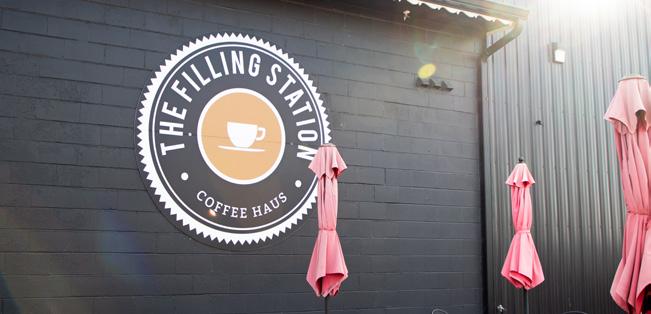
The Filling Station Coffee Haus 524 U.S. Highway 27 N., Berne, IN 46711 260-223-4885 thefillingstationcoffeehaus.com
Open Monday through Friday, 6 a.m. to 6 p.m.; Saturday, 7 a.m. to 4 p.m. (The kitchen closes at 2 p.m.)
THE FILLING STATION COFFEE HAUS BREWS CONNECTION IN BERNE
PHOTOS COURTESY OF
Marion County
BY NICOLE THOMAS
Marion County is the most populous county in Indiana and the birthplace of several wellknown figures, including author Kurt Vonnegut, television host David Letterman, and actor Brendan Fraser. Unlike many Midwestern cities built on a grid, Indianapolis has diagonal streets that spread out from Monument Circle. When the city was planned in 1821, designers drew inspiration from Washington, D.C., and created a circular center with avenues radiating outward. Streets like Massachusetts Avenue and Virginia Avenue still cut diagonally through downtown today.
‘THE GREATEST SPECTACLE IN RACING’
Six miles west of downtown Indianapolis is the Indianapolis Motor Speedway, the world’s largestcapacity sports venue with nearly 260,000 permanent seats. When it opened in 1909, the track was made of crushed stone and tar, but it quickly wore down during races. The surface was then replaced with more than 3 million bricks, earning the track its nickname, “The Brickyard.”


The first Indianapolis 500 in 1911 saw cars averaging 74 mph. Today, the Memorial Day weekend tradition is one of the world’s most recognized races with speeds exceeding 230 mph.
NATURE IN CIRCLE CITY
Eagle Creek Park is one of the largest municipal parks in the United States, covering more than 3,900 acres on the northwest side of Indianapolis. It is one of the most visited attractions in Indiana, with more than 1 million visitors each year. Established in 1962, the park’s reservoir was designed to manage flooding, supply drinking water, and offer recreational activities. Now, visitors can sail, kayak, and fish across Eagle Creek Park’s more than 1,400 acres of water. The park also features miles of hiking and biking trails, a nature center, and bird-watching areas.
IMAGINATION UNLEASHED
The Children’s Museum of Indianapolis is the largest children’s museum in the world, welcoming more than 1 million visitors each year. Founded in 1925, the museum features interactive exhibits on

science, history, art, and culture. Its permanent experiences include the “Dinosphere,” an immersive exhibit with fossils and life-size dinosaur replicas, and “Beyond Spaceship Earth,” a full-scale replica of the International Space Station. The museum also houses Fireworks of Glass, a four-story blown-glass sculpture by artist Dale Chihuly, created in 2006.
COUNTY FACTS
FOUNDED: 1822
NAMED FOR: Francis Marion, a brigadier general in the American Revolutionary War
POPULATION: 977,203
COUNTY SEAT: Indianapolis
INDIANA COUNTY NUMBER: 49
PHOTO COURTESY OF RYAN MCGRADY
PHOTO COURTESY OF DAVE ELLIS
PHOTO COURTESY OF SARAH STIERCH

EVENT GUIDE
HUNTINGTON HERITAGE DAYS
June 10-14
Huntington | Downtown huntington-chamber.com
Huntington Heritage Days is an action-packed festival featuring a carnival, hot-air balloon launches at Huntington North High School, two car shows, a kids’ zone, entertainment, a parade, and more. JeFFFest, an outdoor art festival on Sunday evening, features fun food, fab music, and fine art. Free admission.
TERRE HAUTE STRAWBERRY FESTIVAL
June 11
Terre Haute | Downtown terrehaute.com
The Terre Haute Strawberry Festival, hosted by First Congregational Church, features live music, kids’ activities, guided stained-glass tours, and tasty treats. Celebrate summer in historic downtown Terre Haute with community, flavor, and fun! Free admission.
4
5 3
NORTH WEBSTER MERMAID FESTIVAL
June 17-20
North Webster | Lions Club Festival Grounds nwlionsclub.com
The Gem Mineral Fossil Show offers a wide variety of gems, minerals, fossils, rocks, jewelry, beads, lapidary supplies, 4-H, and science materials from all over the world. Displays from Florida, Georgia, Illinois, Michigan, North Carolina, New York, Ohio, Oklahoma, Pennsylvania, and Texas make it fun, interesting, and educational for all ages. Free identification of your rocks. Free admission. 1 2
The North Webster Mermaid Festival features a Queen of Lakes pageant, a Cutie King and Queen contest, and a Cutie Parade, offering over $30,000 in scholarships. Amusement rides, demolition derby, tasty food, vendors, and a big parade are also part of the festival. Free admission.
THE 35TH ANNUAL JOHNSON COUNTY ANTIQUE MACHINERY SHOW
June 18-20
Edinburgh | Johnson County Park jcamach.org
The Johnson County Antique Machinery Show showcases lesser-known classic tractors and equipment, along with gas- and oil-field engines. There will be an antique tractor pull on Friday, with an auction and farm tractor and semi pulls on Saturday. Other activities include a kids’ scavenger hunt, a parade, steam engines, sawmill demos, blacksmithing, a flea market, and food. Admission is $5.
THE 61ST ANNUAL GEM MINERAL FOSSIL SHOW
June 26-28
Bedford | Lawrence County Fairgrounds lawrencecountyrockclub.org

FRESH AND FULL OF FLAVOR
Tasty salad recipes to brighten your table this summer
Southwest chicken salad
JOE SQUIER, CORYDON
1 lb. boneless skinless chicken breasts
1 packet fajita seasoning
1 head of iceberg lettuce, rinsed and chopped
1 can (15 oz) black beans, drained and rinsed
1 can (15 oz) whole kernel corn, drained
12-15 grape tomatoes, halved
1 medium red onion, thinly sliced and quartered
1 avocado, sliced
About 1/4-cup chipotle ranch dressing, plus more to taste
3/4-cup Colby Jack cheese, shredded
Tortilla chips or Fritos corn chips, coarsely crushed
FOR GARNISH:
Sour cream
Sliced jalapenos
Place the chicken breasts in a plastic gallon storage bag and toss with fajita seasoning. Grill the chicken. While the chicken is cooking, combine the lettuce, black beans, corn, grape tomatoes, avocado, and red onion. Be sure to rinse the black beans about three to four times to remove the liquid from the canning. Once the chicken is done, let it rest about five to 10 minutes after removing it from the grill. Slice the chicken into strips about 1/4 to 1/2 inch wide, slicing across the grain. Add it to the salad, then add the shredded cheese. Add about a 1/4-cup of the chipotle ranch dressing to the salad and toss to mix all the ingredients. Add the tortilla chips or corn chips and toss gently. Serve with sour cream, additional dressing, and sliced jalapenos as desired.

Simple honey
lime fruit salad
LAURA GARZA, BEECH GROVE
4 cups strawberries, halved
3 kiwi fruits, peeled and sliced into half moons
3 cups blueberries
3 Granny Smith apples, cubed
1 cup green grapes, halved
1/2 fresh pineapple, peeled and cubed
1/3 cup honey
1/3 cup lime juice
2 Tbsp minced fresh mint
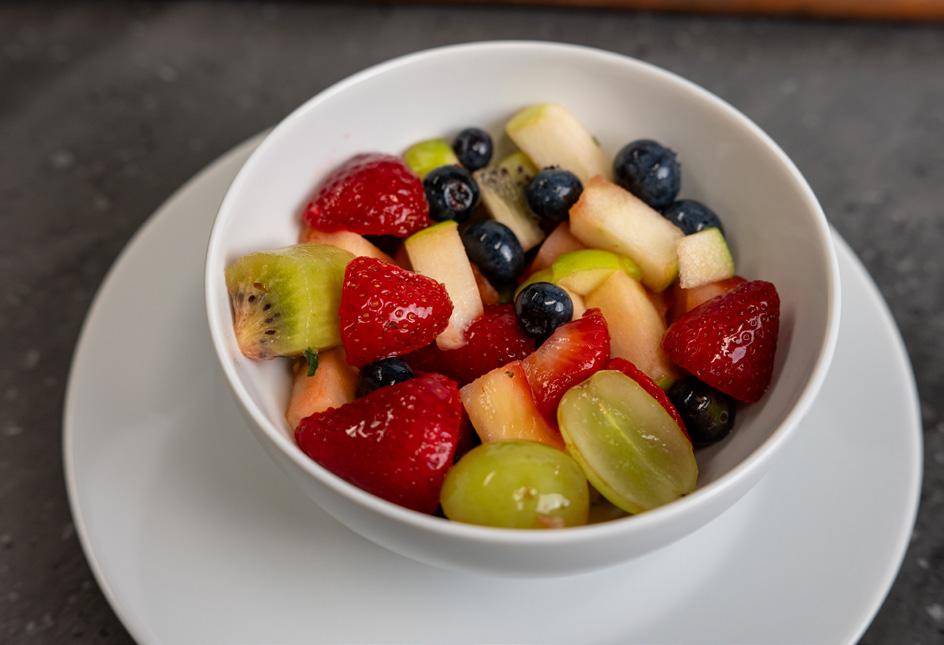
Combine all the fruit ingredients in a large bowl and mix thoroughly. In a small bowl, whisk together lime juice, honey, and mint. Pour the dressing over the fruit and toss to coat.
Honey mustard brussels sprouts salad
SHIRLEY DOWELL, NORTH VERNON
1 lb. fresh Brussels sprouts, trimmed and shredded
2 medium Granny Smith apples, chopped
1 medium red onion, chopped
1 medium yellow or orange bell pepper, chopped
1/2 cup walnuts, chopped
1/2 cup grapes, sliced in half
1/2 cup cheddar cheese, shredded
3 strips of bacon, cooked and crumbled
1/4 cup olive oil
2 Tbsp red wine vinegar
2 Tbsp honey mustard dressing
1 garlic clove, minced
1/4 tsp salt
1/4 tsp pepper
In a small bowl, whisk together the olive oil, red wine vinegar, honey mustard dressing, garlic, salt, and pepper. In a large bowl, combine the Brussels sprouts, apples, onion, bell pepper, walnuts, grapes, cheddar cheese, and bacon. Pour the dressing mixture from the small bowl over the mixed salad in the large bowl and toss to coat. Refrigerate or serve immediately.

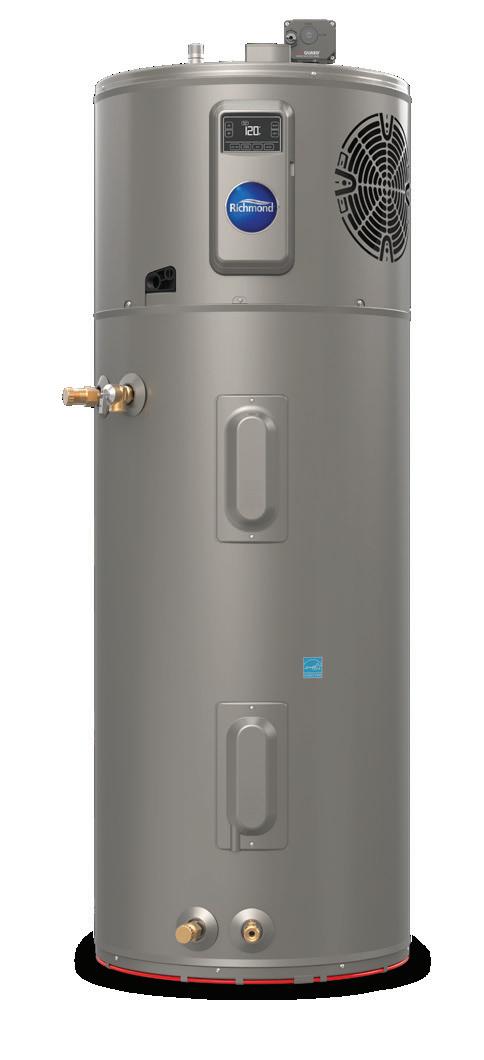
Your Water Heater Uses More Energy Than You Think.

A Heat Pump Water Heater Helps You Use Less Energy.
Running showers, laundry, and dishes adds up — fast. Your water heater is your home’s second largest energy user. That’s a big impact on your electric bill. With a Heat Pump Water Heater, you get the same comfort as your existing water heater using only a fraction of the energy, helping you save month after month.
AVAILABLE AT
EMPOWERING TEACHERS AND YOUNG ENTREPRENEURS
How STARTedUP is transforming education and inspiring innovation in Indiana
BY BRIAN D. SMITH
Leanna Rotondo didn’t set out to prove there was a need for her new product. A varsity soccer player at Charlestown High School, she drew on her own experience to create soccer socks with more grip and less slip — features designed to enhance performance and reduce the odds of serious injury.
Known as GripGuard Soccer Sox, her January 2025 innovation landed Rotondo in the state finals of the STARTedUP Foundation’s annual entrepreneurial pitch competition, where high school students present their original products and services in a format reminiscent of TV’s “Shark Tank.” Though Rotondo finished outside the top three (and the accompanying seed money awards of $2,500 to $25,000), her soccer socks garnered positive feedback and interest — along with a finalist prize of $1,000 to refine the idea.
Then, two months after the June finals, she inadvertently demonstrated why her product — “created to prevent horrendous and career-changing injuries,” according to her promotional video — should perhaps have already been on the market. During a soccer game, Rotondo suffered a rotational fracture of her left fibula, the smaller of two bones between the knee and ankle. “I planted my foot in the ground, and it
slid inside my cleat,” she said. “It was pretty gnarly.” The injury required surgery and six months of recuperation — but fortunately didn’t cost her a promised full scholarship from Berea College, an NCAA Division III school in Kentucky.
A NEW MOVEMENT IN EDUCATION
If Indiana seems an unlikely place for an event billed as “the nation’s premier high school entrepreneurial pitch competition,” that’s only the most visible part of the picture. In 2018, veteran educator Don Wettrick and former student Hunter Stone formed the non-profit STARTedUP Foundation to promote youth entrepreneurship. Wettrick, the current CEO, envisioned a new movement in education. Rather than merely reading textbooks, memorizing answers, and passing tests, high school students would identify realworld problems and devise solutions.
The need for such an approach was evident. “I was hearing from employers that were hiring students who couldn’t get off the phone and who couldn’t think independently,” he said. “They wanted employees to take initiative and not wait around for instructions ... employees who were looking for problems to solve.”
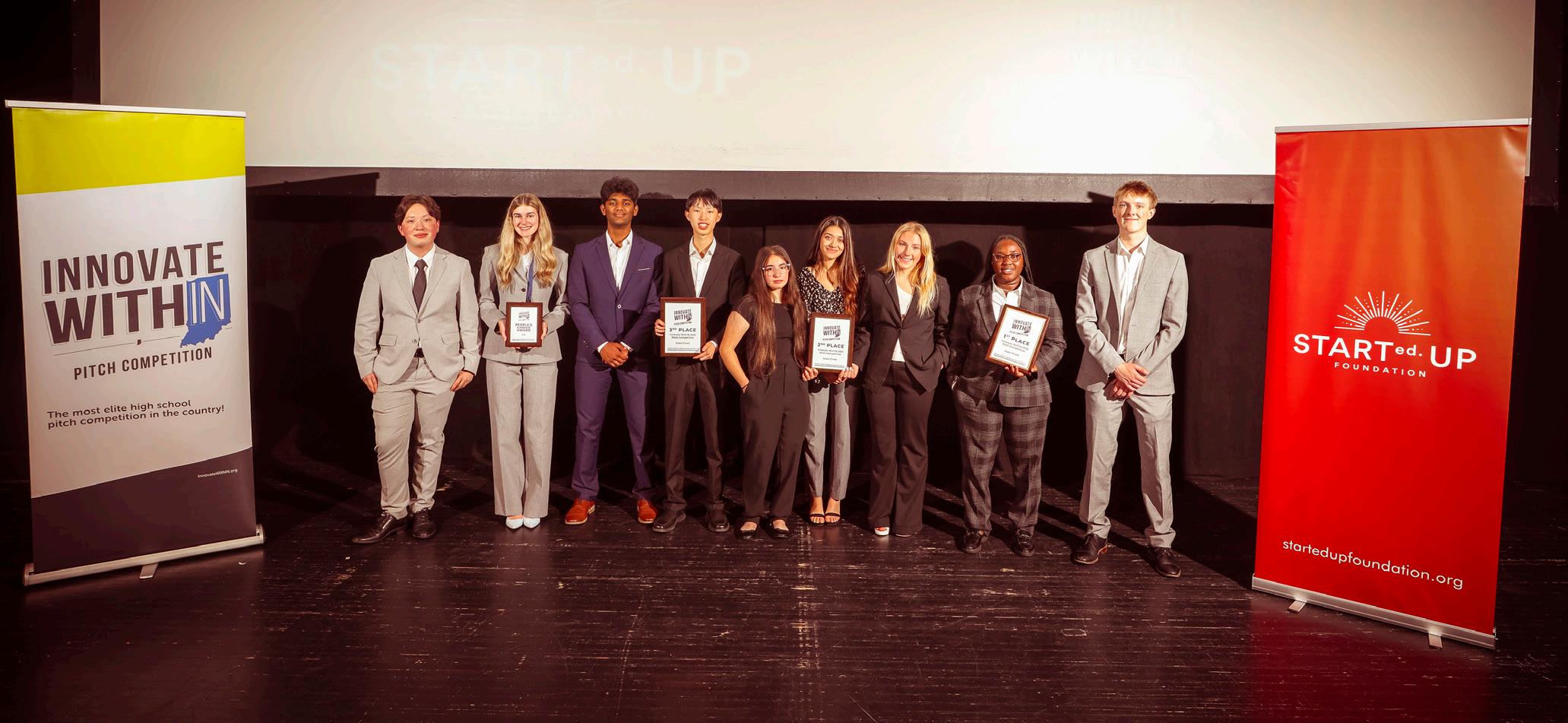
Compleyes.ai took home first place in the 2025 STARTedUP State Finals. The team is pictured with the second- and third-place teams and the People’s Choice Award winner.
So Wettrick resolved to solve the problem of not enough problem-solvers.
He founded STARTedUP with the intent of turning high school classrooms into “innovation hubs … where real-world problem-solving, creativity, and entrepreneurial mindsets become integrated into daily learning,” as the STARTedUP website explains. Eight years later, the Indiana-based program has reached about 22,000 students and 190 teachers in 168 schools. They represent 62 counties, more than two-thirds of the state’s 92.
STARTedUP invites high school teachers to sign up for its free Innovation Accelerator program, which begins with six core lessons, such as “Observing and identifying problems in local communities.” Said Wettrick: “Our whole mission is to get students to see problems as opportunities.”
Although entrepreneurship is traditionally associated with business courses, teachers from any subject area may enroll. “Teachers know more people in their community than almost anyone,” said Wettrick. “They are the conduit of real change and innovation in their schools and towns. What we’ve built with the Innovation Accelerator is a massive network that wants to pour time, attention, and connection into our educators.”
The foundation wants young entrepreneurs to “develop crucial life skills — from critical thinking and resilience to communication and collaboration.” Students meet and learn from local business leaders, public officials, industry professionals, and special guests. Last year, for instance, STARTedUP hosted a simulcast for Indiana high schools featuring Jesse Cole, founder of the Savannah Bananas, a barnstorming exhibition baseball team whose wacky on-field antics follow the tradition of basketball’s Harlem Globetrotters.
Wettick likes to say that “the world is full of moaners and groaners. I wanted to create seekers and peekers.” In his view, “seekers” hear other people’s complaints and envision solutions, while “peekers” look beyond today and anticipate future trends and developments.
Students who exemplify the qualities of “seekers and peekers” often find their way to the regionals and state finals of the pitch competition, now known as the

STARTedUP Challenge. But the Challenge is not the sole measure of a student’s entrepreneurial aptitude, said Wettrick. “We have a lot of success from students that didn’t even make it to the finals,” he noted. “They took an idea, saw it through, got shot down, and that’s OK. They built a network, and that’s the most important thing you can do.”
Hoosier high schoolers, who can compete solo or in a two- or three-member team, enter the Challenge by submitting a four-minute video chronicling a problem they’ve identified and the solution they propose. Over 2,000 students, in over 1,000 teams, submitted videos for the 2026 competition. From these submissions, 70 teams, 10 for each of the seven regions in the state, earned a ticket to the regional finals.
This year’s top 10, consisting of the seven regional winners and three wild card teams, will advance to the STARTedUP Challenge Finals at the STARTedUP Summit on June 12 at Butler University. They will also participate in an six-week STARTedUP Bootcamp, honing their pitches under the tutelage of established entrepreneurs. This year’s state finalists will also attend the inaugural INovation Tour — a tour around central and northern Indiana, including Allen, Hamilton, Lake,
Leanna Rotondo pitched GripGuard Soccer Sox as a finalist in the 2025 competition.
and Marion Counties. All regional finalists can join the STARTedUP Alumni Association and gain access to additional business connections.
CONNECTING SCHOOL AND COMMUNITY
The curriculum calls on first-year entrepreneurial students to deliver an “elevator pitch” — a 60-second summary of a problem and a suggested solution. That’s what happened at North Putnam High School, where “every kid in business class gave a pitch,” said Superintendent Dustin LeMay. Two years into the program, North Putnam has yet to enter the state pitch competition but looks to increase its participation gradually. “We’re early in our implementation,” he said, “but it’s just going to grow from here.”
STARTedUP trains students to identify problems in their own community, and LeMay has already seen examples. A plan to bring food trucks to the city of Bainbridge inspired one freshman girl to consider North Putnam’s special needs classes as a resource. Knowing that the students were spending Fridays learning to cook, she envisioned a collaboration in which the kids would find jobs and the food trucks would gain new hires.
That’s one of the things LeMay likes about entrepreneurial-focused classwork — “it breaks down the wall between school and community” — and the students seem energized, too. “Their interest peaked when they got to do something different,” he said. “And we’re proud of our teachers for going outside their comfort zone.”
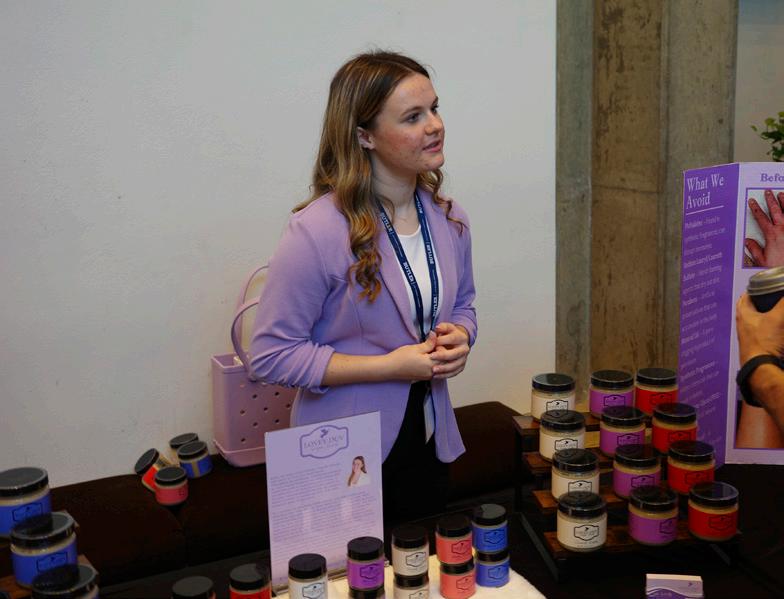
Further down the entrepreneurial trail is Perry Central High School, which joined the program about five years ago. The school not only participates in the STARTedUP Challenge but last year boasted a state finalist, then-sophomore Lyla Schultz. Moved by the plight of family members with skin cancer and eczema, and their frustration with mainstream skincare products that only worsened their irritation, she created the gentler, all-natural Lovey Duv sugar scrub. She now sells it online and in local stores, offering colorfully named scents such as Smitten Strawberry, Blueberry Crumble, Santa’s Cookies, and Cozy Colada. Schultz didn’t place among the three leaders, but “even if you don’t win, you’re a winner,” said Jody French, director of career and technical education and
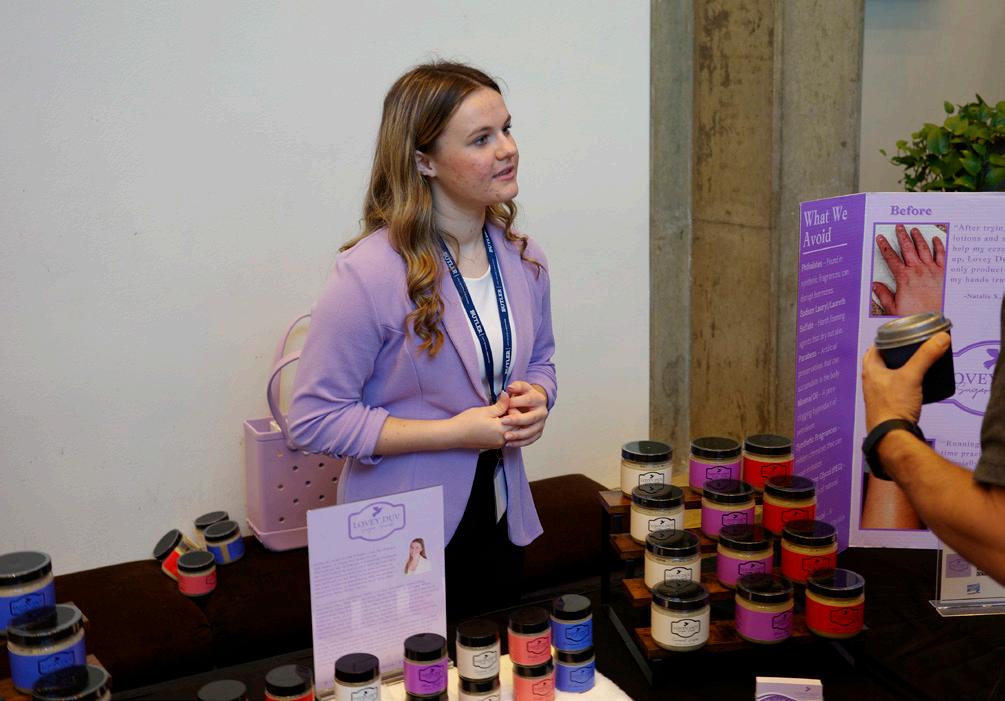
work-based learning at Perry Central. “They’re really learning the entire process of starting a small business. Basically, it’s teaching kids to see a problem and solve a problem.”
Having to pitch a product before a regional or state finals audience can unnerve even the most confident high schooler. “There are hundreds of people there, and it’s live on the internet. We’ve had tears,” French said. “But once they do it, even if it’s not perfect, they feel like superstars.”
CAMARADERIE IS A BIG BENEFIT
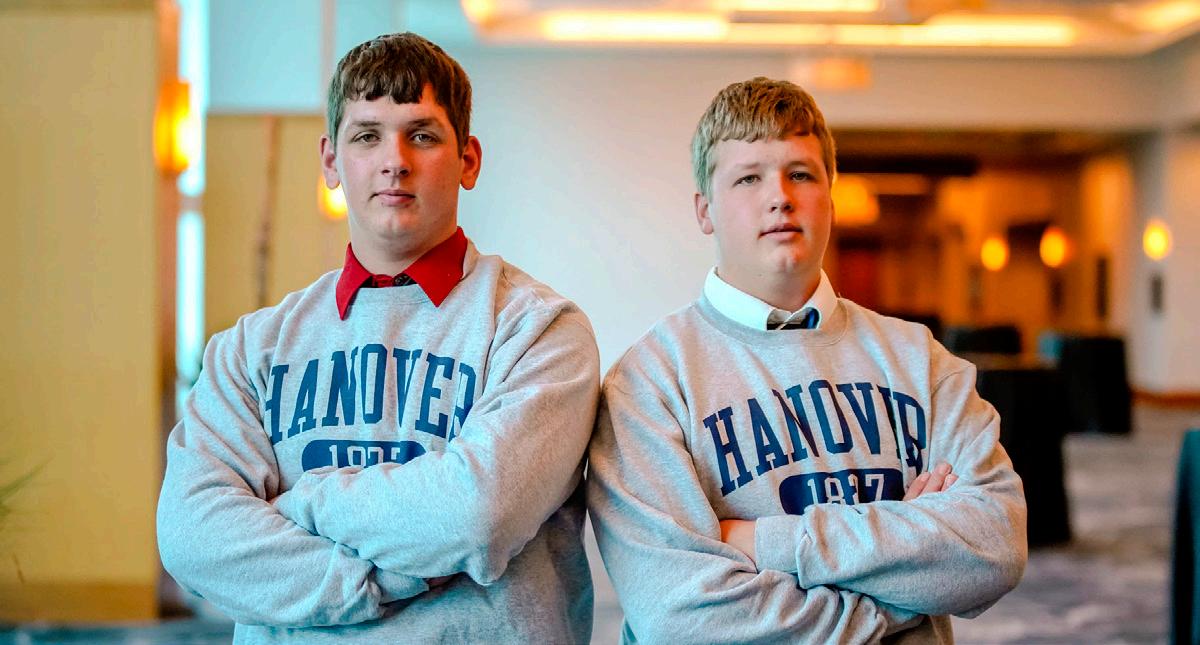
Some past finalists are marketing the products they pitched as high schoolers. In 2021, Southern Indiana Bait Co., operated by brothers Zion and Xavier Dunaway of Salem, won the STARTedUP State Finals with a homemade selection of fishing lures.
Lyla Schultz, a 2025 finalist, created Lovey Duv sugar scrub after seeing the struggles of family members with skin cancer and eczema whose conditions were worsened by mainstream skincare products.
Brothers Zion and Xavier Dunaway won the 2021 State Finals with their small business, Southern Indiana Bait Co., and their homemade fishing lures.
“It was one of the only times I’ve truly been speechless,” Zion said, recalling the impressive competition. “There were kids creating their own AI software for Ford and GM to use in their hiring. We were just a small business making fishing lures in our garage.”
The Dunaways got started by watching YouTube videos on how to make lures, initially selling them to local fishermen. Entering the pitch competition wasn’t even their idea — a teacher at Salem High School told them about it, and when Zion said he would consider it, the teacher said, “No, I signed you up. You’re doing it.”
Though still a part-time venture, their bait business has found a following, with orders from every state but Hawaii. “The past three years, we haven’t put a dime of our own money into it,” Zion said, adding that one of their lures has earned nearly $70,000 in fishing tournament winnings. He speaks fondly of the STARTedUP Challenge. “Throughout the competition, you’re surrounded by high school entrepreneurs like yourself,” said Zion. “The connection part, the camaraderie, is the biggest plus of the competition.”
BUSINESS IN A BOX
Caylyn Pruitt was only 15 when she started her bakery. “This was a COVID hobby,” said the Columbus North High School graduate, now 19. “I got really interested in watching the Food Network and the Kids Baking Championship. I was testing recipes and getting into it.” Before long, she was selling treats from her home, but she still had a lot to learn. Her participation in the pitch contest required her to solve a bigger problem than how to sell more sugar cookies, so she tackled franchising.
As CayPops Bakery, she advanced to the state finals with the idea of offering “business in a box” — a stayat-home opportunity to become the next CayPops baker, with Pruitt providing everything from recipes to a grand opening celebration. So far, her only franchisee is her aunt in Bowling Green, Kentucky, but her original bakery is thriving in Columbus. Unlike a traditional storefront operation, CayPops takes orders online and schedules pickup or delivery. One of Pruitt’s specialties is cake pops — mashed-up cake with a chocolate coating on a stick — and her custom treats
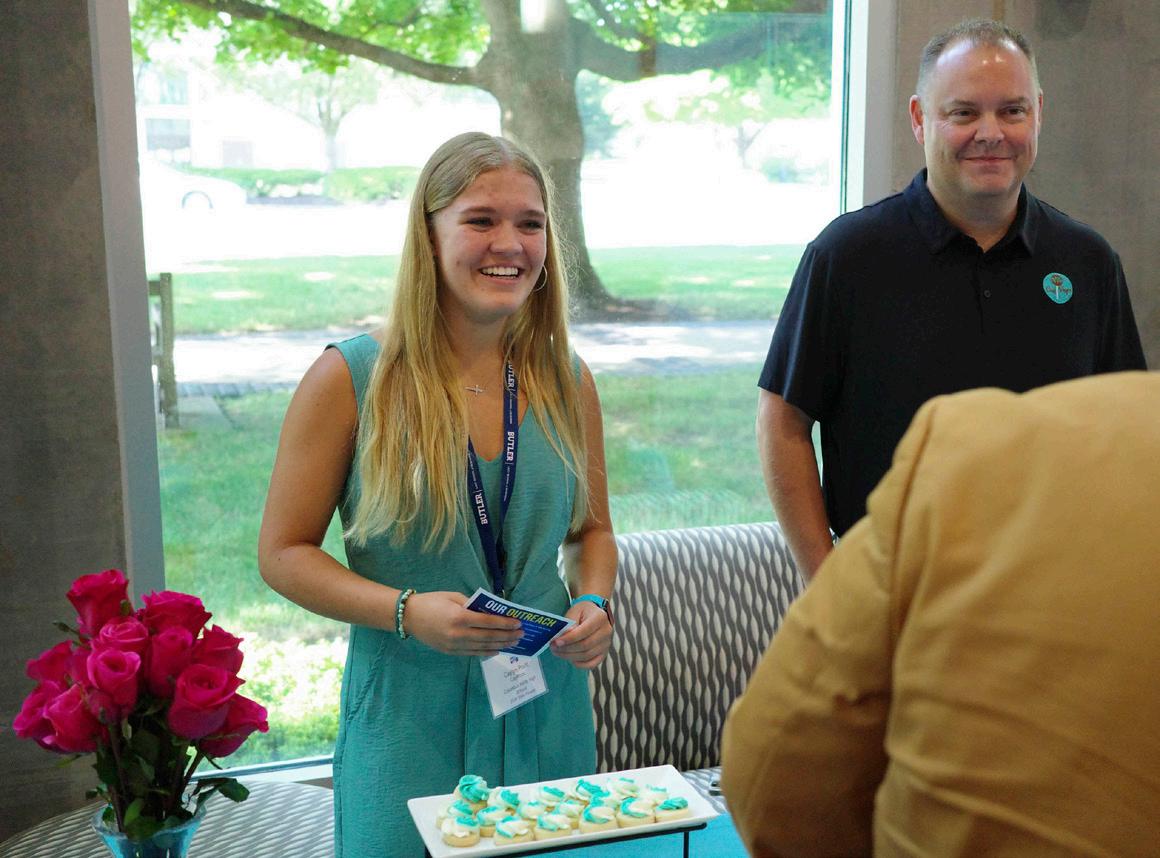
are popular for birthday parties, bridal showers, gender reveals, and other special occasions.
Entrepreneurial thinking brought her success in the pitch competition and beyond. “Find something you really enjoy and care about,” she said. “For me, I had always enjoyed baking. You don’t have to solve world hunger or climate change.”
It’s easy to underestimate young entrepreneurs who start a business before finding a career. But, CayPops’ totals speak for themselves — 45,000 baked goods sold and $130,000 earned, giving Pruitt financial independence (and paying for college tuition and a car) before she was out of her teens.
And don’t ask whether her mother actually supplied the recipes and guided the business from the background. “That’s what people assume, said Pruitt, “but it was all me.”
EDITOR’S NOTE
The seven regional competitions of the STARTedUP Challenge took place throughout April. The seven regional winners will join three wildcard teams at the STARTedUP Challenge Finals at the STARTedUP Summit on June 12 at Butler University. Learn more about the finalists and their pitches in our digital version at indianaconnection.org
Caylyn Pruitt was a 2024 finalist with CayPops, her at-home bakery franchise.
Why summer temperatures test the system
Whenever I can get outside, I am there. Just last month, I completed a half-marathon. Most of my training was outside, and I experienced all kinds of weather along the way. Maybe that’s why I enjoy summer so much. But from a professional standpoint, it can put us to the test.
As temperatures rise, so does demand. While that may sound simple, what’s happening behind the scenes is anything but. Unlike winter, when demand can spike and ease quickly, summer creates steady pressure. Air conditioners run longer, across entire regions, often at the same time. Those long, hot afternoons are when demand peaks.
At the same time, heat affects the system itself. Higher temperatures make power plants less efficient and reduce the amount of electricity that transmission lines can carry. So just as demand climbs, the system’s capacity tightens.
This year, the outlook offers some relief. According to ACES, our power industry weather and energy forecasting group, the 2026 Summer Outlook for the Midwest calls for near- to slightly-belownormal temperatures, along with more frequent precipitation. That combination should help moderate demand, which is projected to come in below the 10-year average.
Still, we don’t plan for average. We are required to plan for stress. It only takes a few hot, humid days to create peak conditions. And because electricity must be delivered the moment it’s needed, there’s no margin for delay. That is where preparation and discipline matter most. Our teams spend months getting ready, maintaining infrastructure, securing resources, and coordinating with grid partners. When demand is high, operators rely on experience, clear protocols, and constant communication to keep supply and demand in balance.
When I crossed the finish line of my half-marathon, there was a sense of accomplishment. I had spent months following a training plan and preparing for that moment. The work we do at Wabash is no different. Our teams prepare yearround through planning, investment, and disciplined operations, so when demand is at its highest, the system performs as it should. Summer doesn’t change our approach. It simply brings greater focus to it.
And when the heat is on, that preparation is what ensures we continue delivering reliable power to the communities we serve.

JEFF CONRAD President and CEO Wabash Valley Power Alliance

Hoosier Energy hosts 2026 Annual Meeting
In April, Hoosier Energy hosted its 2026 Annual Meeting, the first in two years after last year’s event was canceled due to severe storms and tornado threats.
As with most things in the energy industry, much has changed in two years. Yet Hoosier Energy’s mission to provide reliable and affordable energy remains unchanged even as it adapts and evolves. The meeting and the 2025 Annual Report shared the fitting theme “Bold Moves, Cooperative Priorities.”
Hoosier Energy President and CEO Donna Walker acknowledged both sides of that coin in her opening remarks. “We’re going to share with you some of the bold steps that we’re taking to shape our energy future here at Hoosier Energy,” she said. “But I also understand these sessions are set against a really challenging backdrop. Consumers are more and more concerned about reliability these days. With aging infrastructure, insufficient firm generating resources, more severe weather events, and cyber and physical security threats to the grid, all of that comes together to pose greater concerns and risk about power outages.”
Walker then passed the baton to Jim McMahon of Charles River Associates. His presentation, entitled “Wired for Change: Industry Trends and Implications,” covered everything from industry headlines dominating the news to graphs
charting trends and changes in the energy sector. In the process, he discussed data centers, energy affordability, and the energy transition.
BOLD MOVES ARE REQUIRED TO SHAPE THE FUTURE OF ENERGY
Following a short break, the first panel discussion of the day was “Navigating Federal & State Energy Dynamics, A Policy Discussion”. It featured NRECA’s Hill Thomas, who works on federal government initiatives, Indiana Electric Cooperatives CEO John Cassady, and Association of Illinois Electric Cooperatives CEO Craig Sondgeroth. The discussion included the impacts of politics and the opportunities that open and close depending on the administrations at the state and national levels. Affordability was a central theme.
The second panel discussion followed the day’s theme “Bold Moves, Cooperative Priorities,” and
was comprised of Hoosier executive staff members Chris Blunk, Rob Horton, Jon Jackson, and Scott Bowers. They discussed supply portfolio performance, transmission costs, the impact of the DOE GRIP award, digital reliability, large loads/data centers, and managing affordability.
The final session of the day was with Holtec International President, Kelly Trice. He provided some history and behind-the-scenes information on the restart of the Palisades Nuclear Power Plant, as well as a glimpse into the future of small modular reactors (SMRs).
Trice concluded with a Q&A session with Walker, describing the reopening of Palisades as 90 percent complete, with operations set to commence later this year, well ahead of the original target of March 2027.

Members of the Hoosier Energy executive staff, from left, Chris Blunk, Rob Horton, Jon Jackson, and Scott Bowers participate in a panel discussion at the 2026 Annual Meeting.
Farmers market fresh
WILSON FARM MARKET OFFERS
UNIQUE FINDS AND OLD-TIME FAVORITES YEAR-ROUND
BY NATALIE DERRICKSON

Sometimes, you go into a store knowing what you need. Other times, it’s best to let your senses guide you to the goodness that will ultimately fill your cart, especially when you stop in at Wilson Farm Market in Arcadia.
AN ASTOUNDING AMOUNT OF PRODUCTS
Take the leisurely route during your first visit — the aisle dedicated to jams and jellies, a selection of 125 kinds of cheese, and a growing line of patrons patiently waiting for Wilson’s infamous double-breaded fried chicken can overwhelm even the expert-level shopper.
Satisfy your sweet tooth at the market’s bakery, whose Amish fry pies are just the right size for snacking. Whether you’re craving a delicate Angel Food cake, nostalgic
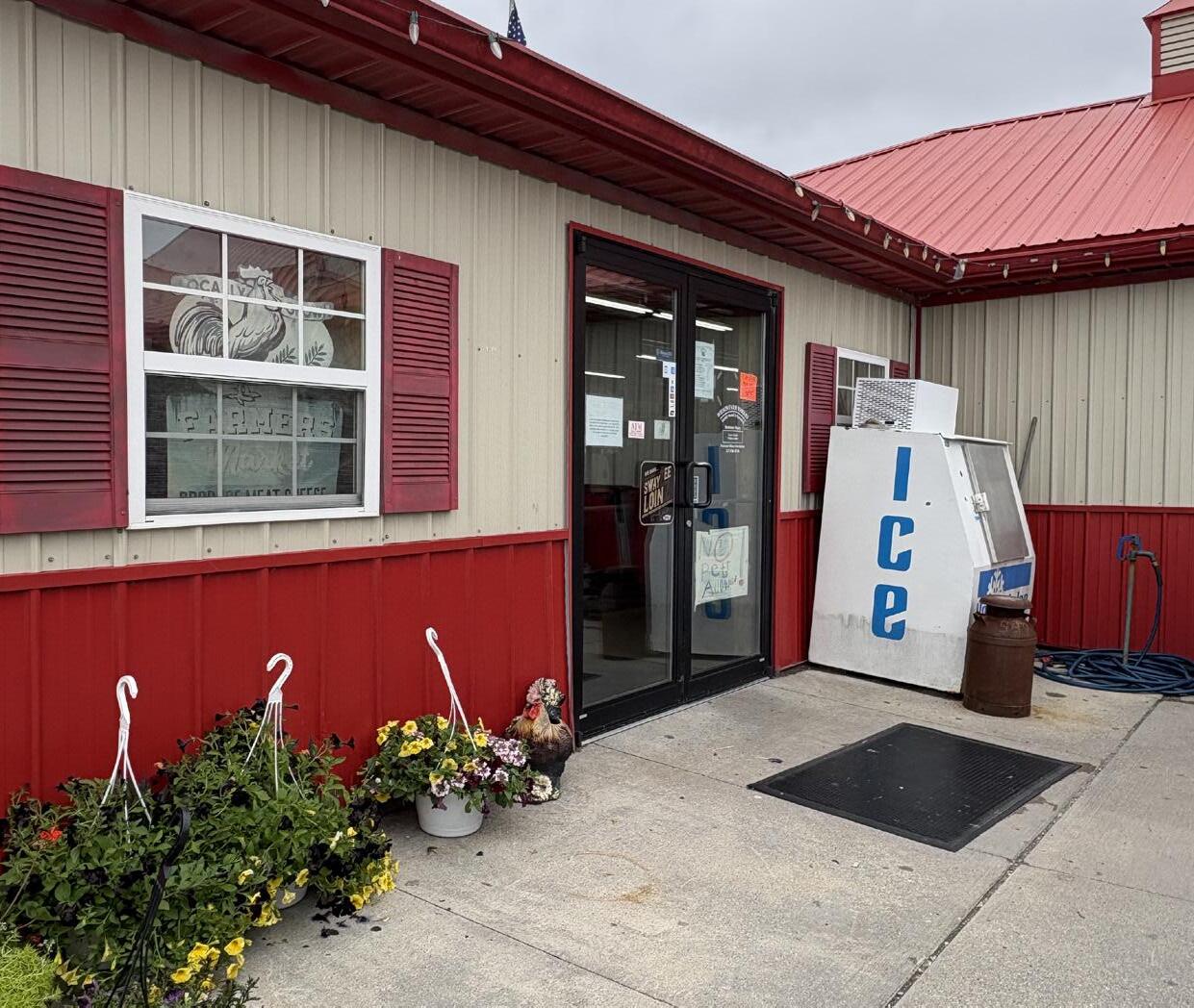

candies, a rich slice of fudge, or snickerdoodle cookies, you will find it at Wilson Farm Market. Stock up on tender breads and the popular pretzel bread, made with the same recipe used to create the soft pretzels Wilson Farm Market sells at the Indiana State Fair.
OFFERING OBSCURE ITEMS
While the market keeps plenty of standbys in stock, they’re keen to deliver old favorites and source uncommon products for their customers.
“We carry many items that are hard to find, like scrapple and mac and cheese loaf,” shared Steve Wilson. “We have some very obscure cheeses like morel and leek, and coffee espresso. We also go out of our way to help customers find items that we may

not normally stock. Recently, we have had customers looking for organic wheat berries and have been able to source them for special order.”
While you wait in line for your order of fried chicken, scan the menu for delicacies like livers, gizzards, and mushrooms — all available most days. The team at the market also fries tenderloin and fish sandwiches to order, making the market a must for your next Hamilton County lunch. In addition to the Arcadia location, you can find them at the Noblesville and Binford Farmers Markets during the season.
Wilson Farm Market
1720 E. 256th St. Arcadia, IN 46030 317-758-5734
Open seven days a week from 9 a.m. to 6 p.m.
Bring summer indoors with fresh-cut flowers

One of the best things about summer in the garden is the flowers. Even better, we can bring many of those flowers indoors to enjoy their beauty and fragrance.
Coneflowers, hydrangeas, lilies, cosmos, zinnias, dianthus, snapdragons, and other perennials and annuals stand ready to beautify your indoors. You can cut a few stems of shrubs and trees, viburnums, lilacs, dogwoods, and serviceberry.
WHEN AND HOW TO CUT FLOWERS
Cut flowers in the early morning with a clean, sharp hand pruner or scissors at a 45-degree angle. Look for flowers with buds that are barely open or with one showing just a bit of color. These will last the longest.
If you’re cutting leaves, such as ferns or hostas, make sure they are firm. Woody plants like viburnums can have flowers slightly open.
Cut-flower experts suggest carrying a container of water and immediately plunging the cut stems into it.
PREPARING FLOWERS FOR THE VASE
Make sure your vase is clean. Bacteria are a cut flower killer. Strip off any leaves that will be in the water. As the leaves deteriorate underwater, bacteria can develop.
When ready to put the flowers in the vase, make another 45-degree cut. The stems rest on the tip of the angle, which allows space for them to take up water.
DESIGNING THE ARRANGEMENT
Much of what the arrangement will look like depends on what’s pleasing to your eye and what plants you have available.
In general, build the arrangement in layers. Shorter plants or greens can form the base. The flower stems can crisscross to create the look you want.
Once you’ve created your design, fill the vase with water and flower food. You can buy flower food — it’s what’s in the little packet you get when you buy cut flowers — or you can make your own.
CARING FOR THE ARRANGEMENT
The arrangement will last longer if kept out of direct sun and heat. Remove any flowers or leaves that age or die. Spent flowers emit ethylene gas, which can speed the decline of their vase mates.
Change the water every few days. Look at the stems and see if they are mushy. If so, cut them again at a 45-degree angle with clean pruners or scissors. You may have to change the vase as the flowers get shorter.
Jo Ellen Meyers Sharp is a member of Garden Communicators International’s Hall of Fame. She blogs at hoosiergardener.com
Add hours to your flowers with tips from the Purdue University Department of Horticulture. Scan the QR code to learn more.