7
7
Get away close to home at an Indiana State Park
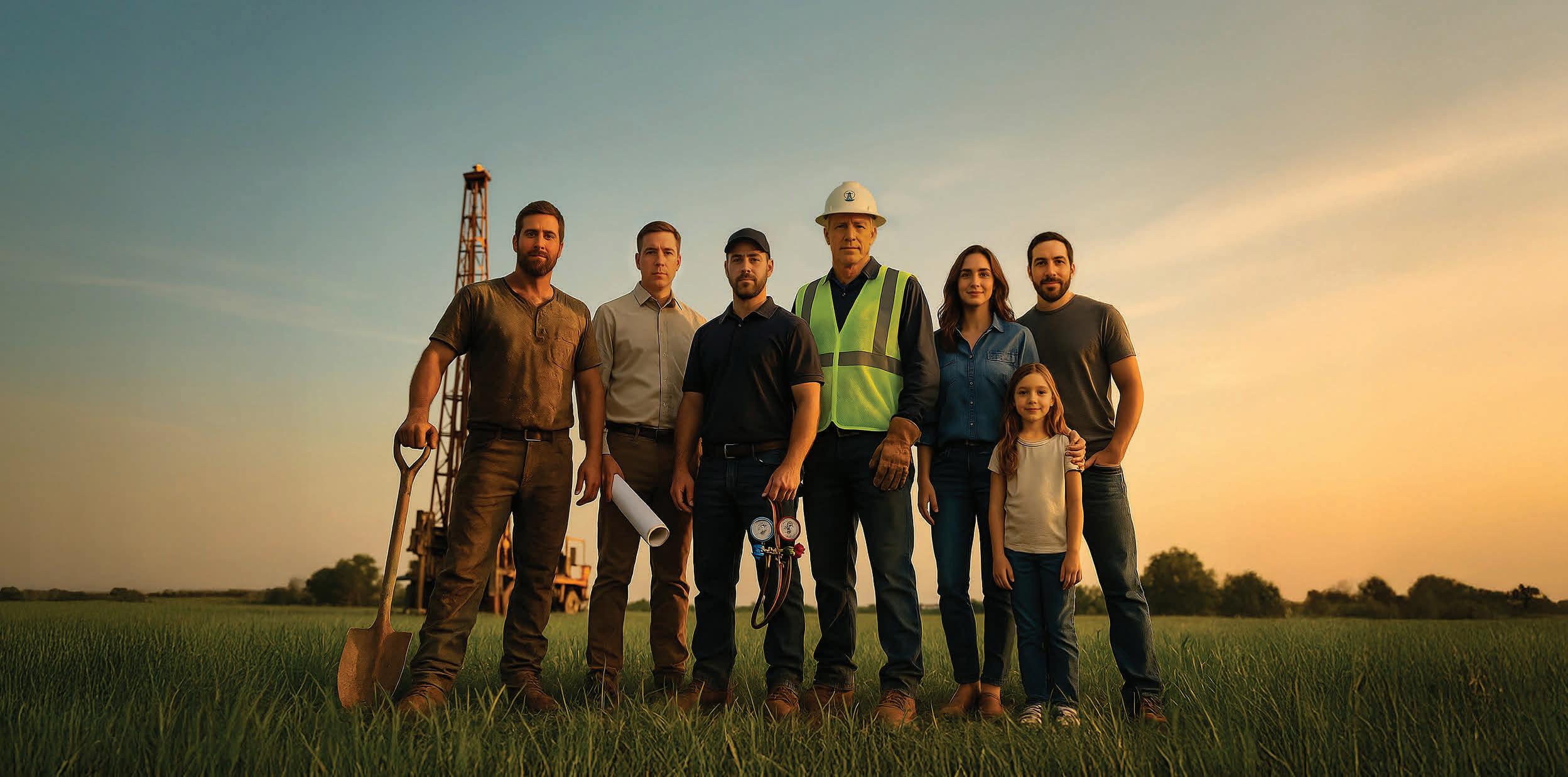
Geothermal isn’t just about comfort. It’s about energy independence, grid resilience, and good jobs.
Geothermal heating and cooling doesn’t just make homes more comfortable and efficient— they’re powered by a domestic, underground energy source that’s available 24/7, rain or shine.
Made in the USA: Our geothermal systems are built right here in America, supporting advanced manufacturing jobs.
Grid-friendly: While AI, EVs, and data centers push power demand to new heights, geothermal helps reduce peak load—easing the burden on our utilities.
Job-creating: From HVAC contractors and well drillers or trenchers to engineers and architects, geothermal supports a wide network of high-paying, skilled jobs in every community it touches.
Geothermal isn’t just smart for homeowners. It’s smart for the country.
Contact Your Local WaterFurnace Dealer

Delphi
Blue Fox Htg & Clg (765) 822-2200 bluefoxhvac.com
Farmersburg
Heady Htg & Clg (812) 696-2396
Flora
Camflo Htg & Clg (574) 967-4200 camfloheatingandcooling.com
Fort Wayne
Masters Htg & Clg, Inc. (866) 824-4328 mastersingeothermal.com
Greensburg
Wallpe Htg & Clg (812) 663-7252 wallpegeothermal.com
Indianapolis Masters Htg & Clg by Van Valer, Inc. (317) 881-9074 mastersingeothermal.com
Jasper Hulsman Refrigeration, Inc. (812) 634-1492 hulsmanrefrigeration.com
Laotto
T&T Plbg, Htg, A/C & Geothermal (260) 200-4003 tt-ph.com
Lebanon
Blue Fox Htg & Clg (765) 859-0880 bluefoxhvac.com
Nappanee Crist Plbg, Htg, Electrical (574) 831-4630 cristnappanee.com
North Manchester Mars Refrigeration, LLC (260) 901-0057
North Vernon Air One Htg & Clg, Inc. (888) 346-1790 aironehvac.com
Ossian Collier’s Comfort Services (260) 622-6622 collierscomfort.com
visit us at waterfurnace.com


Warsaw Colliers Htg & Air Conditioning (574) 203-2492 trustcolliers.com
Waterloo Gibson’s Htg & Plbg, Inc. (888) 754-1668 gibsonsgeothermal.com
Westfield Precision Comfort Systems, Inc. (317) 867-2665 precisioncomfort.com
West Lafayette Blue Fox Htg & Clg (765) 252-0051 bluefoxhvac.com
In this month’s feature story, we highlight Indiana’s great state parks. We’re lucky to have 24 state parks spread throughout the state. These parks offer plenty of green spaces and a variety of outdoor activities for every kind of Hoosier. They are also affordable to visit.
Growing up, I was fortunate to live close to McCormick’s Creek State Park in Spencer, Indiana. The park was the location of many family picnics and reunions at various shelter houses, as well as outdoor adventures for my Girl Scout troop (Troop 595 forever). In high school, my friends and I would often spend long afternoons at McCormick’s Creek, walking the trails and trying to squeeze through the narrow caverns of Wolf Cave. You couldn’t beat getting a car full of teenagers into the park for under $10.
Turkey Run State Park was the site of a notorious family trip in which we unintentionally chose one of the toughest trails for a walk through the woods. My cousins and I were all 10 or younger at the time. My grandpa later claimed he thought we would never make it out. If any of you have experienced the ladder trail there, you understand his concern.
The Indiana Dunes are also close to my heart. I have a friend whose family is from Chesterton, and we took many summer trips to visit them and spend time at the beach. The dunes are amazing in person, and I encourage you to make the trip north to see them yourself.
I still have many state parks to visit, but I hope to see all 24 someday. Which one is your favorite? Send me an email and tell me why at bdavis@indianaec.org


Britt Davis Editor bdavis@indianaec.org
On the menu: July: Submit your favorite bread recipes, deadline May 1. If we publish your recipe on our food pages, we’ll send you a $10 gift card.
Giveaway: Enter to win a $50 annual entrance pass, courtesy of the Indiana Department of Natural Resources. Visit indianaconnection.org/talk-to-us/contests or send your contact information to the address below. The deadline to enter is April 30.
Three ways to contact us: To send us recipes, photos, letters, and entries for gift drawings, please use the forms on our website indianaconnection.org; email info@indianaconnection.org; or send to Indiana Connection, 11805 Pennsylvania Street, Carmel, IN 46032.
VOLUME 75 • NUMBER 10 ISSN 0745-4651 • USPS 262-340
Published monthly by Indiana Electric Cooperatives
Indiana Connection is for and about members of Indiana’s locally-owned, not-for-profit electric cooperatives. It helps consumers use electricity safely and efficiently; understand energy issues; connect with their co-op; and celebrate life in Indiana. Over 320,000 residents and businesses receive the magazine as part of their electric co-op membership. The average printed and mailed cost per issue is 54 cents.
CONTACT US: 11805 Pennsylvania Street Carmel, IN 46032
317-487-2220
info@indianaconnection.org IndianaConnection.org
INDIANA ELECTRIC COOPERATIVES OFFICERS: Dr. Richard Leeper President
Jamey Marcum Vice President
Melissa Menchhofer Secretary/Treasurer
John Cassady CEO
EDITORIAL STAFF:
Britt Davis Editor
Mandy Barth Vice President of Communication
Lauren Carman Communication Manager
Ashley Curry Production and Design Coordinator
Holly Huffman Communication Support Specialist
Amber Knight Creative Manager
Kiley Lipps Graphic Designer
ADVERTISING:
American MainStreet Publications Cheryl Solomon, local ad representative; 512-441-5200; amp.coop
Paid advertisements are not endorsements by any electric cooperative or this publication.
UNSOLICITED MATERIAL:
Indiana Connection does not use unsolicited freelance manuscripts or photographs and assumes no responsibility for the safekeeping or return of unsolicited material.
SUBSCRIPTIONS:
$12 for individuals not subscribing through participating REMCs/RECs.
CHANGE OF ADDRESS:
If you receive Indiana Connection through your electric co-op membership, report address changes to your local co-op.
POSTAGE:
Periodicals postage paid at Indianapolis, Indiana, and at additional mailing offices.
POSTMASTER:
Send change of address to: Indiana Connection, 11805 Pennsylvania Street, Carmel, IN 46032. Include key number.
No portion of Indiana Connection may be reproduced without permission of the editor.

CONTACT US
Office: 812-482-5454
Billing Dept.: 812-482-1664
Operations Dept.: 812-482-1188
After Hours: 812-482-5455
Fax: 812-482-7015
CEO AND GENERAL MANAGER
Joe Henson
OFFICE HOURS
7 a.m.–4 p.m., Monday-Friday
7 a.m.–3:30 p.m. for Line Dept.
STREET ADDRESS
1400 Energy Drive Jasper, IN 47546
MAILING ADDRESS
P.O. Box 610 Jasper, IN 47547-0610
EMERGENCY POWER OUTAGES
To report service interruptions, call: 812-482-5454 (during regular hours) or 812-482-5455 (after hours) day or night. Please have your account number ready when reporting outages.
BOARD OF DIRECTORS
Brad Knies, President
Richard A. Wendholt, Vice President
Randall L. Stemle, Secretary-Treasurer
Mark Montgomery
Andy Schwenk
Steve Speedy
David Rudolph
KEY STAFF
Craig Adams
Manager of Finance
Matt Brames
Manager of Engineering
Greg Dilger
Engineering Project Manager
Ruth Hopf
Billing Supervisor
Patrick Lichlyter
Manager of Operations
CUSTOMER SERVICES
Budget billing
SmartHub Pay by phone 24/7 Drive-thru window
Night depository Medical account watch
As CEO and general manager of Dubois REC, I have the unique privilege of seeing firsthand what it truly takes to keep the lights on for our members. In April, we take time to pause and recognize the brave men who make that possible every single day — our lineworkers.
When storms impact our communities and outages occur, many people experience the inconvenience, but our lineworkers see a call to action. Our crews are always ready when it matters most — leaving family dinners, working through the night, and heading into challenging conditions to restore power as safely and quickly as possible. That readiness is not accidental. It comes from rigorous training, deep experience, and a shared commitment to serving others.
What makes lineworkers especially remarkable is that they are not just restoring power to a system — they are restoring power to their own communities. They live here. They raise their families here. They understand that electricity is more than a convenience; it is essential to daily life, to local businesses, to schools, farms, and emergency services. Powering the places we call home is personal to lineworkers.
Electric cooperatives like Dubois REC were built on the principle of neighbors helping neighbors, and our lineworkers embody that spirit every
day. They are the first to respond and the last to leave, often working long hours behind the scenes. At times, serving our neighbors means going beyond our own service territory through a process known as mutual aid. During major outage events, Dubois REC crews stand ready to assist neighboring coops –– sometimes close to home, and sometimes across state lines –– to help restore power. This spirit of mutual aid strengthens all cooperatives and ultimately benefits the members we serve.
We understand any time the lights go out can be frustrating, bringing everyday life to a halt. We are incredibly grateful to our members for your patience and encouragement during these times. Linework is demanding, physical, and at times, it can be dangerous. Our crews approach each job with a focus on safety and teamwork. They take pride in their craft and in the trust our members place in them.
On April 13, 2026, we will celebrate Lineworker Appreciation Day, but one day is hardly enough. Every day, we thank lineworkers for their service and dedication to Dubois REC members.
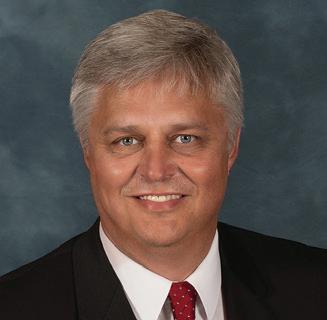
JOE HENSON CEO and General Manager
Service charge
Single-phase
$35.50
Three-phase $47
Energy charge
The first 500 kWh at .......................$.10522/kWh
The next 2,500 kWh at $.09772/kWh
All remaining kWh at $.09462/kWh
Power cost tracker
All rate classes
All kWh at $0.00922/kWh
Security light
If you have a security light, add:
175-watt mercury vapor...................
100-watt sodium vapor
100-watt metal halide
70-watt LED
$8.32/month
$7.50/month
$8.75/month
$7.50/month
Electric bills due by the 20th of each month.
Members who pay by the 15th, or pay their bill by auto draft, will be entered in the monthly drawing for a $50 bill credit.
Visit duboisrec.com for easy ways to pay your electric bill online.
It is easy to enter our monthly $50 drawing! All Dubois REC members who pay their bill by the 15th of the month, using any payment option, will be automatically entered in the $50 monthly drawing. Members who pay by ACH/bank draft and recurring payments are also automatically included in the drawing. (Delinquent payments are not eligible.)
The winner will be notified, and their name will be published here.
FEBRUARY’S WINNER: Jaclyn E. Cushman, Jasper

200 W. 14th St., Huntingburg
Free refreshments
Door prizes
Doors open at 5 p.m.
BINGO from 6-7 p.m.
Business meeting at 7 p.m.
(All times are EST)
DIRECTOR CANDIDATES:
District 3 — Mark Montgomery
District 4 — David Rudolph
District 6 — Steven Speedy
Since no petitions for nomination were submitted for either district, the above nominees will be officially seated at the 2026 annual meeting.

The budget billing program offered by Dubois REC is a method of equalizing electric bill payments over a one-year period. The program is an equalization of the payment for the member’s convenience, with 11 months’ payment being the same. Budget billing does not reduce the annual cost of electricity and is for residential accounts.
The plan begins with the bill sent in June. The bill for May of the following year is adjusted for the difference between charges and actual use. If a balance is due on the May billing, the entire amount is due at that time. If there is a credit balance on the May billing, no payment is due. Members must reside in our service area for at least 12 months to be eligible for this program.
If you are interested in the budget billing program, contact Debbie at 812-482-5454 and provide your name and account number. You can also drop us a note. We will contact you by letter and provide you with the details. Deadline for budget billing applications is April 11.
As a duly authorized check signer on the financial institution account identified below, I authorize Dubois Rural Electric Cooperative, Inc. to draw monthly drafts on my bank account as listed below for the payment of my monthly electric bill. I understand that I can discontinue my participation by notifying Dubois REC in writing. I understand that Dubois REC reserves the right to limit participation to customers whose accounts are in good standing, and reserves the right to discontinue this agreement.
Furthermore, if any such electronic debit(s) should be returned by my financial institution as inactive, closed, or Non-Sufficient Funds (NSF), I authorize, Dubois REC to collect a returned check fee as set forth in Dubois REC’s non-recurring charges in effect at the
time, and that my utility account shall be considered unpaid on the due date and may be subject to termination of utility service if my account remains unpaid.
For accounting purposes, all electronic debits will be reflected in the monthly bank statement that corresponds with the financial institution account identified below.
I understand and authorize all of the above as evidenced by my signature below.
AUTHORIZING SIGNATURE:
DATE
If you wish to enroll in ACH, please complete this form and return with your next payment
Dubois REC Account Name:
Street Address:
City, State, ZIP code:
Phone:
All Dubois REC Account Numbers:
Name of Financial Institution:
Checking or Savings: City, State, ZIP code:
*Routing #:
*Bank Account #:
*The Routing Number - This is the 9-digit Transit/ABA Bank Routing Number
*The Bank Account Number is usually to the right of the Routing Number. (Some financial institutions add the check number between the Routing and Account numbers, or after the Account number.)
• There are no additional fees or charges for using this convenient service.
• You will be automatically entered in the $50 monthly drawing if enrolled in ACH.
• You will still receive a statement each month indicating the amount deducted from your account.
• If the 20th falls on a weekend or holiday, the next business day will be used.



































































































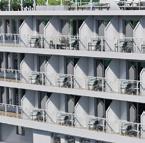















































With its innovative design, modern comforts, and guest-focused philosophy, American Encore is not just a riverboat, it’s the finest expression of American river cruising ever built. Designed to host just 180 guests, American Encore features more square feet per guest than any other small cruise ship with the largest staterooms globally.
Ship





Every community has its own unique attributes that make it attractive to new or expanding businesses. Those attributes are key for successful economic development — which leads to job creation and economic growth.
Electric cooperatives like yours work hand-in-hand with local and regional economic development corporations to foster growth and development opportunities. This is an important way to attract businesses and investments, and play a role in community planning and development initiatives that align with the growth that a community wants and needs.
Electric cooperatives offer potential commercial and industrial members the best applicable rate, meeting any specialized needs and simply providing businesses with the same reliable electric service that members receive in their homes.
Co-ops also invest in local infrastructure. That can go beyond

just basic electricity. It can include upgraded substations and distribution lines, site-ready industrial parks with power just waiting to be connected, broadband expansion, and even extra EV charging opportunities to help with logistics and workforce mobility.
Offering faster interconnection timelines as well as incentives for large loads may also entice businesses — in such diverse sectors as automotive, manufacturing, quarry/ mining, data centers, medical, retail, service industries, and education — to put down roots in a rural community.
Beyond that, co-ops may provide detailed site-selection data, load forecasts, and GIS mapping to ensure prospective investors have all the information required to make a wise decision.
Cooperatives can also support potential new businesses on the financing front, be it through a USDA
Rural Economic Development Loan and Grant or simply by helping to secure all available state or federal incentives. Additional incentives or rebates for energy efficiency and renewable energy-related efforts may also be available.
Local electric cooperatives thrive when their communities thrive, and economic development is key to both.
by Jeremy Bohn Energy and Member Service Advisor RushShelby Energy



In times of economic uncertainty—when inflation rises, markets fluctuate, and long-term financial stability feels less predictable—many investors turn to gold as a dependable store of value. By holding a portion of your wealth in gold, you can help safeguard your portfolio and preserve long-term financial security, even when broader economic conditions are unclear.
Since 2015, gold has surged over 400% — outpacing both the S&P 500 and the Dow during the same period.
American Gold Reserve is releasing government-issued $5 Gold American Eagles completely free of dealer markup for only $529 each. These beautiful $5 Gold American Eagles are a perfect way to enter the gold market. Set for immediate public release, availability is limited and supplies are expected to sell out quickly.


Madison County honors Dr. Martin Luther King Jr. with a statue of the civil rights leader. Midwestern sculptor Kenneth Ryden designed the 8-foot-tall bronze figure. King’s son, Martin Luther King III, attended the statue’s dedication ceremony in 1988.
Alexandria, Indiana, is home to the World’s Largest Ball of Paint. On Jan. 1, 1997, Michael Carmichael and his son dipped a baseball in baby blue paint and kept adding layers. Over the years, the ball has grown to weigh more than 11,600 pounds with over 30,000 coats in a variety of colors. After reaching 1,000 layers, it was displayed at the Knightstown Children’s Home before returning to Carmichael in 2003. Today, the paintball is housed in the Carmichaels’ “Ball House,” where visitors from across the country and around the world — including Ukraine, Japan, and New Zealand — come to see it. Guests can choose a paint color to add their own layer and sign the surrounding walls with their name and date.

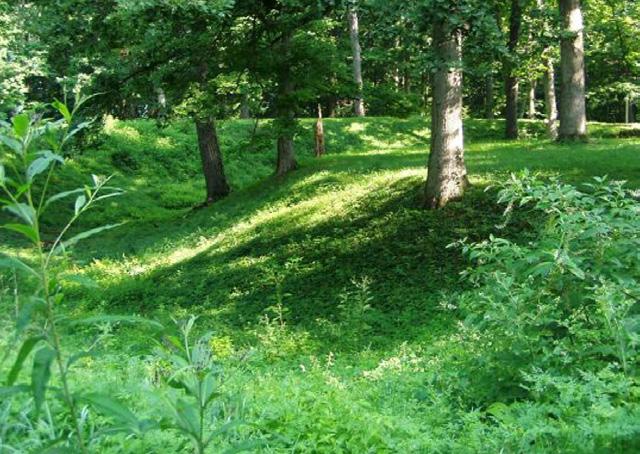
Each year, around 400,000 people visit Mounds State Park near Anderson, Indiana, to see its 10 ceremonial earthworks built by the prehistoric Adena and Hopewell cultures. The park’s largest earthwork, the Great Mound, measures nearly 400 feet in diameter and is believed to have been constructed around 160 B.C. These mounds served as sacred spaces dedicated to the Sun God and Earth Mother, where people gathered for rituals, ceremonies, and astronomical observations to mark the changing seasons. Today, visitors can also explore the park’s six hiking trails and fish along the White River.

Originally constructed in 1947, the Anderson Speedway is a high-banked oval track with 17-degree turns — nearly double the 9.2-degree banking of the Indianapolis Motor Speedway. Since 1949, it has held the annual Little 500 sprint car race on the Saturday of Memorial Day weekend. Known as one of the premier wingless asphalt sprint car races, the Little 500 mimics the Indianapolis 500’s setup with 11 rows of three cars. Drivers complete 500 laps totaling 125 miles, which is an unusually long distance compared to most sprint car races that typically range from 10 to 50 miles.
By Nicole Thomas
FOUNDED: 1823
NAMED FOR: James Madison, the fourth president of the United States
POPULATION: 130,129
COUNTY SEAT: Anderson INDIANA COUNTY NUMBER: 48
We’re
It’s been
and

and


Our Marketplace offers maximum exposure for your business or organization at a minimal cost.
Britt Davis, bdavis@indianaec.org, for other small business advertising opportunities in Indiana Connection.




























































By Chris Adam
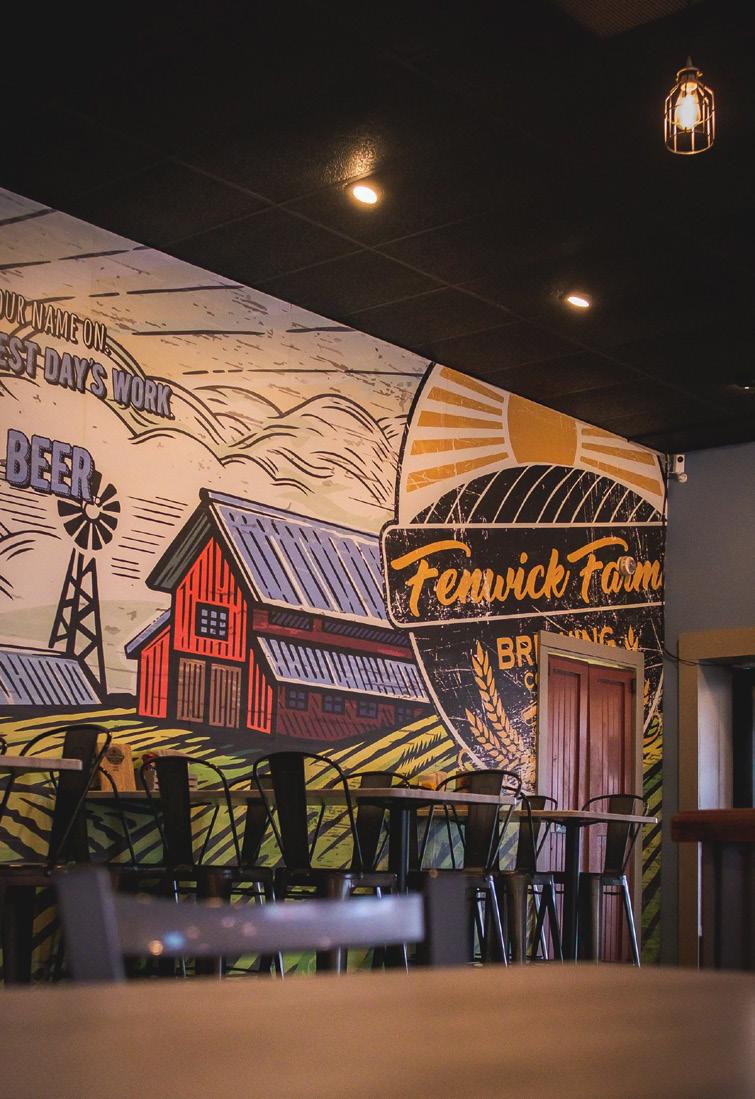
Good food served in a comfortable atmosphere makes Fenwick’s Scratch Kitchen and Taproom the place to go in Rensselaer. Those in the community flock to Fenwick’s because of its seasonal menu of family recipes made with fresh ingredients. But Fenwick’s success can also be attributed to its ability to alter course and evolve during the pandemic.
According to co-owner Kenny VanHouten, Fenwick’s opened as a nano-brewery in 2017 — one of the smallest licensed breweries in the state at the time. Shortly after it launched, the restaurant space next door became available, and Fenwick’s expanded into a full brewpub. “It was a natural extension of what people were already enjoying about
us — good beer, good food, and a comfortable place to gather,” VanHouten said. Then the pandemic happened and everything changed. “In 2024, we made the decision to cease brewing operations and operate as a full restaurant, allowing us to focus all our energy on food, hospitality, and the guest experience.”
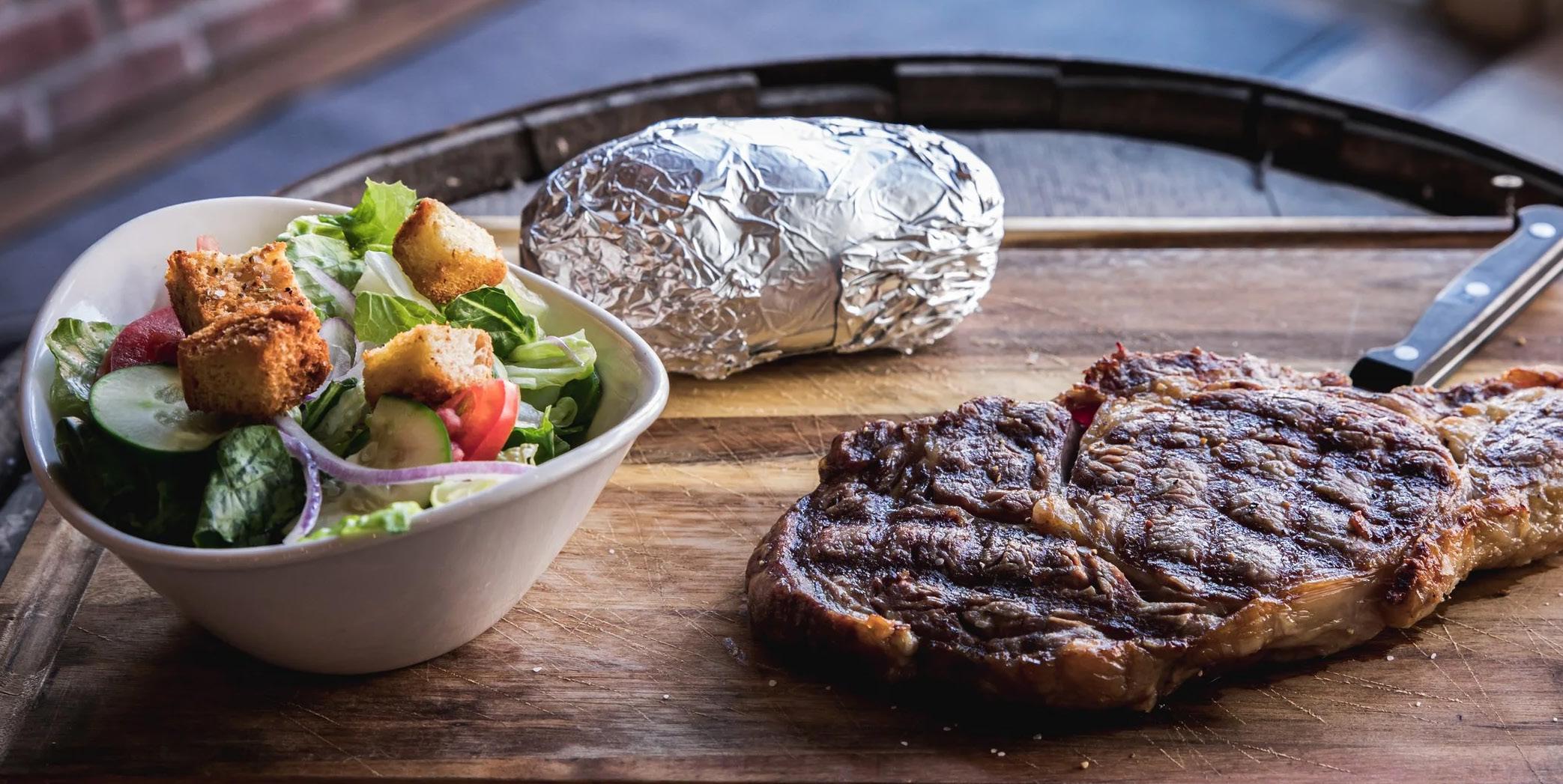
Fenwick’s stands out because real work goes into the food — the kind you can taste, VanHouten said. A large portion of the menu is made from scratch, from fresh burgers and handcut steaks to house-made sauces and dressings.
“We prioritize quality over shortcuts, and we stay committed to serving dishes that feel crafted rather than mass-produced,” he said. “Beyond the food, people tell us they appreciate
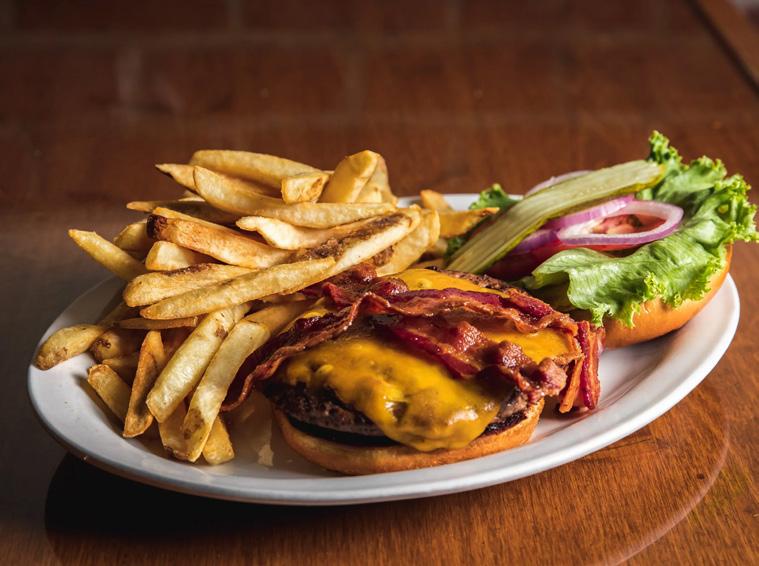
that Fenwick’s feels like a place ‘with a heartbeat.’ It’s casual, welcoming, and geared toward connection — whether that’s a family dinner, a night out with friends, or just a place to unwind after work.”
He said folks appreciate that Fenwick’s stayed committed to the community through tough seasons and they often hear that they’re the “easy choice” for both everyday meals and special gettogethers.
“There’s a sense of hometown pride around Fenwick’s, and that’s something we don’t take lightly,” VanHouten said. “Fenwick’s is about good food, done right, and served in a place where people feel comfortable being themselves. We’re here to bring the community together over plates that are made with intention and delivered with hometown hospitality.”


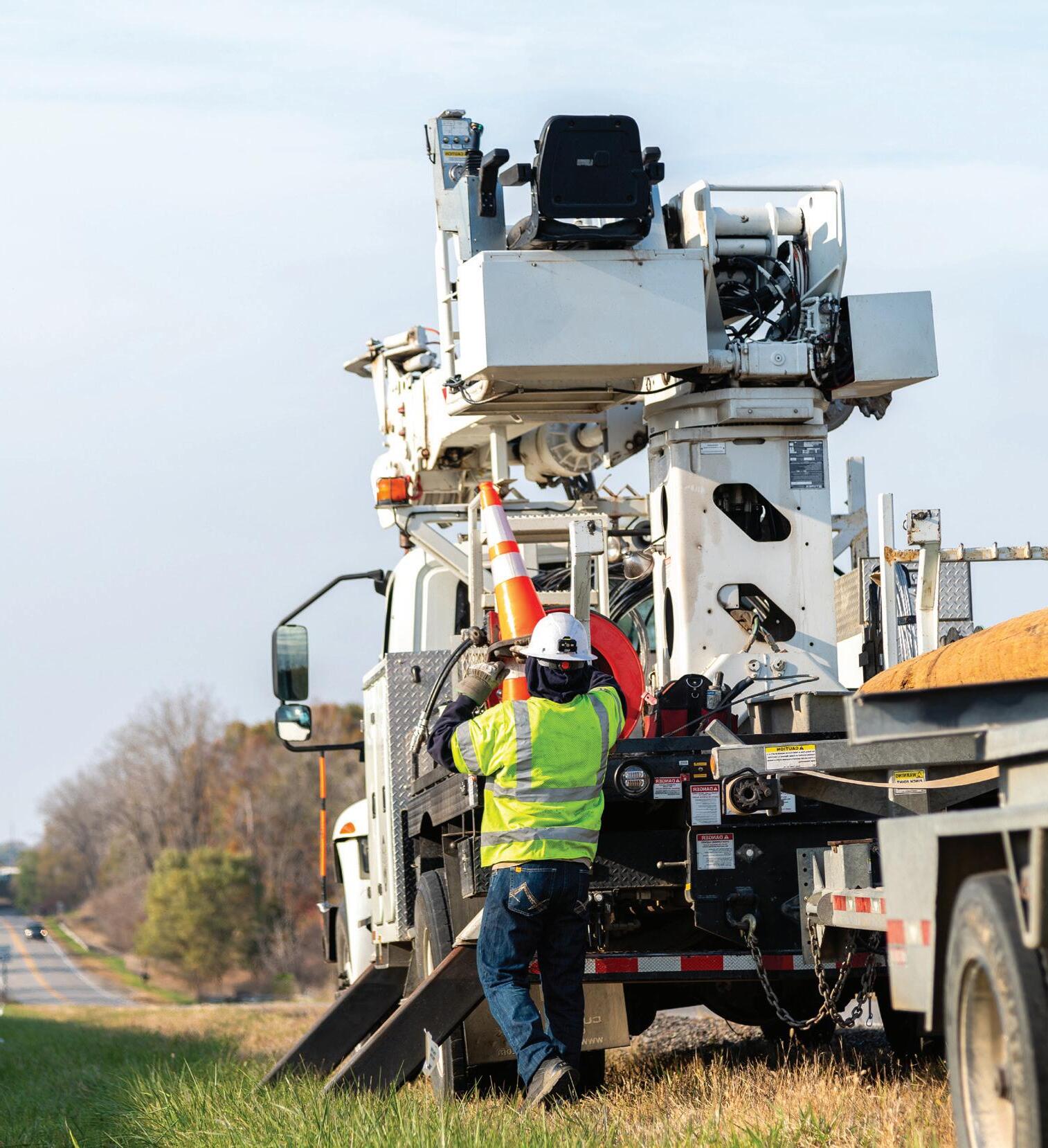
Work zones are among the most dangerous places on the road. According to the Indiana Department of Transportation, 269 people have died in work zone crashes in the past 10 years. In 2023 alone, 33 people were killed and more than 1,750 were injured in INDOT work zones.
Work zones don’t only involve highway construction. They also include utility crews who work along the roadside to build, maintain, and repair electric infrastructure. Crews may be working around the next bend, over a hill, or during overnight hours.
“Our crews already face dangerous conditions in their work,” said John Cassady, CEO of Indiana Electric Cooperatives.
“We ask drivers to slow down, stay alert, and give them space to return home safely.”
Watch for orange work zone signs, flaggers, and vehicles with flashing lights.
Slow down and be prepared for sudden stops.
Never stop in the roadway. This can trigger rear-end collisions.
Indiana’s “move over” law requires drivers to change lanes when approaching emergency vehicles stopped along the roadway if it is safe to do so. If not, drivers must reduce speed at least 10 mph below the limit and proceed with caution. While the law specifically applies to
emergency vehicles, motorists should extend the same courtesy to all roadside workers.
Violations carry steep penalties including fines, suspended licenses, or jail time if workers are injured or killed.
Rear-end crashes are the most common type of work zone accident and four out of five people killed in these crashes nationally are motorists and passengers. The time saved by speeding is minimal — traveling two miles at 65 mph instead of 45 mph only saves one minute.
Slowing down protects both roadside workers and drivers.
Sources: nwzaw.org, in.gov/indot/safety/ work-zone-safety
Indiana imposes strict penalties for driving infractions in highway work zones:
First-time citations for speeding in a work zone: $300 FINE
Second offense within three years: $500 FINE
Third offense within three years: $1,000 FINE
Reckless or aggressive driving in a work zone: UP
Causing injury or death to a worker:
The law is designed to protect not only highway crews but also utility workers and others performing critical jobs along roadways.
Collectors LOVE “firsts” as no collection is complete without the very first coin. First-year coins are almost always the most coveted coins and the 1964 First Year Silver Kennedy Half Dollar is no exception, especially when you consider the coin has been struck for over 60 years! But there’s something else that makes the First-Year 1964 Kennedy Half Dollar hoarded by all.
THE ONLY SILVER KENNEDY STRUCK IN 90% SILVER
What makes the 1964 Silver Kennedy Half Dollar stand out is its silver composition. While Silver Kennedy Half Dollars were issued from 1964-1970, the 1964 Silver Half is the ONLY YEAR made in 90% silver!
PUBLIC RELEASE - ONLY 1,193 COINS AVAILABLE
Rarcoa®, America’s Oldest Coin Company, is announcing the public release of 1,193 of the very first year and only 90% silver year, 1964 Silver Kennedy Half Dollars. What may be even more impressive is that each coin is in Brilliant Uncirculated condition, pristine as the day they were released.
SOLD NATIONALLY FOR AS MUCH AS $103
This same 1964 Silver Kennedy Half Dollar sells nationally for as much as $103. But thanks to Rarcoa’s buying power and deep numismatic expertise, you won’t have to pay $103.











or More! Limited time only.















You won’t have to pay $90. You won’t even have to pay $70. If you call now you can secure your first-year, only 90% silver, 1964 Silver Kennedy Half Dollar for as low as $59 per coin!
4 egg yolks at room temperature
¾ cup sugar, divided
1½ cups heavy cream, divided
1 Tbsp instant coffee
½ tsp vanilla extract
1 cup finely crushed chocolatecovered espresso beans (optional)
Preheat oven to 300 F. In a large bowl, beat egg yolks and 6 Tbsp sugar with a whisk for 1 minute until smooth. In a medium bowl, combine coffee and ½ cup heavy cream. Whisk until smooth, then add remaining heavy cream and whisk until well blended. Add coffee/cream mixture and vanilla to egg yolks and gently fold together with a rubber spatula. Use a ladle to pour mixture into four individual ramekins filled ¾ of the way to the top. Place ramekins in a roasting pan and pour water into the pan (around the ramekins, not into them) or until it reaches halfway up the side of the ramekins. Bake for 40-50 minutes until the brulee jiggles slightly when you shake the pan. Adjust baking time as necessary to ensure creme brulees are sufficiently set up. Remove pan from the oven and allow the heat of the water to finish the cooking process. Allow ramekins to sit for 20-30 minutes until cooled and fully solidified. Sprinkle 1½ Tbsp of sugar over each brulee, then use a small culinary torch to caramelize the sugar.
NOTE: If you don't have a culinary torch, you can also caramelize the sugar by placing the roasting pan just under your oven's broiler, but watch closely to prevent scorching. You can also add a little extra coffee flavor as well as crunch by allowing the caramelized sugar to cool then sprinkling each brulee with ¼ cup of chocolate-covered espresso beans that have been finely crushed.



Shirley Dowell, North Vernon
1 lb pork tenderloin
1 Tbsp instant espresso powder
1 tsp chili powder
1 tsp garlic powder
Trim any excess fat off the tenderloin. In a small bowl, mix the espresso powder, chili powder, garlic powder, onion powder, and brown sugar and pour onto a large plate. Place the tenderloin on top of the rub and roll it several times while pressing gently to coat the entire surface with the rub. Cover the tenderloin with plastic wrap and refrigerate for 1 hour. Unwrap the tenderloin after 1 hour and sprinkle with salt and pepper on all sides. Preheat oven to 375 F. Lightly coat a large saute pan with olive oil and preheat to piping hot. Add the tenderloin to the pan and sear just long enough to brown on each side
1 tsp onion powder
1 tsp brown sugar
Olive oil for searing
Salt and pepper
— approximately 30-60 seconds for each surface. Place tenderloin in a shallow pan and roast in the oven 15-20 minutes until cooked thoroughly. Slice and serve immediately.
NOTE : When you place the tenderloin in the saute pan, you should hear a loud sizzling sound. If you don't, the pan is not hot enough. Remove the tenderloin and continue preheating the pan. Cooking at a lower temperature will prevent searing the rub onto the meat and a lot of the rub will be left in the pan, resulting in less flavor and texture on the tenderloin.


1 cup solid packed pumpkin puree
⅔ cup light brown sugar
1 tsp vanilla extract
8 oz mascarpone cheese (room temperature)
1½ tsp ground cinnamon
1 tsp pumpkin pie spice
1 cup heavy whipping cream
1½ cups cold espresso or strong coffee
1 package (about 24) lady finger cookies
Cocoa powder for topping
In a mixing bowl, combine pumpkin, brown sugar, vanilla, mascarpone, and spices until combined. Set aside. In another mixing bowl, beat whipping cream until stiff peaks just barely form. Don't overbeat or you will form butter. Fold whipped cream into pumpkin mix just until combined. Set aside. Pour espresso into a bowl. Dip lady fingers in espresso to cover both sides. Don't oversoak the cookies. Arrange one layer of cookies in the bottom of a 9 x 9-inch square glass or plastic pan. You may have to cut the cookies to fit into the pan. Spread half of the pumpkin mix over the soaked cookies. Repeat for a second layer. Sift cocoa powder over the tiramisu. Cover and chill at least 4 hours to set.
By Brian D. Smith
Winter’s done and spring’s begun. Tired of living on the run?
Maybe it’s time for a breather — nothing grandiose, just a getaway that’s not too long, not too far, and not horrendously pricey. A placid place surrounded by woods, water, and wildlife.
Here’s the good news: There’s room at the inns. Of the 24 Indiana State Parks, seven offer overnight accommodations, and they’ll soon be joined by an eighth, Potato Creek. Spanning the state from the extreme northeast to the Ohio River, they feature more than 600 rooms for around $85 to $250 per night — with
consecutive-date discounts of twofor-one in the winter and 25 percent in the spring and fall on select nights. (Information: 877-LODGES-1 and in.gov/dnr/state-parks.)
Long-term planners, take note: Room reservations can be made as early as two years before your preferred date. “And the best part about that is that rates are set for what they are now,” said Christopher Fouke, business development manager for Indiana State Park Inns. “So, the earlier you book, the less it’s going to be.”
Don’t limit yourself to warm weather. Today’s state parks are year-round destinations packed with natural and manmade attractions, making it easy to create a plan for all seasons.
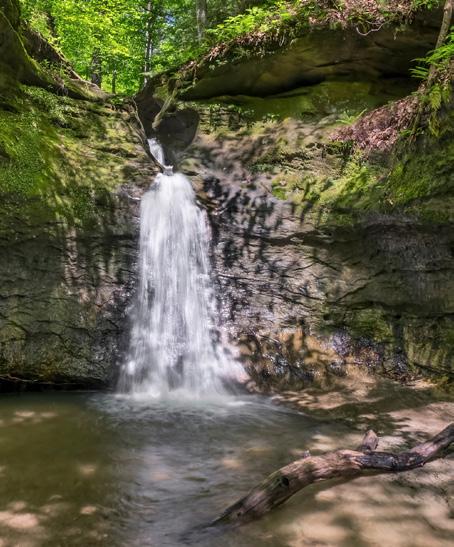
Heavy snow and frozen lakes bring out the skis, skates, sleds, and snowshoes at Pokagon, not to mention 30 mph runs on the park’s iconic toboggan. Spring rains feed the four waterfalls at Clifty Falls. Summer finds Fort Harrison’s nationally acclaimed public golf course in full swing. And nothing says autumn like a leaf-peeping trek to Brown County.
Nor should wicked weather put a damper on your great escape. Parents with cooped-up kids can take their bouncing brood to a game room or an indoor pool, while adults seeking less kinetic endeavors can curl up in a library, a wildlife observation area, or a fireplace-toasted lounge on chilly days.
Sound appealing? Read on for a deeper dive into the seven inns and the state parks that host them. You’ll find enough possibilities to turn your in-state excursion into an inside-thepark home run.
Brown State Park County joined the Hoosier parks system in 1929, but its condition during the Great Depression was greatly depressing. A deforested tangle of weeds and briars, it regained its sylvan splendor through the tireless tree-planting of the Civilian Conservation Corps (CCC).
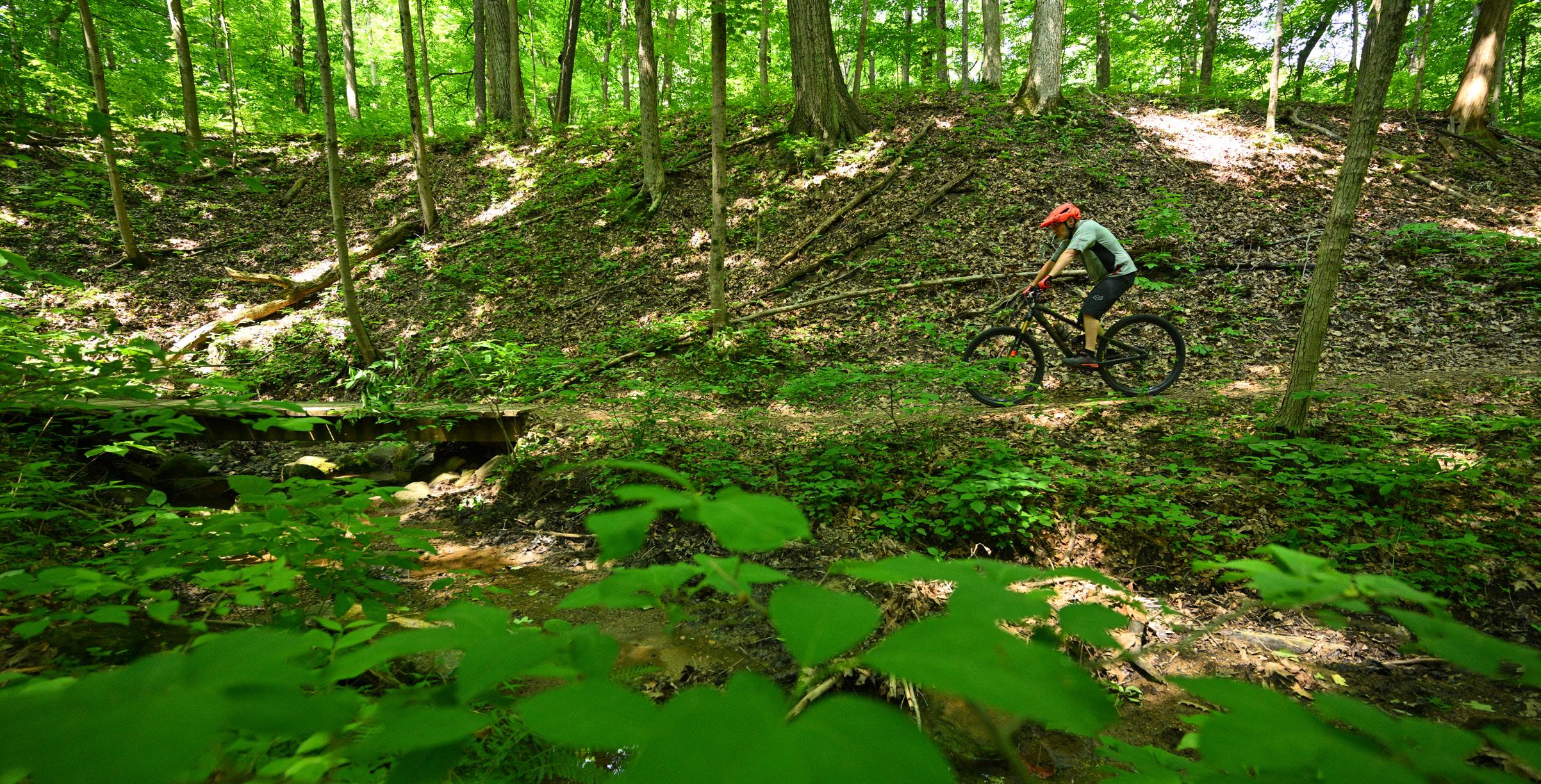
This 15,815-acre expanse ranks as Indiana’s largest state park — more than 10 times the size of Clifty Falls or Spring Mill — and with 1.5 million visitors per year, second only to Indiana Dunes in popularity. Fall foliage draws the masses, but its yearround offerings include 150 miles of roads and trails accommodating legs and wheels of two and four.
Hikers can choose from 13 paths leading to destinations such as the Ogle Hollow Nature Preserve, home to the Indiana-endangered yellowwood tree. The saddle barn caters to horse lovers with guided trail rides and pony rides for all ages. Mountain bikers regard the park as one of the Midwest’s best destinations. And your family car will take you to an 1838 covered bridge, an hour-long audio tour, and the scenic Seven Vista Challenge.
Fishing, boating, tennis, and pickleball await guests on suitable days. And if it’s damp outside, you can get damper inside at the Abe Martin Inn aquatic center, home of a water slide and zero-entry (gradually sloping)
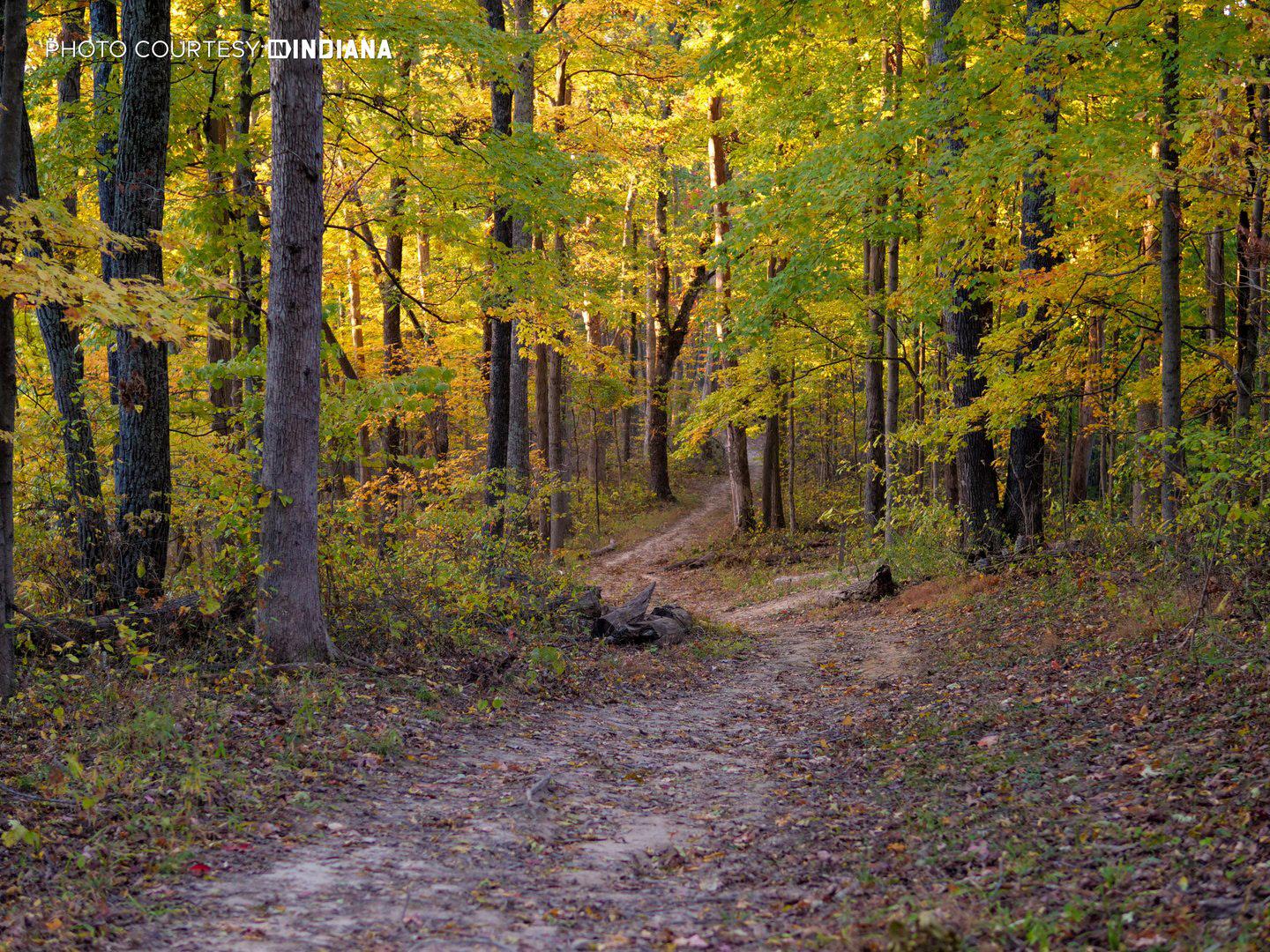
Brown County State Park, Indiana’s largest state park, features 150 miles of roads and trails. The park is located in Nashville, Indiana.
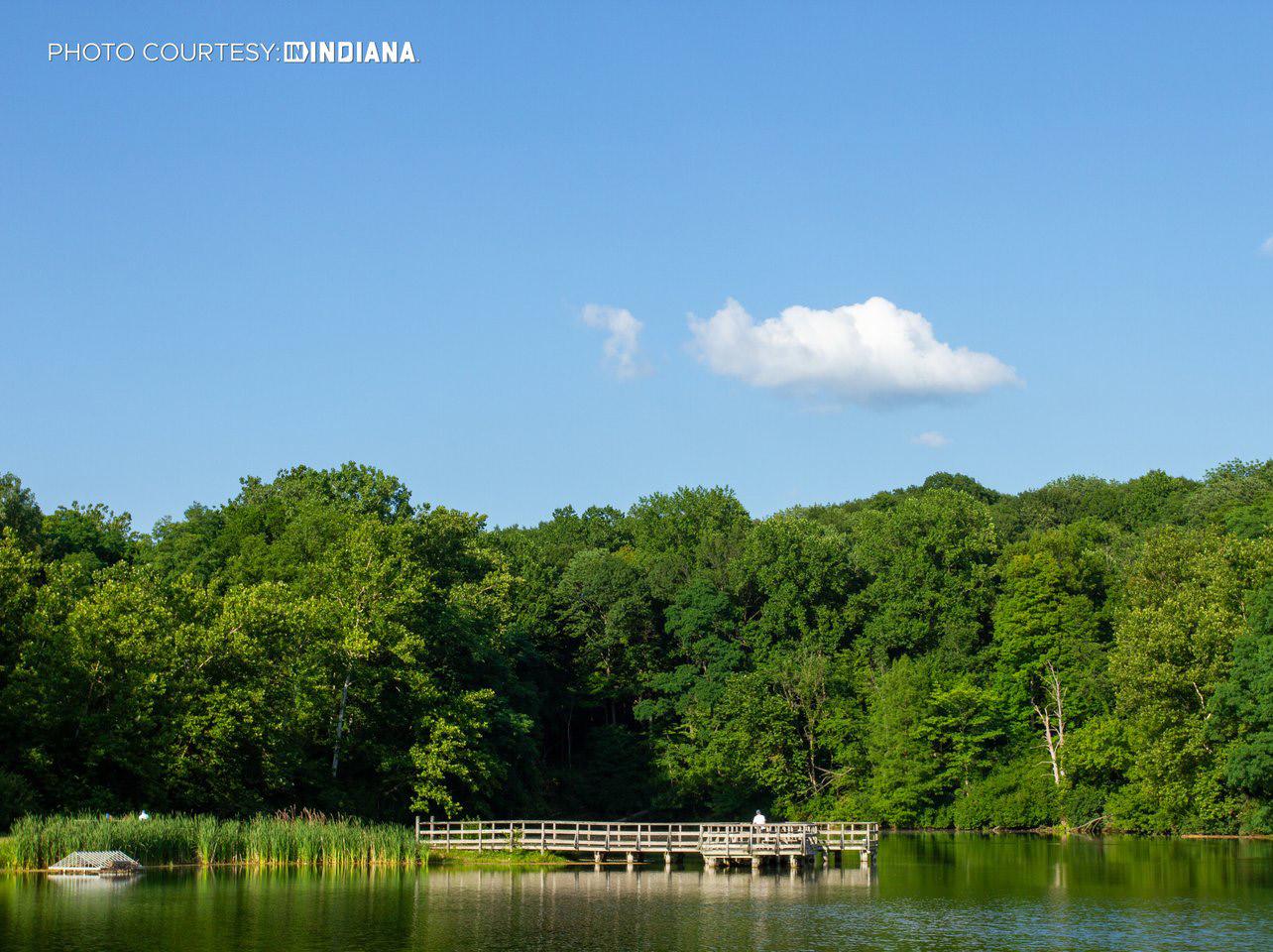
swimming pool. The 84-room inn, which also rents cabins, is named after an early-20th-century comic character from Brown County who dispensed homespun wisdom such as, “A good listener is usually thinking about something else.”
Pro tip: For a drone’s-eye view of the park, climb the 90-foot fire tower, built in 1930.
Fort Harrison State Park is located just minutes from downtown Indianapolis. Visitors can enjoy outdoor pastimes like fishing, hiking, golf, and horseback riding.
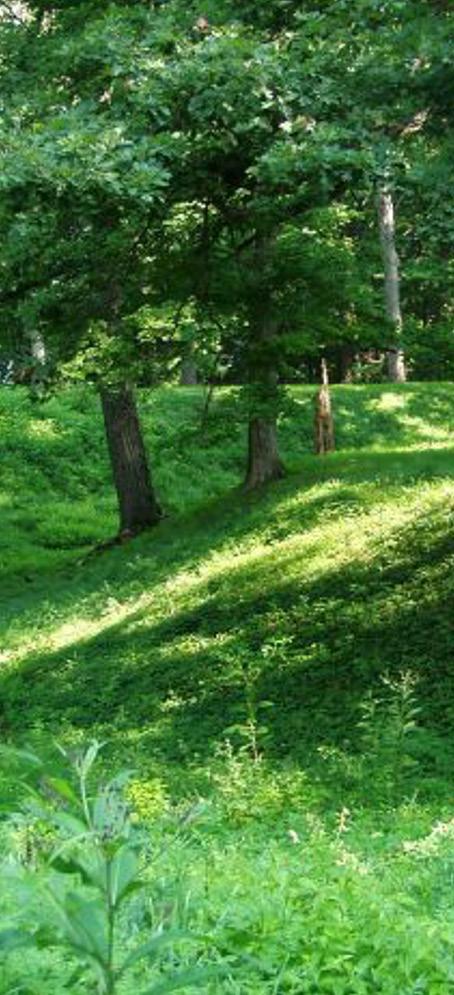
During its 90 years as a U.S. Army post, Fort Benjamin Harrison remained off-limits to most outsiders — particularly unescorted women, who in earlier times were stopped, questioned, and shown the front gate if they lacked authorization. Then, in 1996, Fort Ben became Fort Has-Ben, trading its military stripes for civilian
continued on page 22
continued from page 21
life as a 1,744-acre state park that retained 70% of the original property.
Today, more than a million visitors a year are discovering the secrets of Fort Harrison State Park, situated nine miles northeast of downtown Indianapolis in suburban Lawrence.
Start with The Fort Golf Resort, a Pete Dye-designed layout that once ranked third on Golf Digest’s “Best Affordable New Public Courses” list. Originally nine holes and expanded to 18 in 1972, the former GI links remain one of Indiana’s best.
For history buffs, the Museum of 20th Century Warfare displays artifacts from former Fort Harrison soldiers, and two districts listed in the National Register of Historic Places invite exploration. Military history even encompasses the lodgings — the 28-
room Fort Harrison Inn was a post hospital, and the Harrison House and Officer Homes accommodated visiting brass.
The roll call of activities includes 15 miles of hiking trails (one paved), guided horseback rides, picnicking, fishing, and on snowy days, sledding on a popular hill — possibilities well worth saluting.
Pro tip: A 10-acre dog park, accessible only from the north, contains three separate play areas.
For most Hoosiers, the easiest way to reach Pokagon State Park is to head north on I-69 and exit four miles before you run out of Indiana. The 1,260acre Steuben County property tucks into the state’s northeast corner like a kitchen tile wedged between Michigan and Ohio.
This is lake country, a gift of the glaciers that melted 15,000 years ago, and as Indiana counties go, Steuben is one of the “lake-iest” with more than 100. Pokagon visitors enjoy swimming, fishing, and boating on Lake James — the state’s third-largest natural freshwater lake – along with its two beaches.
Pokagon (pronounced “Po-KAY-gun”), which turned 100 last year, was originally known as Lake James State Park until its 1937 relabeling to honor Leopold and Simon Pokagon, fatherand-son leaders of the Potawatomi (“Pot-a-WOT-a-me”) tribe. The namesake Potawatomi Inn offers 126 rooms plus cabins, and guests can access 14 miles of trails, bicycle rental, and a saddle barn.
In winter the park comes alive with cross-country skiing, ice skating, and snowshoes. Indoor offerings include
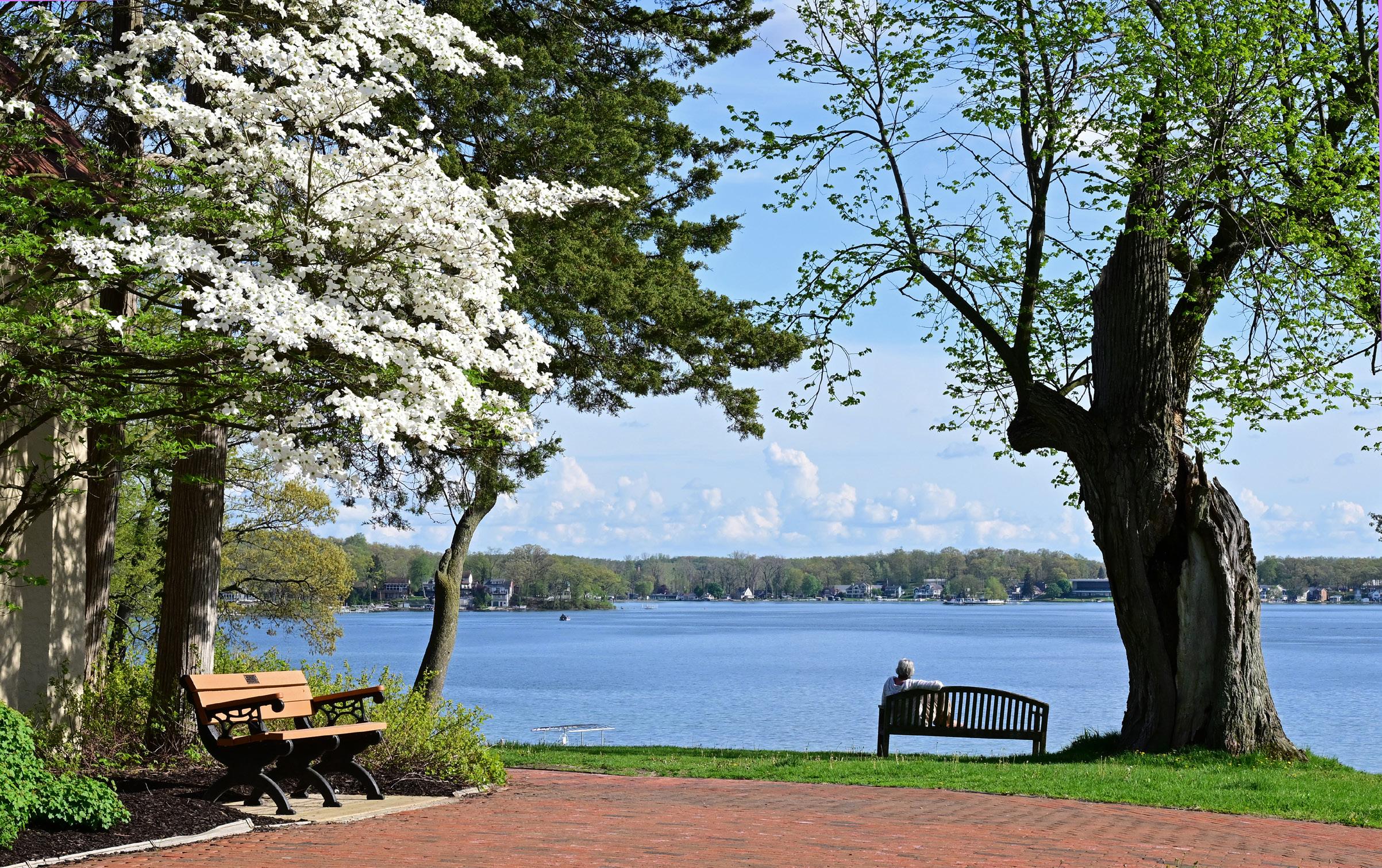
a pool, a hot tub, a sauna, a game room, two restaurants, and several fireplaces.
But Pokagon’s claim to fame is its toboggan, initially constructed in 1935 by the CCC. Sleds on two tracks slide from a 30-foot tower onto the quarter-mile course, which plunges 90 vertical feet.
It’s all downhill from there.
Pro tip: For an outdoor workout (and a souvenir for completion), try the Hell’s Point Challenge, an eight-mile hike with an 84-step climb to the park’s highest spot.
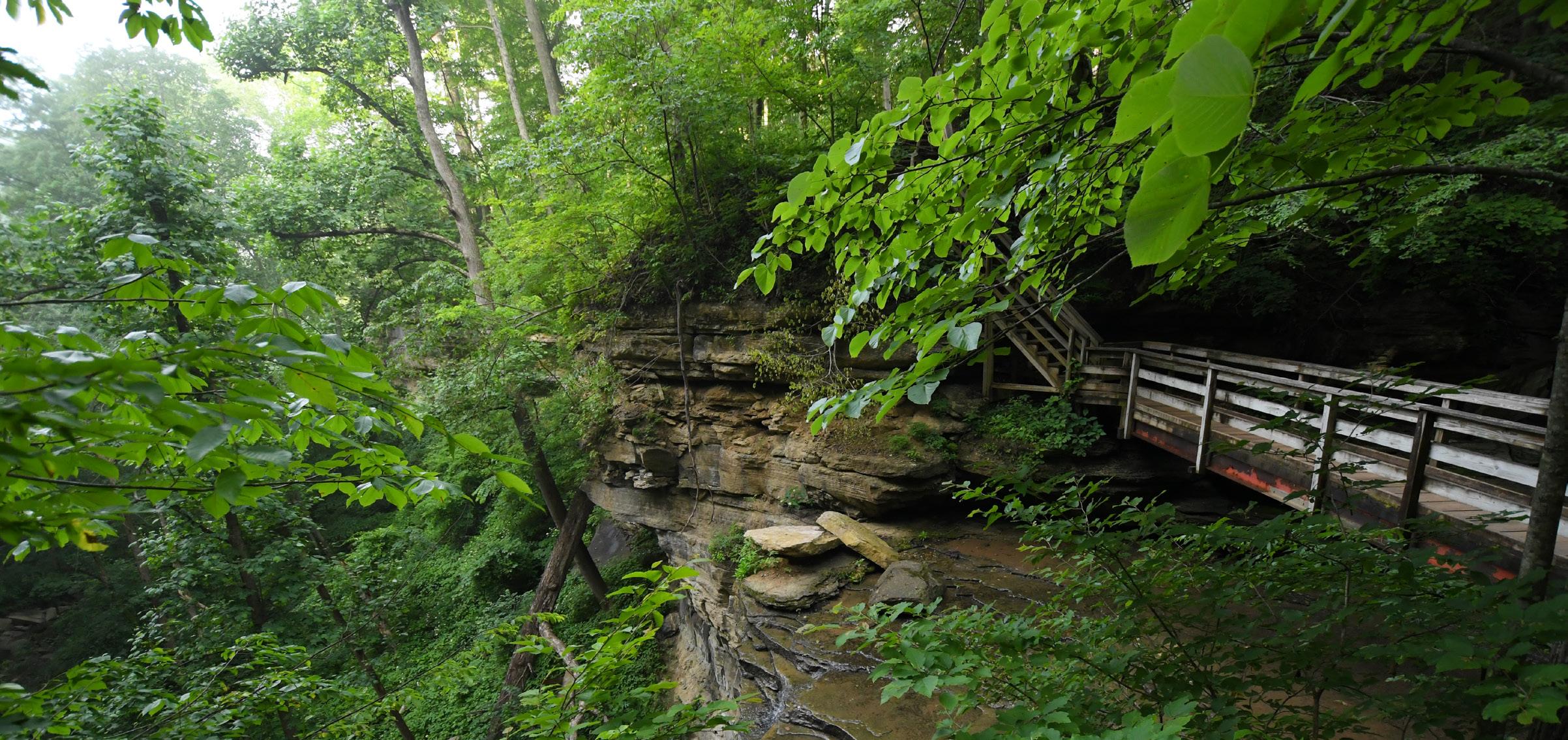
Eleanor Roosevelt slept here. En route from Lexington, Kentucky, to the Chicago World’s Fair in 1934, she and two female companions found lodgings at the Clifty Inn — where, clutching a pair of binoculars, the First Lady glimpsed the Ohio River from the 400-foot bluffs.
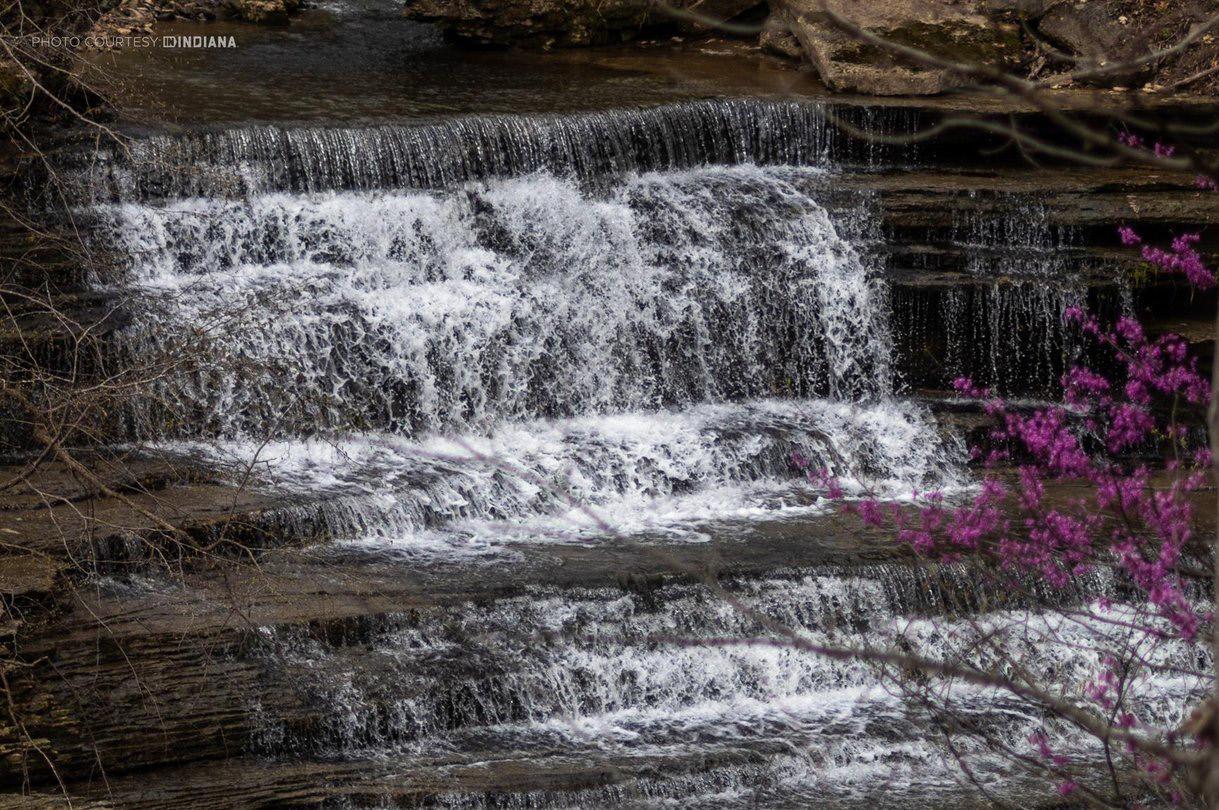
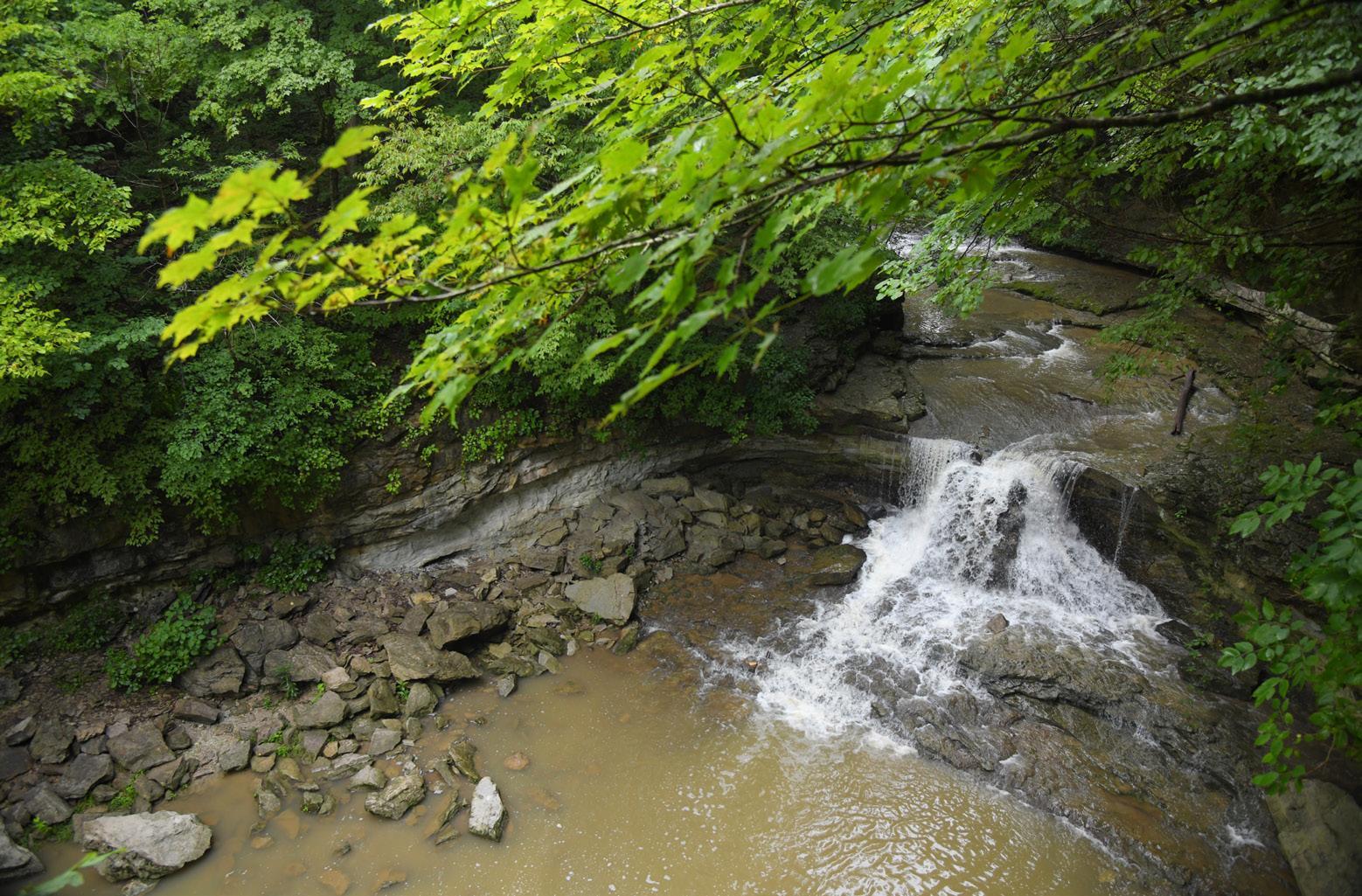
The same spectacular view comes free with any stay at Clifty Falls State Park, along with access to four
waterfalls and the city of Madison, whose 133 downtown blocks form a National Historic Landmark district. No wonder the late TV reporter Charles Kuralt — known for his “On the Road” segments with CBS Evening News — dubbed Madison “the most beautiful river town in America.” Meanwhile, USA Today readers have voted it the Best Small Town in the Midwest for the past two years.
Within the 1,519-acre park, history and hiking mingle in the traces of an
1850s railroad project that went off track before it ever got any. Scattered remnants lie along the 15 miles of trails — limestone bridge abutments, retaining walls, and a 600-foot tunnel that’s currently closed to all but the bats, frogs, and salamanders that call it home. Hikers can also tackle the Four Falls Challenge, a four-mile trek to every waterfall in the park and receive a souvenir sticker to document it.
continued on page 24
continued from page 23
The Clifty Inn encompasses 71 rooms classified as riverside or parkside, depending on the view, and The Falls restaurant serves homestyle delights such as the Hoosier Tenderloin and Fried Biscuits and Apple Butter. Other amenities include an indoor and Olympic-size outdoor swimming pool, tennis courts, and a sun porch.
Pro tip: Waterfalls vary from a roar to a trickle depending on recent
precipitation, so you’ll likely find them at their most photogenic in winter and spring.
They called it “the Grand Canyon of Indiana” when McCormick’s Creek State Park opened in 1916. And it was no accident that the dedication of this first state park took place on July 4 during the centennial year of Indiana statehood, to the accompaniment
of speeches, music, a picnic, and fireworks.
A century later, McCormick’s Creek is still worth celebrating — and there’s a lot more space to do it in. The park now encompasses almost 2,000 acres, more than five times its original 347, along with several other natural curiosities. Visitors can overnight at the 76-room Canyon Inn or a cabin and enjoy the restaurant, indoor pool, tennis courts, and a climbable fire tower.
From there it’s a short but rugged hike to the canyon and nearby waterfall — or a moderate jaunt to Wolf Cave and the Twin Bridges, naturally formed stone arches. Spelunkers should bring a flashlight and expect to do a belly crawl on a potentially muddy cave floor.
Unfortunately, a harsher side of nature — an EF-3 tornado in March 2023 — has left visible scars. Originating within the park, the 153-mph twister caused two fatalities, felled thousands of trees, and ravaged the campground and the Wolf Cave Nature Preserve. About four out of 11 miles of trails, all in the park’s northwest section, will remain closed indefinitely.
Pro tip: The old Statehouse Quarry, accessible by hiking trail, furnished limestone that formed the foundation of the state capitol during the late 19th century.
Spring Mill State Park is as old as pioneer times and as new as the space age — and you can sample both without leaving the park. Nature’s highlights are even older, including a parcel of virgin forest and several caves, one of which hosts underground boat tours.
continued on page 26

A Heat Pump Water Heater Helps You Use Less Energy.
Running showers, laundry, and dishes adds up — fast. Your water heater is your home’s second largest energy user. That’s a big impact on your electric bill. With a Heat Pump Water Heater, you get the same comfort as your existing water heater using only a fraction of the energy, helping you save month after month.

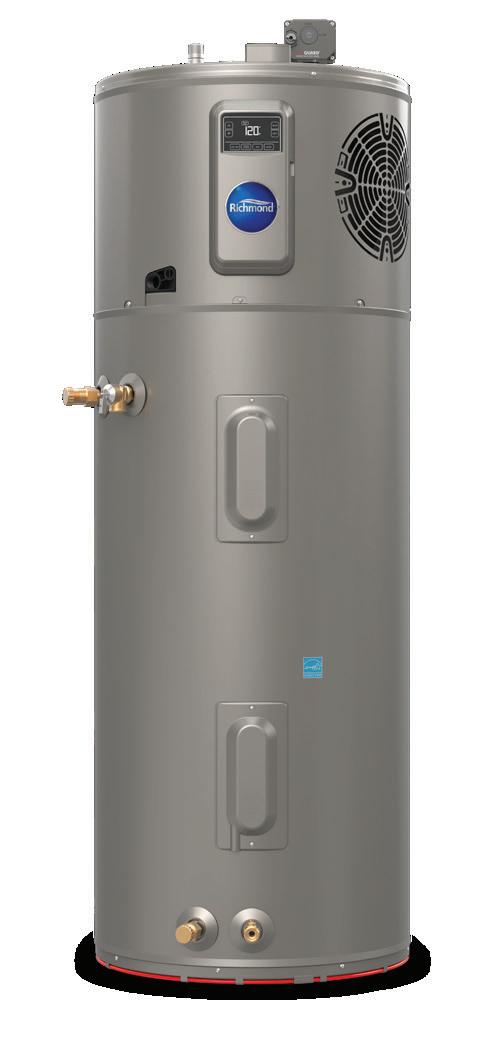
To learn more about Heat Pump Water Heaters stop into Menards. Select stores will have the Richmond Mobile Showroom on site! Stop in from 9:00am to 3:30pm and talk with a Richmond Representative.
continued from page 24
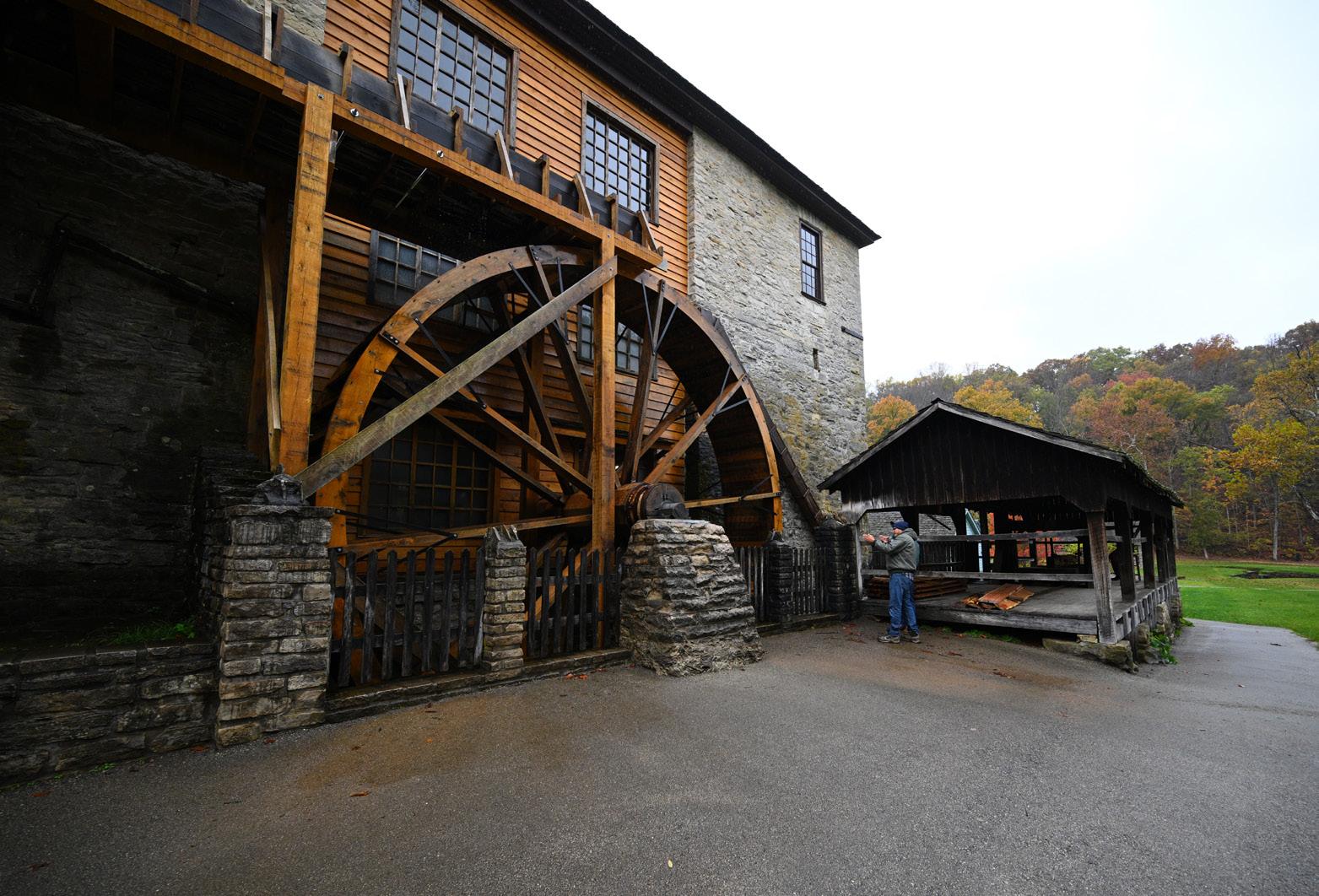
At Pioneer Village, costumed interpreters re-enact 19th century life in about 20 historic buildings (most reconstructions and relocated originals), mimicking the Spring Mill community that once thrived here. The star attraction, a 200-year-old restored grist mill, resumed grinding corn a year ago after breaking down in 2021. It was rebuilt using tornado-toppled timber from McCormick’s Creek State Park.
A more recent pioneering past is honored at the Virgil I. “Gus” Grissom Memorial Museum, which features the Gemini 3 capsule and space suit used by the astronaut from nearby Mitchell. He perished in 1967 when fire broke out inside Apollo 1.
Elsewhere on the 1,358-acre property, Spring Mill Inn offers 71 rooms plus cabins, along with the Millstone Dining Room and a swimming pool. Guests can also enjoy the 11 miles of hiking trails, the two-mile mountain bike trail, and basketball and tennis courts. And one of the park’s three nature preserves, named for the Mitchell Karst Plain, recognizes the unusual topography of the area — “a limestone plain riddled like Swiss cheese with sinkholes,” in the words of WLFI-TV, Lafayette.
Pro tip: The grist mill grinds corn on weekends from late April through October, and the resulting cornmeal — sold by the bag at Spring Mill — is a coarser-than-store-bought kind that makes excellent cornbread.
With a little more luck, Indiana’s second state park might have become its first. And with a little less luck, it might have become veneer.
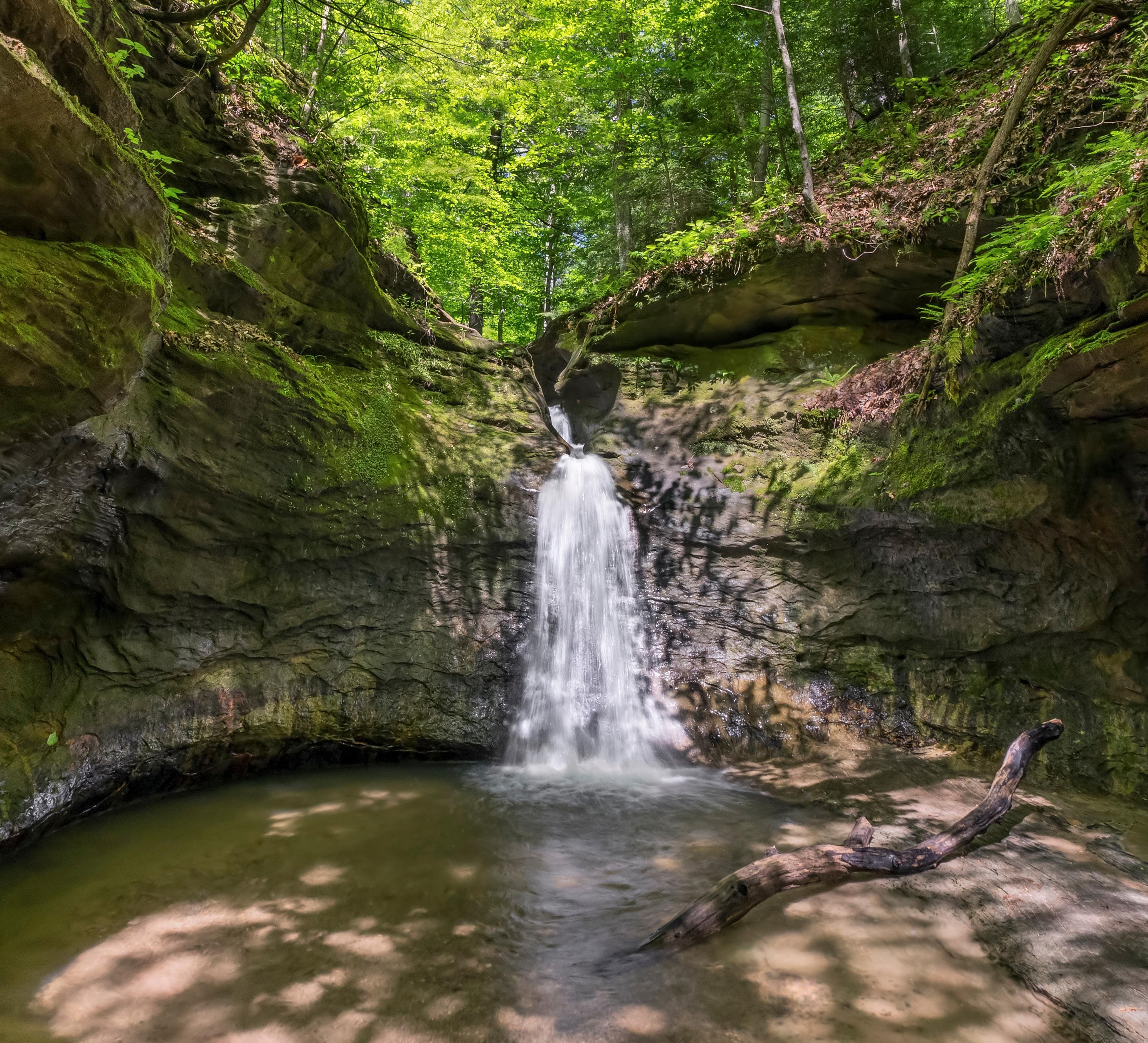
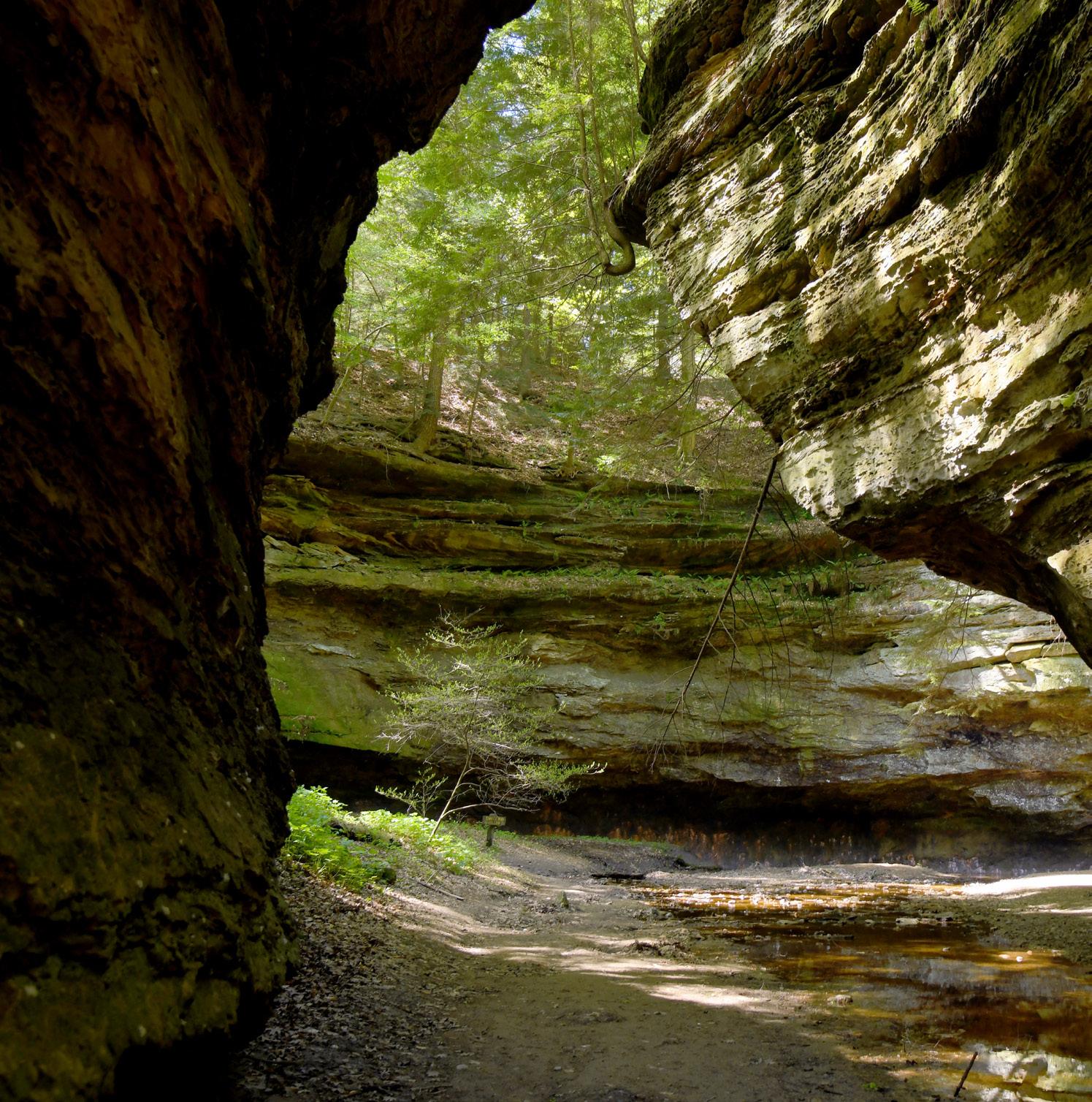
Find breathtaking views on your hike at Turkey Run State Park in Marshall.
The park offers 14 miles of trails for visitors to explore. (Photo courtesy of Indiana Department of Natural Resources.)
Purchase your Indiana State Park Entrance Pass at stores.innsgifts.com/permits
The state tried to buy Turkey Run State Park’s original 288 acres of predominantly virgin forest at auction in May 1916, but couldn’t beat a $30,200 bid by Hoosier Veneer Co. To the rescue came a groundswell of donors, including the owners of the Indianapolis Motor Speedway, and the resulting $40,200 offer closed the deal.
Today, the park is a 2,400-acre geological wonderland, with 14 miles of trails through sandstone ravines and gorges sculpted by glacial meltwater. Colorfully named geological features — Punch Bowl, Ice Box, Camel’s Back, and Gypsy Gulch — invite exploration. And while some trails are rated “rugged” or “very rugged,” it’s a risk/reward prospect,
as evidenced by Midwest Living magazine’s 2023 choice of ladderequipped Trail 3 as the “Best Hike in the Midwest.”
The park abounds with manmade treasures, too: Two covered bridges, a coal mine, a log church, and a suspension bridge across Sugar Creek, which divides the park. There’s even a planetarium. Turkey Run Inn has 61 rooms plus cabins, along with the Narrows Restaurant and an indoor heated pool.
Just don’t go looking for running turkeys.
Pro tip: Trails can get waterlogged, muddy, and slippery, so bring sturdy waterproof hiking boots with treads.
APRIL 18
St. Mary-of-the-Woods | Various locations spsmw.org
Nature shows and earth-related craft activities for all ages, spinning/weaving/felting demonstrations, visits with the alpacas, food, and craft vendors. 11 a.m.-3 p.m. No admission charge.
APRIL 24-26
Whitestown | Anson Acres Park whitestown.in.gov/parks-events
Step into a Norse adventure with Viking villages, battle reenactments, live entertainment, and food. Admission charge.
APRIL 24-25
Seymour | Downtown crossroadsacousticfest.com
Americana music, food, drinks, and artist merchandise. Admission charge.
APRIL 24-26
Mansfield | Hilltop Farm coveredbridgemansfield.com
5
16
Lanesville | Lanesville Heritage Park lanesvilleheritageweekend.com
1 2 3 4 1 2 3 4 5 6 6
Mushroom auctions, live music, vendors, and food. Car show on Sunday. Camping available. No admission charge.

Travel through the scenic countryside via tractor and enjoy lunch. Snacks and lunch provided. 9 a.m.-3 p.m. $30 with all proceeds benefiting the Crusade for Children.
MAY 16
Kendallville | Downtown kendallvillemainstreet.com
Art, craft, and food vendors; storytime with Tinkerbell; fairy tea party; meet a unicorn; and sword fighting comedy. No admission charge.
In today’s digital age, generation and transmission cooperatives like Hoosier Energy have become increasingly data driven. Since, until recently, that data resided in a variety of forms and locales, cohesiveness was elusive.
However, over the past two years, Hoosier Energy’s transmission assets and scheduling team has set out to unify that information — from vegetation management to line to substation to meter relay to communications. How? By using a geographic information system (GIS).
GIS essentially creates, manages, analyzes, and maps all types of data by connecting location information with descriptive attributes.
Initially managed by an outside contractor, the GIS is now under the watchful eye of Jason Santana, Hoosier Energy’s GIS and enterprise asset management (EAM) coordinator. He’s been able to take what GIS software company Esri provides and customize it to meet the needs of Hoosier Energy, including writing custom scripts and designing dashboards for not only Hoosier, but its members.
It all falls under the computerized maintenance management system (CMMS), allowing work to be shared across all platforms.
The rollout process has grown over the past year as Santana created new tools, updated images and designed dashboards for each department.
Vegetation management and the right-of-way crews have used the GIS the longest due to the nature of their work. The line crews followed suit, and because of a continuous improvement request from the substation crews, they got involved with the GIS this past October. The rollout will continue with communications and meter relay.
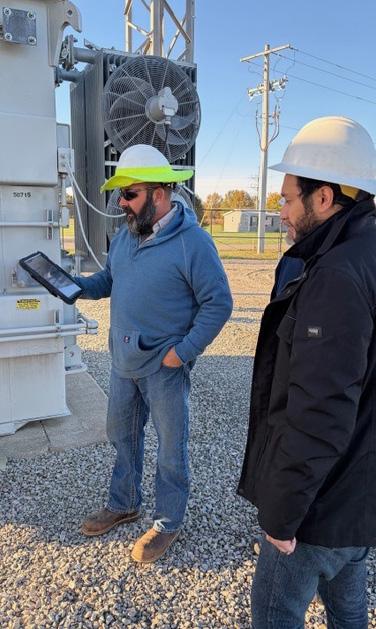
While maps and locations are the first things that come to mind with the GIS, there’s much more to it. “It’s a repository of information, it’s a database, it’s a way to communicate,” Department Manager Jody Tindall said. “It’s a way to fill out forms, submit forms, create forms, without ever looking at a map.”
With the recent substation rollout, crews are now able to input pictures of a transformer and a serial number, or a regulator and its rating. Model numbers are available, so if something goes wrong, there’s no guessing or making a special trip to figure out which parts are needed. All anyone has to do is click the location on a map and pull up the assets.
The improvement in efficiency and available data is helping Hoosier Energy make better decisions and maximize the potential of its workforce moving forward.
Lineworker
April 13
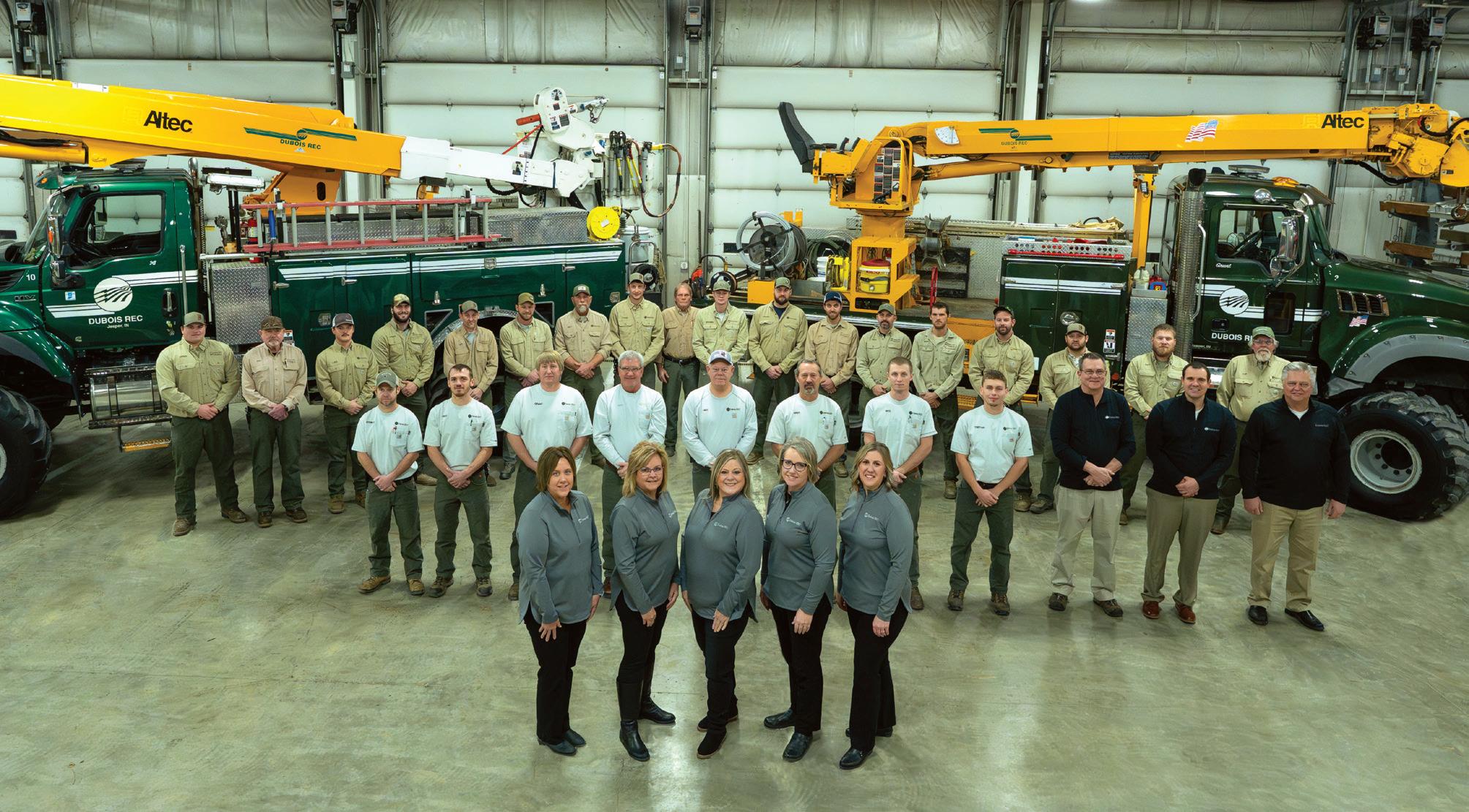
We appreciate the men and women who work for Dubois REC. From the front office to the powerlines, and all the jobs in between — we have some amazing and dedicated employees!

By Mike Lunsford
Iam one of those optimistic sorts who declares spring’s arrival as soon as I slip the muddy bonds of February. A true believer in “meteorological” seasons, I contend that spring is here on March 1, despite its usual snowy backsliding. Among the reasons to feel this way is a little bit of white and violet and green called harbinger of spring.
Before virtually any other sign of the new season appears, before trees bud and frogs croak, harbinger of spring is here, a small but mighty usher that opens the door to wood anemones and spring beauties, prairie trillium, and blue phlox.
Although I walk down into my woods in all seasons, including a fair amount of time in the wind and snow of winter to inspect beaver dams and pond ice, I can also find harbinger of spring as early as February pulling itself out of the frozen ground amid last fall’s leaves and fallen twigs.
Of course, by late March and early April, the curtain has been pulled back on the new season, and I begin to see a lot of old friends in the usual spots: the wild ginger that grows on a hillside where an old power line was removed, the buttercups that flourish near a meandering branch tucked away in my in-laws’ beautiful woods, the Star-of-Bethlehem that pops up under a magnolia tree near my cabin.
I nearly always choose to be in the places where I know spring wildflowers prosper, some nearly hidden by the woods’ undergrowth by very early May. Among them, lightcatching waterleaf that grows in great lavender stands in the low places near our pond, deep purple larkspur I first see along an old railroad grade, and brilliant firepinks whose bright red stars thrive amidst yellow trout lilies on an east-facing hillside that sits above an otherwise swampy and smelly wetland.
I enjoy Virginia bluebells too, a thick-stemmed and showy mixture of blooms that only last a few weeks. Always abuzz with bumblebees — their primary pollinators — bluebells aren’t as common as they once were. Because they are drawn to growing in flood plains, I know I can find them each spring in an oxbow that juts out into the creek, a place that holds little else but fallen boxelders and rogue maple trees.
A few months ago, I learned that the word “harbinger” has Germanic and French and Middle English origins and that it was a title given to those who went ahead of an army or traveling nobility to find lodging and food, hence the idea of announcing an arrival. Spring is here; a tiny flower has told us so.