Hospitality is, above all, about the people, places and stories that stay with us long after a journey has ended.
This year, Electra Metropolis Athens celebrates ten years of operation. Over the course of this decade, the hotel has flourished alongside Athens, becoming part of the city’s contemporary identity. From the very beginning, our vision was to create something more than a hotel: a place that reflects the spirit of Athens, combining authentic Greek hospitality with culture, art and a modern guest experience.
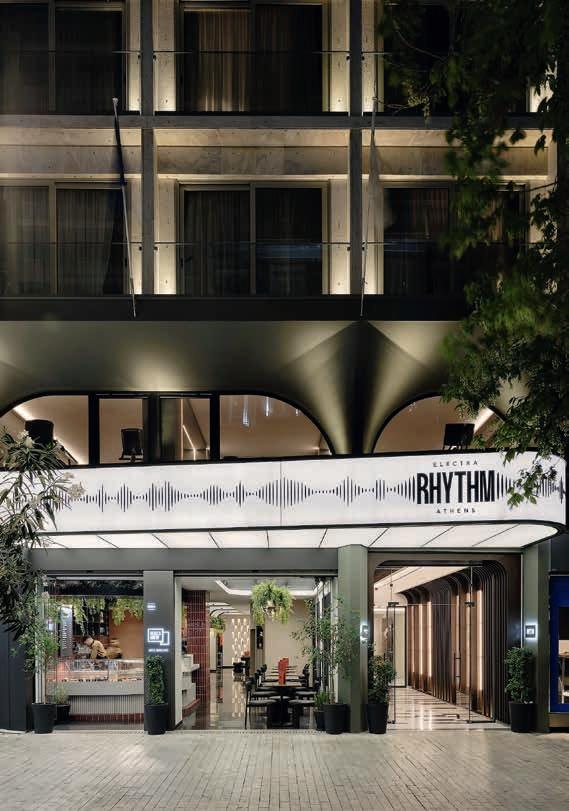
This anniversary coincides with an exciting new chapter for the Electra Group. The opening of Electra Rhythm Athens, the ongoing enhancement of our existing properties, the evolution of our brand identity and the development of new hotel projects all reflect our commitment to continuous growth and innovation, while remaining true to the values that have guided us from the start.
At the same time, sustainability continues to shape every aspect of our operations. For us, responsible growth is not a separate initiative but an integral part of our philosophy. Whether through investments in more efficient infrastructure, support for our people and local communities, or efforts to reduce our environmental footprint, we remain committed to creating lasting value for future generations.
As we look ahead, we remain true to the principles that have defined the Group for more than six decades: authenticity, consistency and an unwavering pursuit of quality. With the same optimism and sense of responsibility, we continue to create experiences that connect our guests with the essence of Greek hospitality.
We hope the pages that follow will offer a closer look at the people, values and vision behind every Electra experience.
Thank you for your trust.
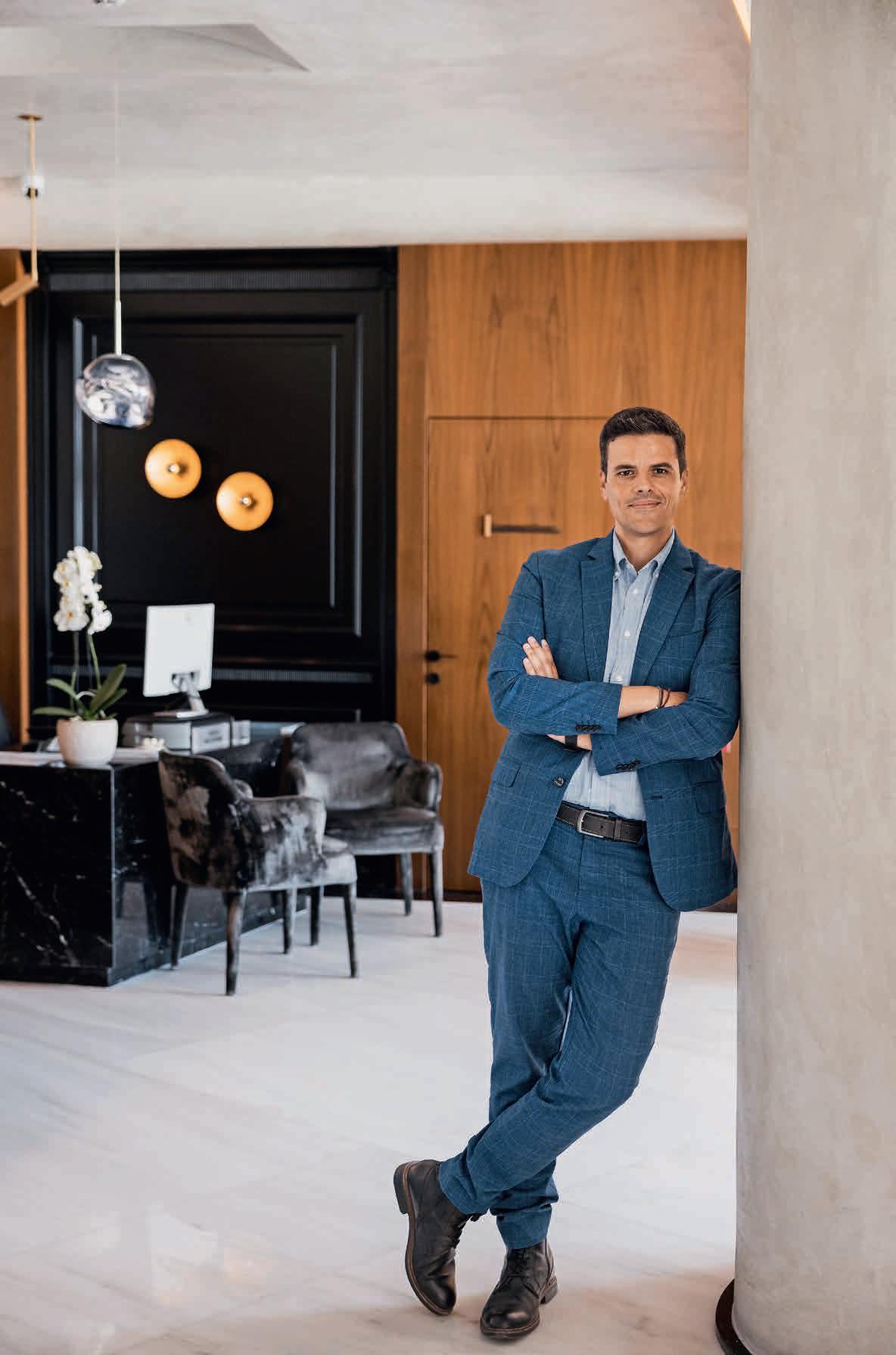
Yiannis A. Retsos CEO, Electra Hotels & Resorts
18 ICONS
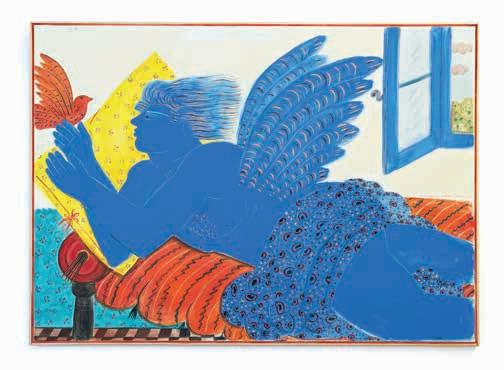
The evolution of archaeological photography through the work of three Greek photographers
24 ΑGENDA
Highlights from the summer season’s arts calendar
DESIGN
made in Greece Summer made in Greece
118 PRODUCTS
At the source of flavor
124
GASTRONOMY
Electra
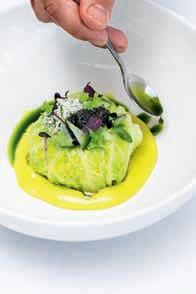
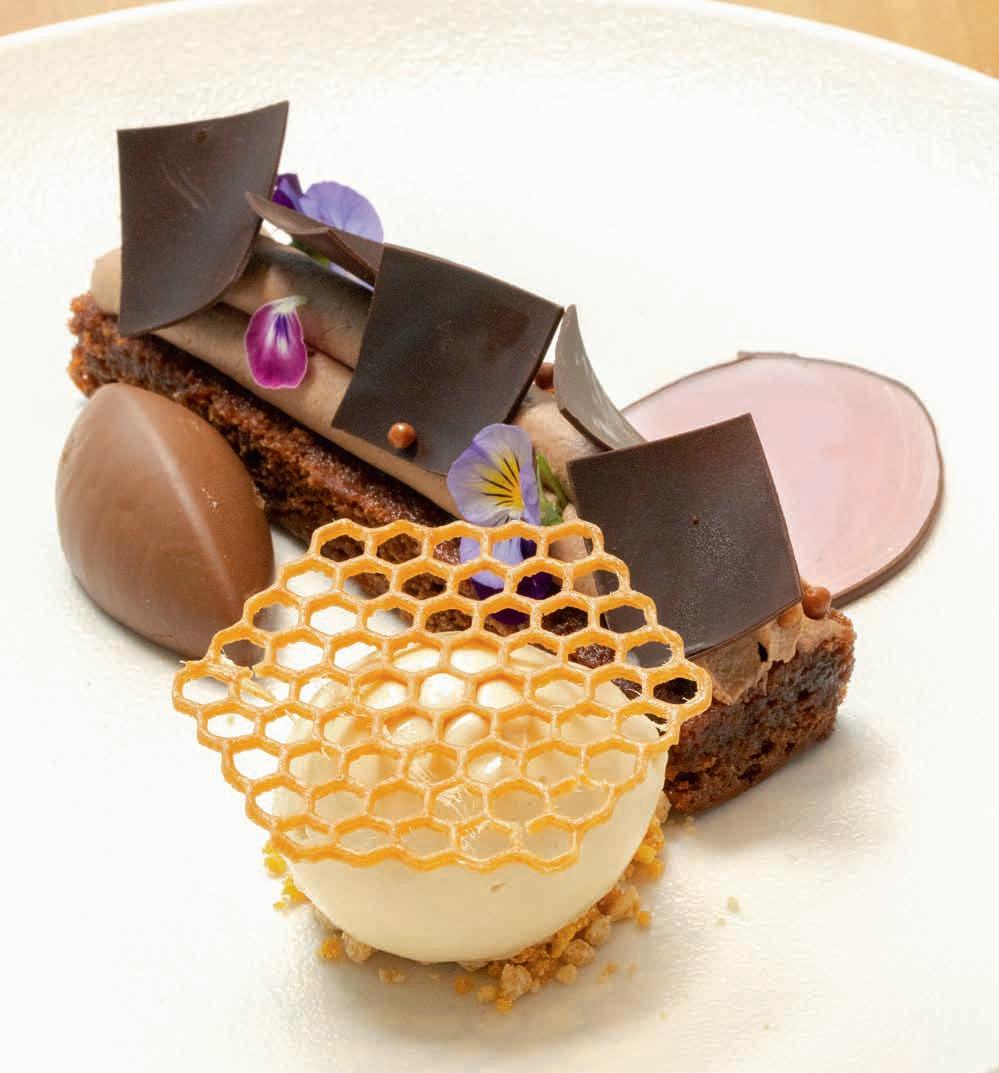
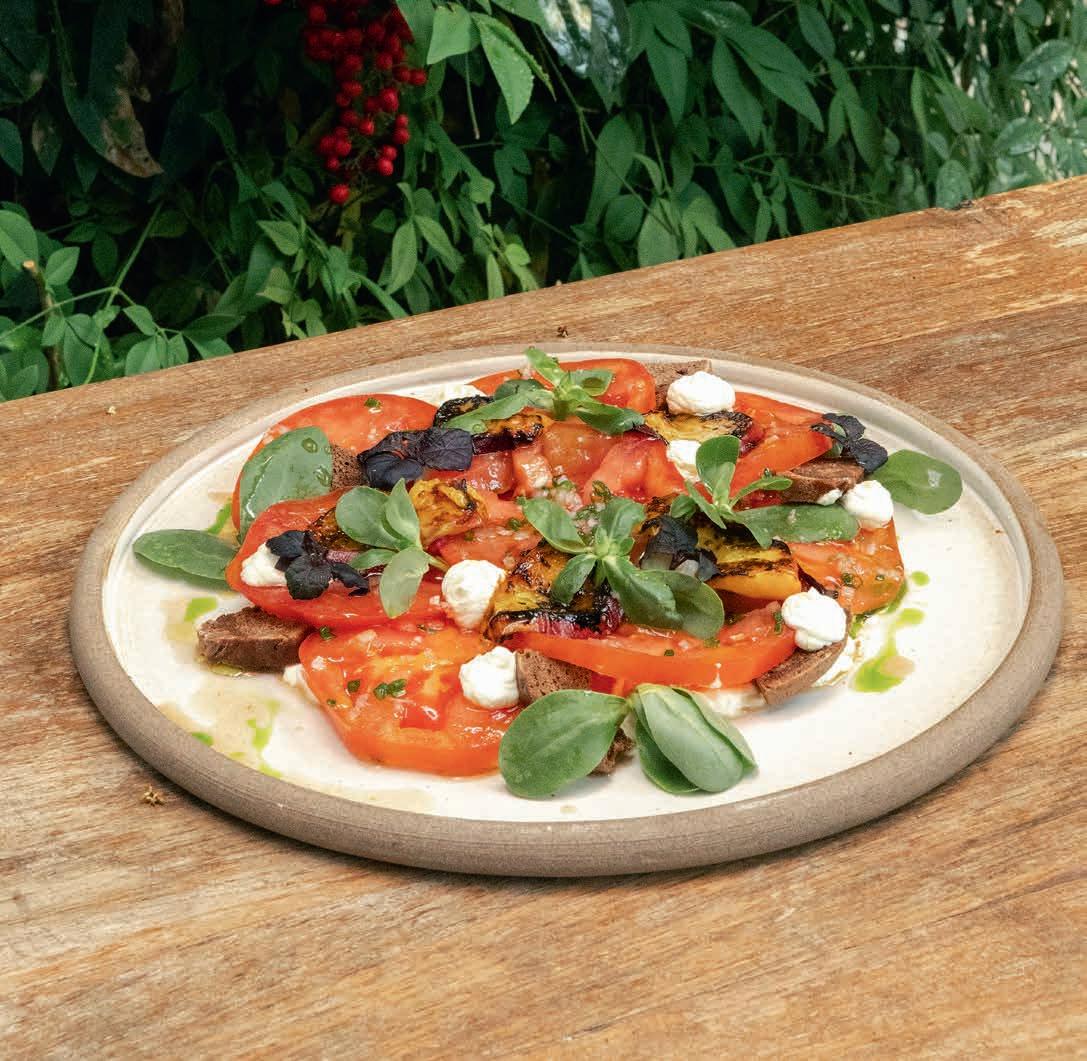
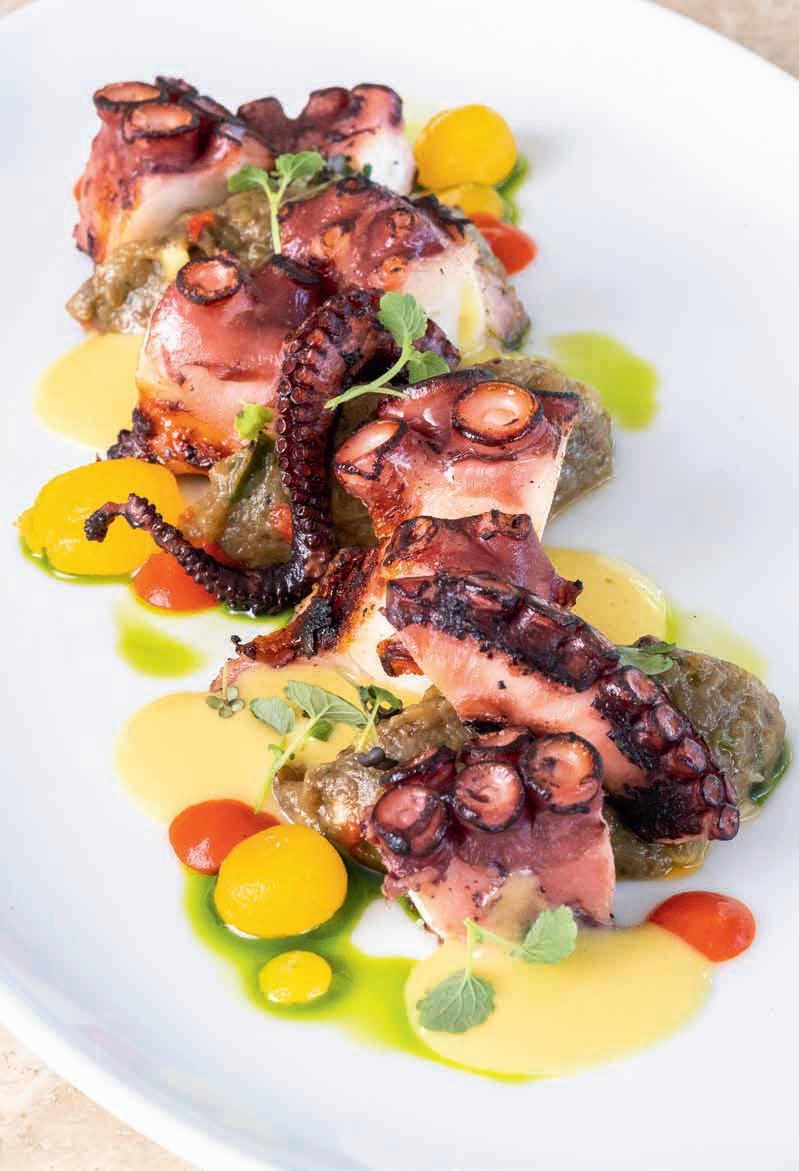
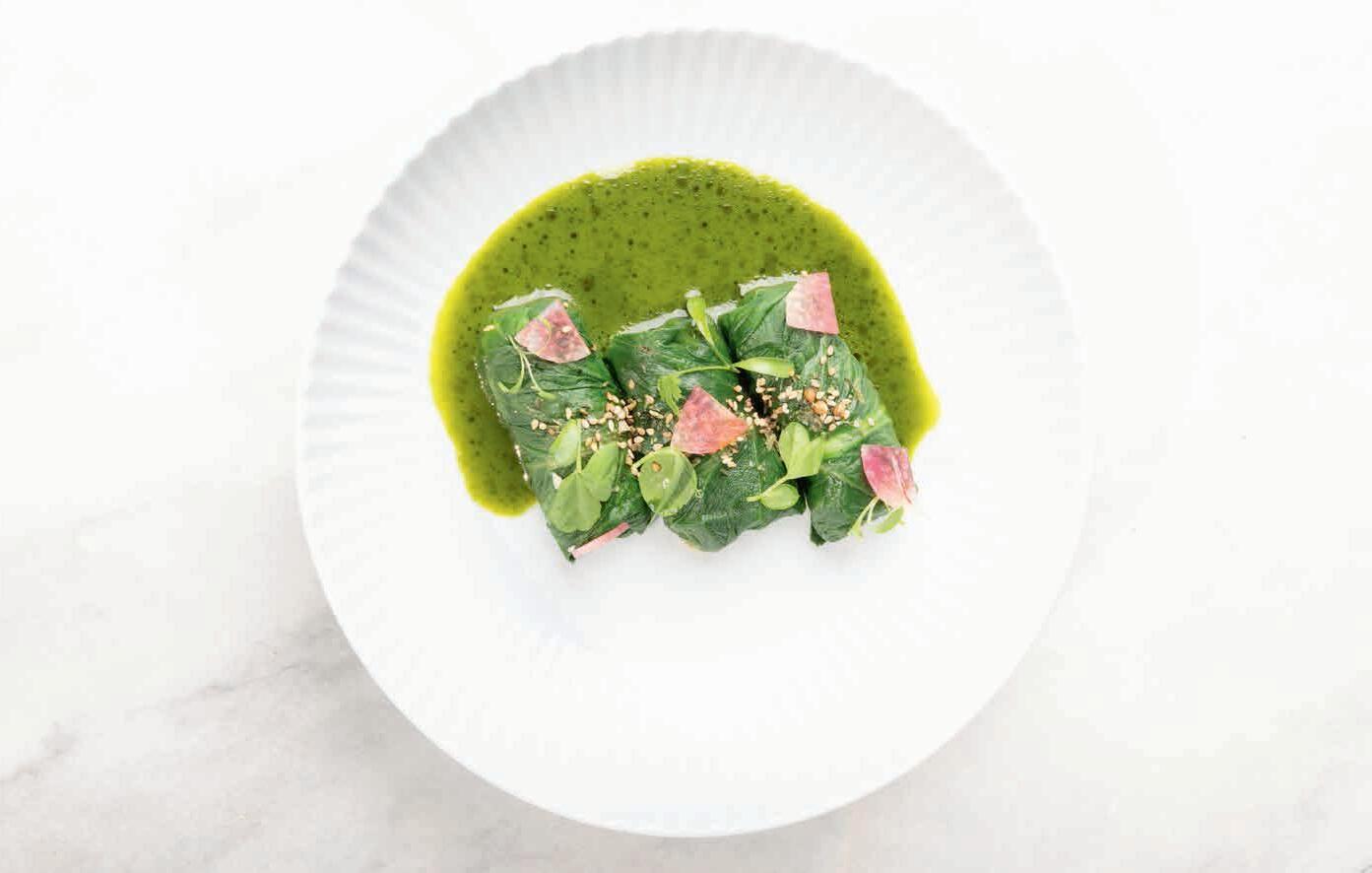
Discover the menus at Electra Hotels’ restaurants in Athens and Thessaloniki
132
ELECTRA MVPS
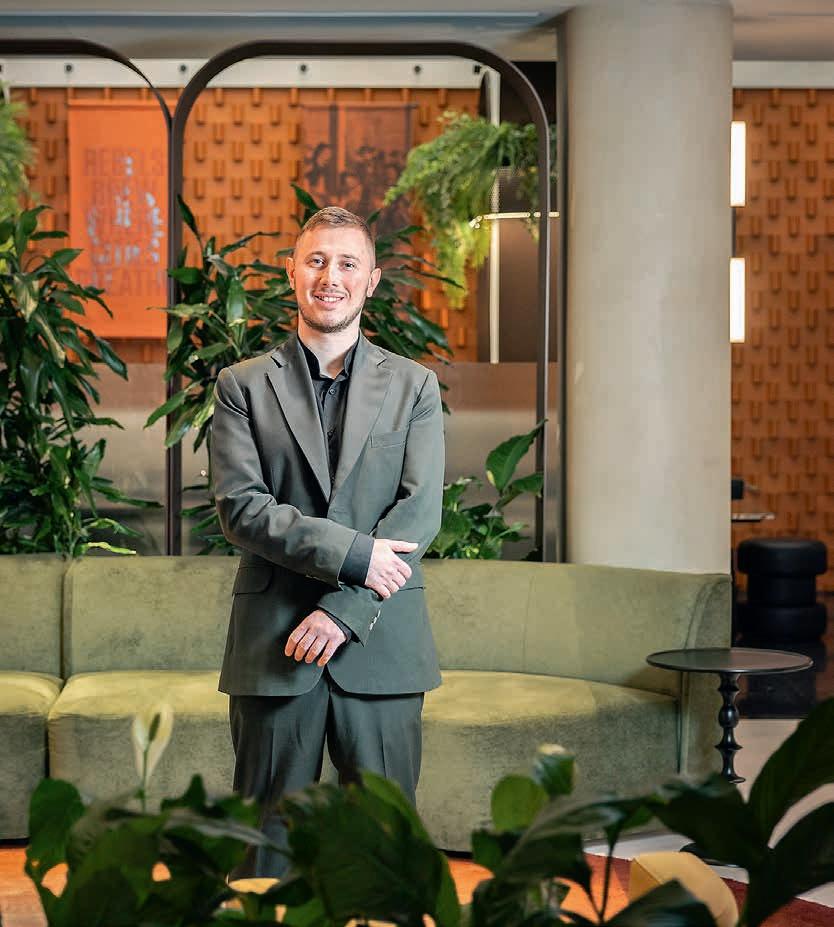
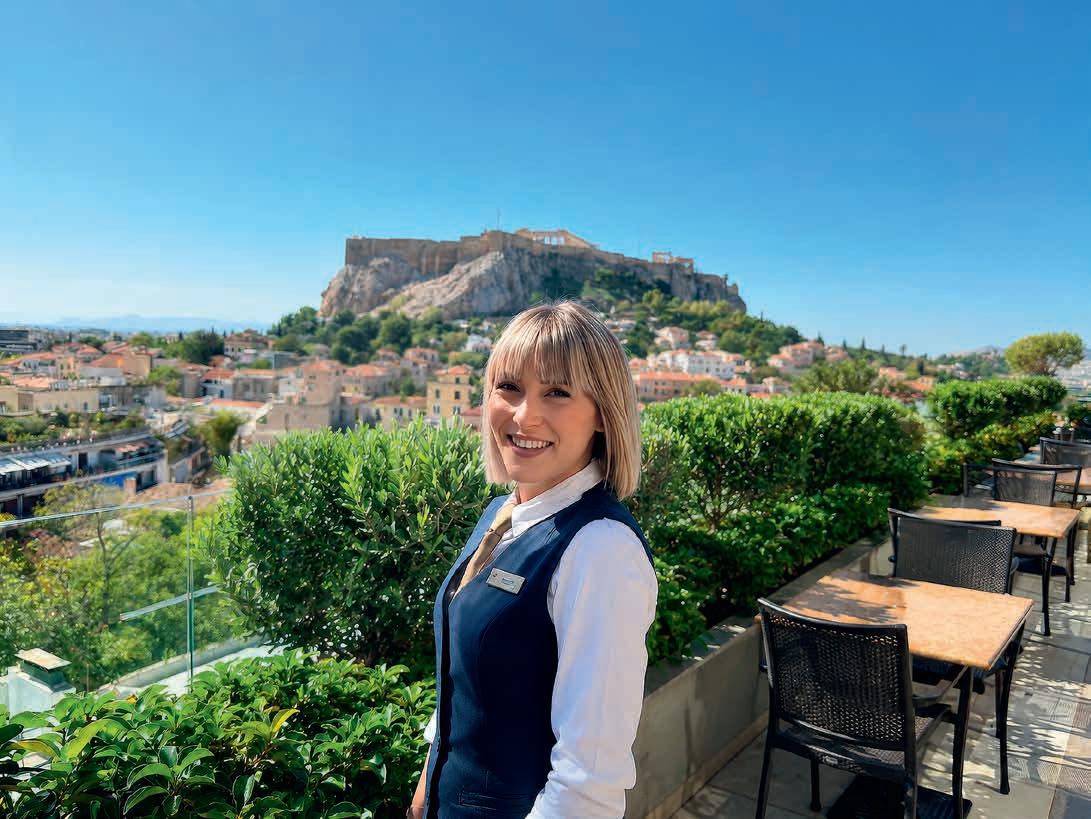
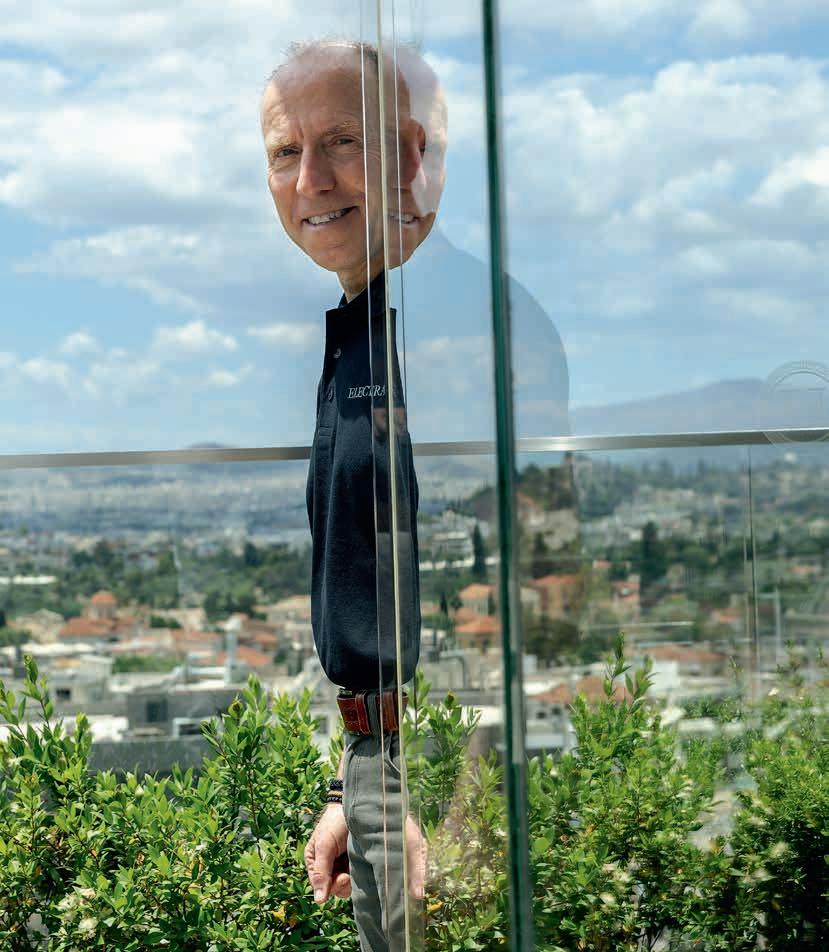
A newly launched initiative highlights team members who stand out for their commitment and values.
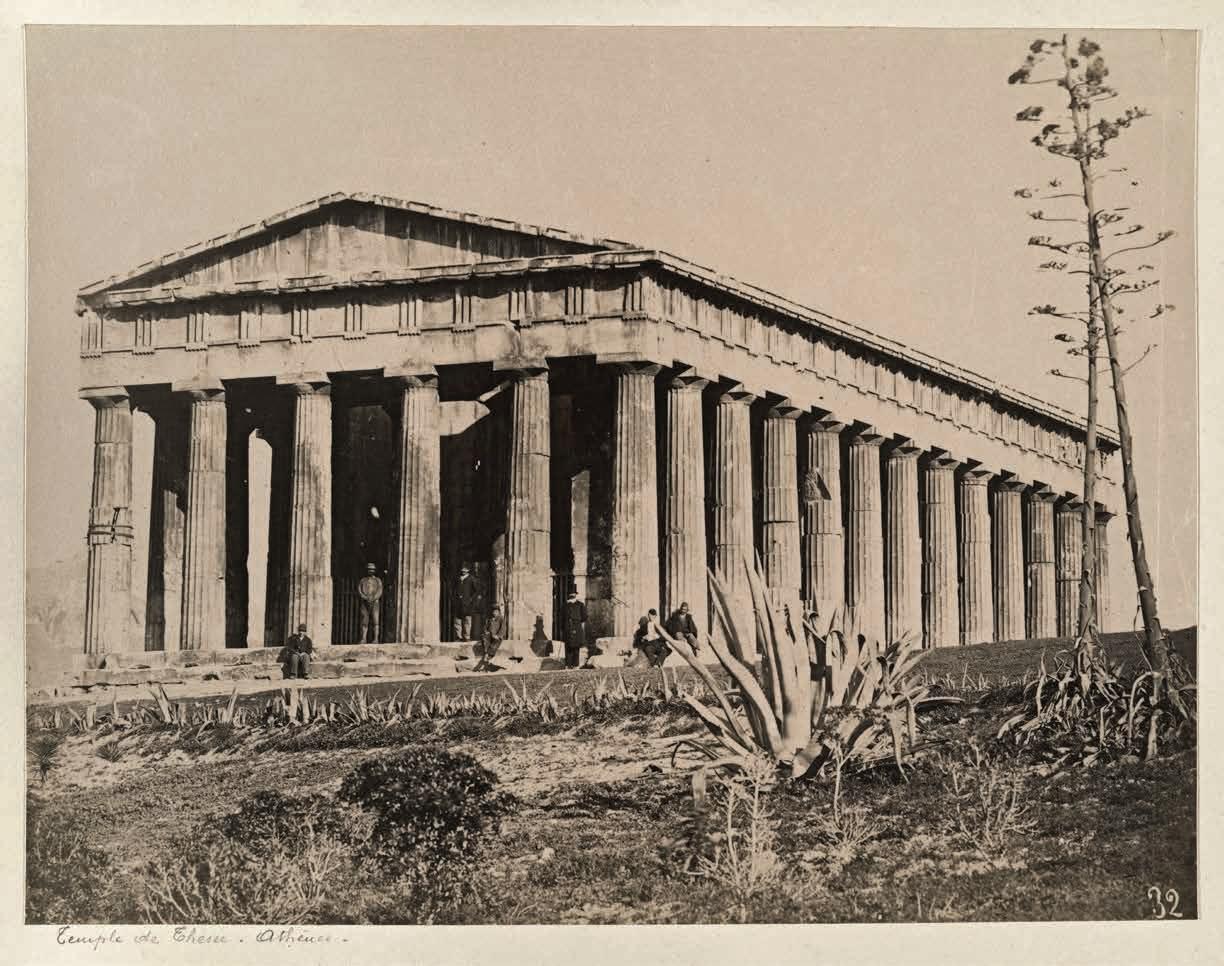
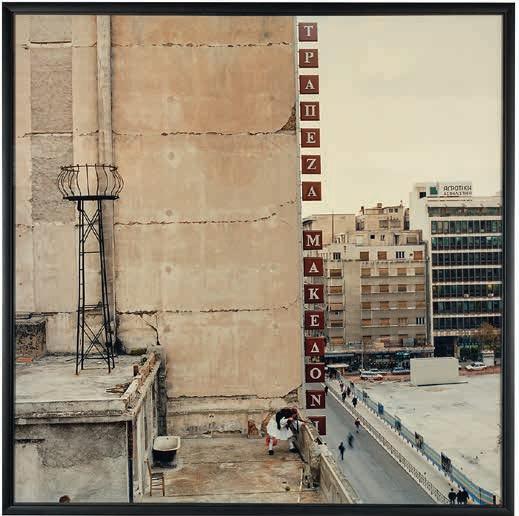
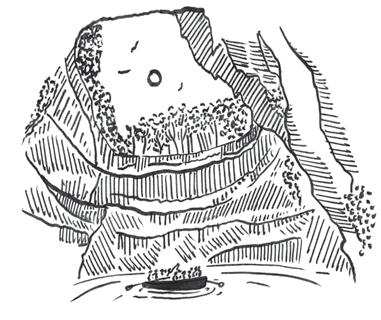
Konstantinos Athanasiou (1845-1898), originally from Constantinople, was among the first Greek photographers to specialize in documenting ancient monuments. This was reflected in the studio he operated on Ermou Street from 1877 under the name “Photographic Studio of Ancient Monuments.” What stands out in this image is the clarity of the composition and the precision of the rendering. Documentation still takes precedence over artistic interpretation.
20/08, heraklionmuseum.gr
Temple of Hephaestus in Athens, Thiseio, ca. 1890.
Konstantinos
Athanasiou
The exhibition “Tracing Light – Krassakis Collection. Ancient Greece Through Eight Pioneering Photographers” is currently on view at the Archaeological Museum of Heraklion. Until 20/08. heraklionmuseum.gr
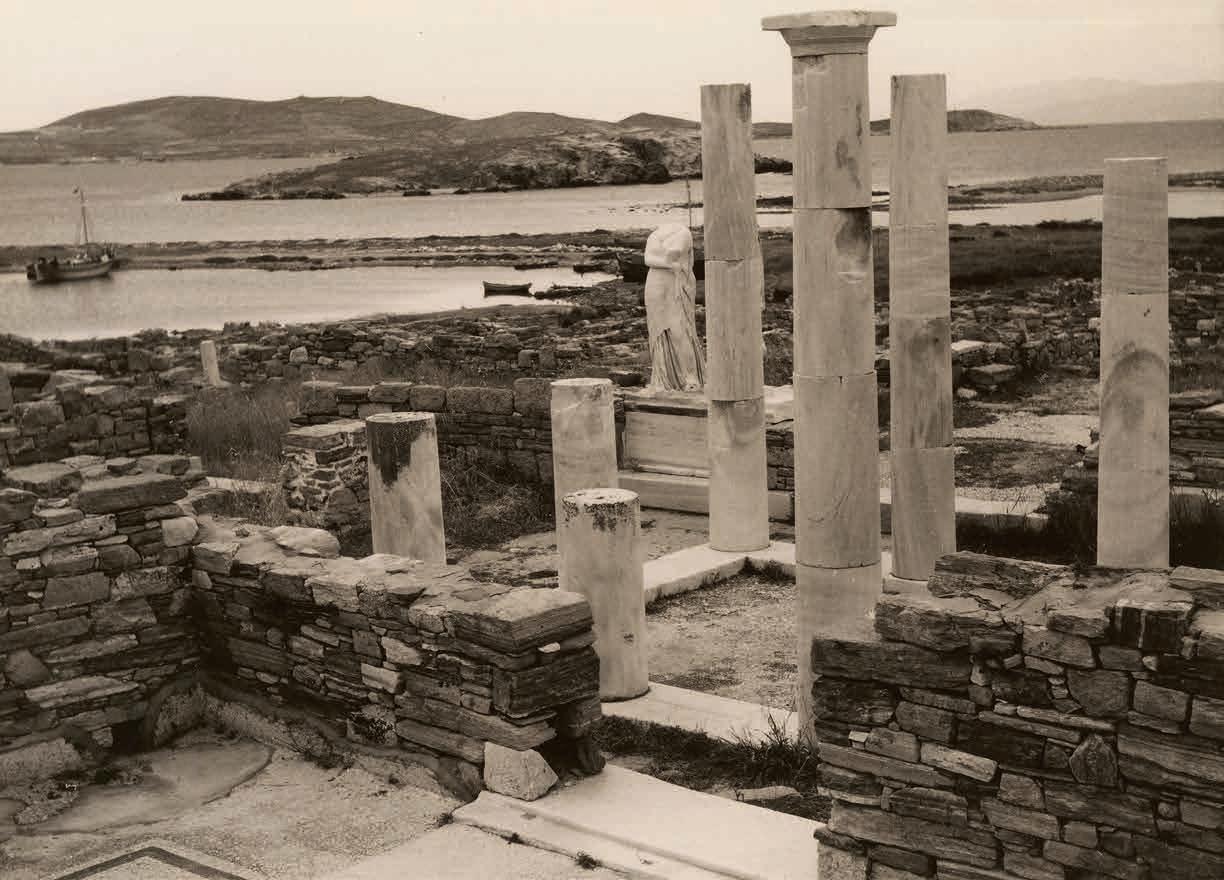
Voula Papaioannou (1898-1990) began working seriously with photography in the mid1930s, encouraged by Alexandros Philadelpheus, then director of the National Archaeological Museum. (It was also Philadelpheus who, as curator of the Acropolis in 1927, allowed Nelly’s to photograph a nude dancer from the Opéra-Comique on the Parthenon.)
In her early work, Papaioannou photographed the museum’s exhibits, while also traveling through the Aegean to capture island landscapes. She returned to antiquities in the first postwar decades. Here, the monument is no longer presented in isolation from its surroundings; it coexists with the sea and the light. Her gaze becomes more poetic. She does not “read” the ruins as remnants of the past, but as evidence of an unbroken relationship between human presence, nature and history.
Delos, House of Cleopatra and Dioscorides.
Voula
Papaioannou
ICONS
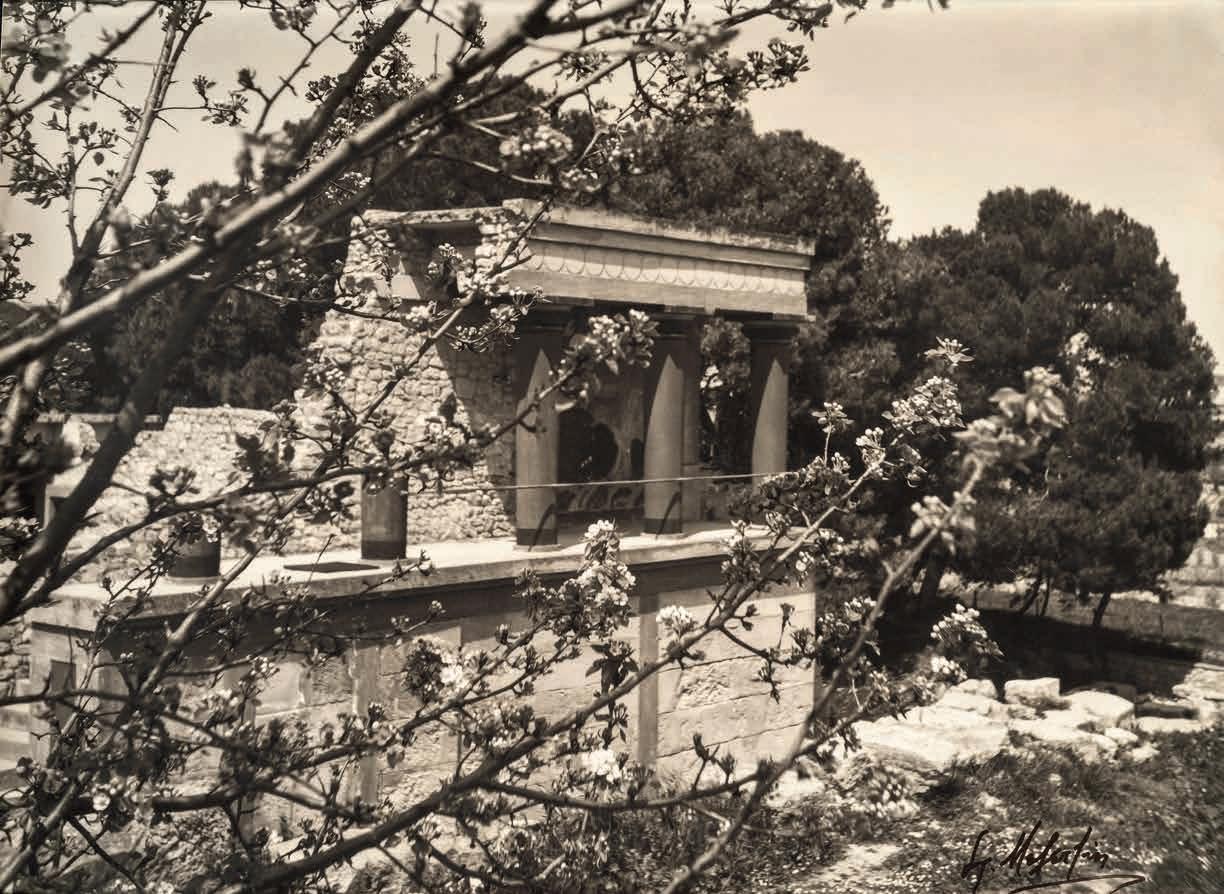
Spyros Meletzis (1906-2003) is considered one of the most important ambassadors of 20th-century Greek photography. Best known for his images of the Greek countryside and its people, as well as for his photographs of the National Resistance, he also turned to archaeological photography after 1952. In Spring at Knossos, Meletzis moves away from the strict documentation of the monument, bringing together in a single composition the Minoan ruins, the dense vegetation surrounding them, and the Cretan light.
Spring at Knossos, 1960.
Spyros Meletzis
Nestor’s Pylos
(Πατησίων) 44, namuseum.gr
Panagiotis Koustas
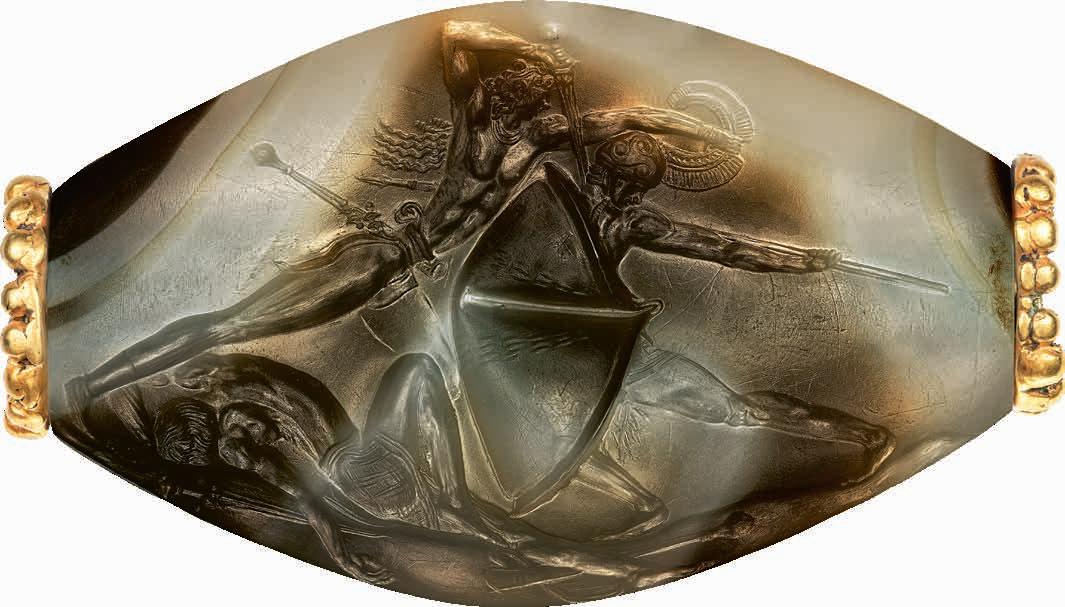
From the 17th to the 14th century BC, Messenia emerged as an important center of the Mycenaean world. Around 1300 BC, the palace of Ano Englianos (ancient Pylos) – the legendary seat of King Nestor – became one of its most significant administrative and cultural hubs. The complex included a richly decorated Throne Room on the upper floor and more than 100 rooms below. Around 1200 BC, the palace was destroyed by fire and the hill was abandoned. This story of Pylos’ rise and decline is told through more than 200 objects –grave goods, prestige items and more – in the National Archaeological Museum’s new temporary exhibition.
Until 31/10, National Archaeological Museum, 44 28is Oktovriou (Patission), namuseum.gr
Colorful Nanas
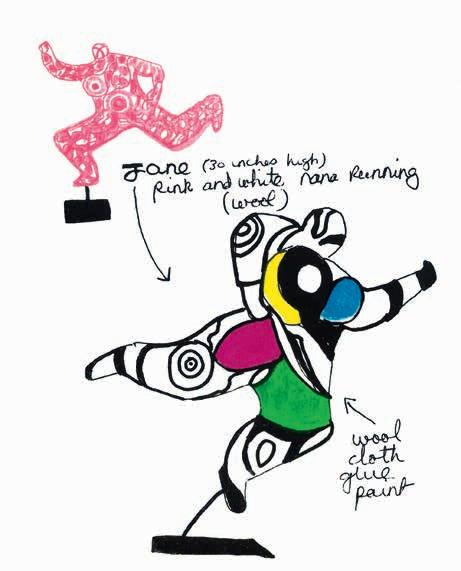
It is remarkable how the work of Niki de Saint Phalle – associated with the Nouveau Réalisme movement and feminist art – finds such an intimate setting in the neoclassical building that once housed sculptor Alex Mylona’s studio and now forms the MOMus–Alex Mylona Museum. The exhibition “Niki de Saint Phalle: From the Shooting Paintings to Freedom” brings together key works from across her career, including her iconic Nanas, the colorful sculptures of voluptuous female figures that made the French-American artist famous, shown alongside assemblages, paintings, and videos of her performances and actions. End your visit by heading up to the museum’s rooftop, where you can view the museum’s permanent sculptural installations, as well as the city below.
The Basil & Elise Goulandris Foundation in Pangrati – whose permanent collection includes works by major 19th- and 20th-century artists such as Cézanne, Van Gogh, Degas, Picasso, Miró, Pollock and others – presents the temporary exhibition “Jannis Psychopedis: Landscapes of Memory. The Ones I Kept.” Through approximately 70 works from the 81-yearold Greek artist’s private collection, the exhibition traces the full arc of his career, from the turbulent 1960s to the present day. Psychopedis, closely associated with critical realism, offers here a rare and highly personal map of his artistic journey. That alone makes this one of the summer’s most compelling art events.
More than 100 works by 50 artists from over 20 countries come together in “South by Southeast: Re-Orienting the Collection,” the new exhibition presented on the second floor of EMST. Its title deliberately plays on Alfred Hitchcock’s “North by Northwest,” pointing to a symbolic reorientation of Greece away from dominant Anglo-Saxon and Western European cultural models. Instead, the exhibition invites viewers to reconsider the country’s strategic position at the crossroads of continents, empires, and belief systems, as well as its deep historical affinities with the region once known as the Levant. In doing so, it proposes a broader, more complex cultural map that looks south and southeast, toward the Mediterranean, the Balkans, the Middle East and North Africa.
Until 31/10/2027, National Museum of Contemporary Art Athens (EMST), Kallirrois & Amvrosiou Frantzi, Neos Kosmos, emst.gr
AΘΗΝΑ / ATHENS
αιώνες (μέσα 17ουτέλη 19ου αιώνα) γνώρισε τεράστια διάδοση. «Ο κόσμος της Πρωτοπορίας: Πόλη, φύση, σύμπαν», έως 27/09. «Χάρτινες Εικόνες: Οι απαρχές της ελληνικής χαρακτικής»,
Greek or Roman?
15, theacropolismuseum.gr
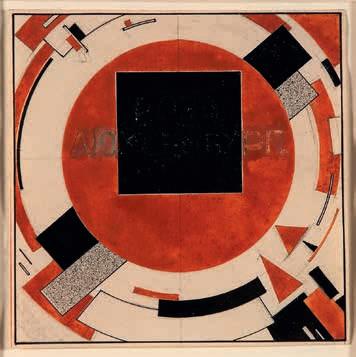
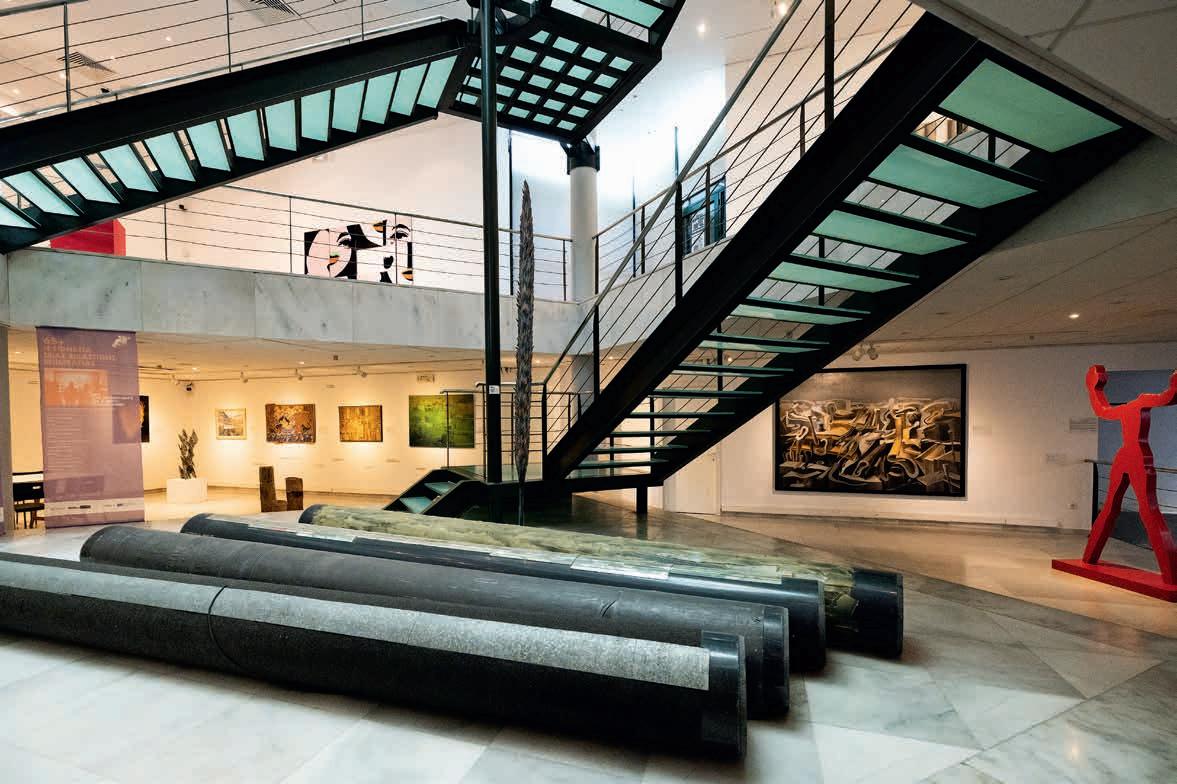
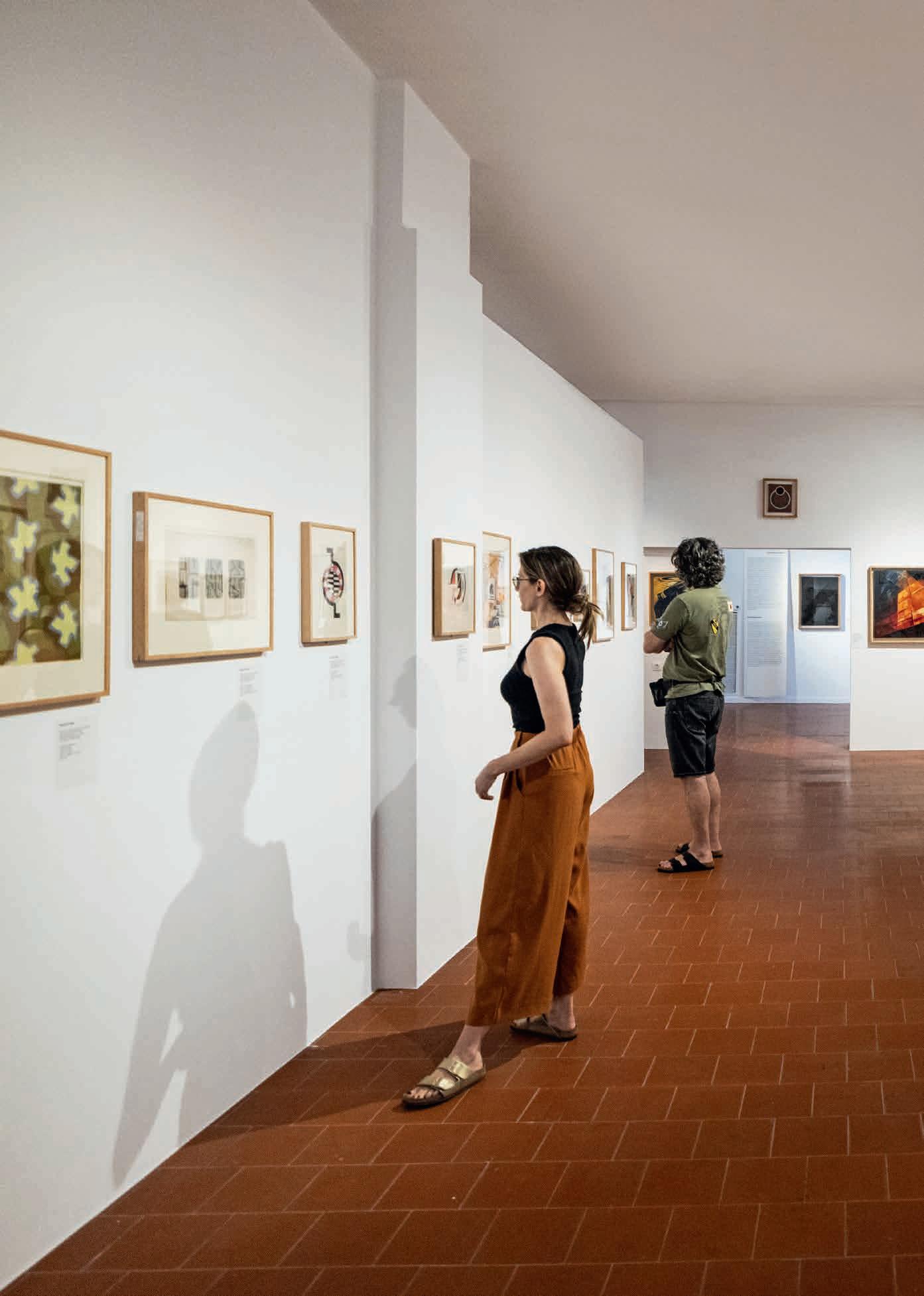
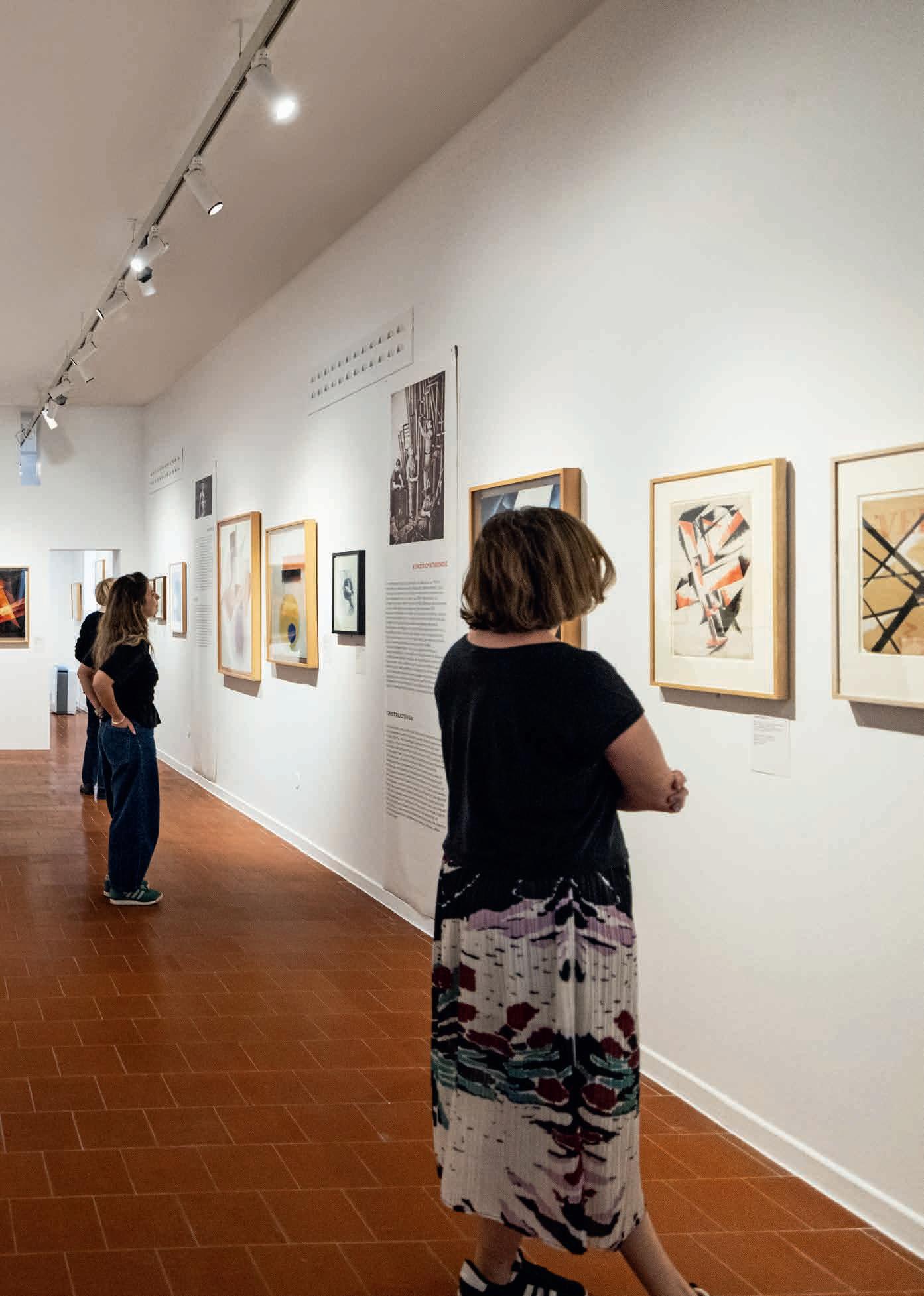
The National Gallery, Twice Over A visit to the National Gallery is always rewarding, and this season two major temporary exhibitions are on view alongside its permanent collection. In “The Avant-Garde World. City, Nature, Universe, Human,” works of the Russian avant-garde from the renowned Costakis Collection are seen through the lens of the relationship between humans and their environment. “Paper Icons: The Beginnings of Greek Printmaking” presents religious engravings from the National Gallery’s collection, shedding light on a lesser-known art form that flourished for roughly two and a half centuries, from the mid-17th to the late 19th century.
“The Avant-Garde World. City, Nature, Universe, Human,” Until 27/09, “Paper Icons: The Beginnings of Greek Printmaking,”
Until 28/12, National Gallery, 50 Vasileos Konstantinou, nationalgallery.gr
Greek or Roman?
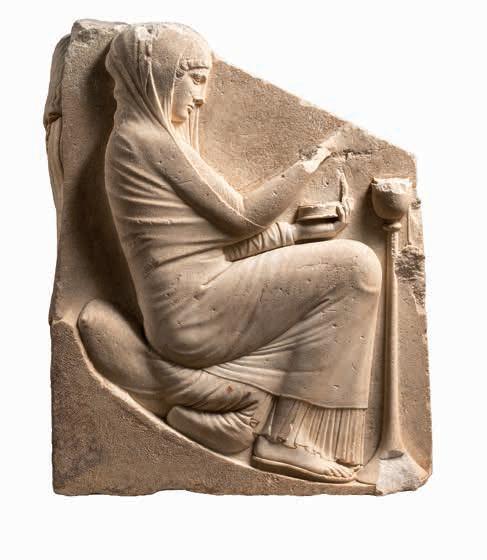
“Captive Greece took captive her fierce conqueror.” With these words, the poet Horace described the fascination that ancient Greek culture held for the Romans – a fascination that, in the Italian peninsula, had begun even before Roman times, through the ties between Greek merchants and Etruscan-Italic elites, and that continues to resonate in Italian art to this day. The Acropolis Museum’s new temporary exhibition, “Inspirations. Ancient Greek Art living in Italy,” explores this aspect of the relationship between the two cultures through 38 works – ceramics, bronzes, marbles, and more – loaned from museums across Italy specifically for the presentation in Athens.
Until 30/08, Acropolis Museum, 15 Dionysiou Areopagitou, theacropolismuseum.gr
Jeff Koons and his Venus
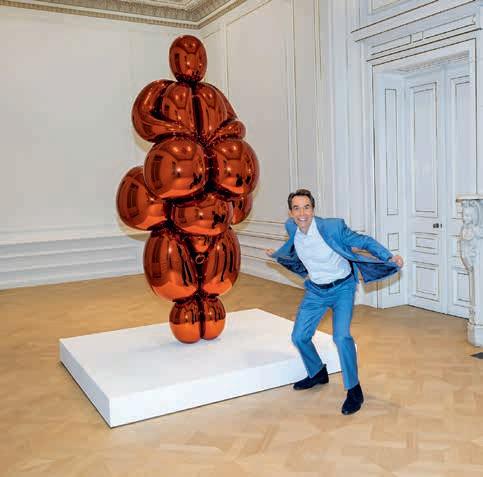
Since March, visitors to the ground floor of the Museum of Cycladic Art have been greeted by Jeff Koons’ 2.7-meter-high orange Venus, made of mirror-polished stainless steel. The American artist, often dubbed the “king of kitsch,” based the work on the ivory Venus figurine discovered in 1922 in the Rideaux Cave at Lespugue, in the foothills of the French Pyrenees, an object created some 28,000 years ago. Already a selfie magnet thanks to its gleaming, reflective surface, Koons’ sculpture is shown in the exhibition
“Jeff Koons: ‘Venus’ Lespugue” alongside ten certified replicas of Upper Paleolithic female figurines, displayed in a neighboring room on the same floor. Beyond the temporary show, the museum’s permanent collection offers an exceptional introduction to the Cycladic civilization that flourished in the Aegean during the 3rd millennium BC, with marble figurines, marble and clay vessels, and bronze tools among its highlights.
Until 31/08, Museum of Cycladic Art, 1 Vasilissis Sofias & Herodotou, cycladic.gr
Καλλιθέα, snfcc.org
Barbara Kruger Is Here
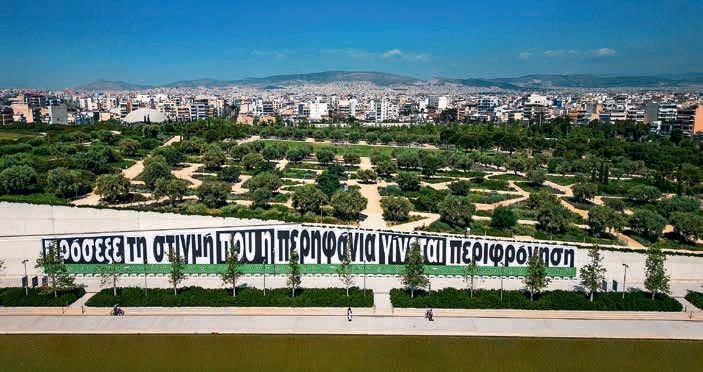
Thirteen new works by Barbara Kruger, the iconic American artist associated with the Pictures Generation, are installed in the outdoor spaces around the Canal and the Esplanade at the Stavros Niarchos Foundation Cultural Center for her solo exhibition “Untitled (Pride and Contempt).” Among the works is a 90-meter-long wall mural on the building of the National Library of Greece. A visit here also offers an opportunity to explore the architecture of the SNFCC and its cultural program, ten years after the complex opened to the public.
Until 01/11, Stavros Niarchos Foundation Cultural Center, 364 Syngrou, Kallithea, snfcc.org
Gagosian
12/09, Gagosian Athens, Αναπήρων
gagosian.com
Urs Fischer’s Los Angeles
At Gagosian Athens, where Kolonaki meets the slopes of Lycabettus Hill, the exhibition “Urs Fischer: Eugène Atget” presents new paintings by the Swiss artist inspired by life in Los Angeles, rendered through a layered technique combining collage and painting. The title refers to the French photographer Eugène Atget (1857–1927), who documented the urban landscape of “Old Paris” in the early 20th century, just as it was rapidly disappearing. The visit is also shaped by the dialogue between the works and their surroundings, with large-scale paintings installed so as to engage with the view through Gagosian’s windows onto the surrounding streets and parkland.
Until 12/09, Gagosian Athens, 22 Anapiron Polemou, Kolonaki, gagosian.com
Η κομψότητα
της Μαρίας Κάλλας
Τον κόσμο δεν θα πάψει ποτέ να
τον συναρπάζει η ζωή και το έργο
της «La Divina». Και καθώς υπάρ-
χει συνεχώς ζήτηση για εκείνη ως
πολιτιστικό φαινόμενο, υπάρχει
και προσφορά. Αυτό το καλοκαίρι, στο Μουσείο Μπενάκη Ελληνικού
Πολιτισμού, που στεγάζεται σε ένα από τα ωραιότερα νεοκλασικά κτίρια της Αθήνας κοντά στον Εθνικό
Κήπο και στη Βουλή των Ελλήνων, παρουσιάζεται η έκθεση «Maria
The Elegance of Maria Callas
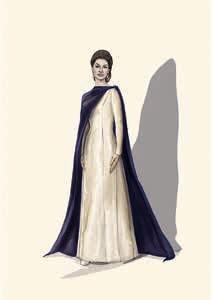
The life and art of La Divina continue to fascinate the world. The demand for Callas as a cultural phenomenon never fades, and new tributes keep appearing. This summer, the Benaki Museum of Greek Culture, housed in one of Athens’ finest neoclassical buildings near the National Garden and the Hellenic Parliament, presents “MARIA LA CALLAS: The Art of Italian Costume Design in the Film.” The exhibition pays tribute to the legendary Greek soprano through the costumes created for Pablo Larraίn’s film Maria, in which Angelina Jolie portrayed Callas. It is curated by the film’s costume designer, Massimo Cantini Parrini. Besides this temporary exhibition, the museum boasts a rich permanent collection that traces the course of Greek culture from prehistory to the 20th century.
Until 13/09, Benaki Museum of Greek Culture, 1 Koumpari, benaki.org
(φωτογραφία χωρίς κάμερα), στο φωτομοντάζ και στις πειραματικές
momus.gr
Bauhaus in Photographs
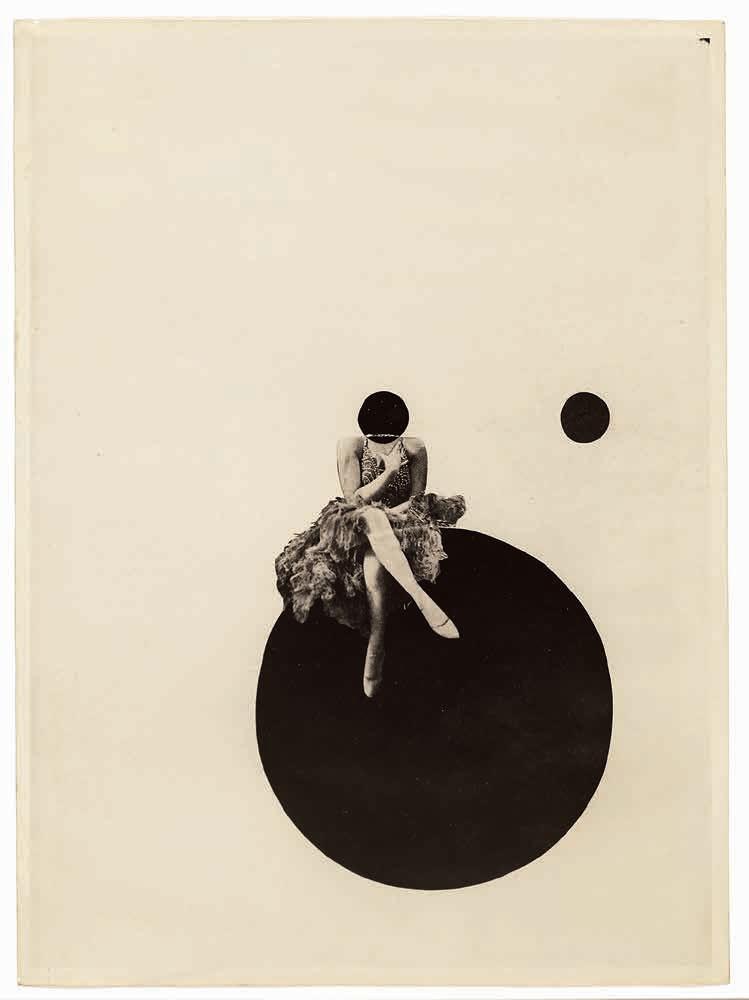
The experimental work of Hungarian photographer, painter, and Bauhaus professor Lάszlό Moholy-Nagy (1895–1946) takes center stage in “Lάszlό Moholy-Nagy. Light Play.” The exhibition brings together 68 photographic works in which floating shapes and bodies, gazes, shadows and gestures reveal one man’s radical contribution to photography, film and the experimental arts of the 20th century. At the same time, the show highlights the lasting influence of the Bauhaus school on contemporary art and applied creativity, from photograms – camera-less photographs – to photomontage and experimental photographic techniques. Presented for the first time in Greece, this exhibition offers a concise but powerful introduction to an artist who helped redefine the modern image.
Until 15/11, MOMus–Thessaloniki Museum of Photography, Warehouse A, Pier A, Thessaloniki Port, momus.gr
The Thread That Connects Us
Ειδικό Εργαστήριο Επαγγελματικής Εκπαίδευσης Κιλκίς, καθώς οι σπουδαστές του δεύτερου κλήθηκαν να δημιουργήσουν
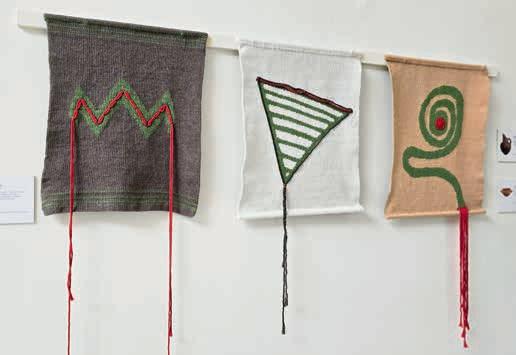
The new temporary exhibition at the Archaeological Museum of Thessaloniki, “The Thread That Connects Us,” emerged from the museum’s collaboration with the Special Vocational Education Workshop of Kilkis. Workshop students were invited to create woven and knitted works inspired by decorative motifs found on Neolithic vessels from the museum’s collection. The exhibition also has an interactive element: before entering the museum’s permanent exhibition on prehistoric Macedonia, visitors are invited to pass their own weft thread through a replica of an ancient loom, contributing to an evolving collective work, a fabric marked by connection, interaction and memory.
Until 31/08, Archaeological Museum of Thessaloniki, 6 Manoli Andronikou, amth.gr
2nd Biennale of Contemporary Ceramics
After its first edition in Santorini, which placed contemporary ceramic practices in dialogue with prehistoric finds from Akrotiri, the Biennale of Contemporary Ceramics moves to Rhodes for its second chapter. Titled “Where the Day Starts,” the main exhibition takes place across five landmarks in the Medieval City: the Armoury de Milly; the Decorative Arts Collection of Rhodes; the church known as Our Lady of the Castle; the Archaeological Museum of Rhodes; and Kleovoulou Square at the Palace of the Grand Master. The exhibition is one of the most significant projects devoted to contemporary clay-based art in the Mediterranean.
Until 31/10, Medieval City of Rhodes, bigbluedot.art
European Polyphony
Estonian Philharmonic Chamber
festivaleuropeanpolyphony.com
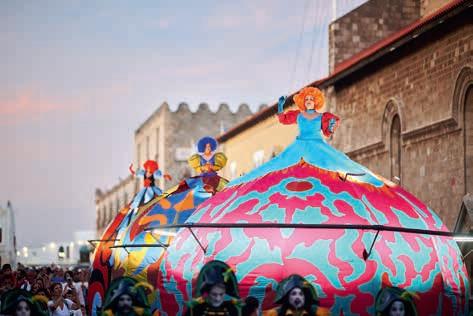
Dedicated to classical music, the visual arts and cinema, the European Polyphony festival is taking place at several venues in the Medieval City of Rhodes. Highlights include the aerial musical performance “Maudits Sonnants” by Compagnie Transe Express, staged in the seafront area outside the Church of the Annunciation of the Virgin Mary; the photography and sound exhibition “Résonances,” created in collaboration with the Estonian Philharmonic Chamber Choir, at the Inn of France; and a series of choral concerts at the Cathedral of the Annunciation of the Virgin Mary, the Palace of the Grand Master, and the Melina Merkouri Medieval Moat Theatre.
September 28 - October 10, Medieval City of Rhodes, festivaleuropeanpolyphony. com
Cinema at the Water’s Edge
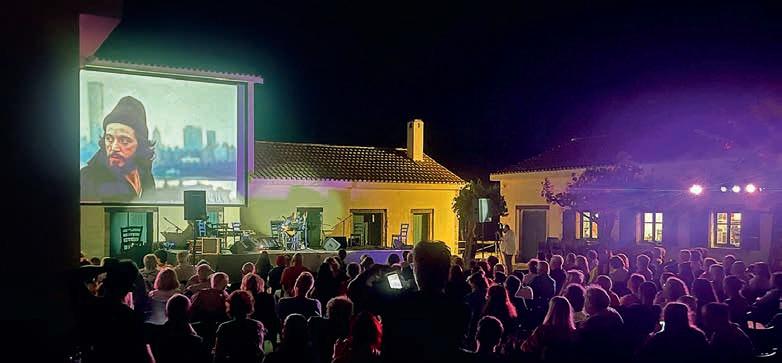
At Thalassomylos, an impressive municipal complex by the sea, just two kilometers from the center of Argostoli, the only film festival in the Ionian Islands returns for its fifth edition. This year’s KYMATA International Film Festival features international competition sections for short fiction, documentary and animation films, alongside major open-air screenings, tributes to Greek and European cinema, midnight screenings, concerts, and exhibitions (including one devoted to the popular culture of Greece in the 1980s). With its exciting interdisciplinary character, the festival is turning Kefalonia into a lively summer meeting point for film, music and contemporary art.
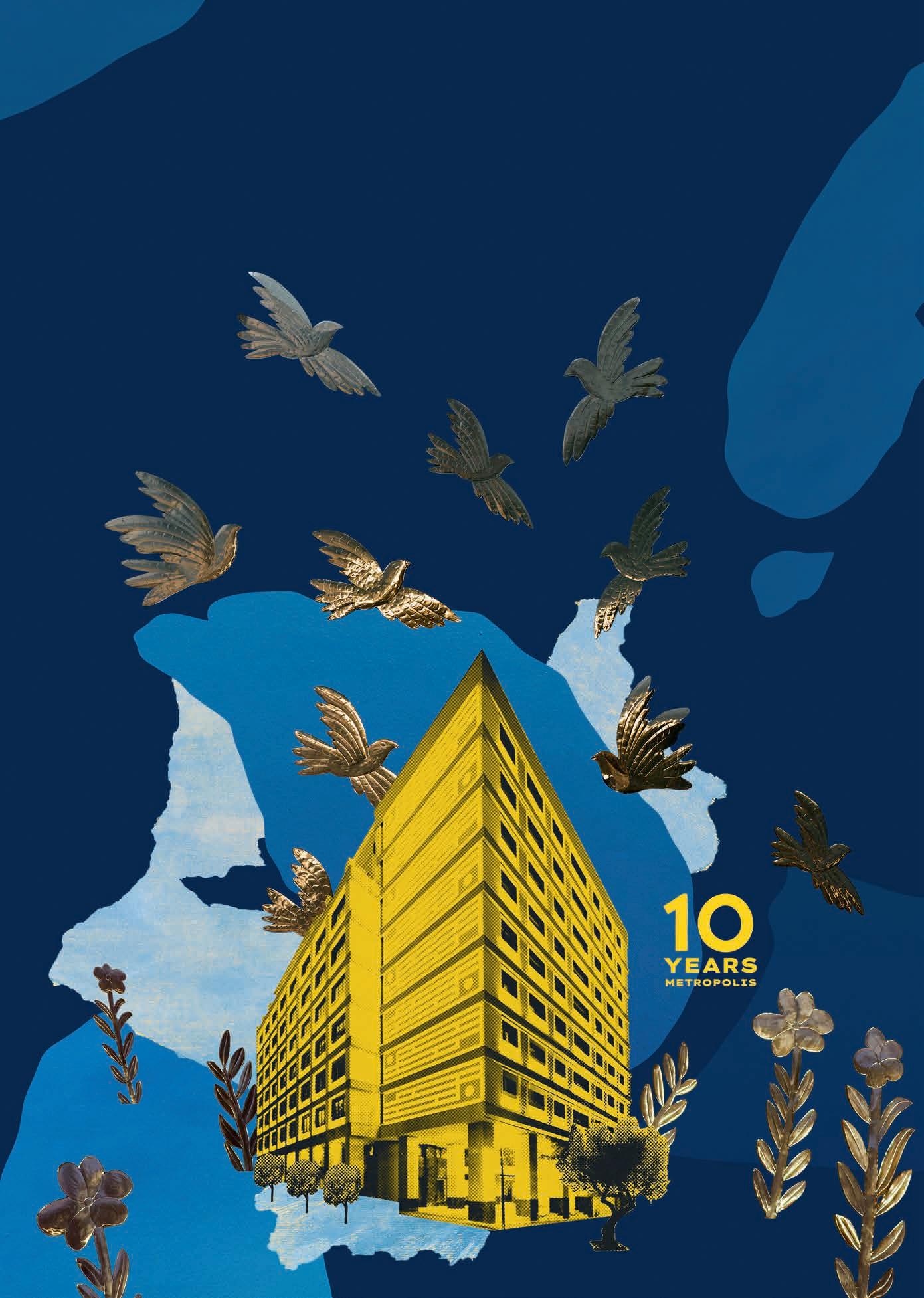
Marking a full decade of operation this year, Electra Metropolis Athens celebrates a distinctive story where hospitality and culture come together, centered around the monumental work of Alekos Fassianos.
By Maro Vasiliadou
“
For us, Electra Metropolis was never simply a hotel investment, but a statement of confidence in Athens and in the contemporary expression of Greek hospitality. That’s why this year’s tenth anniversary of Electra Metropolis Athens carries such important symbolic meaning,” says Yannis Retsos, CEO and principal shareholder of Electra Hotels & Resorts, reflecting on the vision that has guided his family’s long-standing presence in tourism.
Although the success of this strategy may now seem almost self-evident, when Electra Metropolis first opened its doors in 2016, Athens was still emerging from the financial crisis and only beginning to establish itself as a leading European city-break destination.
“As a company, we recognized the city’s potential early on and believed in the qualities that make it unique: its history, its gastronomy and its authentic charm. From the very beginning, we wanted the hotel to have a soul and a cultural imprint. The collaboration with Alekos Fassianos came about naturally, as his work expressed Greek identity in a contemporary and authentic way,” he notes, referring to one of the most impressive works of art ever installed in a Greek hotel.
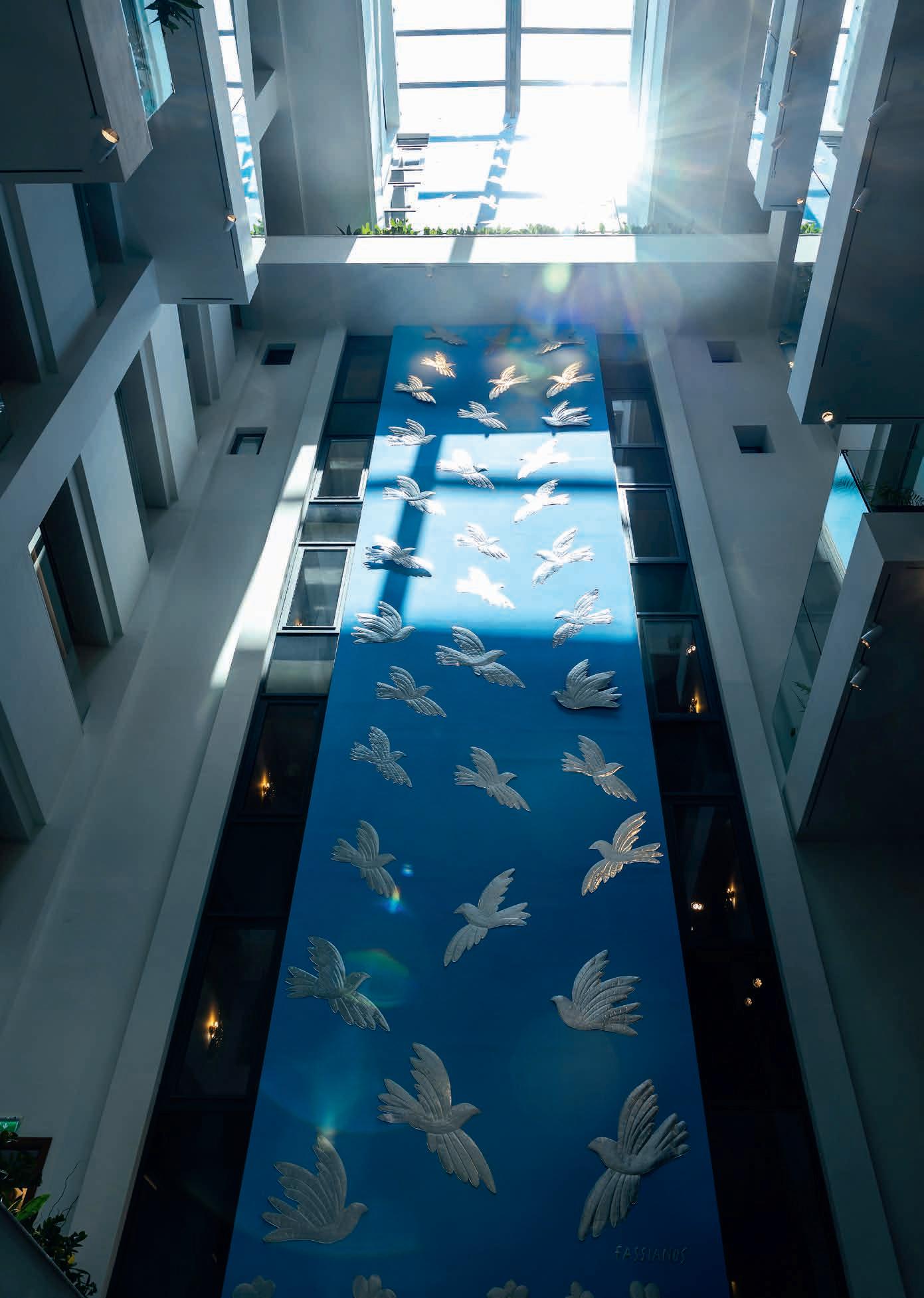
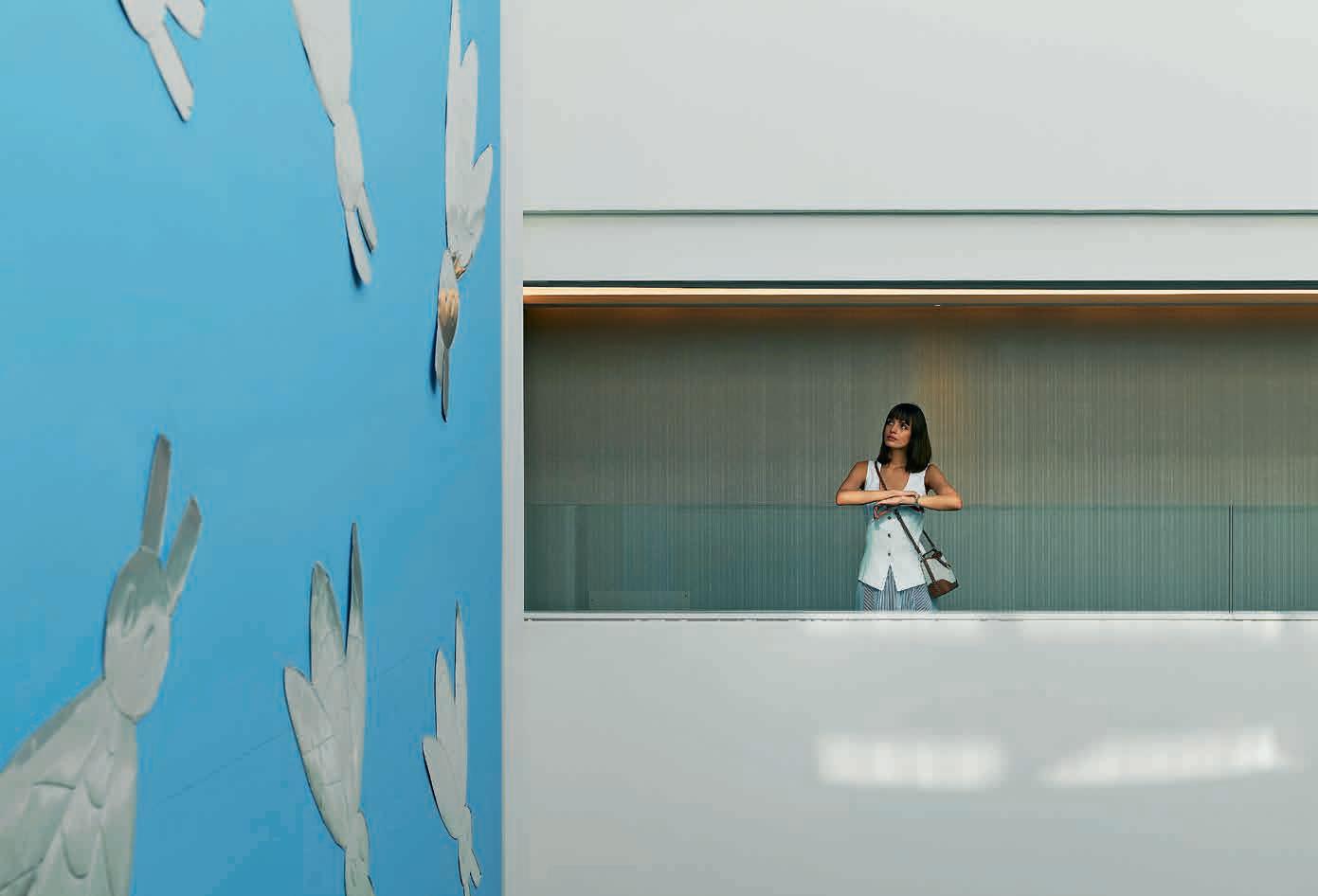
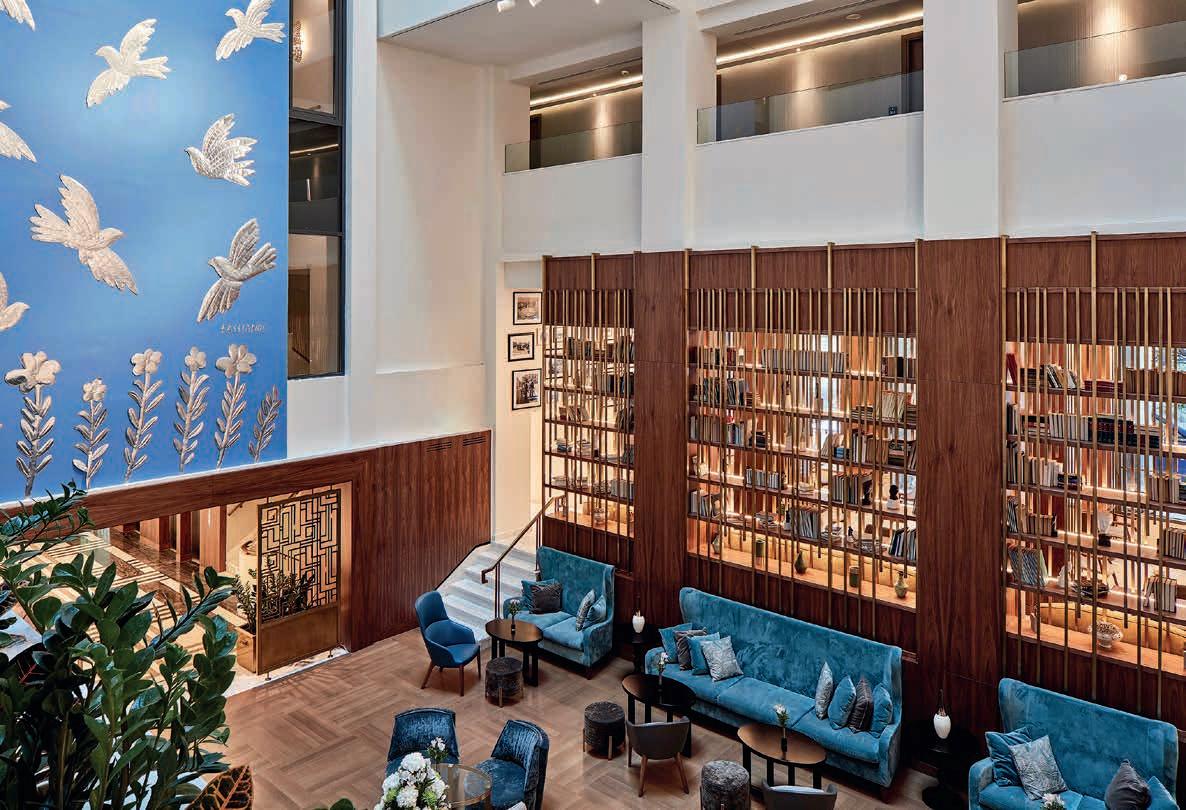
A vast swarm of birds and bees set against a blue background commands the central ground-floor hall, rising along the wall all the way to the eighth floor and the glass roof above. The composition brings together some of the painter’s signature motifs – flowers, birds and bees –rendered in delicate metal. Closest to the visitor’s eye, the elements appear larger; as they ascend through the atrium, they gradually diminish in scale, creating a powerful sense of movement and perspective.
“I’m still moved when I remember Alekos Fassianos discussing the project with the hotel’s owners, studying the space and conceiving this large-scale installation with remarkable ease,” says Elisavet Plessa, art historian and art consultant to Electra Hotels & Resorts. “He began with a preliminary sketch, explaining how the suspended elements would be scaled so they could be appreciated from every level of the building. It was a great privilege to oversee the installation and witness the curiosity and the admiration it inspired among both guests and employees. The hotel was never the same again, and I believe it’s now impossible to imagine the space without this work. Fassianos himself understood the importance that this simple, yet deeply lyrical, artistic proposal would come to have for the hotel’s identity.”
“The collaboration with Alekos Fassianos came about naturally, as his work expressed Greek identity in a contemporary and authentic way,” says Yannis Retsos, CEO of Electra Hotels & Resorts.
A detail of the monumental installation by Alekos Fassianos featuring birds, bees and flowers at the Electra Metropolis Athens.
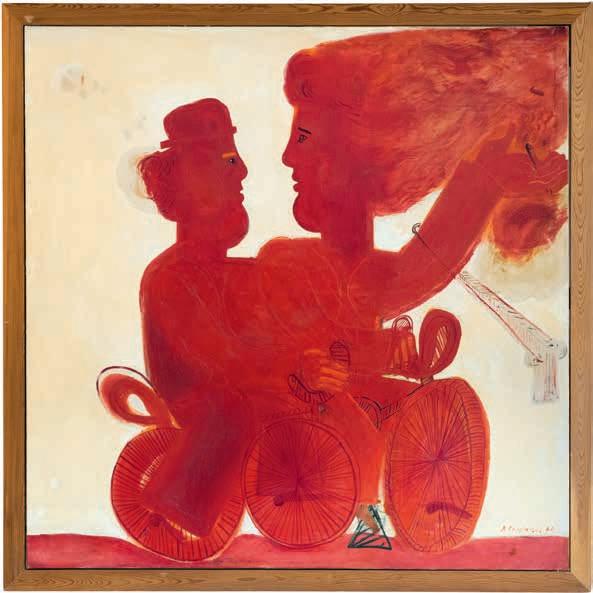
Alekos Fassianos, The Abduction of Helen, 1966 Oil on canvas
150 x 150 cm
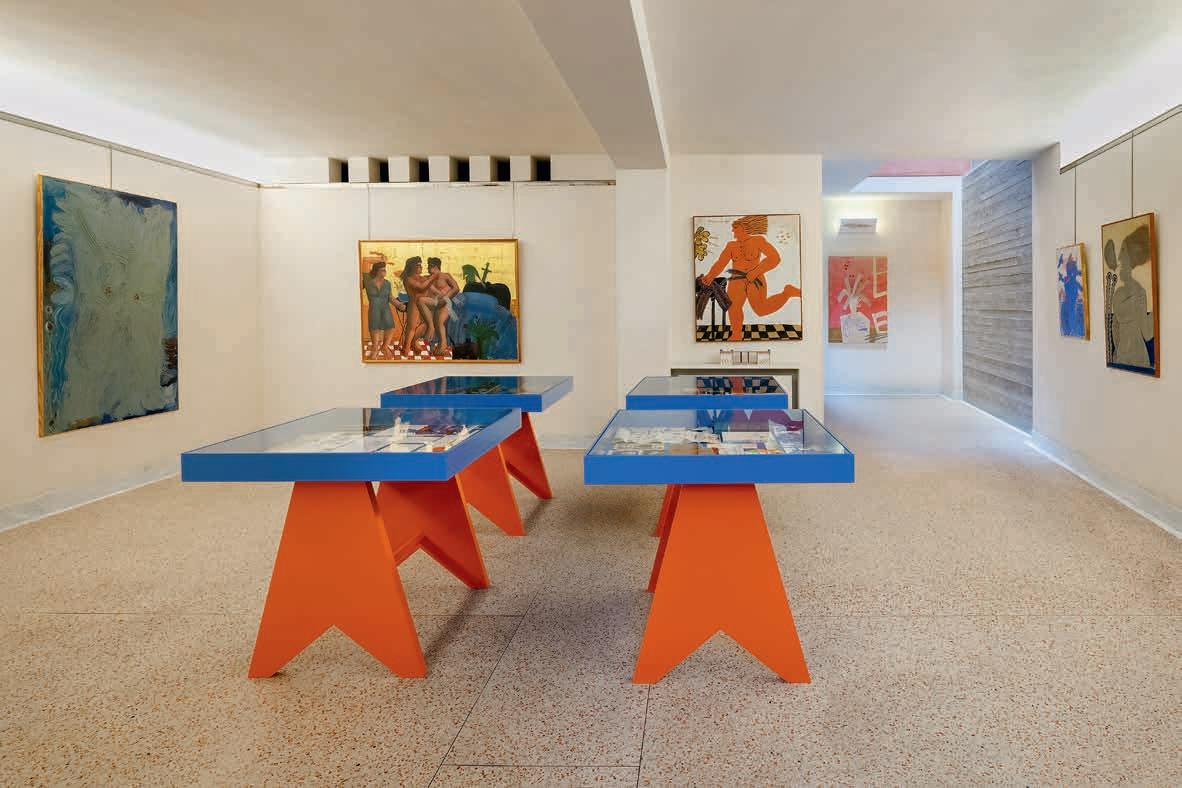
Right page: One of the exhibition rooms at the Alekos Fassianos Museum.
Art as a Bridge
Ten years later, Alekos Fassianos is no longer with us, but his birds, bees and flowers still animate the deep blue wall, forming an integral part of the Electra Metropolis experience. As the chief executive officer notes, “At a time when travelers are seeking authenticity and stories with meaning, art acts as a bridge, bringing them closer to the character of a place.” In this sense, the hotel also serves as a kind of cultural ambassador, while supporting contemporary Greek artistic creation.
“In my view, a hotel is an informal museum, one that speaks to and influences not only its guests and visitors, but also the people who work there,” says Plessa. “Athens is now distinguished by its strong cultural identity, particularly in the field of visual arts institutions and initiatives. A public space such as a hotel, therefore, cannot remain detached from this aspect of the city’s life. However carefully designed or expensively decorated it may be, if there is no genuine commitment to art – both in terms of investment and of entrusting the process to specialists – the project ultimately feels hollow and reveals much about its philosophy of care toward guests.”
For Plessa, the careful selection of artworks that fit naturally within the architect’s and designer’s aesthetic vision enriches the guest experience while also helping cultivate a stronger visual sensibility among hotel staff. “An Athenian hotel that displays works by Greek artists offers them an important platform, introducing them to an audience that may later seek them out in museums and galleries and discover the city’s rich and dynamic cultural life. There is no greater satisfaction than receiving questions from visitors about the artists whose works are displayed in the hotels of the Electra Group.”
A Partnership with Lasting Impact
The Electra Group’s relationship with the work and legacy of Alekos Fassianos continues through its connection with the Alekos Fassianos Museum. “For us, it’s very important that this relationship not be seen as something static or tied solely to an anniversary, but as an ongoing conversation between culture and Greek hospitality. Through collaborations such as this, we create an experience that leaves a meaningful impression and helps position Athens internationally, not only as a historic destination but also as a contemporary cultural one,” says Mariza Fassianou, the late artist’s life partner, managing director and partner of the Alekos Fassianos Museum. “It is particularly moving to see that, ten years later, the work Alekos created for Electra Metropolis does not function simply as an artistic highlight, but as a living part of the hotel experience and of the city itself. Alekos believed deeply that art should not exist in isolation. It should live among people, engage with everyday life and become part of memory and experience.”
At a time when art is seeking new ways to reach audiences, she believes that collaborations between cultural institutions and hospitality spaces can acquire even greater depth and substance. “Hotels today are not simply places to stay; they can also serve as cultural spaces of encounter and discovery, where visitors experience the identity of a city through its art, its history and its contemporary culture.” ➺
A New Creative Dialogue
The relationship between hospitality and art becomes most meaningful when it moves beyond decoration and becomes an integral part of a place’s identity. Electra Metropolis Athens offers a compelling example of this approach. The monumental presence of Fassianos’ work does not function as a decorative feature, but as an organic part of the hotel’s character, creating a genuine connection with visitors and with the city itself. At the same time, the work’s continuing presence in one of Athens’ most public hospitality spaces inspires new creative dialogues. One such conversation is currently unfolding at the Alekos Fassianos Museum until October 11, through the Contemporary Intervention Program exhibition “Malvina Panagiotidi: Bucolic Fever. A Dialogue with Alekos Fassianos.”
The exhibition brings together a new body of work by artist Malvina Panagiotidi, conceived specifically for the museum and in dialogue with a lesser known yet highly fertile aspect of Fassianos’ practice: design. Drawing on her research into the artist’s archive and wider body of work, Panagiotidi creates a fluid visual landscape in which the boundaries between artwork and object, function and desire, dissolve in creative ways.
The House Was Quite
Malvina Panagiotidi, The House Was Quiet A work from the exhibition “Bucolic Fever: A Dialogue with Alekos Fassianos.”
The exhibition gains additional resonance through its setting. Designed and reworked by architect Kyriakos Krokos in collaboration with Alekos Fassianos and completed in 1995, the building is an important architectural and cultural landmark in its own right. It stands on the site of the artist’s family home, a small neoclassical house with an interior courtyard and tiled roof, where he spent the first years of his life.
Today, the museum holds a distinctive place on the city’s artistic and architectural map, not only because of Krokos’ masterful intervention, but also because it represents a rare example in which the collaboration between artist and architect establishes a close relationship between the works and the space that hosts them. Malvina Panagiotidi’s exhibition is part of the broader mission of the Alekos Fassianos Museum: to keep alive the work and spirit of one of Greece’s leading artists through contemporary interpretations and new creative approaches. As representatives of the Museum and the Alekos Fassianos Estate – the nonprofit organization that manages the artist’s intellectual property rights – emphasize, they remain open to initiatives that promote Alekos Fassianos’ work with respect, expertise, and sensitivity.
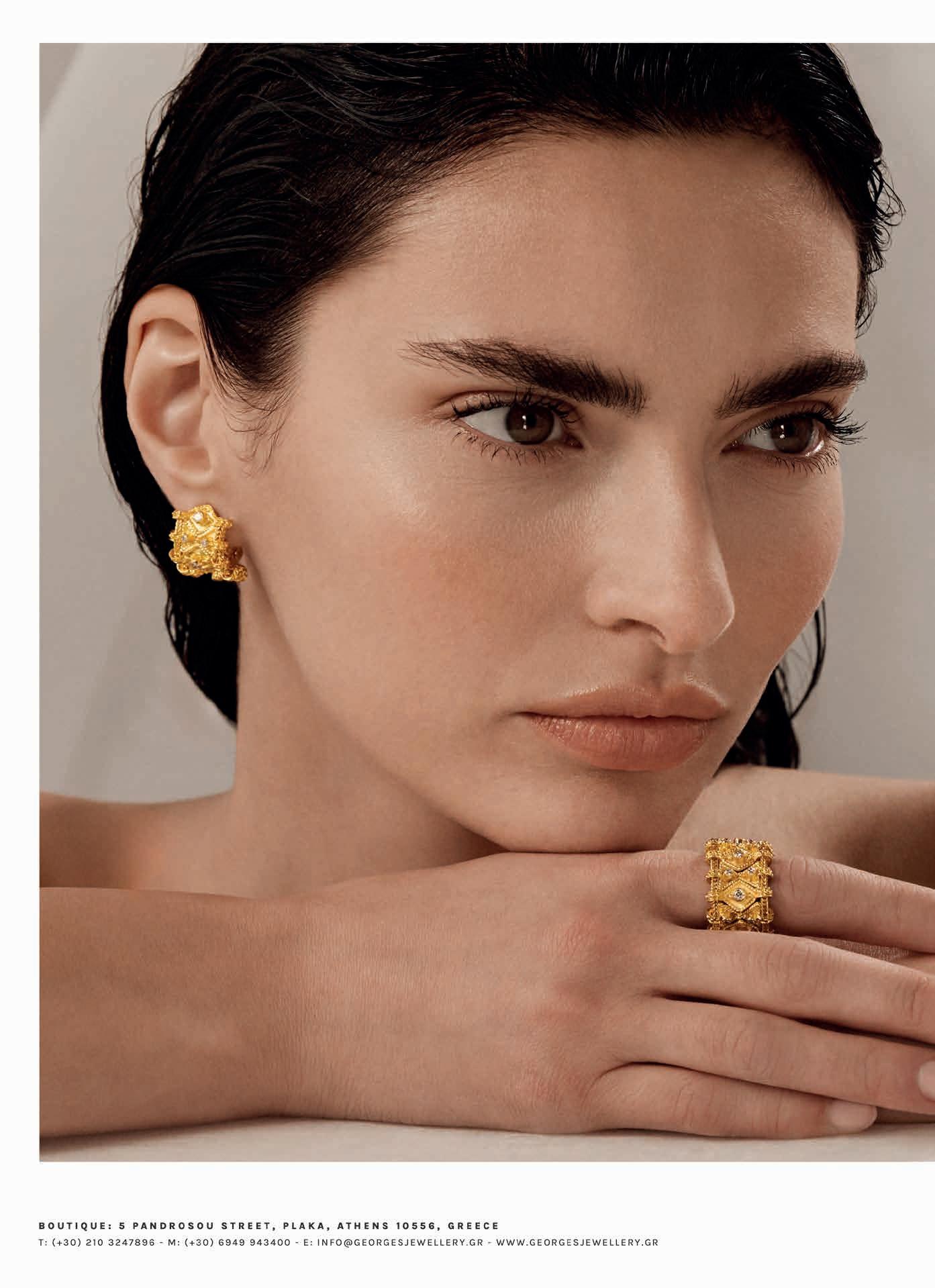
GEO R GES
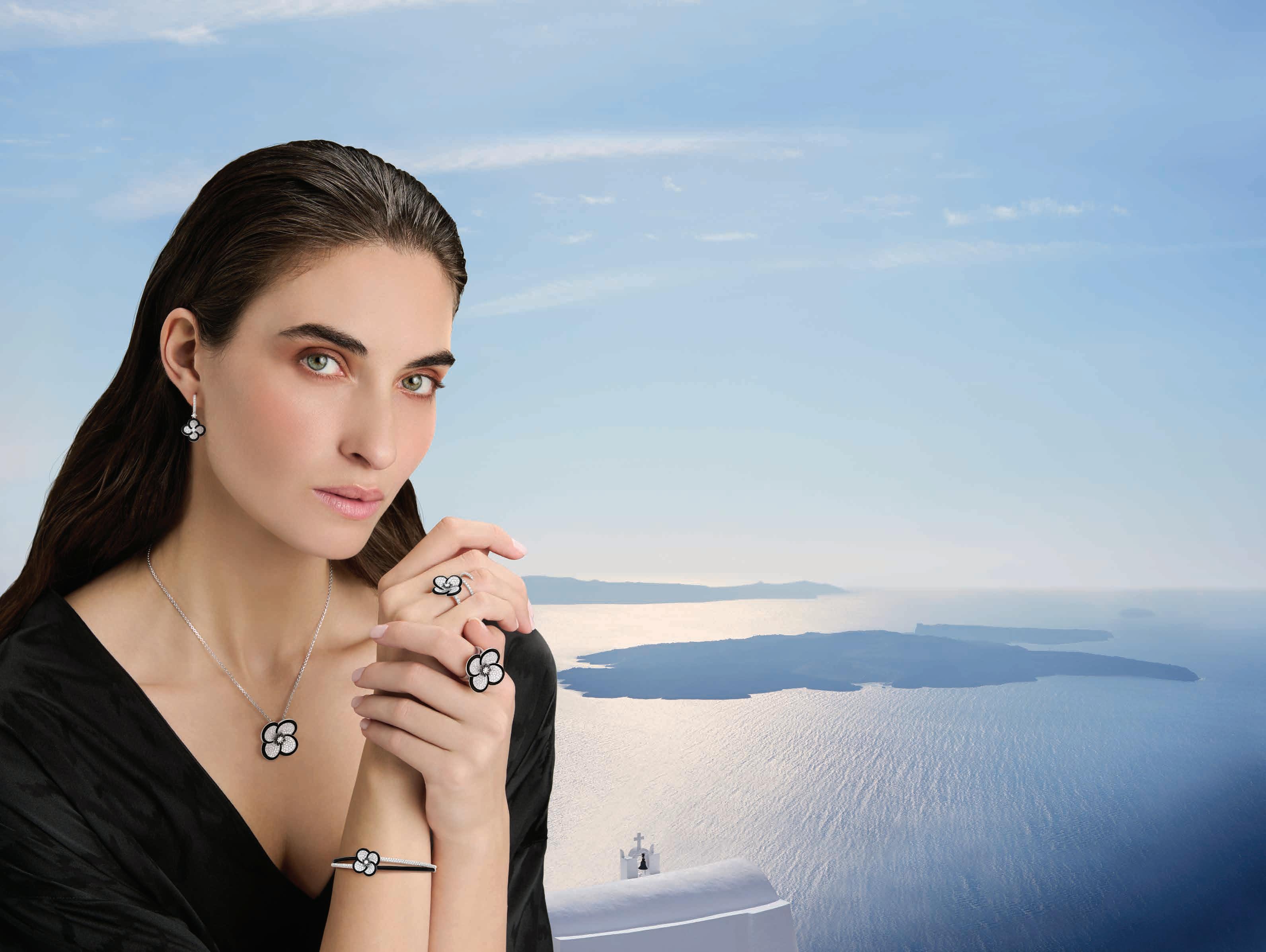
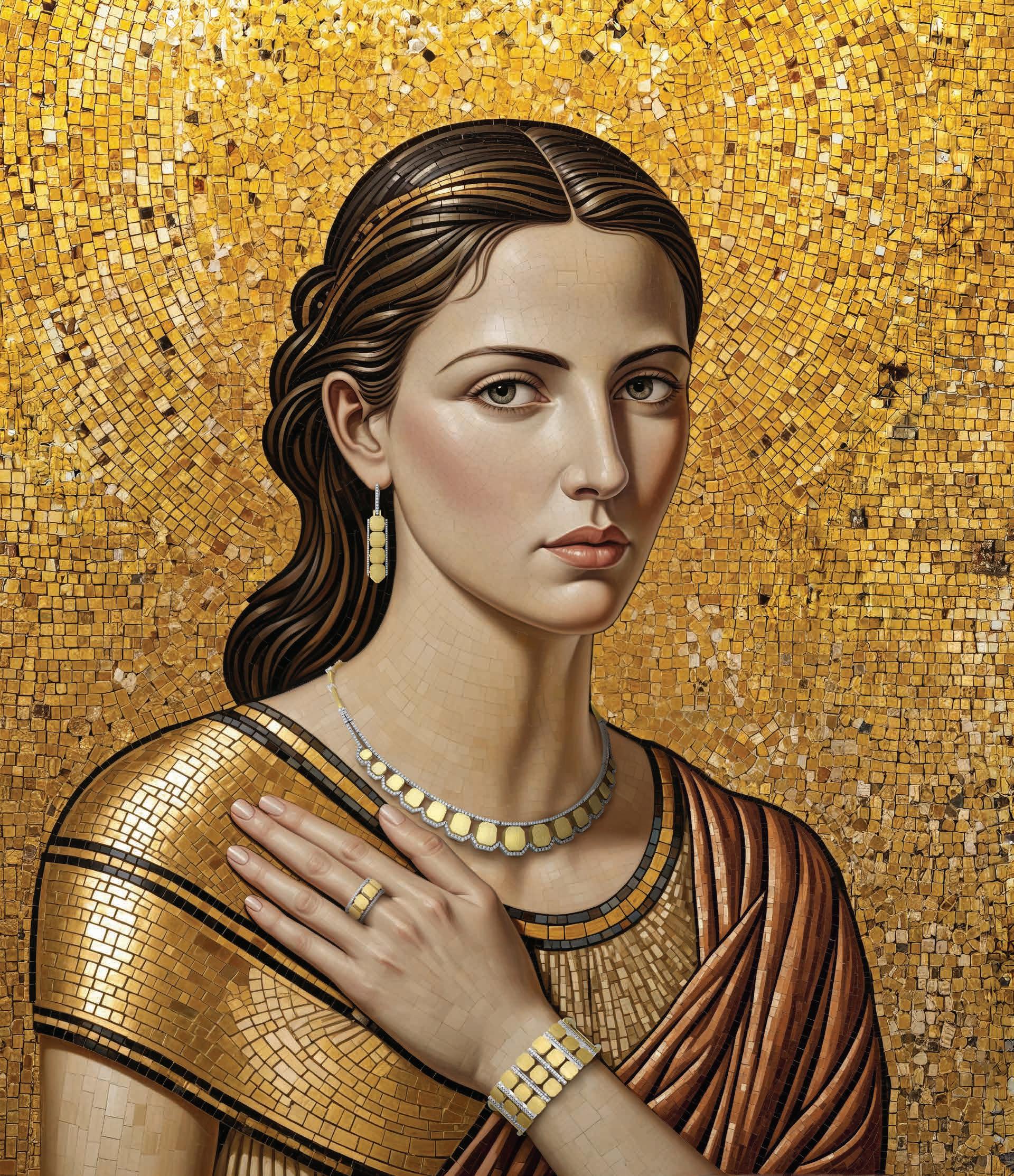
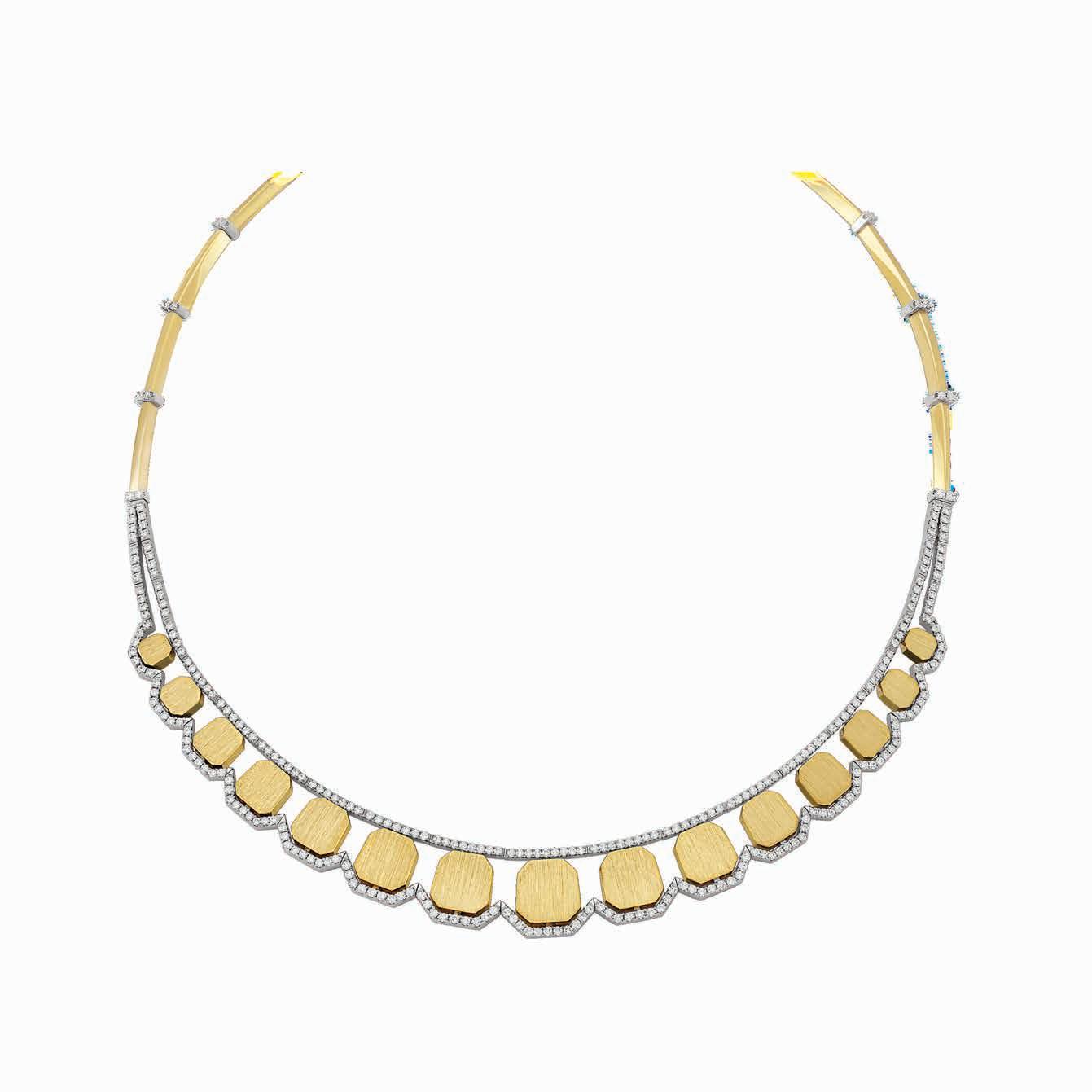
With the Imperial collection, GEORGES explores a refined vision of artistry, combining bold geometric patterns with radiant gold finishes inspired by the grandeur of the Byzantine era. Each piece is brought to life in the brand’s in-house workshop, whose expertise and meticulous craftsmanship have defined GEORGES’ creations for over fifty years. Alongside this collection, the brand presents a wide range of jewelry that seamlessly blends contemporary, diamond-embellished designs with inspirations drawn from the rich heritage of Ancient Greece and her iconic civilizations.
Discover the collections in-store or online at www.georgesjewellery.gr
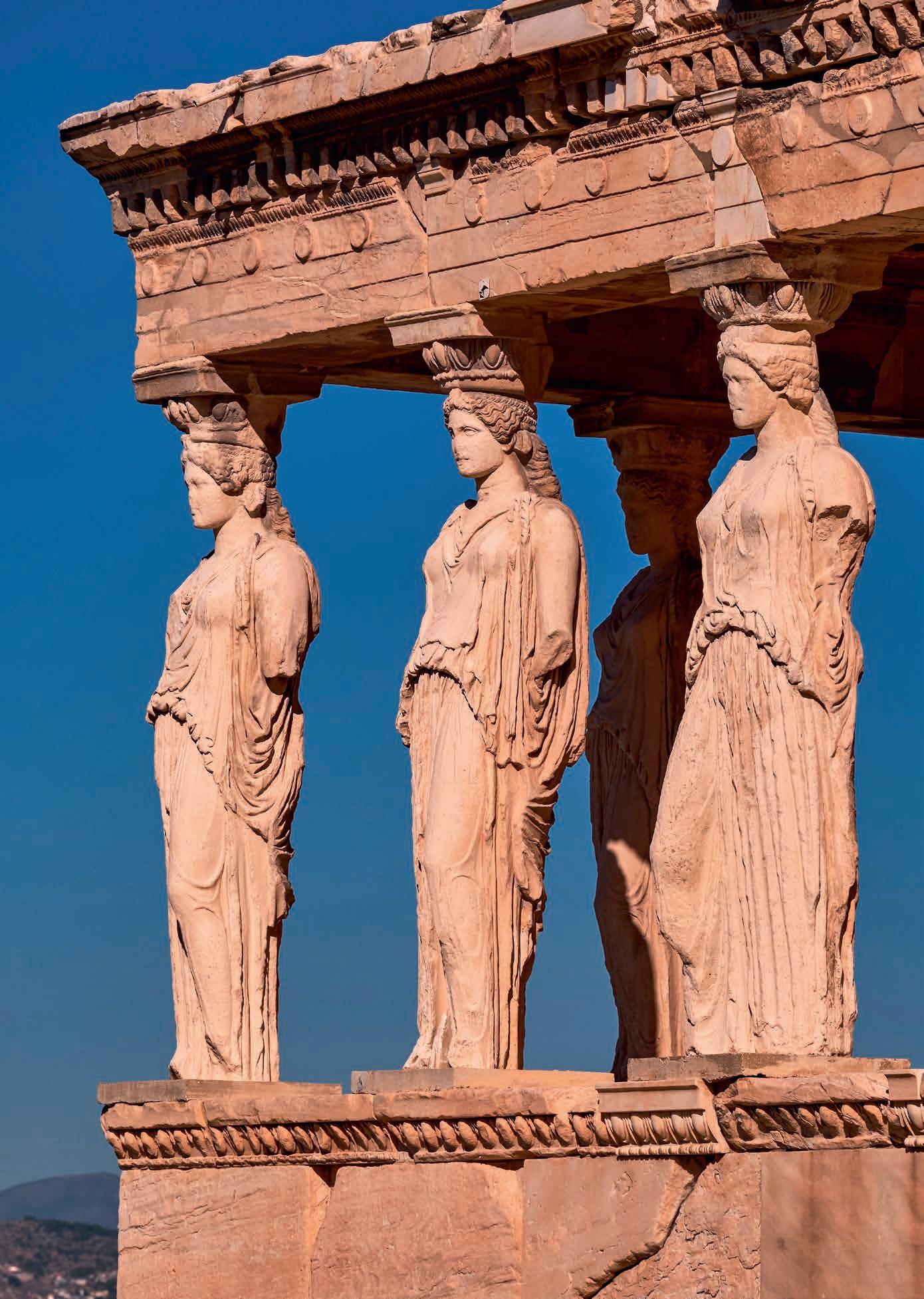
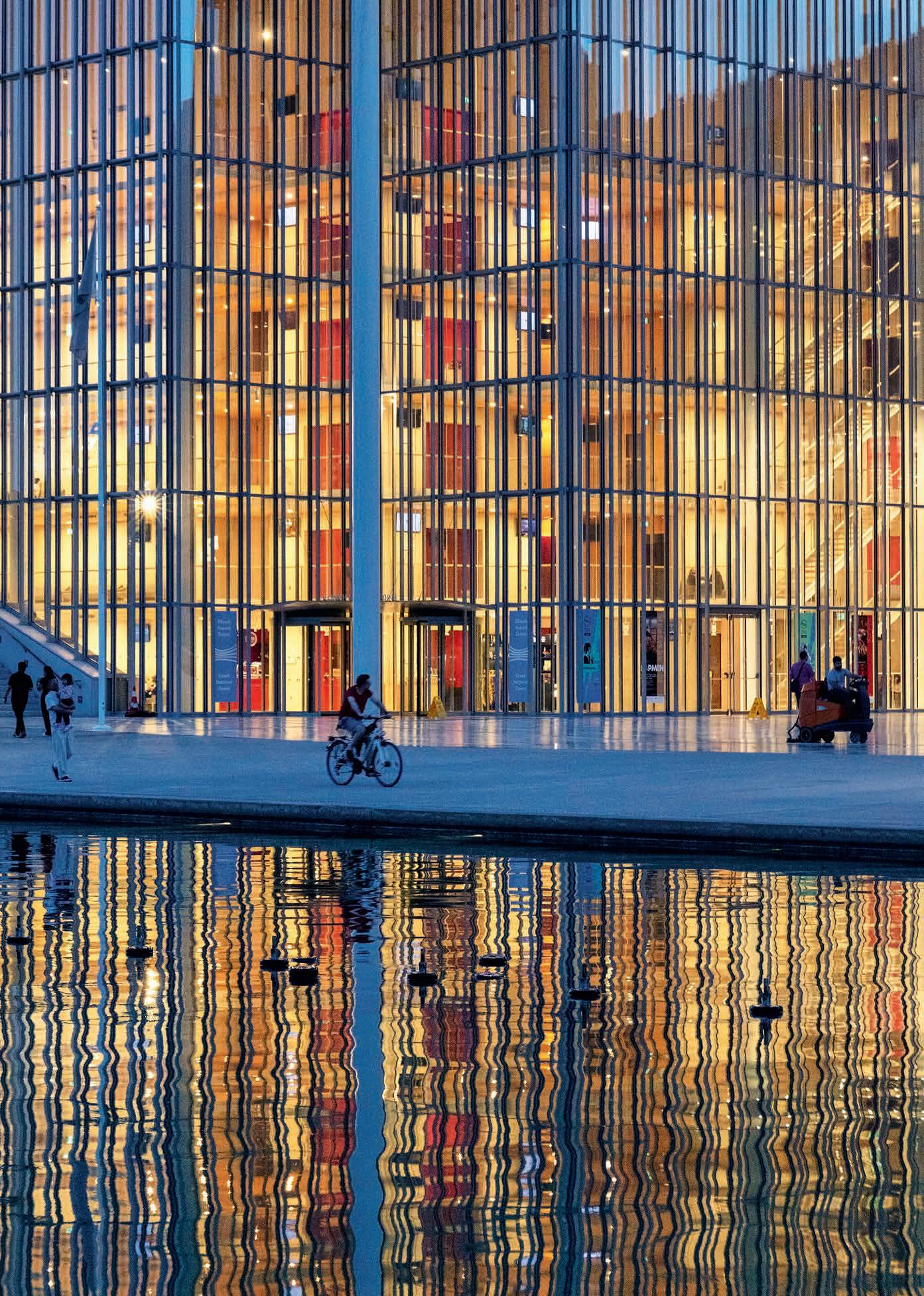
The building housing the Greek National Opera at the Stavros Niarchos Foundation Cultural Center. On the left, exact replicas of the Caryatids have been placed at the Erechtheion.
ATHENS ΑΘΗΝΑ
Themed Walks
Explore ancient Athens of the Classical period, discover one of the city center’s loveliest streets, make your way to the sea, and leave time for a swim and a movie at an open-air cinema.
By Lina Kapetaniou | Photos: Perikles Merakos
IN THE HEART OF ANCIENT ATHENS
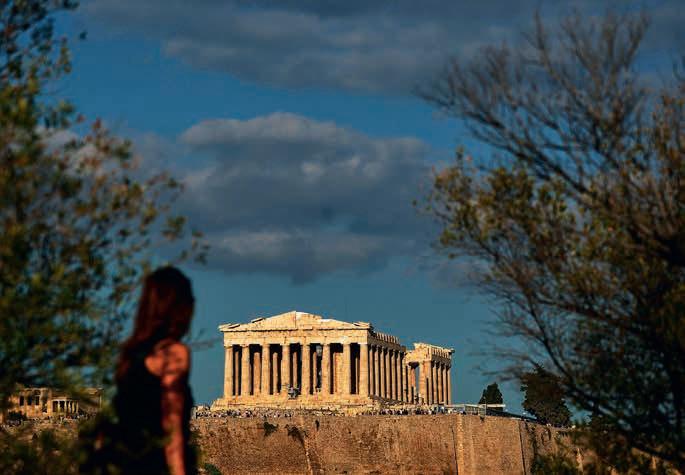
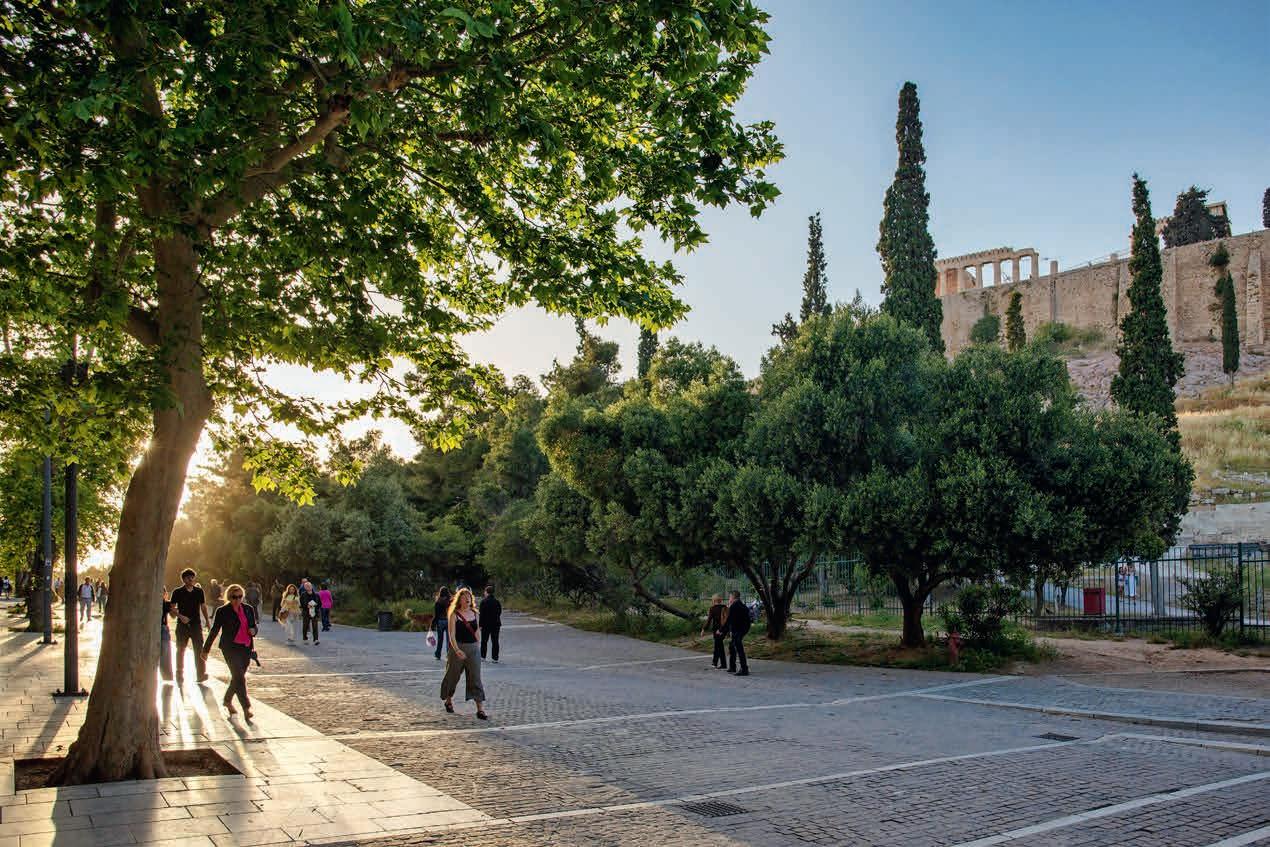
There is only one place to begin: the Acropolis, crowned by perhaps the most iconic monument of classical antiquity, the Parthenon. Built of Pentelic marble in the 5th century BC, it is visible from many parts of central Athens, and an award-winning lighting design gives it a magnificent presence after dark.
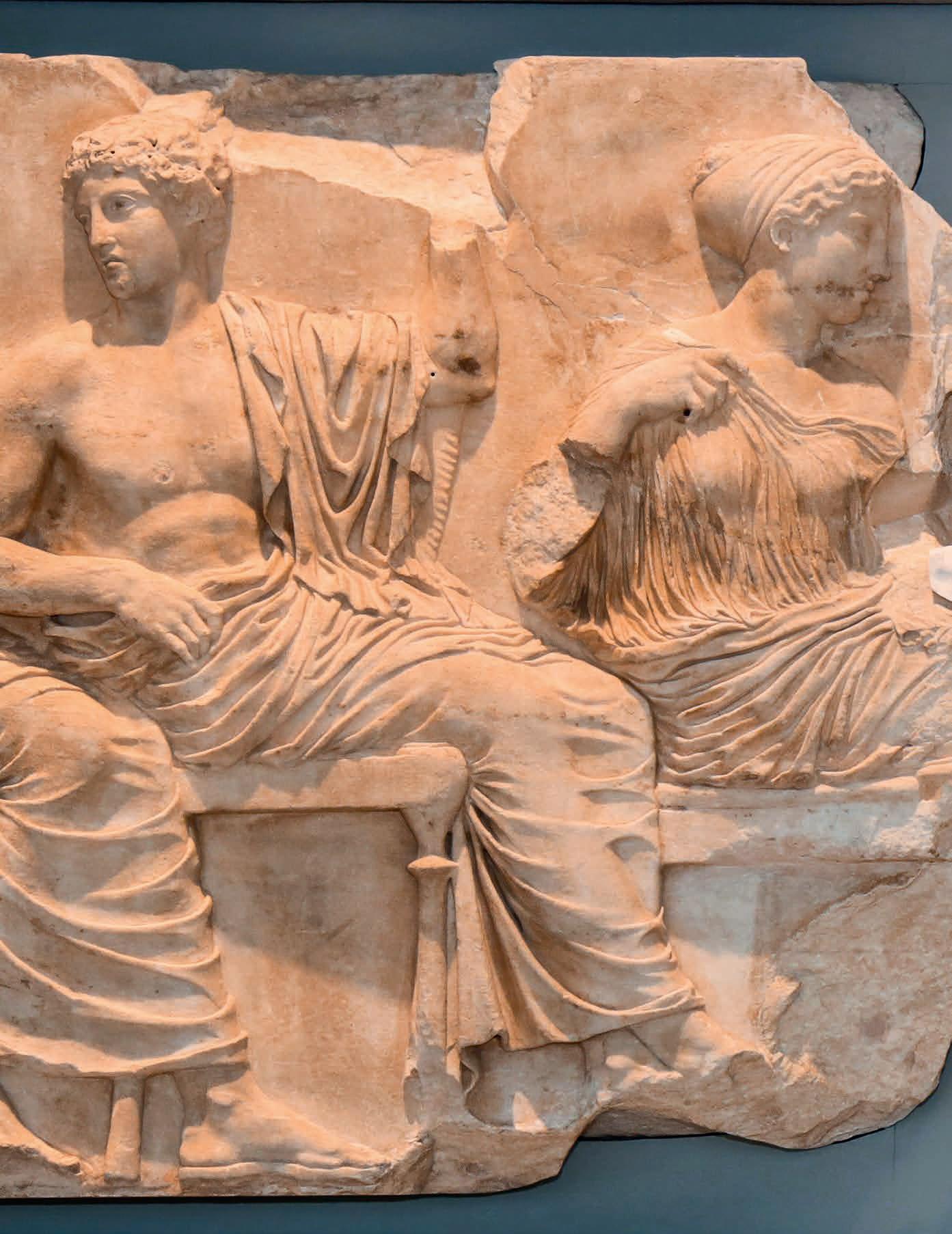
No tour of the Sacred Rock and its monuments – the Propylaea, the Erechtheion, the Temple of Athena Nike and others – is complete without a visit to the Acropolis Museum. Here you can see sections of the Parthenon frieze, sculptures from its pediments and the celebrated Caryatids – though not all of them. Five of the six female figures that once supported the roof of the south porch of the Erechtheion in place of columns are displayed in the museum. The sixth was removed in 1804 by Thomas Bruce, Lord Elgin, and is now in the British Museum. Copies stand today on the Erechtheion itself, as the originals were moved indoors to better preserve them.
The museum and the Acropolis Hill form part of a single archaeological walk connected by the elegant pedestrianized avenue of Dionysiou Areopagitou. During the summer season, from April 1 to October 31, the archaeological site is open daily from 08:00 to 20:00, with last admission at 19:30. Tickets cost €30. Use the official ticketing platform at hhticket.gr. In summer, the Acropolis Museum is open Monday from 09:00 to 17:00; Tuesday to Thursday and Saturday to Sunday from 09:00 to 20:00; and Friday until 22:00. Admission is €20, with tickets available online at theacropolismuseum.gr.
From there, head toward the Pnyx, a short walk from the entrance to the Acropolis. This is where the Ecclesia, the assembly of Athenian citizens, met in antiquity, and where Pericles, Demosthenes and other prominent Athenians once addressed the people. Today, the Pnyx offers sweeping views over the Attic basin. It was also on this hill that Meton, the 5th-century BC mathematician and astronomer, made some of the first astronomical observations in ancient Athens.
19.30. Το εισιτήριο κοστίζει 30 ευρώ. Προτιμήστε τον επίσημο
A section of the Parthenon frieze, Acropolis Museum. Left page: Αbove, the Acropolis, visible from many points across the city. Below, a view of the Ancient Agora.
Across the way, on the Hill of the Nymphs, stands the National Observatory of Athens. Its Visitor Center organizes evening tours for the public, including a guided visit and telescope observation of the night sky. The view from the area outside the telescope building is one of the city’s most scenic. Tours take place every Wednesday, Friday and Saturday, starting at 21:00 in Greek and 22:00 in English. Admission is €5 per person. Check the full schedule and ticketing details at noa.gr.
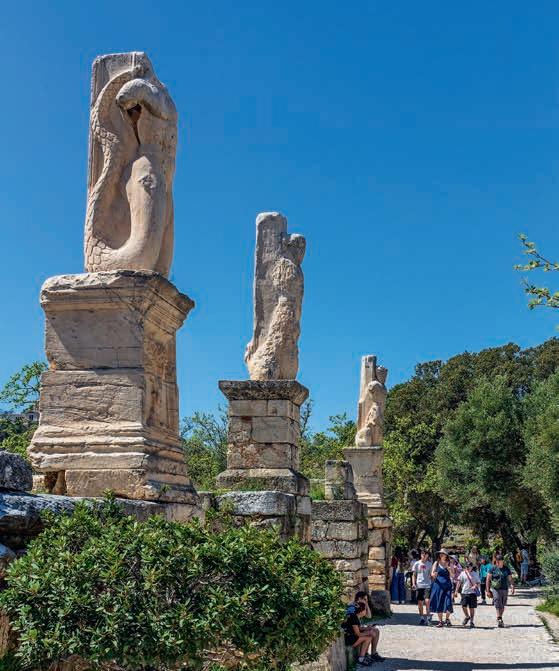
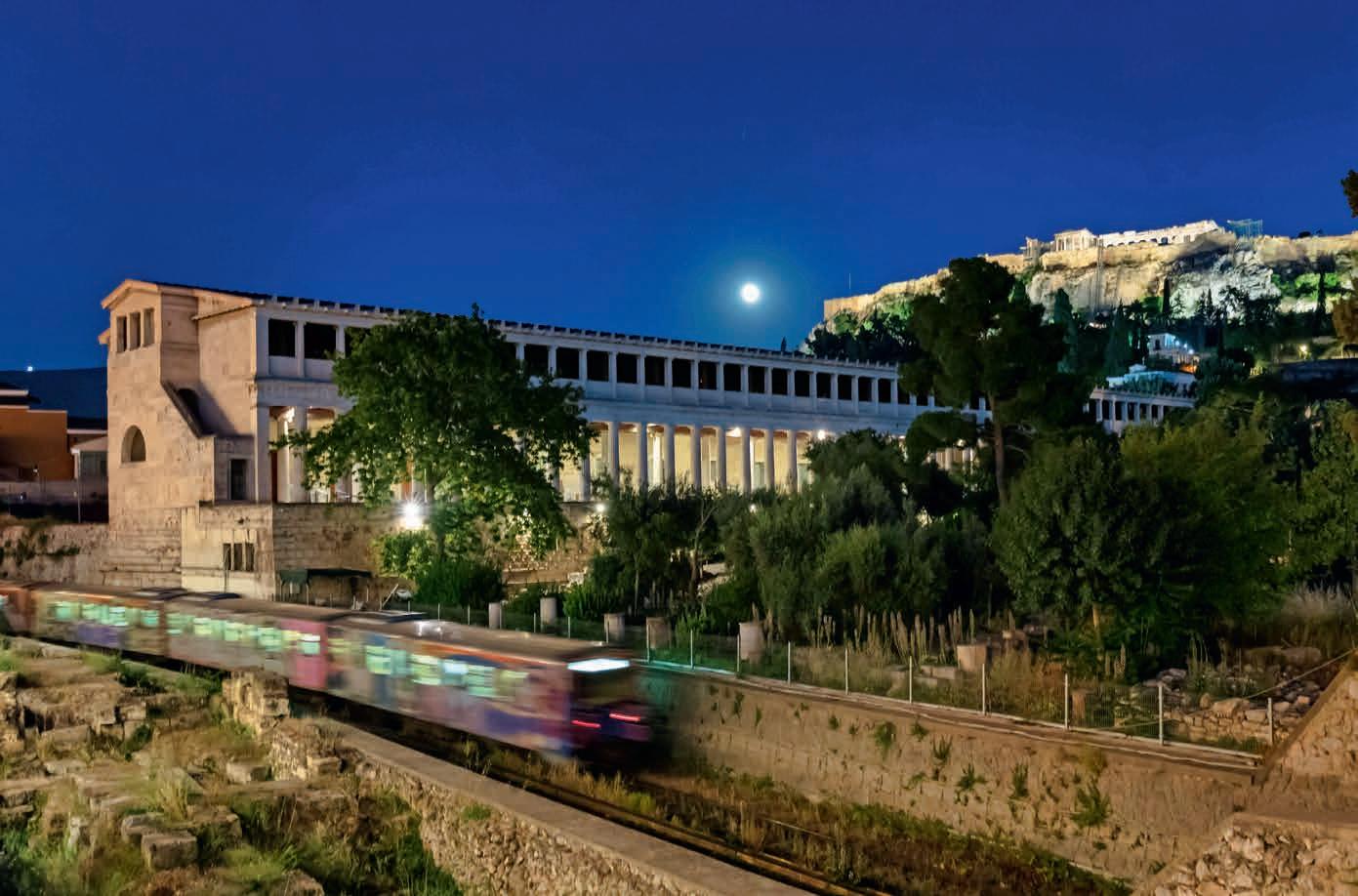
As you return to Dionysiou Areopagitou and walk downhill toward Thiseio and the electric railway station, you’ll find the beginning of another pedestrianized route: Adrianou Street, running parallel to the train tracks. Visit the 5th-century BC Doric Temple of Hephaestus, trace the footsteps of Pericles and Socrates in the Ancient Agora, and see finds from the site inside the Museum of the Ancient Agora, housed in the reconstructed Stoa of Attalos. Admission to the Ancient Agora is €20 and includes both the archaeological site and the museum (hhticket.gr).
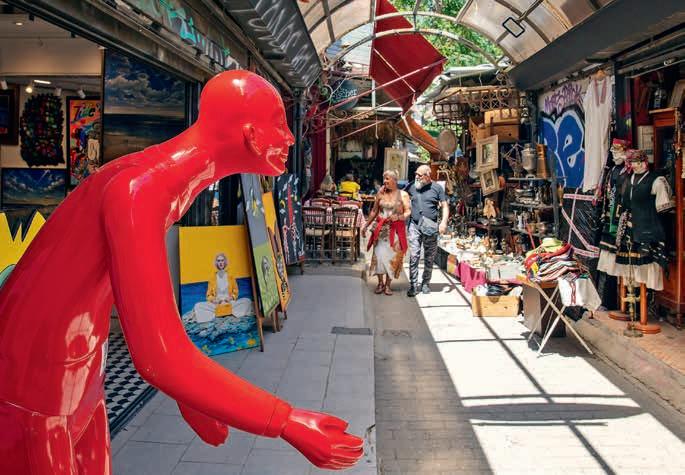
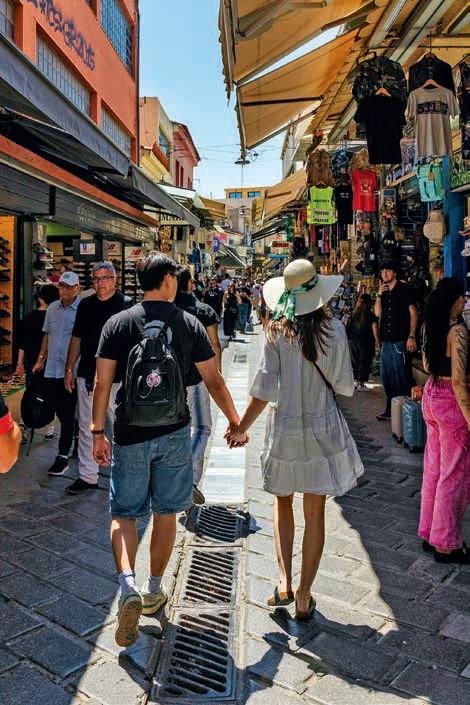
One block over, Hephaestou Street is also pedestrianized. Its defining feature is its market: a lively run of small shops selling everything from clothes and shoes to records, jewelry and souvenirs. Continue to Monastiraki Square and grab a kebab wrapped in pita from the legendary eatery Thanasis (69 Mitropoleos), which has been serving Athenians and visitors since 1964.
GOOD TO KNOW
➽ Distances are short, but set aside about two hours for the Acropolis Museum and roughly one hour for a stroll around Monastiraki. Without including the evening visit to the Observatory, you’ll need about four to five hours to complete the walk.
➽ The Acropolis draws large crowds, especially in spring and summer. Book your ticket online and aim to enter the archaeological site early, at 08:00, when it opens to the public.
Above: The Stoa of Attalos. Below: Pedestrianized Dionysiou Areopagitou Street. Left page: On Ifestou Street, you’ll find everything from clothing and jewelry to antiques, souvenirs and vinyl records.
FACING THE SEA
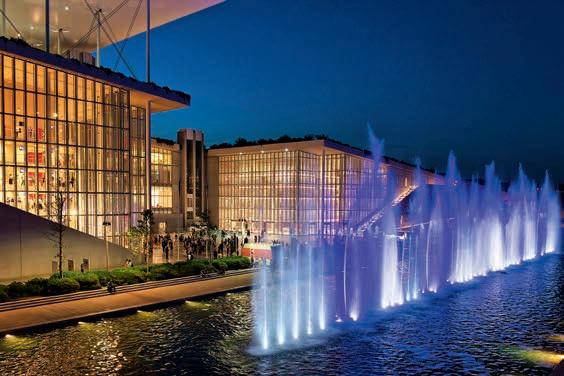
Syngrou Avenue connects central Athens with its southern suburbs and the sea. As you leave the city center behind, the mood begins to shift and the pace feels more relaxed. Make your first stop at the Stavros Niarchos Foundation Cultural Center (SNFCC), at the end of Syngrou Avenue, just before the city meets the waterfront. Green open spaces, sports areas, walking paths, the Greek National Opera and the National Library of Greece draw hundreds of visitors every day. The center also hosts a near-daily program of events, talks, concerts and activities for children. Wander through the park, enjoy the views toward the sea and Piraeus, and watch the choreographed fountains in the canal. For more information, visit snfcc.org.
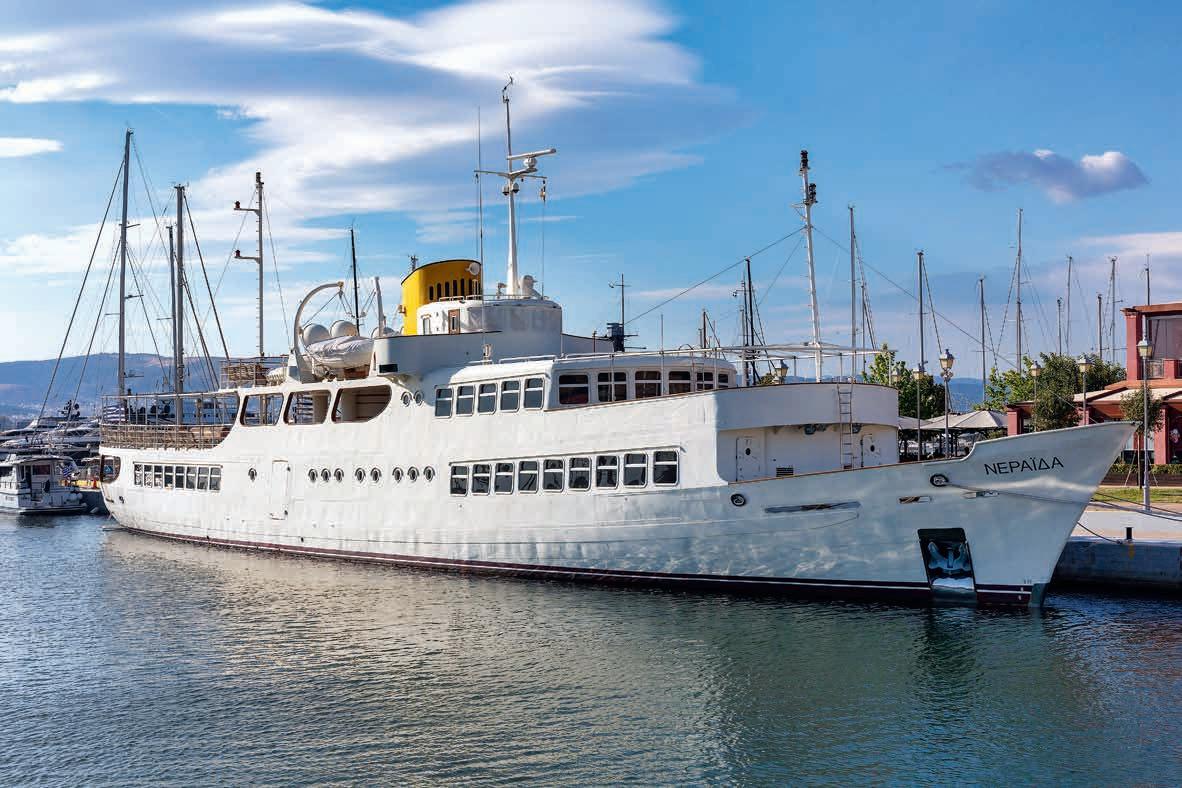
Follow the elevated pedestrian walkway of the Esplanade toward the sea. At its end, you’ll see Water Plaza to your right, a major open-air concert venue during the summer months, with star performers from Greece and abroad. Continue left, walking along the coastline, until you reach Flisvos Marina. There, among the cafés and restaurants, is the passenger ship Neraida, built in 1939. From 1950 to 1974, it operated routes to the islands of the Saronic Gulf. Today, it has been converted into a floating museum with free admission.
Still moving in the same direction, with the sea on your right, you’ll come to Flisvos Park, an ideal place to pause in the shade. This is also where you’ll find Cine Flisvos, an open-air summer cinema offering daily screenings. A few kilometers farther down the coast, follow the scent of freshly popped popcorn once again. Cine Alimos occupies a privileged spot right by the sea and has a devoted audience of its own.
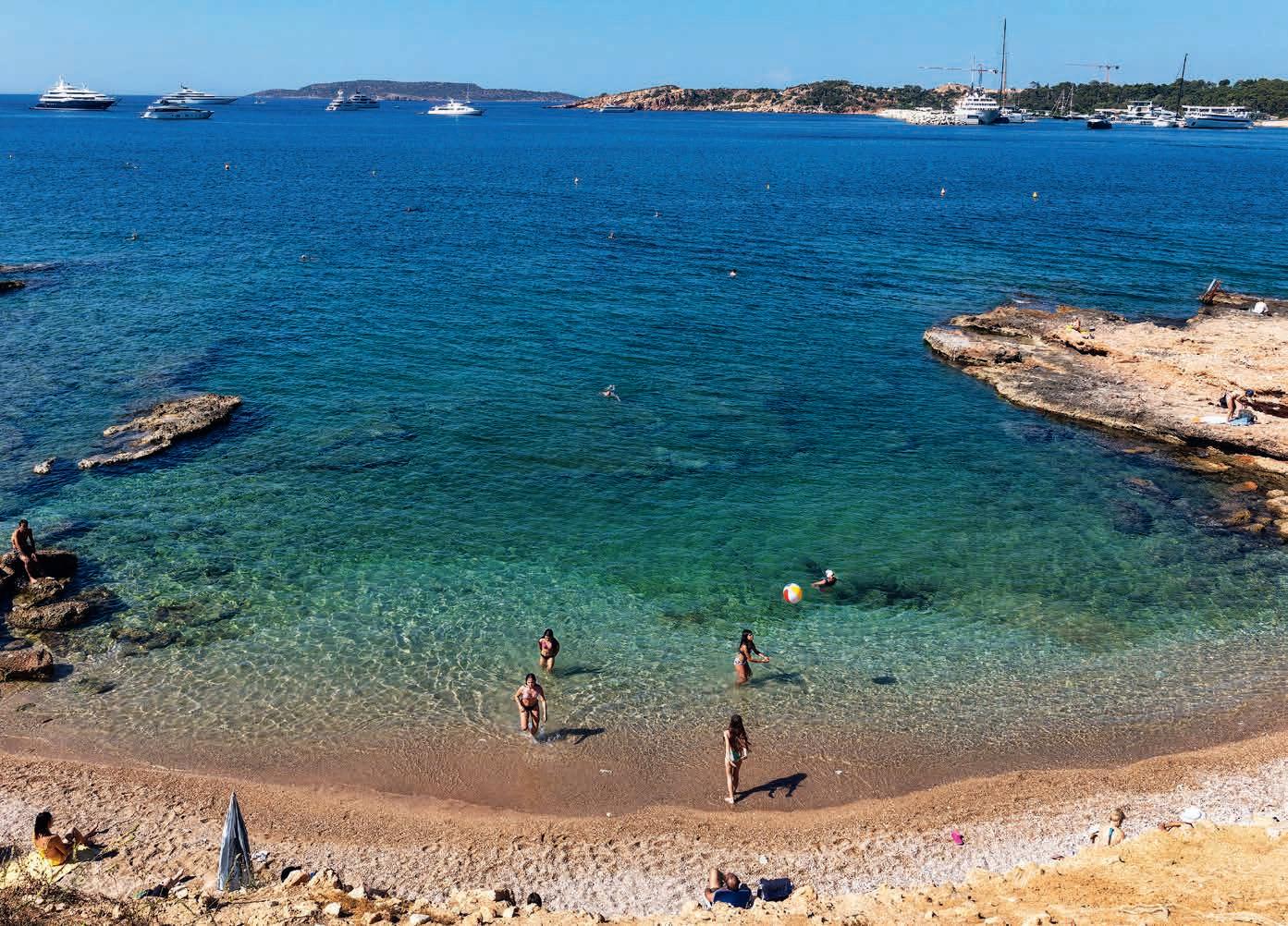
Swimming in Vouliagmeni.
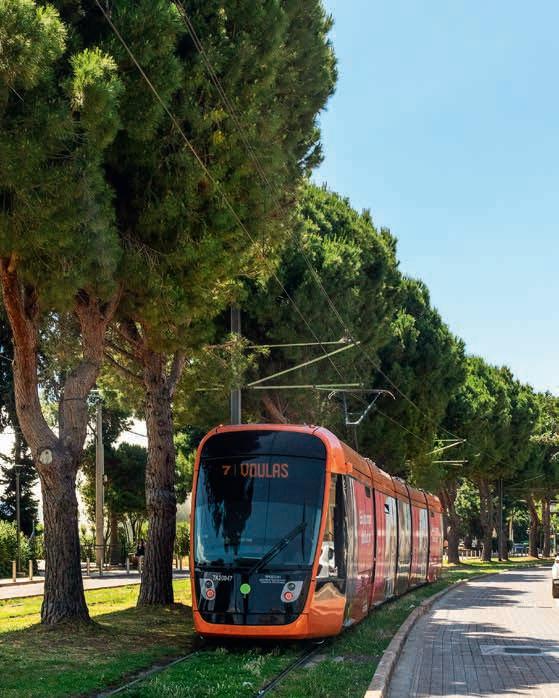
Below: The floating museum Neraida. Left page: Αbove, the dancing fountains at the Niarchos Foundation Cultural Center. Below, the tram connects the city center with the southern suburbs.
Summer in Athens also means swimming. The beaches of Flisvos, Batis and Edem fill up every day (they’re also popular with the city’s winter swimmers). For more of a vacation feel, continue farther south to the beaches of Voula and Vouliagmeni. A convenient way to move along the waterfront is by tram: Line T6 takes you from Syntagma to Pikrodafni, while Line T7 continues toward Voula or toward Piraeus/Akti Poseidonos.
No tour of Athens’ southern suburbs is complete without a stop in Glyfada, the area’s main shopping and entertainment hub, with plenty of options for stores, coffee, food and nightlife, especially along Lazaraki and Zisimopoulou streets and around Esperidon Square. For families with children, Glyfada also has excellent playgrounds. The one at the corner of Zamanou and Xanthou streets is ideal for younger children up to about eight years old, while the playground at Chariton Square is suitable for older children as well.
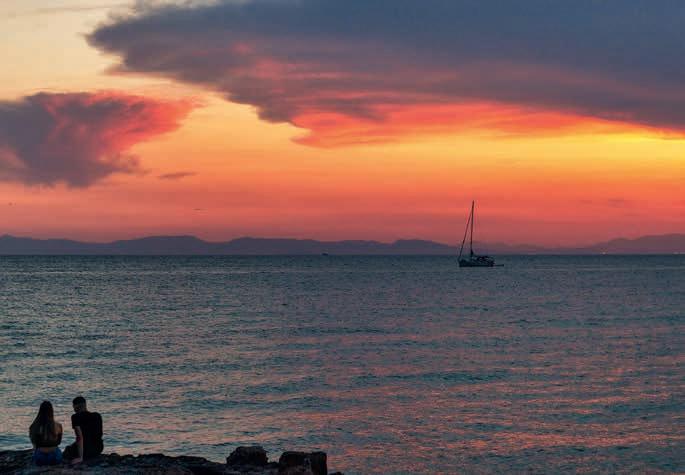
The Athens Riviera faces west, so plan to be here at sunset. In Palaio Faliro, you can watch the sun sink behind Kastella Hill in Piraeus, coloring the horizon in shades of yellow and red.
GOOD TO KNOW
➽ This is a full-day excursion away from the city center. If you plan to swim at one of the beaches farther down the coast, set aside the whole day. From May through October, temperatures are often high, and a swim in the sea is one of the best ways to cool off.
➽ To visit just the the Stavros Niarchos Foundation Cultural Center (SNFCC) and Flisvos Marina, allow around two to three hours. The SNFCC Park is open daily from o6:00 to midnight, so on very hot days in Athens it’s best to take your walk here after sunset.
AN ARCHITECTURAL WALK
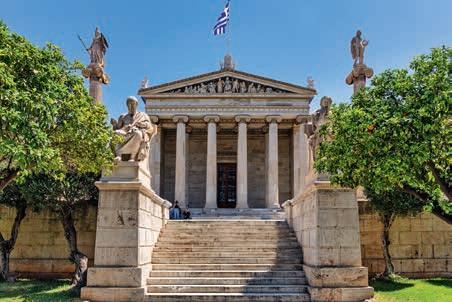
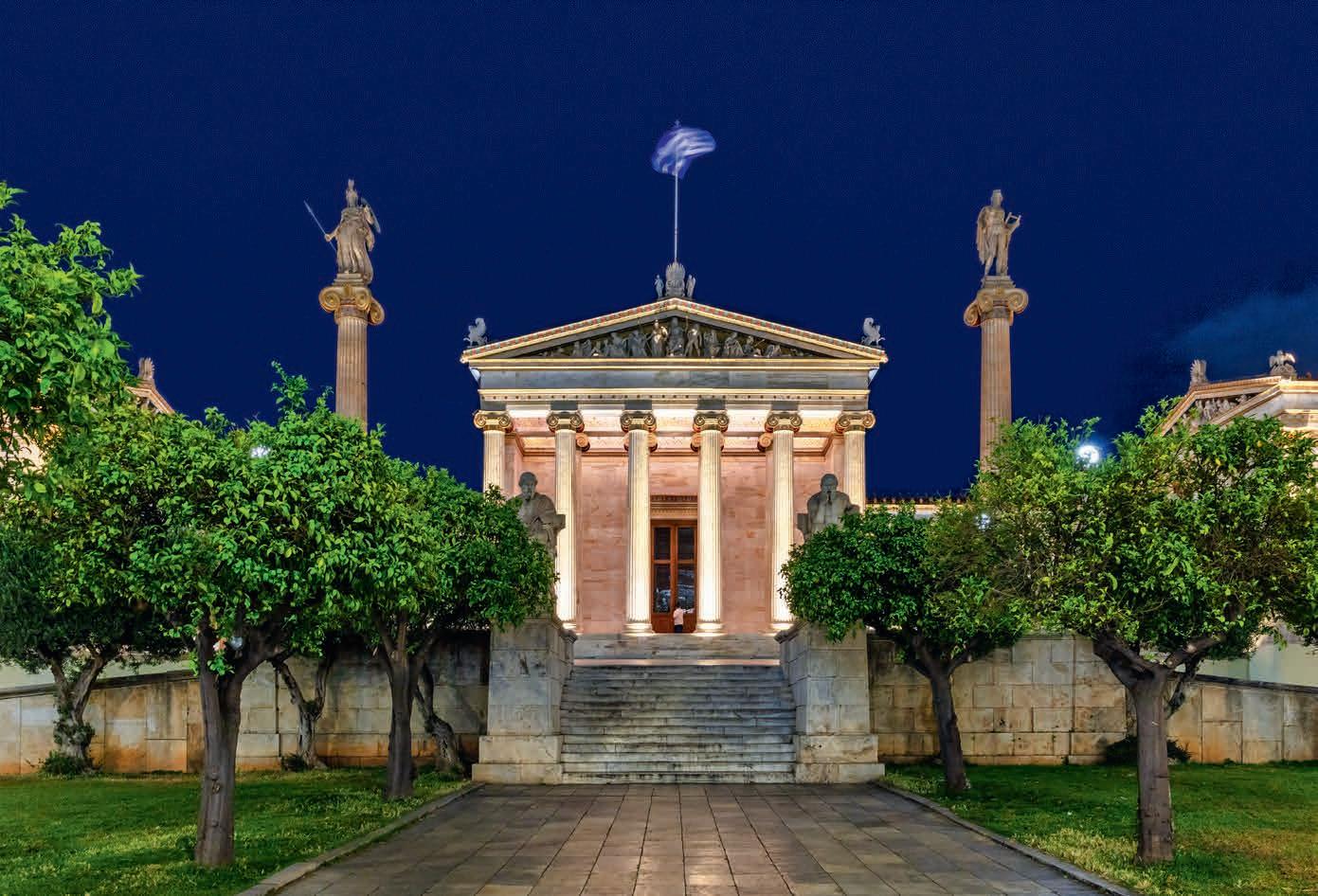
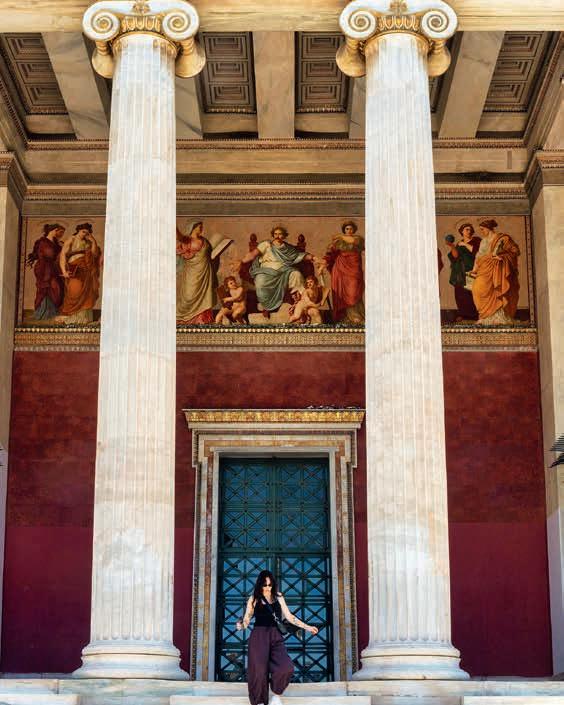
Many Athenians consider Panepistimiou Street one of the city’s most beautiful avenues, and with good reason. Midway along it stands a unique ensemble of three neoclassical public buildings: the Academy of Athens, the University of Athens and the Vallianeio Megaron (the former National Library), all designed by the Danish architects Christian and Theophil Hansen. The University, also known as the Propylaea, was founded in 1839; the Academy was completed in 1887; and the Library followed in 1903. Together, these landmarks, often referred to as the Athenian Trilogy, draw their inspiration from ancient Athens, as their many architectural and decorative details clearly show. The Academy of Athens is adorned with Ionic columns topped by statues of Apollo and Athena. Its pediment depicts the birth of the goddess Athena, while in the forecourt stand two more statues, each 2.40 meters high: Plato on the left and Socrates on the right. The Vallianeio Megaron, the third building in the sequence, housed the National Library of Greece until 2017; the following year, most of the library’s functions moved to the Stavros Niarchos Foundation Cultural Center. ➸
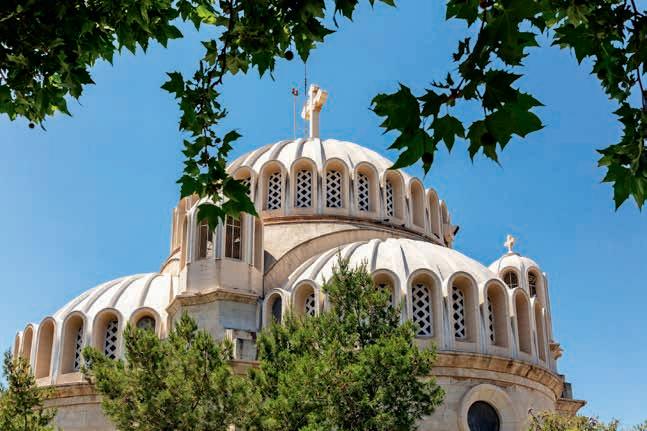
The Academy of Athens on Panepistimiou Street, with the statues of the gods Apollo and Athena. Left page: Αbove, the Church of Saints Constantine and Helen in Glyfada. Below, sunset on the Athens Riviera.
The garden and café of the Numismatic Museum. Below, a detail from the entrance to the University of Athens building.
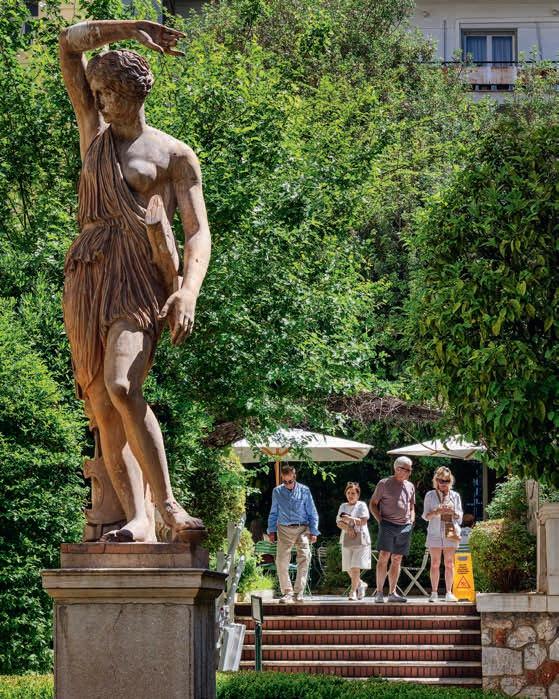
Theophil Hansen’s assistant, Ernst Ziller, also left a major mark on Athens. Among his many works is the building that now houses the Numismatic Museum, also on Panepistimiou Street. Built in 1878-79 as the residence of the celebrated German archaeologist Heinrich Schliemann, it has housed one of the world’s most important coin collections since 1998. Its elegant garden café is a pleasant place to stop for a break in the shade.
From here, continue uphill into the narrow streets of Kolonaki, considered one of the city center’s most elegant neighborhoods. Along Skoufa and Tsakalof streets, you’ll find luxury boutiques, cafés and restaurants. Walk to the corner of Ploutarchou and Aristippou streets, where the Lycabettus funicular will take you effortlessly to the top of the hill. The ride lasts just three minutes, and the funicular cars bring you very close to the small Church of Aghios Georgios, where you can enjoy sweeping views over the city.
The funicular operates daily from 09:00 until late in the evening; check the current schedule before visiting. A round-trip ticket costs €13. At the top of the hill, you’ll also find the Lycabettus Municipal Theater, a legendary open-air venue for concerts and performances. Founded in 1965, it hosts major names from Greece and abroad in the summer months. From its tiered seats, you can watch the performance with the city illuminated below. ➸
On your way back, stop at Dexameni Square. As the information panel on the square explains, directly beneath it lies Hadrian’s Reservoir, the terminus of Hadrian’s Aqueduct, whose construction was ordered by that Roman emperor in the 2nd century AD to supply Athens with water. The main axis of the aqueduct started at a point known as the “inclined gallery” on the lower slopes of Mt Parnitha, and ran underground for about 20 kilometers before reaching Hadrian’s Reservoir. Unfortunately, the underground reservoir is not normally accessible to visitors and opens only a few times a year for special events. The square itself, however, has an open-air summer cinema and a traditional café, ideal for coffee or tsipouro with meze.
GOOD TO KNOW
➽ This walk through the city center takes about four hours with short stops. Distances are manageable; the only demanding section is the uphill walk from Panepistimiou Street to the Lycabettus funicular.
➽ The illuminated buildings of Panepistimiou Street are equally impressive after dark, as is the view from Lycabettus Hill, making this walk equally suitable for the evening.
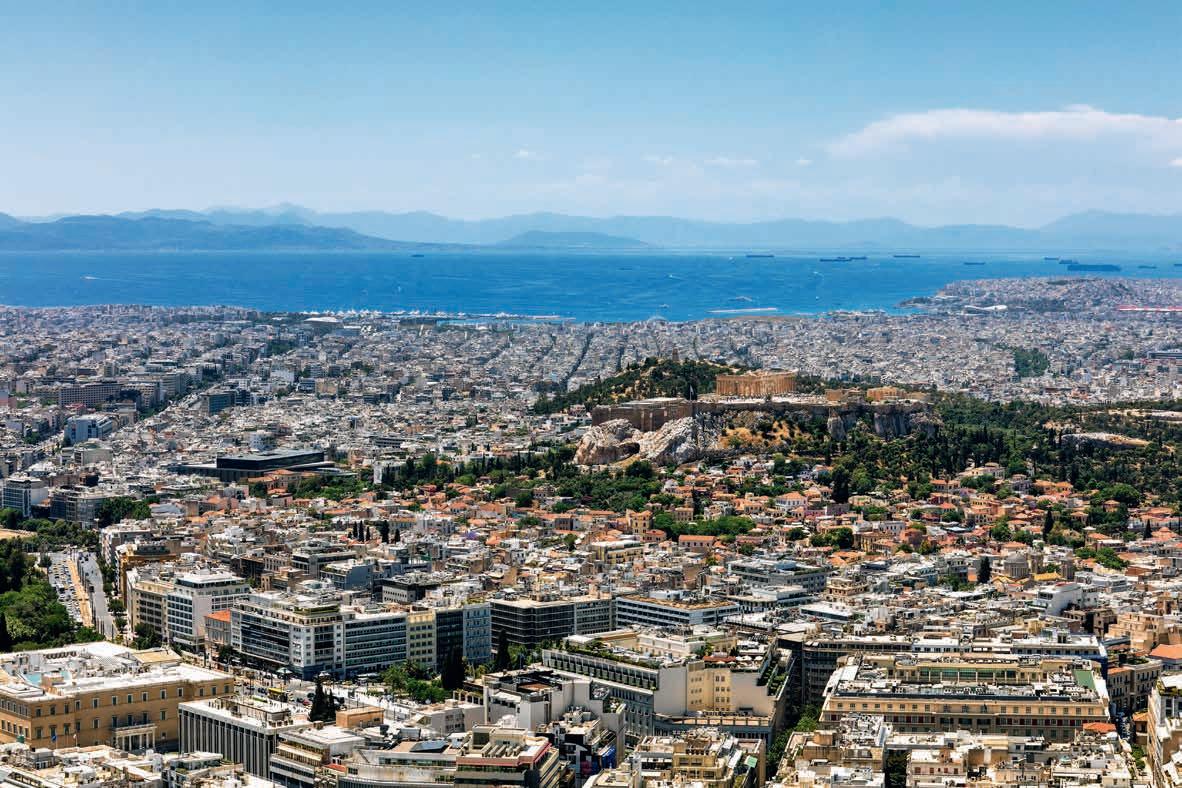
A view of Athens from Lycabettus Hill.
Your Destination for Menswear in Thessaloniki
οι διεθνείς οίκοι, όπως οι Brioni, Brunello Cucinelli, Canali, Cesare Attolini, Kiton, Zegna, Tom Ford, Moncler, Paul Smith, Polo Ralph Lauren, Santoni, Vilebrequin
Orlebar Brown,
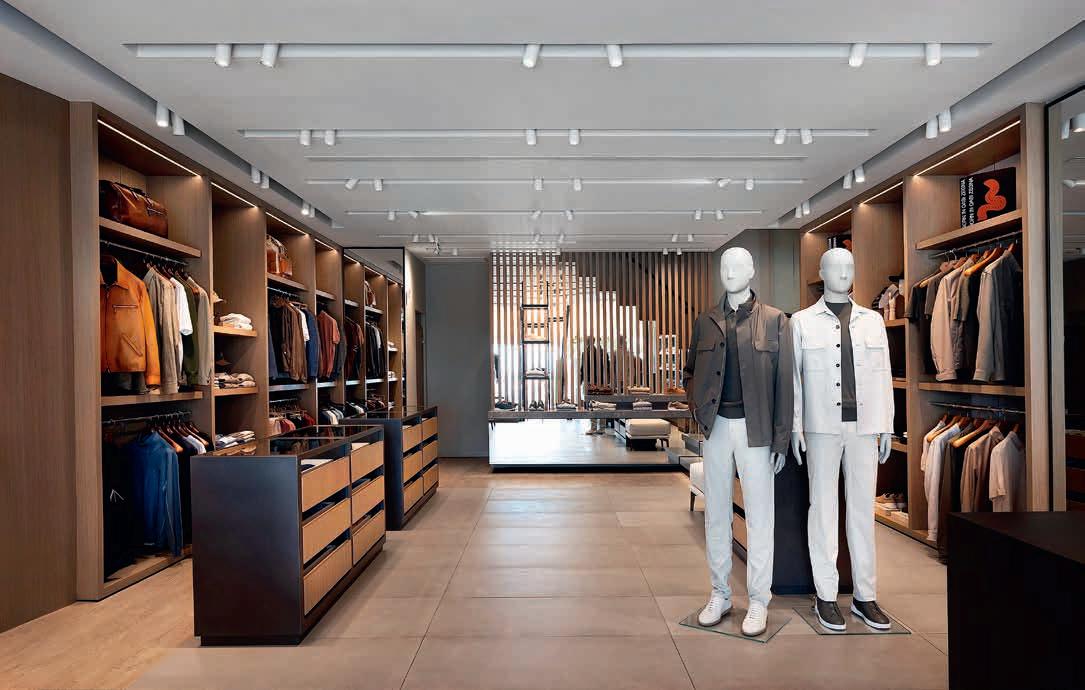
Located on Thessaloniki’s elegant Nikis Avenue, Ereiliadis has been a benchmark for refined menswear since 1990. This luxury multi-brand destination offers a carefully curated selection for men who value quality, craftsmanship and timeless style. Its boutiques bring together some of the world’s leading fashion houses, including Brioni, Brunello Cucinelli, Canali, Cesare Attolini, Kiton, Zegna, Tom Ford, Moncler, Paul Smith, Polo Ralph Lauren, Santoni, Vilebrequin and Orlebar Brown, among others. From impeccable tailoring and premium outerwear to sophisticated casualwear and resort-ready pieces, Ereiliadis caters to every aspect of the modern gentleman’s wardrobe. Expert service, personalized styling guidance and a commitment to excellence have established it as a trusted destination for discerning customers from Thessaloniki and beyond.
ereiliadis.com 23 Nikis & 27 Nikis
The City as Museum
Greece’s northern metropolis rewards curious travelers with layers of cultural discovery: Roman and Byzantine monuments and world-class art and archaeological collections that make it a great destination to explore.
By John Papadimitriou
Photos: Olga Deikou
In the public spaces of Electra Aristotelous, guests may feel they have stepped into an eclectic museum. On the walk from the reception area to the foyer, the eye is drawn to Green Sea by Giannis Michailidis, a large acrylic canvas that seems to pull viewers into the depths. Nearby, historic photographs by Thessaloniki photographer Giannis Kyriakidis capture the city’s glamorous postwar decades through iamges of politicians, film stars, the Thessaloniki International Fair and the Greek Song Festival.
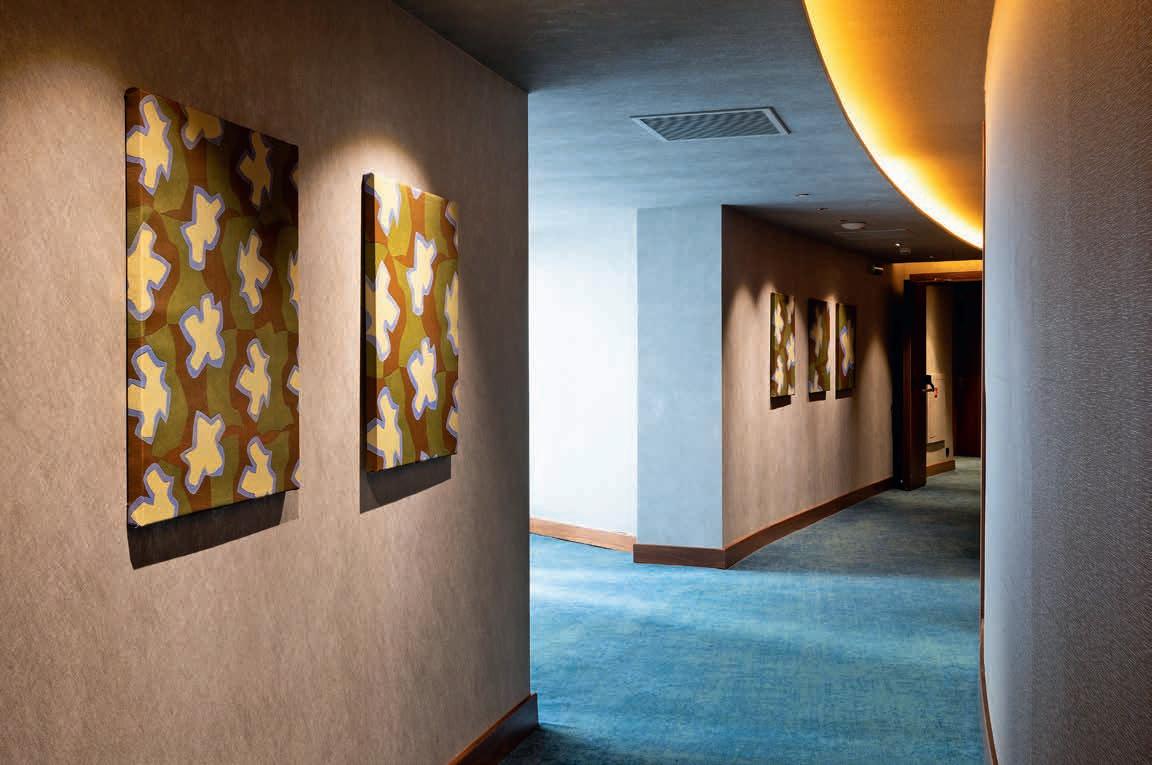
The hotel’s floors are decorated with reproductions of works by leading figures of the Russian Avant-Garde such as Lyubov Popova, Ksenia Ender, Ivan Kliun and Antonina Sofronova. The originals belong to the internationally renowned Costakis Collection, housed at MOMus–Museum of Modern Art at Moni Lazariston. The collection was assembled by George Costakis, the visionary collector who helped preserve Russian experimental art during the mid-20th century. Completing the hotel’s artist collection are original works by Christos Michailidis, Eleni Zouni, Elli Koutsoukelli and Achilleas Papakostas. Together, they provide an ideal introduction to a city whose museums, galleries and archaeological sites will thrill those who seek them out.
A 10-minute walk away southwest of Electra Aristotelous, on Pier A of the old port, MOMus–Experimental Center for the Arts presents and promotes experimental artistic
projects, while MOMus–Museum of Photography holds an important collection of 120,000 negatives and photographic objects dating from 1890 to 2024. It’s also home to the Greek section of the archive of the renowned Swiss photographer Fred Boissonnas. A welcome recent addition is Hush, the café inside the Museum of Photography, a fine spot for brunch or drinks with a front-row view of the port.
On the opposite side of the city center, within the grounds of the Thessaloniki International Fair, MOMus–Museum of Contemporary Art offers another rewarding stop. Visitors are welcomed by George Zongolopoulos’ striking hydrokinetic sculpture Umbrellas. The museum, the first museum of contemporary art in Greece, built its collection largely through donations, including that of Alexander Iolas; he gifted the institution works by artists such as Andy Warhol, Niki de Saint Phalle, Alexis Akrithakis and George Lazongas.
“Through the permanent collections of its four museums in Thessaloniki and a rich program of international temporary exhibitions,” says Epaminondas Christofilopoulos, president of MOMus (the Metropolitan Organization of Museums of Visual Arts of Thessaloniki), “MOMus offers visitors a layered encounter with today’s art that is further augmented by its renovated museum shops. Selected products bearing our signature turn the visit into an experience that will last long in the memory.”
Οι
Electra Aristotelous
Above: The public areas of Electra Aristotelous are decorated with reproductions of works from the Russian AvantGarde. Below, the Iolas–Lagia wing of MOMus –Museum of Contemporary Art.
Works from the Costakis Collection at MOMus
of
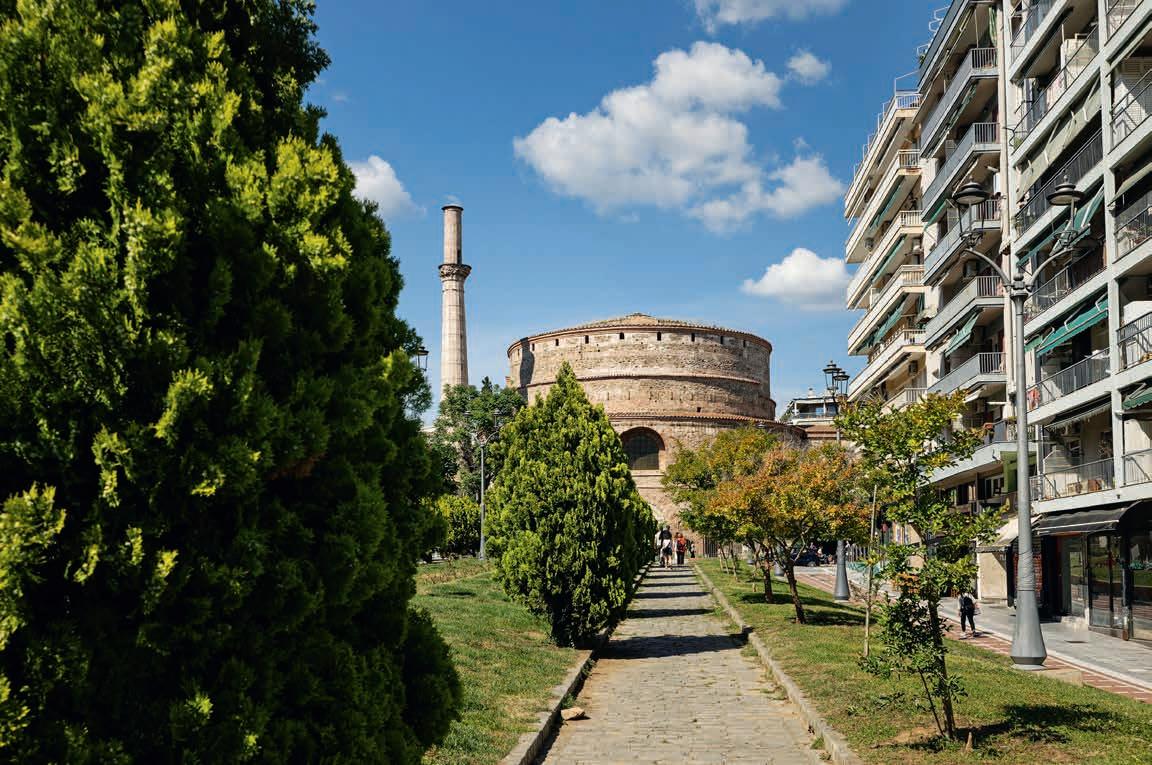
The Rotunda was built in the 4th century AD as a temple of Zeus or the Cabiri, or, according to others, as the mausoleum of Caesar Galerius. Below, the new museum “Thessalonikeon Metropolis”.
The New Addition
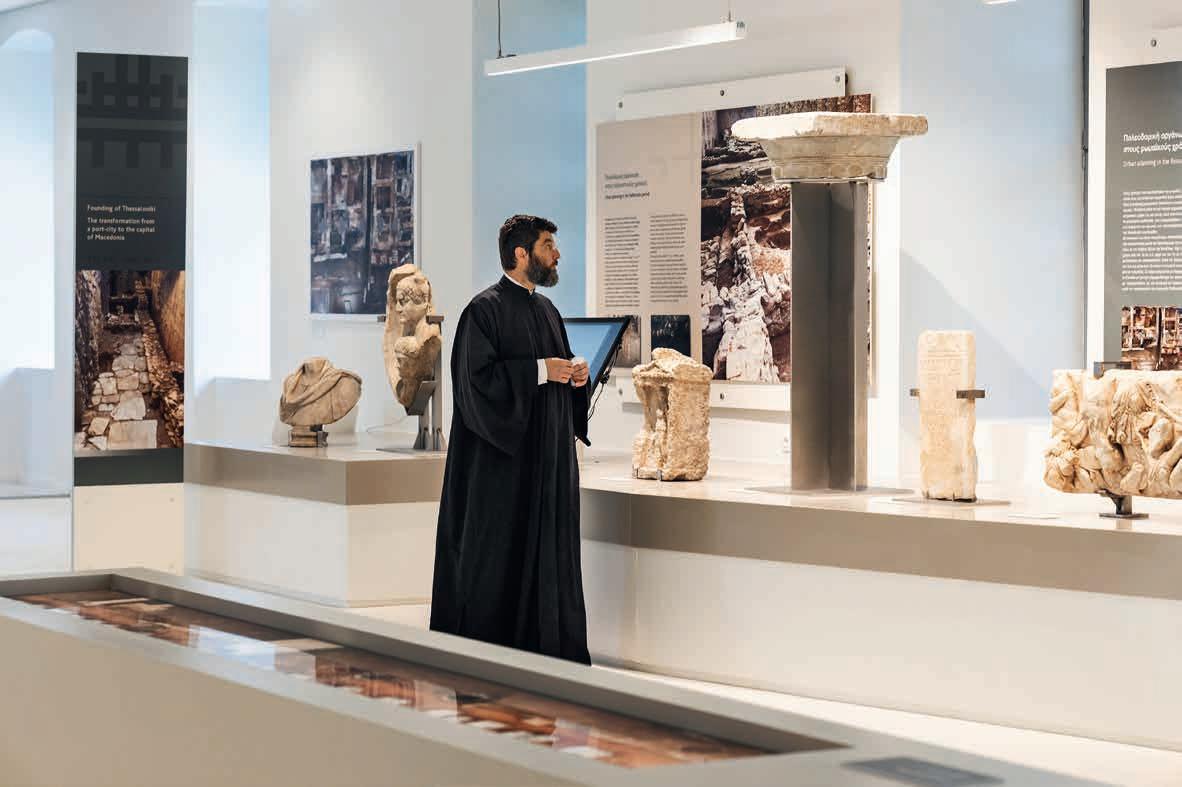
In May 2026, another museum was added to the city’s cultural map: Thessalonikeon Metropolis. Housed in the historic landmark A3 barracks building at the Pavlos Melas Metropolitan Park in Stavroupoli, it presents finds brought to light during the excavations for the construction of the Thessaloniki metro.
The ground floor explores the area’s history before the founding of Thessaloniki by Cassander, alongside finds from the city’s eastern and western necropolises. (The latter was uncovered within the limits of Dimokratias Station and was in use from the 3rd century BC to the 6th century AD.)
Among the exhibits are objects recovered from a Roman cemetery discovered during excavation works at Fleming Station. If on the ground floor visitors can familiarize themselves with ancient burial customs and come to understand the presence of so many historical layers embedded in the city’s fabric, on the first floor they can trace Thessaloniki’s evolution from its foundation by Cassander in 316/315 BC to the devastating fire of 1917, discovering how the city changed from a Greco-Roman center to a Christian metropolis, then a Byzantine stronghold and, following that, an Ottoman city.
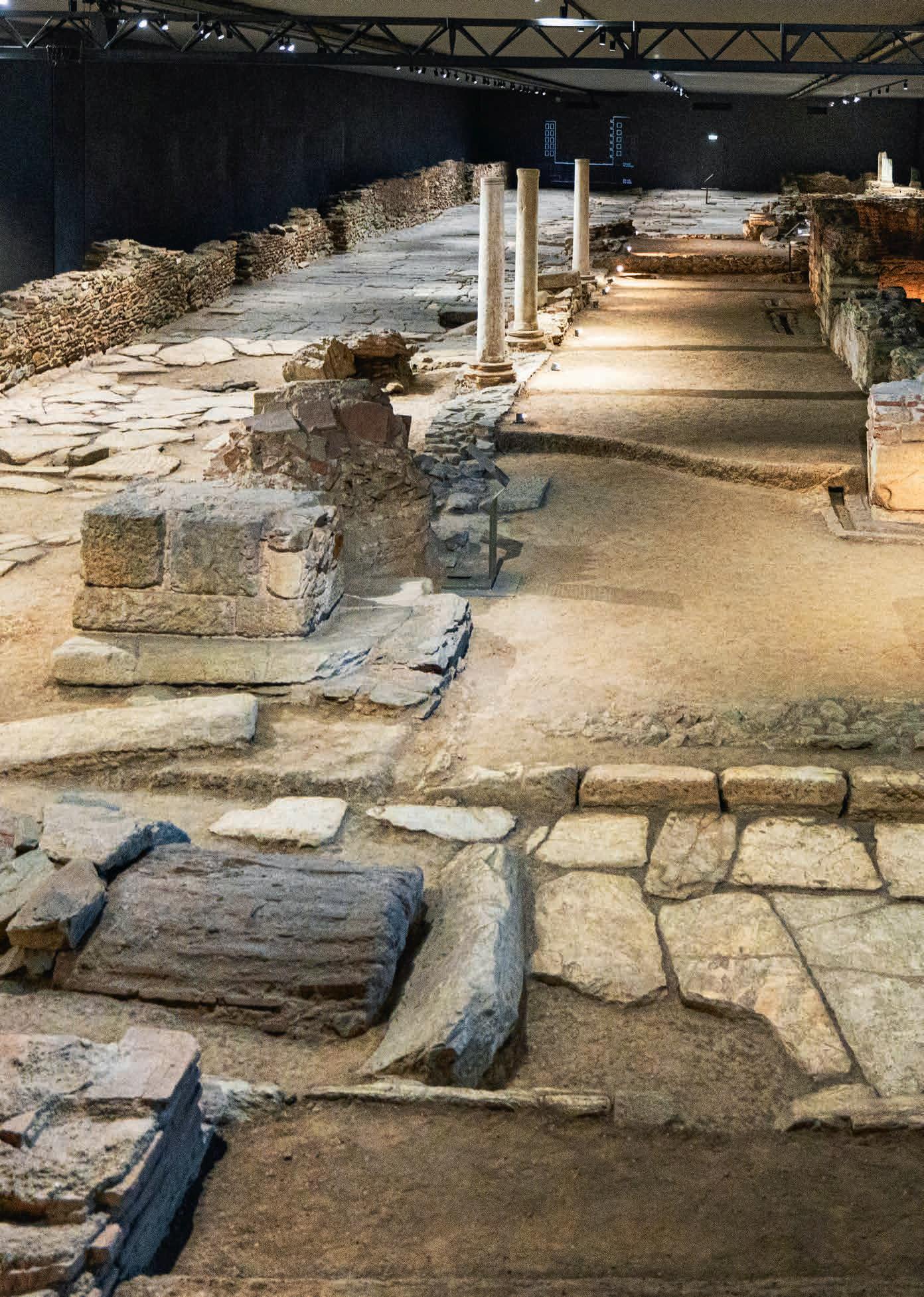
Of particular interest are the finds that reveal the advanced infrastructure of the Roman and Byzantine city’s road network, including large, vaulted drainage channels. At Venizelou Station, roughly 5.5 to 6 meters below the city’s
present level, archaeologists uncovered successive strata of Thessaloniki’s historic main thoroughfare, from its days as the Roman decumanus maximus to its time as the Byzantine Mese Odos, along with the houses, shops and public spaces that flanked it. The station now contains one of the most important archaeological sites ever integrated into a modern infrastructure project, covering approximately 1,500 sq m. It is worth visiting even if you don’t intend to take the metro.
Points of Reference
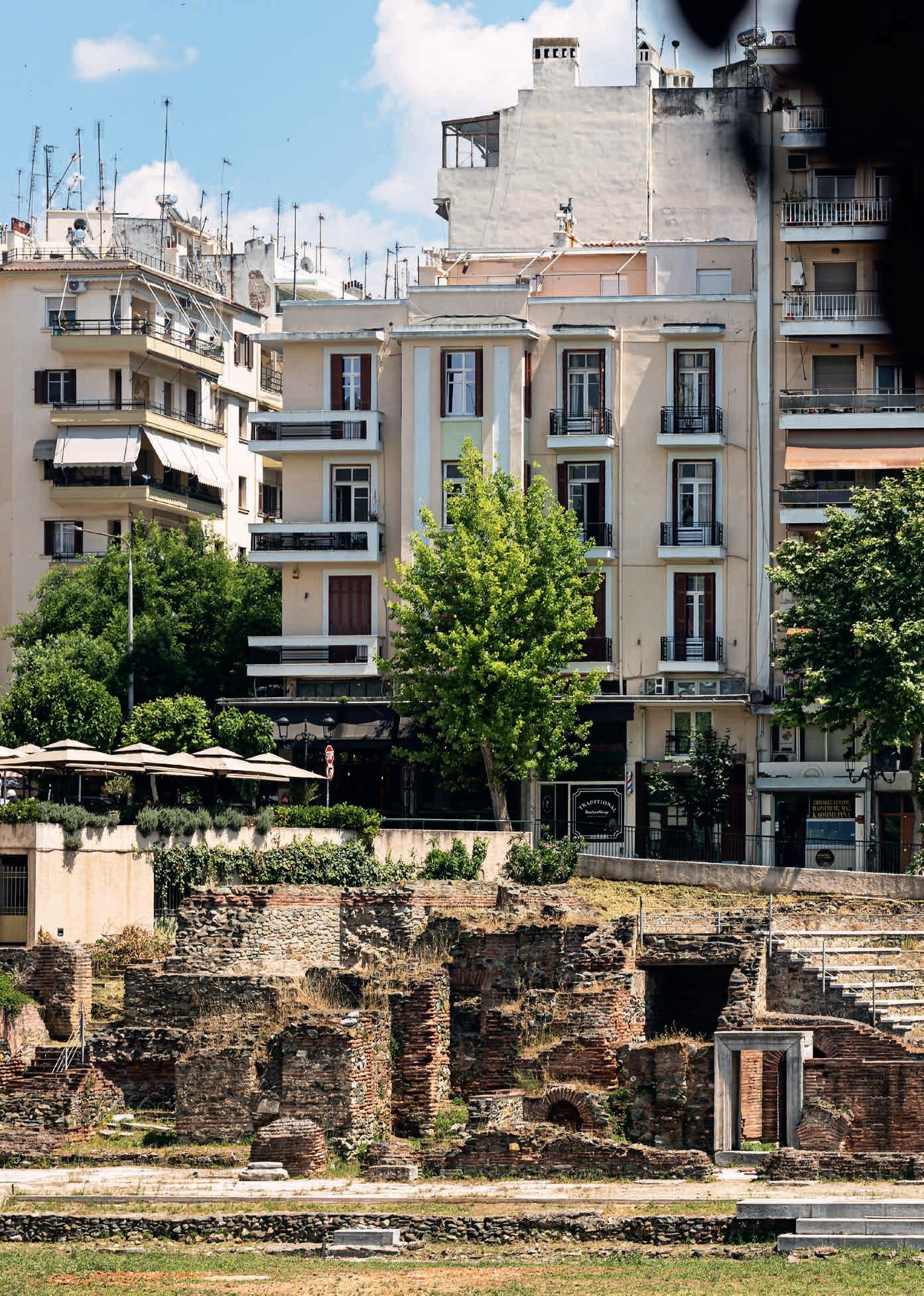
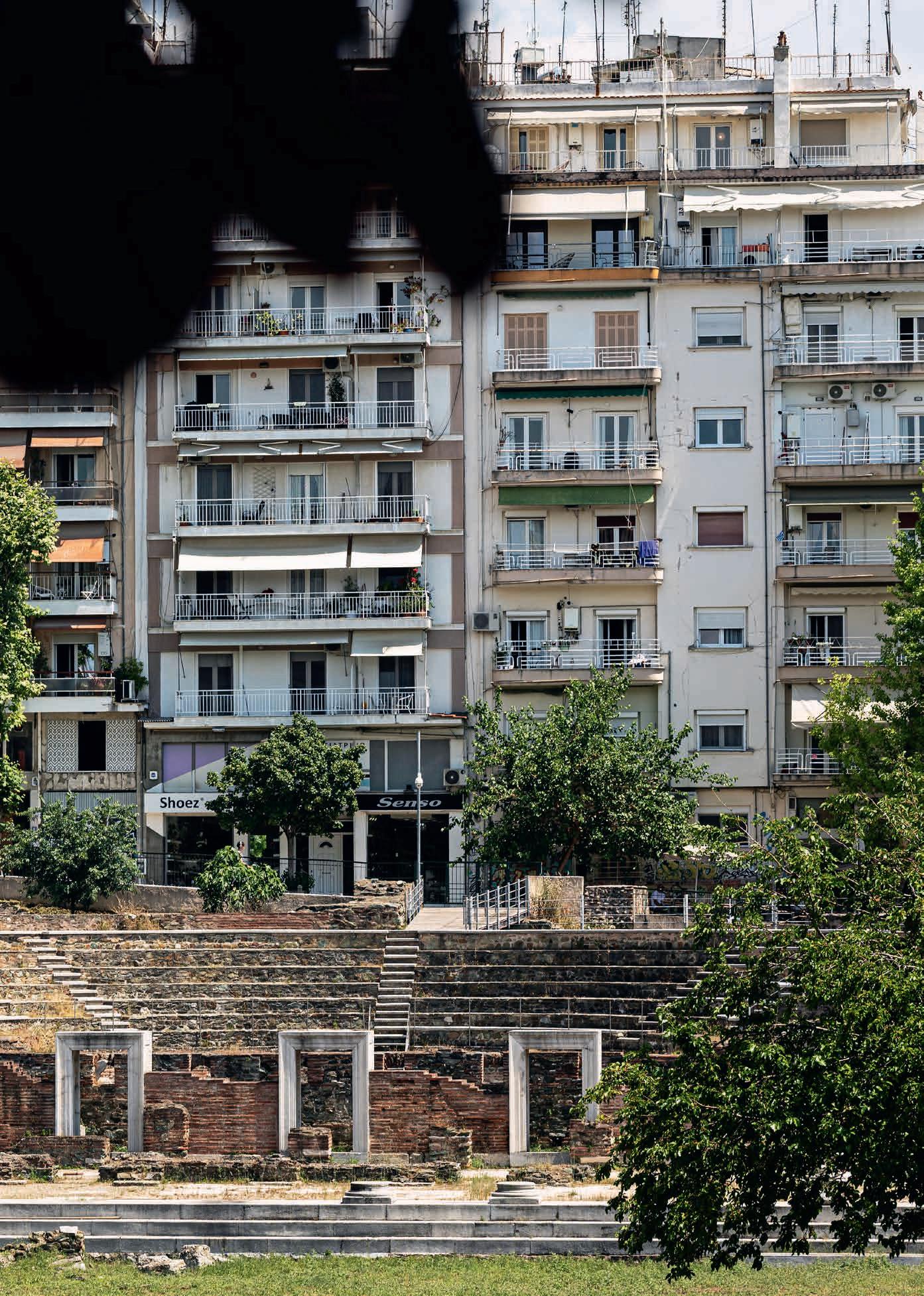
A similar sensation accompanies a walk through the city center ,where Roman monuments emerge unexpectedly between apartment blocks and busy streets. There is the Rotunda, the great domed structure of the 4th century that recalls Rome’s Pantheon; the Arch of Galerius, erected to commemorate the future emperor’s victories over the Persians; and the remains of Galerius’ palace at Navarinou Square. Equally impressive is the Roman Forum, between Filippou and Olympou streets, where visitors can still see the odeon that also served as a council chamber.
In many ways, this is Thessaloniki itself: an open-air museum where contemporary buildings meet ancient monuments and Roman remains coexist with Byzantine churches, several of which, including Panagia Chalkeon Church, are UNESCO World Heritage sites. Relics and works of ecclesiastical art from Thessaloniki and the greater Macedonia
A view of the Roman Agora above Aristotelous Street.
n region – metalwork, sacred icons, textiles and liturgical objects – have now found a home in the excellent Museum of Byzantine Culture.
“The museum was created to introduce the wider public to the longest-lasting medieval civilization in the East, the Byzantine civilization, which left us major monuments in Thessaloniki,” says Dr. Flora Karagianni, the museum’s general director. “Visitors can move through the past from the early Christian centuries to the 20th century, learning about private and public worship, the life of the Byzantines, everyday existence and art as they evolved over the centuries.”
If the Museum of Byzantine Culture holds the key to the Byzantine period, the neighboring Archaeological Museum of Thessaloniki, one of the largest in Greece, offers a remarkable journey through northern Greece, from prehistory to late antiquity. Its collections include, among other highlights, the country’s largest collection of gold wreaths and precious finds from Macedonian cemeteries, among them the famous “Aravissos Treasure.” This group of six gold objects was found by chance in Pella, although as yet no one has located the cemetery from which they are believed to have come.
Also on display are elaborately crafted bronze tools from the “Petralona Treasure,” discovered by accident near the village of Petralona in Halkidiki and dating to the 3rd
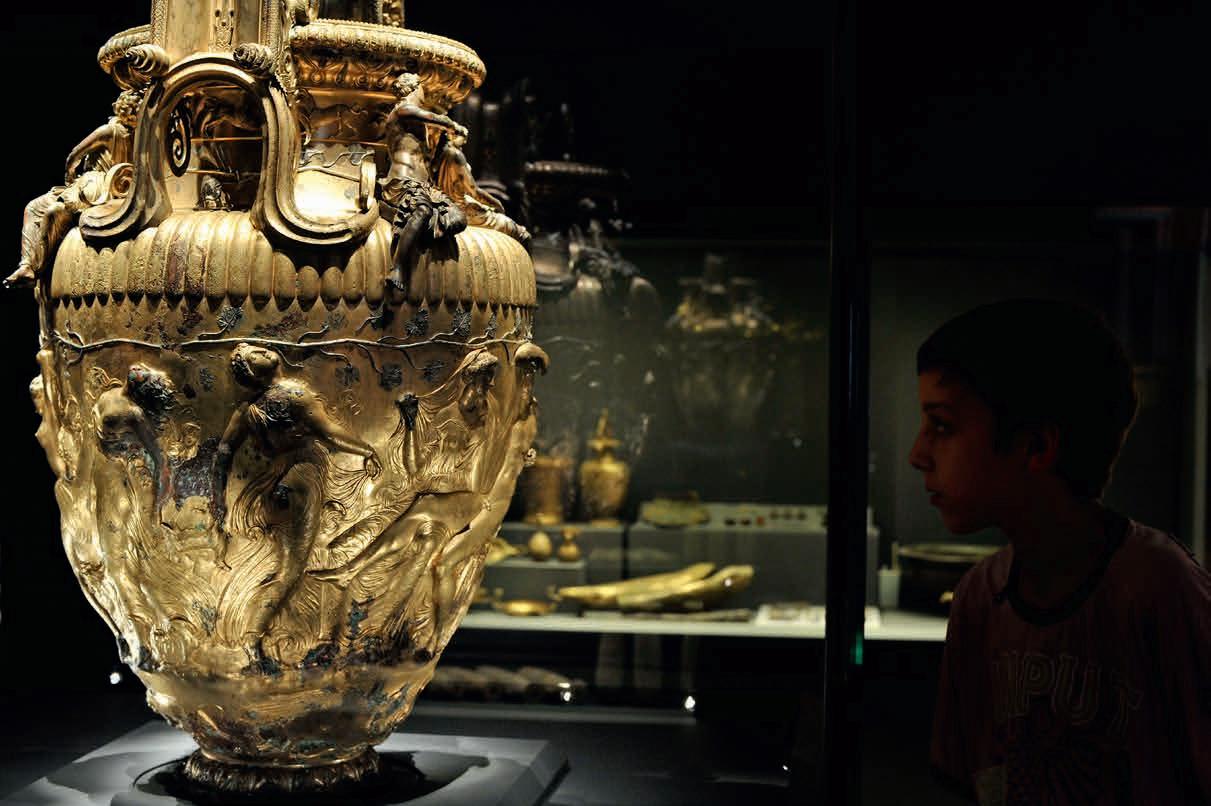
millennium BC in the Early Bronze Age; a mosaic floor with mythological scenes, depicting the god Dionysus approaching the sleeping Ariadne with his retinue; and the celebrated Derveni Krater. The krater was found in 1962 in cist grave B of the Derveni cemetery and contained, among other things, the cremated remains of the deceased.
The museum’s attractive grounds and open-air exhibition invite visitors to walk among the cemeteries of the ancient city, with their sarcophagi, altars and other funerary monuments, as well as the reconstruction of a wealthy urban residence from Thessaloniki in the Imperial period.
In addition to these amazing museums, Thessaloniki has many smaller independent galleries offering equally rewarding encounters. Lola Nikolaou Gallery has been a dynamic presence on the city’s art scene since 1993, presenting exhibitions ranging from ceramics to painting, while Donopoulos International Fine Arts focuses largely on contemporary artists from abroad.
Thessaloniki offers more cultural discoveries than most visitors can fit into a single trip. However, whatever else you’ve made time for on your itinerary, there is no better epilogue to your visit than an afternoon at the Roman Forum – a quiet pause among ancient fragments, with Aristotelous Square and the Thermaic Gulf visible in the distance. ♦
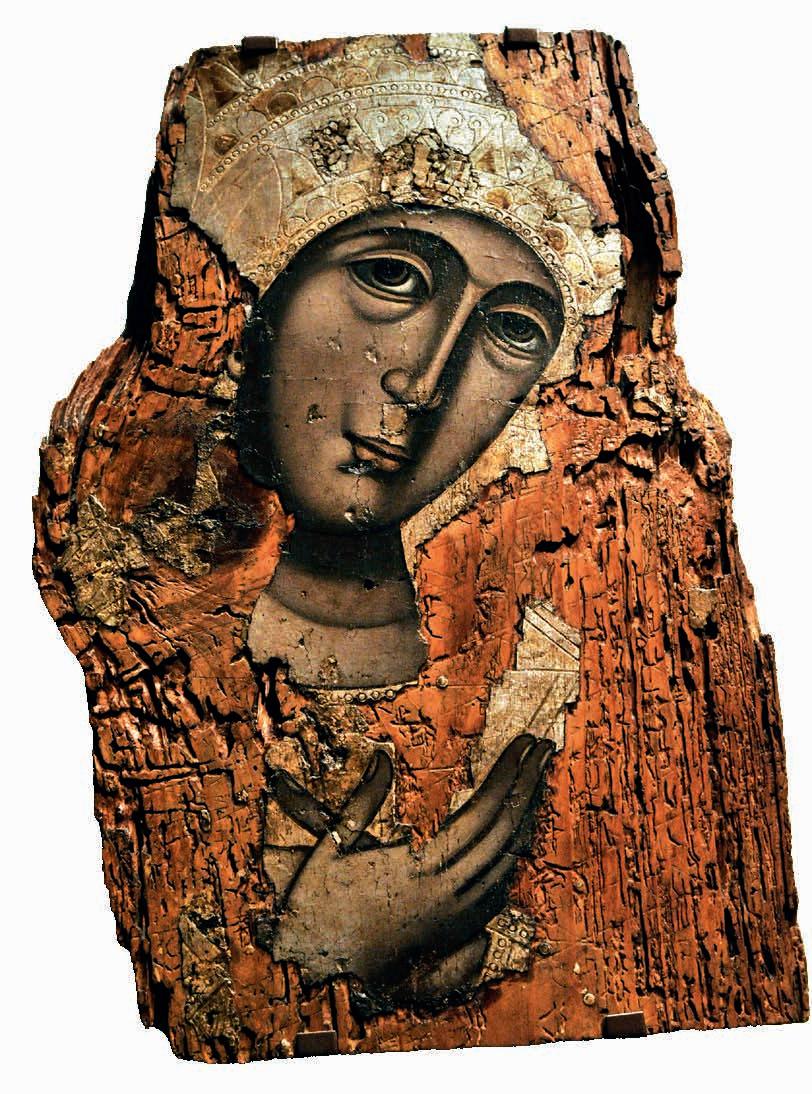
The Icon of the Virgin Mary Skopiotissa (18th century) can be seen at the Museum of Byzantine Culture. Below: The famous Derveni Krater (330–320 BC) from the Archaeological Museum of Thessaloniki.
The Acropolis of Ancient Kymissala, in Akramytis.
Glamorous and cosmopolitan, Rhodes offers far more than sun and sea. Rich in history, culture and places not yet on the tourist trails, it rewards visitors willing to look a little deeper.
By Olga Charami | Photos: Perikles Merakos
RHODES As You Have Never Seen It
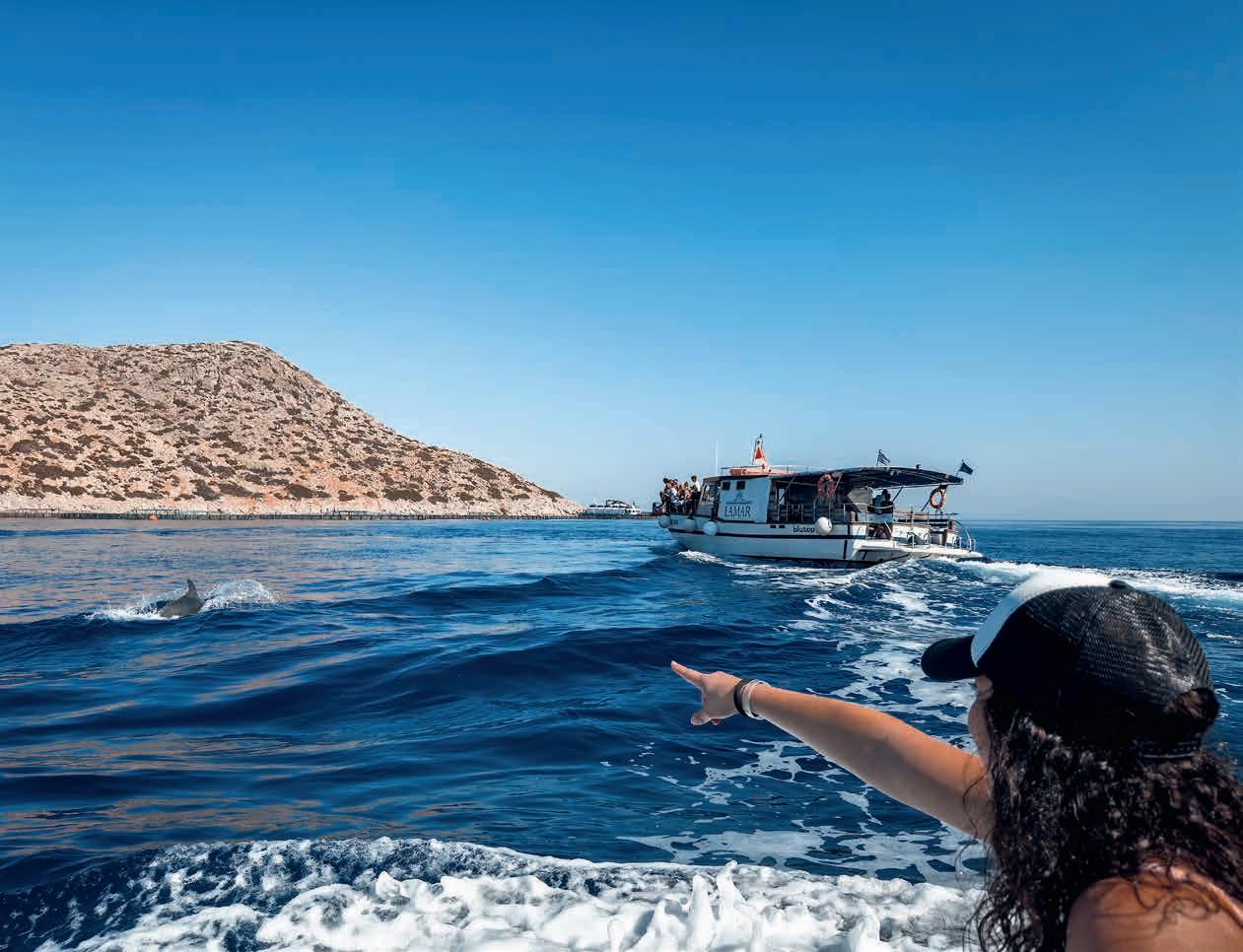
Robinsons of the Aegean Imagine a day at sea: diving from the boat, exploring the seabed with mask and snorkel, watching for dolphins in their natural habitat, and seeing schools of fish move through the clear water below you. Then picture yourself on a quiet beach, enjoying a seafood barbecue and, on a moonless night, stargazing through telescopes beneath an unspoiled sky. Boat explorations to the uninhabited islet of Alimia also include time on the island, with its calm waters, traces of a former settlement and the historic Church of Aghios Georgios. For a yet more immersive experience, there are options for scuba diving around shipwrecks, snorkeling around the rocky islets of Strongyli and Makri, or marine biology trips to fish farms that attract an unusually high concentration of wild sea life in the waters that surround them.
blutopia.gr
Dolphin encounters await you off the coast of Rhodes.
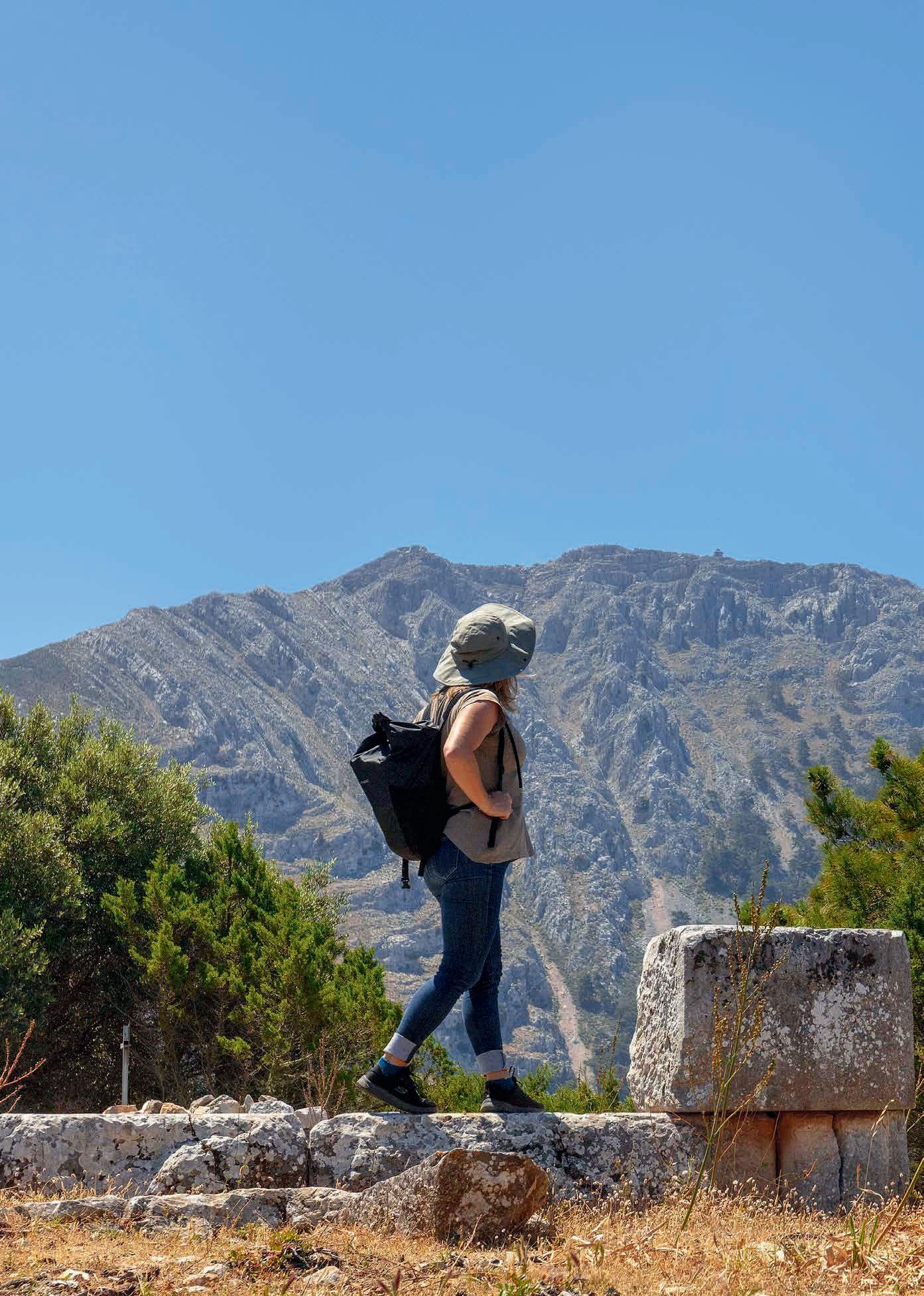
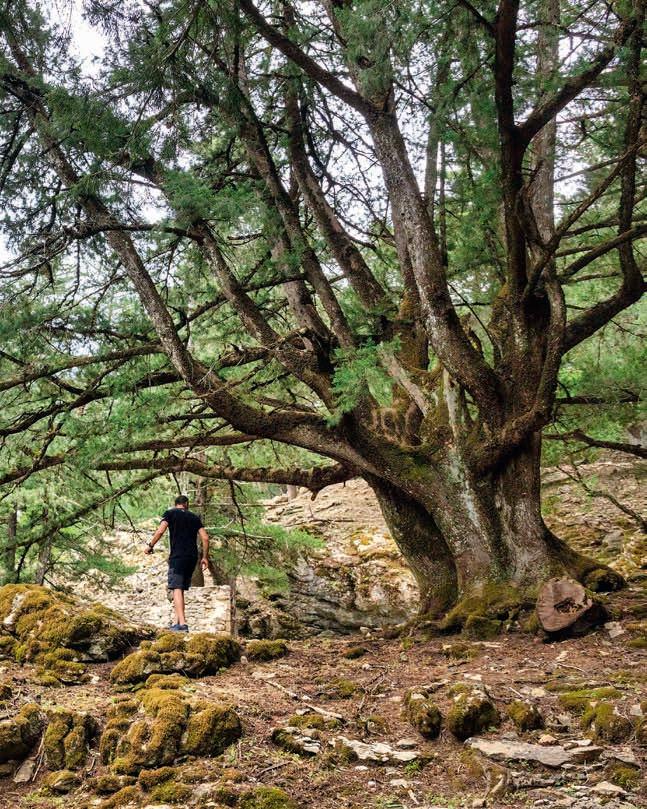
Hiking in the Wild Rhodes has a surprisingly rich natural environment; from its famed Dama dama deer and the unique gizani fish to its dense forests and rare plant species, the island has plenty to offer nature lovers. One of the best ways to discover this side of Rhodes is by following the beautiful hiking trails that cross the island. Some routes pass through better-known areas with monuments, such as Lindos. Others lead into the mountains and forests of Profitis Ilias or to less familiar places such as Mt Akramytis. Step by step, hiking reveals a side of Rhodes that is far less often seen.
trekking.gr
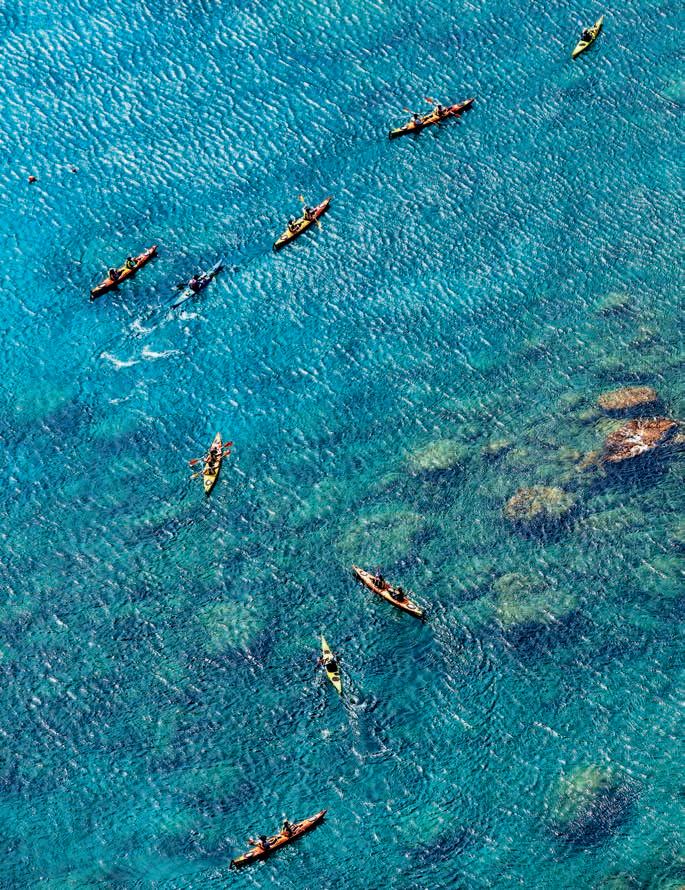
Sea kayaking along the coastline of Rhodes. Left: Ηiking through the island’s interior.
Rhodes by Paddle Sea kayaking is one of the most beautiful and low-impact ways to explore the beaches of Rhodes. Guided excursions take you as far as famous Faliraki or Anthony Quinn Bay, famously associated with the film The Guns of Navarone Paddling along the island’s coastline, you pass rocky formations and small caves, with time for snorkeling and refreshing swims along the way. Similar outings to the island’s quieter beaches, to Lindos and even to the island of Symi can be organized. The most memorable experience, however, may be a sunrise kayak trip that takes place while most island visitors are still asleep: even the most popular beaches are empty, and nature is at its best.
trekking.gr
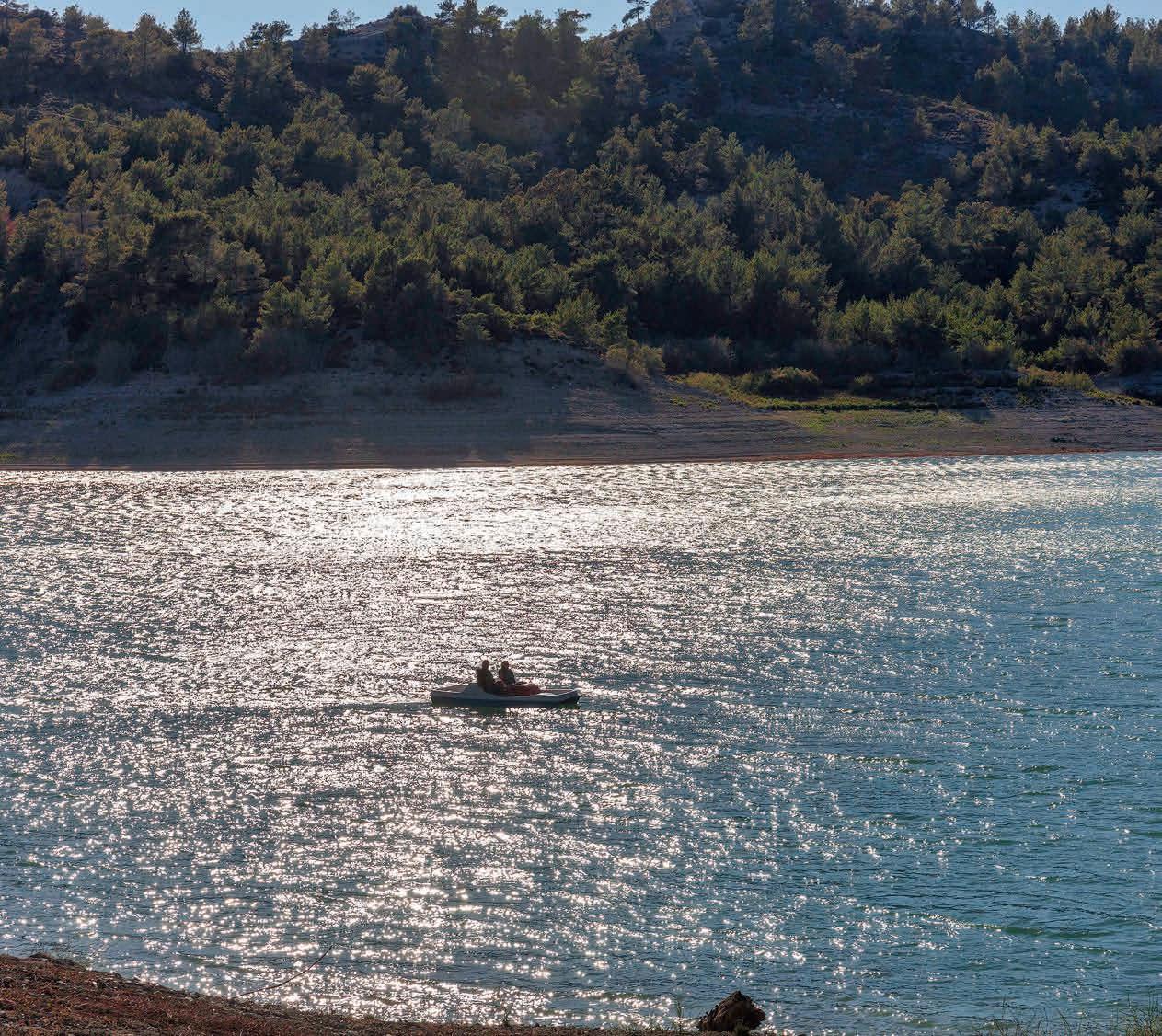
Pedal Boating on the Lake A lake may not be the first thing visitors expect to encounter on a Greek island, but this one is a happy surprise. Lake Apolakkia in southwestern Rhodes was created in the late 1980s following the construction of a dam; this manmade lake has since developed into an important wetland habitat and is now included in the Natura 2000 network. Visitors can explore the area on foot, observing its birdlife and natural surroundings, or take to the calm waters by pedal boat. For those seeking something more adventurous, a zipline crosses above the lake, offering an excitingly different perspective on the landscape.
Pedal boating on the tranquil waters of Lake Apolakkia.
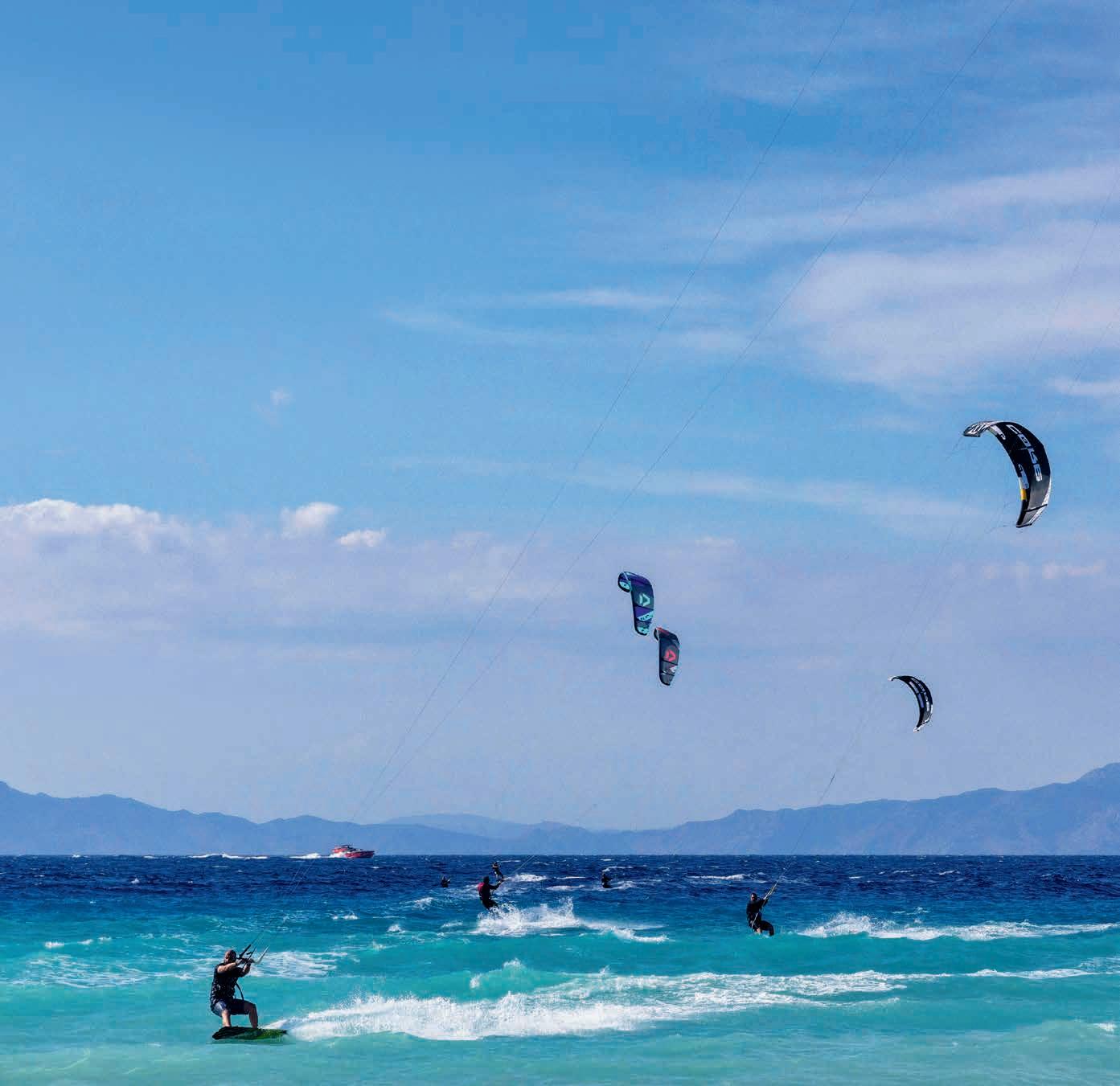
Prasonisi is a paradise for kitesurfing and windsurfing enthusiasts.
Playing with the Wind at Prasonisi
One of the country's and, in fact, the continent’s best-known destinations for kitesurfing and windsurfing can be found on Rhodes. Trying out either activity for the first time is an exhilarating experience that might change the way you feel about wind and waves. Prasonisi, at the island’s southernmost point, is ideal for both experienced riders and beginners, thanks to its steady winds and the two bays formed by the strip of sand that connects the shore to the small islet of the same name. One bay offers stronger waves and conditions suited to experienced surfers; the other provides calmer waters ideal for learning. kiteprasonisi.com
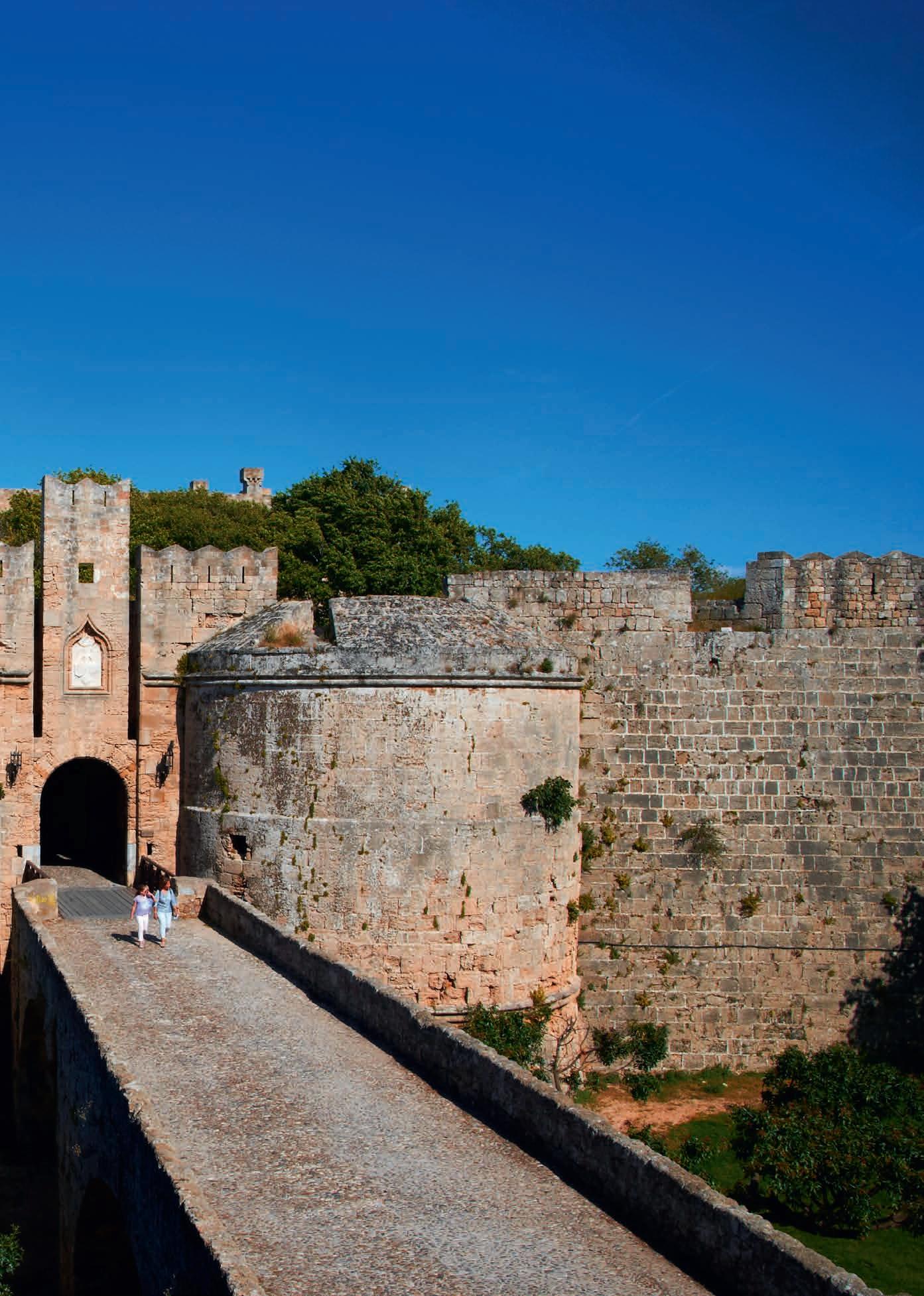
Make your way to the Medieval City of Rhodes, a UNESCO-listed World Heritage Site.
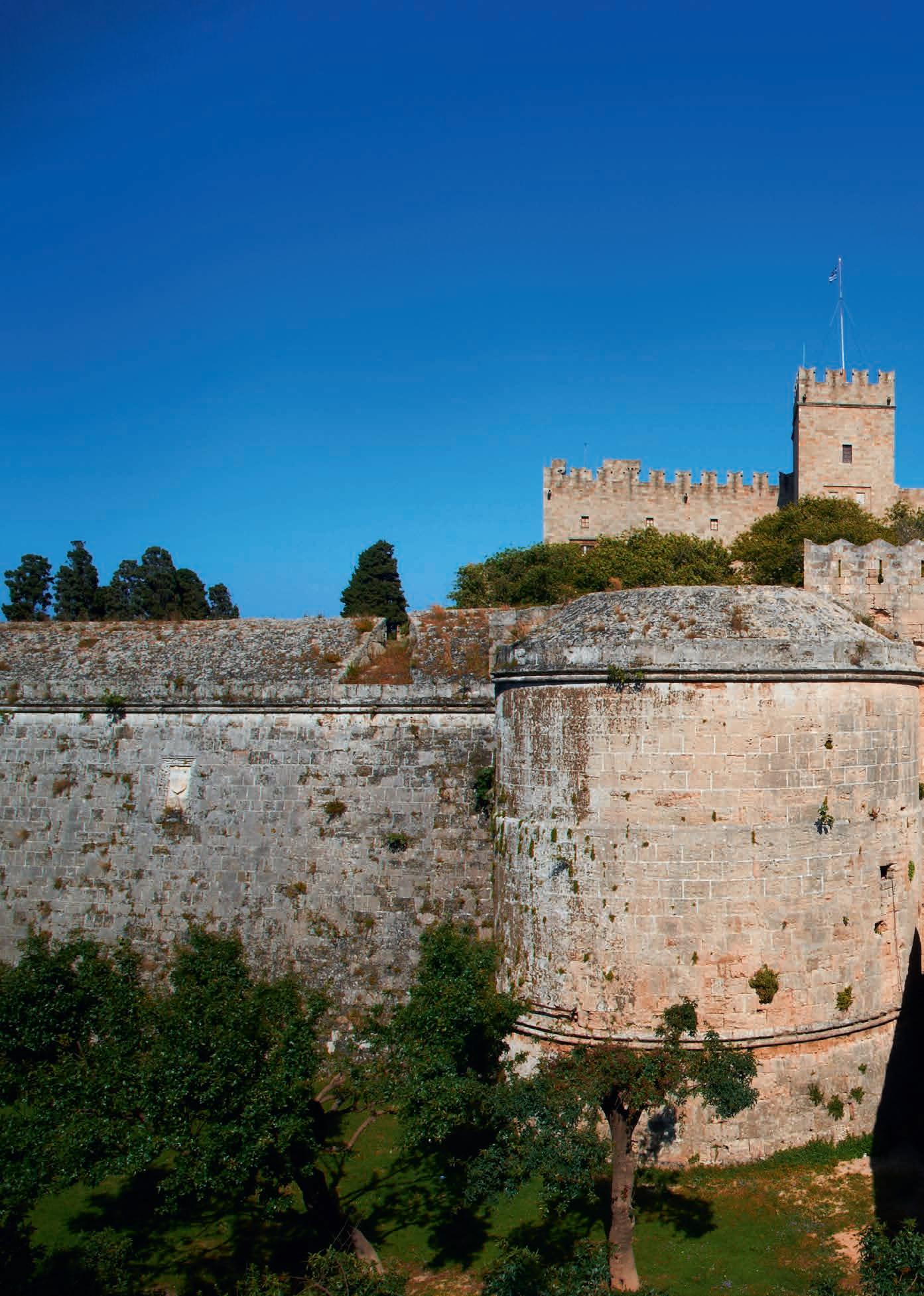
Inside the Walled City The Medieval City of Rhodes, a UNESCO World Heritage Site, is the island’s most beautiful and best-known attraction. As Katerina Gogou, vice president of the Dodecanese Tourist Guides Association, says, “Even if no one explains anything to you, you can see history all around you, like in an illustrated children’s book.” Still, it is worth exploring it with a licensed guide, in order to discover those hidden corners, those places few visitors manage to find on their own, and learn fascinating details that lend a deeper meaning to what you’re seeing: how some of today’s open spaces within the Old Town are linked to the bombings of World War II, or how Rhodes remains one of the best-preserved inhabited medieval cities in Europe, with thousands of people still living and working within its walls.
Katerina Gogou, Tel. (+30) 6977.286.445
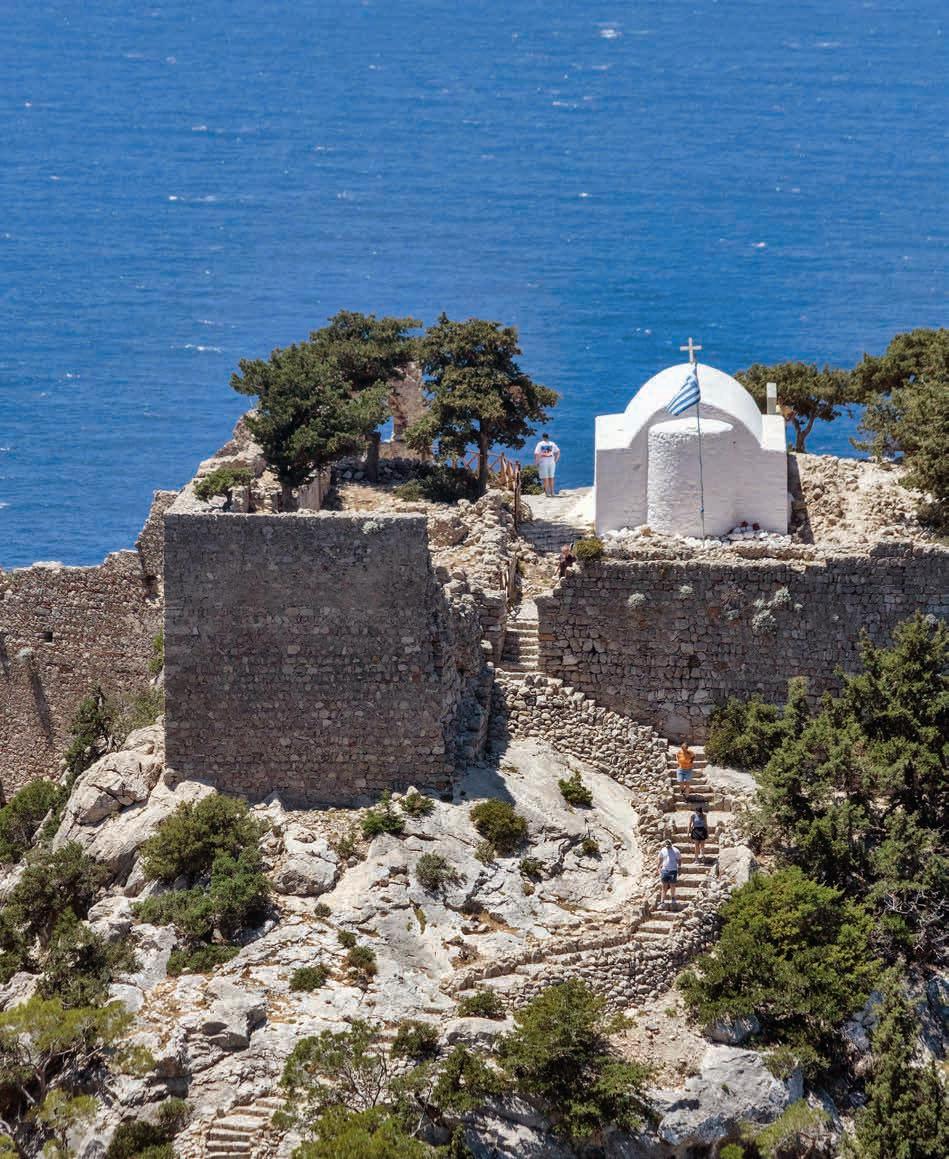
The 15th-century Castle of Monolithos, renowned for its breathtaking views.
The Castle Trail Part of Rhodes’ rich history can be traced though its many castles. Built on strategic hilltops overlooking the sea and the surrounding countryside, they offer some of the island’s most rewarding excursions. Perhaps the best known is the 15th-century Castle of Monolithos, which is best visited at sunset. Equally beautiful, and also ideal to visit at sunset, is the Castle of Kritinia. Feraklos Castle, with both Byzantine and Hospitaller traces, is also worth a visit, though extra care is needed, as the site has not been restored. In point of fact, extra care is recommended when touring all the castles, including those of Asklipio and Archangelos, also from the period of the Hospitallers. A visit to Filerimos Hill is especially interesting, with its Catholic monastery and a Byzantine castle offering views of Symi and the Turkish coast.
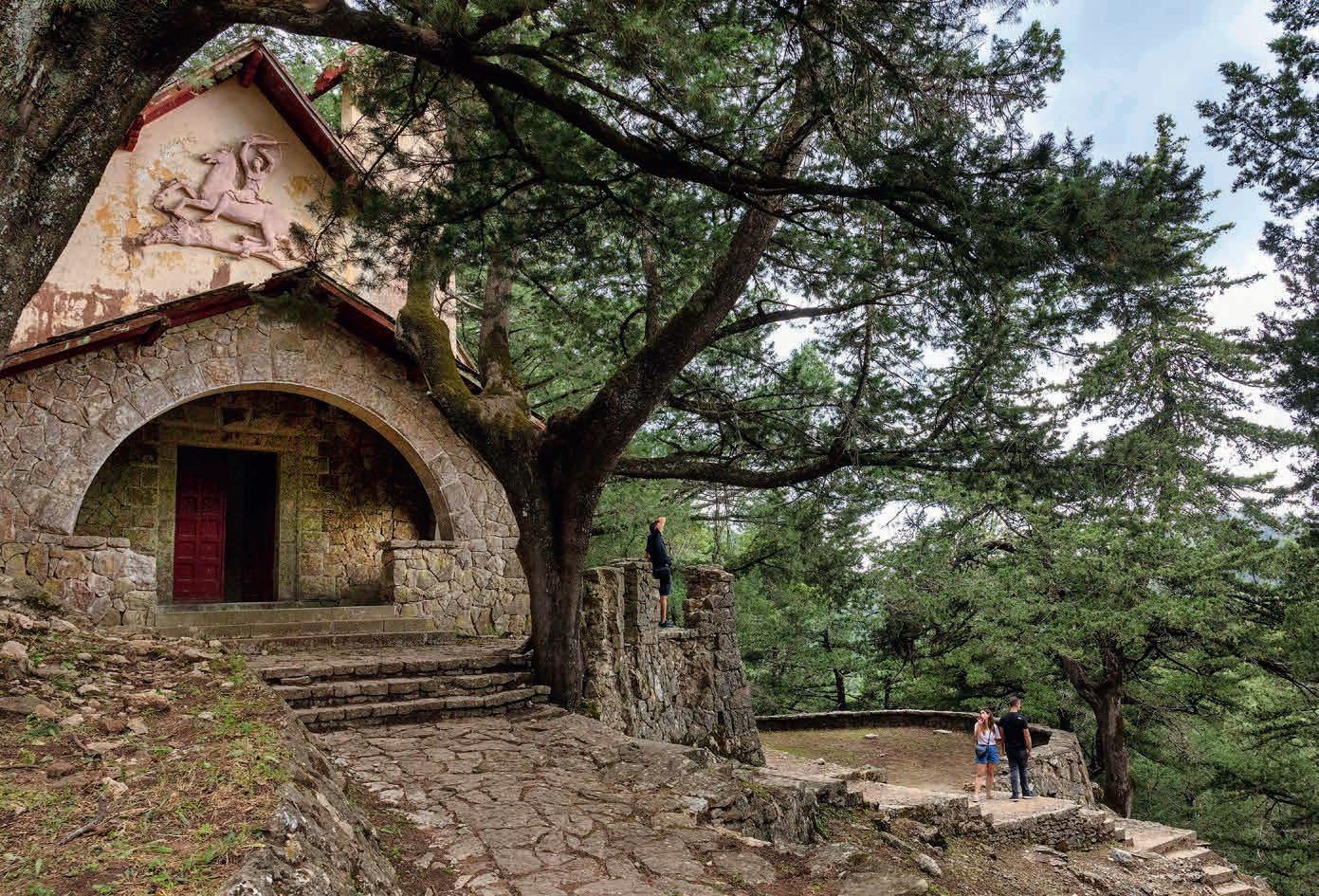
Enjoy an excursion to Mt Profitis Ilias, known for its stunning natural landscape.
Off-Road Routes For a different perspective on Rhodes, leave the coast behind and head inland along the island’s network of dirt roads and mountain tracks. Off-road excursions venture into the forests of Profitis Ilias, to monasteries such as Aghios Nektarios and to monuments including the 15th-century church of Aghios Nikolaos Fountoukli. Along the way are panoramic viewpoints, lesser-known landscapes and opportunities to discover a slower pace of island life. unchartedescapes.com
Book your Electra experience in Rhodes.
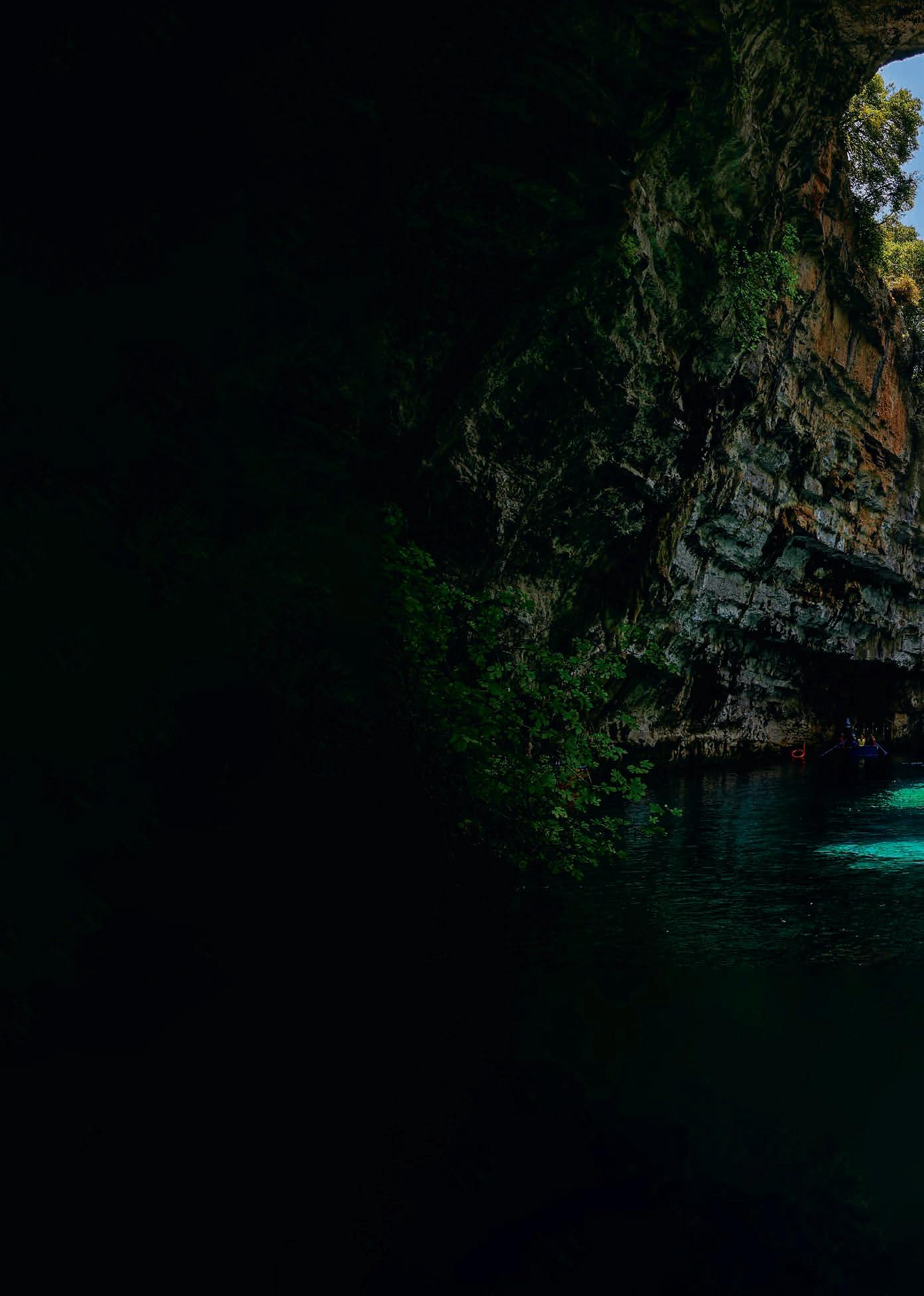
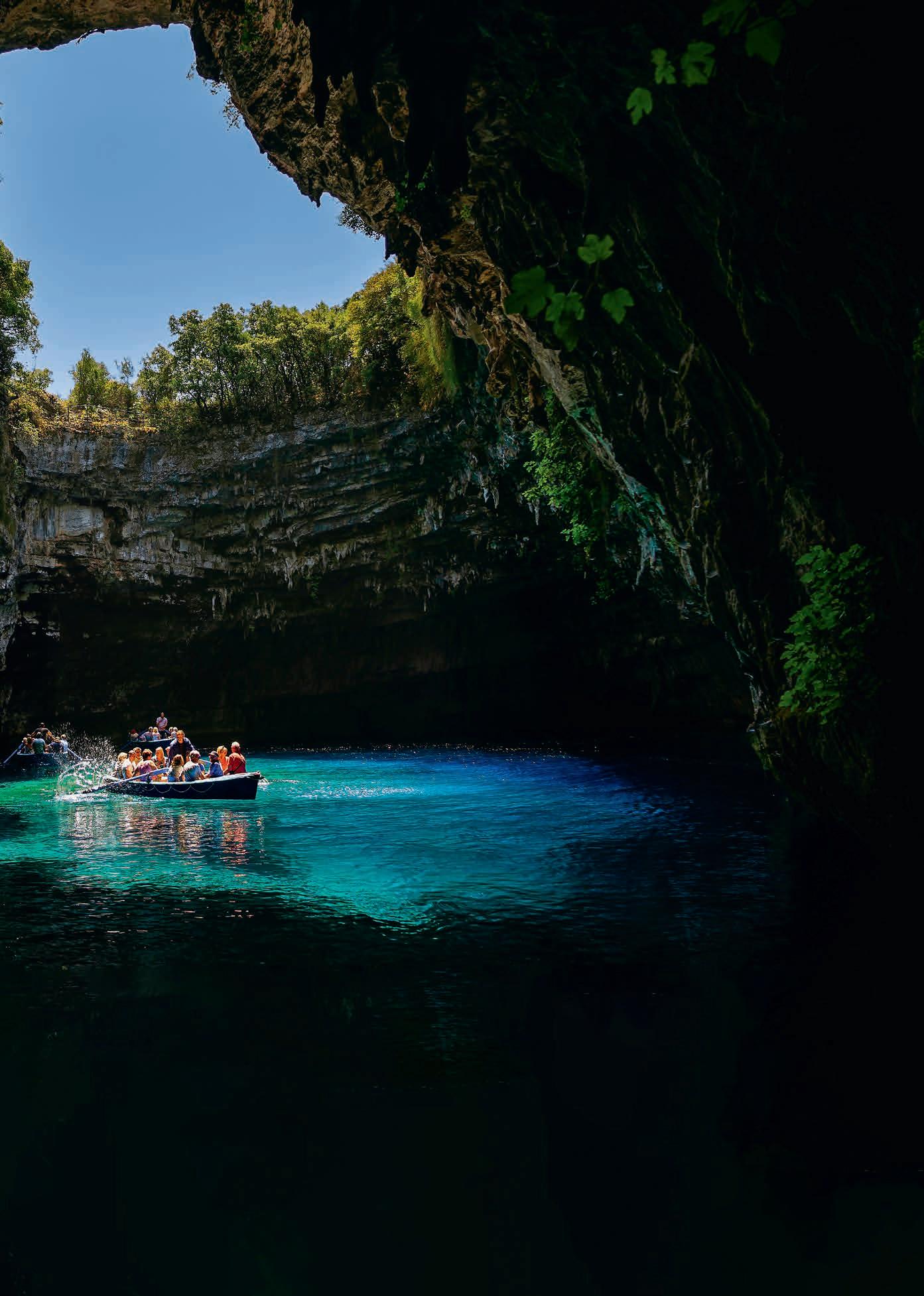
A boat ride in the Melissani Cave Lake.
A Wellness Retreat KEFALONIA
The lush green island of the Ionian Sea offers the perfect escape from the hectic pace of everyday life.
By Aspasia Kakari
Photos: Perikles Merakos
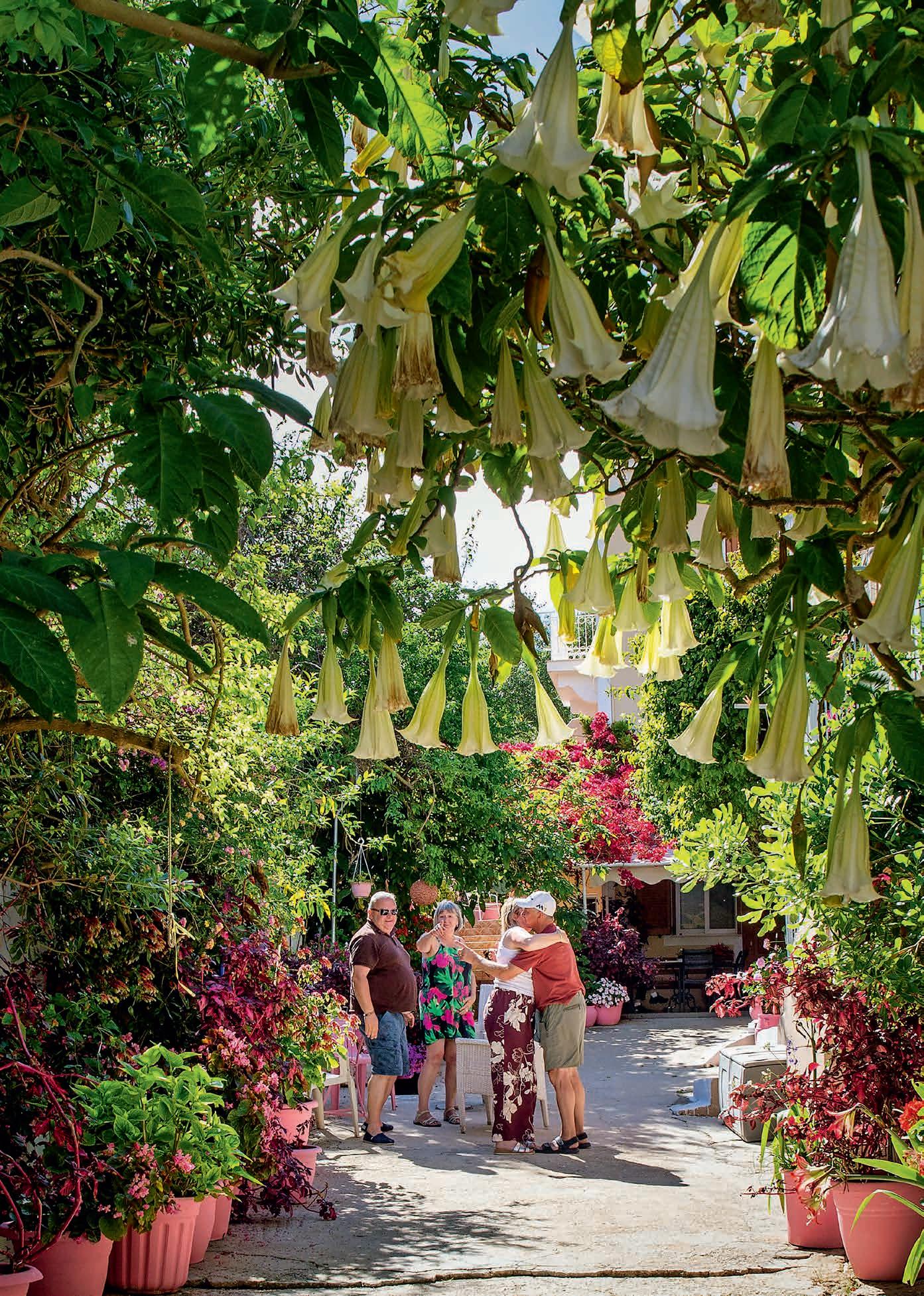
Spellbinding beaches, often ranked among the finest in the world, and a grounded, unpretentious beauty that invites you to reconnect with yourself are part of the magic, as are cosmopolitan harbors that draw an international crowd and countless secluded hideaways where you can retreat, recharge, and restore your sense of balance. Slow rhythms, fresh fish, good wine, and some of the Ionian’s dreamiest landscapes create the perfect setting for a journey of wellness and renewal. Kefalonia offers the kind of reset that everyday life rarely allows. With its turquoise waters, hills covered in vineyards and olive groves, and mountains shaded by pine forests and rare black firs, the island engenders in its visitors a deep sense of calm. It is a place that invites you to slow down and rewards you for doing so.
Relaxing Rituals
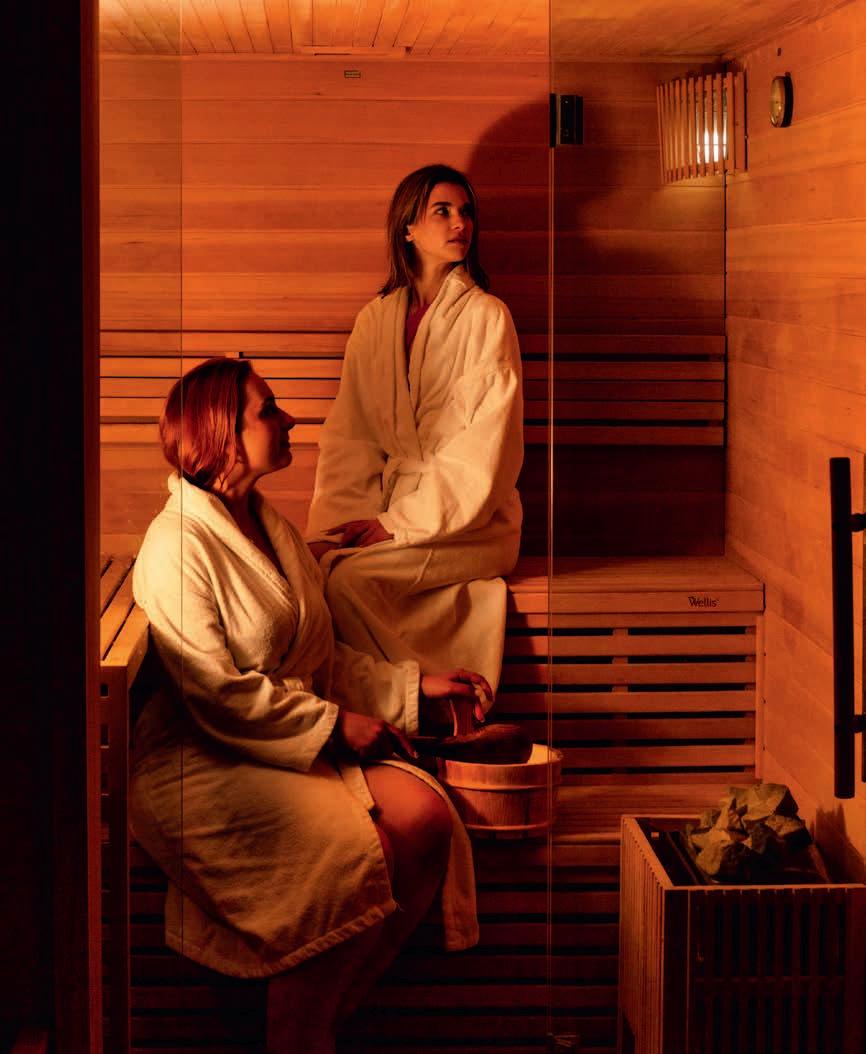
To ease into the island’s unhurried pace, begin with a relaxing massage in a setting where the serene aura of the Ionian meets the vibrant temperament of Cretan tradition. The signature treatment Cretan Longevity Ritual at the Electra Kefalonia Hotel & Spa combines raki, Cretan olive oil, and orange extract in a deeply restorative full-body massage designed to release tension and quiet the mind. The spa menu draws inspiration from ancient Greek wellness practices while incorporating modern techniques, offering everything from hydrating treatments for sun-exposed skin to cupping massages, cellulite therapies and anti-ageing facial rituals using gua sha stones. One of the highlights is the option to experience treatments at the same time as your partner, either side by side in the same room or in separate rooms.
Fitness in the Water
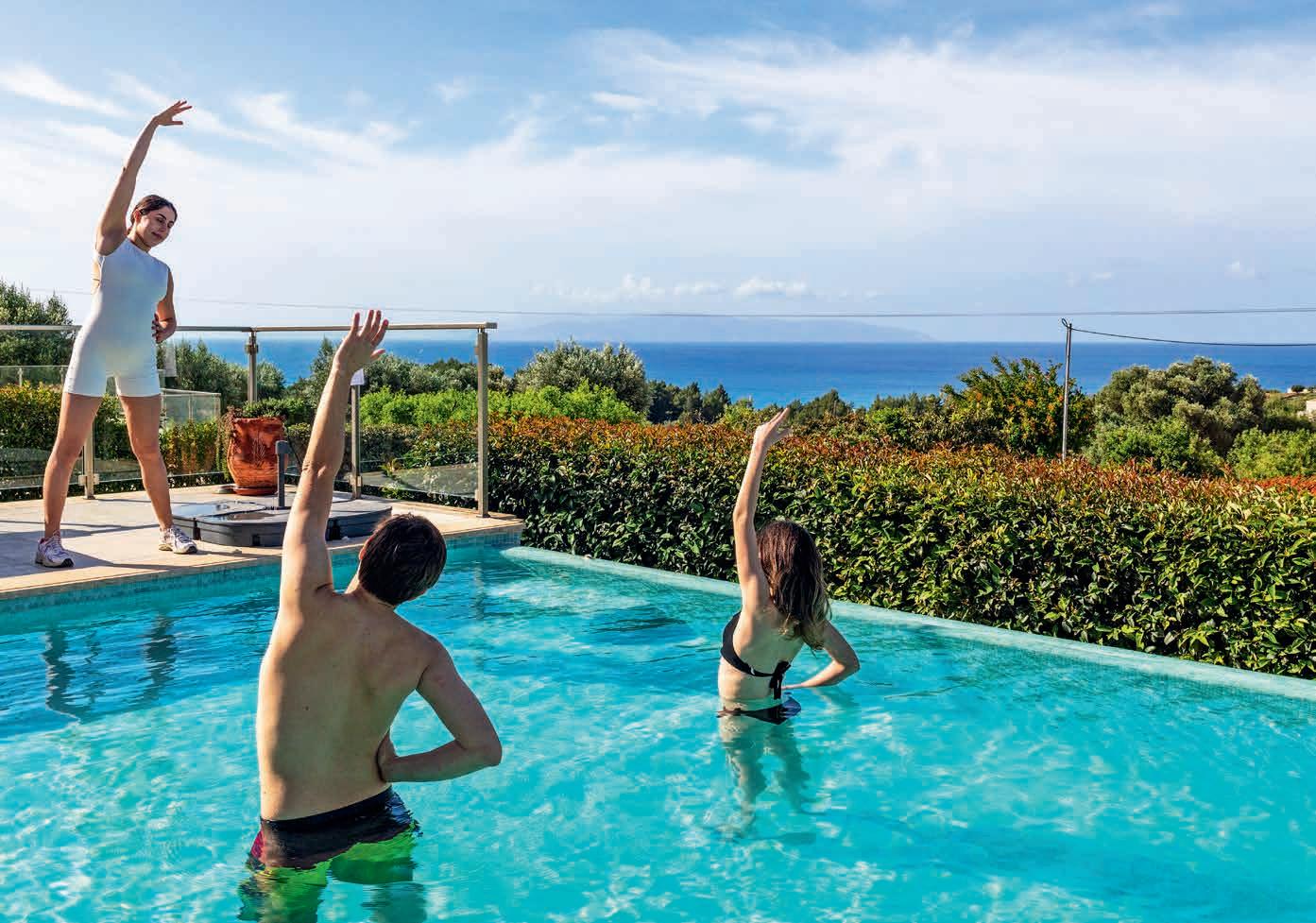
For those who prefer movement as part of their holiday reset, aqua Pilates is one of the most enjoyable ways to stay active while on the island. Practiced in water, the method focuses on strengthening the core while improving balance, posture and flexibility, all without placing pressure on the joints. Water naturally supports circulation and lymphatic drainage, and its cooling effect makes exercise feel lighter and more energizing, even in the summer heat. You choose the music and the setting – pool or sea – and Kefalonia-born Theodora Tragaki takes care of the rest. A fitness instructor specializing in artistic swimming and certified in aqua training, she leads sessions that make the most of water’s beneficial properties. Just forty-five minutes a day are enough to reset both body and mind for the day ahead. For something more energetic, there’s aqua aerobics, including family-friendly classes suitable for children from 4 to 5 months old with an accompanying adult, and from age 3 unaccompanied.
Electra Kefalonia
& Spa.
Indulge in rejuvenating spa rituals at the Electra
& Spa. Below: Enjoy an invigorating aqua pilates session.
Right:
Kefalonia Hotel
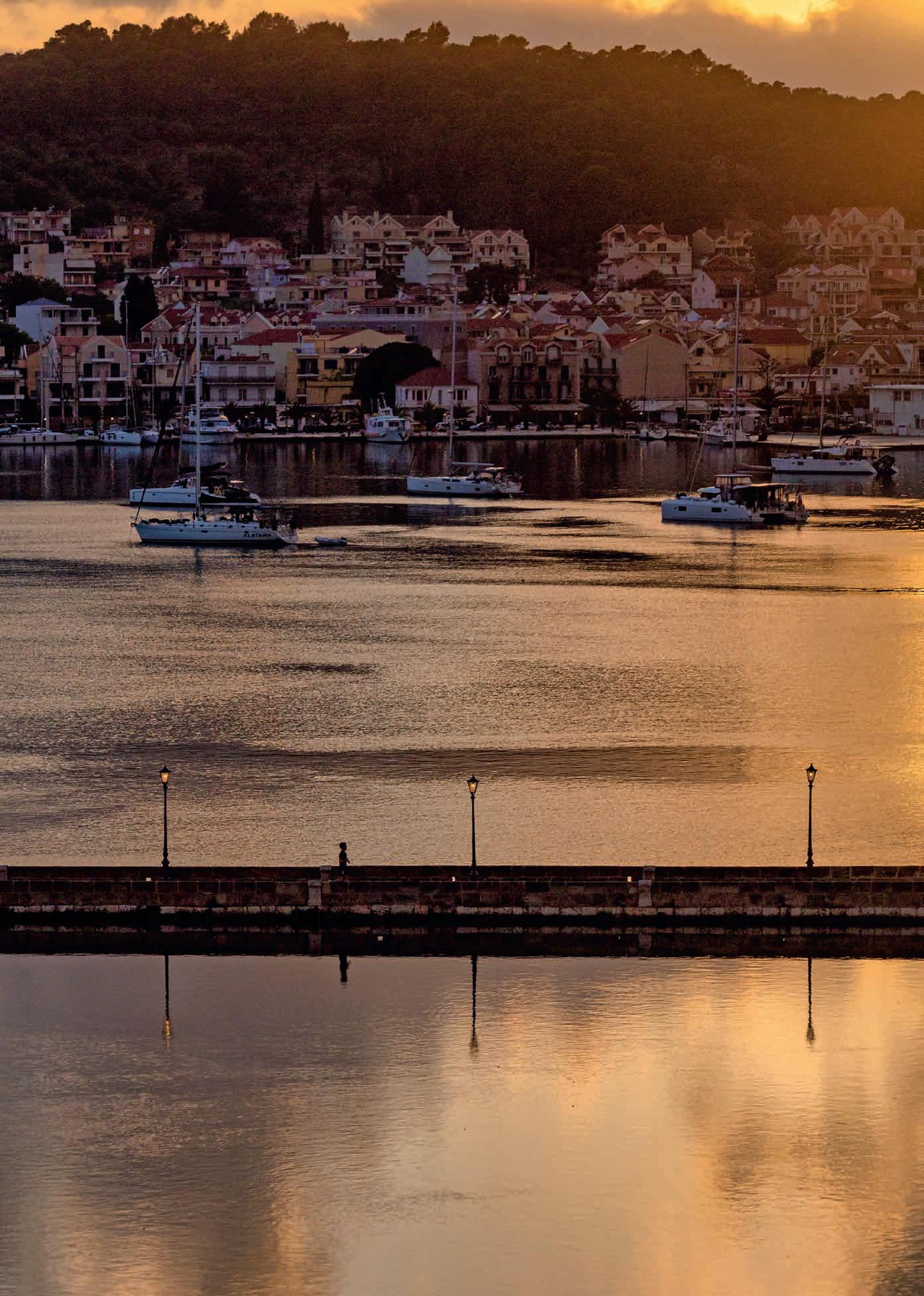
A view of Argostoli,
the island’s capital. Far right: Pausing during an excursion to Mt Ainos.
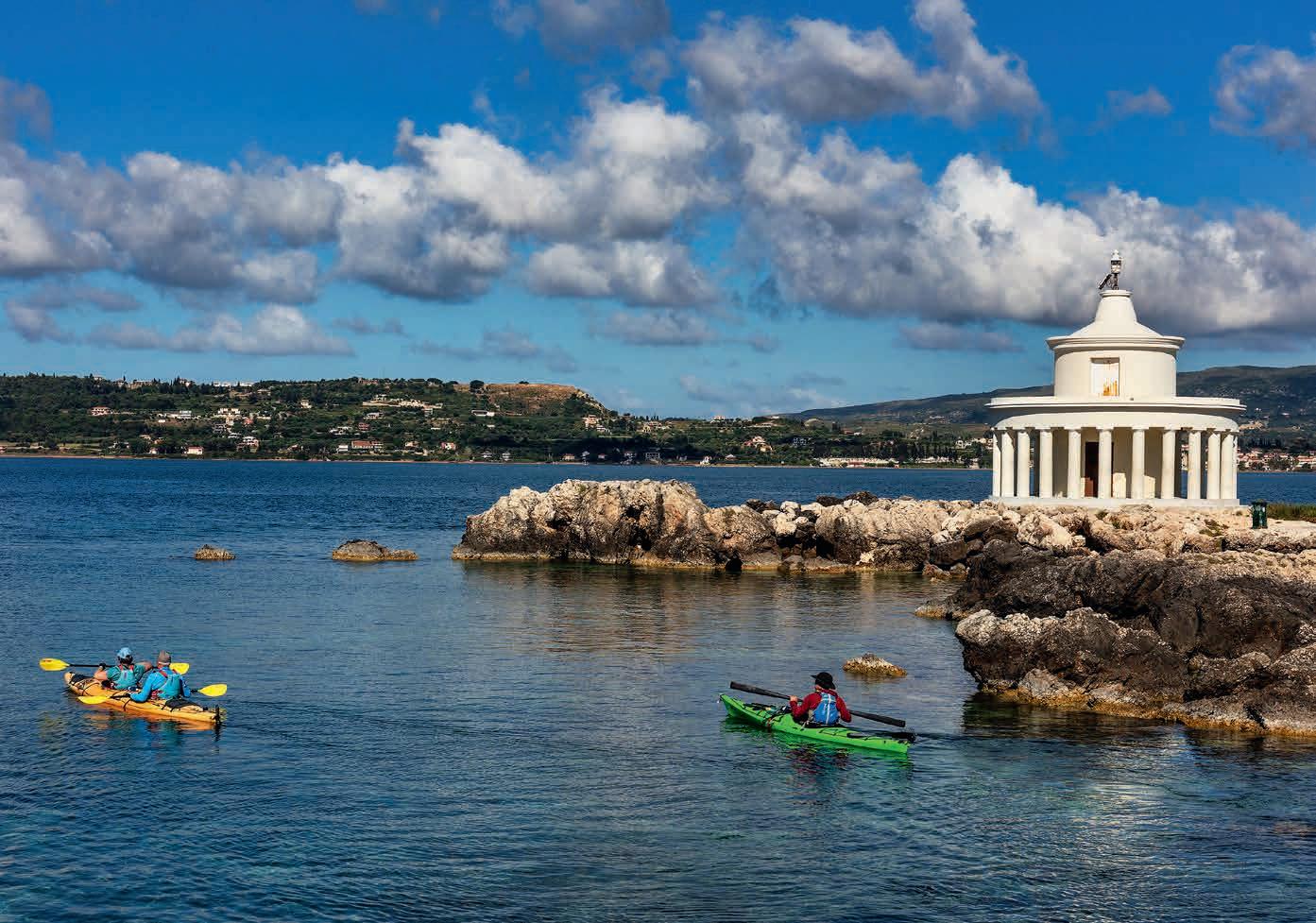
Kayaking Kefalonia.
Jeep Safari on Mt Ainos
One of Kefalonia’s many surprises is Mt Ainos, the only national park on a Greek island and one of just ten in the country. Its rare fir forest and rich biodiversity – with more than 450 plant species, as well as falcons, quails, wild goats, deer and the semi-wild horses of Ainos – offer the opportunity for magical encounters with nature. Rising to 5,338 feet, this legendary mountain reveals a very different side of the island. A morning or afternoon jeep safari with a driver from Uncharted Escapes allows you to experience remote parts of the mountain unreachable by conventional vehicles. Let the heady scent of thyme, sage, and wild oregano tickle your nose, listen to the sounds of the forest, take in the rugged mountain scenery, and admire sweeping views of Ithaca, Zakynthos and even Kyllini, weather permitting. The experience usually ends in the village of Valsamata, where you can sample local Robola wine and regional products at Vassilakis Winery.
Kayak Exploration
If you love the sea, one of the most rewarding ways to experience Kefalonia is by kayak. Excursions with Sea Kayaking Kefalonia offer a relaxed, low-impact and sustainable way to discover the island from a different perspective, gliding past quiet coves, stopping for swims in blue-green waters, and leaving the busiest beaches behind. You do not need to be especially fit or even know how to paddle. No previous experience is necessary: before setting out, Pavlos, Yvonne, and their team – who have more than twenty years of experience – introduce even complete beginners to the basics of paddling. Day trips usually last five to six hours and include stops for snacks, swimming and a healthy meal. Routes vary according to conditions and mood: from Argostoli toward Minies, from Antisamos to Poros, or from Aghia Kyriaki toward Assos, all revealing a quieter, more untouched side of the island. The trip is always planned so as to make the return to your starting point as effortless as possible.
Horseback Riding
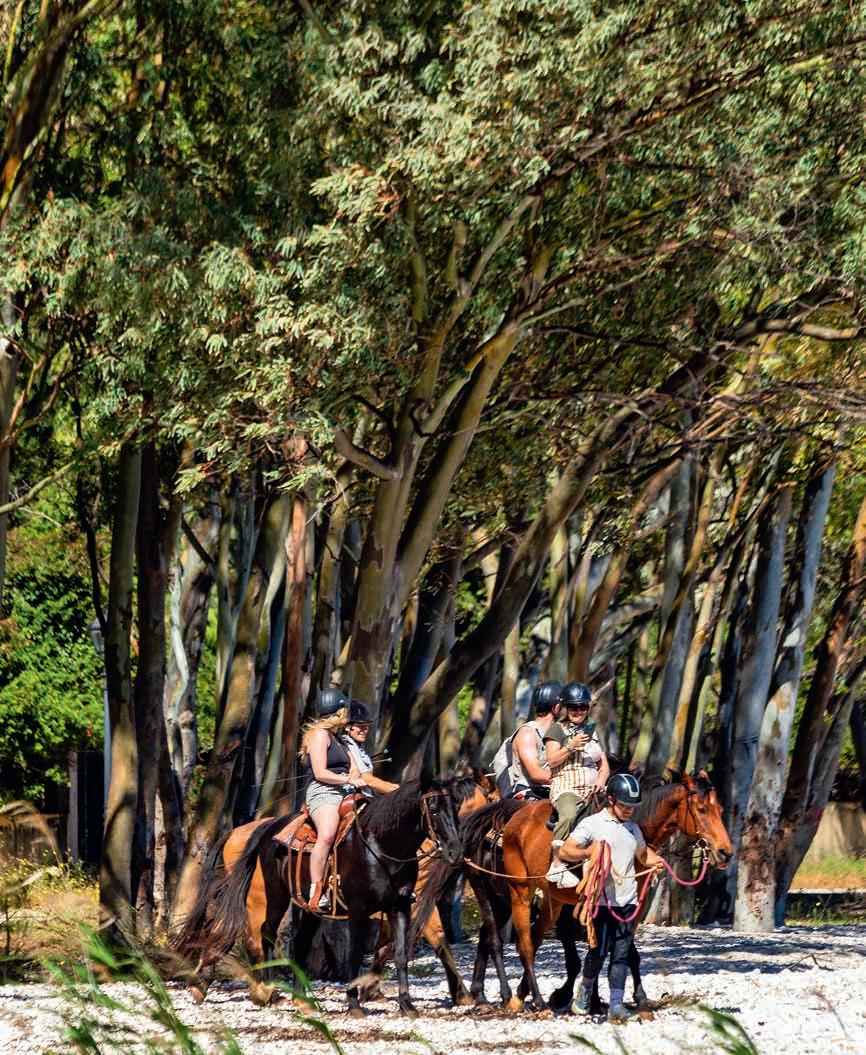
Few experiences offer such an immediate sense of calm as contact with animals. Horse trainer and riding instructor Pantelis Deftereos argues that horseback riding might be the only activity that connects you so deeply with nature while teaching you the value of harmony. At Kefalonia’s Horse Riding Stable, even complete beginners can experience the island from this slower, quieter perspective. After a gentle introduction, each rider is paired with the horse best suited to them and shown the basics of care and communication before setting off. For first timers, the relaxed forty-minute route toward Sami Beach is the best option. More experienced riders can explore the lush green landscapes as they ride from Drogarati Cave to Melissani Cave Lake and back.
Above: Discovering Kefalonia by sea on a kayaking adventure.
Right: a horseback ride through the island’s scenic hinterland.
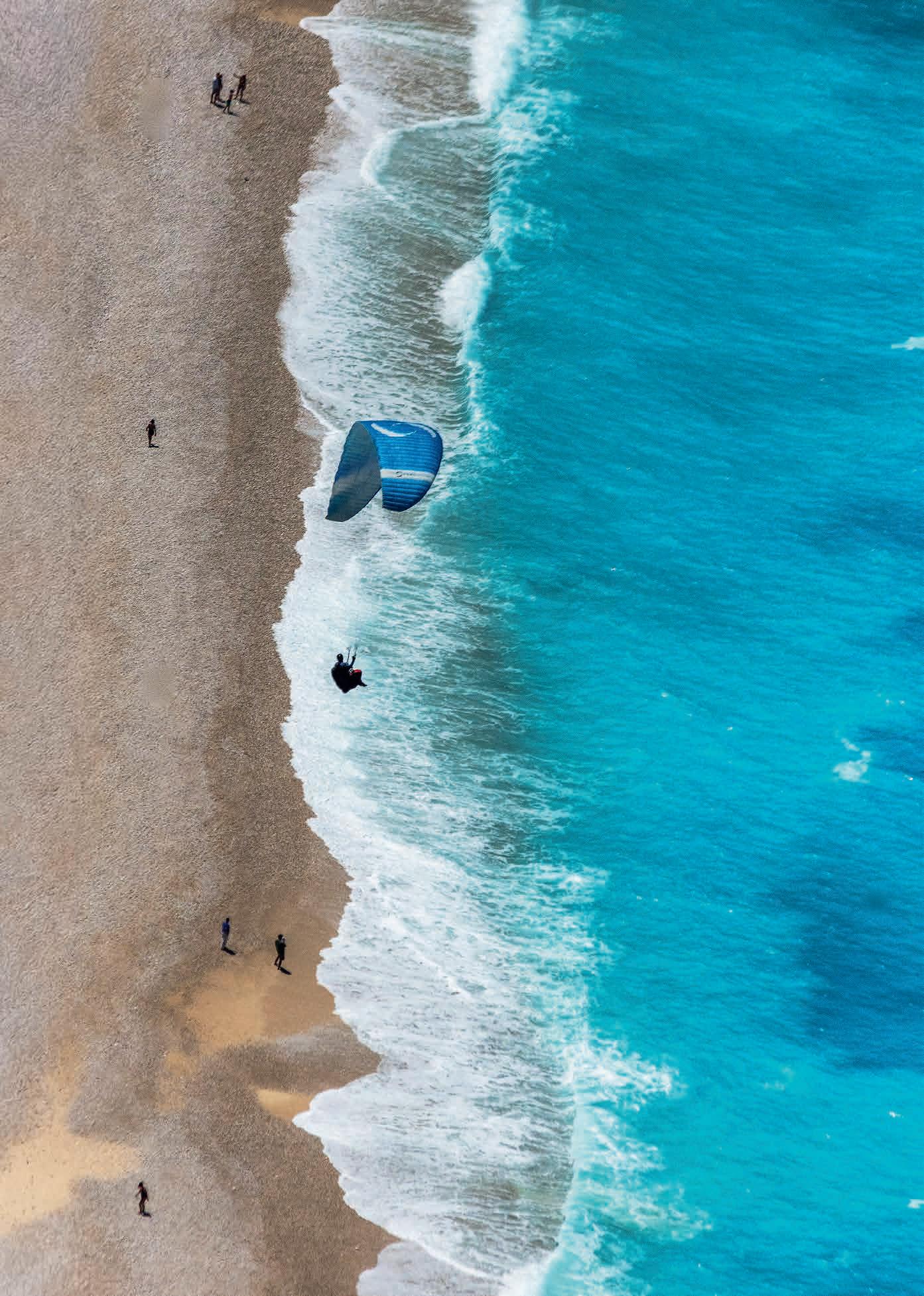
Myrtos Beach, one of the Ionian’s most famous beaches. On the right, wandering through the picturesque alleys of Fiskardo.
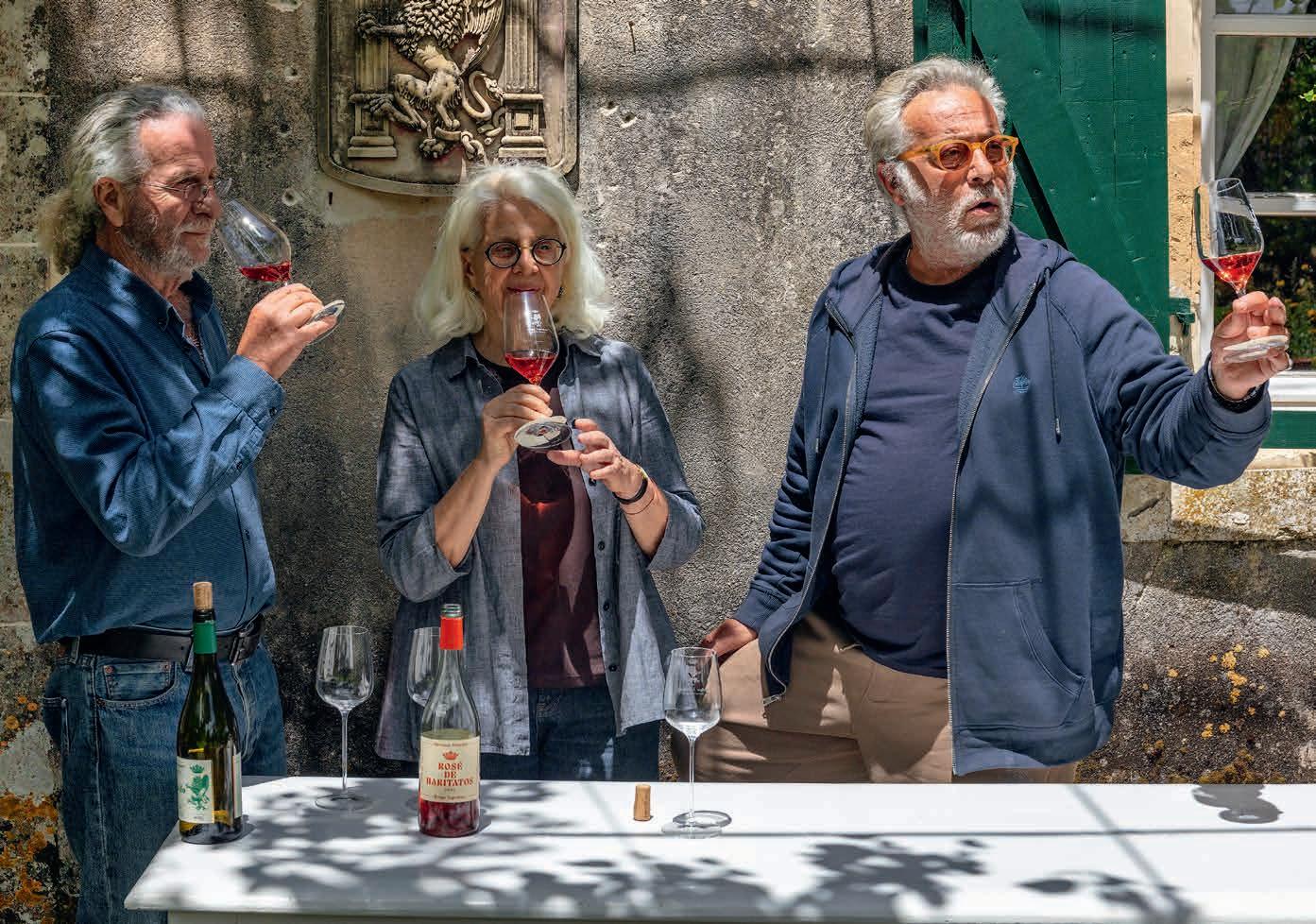
Above: A winetasting experience at Haritatos Estate.
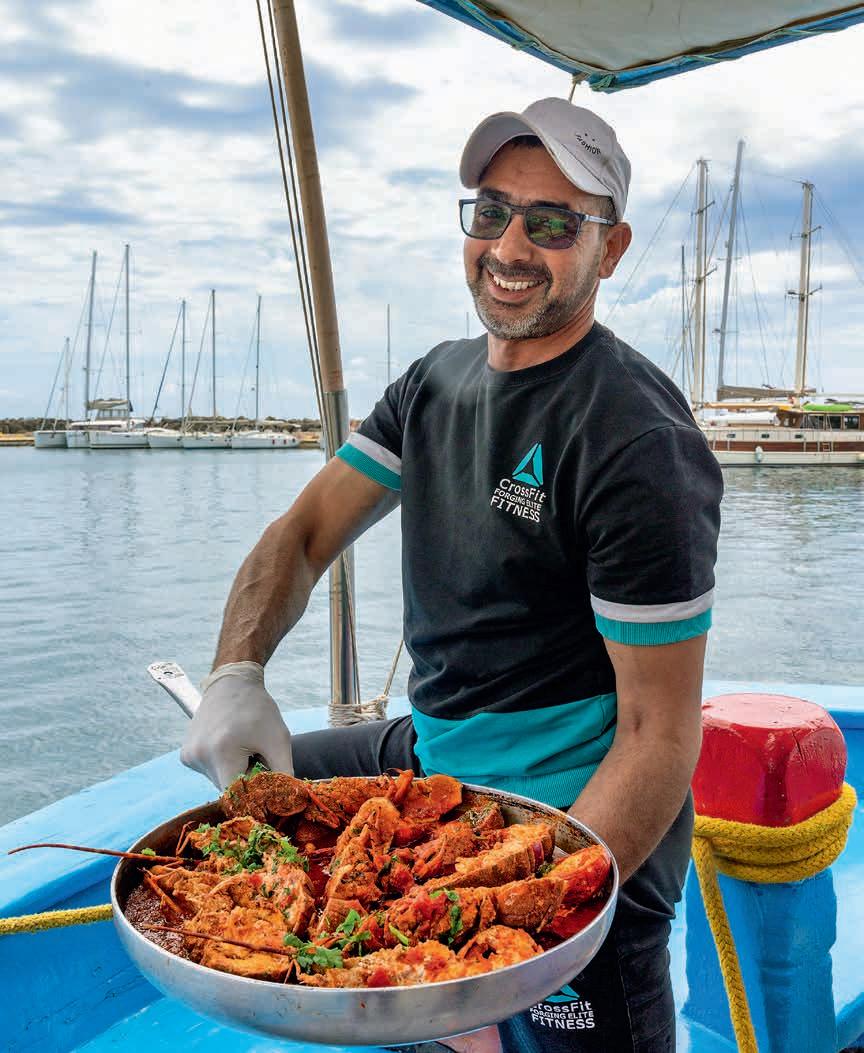
Left: Captain Michalis’ signature lobster pasta.
Relaxing Rituals
your Electra Experience in Kefalonia
Fishing with Captain Michalis
A morning at sea with Captain Michalis is about far more than fishing. It’s an immersion into the rhythm of Ionian island life: the early departure from the harbor, the salt air, the quiet ritual of pulling in the nets, long swimming stops in crystalline water, and, eventually, lunch prepared from whatever the sea has offered that day. Aboard his traditional 47-foot wooden Greek liberty-type boat, the captain’s guests head out from the small port of Aghia Pelagia to learn the basics of fishing from a man who has spent more than forty years at sea. Those less interested in fishing can simply swim, relax on deck, and wait for the meal to take shape. Depending on the catch, lunch may include red mullet, cuttlefish, octopus or lobster, all cooked fresh on board. One of the highlights is Michalis’ lobster pasta scented with anise, served alongside his wife Argyro’s traditional Kefalonia riganada, a local bruschetta, and salads prepared with vegetables from the family garden. Lasting around eight hours, the excursion brings together many of the pleasures that make a Greek island holiday so memorable.
Wine Tourism at Haritatos Vineyard
Located in Kladata, in the Paliki region of Kefalonia, Haritatos Vineyard is surrounded by remarkable biodiversity. The vineyards themselves are cultivated with natural methods and minimal intervention. In the beautiful garden of the family farmhouse that dates from 1863, you can taste single-varietal wines made from local grape varieties such as Vostilidi, Muscat and Mavrodaphne. Each is paired with bruschettas prepared with Kefalonian and Ionian ingredients, designed to bring out the character of every label. The highlight of the experience is the chocolate mousse with olive oil and afrala – the island’s local sea salt – an ideal match for the excellent Mademoiselle Haritatou Mavrodaphne. Just as memorable is the tour of the farm and the vineyard house, a place that truly reflects the family’s love of good wine, passed down from one generation to the next. ♦
| Fitness in the Water kefaloniaaquatics6.webnode.gr
MODELS: MARIOS LEKKAS @ AGENCIA KAYA EBBE @ AGENCIA
ON THE BRIGHT SIDE
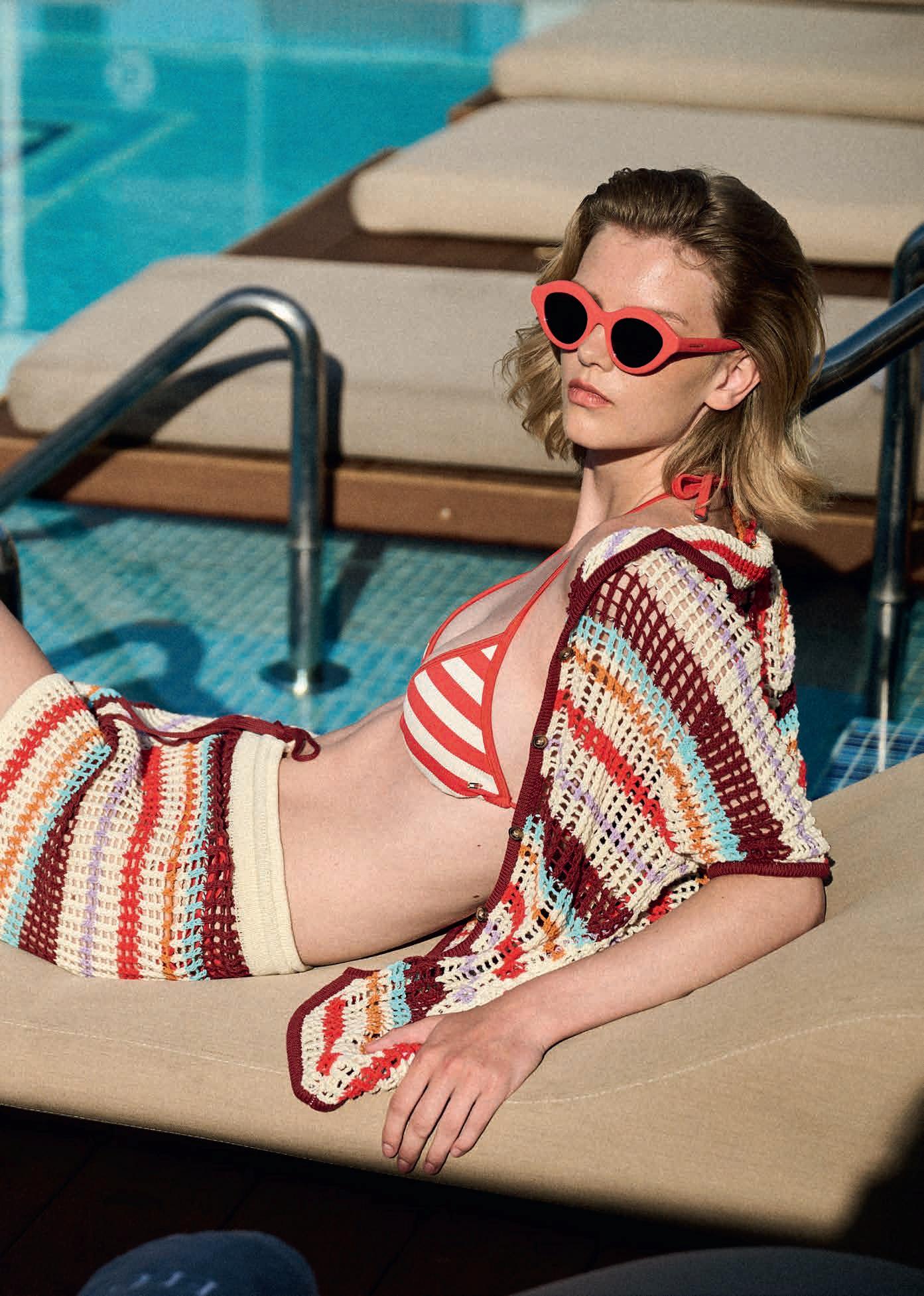
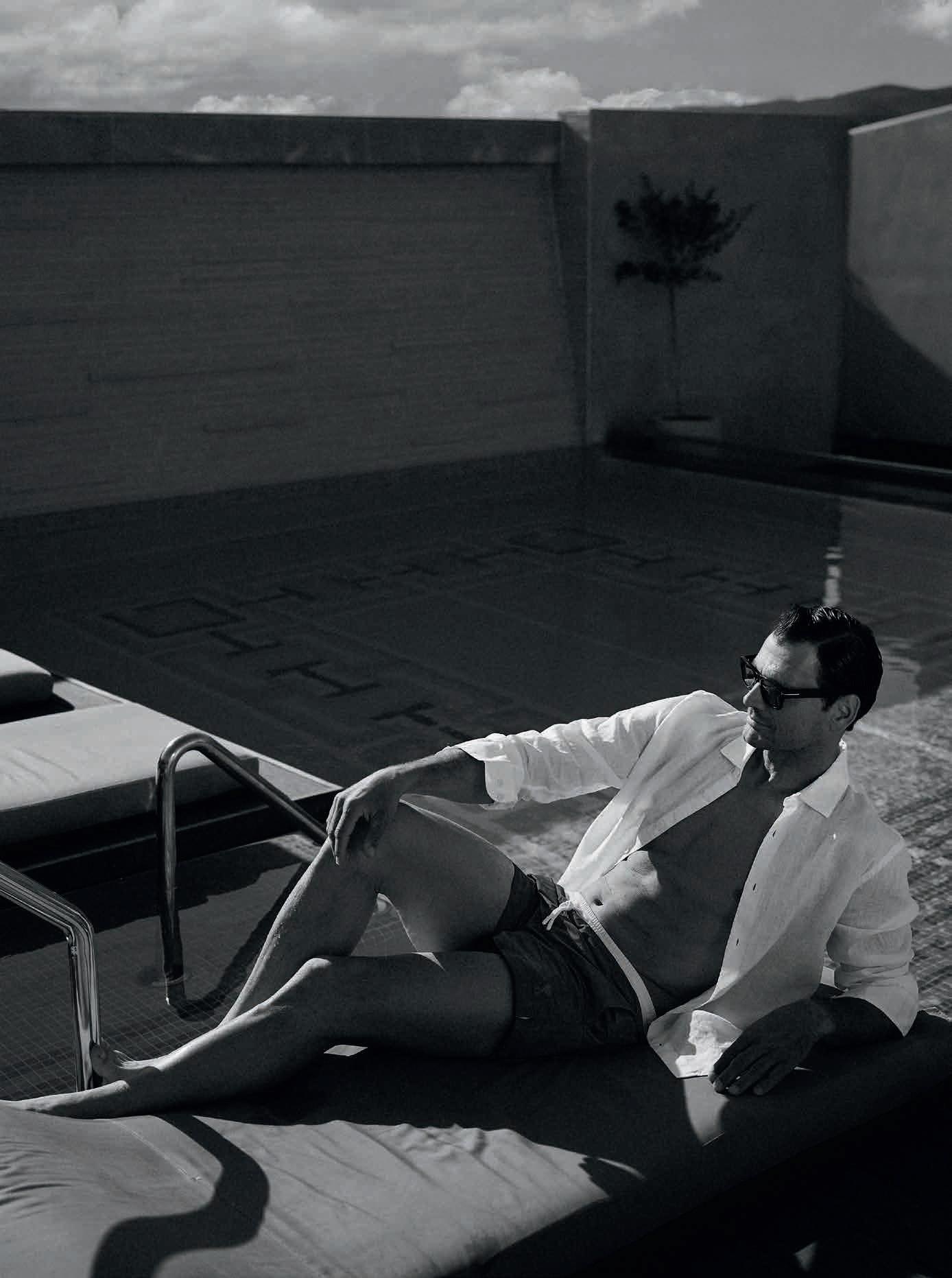
KAYA Crochet shorts and shirt by Topshop, swimsuit by Tommy Hilfiger (HONDOS CENTER). Sunglasses Zeus+Dione (FORGET ME NOT).
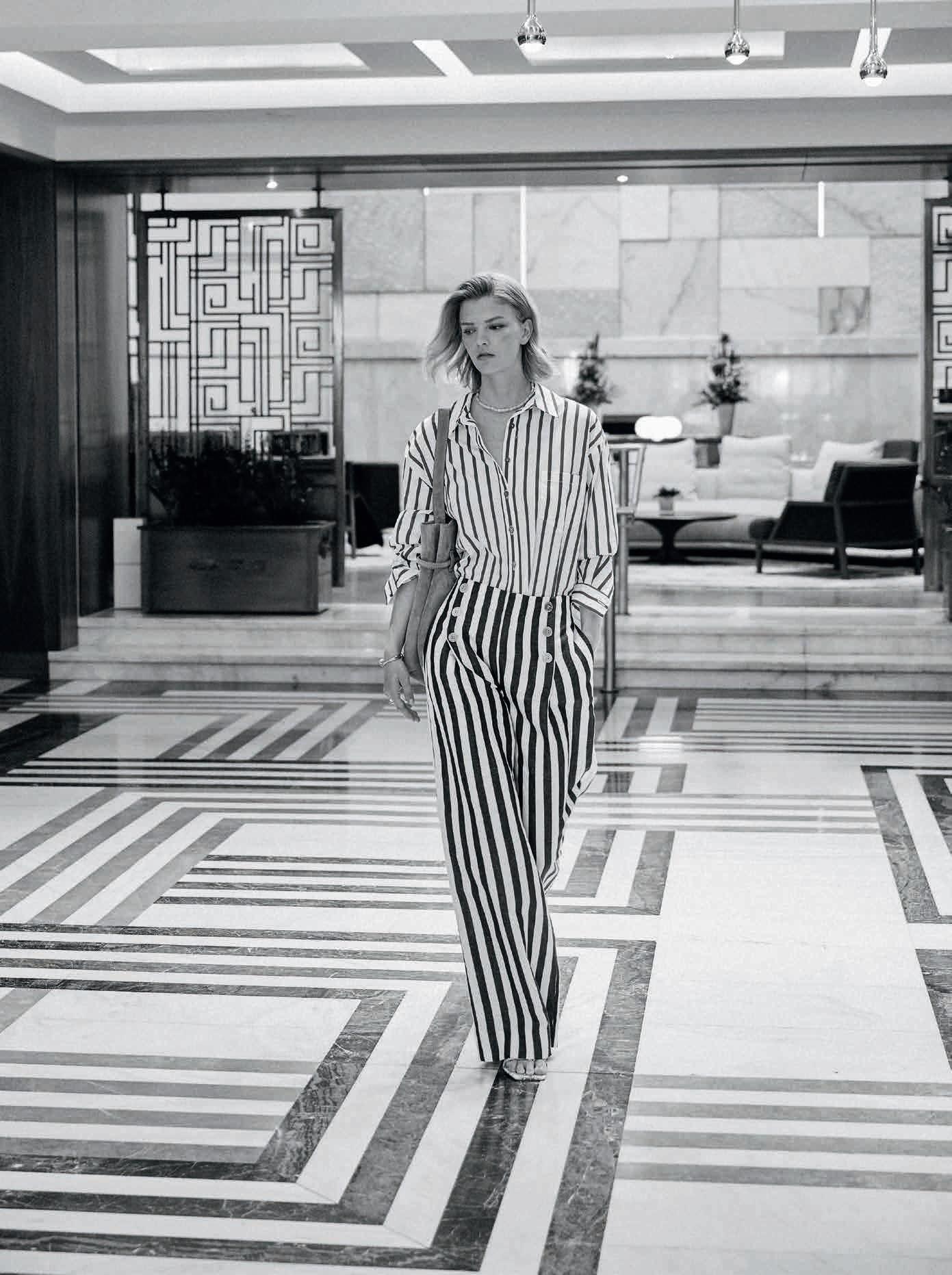
← KAYA Cotton shirt Ckontova and cotton trousers by Ancient Kallos (AESTHET). Suede bag by Manu Atelier (ATTICA). Sandals by Carrano (HARALAS STORES). Gold necklace with semiprecious stones and gold bracelet (LALAOUNIS).
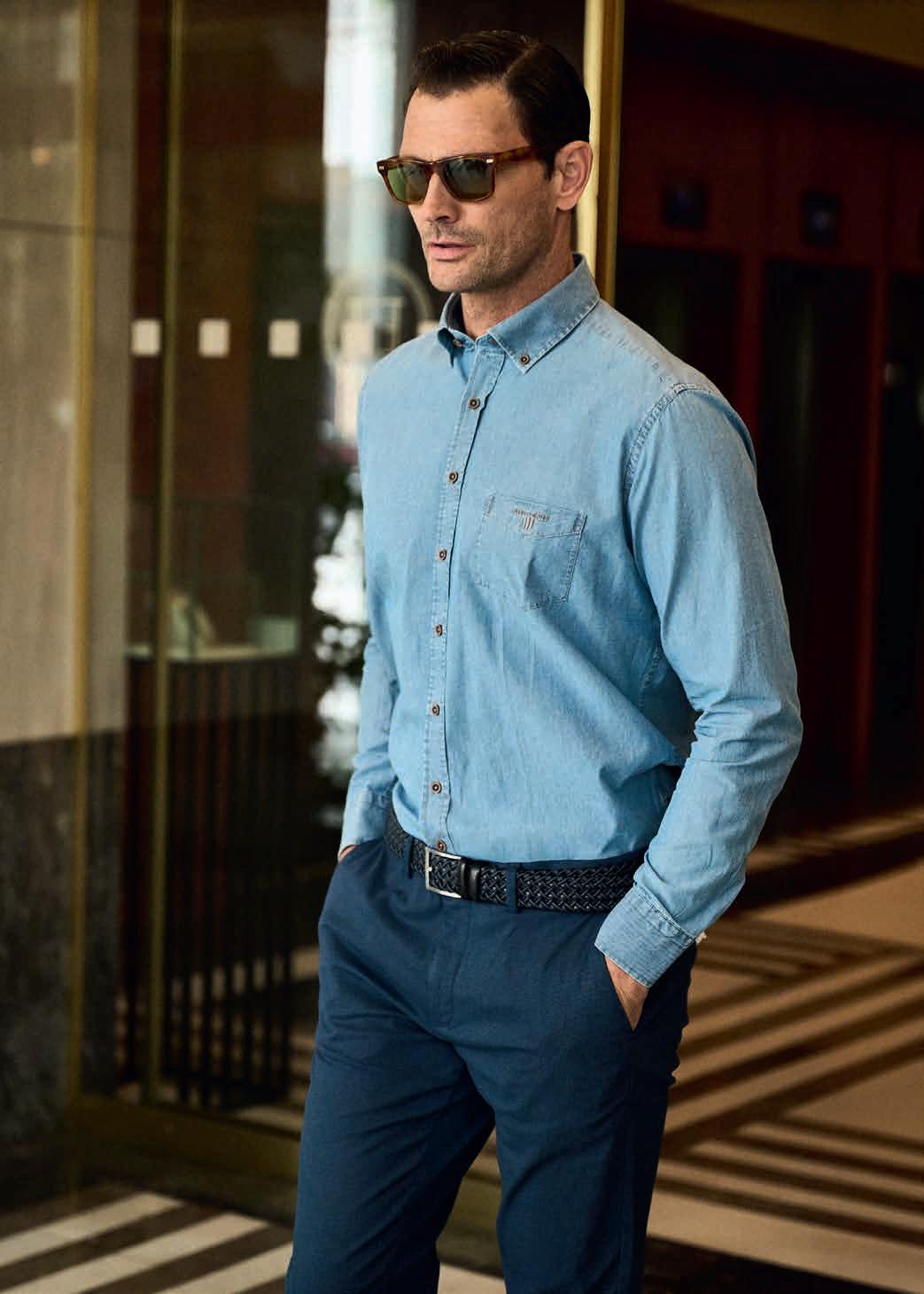
↑ MARIOS Denim shirt and chino trousers by Navy Green, belt by Boss (HONDOS CENTER). Sunglasses by Brunello Cucinelli (PANAIDIS EYEWEAR BOUTIQUE).
↑ MARIOS Cotton shirt and trousers by Boss (ATTICA). Shoes by Jacquemus (KALOGIROU).
KAYA Cotton shirt by Calvin Klein Jeans (HONDOS CENTER). Double-cotton Bermuda shorts by Balenciaga (BALENCIAGA BOUTIQUE). Sandals by Nine West (HARALAS STORES). Sterling silver bracelets and earrings (GEORG JENSEN).
→ MARIOS Linen shirt by Orlebar Brown and swimsuit by Ami Paris (ATTICA). Sunglasses by Tom Ford (PANAIDIS EYEWEAR BOUTIQUE).
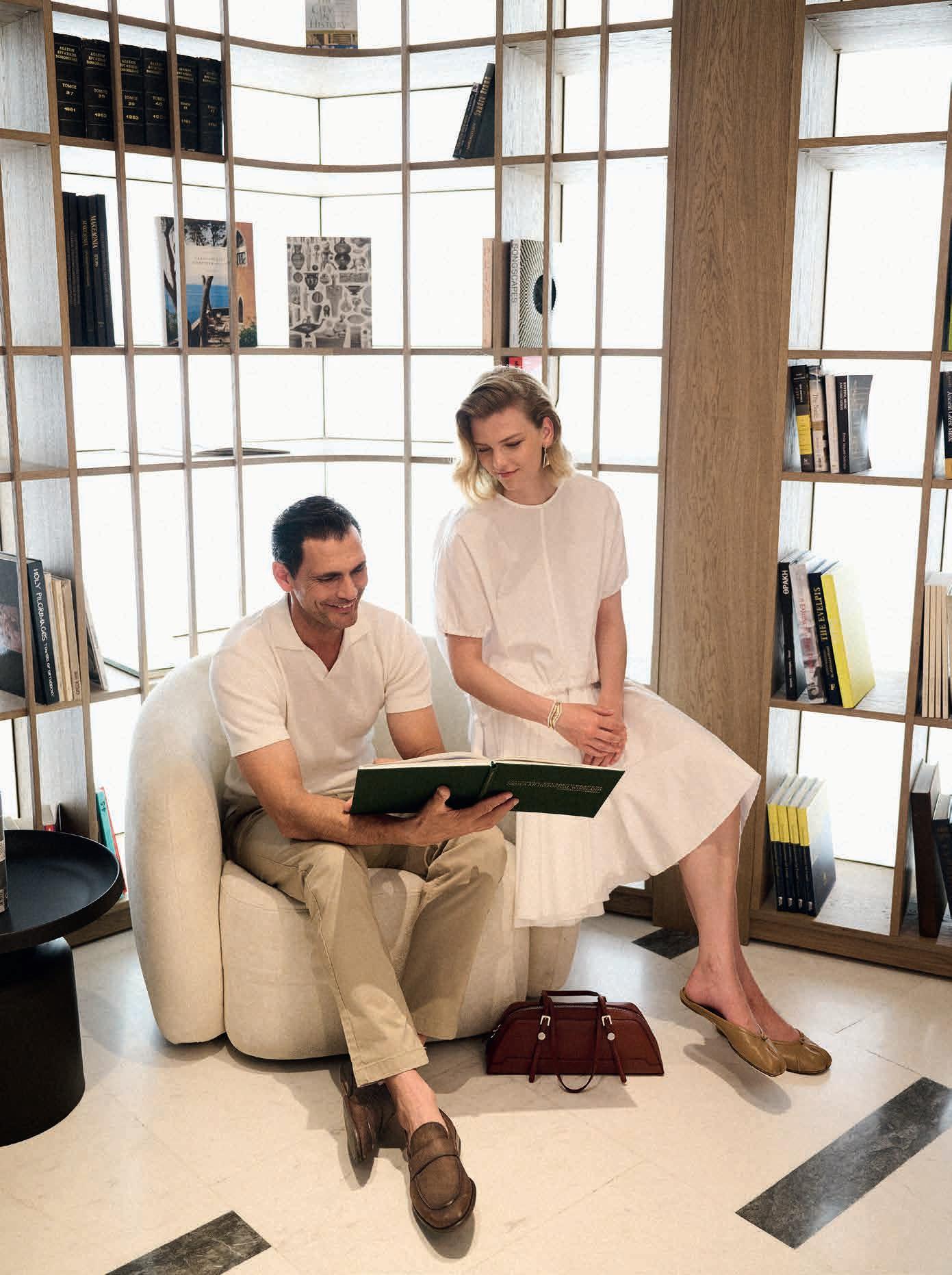
← MARIOS Polo shirt by Navy Green and chino trousers by Nautica (HONDOS CENTER). Loafers Magnanni (KALOGIROU).
KAYA Cotton top by Yaya (HONDOS CENTER). Cotton skirt by Ami Paris (ATTICA). Slip-ons by Maison Margiela (KALOGIROU). Leather bag by Marni (KALOGIROU). Gold and diamond bracelet and earrings (PONIROS JEWELLERY).
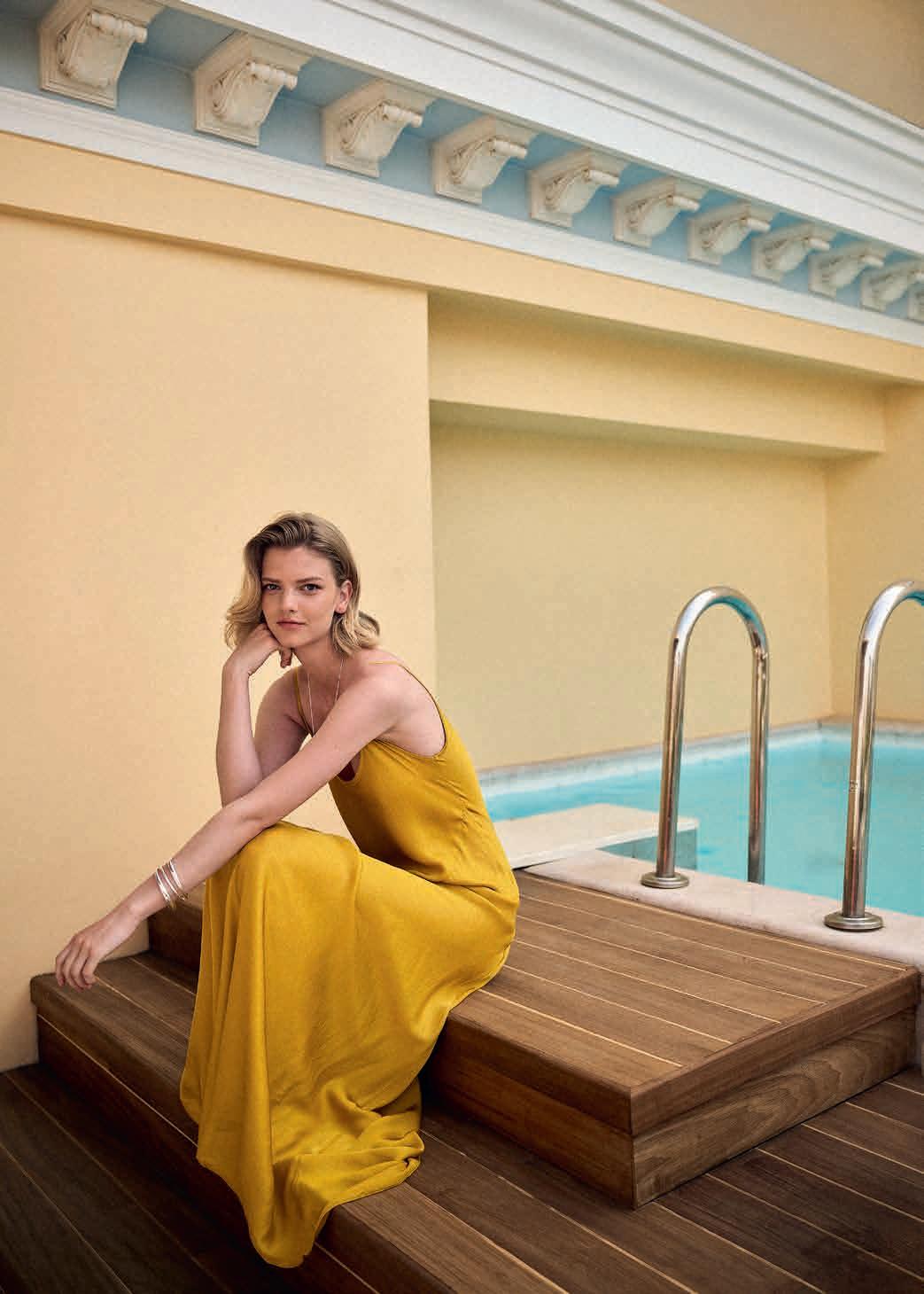
↑ KAYA Viscose dress by Join Clothes (FORGET ME NOT). Sterling silver pendant and bracelet (GEORG JENSEN).
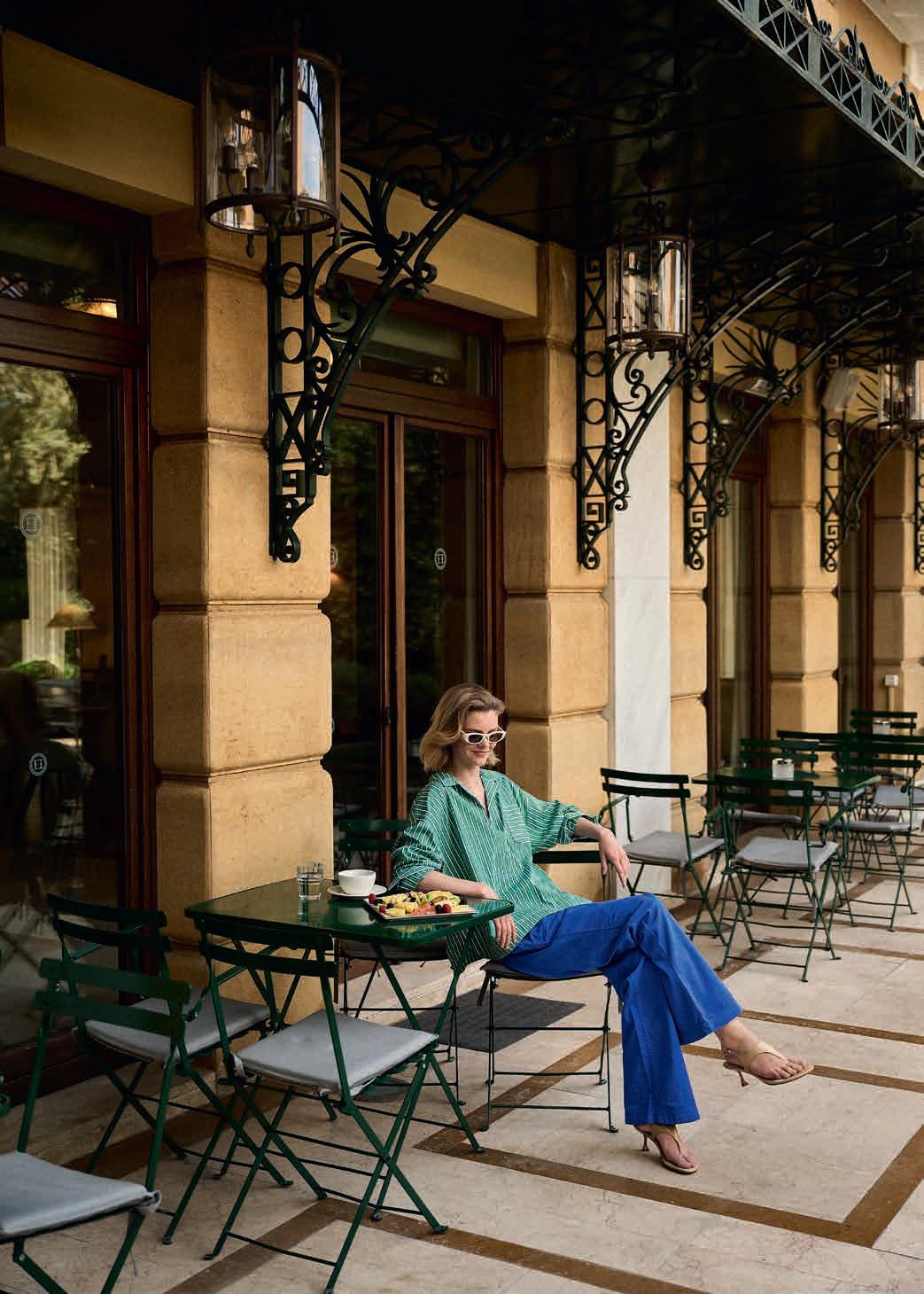
↑ KAYA Cotton shirt and trousers by Lauren Ralph Lauren (HONDOS CENTER). Sandals by Nine West (HARALAS STORES). Sunglasses by Prada (PANAIDIS EYEWEAR BOUTIQUE).
→ KAYA Jacket and Bermuda shorts by Stella McCartney (ATTICA). Suede bag by Manu Atelier (ATTICA). Gold earrings and ring with citrine (LALAOUNIS).
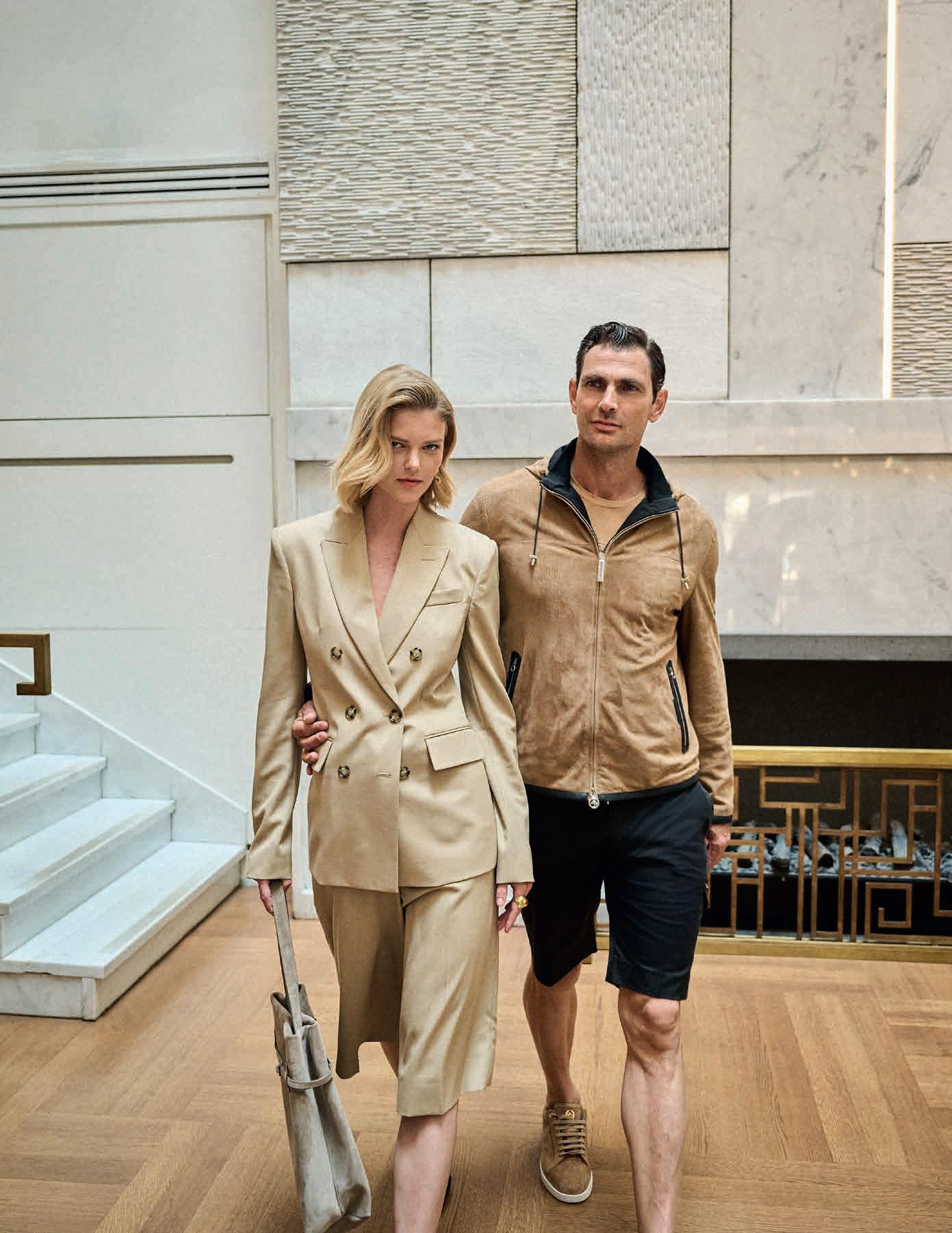
MARIOS Perforated leather jacket, T-shirt, Bermuda shorts and perforated leather sneakers by Stefano Ricci (DIAMANTIS).
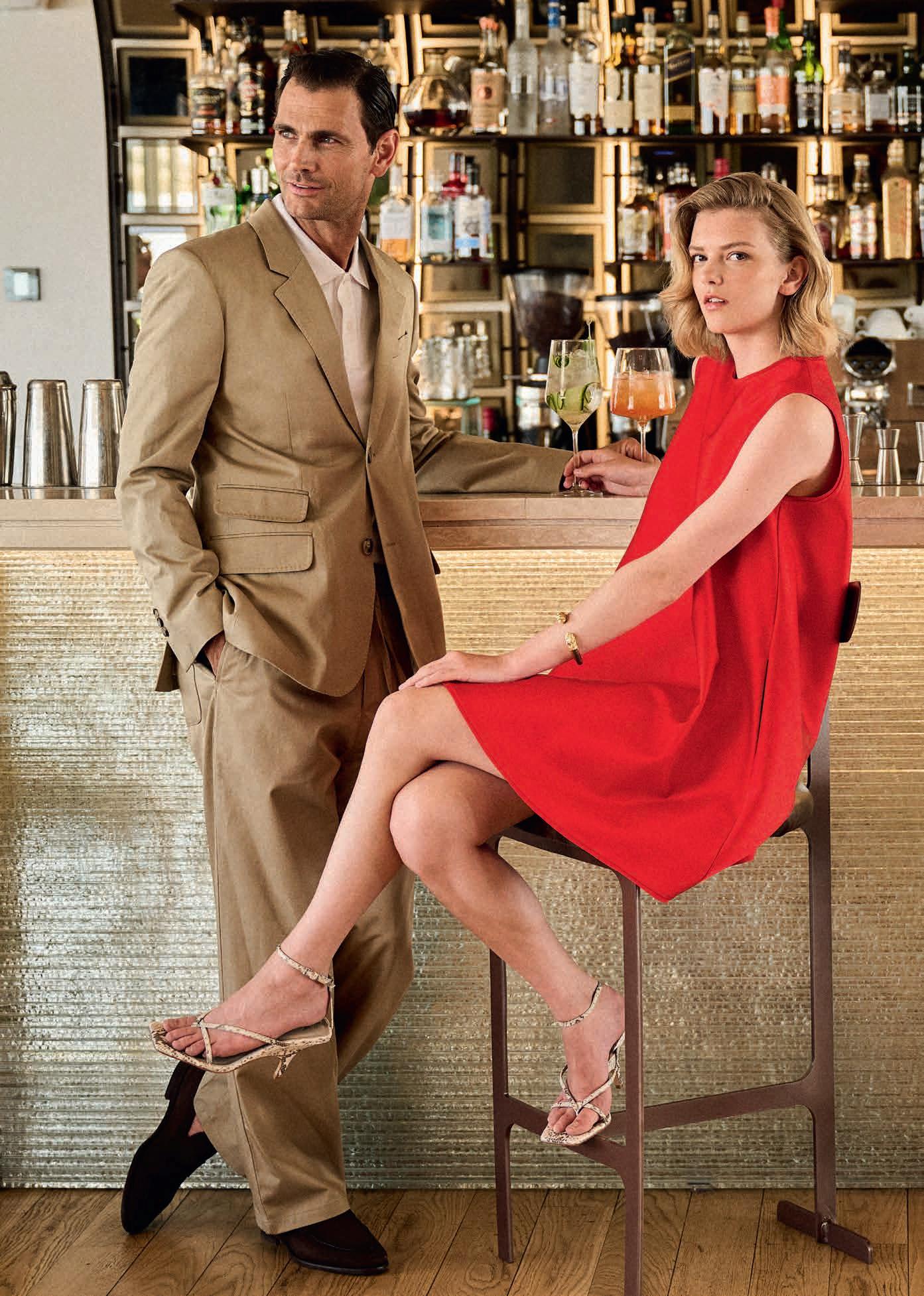
MARIOS Suit and polo shirt by Ami Paris (ATTICA). Loafers by Magnanni (KALOGIROU).
KAYA Silk satin dress by Stella McCartney (ATTICA). Sandals by Carrano (HARALAS STORES). Gold and wood bracelet (LALAOUNIS).
↑ MARIOS Swimsuit by Calvin Klein (HONDOS CENTER).
KAYA Swimsuit by Blu4u (HONDOS CENTER). Sunglasses by Prada (PANAIDIS EYEWEAR BOUTIQUE).
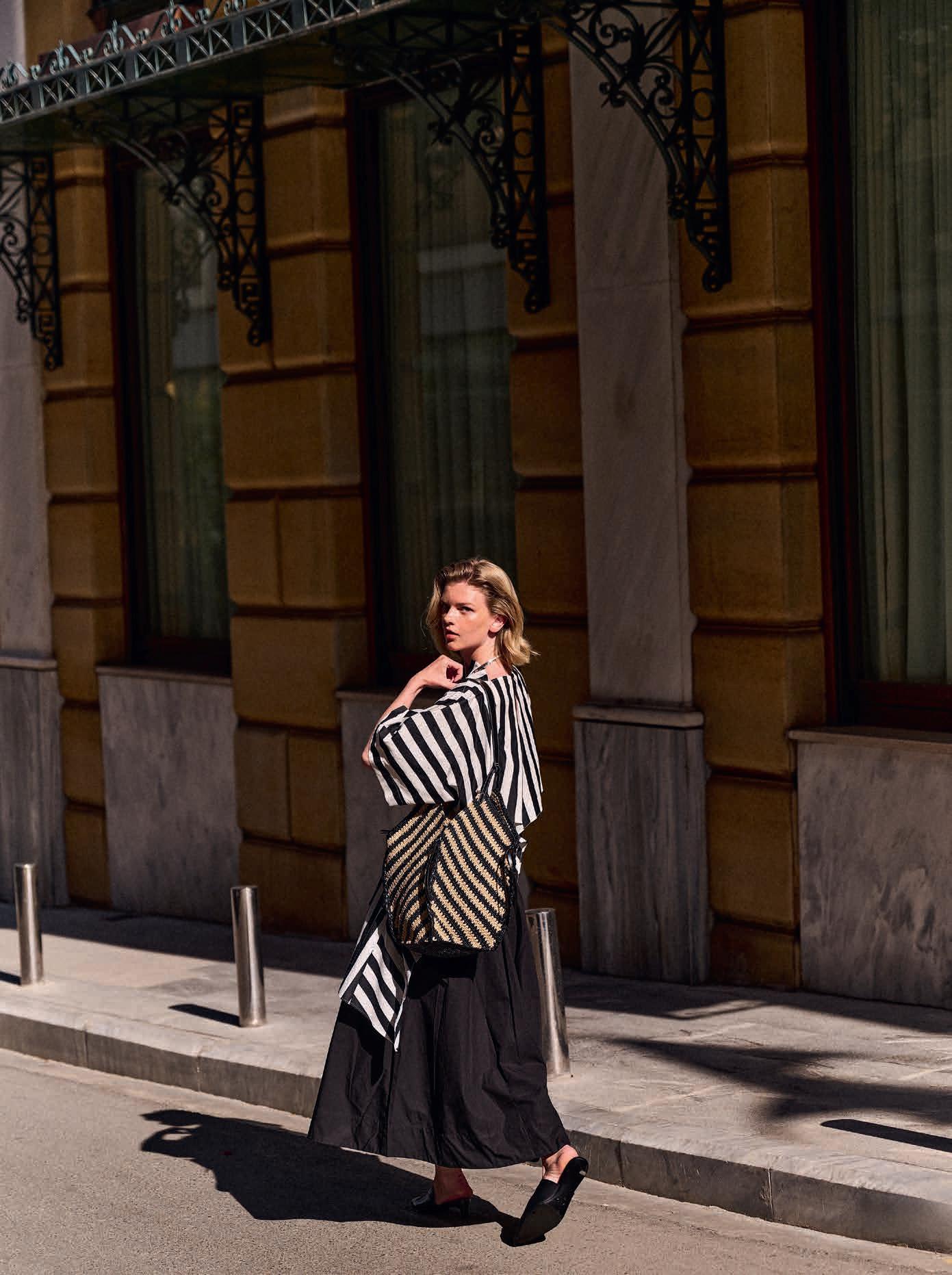
← KAYA Asymmetric poplin tunic by Jacquemus (ATTICA). Cotton skirt by Topshop (HONDOS CENTER). Raffia bag with leather details by Isabel Marant (ATTICA). Mules by TOD’S (TOD’S BOUTIQUE). Sterling silver necklace (GEORG JENSEN).
↑ KAYA Dress by Zeus+Dione (AESTHET) Sandals by Carrano (HARALAS STORES). Gold chain with semiprecious stones and gold rings with semiprecious stones (MARCO BICEGO).
MARIOS Polo shirt by Ami Paris (ATTICA). Trousers by Stefano Ricci (DIAMANTIS).
→ MARIOS Silk polo shirt by Dolce & Gabbana and trousers by Stefano Ricci (DIAMANTIS).
fashion editorial
lobby
Electra Metropolis
Athens,
Electra Palace
Athens, στο lobby
Focal
Electra Rhythm Athens.
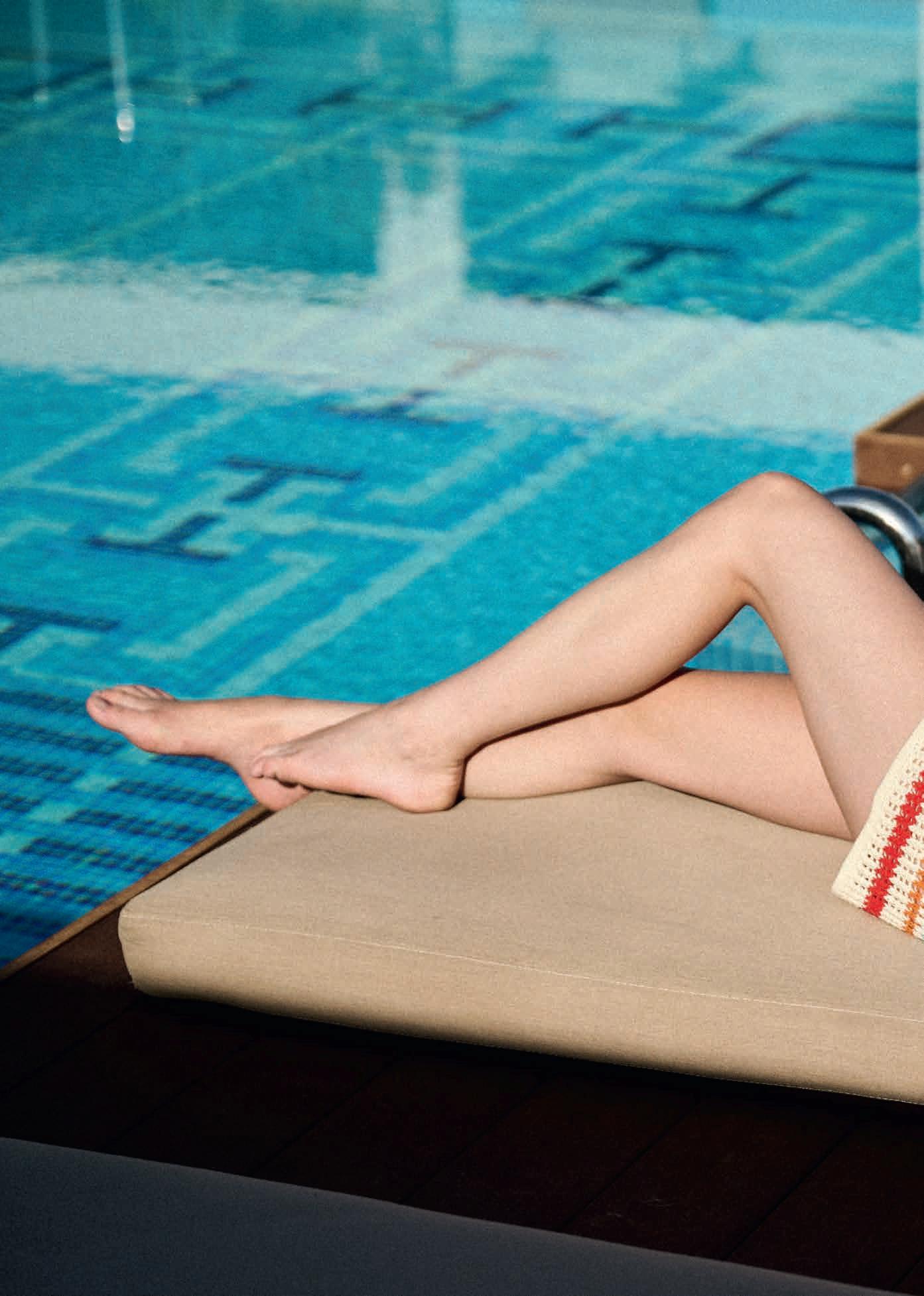
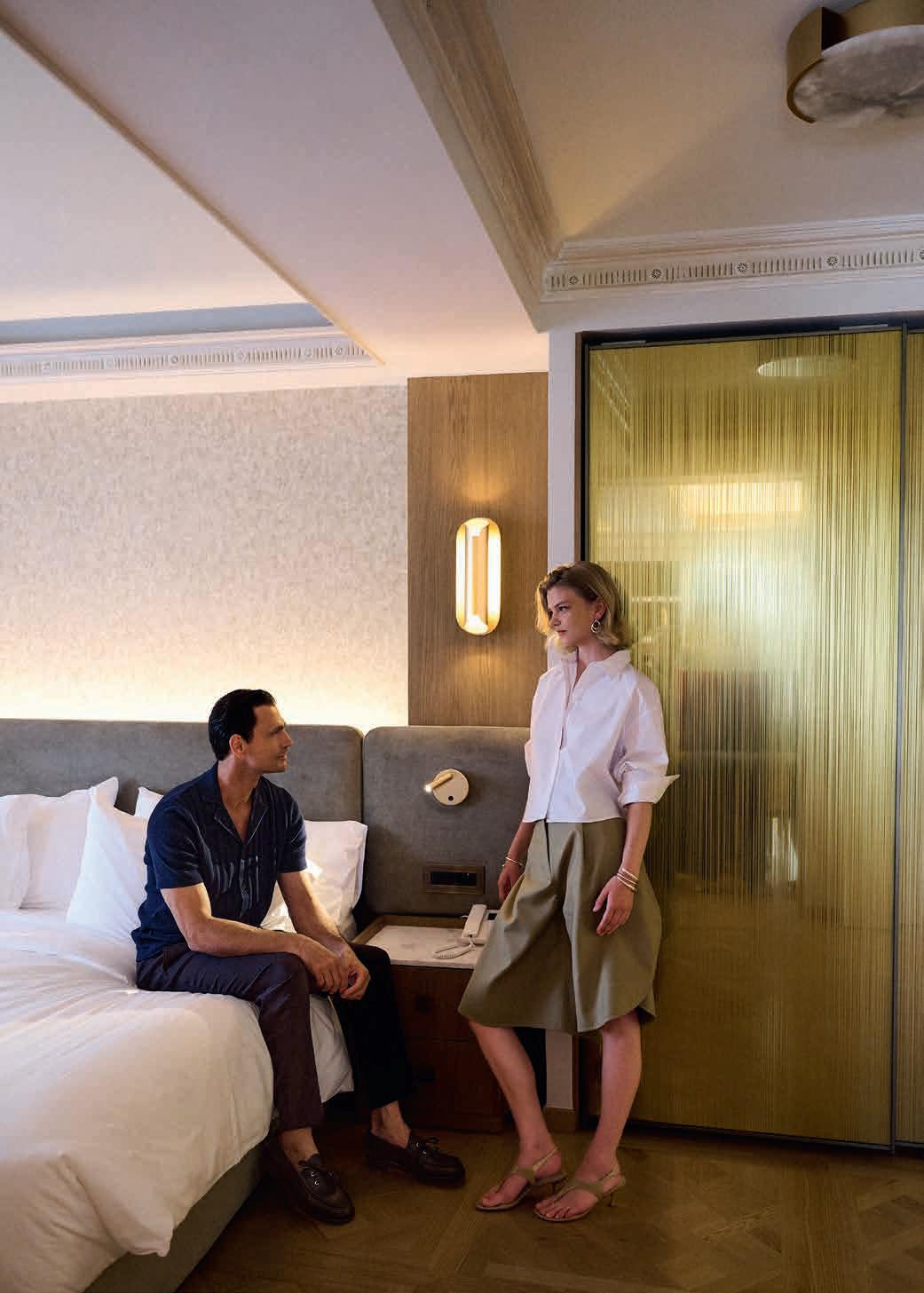
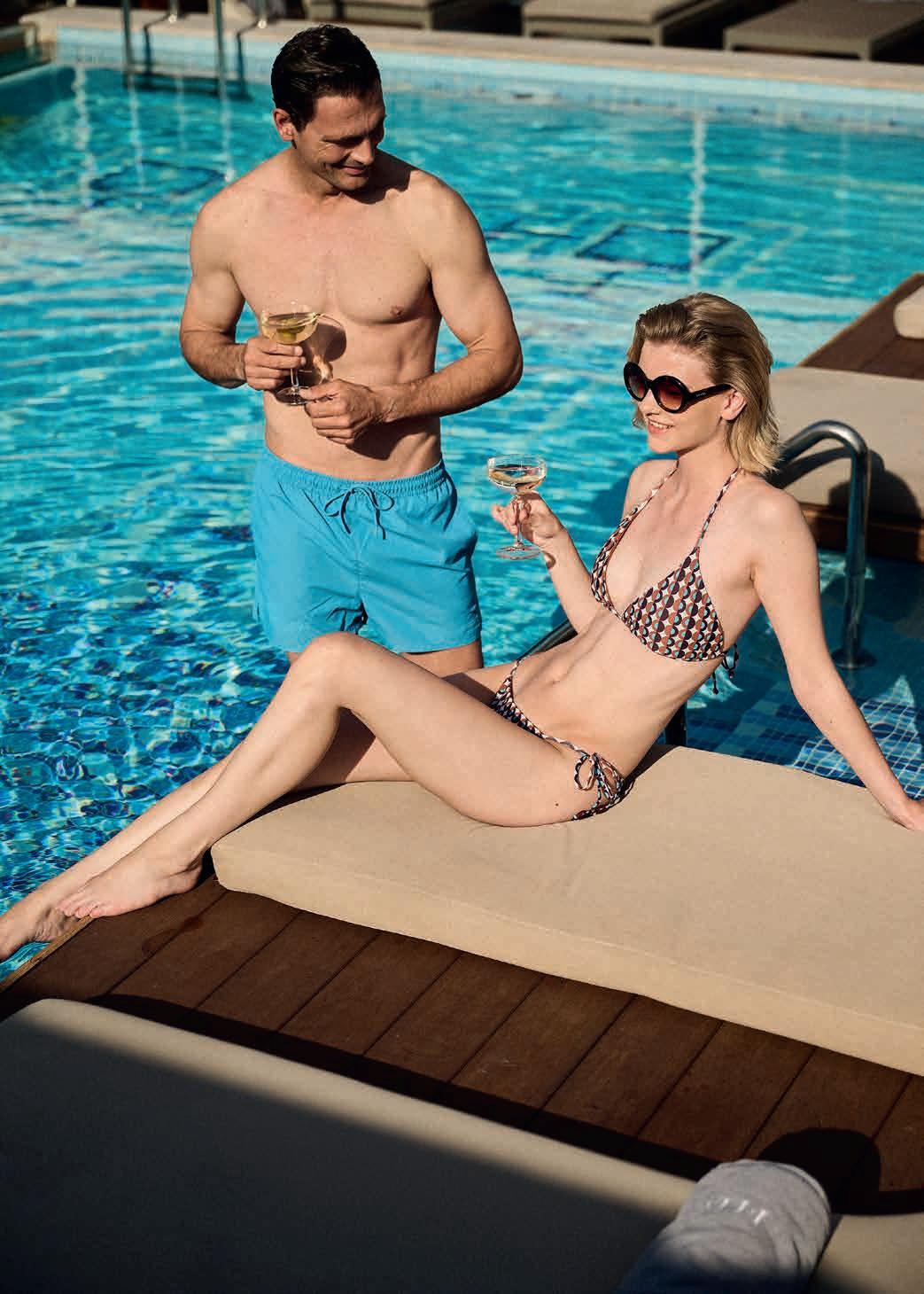
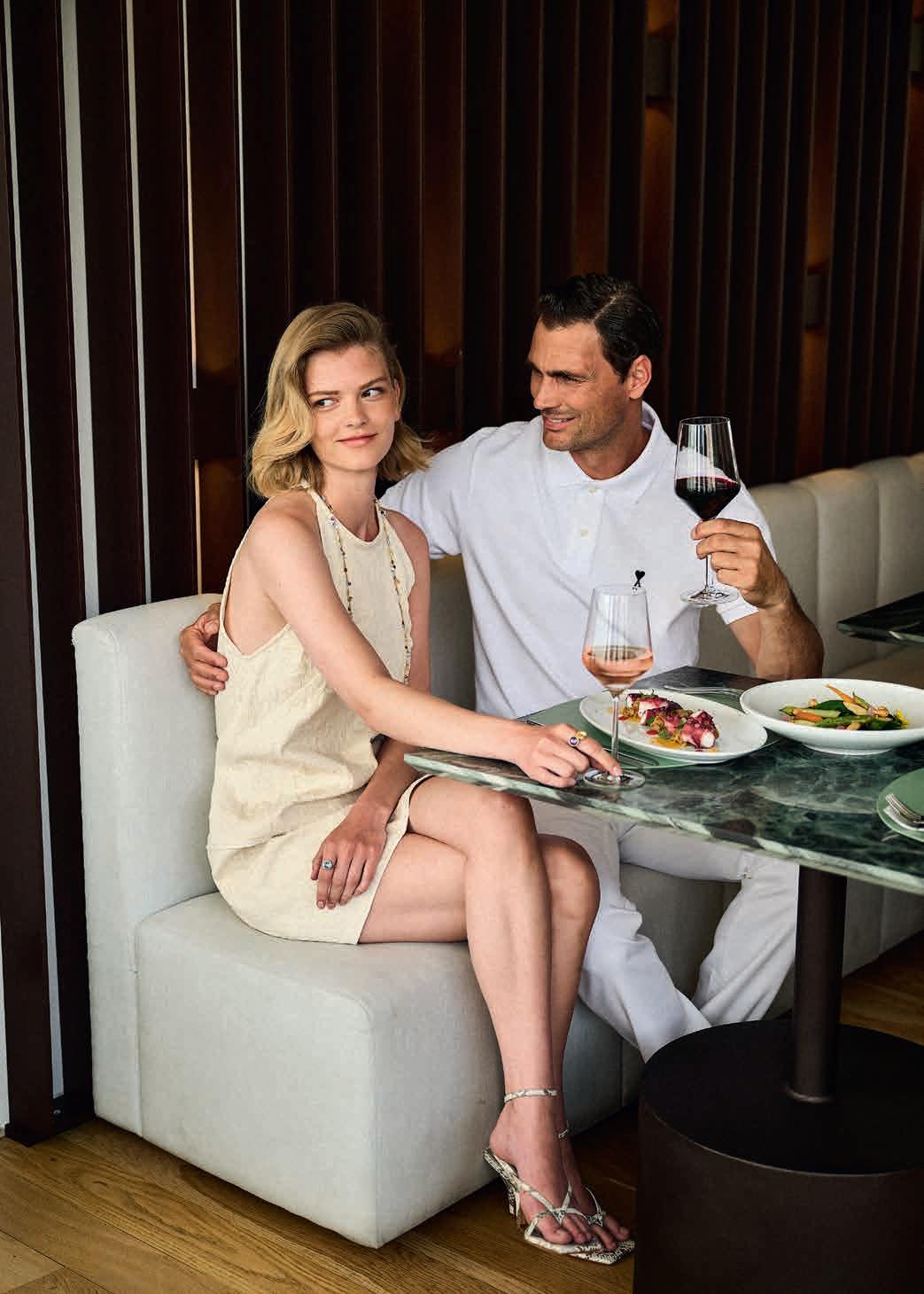
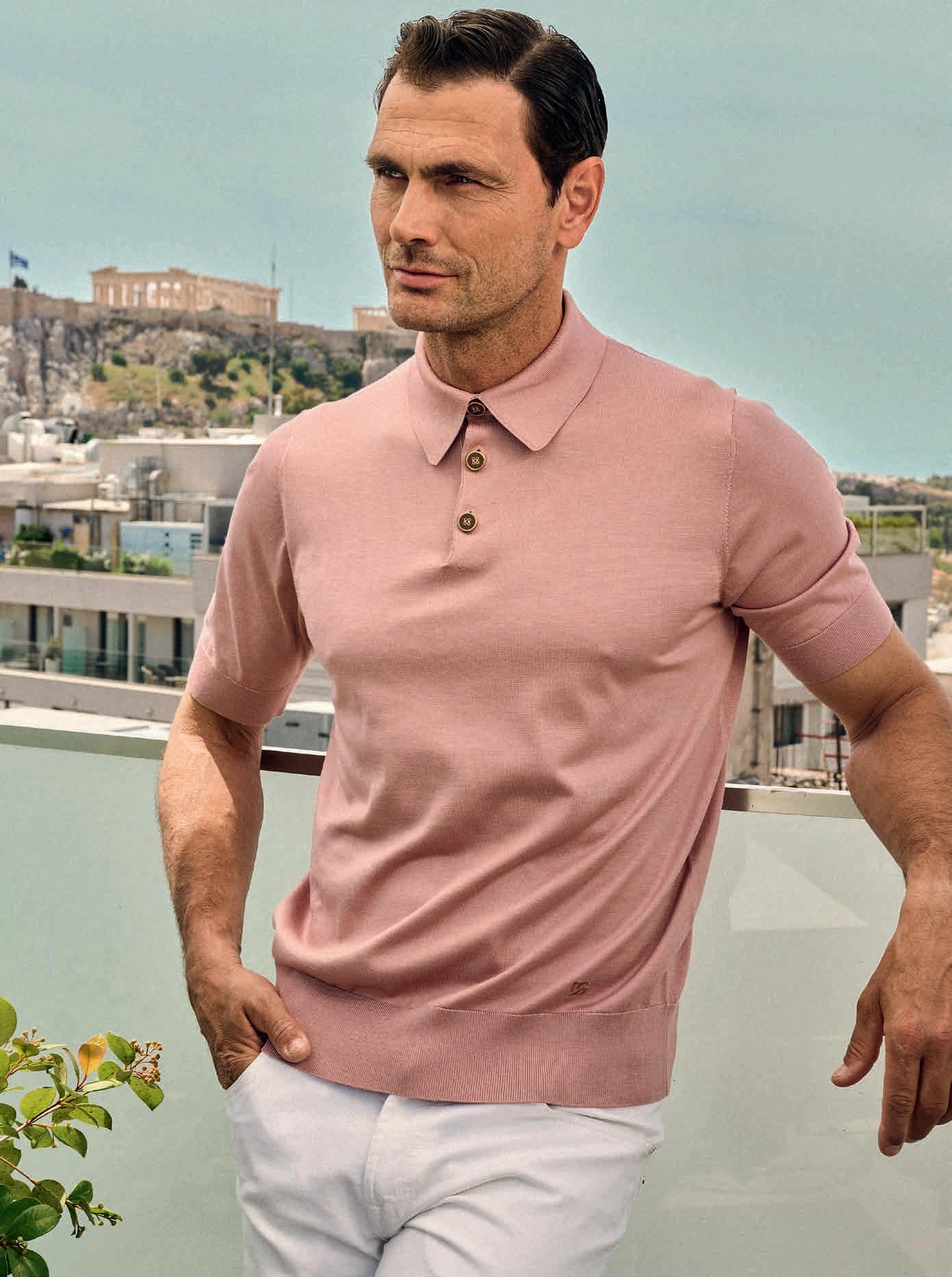
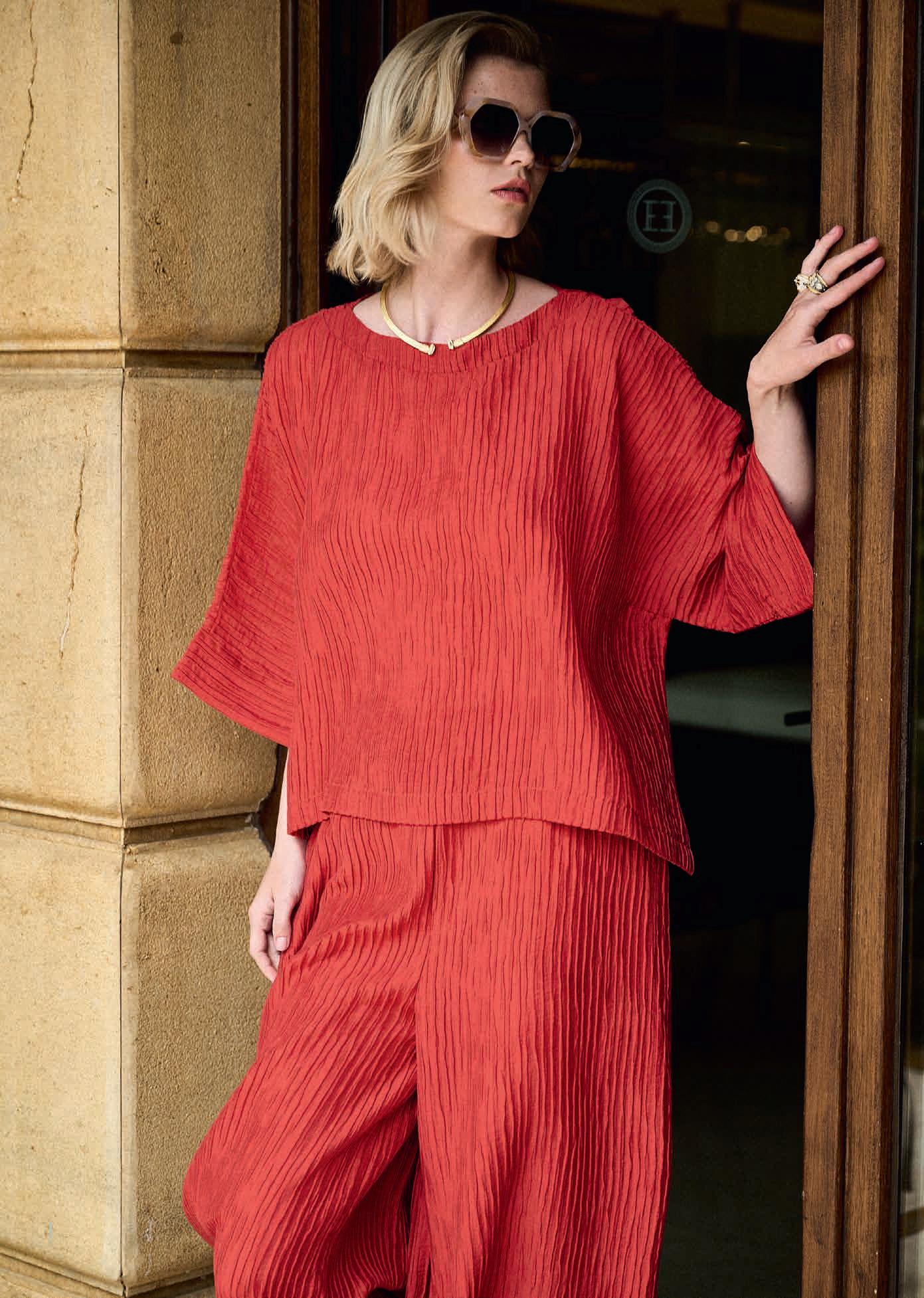
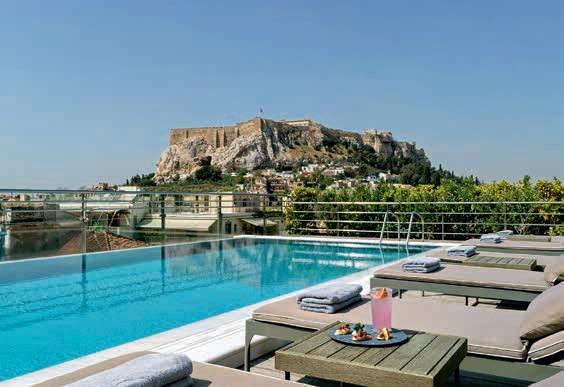
The fashion editorial was photographed at the breathtaking rooftop pool and the lobby of Electra Metropolis Athens, in the Presidential Suite and at the zohόs restaurant of Electra Palace Athens, and in the lobby and at the Focal restaurant of Electra Rhythm Athens.
→ KAYA Top and trousers by Join Clothes (FORGET ME NOT). Sunglasses by Zeus+Dione (FORGET ME NOT). Gold, onyx and diamond necklace and rings (GEORGES JEWELLERY).
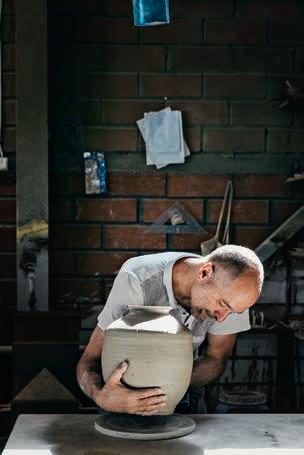
MEET AN ARTIST
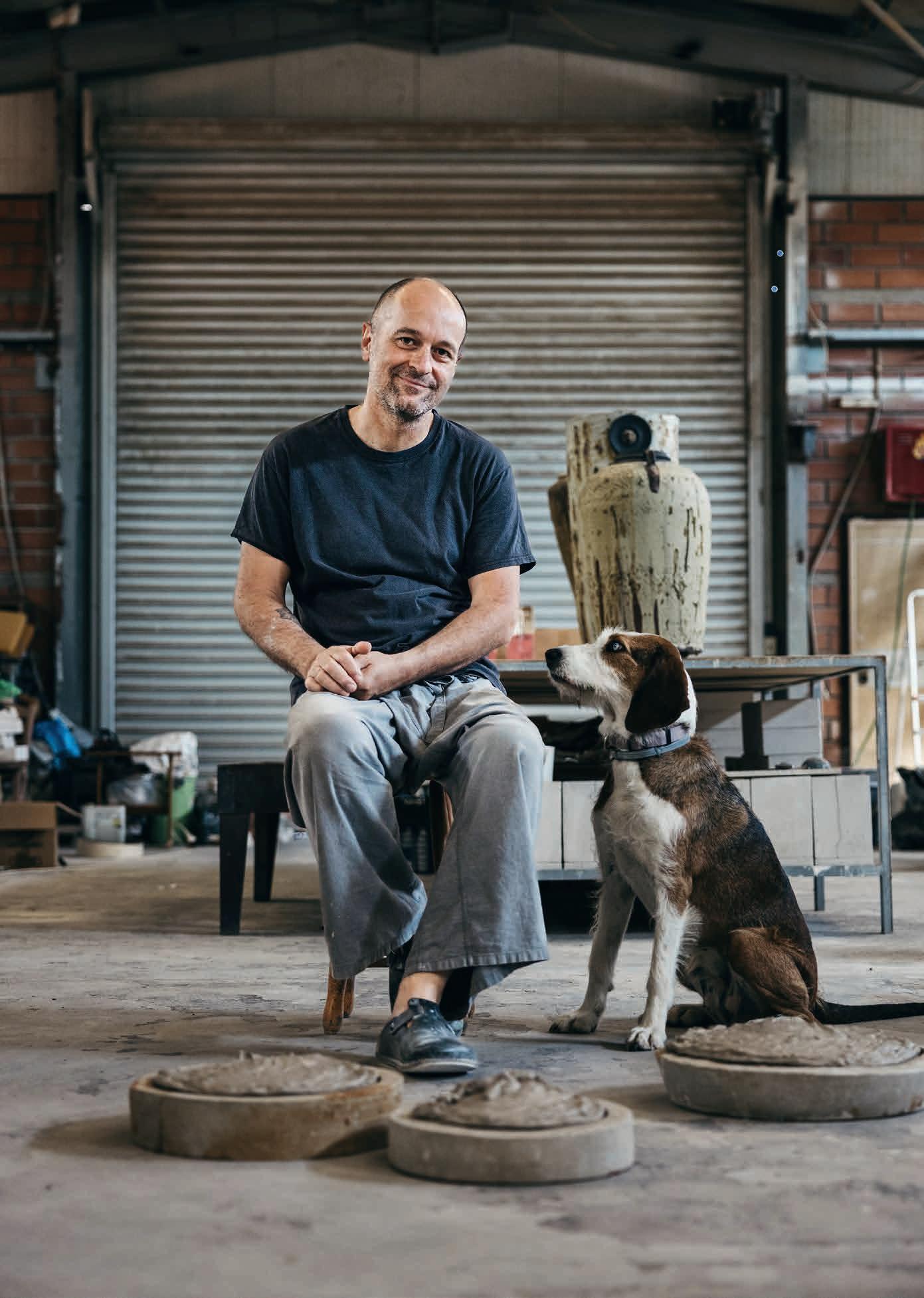
The Greek ceramist reflects on a three-decade journey still shaped by curiosity, uncertainty and continual exploration.
“If someone asks me what I do for a living, I’m never quite sure how to answer,” says Giorgos Vavatsis. “Ceramics is not my job; it’s the way I’ve chosen to live. The journeys, the conversations, the people I spend time with, the hours in the studio – everything revolves around it. Ceramics encompasses everything that defines me: relationships, experiences, and the way I find my place in the world. That’s why the word ‘work’ feels inadequate.”
We are speaking late one evening, after a ceramics workshop for adults. “When I teach, I’m strict about technique and completely free about expression. I don’t believe the second can exist without the first. Technique requires discipline, repetition and persistence. Expression, by contrast, must remain free – provided you have mastered the tools that allow you to express what you want to say.”
By Xenia Georgiadou
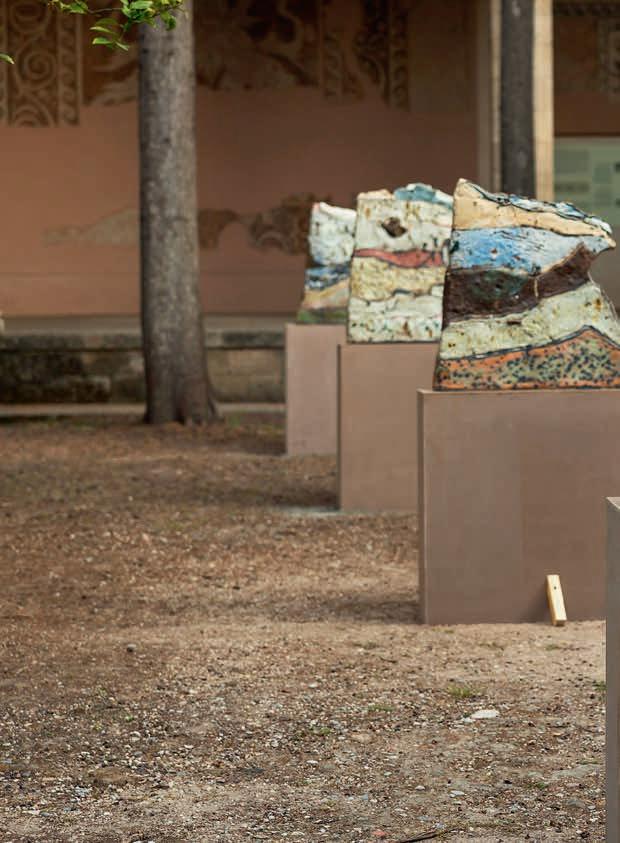
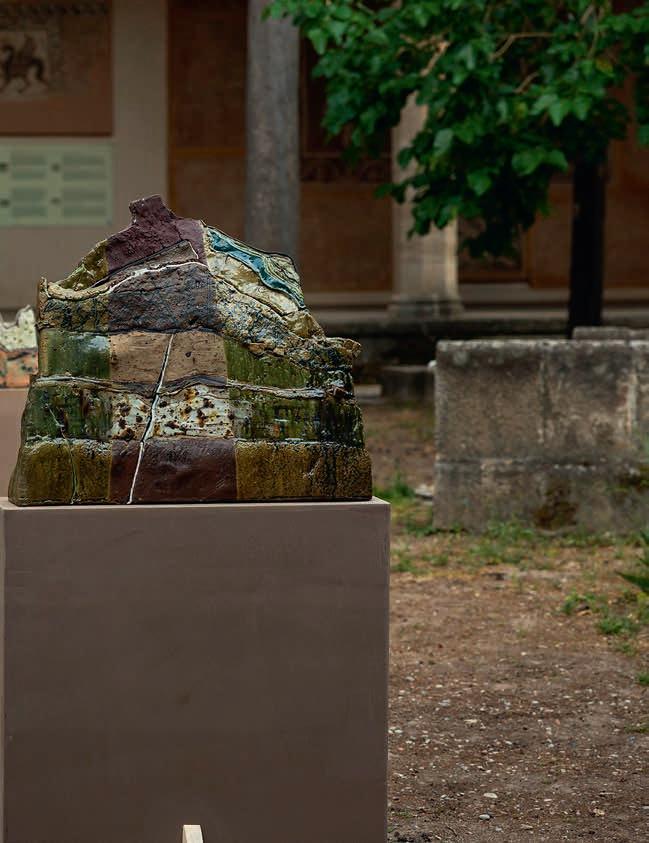
The installation Toposima (Landmarks) by George Vavatsis is on display in the garden of the Archaeological Museum of Rhodes, as part of the 2nd Biennale of Contemporary Ceramics.
COSTANTINOS CARAVATELLIS
From Painting to Clay Vavatsis discovered ceramics while studying at university. The son of a painter, he grew up surrounded by art. “I learned to draw and paint well, without ever really understanding why I was doing it. What was missing was meaning. I was continuing with something I happened to be good at, but I took no real pleasure in it.”
In 1995, at the age of 21, he left for England to study at the School of Art and Design at the University of Gloucestershire. Ceramics was part of the curriculum. “From that very first encounter, I knew I had found something that felt natural to me. I wasn’t pretending. It was enough to put my hands in the clay and see where it would lead. I'd never felt that way about painting.”
In 2000, he returned to his hometown of Thessaloniki and opened his first studio. Today, he divides his time between three spaces in the city: a large studio on the west side of town, an exhibition space downtown, and his original studio in east Thessaloniki, where he holds ceramics classes. “At the time, ceramics in Greece was still a very small world. A handful of artists kept the field alive for those of us who followed, but it largely existed outside the visual arts establishment. It wasn't really recognised.”
Rather than discouraging him, that absence of a welldefined scene created room for experimentation.
“I had the feeling – perhaps somewhat idealistically –that anything was possible.” His years abroad also shaped the way he approached his work. “Looking back, I feel that this naivety helped me. I wasn’t defined by the reality in Greece at the time; my points of reference were what I had seen and learned in England.”
The Value of the Functional Object
For nearly three decades, functional objects lay at the heart of Vavatsis’ practice.
“Even in my more experimental work, a recognizable form was a way of communicating with people. A vase is something everyone can understand.”
But does an object’s artistic value diminish because it also serves a purpose? Vavatsis points to the example of potters from Sifnos who spend a lifetime making the same cooking vessel.
“A craftsman like that may not think of himself as an artist. But after decades devoted to a single form, he has reached a point where that object acquires the qualities of a major work of art. It embodies technical knowledge, culture, history and a profound understanding of form.”
Materials, Place, and Memory
Over the past five years, his practice has moved in a more conceptual direction, as seen in Toposima (Landmarks), the installation currently on view in the garden of the Archaeological Museum of Rhodes as part of the 2nd Biennale of Contemporary Ceramics, running through October 31.
“Today, technique is no longer the goal for me, but a tool that allows me to search for other things,” Vavatsis says.
The six-part installation also reflects a method he has developed over the past twelve years, incorporating minerals collected from different locations. “The collecting is largely intuitive, although I am less interested in what I find than in where I find it. Of course, there have been plenty of failures along the way, as I’ve learned how different materials behave and how to work with them. But what interests me now is the journey itself, and the meanings that these materials carry.”
In Toposima, material and place are inseparable. Each of the six sculptural forms references a specific landscape and contains minerals and other elements gathered from the locations to which it refers. The composition draws its inspiration from the images Vavatsis encountered while traveling through the Greek mainland, where mountain ranges stretch across the horizon in successive layers of color, texture and elevation.
“It reminds me how insignificant we are, both in scale and in the brief span of our existence, when measured against geological time.”
In this way, the work functions simultaneously as landscape, archive and travelogue. The first three forms relate to Mt Hortiatis, which frames Thessaloniki, while the remaining works are inspired by the mountain range Agrafa and the islands of Serifos and Santorini.
Mistakes remain central to his process.
“My entire practice – and, by extension, my way of thinking – is built on mistakes. That’s where inspiration comes from, and that’s where learning happens. A mistake can be more valuable than getting something right.”
Indeed, he often introduces uncertainty deliberately in order to preserve the possibility of discovery. “In a way, I invite mistakes so that I can keep moving forward. When you take a risk, you don’t know exactly what will emerge. That sense of anticipation keeps you alert. It forces you to reinterpret what you’ve done and search for new paths forward.”
vavatsisceramics.wordpress.com
ΚΑΛΟΚΑΊΡΊ MADE IN
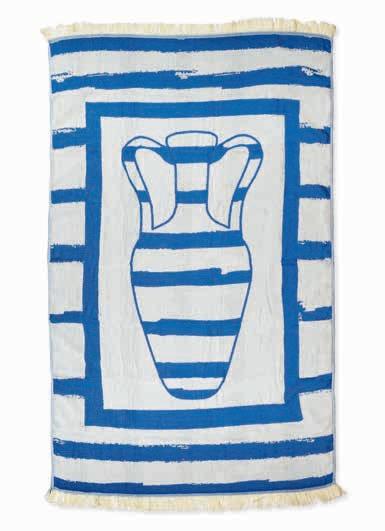
Top: A beach towel featuring a design inspired by an Attic amphora, available at the Benaki Museum Shop.
Bottom: Α set of wooden rackets, made specially for the EMST Shop by To Agori.
(benakishop.gr).
Kάτω:
Shop (eshop.emst.gr).
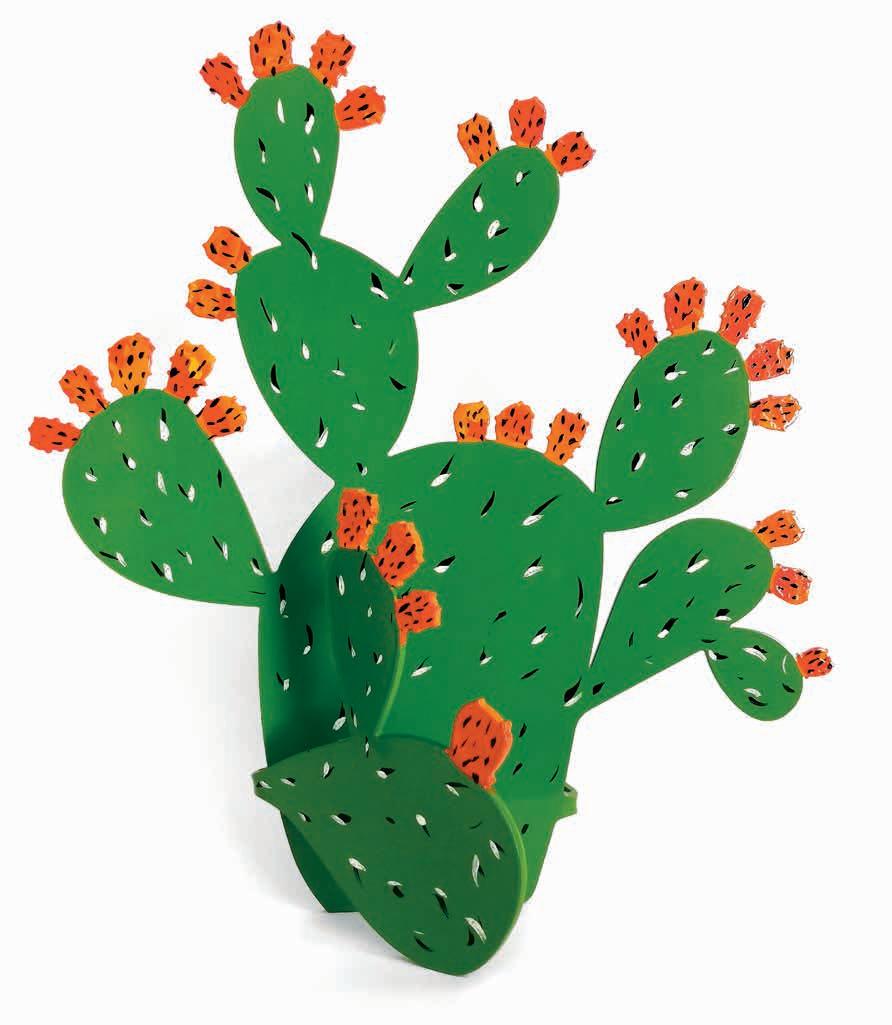
Top: A sculpture in the shape of a prickly pear cactus, created by artist Dimitris Korovesis, available at the Benaki Museum Shop.
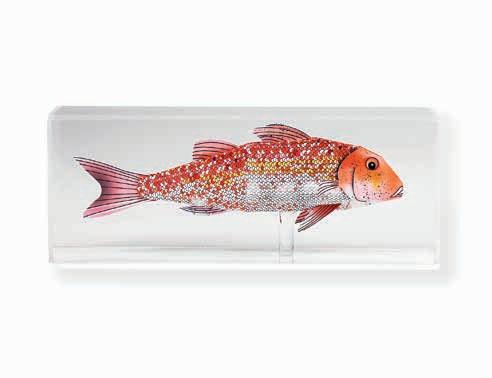
Bottom: Paper sculpture of a sea bream by ICI Paper, available at the EMST Shop.
GREECE
SUMMER
Inspired by the Greek summer, local designers are creating clothes, accessories and everyday objects that let visitors take a little of the country’s sun and sea home with them.
By Panagiotis Koustas
Awalk through Plaka, or almost any tourist district in Greece, reveals a whole world of mass-market souvenirs. Amid the tourist traps, at the moment when a first encounter with an ancient civilization reaches its emotional peak, visitors may feel compelled to buy everything from Spartan-helmet T-shirts and Parthenon key rings to playing cards depicting amorous ancient Greeks.
There are, however, alternatives: objects that move beyond cliché and engage with Greek culture in a more contemporary way. Over the past decade, motifs sourced from maritime folklore, summer anthems and the rituals of urban life have increasingly found their way onto clothing, accessories and everyday objects. The result is a more nuanced portrait of the Greek vacation experience, one found in independent boutiques, museum shops and online stores.
ATHENIAN AUGUST
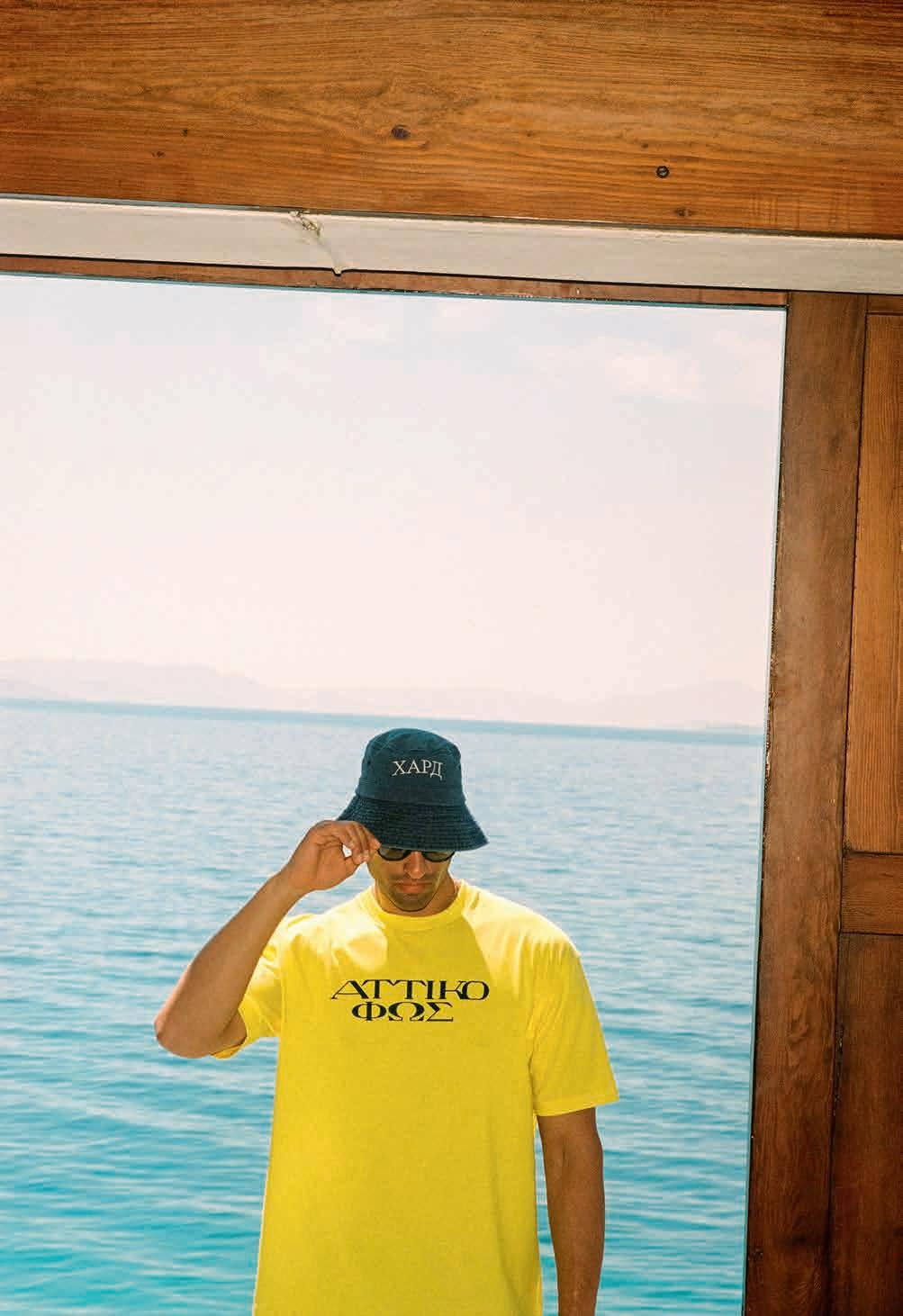
Baseball caps bearing slogans such as “August,” “Attic Light” and “Athenian Romanticism” line the shelves in the small boutique of the brand HARD.CLO, located in Pagrati, a neighborhood known for its creative crowd.
“The Greek summer has become strongly associated with certain postcard-like images of the Cyclades,” says owner Giorgos Mesimeris. “I am more interested in the light of Athens and Attica. It transforms even the most ordinary moments: standing on a rooftop, walking along a pavement radiating August heat, watching shadows fall across the city’s white surfaces.”
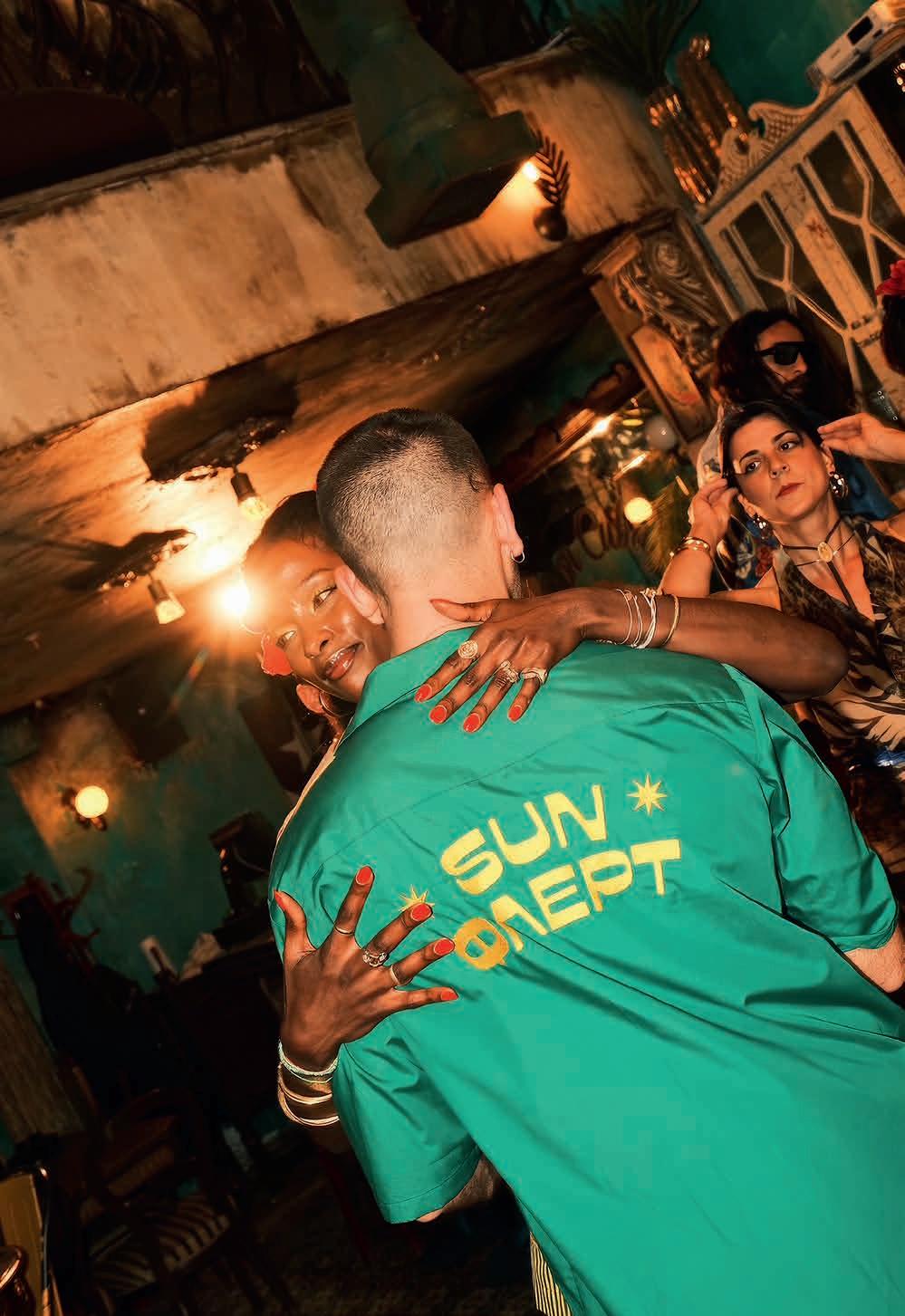
Sofia Karagianni, founder of Sun Φλερτ, looks to summer culture for inspiration as well. While this year’s collection draws on Latin American imagery, many pieces remain unmistakably Greek. A mini skirt called “Evzonas” hints at the fustanella worn by the Presidential Guard, while a T-shirt featuring a lobster – a prized summer delicacy in seaside tavernas – carries the slogan “Sun Παραίσθηση,” a playful nod to the opening lyrics of Kalokairina Rendezvous (“Summer Dates”), the enduring hit by Dytikes Synoikies that has become part of Greece’s seasonal soundtrack. ➻
Βεντάλια του brand elly k p, που απεικονίζει
(ellykp.com).
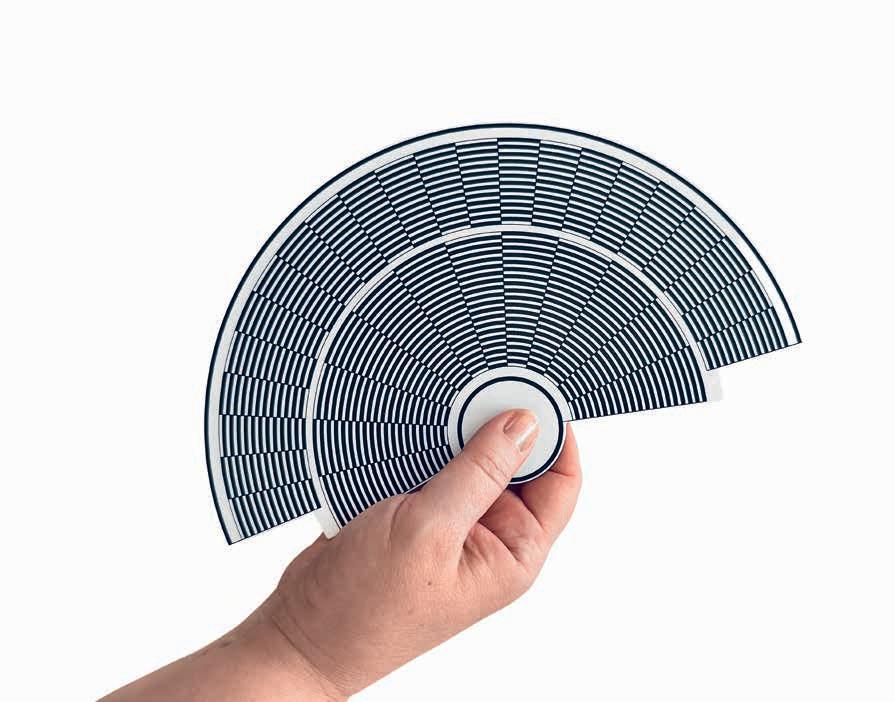
A fan by elly k p featuring the Ancient Theater of Epidaurus.
HARD.CLO (hardclo.com). A T-shirt featuring the slogan “Attic Light” by HARD.CLO.
(sunflirt.gr).
Τhe vibrant culture of Latin America meets the essence of the Greek summer in the new collection of
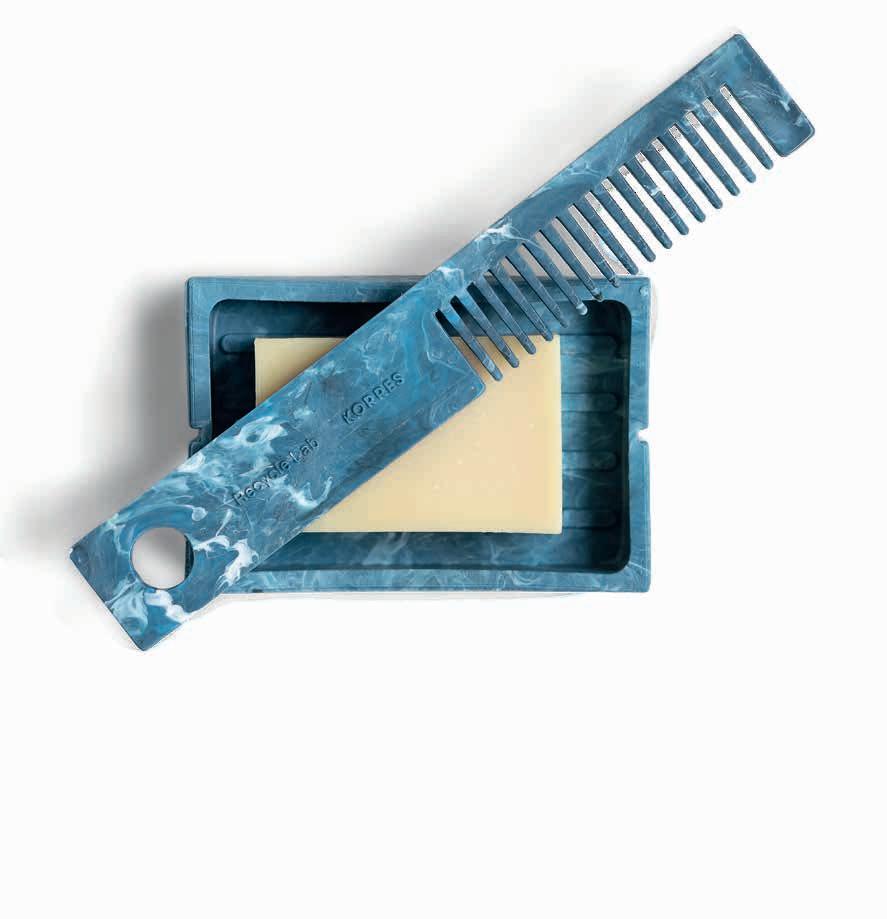
Korres x The Greek Foundation (thegreekfoundation.com).
EPIDAURUS, BEACH PADDLES AND MERMAIDS
In 2016, architect Elly Kyriaki Papapostolou created the brand elly k p. One of its bestsellers is “Theatron,” a fan whose shape echoes that of the ancient Theater of Epidaurus, while its black-and-white graphic draws on Op Art.
During the summer, when the Athens Epidaurus Festival is in full swing, trips to Argolis for performances of ancient drama are a cherished ritual for many Athenians. Papapostolou says customers often send her photos from the theater, fan in hand.
The success of “Theatron” lies in its combination of practicality and a distinctly Greek sense of summer. The same can be said of many objects found in museum shops and concept stores across the country. At The Greek Foundation, which promotes designers redefining contemporary Greek identity, standout pieces include a comb and soap dish produced by the Recycle Lab of Korres. The set’s blueand-white pattern evokes sea foam and waves, and a portion of the profits from its sale supports marine conservation through the Archipelagos Institute of Marine Conservation.
At the National Museum of Contemporary Art Athens (EMST), summer nostalgia takes the form of beach paddles by To Agori, the iconic company that has handcrafted wooden rackets since 1958. More traditional motifs can be found in the shops of the Benaki Museums, where beach towels inspired by Attic amphorae sit alongside embroidered-mermaid earrings.
The appeal of all these objects lies not only in their design or usefulness, but also in their ability to tell a more authentic story of the Greek summer – one less stereotypical or idealized than the standard souvenir-shop version. As keepsakes, they preserve not just a season, but a particular way of seeing the world. ♦
Comb and soap dish set made from 100% recycled plastic, by Korres x The Greek Foundation. MADE
From the water-scarce islands of the Cyclades to the countryside of Laconia and the farms of Macedonia, Electra Hotels & Resorts Group Executive Chef Sakis Venetis travels in search of small-scale producers working to preserve Greece’s culinary heritage.
AT THE SOURCE OF FLAVOR
By Georgia Papastamou, Illustration: Anna Τzortzi
Ο
T“The first memories I have, from when I was four or five, are of tending to the animals. Even though I was a good student, I was always trying to slip away from school so I could be with them,” says Antonis Antivachis, a third-generation livestock farmer and cheesemaker from Kimolos. Today, while many locals are turning toward tourism, he has chosen a different path: keeping traditional livestock farming and cheesemaking alive. It’s not an insignificant legacy: the traditional cheesemaking of the Cyclades has been included in Greece’s National Inventory of Intangible Cultural Heritage.
For Antivachis, each day begins long before sunrise. He milks and tends to his animals before starting cheesemaking duties that yield products such as xinokrema, a soft fresh cheese made from fresh goat’s milk, and manoura, the island’s signature cheese made from goat’s and sheep’s milk. The latter is enjoyed fresh, with honey or in pies, or aged for over a year – often on wine lees – developing a sharp, peppery complexity that makes it a distinctive Cycladic meze.
Walking Kimolos’ ancient network of footpaths, you catch the scent of thyme, wild lavender and schinos, the native mastic shrub. This aromatic blend, carried by wind and sea salt, shapes the character of the island’s milk, meat and cheese. “The animal gives you what it eats,” Antivachis says simply.
For part of the year, he moves his animals across to Polyaigos, the uninhabited island whose name refers to the goats that graze there. “Close your eyes and imagine it,” he says, when asked to describe the beauty of the natural setting in which he lives and works.
Yet life here is demanding. The animals require daily care, without exception, and winter storms can isolate the island for days at a time. Still, Antivachis remains committed. “What makes it truly worthwhile,” he says, “is when someone tastes our cheese and simply says ‘Bravo.’ Words of approval are the greatest reward.”
“These are the people who help us move forward,” the chef says of these visionaries who produce and preserve flavors and memories. “It is inspiration you could not get any other way.”
Products with a Story
Such compliments certainly come Antonis Antivachis’ way from Sakis Venetis. Through constant searching, curiosity and genuine admiration for exceptional ingredients, the Executive Chef of the Electra Hotels & Resorts Group has built a valuable network of small-scale producers whose work shapes every menu he creates. For him, a chef’s skill is not measured only in technique, but in the way he allows a product to speak for itself. “Against all odds, Greek producers are doing remarkable things, creating products with substance and history. Our aim is for both visitors and locals to come to know them better,” he explains.
His connection to sourcing runs deep. Raised in Mani, Venetis recalls accompanying his mother to local markets, watching her “interrogate” producers before selecting fruit and vegetables at their peak. That instinct for quality now informs kitchens across the group’s restaurants, where each dish becomes a discreet map of Greece’s diverse landscape.
From the bright-red shrimps of Koilada in the Argolic Gulf to Thesauri caviar from Arta, and from smoked eels prepared by Geitonas in Psathotopi to the wild artichokes of Tinos, the ingredients tell their own geography story. Smoked red pepper made from produce hand-picked in Aridaia; handmade pasta from the women of Monemvasia; and organically cultivated sea buckthorn from Meteora all reflect a culinary tradition rooted in place and season.
Elsewhere, Mykonos tyrovolia – fresh, buttery cheese that varies from batch to batch like a maker’s signature –sits alongside saganotyri from Argos, Florina cheeses made from free-grazing herds in the mountains, and handcrafted cheeses from the Baziotakis family in Arcadia.
The list continues across the mainland and islands: chickens raised at elevationon Mantziou Farm within a protected Natura 2000 zone; sun-dried Florina peppers from Naoumidis; wild mushrooms foraged by Giorgos Mantikas; and a range of Cretan staples, from rabbits from the foothills of Mt Psiloritis to rusks from the famed Cretan company To Manna.
Knowledge, Inspiration, Evolution
Venetis is constantly on the road, visiting the producers he works with. “I want to see their work up close, to understand their passion, to learn their story,” he says. For him, certain ingredients carry particular meaning. Among them is syglino, the cured pork specialty from Mani, flavored with
Εach dish becomes a discreet map of Greece’s diverse landscape: from the bright-red shrimps of Koilada in the Argolic Gulf and the wild artichokes of Tinos to the smoked eels of Arta, the ingredients tell their own geography story.
orange peel, wine and herbs, and smoked with sage and olive branches by the Kourakos family in a small village in Laconia.
Once a product of necessary food preservation in rural households, syglino has become a prized delicacy. “It is memory. You eat it and feel as if you are seeing an old friend again. That’s one of the small miracles of cooking,” Venetis says, describing the emotional way he looks at food. At zohós, the restaurant at Electra Palace Athens, he serves this specialty from his native region with a crisp potato cake, sun-dried tomato ketchup and Cretan graviera. It can also be served on its own with a glass of ouzo.
Another seasonal highlight, available from late spring through midsummer, is stuffed zucchini blossoms filled with herb-scented rice and served with smoked yogurt. Harvested at dawn, the delicate flowers are supplied to Electra Hotels & Resorts by the certified organic farmer Nikos Tsakatanis.
Raised in the city, Tsakatanis turned to farming after the birth of his son, determined to offer him pure, flavorful produce. His farm in Drosia near Chalkida cultivates heirloom tomatoes such as the silvery-skinned batales, alongside amaranth greens, sweet peas and small bakali peppers. Venetis serves the peppers as a meze, frying and pairing them with almond skordalia, aged vinegar and Mani sea salt.
“These are the people who help us move forward,” the chef says of his suppliers, visionaries who produce and preserve flavors and memories. “The more you follow them, the more you visit them where they produce, the more closely you work with them, the more you gain. It is not just knowledge that helps you handle their products better. It is inspiration you could not get any other way. Contact with these people, and with production itself, does not only make you a better cook, it makes you a better person.”
AN INVITATION TO DINNER
Fresh ingredients, creative ideas, thoughtful execution and polished service define the new dining experience at Electra’s restaurants in Athens and Thessaloniki.
By Angela Stamatiadou & Νena Dimitriou
DINNERS WITH VIEWS OF THE ACROPOLIS, with the city lights shimmering and the night breeze moving through the tables. Meze shared in a lush garden beneath ornate balconies. Elegant dining rooms dressed in white linen, where design details quietly shape the atmosphere. Snacks and cocktails set against the constant movement of the city center. The charm of old Athens and its contemporary rhythm come together in the restaurants of the Electra Hotels, which form a small culinary world across three parallel streets between Syntagma and Plaka. Part of the city’s fabric since the mid-1960s and long at the heart of its commercial and visitor life, the Electra experience offers a setting for every hour and every mood, at restaurants where classic and contemporary meet, and inventive cooking sits comfortably alongside tradition.
Greek culinary heritage remains at the heart of the philosophy, expressed in multiple forms across each venue, while subtle international influences add breadth and variety. Each restaurant has its own identity, rhythm and voice, contributing to a wider dining mosaic across Electra Palace, Electra Metropolis and Electra Rhythm in central Athens. In Thessaloniki, Electra Aristotelous carries the same spirit up north as it gazes down over the Thermaic Gulf and the energy of Aristotelous Square.
Across all restaurants, a shared approach defines the culinary philosophy: seasonality, fresh ingredients sourced from trusted local producers, and a commitment to sustainability. The cooking balances creativity with familiarity, designed to deliver both discovery and comfort, supported by attentive service that respects every detail.
Orizontes
Electra Aristotelous.
Refined seafood flavors with views over the Thermaic Gulf, at Orizontes Restaurant at Electra Aristotelous.
Gold-rimmed plates on white-linen tables, interiors that balance classical touches with contemporary design, and above all, sweeping, uninterrupted views of the Acropolis define the atmosphere at this elegant 10th-floor restaurant at Electra Metropolis. It is the kind of setting that inevitably draws the eye, and the camera, and yet the view is only part of the experience. In the kitchen, Executive Chef Haris Zevgoulis, in collaboration with chef de cuisine Stefanos Roditis and pastry chef Vangelis Aloupis, presents outstanding Greek cuisine through a creative, refined lens, built on carefully sourced ingredients from small-scale producers across the country and complemented by subtle cosmopolitan influences. The stuffed vine leaves filled with Greek blue crab and served with crisp cauliflower couscous, aromatic fennel hollandaise and a touch of Thesauri caviar from Arta capture the spirit of the menu. Equally expressive is the slow-cooked pork, paired with two varieties of green beans, tomato confit and a potato foam scented with Mani syglino (smoked pork). Together, these dishes reflect a kitchen defined by precision, restraint and a confident sense of flavor.
This relaxed burger spot at street level brings Electra Metropolis into easy conversation with everyday Athenian life. Guests and locals alike stop by after work, a shopping trip or a walk through the center, taking seats at white metal tables outside or in the contemporary dining room, where large windows and archival photographs of old Athens create a subtle sense of nostalgia. The menu is informal, urban and direct: seafood tacos, hot dogs, sliders with homemade sauces, and a selection of Greek craft beers and cocktails. The decadent double smash burger is made with beef ground in-house from Australian Wagyu and served on a brioche bun with BBQ mayonnaise, bacon with crisp edges, cheddar, caramelized onion mayonnaise, pickles, lettuce and tomato. Generous and full of flavor, it delivers exactly what a proper burger should. For something lighter, try the healthy bowl salad, with quinoa, corn, avocado slices, lentils, chickpeas and corn pita chips, finished with a cool, aromatic yogurt, cilantro and lime dressing.
30 Voulis, Syntagma, Tel. (+30) 214.100.6225
Make a reservation
ELECTRA PALACE ATHENS ROOF GARDEN
Whether seen by Athenians who know it from every angle or visitors experiencing it for the first time, the Acropolis remains a magnetic presence, its rocky silhouette rising above the rooftops of Plaka as an impossibly impressive backdrop. From the 8th-floor terrace of Electra Palace Athens, a glass of wine – drawn from a list of around 80 Greek and international labels – helps set the tone for a Mediterranean-inspired menu that includes dishes such as fresh baby gem salad with grilled manouri, toasted pine nuts and fresh strawberries over pine nut cream, or Wagyu carpaccio that executive chef Dimitris Patsouras and chef de cuisine Daniil Tsagkaridis layer with small pieces of Niotiko oinosperitis, a bold goat’s cheese aged on Mandilaria and Vinsanto wine lees, along with wild arugula, grated cured egg yolk and wild garlic mayonnaise. For dessert, the milk chocolate namelaka offers an elegant finale. Set on a chocolate biscuit sponge, it is crowned with delicate edible flowers and served with lavender syrup, white chocolate ice cream, honey and honeycomb crumble: rich yet balanced, and quietly sophistificated in its execution.
Accessed either through the hotel lobby or via a discreet courtyard entrance, the restaurant zohós feels immediately removed from the city. Beneath the balconies of Electra Palace Athens, surrounded by palms, olive trees, jasmine, lavender and rosemary, zohós serves food made for sharing, prepared with care and using ingredients from small-scale farmers, producers and foragers. The sweet-and-tart salad with batala tomato from Vravrona, honey-roasted peach, purslane, basil, crisp carob croutons and tsalafouti cheese from Grevena, finished with an olive oil and verjuice dressing, is full of freshness and flavor. Young goat from Kimolos is served with handmade Rhodian matsi pasta and a vivid green pesto of wild garlic leaves and wild oregano, arriving at the table with immediate presence. In line with a nose-to-tail, zero-waste philosophy, Executive Chef Sakis Venetis and Chef Lambros Rossios also use the same animal to make a finely prepared house sausage. The wine list remains firmly focused on Greece, while the cocktail menu draws inspiration from the landscape itself: herbs, fruit, honey and botanicals distilled into an intoxicating contemporary expression of place.
High above the bustle of Ermou Street, Focal is an elegant rooftop retreat and the Group’s newest dining address. Here, traditional Greek cuisine is reinterpreted with a contemporary sensibility. On the terrace, with its uninterrupted views of the Acropolis, and in the light-filled dining room – defined by contemporary artworks and a sculptural ceiling installation evoking a silver, wave-like sea – the menu created by Executive Chef Dimitris Siozos invites discovery, offering familiar yet reimagined flavors. Grilled octopus is paired with Mt Athos-style eggplant salad, olive oil and lemon dressing, and a subtle orange cream that adds lift and fragrance. Young goat from Mytilene is slow-cooked with lemon, thyme and garlic until fork-tender, and then served with amaranth greens and avgolemono, evoking the generosity of a Sunday table. The cooking is defined by clarity and restraint: seasonal ingredients sourced from local producers, thoughtful techniques, and a wine list that spans the breadth of Greece.
In the heart of Aristotelous Square, Orizontes at Electra Aristotelous occupies one of the city’s most privileged vantage points. All day long, it serves as a relaxed meeting place; in the evening, it offers one of Thessaloniki’s most atmospheric settings for dinner with views over the Thermaic Gulf. In the kitchen, Giorgos Vagionas and his team work a menu the chef describes as Greek fusion. His approach builds on recognizable local flavors, which he reworks using contemporary techniques and immaculate presentation. The greater amberjack filet with fennel in multiple forms – as purée, foam and salad – with kakavia sauce reflects this philosophy. Shrimp from the Ambracian Gulf are paired with charcoal-grilled green beans, saganaki broth, ouzo jelly and pickled carrot, balancing taverna intensity with fine-dining precision. All across the menu, Greek ingredients take center stage; there’s a particular focus on local cheeses from across the country, with everything from Cretan anthotiro to manouri from Larissa on offer. The first items to arrive at the table are fresh bread and olive oil from Halkidiki, setting a clear Greek tone from the very start of the meal.
Every other month, a newly launched Electra employee recognition initiative highlights team members who stand out for their attitude, effort and values. Here, we introduce four of the first employees honored in 2026.
By Lina Kapetaniou
Spyridon Georgaras
Electra Aristotelous Guest Relations Agent
Electra Aristotelous Guest Relations Agent
The Electra hospitality experience is … A blend of elegance and professionalism, always grounded in genuine care for people. It means helping guests to feel that they are in a place of history, quality and prestige, while also feeling comfortable, safe and welcome. For the people of Electra Aristotelous, this is especially important, as the hotel stands in one of the city’s most well-known locations and has a distinctive identity that’s closely connected to Aristotelous Square. For me, Electra hospitality means honoring that identity every day, through our conduct, our consistency and our attention to detail.
The personal quality that has helped me stand out most in my work Observation. In my position, and more broadly in a hotel environment, it’s an essential skill. You’re often required to read a situation, understand a guest’s expectations or concerns, and respond in a way that is both human and professional. Attention to detail, composure and clear communication can significantly shape someone’s experience, even when that experience does not begin under ideal circumstances.
A moment with a guest or colleague that I’ll never forget I wouldn’t say there is just one. A hotel is a living organism. Witnessing the collaboration between departments, the coordination of so many people, the interaction between the team and our guests is something very special in itself. It is this living process that creates meaningful memories, both among colleagues and with guests.
Konstantinos Zervakis
Electra Rhythm Athens
Electra Rhythm Athens Senior Receptionist
A moment with a guest or colleague that I’ll never forget Although there have been many beautiful moments over the years, my greatest satisfaction comes from the people I work with, especially when I am given the opportunity to train new colleagues and pass on my knowledge and experience. There is no greater reward than seeing someone grow, gain confidence and develop into a capable professional. When I see colleagues applying what they’ve learned, taking initiative, and progressing in their careers, I feel I’ve contributed, even in a small way, to their journey. Knowing that I may have left a positive mark on a colleague and helped them develop is one of the main reasons I love my work. Κωνσταντίνος
Advice to a young person starting a career in hospitality Believe in your abilities and don’t let anyone doubt your worth. Stay focused on your goals, keep growing, and let your work and integrity speak for you. Above all, take care of your mental health and be mindful of the environment you choose to work in. Work takes up a large part of our lives, which is why it’s important to be surrounded by people you can collaborate with, grow alongside, and enjoy working with every day. Professional growth is not defined only by prestigious names on a résumé, but also by the quality of the environment in which you develop both as a professional and as a person.
Electra Palace Athens
Nikoletta Maria Lykourentzou
Electra Palace Athens Barista/Waitress
The Electra hospitality experience is… A deeply human connection. It means understanding a guest’s needs and doing everything you can to make their stay more enjoyable.
The greatest reward I get from my work Seeing people leave happy, with beautiful memories, and hearing them say that they had the best coffee (made by my own hands).
A moment with a guest or colleague that I’ll never forget I remember a lady who faced a very difficult situation during her stay, when her husband suffered a heart attack and had to be hospitalized for a long period of time. During that time, we all tried in our own way to support her and make her feel as comfortable and safe as possible. Since then, a very special bond has developed between us. She returns to the hotel every year with her husband, and she feels that we’re part of her family. That relationship reminds me that hospitality is not just about providing service, but also about human connection.
The small gesture that can make a difference Treating guests as people, not just customers. A smile, a warm “Good morning,” or remembering how they take their coffee are the kinds of details that create a sense of familiarity that is not easily forgotten.
Electra Metropolis Athens
Miltiadis Apostolidis
Electra Metropolis Athens
Storage Supervisor
The greatest reward I get from my work Knowing that I am contributing, from my position and to the best of my ability, to making our guests happy, adding one more small but meaningful piece to what we call Greek hospitality and Greek tourism.
The personal quality that has helped me stand out most in my work My consistent professionalism, combined with a calm and level-headed approach to every situation I have been called upon to handle, has created a strong sense of trust in me, both among my colleagues and the hotel’s management. Trust, after all, is one of the essential elements in any team.
Advice to a young person starting a career in hospitality Hospitality can be a highly rewarding field for a young professional, both in terms of career prospects and financial opportunities. I’d tell them not to choose this path unless they truly love what it involves. It requires persistence, patience, determination and proper training, but you also have to enjoy it. You’ll be dealing with people from different backgrounds, different cultures and different expectations. The way you engage with them and the feeling of trust you are able to engender is what will stay with them: that they made the right choice for their stay.
You may download the new app here
At Electra Hotels & Resorts, hospitality begins with the feeling that every need can be met easily, instantly, and with genuine care. Building on this philosophy, the new and upgraded Electra app has been designed as a practical digital companion, making every stay more comfortable, organized and personalized.
Within seconds, guests gain access to a complete world of information and services. They can complete a fast check-in before arrival, request services such as maintenance, amenities, transfers or room service, browse restaurant opening hours and menus, and make reservations with ease.
The same convenience extends to the spa, activities, and experiences both within and beyond the hotel, allowing guests to explore and book selected services directly through the app. At the same time, users can access the Electra resorts map, check weather updates, discover destination information, and receive live updates on local events and attractions.
From ordering items from the gift shop to accessing contact details, directions, recommendations and exclusive hotel offers, the Electra app brings everything guests need together in one place. Through a simple and intuitive interface, technology becomes part of a hospitality experience that is faster, more informed and more closely aligned with the needs of today’s traveler.
ΦΡΟΝΤΊΔΑ ΠΟΥ ΜΕΤΡΊΕΤΑΊ
CARING, MEASURED
With
full transparency, clear objectives and measurable outcomes, Electra
Group is redefining the meaning of
sustainable hospitality.
For Electra Group, sustainability is a way of defining hospitality itself: as caring. With a history spanning more than six decades and a presence in some of Greece’s most emblematic destinations, Electra Group has developed a distinct identity within contemporary Greek hospitality.
RESPONSIBLE DEVELOPMENT Responsible operation is also reflected in a growing list of distinctions and recognitions. Green Key certifications, ISO 50001 for energy management, ISO 22000 for food safety, a CR Index Gold Award for 2024-2025, participation in METRON Sustainable Tourism, and inclusion among the Most Sustainable Companies in Greece 2026 all point in the same direction. Yet what distinguishes Electra Group is not the presence of these standards, but what comes after them: continuous investment in new practices, ongoing improvement, and a commitment to transparency supported by documented results. This is all apparent from the recent annual Sustainability Reports. Prepared in accordance with the Global Reporting Initiative (GRI) Standards, the reports shift the conversation from intention to confirmation, with clearly defined data, targets and indicators that can be measured. At the core of the strategy are efforts to reduce the environmental footprint and to strengthen employee development, transparency and support for the local community.
SUSTAINABILITY IN PRACTICE Care for the guest begins with the quality of the experience but does not end there. It extends to safety, gastronomy, hygiene, information management, responsiveness to feedback and an attention to detail that reflects commitment at every level. In the Group’s restaurants, sustainability translates into sourcing from local producers, expanding plant-based offerings, reducing food waste, and strengthening responsible procurement practices. A pledge to cage-free eggs, ensuring all egg products sourced by the Group align with this standard by 2030, is one example of how quality and ethics are brought into the same framework.
PEOPLE AT THE CENTER Equally central is care for the Group’s people. In 2025, Electra Hotels & Resorts employed 993 people and delivered 6.109 hours of training. Behind these figures is a broader workplace culture that includes benefits programs, private health insurance, wellbeing initiatives, 24/7 psychological support line, and measures designed to support work-life balance and strengthen a sense of community. Partnerships such as the collaboration with the Margarita Vocational Training Center for People with Learning Disabilities, along with the integration of individuals with intellectual disabilities into the Group’s Athens hotels, demonstrate inclusion as a lived practice rather than a statement of intent.
LOCAL COMMITMENT Electra Group’s hotels in Athens, Thessaloniki, Rhodes and Kefalonia are closely connected to the places in which they operate – not just through their architecture, gastronomy and design, but also through ongoing engagement with local communities. Working with local suppliers supports regional economies, reduces transport distances, and reinforces the connection between hotels and their surroundings. At the same time, social responsibility efforts, collaborations with charitable organizations and foundations, and support for vulnerable groups all constitute part of the Group’s lasting and substantive positive presence in the ommunity.
ENVIRONMENTAL RESPONSIBILITY On the environmental side, the Group’s strategy spans resource management and circular economy practices. In Rhodes, the Group has achieved a reduction of six tons in the consumption of plastics. Energy monitoring systems have been installed, LED lighting use has been expanded, and multi-stream recycling systems have been implemented. Organic waste composting in selected hotels and a shift toward reusable glass bottles further support a reduction in environmental impact.
Η ΑΘΗΝΑ ΤΩΝ
How conference tourism is expanding the role of the Greek capital and reshaping its future.
By Matina Charkoftaki
ATHENS MEANS BUSINESS
Athens is entering a new phase in its evolution as an international destination. Long celebrated for its history, culture and city-break appeal, the Greek capital is increasingly attracting visitors for another reason: business. Meetings, conferences and corporate events are playing a growing role in the city’s tourism profile, bringing a different kind of traveler to Athens and highlighting a side of the destination that often receives less attention than its world-famous landmarks.
According to the latest International Congress and Convention Association (ICCA) figures for 2025, Athens now ranks among the world’s top 20 cities for international meetings and conventions, hosting approximately 100 international conferences each year. Its place alongside established conference hubs such as Rome, Amsterdam, and Dublin, Athens reflects the city’s growing appeal as a destination capable of meeting the demands of today’s global business traveler.
A Competitive Meetings Destination
For business travelers, the appeal of a destination is measured by more than the number of conferences it hosts. Ease of movement, efficiency, safety and convenience are equally important: the ability to move seamlessly from a meeting to a business dinner, or to make the most of limited free time without navigating complex logistics. Athens’ expanding air connectivity, upgraded hotel infrastructure and compact city center all contribute to an experience that increasingly aligns with international expectations.
Experience from leading conference destinations around the world shows that success depends on offering a seamless and integrated visitor experience. Efficient transport links, restaurants and leisure options
Athens’ expanding air connectivity, upgraded hotel infrastructure and compact city center all contribute to an experience that increasingly aligns with international expectations.
within easy reach, and conference facilities incorporated into hotel properties allow travelers to spend less time managing practicalities and more time focusing on the purpose of their visit.
Business Travel, the Electra Way
This evolution is reflected in the experience offered by Electra’s hotels in central Athens. Both Electra Palace Athens and Electra Metropolis Athens have established themselves as preferred venues for meetings, conferences and corporate events, combining contemporary facilities with one of the city’s most desirable locations. Guests can move seamlessly between business commitments and the cultural life of Athens, experiencing the city not simply as a conference destination but as a place to explore and enjoy.
At the same time, the recently opened Electra Rhythm Athens reflects the trends now shaping the international hospitality market. With an emphasis on flexibility, connectivity and collaborative spaces, it speaks to a new generation of professionals who combine work, networking and personal time, while seeking experiences that move beyond the narrow limits of a traditional business trip.
In any case, international competition remains intense, and attracting major events requires strategy, investment, and the continuous upgrading of services. Yet the conversation surrounding Athens has already shifted. The question is no longer whether the city belongs on the global meetings map. Rather, it is how it can continue to strengthen its position as a destination where professional travel is enriched by culture, authenticity and an exceptional quality of life.
And perhaps this is Athens’ greatest advantage. Beyond the conference halls and business appointments lies a city that rewards curiosity; a city that invites visitors to stay a little longer, explore a little further and experience far more than work alone. ♦
ELECTRA REWARDS
Become a member of the Electra Rewards program to gain points with every euro you spend, and enjoy unique privileges and offers.
Electra
You have two important business trips planned for next month: one in Athens and the other in Thessaloniki. You like being pampered. Each time you’re away from home, you want to be able to enjoy the very best in hospitality. You want to be offered high-quality services, to benefit from discounts and privileges, and to enjoy every moment of your stay.
If this applies to you even in part, you should sign up as a member of Electra Rewards. You can do this easily by signing up online at electrahotels.gr. All loyal guests of the Electra Group are valued, so when they book online or through the app, not only are they rewarded, but they can choose the kind of reward they receive as well.
If you’ve earned points during a business trip at the Electra Palace or the Electra Rhythm Athens, you can use them to go on a family vacation in Rhodes. If you’d like to relax after a difficult day, why not enjoy a signature therapy with essential oils and Greek herbs at the Electra Metropolis’ Royal Aegeo Spa at a members-only price? Ever dreamt of dining at Thessaloniki’s most romantic restaurant with its amazing views over the Thermaic Gulf? Book a table at the Orizontes Roof Garden of the Electra Aristotelous and earn points for more unrivaled privileges. Whichever service you choose and whichever room you stay in across the Electra Group hotels, you enjoy privileged discounts and earn loyalty points.
Apart from the rewards system, members can benefit in a number of other ways: quick check-in, a complimentary welcome drink, and other special privileges at any one of the group’s hotels. To become a member, visit our website and click the button at the top left corner – or simply scan one of the QR codes found in our reception areas. What’s more, you can manage your account, monitor your points tally and book hotel services wherever you are. There are three categories of membership: Classic (for new members), Silver (for members with more than 50,000 points) and Gold (for those with more than 120,000 points). The membership cards are personal and can be used to collect and redeem points during stays at any of the Electra hotels in Athens, Thessaloniki, Rhodes or Kefalonia. Points can also be redeemed at any of the establishments in the continuously expanding partnership network. ♦
ELECTRA REWARDS BENEFITS
Complimentary Dinner (Rhodes, A la carte restaurants)
Upon availability. For dinner in Rhodes, a reservation is required at least 24 hours in advance.
The discount rates are subject to change. Please always refer to the Electra Rewards page for up-to-date information.
IN THE HEART OF ATHENS, just steps from Syntagma Square, Electra Metropolis Athens, celebrating its 10th anniversary, is a refined urban retreat that blends contemporary luxury with retro-chic charm. The historic building is home to unique works of art, the most impressive of which is an imposing installation by Alekos Fassianos that dominates the bright central atrium, as well as significant archaeological remnants, including a visible part of the ancient Themistoclean Wall, and the 16th-century Chapel of Aghia Dynami that stands just outside its main doors.
Its 216 elegant rooms and suites reflect a refined vision of modern hospitality, with a full complement of amenities, luxury brand names, smart televisions and all the necessary comforts for a relaxing stay. Many rooms boast unobstructed views of the Acropolis.
On the 10th floor, the award-winning Metropolis Rooftop Restaurant, ideal for breakfast, lunch or dinner, offers creative Mediterranean cuisine and the most stunning views of the city and the Parthenon. The rooftop M Bar awaits with refreshing cocktails, light all-day snacks and breathtaking 360-degree views, while the ground-floor Λobby Burger serves brunch, cocktails and the tastiest burgers in town as part of its all-day concept. For an equally relaxed alternative, the elegant Atrium Lounge Bar offers casual drinks and light bites in an open, welcoming space.
The hotel’s outdoor rooftop pool, framed by sweeping vistas of the Acropolis and Lycabettus Hill, is the ideal place on warmer days. The wellness center, in collaboration with Aegeo Spas, features a heated indoor pool, Jacuzzi, sauna, hammam and state-of-the-art gym.
For professional and social events, Electra Metropolis has five fully equipped function rooms, illuminated by natural light, that can accommodate up to 320 guests in an environment that combines cultural significance with aesthetic decor and exceptional serviceability. For a particularly special professional meeting, the Jasmine Hall, with its Themistoclean Walls, is undeniably impressive.
info
15 Mitropoleos, Tel. (+30) 214.100.6200
Reservations: (+30) 214.100.6204/06/07
ELECTRA PALACE ATHENS
AT THE CENTER OF PLAKA, the city’s most historic and picturesque neighborhood, Electra Palace Athens stands as a symbol of neoclassical grandeur and refined hospitality. It is housed in a striking neoclassical building that evokes the aristocratic elegance of the old city, offering captivating views of the Acropolis and Mount Lycabettus.
With 154 luxurious rooms and suites, most of which were renovated this year and many with unobstructed views of the Acropolis, the hotel boasts a refined aesthetic; marble bathrooms, classic furnishings, handwoven rugs, modern comforts such as smart TVs, and luxury amenities come together to offer an exceptional stay. The fully renovated Presidential Suite features a large terrace, Acropolis views, and a private pool.
On the 8th floor, the Electra Roof Garden Restaurant serves Mediterranean cuisine at tables with panoramic views of the Acropolis. The zohós restaurant is a modern Greek eatery whose authentic flavors, seasonal ingredients and creative culinary approach take full advantage of a verdant garden setting in the heart of Plaka. The Duck Tail Bar in the lobby is the perfect place to unwind, offering up signature cocktails and snacks.
For wellness and relaxation, the wholly renovated hotel spa, run in collaboration with Aegeo Spas, features a heated indoor pool, Jacuzzi, sauna and gym, and offers a range of authentic Greek treatments. During the summer months, the outdoor rooftop pool becomes a refreshing oasis in the heart of the city, complete with a relaxed pool bar.
For meetings and events, Electra Palace Athens offers bright, well-appointed venues boasting the latest equipement and accommodating up to 260 guests in an atmosphere of understated luxury.
In the heart of historic Athens, with direct access to museums and cultural landmarks, Electra Palace Athens is the ideal destination for the discerning traveler seeking a true expression of Athenian hospitality, one created from a harmonious blend of tradition and contemporary comfort.
info
18-20 Navarhou Nikodimou, Tel. (+30) 210.337.0000
Reservations: (+30) 210.337.0100
ELECTRA RHYTHM ATHENS
AT THE TOP OF ERMOU STREET, just steps from Syntagma Square, Electra Rhythm Athens introduces a fresh chapter in contemporary hospitality.
Modern, with a refreshed aesthetic and a vibrant new identity, Electra Rhythm Athens brings new energy to the hospitality experience. The hotel features 101 thoughtfully designed rooms in four distinct styles – Nest, Cozy, Slow and Active – each tailored to different rhythms of travel, from short city breaks to longer stays. The Electro Studio Gym, a modern fitness space with natural light and a view of lively Ermou Street, caters to active travelers.
Ερμού, είναι ένα all-day spot για speciality coffee, ελληνικές μπίρες, χειροποίητες πίτες αλλά και aperitivo με comfort bites.
Τέλος, τα Collaborative Studios του Electra Rhythm Athens επαναπροσδιορίζουν τον τρόπο εργασίας
co-working χώρους και ευέλικτες αίθουσες, όπως το Pulse Room
The Focal Rooftop Restaurant offers traditional Greek cuisine in a laid-back atmosphere with sweeping views of the Acropolis. The Rebels Brew, which opens out onto Ermou Street, is an all-day destination for specialty coffee, Greek craft beers, aperitivo, homemade savory pies and other comfort bites.
The Collaborative Studios redefine the approach to working and meeting in downtown Athens in contemporary co-working spaces and flexible halls such as the Pulse Room for gatherings of up to 60 persons, or the Tempo Spaces for creative breaks and networking, as well as three Beat Rooms for smaller teams of up to nine persons
Electra Rhythm Athens isn’t just for visitors to the city; it’s a place for those who live, move and create in Athens every day, too. It’s a hotel that looks outward, where hospitality meets urban culture, tradition blends with modernity, and the best of the past joins a vibrant, forward-thinking present.
info
5 Ermou, Tel. (+30) 210.337.8000
Reservations: (+30) 210.337.8090
ELECTRA ARISTOTELOUS THESSALONIKI
IN DOWNTOWN THESSALONIKI, where Aristotelous Square meets the Thermaic Gulf, Electra Aristotelous stands as a timeless landmark of hospitality. Since 1972, it has graced the city’s most iconic address; today it welcomes guests with renewed elegance, even greater comfort and a distinctive cultural spirit.
Housed in a historic building that radiates aristocratic grace, the hotel offers an additional and unique cultural experience through its collaboration with MOMus. A selection of works by contemporary Greek artists and a rare collection of Russian avant-garde art transform each floor into a gallery. The hotel’s 138 rooms and suites feature designforward touches, marble bathrooms, premium fabrics and uninterrupted views of either the sea or the square.
On the 7th floor, the Orizontes Rooftop Restaurant & Bar offers unique views over the Thermaic Gulf and Aristotelous Square, together with modern Greek cuisine using carefully selected ingredients from local producers. On the ground floor, the Executive Lounge accommodates guests seeking greater privacy, with an all-day buffet, drinks, snacks and a private meeting room.
For wellness and relaxation, the hotel spa, in collaboration with Aegeo Spas, features a heated indoor pool, steam room and 24-hour gym, along with a menu of rejuvenating treatments. In the warmer months, the outdoor rooftop pool with sea and city views becomes a refreshing urban retreat.
Six bright and elegant meeting rooms, many overlooking Aristotelous Square, combine refined aesthetics with functional design, making Electra Aristotelous the ideal setting for both professional gatherings and special occasions.
info
9 Aristotelous Square, Tel. (+30) 2310.294.040
Reservations: (+30) 2310.294.040
ELECTRA
BY THE SEA RHODES
DIRECTLY IN FRONT OF the award-winning Ialyssos Beach, the fully renovated five-star Electra By The Sea offers a complete premium all-inclusive hospitality experience. Just ten minutes from Rhodes’ Old Town and the airport, it combines the serenity of a seaside stay with the conveience of easy access to the island’s most important locations.
Guests can choose from stylish Deluxe Rooms and spacious Family Suites, all featuring modern decor, private balconies and uninterrupted views of the sea, the gardens and the pool.
The large pool is a hub for relaxation and connection, complete with in-water loungers, private cabanas and a resident DJ providing the soundtrack from morning to night. The beautiful gardens and the private beach are the perfect places for relaxation. The spa byAegeo Spas, with its rejuvenating treatments, heated indoor pool and modern fitness center, invites you to recharge, while yoga sessions and diving classes offer more active ways to enjoy your stay. Tennis is always an option, particularly after the opening of the new Tennis Academy, operating in collaboration with Vanja Stuhli, Tennis Director of the Rhodes Tennis Club.
à la carte εστιατόρια The Greek Tray Club και Italian Passage
Dining takes center stage with six restaurants and bars. The Beach Society serves a generous all-day buffet, while à la carte restaurants The Greek Tray Club and Italian Passage bring modern Greek and traditional Italian flavors to the table. Wake up to a warm croissant from Spritzville Bakery, enjoy a glass of wine with tasty bites at the Wine Vibes Gastrobar, cool off with an ice cream cone from Casa del Gelato, or spend your evening enjoying cocktails, coffee or sweet delights at one of the four distinct bars.
For younger guests, the Mini Club offers themed activities crafted with care and imagination by professional educators. Evenings unfold in a relaxed rhythm with live music, catchy playlists and atmospheric poolside events as the sun sets over the Aegean.
Electra By The Sea, with upgraded amenities and premium all-inclusive services, offers a wholly unique lifestyle vacation experience.
info
Ialyssos, Tel. (+30) 22410.925.21
Reservations: (+30) 22410.925.21
KE FALO NIA HOTEL & SPA
IN THE TRANQUIL seaside village of Svoronata, just a stone’s throw from Ammes Beach, Electra Kefalonia Hotel & Spa unites refined luxury with the natural beauty of the Ionian isles. With easy access to Argostoli and the island’s airport, this five-star boutique hotel is the perfect base from which to discover the authentic Kefalonia.
The hotel’s contemporary design draws inspiration from local architecture, blending seamlessly into the landscape with earthy tones and with stone, wood and other natural materials that come together in a tranquil symphony of understated elegance. With just 34 spacious rooms and suites, each offering uninterrupted sea views, Electra Kefalonia invites guests into a world of intimate luxury. Many accommodations include private pools, while the executive suites feature outdoor jacuzzis and premium amenities by Frederic Malle.
The Turquoise Restaurant & Bar is the social and culinary centerpiece of the hotel. From a generous Greek breakfast to inventive Mediterranean cuisine made with seasonal local ingredients, every meal is designed to be savored. Signature cocktails and sunset views over the pool and the sea complete an atmosphere of relaxed indulgence.
The Electra Spa offers a complete wellness retreat with a heated indoor pool, sauna, hammam, jacuzzi and dedicated treatment rooms for massage and therapies, as well as a fully equipped fitness studio.
Respectful of both its surroundings and its guests, Electra Kefalonia Hotel & Spa is an intimate retreat where privacy, comfort and refined island living converge in a five-star experience designed for those who seek serene, high-quality escapes with a strong sense of place.
info Ammes Beach, Svoronata, Tel. (+30) 26714.409.00
OUR CONCIERGE RECOMMENDS
Illustration: Philippos Avramides
THESSALONIKI
ECHOES OF APOLLO’S LYRE
Step into the world of ancient Greek music and mythology. Listen to and play the lyre, the iconic string instrument of the god Apollo and a timeless symbol of harmony, knowledge, and artistic expression. Combining storytelling, melody and hands-on participation, this engaging experience offers guests of all ages a memorable glimpse into one of antiquity’s most enduring musical traditions.
ATHENS
ATHENS IN FOCUS
See Athens through the lens of a professional photographer. From the Acropolis to the city’s lesserknown neighborhoods, this private tour offers a different way to experience the heart of the capital through the art of photography. The result is a curated collection of images that captures everything you saw and experienced while walking through the city’s streets. Professionally edited photographs are delivered within 48 hours, creating a lasting keepsake of your visit.
KEFALONIA THE ISLAND IN A DAY
Discover some of Kefalonia’s most celebrated landmarks on this comprehensive five-hour tour. The itinerary includes the Monastery of Aghios Gerasimos, a tasting of the island’s renowned Robola wine, the impressive Drogarati Cave and the enchanting Melissani Lake Cave. The picturesque village of Aghia Efimia and panoramic views of Myrtos Beach complete an excursion that showcases the island’s history, traditions and natural beauty.
RHODES A UNIQUE CULINARY JOURNEY
Discover a different side of Rhodes through a specially designed experience dedicated to local flavors, tradition, and nature. In the village of Malona, you will visit a family-run olive mill and meet a traditional cheesemaker, learning the secrets behind two of the island’s signature products. The tour concludes with a leisurely walk through the village’s narrow streets and an outdoor picnic featuring authentic Rhodian delicacies.
TENNIS FOR EVERYONE
Tennis meets holiday leisure in an experience designed for all ages and skill levels. In collaboration with internationally recognized coach Vanja Stuhli, Electra By The Sea offers group programs, family activities, and personalized lessons in a relaxed seaside setting. Whether you are picking up a racket for the first time or looking to refine your technique, this experience offers a rewarding mix of learning, exercise, and fun for all ages.
FIND HONDOS CENTER STORES IN ATHENS | THESSALONIKI | RHODES