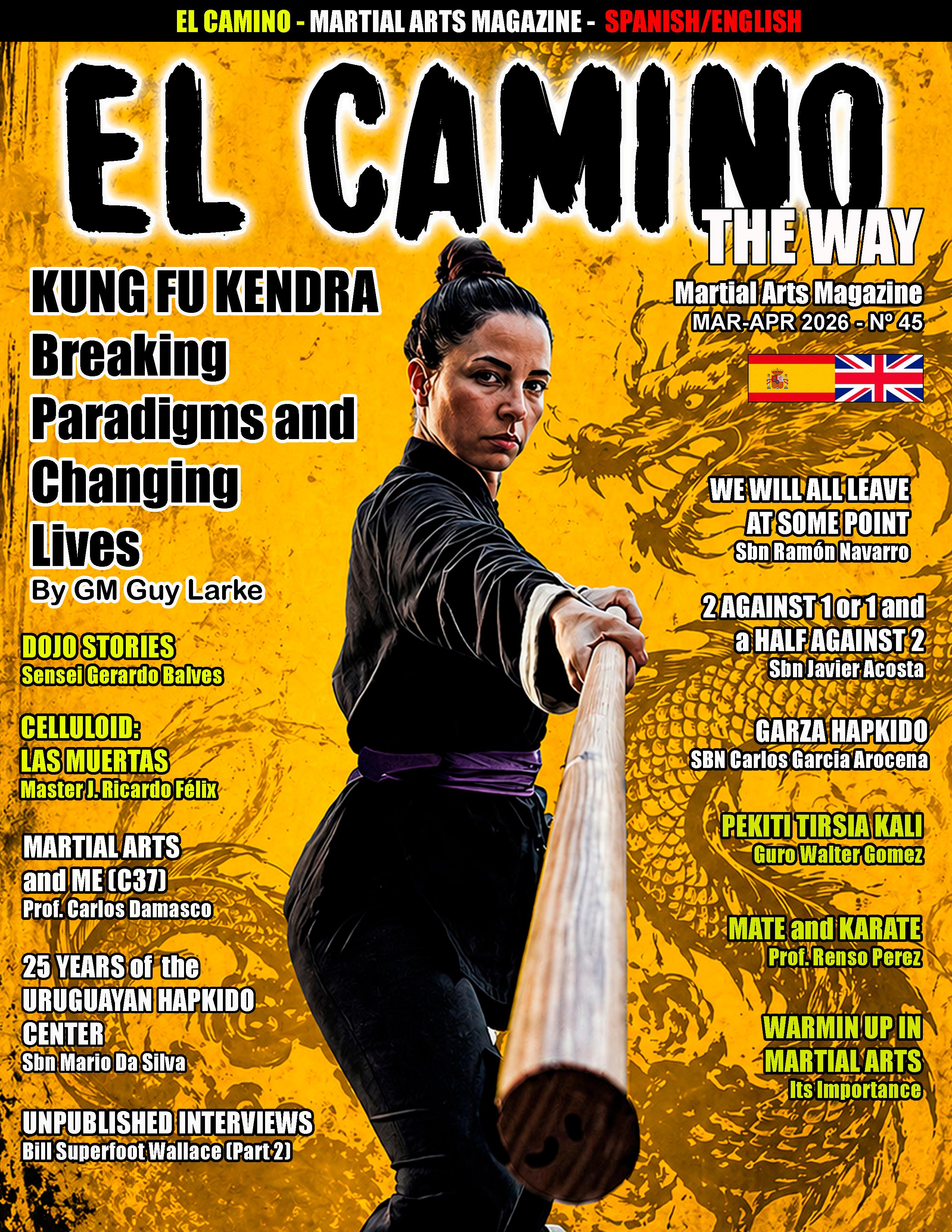
El Camino Martial Arts Magazine was created with the goal of promoting martial arts and reaching the widest possible audience through digital media, keeping pace with modern times and technology. We hope you enjoy it and that you will join us in this wonderful world of martial arts. With our best wishes: Graphic Design: Mario Segnini Fursa Business Management: Mario Segnini Fursa Editorial Director: Javier Acosta Serrano Editor-in-Chief (English Version): Grandmaster Guy E. Larke The opinions expressed in this magazine are the sole responsibility of the authors and contributors. Published and distributed from Montevideo, Uruguay, March and April.
Number 26.03/04. Thank you.
INDEX:
02 - 2 Against 1 or 1 and a Half Against 2 - SBN Javier Acosta
04 - Celluloid: Bugonia - Master Jesús Ricardo Félix
05 - Traditional Center for Martial Arts
06 - Warmin Up in Martial Arts - Its Importance
08 - Garza Hapkido - SBN Carlos Garcia Arocena
11 - Pekiti Tirsia Kali Latam - Guro Walter Gomez
12 - Kung Fu Kendra - Breaking Paradigms and Changing Lives - GM Guy Larke
18 - 25 Years of the Uruguayan Hapkido CenterSBN M. Da Silva
20 - We Will All Leave at Some Point - SBN Ramón Navarro
22 - Martial Arts and Me - Prof. Carlos Damasco
24 - Stories from the Dojo - Sensei Gerardo Balves
27 - Unpublished Interviews - Bill "Superfoot" Wallace (Part 2)
31 - Tang Soo Do Uruguay - SBN Mario Segnini
32 - Mate and Karate - Prof. Renso Perez
Two against one, or one and a half against two
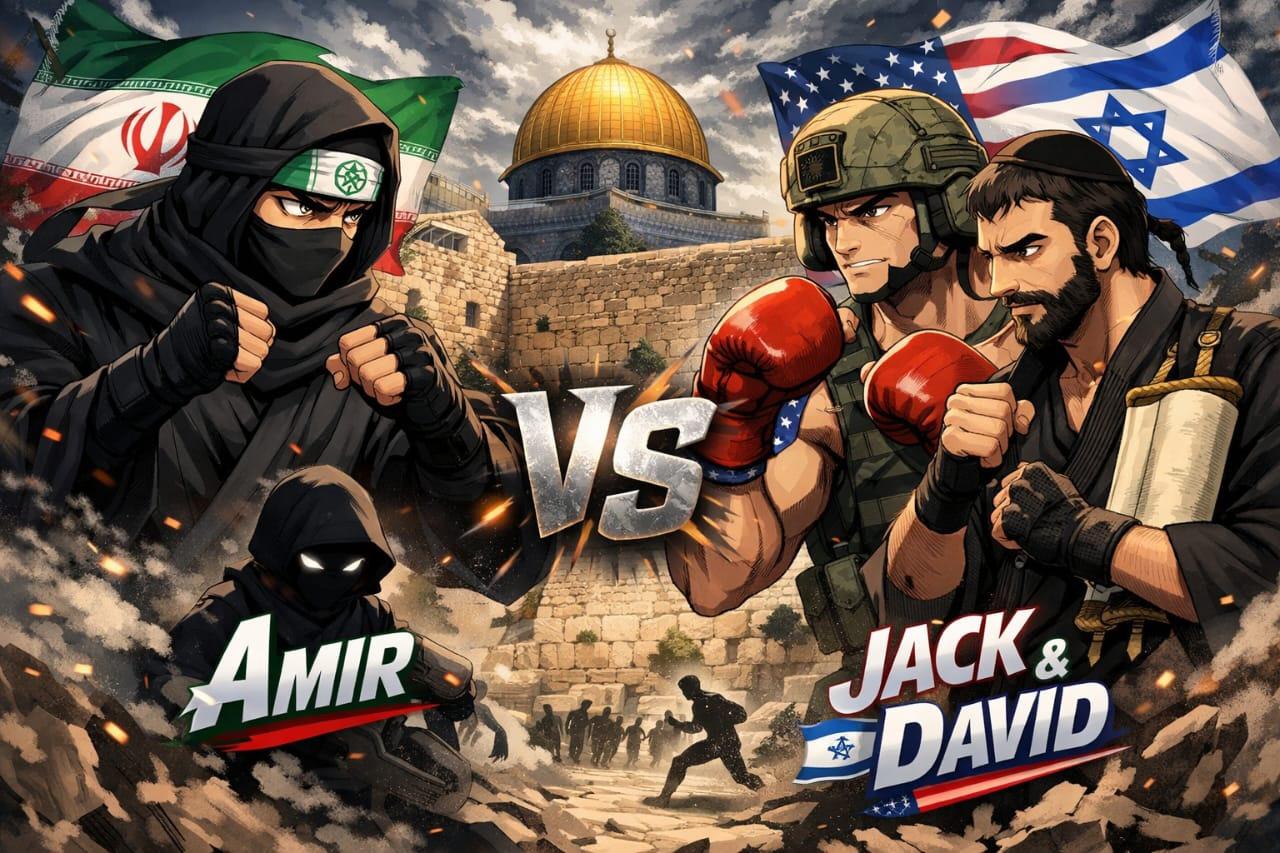
In the shadows of the city, three fighters clashed in an epic battle. On one side was Amir Farhang, the Iranian ninja, as stealthy and lethal as a shadow. Beside him was his ally, a mysterious fighter known only as "The Shadow."
Facing them were two formidable opponents: David Cohen, the Israeli, a Krav Maga expert, and Jack Taylor, the American fighter, a seasoned boxer and retired military man who had lived in the Middle East and had adopted David as his martial arts protégé.
The battle began with an exchange of punches and kicks, but soon devolved into a cat-andmouse game. Amir and The Shadow moved with speed and agility, using the environment to their advantage. David and Jack fought with strength and determination, but seemed to disagree on the best strategy.
"What do we do, Dad?" David asked, dodging a punch from Amir.
“I don’t know, son,” Jack replied, blocking an attack from The Shadow. “It seems we’re in a tough spot.”
Amir smiled in the darkness. “It’s time for Israel to grow up, David.”
With a swift movement, Amir threw a punch that
made David stagger. Jack tried to intervene, but The Shadow stopped him. The battle intensified, but neither side seemed to have the upper hand.
Suddenly, Jack stopped and stepped back. “I can’t keep doing this,” he said, looking at David. “You have to defend yourself, son.”
David was left alone, facing Amir and The Shadow. The battle was far from over, but the balance of power had shifted.
Amir and The Shadow retreated silently, leaving David alone and exhausted. Jack Taylor appeared from the darkness, looking at his son with fear and concern.
“What have you done, David?” he whispered. "You asked the Romans for help to crucify your own Messiah, and now you entrust it to me? Have you learned nothing from history? This tournament took place in Jerusalem, the city that once cried out, 'Crucify him!' Are you willing to repeat the mistakes of the past?"
TO BE CONTINUED...
Sbn Francisco Javier Acosta
SBN Francisco Javier Acosta
Kung Fu is practically a household name internationally. It gained recognition largely due to the phenomenon created by the late Bruce Lee. It wasn’t until years later that the public realized the core elements of his Jeet Kune Do came from an art form created by a woman who escaped the destruction of the Shaolin Temple!
Wing Chun is traditionally credited to the Buddhist nun Ng Mui, one of the legendary Five Elders of the Shaolin Temple, who created the system in the early 1700s after observing a fight between a crane and a snake. She is said to have taught it to a young woman named Yim Wing-Chun to defend herself from unwanted male advances. Developed in Southern China during the Qing Dynasty. Inspired by the defensive movements of a crane and the striking efficiency of a snake, allowing for a relaxed, direct, and efficient fighting style, designed to overcome larger, stronger opponents.
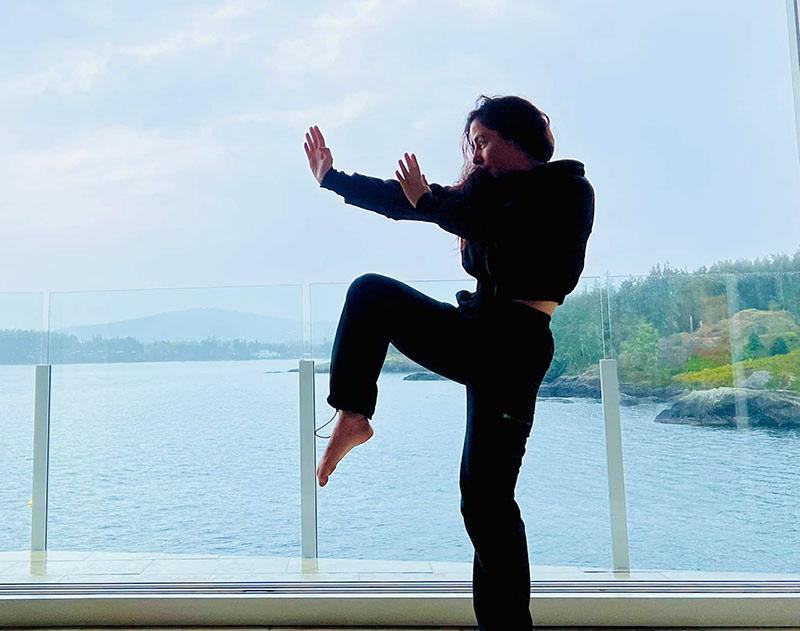
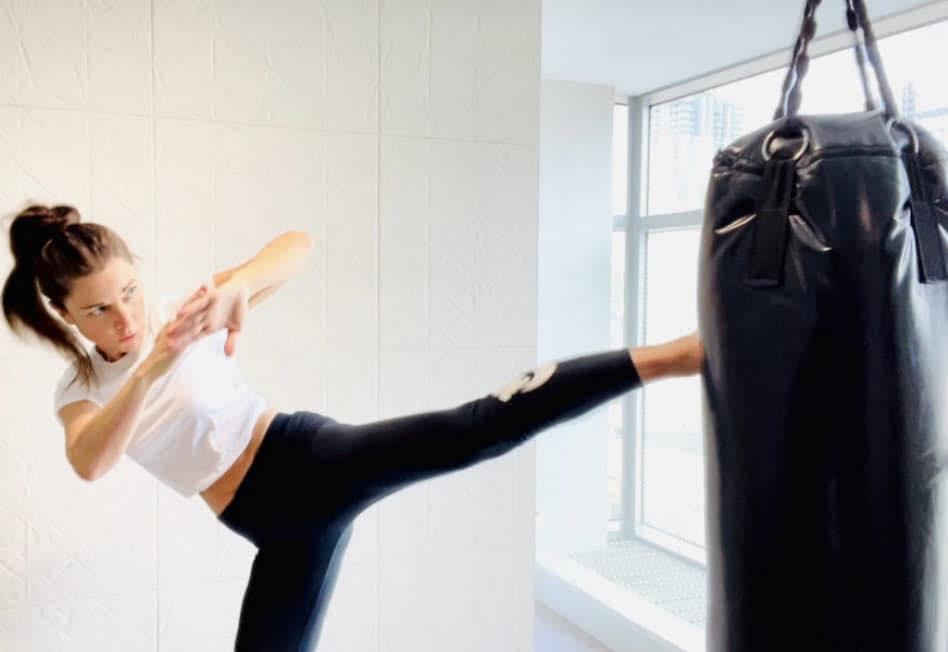
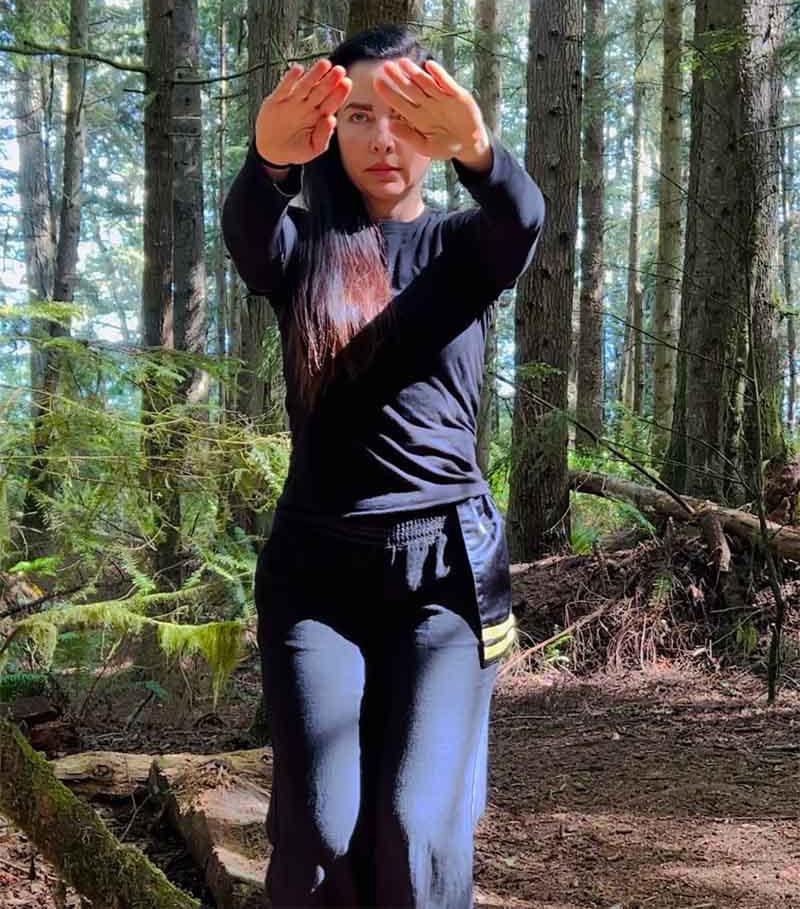
In modern times, Ip Man is recognized for bringing the art to Hong Kong and popularizing it worldwide. With the advent of the Information Age, training has gone far beyond simple academies and the humble YMCA gym. Now the internet has opened doors wider than could ever have been imagined. One woman in particular is taking this trend and blazing her own path. An assertive, no-nonsense exponent in the art of Wing Chun, bringing traditional knowledge into the welcoming arms of the general public. Simply known as ‘Kung Fu Kendra’, this Canadian-born has caught the attention of the internet world. What makes her tick? Let’s find out…
KUNG FU KENDRA - Breaking Paradigms and Changing Lives by
Grandmaster Guy Edward Larke
Was anyone in your family involved in martial arts beforehand?
As a matter of fact, no. I was a tomboy who played a lot of sports and found my way into kung fu.
Were you interested in Asian culture or any other martialartsbeforeWingChun?
To be honest, no. My interest in Wing Chun stemmed from an early experience of being attacked, and it made me want to ensure it didn't happen again.
So, how did you find Wing Chun? Like, there are so many different martial arts and other systems. It would take a year to name them all off. Why Wing Chun?Wasitjustnearyou,orwasitrecommended toyou?
From the research I did and the help others gave me, I found it was the perfect martial art for someone who isn't strong but small, and for using the opponent's energy against them, essentially. So, there's no need to be a brute, a strong man or woman; close-range self-defense works, no matter how big or strong you are.
Whowasyourfirstinstructor?
My first instructor was Master Brian Lewadny from
the Canadian Wing Chun Kung Fu Academy.
Whatwasyourfirstexperiencelike?Doyouremember?
Absolutely, I went to school, and I was given a complimentary class to see if I liked it, and I fell in love with it instantly.
Excellent. While you were just in the training stages, did you have any particularly strong memories, beyond just that you really enjoyed it and that you adapted? Were thereanyspecialmemoriesormoments?
Absolutely! You know, the moments came well into my training when I found the enlightenment of actually, why I was doing what I was doing. Prior to that, I just put my trust in Master Lewadny, and I wasn't quite sure why I was there. I knew why I was there, but ultimately, it was much more than learning kung fu. As you know, as a fellow martial artist, it's learning about yourself. It's about learning respect, commitment, loyalty, discipline, and ultimately peace.
Soverytrue. Doyouthinkthatifyou…startedinanother martialartthatwouldhavehadadifferenteffectonyou, or a similar effect? If you chose, let's say, Hung Gar, or if you studied, like, Shotokan or something along those lines, do you think your journey would be very different or similar?
That's a very good question, and, in some ways, I think it would be very similar, because ultimately we're learning skills, we're learning to apply the skills, all the skills are correct, no matter what style of kung fu or martial art that you're practicing. In a lot of ways, it'll be different because of the rich history of Wing Chun, and, you know, every martial art has its own history. Each is unique, so the result would be different in the end.
Sohowdiditstartaffectingyou?Like,just,eventhough you were a tomboy, still, like, the discipline of really, strong martial arts is still gonna make you stronger, so…Physically,socially,mentally,howdidyouchange?
Well, I'm sure many people experience this when they embark on their journey and then stick with martial arts for a while, but…I would say my friend groups have changed. People that I used to, you know, associate with in the past, they just, you know, kind of got removed from my life, and it was probably for the good reasons, and I just felt like I was in the flow. They say that a lot in martial arts, be like water, be in the flow, and there's so much truth to that. And, my life really did balance out.
How did your paradigm of martial arts change over time?Iamsureyouhadmanypreconceivednotions.
I did, definitely.
Howhasthatchangedovertime?
Well, over time, it's changed because I now feel more in the moment. Before, I felt like I was chasing this, this training, and this learning, and this constant evolution. But now it's kind of settled down, and I'm settling into moment by moment, and I'm learning to use the… the general principles of Wing Chun, which is, you know. minimum effort for maximum effect, controlling the center, so controlling your situations, being assertive. These aren't just fighting concepts; they're applicable to everyday life, and that's kind of where the training has transformed for me.
Excellent.So,whendidyourealize,atwhatpoint,thatthis would be your life? I think it's a pretty safe assumption to say that, at least right now, this is, like, the focus of yourlife.
Definitely, I realized that when I really started to delve into teaching others Wing Chun. For me, that was, you know, your students are your best teachers. And…for me, it just became my life's mission to share the art and to promote the art endlessly, tirelessly, and to try to keep Kung Fu alive. So, my mission has, you know, more recently become promoting Wing Chun.
So you mentioned who your first Sifu was. Did you get tostudywithanyonehigherupinthesystem,ordidyou juststaywithyouroneSifu?
That's a great question. I stayed with my one Sifu, Brian Lewadny, until 2019, and then I took on more advanced training, one-on-one training. with another teacher, to… which took me to where I am today. I feel like I benefited from that because I was able to really expand my idea of Wing Chun. Everyone has their own concepts and ideas. Everyone has their own training style.
Areyoucomfortablesharingthatperson'sname?
You know, it's funny, in my lineage, both my teachers, Brian Lewadny especially, are very reserved. They are not into being online; you can't find them on Facebook. Sifu Lewadny has been generous enough to let me speak and write about him in my book. They both like to stay anonymous, however.
No problem at all. It's very different from Korean arts. InKoreanarts,theywantitwritteninthesky.
Yeah, in Kung Fu, my teachers say, let your work speak for you.
CouldIaskyourcurrentranking?Yourlevel?
Yeah, so in Wing Chun, some lineages use a belt ranking system. Some don't use any ranking at all. So, my ranking would be ‘Master’ at this point, given all the training over the past 21 years.
I think you're freer, because you don't have all the politics, such as “What Dan are you? What's your number?What'syourrank?Whichassociation?”You're freefromthat,soIenvyyou.
WhatisitaboutWingChunthatthereseemtobefewer issuesandbattlesbetweenorganizations?
It could be the lack of acknowledgement of the leveling. They look at it more as a form of self-defense than as a competition. I also believe that… That's pretty much it.
HowmuchhasWingChunallowedyoutotravel?Notjust NorthAmerica,butmaybeoutsideaswell.
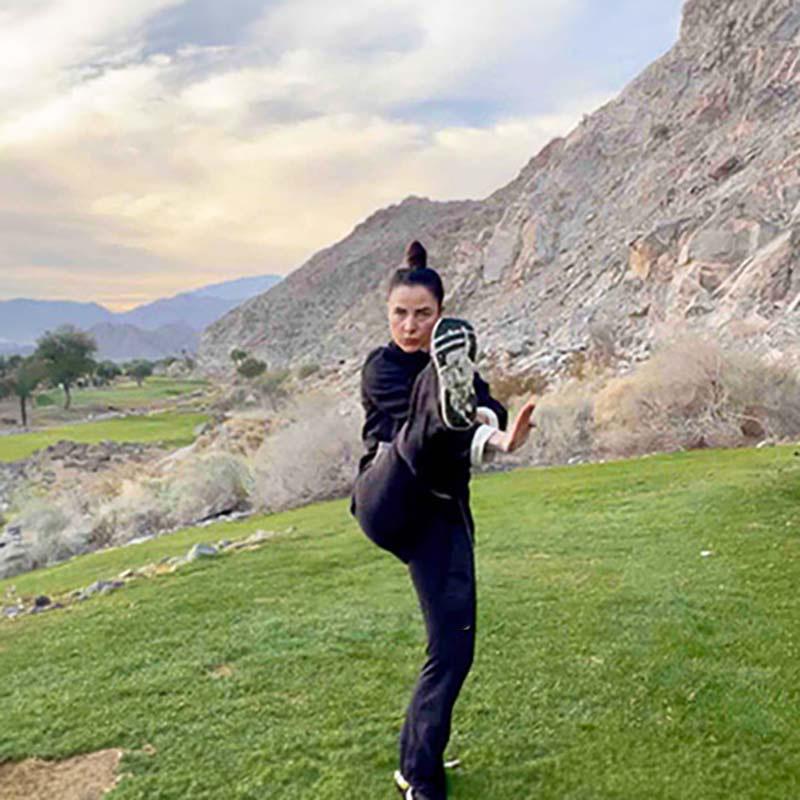
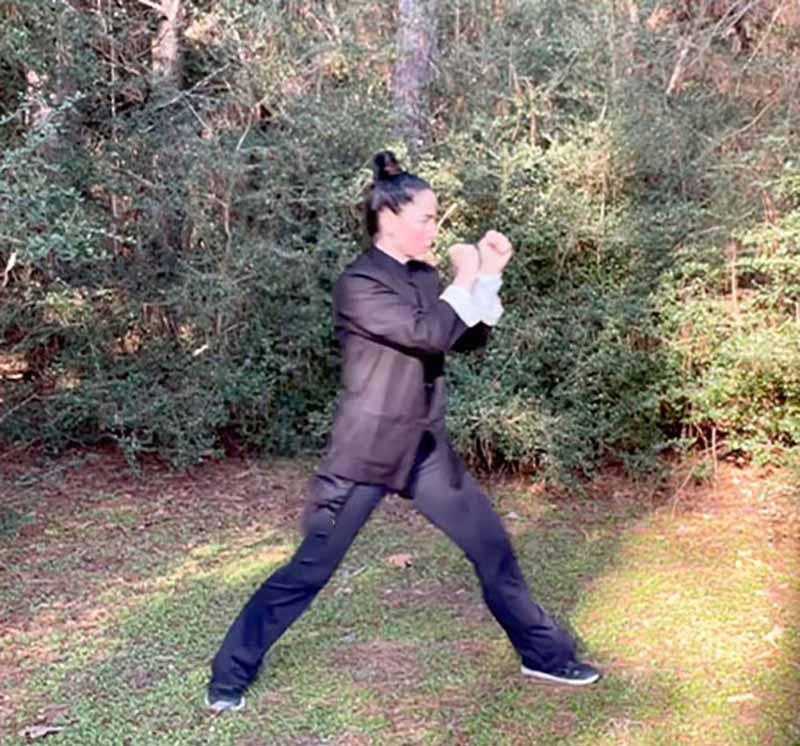
I've traveled quite a bit, mostly within North America. I travel, teach, and film videos in exotic locations. I try to give my students and people looking to learn kung fu a visually appealing environment, because I believe that nature should be intertwined with the art. So, for me, training outdoors is extremely important. I train… on Zoom. with students from all over the world, and…I think, as the modern world has expanded, we're able to, yes, travel less, but also travel more, because of the ability to just tune in to a video camera.
So,whatledyoutodecidetodothat?
I start, like, yours, I do all the videos and the Zoom training, and start promoting… Kung Fu Kendra. For me, it was the mission to promote Wing Chun and keep it as relevant as possible worldwide. I really enjoy doing Wing Chun, and teaching Wing Chun, and I get letters all the time from people telling me that, you know, my video inspired them, and…for me, it feels good to do Wing Chun, and it feels good to know that others are doing Wing Chun, so for me, it's just a feel-good thing to do. Ialsoseeyouhavebegunawritingcareer.
Yes. I've written one book called Push Your Way Through. It's how to use the ancient principles of kung fu to get what you want in life. I was inspired by everyday situations and how I can use what I've learned about being efficient, confident, and disciplined to get what I want out of my life, because our lives are short. Time is the most valuable thing that we have, and if we can learn to use our time more efficiently by using the principles of kung fu, as I wrote in the book, then… Then that's a good day.
That's excellent. There are a lot of online programs right now. In all different systems, I don't need to tell you that, even Wing Chun. What do you think separates you from all of them? What's different about what you do? Of the people who are reading the article, how do you want to say that you're different from all these other individuals or organizations?
Well, I take a very structured approach. For serious Wing Chun training, I've got a course called the Wing Chun Online Certification Course by Kung Fu Kendra, and it guides you through all 10 levels of Wing Chun training. Mine, I would say, is different because there is a structured curriculum. It's a curriculum that's been used over the generations in traditional Wing Chun, so you're getting pure Wing Chun in a structured curriculum. I find that many online programs teach
scattered moves; there's a lot of talking and standing around, while I've taken a very unique approach. If you ever get the chance to… Watch any of the courses. It's very different, and it's designed to be simple. It's not overcomplicated.
Great,soitsoundslike,definitely,evenpeoplewhohave neverdonemartialartsbeforecanjumpintothis.Whatdo youthink,inyouropinion,whatdoyouthinkWingChun hastooffersomeonewhohasaHapkidobackground,or someone from, like, a Shotokan background, or Filipino Escrima? What do you think Wing Chun has to offer them? What is… what would be the attractive point for themtoexpect…intryingWingChun?
I think the practicality of Wing Chun would be a good advertisement to any practitioner of any other martial art. Wing Chun does not have a lot of fancy kicks; it doesn't have, you know, a lot of fancy anything. It's very straightforward: it gets to the point, and there's not a lot of messing around. It should be just one shot, and you're free to get to safety, as we like to say. It's an attacker situation, not so much, you know, two competitive opponents. So, it can teach real-life self-defense.
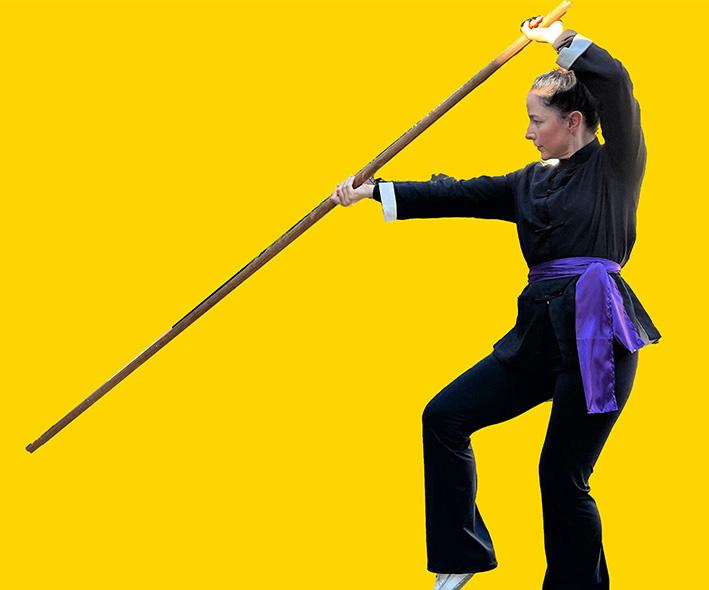
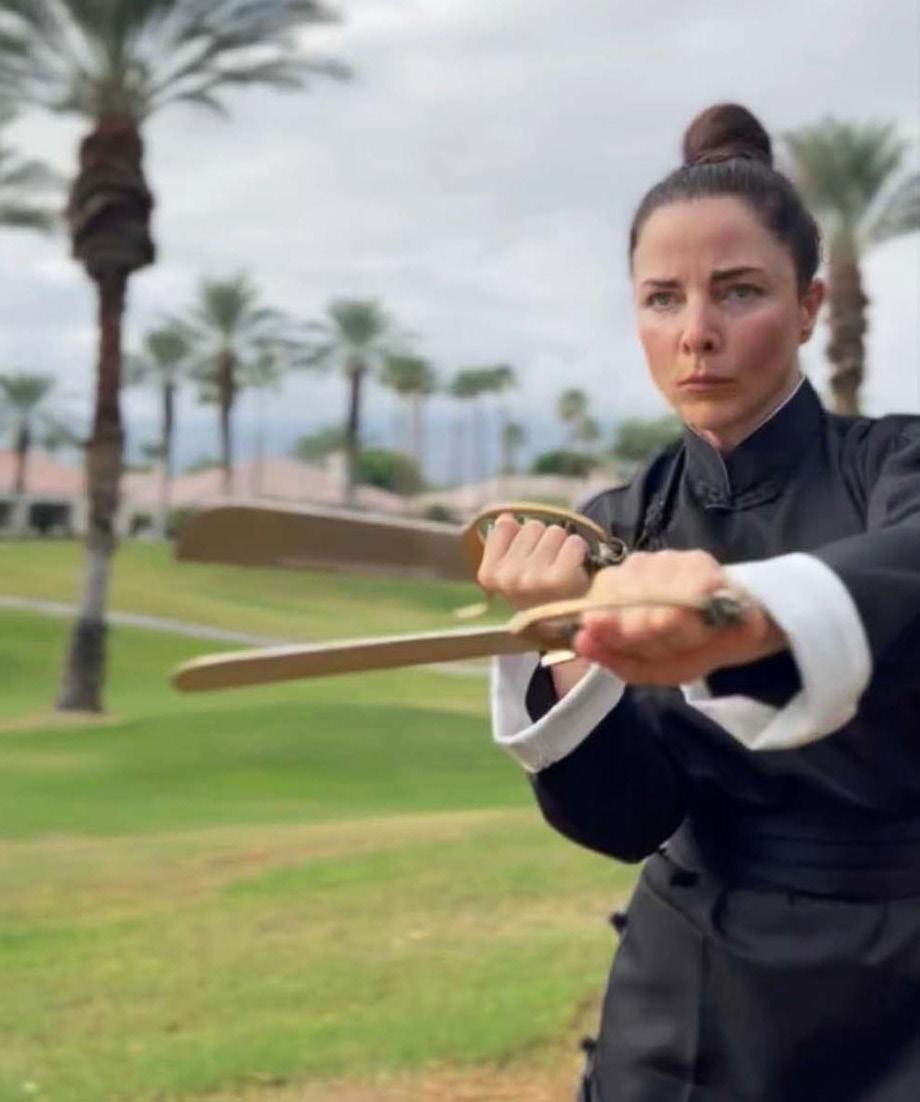
So,goingintoreal-lifeself-defense.Iloveweapons,soI'm notgonnasayanythingaboutweapons,butsomepeople say that traditional weapons are obsolete, there's no need for them. I'm definitely not one of them. If anyone seesmywork,Idoalotoftraditionalweapons.Whatdo you think the purpose is? Like, for instance, Wing Chun, you do the double Butterfly swords, and you have the reallylongpole.Asidefrombeinginthecurriculum,what valueisthereinstudyingthoseweapons?
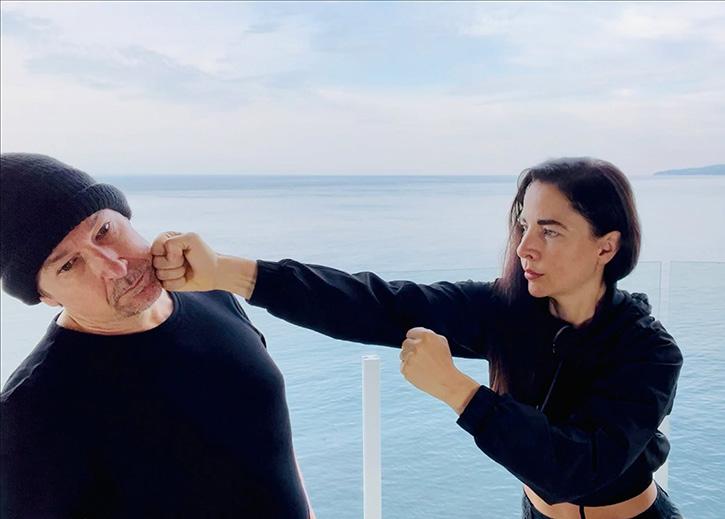
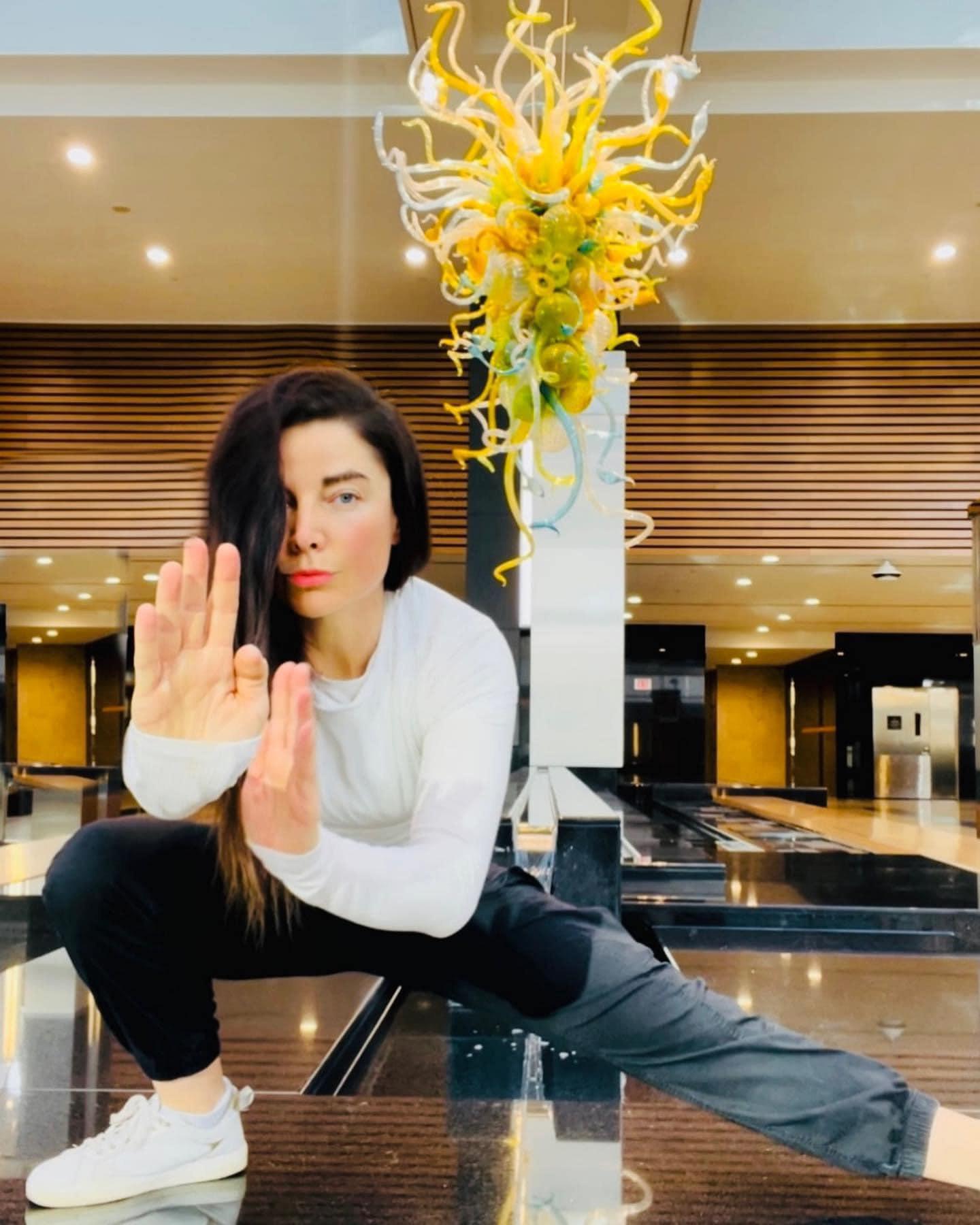
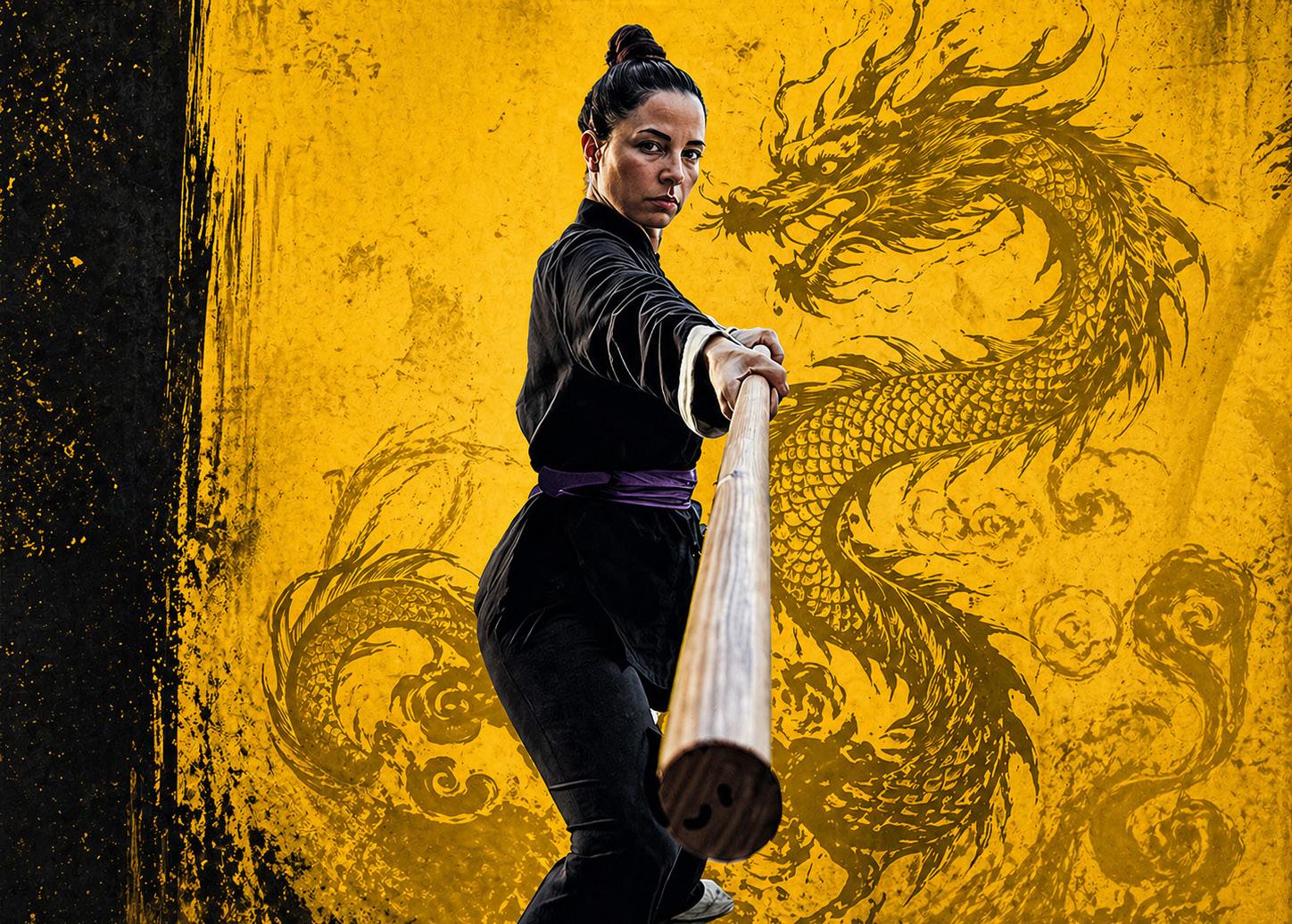
That's another great question, and there's tremendous value in learning how to use a weapon or an object. It helps you learn coordination. You can learn striking techniques, so you would have a fighting chance. Let's say you don't have a set of swords at home. But you've got two other objects that you could use to defend yourself. Yeah, and the same with the dragon pole, the long pole in Wing Chun. It can also be representative of a rod, or a pole you have, or a large stick. anything to help you at least know some moves where it's not such a foreign object in your hand. It's not realistic that we're walking around with swords and things like this, but to learn how to use the swords is an empowering progression in who you are, and can only help benefit your skills, and I don't recommend live blades by any means. I'm talking about just some plastic or dull swords you can get on Amazon.
Inclosing,whatareyourfutureplans?
I'm going to continue to… create programs. at kungfugendra.com, and I'm working on a self-defense program, so it's not Wing Chun, it's just going to be basic self-defense, and it's going to train instructors, so we can have more instructors out there. I'm working on another program for the advanced
Sil Lim Tao form. It's sort of like a kata, so to speak, for Wing Chun. Also, I'm looking to venture into nutrition, potentially for Wing Chun practitioners. So, slowly trying to expand the Wing Chun World, so to speak. By the way, I've got a free gift for your readers. They can go to www.kungfukendra.com/gift. It's a free Wing Chun class they can take to get a sample of some self-defense to help them.
Kung Fu Kendra Reviews:
"Your videos are very helpful for training without an opponent. I'm very happy to have found you online!"
Joachim Igl, Paraguay
"I appreciate the online courses you offer. It is a very good thing particularly for me with my schedule."
Forrest Stockstad, Canada
"I like your education method and videos, it's high quality and good teaching"
Kim S., Denmark
"Excellent training! I am very proud to train under your guidance."
Juan M. Mejia, USA
"Sifu Kendra will be a big help in my Wing Chun instruction and progression."
Greg Evans, Australia
"Thank you for your expert insights and recommendations."
Antonio N. Sherman, USA
Grandmaster Guy Edward Larke has spent most of his life enamored of Asian martial arts and Asian cultures in general. These led him to move to South Korea 25 years ago, where he continued to study, research, and write about the various disciplines that shaped his life. In addition to teaching martial arts in Korea, the USA, Malaysia, and Denmark, he has written over 800 articles for 25 magazines. He named the synthesis of his pilgrimage Kisa-Do Muye (the Knights Way Martial Arts). Larke can be found on Facebook or by e-mail at kisadomuye@gmail.com.