ela news
June is typically one of the busiest times of the year for employment lawyers. As the summer approaches, there is always a real desire to try and move matters along, with the hope that some downtime might be possible in either the months of July or August.
This is particularly the case for ELA. There is a sense of urgency that now our research on employment tribunal reform has been published, we must use the impetus and traction from the recent ELA Annual Conference and associated publicity to press home the urgency of action.
‘rights need
to have a swift, fair, accessible, forum for enforcement’
At the start of June, Professor Catherine Barnard (one of the co-authors of the research) and I went to a meeting at the House of Commons, held by ARAG – a global provider of legal expenses insurance. ARAG’s mission is as follows: ‘To enable everybody, not just those who can afford it, to assert their legal rights.’
One of the practical questions that has arisen from the research relates to the possibility of costs awards in (proposed) track 3 cases. To recap, costs consequences would only apply in track 3, namely for the more complex/high value claims. They would not apply to claims in either track 1 or 2. In track 3, a stricter civil court-style process would apply. Both parties would understand and accept that with track 3, there would be some costs risk on both sides in proceeding.
Would the legal expenses insurance providers welcome that as an option and be willing to provide insurance? And how does that move the dial on the viability or palatability of having costs consequences in a forum that hitherto has only made costs orders in relatively limited circumstances? Catherine and I were successful in doorstepping a number of individuals at ARAG to raise awareness of the ELA research and to start a conversation with the sector. More, we hope, to follow.
June also saw the Employment Minister, Kate Dearden, travel to Geneva to speak at the International Labour Organization ministerial conference. In her speech, she referenced Labour’s workers’ rights reforms and asserted that they have simply put the UK on a ‘level playing field’ with the other big economies. Without commenting in any way on that proposition, it must be the case that those rights need to have a swift, fair, accessible, forum for enforcement. Reforming the employment tribunal system must therefore be part of the overall deal.
As the summer beckons we will continue to press this point as much as we can and keep you posted. I have not yet met an ELA member who does not think this debate (and moving from proposals to taking action) is anything other than critical.
I hope you enjoy the tennis, the football, the cricket and, most importantly, the summer, whether you are at home or away.
Recent activities
• The Training Committee organised a two-day online course, ‘TUPE: The Law and Practice’ and a one-day course, ‘Directors: Hiring, Firing and Bad Behaviour’.
• The Pastoral Committee organised a webinar, ‘Reverse mentoring: What, why and how?’.
• The Race Equality Committee held an event in London.
• The regions: there were social and training events in Winchester, Lincoln, Maidstone, Nottingham and Newcastle.
Looking ahead
• The Legislative & Policy Committee will respond to consultations on nondisclosure agreements and TUPE in July.
• The regions: in July, there will be social events in Leeds (1 July), Cardiff (2 July), London (9 July) and Sheffield (16 July). Training days are planned in Leeds (17 September) and Manchester (30 September).
KATHLEEN HEALY, Freshfields LLP
Southampton FC ‘spygate’ saga highlights intern vulnerability
The precarious nature of intern work is once again in the spotlight thanks to some shady activity at Southampton FC. The club were on course for promotion to the Premier League until it was alleged that that the club had spied on training sessions at Middlesbrough FC ahead of their play-off semi-final on 9 May. Such activity is banned by the English Football League (EFL).
‘for the unscrupulous employer, such interns will always be fair game’
The EFL launched an investigation into the spying allegations and brought disciplinary proceedings against Southampton FC. As a result, Southampton FC were expelled from the play-offs. The findings of the EFL’s investigation show that interns played a key role in the club’s surveillance activities.
The EFL’s Disciplinary Committee note in their written reasons of 19 May that the person who carried out the covert surveillance was an intern on placement at Southampton FC. Many press outlets ran photographs of the intern who became the unwitting face of the scandal. It was further noted in the written reasons that the same intern had also carried out covert surveillance at another football club’s training ground in December 2025. The EFL’s Disciplinary Committee rebuked Southampton FC for ‘a particularly deplorable approach in its use of junior members of staff to conduct the clandestine observations at the direction of senior personnel’. In addition to the sporting sanctions imposed on Southampton FC by the EFL, a reprimand was considered appropriate ‘because of the way in which junior members of staff were put under pressure to carry out activities which they felt were, at the least, morally wrong’. It was noted that such staff were ‘in a vulnerable position without job security and with limited ability to object to, or resist the instructions given to them’.
This incident highlights the risk of exploitation of interns due to their lack of job security. The intern in this case said they felt under ‘extreme pressure’ to carry out the spying activities they were told to do. He feared he might be dismissed by the club or it might otherwise adversely affect his career if he did not do it. Interns appeared to be Southampton FC’s preference when covert surveillance was required. When one intern objected to carrying out covert surveillance of a club, another intern was brought in to do the spying instead.
The Government has made unpaid internships a point of focus. In July 2025, it launched ‘Making Work Pay: Call for evidence on unpaid internships’. The response, published in February, noted that the primary motivation for individuals undertaking an internship is as a pathway to paid employment. With such an important goal as the reward, it is easy to see why an intern would blindly follow orders, even those they deem unsavoury. For the unscrupulous employer, such interns will always be fair game.
Fair Work Agency research project sheds light on future strategy
On 11 May, the Department for Business and Trade and the Fair Work Agency (FWA) published the research paper ‘Working Lives’, an assessment of the scale and nature of labour market non-compliance in the UK.
Of particular focus were areas that now fall within the remit of the FWA. These include enforcement of the National Minimum Wage (NMW), employment agency standards and gangmaster licensing. The research also offered insights into the gig economy, health and safety, bullying and harassment and trade union representation. The survey focused on the period between spring/summer 2023 and spring/summer 2025. The research showed that around seven in 10 workers experienced at least one work-related legal violation or other workplace harm
during the survey period. Around one worker in 10 experienced four or more different types of violations and harms in that timeframe.
One purpose of the research was to inform the FWA’s work in the near term as it develops its first strategy for publication in early 2027. The paper notes that the high prevalence of workplace violations identified during the project presents operational challenges for state enforcement bodies to tackle them effectively. The diffuse nature of the harms suffered means that a campaign aimed at those worst affected would not be a viable solution. There was, however, empirical evidence for industry-level targeted enforcement. Conversely, enforcement strategies based on region appear unlikely to be effective other than in the case of unfair deductions from wages and NMW violations.
The research paper is available at www.gov.uk/government/publications/fairwork-agency-enforcement-policy-statement
Offshore wind companies agree to stronger workers’ rights
A collective of 37 offshore wind supply chain companies and five trade unions have signed up to the Government’s Offshore Wind Fair Work Charter (FWC). The aim of the charter is to ensure that jobs in the clean energy sector meet certain standards of good practice. This is part of the Clean Energy Jobs Plan set out by the Department for Energy Security and Net Zero (DESNZ).
Signatories to the charter commit to maintain channels for effective worker voice within their organisations; and strive for best practices in health and safety across their offshore wind operations.
Organisations need to show compliance with the charter through the use of FWC statements and voluntary access agreements. Trade unions that participate in the charter will monitor and assess specific implementation of signatories’ activities and engagement. DESNZ will also maintain a database of voluntary access agreements and a public register of FWC signatories to ensure commitments are met. The charter also sets out a dispute resolution process where implementation issues are identified. As part of that process, DESNZ will utilise the services of Acas, including Acas arbitration where appropriate.
SRA updates whistleblowing guidance for in-house solicitors
The Solicitors Regulation Authority (SRA) has updated its guidance for in-house solicitors who wish to report concerns about wrongdoing. The update is to reflect the SRA’s recent designation as a prescribed person under the Public Interest Disclosure Act 1998. The purpose of the guidance is to assist in-house solicitors in understanding their responsibilities when faced with concerns about actions or decisions taken by their organisation. The SRA recognises that this can be complex for those working in-house as their client is usually also their employer. The guidance describes the types of concerns that may need to be reported and sets out the steps that should be taken.
The key changes made to the guidance since March 2024 are:
• more specific examples of conduct that requires internal or external reporting;
• expanded guidance on appropriate reporting lines and whistleblowing procedures;
• information on the considerations around potential resignation if regulatory obligations cannot be met;
• new guidance on legal professional privilege; and
• expanded information on support services available, including LawCare and the Solicitors’ Assistance Scheme.
The guidance can be found at www.sra.org.uk/solicitors/guidance/reportingconcerns-wrong-doing-working-in-house-guidance
KATHLEEN BADA, Charles Russell Speechlys LLP
Reimagining employment dispute resolution
SARAH FRASER BUTLIN KC and PROFESSOR CATHERINE BARNARD
‘The employment tribunal system is broken’ is the cry of many practitioners. The question is what to do about the very significant challenges facing the system. Research over the best part of three years, interviews with focus groups and some deep thinking has led us to come up with some more – and less –radical proposals.
The problem
It takes two to three years in some parts of the country for a claim to work its way through the system, sometimes more. By then, the parties are deeply entrenched in their positions. The dispute that started in the workplace has become highly adversarial. The costs to the individuals involved – the claimant, and any named respondents and managers for the organisation – are significant both financially and emotionally. It is difficult for individuals to navigate the system, particularly without any legal support. The costs to the organisation are also substantial: economically, in paying for representation and with managers taken away from the core business operation; and institutionally, as the individual employee, their co-workers, HR team and managers struggle to interact and engage. And yet, bringing a claim to the tribunal is the first, rather than the last resort for many people.
Justice delayed is justice denied and there is no access to justice when an individual has to wait years to vindicate their rights, or for an organisation to be exonerated. Resourcing is a fundamental problem; there are simply too many cases for too few judges and administrative staff. In Scotland and Northern Ireland, the delays are less but the process is still not speedy. The nature and scope of the rights that are now enforceable through the tribunal system have grown exponentially and will grow further with the new rights in the Employment Rights Act 2025.
So what can be done about it? The easy answer is to say there needs to be greater resourcing: more judges, more administrative staff, a return to legal aid. But we know that in the current financial climate this is unrealistic. And would it really solve the issues, particularly of the growing complexity of claims, increasing use of artificial intelligence (AI) and increasingly entrenched disputes?
What have we done?
Over a period of two years, we analysed publicly available data and made freedom of information requests about the employment tribunal, the EAT, Acas and the other enforcement bodies. We established that the backlog in the tribunals has grown, the complex caseload is the major cause of the delays and there is very limited enforcement via other mechanisms.
We mapped the huge changes to the employment tribunal’s jurisdiction since its creation: the tribunal now decides well over 100 different types of claim. From 1965 to 2024, we identified 64 different pieces of legislation introducing new rights over which the employment tribunals have or have had jurisdiction.
We talked to hundreds of people across the spectrum of employment law through surveys, focus groups, interviews with officials and talking to family lawyers and practitioners in Australia, New Zealand and Singapore in relation to those jurisdictions’ approach to dispute resolution.
Reimagining employment dispute resolution
‘claimants – especially those representing themselves – struggle to explain their complaints in a legally coherent way and many now rely heavily on AI’
What did they tell us?
The data was remarkably consistent.
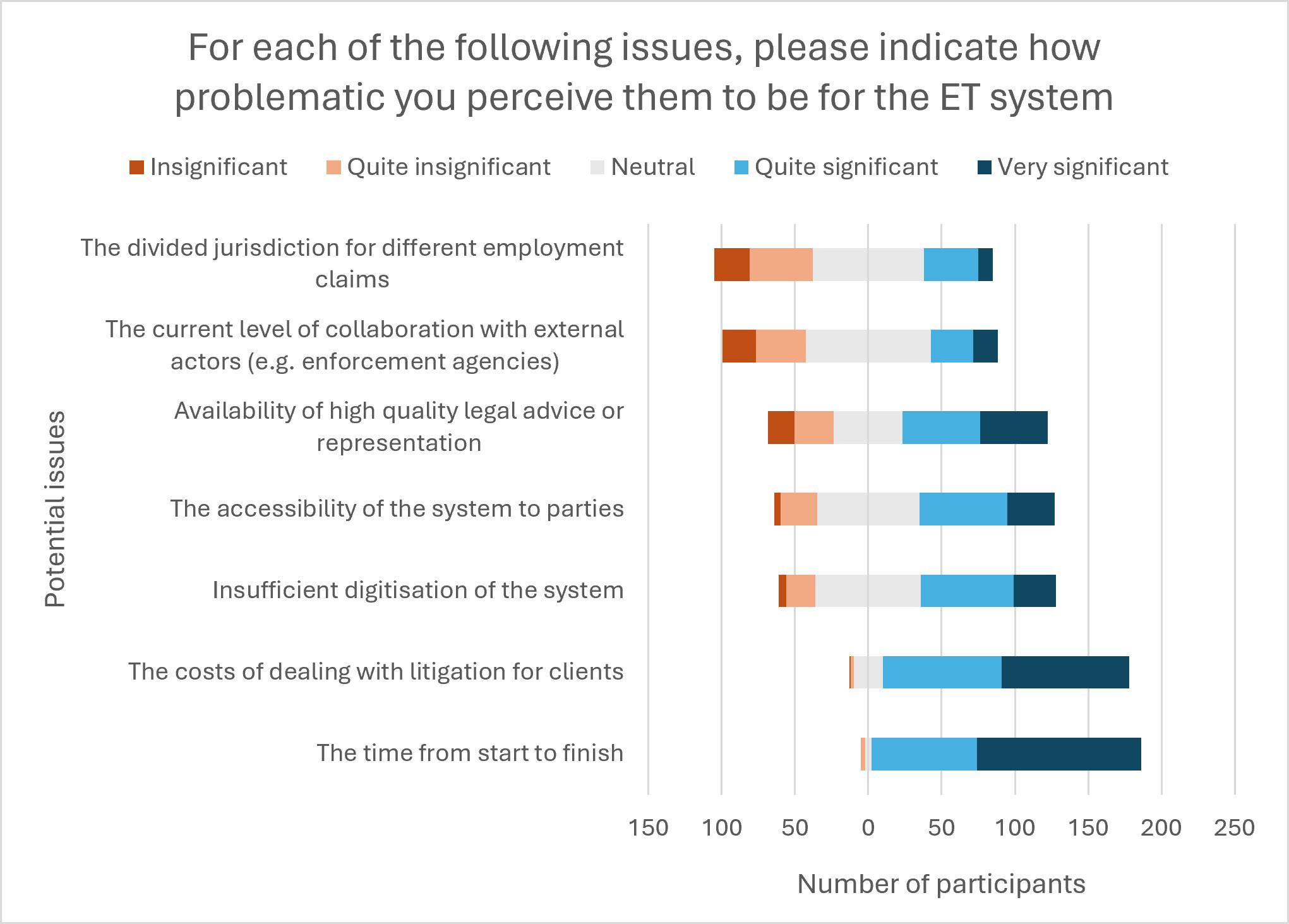
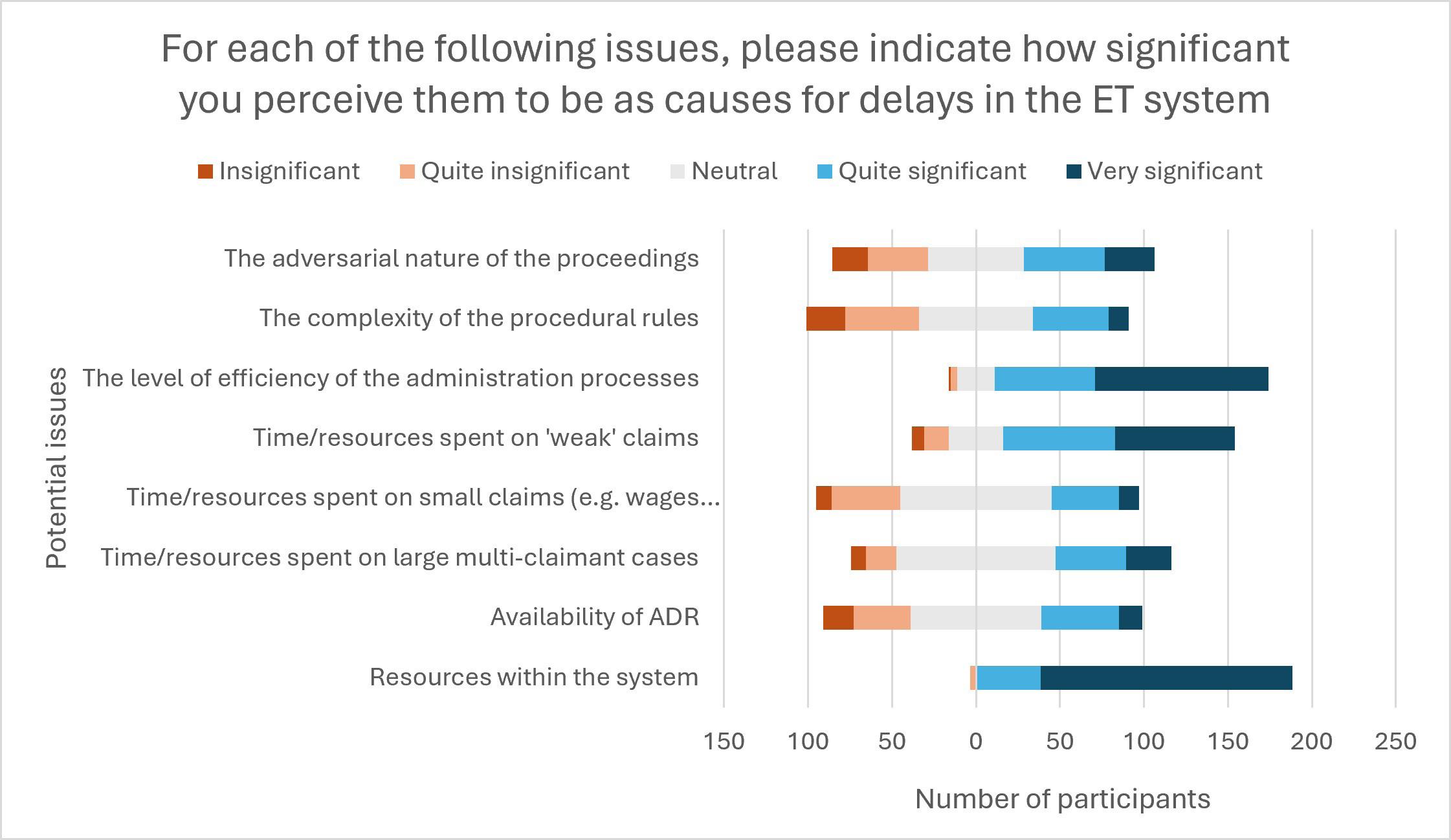
The issues that were of most concern were the time and costs of litigation. Access to high quality advice, accessibility and digitisation were close behind. The key drivers for delays were administrative inefficiencies, resourcing and time spent on weak claims:
Reimagining
employment dispute resolution
‘much can be learnt from the resolution of family law disputes’
We found that early entrenchment of disputes, particularly the need to follow a formal grievance process and exacerbated by HR managers who are concerned with following policies and procedures to the letter, stymies attempts to resolve disputes at an early stage when creative solutions could be found. Acas early conciliation is often seen as a tick-box exercise. This is partly because employers want to wait and see if the individual is serious about bringing a claim and partly because the conciliators are purely facilitative and there is no ‘reality testing’ of the claims and responses.
Claimants – especially those representing themselves – struggle to explain their complaints in a legally coherent way and many now rely heavily on AI. The ET1 form does not help them to formulate their issues in the way that the tribunal system requires. Once their claim has been presented, the parties are already heavily entrenched. Lawyers are usually involved, at least on the employer’s side. There are few opportunities for the parties to try to resolve their disputes away from the tribunal, although this has been changing with newer models of alternative dispute resolution. Furthermore, all cases are essentially dealt with in the same way.
We were told that parties needed to have some ‘skin in the game’ so that they had to seriously consider the merits of their claims and their value. Enforcement of awards were identified as a significant problem, as was the lack of any feedback mechanism so that the tribunal’s findings have an impact on how an organisation operates in future.
What about relationships?
Lots of interviewees emphasised the relational, behavioural and psychological aspects of employment disputes. This perspective forms the core academic work in the research: our fundamental argument is that we need to radically rethink how we understand the role of employment dispute resolution. Our argument is that employment is first and foremost about a relationship; it is a dynamic, emotional connection, with co-workers, managers and with the job itself.
The loss of a job was compared by a surprising number of our interviewees to a divorce. When that relationship breaks down, the nature of the connection with the job, the complexities of the dynamics between individuals and the emotional upheaval caused by the breakdown will inevitably play out within the dispute. And yet, the tribunal system does not generally recognise this. The system itself is not built to manage, address, support or contain the emotional fallout.
We therefore argue that much can be learnt from the resolution of family law disputes, whether it be in relation to how a relationship that has ended can be satisfactorily concluded, or how a relationship with ongoing ties can be managed going forwards. Against this background, the research proposes a blueprint for the future of employment dispute resolution.
What are the recommendations?
Increased emphasis on alternative dispute resolution
We recommend that the Acas Code of Practice on Disciplinary and Grievance Procedures should be amended to make it clear that there is no requirement to follow a formal grievance procedure before bringing a claim to the tribunal. Parties should be required to try to resolve issues informally and the uplift/reduction in damages should be applied only where informal resolution attempts have not been made. Likewise, the Code should also be amended to specify that the disciplinary procedure should be used as a matter of last resort in most cases.
An Employment Resolution Service (ERS) should be established. The ERS should be the first port of call for all employers and employees seeking information and advice about workplace issues. It should actively encourage, support and facilitate internal workplace mediation. Where further assistance is required, the ERS should operate as a triage service directing enquiries to the Fair Work Agency for enforcement of basic rights, to a phone conciliation service for straightforward issues or to an online mediation service staffed by experienced and highly capable mediators.
Reimagining employment dispute resolution
‘tribunal awards should have the same status as county court judgments and be enforceable accordingly’
Attendance at either a phone conciliation appointment or online mediation appointment should be compulsory before a claim can be brought in the tribunal, with sessions being resolution-focused, rather than problemfocused, with an element of ‘reality testing’ (‘You are not going to be awarded the millions that ChatGPT says you are entitled to’), rather than being purely facilitative. The specific type of mediation should be tailored to the circumstances of the case. Where required, such as in certain discrimination matters, the mediation should follow a ‘trauma informed’ approach or transformative mediation approach. Judges should readily send cases back to the ERS for further mediation.
More minor changes to the current system
The ET1 and ET3 forms should be remodelled so that questions avoid legal labels, use simple language and are specific and precise. The forms should mean that parties are only asked questions that are relevant to what they have answered previously so that the information they are required to give is specific to their situation. Moreover, answer boxes should have word limits to help parties remain focused on key issues. Questions about remedy – so that a schedule of loss can automatically be generated – should be asked at the outset. Parties should be asked to upload certain documents such as their dismissal letter or disciplinary hearing notes. There is potential for a good AI model to help, at the least to convert a narrative into a timeline of events but perhaps to identify and evaluate specific legal claims.
Enforcement is a major concern and it is essential that the Fair Work Agency is properly resourced to enable them to enforce tribunal awards and COT3 settlement payments and impose a penalty for non-payment.
More ambitious changes to the current system
There should be statements, enshrined in statute, that tribunals, especially in the less complex cases, are intended to be quick, cheap and accessible fora as well as a statutory presumption that tribunals should be the last resort. This would empower the tribunals to get parties to focus on the issues not on technicalities. Tribunal awards should have the same status as county court judgments and be enforceable accordingly. Tribunals should have the power to require parties to confirm to them that awards have been paid, with the possibility of imposing a penalty where they are not.
Proper data should be collected as to the types of claim that are successful, and where awards are not paid, to enable the Fair Work Agency to investigate and/or advise and support particular employers or those operating in particular sectors.
Most radical changes to the current system
The proposals suggested so far will make some differences. However, to make a real difference we recommend that cases should be allocated to different ‘tracks’. Non-court dispute resolution should be actively encouraged on every track.
The simplest of cases (track 1) should be dealt with informally, with little additional documentation than that lodged with the claim and response forms and would be heard online before a judge for no more than three hours.
The middle track (track 2) would deal with cases, for example, of more than six months’ earnings and less than two years’ earnings. Cases on this track would have to be heard within a maximum of five days with standard directions, including strict limits on the number of pages for a bundle and the length of witness statements, and rigorous case management. That might include the judge requiring parties to pick their best five or 10 points, or to limit the case.
A half-day early neutral evaluation (ENE) hearing should be listed before a judge after exchange of witness statements. This would ensure that parties are clear about the likely merits and value of their claim: where offers made after the early neutral evaluation hearing are not beaten, this should usually result in a (small) costs award, ie a percentage of the value of the claim. So, if the percentage were fixed at 10%, a claimant who was awarded £10,000 would contribute £1,000 to the employers’ costs if the claimant had failed to beat an offer made by the respondent of, for example, £15,000 after the ENE hearing.
Reimagining employment dispute resolution
‘we recognise that the idea of costs in employment law cases is controversial and existential for employment lawyers’
Track 3 would deal with claims for more than two years’ earnings, or where the claimant wanted their case to be dealt with on track 3, or for matters of public importance. Therefore, claimants would have the choice whether to bring their lengthy, multiple allegation case under track 2 or track 3. If they chose track 2, they would need to focus their claim down to address the key issues that could be heard in five days. If they wanted every allegation to be determined across more than five days, then they would choose track 3.
In track 3 cases, we think there should be mandatory touch points throughout the process when parties and the tribunal are required to consider non-court dispute resolution. Mediation – including transformative mediation – should be encouraged, together with private ENE hearings. Where no private ENE has been attempted, then there would be a backstop of a one-day judicial ENE hearing after witness statement exchange. Orders for disclosure, bundles and witness statements should follow the Civil Procedure Rules (CPR) with limits determined by the judge case managing the claim. A full costs regime should operate on an issue basis, including provisions equivalent to Part 36.
We recognise that the idea of costs in employment law cases is controversial and existential for employment lawyers. However, by having a full-costs regime in track 3 cases, we think that it would stimulate a legal market for no win, no fee cases. At present, many claimants represent themselves in complex, multi-day litigation. With a full-costs regime, it would open the door to law firms to assess the merits of the claim and if positive, to enter a no win, no fee agreement, together with after the event insurance (as our personal injury colleagues operate). This would provide substantially improved access to justice compared to the current situation of claimants either representing themselves or paying out the majority of their compensation in legal fees.
Stimulating discussion?
We think any of these proposals would make a difference. You can read all the research and recommendations in Reimagining Employment Dispute Resolution and Enforcement (Bloomsbury Publishing, June 2026). All of the recommendations would be transformative and help deliver genuine access to justice. We are grateful to the many people who have participated in the research and we hope that it will stimulate discussion and debate to encourage a profound reimagination of the way we deal with employment disputes.
Sarah Fraser Butlin KC is a barrister at Cloisters and Catherine Barnard is Professor of European Law at the University of Cambridge.
The employment law consequences of R (University of Sussex) v Office for Students
JAMES MURRAY, Doyle Clayton
In Sussex, the High Court gave helpful clarifications for higher education providers on the meaning of ‘freedom of speech within the law’ and ‘academic freedom’ which inform both their regulatory duties and how they manage staff relationships on campus.
Introduction
The judgment in Sussex marks a pivotal moment in the regulation of free speech and academic freedom within English higher education. While the case is formally a public law challenge to regulatory decision-making, its ramifications extend well beyond the confines of regulatory compliance. Properly understood, the judgment reshapes the legal environment in which universities manage staff conduct, disciplinary processes and the employment risks associated with controversial speech.
This article examines the judgment through an employment law lens, focusing on two of Sussex’s grounds of challenge: those concerned with freedom of speech and academic freedom. These grounds have general importance because they clarify how statutory free speech duties should be interpreted going forward, especially in light of the forthcoming statutory free speech complaints scheme and other familiar employment law principles.
‘Freedom of speech within the law’ and proportionality
The most significant aspect of those freedom-related grounds of challenge concerned the meaning of the statutory phrase ‘freedom of speech within the law.’ This phrase appears both in s.A1 of the Higher Education and Research Act 2017 (HERA) and in its predecessor, s.43 of the Education (No 2) Act 1986 (E2A).
An important question was how ‘freedom of speech within the law’ relates to the proportionality balancing exercise required by Article 10 (free expression) of the European Convention on Human Rights (ECHR), applied domestically via s.6 of the Human Rights Act 1998 (HRA).
The parties’ positions evolved during the litigation, but the university and the Office for Students (OfS) ultimately agreed that the OfS’s own regulatory guidance sets out a threestep process:
• is the speech ‘within the law’?;
• are there any reasonably practicable steps to secure the speech? If yes, take them and do not restrict the speech; and
• are any restrictions prescribed by law and proportionate under Article 10(2) ECHR?
In its written submissions, the OfS contended that a freestanding proportionality analysis under Article 10(2) ECHR was unnecessary. That position proved unsustainable. As Lieven J observed, the test of which steps are reasonably practicable necessarily incorporates the same evaluative considerations as an ECHR proportionality assessment. In her words, steps 2 and 3 are ‘largely if not wholly elided’.
In endorsing this approach, the court relied on Ben Dor, where the High Court held that identifying ‘less intrusive means’ of achieving a legitimate aim is substantively identical to assessing whether reasonable steps can be taken to secure speech. This is not a mere semantic point. It confirms that universities, as public authorities, cannot discharge their statutory duties without engaging with ECHR principles.
The employment law consequences of R (University of Sussex) v Office for Students
‘identifying ‘‘less intrusive means’’ of achieving a legitimate aim is substantively identical to assessing whether reasonable steps can be taken to secure speech’
The rejection of an absolutist approach
The court also rejected submissions advanced by the intervener that Article 10(2) ECHR should be excluded altogether from the assessment of free speech and its restriction. On that argument, ‘freedom of speech within the law’ would have encompassed all speech not explicitly prohibited by domestic criminal law or excluded by Article 17 ECHR.
Universities are arguably public authorities with positive obligations under HRA. They must secure not only free speech but also other Convention rights; for example, Article 8 rights (which can include protection from serious bullying and harassment). In staff discipline cases, these rights are frequently in tension.
This is legally orthodox, but its confirmation is important. It ensures that employers are not trapped between an absolutist regulatory duty and a fact-sensitive employment tribunal approach centred on concepts of proportionality; for example, when determining unfair dismissal cases where Article 10 has been engaged.
Academic freedom: a narrower statutory conception
The court’s treatment of academic freedom was more restrictive. The statutory definition, the court held, is directed at protecting academics from the jeopardy of losing their jobs because of their teaching or research. It does not extend to exposure to disciplinary proceedings, other employment detriments, psychological impacts or chilling effects ‘however harmful that might be to freedom of speech, or indeed academic freedom’.
From an employment law perspective, this is a strikingly narrow interpretation and arguably not compliant with the ECHR jurisprudence’s expansive protection for academic free expression. This is potentially a problem. Many significant interferences with academic expression arise long before dismissal: suspension, investigatory processes, reputational damage and prolonged uncertainty.
These can amount to forms of detriment in an employment context, yet they were held to fall outside the statutory conception of academic freedom. Universities as employers would be well advised to be mindful of the wider Strasbourg jurisprudence on academic free expression.
Impacts for employment law
From an employment law perspective, the clarification of ‘freedom of speech within the law’ is highly significant. University employers routinely make decisions about staff speech in contexts such as disciplinary investigations, grievance decisions and risk assessments relating to public events or publications. Prior to Sussex, there was a lingering concern that statutory free speech duties might operate as a rigid trump card, excluding broader concepts of balancing under human rights law.
The judgment decisively rejects that view. Lawful speech may still be restricted, but only where restrictions are prescribed by law, pursue a legitimate aim and are proportionate. This aligns higher education employment decision-making with the orthodox ECHR principles that already bite in employment contexts.
The most recent example of these coming into play was the Court of Appeal decision in Higgs, which concerned the restriction of certain manifestations of protected philosophical beliefs.
Proportionality is also relevant in unfair dismissal cases, where Hill tells tribunals to undertake a structured proportionality assessment if ECHR is engaged. In my view, it is also necessary for academic employers and tribunals to consider the duty imposed under s.A1 HERA when determining whether a dismissal falls within the range of reasonable responses: it cannot if the employer has breached another statutory duty under HERA. The judgment of Sussex therefore potentially bites in a very direct way.
A third consideration is determination of the pervasive concept of reasonableness: consider the issue of a reasonable instruction, or s.26(4) of the Equality Act 2010 (EqA 2010) concerning whether the effect of harassment has been made out. I have argued in my academic work that the A1 duty is central to determining what is reasonable where the duty bites. Again, the clarity which Sussex brings has direct valence in an employment law context.
In practical terms, the Sussex judgment means that employers can, with greater confidence, balance academic speech against competing rights, such as the Article 8 rights of colleagues and students, and be
The employment law consequences of R (University of Sussex) v Office for Students
‘the Sussex judgment means that employers can, with greater confidence, balance academic speech against competing rights’
less fearful in such a situation of automatic regulatory censure or losing an employment tribunal claim where OfS regulatory guidance reflecting a more absolutist approach has been applied.
Conclusion
Sussex resolves a critical interpretive question about the meaning of ‘freedom of speech within the law’. It confirms that proportionality under Article 10(2) ECHR is not excluded from and is central to the statutory scheme. For employment law, this provides much-needed coherence; for example, disciplinary decisions affecting staff speech must be justified within a familiar human rights framework.
KEY:
Sussex R (on the application of The University of Sussex) v Office for Students [2026]
EWHC 984 (Admin)
HERA Higher Education and Research Act 2017
E2A Education (No 2) Act 1986
ECHR European Convention on Human Rights
HRA Human Rights Act 1998
OfS The Office for Students
Ben Dor R (on the application of Ben-Dor) v University of Southampton [2016] EWHC 953 (Admin)
Higgs Higgs v Farmor’s School [2025] EWCA Civ 109
Hill Hill v Great Tey Primary School Governors [2013] ICR 691
EqA 2010 Equality Act 2010
Reform of non-compete clauses in employment contracts: ELA’s response
JONATHAN CHAMBERLAIN and JENNIFER MILLINS
For the third time in 10 years, the Government of the day has looked to reform employment posttermination restraints. This time, the proposals include introducing statutory limits on the length of non-compete clauses, banning non-compete clauses in employment contracts altogether, banning non-compete clauses below a salary threshold and combining such a ban with a statutory limit on duration.
Once again, this February 2026, ELA submitted a formal response: as previously, ELA puts forward practical and effective measures to support fairness while opposing structural change to the law.
The Government’s stated objectives for the current proposals are fourfold:
• boosting labour market dynamism;
• reducing barriers to recruitment;
• promoting competition and innovation; and
• protecting workers from extended periods out of the labour market.
One can see the superficial attractiveness of attacking employment post-termination restraints (PTRs) to meet these goals. Something that goes by the colloquial name of ‘non-competes’ is an obvious target. The correlation between California incubating and hosting all the tech giants while eschewing PTRs altogether continues to have some policy-makers salivating over an apparently easy win.
Overarching position: caution over intervention but clamp down on obvious abuse
Thanks to its large, committed and expert membership, ELA can draw on even greater resources than the Government in considering these issues. In particular, ELA was able to rely on the academic lawyers in its ranks to review and expand on the research the Government cited to promote change in this field.
ELA’s position is that the evidence currently available, including evidence drawn from the US and around the world, does not justify general reform in this area, nor does it establish that non-competes suppress job mobility or hamper the knowledge flows that drive productivity. Three fundamental weaknesses undermine the case for change.
First, there is a significant scarcity of causal evidence. The international examples available to policymakers tend to describe how different legal systems are structured rather than to demonstrate with econometric rigour what effect non-competes have on wages, job mobility, innovation and investment.
Secondly, the institutional context of each country matters considerably. The UK’s common law framework, its labour market structures and its enforcement culture differ materially from those in the US, making direct comparisons unreliable.
Reform of non-compete clauses in employment contracts: ELA’s response
‘ELA strongly supports targeted regulatory reform to prevent abuse of non-compete clauses in lower-paid sectors such as fast-food, health and childcare’
Thirdly, large economic outcomes of the kind the Government is interested in, such as innovation rates, wage growth and inward investment, are driven by many variables simultaneously, making it extremely difficult to isolate the contribution of non-compete regulation.
In the absence of UK-specific, robust research measuring the actual impact of non-competes on these outcomes, the case for substantive reform has not been made out. This is a view consistent with ELA’s previous submissions to the Government in 2016 and 2020. The common law has produced a framework that is flexible, responsive to the specific facts of each case and sensitive to the different interests at stake. Any statutory intervention may replace that flexibility and introduce complexity without certainty of better outcomes.
In compiling the response, ELA was also mindful of the growth in importance and capability of artificial intelligence (AI) as a significant new development since its 2020 submission. However, the advent of new technology does not itself necessitate changing a careful and sophisticated balance between employers and employees.
That said, ELA strongly supports targeted regulatory reform to prevent abuse of non-compete clauses in lower-paid sectors such as fast-food, health and childcare, where clauses are already unenforceable under common law principles but where vulnerable employees can almost never challenge them. Rather than a salary cap, ELA suggests that measures such as robust Acas guidance, a punitive costs regime for employers who seek to enforce manifestly unenforceable covenants and a potential ‘naming and shaming’ policy may be more effective tools to address this problem.
Response to the specific proposals
Blanket ban
Neither ELA members nor their clients are calling for a blanket ban on the use of non-competes. ELA’s view is that a ban is not supported by the evidence and that reform in this area risks unintended consequences that could undermine rather than advance the Government’s objectives.
Time cap
ELA opposes the suggested statutory time-cap of three months. The courts currently consider each case on its own facts, taking into account the legitimate business interest being protected and the role of the employee. A statutory cap would operate as a blunt instrument, blind to these specific circumstances. There would also be a danger of an automatic assumption of enforceability for any restriction within the cap, in contrast to the careful drafting exercise that the current law requires. If any limit is introduced at all, it should only apply to contracts entered into after a specified future date.
Salary thresholds
ELA acknowledges the mischief of non-competes being imposed on workers with no access to genuinely confidential information but does not regard a salary threshold as the most effective remedy. The legal frameworks in Austria and Luxembourg, the international comparators relied upon in the working paper, differ materially from the UK’s framework, and the evidence from Austria does not provide strong support for the proposition that a salary threshold ban achieves the Government’s objectives. Defining ‘salary’ is itself an area of great complexity in UK employment law, and any threshold would risk cliff-edge effects, internal inconsistencies and a divergence of case law between the High Court and employment tribunal.
Company size-based thresholds
ELA concludes that such tests are ill-suited to determining the enforceability of substantive contractual restraints and would introduce avoidable complexity, arbitrariness and litigation risk. This could also distort business behaviour in ways that run counter to the Government’s stated policy aims, including by creating a commercial incentive for businesses not to grow beyond a particular headcount threshold.
Reform of non-compete clauses in employment contracts: ELA’s response
‘there appears to be no appetite among members for reform along the lines that this, or the previous, Government proposed’
Alternative suggestions for reform
If the Government is minded to deter employers from relying on obviously unenforceable non-competes, ELA suggests adjusting the Civil Procedure Rules (CPR) in a bespoke manner, either by requiring employers to clear a higher hurdle than the current ‘serious issue to be tried’ test before obtaining interim relief, or by changing the costs rules to reduce the risk that employees are deterred from contesting non-competes purely by the prospect of an adverse costs order.
ELA also proposes that garden leave should automatically be set off against the post-termination noncompete, reducing the total period of restraint without disturbing the underlying legal framework. Additionally, ELA revives its 2020 proposal for a statutory sign-off requirement: where a non-compete is included in a new or varied employment contract, employers could be required to fund independent legal advice for the employee, analogous to the existing requirement for settlement agreements.
Conclusion
ELA members – and their clients – experience frustrations with the law and process in this area, whether acting for employees or employers. While wanting to ease those frustrations, there appears to be no appetite among members for reform along the lines that this, or the previous, Government proposed. This is because ELA recognises that the law fundamentally reflects a carefully worked-out balance between competing and legitimate interests. That said, no-one wants to replicate the abuse seen in the US of vulnerable employees. ELA would welcome specific regulatory intervention to protect them before such practices take root here.
ELA’s response was formulated by a Working Party, whose chair and deputy chair wrote this article, with Paul Goulding KC as contributing editor. The authors are very grateful indeed to its members. You can read the full response at https://www.elaweb.org.uk/law-and-practice/consultation-responses/ela-response-reform-noncompete-clauses-employment
Jonathan Chamberlain is Head of the UK Employment Labour and Equalities team at Gowling WLG (UK) LLP and Jennifer Millins is a partner in the Employment department at Mishcon de Reya LLP.
KEY:
PTRs Post-termination restraints
AI Artificial intelligence
CPR Civil Procedure Rules 1998 (SI 1998/3132)
Legal advice privilege: new frontiers
EDWARD KEMP KC and PAUL SKINNER, Matrix
Recent cases on both sides of the Atlantic have brought the use and loss of legal advice privilege into the spotlight.
Legal advice privilege (LAP) protects confidential communications between a lawyer and client that are made for the dominant purpose of giving and receiving legal advice, regardless of whether litigation is anticipated or underway. The policy behind LAP is that clients must be able to consult their lawyers freely and frankly without fear that those communications will later be disclosed to opponents or the courts. LAP is an important protection in internal investigations or reviews where litigation is not in reasonable contemplation and litigation privilege cannot be relied upon.
The orthodox position in English law is that LAP is interpreted narrowly. A recent Commercial Court decision has broadened the scope of LAP beyond the previously understood position by applying LAP to ‘intra-client’ documents (Aabar Holdings). Meanwhile, the rapid prevalence of AI in the legal sector has given rise to recent cases in both the US and in England on the loss of privilege by the use of open-source artificial intelligence (AI) tools such as ChatGPT and Claude.
Practitioners need to take note of the shifting legal landscape and to exercise caution when using new technologies for legal advice and assistance themselves and when advising clients on the same.
The restricted definition of ‘the client’
Controversially, in English law, a restricted definition is applied to ‘the client’ for the purpose of identifying if LAP applies. The client is restricted to those employees who are authorised to seek and receive legal advice (Three Rivers No 5). This is a significant limitation for large organisations. Employees who are merely authorised to liaise with lawyers do not fall within the definition of ‘the client’.
This restrictive approach has been the subject of repeated challenge in the courts in recent years. In RBS Rights, the Chancery Division refused to depart from the restricted position. The Court of Appeal in SFO did likewise, Andrews LJ noting that it would be for the Supreme Court to consider whether the restricted position is consistent with the policy behind LAP.
The application of LAP to ‘intra-client’
documents
In Aabar Holdings, the Commercial Court held that LAP also applies to any ‘intra-client’ document which is sent between or created by members of a ‘client group’ for the dominant purpose of seeking legal advice. This means that, providing individuals are part of a defined client group and their communications are for the dominant purpose of obtaining legal advice, they should be able to communicate independently of a lawyer without compromising LAP protection. LAP is not confined to direct communications between lawyer and client.
The court stressed that it was dealing with a novel situation that has not been previously considered in Three Rivers (No 5). The restrictive definition of ‘the client’ remains the status quo in English law. However, Aabar Holdings will be welcome news for large corporate employers. Having a clearly defined client group from the outset should enable LAP to apply to communications between companies within the corporate structure providing the dominant purpose test is satisfied. However, care will need to be taken to ensure that only those individuals who are actually authorised to give and receive legal advice are included within the group otherwise the ‘client group’ will be open to challenge. It remains to be seen whether Aabar Holdings will be upheld by the Court of Appeal.
Legal advice privilege: new frontiers
‘Heppner and Home Department therefore speak with one voice … the use of open-source AI is likely to entail the waiver of privilege’
The use of AI and privilege
The AI revolution is here. Legal practitioners and clients alike now routinely use AI tools in their work. A couple of recent cases have considered the interface between this new technology and privilege. In Heppner, the District Court for the Southern District of New York held that documents generated by a defendant using a public AI Chatbot (Claude) were not protected by attorney-client privilege. The use of public AI to analyse legal strategy did not create confidentiality and that AI, not being an attorney, does not act as legal counsel.
In the UK, in Home Department, the Upper Tribunal (Immigration and Asylum Chamber) has recently issued the UK’s first decision addressing privilege and AI. The Upper Tribunal had to deal with two cases in which the legal representatives of a party had used AI for research and to draft documents for use in court, with the result that the material provided to the tribunal contained fake case citations. The tribunal held that ‘uploading confidential documents into an open-source AI tool, such as ChatGPT, is to place this information on the internet in the public domain, and thus to breach client confidentiality and waive legal privilege, and any such conduct might itself warrant referral to the regulatory body and should, in any event, be referred to the Information Commissioner’s Office’ (para 60).
Heppner and Home Department therefore speak with one voice that whether in the US or the UK, the use of open-source AI is likely to entail the waiver of privilege. Whether privilege does apply to AI chatbots will be factspecific and context-relative. It will depend on such factors as:
• whether use of AI was by or through a lawyer;
• the terms and conditions of the AI tool (and importantly whether data is retained, processed or shared);
• whether access to the AI tool is secure; and
• whether use of the AI tool can be characterised as part of the process of giving legal advice. It seems likely that privilege will not be lost where the AI chatbot is closed source (ie confidential to the user) with secure two-factor authentication and use by a lawyer in the context of the provision of legal advice to the client. Clients will need to be given firm advice not to upload confidential legal advice on to open-source AI or they run a real risk of losing the confidentiality in the advice and waiving privilege.
Conclusion
Privilege is one of the most powerful protections in litigation. The origins and scope of LAP in English law is well-established. However, modern corporate structures and the use of new technologies are giving rise to a new set of challenges for practitioners which are likely to engage the courts for the years to come.
KEY:
LAP
SFO
Legal advice privilege
Aabar Holdings Aabar Holdings SARL v Glencore Plc [2026] EWHC 877 (Comm)
AI Artificial intelligence
Three Rivers
RBS Rights
Heppner
Three Rivers DC v Bank of England (No 5) [2003] EWCA Civ 474, [2003] QB 1556
RBS (Rights Issue Litigation), Re [2016] EWHC 3161 (Ch)
Director of the Serious Fraud Office v Eurasian Natural Resources Corp Ltd [2018] EWCA Civ 2006
United States v Heppner No 25 Cr 503 (JSR), 2026 BL 52143
Home Department UK v Secretary of State for the Home Department [2026] UKUT 81 (IAC)
ELA In-house Conference 2026: post-conference report
SELINA HINTEN-WHITE, ELA In-house Committee member
In a year of rapid legal and geopolitical change, the ELA In-house Conference brought together employment lawyers to unpack the Employment Rights Act, pay transparency, cross-border competition, free speech and wellbeing in a practical, peer-led setting.
On 26 March, the ELA In-house Conference took place at the Hyatt Regency Hotel, Blackfriars, London, bringing together more than 70 in-house employment lawyers for a day of panel sessions covering a wide range of relevant and topical employment law issues.
In her opening remarks, ELA In-house Committee Chair, Sarah Wilder, reflected on the ‘wild ride’ of the past year for employment lawyers, from geopolitical upheaval and artificial intelligence (AI) to major legislative change in the UK and EU. Against that backdrop, she emphasised the value of a peer network or community where in-house lawyers can engage in practical, experience-based learning and grow and share in a trusted and supportive environment. Finally, she celebrated the committee’s tangible impact this past year, including a direct role in influencing HMCTS to change direction on how in-house lawyers are expected to engage with the tribunal portal (a brief moment of madness where all in-house lawyers were to be treated as claimants was thankfully averted!).
The Employment Rights Act
The opening panel, ‘The Employment Rights Act: What you need to know and what you need to do’, chaired by Zeina Harb, ELA In-house Committee member, with speakers Chloe Themistocleous and Tanya Barry, focused on the key changes coming into force from 1 January 2027. These include removing the unfair dismissal cap, reducing the qualifying period to six months, ending non-disclosure provisions in settlement agreements, new sexual harassment obligations, expanded family-friendly rights and changes to statutory sick pay and whistleblowing.
The clear message was to address complex cases now, train managers and HR to collect and store tribunal-ready documentation and retain contact with key witnesses as time limits extend to six months. The panel also discussed the Fair Work Agency, signalling a shift towards demonstrable compliance, alongside easier union recognition, new workplace access rights and the need to update internal guidance accordingly.
Competing across borders
The panel ‘Competing Across Borders’, chaired by ELA In-house Committee member Rachel Allan, examined the shifting landscape of non-compete, non-solicitation and non-poaching restrictions across jurisdictions. Drawing on German, UK, EU and US perspectives, speakers Tessa Cranfield, Bjorn Otto and Jane McCafferty KC highlighted increasing limits on enforceability, particularly in Germany, and worked through practical case studies involving joiners, acquisitions and team moves. The discussion focused on key tactical questions around jurisdiction, enforcement, litigation strategy and reputational risk, with a strong emphasis on the duty of fidelity as a reliable tool.
ELA In-house Conference 2026: post-conference report
‘the panel discussed strategies for balancing freedom of expression, equality duties and workplace cohesion, emphasising the value in house lawyers add by steering organisations away from knee jerk reactions’
The panel stressed early forensic IT steps, careful handling of privacy and works council issues and the need for a crisis plan. It also warned that global ‘one size fits all’ restrictions are increasingly vulnerable, making jurisdiction and role-specific tailoring essential.
Inside the in-house role
The late-morning fireside chat, ‘Inside the In-house Role’, chaired by Verity Watson, Vice-Chair of the ELA In-house Committee, shifted the focus to lived experience. Andy McConnell and Adam Cooke shared insights about their career paths, team structures and the realities of dual reporting into HR and Legal, alongside candid reflections on working with external counsel, professional boundaries and sustainable careers. There was a strong appetite to develop the session into a more interactive roundtable format in future, supported by the popularity of the roundtable series started by the in-house Committee in 2025 to allow peer-to-peer networking, and a safe space for discussion of legal and pastoral matters for in-house employment lawyers.
Pay transparency
Building on the exchange of ideas and shared problem-solving that continued through a networking lunch, the afternoon opened with a highly practical panel on ‘Pay Transparency in Action’, chaired by Sarah Wilder. Speakers David Lorimer, Siobhra Rush, Daniela Hangarter and Susan Snelling focused on how the EU pay transparency directive intersects with UK pay gap reporting, drilling into the operational realities of data quality, systems readiness, global job architecture and employee communications. A recurring theme in the room was the familiar gap between ‘where are we?’ and ‘where should we be?’, with reassurance in the shared experience of grappling with the same resourcing, systems and governance challenges across organisations.
Inclusion and free speech
Chaired by ELA In-house Committee member Ken Morrison, ‘Inclusion and Free Speech in Practice for In-house Counsel’ explored one of the most challenging areas of current practice. Speakers Jonathan Auburn KC, Kacey Walker Houston and Ben Greene examined tensions between US developments and UK law and EU funding requirements, alongside the rise in workplace issues linked to employees’ expression of strongly held views on social media. The panel discussed strategies for balancing freedom of expression, equality duties and workplace cohesion, emphasising the value in-house lawyers add by steering organisations away from kneejerk reactions towards principled, consistent decision-making.
Wellbeing and resilience
The final session, ‘Wellbeing and Resilience for in-house Lawyers’, chaired by ELA In-house Committee member Lydia Thomas, landed powerfully at the end of a content-rich day. Mary Jackson from LawCare addressed the emotional realities of in-house practice, from sensitive investigations and vicarious trauma to imposter syndrome, and shared practical strategies for boundaries, selfcare and peer support. The session resonated strongly, with many recognising their own experiences and welcoming the explicit permission to prioritise wellbeing.
Conclusions
In her closing reflections, the Chair thanked the speakers and session chairs for their generous contributions, invited participants to consider joining the ELA In-house Committee and encouraged feedback to shape future programmes.
Overall, it was a well-attended event covering a rich range of topics, from legislative change and pay transparency to cross-border risk, free speech and wellbeing. For many, the greatest value lay in meeting fellow in-house employment lawyers, sharing how they are tackling common challenges and being reminded that these issues are not faced alone. Attendees left with new ideas, new contacts and a renewed sense of the strength of this community.