“IT IS THE DUTY OF EVERY CHRISTIAN TO BE CHRIST TO HIS NEIGHBOR.”
The Book That Reads Us Back
-Dr. Gladys Childs
What Happens When the Word Is Absent?
-Gideon Pingkihan
The Word of God: Life, Transformation, and Freedom
-Effie Ochago
The Path of Righteousness: Why God’s Best Isn’t Always a Straight Line 07 14 22 27 31
-Daya Raja
All Bible references are from the New International Version, English Standard Version, New Living Translation, King James Version.
EGM Times is published by Elohim Gospel Ministries, USA. All rights reserved. Reproduction in whole or in part without written permission is prohibited. EGM Times has no subscription price and is supported through contributions worldwide. Because all EGM Times editions are preplanned, we are unable to accept unsolicited manuscripts.
For more information or to sign up for your free copy of egm times, visit: elohimgospelministries.com
President: Evg. Jacob Vilgi Oommen
Associate Editor: Gideon Pingkihan
Content Editor: Effie Ochago
Design: EGM Media
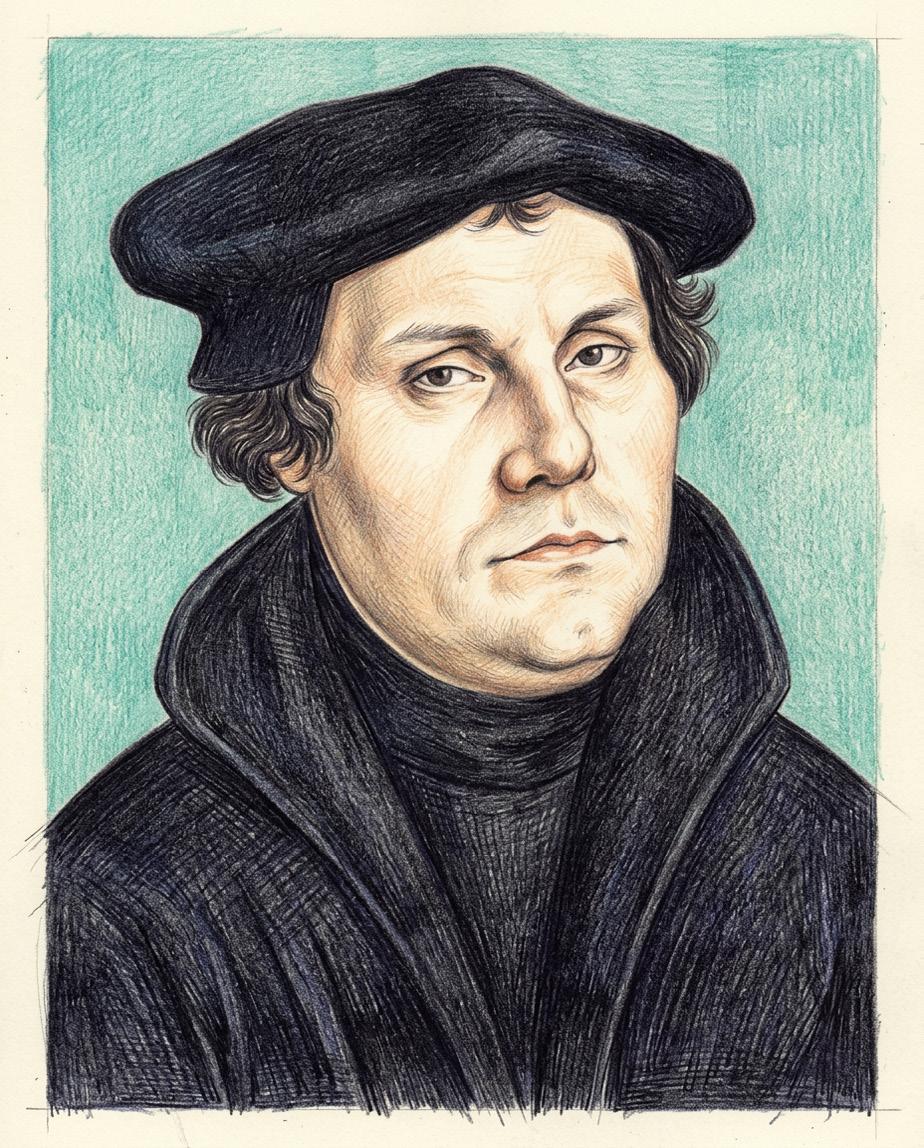
-MARTIN LUTHER
EDITORIAL
Did it ever occur to you what a privilege it is to own a Bible in your own language? When was the last time we paused for a moment, held the Bible in our hands, and thanked God for giving us His Word so freely and within our reach?
I have to admit that although I love the Word of God, I never truly considered the tedious efforts and sacrifices made by many obedient servants of God so that we could have the Bible in our preferred language today. We live in a generation where the Bible is readily available in countless versions and formats, so conveniently accessible that we often overlook its true value.
Despite the massive availability of the Bible, we are living in a time of biblical illiteracy among Christians.
It is easy to find a dusty Bible sitting on the shelf of a believer, and we are paying a great price for it. God’s Word is not optional for us; it is essential for our spiritual life. It is not a dead religious book to be read occasionally just to check off a spiritual checklist we have created. A believer must be deeply rooted in the Word of God in order to survive in this broken world.
In this edition, we are exploring the different aspects of biblical illiteracy. My prayer is that every page in this magazine speaks to your heart, and that by the time you finish reading, you will approach the Word of God on a deeper level. God bless.
In His Service
Evg. Jacob Vilgi Oommen President EGM Times
IS GEN Z’S DISCIPLINE REALLY DECLINING?
Today’s generation is often labeled as distracted, inconsistent, and lacking discipline. Studies and articles frequently point out declining levels of focus, commitment, and emotional stability among young people, especially Gen Z. At first glance, the concern seems valid. Social media has shortened attention spans, instant gratification has become normalized, and many struggle to stay committed to long-term goals, relationships, and responsibilities. In a culture built around convenience and speed, discipline can easily feel outdated.
But perhaps the issue is deeper than simply calling this generation “lazy” or “undisciplined.” Gen Z grew up in a world shaped by constant change, uncertainty, and information overload. Unlike previous generations who followed more predictable paths, young people today are navigating economic instability, digital pressure, academic burnout, and nonstop comparison online. Many are expected to perform, adapt, and succeed while being mentally exhausted at the same time.
Still, while modern struggles explain many behaviors, they do not remove the need for discipline. In fact, they make discipline even more necessary.
The problem is that many people now define discipline only in terms of productivity, achievement, or external success. But from a Christian perspective, discipline goes beyond academics, schedules, or self-improvement. Christian discipline is about remaining faithful to God even when distractions, emotions, and culture pull us elsewhere. It is the decision to pursue obedience over comfort and consistency over convenience.
The Bible repeatedly emphasizes the importance of spiritual discipline. 1 Corinthians 9:25 says, “Every athlete exercises self-control in all things. They do it to receive a perishable wreath, but we an imperishable” (ESV). Paul compares the Christian life to an athlete in training. Growth, endurance, and maturity do not happen accidentally. They require intentional effort, sacrifice, and perseverance.
This message feels especially relevant today. Many young people consume endless amounts of content every day—videos, trends, opinions, entertainment, and even Christian posts—yet still feel spiritually empty. We are constantly connected, yet deeply distracted. It has become easier to scroll for hours than to spend a few quiet minutes in prayer or reading Scripture.
The danger is not simply losing focus academically or socially. The greater danger is becoming spiritually undisciplined.
Christian discipline means developing habits that strengthen our relationship with God: prayer, reading Scripture, worship, obedience, and guarding our hearts from influences that slowly pull us away from truth. These practices may seem small or repetitive, but they shape character over time.
Galatians 6:9 reminds believers, “And let us not grow weary of doing good, for in due season we will reap, if we do not give up” (ESV). That verse reflects something many young people need to hear today: consistency matters. In a culture obsessed with instant results, the Bible teaches patience, endurance, and faithfulness.
At the same time, Christian discipline is not about perfection. Many students and young people today are already overwhelmed by pressure and unrealistic expectations. The goal is not to become flawless overnight, but to remain rooted in Christ daily. Even small acts of faithfulness matter. Choosing prayer over distraction, truth over compromise, and obedience over temporary pleasure are all forms of spiritual discipline.
The reality is that modern life constantly weakens deep focus. Social media rewards short attention spans. Trends encourage people to chase feelings instead of commitment. Convenience often replaces responsibility. But Scripture calls believers to a different way of living.
Romans 12:2 says, “Do not be conformed to this world, but be transformed by the renewal of your mind” (ESV). Christians are not called to simply follow whatever culture normalizes. They are called to live with wisdom, discernment, and self-control.
Maybe the question is not whether this generation is completely losing discipline. Maybe the real question is whether we are building the right kind of discipline in the middle of a distracted world.
Because true discipline is not just about being productive. It is about remaining grounded when everything around us feels unstable. It is about continuing to show up, remain faithful, and pursue God even when motivation fades.
And perhaps in a generation where almost everything competes for our attention, choosing consistency with God may become one of the strongest acts of discipline we can still practice today.
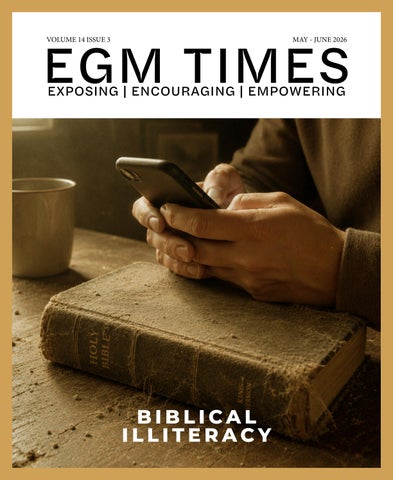
Biblical Illiteracy
-Evg. Jacob Oommen
Have you noticed how the sound of a phone notification instantly grabs your attention and triggers a rush of excitement? Some of us, when sitting somewhere and needing water, might call our spouse, children, or someone else in the family to bring it to us. But the moment a phone notification goes off, we jump out of our seats to grab the phone. I hope you can relate to what I’m saying. Unfortunately, this is a sign that technology—especially our mobile phones—has hijacked our minds and lives beyond our control. It literally controls us every day, though our ego may not allow us to admit that truth.
When we drive on the highway, we often see signboards that say, “They can wait — don’t text and drive.” Those signs exist because many distracted drivers have ended up in disastrous accidents, prompting authorities to install them for passenger safety. The bottom line is that smartphones have the ability to control us because we are so heavily influenced by them.
Now the question is: as believers, do we have the same adrenaline rush when the Holy Spirit reminds us about the dusty Bible sitting on the corner shelf in our house? How many times have we brushed off God’s reminder to read the Bible by saying, “I’m tired; I’ll do it tomorrow”?
We are living in the most advanced generation ever. We have access to so many versions of the Bible, and with just one click, we can read the entire Bible on our phones. Yet, we still struggle to consistently study God’s Word. We have lost our longing for the Word of God. We no longer feel convicted, even if we go many days or weeks without reading it. The unread messages from God in our Bibles keep piling up day by day, and it doesn’t even bother us. Then we wonder why we are spiritually dry.
Biblical illiteracy is a dangerous virus that is slowly eating away at the soul of Christianity around the world, and we must do something about it before it is too late.
From my personal experience, I can tell you that if you study the Bible consistently, you will experience the presence of God more deeply than you might even at a fire conference. There were times when I started reading the Bible intending to finish just one chapter, but I ended up continuing until I finished an entire book.
The Bible says in Hebrews 4:12 (ESV): “For the word of God is living and active, sharper than any two-edged sword, piercing to the division of soul and of spirit, of joints and of marrow, and discerning the thoughts and intentions of the heart.” The Bible is not a dead religious book. Often, the reason we struggle to spend time consistently on Scripture is that we lack an understanding of what it can truly do in our lives. Despite countless persecutions and opposition throughout history, the Bible is still transforming the lives of billions around the world because it is not merely a religious book, but the living and active Word of the sovereign God.
It is sharper than any two-edged sword. It has the ability to pierce the soul and spirit, joints and marrow. His Word can even bring healing to your soul and physical body as you meditate on it and believe it with all your heart. It can discern the thoughts and intentions of your heart.
The breakthrough you have been waiting for is sitting in the corner of your house, ignored. When you truly understand the change God’s Word can bring, it will lead you to meditate on it daily. More than any podcast or sermon you listen to, through Scripture, God speaks personally to His people.
If you have a Bible in your mother tongue, you are truly blessed. Even today, many people around the world do not have access to the Bible in their own language. Often, we do not realize the value of what we have until we lose it. Over the past fourteen years of ministry, God has given me the opportunity to travel to many nations and meet believers from different backgrounds. I have witnessed the passion and zeal of believers in developing countries who, despite intense persecution and poverty, hold tightly to the Word of God. It is amazing to see how deeply they embrace Scripture and experience the beauty and life-changing power it brings into their lives.
“The breakthrough you have been waiting for is sitting in the corner of your house, ignored.”
At the same time, there are so many people still suffering in the darkness of this sinful world. My heart aches for them, and I often think about how wonderful it would be for them to encounter the saving grace of Jesus Christ and experience the light only He can bring.
These experiences were both eye-opening and deeply convicting for me personally. They made me realize how often I had taken for granted the privilege of having the Bible in my hands. Now, my heart longs for His Word every day. If I go even a single day without spending time in Scripture, my heart feels heavy and convicted because I know I have allowed the busyness and cares of life to override my time with God’s Word. Know the power of God’s Word and understand the privilege of having a Bible in your preferred language.
As you read this, if you are a believer, from the bottom of my heart, I encourage you to take your personal Bible study to the next level from this moment onward. Nothing in your life is more important than learning and meditating on the Word of God. You will be surprised to see how much it can bring peace and solutions to the problems you face in your life, and above all, experience the presence of God intimately.
It is not your own strength or efforts that will sustain you through the storms of life, but your deep roots in the Word of God that will anchor you in the midst of every storm. Our forefathers endured great trials because of their deep knowledge of and trust in the Word of the living God.
As believers, the Bible is our refuge and foundation in the uncertainty of this world. So prayerfully make this decision today: “Lord, from this day onward, I will not let my Bible sit untouched while it holds the unread promises, wisdom, and truth You have given me through Your Word.”
How Biblical Illiteracy Impacts the Life of a Believer?
• When you do not know the Word of God, you become vulnerable to deception and false teachings.
• Biblical illiteracy weakens your spiritual life over time and eventually leads to spiritual dryness.
• If you do not develop a passionate habit of reading Scripture, you may pass the same spiritual neglect on to your children.
• Every time you ignore the promises of God found in Scripture, you become more vulnerable to believing the empty promises of this world.
• Biblical illiteracy produces powerless Christians who lack spiritual strength, discernment, and stability.
How Biblical Literacy Impacts the Life of a Believer?
Biblical literacy helps you discern false teachers and recognize teachings that are not rooted in God’s truth.
It strengthens you to become a mature disciple of Jesus Christ who can make a lasting impact in the lives of others.
Instead of becoming a slave to the values of this world, you learn to live according to the will of God.
Biblical literacy also helps you become an example to your children, guiding them to grow as deeply rooted Christians grounded in the Word of God. When you know Scripture deeply, you are less likely to be deceived by the empty promises and temporary pleasures this world offers.
Biblical literacy produces spiritually strong believers who can endure and remain faithful through every circumstance of life.
“It often astonishes me that I did not see the importance of meditation upon Scripture earlier in my Christian life. As the outward man is not fit for work for any length of time unless he eats, so it is with the inner man. What is the food for the inner man? Not prayer, but the Word of God—not the simple reading of the Word of God, so that it only passes through our minds, just as water runs through a pipe. No, we must consider what we read, ponder over it, and apply it to our hearts.” — George Müller
I pray that your turning point with the Word of God begins at this very moment. Never waste the precious time God has given you in this world to fellowship with Him and grow through His Word. Seize every moment with a passionate and grateful heart, invest your time in Scripture, and you will grow into a mature and fruitful disciple of Jesus Christ.
THE STORY BEHIND THE SONG
Great Is Thy Faithfulness
The hymn Great Is Thy Faithfulness was written in 1923 by Thomas O. Chisholm, with music composed by William M. Runyan. Chisholm was not a famous preacher; he mainly worked as a teacher, journalist, and later an insurance agent because poor health kept him from full-time ministry. His inspiration for the hymn came from Lamentations 3:22–23, which speaks of God’s mercies being new every morning and His great faithfulness.
Chisholm wrote the lyrics as a poem reflecting on his experience of God’s faithfulness in everyday life, despite various struggles. He sent the poem to his friend William Runyan, who was connected to the Moody Bible Institute. Runyan composed the melody, turning the poem into the hymn now sung in churches around the world.
Although the hymn is widely loved today, it did not gain fame immediately. Its popularity grew over time, especially after evangelist Billy Graham used it frequently in his crusades. What makes the hymn special is that it celebrates God’s faithfulness in ordinary life, not just in dramatic moments. More than a century later, Great is Thy Faithfulness is a reminder to believers everywhere that God’s mercy, provision and love are steadfast through every season of life.
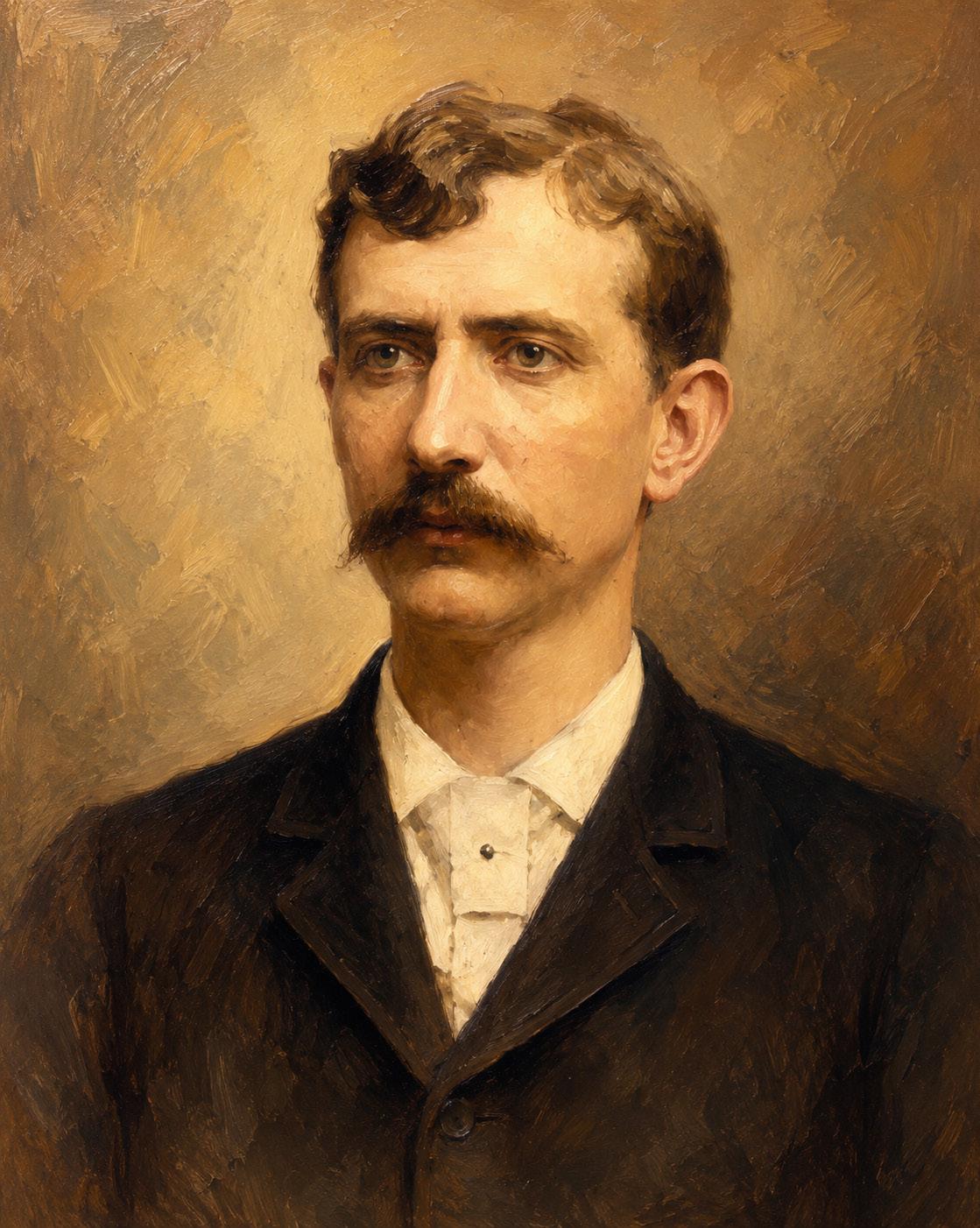
Thomas O. Chisholm
The Book That Reads Us Back
-Dr. Gladys Childs
We were supposed to leave for the retreat at six. At quarter past, my friend was still rummaging through the bin under her bed. “I know it’s here,” she said. “I just had it.” I sat with my coffee and watched her check the same drawer twice. When she finally pulled her Bible out from behind a stack of magazines, the spine cracked open like a door no one had walked through in a year. A receipt fell out, dated March. It was November. She laughed, embarrassed, and tossed it in her bag. I laughed too, but something in me had gone still. I thought back to a time decades ago, when I struggled to find my Bible.
Biblical illiteracy is not an information problem. The Bibles are everywhere. Free apps, paper editions stacked at the church door, audio versions narrated by actors with comforting voices. The reason we do not read is not access. It is something more uncomfortable, and naming it is where any change starts.
Hebrews 4:12 says the Word of God is “alive and active. Sharper than any double-edged sword, it penetrates even to dividing soul and spirit, joints and marrow; it judges the thoughts and attitudes of the heart.” Most of us have underlined that verse as encouragement. Read it again with honest eyes. It is more warning than comfort. Scripture does not just inform us. It reads us back.
And there is the splinter beneath all our excuses. We don’t avoid the Bible because it is dull. We avoid it because it sees us. It sees the spending we have rationalized, the resentment we have curated, the prayer we keep delaying because we know what God will ask. To open the Book on purpose is to volunteer to be known. Most of us would rather not be known on a Tuesday morning before coffee. We would rather scroll through words that flatter us or leave us alone.
So we let the Bible become furniture. Dusted, displayed, occasionally cited at funerals. We do not need to throw it out to neglect it. We just keep it within arm’s reach and never reach.
God will not force the Word into us. He could. He spoke galaxies into existence, and He chooses to whisper with us. The Spirit draws and convicts and stirs us toward the page, but does not override the will He gave us. Deuteronomy 30:19 lays out the terms: “…I have set before you life and death, blessings and curses. Now choose life…” He does not strap the cup to our face. He sets it on the table and waits. The God who rained manna from heaven for hungry wanderers will not, in this age, drag us by the hair to His Word.
That is the dignity He gives us, and also the danger. The freedom that lets us choose Him is the same freedom that lets us neglect Him for a decade and call it a busy season. Every closed Bible is a daily verdict about what we believe will hold us when life comes for what we love.
“We don’t avoid the Bible because it is dull. We avoid it because it sees us.”
The cisterns will not hold. Jeremiah saw it six centuries before Christ. “My people have committed two sins: They have forsaken me, the spring of living water, and have dug their own cisterns, broken cisterns that cannot hold water” (Jeremiah 2:13). Forsaking is not forgetting. It is leaving on purpose, water bottle in hand, for a hole in the dirt. We have done it. We have built cisterns out of opinions, podcasts, productivity, and the algorithm’s opinion of who we ought to be by Friday. None has held. We come up thirstier and blame the season.
What do we do with this? Not a reading plan. Not yet. Reading plans are good, but they are downstream of something more honest. Before we pick up a new schedule, we ought to sit somewhere we cannot scroll, and pray a confession we have been postponing. The kind that admits we have had every resource and chosen none, that we have been afraid of being seen by the One who could heal us, and that we are asking Him to give us back the appetite we let die.
He gives that appetite back. He gave it to the Samaritan woman after five husbands and a sixth man not her own. He gave it to the prodigal in the pig slop, and to David after Bathsheba and Uriah. People far worse than us have come back, and He has fed them. But not from a distance. He does it on the page, in the chapter we have been avoiding, in the verse that names what we are carrying. The cure for biblical illiteracy is the willingness to be read.
I think about that receipt sometimes. A scrap of paper marked a page she had not turned in eight months. I do not know what was on her page. I know what was on mine. May we not waste another year. The spring has not moved. We are the ones who must walk back.
Dr. Gladys Childs, host of Bare Faith and known as the “Truth Doctor,” boldly exposes lies that keep people from God’s truth, speaking with authority and real-life grit as a pastor’s wife, author, speaker, and former professor. Her new book, Chasing Emptiness, Finding Fullness, invites weary hearts to stop striving for what cannot satisfy and encounter the Spirit’s fullness in everyday life.
P O T L I G H T
Hantavirus-related news is now trending in today’s news feed, bringing back many thoughts from the pandemic caused by COVID-19. Once the media starts talking about the latest virus, it does not take long before many people feel the same fear they did at the beginning of the pandemic. It is not difficult to recall the fear that gripped headlines, conversations, families, and neighborhoods as the world watched the virus spread across the country and the world. This is an example of the impact of information and how quickly fear spreads when disease takes center stage.
As children of God, however, we have authority over the enemy through Christ. It is a reminder from Luke 10:19, when Jesus said, “I have given you authority...” That encourages us to have a confident faith as discussions of sickness flood the world, knowing that the Word of God consistently shows us who He is: healer and comforter. It gives us the confidence to pray boldly, speak life, and trust Him for our protection. We can all stay informed and be prudent, but remember, we are not alone. He who is in us is greater than the one who is in the world (1 John 4:4). Headlines come and go, but God’s word never does. He was with us through the COVID-19 pandemic, and He is still with us, giving us authority, peace, and strength amid the uncertainity
IMPACT OF ONE YES
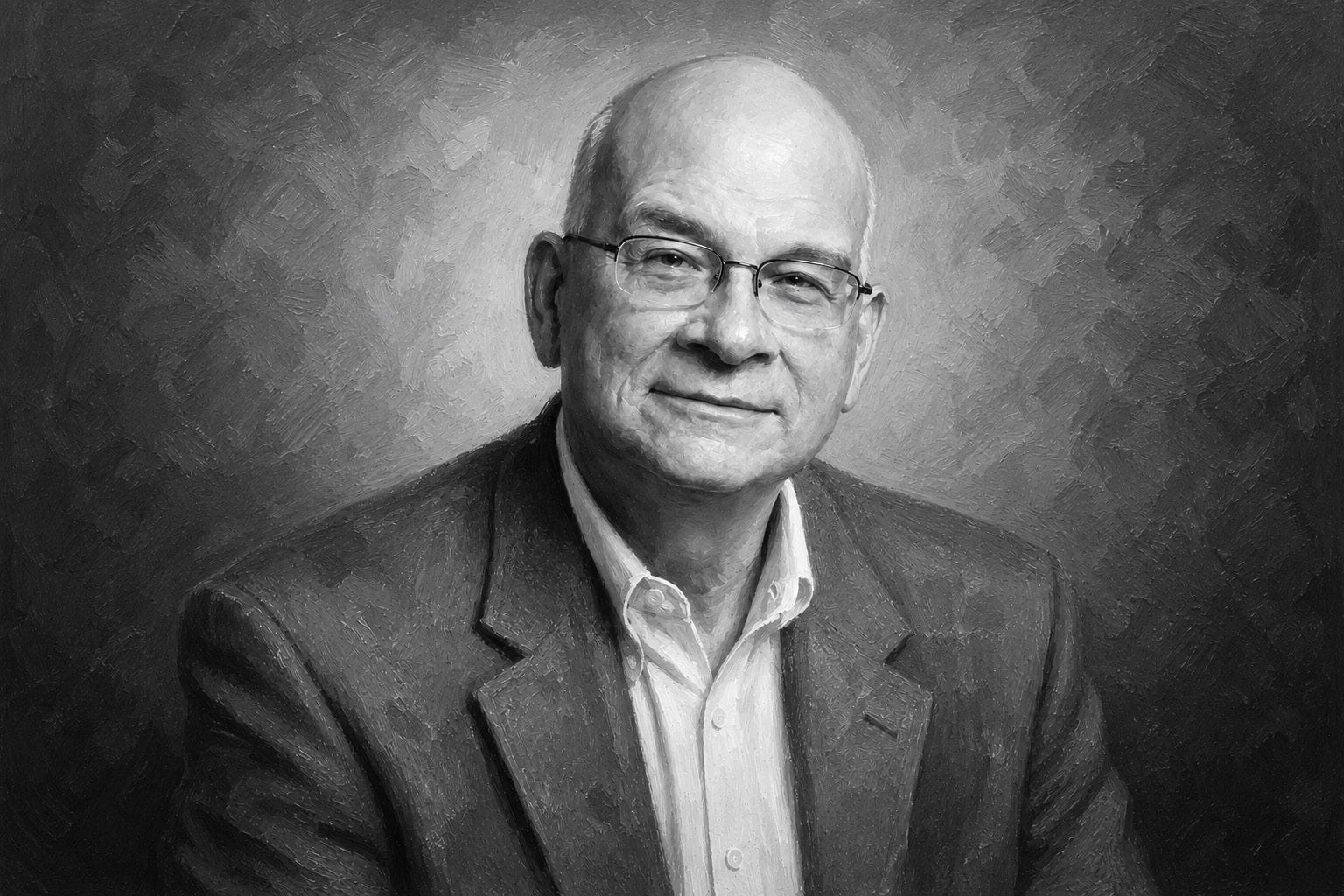
TIMOTHY KELLER
Bringing the Gospel to the City
Timothy Keller, widely known as Tim Keller, was one of the most influential Christian pastors, theologians, and authors of the modern evangelical movement. He became known for presenting the Christian faith in a thoughtful, compassionate, and intellectually engaging way, reaching many people around the world, especially young professionals, skeptics, and urban communities searching for faith, purpose, and truth.
Born on September 23, 1950, in Allentown, Pennsylvania, Keller grew up in a Lutheran family and became a committed Christian while studying at Bucknell University. During his college years, he became involved in evangelism and campus ministry, which sparked his lifelong passion for sharing the gospel. He later studied at Gordon-Conwell Theological Seminary, where he earned a Master of Divinity degree, and completed a Doctor of Ministry at Westminster Theological Seminary in Philadelphia. These experiences shaped his theological convictions and ministry approach.
Keller married Kathy Kristy, who became his lifelong partner in ministry and life. Together, they raised three sons. Early in his career, Keller served as pastor of West Hopewell Presbyterian Church in Virginia. After several years, he accepted the challenge of starting a church in Manhattan, New York City, in 1989. Many believed that a conservative evangelical church would struggle in such a secular and intellectual environment, but Keller faithfully pursued the mission. From a small group of people, Redeemer Presbyterian Church eventually grew into one of the most influential churches in New York City.
He became especially recognized for explaining Christianity in a way that connected to modern culture, using references to philosophy, literature, and current issues. His preaching style was marked by humility, grace, and intellectual depth, which attracted students, artists, professionals, and skeptics alike.
Aside from preaching, Keller also became a wellknown author. Some of his influential books include The Reason for God, The Prodigal God, The Meaning of Marriage and Prayer. Through his writings, he helped millions of readers better understand faith, relationship, work, and the purpose of life. He also co-founded Redeemer City to City and helped establish The Gospel Coalition, ministries that supported church planting and gospel-centered teaching around the world.
In 2020, Keller shared that he had been diagnosed with pancreatic cancer. Even while facing illness, he continued to encourage people through his writings and public messages, showing remarkable faith and peace in God. He passed away on May 19, 2023, at the age of 72. His legacy lives on through his books, sermons, ministries, and the many leaders he mentored. Keller remains a powerful example of how the gospel can speak meaningfully to both the heart and the mind in today’s world.
“If the suffering Jesus endured did not make him give up on us, nothing will.”
-Timothy Keller
Pastor Timothy Keller said yes to his God-given calling and finished his race well. Will you run from the call of God, or will you courageously run toward it? Say yes to His purpose for your life, it is eternally worth it.
THE PERSECUTED CHURCH
For many Christians around the world, freedom to practice their faith may be taken for granted. Bibles are widely available, and churches meet freely with believers able to publicly express their faith. In some nations like North Korea, however, following Jesus comes with a great cost, and believers are some of the most persecuted worldwide simply for believing in the Christian faith.
North Korea
In North Korea, allegiance is due to the leadership and no religion is permissible that goes against what is presented to be a truthful ideology and Christian faith can often threaten the regime for preaching God above all things. Believers practice their faith in secret because they may be imprisoned, tortured, or killed if they possess or are found to be reading the Bible, praying in public, or sharing the gospel.
Christians in North Korea must attend secret home churches or in obscure locations, aware that they could jeopardize their families’ lives along with their own.
A whole family may suffer the consequences of a single believer’s faith. Believers may also be sent to difficult labor camps where life is very trying, but still the Christians remain devoted to their beliefs as they continue to trust God even in the face of overwhelming circumstances.
The testimony of the Christians in North Korea serves as a reminder of the price for becoming a believer in Christ, which gives courage and strength to the global church members in more open societies. Organizations like Open Doors International, Voice of the Martyrs, and Christian Solidarity Worldwide have dedicated themselves to helping persecuted believers and advocating for religious freedom worldwide. By praying with global networks, through campaigns, and through practical support, they bring hope to suffering believers and inform many about persecution, making believers around the world feel they must remain connected to the suffering of their brothers and sisters.
The Bible calls on all believers to stand with fellow believers during trials and hard times, and thus, prayer is a crucial way to support Christians experiencing religious persecution and to ensure their message is known and heard all over the world. As the world’s Christians reflect on the plight of their persecuted brothers and sisters in North Korea, we are reminded that we must unite through prayer, hope, and faith for when our fellow believers can one day be set free.
WHAT HAPPENS WHEN THE WORD IS ABSENT?
Biblical illiteracy is no longer a hidden issue inside the modern Church. It is visible in the way many believers think, speak, discern truth, and respond to the pressures of the world. We live in a generation overflowing with access to Scriptures. Bibles are available in countless translations. Sermons are one click away. Christian podcasts, devotionals, and Bible apps are everywhere. Yet despite all these resources, many Christians remain spiritually malnourished because the Word of God has been neglected.
The tragedy is not the absence of Bibles, but the absence of hunger for them.
The prophet declared in Hosea 4:6, “My people are destroyed for lack of knowledge; because you have rejected knowledge, I reject you from being a priest to me. And since you have forgotten the law of your God, I also will forget your children.” (ESV)
God’s people do not collapse overnight. Spiritual decline often begins quietly when Scripture is no longer central. When the Word is absent, believers slowly lose discernment, conviction weakens, and truth becomes negotiable.
One of the first consequences of biblical illiteracy is weak and unstable faith. Faith cannot survive on emotions alone. Worship experience, inspirational messages, and Christian content may encourage believers temporarily, but only the Word of God produces spiritual roots strong enough to endure trials. Romans 10:17 says, “Faith comes from hearing, and hearing the Word of Christ” (ESV). A Christian disconnected from Scripture becomes vulnerable to fear, doubt, confusion, and spiritual inconsistency because there is no deep foundation sustaining them.
This weakness becomes evident during seasons of suffering. Many believers know how to celebrate God during blessings but struggle to trust Him during hardship because their understanding of Scripture is shallow. Without biblical grounding, faith becomes dependent on feelings rather than truth. As a result, many walk away from God the moment circumstances become painful or prayers remain unanswered.
Another serious consequence is vulnerability to false teaching. A believer unfamiliar with Scripture cannot distinguish truth from error. This danger is especially relevant today where social media has become a major source of spiritual influence. Short motivational clips, popular personalities, and emotionally charged messages often replace careful biblical teaching. Many sermons focus more on self-improvement, success, and entertainment, rather than repentance, holiness, and obedience to Christ.
Because of biblical illiteracy, many Christians accept teachings simply because they sound inspiring or are delivered confidently. Yet Scripture warns repeatedly about deception. Ephesians 4:14 warns believers not to be “carried about with every wind of doctrine.” Discernment is impossible without familiarity with God’s Word.
Biblical illiteracy also produces spiritual immaturity. The writer of Hebrews rebuked believers because they remained spiritually undeveloped despite years in the faith. Hebrews 5:12 says, “For though by this time you ought to be teachers, you need someone to teach you again the basic principles of the oracles of God. You need milk, not solid food.” (ESV).
Spiritual maturity does not come merely through church attendance or Christian activity. It comes through continual submission of Scripture.
A Christian who neglects the Word may remain emotionally driven, easily offended, prayerless, and spiritually undisciplined. Many desire spiritual power while avoiding spiritual depth. They seek encouragement without correction, promises without obedience, and blessings without surrender. Yet God never intended His people to remain spiritually immature. His Word shapes character, renews the mind, and transforms the heart.
Another consequence is moral compromise. When Scripture loses authority in a believer’s life, culture begins to take its place. Society constantly redefines truth, morality, identity, and purpose. Without biblical conviction, many Christians slowly adapt to worldly standards while still maintaining a religious appearance.
This is why many believers today struggle to stand firmly on biblical truth regarding the holiness, purity, integrity, and righteousness. Instead of Scripture shaping lifestyles, entertainment, trends, public opinion, and internet culture shapes conviction. Psalms 119:105 says “Your word is a lamp to my feet, and a light to my path.” (ESV). When the lamp is ignored, darkness becomes inevitable.
God’s Word remains alive, powerful, and transformative. Biblical illiteracy is not irreversible. A believer who returns to Scripture returns to spiritual strength. The solution is not merely reading more verses casually, but rebuilding a genuine hunger for God’s truth.
“Without biblical grounding, faith becomes dependent on feelings rather than truth.”
-Gideon Pingkihan
Jesus Himself declared in Matthew 4:4, “Man shall not live by bread alone, but by every Word that comes from the mouth of God. (ESV)”. Just as the body cannot survive without food, the soul cannot thrive without Scripture. Christians must move beyond occasional exposure to the Bible and cultivate consistent, intentional study of God’s Word.
The church must also recover the priority of biblical teaching. Christians do not need less Scripture and more entertainment. They need truth preached clearly, boldly, and faithfully. Strong churches are built upon strong doctrine, and strong believers are formed through deep engagement with the Word of God. It is not outdated, irrelevant, or optional. It is the very foundation of Christian faith.
When the Word is absent, faith weakens, deception spreads, and spiritual maturity declines. But when believers return to Scripture, hearts are awakened, minds are renewed, and lives are transformed. The closed Bible must be opened again. For only those deeply rooted in God’s Word will remain steadfast in a world increasingly distant from truth.
-Joshua 1:8 (ESV)
This Book of the Law shall not depart from your mouth, but you shall meditate on it day and night, so that you may be careful to do according to all that is written in it. For then you will make your way prosperous, and then you will have good success.
Gideon Pingkihan is the Associate Editor of EGM Times and a graduate of Agricultural Engineering from Quirino State University, currently pursuing Theology at Bethesda School of Theology. He is passionate about mentoring the next generation to pursue their dreams while preparing spiritually for eternity.
LTHE BOOK SHELF
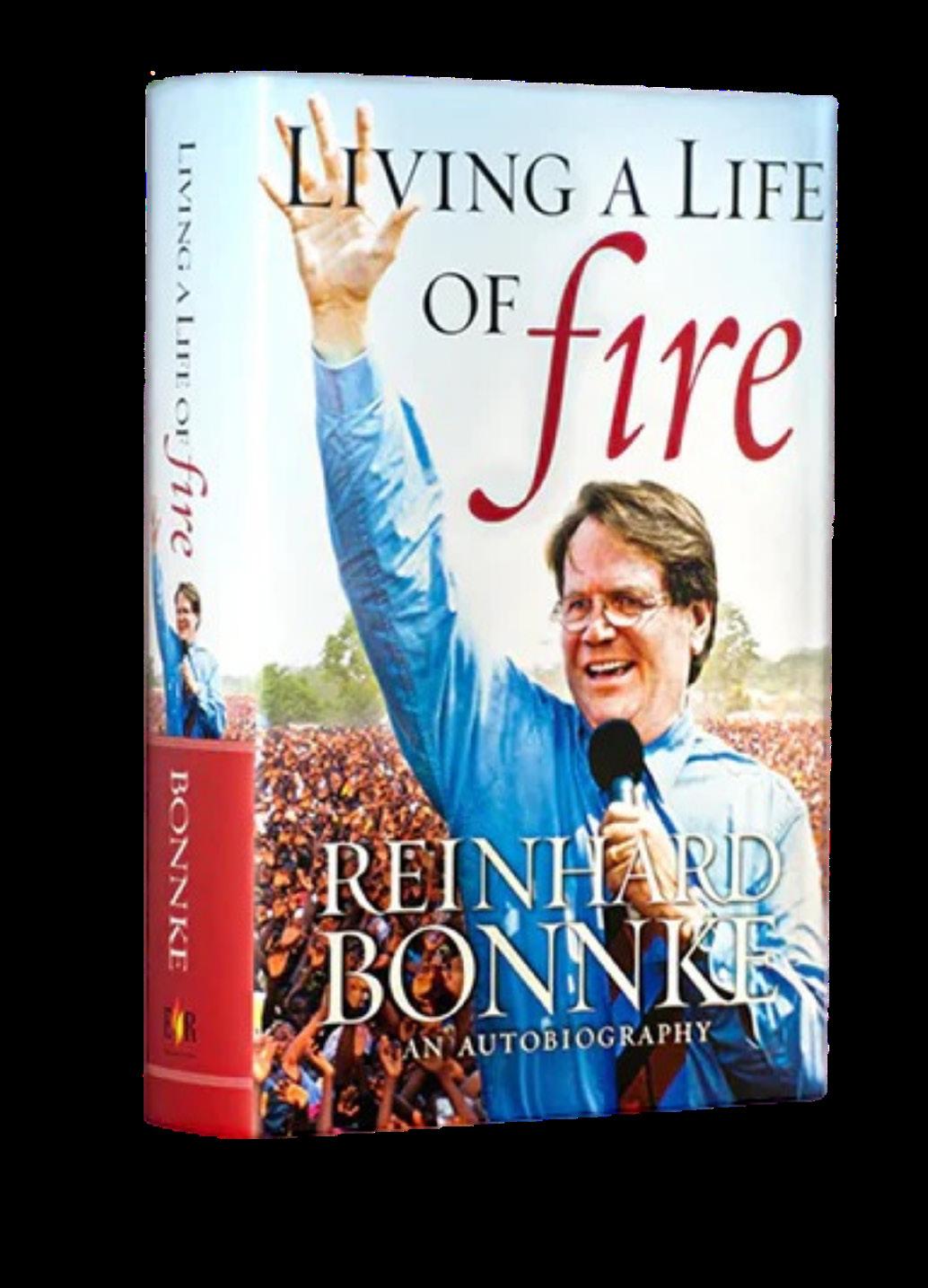
iving a Life of Fire is the inspiring autobiography of the late Evangelist Reinhard Bonnke, a servant of God who preached every sermon with deep conviction, unwavering faith, and extraordinary passion. The same zeal that marked his ministry shines through every page of this book, making it a powerful, engaging, and deeply moving read.
From his early childhood to his incredible decades of ministry, Bonnke shares the remarkable journey God took him on as he faithfully proclaimed the Gospel of Jesus Christ to millions around the world, especially throughout Africa. His testimony is filled with lessons of faith, perseverance, humility, and complete dependence on God.
More than a biography, this book challenges and inspires readers to pursue their own God-given calling with humility, radical passion, and, above all, a wholehearted love for Jesus Christ. It will stir your faith, ignite your spiritual hunger, and encourage you to live fully for the glory of God.
If you have not yet read this incredible book, we highly recommend that you get a copy. It is a life-changing testimony that will inspire, challenge, and encourage you—and you will not regret reading it.
The Word of God: Life, Transformation, and Freedom
The importance of the Word of God cannot be overstated. God honors His Word. As Psalm 138:2 says, “For You have exalted above all things Your name and Your word.” Everything humanity needs to know about God and life is found in Scripture. The Word of God guides us, provides truth, and sets our standards for living. It gives us sound teaching, correction, and instruction in righteousness. As 2 Timothy 3:16–17 reminds us, “All Scripture is God-breathed and is useful for teaching, rebuking, correcting and training in righteousness, so that the servant of God may be thoroughly equipped for every good work.”
-Effie Ochago
The Word of God is our manual for life. It gives us wisdom, direction, and understanding for every situation. That is why we should study it, think about it, and let it shape our thoughts and actions. As Psalm 119:105 states, “Your word is a lamp to my feet and a light to my path.”
A common analogy is that when we buy a machine, it comes with a manual. We rely on that manual to understand how the machine works and how to use it effectively. In the same way, God has not left us lost in life. He has given us His Word as our guide and the Holy Spirit as our teacher to help us understand and apply it. As Jesus said in John 14:26, “But the Helper, the Holy Spirit, whom the Father will send in my name, He will teach you all things and bring to your remembrance all that I have said to you.”
The Word of God is also known as the bread of life. Just as our bodies need food to stay strong, our spirits need regular nourishment too. Jesus said in Matthew 4:4, “Man shall not live by bread alone, but by every word that proceeds from the mouth of God.” When we feast on the Word, it nourishes our spirits, refreshes our minds, and even promotes our physical health. Proverbs 4:20–22 declares, “My son, pay attention to what I say; turn your ear to my words… for they are life to those who find them and health to one’s whole body.”
The Word of God truly carries life. Every word in Scripture holds life and truth. As we consistently engage with it, we grow in character and faith. It strengthens us and protects us from the enemy’s discouragement and deception. The Word grounds us and reminds us of God’s promises even in tough times.
The Word of God also changes us. Romans 12:2 states, “Do not be conformed to this world, but be transformed by the renewing of your mind.” When we meditate on Scripture regularly, our thoughts begin to shift. Previously, we noted that the Word of God reveals Christ Himself. The more we see Him in the Word, the more we are changed into His likeness. As 2 Corinthians 3:18 says, “And we all… beholding the glory of the Lord, are being transformed into the same image from one degree of glory to another.” Studying the Word with the Holy Spirit’s guidance always brings transformation in our inner selves, shaping us into the likeness of Christ for His glory.
Finally, the Word of God brings freedom. In a broken world, it’s easy for people to get caught up in worldly thinking and negative patterns. Before salvation, people’s minds were influenced by the enemy, referred to in Scripture as “the prince of the power of the air” (Ephesians 2:2). Yet, with each study and meditation on the Word, we unlearn wrong thoughts and replace them with God’s truth. As Jesus said in John 8:31–32, “If you abide in My word, you are truly My disciples, and you will know the truth, and the truth will set you free.”
Through the Word, our minds are renewed, our hearts are strengthened, and our lives align with God’s will. It teaches us how to think, live, and walk in the freedom Christ offers. But then someone might ask, if God’s word is that powerful, why doesn’t it transform everyone who comes to hear it? Jesus Himself gave us the answer with the Parable of the Sower.
In Matthew 13:3-9, Jesus tells the parable of the sower to illustrate how different people respond to the Word of God. The seed symbolizes the Word, and the different soils symbolize the condition of people’s hearts. The seed on the path is eaten by the birds, which represents the people who hear the Word but understand it not and the wicked one will take away the Word from their hearts (Matthew 13:19). The seed on rocky ground shows people that received the Word with joy but when the tribulation and persecution arising for the Word’s sake they will immediately fall away and wither because it had no root. The seed that falls among the thorns represents people who heard the Word, but the cares of this life, and the deceitfulness of riches, and the lust of other things choke the word, and it becomes unfruitful. The seed on the good soil represents those people who hear the Word and understand it, and they keep it, and bear fruit.
The Word of God brings life, nourishment, change, and freedom. Its efficacy in our lives depends on the condition of our hearts, as Jesus explained in Matthew 13. We can rest assured it will bring good fruit if we allow ourselves to receive it meekly, keep it safe, and nurture it into our lives.
BECOMING
Effie is a writer and editor based in Nairobi, Kenya, with a deep passion for the word of God. She holds a Bachelor of Arts degree in Language and Communication and currently serves as the Content Editor for EGM Times.Dedicated to sharing biblical truth and inspiring others in their faith journey, she uses her writing to uplift and encourage.
The Path of Righteousness: Why God’s Best Isn’t Always a Straight Line
-Daya Raja
We often imagine “righteousness” as a kind of moral highway—flat, paved, and efficient. In a culture that prizes speed and optimization, we instinctively look for the shortest route between where we are and where we believe God wants us to be. If we’re doing the right things, shouldn’t life move in a straight line? But that picture begins to fall apart the moment we step into the world of Psalm 23.
When David writes in Psalm 23:3, “He leads me in the paths of righteousness for His name’s sake,” he isn’t describing a highway. He is describing the tracks of a shepherd.
-Daya Raja
In the Judean wilderness, sheep don’t walk in straight lines up a cliff; they follow winding paths that gradually ascend. A straight line would be too steep for the sheep to climb and would lead to exhaustion. So instead, he takes them along a gradual incline back and forth, around rocks, through dips and ridges. To an outside observer, it might look inefficient, even confusing. But the shepherd knows something the sheep do not: this winding path is the safest way up.
The paths of righteousness are often meandering. They wind through valleys and around obstacles. This isn’t because God is lost or because you’ve taken a wrong turn, it’s because He knows the grade of the incline your soul can handle.
We often mistake progress for speed. But Isaiah provides a different metric for the righteous life. It isn’t about how fast we move, but how we conduct ourselves while we wander.“He who walks righteously and speaks uprightly, who despises gain from fraud and from oppression... who stops his ears from hearing of bloodshed and shuts his eyes to avoid looking upon evil.” (Isaiah 33:15)
A quick path that requires you to compromise your integrity is actually a crooked path in the eyes of God. Conversely, a long, winding path where you learn to shake your hands free of bribes and close your eyes to evil is a path of righteousness. It is holy because of the person you are becoming on it. It is designed to reflect the character of the One who leads, His patience, His wisdom, His faithfulness.
Why does God lead us on these long, sometimes confusing routes?
For His Name’s Sake: The path is designed to bring Him glory, showing that He can sustain a soul even in the wilderness. (Psalm 23:3)
For Your Peace: Isaiah 32:17 tells us that the fruit of this righteousness is peace, quietness, and confidence.
If we took the shortcut, we might get the “prize” sooner, but we wouldn’t have the quietness, the deep inner steadiness that comes from walking with the Shepherd over time. It is formed in the ordinary, repeated choices of obedience when no one is watching and nothing feels dramatic. A soul is restored (Psalm 23:3) not by reaching the end of the road, but by the presence of the Shepherd during the walk.
If your life feels like a series of long, winding loops right now, do not mistake your location for your direction. If you are walking in obedience, rejecting fraud, and seeking His face, you are on a path of righteousness.
It may not be a shortcut, but it is a holy way. Trust the Shepherd’s pace; He is more interested in the health of the sheep than the speed of the trek.
Daya thinks it’s absolutely cool to be known by Jesus. She deeply appreciates nature, art and silence. Her dream is to fall in love with Jesus and humanity every day. Daya can be reached at dayaraja95@gmail.com
HARD TRUTH
Becoming More Like Jesus: Understanding Spiritual Growth
-EGM Times Team
Spiritual growth is the lifelong journey of becoming more like Jesus Christ. The moment we place our faith in Him, the Holy Spirit begins transforming our hearts, minds, and character to reflect His image. This transformation is beautifully emphasized in 2 Peter 1:3–8, where Scripture reminds believers that God has already provided everything necessary for a life of godliness. Verse 3 declares, “His divine power has granted to us all things that pertain to life and godliness, through the knowledge of him who called us to his own glory and excellence” (ESV). Spiritual growth, therefore, is not merely about religious activity or consuming Christian content; it is about knowing God deeply and allowing His truth to transform every area of life.
Galatians 5:19–23 presents two contrasting realities that help believers evaluate spiritual maturity. The first list describes the “works of the flesh,” representing sinful desires and behaviors that once defined us before salvation. These include impurity, jealousy, selfish ambition, envy, and other manifestations of the sinful nature. Such attitudes are not meant to remain dominant in the life of a believer. Through the power of the Holy Spirit, Christians are called to repent of these things and continually overcome them.
In contrast, verses 22–23 describe the “fruit of the Spirit”: “love, joy, peace, patience, kindness, goodness, faithfulness, gentleness, self-control” (ESV). These qualities should increasingly characterize the life of every Christian. Spiritual growth is evidenced not by how loudly we speak about faith, but by how consistently the character of Christ is reflected in us.
The biggest enemy to our spiritual growth is complacency. Can a believer reach perfect spiritual growth? No. Can a believer be satisfied at a particular level of spiritual growth? No. Christian life is not about becoming a perfect Christian in this world, which is impossible because we live in a fallen world. But we can become a better Christian today than yesterday, and we must work towards it, seeking God’s grace. We are not called to be stagnant in our relationship with Christ, but it should always be in the process of growth, one step at a time. We live in a fast-paced world where it’s very easy for our daily chores to override our efforts for spiritual growth.
Without an intentional heart, we cannot achieve spiritual growth. With a complacent mindset or with self-righteousness, we cannot grow in Christ. We must have that burning passion in our hearts to grow more and more every day in Jesus Christ.
Marks of Spiritual Growth
The desire to study God’s Word indicates spiritual growth. Everyone starts their spiritual path as an infant, but they should grow into complete adults throughout their lives. The Word serves as a need for both spiritual infants and mature believers who understand it at different levels.The Bible says in 1 Peter 2:2 ESV. “Like newborn infants, long for the pure spiritual milk, that by it you may grow up into salvation.”Here, the Apostle Peter compares believers to newborn infants because they constantly long for and crave the pure milk of their mother to satisfy their hunger, and it is through that milk that they grow stronger day by day. In the same way, as believers in Jesus Christ, instead of being filled with pride and the things of this world, we must empty ourselves daily and long for the pure spiritual milk that helps us grow in our spiritual life. It is not a one-time or occasional process, but a continuous daily process of spiritual growth.
People who seek God genuinely will find complete satisfaction according to Jesus’ teaching. He stated, “Blessed are those who hunger and thirst for righteousness, for they shall be filled” (Gospel of Matthew 5:6). The same passage contains His statement, “Blessed are the pure in heart, for they shall see God” (Matthew 5:8). People who come to God with a humble heart and genuine intentions will receive spiritual sustenance from His Word.
Capacity for self-examination is another mark of genuine spiritual growth. Biblical self-reflection enables us to evaluate ourselves honestly and seek God’s guidance for personal development. The parable of the prodigal son provides a straightforward proof of this principle. The man returned to his father after recognizing his errors and regaining his senses (Gospel of Luke 15:17–20).
The Pharisees maintained their practice of criticizing others while they ignored their own internal problems. Jesus addressed this when He asked, “Why do you look at the speck in your brother’s eye but fail to notice the plank in your own eye?” (Gospel of Matthew 7:3). People who refuse to examine themselves expose their prideful nature, which leads them to act according to the flesh instead of following the Spirit (Epistle to the Galatians 5:19–21).
Another sign of spiritual growth is the ability to receive and understand information. The Word of God requires us to accept it with complete openness while we test everything. A good example is the Bereans, who were commended because they “received the message with great eagerness and examined the Scriptures every day to see if what Paul said was true” (Acts of the Apostles 17:11).
As Christians continue walking with God day to day, the fruits of the Holy Spirit will begin to manifest in their character. While perfection may be unattainable in this life, believers are always encouraged to seek fellowship with God and to grow in Christlikeness.
A MOMENT TO REFLECT
These reflection questions are meant to help you evaluate your heart, your obedience, and your commitment to God’s Word. Allow them to guide you into deeper self-examination, prayer, and realignment with the truth of Scripture.
1.Do I see the Bible as vital spiritual nourishment or as an occasional spiritual activity?
2.In what ways has God’s word affected my attitude, actions or character?
3.When I read the Bible, do I hear God speaking to me through His word?
4.How can we encourage others, especially the younger generation, to value and engage deeply in the Word of God in today’s world?
An Invitation to Salvation
Salvation is a gift of God’s grace, not something we earn. We are saved by trusting in Jesus Christ, who died for our sins and rose again to give us new life (Ephesians 2:8–9).To respond to Jesus is to repent and believe, to turn away from sin and place our faith in Him.
True faith includes confessing Jesus as both Savior and Lord, surrendering our lives to His authority (Romans 10:9). Salvation is the beginning of a transformed life, where God forgives, renews, and gradually shapes us through the Holy Spirit as we learn to follow Christ daily.
A Prayer of Repentance and Faith
Lord Jesus Christ, I confess that I am a sinner and that I need Your mercy. I turn away from my sins and place my trust in You alone. I believe that You died for my sins and rose again. I receive You as my Savior and submit to You as my Lord. Change my heart, lead my life, and help me follow You. Amen.
If you prayed this prayer, please tell someone you trust, connect with a Bible-believing church, and begin walking with believers who will help you grow spiritually. We would be honored to hear from you and walk alongside you as you begin your new life in Christ.