2025
Annual Report
of the Frontex Fundamental Rights Officer
Protecting, promoting and monitoring fundamental rights in the European Border and Coast Guard community
European Border and Coast Guard Agency – Frontex Plac Europejski 6 • 00-844 Warsaw • Poland frontex@frontex.europa.eu • www.frontex.europa.eu
©European Border and Coast Guard Agency (Frontex), 2026 FPI-26.0187
Warsaw, July 2026
Reproduction is authorised provided the source is acknowledged.
2025
Annual Report
of the Frontex Fundamental Rights Officer
Protecting, promoting and monitoring fundamental rights in the European Border and Coast Guard community

Foreword by the
Fundamental Rights
Officer
The year 2025 was a demanding one for fundamental rights. The global political environment was generally challenging: some armed conflicts continued, others moved from frozen stages to being hot wars; a number of countries remained fragile. Climate change – in particular, global warming and natural disasters - as well basic water and food insecurity, poverty and continuing economic disparity persisted.
As a result, hundreds of millions people were on the move. The number of people forced to flee their homes globally due to persecution, conflict, violence, human rights violations or events seriously disturbing public order remained high. As of the end of 2025, the most recent reporting period, 117,8 million people were displaced around the world. Among them were 42 million refugees and asylum-seekers.
People without protection needs migrated and travelled as well.
A share of the world’s asylum-seekers, refugees and migrants also tried to reach Europe in 2025.
The implementation of the European Union Pact on Migration dominated the policy discussions in Brussels. This included further work on the outstanding pieces of legislation (such as the Safe Third Country Concept and the List of Safe Countries of Origin) and developing the procedures for the Pact to come into effect in 2026 – on hybrid threats, solidarity among the Member States and screening of non-EU nationals.
The Return Regulation, considered the missing element in the EU’s new approach to migration management, sparked much controversy. The text proposed by the European Commission and the subsequent discussions among the co-legislators have introduced limited safeguards for the removal of non-EU nationals illegally staying on its territory.
The new measures to further regulate EU’s migration introduced by the Pact, require changes in the operation of national and European border management, including Frontex. The scope of the mandate, capacity and governance of the Agency occupied the policymakers, anticipating the proposal of the European Commission on the revision of the European Border and Coast Guard Regulation. Frontex’s Fundamental Rights Office, through its newly established liaison function in Brussels, was actively engaged on all relevant files with a particular focus on screening.
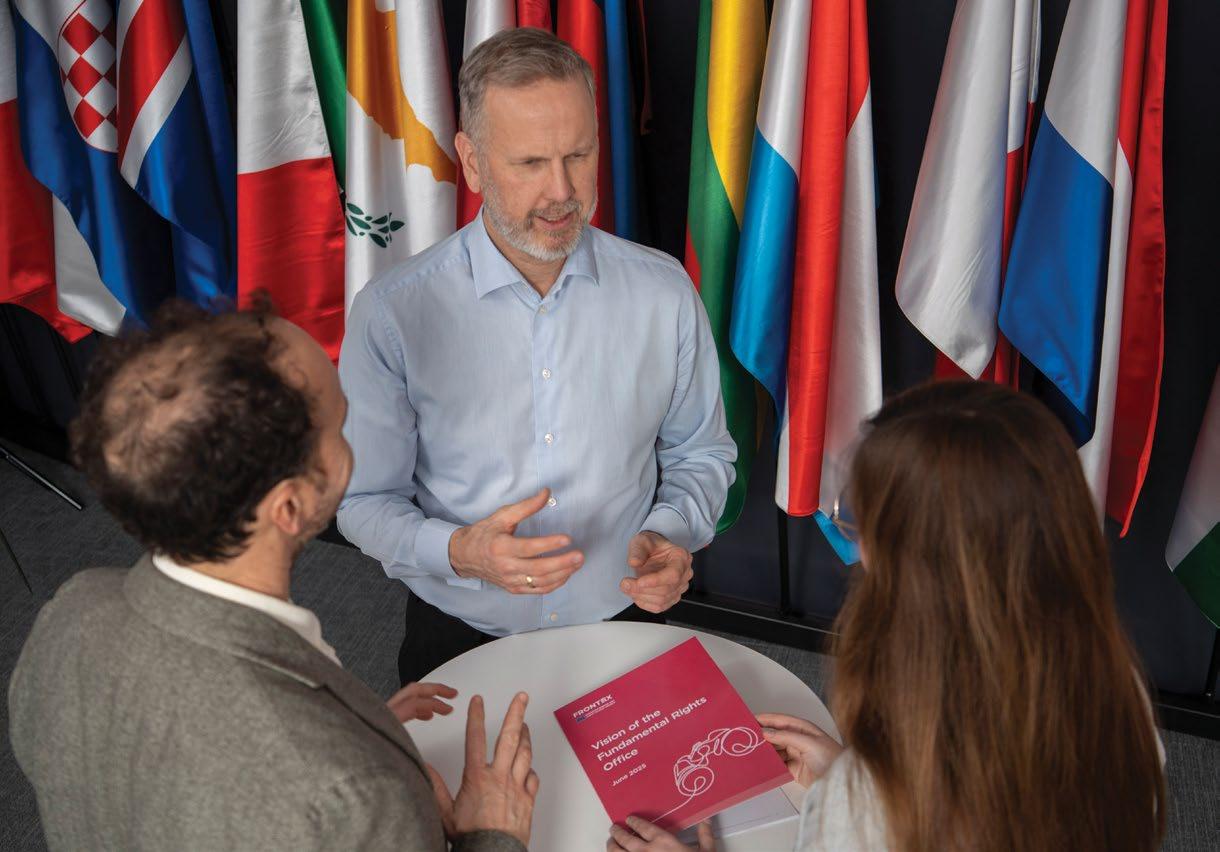
In 2025, the Office worked to strengthen strategic compliance with fundamental rights as well as in support of national monitoring mechanisms. Support to Frontex by means of advice and assistance on the fundamental rights compliance of operational activities, within and beyond the borders of the EU, continued. The strategic direction of the Office was consolidated and more clearly defined through a Vision document, adopted in June 2025. Going forward, work on strategic compliance will continue, as will efforts to still strengthen ties within both the EU institutional framework and the countries where Frontex operates.
We hope the report is a relevant and interesting read, and thank you for your interest.
Jonas Grimheden
Fundamental Rights Officer, Head of the Fundamental Rights Office
European Border and Coast Guard
Agency
Introduction
Since 2019, the European Border and Coast Guard Regulation (EBCG Regulation) has guided the strengthening of border management in the European Union, with an expanded mandate and resources assigned to Frontex. An important component of this is the independent Fundamental Rights Office.
The annual report aims at informing the general public of the activities carried out by the Fundamental Rights Office in 2025. It also identifies fundamental rights challenges in the work of the European Border and Coast Guard Agency (Frontex) and the context in which it operates, and provides information on the extent to which this complies with fundamental rights.1 This report is structured in five chapters on the different types of activities performed by the Office, preceded by an executive summary and the presentation of the Fundamental Rights Officer’s priorities for 2026.
Chapter 1 presents the main findings derived from the monitoring of activities at the external borders and in third countries.
Chapter 2 focuses on return-related activities, including the monitoring of return operations and reintegration programmes.
Chapter 3 outlines the main findings from the three main accountability mechanisms under the mandate of the Frontex Fundamental Rights Office: the serious incident reporting, the complaints mechanism and the use of force supervisory mechanism.
Chapter 4 focuses on the Office’s advisory functions and cooperation. It provides an overview on the strategic advice on operational activities and on cooperation with third countries. This chapter deals with cooperation with EU institutions and national authorities, the Agency’s Fundamental Rights Action Plan and the Technical and Operational Strategy on European Integrated Border Management.
The last chapter, Chapter 5, summarises the Office’s engagement in training and capacity building, one of the key functions of the Office to promote fundamental rights.
1 The 2025 Annual Report of the Fundamental Rights Officer is published in compliance with Article 109(4) of the European Border and Coast Guard (Frontex) Regulation, Regulation (EU) 2019/1896 of the European Parliament and of the Council of 13 November 2019 on the European Border and Coast Guard and repealing Regulations (EU) No 1052/2013 and (EU) 2016/1624
2025 Annual Report of the Fundamental Rights Officer
Executive Summary
The Frontex Fundamental Rights Office, in its independent role, is mandated by the European Border and Coast Guard (EBCG) Regulation to monitor compliance with fundamental rights, to provide advice and to promote respect for fundamental rights as part of European integrated border management. The 2025 annual report presents the main findings of the Office’s work during the year, in the context of monitoring of Frontex operational activities, investigations of incidents and complaints, training and capacity building, and other tasks entrusted to the Office.
In 2025, the Office conducted 131 monitoring missions in 17 EU Member States and six third countries in which the Agency performed operational activities. This resulted in close to 1,600 field monitoring days, mainly in Spain, Greece, Bulgaria and Italy. An important positive development was that the Office was ultimately granted access to all operational areas and relevant documents, marking a clear improvement compared with previous years and strengthening the conditions for effective work. The monitoring of Frontex activities also included desk research and regular engagement with external stakeholders, including national authorities and human rights institutions.
The Office continued to receive credible reports on collective expulsions of migrants at sea and land borders. They mostly concerned events that allegedly occurred at the Bulgarian and Greek borders with Türkiye, in the Aegean Sea and in Serbia. However, the number of reported incidents decreased as compared to previous years. These cases were often accompanied by inhumane and degrading treatment of migrants, use of unnecessary or excessive force by border and coast guards, the confiscation or destruction of migrants’ property and unlawful deprivation of liberty. This, coupled with the adoption of national emergency legislation on border procedures, the suspension of asylum laws and their impact on the effective access to the right to asylum, was an issue of serious concern during 2025.
While concerns regarding fundamental rights compliance in Bulgaria remained, the Office positively noted the commitment by the Bulgarian authorities towards improved fundamental rights compliance and a more
open dialogue. This was not the case in Greece, where the national authorities did not formally endorse an action plan presented by the Agency to strengthen fundamental rights compliance and accountability during maritime operations and search and rescue activities. The Office advised the Executive Director not to launch operational activities in the Eastern Aegean unless certain additional safeguards were fully complied with.
The Office notes the significant contribution of the Agency to search and rescue operations, working together with national authorities to save lives at sea and disembark migrants in ports of safety. This is a crucial operational activity performed by the Agency. However, the Office expressed concerns over the Agency’s aerial surveillance services operating in pre-frontier areas in the Central Mediterranean and the West African migratory route. The sharing of information and sightings with third countries accused of human rights violations against migrants was an issue of particular concern.
The Office continued reporting on the limited knowledge and lack of consistent and full implementation of the fundamental rights safeguards for debriefing interviews. A minimum set of safeguards applicable to debriefing has not yet been included in the Operational Plans of Frontex joint operations. The Office also views with concern the insufficient action by the Agency to introduce appropriate fundamental rights safeguards for the activities to gather risk-analysis information from migrants at disembarkation points.
In 2025, the Office focused on supporting the Agency in developing guidelines and tools to help Member States in the preparations for the application of the Screening Regulation (due by 12 June 2026). Yet the Office stressed the need to guarantee that preliminary health checks were completed prior to any screening activity performed by the Agency in Member States and third countries, and to ensure that all fundamental rights safeguards, particularly when collecting information for risk analysis, were met. In addition, the Office reported on gaps in pre-identification and referral of persons in vulnerable situations, but also noted some positive practices in this regard.
The Office also monitored return operations and voluntary returns. The number and share of return operations with at least one monitor on board (from the pool of monitors established under Article 51 of the EBCG Regulation, or from the Office) has risen consistently across years, from 140 flights in 2020 (60%) to 222 in 2025 (86%). The Office continued to point out the need for Member States to refrain from using coercive measures for preventive purposes. Any use of force and restraints has to be based on individual risk assessment, be applied when strictly necessary and be proportionate to the threat posed by the returnee. In addition, the returnees’ privacy and dignity have to be guaranteed at all stages of the return operations. Notably, in 2025 the Office enhanced monitoring and support in the areas of reintegration assistance and pre-return cooperation.
Serious incident reports and complaints on fundamental rights are handled by the Office. In 2025, the Office examined over 200 potential serious incidents alleging violations of fundamental rights. Of those incidents, 47 fulfilled the criteria to open an investigation; Greece was the country in which most incidents were opened. At the same time, 42 serious incidents were closed with a final report (including cases from the current and previous years). The Office confirmed at least one violation of fundamental rights in seven of them; in 21 other cases violations were found to have likely occurred. The incidents were reported by Frontex staff, non-governmental organisations or media outlets. Collaboration with Member States and third countries on investigations of incidents continued to be challenging, mainly due to limited cooperation from national authorities, the absence of independent investigations at national level and inadequate accountability.
The number of complaints submitted by persons who believed that their rights had been violated grew as
compared to the previous year (from 84 complaints in 2024 to 112 in 2025). However, among the complaints received, only one was declared admissible in 2025 and forwarded to the relevant national authorities for further handling. Most of the complaints were inadmissible on the grounds that the alleged breach of fundamental rights had not occurred as part of an operational activity performed by the Agency. The Office also focused on strengthening the reporting system and the supervisory mechanism with regards to the use of force.
The Office continued supporting the Agency in matters concerning international cooperation and technical assistance projects in third countries. The Office provided advice during the negotiations of a number of working arrangements, contributed to the development and implementation of the EU4BorderSecurity (EU4BS) project and a project to enhance border security at Ukrainian-EU borders, and issued human rights impact assessments on cooperation with The Gambia, Turkmenistan and Armenia.
Throughout 2025, the Office hosted the second Network meeting of forced-return monitors, the second Annual meeting with national human rights institutions (jointly organised with the Fundamental Rights Agency and the European Network of National Human Rights Institutions), and the first meeting of the Fundamental Rights Office – National Authorities Platform.
Lastly, support for capacity building activities remained a significant part of the work of the Office in 2025. The Office delivered 86 trainings on fundamental rights in relation to returns, border surveillance, screening and debriefing activities, document checks, trafficking in human beings, use of force, serious incident reporting and more generally European integrated border management.
FUNDAMENTAL RIGHTS MONITORS
The Fundamental Rights O ce increased its capacity to 52 monitors and a total of 67 sta by the end of 2025.
Increased access to operational locations
Monitored
SERIOUS INCIDENTS
>200 potential serious incidents assessed
47 investigations launched into potential serious incidents
COMPLAINTS
112
complaints registered
42 serious incidents concluded
In 7 cases, the investigation concluded that violations of fundamental rights had occurred. In 21 cases, violations were deemed likely.
36% increase in registered complaints
ADVICE AND COOPERATION
INCREASED ENGAGEMENT WITH STAKEHOLDERS
The Fundamental Rights O ce hosted meetings with national authorities of EU Member States. It organised the second annual meeting with national human rights institutions and the first meeting of the Fundamental Rights O ce –National Authorities Platform.
TRAININGS
STRATEGIC ADVICE PROVIDED TO THE AGENCY
The Fundamental Rights O ce issued 5 reports to the Management Board and 12 Opinions to the Executive Director, as well as 3 human rights impact assessments on cooperation with third countries.
1 complaint declared admissible
SUPPORTED THE AGENCY IN THE APPLICATION OF THE SCREENING REGULATION
The Fundamental Rights O ce supported the Agency in developing guidelines and tools and provided advice in preparation for the implementation of the new Screening Regulation. It participated in two pilot exercises and provided the Agency with recommendations.
trainings across sessions delivered on various fundamental rights-related topics
PRIORITIES FOR 2026
Encouraging compliance
• Agency as a partner: contribute to an Agency partnering with national authorities where compliance with fundamental rights is a key element in cooperation.
• Full implementation of EBCG and EIBM Action Plans.
• Innovative and practical solutions.
• Closer follow-up of Agency’s fundamental rights indicators.
Closer alignment within the EU
• EU actors and funding: reinforced interaction with EU institutions; further engagement with EU funds and monitoring committees.
• Third country engagement: Broader involvement in third countries.
• Frontex presence: Frontex deployment rather than bilateral solutions.
• Monitoring of return flights irrespective of Frontex involvement.
EIBM for fundamental rights
• Ensure comprehensive European integrated border management concept.
• National monitoring: support strong national monitoring and investigation capacity, supported by EU funds.
• Agile monitoring (how and where).
• Training and awareness raising for EBCG standing corps and national o cers.
• Implementation of the Pact on Migration and Asylum: focus on screening.
CHAPTER 1.
Monitoring of activities at the external borders and in third countries
One of the main tasks of the Frontex Fundamental Rights Office is to constantly assess the fundamental rights compliance of operational activities, advise and contribute to the promotion of fundamental rights as part of European integrated border management. With this aim, the fundamental rights monitors conduct on-site visits to locations where the Agency operates, undertake desk research and cooperate and engage with internal and external stakeholders.
Monitors have access to all documents and databases relevant for operations, allowing them to have an overview of all operational activities by the Agency and their potential impact on fundamental rights. All observations
and recommendations made by the Office are presented and followed up with the operational teams, the Agency and national authorities.
In 2025, the Office conducted 131 monitoring missions in 17 Member States and in six (6) third countries, amounting to a total of 1,576 field monitoring days. 2 Accordingly, in 2025 the number of monitoring days in the field was similar to recent years. Proportionate to its growth and overall mandate, the Office has increasingly monitored Frontex operational activities. As shown in Chart 1, the Office went from about 200 field monitoring days in 2021, to close to 1,000 in 2022, and around 1,600 to 1,800 per year in 2023-2025.
During the field visits, the Office monitored operational tasks including border surveillance, registration and fingerprinting of migrants, screening and debriefing activities and border checks. The Office also actively engaged with national authorities and external stakeholders, including civil society, regional and international organisations and national human rights institutions.
The monitors conducted field visits to operational locations both individually and as part of a team. The Office prioritised locations according to several factors including the Frontex operational presence (with priority given to areas where Frontex operational deployments, in terms of staff and activities carried out, were significant);
the type of activities performed by the Agency; the migratory pressure; fundamental rights concerns; risks previously identified; and other practical, legal and institutional considerations.
The monitors conducted most field monitoring days in Spain and Greece, with each accounting for around 20% (312 and 310 days out of 1,576 days, respectively). This was followed by Italy with 14% (224), Bulgaria with 10% (160), Serbia with 6% (99), Romania and Albania with 4% each (71 and 69 days respectively). The remaining field monitoring days were conducted in 16 other states. The chart and map below provide an overview of the number of field monitoring days in 2025 by country.
2 This data refers to the number of days the Office spent monitoring operational activities by performing on-site visits in the field multiplied by the number of monitors deployed.
Chart 1. deployment of fundamental rights monitors in the field
Number of field monitoring days by year (2021-2025)
Chart 2. m onitoring of operational activities in E u m ember states and third countries Number of field monitoring days by country (2025)
1. Field monitoring days Monitoring presence in the field, by country (2025)
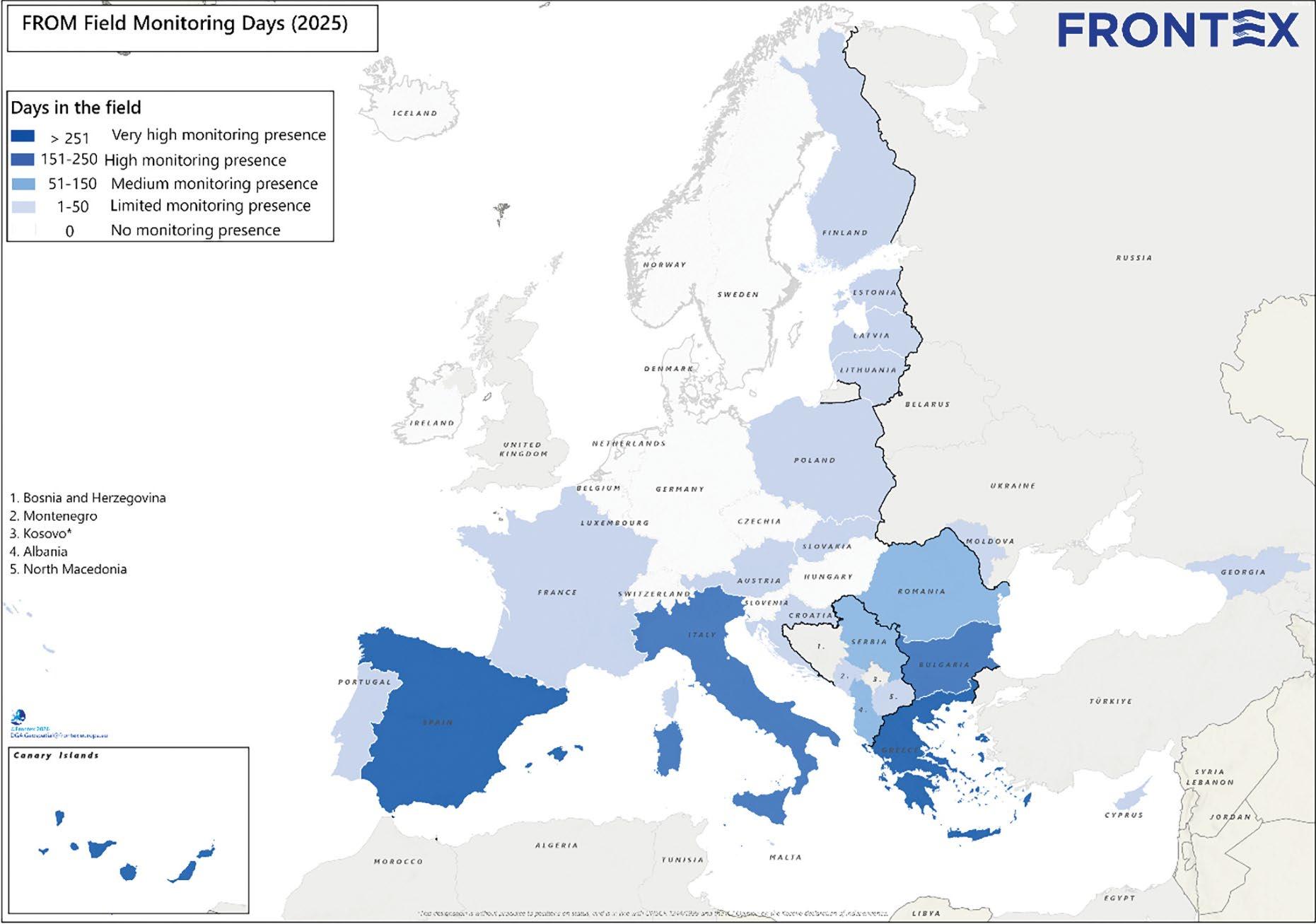
Map
1.1 Access to operational areas, activities and documents
During 2025, the Office was provided access to all areas in which Frontex operational activities took place and to all documents relevant for their implementation. Certain limitations initially imposed by States hosting operational activities were solved during the year. This resulted in a notable improvement in access to operational locations and documents (including databases managed by Frontex).
More specifically, access to all operational areas was eventually granted in Slovakia and the monitors observed
joint land patrols at the border with Ukraine. In Serbia, the Office had access to border surveillance activities since all previously reported limitations in gaining access to land patrols were lifted. Italy granted full access for the monitors to be on board co-financed vessels operating under Joint Operation Italy. And in Poland the monitors were even granted access to locations outside the Agency’s operational areas, as a result of trust-based cooperation between the national authorities and the Office.
1.2 Accountability and transparency in the field
1.2.1 Deployment of Frontex teams in the field
There were positive developments in the effective level of involvement of Frontex staff and assets in the areas in which Frontex performed operational activities, with an increased involvement of Frontex teams in border checks and surveillance in Bulgaria and in Greece. The effective participation of Frontex teams and assets in the management of the external borders is a guarantee of strengthened accountability and compliance with fundamental rights, particularly in areas with high migratory pressure.
In Greece (the Evros region), concerns remain as to the lack of involvement of Frontex teams in apprehension of migrants, despite the number of incidents reported at the border. Frontex teams performing land patrolling had a relatively low level of participation in migrant incidents, remaining in most cases assigned to operational areas away from the border line. Towards the end of the 2025
1.2.2 Visual identity
In 2025, the Office reported that some members of the Frontex teams and other participants in Frontex joint operations were not adequately identifiable while performing operational activities - not wearing Frontex vests or armbands or other means to identify them in the exercise of their functions. Notably, this was the case of team leaders (deployed by States hosting Frontex operations), who are tasked with coordinating joint
operational year, however, as a positive impact of the Office’s presence and work in the field and the cooperation with the relevant Frontex Contingent Commander, the level of involvement of Frontex assets in the Evros region increased, with a higher presence of Frontex standing corps 3 in detecting and apprehending migrants at the border with Türkiye. In general, the Office also witnessed a higher level of involvement of Frontex staff in incidents in the Aegean Sea, and even more off Crete in the context of support to search and rescue operations at sea.
In Bulgaria, the Office also raised concerns about the lack of clarity around command structures in certain border areas (border with Türkiye), with numerous uniformed and armed personnel (Frontex, the Bulgarian Border Police, regular police, military police) operating without clear cooperation frameworks. This posed significant legal and operational risks.
operational activities on the ground, as well as officers deployed onboard maritime vessels or other technical assets.
In Bulgaria, some patrol cars deployed by the participating countries to perform border surveillance at the BulgariaTürkiye border were not clearly marked or identified as belonging to the Frontex operation. Those vehicles
3 The European Border and Coast Guard standing corps was established by the EBCG Regulation in 2019. It represents the first EU uniformed service and, working under the command of the national authorities in the country of deployment, allows the Agency to provide operational support to the European Border and Coast Guard. The Frontex standing corps operates in EU Member States and Schengen associated countries, as well as in third countries that have Status Agreements in place with the EU. In an advisory capacity, they can also be deployed in third countries that have Working Arrangements with the Agency, and some are deployed in the context of return operations. By 2027, they are expected to reach the total number of 10,000 units. Further information can be found in the EBCG Regulation or on the Agency’s website at this link
were marked only with the respective national insignias of the deploying country or were not marked at all (i.e. whenever rental vehicles were used for border patrols). In Greece, during the first half of the year, cars used for land patrols in the islands were regular rental vehicles marked only with a Frontex sticker. In June 2025, the Agency started deploying vehicles with clear identifiable Frontex insignia in some of the operational locations, also in the Greek islands.
1.3 Border surveillance
The Office observed Frontex border surveillance operations on land and at sea across various operational contexts. Monitors participated in land patrolling of border areas, maritime activities on board vessels and aerial assets, and in activities performed by mobile surveillance systems. This included border surveillance at
1.3.1 Collective expulsions
As in previous years, the Office continued to receive credible reports concerning alleged collective expulsions of migrants at sea and land borders in Frontex operational areas. These cases were often accompanied by inhumane and degrading treatment of migrants, use of unnecessary or disproportionate force by border and coast guards, the confiscation or destruction of migrants’ property, or unlawful deprivation of liberty.
The Office received reports, both from members of the Frontex teams and external stakeholders, on incidents involving collective expulsions and other alleged fundamental rights violations at the Bulgarian and Greek borders with Türkiye and at sea borders in the Aegean Sea. In 2025, the number of reported incidents decreased as compared to previous years. On the one hand, the Eastern Mediterranean route, the Western Balkan route, and the Eastern borders saw a significant decrease in the number of irregular border crossings.4
To ensure high standards of transparency and accountability, it is important that the personnel and assets participating in Frontex operations are clearly identified. Lack of a clear visual identification undermines the transparency and accountability of the Agency’s operational activities.
night, and transfer and registration procedures following the apprehension of migrants. In 2025, the Office reported that the monitored activities were generally conducted in compliance with fundamental rights. However, the Office continued to be concerned about fundamental rights violations highlighted in the following sections.
External stakeholders also experienced extensive funding cuts during 2025, and in many cases had to reduce their activities and monitoring. On the other hand, Frontex standing corps officers were increasingly deployed in areas with high migratory pressure, stricter reporting requirements were introduced in the operational reports issued by the Agency, and trainings for border guards on fundamental rights were strengthened.
At the south-eastern land and sea borders (Bulgaria, Greece and Serbia), the Office assessed allegations of collective expulsion and other related fundamental rights violations. They were mostly examined under the serious incident report procedure, and concerned serious cases, primarily in Greece (4), Bulgaria (2) and Serbia (2), where findings were largely supported by concrete evidence (see further details in Chapter 3 Accountability mechanisms: serious incidents, complaints and the use of force).
4 European Border and Coast Guard Agency, Annual Brief 2025, 2026. Further information on migratory routes can also be found on the Agency’s website, at this link
Frontex operational activities in Bulgaria
The Agency and the Bulgarian authorities collaborated constructively to address the main issues raised by the Office concerning Bulgaria. This process, supported by the Office and steered by the Agency’s Fundamental Rights Compliance Panel,5 led to the adoption of a joint action plan to tackle the main operational concerns. It also fed into other Agency-wide workstreams regarding operational reporting.
By the end of 2025, a joint action plan on Bulgaria was largely implemented, with residual actions to be planned in the course of 2026. As part of these efforts, the Bulgarian authorities committed to a more efficient use of Frontex resources, including in sensitive operational areas, while the Agency improved reporting processes and introduced indicators to enhance transparency and accountability. The joint action plan also included regular workshops and training, including ad-hoc awareness raising sessions on Frontex’s serious incident reporting mechanism, and a two-day workshop on vulnerability screening held jointly by the United Nations High Commissioner for Refugees and the Frontex Fundamental Rights Office.
While concerns regarding fundamental rights compliance in Bulgaria remain, particularly as regards border surveillance operations along the border with Türkiye, the joint action plan signalled a strong alignment between Frontex and the national authorities, marking a clear commitment to improved fundamental rights compliance and a more open dialogue. The Office also positively noted the inclusion of the operational commitments stemming from the Action Plan in the 2026 Operational Plan.
With regard to Hungary, the Office continued following up on reports of irregularly staying third-country nationals and asylum seekers who were apprehended (including at airports) by the Hungarian authorities and escorted to the external side of the Hungarian-Serbian border fence. The Serbian authorities generally accepted these individuals, apprehended them and escorted them to nearby Serbian border crossing points for further reception procedures. This practice reportedly occurred on an almost daily basis. While the Agency suspended its operational activities in Hungary in January 2021, in 2025 additional fundamental
rights concerns regarding the handover back to Hungary of some migrants who had been previously escorted to Serbian territory emerged. Alleged non-compliance with the EU readmission agreement and the reported absence of individual assessments resulted in the launch of a serious incident report. In 2025, the Fundamental Rights Officer issued an Opinion restating that Frontex should not resume land or air (e.g. border checks at airports) operational activities in Hungary until national legislation and practices not compliant with EU and international law are amended.
1.3.2 Aerial surveillance and support for search and rescue in pre-frontier areas
Throughout the year, the Office continuously monitored and provided advice on the Agency’s multipurpose aerial surveillance services, operating both in the Central Mediterranean Sea (pre-frontier areas) and within the framework of Frontex Joint Operations.
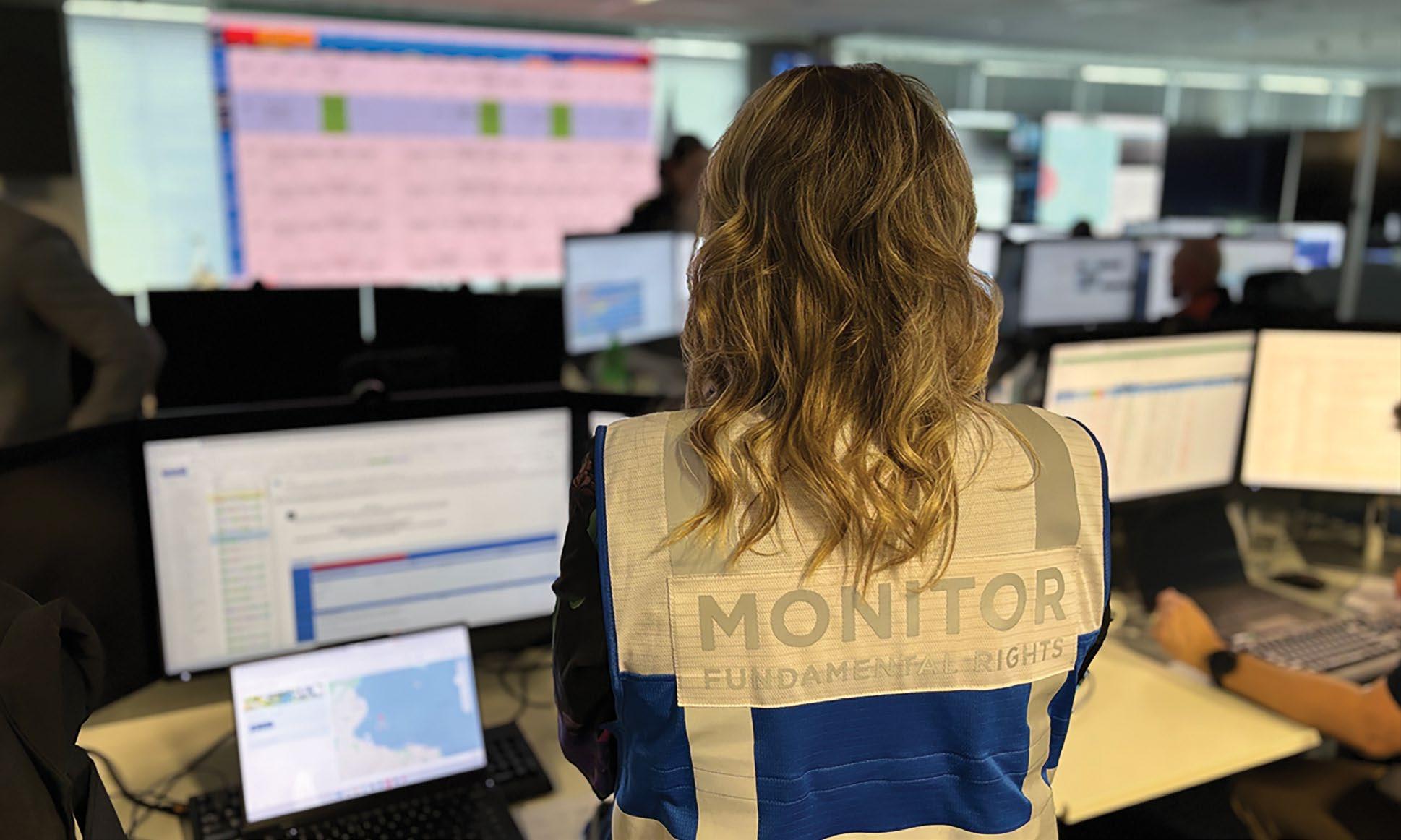
The Office had full access to the European Surveillance Room, the centre of the aerial surveillance services provided by Frontex. A stand-by-duty system ensuring the presence of the monitors in the situational room, and a new methodology for monitoring in shifts, was in place. The Office finalised and operationalised guidelines on cooperation between the monitors and the Frontex officers deployed in the European Surveillance Room, and continued to work towards further inclusion of fundamental rights components in the reporting tools and databases.
In the course of 2025, the Office continued making recommendations aimed at strengthening the protection of the right to life of persons in distress at sea, by including procedural safeguards in the operational documents and reporting tools of aerial surveillance services provided by the Agency. The sharing of sightings (in the context of aerial surveillance in pre-frontier areas) with third countries accused of committing serious human rights violations against migrants continued to be an issue of serious concern. In particular, the Office continued to raise concerns about the modalities of rescue operations conducted by the Libyan authorities from both the Western and Eastern sides of the country. Incidents involving gunfire directed at migrant boats and nongovernmental organisations’ vessels during rescue operations continued to be reported.
5 Established in late 2024, the Panel addresses fundamental rights compliance issues that cannot be handled effectively at the operational level due to their strategic and cross-divisional nature.
Multipurpose aerial surveillance assets
The Office issued an Opinion on the deployment of multipurpose aerial surveillance assets to monitor the Western African Route, followed by further tailored assessments. The Office requested the adoption of an operational framework and an action plan to implement mitigating measures before the launching of the service. This service initially operated from Cabo Verde, covering the search and rescue region of Cabo Verde, with the possibility to be extended to the search and rescue regions of Senegal and Mauritania.
In the Opinion, the Office highlighted that transmission of information obtained by an EU aerial surveillance asset operating in pre-frontier areas or search and rescue regions of third countries to search and rescue authorities of countries that may have limited and low readiness among their maritime resources, or shortcomings in protecting human rights, must be accompanied with the adoption of strong mitigating measures before the service is launched. The sharing of information with third countries can pose fundamental rights risks and potential liability. This course of action is in line with the general recommendations issued by the Office in 2022 and 2023 on the adoption of an operational framework for all the Agency’s aerial surveillance assets operating in pre-frontier areas, including those activated at the request of an EU Member State.
The Office considers that the deployment of Frontex aerial assets to support search and rescue operations in pre-frontier areas is critically important for saving the lives of persons in distress at sea. At the same time, it is important that the Agency, together with the Member
States involved and the European Commission, ensure that all needed safeguards to protect the right to life and the principle of non-refoulement are in place, from the detection of persons in distress at sea to disembarkation in a place of safety.
1.3.3 Support for search and rescue in the context of joint operations
Support for search and rescue operations at sea was a crucial operational activity performed by the Agency.
National authorities, with the support of Frontex maritime assets, continued making notable efforts to rescue people at sea and disembark them in ports of safety. The Office
noted successful efforts and a good level of cooperation between Member States (i.e. Greece, Italy and Spain) and Frontex to rescue people attempting to reach EU territory with unseaworthy boats, with a significant contribution to saving lives at sea.
In Greece, the monitors focused on sea patrolling around Crete, where Frontex was deployed to support rescue operations following a high number of migrant arrivals from North Africa during a period of high migratory pressure. Frontex and the national authorities contributed to saving the lives of persons in distress at sea, in line with fundamental rights obligations and the External Sea Borders Regulation.6 However, conditions upon disembarkation from Frontex vessels involved in search and rescue operations often failed to comply with fundamental rights standards. Shortcomings included no distribution of water and food supplies, no availability of toilets, delays of buses and ambulances under harsh weather conditions, and excessive security measures.
The Office raised concerns over detection, interception and rescue operations conducted on the Aegean Sea,
Frontex operational activities in Greece
where incidents of loss of life and allegations of irregular returns (so-called pushbacks) continued to be reported.
In Estonia, the Office was invited to observe a multipurpose maritime exercise, under the multipurpose maritime operation Baltic Sea 2025, with open discussions on technical/operational features and the fundamental rights implications of search and rescue activities.
Lastly, the Office provided its regular contribution to the annual report submitted within the context of the evaluation of the External Sea Borders Regulation, related to establishing rules for the surveillance of the external sea borders in the context of operational cooperation coordinated by Frontex.
The Agency, supported by the Fundamental Rights Office, sought to engage the Greek authorities to ensure the implementation of concrete actions addressing the serious fundamental rights risks that the Office has repeatedly flagged in the context of the operational activities performed by the Agency in Greece. This process unfolded under the framework of the Fundamental Rights Compliance Panel and led to the drafting of an action plan to address the main concerns.
The Greek authorities did not formally endorse the action plan and rejected several actions therein, especially as regards measures to strengthen accountability during maritime operations and search and rescue activities. Agreement between the Agency and Greece was reached on a more limited set of actions, which were included in the Operational Plan of Joint Operation Greece 2026. While acknowledging this limited progress, the Fundamental Rights Officer deemed it insufficient. He therefore advised the Executive Director to refrain from launching operational activities in the Eastern Aegean, with a specific reference to the withdrawing of the financing to Frontex co-financed maritime assets, unless certain additional safeguards were fully complied with.
The Office also stressed the importance for the Agency to ensure strict alignment to fundamental rights obligations and comprehensive documentation of its activities. As serious fundamental rights risks persist and noting the reluctance of the Greek authorities to fully engage with its recommendations, the Office will continue to closely monitor all Frontex operational activities in Greece and welcomes the Agency’s initiatives to ensure stricter oversight in the next operational cycle.
In this context, it is also important to note that in 2025 the European Court of Human Rights rendered new judgments finding the existence of a practice of irregular returns and collective expulsions.7
1.4 Migration management activities
1.4.1
Collecting information at disembarkation points
As in previous years, the Office continued to raise concerns about the activities performed by the Agency at disembarkation points to gather general information
for risk analysis purposes. This activity is not regulated in the Frontex operational plans and does not rest on a clear set of fundamental rights safeguards. It is important
6 Regulation (EU) No 656/2014 of the European Parliament and of the Council of 15 May 2014 establishing rules for the surveillance of the external sea borders in the context of operational cooperation coordinated by the European Agency for the Management of Operational Cooperation at the External Borders of the Member States of the European Union.
7 European Court of Human Rights, G.R.J. v Greece (dec.), no. 15067/21, 7 January 2025, available at this link. And European Court of Human Rights, A.R.E. v Greece, no. 15783/21, 7 January 2025, available at this link
to note that gathering this information at disembarkation points (given their nature and objectives) cannot be considered a part of other operational tasks such as screening or debriefing.
The Office reported certain fundamental rights risks when gathering risk-analysis information from migrants at disembarkation points. They included concerns over a lack of confidentiality for interviews at most disembarkation sites, risks inherent to gathering information from persons who might be in vulnerable situations (e.g. children or shipwreck survivors), risks related to the conflicting needs of carrying out such an activity and providing immediate assistance (including medical assistance) upon disembarkation, and blurred lines with other risk-analysis tasks performed by the Agency (notably, debriefing interviews).
Most of the reports concerned Italy. In Sardinia, limited humanitarian assistance (relief items including clothes, food, water) and medical assistance was provided to
migrants after autonomous landings, and concerns were raised about the need to ensure that interviews were conducted only with migrants who were in a good medical and psychological condition. In Lampedusa, the Office observed that the Frontex teams were occasionally asking questions at disembarkation points, showing the need for clear guidance on activities at the pier. Nonetheless, significant improvements were observed in some operational locations (e.g. in Lampedusa), with Frontex teams collecting information at the disembarkation ports towards the end of the operational sequence after the provision of medical triage and humanitarian relief.
The Office strongly recommended Frontex to introduce appropriate safeguards regulating the conduct of activities carried out upon disembarkation, including clear guidelines specifying, inter alia, their purpose, objective, procedure and operational sequence (including national procedures), as well as safeguards (including on fundamental rights).
1.4.2 Identification: registration and fingerprinting of migrants
The Office observed the fingerprinting of migrants in several operational locations. Although in general the activity was carried out without major fundamental rights concerns, the Office noted some gaps in the information provided to the migrants.
In Italy and Spain, the Office emphasised the need to provide each person with information, as required by the Eurodac Regulation,8 including on the purpose of the activity and the way personal data is going to be processed. While basic information concerning the different steps of the registration procedure was provided to migrants reaching the reception areas, compliance with fundamental rights obligations under international and EU law requires further steps to be taken.
In Albania, translation applications and interpreters were generally available during registration procedures, with occasional assistance of Frontex cultural mediators and interpreters. However, this was often not enough to
1.4.3 Screening activities
Frontex continued supporting the national authorities with interviewing migrants to establish their assumed nationality and thereby contribute to the identification
ensure adequate provision of information to the migrants. Translation applications cannot replace interpreters.
In Cyprus, the Agency, with the support of the Fundamental Rights Office, developed a poster with information on Eurodac, providing information on the obligation to provide fingerprints, the purpose of the activity and the manner in which data is processed. The posters were visibly displayed in the fingerprinting container. This was noted as a good practice. However, leaflets handed over to migrants were only available in English, Arabic and French. Other good practices, in terms of gender- and culturally sensitive approach, were also observed in Lesvos (Greece) and Lampedusa (Italy).
The Office also recommended the Agency to ensure that operational plans are clear on the age limit to be respected by the members of the Frontex teams when fingerprinting migrants, given the different standards across various national legislations.
process. In 2025, the Office observed that in most locations screening interviews were generally conducted in line with fundamental rights safeguards and under
8 Regulation (EU) 2024/1358 of the European Parliament and of the Council of 14 May 2024 on the establishment of ‘Eurodac’ for the comparison of biometric data in order to effectively apply Regulations (EU) 2024/1351 and (EU) 2024/1350 of the European Parliament and of the Council and Council Directive 2001/55/EC and to identify illegally staying third-country nationals and stateless persons and on requests for the comparison with Eurodac data by Member States’ law enforcement authorities and Europol for law enforcement purposes, amending Regulations (EU) 2018/1240 and (EU) 2019/818 of the European Parliament and of the Council and repealing Regulation (EU) No 603/2013 of the European Parliament and of the Council.
adequate conditions. However, the Office emphasised the need to perform preliminary health checks prior to screening as well as to strengthen the safeguards applicable to screening activities, particularly when collecting information for risk analysis.
During 2025, the Office raised concerns about the absence of preliminary health checks prior to screening (and debriefing) in some countries in which Frontex performed operational activities, particularly in Albania, Montenegro and Serbia. The Office urged the Agency to ensure that Frontex officers performing screening confirmed, to the best of their capacities, that the migrants had undergone a preliminary medical examination to identify any needs for immediate care and to prioritise persons in vulnerable situations. Preliminary medical (physical and psychological) checks were not systematically conducted on all migrants by the host countries prior to screening. Medical assistance was only provided when there was a visible or urgent need, or if expressly requested by the migrants themselves. As a result, in many instances migrants, including unaccompanied minors and other persons in vulnerable situations, were screened (and debriefed) by members of the Frontex teams without having undergone preliminary medical checks, or without having received immediate assistance (such as water/ food).
In Montenegro, in the second half of the year, basic preliminary medical checks of migrants began to be conducted by the Red Cross prior to the screening activities carried out by Frontex. However, these checks only involved a basic visual examination, a brief interview on general health or the assessment of urgent health concerns, and were not carried out routinely. An assessment of vulnerabilities or needs for isolation based on public health was not included. In addition, medical checks were conducted in open spaces without any privacy, with prejudice to the protection of the migrants’ sensitive personal data and their ability to share medical information.
In Timisoara (Romania), apprehended persons were visually checked by border guards for injuries or any other signs of sickness. However, they were not subject to preliminary health checks by qualified medical personnel to identify any needs for health care or isolation on public health grounds. Qualified medical personnel were only called upon a verbal request from the third country national, or if deemed necessary based on the visual examination by the border guards after interception, or
after being transferred to the headquarters of the local coordination centre.
The Office, while acknowledging the limited capacity of certain host countries to ensure preliminary medical checks, and noting that screening interviews are necessary also for identifying possible vulnerabilities, reaffirmed the need to have medical checks prior to screening, to ensure appropriate safeguards and protective measures for both the migrants and the staff involved in the interviews.
In addition, the Office has continuously noted the need to introduce fundamental rights safeguards when questions for risk analysis purposes are asked as part of screening activities (so-called “advanced screening”). This is key to ensuring that such interviews are genuinely voluntary and confidential, with additional guarantees similar to those applicable to debriefing interviews. Such safeguards, which to a large extent were set out in the Decision of the Frontex Executive Director on Conditions for screening and debriefing activities,9 should also be introduced in the operational plans.
In Greece and Spain, basic screening was conducted in compliance with fundamental rights obligations. Frontex staff used a child- and family-friendly approach and were aware of the modalities for conducting the interviews. Nevertheless, the Office continued to voice concerns over questions related to risk analysis being addressed to the migrants after completing basic screening, showing a lack of compliance with the above-mentioned Decision of the Frontex Executive Director. In Albania, advanced screening activities were not always conducted anonymously and on a voluntary basis, and the difference between basic and advanced screening activities was not always respected. In Serbia, advanced screening was on occasions conducted hastily, without formal documentation and without full confidentiality.
Also, concerns over the place where screening interviews were performed, and its impact on the privacy and confidentiality of the interviews, were raised in certain locations. In Serbia, the conditions in which advanced screening activities were conducted (in an open space and in the presence of other migrants) did not ensure privacy and confidentiality.
In Cyprus, concerns were raised on information gathering by Frontex teams while attending national procedures (interviews) carried out by the Cypriot Police. In that context, the fundamental rights safeguards were less comprehensive than those for screening established
9 Conditions for screening and debriefing activities under the host country command and Standard operating procedure for debriefing activities based on the Agency’s instructions. Annex to the Decision of the Executive Director No R-ED-2024-57. This Decision of the Executive Director followed the European Data Protection Supervisor’s Opinion of June 2022: European Data Protection Supervisor, Supervisory Opinion on the rules on processing of personal data by the European Border and Coast Guard Agency (Frontex) (Case 2022-0148), 2022.
by the Agency. Although these activities were not screening stricto sensu, there is a need to clarify the role of Frontex staff in support to the national authorities, to ensure compliance with the Agency’s operational plan, handbooks and standard operating procedures, including the identification and referral of persons in vulnerable situations and persons in need of international protection.
In Bulgaria, screenings were on some occasions conducted with a delay, many days after the date of apprehension. In other operational contexts, persons in vulnerable situations were not systematically given priority in the registration procedures, or did not have access to adequate facilities.
Finally, in Greece, until the entering into force of the amendment of Article 79 of Law 5218/2025 (imposing a temporary ban on submitting asylum claims for people arriving in Greece from North Africa by sea), Frontex screening officers supported the Greek authorities to reduce the backlog of migrants to be screened in Malakasa. The Office positively observed that the Frontex teams referred 333 cases of persons in vulnerable situations (out of 2,509 screened migrants). The Agency started supporting screening activities again after the application period of the mentioned law ended.
Screening toolbox – Pilot projects in Italy and Romania
In 2025, Frontex was involved in two pilot exercises in Italy (Lampedusa, 13-24 October) and Romania (Sighetu Marmatiei, 23 November-5 December) to support the Member States in the preparations for the application of the Screening Regulation (due by 12 June 2026). The exercises formed part of a joint initiative involving the Member States’ authorities, Frontex, the European Union Agency for Asylum and Europol. They aimed at testing the Screening Toolbox in real-life operational conditions; strengthening inter-Agency cooperation; identifying potential risks and challenges; and developing best practices ahead of the date of application of the EU Pact on Migration and Asylum. The Screening Toolbox is composed of tools and guidance designed to translate the law into practical recommendations, so that screening is carried out in a consistent and efficient way across the Member States.10
The Office participated in the pilot exercises and provided the Agency with an assessment and a set of recommendations. The Office emphasised the need for cooperation and coordination among all actors involved in a relatively complex process; an appropriate infrastructure, including hosting facilities for migrants and staff and IT systems for efficient workflows; and qualified staff trained on the requirements of the Screening Regulation, particularly when dealing with vulnerable persons and/or conducting vulnerability assessments. The Office has identified possible risks to fundamental rights, highlighting the importance of developing mitigating measures and operationalising the new screening process in national regulations, standard operating procedures and operational plans.
The Office also noted good practices in the pilot exercises. Among them were constructive cooperation in the field between the national authorities and the Agency, bringing expertise as regards different steps of the screening process, especially with screening interviews; the involvement of the EU Agency for Asylum in preliminary vulnerability checks and information provision to migrants and asylum seekers; and the involvement of the national independent monitoring mechanism in Romania (Romanian Ombuds Institution). The effective cooperation with national independent monitoring mechanisms is key to ensure compliance throughout all stages of the screening process.
1.4.4 Debriefing activities
Debriefing activities are interviews performed with persons who crossed the external borders without authorisation, aimed at obtaining information for risk analysis purposes and identifying trends and emerging threats, corroborating analytical findings.
In 2024, the Executive Director adopted a Decision on Conditions for screening and debriefing activities, which contained a set of minimum fundamental rights safeguards. However, in 2025, the operational plans of the joint operations in which debriefing was performed did not expressly include those provisions. The Office reported on the limited knowledge and lack of consistent and full implementation of the safeguards. When the support of Frontex is envisaged, those safeguards should be considered as a minimum requirement to ensure that
10 European Border and Coast Guard Agency, EU Pact on migration and asylum, 2026.
fundamental rights standards and guarantees are in place. It is also important that all personnel involved in debriefing (and screening) are adequately trained and aware of the fundamental rights risks and challenges of those activities.
With regard to the conditions under which debriefing interviews were conducted, the monitors found them generally adequate and in line with fundamental rights safeguards, including the requirements of anonymity, confidentiality and the voluntary nature of the interview. On occasion, interviews were even found to be conducted with exemplary care, with due attention to persons in vulnerable situations, a gender-based approach and subsequent referrals (e.g. Lampedusa – Italy).
Nonetheless, the Office continued to raise concerns and report on risks affecting fundamental rights. In Pantelleria (Italy) and Spain, information collected in debriefing interviews was sometimes reported outside the regular channels of the Agency’s internal reporting system. In Pantelleria (Italy), such information was included in some operational reports in a detailed manner. These events raised concerns on confidentiality. With reference to Spain, the Office also expressed concerns with regard to the voluntary nature and the purpose of the debriefing interviews, and the needed protection of personal data.
Other challenges concerned the place and conditions in which interviews were performed. In Canary Islands (Spain) the Office reported on the lack of a sufficient number of containers to ensure privacy and confidentiality during debriefing interviews. This was also reported in Porto Empedocle (Italy), where interviews took place in open spaces and under inadequate conditions, due to a combination of the very short stays of migrants at the hotspot, the simultaneous application of various
1.5 Border checks
The monitors observed the performance of border checks at land, sea and air border crossing points. This included first-line border checks (including checks on passengers and vehicles) and second-line border checks.
Overall, the monitors observed that Frontex teams conducted their activities in compliance with fundamental rights. However, the Office reported instances of lack
administrative procedures, and insufficient awareness of the fundamental rights standards and provisions of the Decision of the Executive Director on Conditions for screening and debriefing activities. In Trapani (Italy), no debriefing interviews were conducted with migrants transferred from Pantelleria, because the conditions of its commercial port were assessed as inadequate.
Although generally members of the Frontex teams introduced themselves and explained the purpose and objective of the interviews and the fundamental rights safeguards correctly, certain gaps remained. In some locations, the Office observed that whenever details of smugglers emerged during the interviews, the migrants were not always and consistently informed (neither in the introduction nor during the interview) that such information would be referred to the national authorities. To address such gaps, the Office worked with the Frontex operational entities on guidelines on how to introduce the debriefing interviews to ensure that all the safeguards are in place.
In addition, as reported in the previous section on screening, a preliminary medical check was not always conducted prior to debriefing, and food and other necessary items were not always provided to the migrants.
Lastly, the Office issued an Opinion on a document developed by the Agency, including do’s and don’ts for screening and debriefing activities under the host country command, which aimed at providing practical guidance for the Frontex teams tasked with performing screening and debriefing activities. The monitors also participated in regular meetings organised by the contingents on screening and debriefing, and organised awarenessraising sessions.
of information to third-country nationals subject to thorough second line checks (as required by the Schengen Borders Code). In some operational areas (for instance, in Slovakia), the Office reported that such information materials were not translated into all the official languages of the Union and the languages of the bordering countries, and they were not always available for distribution in written format.
1.6 Persons in vulnerable situations: pre-identification and referral
Throughout 2025, the Office reported good practices concerning the identification and referral of persons in vulnerable situations. In Bulgaria, initial procedures with migrants in some detention centres were conducted
in the presence of psychologists, facilitating the identification of vulnerable persons and de-escalating tensions or conflicts. Also, informal procedures were in place to decide if persons in need of support could wait
in a bus during border checks, and the identification of vulnerable persons was correctly recorded in the Agency’s internal reporting. In Lithuania and Poland (at the border with Ukraine), border guards proactively identified and directed people with visible vulnerabilities to the front of the queue or to dedicated lanes for the first line checks. Persons in vulnerable situations were also able to communicate their special needs directly during border checks, or to inform the authorities in advance by phone or e-mail before the planned crossing. In Spain, Frontex teams consistently referred persons in vulnerable situations (e.g. asylum-seekers, migrants requesting medical assistance, or migrants whose age was unclear) to the national authorities. In Slovakia, persons in vulnerable situations were prioritised at border crossing points to limit waiting times.
Good practices were also noted in Cyprus, where Frontex staff contributed to raising awareness on the importance of identifying persons in vulnerable situations and further referral to the national authorities. Also, in Portugal and in North Macedonia, the national authorities supported specialised, tailored and up-to-date training on identifying vulnerabilities, in particular potential victims of trafficking in human beings.
The Office also reported gaps in the pre-identification and referral of persons in vulnerable situations. Across the countries where Frontex Joint Operations were implemented in 2025, the Office noted a continued need to strengthen proactive identification and referral at borders. Limited time to perform operational activities, limited interpretation capacity and shortages of specialised staff curtailed the ability to swiftly identify persons in vulnerable situations. Also, when vulnerabilities were identified, they mostly concerned persons with visible vulnerabilities (e.g. children, pregnant women, persons with disabilities, persons with medical conditions), while less visible vulnerabilities (including potential victims of trafficking in human beings) were often not identified. And on some occasions, even where individuals were formally
1.7 Access to asylum
identified as vulnerable, referrals to appropriate services did not always result in timely and adequate protection measures and procedural safeguards.
In Italy, for instance, the positive practice of swift and frequent transfers from the island of Lampedusa to the mainland continued, but concerns were raised over the effectiveness of early identification of vulnerabilities (and follow-up in the next phases) due to the limited time available to engage with migrants and assess indicators while still in Lampedusa. At the same time, the Office welcomed the full implementation of the Handbook for the identification, referral and care of persons with vulnerabilities,11 including the drafting of location-specific standard operating procedures (e.g. for the province of Agrigento in Sicily). In addition, the Office launched a new joint initiative together with the European Union Agency for Asylum and the United Nations High Commissioner for Refugees to deliver awareness-raising sessions to standing corps officers, providing practical guidance on indicators to identify vulnerabilities. This came as a result of the monitors’ field observations, where Frontex teams were not always found to be sufficiently aware of how to recognise indicators of vulnerability and how to respond in a consistent and sensitive manner.
A pattern of women of South American origin at risk of sexual exploitation arriving in Skopje (North Macedonia) and Podgorica (Montenegro) airports was reported. However, the Office observed that instead of being referred to formal identification and assistance services they were usually refused entry by the national authorities based on the failure to meet entry requirements (e.g. insufficient financial resources). This left these potential victims of trafficking in human beings without assistance, information, and at risk of further trafficking. The accuracy, consistency and comprehensiveness of the Agency’s internal reporting on this matter still need improvements to ensure appropriate follow-up and that potential fundamental rights risks are properly addressed.
1.7.1 Identification, referral and provision of information to persons in need of international protection
Asylum seekers referred by Frontex officers to the national authorities should be handed over to the host authorities for examination of their status and further processing of their case. Also, everyone seeking international
protection, or who may need it, should be informed of their right to apply for asylum, and on the procedure to lodge an application in accordance with EU law.
11 Government of Italy, Ministero dell’Ínterno, Handbook for the identification, referral and care of persons with vulnerabilities entering Italy and within the protection and reception system, 2023.
In the context of monitoring missions, the Office regularly assessed whether information provision on access to asylum was appropriate. Members of the Frontex teams are expected to support the identification of persons in need of international protection and their referral to national authorities, in compliance with the guidance provided by the EU Agency for Asylum and Frontex on access to the asylum procedure.12
Good practices, such as the provision of written information and the proactive engagement of Frontex teams, were observed in many locations (for example, in Bulgaria, Italy, Greece, Serbia and Spain). In Bulgaria, persons in need of international protection were proactively identified during debriefing interviews and referred to Bulgarian authorities. In Lesvos (Greece), cultural mediators supported registration at the reception and identification centre, in response to a shortage of interpreters. In Italy, there was an excellent level of (formal and informal) cooperation among the stakeholders involved in the identification and referral of persons in vulnerable situations, including external stakeholders who supported the national authorities with specialised knowledge and expertise.
In many operational areas, the United Nations High Commissioner for Refugees or the EU Agency for Asylum were responsible for providing information and
distributing materials on the right to apply for international protection. In Lithuania, at the border crossing points of Medininkai, Salcininkai and Kyrbatai, information materials (in various languages) were available in first line check booths. In Portugal (Lisbon airport), materials were also available in booths, including booklets on the complaints mechanism and the VEGA Handbook.
Gaps in providing information to persons in need of international protection or the lack of leaflets with information on access to asylum were, however, observed in many operational locations where the Frontex teams were present. In Serbia, there were initial concerns over the lack of information provision to migrants (in particular on rights and obligations, specifically on the right to apply for international protection) upon their apprehension following border surveillance activities supported by Frontex. External stakeholders were reportedly not available or not present to provide information and interpretation services to migrants. The situation changed during the year, with Frontex officers proactively providing information to interviewees on the possibility to apply for international protection, ahead of the advanced screening or debriefing interview. In Albania, during registration procedures, no information about the rights and responsibilities of migrants was provided, as often there were no interpreters assigned.
1.7.2 Access to asylum and emergency legislation on border procedure
The Office continued receiving (from non-governmental organisations and media) an increasing number of allegations of denial of access to asylum procedures at border crossing points of Lithuania and Poland. This was combined with continuing concerns over emergency legislation and its impact on access to asylum and the effective exercise of the right to international protection (e.g. in Latvia, Lithuania and Poland). These emergency provisions are in conflict with the Member States’ core fundamental rights and international protection obligations, particularly as regards the prohibition of collective expulsions, the prohibition of refoulement and the right to asylum.
In Finland, the validity of the Act on temporary measures to combat instrumentalised migration (482/2024), adopted in July 2024, was extended until 31 December 2026. The law allows the border guards to turn away asylum seekers at the country’s eastern border, with exceptions for certain categories of asylum seekers considered particularly vulnerable and for persons in real or imminent danger of persecution. However, throughout 2025, no
decision activating the emergency provisions under the Act was taken (a joint decision by the Government and the President would be required). In 2025, the Office was invited to take part (as observer) in contingency planning exercises organised by Finland. This offered the opportunity to assess the practical implementation of the Act and showed the commitment of the Finnish Border Guard to comply with fundamental rights obligations in the possible implementation of emergency procedures.
The Office also expressed concerns over the Asylum Suspension Law (Law 5218/2025), adopted on 11 July 2025 in Greece (in force until 14 October 2025). This law imposed a temporary ban on asylum claims by people arriving in Greece from North Africa by sea; provided for the deportation of migrants without registration; and allowed for their detention solely based on their irregular entry. The Office issued two Opinions (in July and in September) stating that the law was not in compliance with EU and international law, and proposing measures to prevent any involvement of Frontex in the implementation of the provisions during border management activities.
12 European Union Agency for Asylum & European Border and Coast Guard Agency, Practical Guide on Access to the Asylum Procedure | European Union Agency for Asylum, 2023.
At the same time, it advocated for continued support to search and rescue operations in Crete to contribute to saving lives of persons in distress at sea.
1.8 Reception conditions
Reception and detention conditions in the locations where Frontex operational activities take place are primarily the responsibility of the host States. However, shortcomings (such as overcrowded centres, prolonged stays and poor reception conditions more generally) may have an impact on the Agency’s fundamental rights compliance, particularly when they concern facilities in which Frontex officers are deployed. The Office continued to recommend the Agency and the host countries to work towards improving reception conditions.
In 2025, the Office reported notable improvements in certain locations, such as certain facilities in Italy (the hotspot of Lampedusa, and Porto Empedocle), where better reception conditions for individuals accommodated for overnight stays were observed. At Sofia airport, conditions have also improved after the renovation of the waiting area for asylum seekers.
It is important for the States hosting Frontex operational activities to continue engaging with Frontex when facing disproportionate migratory challenges, activating all measures envisaged by the EBCG Regulation to provide support in compliance with EU law.
Notwithstanding this, the Office continued to express some concerns regarding material reception and living conditions, particularly when involving children or persons in particularly vulnerable situations. For instance, in temporary transit centres or border crossing units in North Macedonia and Serbia, the poor material conditions posed a danger to the safety of migrants and were an issue of serious concern. In Spain, in the first reception centres of Almeria and Cartagena, there were concerns regarding children who were separated from parents during their short stay or placed together with adults when unaccompanied. Also in Almeria, concerns regarding the temporary lack of access to drinking water and general conditions within the camp were reported and addressed during the operational cycle. Finally, in the Greek islands, the Office observed the need to improve the general conditions of reception centres. However, with regard to waiting areas in all five Aegean islands, shelters from adverse weather conditions were available, and the overall general situation improved.

CHAPTER 2.
Activities related to returns
2.1 Monitoring of return operations
One of the main tasks of the Office is to monitor compliance with fundamental rights in return operations and voluntary returns. Frontex provides technical, financial and operational assistance to the Member States of the European Union and Schengen Associated Countries to implement forced and voluntary return of third-country nationals.13 The Agency may coordinate and support the Member State(s) in the organisation, implementation and financing of returns, or organise returns on its own initiative. Return operations are usually implemented by air, either by scheduled (regular commercial flights) or charter flights.
Monitoring of return operations is generally performed by monitors from a pool of monitors established by Frontex under Article 51(2) of the EBCG Regulation. The pool includes monitors from bodies of EU Member States and Schengen Associated Countries, as well as the Agency’s fundamental rights monitors. The Office, in close cooperation with other Frontex entities, coordinates the pool and supports pool members. Frontex fundamental rights monitors may also monitor return operations independent of the pool, as per Article 110 of the EBCG
Regulation. The monitoring of return operations generally covers the whole operation from the pre-departure phase until the handover of the returnees in the country of return. In the beginning of 2025, the pool of forcedreturn monitors consisted of 68 monitors nominated by 21 Member States and 24 fundamental rights monitors, assigned by the Fundamental Rights Officer.
Scheduled flights remained the main method for the return of third country nationals. In addition, in 2025, Frontex provided technical, financial and operational assistance to 258 return operations by charter flights. Of those operations, 222 were performed with at least one monitor on board, representing 86% of the total of returns conducted by charter flights. In recent years, Frontexassisted returns increased, and the pool of forced-return monitors and the Office have increased its monitoring efforts. As such, the number and share of return flights with at least one monitor on board has risen consistently across years, from 140 flights in 2020 (60%), to 208 in 2022 (62%), 208 in 2023 (73%), 213 in 2024 (74%), and 222 in 2025 (86%). There can be more than one monitor present on a flight.
13 Directive 2008/115/EC of the European Parliament and of the Council of 16 December 2008 (“Return Directive”) on common standards and procedures in Member States for returning illegally staying third-country nationals. The responsibility to assess asylum applications and the decision whether to issue a return decision lies with the Member State’s national authorities. As such, Frontex does not enter into the merits of the return decision.
Most return operations were performed in Germany, Italy and Sweden. Germany conducted 149 return flights out of a total of 258 flights, accounting for 58% of all returns by charter flights. Three (3) of the flights had no monitor on board (2%). Italy carried out 47 flights, 18 of them
without a monitor on board (38%). Sweden conducted 21 flights, of which 2 had no monitor on board (10%). The remainder of the return operations were spread between seven (7) other Member States.
In 2025, returns by charter flights to 29 third countries were monitored, with Georgia accounting for 48 out of 299 return flights (16%), followed by Moldova with 28 (9%), Iraq with 25 (8%), as well as Albania, Egypt, Kosovo * , Nigeria, North Macedonia, and Serbia with 16-20 flights each (5-7%). This total number of flights distinguished by country of destination (299) does not correspond to the total number of return flights organised in 2025 (258) because a return flight may have multiple destinations: a single flight originating in a Member State may result in multiple flight legs reaching multiple third countries.
* This designation is without prejudice to positions on status and is in line with UNSCR 1244/1999 and the ICJ Opinion on the Kosovo declaration of independence.
Chart 4. number of Frontex-assisted charter flights, monitored vs. not monitored, by organising member state, 2025
Monitor on board No monitor on board
15 When returnees from two or more Member States are returned to their country of origin or another non-EU country on the same means of transport.
16 When returnees from one Member State are returned to their country of origin or another non-EU country, including operations where support is provided by other Member States (e.g. forced-return monitors, forced-return escorts or aircraft provided by another Member State).
17 When returnees from one or more Member States are returned to their country of origin and the aircraft and forced-return escorts are provided by the country of return (as per Article 50(3) of the EBCG Regulation).
18 When forced return and voluntary-based return are carried out on the same means of transport.
As stated before, return flights may be monitored by more than one monitor, either from the same category or by a combination of categories of monitors. In 2025, 222 return flights were monitored. A total of 347 forcedreturn monitors participated in monitoring those 222 return flights:
• 45 of the forced-return monitors were Frontex fundamental rights monitors, six (6) times acting as part of the pool. The fundamental rights monitors participated in monitoring 40 return flights.
• 222 forced-return monitors from the pool participated in the monitoring of 168 return flights (multiple monitors were on board during some return operations).
• 80 national monitors participated in a total of 60 return operations, 58 times representing the Member State organising the return operation and 22 times as a monitor of a participating Member State.
In addition, in 2025, two Frontex fundamental rights monitors were present during the pre-departure phase of two return operations, one Frontex fundamental rights monitor participated in a scheduled flight and one observer from the Office participated in a return operation.
The Frontex fundamental rights monitors and forcedreturn monitors from the pool reported their findings after each return operation. The Office also reported the main observations from forced-return monitoring missions
Number of returns with at least one monitor on board, by category of monitor
through the bi-annual Observations of the Fundamental Rights Officer on Return Operations19 and contributed to the Frontex Evaluation Report on return operations.
In 2025, the Office issued recommendations on fundamental rights drawn upon the observations in the monitoring reports by return monitors during return operations coordinated by Frontex. The Office emphasised the need to ensure the returnees’ privacy and dignity at all stages during a return operation, and to conduct individual risk assessments before using restraints. It is essential to ensure the systematic presence of monitors in all Frontex-assisted returns, as well as promoting continued specialised training for escorts, particularly in the areas of de-escalation, returnees with special needs and fundamental rights compliant use of force. Returnees should be consistently informed about the European Union Reintegration Programme and other available reintegration assistance programmes.
The main observations identified by the monitors and recommendations issued by the Office concerned the following topics:
• Use of force and coercive measures: challenges around the systematic and preventive use of restraints on all returnees during the pre-departure phase and embarkation. The Office emphasised the need to conduct individual risk assessments to avoid using restraints as collective and preventive measures. The
19 The Observations of the Fundamental Rights Officer to Return Operations for the first and second half of 2025 are available at the following links: Fundamental Rights Officer’s Observations on return operations conducted in the 1st half of 2025 and Fundamental Rights Officer’s Observations on return operations conducted in the 2nd half of 2025
Chart 6. number and share of return flights by category of return
Number of returns with at least one monitor on board, by category (2025).
JRO NRO CRO Mixed Returns
Chart 7. n umber and share of return flights by category of monitor
(2025).
Pool monitors FROMs FROMs as pool monitors OMS monitors PMS monitors
use of force must be legal, necessary, proportionate and according to the implementation plan.
• Vulnerable groups: spaces should be designed to accommodate children, families and vulnerable groups, with food and beverages for young children and infants.
• Access to food and water: sufficient quality and quantity of food and beverages must be served during all phases of a return operation, including for persons with dietary or other restrictions.
• Privacy and protection of personal data: privacy during medical examinations and security checks, as well as care when handling information and documents, must be ensured.
• Property: personal belongings, valuables and luggage must be adequately listed, stored and labelled to ensure easy and right access.
• Facilities: pre-departure areas must be well equipped and should address returnees’ needs.
• Organisational issues: briefings on fundamental rights should be provided and related information should be
accessible. A larger presence of female participants (escorts, interpreters, medics) is also considered beneficial. Participants must ensure use of vests for identifiability.
• Frontex complaints mechanism: availability of information materials as well as complaint forms in a language that returnees understand should be guaranteed.
The Office also handled complaints received via the Frontex complaints mechanism and serious incident reports related to alleged violations of fundamental rights during Frontex return activities, involving alleged violations of providing access to asylum, alleged incidents concerning unnecessary or excessive use of force, inadequate medical assessment and inclusion of a returnee medically unfit to fly. Chapter 3 provides further information on the Fundamental Rights Office’s activities related to complaints and serious incidents.
2.2 Monitoring of the activities of Frontex return escort and support officers and return specialists
The Office also monitored other return-related activities implemented by the Agency under the Frontex Operational Activity Plan for Return. This included facilitation of prereturn cooperation, deployments of Frontex standing corps profiles of return escort and support officers and Frontex return specialists, and information provided by return specialists about reintegration programmes.
Frontex return escort and support officers participated in the implementation of return operations through an escorting function, during both forced and voluntary returns. In 2025, the Office conducted four (4) monitoring missions to seven (7) locations (totalling 16 monitoring days) where Frontex return escort and support officers were deployed: Schiphol airport in Amsterdam (the Netherlands), Vienna International Airport (Austria), and Frankfurt Hahn, Düsseldorf, and Berlin Brandenburg airports (Germany).
During monitoring missions to locations where Frontex return escort and support officers were deployed, the Office observed, in general, good cooperation with the national authorities and Member State officers. Frontex personnel were well aware of their role and responsibilities regarding child protection, persons in vulnerable situations, the Frontex complaints mechanism materials and the obligation to inform those who would like to submit a complaint, as well as the obligations regarding serious incident reporting. Overall, no fundamental rights concerns were identified at any of the locations visited.
Regular trainings for Frontex return escort and support officers proved to be an effective method to gather information regarding current work practices, as shortcomings and challenges were discussed, good practices could be identified and capacity building activities and teamwork strengthened.
Return specialist officers supported the implementation of voluntary returns, return and reintegration counselling, as well as administrative and operational support to Member States in the reintegration process, including the European Union Reintegration Assistance Programme. In 2025, the Office conducted six (6) monitoring missions to 16 operational areas (totalling 64 monitoring days) where return counsellors were deployed to provide support to Member States. Activities were monitored in various operational areas in Bulgaria (2), Croatia (1), Cyprus (5), Greece (4), Portugal (2) and Romania (2). In both Greece and Cyprus, where the largest number of return specialists are deployed, fundamental rights awareness sessions in cooperation with Frontex Return Division were conducted.
During monitoring missions to locations where return specialists were deployed, Frontex fundamental rights monitors, in general, observed a coherent approach to return counselling. On occasion, a limited display or availability of the Frontex complaints mechanism materials in the locations where return counselling activities were conducted was observed. Furthermore, in some of locations, privacy and personal data protection considerations could be improved to ensure better
protection. Gaps were also observed and reported regarding the availability of interpreters, which may have an impact on communication with returnees and their access to return-related information. Regular training activities in several locations along with tailored awareness raising sessions were conducted in locations where return counsellors were deployed to address shortcomings arising during the activities of Frontex return escort and support officers.
The Office issued recommendations to the Agency to strengthen the safeguards for return escort and support officers and return specialist activities. Among others, the Office advised that the Agency must ensure the
availability of Frontex complaints mechanism information material at all operational locations, as well as guarantee the implementation of the obligation to inform about the right to submit a complaint to any person who wants to report an alleged fundamental rights violation under this mechanism.
It was highlighted that Frontex must ensure that all participants in these activities continue to receive adequate and regular targeted training in European Union and international law, including on fundamental rights and access to international protection, with a special focus on the identification of persons in a vulnerable situation.
2.3 Other activities in the field of returns
2.3.1 Reintegration assistance, cooperation, and awareness raising
In 2025, the Office took part in two monitoring and evaluation missions to Nepal and Colombia concerning Frontex’s implementation of the European Union Reintegration Assistance Programme. The fundamental rights monitors met with local reintegration partners, observed the delivery of reintegration assistance and collected feedback from returnees and beneficiaries about the Frontex reintegration services that were delivered. They also provided input into the implementation of the activities of the European Union Reintegration Programme to ensure that assistance to returnees is dispensed in a dignified and fundamental rights compliant manner.
In November 2025, the Office hosted the second Network Meeting of forced-return monitors, bringing together in Warsaw over 50 return monitors as well as representatives and experts in the area of return and monitoring from EU Member States, Schengen Associated Countries, and international organisations. The Network Meeting provided a unique opportunity to share experiences, exchange practices and suggest improvements. Amongst discussions around the operational and practical aspects of forced return monitoring, participants underlined the need for more structured cooperation between all those engaged in the monitoring of return operations and for an integrated European monitoring system.
In 2025, the Office provided awareness raising sessions to the Western Balkan countries (in Montenegro and Bosnia and Herzegovina) at the initiative of the Austrian Ministry of Interior and its Joint Coordination Platform, concerning return management and human rights monitoring. In October 2025, the Fundamental Rights Officer also took part in a visit to the Ombuds Office and Ministry of Interior in Italy to push for increased return monitoring. In September, the Office met with the Polish Authorities to brief them about ongoing return monitoring aspects and specific situations in Poland. Lastly, in 2025 the Office participated in the induction briefings for European Return Liaison Officers and operational briefings for Standing Corps Officers, as well as in the development of training activities, such as reintegration counselling training and the revision of the forced-return monitoring training.
In 2025, the Office conducted a total of 35 trainings in the field of Return and Reintegration and fundamental rights trainings for multipliers for Member States, as well as for escort leaders and return escort and support officers. Additionally, the Office has been extensively engaged in training development and delivery in the area of returns. Chapter 5 provides more information on the Fundamental Rights Office’s activities in the field of training.
2.3.2 Opinions of the Fundamental Rights Officer and advice
To address potential risks and challenges in the area of returns, the Office conducted fundamental rights assessments covering a range of third countries which are destinations for return operations supported or coordinated by Frontex, including scheduled flights. Ad hoc fundamental rights assessments on returns were provided with regard to the Democratic Republic of Congo, Ethiopia and Iran. These assessments undergo periodic reviews as necessary.
The Fundamental Rights Officer also issued two Opinions on returns to Syria and Somalia, as well as an Opinion
on the Frontex Operational Activity Plan for Return 2026 and the Fundamental Rights Officer’s Observations to the 2025 Frontex Evaluation Report. The Office advised the Agency on specific return-related issues, policy papers and initiatives, such as ‘Good Practices for Identification of Third Country Nationals and Acquisition of Travel Documents for Return’, ‘Good Practices on Alternatives
to Detention in return procedures’, and the ‘Deep dive paper on returns’; child-friendly information materials explaining the return process as well as a review on the adoption of the ‘Modus Operandi of the EU Reintegration Programme’.
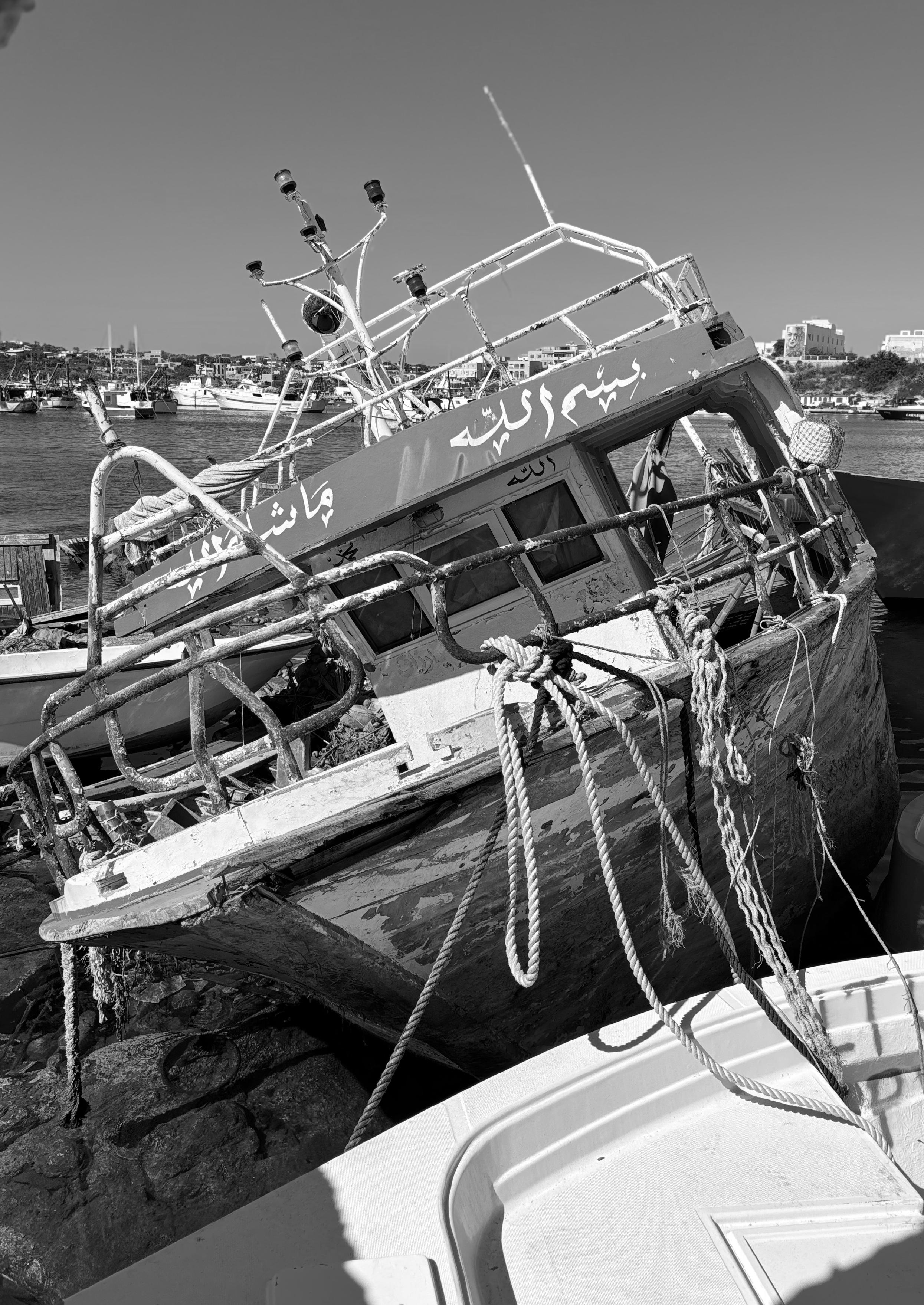
CHAPTER
3. Accountability mechanisms: serious incidents, complaints and the use of force
With the purpose of monitoring and ensuring respect for fundamental rights, Frontex has adopted an accountability framework consisting of several mechanisms to address potential fundamental rights violations and cases involving excessive use of force across the Agency’s operational activities. These mechanisms are the serious
3.1 Serious incident reporting
Serious incident reporting is an internal mechanism requiring Frontex officers and other participants in Frontex operational activities to report alleged fundamental rights violations. 20 The Office may also decide to launch a procedure itself when information is received from third parties. Direct or indirect Frontex involvement is a necessary condition for initiating a serious incident report, as provided for in the standard operating procedure. 21
The Office first conducts a preliminary assessment of the incident reported, the so-called potential serious incidents, 22 applying an established methodology 23 to determine if the case meets the requirements and threshold for launching the procedure.
When a serious incident report is launched, the allegations of violations of fundamental rights are then investigated. Investigations aim at corroborating or disproving initial allegations, on the basis of an assessment of information from open sources or internal reports as well as inquiries with the alleged victim(s), witnesses and/or reporting persons, the Agency and/or relevant national authorities.
3.1.1 Potential serious incidents in 2025
In 2025, the Office preliminarily assessed 204 potential serious incidents alleging violations of fundamental rights, including international protection obligations. Most of the reported incidents occurred in Greece or Poland. In the case of Greece, they involved alleged pushbacks at sea, violence against migrants, incidents relating to search and rescue, and theft or destruction of belongings. In Poland, the alleged incidents mostly concerned access to the
incident reporting, complaints mechanism and use of force supervisory mechanism. They strengthen oversight and monitoring of compliance with fundamental rights, though they differ in their purpose, scope, initiation and procedural function.
Each serious incident reporting procedure is closed with a final report which summarises the process, evidence gathered and findings, and provides recommendations on follow-up measures to address identified issues.
The number of serious incident reports launched depends on a variety of factors, including the number of Frontex officers deployed in certain operations/ locations, their profiles and functions, their motivation to report, the number of monitoring visits conducted by the Fundamental Rights Office and the monitors’ access to the operational areas, locations and operational activities. Civil society organisations’ access and initiative in the area of the operations is also an important factor. Therefore, although they may indicate fundamental rights challenges observed in a particular region, area or activity, the number of serious incident reports does not by itself reflect conclusively the number of violations nor their distribution or seriousness, and should rather be contextualised and complemented by other observations and findings (see also Chapter 1 in this regard).
asylum procedure. Thirty-five potential serious incidents were reported in third countries, such as 21 cases relating to search and rescue and violence against migrants, mainly in Libya and Tunisia, as well as 14 cases relating to the theft/destruction of belongings, access to the asylum procedure and pushbacks on land in Albania, Moldova, Montenegro, Serbia and North Macedonia. The serious incident reporting mechanism follows up allegations on
20 Further information on serious incident reporting can be found at: Fundamental rights at Frontex
21 A serious incident is an event, caused by an action or failure to act by a person, or by force of nature, which directly or indirectly involves Frontex participants or assets […] (Article 2.1 of the Decision of the Executive Director No R-ED-2021-51 on Standard Operating Procedure (SOP) – Serious Incident Reporting of 19/04/2021).
22 Potential serious incidents, like initial serious incident reports, represent merely an allegation of fundamental rights violation. Their presence can provide context and illustrate phenomena often reported to the Fundamental Rights Office. However, only in the Final Serious Incident Reports, after completion of its investigation, does the Office provide its conclusions as to the actual occurrence or lack thereof of the alleged fundamental rights violation. Therefore, potential serious incidents are classified only by topic, whereas launched and concluded cases refer to alleged fundamental rights violations.
23 The Office does not launch serious incident procedures based on every allegation or report received. According to the standard operating procedure on serious incident reports, such initial input is preliminarily assessed through a mandatory criteria check as well as on elementary reliability, completeness and relevance of information. As a result of the initial evaluation, the Office opens potential serious incident files for selected cases. Additional information is sought and, on that basis, decisions to launch serious incident procedures are made.
the Agency’s activities including in joint operations in third countries or services (like Frontex Multipurpose Aerial Surveillance service). Chart 5 presents the potential
serious incidents by country and topic, identifying the types of alleged fundamental rights violations that were reported.
Pushback at sea
Pushback at land
Violence against migrants
Privacy and data protection
Search and Rescue
Access to asylum procedures
Theft/destruction of belongings
Other
*Libya or Tunisia: incidents that occurred in the Libyan or Tunisian search and rescue region with the involvement of Libyan or Tunisian search and rescue actors (Frontex Multipurpose Aerial Surveillance service).
3.1.2 Serious incident reports launched in 2025
Out of the 204 potential serious incidents alleging violations of fundamental rights, including international
protection obligations, in 2025 the Office launched 47 serious incident reports, fewer than in previous years.
in 2021-2025
Greece accounted for the plurality of incidents (12 out of 47, or 26% of the total); the remainder were spread across 15 other states. Some incidents concerned a combination of countries. The Office launched 13 reports on serious
incidents that occurred in third countries, of which four (4) in Libya, three (3) in Tunisia, three (3) in Albania, and the rest in Serbia and Montenegro.
*Libya or Tunisia: incidents that occurred in the Libyan or Tunisian search and rescue region with the involvement of Libyan or Tunisian search and rescue actors (Frontex Multipurpose Aerial Surveillance service).
In the 47 serious incident reports launched in 2025, a total of 64 allegations of fundamental rights violations were raised. Twelve out of 64 allegations (19%) involved
inhuman or degrading treatment, 11 (17%) alleged violations of the right to life, while lack of access to asylum and collective expulsion accounted for 7 each (11%).
Chart 11. serious incident reports, alleged fundamental rights violations Serious incident reports launched by category / fundamental rights affected, in 2025.
Access to asylum
Collective expulsion
Disembarkation at place of safety
Inhuman or degrading treatment
Procedural safeguards
Protection of personal data
Right to e ective remedy
3.1.3 Findings
In 2025, the Office closed 42 serious incidents with a final report (including cases from the current and previous years). Seventeen (40%) related to serious incidents that occurred in the territory or the search and rescue region
of third countries: eight (8) in Albania, four (4) in Serbia, two (2) in Libya, two (2) in Tunisia, and one (1) in North Macedonia.
Final serious incident reports conclude investigations into initial allegations and categorise findings into one of four categories: (1) at least one violation verified; (2) violation likely; (3) unclear whether violation happened; and (4) no violation.
In seven (7) cases, investigations found that at least one violation of fundamental rights had occurred, while for 21 other cases violations were found likely to have occurred. In 10 cases, the outcome remained unclear, whereas for four (4) cases it was confirmed that no violation(s) had occurred. The highest number of final reports concerned Greece, followed by Albania. In respect of Greece, 10 serious incidents reports were finalised; in four of these cases at least one fundamental rights violation had been verified. For Albania, in seven out of eight closed serious incidents reports investigations concluded that a violation was likely to have occurred.
Among the 28 serious incidents closed finding that at least one fundamental rights violation was verified (7)
or had likely occurred (21), the following conclusions can be drawn:
• Source of information: most cases (21) were reported by Frontex staff (either deployed in the field or based at headquarters); four of them by the monitors. Another four cases were reported in media and resulted in further investigation by the Fundamental Rights Office. The remaining three cases were reported by nongovernmental organisations.
• Main breaches of fundamental rights: serious incidents mainly involved violations of the right to life, the right to property, inhuman and degrading treatment of migrants, and access to asylum. Other cases concerned collective expulsions, the right to healthcare, protection of personal data and procedural safeguards. In some of the serious incidents, several breaches of fundamental rights were found, amounting to a total of 41 violations for 28 serious incidents.
Chart 12. serious incident reports on Fundamental Rights, launched vs. closed cases Serious incident reports launched and closed per quarter in 2022-2025.
Chart 13. serious incident reports on Fundamental Rights, conclusion type Closed serious incident reports per country and conclusion type in 2025.
Violation Unclear Likely Verified
*Libya or Tunisia: incidents that occurred in the Libyan or Tunisian search and rescue region with the involvement of Libyan or Tunisian search and rescue actors (Frontex Multipurpose Aerial Surveillance service).
Chart 14. serious incident reports on Fundamental Rights, fundamental rights violation Closed serious incident reports per country and concluded fundamental rights violation in 2025.
*Libya or Tunisia: incidents that occurred in the Libyan or Tunisian search and rescue region with the involvement of Libyan or Tunisian search and rescue actors (Frontex Multipurpose Aerial Surveillance service).
When it comes to the level of involvement of Frontex officers in the reported fundamental rights violations, a distinction is made between cases in which (i) Frontex officers were not involved or merely learned about incidents without the ability to intervene, and (ii) cases where Frontex officers directly or indirectly contributed to the fundamental rights violation. The following categories were considered: (1) no involvement; (2) knowledge of the event; (3) decisive influence; and (4) direct involvement.
In 2025, the Office concluded 42 serious incidents, as follows:
• Nine (9) cases showed no involvement or merely operational association between Frontex officers and the incident.
• The largest number, half of all serious incidents (21), were cases in which Frontex received a report on or otherwise had knowledge of the event , including the reports received from debriefing interviews or Frontex Surveillance Aircraft sightings.
• In one (1) case, a Frontex officer was alleged to have been directly involved by ignoring a request for asylum. However, the Office concluded that the allegations were unfounded.
• In eleven (11) serious incidents, Frontex officers had decisive influence on the events, by for example directly witnessing the alleged abuse of migrants, with the possibility to affect the outcome.
○ In four (4) out of these cases, the Office found no violations or was unable to establish whether the events took place as reported.
○ In the remaining seven (7) cases, the Office concluded that fundamental rights had likely been violated. Two (2) cases concerned Frontex Multipurpose Aerial Surveillance service with Frontex having knowledge and possibility to interfere or change the outcome of the case. And remaining five (5) cases concerned national authorities likely constituting violations of fundamental rights or not applying respective safeguards while in presence of Frontex officers.
by country and type of involvement by Frontex officers in 2025.
*Libya or Tunisia: incidents that occurred in the Libyan or Tunisian search and rescue region with the involvement of Libyan or Tunisian search and rescue actors (Frontex Multipurpose Aerial Surveillance service).
**Investigation into one (1) serious incident in North Macedonia regarding direct harm by Frontex officers concluded that allegations were unfounded and no violations of fundamental rights were conducted.
Chart 15. serious incident reports on Fundamental Rights, involvement of Frontex officers Closed serious incident reports
3.1.4 Follow-up with the national authorities
In the period January 2024 to June 2025, the Office finalised 69 serious incidents, of which in 53 cases it concluded that fundamental rights were likely violated or found strong evidence to prove violations of fundamental rights. In only six (6) out of these 53 serious incident reports, the Office learned that investigations were conducted by independent institutions or national courts. Therefore, the Office inquired with national authorities to ascertain the status of national investigations. This follow-up found that:
• In 20 cases, internal investigations were completed by the national authorities. However, none had found wrongdoing. In three (3) cases the conclusions of internal investigations were not shared with the Office.
• In nine (9) cases, internal or national investigations were still ongoing.
• In 24 cases, national authorities provided no information on whether internal or national proceedings were conducted.
Outcome of national investigations after referral of serious incidents by the Office
Ongoing investigations
Conclusions not shared
In this regard, the Office raised two main concerns:
• Lack of independent national inquiries into breaches of fundamental rights that the Office had to a certain extent confirmed. Internal investigations were often conducted by bodies or entities within the same institutions accused of violating fundamental rights, compromising the independence and transparency of the investigations. To this end, the Office has on several occasions advised the national authorities to follow up on internal investigations with independent inquiries. However, the Office regrets that only six (6) cases out
3.2 The complaints mechanism
No wrongdoing concluded
No investigations or information provided
of 53 were investigated by independent institutions or national courts.
• Inadequate accountability: to the Office’s knowledge, no internal investigation has found guilt or determined liability on the part of those alleged to have committed fundamental rights violations, even though the outcome of the Fundamental Rights Office’s investigations concluded that fundamental rights had likely been violated or found evidence to prove violations of fundamental rights. This raises concerns about the impartiality and credibility of internal investigations into these incidents and heightens the need for independent follow-up.
The complaints mechanism is an administrative mechanism providing individuals with a legal avenue to report alleged violations of fundamental rights arising from the Agency’s activities.24 Any person who is directly
24 Further information on the complaints mechanism can be found at: Frontex Complaints Mechanism. The procedure to submit a complaints is set out in the Agency’s rules on the Complaints Mechanism
Chart 16. serious incident reports on Fundamental Rights, follow-up with national authorities
(2025).
affected by the actions or failure to act on the part of staff involved in an activity, 25 and who believes that their fundamental rights have been violated in the course of any Frontex operational activities, is entitled to submit a complaint in writing through the standard complaint form (available in multiple languages) or by email/letter. The
3.2.1 Complaints received and pending
In 2025, the Office registered 114 complaints. This is the highest yearly amount ever recorded, continuing the trend of the previous years. Considering the fewer than 20 complaints received every year before 2020, between 60 and 80 complaints in the period 2022-2024, and the 114 complaints registered in 2025, the total aggregate
complaint can also be lodged by representatives acting on their behalf and does not prevent the complainant from resorting to other remedies, including administrative or judicial remedies. The Office is responsible for handling complaints received by the Agency through the complaints mechanism.
number of complaints reached 427. The significant rise in the number of complaints results from the increased visibility of the complaints mechanism in the locations where Frontex performs operational activities as well as the Office’s efforts to provide information online and translate materials into multiple languages.
Chart 17. Overall and aggregate number of complaints registered (across years)
Number of complaints registered by the Fundamental Rights Office (2016-2025).
Number of complaints per year
Following its registration, the Office assesses the admissibility of the complaint (according to Article 5 of the Rules on the complaints mechanism). Where a complaint is declared admissible, the Office assesses the merits of the complaint and makes recommendations. Accordingly, complaints cases may remain pending until the assessment is concluded, either on the admissibility of
Aggregate number of complaints
a complaint or on the final outcome of the investigation into an admissible complaint. At the end of 2025, a total of 52 complaints remained pending (see Chart 18). Two (2) were complaints that had already been declared admissible (one each from 2024 and 2025), and the remainder were pending determination of admissibility (8 complaints from 2024 and 42 from 2025).
25 Frontex staff is defined as a member of the European Border and Coast Guard Standing Corps deployed through border management teams, migration management support teams and return teams.
3.2.2 Complaints concluded
In 2025, the Office concluded the assessment of 90 complaints, of which 70 had been registered in 2025 and 20 in 2024. Out of the 90 concluded complaints, 80 were declared inadmissible (10 from 2024 and 70 from 2025) and 8 were discontinued due to a lack of response from the complainants to requests for additional information.26 The main reason for the high number of inadmissible complaints is that the alleged breach of fundamental rights did not occur as part of an operational activity performed by the Agency. Additionally, of the concluded complaints, one (1) complaint was referred to the Frontex Data Protection Officer and one (1) complaint was declared admissible and forwarded to national authorities for further handling, as well as to the Frontex Executive Director for his information. 27
The admissible complaint (jointly CMP-2025-00026 and CMP-2025-00027) contained allegations that a group of individuals was denied access to the asylum procedure during a return operation. Following this, the Office forwarded the complaint to the national authority to inquire into the Member State’s findings and potential follow-up actions that would be implemented.
Thereafter, the Office prepares a final report and closes the case. The complainant is informed and provided with all the relevant information, including the findings, the follow-up measure(s) taken, and the decision as regards if the complainant’s fundamental rights were violated.
From 2022, the Office has experienced a sharp decrease in the number of admissible complaints: 38 in 2022, 13 in 2023, two (2) in 2024 and one (1) 2025. The variety of the types of alleged violation has also decreased, as no allegations of violations relating to the right to property, torture, inhuman or degrading treatment, collective expulsions or rights to liberty, life, and healthcare have been submitted recently.
Most complaints for which assessment was concluded in 2025 were declared inadmissible (91%). This included ten (10) complaints received in 2024 and 70 in 2025, with a total of 80 complaints being declared inadmissible in 2025. They concerned allegations of fundamental rights violations such as ill-treatment of individuals, excessive waiting times at border crossing points, inadequate conditions at reception facilities and unprofessional conduct of border guards. The most common ground for inadmissibility was that the alleged breach of fundamental rights did not occur as part of an operational activity performed by the Agency.
Chart 17 presents the number of complaints according to their status from the first quarter of 2023 to the last quarter of 2025. Noteworthy is the continued high share of inadmissible complaints across multiple years as well as the significant increase in the number of received (still pending) complaints towards the latter half of 2025.
26 According to Article 6(3) of the Agency’s rules on the complaints mechanism, if contact with the complainant cannot be established and information cannot be obtained in one year, the case may be discontinued.
27 After a preliminary assessment is concluded, a complaint can be declared admissible and remains pending until a final report is issued. As such, admissible complaints cannot be considered closed. Complaints that are referred to the Frontex Data Protection Officer are also concluded after a preliminary assessment. They cannot be considered closed as they are referred and investigation remains ongoing by the Data Protection Officer; however, they do not remain pending for the Fundamental Rights Office.
Chart 18. n umber of registered complaints remaining pending Number of complaints pending at the end of 2025 (by date of submission).
Chart 19. n umber of admissible complaints per fundamental rights violation Number of admissible complaints per fundamental rights violation raised (2022-2025).
Right to property
Torture, inhuman or degrading treatment
Child rights, Discrimination
Collective expulsion
Right to liberty & security, Right to life, Right to health care
Right to e ective remedy, E ective access to asylum, Right to good administration
Chart 20. Breakdown of the reasons for inadmissibility of complaints Number of complaints declared inadmissible, by reason for inadmissibility (2025).
* In one case from 2024 the complaint involved both ‘complainant not directly affected person’ and ‘working relation between the Agency and its staff’ as the reasons for inadmissibility. For one case in 2025, the complaint involved both ‘no operational activity of the Agency’ and ‘no fundamental rights issues’ as the reasons for inadmissibility.
Chart 21. n umber of complaints per status type after admissibility assessment Number of registered complaints per quarter and status (2023–2025).
Inadmissible Discontinued
Received still pending
* Due to the need to conduct thorough assessment of complaints, following a significant increase in complaints received, and the delay in responses from complainants, a sudden increase can be observed from Q3 to Q4 in 2025.
3.2.3 Awareness raising and cooperation with monitoring institutions
In 2025, the Office continued raising awareness of the complaints mechanism to strengthen its visibility and accessibility to potential victims of alleged fundamental rights violations. The Office dedicated significant resources to development of new information materials, translated into multiple languages. The production of location-specific and weather-resistant posters was undertaken to address challenges observed in operational areas. Additionally, new durable roll-up display formats were created and tailored to the specific requirements of different geographical regions, ensuring durability and sustained visibility of informational content.
Information posters on the complaints mechanism were, in most cases, displayed at prominent spots with high visibility in most of the premises where Frontex operational staff was deployed. However, such materials must be made even more visible and accessible to the
general public crossing the external borders of the European Union.
A dedicated page on the complaints mechanism on the Frontex website also underwent substantial revision. Improvements were specifically designed to optimise user accessibility and facilitate intuitive navigation of complaint-related information. The website modifications enable more efficient information retrieval and provide a more streamlined user experience for individuals seeking to understand and utilise the complaints procedure.
In 2025, the Office actively pursued partnerships with Ombuds institutions in third countries where Frontex conducts operational activities. This included the signing of a Memorandum of Understanding to formalise cooperation with the Ombudsman of the Republic of North Macedonia, including a structured framework for exchanging information and collaborating on complaints.
3.2.4 Review of the Agency’s rules on the complaints mechanism
After three years of implementation since the adoption of the rules on the complaints mechanism in March 2022, the Office identified needs for improvement concerning,
in particular, the handling of inadmissible complaints, the effectiveness of the mechanism, compliance with the EBCG Regulation and clarification on the wording of the rules.
A more proactive referral system for inadmissible complaints is needed, with complaints raising fundamental rights concerns beyond Frontex’s operations referred to independent national mechanisms, provided there is consent on the side of the complainant(s) and this is agreed with the national bodies. This approach could increase the effectiveness of the complaints mechanism, prevent administrative gaps from hindering inquiries into fundamental rights concerns and provide the
complainants with concrete assistance, aligning better with the intended scope of the EBCG Regulation. In 2025, the Office proposed a review of the Rules on Frontex’s Complaints Mechanism to the Frontex Management Board, which was met with opposition from some Member States. The revised rules will be adopted in 2026, but the aspect of the referral of cases not related to Frontex to independent national mechanisms did not seem to be possible to agree on.
Memorandum of Understanding between the Frontex Fundamental Rights Officer and the Frontex Data Protection Officer
In August 2025, the Frontex Fundamental Rights Officer and the Frontex Data Protection Officer signed a new Memorandum of Understanding, replacing a previous one from 2016. This Memorandum of Understanding specifies the division of tasks in the handling of complaints in accordance with Article 111(6) of the EBCG Regulation; the division of roles and rules for collaboration in matters related to investigations into potential fundamental rights violations; and the rules for cooperation on other matters concerning data protection and fundamental rights.
3.3 Use of force monitoring, investigations, reporting
The use of force supervisory mechanism is a Frontex accountability process through which the Agency monitors and reports on the events involving the use of force to examine whether use of force actions were necessary and proportionate.28 It sets out a clear procedure in reporting on the use of force – step 1 obliges every member of the teams to report on the use of force; step 2 installs an initial assessment of the legality, necessity and proportionality of reported events; and step 3 regulates the verification of the initial assessment. 29
Unlike in the cases of serious incident reports on fundamental rights or the Frontex complaints mechanism,
3.3.1 Reporting on the use of force
Reporting on the use of force in a law enforcement context is essential for protecting fundamental rights and maintaining public trust, as it ensures actions are lawful, necessary, and proportionate, in line with European human rights standards. Accurate and timely documentation of events involving use of force creates a basis for accountability, oversight and compliance with fundamental and human rights requirements. For Frontex, this includes an obligation to report and investigate all use of force incidents. Frontex officers are required
where the Office is mandated to act as case handler or managing the mechanism, in the case of the Frontex use of force mechanism it is the Agency that is tasked with handling the reports on use of force. The role of the Office is focused on ensuring that incidents involving the use of force are thoroughly investigated, that the Agency’s Executive Director is informed of any diverging conclusions of the investigations, and that results are transmitted to the Executive Director, the Consultative Forum and the Management Board, as per the EBCG Regulation.
to promptly and thoroughly report any use of force, following standardised templates and procedures.
In 2025, the Office focused on strengthening the reporting system and the supervisory mechanism with regards to the use of force. A total of 83 use of force reports were analysed; three (3) of these had been classified as “incidents involving use of force” as per Article 2 of the Management Board Decision 7/2021. An incident involving use of force means the use of force by statutory staff of the standing corps, resulting in death or hospitalisation of
28 As per article 55.5 of the EBCG Regulation, the Agency must establish a supervisory mechanism to monitor and report on the application of the provisions on use of force by statutory staff. Complemented by Annex V, it stipulates principles governing the use of force and weapons in line with fundamental rights, including the principles of necessity, proportionality and precaution. Further information on the use of force supervisory mechanism can be found at: Fundamental rights at Frontex
29 Article 12 Management Board Decision 7/2021 of 20 January 2021 establishing a supervisory mechanism to monitor the application of the provisions on the use of force by statutory staff of the European Border and Coast Guard Standing Corps.
a person, or severe property damage, or when a firearm is used, or in case of failure to comply with national or human rights law or breaches of the Frontex Code of Conduct. Preliminary findings on events involving use of force and incidents involving use of force are discussed with the standing corps and the relevant entities of the Agency.
The Fundamental Rights Office analysed whether incidents were reported promptly and effectively, who reported them and whether reporting templates and the underlying legal framework were clear, practical and provided sufficient detail for oversight. Based on reviewed reports, field visits and training sessions, the Office found gaps in knowledge and confidence among officers regarding reporting obligations and procedures, highlighting the need for improved guidance, training and clarity. The Office found that Frontex’s current use of
force reporting system could be improved, particularly in the design of templates and procedures. Therefore, the Office will issue an opinion in 2026 with recommendations revising Frontex’s use of force reporting system to ensure clearer roles, greater objectivity and more effective oversight.
The Office’s use of force and serious incident reporting teams also collaborated on cases involving use of force and related fundamental rights violations. Aiming to achieve results efficiently, internal workflows were harmonised. This procedural approach guaranteed structured communication flow between the different mechanisms dealing with cases involving use of force.
In 2025, the Office also performed missions focused on use of force, leading to targeted training activities, stressing reporting obligations and the monitoring mechanism.

CHAPTER 4.
Advisory functions and cooperation
Providing advice on fundamental rights is one of the key functions of the Fundamental Rights Office. In addition to its advisory role in the implementation of operational activities, the Office provides advice on fundamental rights. It may concern operational matters, cooperation of the Agency with non-EU countries and external stakeholders or other types of workflows and
processes in which the Agency is involved. The Office may also support national authorities, as requested. The current chapter focuses on the main contributions of the Office providing advice in connection with internal and external processes, and activities not covered by the previous chapters.
4.1 Strategic advice on operational activities
In addition to the advisory and monitoring tasks performed by the monitors in the field during the implementation of Frontex operational activities (see Chapters 1 and 2), the Office supported the Agency in the planning and evaluation of operational activities. With the purpose of further strengthening the Agency’s compliance with fundamental rights, in 2025 the Office also issued recommendations to the Management Board and Opinions to the Agency.
Recommendations to the Management Board. In 2025, the Office, in the context of its regular reporting, issued one formal recommendation to the Management Board. The Office recommended the adoption of revised rules of procedure for the complaints mechanism, proposing a
Fundamental Rights Officer’s Opinions
draft to the Management Board (see further information in Chapter 3).
Own-initiative and other Opinions. The Fundamental Rights Officer issued own-initiative Opinions to highlight issues of particular concern, but also upon the Agency’s request on issues requiring a fundamental rights assessment. These opinions concerned, among other issues, operational guidelines on screening and debriefing activities, operational activities in countries like Hungary and Greece, activities aimed at returning migrants to Syria or Somalia and other initiatives on return and reintegration, and the deployment of Multipurpose Aerial Surveillance assets to monitor the Western African Route.
Opinion on the operational guidelines on screening in line with the Screening Regulation
Requested by the Agency’s entities that drafted the guidelines. It proposed amendments to the guidelines, recommending further outlining fundamental rights safeguards applicable to screening, tasks and responsibilities of the independent monitoring mechanisms, and training.
Opinion on the operational activities in Hungary
Issued on the Fundamental Rights Officer’s own initiative. It reiterated that Frontex should not resume operational activities in Hungary as long as legislation is not in line with European law. It also identified activities that may be conducted under certain conditions.
Opinion on (voluntary) returns to Syria - amendment
Amended the previous opinion on the same matter. It maintained that the Agency should not support forced returns to Syria. However, voluntary returns may be supported, based on caseby-case assessment and with emphasis on pre-return counselling and post-return reintegration.
Opinion on the deployment of Multipurpose Aerial Surveillance assets to monitor the Western African Route
Issued on the Fundamental Rights Officer’s own initiative, in response to the possible deployment of Frontex surveillance aircraft to Cabo Verde. It identified fundamental rights risks and advised the Agency to adopt a set of mitigation measures which would contribute to ensuring respect and protection of the right to life of persons at sea and limit risks related to disembarkation in unsafe countries.
2 April 2025
13 May 2025
19 May 2025
21 May 2025
Table 1. Fundamental Rights Officer’s opinions on operational matters
Fundamental Rights Officer’s Opinions
Opinion on DO’s and DONT’s for screening and debriefing activities under the host country command
Requested by the Agency’s entities that drafted the guidelines. It recommended some amendments in the guidelines to ensure that all the fundamental rights safeguards applicable to screening and debriefing were adequately reflected.
Opinion on Return operations to Somalia
Issued in response to the deteriorating security situation. It confirmed that return operations and interventions can continue, however, only if strict fundamental rights, security and safety safeguards were applied.
Opinion on Greece’s suspension of asylum applications
Issued on the Fundamental Rights Officer’s own initiative, in response to the law providing for the return of migrants arriving in Greece by boat from North Africa without registering their asylum applications. It recommended the Agency not to assist with the implementation of the law, including by refraining from supporting screening, debriefing or return activities covered by it.
Second Opinion on Deployment of Multipurpose Aerial Surveillance assets to monitor the Western African Route
It complemented the previous opinion on the same matter. It reiterated that fundamental rights safeguards needed to be implemented prior to the deployment of the surveillance assets to Cabo Verde, and that agreement for collaboration on search and rescue with Mauritania and Senegal needed to be concluded.
Opinion on Frontex Return and Reintegration Application chatbot concerning the potential impact on fundamental rights and proposed safeguards
Responded to the development by the Agency of an AI chatbot to be used as part of Return and Reintegration tools. It proposed a set of fundamental rights safeguards in the development stage and review of the chatbot, once launched.
Opinion on the Hellenic Authorities’ request for reinforcement at Malakasa and Diavata Reception and Identification Centres
Issued following information of the Greek authorities’ request for reinforcement. It emphasised the recommendation for Frontex to avoid participation in the screening, debriefing, return and other activities implementing the law on suspension of asylum.
Planning and Evaluation of operational activities. The Office provided input and issued recommendations to all operational plans drawn up for the operational activities of the Agency during their drafting and negotiation process with the host States. Once the operational plans became final, and before their formal adoption by the Executive Director, the Office issued Opinions endorsing, recommending changes or objecting to the operational plans.30
29 July 2025
Throughout 2025, the Office issued Opinions on operational plans drawn up either to launch operational activities or to amend existing joint operations. This included Opinions on Joint Operations under the 2025 planning cycle that were submitted for the Office’s review in early 2025, and Opinions on Joint Operations under the 2026 operational planning cycle that were submitted for Office review in late 2025 (and the beginning of 2026).
30 In accordance with Article 109(2)(e) of the EBCG Regulation, the Fundamental Rights Officer provides opinions on the operational plans drawn up for the operational activities of the Agency. In line with Article 110(2) of the EBCG Regulation, the fundamental rights monitors shall follow the preparation of the operational activities and report to the Fundamental Rights Officer, as well as contributing to the evaluation of activities (among other tasks).
As part of the consultation phase for the 2026 operational planning cycle, the Office made recommendations to improve the clarity of provisions affecting fundamental rights. The Office raised concerns on restrictions of the mandate of the Fundamental Rights Officer and the monitors (departing from the provisions of the EBCG Regulation and standard operating procedures), accountability of participants in Joint Operations and on the regulation of certain operational activities (most notably debriefing and activities at disembarkation points). Whenever relevant, the Office included recommendations not to launch specific activities, or to condition their implementation on the adoption of strict and binding mitigating measures, particularly in countries with significant fundamental rights risks such as Bulgaria and Greece. Besides issuing Opinions on individual joint operations, as mandated under the EBCG Regulation, the Office also formulated overarching recommendations applicable to all operational plans.
The Office also contributed to the review of the standard operating procedure on Frontex operational
plans, streamlining the internal procedures regulating the Office’s contributions throughout the operational planning cycle.
Lastly, the Office contributed to and issued observations to the Agency’s evaluation of all its operational activities (see Chapter 1 on Monitoring of activities at the external borders or in third countries). It provided input to the Frontex Evaluation Reports referred to in Article 47 of the EBCG Regulation, and submitted observations on fundamental rights compliance and challenges observed during joint operations.
Fundamental Rights Compliance Panel. In the framework of the Fundamental Rights Compliance Panel (established in 2024 by the Agency), the Fundamental Rights Office continued to provide advice on specific Joint Operations as well as horizontal issues. The Panel continued its work to address fundamental rights compliance issues that could be handled more effectively at this level due to their strategic and cross-divisional nature.
4.2 Advice on cooperation with third countries
In 2025 the Office continued to support the Agency in matters concerning international cooperation, and technical and operational assistance to third countries. This included providing advice during the negotiations of working arrangements and technical assistance projects, assessment of risks prior to engaging in cooperation with non-EU countries and more generally assessing the fundamental rights compliance of the Agency’s activities, providing advice and assistance in that regard and contributing to the promotion of fundamental rights as part of European integrated border management.
The Office stressed the need to assess the possible impact on fundamental rights prior to engaging with non-EU countries, and to include strong fundamental rights safeguards to mitigate potential risks. When requested by the Agency, the Office continued to provide advice on proactive measures needed against potential risks
of direct or indirect involvement in fundamental rights violations by Frontex as well as cooperation partners.
During 2025, the Office provided advice during the negotiations of a number of working arrangements, including Cabo Verde, Moldova, Nigeria, Ukraine and Western Balkans countries. It also contributed to the development and implementation of the EU4BorderSecurity (EU4BS) project and a project to enhance security at Ukrainian-EU borders. This included provision of training on fundamental rights to authorities of third countries (including fundamental rights in border management, or capacity building activities focused on search and rescue and fundamental rights at sea).
The Office provided the following opinions on technical assistance projects in third countries:31
31 In accordance with Article 109(2)(e) and (f) of the EBCG Regulation, the Fundamental Rights Officer shall provide opinions on working arrangements and technical assistance projects in third countries.
Table 2. Fundamental Rights Officer’s opinions on technical assistance projects in third countries
Fundamental Rights Officer’s Opinions
Opinion on the purchase and transfer of equipment to Western Balkans BeneficiariesAlbania, Bosnia and Herzegovina, Kosovo, * Montenegro, North Macedonia, and Serbia
Assessed possible risks and mitigating measures on the transfer of equipment. It reiterated the need to put in place certain fundamental rights safeguards related to the equipment’s operation, training, and monitoring.
Opinion on the extension of the EU4BorderSecurity (EU4BS) project
It was requested by the relevant Agency’s entities, on a proposed three-year extension of the project in Southern Neighbourhood countries. It proposed fundamental rights safeguards and activities that could implemented to enhance compliance and awareness of fundamental rights.
In the framework of the fundamental rights due-diligence procedure, the Office advised the Agency on the potential risks deriving from specific activities within ongoing or planned cooperation with third countries.33 Key advice took the form of human rights impact assessments (see Table 3 below). These assessments are analytical products
Table 3.
Human rights impact assessments
with The Gambia
17 January 2025
3 March 2025
which include information on the fundamental rights situation and concerns in the specific country, potential risks related to Frontex engagement and the Office’s considerations and recommendations on how to mitigate the risks. They concerned activities such as capacity building or transfer of equipment to third countries.
Human Rights Impact Assessment concerning the Agency’s involvement in the new capacity building project with Turkmenistan
Human Rights Impact Assessment concerning the Agency’s engagement on training activities with the Republic of Armenia
Lastly, the Office contributed to other cooperation activities such as the Ukrainian national integrated border management strategy 2026-2031 and the Agency’s engagement with the League of Arab States.
The Office also monitored and provided advice in relation to cooperation with and operational activities in third countries (see Chapter 1 Monitoring of activities at the external borders and in third countries) and return operations (see Chapter 2 Activities related to returns).34
4.3 Engagement with other EU institutions, bodies, offices and agencies
In the reporting period, the Office participated in various processes and meetings with EU institutions and agencies. This notably included the European Parliament and the European Commission. In 2025, the engagement also focused on the implementation of the Screening Regulation. In this context, the Office supported Frontex in its close engagement with the EU Agency for Asylum
to develop guidelines and materials aimed at supporting Member States in the implementation of the Pact on Migration and Asylum.
The partnerships between Frontex and other EU Agencies included specific fundamental rights obligations, reflected in the Working Arrangements. The Office took part in the
* This designation is without prejudice to positions on status and is in line with UNSCR 1244/1999 and the ICJ Opinion on the Kosovo declaration of independence.
33 The fundamental rights due diligence establishes a procedure for the Office to identify and assess the fundamental rights-related risks that Frontex may incur when engaging with third countries. This procedure is currently under revision.
34 Under the framework of Joint Operations 2025 planned and conducted in: Albania (69 Field Monitoring Days), Georgia (14), Moldova (30), Montenegro (26), North Macedonia (32) and Serbia (99).
Agency-wide consultations on the partnership documents as well as provided opinions on the concluded Working Arrangements. Moreover, the Office also regularly
contributed to reports, policies and strategies drafted by other EU Agencies in the implementation of EU policies.
Fundamental Rights Office’s representation at the Frontex Liaison Office in Brussels.
Following the decision of the Fundamental Rights Officer, a senior fundamental rights monitor was posted to the Agency’s Liaison Office in Brussels. The Office’s representation in Brussels regularly reports about the fundamental rights implications of policy and legislative developments at the EU institutions. This has helped provide the Office with up-to-date insights on law and decision making and the EU’s migration governance, informing the Office of key developments at the heart of the EU.
The work of the representative focused on issues including engagement in the implementation of Frontex’s partnerships with non-EU countries, the development of key legislative instruments (such as the Regulation on the return of the illegally staying third country nationals), and the amendment of the EBCG Regulation. In this regard, the Office’s representation launched a policy exchange with the members of the Frontex Consultative Forum on Fundamental Rights to source views on the Agency’s fundamental rights compliance amid the planned expansion of its mandate.
The Office also supported the Agency in addressing and reporting on the progress made on the recommendations related to fundamental rights issued by various EU
oversight entities. This included recommendations issued by the European Parliament’s Frontex Scrutiny Working Group35 and the European Ombudsman.
4.4 Cooperation with national authorities and institutions
The Office contributed to a wide range of activities in support of national authorities and institutions in the context of the European Border and Coast Guard and European integrated border management.
In 2025, the Office extensively engaged with independent monitoring mechanisms, Ombuds and human rights institutions, also in the context of field visits. The Fundamental Rights Office continued its support to the independent monitoring mechanism of the Republic of Croatia by chairing an international Advisory Board and contributing to providing recommendations to the mechanism.
In this context, in May the Office organised a study visit of the Croatian independent monitoring mechanism to Frontex Headquarters. The primary objective was to discuss current challenges in monitoring the EU external borders and to exchange best practices on monitoring methodology.
In October, the Office also organised a visit of representatives of the Greek Ombudsperson to Frontex. Frontex and the Office presented their work, with a particular focus on practicalities regarding the fundamental rights monitoring of return operations, monitoring of the operational activities in Greece, as
well as investigations into alleged fundamental rights violations.
In November, jointly with the Fundamental Rights Agency and the European Network of National Human Rights Institutions, the Office organised the second annual meeting with national human rights institutions (following the first one held in November 2024). The event gathered representatives of National Human Rights and Ombuds Institutions, taking stock of developments concerning the implementation of the monitoring obligations under the New Pact and contributing towards a comprehensive EU-wide monitoring system built on coherence and complementarity. The event included the participation of 20 National Human Rights and Ombuds Institutions, the European Commission and EU Agencies (Frontex, the EU Agency for Asylum and the EU Agency for Fundamental Rights).
In December, the Office organised the first meeting of the Fundamental Rights Office – National Authorities Platform, bringing together over 50 representatives of national authorities of 27 Member States and Schengen Associated Countries with the aim of discussing fundamental rights as an overarching component of European integrated border management (see also Section 4.6).
35 In October 2024, the Committee on Civil Liberties, Justice and Home Affairs (LIBE) of the European Parliament set up a Schengen and Borders Scrutiny Working Group (which replaced the functions of the previous working group) with the mandate for scrutiny of the functioning of the Schengen area and European integrated border management.
4.5 The Fundamental Rights Action Plan
In 2021, the Agency adopted the fundamental rights strategy36 and the corresponding action plan for implementation.37 The Agency ensures monitoring of the implementation of the Agency’s components of the action plan. However, the action plan requires the Office to report on the progress made in the implementation of the Fundamental Rights Action Plan in its annual report.
By the conclusion of the seventh cycle of the roadmap for the implementation of the Action Plan, in October 2025,
83 activities (out of the 87 included in the action plan)38 were assessed as implemented, either as implemented –process under a continuous follow-up (71) or implemented – no further assessment needed (12). Two activities were considered partially implemented and two delayed.39 The delays were due to technical difficulties, project amendments or lengthy consultation procedures. In some instances, data protection rules to a certain extent prevented full implementation of some activities.
Implemented - process under a continuous follow-up
Implemented - no further assessment needed
Partially implemented
As an example, one of the achievements in the Action Plan in 2025 concerned the finalised revision of the VEGA Handbook for land borders (currently pending management review and approval), in line with the commitment to develop and disseminate child-friendly handbooks (Activity 37.2).40 The consultation of the Office in the development of the ‘EU for border security and EBCG interoperability’ project, implemented by the Agency for the benefit of Ukrainian authorities, is another example, noted as a good practice under Activity 66.41
In addition, in 2025 the Office provided tailored training and awareness-raising sessions to the network of Frontex focal points on the Action Plan, representing different business units within the Agency. It also ensured the monitoring of the Agency’s commitments under the Fundamental Rights Action Plan by reporting twice a year to the Management Board.
36 Management Board Decision 12/2021 of 14 February 2021 adopting the Fundamental Rights Strategy.
37 Management Board Decision 61/2021 of 9 November 2021 adopting the Fundamental Rights Action Plan for the implementation of the Fundamental Rights Strategy.
38 The Fundamental Rights Action Plan’s first component covers overarching practices applicable to the entire European Border and Coast Guard community. The second component focuses on integrating and aligning all Frontex entities with fundamental rights, and it is composed of 17 objectives and 87 corresponding activities.
39 This improvement is also due to more accurate reporting. Since February 2025, The Agency, in consultation with the Fundamental Rights Office, has decided to rename two of the categories for the assessment of the status of implementation of the action plan. This decision was made to improve the quality of the reporting, by making more explicit the meaning to be assigned to each of those categories. They have been renamed as follows: from Implemented to Implemented – no further assessment needed; from Implemented and on-going to Implemented – Process under a continuous follow-up. The categories of Partially implemented and Delayed have not been amended.
40 The handbook contains suitable operational actions at green borders and entry and exit checks, including the situation of particularly high migratory pressure. The recommendations aim to increase the awareness of border guard officers with regard to children (persons below 18 years of age) who are crossing the external land border of the European Union, whether they are accompanied by their parents or other adult persons responsible for them or not. The current version of the handbook can be accessed at this link
41 Activity 66 reads as follows: “Technical assistance projects mainstream fundamental rights and include fundamental rights specific activities.”
Chart 22. status of implementation of the Fundamental Rights action Plan
4.6 The Technical and Operational Strategy for European Integrated Border Management
The Technical and Operational Strategy for European Integrated Border Management (EIBM), adopted in 2023, sets up a strategy and a corresponding implementation plan for the national integrated border management strategies, to be adopted by Member States and Schengen Associated Countries, as well as for the European Border and Coast Guard community as a whole. Fundamental rights is an overarching component in the strategy, and accordingly they must be given due consideration in the implementation of each of the other components.
The Office has a statutory obligation to monitor the Agency’s compliance with fundamental rights, provide advice and contribute to the promotion of fundamental rights as part of European integrated border management. The Office supports the EBCG community in ensuring that fundamental rights remain an overarching component in the implementation of European integrated border management, and as such it acts as an interface with national authorities where the Agency conducts operational and other activities.
In 2025, the Office continued to focus on strengthening synergies between the Strategy’s implementation plan, the Fundamental Rights Action Plan and other obligations of the Agency. To support the implementation of Action 13.1,42 the Office initiated the drafting of a Guidance Note on fundamental rights in national integrated
border management (strategies and action plans). The Guidance, including an outline of possible actions that a national fundamental rights action plan could lay down, is supposed to provide practical tips on how fundamental rights can be incorporated in national strategies for European Integrated Border Management, based on the experience of the Office as well as on practices collected at national level.
Also, to support the implementation of Action 13.6 43 the Office promoted the establishment of a platform between the Office and national authorities of the Member States and Schengen Associated Countries. It aimed at establishing a direct line of communication to discuss and facilitate cooperation on horizontal issues and challenges of common interest, and at exchanging good practices as regards fundamental rights in EIBM (see section 4.4 above). The Platform enhances cooperation and provides the opportunity to support Member States and Schengen Associated Countries in implementing fundamental rights strategies and policies, especially in view of the implementation of the EU Pact on Migration and Asylum.
Lastly, the Office continued to provide advice and assistance on fundamental rights in the implementation of the national integrated fundamental rights strategies, supporting national experts with tailored training.
4.7 Support to the Consultative Forum on Fundamental Rights
The Consultative Forum assists the Agency by providing independent advice on fundamental rights matters. In 2025, it was composed of 15 organisations, including two EU agencies, five international organisations and seven civil society organisations. The new members are the United Nations International Children’s Emergency Fund and the Council of Europe’s Conference of International Non-Governmental Organisations. The United Nations High Commissioner for Refugees and the EU Agency for Fundamental Rights co-chaired the Consultative Forum. In compliance with the EBCG Regulation, the Office assisted the Consultative Forum by providing its
secretariat, mandated to support it both administratively and financially.
The Consultative Forum held three meetings in 2025. However, the exchanges between the Office and the Consultative Forum were continuous throughout the year. The Consultative Forum deployed experts to implement VEGA activities and contributed to Frontex internal documents such as the Screening Toolbox and the revision of rules on the Frontex complaints mechanism. The activities of the Consultative Forum are presented in the Consultative Forum’s annual report.44
42 Action 13.1 reads as follows: “Develop and implement relevant national-level fundamental rights strategies and action plans taking into account and implementing as relevant, the EBCG fundamental rights strategy and fundamental rights action plan, involving all operational concerned actors, including the EU Agency for Fundamental Rights, as well as key human rights bodies, in particular Ombudspersons, National Human Rights Institutions and National Preventive Mechanisms, as relevant. Ensure to continuously act upon recommendations related to border management coming from national, EU, and international monitoring mechanisms, including the relevant United Nations bodies and the Council of Europe.”
43 Action 13.6 reads as follows: “Encourage the development and maintenance of an EBCG-wide network of focal points for the exchange of promising practices and to take stock of progress and/or seek advice where needed from the Fundamental Rights Offices of the relevant EU agencies (Frontex, Europol, EU Agency for Asylum and EU Agency for Fundamental Rights).”
44 Frontex, Consultative Forum on Fundamental Rights, Thirteenth Annual Report 2025, May 2025.
4.8 The ETIAS Fundamental Rights Guidance Board
The European Travel Information and Authorisation System (ETIAS) is being established as a new border management tool to carry out pre-travel screening of visa-free travellers to determine whether they pose a security, illegal immigration or public health risk. The ETIAS Regulation established the ETIAS Fundamental Rights Guidance Board as a critical governance element (Article 10(2) of the ETIAS Regulation). Its main task is to support ensuring adequate protection of travellers’ fundamental rights when applying for ETIAS travel authorisation.
The Guidance Board consists of stakeholders with various kinds of expertise in fundamental rights, including Frontex’s Fundamental Rights Office, the Frontex Consultative Forum on Fundamental Rights, the European Data Protection Supervisor, the European Data Protection Board and the EU Agency for Fundamental Rights. The Office provides the secretariat for the Board, as prescribed by the ETIAS Regulation. In addition, throughout 2025 a representative of the Office served as deputy chair of the Guidance Board.
In 2025, the Fundamental Rights Guidance Board held five meetings focused on providing expert input on the initial technical and organisational phases of ETIAS, including on developing screening rules and establishing the ETIAS watchlist and procedures for the processing of applications. The Guidance Board developed a second guidance note on providing information to ETIAS applicants to give effect to their right to an effective remedy and to a fair trial,45 and provided follow-up advice concerning the guidance note on the risk of discrimination in the context of the ETIAS screening rules.46 The guidance board also released its second Annual Report.47
The ETIAS Fundamental Rights Guidance Board regularly participated in the meetings of the ETIAS Screening Board, the joint meetings of the Heads of ETIAS National Units and Heads of Europol National Units, the meetings on the setting up of the ETIAS National Units and Central Unit, and the Expert Group on Risk Screening Operations held in 2025.
4.9 Internal procedures and external evaluations of the Fundamental Rights Office
In response to the external evaluations of the Office conducted in 2024, in June 2025 the Office adopted its long-term strategy, called the Vision of the Fundamental Rights Office.48 This strategic document formulates and formalises the Office’s mission statement, its values and the guiding principles of the Office: independence, objectivity and actionability.
The Office aims to establish the basis for effective fundamental rights monitoring and advice, as unconditional and essential components of the highest standards of professional and effective border management. For this purpose, the work of the Office is guided by the following dimensions and priorities: Independence; Mainstreaming fundamental rights in all aspects of Frontex activities; People-centred approach; Accountability; Collaboration;
and Trustworthiness. All of these are geared toward achieving IMPACT.
During the year, the Office further developed its organisation, structure and working methods in response to the three different evaluation processes undergone in 2024, by an external consultancy (as envisaged by the Agency’s Single Programming Document 2024-2026), by the European Foundation for Quality Management certification, and by the Frontex Internal Control Office on the effectiveness and efficiency of Office’s field monitoring missions (as part of a pilot project on internal corporate evaluations). The Office outlined concrete actions to implement the recommendations issued by the different evaluators.
45 Frontex, ETIAS Fundamental Rights Guidance Board, Guidance Note on ETIAS applicants to give effect to their right to an effective remedy and to a fair trial and provided follow-up advice, 2025.
46 Frontex, Guidance note on the risk for discrimination in the context of the ETIAS screening rules, 2024.
47 Frontex, ETIAS Fundamental Rights Guidance Board Annual Report 2024, 2025.
48 Frontex, Fundamental Rights Office, Vision of the Fundamental Rights Office, June 2025.
CHAPTER
5. Training and capacity building
5.1 Training delivery and capacity building
In 2025, supporting training and other capacity building activities by covering their fundamental rights components remained a significant part of the work of the Fundamental Rights Office. Such activities addressing staff performing border control and migration management activities are crucial to strengthening fundamental rights compliance in the long term, within the Agency and beyond.
The Office delivered 86 trainings related to returns, border surveillance, screening and debriefing activities, document checks, trafficking in human beings, fundamental rights compliant use of force, serious incident reporting, and more generally European integrated border management and fundamental rights. Together with the Agency’s training entity, the Office also organised in-person, physical refresher trainings for its fundamental rights monitors, held in Estonia.
Of key importance was the Agency’s Operational Training Programme for Standing Corps Officers who are statutory staff of the Agency. The Office delivered trainings on various topics, mostly in the module focused on fundamental rights. In all, over 150 sessions were provided. It aimed to equip Frontex Standing Corps with a thorough knowledge and understanding of fundamental rights, the contents of applicable legal frameworks, and the integral role of fundamental rights in all Frontex activities. Some of the themes covered were the principle of non-refoulement, access to asylum, the refugee convention, the rights of the child and the identification of vulnerable persons, including potential victims of trafficking in human beings.
Chart 23. trainings delivered by topic, 2025
The staff of the Office spent a total of 328 days delivering training supporting the Frontex training entity.49 The majority of the trainings were delivered in person, either at the Frontex Headquarters in Warsaw (32 trainings, 37%) or in 11 other countries (32 trainings, 37%). The remaining 22 trainings (26%) were delivered online.
Chart 24. trainings delivered by location, 2025
Poland* Online
Portugal
Spain
Norway
Bulgaria
Sweden
Georgia
Netherlands
Republic of
North Macedonia
Italy
Croatia
Cyprus
*Poland refers to trainings that were predominantly delivered at the Frontex headquarters in Warsaw.
The Office also supported internal Frontex entities with capacity building and awareness-raising activities on fundamental rights. In 2025, the Office provided team leaders deployed in the European Surveillance Room with training on serious incident reporting, tailored to the context of aerial surveillance and search and rescue. Anticipating the future implementation of the EU Artificial Intelligence Act, the Office also delivered an internal workshop on artificial intelligence and fundamental rights in the context of border management.
Monitors conducted awareness-raising sessions during monitoring missions in more than 10 countries and delivered operational briefings to the members of the Frontex teams deployed to the operational areas. The Office delivered a workshop on fundamental rights for the Portuguese Border Police, various trainings on the use of force (see section 5.3.2), and provided awarenessraising sessions for national authorities on serious incident reporting, screening and debriefing, and fundamental rights in Cyprus and Greece. The Office also organised,
49 Training delivery days refer to the human resources the Office devoted to the delivery of trainings, in cooperation with the Frontex Academy, i.e. the number of days the Office spent delivering trainings multiplied by the number of monitors per day.
jointly with the International Organization for Migration in North Macedonia, a workshop on the identification and referral of victims of trafficking in human beings in Skopje.
Lastly, the Office delivered trainings on fundamental rights to authorities of third countries. This included a workshop on fundamental rights for West African
5.2 Training development
Contributing to the development of trainings remains a key element of the Office. In 2025, the Office supported the Agency in the development of a number of training activities and workshops, in which staff of the Office took part in creating or improving training activities. The Office contributed to strengthening the fundamental
5.3 Specialised training activities
5.3.1 Training in the area of returns
In 2025, the Office continued its engagement in training development and delivery in the area of returns. Out of a total of 86 trainings delivered by the Office, 19 (22%) were on return-related topics. They included areas such as return and reintegration, return monitoring, vulnerable persons and fundamental rights for escort officers and escort leaders in forced-return operations.
While most of the trainings were delivered at the Frontex Headquarters in Warsaw, some also took place in other
officials, and awareness raising sessions on search and rescue and fundamental rights at sea for Lebanon. The Office also provided training on fundamental rights components in national integrated border management strategies to Western Balkans beneficiaries in the context of international cooperation projects.
rights components of the following Frontex trainings: fundamental rights for multipliers; course for migration management advisers; anti-trafficking in human beings; forced-return monitoring; return and reintegration counselling; and on European integrated border management.
countries: two trainings for national escort officers in Italy, return and reintegration counselling courses in Croatia and Portugal and a collecting return operation course for national escort officers in Georgia. The Office also supported the development of a multiplier training version of the course on vulnerable groups (children and families) in returns, and delivered training in Denmark, the Netherlands, Poland and Portugal.
Return counselling – Awareness raising in Cyprus and Greece
In 2025, the Office held two awareness raising sessions in locations with the largest number of return specialists deployed: Cyprus and Greece. As a result, more than 40 standing corps officers (different categories acting under that profile) engaged in discussions on the main challenges in return counselling, worked on practical cases related to the subject matter, brought up key concerns about their daily work and learnt about the role of the Office and the monitors. Additionally, representatives of the Frontex return entity, as well as colleagues from the Greek Ombudsman, the International Organization for Migration, the United Nations High Commissioner for Refugees and Caritas Cyprus contributed.
The Office and the Frontex training entity jointly conducted a training in April for new return monitors nominated from 12 national monitoring institutions and five assigned positions from the Fundamental Rights Office, with the
aim to strengthen the monitoring mechanism of return in the EU. It is a pre-requisite that all monitors on board of Frontex coordinated return operations have undergone specialised training.
5.3.2
Training on fundamental rights compliant use of force
Training on the use of force, including on adequate fundamental rights safeguards, is crucial to ensuring compliance with fundamental rights in Frontex activities.50 This is supported by the Fundamental Rights Officer’s mandate to verify and provide feedback on the content of use of force trainings to ensure that preventive techniques are included.51
The Office continued to contribute to the use of force trainings provided by the Agency. In 2025, the Office supported 14 iterations of the annual training on the
use of force for Standing Corps officers, in Norway, Finland, Croatia, Bulgaria and Lithuania. The Office also started organising awareness raising sessions on use of force in late 2025. One session was provided in Samos (Greece) to Frontex standing corps officers and national law enforcement officers. It focused on use of force during sea and land patrolling, methods to prevent potential cases of excessive use of force, assessing actual cases and on strengthening the Frontex supervisory mechanism on the use of force.
50 Article 4 Annex V (Section 4, under the heading Training) of the EBCG Regulation.
51 Article 4 Annex V (Section 4, under the heading Role of the fundamental rights officer) of the EBCG Regulation. See also Articles 66, 109 (2) (c) and 110 (1).
European Border and Coast Guard Agency – Frontex
Plac Europejski 6 • 00-844 Warsaw • Poland frontex@frontex.europa.eu • www.frontex.europa.eu
©European Border and Coast Guard Agency (Frontex), 2026 FPI-26.0187 Warsaw, July 2026
Reproduction is authorised provided the source is acknowledged.