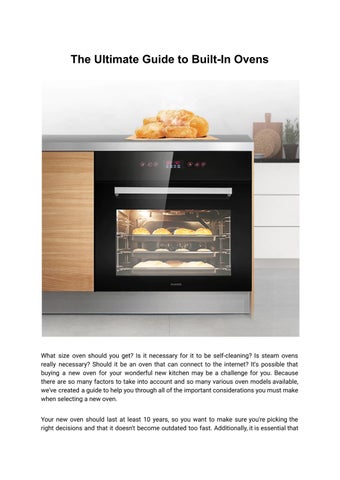
The Ultimate Guide to Built-In Ovens
What size oven should you get? Is it necessary for it to be self-cleaning? Is steam ovens really necessary? Should it be an oven that can connect to the internet? It's possible that buying a new oven for your wonderful new kitchen may be a challenge for you. Because there are so many factors to take into account and so many various oven models available, we've created a guide to help you through all of the important considerations you must make when selecting a new oven. Your new oven should last at least 10 years, so you want to make sure you're picking the right decisions and that it doesn't become outdated too fast. Additionally, it is essential that
it perfectly meets your culinary needs; you should never settle for an oven that does not meet your needs since you will later regret it. Today's best built-in oven Singapore has a wealth of useful functions, but you must make sure that your oven handles the fundamentals correctly; the last thing you want is to make simple activities difficult. So, let's pull on our oven gloves and head into the hot world of ovens (all puns intended).
Capacity to cook Most conventional ovens have two static heating elements on the top and bottom or the ends; these are excellent for cooking oven dinners, but for flawless all-over baking, you'll need a fan oven. The majority of modern ovens are equipped with a feature called fan cooking. Ovens with this feature do not have heating components on the top or sides of the appliance; rather, they have a heating element in a separate chamber that is responsible for heating the air within the oven. The warm air is then blasted over the meal with the assistance of a fan; the actual question is how successfully the oven performs this. Since this will show how evenly your food will cook, you should pay attention to how the air moves through the oven. If you're a dedicated baker, you'll want the choice to turn off the fan and use the heating elements again as required. Crispy pizza bases or crusty pastry casings can be made with this method. Another cooking option that is sometimes forgotten is grilling. It's easy to get caught up in the main oven's cooking capabilities, but you'll regret not having it when you need that grilled cheese on toast at 10 p.m. one night. Most ovens still offer grill settings, but there is a handful that doesn't so consider whether this is a must-have feature for you. Another feature you'll want to think about is steam cooking. The popularity of stream cooking has risen dramatically in recent years, owing partly to its health benefits. Most steam cooking devices, on the other hand, sit on your countertop, taking up valuable worktop space; however, here is your chance to move steam cooking to a more convenient location in your kitchen. Steam ovens, on the other hand, tend to have a lower capacity and will either need to be plugged into the mains or have their water tank (which you'll have to fill up regularly). Might a steam oven help you take your cooking to the next level? We rely on fat and oils to keep our food moist, so could a steam oven help you take your cooking to the next level? Making your meals more delectable, as well as healthy.
Size/Fit You have two options when it comes to built-in ovens: single oven or double oven. If you choose the freestanding way, you'll be delighted to know that you can get an oven in any size you require. Built-in ovens Singapore take a bit more planning; before making any other decisions, you need to figure out where you want to put your oven since this will be the most important factor in deciding which options are available to you. You may choose between a single large oven or two tiny ovens in a double-oven arrangement with a built-under oven that fits beneath your worktop (usually around 72cm tall). If you want to set your oven at the waist to shoulder height, however, you may have any oven you choose. One or more single ovens or a large double oven are the two options available to you (usually around 90cm tall). Everything depends on the layout of your new kitchen and the quantity of space that is available. Consider how many roasts you'll be preparing and how many people you generally prepare for regularly to determine how many ovens you'll need to utilize at the same time and how large they should be. It's also worth thinking about if you'll need to make room for additional items like a coffee maker, built-in microwave, or a warming drawer. Additionally, double-check the exact external dimensions of the oven you're considering, as these measures might range somewhat across manufacturers. Manufacturers usually give the interior volume in liters, but because you're unlikely to be filling it with water, this isn't informative. Because you can't cook with the full area, and the interior arrangement of the shelves can affect how much of it is useful, it's critical to examine the oven's internal architecture and measurements. Larger capacity numbers do not usually imply a greater cooking area!