As Australia’s leading forklift company, it doesn’t matter whether we are supplying you with a single spare part, a rental forklift, or helping you manage your entire eet, our objective and commitment remain the same – adding value to your operation. Whether it's the legendary reliability and world leading safety of our Toyota forklifts, the ongoing support of one of Australia’s most dedicated service and parts networks, or the innovations that have made Toyota the World’s number one forklift brand* , you can be assured we’ve got all your needs covered to power your business forward. To nd out more contact your local Toyota Material Handling branch today.
MD comment
Welcome to the Autumn edition of Fresh Source. It has been a particularly hectic start to 2026 as we released a new five-year strategic plan, finalised half-year reporting, commenced major construction works to raise Curzon Street and responded to the Horticulture Code of Conduct (Code) review – just to name a few of our more significant projects.
Half-year ended 31 December 2025
I am pleased to report a very solid half-year financial result for Brisbane Markets Limited (BML).
The group achieved an operating profit before tax (excluding the valuation adjustment and Perth Markets Limited contribution) for the half-year of $9.79 million, which represents an increase of 17.39% when compared to the same period last year. The core trading performance has been strong with site occupancy levels remaining steady and all recently expired leases being renewed.
The statutory net profit of the group after income tax for the half-year ended 31 December 2025 was $8.23 million, with a positive contribution of $1.07 million associated with the investment property valuation. Net Assets per share was $4.77 as at 31 December 2025.
Five-year strategic plan
BML also released its five-year strategic plan for 2025-2030. This document highlights our strategic priorities, projects and key performance indicators that will deliver the group’s ambitious goals for growth. As always, optimising site utilisation and development is critical to operational efficiency for BML and our tenants. We are continually looking toward new technologies, processes and building innovations that will meet industry needs well into the future.
Curzon Street project
The project to raise and replace the Curzon Street bridge and entry point is underway and due for completion in August 2026. This project forms an important part of BML’s flood mitigation strategy. Upon completion, the raised bridge and entry will improve business continuity by allowing for later exit prior to a flood event, and earlier access to the Markets after a flood event. For more information about this and other BML developments, refer to page 18.
Horticulture Code review
Last, but certainly not least, I mention the Horticulture Code review. This is extremely significant for industry stakeholders and it has generated intense thought and discussion. The feature article commencing on page 5 outlines some of the significant issues identified in our response and our hopes for a fair and transparent Code for the industry. We also share some insights from a recent independent survey of Growers, that helped to inform our response to the Code review.
In closing, thank you once again to our valued business partners that have contributed articles to this magazine. On behalf of BML and Brismark, I look forward to seeing many of you at Hort Connections in Adelaide in June.
Andrew Young, Managing Director and CEO - BML Chief Executive Officer - Brismark
5 Time for a modern, fair and fit for purpose horticulture code
7 Growers have their say
9 Markets Grower Hotline: supporting fair and free dispute resolution
10 Brisbane Markets Price Report sets a new standard for sales transparency 13 Feature: Meet Brismark's Member Wholesalers
Brismark Member Wholesalers 16 The easy way to trade
Passing the FreshTest®
Fresh
18 An update from Brisbane Markets Limited
Perth Markets celebrates 10 years of industry ownership 20 Joe Saina recognised with Order of Australia Medal
BRISBANE MARKETS LIMITED | ABN 39 064 983 017 PO Box 80, Brisbane Market, Rocklea, Queensland 4106
E communications@brisbanemarkets.com.au W www.brisbanemarkets.com.au
ADVERTISING AND EDITORIAL ENQUIRIES
Editor: Ann Robins, Brisbane Markets Limited P 07 3915 4200 E communications@brisbanemarkets.com.au
DESIGN Effigy Creative E production@effigy.com.au
PRINT Print Systems Australia P 07 3276 3100
Succession planning and governance obligations in family agribusiness
Tips for developing a business growth plan
Geopolitical instability and the need for Australia to adapt strategically
Bundaberg Fruit and Vegetable Growers update
Backing regional AgTech: turning innovation into on-farm impact 30 Supporting local growers on the Granite Belt
Amendments made to TPP restrictions
Freshness, quality and strong supply chains fuel independent retailer success 32 Queensland continues to smash the avocado market
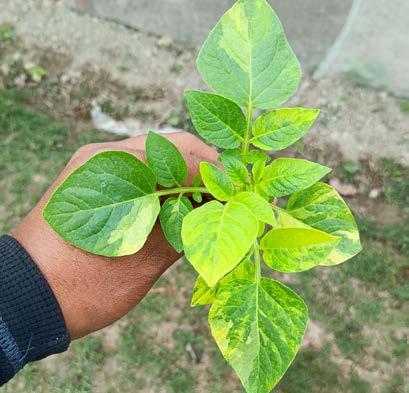
Potato virus a threat to Queensland
3040
Time for a modern, fair and fit for purpose horticulture code
Australia’s fresh produce industry has transformed over the past decade. Technology has reshaped communication, supply chains have diversified, and new distribution channels have emerged. Yet the legislation that governs the industry remains outdated, overly prescriptive, creates a regulatory burden for both wholesalers and growers, and no longer reflects how the industry operates. With the independent review of the Horticulture Code of Conduct (Code) currently in progress, a once-in-a-decade opportunity exists to ensure that a modern, fair, simplified, and fit-for-purpose Code emerges that allows for the commercial flexibility called for by both wholesalers and growers.
Brismark, representing wholesalers at the Brisbane Markets, has been heavily involved in the conversation, meeting with the independent reviewer, Mr Chris Leptos AO, to present the concerns and insights of Brisbane Markets wholesalers and commissioning independent researchers Roy Morgan to survey over 440 Australian growers before lodging a comprehensive submission to the Code review. Brismark and Brisbane Markets Limited have also worked closely with national peak bodies Fresh Markets Australia (FMA) and Central Markets Association of Australia (CMAA) and their counterparts across the country on national responses.
Simplification and fair commercial flexibility must be at the core
Brismark CEO and Brisbane Markets Limited Managing Director and CEO, Andrew Young, said that simplifying the Code and enabling fair, commercial flexibility are essential to reducing red tape and ensuring the Code is fit-for-purpose.
“Brisbane Markets wholesalers, along with 61% of the growers surveyed, want the ability to contract out of irrelevant code requirements,” Mr Young said.
Under a simplified, inclusive Code, Brismark believes that there is an opportunity to also simplify Horticulture Produce Agreements (HPAs) to focus on several key elements: the basis of the transaction as either an Agent or Merchant, change of ownership where relevant, how return price is set, payment terms, dispute resolution, product quality specifications, rejections and relevant insurance details.
“The current Code exposes wholesalers to all the risk, and HPAs need to mitigate that risk. If the Code is simplified
and responsibilities under the Code are shared between wholesalers and growers, then HPAs can and should be simplified,” Mr Young said.
“HPAs should also be deemed accepted if a grower continues to send produce to Market wholesalers after multiple requests to sign and return the agreement. This is a persistent issue for our members.”
The cost of compliance is significant. A recent KordaMentha analysis commissioned by FMA estimates Code compliance costs at around $99,500 per Market wholesaler per year.
Grower groups have also raised concerns about excessive compliance costs.
“Reducing unnecessary administrative burden across the supply chain is a shared priority,” Mr Young said.
Method/formula price setting for Merchant transactions must be retained
Commercial flexibility also means preserving price setting by method or formula for Merchant transactions.
“If price setting by method or formula for Merchant transactions is replaced with Agency transactions, as recommended by the ACCC, all risk shifts to growers, including quality downgrades, rejections, deterioration, and bad debts,” said Mr Young.
“It is very hard to understand how this scenario would place a grower in a better position, and 81% of growers surveyed supported retaining method/formula pricing for Merchant transactions.”
Transparency tools and fair dispute resolution already exist
The review has questioned whether the Code provides for adequate clarity and transparency in transactions between Growers and Traders or a fair dispute resolution procedure. However, the real issue, which has been unclear for more than 20 years, is how “clarity and transparency” are defined. If clarity and transparency mean documented commercial terms, verifiable daily market price reports, and free dispute resolution services, then these already exist.
Brismark launched the Brisbane Markets Price Report App in late 2024, one of the most transparent market price reporting tools in Australia, publishing daily verified sales data from more than 90% of Brisbane Markets wholesalers.
“Although growers can subscribe for less than the cost of a cup of coffee a week, only 153 growers out of an estimated 7,000 supplying the Brisbane Markets currently subscribe,” Mr Young said.
Technology has also transformed dispute resolution. Smartphones allow instant sharing of photos, videos, and messages, improving communication, transparency and problem resolution. Recognising modern communication practices is essential to building a Code that supports efficient trading relationships.
“Most disputes are resolved directly between the grower and wholesaler, but for disputes that cannot be resolved directly, Brismark also offers a free service to assist growers in resolving disputes with Brisbane Markets wholesalers,” Mr Young said.
Survey results reinforce the strength of these relationships, with 66% of growers surveyed having a positive perception of Brisbane Markets wholesalers, and those aware of the services offered by Brisbane Markets were even more likely to view these wholesalers positively. Only 9% reported a negative perception.
A level playing field for all distribution channels
One of the most concerning findings from the research is the scale of trade occurring outside any regulatory framework. Survey data suggested that 25–30% of grower sales worth an estimated $2.5-$3 billion annually, fall outside both the Horticulture Code and the Food and Grocery Code. Growers supplying independent retailers, processors, exporters, foodservice suppliers, and off market wholesalers may be trading without the protections or obligations of either Code.
“Without consistent standards, wholesalers face uneven playing fields and growers face potential vulnerabilities they may not even be aware of,” said Mr Young.
“The Code should apply to all first point of sale transactions, except where the Food and Grocery Code already applies.
“This simple change would close the regulatory gap and ensure fairness across the entire supply chain.”
A simpler, fairer Code will strengthen the entire industry
A modernised, simplified and fair Code that is fit-for-purpose would reduce unnecessary administrative overheads and allow the industry to focus on what it does best: producing, marketing, and distributing fresh Australian produce.
The review presents a rare opportunity to build a regulatory framework that reflects today’s industry. Brismark calls for a Code that supports commercial flexibility, reduces red tape, ensures fairness across all distribution channels, and strengthens the vital relationships between growers and wholesalers.
What a modern, fair and fit for purpose horticulture code should look like:
• Shared responsibility – obligations should apply to both traders and growers.
• Simplification and reduced compliance costs –61% of growers also support allowing both parties to contract out of irrelevant Code requirements.
• Standard deemed terms – a HPA should be deemed accepted if a grower continues to supply after multiple requests to sign and return the agreement.
• Method/formula pricing for Merchant transactions must stay (i.e. sale price less an agreed margin) – also supported by 81% of growers.
• Recognition of industry changes – including the role of technology in enabling rapid and effective communication and dispute resolution along with the introduction of verifiable market price reporting tools such as the Brisbane Markets Price Report.
• Application of the Code to all first point of sale grower transactions (unless covered by the Food and Grocery Code) – survey data suggests that 25–30% of grower sales worth an estimated $2.5–$3 billion annually, fall outside both the Horticulture Code and the Food and Grocery Code.
Growers have their say
Brismark commissioned Roy Morgan Research to conduct an independent survey of Australian fruit and vegetable growers during February and March 2026 to help inform its submission to the Horticulture Code of Conduct Review. Outlined are some of the key insights.
Profile of growers surveyed
The majority of the 441 growers surveyed operated businesses mainly from Queensland (66%), followed by New South Wales (12%) and Victoria (13%). Only 55% of growers said that they were a member of a grower representative organisation, and many were using channels outside the Central Market wholesalers to distribute their produce.
Distribution channel used by grower
Direct to major supermarket/retail chain Through Central Market wholesalers
Direct to independent retailer
Direct to food services organisations Through off-market wholesalers
Issues of importance to fruit and vegetable growers
Biosecurity was the issue that was seen as important by the most growers (98%). The mandatory Horticulture Code of Conduct ranked eighth in terms of importance.
The low prices received for their produce, as well as rising costs and regulatory burdens were the other issues most frequently mentioned by growers.
Perception of the Brisbane Markets as a wholesale fruit and vegetable market and industry service provider
Perceptions of Brisbane Markets
Two thirds of growers had a positive view of the Brisbane Markets, with less than one in ten having a negative view.
Dispute resolution
Growers have indicated that disputes between themselves and wholesalers rarely required the assistance of a third party, with most being resolved between the two parties directly.
Growers whose business has an annual revenue of more than $2 million were significantly more likely to have had a dispute with Market Wholesalers (34%), as were growers who produce other products in addition to fruit and vegetables (28%).
Support for Horticulture Code flexibility
Growers showed strong support for increased flexibility in commercial agreements and majority support for contracting out some requirements of the code.
Support for flexibility in commercial arrangement wherein the return price to grower is based on sale price achieved by wholesaler less an agreed margin
Markets Grower Hotline: supporting fair and free dispute resolution
Disagreements can arise in any business relationship, but they can often be resolved quickly when both parties communicate openly and understand each other’s position. Early, respectful resolution not only minimises disruption, but it also protects long-term commercial relationships and avoids unnecessary costs.
Under the Horticulture Code of Conduct (Code), trading between growers and wholesalers must be fair, transparent and supported by a Horticulture Produce Agreement. When a dispute does occur, the Code encourages parties to first attempt to resolve disputes themselves before using formal processes.
If a more formal process is required, growers who trade with a Brismark member wholesaler can contact the Brisbane Markets Dispute Resolution Grower Hotline, a direct, practical pathway to help resolve issues.
By calling 1800 631 002, growers can access support from Brismark to help clarify concerns, facilitate communication, and work towards a fair outcome consistent with the Code. This service strengthens trust between growers and wholesalers by offering:
• a clear, structured process for raising concerns
• assistance in navigating Code obligations
• a focus on quick, cooperative resolution
• support that helps preserve ongoing trading relationships.
If Brismark is unable to assist, growers can explore the mediation options outlined under the Horticulture Code of Conduct, with assistance also available from the Australian Small Business and Family Enterprise Ombudsman (ASBFEO). Visit www.asbfeo.gov.au, email info@asbfeo.gov.au or call 1300 650 460 for further information.
Brisbane Markets Price Report sets a new standard for sales transparency
The Brisbane Markets Price Report is reshaping how Queensland’s fresh produce industry accesses wholesale pricing, delivering a level of transparency that growers, grower groups and government have been seeking for decades.
As the Horticulture Code of Conduct Review renews national attention on information asymmetry, transparency and fair trading, the Price Report stands out as a proven, industry-led solution already delivering on what meaningful transparency looks like in practice.
Developed by Brismark, the representative body for Queensland’s fresh produce wholesalers, the app provides verified daily sales data straight from the Brisbane Markets trading floor. With more than 180 produce lines and varieties updated every weekday, users can view low, high and average prices — all derived from actual transaction invoices.
Brismark CEO and Brisbane Markets Limited Managing Director and CEO, Andrew Young, said the tool responds directly to longstanding calls from growers, government
agencies, and the ACCC for clearer, more reliable market information.
“Transparency in the Central Markets has been a longstanding issue and has come to the forefront again with the Horticulture Code of Conduct Review,” Mr Young said.
“This tool provides real data rather than anecdotal reports, giving growers and buyers confidence in their decision making.
“It is currently the only Market Price Report of its kind available in Australia.”
Accessible via both mobile and web apps, the Price Report offers simple navigation and clear data presentation, making it easy to track trends and understand market movements over time.
Since launching in October 2024, the app has been widely supported across the horticulture sector and was recognised as a finalist last year for the UPL Tech Innovation Award at the Australian Horticulture Awards for Excellence.
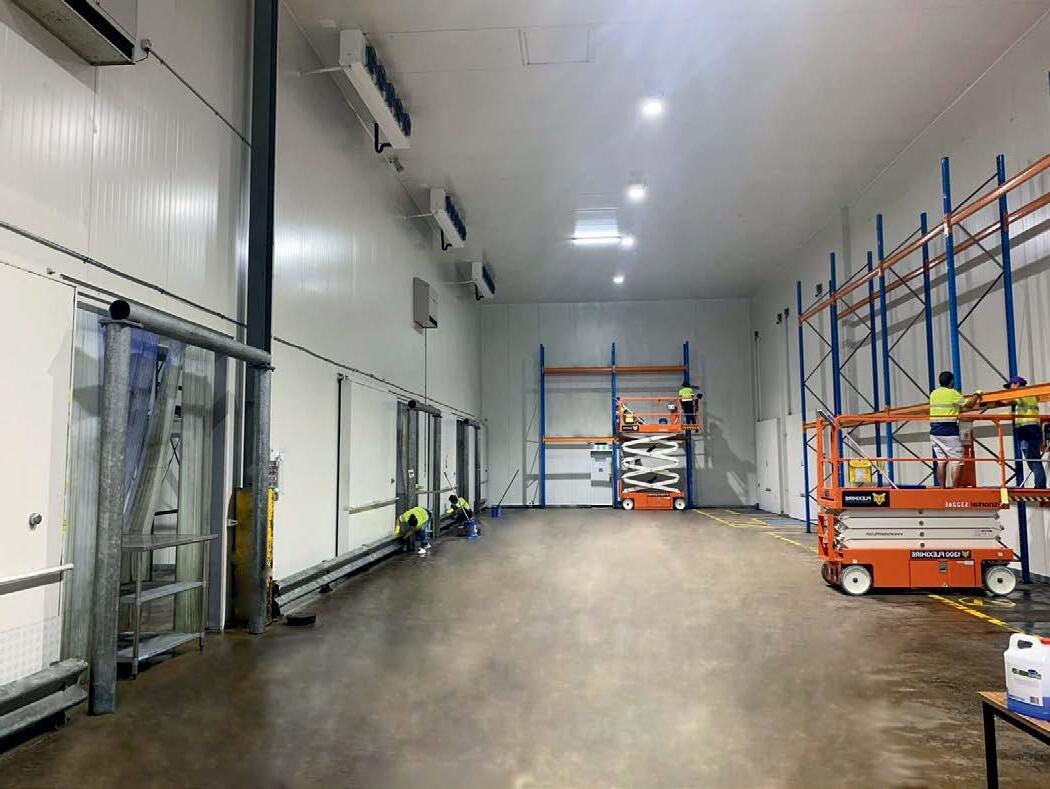
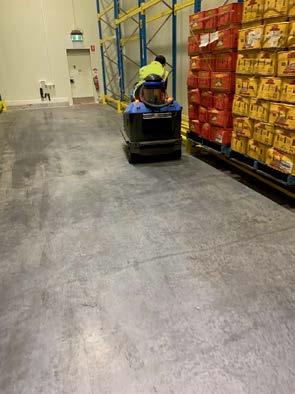
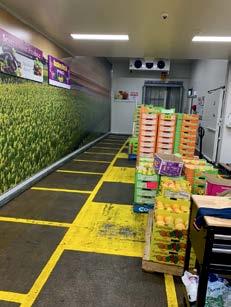
Our Cleaning Services
As a trusted service provider for Brisbane Markets Limited, Eaton Services Group offers tailored commercial cleaning programs designed to meet the unique requirements of individual BML tenancies and commercial facilities across South East Queensland. Our services adhere to industry and facility regulations, providing your business with comprehensive solutions that maintain your facility to the highest standards.
We cover hard-to-reach and general surface cleaning, ensuring protection against germs, bacteria, and mould. Our team includes EWPlicensed operators with the necessary tools and experience to meet your needs.
Meet Brismark's Member Wholesalers Feature
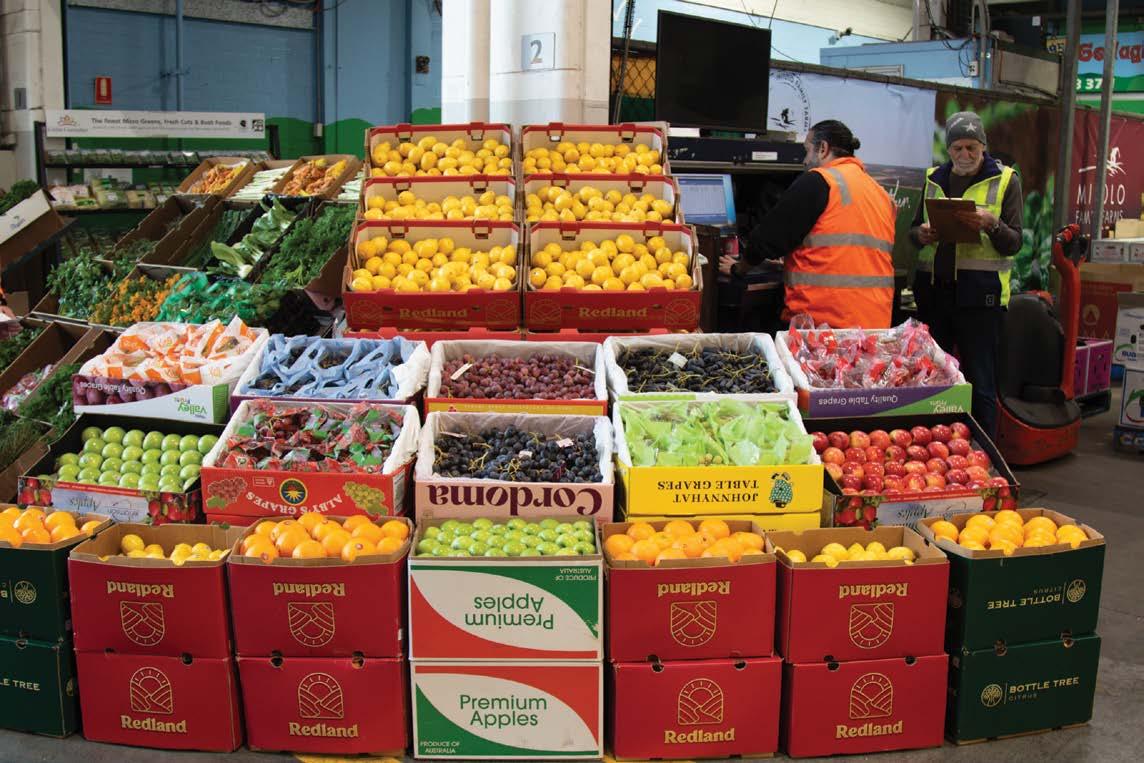
The Brisbane Markets is Queensland’s largest fresh produce hub that trades over 700 million kilograms of fresh fruit and vegetables each year valued at $2 billion. With wholesalers competing daily for trade, the Markets create a dynamic environment where prices reflect real supply and demand, where quality is rewarded, and the full crop can find a home.
Forty-four Brisbane Markets wholesalers are represented by Brismark, who advocate their needs and provide them, and their associated businesses, with a range of support services. Brismark members play a vital role within the fresh produce supply chain and are pivotal to Queensland’s horticulture industry. Growers sending their produce to Brismark's member wholesalers benefit from:
• Competitive, transparent price discovery driven by independent wholesalers competing for the same trade who provide real sales data to the Brisbane Markets Price Report.
• Access to 44 wholesalers and their diverse customer networks across independent retail, food service, hospitality, catering, secondary wholesalers, food processing and exporting.
• Ability to sell the whole crop, not only sizes or grades preferred by major supermarket chains.
Working with wholesalers: practical tips
Here are some practical tips to ensure you make the most of your relationship with your Brisbane Markets wholesaler:
1. Ensure you have a signed Horticulture Produce Agreement with your wholesaler. It is a mandatory requirement under the Horticulture Code of Conduct.
2. Visit the Brisbane Markets to compare your produce with the competition. This can be arranged through your wholesaler. If you are a grower and do not already supply to a Brisbane Markets wholesaler, contact Brismark on (07) 3915 4222 or email admin@brismark.com.au to arrange a tour of the Brisbane Markets.
3. Subscribe to the Brisbane Markets Price Report to receive daily sales data based on actual transactions from the Brisbane Markets trading floor – visit www. brisbanemarketspricereport.com.au.
4. Communicate early if you are experiencing difficulties or expect an especially good crop.
• Timely, consolidated payments from buyers to wholesalers through the Brismark Credit Service, including a bad debt reserve that helps protect wholesalers and supports timely payments to growers.
• Wholesalers operate under the mandatory Horticulture Code of Conduct, requiring Terms of Trade and a Horticulture Produce Agreement (HPA) for each grower relationship.
• Practical dispute resolution via the Dispute Resolution Grower Hotline –1800 631 002.
• Low-cost maximum residue limit (MRL) and microbial testing for growers, either direct with Brismark or through their wholesaler, with FreshTest® produce testing.
• A range of business services and support for wholesalers that protect the reputation of growers’ produce including quality assurance, work health and safety, human resources, industrial relations and recruitment.
• A low cost pathway to resolve overdue accounts via debt recovery solutions.
• Active relationships with grower organisations.
Make the most of your harvest by partnering with a wholesaler who shares your passion and commitment to quality, fresh produce. Choose a Brismark member – you will be glad you did.
5. Ensure your packaging is appropriate and presents your produce optimally.
6. Keep up-to-date records of your transactions.
7. Accurately grade and describe your produce to maintain a strong, transparent relationship.
8. Use reliable carriers who deliver efficiently and in good condition.
9. Contact your wholesaler promptly if you do not receive payment by the agreed time.
10. Listen to your wholesaler’s advice and be open to constructive feedback.
11. Supply the number of pallets or cartons you advised you would send.
12. Subscribe to Fresh Source magazine to keep up-to-date with the latest industry news – visit www.brisbanemarkets.com. au/news-portal/.
Take the next step
If you are looking to expand your market access, improve price transparency and protect your reputation, the Brisbane Markets are a proven pathway. Use Brismark’s online produce matching tool www.brismark.com.au/about/ our-members/ to find the right wholesaler for you. Speak with your preferred wholesaler about a Horticulture Produce Agreement and pricing approach that suits your business, and keep the Dispute Resolution Grower Hotline (1800 631 002) handy should you need confidential support.
Brismark Member Wholesalers
Company Name Contacts
Alfred E Chave Pty Ltd
Arcella Banana Company
Paul Joseph 0419 745 719 07 3379 1071 paulj@alfredechave.com.au
Patrick Arcella 0408 133 233 02 9746 7857 dom.arcella@tropicanabanana.com.au
Richard Sutton 0434 157 900 admin@suttonfreshdirect.com.au
John Mastroianni 0419 930 830 07 3278 6188 john@topclassfruit.com.au
Joseph Spoto 0438 721 057 07 3379 9288 dan_spoto@hotmail.com
Martin Meek 0418 982 625 07 3278 5997 martin@unitedorganics.com.au
Paul Veivers 0418 452 594 07 3379 7309 paul@bananaripeners.com.au
Wholesale Produce Australia Adam Dilworth 0418 567 677 07 3278 1724 adamd@fruitlink.com.au
There’s more to a quality operation at the Brisbane Markets than just quality produce.
Brismark, which represents wholesalers, provides a range of services ensuring members can offer growers and retailers the highest level of reliability and professionalism.
Brismark’s services include the Brismark Credit Service, Bad Debt Reserve, Grower Hotline, Market Price Report, WHS, training, recruitment and industry representation. These services and Brismark’s dedicated team benefit not just wholesalers, but help maintain a secure, stable and efficient industry for everyone.
To find out more about Brismark’s members visit www.brismark.com.au.
The easy way to trade
The Brismark Credit Service is an efficient, easy and safe way of doing business at the Brisbane Markets, freeing up time for primary wholesalers to focus on sourcing, marketing and selling fresh produce, rather than chasing payments.
For more than 50 years, wholesalers have been utilising the Brismark Credit Service, which operates as the Brisbane Markets financial clearinghouse, to reconcile invoices and collect payments. This safeguards not only wholesalers but also their growing partners, ensuring they can continue to trade with confidence.
Established to support the growth of the fresh produce industry, the Brismark Credit Service simplifies the buying process at the Markets, providing a straightforward way to conduct business.
“As a wholesaler or a buyer, it just makes sense to use Brismark’s Credit Service
when doing business at the Markets as it provides a very efficient way for users to operate their business,” said Lachlan Armstrong, Principal of primary wholesaler Armstrong Bros.
“From our perspective, it allows us to receive prompt payments from our buyers, which in turn makes it possible for us to fulfil our obligations with our growing partners, which in turn leads to better outcomes for everyone involved.
“This means we can spend less time trying to chase down payments from buyers and more time concentrating on selling fresh produce, collaborating with growing partners, and looking for opportunities to grow the industry.”
For Brisbane Markets wholesalers, built in protections within the Credit Service ensure that even if payments are missed, they can eventually recoup delinquent funds owed for completed
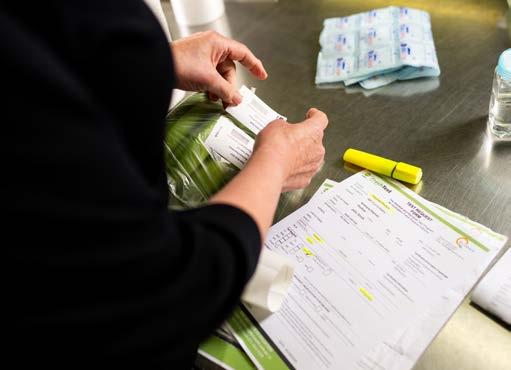
Passing the FreshTest
Wholesalers at the Brisbane Markets set high standards for the quality of fruit and vegetables traded at Queensland’s heart of fresh produce.
To ensure strict food safety and quality requirements are met, wholesalers use FreshTest, a nationally recognised produce testing program offered by Brismark to its member wholesalers and their growers.
FreshTest plays a vital role in verifying that produce meets food safety and quality assurance systems. Tests are conducted by National Association of Testing Authorities (NATA) accredited laboratories and provide objective confirmation that products are safe and compliant.
Brismark member and Brisbane Markets wholesaler, Alfred E Chave uses FreshTest to ensure the quality of the produce they sell, and to support their growers by reinforcing the importance of compliant on-farm quality assurance systems.
“We have extremely high standards when it comes to the produce we sell,” Claudia Sanchez Jordan, Quality Assurance and Control Manager at Alfred E Chave, said.
“We complete the testing on behalf of our growers, and the service is extremely easy and convenient to use. It is a valuable tool to have available, and when you can let your growers know that they are producing excellent produce, it is helpful to have certification to support that.”
FreshTest is Australia’s most comprehensive chemical residue and microbial testing program for fresh produce. Its screening process can detect a wide range of herbicides, fungicides and insecticides, providing additional assurance for growers through enhanced residue detection compliance and spray drift monitoring.
transactions. Defaulted accounts can be settled through the Bad Debt Reserve, a process which can reclaim up to 90% of the amount owing, allowing businesses to continue trading with confidence, knowing supplier payments can be made.
“A real advantage of using the Credit Service is the protection that it can provide to us as wholesalers,” Mr Armstrong said.
“Knowing that we can receive the majority of funds back through the Bad Debt Reserve process is very reassuring, especially when we are speaking with growers who are looking to partner with us.
“It is a great service, and it makes doing business at the Markets a whole lot easier.”
To find a Brisbane Markets wholesaler who bills through the Brismark Credit Service to partner with, visit: www. brismark.com.au/about/our-members/.
With more than 480 individual analytes detectable across multiple crops, FreshTest offers strong compliance support for growers reporting to Australian standards.
An initiative of Fresh Markets Australia, FreshTest services are provided by Brismark in Queensland and can be accessed directly by growers or through their Brisbane Markets wholesaler. More information about Brismark’s FreshTest service, including test request forms, is available at www.brismark.com.au/freshtest, by phoning 07 3915 4222, or by emailing freshtest@brismark.com.au
Growers can access comprehensive low-cost chemical residue and microbial produce testing through their Brisbane Markets wholesaler
Keeping it CRISP every step of the way.
Our ‘Paddock to Plate’ philosophy.
From factory farms, packing sheds, storage and refrigeration, freight and logistics centres, right through to wholesalers, food processors and manufacturers, we’re with you every step of the way.
Servicing the fruit & vegetable industry for over 30 years.
• Cold room temperature Calibrations with Nata traceability
• Light design & installations
• General light & power distribution
• 24hr Breakdown service • Preventative maintenance
• Electrical repairs & maintenance • Test & Tagging
• Shutdowns • Thermographic imaging & reporting
• Packaging machine repairs and maintenance
• Adds and alts assistance for electrical works
• Engineering services
PLC, system integration CAD, SCADA, HMI software
An update from Brisbane Markets Limited
As the end of financial year approaches, BML can reflect on another eventful and successful year.
Horticulture Code review
BML has worked with Central Markets Association of Australia (CMAA), the peak body for Australia’s five Central Market owners and managers, to develop a coordinated national response to the Horticulture Code of Conduct (Code) review. BML also supports Brismark’s submission representing Brisbane Markets wholesalers. The submissions highlight those large parts of the fresh produce supply chain, including secondary wholesalers, foodservice suppliers, processors, exporters, independent retailers, and some retail chains, who regularly buy directly from growers yet fall outside the Horticulture Code or the Food and Grocery Code. This results in an uneven regulatory environment where Central Market wholesalers face stricter oversight than other businesses purchasing similar commercial volumes.
As Market Wholesalers are regulated under the Code, any imbalance in compliance costs, regulatory burden, or enforcement focus, risks undermining the competitiveness and long-term viability of the Central Market system. It is therefore in our collective interests to ensure that the Code is workable, does not impose excessive compliance costs, and does not adversely discriminate against Market Wholesalers and the effective operation of Australia’s Central Market System.
For more information about Brismark’s position on the Code and the Roy Morgan survey of growers commissioned by Brismark, please refer to pages 5 to 11.
Solid half-year results
Half-year results to 31 December 2025 were announced in March. BML achieved an operating profit before tax (excluding the valuation adjustment and Perth Markets Limited contribution) for the half-year of $9.79 million, which represents an increase of 17.39% when compared to the same period last year. The core trading performance has been strong with site occupancy levels remaining steady and all recently expired leases being renewed.
The statutory net profit of the group after income tax for the half-year ended 31 December 2025 was $8.23 million, with a positive contribution of $1.07 million associated with the investment property valuation.
• Total Assets have increased by 3.75% since June 2025 to $546.88 million.
• Net Assets have increased by 4.19% since June 2025 to $259.75 million.
• Net Assets per share was $4.77 as at 31 December 2025.
• BML declared an interim dividend for the half-year of 10.0 cents per share franked to 20%.
• BML maintained its 49% holding in Perth Markets Group Limited.
Overall, this is a solid financial performance that reflects the strong investment, development and operational strategies in place. The half-year report is available on the BML website (brisbanemarkets.com.au).
New five-year strategic plan
BML released a new five-year strategic plan for the period 2025 – 2030. The revised Strategic Plan continues to build on BML’s ongoing strategic priorities in supporting our Mission Statement of providing infrastructure and services to facilitate the marketing and distribution of fresh food, flowers, and other ancillary products.
BML’s ongoing strategic focus is to continue to grow the business through site development and pursuing opportunities that reflect the company’s core business of market ownership, management, and development.
BML has adopted six strategic priorities as follows:
1. Site Utilisation and Development
2. Business Diversification and Growth
3. Stakeholder Relations and Position
4. Shareholder Value
5. Access to Capital
6. People and Culture
Each of these areas is considered critical to the ongoing future success and growth of the company.
The strategic plan also documents a range of goals in addition to key performance indicators, outcomes, and milestones that will support successful delivery of the strategic priorities. More information is available on the BML website (brisbanemarkets.com.au).
Raising the Curzon Street bridge and entry
This project is currently underway, due for completion in the second half of 2026. The scope of works includes replacing and raising the existing bridge and roadway, raising and resurfacing adjoining roadways and construction of a new entry awning.
This project is being delivered as part of the Queensland Resilience and Risk Reduction Program (QRRRP), which is funded by the Australian and Queensland Governments through efficiencies realised under the joint Commonwealthstate Disaster Recovery Funding Arrangements (DRFA). A sod-turning event was held on 15 April 2026.
The project forms an important part of BML’s flood mitigation works and upon completion, the raised bridge and roadway will allow the Markets to operate for longer prior to, and resume operations more quickly immediately after, a flooding event.
New developments
BML is excited to announce a new landmark project at the Brisbane Markets. Favco Queensland Pty Ltd has committed to the construction of a new, purpose-built warehouse facility at the South Gate West precinct.
The 7,145 m2 facility will include ripening rooms, multiple temperature-controlled cold rooms, a packing area and office space, supporting the family-owned company’s expanding operations and ambitions for growth.
Construction will commence later this year.
Perth Markets celebrates 10 years of industry ownership
In what marks a significant milestone in its history, Perth Markets Group Limited (PMGL) celebrated 10 years of industry-ownership of the Perth Markets in March, following the successful bid to purchase the site from the Government of Western Australia in 2016.
The sale process included a staged open public tender process with multiple bidders and a competitive sale process.
Market West led the PMGL bid, which required significant effort to coordinate and secure funding. Brisbane Markets Limited (BML) provided support and advice to Market West and their appointed advisors, Azure Capital, having been through a very similar tender process when the Brisbane Markets were privatised in 2002.
Raising the required capital was challenging. Considering BML’s position that an investment in ownership of Perth Markets reflected BML’s core business, BML elected to significantly increase its commitment from 25% to 45% of issued shares.
Ultimately, the success of the bid was underpinned by the financial support of three main investors – BML, United Crate Cooperative and South Australian Produce Market (SAPM) –all of which remain committed investors who strongly support industry-based ownership of the Markets.
Market West was rewarded for its involvement with two Board positions, and the current Board also includes two elected Board positions filled by nominee directors of the major investors, being Miro Lendich and Andrew Young.
BML remains PMGL’s largest investor, holding 49% of PMGL’s issued shares with a strong commitment to its core business of owning, managing, and developing Central Markets.
Congratulations to PMGL as they celebrate this significant milestone in 2026.
Stephen Edwards (Brismark Deputy Chair), Andrew Young (BML Managing Director and CEO), Julie-Ann Campbell MP (Federal Member for Moreton), Hon Ann Leahy (Queensland Minister for Disaster Recovery), Tony Kelly (BML Chair), Mark Murphy (Brismark Deputy Chair) and Dianne Grey (Portfolio Director of Operations, Queensland Reconstruction Authority) attended the Curzon Street sod-turning ceremony.
Joe Saina recognised with Order of Australia Medal
Respected leader in international fresh produce trade, Joe Saina, was awarded an Order of Australia Medal (OAM) as part of the 2026 Australia Day Honours List.
The Award acknowledges the decades of work Joe has tirelessly spent advocating for the fresh produce sector while strengthening Australia's position in global horticulture trade.
After ten years working in law enforcement, in 1998, Joe joined his family business A.S. Barr, which was looking to start an export business.
Throughout his career as Director, Imports/Exports at Brisbane Marketbased A.S Barr, as well as holding roles including Chairman of the Australian Horticultural Exporters and Importers Association (AHEIA) (recently rebranded to Australia Horticultural Trade), Joe has been at the forefront of promoting Australia's $17 billion fresh produce export and import industry.
Joe said while he was chuffed to be recognised for his years of non-paid altruistic advocacy, the OAM was more than an individual achievement.
“While receiving the Award was an incredibly humbling moment and one I accepted with deep gratitude, it also reflects the countless volunteers, committee members, growers, exporters and industry bodies who give their time to keep our industry organisations strong, functional and relevant,” he said.
Andrew Young, Brisbane Markets Limited Managing Director and CEO, said Joe was a thoroughly deserving recipient.
“Joe is a leading facilitator of fresh imports and exports and, over the years, has given back significantly to the industry,” he said.
“Joe has also contributed to the Brisbane Markets community and has sat on a number of committees over the years, where his wealth of experience has been integral to their success."
As a stalwart of the horticulture industry for more than 28 years, Joe’s passion and motivation for the betterment of the industry remains strong.
“I will continue to work hard to create pathways to export our produce and ensure it remains a contemporary and viable industry that supports critical international trade," he said.
“Most importantly, I encourage others to keep advocating loudly and consistently for good outcomes for Australian fresh produce."
Donate Your Surplus Food To Feed Families In Need
Foodbank Queensland, with the support of Brisbane Markets, works with Brisbane Market Tenants to rescue food, reduce waste, and stop Queenslanders going hungry. Working together, more than 397,268 kilograms of fresh food is collected by Foodbank Queensland at Brisbane Markets each year and distributed to people in need. That’s the equivalent of 590,000 meals provided to children and adults experiencing hunger. Donating surplus produce or produce otherwise destined for landfill enables Brisbane Markets Tenants to directly provide benefits to people who are living in disadvantaged circumstances, while also having a positive impact on the environment and reducing business costs.
• Save on your waste disposal costs
• Reduce the volume of waste going to landfill
• Provide food directly to people in need
• Simple pick up process
• Positive impact on staff morale
• Meet your businesses ESG requirements
• Meet your businesses ESG requirements
• Ease of pallet transfer
Succession planning and governance obligations in family agribusiness
Article supplied by BDO, written by Brett Spicer (Partner, Sustainability)
For many family-owned agribusinesses, deciding what happens to the business and its assets when the current generation retires is one of the biggest issues they face. It is also one of the issues most avoided, often due to a desire to avoid conflict.
It can take a major health scare or push from the next generation to initiate succession discussions – at which point pressure, emotions and long-held assumptions can lead to the very conflict the family has been trying to avoid.
A common assumption is that farms, properties or business operations must be divided in order to provide for all family members – including funding the retirement of the current generation, transferring properties and the business to the next generation who are working in the business, while providing for the next generation.
While this may be the right solution for some families, it may not result in the best outcome for all families. There is another option to consider, which is to keep the properties and the business together and operate as a family in business.
Option one: Dividing properties and the business
Splitting assets and business operations between family members remains the most common succession approach. This can be partly attributed to sticking with the ‘status quo’ – how things have historically been done and/or a lack of knowledge about alternative options.
When succession discussions are avoided for a long period of time, it can result in a lack of adequate planning and the potential for pressure and resentment to build under the surface. Often, it takes a ‘trigger’ for the issue to be addressed – whether that is the next generation seeking security through ownership, a health scare or differences in opinion over the strategic or operational direction of the business.
Decisions made quickly under pressure are rarely made well or fully considered. They can also result in selecting a ‘default’ option, which is often to split the properties and business. The key considerations for families taking this path are how the split will take place, whether there are enough assets to result in a ‘fair’ outcome (there often isn’t) and how to provide retirement living for the current generation.
Pros:
• The next generation is in control of their own individual assets and wealth, including operational decisions and strategic direction.
• If communication has been clear and all parties have felt heard in the process, then this option can result in an outcome that is satisfactory to all parties.
Cons:
• Splitting the family business can limit the equity available for the next generation to leverage and grow.
• If the split is considered unfair by one or more parties, or they feel unheard in the process, animosity can remain long after the decision is made – and may permanently damage family relationships.
Option two: Keeping the family business together
An alternative approach is to keep the properties and business intact and operate as a family in business. This option requires early, ongoing, and open communication and is not suited to every family. However, it can provide a sustainable long-term solution where families wish to preserve the business and its legacy.
Discussions should cover who wants to be involved in the business, governance and decision-making processes, roles and responsibilities, remuneration arrangements, business structures, and long-term goals. Clear agreements help manage expectations and reduce the risk of future conflict.
Pros:
• Decision-making processes, remuneration and the role of each family member are clearly defined – providing accountability with some room still for individual preferences and input.
• May allow for the entry and exit of family members to and from the business.
• Keeping wealth and assets together provides greater leverage for growth and increased financial security for all family members.
• The family business continues to build a legacy for generations to come.
Cons:
• Success is heavily reliant on continued open and clear communication between family members as they work together long-term.
• Wealth is held for the family as a whole, as opposed to being distributed to individuals.
• Less autonomy for individual family members to take their own direction.
Of course, there is no rule to say that either of these options alone will be the right one. Every family is different – it may be that the right solution for an individual family’s circumstances is some combination of the two.
Governance considerations
Governance is the key to a successful succession of the business. Governance sets out the actions, rules and policies that guide a business in the right direction. Documenting the outcome of the family discussions, along with obtaining consensus from all parties involved, provides a clear path for the business and the family.
Good governance centres around documentation and clear communication. For instance, using a family charter to set the rules for the family business allows all family members, whether involved in the business or not, to understand the strategy and operations of the business along with the family assets.
Rules and policies set by the family in the charter will assist the family to hold family meetings and achieve the goals of the business and family. These meetings will become a safe space for the family to discuss issues that arise. It allows the family to maintain open communication and transparency. Like business and strategic plans, the governance of the business and the family must be reviewed at constant intervals to remain current.
Whichever path the family chooses to follow, the critical element is communication. By knowing and understanding the available options and making a collective decision through open and clear discussion in a safe environment, it is possible for families to arrive at the right solution without conflict –and continue the family legacy into the next generation, and beyond.
BDO can help you understand your options
BDO works closely with agribusiness families across Australia, combining technical expertise with deep understanding of family dynamics. Our team can help you explore your options, design a tailored succession plan, and establish governance structures that support continuity and long-term success. Visit www.bdo.com.au/en-au/industries/food-agribusiness to learn more about BDO’s Food and Agribusiness team.
Article supplied by Westpac Business
Tips for developing a business growth plan
You are running your own business to make a profit; however, achieving an appropriate return for your efforts requires strategy and planning. An annual review of the factors influencing your success – and the challenges your business faces – will help you act to ensure your profits remain healthy as you endeavour to grow your business.
Key take-outs
• Carry out a review of last year’s profit and loss figures.
• Consider sales, pricing, costs and profit.
• Review the effectiveness of marketing and promotions.
• Implement an action plan that addresses the good and the bad.
• Consider the options available for any funding required.
• What's the starting point with business growth plans?
First things first. When reviewing and updating your business plan (see www.westpac.com.au/business-banking/startinga-business/how-to-write-a-business-plan/) each year, a key action is to review your profit and loss (income) statement. This period of reflection will form the basis of your profit plan, which in turn will inform your plan for growth.
Some of the things you'll need to consider in formulating a business growth plan are in the following tips.
Your sales performance and pricing strategy
Run through your core financials and ask yourself some key questions:
• Have I met the key performance indicators for my sales?
• What are my expectations for the year ahead?
• Are my prices too high (which can stifle sales) or too low (which puts pressure on margins)?
• What would be the likely effect of dropping my prices?
• Is there an opportunity to increase prices to increase my profits?
Developing a clear pricing strategy requires you to understand what your total offer is and if it is good value. After all, not everyone shops on price, and you need to factor in the market and any similarities between offerings. Consider, too, why people buy products and services from you and what makes them come back.
Using last year's profit and loss statement is a good base for next year's predictions. Overlay this with your views on current market conditions and movements and any promotions or price changes you have in mind. Then decide if it is time to adjust your pricing strategy.
Your costs and how they are impacting profits
The other key balance sheet issue to consider when planning for growth is your operating costs. Ask yourself:
• Are there ways to reduce costs and increase my margin without increasing price?
• Should I look for cheaper suppliers and/or renegotiate my current contracts?
• How is the Australian dollar affecting me, positively or negatively?
Areas you may wish to review include stock levels and dead stock, warehousing, labour costs and transport costs.
Other actions could include:
• Monitoring your expenses.
• Reviewing your cash flow, which can reveal areas for improvement (see www.westpac.com.au/businessbanking/cash-flow/).
• Putting processes such as payment plans in place that will help you avoid discounting to collect money owed.
If you are in the manufacturing industry, increasing production could help get your unit price down, but are you risking being left with unwanted stock?
Your target market and any new markets
What is your market strategy? Are you relying on existing customers or actively seeking new markets as part of your business growth strategies?
Customer retention is important, but successful companies are likely to be working on ways to increase market share and attract new customers.
The effectiveness of promotions
Marketing is a necessity, but is your current marketing strategy giving you the best return on investment? Ask yourself:
• Are my marketing efforts and special offers really working for me?
• Am I correctly measuring the effects and profitability of my promotions?
• Am I standing out from the crowd to differentiate myself from my competitors?
As you work to establish an effective business growth plan, your marketing and sales force spending should be considered against sales volume and profitability.
For example, if your product/service has a profit margin of 20%, how much of an increase in sales do you need if you run a ‘10% off all stock!' promotion? The tough answer is that you need to double sales, at the very least, as you are halving your margin. And this does not factor in the costs of advertising, spoilage, depreciation, etc.
Funding business growth
If you are looking to grow, you want to be in a financial position to do so. If you are considering expanding your premises, production or workforce, you will need to consider how to finance this business growth.
Your lender would expect you to build a business case for securing more funds if the amount required is above your existing credit limits and reserves. This is just as important an exercise for you as it is for your bank, who will be happy to talk you through all the options for funding vehicle, machinery, equipment and other purchases.
Then your cash flow projections will highlight how much cash is required in your business and when. If you break down your profit and loss statement month by month, you should be able to identify if there are any potential cash flow tight spots. See www.westpac.com.au/business-banking/cash-flow/covercash-shortfalls/ for tips on options to cover cash shortfalls.
To sum up
An integral part of your growth strategy is to review sales and pricing, the costs of doing business and your marketing to help identify opportunities that will support growth. Build all these factors into your thinking as you carry out the strategic growth review that informs your business growth plans.
For more information call 132 142 or contact your local Westpac Agribusiness Banker. We are here to help: https://www.westpac.com.au/business-banking/industries/ agribusiness/specialists/
Geopolitical instability and the need for Australia to adapt strategically
Article supplied by Rabobank, written by Benjamin Picton (Senior Market Strategist)
The current geopolitical environment marks a decisive break from the framework that underpinned the global economy for much of the past three decades. Efficiency, just in time supply chains, energy abundance, and geopolitical complacency have been replaced by fragmentation, insecurity, and strategic competition. The war in Iran and the effective closure — intermittent or otherwise — of the Strait of Hormuz has crystallised this shift.
For Australia — an open, trade dependent economy with limited strategic depth in energy and manufacturing — the implications are acute.
Unlike cyclical downturns or financial crises, the current shock is fundamentally supply side and geopolitical in nature. Energy, shipping insurance, freight, fertilisers, and refined fuels have all been affected simultaneously. This breadth matters because it raises the risk that higher prices become embedded rather than transitory, posing a challenge for central banks tasked with maintaining low and stable inflation.
Markets initially attempted to trade the conflict as a short lived shock. However, the longer hostilities persist and the more infrastructure damage accumulates, the harder it becomes to revert to pre war conditions. Even in the event of a ceasefire, trade flows will take months to be restored. That matters for global economic activity, and particularly for economies that lack domestic buffers.
Australia has entered this period from a position of superficial strength. The country benefits from robust export volumes of iron ore, coal, LNG, and agricultural commodities, and recent data suggest it carried solid growth momentum into the conflict. Yet the composition of Australia’s trade presents a contradiction of sorts.
Australia is simultaneously a major energy exporter and one of the most fuel import dependent advanced economies. More than 90% of refined fuel consumption is imported, largely from Asian refineries that themselves depend on Middle Eastern crude. Domestic refining capacity has been allowed to wither, and strategic reserves remain small by international standards. As a result, Australian households and most businesses experience the downside of higher global energy prices far more directly than the upside of booming coal and natural gas sales.
Higher fuel prices function like a tax on consumption, transport, and discretionary services, while input costs rise
across freight intensive sectors. The risk is not simply higher inflation, but a simultaneous compression of real income and confidence, producing effects similar to an additional tightening in monetary policy and weighing on overall growth.
The Reserve Bank of Australia now faces a policy problem that resembles those confronted by central bankers in the 1970s, albeit in a structurally different economy. Inflationary pressure originating from external supply constraints cannot be “cured” by higher interest rates. Yet keeping interest rates comparatively low risks inflation expectations drifting higher, increasing the likelihood that inflation persists.
Australia already had an inflation problem before the Iran conflict escalated – domestic demand was exceeding the ability of the economy to supply that demand, thereby pushing up prices. The war compounds this by adding a fresh supply shock just as demand was beginning to slow under the weight of higher interest rates. RaboResearch now expects Australian CPI inflation to peak above 5% in 2026, materially higher than pre war projections, with inflation remaining elevated into 2027 before moderating.
This places the RBA in a narrow policy corridor: tightening risks pushing the economy into recession; easing risks undermining hard won inflation credibility. Crucially, the risk profile is asymmetric. If long-term inflation expectations begin to rise, history suggests they are costly to bring back down. If growth undershoots, the government and RBA can use their policy tools to stabilise activity, albeit imperfectly. The likely result is a policy bias from the RBA toward doing too much rather than too little to contain inflation.
One of the defining features of this episode is that physical availability, not just price, may become a binding constraint. Fuel rationing — once unthinkable in advanced economies — has already emerged in several countries. For Australia, where distance, transport, and logistics are central to economic geography, even modest shortages would have outsized effects on activity.
This elevates energy security from an abstract strategic concern to a first order macroeconomic variable. It also exposes the hidden costs of past policy choices that prioritised efficiency over resilience. In benign times, globalised supply chains minimised fuel costs for households and business, but in unstable geopolitical conditions they have created a single point of failure in the Middle East for Australia’s fuel security.
Rebuilding resilience — through larger reserves, diversified supply sources, or renewed domestic processing — will require sustained investment and political commitment. None of this is cheap or quick and a dollar spent on fuel security is a dollar that can’t be spent elsewhere. The alternative is ongoing vulnerability that markets, households, and firms will increasingly price in.
Australian food production sits at the intersection of some of these forces. On the one hand, fertiliser shortages and supply disruptions elsewhere may support higher prices for food items over time. On the other hand, food producers are often price takers and are therefore vulnerable to rising energy, transport and packaging costs.
An important consideration for Australia is that even a ceasefire in Iran will not necessarily restore the old economic
order. The world that emerges from this conflict — however it ends — will be more fragmented, more cautious, and more security focused. Supply chains will adapt, duplication will increase, and efficiency will be traded for resilience. That transition is inflationary and growth sapping in the short term but may prove stabilising in the long run.
Australia’s challenge is to adapt without overreacting: to rebuild buffers, reconsider strategic dependencies, and consider where new market opportunities may be opened by geopolitical instability.
To learn more about Rabobank Australia’s Farm and Agribusiness Services, call 1800 025 484 or visit www.rabobank.com.au
Bundaberg Fruit and Vegetable Growers update
By Bree Watson, Chief Executive Officer, Bundaberg Fruit and Vegetable Growers Limited (BFVG)
One sign you have been in a particular role for a long time is when familiar advocacy topics resurface. I have seen this with water security, damage mitigation permits for flying foxes (where we ultimately achieved a positive outcome), and now once again with the Horticulture Code of Conduct (Code).
The Horticulture Code is a mandatory industry code prescribed under the Competition and Consumer Act 2010 At its core, it sets the framework for how growers and traders deal with one another — requiring transparency, fair conduct and clear written agreements, while providing structured pathways for dispute resolution.
Importantly for Markets and supply chain participants, the Code exists to support fair, transparent and commercially sustainable trading relationships. Strong relationships underpin our industry. When expectations are clear and dealings are conducted in good faith, it builds confidence across the supply chain and helps ensure long-term, mutually beneficial partnerships into the future. The Code has existed in various forms since the mid-2000s and was last updated in 2017. The Australian Government announced an independent review earlier this year, led by Chris Leptos AO, and at the time of writing, was actively seeking industry input. These reviews do not occur often, which is precisely why participation is so important.
BFVG hosted Mr Leptos in Bundaberg in March, providing growers with the opportunity to share what is
working, what is not, and where improvements could strengthen the Code. We also invited growers to complete a short survey to inform our formal submission to the review. Real-world experience from growers and supply chain participants will help ensure the Code continues to promote fairness, transparency and sustainable relationships that support the long-term strength of our horticulture industry.
Produce promotion
Since 2020, BFVG has proudly delivered Pick of the Crop (POTC) — a healthy eating program designed to encourage more Queensland children to eat fruit and vegetables. A relatively new but growing element of the program is Produce Promotion, and we are pleased to confirm its return in 2026 following a successful campaign last year.
BFVG is leading the Produce Promotion campaign alongside other POTC delivery partners, with support from funding body Health and Wellbeing Queensland. This work is critical. In 2024, 96.9% of Queensland children aged 5–17 did not meet the recommended daily vegetable intake.
Produce Promotion seeks to inspire and positively shift students’ attitudes towards vegetables by increasing exposure and encouraging hands-on learning through growing, harvesting, and tasting their own produce. To support this, BFVG now has three dedicated staff working exclusively on the Pick of the Crop program. These staff develop curriculum-aligned classroom
resources that teachers can easily use and support school garden programs that get students actively involved in growing food, alongside the many other learning activities delivered through the program. From mid-April, three Produce Promotion campaigns will roll out across POTC schools, each focused on seasonal produce — such as brassicas, peas and beans, or tomatoes. Students will be challenged to grow and harvest vegetables using POTC-designed growing guides while also completing engaging and age-appropriate learning activities. We are proud to support this initiative because the benefits of increased vegetable consumption extend well beyond the farm gate. Healthy eating underpins healthy communities — and strong demand supports sustainable, profitable farmers. That is a win for everyone.
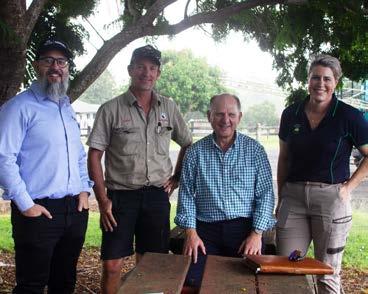
Scott Kompo-Harms (QFVG), Brent Attard (Swan Ridge Farms), Chris Leptos AO, Bree Watson (BFVG).
Backing regional AgTech: turning innovation into on-farm impact
By Jenn Honnery, Chief Executive Officer, Bowen Gumlu Growers Association (BGGA)
Earlier this year, our team was at EvokeAG, where the ideas, energy and ambition of Australia’s AgTech sector were on full display. It is a timely reminder that while innovation may be global, its most meaningful impact is often delivered locally — particularly for growers in regional communities.
Queensland is fortunate to have a strong and growing AgTech ecosystem that brings together producers, researchers, entrepreneurs and investors to solve realworld challenges. From automation and data analytics to precision agriculture and value-adding technologies, the state is increasingly recognised as a place where ideas move quickly from concept to paddock.
Supporting regional AgTech companies is critical to this success. These businesses understand the realities of farming — climate variability, labour pressures and tight margins — and are focused on practical solutions that deliver tangible returns. When growers can access technology that is fit for purpose and supported locally, confidence grows, and adoption follows.
At the Bowen Gumlu Growers Association (BGGA), we have seen first-hand how targeted investment in AgTech can streamline operations and strengthen decision-making on-farm. Through our Producer Technology Uptake project, growers were supported to assess, select and implement on-farm technologies that improved efficiency, reduced labour demands and better integrated with existing systems.
Similarly, the Smart Data Decisions project focused on helping growers make better use of the data already being generated on-farm. By improving data literacy and supporting practical application, the project enabled producers to plan more effectively, optimise inputs and make informed decisions with greater confidence.
A key lesson from both initiatives was that technology alone is not the solution. The greatest value comes from pairing innovation with extension, peer learning and trusted local support. When growers understand not just how a tool works, but why it adds value to their business, technology becomes an investment rather than a risk.
Looking ahead, AgTech also has an important role to play in unlocking new revenue streams and improving whole-of-supply-chain outcomes. The Bowen Food Futures Precinct is a strong example of this opportunity. Now just months away from entering pilot scale, the project is investing in technology that enables value-added products to be made from reject fruit and vegetables — produce that previously had little or no commercial value.
By transforming waste into opportunity, the precinct aims to deliver additional returns for growers while supporting sustainability outcomes. Importantly, it will also provide a space for innovation and product development, allowing industry to trial new products and processes without the need for upfront capital investment. This lowers barriers to entry and encourages collaboration across the sector.
As the conversations at EvokeAG continued to highlight, the future of agriculture will be shaped by innovation — but its success will depend on how well it is embedded in regional communities. By backing local AgTech, fostering collaboration and keeping growers at the centre of innovation, Queensland is well positioned to turn technology into lasting, on-farm impact.
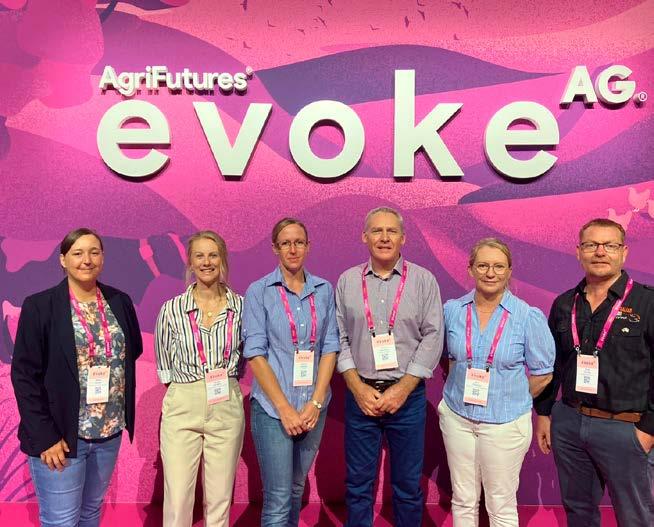
The Bowen Gumlu Grower Association Team attend EvokeAG 2026.
Supporting local growers on the Granite Belt
By Connie Taylor, Chair, Granite Belt Growers Association (GBGA)
Granite Belt Growers Association (GBGA) has been busy supporting local growers and sharing key industry updates.
Ministerial meetings and a Fresh and Secure Trade Alliance (FASTA) site visit provided valuable insights for growers. On Friday, 21 November 2025, representatives from Queensland Fruit and Vegetable Growers (QFVG) and regional grower groups came together for a full day of strategic engagement across Brisbane in recognition of National Ag Day. The program brought together growers, policymakers, industry leaders and researchers, combining high-level ministerial discussions with an in-depth tour of Queensland’s leading horticultural science and diagnostics facilities. The result was a productive and collaborative day that helped define future priorities for Queensland horticulture.
Following the recent Tomato Brown Rugose Fruit Virus (ToBRFV) session, further biosecurity resources and bestpractice guidance were shared to help growers strengthen onfarm hygiene. The Queensland Government’s Regional Water Assessment update for the Southern and Darling Downs was
also released, providing insight into future water management planning.
Coexistence Queensland launched a new Landholder Guide for managing renewable energy decommissioning, and several funding programs opened, including the Future Drought Fund and Farm Management Grants. GBGA also supported community events such as Farming Afterhours hosted by Lizzie Sabo from Sabo’s on Severn, the Stanthorpe Agricultural Society’s 150th Anniversary Dinner Dance, and the GBGA Christmas Party.
Looking into 2026, we are engaged with the revamped Varias to build a local hub to support and promote local growers. We have been working to support the HumiSoil and Composting projects as well as collaboration projects like the HORT Innovation project with CQUni, the local flying-fox damage mitigation alongside the Conservation Policy and Legislation Team. GBGA is also working to support Granite Belt schools participating in Pick of the Crop coordinated by Health and Wellbeing Queensland.
Amendments made to TPP restrictions
Biosecurity Queensland (Department of Primary Industries) has amended regulations relating to Tomato-Potato Psyllid (TPP), that has seen the removal of entry conditions for carriers into Queensland from Victoria and Western Australia. The amended regulations came into effect on 3 April 2026. The key changes to the regulations are the removal of entry conditions for all non-host fruit and vegetables, host fruits, vegetables and nursery stock where there are no leaves, calyx or petals present, and appliances used in
the cultivation, harvesting, handling, processing or packaging of host plants where they have no leaves, calyx or petals present.
These amendments have been made so that trade of the abovementioned products and equipment is impeded as little as possible while maintaining adequate biosecurity protections.
An exemption pathway has also been established for host plant products, on the condition that they have been altered or processed in a way that does not allow
TPP to survive, such as canned or frozen. There has been no change, however, in the entry conditions for host fruits, vegetables, nursery stock, cut flowers and foliage with leaves, calyx or petals present and non-host nursery stock in some circumstances.
Entry conditions for these items can be found in the Queensland Biosecurity Manual (https://www.dpi.qld.gov.au/__ data/assets/pdf_file/0004/379138/qldbiosecurity-manual.pdf).
Powered by Syngenta Vegetable Seeds
Freshness, quality and strong supply chains fuel independent retailer success
As independent retailers across South East Queensland participate in the 2026 A better choice! Retailer of the Year – People’s Choice Awards, one message is resonating clearly through the supply chain - fresh, quality produce remains a strong lever for winning and maintaining customer loyalty.
Running from mid-April to the end of May, this year’s awards coincided with the annual Shop and Win campaign, which has expanded its prize pool of fresh produce vouchers to encourage shoppers to support their local, independent A better choice! retailers. For growers and wholesalers, the campaign represents a valuable opportunity to reinforce the importance of independent stores as a critical channel for quality produce.
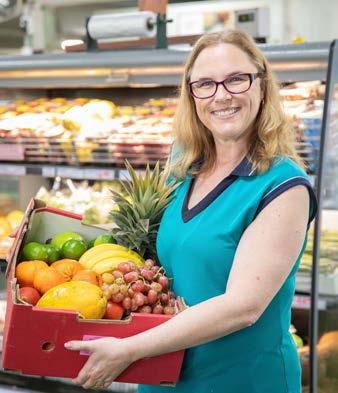
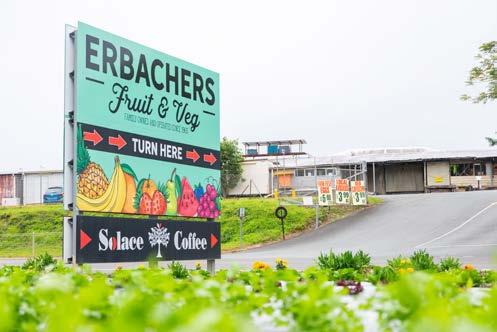
Last year’s national winner, Erbacher’s Fruit & Vegetables on the Sunshine Coast, is a case study on how strong supply-chain relationships support retail success. The second, third and fourth-generation family members outperformed more than 800 stores nationwide.
According to third-generation family member and part-owner Tanya Erbacher and her husband Dave, their competitive edge begins at the source.
“We head to the Brisbane Markets about three times a week, and during busy periods like summer or Christmas it can be four or five,” said Dave.
“That means we are constantly refreshing our range and bringing the best produce back to our customers.”
For the Erbacher’s, maintaining quality and freshness is inseparable from maintaining strong relationships with their wholesalers.
“We have high expectations of them, and our customers have high expectations of us,” Dave explained. “Quality and consistency are important.”
When it comes to dealing with customers, Tanya said their traditional, hands on approach continues to resonate, with their staff’s product knowledge and customer engagement seen as key differentiators.
“Our team talks to customers, answers their questions, and helps them choose the right produce. It is something that is not always seen in businesses today, and it sets us apart,” Tanya said.
For growers and wholesalers, this kind of customer facing expertise helps ensure that quality produce is not only stocked but also understood and valued by shoppers.
Brisbane Markets Limited Managing Director and CEO, and Brismark CEO, Andrew Young, said recent independent research commissioned by Brismark in late 2025 reinforced what the industry has long known — shoppers prioritise variety, freshness and quality when choosing where to buy their fruit and vegetables.
“These are strengths that local, independent A better choice! retailers in Queensland consistently deliver, thanks to their connection with Queensland’s heart of fresh produce, the Brisbane Markets,” Mr Young said.
The research also revealed that more than half of South East Queensland shoppers actively look for the A better choice! logo when purchasing fresh produce, and at least 45% visit an independent fruit and vegetable store each week.
“In Queensland, shoppers are forming strong, positive associations between the A better choice! logo, the Brisbane Markets brand, and a large range of quality, fresh fruit and vegetables,” Mr Young said.
“This benefits our entire supply chain — from growers and wholesalers to retailers and consumers.”
The number of Queensland stores participating in the A better choice! Retailer of the Year – People’s Choice Awards this year not only highlight the strength of the state’s independent retailers but also reinforce the vital role of growers and wholesalers who supply them.
Last year’s A better choice! Retailer of the Year – People’s Choice National Award winners, Erbacher’s Fruit & Vegetables, show how freshness, quality and strong supplier relationships support retail success.
Queensland growing regions
Queensland continues to smash the avocado market
Avocados, once considered a niche fruit, are now a much-loved staple in Australian households. Known for their rich, creamy and buttery flavour, the avocado industry contributes hundreds of millions of dollars annually to the Australian economy, driven by strong domestic demand and steady interest within the international market.
In Australia, avocados are produced year-round due the range of climates and conditions in the eight major avocado growing regions. However, it is the growers across Queensland who have truly cemented their position as the backbone of Australia’s avocado industry.
Queensland’s production strength is closely tied to its mix of avocado varieties, which shape seasonal supply and market behaviours. With the state’s varied climate enabling a staggered production cycle, harvest generally runs from March through to November, depending on the region.
Many growers focus on Hass avocados thanks to their strong market demand and year-round availability, alongside Shepards, which are grown almost exclusively in Queensland.
From the rich soils of South Queensland to the tropical climates of North Queensland, producers have truly leveraged the diverse microclimates the state has to offer, extending harvest windows and maintaining consistent supply.
A smashing year of growth for Queensland
In the financial year ending June 2025, national avocado produce reached 131,385 tonnes. While recent data in the Australian Horticulture Statistics Handbook 2024/25 shows that total national production decreased by 13% from the
North Queenslend February – June
Central Queenslend March – August
South Queenslend May – November
Tamborine June – October
previous year, Queensland regions increased 19% in total, from 64,071 to 76,501 tonnes provided in the same period.
This also represents 58% of total volume of avocados produced domestically for the year.
However, despite national avocado production falling over the previous financial year, its total production value increased by an impressive 22%, climbing to $718.7 million, according to Hort Innovation (2026).
In addition, over the 2024/25 financial year, avocado supply delivered:
• 127,180 tonnes to market
• $780.9 million in total wholesale value
• 94,207 tonnes (74%) sold to retail customers ($578.4 million)
• 32,973 tonnes (26%) supplied to the food service industry ($202.5 million).
Australian growers also exported 14,162 tonnes of avocados at a value of $86.3 million, with Queensland leading the charge and shipping 9,011 tonnes, representing 63.6% of all avocado exports.
Voices from the Industry
Grower Perspective: Lawrence Masasso
Rocky Creek Orchards
Like any agricultural crop, the biggest challenge is the vagaries of Mother Nature. Growers are constantly managing weather extremes — whether that’s heavy rain at harvest, very hot summers, or cold winter conditions — all of which can affect fruit quality and yield. Markets are currently very well supplied with new season Shepards and end of season Hass from Western Australia. Avocado sales have been fantastic, driven by the great value and the continuing love that Australians have for them. Avocados tick every box for modern consumers. They are versatile, they taste great, and they are packed with healthy fats and nutrients. As people
have become more interested in fresh, nutritious food, avocados have naturally become a favourite.
Hass has strong global recognition, but Shepard avocados have a loyal following in Australia during their season. Many consumers appreciate that Shepard stays green when ripe and do not brown as quickly once cut. In the end, both varieties have their place and plenty of fans.
Health and versatility are really driving avocado trends right now. Consumers want fresh foods that are good for them and easy to use, and avocados fit perfectly into that space — whether it is on toast, in salads, or in products like guacamole and avocado oil.
A staple on the Australian table
Avocados have firmly established themselves as a family favourite across Australia, earning their place as a true kitchen essential. From breakfast staples like smashed avo on toast to family dinners and healthy desserts, this versatile fruit found their way onto the table of around 65% of Australian households over the past year, with an average per capita consumption of 4.64 kilograms annually.
Wholesale insight:
Susan Lewis CEO – Murray Bros
Avocados have become a staple produce item in Australia, supported by their year-round availability and strong consumer demand. Whether Hass or Shepard varieties, consumption has steadily increased over the past decade.
Looking ahead
The future of avocados in Queensland remains strong, with its scale, climate diversity and steady production, combined with ongoing consumer demand, will help ensure the Sunshine State remains at the forefront of Australia’s avocado industry for years to come.
Avocados can no longer be considered a passing trend, as their popularity continues to grow without any signs of slowing.
Like any fresh produce item, consistency in both supply and quality is essential. We work closely with our growers to ensure the fruit they provide meets the standards our customers expect. Building strong relationships with growers is vital, particularly for those new to the industry, as it helps maintain a consistent supply of high-quality avocados across the market to satisfy consumer demand.
Avocado trees naturally produce biannual yields, often delivering larger crops every second year. To help maintain more consistent supply levels, growers continue to invest in new plantings. In some cases, this involves replacing trees that have been affected by weather events or poor health, while in other cases it reflects new growers
entering the industry and establishing orchards for the future.
The increasing popularity of diets that feature avocados has also contributed to the industry’s growth. Avocados are widely recognised as a nutritious food, providing healthy fats, fibre and a range of essential nutrients.
Like all fresh produce, avocado production is influenced by seasonal conditions in the regions where they are grown. Queensland produces approximately 60% of Australia’s avocados, and while recent years have presented challenges due to weather events, the dedication and hard work of growers continues to deliver excellent supply and quality through the markets. By maintaining this strong collaboration across the industry, the Australian avocado sector is well positioned to continue growing and delivering lasting benefits for growers, suppliers and consumers alike.
Retailer Perspective: Joseph Guardala
Indooroopilly Fruit
Customers choose all qualities – they always want an option between green and ripe. They look for size and colour. My customers want the best of the best avos - all attributes of an avocado – the
size, colour, and even when they take it home and cut it open, the colour and creaminess all contribute to picking avocados in-store. Price is also a factor too. If the price is high, they want good quality.
Over the last five years, growers have been increasing their supply of avocados so there are more for us to purchase and provide to our customers. A lot more growers have planted avocados, and it obviously is working for them as we have lots of supply all year round. We are very blessed because our growers all do fantastic jobs of supplying. We have avos from Queensland, Blackbutt, New South Wales, Western Australia – we have access to great avos all year round from different areas of Australia. The only time it is challenging is when the weather can affect supply or when there is a gap in between the overlap of season from Sheppard and Hass. It comes back to this - everyone is usually
chasing the same thing – trying to get the good quality avos, so we want to make sure we have enough stock all the time.
It is all about doing the right job –people will trust you and just come and buy. We are able to have a selection of avos available to us from all different growers around Australia. Avocadoes are a staple produce line - people need them. It is an all-year-round thing and people can’t resist the taste of avo on warm toast with a bit of olive oil and salt. I think that at the start of the Sheppard season people are a bit stand offish because they haven’t seen a green skin avo for a while. Green in their brain is ripe. So, there is hesitation to green skin at the start. But as the season goes on and they click and realise the change of season, they get used to the change and realise they both are good for their own reasons.
Source: Australian Horticulture Statistics Handbook https://www.horticulture.com.au/growers/help-your-business-grow/research-reports-publications-factsheets-and-more/australian-horticulture-statistics-handbook/
Potato virus a threat to Queensland
Authorities across Queensland remain alert, with Potato Mop-Top Virus (PMTV) still posing a significant biosecurity risk.
An updated Movement Control Order (MCO) was issued on Thursday, 19 February 2026, outlining requirements for anyone transporting affected produce or production equipment into the state.
The MCO applies to all known carriers, including potato plants, potato propagating material (including seed potato and cuttings), soil associated with potatoes, and machinery or equipment that has come into contact with any carrier.
For growers who received potato seed lines from Tasmania that later tested positive for PMTV and were unable to plant due to State Government biosecurity orders, compensation is being progressed for eligible levy-paying potato growers.
Stringent eligibility criteria apply. Seed must have been purchased from Tasmania for planting during the 2025/2026 season and received before 1 September 2025. Growers seeking compensation must provide evidence of seed ownership and associated destruction, storage or processing costs.
Growers are encouraged to remain vigilant for signs of PMTV and report any suspected detections immediately.
Authorities continue to emphasise the importance of strict on-farm biosecurity practices and encourage growers to take an active role in managing risks within their control. This
includes taking all reasonable steps to prevent the spread of pests, diseases, weed seeds or contaminants.
For further information visit https://www.business.qld.gov. au/industries/farms-fishing-forestry/agriculture/biosecurity/ plants/priority-pest-disease/potato-mop-top-virus.
Potato plant showing symptoms of potato mop-top virus infection.
THE BRISBANE PRODUCE WASTE REVOLUTION
STAY AHEAD OF THE WASTE LEVY AND REDUCE YOUR GENERAL WASTE COSTS BY USING OUR NEW PRODUCE WASTE RECYCLING SERVICE.
HOW DOES IT WORK?
ORGANIC WASTE
Separate your food scraps from your general waste.
ORGANICS BIN
Place your organics waste in the specific Organics bin.
COLLECTION
Organics bin will be collected by scheduled frequency.
SCAN TO LEARN MORE
COMPOST
Organic waste will be processed into high-quality compost.