D I G I T A L
M A G A Z I N E
JULY - SEPT 2026 TM
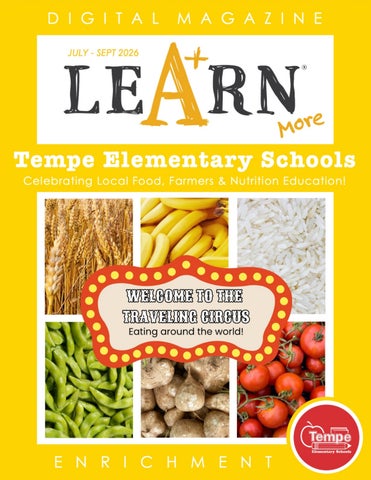
Tempe Elementary Schools Celebrating Local Food, Farmers & Nutrition Education!
E N R I C H M E N T
Our “Fresh” Mission Each day, Tempe Elementary Schools Nutrition Services team serves approximately 2,800 breakfasts, 7,000 lunches, and 540 snacks to students across the district. Each meal is made with care and emulates our dedication to providing quality, nutritious meals to ensure students are equipped with the brain power to do their best in the classroom. Tempe Elementary Schools Student Wellness Policy
This institution is an equal opportunity provider.
Wheat | Bananas | Rice Edamame | Jicama | Tomatoes
Fiber
Potassium
B Vitamins
Protein
Vitamin C
Vitamin K
Wheat Wheat is a type of grass grown for its edible seeds. There are six classes of wheat grown in the U.S.: Hard Red Winter, Hard Red Spring, Soft Red Winter, Soft Winter, Hard Winter and Durum.
About 45 million acres of wheat are planted in the U.S. each year.
The most common type of wheat grown in the U.S. is hard red winter wheat. Hard red winter wheat is often used to make bread.
1 bushel of wheat can produce around
90 loaves of bread.
Wheat grows best in warm weather. The average wheat crop grows to be around 2 - 4 feet tall.
Fiber Fiber supports movement through the digestive system. Fiber is a type of carbohydrate that the body doesn’t digest; it simply passes through. Soluble fiber dissolves in water…it helps regulate blood sugar levels and removes cholesterol from the blood stream.
Insoluble fiber is sometimes referred to as “roughage.” Dairy & meat products do not have any fiber.
2
types of fiber:
1. Soluble fiber 2. Insoluble fiber
Fiber helps to regulate the body’s use of sugar.
Fiber is ONLY found in plant foods.
Insoluble fiber does not dissolve in water…it helps food move throughout the digestive system.
BOTH forms of fiber are important & beneficial to overall health.
Bananas Bananas are a type of tropical fruit - classified specifically as a berry. Did you know monkeys peel bananas upside down? It’s easier & less damaging to the banana!
The most popular type of banana is the
Cavendish banana.
Bananas grow in hanging bunches called hands.
Bananas change color from green to yellow as they ripen.
Bananas continue to ripen after they are harvested. 100+ BILLION bananas are eaten around the world each year. Banana plants can grow to be up to 30 feet tall.
Potassium Potassium supports balancing fluid in the body & proper function of the muscles & nerves. Once potassium enters the body, it functions as an electrolyte. Electrolytes help balance the amount of water in the body.
Potassium is the THIRD most abundant mineral in the body.
Helps to keep the body hydrated! FUN FACT: The body is made up of approximately 60% water. Potassium helps to regulate the heart rate. Potassium helps to regulate muscle contractions.
Potassium helps promote bone health.
98%
of the body’s potassium is found in its cells.
Many runners eat foods high in potassium like bananas before a run to prevent muscle cramps.
Rice Rice is a type of starchy grain grown on approximately 2.8 million acres across the U.S. Rice is a staple food for about half of the world’s population.
Rice is one of the MOST laborintensive crops. Steps to harvesting rice: cutting, stacking, handling, threshing, cleaning & hauling.
There are over 40,000 different kinds of rice. Rice is a type of cereal grain like wheat, oats & barley.
White rice is just brown rice that has been polished of its outer bran layer.
Most of the world’s rice is grown in flooded fields called rice paddies.
Rice plants can grow up to 6 feet tall.
B Vitamins B Vitamins help support the body’s energy levels, brain function & cell metabolism.
8
essential B vitamins: Vitamin B1, Vitamin B2, Vitamin B3, Vitamin B5, Vitamin B6, Vitamin B7, Vitamin B9 & Vitamin B12. Water is needed to help the body absorb B vitamins. B5, B12, C and E knock on your door…what do you do? In-Vitamin!
B vitamins helps the body make energy from food. B vitamins help create red blood cells.
The body cannot store most B vitamins, so they need to be regularly consumed.
B vitamins play a role in serotonin production. Serotonin makes us feel happy.
Soybeans Soybeans are a type of legume, meaning they are beans that grow inside pods. Soybeans are one of the most widely grown crops in the U.S., with over 80 million acres planted each year. Soybean pods usually contain 2 - 4 soybeans.
Edamame is a popular snack made from young soybeans that are harvested early.
YUM!
Soybeans were first grown in the U.S. for livestock. Soybeans are nicknamed the “miracle bean.”
Most soybean plants take about 80 -120 days to grow from planting to harvest.
In addition to foods like tofu, soy milk, edamame, etc. soybeans are also used for many everyday products like crayons candles, fuel & more!
Protein Protein builds, maintains and replaces the tissues in the body.
Soybeans are one of the highestprotein plant foods.
Protein helps to transport & store nutrients throughout the body.
18-20% of the body is protein.
EVERY cell in the human body contains protein.
The body cannot store protein long term… which is why protein needs to be consumed daily.
Protein is made of molecules called amino acids.
Protein plays a big role in building and repairing muscles. Protein is a MACRONUTRIENT. A macronutrient is a nutrient that the body needs in LARGE amounts.
Amino acids are known as protein’s “building blocks.”
Protein helps maintain fluid balance throughout the body.
Jicama Jicama is a root vegetable know for its crisp, sweet taste.
Jicama is pronounced “h i c k - u h - m a.”
The majority of jicama found in the U.S. is grown in Mexico, Central & South America. Jicama Jicama is typically harvested grows best between November - May. in tropical climates. “ Ya m B e a n ”
Jicama requires around 9 months of warm & frost-free weather to grow.
Jicama grows on vines.
Jicama can weigh up to 50 pounds but are most commonly harvested when they are under 5 pounds. Jicama De Agua is the most common type of jicama. Jicamas are made up of about 85% water. Jicama is a member of the legume family.
ONLY the root of the jicama plant is edible.
Vitamin C Vitamin C supports the immune system the body’s defense against infections.
ENERGY booster!
Vitamin C helps to heal wounds.
Vitamin C is also referred to as “ascorbic acid.”
Vitamin C helps keep you happy & healthy! Vitamin C is an antioxidant. Antioxidants help protect against damage caused by exposure to harmful substances in the environment.
The body cannot make vitamin C on its own - it has to come from food.
What do you call a vitamin that improves your eyesight?
A Vitamin C! Vitamin C is a very important vitamin for healthy gums & teeth.
Tomatoes Tomatoes are considered to be both a fruit & a vegetable!
3
12,000+ TONS of fresh market tomatoes are grown/year in the U.S.
Popular Types Tomatoes come in a variety of colors of Tomatoes: including yellow, pink, purple & more!
1. Cherry 2. Grape 3. Roma
MANY Americans grow tomatoes in their own garden.
There are 10,000+ different varieties of tomatoes.
Botanically, tomatoes are a fruit! Tomatoes take 60-100 days to grow from seed to fruit.
Tomatoes are a warm season crop that L O V E the sun.
Vitamin K Vitamin K supports proper blood function, bone growth & kidney health. 2 main forms of vitamin K: K1 and K2. Vitamin K is a fat-soluble vitamin - which means…
The body has the ability to create vitamin K on its own.
Vitamin K helps the body heal from wounds.
It absorbs better into the body when eaten with foods with some fat like olive oil or avocados!
Vitamin K helps produce proteins that bind themselves to calcium - this helps build strong bones. Vitamin K supports heart health.
Vitamin K is found throughout the body in the liver, brain, heart, pancreas & bones. Vitamin K plays a role in proper blood function- specifically with clotting.