Distributed Renewable Energies for Off-Grid Communities: Empowering a Sustainable, Competitive, and Secure TwentyFirst Century 2nd Edition Nasir El Bassam
Pearson is the world’s learning company, with presence across 70 countries worldwide. Our unique insights and world-class expertise comes from a long history of working closely with renowned teachers, authors and thought leaders, as a result of which, we have emerged as the preferred choice for millions of teachers and learners across the world.
We believe learning opens up opportunities, creates fulfilling careers and hence better lives. We hence collaborate with the best of minds to deliver you classleading products, spread across the Higher Education and K12 spectrum.
Superior learning experience and improved outcomes are at the heart of everything we do. This product is the result of one such effort.
Your feedback plays a critical role in the evolution of our products and you can contact us - reachus@pearson.com. We look forward to it.
Electrical Machine Design
Electrical Machine Design
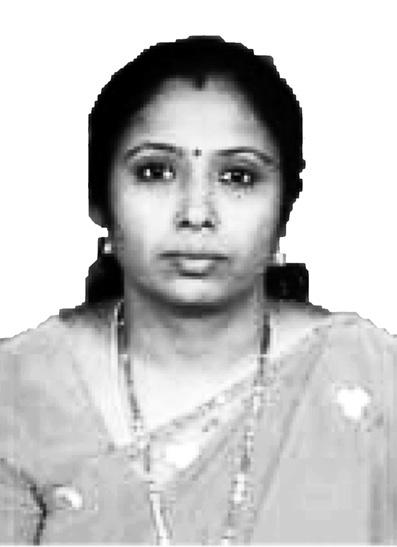
V. Rajini
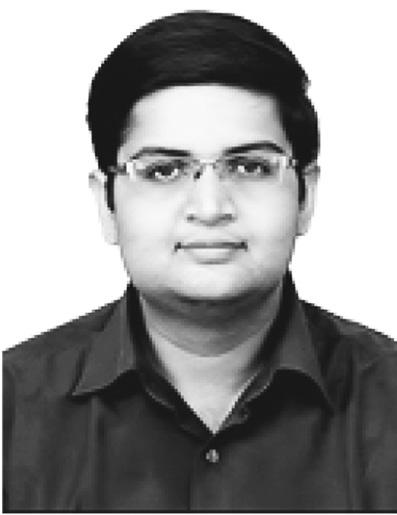
V. S. Nagarajan
Department of Electrical and Electronics Engineering
Published by Pearson India Education Services Pvt. Ltd, CIN: U72200TN2005PTC057128, formerly known as TutorVista Global Pvt. Ltd, licensee of Pearson Education in South Asia.
No part of this eBook may be used or reproduced in any manner whatsoever without the publisher’s prior written consent.
This eBook may or may not include all assets that were part of the print version. The publisher reserves the right to remove any material in this eBook at any time.
ISBN 978-93-325-8557-7
eISBN 9789353063689
Head Office: 15th Floor, Tower-B, World Trade Tower, Plot No. 1, Block-C, Sector 16, Noida 201 301, Uttar Pradesh, India.
Registered Office: 4th Floor, Software Block, Elnet Software City, TS-140, Blocks 2 & 9, Rajiv Gandhi Salai, Taramani, Chennai 600 113, Tamil Nadu, India. Fax: 080-30461003, Phone: 080-30461060 Website: in.pearson.com, Email: companysecretary.india@pearson.com
Dedicated to Our Parents
—V. Rajini and V. S. Nagarajan
3. Design of Transformer
Foreword
It gives me great pleasure to write the foreword to the book entitled, “Electrical Machine Design”.
Electrical machines play a vital role in domestic and industrial fronts. Hence, it is essential that students of electrical engineering have a strong grounding in electrical machines. Conventional courses in electrical machines are not adequate for the purpose of understanding as they throw light on the construction, principle, characteristics and testing. A deeper understanding is possible only when they study the design aspects and their influence on the performance of the machines. It is thus necessary to have a course on electrical machine design, suitable for study by undergraduate students of electrical engineering.
This book is designed to meet the needs of a textbook for a course in electrical machine design. It gives a comprehensive design aspects of DC and AC machines with an appropriate introduction to basic design considerations and the magnetic circuits involved. Introduction to the design and analysis of the machines using the finite element analysis is also included as one chapter, to enable the readers to have a much deeper understanding. A design process always involves a long iterative process and a designer is required to take decisions in conflicting situations. The design procedure of all the machines is given as simple flowcharts for the reader to understand the iterative nature of design process. In addition to the worked examples, most chapters include number of problems designed to test the grasp of the subject. The readers will also appreciate the pedagogical practices followed in this book.
This book is the outcome of the long experience of the authors in teaching electrical machines and allied courses. The authors have made a commendable effort to present the contents in a clear and lucid form.
I hope this book will be well received by students, teachers and practicing engineers.
Dr V. Kamaraj Professor and Head Department of Electrical and Electronics Engineering
SSN College of Engineering Chennai
Preface
Electric machines have become a part and parcel of our day-to-day lives. They play an inevitable role, right from a small toy to an electric power plant. Hence, the knowledge of their operating characteristics and performance is essential to Electrical Engineering graduates. Also, it is important for them to learn the design of these machines considering various technical and economical aspects. Hence, this book is intended to serve as a textbook for those who are interested in learning the design of electrical machines.
The target audience also include academicians, students of B.E./B.Tech. (Electrical and Electronics Engineering, Electronics and Instrumentation Engineering and Instrumentation and Control Engineering) and industrial employees.
Flow chart based approach has been employed for problem solving. A large number of examples with increasing order of difficulty have been incorporated with a step-by-step procedure for solving. The examples cover university questions of all Indian universities. Matlab and C programs have been provided for computer-aided design of different electrical machines. Finite element simulations using MotorSolve software will provide a new perspective in-depth understanding of concepts. Multiple-choice questions with answers covering syllabus of GATE and UPSC exams also find a place in this book. Two mark questions have been provided with answers, which will help the readers enhance the understanding of the subject.
This book is divided into 8 chapters. Chapter 1 deals with basic design considerations of electrical machines, which is inclusive of constraints, standards, choice of materials and cooling requirements. Design of magnetic circuits involving different types of slots and magnetic pull effects are dealt in Chapter 2. Chapter 3 covers the design of transformer encompassing core, yoke, window, winding and cooling design requirements. Concepts related to stator and rotor design of three-phase induction motor are covered in Chapter 4. Chapter 5 provides an insight into the design of single-phase induction motor. Topics related to construction, pole design and design of turbo machines under synchronous machines are discussed in Chapter 6. Chapter 7 discusses about the design of DC machine comprising the aspects of field winding, commutator and brush arrangement and interpole design. The computer-aided design of electrical machines using finite element analysis software, MotorSolve, is detailed in Chapter 8.
Acknowledgements
This book consumed huge amount of work, patience and dedication. Still, implementation would not have been possible if we did not have the support of many individuals and organizations. Therefore, we would like to extend our sincere gratitude to all. We would like to sincerely thank our Principal, Dr S. Salivahanan, and the Management of SSN College of Engineering, Chennai, for their constant encouragement and providing necessary facilities for completing this project. We are grateful to our HOD, Dr V. Kamaraj, for his encouragement in bringing out this book, our colleagues Dr R. Arumugam and Dr M. Balaji, for obtaining and making the infolytica softwares available for use in
Chapter 8 of this book and Dr R. Deepalaxmi, for helping us in reviewing certain chapters of this book. We are also thankful to our students, especially S. Sivaramakrishnan, R. Rahul, R. Gayathri, C. Ramaseshan, B. Shiva Shankar, M. Lohit, Shreyas Srivatchan, P. Praneeth, M. Karthik, S. Narendran, R. Bharath Kumar, R. Vedha Vyass, R. Manovenkatesh, N. Ajithbalaji, S. Krishnamurthy, S. Joselin Jebalamalar, R. Kavitha and M. Premkarthik who had helped us in matlab and C coding, creation of figures, content enhancement, proof correction and review.
We are indebted to Sojan Jose, R. Dheepika and M. Balakrishnan of Pearson India Education Services Pvt. Ltd, Chennai, for bringing out this book successfully in a short span of time.
We would like to express our sincere gratitude to our family for the continuous support, patience and motivation. A heartfelt thanks to our family members, R. Harikrishnan, H. Harshini, H. Karunya, V. Nagalakshmi, L. Santhanakrishnan, Dr L. V. Chandramohan, V. Sureshkumar, T. S. Sasikaladevi, family friends, S. Premalatha, Secretary & Correspondent, Mahatma Montessori Schools, Madurai, R. Panneerselvam, President, Mahatma Montessori Schools, Madurai, for inspiring and encouraging us in writing this book.
We would like to dedicate this book to parents Shri. G. Veeraraghavalu and V. Saroja, grand parents, L. Venkatesan, T. S. Swaminathan and S. Vardhini without whom none of our success would have been possible. We would also like to dedicate this book to Professor C. Palani, Annamalai University for laying the foundation for Electrical Machines and Prof. Raman Nair, Annamalai University for making us believe anything is possible.
We will appreciate any constructive suggestions and feedbacks from the readers for further improvement of this book.
V. Rajini
V. S. Nagarajan
About the Authors
V. Rajini has been working as a Professor in the Department of Electrical and Electronics Engineering, SSN College of Engineering. She has 22 years of teaching and research experience. She was graduated from Annamalai University in 1992 and subsequently obtained her Ph.D. in High Voltage Engineering from Anna University in 2008. She has published over 90 research publications in referred journals. She has completed various projects funded by SSN Trust and AICTE and MNRE. She is currently working on the fields of Insulating Materials, High Voltage Applications in Process Technologies, Hybrid Electric Vehicles, Power Electronics for HV Applications, Solar Photovoltaic and Wind Energy Systems. She has received Best paper awards in various conferences, has also received the Best teacher awards. Ms Rajini is the recipient of CTS – SSN Best Faculty Award – 2011 and distinguished scientist award – 2016 by VIRA foundation for her contributions in the field of high voltage engineering. She is a senior member of IEEE and Life member of ISTE.
V. S. Nagarajan has been working as an Assistant Professor in the Department of Electrical and Electronics Engineering since June 2014. He did his B.E. (EEE) in SSN College of Engineering and was ranked 2nd in the college and 21st in the Anna University. After his graduation, he joined CTS as Programmer Analyst and worked there for about a year. Later, he did his Masters in Power Electronics and Drives in SSN College of Engineering scoring a CGPA of 9.34 out of 10 and was ranked 2nd in the college and 4th in the Anna University. He is currently pursuing Ph.D. in the field of Electrical Machine Design and Control under Anna University. He was the recipient of merit scholarship both for B.E. and M.E. and also the merit scholarship by Ministry of Human Resources and Development, Govt. of India (For GATE score). He has been awarded with four silver medals and one gold medal for being the topper of the department in various semester examinations. He has also been awarded with “The Chairman’s Silver Medal” and “College Silver Medal” for securing Anna University ranks in B.E. and M.E., respectively. He has published six papers in National/International Journals and Conferences.
1 Basic Design consiDerations of electrical Machines
1.1 Principles of Design
An electric machine is an electromechanical device that comprises the stationary and moving parts combined together to generate, transform or utilize the mechanical/electrical energy. Electric machines are used in applications like transportation, aerospace, defence and industrial automation industries. Electric motor-driven systems that drive pumps, fan, blower systems and air compression have become common in industries. Good engineering design is the heart of all such applications. Engineering design is the application of science, technology and invention to produce machines to perform specified tasks with optimum economy and efficiency.
All the machines are made up of elements or parts and units. Each element is a separate part of the machine and it may have to be designed separately and in assembly. Each element in turn can be a complete part or made up of several small pieces which are joined together by riveting, welding, etc. Several machine parts are assembled together to form what we call as complete machine. This physical realization of a complete machine has to meet the required performance conditions at optimum economy and efficiency.
Hence, the objective of a design is to obtain the complete dimensions of all the parts of the machine. It must be carried out to meet the specifications using the available materials, at optimal cost, size and weight without compromising the performance and durability.
1.2 factors for consideration
The three key factors of design are given below:
1. Economy
2. Durability
3. Compliance with the specifications and standards
1.2 Basic Design Considerations of Electrical Machines
1.2 Basic Design Considerations of Electrical Machines
A design process involves lot of engineering calculations done in an iterative manner. When designing machine, one cannot apply rigid rules to get the best design for the machine at the lowest possible cost. A designer may have to take decisions under conflicting requirements. For example, designing a machine to meet out all the three key factors is highly impossible. For example, a highly durable machine would obviously make use of high-quality materials, by increasing the cost of the machine. Hence, compromise between durability and economy is required depending upon the application, besides meeting the specifications. Compromise is also required between the ideal design and a design which will comply with the manufacturing conditions, environmental conditions, convenience in production, transport, maintenance, safety, reliability and customer’s need. One should also understand the limitations of design. The designer’s primary responsibility is to allot suitable space for frame, core, airgap, winding, insulating and cooling medium in the machine. He/She should also make appropriate choice of electric, magnetic, insulating materials subject to availability, characteristics and cost consistent with the specifications.
A design process involves lot of engineering calculations done in an iterative manner. When designing machine, one cannot apply rigid rules to get the best design for the machine at the lowest possible cost. A designer may have to take decisions under conflicting requirements. For example, designing a machine to meet out all the three key factors is highly impossible. For example, a highly durable machine would obviously make use of high-quality materials, by increasing the cost of the machine. Hence, compromise between durability and economy is required depending upon the application, besides meeting the specifications. Compromise is also required between the ideal design and a design which will comply with the manufacturing conditions, environmental conditions, convenience in production, transport, maintenance, safety, reliability and customer’s need. One should also understand the limitations of design. The designer’s primary responsibility is to allot suitable space for frame, core, airgap, winding, insulating and cooling medium in the machine. He/ She should also make appropriate choice of electric, magnetic, insulating materials subject to availability, characteristics and cost consistent with the specifications.
1.3 classification of Design Problem
1.3 classification of Design Problem
A machine has field and armature winding supported by stator and rotor. It also has dielectric materials for insulating the live parts, cooling system and mechanical parts for support. Hence, the basic components of design are shown in Fig. 1.1.
A machine has field and armature winding supported by stator and rotor. It also has dielectric materials for insulating the live parts, cooling system and mechanical parts for support. Hence, the basic components of design are shown in Fig. 1.1.
fig. 1.1 | Basic components of design of electric machine
1. Magnetic design or magnetic circuit design
1. Magnetic design or magnetic circuit design
2. Electric circuit design fig. 1.1 | Basic components of design of electric machine
The design of magnetic circuit must establish the required flux with minimal ampere turns. It should also produce less core loss.
The design of magnetic circuit must establish the required flux with minimal ampere turns. It should also produce less core loss.
2. Electric circuit design
This deals with the design of armature and field windings with suitable winding arrangement such that the required emf is produced. The copper loss in these windings should also be less.
3. Dielectric system design
This deals with the design of insulation required to isolate various parts operating at different potential so that the current is confined to the required paths.
4. Thermal system design
The design of thermal system includes the design of cooling system, ventilating ducts, etc., so that the heat generated in the machine due to losses is dissipated and safe operation of the machine at the specified temperature is ensured.
5. Mechanical system design
This involves the design of frame, shaft and bearings. The design should be robust.
1.3.1 need for computer-aided Design
The design process involves a number of assumptions and constraints and so, the solution can be obtained only by iterative methods. Computer plays a vital role in finding the solution. The Finite Element Method (FEM) can be used to study the effect of a single parameter on the dynamical performance of the machine. Also, some tests, which are not even feasible in laboratory setup, can virtually be performed by FEM. Hence, the design problems using FEM are done in Chapter 8 and they are of different nature from the design worked out in detail in respect of any machine. However, these example problems provide adequate basic skills required for design.
1.4 specifications and standards
Standardization of electrical machines manufactured by several industrial plants facilitates in stream-lining the production line and acquiring easier replacements and spares for the consumer. These benchmark specifications, typically acknowledged along with their year of issue, are continually amended as per the modern requirements.
The Indian Standard (IS) specifications are laid down by the Indian Standard Institution (ISI) in conformation with the international norms stipulated by International Organization for Standardization (ISO). As per ISI, the name plate of any electrical machine should bear the succeeding details:
• kW/kVA rating of machine
• Rated voltage of machine (or voltage ratio in transformers)
• Full-load current
• Number of phases, if any
• Operating frequency/rated speed
• Type of connection (wye/delta in AC machine) or Field excitation (shunt/series/ compound in DC machine)
• Class of insulation provided
• Type of enclosure of the machine
• Frame size of machine
• Manufacturer’s name and serial number of the product
1.4 Basic Design Considerations of Electrical Machines
Some of the standards relating to electrical machines published by IS are enlisted as follows.
(a) For rotating electrical machines:
is no. Year
title specification
900 1965 Code of practice for installation and maintenance of 1φ and 3φ induction motors
2254 1965 Dimensions of vertical shaft motors for pump applications
3682 1966 Flame-proof AC motors utilized in mines
4029 1967 Guidelines for testing 3φ induction motors
4691 1968 Degrees of protection provided by enclosures for rotating electrical machines
4722 1968 Guidelines for testing of DC motors
4728 1968 Terminal marking for rotating electrical machines
4729 1968 Measurement and evaluation of vibration of rotating electrical machines
4889 1968 Methods of determination of efficiency of rotating electrical machines
6362 1971 Description of methods of cooling for rotating electrical machines
6160 – 1971 General specifications of rectangular conductors employed in rotating machines
7404 1 1974 Specifications of round paper covered copper conductors
7404 2 1974 Specifications of rectangular paper covered copper conductors
12063 – 1987 Classification of degree of protection provided by the enclosures in machines
1.5 constraints of Design
The limitations imposed on the design of electrical machines are listed in Fig. 1.2. These constraints are due to the dependability of the performance of machine on various factors and do not include limitations in the availability of material and other facilities required for manufacturing.
Efficiency
• Total efficiency of a machine indirectly influences its capital and running costs.
• When efficiency is high, the power losses are low and hence the running costs will be less.
• But, to limit the electric and magnetic losses, the specific electric and magnetic loadings ought to be as low as possible.
• This in turn formulates a need for a machine with an excessively large active material (such as iron for magnetic parts, copper and aluminium for winding conductors), which results in an increased initial investment (capital) cost.
• Thus, machines with enhanced efficiency will have substantially low running cost at the expense of higher capital cost.