Preface
Welcome to Global English !
We’re excited for you to start this journey with Global English ! Global English is more than a language course. It’s a journey into the rich diversity of cultures, experiences, and stories of the English-speaking world. This course helps you use English with confidence in everyday life — connecting you to different cultures, ideas, and perspectives. From daily conversations to digital culture, music, and traditions, you’ll develop communication skills and a deeper understanding of how English brings people across the globe together.
How ‘Global English’ is structured
The course includes:
▸ Two textbooks per year
▸ A digital platform with videos and interactive exercises
▸ Teacher resources for structured guidance
▸ An exam preparation book for A2 – B1 international exams
How the textbooks are organised
Each textbook consists of three chapters, all with the same structure:
▸ start — Short section that sets the scene.
▸ three core sections — Focused on reading, listening, speaking, pronunciation, writing, grammar, and vocabulary.
▸ worlds in words — Fiction, poems, or short stories connected to the theme.
In Global English you’ll also find:
▸ Word lists per section with key vocabulary.
▸ Grammar explanations in Dutch to support understanding.
RTTI coding for exercises
Exercises in this book are labelled:
▸ R Reproduction — Recall key information.
▸ T1 Basic application — Apply what you’ve learned in familiar tasks.
▸ T2 Complex application — Use your knowledge in new contexts.
▸ I Insight — Think critically and reflect.
How the digital platform works for students
▸ Audio and video to practise listening and pronunciation.
▸ Interactive exercises for vocabulary, grammar, and speaking. for teachers
▸ Ready-to-use PowerPoint presentations.
▸ Tests, solutions, and assessment materials.
▸ A lesson planner for structured teaching.
▸ An overview of how lesson goals and activities connect to CEFR descriptors.
Exam preparation
To help you prepare for A2–B1 international exams, Global English includes a dedicated exam book with:
▸ Practical exam strategies.
▸ Skill-based training in reading, writing, listening, and speaking.
▸ Practice tasks similar to real exam questions.
In dit voorbeeldkatern.
1–A
Contents havo/vwo Year 1
CHAPTER 1
UNITED STATES
1.1 Start The US today
1.2 Blue jeans From work clothes to fashion everywhere
1.3 The American road trip Route 66
1.4 Food in the US Beyond the Thanksgiving table
1.5 Worlds in words Esperanza Rising by Pam Muñoz Ryan
CHAPTER 2
LEARNING ENGLISH
2.1 Start How English became a global language
2.2 The secret code How your brain cracks languages
2.3 English everywhere How your world is full of English
2.4 Becoming you in English Finding your voice in a new language
2.5 Worlds in words Front Desk by Kelly Yang
CHAPTER 3
OCEANIA
3.1 Start Oceania, where stories meet the sea
3.2 Dreamtime stories Aboriginal myths and meanings
3.3 Riding the waves Surfing and coastal life
3.4 Islands in danger Life on a sinking shore
3.5 Worlds in words Nim’s Island by Wendy Orr
CHAPTER 4
ENGLISH IN THE SPOTLIGHT
4.1 Start How English goes viral
4.2 Digital language Memes, emojis, and trends
4.3 Digital English YouTube, streaming, and social media
4.4 Influencers & online identity Who are you online?
4.5 Worlds in words Click’d by Tamara Ireland Stone
CHAPTER 5 THE UNITED KINGDOM
5.1 Start England, tradition with a twist
5.2 British music From the Beatles to TikTok
5.3 Laugh out loud British humour made simple
5.4 Banksy The hidden art of London’s streets
5.5 Worlds in words The Adventure of the Blue Carbuncle by Arthur Conan Doyle
CHAPTER 6
THE LANGUAGE OF THE FUTURE
6.1 Start The future speaks English (but not like you know it)
6.2 Mission to Mars How science speaks English
6.3 Talking to robots How computers learn our language
6.4 Inventing words How new ideas change our language
6.5 Worlds in words The Wild Robot by Peter Brown
v Zie pp. 60–63 voor de inhoudsopgaven van Global English, havo/vwo leerjaar 2 en leerjaar 3
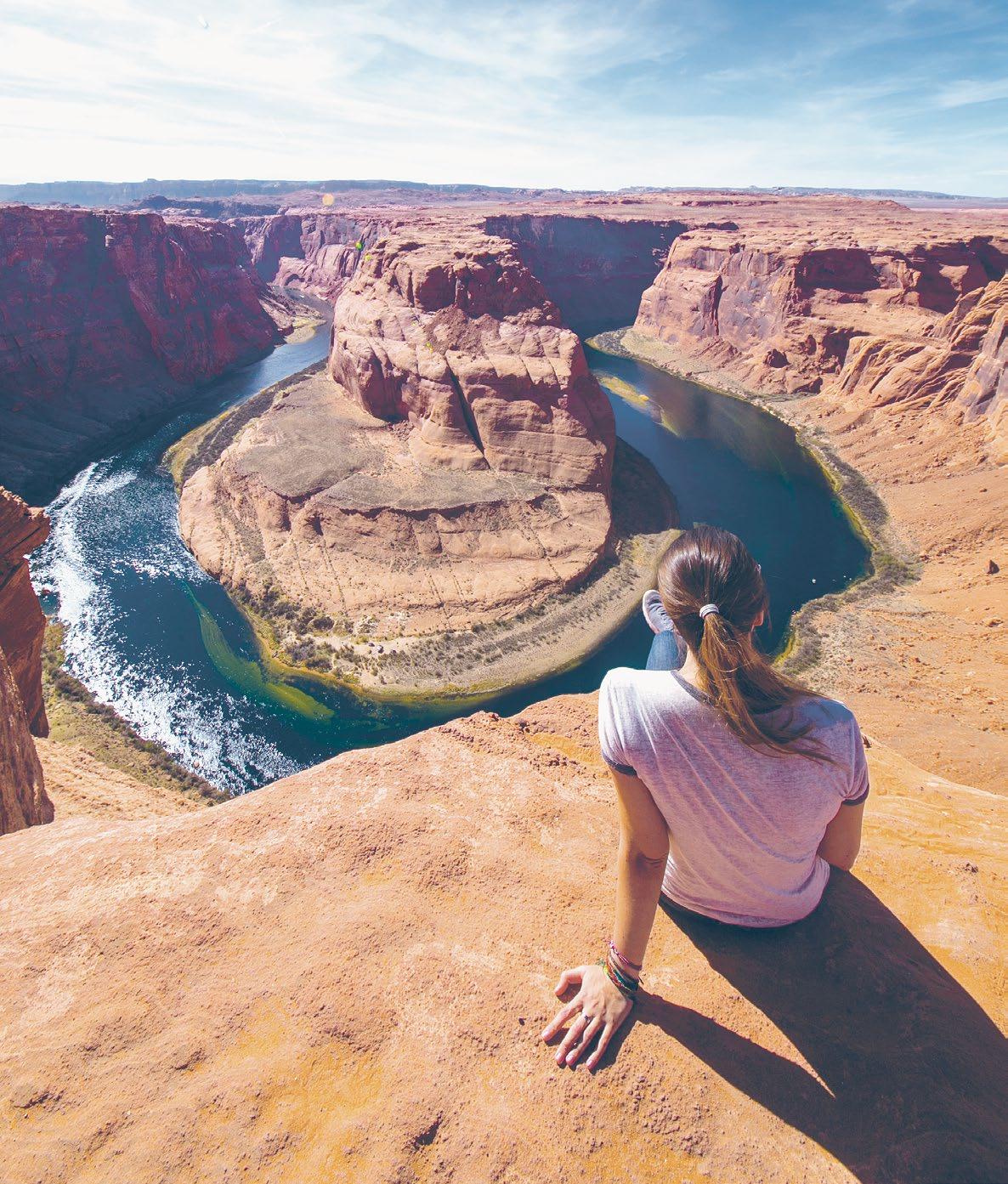
You’re off to great places, today is your day!
Your mountain is waiting, so get on your way!
dr. seuss
American children’s author and cartoonist
1
The United States
Pack your bags and get ready to travel across the United States ! In this chapter, you’ll learn about the history of blue jeans, take a road trip on the famous Route 66, and try foods that Americans love. You’ll also read about a girl who has to start a new life in Esperanza Rising, and discover how Americans use language to express themselves. Each section will teach you something new about American life, history, and culture.
Start The US today
learning goal
I can understand and use English to describe the United States and talk about its places, people, and culture.
to affect invloed hebben op brand merk city stad climate change klimaatverandering company bedrijf controversial omstreden country land famous beroemd immigration immigratie influence invloed opinion mening skyscraper wolkenkrabber topic onderwerp trade handel
What do you think of when you hear the word America? Big cities, skyscrapers, famous movies, or maybe fast food and social media?
The United States is a country you already know in many ways. You hear American English in movies and songs. You use apps and brands that come from the US. American culture is part of everyday life, even if you have never been there. The US is a large country with many different people, places, and ideas. It has famous cities like New York and Los Angeles, but also deserts, mountains, and national parks. The country is known for new ideas and technology, and for companies that influence daily life and communication around the world.
At the same time, the United States plays an important role in world politics. Its choices can affect other countries, including those in Europe. There are different opinions about topics such as climate change, trade, and immigration in the US and around the world. In this chapter, you will learn about the United States from different sides. You will explore its language, culture, and influence, and discover why America is often in the news and why it can be controversial.
Exercise 1
What do you know about the US?
Read the text and look at the map. Write down two things you already knew and one new thing you learned. Compare your answers with a classmate. T 2
Exercise 2
Check the facts
Read the text and look at the map. a Name two American cities. R
b Name three topics that people have different opinions about. R
UNITED STATES
Exercise 3
America in a nutshell
Complete each sentence using only words from the word list on page 10. T 1
a Nike is a famous ……… from the US.
b The US is important in world
c The US is a large ……… with many ideas and people.
d When you hear America, do you think of a tall ……… ?
e US decisions ……… many other countries.
f Many American companies have a strong on daily life.
Exercise 4
Let’s talk !
Talk with your classmate. Take turns asking and answering the questions. T 2
a What’s the first thing you think of when you hear America? Why? Sentence starter : I think of … because …
b Would you like to go there one day? Why / why not?
Sentence starter: I would (not) like to go because …
Use words like : beautiful / dangerous / different / difficult / expensive / exciting / famous / far / interesting / scary
Los Angeles Mount Rushmore
Statue of Liberty
The White House
Grand Canyon
Golden Gate Bridge
learning goal
I can understand short texts and conversations about clothes and shopping, and take part in polite conversations.
Blue jeans From work clothes to fashion everywhere
Did you know blue jeans were first made for workers, not for fashion?
In 1873, two men, Levi Strauss and Jacob Davis, made the first jeans for workers. These workers needed strong trousers for their jobs.
Levi and Davis used a strong fabric called denim. They used small metal pieces, called rivets, to make the pockets stronger. Soon, jeans became popular because they were strong, comfortable, and looked good. Many people started making and selling jeans. Today, jeans are sold all over the world, and millions of people wear them.
to call noemen comfortable comfortabel
denim spijkerstof fabric stof fashion mode to need nodig hebben piece onderdeel pocket zak popular populair rivet klinknagel strong sterk to sell verkopen trousers broek to wear dragen work clothes werkkleding worker arbeider

Did you know ?
v The word denim comes from Nîmes, a city in France. The name comes from the French words de Nîmes (‘from Nîmes’).
v In Dutch, jeans are called spijkerbroeken because of the metal rivets on the pockets.
v In the 1950s, many schools said, ‘No jeans here!’ They were seen as rebel clothes.
Denim fabric and rivets make jeans strong.
Exercise 5
Jeans: Facts and ideas
Read the text on page 12 about the history of jeans. Look at the pictures on the right. Answer the questions in one or two sentences.
a Who made the first jeans? T 1
b What small metal pieces make jeans stronger? T 1
c Why do you think jeans became popular all over the world? T 2
d challenge Do you like wearing jeans? Why or why not? I Sentence starter: I (don’t) like wearing jeans because
Exercise 6
Matching jeans parts
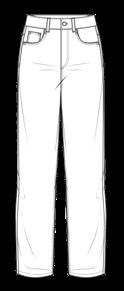
Read the keywords and their descriptions below. Then, look at the picture of the jeans and match the words with the correct parts (A, B, C, et cetera). T 1
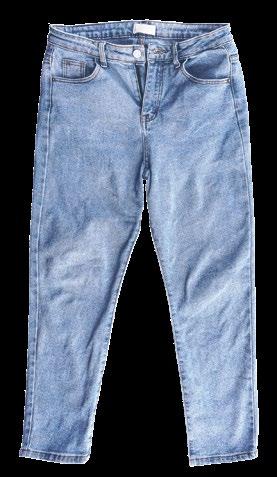
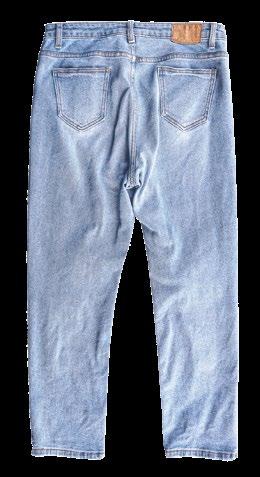
Keywords: Parts of jeans
1 button closes the jeans at the waist
2 zipper opens and closes jeans easily
3 pockets jeans usually have five pockets
4 rivets make the pockets stronger
5 belt loops hold your belt in place
6 denim a strong material, usually blue
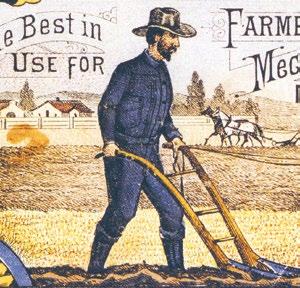
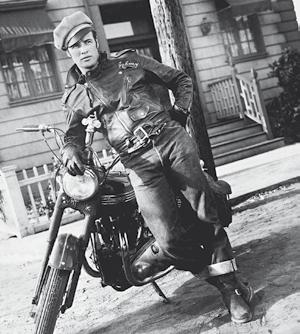

Jeans as work clothes.
Jeans became popular in movies.
Jeans for everyone, everywhere.
19th century 1950s Today
READING
capitals hoofdletters
full stops punten lower case kleine letters
Did you know ?
In English, people often use the 12-hour clock with a.m. (night / morning) and p.m. (afternoon / evening).
9.00 a.m. = 09:00
2.00 p.m. = 14:00
12.00 a.m. = 00:00 (midnight)
12.00 p.m. = 12:00 (noon)
What do a.m. and p.m. mean?
a.m. = ante meridiem (Latin: ‘before midday’)
p.m. = post meridiem (Latin: ‘after midday’)
American English: usually AM / PM (without full stops, in capitals). British English: often a.m. / p.m. (with full stops, lower case).
Exercise 7
Order confirmation
Read the message from a web shop and answer the questions.
From : noreply @ denimstore.com
Subject : Order confirmation
Hi Jamie,
Thanks for your order!
You bought 1 pair of blue jeans in size M. Your package will arrive on Friday between 2.00 p.m. – 4.00 p.m.
Enjoy your new jeans!
a What did Jamie order? R
b What do you think the M means in ‘size M’? T1
c Will the package arrive in the morning, afternoon, or evening? T1
d The jeans don’t fit. Can Jamie reply to this email?
Look at the email address. Why (not)? I
Exercise 8
What we wear
a Look at the pictures (A–F). Choose the correct English words from the boxes. T1
jeans
b Write one short sentence for each item (A–F). T2
Use: I wear … / This is … / These are … examples
v I wear jeans at school.
v This jacket is brown.
v These jeans are comfortable.
Exercise 9
What people say about The Perfect Fit Store
You want to buy a new pair of jeans, so you read reviews of The Perfect Fit Store online. Read what customers say about the shop and answer the questions.
‘ The staff was very helpful, but the jeans were expensive.’
‘I found the perfect size, and the quality is great!’
‘They have a good selection, but the prices are too high.’ Customer reviews.
a What did customers like about the shop? R
b What did customers not like about the shop? R
c Why is the shop called The Perfect Fit Store? T2
d Would you go to this shop? Why or why not? I
How ‘jeans’ got their name
The name jeans comes from Gênes, the French name for the city of Genoa in Italy. Sailors there wore trousers made of strong fabric, similar to denim.
The name jeans became popular in the 1950s, when jeans were in fashion. Before that, they were often called overalls in American English and dungarees in British English.
‘Store’ or ‘shop’?
In the US, people usually say store when talking about places to buy things, like a grocery store, and roles like store assistant.
In the UK, people say shop, like grocery shop or shop assistant.
These terms mean the same thing, so you can use either.
v Zinsvolgorde (word order)
In het Engels hebben zinnen dezelfde basisvolgorde als in het Nederlands : onderwerp / persoonsvorm / rest van de zin
The shop sells jeans. De winkel verkoopt spijkerbroeken.
onderwerp persoonsvorm rest van de zin
v Plaats en tijd
1 Als je wilt aangeven waar of wanneer iets gebeurt, dan zet je dit achteraan in de zin.
I wear pyjamas in bed / She wears a skirt on Sundays.
2 Als je wilt benadrukken waar of wanneer iets gebeurt, dan kun je dit ook vooraan in de zin zetten.
In bed I wear pyjamas. / On Sundays she wears a skirt.
v Lidwoorden : a / an / the (articles)
1 Het Nederlandse lidwoord een vertaal je in het Engels met a of an
v Gebruik a als de eerste klank van het volgende woord een medeklinker is (b, c, d, f, g, …).
a jacket / a nice idea / a house (‘haus’) / a uniform (‘joenieform’)
v Gebruik an als de eerste klank van het volgende woord een klinker is (a, e, i, o, u).
an item / an old shirt / an hour (‘auwe’)
2 De Nederlandse lidwoorden de en het worden allebei vertaald met the. the button on my jacket the designers who created these jeans the expensive T-shirt that my friend has
Exercise 10
Jeans in a jumble
Put the parts of the sentence in the correct order. T 1
a buys / a new pair of jeans / she
b sells / the store assistant / jeans
c denim / a strong material / is
d prefer / many people / comfortable jeans
e tries on / she / a pair of jeans
f denim jackets / wear / people
g jeans / Levi Strauss / invented
h comfortable / jeans / are
challenge Exercise 11
Place and time
a Make two sentences about clothes. Put where or when at the end of the sentence. I
examples She wears jeans at school. / I wear a hoodie on Sundays.
b Make one sentence about clothes. Put where or when at the beginning of the sentence (to show it is important). I
examples
At school she wears jeans. / On Sundays I wear a hoodie.
You can use words like: hoodie / jeans / jacket / T-shirt / at home / at school / in the park / on Mondays / in the morning / at night
Exercise 12
Articles
Fill in the blanks with a, an, or the. T1
a I bought ……… pair of jeans yesterday.
b We liked jeans you wore yesterday.
c She wants new jacket to go with her jeans.
d He found ……… old denim shirt in his closet.
e Can you give me ……… idea for a new jeans outfit?
f ……… zipper on my jeans is broken.
g She bought amazing pair of designer jeans.
h He is looking for ……… belt to wear with his jeans.
v Need more grammar practice?
Watch the online video and try the exercises.
Why do we say ‘a pair of jeans’?
In English, we often say a pair of jeans even though it’s just one item. This is because jeans used to be made from two separate parts — one for each leg!
v Say jeans when you talk about jeans in general. I love jeans / Jeans are comfortable.
v Say a pair of jeans when you mean one piece of clothing. She buys a new pair of jeans.
Language Tip Who, what, when, where, and why
You don’t need to understand every word to follow a conversation. Focus on the big picture by asking the 5 Ws:
v Who is talking? v Where are they?
v What is it about? v Why are they talking?
v When does it happen?
Exercise 13
Who, what, when, where, and why?
Listen to the conversation online. Answer the 5 Ws from the Language Tip above. T2
Exercise 14
Shopping for jeans
Listen again to the conversation between Carlos and Amina. Read along and fill in the blanks. T 1
carlos [ a ] ! Welcome. My name is Carlos. How can I help you?
amina Hi! I’m looking for a pair of ……… [ b ], please.
carlos What ……… [ c ] are you looking for?
amina Do you have this pair in size ……… [ d ] ?
carlos Yes, we do! It’s made from strong ……… [ e ]. Would you like to try them on?
amina Sure, where is an empty ……… [ f ] room ?
carlos Over there, on your right.
amina These jeans fit well. How much do they ……… [ g] ?
carlos They’re $40. But today they’re on sale, so they’re just $32. amina Thank you ! I’ll take them.
carlos You can pay at the desk over there. Goodbye ! Have a nice ……… [ h ] and enjoy the weekend.
Exercise 15
Articles
Find one example each of a, an, and the in the conversation. T1
Exercise 16
Polite phrases
Write down at least two polite sentences from the conversation. Check the polite phrases on page 20. T1
Exercise 17
Wrangler jeans ad
Watch the Wrangler jeans advertisement online and answer the questions below.
a What does the singer do after waking up? T 2
b How does he feel afterwards? T 2
c What happens to the music? T 2
d What does the main guy do to the jukebox? T 2
e challenge The ad ends with the text ‘Wrangler — for the ride of life’. What do you think this means? I
f challenge Do you think ads like this one influence what you buy? Why or why not? I
(Use a sentence starter to answer: I think ads influence me because … / I don’t think ads influence me because … )
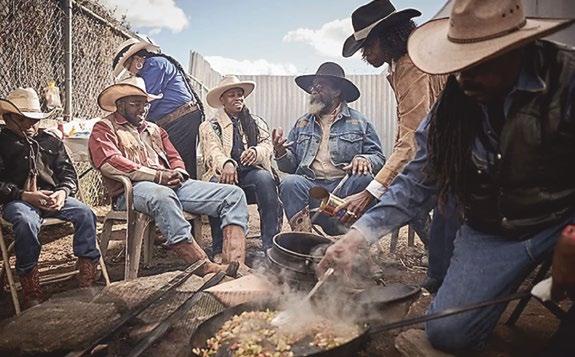
Did you know? Cowboys in the US
v Watch the video online and then read the following text.
v Movies and ads often show the same picture of cowboys — white men riding horses in the Wild West.
Did you know there are many African American cowboys in states like Texas, Oklahoma, and Louisiana? They have their own rodeos, music, and traditions.
Why do US prices look cheaper?
v In the US, prices in stores do not include tax (like Dutch btw ). The tax is added when you pay, and it is different depending on where you are.
v In the UK and the Netherlands, prices include tax. The price on the tag is the final price you pay.
PHRASES
In the US, people use please, thank you, and excuse me a lot, especially in stores and restaurants. 1 2
note
Polite phrases
v please alsjeblieft
Can you help me, please?
v thank you dank je Thank you for your help.
v you’re welcome graag gedaan You’re welcome!
v excuse me pardon Excuse me, where is the fitting room?
Shopping requests
v How much do these jeans cost? Hoeveel kost deze spijkerbroek?
v Do you have this in size M? Heeft u dit in maat M?
v Can I try this pair of jeans on? Mag ik deze spijkerbroek passen?
v Can I pay by card? Kan ik met pinpas/creditcard betalen?
note
In the US, credit cards and cash are more common than debit cards (pinpassen).
3 4
Talking about what you like and don’t like
v I like … Ik vind … leuk.
I like baggy jeans. They’re really comfortable.
v I don’t like … Ik vind … niet leuk. I don’t like red dresses. Red is not my colour.
v I love … Ik hou van …
I love my new hoodie. It’s soft and warm.
v I hate … Ik heb een hekel aan … / ik haat …
I hate wearing tight jeans in summer. Too hot!
v I like … because … Ik vind … leuk omdat …
I like this jumper because it’s soft and fits well.
v I don’t like … because … Ik vind … niet leuk omdat … I don’t like these shoes because they hurt my feet.
Reacting to opinions
v me too ik ook
I like hoodies. — Me too!
v not me ik niet
I love dresses. — Not me. I hate them.
v I agree ik ben het ermee eens
Jeans are comfortable. — I agree. Jeans are great.
v I don’t agree ik ben het er niet mee eens
Skinny jeans are the best. — I don’t agree. Baggy jeans are much nicer.
v that’s true dat is waar
These trainers are nice. — That’s true. They look cool.
v Really? Echt?
I don’t like T-shirts. — Really? Why is that?
note
People often say I hate… for small things, like food or clothes. It sounds strong, but it’s normal in everyday English.
Just be careful — don’t use it to talk about people.
note Short reactions like Really? or Me too show you’re listening and interested.
1.2 S SPEAKING
v Listen and learn
Go online for more examples and pronunciation support.
jeans jacket price skirt denim store jumper fabric order T-shirt discount customer
Pronunciation of the ‘j’ sound
In English, the letter j sounds like ‘dzj’ in Dutch. You can hear it in names like James and Jack. When spelling a word, j is pronounced ‘dzjay’ (Dutch: ‘dzjeej’).
note The ‘dzj’ sound is also used in some words that begin with the letter g (like gym and gel).
Practice sentences
v James wears a jacket.
v Jeans is spelled j-e-a-n-s.
tip Don’t mix ‘dzj’ (like Jack) with ‘tsj’ (like chest).
Exercise 18
Minimal pairs
Work in pairs. Student A : Pick a word in each pair and pronounce them. Student B : Listen and write down which words you hear. Check together if the words are the same. Then switch roles. T 2
a joke / choke
b jeep / cheap
d Jess / chess
e Jill / chill c gin / chin
f Jerry / cherry
Exercise 19
Clothes and more
Draw three columns in your notebook: 1 clothes / 2 materials / 3 shopping Put the words on the left in the right column. T 2
Exercise 20
Talking about clothes
Work in pairs. Take turns asking and answering the question. T 1
a What’s your favourite item of clothing ?
b I like / love my … because …
Choose from:
v dress / hoodie / jacket / jeans / jumper / T-shirt / trainers
v colourful / comfortable / cool / fits well / soft / warm
Exercise 21
Jeans shopping roleplay
a Pair up and roleplay a shopping conversation between a customer and a store assistant. Use the phrases from pages 20–21. T 2
instructions
1 Choose roles: customer or store assistant.
2 Use the prompts below to have a short conversation.
3 Switch roles and try again.
prompts Customer
v Ask how much the jeans cost.
v Ask if you can try the jeans on.
v Use polite phrases like Excuse me, I’m sorry, and Thank you.
Store assistant
v Answer the questions.
v Use polite phrases like Can I help you ?, You’re welcome
b challenge Ew! There’s a stain on the jeans ! You find awesome jeans — but wait ... there’s a big, weird stain on them! Talk to the store assistant. Say 2–4 short sentences. I
v Say there’s a stain and react (That’s gross! Ew! Yikes! Oh no! ).
v Say you want a different pair.
v The store assistant should react politely.
Exercise 22
Fit and style
a Complete the sentences with the correct words on the right. T 1
1 These jeans are too small. They are
2 This jumper is very big. It’s ……… .
3 These trousers have very big legs. They are ……… .
4 My hoodie is soft and nice to wear. It’s very
5 My new T-shirt has red, yellow, and blue stripes. It’s
6 Everyone wants this jacket. It’s really ……… .
b Look at your partner’s clothes and describe them. Use at least two words from the boxes. T 2
example
Your jumper looks colourful and comfortable.
Well, what do you think?
Exercise 23
Which jeans are popular today?
Look at the illustration of different types of jeans below. Choose one style and write two sentences about why you like or don’t like them.
Use words like: comfortable / trendy / cool / relaxed / fitted / retro. You can also use phrases from ‘Talking about what you like and don’t like’ and ‘Reacting to opinions’ on page 21. T 1
examples
v I love ripped jeans because they look cool.
v I don’t like skinny jeans because they feel tight.
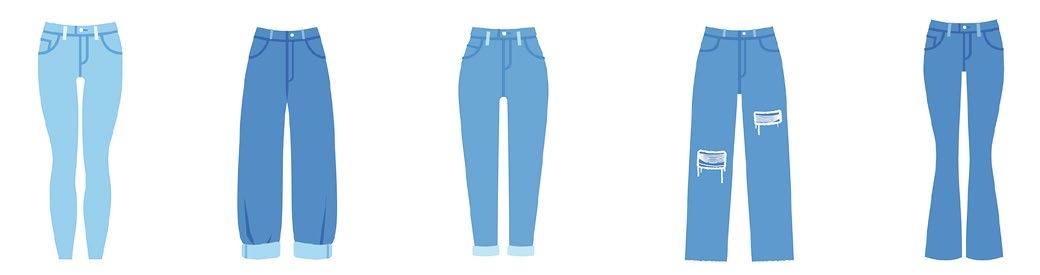
skinny jeans tight fit from top to bottom
baggy jeans very loose and oversized fit
mom jeans high-waisted and relaxed around the hips
Exercise 24
ripped jeans ripped fabric with holes for a casual or edgy look
Where do you buy your clothes?
Do you buy your clothes in a store or online?
Write 2–3 sentences about your choice. Use at least one of these words: easy / price / try on / selection. You can use the phrases from pages 20–21. T 2
flared jeans wide at the bottom, narrow at the top
Exercise 25
Shopping words
Match the words on the right with the correct definition. R
1 the person who buys something
2 not much money
3 to buy something by asking for it in a shop or online
4 it costs a lot of money
5 when your package arrives
6 a place where you can buy things
7 friendly and ready to help
challenge Exercise 26
Clothes and the planet
a Do you prefer second-hand clothes or new ones? Why? T 2
b What is better for the planet: shopping in a store or online? Why? Use words like: cheap / expensive / new / old / travel / delivery / time I
Exercise 27
Make your own jeans advertisement
Create your own advertisement for your dream jeans.
a Write 3–4 sentences: describe the jeans (colour, fit, style), write the price, and say why people should buy them. I
b Add a slogan, like a real brand. Make it catchy! I
example
These blue baggy jeans have a relaxed fit and a cool style. They are comfortable and perfect for everyday wear. Only $25. Get yours now and feel great all day.
Move free. Feel good.
to order customer delivery store helpful cheap expensive
learning outcomes
R
v Understand words about jeans, shopping, and clothing.
v Understand common polite phrases, shopping questions, and expressions for giving opinions.
T 1
v Understand and use the basic rules for articles (a, an, the).
v Read short texts and understand the main idea and key details.
v Understand short spoken English about shopping and clothing.
T 2
v Write short sentences about your favourite jeans and shopping choices.
v Use polite expressions and shoppingrelated phrases in conversations.
I
v Share your own ideas about shopping experiences and explain your opinions.
v Recognise cultural differences in shopping-related language.
learning goal
I can understand short texts and conversations about travel and directions, and take part in conversations about asking for and giving directions.
amazing geweldig to appear voorkomen to cross doorkruisen to drive rijden freedom vrijheid landmark bezienswaardigheid mile mijl (ongeveer 1,6 km) petrified versteend to turn veranderen
The American road trip Route 66
Have you ever gone on a long car ride to go on vacation? In America, people love doing this — it’s called a road trip. A road trip means driving for hours and stopping to visit fun places.
Route 66 is one of the most famous road trips in the US. It is 2,400 miles (about 4,000 kilometres) long, going from Chicago to Los Angeles and crossing 8 states along the way. That’s like driving from Amsterdam to the south of Spain and back.
Along the way on Route 66, you can see amazing parks like the Petrified Forest in Arizona, where old trees have turned to stone. Other stops include the 66 Diner in New Mexico and Roy’s Motel and Café in California.
Did you know ?
v A diner is a small American restaurant that serves classic food like burgers, fries, pancakes, and milkshakes. Diners often appear in American movies and TV shows.
v A motel is a small hotel where you can park your car right outside your room. The word motel comes from motor + hotel
v The word petrified comes from the Greek word petra, which means ‘rock’ or ‘stone’.
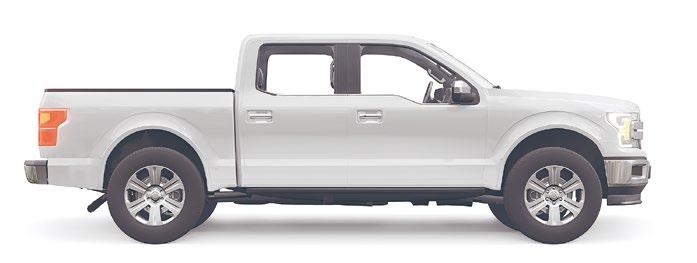
In the US, the Ford F-150 is the most popular vehicle.

Why are road trips special?
In the US, people love road trips because they mean freedom and adventure. They are a way to see new places and visit nature and famous landmarks.
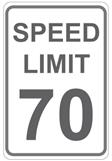
Exercise 28
Route 66: Facts and ideas
Read the text on pages 26 –27 and answer the following questions.
a What is a road trip? T 1
b Where does Route 66 start and end? T 1
c What makes the Petrified Forest special? T 1
d Why do people in the US love going on road trips? T 1
e Do you like the idea of going on a road trip? Why or why not? I
Exercise 29
Signs on a road trip
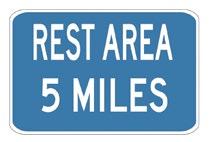
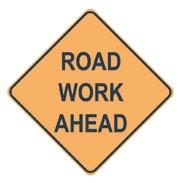
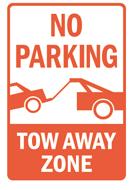
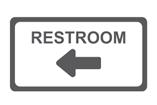
Look at the signs below and write what they mean in Dutch. T 2
Exercise 30
Cars in the United States
Read the text below and answer the questions.
age leeftijd
driving licence rijbewijs limited beperkt
public transport openbaar vervoer suburb voorstad, buitenwijk vehicle voertuig
Many Americans live in suburbs, where homes, shops, and schools are far apart. Public transport is limited, so people need a car to get around. Because cars are so important in daily life, many Americans drive large vehicles like SUVs and pickup trucks. In most states, teenagers start learning to drive at 15 and can get a driving licence at 16, so many people start driving at a young age.
a Why do many Americans need a car? T 1
b What kinds of cars are popular in the US? T 1
c At what age can teenagers start driving in most states? T 1
d Would you like to drive a big car like an SUV or pickup truck? Why or why not? I
sentence starters
v I would like to drive a big car because … v I wouldn’t like to drive a big car because
Exercise 31
Getting around
a Put the words on the right in the correct category. T 2
b Now make three short sentences using one word from each category. T 2
example Teenagers walk to school.
to get around bicycle public transport pedestrian teenagers bus driver cyclist vehicle to travel to walk car to drive transport people actions
Language Tip Main idea
When you read, try to find the main idea. It is the most important thing the text tells you. How to do it:
1 Look for keywords that are repeated or important.
2 Do not worry about words you do not know.
3 Ask yourself: What is this text about?
Why is it useful? If you know the main idea, it is easier and faster to understand the text.
example
‘Last year we made a long trip through the United States. We saw many cities and drove across wide deserts.’
→ Main idea : a trip in the USA.
Exercise 32
Voices about road trips
Read what three people say about road trips. Match each person (A–C) with the correct word (1–4). One word is extra. T 1
a diego 18, Spain
b maya 15, USA
c liam 17, UK
‘In the United States many people drive long distances. You often see very large SUVs and pickup trucks on the highway. At home, the roads are smaller and the cars are too.’
‘My best memory is sleeping outside under the stars and walking in the mountains during the day. The landscape was beautiful.’
‘On our trip we met new people in every town, tried local food, and even joined a street festival. Something exciting happened every day.’
v Persoonlijke voornaamwoorden ( personal pronouns)
1 Onderwerp (subject)
I ik we wij
you jij / u you jullie / u
he / she / it hij / zij / het they zij
Anna likes road trips. → She likes road trips. My parents are driving. → They are driving.
2 Meewerkend of lijdend voorwerp (indirect or direct object)
me mij (me) we ons
you jou (je) / u you jullie / u
him / her / it hem / haar / het them hun / hen
The guide shows John a map. → The guide shows him a map. I love road trips. → Road trips make me happy.
v Bezittelijke voornaamwoorden (possessive pronouns)
1 Voor een zelfstandig naamwoord (noun)
my mijn our ons your jouw / uw your jullie / uw his / her / its zijn / haar their hun
This is my car. / The restaurant is famous for its burgers.
2 In plaats van een zelfstandig naamwoord
mine van mij
ours van ons
yours van jou / van u yours van jullie / van u
his / hers / its van hem / van haar / van het theirs van hen
The car is mine. / These bags are ours.
Exercise 33
Personal pronouns
Use the correct personal pronoun to complete each sentence. T 1
a My family loves going on road trips during the summer. enjoy exploring new places together.
b Sarah and I are planning a road trip to the mountains. Our friends want to join ……… .
c My brother loves driving on long roads. ……… always chooses the best music for the trip.
d Rest stops are great places to stretch and relax. We often stop at ……… for snacks and drinks.
e This map shows the best routes to take. ……… helps us find our way.
Exercise 34
Possessive pronouns
Use the correct possessive pronoun to complete each sentence. T 1
a We packed ……… bags for the trip early in the morning.
b Jake forgot ……… sunglasses, so he had to borrow a pair.
c That camper van belongs to the Martins. It is ……… .
d She loves driving car along the coast.
e I lost my map, but luckily Tom still had ……… .
Exercise 35
Pronouns
Use the correct personal or possessive pronoun. T 2
a James is going to Arizona. → ……… wants to see the Grand Canyon.
b Nadia eats pancakes every morning. → Pancakes always make smile.
c This map belongs to me, not to you. → The map is ……… .
d You love hot dogs from small diners. → Hot dogs are ……… favourite food on the road.
e We have a plan to drive across three states. → This is plan for the week.
f Oliver and Janelle have a bright red rental car. → Is that ……… outside?
g I like Route 66 signs. → The signs are favourite things to see.
h Our dogs enjoy long road trips with us. → We always bring ……… toys.
Long ago, people wrote i in English (Dutch: ik). But one small letter was hard to see. So writers used a capital (hoofdletter): I. Now we always use a capital for I
You / your
In Dutch, we can say u / uw to show respect. In English, we do not have this. We use you / your for everyone.
v Jij / U gaat elke zomer naar de Grand Canyon?
v You go to the Grand Canyon every summer? i / I
v Need more grammar practice? Watch the video and try the exercises online.
Exercise 36
Road trip vocabulary
Match the words (1–6) with their meanings (A–F). T 1
Exercise 37
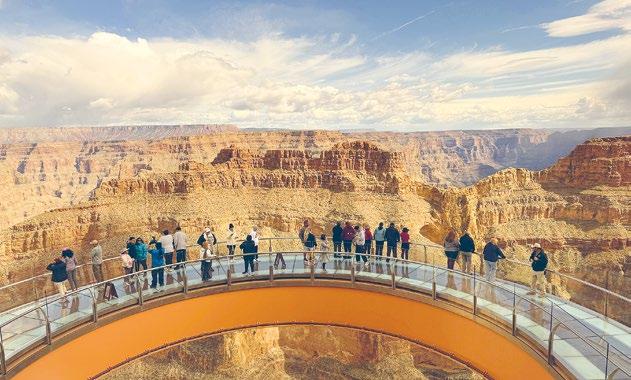
The Grand Canyon Skywalk
The Grand Canyon Skywalk is a glass bridge that lets visitors walk 4,000 feet (1,200 metres) above the canyon floor. It is a popular tourist attraction.
Watch online the video ‘Grand Canyon Skywalk — Best Grand Canyon View in Arizona’ and answer the questions below. T 1
a How high is the Grand Canyon Skywalk? (Answer in feet or metres.)
b How far does the Skywalk extend over the canyon? (Answer in feet or metres.)
c In which year did the Skywalk open?
d Why do so many people visit the Grand Canyon?
Exercise 38
Asking for directions to the Grand Canyon
Listen to a short conversation between a tourist and a local at a gas station in a small town in Arizona. The tourist wants to drive to the Grand Canyon and asks for directions. Fill in the blanks as you listen. T 1
a tourist Hi there! Could you ……… us? We’d like to drive to the
b local Of course! Just ……… this road out of town for about ten ……… , then ……… at the big ……… for Highway 64.
c tourist Thanks ! Is there a ……… along the way?
d local Yes, there’s a about halfway. You’ll see it on your right before the
e tourist Great! ……… will it take to get there?
f local Around one and a half hours, depending on the ……… . The road is pretty this time of day.
g tourist Perfect, thanks so much for your !
h local No problem! Have a great trip and enjoy the view!
Exercise 39
‘On the Road Again’
Willie Nelson is a famous American country singer. He wrote ‘On the Road Again’ in 1980. The song is about travelling, playing music, and seeing new places. It tells the listener what life is like for a musician on the road.
a Listen to the song. Write down five English words you hear. T 1
b Listen again and answer the questions below. T 2
‘Hit the Road Jack’
The song ‘Hit the Road Jack’ by Ray Charles is about a woman telling Jack to go away and not come back.
In English, hit the road is an expression. It does not mean ‘hit’. It means ‘leave’ or ‘start a trip’. Who is singing?
What does he love doing?
Where is he going? When does he travel? Why is he on the road?
c Which feelings do you hear in the song? I Choose from happy, free, sad, excited, and lonely.
d When do you have one of these feelings? I Use the sentence starter: I feel … when I …
PHRASES
note
The word route can be pronounced two ways: ‘roet’ or ‘raut’. Both are correct.
note
In the US, distances are measured in miles instead of kilometres.
1 mile is about 1.6 kilometres. 1 2
Asking for directions
v How do I get to … ? Hoe kom ik bij ? How do I get to the next gas station?
v Is it far from here? Is het ver van hier? Is it far from here to the Grand Canyon?
v Which exit do I take? Welke afslag moet ik nemen? Which exit do I take for Route 66?
v How long will it take? Hoelang duurt het? How long will it take to get there?
v I think we’re lost! Ik denk dat we verdwaald zijn ! I think we’re lost! Can you help us?
Giving directions
v turn left / turn right sla linksaf / sla rechtsaf Turn left after the diner.
v go straight ga rechtdoor
Go straight for about 5 miles.
v follow the signs volg de borden
Follow the signs for the Grand Canyon.
v take the next exit neem de volgende afslag
Take the next exit for Route 66.
v it’s on your left / right het is aan uw linker-/rechterkant The gas station is on your right.
note
In the US, fuel is called gas, while in the UK, it’s called petrol. Gas is much cheaper in the US than in Europe.
3 4
Friendly expressions
v How are you? Hoe gaat het?
Hi there! How are you today?
v Have a good one! Fijne dag!
Thanks for your help! Have a good one!
v Have a safe trip! Veilige reis!
Have a safe trip to the Grand Canyon!
v Take care! Zorg goed voor jezelf!
Take care! Enjoy your road trip!
v Enjoy the ride! Geniet van de rit!
Enjoy the ride along Route 66 !
Starting a conversation
v Where are you heading? Waar gaat u naartoe?
v Isn’t this place amazing? Is deze plek niet geweldig?
v Have you been here before? Bent u hier eerder geweest?
v What do you recommend here? Wat raadt u hier aan?
v Nice weather today, right?
Mooi weer vandaag, hè?
note
Have a good one! is a friendly goodbye in North America, while Cheers! is more common in the UK, Australia, and New Zealand. It can mean ‘thanks’ or ‘bye’ — not just ‘proost’.
SPEAKING
v Listen and learn Go online for more examples and pronunciation support.
Pronunciation of the ‘r ’ sound
The English r is different from the Dutch r. In English, the r is softer. Your tongue stays in the middle of your mouth and curls up like a spoon. Don’t touch your front teeth with your tongue. When spelling a word, the r is pronounced ‘ah’.
Practice sentences
v The road to the rest stop is on your right.
v Riley rides a red train across the river every week.
Exercise 40
Tongue twisters
Work in pairs. Student A: Read the tongue twisters. Student B: Listen and help if you hear a mistake. Then switch roles. R
a Red rabbits run round roads.
b Rosa runs with red ribbons.
c Rick rides red rollercoasters.
d Robbie reads really rare riddles.
e Rita and Rachel roast rice.
f Rachel raises rabbits and rats.
Exercise 41
Minimal pairs
Work in pairs. Student A: Pick a word in each line and pronounce them. Student B: Listen and write down which words you hear. Check together if the words are the same. Then switch roles. T 2
a led / red / wed
b lip / rip / whip
d late / rate / wait
e lack / rack / whack
c lane / rain / wane f lock / rock / wok
Exercise 42
Asking and giving directions
Pair up and use the town map.
Take turns being the tourist and the local. T 2
instructions
1 Choose roles: tourist or local.
2 Use the map to ask for and give directions. You can use the phrases from pages 34–35
3 Check together if the local gives the right directions.
4 Switch roles and choose a new destination.
prompts Local
Tourist
v Greet.
v Ask how to get somewhere (for example, the library, school, or theatre).
v Ask again if you don’t understand.
v Repeat the directions in your own words and thank the local.
v Say goodbye.
v Greet.
v Give directions using the map (go straight ahead, turn left / right, it’s next to … ).
v Ask if the tourist understands.
v Say goodbye.
Language Kit
You should try the local food. Bring your sunglasses. The best place is the beach. Be careful with your money. Take a photo of the mountains.
Exercise 43
A visit to the Grand Canyon
Fill in the blanks. Choose from: card / downstairs / flight / floor / map / mountains / receptionist / paths / straight / ticket There are two words you can’t use. Also choose the correct pronouns (voornaamwoorden). T 1
Last summer, I went on my dream holiday to the Grand Canyon. I travelled with my / our best friend. We started our trip at the airport. The ……… [ a ] was long, but we were very excited. When we arrived, we took a bus to our hotel. The hotel was near the city centre, and our room was on the third ……… [ b ] . From our window, us / we could see the ……… [ c ] The next morning, we asked the ……… [ d ] , ‘How can we get to the Grand Canyon?’ She / Her said, ‘Go ……… [ e ] , then turn left at the station. Take the shuttle bus.’ We followed her / their directions, and soon we were on our way.
At the Grand Canyon, we walked along the ……… [ f ] I took many photos with my camera. My friend bought a ……… [ g ] to find the best viewpoints. The views were amazing — so big and so beautiful. In the evening, we went back to our hotel. We ate dinner in the restaurant ……… [ h ] It was the best holiday of my life, and a dream come true.
Exercise 44
Travel tips
Pick your dream spot for a holiday and write down five travel tips in your own words, using the ideas on the left. T 2
My dream spot for the best holiday ever is: ………………
Travel tips
How are you? — Not just a question!
In the US, people often say How are you? as a friendly greeting, not because they expect a detailed answer. A simple I’m good, thanks! or I’m fine! is enough.
People often ask the same question back: I’m good, thanks How about you? It’s like saying hello, and it helps keep the conversation going.
You might also hear:
v How’s it going ? Hoe gaat het?
v What’s up ? Hoe is het?
These phrases are about being friendly, so a short answer is fine.
Exercise 45
Your dream road trip
Imagine your ultimate road trip anywhere in the world. Write 3–4 sentences about where you would go, what you would see, and who you would take with you. I
learning outcomes
R
v Understand words about travel, driving, and directions.
v Understand phrases for starting a conversation, asking for and giving directions, and being friendly.
T 1
v Understand and use personal and possessive pronouns.
v Read short texts and understand the main idea and key details.
v Understand spoken English about travelling.
T 2
v Write short sentences about travelling.
v Use polite expressions and travel-related phrases in conversations, including asking and giving directions.
I
v Recognise feelings in a song and explain which feelings you hear.
v Imagine your own dream road trip and write down where you would go and why.
learning goal
I can understand short texts and conversations about food and meals, and take part in simple conversations when ordering food.
to celebrate vieren to eat out uit eten gaan fat vet healthy gezond holiday feestdag, vakantie meal maaltijd melting pot mix van culturen to order bestellen pancake pannenkoek recipe recept salad salade salad bowl saladeschaal street corner straathoek variety variatie
Food in the US
Beyond the Thanksgiving table
When you think of American food, what comes to mind? Hamburgers? Pancakes? Tacos? Fast food? American food is famous for its variety. Why? Because many people say the US is a melting pot, where people from all over the world have brought their favourite recipes. Others say the US is a salad bowl, where people keep their own traditions — like different ingredients that each keep their own flavour — but live together in one country.
The US is also famous for its fast food culture. You can find places like McDonald’s, Burger King, and KFC on almost every street corner. Today, many fast food restaurants also offer healthier options like wraps and salads.
Did you know?
v Fast food is tasty and convenient, but eating it too often isn’t healthy because it has a lot of salt, sugar, and fat.
v In the US, people often eat out or order food instead of cooking. Meals at restaurants, cafés, or fast food places are a big part of American life.
v People in the US say as American as apple pie. It means something that’s very American.
Exercise 46
Your Thanksgiving dinner
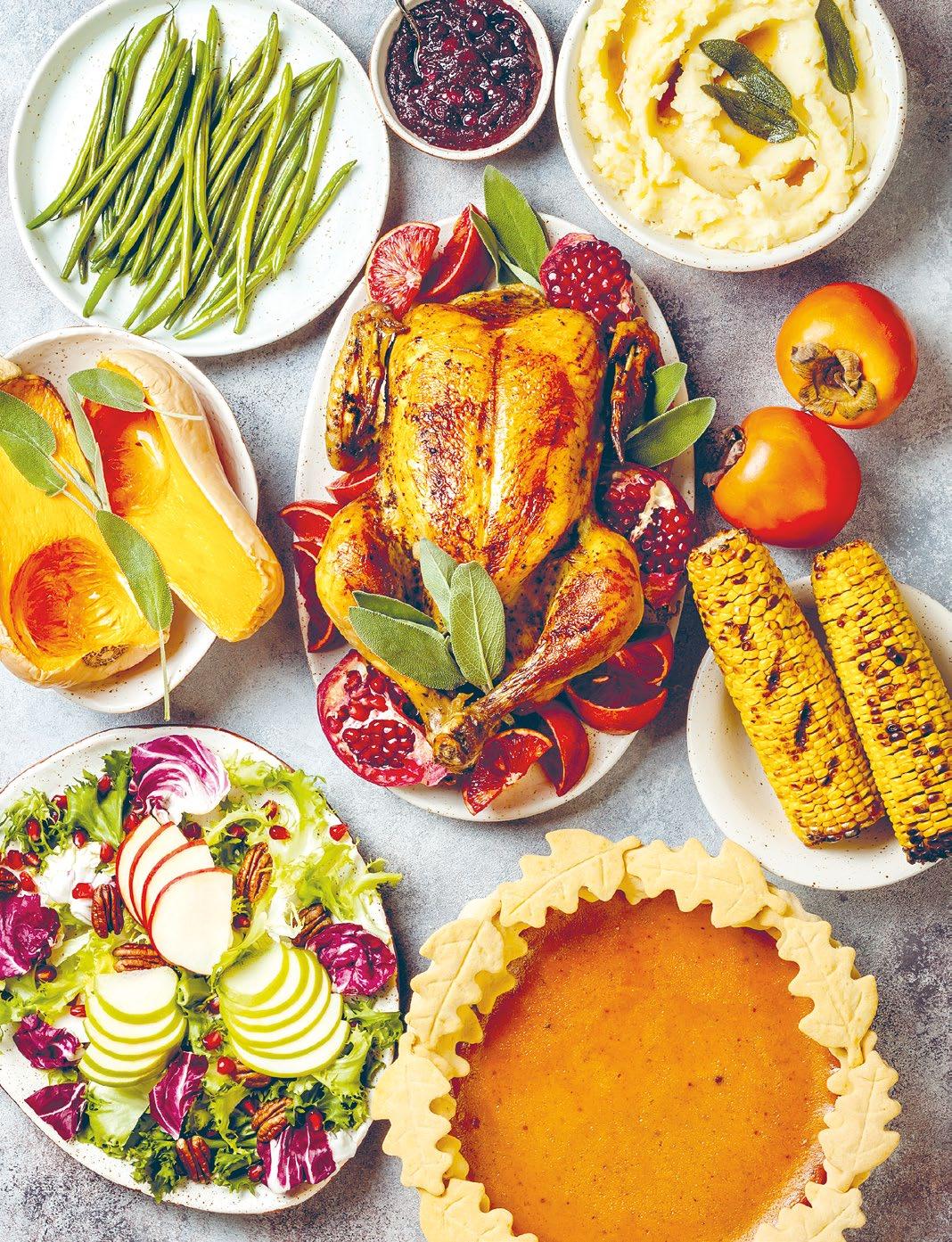
Make your Thanksgiving dinner. Choose from all the dishes (gerechten) on this page and the next. T 1
Write the names of your dishes in English:
v starter (voorgerecht) :
v main course (hoofdgerecht) :
v dessert (nagerecht) : ………
Thanksgiving
Thanksgiving is an important holiday in the US, celebrated on the fourth Thursday of November. Thanksgiving is about being thankful. Families eat together. Traditional Thanksgiving dishes include roast turkey, cranberry sauce, mashed potatoes, and pumpkin pie.
roast turkey
mashed potatoes
cranberry sauce
pumpkin pie
Exercise 47
American dishes
Match each food to the correct illustration (A–F). T1
a hamburger
b Tex-Mex taco
c chocolate cream pie
d tomato soup
e French fries
f salad
How do you like your eggs?
In the USA, when you order eggs for breakfast, the server asks you how you want them: sunny side up, over easy, or scrambled.
v sunny side up cooked on one side, yolk (dooier) is soft
v over easy cooked on both sides, yolk still soft
v scrambled eggs mixed and cooked together F
Exercise 48
Joe’s Diner menu
Look at the menu on the right and answer the questions below. T 2
a Choose a dish. What is its name, and which ingredients do you like most?
b Which sandwich is best for a vegetarian? Why?
c Which dishes should someone who doesn’t like fish avoid?
d What is the cheapest drink on the menu?
e Which starter and drink together cost less than $ 8.50 ?
f Your friend loves cheesy meals. Which dish(es) would you recommend? Which part of the menu are they in?
g Your favourite food is tosti met kaas in Dutch. Can you find it on the menu? Write down the English name.
JOE’S DINER
BREAKFAST
Classic breakfast $ 14
Eggs (any style), bacon or sausage, hash browns, toast
Bagel & cream cheese $11
Toasted bagel with cream cheese, served with fresh fruit
Pancake breakfast $ 12
Pancakes, bacon and eggs, cereal, toast, jam, orange juice, and coffee or tea
STARTERS
Nachos $ 7.50
Nacho chips topped with cheese, salsa, and guacamole
Tomato soup $ 6
Served with bread and butter
Onion rings $ 7
Crispy fried onion rings served with dipping sauce
SALADS
Caesar salad $ 12
Romaine lettuce topped with bacon, parmesan, and croutons
Garden salad $10
Fresh lettuce, tomato, cucumber, and carrot
Salmon salad $ 13
Smoked salmon and cream cheese served on a bed of lettuce
SANDWICHES
Grilled cheese $ 8
Two slices of bread, grilled with melted cheese
Tuna salad $ 9
Tuna on a baguette with mayonnaise, lettuce, and tomato
Chicken sandwich $ 8.50
Grilled chicken breast in a kaiser roll with mayonnaise and lettuce
BURGERS
Beef burger $ 14
Beef burger in a bun with lettuce and tomato.
Cheese burger $ 15
Beef burger in a bun with lettuce, tomato, and cheddar cheese
Veggie burger $ 14
Black bean burger in a bun with lettuce and tomato
DRINKS
Tea or Coffee $ 2.50
Milkshake $ 4.50
Vanilla, chocolate, strawberry
Sparkling water $ 2
Orange juice $ 3
Soda $ 2.50
Coke, Diet Coke, Sprite
Iced tea $ 2.50
breakfast ontbijt
cheese kaas
egg ei
lettuce sla
onion ui
orange juice jus d’orange
salmon zalm
sausage worstje
strawberry aardbei
v To be: bevestigend (affirmative)
volledige vorm verkorte vorm
I am I’m ik ben
you are you’re jij bent
he / she / it is he’s / she’s / it’s hij / zij / het is we are we’re wij zijn
you are you’re jullie zijn they are they’re zij zijn
Paul’s at a diner because he’s hungry. Pancakes are a classic American breakfast.
v To be: ontkennend (negative)
volledige vorm verkorte vorm
I am not I’m not ik ben niet
you are not you’re not / aren’t jij bent niet he / she / it is not he / she / it isn’t hij / zij / het is niet
we are not we’re not / aren’t wij zijn niet you are not you’re not / aren’t jullie zijn niet they are not they’re not / aren’t zij zijn niet
I am not a fan of seafood. Lisa isn’t a fan of hot dogs.
v To be: vragen (questions)
Om vragen te maken met to be, draai je het onderwerp en de persoonsvorm om (net zoals in het Nederlands).
The cake is sweet. → Is the cake sweet? The pancakes are not warm. → Are the pancakes not warm? This salad isn’t vegetarian. → Isn’t this salad vegetarian?
Exercise 49
To be: Affirmative or negative?
Read the blog post from Emma. She is a Dutch exchange student who goes to school in the US. Fill in the blanks: affirmative (bevestigend) or negative (ontkennend). Use the full forms of to be T 1
Hi,
My name ……… [ a ] Emma and I ……… [ b ] in the United States. The food here ……… [ c ] very different from at home. Some things ……… [ d ] great, and some things ……… [ e ]
In the school cafeteria, pizza ……… [ f ] very popular — everybody loves it. The slices ……… [ g ] big, and the cheese ……… [ h ] everywhere. The pizza ……… [ i ] tasty, but it ……… [ j ] very healthy. My friends [ k ] always happy when there ……… [ l ] pizza on the menu.
Breakfast in the USA ……… [ m ] interesting. Pancakes with syrup ……… [ n ] common. They ……… [ o ] sweet and soft, but they ……… [ p ] my favourite. The orange juice ……… [ q ] fresh, but the coffee ……… [ r ] strong at all.
For me, food in the USA ……… [ s ] part of the adventure. It ……… [ t ] always healthy, but it ……… [ u ] always interesting.
Best, Emma
Exercise 50
To be or not to be?
Work in pairs. Ask questions about each other and your classmates. Choose a pronoun: I, you, he, she, we, or they Make a question about food using the pronoun and to be Ask your question to your partner and answer theirs. Go on until you have used all the pronouns. T 2
Use words like: hungry / thirsty / a good cook / allergic / vegetarian / a fast eater / on a diet / a fan of junk food
examples
v I → Am I a vegetarian? — No, you’re not a vegetarian.
v she → Is she allergic to nuts? — Yes, she’s allergic to nuts.
Did you know?
Many English food words come from other languages:
v taco comes from Spanish v pizza comes from Italian v croissant comes from French v sushi comes from Japanese v cookie comes from Dutch
v Need more grammar practice? Watch the video and try the exercises online.
Exercise 51
Ordering at Joe’s Diner
Listen to three phone orders from Joe’s Diner. Each time, write down what the customer orders. Use the menu on page 43. R
Tipping in the US
In the US, it’s common to tip servers in restaurants, cafés, and diners. A normal tip is between 15 % and 20% of the bill.
tip — If you’re happy with the service, say Keep the change! when paying.
Exercise 52
What’s on the menu?
Choose the correct word to complete each sentence. There are three words too many. T 1
burger / bagel / meal / sweet / salty / meat / bread / drink
a For breakfast I usually eat a
b A Caesar salad is a type of ……… .
c A milkshake is cold and ……… .
d A veggie burger has no
e Orange juice is a
Exercise 53
Thanksgiving traditions
Watch the video about Thanksgiving and answer the questions below.
a When is Thanksgiving celebrated in the United States? T1
b Why did Thanksgiving begin? T1
c Thanksgiving is a time to give thanks. What are you thankful for this year? T2
Sentence starter : I am thankful for … because …
d What traditions does your family have for the holidays? T2
Sentence starter : In my family, we
Exercise 54
One day, two stories
Read the text ‘Thanksgiving : One day, two stories’ on the right. Then answer the questions below.
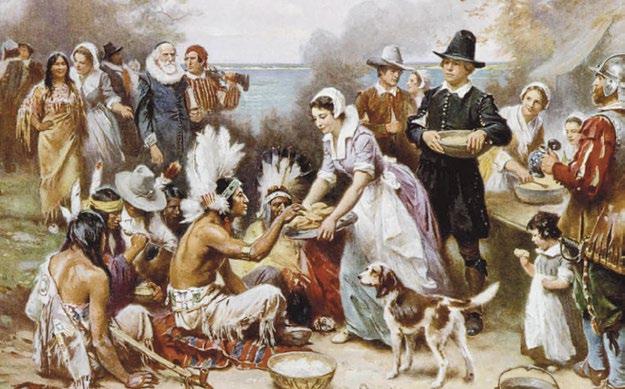
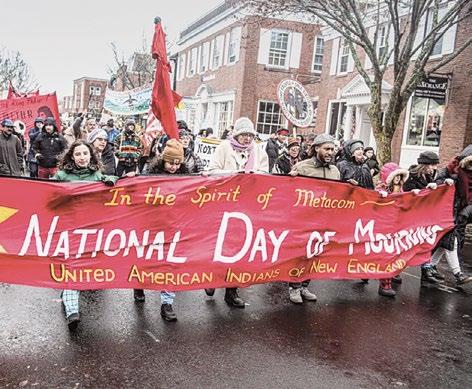
a Look at the two pictures. What do you see? Write two short sentences and use words from the word list on page 47. R
b challenge Do you think everyone in your country feels the same about public holidays, such as Christmas or King’s Day? Why or why not? I
Thanksgiving: One day, two stories
Thanksgiving started in 1621, when a group of people from England, called the Pilgrims, and a Native American tribe named the Wampanoag shared a big meal after a good harvest. The Wampanoag had helped the Pilgrims learn how to grow food and survive the winter. Later, more settlers came from Europe. They took more and more land, and many Native Americans lost their lives, homes, and traditions.
In 1863, US President Abraham Lincoln made Thanksgiving a national holiday to remind people to be thankful. Today, many families in the US celebrate Thanksgiving to be together and share food.
But for many Native Americans, it is a sad day that reminds them of the loss and pain their people experienced. Every year, some Native Americans gather in Plymouth, Massachusetts, to remember this history. They call this day the National Day of Mourning.
harvest oogst mourning rouw Native Americans de oorspronkelijke bewoners van Noord-Amerika Pilgrims de eerste Engelse kolonisten die naar Noord-Amerika reisden settler kolonist to experience ervaren to remind herinneren to survive overleven, in leven blijven tribe stam
A 19th-century painting of ‘The First Thanksgiving’. It shows what the artist imagined the 1621 meal looked like.
People at the National Day of Mourning in Plymouth, Massachusetts.
note
In many US fast-food restaurants, you can refill your drink for free. note In the US, you can ask for a doggy bag to take home leftovers.
Ordering food
v Can I have ...? Mag ik ...? Can I have a doggy bag for my leftovers?
v I’d like … Ik wil graag I’d like a small soda, please.
v Anything else? Wilt u nog iets anders? No, that’s all, thank you!
v For here or to go? Hier eten of meenemen? To go, please.
v Enjoy your meal! Eet smakelijk!
Here’s your food. Enjoy your meal!
v Can I get that without …? Kan ik dat zonder … krijgen? Can I get that without onions? 1 2
Customising
your order
v What comes with that? Wat zit daarbij? What comes with the combo meal?
v Does it come with fries? Zit er patat/friet bij? Does the meal come with fries?
v Would you like a drink with that? Wilt u er een drankje bij? Yes, I’ll have a Coke.
v What size would you like? Welke maat wilt u? A medium, please.
Vegetarian / vegan
v Is this vegetarian? Is dit vegetarisch? Is this salad vegetarian?
v Do you have vegan options? Heeft u veganistische opties? Do you have vegan options on the menu?
v I don’t eat meat. Ik eet geen vlees. I don’t eat meat. Can I get a veggie burger?
v Does this have dairy in it? Zit hier zuivel in?
Does this sauce have dairy in it?
What’s in this sauce? 3 4 note
Food allergies
v I have a food allergy. Ik heb een voedselallergie. I have a peanut allergy. Does this meal have peanuts in it?
v Does this contain nuts? Zit hier noten in? Does this dessert contain nuts?
v I’m allergic to gluten. Ik ben allergisch voor gluten. Do you have gluten-free options?
v What’s in this? Wat zit hier in?
Veggie is a casual way to say vegetarian. note
In English, you can say I have a peanut allergy or I’m allergic to peanuts. Both are correct.
v Listen and learn
Go online for more examples and pronunciation support.
Pronunciation
of the short and long ‘i ’ sound
In English, the i can be pronounced short (like Dutch ik) or long (sounds like ‘ai’).
When spelling a word, i is pronounced ‘ai’.
Practice sentences
v Short i : Will drinks milk with his lunch.
v Long i : I like all kinds of ice cream.
Exercise 55
Short ‘i’ or long ‘i’?
Sort these words into two categories — short i or long i. T1
big / chicken / chips / diner / dinner / dip / fish / ice / milk / rice / ripe / white
Exercise 56
Pizza, pie, and milk
a You have learned about the short i and the long i, but there’s another i-sound. It sounds like Dutch ‘ie’.
Listen to the audio recording and put the bold words in the correct category. T1
1 I love drinking milk with my pizza.
2 We sit outside at night and eat spaghetti.
3 The chicken with green beans is served at the right time.
4 It is a good time for ice cream and apple pie
5 At dinner he had five pieces of cheese
b challenge Look at the sentences again. Can you find other words that are pronounced with ‘i’, ‘ai’, or ‘ie’? T2
KYAN ’S PIZZA CORNER K
Pizza Margherita $ 11
With tomato sauce, mozzarella, basil
Meat toppings $ 2.50
Salami, grilled chicken, ham, bacon, pulled pork, chorizo, pepperoni
Vegetarian toppings $ 1.50
Spinach, peppers, mushrooms, pineapple, onion, olives, tomatoes
Cheese toppings $ 2
Mozzarella, blue cheese, parmesan
Fish toppings $ 3
Anchovies, tuna, shrimp
Exercise 57
Ordering a pizza
Pair up and roleplay a conversation between a customer and an employee at Kyan’s Pizza Corner. Use the phone script as a model and the phrases from pages 48–49. T2
instructions
1 The customer chooses one pizza and some toppings so that the total is no more than $ 18.
2 Before you start, use the phone script below to plan what you will say.
3 Roleplay the phone conversation together.
4 Then switch roles and try again with different toppings.
phone script
Employee Customer
v Greet and say the restaurant name.
v Ask which pizza or size they want.
v Offer a drink or side item.
anchovies ansjovis
basil basilicum
bacon spek mushrooms champignons olives olijven
peppers paprika
pineapple ananas
shrimp garnalen
spinach spinazie
tuna tonijn
v Say that you’d like to order.
v Name your pizza and toppings.
v Add a drink or say, ‘That’s all, thank you.’
v Say the total price and ask, ‘Pick up or delivery?’ v Choose.
v Ask for the customer’s address.
v Repeat the order to check it’s right.
v Ask, ‘Cash or card?’ and say goodbye.
v Give your address.
v Say, ‘Yes, that’s correct!’ or make a change.
v Answer and say goodbye.
Exercise 58
Your favourite meal
Choose one of the tasks below and use to be (am, is, are) when you describe your meal. I
v option 1
Describe your favourite meal (4 – 5 sentences). What is in it? Why do you like it? When do you eat it?
v option 2
Write a short story about a special meal memory (4–5 sentences). Who made it? Where? Why was it special?
example
It’s tasty. It isn’t spicy.
challenge Exercise 59
The worst pizza ever!
Create the most disgusting pizza you can imagine. Use at least five toppings from the menu on page 51. The stranger, the better! Write a short description for your pizza. T2
example
The disaster pizza
It has tuna, banana, onions, and chocolate sauce. It’s disgusting and it looks really messy. No one wants to eat it, not even my dog !
What can I say? I like fast food.
Food origins
v Hamburgers were named after Hamburg (Germany), where a kind of minced beef was popular. German immigrants took this idea to the US, where the hamburger was invented and became popular.
v Barbecue comes from the Spanish word barbacoa. The Spanish took it from the Taíno, a native people of the Caribbean. The Taíno used it for a wooden frame to slow-cook meat over a fire.
v Nachos were named after a Mexican chef called Ignacio. His nickname was Nacho.
learning outcomes
R
v Understand words about food, meals, and eating out.
v Understand common phrases used when ordering food.
T 1
v Use short texts about food, meals, and American eating habits.
v Understand short spoken English when people order food.
v Use to be in short and guided sentences.
T 2
v Order food in a short conversation using common phrases.
v Write short sentences about meals, favourite foods, or special dinners.
I
v Explain your own food preferences or food traditions.
v Describe a special meal memory and explain why it is special.

Worlds in words Esperanza Rising
Many people in history had to leave their homes. They moved to new places to find work, safety, or a better life. Some people chose to go. Others had to leave because of war, poverty, or natural disasters.
In the 1930s, the United States had a very difficult time: the Great Depression. There was not much work, and many families had little money. But still, people from countries like Mexico came to the US to find jobs.
The novel Esperanza Rising by Pam Muñoz Ryan tells the story of a Mexican girl named Esperanza (13). Her family loses everything and has to start a new life in another country: the United States, during the Great Depression. The story is based on the life of Muñoz Ryan’s grandmother.
Exercise 60
Before reading fragments 1–3, answer the following questions.
a What words do you think of when you think of home? Write down 5 words. T 2
b Do home and house have the same meaning? Copy the diagram into your notebook. Then write down words to discover what is the same and what is different. T 2
c Imagine you have to leave your home. How would you feel? I Sentence starter: I would feel … because …
Here are some words you can use: excited / frightened / interested / sad / scared / thrilled / worried
fragment 1 Leaving home
Esperanza lives a happy life on a ranch in Mexico. Her family is rich and has many people working for them. But after bandits kill her father, everything changes. Esperanza and her mother have to leave Mexico and go to the United States. Before she leaves, Esperanza talks with her grandmother, Abuelita.
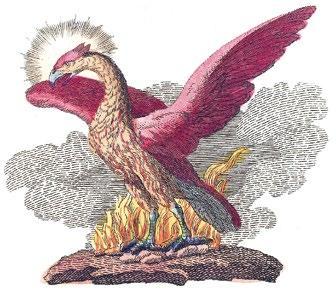
Abuelita squeezed Esperanza’s hand. ‘Do not be afraid to start over. When I was your age, I left Spain with my mother, father, and sisters. A Mexican official had offered my father a job here in Mexico. So we came. We had to take several ships and the journey lasted months. When we arrived, nothing was as promised. There were many hard times. But life was also exciting. And we had each other. Esperanza, do you remember the story of the phoenix, the lovely young bird that is reborn from its own ashes?’
Esperanza nodded. Abuelita had read it to her many times from a book of myths.
‘We are like the phoenix,’ said Abuelita. ‘Rising again, with a new life ahead of us.’
When she realized she was crying, Esperanza wiped her eyes with her shawl. Yes, she thought. They could have a home in California. A beautiful home.
From: pam muñoz ryan , Esperanza Rising (2000).
Exercise 61
Answer the following questions about fragment 1.
You can answer in Dutch.
a Where did Abuelita live before coming to Mexico? R
b Abuelita says, ‘Do not be afraid to start over’ ( l. 1). What does that mean? T 2
c challenge What is a phoenix? Why does Abuelita say, ‘We are like the phoenix?’ I
to be afraid bang zijn to arrive aankomen ashes as to be reborn opnieuw geboren worden journey reis to leave verlaten, weggaan to nod knikken to offer aanbieden phoenix feniks (mythische vogel) to promise beloven to remember zich herinneren to rise opstaan to squeeze knijpen to start over opnieuw beginnen to wipe afvegen
READING
alike hetzelfde
bad manners slechte manieren education opleiding, scholing for instance bijvoorbeeld greaser ‘vetkop’ (beledigende naam voor Mexicanen)
manual labor lichamelijk werk to occur to someone in iemand opkomen
outsider buitenstaander prejudice vooroordelen profession beroep to recognize herkennen, erkennen smart slim to stare staren to treat someone iemand behandelen unskilled ongeschoold
f ragment 2 Treated differently
Esperanza and her friend Miguel go to a Japanese market. On the way, they talk about how Mexicans are treated in the US. Some people believe negative stereotypes, for example that Mexicans are dirty or only good for hard work. This is prejudice : judging a whole group without really knowing them. It can lead to discrimination.
‘Miguel, why must we always drive so far to shop at the Japanese market when there are other stores closer to Arvin?’
‘Some of the other market owners aren’t as kind to Mexicans as Mr Yakota,’ said Miguel. ‘He stocks many of the things we need and he treats us like people.’
‘What do you mean?’
‘Esperanza, people here think that all Mexicans are alike. They think that we are all uneducated, dirty, poor, and unskilled. It does not occur to them that many have been trained in professions in Mexico. The fact remains, Esperanza, that you, for instance, have a better education than most people’s children in this country. … But no one is likely to recognize that or take the time to learn it. Americans see us as one big, brown group who are good for only manual labor. At this market, no one stares at us or treats us like outsiders or calls us “dirty greasers”. My father says that Mr Yakota is a very smart businessman. He is getting rich on other people’s bad manners.’
From: pam muñoz ryan , Esperanza Rising (2000).
Exercise 62
Answer the following questions about fragment 2. You can answer in Dutch.
a Why do Miguel and Esperanza go to Mr Yakota’s market when it is further away? R
b How many examples of stereotypes can you find? Write them down. T 1
c challenge Miguel’s father says Mr Yakota is a ‘very smart businessman’ ( l. 15). Do you think that this is a compliment or not? Explain your answer. I
d Give an example of a group of people that are treated unfairly today. How could we stop this? I
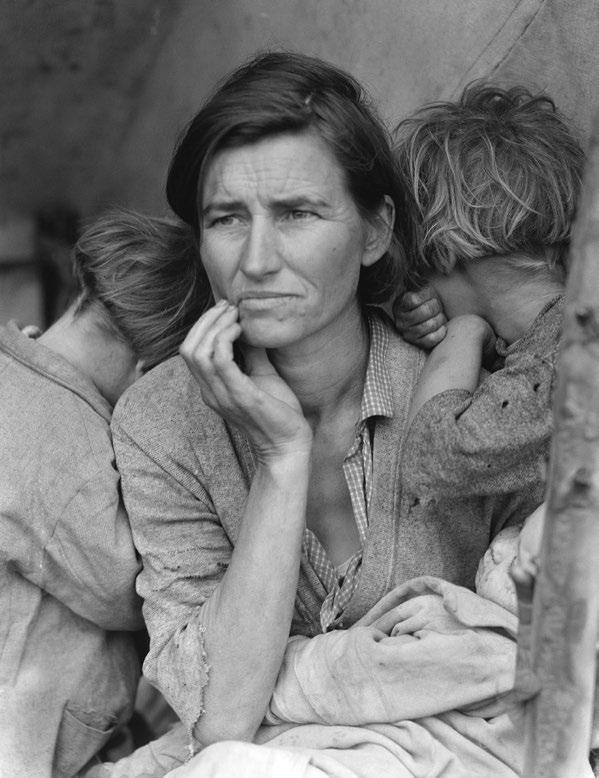
The portrait shows Florence Thompsom with several of her children in a photograph known as ‘Migrant Mother’ (California, 1936).
photograph: dorothea lange
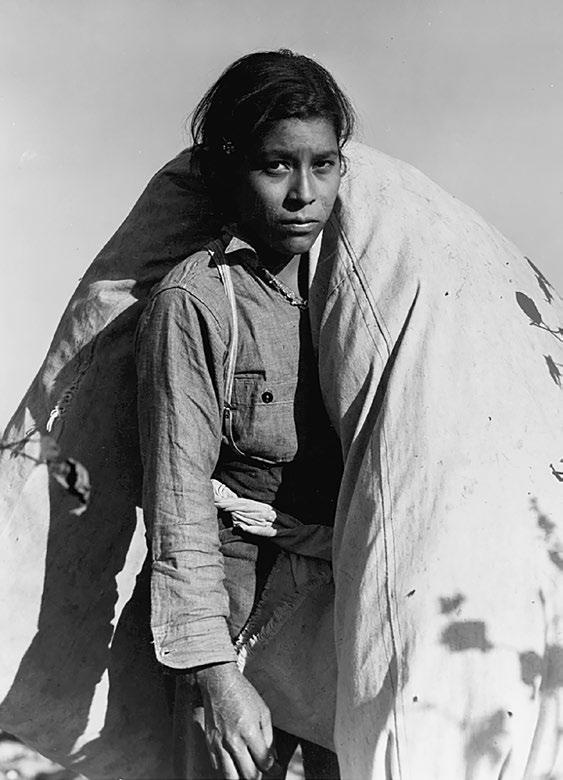
A young cotton picker (California, 1936).
photograph: dorothea lange
READING
awkwardly ongemakkelijk, onhandig crochet hook haaknaald crooked scheef, krom to demonstrate voordoen gently voorzichtig, zachtjes to hold up omhooghouden needle naald to reach over zich uitstrekken naar row (of stitches) rij (van steken) to rock bewegen trusting vol vertrouwen uneven ongelijk to unravel uithalen, losmaken yarn wol
fragment 3 Lessons learned
Esperanza has changed since she came to California. Abuelita also lives with them now. Esperanza watches Isabel, a young girl from the camp, learn to crochet with Abuelita.
Isabel sat next to Abuelita at the wooden table. They each held crochet hooks and a skein of yarn.
‘Now watch, Isabel. Ten stitches up to the top of the mountain.’
Abuelita demonstrated and Isabel carefully copied her movements. The needle rocked awkwardly and at the end of her beginning rows, Isabel held up her work to show Esperanza.
‘Mine is all crooked!’
Esperanza smiled and reached over and gently pulled the yarn, unraveling the uneven stitches. Then she looked into Isabel’s trusting eyes and said, ‘Do not ever be afraid to start over.’
From: pam muñoz ryan , Esperanza Rising (2000).
Exercise 63
Answer the following questions about fragment 3. You can answer in Dutch.
a What does the word ‘skein’ (l. 2) mean? What word(s) in the text helped you find the meaning? T 2
b Esperanza tells Isabel, ‘Do not ever be afraid to start over’ (l. 10). Abuelita told Esperanza the same thing before they moved to the US. What does this tell you about Esperanza at this point in the story? I
Exercise 64
Esperanza means ‘hope’. Just like Esperanza, many people today leave their homes, hoping for a different or better future. You’ve read three fragments. Answer the following questions. You can answer in Dutch.
a Do you think Esperanza has found a new house or a new home? Explain your answer (see exercise 60). I
b Do you think that difficult times always make someone stronger and wiser? Why (not)? I
c Esperanza’s story took place in the 1930s. But today many people still have to leave their homes and countries. Talk about why people — young and old — leave their homes today. I
Exercise 65
Dorothea Lange photographed life in the US during the Great Depression (look at the photos on page 57).
Look up more photos that show the story of migrants (a good source to use is dorothealange.museumca.org). Choose 5 photos that tell the story of migrants (people that have to leave their home).
Imagine you are organising a small school exhibition (tentoonstelling) with these photos. The name of the exhibition is: Growing Stronger After a Hard Time. Make a flyer in English for the exhibition. It must include :
v the title of the exhibition;
v what the exhibition is about in 6–10 sentences ;
v the 5 pictures you’ve picked.
CHAPTER 7 AFRICA
7.1 Start Africa, where stories move the world
7.2 Stories that speak African oral traditions
7.3 Nelson Mandela From prisoner to president
7.4 Afrobeats From Lagos to the world’s dance floors
7.5 Worlds in words Nelson Mandela + Black History Month Speech
CHAPTER
8 FROM
MYTH TO MOVIE
8.1 Start How English stories travel through time and culture
8.2 Legend and legacy Myths that shaped English culture
8.3 Songs that speak English in lyrics
8.4 From script to screen English in films and streaming
8.5 Worlds in words A Midsummer Night’s Dream
CHAPTER 9 THE CARIBBEAN
9.1 Start The Caribbean, rhythms of life
9.2 Anansi the Trickster Tales that travel
9.3 Carnival cultures Music, dance, and expression
9.4 Creole Englishes One language, many flavours
9.5 Worlds in words Hurricane Child by Kacen Callender
CHAPTER 10
ENGLISH MEETS DUTCH
10.1 Start Two languages, one story
10.2 From New Amsterdam to New York Traces of the Dutch legacy
10.3 Shared words, shared stories Dutch–English language connections
10.4 Anne Frank A story that changed the world
10.5 Worlds in words The Diary of a Young Girl by Anne Frank
CHAPTER 11 CANADA
11.1 Start Canada, shaped by nature and language
11.2 The land speaks Stories from Indigenous Canada
11.3 Canoes and campfires Living the Canadian outdoor life
11.4 Speaking Canadian From bonjour to eh
11.5 Worlds in words Fatty Legs by Christy Jordan-Fenton and Margaret Pokiak-Fenton
CHAPTER 12 MANY VOICES
12.1 Start Different ways to speak, different ways to be heard
12.2 The sound of you Accents and identity
12.3 How minds speak Exploring neurodiversity and language
12.4 Real talk Being yourself online
12.5 Worlds in words The Reason I Jump by Naoki Higashida
CHAPTER 13
THE CELTIC LANDS
13.1 Start The Celtic Lands, where legends live on
13.2 Scotland Wild places and living traditions
13.3 Ireland’s legends From the Giant’s Causeway to Skellig Michael
13.4 Wales What makes a language feel like yours?
13.5 Worlds in words The Secret of Platform 13 by Eva Ibbotson
CHAPTER 14
ENGLISH IN CONTEXT
14.1 Start English, but not always the same
14.2 What’s the deal? Media, trust, and tone online
14.3 It’s not what you say ... Why tone and context matter
14.4 Same words, different worlds When culture shapes meaning
14.5 Worlds in words Ghost by Jason Reynolds
CHAPTER 15 ASIA
15.1 Start Asia, where old meets viral
15.2 Bollywood dreams India on screen
15.3 Singapore Where English gets a remix
15.4 Trending English K-pop and fan culture
15.5 Worlds in words A Thousand Questions by Saadia Faruqi
CHAPTER 16
ECHOES OF THE PAST
16.1 Start The past that still speaks
16.2 Tales of the Wild West America’s mythical heart
16.3 Victorian London Power, class, and progress
16.4 Conquering the impossible Everest and empire
16.5 Worlds in words The Garbage King by Elizabeth Laird
CHAPTER 17 NEW YORK
17.1 Start New York, where the world walks and talks
17.2 A taste of the world New York’s global food scene
17.3 Broadway lights The stage that never sleeps
17.4 Ellis Island Stories of new beginnings
17.5 Worlds in words Brown Girl Dreaming by Jacqueline Woodson
CHAPTER 18 VOICES FOR CHANGE
18.1 Start When words spark change
18.2 Green voices English in the climate movement
18.3 Spoken words Poetry with a purpose
18.4 Words that moved the world Speeches for justice
18.5 Worlds in words The Hill We Climb by Amanda Gorman
boom.nl/voortgezet-onderwijs
Februari 2026