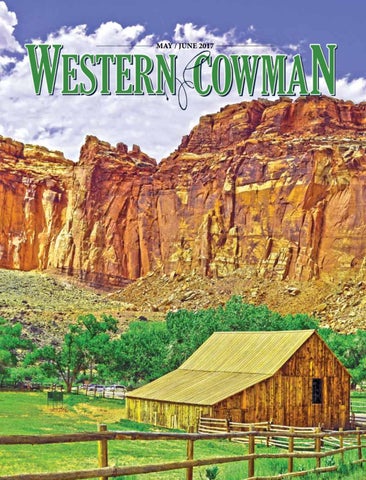
MAY / JUNE 2017
1
THD ©
clM RepReSentativeS Jake Parnell ................................ 916-662-1298 George Gookin ........................ 209-482-1648 Mark Fischer ..............................209-768-6522 Rex Whittle................................ 209-996-6994 Kris Gudel ...................................916-208-7258 Joe Gates ................................... 707-694-3063 Abel Jimenez .............................209-401-2515 Jason Dailey .............................. 916-439-7761
Sale eveRy wedneSday Butcher Cows ........................................ 8:30 a.m. Pairs/Bred Cows ................................ 11:30 a.m. Feeder Cattle .............................................12 p.m.
auction MaRket Address .....12495 Stockton Blvd., Galt, CA Office.............................................209-745-1515 Fax ................................................. 209-745-1582 Website/Market Report ...www.clmgalt.com Web Broadcast ...........www.lmaauctions.com
weSteRn video MaRket Call to Consign: June 8 • July 10-12 2
Special Sale Schedule Wednesday, may 24
Special Feeder Sale, 12 p.m.
saturday, june 10
Cattlemen’s Special Feeder Sale, 10 a.m. Brunch, 9 a.m.
Wednesday, june 21
Special Feeder Sale, 12 p.m.
Wednesday, july 5 – no sale Happy Independence Day
Wednesday, july 19
Special Feeder Sale, 12 p.m.
saturday, july 29
Annual Bred Cow & Pair Sale, 11:30 p.m.
If you can't make the sales, be sure to register and bid live on www.lmaauctions.com
T u r l ock l ives Tock A ucT ion Y A rd The Central California Livestock Marketing Center T he 2017 C onTra C osTa , a lameda , s an J oaquin , s T anislaus C ounT y C aTTlemen ’ s a ssoCiaT ions ’ s peCial s howC ase F eeder s ales ! Featuring NHTC, Natural, Age and Source Program cattle. No matter what program you are in, we will promote your cattle!
Working hard for the California cattle producer.
Saturday May 20th Saturday June 3rd Saturday June 24th Brunch at 9 am • Sale at 10 am s e l l i n g s o m e o F T h e F i n e sT C a l v e s & y e a r l i n g s F r o m Th e s e C o u n Ty a s s o C i aT i o n s :
Merced-Mariposa, Santa Clara, Napa-Solano, Madera, Calaveras, Tuolumne, Fresno-Kings, San Benito & Tahoe
w esTern v ideo m arkeT upcoming auctions
May 25 • June 8 • July 10 - 12 www.wvmcattle.com
weekly sale sChedule Tuesdays 9 AM Feeder Cattle followed by Pairs & Bred Heifers 3 PM Cull Cows & Bulls Wednesdays 11 AM Cull Cows & Bulls Fridays 2 PM Cull Cows & Bulls
STOCKYARDS: 209-634-4326 or 209-667-0811 Eddie Nunes: 209-604-6848 Brandon Babba: 209-480-1267 Chuck Cozzi: 209-652-4479 Market Report: 209-634-4326 Max Olvera: 209-277-2063/209-632-2544 Steve Faria: 209-988-7180/209-723-9269 Jake Bettencourt: 209-262-4019 John Luiz: 209-480-5101 Bud Cozzi: 209-652-4480 Tim Sisal: 209-631-6054 3
8
20 F E A T U R E S
Bulls 10 Jo Take a moment to get to know the Johansen Family of Castle Valley, Utah and learn about their Black Hereford operation. By Heather Smith-Thomas
Grill 16 Sagebrush This restaurant has serious culinary chops, located
10
26
in Monroe, Utah. By KayDee Gilkey
20 Yardley Cattle Company
This multi-generational family from Beaver, Utah will be an inspiration to many folks. By Heather Smith-Thomas
26 Celebrating Cedar City’s Rich Agricultural History
You’re going to be impressed by what this southern Utah town does to commemorate their Ag heritage. By KayDee Gilkey
16 re g u l ars 5
Trails
32 Index
“Changes”
By Sherry Danekas
Thank you to all of our Advertisers.
8
34
Ridin’ Drag
“View From the Top” By Tyrell Marchant
The Bull Board
Something Sweet
COVER
“Calling Utah Home”
4
34
BUSINESS&ADVERTISING
Editor
Sherry Danekas sherry@jdaonline.com
Associate Editor
Mercedes Danekas-Lohse mercedes@jdaonline.com
Advertising
Mercedes Danekas-Lohse (916) 837-1432 (916) 849-2725
Circulation
Morgan Fryer morgan@jdaonline.com
Graphic Artist
Israel Robinson israel@jdaonline.com
Mailing Address P.O. Box 8629, Woodland, CA 95776 Office Phone P (530) 668-1224
TR AILS
“Why do you go away? So that you can come back. So that you can see the place you came from with new eyes and extra colors. And the people there see you differently, too. Coming back to where you started is not the same as never leaving.� ~Robert Brault~ Seasons bring amazing change and this spring is no different. Our bare fields are now completely full with tall green grass, the trees and plants are fresh with new leaves and with the warmer weather, we have finally started our acre size garden complete with a mini orchard. I welcome spring and all of the gifts that come with this spectaular time of year. Enjoy this glorious time of year as the trail which we all travel is soon to be hot and dusty. Until next time, Happy Trails...............
National Sales Representative. THE POWELL GROUP, INC. 4162-B Carmichael Court Montgomery, AL 36106 (334) 271-6100 Attn: Davy Taff
Website www.westerncowman.com
Western Cowman, is owned and published monthly except May/June and July/ August combined by James Danekas & Associates, Inc., P.O. Box 8629, Woodland, CA 95776. Subscriptions are $20.00 per year. Presort Standard U.S. Postage Paid: Tucson, Arizona. Address corrections requested. contributing writers: Sherry Danekas, Heather Smith-Thomas, KayDee Gilkey and Tyrell Marchant.
Signs of spring on the ranch.
5
Celebrate
Big Bull
6
7 1 0 2 k o Bo
with us ReseRve youR space in ouR special 20th yeaR anniveRsaRy issue, the July/august Big Bull Book!
Fourth annual
SHAW FEMALE SALE Saturday, June 3rd
12 noon MDT • At the Ranch • Caldwell, Idaho Real World, Functional Females Built by Cow Families
215 Head Sell as 132 Registered Lots HEREFORD | ANGUS | RED ANGUS
Spring Heifer Calf Pairs | Fall Bred Cow/Heifer Calf Splits | Fall Bred Heifers | Fall ET Heifer Calves | Spring Bred Heifers All females sell with heifer calves at side or are carrying heifer calves.
also SELLING 80 HEAD OF COMMERCIAL HEIFERS BRED FOR EARLY SPRING 2018 CALVES 45 Commercial Angus Heifers Bred to Schu-Lar Red Bull 18X (Hereford) 35 Commercial Hereford Heifers Bred to Andras Fusion R236 (Red Angus)
/S LAdY teSted 5199c
/S LAdY teSted 551c
SHAw LAdY PAYweiGHt 5398
SHAw LAdY cASH 5090
/S LAdY HoMetown 4514B et
tested x651 x eFBeef Schu-Lar Proficient n093 tested x651 x tHR thor 4029 Sells bred AI to /S TRM Fort Payne 44573. Has a Sells bred AI to /S TRM Fort Payne 44573. Has a February heifer calf at side by /S Redbull 44676 ET. February heifer calf at side by /S Peerless 1571Y.
Basin Payweight 1682 x Sitz dimension 8607 Bred AI 11/21/16 to Musgrave Aviator. Ultrasounded safe with a heifer calf.
Barstow cash x BR Midland Sells bred AI to Baldridge Command C036. Has a January heifer calf at side by Connealy Comrade.
Hometown 10Y x HH Advance 286M Sells bred AI to R Leader 6964. Has a February heifer calf at side by /S Peerless 1571Y.
SHAw LAdY PAYweiGHt 6012
Basin Payweight 1682 x GAR-eGL Protege January 2016 heifer bred AI 4/3/17 to Musgrave Aviator. A top set of bred heifers sells.
/S LAdY HoMetown 5098c et
Hometown 10Y x HH Advance 286M Sells bred AI to /S TRM Fort Payne 44573. Has a February heifer calf at side by /S Peerless 1571Y.
/S dixie LAdY conqueSt 3171A
Hxc conquest 4405P x GMRA Laramie 5110 Sells bred AI to Andras Fusion R236. Has a January heifer calf at side by LJC Merlin 937Z.
Catalog mailed with May Hereford World & on request. Contact the owners or the sale manager to request your copy. Also available for online viewing at: shawcattle.com mcsauction.com
SHAW CATTLE CO.
Since 1946
22993 Howe Road, Caldwell, ID 83607 Greg Shaw (208) 459-3029 www.shawcattle.com Sam Shaw (208) 880-9044 greg@shawcattle.com Tucker Shaw (208) 899-0455 Ron Shurtz (208) 431-3311 HEREFORD | ANGUS | RED ANGUS THE 2016 BEEF IMPROVEMENT FEDERATION (BIF) SEEDSTOCK PRODUCER OF THE YEAR
&
SALE MANAGEMENT
incorporated
Matt Sims Voice/Text (405) 641-6081 matt@mcsauction.com www.mcsauction.com
7
By Tyrell Marchant
View From The Top W
S
ummer is well on its way, and for millions of families, that means vacation season. People will soon be flooding freeways and airports on their way to big cities whose economies very much depend on these visitors’ collective desire to see their big buildings and eat their overpriced (albeit delicious) food. I get it; I really do. I would love to someday to see Independence Hall and South Beach and the Colosseum and Notre Dame. I’m fascinated by the different cultures and histories different places offer, and I love to sit down to a fancy dinner once in a while. What I don’t get is why people think going to all these places is somehow novel or impressive. Do you know how many people visited Paris last year? Eighteen million. That’s a one, followed by an eight, followed by six zeroes! And if you go to Paris, you have to contend with everyone else who wants to see the same thing you do. Yuck. People derisively talk about “the middle of nowhere” as if it’s a bad thing. But, honestly, that’s my ideal vacation destination. Like the far northwest corner of that dry, sagebrush-covered section you always cuss for its lack of good grass. That corner up a pretty steep hill, and every year when you gather the cows off that piece, there’s one old bitty clear up in that corner with her calf. You always hope she’ll just head on down on her own, but of course, she never does. And, somehow, every year, you’re the one who has to ride up there and bring her down. So glare up toward the old girl—a mile away and 500 feet up, staring haugh-
8
tily down at you—then touch your spurs to your faithful steed to begin the long ascent, grumbling as you go. After a half hour of zigzagging your way up the hill, letting the horse pick his way through thick brush and scattered lava rock, you make it to the top. There, right in the corner against the fence, stands your Charolais cross quarry with her calf, insolently chewing her cud and giving you a look that says, “Fine, I’ll come.” You wonder why in the world the stupid yellow witch would even be here, a mile from her nearest kin and a good two miles from the closest water. As you get the pair headed lazily in the right direction, you look out across the little valley, where the rest of the crew has rousted out most of the herd from the willows in the creek bottom, a couple miles to the south. They’ve got a couple hundred head right there, just waiting to be gathered up with a butterfly net. And here you are, astride your big bay at the edge of creation, having managed to round up a single pair in an hour and a half of riding. And then it hits you: The view up here is killer. You can follow the thin, green ribbon of the creek as it flows down out of the mountains, through the southern edge of your piece, into the neighbors’, and on toward the river. Just beyond that, your eyes can climb the foothills and observe how the sagebrush gives way to the piñons and junipers, which gradually fade into lodgepoles and firs. From your vantage point, you can see that on the little knob just east of you are no cattle, but about a dozen deer, heads up and ears pointed toward your fellow riders and the noisy cow herd they’re gathering. In that moment, no one else in
C
the world knows those deer are there. As you soak it in, you notice at your horse’s feet a little bunch of barrel cactus growing out of a black rock, their yellowand-pink blossoms bursting forth in all their splendor. You consider climbing out of the saddle to snap a close-up of the flowers with your iPhone, but decide against it. Technology might ruin the philosophical magic of the moment you’ve quite inadvertently wandered into. Very likely, you are literally the only person who will ever see those particular flowers. The last time a human stood in this spot was probably last summer when you rode up here to get this same cow. There might only be a dozen people in the world with whom you can talk about this spot and have them know the location. Heck, in all the annals of history, how many people have even stood in the spot you are now? A couple hundred, maybe? That’s something worth telling people about. The moment passes, and you follow the ambling yellow cow down the hill, picking your way through brush and lava rocks with newfound appreciation for their unique beauty. As you draw near and that annoying old cow and her calf are absorbed into the great mass of moving bovine bodies, the other cowboys engage in a little goodnatured ribbing regarding your seemingly small contribution to the gather: “Boy, they really like to bunch up in that corner, don’t they? You all of ‘em out of there?” You smile, sincerely, not quite ready to come out of your reverie. “Yeah, it was a good trip.” WC
CORRAL BRD,
PINKEYE & FOOTROT Noromycin® 300 LA - the industry’s only broad-spectrum 300 mg oxytetracycline available without a prescription.
Delivers the same dose of oxytetracycline as Liquamycin® LA 200 and Bio-Mycin® 200 in a lower dose volume.
Observe label directions and withdrawal times. Not for use in lactating dairy animals. Adverse reactions, including injection site swelling, restlessness, ataxia, trembling, respiratory abnormalities (labored breathing), collapse and possibly death have been reported. See product labeling for full product information.
www.norbrookinc.com The Norbrook logos and Noromycin 300 LA are registered trademarks of Norbrook Laboratories Limited. Liquamycin is a registered trademark of Zoetis, Inc. Bio-Mycin is a registered trademark of Boehringer Ingelheim. 0115-143-I00A
Wednesday, September 27th, 2017 The Westin Kansas City, Missouri
For More Information - www.jdaonline.com 9
Jo L
ocated in Southeastern Utah near Castle Dale, the Johansen family has been raising cattle on a ranch that has spanned 6 generations. Brock Johansen is 5th generation and currently runs the ranch with his parents, Scott and Laurel Johansen. Brock’s great-great-grandparents came from Mount Pleasant, Utah to settle in what is called the Castle Valley. “My great-greatgrandfather, Peter Johansen started a cattle operation. We have some private ground in the upper Joes Valley in the Manti-La National Forest and also a Forest permit around that ground that serves as summer pasture,” says Brock. In summer the cows range on Forest and private land in the Manti-La Sal National Forest. That range reaches approximately 10,600 feet elevation, and the lower ranch is at 5,700 feet above sea level. The Johansen cattle have adapted to high elevations, and have the ability to travel and forage. The cattle drive to the summer range is about 25 miles and takes two days. “Some of that high country is actually better sheep country than cattle country,” Brock says. This is a working ranch where the cows graze rangeland for eight months of 10
the year, and then in the fall and winter they graze on the San Rafael Swell on BLM and private ground. This is high desert country; Castle Dale only gets an average of 7 inches of precipitation each year, so the cows must be able to travel for food and water. These harsh environments create a natural culling process, which works well to ensure that the purebreds raised here will work very well in commercial herds. This is rough, beautiful country with a lot of red rock formations. “We are just north of Goblin Valley and west of Arches and Dead Horse Point. It’s very pretty country,” says Brock. The two main industries in this area are cattle ranching and coal mining. The Johansen family operation has been focused on developing range cattle—purebred bulls that can be sold into commercial herds. These cattle know how to forage and travel. “We’ve always had good range cattle. My uncle Craig started running purebred Herefords. Our family has had purebred Herefords and commercial cows; traditionally our cattle were Line 1 red Herefords. This breeding has produced a lot of maternal traits in our cattle,” he says. Brock went away to college and
obtained a law degree. His father is also a lawyer and was the County Attorney, and then a local judge from 1992 through 2016, recently retired. “I don’t practice law myself; I am CEO of the telephone company in Emery, Carbon, Grand and San Juan Counties. That’s my day job,” Brock says. “When I finished college in 2005 I told my dad that we needed to go black, to take advantage of the market; everyone wanted black cattle. My uncle Craig had started running registered Line 1 horned Herefords in 1979. When I came home from college I converted our cow herd to polled Black Herefords and my Uncle Craig continued to raise Line 1 horned Herefords. They have about 100 purebred Line 1 Hereford cows and my dad and I run about 200 registered Black Hereford polled cows,” he says. “We sell about 65 Black Hereford bulls each year by private treaty, and a group of heifers. My uncle and his family and our family help each other but we also do our own things with the different breeds. About 85% of our Black Hereford bulls are sold to repeat customers. Our customers know that we sell bulls every spring so they come back every year. Most of the ranchers who buy bulls for their commercial herds are repeat customers,” says Brock.
Bulls By Heather Smith Thomas
WC
BLACK HEREFORDS The Black Hereford breed was the brainchild of the late polled Hereford breeder John Gage (an attorney who owned Blue Jacket Farm near Eudora, Kansas), with the help of Frank Felton, another longtime Hereford breeder. They organized the American Black Hereford Association as a not-for-profit corporation. The purpose of the breed, according to Gage, was to eliminate red-baldie calves in Hereford-Angus crossbreeding programs. In the past, black-baldie calves have topped the market at sale barns while red-baldies of the same cow herd are culled off and sold at a discount. The benefit of using Black Herefords is to obtain Hereford heterosis without the financial disadvantage of Hereford discounts. Herefords have traditionally been more efficient than their Angus counterparts. In 1994, Hereford breeders Felton and Gage began the process of creating a Black Hereford using the method other red-hided breeds had already used to turn their hair color black. Breeding registered Hereford and Angus cattle together to produce an F1, then breeding those F1 females back to a registered Hereford bull and selecting for
black hair color was the first step in creating Black Herefords. Those 3/4 Hereford black bulls were then used on a different set of F1s to produce 5/8 blood offspring--with black on both sides of the pedigree. “It’s a breed-up registry. To be a purebred Black Hereford, the animal needs to be 87.5% Hereford and up to 12.5% black Angus. It’s not just a crossbred. It’s like most other black breeds. The breeding-up process is similar to the Black Simmental or Black Gelbvieh,” Brock says. “Commercial ranchers should be using an F1 cross between Angus and Black Herefords. The value of direct and maternal heterosis has been irrefutable established. If commercial cattle are too heavily one breed, then they are just leaving that extra value on the table. By using F1 crosses, not only will their calves get a jump in performance, but the F1 mothers have 38% more longevity. They breed back better and stay in the herd longer,” he explains. “The F1 Angus/Hereford cross has always been the premier cross, but now breeders can use Black Herefords in that cross and avoid the red hide and discounts at the sale barn. Rotational crossbreeding is a great system for commercial cattlemen. Breeders can also add a third terminal breed
into the cross, but need to remember to not keep the larger, inefficient cattle as replacements,” he says. “We have cattle in our herd that are 97% Hereford, but black. The higher percentage cattle will ensure more heterosis when bred to Angus or other breeds. This is why breeders should avoid breeding composite to composite (losing some of the heterosis). We don’t just select for black hair color, however. Longevity, maternal, calving ease and growth traits are all very important in the conditions our cattle run in. When cows are ranging for many months out of the year, they have to be low maintenance. The white face is dominant, so Black Herefords do look like Herefords, only black. We do get a few calves that are solid black, but not very many,” Brock says. The first two 3/4 blood calves were born on Gage’s Blue Jacket Farm, and in 1997, the first registered Black Hereford bull was born (BJH Balder 7504) and carried the Black Hereford registry number HB000001. “That first bull was out by the Hereford Sire of Distinction BJH 25K Prospectr 51M, and JoBulls is now using a double-bred bull sired by that 7504 bull,” | Continued on page 12 says Brock. 11
Brock and Andrea Abigail (13), Alex (15), West (10), Allison (10), Scott (10), and Annie (8) Continued from page 11 |
Gage believed that balanced EPDs were important and he carried this belief to the Black Hereford breed he created, by insisting that only the highest-rated Hereford bulls could be used. The first Black Hereford EPDs were calculated in 2005, but Gage didn’t live to see that step. “When John Gage became ill in 1998,
Joe and Norma Hoagland of J&N Ranch, Leavenworth, Kansas continued on with his program. They purchased most of Gage’s cattle and received the corporation papers on the American Black Hereford Association. They did most of the final work in forming the foundation herd for the new breed,” says Brock. Joe and Norma Hoagland purchased 12
the cows that had been produced so far, along with all the F1s that Gage had used to start Black Herefords. J&N Ranch also purchased the two bulls Frank Felton had selected to use on the F1s as well as the corporation that had been set up for the new breed. The Black Hereford Registry was started in the barn office of J&N Ranch in Leavenworth, Kansas. In 2000, the pedigree and performance records which were previously all hand-written were computerized by Norma Hoagland. They used the cows and bulls in their commercial herd for a few years as a test, and didn’t get any red-baldies. It was at this point that the Hoagland’s dispersed their registered Hereford and Angus cowherds and started raising just Black Herefords. In 2003, after several attempts, Black Herefords received the international breed designation of HB as a separate breed of cattle and for labeling semen worldwide. That same year the Hoaglands began selling registered Black Herefords to other breeders and opened the American Black Hereford Association to other breeders by selling memberships. In 2005, the American Black Hereford Association published their first EPDs on four basic performance traits. In 2011, the Hoaglands moved the American Black Hereford Association headquarters from
their ranch in Leavenworth, Kansas to a new independent location in Kansas City, Missouri. In 2012, the American Black Hereford Association published the first Black Hereford magazine known as the Black Hereford Journal and hosted the first National Black Hereford Sale. Interest in Black Herefords increased exponentially after the early beginnings. By 2005, the ABHA consisted of 14 breeders in nine states, and by 2014 there were 145 adult members and 15 junior members from 31states. “The breed continues to grow, and we’ve been a part of that growth. For the past several years we’ve been in the top 5 for numbers in breeding Black Hereford cattle in terms of registrations per year. We’ve been the top breeder for the past 2 years. Before that, J&N ranch was ahead of us, but now we register more cows. We’re producing more Black Herefords than anyone else in the nation right now,” Brock says. “This year we are selling Black Herefords to Virginia, Kentucky, Tennessee, Indiana, Missouri, Iowa, Kansas, and South Dakota as well as in Utah and the surrounding states of Colorado, Idaho Wyoming, New Mexico and Montana. We’ve sold cattle to all of those states and we also sell
semen to another 10 states,” he says. Most of the bulls that are sold to ranchers in surrounding states are going into commercial herds. “The bulls I haul all over the nation are usually going into purebred herds. We’ll send about 12 to 15 of them back east to purebred herds because many purebred breeders are using our bulls, either by AI or naturally. This is what pushes us into so many states,” he explains. “We had the red Hereford base to start with, and we’ve also bought the best Black Herefords available. Purebred breeders are now recognizing us as a good source; we have more cattle to choose from now, than most, so we are selling a lot of bulls to other purebred breeders,” he says. “We raise most of our own bulls, so that we know the genetics work in our area, but we will buy an outside bull when we see one that’s really good. We just bought a bull named JN Bullseye Jo D411 and he was the highest-selling Black Hereford ever, at $19,000. He’s now at Hoffman AI (in Logan, Utah) getting collected. He traces back to the famous Ribeye and Harland Hereford Bulls,” says Brock. The primary purpose of the American Black Hereford Association is to register and transfer Black Hereford seedstock as well as maintain records of pedigrees and performance in the Black Hereford herdbook. The ABHA promotes the Black Hereford breed and produces promotional materials for the association and member breeders as a service to the ABHA membership. Herefords have always been known for their docile temperament and feed efficiency. Angus have always been known for lighter birth weights, good growth and outstanding carcasses. The combination of these two breeds produces an outstanding animal with the benefit of the black color. Jo Bulls, LLC, is a member of the American Black Hereford Association (ABHA). “I serve as chair of the Breed Improvement Committee and also serve as the Rules and Ethics Committee chair. I also do a lot of their free legal work. I don’t practice law, but I help with the association’s legal work,” explains Brock. “I help promote the association in numerous ways. Even though most people around here run range cows, some of our cattle go to families who show cattle. We don’t show, but this year we will have 5 or 6 bulls that will be shown by a different families. There is a national Black Hereford show in November and this year it will be in Sedalia, Missouri. There will be some bulls and heifers shown that were purchased from us. There are also a lot of cattle being
shown that have genetics that are just one generation down from ours. We run a cow-calf operation that’s more focused on the needs of commercial cattlemen, but some of our calves do go to operations that show cattle,” he says. “We like to stay with a good moderate cow (about 1200 pounds) and not run to extremes—cattle that are functional and can do the job. Showing is a way to showcase the breed, however, and it’s often a big family deal. Some of these families have kids out there washing and fitting those cattle and it’s a good project for those kids,” says Brock. FAMILY RANCH The ranch is run by Brock and his wife Andrea, and Brock’s parents—Scott and Laurel Johansen. Brock and Andrea also have six children. Alexis is 15, Abbey is 13 and the triplets Allison, West and Scott are 10, and Annie is 8 years old. “We don’t have any hired help; our ranch is run by family members,” says Brock. The kids are very good help. “We put up our own hay. The cattle run on the mountains in the summer and on the BLM in the late fall. We have a ranch just south of Castle Dale where we recently put in 8 pivots. Here is where we raise our own hay and calve the cows, and we breed the cows there before they go into the mountains for summer pasture,” he says. “We try to calve early enough (starting the last week in January and calving through February) so the cows can breed up before they go up to the mountains in June. With the purebreds, we need to have them bred (to know the sire of each calf) before they go, and we ultrasound the cows a week before we take them to summer pasture. If a cow is not confirmed pregnant she doesn’t go up to the mountain until we know she is pregnant. We give those cows 3 more weeks and ultrasound them again, and send them up later,” he explains. “We still drive our cattle up to the range and it’s a 2-day drive up into our Forest country but it only takes a day to bring them down after the cows are weaned. The cows graze summer range from mid-June through October 1st. We usually wean
on our private ground up there and haul the calves out. Then the cows don’t have calves on them when they go down to the BLM pasture. We can drive them down there in one day, and then the dry cows graze there from October 15 through midJanuary. We are not trucking them or babying them; we are horseback and trail them down. They are treated more like commercial cows, the way our buyers handle their commercial cows. In January we bring the cows home a week or two before calving, and they calve on the place south of Castle Dale,” says Brock. Horses are necessary for moving and gathering cattle. “We have about a dozen horses and all our kids ride. We usually buy weanlings and break them ourselves. I have two yearlings right now, and a twoyear old we’ll start this year. The kids are riding with us, and we usually have one or two colts they can ride.” They can put a lot of miles on those young horses and help further their training. “We always have some horses that need a lot of work, so the cattle work is a good way to train them. Our range is big, like all the other permits in Utah and Idaho, with a lot of country that has to be covered by horseback. The kids and I really enjoy going out together, packing a lunch and riding to check cows with my dad or gather cattle. Dad always said the best thing for a colt was to put him behind a herd of cows and make him just walk behind those cows. The same can be said about kids,” says Brock. The young horse or cowhand can learn a lot about patience, and cows. Giving the horse and child a job to do helps settle their minds. A ranch is a good place to train horses and raise kids. “My dad always said it’s really more about raising the kids than raising the cattle, in the end.” 13
14
When Planning For The Future Really Matters. Here to help families plan for their financial futures.
We recommend Kent Larson for all your financial planning needs - call us at 916-768-1431 for a referral.
15
W
ith humble beginnings in the Monroe Livestock Auction, serving hamburgers from noon to 2 p.m. on Wednesdays in 2001, the Sagebrush Grill is now located in Richfield, Utah and seats 130 guests. The then owner of the Monroe Auction Mark King asked Chef Clark Williams to help out and provide hamburgers once a week. “I had been helping my mom out full time as she had been in a serious car accident and I could give Mark one afternoon a week,” Williams said. Williams went to culinary school 16
in San Francisco at Tante Marie’s. And while he grew up in California, his grandparents were born and lived in the nearby town of Monroe. Shortly after beginning the oncea-week endeavor, Williams was rather bored with just providing one option for hungry patrons, so within several weeks the menu expanded to provide several entrees and grew from there. The cafe at the auction yard had four booths and six tables providing 24 seats for customers. Soon customers were asking if he could expand the hours to include
dinners, so he did. William’s Sagebrush Grill was located at the auctionyard for about four years and provided fivenights-a-week dinners in addition to lunches. From there, Williams moved the restaurant to St. George for a time and then to the town of Monroe where the restaurant was located on Main Street for seven years. In May of 2013, he found a bigger location for his restaurant 10 miles north of Monroe in Richfield where the Sagebrush Grill currently resides. Although now Williams has about
Sagebrush grill
W C
By KayDee Gilkey
13 employees that help out with the six days a week of lunch and dinners, when he first began he was a one-man show. “Even now, I usually work about 14 hours a day, six days a week. However, I wouldn’t spend that kind of time if I didn’t enjoy it most of the time. It keeps me busy,” Williams explained. Williams has always focused on serving good food that makes return customers out of his guests. As marketers always tout, the very best advertising is word of mouth and that is exactly what Williams relies on to bring new customers to his door. He has never
spent a dime in advertising. When describing his restaurant’s atmosphere, Williams said it is laidback attitude. The quality of the food is very important. “I’d rather explain the price, than apologize for quality. All of our ingredients are top notch. My motto is if you are going to do something, do it right,” he said. Sagebrush Grill’s food can be described as upscale American fare with a southwest twist. Williams uses his own hand blended seasonings to the sauces and cooking techniques he creates. “If you want a great steak, we have
the best in town. We use Black Canyon Beef which is Angus, aged and choice beef,” Williams said. “In addition to steaks, we specialize in authentic BBQ, fresh seafood, original chicken entrees and fresh mixed green salads.” Several of his most popular menu items are the blackened ribeye steak with roasted garlic bleu cheese butter; seasoned medallions of filet topped with the garlic butter sautéed Blue Lump Crab and the Sagebrush style chicken Cordon Bleu. All of his handpressed hamburgers and sandwiches come with hand-cut steak fries.
| Continued on page 18
17
Continued from page 17 |
“All of our seafood is flash frozen and is guaranteed to be frozen three hours out of the fishing boat. It is Individual Quick Frozen or IQF which comes in a shell of ice. And while it is more expensive, it is as good as fresh,” Williams said. Menu barbecue choices include St. Louis style “fall off the bone” one-third rack of BBQ ribs, pulled pork sandwich, BBQ chicken as well as a slow-smoked beef sandwich. “Another of our popular items are our chicken strips which are hand-cut and house-battered with house ranch dressing as well as our wild salmon and chips which includes hand-cut and house battered salmon with a roasted sweet red pepper tartar sauce,” described Williams.
Catering Business Catering has always been an aspect of Sagebrush Grill’s business. Sagebrush Grill routinely caters for various events at the fairgrounds serving 400 to 500 people per event. At the local Richfield FFA’s annual banquet, Sagebrush provides the catered meal for approximately 1,200 people. “People want me to cater their event because we take care of everything: including table service. We really add a personal touch and extra flair,” Williams added. Accolades According to Trip Advisor’s website, the restaurant has received its Certification of Excellence — which means the Sagebrush Grill consistently earns great reviews. And it is rated the number one restaurant in Southcentral Utah’s Richfield, which is right off of Highway 89 and near the I-70 Freeway that runs through the middle of the state. “We’ve repeatedly won the local newspaper, the Richfield Reaper’s Best of Best awards and have been award: Best Overall, Best Steak, Best Seafood,
Best Dessert and Best Atmosphere,” Williams said. Here is a recently shared Trip Advisor reviewer quote: “We have spent the night in Richfield many times as we work our way from Colorado to Southern California and back but have always struggled to find a good place to eat. We checked out TripAdvisor and ‘discovered’ this restaurant. Apparently, they are now in their third location in 7 years. The food was absolutely superb! One of us had prime rib and the other had a 12 oz filet. Their soups are house made and the salads fresh and tasty. We opted for baked potatoes, which were large and cooked just right. They also have large freshly baked rolls. The service was excellent ... friendly and very efficient. As to the pricing ... we just don’t know how they offer such ample portions of high quality food for such reasonable rates …” If you find yourself traveling across Utah and want to experience a good meal, stop by Sagebrush Grill and enjoy Clark William’s exceptional culinary talents. You’ll be glad you did.
ANADA 200-495, Approved by FDA
Enroflox® 100 (enrofloxacin)
100 mg/mL Antimicrobial Injectable Solution
For Subcutaneous Use in Beef Cattle, Non-Lactating Dairy Cattle and Swine Only. Not for Use in Female Dairy Cattle 20 Months of Age or Older Or In Calves To Be Processed For Veal. Brief Summary: Before using Enroflox® 100, consult the product insert, a summary of which follows. CAUTION: Federal (U.S.A.) law restricts this drug to use by or on the order of a licensed veterinarian. Federal (U.S.A.) law prohibits the extra-label use of this drug in food-producing animals. PRODUCT DESCRIPTION: Each mL of Enroflox 100 contains 100 mg of enrofloxacin. Excipients are L-arginine base 200 mg, n-butyl alcohol 30 mg, benzyl alcohol (as a preservative) 20 mg and water for injection q.s. INDICATIONS: Cattle - Single-Dose Therapy: Enroflox 100 is indicated for the treatment of bovine respiratory disease (BRD) associated with Mannheimia haemolytica, Pasteurella multocida, Histophilus somni and Mycoplasma bovis in beef and non-lactating dairy cattle; and for the control of BRD in beef and non-lactating dairy cattle at high risk of developing BRD associated with M. haemolytica, P. multocida, H. somni and M. bovis. Cattle - Multiple-Day Therapy: Enroflox 100 is indicated for the treatment of bovine respiratory disease (BRD) associated with Mannheimia haemolytica, Pasteurella multocida and Histophilus somni in beef and non-lactating dairy cattle. Swine: Enroflox 100 is indicated for the treatment and control of swine respiratory disease (SRD) associated with Actinobacillus pleuropneumoniae, Pasteurella multocida, Haemophilus parasuis and Streptococcus suis. RESIDUE WARNINGS: Cattle: Animals intended for human consumption must not be slaughtered within 28 days from the last treatment. This product is not approved for female dairy cattle 20 months of age or older, including dry dairy cows. Use in these cattle may cause drug residues in milk and/or in calves born to these cows. A withdrawal period has not been established for this product in pre-ruminating calves. Do not use in calves to be processed for veal. Swine: Animals intended for human consumption must not be slaughtered within 5 days of receiving a single-injection dose. HUMAN WARNINGS: For use in animals only. Keep out of the reach of children. Avoid contact with eyes. In case of contact, immediately flush eyes with copious amounts of water for 15 minutes. In case of dermal contact, wash skin with soap and water. Consult a physician if irritation persists following ocular or
18
dermal exposures. Individuals with a history of hypersensitivity to quinolones should avoid this product. In humans, there is a risk of user photosensitization within a few hours after excessive exposure to quinolones. If excessive accidental exposure occurs, avoid direct sunlight. For customer service, to obtain a copy of the Safety Data Sheet (SDS) or to report adverse reactions, call Norbrook at 1-866-591-5777. PRECAUTIONS: The effects of enrofloxacin on cattle or swine reproductive performance, pregnancy and lactation have not been adequately determined. The long-term effects on articular joint cartilage have not been determined in pigs above market weight. Subcutaneous injection can cause a transient local tissue reaction that may result in trim loss of edible tissue at slaughter. Enroflox 100 contains different excipients than other enrofloxacin products. The safety and efficacy of this formulation in species other than cattle and swine have not been determined. Quinolone-class drugs should be used with caution in animals with known or suspected Central Nervous System (CNS) disorders. In such animals, quinolones have, in rare instances, been associated with CNS stimulation which may lead to convulsive seizures. Quinolone-class drugs have been shown to produce erosions of cartilage of weight-bearing joints and other signs of arthropathy in immature animals of various species. See Animal Safety section for additional information. ADVERSE REACTIONS: No adverse reactions were observed during clinical trials. ANIMAL SAFETY: In cattle safety studies, clinical signs of depression, incoordination and muscle fasciculation were observed in calves when doses of 15 or 25 mg/kg were administered for 10 to 15 days. Clinical signs of depression, inappetance and incoordination were observed when a dose of 50 mg/kg was administered for 3 days. An injection site study conducted in feeder calves demonstrated that the formulation may induce a transient reaction in the subcutaneous tissue and underlying muscle. In swine safety studies, incidental lameness of short duration was observed in all groups, including the saline-treated controls. Musculoskeletal stiffness was observed following the 15 and 25 mg/kg treatments with clinical signs appearing during the second week of treatment. Clinical signs of lameness improved after treatment ceased and most animals were clinically normal at necropsy. An injection site study conducted in pigs demonstrated that the formulation may induce a transient reaction in the subcutaneous tissue. Norbrook Laboratories Limited, Newry, BT35 6PU, Co. Down, Northern Ireland I02 September 2016 The Norbrook logos and Enroflox® are registered trademarks of Norbrook Laboratories Limited.
Rest Easy Healthy Cattle At Work Protecting your cattle investment requires strong, BRD treatment and control.
Enroflox® 100 Injection V V
Single-Dose BRD Treatment & Control
V
(enrof loxacin 100 mg/mL)
Available in 100 mL, 250 mL and NEW 500 mL Bottles
Same Active Ingredient & Dosing Regimen as Baytril®100 Injection in beef and non-lactating dairy cattle
NEWml 500ize! s
Enroflox 100 (enrofloxacin) ®
www.norbrookinc.com Federal law restricts this drug to use by or on the order of a licensed veterinarian. Federal law prohibits the extra-label use of this drug in food-producing animals. Cattle intended for human consumption must not be slaughtered within 28 days from the last treatment. This product is not approved for female dairy cattle 20 months of age or older, including dry dairy cows. Use in these cattle may cause drug residues in milk and/or calves born to these cows. A withdrawal period has not been established in pre-ruminating calves. Do not use in calves to be processed for veal. Use with caution in animals with known or suspected CNS disorders. Observe label directions and withdrawal times. See product labeling for full product information. The Norbrook logos and Enroflox are registered trademarks of Norbrook Laboratories Limited. Baytril is a registered trademark of Bayer Animal Health. 1216-495-I02D FOR
VETERINARY USE ONLY
19
By Heather Smith-Thomas WC
Y
ardley Cattle Company is a multi-generational family ranch, headquartered in Beaver, Utah for more than 150 years. Gilbert “Gib” Yardley, now 84 years old, is the fourth generation and his 8 children are the fifth generation. Several of his children are involved with the ranch. “In February 1856, my great-grandfather, James P. Anderson, and 13 other men settled the Beaver River Valley and our family has lived here since,” says Gib. “It’s a beautiful mountain meadow valley in southern Utah. Here at the ranch the elevation is 6000 feet, but a lot of our cattle summer in mountains at over 10,000 feet elevation. We winter most of our cows on desert winter range at about 5000 feet. It’s 125 miles between our winter and summer range and we live in between,” he says. “We have a ranch 20 miles south of Panguitch, Utah that is mainly irrigated meadows, at the headwaters of the Sevier River. We truck the cattle from desert winter range to that ranch (125 miles) and then trail them from those meadows about 25 miles to the top of the mountain,” says Gib. It used to be more difficult to get the cattle back and forth from winter range. “My Granddad, James Heber Yardley was in partnership with his two brothers in the cattle business. One brother, my Uncle Al, would drive a herd of steers and cows to winter range down on the Arizona Strip. He took a pack horse and enough supplies for several months (potatoes and salt bacon), lived in a tent, and stayed with the cattle all winter,” Gib says. In the spring of 1908, Uncle Al was riding home from Arizona, and when he got to the northern end of Long Valley, he took the wrong canyon and ended up in the head of Asay Creek. “He said this was the most beautiful spot he had ever seen. It was a mountain meadow valley with some big springs and one of the most beautiful streams in the world. Al went to find the man who owned the ranch and discovered that it was for sale. When Al came home, he told my granddad about it, and together they went back and bought that ranch for $5,000. Then they acquired one of the first forest permits on the Dixie National Forest, which adjoined the ranch, and ran 500 head of cattle there.” It is 75 miles from Asay Creek to Beaver, and the family always drove cattle back and forth on horseback, taking about three and-a-half days. “Then in the late 1940’s we started trucking them. We’ve always done a lot of horseback work, however, and we’ve had a lot of good horses. I’ve had the same family of black and white paint horses since I was 13 years old—so I’ve had those same horses for 71 years. Today we also have good Quarter Horses. Our horses are like part of the family; we use them a lot and depend on them. We love good horses and we love good cattle,” says Gib. He grew up using horses for cattle work and haying. “Until I was 18, my dad was in partnerships with his brothers, Ike and Roy. We put up hay with horses--cutting, raking and hauling--starting about the 20th of June and haying six days a week until mid-September. We used eight to 10 teams of horses for haying,” recalls Gib. In the early ‘80’s an opportunity came along to buy some winter range permits—a combination of BLM, state land and private ground. “We bought two winter range allotments 40 miles west of Beaver, and winter most of our older cows out there without feeding hay,” says Gib. Most years they don’t need hay. Once in a great while there’s so much snow it covers the feed, but that has only happened 2 or 3 times the past 35 years. The cattle had to be fed for 2 or 3 weeks until the snow settled, but all the other years they didn’t need any hay. “Our cattle have to calve on their own and do it all, without pampering. They need natural fleshing ability to handle it. We have continuously culled cattle that can’t hold their own in these conditions,” he says. This is excellent winter range and the easy-fleshing cattle stay fat. There is lots of Indian rice grass, needle-and-thread (some of the best grasses, in terms of nutrition and palatability), and native desert browse plants (white sage—also called winterfat, with as much protein as alfalfa—and 4-wing salt brush) which make won 20
| Continued on page 22
21
Continued from page 20 |
derful feed. “Since our ranching operation is scattered out for 125 miles between winter and summer ranges, we spend half our time coming and the other half going,” Gib says. His son Steven enjoys the opportunity to run cattle out there in winter because it provides an opportunity to see how the cows do, on their own, on the range. They calve on their own, with a little supplement just before they calve. The cattle on winter range are watered with wells. In the past, the well pumps were powered by 8 windmills, but many of those are now being switched to solar because it’s more dependable than wind. “We like it better because the solar pumps don’t break down as much and also we don’t have to worry about troughs freezing. The shallowest wells are about 125 feet and the deepest are 520 feet,” says Gib. The water tanks tend to freeze over in winter. “We often used propane bubblers that release a little propane that bubbles up and keeps the water from freezing. The solar pumps usually pump enough water to keep troughs from freezing. I prefer solar pumps because they are less trouble. The windmills were a great invention but they have so many moving parts that they require a lot of maintenance,” he says. On summer range water is not a problem because there are many streams, springs, and ponds. There is a lot of wildlife on the ranch and rangeland. “We don’t have wolves yet, but we do have a lot of coyotes, elk and wild horses. The horses nearly eat us out of house and home,” he says. THE CATTLE In 1920, Gib’s Grandfather went to Kansas to buy cattle and brought the first Hereford cattle to southern Utah. “In 1939 and 1940 he went to Colorado and bought replacement heifers from the old master Hereford breeder, Fred DeBerard, at Kremmling, Colorado. We continued to buy registered bulls and heifers from 22
many top breeders around the country, and worked hard to create one of the best herds in the west. As I grew up we had registered Herefords plus commercial cattle. About 50 years ago I started using AI with the Herefords. About that same time, the Simmentals first came to North America. I started breeding some cows AI to Simmental bulls,” says Gib. “Then I went up to Canada to see the Simmentals, and the ranch I went to was a breeding farm owned by the Alberta Government. They had a big red bull that was the best I’d ever seen. I asked what breed he was, and they told me he was a Maine Anjou, named Cunia. I’d never heard of such a breed. He was the first Maine Anjou brought to North America from France and I got to see him, and decided I wanted some of those cattle. We’ve had some Maine Anjou cattle ever since,” Gib says. “We now have mostly Simmental, and also 150 head of really good Black Angus cows. I got the Angus right after we got the Simmentals. We have about 50 Maine Anjou and the rest of our cattle are Simmental crosses—everything from quarter bloods to purebreds,” he says. Most of the Yardley cattle summer at high elevation. “We’ve had a little problem with brisket disease but we PAP test all our bulls. Angus are a lot more prone to brisket disease, so we don’t take very many of them to the high country. They summer at about 7500 feet. We take the Simmentals and Maine Anjou cattle to the mountains because they don’t have near the trouble,” says Gib. All of the cattle have to be able to manage on the range, on their own, and be able to travel and stay sound, maintaining good flesh. “They have to be able to breed back on time,” says Gib’s son Steven. “We take a holistic approach with our ranching and we don’t put all our emphasis on genetics. That’s just one part of it. We also take good care of the range so the cattle have good nutrition,” says Steven. The cows all calve on winter range.
“The heifers calve closer to home, and start the first of February. The cows start calving the 20th of February,” says Gib. “The cows calve unassisted. We just go out every other day to weigh and tag calves. The heifers are here at home, by the house, and we check them every 4 hours, day and night.” There are some sheds where the calves can get out of the winter storms and stay warm and dry. Good husbandry is important. Steven says this includes a good vaccination program and making sure the ranch always has more feed than cattle. “Sometimes the holistic approach is slower because you may not achieve the quality level you’d like in all areas rather than just shooting for one goal—but you get a lot better end result. I think this holds true for phenotype as well. You need to have a balanced package--balanced for the environment the cattle run in. We try to breed cattle that can thrive in a variety of circumstances,” says Steven. The Yardleys raise cattle that are easy fleshing and structurally sound with the performance and eye appeal to work in either the feedlot or the show ring. These are “real world” cattle that can be taken out of the show ring and put in a pasture without babying. They must have good feet and legs and good maternal qualities. These cattle have to pay their way like cattle in a commercial operation. “We have been AI’ing to the top bulls in the nation since 1968 to consistently improve our cow base,” says Gib. “Along with an extensive A.I. program we strive to ensure that our bull battery is easy fleshing, sound, and will produce quality females and superior bulls. Our effort to produce moderate-framed, easykeeping replacements that will milk and have longevity is key to our program. Our herd sires are bulls we hand-pick from elite programs across the nation. We depend upon commercial cattlemen for success, so performance is essential because we realize it is vital to the profitability of our customers. We don’t get carried away by fads and trends that ultimately take you one step forward then two steps back. We breed cost-efficient, functional cattle backed by elite genetics. We realize, however, that all the data in the world won’t tell you about the attitude, udder quality, mothering ability, and ability of the cow to wean a calf and breed back in a harsh environment. We stand confident behind the cow families we are proud to own,” he says. Yardley Cattle Company has had one of the biggest bull sales in the West during the past 44 years. “We were one of the top 100 purebred breeders in America, for number of bulls sold. We sell about 200 bulls every year (mostly Simmental, and some Maine Anjou, and Angus), at the ranch. Buyers come from all over the U.S. and
our bulls this year went to 18 states—from Ohio to California and all states in between. This year was our 44th bull sale. We have a female sale each year, the Saturday before Thanksgiving and sell 150 to 175 females. This year was our 40th female sale. They usually go to about 20 to 22 states,” says Gib. He showed cattle for many years at Denver and was honored in 2006 at the 100th Anniversary of the National Western Stock Show. He had traveled throughout the U.S. with feeder pens and show calves. The Cow Palace in San Francisco, American Royal in Kansas City, Pacific International Show in Portland, OR, and North American Livestock Show in Louisville have all housed Yardley Cattle. For many years there were no heifer pen shows at Denver, but since there was no place in the rule book that said you couldn’t take heifers to compete against steers, Gib took the first pen of heifers ever shown in Denver. The next year Denver had a heifer pen show! Yardley Cattle Company has always been on the leading edge of seedstock production. “We’ve always fertility-tested our bulls, but we also started PAP-testing (to identify cattle that can or can’t handle high altitudes),” says Steven. “My dad has been doing artificial insemination for 50 years. We’ve been doing embryo transfer for a long time and also started doing in vitro fertilization. This is a great way to expand the influence of your top female genetics and perpetuate those in the herd,” he says. “We’ve visited a lot of other ranches, and not just purebred operations, and I think that’s been very beneficial through the years. It helps to go to other places and see how they do things. You can get ideas from everyone. You can take those ideas home and tweak them to fit your own operation,” says Steven. “We’ve always tried to be ahead of our game, raising quality genetics. We try to take the top 10% of our cow herd and expand those with embryo transfer. If you can get 10 or 20 calves out of a good cow every year instead of one, this can be a very positive influence. This accelerates your improvement much more than if you are only doing it from the bull’s side,” he explains. In the past their breeding program has used a lot of outside sires but in the future they plan to use more of their own. “Every time you use someone else’s straw you are advertising for them, but also there are many things you don’t know about that bull; you can’t tell just from a photo, or even when looking at the EPDs,” says Steven. If you raised that animal on your own ranch, however, you know a lot more about him. “You know what their feet and legs are like, how they move, what their temperament is like. You know what the dam is and grand-dam, and their udders and teat
quality. These are things you know in your own herd, but are unknown when you use outside semen,” he explains. “We place a lot of emphasis on individual performance. The majority of our bulls go to commercial cattle producers, who run in similar range conditions. Their calves are sold by the pound, so we want our cattle to perform well for our customers as well as being structurally correct and hold their flesh. The calves need to put a lot of pounds on between birth and weaning. There are a lot of bull producers, so the only way to hold onto our customers is to have a great product, great customer relations, and take care of those customers,” says Steven. “My dad has established a great reputation of honesty and dependability. People can rely on him and count on his word. We stand behind our bulls 100% and make things right. Satisfied customers pay our bills; they make it possible for us to do what we do. They are also our friends. We have a great repeat customer base,” he says. THE FAMILY Gib spent so much time pursuing his life-long dream of raising good cattle that it took him a little time to find a wife and raise a family. He had steers that won every major show, and for many years he traveled around the country to watch them show, but eventually realized he’d better start raising a family. His children say it was a good thing that a protective mamma cow knocked some sense into Gib. In 1981 he was tagging a calf when the cow got him down and broke his nose, a few ribs, and his determination to stay single. He asked Denise Evans to marry him in the emergency room of the Beaver Valley Hospital. He discovered that he had to stay home a bit more and raise a family so his traveling days slowed down.
Gib and Denise had seven girls (Michelle, Julie, Jeannie, Lori Ann, Emily, Tawnya and Angela) and a boy (Steven). “God knew that he needed more patience and sent him girls to mellow him out! Dad has managed to raise seven girls that know how to brand a calf and the pedigrees on cattle but lack most domestic skills; we all figure we have plenty of time to learn,” says Jeannie. The ranch lifestyle passed down through many generations still exists at Yardley Cattle Company. “All of us kids grew up working alongside dad and feel we learned from the best. This is a family operation where family values are core to our business. Dad believed as much in raising solid children as solid cattle,” says Jeannie. Gib’s son Steven says his dad always placed a lot of emphasis on the family heritage and the importance of taking care of the land and cattle. “We strive to be good managers and we take pride in what we do,” he says. The ranch is definitely a family affair. Daughter Michelle is married to Mark Smith and they have 4 children. Michelle does all the secretary work, keeping track of data and taking care of registration and transfers, etc. and does the catalogs for the sales. “We spend a lot of time on our catalogs and many people tell us it’s the best bull sale catalog they’ve seen, and they read it cover to cover,” Gib says. “My son-in-law, Rodney Teichert, who is married my daughter Tawnya, also helps us. He was raised in Cokeville, Wyoming and worked on a ranch up there. He’s a hard worker, a good partner, and likes the cattle and horses,” says Gib. Shortly after he and Tawnya were married, Rodney worked for Schaff Valley Angus in North Dakota as a herdsman for 1 1/2 years. This is one of the most productive Angus ranches in the world. This was | Continued on page 24
23
Continued from page 23|
a great education and good experience before coming to partner at Yardley Cattle Company. “Rodney has a photographic memory,” says Steven. “He knows every cow by name and number. We are excited to have them back here.” “We also have two hired men who have been with us for about 10 years,” says Gib. “My seven daughters all come and help us during the sales. Daughter Jeannie Griswold (married to one of the greatest cowmen in America, John Griswold, living in Stillwater, Oklahoma) does the advertising,” he says. All of Gib’s children have graduated from college, several from BYU in Idaho. Daughter Emily is married to Weston Maxfield and lives in Lyman, Wyoming. Lori Ann is married to Toby Hoffman from Big Piney, Wyoming and now lives in Tremonton, Utah. Youngest daughter Angela is married to Steve Barton who manages the State Bank of Southern Utah in Orderville, Utah. He partners with his brother raising registered sheep and club lambs. Steven went to Southern Utah University, a local college about 60 miles south of the ranch, which allowed him to stay actively involved with the ranch operation and help out on days he wasn’t in classes. He felt it was important to get a formal education to add to his understanding of what is important in agriculture. “Sometimes you need to be able to question why you do things the way you do, and sometimes you recognize the validity of why you are doing things the way you’ve always done them.” One of his professors, Dr. James Bounds was a range specialist. “He deepened my understanding of and my 24
WILD HORSE PROBLEMS The horses on western rangelands have become so overpopulated that they are destroying the habitat. “Most of these areas are very FRAGILE desert lands that can’t withstand this continual use. When these lands suffer from overuse they cross a threshold in which the native plants are killed out and invasive species take over, and you can’t go back,” says Steven. It becomes a true desert that won’t support native species, rather than a working ecosystem like it was in the past. “The Wild Horse and Burro Protection Act talks about maintaining a thriving ecological balance, but with over-population of horses we no longer have the perennial grasses, native shrubs and forages because they’ve been overtaken by invasive annual species. It destroys the range and there is no more balance; when you have a dry year there’s not enough forage for any of the animals out there. There’s not enough for the livestock, the wildlife or the horses,” he says.
love for rangelands. They are so fragile and so important to many ranches. His classes furthered my knowledge, which has been a help, because I am now on the Wild Horse and Burro Advisory Board for the BLM.” This is a 9 member national board. Steven married his wife Leslie while in college. “She is now part of the team and helps with the cattle. We have 4 boys. James is 11, Kade is 8, Sean is 6 and Tyler is a year old. I am an only son of an only son, and now I have 4 sons! My older boys really enjoy horses and cattle, and help us all summer with cattle in the mountains; they are becoming good horsemen. We have good horses, and working with our families makes for good memories in the summer, doing these things together,” says Steven. Most of Gib’s grandchildren are still quite young. “I was pretty old when I got married, so most of my grandkids are young yet, but many of them are interested in the cattle,” says Gib. Steven feels ranching is a great way of life, with many wonderful people. “Ranchers have a strong love for God and His creation, and recognize their need for His help in their lives. They also have a desire to take care of each other. It doesn’t seem to matter where you grew up, if you have that ranching background. We all seem to have conservative ideals and see eye to eye on most things; we believe in the Constitution, freedom and the things that made our country great. This is just part of who we are as ranchers, and it’s a beautiful, wonderful heritage. We appreciate being able to rub shoulders with people across the nation who see things the way we do, trying to do something good in the world,” he says. “I tried to do my best in college and graduated top of my class as Outstanding Student in Agriculture. Since that time I’ve had an opportunity to serve on the Young Farmers and Ranchers Board for the Utah Cattleman’s Association. I’ve been involved with the UCA and have been taking a bigger role in decision-making on our ranch.” “In a lot of our Advisory Board meetings I am often the minority person, but I feel it is important to be involved and take a stand. Ranchers are usually so busy that they don’t take time to try to defend our way of life. We feel that people know we are trying to do our best, but the public really doesn’t know that. We have to show them. I am as guilty as anyone in being too busy to try to help educate the public, but if we all try to sacrifice a little time and put in some effort, we can maybe make a difference. I think it’s worth it, for the well-being of our industry,” says Steven.
T.V. “Tommy” man Farmer until he went to work for Green at the “the Record StockJones Harry man” in Denver as a field man. T. V. “Tommy” Jones, 80, of Cheyenne passed on April 17, 2017 in Cheyenne. T. V. was born October 5, 1936 in Crawford, NE to Vernon and Doris Jones. He was raised on the family ranch north of Henry, NE on Sheep Creek in the Hereford business. He attended country school until high school and graduated from Torrington High School in 1954. He attended the University of Wyoming for two years and then moved to California and became a DJ on KCBQ in San Diego. He returned to the University of Wyoming and graduated in 1956. He then worked for the Wyoming Stock-
He met April Belecky in 1961 when he was announcing the chuck wagon races. His famous phrase, “Thunder From The North” was heard for over 20 years at the Cheyenne Frontier Days night shows. They were married in 1962. He was a PRCA Gold Card Member, a Shriner and a Mason. He also was a member of the Heels. He was a joint owner of the Thomas & Jones Sales Management for cattle sales with Ted Thomas He was a member of St. Andrews Episcopal Ministry Church, a member of the Kappa Sigma Fraternity, the Cowboy Joe Club at the University of Wyoming and the Alumni Association at the University of Wyoming. He was a world traveler and a great story teller. He never forgot a name or a face and he never met a stranger. He
traveled all over the United States for cattle sales. He enjoyed the outdoors and liked hunting but loved fishing. He is survived by his wife of 54 years, April; son, Cotton Jones and wife Kris; granddaughters, Lyndsay and Brandi; great-granddaughter, Aubrianna; step grandsons, Scott Beville and Trey Stetter; two brothers, Jon and wife Janet, Barry and wife Sharon. He is also survived by many nieces and nephews. He was preceded in death by his parents and daughter, Codi Lee Bocanegra. (The T. V. stands for Thomas Vernon) Donations may be made to the Shriners Hospital for Children, Salt Lake City, UT, Cheyenne Frontier Days Scholarship Fund, Cheyenne Frontier Days Old West Museum, St. Andrews Episcopal Ministry Church, Cheyenne or do something nice for somebody. 25
26
By KayDee Gilkey
I
ron County is nestled in Southwest Utah surrounding by red sandstone mountains to the east and a large desert area to the west. Cedar City is the county’s largest community with a population of nearly 30,000 people, it’s the largest community in Iron County. It is home to Southern Utah University and has a very strong agriculture industry with a proud agricultural history. When the pioneers settled in the area in 1851, dairy cows were the first livestock to use the lush mountain summer pastures. By the turn of the 20th century, sheep had been realized to be perfectly suited for southern Utah grazing as the mountain summer range was plentiful with Larkspur —- a plant that is highly toxic to cattle but can be used by sheep as forage. The fall trailing of the sheep down from their mountain summer ranges back to wintering in the valley has long been an area tradition. In 1930 the Conservation Corp built an official livestock trail from the Valley to the traditional grazing ranges of Cedar Mountain. That was to improve upon the historic livestock trail that had been there since the late 1800s. While many communities have a Walmart located within their city limits, how many can boast that their local Walmart’s parking lot is built on top of a historic livestock trail? One that is still used to move livestock from the mountains to the valley. Cedar City Heritage Foundation Executive Director Chad Reid said when the Walmart was built as part of a new shopping center in 1999, that more than 13,000 head of livestock trailed through the parking lot. In the beginning the tensions were high between the retailer and livestock owners. “There were threats of a lawsuit. Several community leaders determined that the uniqueness of this livestock trail was something to celebrate rather than fight over. So a group formed, including the developer and the livestock owners, to determine what could be done. We invited Diane Peavey, who helped create Hailey, Idaho’s Trailing of the Sheep Festival, to town to share the story of how they got started,” Reid explained. “We quickly realized that our story of livestock heritage was unique and worthy of sharing with the community in some type of festival,” he said. “Another thing we knew would
be important is that our event would be family-fun entertainment and would be free to attend.” The 12th Cedar Livestock & Heritage Festival will be held October 26-29, 2017. The first year’s activities included, in addition to the sheep parade, stock dog trials, cowboy poetry and a Dutch Oven cooking contest. The trailing of the sheep happened through the shopping center, rather than Main Street that first year. Since then, the sheep come through Main Street as a the grand finale of the festival’s unique sheep parade. “Each year it has grown to include more activities and events. We soon realized that if we wanted families to return each year, we needed to have plenty of fun activities for children,” Reid said. “By engaging the youth, we are able to provide fun and memorable activities, but also more importantly help to educate them and their parents as to where their food comes from and the important role agriculture plays in our community,” he added. And there is plenty of family fun to be had at the weekend event. See the side panel of last year’s events. There are approximately 50 vendors, ag displays, antique tractor show, cowboy poetry and music. A petting zoo, kid’s pedal tractor pull and a junior ranch rodeo. The local ladies lamb burger booth can have a 45 minute wait in line for the tasty meal. “Another benefit of having this festival is that prior to the annual event, many in the community were not aware of our county’s rich agricultural history. Now they are learning more about the history through the festival as well as the history book that has been written and the collected pioneer stories,” Reid explained. Community and Business Support “The strong support of our sponsors has enabled us to keep the events free to the public which has always been a focus of our festival,” Reid said. Although it is a favorite local tradition for families to attend the festival, attendees have come from all over the world. During the festival there is a global map, so people can put a pin to represent their hometown. Giving back to the community is also an important element for the Cedar Livestock Heritage Foundation.
“We are pleased to help fundraise for our local 4-H clubs and FFA chapters throughout the year. We provide $600 to $1,000 a year to each of our county’s 4-H and FFA groups,” he said. “We also purchased $25,000 worth of tables and chairs for our community’s event center.” Advice to a Community Considering New Events As many communities around the West ponder how to bring new businesses or more economic development to their town, creating an annual town festival might be something to consider. Reid shared some advice to communities thinking about beginning such a venture. “Be sure your event is authentic and really represents your town and its history. It must be unique enough that if the festival was moved from your town, it wouldn’t succeed because the event is so closely tied to your community’s roots and heritage,” he said. Some of the most valuable advice his organization was given in the beginning was to tell the story of Cedar City and its surrounding area. With such rich pioneer history, the founding members knew that had to be an important element of any event. The very active Cedar Livestock Heritage Foundation’s board of directors are each responsible for one of the weekend’s events, competitions or activities. There are more than 80 volunteers that help ensure the festival’s success. “The level of enthusiasm and commitment of your committee and volunteers can make or break your event. Make sure they are passionate about the event and remember to acknowledge their hard work,” suggested Reid. Attend This Year’s Festival Reid encouraged people who haven’t yet experienced the Cedar Livestock & Heritage Festival to consider attending this October. With the many different activities, contests, food and vendors, it would be a fantastic opportunity to get to witness a piece of livestock history first-hand with the 1,000 head of sheep trailing through the town’s Main Street. To learn more details about this year’s activities, go to www.cedarlivestockfest.com
| Continued on page 28
27
Continued from page 27 |
CONTACT INFO:
1/8 mile south of HWY 152 on HWY 33. 16575 S. HWY 33 Dos Palos Y, CA 93620 Office .............................. (209) 387 4113 Joel E. Cozzi .................. (209) 769 4660 Joel A. (Joey) Cozzi ..... (209) 769 4662
FIELD REPRESENTATIVES: Doug Gallaway ............. Mike Vieira ..................... Bill Enos ......................... Garrett Jones ................
AUCTIONEER:
Established in 1950
Doug Gallaway ............. (209) 617 5435 Garrett Jones ................ (209) 710 7904
SPECIAL SPRING FEEDER SALE FRIDAY, MAY 26, 2017 AT 12 NOON WEEKLY SALE SCHEDULE
(209) 617 5435 (209) 761 6267 (209) 761 1322 (209) 710 7904
Reputation quality feeder cattle from local producers. Many repeat consignments of calves & yearlings.
MONDAYS: DAIRY • FEEDERS • SLAUGHTER BULLS & COWS THURSDAYS: FEEDERS • SLAUGHTER BULLS & COWS
www.dpyauction.com 2017 Southern Valley Beef Conference Saturday, May 13, 2017
Piccadilly Inn Airport, Fresno, California Sponsored by California Beef Cattle Improvement Association In cooperation with Fresno State Animal Sciences Department, UC Cooperative Extension and Fresno-Kings Co. Cattlemen’s Assoc. Saturday, May 13, 2017 8:00 am
Registration Check In
9:00 am Managing Ranches for Profitability – Even in Tough Economic Times Mr. Burke Teichert, Teichert Management & Consulting, Orem, Utah 10:45 am
Coffee Break
11:00 am Experiences from 70 Years of Breeding Angus Cattle Mr. Bill Borror, Tehama Angus Ranch, Gerber, California 12:30 pm Lunch 1:30 pm
Panel Discussion on How to add Value to Beef Calves at Weaning
Mr. John Rodgers, Western Video Market and The Stockman’s Market, Visalia, California
Mr. Dave Thompson, Cargill Beef Solutions and Famoso Cattle Company, Chiloquin, Oregon
Mr. Dennis Metzger, Superior Livestock Auction Company Anderson, California
Cost - $30.00 includes lunch and refreshments during morning break For Registration go to the Following Web Link – http://ucanr.edu/csuf_spring Hotel Reservations can be made by contacting Piccadilly Inn Airport – 559.375.7760 Hotel address – 5115 E. McKinley Avenue, Fresno, CA 93727 We will also be hosting a tour of various cattle operations in the south valley on Friday, May 12, 2017 for the California Young Cattlemen’s. Anybody is welcome to participate in that tour. Vans will leave the Piccadilly Inn Airport at 8:00 am on Friday morning. No cost for the tour – you will be responsible for covering the cost of your lunch.
28
Last Year’s List of Activities Schedule for 2017 will be posted soon. This schedule below is from 2016 and provides a good idea what is in store for 2017. Unless noted otherwise, all events are free. Thursday Concert at the Cedar City Heritage Center Theater Friday Cedar Chest Quilters Quilt Show 10 AM – 7:00 PM Livestock Festival 3 to 7:00 PM Honoring Cedar City’s rich agricultural heritage. Featuring western vendors, agricultural displays, antique tractor show, ongoing cowboy poetry, music and more. Cowboy Poetry & Music 3 to 7 PM Throughout the Livestock Festival, cowboy poets and musicians will entertain festival patrons with lively music and prose. Antique Tractor & Machinery Show “Top Dog” Sheepdog Demo 3 to 5:30 PM Junior Ranch Rodeo 4 PM Kids compete in ranch skills including team roping, wild goat milking and branding. Draft Horse Demo and Teamster Contest 5:30 to 6:30 PM Saturday Sheep Parade 10 am The sheep parade is the highlight event of the Cedar Livestock & Heritage Festival and is one of the most unique parades in the country. Approximately 1,000 sheep will be herded down Cedar City’s Main Street. There will be historic sheep wagons, antique tractors, vintage cars, and so much more. Cedar Chest Quilters Quilt Show 10 to 5 PM The Cedar Chest Quilters Guild will display their pieced textile art and beautiful machine made and handmade quilts at the Heritage Center Lobby located at 105 N. 100 East. Livestock Festival 11 to 5 PM Honoring Cedar City’s rich agricultural heritage. Featuring vendors, agricultural displays, hands on demonstrations and pioneer activities provided by the Frontier Homestead State Park, antique tractor show, vintage car display, ongoing cowboy poetry, music and more. Cowboy Poetry and Music 11 to 5 PM Throughout the Livestock Festival, cowboy poets and musicians will entertain festival patrons with lively music and prose. Dennis Stowell Memorial Ranch Rodeo Noon Teams compete in authentic ranch skills including branding, sort and rope team doctoring, trailer loading and sorting. Vintage Car Display Noon to 5 PM Stock automobiles built before 1950 will be on display on the west side of Cross Hollows. Kid’s Pedal Tractor Pull 12:30 PM Kids ages ten and younger compete with miniature pulling sleds similar to the ones used in the Antique Tractor Pull. Dutch Oven Cooking Contest Public Tasting 12:30 PM Do you love Dutch Oven food? Come taste samples from your friends and neighbors and reward the best tasting dish with your vote in the annual Dutch Oven Cook Off. You’ll be the Judge! Antique Tractor Pull & Draft Horse Pull 1:00 PM to 5 PM Sheep Lead Contest 4 PM Don’t miss out on this unique contest where participants display their fashion and sheep-handling talents. The competitor leads a young sheep (ewe or wether) around the ring while wearing an outfit made from wool. Cowboy Dirt Dance featuring MOST WANTED 7:30 PM Held at the Diamond Z Indoor Arena. FREE! Sunday Cowboy Church 10 AM A non-denominational gathering featuring spiritual poetry and songs.
May/June 2017
809 N. Main • Colfax, WA 99111 (509) 397-4434 Cell: (509) 989-2855 Email: cartha@colfax.com
Trent Stewart Auctioneer
(541) 325-3662 tsauctions@gmail.com
WESTERN REGION FIELD REPRESENTATIVE AZ, CA, ID, NV, OR, UT, WA (208) 369-7425 mholt@hereford.org
ANGUS
Home of Quality Calving-Ease and Growth Bulls Ron and Barbara Jones 685 King Ave. Ontario, OR 97914 541/889-4563
David & Jeanene Dal Porto 5031 Jersey Island Rd. • Oakley, CA 94561
925/634-0933
2001 CBCIA Seedstock Producer of the Year
ANGUS
Ken & Sandy Coleman
Quality Angus Bulls & Females available at the Ranch Sires:
Consensus, Hoover Dam, Brilliance, Mytty in Focus, and New Design 878
7337 Northwest Ryegrass Rd.
Prineville, OR 97739 541/749-8986
29
The Home of Generations of National Champions st
Production Sale
1 Saturday in November
Salmon, ID 83467 Clyde Nelson 208/756-2454
Steve Herbst 208/756-4748
the
Beef Up The Range With
PROFITABLE WEIGH
is the SILLER WAY…
Use Siller Profitable Weigh ANGUS BULLS
WENDELL STARKE, CURTIS GAY & FAMILY
www.pristinespringsangus.com
619 East 400 South • Jerome, Idaho 83338 (208) 308-8220
pristinespringsangus@yahoo.com
Steve Smith
Brian & Joan, Managers “Angus Cattle With Practical Balanced Genetics”
3623 W. King Road Kuna, ID 83634 (208) 465-4516 (208) 899-0530
Bulls, Project Calves and Females Available
Kay Siller 1453 Bogue Road Yuba City, CA 95993 530/674-7136 • 530/755-7357 kzangus@neteze.com
ANGUS BULLS
Angus & Gelbvieh November 18, 2017 Producers Livestock Auction Jerome, Idaho
Performance bred bulls and heifers at reasonable prices. Call Steve 801/768-8388 cell 801/368-4510 or stop by 9200 W., 8570 N., Lehi, UT 84043
Tehama Angus Ranch “Generations of Performance” 23820 Tehama Ave. • Gerber, CA 96035 Ranch: 530-385-1570 • Kevin: 530-624-6564 Mike: 530-736-3428 • Bryce: 530-526-9404 • Bill: 530-384-2788 tehamaranch@gmail.com • www.tehamaangus.com
RED ANGUS
Double Eagle Ranch The finest in Red Angus genetics.
Jim Coleman, Owner Doug Worthington, Manager 2702 Scenic Bend • Modesto, CA 95355 209/521-0537 • www.vintageangusranch.com
30
Brown Alliance X7795 Reg# 1384813 Doug, Betty, Dave Dunn
9695 Lowerbridge Way Terrebonne, OR
541-923-1705 doubleeagle@uci.net
TLC Angus
Willis & Cindy Kinder • Laura Hooper • Roderick Atwood 2225 S. 1200 E., Bliss, ID 83314 • 208.358.2322 Email: tlcangus@hotmail.com
Sugar Top
Doug, Jackie & Jake Kohntopp 1078 Hwy 25, Jerome, ID 83338 • 208.324.5342 Email: j.kohntopp@yahoo.com
LOWLINE
BR ANGUS
CHAROL AIS
Romans Brangus Registered Brangus Bulls and Females Greg Romans Cell: (541) 212-1790 Vale, OR • 541/473-3822
Production Sale March 14th, 2017
Bulls with Beef.
Bulls available at the ranch Carolyn Belden 1483 Lone Tree Rd. Oroville, CA 95695 530-534-0585
120 Bulls • Westfall, Oregon Ask us about our Bull Buyer Incentive Program with Agri Beef
Bill & Cindy Romans 541-358-2921 Jeff & Julie Romans 541-358-2905
www.romanscharolais.com
MULTI BREEDERS
hereford
Annual Bull Sale
February 11th, 2017 Composite Bulls Make Optimizing Heterosis Easy
Mike, Margo & Crystal Alley Steve & Katey Farley
Jarred Patterson: 208-312-2386 Bob Coker: 916-539-1987 • Office: 775-782-3336 640 Genoa Lane • Minden, NV 89423 www.genoalivestock.com
87925 SW Green Dr., Culver, OR 97734 mike@barckcattle.com • www.barckcattle.com
HEREFORD
GELBVIEH
541-948-3521
Angus • Sim-Angus • Gelbvieh-Angus Composite Cattle Available Tom Price 541-969-8970 43215 Old Wingville Road, Baker City, OR 97814 Email: interwest@wtechlink.us FENCING
Top Quality Hereford Bulls for Sale at Leading Sales and Private Treaty
Carl, Susan & Tracy (530) 846-4354
Steven, Amanda & Joseph (530) 864-2855
P.O. Box 391 • Gridley, CA 95948 e-mail: ricencows@schohr.com www.schohrherefords.com
AUC TION YARD
Competitive Livestock Marketing Weekly Auction Schedule Monday – Beef Wednesday - Dairy Friday - Small Animals
Miguel A. Machado President 25525 E. Lone Tree Road • Escalon, CA 95320 Office: (209) 838-7011 • Fax (209) 838-1535 Cellular (209) 595-2014
Representatives
JAKE PARNELL........................... (916) 662-1298 GEORGE GOOKIN....................... (209) 482-1648 MARK FISHER............................. (209) 768-6522 REX WHITTLE.............................. (209) 996-6994 JOE GATES.................................. (707) 694-3063 ABLE JIMENEZ............................ (209) 401-2515 JASON DAILEY............................ (916) 439-7761 12495 STOCKTON BLVD., GALT, CA 95632 (209) 745-1515 Office • (209) 745-1582 Fax Web: www.clmgalt.com
31
INSUR ANCE
FEEDLOT Customized Feeding Experience Management Modern Facilities • Great Location Satisfied Customers
Snyder Livestock Company, Inc.
Livestock Mortality Insurance
Put your trust in this Emblem.
Your American Livestock Insurance Company
Lucy Rechel • Eddie Snyder P.O. Box 550 • Yerington, NV 89447 Office (775) 463-2677 Home (775) 463-4924 Fax (775) 463-4319 Web Site: www.slcnv.com
SHERRY DANEKAS
530-668-1224
James F Bessler Inc Livestock Mortalit y Insurance
321 Brownstone Dr. St. Charles, IL 60174-2843 630/945.3483 Office 815/762.2641 Cell 630/945.3584 Fax jim@jamesfbessler.com www.jamesfbessler.com
SUPPLY
SEMEN
1 800-207-3115 KLP2@charter.net
SORTING FLAGS
SORTING POLES
(flexible style) 52-inch & 60-inch: $10.25 & $10.75 With print add $1.00 each
$5.20 each per 100 for the 4 1/2 ft. golf grip pole with 8-inch decal. 9 colors to choose from.
Semen & Embryo Sales • AI & ET Equipment Sales • AI Consulting AI/Palpation Clinics • Professional Exporting • Semen & Embryo Warehousing
SORTING PADDLES With print from $8.50 - $10.00.
• info@bovine-elite.com SEMEN STOR AGE
Universal Semen Sales, Inc.
Convenient custom collection in the stud or at the ranch. Certified semen service Approved lab providing semen eligible for domestic or foreign markets. Secure and sheltered sire housing and collection facilities.
Logan • Semen, Storage and shipping • Liquid Nitrogen, tanks and A.I. supplies available • Semen marketing assistance through Hoffman A.I. Breeders sire directory
Doug Coombs 435/245-4325
1950 S. Hwy. 89-91 Logan, UT 84321
• • • • • •
Co mpl e te B re e d L i st i ngs & Pri c e s Onl i ne E PD C o m pa ri so ns by B re e d CI DR’s & Su ppl i e s Synchro n i z e d B re e di ng S e r v i c e s Se me n Ta n k s & S t o ra ge A.I . Ce rti fi ca t e s
To Order A Sire Directory, Call: 1-800-227-8774 • 406-453-0374
(530) 668-1224
OR view our Complete Catalog Online!
435/753-7883 (phone) • 435/753-2951(fax) hoffmanaibreeders@gmail.com
www.universalsemensales.com
5 J Angus................................................................ 29 American Hereford Association............................ 29 BAR CK Cattle Co................................................. 31 Bovine Elite............................................................ 32 Buchanan Angus.................................................... 29 Cattlemen’s Livestock Market........................... 2, 31 Cattle Visions......................................................... 25 C. D. “Butch” Booker............................................ 29 Dal Porto Livestock................................................ 29 DAR J EZ Weigh.................................................... 32 Dos Palos Y............................................................ 28 Double Eagle Ranch.............................................. 30 Enroflox 100..................................................... 18,19 Escalon Livestock Market...................................... 31 Fallon Livestock..................................................... 31 Genoa Livestock..................................................... 31 Grandeur................................................................. 9 Hoffman Breeders................................................. 32 James F. Bessler..................................................... 32
KC Angus............................................................... 29 Kent Larson........................................................... 15 KERNDT Livestock Products................................ 32 Kessler Angus........................................................ 29 Lewis Livestock...................................................... 29 Livestock Mortality Insurance............................... 32 Lone Mountain Cattle Company.......................... 14 Nelson Angus Ranch............................................. 30 Noromycin 300 LA.................................................. 9 Passion for Prime................................................... 36 Pheasant Trek........................................................ 30 Prestige Angus....................................................... 30 Price Cattle Co....................................................... 31 Pristine Springs Angus.......................................... 30 Rancher Lives Matter............................................ 33 Red Angus Association........................................... 15 Reynolds Brothers................................................. 30 Romans Brangus................................................... 31 Romans Ranches Charolais................................... 31
32
P.O. Box 8629 Woodland, CA 95776
San Juan Ranch..................................................... 31 Scales Northwest.................................................... 25 Schohr Herefords.................................................. 31 Shaw Cattle Company............................................. 7 Siller Ponderosa Angus.......................................... 30 Snyder Livestock Co.............................................. 32 Southwest Fence & Supply.................................... 31 Steve Smith Angus & Gelbvieh.............................. 30 Superior Livestock Auctions.................................. 35 Tehama Angus Ranch............................................ 30 TLC - Sugar Top Bull Sale.................................... 30 Turlock Livestock Auction Yard.............................. 3 Trent Stewart......................................................... 29 Universal Semen Sales........................................... 32 Vintage Angus Ranch............................................ 30 Western Cowman..................................................... 6 Wyman Creek Brangus.......................................... 31
T-Shirts Bumper Stickers A Way of Life
At the end of 2017, a portion of the Rancher Lives Matter t-shirt and bumber sticker proceeds will go to the Jack Yantis scholarship fund.
Black & White Bumper S t i c k e r s Av a i l a b l e T- S h i r t s Av a i l a b l e i n both Black & White
Contact
530-668-1224
to order and support this way of life.
33
Board BULL
Strawberry Lemonade Bars Ingredients
Crust: 1 1/2 cups all-purpose flour 3/4 cup (1 1/2 sticks) unsalted butter, diced, at room temperature, plus more for greasing the pan 1/3 cup granulated sugar 3 tablespoons cornstarch 1/4 teaspoon fine salt
Ready In 3 h 45 m
Filling: 2 cups freeze-dried strawberries (from a 1.2 ounce bag) 4 large eggs 2 large egg yolks 2 1/3 cups granulated sugar 1/3 cup all-purpose flour 3/4 cup freshly squeezed lemon juice, strained (from 6 to 7 lemons) 4 tablespoons (1/2 stick) unsalted butter, melted Confectioners’ sugar, for dusting
Directions Position a rack in the center of the oven and preheat to 350 degrees F. Line a 9-by-13-inch glass baking dish with foil leaving a 2-inch overhang on two sides. Grease the foil and dish with 1 tablespoon of the butter. For the crust: Combine the flour, butter, sugar cornstarch and salt in a food processor and pulse until the dough comes together, about 1 minute. Press the dough evenly into the bottom of the pan. Bake until the crust is golden at the edges, pale golden in the center, and firm, about 30 minutes. Transfer to a wire cooling rack. Reduce the oven temperature to 300 degrees F. For the filling: Wipe out the food processor bowl and pulse the freeze-dried strawberries into a powder; reserve. Whisk together the eggs, egg yolks, sugar, and flour in a medium bowl until smooth. Whisk in the lemon juice, strawberry powder and melted butter. Pour the filling over the warm crust and return to the oven. Bake until the filling is just set, 30 to 35 minutes. Cool the lemon bars on a wire rack, 30 minutes. Use the foil to lift the bars from the pan and place on a baking sheet. Refrigerate until firm, at least 1 hour. Peel the foil off the bars, trim the edges and cut into 24 bars. Dust with confectioners’ sugar and serve.
34
35
PRST STANDARD U.S. POSTAGE PAID Tucson, AZ Permit No. 271
c/o James Danekas & Associates, Inc. P.O. Box 8629 Woodland, CA 95776
0
1 e n
Ju
th,
17 0 2
n, e o i ss rim a r P or P u Yo on F w llo assi o F P Located at the Springfield Livestock Marketing Center Springfield, Missouri
Wagyu Bulls • Females • Frozen Genetics catalogs • www.jdaonline.com
36