Journal of Engineering Technology and Sciences
Volume 01, Issue 01, September 2024
www.jets.org.in
Journal of Engineering Technology and Sciences
Volume 01, Issue 01, September 2024
www.jets.org.in
T.Vijay Muni
Department of Electrical Sciences, MIC College, Vijayawada
To Cite this Article
T.Vijay Muni, “Bit Rate Video Coding for Low Communication Wireless Multimedia Applications”, International Journal of Engineering Technology and Basic Sciences, Vol. 01, Issue 01, September 2024, pp.-2529
Abstract: The conversation is regarded as a real illness. Individuals suffering from this illness employ diverse techniques to communicate with others. To interact with them, you'll need different resources. Developing a sign language application would be very helpful for deaf people, and occasionally persons who are not familiar with sign language might communicate with each other without any difficulty. Our concept uses signals to establish close communication amongst common, sour, and foolish people. This study's primary objective is to develop a perceptionbased paradigm for differentiating gestures from images. Vision-based systems are used because they provide a more straightforward and comprehensible method of human-computer communication. This study considers forty-six distinct gestures. The classification of sign language motions also made use of the video sequences' temporal and spatial aspects. Therefore, we have used two different methods for both the time and space planning. For the spatial properties of the video sequences, we used the deep CNN, or Inception model [14] (convolutionary neural network). CNN underwent image training using train outcomes video sequences. To train the model in time, we used recurrent neural networks, or RNNs. A variety of predictions for the individual frames and layouts for every recording have been simulated using the CNN model. The RNN has now been given this projection or pool layers of sequence outputs to train temporary functions.
Keywords: Wireless, B-splines, video coding, multimedia, low bit rate
Any portion of the body, including the ears, can move the hand. Here, we use computer vision and image detection torecognisegestures. Thecomputerrecognises theway inwhichhumanbehaviour is interpreted.As aresult, people can interact with computers in a natural way without having to deal with mechanical devices directly. The resentful and illiterate society uses sign language. When it is impossible for someone to read or produce music, this group uses sign language in the hopes of being heard. Sign language is used. Information exchanged with people is currentlylimitedtosignlanguage.Sincenoonecantalk,signlanguageiswidelyutilised,yetit'salsothemosteffective way to interact with the rude and ignorant. The spoken vocabulary and the symbol speak the same language. One or two hands by hand or by hand is the sign language. However, localised sign languages like ISL and ASL two-form isolated sign language and continuous sign language are used worldwide by the impure and ignorant populace. The discrete sign language is a single word, while the continuous sign language is a series of actions that result in a unique declaration. Sign language consists of a single gesture. In this study, we used different methods to identify ASL gestures. Disgusting people all over the globe have a visual language that combines facial, hand, and body expression with spoken sign language to facilitate communication. Although there are various sign languages spoken by people worldwide, including the many sign languages spoken by speakers in various countries, gesture phrasing is not a universal language. There could be multiple sign languages in places like Belgium, the United Kingdom, the United States, or India.
Thecameramachineused forvisionapproachesisthehandorfingermonitoringinputdevice.Vision-focused methods just need a monitor, meaning that regular human-device interaction occurs without the need for additional
Published by: Surya Publications www.jets.org.in
25 | Page
hardware. These shows aim to augment the biological viewpoint by showcasing hardware and/or software-based artificial vision technologies. This is a challenge because real performance requires these techniques to be contextrelevant, camera-independent, human-invariant, and invariant. Furthermore, systems that meet the requirements must be constructed with features like consistency and robustness. The hand identification method is depicted in the illustration.
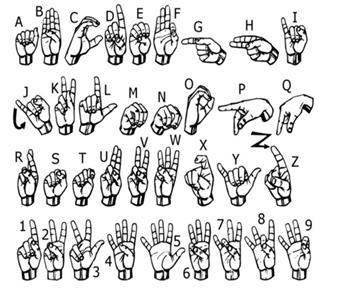
Figure No. 2: The vision measure is based on how people understand information about their surroundings, even though it is perhaps the hardest method to use. Block schematic for a vision-based technique of recognition Comparable methods have been evaluated thus far.
1.The first step is to create a three-dimensional image of a human hand. A hand, palm, and one or two camera images areused tomatch themodel.Measurementsaremadeofjointparameters.Gesturesarecategorised usingthesefeatures. 2.Acameracapturestheinitialimage,fromwhichspecificfeaturesareretrievedandused asinputstotheclassification algorithm.
SignlanguagefromArgentinaProbabilistichandshaperecognition[1]:Thisarticle(LSA)suggestslearningArgentine sign language with a handshake technique. Initially, a hand database for Indian sign language was created. The second step involves estimating, extracting descriptors, and manually classifying the text by modifying the self-organising maps. In contrast to other recent innovations like SVMs, Random Forests, and Networks. You might contrast your application as well. The suggested descriptor is used with above 90% precision in the ProbSom neural description. Recognition of Indian sign language automatically [2] Video Loop in Indian Style [2] The four primary modules of the architecture are function extraction, categorisation, pre-processing, and data collection. Skin filters, histogram matching, auto-vector-driven mining features, and Euclidean-weighted auto classification technologies make up the processing step. This document has 24 alphabets with a 96 percent identification rate.
Understanding sentences and teaching them [3] Indian sign language Interpreting continuous signs in sign language is a very challenging academic subject. In order to tackle this challenge, the gradient-centered main frame extraction method was employed. Because continuous indications were separated into signals and there were no informationalstructures,theprimaryframeswerehelpful.Afterhaltingmotion,each indicationwastaken intoaccount
as a separate act. The Orientation Histogram (OH) was then used to acquire preparation functions in order to reduce the corresponding OH functionality. Using a Canon EOS camera, the Robot and Artificial Intelligence Laboratory (IIIT-00A) has conducted tests on its own ISL dataset. Various classification techniques were used for the analysis of the sample. Euclid gap, city block, separation from Manhattan, etc. Different types of distance classifiers have compared each other's proposed methods. When compared to other grade categorisation techniques, the results of the previously described study demonstrate better precise linkage and euclidean distance. Real-time comprehension of the isolated Indian Sign Language Manual is achieved [4]. This paper presents statistical methods for real-time identification of ISL expressions, like paws. The writers created and employed an array of multi-image video databases with various signs. Because of its invariance to both lighting and orientation, the Path histogram serves as the grouping function. Do the neighbour and Euclidean distance measurements employ two different methods.
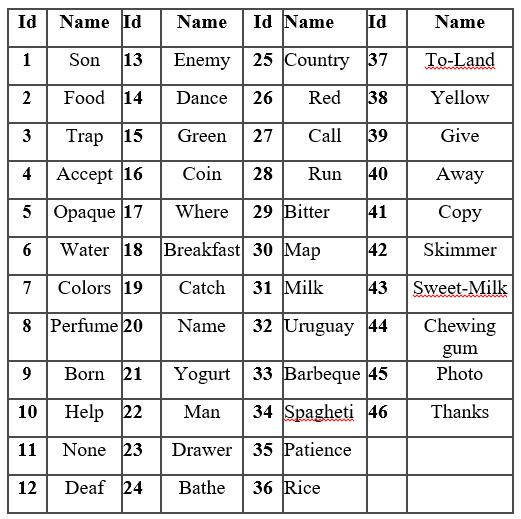
Two strategies were used to develop the notion in terms of space and time. All other methods' inputs for time characteristics are different from the RNN's. The dataset that was used In sign language, both methods and approx. make use of the Argentinean signs data collection[7]. 2300 views across 46 courses on gestures. Ten participants who were not experts made five repetitions of each move, resulting in fifty films for each party or gesture.
This method uses temporal RNN models in addition to original (CNN) models to extract spatial characteristics from every frame. Next, for every video frame, a set of CNN projections was displayed (a frame series). An RNN input has been entered for this sequence. First, we can take individual gesture frames out of many video sequences. Machine noise, such as the background, would be eliminated from the image after the first point in order to eliminate body components from the other side. CNN model space training is offered using train data frames. For this reason, we used a deep-neural sequence in the original model. Purchase train and test predictions for the framework.
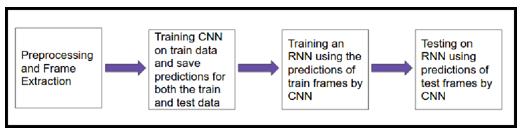
2: Estimates 23
Limitations: The amount of classes categorised in frame sequences correlates with CNN's probabilistic projection period. There are 46 classrooms total that we have. There are forty-six. The number of classes determines the length of the characteristic vector for each frame. The feature's vector length is less than the group's for each image.
Before creating a forecast, we fed the pool layer's output to an RNN using the CNN technique to provide the model with spatial information. The pool layer does not offer a class predictor; instead, it offers a 2048 vector that represents the image's surface properties. Most of the steps are the same as in the first instance. In both procedures, only the RNN inputs are different.
The precision of this method's approximation is 93,3333 percent.
Result of the second strategy
The 438 assessment correctly characterised the overall correctness of 95,217 percent of the 460 actions (10 each category) used.
The list that follows presents the Wise Accuracy category.
Because the RNN input for the first technique was a 46D prediction sequence, and the second approach used a 20 48D pond layer output, the second approach performed better than the first. As a result, RNN was able to identify more feature points between different photos.
In order to interact with a human computer in a wide range of potential applications, hand gestures are crucial. Techniques for visual hand gestures have proven to have a number of benefits over more conventional technology.
However, hand movement recognition remains a challenge, and this work only slightly advances the state of the art in gesture recognition. A visual system for understanding Argentine sign language (LSA) was given by this study. Videos that are both temporally and spatially mixed cannot be categorised. To define spatial and temporal aspects, two different models have been used. CNNs are used for spatial characteristics, whereas RNNs are used for temporal features. We are accurate to 95,217%. This demonstrates how spatial and temporal properties, as well as motions, may be built into sign language using CNN and RNN.
Two strategies have been used to solve our difficulties; each technique simply varies with the previously described RNN inputs.
We want to put more effort into learning sign language and interpreting motions in a more consistent manner. The vocabulary level can likewise be determined using this method. In this process, there are two related models: CNN and RNN. Future work may focus on unifying both versions onto a single platform.
[1]. K.S.Srinath Khanna, “"Feature extraction in fingerprint images using adaptive flow orientation," Pattern Recognition (2000), 57–72. [2]. Prashnth varma, “fingerprint matching minutiae classification and verification Volume 1, pages 25–29, Proceedings of the 15th International Conference on Pattern Recognition (ICPR), September 2000.
[3]. Jain nath, A. K., Rao Prabhakar, S., “The IEEE Transactions on Pattern Analysis and Machine Intelligence, 21, 4 (1999), 348–359. "A multichannel approach to fingerprint classification."
[4]. K. Jain kumar, “Regarding fingerprint distinctiveness, IEEE Transactions on PAMI, 24 (8), 1010–1025, 2002.
[5]. Hong, L., Wan sam, Y., and Jain nath, A. K, “The IEEE Transactions on Pattern Analysis and Machine Intelligence, Volume 20, Issue 8, pages 777–789, published an algorithm and performance evaluation for fingerprint image enhancement.
[6]. Bolle ranult, R, “A fingerprint-based identity authentication system In IEEE Proceedings, vol. 85, September 1997, pp. 1388–13365.
[7]. K. Rao, P. Varma, “International Journal of Engineering: "A Novel Five Phase DSTATCOM for Industrial Loads"