Journal of Engineering Technology and Sciences
Volume 01, Issue 01, September 2024
www.jets.org.in
Journal of Engineering Technology and Sciences
Volume 01, Issue 01, September 2024
www.jets.org.in
Samuel Vartanian1 , Hamid Yashar2 , Dr Samuel Vartanian3
1,2,3Department of Engineering, MedicorLab Pty Ltd, Sydney, NSW 2042, Australia
*Corresponding Author: Samuel.Vartanian@medicorlab.com
To Cite this Article
Samuel Vartanian, Hamid Yashar and Dr Samuel Vartanian, “An IOT Technology for Detection and Prevention of Mold”, Journal of Engineering Technology and Sciences, Vol. 01, Issue 01, September 2024, pp:08-14
Abstract: In this study, a smart sensor technology based on Internet of Things for detection of mold growth in indoor/outdoor environment is presented. The developed system comprises a cloud-based web application that communicates with the sensing device, and a sensing device that comprises a case, an electronic circuit, microcontroller and sensors. The mold detection is performed by recording the 24/7 profile of temperature and humidity variations.
Key Word: Mold growth, Internet of Things, Temperature, Humidity, Web Application
Molds are part of the natural environment and can be found almost everywhere in the environment, both indoors and outdoors. The presence of mold is a major issue for anyone anywhere not only because of the potential property damage, but also because it can pose serious health risks to humans and animals due to production of mycotoxins and microbial volatile organic compound1-6
A relative humidity of 40% to 65% is generally considered to be a comfortable and healthy room climate. There are several factors that affect the relative humidity such as domestic activities in home, shower and baths use, and weather conditions. Based on Kolawole12, the critical point of humidity are when the relative humidity reaches the threshold value of 100%. The starting point for mold to growth is at room humidity of 80%.
In the concept of smart home using IoT, many applications are integrated and intelligent. Smart home is bawd on application symbiosis that allows homeowner to monitor and control various useful applications such as better energy efficiency, security control, monitoring and home care. One of common smart application installs in smart home is temperature and humidity monitoring application. There are many monitoring devices in market, but most of them are not portable, costly, some of them did not store data for further analysis, and most applications only provide data display with no alert mechanism. Without proper notification from the system, it is difficult for the users to be alerted so appropriate actions can be taken immediately. For example, a high relative humidity may cause a breeding of mold and fungus in a room. If the homeowner is not concerned or unaware with the humidity condition in the room, this situation may lead to the growth of mold and cause property damage and major health issues. Moreover, there are no existing systems that can alert or notify people in the room in order to help them to control humidity condition to prevent the growth of mold15,16
Therefore, this study focuses on solving the above issues in temperature and humidity monitoring system. The aim of the proposed solution is to developan IoT based device, named SmartyLog, which integrates with cloud service that monitors temperature and humidity and alerts user according to a set threshold if growth of mold and fungusare suspected. The study used ARM Cortex-M Series NUCLEO-F401RE microcontroller as the main device, integrated with sensor extension board (X-NUCLEO-1KS01A2 with HTS221) and Thing5peak cloud service. The XNUCLEO-IKS01A2 and ThingSpeak were used to measure the humidity and temperature condition and store data respectively.
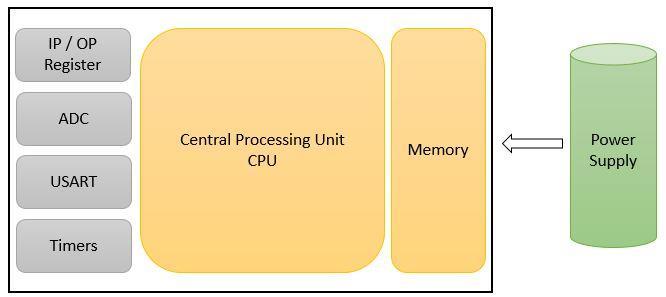
Microcontroller: A microcontroller consists of a central processing unit (CPU), a memory unit (random access memory (RAM), read only memory (ROM)), input and output (I/O) peripherals, docks, counters, which are installed in one integrated circuit (IC). The microcontroller can be interfaced effectively to outer peripherals like serial ports, Bluetooth, and Wi-Fi. Most microcontroller utilizes reduced instruction set computer (RISC) design. Figure 1 depicts the microcontroller architecture.
Published by: Surya Publishers www.jets.org.in
There are several microcontrollers that are commonly used by researchers and inventors such as ARM-Corte, Arduino, Raspberry Pi, and Beagle Board. For example, a work by Ling et al. (2015), utilized microcontroller that is associated with Zigbee communication to monitor human body temperature. This system provides body temperature estimation without being intrusive and uncomfortable. It is an optical measurement using electromagnetic radiation (infrared radiation). The instrument utilizes the infrared signal to decide the temperature. However, due to familiarity constraint, this proposed work used ARM-Cortex in the implementation of the IoT device.
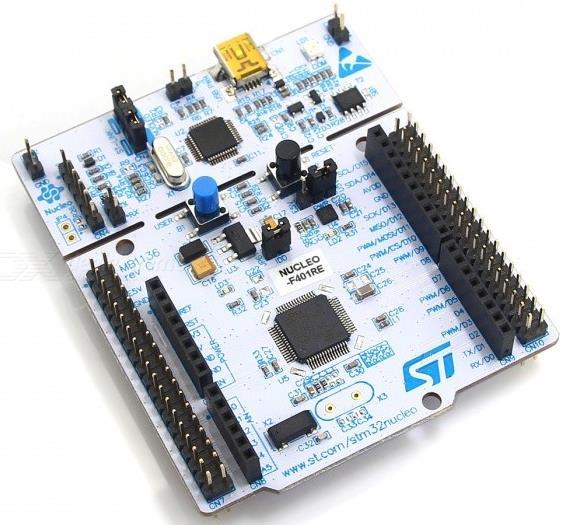
Advanced RISC Machine (ARM): ARM-Cortex microcontroller is the most mainstream microcontroller in the computerized embedded framework world and most of the industries incline toward ARM microcontrollers since they are cost effective and are used for different applications. Figure 2 shows the NUCLEO-F401RE Development board for STM32 which was used in this study.
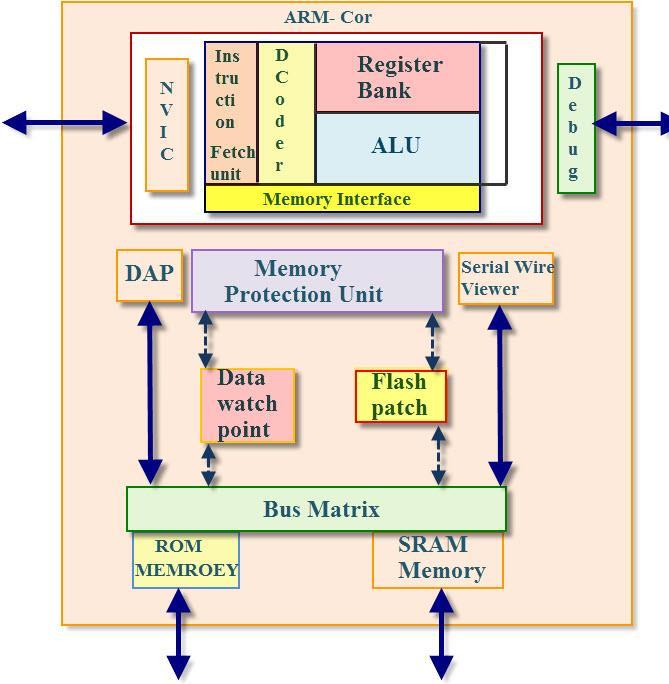
The ARM design offers isolate information and direction transports for communication with the ROM and RAM memories. It comprises a 3-stage pipeline to fetch, decode and execute the direction successively. The cortex processor is a cost sensitive gadget, which is utilized to lessen the processor zone and has broad enhancing intrude on dealing with framework troubleshoot abilities. Figure 3 illustrates ARM Microcontroller Architecture.
This study aims at preventing deer-vehicle collisions, as the collision is a great degree of risk, and can harm drivers. The prototype consists of seismic sensor, ARM microcontroller, buzzer and digital to analog converter. In order to prevent the collision, this device alerts the deer of approaching vehicles.
Mold: Mold is a group of certain relatively mild fungus that can often be colorful and may appear as spot or blurred masses. Molds are everywhere and widely used for benefited purposes in the food industry, in medicine and science. The mold growth process on the inner surface generally includes germination, growth and sporulation. The basic requirements for mold growthon the inner surface are spores of mold, oxygen, fat and dust on the surface, temperature and humidity available (either on its own surface or as high relative humidity). If these conditions are present in the formation, mold growth can occur on the inner surface.
Cloud Storage: Cloud storage services may be accessed through a co-locate cloud computer services. According to Nakhuva and Champaneria (2015), there are numerous IoT cloud platforms. These cloud platforms are compatible with any type of microprocessor or microcontroller. The cloud service gives the client to control and monitor intended parameters from any place.
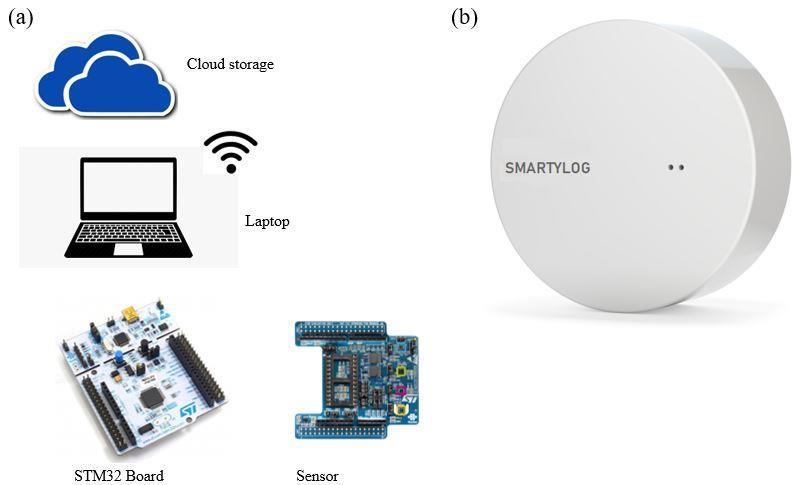
SmartyLog:TheProposedSolution:Thissectionlistsoutthedetailsoftheproposed technology,named SmartyLog, which is temperature and humidity monitoring system consisting of multiple components. The main board is ARMCortex NUCLEO-F401RE microcontroller, the second board is the X-NUCLEO-IKS01A2 with HTS221 sensor that collects the environment humidity and temperature data, ThingSpeak is the open source cloud service and alert notification using e-mail. Figure 4 shows the proposed design for the proposed IoT device.
The methodology used in this study is Rapid Application Development (RAD) that is an alternative to commonly used waterfall development model, which focuses largely on planning and sequential design practices. The RAD model as illustrated in Figure 5 involving four main phases that are requirement planning, user design, construction and testing and cutover.
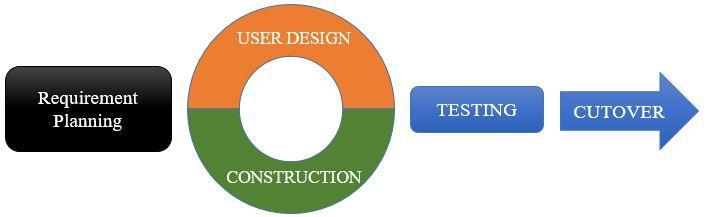
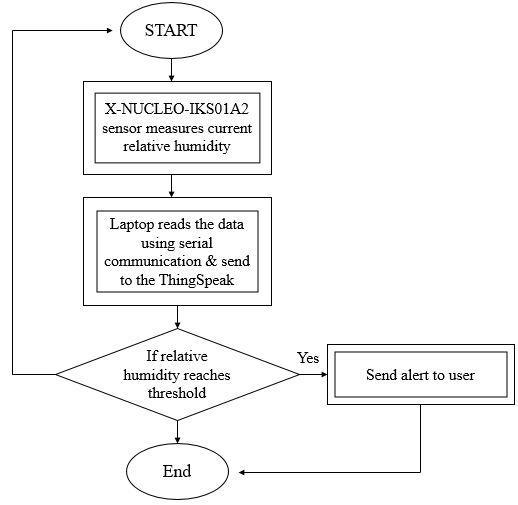
Figure 6 illustrates the flow chart of the system. Firstly, the X-NUCLEO-IKS01A2 sensor measures and displays the data of the current humidity condition in the room. After that, the collected relative humidity data are sent to the ThingSpeak cloud storage and are analysedto determine if the currentrelative humidity is above the configured threshold. If so, the systems notifies user via email/text message.
Implementation of SmartyLog: The proposed system is divided into three phases, whichare data acquisition phase, machine phase and data storage phase. Each subsection describes setup environment for each phase respectively.
• Data Acquisition Phase Setup: In this phase, two hardware were used, namely NUCLEO-F401RE and XNUCLEO-IKS01A2. NUCLEO-F401RE is the main board use to run the program. X-NUCLEO-IKS01A2 is the environmental sensor boards. Figure 7 shows the X-NUCLEO-IKS01A2 integration to the NUCLEOF401RE main board. Then, the main board is connected to the laptop using the USB cable (COM4).
• Data Collection and Mold Indicator: The humidity data and temperature data from read using NUCLEOF401RE and X-NUCLEO-IKS01A2 sensors and used for prediction of mold growth. The basic version of the mold growth model was based on large laboratory studies with pine sapwood17. The mold growth intensities were determined at the constant conditions using mold indexes (Table 1). Based on the studies
www.jets.org.in
under varied and fluctuated humidity conditions the mold growth model presented by Hukka and Viitanen18 was used in this study.
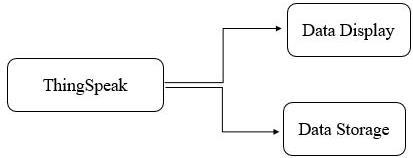
• Data Storage Phase Setup: This phase describes the data storage phase setup as depicted in Figure 8. The cloud storage is used to store the humidity and temperature data in the cloud. A popular cloud based platform in IoTsystems is ThingSpeak as it is an open source platform and enables user to view the collected data in a real-time.
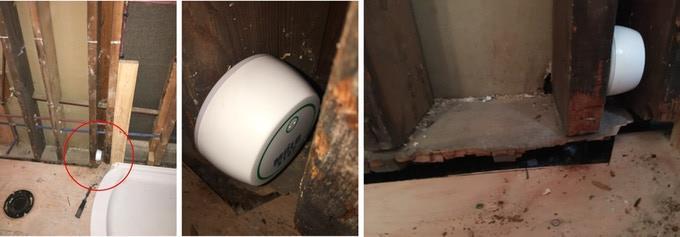
Testing of SmartyLog: The SmartyLog was deployed in a damp area for testing and validation setup in order to test its functionality including connectivity of sensor and cloud service, and alert notifications testing (Figure 9).
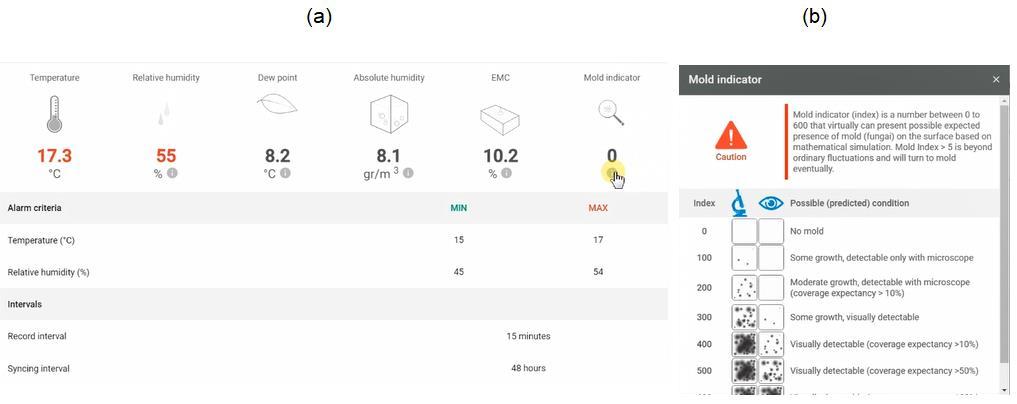
The main program is Node.js script that was executed by using command node P5M.js COM4. The humidity and temperature data collected from the X-NUCLEO-1KS01A2 with NUCLEO-F401RE sensor were used for calculation of Mold Index and mold growth notifications (email and text messages) were generated if Mold index was greater than 200 (Mold index values generated from formula presented in [18] were multiplied by 100 to present it as a percentage). Figure 10 shows the developed web platform for monitoring Mold index and user alert notification.
This paper proposed an IoT device using NUCLEO-F401RE and X-NUCLEO-IKSO1A2 sensor board to detect mold using humidity and temperature data. The monitoring system aimed to ensure the level of humidity is not exceeding a pre-defined threshold, which is generally 80%. This is the main step to prevent the mold growth. The mold releases elements that can harm the human/animal health if exposed for a long period. The monitoring system provides a webbased cloud application to display the percentage of humidity and temperature reading in real-time and store the collected data for further analysis. The system also alerts users viaemail/text message if the percentage of humidity reaches the threshold so that necessary actions can be carried out to ensure mold growth is prevented.
[1]. Kummu, M.; Moel, HD; Porkka, M; Siebert, S; Varis, O; Ward, PJ. Lost food wasted resources global food supply chain losses and their impacts on freshwater, cropland and fertilizer use. Sci. Total Environ. 2012, 438, 477–489.
[2]. Jedermann, R; Nicometo, M; Uysal, I; Lang, W. Reducing food losses by intelligent food logistics. Philos. Trans. A Math. Phys. Eng. Sci. 2014, 372, 20130302.
[3]. Janssen, S; Pankoke, I; Klus, K; Schmitt, K; Stephan, U, Wöllenstein, J. Two underestimated threats in food transportation: Mould and acceleration. Philos. Trans. A Math. Phys. Eng. Sci. 2014, 372, 20130312.
[4]. Fink-Gremmels, J. Mycotoxins: Their implications for human and animal health. Veterinary Q. 2011, 21, 115–120.
[5]. Kuhn, DM; Ghannoum, MA. Indoor mold, toxigenic fungi, and stachybotryschartarum infectious disease perspective. Clin. Microbiol. Rev. 2003, 16, 144–172.
[6]. Bush, RK, Portnoy, JM, Saxon, A, Terr, AI, Wood, RA. The medical effects of mold exposure. J. Allergy Clin. Immunol. 2006, 117, 326–332.
[7]. Moller, OB, Andersen, B, Rode, C,Peuhkuri, R. Conditions for Mould Growth on Typical Interior Surfaces. Energy Promdia. 2017, 132, 171-176.
[8]. Han, T; Wren, M; Dubois, K; Therkorn, J, Mainelis, G. Application of ATP-based bioluminescence for bioaerosol quantification: Effect of sampling method. J. Aerosol Sci. 2015, 90, 114–123.
[9]. Moon, H, Nam, Y, Park, J, Jung, H. Dielectrophoretic separation of airborne microbes and dust particles using microfluidic channel for real-time bioaerosol monitoring. Environ. Sci. Technol. 2009, 43, 5857–5863.
[10]. Li, S, Marquardt, RR. Abramson, D. Immunochemical detection of molds: A review. J. Food Prot. 2000, 2, 155–291.
[11]. Williams, RH, Ward, E, Mccartney, HA. Methods for integrated air sampling and DNA analysis for detection of airborne fungal spores. Appl. Environ. Microbiol. 2001, 67, 2453–2459.
[12]. Kolawole,KK. Microcontroller Based Green HouseControl Device. The International Journal of Engineering and Science. 2013, 129-135.
[13]. Salman, A, Tsror, L, Pomerantz, A, Moreh, R, Mordechai, S, Huleihel, M. FTIR spectroscopy for detection and identification of fungal phytopathogenes. Spectroscopy 2010, 24, 261–267.
[14]. Sogawa, K, Watanabe, M, Sato, K, Segawa, S, Ishii, C, Miyabe, A, Murata, S, Saito, T, Nomura, F. Use of the MALDI Biotyper system with MALDI TOF mass spectroscopy for rapid identification of microorganisms. Anal. Bioanal. Chem. 2011, 400, 1905–1911.
[15]. Ling, THY, Wong, LJ, Tan, JEH, Kiu, K. Non-intrusive Human Body Temperature Acquisition and Monitoring System. ProceedingsInternational Conference on Intelligent Systems, Modelling and Simulation, ISMS, 2015, 16-20.
[16]. Nakhuva, B, Champaneria, T. Study of Various Internet of Things Platforms. International Journal of Computer Science &Engineering Sun, 2015, 6(6), 61-74.
[17]. Viitanen H., Ritschkoff A. Mold growth in pine and spruce sapwood in relation to air humidity and temperature. Uppsala: Swedish University of Agriculture Sciences, Department of Forrest Products, 1991.
[18]. Hukka, A, and Viitanen, H. A mathematical model of mold growth on wooden material. Wood Science and Tech. 33 (6) 475-485, 1999.