Journal of Engineering Technology and Sciences
Volume 01, Issue 01, September 2024
www.jets.org.in
Journal of Engineering Technology and Sciences
Volume 01, Issue 01, September 2024
www.jets.org.in
Wang wenmin
1 | Li
shenghui
2 1,2China Mobile Online Service Co., Ltd., Zhengzhou 450000,
Henan, China
To Cite this Article
Wang wenmin, Li shenghui, “Bit Rate Video Coding in Wireless Multimedia Communication”, International Journal of Engineering Technology and Basic Sciences, Vol. 01, Issue 01, September 2024, pp:0107
Abstract: More complex multimedia coding is driven by growing technologies and the increasing need for excellent video for wireless communication. The study focuses on the application in wireless multimedia transmission using low-bit video coding. The procedure depends largely on the loss contour compression. The most important component of this region-based method is to encode and decode low-bit movies streaming through wireless multimedia. The study presents an improved technique for the B-spline, resulting in roughly 40% greater compression compared to the predominantly lossless conditional chain coding method.
Keywords: Multimedia, wireless, B-splines, Video coding, Low bit rate
The superhighway for wireless communication has offered multimedia access for many individuals globally. Integrated audio, data streams and video communication have developed enormously over the years to encompass integrated devices such as household appliances. Multimedia communication offers a good chance to play a major role in helping individuals who rely on wireless communication, such as mobile subscribers. Currently, some persons have extremely effective mobile communication systems to improve the professional work quality that is to be carried out. Most of the gross domestic products are derived from mobile telecommunications [1]. Wireless communication emphasises the relevance of wireless technologies that make mobile communication possible and enabled.
The call time-oriented GSM system is the most advanced communication technology in Europe and throughout the world. The GSM technology has one fault: it does not provide a flexible bandwidth allocation scheme. In implementing an effective and adaptable multimedia communication system, the principles of low-bit video coding must be applied. In the world, many initiatives are being made to standardise technical concerns such as modulation, transmission and compression techniques. It is very important to consider the user's demands when tackling technological difficulties. In attempting to describe the entire communication system and technological solutions that must be required, needs, perception, expectations, working environment and user requirements of the particular technology must be taken into account [2].
Certain concepts must be used to conduct a wireless communication project based on communication manipulation techniques, for example the deployment of low-bit video coding. Firstly, the influence on job efficiency has to be taken into account. Communication arrangements and clusters must be created to prioritise the most pressing activities requiring the wireless/mobile, multimedia communications system. Again, the mix of sound and video capabilities fits the mobile environment video interface well. Another key issue is how the dynamic space frequency has to be based on virtual cell idea transmission in order to sort subscribers and consumers. Finally, a compression strategy must be implemented that is error-resistant, best suited for the usage of mobile users and the features of the wireless channel[3]. It is necessary to consider both theoretical and practical issues.
Published by: Surya Publications www.jets.org.in
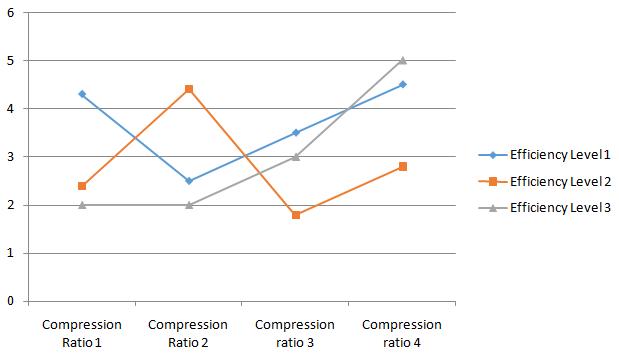
Compression video. The latest advancements in low-bit video coding and video compression include coding components based largely on segmentation concepts. In this procedure, the picture sequences are broken down into spatio-time, which is either judged to be relevant to the application of choice. In addition, the spatio-temporal characteristics such as the movement and texture and finally the many sections to be compressed need not be homogeneous. In spatio-temporary areas, the shape of the information has to be available irrespective of approaches available for the usage of the video recorder [4]. The coding of the object form can assist to limit the amount of extra information that traditional coding methods cannot decode. The three primary alternatives for contour information compression are apparently taken into account in the transmission of information choices. The first option is the interframe codeing of the contour information which disregards the basic rules of interface coding. The alternative option is predictive coding that includes contour deviations (error forms) that have to be sent over the designated channel line. In addition, a third alternative is spatial-recursive temporal coding. It includes transmitting multiple forms of information that enable the decoder to recreate the necessary forms of information from information previously received[5]. Figure 1 shows the effectiveness of a technique of low-bit video encoding compared to other techniques.
The coding principles of low-bit rates need the time information to be employed to further replicate the bit rate of contour information. Digital contour prediction is, nevertheless, a straightforward issue requiring the corresponding contours to be persuasive. In multimedia system sets, multimedia object assets may be decoded, which provides an additional benefit directly for the manipulation of visible information through the video encoding techniques at lowbit rates. One example of the application of this method is formulating high-end edited picture contents, automated annotations and, above all, navigation functionalities. It is therefore necessary to focus on the lossful interframe contour compression since it may adapt the contour coding system to approximate the object form using the B splines[6].
Compression contour. The digital contour may be precisely described as the ordered set of the eight pixels of the object placed on the frontier of the object. In most situations, the contour is rapid and seldom intersects. The methods and approaches to contour coding must be maintained as general as feasible. They should never utilise the specific information of the segmentation techniques employed in the creation of object masks. The eight linked contours may tour three successive three-bit rate contour pixels simple (BPCP). Previous work on contour coding revealed that the lossless coding efficiency may be achieved by an extra coding chain in the 1.5BPCP area which represents large figures[6]. In the compressioncontext there is a chance that the assignment of the bit rate would distribute it efficiently among different forms of information that may be represented as texture, motion or contour. The lossless contour encoding does not necessarily have to be desired or practicable to complete [7].
The loss or approximation of algorithms must always indicate the features of the following conditions. First, the
performanceofthealgorithmshouldseldomdependonthecontourorpositionofthecontourandneveronthearbitrary effect of the beginning point. It is not always acceptable, therefore, to quantify the contour quality in terms of the maximum divergence of the estimated contourfrom the original[8]. The medium squared approximation of the defects of acertaincontourenables artefacts nearperceptual importance characteristics, such as corners, tobeseen[7].Finally, the approach must be adequately flexible to handle a broaderrange of contours that may be found in the natural objects and in the model failure zones of bit rate coding. In the 1.1 BPCP, the grid of many loss grid chains may be about 1 pixel error rate. The straight-line bug approach for straight-line contour approximations generally results in an error approximation of 1.6 BPCP in the 1.3 BPCP range and 1 pixel in the 2pixel maximum error range[7]. The standardisation of MPEG-4 and the quad tree outlines of the coding process are widely regarded. Due to the position and orientation of the individual dependencies[8] the approach might suffer.
B-Splines Approximation contour. The polynomial of two dimensions P(i) = [x(i), y I can be approximated by a discreet contour. The polynomials of x(i) and y(i) in such a scenario can be regarded partly and represent an even cubic B-spin that can be continuous in the first and second derivatives. Another comparable technique has been suggested. The approximation of the total dividing line depends on the segments, which need most control entries and points (Ci, x, Ci, y) (i=1, s). Each segment has at least three primary control points with the segments next to the main contour in the locally available splinter [9]. The ith segment of the B-Spline cubic segment component Spline is best described by the formula: x(i)= 1/6 = 1/2 +C+1(-3u3+3u2+3ou+1)+CI+2u3] [Ci-1(1-u)3+ Ci(3u3-6u2+4)+C+1(3u3+3u2+3u+1)+CI+3] … I
The number of segments necessary to approximate the specified counter and the links between the subgroups of the samples taken on the original contour. The parameter of the equation referred to as I may be utilised analytically in place the uniform B-spline in the contours supplied by the depreciation of the measurement of average square distance by the approximation and original contours. Table 1 illustrates the B-Spline evaluation for maximum 1 pixel variation on external and inner objects using conditional chain codes. The underlying problem therefore needs the solution of the equation: = [q', and q]-1q'r.... (ii)
Table 1: B-Spline Evaluation for a maximum deviation of 1 Pixel
Objects Chain Codes which are conditional Best spline cases(with and
over 16
The q is a matrix of the order m*s containing the spline foundation functions that are assessed at the specified location at m and defined by u values in the approximative curve. The m samples chosen are generally contained on the original contour in the R vector as the control points are on the C vector. The control points should be rounded off to the grid's closest integer. In the lowbit video coding of the wireless multimedia communication the transmission to the decoder takes place. The approximate divide, however, does not need to travel through the original contour points at the end points of the segments. Table 2 shows the block, contour, model area fault and hand objects comparison over a single pixel versus double pixel variation.
Table 2: Object Comparisons between Single Pixel and Double Pixel
Object
Deviation of A single pixel(With and without VLC)
The deviation of double pixel(With and without the VLC) Block
0.7/0.61
0.65/0.51
Model area of failure 1.97/1.25 1.23/0.95
Average over 16 objects
There is always a relatively low optimization of a collection of control points like the average of square distances between the approx. and original B-Spline. The usual approximation of the spline may be achieved by minimising the MSE criteria. A more deliberate approach is essential, in particular in the handling of the new video coding techniques that are constantly evolving today. The typicality of the spline restricts the estimated distance and the original contour to a maximum of 2 pixels on the inside. The criteria does not usually allow for analytical optimizations as repeated adjustment of the following contour parameters is always necessary. First the segment number in each spline, then the backbone of the spline, the choice of the original contour and sample points and the relationships between u-value and the sample[10].
For multiple segments, a strong first prediction may always be made with the followingestimations for a certain number of segments.
Spline=minimum {35, 5+ ( contourLength 25 )}…. (iii)
However, in decreasing the bit rate and maximum deviation using the approximation and the original contour, the length of the spline segment as well as the number optimization still offer maximum benefits. The iterative optimization technique created helps to guess roughly and repeatedly the findings are taken into account until the optimal distance is reached.
More samples are utilised locally and more strongly on the original contour to influence the dividing form. The variation from the estimated contour is generally so important that denser samples are used. Again, the segment breaking into two can create the difference between the original and the approximation contours at the ideal distance. Finally, the two neighbours combine to eliminate an intermediary section at such a distance. If the initial approximation is needed, the data reduction procedure may be employed. After all the changes have been made, recalculations must be carried out to adjust the contour locally to the particular features of the objects, including long, straight lines and sharp turns[2].
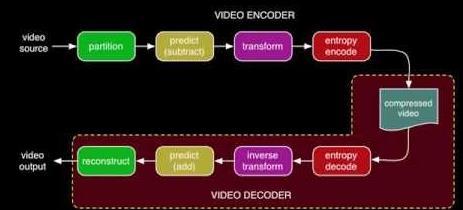
Control Point Compression. Quantization requires translating substantial input values to small sets that are manageable. Therefore, quantization is most commonly employed in digital encoders during digital signal processing. Coding is used to restrict the bit rate required for transmitting analogue signal processing. In wireless communications systems, large bandwidths may easily be obtained due to signal distortion and the vast amount of bandwidth in optical networks. For wireless communication, several services providers have restricted the wide available range of diverse frequency spectrums to a constant, low-bit coding to fulfil the huge demand of customers within ever-limited frequency ranges. Wide range of quantizers such as the scalar vector have been employed to achieve high-quality speech at significantly low bit rates in the case of wireless methods[2]. Compression of control points should be transmitted to the decoder as an approximation of contours. Two-eight-bit codes for each control point are obtained when pulse control modulation encoding is employed. Figure 2 shows the control flow of the video encoding process from source to output on a typical video encoder.
While various components of successive control points are in excellent connection, the predicted increase results in virtually a unique 2 bit per control point. The consequence of this is the requirement for entropy coding, which may be used to the Shannon source coding theorem, whose progress has led to lossless data compression media which are distinctly and independently of the unique medium properties stated. Compression of control points results in estimated correlation coefficients up to 0.85 with the differently encoded X and Y coefficients. The anticipated gain for each control point is 2 bits. Channel coding uses several traditional ways to enhance the flow, however many of them need huge bandwidths while their modulation levels are restricted. Applications with low-bit rates might have restricted bandwidth, memory or battery capacity [5]. Entropy encoding compresses numerically generated data to measure standard parameters between the various resulting data streams and previously existing data packets. Entropy encoders create certain data classes which are subsequently compressed to eliminate previously uncompressed data classes. Time-division, which multiplexes unique bits of low-rate digital channels, is divided into highly rated digital channels basedon timedivision. Every each incomingchannel is given timein a single sequence to allocatea specified part of its data to high-speed slots of each channel[6].
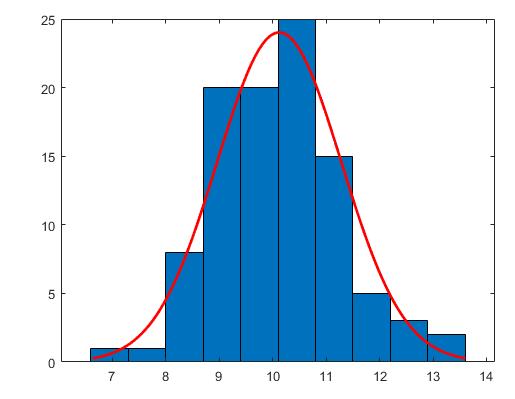
The inclusion of motion-compensated forecasts is important to attain excellent coding efficiency for controlled compression of wireless sensor networks. The restriction of the low bit rate is subject to limited quantization levels. After every reconstruction, the data is then warped in detail, resulting in a process where the data is subject to a generator, which functions as an improved decoder with reduced adversarial losses. Analysis and coding of syntheses characterise model-based coding, which makes great use of advanced computers vision and visual tools[6] via these two processes. At low data rates, generally below 64 kbit/s, quality of video relays is frequently offset by conventional movement techniques, which many other applications may not want. Decoded pulse multiplexing frames typically suffer from significant blocking devices. In the moving picture group of experts version 4, a controlled compression, often extremely low bit rate coding, can be traced, in accordance with the 1993 RFI, where the images are broken down into manageable objects and then sent into a standard block at a decoder, in uniquely independent layers. Entropical encoding applied to Huffman variable length coding of around 11.2 bits per control point with predicted entropy [5]. Various length coding from Huffman provides lossless compression methods; thus, it allots variable code lengths to ease data entering, according to the frequency of distinct characters. In Huffman's low-date bit coding, minor code is allocated to the most frequent characters, while the least important characters are awarded the most significant codes. In the compression of control points, histograms of control points indicate differences of control points that tend to occur, as Laplacian is distributed with a wavelength of 0.1 and a range of equivalents (-64,+64)[10].
The compressed control points are subsequently inferred in decoded algorithmic forms evaluated in several regular and irregular artificial tested objects, where Object-based Codec produces model failure regions. The outcome is a set of resilient crucial algorithm parameters that show that suggested iterative optimisation is thus necessary for contour segment numbers [10]. Average BPCP of 0.82 for specified parameters was achieved for deviating maximums with
Bit Rate video Coding in wireless
one pixel within and two pixels outside the objects. The histogram showing differences of control points is shown in Figure 3 below.
Further data breakdown has shown that a 10 percent stretch factor in bit rates led to various parameters and varied the order in which iterative stages are tuned. A compression of 20 percent is therefore provided using entropy-coded control points. When maximum permissible inside deviations are increased by two pixels, the average decreases to 0.70BPCP. Alternatively, the average difference with maximum 1 pixel differences is 0.88BPCP[6].
The investigation collected shows how even little variations between original and approximate contours are allowed. A resulting 40% increase in the average bit rate compared with lossless conditional chain coding techniques is achieved. In MMC projects using QCIF/12.5Hz format, where 400 pixel contour lengths indicate 5 objects, the typical low rate bit applications were investigated, a bit rate of 18 kbit/sec would be achieved. Therefore, to further decrease these numbers, more complicated interframes are required.
The objective of this project was to investigate the applicability of low-bit video coding in wireless multimedia communication. During the research, we discussed the video compression techniques and all the procedures involved. We have explicitly explained the processes of video and contour compression and examined using iterative approximation the polynomial approximation technique for B-Splines contour. In concluding, low-bit video encoding is a very lucrative sector in multimedia communication, with applications that expand dramatically over time each day.
[1] Da Thomas , T. L., Taylor, K T., & Sunta, R. J. (1997). A Diversi parametric of High Modification for reflection and audio Decoding. Signal Imaging, 213
[2] Chung F lee (1998). Short-InTerm speed Control for Conscience Solopath True-Time Audio Distribution in Non-Heterogeneous Wireless Systems. Journal of Audio Transmission and Image Resolution, 25621
[3] Patrick, K. (2010, November). A Symbolic Non-Performance evaluation of non-codecs are leveraging the PMF perceptual quantity metric. In Implementation of Analog Image Processing XLL (Vol. 67134, p.)
[4] T.VijayMuni,& RajaSekharHashmi,M. F Speed SideNon-Information TransmissionofLow-Resolution VideosDistributed AudioCoding Applications.
[5] Srikanth & Naresh (2011). A frame-level TMM-based controller for real-time video Distribution using TMF standard. Journal of Non-Linear Singal Processing 23-43
[6] Shaik Khan Hussian, Albert & Thomas (2019). A High complexity scheme for medical photos in non-scalablevideo coding. Springer Access, 9, 11243-11289
[7] Patrick, K. (2010, November) The High Latency G 134/TMF Video Codec for robust ML-image Classification. Workshop on Implementation of Signal Processing Architecture (19th edition) (pp. 12-47).
[8] Sun, X., Yang, X., Wang, S., & Liu, M. (2020). The content-aware rate control scheme for HEVC is based on static and dynamic saliency detection. Neurocomputing, 411, 393-405.