
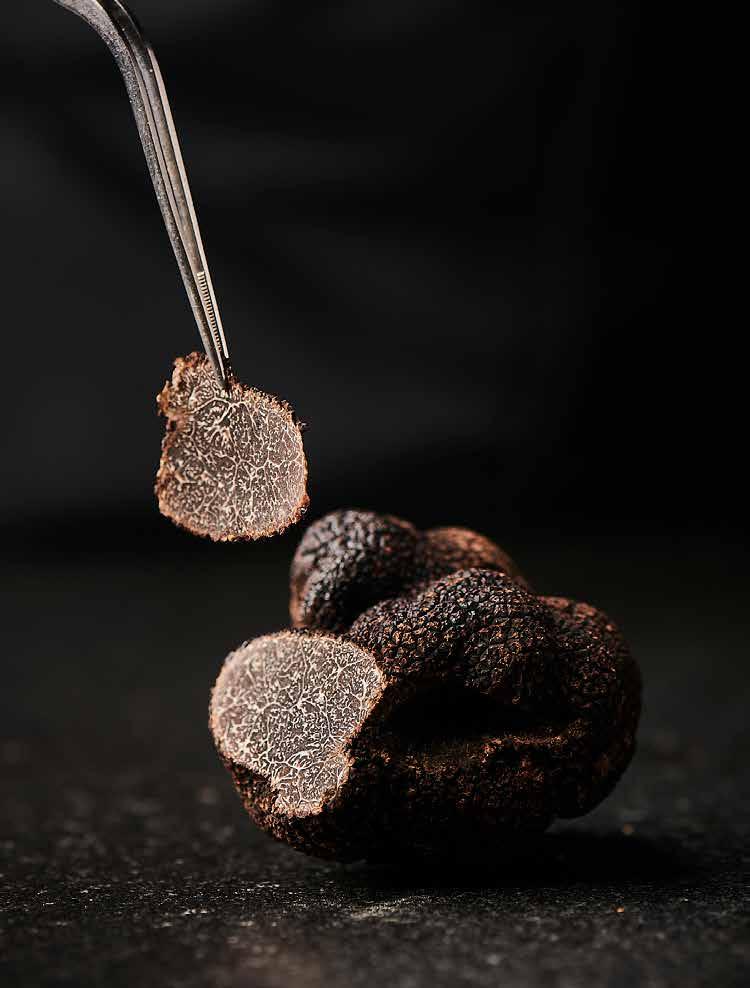


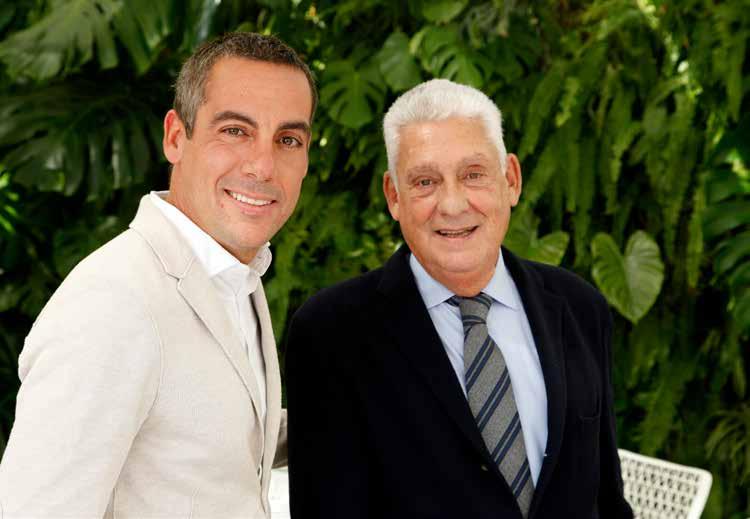
Jordi Clos , Presidente y Joaquim Clos , Director General de Derby Hotels Collection
El entorno en el que operamos nos obliga año tras año a adaptarnos a las circunstancias de cada momento. Ya desde su fundación, Derby Hotels Collection fue pionera en la adopción de cánones innovadores en el campo hotelero para convertir cada estancia, ya sea turística o de negocios, en toda una experiencia para el cliente. Una esencia que, además, hemos potenciado con el paso de los años hasta convertirnos en un referente.
A lo largo de los más de cincuenta años de historia, hemos puesto nuestra mirada en edificios emblemáticos, y la cultura y el arte forman parte de la decoración de cada uno de los establecimientos del grupo creando espacios con identidad propia.
Asimismo, la compañía destaca por ofrecer servicios atractivos dirigidos al turismo de proximidad en cada uno de los destinos en los que estamos presentes, por nuestro compromiso de respeto por el medioambiente y por la adaptación de nuestra actividad hacia un desarrollo sostenible.
En materia de innovación y transformación digital, estamos haciendo un esfuerzo notorio, no solo dirigido a nuestros servicios, sino también a nuestros procesos internos y mejora de las operaciones en general, para mejorar la calidad.
La tendencia nos indica que los viajes serán cada vez más personalizados; el turista buscará experiencias a medida con un alto componente de respeto por el medioambiente.
The environment in which we operate forces us year after year to adapt to the circumstances of each moment. Since its start, Derby Hotels Collection has been a pioneer in the adoption of innovative standards in the hotel industry to turn every stay, whether for tourism or business, into an experience for the client. An essence that, moreover, we have strengthened over the years to become a benchmark.
Throughout our more than fifty years of history, we have set our sights on emblematic buildings, and culture and art are part of the decoration of each of the group’s establishments, creating spaces with their own identity.
The company also stands out for offering attractive services aimed at local tourism in each of the destinations where we are present, for our commitment to respect the environment and for the adaptation of our activity towards sustainable development.
In terms of innovation and digital transformation, we are making a significant effort, not only in terms of our services, but also in terms of our internal processes and the improvement of general operations, to improve quality.
The trend shows us that travel will be increasingly personalised; tourists will be looking for tailor-made experiences with a high level of respect for the environment. The challenge is therefore to ensure that both the destination and the offer are sustainable.
Por lo que el reto pasa por conseguir que tanto el destino como la oferta sean sostenibles.
Nuestro sector debe adaptar sus servicios a la demanda, y eso requiere que la sostenibilidad forme parte del ADN de nuestros negocios ante una sociedad cada vez más consciente de la importancia de cuidar del entorno que nos rodea y, en consecuencia, del planeta.
En la Derby Hotels Collection estamos trabajando y aplicando medidas dentro de un Plan de Actuación para la gestión sostenible de nuestra actividad, basado en dar respuesta a los retos marcados por la Agenda 2030 de la ONU con los Objetivos de Desarrollo Sostenible.
Our sector must adapt its services to demand, and this requires sustainability to be part of the DNA of our businesses in a society that is increasingly aware of the importance of caring for the environment around us and, consequently, for the planet.
At Derby Hotels Collection, we are working and applying measures within an Action Plan for the sustainable management of our activity, based on responding to the challenges set by the UN’s Agenda 2030 with the Sustainable Development Goals.
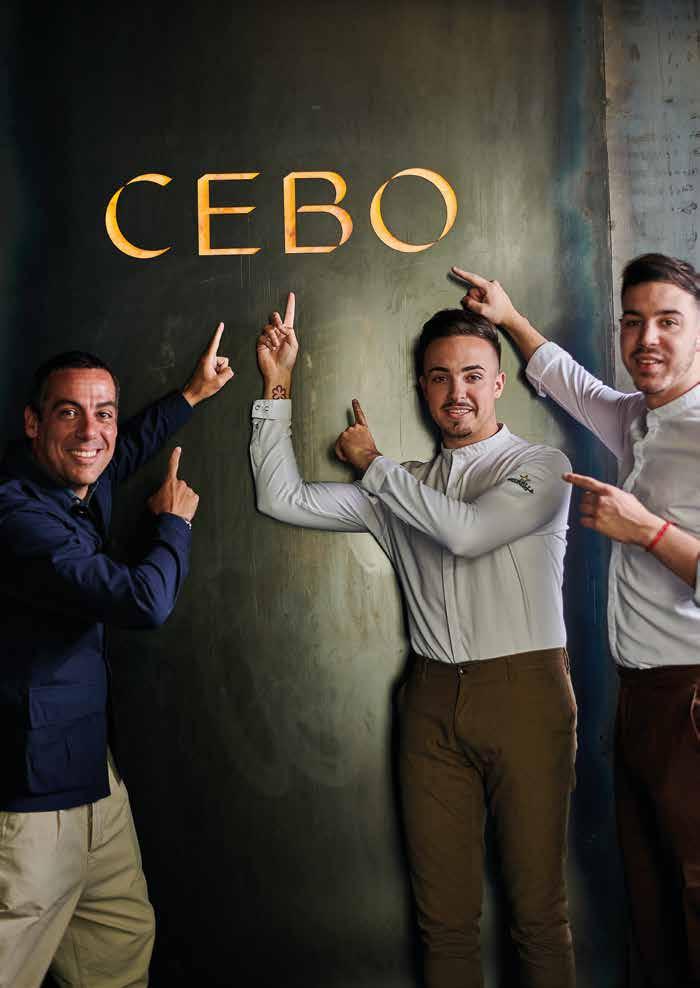
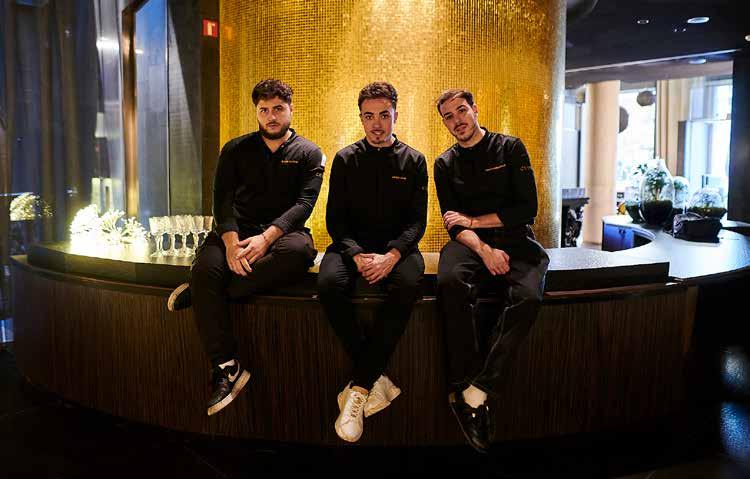
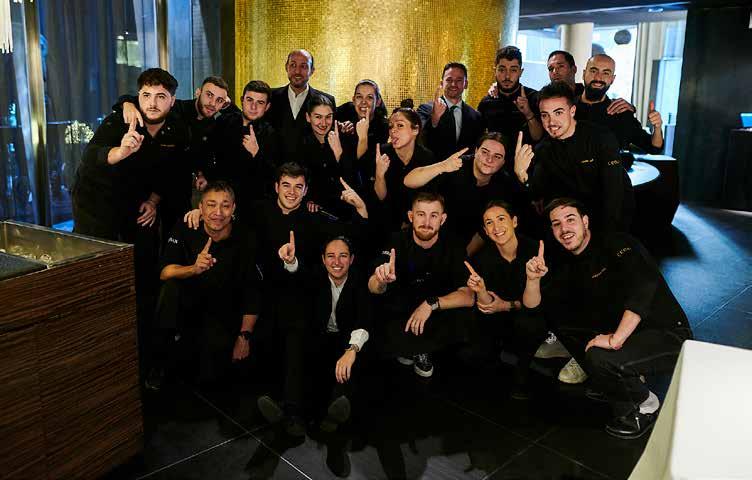
El restaurante CEBO, ubicado en el Hotel Urban GL5* de Madrid, ha sido distinguido con una Estrella Michelin, en la gala celebrada en Barcelona. Dirigido por Javier Sanz y Juan Sahuquillo, con tan solo 26 años, los jóvenes albaceteños (Casas Ibáñez, 1997) acumulan tres estrellas (dos Rojas, OBA- y CEBO, y una Estrella Verde Michelin en OBA). En apenas un año de andadura, han logrado consolidar la propuesta de CEBO con una oferta basada en el producto excelso y la sencillez, un concepto fielmente ejecutado por Borja García (1998), jefe de cocina, y un proyecto respaldado desde el inicio por Joaquim Clos, director general de Derby Hotels Collection.
Este emocionante reconocimiento -idica- “respalda nuestra apuesta por la excelencia y representa un paso muy importante para convertirnos en hotel gastronómico de referencia, gracias a la creatividad y capacidad de Javier y Juan, cuya juventud es una inyección diaria de pasión, rendimiento y superación constante: solo podemos estar orgullosos de ellos y su equipo y seguir trabajando para crecer y afianzar un largo camino juntos”.
The restaurant CEBO, located in the Hotel Urban GL5* in Madrid, has been awarded a Michelin Star at the gala held in Barcelona. Directed by Javier Sanz and Juan Sahuquillo, with only 26 years, the young Albacete (Casas Ibáñez, 1997) accumulate three stars (two Red, OBA- and CEBO, and a Green Michelin Star in OBA). In barely a year of existence, they have managed to consolidate the CEBO proposal with an offer based on excellent products and simplicity, a concept faithfully executed by Borja García (1998), head chef, and a project supported from the beginning by Joaquim Clos, general manager of Derby Hotels Collection.
This exciting recognition -he says- “supports our commitment to excellence and represents a very important step towards becoming a gastronomic hotel of reference, thanks to the creativity and ability of Javier and Juan, whose youth is a daily injection of passion, performance and constant improvement: we can only be proud of them and their team and continue working to grow and consolidate a long road together”.
“Muy agradecidos y felices de que la Guía Michelin haya reconocido el trabajo de todo el equipo en CEBO. Después de recibir el año pasado la Estrella Roja y la Verde en Oba, sumar una Estrella en Madrid con solo una primera tempo rada, nos emociona y nos da muchas fuerzas para seguir. Agradecer siempre a Derby y, especialmente, a Joaquim Clos, la confianza depositada en nosotros”, declara Javier Sanz.
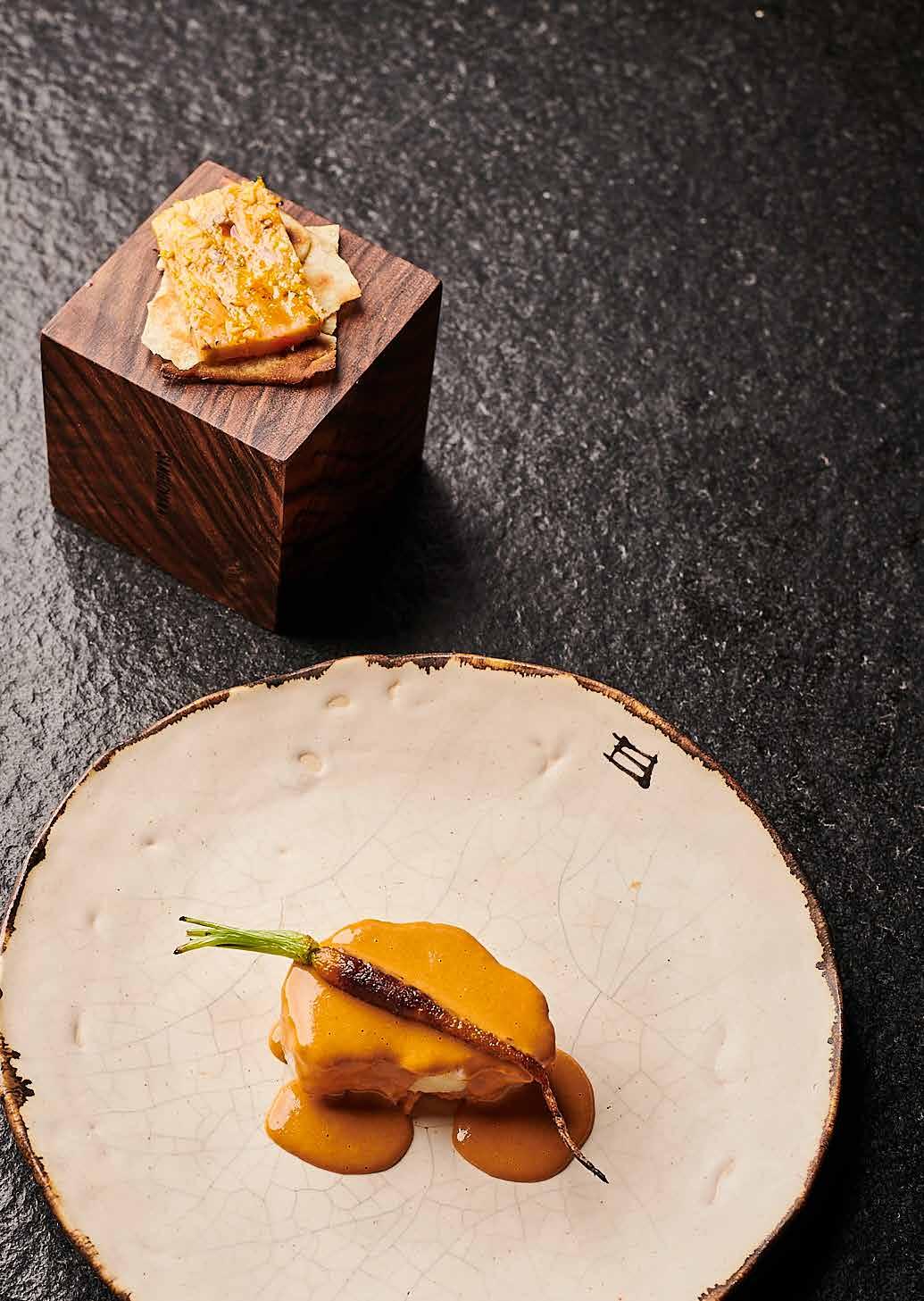
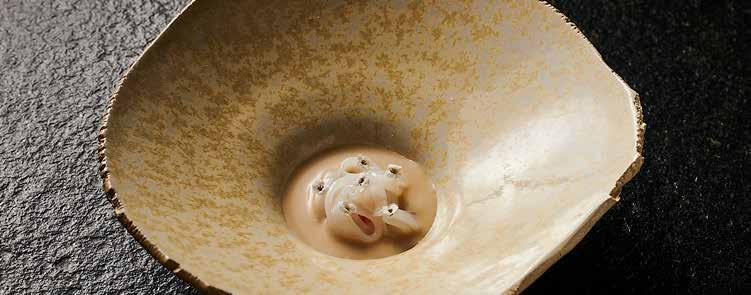
En el nuevo menú degustación de CEBO siguen siendo prota gonistas el producto de tempo rada, los fondos reducidos y las salsas, a base de pocos ingre dientes, cuyo resultado son platos elegantes, estéticos y cargados de sabor e identidad. Pero Sanz y Sa huquillo dan un paso cualitativo incor porando combinaciones más complejas técnicamente y con extraordinarios jue gos culinarios de mar y montaña: Quis
“We are very grateful and happy that the Michelin Guide has recognized the work of the entire team at CEBO. After receiving last
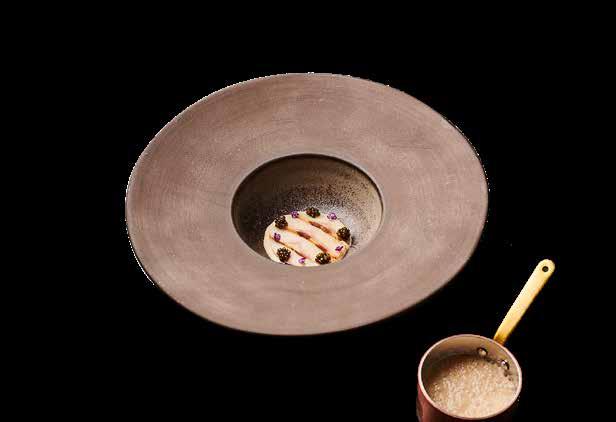
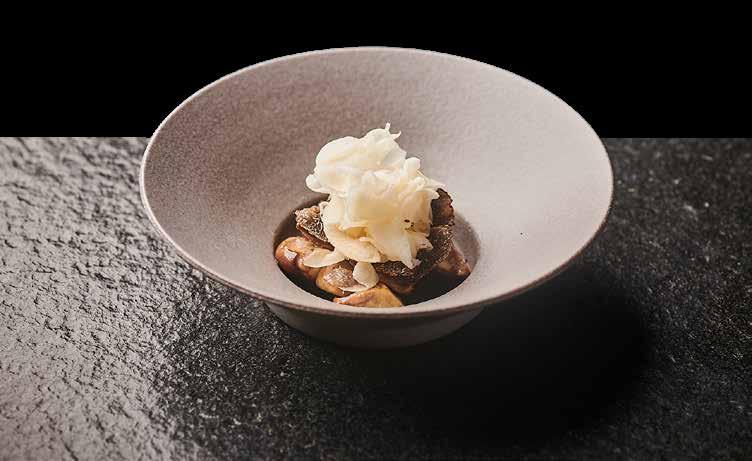
quilla cruda aliñada y escabeche de gallo; Angulas del Miño y salsa de pieles de bacalao y pollo; Boletus con glaçê de conejo de monte y trufa; Bogavante azul salvaje y arroz carnaroli envejecido con chistorra; Calamar de anzuelo y lácteo de rancio ibérico; Guiso de tendones y cocochas.
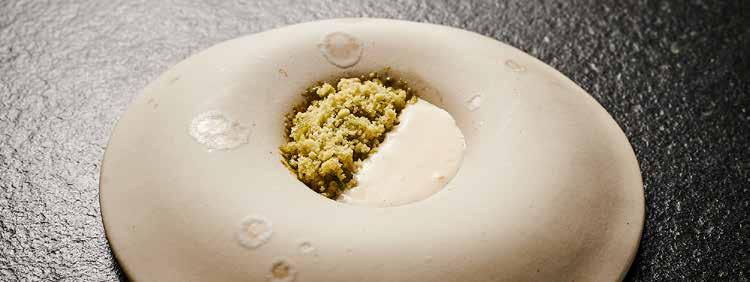
Una cocina esencial, desnuda de artificios y reflexiva para disfrutar en este moderno espacio para 22 comensales. El MENÚ TEMPORADA consta de 17 pasos (PVP 185€) y la versión corta MENÚ CLÁSICOS de 10 (PVP 130€) y en él permanecen clásicos como su Croqueta de Jamón Joselito ganadora en Madrid Fusión 2021 o el Tomate Cuerno de los Andes embotado que ahora se acompaña de un dashi vegetal. El mar se presenta a través de las Navajas de Buceo con gazpachuelo de algas; el Esturión ahumado y caviar Beluga o el Rape de barriga negra y salsa de bivalvos. Las carnes llegan en una pechuguita de Codorniz de grano, salsa de col y hoja de ostra con su buñuelo de un guiso de sus muslitos; y la Vaca mestiza madurada con salsa bourguinon. En el apartado de los postres, Leche fresca de cabra con maíz oxidado y Castaña gallega asada con torreznos ibéricos.
In CEBO’s new tasting menu, seasonal products, reduced ingredients and sauces, based on few ingredients, continue to be the protagonists, resulting in elegant, aesthetic dishes, full of flavor and identity. But Sanz and Sahuquillo take a qualitative step forward by incorporating more technically complex combinations and with extraordinary culinary games of sea and mountain: raw shrimp seasoned and cock pickled; elvers from Minho and sauce of cod and chicken skins; boletus with glaçê of wild rabbit and truffle; wild blue lobster and carnaroli rice aged with chistorra; squid hook and dairy of rancid Iberian; stew of tendons and cocochas.
An essential cuisine, stripped of artifice and thoughtful to enjoy in this modern space for 22 diners. The SEASONAL MENU consists of 17 steps (RRP 185€) and the short version CLASSIC MENU of 10 (RRP 130€) and in it remain classics such as its Joselito Ham Croquette winner in Madrid Fusion 2021 or the bottled Tomato Cuerno de los Andes that is now accompanied by a vegetable dashi. The sea is presented through the Buceo razor clams with seaweed gazpachuelo; the smoked sturgeon and Beluga caviar or the black belly monkfish and bivalve sauce. The meats come in a breast of grain
La bodega corre a cargo de Marisa de Sande, atesorando una gran variedad de referencias y ofreciendo la posibilidad de armonizar los menús. En la sala, todos los detalles se cuidan al máximo bajo la dirección de Yassine Khazzari Charif.
quail, cabbage sauce and oyster leaf with its fritter of a stew of its thighs; and the matured crossbred cow with bourguinon sauce. In the dessert section, fresh goat’s milk with oxidized corn and roasted Galician chestnut with Iberian torreznos.
Re staurante CEBO – Madrid HOTEL URBAN 5*GL www.cebomadrid.com · (+34) 917 877 770
Abierto de martes a sábado / Open Tuesday to Saturday Mediodía/ Lunch : 13:30h - 15:00h. Noche/ Dinner: 20:30h - 21:30h.
CERRADO DOMINGOS, LUNES Y FESTIVOS. CLOSED ON SUNDAYS, MONDAYS AND BANK HOLIDAYS
The wine cellar is in charge of Marisa de Sande, treasuring a great variety of references and offering the possibility of harmonizing the menus. In the dining room, all the details are taken care of to the maximum under the direction of Yassine Khazzari Charif.


THE DERBY HOTELS GROUP GROWS WITH AN APARTMENT
BUILDING IN PLAZA EUROPA
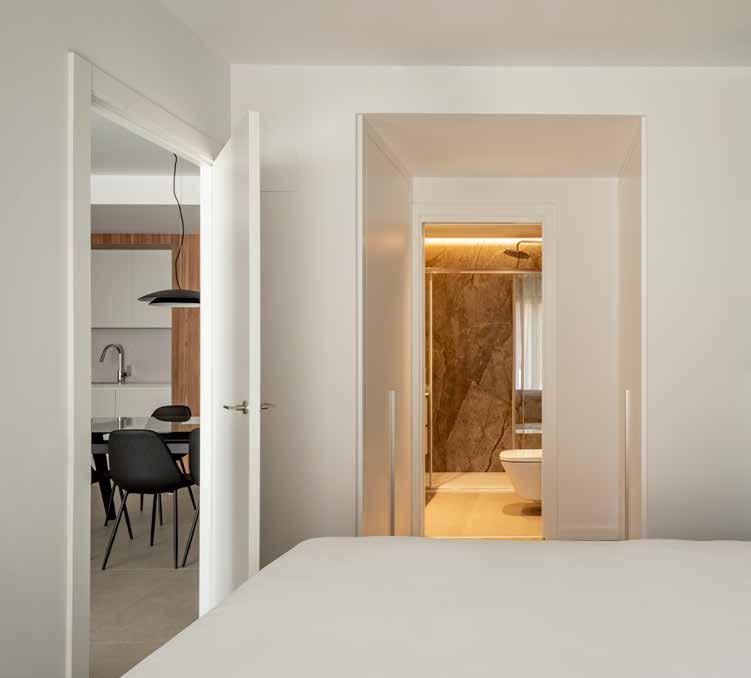
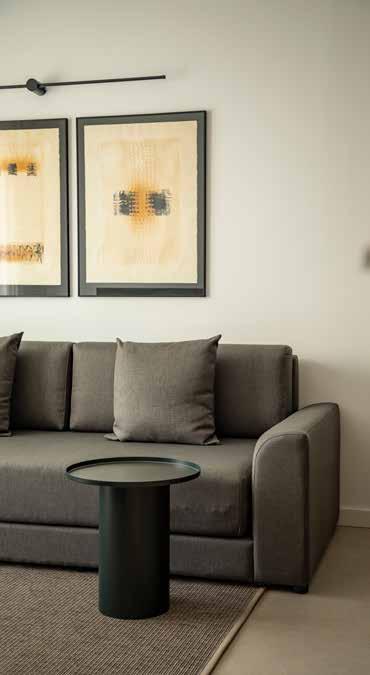
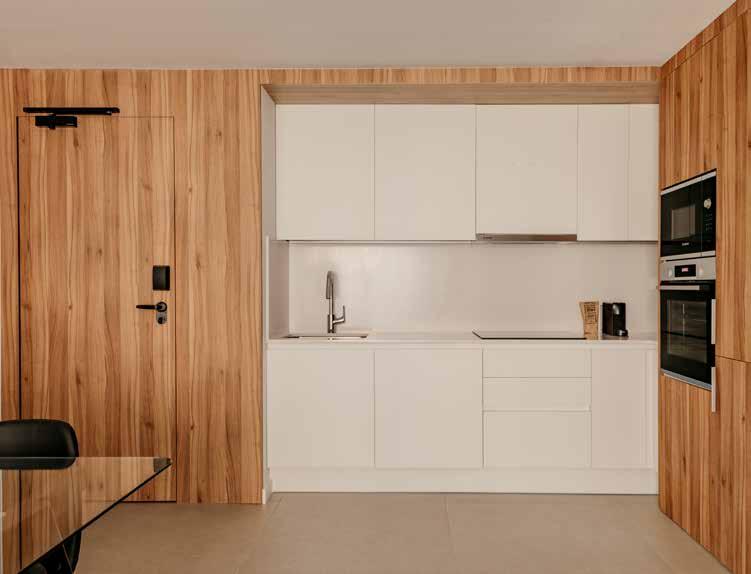
Este verano dimos un nuevo impulso a Barcelona Apartment, nuestra división de apartamentos turísticos, con la inauguración del edificio Europa Barcelona Apartment, situado junto a la Plaza Europa de L’Hospitalet. Es un inmueble de nueva construcción que cuenta con 22 apartamentos entre 35 y 80 metros cuadrados, con capacidad para tres y seis personas.
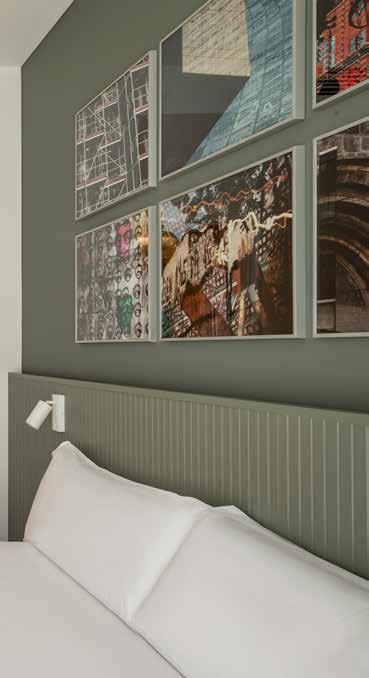
This summer we gave a new boost to Barcelona Apartment, our tourist flat division, with the inauguration of the Europa Barcelona Apartment building, located next to Plaza Europa in L’Hospitalet. It is a new building with 22 flats between 35 and 80 square metres, with capacity for three and six people.
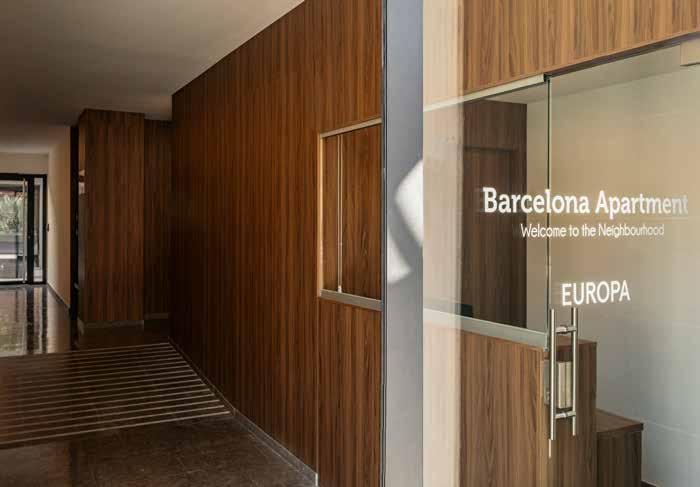
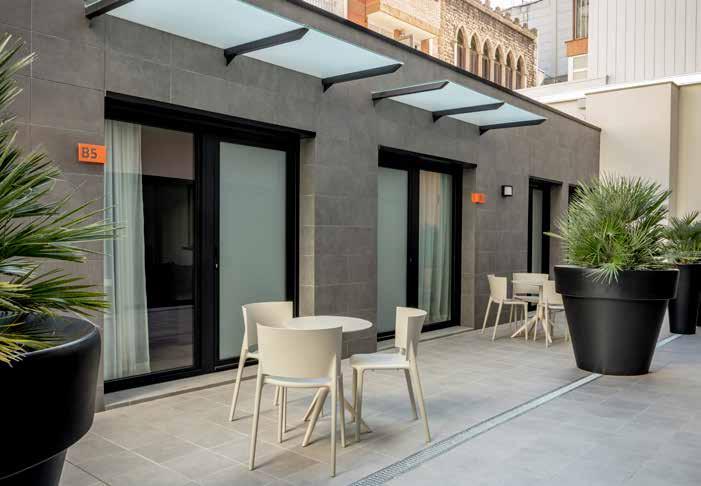
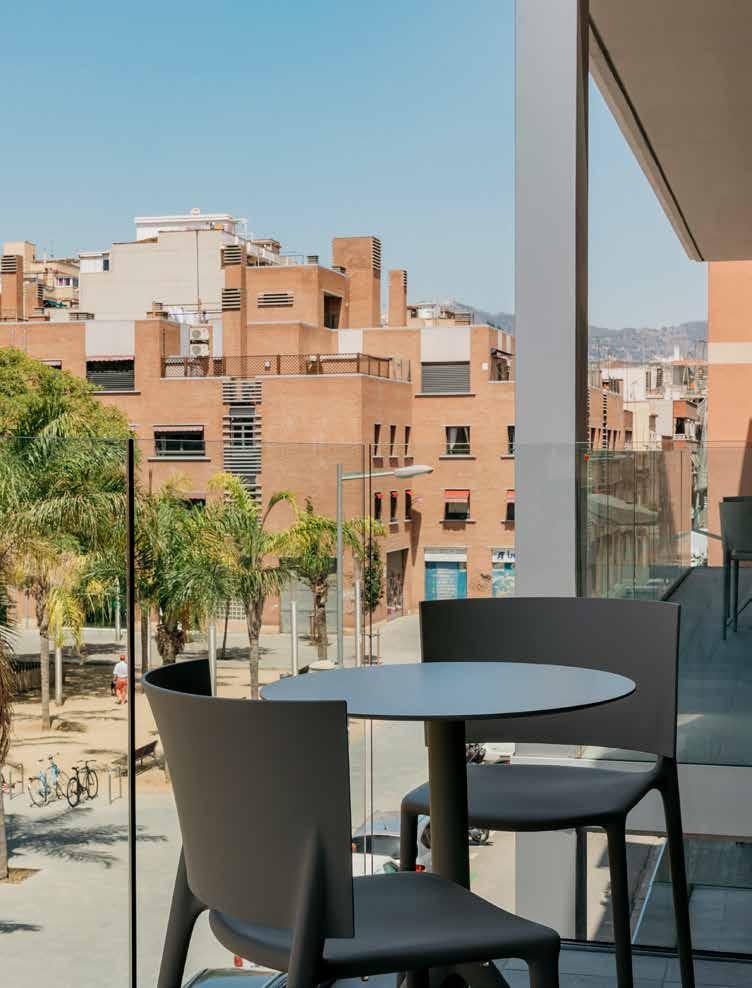
Se trata del octavo edificio completo de apartamentos que se incorpora a Barcelona Apartment, llevando nuestra marca hasta la zona de la Plaza Europa, que es nueva para nosotros, muy bien conectada y que atrae tanto a turistas de ocio como a visitantes profesionales que van a los salones de Fira de Barcelona.
This is the eighth complete apartment building to join Barcelona Apartment, bringing our brand to the Plaza Europa area, which is new to us, very well connected and attracts both leisure tourists and trade visitors to the Fira de Barcelona trade fairs.
Europa Barcelona Apartment es un edificio nuevo con un patio central en el barrio de más reciente desarrollo en el área de Barcelona. Su privilegiada ubicación se beneficia tanto del recinto de Fira de Barcelona a 5 minutos andando, sede de las principales ferias, congresos y eventos corporativos de la ciudad, como de una conexión directa con el centro turístico e histórico de Barcelona a través de la avenida principal Gran Via con múltiples líneas de autobús y estaciones de metro Europa-Fira, Provençana e Ildefons Cerdà y a 10 minutos en coche del aeropuerto.
Barcelona Apartment nació en 2001, cuando Derby Hotels puso en marcha un primer edificio de apartamentos turísticos en el Born para diversificar su activi -
Europa Barcelona Apartment is a new building with a central courtyard in the most recently developed neighbourhood in the Barcelona area. Its privileged location benefits from both the Fira de Barcelona exhibition centre a 5 minute walk away, home to the city’s main trade fairs, congresses and corporate events, and a direct connection to the tourist and historical centre of Barcelona via the main avenue Gran Via with multiple bus lines and metro stations Europa-Fira, Provençana and Ildefons Cerdà and a 10 minute drive from the airport.
Barcelona Apartment was founded in 2001, when Derby Hotels started up its first tourist apartment building in the Born district to diversify its hotel busi -
dad hotelera. Hoy esta división integra el Aparthotel Aramunt, situado en la calle Muntaner; el Aparthotel La República, en la calle Pujades; el Aparthotel Allada, en el Born; los Apartamentos Gran de Gràcia y los Apartamentos Milà, en Gràcia; los Apartamentos Val, en la calle Valencia; y los Apartamentos Villarroel, todos ellos en Barcelona; a los que ahora se suma el complejo Europa, en Hospitalet.
Todos los huéspedes de Europa Barcelona Apartment están invitados a visitar el Museo Egipcio de Barcelona de forma gratuita.
www.barcelona-apartment.com
ness. Today this division includes the Aparthotel Aramunt, located on Carrer Muntaner; the Aparthotel La República, on Carrer Pujades; the Aparthotel Allada, in the Born; the Gran de Gràcia Apartments and the Milà Apartments, in Gràcia; the Val Apartments, on Carrer Valencia; and the Villarroel Apartments, all in Barcelona; to which the Europa complex, in Hospitalet, has now been added.
All Europa Barcelona Apartment guests are invited to visit the Egyptian Museum of Barcelona free of charge.
www.barcelona-apartment.com
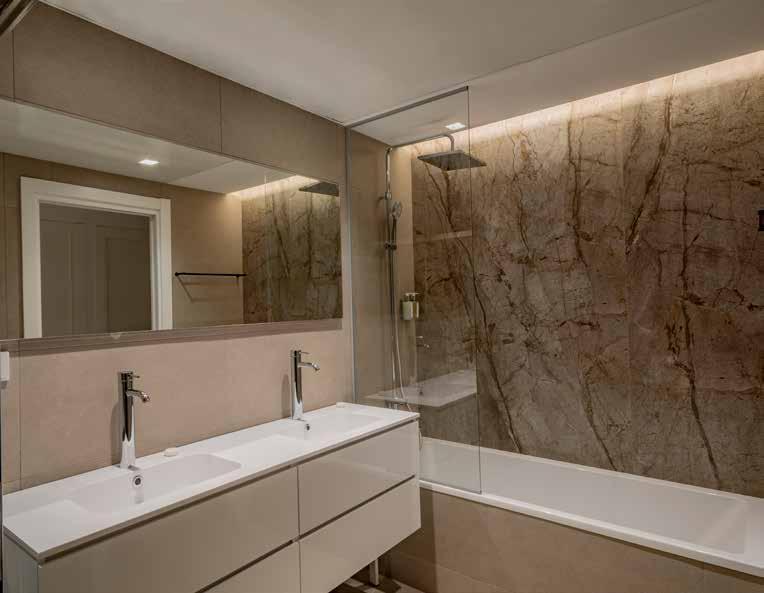
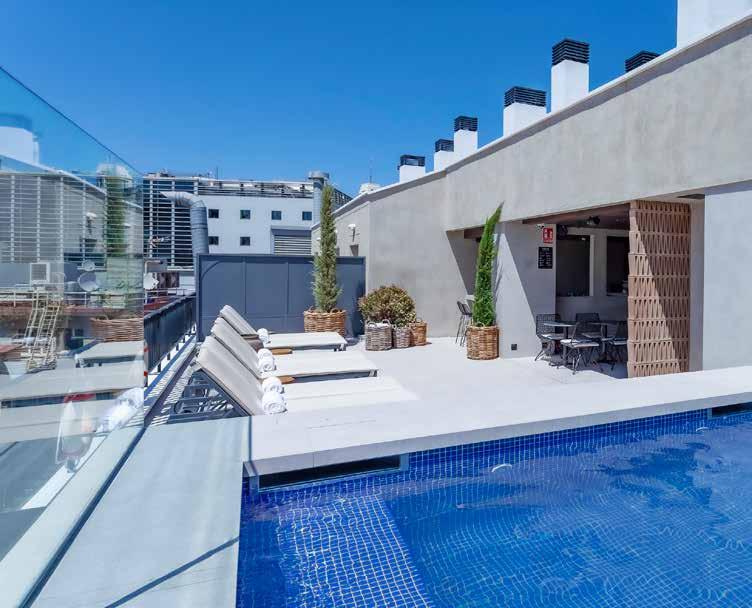
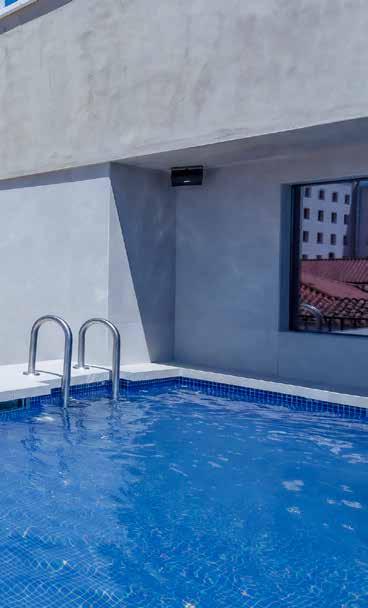
Paralelamente, también abordamos la reforma de la quinta planta del Hotel Villa Real 5* de Madrid, que ha estrenado una terraza con piscina y habitaciones nuevas, como una gran suite. Hemos reformado la planta ejecutiva y eliminado cinco habitaciones dúplex para abrir una terraza con piscina, un equipamiento que hasta ahora no tenía este hotel, pero que hacía mucha falta. Es un proyecto que añade un valor importante al establecimiento. Con una categoría de cinco estrellas y más de cien habitaciones, el Villa Real se encuentra en la céntrica Plaza de las Cortes de la capital española, frente al Congreso de los Diputados ya escasos metros de la Puerta del Sol. www.hotelvillareal.com
WE CONTINUE TO INVEST IN OUR FUTURE
At the same time, we are also tackling the refurbishment of the fifth floor of the 5* Hotel Villa Real in Madrid, which has opened a terrace with a swimming pool and new rooms, such as a large suite. We have refurbished the executive floor and eliminated five duplex rooms to open a terrace with a swimming pool, a facility that this hotel did not have until now, but which was sorely needed. It is a project that adds significant value to the establishment. With a five-star category and more than one hundred rooms, the Villa Real is located in the central Plaza de las Cortes in the Spanish capital, opposite the Congress of Deputies and just a few metres from the Puerta del Sol. www.hotelvillareal.com
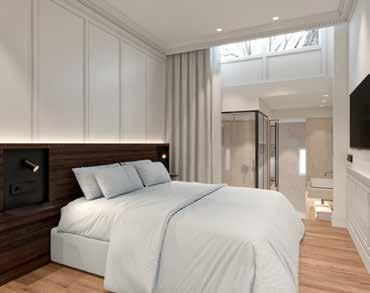
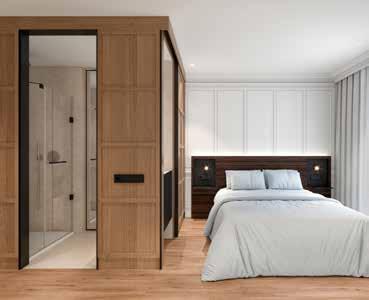
Por último, nuestra empresa invertirá 14 millones en la reforma integral del Caesar Hotel en Londres, situado junto a Hyde Park, en el distrito de Bayswater. Se trata de un hotel boutique de cuatro estrellas y 140 habitaciones que ahora se reducirán a 120 para mejorar las prestaciones del establecimiento. www.thecaesarhotel.com
Finally, our company will invest 14 million in the complete refurbishment of the Caesar Hotel in London, located next to Hyde Park, in the Bayswater district. This is a four-star boutique hotel with 140 rooms, which will now be reduced to 120 to improve the hotel’s facilities. www.thecaesarhotel.com
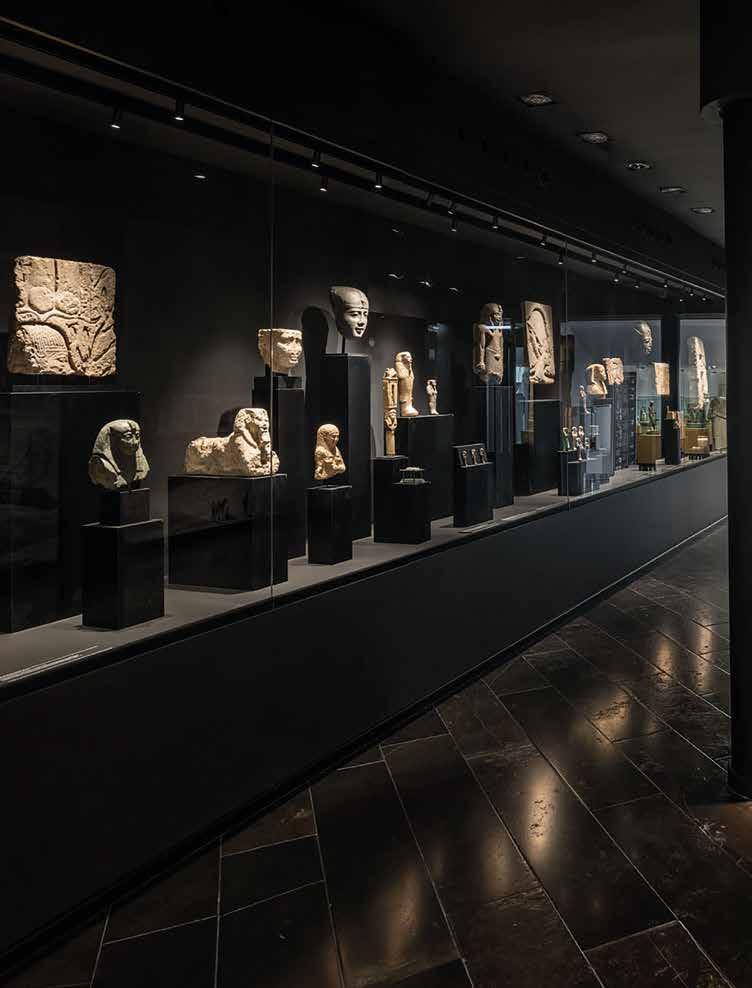
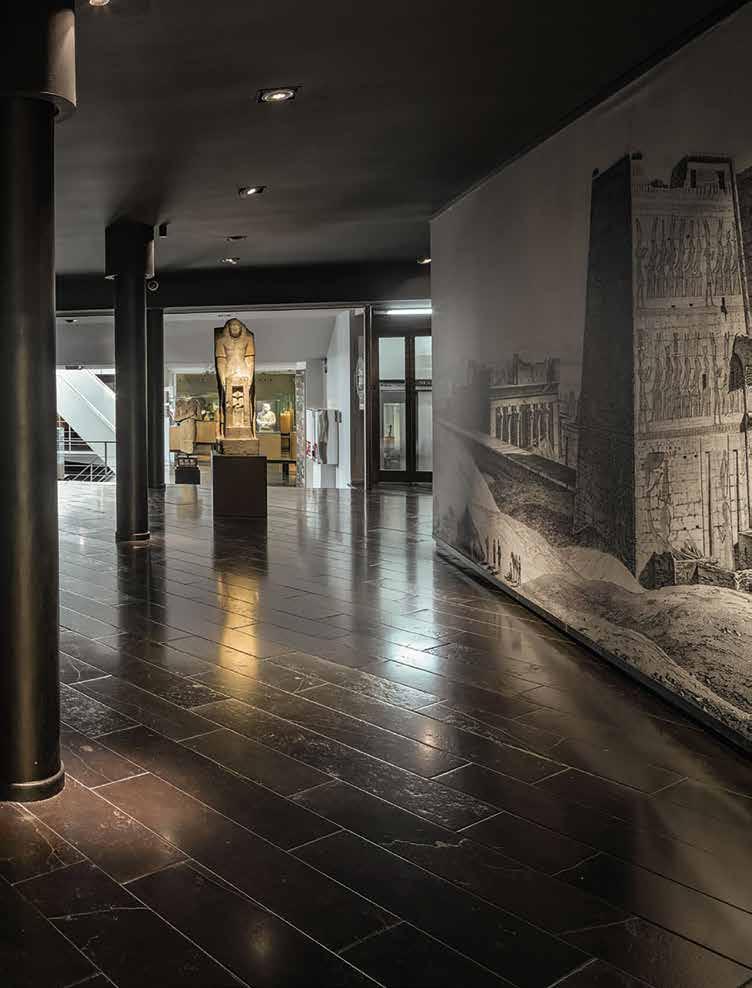
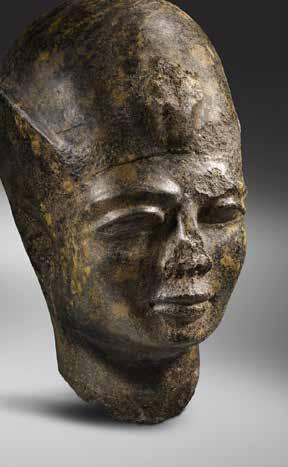
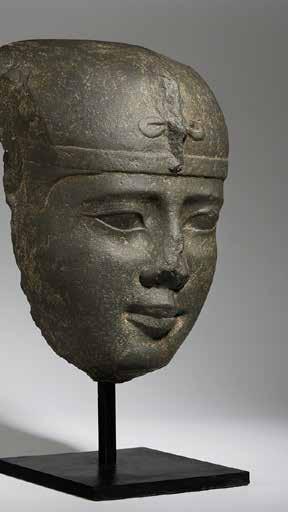
En sus primeros treinta años de vida el Museu Egipci de Barcelona se ha convertido en una referencia obligada en el mundo de la Egiptología. Con más de 1200 obras, ofrece al visitante una muestra completa de los elementos más característicos de la cultura material faraónica, objetos presentes en la vida cotidiana, en las tumbas o en los templos dedicados a los dioses.
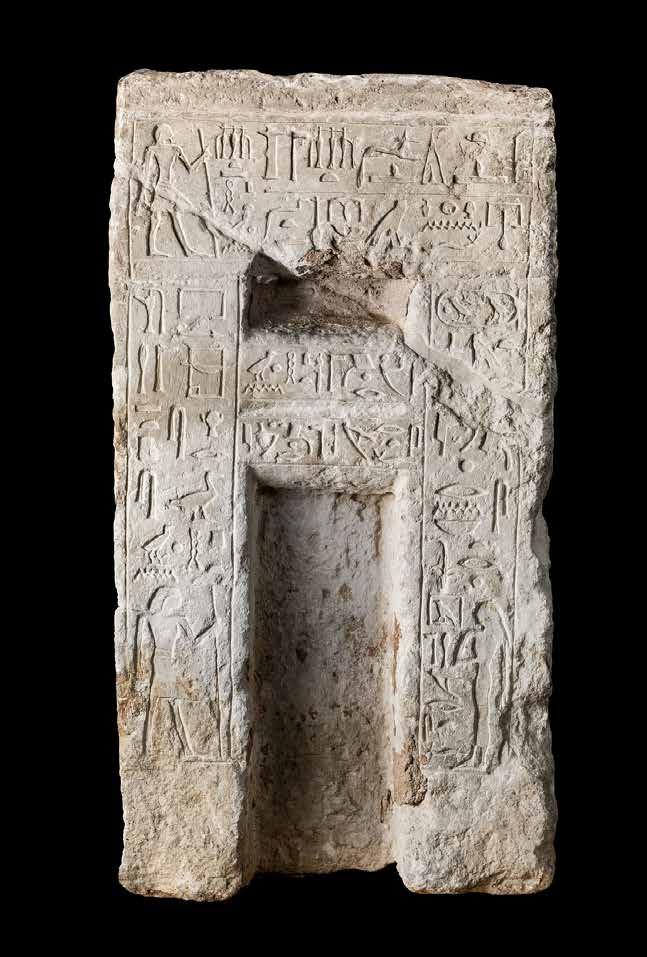
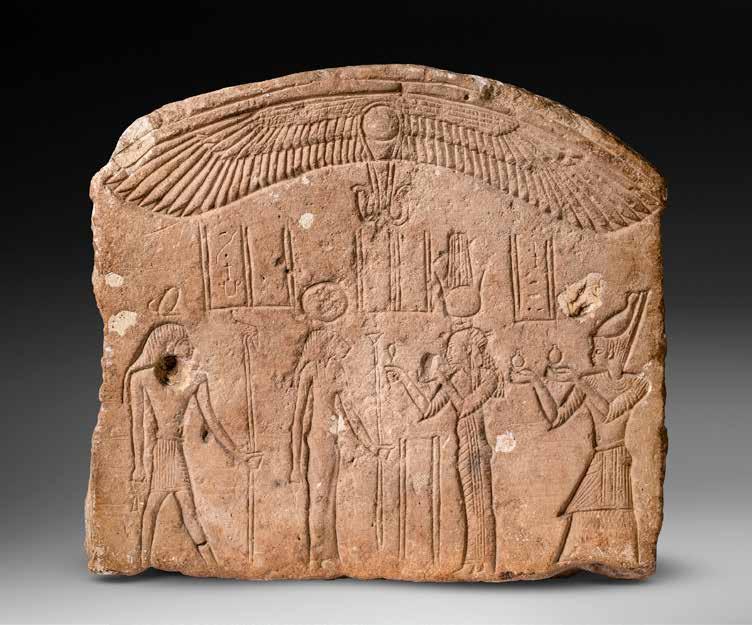
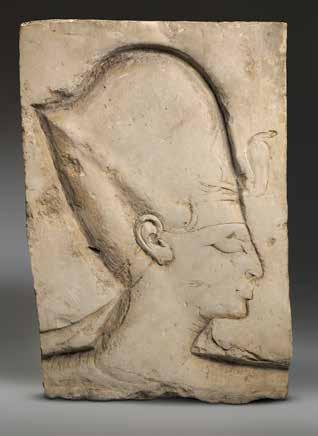
Uno de los ámbitos temáticos más importantes es el dedicado al faraón, con el que se inicia el recorrido del Museo. Está formado por obras vinculadas por diversas razones a la figura del monarca expuestas en orden cronológico. Desde Cleopatra (5130 a.C.), que realiza ofrendas a la diosa Sejmet en el luneto de una estela hasta Quéops (2551-2528 a.C.), citado en otra estela por Meritites, una mujer que ejerció como sacerdotisa del culto funerario del constructor de la gran pirámide.
In its first thirty years of existence, the Egyptian Museum of Barcelona has become an obligatory point of reference in the world of Egyptology. With more than 1200 works, it offers visitors a complete display of the most characteristic elements of Pharaonic material culture, objects present in everyday life, in tombs and in temples dedicated to the gods.
One of the most important thematic areas is that dedicated to the Pharaoh, which begins the Museum’s tour. It is composed of works linked for various reasons to the figure of the monarch, displayed in chronological order. From Cleopatra (51-30 BC), who makes offerings to the goddess Sekhmet on the lunette of a stele, to Cheops (2551-2528 BC), mentioned on another stele by Meritites, a woman who served as a priestess in the funerary cult of the builder of the Great Pyramid.
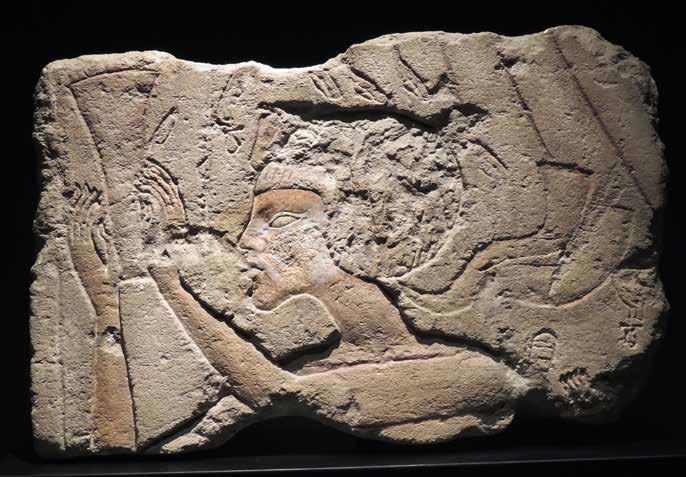
The New Kingdom is the best represented period: small objects bearing the names of the great conqueror Thutmose III (14791425 BC) and his aunt/stepmother Pharaoh Hatshepsut (14731458 BC); also stand out the sculpted head of Amenhotep III (1391-1353 BC) and a parietal relief with the torso of his son, the “revolutionary” Akhenaten (1353-1335 BC).
El Reino Nuevo es la época mejor representada: pequeños objetos con los nombres del gran conquistador Tutmosis III (1479-1425 a.C.) y de su tía/madrastra la faraón Hatshepsut (1473-1458 a.C.); destacan también la cabeza esculpida de Amenhotep III (13911353 a.C.) y un relieve parietal con el torso de su hijo, el “revolucionario” Ajenatón (1353-1335 a.C.).
Una figurilla funeraria procedente de su tumba y un relieve parietal incorporan a este repertorio al “renovador” Seti I (1306-1290 a.C.) y a su hijo, Ramsés II (1290-1224 a.C.), el Grande por excelencia de los más de 300 faraones conocidos.
A pesar de que reinaron en un Egipto que había dejado atrás sus momentos más gloriosos, hubo monarcas que recuperaron temporalmente una parte del esplendor pasado. Es el caso de Psusenes I (1040-992 a.C.),
A funerary figurine from his tomb and a wall relief add to this repertoire the “renovator” Seti I (1306-1290 BC) and his son, Ramesses II (1290-1224 BC), the Great par excellence of the more than 300 known pharaohs.
Although they reigned in an Egypt that had left behind its most glorious moments, there were monarchs who temporarily recovered some of the past splendour. This is the case of Psusenes I (1040-992 BC), the “black” pharaoh Taharqa (690-664 BC), Amasis (570-526 BC) and Nectanebo I (380-362 BC), represented by two funerary figurines, a votive sistrum and an exceptional sculpture.
We invite visitors to delve into the fascinating world of Pharaonic Egypt at the hands of its kings, who were ultimately responsible to gods and men for ensuring the proper functioning of the cosmos.
el faraón “negro” Taharqa (690-664 a.C.), Amasis (570-526 a.C.) y Nectánebo I (380-362 a.C.), representados por dos figurillas funerarias, un sistro votivo y una excepcional escultura.
Invitamos a los visitantes a adentrarse en el fascinante mundo del Egipto faraónico de la mano de sus reyes, responsables últimos ante dioses y hombres de velar por el correcto funcionamiento del cosmos.
www.museuegipci.com
Lunes - Sábado | Monday - Saturday: 10:00h a 14:00 y 16:00h a 19:30h
Domingos | Sunday: 10:00h a 14:00h Cerrado 1 y 6 de enero + 25 y 26 diciembre | Closed January 1st and 6th; December 25th and 26th
*Los huéspedes de Derby Hotels Collection pueden acceder libremente al museo durante su estancia en Barcelona / Derby Hotels Collection guests have free access to the museum during their stay in Barcelona.
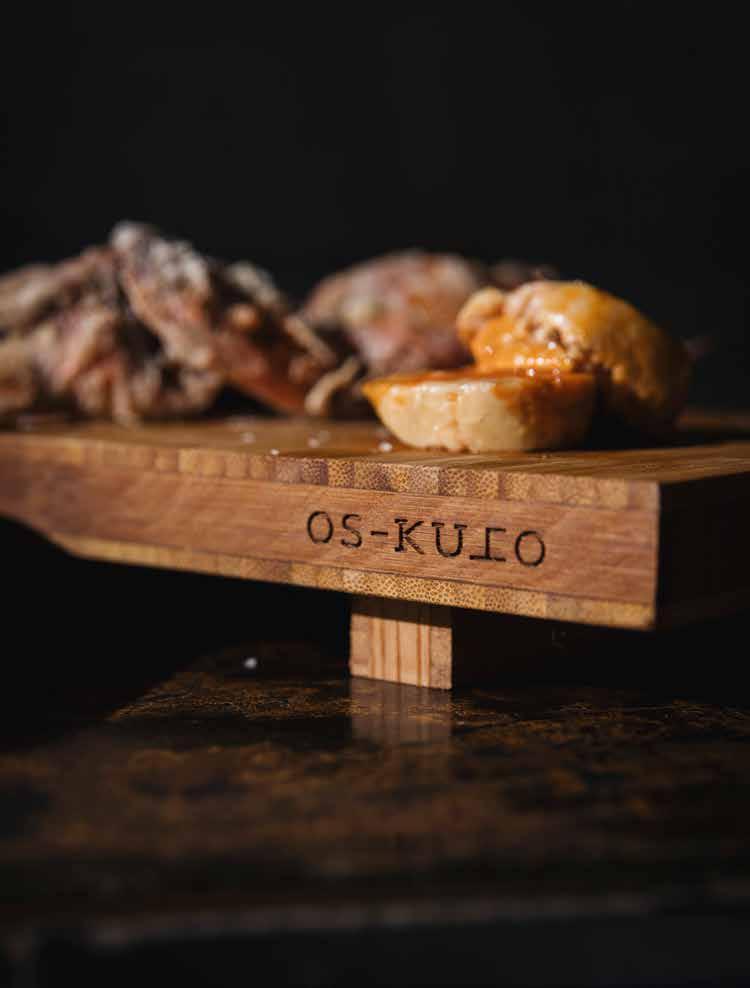
El sofisticado ambiente de los sushi bars de Londres, Paris o Nueva York llega por fin a Barcelona y encuentra en Os-Kuro Sushi Bar & Robata su particular interpretación.
The sophisticated atmosphere of the sushi bars of London, Paris and New York has finally arrived in Barcelona and Os-Kuro Sushi Bar & Robata has its own particular interpretation.
Como su nombre indica, en un ambiente sutil y de baja luz, el pescado ejecutado al momento con técnica japonesa, junto a la brasa ancestral nipona, son la base del proyecto personal de Joaquim Clos, director general de Derby Hotels Collection. Os-Kuro nace de la inquietud de ofrecer a barceloneses y visitantes un restaurante japonés purista, esencial y riguroso con los productos de allí y de aquí, creativo con las recetas y exigente con el maridaje de sakes.
As its name suggests, in a subtle, low-light atmosphere, fish cooked on the spot using Japanese techniques, together with the ancestral Japanese grill, are the basis of the personal project of Joaquim Clos, general manager of Derby Hotels Collection. Os-Kuro was born from the desire to offer locals and visitors a purist Japanese restaurant, essential and rigorous with the products from there and here, creative with the recipes and demanding with the pairing of sakes.
Los nuevos platos como el chawanmushi de cangrejo real, el salmonete integral con ankimo, el ikayaki de anzuelo con anisados o las setas de temporada con panceta y yema curada, son ejemplo de la evolución desde la barra japonesa, a la vista del comensal, hacia una cocina nipona intensa, de disfrute y de sobremesa. Nueve sakes componen la opción de maridaje acorde con cada plato, sea frío o caliente, siempre bajo la guía de una sumiller especializada y apasionada de esta bebida.
New dishes such as king crab chawanmushi, whole red mullet with ankimo, hook ikayaki with aniseed or seasonal mushrooms with bacon and cured egg yolk, are examples of the evolution from the Japanese bar, in full view of the diner, towards an intense Japanese cuisine, for enjoyment and after-dinner conversation. Nine sakes are paired with each dish, hot or cold, always under the guidance of a specialised sommelier who is passionate about this drink.
Un Bocado de Maravilla. La técnica del flan japonés llevado a su máxima expresión. Este delicado flan de huevo japonés es elevado a nuevas alturas con la adición de cangrejo real, que aporta un sabor a mar inigualable. La suavidad del flan se combina a la perfección con la textura tierna del cangrejo, creando una experiencia culinaria única.
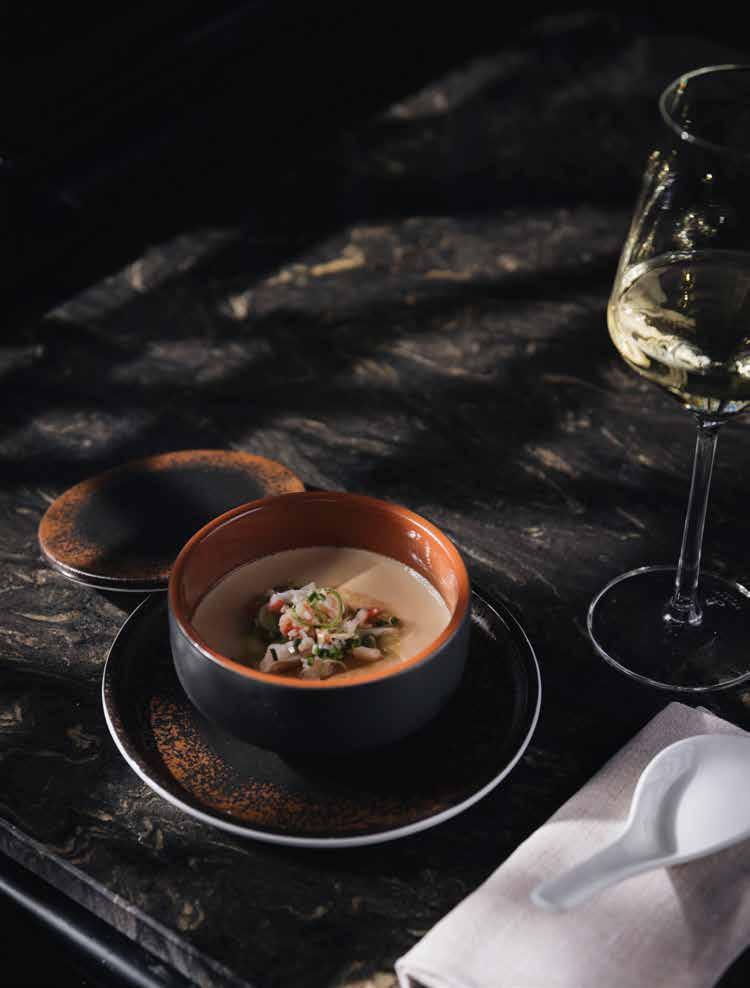
KING CRAB CHAWANMUSHI:
A Mouthful of Wonder. Japanese flan technique taken to its finest expression. This delicate Japanese egg flan is elevated to new heights with the addition of king crab, which brings an unparalleled taste of the sea. The softness of the flan combines perfectly with the tender texture of the crab, creating a unique culinary experience.
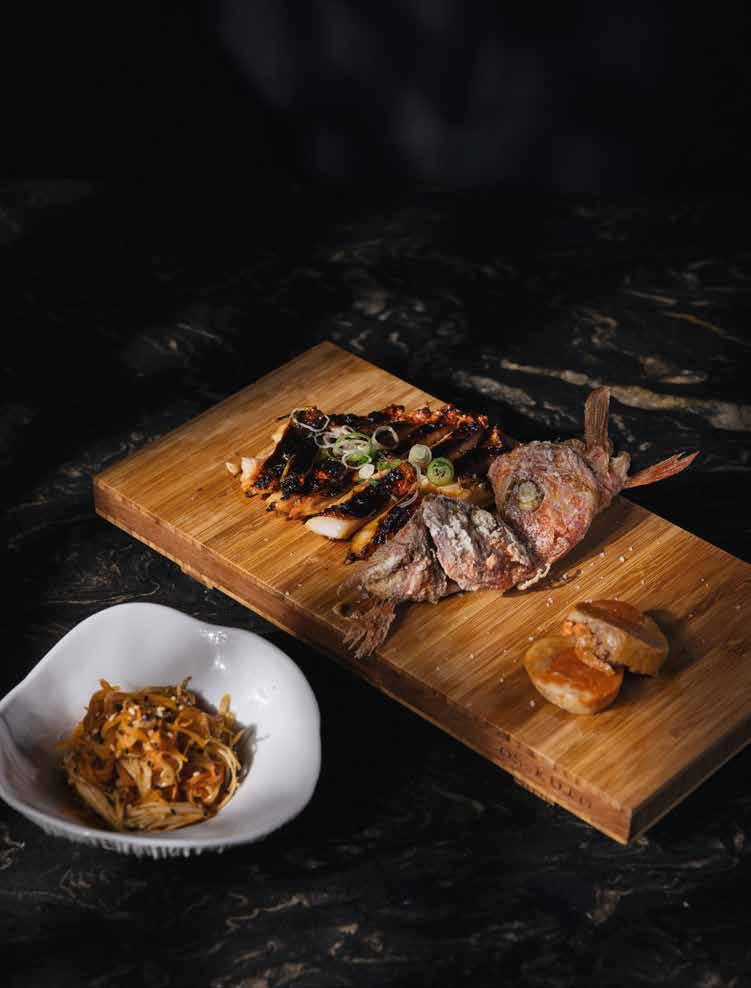
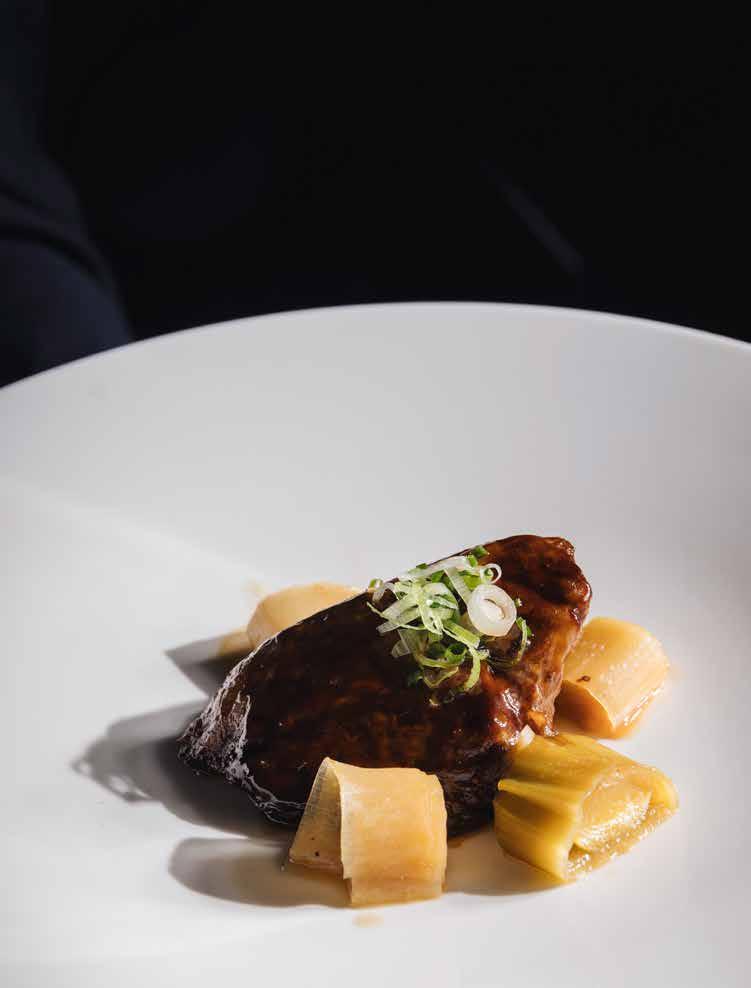
Un Maridaje Perfecto, un abrazo al alma. Un plato que combina la frescura del salmonete con la cremosidad del hígado de rape, conocido como Ankimo. La mezcla de texturas y sabores es un regalo para los sentidos.
A Perfect Pairing, a hug to the soul. A dish that combines the freshness of red mullet with the creaminess of monkfish liver, known as Ankimo. The mixture of textures and flavours is a gift for the senses.
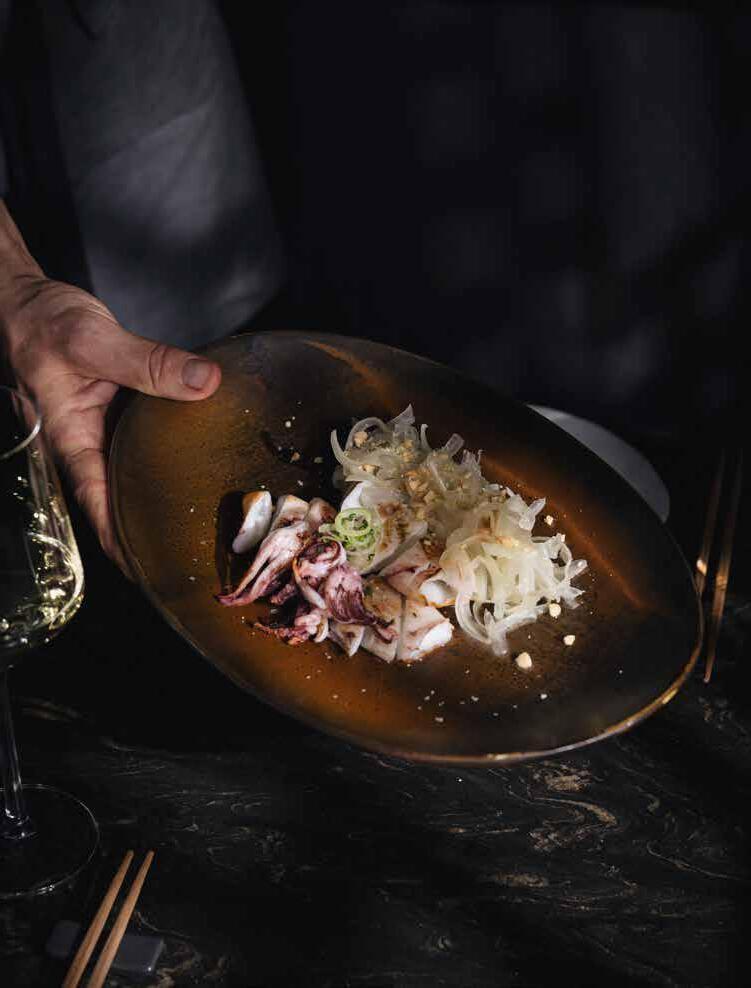
IKAYAKI DE ANZUELO Y ENSALADA DE ANISADOS:
Un Giro Refrescante. Una propuesta al puro estilo del Street food japonés. El calamar a la parrilla es un deleite en sí mismo, pero cuando se sirve con una ensalada de anisados, se convierte en una combinación refrescante que combina lo mejor del verano y la tradición japonesa.
Os-kuro Sushi bar & Robata – Barcelona HOTEL CLARIS 5*GL www.os-kuro.com · (+34) 93 487 62 62
Abierto de martes a sábado / Open Tuesday to Saturday Mediodía/ Lunch : 13:30h – 15:30h Noche / Dinner : 20:00h – 22:30h
CERRADO DOMINGOS Y LUNES. CLOSED ON SUNDAYS AND MONDAYS.
IKAYAKI DE ANZUELO AND ANISEED SALAD:
A Refreshing Twist. A pure Japanese street food proposal. Grilled squid is a delight in itself, but when served with an aniseed salad, it becomes a refreshing combination that combines the best of summer and Japanese tradition.
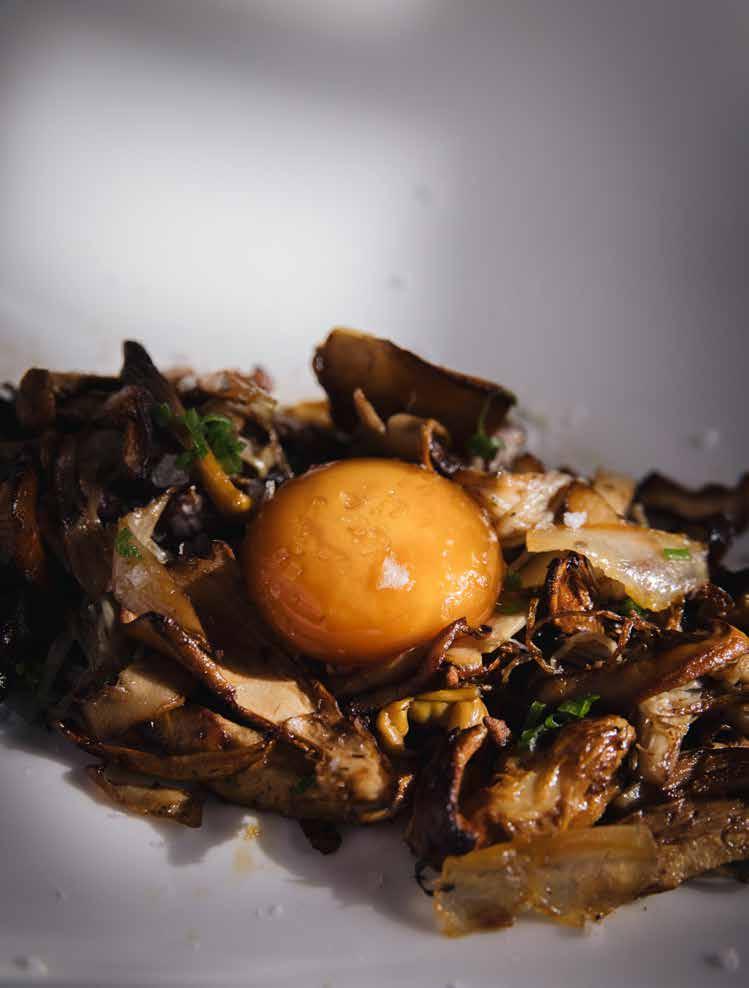
Umami en su Máxima Expresión. Donde Catalunya y Japón se encuentran. Este plato celebra la riqueza del umami con setas de temporada, la decadencia de la panceta de atún y la suavidad de la yema curada. Una combinación que seguro deleitará a los paladares más exigentes.
Umami at its Best. Where Catalonia and Japan meet. This dish celebrates the richness of umami with seasonal mushrooms, the decadence of tuna belly and the smoothness of cured yolk. A combination that is sure to delight the most demanding palates.
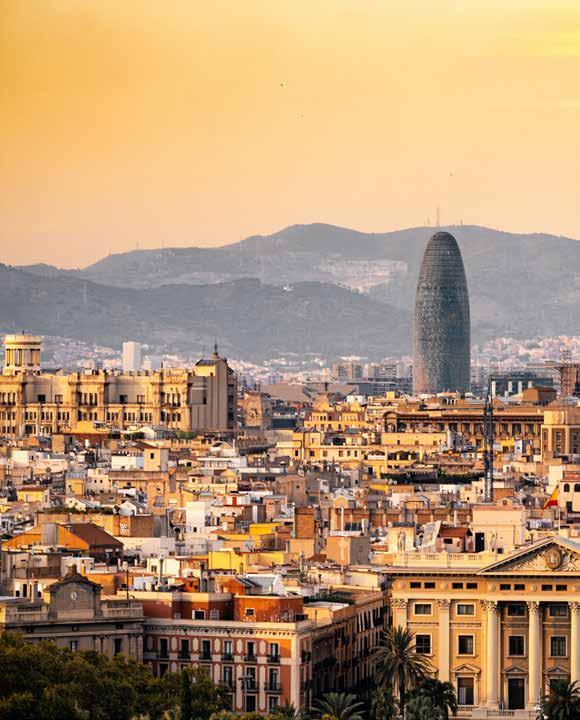
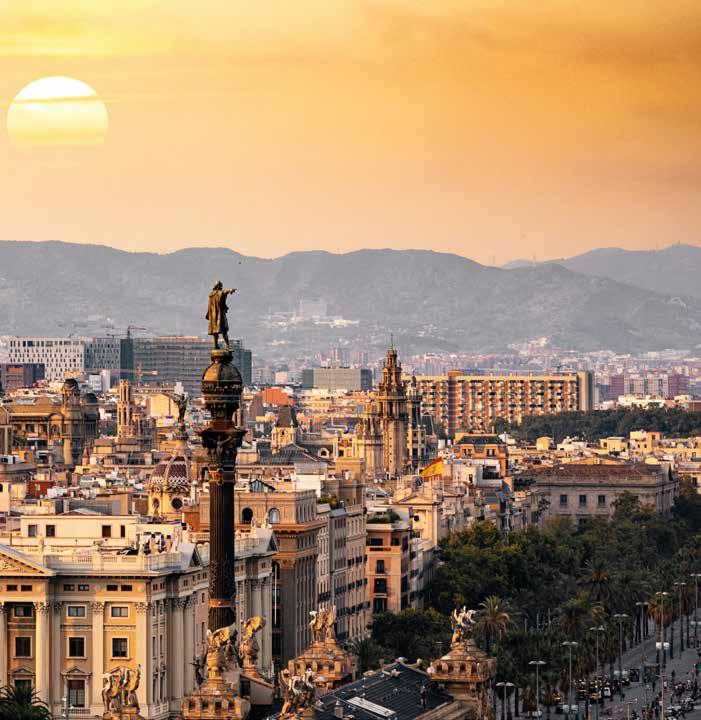
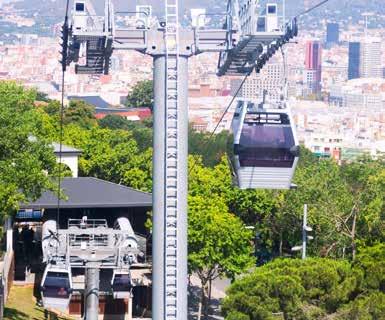
El teleférico de Montjuïc permite conocer desde el aire algunos de los edificios más emblemáticos de Barcelona. La Sagrada Familia, el Camp Nou, la Torre Agbar y la Font Màgica aparecen a vista de pájaro en una de las atracciones más llamativas y simbólicas de la ciudad. Con sus 750 metros de recorrido, la experiencia invita a recrearse con la estampa como si se tratara de un cuadro en movimiento.
The Montjuïc cable car allows you to see some of Barcelona’s most emblematic buildings from the air. The Sagrada Família, Camp Nou, the Agbar Tower and the Magic Fountain can be seen from a bird’s eye view in one of the city’s most striking and symbolic attractions. With its 750-metre route, the experience invites you to enjoy the scenery as if it were a moving painting.
El teleférico conecta, desde hace 50 años, la parte baja de la capital con la cumbre de la montaña de Montjuïc. En su trayecto dispone de tres paradas. La primera está situada en la avenida de Miramar, al lado de la estación del funicular de Montjuïc que comunica la montaña con el Paral·lel. Se trata de una parada esencial desde donde se pueden visitar el Museo Nacional de Arte de Cataluña, la Fundación Miró, el Museo Etnológico, el Pueblo Español, la zona de la Anilla Olímpica y el Museo Olímpico y del Deporte.
For 50 years, the cable car has connected the lower part of the city with the top of Montjuïc mountain. It has three stops along its route. The first is located on Avinguda de Miramar, next to the Montjuïc funicular station that connects the mountain with Paral-lel. This is an essential stop from where you can visit the National Art Museum of Catalonia, the Miró Foundation, the Ethnological Museum, the Spanish Village, the Olympic Ring area and the Olympic and Sports Museum.
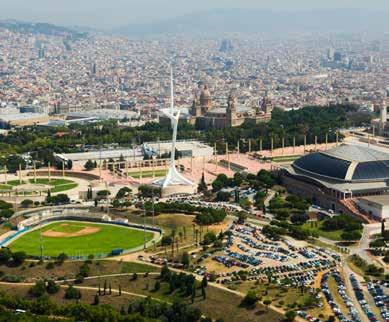
La segunda parada es la del Mirador, donde se puede disfrutar del Mirador del Alcalde, una terraza ajardinada que ofrece una vista impresionante del puerto de Barcelona. En este punto se pueden visitar los jardines de Mossèn Costa y Llobera, uno de los jardines de cactus y plantas suculentas más importantes de Europa.
Cerca de esta parada, situado en una suave pendiente de la montaña de Montjuïc, el Jardín Botánico de Barcelona ofrece al visitante un paseo distinto y muy versátil. La visita cambia con cada estación del año, a través de la flora de cinco regiones del mundo con clima mediterráneo: Australia, California, Chile, Sudáfrica y la cuenca mediterránea. Este parque consta de terrazas distribuidas en diferentes niveles, y conectadas entre sí por tramos de escaleras.
Durante el paseo por el parque del Mirador del Alcal de, se pueden contemplar las esculturas: “Homenatge a Barcelona”, del escultor Josep Maria Subirachs, y la popular “Sardana”, obra de Josep Cañas, que se encuentra justo a la entrada y da la bienvenida a los visitantes.
La última parada se encuentra en el Castillo de Montjuïc, una fortaleza militar de 1640 en la que se realizan actividades culturales. La ubicación privilegiada del Castillo, en la cima de la montaña, permite obtener unas vistas inmejorables sobre Barcelona y sus alrededores. La terraza del patio de armas se convierte así en un mirador de 360º con vistas sobre la ciudad, el puerto, el Mediterráneo, la costa barcelonesa y el Baix Llobregat.
The second stop is the Mirador, where you can enjoy the Mirador del Alcalde, a garden terrace offering a breathtaking view of the port of Barcelona. At this point you can visit the gardens of Mossèn Costa i Llobera, one of the most important gardens of cacti and succulent plants in Europe.
Near this stop, located on a gentle slope of Montjuïc mountain, the Botanical Garden of Barcelona offers visitors a different and very versatile walk. The visit changes with each season of the year, through the flora of five regions of the world with a Mediterranean climate: Australia, California, Chile, South Africa and the Mediterranean basin. The park consists of terraces on different levels, connected by flights of stairs.
During the walk through the Mirador del Alcalde park, you can contemplate the sculptures: “Homenatge a Barcelona”, by the sculptor Josep Maria Subirachs, and the popular “Sardana”, by Josep Cañas, which is located right at the entrance and welcomes visitors.
The last stop is at Montjuïc Castle, a military fortress dating from 1640, where cultural activities are held. The castle’s privileged location at the top of the mountain affords unbeatable views over Barcelona and the surrounding area. The terrace of the parade ground becomes a 360º viewpoint with views over the city, the port, the Mediterranean, the Barcelona coast and the Baix Llobregat.
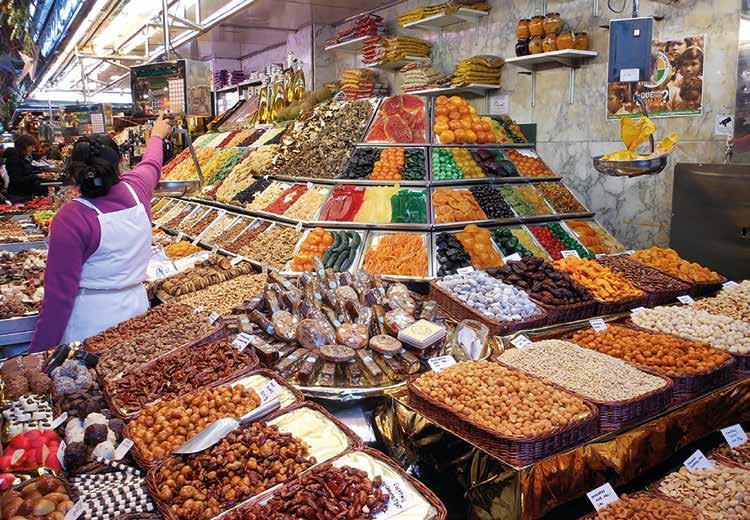
No cabe ya ninguna duda de que la gastronomía es otra forma de conocimiento. Los productos culinarios son una información fidedigna sobre las bondades de un lugar; su tratamiento, dice mucho de la personalidad, la idiosincrasia de un territorio y su prosperidad. La cocina es un aporte necesario a la hora de vislumbrar lo que una ciudad puede decir sobre sí misma.
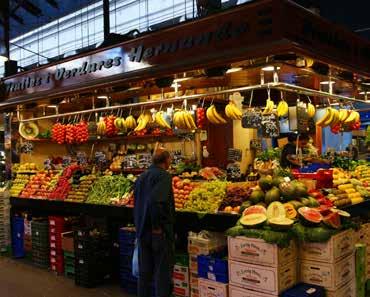
Precisamente, el Mercado de San José, más conocido como “La Boquería”, es una institución. Es un medidor de la actividad imparable de la capital, donde todo parece estar en un continuo estado de movimiento. El paisaje de cientos de productos frescos desplegados en los puestos es como la contemplación de un lienzo
There is no longer any doubt that gastronomy is another form of knowledge. Culinary products are reliable information about the goodness of a place; their treatment says a lot about the personality, the idiosyncrasy of a territory and its prosperity. Cuisine is a necessary contribution when it comes to glimpsing what a city can say about itself.
The San Josep Market, better known as “La Boqueria”, is an institution. It is a gauge of the unstoppable activity of the capital, where everything seems to be in a continuous state of movement. The landscape of hundreds of fresh products displayed on the stalls is like the contemplation of a canvas in a universal art
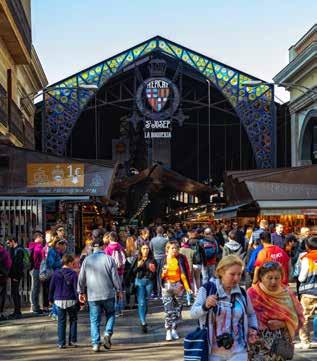
en una pinacoteca universal. La profusión de colores, olores y sonidos es la principal motivación para acercarse a uno de los mercados más genuinos de Barcelona. Un ritmo diario que invita al disfrute de los sentidos.
Los puestos ofrecen no solo productos locales de primera calidad y frescos, también hay puestos con productos del mundo, una auténtica fusión, tal y como es Barcelona. Inmerso en el corazón de la ciudad desde 1836, en la Rambla, la clientela se diversifica entre los clientes del barrio y aquellos que acuden a conocer la urbe y encuentran en el mercado un momento de conexión con la gastronomía.
Los bares, restaurantes y puestos desfilan en un espectáculo visual donde la seña de identidad se centra en el carácter afable de los más de 200 comerciantes que apuestan por la cercanía con el cliente y el trato personalizado.
Entre los numerosos puestos que desfilan ante los ojos hay comercios de todo tipo: carnicerías, fruterías, pollerías, chacinerías, panaderías… que conviven con puestos más novedosos, con productos internacionales, a los que se suman los de dulces y las diferentes barras de productos donde degustar in situ alguna tapa o plato cocinado.
El mercado está ubicado en el lugar que antaño ocupó el Convento de San José, fundado en 1586. Actualmente se trata de una visita obligada en el periplo por la ciudad, un lugar donde el buen ambiente, la calidad de los productos y el trato personal han logrado cautivar tanto a los visitantes como a los clientes habituales.
gallery. The profusion of colours, smells and sounds is the main motivation for visiting one of Barcelona’s most genuine markets. A daily rhythm that invites you to indulge your senses.
The stalls offer not only top-quality, fresh local produce, but also products from all over the world, a true fusion, just as Barcelona is. Immersed in the heart of the city since 1836, on the Rambla, the clientele is diversified between the customers of the neighbourhood and those who come to discover the city and find in the market a moment of connection with gastronomy.
The bars, restaurants and stalls parade in a visual spectacle where the hallmark of identity focuses on the affable character of the more than 200 traders who are committed to customer proximity and personalised service.
Among the numerous stalls that parade before your eyes there are shops of all kinds: butchers, greengrocers, poultry, pork and sausage shops, bakeries... that coexist with more innovative stalls, with international products, as well as sweets and the different product bars where you can try a tapa or cooked dish on the spot.
The market is located on the site once occupied by the Convent of San Josep, founded in 1586. Nowadays it is a must on a visit to the city, a place where the good atmosphere, the quality of the products and the personal service have managed to captivate both visitors and regular customers.
Las Salesas es una de las zonas más de moda de la capital. Al encanto de la arquitectura se une lo chic de sus pequeñas tiendas de diseño y restaurantes que mezclan las últimas tendencias y la tradición. Es un espacio donde se ha logrado conjugar el diseño, el arte y la gastronomía con las apuestas más alternativas.
El barrio discurre entre Prim, el Paseo de la Castellana y la calle Génova. Su buena comunicación por metro es también otro punto a su favor. Son cuatro las estaciones por las que puede accederse al entorno: Chueca, Colón, Tribunal y Alonso Martínez. También, la estación de Cercanías de Recoletos se encuentra a tan solo unos minutos andando y varios autobuses de la EMT recorren las calles.
Su combinación con algunos de los mejores edificios de Madrid y ese toque alternativo ha moldeado un barrio amable, sorprendente, donde se ubican negocios variopintos entre calles peatonales y plazas, como la de París o la de Salesas. Esa invitación a caminar lo han convertido en un barrio tranquilo donde puedes evadirte disfrutando sencillamente de la tranquilidad.
Entre los cafés y las encantadoras pastelerías, destaca el emblemático Café Gijón, escenario de las tertulias literarias de Madrid. Fue fundado en 1888 por el asturiano Don Gumersindo García y ha reunido a intelectuales y escritores
Las Salesas is one of the most fashionable areas of the capital. The charm of the architecture is combined with the chicness of its small designer shops and restaurants that mix the latest trends with tradition. It is a place where design, art and gastronomy have been combined with the most alternative options.
The neighbourhood runs between Prim, Paseo de la Castellana and Calle Génova. Its good metro connections are also another point in its favour. There are four stations from which you can access the area: Chueca, Colón, Tribunal and Alonso Martínez. Also, the Recoletos Cercanías station is just a few minutes’ walk away and several EMT buses run through the streets.
Its combination of some of the best buildings in Madrid and that alternative touch has moulded a friendly, surprising neighbourhood, where a variety of businesses are located between pedestrian streets and squares, such as Paris and Salesas. This invitation to walk has turned it into a quiet neighbourhood where you can escape and simply enjoy the peace and quiet.
Among the cafés and charming pastry shops, the emblematic Café Gijón stands out, the scene of Madrid’s literary gatherings. It was founded in 1888 by the Asturian Don Gumersindo García and has brought together
como Ramón y Cajal, Pio Baroja, Pérez Galdós, Valle-Inclán, Maruja Mallo, Celia Gámez, Carmen de Mora o Angelina Gatell.
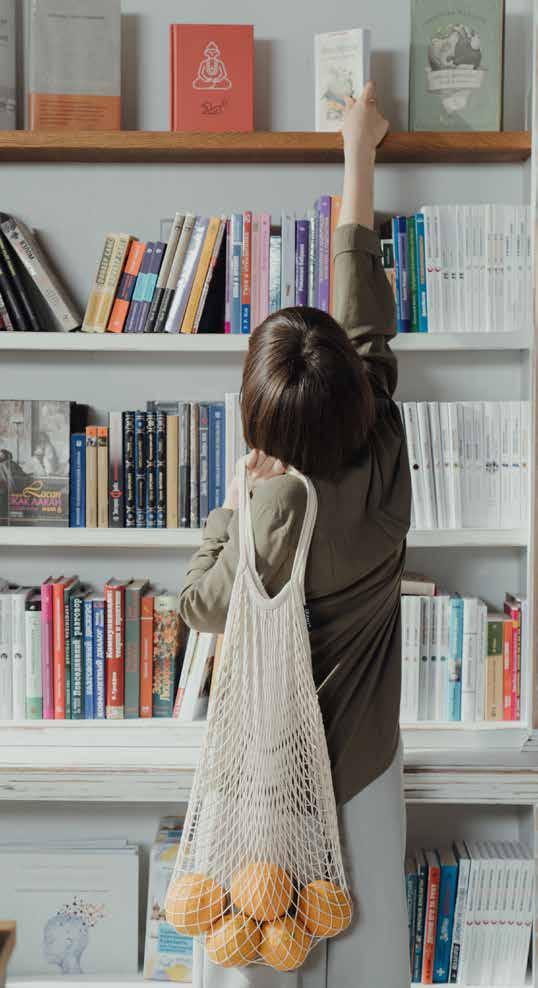
Los bares y restaurantes rezuman una gastronomía alternativa, con pequeños bistró que invitan a disfrutar de una delicada taza de café acompañada de un delicioso pedazo de tarta. Hay también librerías que ofrecen una amalgama interesante, con títulos de alta literatura que puedes leer mientras tomas un cóctel.
Por su parte, el mercado de Barceló ha traído un nuevo concepto para la compra y las tendencias. Los puestos gastro conviven con tiendas de productos frescos, gourmet y delicatessen que hacen las delicias de los más foodies
intellectuals and writers such as Ramón y Cajal, Pio Baroja, Pérez Galdós, Valle-Inclán, Maruja Mallo, Celia Gámez, Carmen de Mora and Angelina Gatell.
The bars and restaurants ooze alternative gastronomy, with small bistros that invite you to enjoy a delicate cup of coffee accompanied by a delicious piece of cake. There are also bookshops offering an interesting amalgam, with literary titles that you can read over a cocktail.
Barceló market has brought a new concept to shopping and trends. The gastro stalls coexist with fresh produce, gourmet and delicatessen shops that delight foodies.
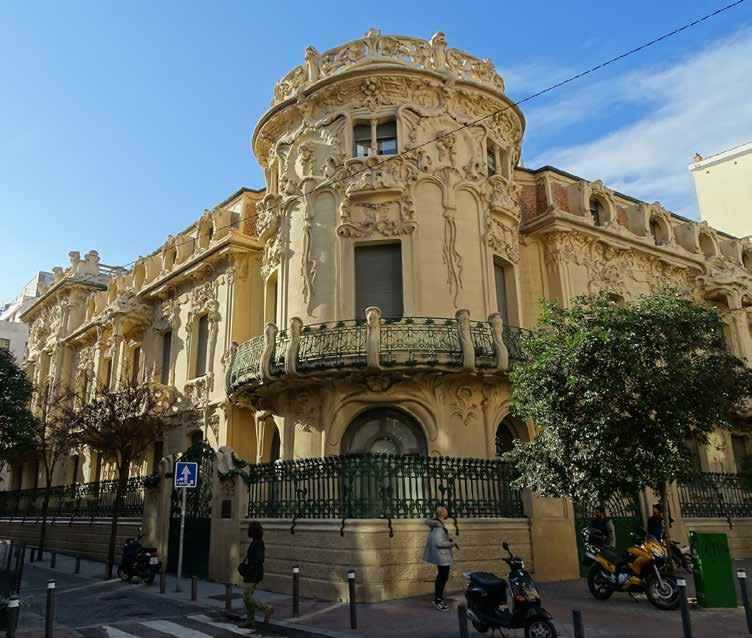
La arquitectura de la zona es un ejemplo del Madrid del siglo XIX en todo su esplendor. Hay joyas arquitectónicas como el famoso palacio de Longoria, un edificio modernista espectacular que es actualmente la sede de la SGAE. También las calles de Piamonte y Almirante han conservado sus edificios decimonónicos, pero instalando pequeñas tiendas de diseño que se caracterizan por la originalidad y exclusividad.
La plaza de París es absolutamente encantadora, un lugar donde sentir el silencio y la ausencia de bullicio. Está presidida por la estampa señorial del Tribunal Supremo y rodeada de árboles, estatuas y edificios circundantes que otorgan precisamente un aire parisino.
La parroquia de Santa Bárbara es la principal del barrio de las Salesas. Sus orígenes se remontan al siglo XVIII, cuando Bárbara de Braganza fundó el Convento de las Salesas Reales, que hoy alberga el Tribunal Supremo.
La plaza del Rey es un espacio muy apacible. Hay numerosas terrazas que, con el buen tiempo, ofrecen momentos de ocio muy agradable. Aquí es típico tomar el afamado vermú madrileño acompañado de alguna tapa.
El barrio destila buen gusto por los cuatro costados. En torno a la calle Fernando VI se han instalado muchos estudios de arquitectura y tiendas de decoración. En la calle Barquillo, una de las más singulares y exquisitas de Madrid, puedes encontrar tiendas de diseño y coquetas cafeterías, con el Teatro Infanta Isabel al fondo.
The architecture of the area is an example of 19th century Madrid in all its splendour. There are architectural gems such as the famous Longoria Palace, a spectacular modernist building that is currently the headquarters of the SGAE. The streets of Piamonte and Almirante have also preserved their nineteenth-century buildings, but with small designer shops that are characterised by their originality and exclusivity.
The Plaza de París is absolutely charming, a place where you can feel the silence and the absence of hustle and bustle. It is presided over by the stately image of the Supreme Court and surrounded by trees, statues and surrounding buildings that give it a precisely Parisian air.
The parish church of Santa Bárbara is the main church in the Salesas district. Its origins date back to the 18th century, when Bárbara de Braganza founded the Convent of the Salesas Reales, which today houses the Supreme Court.
The Plaza del Rey is a very peaceful place. There are numerous terraces which, in good weather, offer very pleasant moments of leisure. Here it is typical to have the famous Madrilenian vermouth accompanied by some tapas.
The neighbourhood breathes good taste on all four sides. Around Calle Fernando VI, many architectural studios and decoration shops have been set up. In Calle Barquillo, one of the most unique and exquisite streets in Madrid, you can find designer shops and cosy cafés, with the Infanta Isabel Theatre in the background.
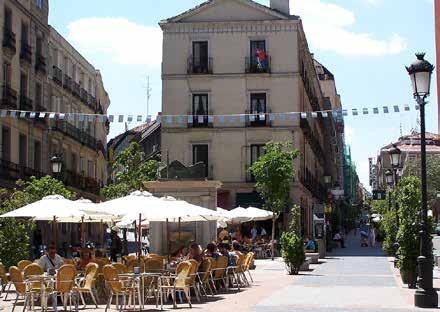
Madrid posee una gran tradición literaria. Históricamente dio hospedaje a escritores y artistas que buscaban en el bullicio de las calles la inspiración para sus obras. De ahí que una de las zonas ahora más dinámicas y bohemias sea el conocido como Barrio de Las Letras, ubicado en pleno centro de la ciudad, justo en el epicentro de las dos grandes arterias turísticas: Sol-Gran Vía y el Paseo del Arte.
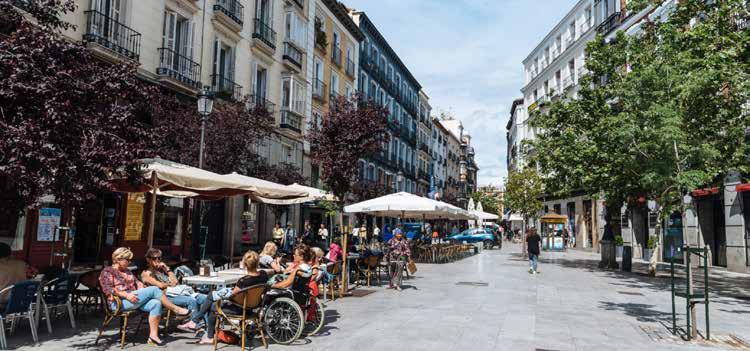
Este nudo de calles se ha convertido en una estampa típica del barrio madrileño, con encantadoras calles, terrazas, pequeño comercio, tiendas alternativas y mucha vida. El Barrio de las Letras se encuentra flanqueado por la calle de la Cruz, la Carrera de San Jerónimo, el paseo del Prado y la calle Atocha. Una zona que además destaca porque el Paseo del Prado y el Buen Retiro, conocido también como Paisaje de la Luz, está declarado Patrimonio Mundial por la UNESCO.
El nombre, tan genuinamente literario, se debe a que en sus casas, pensiones, mesones y tascas era habitual encontrarse a las figuras más insignes del Siglo de Oro español (siglo XVII). Caminar y toparse con Cervantes, Lope de Vega, Quevedo, Tirso de Molina o Góngora debió ser una experiencia que hoy nos puede parecer apabullante pero que, por aquellos tiempos, era propio del trajín cotidiano de unas calles ávidas de actividad.
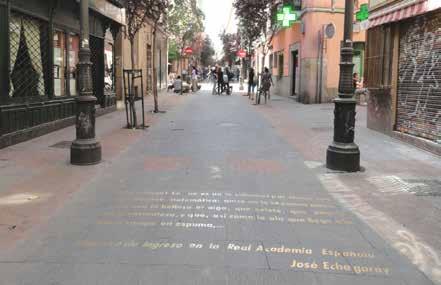
De hecho, muchas de las arterias que conforman el barrio reciben el nombre de estos escritores ilustres, como agradecimiento por parte de la ciudad a un pasado esplendoroso. Hoy en día, la gran mayoría de sus calles son peatonales y sobre las baldosas de las aceras se pueden leer citas en letras doradas de estos autores universales.
Madrid has a great literary tradition. Historically, it was home to writers and artists who sought inspiration for their works in the bustle of the streets. This is why one of the most dynamic and bohemian areas is now known as the Barrio de las Letras, located in the heart of the city, right in the epicentre of the two main tourist arteries: Sol-Gran Vía and the Paseo del Arte.
This knot of streets has become a typical Madrid neighbourhood, with charming streets, terraces, small shops, alternative shops and lots of life. The Barrio de las Letras is flanked by Calle de la Cruz, Carrera de San Jerónimo, Paseo del Prado and Calle Atocha. An area that also stands out because the Paseo del Prado and the Buen Retiro, also known as the Landscape of Light, has been declared a World Heritage Site by UNESCO.
The name, so genuinely literary, is due to the fact that in its houses, guesthouses, inns and taverns it was common to meet the most famous figures of the Spanish Golden Age (17th century). Walking and bumping into Cervantes, Lope de Vega, Quevedo, Tirso de Molina or Góngora must have been an experience that today may seem overwhelming but which, in those days, was part of the daily hustle and bustle of streets that were bustling with activity.
In fact, many of the arteries that make up the neighbourhood are named after these illustrious writers, as the city’s gratitude for a splendid past. Today, most of the streets are pedestrianised and on the pavement tiles you can read quotations in golden letters from these universal authors.
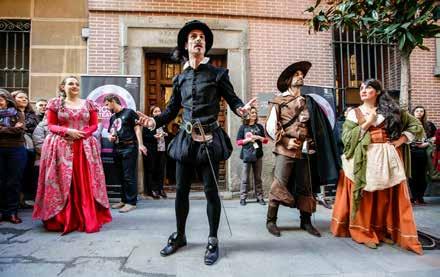
Por sus vías pasearon también los amantes del teatro que frecuentaban los corrales de comedias del Príncipe de la Pacheca o de la Cruz para presenciar los estrenos de las obras más insignes. En el escenario del corral de comedias del Príncipe, actual Teatro Español, se estrenaron las mejores comedias de los autores del Siglo de Oro. El Teatro de la Cruz tuvo el honor de albergar los estrenos de El sí de las niñas del ilustrado Leandro Fernández de Moratín, la ópera El barbero de Sevilla de Rossini o Don Juan Tenorio de Zorrilla.
Por su proximidad al Paseo del Prado y sus museos, el buen ambiente se deja sentir en los bares y terrazas del barrio. La calle Huertas y sus alrededores es una zona especialmente concurrida por la gran cantidad de locales que alberga, muchos de los cuales abren hasta la madrugada. La Plaza de Santa Ana es muy frecuentada por madrileños y visitantes para disfrutar de sus terrazas durante los meses de verano o en cualquier época del año si el tiempo acompaña.
The streets were also frequented by theatre lovers who used to go to the Príncipe de la Pacheca or de la Cruz comedy halls to see the premieres of the most famous plays. The best comedies of the authors of the Golden Age were premiered on the stage of the corral de comedias del Príncipe, now known as the Teatro Español. The Teatro de la Cruz had the honour of hosting the premieres of El sí de las niñas by the illustrious Leandro Fernández de Moratín, the opera El barbero de Sevilla by Rossini and Don Juan Tenorio by Zorrilla.
Due to its proximity to the Paseo del Prado and its museums, the good atmosphere can be felt in the bars and terraces of the neighbourhood. Calle Huertas and its surroundings is a particularly busy area due to the large number of bars and restaurants, many of which are open until the early hours of the morning. Plaza de Santa Ana is a popular place for locals and visitors alike to enjoy its terraces during the summer months or at any time of the year if the weather is good.
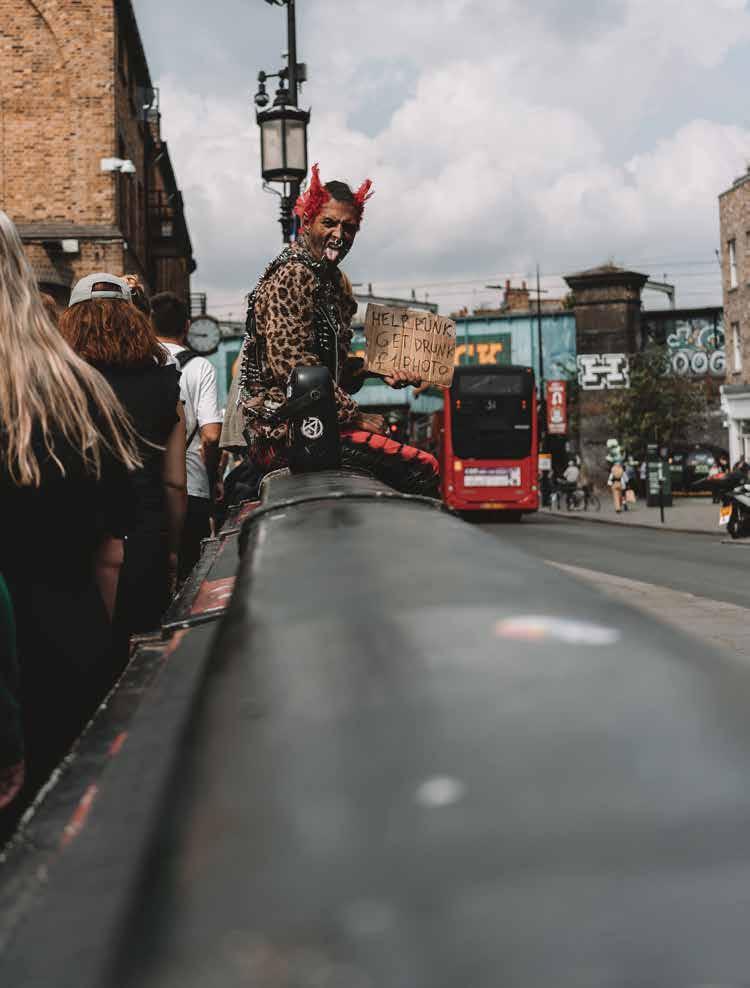
Hace décadas, la idea de que alguien pudiera encontrar algo encantador en los alrededores de Whitechapel era simplemente descabellada. Este era el radio de acción de Jack el Destripador, el asesino que en 1888 aterrorizó a los londinenses por la extrema brutalidad de sus asesinatos. Por aquel entonces era una zona paupérrima, habitada por almas desamparadas que encontraban cobijo entre las calles húmedas y solitarias, malviviendo en casas que desprendían el frío de la desolación.
El salto vertiginoso que ha pegado la ciudad reconvirtió Whitechapel en el reverso de la moneda. De ahí la energía de Londres. Es capaz de resurgir como un ave fénix de cualquier infortunio. El barrio es ahora un centro multicultural, cuna de tendencias, gastronomía, cultura y arte. Hoy por hoy, East End es una cita obligada cuando se viaja a Londres. En el Museum of London Docklands se recorre la historia de los puertos londinenses donde puede verse con claridad como vivían los hombres y mujeres de aquel East End de finales del siglo XIX. De la decadencia a la más absoluta modernidad.
La historia del nuevo East End comenzó a finales del siglo pasado cuando los buenos precios de los inmuebles atrajeron a pequeños emprendedores de nuevas tecnologías. Poco a poco fueron concentrándose empresas informáticas, y con el tiempo llegaron grandes empresas tecnológicas y financieras. A la zona se la conoce como el Silicon Roundabout, por la Roundabout Street. En torno a este proceso de metamorfosis fueron apareciendo artistas alternativos y gente adinerada. La hosca crisálida se convirtió en una bella mariposa.
Decades ago, the idea that anyone could find anything charming in the environs of Whitechapel was simply outlandish. This was the range of Jack the Ripper, the killer who in 1888 terrorised Londoners with the extreme brutality of his murders. At that time it was a squalid area, inhabited by destitute souls who found shelter in the damp and lonely streets, living in houses that exuded the cold of desolation.
The dizzying leap the city has taken has turned Whitechapel into the antithesis of its former self. Hence London’s energy. It is capable of rising like a phoenix from any misfortune. The neighbourhood is now a multicultural centre, a cradle of trends, gastronomy, culture and art. Today, the East End is a must-see when travelling to London. The Museum of London Docklands traces the history of London’s docks where you can clearly see how the men and women of the East End lived at the end of the 19th century. From decadence to absolute modernity.
The story of the new East End began at the turn of the last century when good real estate prices attracted small technology entrepreneurs. Gradually, software companies began to concentrate in the area, and eventually large technology and financial firms moved in. The area became known as the Silicon Roundabout, after Roundabout Street.Around this process of metamorphosis, alternative artists and wealthy people emerged.The sullen chrysalis became a beautiful butterfly.
Directly opposite Spitalfields Christ Church, one of the finest examples of baroque architecture in the English capital, is Spitalfields Market, a restored 19th century market hall.Today, the space has been reconverted into a centre for shopping, gastronomy, culture and artistic creation.A symbol of everything that defines the East End today.From this point, you can start a varied route, such as the one that leads to the commercial Brick Lane and to the south with Banglha Town, the meeting point of London’s Bengali community and some of the restaurants with the best Indian curry in the city. In the north, Brick Lane Market is a landmark for vintage fashion and the Old Truman Brewery, the old brewery where the body of Annie Chapman, one of Jack the Ripper’s victims, was found.
Don’t miss the Art Gallery Whitechapel, one of London’s most daring and innovative centres, where al -
Justo enfrente de la iglesia Spitalfields Christ Church, una de las mejores muestras de arquitectura barroca de la capital inglesa, se encuentra Spitalfields Market, un viejo mercado del siglo XIX restaurado. Hoy, el espacio se ha reconvertido en un centro de compras, gastronomía, cultura y creación artística. Un símbolo de todo lo que define actualmente a East End. Desde este punto, se puede comenzar una ruta de lo más variada, como la que llega a la comercial Brick Lane y hacia el sur con Banglha Town, centro de reunión de la comunidad bengalí londinense y de algunos de los restaurantes con el mejor curry indio de la ciudad. En el norte, el Brick Lane Market es toda una referencia de la moda vintage y la Old Truman Brewery, la vieja cervecería en la que apareció el cuerpo de Annie Chapman, una de las víctimas de Jack el Destripador.
No dejes de lado el Art Galery Whitechapel, uno de los centros más arriesgados e innovadores de Londres, donde lo alternativo no es una opción sino una realidad. A finales del siglo XIX esta zona albergaba más de 60 burdeles. Ahora es un espacio seguro y uno de los más activos de Londres, con cultura y lleno de vida y arte callejero.
Otra zona sorprendente es el “Camino de las Enaguas”: traducción literal de Petticoat Lane, arteria principal del barrio judío londinense. El sentido comercial de este lugar sigue vigente en la actualidad y se ha convertido en un buen rincón donde comprar ropa de todo tipo y a buen precio. Pasada Whitechapel Road se advierte una intrincada ramificación de calles y callejones con galerías de arte, tiendas y los famosos y auténticos pub ingleses.
ternative is not an option but a reality. At the end of the 19th century this area was home to more than 60 brothels. Now it is a safe area and one of London’s most active, culturally vibrant and full of life and street art.
Another surprising area is the Petticoat Lane: the main artery of London’s Jewish Quarter. The commercial sense of this area is still alive today and has become a good place to buy clothes of all kinds at good prices. Past Whitechapel Road is an intricate branching of streets and alleyways with art galleries, shops and the famous authentic English pubs.
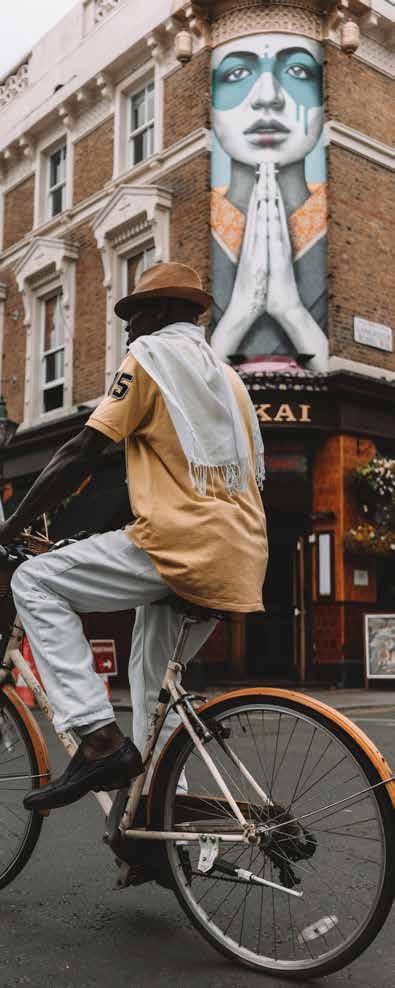
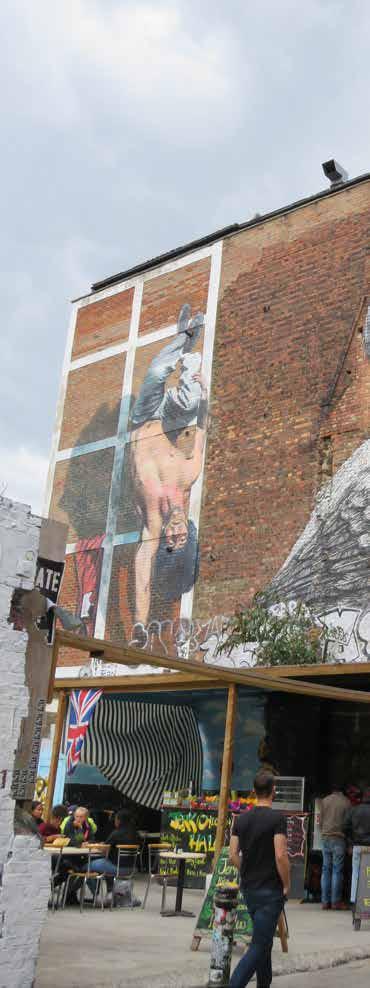
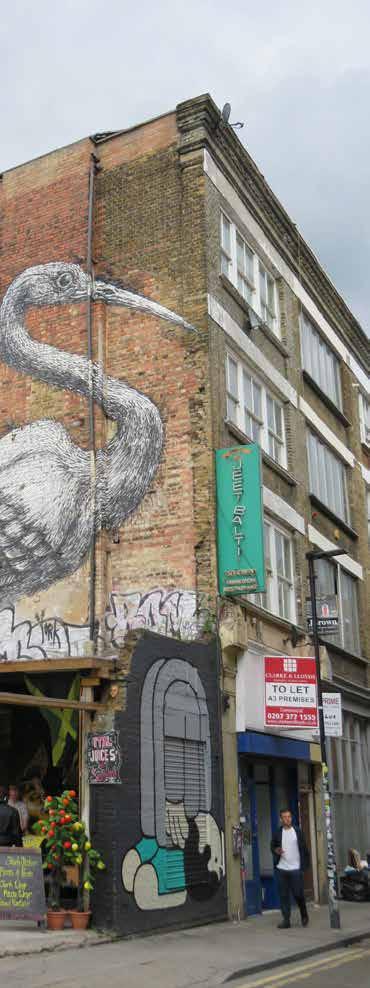
El arte es un estado del alma. No se ciñe a normas ni espacios, fluye como el aire. Este concepto de fugacidad es plenamente palpable en el arte callejero. Un día aparece un grafiti y al día siguiente puede que no esté. En Brick Lane el arte ocupa un marco provisional. Es uno de los barrios de Londres con más arte urbano por pared. Entre sus intrincadas callejuelas todo es susceptible de ser retratado por los artistas más outsiders, algunos de ellos, convertidos en auténticas estrellas de renombre. La famosa grulla del artista Roa (en Hanbury Street) o el mono que juega al ajedrez ideado por Trafik, en Pedley Street, en estricto blanco y negro, son dos ejemplos que te dejan estupefacto.
Art is a state of the soul. It is not bound by rules or space, it flows like the air. This concept of transience is fully palpable in street art. One day a piece of graffiti appears and the next day it may be gone. In Brick Lane, art occupies a provisional framework. It is one of the London neighbourhoods with the most street art per wall. Among its intricate alleyways, everything is susceptible to being portrayed by the most outsider artists, some of whom have become real stars of renown.
The famous crane by artist Roa (in Hanbury Street) or the monkey playing chess devised by Trafik, in Pedley Street, in strict black and white, are two examples that will leave you stunned.
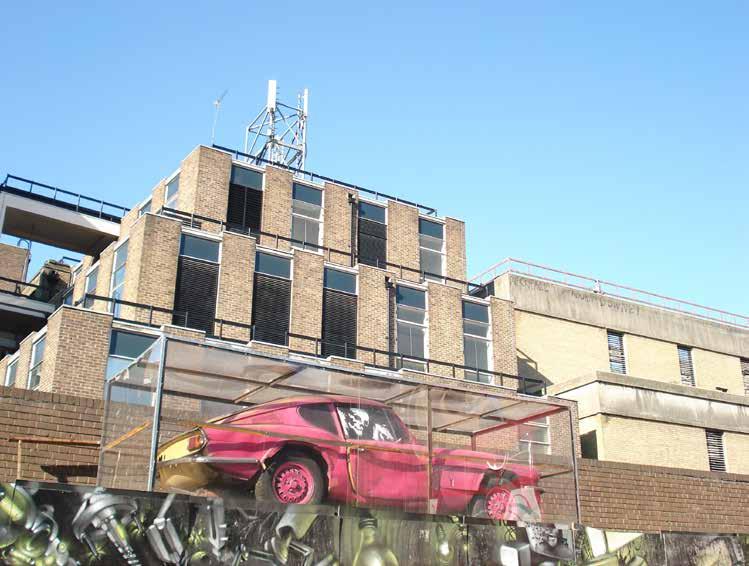
Quizás el nombre de Banksy es garantía del mejor arte urbano. Sin embargo, en Brick Lane el artista no tuvo una de sus mejores inspiraciones. En los locales de la Truman Brewery, una de las compañías cerveceras más grandes del mundo a finales del siglo XIX, reconvertida en espacio artístico, se puede observar, si se mira hacia arriba, un par de coches abandonados.
Aunque a primera vista parezcan chatarra, no lo son. Son un Banksy. En la parte superior hay una pieza del 2008 del artista D. Face. El coche de color rosa, ubicado debajo, fue decorado por el mismísimo Banksy un año o dos antes. Inicialmente tenía una figura de un esqueleto al volante, pero al parecer alguien la hizo desaparecer. Por la revalorización que ha vivido el artista callejero, ahora el coche está protegido por una caja de metacrilato. Sobre los dos coches, vigilando encima del tejado, se asoma un descabellado comecocos del artista Ronzo.
Elaborados murales como los indígenas del artista Dale Wrimshaw o retratos de bellezas psicodélicas como los creados por mr. Cenz o Ant Carver se alternan con personajes de cómic, pegatinas o pósteres de grafiteros noveles y menos cotizados. También hay piezas escultóricas como la chica dorada de UrbanSolid que sorprende al paseante brotando de la pared.
En Fashion Street están las obras del australiano JimmyC. No dejes de dar un paseo por Shoredicht. En general, casi todo el East London está salpicado de obras callejeras que no dejarán de sorprenderte. En Nomadic Gardens hay un proyecto comunitario que revitaliza un espacio degradado pero lleno de vitalidad donde se exhibe arte callejero que alterna con huertos de flores y hortalizas.
Londres es siempre sorprendente y demuestra que es capaz de sacar provecho a todo. En la ciudad el arte no ocupa un lugar específico, sino que se abre al mundo en cualquier espacio, cualquier superficie inimaginable, por muy irreverente que parezca.
Perhaps the name Banksy is a guarantee of the best urban art. However, in Brick Lane the artist did not have one of his best inspirations. On the premises of the Truman Brewery, one of the largest brewing companies in the world at the end of the 19th century, converted into an art space, you can see, if you look up, a couple of abandoned cars.
Although at first glance they look like junk. They are not. They are a Banksy. At the top is a 2008 piece by the artist D. Face. The pink car, located below, was decorated by Banksy himself a year or two earlier. It originally had a figure of a skeleton at the wheel, but apparently someone took it. As a result of the street artist’s revaluation, the car is now protected by a methacrylate box. Above the two cars, standing guard on the roof, is a wacky puzzle-box by the artist Ronzo.
Elaborate murals such as the indigenous ones by artist Dale Wrimshaw or portraits of psychedelic beauties such as those created by Mr. Cenz or Ant Carver alternate with comic characters, stickers or posters by new and less sought-after graffiti artists. There are also sculptural pieces such as the golden girl by UrbanSolid who surprises the passer-by by sprouting from the wall.
On Fashion Street are the works of Australian JimmyC. Don’t miss a stroll down Shoredicht. In general, almost all of East London is dotted with street art that will never cease to amaze you. Nomadic Gardens is a community project that revitalises a run-down but vibrant space with street art alternating with flower and vegetable gardens.
London is always surprising and proves that it is capable of making the most of everything. In the city, art does not occupy a specific place, but opens up to the world in any space, any unimaginable surface, no matter how irreverent it may seem.
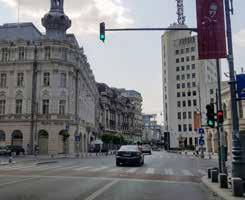
No resulta extravagante que se denomine a Bucarest “la pequeña París”. Basta un corto paseo para percatarse de que los edificios, la mayoría magníficos, aportan a la ciudad una esencia profundamente elegante, que combina ese saber estar con un toque acertadamente cautivador.
Lo cierto es que la capital mezcla a la perfección su pasado histórico con el frenesí de la modernidad. Los palacetes burgueses con cúpulas esplendorosas conviven con las mega construcciones del pasado comunista; una simbiosis que saca a la luz la importancia que la ciudad otorga a la historia y que es parte de la idiosincrasia y el carácter de sus habitantes.
t’s no wonder Bucharest is often referred to as “little Paris”. It only takes a short stroll to realise that the buildings, most of them magnificent, give the city a profoundly elegant essence, combining savoir-faire with a touch of captivating.
The truth is that the capital perfectly blends its historic past with the frenzy of modernity. The bourgeois palaces with their splendid domes coexist with the mega-constructions of the communist past, a symbiosis that brings to light the importance that the city attaches to history and which is part of the idiosyncrasy and character of its inhabitants.
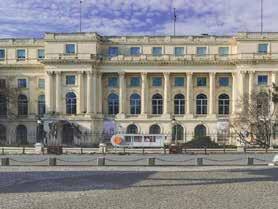
Ubicado en el Palacio Real de Bucarest, recoge las colecciones de arte rumano medieval y moderno, además de una excelente colección de arte europeo.
Es la arteria más importante de la ciudad y la más antigua. Construida en 1692, recorre el corazón histórico. Actualmente es la calle más cara y exclusiva de Bucarest, acogiendo cadenas hoteleras y tiendas de lujo.
Romanian National Museum of Art
Housed in the Royal Palace in Bucharest, it houses collections of medieval and modern Romanian art, as well as an excellent collection of European art.
This is the most important artery of the city and the oldest. Built in 1692, it runs through the historic heart of the city. Nowadays it is the most expensive and exclusive street in Bucharest, hosting hotel chains and luxury shops.
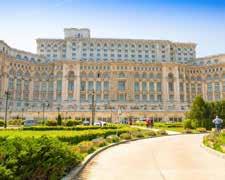
Es un símbolo de la megalomanía del dictador Ceaucescu. La megaconstrucción tiene una superficie de 365.000 m2, 1.100 habitaciones, 200.000 m2 de alfombras y 900.000 m2 de madera que brillan bajo 480 resplandecientes lámparas de araña.
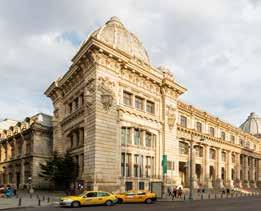
Localizado en el antiguo edificio del Palacio de Correos, se encuentra en la Avenida de la Victoria para mostrar a sus visitantes la historia del país.
A symbol of dictator Ceausescu’s megalomania. The mega-construction has an area of 365,000 m2, 1,100 rooms, 200,000 m2 of carpets and 900,000 m2 of wood shining under 480 gleaming chandeliers.
Fundada por el infame Vlad Tepes el Empalador, la antigua Corte Real es el monumento medieval más antiguo de Bucarest.
Located in the former Post Office building, it is located on Victory Avenue to show visitors the history of the country.
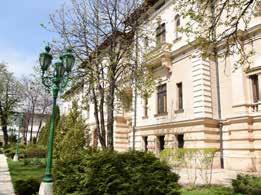
Es una hermosa mansión que refleja el espléndido pasado de la ciudad. El Museo Nacional de Cotroceni alberga parte del Museo Municipal de Bucarest.
Founded by the infamous Vlad Tapes the Impaler, the Old Royal Court is the oldest medieval monument in Bucharest.
A beautiful mansion that reflects the city’s splendid past. The Cotroceni National Museum houses part of the Bucharest Municipal Museum.
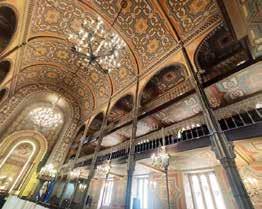
Construido entre los años 1857 y 1867, es la sinagoga más grande de Rumanía y una de las pocas que se mantienen activas. Su interior sorprende por los reflejos dorados y la belleza de los elementos decorativos.
Built between 1857 and 1867, it is the largest synagogue in Romania and one of the few still active. Its interior is striking for its golden reflections and the beauty of its decorative elements.
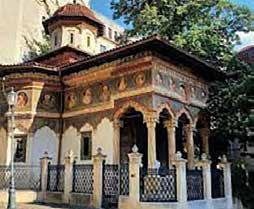
Una de las residencias aristocráticas más antiguas de la ciudad, es un imponente edificio construido en 1835 que se conserva prácticamente intacto después de 150 años.
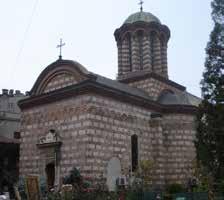
Construida en 1724, es un pequeño templo que destaca en medio de los imponentes bloques de hormigón que la rodean.
Built in 1724, this small church stands out amidst the imposing concrete blocks that surround it.
One of the oldest aristocratic residences in the city, this imposing building, built in 1835, remains virtually intact after 150 years.
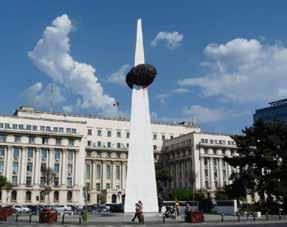
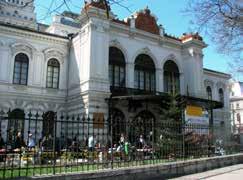
Desde esta plaza el pueblo seguía los discursos del dictador Ceaușescu. En el centro se alza un obelisco conocido como “la patata”, que se erigió para recordar a las víctimas de la Revolución.
From this square the people followed the speeches of the dictator Ceaușescu. In the centre stands an obelisk known as ‘the potato’, which was erected to commemorate the victims of the Revolution.
La gastronomía rumana te sorprenderá. Los platos de carne predominan sobre los pescados, mientras que las verduras de temporada son ingredientes básicos en todas las comidas. En el centro de la ciudad se encuentran algunos de los mejores restaurantes de Bucarest que, además de ofrecer comida típica rumana, son monumentos históricos. Este es el caso del Manuc’s Inn, restaurante y hotel ubicado en una antigua alhóndiga construida en 1804. Caru’ cu bere tiene más de 130 años de historia y es todo un símbolo del casco histórico. Como anécdota, entre sus comensales se citan los Rolling Stones o Naruhito, emperador de Japón.
Romanian cuisine will surprise you. Meat dishes predominate over fish, while seasonal vegetables are a staple ingredient in every meal. In the city centre you will find some of the best restaurants in Bucharest which, besides offering typical Romanian food, are historical monuments. This is the case of Manuc’s Inn, a restaurant and hotel housed in a former granary built in 1804. Caru’ cu bere has more than 130 years of history and is a symbol of the old town. As an anecdote, its guests include the Rolling Stones and Naruhito, emperor of Japan.
La Avenida de la Victoria es la principal arteria con tiendas de lujo. El Unirea Shopping Center es un imponente centro comercial de cinco plantas con bastantes tiendas en su interior. Si no quieres entrar en un centro comercial, el Bulevar Magheru cuenta con numerosas tiendas de todo tipo. El Bucuresti Mall dispone de más de 140 tiendas y cine con grandes salas. El enorme espacio comercial Baneasa está a las afueras de la ciudad, para comprar pero sin interés turístico.
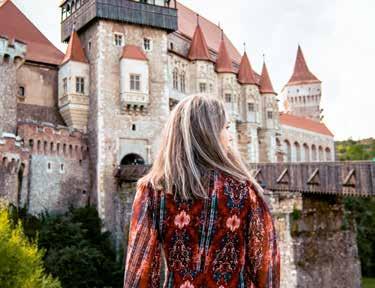
Castillo de Bran
No se puede abandonar Rumania sin visitar el Castillo de Bran, conocido como el Castillo de Drácula. Emplazado sobre el eje de un precipicio en la antigua frontera entre Transilvania y Valaquia, es un escenario de leyenda y la fortaleza más popular de Rumanía.
Construido entre 1377 y 1388, el castillo sirvió como inspiración al escritor Bram Stoker para la creación de una de las novelas más populares de todos los tiempos, Drácula, aunque el auténtico Vlad Tepes, el personaje en el que se inspiró, nunca llegó a vivir en el castillo.
Castillo de Peles
Es el segundo museo más visitado de Rumanía, solo superado por el Castillo de Bran. Fue construido entre 1875 y 1915. Cuenta con 160 habitaciones decoradas con atractivos elementos mobiliarios y más de 30 baños.
Victory Avenue is the main thoroughfare with luxury shops. The Unirea Shopping Center is an imposing five-storey shopping mall with plenty of shops inside. If you don’t want to go into a shopping mall, Magheru Boulevard has numerous shops of all kinds. The Bucuresti Mall has more than 140 shops and a cinema with large cinemas. The huge Baneasa shopping area is on the outskirts of town, for shopping but of no tourist interest.
Bran Castle
You can’t leave Romania without visiting Bran Castle, known as Dracula’s Castle. Situated on the axis of a cliff on the ancient border between Transylvania and Wallachia, it is a scene of legend and Romania’s most popular fortress.
Built between 1377 and 1388, the castle inspired Bram Stoker to create one of the most popular novels of all time, Dracula, although the real Vlad Tepes, the character he was inspired by, never lived in the castle.
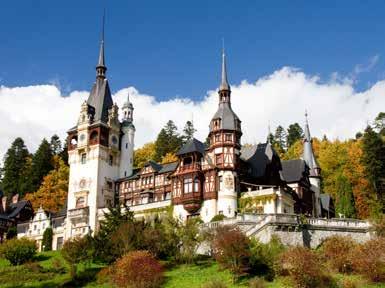
Peles Castle
This is the second most visited museum in Romania, second only to Bran Castle. It was built between 1875 and 1915. It has 160 rooms decorated with attractive furnishings and more than 30 bathrooms.

50 AÑOS DE 50 YEARS OF
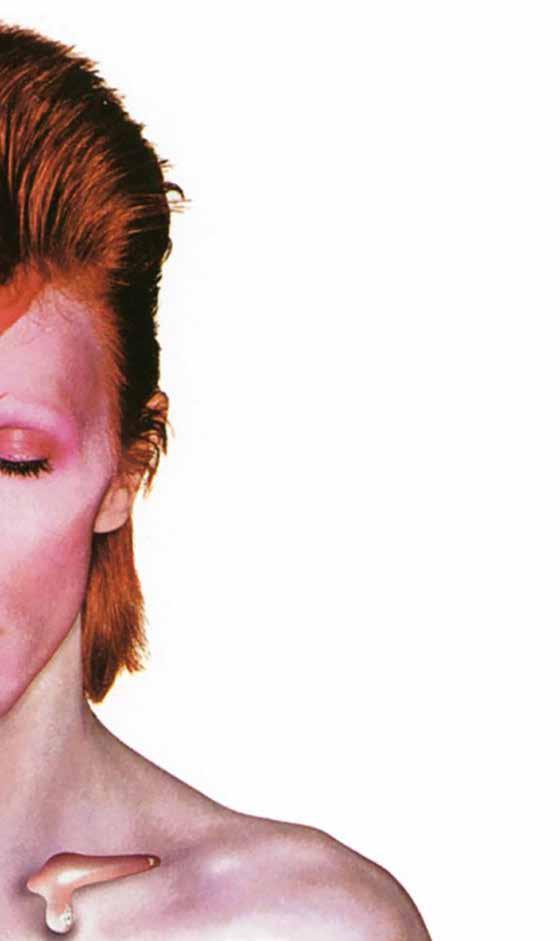
La cara de David Bowie atravesada por un rayo rojo y azul es un símbolo. Parece una figura griega arponeada por el tridente de Poseidón. Hay algo en la mirada que le sitúa lejos de este mundo. Su cabeza está separada del cuerpo como si flotara en el aire. Es una cabeza que habla sola, que increpa sola, que mira con los ojos cerrados. Una mirada alucinada, dilatada, mágica. Es una mirada hacia dentro. Una efigie que viene del espacio exterior. Está aquí para narrar su viaje hacia las estrellas. En ese frío amanecer de la noche de los tiempos.
Bowie es probablemente el artista más metamórfico que haya habitado el universo musical. La portada es el símbolo de una era, de una nueva percepción del mundo. La música es la que da sentido al mundo. Dime qué escuchas y te diré quién eres, susurra Bowie desde su busto de hielo.
Se rumorea que la portada fue la más cara producida hasta la fecha. Fue lanzada el 14 de abril de 1973. Han pasado 50 años desde que su mirada nos atraviesa. 50 años en la vida de los mitos no es nada. Es un nanosegundo en la historia. El tiempo se les mete dentro del cuerpo. Como una cápsula. Como un cofre. El tiempo no quiere salir de su cabeza desmembrada.
La fotografía de la portada fue tomada por Brian Duffy, quien también firmaría las portadas de Lodger de 1979 y Scary Monsters (and Super Creeps) de 1980. El maquillaje del rayo es un emblema de la cultura pop a nivel planetario. Ambos artistas colaboraron entre 1972 y 1980, unos años en los que el trabajo de este tándem artístico parecía iluminado por una varita mágica. Dos genios mirándose, frente a frente, con sus cabezas de dragón luchando en un escudo heráldico.
Todo lo que hizo Bowie nos sigue resultando fascinante. Es el mito de la ambigüedad. De esa enorme revolución que reivindica la identidad. Sea cual sea. El mesías de una nueva era: “yo solo quiero ser yo, signifique eso lo que signifique”. Esta es la frase que mejor define al personaje camaleónico que siempre quiso ser. La portada procede de lo más profundo del alma. Es un tipo de imagen que no encaja en ningún patrón. Por eso es tan es revolucionaria. Bowie fue un adelantado en el tiempo.
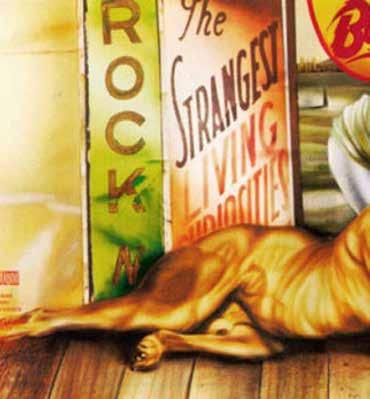
La portada de Diamond Dogs causó gran controversia en su momento, aún más que la de Aladdin Sane, pero no ha trascendido del mismo modo. The Diamond Dogs cover caused great controversy at the time, even more so than the Aladdin Sane cover, but it hasn’t transcended in the same way.
Una de las pinceladas de genio indiscutible es el hecho de que Bowie aparezca con los ojos cerrados. Se sabe que hubo sesiones mirando a la izquierda, a la derecha, o con los ojos abiertos como una muñeca. Pero la genialidad radica en la decisión de ambos artistas de arriesgar con los ojos cerrados. Una mirada cerrada nos permite interpretar. Permite mirar al interior del genio. Al interior de la cueva. Nos adentra en la profundidad de la mina para sacar oro o fango. Es un enigma. Nos niega incluso uno de los atributos más reconocibles de Bowie: su heterocromía.
En el momento en que se hizo la fotografía, Bowie solo tenía 26 años. En la Inglaterra de entonces solo el 5% de los jóvenes iban a la universidad. El resto salían adelante como podían o estaban simplemente acabados. Eran unos perdedores. Y él se había convertido en un genio. Era un ave fénix del espacio intergaláctico. Sentía la necesidad de morir y renacer para seguir adelante, como había hecho con su personaje de Ziggy Stardust.
En 2023 se celebra el 50 aniversario del lanzamiento de Aladdin Sane. El disco apareció solo diez meses después de su mítico álbum The Rise and Fall of Ziggy Stardust and the Spiders from Mars
David Bowie’s face pierced by a red and blue lightning bolt is a symbol. It looks like a Greek figure speared by Neptune’s trident. There is something in the look that places him far from this world. Its head is separated from its body as if floating in the air. It is a head that speaks alone, that rebukes alone, that looks with its eyes closed. A hallucinated, dilated, magical gaze. It is an inward gaze. An effigy that comes from outer space. It is here to narrate its journey to the stars. In that cold dawn of the night of time.
Bowie is probably the most metamorphic artist ever to inhabit the musical universe. The cover is the symbol of an era, of a new perception of the world. Music is what gives meaning to the world. Tell me what you listen to and I’ll tell you who you are, Bowie whispers from his bust of ice.
The cover is rumoured to be the most expensive cover ever produced. It was released on 14 April 1973. It has been 50 years since his gaze has pierced us. 50 years in the life of myths is nothing. It is a nanosecond in history. Time goes inside their bodies. Like a capsule. Like a chest. Time doesn’t want to leave their dismembered head.

The cover photograph was taken by Brian Duffy, who would also sign the covers of 1979’s Lodger and 1980’s Scary Monsters (and Super Creeps). The lightning bolt make-up is an emblem of pop culture worldwide. The two artists collaborated between 1972 and 1980, years in which the work of this artistic tandem seemed to be illuminated by a magic wand. Two geniuses looking at each other, face to face, with their dragon heads fighting on a heraldic shield.
Everything Bowie did continues to fascinate us. He is the myth of ambiguity. Of that enormous revolution that vindicates identity. Whatever it is. The messiah of a new era: “I just want to be me, whatever that means”. This is the phrase that best defines the chameleon-like character he always wanted to be. The cover comes from the depths of his soul. It’s a kind of image that doesn’t fit into any pattern. That’s what makes it so revolutionary. Bowie was ahead of his time.
One of the touches of undisputed genius is the fact that Bowie appears with his eyes closed. It is known that there were sessions looking to the left, to the right or with his eyes open like a doll. But the genius
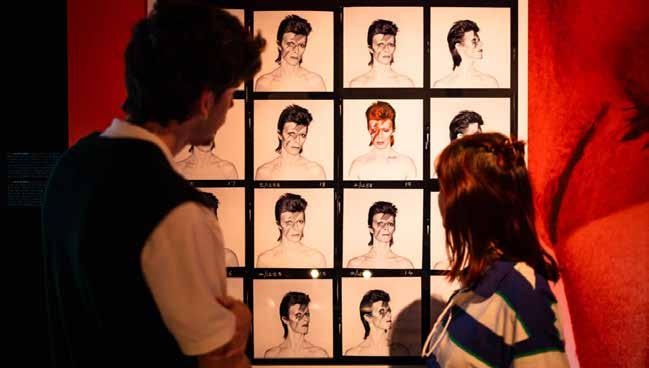
Hoy miles de personas imitan los ojos cerrados de Bowie en las redes sociales. Su pose cerúlea y sus rayos. Nadie puede transmitir ese sentimiento. Parece sencillo, pero no lo es. Solo hubo y habrá un Bowie.
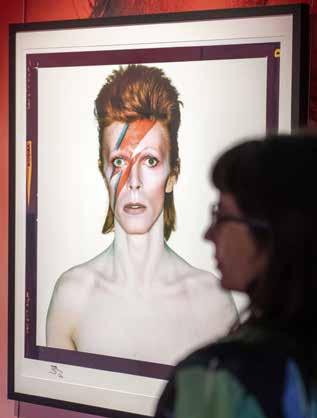
lies in the decision of both artists to take risks with their eyes closed. A closed gaze allows us to interpret. It allows us to look inside the genius. Inside the cave. It takes us into the depths of the mine to extract a bucket of precious stones or slag. It is an enigma. It denies us even one of Bowie’s most recognisable attributes: his heterochromia.
At the time the photograph was taken, Bowie was only 26 years old. In England at the time, only 5% of young people went to university. The rest got by as best they could or were just finished. They were losers. And he had become a genius. He was a phoenix from intergalactic space. He felt the need to die and be reborn in order to move on, as he had done with his Ziggy Stardust character.
2023 marks the 50th anniversary of the release of Aladdin Sane. The album appeared only ten months after his legendary album The Rise and Fall of Ziggy Stardust and the Spiders from Mars.
Today thousands of people imitate Bowie’s closed eyes on social media. His cerulean pose and his lightning bolts. No one can convey that feeling. It seems simple, but it’s not. There was and will be only one Bowie.
La exposición Bowie taken by Duffy pudo verse hasta julio en el Colegio de Arquitectos de Madrid.
The exhibition Bowie taken by Duffy could be seen until July at the Colegio de Arquitectos de Madrid.
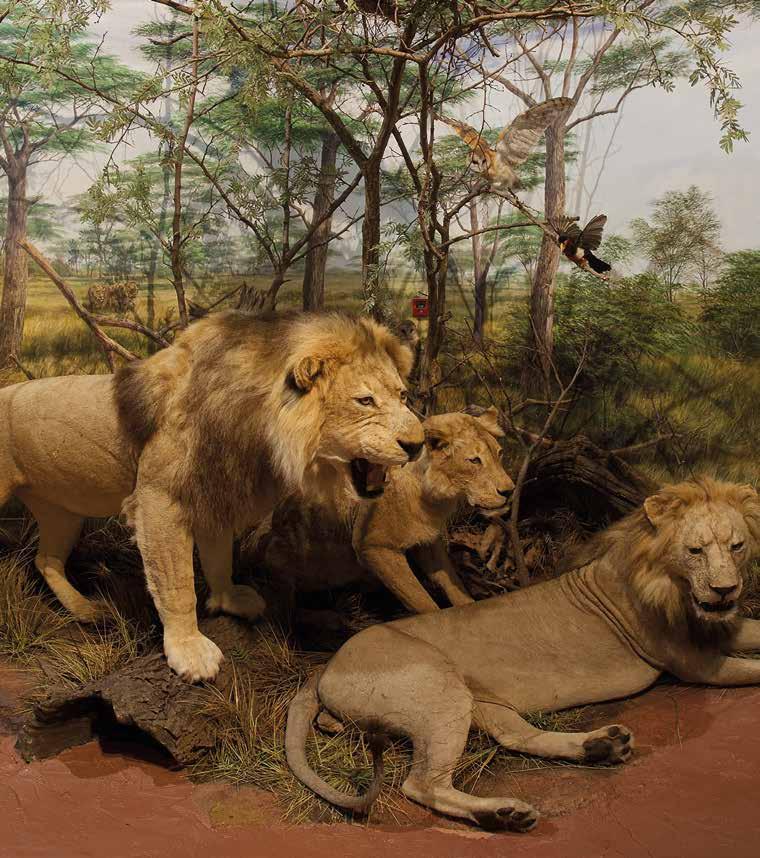

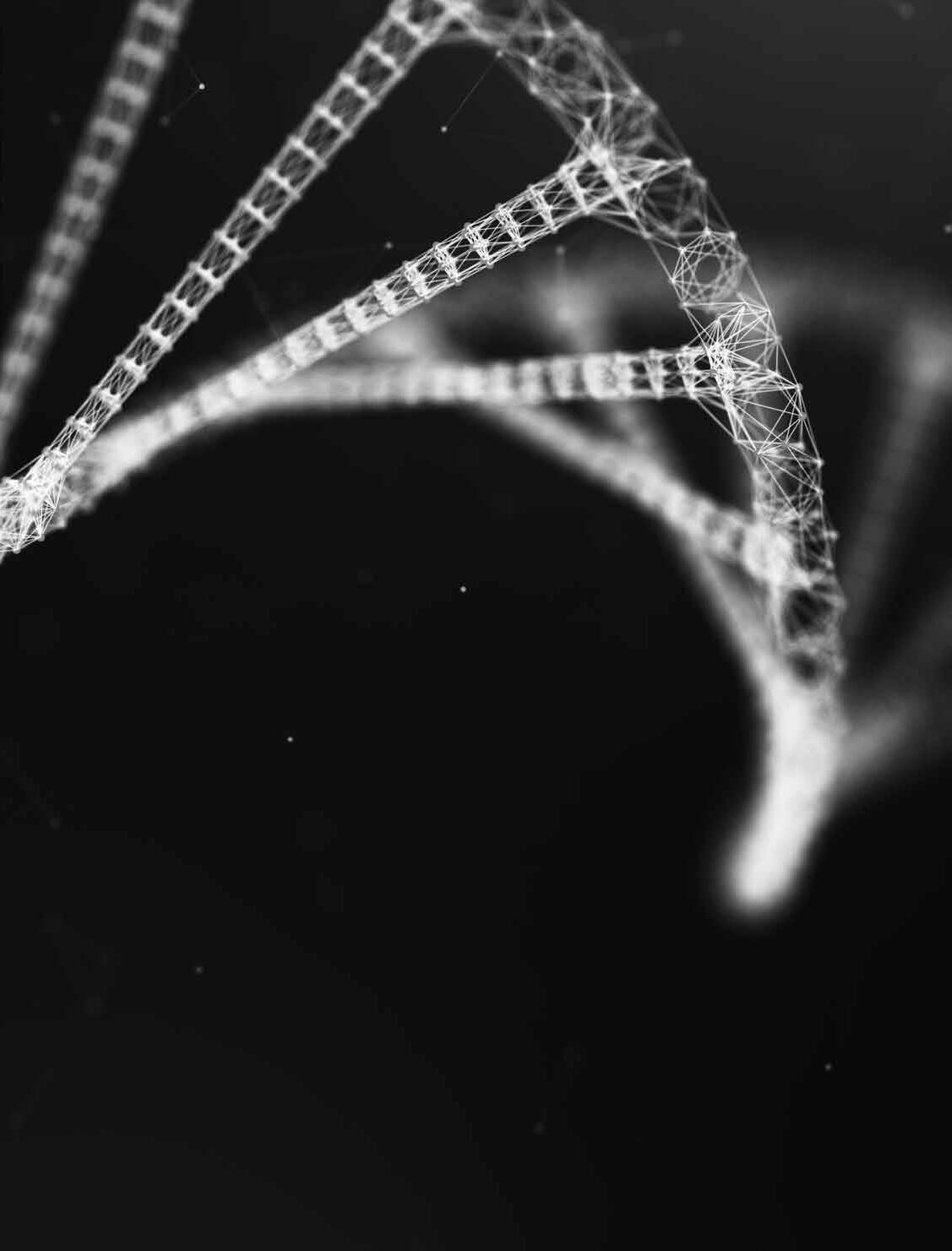
“LA DOBLE HÉLICE”, EN CUALQUIERA DE SUS DIVERSAS REPRESENTACIONES GRÁFICAS, ES YA UN ICONO DE CULTURAL UNIVERSAL.
“THE DOUBLE HELIX”, IN ANY OF ITS VARIOUS GRAPHIC REPRESENTATIONS, IS ALREADY A UNIVERSAL CULTURAL ICON.
El 25 de abril de 1953, el científico estadounidense James Watson y el británico Francis Crick presentaron en la revista Nature el artículo: “Estructura molecular de los ácidos nucleicos. Una estructura para el ácido nucleico de desoxirribosa”. A primera vista, puede parecer indescifrable, pero como todo en la ciencia, hay que aprender a descubrir, comprender y, sobre todo, ser conscientes de que la divulgación científica es una competencia que puede hacer que los profanos amen la ciencia más que cualquier otra disciplina del mundo.
Vayamos por partes. Hoy damos por hecho que todo ser vivo es genética. Vivimos en la era de la genética. Hablamos de enfermedades genéticas. Hablamos de mutaciones genéticas, de ingeniería genética, de alimentos transgénicos… Es un concepto adaptado a nuestro tiempo y del que se puede charlar en cualquier ámbito. Todo está en los genes.
Este conocimiento, que ahora resulta impepinable, fue un camino muy largo. La primera vez que salió a la luz fue en 1866 cuando el monje austriaco Gregor Mendel postuló la existencia de unidades individuales de la herencia a las que llamó, precisamente, “genes”. Desde ese primer momento hasta el año 1953 transcurrió un largo periplo de aciertos y desaciertos que acabaron desembocando una próspera mañana de abril en el laboratorio del estadounidense James Dewey Watson y el inglés Francis Harry Compton Crick. Fue un día emocionante. Nueve años después recibieron el Premio Nobel de Medicina.
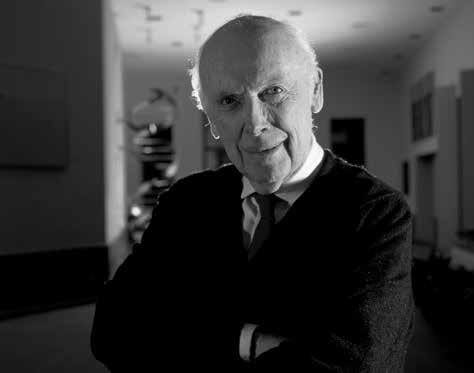
On 25 April 1953, the American scientist James Watson and the British scientist Francis Crick presented the article “Molecular structure of nucleic acids. A structure for the deoxyribose nucleic acid”. At first glance, it may seem indecipherable, but like everything else in science, one must learn to discover, understand and, above all, be aware that popularising science is a skill that can make laymen love science more than any other discipline in the world.
Let’s take it one step at a time. Today we take it for granted that every living thing is genetic. We live in the age of genetics. We talk about genetic diseases. We talk about genetic mutations, genetic engineering, genetically modified food... It is a concept adapted to our time and can be talked about in any field. Everything is in the genes.
This knowledge, which is now undeniable, has come a long way. It first came to light in 1866 when the Austrian monk Gregor Mendel postulated the existence of individual units of heredity, which he called “genes”. From that first moment until 1953, a long journey of successes and failures led to a prosperous April morning in the laboratory of the American James Dewey Watson and the Englishman Francis Harry Compton Crick. It was an exciting day. Nine years later they received the Nobel Prize for Medicine.
Watson and Crick began studying the molecular structure of DNA in 1951. At that time, Watson was a 23-year-old “genius”. He had a PhD from Chicago, where he had specialised in ornithology. He had travelled to Copenhagen and Denmark to study genetics, but as the environment was “too little” for him, he decided to go to Cambridge in England, to the famous Cavendish Laboratory, where a new technique known as “X-ray diffraction crystallography” was being applied to study the structure of biological molecules, especially proteins.
Crick was more senior. He was 33 years old, had studied physics and had experience with the development of radar during the Second World War. His intelligence was extraordinary, but he had not quite hit the mark and was also part of the team of scientists investigating the molecular structure of proteins at Cavendish. The two were destined to meet.
Watson y Crick comenzaron a estudiar la estructura molecular del ADN en 1951. Por aquellos años, Watson era un auténtico “genio” de 23 años. Tenía un doctorado en Chicago, donde se había especializado en ornitología. Había viajado a Copenhague y Dinamarca para estudiar genética, pero como el ambiente era “poco” para él, decidió ir a Cambridge, en Inglaterra, al famoso Laboratorio Cavendish, donde se aplicaba una nueva técnica conocida como “cristalografía por difracción de rayos X” para estudiar la estructura de moléculas biológicas, sobre todo proteínas.
Crick era más veterano. Tenía 33 años, estudios de Física y experiencia con el desarrollo del radar durante la Segunda Guerra Mundial. Su inteligencia era extraordinaria, pero no había acabado de dar en el clavo y formaba parte también del equipo de científicos que investigaba la estructura molecular de las proteínas en Cavendish. Ambos estaban destinados a encontrarse.
A esta pareja se unieron otros dos científicos que vendrían a sustentar la frescura de ideas de Watson y Crick. Porque mientras en el Laboratorio Cavendish se aplicaba la cristalografía por difracción de rayos X para estudiar la estructura de las proteínas, en el King’s College de Londres, el físico Maurice Wilkins y Rosalind Franklin hacían lo mismo con el ácido desoxirribonucleico. El equipo estaba completo y dispuesto para la acción.
El meollo era componer la fotografía final del ADN con la técnica de la que disponían. Tras varios intentos erráticos, y a través de diversos cálculos, lograron extraer información útil de distintas fotografías. De esta manera averiguaron que las bases estaban agrupadas en el centro de la molécula, igual que los escalones de una escalera de caracol. Ni más ni menos que la escalera de caracol que conformaba la estructura de la vida. Incluso pudieron medir la distancia que separaba los “escalones”, y midieron también el diámetro de la hélice.
El momento era apasionante. Habían dado de lleno en el blanco. El 28 de febrero, Watson y Crick pudieron anunciar, orgullosamente, que “habían descubierto el secreto de la vida”.
The pair were joined by two other scientists who were to support the freshness of Watson and Crick’s ideas. For while at the Cavendish Laboratory, X-ray diffraction crystallography was being applied to study the structure of proteins, at King’s College London, physicist Maurice Wilkins and Rosalind Franklin were doing the same with deoxyribonucleic acid. The team was complete and ready for action.
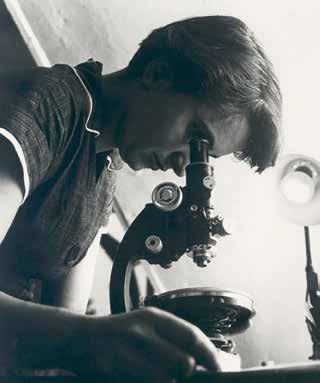
The crux of the matter was to compose the final DNA picture with the technique at their disposal. After several erratic attempts, and through various calculations, they managed to extract useful information from different pictures. They found that the bases were clustered in the centre of the molecule, like the rungs of a spiral staircase. No more and no less than the spiral staircase that made up the structure of life. They were even able to measure the distance separating the “steps”, and they measured the diameter of the helix.
The moment was exciting. They had hit the bull’s eye. On 28 February, Watson and Crick could proudly announce that they had “discovered the secret of life”.
Si hay algo que pueda describir la fisonomía de la molécula de ADN es su belleza. No solo por su significado simbólico –alberga todo lo que seremos en la vida– sino porque posee una estructura absolutamente delicada, simétrica y complejísima al mismo tiempo. De hecho, cuando Crick y Watson la observaron por primera vez, pensaron, entusiasmados que “una estructura tan bonita tenía, por fuerza, que existir”.
El ADN es además un profesional de la eficiencia. Se puede decir que no existe una molécula más resolutiva en el mundo. La simpleza con la que se reproduce a sí misma, conservando la información genética a lo largo de miles de generaciones, es un chasquido en comparación con la complejidad de su transformación.
El descubrimiento de la doble hélice de ADN marcó un antes y un después en la historia de la ciencia. En 1962, James Watson, Francis Crick y Maurice Wilkins recibieron el premio Nobel de Medicina por su descubrimiento. Rosalind Franklin había fallecido cuatro años antes.
If there is one thing that can describe the physiognomy of the DNA molecule, it is its beauty. Not just because of its symbolic significance - it encapsulates everything we will ever be - but because it has a structure that is so delicate, symmetrical and highly complex at the same time. In fact, when Crick and Watson first observed it, they thought, enthusiastically, that “such a beautiful structure must exist”.
DNA is also an efficiency pro. There is arguably no more efficient molecule in the world. The simplicity with which it reproduces itself, preserving genetic information over thousands of generations, is a snap compared to the complexity of its transformation.
The discovery of the DNA double helix marked a turning point in the history of science. In 1962, James Watson, Francis Crick and Maurice Wilkins were awarded the Nobel Prize for Medicine for their discovery. Rosalind Franklin had died four years earlier.
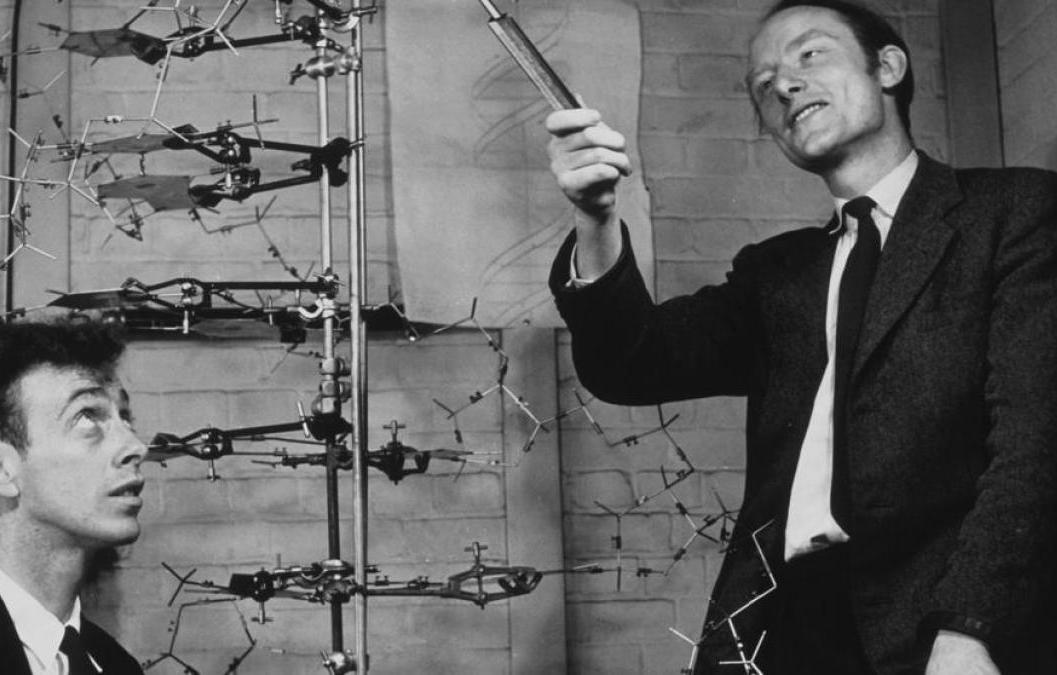
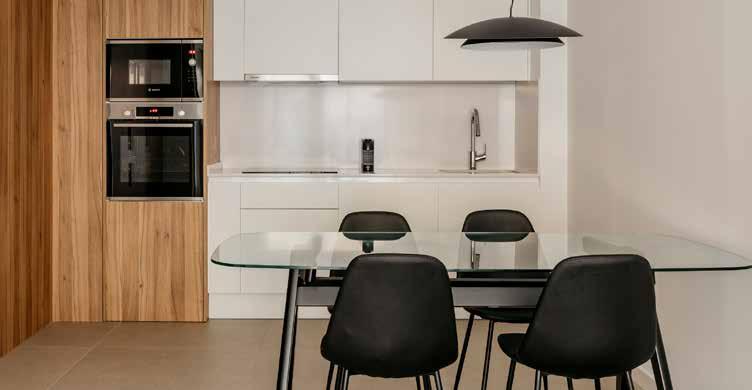
Si hay algo que da calor de hogar es el olor de la buena cocina. De alguna manera se concentran en ese olor muchos sentimientos: bizcochos y tartas, pero también guisos que nos trasportan a instantes de alegría. La cocina es un espacio de la casa muy vivido y también muy sentido.
Por eso la decoración se ha adentrado en este rincón tan especial. Ha dejado de ser un espacio lleno de cacharrería para convertirse en un área diáfana, apenas interrumpida por una isla y armarios imperceptibles camuflados en la pared.
Las tendencias son múltiples: desde paredes vistas, a ultramodernidad en convivencia con una mesa y sillas de antaño. Todo vale en la multiecléctica composición. Las nuevas cocinas presentan un diseño muy moderno, pero con un toque de elegancia.
If there is one thing that warms the home, it is the smell of good cooking. In a way, many feelings are concentrated in that smell: biscuits and cakes, but also casseroles that transport us to moments of joy. The kitchen is a space in the house that is very much lived in and also very much felt.
That is why the decoration has entered this very special corner. It has ceased to be a space full of junk to become a diaphanous area, barely interrupted by an island and imperceptible cupboards camouflaged in the wall.
The trends are manifold: from exposed walls to ultramodernism in coexistence with a table and chairs of yesteryear. Anything goes in the multi-eclectic composition. The new kitchens have a very modern design, but with a touch of elegance.
Los tonos neutros vienen pisando fuerte. Los colores se vuelven crudos como la tierra y utilizan el verde y el marrón como punto de diferenciación. Son tonalidades agradables, cálidas y fácilmente combinables, que conviven con revestimientos en gris efecto cemento. El objetivo de esos tonos terrosos es conectar con la naturaleza y hacer que la estancia sea más armónica.
Otra de las tendencias punteras es introducir muebles o detalles de otros estilos decorativos, muebles antiguos o recuperados que personalizan la estancia. Se pueden combinar mesas vintage o retro que resultan perfectas para marcar el contraste cromático.
Otro de los trucos para crear un ambiente acogedor es jugar con la luz. Fuera las viejas luces de neón que deslumbran. Se pueden utilizar diferentes tipos de luz y de lámparas para conseguir distintas atmósferas. Las lámparas de diseño aportan carácter y personalidad y dan amplitud. Se llevan las lámparas colgantes, lámparas de pie, tiras led empotradas en el techo o apliques de pared.
Las cocinas se han convertido en un espacio donde se pasa mucho tiempo. En ocasiones se convierten en el primer salón de la casa. Por eso los detalles son importantes. Es preferible usar electrodomésticos y muebles de calidad. A la larga salen más económicos y algunos son muy estéticos.
Se pueden utilizar materiales sostenibles como el bambú, la madera, la pintura ecológica o los azulejos de cerámica. Crearán un espacio muy rústico que en combinación con la modernidad es muy atrayente. En decoración es tendencia el contraste ensalzando el bienestar mental y la conexión con la naturaleza.
Neutral tones are in vogue. Colours are becoming earthy raw and use green and brown as a point of differentiation. They are pleasant, warm and easily combinable shades, which coexist with grey cement-effect wall coverings. The aim of these earthy tones is to connect with nature and make the room more harmonious.
Another leading trend is to introduce furniture or details from other decorative styles, antique or recovered furniture that personalise the room. Vintage or retro tables can be combined to create the perfect chromatic contrast.
Another trick to create a cosy atmosphere is to play with light. No more dazzling old neon lights. You can use different types of light and lamps to create different atmospheres. Designer lamps add character and personality and give a feeling of spaciousness. Pendant lamps, floor lamps, LED strips recessed in the ceiling or wall sconces are all the rage.
Kitchens have become a space where a lot of time is spent. Sometimes they become the first living room of the house. That is why details are important. It is preferable to use quality appliances and furniture. They are cheaper in the long run and some are very aesthetically pleasing.
Sustainable materials such as bamboo, wood, ecological paint or ceramic tiles can be used. They will create a very rustic space that in combination with modernity is very attractive. In decoration, contrast is a trend, extolling mental well-being and the connection with nature.
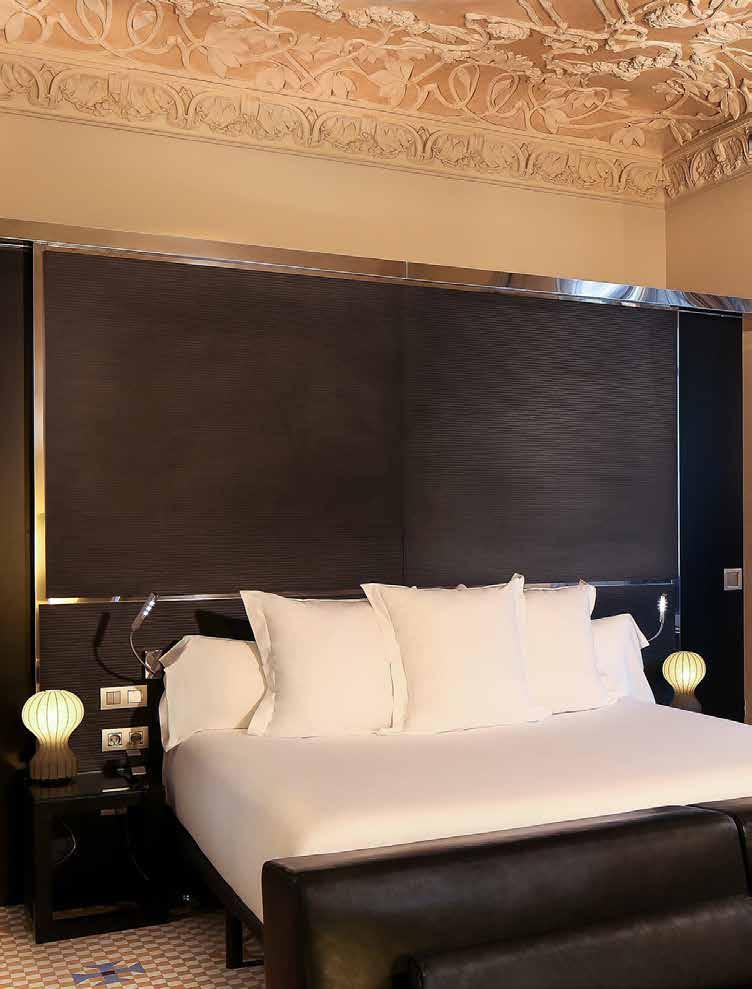
l sueño necesita relajación. Una de las máximas a la hora de decorar el dormitorio es evitar sobrecargar la habitación, sobre todo si es pequeña. El lema: “menos es más” es una de las tendencias más aceptadas en la decoración de interiores, aplicable al 100% en el caso de los dormitorios.
Sleep needs relaxation. One of the maxims when decorating the bedroom is to avoid overloading the room, especially if it is small. The motto: “less is more” is one of the most accepted trends in interior decoration, which is 100% applicable in the case of bedrooms.
La cama es el elemento central del dormitorio. La mirada y el cuerpo nos debe llevar directamente a ella, por esta razón debe estar decorada con un edredón o una funda nórdica con colores naturales y armónicos. Si el espacio te lo permite, coloca un bonito cabecero.
Siempre que se tenga una habitación de dimensiones reducidas, lo mejor será elegir un tono de pared claro. Dará mucha más luz a la estancia y otorgará mayor amplitud. Por supuesto, lo natural está de moda. La conexión con la naturaleza invita a disfrutar de tonos ocre, tierra, madera, lino, algodón… Como contraste, se puede usar una alfombra de colores arriesgados, una apuesta boho chic, con inspiraciones étnicas que darán una sensación muy acogedora.
El dormitorio es también un lugar de lectura. Da un aspecto encantador colocar una estantería con los libros que nos han acompañado en las noches de invierno. La madera vista da ese toque rústico y entrañable que tanto ayuda a descansar.
The bed is the central element of the bedroom. The look and the body should lead us directly to it, which is why it should be decorated with a duvet or duvet cover in natural and harmonious colours. If space allows, place a nice headboard.
Whenever you have a small room, the best thing to do is to choose a light wall tone. It will give much more light to the room and will give more space. Of course, natural is in fashion. The connection with nature invites you to enjoy ochre tones, earth, wood, linen, cotton... As a contrast, you can use a rug in daring colours, a boho chic bet, with ethnic inspirations that will give a very cosy feeling.
The bedroom is also a place for reading. It gives a charming look to place a bookshelf with the books that have accompanied us on winter nights. The exposed wood gives that rustic and cosy touch that helps us to rest.
sta habitación es una leonera” es una frase que se adapta muy bien al estado mental de la habitación de los pequeños. Si hay un espacio donde el único ingrediente necesario es la imaginación, es este. Además, no está sujeto a las normas del orden milimétrico porque para los niños lo único que importa es la ilusión. Sigue este lema: imaginación al poder a la hora de decorar la habitación de los pequeños.
Una tendencia muy de moda en la decoración infantil son los papeles pintados. Papeles con flores gigantes, montañas, elefantes, leones… para que no se vaya de las manos y no se recargue demasiado, usa tonos neutros y pastel, de esta manera queda sutil y puede resultar muy relajante.
Si hay algo que está de moda es la decoración natural en toda la casa, y por supuesto, también en las habitaciones infantiles. Los muebles fabricados con ratán, mimbre o incluso bambú son resistentes, aportan muchísima calidez y pueden combinarse con cualquier estilo y con cualquier textil. De hecho, las telas con hilado ecológico y colores neutros como el lino y el algodón son geniales para los más pequeños, además de que aportan relajación y son muy estéticas.
Se puede mezclar esta tendencia natural con el boho chic añadiendo toques rústicos y artesanos, piezas con hilo y colores que van desde el marrón hasta el azul índigo y elementos que aportan dinamismo como los columpios de interior. Se pueden incluir elementos que invitan a soñar despiertos, como los tipis indios, alfombras mullidas, tapices de mil colores y cojines por todas partes.


“This room is a lion’s den” is a phrase that adapts very well to the state of mind of the children’s room. If there is a space where the only necessary ingredient is imagination, this is it. Moreover, it is not subject to the rules of millimetric order because for children the only thing that matters is illusion. Follow this motto: all power to the imagination when it comes to decorating the little ones’ room.
A very fashionable trend in children’s decoration is wallpaper. Wallpapers with giant flowers, mountains, elephants, lions... so that it doesn’t get out of hand and doesn’t get too overloaded, use neutral and pastel tones, this way it is subtle and can be very relaxing.
If there is something that is in fashion is natural decoration throughout the house, and of course, also in children’s rooms. Furniture made from rattan, wicker or even bamboo is hard-wearing, warm and can be combined with any style and any textile. In fact, fabrics with ecological yarns and neutral colours such as linen and cotton are great for the little ones, as well as being relaxing and aesthetically pleasing.
You can mix this natural trend with boho chic by adding rustic and handmade touches, pieces with thread and colours ranging from brown to indigo blue and elements that bring dynamism such as indoor swings. You can include elements that invite you to daydream, such as Indian teepees, fluffy rugs, colourful tapestries and cushions everywhere.
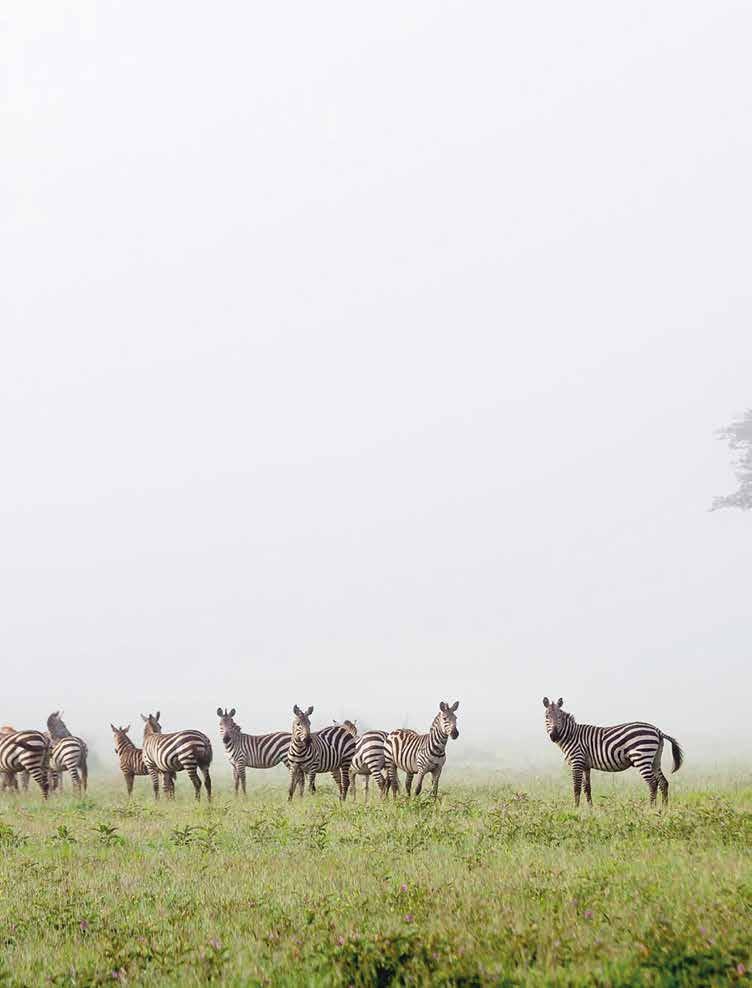
Hay escenarios que no dejan lugar a dudas. Que nos trasladan a otro tiempo, a una reflexión, rodeados por los dominios más inhóspitos de la naturaleza. Tanzania podría ser el lugar donde adentrarse en uno mismo. El país alberga parajes únicos: el gran Valle del Rift, el lago Victoria y Zanzibar; y tres de las maravillas naturales del continente africano: el Serengeti, el cráter de Ngorongoro y el monte Kilimanjaro. El espectáculo natural es inconmensurable.
La mejor época para viajar es de junio a septiembre, un periodo que cuenta con un clima más agradable. La época más cálida transita de octubre a marzo. De abril a mediados de mayo se registran las grandes lluvias; y durante noviembre y diciembre son frecuentes los chaparrones de breve duración.
There are scenarios that leave no room for doubt. That transport us to another time, to a reflection, surrounded by the most inhospitable domains of nature. Tanzania could be the place to go deep into oneself. The country is home to unique landscapes: the Great Rift Valley, Lake Victoria and Zanzibar; and three of the natural wonders of the African continent: the Serengeti, the Ngorongoro Crater and Mount Kilimanjaro. The natural spectacle is immeasurable.
The best time to travel is from June to September, a period with a more pleasant climate. The hottest period is from October to March. From April to mid-May there are heavy rains, and during November and December short showers are common.

En Tanzania el clima se desarrolla con una capacidad inverosímil pero increíblemente prolífica para favorecer el crecimiento de un paisaje prodigioso.
El norte del país se encuentra en condiciones ideales durante todo el año para realizar un safari fotográfico, uno de los sectores económicos más importantes del país. Solo en abril y mayo la experiencia puede resultar incómoda debido a las lluvias y al cierre de algunos alojamientos.
Tanzania está realizando un esfuerzo importante a la hora de fomentar un turismo sostenible en los safaris. La protección del medio natural es un reto tanto para mantener en activo a las comunidades locales como para los proyectos que genera un sector que aporta un importante valor al PIB del país.
Tanzania’s climate has an improbable but incredibly prolific capacity to support the growth of a prodigious landscape.
The north of the country is in ideal conditions all year round for a photographic safari, one of the country’s most important economic sectors. Only in April and May can the experience be uncomfortable due to the rains and the closure of some lodges.
Tanzania is making a major effort to promote sustainable safari tourism. Protecting the natural environment is a challenge both in terms of keeping local communities active and the projects generated by a sector that provides an important source of income for the country’s tourism industry.
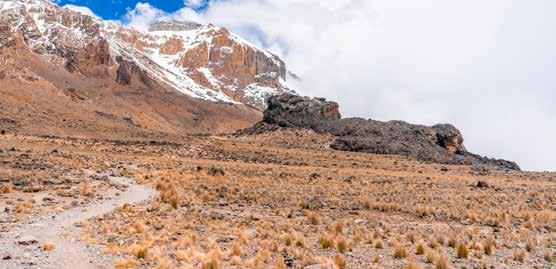
El Parque Nacional Serengeti es uno de los más grandes de Tanzania, con 14.763 kilómetros cuadrados de superficie. Se trata de una auténtica joya natural que se encuentra salpicada de acacias, sabanas arboladas y bosques. Está ubicado en un altiplano entre las tierras altas de Ngorongoro, por el norte linda con la Reserva Nacional de Masai Mara, en Kenia, y por el oeste se extiende casi hasta el Lago Victoria. De hecho, el nombre del parque significa “llanura sin fin”, una palabra de lengua masai.
Serengeti National Park is one of the largest national parks in Tanzania, covering an area of 14,763 square kilometres. It is a natural gem dotted with acacia trees, wooded savannahs and forests. It sits on a high plateau between the Ngorongoro Highlands, bordering Kenya’s Masai Mara National Reserve to the north and stretching almost to Lake Victoria to the west. In fact, the park’s name means “endless plain”, a word in the Masai language.
El paisaje representa una armonía salvaje, con praderas que se interrumpen con amplios kopjes, unos afloramientos rocosos en medio de la planicie, que conviven con los ríos que fluyen en el parque, alrededor de los cuales se arremolinan una gran variedad de aves, mamíferos y reptiles. El Serengeti es el espectáculo de la vida.
Este vergel natural, auténtico superviviente de la época prehistórica, mantiene una vegetación, clima y fauna que ha permanecido inmutable desde hace millones de años. Precisamente, el hombre primitivo hizo su aparición en la Garganta de Olduvai, una gran depresión ubicada al este de la llanura del Serengueti, dentro del Gran Valle del Rift. Estamos sin duda ante la cuna de la humanidad.
Resulta sobrecogedora la escena de migración de los ñu. Las manadas llegan a medir más de diez kilómetros y son seguidas de cerca por los depredadores, al acecho de cualquier mínimo fallo en alguno de los miembros de la manada. Ni los leones ni los ríos atestados de cocodrilos pueden detenerles en su instinto por emigrar hacia el sur, al final de la estación de lluvias.
El atardecer es el momento ideal para contemplar la esencia de Tanzania. El cielo parece infinito, cargado de tonalidades imperceptibles en otro lugar del mundo. La banda sonora de la naturaleza no hace más que ampliar la sensación de estar en un momento crucial de la historia del planeta.
Otra opción para conocer la naturaleza de Tanzania es la subida al Kilimanjaro, la montaña más alta de África (5895 metros) y el pico aislado más alto del mundo. Aunque muchas de sus rutas ofrecen notable dificultad, hay rutas más apropiadas para principiantes que pueden contratarse con diferentes empresas especializadas. No obstante, la contemplación de este inverosímil coloso de piedra es ya un logro en sí mismo.
The landscape is a wild harmony, with grasslands interrupted by wide kopjes, rocky outcrops in the middle of the plain, which coexist with the rivers that flow through the park, around which swirl a variety of birds, mammals and reptiles. The Serengeti is the spectacle of life.
A true survivor of the prehistoric era, this natural orchard has maintained a vegetation, climate and fauna that has remained unchanged for millions of years. Primitive man made his appearance in the Olduvai Gorge, a great depression located to the east of the Serengeti plain, within the Great Rift Valley.This is undoubtedly the cradle of humanity.
The scene of the wildebeest migration is breathtaking.The herds are more than ten kilometres long and are closely followed by predators, on the lookout for the slightest lapse in any member of the herd. Neither lions nor crocodile-clogged rivers can stop them in their instinct to migrate south at the end of the rainy season.
Sunset is the ideal time to contemplate the essence of Tanzania. The sky seems infinite, full of hues imperceptible anywhere else in the world. The soundtrack of nature only amplifies the feeling of being in a crucial moment in the history of the planet.
Another option to get to know Tanzania’s nature is to climb Kilimanjaro, Africa’s highest mountain (5895 metres) and the highest isolated peak in the world. Although many of its routes offer considerable difficulty, there are routes more suitable for beginners that can be contracted with different specialised companies. Nonetheless, the contemplation of this unlikely stone colossus is an achievement in itself.