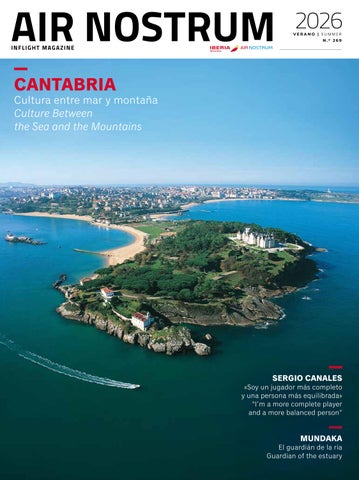
Cultura entre mar y montaña Culture Between the Sea and the Mountains
SERGIO CANALES
«Soy un jugador más completo y una persona más equilibrada»
“I'm a more complete player and a more balanced person”
MUNDAKA
El guardián de la ría Guardian of the estuary
CARLOS BERTOMEU
BIENVENIDOS A BORDO
Welcome on board!
El verano representa para Air Nostrum el momento del año en el que nuestra tarea alcanza su máxima intensidad. Aumentan las operaciones, se amplían las rutas y más de un millón y medio de pasajeros confían en nosotros para acompañarlos en sus viajes más esperados. Es, sin duda, un periodo muy exigente, porque el tráfico aéreo se densifica y se congestionan algunos aeropuertos, pero también es un momento profundamente inspirador, porque nos permite cumplir con una de las partes más bonitas de nuestra misión: conectar personas con experiencias únicas.
Por ello, en estas fechas, nuestros equipos redoblan sus esfuerzos hacia ustedes, nuestros clientes, porque sabemos que la diferencia está en los detalles, en la atención y en la cercanía. Cada vuelo empieza en el trato y termina en el recuerdo que les dejamos.
Leí una vez que “los veranos de la infancia son la patria donde residen los sueños” y es precisamente en verano cuando facilitamos el acceso a destinos que invitan a ser disfrutados con ilusión. Cantabria es uno de ellos y es el eje central de la revista que ahora tiene en sus manos. Un territorio donde la diversidad se concentra en apenas unos kilómetros y donde cada jornada ofrece una experiencia distinta. Desde la serenidad de los valles pasiegos hasta la fuerza del Cantábrico; desde la historia detenida en el tiempo de Santillana del Mar hasta la belleza modernista de Comillas.
Por fortuna, he tenido la ocasión de visitar frecuentemente esa comunidad desde hace más de tres décadas ya que Air Nostrum siempre ha contado con una operación relevante en el aeropuerto de Parayas y yo con buenos amigos que son grandes embajadores de su tierra. Les confieso que siempre me sorprendió la gran diversidad gastronómica que presenta el territorio en tan poca distancia. Usted puede estar en Puerto Chico degustando “maganos” en un aperitivo tempranero, comer un cocido lebaniego al pie de los Picos de Europa y cenar una marmita de bonito en San Vicente de la Barquera. Y, si le parece muy contundente la combinación, pídase un rape o una merluza y, por supuesto, unas buenas anchoas –«el jamón ibérico del mar»– le aseguro que la experiencia no le defraudará.
Viajar a Cantabria es, en definitiva, sumar paisajes, cultura y sensaciones. Es una invitación a parar, a descubrir y a disfrutar sin prisas, pero con intensidad.
Que disfruten del vuelo.
Summer is the time of the year when Air Nostrum experiences its highest level of activity. Operations ramp up, our route network expands, and more than one and a half million passengers rely on us to take them on their most anticipated trips. It is undoubtedly a highly demanding period, as air traffic surges and some airports run at full capacity. At the same time, it is a deeply inspiring moment that allows us to fulfil one of the most meaningful parts of our mission: connecting people with unique experiences.
That is why, during this season, our teams go the extra mile for you, our customers, because we know the difference lies in every detail, in the care we deliver, and in our friendly approach. Every flight begins with the care we show and ends with the lasting memories we create.
I once read that “our childhood summers are where dreams live”, and it is precisely in summer when we make it possible to reach destinations meant to be enjoyed with enthusiasm. Cantabria is one of them, and it takes centre stage in the magazine you now hold in your hands. A territory where diversity is concentrated within just a few kilometres, each day brings a new experience here: from the peaceful Valles Pasiegos to the powerful Cantabrian Sea, from the timeless charm of Santillana del Mar to the modernist beauty of Comillas.
Fortunately, I have had the privilege of visiting this region frequently for more than three decades. Air Nostrum has long maintained a significant presence at Parayas airport, and I have good friends who are great ambassadors of their homeland. I must admit that I have always been amazed by the great gastronomic diversity found across the territory within such a short distance. You can be in Puerto Chico nibbling on maganos as an early snack, eating a lebaniego meat stew at the foot of the Picos de Europa, or savouring a bonito tuna stew in San Vicente de la Barquera. If you find the selection particularly hearty, you may try monkfish or hake and, of course, some quality anchovies— the Iberian ham of the sea—I can assure you that the experience will not disappoint.
Travelling to Cantabria is, in short, about adding landscapes, culture, and sensations. It is an invitation to pause, explore, and enjoy without haste yet intensely.
Have a good flight!
Edita / Publisher
Air Nostrum Líneas Aéreas
Presidente/President Carlos Bertomeu
Director Comunicación Air Nostrum / Communications Director Antonio de Nó
Coordinador Air Nostrum Air Nostrum Coordination
Jorge Aguadé prensa@angs.aero
Dirección ejecutiva / Executive Director Fernando Santos Vicente
Dirección editorial / Editorial Director Ana I. Martínez
Dirección de Marketing / Marketing Director Francisco Robles
Dirección de Publicidad / Advertising Director
Benita Espadas y Virginia Calvo
Redacción / Editors
SU MARIO
Editorial MIC: Gerard Olivares, Luis Tejedor, Desiré Alija, Diego Álvarez, Anna Burgstaller, Markel Sierra, Pablo Santamarta, Sandra Robles, Diego Rodríguez, Ana Fernández.
Traducción / Translation
Adriana Pallero Singleton
Firmas invitadas / Guest contributors Paz Ferrer, Javier Ortega
Diagramación y Diseño
Layout and design
Óscar Rodríguez, Carmina Canseco, Marta Menéndez, Lydia Medina, Esperanza Prieto, Cristina Pangua
Producción editorial / Editorial production Editorial MIC www.editorialmic.com
OUTSIDERS
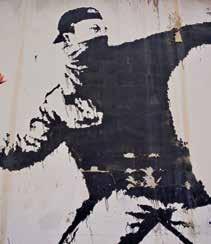
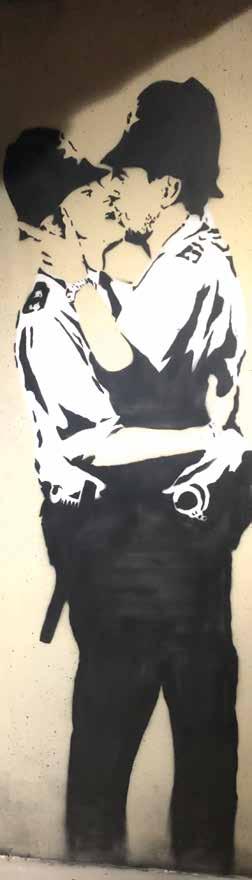
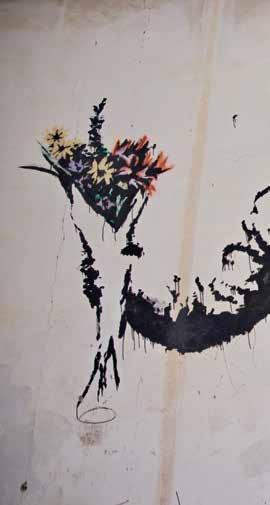
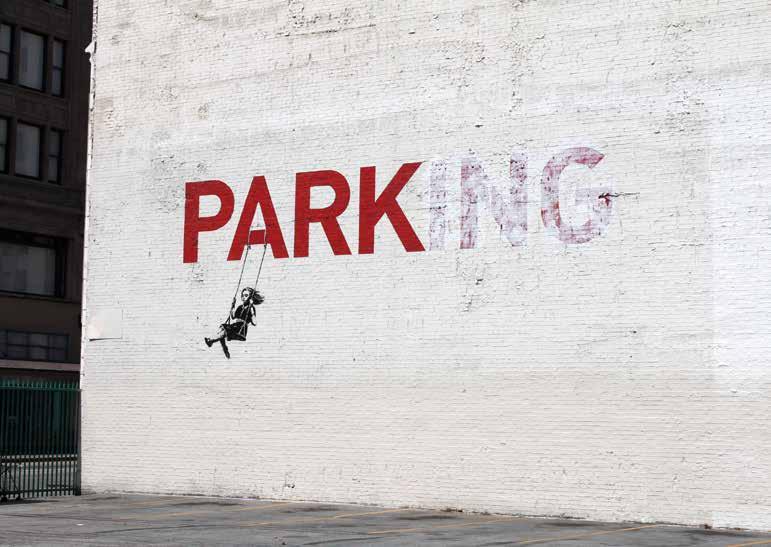
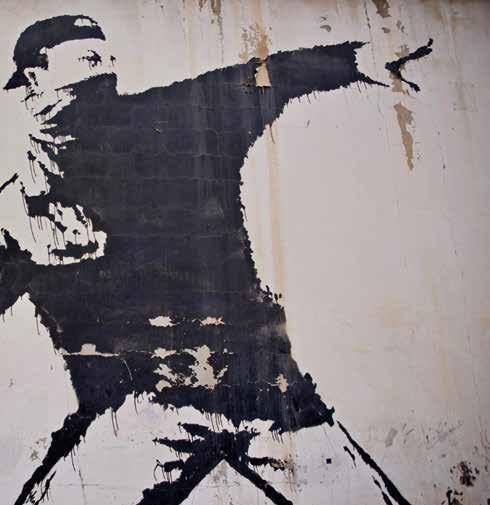
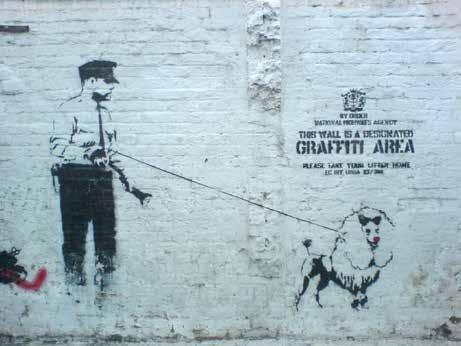
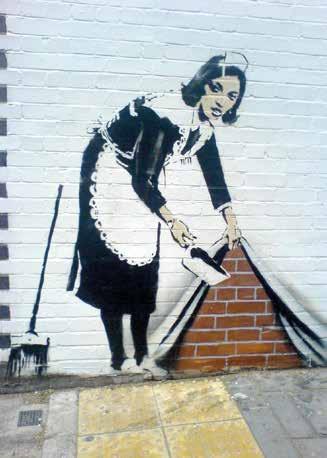
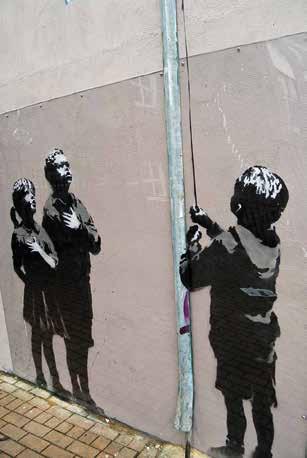
BANKSY, HISTORIA DE UNA FIRMA INVISIBLE A TALE OF AN INVISIBLE SIGNATURE
BEAUTY ADVISOR by PAZ FERRER
ENTREVISTA | INTERVIEW
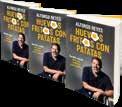
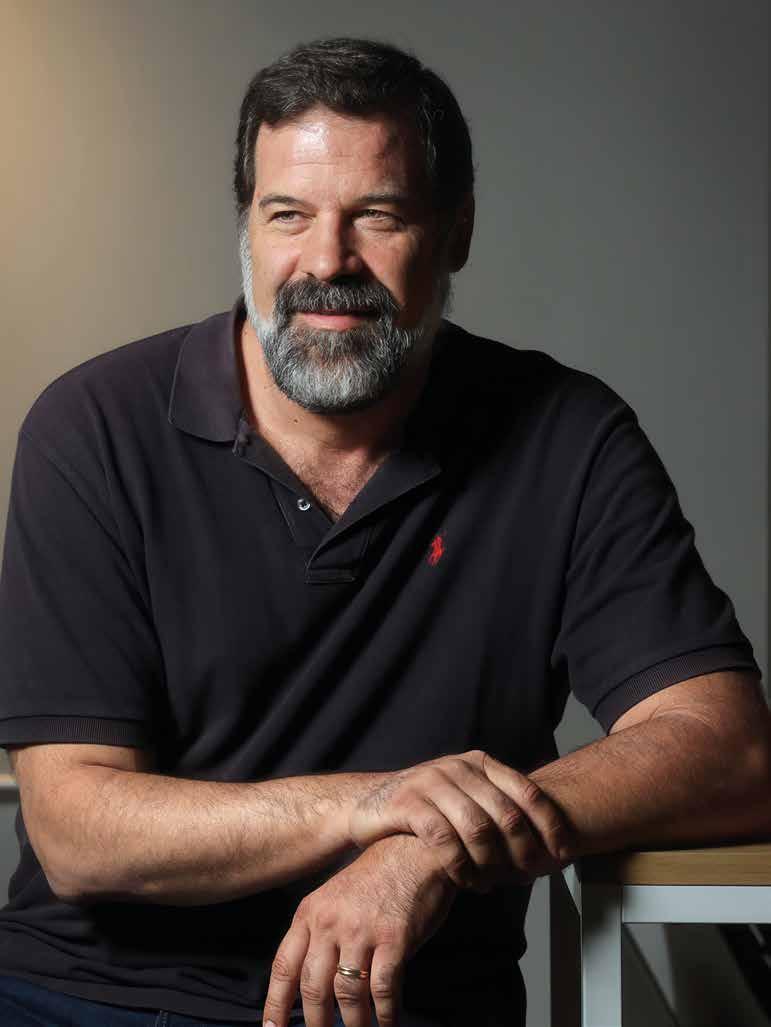
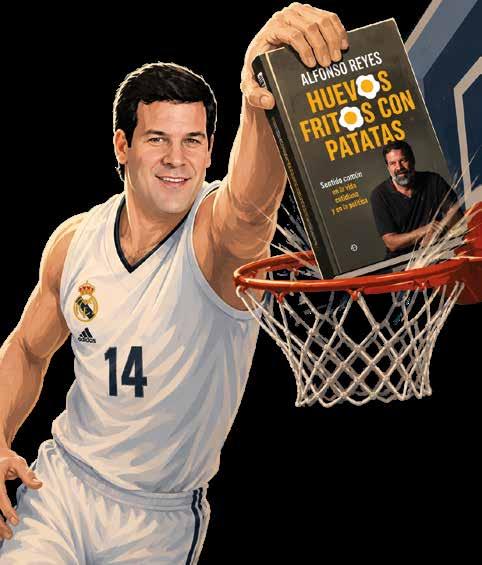
ALFONSO REYES
LLEGADAS | SLEEP NIGH 106
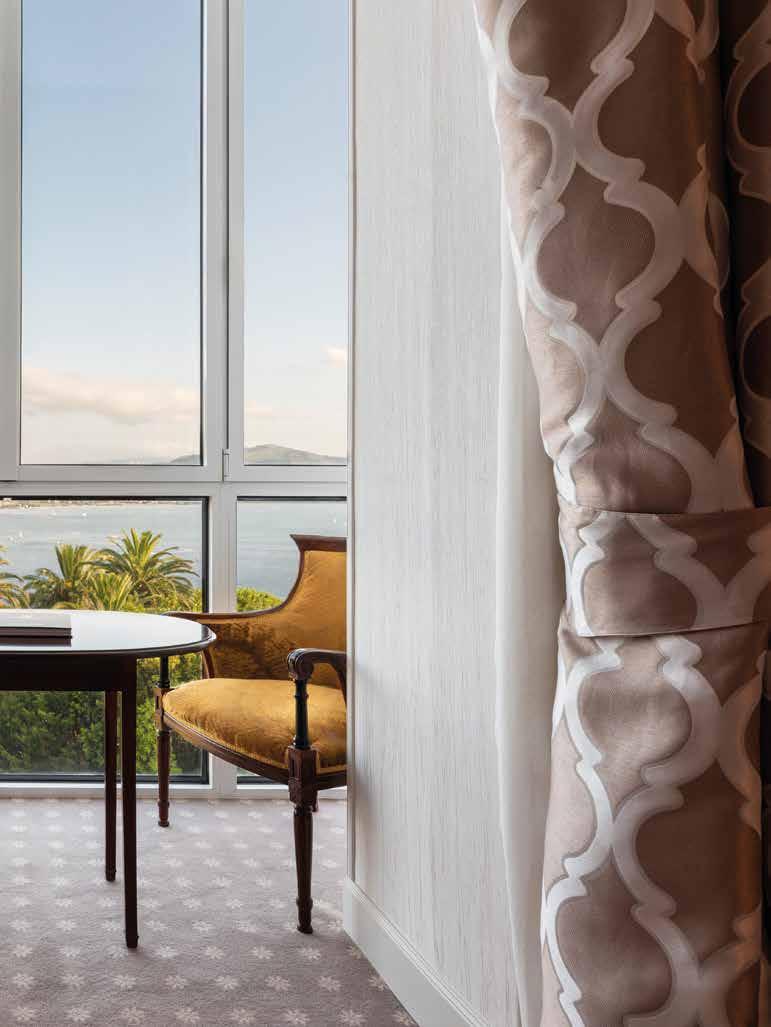
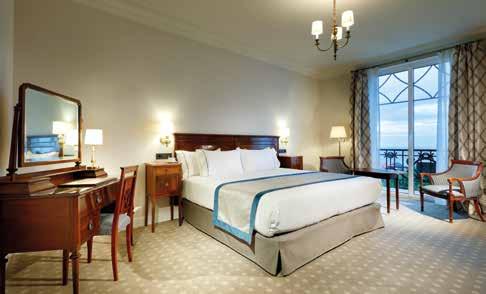
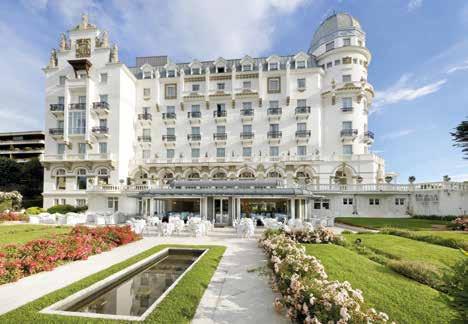
EUROSTARS HOTEL REAL
JUAN GÓMEZ BARCENA
RINCONES CON ENCANTO | CHARMING PLACES
ICONOS ARQUITECTÓNICOS ARCHITECTURAL ICONS 122
Cantabria por mar, aire... y tierra
By sea, air… and land
140
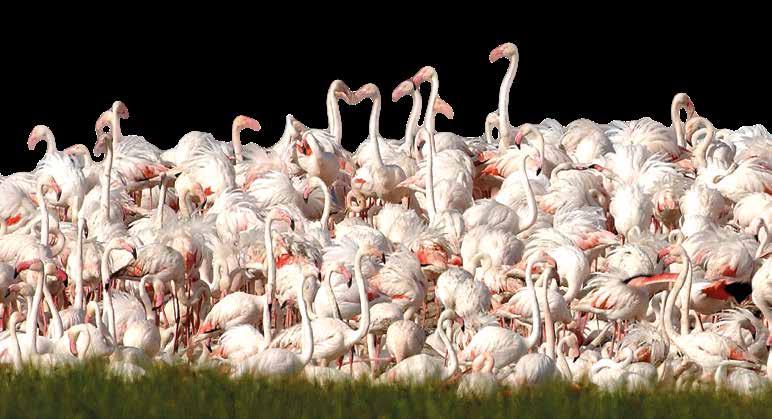
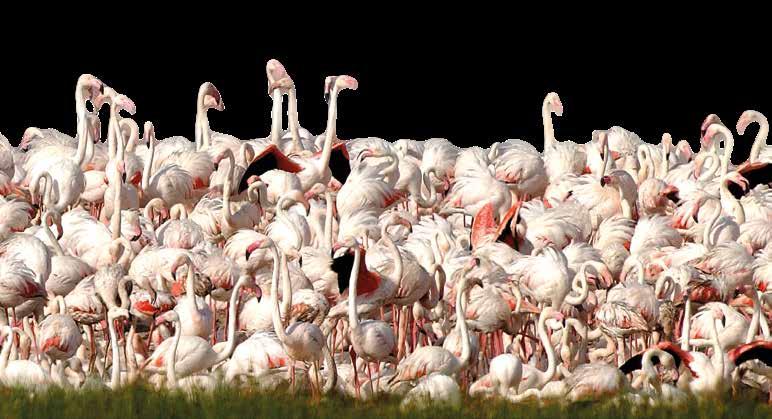
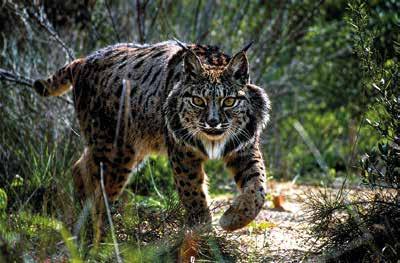
ESTACIÓN BIOLÓGICA DE DOÑANA
Un laboratorio a cielo abierto Biological Station, an open-air laboratory LAB | SCIENCE
ENTRE LAS ALAS Y EL ASFALTO ON THE WING AND ON THE ROAD
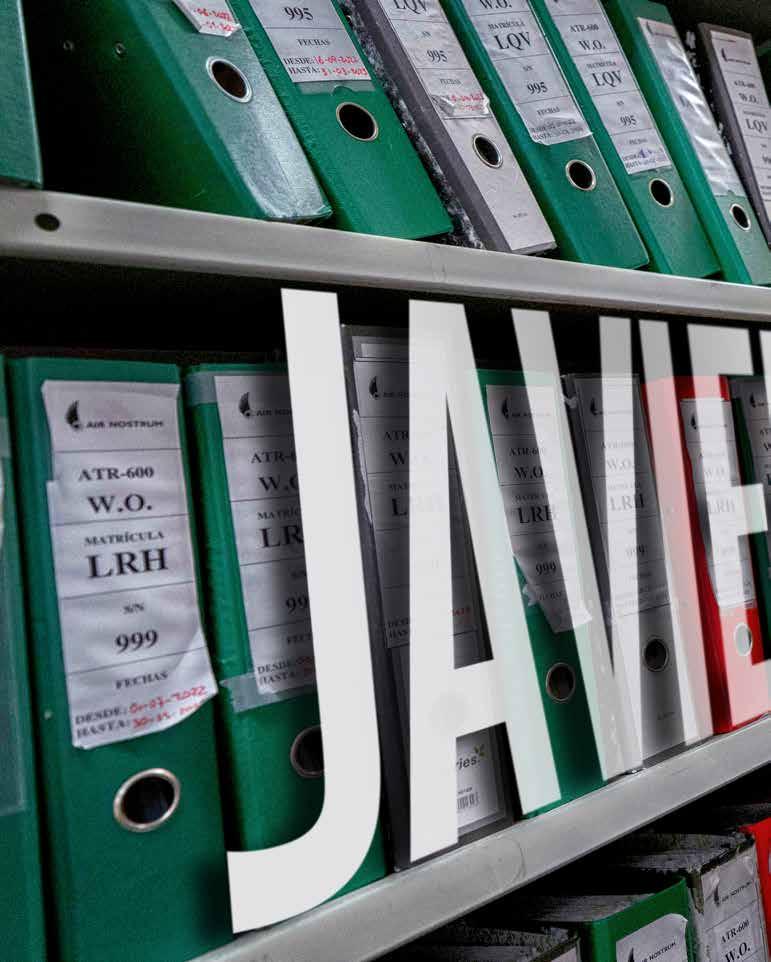
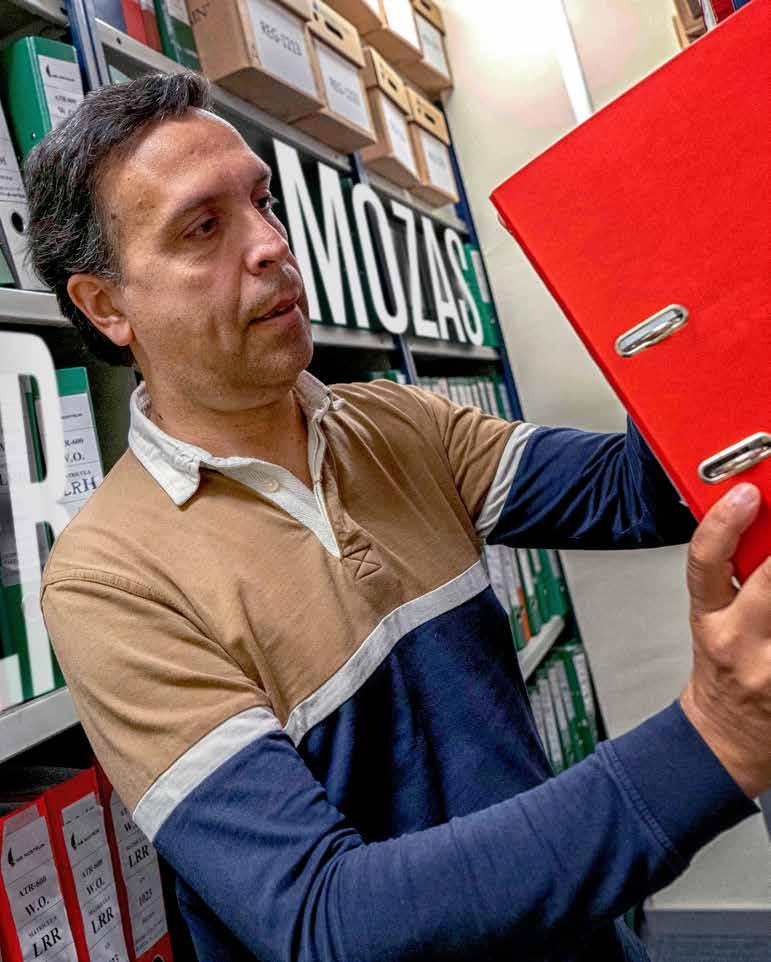
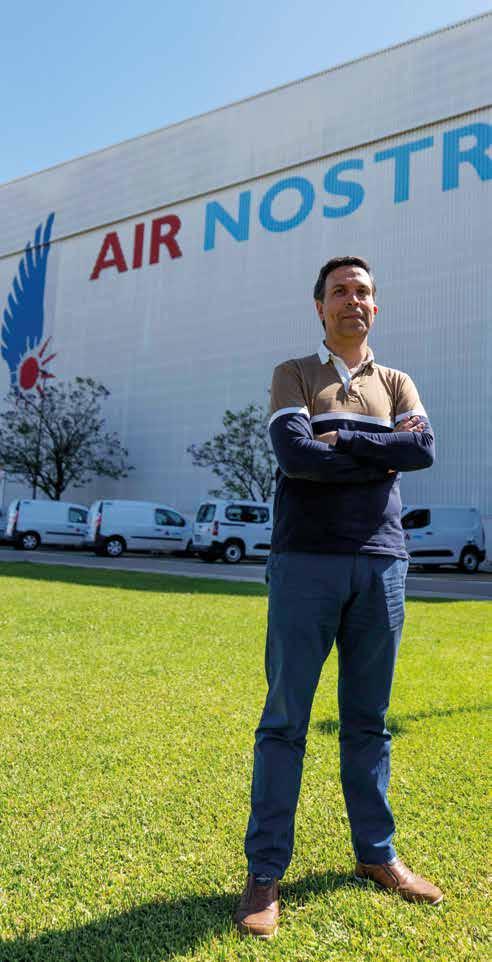
JAVIER MOZAS
«Antes teníamos 2.000 libros en la biblioteca ahora está todo en la red»
“We used to have 2,000 books in the library; now everything is online”
VENTA A BORDO BUY ON BOARD
176
130
RELATOS DE VIAJE | TRAVEL MEMORIES
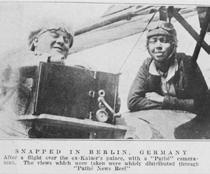
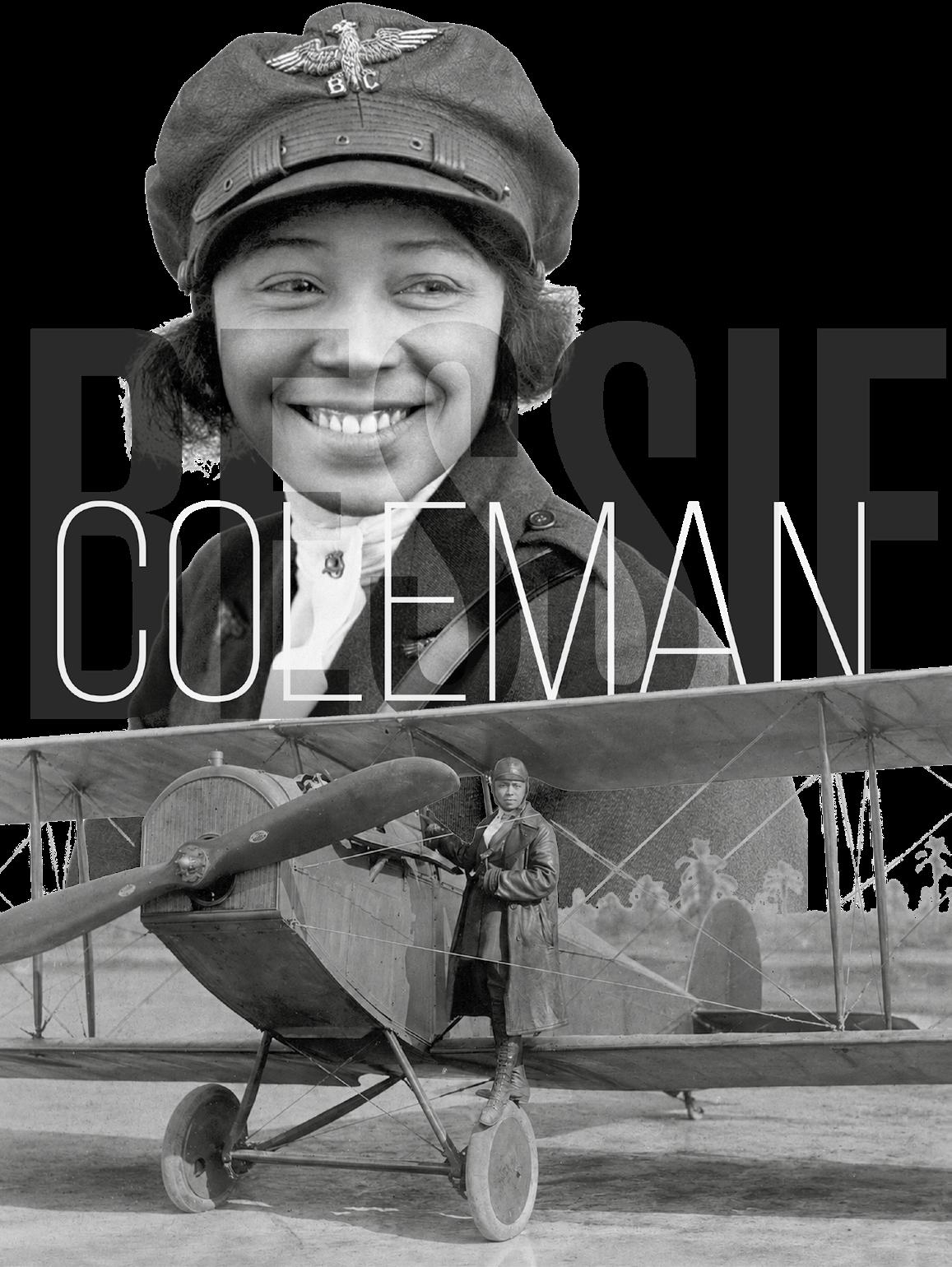
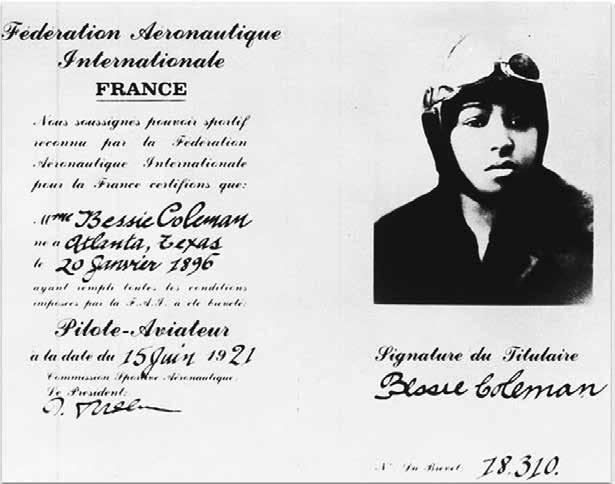
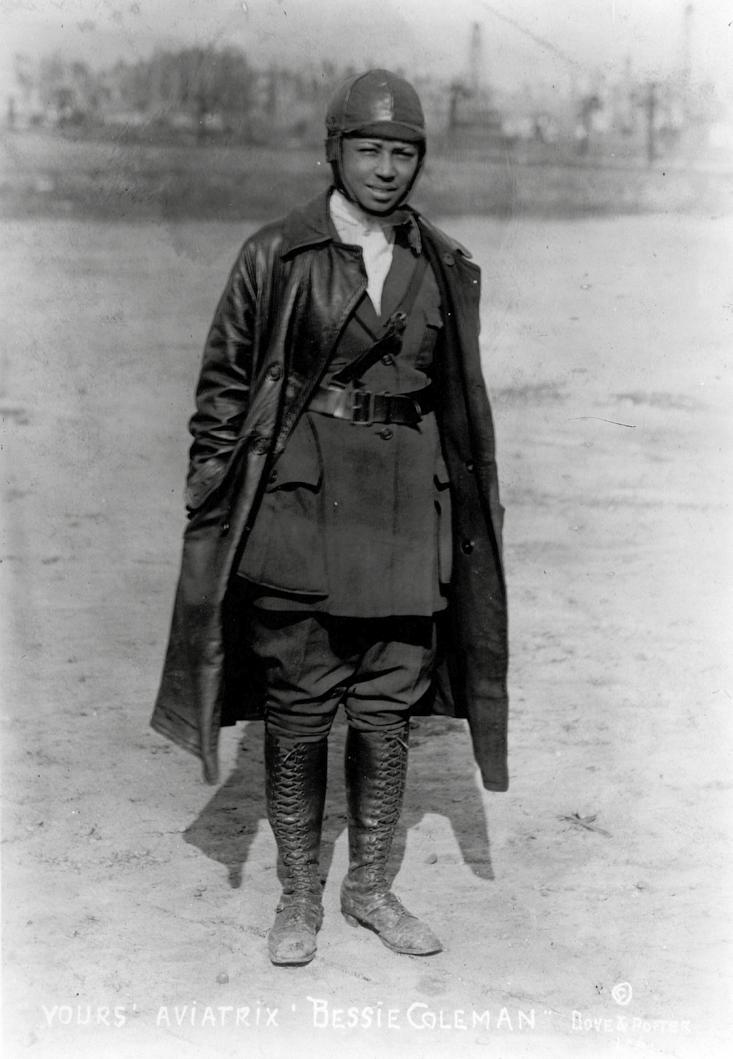
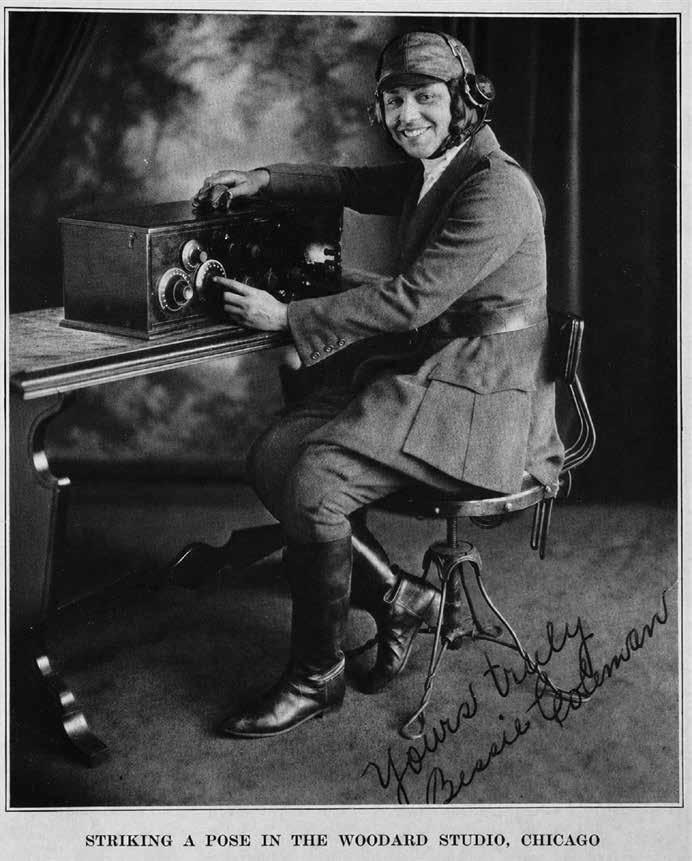
BESSIE COLEMAN
La pionera que rompió las reglas del cielo A trailblazer who broke the rules of the sky
178
EL VIAJE DE LA AEROLÍNEA
THE AIRLINE’S JOURNEY Dani Valero
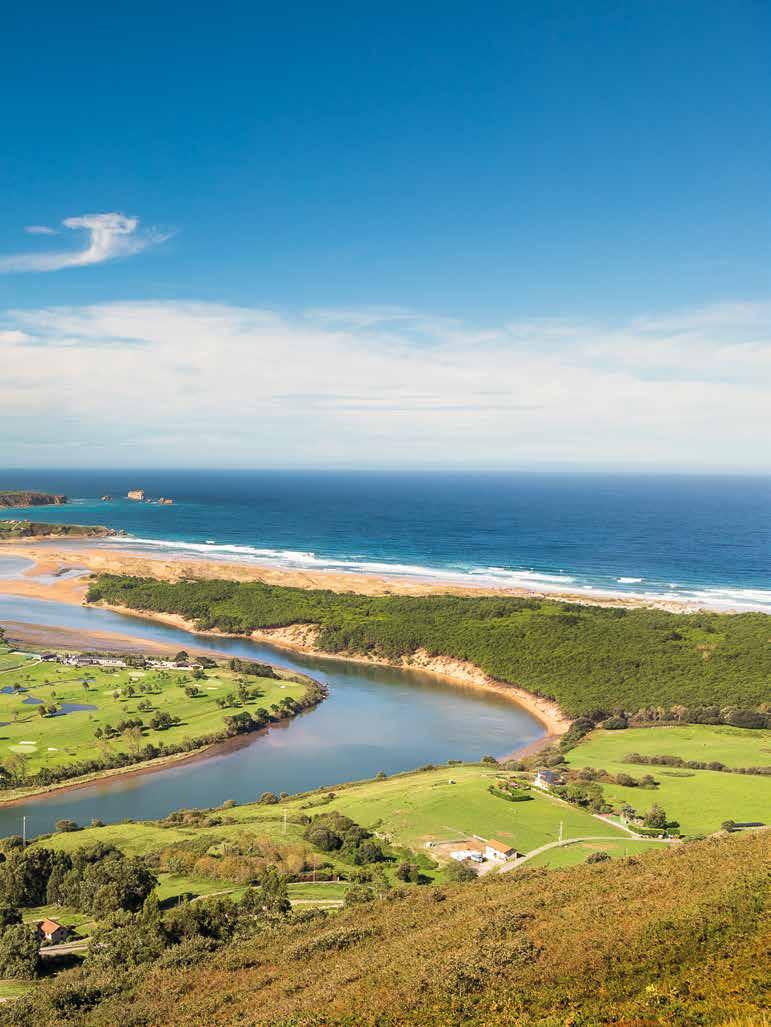
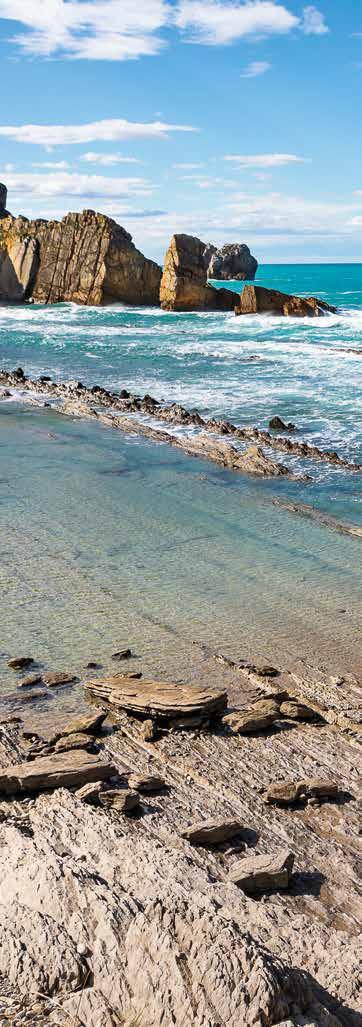
CANTABRIA DERROCHA PAISAJE Y CULTURA. DESDE LA ARENA DE LAS PLAYAS HASTA LA CIMA DE PICOS DE EUROPA, CONSERVA UNA DIVERSIDAD POCO FRECUENTE EN DISTANCIAS CORTAS: PUEBLOS CON IDENTIDAD TRADICIONAL, GASTRONOMÍA LIGADA AL TERRITORIO Y UNA HISTORIA QUE SE DESPLIEGA DESDE EL PALEOLÍTICO HASTA LO MÁS CONTEMPORÁNEO
CANTABRIA, MARITIME AND MOUNTAIN HERITAGE
CANTABRIA CULTURA ENTRE MAR Y MONTAÑA
Texto: Miguel Sánchez Fotos: Cantur
CANTABRIA IS BRIMMING WITH LANDSCAPES AND CULTURE. FROM ITS SANDY BEACHES TO THE PEAKS OF PICOS DE EUROPA, THE REGION BOASTS A RARE DIVERSITY WITHIN SUCH A COMPACT AREA: VILLAGES WITH TRADITIONAL IDENTITY, A CUISINE ROOTED IN LOCAL PRODUCE, AND A HISTORY THAT SPANS FROM THE PALAEOLITHIC ERA TO THE PRESENT DAY
Cantur
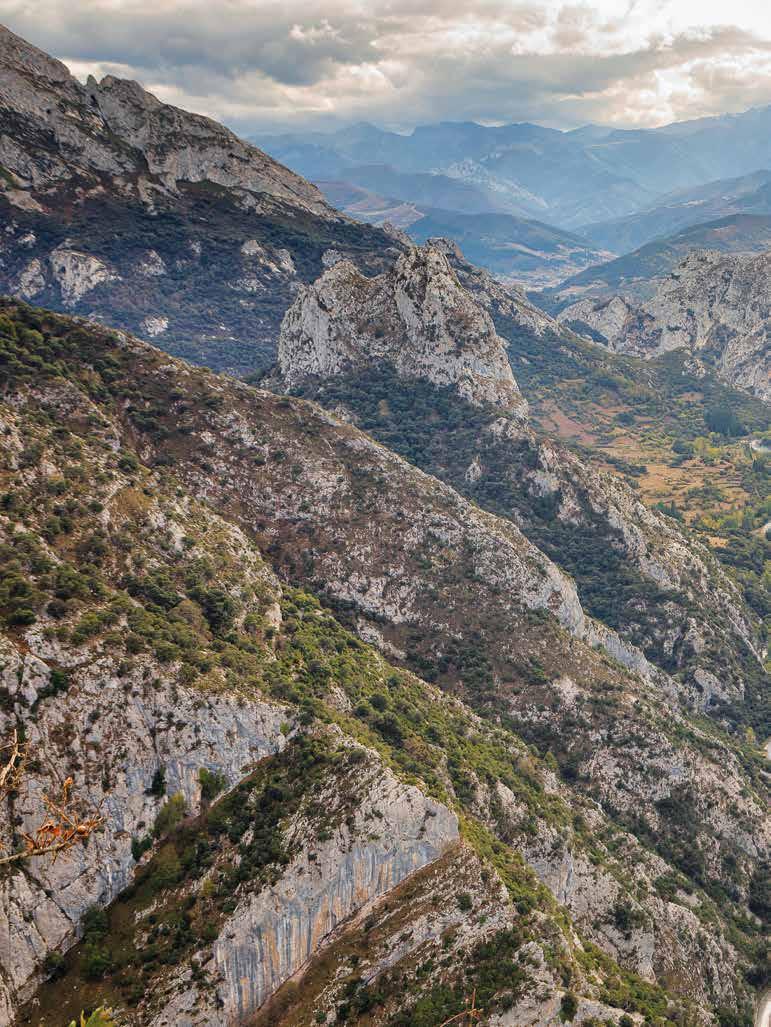
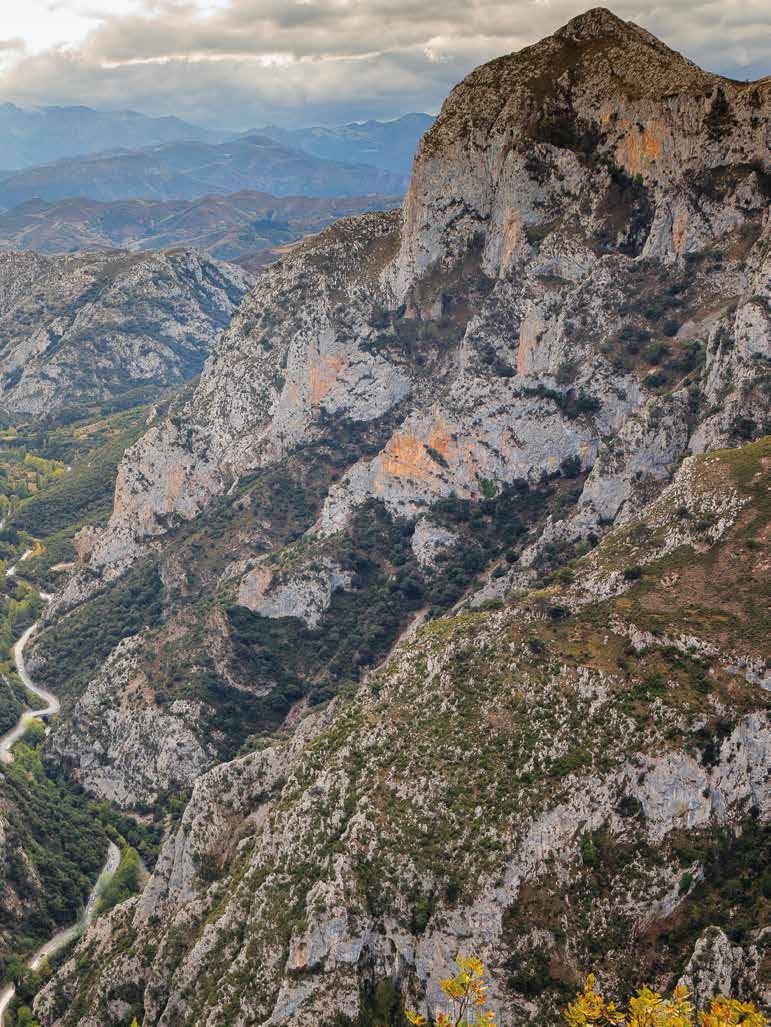
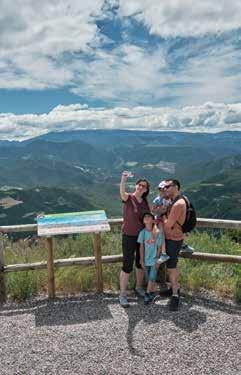
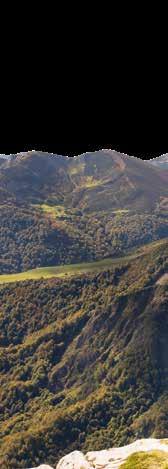
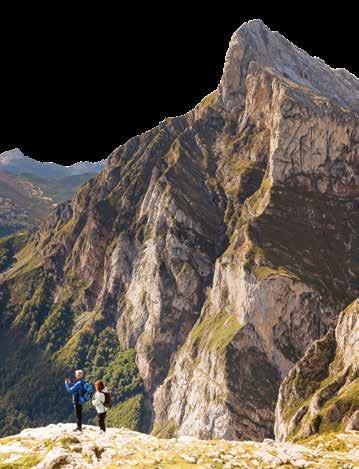
Mirador de Santa Catalina. Desfiladero de la Hermida
Cantabria hebra de forma singular territorio y cultura. En distancias cortas y tiempos breves conviven pueblos marineros, valles ganaderos, cuevas paleolíticas, monasterios medievales, mercados tradicionales, cocina de proximidad y una capital que refuerza su perfil cultural con nuevas y ambiciosas propuestas.
El propio relieve –diverso y cambiante en escasos kilómetros–crea y fomenta la pluralidad de Cantabria, con hasta nueve comarcas turísticas –Asón-Agüera, Besaya, Campoo, Costa Central, Liébana, Saja-Nansa, Santander, Trasmiera y Valles Pasiegos–, desplegadas entre las arenas del mar, el verde de los valles y la roca de las cumbres.
El resultado es un territorio manejable, donde el litoral y los puertos de montaña se contemplan a poco más de una hora. La amplia oferta de experiencias culturales, paisajísticas y gastronómicas en un territorio tan pequeño es difícil de igualar. Porque viajar a Cantabria es unir múltiples propuestas.
CANTABRIA ES UN TERRITORIO
MANEJABLE, DONDE EL LITORAL Y LOS PUERTOS DE MONTAÑA SE CONTEMPLAN A POCO MÁS DE UNA HORA. LA AMPLIA OFERTA DE EXPERIENCIAS CULTURALES, PAISAJÍSTICAS Y GASTRONÓMICAS EN UN TERRITORIO TAN PEQUEÑO ES DIFÍCIL DE IGUALAR
TEXTO: Miguel Sánchez
FOTOGRAFÍAS: Cantur
CANTABRIA IS A MANAGEABLE REGION WHERE TRAVELING FROM THE COASTLINE TO THE MOUNTAIN PASSES TAKES JUST OVER AN HOUR. THE WIDE RANGE OF CULTURAL, SCENIC, AND GASTRONOMIC EXPERIENCES IN SUCH A SMALL TERRITORY IS DIFFICULT TO MATCH
Cantabria uniquely interweaves landscape and cultural heritage. Within a small area and short travel distances, we find seafaring villages, livestock-farming valleys, Palaeolithic caves, medieval monasteries, traditional markets, local cuisine, and a capital city that strengthens its cultural profile through innovative and ambitious projects.
The varied terrain—which changes noticeably over just a few kilometres—shapes and fosters Cantabria’s diversity. Its nine tourist regions (Asón-Agüera, Besaya, Campoo, Costa Central, Liébana, Saja-Nansa, Santander, Trasmiera, and Valles Pasiegos) unravel across sandy coastlines, green valleys, and rocky summits.
The result is a manageable region where traveling from the coastline to the mountain passes takes just over an hour. The wide range of cultural, scenic, and gastronomic experiences in such a small territory is difficult to match— travelling through Cantabria is experiencing a variety of options.
Air Nostrum vuela desde Santander
Dos vuelos diarios con Madrid durante todo el verano.
Desde el 18 de julio al 29 de agosto habrá dos frecuencias semanales los martes y los sábados desde Santander a Almería, Vigo y Jerez.
Pueblos entre el Cantábrico y la montaña
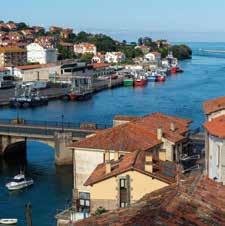
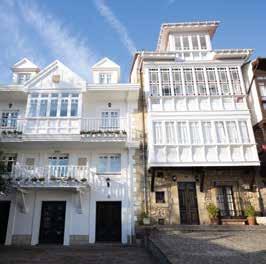
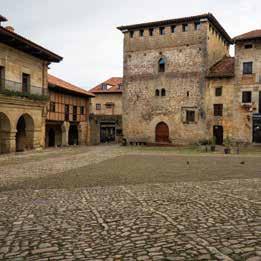
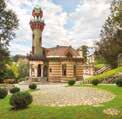
Santillana del Mar, Comillas o Suances reúnen playas, arquitectura y una intensa vida cultural en la Costa Central. Entre el caserío de piedra, teja y madera, Santillana esconde tesoros como los cuarenta y tres capiteles románicos en el claustro de su colegiata. En un contraste de siglos, Comillas seduce con edificios modernistas a caballo entre la realidad y la fantasía, con el azulejo y el ladrillo creando formas imprevistas.
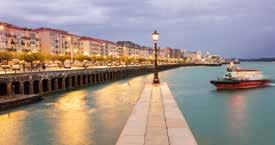
En el occidente, Saja-Nansa conserva una relación directa entre paisaje, memoria y territorio. Aquí, la tradición pesquera sigue activa en puertos como el de San Vicente de la Barquera, donde las tabernas marineras se alinean bajo las murallas que antaño protegieron esta villa estratégica. Tierra adentro, pequeños pueblos como Tudanca mantienen una arquitectura tradicional ligada a la ganadería y los usos históricos de la montaña.
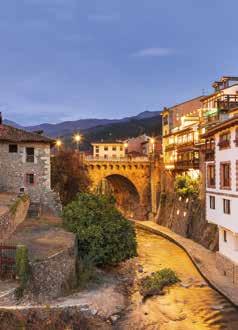
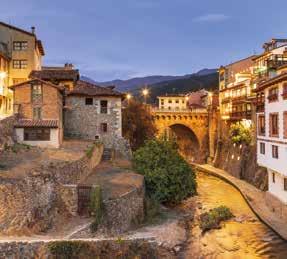
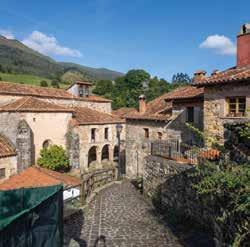
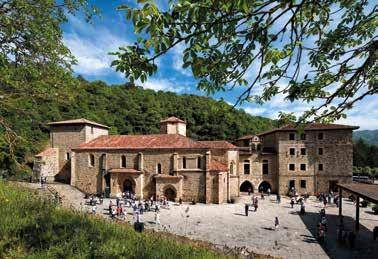
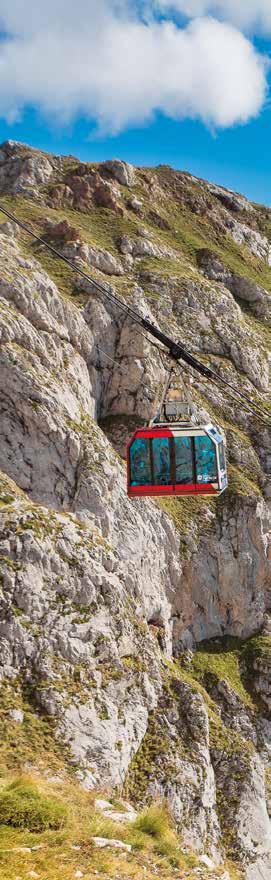
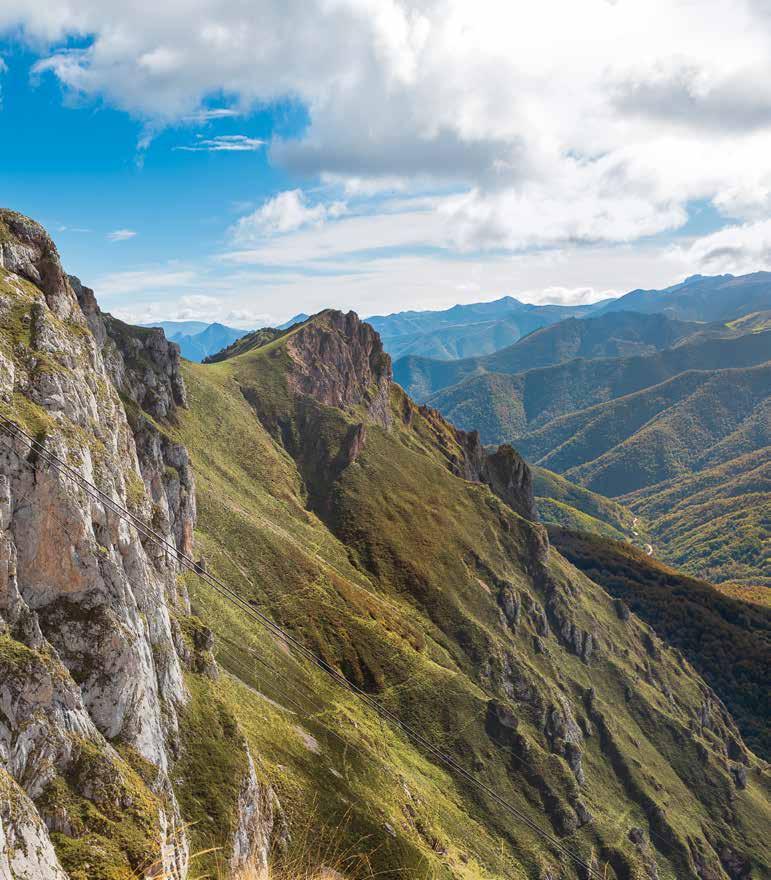
Entre bosque y montaña, Liébana se abriga con altos roquedos capaces de crear un microclima que suaviza el paisaje por donde transcurre el Camino Lebaniego, Patrimonio Mundial de la UNESCO desde 2015. Potes, en la confluencia de varios valles, sirve de puerta de entrada a los Picos de Europa con su ambiente medieval de puentes, torres y calles estrechas atravesadas por el río Deva. Muy cerca, Fuente Dé y su teleférico son el mejor acceso a la alta montaña.
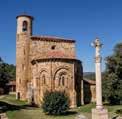
En clave de paso, Cantabria se abre a la meseta castellana por Campoo. Reinosa y los pequeños núcleos de la comarca vieron el trasiego de gentes y mercancías a través de un paisaje en el que descubrir perlas del románico como las colegiatas de Cervatos y San Martín de Elines. En Besaya, el viaje presenta ecos comerciales, con pueblos como Cartes o Bárcena de Pie de Concha, marcados desde la antigüedad romana por la importancia comercial de este sendero natural entre la costa y el interior.
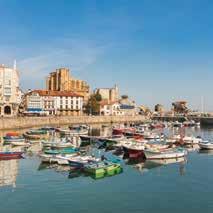
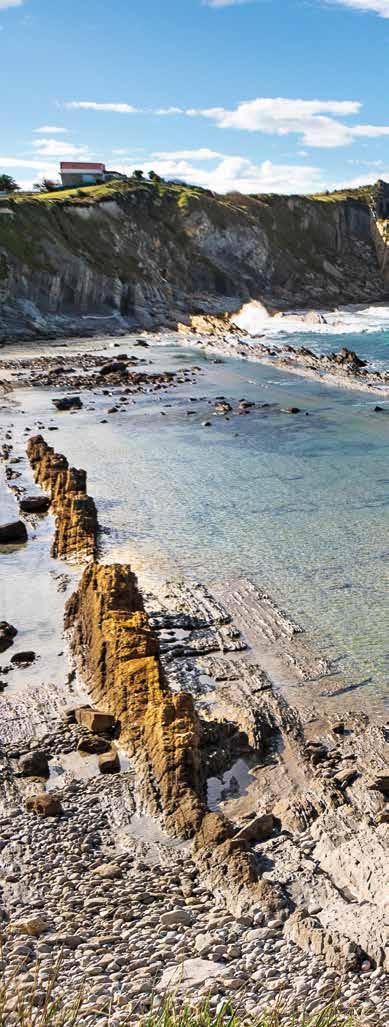
Hacia el oriente, Trasmiera muestra acantilados y arenales abiertos al Cantábrico. La tradición pesquera pervive en Santoña con la anchoa y las conservas, mientras en la vecina Laredo sus amplias playas se abren a la bahía. Asón-Agüera introduce el diálogo entre el interior y la costa. Castro Urdiales, con su iglesia gótica dominando el puerto, mantiene una fuerte identidad marinera. El sur conduce hacia un paisaje de valles, cuevas y montañas calizas. Ramales de la Victoria, Arredondo o Soba dibujan una Cantabria más silenciosa, donde las carreteras atraviesan desfiladeros, prados y los primeros pasos de montaña.
Los Valles Pasiegos completan la diversidad de Cantabria. Entre las cuencas del Pas, el Pisueña y el Miera, las verdes laderas y el ganado forman uno de los paisajes más emblemáticos de Cantabria. Liérganes, Selaya o Villacarriedo conservan una identidad ligada a la tradición pasiega, visible en la arquitectura, la ganadería y una cocina donde sobaos y quesadas son parte y producto del territorio.
Villages between the Cantabrian Sea and the mountains
Along the Costa Central, Santillana del Mar, Comillas, and Suances are known for their beaches, architecture, and vibrant cultural life. Among farmhouses built from stone, tile and timber, Santillana hides treasures such as the 43 Romanesque capitals in the cloister of its collegiate church. Blending together centuries, Comillas captivates with modernist buildings that blur the line between reality and fantasy, where tiles and bricks create whimsical shapes.
In the west, Saja-Nansa is closely tied to its landscape, heritage, and territory. Here, the fishing tradition is still alive in ports such as San Vicente de la Barquera, where the seafaring taverns line along the walls that once protected this strategic town. Inland, villages such as Tudanca showcase a traditional architecture rooted in livestock farming and the historical uses of the mountains.
Surrounded by forests and mountains, Liébana is sheltered by imposing rocks capable of creating a microclimate that softens the landscape traversed by the Lebaniego Way, a UNESCO World Heritage route since 2015. At the confluence of several valleys, Potes serves as a gateway to the Picos de Europa with a medieval charm defined by its bridges, towers, and narrow streets crossed by the Deva River. Nearby, Fuente Dé and its cable car are the best way to reach the high-mountain areas.
Serving as a crossroads, Cantabria connects with the Castilian plateau via Campoo. Reinosa and the region’s villages saw the comings and goings of people and goods through a landscape that is home to Romanesque gems such as the Cervatos and San Martín de Elines collegiate churches. In Besaya, the trip carries echoes of its trading past, with towns such as Cartes and Bárcena de Pie de Concha, known since Roman times thanks to the long-standing significance of this natural route between the coast and the interior.
To the east, Trasmiera boasts cliffs and sandy shores along the Cantabrian Sea. The fishing tradition is alive in Santoña through its anchovies and preserved seafood, while in nearby Laredo its wide beaches open onto the bay. Asón-Agüera introduces the dialogue between the interior and the coast. Castro Urdiales, with its Gothic church overlooking the port, maintains a strong seafaring identity. Heading south leads to a landscape of valleys, caves, and limestone mountains. Ramales de la Victoria, Arredondo, and Soba reveal a quieter side of Cantabria, where the roads wind through gorges, meadows, and the first mountain passes.
Valles Pasiegos completes Cantabria’s diversity. Between the Pas, Pisueña, and Miera river basins, the green slopes and livestock activity create one of Cantabria’s most iconic landscapes. Liérganes, Selaya, and Villacarriedo retain an identity linked to the Pasiego tradition, reflected in the architecture, livestock tradition, and local cuisine, where sobaos and quesadas are part and parcel of the region.
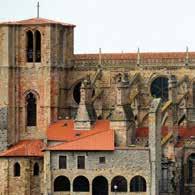
1.- Potes, Liébana; 2.- Carmona; 3.- San Vicente de la Barquera; 4.- Castro Urdiales; 5.- Comillas; 6.- Santillana del Mar; 7.- Castro Urdiales
Cultura: de la prehistoria a lo contemporáneo
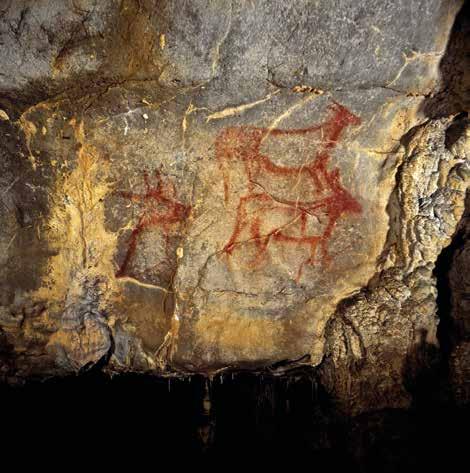
El subsuelo esconde más de 6.500 cuevas. Diez son parte del Patrimonio Mundial de la UNESCO: Altamira, La Garma, Las Monedas, Las Chimeneas, La Pasiega, Chufín, Covalanas, El Pendo, Hornos de la Peña y El Castillo. La mayor densidad mundial de arte paleolítico, donde el pensamiento simbólico explica claves de la evolución humana.
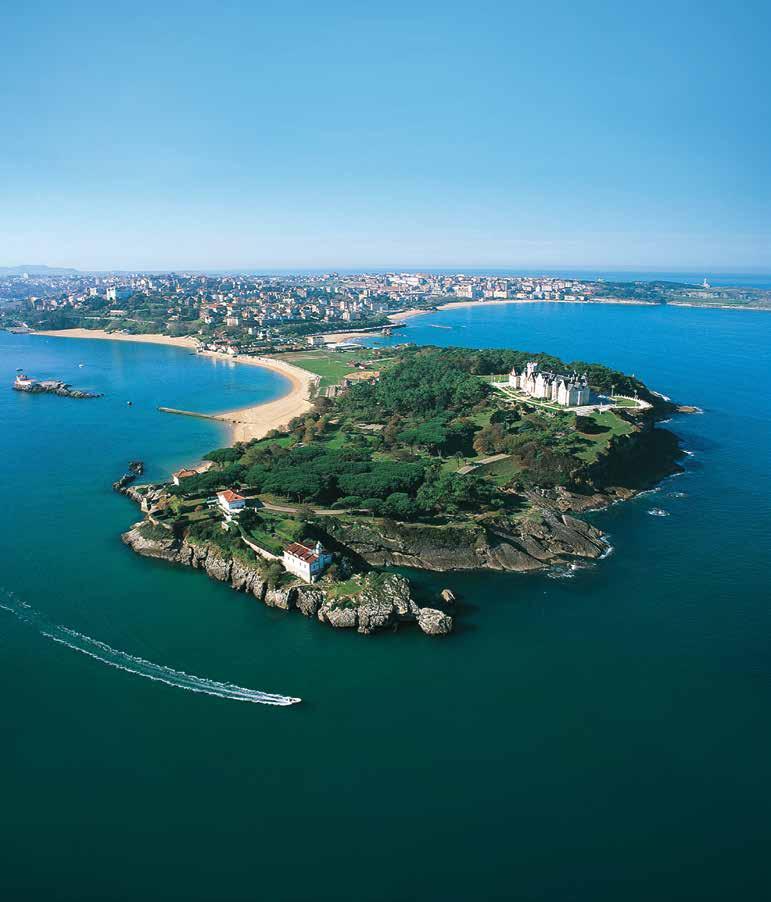
En el otro extremo temporal, la dimensión más urbana y contemporánea de la región se centraliza en Santander. La ciudad mantiene una relación constante con la bahía y el mar, visibles desde la península de La Magdalena, donde todos los veranos la Universidad Internacional Menéndez Pelayo despliega una intensa actividad académica para estudiar el pasado, analizar el presente y vislumbrar el futuro.
BALNEARIOS
Y TRADICIÓN TERMAL
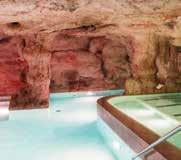
La relación de Cantabria con el agua va más allá del mar. Desde el siglo xix, varios municipios desarrollaron una tradición termal vinculada a manantiales y establecimientos de descanso. Balnearios como los de Puente Viesgo, Liérganes o Solares consolidan una cultura del viaje ligada al bienestar, frecuentada históricamente por viajeros, médicos y veraneantes.
Culture: from Prehistory to the contemporary era
Beneath the surface lie more than 6,500 caves, ten of which are recognised as UNESCO World Heritage: Altamira, La Garma, Las Monedas, Las Chimeneas, La Pasiega, Chufín, Covalanas, El Pendo, Hornos de la Peña, and El Castillo. It’s the world’s highest concentration of Palaeolithic art, where symbolic thinking offers an insight into human evolution.
At the opposite end of the time spectrum, Santander offers the region’s more urban and contemporary dimension. The city maintains a constant relationship with the bay and the sea, visible from the Magdalena Peninsula, where every summer the Menéndez Pelayo International University hosts a packed academic programme to explore the past, analyse the present, and peer at the future.
SANTILLANA DEL MAR, COMILLAS O SUANCES REÚNEN PLAYAS, ARQUITECTURA Y UNA INTENSA VIDA CULTURAL EN LA COSTA CENTRAL
SPAS AND THERMAL TRADITION
Cantabria’s relationship with water goes beyond the sea. Since the nineteenth century, several towns have developed a thermal tradition linked to springs and wellness retreats. Spas such as Puente Viesgo, Liérganes, and Solares—long frequented by travellers, doctors, and holidaymakers—have helped establish a wellness-oriented travel culture.
EL CALENDARIO DEL CANTÁBRICO
THE CANTABRIAN SEA CALENDAR
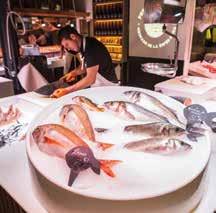
El mar dirige el tempo en la cocina cántabra de litoral. El verdel llega a partir de febrero, la anchoa o bocarte desde marzo, la sardina desde abril y el bonito desde junio. Esta temporalidad define la actividad de muchos puertos y buena parte de su identidad gastronómica.
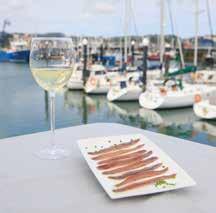
Las anchoas de Santoña se han convertido en seña de identidad. Ligadas a una larga tradición conservera enraizada en la economía local, aparecen acompañadas de rabas, mejillones, almejas, nécoras, percebes o pescados de roca que protagonizan barras, mercados y mesas marineras. También el bonito ocupa un lugar especial y sirve de base para la marmita marinera –sorropotún en San Vicente de la Barquera–, referente de la cocina tradicional de pescadores.
The sea marks the tempo of the Cantabrian seaside culinary tradition. Atlantic mackerel arrive in February, anchovies (bocarte) in March, sardines in April, and bonito tuna in June. This seasonality defines the activity of many ports and much of its gastronomic identity.
Santoña anchovies have become a symbol of identity. Linked to a long-standing canning tradition that shaped the local economy, they’re a staple like rabas, mussels, clams, velvet crab, barnacles, and rock fish that feature prominently in bars, markets, and seafaring tables. Bonito tuna also holds a special place and serves as the basis for the fish stew—sorropotún in San Vicente de la Barquera—an icon of traditional fishermen’s cuisine.
ALONG THE COSTA CENTRAL, SANTILLANA DEL MAR, COMILLAS, AND SUANCES ARE KNOWN FOR THEIR BEACHES, ARCHITECTURE, AND VIBRANT CULTURAL LIFE
El Centro Botín –inaugurado en 2017 con el vanguardista diseño de Renzo Piano– es uno de los principales focos artísticos de la ciudad. Situado en el frente marítimo, reúne exposiciones, actividades educativas y una generosa programación cultural. El Palacio de Festivales, la Filmoteca de Cantabria Mario Camus, el Museo de Prehistoria y Arqueología de Cantabria (MUPAC) o el proyecto Faro Santander –en el edificio histórico del Banco Santander, nace con el propósito de establecer un diálogo permanente entre arte, cultura y tecnología– concentran la oferta cultural.
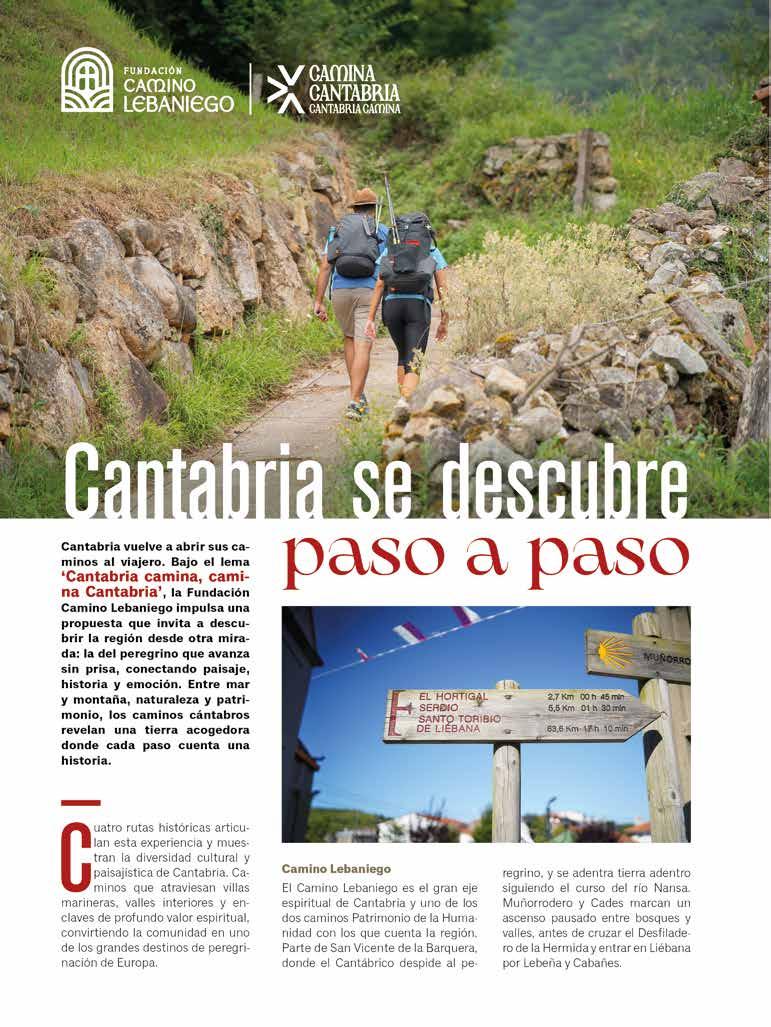
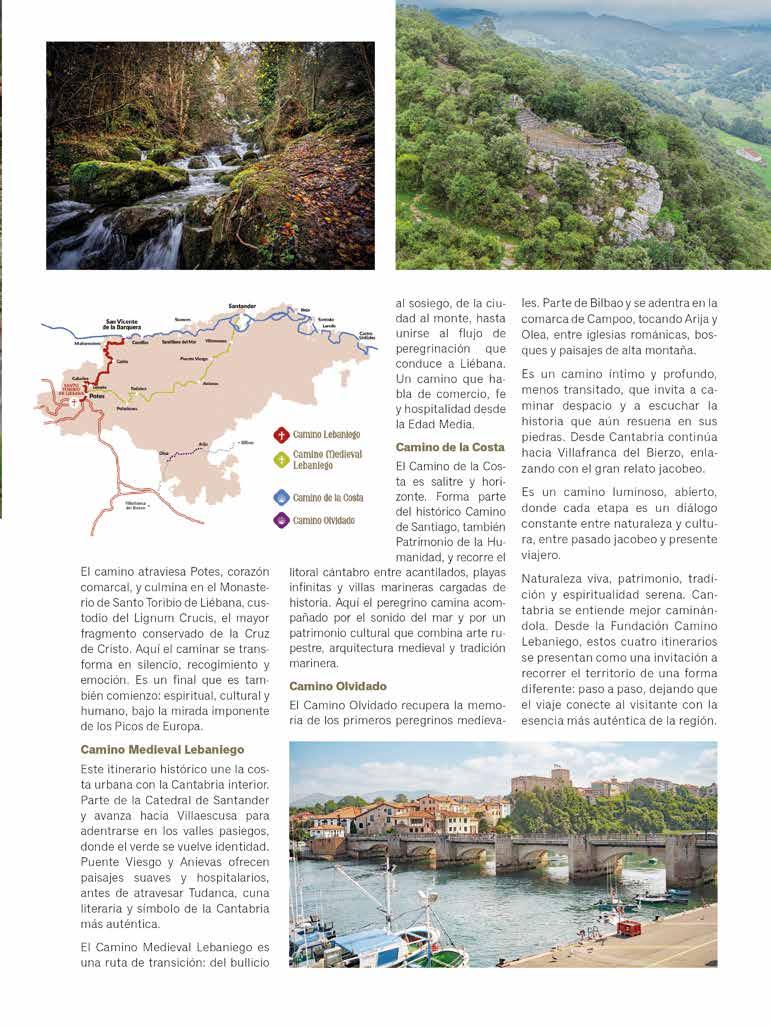
EL CAMINO LEBANIEGO
Cantabria conserva un singular peregrinaje histórico: el Camino Lebaniego. La ruta parte del Patrimonio Mundial de la UNESCO, atraviesa valles y pueblos de montaña hasta alcanzar Liébana y su monasterio de Santo Toribio, uno de los pocos lugares del mundo con Año Jubilar.
THE
LEBANIEGO WAY
Cantabria is home to a unique historical pilgrimage road: the Lebaniego Way. A UNESCO World Heritage route, it crosses valleys and mountain villages before reaching Liébana and Santo Toribio monastery, one of the few places in the world with a Jubilee Year.
Opened in 2017 in an avant-garde building designed by Renzo Piano, Centro Botín is one of the city’s main artistic hubs. Located on the seafront, it holds exhibitions, educational activities, and a rich cultural agenda. The Palace of Festivals, the Mario Camus Film Archive, the Museum of Prehistory and Archaeology of Cantabria (MUPAC) and the Faro Santander project—housed in the former Banco Santander building and aimed at fostering an ongoing dialogue between art, culture, and technology—concentrate the city’s cultural offer.
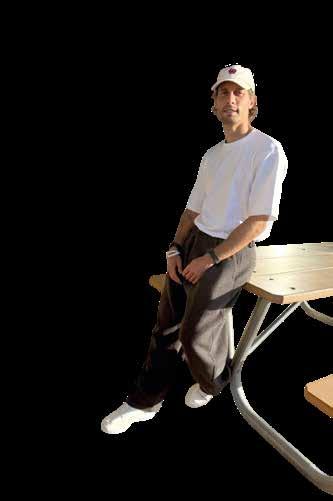
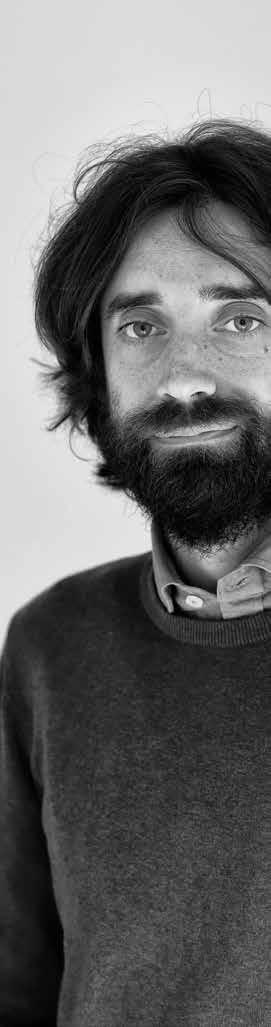
CANALES SERGIO
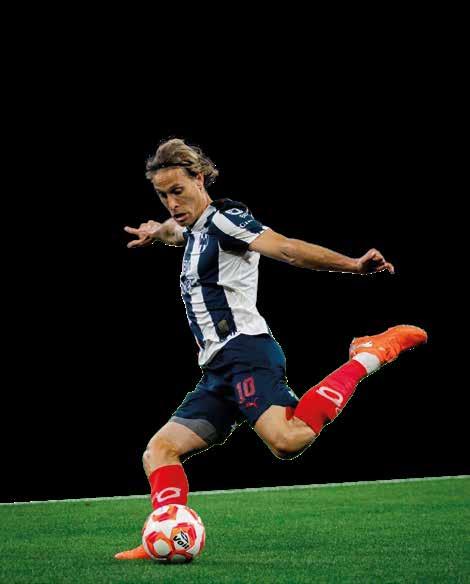
A sus treinta y cinco años, Canales mantiene el duende en sus botines y su cara de yerno ideal. Que nadie se engañe, el centrocampista santanderino es de los que tiene un alma de hierro forjado. Si no, no se puede superar tres graves lesiones de rodilla, la kryptonita de los peloteros. Atravesó esos desiertos por su propio pie y todavía tiene fútbol para dar y tomar. Lo saben en Madrid, San Sebastián, Valencia, Sevilla y Monterrey, en México. Esta temporada, como los buenos hijos pródigos, vuelve al club que le vio nacer: el Racing de Santander. Que se vaya preparando el Sardinero.
TEXTO: Luis Tejedor
FOTOS: Rayados de Monterrey MB Comunicación
Has vivido etapas muy distintas en tu carrera. Cuando echas la vista atrás, ¿con qué momento dirías que empezó de verdad el Sergio Canales futbolista?
Creo que cuando me rompí la rodilla por tercera vez. En esa recuperación, que fue complicada, empezó el Sergio deportista de élite al cien por ciento.
¿Qué se aprende antes: a jugar o a gestionar todo lo que llega alrededor del fútbol de élite?
Creo que ambas cosas se van aprendiendo de la mano, pero llega un momento en que sabes gestionar mejor que jugar. A jugar estás aprendiendo constantemente.
A lo largo de los años has tenido que reinventarte más de una vez. ¿En qué has cambiado más como jugador?
Soy más completo. Antes era un jugador de calidad, pero intermitente. Ahora soy más estable, más constante. Y, sobre todo, sé jugar en diferentes posiciones.
Y fuera del campo, ¿en qué te ha transformado la profesión?
En tener cien por cien claro lo que quiero. En intentar dar lo mejor de mí cada día. En no tener miedo a fracasar en lo que haga. En ser muy disciplinado y en que me encanten la salud y el crecimiento personal.
Tu carrera es la de un jugador con carácter.
¿Qué te ha ayudado a mantenerte competitivo durante tanto tiempo?
Las lesiones, sin duda, han sacado otra parte de mí que no conocía. Han hecho que no me pueda conformar en ningún momento y que siempre busque cosas para seguir creciendo.
Ya que lo mencionas, has pasado por varias lesiones graves en momentos clave. Mirándolo con perspectiva, ¿qué te enseñaron sobre cómo volver, no solo físicamente, sino también mentalmente?
Me enseñaron muchísimo sobre paciencia y sobre conocerme de
“Soy un jugador más completo y una persona más equilibrada gracias a mis lesiones”
“My injuries made me a more complete player and a more balanced person”
At thirty-five, Canales still has magic in his boots and that boy-next-door face. Make no mistake: the Santander-born midfielder has a will of forged iron. Nothing less could carry a player through three serious knee injuries—the kryptonite of professional footballers. He crossed those deserts on his own two feet and still has football to spare. They know it in Madrid, San Sebastián, Valencia, Sevilla—and in Monterrey, Mexico. This season, like the best prodigal sons, he returns to the club where it all began: Racing de Santander. El Sardinero better brace itself.
You’ve been through very different phases in your career. Looking back, when would you say Sergio Canales the footballer truly began?
verdad. Cuando eres futbolista, muchas veces sientes que todo gira alrededor de competir y rendir, y una lesión te obliga a parar y a mirar hacia dentro. Entendí que volver no es solo recuperar una rodilla o un músculo, sino reconstruirte mentalmente cada día. Hubo momentos difíciles, de dudas, pero también aprendí a valorar el proceso, a cuidar más mi cuerpo, mi mente y mis hábitos. Creo que hoy soy un jugador más completo y también una persona más equilibrada gracias a mis lesiones.
¿Qué es lo que más te ha sorprendido de tu etapa en México?
La pasión con la que se vive el fútbol. Sabía que en México era importante, pero vivirlo desde dentro es diferente. La gente te transmite muchísimo cariño y energía en el día a día. También me sorprendió
la calidad de vida que hemos encontrado como familia y la mentalidad tan cercana de la gente. Nos hemos sentido muy acogidos desde el primer día.
Más allá del fútbol, ¿qué has descubierto allí en lo cotidiano que no esperabas encontrar? He descubierto una forma de vivir muy familiar. En México la gente es muy emprendedora y eso me ha motivado mucho para descubrir otros campos. También me ha hecho conectar más con temas de bienestar, salud, espiritualidad y equilibrio personal. Es una etapa en la que estoy aprendiendo mucho también fuera del campo.
Nació en Cantabria. ¿Qué sigue llevando de allí en tu forma de ser?
La tranquilidad, la sencillez y la conexión con la naturaleza. Cantabria
Yours is a career built on character. What has helped you stay competitive for so long?
My injuries, without a doubt. They brought out a side of me I didn’t know existed. They made it impossible for me to settle, and they keep me searching for ways to grow.
Since you mention it, you’ve been through several serious injuries at pivotal moments. With the benefit of hindsight, what did they teach you about coming back—physically and mentally?
They taught me a great deal about patience and about truly knowing myself. When you’re a footballer, you often feel that everything revolves around competing and performing, and an injury forces you to stop and look inward. I understood that coming back isn’t just about recovering a knee or a muscle—it’s about rebuilding yourself mentally, day by day. There were difficult moments, full of doubt, but I learned to value the process, to take better care of my body, my mind, and my habits. I believe that today I’m a more complete player and a more balanced person thanks to my injuries.
What has surprised you most about your time in Mexico?
Cantabria teaches you to value the simple things. Even though I’ve lived in many places, I still need the sea, the mountains, and that sense of stillness the north gives you
The passion people bring to football. I knew it mattered in Mexico, but experiencing it from the inside is something else. People give you enormous warmth and energy on a daily basis. I was also struck by the quality of life we’ve found as a family, and by how open and approachable everyone is. We felt welcome from day one.
"Cantabria te enseña a valorar las cosas sencillas. Aunque haya vivido en muchos sitios, sigo necesitando el mar, la montaña y esa sensación de calma que tiene el norte"
te enseña a valorar las cosas sencillas. Aunque haya vivido en muchos sitios, sigo necesitando el mar, la montaña y esa sensación de calma que tiene el norte. Creo que mi forma de ser tiene mucho de eso.
Si alguien viajara a su tierra por primera vez, ¿qué plan le recomendarías sin dudarlo?
Le diría que disfrutara Cantabria sin prisas. Santander y toda la zona de El Sardinero son espectaculares, pero también merece la pena acercarse a pueblos como Santillana del Mar o Comillas. Y, si te gusta la naturaleza, subir a los Picos de Europa es obligatorio. También recomendaría disfrutar mucho de la gastronomía y recorrer la costa, porque cada rincón tiene algo especial.
Beyond football, what have you discovered there in everyday life that you didn’t expect?
I’ve discovered a very family-centered way of life. People in Mexico are incredibly entre preneurial, and that has motivated me to explore other fields. It has also brought me closer to questions of well-being, health, spirituality, and personal bal ance. It’s a chapter in which I’m learning a great deal off the pitch as well.
You were born in Cantabria. What do you still carry from there in the way you are?
The calm, the simplicity, and the connection with nature. Cantabria teaches you to value the simple things. Even though I’ve lived in many places, I still need the sea, the mountains, and that sense of stillness the north gives you. I think a lot of who I am comes from there.
If someone were visiting your part of the world for the first time, what would you recommend without hesitation?
I’d tell them to enjoy Cantabria at their own pace. Santander and the whole El Sardinero area are spectacular, but it’s well worth venturing out to towns like Santillana del Mar or Comillas. If you love nature, a trip up to the Picos de Europa is essential. And I’d definitely say make the most of the food and drive along the coast—every corner has something special.
«SANTANDER SE DISFRUTA DESPACIO: PASEO, MAR Y UNA BUENA COMIDA»
“SANTANDER IS BEST ENJOYED AT LEISURE: A STROLL, THE SEA, AND GOOD FOOD”
HAY CIUDADES QUE SE ENSEÑAN MEJOR SIN PRISA, Y MARTA HAZAS TIENE CLARO QUE SANTANDER PERTENECE A ESA CATEGORÍA. LA ACTRIZ, NACIDA EN LA NOVIA DEL MAR, CONSERVA CON CANTABRIA UN VÍNCULO QUE APARECE EN CUANTO HABLA DEL SONIDO DE LAS OLAS, DE LA CASA FAMILIAR O DE ESA CALMA QUE NO SE PUEDE IMPOSTAR. EN PLENA ETAPA DE MADUREZ PROFESIONAL, ENTRE TELEVISIÓN, CINE Y TEATRO, HAZAS DISFRUTA DE UN MOMENTO SERENO SIN PERDER EL DESEO DE SEGUIR BUSCANDO PERSONAJES MENOS CÓMODOS.
SOME CITIES ARE BEST EXPERIENCED LEISURELY, AND MARTA HAZAS KNOWS THAT SANTANDER IS ONE OF THEM. BORN IN THIS CITY, NICKNAMED THE BRIDE OF THE SEA, THE ACTRESS MAINTAINS A DEEP BOND WITH CANTABRIA, WHICH SHOWS IN THE WAY SHE TALKS ABOUT THE SOUND OF THE WAVES, HER FAMILY HOME, AND THAT SENSE OF CALM THAT CANNOT BE FAKED. NOW AT A MATURE STAGE IN HER TV, FILM AND THEATRE CAREER, HAZAS IS ENJOYING A PEACEFUL MOMENT WITHOUT LOSING THE DRIVE TO CONTINUE LOOKING FOR ROLES OUTSIDE OF HER COMFORT ZONE.
Lleva muchos años trabajando sin parar, pero da la sensación de que está en un momento muy sólido.
Creo que estoy en un momento dulce, disfrutando mucho de los personajes y de los proyectos que me llegan, y cumpliendo sueños, como trabajar con directores y directoras que admiraba, como Álex de la Iglesia o Gracia Querejeta.
Al sector audiovisual en España le han dado la vuelta como a un calcetín. ¿Qué ha cambiado más: el trabajo o la forma de entender la profesión?
Yo ya llegué a la profesión en un momento de transformación y crecimiento de la industria, pero siento que ha cambiado para bien la manera en que exportamos nuestras producciones y cómo gustan fuera de España. Además, la llegada de las plataformas ha ampliado la oferta de trabajo y las oportunidades.
La hemos visto en proyectos muy distintos, desde la comedia hasta una ficción más emocional. ¿Qué le hace decir que sí a un personaje?
Que cuente una historia que me guste contar y que quiera ver como espectadora. Me importan mucho el director o la directora y, sobre todo, trabajar con gente maja, que hace equipo.
You have been working nonstop for many years, but it feels like you have a lot going on at the moment.
I feel like I’m experiencing a highly rewarding chapter, enjoying the roles and projects that come my way, and fulfilling dreams, such as working with directors I’ve long admired, like Álex de la Iglesia and Gracia Querejeta.
Spain’s audiovisual sector has been turned inside out. What has changed the most: the job itself or the way we understand the profession?
I entered the profession at a time of transformation and growth in the industry, and I feel that it has changed for the better in the way we export our productions and how well they’re received outside Spain. The advent of streaming platforms has also expanded the job offer and opened up new opportunities.
We have seen you on a wide range of projects, from comedy to more dramatic fiction. What makes you say yes to a role? It has to be a story I feel drawn to tell and would want to watch myself. The director and, most importantly, working with nice people who are team players is really important to me.
TEXTO: Luis Tejedor | FOTOS: Valero Rioja / EGV
En Un matrimonio sin filtros trabaja con Javier Veiga, su pareja también fuera del escenario. ¿Qué tiene de ventaja —y de riesgo— mezclar tanto lo personal y lo profesional?
Somos un buen equipo y entendemos la profesión de la misma manera. Esto es fácil o imposible. Y para nosotros es fácil.
Ha dicho alguna vez que la felicidad también se trabaja. En un oficio tan inestable como el suyo, ¿cómo se construye eso?
No esperando a que el trabajo te la dé. Porque entonces estás perdida. Hay que construir una vida paralela que no dependa de si te llaman o no.
Hay una parte del oficio que no se ve: estudiar, esperar, sostener los tiempos muertos. ¿Cómo se lleva usted con ese lado menos glamouroso del oficio?
Me llevo muy bien. Me gusta la parte del estudio y he aprendido a organizarme y a aprovechar mis esperas.
Después de tanto tiempo, ¿hay algo que antes daba por hecho y ahora valora mucho más en su trabajo?
Cada día valoro más el factor humano y trabajar con personas que hacen equipo y no están instaladas en la queja.
In Un matrimonio sin filtros you work with Javier Veiga, who is also your partner off stage. What are the advantages—and risks—of mixing your personal and professional life?
We make a good team, and we understand the profession in the same way. Working together can be either easy or impossible, and for us, it’s easy.
I’m increasingly valuing the human factor and working with people who are team players and are not stuck in complaining mode
You once said that happiness also needs to be worked on; in a profession as unstable as yours, how is that created?
By not expecting the job to provide it, otherwise you’re lost. You have to build a life of your own, one that does not depend on whether the phone rings or not.
There is a side of the trade that people don’t see: studying, waiting, getting through quiet periods. How do you get along with the less glamorous aspect of your profession?
I deal with it very well. I like the studying part, and I have learnt to organise myself and take advantage of those quieter periods.
After so long, is there anything you used to take for granted and now value much more in your work?
I’m increasingly valuing the human factor and working with people who are team players and are not stuck in complaining mode.
You are one of the actresses who don’t shy away from anything.
Usted es de las actrices que no se arrugan ante nada ¿Qué le interesa explorar ahora?
No sabría decirle… Quiero seguir haciendo cine e inter pretando a mujeres potentes. Personajes más incó modos, menos complacientes.
Como santanderina de pro, si alguien viaja a su ciudad, ¿qué plan le recomendaría sin complicarse demasiado y sin caer en lo típico?
No correr. Parar. Santander se disfruta despacio: paseo, mar y una buena comida.
Cuando vuelve a Cantabria, ¿qué es lo primero que hace para desconectar de verdad y sentir que está en casa?
Justo eso: quedarme mucho en casa. Respirar. Parece una tontería, pero no lo es. El aire, el sonido del mar… Ahí ya baja todo. Y luego, estar con los míos sin hacer nada especial. Eso es el verdadero lujo.
"Cada día valoro más el factor humano y trabajar con personas que hacen equipo y no están instaladas en la queja"
What are you interested in exploring now?
Not really sure. I want to keep making films and playing strong female leads, more difficult and less accommo dating characters.
As a Santander native through and through, if someone visits your city, what would you recommend without overcomplicating things and going beyond the cliché?
I’d tell them not to rush it, to take a pause. Santander is best enjoyed at leisure: a stroll, the sea, and good food.
When you go back to Cantabria, what is the first thing you do to really switch off and feel at home?
Just that—staying at home a lot, and breathing. It seems silly, but it’s not. The air, the sound of the sea… it calms the mind down. Then, be with my loved ones without doing anything special. That is a real luxury.
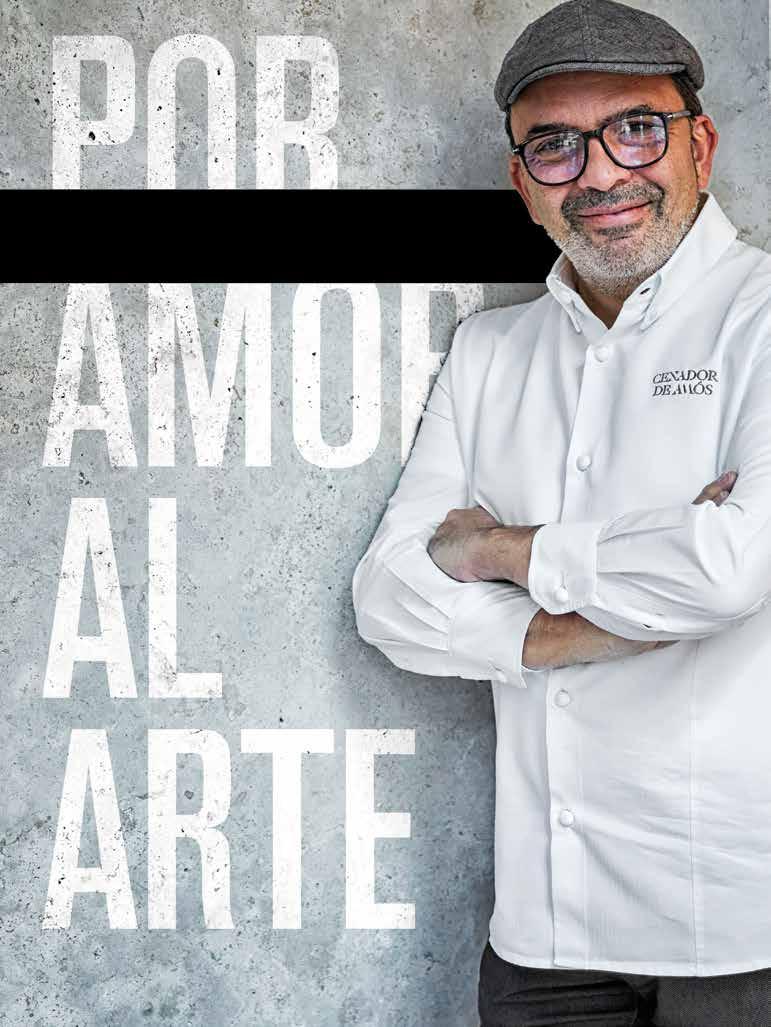
JESÚS SÁNCHEZ CONSOLIDA
EL CENADOR DE AMÓS COMO DESTINO IMPRESCINDIBLE DE LA ALTA COCINA EN CANTABRIA
FOR THE LOVE OF IT
JESÚS SÁNCHEZ HAS ESTABLISHED CENADOR DE AMÓS AS AN UNMISSABLE FINE DINING DESTINATION IN CANTABRIA
HAY RESTAURANTES A LOS QUE
SE VA A COMER Y OTROS A LOS QUE SE LLEGA CON CIERTA DISPOSICIÓN DE ÁNIMO. EL CENADOR DE AMÓS PERTENECE A LOS SEGUNDOS. EN UNA
CASONA DEL SIGLO XVIII DE VILLAVERDE DE PONTONES, JESÚS SÁNCHEZ DEMUESTRA
QUE
LA COCINA TAMBIÉN
PUEDE SER UN ARTE DISCRETO: EMOCIONAR SIN ALARDES, DESDE UNA IDEA MUY SERIA
DEL OFICIO Y DEL PLACER
SOME RESTAURANTS ARE SIMPLY PLACES TO EAT, WHILE OTHERS ARE PLACES YOU ARRIVE AT WITH A CERTAIN FRAME OF MIND. CENADOR DE AMÓS BELONGS TO THE LATTER CATEGORY. IN AN 18TH-CENTURY MANOR HOUSE IN VILLAVERDE DE PONTONES, JESÚS SÁNCHEZ PROVES THAT COOKING CAN ALSO BE A DISCREET ART: MOVING PEOPLE WITHOUT PUTTING ON A SHOW, ROOTED IN A DEEP RESPECT FOR BOTH CRAFT AND ENJOYMENT.
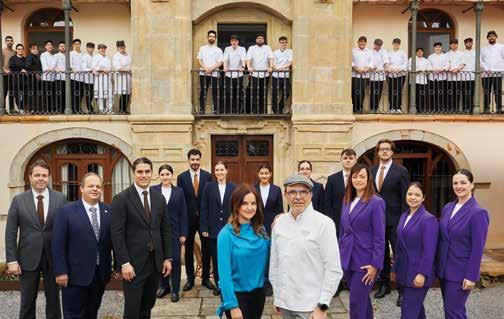
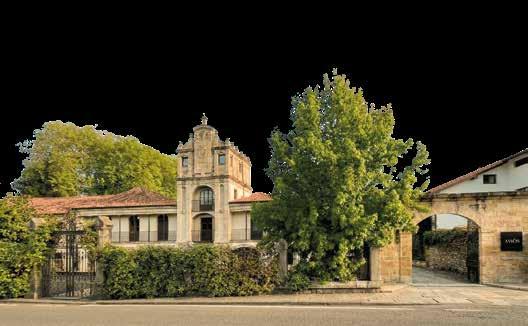
Visitar el Cenador de Amós es un acto hecho con propósito. El local, galardonado con tres estrellas Michelin, aposenta sus reales en Villaverde de Pontones, localidad cántabra con menos de quinientos habitantes a la que no se llega por casualidad. Allí espera lo que fue en su día el Palacio de los Mazarrasa y, desde hace treinta y tres años –que ya son años en este negocio del comer–, el edificio donde Jesús Sánchez (Azagra, 1964) imparte doctrina gastronómica.
La antigua casona del siglo XVIII es mucho más que un escenario hermoso para rendirse a las propuestas del chef navarro. El medio es el mensaje, que decía McLuhan. Así, este palacio historiado es la plasmación en piedra del ideario de Sánchez.
Visiting Cenador de Amós is a choice made with intention. This three-Michelin-star restaurant sets up house in Villaverde de Pontones, a Cantabrian village of under five hundred inhabitants that is not reached by chance. There awaits what was once the Palacio de los Mazarrasa, and for the past thirty-three years—which is a long time in the hospitality business—the building where Jesús Sánchez (Azagra, 1964) shares his gastronomic expertise.
The 18th-century manor house is much more than a beautiful backdrop to give in to the culinary selection of the Navarra-born chef. The
TEXTO: Luis Tejedor FOTOGRAFÍA: Cenador de Amós
La solidez de sus vetustos muros encuentra el matiz de esa sobriedad elegante del interiorismo de José Piris y el artesano David Santiago, que da la primera clave del Cenador de Amós: la modernidad y el legado se integran con espontaneidad. No caben ínfulas ni postureos. No le hubieran gustado a su abuelo, que da nombre al restaurante. Amós, todo un personaje en la Ribera Navarra, anhelaba abrir una fonda en Pamplona para que la gente de los pueblos se sintiera en casa.
Y eso es lo que ha conseguido su nieto. Sostiene el propio Jesús Sánchez que «los clientes sienten que el espacio les acoge y les hace sentir bien. Nuestro deber es procurar que esto suceda: cuidar el espacio es también cuidar al cliente, es una prolongación de nuestro sentido de la excelencia».
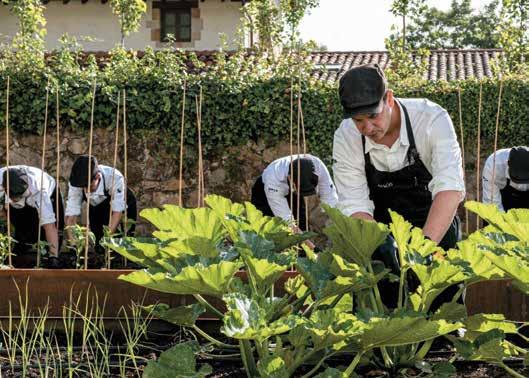
Como parte de este obsesivo ikigai, el chef ha invitado al artista asturiano Juan Díaz-Faes a sentarse a su mesa: sus esculturas presiden la sala y su trazo se cuela en una vajilla diseñada para la ocasión. Una edición limitada de piezas, con fines benéficos, está a disposición del respetable público que, de este modo, puede llevarse a casa un fragmento de la experiencia.
El artífice
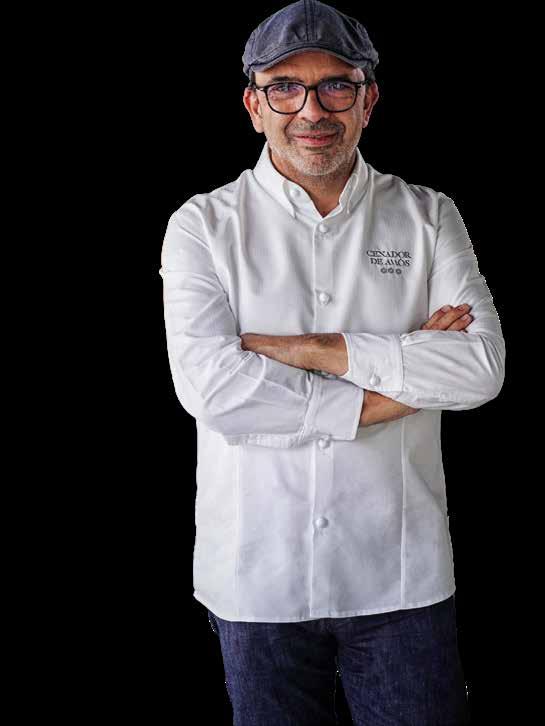
Jesús Sánchez es un cocinero feliz. A sus sesenta y dos años ha cosechado tres estrellas Michelin en seis años consecutivos y reconoce que esta madurez le ha permitido disfrutar de las cosas sencillas de la vida. Y, cómo no, de la compañía de Marián, su esposa.
El chef no escatima elogios para ella: «Hubo un momento en el que identificó su talento y se convirtió en la mejor relaciones públicas del mundo. Tras estar ahí, contra viento y marea, construyendo mi sueño, llegó su momento para brillar. Tiene un talento innato brutal».
Para explicar su éxito –Premio Nacional de Gastronomía y el Premio Nacional de Hostelería–, hay que volver al hijo único empeñado,
COLECCIÓN CANTÁBRICO 2026
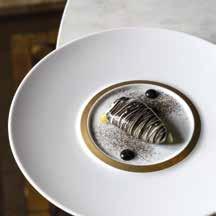
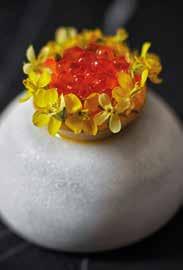
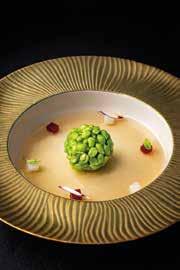
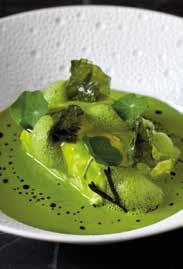
El menú de esta temporada recorre el norte de cabo a rabo. Abre con clásicos de la casa puestos al día, como la tortilla de Amós en su versión 2026 o la anchoa de Cantabria servida con mantequilla pasiega. Llega después el guiño más travieso, «El juego del calamar», que reinventa los calamares en su tinta convertidos en una secuencia de raviolis –unos rellenos de calamar aliñado; otros, líquidos, hechos con su propia tinta– bajo una sopa de arroz basmati. Hay también lomo de salmonete en dos salsas y, como gran final salado, la suprema de pichón con piñones, salsifí, colinabo y su jugo trufado. Para rematar, los postres viajan a la infancia: un mochi de arroz con leche caramelizado y una rebanada de pan de Amós con helado de hojaldre y chocolate. Antes, conviene asomarse al obrador: el Cenador es el único tres estrellas con horno propio, donde elaboran panes de masa madre con fermentaciones de hasta 24 horas.
CANTABRIAN COLLECTION 2026
This season’s menu explores the North from head to tail. It starts with updated signature dishes, such as the 2026 version of the Amós Spanish omelette, or the Cantabrian anchovies served with pasiega butter. Then comes the most playful nod, the “Squid Game”, which reinvents the squid in its ink as a sequence of ravioli (some filled with seasoned squid; others, liquid, made with their own ink) with a basmati rice creamy soup. There is also red mullet in two sauces and, as a grand savoury finish, squab supreme with pine nuts, salsify, swede, and its own truffled jus. To top it off, the desserts are a journey back to childhood: caramelised rice pudding mochi, or a slice of Amós’ bread with puff pastry and chocolate ice cream. Before that, it’s worth checking the bakery: Cenador is the only three-star restaurant with its own oven, where sourdough bread with a 24-hour fermentation is made.
más allá de lo razonable en un empollón que encadenaba notazas, en estudiar Cocina. Nada pudo refrenar su naturaleza. En cuanto puso un pie en la Escuela Superior de Hostelería de la Casa de Campo, quemó sus naves.
Desde entonces, su vida ha sido una masterclass de perfeccionismo. Era inevitable que, tras tanta búsqueda, llegara el hallazgo de una voz propia dentro de su oficio, que el chef fecha «a partir de 1997, cuando mi cocina fue tomando forma, de manera consciente, hacia una cocina con personalidad propia y con una manera de enten-
medium is the message, as McLuhan said. Accordingly, this storied manor is the stone embodiment of Sánchez’s way of thinking.
The sturdiness of its old walls is complemented by the elegant sobriety of the interior designed by José Piris and artisan David Santiago. This offers the first insight into Cenador de Amós: modernity and legacy come together naturally. No airs or posturing—something which his grandfather, who gives the restaurant its name, would never have approved of. A well-known figure in Ribera de Navarra, Amós
der la tradición y el territorio. Por aquel entonces, decidí adoptar el territorio cantábrico como referencia de mi inspiración».
Cocina de paisaje y memoria
Diseccionar el imaginario gastronómico de Sánchez es una tarea que requiere la minuciosidad de un orfebre. En líneas generales, su cocina tiene entre ceja y ceja la exploración de nuevas fronteras. Solo así es posible elevar la comida al nivel de arte. Con ingentes cantidades de precisión técnica y delicadeza, cada creación busca emocionar al comensal, fusionando estética, sabor e historia. Es tan difícil como parece.
Solo un trabajo complejo, que bucea en la memoria, puede concretar esta inquietud que persigue sabores y formas: «La memoria es la tradición. Gran parte de nuestra memoria es gustativa. Cuando somos mayores, una de las cosas que añoramos son los sabores. Por eso, tocar la memoria gustativa de un ser humano es como acariciarle el alma y puede provocar emociones muy fuertes». Entre las raíces populares de estos recuerdos y la sofisticación con la que se presentan media el sabor como hilo conductor.
Más allá de la tradición, la inspiración es generosa con el chef navarro. Sus musas saben que siempre le encontrarán trabajando en nuevos platos o compartiendo ideas en reuniones que invocan a la creatividad. «Necesitamos mantener viva esa necesidad de crear, porque lo que más nos llena es conseguir un resultado emocionante: plasmar en un plato nuestras ideas y ofrecérselo a los comensales».
wished to open an inn in Pamplona to give people from nearby villages a place where they would feel right at home.
And that’s precisely what his grandson has achieved. Jesús Sánchez himself argues that “diners feel welcomed in this space; it makes them feel good. Our duty is to make sure that this happens: taking care of the space is also taking care of our patrons; it’s an extension of our sense of excellence.”
As part of this obsessive ikigai, the chef has invited Asturian artist Juan Díaz-Faes to sit at his table: his sculptures preside over the dining area, and his art makes it to the tableware created for the occasion. A limited-edition collection with a charitable purpose, it’s available to the public, allowing them to take home a piece of the experience.
The architect Jesús Sánchez is a happy cook. At sixty-two, he has earned three Michelin stars in six consecutive years. He acknowledges that this level of maturity has let him enjoy the simple things in life. And, of course, the company of Marián, his wife.
The chef sings her praises: “There was a moment when she realised her talent and went on to become our best PR representative in the world. After standing by me through thick and thin while I was building my dream, it was her time to shine. She has an extraordinary innate talent.”
To explain his success (National Gastronomy Award and National Hospitality Award), we must look back to that only child who was determined— beyond what’s reasonable in a nerdy student that consistently earned top grades—to pursue a culinary degree.
Nothing could hold back his nature. As soon as he set foot in the Casa de Campo School of Hospitality, he went for it with all his might.
Since then, his life has been a masterclass in perfectionism. After so much searching, it was inevitable that he would eventually find a voice of his own within his craft. According to him, this was “in 1997, when my culinary approach first began to take shape consciously towards a style with its own personality and a personal way of understanding tradition and territory. At that time, I decided to embrace the Cantabrian region as my source of inspiration.”
Landscape and memory cuisine
Dissecting Sánchez’s gastronomic imagination requires a goldsmith’s meticulousness. His culinary offer is laser-focused on exploring new frontiers. It’s the only way to elevate food to the level of art. With enormous amounts of technical precision and delicacy, each creation seeks to move the diner, blending aesthetics, flavour, and history. It’s as difficult as it sounds.
Only a complex process that delves into memory can materialise this inquisitiveness that pursues flavours and forms: “Memory is tradition. Much of our memories are linked to taste. When we’re older, one of the things we long for most is a particular flavour. That’s why reaching a human being’s taste memory is like caressing their soul and can awaken very strong emotions.” Between the popular roots of these memories and the sophistication with which they are presented, taste acts as a common thread.
Besides tradition, inspiration is generous with this Navarra-born chef. His muses know that they will always find him working on new dishes or sharing ideas that invoke creativity during meetings. “We need to keep alive that drive to create, because what fulfils us most is achieving an exciting result: translating our ideas into a dish and offering it to diners.”
LA MIRADA DE SÁNCHEZ
Más allá de la cocina, el chef ha explorado su pasión por la fotografía, cap-
BEHIND SÁNCHEZ’S GAZE
Beyond cooking, the chef has explored his passion for photography, capturing culinary moments that now adorn Cenador de Amós. Since 2019, he has also organised the Foodie Revolution, an event that brings together opinion leaders, producers, and food lovers, fostering innovation and connection within the gastronomic world.
TU PRÓXIMA AVENTURA TE ESPERA EN EL PIRINEO Y LAS TIERRAS DE LLEIDA LLEIDA
YOUR NEXT ADVENTURE AWAITS IN THE PYRENEES AND THE LANDS OF LLEIDA
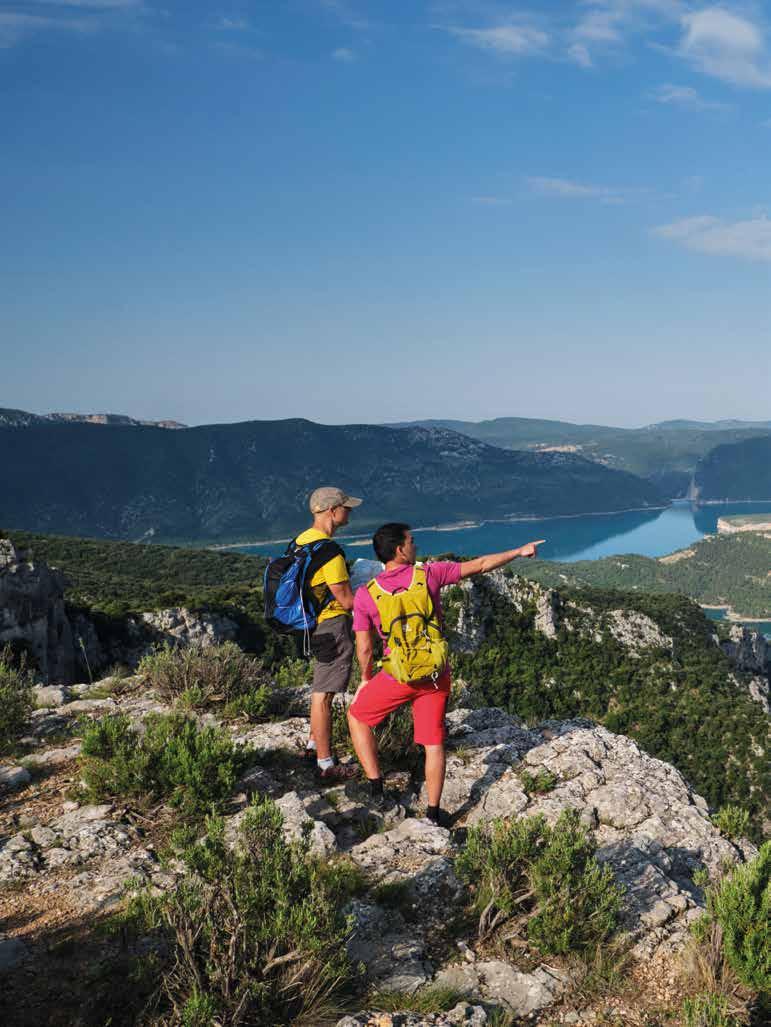
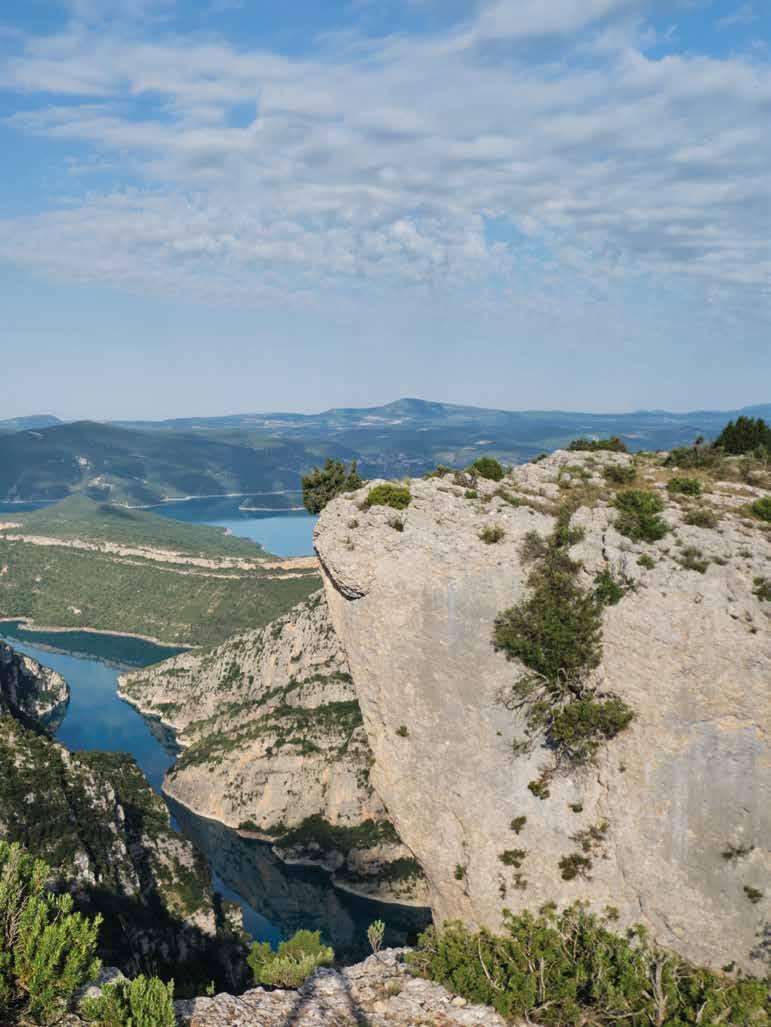
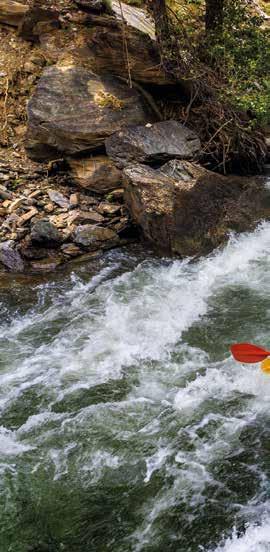
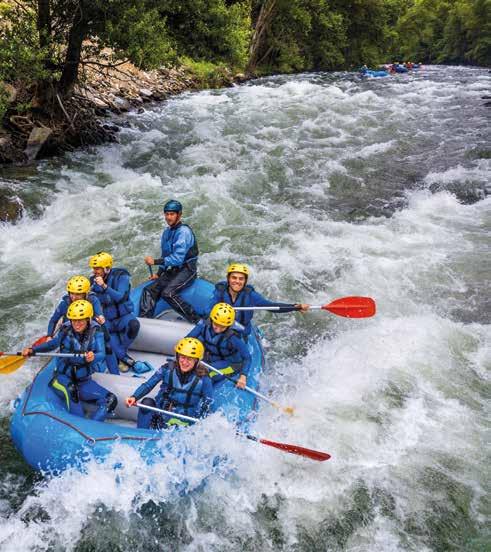
En el Pirineo y en las Tierras de Lleida florecen en verano un puñado de oportunidades para todos los gustos y aficiones, que convierten esta época en un buen momento para disfrutar del patrimonio y del paisaje. La naturaleza, la cultura, el turismo activo y los sabores de proximidad se combinan en una infinidad de opciones, desde el llano hasta la montaña más alta, para ofrecer experiencias inolvidables. Con la llegada del calor, el deshielo alimenta los ríos y este año se celebra el 40.º aniversario de las primeras bajadas de rafting por el río Noguera Pallaresa, en el Pallars Sobirà. Esta fue, en su momento, una experiencia pionera en España y, con el paso de los años, ha per-
TEXTO: Jaume Barrull
mitido consolidar Lleida como un referente para el turismo activo. El rafting también se puede practicar en los ríos Segre, en el Alt Urgell; Garona, en la Val d’Aran, y Noguera Ribagorçana, en la Alta Ribagorça. En la demarcación, los amantes de los deportes acuáticos pueden disfrutar de otras propuestas de aguas tranquilas en embalses como los de Sant Antoni, en el Pallars Jussà, y los de la Llosa del Cavall o de Sant Ponç, en el Solsonès.
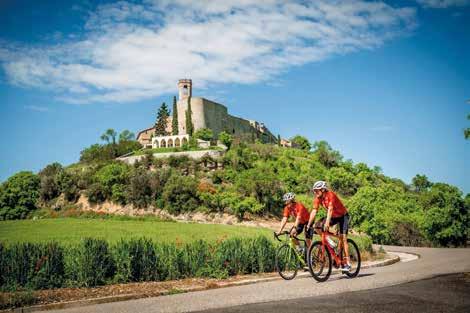
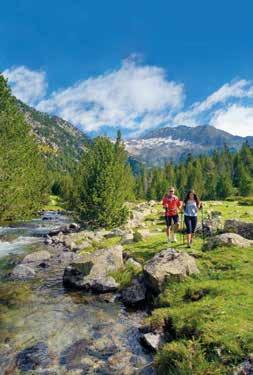
Para quienes prefieren vivencias más pausadas, Lleida también ofrece cientos de kilómetros de senderos y carreteras para disfrutar de los paisajes a pie o sobre una bicicleta. No nos olvidemos tampoco del cielo, especialmente en los valles de Organyà y de Àger,
In summer, the Pyrenees and the Lands of Lleida regions offer plenty of choices for every taste and interest, making it the perfect season to enjoy both their heritage and their landscapes. Nature, culture, active tourism, and local flavours come together in a myriad of plans offering unforgettable experiences from the plains to the highest mountains.
As the warm weather sets in, meltwater feeds the rivers. This year marks the 40th anniversary of the very first whitewater descent of the Noguera Pallaresa river in Pallars Sobirà. A pioneering experience in Spain at the time, it has helped establish Lleida as a leading destination for active tourism
donde es ideal para el parapente. El Montsec y el Parque Nacional de Aigüestortes i Estany de Sant Maurici, reconocidas como Destinos y Reservas Starlight por la calidad de su cielo estrellado, también son un lugar excepcional para la observación astronómica.
Los miles de años de historia de este territorio han dejado un buen poso cultural: las villas ibéricas, las catedrales o los pueblos medievales son atractivos de primer orden. No en vano, el románico de la Vall de Boí o la piedra seca son patrimonio cultural de la UNESCO; también lo son las pinturas rupestres de la Roca dels Moros, en Les Garrigues. Y, mientras la arquitectura conserva una memoria silente, la gente de los pueblos mantiene vivas las tradiciones como el Aplec del Caragol de la ciudad de Lleida o las fallas de los Pirineos, entre otras fiestas populares.
Desde las mesetas esteparias de la Segarra hasta los bosques atlánticos de la Val d’Aran, pasando por los valles de la Cerdanya, este momento del año ofrece mil posibilidades. En espacios naturales como el Parque Nacional de Aigüestortes i Estany de Sant Maurici o los parques naturales del Alt Pirineu y del Cadí-Moixeró, los visitantes pueden descubrir la
naturaleza salvaje en todo su esplendor. Asimismo, en las Tierras de Lleida el paisaje, modulado por la persistencia de los campesinos, ha creado postales preciosas de campos floridos y bancales como los del canal de Urgell, en el Pla d’Urgell.
Este vínculo profundo con la tierra puede apreciarse a través de la gastronomía, donde la tradición tiene un peso importante. Los aceites de oliva virgen extra con el sello de denominación de origen protegida Les Garrigues son un ingrediente imprescindible que permite descubrir la historia y las tradiciones de la tierra. En este sentido, el Patronato de Turismo promociona, con el proyecto “Oleoturismo de Lleida. El sabor de la tierra”, 46 experiencias que ofrecen empresas y entidades de Les Garrigues, el Segrià, el Urgell y la Noguera. Además, el vino de denominación de origen Costers del Segre es el protagonista de la ruta del vino de Lleida. Degustar productos autóctonos también es reconocer y apoyar la cultura y los productores locales.
Esta época del año en Lleida es, por tanto, una invitación a vivir de primera mano un territorio que nos propone emociones, aventuras y sabores locales de gusto universal.
over the years. Whitewater rafting can also be practiced in rivers such as Segre in Alt Urgell, Garona in Val d’Aran, and Noguera Ribagorçana in Alta Ribagorça. Water sports enthusiasts can enjoy other flat-water options in the province in reservoirs such as Sant Antoni in Pallars Jussà, and those of Llosa del Cavall and Sant Ponç in Solsonès.
For those who prefer a more relaxed pace, Lleida also offers hundreds of kilometres of trails and roads to take in the landscapes on foot or on a bike. Let us not forget the sky, especially in the Organyà and Àger valleys, perfect spots for paragliding. Recognised as Starlight destinations and reserves thanks to the quality of their night sky, the Montsec Range and the Aigüestortes i Estany de Sant Maurici National Park are an excellent place for stargazing.
The region’s thousands of years of history have left a rich cultural legacy: Iberian settlements, cathedrals, and medieval villages are now outstanding attractions. Not surprisingly, the Romanesque churches of Vall de Boí and the local dry-stone architecture feature in the UNESCO World Heritage List, which also includes the cave paintings at Roca dels Moros in Les Garrigues. While the buildings quietly hold old memories, the people of the villages keep alive traditions such as the Aplec del Caragol in Lleida city, and the Pyrenees fire festivals, among other popular festivities.
From the steppe-like plateaus of La Segarra to the Atlantic forests of Val d’Aran, through the valleys of La Cerdanya, this time of year offers endless possibilities. In outdoor areas such as the Aigüestortes i Estany de Sant Maurici National Park and the Alt Pirineu and Cadí-Moixeró natural parks, visitors can discover nature in all its wild splendour. The landscape in the Lands of Lleida, shaped by the persistence of farmers, offers beautiful postcard-like scenes of flowery fields and terraces, such as those along the Urgell canal in Pla d’Urgell.
This strong bond with the land can be noticed in its cuisine, where tradition plays a significant role. Extra virgin olive oils with the Les Garrigues Protected Designation of Origin seal are a key ingredient that allows you to discover the land’s history and traditions. With the project “Olive-oil tourism in Lleida; the taste of the land”, the Tourism Board champions 46 experiences offered by companies and entities in Les Garrigues, El Segrià, El Urgell, and La Noguera. The Costers del Segre appellation of origin is one of the prominent stars of Lleida’s wine route. Tasting local products is also recognising and supporting local culture and producers.
In Lleida, this time of year is indeed an invitation to experience firsthand a land full of emotion, adventure, and globally enjoyed local flavours.
GIRONA ESSENCIAL GIRONA
TEXTO: Anna Burgstaller
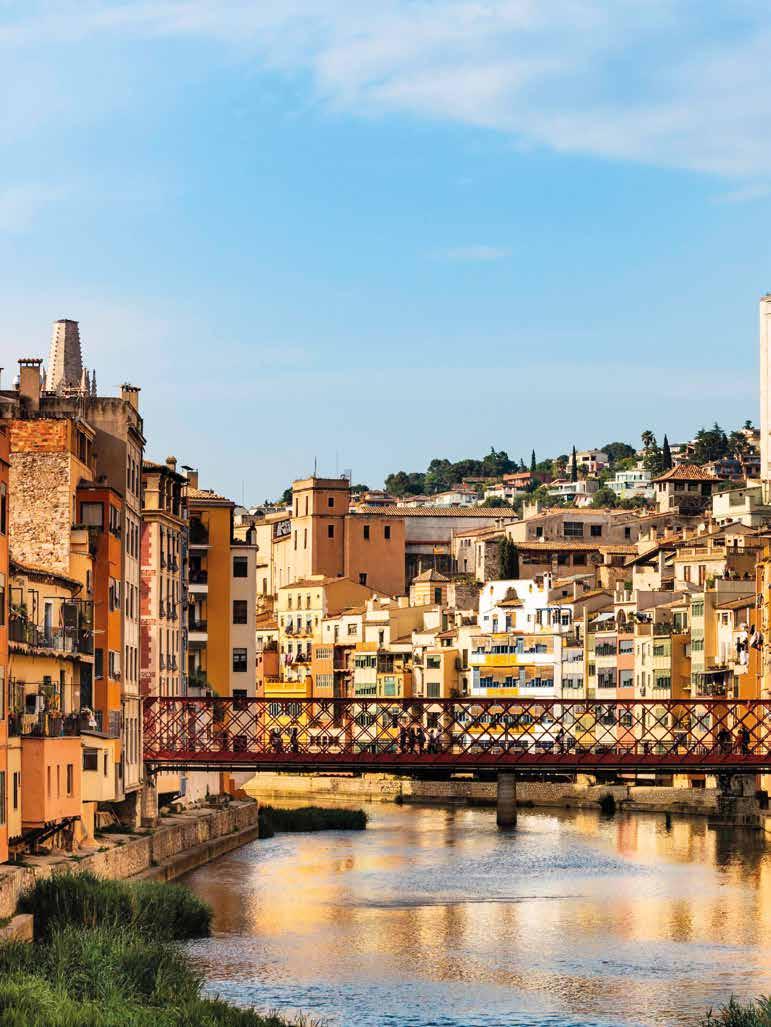
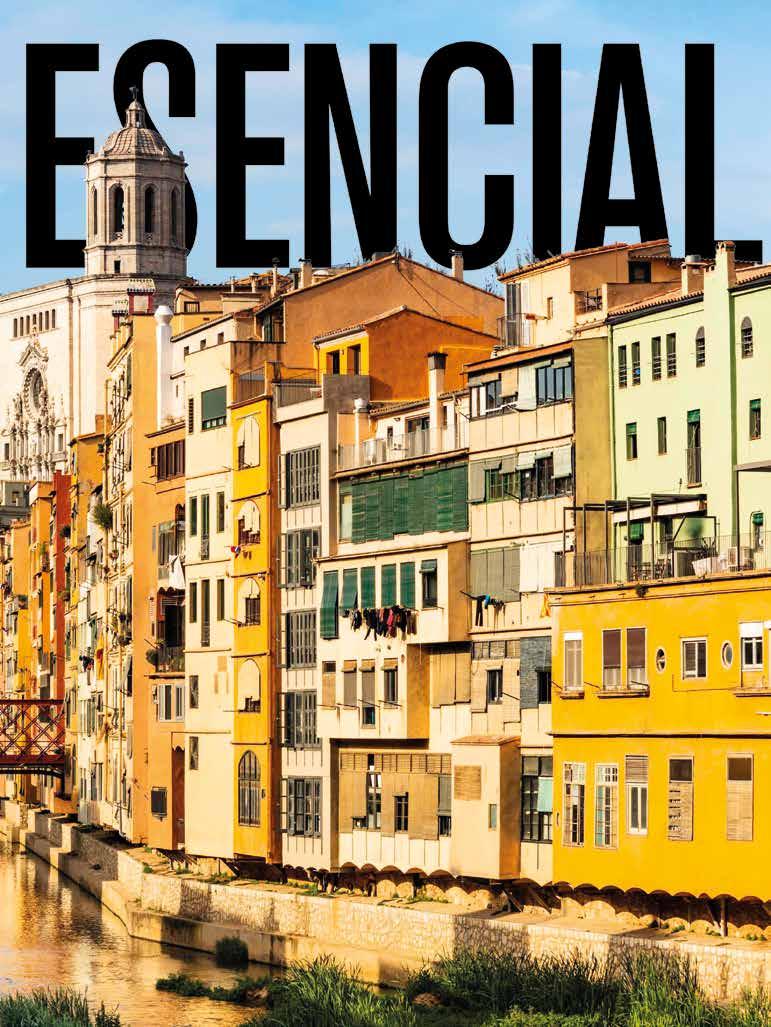
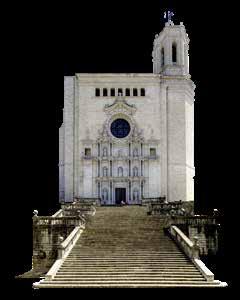
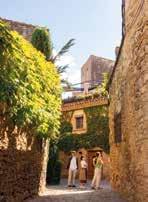
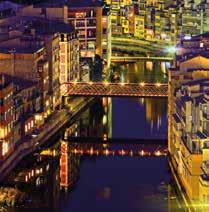
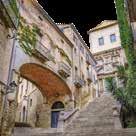
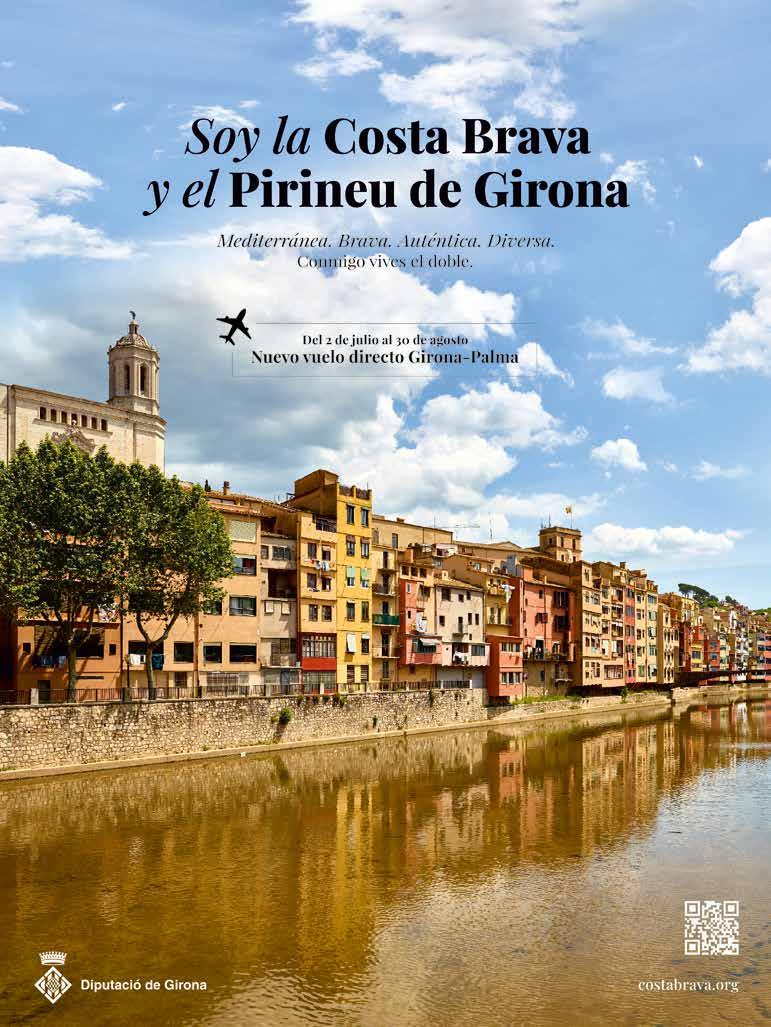
Con una de las estampas más reconocibles de Cataluña, la de las casas de colores junto al río Onyar, Girona combina historia, vida local y un tamaño perfecto para descubrirla a pie. El antiguo barrio judío conserva uno de los trazados medievales mejor preservados de Europa. Desde allí, Girona se despliega entre murallas, callejuelas de piedra y la silueta de la catedral, que se alza al final de su escalinata monumental. Universitaria, ciclista y cada vez más gastronómica, es una ciudad que pide recorrerse sin prisa.
With its colourful houses running along the River Onyar—one of Catalonia’s most iconic images—Girona combines history and local life in a perfectly walkable layout. One of Europe’s best preserved medieval streets can be found in its old Jewish quarter. From there, Girona reveals itself through its walls and cobbled alleyways, with the cathedral towering from the top of its grand staircase. A bike-friendly university city, as well as an emerging culinary destination, it’s a place best explored at leisure.
GIRONA DE DÍA
DÍA 1 | DAY 1
PIEDRA, RÍO Y MURALLAS STONE, RIVER AND WALLS
• El centro histórico Con el Onyar como punto de partida y un casco antiguo perfecto para recorrer a pie. With the River Onyar serving as a great introduction, and an old town that’s perfect for strolling
• Casas del Onyar. La imagen más reconocible de Girona, con fachadas de colores asomadas al río. Girona’s most recognisable sight, with colourful façades overlooking the river
• Puente de las Peixateries Velles. Obra de la Casa Eiffel anterior a la famosa torre parisina. Built by the Eiffel firm before the famous Parisian tower
• Antiguo barrio judío. Una de las juderías mejor conservadas de Europa. One of the best-preserved Jewish quarters in Europe
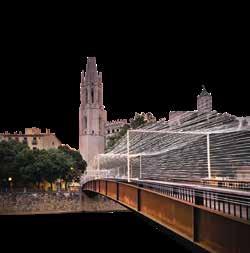
• Catedral de Santa María. En el interior aguarda una nave gótica considerada entre las más anchas del mundo. Step in to discover a Gothic nave that’s considered one of the world’s widest
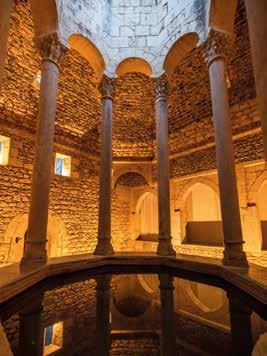
• Baños árabes. Pequeños, fotogénicos y llenos de historia. La parada perfecta cerca de la catedral. Small, picture-perfect, and full of history. The perfect stop near the cathedral
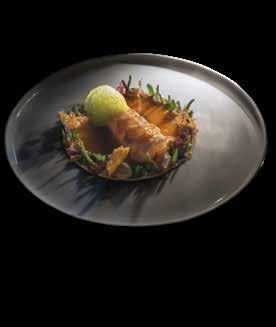
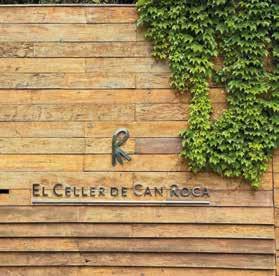
• Para chuparse los dedos. Cocina catalana, productos del Empordà con El Celler de Can Roca como gran referencia internacional. Catalan cuisine, Empordà products, and a Michelin-starred food scene, with El Celler de Can Roca as one of the world’s best restaurants
DÍA 2 | DAY 2
ARTE Y VIDA LOCAL ART AND LOCAL LIFE
• Museo de Historia de Girona. Una buena forma de entender la evolución de la urbe desde la época romana hasta la actualidad. A great way to understand the city’s journey from Roman times to the present day
• Museo de Arte. Reúne una destacada colección de arte catalán, con especial presencia del románico y del gótico. It houses an outstanding collection of Catalan art, with a focus on Romanesque and Gothic works
• Rambla de la Llibertat. Soportales, tiendas, cafés y mucho movimiento local en pleno centro. A lively arcaded avenue packed with cafés and shops, and a local life hub
• Parque de la Devesa. El gran pulmón verde de la ciudad, con plátanos centenarios y espacio para pasear sin prisa. The city’s green lungs, with centuries-old plane trees and room to stroll at a leisurely pace
• Barrio del Mercadal. Una zona ideal para callejear entre tiendas, cafés y ambiente urbano. Ideal for browsing shops and cafés while soaking up the city’s atmosphere
• El xuixo de crema. Dulce típico de la ciudad, es una delicia perfecta para media mañana o media tarde. One of the city’s traditional sweet pastries, it’s a perfect midmorning or mid-afternoon treat
DÍA 3 | DAY 3
ESCAPADAS A UN PASO GETAWAYS JUST A STEP AWAY
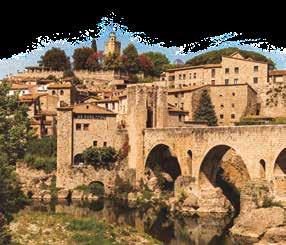
• Besalú. Uno de los pueblos medievales más fotogénicos de la provincia, con un puente románico convertido en su imagen más emblemática. One of the province’s most picturesque medieval villages, best known for its iconic Romanesque bridge
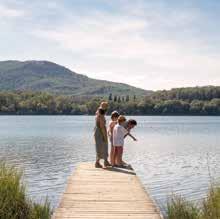
• Banyoles. El mayor lago natural de Cataluña. The largest natural lake in Catalonia
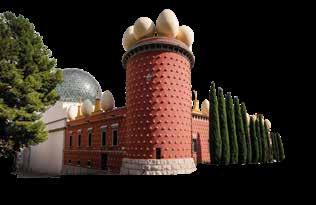
• Figueres. El Teatro-Museo Dalí es una visita imprescindible para quienes quieran sumar arte y surrealismo a la ruta. The Dalí Theatre-Museum is a must-see for those wanting to add art and surrealism to their trip
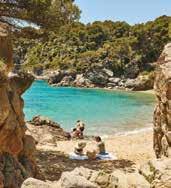
• Costa Brava. En menos de una hora aparecen calas, caminos de ronda y pueblos con sabor marinero como Calella de Palafrugell, Llafranc o Begur. In under an hour, you’ll find coves, historical coastal paths, and charming fishing villages such as Calella de Palafrugell, Llafranc, and Begur
• Pals y Peratallada. Dos paradas medievales perfectas para callejear entre piedra, plazas pequeñas y buena cocina. Two medieval villages ideal for wandering surrounded by stone, with small squares and great food
GIRONA DE NOCHE GIRONA BY NIGHT
NOCHE 1 | NIGHT 1
CALLES CON OTRA LUZ STREETS IN A DIFFERENT LIGHT
• PLAZA DEL VI. BUEN PUNTO DE PARTIDA PARA TOMAR ALGO Y SENTIR EL PULSO DEL CENTRO HISTÓRICO. GOOD STARTING POINT TO HAVE A DRINK AND TAKE IN THE VIBE OF THE HISTORIC CENTRE
• PUJADA DE SANT DOMÈNEC ESCALONADA DEL BARRI VELL, CON LA IGLESIA DE SANT MARTÍ SACOSTA EN LO ALTO. STEP STREET IN THE BARRI VELL LEADING TO SANT MARTÍ SACOSTA CHURCH
• PLAZA DE SANT FELIU. UNA UBICACIÓN PERFECTA PARA SEGUIR EL PASEO HACIA LA ZONA ANTIGUA. A GREAT SQUARE TO CONTINUE YOUR WALK AROUND THE OLD TOWN.
Mallorca desde el 2 de julio al 30 de agosto con un vuelo semanal todos los jueves y desde el 19 de julio al 30 de agosto se incorpora otra frecuencia los domingos.
• CENA INFORMAL. TAPAS, PLATILLOS, COCINA CATALANA Y PRODUCTO DE TEMPORADA EN RESTAURANTES PEQUEÑOS DEL CENTRO. TAPAS, SMALL DISHES, CATALAN CUISINE, AND SEASONAL PRODUCTS IN COSY RESTAURANTS IN THE CITY CENTRE
NOCHE 2 | NIGHT 2
SABORES DEL EMPORDÀ EMPORDÀ FLAVOURS EN VERANO, POCAS COSAS APETECEN MÁS QUE UNA CENA AL AIRE LIBRE, UNA COPA TRANQUILA Y UNA SOBREMESA SIN MIRAR EL RELOJ. IN SUMMER, NOTHING BEATS AN OUTDOOR DINNER AND A RELAXED DRINK WITH NO NEED TO CHECK THE TIME.
• PRODUCTO DE PROXIMIDAD. HUERTA DE VERANO, ACEITE DEL EMPORDÀ, PESCADO DE LA COSTA BRAVA Y COCINA AMPURDANESA. SUMMER VEGETABLES, EMPORDÀ OLIVE OIL, COSTA BRAVA FISH, AND EMPORDANESE CUISINE
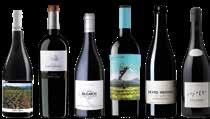
• VINOS DEL EMPORDÀ. BLANCOS FRESCOS, ROSADOS, TINTOS MEDITERRÁNEOS Y GARNACHA DULCE. FRESH WHITES, ROSÉS, MEDITERRANEAN REDS, AND SWEET GARNACHA WINES
• RATAFÍA. LICOR TRADICIONAL CATALÁN ELABORADO CON NUECES VERDES, PLANTAS AROMÁTICAS Y ESPECIAS, PERFECTO PARA CERRAR LA NOCHE CON SABOR LOCAL. RATAFÍA. TRADITIONAL CATALAN LIQUEUR MADE WITH GREEN WALNUTS, AROMATIC HERBS AND SPICES, PERFECT TO END THE NIGHT WITH A LOCAL FLAVOUR
NOCHE 3 | NIGHT 3
AL RITMO DEL VERANO. SUMMER RHYTHMS
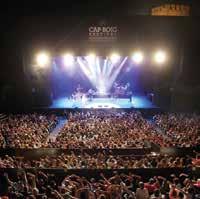
• CAP ROIG FESTIVAL. GRANDES NOMBRES NACIONALES E INTERNACIONALES. BIG NATIONAL AND INTERNATIONAL ARTISTS
• FESTIVAL DE LA PORTA FERRADA. EN SANT FELIU DE GUÍXOLS, ES UNO DE LOS CLÁSICOS DEL VERANO CATALÁN, CON CONCIERTOS EN ESPACIOS COMO EL PUERTO, EL MONASTERIO O RECINTOS AL AIRE LIBRE. HELD IN SANT FELIU DE GUÍXOLS, IT’S ONE OF THE CLASSICS OF THE CATALAN SUMMER, WITH CONCERTS IN VENUES SUCH AS THE PORT, THE MONASTERY, AND OUTDOOR SPACES
• PERALADA. EL FESTIVAL MANTIENE UN FUERTE VÍNCULO CON LA ÓPERA, LA MÚSICA Y LA DANZA. THE FESTIVAL MAINTAINS A STRONG LINK WITH OPERA, MUSIC, AND DANCE
• GIRONA EN DIRECTO. LA CIUDAD COMPLETA LA PROPUESTA CON CONCIERTOS, CICLOS MUSICALES Y PROGRAMACIÓN CULTURAL EN ESPACIOS COMO EL AUDITORI, EL TEATRE MUNICIPAL O RECINTOS AL AIRE LIBRE. GIRONA ROUNDS OUT THE AGENDA WITH CONCERTS, MUSIC SERIES, AND CULTURAL EVENTS IN VENUES SUCH AS THE AUDITORI, THE MUNICIPAL THEATRE, AND OUTDOOR SPACES
TOP
TEXTOS: Desiré Alija
6
O MARISQUIÑO 2026
Fecha: del 6 al 9 de agosto de 2026
Lugar: varios lugares, Vigo
Más info en: www.omarisquiño.com
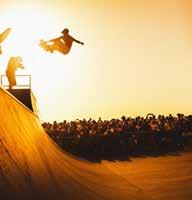
La ciudad vibra de nuevo con uno de los grandes festivales europeos de deportes de acción y cultura urbana, un escenario al aire libre con competiciones de monopatinaje, BMX, básquet 3x3, breaking, MTB, freestyle motocross y otras disciplinas, algunas de ellas olímpicas y puntuables para circuitos internacionales como la World Cup Skateboarding y FIBA 3x3. La programación reúne a deportistas de más de treinta países junto a conciertos, sesiones de DJs, freestyle rap, grafiti y actividades para público familiar.
The city will vibrate once again with one of the biggest action sports and urban culture festivals in Europe featuring an outdoor stage with skateboarding, BMX, 3x3 basketball, breakdancing, MTB, freestyle motocross and other competitions, some of them Olympic and counting towards international circuits such as the World Cup Skateboarding and FIBA 3x3. The event brings together athletes from more than thirty countries while offering music performances, DJ sessions, freestyle rap, graffiti, and family-friendly activities.
MONET: LA EXPERIENCIA INMERSIVA
Fecha: hasta el 23 de agosto de 2026
Lugar: Pôle PIXEL, Lyon
Más info en: https://l1nq.com/ d0d0v0i
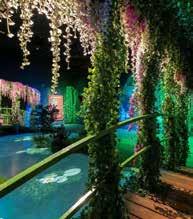
Lyon invita a adentrarse en el universo de Claude Monet con una experiencia digital de 360º, pensada para todos los públicos, que transforma sus obras en un recorrido envolvente de luz, sonido y proyecciones. La visita, de entre sesenta y noventa minutos, propone una nueva forma de acercarse al maestro impresionista, combinando espectáculo multimedia, realidad virtual y una puesta en escena que invita a sentir sus paisajes, colores y pinceladas.
Lyon invites you to step inside the world of Claude Monet with a 360-degree digital art experience designed for all audiences that transforms his works into an enveloping journey of light, sound, and projections. The visit, which takes 60 to 90 minutes, offers a new way of approaching the Impressionist master, combining a multimedia show, virtual reality, and a staging that allows you to fully experience his landscapes, colours, and brushstrokes.
SUIZA
HUNDSTAGE IN DER MÜHLE
Fecha: del 9 al 31 de julio de 2026
Lugar: Mühle Tiefenbrunnen, Zúrich
Más info en: //www.muehle-tiefenbrunnen.ch/festivals/hundstage
Zúrich celebra el verano con un festival gratuito que transforma el patio cubierto de la Mühle Tiefenbrunnen en un punto de encuentro cultural al aire libre. Durante cuatro semanas, las tardes de jueves y viernes combinan lecturas literarias, conciertos íntimos, gastronomía informal y cócteles estivales en un entorno relajado y con encanto industrial. Los jueves están dedicados a la literatura, con autores que comparten sus obras y los relatos que hay detrás de ellas; los viernes, la música toma el relevo con propuestas emergentes de la escena suiza, entre el soul, el pop, el rock y la electrónica.
Zurich celebrates summer with a free festival that transforms the covered courtyard of the Mühle Tiefenbrunnen into an outdoor cultural hotspot. Every Thursday and Friday afternoon for four weeks, literary readings, intimate concerts, informal cuisine, and summer cocktails are offered in a casual setting full of industrial charm. Thursdays are dedicated to literature, with authors sharing their works and the stories behind them, while music takes over on Fridays with emerging artists from the Swiss scene, ranging from soul and pop to rock and electronic.
ESPAÑA
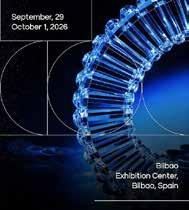
BIOSPAIN 2026
Fecha: del 29 de septiembre al 1 de octubre de 2026
Lugar: Bilbao Exhibition Center, Bilbao
Más info en: https://biospain.com/
Feria y conferencia de referencia para el sector biotecnológico en España y Europa, que reunirá a empresas, centros de investigación, inversores, instituciones y profesionales de la industria en torno a la innovación, la transferencia de conocimiento y las oportunidades de colaboración internacional. El encuentro llega al País Vasco, uno de los polos biotecnológicos más dinámicos del país, con un programa orientado al networking, las reuniones one-toone, la exposición comercial y el impulso de nuevos proyectos en ámbitos como la salud, la biotecnología industrial, la alimentación, la sostenibilidad o las terapias avanzadas. Una cita estratégica para tomar el pulso a un sector en crecimiento y descubrir hacia dónde avanza la biotecnología española y europea.
The leading trade fair and conference for the biotechnology sector in Spain and Europe will bring together companies, research centres, investors, institutions, and industry professionals to focus on innovation, knowledge transfer, and opportunities for international collaboration. The event is coming this year to the Basque Country, one of the most dynamic biotechnology hubs in the country, with a programme centered around networking, one-on-one meetings, trade exhibitions, and promoting new projects in areas such as healthcare, industrial biotechnology, food, sustainability, and advanced therapies. A strategic event to take the pulse of a growing sector and discover where Spanish and European biotechnology is heading.
ESPAÑA
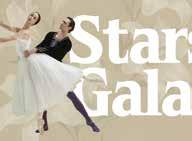
STARS GALA
Fecha: 25 de julio de 2026
Lugar: Teatro Principal de Alicante, Alicante
Más info en: www.vivaticket.com/ es/ticket/stars-gala/13243
Una de las grandes citas del ballet en nuestro país que reunirá sobre el escenario a primeras figuras, solistas y jóvenes intérpretes vinculados a compañías de referencia internacional como el Mariinsky, Dutch National Ballet, Mikhailovsky o NOVAT. El programa propone un recorrido por el repertorio clásico, romántico y neoclásico, con cerca de un centenar de artistas en escena y momentos especialmente esperados, como el debut en España de Maria Ilyushkina, primera bailarina del Mariinsky, o el regreso de Anna Ol, estrella del Dutch National Ballet. La gala incluirá un fragmento de Laurencia, el estreno absoluto de una nueva pieza de Anton Valdbauer y otras obras pensadas para celebrar la belleza, la técnica y la emoción de la danza clásica.
One of the country’s greatest ballet events that will bring onto the stage principal dancers, soloists, and young performers belonging to world-renowned companies such as the Mariinsky, the Dutch National Ballet, the Mikhailovsky and the NOVAT. The programme offers a journey through the classical, romantic and neoclassical repertoire, with about a hundred artists on stage, as well as highly anticipated moments, such as the debut in Spain of Maria Ilyushkina, prima ballerina of the Mariinsky, and the return of Dutch National Ballet star Anna Ol. The gala will include a fragment from Laurencia, the world premiere of a new piece by Anton Valdbauer, and other works created to celebrate the beauty, technique, and emotions conveyed by classical dance.
ESPAÑA
THE MUSEUMSUFERFEST
Fecha: del 28 al 30 de agosto de 2026
Lugar: orillas del río Meno, Fráncfort del Meno
Más info en: https://www.visitfrankfurt.travel/en/experience/ festival-and-events/museum-embankment-festival
Durante el último fin de semana de agosto, la ribera del Meno se convierte en un gran escenario urbano donde el arte, la música y la gastronomía dialogan con el perfil más icónico de la ciudad. El Museumsuferfest invita a recorrer la famosa Milla de los Museos con exposiciones especiales, visitas, actividades para todos los públicos y una programación que se extiende al aire libre entre conciertos, espectáculos, puestos internacionales y artesanía. El broche final llega con un espectáculo de fuegos artificiales sobre el Meno, con el skyline de Fráncfort como telón de fondo.
During the last weekend of August, the Main riverfront becomes an outstanding urban stage where art, music, and gastronomy dialogue with the city’s most iconic profile. Museumsuferfest invites you to explore the famous Museum Mile and its special exhibitions, tours, activities for all audiences, and an open-air programme featuring music performances, shows, international stalls, and crafts. The finishing touch comes with a fireworks display over the Main, with the Frankfurt skyline as a backdrop.
Cuida tu cabello durante el verano
El verano pasa factura al cabello. El sol intenso, el agua salada, el cloro de las piscinas y el calor de estos meses lo resecan y lo debilitan, y es muy habitual notar que se cae más de lo normal. Buena parte de esa pérdida responde a un fenómeno estacional conocido como efluvio telógeno, una fase en la que parte del pelo entra de forma natural en reposo y se desprende con más facilidad.
La buena noticia es que esta caída suele ser reversible y, sobre todo, tratable, y el verano es un buen momento para ponerle freno. En MR Grupo Clínico contamos con tres centros propios en Madrid, Valencia y Alicante, donde estudiamos tu caso y diseñamos un plan a tu medida.
Disponemos de tratamientos como la mesoterapia capilar, los complejos vitamínicos y el plasma rico en plaquetas (PRP) y en fibrina (PRF), que refuerzan el folículo y estimulan el crecimiento. Y, cuando la pérdida es severa, el injerto capilar devuelve densidad de forma natural y duradera.
Ponte en manos de nuestro equipo médico especializado en medicina capilar, liderado por el doctor Marco Romagnoli, y recupera la salud de tu cabello. EN MR GRUPO CLÍNICO, TU PRIMERA CONSULTA CAPILAR ES GRATUITA.
Llámanos al 658 123 903 o escribe a info@mrgrupoclinico.com e indica el código AN26 al pedir la cita.
Este verano, en julio, agosto y septiembre, da el primer paso hacia tu mejor versión. www.mrgrupoclinico.com
TEXTO: Pablo Santamarta
MUNDAKA EL GUARDIÁN DE LA RÍA
MENOS DE DOS MIL HABITANTES Y UN CASCO HISTÓRICO QUE SE RECORRE EN UNA HORA. SIN EMBARGO, ESTE PUEBLO PESQUERO DE LA COSTA VIZCAÍNA APARECE EN MAPAS QUE VAN MUCHO MÁS ALLÁ DE LA PESCA. ¿LA RAZÓN? SU POSICIÓN: MUNDAKA GUARDA LA ENTRADA DE URDAIBAI, ÚNICA RESERVA DE LA BIOSFERA DE EUSKADI. LA RAZÓN QUE LO CAMBIA TODO.
WITH LESS THAN TWO THOUSAND INHABITANTS AND A HISTORIC CENTRE THAT CAN BE EXPLORED IN ONE HOUR, THIS TOWN ON THE BAY OF BISCAY IS KNOWN FOR MORE THAN ITS FISHING HERITAGE. THE REASON? ITS LOCATION. MUNDAKA WATCHES OVER THE ENTRANCE TO URDAIBAI, THE ONLY BIOSPHERE RESERVE IN THE BASQUE COUNTRY. THIS CHANGES EVERYTHING.
El centro del pueblo es el mismo puerto. De allí salen las calles estrechas y empinadas del casco viejo, un trazado medieval que ha resistido sin grandes alteraciones. No es un lugar monumental, pero tiene piezas suficientes para detenerse: la iglesia de Santa María, del siglo XVI, con elementos góticos y renacentistas; el casino; la casa Simitur, y una biblioteca instalada en un edificio con más vidas que un gato.
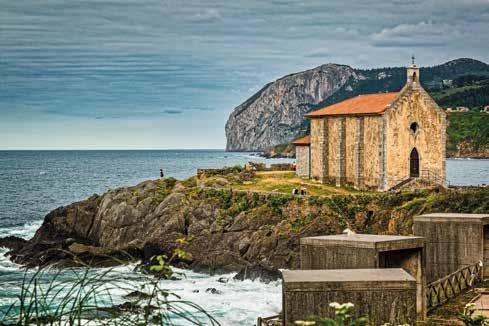
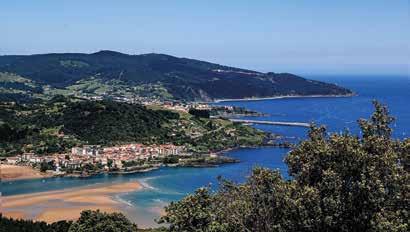
Lo que de verdad define Mundaka es su relación con el agua. El pueblo vivió durante siglos de la pesca y después incorporó el turismo, atraído por sus olas y por el entorno natural. Hoy conviven ambas realidades: redes secándose en el puerto, tiendas de surf y terrazas frente a la ría. Desde el puerto, un paseo por la costa lleva hasta la ermita de Santa Katalina, uno de los mejores puntos para entender el paisaje. El mirador de Portuondo ofrece una vista completa de la desembocadura, la isla de Ízaro y la playa de Laida.
La ola izquierda que rompe en la desembocadura de la ría figura en casi todas las listas entre las mejores del mundo: cuatro metros de altura y 400 m de recorrido antes de morir. En 1978, una revista americana la publicó por primera vez y el pueblo apareció de golpe en el mapa surfero internacional. Desde entonces, cada otoño llegan tablistas de medio mundo dispuestos a lograr el mejor tubo de su vida.
The town’s centre is the port itself. The old town’s steep, narrow streets stem from it, following a medieval layout that has survived largely unchanged. It’s not a monument-packed place, but it has enough buildings worth visiting: the 16th-century Santa Maria church, with Gothic and Renaissance elements, the casino, the Simitur house, and a library housed in a building with more lives than a cat.
Yet what really defines Mundaka is its connection with the sea. The town lived off fishing for centuries and later embraced tourism, with people attracted by its waves and natural surroundings. Today both realities live in harmony: fishing nets drying out in the port, surf shops, and terraces in front of the estuary. Departing from the port, a walk along the coast leads to the Santa Katalina hermitage, one of the best spots to understand the landscape. The Portuondo viewpoint offers an uninterrupted view of the mouth, Ízaro island, and Laida beach.
The left-breaking wave at the mouth of the estuary features in almost every “best in the world” list: it reaches four metres high and 400 metres long before crashing. In 1978, an American magazine talked about it for the first time, suddenly putting Mundaka on the international surfing map. Since then, every autumn surfers from across the world come ready to enjoy the best tube ride of their lives.
Vicente Sabater P é rez
Urdaibai: la reserva que salvaron los vecinos
No se puede hablar de Mundaka sin hablar de Urdaibai. El río Oka nace en el monte Oiz y, al llegar a Mundaka, se transforma en ría. Allí genera un sistema de marismas considerado el humedal más importante del País Vasco. En 1984, la UNESCO lo declaró Reserva de la Biosfera, pero la protección no llegó sola.
A finales de los sesenta, la Diputación de Bizkaia encargó el Plan Especial de Aprovechamiento de la Ría de Mundaka, que proponía desecar y urbanizar los terrenos entre Gernika y Mundaka. La movilización ciudadana frenó la operación y promovió la declaración de la UNESCO. Urdaibai es, además, la única Reserva de la Biosfera en España con ley propia. Hoy, la reserva abarca 220 km2, 22 municipios y unos 45 000 habitantes. Es zona de reposo e invernada para aves migratorias como el águila pescadora, la espátula o el avetoro, y conserva uno de los encinares cantábricos mejor preservados.
Más allá de Mundaka
Urdaibai funciona como un circuito, con Mundaka como lanzadera. Bermeo, fundada en 1236, fue capital del Señorío de Vizcaya y mantiene uno de los puertos pesqueros más activos del Cantábrico. Algo más lejos, San Juan de Gaztelugatxe, unido a tierra por un puente de piedra y 241 escalones, se ha convertido en una de las imágenes más cinematográficas de la costa vasca. En Kortezubi están las cuevas de Santimamiñe, con pinturas rupestres de hace 14 000 años y, muy cerca, el bosque pintado de Oma, pinar convertido en galería al aire libre.
También las playas explican el carácter cambiante de la reserva. Laida, en la margen derecha de la ría, no es la misma playa por la mañana que por la tarde. Laga, bajo el peñón de Ogoño, es más abierta y espectacular, con un arenal largo y un fondo de acantilado que resume bien la fuerza del Cantábrico.
La mesa: entre arrantzales y baserritarras
La cocina de proximidad nace de una convivencia: lo marinero y lo rural comparten despensa. Los arrantzales salen al mar con barcos de bajura; los baserritarras trabajan huertas y pastos en el interior. Y esa simbiosis se disfruta en la mesa. El producto con calendario propio es el bonito del norte de costera, entre junio y octubre. De él nace el marmitako, guiso marinero por excelencia. Cocina de necesidad convertida en plato de carta. Lo acompañan otros clásicos vizcaínos como el bacalao al pil-pil, la merluza en salsa verde, las rabas y los txipirones en su tinta. En septiembre se suman hongos y piparras.
Comer en Mundaka también es ir de poteo –de bar en bar por el puerto y el casco viejo, tomando pintxo y bebida en cada parada–. El txakoli se escancia desde lo alto para airear el vino y liberar su carbónico natural. Busturialdea, la comarca de Mundaka, es una de las zonas con mayor concentración de viñedos y bodegas de Bizkaiko Txakolina. En municipios cercanos, como Gernika, Busturia, Muxika o Kortezubi, se pueden visitar bodegas familiares dentro de la propia reserva. Un vino blanco, joven, fresco y ácido, perfecto para acompañar anchoas de Bermeo, queso Idiazabal, pimientos de Gernika o cualquier delicia del mar.
Joselu Bilbo
Urdaibai: the reserve saved by its residents
You can’t talk about Mundaka without mentioning Urdaibai. The River Oka is born in Mount Oiz and when it enters Mundaka, it becomes an estuary. There, it creates a system of marshes considered the most important wetland in the Basque Country. In 1984, UNESCO declared it a Biosphere Reserve, but its protected status didn’t just happen.
At the end of the 1960s, the Provincial Council of Bizkaia commissioned the Special Plan for the Development of the Mundaka Estuary,
which proposed drying out and developing the land between Gernika and Mundaka. A citizen movement halted the project and pushed for the UNESCO declaration. Urdaibai is also the only Biosphere Reserve in Spain with its own law. Today, the reserve covers 220 km2, 22 municipalities, and about 45,000 inhabitants. It’s a resting and wintering area for migratory birds such as ospreys, Eurasian spoonbills, and Eurasian bitterns, and it’s home to one of the best-preserved Cantabrian oaks.
Beyond Mundaka
Urdaibai works like a circuit, with Mundaka as the starting line. Founded in 1236, Bermeo was the capital of the Lordship of Biscay and is one of the busiest fishing ports of the Cantabrian Sea. A little further away, San Juan de Gaztelugatxe, connected to land by a stone bridge and 241 steps, has become one of the most cinematic sights of the Basque coast. In Kortezubi, we find the Santimamiñe caves, with
paintings that date back 14,000 years and, very close by, the Oma Painted Forest, a pine forest transformed into an open-air gallery.
The beaches also explain the reserve’s changing character. Laida, on the right bank of the estuary, is not the same beach in the morning as in the afternoon. Laga, under the Ogoño crag, is more open and spectacular, with a long stretch of sand and a cliff bottom that sums up well the power of the Cantabrian Sea.
At the table: among arrantzales and baserritarras
Locally sourced cuisine is born out of the coexistence between the fishermen and the farmers who share the bounty of nature. The arrantzales go out to sea with inshore fishing boats; the baserritarras work orchards and pastures inland. Their symbiosis is enjoyed at the table.
A product with its own schedule is the seasonal albacore tuna. Caught between June and October, it’s the basis of the marmitako, the seafaring stew par excellence. A case of cuisine of necessity that evolved into a restaurant dish. It’s complemented by other Bizkaia classics such as pil-pil cod, hake in green sauce, deep-fried squid, and baby squid in its ink. In September, mushrooms and pickled chili peppers are also on offer.
Eating in Mundaka is also partaking in poteo—bar-hopping around the port and the old town to enjoy a pintxo and a drink at each stop. Txakoli wine is poured from a great height to aerate it and release its natural bubbles. Busturialdea, the region to which Mundaka belongs, is one of the areas with the highest concentration of Bizkaiko Txakolina vineyards and wineries. In nearby towns, such as Gernika, Busturia, Muxika, or Kortezubi, family wineries found within the reserve itself can be visited. A young, fresh, and acidic white wine, it’s perfect to pair with Bermeo anchovies, Idiazabal cheese, Gernika peppers, or any delicacy from the sea.
Roger Ferrer Ibáñez
Mario A.P.
HISTORIA DE UNA FIRMA INVISIBLE
A TALE OF AN INVISIBLE SIGNATURE
La premisa, de inicio, es incómoda: nada –o casi nada– de lo que viene a continuación es verdad. Tampoco es mentira. Todo lo que se sabe de la figura de Banksy es fruto de especulaciones, mitos, teorías –unas más verosímiles que otras– y de la leyenda construida alrededor de uno de los artistas callejeros más relevantes de la historia. ¿Artista… o artistas? Porque no se puede afirmar con certeza que detrás de la firma haya una sola persona. Cada vez son más las voces que apuntan a un colectivo, o una organización que respalda a un individuo.
Se le supone británico, de Bristol, nacido en los años setenta y hasta se le ha puesto nombre y apellido –Robin Gunningham es la hipótesis más repetida–, pero lo que el mundo mejor conoce de él es su manera de mirar: niños que juegan con bombas, policías ridiculizados, ratas con pancartas o flores lanzadas como cócteles molotov. Una obra política, satírica, inmediata y profundamente incómoda que ha saltado de las calles de Londres a los muros de Cisjordania o a las puertas del Bataclan y que, aunque hoy se reproduzca en camisetas y tazas, nunca ha dejado de tener un fondo antisistema.
Lo más parecido a una biografía de Banksy es el rastro de su obra. Sus primeros trabajos aparecieron en Bristol, cuando aún eran grafitis similares a los que los jóvenes ingleses usaban para volcar su rabia contra el sistema. Un oso de peluche lanzando un cóctel molotov contra tres antidisturbios (The Mild Mild West, Stokes Croft, 1999) marcó el inicio de la historia de insurgencia artística que no cesa.
Como todo en la carrera de Banksy, el salto a la fama mundial no siguió los estándares de la industria del arte. Su paso a Londres a principios de los 2000 se produjo a base de aerosol y nocturnidad, y uno de sus primeros grandes golpes mediáticos llegó en julio de 2003, con Turf War, su primera gran exposición, montada en un
The opening premise is quite unsettling: little—if any—of what follows is true; nor is it false. All anyone knows about Banksy comes from speculation, myths, theories—some more plausible than others—and the legend built around one of the most influential street artists in history. Artist—or artists? It’s still impossible to say with certainty that there’s only one person behind the signature but a growing number of people are pointing to a collective, or an individual supported by an organisation.
He’s supposed to be British, a Bristol native born in the seventies, with the dominant theory being that his name is Robin Gunningham. Yet what the world knows best about him is his outlook on life: children playing with bombs, ridiculed policemen, rats carrying banners, and flowers hurled like Molotov cocktails. His political, satirical, straightforward, and deeply uncomfortable work has travelled from the streets of London to the walls of the West Bank and the Bataclan doors. Even though today his work is printed on T-shirts and mugs, it has managed to never lose its anti-establishment edge.
The closest thing to a biography of Banksy is the trail left by his work. His earliest works appeared in Bristol, when they were still graffiti resembling those painted by young Brits to express their rage against the system. A teddy bear throwing a Molotov cocktail at three riot police officers (The Mild Mild West, Stokes Croft, 1999) marked the beginning of the history of the never-ending artistic insurgency.
As with everything in Banksy’s career, his rise to world fame didn’t follow the usual standards of the art industry. He moved to London in the early 2000s carrying spray paint and a taste for working at night. One of his first big media hits came in July 2003 with Turf War . His first major exhibition, it was hosted in an East End ware -
Philippe Agnifili
almacén del East End, que sorprendió al mundo con un Churchill con cresta punk, una vaca con la cara de Warhol y un retrato de Isabel II como un chimpancé.
Luego vino otro de sus mayores jaques al establishment, colándose en los grandes templos del arte sin que nadie lo invitara. Entre 2003 y 2005 fue instalando obras propias en instituciones de renombre, como el British Museum o la Tate Britain. En Londres colocó una falsa pieza de arte rupestre con una figura empujando un carrito de supermercado; en el Metropolitan de Nueva York, una dama antigua con máscara antigás, y en la Tate Britain, un paisaje campestre atravesado por cintas policiales. Algunas piezas tardaron días en ser descubiertas y Banksy demostró así que, con el marco adecuado, incluso la impostura podía parecer patrimonio.
house and stunned the world with images such as Churchill sporting a green mohawk, a cow covered in pictures of Andy Warhol’s face, and a portrait of Elizabeth II as a chimpanzee.
Then came another of his boldest moves against the establishment: sneaking uninvited into the great temples of art. Between 2003 and 2005, he set up his own artworks in renowned institutions such as the British Museum and Tate Britain. In London, he placed a fake cave painting with a figure pushing a shopping trolley, at the NY’s Metropolitan Museum of Art, an elderly lady wearing a gas mask, and at Tate Britain, a rural landscape crossed by police tape. Some pieces went unnoticed for days; Banksy demonstrated that, with the right frame, even deception could pass for heritage.
El precio de la rebeldía
De Banksy se dice de todo, bueno y malo. La crítica más dura a su figura evidencia la contradicción que existe entre el anticapitalismo intrínseco en sus mensajes y las millonarias cifras en las que se valora su trabajo. Ante eso, también tiene algo que decir. Girl with Balloon, la famosa niña que deja escapar un globo rojo en forma de corazón, se vendió en Sotheby’s por algo más de un millón de libras. En el preciso instante en el que cayó el martillo, sonó una alarma y el lienzo empezó a deslizarse dentro de su propio marco, saliendo hecho tiras por la parte inferior. Banksy había escondido una trituradora en la obra, preparada para el día en que terminara en subasta. Sotheby’s la rebautizó como Love is in the Bin y la presentó como la primera obra creada en directo durante una puja. Y, por supuesto, el mercado hizo lo que mejor sabe hacer, generar de cualquier cosa un valor añadido; la compradora decidió quedársela y, tres años después, se revendió por más de dieciocho millones de libras.
The price of rebellion
People say both good and bad things about Banksy. The harshest criticism points to the contradiction that exists between his strong anti-capitalist subtext and his artworks selling for millions. He also had something to say about this. Girl with Balloon, the famous image of a girl letting go of a red heartshaped balloon, sold at Sotheby’s for just over a million pounds. The very moment the hammer fell, an alarm sounded and the canvas began to slide down its own frame, emerging in strips from the bottom. Banksy had hidden a shredder on the art piece, ready for the day it ended in an auction. Sotheby’s renamed it Love is in the Bin and presented it as the first work created live during an auction; of course, the market did what it does best, generating added value out of anything. The buyer decided to keep it and, three years later, resold it for over £18 million.
Sean Jackson
Jlevinger
Cada una de sus obras vive destinos radicalmente distintos. Algunas siguen donde las dejó. Otras descansan tras un metacrilato instalado por los mismos ayuntamientos que durante años intentaron borrarlas. Otras se exhiben en museos, enmarcadas como joyas. Otras se han subastado por millones. Y otras, sencillamente, han desaparecido. Pero todas han logrado su objetivo: detener a quien pasaba por delante. Porque Banksy no trabaja para dejar una obra intacta, sino para provocar una reacción. La aparición, la polémica, el robo, el borrado o el desgaste también forman parte de la narrativa de cada pieza. Su última aparición en Londres lo resume bastante bien. En abril de 2026, una estatua atribuida al artista apareció en Waterloo Place. En ella un hombre trajeado avanza con una gran bandera tapándole la cara, a punto de caer al vacío desde su pedestal. La pieza, instalada en una zona estratégica rodeada de monumentos oficiales, era un grito alto y claro contra el clima mundial actual.
Para algunos, propaganda; para otros, activismo político y, para sus mayores detractores, vandalismo con buena prensa. En cualquier caso, la obra de Banksy lleva décadas siendo el reflejo de lo que la sociedad quiere obviar, pero es demasiado grande para esconder debajo de la alfombra. Da igual que la destruyan. Banksy seguirá creando. Y nadie sabrá cuándo ni dónde.
Each of his works have met a radically different fate: some remain where he left them; others sit behind a methacrylate plate installed by the very authorities that for years tried to erase them; others are found in museums, displayed like jewels; others have been auctioned for millions; others have simply disappeared. Yet they all have achieved their goal: to make passers-by stop and look. Banksy doesn’t create to leave a work untouched, but to elicit a response. Its appearance, controversy, theft, erasure, or wear are also part of each piece’s narrative.
His latest appearance in London sums it up quite well. In April 2026, a statue attributed to the artist sprung up in Waterloo Place: a suited man marching on with a large flag covering his face, about to fall into the void from his plinth. Installed in a strategic area surrounded by official monuments, the creative piece read as a loud and clear cry against the current global climate.
To some, it’s propaganda; to others, political activism; and, to his greatest detractors, vandalism enjoying good press. In any case, Banksy’s work has reflected for decades what society would rather ignore but it’s too big to be swept under the carpet. It doesn’t matter if the artworks get destroyed, Banksy will continue to create—and no one will know when or where.
Maggie Jones
Sean Jackson
RUBOR DE VERANO
LOS COLORETES QUE VAN A DAR ALEGRÍA A ESTA TEMPORADA ESTIVAL
La historia del maquillaje del verano 2026 tiene un protagonista indiscutible: el colorete. Más allá de ser un simple toque de color, los nuevos lanzamientos apuestan por acabados acuarelados, efectos ‘sunburn’, texturas difuminadas y fórmulas híbridas que fusionan blush y bronzer. La tendencia abandona el exceso de ‘contouring’ para centrarse en mejillas frescas, luminosas y naturales, inspiradas en el efecto de una tarde al sol.
SUMMER BLUSH
THE BLUSHES ADDING COLOUR THIS SUMMER
The summer 2026 makeup scene has an indisputable star: the blush. More than just being a pop of colour, the latest launches are all about watercolour finishes, sunburn effects, blurred textures, and hybrid formulas that combine blush and bronzer. This year’s trend leaves behind heavy contouring to embrace fresh, radiant, and natural cheeks, inspired by an afternoon spent in the sun.
BEAUTY ADVISOR by PAZ FERRER
1.- VICTORIA BECKHAM BEAUTY BLUSH STYLUS
Precio aproximado: 42 €
El lanzamiento revelación del verano. Su innovador formato tipo lápiz permite una aplicación extremadamente precisa, ideal para esculpir los pómulos antes de difuminar. Disponible en cinco tonos inspirados en flores y tierras cálidas, incorpora vitamina E y agentes emolientes para aportar confort y duración. El resultado es un rubor sofisticado, elegante y perfectamente modulable.
Por qué me gusta:
Perfecto para la tendencia ‘blurred blush’, uno de los acabados más buscados de 2026.
1.- VICTORIA BECKHAM BEAUTY BLUSH STYLUS
Approx. price: €42
This summer’s surprise star. Its innovative crayon shape allows for an extremely precise application, ideal for sculpting cheekbones before blending. Available in five shades inspired by flowers and sunny climates, it incorporates vitamin E and emollient agents to provide comfort and duration. The result is a sophisticated, elegant, and totally buildable blush.
Why I like it:
Perfect for the blurred blush trend, one of the most sought-after finishes in 2026.
He reunido seis de los lanzamientos más interesantes y recientes para conseguir el look de la temporada
Here’s a roundup of six of the most exciting arrivals to get the season’s look.
SUMMER BLUSH
2.- RHODE POCKET BLUSH
Precio aproximado: 28 €
Hailey Bieber vuelve a marcar tendencia con un colorete en stick diseñado para recrear el famoso efecto ‘sun-kissed’. Su textura cremosa se funde instantáneamente con la piel dejando un velo de color natural que parece surgir desde el interior del rostro. Ideal para llevar en el bolso y reaplicar durante el día.
Por qué me gusta:
Representa a la perfección la tendencia ‘Muted Cheeks’, las mejillas ligeramente bronceadas que dominan el verano.
3.- MERIT FLUSH BALM
Precio aproximado: 32 €
El favorito de maquilladores y editoras de belleza. Su fórmula ligera proporciona un acabado húmedo y translúcido que deja la piel jugosa y radiante. Disponible en tonos rosados, melocotón y bayas suaves, se adapta especialmente bien a los maquillajes minimalistas.
Por qué me gusta:
Es uno de los mejores exponentes de la tendencia ‘Dewy Glow’, que sigue reinando en verano 2026.
2.- RHODE POCKET BLUSH
Approx. price: €28
Hailey Bieber is setting the trend again with a stick blush designed for recreating the coveted sun-kissed effect. Its creamy texture melts instantly into the skin leaving a sheen of natural colour for an inner-glow look. Ideal for carrying in the bag for touch-ups on the go.
Why I like it:
It perfectly captures the Muted Cheeks trend, the summer’s viral sunkissed cheeks look.
4.-VICTORIA BECKHAM BEAUTY COLOUR WASH
Precio aproximado: 38 €
La respuesta perfecta a la tendencia ‘Watercolour Flush’. Su textura líquida ultraligera deja una mancha de color translúcida, similar a una acuarela sobre la piel. Aporta frescura, luminosidad y un acabado prácticamente imperceptible.
Por qué me gusta:
Ideal para quienes buscan un colorete natural y casi etéreo.
3.- MERIT FLUSH BALM
Approx. price: €32
The makeup artists and beauty editors’ favourite. Its lightweight formula delivers a dewy and glassy finish for juicy and radiant skin. Available in pink, peach, and soft berry hues, it goes well with minimalist makeup routines.
Why I like it:
One of the power players in the Dewy Glow trend that’s still reigning supreme this summer.
4.-VICTORIA BECKHAM BEAUTY COLOUR WASH
Approx. price: €38
The perfect addition to the Watercolour Flush trend. Its ultralight liquid texture leaves a glassy watercolour-like hue on the skin. It delivers freshness, radiance, and a virtually invisible finish.
Why I like it:
Ideal for those looking for a natural, near-ethereal blush.
5.- PRADA BEAUTY CREAM-TO-POWDER BLUSH
Precio aproximado: 50 €
Prada apuesta por la sofisticación con una fórmula que combina la comodidad de una crema y la duración de un polvo. Difumina imperfecciones ópticamente y crea un efecto “soft focus” muy favorecedor que permanece intacto incluso con altas temperaturas.
Por qué me gusta:
Uno de los mejores lanzamientos para conseguir el codiciado efecto ‘blurred makeup’.
5.-PRADA BEAUTY CREAM-TO-POWDER BLUSH
Approx. price: €50
Prada bets on sophistication with a formula that combines the effortlessness of a cream and the lasting power of a powder. It optically diffuses imperfections and creates a very flattering softfocus effect that stays put even at high temperatures.
Why I like it:
One of the best arrivals to get the coveted blurred makeup effect.
6.- HAUS LABS COLOR FUSE BLUSH
Precio aproximado: 30 €
Una de las novedades más comentadas por maquilladores. Pigmentación, modulable, textura, sedosa y de larga duración.
Por qué me gusta:
Es una práctica barra multiusos, que se desliza fácilmente para conseguir un color ajustable con un acabado brillante.
7.- NUEVOS BLONZERS
Precio aproximado: desde 30 €
La gran novedad de la temporada. Los ‘blonzers’ mezclan colorete y bronzer en un solo producto para conseguir un acabado cálido, saludable y muy veraniego. Son ideales para simplificar la rutina y lograr el efecto de piel bronceada con un solo gesto.
Por qué me gusta:
Representan la evolución natural del blush tradicional y son la categoría de color más comentada del verano.
6.- HAUS LABS COLOR FUSE BLUSH
Approx. price: €30
One of the most talked-about releases among makeup artists. High-pigment, buildable, velvety texture, and longlasting.
Why I like it:
It’s an easy-to-use, multi-purpose stick that glides easily to deliver a buildable glassy colour.
7.-
ALL-NEW BLONZERS
Approx. price: From €30
This season’s top new product. Blonzers combine blush and bronzer in a single product to get a warm, healthy, and very summery flush. They’re perfect for streamlining your routine and achieving the sun-kissed effect in a single gesture.
Why I like it:
They’re the natural evolution of traditional blush and all the buzz in rouge this summer.
DEL PARQUÉ A LA DESPUÉSVIDA DEL BALONCESTO ALFONSO REYES
Jugó 439 partidos en la ACB y vistió camisetas muy diferentes. Si tuviera que elegir una etapa que definiera al jugador que fue, ¿cuál sería y por qué?
Estuve muy a gusto en todos los equipos en los que jugué, pero elegiría no una sino dos etapas: las temporadas que pasé en Málaga en Unicaja y el retorno a Estudiantes de 1998 a 2002. Ir a Málaga fue la mejor decisión que tomé en mi carrera, pude desarrollar todo mi potencial deportivo con la ayuda de mi entrenador, Javier Imbroda, y disfruté muchísimo con mis compañeros. En Estudiantes ya era un jugador mucho más maduro y la vuelta al club de mis orígenes supuso un aliciente. El gran ambiente del vestuario, y otro gran entrenador como Pepu Hernández, fueron factores que contribuyeron enormemente a configurar un equipo que competía por todos los títulos.
TEXTO: Diego Álvarez
FOTOS: Esfera de los libros
FROM THE PARQUET TO LIFE AFTER BASKETBALL
You played 439 ACB League games and wore the jersey of several teams. If you had to choose one moment that defined you as a player, what would it be, and why?
I felt very comfortable with every team I played for, but if I had to choose, I’d pick not just one, but two moments: the seasons I spent with Unicaja Málaga, and my second spell at Estudiantes from 1998 to 2002. Moving to Málaga was the best decision I made in my career. I was able to reach my full sporting potential with the help of my coach, Javier Imbroda, and I enjoyed every moment alongside my teammates. At Estudiantes, I was already a much more experienced player, and going back to my original club was a great motivation. The fantastic dressing room atmosphere, and another brilliant coach, Pepu Hernández, played a huge part in building a team that competed for all the titles.
You played 140 games for the Spanish national team and were there at the start of the huge transformation in Spanish basketball. What did wearing the Spanish jersey mean to you? Is there one game with the national team that holds a special place in your memory?
Representing Spain was the best I could aspire to as a sportsperson. It was a tremendous source of
COMPAGINAR LAS DOS CARRERAS, LA DEPORTIVA Y LA UNIVERSITARIA FUE UN GRAN RETO QUE TUVO MUY BUENA RECOMPENSA. REQUIRIÓ DE MUCHO ESFUERZO, FUERZA DE VOLUNTAD Y PERSEVERANCIA
BALANCING A PROFESSIONAL BASKETBALL CAREER WITH STUDYING ENGINEERING WAS A MAJOR CHALLENGE, BUT IT WAS ALSO VERY REWARDING. IT REQUIRED A LOT OF EFFORT, WILLPOWER, AND PERSEVERANCE.
Disputó 140 partidos con la selección española y vivió el inicio del gran cambio del baloncesto nacional. ¿Qué significó vestir la camiseta de España? ¿Hay algún partido de la Selección que recuerde con más cariño?
Era lo máximo a lo que podía aspirar como deportista, defender la camiseta nacional. Un orgullo tremendo. Ser elegido entre los mejores para representar a España supuso un gran honor. El partido del que tengo más cariño con la Selección Nacional es en el que debutó mi hermano Felipe. Compartíamos vestuario en Estudiantes, pero jugar a la vez vistiendo la camiseta de España fue un momento muy especial.
Mientras competía al máximo nivel terminó Ingeniería de Caminos. ¿Fue más difícil aprobar algunas asignaturas o defender a determinados pívots? ¿Cree que los deportistas deberían dedicar tanto tiempo a formarse como a entrenar?
Compaginar las dos carreras, la deportiva y la universitaria fue un gran reto que tuvo muy buena recompensa. Requirió de mucho esfuerzo, fuerza de voluntad y perseverancia. Fueron dos actividades paralelas, a pesar de toda la dedicación que absorbía el baloncesto, no dejé nunca de matricularme en la Escuela de Caminos en la Politécnica de Madrid. Camino largo y duro
pride. Being chosen among the country’s best to wear the Spanish jersey was a great honour. The game I remember most fondly with the national team is the one when my brother Felipe made his debut. We had already shared the court at Estudiantes, but playing together for Spain was a very special moment.
You also earned a degree in civil engineering while competing at the highest level. What was more challenging: passing your exams or guarding against some centres? Do you think that players should spend as much time in their education as they do in training? Balancing a professional basketball career with studying engineering was a major challenge, but it was also very rewarding. It required a lot of effort, willpower, and perseverance. I pursued both at the same time. Despite the demands of professional basketball, I never stopped studying at the School of Civil Engineering at the Polytechnic University of Madrid. It was a long and tough journey, but one that was worth it. Actually, passing an exam was harder than facing a 2.15-metre giant.
Players must get an education to face their retirement with greater security. It’s a major turning point in life and the better prepared you are, the smoother the transition to civilian life will be. I put a lot of emphasis on this when I talk to players.
que mereció la pena. Un examen era más duro que enfrentarme a un bicho de 2.15 m.
Los jugadores deben formarse para afrontar con mayores garantías su retirada. Es un momento crucial en la vida y cuanto mejor preparado estés, más suave será la transición al mundo civil. Hago mucho hincapié a los jugadores en este aspecto.
Ahora trabaja para que los jugadores afronten mejor la transición vital tras acabar su carrera deportiva. ¿Cuál es la preocupación más frecuente que encuentra cuando un profesional empieza a pensar en la retirada?
La clave no es pensar en la retirada cuando se va acercando, es hacerlo desde que empiezan en el deporte profesional. Asegurarse un futuro alejado de las canchas, que su nueva vida sea una motivación y no una fuente de preocupaciones. Tener claro lo que van a hacer con su vida una vez cuelguen las botas. Van a pasar mucho más tiempo fuera del baloncesto profesional que en él.
Después de haber vivido tantas etapas del baloncesto español, ¿qué cree que ha cambiado para mejor desde que debutó en la ACB? ¿Hay algo del baloncesto de los años noventa que le gustaría recuperar?
Los mayores éxitos internacionales se han conseguido en los últimos 27 años y he tenido la fortuna de estar presente en sus inicios. La irrepetible generación de Oro de Pau Gasol, J. C. Navarro, Calderón o mi hermano Felipe entre otros, nos ha permitido disfrutar de las mieles del triunfo del baloncesto mundial. Todos estos jugadores se fueron incorporando mientras estaba en la Selección Nacional y pude contemplar sus inicios.
Me gustaría recuperar la pasión que existía en aquella época por nuestro baloncesto, la identificación de los aficionados con sus equipos.
You now help players better cope with the transition after finishing their sports career. What’s the most common concern you hear when a professional player starts thinking about retirement?
The most important thing is not to start thinking about retirement when it’s approaching, but from the very beginning of one’s professional sports career. Ensuring a future away from the courts, and building a new life that’s a source of motivation and not of concern is a must. They need to have a clear plan for what comes next once they hang up their boots, as they will spend much more time outside professional basketball than in it.
After having experienced so many eras of Spanish basketball, what do you think has changed for the better since your ACB debut? Is there anything from the 90s game that you would like to bring back?
The biggest international successes have been achieved in the last 27 years, and I was lucky to be there at the start of it all. The once-in-a-lifetime Golden Generation with Pau Gasol, J. C. Navarro, Calderón, and my brother Felipe, among others, has allowed us to enjoy the sweetness of success in world basketball. These players joined while I was in the national team, so I was able to witness its early days.
I’d like to bring back the passion that existed for our basketball back then, the way fans identified with their teams.
The title of your book, Huevos fritos con patatas, instantly draws attention. What do those fried eggs and chips mean to you? Are we talking about ideas and values that go beyond the kitchen?
It was the first meal I asked my wife for when I came home from the hospital after being admitted with bilateral pneumonia due to COVID. A true food of the gods—or
LA CLAVE NO ES PENSAR EN LA
RETIRADA CUANDO SE VA
ACERCANDO,
ES
HACERLO DESDE QUE EMPIEZAN EN EL DEPORTE PROFESIONAL THE MOST IMPORTANT THING IS NOT TO START THINKING ABOUT RETIREMENT WHEN IT’S APPROACHING, BUT FROM THE VERY BEGINNING OF ONE’S PROFESSIONAL SPORTS CAREER
El título de su libro, Huevos fritos con patatas, llama inmediatamente la atención. ¿Qué representan esos huevos fritos para usted? ¿Hablamos de ideas y valores que van más allá de la cocina?
Fue el primer plato que pedí a mi mujer cuando volví del hospital después de haber estado ingresado con neumonía bilateral a causa del COVID. Un auténtico manjar de dioses, de Reyes en mi caso. Los huevos fritos con patatas representan la sencillez unida a la excelencia, no hace falta mucho para alcanzar lo sublime. En el libro hablo de todo lo que me ha traído hasta aquí, los valores que me han inculcado mis abuelos, mis padres, mis profesores, mis entrenadores y que tanto echo en falta en nuestra sociedad últimamente.
Los historiadores suelen decir que una persona acaba siendo hija de su tiempo. ¿Sucede lo mismo con un deportista o el esfuerzo individual termina imponiéndose a las circunstancias?
Mucho dependerá del esfuerzo individual y del talento, algo también de la buena suerte. Quizá las dos primeros llamen con mucha fuerza a la tercera.
Sabemos que es un fiel lector de historia. ¿La historia ayuda a relativizar las victorias y las derrotas? ¿Ha aprendido alguna lección histórica que luego le haya servido en la pista o en la gestión deportiva?
La historia me ayuda a relativizar. Después de leer sobre la Guerra Civil, o las Guerras Mundiales, cualquier problema que no sea de salud deja de tener importancia.
La lectura es mi pasión y el objetivo es disfrutarla. La historia se repite, por eso leerla te permite vislumbrar las posibles salidas a situaciones cotidianas.
Si pudiera sentarse a cenar con el Alfonso Reyes que debutó en la ACB, ¿qué consejo le daría?
Le diría, me diría, que el camino tendrá obstáculos, pero que merecerá la pena. Sigue así.
fit for kings on account of my surname. Fried eggs with chips represent simplicity combined with excellence: it doesn’t take much to reach the sublime. In my book, I talk about everything that has brought me here, the values that my grandparents, my parents, my teachers, and my coaches have instilled in me which I feel are increasingly missing in our society.
Historians often say that a person is ultimately a product of their time. Does the same apply to sportspeople, or does individual effort ultimately prevail over our circumstances?
It depends a lot on individual effort and talent—and to some extent on good luck. Perhaps effort and talent invite luck.
We know you’re a keen reader of history. Does history help to put victories and defeats into
any historical lessons that later served you on the court or in sports management?
History helps me put things into perspective. After reading about the Civil War, or the World Wars, you realise any problem that isn’t health-related is not really that important.
Reading is my passion and I just want to enjoy it. History repeats itself, so reading about it allows you to anticipate the potential outcomes in everyday situations.
If you could sit down for dinner with young Alfonso Reyes right after he made his debut in the ACB, what advice would you give him?
I would tell him, or rather tell myself, that the road ahead will have obstacles, but it will be all worth it. Keep going!
CANTABRIA POR MAR, AIRE... Y TIERRA
The vision of
JAVIER ORTEGA FIGUEIRAL
CANTABRIA BY SEA, AIR… AND LAND
ACantabria se llega por el aeropuerto Seve Ballesteros en los CRJ1000 de Air Nostrum, o al puerto de Santander en los ferrys que navegan desde el Reino Unido. Una vez allí, hay recorridos para todos los gustos, aunque nos detenemos en tres que son curiosos, clásicos y cumplen a la perfección con aquello de “por tierra, mar y aire”. El marítimo es sencillo de explicar: barcas de casco rojísimo que llevan toda la vida uniendo orillas opuestas de la bahía. El “aéreo” —con las comillas bien puestas, porque aquí no hay avión que valga— es uno de los transportes por cable más espectaculares de Europa. Y el terrestre es una infraestructura que siempre ha estado ahí, la vía estrecha, aunque en este caso hablamos de su servicio estrella, que durante muchos kilómetros recorre Cantabria.
MAR: LAS PEDREÑERAS, ETERNAS VECINAS DE LA BAHÍA
La bahía de Santander es la única del norte de España orientada al sur y la única española incluida en el club de las bahías más bellas del mundo. Cruzarla en las míticas lanchas rojas que los santanderinos llaman “las pedreñeras” (o “reginas”, por la empresa que las gestiona desde hace décadas) es una de esas experiencias que no aparecen en las guías de lujo aunque forman parte del alma de la ciudad.
El servicio de navegación entre las riberas existe desde que el puerto era conocido como Portus Victoriae. Primero a remo y a vela, luego a vapor: en 1841 entraron en servicio
Cantabria can be reached via Seve Ballesteros Airport on Air Nostrum’s CRJ-1000 aircraft, or by sea through the port of Santander aboard ferries sailing from the UK. Once there, there are tours to suit every interest, but here we will focus on three options that are unusual, classic, and perfectly capture the “sea, air and land” concept. The maritime option is easy to understand: bright redhulled boats that have been connecting opposite shores of the bay throughout their existence; the “aerial” tour—emphasis on the quotes, since no airplane is involved—is one of Europe’s most spectacular cable car rides; and the land-based one highlights a long-standing piece of infrastructure: a narrow route that stretches across Cantabria for miles and miles, but in this case, we discover its flagship service.
las populares “Corconeras”, que unían Santander con Pedreña, El Astillero y la playa de El Puntal. Les sucedieron las “Zarcetas” en 1879 y, en 1901, los “Diez Hermanos”, la empresa familiar de Manuel Bedia Castanedo y sus diez hijos, que en 1918 estableció el servicio regular hasta Somo y Pedreña.
Hoy, las lanchas parten junto al Palacete del Embarcadero (obra del arquitecto González de Riancho) y conectan los 365 días del año la capital con los arenales kilométricos de Somo, Loredo y El Puntal. Un billete de poco más de tres euros y, en quince minutos, otro mundo.
SEA: LAS PEDREÑERAS, ENDURING BAY RESIDENTS
Santander Bay is the only bay in northern Spain facing south, as well as the only Spanish bay that’s part of the club of the most beautiful bays in the world. Crossing it in the iconic red boats that locals refer to as “pedreñeras” (or “reginas”, the name of the company that has managed them for decades) is one of those experiences that don’t feature in luxury travel guides despite being part of the city’s soul.
The boating service between the riverbanks has existed since the port was referred to as Portus Victoriae. Originally completed by rowing and sailing, these routes became steam-powered in 1841, when the popular “corconeras” came into operation, linking Santander with Pedreña, El Astillero, and El Puntal beach. They were followed by the “zarcetas” in 1879 and, in 1901, the “Diez Hermanos”, the family business of Manuel Bedia Castanedo and his ten children, which established the regular service to Somo and Pedreña in 1918.
Today, the boats depart from next to the Palacete del Embarcadero (work by architect González de Riancho) and connect the capital city with the vast sandy beaches of Somo, Loredo, and El Puntal day in, day out; a ticket for just over three euros and, in fifteen minutes, you’re entering another world.
“AIRE”: EL TELEFÉRICO DE FUENTE DÉ, ASCENSOR AL CIELO
En el fondo del circo glaciar de Fuente Dé, donde nace el río Deva y la cordillera levanta una muralla vertical de caliza, hay una cabina que sube al cielo. Literalmente. El teleférico salva un desnivel de 753 metros en apenas cuatro minutos, desde los 1.070 de la estación inferior hasta los 1.823 de la superior, a bordo de una cabina con capacidad para veinte personas que vuela a diez metros por segundo. Es el teleférico de tramo único más largo de Europa: 1.450 metros de cable.
La idea surgió del ingeniero y cartógrafo José Antonio Odriozola, antiguo presidente de la Federación Española de Montañismo, que conocía bien la zona, pues su familia era de allí. Ya a principios del siglo XX existía un cable minero de Lloroza a Fuente Dé para bajar mineral; con ese precedente, Odriozola propuso en 1961 construir un teleférico de pasajeros que contribuyera al desarrollo de la zona. Las obras comenzaron en noviembre de 1962 y, hace ahora sesenta años, el 21 de agosto de 1966, el teleférico abría al público en presencia del jefe del Estado.
Arriba, en el mirador de El Cable, el viajero se encuentra de golpe ante una de las panorámicas más sobrecogedoras de la cornisa cantábrica: el circo glaciar queda a los pies, los picos se recortan contra el cielo y, si hay suerte, las nubes quedan por debajo.
TIERRA: EL TRANSCANTÁBRICO, EL ORIENT EXPRESS DE LA CORNISA
Los viajeros que han subido a bordo del Transcantábrico Gran Lujo suelen compararlo con el Orient Express. No es casualidad: sus salones comunes son vagones Pullman centenarios restaurados con marquetería art déco, maderas nobles e iluminación tamizada. A diferencia del tren de Agatha Christie, el Transcantábrico tiene baño privado en cada suite, lo que para muchos lo convierte en superior. Nacido en 1983 como primer tren turístico de España, reconvertido en 2011 en producto de gran lujo y distinguido en Londres en 2014 con el premio al tren más lujoso del mundo, el Transcantábrico recorre en ocho días y siete noches la cornisa cantábrica entre San Sebastián y Santiago de Compostela. Cantabria es, sin duda, el capítulo más generoso del viaje: el tren hace noche en Santander, donde los pasajeros pueden perderse por la bahía o el Sardinero; en Cabezón de la Sal, desde donde se visita el Desfiladero de la Hermida, Potes y el capricho gaudiniano de Comillas; y en Unquera, en el límite con Asturias.
Con catorce suites, salón coche observatorio, ducha de hidromasaje y sauna de vapor se llenan de recién casados, viajeros internacionales y empresas que lo usan como sala de reuniones sobre raíles. El menú cambia a medida que el tren avanza: en Cantabria se sirve cocido lebaniego, anchoas del Cantábrico y los célebres hojaldres de Cabezón de la Sal.
Navegación sencilla, montañismo espectacular y raíles de lujo. Cantabria por mar, aire y tierra.
“AIR”: FUENTE DÉ CABLE CAR, A LIFT TO THE SKY
At the bottom of the Fuente Dé glacial cirque, where the Deva River starts its course and the mountain range creates a vertical limestone wall, there’s a cabin that goes up to the sky— literally. The cable car climbs up 753 metres in just four minutes, from 1,070m in the lower station to 1,823m in the upper station, aboard a cabin with capacity for twenty people that flies at ten metres per second. At 1,450 metres, it’s the longest single-section cable car in Europe.
The project was conceived by engineer and cartographer José Antonio Odriozola, former president of the Spanish Mountaineering Federation, who knew the area well because his family hailed from there. As early as the beginning of the 20th century, a mining cable already ran from Lloroza to Fuente Dé to transport ore; building on that precedent, Odriozola proposed a passenger cable car in 1961 that would contribute to the area’s development. The works began in November 1962 and, sixty years ago, on 21 August 1966, the cable car opened to the public in the presence of the head of state.
High above, in the El Cable viewpoint, travellers are suddenly faced with one of the most breathtaking vistas of the Cantabrian coast: the glacial cirque at their feet, the peaks cutting through the sky and, if lucky, the clouds below.
LAND: TRANSCANTÁBRICO, THE CANTABRIAN ORIENT EXPRESS
Travellers who have boarded the Transcantábrico Gran Lujo usually liken it to the Orient Express. It’s no coincidence: its shared lounges are centuries-old Pullman rail cars refurbished with art deco marquetry, noble hardwood, and soft lighting. Unlike the Agatha Christie train, the Transcantábrico has a private bathroom in each suite, which for many makes it superior.
Born in 1983 as the first tourist train in Spain, transformed in 2011 into a luxury product, and distinguished in London in 2014 with the award for the most luxurious train in the world, the Transcantábrico runs along the Cantabrian coast between San Sebastián and Santiago de Compostela in eight days and seven nights. Cantabria is undoubtedly the most generous leg of the trip: the train stops for the night in Santander, where passengers can wander around the bay or El Sardinero; in Cabezón de la Sal, from where they may visit the La Hermida gorge, Potes, and Gaudi’s El Capricho villa in Comillas; and in Unquera, on the border with Asturias.
Boasting fourteen suites, observation cars, whirlpool and steam showers, the trains are popular with newlyweds, international travellers, and companies that use it as a meeting room on rails. The menu changes as the train moves forwards: in Cantabria, Lebaniego stew, Cantabrian Sea anchovies, and the famed puff pastries from Cabezón de la Sal are on offer.
Unassuming sailing, spectacular mountain landscapes, and luxury railways: Cantabria by sea, air and land.
Cuando se llega a Santander por mar, a estribor se deja el faro de Mouro, el de La Cerda, el Palacio de la Magdalena y la isla de La Torre. Luego, en lo alto, aparece ella. La Gran Dama Blanca de la ciudad, símbolo de otros tiempos… y a la vez del prestigio actual de la capital de Cantabria: el Eurostars Hotel Real.
El apodo de ‘dama blanca’ se lo acuñó, según cuenta la leyenda
EUROSTARS HOTEL REAL
EL GRAN CLÁSICO DE CANTABRIA
CANTABRIA’S GREAT CLASSIC
When arriving in Santander by sea, you will leave Mouro Island lighthouse, La Cerda lighthouse, the Magdalena Palace, and La Torre island to the starboard side. Then, high above, up she rises—the city’s Grand White Lady, a symbol of olden times but also of the Cantabrian capital’s current eminence, the Eurostars Hotel Real.
TEXTO: JAVIER ORTEGA FIGUEIRAL
del hotel, el torero e intelectual Ignacio Sánchez Mejías, rendido ante esa fachada resplandeciente que domina la bahía desde su colina. Y la historia que hay detrás de ese color impoluto merece ser contada despacio.
Todo empezó con una moda. A principios del siglo XX, los médicos recomendaban los llamados ‘baños de ola’ como remedio terapéutico y Alfonso León Fernando María Santiago Isidro Pascual Antón de Borbón y de Habsburgo-Lorena, que reinó como Alfonso XIII, convirtió a Santander en destino estival de la Corona. El Ayuntamiento, en un gesto que mezclaba generosidad y estrategia, regaló al rey los terrenos de la Península de la Magdalena, donde en 1912 se inauguró su palacio de verano. Santander necesitaba entonces un gran hotel a la altura de sus ilustres visitantes, comparable al Palace de Madrid o al María Cristina de San Sebastián. Fue el propio monarca quien impulsó su construcción. Las obras comenzaron en 1916 y el 12 de julio de 1917, el Real abría sus puertas con toda la solemnidad de la época.
Durante casi quince años, el hotel alojó al séquito real y a los invitados de honor de la familia. Nobles, diplomáticos, intelectuales y artistas convirtieron sus salones en el epicentro social del verano cortesano español. Años después, fue en su terraza, ante las fantásticas vistas de la bahía y la cordillera Cantábrica, donde el cantante Jorge Sepúlveda encon-
According to the hotel’s lore, the White Lady nickname was given by bullfighter and intellectual Ignacio Sánchez Mejías, who was fascinated by the dazzling facade that dominates the bay from its hilltop. And the story behind those pristine walls deserves to be told without rushing.
It all started with a fashion trend. At the beginning of the 20th century, doctors recommended the socalled ‘sea baths’ for therapeutic purposes, which led Alfonso León Fernando María Santiago Isidro Pascual Antón de Borbón y de Habsburgo-Lorena— who reigned as Alfonso XIII—to turn Santander into a royal summer retreat. The City Council, in a generous yet strategic gesture, gifted the Magdalena Peninsula lands to the king, who opened his summer residence there in 1912. Santander needed a grand hotel worthy of its illustrious visitors, equivalent to The Palace in Madrid or Hotel María Cristina in San Sebastián. It was the monarch himself who promoted its construction. Works began in 1916, and on 12 July 1917, the Real opened its doors with all the pomp and circumstance of the time.
For almost fifteen years, the hotel hosted the royal entourage and the royal family’s honoured guests. Nobles, diplomats, intellectuals, and artists turned its salons into the heart of the Spanish high society’s summer. Years later, on its terrace, before the
tró inspiración para escribir su eterna ‘Mirando al mar soñé, que estabas junto a mí…’
El hotel ha sobrevivido a todo: a los bombardeos de la Guerra Civil, al devastador incendio que arrasó Santander en 1941 (su cúpula sirvió incluso de refugio para los damnificados) y a las tormentas del Cantábrico.
Hoy, tras una profunda reforma y bajo la gestión de la cadena Eurostars, sus 123 habitaciones y nueve suites combinan la elegancia de la Belle Époque (suelos de mármol, escaleras imperiales, y su célebre ascensor dorado) con todas las comodidades del siglo XXI. La Suite Real, un dúplex circular bajo la cúpula original con vistas de 360 grados, es uno de los alojamientos más singulares del norte de España.
El restaurante El Puntal completa la experiencia con cocina cántabra y una bodega más que notable. Por cierto, donde un día estuvieron las caballerizas reales, hoy funciona un centro de talasoterapia de 1.400 metros cuadrados con agua del Cantábrico.
Un agua que, al fin y al cabo, fue el principio de toda esta historia.
stunning views of the bay and the Cantabrian mountain range, singer Jorge Sepúlveda found inspiration to write his timeless lyrics “Looking at the sea, I dreamt that you were by my side…”
The hotel has survived all sorts of events: Civil War bombings, the devastating fire that swept Santander in 1941 (its dome even served as refuge for the destitute), and the Cantabrian Sea storms.
Today, following a thorough renovation and under the management of the Eurostars chain, its 123 rooms and nine suites combine the elegance of the Belle Époque (marble floors, imperial staircases, and its famous golden lift) with all the mod cons of the 21st century. Boasting 360-degree views, the two-floor circular Suite Real under the original dome is one of the most unique accommodations in northern Spain.
El Puntal restaurant completes the experience with Cantabrian cuisine and a genuinely remarkable wine list. By the way, where the royal stables once stood, there’s a 1,400-square-metre thalassotherapy centre with water sourced from the Cantabrian Sea.
That water, after all, was at the beginning of this whole story.
JUAN GÓMEZ
TEXTO: Miguel Sánchez
FOTOS: Grupo Planeta
ME ENCANTA JUGAR CON LAS FRONTERAS DE LOS GÉNEROS, Y CREO QUE ESTA ES UNA DE LAS SEÑAS DE IDENTIDAD DE LA LITERATURA EN LAS ÚLTIMAS DÉCADAS
I
ENJOY
TESTING
THE BOUNDARIES BETWEEN GENRES. IT’S ONE OF THE DISTINGUISHING FEATURES OF LITERATURE IN RECENT DECADES
La obra de Juan Gómez Bárcena (Santander, 1984) transita entre la ficción, el ensayo y la reflexión histórica. Autor de títulos como Lo demás es aire, Mapa de soledades o la reciente novela Abril o nunca, sus libros indagan en la memoria, la soledad, el paso del tiempo y los relatos que dan sentido a la existencia humana. Conversamos con uno de los autores más singulares de la literatura española actual sobre el papel que la literatura desempeña en un mundo cada vez más necesitado de historias para comprenderse.
The work of Juan Gómez Bárcena (Santander, 1984) navigates the intersection of fiction, essay, and historical reflection. With books such as Lo demás es aire, Mapa de soledades and his recent novel Abril o nunca, he explores memory, loneliness, the passage of time, and the stories that give meaning to our human existence. We’re sitting down with one of the most unique writers of Spanish literature today to discuss the role that literature plays in a world that needs more stories to help us make sense of it.
Esto es una entrevista y, al menos, yo no quisiera ser entrevistado. ¿Prefiere moverse en la crítica literaria o ser usted quien crea?
No me incomoda en absoluto ser entrevistado, sobre todo porque las preguntas están dirigidas a mi mundo creativo, que es paradójicamente la parte más privada y más pública de mí. Lo único que no me gusta de las entrevistas es que asumen una cierta jerarquía, donde hay alguien obligado a no decir nada de sí mismo y alguien que debe decirlo todo y además intentar disparar dos o tres titulares. En cualquier caso, creo que hay algo muy bello en hablar, en preguntar y ser preguntado, sobre todo porque ayuda al entrevistado a definir sus propios pensamientos.
En Mapa de soledades dice que «esa sabiduría compartida, esa experiencia de estar solo para que los demás no tengamos que estarlo, es lo que llamamos literatura». ¿La lectura de vidas ajenas nos forma para la nuestra o la «literatura es solo un remedio insípido de la vida»?
Algo extraordinario de la ficción es que, en buena medida, es inseparable de la realidad. Cuando uno se enfrasca en ciertos libros vive experiencias ajenas como si fueran propias, ensanchando nuestra memoria vital. Así, aunque la literatura tenga algo de remedo insípido –a quién le bastaría con leer su propia vida en un libro, en lugar de vivirla– también es un puente que nos une a los otros y nos provee de experiencias a las que tal vez no podríamos acceder por otros medios.
Si los placeres y las penas no son excluyentes, ¿narrativa y ensayo se hibridan con éxito?
¿Qué expone una novela que no pueda expresar un ensayo o un libro de historia?
Me encanta jugar con las fronteras de los géneros, y creo que esta es una de las señas de identidad de la literatura en las últimas décadas.
Demostrar que los límites son más porosos y difusos de lo que creíamos y regresar así al origen de la literatura, cuando música, teatro, danza y palabra seguramente venían mezcladas en una experiencia que era a la vez sagrada y profana. Cada género, por otra parte, tiene fortalezas y debilidades muy definidas. La novela es probablemente la máquina más perfecta para empatizar con la experiencia ajena, porque no se limita a explicárnosla, sino que nos permite vivirla; pero también es cierto que la narrativa tiene problemas para mostrarnos de manera exhaustiva y teórica todo un campo del saber. El ensayo hace esto con solvencia, pero puede resultar demasiado abstracto, demasiado objetivo, demasiado frío. Por eso he intentado mezclar novela y ensayo en Mapa de soledades; para ofrecer una perspectiva rigurosa y al mismo tiempo íntima del problema de la soledad.
Durante años ha profundizado en la soledad. ¿La epidemia de soledad es un problema de vínculos o de sentido vital?
Lo primero que descubre uno al profundizar en el tema de la soledad es que, como tal, no existe: deberíamos hablar de múltiples soledades, a veces casi incompatibles entre sí. Existe sin duda una soledad asociada a la falta de vínculos o a la dificultad de conectar con otros seres humanos –esta dificultad ha sido bautizada como «soledad sintónica»: un nombre bellísimo–. Esta soledad, por cierto, es particularmente problemática en nuestra sociedad, que nos dota de un bienestar material y al mismo tiempo nos aleja de otros seres humanos. Pero, sin duda, también hay una soledad que podríamos considerar existencial, agravada en los últimos tiempos por la reducción de la fe en Dios. Por supuesto, ser ateo no nos condena a la soledad, pero sí nos obliga a responder ciertas preguntas cuya respuesta el creyente da por sentada.
ALGO EXTRAORDINARIO DE LA FICCIÓN ES QUE, EN BUENA MEDIDA, ES INSEPARABLE DE LA REALIDAD. CUANDO UNO SE ENFRASCA EN CIERTOS LIBROS VIVE EXPERIENCIAS AJENAS COMO SI FUERAN PROPIAS
AN EXTRAORDINARY THING ABOUT FICTION IS THAT IT’S LARGELY INSEPARABLE FROM REALITY. WHILE READING SOME BOOKS, YOU CAN EXPERIENCE OTHER PEOPLE’S LIVES AS IF THEY WERE YOUR OWN
This is an interview and I, for one, wouldn’t enjoy being interviewed. Do you prefer your role as a literary critic, or do you prefer creating literature? Being interviewed doesn’t bother me at all, especially because the questions are about my creative world, which is ironically the most private yet most public part of myself. The only thing I dislike about interviews is that they somehow establish a hierarchy, with one person forced to say nothing about themselves, and another who must share everything while trying to generate a few catchy headlines. Still, I think there’s something quite beautiful about chatting, and asking and being asked questions, as it helps the interviewee to give shape to their own thoughts.
In Mapa de soledades you say that “that shared wisdom, that experience of being alone so that others don’t have to be, is what we call literature.” Does reading about other people’s lives prepare us for our own, or is “literature merely a bland remedy for life”?
An extraordinary thing about fiction is that it’s largely inseparable from reality. While reading some books, you can experience other people’s lives as if they were your own, expanding your own memories. So, even if literature is somehow a dull remedy—who would have enough with just reading about their own life in a book, instead of living it?—it’s also a bridge that connects us to others and gives us experiences that we may not be able to access otherwise.
If joys and sorrows aren’t mutually exclusive, can fiction and essays be successfully crossbred? What does fiction express that cannot be conveyed by an essay or a history book?
I enjoy testing the boundaries between genres. It’s one of the dis-
tinguishing features of literature in recent decades: demonstrating that boundaries are more porous and blurrier than we thought. This takes us back to the origins of literature, when music, theatre, dance and the word were surely interwoven in an experience that was both sacred and profane. Each genre has well-defined strengths and weaknesses. Fiction is probably the best means to empathise with others, as it doesn’t just explain their experiences to us, but allows us to feel them. However, it’s equally true that fiction can’t really show us an entire field of knowledge in a comprehensive and theoretical way; essays do this with ease, but they can be too abstract, too objective, too cold. That’s why I’ve tried to blend fiction with an essay in Mapa de soledades, to offer a thorough yet personal viewpoint on the issue of loneliness.
You have discussed loneliness for many years. Is the loneliness epidemic a matter of social connections, or of finding a sense of purpose? The first thing one discovers when digging into the subject of loneliness is that it doesn’t exist as such: we should speak of many forms of loneliness, some nearly incompatible with each other. There’s definitely a kind of loneliness associated with a lack of social bonds and struggling to connect with other human beings—this is known as “ego-dystonic isolation”, a great name. This kind of loneliness is particularly problematic in our society, which gives us material well-being while isolating us from other human beings. There’s certainly also a form of loneliness that we might consider existential, ultimately exacerbated by the loss of faith in God. Of course, being an atheist doesn’t doom you to loneliness, but it does force you to find answers to some questions believers take for granted.
En su último libro, Abril o nunca, el personaje se empapa de teorías acientíficas en plena crisis personal. ¿Hay un hilo entre la soledad que analizaba en su anterior libro y el auge actual de estos discursos?
Sin duda. Los sótanos de Internet están colmados de un grupo heterogéneo de usuarios que hacen circular todo tipo de teorías acientíficas y conspiranoicas. Aunque su procedencia es variada, casi todos comparten ciertas características: son varones, están solos y también muy enfadados. Se sienten abandonados por sus gobiernos y sus sociedades, y para ellos poner en duda el sistema social o incluso la mismísima racionalidad es un mecanismo de defensa: prefieren creer que son inadaptados voluntarios ante un sistema que juzgan delirante y corrupto. Por supuesto, habría que preguntarse en qué han fallado nuestras políticas sociales y económicas para que tantas personas se consideren marginadas hasta tal punto. Pero la solución no es debatir con ellos, explicarles que la Tierra sí es redonda o que Hillary Clinton no devora niños en ceremonias privadas: ninguna prueba puede bastarle a quien ya ha desertado de la sociedad e incluso del pensamiento racional. Lo que debemos hacer es cambiar el sistema para impedir que más personas engrosen este contingente.
La memoria está muy presente en su obra, sobre todo, en Lo demás es aire. ¿La memoria conserva el pasado o lo reinventa continuamente? ¿Las sociedades se organizan alrededor de hechos o alrededor de historias?
La memoria es, sin duda, una reinvención, lo cual no significa que podamos inventarnos libremente cualquier pasado. Solo debemos aceptar que eso que llamamos «hechos» tiene siempre una buena parte de construcción narrativa. Somos seres narrativos. Lo que nos define como humanos no es tanto la inteligencia como la necesidad
que tenemos de situar todo lo que creemos saber sobre el mundo en un relato coherente. Todos nuestros elementos de seguridad y de pertenencia –el país en el que vivimos, nuestra familia, incluso nuestra propia identidad individual– son un discurso narrativo, que podemos contarnos de muchas formas distintas. Pero es importante señalar que, aunque tengamos mucha libertad creativa, toda interpretación tiene un límite más allá del cual estamos hablando de puro y simple falseamiento. Una cosa es admitir que podemos contarnos diferentes relatos sobre un mismo hecho y otra que podamos cuestionar la propia existencia de esos hechos. Como dijo Daniel Patrick Moynihan, tenemos derecho a nuestra propia interpretación, pero no a nuestros propios hechos.
¿Su idea sobre el tiempo ha cambiado con la edad? ¿Y sobre el oficio de escritor?
Mi idea sobre el tiempo físico no ha cambiado demasiado. Sé lo mismo que sabía entonces: nada o casi nada. No tenemos ni idea de qué hablamos cuando hablamos de tiempo, y creo que ahí reside su belleza. Sin embargo, sí he aprendido a ver matices importantes sobre el tiempo psicológico, que es el que ahora mismo me interesa: de qué modo el tiempo es, además de una magnitud física, una experiencia mental compleja que puede vivirse acelerada, dilatada o incluso casi completamente detenida, como sucede durante el duelo. En cuanto al oficio de escritor, he aprendido algo básico, pero que mi yo adolescente ignoraba: la literatura no da la felicidad. Pero por momentos, en algunos instantes de fervor creativo o de alegría al descubrir una comunicación íntima con los lectores, casi logro olvidarme de eso.
LA LITERATURA NO DA LA FELICIDAD. PERO POR MOMENTOS, EN ALGUNOS INSTANTES DE FERVOR CREATIVO O DE ALEGRÍA AL DESCUBRIR UNA COMUNICACIÓN ÍNTIMA CON LOS LECTORES, CASI LOGRO OLVIDARME DE ESO.
LITERATURE DOESN’T MAKE US HAPPY. THERE ARE TIMES, HOWEVER, WHEN I’M IN A CREATIVE FRENZY OR THRILLED TO DISCOVER AN INTIMATE CONVERSATION WITH READERS, THAT I MANAGE TO ALMOST FORGET ABOUT THAT.
In your latest book, Abril o nunca, the main character falls down a conspiracy theory rabbit hole in his darkest hour. Is there a link between the loneliness you examined in your previous book and the current rise of these sorts of narratives?
Without a doubt. The internet backrooms are full of users who circulate all kinds of non-scientific and conspiracy theories. Although their origin is diverse, almost all share some characteristics: they’re lonely, angry men. They feel abandoned by their government and society. For them, challenging the social system or even rational thinking is a self-defence mechanism: they rather believe they’re misfits in a system they consider delusional and corrupt by choice. Of course, we should ask ourselves how our social and economic policies failed so that so many people feel alienated to such an extent. The solution isn’t arguing with them and telling them that the Earth is round or that Hillary Clinton doesn’t eat children in private ceremonies. No amount of evidence will ever be enough for those who have already defected from society and reason. What we need to do is change the system to prevent more people from joining their ranks.
Memory is very present in your work, particularly in Lo demás es aire. Does memory preserve the past, or does it constantly reshape it? Do societies organise around facts or around stories?
Memory is certainly a reinvention. This doesn’t mean that we can freely invent our past. We must accept that what we know as “facts” has a strong narrative creation component. We’re storytelling beings. What defines us as humans is not so much our intelligence as the need to arrange everything we think we know about the world in a coherent narrative. All our elements of security and belonging—the country where we live, our family, even our own individual identity—are a narrative discourse, which we can tell ourselves in many ways. It’s important to note that, even if we have a lot of creative freedom, every interpretation has a limit beyond which there’s just pure and simple fabrication. One thing is to admit that we can tell ourselves different stories about the same fact, and another that we can question the very existence of those facts. As Daniel Patrick Moynihan said, everyone is entitled to their own opinions, but not to their own facts.
Has your idea of time changed as you got older? And about the writer’s job?
My idea about physical time hasn’t changed much. I now know what I knew back then: nothing or almost nothing. We have no idea what we’re talking about when we talk about time, and I think that’s where its beauty lies. However, I’ve learnt to notice key nuances about psychological time, which is what I’m interested in right now: how time is a physical quantity, but also a complex mental experience that can feel fast, slowed down, or even like it’s standing still, as it happens during grief. As for the job of writing, I’ve learnt something basic that my teenage self didn’t know: literature doesn’t make us happy. There are times, however, when I’m in a creative frenzy or thrilled to discover an intimate conversation with readers, that I manage to almost forget about that.
CONVENTICO CAVES
TEXTO: Sandra Berciano
FOTOS: Fundación Melilla Ciudad Monumental
EL CAMINO SECRETO HACIA LA CALA ESCONDIDA DE MELILLA
THE SECRET PASSAGE TO MELILLA’S HIDDEN COVE
Hay lugares que parecen ocultos incluso cuando están a la vista, abiertos en la propia roca. Tras las murallas de la ciudad histórica, las Cuevas del Conventico forman un entramado de galerías excavadas en el acantilado que desciende hasta la Cala de Trápana, una pequeña ensenada abierta al Mediterráneo. Hoy son uno de los espacios patrimoniales más singulares de la ciudad: integradas en el conjunto histórico-artístico de Melilla la Vieja, declarado Bien de Interés Cultural, pueden visitarse mediante un itinerario que permite bajar desde la ciudad hasta el mar atravesando siglos de historia.
Todo comenzó con una gran cavidad natural abierta en la roca por la erosión marina y el desgaste de la arenisca. Situada al nivel del mar y protegida por el propio acantilado, aquella oquedad fue durante siglos un refugio en un punto estratégico del Mediterráneo occidental. Cuando fenicios y cartagineses utilizaron Rusadir –la antigua Melilla– como escala en sus rutas marítimas, la cueva ya formaba parte del paisaje costero de la ciudad.
Con el tiempo, Melilla reforzó su carácter de plaza fortificada y el acantilado se convirtió en una pieza defensiva fundamental. Pero fue en el siglo XVIII, durante el gran asedio de 1774-1775, cuando la antigua cavidad natural empezó a trans-
Some places feel hidden even when they’re in plain sight, carved directly into the rock. Behind the walls of Melilla’s old city, the Conventico Caves create a network of galleries cut into the cliff that leads down to Cala de Trápana, a small cove open to the Mediterranean. Today, they’re one of the city’s most unique heritage sites. Part of the historical-artistic site of Melilla la Vieja—declared an Asset of Cultural Interest—, the caves can be explored along a route that allows you to descend from the city to the sea, crossing centuries of history.
It all started with a large natural cavity carved into the rock by marine erosion and the wearing of sandstone. Located at sea level and sheltered by the cliff itself, this opening served for centuries as a refuge at a strategic point in the western Mediterranean. By the time the Phoenicians and Carthaginians used Rusadir—ancient Melilla—as a stopover on their maritime routes, the cave was already part of the city’s coastal landscape.
Over time, Melilla reinforced its character as a fortified stronghold and the cliff became a key defensive piece. But it was in the eighteenth century, during the great siege of 1774-1775, that the old natural cavity began to
formarse en el sistema de galerías que hoy se conserva. El sitio se prolongó durante cien días y sobre la plaza cayeron alrededor de doce mil proyectiles. En ese contexto, las cuevas sirvieron de refugio para la población, de almacén de víveres y de espacio religioso. Allí se celebraban misas, se guardaban ornamentos sagrados e incluso funcionó un horno para abastecer a quienes permanecían bajo tierra.
A partir de aquella gran cueva natural se excavaron nuevos espacios en distintos niveles, aprovechando las vetas más blandas de la roca arenisca. El conjunto quedó organizado en varias plantas superpuestas. El nivel principal y más amplio presenta naves que se cruzan en ángulo recto y fue utilizado para los oficios religiosos durante el asedio. Otro nivel, de carácter más doméstico, acogía a las familias refugiadas y todavía conserva pequeñas estancias, ventanas y alacenas abiertas hacia el acantilado.
be transformed into the network system that survives today. The siege lasted one hundred days, during which about twelve thousand shells fell on the fortress. In such circumstances, the caves served as a refuge for the locals, a storage for food, and a place of worship. Masses were held there, sacred objects were kept inside, and even an oven was operated to provide for those sheltering underground.
From this large natural cave, new chambers were excavated at different levels, taking advantage of the softer veins of sandstone. The site was arranged over several superimposed floors. The main and wider level features passages intersecting at right angles and was used for religious services during the siege. Another level, more domestic in nature, sheltered fleeing families, and still preserves small rooms, windows, and pantries opening onto the cliff.
EL ORIGEN DE LAS CUEVAS DEL CONVENTICO ESTÁ EN UNA GRAN CAVIDAD NATURAL ABIERTA AL MEDITERRÁNEO
THE CONVENTICO CAVES ORIGINATED AS A LARGE NATURAL CAVITY OPEN TO THE MEDITERRANEAN
Por debajo de todos ellos permanece la gran cavidad natural conectada con la Cala de Trápana. Antes de la construcción del puerto, en la década de 1920, esta zona no era una playa de arena, sino una pequeña ensenada rocosa. Una rampa tallada en la piedra permitía sacar embarcaciones menores del agua y ocultarlas en el interior de la cueva.
A finales del siglo XX, la erosión y el deterioro de la roca pusieron en peligro el conjunto. Entre 1993 y 2000 se llevaron a cabo importantes trabajos de restauración dirigidos por el arquitecto Javier Vellés. La intervención más visible fue la construcción de un gran arco parabólico de piedra y ladrillo, que sostiene la enorme cavidad natural sin cerrar su apertura hacia el mar.
Hoy, las Cuevas del Conventico pueden recorrerse como una experiencia que une naturaleza, arquitectura e historia. La visita comienza entre las murallas de Melilla la Vieja, en penumbra, y avanza tramo a tramo escaleras abajo, mientras la luz cambia y el sonido del mar empieza a colarse entre las paredes de arenisca. Al final del descenso, el último arco se abre de pronto sobre la Cala de Trápana, donde el Mediterráneo entra por la boca de la cueva. Entonces se entiende, sin necesidad de explicación, cómo una cavidad abierta por el mar acabó convirtiéndose en parte esencial de la historia de la ciudad.
Beneath them all lies the large natural cavity connected with Cala de Trápana. Before the port was built in the 1920s, this area was not a sandy beach, but a small rocky inlet. A ramp carved into the stone made it possible to take small boats out of the water and hide them inside the cave.
By the late twentieth century, erosion and the gradual decay of the rock endangered the whole site. Between 1993 and 2000, major restoration works were carried out led by architect Javier Vellés. The most visible intervention was the construction of a large stone and brick parabolic arch, which supports the huge natural cavity while keeping its opening to the sea intact.
Today, the Conventico Caves can be visited as an experience that combines nature, architecture, and history. The tour begins within the walls of Melilla la Vieja, shrouded in darkness, and leads downwards step by step as the light shifts and the sound of the sea filters through the sandstone walls. At the end of the descent, the final arch opens suddenly onto Cala de Trápana, where the Mediterranean comes in through the cave’s mouth. Then, it becomes clear without the need for explanation how a cavity shaped by the sea ended up becoming an essential part of the city’s history.
DURANTE EL ASEDIO DE 1774-1775, LAS GALERÍAS SIRVIERON DE REFUGIO, ALMACÉN Y ESPACIO DE CULTO
DURING THE SIEGE OF 17741775, THE GALLERIES SERVED AS SHELTER, FOOD STORAGE AND PLACE OF WORSHIP
LA PIONERA QUE ROMPIÓ
LAS REGLAS DEL CIELO A TRAILBLAZER WHO BROKE THE RULES OF THE SKY
Bessie Coleman en 1923. Dominio público - George Rinhart/Corbis via Getty Images
EL 15 DE JUNIO DE 1921, EN UN AERÓDROMO DEL NORTE DE FRANCIA, LA JOVEN ESTADOUNIDENSE BESSIE COLEMAN, DE VEINTINUEVE AÑOS, CONSIGUIÓ UNA LICENCIA INTERNACIONAL DE PILOTO Y DESAFIÓ LAS REGLAS SOCIALES DE SU TIEMPO: UNA MUJER NEGRA, HIJA DE APARCEROS DE ATLANTA, TEXAS, SE CONVERTÍA EN AVIADORA PROFESIONAL EN UN MUNDO DOMINADO POR LA EXCLUSIÓN. DESDE ENTONCES, SU NOMBRE QUEDÓ LIGADO A LA IDEA DE VIAJE EN SU SENTIDO MÁS AMPLIO: DESPLAZARSE, SÍ, PERO TAMBIÉN ATRAVESAR FRONTERAS SOCIALES, RACIALES Y DE GÉNERO QUE PARECÍAN INAMOVIBLES.
Nacida el 26 de enero de 1892 en la pequeña localidad de Atlanta, Texas, Elizabeth «Bessie» Coleman creció en el seno de una familia numerosa de granjeros afroamericanos con ascendencia indígena. Su infancia transcurrió en Waxahachie, donde la pobreza y la segregación racial marcaban su día a día. A los seis años empezó a recorrer a pie las cuatro millas que la separaban de una pequeña escuela, un entorno precario en recursos, pero en el que enseguida destacó por su excelencia académica.
ON 15 JUNE 1921, AT AN AIRFIELD IN NORTHERN FRANCE, TWENTY-NINEYEAR-OLD AMERICAN BESSIE COLEMAN EARNED HER INTERNATIONAL PILOT’S LICENSE, DEFYING THE SOCIAL RULES OF HER TIME. A BLACK WOMAN, DAUGHTER OF SHARECROPPERS FROM ATLANTA, TEXAS, SHE BECAME A PROFESSIONAL AVIATOR IN A WORLD CHARACTERISED BY EXCLUSION. HER NAME HAS SINCE COME TO REPRESENT THE IDEA OF TRAVEL IN ITS BROADEST SENSE—NOT ONLY MOVING, BUT ALSO CROSSING SOCIAL, RACIAL AND GENDER BOUNDARIES ONCE THOUGHT IMPOSSIBLE TO OVERCOME.
Born on 26 January 1892 in the small town of Atlanta, Texas, Elizabeth “Bessie” Coleman grew up in a large family of African American farmers with Indigenous roots. She spent her childhood in Waxahachie, where poverty and racial segregation shaped her everyday life. At the age of six, she began walking the four miles that separated her from a small, poorly resourced school, where she quickly stood out for her academic ability.
In 1901, her father left for Oklahoma in search of opportunities that Texas consistently denied Black families, a separation that left a mark on young Coleman. Despite this, she continued her education and earned a scholarship to study at Missionary Baptist Church School at twelve. She later enrolled at Oklahoma Colored Agricultural and Normal University, although she was only able to afford a year before having to return home.
At twenty-three, she left Texas behind to settle in Chicago. There she joined two of her brothers and found work as a manicurist at the White Sox Barber Shop. There, she listened to stories from pilots returning from World War I, which would spark her fascination and determination. However, no American flight school would accept Black women.
Far from resigning herself, Coleman turned that refusal into a plan. With the support of influential figures from Chicago’s African American community—including Chicago Defender editor Robert S. Abbott—she started to prepare to take a trip abroad to train as a pilot. It was Abbott himself who advised her to study French and seek training in Paris, in November in 1920. There, she enrolled in the prestigious Caudron Brothers’ School of Aviation in Le Crotoy; in just seven months of intensive training, she learnt to take off, land, manoeuvre and, most importantly, to master a Nieuport Type 82 biplane, notorious for its frequent breakdowns.
TEXTO: Sandra Robles
EL 15 DE JUNIO DE 1921
OBTUVO SU LICENCIA INTERNACIONAL DE PILOTO, EXPEDIDA POR LA FÉDÉRATION AÉRONAUTIQUE INTERNATIONALE (FAI), Y SE CONVIRTIÓ EN LA PRIMERA MUJER AFROAMERICANA EN LOGRARLO
ON 15 JUNE 1921, SHE OBTAINED HER INTERNATIONAL PILOT LICENSE, ISSUED BY THE FÉDÉRATION AÉRONAUTIQUE INTERNATIONALE (FAI), BECOMING THE FIRST AFRICAN AMERICAN WOMAN TO DO SO
Licencia de piloto de Bessie Coleman en 1921 de la Federación Aeronáutica Internacional. Dominio público - Fédération Aéronautique InternationaleSmithsonian Nationalair and Space Museum Neg. ID #: 99-15416
En 1901, la marcha de su padre a Oklahoma en busca de las oportunidades que Texas negaba de forma sistemática a las familias negras supuso una ruptura familiar que dejó huella en la joven Coleman. Pese a ello, continuó formándose y, con tan solo doce años, obtuvo una beca para estudiar en la Missionary Baptist Church School. Más adelante, inició estudios en la Oklahoma Colored Agricultural and Normal University, aunque solo pudo costear un año antes de regresar a casa.
A los veintitrés años, dejó atrás Texas para instalarse en Chicago. Allí se reunió con dos de sus hermanos y encontró trabajo como manicurista en la peluquería White Sox, mientras escuchaba relatos de pilotos que regresaban de la Primera Guerra Mundial. Esas historias despertaron en ella una fascinación que pronto se convertiría en objetivo. Sin embargo, ninguna escuela de vuelo estadounidense aceptaba a mujeres negras.
Lejos de resignarse, Coleman convirtió esa negativa en un plan. Con el apoyo de figuras influyentes de la comunidad afroamericana de Chicago –entre ellas el editor del
Chicago Defender, Robert S. Abbott–, comenzó a preparar su salida al extranjero para formarse como piloto. Fue el propio Abbott quien le aconsejó estudiar francés y buscar formación en París, en noviembre de 1920. Allí se matriculó en la prestigiosa escuela de aviación de los hermanos Caudron, en Le Crotoy, y en solo siete meses de formación intensiva aprendió a despegar, aterrizar, maniobrar y, sobre todo, a dominar un biplano Nieuport Tipo 82, una máquina que fallaba con frecuencia.
El 15 de junio de 1921 obtuvo su licencia internacional de piloto, expedida por la Fédération Aéronautique Internationale (FAI), y se convirtió en la primera mujer afroamericana en lograrlo. Consciente de que la licencia era solo el inicio, decidió quedarse un tiempo más en Europa para perfeccionar su técnica. Se especializó en vuelo acrobático y llegó a entrenar con pilotos militares en Francia y Alemania, donde practicó maniobras de riesgo que más tarde serían su sello en los espectáculos aéreos.
Regresó a Estados Unidos en 1921. Su vuelta generó expectación en la
On 15 June 1921, she obtained her international pilot license, issued by the Fédération Aéronautique Internationale (FAI), becoming the first African American woman to do so. Aware that the license was just the beginning, she decided to stay a while longer in Europe to hone her skills. She specialised in aerobatic flight and went on to train with military pilots in France and Germany, where she performed risky stunts that would later be her signature moves in air shows.
She returned to the United States in 1921. Her return generated excitement in the Black community, especially in Chicago, where the press welcomed her as a symbol of pride and advancement. Despite her success and clear professionalism, flight schools still did not allow her to be an instructor, and airlines did not hire female pilots.
Coleman understood that securing her future depended on building a career on her own terms. She decided to specialise in aerial exhibitions, where skill
comunidad negra, especialmente en Chicago, donde la prensa la recibió como un símbolo de orgullo y avance. Pese a su éxito y a su evidente profesionalidad, las escuelas de vuelo seguían sin admitirla como instructora y las compañías aéreas no contrataban mujeres piloto.
Coleman entendió que su futuro dependía de construir una carrera propia. Decidió especializarse en exhibiciones aéreas, un terreno en el que la habilidad y el espectáculo podían abrirle puertas que la aviación comercial le cerraba. Su debut en 1922 en un aeródromo de Long Island sorprendió al público y a la prensa, que destacó su destreza, control y precisión. A partir de entonces, comenzó a recorrer el país participando en espectáculos aéreos.
A medida que sus exhibiciones ganaban notoriedad, se convirtió en «Queen Bess», un apodo que reflejaba tanto su habilidad en el aire como su creciente influencia cultural. La prensa afroamericana la presentaba como un ejemplo de superación colectiva, no solo individual. Rechazaba actuar en eventos en los que se segregara al público y utilizaba cada entrevista para reivindicar el acceso de la comunidad negra a la aviación.
and showmanship could create opportunities denied to her in commercial aviation. Her debut in 1922 at a Long Island airfield impressed both the public and the press, who praised her skill, control, and precision. From then on, she began touring the country, performing in air shows.
As her fame grew bigger, she became “Queen Bess,” a nickname that reflected both her skill in the air and her growing cultural influence. The African American press presented her as an example of collective progress, not only individual. She refused to perform at events where the public was segregated and used each interview to champion the Black community’s access to aviation.
Dominio público
– Schomburg Center for Research in Black Culture
Dominio público - Dove & Porter - Miriam Matthews Photograph Collection, UCLA Library Digital Collection
A lo largo de su carrera, Bessie Coleman mantuvo un objetivo firme: fundar una escuela de aviación para jóvenes afroamericanos, un espacio donde otros pudieran acceder a la formación que a ella le había sido negada en su propio país. Para financiar ese proyecto, continuó participando en exhibiciones aéreas por Estados Unidos, incluso cuando las condiciones de seguridad eran precarias y los aviones, rudimentarios. Fue precisamente durante la preparación de una de esas demostraciones, en abril de 1926, cuando un fallo mecánico provocó que su aeronave –un Curtiss JN-4 «Jenny»– entrara en picado. Coleman, que viajaba sin cinturón para poder observar el terreno, salió despedida y murió al instante.
Pese a su muerte prematura, el impacto de Coleman perduró. Su figura se convirtió en un referente para las generaciones posteriores de aviadores negros y mujeres piloto, y su nombre empezó a aparecer en escuelas, becas y homenajes en todo el país. Hoy, su legado se mantiene vivo no solo en los cielos que conquistó, sino en la convicción de que la aviación –y cualquier ámbito técnico– debe ser un espacio abierto a todos.
A MEDIDA QUE SUS EXHIBICIONES GANABAN NOTORIEDAD, SE CONVIRTIÓ EN «QUEEN BESS», UN APODO QUE REFLEJABA TANTO SU HABILIDAD EN EL AIRE COMO SU CRECIENTE INFLUENCIA CULTURAL
AS HER FAME GREW BIGGER, SHE BECAME “QUEEN BESS,” A NICKNAME THAT REFLECTED BOTH HER SKILL IN THE AIR AND HER GROWING CULTURAL INFLUENCE
Throughout her career, Bessie Coleman stayed resolutely committed to founding an aviation school for young African Americans, a place where others could access the training she had been denied in her own country. To fund that project, she continued to participate in aerial exhibitions across the United States, even when security conditions were precarious and aircraft rudimentary. It was precisely during the preparation of one of those shows, in April 1926, that a mechanical failure caused her aircraft—a Curtiss JN-4 “Jenny”—to go into a spin. Coleman, who wasn’t wearing a seatbelt to get a proper view of the terrain, was thrown out and died instantly.
Despite her untimely death, Coleman’s impact lasted. She became a legend for later generations of black aviators and female pilots, and her name began to feature in schools, scholarships, and tributes across the country. Today, her legacy remains alive not only in the skies she conquered, but in the conviction that aviation—and any technical field—must be a space open to all.
Dominio público – Schomburg Center for Research in Black Culture
LA ESTACIÓN BIOLÓGICA DE DOÑANA, DEPENDIENTE DEL CSIC, ES UNO DE LOS PRINCIPALES CENTROS EUROPEOS PARA LA INVESTIGACIÓN MEDIOAMBIENTAL. DESDE EL HUMEDAL ANDALUZ, SU PERSONAL CIENTÍFICO ESTUDIA CÓMO ANTICIPARSE A LOS RETOS BIOLÓGICOS Y EL FUTURO DE LOS ECOSISTEMAS
THE DOÑANA BIOLOGICAL STATION, WHICH IS PART OF THE CSIC, IS ONE OF EUROPE’S LEADING CENTRES FOR ENVIRONMENTAL RESEARCH. FROM THIS ANDALUSIAN WETLAND, ITS SCIENTIFIC STAFF STUDY HOW TO ANTICIPATE BIOLOGICAL CHALLENGES AND THE FUTURE OF ECOSYSTEMS
ESTACIÓN BIOLÓGICA DE
DOÑANA
BIOLOGICAL STATION, AN OPEN-AIR LABORATORY
UN LABORATORIO A CIELO ABIERTO
Antes de convertirse en un centro de referencia europea para la investigación medioambiental, la EBD fue el empeño personal de José Antonio Valverde. Ya en los años cincuenta, este naturalista comprendió que las marismas del bajo Guadalquivir constituían un espacio único en Europa, cuya supervivencia exigía aunar la investigación científica con la conservación del entorno.
Su trabajo dio frutos en 1964, cuando el Consejo Superior de Investigaciones Científicas (CSIC) impulsó en Sevilla la fundación de la Estación Biológica de Doñana (EBD).
Más de medio siglo después, la EBD es un referente internacional en ecología, biodiversidad y conservación. Desde sus laboratorios y trabajos de campo, su personal investigador aborda muchos de los grandes desafíos ambientales del siglo XXI: la escasez de agua, la pérdida de biodiversidad, las enfermedades emergentes o el impacto de la transición energética.
Un gemelo digital para vigilar el humedal
Entre los proyectos nacidos en la EBD, uno de los más ambiciosos es PENELOPE, una infraestructura científica destinada a monitorizar Doñana en tiempo casi real. Sensores automáticos, drones, cámaras e imágenes satelitales alimentan un sistema capaz de registrar con precisión cambios en el agua, la vegetación o la fauna. Los investigadores ya hablan de un gemelo digital del parque nacional: una réplica tecnológica que permite anticipar procesos de degradación ambiental antes de ser irreversibles.
La iniciativa cobra especial importancia en un momento crítico para el humedal. La reducción del nivel freático, la desaparición de lagunas temporales y la presión sobre los acuíferos han convertido el agua en la gran preocupación de Doñana, solo aliviada puntualmente por lluvias tan intensas como imprevisibles.
La EBD lleva años estudiando cómo la sequía, las extracciones agrícolas y el aumento de las temperaturas
Before becoming a leading European centre for environmental research, the EBD was the personal endeavour of José Antonio Valverde. As early as the 1950s, this naturalist realised that the marshes of the lower Guadalquivir constituted a unique area in Europe, whose survival required combining scientific research with environmental conservation.
His work bore fruit in 1964, when the Spanish National Research Council (CSIC) spearheaded the founding of the Doñana Biological Station (EBD) in Seville.
More than half a century later, the EBD is an international leader in ecology, biodiversity and conservation. Through their laboratory and fieldwork, its research staff tackle many of the major environmental challenges of the 21st century: water scarcity, biodiversity loss, emerging diseases and the impact of the energy transition.
DOÑANA ES UN LABORATORIO NATURAL DONDE ESTUDIAR LA RESPUESTA DE LOS ECOSISTEMAS A LOS PRÓXIMOS RETOS MEDIOAMBIENTALES.
transforman el funcionamiento ecológico del espacio protegido.
La tecnología ocupa un lugar central en estas investigaciones gracias al uso de inteligencia artificial para identificar vectores, analizar movimientos de fauna o interpretar imágenes ambientales. También se emplean drones y sistemas de fotogrametría para vigilar las marismas y seguir la evolución de hábitats sensibles.
Salud, biodiversidad y transición energética
Asimismo, en Doñana se analiza la relación entre medio ambiente y salud pública. Tras los brotes registrados en Andalucía, la EBD lidera varios proyectos centrados en el virus del Nilo occidental, transmitido por mosquitos y cuya expansión se ve favorecida por las alteraciones climáticas. Los científicos capturan y analizan insectos, rastrean la circulación del virus en aves silvestres y elaboran modelos predictivos para detectar zonas de riesgo.
Otra de las principales líneas de trabajo gira en torno al impacto ambiental de las energías renovables. La expansión de parques solares y eólicos plantea nuevos retos para aves esteparias, murciélagos y otras especies necesitadas de corredores ecológicos. La EBD participa en proyectos que buscan conciliar la transición energética con la conservación de la biodiversidad.
Además, la institución forma parte de NaturaConnect, un proyecto europeo destinado a conectar espacios naturales fragmentados para facilitar el movimiento natural de la fauna salvaje en un continente transformado por infraestructuras y urbanización.
Aunque su nombre siga ligado al gran humedal andaluz, la Estación Biológica de Doñana investiga hoy problemas globales, pues el parque funciona como un laboratorio vivo donde anticiparse a los retos del futuro antes de que sea demasiado tarde.
A digital twin
to monitor the wetland
Among the projects launched at the EBD, one of the most ambitious is PENELOPE, a scientific infrastructure designed to monitor Doñana in near real time. Automatic sensors, drones, cameras and satellite imagery feed into a system capable of accurately recording changes in the water, vegetation and wildlife. Researchers are already referring to it as a digital twin of the national park: a technological replica that enables environmental degradation processes to be anticipated before they become irreversible.
The initiative takes on particular importance at a critical time for the wetland. The falling water table, the disappearance of seasonal lagoons and pressure on the aquifers have made water the main concern for Doñana, alleviated only occasionally by rains that are as intense as they are unpredictable.
The EBD has been studying for years how drought, agricultural water abstraction and rising temperatures are transforming the ecological functioning of the protected area.
Technology plays a central role in this research, thanks to the use of artificial intelligence to identify vectors, analyse wildlife movements and interpret environmental imagery. Drones and photogrammetry systems are also used to monitor the marshes and track changes in sensitive habitats.
Health, biodiversity and the energy transition
Furthermore, research is being carried out in Doñana into the relationship between the environment and public health. Following the outbreaks recorded in Andalusia, the EBD is leading several projects focusing on the West Nile virus, which is transmitted by mosquitoes and whose spread is exacerbated by climate change. Scientists capture and analyse insects, track the circulation of the virus in wild birds and develop predictive models to identify risk areas.
Another key area of research centres on the environmental impact of renewable energy. The expansion of solar and wind farms poses new challenges for steppe birds, bats and other species that rely on ecological corridors. The EBD is involved in projects that aim to reconcile the energy transition with biodiversity conservation.
Furthermore, the institution is part of NaturaConnect, a European project aimed at connecting fragmented natural areas to facilitate the natural movement of wildlife on a continent transformed by infrastructure and urbanisation.
Although its name remains linked to the great Andalusian wetland, the Doñana Biological Station now investigates global issues, as the park functions as a living laboratory where the challenges of the future can be anticipated before it is too late.
ENTRE LAS ALAS Y EL ASFALTO ON THE WING AND ON THE ROAD
TEXTO: Miguel Sánchez
FUNDADA EN BARCELONA A COMIENZOS
DEL SIGLO XX, HISPANO-SUIZA FUE REFERENCIA EN AUTOMÓVILES DE LUJO AL NIVEL DE ROLLS-ROYCE, DUESENBERG O ISOTTA FRASCHINI. ADEMÁS, LA VICTORIA ALIADA EN LA PRIMERA GUERRA MUNDIAL DEBE MUCHO A SUS MOTORES DE AVIACIÓN.
EFOUNDED IN BARCELONA IN THE EARLY 20TH CENTURY, HISPANOSUIZA BECAME A BENCHMARK FOR LUXURY CARS, ON PAR WITH ROLLS-ROYCE, DUESENBERG, AND ISOTTA FRASCHINI; THE ALLIED VICTORY IN WORLD WAR II ALSO OWES A LOT TO THIS CARMAKER’S AIRCRAFT ENGINES.
l automovilismo actual contiene muchos elementos nacidos en la aviación. Desde el turbocompresor hasta la inyección de combustible, bajo el capó de cualquier utilitario se esconden inventos creados para surcar los cielos. A caballo entre el aire y la tierra, ingenieros como Gabriel Voisin o Marc Birkigt forjaron un desarrollo técnico asombroso durante las primeras décadas del siglo XX. Dotados de intuición y afán innovador, sus diseños abarcaron desde la alta gama automovilística hasta la aeronáutica o el transporte colectivo.
Una época en la que destacó Hispano-Suiza, de cuyas fábricas salieron algunos de los mejores automóviles del momento junto a miles de mecánicas destinadas a la aviación militar. Fundada en Barcelona en 1904 por el empresario catalán Damián Mateu y el ingeniero suizo Marc Birkigt, apostó desde su nacimiento por una mezcla de excelencia técnica, innovación mecánica y calidad sobresaliente.
Además, su presencia en la competición moldeó un prestigio capaz de atraer a los clientes más adinerados. Servidos sin carrocería, que se encargaba a lujosos talleres especializados, sus chasis y motores llenaron los garajes de la aristocracia europea al tiempo que cosechaban éxitos bajo la bandera a cuadros.
Much of modern motorsport comes from innovations that originated in aviation. From turbochargers to fuel injection, many inventions created to sail the skies can be found under the bonnet of any car. Riding at the intersection of air and land, engineers such as Gabriel Voisin and Marc Birkigt drove remarkable technical progress during the first decades of the 20th century. Guided by their intuition and an innovative spirit, their designs ranged from high-end automobiles to aeronautics and collective transport.
This was a period when Hispano-Suiza stood out, producing some of the finest cars of its time and supplying the military aviation industry with thousands of motors. Founded in Barcelona in 1904 by Catalan entrepreneur Damián Mateu and Swiss engineer Marc Birkigt, the brand was committed from the very beginning to technical excellence, mechanical innovation, and outstanding quality.
Its presence in competitions also helped build its prestige, appealing to the wealthiest customers. Sold without bodywork, which was commissioned to luxury specialist workshops, their chassis and engines filled the garages of the European aristocracy while reaping success under the chequered flag.
Del automóvil al motor de aviación
Con una potencia ascendente, los motores de avión ganaron altura de año en año durante el primer cuarto del siglo XX. Además, los nuevos fuselajes con paneles de aluminio conciliaron rigidez con ligereza para dejar atrás los endebles entramados de tela y madera. La aeronáutica progresaba a tal ritmo que, durante la Primera Guerra Mundial, se convirtió en un elemento indispensable para la industria militar. Presente en Francia desde que en 1910 instalase una fábrica en las afueras de París, Hispano-Suiza inició su presencia en la aviación militar tras el estallido de la contienda. En 1915, Marc Birkigt diseñó un motor aeronáutico de arquitectura V8 que acabaría siendo uno de los más utilizados por la aviación aliada, el más popular entre los refrigerados con líquido. Ligero y fiable, su bloque de aluminio fundido fue una referencia para la época al fabricarse bajo licencia desde Japón hasta Estados Unidos.
La relación entre Hispano-Suiza y los cielos fue tan intensa que moldeó su símbolo más reconocible. La célebre cigüeña que coronó los automóviles de la marca nació como homenaje a Georges Guynemer, un as de los cielos durante la Primera Guerra Mundial, que pilotó aviones SPAD equipados con motores Hispano-Suiza hasta ser derribado por un avión germano en 1917. Antes, se adjudicó hasta cincuenta y tres victorias letales.
Innovación y prestigio internacional
Terminada la Primera Guerra Mundial, Hispano-Suiza regresó al automóvil convertida en una referencia de prestigio internacional gracias a innovaciones mecánicas como el servofreno. Capaz de mejorar la seguridad de la frenada con una suavidad sin precedentes, Rolls-Royce adquirió su patente para, más adelante, beneficiarse de ella cualquier automóvil por popular que fuera.
EL MOTOR V8 DISEÑADO
DURANTE LA PRIMERA GUERRA MUNDIAL
CONVIRTIÓ A HISPANO-SUIZA EN UN REFERENTE PARA LA AVIACIÓN MILITAR
THE V8 ENGINE DEVELOPED
DURING THE FIRST WORLD WAR
ESTABLISHED HISPANO-SUIZA AS
A LEADING NAME IN MILITARY AVIATION
From cars to aircraft engines
As their power increased, aircraft engines gained height year on year during the first quarter of the 20th century. At the same time, new aluminium fuselages helped strike the balance between rigidity and lightness, replacing the flimsy fabric and wood frames. Aeronautics progressed at such a rate that, by the First World War, it had become a vital component of the military industry.
After opening a factory on the outskirts of Paris in 1910, Hispano-Suiza established its presence in France and entered military aviation when war broke out. In 1915, Marc Birkigt developed a V8-type aircraft engine that would end up being one of the most widely used by Allies, and the most popular among liquid-cooled aircraft engines. Lightweight and reliable, its cast aluminium block defined the norm at its time, being produced under license in many countries including Japan and the US.
Hispano-Suiza’s connection with the skies was so strong that it shaped its most recognisable symbol. The famous stork that crowned the brand’s cars was conceived as a tribute to Georges Guynemer, a flying ace during the First World War, who piloted SPAD aircraft fitted with Hispano-Suiza engines until he was shot down by a German aircraft in 1917. By then, he had claimed up to 53 confirmed victories.
Innovation and international prestige
After the First World War, Hispano-Suiza went back to car manufacturing and became an internationally renowned brand, thanks to mechanical innovations such as the brake servo. Capable of enhancing braking safety with unprecedented smoothness, RollsRoyce acquired its patent so that it could be fitted into any car, however affordable.
El declive de la marca llegó por las convulsiones políticas y económicas de los años treinta. La Guerra Civil española, la crisis industrial y los cambios del mercado redujeron de forma drástica su actividad en España. Además, parte de sus instalaciones y bagaje tecnológico acabaron como cimiento de ENASA y sus camiones Pegaso durante los años cuarenta.
Mientras tanto, la división francesa mantuvo su actividad en el sector aeronáutico y evolucionó hacia la fabricación de motores y tecnología aeroespacial. Con el paso de las décadas, aquella herencia industrial se integró en el grupo Safran, uno de los gigantes europeos de la aeronáutica.
Más de ciento veinte años desde su fundación, los herederos de la familia Mateu lideran la resurrección de Hispano-Suiza bajo el manto de la movilidad eléctrica. No obstante, sus mejores días siempre serán aquellos en los que corrió veloz entre el cielo y la tierra.
The brand’s decline was driven by the political and economic turmoil of the 1930s. The Spanish Civil War, the industrial crisis, and shifts in the market drastically reduced its activity in Spain. Part of its facilities and technological know-how ended up as the foundations of ENASA and their Pegaso trucks in the 1940s.
Meanwhile, the French division maintained its activity in the aeronautical sector and evolved towards engine production and aerospace technology. Over the decades, that industrial heritage became part of the Safran group, one of Europe’s aerospace giants.
More than 120 years after its establishment, the heirs of the Mateu family are leading the revival of Hispano-Suiza under the umbrella of electric mobility. Though its finest years will always be those when it raced swiftly in the sky and on the ground.
FROM 1904 TO 1946, HISPANO-SUIZA
PRODUCED MORE THAN 12,000 CARS AND NEARLY 50,000 AIRCRAFT ENGINES
ENTRE 1904 Y 1946, HISPANO-SUIZA
ENSAMBLÓ MÁS DE 12.000 AUTOMÓVILES Y CERCA DE 50.000 MOTORES DE AVIACIÓN
ANSELM KIEFER’S MONUMENTAL ART ARRIVES IN VALENCIA
EL ARTE MONUMENTAL DE
ANSELM KIEFER
LLEGA A VALENCIA
La llegada de Anselm Kiefer al Centro de Arte Hortensia Herrero convierte a Valencia en una de las grandes citas culturales del año. Hasta finales de octubre, el histórico palacio del siglo XVII, actual sede del centro de arte, acoge una exposición concebida junto al propio artista, donde obra y espacio dialogan de forma única.
Anselm Kiefer’s arrival at the Centro de Arte Hortensia Herrero has turned Valencia into one of the year’s leading cultural destinations. Until the end of October, the historic 17th-century palace that is now home to the art centre hosts an exhibition created in collaboration with the artist himself, where the works and the space engage in a unique dialogue.
Las piezas de Kiefer impresionan por su escala y por el uso de materiales como plomo, ceniza, tierra o flores secas. Superficies agrietadas, texturas densas y paisajes construyen un universo visual que habla de memoria, historia y transformación. Kiefer combina referencias a la mitología clásica, la poesía y la música en un recorrido que conecta distintas épocas y convierte la visita en una experiencia tan cultural como emocional.
Entre todas las obras destaca Danaë, monumental pieza de más de trece metros de ancho presentada por primera vez en Europa. Inspirada en el aeropuerto berlinés de Tempelhof y en el mito griego de Dánae, resume a la perfección la fuerza simbólica y física del artista.
La visita se completa con la colección permanente, que reúne obras de destacados artistas nacionales e internacionales, y la propia historia del edificio, donde restos arqueológicos y arquitectura refuerzan la sensación de viajar entre épocas. Una experiencia inmersiva que confirma al Centro de Arte Hortensia Herrero como una de las visitas imprescindibles de Valencia.
Kiefer’s pieces impress through their scale and the use of materials such as lead, ash, soil or dried flowers. Cracked surfaces, dense textures and landscapes create a visual universe shaped by memory, history and transformation.
Kiefer blends references to classical mythology, poetry and music in a journey that connects different eras, turning the visit into an experience that is as cultural as it is emotional.
Among the highlights is Danaë, a monumental work more than thirteen metres wide, presented in Europe for the first time. Inspired by Berlin’s Tempelhof Airport and the Greek myth of Danaë, the piece perfectly captures the artist’s symbolic and physical power.
The experience is completed by the museum’s permanent collection, featuring works by leading national and international artists, as well as by the building itself, where archaeological remains and historic architecture reinforce the feeling of travelling through different eras. An immersive experience that confirms the Centro de Arte Hortensia Herrero as one of Valencia’s must-visit cultural landmarks.
EL LANGUI COMPARTE SU MENSAJE DE INCLUSIÓN
EL LANGUI
SHARES HIS MESSAGE ON INCLUSION
El artista y actor Juan Manuel Montilla, El Langui, visitó las instalaciones de Air Nostrum en una jornada organizada junto a Fundación Adecco dentro del Plan de Intervención 2026 para la Integración de Personas con Discapacidad. La actividad incluyó dos charlas en las oficinas de Valencia de la compañía y una visita al hangar durante el descanso entre las intervenciones. En conjunto, ambas sesiones reunieron a más de ciento veinte120 personas.
La iniciativa se enmarcó en una jornada de sensibilización a la diversidad impulsada por Air Nostrum y Fundación Adecco para invitar a la plantilla a reflexionar sobre la discapacidad, cuestionar estereotipos y poner el foco en el talento sin prejuicios. Durante sus intervenciones, El Langui compartió su experiencia vital y profesional y explicó que el objetivo de sus charlas es «“divulgar la inclusión de personas con discapacidad en el mundo laboral”. ». Según señaló, lo hace “«a través de mí, de mi historia personal”, », recorriendo valores que han marcado su trayectoria, como la «“superación, la adaptación, la capacidad de enfrentarme a
la frustración y de plantar cara a las miradas y los prejuicios de la sociedad ante la discapacidad»”, dijo. El artista puso además el acento en la necesidad de avanzar hacia una inclusión efectiva en el empleo.
La jornada se completó con una visita al hangar de Air Nostrum, una propuesta planteada para mostrar a El Langui el trabajo que hay detrás de la operativa técnica de la aerolínea. Tras el recorrido en el que compartió con operarios del taller, definió la experiencia como «“muy buena”. ». Aunque ya sabía que la aviación «“tiene su dificultad»”, aseguró que es «“cuando la ves de cerca cuando se aprecia realmente la complejidad que hay»” para hacer posible cada vuelo. Acostumbrado a viajar con frecuencia, destacó también que «“hay mucha gente detrás de un avión para que después pueda volar con la mayor comodidad y seguridad»”.
Artist and actor Juan Manuel Montilla, El Langui, visited Air Nostrum’s facilities during a conference organised with Fundación Adecco as part of the 2026 Intervention Plan for the integration of people with disabilities. The event included two talks at the airline’s Valencia offices and a visit to the hangar during a break between his interventions. In total, the two sessions brought together more than 120 attendees.
The initiative was part of a diversity awareness day organised by Air Nostrum and Fundación Adecco to encourage staff to reflect on disability, challenge stereotypes, and recognise talent without prejudice. In his speeches, El Langui spoke about his personal and professional experiences and explained that the aim of his talks is to “promote the inclusion of people with disabilities in the workplace”, something he does by drawing on his own personal story. He also highlighted the values
that have shaped his career, such as “overcoming, adapting, the ability to deal with frustration, and the determination to stand up to society’s prejudices about disability,” he said. The artist also emphasised the need to move towards effective inclusion in the workplace.
The day was rounded off with a visit to the Air Nostrum hangar, an activity designed to give El Langui a closer look at the work behind the airline’s technical operation. After the tour, where he met and talked to workshop operators, he defined the experience as “very good.” Although he was already aware that aviation “has its challenges”, he said that it is “when you see it up close that you truly appreciate the complexity in everything involved” to make each flight possible. As a frequent traveller, he also stressed that “there are many people working behind the scenes to ensure that every plane can fly offering the greatest comfort and in the safest way.”
AIR NOSTRUM REFUERZA
SU LIDERAZGO EN EL USO
DE SAF COMO CLAVE PARA LA DESCARBONIZACIÓN
AIR NOSTRUM STRENGTHENS ITS LEADERSHIP IN THE USE OF SAF AS A KEY DECARBONISATION TOOL
EL USO DEL COMBUSTIBLE SOSTENIBLE CRECIÓ UN 94 % EN 2025
RESPECTO AL AÑO ANTERIOR
SUSTAINABLE FUEL USE INCREASED BY 94 % IN 2025 COMPARED WITH THE PREVIOUS YEAR
Air Nostrum mantiene una apuesta firme y sostenida por el uso de combustible sostenible de aviación (SAF, por sus siglas en inglés) como la solución más inmediata y eficaz para reducir la huella de carbono del transporte aéreo. Una estrategia que sitúa a la aerolínea valenciana a la vanguardia de la aviación regional europea y que se traduce en un compromiso claro: alcanzar en 2030 un consumo del 10 % de SAF, superando las exigencias marcadas por el paquete legislativo europeo Fit for 55
El primer hito de esta hoja de ruta se produjo el 12 de mayo de 2021, cuando Air Nostrum operó su primer vuelo comercial utilizando una mezcla de SAF, con salida desde Valencia (VLC) y en colaboración con el Valencia CF, uno de los principales clientes de vuelos chárter. Desde entonces, la compañía ha ido consolidando de forma progresiva el uso de este combustible como eje central de su estrategia de descarbonización.
En marzo de 2022, Air Nostrum dio un paso decisivo al firmar un acuerdo de colaboración con Cepsa (ahora Moeve) para impulsar la investigación y producción de nuevos combustibles sostenibles para la aviación. Fruto de esta alianza, en noviembre de ese mismo año la aerolínea operó 14 catorce vuelos con mezcla de SAF durante la denominada ‘«Semana del SAF’SAF», convirtiendo al aeropuerto de Sevilla en epicentro eu-
ropeo de la descarbonización del transporte aéreo. Esta iniciativa, desarrollada junto a otras aerolíneas, permitió evitar la emisión de cerca de dos toneladas de CO₂.
El despliegue continuó creciendo en 2023, año en el que se operaron 21 veintiún vuelos domésticos con SAF en colaboración con Cepsa y Repsol, con un consumo total de 10 .530 litros. A nivel internacional, se añadieron 10 .300 litros más en vuelos con origen en Francia. Estas acciones permitieron un ahorro estimado de 50 cincuenta toneladas de CO₂. En 2024, el consumo de SAF dio un salto cuantitativo hasta alcanzar los 231 .000 litros, de los cuales 160 .000 fueron de carácter voluntario y 71 .000 correspondieron al mandato francés. Aunque esta cifra representó aún un 0,1 % del combustible total utilizado, permitió evitar aproximadamente 489 toneladas de emisiones de CO₂ y supuso un ahorro de 34 .728 euros en el marco del sistema europeo de comercio de derechos de emisión (EU ETS).
El verdadero punto de inflexión ha llegado en 2025, con la entrada en vigor del reglamento europeo ReFuel Aviation, que establece una cuota obligatoria del 2 % de SAF. Air Nostrum no solo cumplió el mandato, sino que se alineó plenamente con la cadena de valor del sector, consumiendo ese 2 % tanto en España como en el resto de los destinos europeos de la Unión. En total, se utilizaron 2,65 millones de litros de SAF en aeropuertos españoles y 992 .000 litros adicionales en el ámbito europeo, lo que permitió un ahorro neto de 8 .214 toneladas de CO₂, un 94 % más que en 2024.
En un contexto de crecimiento de la demanda y ante la ausencia, al menos hasta 2035, de tecnologías de propulsión cero o baja en carbono a gran escala, el uso de SAF y la mejora continua de la eficiencia operativa siguen siendo las vías realistas para alcanzar los objetivos de reducción de emisiones en el corto y medio plazo.
Air Nostrum continues to demonstrate its strong commitment to sustainable aviation fuel (SAF) as the most immediate and effective way to reduce the carbon footprint of air transport. This strategy puts the Valencian airline at the forefront of European regional aviation and supports its clear commitment to using 10% SAF by 2030, beyond the requirements set by the European Fit for 55 legislative package.
The first milestone in this roadmap was achieved on 12 May 2021, when Air Nostrum operated its first commercial flight using a SAF blend departing from Valencia (VLC) in collaboration with Valencia CF, one of its main charter flight customers. Since then, the airline has steadily consolidated the use of this fuel as a central pillar of its decarbonisation strategy.
In March 2022, Air Nostrum took a decisive step by signing a partnership agreement with Cepsa (now Moeve) to boost research and production of new sustainable aviation fuels. As a result of this alliance, the airline operated fourteen SAF-blend flights during SAF Week in November that same year, helping position Sevilla airport at the centre of European efforts to decarbonise air transport. Developed alongside other airlines, the initiative prevented about two tonnes of CO2 emissions.
Deployment continued to grow in 2023, with 21 domestic flights operated with SAF in partnership with Cepsa and Repsol and a total
consumption of 10 530 litres. Internationally, a further 10 300 litres were added on flights departing from France. These actions delivered an estimated savings of 50 tonnes of CO2.
In 2024, SAF consumption took a quantitative leap to 231 000 litres, of which 160 000 were voluntary and 71 000 required under the French mandate. Although SAF accounted for just 0.1 % of total fuel consumption, it avoided approximately 489 tonnes of CO2 emissions and resulted in savings of EUR 34 728 under the European Union Emissions Trading System (EU ETS).
The real turning point came in 2025, with the entry into force of the European ReFuel Aviation regulation, which establishes a mandatory 2% quota of SAF. Air Nostrum not only fulfilled the mandate but fully aligned itself with the sector’s value, consuming said 2 % both in Spain and in the rest of EU’s destinations. In total, 2.65 million litres of SAF were used in Spanish airports and a further 992 000 litres across Europe, delivering net CO2 savings of 8 214 tonnes-94% higher than in 2024.
In a context of growing demand and in the absence, at least until 2035, of large-scale zero- or low-carbon propulsion technologies, the use of SAF and the continuous improvement of operational efficiency remain realistic pathways to achieving emission reduction targets in the short and medium term.
DES T I NO S
De s tinati o n s
Air Nostrum opera más de 200 vuelos diarios con origen o destino a cerca de 50 aeropuertos en 8 países de Europa y el norte de África
Air Nostrum operates nearly 200 daily flights originating in or destined for nearly 50 airports in 8 countries in Europe and the north of Africa.
TENERIFE
GRAN CANARIA
LANZAROTE
LISBOA
ASTURIAS A CORUÑA SANTIAGO DE COMPOSTELA
LEÓN SANTANDER
VIGO
OPORTO
VALLADOLID
NANTES
MADRID
BADAJOZ
SEVILLA
CASABLANCA
CÓRDOBA
GRANADA
JEREZ
MÁLAGA
TÁNGER
MELILLA ALMERÍA
BURDEOS
LA RIOJA PAMPLONA BILBAO
rutas nacionales / rutas internacionales /
CASTELLÓN
VALENCIA
ALICANTE IBIZA
TOULOUSE
REUS ANDORRA-LA SEU
GIRONA LLEIDA
MALLORCA
ARGEL
FARO
MENORCA
BARCELONA
AMSTERDAM
DÜSSELDORF
BRUSELAS
ESTRASBURGO
ZÚRICH
FRANKFURT
MÚNICH
ZÚRICH
GINEBRA LYON
TURÍN
MARSELLA NIZA
BOLONIA
VENECIA
CRJ 1000
Longitud / 39,1 m
Overall length:
Wingspan: No of seats:
Envergadura / 26,1 m Núm. de asientos / 100 Alcance / 2 761 km
Range:
Overall length: Wingspan: / No. of seats:
Longitud / 27 m
Envergadura / 27 m
de asientos 72 Alcance / 1 665 km
Range: ATR 72-600
La flota de Air Nostrum incorpora un diseño pensado para maximizar el confort. Destaca un espacio entre asientos que puede alcanzar los 78,7 centímetros (31 pulgadas), por encima de la media del sector regional, junto con una anchura de hasta 50 centímetros. Estas características permiten a los viajeros disfrutar de un vuelo más relajado, con mayor libertad de movimiento y sensación de amplitud.
Air Nostrum’s fleet features a design focused on maximizing comfort. Highlights include seat pitches of up to 78.7 centimeters (31 inches), exceeding the regional industry average, along with a seat width of up to 50 centimeters. These features allow passengers to enjoy a more relaxed flight, with greater freedom of movement and a feeling of spaciousness.
“ANTES TENÍAMOS 2.000 LIBROS EN LA BIBLIOTECA
AHORA ESTÁ TODO EN LA RED”
“WE USED TO HAVE 2,000 BOOKS IN THE LIBRARY; NOW EVERYTHING IS ONLINE”
HEAD OF THE TECHNICAL MAINTENANCE
RESPONSABLEDELABIBLIOTECATÉCNICADEMANTENIMIENTOEN
JAVIER MOZAS es el responsable de la Biblioteca Técnica de Mantenimiento en Air Nostrum Engineering And Maintenance Operations, la empresa de mantenimiento de aviones de Air Nostrum. Su mundo, tanto el profesional como el personal, gira alrededor de los libros y de la investigación. Si en ANEM es el encargado de la ya digitalizada biblioteca técnica, donde los mecánicos consultan sobre el mantenimiento o reparación de los aviones, en su vida privada su pasión está muy vinculada a la investigación basada en la documentación. Si a eso se une su pasión por las Fallas, el resultado es que tenemos a uno de los exper-
JAVIER MOZAS is responsible for the Technical Maintenance Library at Air Nostrum Engineering and Maintenance Operations (ANEM), Air Nostrum’s aircraft maintenance company. Both his professional and personal life revolve around books and research. While in ANEM he’s in charge of the already-digitised technical library, where mechanics check information on aircraft maintenance and repair, in his private life his enthusiasm is driven by document-based research. Add to that his passion for Fallas, and you get one of the most reputable experts on one of the world’s most famous celebrations. As if this wasn’t enough, he’s
tos más reputados en la investigación sobre una de las fiestas más reconocidas internacionalmente. Por si esto fuera poco, hace sus pinitos en genealogía y en indagar en la historia de Soria, la provincia que vio nacer a sus padres.
¿Cómo llega un documentalista a Air Nostrum?
Air Nostrum buscaba en la Universidad a un bibliotecario con carrera para la Biblioteca Técnica de Mantenimiento. Y yo estaba empezando a buscar mi primer trabajo. Después de 25 años, mantengo mi puesto de trabajo en la primera oportunidad laboral que tuve.
¿Cuál es su trabajo y su relevancia?
Soy el responsable de mantener actualizados y vigentes los manuales de mantenimiento de los aviones, que son consultados por todo el personal del hangar, especialmente los mecánicos para los trabajos de revisión periódica o reparación de aeronaves. La documentación tiene que estar actualizada y disponible para el usuario inmediatamente después de ser recibida del proveedor, para que se pueda estudiar e incorporar a los trabajos de mantenimiento. La rapidez en las tareas es un valor obligatorio en mantenimiento.
¿Qué diferencias encontraste al inicio entre esta biblioteca técnica y una biblioteca pública?
Mis inicios en ANEM fueron como empezar de nuevo a aprender. No tiene nada que ver ni la catalogación, ni el tipo de libros, ni el público, ni el objetivo. Tuve que aprender sobre los tipos de aviones y las piezas que los componen.
¿Cómo ha cambiado su trabajo con la implantación de lo digital sobre lo impreso?
Ha cambiado totalmente. Antes disponíamos de dos bibliotecas con 2.000 libros en formato papel para revisar. Ahora son en formato digital, lo que permite inmediatez en la actualización y distribución a todo el personal de mantenimiento, para que dispongan de la documentación actualizada al momento sobre la que trabajar.
also dabbling in genealogy and the history of Soria, the province where his parents were born.
How does a documentalist end up in Air Nostrum?
When I was at university starting to look for my first job, Air Nostrum came looking for a librarian with a Technical Maintenance Library degree. Twenty-five years on, I’m still on the first job I was offered.
What do you do and what’s its significance?
I’m responsible for keeping the aircraft maintenance manuals current and up to date so that they can be consulted by all hangar staff, particularly mechanics, for the aircraft periodic inspections and repair tasks. The documentation must be updated and available to the user immediately after we receive it from the supplier, so that it can be examined and embedded into the maintenance tasks. Speed when performing tasks is a must in maintenance.
What were the main differences you noticed at first between this technical library and a public library?
When I started at ANEM, I felt like I was a learner again. They’re com-
pletely different in terms of cataloguing, the type of books, the public, and the goals. I had to learn about the types of aircraft and their parts.
How has your work changed after the shift from print to digital?
My job has changed radically. We used to have two libraries with 2,000 physical reference books. They’re all now in digital format, which allows for immediacy in updating them and distributing them to all maintenance staff, so that they have the updated documentation readily available to work.
You have a degree in History, and you’re also a documentalist, palaeographer, and genealogist. How do you accomplish such a wide variety of subjects?
Being very passionate and enthusiastic; my degree allowed me to explore and specialise in these areas.
How do you balance it all with your job in an airline maintenance company?
By dedicating hours in the afternoons and weekends to doing research in archives and libraries, writing, and getting involved in Fal-
Usted es licenciado en Historia, Documentalista, Paleógrafo y Genealogista… ¿Cómo se llega a tantas disciplinas?
Con mucha pasión y entusiasmo. Mi carrera me permitió el estudio y especialización en estas áreas.
¿Cómo lo puede compaginar todo con el trabajo en una empresa de mantenimiento de una aerolínea?
Dedicando horas por las tardes y los fines de semana para investigar en archivos y bibliotecas, escribir y realizar las actividades falleras.
¿De dónde le viene la pasión por las Fallas?
Desde pequeño, frente a casa tenía un taller de uno de los más grandes artistas falleros de fallas infantiles, José Manuel Alares. Me pasaba todas las tardes en su taller viendo sus ninots.
¿Explique qué representan las Fallas para un valenciano?
Son tradición e historia. Arte y cultura. Sentimiento y pasión. Hermandad y convivencia. Diversión y crítica satírica. Son Patrimonio de la Humanidad.
¿En qué se centran sus investigaciones sobre las Fallas?
En la etapa más antigua de la fiesta (XVIII y XIX), que es la menos estudiada y documentada. Poco a poco voy encontrando documentos no conocidos y que ayudan a comprender y recomponer la historia de la fiesta.
¿Qué hitos más destacados has descubierto?
La noticia más antigua que indica las fallas plantadas y el argumento, la primera falla infantil plantada, la primera vez que dieron un premio, la primera mujer que fue presidenta de una falla (1932) y el primer lugar permanente de reunión (casal).
¿En qué otros aspectos colabora con la fiesta de las Fallas? Colaboro con programas de radio, televisión y diarios. He publicado decenas de artículos y comisariado exposiciones. He coordinado libros, como el Libro Fallero −la publicación oficial de la fiesta−, la Guía del Museo Fallero y libros de historia de asociaciones falleras. Todo ello además de ser directivo de mi fa-
las activities.
Where does your passion for the Fallas stem from?
When I was a child, one of the greatest children’s Fallas artists, José Manuel Alares, had his workshop across the street from my house. I spent every afternoon there marvelling at his figures, or ninots
Could you explain what the Fallas mean for a Valencian?
They’re tradition and history. Art and culture. Feeling and passion. Brotherhood and togetherness. Fun and satirical criticism. They’re World Heritage.
What does your research about the Fallas focus on?
I concentrate on the very origin of the celebrations (18th and 19th centuries), which is the least studied and documented period. Little by little, I find forgotten documents that help us understand and piece together the history of these festivities.
What are your key discoveries?
The earliest mention on the news about the monuments and their central theme, the first children’s Falla, the first time a prize was given, the first female president of a Falla (1932), and the first permanent meeting space (casal).
In what other aspects do you engage with the Fallas celebrations?
I contribute to radio and TV shows, as well as newspapers. I’ve published dozens of articles and curated many exhibitions. I’ve also coordinated books, such as the Libro Fallero (the festival’s official publication), the Museo Fallero visitor’s guide, and history books of Fallas associations. All this besides being a board member of my Falla, and an archivist and librarian in the official body, the Junta Central Fallera; all done on a pro bono basis.
lla, y archivero y bibliotecario en el organismo oficial, la Junta Central Fallera. Todo de manera voluntaria.
La persona, colectivo o asociación con las que colaboras y participas ¿ponen en valor tus aportaciones en la investigación?
Sí, el colectivo fallero es muy agradecido. Publico mis descubrimientos en historia en artículos. Y además hay agrupaciones y comisiones que han reconocido mis aportaciones con varios premios.
¿Cuál ha sido la experiencia fallera más significativa en la que ha colaborado?
Formar parte del equipo impulsor y redactor del expediente para que
Do the people, groups, and associations with which you collaborate and engage value your research contributions? Definitely. The Fallas community is very grateful. I usually publish articles about my historical finds. There are also groups and committees that have recognised my contributions with several awards.
What has been the most significant Fallas experience in which you have collaborated?
Being part of the team promoting and drafting the file for UNESCO to declare the Fallas festival as Intangible Cultural Heritage of Humanity.
On the subject of surnames and genealogical trees, why Soria? My parents and grandparents are from Soria (Madruédano and Modamio are the peculiar names of their villages). My parents settled in Valencia after the catastrophic 1957 flood. My two grandmothers used to tell me fam-
la Unesco declarara Patrimonio Cultural Inmaterial de la Humanidad a la fiesta de las Fallas.
Y sobre el tema de los apellidos y los árboles genealógicos ¿por qué Soria? Mis padres y abuelos son sorianos −Madruédano y Modamio son los nombres tan peculiares de sus pueblos−. Mis padres se establecieron en Valencia después de la catastrófica riada de 1957. Mis dos abuelas me contaban de pequeño historias familiares y empecé a buscar mis antepasados.
¿Y también realiza una labor altruista en Genealogía?
Si, desde hace más de 25 años administro un apartado de genealogía y apellidos que pertenece a una web genérica de la provincia de Soria, con artículos sobre cómo buscar e informaciones sobre apellidos de la provincia. Además de escribir artículos y dar charlas por los pueblos de la provincia.
ily stories, so I started looking for my ancestors.
Do you also engage in volunteer work in genealogy?
Yes, for more than 25 years, I’ve managed a genealogy and surnames section on a general website of the province of Soria, with information on how to do a search and on the province’s surnames, in addition to writing articles and giving talks across the province.
FRAGANCIAS FRAGRANCES
LACOSTE ESSENTIAL
Eau de toilette, 75 ml
CALVIN KLEIN
SHEER BEAUTY
Eau de toilette. 50 ml
CALVIN KLEIN CK FREE
Eau de toilette. 50 ml LANCÔME
Trésor
Eau de parfum · 30 ml
COSMÉTICOS COSMETICS
25,00€
ERBORIAN ERBORIAN
CC Cream
ELIZABETH ARDEN
Trío de capsulas de ceramida Ceramide capsules trial. 3x7 caps
Trío de viaje para el cuidado solar Sun care travel trio
36,00€ L’ORÉAL PARIS
Look On The Go Trex Trio Nude
Parisian Look Nude
40,00€
CASIO
Reloj vintage Vintage watch
8,00€*
Avión de peluche solidario Solidarity soft toy plane*
30,00€
OKKIA – GIOVANNI
Gafas de sol / Sunglasses
La Casa Pistachos con chocolate con leche Milk chocolate-coated pistachios 100g
7,00€*
35,00€ BELKIN
Auriculares con Cancelación de Ruido ANC Noise-Cancelling Earbuds
5,00€*
Llavero solidario Solidarity keyring*
* El total recaudado se destinará íntegramente a proyectos solidarios de Aviación Sin Fronteras. All proceeds will be donated to charity projects of Aviation Without Borders.
Precios y pagos en euros y el máximo permitido por compra y/o cliente será de 150€. Se aceptan pagos en efectivo y con tarjetas de crédito y débito. No se aceptan tarjetas de prepago. No se aceptan billetes de importe superior a 50€. Solo se aceptan billetes en buen estado (sin roturas, marcas o daños visibles). El IVA y otros impuestos indirectos incluidos en los precios de este catálogo se aplican conforme a la normativa vigente, dependiendo de la ruta y el origen de vuelo. Para descargar su recibo, por favor, diríjase a la siguiente página web: www.airnostrumreceipts.com. Para cualquier información sobre su compra o devoluciones de productos, por favor contáctenos por correo electrónico a airnostrumshop@newrest.eu con una copia de su recibo. Tenga en cuenta que no podemos proporcionar devoluciones a bordo.
Los productos de venta a bordo están disponibles solo en algunos vuelos. Por favor, pregunte a la tripulación de cabina qué productos están disponibles para la compra. Los productos de la carta pueden variar o ser sustituidos por otros, para más información consulte a la tripulación. Si ocasionalmente un producto de los que aparecen en la carta no se encontrara disponible a bordo, la tripulación le sugerirá un producto alternativo. Rogamos disculpe si puntualmente su elección no pudiera ser atendida. Las fotografías de esta carta muestran sugerencias de presentación.
Prices and payments are in Euros, and the maximum allowed per purchase and/or customer is €150. Cash and credit/debit card payments are accepted. Prepaid cards are not accepted. Banknotes larger than €50 are not accepted. Only banknotes in good condition (no tears, marks, or visible damage) will be accepted. VAT and other indirect taxes included in the prices of this catalog are applied in accordance with current regulations, depending on the flight route and origin.To download your receipt, please visit the following website: www.airnostrumreceipts.com. For any information about your purchase or product returns, please contact us by email at airnostrumshop@newrest.eu and include a copy of your receipt. Please note that we cannot process returns on board. Onboard sales products are only available on certain flights. Please ask the cabin crew which products are available for purchase. Items on the menu may vary or be replaced with alternatives—please consult the crew for more information. If a listed product is occasionally unavailable on board, the crew will suggest an alternative. We apologize if your preferred choice is not available at a given time. The photographs in this menu are presentation suggestions.
Dani Valero
Delegado de El Español en la Comunitat Valenciana El Español Correspondent for the Valencian Community
EL VIAJE DE LA AEROLÍNEA
THE AIRLINE’S JOURNEY
Permítanme que dedique este espacio, en el que Air Nostrum nos invita a escribir sobre viajes, a abordar el propio periplo de la aerolínea.
Ocurrió hace doce años. La compañía en la que hoy viajan ustedes estaba entonces sentenciada. Iba a ser vendida a “un fondo con nombre de pájaro”. Así evita Carlos Bertomeu llamar buitre a aquella firma que venía a desmembrar la empresa.
En aquel 2014, los periodistas económicos valencianos ya habíamos levantado acta de la venta de Bancaja (2011) y Banco de Valencia (2012). Se ultimaba también la del Valencia CF.
Con resignación, la economía valenciana sacaba gol tras gol el balón del fondo de su portería y lo plantaba en el centro del campo a la espera del siguiente tanto de su abultada derrota. Le tocaba entonces perder también su aerolínea.
Pero todo cambió de la noche a la mañana. El día en que iba a presentar su oferta el dichoso fondo, Bertomeu, entonces CEO, acudió sin dormir.
“Me puse a hacer todos los números y dije: si cojo como garantía las acciones del IVI y logro un poco de ayuda, me salen las cuentas”, expuso recientemente en una entrevista con motivo del premio a la trayectoria empresarial que le entregó El Español De Valencia. Esto que resume con cierta ligereza consistió en convencer a Toni
Pellicer y José Remohí, fundadores del IVI, para que le ayudaran a comprar Air Nostrum. Lo hizo en una mañana. Y también a la familia Serratosa, impulsora del proyecto Air Nostrum, de que, en el último momento, le vendiera a él y no al fondo.
Bertomeu, junto a Pellicer y Remohí, reunió una inversión de 45 millones de euros entre capital y deuda para comprar la compañía. El hoy presidente soportó el 54% del montante total.
Seamos honestos. Muchos pensamos entonces que era una temeridad. Recordábamos en la redacción la célebre frase del fundador de Virgin Atlantic, Richard Branson, repetida después por el inversor Warren Buffett: “La manera más rápida de convertirse en millonario es empezar siendo multimillonario y comprar una aerolínea”.
En aquellos años solo Saito, el adinerado personaje de la oscarizada ‘Origen’, había comprado con entusiasmo una aerolínea, y lo hizo para tener el control sobre un vuelo y sedar a un importante pasajero, no para ganar dinero con el negocio.
Pero Bertomeu, el CEO al que el fondo ofrecía una suculenta oferta para seguir plácidamente al frente de la gestión, optó por complicarse la vida e invertir su patrimonio en una empresa que se había asomado dos veces al abismo desde 2008. Creyó en ella y acertó, y gracias a aquel arrojo viaja usted hoy en este avión.
Let me dedicate this space, where Air Nostrum invites us to write about travel, to reflect on the airline’s own journey.
It happened twelve years ago. Back then, the airline you’re flying with today was doomed—it was on the brink of being sold to a “fund named after a bird of prey”. That’s Carlos Bertomeu’s way of referring to the firm that was ready to swoop in and split up the company.
By 2014, financial journalists in Valencia had already reported on the sale of Bancaja (2011) and Banco de Valencia (2012); the sale of Valencia CF was also being finalised.
The Valencian economy appeared resigned to defeat, retrieving the ball from the net after each goal and placing it back on the centre spot, waiting for the next of many scores. Now, it seemed it was about to lose its airline too.
But everything changed overnight. On the day the dreaded fund was set to present its offer, Bertomeu, the airline’s CEO at the time, had spent a sleepless night.
“I did the math and I realised that if I used the IVI shares as collateral and got a little help, the numbers would add up,” he said recently in an interview after receiving a lifetime achievement award from El Español de Valencia newspaper.
What he recounts rather casually was, in reality, the challenge of persuading Toni Pellicer and José Remohí, founders of IVI, to help him buy Air Nostrum. He pulled it off in one morning, also convincing the Serratosa family, promoters of the Air Nostrum project, to sell it to him at the last minute instead of to the fund.
Bertomeu, together with Pellicer and Remohí, managed to secure €45 million in financing through a mix of equity and debt to acquire the airline. The current president contributed 54% of the total amount.
Let’s be honest. At the time, many of us thought that it was a risky move. In the newsroom, we often recalled a famous line from Virgin Atlantic founder, Richard Branson, later echoed by investor Warren Buffett: “If you want to be a millionaire, start with a billion dollars and launch a new airline.”
Back then, only Saito, the wealthy character in the Oscar-winning film Inception, had enthusiastically bought an airline. He did so, however, to take control of a flight and drug an important passenger, not to make money from the business.
But Bertomeu, the CEO whom the fund had offered a juicy offer to remain comfortably at the helm, chose to complicate his life and invest his wealth in a company that had stared into the abyss twice since 2008. He trusted it could succeed—and he was right. Thanks to that bold decision, you’re flying today on board this aircraft.