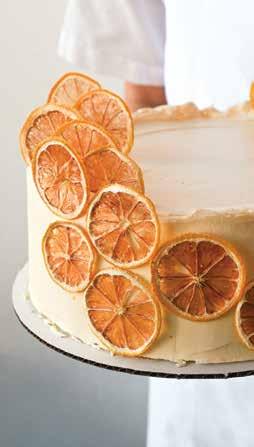
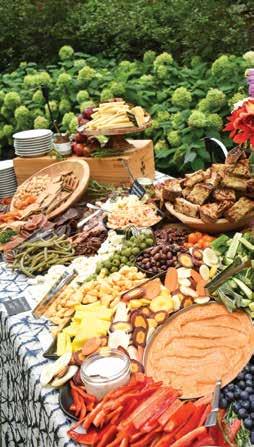
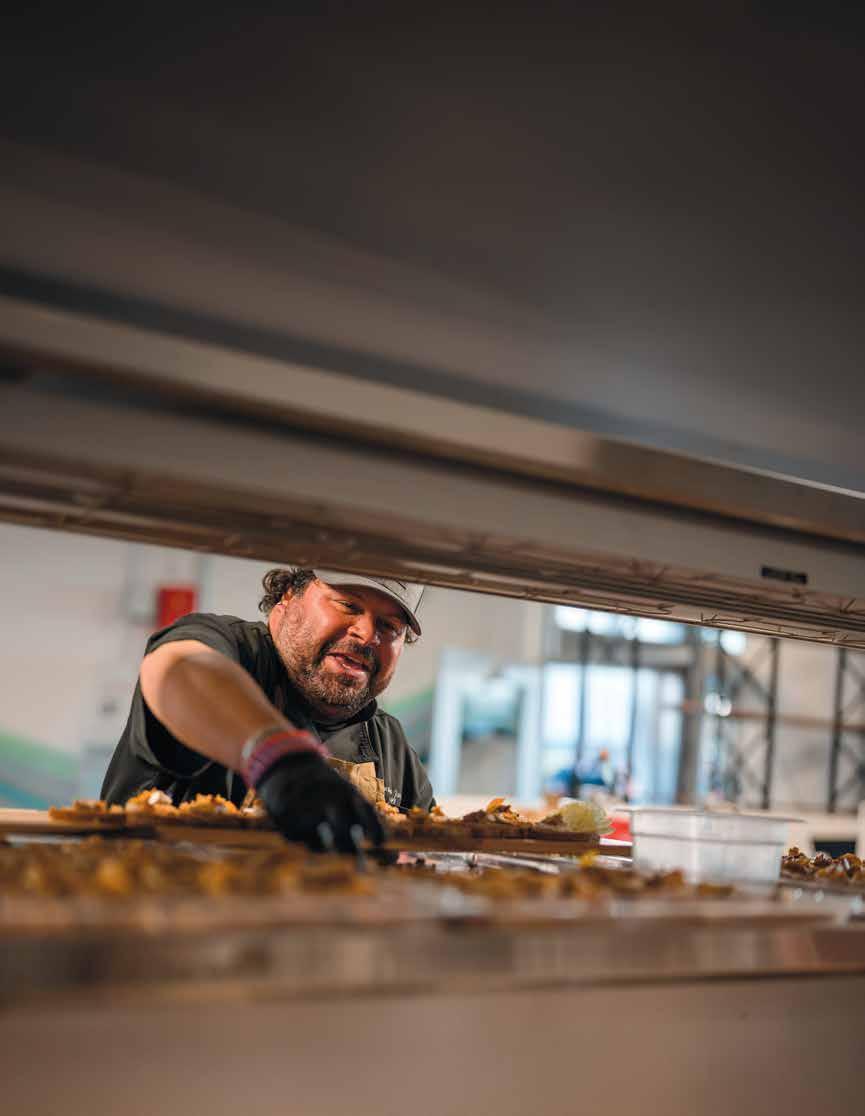
Let us cater your social event with a farm-fresh meal for a crowd, a grazing table, bountiful salad and sandwich platters, light bites and sweets or seasonal, custom celebration cakes for all occasions!
“A journey is best measured in friends, rather than miles.”
― TIM CAHILL
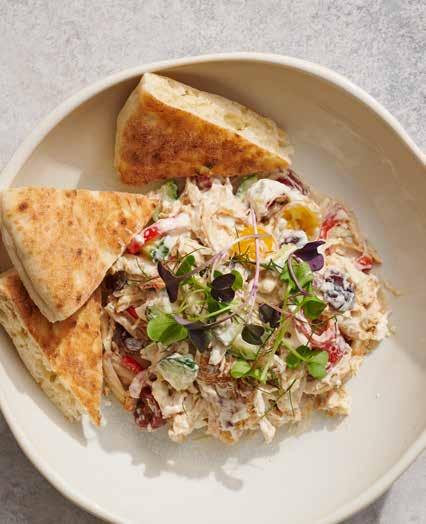
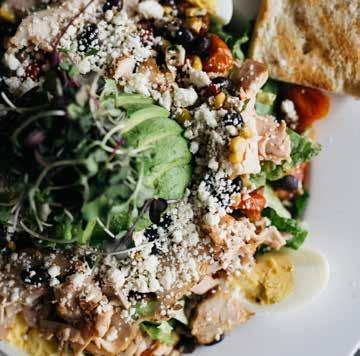
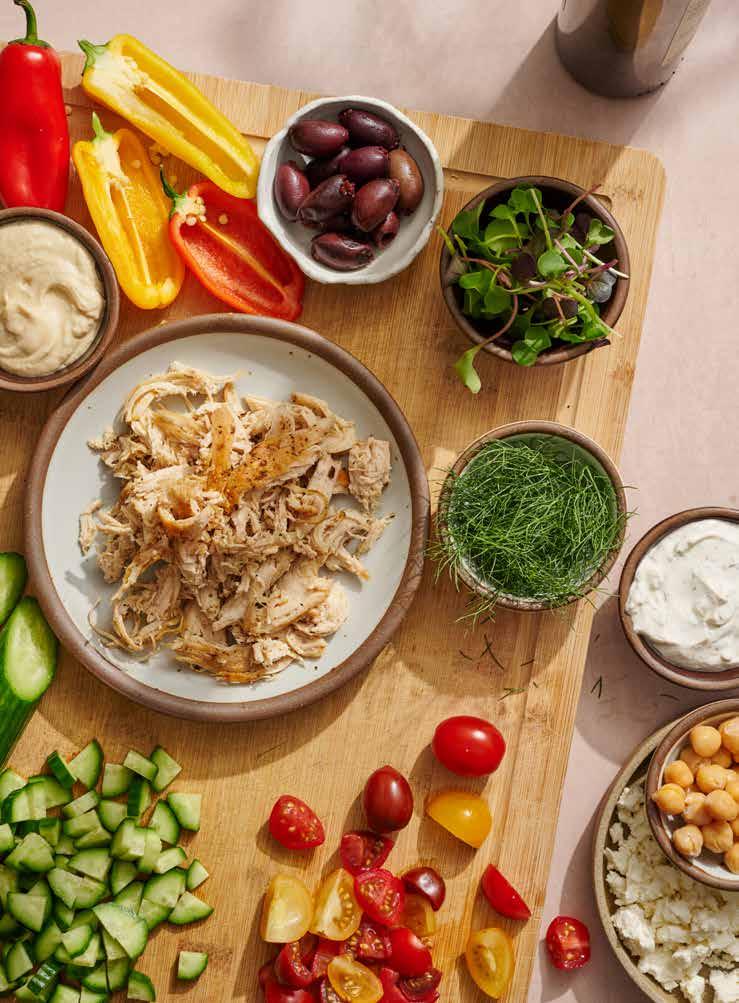
Above: This chicken salad (recipe on page 30) is packed with all sorts of summer produce, making it a perfect CSA box or farmers market recipe.
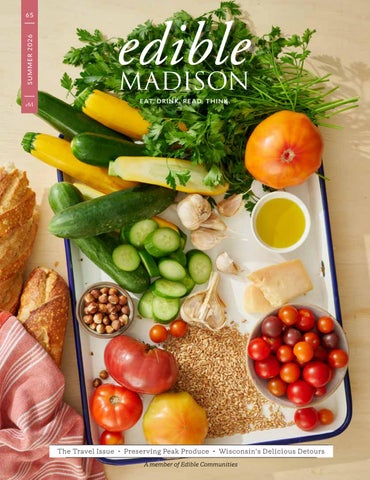
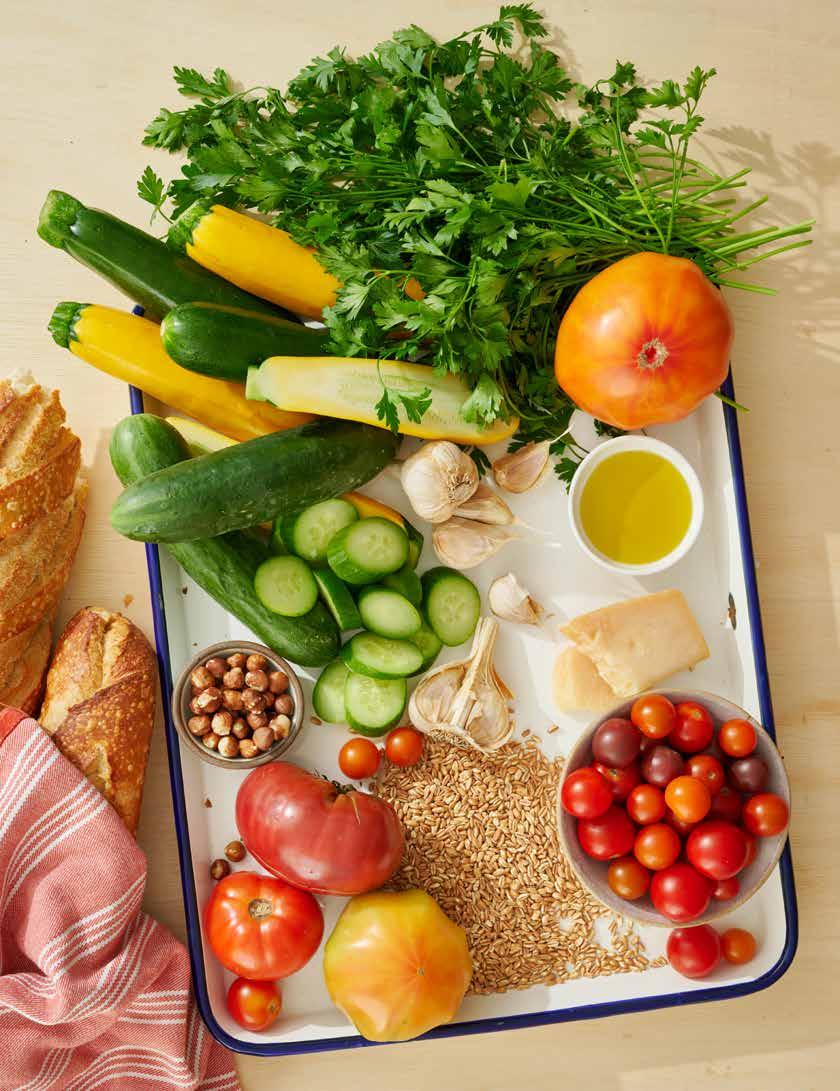
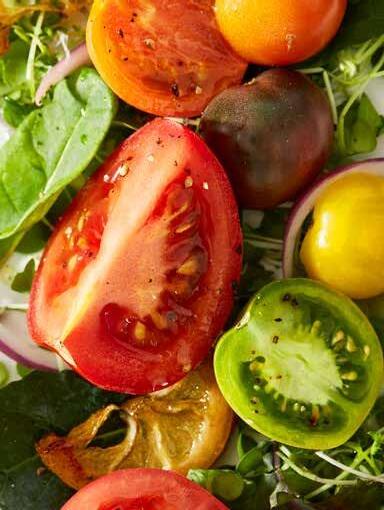
Cover: Farm-fresh tomatoes, cucumbers, summer squash and herbs play a starring role in this issue's Cook at Home recipes that celebrate Mediterranean flavors with Midwest ingredients.
Photos by Sunny Frantz
Charred Summer Squash Baba Ganoush with Cherry Tomato and Fennel Confit
Baklava Roll-Ups
As a farm family with a nearly 4-year-old kiddo, the idea of traveling for weeks at a time across Southeast Asia or Europe is feeling pretty far out of reach. While I do miss casually strolling the streets of Paris and enjoying a cold beverage perched on a tiny plastic chair in Hanoi, the thing I have actually missed most is gathering new experiences. Luckily for me, however, 30 years living in Wisconsin has not been nearly enough time to discover all this state has to offer.
I was reminded of that on a recent trip to La Crosse, a city of just over 52,000 residents nestled along the Mississippi River. What was designated as a work trip for my husband Tommy and I ended up becoming one of the more relaxing and enlightening vacations we’ve experienced in a long time.
We might have only been 150 miles from home but it felt a world away amongst the rocky bluffs and cozy shops of downtown La Crosse. I loved perusing the section of local authors at Pearl Street Books and had one of the best dinners I’ve experienced in a while at SAGRA Food and Wine.
Chef Mitchel Weber’s menu was a celebration of hyper-seasonal, which came as no surprise after we learned they drive to Harmony Valley Farm in Viroqua every week for some of the best produce in the region.
Just like my past international trips, I returned refreshed, with an extra bonus of not being jet-lagged. There is so much to discover in Wisconsin whether you’ve been here three years or 30, and I encourage you this summer to seek new experiences all across our unique state.
Let Emily Tucker inspire you to hit the road and explore all the hidden foodie gems across small-town Wisconsin (page 18). Create the perfect on-the-go snack with Laura Poe Mathes’ recipe for elderberry fruit leather (page 14) that can accompany you on hikes through Bagley’s Wyalusing State Park or in a canoe down the Wisconsin River. Wherever your adventures take you this summer, use it as an opportunity to try what is seasonal, local and a specialty of each region of this beautiful state.
Cheers,
WE DELIVER!
Subscribe at ediblemadison.com to have every issue of Edible Madison delivered right to your door. Fill your year with seasonal recipes and stories that dive deeper into our local food system.
MARISSA DEGROOT
Marissa feels fortunate to be a part of our local food system as the managing editor of Edible Madison as well as working at Vitruvian Farms, her husband Tommy's organic vegetable and mushroom farm. She loves raising their daughter, Ollie, and their team of fur babies on the farm in McFarland.
SUNNY FRANTZ
Sunny is an editorial and commercial photographer with a studio on the west side of Madison where she lives with her husband, their two kids and a tiny dog. She specializes in food and product photography and loves the opportunity it gives her to connect with the many wonderful businesses and entrepreneurs in Madison.
TRACY HARRIS
Tracy is a graphic designer and photographer from Madison. A polymath at heart, she dabbles in various arenas of makery including cooking and baking, sewing and knitting, painting and collage, and has a soft spot in her heart for film photography. When she’s not busy making things, she enjoys travel, good food and drinks, gardening and live music.
ERICA KRUG
Erica is a freelance writer from Madison. In addition to writing and helping to run youth writing summer camps, she also works for Rooted, a local nonprofit, where she supports statewide farm-to-school efforts. Erica loves gardening, swimming in cold lakes and playing Yahtzee.
LAURA POE MATHES
Laura is a registered dietitian focused on using real foods and herbs to help heal the gut. She is the creator of the Rest, Digest and Heal online course and community, and teaches traditional cooking and fermentation classes around the region. Laura lives in the Driftless Area with her husband and kiddos where they homestead and play in the river as much as possible. Originally from Missouri, she now understands why cheese curds are a thing.
CHRISTY MCKENZIE
Christy is the owner of Pasture and Plenty—a specialty market and deli, demonstration kitchen, and meal kit pick-up and delivery service. P&P gives the community access to healthy, locally sourced meals and foods that make eating well and eating local easier every day. She works to create and connect community around issues of food equity, access and agency. She is the publisher of Edible Madison and a sometimes writer.
LAUREN RUDERSDORF
Lauren is a grant writer, recipe developer and freelance marketing consultant who advocates for local producers and cooking with the seasons. Her love of good food began in Madison at the Dane County Farmers' Market and deepened on the organic CSA vegetable farm she ran with her husband for nearly a decade. Now, life looks different with a big garden and two sweet kiddos to care for instead of the farm, but it's no less delicious.
EMILY TUCKER
Emily is the creator and host of Stuff Yer Face, a food-focused feature on WORT 89.9FM that connects listeners to the many intersections of our local food system. Originally from the Driftless Area, she now lives on Madison’s north side with her husband, Zane, and their young son, Gorham. Emily loves cooking, baking, eating, writing and reading about food and is endlessly curious about the ways food connects us all. When she’s not in the kitchen or editing audio, she’s happiest outside—preferably hiking, biking or taking a cold dip.
NICOLE WELCH
Nicole is a graphic designer, photographer and artist from Madison. Her favorite things include backpacking with her husband, binging NYT Cooking videos and being a home chef, reading plenty of books and playing Dungeons and Dragons with her stepsons. She aspires to someday photograph and design a cookbook.
MANAGING EDITOR
Marissa DeGroot
PUBLISHER
Christy McKenzie
BUSINESS DIRECTOR
Christy McKenzie
SALES DIRECTOR
Lauren Rudersdorf
BUSINESS DEVELOPMENT & EVENTS
Tink Sivyer
LAYOUT & PRODUCTION
Nicole Welch
COPY EDITOR
Andrea Debbink
CULINARY ADVISOR
Christy McKenzie
SOCIAL & DIGITAL PRODUCER
Lauren Rudersdorf
ADVERTISING & SPONSORSHIPS
Lauren Rudersdorf
laurenr@ediblemadison.com
CONTACT US
Edible Madison 4313 Somerset Lane Madison, WI 53711 hello@ediblemadison.com
SUBSCRIPTIONS
Subscriptions are available beginning at $35 annually. Learn more at ediblemadison.com/subscribe
We want to hear your comments and ideas. To write to the editor, use the mailing address above or email hello@ediblemadison.com
Every effort is made to avoid errors, misspellings and omissions. If, however, an error comes to your attention, please accept our sincere apologies and notify us. Thank you.
VISIT US ONLINE AT EDIBLEMADISON.COM
By Marissa DeGroot Recipe by Christy McKenzie
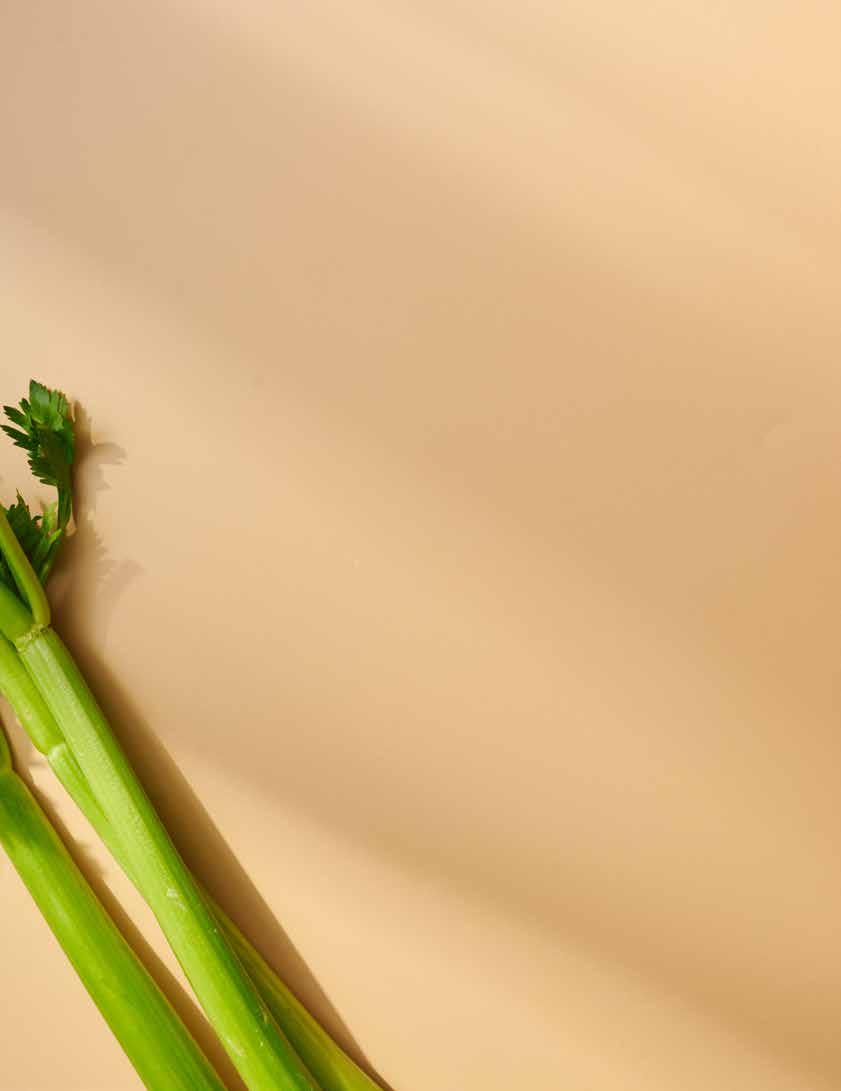
CELERY
Raw dipped in hummus, simmered down in a soup or covered in peanut butter and raisins, celery is a frequently used but often underestimated vegetable. First grown in the Mediterranean and Middle East, celery can now be found in cuisines around the globe. Mirepoix (a staple of French soups and stews) is the aromatic combination of celery, carrots and onions, and in Cajun gumbo and jambalaya you’ll often find the holy trinity of vegetables—celery, peppers and onions.
Here in Wisconsin you’ll find locally grown celery starting to be available in midsummer through early fall. While the popularity of celery means you’ll likely find it available in every grocery store year-round, I can’t encourage you enough to seek out locally grown celery this summer. The difference will astound you! Celery that is farm fresh and grown with care is bursting with flavor.
While it is true celery is nearly 95% water, that doesn’t mean it has to be all crunch and zero taste. This nutrient-rich, low-calorie food can be good and good for you, serving as a valuable source of fiber and hydration. Both raw and cooked, celery can help support your heart and immune system.
Once celery’s tough strings have been pulled or shaved off, the remainder of a celery stock is edible, including the leaves. You’ll often see celery added to soups and stews to bring freshness and a depth of flavor. It adds texture and crunch to salads and stuffings, and celery leaves can be used much like an herb. And when celery inevitably gets forgotten at the bottom of your vegetable crisper, sad and limp, it can still breathe life into your next batch of stock.
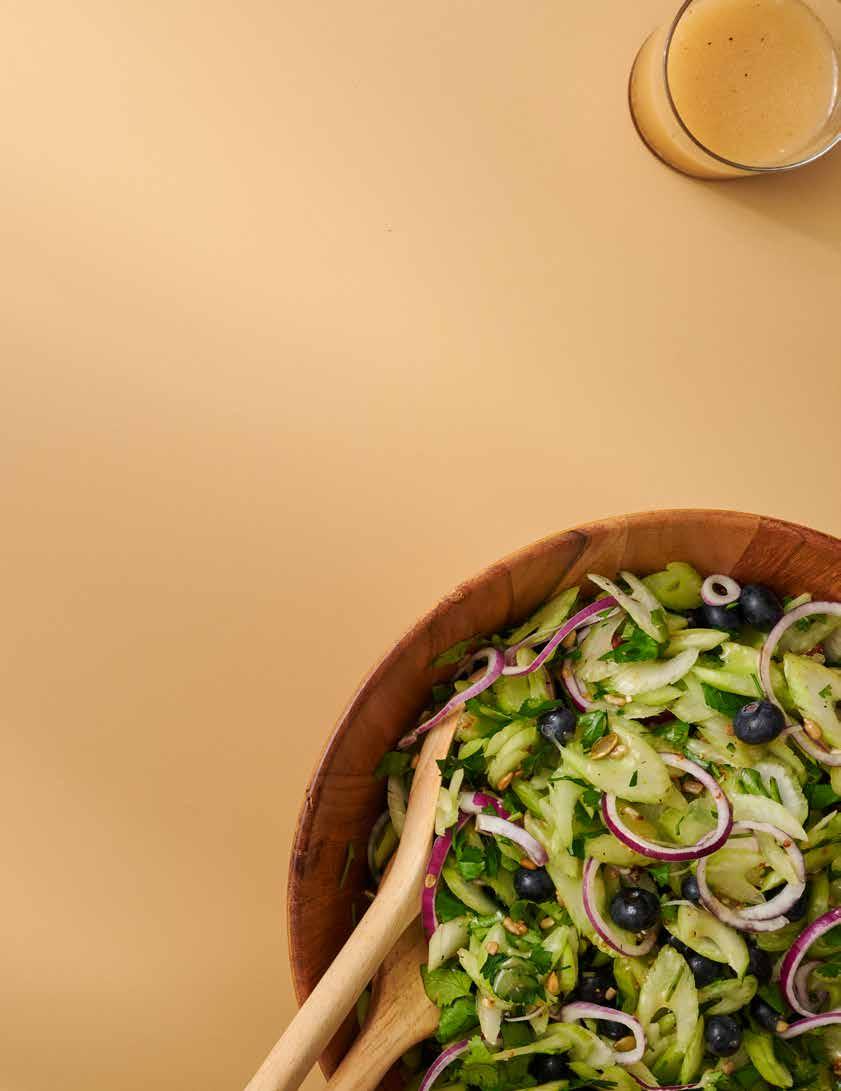
This is the summer to celebrate celery and explore the variety of cuisines it brings its fresh and complex flavor to. A great place to start is combining celery with local blueberries, nuts and seeds in this summer salad—perfect for a weekend picnic or warm summer evening.
Celery and Blueberry Summer Salad
Serves 4-6
Prep time: 30 minutes
INGREDIENTS
2 bunches celery with the greens, thinly sliced on a hard bias
Plunge the celery and onions in a bowl with ice water for 15 minutes. Meanwhile in the bottom of a large serving bowl, whisk together the ingredients for the vinaigrette. Drain and spin the celery and onions dry. Toss the celery and onions in the bowl with the vinaigrette along with the herbs, seeds, nuts, berries and cheese. Serve chilled.
Photo by Sunny Frantz
DESTINATION DRIN K and DINE
By Marissa DeGroot
Wisconsin boasts no shortage of spectacular locations to drink and dine.
Sip and taste your way through Spring Green, dig into some truly special plates in La Crosse, and journey out to Washington Island for a taste of history and local island fare. No matter which direction your Wisconsin road trip takes you this summer, these drinking and dining experiences are not to be missed.
HEDGE MEADOW HERBS • SPRING GREEN
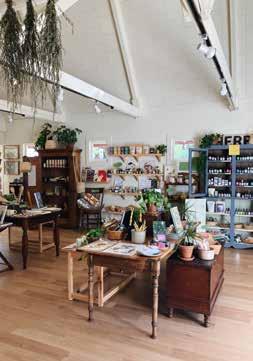
Far more than solely an herb shop, Hedge Meadow Herbs is your Spring Green stop to find everything from bulk organic herbs and their small-batch herbal teas to thoughtful homeware and local art. Cozy up in their sun-filled tearoom cafe and enjoy a pot of Hedge Meadow tea or sip from a seasonal menu of herbal elixirs, house-made sodas, matcha, traditional espresso drinks and more. Not to be missed are their popular schizandra rose matcha latte, cardamom burdock steamer, and perfectly spiced hot chocolate.
HEDGEMEADOWHERBS.COM
Photo courtesy of Hedge Meadow Herbs
BRANDING IRON ROADHOUSE FARM-TO-FORK EATERY • LIME RIDGE
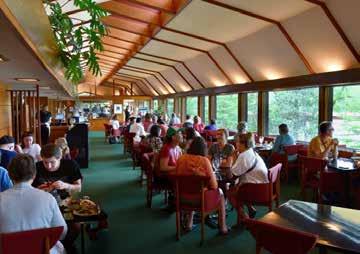
Surrounded by Frank Lloyd Wright’s organic architecture and expansive views of the Wisconsin River, dining at Riverview Terrace Cafe is a culinary experience like no other. As the only remaining Frank Lloyd Wright-designed restaurant in the world, this cafe offers a unique dining experience in scenic Spring Green. Riverview Terrace Cafe is a nonprofit restaurant, allowing proceeds to support the mission of Taliesin Preservation to conduct tours, public programs and preservation of the Taliesin property.
TALIESINPRESERVATION.ORG/CAFE
HORSERADISH KITCHEN + MARKET • PRINCETON
Whether traveling five minutes or five hours, it’s worth a drive to Princeton just to visit Horseradish Kitchen + Market. Restaurant, music venue, store, Airbnb and total vibe—Horseradish sparks creativity and connection all while serving up craft cocktails and elegant sandwiches made with local ingredients from their friends and neighbors. Their deck overlooking the Fox River will become your new summer hot spot as you take in this small-town gem with its scenic views, photo-worthy food and welcoming community.
HORSERADISHKITCHEN.COM
An adventure into Wisconsin’s Driftless wouldn’t be complete without a stop at this unique country roadhouse serving up locally raised beef, consciously sourced ingredients, Wisconsin microbrews and more. Fish fry every Friday and wood-fired oven pizza the first and third Saturdays of the month are just some of the highlights at this farm-to-fork eatery. Make it a full Driftless weekend and stay for their Sunday open mic afternoons. Gather with family and friends to enjoy small-town charm alongside some of southern Wisconsin’s most satisfying fare.
BRANDINGIRONRH.COM
SAGRA FOOD AND WINE • LA CROSSE
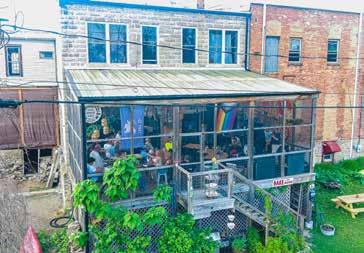
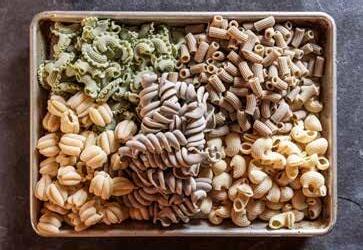
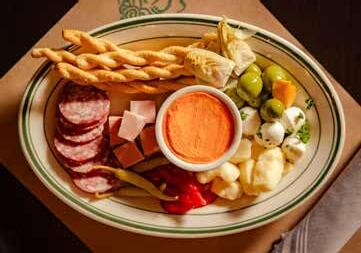
A meal at SAGRA is a celebration of the seasons and some of the best ingredients Wisconsin’s Driftless region has to offer. Inspired by rustic Italian classics and Roman street food, you’ll find housemade pastas, charcuterie and more on SAGRA’s seasonally changing menu. Weekly trips to Harmony Valley Farm means chef and owner, Mitchel Weber, is featuring produce at its absolute peak which make appearances in everything from the whipped ricotta antipasto to their “Meatball Monday” special—all making SAGRA an essential stop on your next La Crosse adventure.
SAGRAFOODANDWINE.COM
RIVERVIEW TERRACE CAFE • SPRING GREEN
EMILIA • LA CROSSE
A red sauce supper club, Osteria Emilia beautifully marries the bold flavors of the Emilia-Romagna region of Northern Italy with the storied traditions of the Midwest supper club. The folks behind La Crosse’s SAGRA Food and Wine bring you a dining experience with no pretense, just generous portions, familiar flavors and a space that feels both special and comforting. The menu features everything from housemade meatballs to ice cream drinks, all with the goal of having you leave full, happy and already planning your next visit.
OSTERIA-EMILIA.COM
CATHRYN’S MARKET • DODGEVILLE
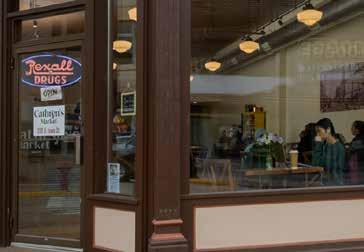
A stop in Dodgeville isn’t complete without a visit to Cathryn’s Market for a coffee and bite of breakfast or lunch and classic soda fountain drink. Located in the former historical corner drug store, the market is where you can also find everything from local grocery staples to specialty baked goods and desserts all made in-house. Owners Cathryn and Cliff Gonyer are proud to highlight produce and products from neighboring small farms and businesses, including from their own farm Rockwell Ridge Farm. Small-town comfort and high-quality food go hand-in-hand at this southern Wisconsin gem.
CATHRYNSMARKET.COM
CENTRAL STANDARD CRAFTHOUSE & KITCHEN • MILWAUKEE
Nestled in the heart of Milwaukee you’ll find the perfect spot to gather with friends over a seasonal cocktail or weekend brunch. Central Standard Crafthouse & Kitchen is where you can find the award-winning creations of Central Standard Distillery crafted into classics like their Wisconsin Brandy Old-Fashioned or new favorites like their Ginger Turmeric Gin & Tonic. Soak in the summer on their rooftop bar and patio, or dive into a variety of shareable plates like their brat board or house-made focaccia during their Monday through Friday happy hour.
THECENTRALSTANDARD.COM
HOTEL WASHINGTON • WASHINGTON ISLAND
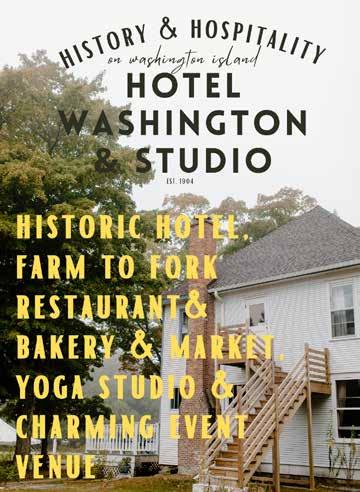
A 30-minute boat ride takes you to Washington Island and a trip back in time as you settle into the historic 1904 hotel nestled amongst acres of pines and oaks, steps away from Lake Michigan. Dining at Hotel Washington is a celebration of all things local and seasonal, featuring produce from their favorite island farms, whitefish from the big lake, island-raised beef and goodies from their on-site bakery. This season, Hotel Washington welcomes chefs Jennifer Lee Jackson and Justin Tootla. Watch them on season 23 of “Top Chef” then come visit them on Washington Island!
HOTELWASHINGTONANDSTUDIO.COM
OSTERIA
SUMMER STARTS WHERE THE SANDWICHES ARE
Something about summer makes a sandwich taste better.
Maybe it’s the way you grew up carrying one in a cooler to the beach. Maybe it’s unwrapping the foil at the park, on the trail, or passing halves from the passenger seat on a road-trip detour. In Janesville, Wisconsin’s Great Outside, summer still starts that way.
Around here, lunch is just the beginning. Take it to the water for a morning paddle or casting a line, to the disc golf course for a friendly round, to the Ice Age Trail for a wooded hike and bike, or to one of our many parks for a picnic.
At GR’s Sandwich Shoppe, serving locals since 1999, the routine feels comfortably familiar. The menu board hasn’t tried to reinvent itself and neither has the warmth behind the counter. You can grab a stacked classic, knowing it’ll hold up perfectly until you find a sunny bench along the Rock River or spread out a blanket at Traxler Park.
If you’re craving something creative, Sandwich Bar keeps things fresh with a rotating menu that rewards repeat visits. It’s locally owned, full of personality, and if you time it right, you’ll catch their Ramen
Thursdays. It’s proof a sandwich shop can surprise you—and give you a new favorite to sit down with before your next outdoor adventure. For those who need gluten-free, The Looking Glass is one of many options making it easy to join in on the summer fun. With gluten-free buns and bread available, no one has to skip the picnic.
Early riser? Fuel up with a breakfast sandwich from Havana Coffee or The Bodacious Brew. Whether you’re heading out for a morning paddle, long bike ride, or a stroll through Riverside Park, early mornings call for something warm—and there’s no shortage of drink offerings either!
And don’t forget the Janesville Farmers Market—dog-friendly and full of fresh finds! Grab a bite, pick up local produce, maybe a sweet treat for later, and let your pup lead the way. The market spills into the surrounding streets, making it easy to turn a simple lunch into an afternoon outside.
Because here, sandwiches aren’t just lunch. They’re packed for the park, shared on the trail, and savored at patio tables. In Janesville, summer doesn’t wait for a reservation.
It starts where the sandwiches are.
LAURA POE MATHES
Preserving Peak Produce
Summer is the perfect time of year to master the art of food drying, as you can use it to preserve the season’s bounty and even harness the power of the sun to do so. Most types of food can be preserved through drying, from vegetables and fruits to meat and fish, and being able to put up food in this way has a long tradition all over the world. This method of preservation also allows you to make foods that are shelf-stable yet aren't ultra-processed. While dried foods are still technically “processed,” they are minimally, traditionally processed in a way that preserves much of the nutritional value and very much resembles the original, whole form of the food it comes from.
Drying is considered the first form of food preservation, dating back to at least 12,000 years ago. It removes almost all of the moisture in a food if done properly, and moisture is the enemy of shelf-life; higher water content in foods allows for more microbial growth. So, the less moisture a food has, the longer it can stay shelf-stable and safe to eat. Before electric-powered dehydrators, people practicing food drying thousands of years ago were simply using the drying power of the sun and air to do so. In some areas, special drying houses, sometimes known as “still houses,” were heated with fire to remove moisture from the air if conditions were unfavor able for sun-drying. Most people who dry food today use electric-powered dehydrators, which use warm, dry air that
circulates around the drying chamber to remove moisture from the food. While these are not super small appliances, they can fit in most kitchens or pantries. For those who want a very low-cost, old-school version of this that doesn’t use electricity, there is the option of a solar dehydrator. You can look up tutorials on how to make one in books or online, or look for local classes on DIY solar dehydrators for the best way to learn a new skill.
A much newer innovation in dehydration is freeze-drying. Freeze-drying was once primarily used for lightweight, long-term food storage, used by the likes of backpackers, astronauts and military personnel. Now, home freeze dryers are more available and you can freeze-dry just about anything–I have seen many homesteaders use
Drying is considered the first form of food preservation, dating back to at least 12,000 years ago.
water than other methods of drying. Freeze-dried foods also maintain more nutrients than traditional, “air-dried” foods. The limiting factor with this method, however, is the machine required to do this at home, as the home preserver would need a large, expensive machine to freeze-dry their own foods. There are certainly costs and benefits to this method, but it is a fascinating development in food preservation technology.
Other ancient methods of food preservation included fermentation, smoking, sugaring, salting, and, in cold climates, freezing, as well as newer innovations like canning and refrigeration, giving us a variety of ways to preserve food. Most folks now don’t have the need to preserve food simply for survival, but many of us continue to preserve our own food for a variety of reasons: to use up an abundance of produce from the garden or farmers market, put up foods procured through hunting or foraging, or even to add a layer of food security to your home.
So many foods from the harvest can be dried to make them shelf-stable; some of my favorites are tomatoes, apples and pears, hot peppers, ground cherries, leafy greens and berries of all kinds. Dehydrated food can be simply cut, dried and used as is—think simple dried fruits—or it can be reconstituted (soaked in water ahead of time to add moisture back to the product) to use in soups, dips or other recipes. This works well with foods like green beans, kale and eggplant. You can also create recipes with various foods to then dehydrate, creating a whole new delicious treat, such as jerky, sprouted nuts or homemade fruit leather. Dried foods are light and travel well, so you can make your own snacks for a road trip, camping or canoe excursion, or even to pack in a kiddo’s lunch (dried fruit survives much better in a backpack than fresh fruit!).
If you are new to drying food, you can find a wealth of resources online for how-tos, or check out one of the food drying books in the resource section below, so you will know the times and temperatures needed to make safe, long-lasting dried foods. Most commercial dehydrators come with settings and user guides that make them simple to use. Once fully dried, these foods will last months, years or decades in the case of freeze-dried food, especially if stored properly.
I like to store dried food in bags or glass jars that have been vacuum-sealed so the food doesn’t take on moisture and stays fresh for a very long time.
Low-moisture foods like many herbs can be dried without the use of a dehydrator of any kind. Instead, they can just be hung up to air-dry or laid on a homemade drying system using framed screens. Simply place the herbs in a low-mois ture area to dry until crisp. With your home-dried herbs, you can then make homemade teas or spice blends to give as gifts and to season food all year long. Be sure to dry and store your herbs whole, then crush right before use to maintain the most flavor, as the volatile oils are released when crushed before drying or storing.
Nutritionally, dehydrated food is not quite as rich in nutrients as fresh foods, specifically vitamin C and some B vitamins, which are lost when air-drying fruits and vege tables. This is much less the case with freeze-drying, as this method preserves even fragile, water-soluble vitamins very well. Fiber and minerals, such as magnesium, iron, calcium and iodine are maintained with good integrity with either method, however, and proteins like meat and fish hold onto most of their nutrients as well. All fresh produce loses some nutritional value during transport, storage and cooking, so I would not personally let the loss of some nutrients deter you from using food drying as a form of food preservation. Fresh, local food that is air-dried shortly after harvest is still quite nutritious and certainly has other benefits such as minimizing food miles, supporting local foodsheds, and ensuring your own food security.
For those looking to create portable, shelf-stable snacks and sustenance, I highly recommend trying out food drying. Whether you want to go super sustainable and low-tech with a homemade solar dehydrator or love gadgets and want to try out the more high-tech freeze-drying machines, you cannot go wrong with learning to preserve the abundance of delicious, local food in the summer so you can enjoy these foods at home or on-the-go, all year long.
Elderberry Fruit Leather
Makes 12 large or 24 small fruit leathers
Prep time: 15 minutes
Cook time: 10 minutes plus 8-12 hours
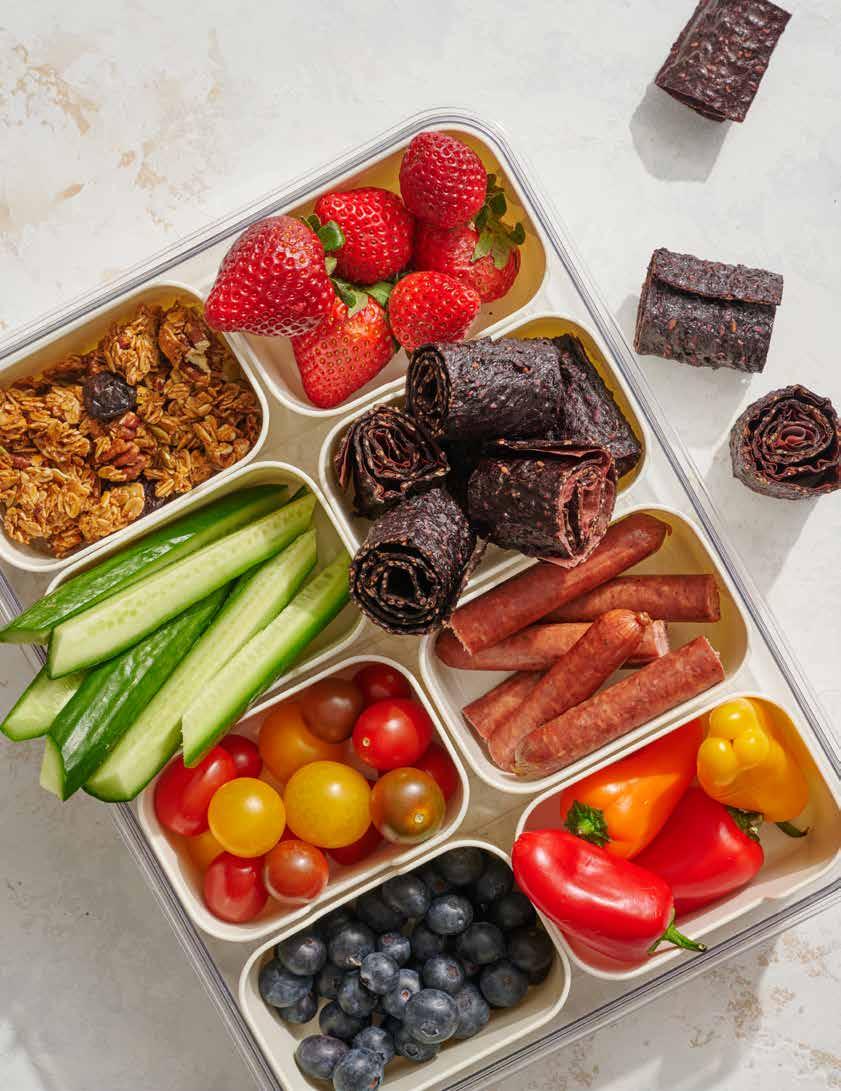
Dried fruit is one of my favorite things to dehydrate, as it captures the goodness of summer fruits while creating a mess-free, long-lasting snack all year. Simple dried fruit is great, but fruit leather is a wonderful way to dry fruit as well, and so nostalgic for us ’90s kids. Throw it in a lunchbox, backpack or “snackle” box along with other goodies like jerky, nuts, cheese and crackers for a chewy, fruity treat that adds nutrition and flavor to your next adventure. I use elderberries here to add an extra boost of antioxidants and immune support, but you can make this recipe all your own using what you have on hand.
INGREDIENTS
½ cup fresh elderberries (or dried and reconstituted)
2 tablespoons gelatin powder plus 4 tablespoons water (optional)
2 cups fresh raspberries
2 cups fresh strawberries, hulled and quartered
4 tablespoons honey
Juice of 1 lemon
NOTES
• If you do not own an electric dehydrator, this can be done using a solar dehydrator for 1 to 2 days or in the oven on its lowest setting on a parchment-lined baking sheet for 3 to 8 hours, depending on your oven temperature.
• To reconstitute elderberries, soak them in water (¾ cup of water per ½ cup of elderberries) for 8 to 12 hours in the refrigerator.
• Other types of fruit that can be used: aronia berries, peaches, plums, apples (these should be cooked and cooled prior to blending), pears, mango, pineapple, strawberries. Fruits with thick peels do best when peeled prior to blending and fruits with seeds such as raspberries can be strained after blending to remove seeds if preferred.
DIRECTIONS
1. Place the elderberries in a small saucepan and cover with water. Over medium heat, let the berries simmer for 8 to 10 minutes. Set aside to cool.
2. Mix the gelatin powder with 4 tablespoons of water to dissolve.
3. Place the elderberries, gelatin and the remaining ingredients in a blender and puree until very smooth. If the mixture is too thick to blend, add a small splash of water.
4. Prepare the dehydrator sheets by lining them with parchment paper or silicone mats (some dehydrators have mats made for recipes like this). This recipe should make 2 trays.
5. Spread the fruit puree onto the prepared trays, creating a thin, even layer.
6. Place the filled trays in the dehydrator on the “fruit” setting, or setting close to 140 degrees F. You can dry at a lower temperature for more nutrient preservation, but it will just take longer to dry. Dehydrate for 8 to12 hours, depending on your machine, until dry and sticky.
7. Remove and slice the fruit leather into long strips, including the parchment if using, then roll into long fruit rolls. Transfer to an airtight container until ready to use; these can be frozen for several months as well.
Photo by Sunny Frantz
HOSTED BY
SEVEN ACRE DAIRY COMPANY
Drive 20 minutes from downtown Madison and you’ll find a lovingly restored dairy factory nestled along the banks of the Sugar River in Paoli—a place to stay, relax, gather and dine. Inside the historic creamery you’ll find two dining experiences: Landmark Creamery & Cafe,
1. In-House Seasonal Shrub
Seasonal fruit, herbs and spices infused in housemade prebiotic shrubs.
Alfred Mixology | alfredmixology.com
2. Sauna & Natural Cold Plunge
Finnish wood-fired sauna and natural cold plunge in the Sugar River.
Tuli Sauna & Plunge | tulisaunaandplunge.com
3. Floral Centerpieces
Flowers uniquely arranged to match your style. Monet’s Garden Floral | monetsgardenfloral.com
Local flavors, exceptional quality, bringing farm-fresh taste to kitchens.
Flynn Creek Farm | flynncreekfarm.com
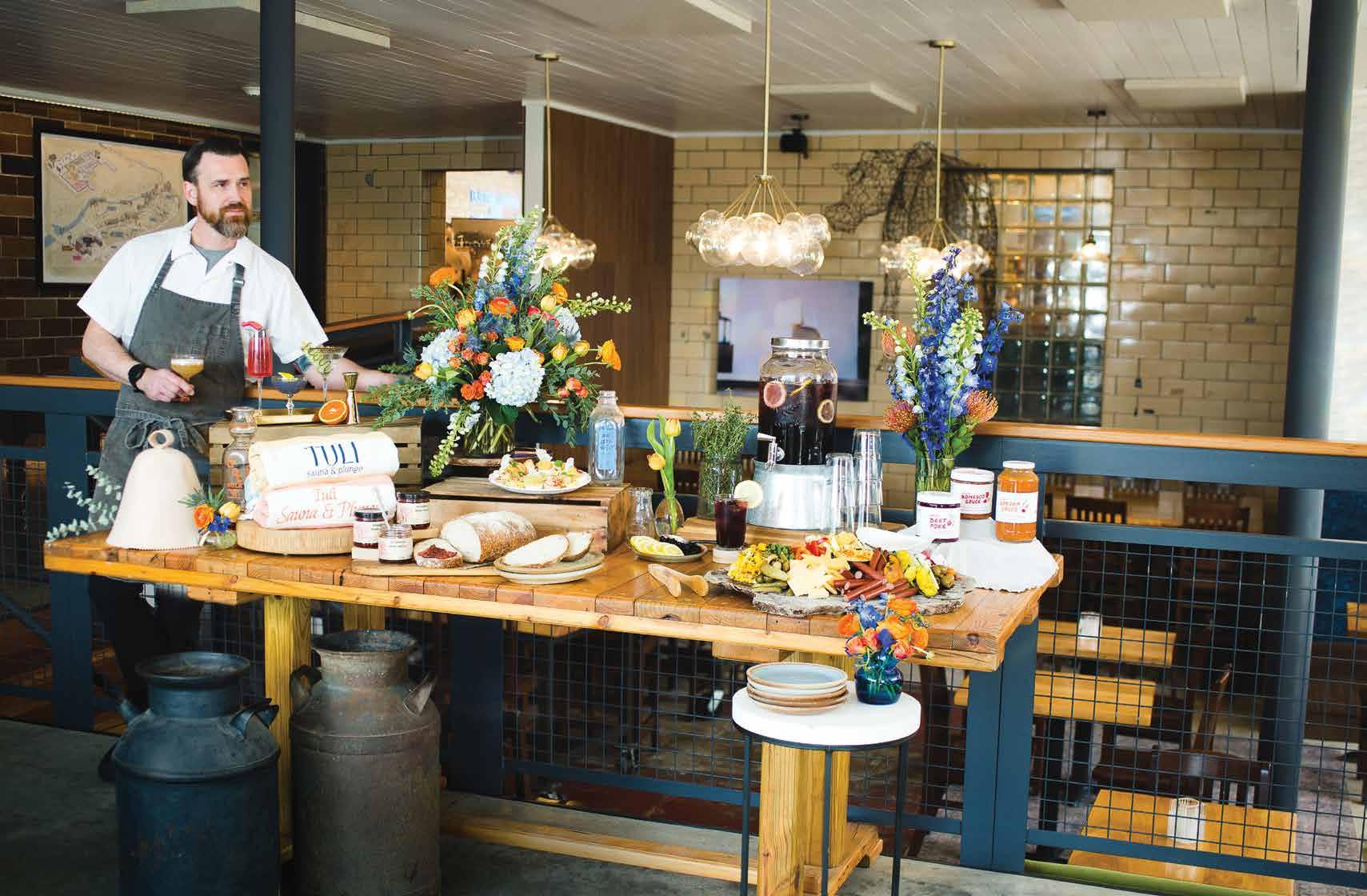
7. Wisconsin Crudité Platter
Featuring fresh and pickled vegetables, artisan cheese and Fox Heritage Farms summer sausage.
Heritage Catering | heritagecateringmadison.com
8. Strawberry Watermelon Jam
The perfect summer blend for all year round! AVEnue Orchard | aveappleorchard.com A Gathering of Local Goods and Luxuries
Illustrations by Nicole Welch. The Hazelnut Cafe photo by Kelly Wolf. Staple & Fancy photos by Orange Anchor.
The Hazelnut Cafe, Blue Mounds
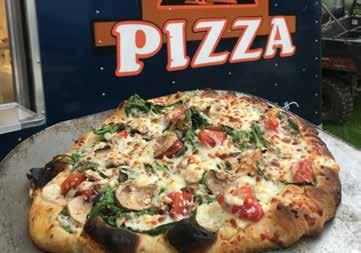
What better way to spend a Friday evening than basking under the glow of hanging lights and climbing hop vines while you pick up freshly baked wood-fired pizzas from a mobile kitchen in the quaint, hillside village of Blue Mounds?
Hazelnut Cafe owner, Matt Heindl, has deep roots in the Driftless region and has been serving pizzas seasonally from his pizza trailer since the cafe suffered a fire several years ago.
Committed to fresh, local ingredients, Heindl uses produce and herbs grown in his greenhouse right behind the cafe, cheese from Arena Cheese, and dough made with flour from Meadowlark Community Mill in Ridgeway.
With the rebuild of The Hazelnut Cafe almost complete, folks can look forward to many more signature baked goods to come. In the meantime, savor your piping hot pizza to-go while watching the sunset from nearby Brigham County Park or Blue Mound State Park.
Staple & Fancy, Mineral Point
Start your Saturday by picking up snacks for the car and dinner ingredients for later. Browsing the shelves at Staple & Fancy in Mineral Point is fun: shelves are stocked with products made close to home alongside hard-to-find specialty items. Owners Kassi and Brian Blanchette are no strangers to the Driftless, and Kassi is the creative force behind the store.
The space reflects her thoughtful touch. Colorful dried flowers pressed behind the glass of the store’s original doors now provide a backdrop for fresh flower bouquets and myriad interesting goods. Their commitment to local purveyors and sustainable foodways is clear throughout the shop. Vibrantly orange and simply packaged freeze-dried tomatoes caught my eye. Brian said that through a partnership with Mineral Point High School’s “Options in Education” program, students transform the store’s older produce into freeze-dried products that preserve the flavor of summer year-round. They’re also exploring ways to use the store’s citrus to make drink mixes.
Along with local cheeses, the refrigerated section offers meat from nearby farms, including Beauvine Enterprises in Dodgeville and lamb bratwurst from Laxey Creek Sheep Ranch in Mineral Point. Other staples include Good Life peanut butter from Minnesota and hot-and-ready rotisserie chickens.
This summer, order a sandwich from their back counter and grab some grocery goodies for the road.
Crossroads Coffeehouse, Cross Plains
The Black Smock Parlor and SpeakeasyFifty50, Platteville
Growing up in Platteville as a curious, artistically inclined kid, I was always searching for special spots that made a small town feel magical. Now at 40, I enjoy visiting my parents there. On a recent trip, my mom introduced me to Lisa McCoy-Haas’s Black Smock Parlor and SpeakeasyFifty50. Lisa and her husband Jeff have transformed a big old brick house into a cafe, coffee bar and cocktail lounge.
The ornately decorated space and friendly vibe reflects Lisa’s vibrant personality. While we browsed the menu, Lisa chatted with us about testing a northern Italian recipe and the challenge of sourcing the right flour—even in farm country. Lisa proudly notes that 85% of their ingredients are locally sourced—her favorite being the farm-fresh eggs.
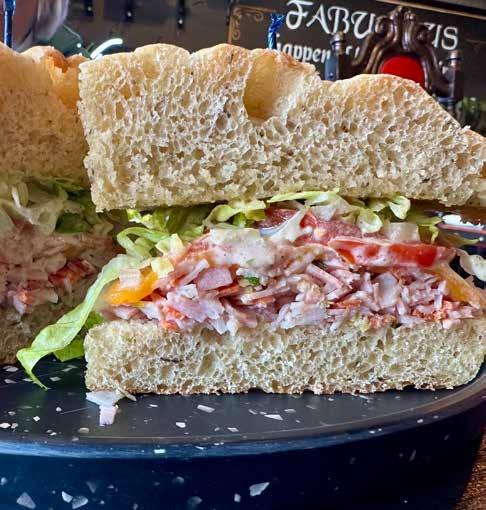
I ordered the “Coven Club,” and my mom chose the croque monsieur. Both were huge and arrived on freshly baked focaccia with a hint of rosemary, alongside a crisp chopped salad dressed with a tart oregano vinaigrette.
Once you’ve had your afternoon nap to sleep off the croque monsieur, visit the cozy upstairs back bar, SpeakeasyFifty50, for an extensive cocktail list and welcoming motto, “Unity in Diversity.”
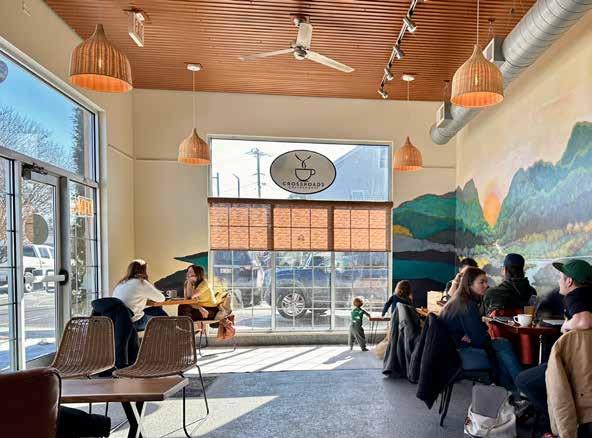
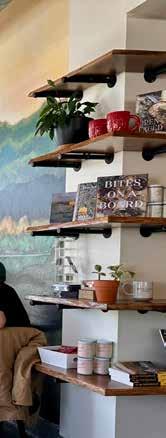
Stopping into the bright and sunny Crossroads Coffeehouse in Cross Plains reminds you that community is something you can feel right when you walk through the door. A vibrant wall mural greets customers and serves as a backdrop to the gathering space, which also showcases local art, goods and a clear commitment to nearby producers.
The coffeehouse is known for serving locally roasted coffee, but it also offers standout pastries—most notably their carrot cake and a gluten-free almond cake that was so perfectly dense and not-too-sweet that I found myself making delighted noises as I ate my to-go slice. Their iced matcha lattes hit the spot, too.
1855 Coffee House, Mazomanie
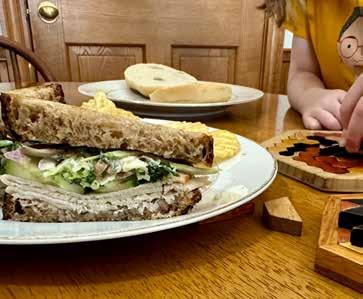
Mazomanie, where my mom grew up, always holds a few treasures. 1855 Coffee House, right downtown in the old bank, is one of them. Friendly staff handle the lunch rush with ease, as the ample seating fills up just before noon. Everything is made in house, and staff encourages folks to mix, match and make substitutions—a rarity in many cafes. The wooden games on each table delighted my young son, and we settled into a sunny corner.
This lunch hit all the right notes. I devoured the turkey slaw sandwich, its tangy house-made slaw balancing the cool, crunchy cucumbers and deli turkey on toasted sourdough. And of course, no sandwich is complete without chips. While you wait for your food, you can even swing through the old bank vault to browse goods made by local artisans. Ingredients come from close by: Cress Spring Bakery in Blue Mounds, Telsaan Tea in Mount Horeb, and Prem Meats and BrewHaHa Roasters in Spring Green.
Reunion Family Barbecue, Spring Green
Having had breakfast treats and lunch—with plenty of coffee along the way—on this route, it’s time for dinner. Reunion
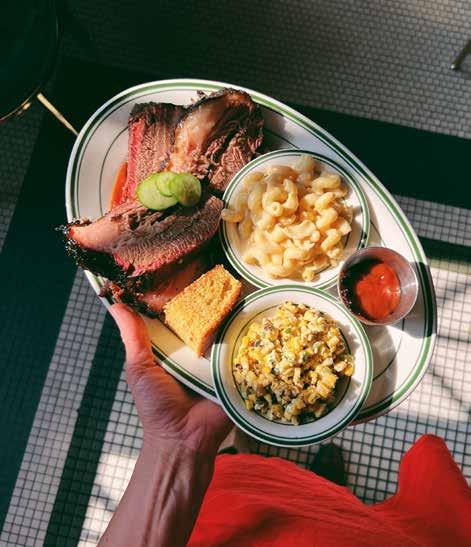
Family Barbecue in Spring Green strikes a unique balance. It has a classy vibe, thanks to its setting in another historic, repurposed bank, but is paired with down-to-earth barbecue.
Owners Leah Spicer and Kyle Beach redesigned their concept for Reunion in 2025, making it more family-friendly and accessible to the community. The menu is inspired by Beach’s upbringing in North Carolina and features wood-smoked meats served with classic sides, pickles and cornbread. Their website also offers a casserole club every Sunday for pick-up or dine-in—so very southwestern Wisconsin of them.
The Crooked Branch Coffeehouse,
Pardeeville
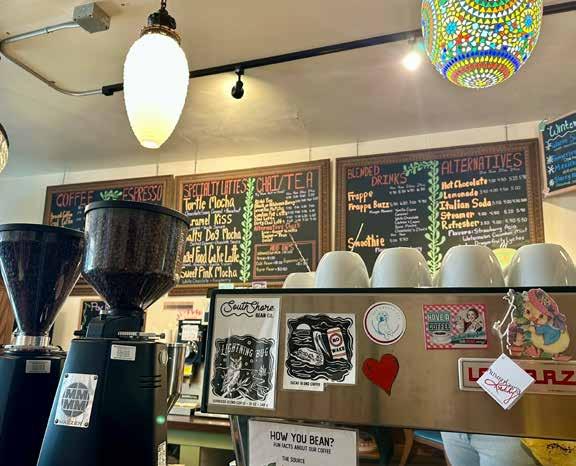
On this route, I meant only to pass through Pardeeville, but The Crooked Branch Coffeehouse caught my eye—and isn’t that the point here? Inside, the space feels comfortably lived in, and the shelves hold local honey and jam from nearby farms. They brew South Shore Bean Company coffee, which is ethically sourced and roasted weekly right in Pardeeville—a hyper-local touch that feels fitting.
The coffeehouse serves house-made breakfast sandwiches and quiches that the friendly counter staff happily offer to warm, and my sausage, egg and cheese on a tender, slightly sweet biscuit was the second breakfast I didn’t know I needed. The well-stocked pastry case called my name too—brimming with pastries and big cookies. Unable to resist a car snack, I grabbed a bacon and chive scone for the road. Dense yet moist and savory (my ideal scone texture), it made the miles north pass quickly.
Table 15 and HH Creations, Montello
Montello is a central Wisconsin crossroads of sorts. Table 15 on Main Street is a woman-owned, farm-to-table restaurant with an old schoolhouse vibe. It has a daily changing menu and a bookcase filled with locally made goods and the sign, “Good Things Come to Those Who Shop Local.”
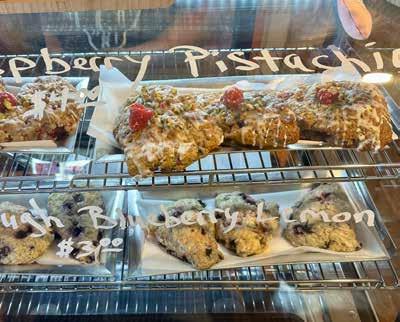
Up the road, HH Creations, an in-home bakery, beckons with yard signs: “Sourdough!” and “Jam!” Owners Heidi and Steve Hancock use flour from local Amish farmers and line their front-room shelves with fresh bread, jam, cookies and the biggest scones I’ve ever seen. I buckled a loaf of sourdough and a pistachio-raspberry scone into my front seat and headed north again. Once home, the bread—toasted with butter— transported me to the dense “sheepherder’s bread” of my childhood.
Sulten Belly, Waupaca
Walking into Sulten Belly, owned by Amanda and Eric Vestergaard, is a breath of fresh air. For nine years, they’ve built a reputation for their commitment to using seasonal, local ingredi ents—reflected in the long list of purveyors chalked on the wall outside the kitchen. With Amanda at the counter and Eric in the kitchen, the restaurant buzzes at lunchtime on a weekday.
My smoked trout BLT salad, a choice Amanda endorsed, was a crisp burst of color and texture on a gray day, paired with curry carrot ginger soup. Eric shared that the trout comes from Rushing Waters in Palmyra, Wisconsin, which he cures and smokes himself, a two-week process that pays off in flavor.
The soups and specials change daily, and my aunt and uncle who joined me shared, “We’ve never had a bad meal here.” As we headed out, we said goodbye to their dog Gilbert who greets guests by the door to the outside patio area—the perfect spot to spend a summer afternoon and cap off a string of road trips to some very special spots.
These and so many more are out there to discover if you slow down and venture just off the highway.
SPONSORED CONTENT
Global Kitchens Shaping Monona’s Food Scene
By Erica Krug
Across Monona, family kitchens and markets tell stories of migration, memory and home. From Laotian noodles and Jamaican jerk to regional Indian curries and Honduran pupusas, these immigrant-owned restaurants share the flavors that shaped their journeys—and have become beloved parts of Monona’s local dining scene, all located within minutes of each other on Monona Drive.
El Gallo
Woman-owned and led by Monica Covarrubias, whose roots trace to Mexico’s Yucatán Peninsula, El Gallo brings vibrant Mexican flavors—and a bilingual robot named “Arturito” serving up chips and salsa—to Monona. With its fresh house-made sauces, large variety of dishes and standout vegetarian and vegan options, El Gallo’s menu reflects a kitchen shaped by Latin American culinary traditions and a passion for sharing them. Crowd favorites include the tacos birria, slow-cooked shredded beef marinated with roasted dried peppers served with rice, beans and lots of lime.
Swad
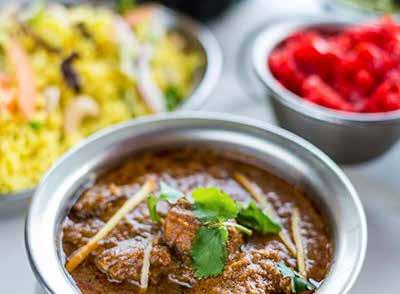
Whether it’s your first time or your one hundredth, you will be treated like family when you walk through the door of Swad, a popular Indian restaurant where the welcoming staff make you feel right at home. Known for its large menu, Swad has 150+ dishes that highlight regional specialties from tandoori to a large variety of curries. Start with the naan and you can’t go wrong; delivered to your table steaming right out of the oven, the bread is ready to be ripped into bite-sized pieces and dipped in the accompanying cool yogurt raita and mouth-puckering tamarind chutney.
Hot 'n Spicy
Previously tucked inside at the back of Viet Hoa Market, Hot 'n Spicy can now be found next door in the former location of Mishqui Peruvian. Chef Tammy Phommachanh originally opened the three-table restaurant and takeout spot in 2018 along with her son Newton Sam Phthiboupha. Showcasing the vibrant flavors of Laos, Hot 'n Spicy features dishes like papaya salad, Lao sausages and khao piek noodle soup—bold, homemade flavors that reflect a close-knit mother-and-son culinary partnership. Visit them at their new location with all the same comforting Laotian fare but expanded space to sit and enjoy.
David’s Jamaican Cuisine
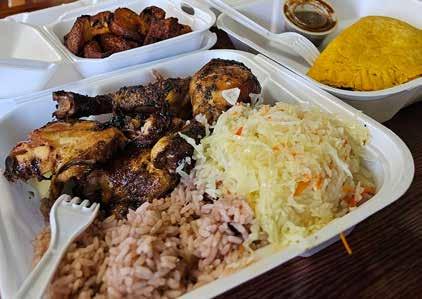
Owned by husband-and-wife team Pauline and David Blake, David’s Jamaican Cuisine has brought the bold flavors of the Caribbean to Monona for over 20 years. With a loyal following for its warm hospitality and vibrant Jamaican cooking, the restaurant’s menu includes island favorites like jerk chicken, jerk catfish and sweet fried plantains, along with vegetarian options including bright and sweet pineapple or mango tofu. Don’t overlook a hearty, restorative bowl of oxtail stew, a popular comfort food in Caribbean cuisine featuring fall-off-the-bone beef tails and root vegetables. Leaving with a full belly and happy heart, the Blakes’ longtime motto, is all but guaranteed.
Monona Bakery & Eatery
Family-run Monona Bakery & Eatery blends Mexican and Honduran traditions with classic cafe fare. Founded by Vicente Sacramento and Claudia Gamoneda, the restaurant pairs scratchmade pastries, like their unique and highly sought guava and cheese danish, and cakes, including a rotating daily tres leches cake—look for flavors like coconut and strawberry—with comforting Latin American favorites like mole enchiladas, burritos and pupusas, a thick corn tortilla filled with combinations of pork, beans and cheese. Paired alongside an all-day breakfast menu including pancakes and egg scrambles, Monona Bakery & Eatery has something for everyone.
MIDWEST MEDITERRANEAN
When peak summer arrives and gardens and CSA baskets are overflowing with tomatoes, squash, cucumbers, beets, eggplant and herbs, I love borrowing inspiration from Mediterranean cuisine. With bright fresh ingredients and a focus on salads, grains and legumes, Mediterranean flavors feel just right for summer days soaked in warmth and sunshine. Four chefs who frequently draw inspiration from this region share the recipes they love to enjoy in summer when produce is abundant. The result? The summer picnic menu you never knew you needed.
Photos by Sunny Frantz
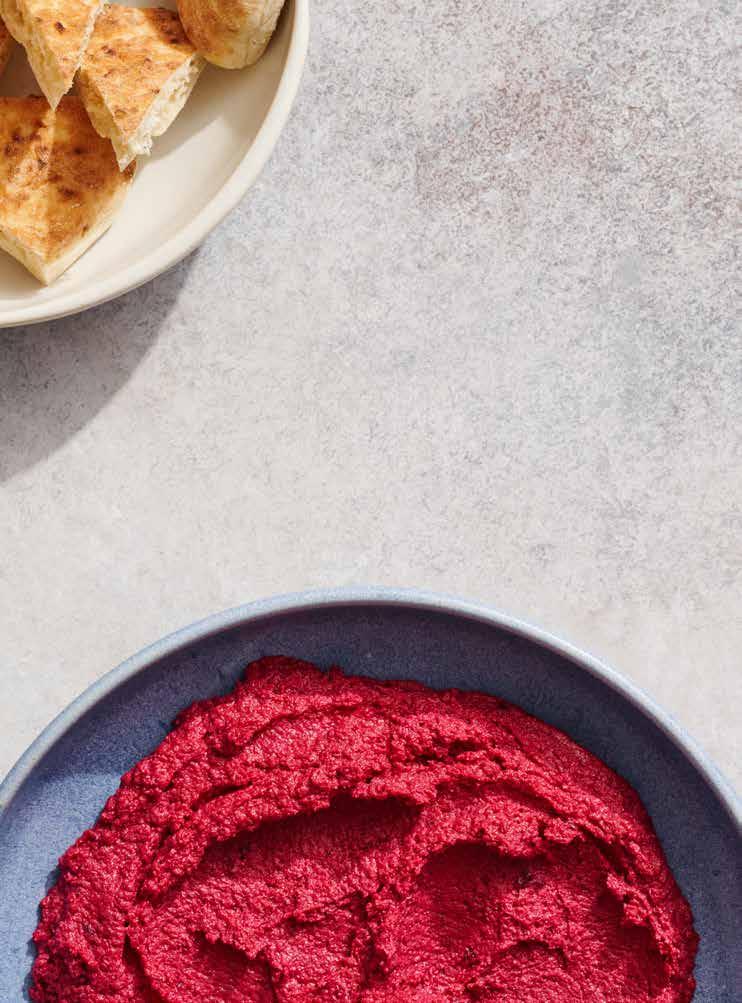
Roasted Beet Hummus
No one knows handmade Mediterranean food quite like Banzo. Here, Stephen May riffs on hummus by adding beets and pomegranate molasses into the mixture. The beets add a wonderful earthiness and bright color that makes any summer table a little more fun.
If you prefer using dried chickpeas for this recipe, May recommends starting a day ahead of time and soaking them in cold water overnight. Rinse off the soaking liquid the next day, then add them to a big pot with 1 teaspoon of baking soda and a pinch of salt. Cover the chickpeas with cold water, bring the pot to a boil, and simmer gently for 1 to 2 hours until very tender.
Serves 4–6 people
Prep time: 15 minutes
Cook time: 45 minutes
INGREDIENTS
2 medium beets, peeled and cut into 1-inch pieces
3 garlic cloves
1½ cups cooked chickpeas (or 15-ounce can chickpeas, drained and rinsed)
4 ice cubes (optional)
¾ cup tahini
3 tablespoons fresh lemon juice
1½ teaspoons kosher salt
2 tablespoons olive oil, divided
1 tablespoon pomegranate molasses (optional)
DIRECTIONS
1. Preheat the oven to 400 degrees F.
2. Place the beets on a baking sheet and season with a pinch of salt. Roast until fully cooked and tender, about 30 to 45 minutes. Set the beets aside and allow to cool.
3. Using a food processor, puree the beets, garlic and chickpeas together until smooth. You can add a few ice cubes if the puree is sticking to the sides of the processor. Once blended, transfer the mixture to a bowl.
4. Add the tahini, lemon juice, salt and 1 tablespoon of the olive oil to the processor. Blend for 30 seconds. This will whip air into the tahini, giving it a lighter texture. Then add the beet and chickpea mixture back into the processor and blend together until creamy.
5. Spread the hummus onto a plate and drizzle with the remaining 1 tablespoon of olive oil and pomegranate molasses. Serve with your favorite vegetables, crackers or pita bread.
Recipe by Stephan May of Banzo
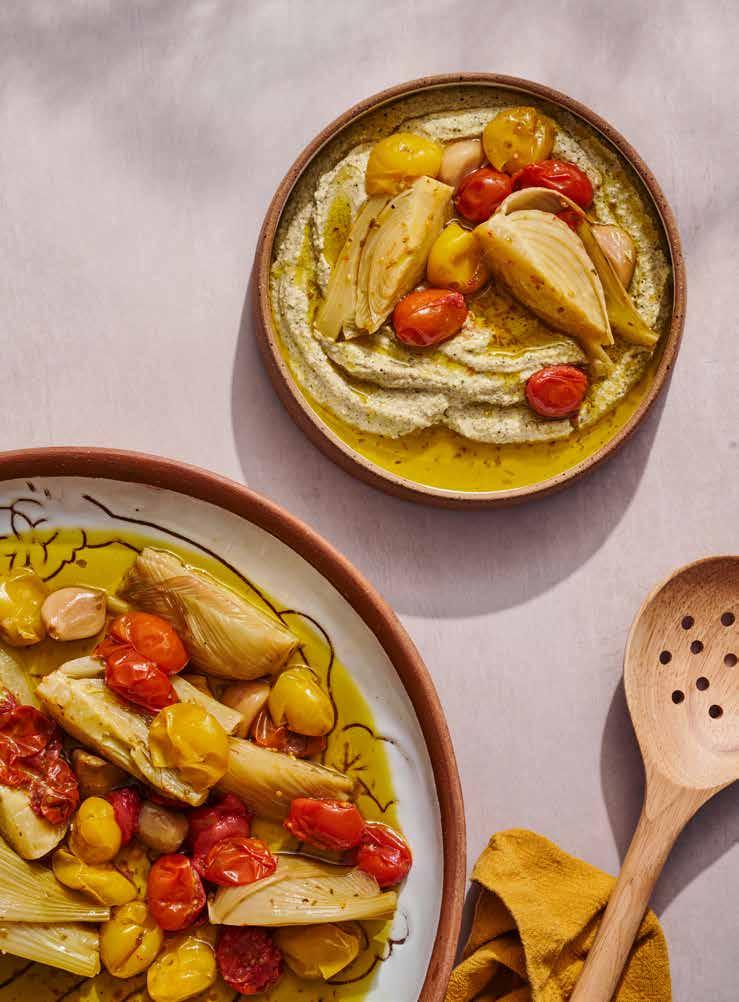
Charred Summer Squash
Baba Ganoush with Cherry Tomato and Fennel Confit
The secret to this recipe is grilling the squash whole and dry (preferably with charcoal) so it gets smoky and charred on the outside and tender on the inside. Mary Kastman also notes that good quality tahini can make all the difference in baba ganoush. She recommends seeking out the following brands for tahini: Soom, Lebanon Valley, or Alknater.
Serves 6
Prep time: 10 minutes
Cook time: 1 hour, 20 minutes
INGREDIENTS
For Cherry Tomato and Fennel Confit
2 cups cherry tomatoes
2 small fennel bulbs, quartered
6 cloves garlic, peeled
3 cups good quality olive oil
1 cup canola oil
2 teaspoons fresh lemon juice
1 teaspoon kosher salt
2 teaspoons dried oregano
3 sprigs summer savory (optional)
For Charred Summer Squash Baba Ganoush
5 medium yellow summer squash or zucchini
1 tablespoon minced garlic
¼ cup fresh lemon juice
¼ cup water
¼ cup olive oil
1½ teaspoon salt
1 teaspoon cumin
1 cup tahini
DIRECTIONS
1. Preheat the oven to 325 degrees F. Begin preparing the confit first.
2. In a 9 x 13-inch baking pan, combine the cherry tomatoes, fennel and garlic with oils, lemon juice, salt, oregano and summer savory, if using. Stir well to ensure everything is coated evenly.
3. Cover the pan with aluminum foil and bake until the tomatoes are bursting and the fennel is meltingly soft, about 1 hour and 20 minutes. Remove from the oven and set aside until ready to use.
4. While the confit vegetables roast in the oven, prepare the baba ganoush. Preheat a charcoal or gas grill to high heat. Grill the whole yellow squash or zucchini and char evenly on all sides. This should take about 25 minutes, rotating about every 5 minutes. Allow the grilled squash to cool.
5. In a blender or food processor, combine the cooled, blackened squash with garlic, lemon juice, water, olive oil, salt and cumin. Blend until the mixture reaches a smooth, even consistency. Add the tahini and continue to process until emulsified and well incorporated, about a minute. If you desire a thicker consistency, add more tahini.
6. To serve, add the baba ganoush to a large shallow bowl. Using a slotted spoon, transfer the warm tomatoes and fennel over the baba ganoush. Drizzle with some of the oil, and reserve the leftover oil for salad dressing or a homemade tomato sauce. Serve with freshly made pita.
Recipe by Mary Kastman of Purslane
Opa Chicken Salad
As local small-business owners, Christopher Lund and Jessi Ricci are both passionate about working together to bring the freshest ingredients and most vibrant flavors to the community. This dish does just that through a delicious collaboration, bringing together Chef Lund’s culinary creations with nutrient-packed microgreens from Ricci at New Life Greens. Light, refreshing and packed with goodness, it's the perfect healthy meal for a vibrant summer day.
Serves 4–6
Prep time: 30 minutes
Cook time: 30 minutes
INGREDIENTS
12 to 16 ounces boneless, skinless chicken breasts
¼ cup olive oil
1½ teaspoons salt, divided
1 teaspoon pepper
1 teaspoon oregano
1½ cups cucumbers, diced
1½ cups heirloom cherry tomatoes, quartered
1½ cups snack peppers, sliced into rounds
1½ cups kalamata olives, pitted and quartered
15-ounce can chickpeas, drained and rinsed
2 cups feta cheese, crumbled
1 cup hummus, homemade or store-bought
1 cup tzatziki, homemade or store-bought
¼ cup lemon juice
1 cup dill microgreens
1 cup radish microgreens
DIRECTIONS
1. Preheat the oven to 400 degrees F.
2. Marinate the chicken in the oil, 1 teaspoon of the salt, pepper, and oregano for 30 minutes. In a hot skillet over medium-high heat, sear both sides of the chicken breasts until browned, about 5 minutes per side. Reduce the heat to low, cover and cook until the chicken reaches an internal temperature of 165 degrees F, about 10-20 minutes.
3. Allow the chicken to cool and then shred it into a large mixing bowl.
4. Add the cucumbers, tomatoes, snack peppers, olives, chickpeas, feta cheese, hummus, tzatziki, lemon juice, and the remaining ½ teaspoon salt to the bowl with the chicken. Using a large spoon or spatula, gently fold all the ingredients together until well combined. Be careful not to mash the chickpeas or overmix. Taste the salad and add salt as desired.
5. Cover and chill the chicken salad in the refrigerator for at least 30 minutes. Just before serving, gently fold in the dill and radish microgreens. Serve on its own, in a pita or over a bed of additional greens. Store any leftovers in an airtight container in the refrigerator for up to 3 days.
Recipe by Christopher Lund of begonia. and Jessi Ricci of New Life Greens
Recipe by Lauren Rudersorf
Midwest Baklava Roll-Ups
The key to making this recipe Midwestern is seeking out Wisconsin-grown nuts to pair with local honey. I used a combination (about 50/50) of hazelnuts and hickory nuts, but any chopped nut will do if you have trouble finding local ones.
Serves 6–8 people
Prep time: 15 minutes
Cook time: 20 minutes
INGREDIENTS
8 ounces thawed filo dough
12 tablespoons salted butter, divided
¼ cup packed brown sugar
1¾ cups finely chopped nuts
6 to 8 tablespoons honey
Flaky sea salt
DIRECTIONS
1. Preheat the oven to 400 degrees F.
2. Melt 6 tablespoons of butter in a small saucepan over medium heat. Lay the filo dough flat on the counter in a stack and brush the top piece of dough with melted butter. Sprinkle the brown sugar directly onto the butter evenly and press down gently. Add the nuts in an even layer.
3. Starting at the end farthest from you, tightly roll the dough towards you into an 18-inch-long log. Slice the log into 12 equal rolls. Place each roll into a muffin cup, cut-side up, and top with a ½ tablespoon slab of butter.
4. Bake until golden brown, about 20 minutes.
5. Remove from the oven and immediately drizzle each baklava bite with a ½ tablespoon of honey. It is very important you do this while it’s hot. Sprinkle each baklava bite with flaky sea salt and serve immediately.
Pasture Raised Beef, Pork, Lamb & Poultry
Oconomowoc Plates Up Must-Try Dining and Great Outdoor Events
If you haven’t tapped into Oconomowoc’s dining scene, here’s your invitation to make some reservations. In fact, there are so many absolute gems here, you’ll need to plan more than one trip.
Global Experience
Around the Block
Worldly options fill the quaint downtown corridor including Mediterranean flavor on small plates at Kavos, Bella Gusto’s escape to Little Italy, stay in the Great Midwest for craft burgers and beer at the Crafty Cow, or a fresh, farm-to-table experience at Sobie’s.
New kid on the block, Newport 1875, boasts steaks, seafood, chops and a raw bar.
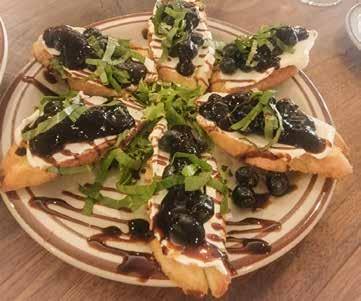
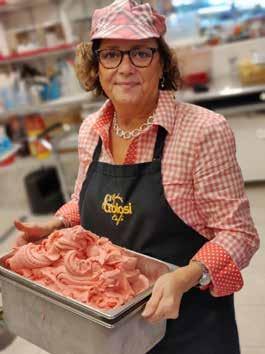
Take a sweet escape to France at authentic patisserie Fresh Baked with baked fresh daily croissants that melt in your mouth. Scoop up authentic gelato at Gelosi Gelato whose Italian owners make art out of dessert.
The Right Ingredients
Conveniently located between Madison and Milwaukee, Oconomowoc is the perfect spot to meet up with friends. And what better way to catch up than over a meal?
Downtown you’ll find plenty of free parking with a lakeside view.
Eat in or dine out
Most spots have an outdoor dining space. Did we mention pizza on the roof overlooking Fowler Lake at The Etc. Bar and Grill?
Walk it Off
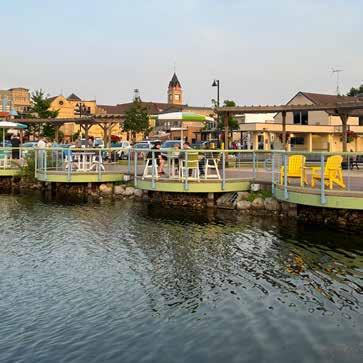
Downtown’s boardwalk is the perfect spot to enjoy a gelato or scoop of Mullen’s Ice Cream. Colorful Adirondack furniture invites you to stay for a sit.
Want to stretch your legs before heading home? Take the 2-mile loop around Fowler Lake. The walking route has a lake view for almost the entire loop with picturesque stops at Rockwell Park, Fowler Park and the Walnut Street Bridge. Also along the loop keep your eyes peeled for some stickers on the sidewalk. Open up a window to the past through your phone by experiencing Oconomowoc's Augmented Reality Walking Tour. The free activity gives you a virtual experience into Oconomowoc's rich history.
Dinner & A Show
Oconomowoc’s calendar is packed during the summer season. The vibe ranges from rock-pop cover bands playing the iconic bandshell at City Beach for Friday night Bands at the Beach, or settle into a night with Grammy-nominated artists with wine and a cheese board at Twilight Concerts at Fowler Park on third Sundays in July, August and September.
All events are family-friendly. Want a more kid-focused trip? Shoot for outdoor Moonlit Movies in Fowler Park on third Thursdays of June, July and August. Bonus free waterski show before the movie.
Let Us Be Your Guide
There’s not enough room here to give you the full menu of our dining and event lineup this summer in Oconomowoc. So, scan away and we’ll see you soon!
FARMERS MARKET GUIDE
The season of farmers markets is here! Across southern Wisconsin you can support local growers and producers while enjoying the bounty of summer. Visit ediblemadison.com for a full guide to local markets in our region.
What happens in the fields shapes everything we do in our kitchens.
For Colorado-based Chef Daniel Asher, the phrase No Farms No Food® belonging to American Farmland Trust (AFT) isn’t just a slogan—it’s reality. As a chef and restaurant founder and owner, he knows that everything we eat begins with farmers and ranchers. “What happens in the fields—weather, soil, seasonality—shapes everything we do in our kitchens,” he says. “It’s a relationship built on trust, reverence, and deep interdependence.”
That understanding led him to become a longtime member of American Farmland Trust. To Asher, AFT stands apart as a steady, credible voice for agriculture—deeply connected to what’s happening on the ground and willing to advocate for farmers at every level. AFT works to address complex challenges that America’s farmers and ranchers face today in the halls of Congress, at kitchen tables, and everywhere in between.
Protecting farmland, Asher believes, is inseparable from protecting our collective health. “The wellness of our soil, water, and air is the foundation of human wellness,” he says. Membership in AFT is a way to stay connected—to land, to food, and to community—at a time when those connections matter more than ever.
“Jump on in,” he says. “Eat delicious local food. Protect the land. And help keep agriculture—and community—alive.”
Join Chef Daniel Asher—and thousands of others—who are keeping America’s farms growing strong.
Become a member at farmland.org/edible
American Farmland Trust believes in thriving farms and ranches. AFT protects agricultural land, promotes environmentally sound farming practices, and keeps farmers on their land. It is the only national agricultural organization of its kind recognizing the connection between land, practices, and farmers. Because of AFT, millions of acres of farmland that otherwise would have been converted into house lots and shopping malls remain in farming, and tens of thousands of farmers and ranchers have adopted better farming practices.
American Farmland Trust member and chef, Daniel Asher, plates River and Woods appetizers at a farm-to-table community event in Denver, Colorado.
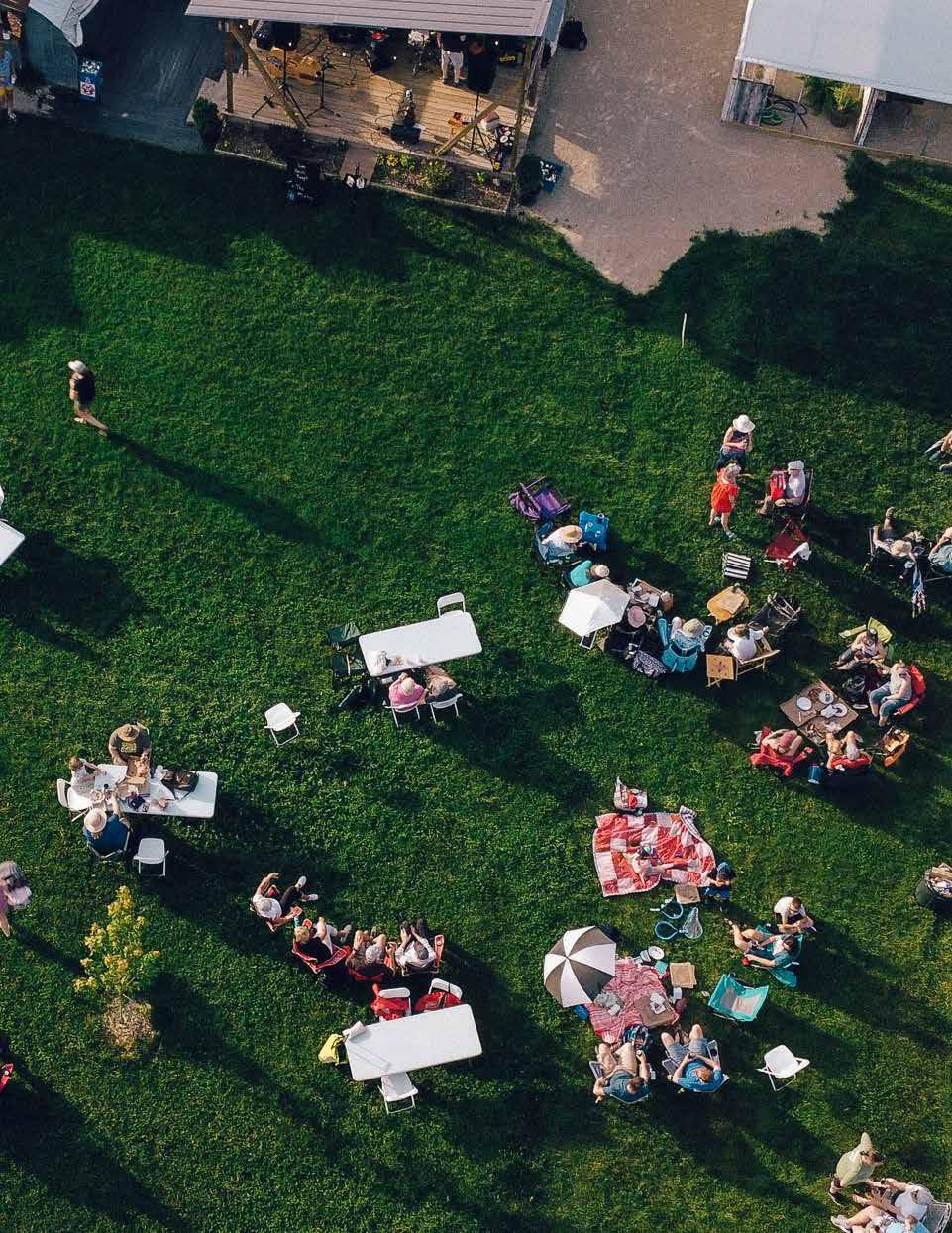
Venture 30 minutes southeast of Madison, past vast fields dotted with faded tobacco barns, and you’ll find yourself at Sprouting Acres Farm in Cambridge. Visit the first and third weekends of the summer months (plus the first and third Sundays of May and October) for their popular Pizza Nights on the Farm where farmer Andy Watson slings hand-tossed, woodfired pies topped with produce grown right on the farm. Pizza nights have allowed Watson to meld his deepest passions—growing organic vegetables and cooking delicious food. They have also allowed community members the opportunity to connect on and with the farm—sharing good food grown with care.