A roundup of key fall food policy updates paired with fi e immediate actions readers can take to support food access in Chicago and beyond
A limited-edition jabali mezcal and hoodie collaboration celebrates craft, and communit with proceeds supporting Chicago nonprofit Latinos Progresando.
By Megan Marshall
BUREAU OF TOURISM
21
NEXT STOP, EVERYWHERE
A dining guide that rides the CTA line by line, spotlighting neighborhood restaurants where Chicago’s global cultures and flavors are just a train stop away.
The trendiest summer camp in Wisconsin now has an outpost in Chica o.
By Laura Scherb
COOKBOOKS THAT CARRY US
Cookbooks endure in the digital age because the offer a sensor , stor telling, and tactile e perience connecting us more deepl to food, culture, and the act of cooking.
By Jeanelle Hayner Olson
THE GOAT GOES VIRAL
By Dorothy Hernandez and Megan Marshall
FOR KIDS
Created in partnership with Barefoot Books
BAREFOOT BOO is an award-winning, independent, womenowned and run, children’s book publisher based in Concord, MA Founded by two mothers in England in 1992, they are committed to creating visually captivating books that celebrate global awareness and diversity, spark curiosity and capture imaginations.
Jonathan Zaragoza who honed his culinar skills at his famil ’s restaurant Birrieria Zaragoza and in some of Chicago’s top kitchens is going all in on content creation, one salsa at a time 33
By Dorothy Hernandez
LAST BITE: INDY’S MORE THAN A SPORTS TOWN
By Ximena N. Beltran Quan Kiu
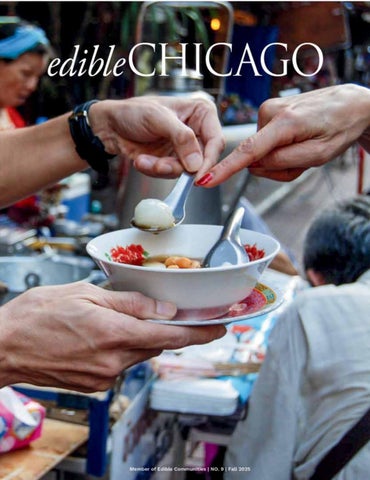
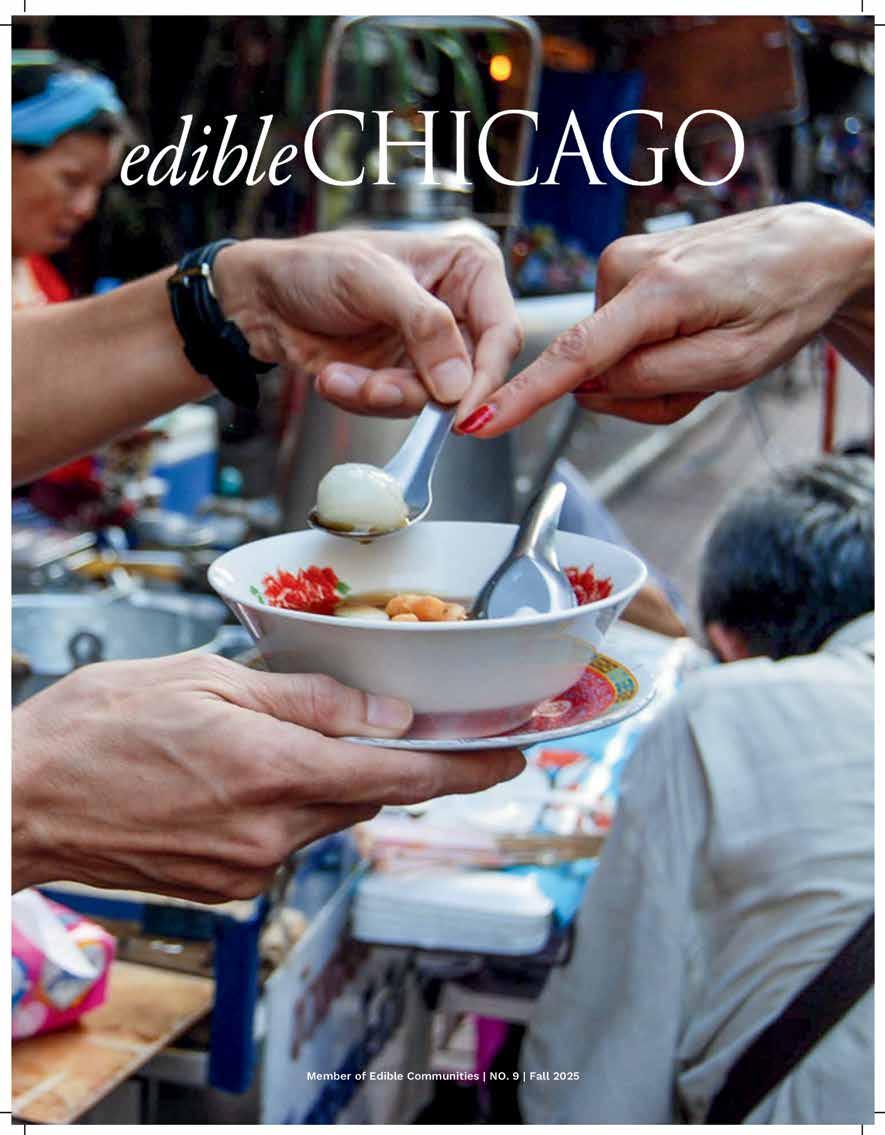
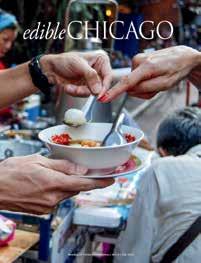
Front cover: Travel n for Food by Me an Marshall
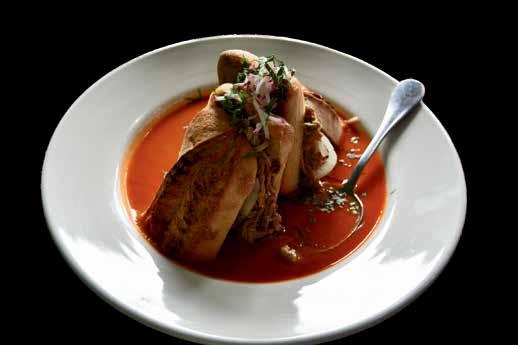
An exploration of Indianapolis that begins with WNBA All-Star Weekend and unfolds into a discovery of the city’s culture, food, and character beyond its reputation as a sports town. This page: Torta Ahoga
PUBLISHER & EDITOR IN CHIEF
Megan Marshall megan@ediblechicago.com
COPY EDITOR
Megan Ashley
PHOTOGRAPHY
Laura Scherb
Dorothy Hernandez
Megan Marshall
Wade Hall McElroy
Marisa Klug-Morataya
Jonathan Zaragoza
Jennifer Contraveos
Brooklyn Marrs
Sarah Price
YESI FORTUNA
CONTRIBUTING WRITERS
Laura Scherb
Dorothy Hernandez
Jeanelle Hayner Olson
Ximena N. Beltran Quan Kiu
Megan Marshall
Don’t miss the bi-weekly newsletter!
BAREFOOT BOOKS is an award-winning, independent, women-owned and run, children’s book publisher based in Concord, MA. Founded by two mothers in England in 1992, they are committed to creating visually captivating books that celebrate global awareness and diversity, spark curiosity and capture imaginations.
CONTACT US
Edible Chicago PO Box 47045 Chicago, IL 60647 info@ediblechicago.com
SUBSCRIPTIONS
Subscriptions and supporting memberships are available starting at $45 annually. Learn more at ediblechicago.com/subscribe-to-ediblechicago
Edible Chicago is published quarterly and distributed throughout Chicago and the surrounding suburbs. All rights reserved. No part of this publication may be used without written permission from the publisher. Every effort is made to avoid errors, misspellings, and omissions. If an error comes to your attention, please accept our sincere apologies and notify us. Thank you. Fall 2025
From the Publisher
Just before the pandemic, I started to feel like Chicago was shrinking. I’d officially lived here longer than anywhere else and started to feel like someone growing out of the small town they grew up in. But I knew that wasn’t even close to reality. I was nowhere close to experiencing everything this city had to offer. So, I set out on a personal project: to visit a food or beverage business in all 77 of Chicago’s neighborhoods.
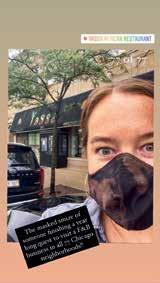
Halfway through, the world shut down. After a couple of months, I ventured back out again, driving to each corner of the city for some Covidsafe take out. I finished with the last neighborhood (#77) on September 12, 2020, eating a Senegalese feast from Yassa African on the hood of my car. That project reminded me that Chicago is endlessly expansive, layered with deep stories, global cultures, and flavors—all within reach if we take the time to seek them out.
The project became a way of tracing, with more intention, the immigrant influences I knew were the heart of Chicago. We’re privileged to experience communities from all over the world in our own neighborhoods—and we carry a responsibility to honor and protect them as neighbors. Travel is a wonderful, but frequently inaccessible thing; instead, our city gives us daily opportunities to journey outward through taste.
As we approached this “travel issue,” I debated what it means to explore at this moment. Is it about regional road trips? A guide for tourists? Ultimately, we decided it’s about celebrating our profoundly global city— honoring the privilege of experiencing communities from around the world all within the city and embracing the responsibility we carry as neighbors to protect and welcome each other.
In this issue, you’ll find restaurants where global flavors meet Chicago kitchens, cookbooks that transport us into lived experiences from afar, and guides to exploring the city by train, with food as your compass. Connection and community aren’t just nice to have; they’re essential. Pursue them with intention, and we’ll all be better, safer, and—most importantly—happier for it.
Megan Marshall Publisher & Editor-in-Chief
Life Lately
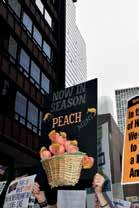
Admired the people keeping things fresh and in season at June’s No Kings march. A very pandemic-era selfie of the final stop of Project 77.
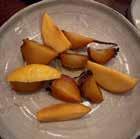
Seasonal simplicity at it’s best during dinner at Cellar Door Provisions in August
Cocktails and coffee at Truce became a regular point of connection for me in the neighborhood this summer.
ON THE TABLE THIS FALL
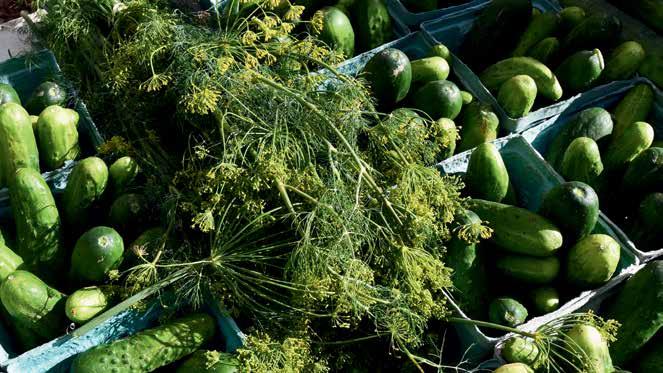
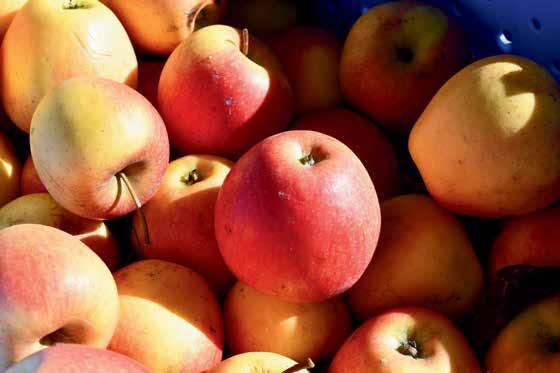
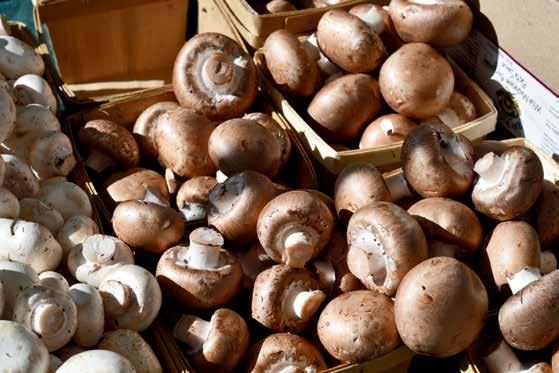
5 Key Food Policy Updates to Know
SNAP Changes Are Here
1 2
3
From sweeping federal advocacy, here’s what’s landscape for food access and surrounding counties
Recent state-level changes are making it harder for to qualify for SNAP benefits, including stricter income work requirements. According to the Greater Chicago SNAP generates approximately 280 million a month in Cook County.
Food Insecurity on the Rise
With 1 in 5 households in Chicago already experiencing food insecurity, the rates in Illinois are climbing. Food banks are reporting record demand. Rising grocery costs and SNAP cuts are straining emergency food systems.
End of USDA Regional Food Business Centers
The USDA has announced the termination of Regional Food Business Centers, which had been supporting local food businesses with technical assistance and funding. Advocates anticipate this will slow the growth of small and mid-sized farms and food entrepreneurs.
One Big Beautiful Bill Act: A Shift with Consequences
Over 50 billion of the 18 billion cut from SNAP funding are redirected to boost farm subsidies for the largest farms, while programs that support small and mid-sized farmers, rural communities, and local food systems are left out entirely. The National Sustainable Agriculture Coalition warns this marks a watershed transition to an uncertain future” for U.S. agriculture. 4
Illinois Food Purchasing Reform Stalls
Despite momentum earlier this year, efforts to pass comprehensive food system reform in Illinois with the Good Food Purchasing Initiative failed in Springfield. Advocates argue that stronger grassroots organizing will be key to making progress in future sessions 5
Suppport Local Food Pantries
With SNAP benefits cut, food pantries are filling the gap Donate money, food, or your time to local organizations such as Nourishing Hope, the Greater Chicago Food Depository or see out your neighborhood’s mutual aid cohort
Push for Federal Food Investments
Stay engaged with national farm and food policy debates. Groups li e National Sustainable Agriculture Coalition, Illinois Stewardship Alliance, and Chicago Food Policy Action Council provide easy tools to comment on budget proposals and advocate for stronger support of local food systems.
5 WAYS TO SUPPORT STARTING TODAY
Be a Good Neighbor: Support Mutual Aid
Food insecurity isn’t always visible, but chances are someone on your bloc or in your building is feeling the s ueeze. Reach out, share a meal, or get involved with local mutual aid networ s.
The Chicagoland Food
Sovereignty Coalition is a great place to start. Sometimes the most powerful action is simply being a neighbor.
Join a CSA to Support Farmers Year-Round Community Supported Agriculture CSA) programs are a lifeline When you sign up, your advance payment provides farms with crucial cash flow during the most vulnerable seasons, when labor and infrastructure demands are high but mar et traffic is low.
Stretch Every SNAP Dollar Help ma e healthy food more affordable by supporting Lin Match programs that double the value of SNAP benefits at farmers mar ets. In Chicago, Experimental Station runs the program that ensures families can buy more fresh produce while supporting local growers. Donations directly expand the reach of this effort.
A Rare Pour with a Purpose
Story By Megan Marshall
Photos by YESI FORTUNA
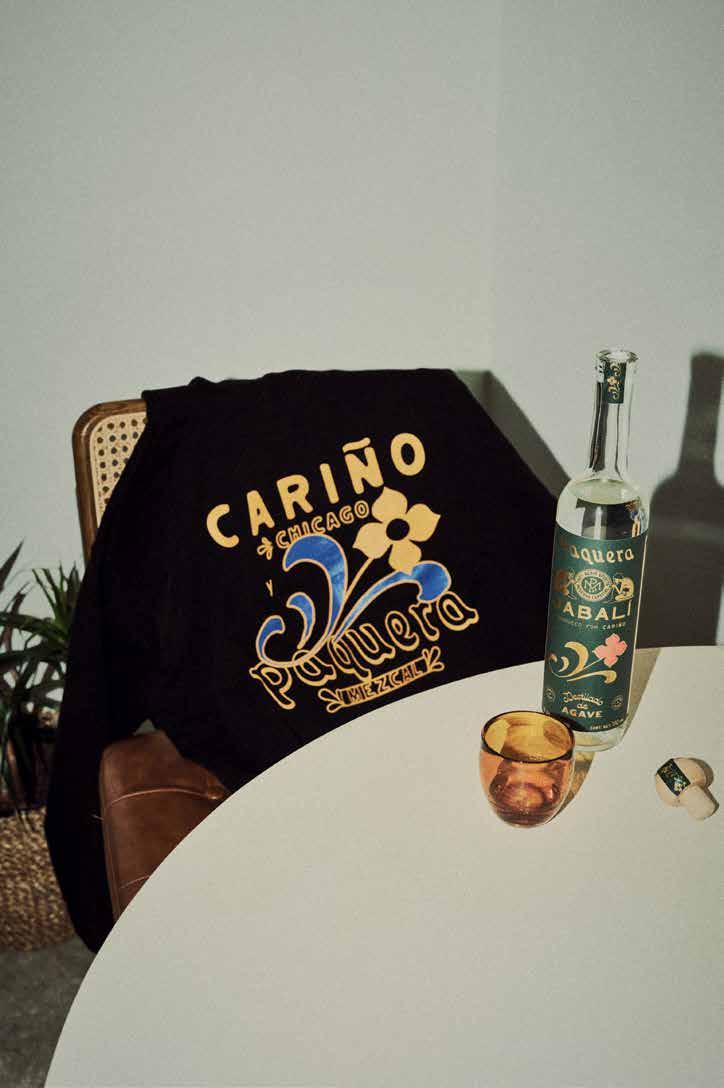
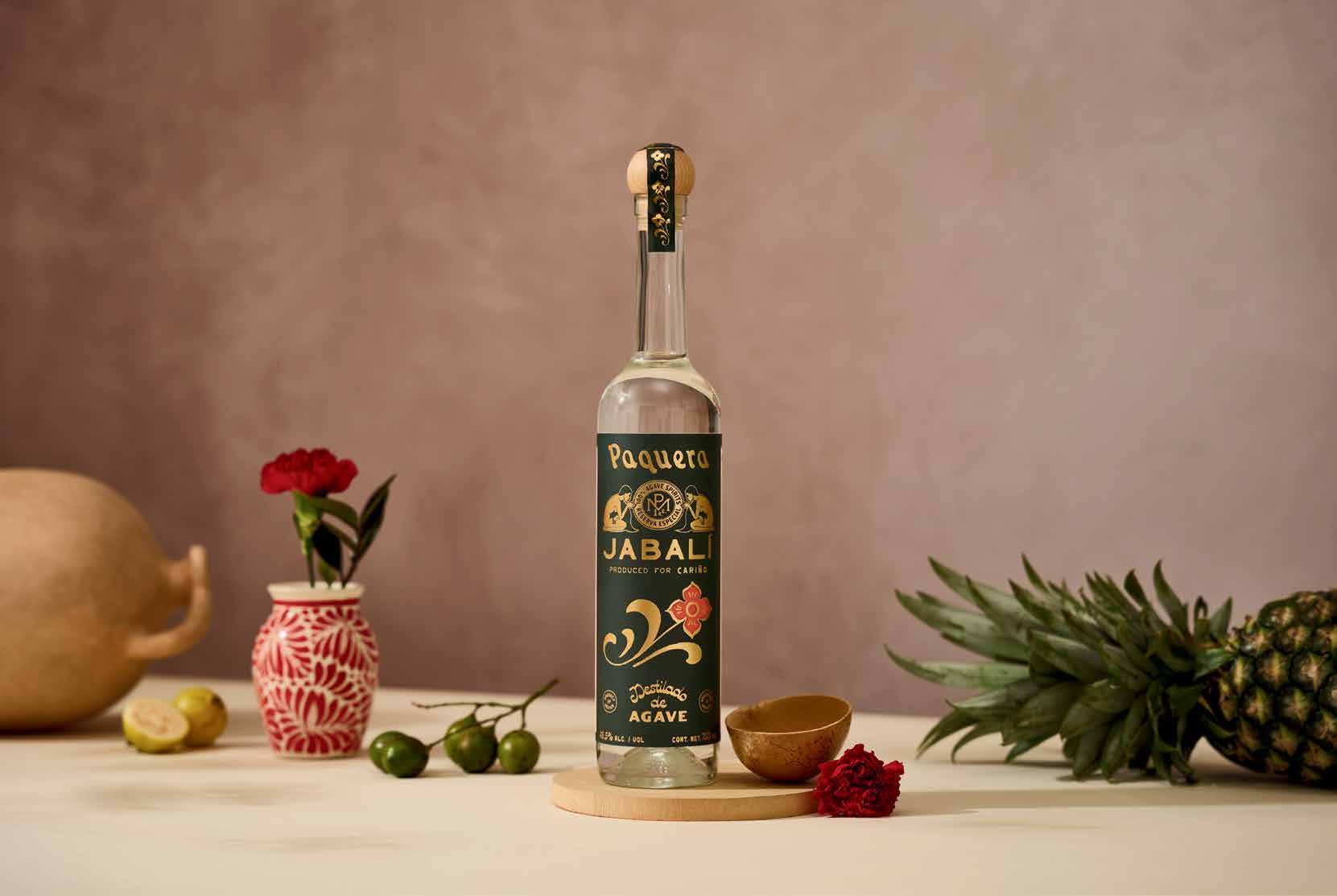
Distilling jabali agave is notoriously difficult. For Cariño, Michelin tasting menu and late-night taco omakase restaurant in Up Paquera Mezcal, that challenge felt like the right canvas for something bigger. Their new collaboration brings a rare jabali mezcal tog custom hoodie, available only at Cariño for a limited run, dro September. And while the mezcal itself is worth the hunt, it purpose is even more compelling: proceeds will go to Latino the Chicago nonprofit providing critical immigration legal service families who need them most.
From the beginning, Chef Norman Fenton knew he wanted his r give back to Latino organizations: “The community in Mexico uplifted me as a chef. I want to filter as much back to as I can.”
That’s where Latinos Progresando comes in. The organiza individuals and families navigate the complex, expensive, and overwhelming immigration process. Fenton shares about his o experience with the organization: "For me personally, we had resources at the start, but even then, lawyers could onl Latinos Progresando stepped in with real support for us.”
Karina Garcia, currently lives in Cancun with their child an awaiting an upcoming citizenship interview after nearly 4 years paperwork, interviews, and exams.
Paquera Mezcal, operates within a cooperative of mezcalero Fenton prioritized the collaboration between the brand an as both businesses share a similar ethos. Paquera ensures directly to the families producing the spirit, honoring their e labor. This release, distilled from wild jabali agave that takes u to mature, embodies that commitment. Distillers for example, sle the stills, carefully monitoring the fermentation process to
In its first year, Cariño raised an estimated $4,000 for La through the monthy Tacos with Friends series. This year, alo Paquera collaboration, Fenton’s goal is to raise closer t as importantly, spread awareness. “Normal people need hel restaurant industry is filled with people navigating these [ challenges without resources.”
Only 236 bottles of this jabali mezcal will be produced, alo run of hoodies featuring artistic styles from both brands. B exclusively through Cariño for pickup.
To learn more about Latinos Progresando, explore available resou support the organization directly, please visit latinospro.
The Bureau of Tourism Brings Wisconsin Nostalgia to West Town
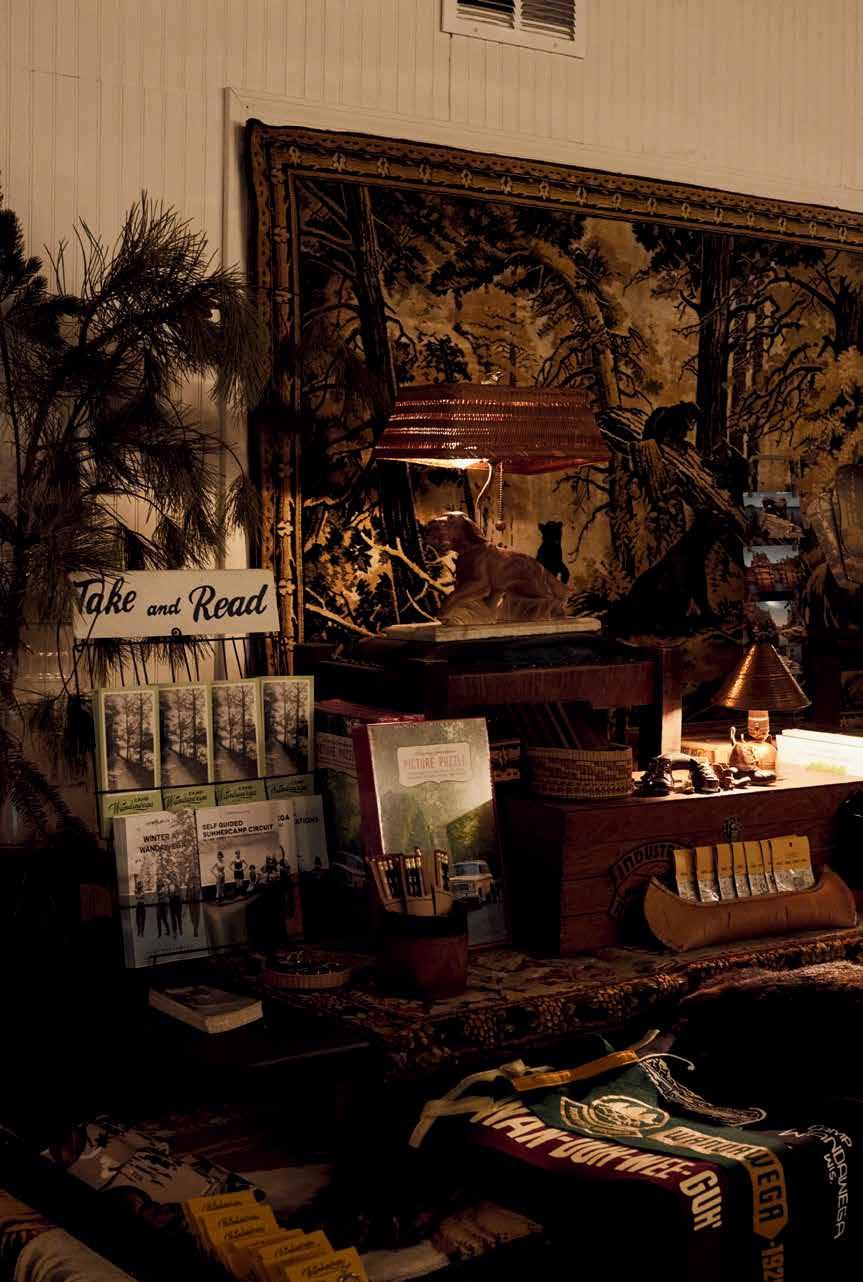
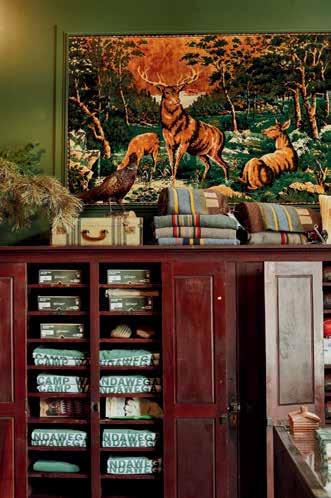
The trendiest summer camp in Wisconsin now has an outpost in the city. In the heat of summer, the team behind Camp Wandawega in Elkhorn, Wisconsin, opened the Bureau of Tourism, a small boutique and event space on Grand Avenue. The camp, which is on the National Register of Historic Places, has become a popular summer destination for Chicago creatives since reopening roughly two decades ago under the ownership of Tereasa Surratt and David Hernandez.
Story and photos by Laura Scherb
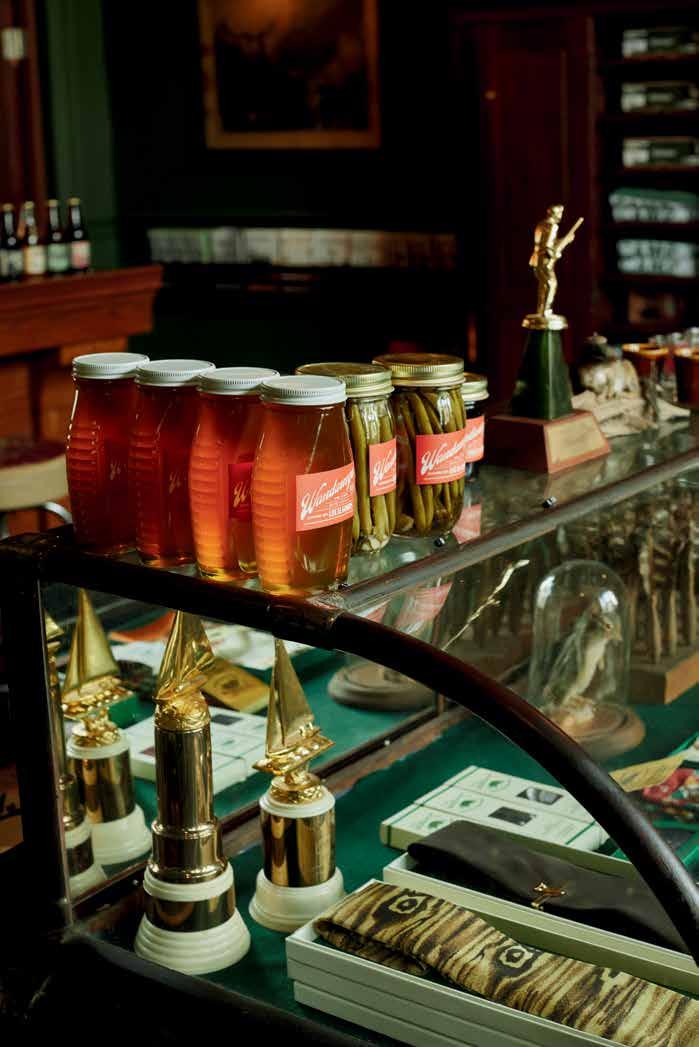
Walking through the doors of the new West Town space is like teleporting over miles and miles of traffic and straight to the historic Wisconsin summer camp: the walls are painted dark green and decorated with tapestries featuring woodland animals and rustic landscapes. The back room features a wooden bar, a vintage bread oven, cozy rugs, and vintage speakers. Fishing lures, taxidermied animals, and camp pennants make it clear—you’re not in Chicago anymore.
“We wanted to have a brick and mortar footprint in the city where we’ve lived for so many decades and where the majority of our creative community comes from. We were craving a way to connect with them in the off-season,” said Surratt. “With this outpost, we get to tell the story of Camp Wandawega and celebrate how it has transcended this tiny little lake into an amazing creative community.”
An homage to the tourism offices run by the state of Wisconsin in the 1940s, the Bureau of Tourism will serve as an extension of the camp to be used in the off-season, from November to May, said Surratt. “They’re not two different spaces,” said Surratt. “They’re intrinsically linked. Wandawega is tied to the Bureau of Tourism because the Bureau exists specifically to promote creative partnership and collaborations with our Chicago friends and partners, and many times that comes to life through the culinary world.”
The space is also shoppable, featuring products from the expansive collaborations and activations that the camp has launched throughout the last few years, including their custom Pendleton blanket collaboration, Tie Bar menswear, Homer Laughlin Dinnerware, and Topdrawer.
When Surratt and Hernandez set out to find a space in Chicago, it took time to find one that fit the bill. Surratt wanted a space that had history to it, and when she learned that the location they settled on dated from 1881, she worked with the Chicago Historical Society to learn more about it. The oven that is featured in the event space is from the original building, built as a commercial bakery, where the man who would go on to be McDonald’s first bread bun supplier learned to bake. “I love that the oven is still there,” said Surratt. “It’s a great piece of history and such an important story to tell.”
Surratt is excited to open the back room, where the oven is located, for events and activations this fall. “It’s not a typical retail store. It’s really about community building,” said Surratt. “It’s going to be fun—we built out the back room to do things like readings, launches, workshops, tastings. … That’s what I’m most excited about.”
The Bureau of Tourism is located at 1429 W Grand Ave. It is open by appointment only until November, when Surratt and her team plan to open it regularly on weekends. Follow @bureauoftourism on Instagram for future event announcements.
“WANDAWEGA IS TIED TO THE BUREAU OF TOURISM BECAUSE THE BUREAU EXISTS SPECIFICALLY TO PROMOTE CREATIVE PARTNERSHIP AND COLLABORATIONS WITH OUR CHICAGO FRIENDS AND PARTNERS, AND MANY TIMES THAT COMES TO LIFE THROUGH THE CULINARY WORLD.” - TEREASA SURRATT
Cookbooks That Carry Us Across Borders
Story by Jeanelle Hayner Olson
In an age where you can find nearly any recipe and an infinite number of its variations on the internet, it might be easy to wonder why cookbooks are still being made. Yet the cookbook category endures, and in fact has only grown and evolved since we all started cooking at home more, especially from 2020 onward.
Why do we love cookbooks so much? It might sound silly, but cookbooks truly do fill the senses. From the moment we crack one open, before we cook a thing, cookbooks are packed with striking visuals that show us the beauty of a cuisine and take us to another place, whether it’s to a café around the corner, a beloved relative’s kitchen, or halfway across the world. They tell captivating stories and draw us in with tantalizing descriptions of gorgeous dishes, whether you plan to make anything or just read the book cover-to-cover like a novel (we exist!).
And once you do get into the kitchen, the smells, colors, sounds, and flavors bring the whole story together, connecting us with new and familiar cuisines alike. While social media is great at giving us bite-sized doses of that multidimensional kitchen dopamine, the feel of a cookbook in your hands still hits like nothing else.
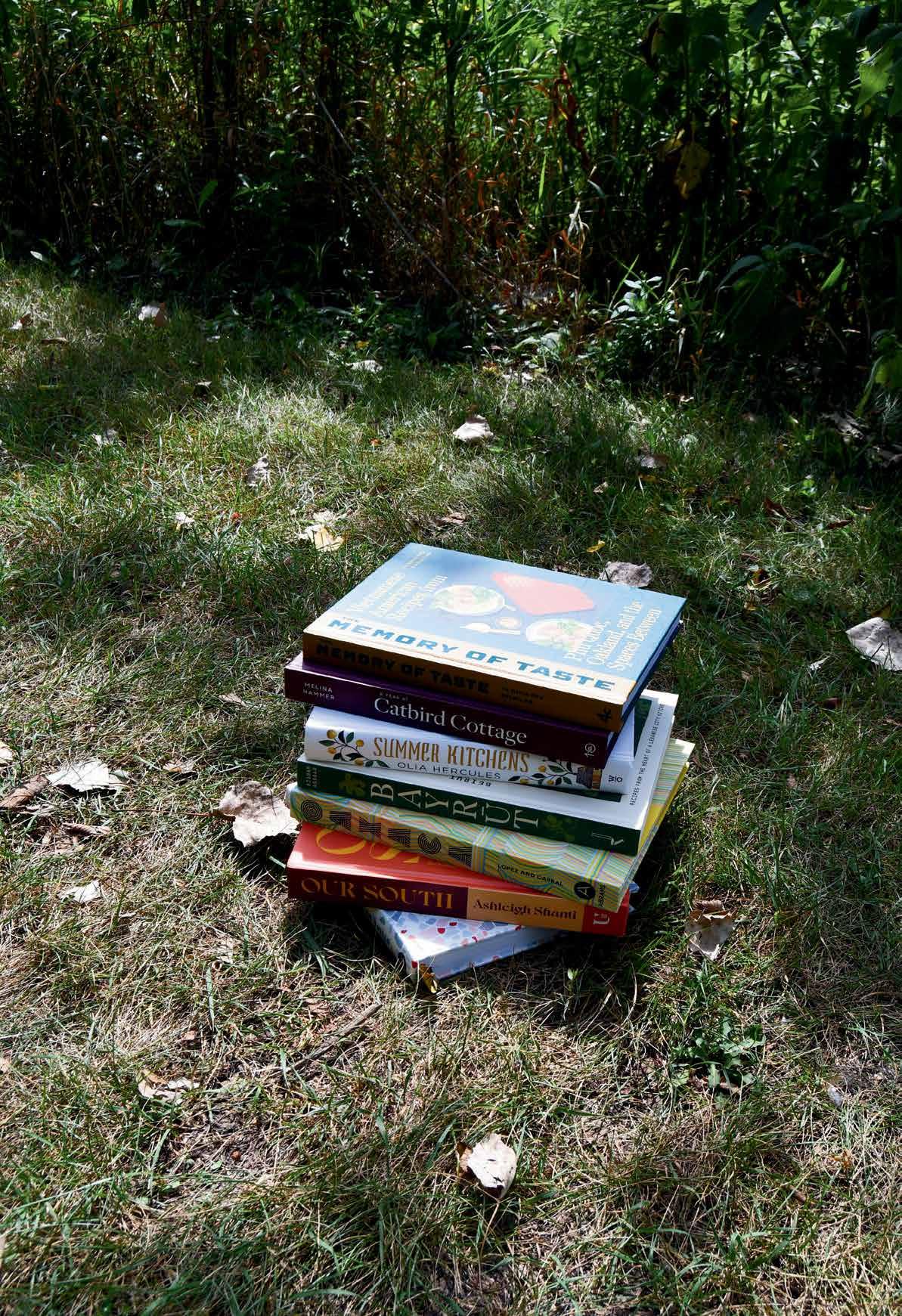
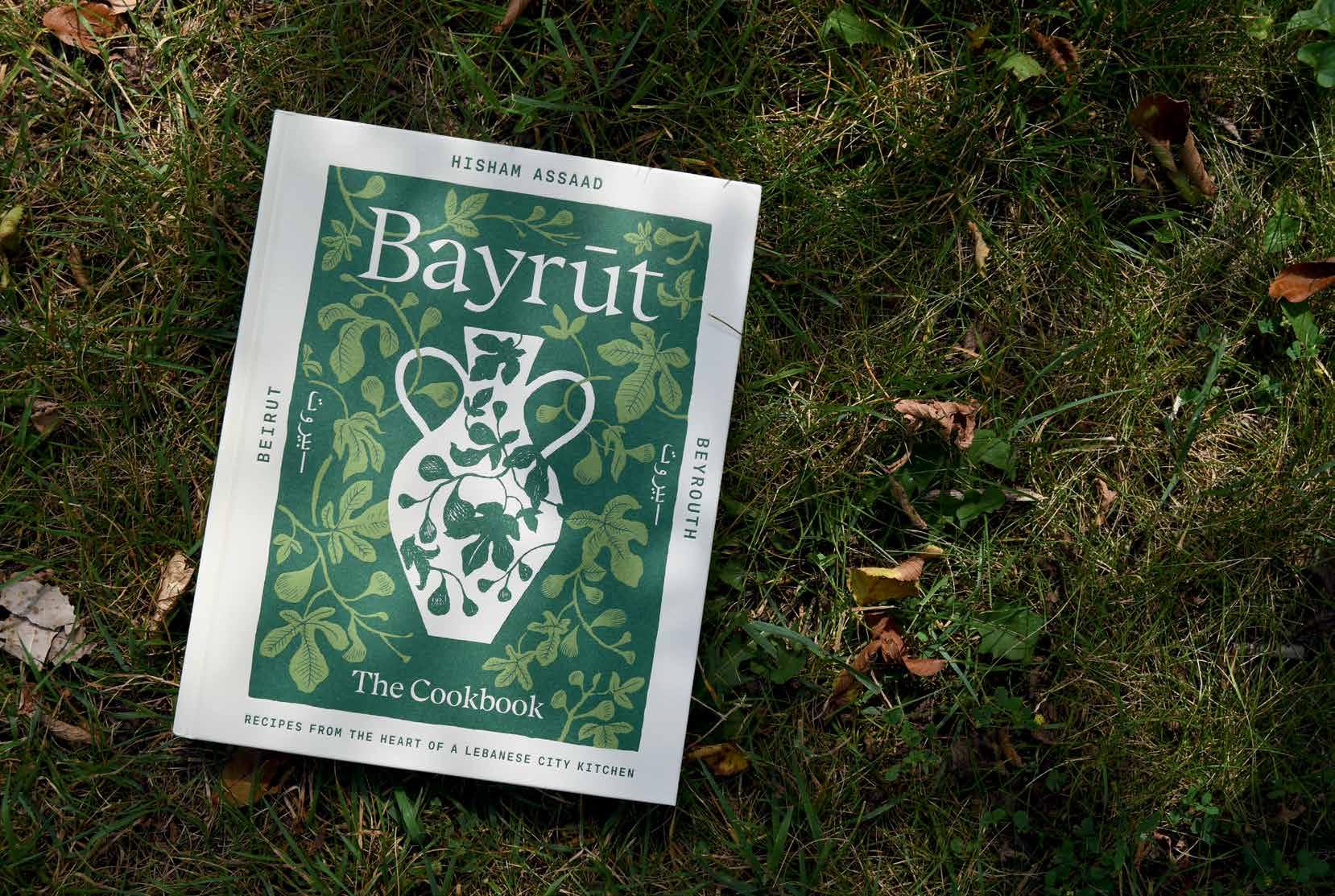
Whether we want to experience new places from our kitchens or just want to hang on to the feelings of a trip already taken, here is a selection of cookbooks that bring us closer to flavors from all over the globe.
Summer Kitchens
By Olia Hercules
Hercules’ third cookbook centers not only on food from her native Ukraine, but the cultural traditions and many functions of a Ukrainian summer kitchen—a separate little house (often just one room) that serves as a sort of cooking workshop to process and preserve the bounty of summer. Unsurprisingly, preserving, fermenting, smoking, and pickling play a major role in this beautiful book that reads as equal parts cookbook and travelogue, with sweeping landscape photography and heartfelt essays on everything from varenyky (stuffed dumplings) to pich (hand-built masonry ovens commonly found in a summer kitchen).
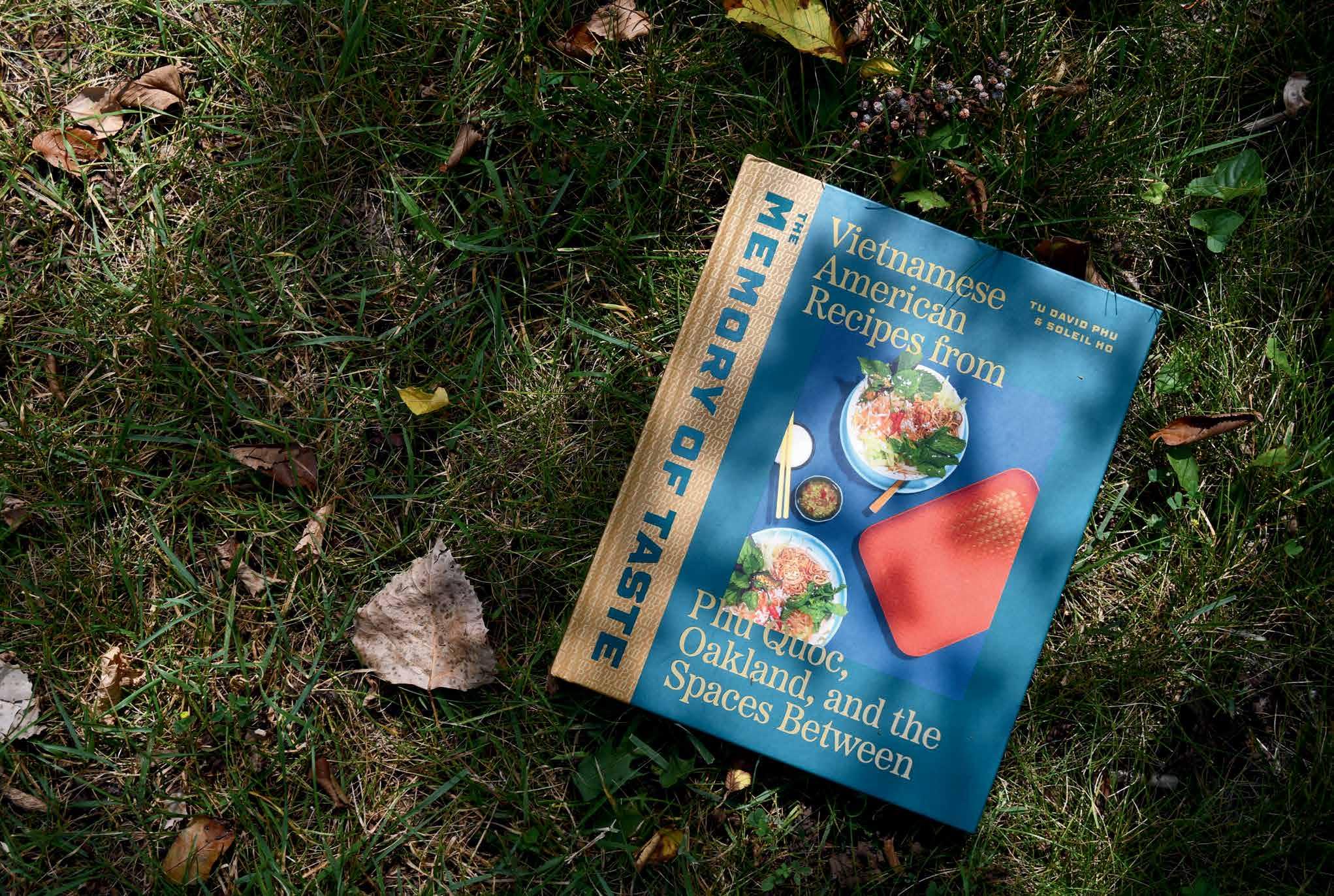
The Memory of Taste
By Tu David Phu & Soleil Ho
Phu and Ho’s cookbook is a love letter to the Viet community in the Bay Area, and pays homage to their resilience in every page. The visuals are energetic yet elegant, with cool street photography from both Vietnam and the Bay, and textured, saturated food photos. The writing holds your hand through even the most elaborate family recipes (the three-page Southern-Style Chicken Pho is a triumph of recipe writing, tbh), all while candidly questioning what authenticity might mean now.
Acquacotta
By Emiko Davies
Davies is a prolific cookbook author (her seventh book is out this fall) who consistently writes some of the most appealing yet reliable recipes out there, but not everyone knows she also takes incredible photographs, always with a signature dreamy feel. Acquacotta is no exception, highlighting the unique ingredients and flavors of la Costa d’Argento, the Silver Coast, right along the Tyrrhenian Sea in the southwest of Tuscany. Chapters like “the sea and lagoon” and “the vegetable patch” will make you feel as if you’re there, breathing in a salty breeze and licking olive oil off your fingers.
Oaxaca
By Bricia Lopez and Javier Cabral
Everyone knows the best way to experience a place is in the company of locals, and Oaxaca basically teleports us to one of Mexico’s standout food regions from the very first page. In Lopez and Cabral’s first book (they also wrote Asada, a celebration of Mexican-style grilling), Los Angeles restaurateur and Oaxaca native Lopez proudly shares the flavors of her past and present, giving us the scoop on everything from chicharrón tacos, to family-style goat barbacoa, to her family’s signature mole negro.
Our South
By Ashleigh Shanti
We know that food can take us to many dimensions at once: one taste can bring back a place, or a person, and this book proves that it can also take us through time and culinary lineage. Shanti deftly and joyfully takes us through the many regions of “her” South, with dishes like her take on 1800s cookbook author Malinda Russell’s salt-rising bread with country ham ramp butter from the Backcountry chapter, her Grandma Bearnie’s red snapper escovitch in the Lowcountry chapter, plus an invaluable section called Supreme Recipes that form the foundation of dishes across the whole book.
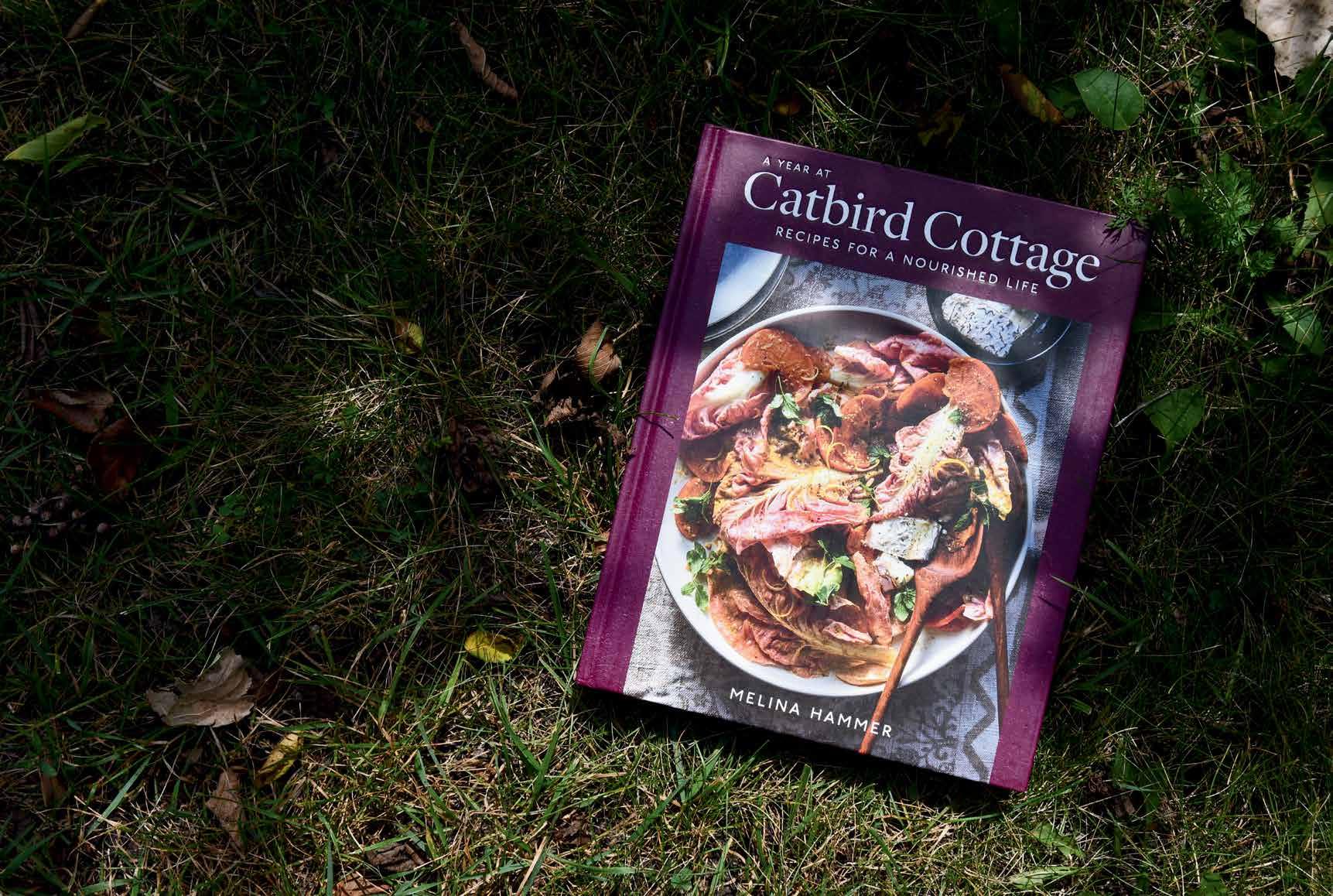
A Year at Catbird Cottage
By Melina Hammer
If the summer travel you’re trying to relive right now was more of a domestic flavor and full of farmers markets, roadside stands, and the occasional forage behind a rental house, this book might be the perfect way to relive those sunripened days. You’ll find recipes organized by season (and lucky for us, our seasons aren’t wildly different from Hammer’s in upstate New York), plus invaluable sections on staples and little back-pocket barely-a-recipe recipes for, in Hammer’s words, “eating between the feasts.”
The Goat Goes Viral The Goat Goes Viral
Story by Dorothy Hernandez
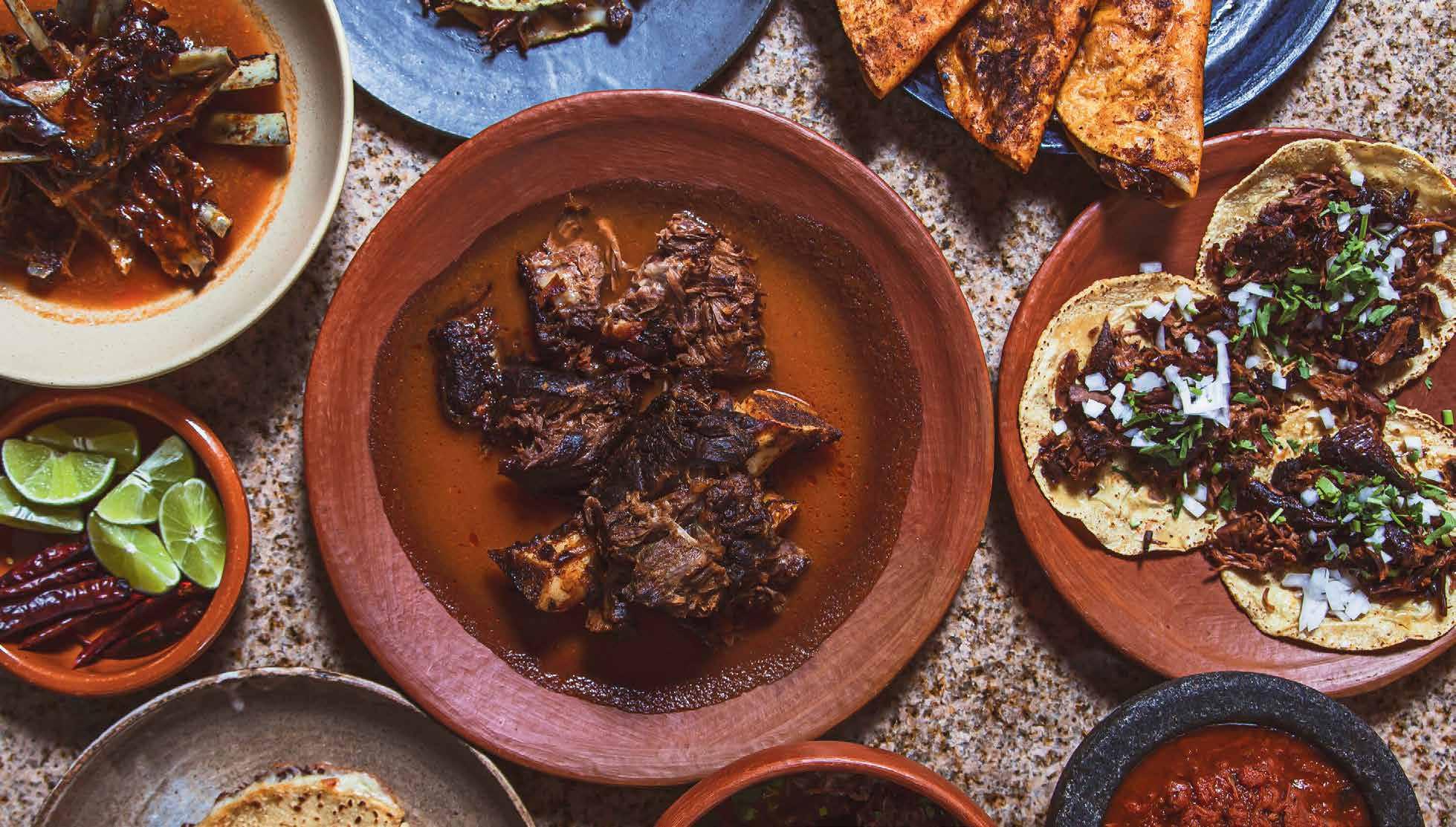
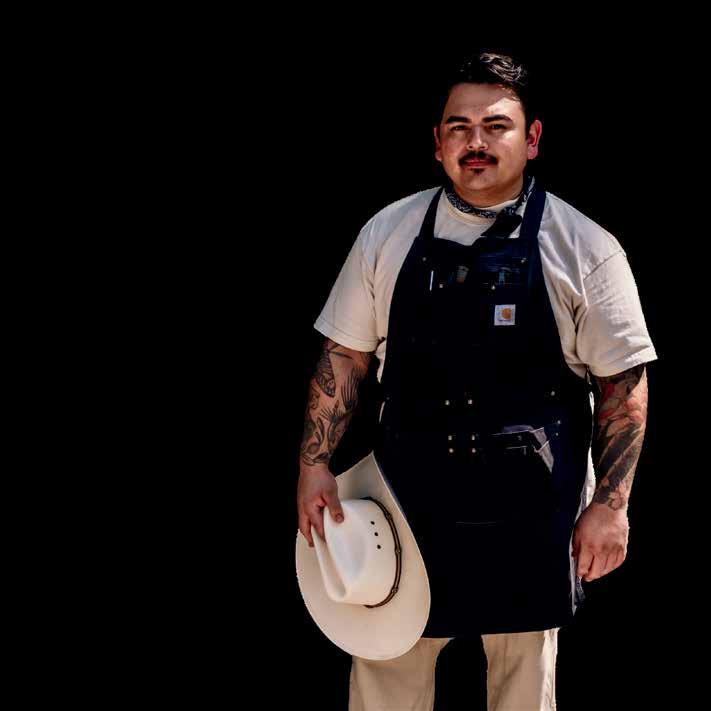
Jonathan Zaragoza, who honed his culinary skills at his family’s restaurant Birrieria Zaragoza and in some of Chicago’s top kitchens, is going all in on content creation, one salsa at a time.
Birria photo by Marisa Klug-Morataya
Jonathan photographed by Wade Hall McElroy
Jonathan Zaragoza always has a joke, story or "Jonathan-ism," as his partner, Jennifer Contraveos, puts it, at the ready.
"You ask any cook that's worked for me, they know I’m a goofball," Zaragoza said. "I always said in my whole career, the food is serious. The job is heavy as is, let's keep it light."
He's still telling stories and jokes but these days he's doing it in front of a camera instead of in a restaurant kitchen. In just the past few months, Zaragoza — who goes by @goatboyintl on social media — has built up a large following across several platforms. As of this writing, his YouTube channel was closing in on 80,000 subscribers, his Instagram account clocked in at 246,000 and TikTok was at 160,000 followers and counting.
South Side Roots
But before the likes and followers, his love of food goes all the way back to his upbringing on the South Side of Chicago.
"I always said in my whole career, the food is serious. The job is heavy as is, let's keep it light."
He learned flavors and techniques from his grandmother on his dad's side. But Mama Z, as he likes to call his mom who makes appearances on his videos and who has her own, learned a lot from his grandmother and made the dishes her own.
As early as age 5, he stood on a step stool, helping his mother stir eggs for salsa de huevo or huevos a la Mexicana.
A few years later Zaragoza was watching a show on Food Network when he saw the host prepare a meal on a budget for her family. She made a dish that resembled a torta and he recalled thinking, "I could do that!" He asked his mom for $25 and bought a rotisserie chicken, mayonnaise, chipotle peppers in adobo, avocados and Monterey Jack cheese, which he prepped and served when his parents returned home.
Photo by Jonathan Zaragoza
Birria, Backyard Ovens, and a Crash Course in
Cooking eventually evolved from preparing food for the family to a family business. In 2002, his dad traveled to his hometown in Jalisco, Mexico, to learn how to cook the roasted goat specialty, birria and he taught the craft to Zaragoza. Eventually, his father and grandfather built a wood-burning oven in the backyard for their so-called "underground restaurant," Zaragoza says.
He was the "busboy, firekeeper and gopher," starting the fire at 6 p.m. on Fridays, cooking the goat overnight and opening the doors at 9 a.m.
In 2007 after leaving his customer service job, Zaragoza’s father opened Birrieria Zaragoza, where his son was essentially the only employee. "It was a crash course in hospitality for me," Zaragoza says.
It wasn’t long after the family restaurant opened that Zaragoza was looking to level up in his culinary career. He tried culinary school twice and dropped out, opting to forgo the classroom and learn directly from chefs. In his teens and early 20s, he worked with renowned Chicago chefs such as Andrew Zimmerman at Sepia.
After working as executive chef at modern Mexican street food restaurant Masa Azul and doing restaurant consulting, which took him around the world to open restaurants in places like Dubai, Zaragoza says he's gone "all in on content" this year.
Salsa 101 and the Digital Content Wave
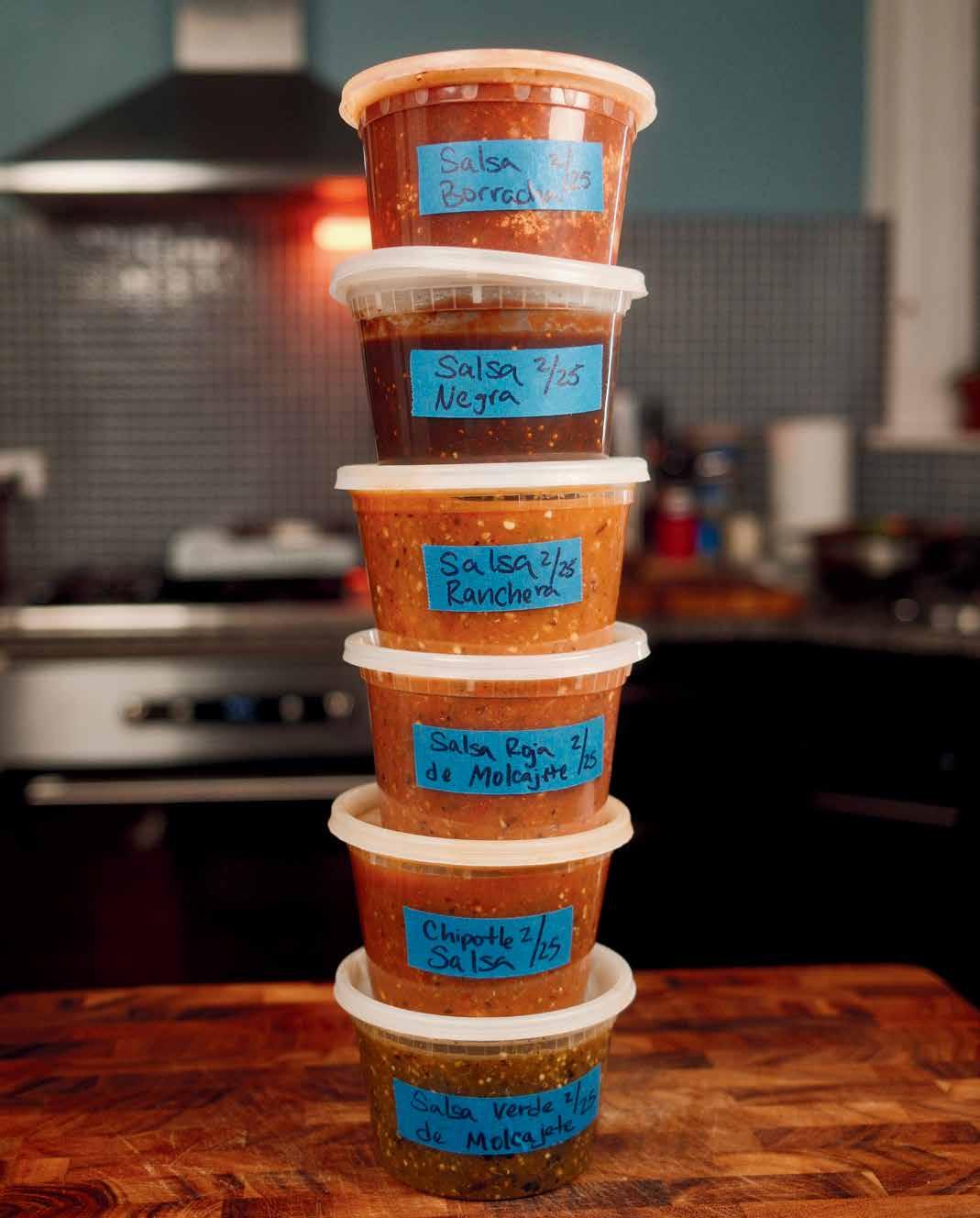
In January, Zaragoza filmed the first video of his Salsa 101 series, and "it went crazy," garnering over a million views on TikTok.
"I think what resonated with people was just pulling back the curtain on something that is so well known across the globe, which is salsa, but not everyone knows how to make it," says Zaragoza. He also adds tips that people don’t think about, such as rinsing onions, which sparked significant debate in the comments.
In addition to Salsa 101, Zaragoza is looking to share 101 recipes—and so far, he's completed nearly 35. Another area of content he's exploring is “Recipes I Made Up and Liked.” The concept riffs on Mexican food by adding in elements of other cuisines.
Photo by Jennifer Contraveos
One video showed a play on his favorite Chinese takeout dish, shrimp toast, called shrimp “toastada” with shrimp farce, garlic, sesame oil and herbs spread on a corn tostada with a Maggi Tamarind soy sauce. “It's stuff that people crave and want to eat,” he said. “So that's what I want to do; cook more freely and show people like it's not always about tradition.”
Aside from creating his own content, Zaragoza hosts a cooking show called "Let Them Cook" with Whistle Sports, where he cooks alongside professional athletes. It's also fitting because he played baseball up until he was 22 years old, even competing in world tournaments before he quit the sport to pursue his culinary career.
"Everything I've done in my career has led up to these moments, and it's cool," he said.
Heart Behind the Heat
Outreach is also a priority for Zaragoza. He helped design a program called Global Eats, which takes him to schools around the country to introduce students to international cuisines. Each child receives a ‘passport,’ chooses a country they’d like to explore, and then learns how to prepare a dish from that region.
"This program helps [students] see what their future could look like," Zaragoza said.
While he's accomplished many things in his culinary career, he said he still doesn't feel like he's a chef.
"Maybe eventually I'll get to that point in my career where I feel like I'm a chef. But for now, it's just I'm passionate about people, I'm passionate about stories, and food is a great [connector] of all those things.”
He adds: “I think that's what draws me to the game, honestly, is the people and the places and the energy that you get from sitting around the table and passing a plate. It's a beautiful thing. It's like something that makes you inherently human. … The privilege to be a part of that ecosystem and being the one cooking, it is just a huge honor."
Yields
Salsa Ranchera The Garlicky, Soulful Salsa That Starts Your Day Right
Ingredients
545g roma tomatoes, whole (1¼ lbs / about 5 medium tomatoes)
95g serrano chiles, whole (3–4 medium serrano chiles)
25g garlic cloves, whole, still in their paper (5 large cloves)
30g neutral oil (2 tablespoons)
45g white onion, small dice (¼ medium onion)
65g water (¼ cup)
10g Diamond Crystal kosher salt (2 teaspoons)
5g white vinegar (1 teaspoon)
4g chicken bouillon (1 teaspoon)
Instructions
Roast the Base
Preheat your broiler to high.
Arrange the roma tomatoes and serrano chiles on a sheet tray. Broil for about 20 minutes, turning halfway through, until blackened and tender.
Let cool slightly.
Blend the Salsa
Add the roasted tomatoes and chiles to a blender with the garlic and water. Blend until almost smooth — keep a little texture in there. Reserve.
Sauté & Simmer
In a medium pot, heat neutral oil over medium heat.
Add diced onions with a pinch of salt. Cook until translucent (about 3 mins). Pour in the blended salsa and simmer for about 5 minutes, stirring regularly. Stir in the salt, bouillon, and once cool, add the vinegar.
Taste and adjust seasoning to your liking.
Next Stop, Everywhere: Chicago’s Train-toTable Dining Guide
Chicago’s public transit system carries us straight into kitchens that reflect traditions from around the world. A short ride can land you at a Cambodian finedining destination in Rogers Park, a Senegalese café glowing with warmth on Howard Street, or a bustling Albany Park spot where skewers sizzle over open flames.
For this guide, Megan Marshall and Dorothy Hernandez each chose one restaurant along nearly every CTA line, creating a map of flavors as diverse as the riders themselves. Each stop offers a chance to learn something new, taste something unexpected, and connect with communities who keep culinary heritage alive in Chicago.
Badou Senegalese Cuisine
.4 mi from the Howard Purple/Red Line Station
In Wolof, the national language of Senegal, the word "teranga" loosely translates to hospitality. But for the people of Senegal, it's more than that: It's a way of life.
That ethos is at the core of Badou Senegalese Cuisine on Howard Street, the border between Evanston and Chicago, where owner and chef Badara "Badou" Diakhate is always ready with recommendations to help people unfamiliar with the cuisine of this coastal West African country. Adding to the ambiance of the space at 1947 W. Howard St. is the warm and inviting dining area awash in red, green and yellow—the colors of the Senegalese flag.
Some of the most popular offerings include pastel—a crispy savory hand pie filled with tender shredded marinated chicken sautéed in tomato and onion sauce that comes in varying levels of heat, all the way to Blazin' Hot—and the Thiebou Djen, the national dish of Senegal, which boasts two perfectly fried fish fillets smothered in a savory onion sauce atop a hearty portion of jollof rice infused with saffron and flecked with hot pepper.
Other popular dishes include yassa, chicken or fish marinated in a tangy lemon-onion sauce; and mafe, a velvety and rich peanut stew with lamb or chicken. Many of these dishes are also available vegan.
In addition to the traditional Senegalese dishes, Badou also offers more fusion options, such as the "chef special" jambalaya and jerk chicken, yet another way the longtime Rogers Park restaurant caters to the many tastes of its customers. - DH
5 Rabanitos
500 ft. from the 18 St. Pink Line Station th
Since opening in 2015, 5 Rabanitos has become both a Pilsen staple and a citywide destination. Chef Alfonso Sotelo, who grew up in Guerrero, Mexico, built the restaurant around homestyle cooking elevated with finedining techni ue rooted in his experience as an alum of Topolobampo and Xoco. The name, which translates to five little radishes,” is a nod the nickname given to Sotelo and his four siblings during their childhood market days.
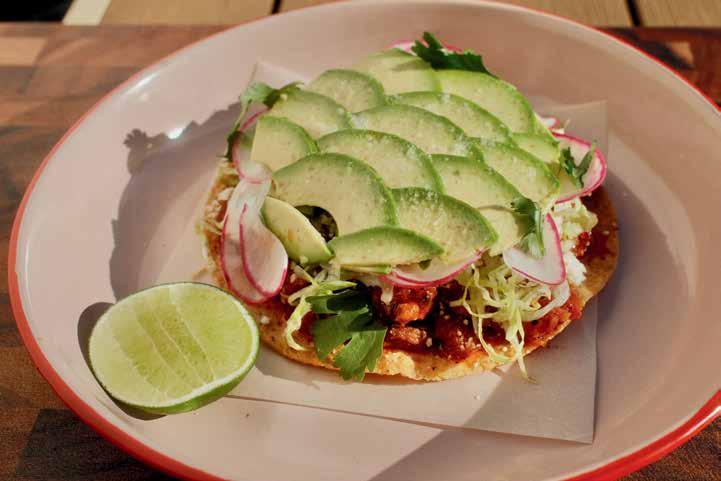
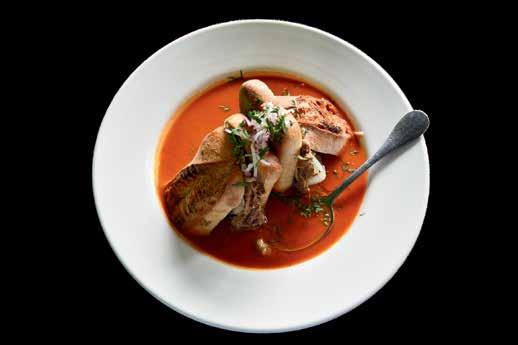
Highlights include various tacos, mole enchiladas, pozole verde, and one of the city’s best tortas ahogadas.
The drowned sandwich,” a specialty of Guadalajara, arrives crusty and golden before being bathed in a fiery red chile sauce messy, filling, and impossible to forget. Seasonal specials often show off Sotelo’s fine-dining background, but it’s these regional dishes that anchor 5 Rabanitos as both deeply authentic and distinctly its own.
Visit the original location just off of the 18 street pink line stop or check out the newly opened Hyde Park outpost at 5 and Kimbark Avenue. - MM th rd
Noon o Kabab
350 ft. from the Kedzie Brown Line Station
Persian restaurant Noon o Kabab has several Chicago-area locations, including a 10,000s uare-foot catering operation, but it all began in 1 in a small storefront at 4661 N. Kedzie Ave. in Albany Park. As the family-run business evolved over the years, with customers coming again and again for the restaurant’s generous portions of its signature dishes inspired by family recipes, it has now tripled in size with a larger, bright and airy space
adorned with Persian art depicting Sufi fables and tales just north of the original location.
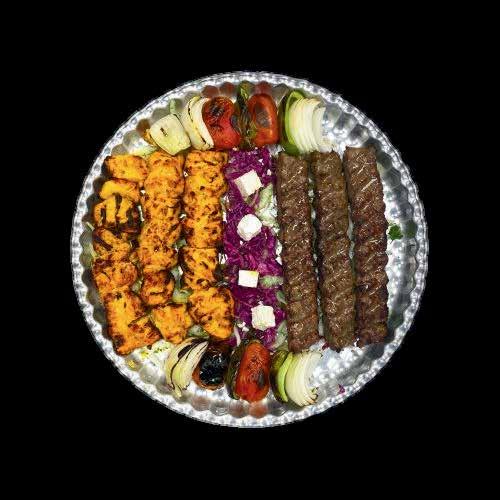
The draw here is the tender and juicy skewers made by hand, such as the salmon filet and soltani, a combination of filet mignon and koubideh Noon o Kabab’s signature ground sirloin and cooked over an open fire, which imparts so much flavor that sauces or other accouterments are unnecessary.
In recent years, Albany Park, which has long been home to a diverse and vibrant dining scene, has seen more restaurants set up shop including Maman Zari, a Persian tasting menu restaurant with a more modern approach to the cuisine), but Noon o Kabab has been a longtime staple of the community not just because of the food but also because of the emphasis on hospitality and building relationships the owner can be seen in the dining room greeting customers as if they are old friends and catching up with regulars). And the crowds regularly packing the dining room is a testament to that. - DH
450 feet from the Loyola Red Line Station
Dining at Khmai Fine Dining in Rogers Park is a way for executive chef Mona Sang to not only raise awareness of Cambodian cuisine in Chicago but also to make sure the culture doesn't fade away.
"At Khmai, our mission is more than just serving food it’s about preserving and sharing the recipes and stories that have been lost over time," according to the restaurant's website. "... Each dish tells a story of resilience, culture, and innovation, bringing forgotten flavors back to life in a way that feels both authentic and extraordinary. "
Sang was born in a refugee camp after her family fled the Khmer Rouge genocide, which was carried out by the Khmer Rouge government under Pol Pot, killing 3 million people in Cambodia from 1976 to 197 . Her mother, her sister, two brothers and her settled in the Chicago area when she was young. Matriarch Sarom Sieng supported the family by working as a private caterer to their local community, and Sang followed in her hospitality footsteps by working with Lettuce Entertain You restaurant group.
One of the driving forces for opening which grew out of Sang's catering Mona Bella that she and her mother during the pandemic, was to make sure recipes weren't lost.
After the mother-and-daughter team built a following for their traditional Cambodian fare, they opened the original Khmai in 2022 on Howard Street near the Evanston border; that location closed after a reported dispute with the landlord. In 202 , Khmai was reborn, this time in the former Onward Chicago space along Sheridan Road near Loyola University along with the more casual sibling restaurant Kaun Khmai, which specializes in street food small bites and shared plates.
The food at Khmai the name is a blend of "Khmer," representing the Cambodian language and culture, and "Mai" , meaning "mother"—is proudly Cambodian, full of flavor that's not diluted to appeal to the lowest common denominator. The menu features dishes that are hard to find anywhere else in the city, such as Prahok Ktiss: grilled pork belly and ground pork dip with prahok, coconut curry, dried pepper and kreoung, or Cambodian spice paste. Many of the recipes have Sang's mother's touch, from crunchy and juicy Mai's Eggrolls with ground chicken, onions, taro root and peanuts rolled by hand every day to the juicy Sach Ko Ja Kak — skirt steak skewers for which Sieng makes the marinade.
Even if you are not familiar with cuisine, the knowledgeable staff will guide you as you embark on your journey to Cambodia, and
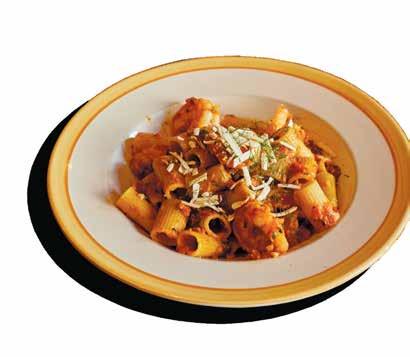
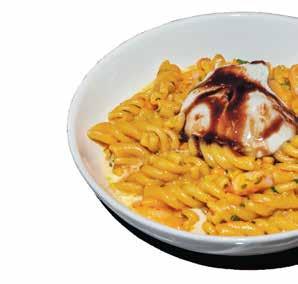
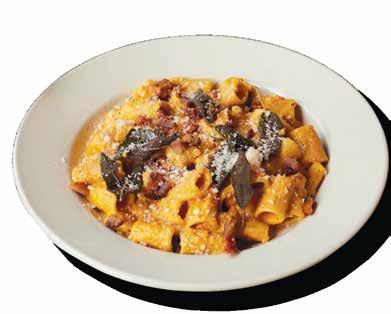
Tortello
.2 mi from the Division Blue Line Station
Tortello brings handmade Italian pasta to Wicker Park with a focus on high quality ingredients sourced from Italy and local farmers here in the Midwest. Owners Dario Monni and Jill Gray built the restaurant around the traditions of Dario’s native Italy, where pasta-making is daily ritual.
The standout dish is the Chiusoni Alla Gallurese, a semolina and water-based dough,
Cadinho Bakery & Café
.2 mi from the 35th/Archer Orange Line Station
Maria Alejandra Rivera and her husband, Chicago native Eric Carlsen, are the duo behind one of McKinley Park’s most beloved caf s. The two first met and married in Rivera’s native Honduras before spending three years in Cascais, Portugal. When they eventually returned to Chicago, Rivera carried with her a love for Portuguese flavors and traditions. What began as a home baking project selling pastries and cakes through social media in 2021 quickly grew into a loyal following.
Sikia
.1 mi from the Halsted Green Line Station
Sikia is Englewood’s student-run fine dining restaurant, operated by Kennedy-King College’s Washburne Culinary Institute. Open during the school year, the restaurant gives culinary students real-world training while offering diners a refined three-course meal at an unmatched value.
rolled and served in a Sardinian sauce of saffron, cream, onions, and sausage. Perfectly toothsome and comforting, the dish is ideal for stewarding in the cooler fall season. Seasonal salads and small plates balance the menu, but pasta remains the heart of the experience.
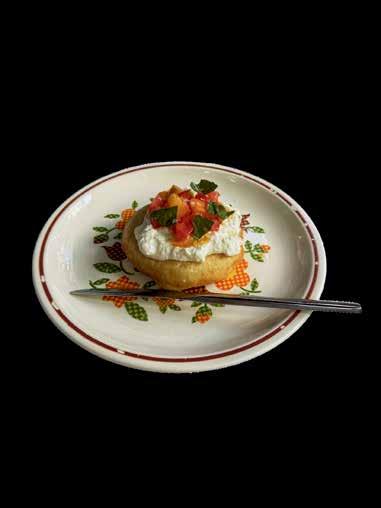
New menu addition the pizza fritta, a Neapolitan street food classic, is not to be missed.
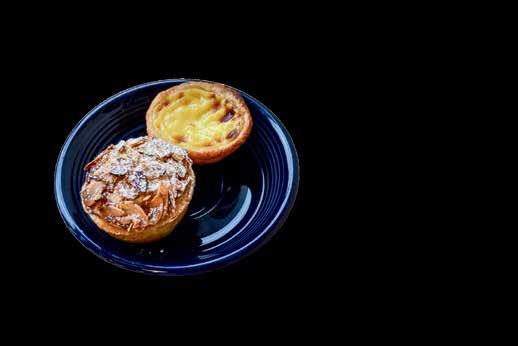
Today, their brickand-mortar bakery at 35th and Archer has become a neighborhood favorite. Guests can find caf classics like quiche, smoothies, and a lineup of specialty coffees, but the real draw is the pastel de nata, Portugal’s iconic custard tart. Rivera takes pride in connecting customers to this centuries-old tradition, which has roots in an unlikely corner of food history.
Beginning in the 15th century, Portuguese nuns used egg whites to starch their religious habits, leaving convent kitchens with a surplus of yolks. The inventive solution? A repertoire of rich, yolk-based pastries known as conventual sweets.” The pastel de nata emerged as the crown jewel of these confections—one that Rivera now brings, with care and craft, to Chicago’s southwest side.MM
The menu shifts regularly, reflecting global influences and seasonal ingredients.
Both dishes and service are executed with skill and enthusiasm from composed appetizers to balanced entr es and desserts. The experience is elegant but approachable, making Sikia one of Chicago’s most unique dining opportunities.
Reservations are required, and hours are limited, but those who plan ahead are rewarded with one of the city’s best-kept secrets: a fine-dining experience in Englewood that highlights both community and the future of Chicago’s culinary scene. - MM
INDIANAPOLIS IS MORE THAN A SPORTS TOWN
I've lived 36 years in Chicago and have never visited Indianapolis, but the proximity and allure of WNBA All-Star Weekend had me packing my bags and taking the 60-minute flight east to see my favorite basketball players and explore the city.
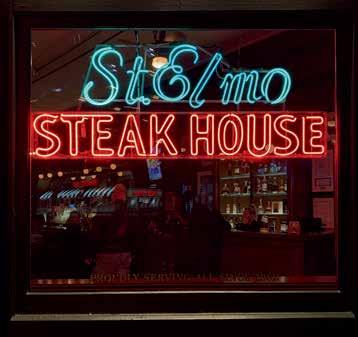
I never thought of Indy as a food town, but days before I left, a friend raved about St. Elmo’s, the city’s oldest steakhouse, and insisted I visit. But, he warned, I likely wouldn’t be able to snag a reservation in time—the restaurant books up weeks in advance. This felt less like a disappointment and more like a challenge.
BY XIMENA N. BELTRAN QUAN KIU
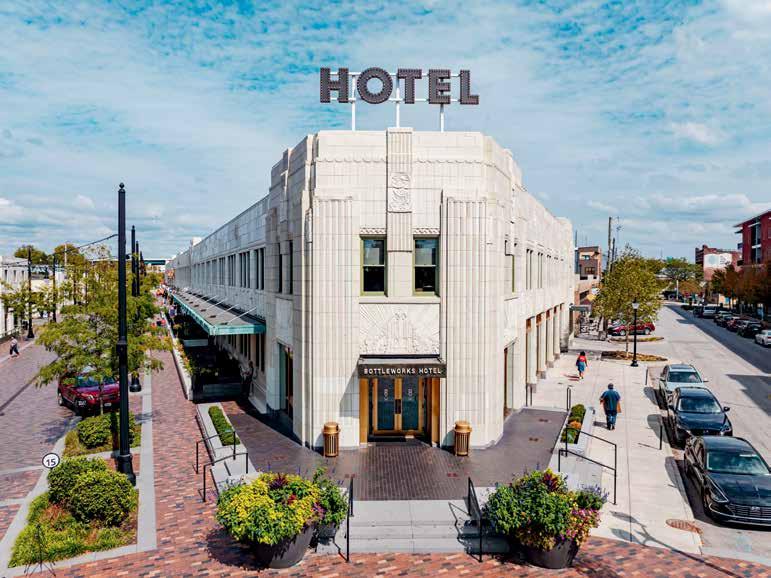
So, on paper, my first food stop was to be dinner at Bodhi, a Thai restaurant located in the hip Bottleworks District, the former site of the world's largest Coca-Cola bottling factory (turned hotel) and now a lively entertainment district. The hotel is an art deco lover's dream with original terra cotta exterior, terrazzo floors, a stunning original chandelier from the 1920s, and spacious guest rooms.
However, after checking into the Omni and realizing it's a short walk from St. Elmo’s, I decided to visit and see if I could get in for a late lunch. Diners who don’t mind eating at a steakhouse during odd hours (like 2:30 pm) are going to find tables easy to come by. My friend Katie and I were seated without a wait.
Photo courtesy of Bottleworks Hotel
The 123-year-old restaurant is known for its spicy shrimp cocktail. Made with ground horseradish, the dish arrives with a warning and instructions from your server. They’ll tell you the sting lasts for a few seconds and washes away. What they forget to mention is that this sensation happens with every single bite. The appetizer comes with four pieces of jumbo shrimp—I only made it through one.
By the time I finished my wedge salad and filet mignon, I realized I only had two hours before dinner. The second Bodhi came into view, and I knew I had made a mistake not arriving on an empty stomach.
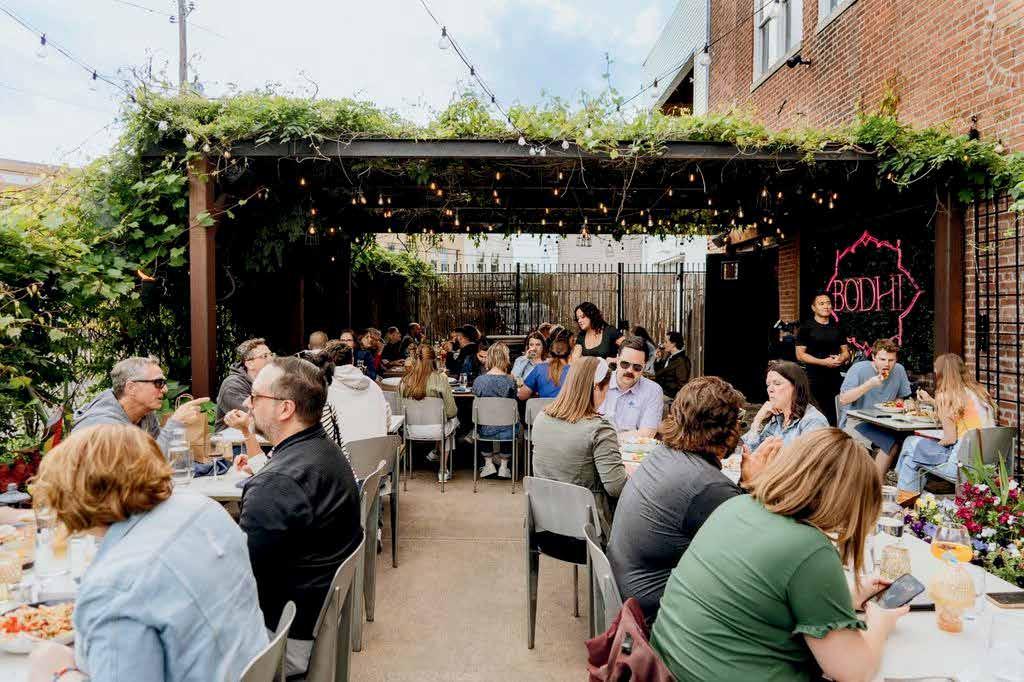
The restaurant doesn’t take reservations. At 5:45 pm on a Thursday night, the dining room was already packed, and a line had formed. During the summer months, diners are lucky. The ivy-covered back patio adds 70 seats, which reduces wait times.
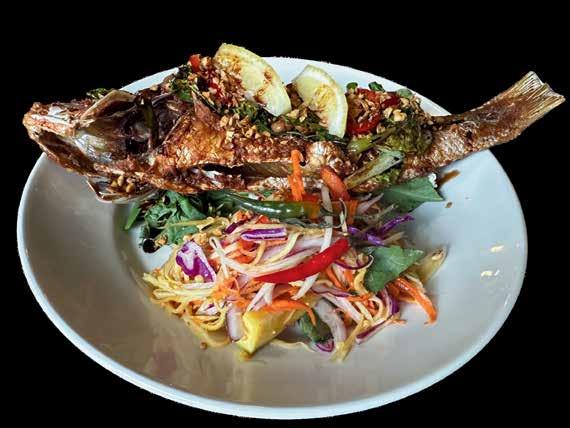
Taelor Carmine, 38, opened Bodhi in March 2021 and works alongside Nicky Carmine, her mother; and Pen Phojanasupan, her grandmother, to bring traditional Thai cuisine to Indianapolis. Expect papaya salad, shrimp lemongrass soup, curries, and noodles on the menu. The family immigrated to the Midwest when Carmine was 13 years old, and the restaurant is a reflection of her family’s history. She ends up serving our table, but because dinner service is busy, we speak later by phone.
“This restaurant represents the shared love for food within my family's kitchen,” Carmine tells me. “It's not supposed to be fancy Thai cuisine. It's traditional food we grew up enjoying as a family. I avoid saying authentic, because there's no such thing as authentic Thai food nowadays. We just take a modern approach to it.”
Photo by Megan Marshall
Photo by Brooklyn Marrs
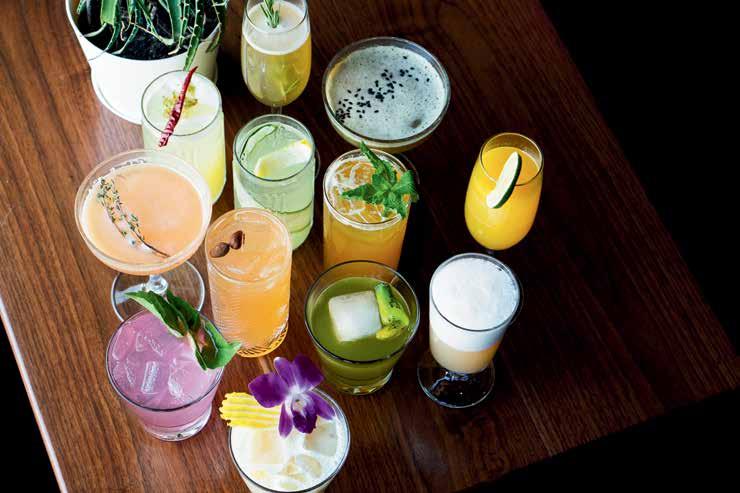
Carmine points to her beverage program, led by Beverage Director Dalton Lineback, as an example. The list of craft cocktails includes yuzu, black sesame, and fish sauce paired with corn, strawberry, and cantaloupe—it’s meant to marry her eastern roots with her western upbringing for a unique combination not often seen in small or larger markets.
“Most Thai restaurants are very straightforward, transactional, but I felt like Bodhi could offer something unique, and make it more vibey,” says Carmine. “The bar menu creates this potent combination of Thai food and craft cocktails. I don't think many Thai restaurants do that.”
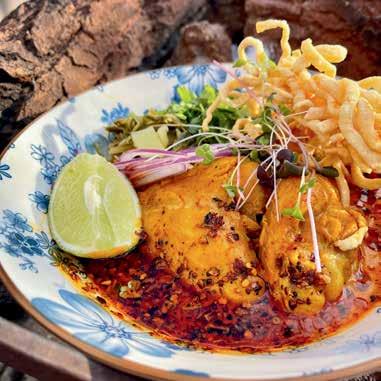
She’s on to something. It might have taken me almost four decades to visit Indy, but Bodhi is the reason I’ll be back in no time. I haven’t been able to stop thinking about the crunchy spring rolls dipped in a sweet plum sauce.
Indy might be a sports town (it’s what first brought me there), but as I spent my last few hours unwinding at the Conrad’s spa— where two Picasso sketches stood framed with only me as an onlooker—I realized its growing food scene makes it an unexpected dining destination, and perhaps one of the Midwest’s most underrated cities.