



The Genesee County Prevention Coalition (GCPC) was established in 2007 and serves all of Genesee County, Michigan. The goals of the coalition are to maintain and strengthen community collaboration in support of local efforts to prevent youth substance use and promote positive community norms. The GCPC utilizes the Strategic Prevention Framework to build capacity and collaboration with all sectors of the community. This is accomplished through recruiting, engaging, and training community members, especially youth, in the work of the coalition. These and other community-based and environmental prevention strategies are supported by local, state and federal grants as well as donations and in-kind support from our community partners.
MISSION
Genesee County Prevention Coalition executes innovative strategies and unites communities in preventing substance misuse and promoting mental wellness throughout Genesee County.
VISION
Genesee County Prevention Coalition envisions a healthy and thriving community.
CORE VALUES
As a trusted steward of the community, Genesee County Prevention Coalition champions:
+ Stewardship
+ Respect
+ Optimism
+ Leadership
+ Collaboration
FOLLOW US ONLINE!
WEBSITE thegcpc.org
FACEBOOK facebook.com/theGCPC
INSTAGRAM instagram.com/theGCPC
TWITTER twitter.com/the_GCPC
LINKEDIN linkedin.com/company/genesee-county-prevention-coalition/

This issue is all about helping kids reconnect with their community and families. Our magazine committee really excelled in identifying all sorts of ways to help kids just be kids. With kids having more free time, they really wanted to focus on getting kids away from technology.
As I was reviewing the feature article on ways to be in the moment, I found myself reminiscing about my own childhood and the simple, free activities that brought so much joy. Back then, we spent hours riding bikes, wading in creeks, building blanket forts, and creating adventures with whatever we had around us. What made those memories even more meaningful was sharing them with family. We hope this article sparks excitement and inspiration that leads to lifelong memories for you and your loved ones.
Keeping with the idea of helping kids explore and engage more fully with the world around them, we also feature an article on what screen time may be doing to the developing brain. It’s easy to hand our kids a tablet or phone, but what is really happening when we do that? More and more research is coming out on the detriments.
This issue shines a spotlight on inspiring local youth and community leaders who are engaging other youth through advocacy, mentorship, and sports. From young advocate champions to community mentors, they create safe, supportive spaces through athletics and public health initiatives. The stories in this issue reflect that when youth are supported and empowered, they can create meaningful lives both for themselves and for those around them.
Lastly, we’ve included an article to remind parents to give themselves grace. Parenting doesn’t come with a perfect scorecard, and none of us are getting it right all the time.
We hope this issue inspires your family to create meaningful moments together!






Learn the skills that help you stand out, gain confidence, and get ahead—personally and professionally.
If you’re 14–19 and in grades 9–12, this is your chance to level up.
TeenQuest graduates also get exclusive access to the Summer Youth Initiative (SYI) Job Fair, where employers are ready to hire TeenQuest students!
TeenQuest helped mold me into the person I am today. It taught me to take responsibility in my own personal growth.
- De’Anna Anderson

Iwant to begin by saying that this article is not intended to cast judgement or disapproval on any parent. I genuinely believe that most of us are doing the best we can, and our end goal is to raise smart, well adapted, healthy children. However, when I was a single parent of two small children, I sometimes depended on giving them technology to make it through the day. It’s rare to find a home where both parents aren’t working, juggling the demands of family and employment. And sometimes we just need 30 minutes to cook dinner, make a phone call or even take care of ourselves.
Although I’ve heard that boredom breeds creativity, I still cringe when I think of the times I left my (then small but school aged) children to their own devices while I attended to one of my adult responsibilities. One of my children has ADHD, so this was especially challenging. Although I was within ear shot, and “checking in” every 15-20 minutes, my children’s destructive (albeit creative) abilities were mind blowing. Entire bottles of pancake syrup were dumped on the couch, my car and house were decorated with zig zags of spray paint, a bathroom was “cleaned” with oilbased furniture polish, a golf ball was driven through a window, and a picture window cracked with a football. Aside from some minor property damage, we made it through these incidents.
From these experiences, I learned that it was much easier to give my children screen time to minimize such “catastrophe.” With the effects of excessive screen time on developing minds becoming more well understood, I decided to reach out to some of my favorite moms to see how they keep their kids occupied. Here’s what we came up with.
1. Keep a small stash of “special” toys and books that your kids can play with only when you allow them to.
2. Set up coloring materials and stickers, you might ask your children to make a special drawing or card for a friend or family member.
3. Give your children “jobs” to help you. Have them pick up their toys, put dirty clothes in the laundry, etc. To encourage participation, you could make it a competition–whoever does the best job, picks up the most toys, etc. gets a small prize.
4. If your children are old enough to be unsupervised in the shower or bath, allow them to take one. You could add bubbles, play some fun music or a story, and give them toys to play with.
5. Set up a quick scavenger hunt in your house or yard. Ask your child to search for things like a favorite stuffed animal, a neat rock, pieces of garbage, something soft, something smelly, something tiny, etc.
6. Set up a game for your kids to play. Favorites in my household included Candy Land, Pop the Pig, Uno, and Dutch Blitz.
7. Put out a puzzle for your kids to complete.
8. Have your kids listen to a story using one of the many listening devices available. Bonus points if you can give them the same book to follow along with!
9. Have older children read books to younger children.
10. Give your children a cardboard box to decorate with stickers, crayons, etc. The bigger the box the better!
11. Set out pillows, blankets, etc. and have your kids build a fort (with your help if needed). Allow them to play or have a picnic in their fort.
12. If your child is old enough to use hand tools unsupervised, give them a piece of wood with a hammer and nails. Encourage them to make patterns or spell out words. My (then) 10-year-old son once spelled out “welcome” using nails, and we still display his creation.
13. Create a racetrack for toy cars using masking tape.
14. Set out building materials (Legos, blocks, magnetic tiles, marble runs).
15. Give your children a physical challenge. Ideas include doing crab or bear walks down the hall 20 times or doing 50 jumping jacks. You could also use masking tape to create an indoor hopscotch course or create one outside with chalk.
16. Blow up balloons and have your kids play “balloon volleyball” (trying to keep the balloon from hitting the ground).
17. Repurpose bubble wrap by allowing them to “pop” it by jumping on it, squeezing it, etc.
18. If your children are old enough to be unsupervised outside, send them out to play!

by STAFF

Family time plays a vital role in building strong emotional connections and creating a sense of belonging. Spending quality time together allows family members to communicate openly, share experiences, and support one another through challenges. It helps children develop confidence, social skills, and a feeling of security, knowing they are valued and loved. For adults, family time can reduce stress and provide a healthy balance between work and personal life. Simple activities like eating meals together, playing games, or having meaningful conversations strengthen trust and understanding. These shared moments also create lasting memories that family members can cherish for years. In today’s busy world, prioritizing family time encourages mindfulness and reminds individuals of what truly matters. Overall, regular family interaction fosters stronger relationships, improves emotional well-being, and builds a supportive environment where everyone can grow and thrive together.
A group of moms came up with these ideas to help other families stop and enjoy life; and each other. The majority of them are free. They only require making the time to do them. This may be a trip down memory lane. Remember how fun some of these were back in the day. So, put down the devices and start having some fun together!
1. Catch a grasshopper – bonus if you have a hungry pet lizard!
2. Hunt for dinosaur bones – AKA cool looking rocks – it’s ok that your driveway or unused yard looks like it was hit with tiny landmines, you have an emerging paleontologist.
3. Pick flowers.
4. Throw rocks in the lake, river, or ditch.
5. Impromptu run through the sprinkler or dance in the rain.
6. Make sidewalk chalk designs or develop a sidewalk chalk obstacle course challenge.
7. Use masking tape across a long hallway to create a jungle obstacle course, your kids have to crawl under and climb over without knocking the tape down.
8. Eat dinner on the trampoline. It’s super fun when you are 6 or 10!
9. Lay in the grass and find shapes in the clouds.
10. Take a walk finding animal tracks (real or pretend).
11. Have a picnic outside or in your living room.
12. Make blanket forts.
13. Have a Nerf gun fight.
14. Have kids see how fast they can run around the house or from point “A” to “B” and time them. See if they can improve their time.



15. Create playdough masterpieces and, yes, it’s ok to mix colors let see what new color they can create!
16. Put each child in charge of dinner one night per week. They plan the menu and help cook. If they’re old enough, they can even make it themselves.
17. Play a game at the table during dinner. Pick a theme (things that are striped, things that are green, black/white animals) and everyone takes turns coming up with ideas. Whoever gets stumped gets to pick the next theme.
18. Choose a family activity for the evening. ride bikes, tag, board game, walk/hike, trip to the park, etc.
19. Each member of the family has to teach everyone else how to do something.
20. Show a movie or sporting event outside on a sheet.
21. Turn off the radio in the car and no technology. Ask questions: who would you love to have lunch with and why; where would you go on vacation; if you could be a character in a book, who would it be; if you could have something delivered to your doorstep every morning what would it be; what is your favorite smell; (topics can be found online or purchased)
22. At bedtime ask: what was your favorite thing that happened today; what is one thing you’d do differently?
23. Go for a walk or hike and look for rocks that are in the shape of hearts. (Bring them home and paint them and place them around town)
24. Have a pillow fight.
25. Have a water fight with balloons, water guns or cups of water!
26. Plan a family talent show.
27. Have a karaoke challenge.
28. Make dessert together.
29. Visit a new state or local park.
30. Read a book. For older kids, choose a chapter book to read together and read a chapter a day.
31. Plan a dance party. Turn the music up loud and dance together!
32. Have a campfire dinner. Roast hotdogs and make s’mores.
33. Light sparklers or watch fireworks.
34. Take a walk and pick up pieces of garbage. Whoever collects the most wins a small prize.
35. Play hide and seek with the whole family.
36. Roll down a hill in the park or back yard.
37. Go camping or have a family camp out in your yard.
38. Make mud pies.
39. Tape butcher paper to your kitchen table, set out markers or crayons, and let your family’s imagination and talent take center stage.
40. Star gaze together.
41. Play “I’m Going on a Picnic”, “I spy” or “20 questions”. These are especially good for long drives or when waiting in line.
42. Set up a scavenger hunt and divide your family into teams. Whoever wins gets a prize or special privilege.
43. Make homemade ice cream. You can find recipes online that don’t require special equipment–just a plastic bag!
44. Play capture the flag.
45. Grow something together or plant a garden. Kids love to harvest and eat things they have grown themselves.
46. Fly a kite.
47. Go fishing.
48. Go to your local “duck pond” and feed the ducks.
49. Go bird watching. There are free apps that can help identify birds based on their appearance and song.
50. Tape butcher paper to your fence or exterior wall and create a family mural.
51. Look at family pictures together.
52. Visit the local library to check out books, games, etc. Be sure to take a look at their free activities and events.
53. Go geocaching.
54. Find a local course and play Frisbee Disk Golf or make up your own course in your yard or neighborhood.
55. Watch for free family activities in your community. Museums and other venues often have free or reduced admission periodically.
56. Have a tea party complete with tea, finger sandwiches and sweet treats. Costumes are optional!
57. Do science experiments.
58. Play musical chairs or “spoons.” Directions for both can be found online.
59. Help an elderly or disabled neighbor with yard work or chores. Or invite them to a family dinner.
60. Volunteer as a family at a nursing home, homeless shelter or food pantry.
61. Do Madlib’s together. Several are available free online.
62. Write a story together.
63. Learn new skills together. Ideas include playing chess, roller skating, juggling, or a few words in another language.
64. Learn magic tricks together.
65. Paint each other’s faces.
66. Tell ghost stories in the dark with a flashlight or around a campfire.
67. Build paper airplanes and have a contest to see whose flies the farthest.
68. Write letters to other family members together.
69. Build sandcastles together or take turns burying each other in the sand!
70. Share memories, pictures and stories of your childhood with your children.
71. Have a lemonade stand.
72. Visit a thrift store, giving each person a budget with the challenge to find at least one “treasure”.
73. Take a drive.
74. Watch the sunrise or sunset.
75. Do a crossword puzzle.
76. Put together a puzzle.
77. Make cards for nursing home patients.
78. Go to a rescue shelter and walk the dogs.
79. Color pages together as a family.
80. Paint or tie-dye family t-Shirts.
81. Have a LEGO competition.
82. Create a family dance
83. Make sock puppets.
84. Go on a photo walk and take pictures of the most interesting things you see.
85. Blow bubbles.
86. Play balloon volleyball.
87. Make a homemade pizza.
88. Visit the local farmer’s market.
89. Participate in a local fun run.
90. Make a collage of family pictures.
91. Make a family tree.
92. Dress up in costumes and have a parade through your neighborhood. Bonus points: recruit neighborhood kids.
93. Foster an animal from the local shelter.
94. Wash the family car together.
95. Make slime or playdough.
96. Have each member of the family choose one of these ideas at least once a week.
Please email ALeatherberry@theGCPC.org and tell us why this individual has stood out in your crowd.

Malia is 13 years old and a member of the Youth Action Council. She is passionate about making a difference in her community and helping others. She enjoys volunteering and takes pride in the work she does. Outside of her community involvement, Malia is very interested in cheer and dance, which are among her favorite activities. She lives with her mom and has one dog who means a lot to her.
Emma is a sophomore at Grand Blanc High School. At school, she participates in Youth in Government and AP classes. Her focus is the GCPC Youth Action Council, where she focuses on youth vaping prevention and mental health awareness. Her efforts extend outside of school hours, but she doesn’t mind, saying “there is nothing better than the YAC, it is truly my pride and joy and I do not wish it any different.” If not working on a project for the YAC, she is doing homework or giving in to social media. After high school, she plans to attend community college and major in public health, which has become her biggest passion.


Brayley is a student of Lake Fenton Community Schools and President of the Genesee County Youth Advisory Council. Brayley has been recognized as the 2026 Children’s Champion Outstanding Youth by Genesee Health System highlighting exceptional contributions and dedication to supporting children in the community. Brayley plans to continue advocacy after graduating through social work and advocating for hearing impaired children.
Aaron serves as a Public Health Lead and youth basketball coach in Flint, Michigan, where he works at the intersection of health, prevention, and youth development. Aaron uses the game as a structured outlet to prevent violence and substance use while building discipline, leadership, and accountability among young people. Aaron helps youth understand how nutrition fuels performance, improves focus, and supports long-term health, both on and off the court. In the public health role, he collaborates with schools, community organizations, and local leaders to expand access to prevention-based programming and resources.


Flint Affiliation Basketball is the longest-standing AAU basketball program in the City of Flint and the State of Michigan. The program uses basketball as a structured outlet to actively prevent violence and substance use while building discipline, leadership, and accountability. The program also integrates public health principles by emphasizing the connection between physical activity, nutrition, and overall well-being.




40 Developmental Assets are essential qualities of life that help young people thrive, do well in school, and avoid risky behavior.
Youth Connections utilizes the 40 Developmental Assets Framework to guide the work we do in promoting positive youth development. The 40 Assets model was developed by the Minneapolis-based Search Institute based on extensive research. Just as we are coached to diversify our financial assets so that all our eggs are not in one basket, the strength that the 40 Assets model can build in our youth comes through diversity. In a nutshell, the more of the 40 Assets youth possess, the more likely they are to exhibit positive behaviors and attitudes (such as good health and school success) and the less likely they are to exhibit risky behaviors (such as drug use and promiscuity). It’s that simple: if we want to empower and protect our children, building the 40 Assets in our youth is a great way to start.
Look over the list of Assets on the following page and think about what Assets may be lacking in our community and what Assets you can help build in our young people. Do what you can do with the knowledge that even through helping build one asset in one child, you are increasing the chances that child will grow up safe and successful. Through our combined efforts, we will continue to be a place where Great Kids Make Great Communities.



1. Family support: Family life provides high levels of love and support.
2. Positive family communication: Young person and her or his parent(s) communicate positively, and young person is willing to seek advice and counsel from parent(s).
3. Other adult relationships: Young person receives support from three or more nonparent adults.
4. Caring neighborhood: Young person experiences caring neighbors.
5. Caring school climate: School provides a caring, encouraging environment.
6. Parent involvement in school: Parent(s) are actively involved in helping young person succeed in school.
7. Community values youth: Young person perceives that adults in the community value youth.
8. Youth as resources: Young people are given useful roles in the community.
9. Service to others: Young person serves in the community one hour or more per week.
10. Safety: Young person feels safe at home, at school, and in the neighborhood.
11. Family boundaries: Family has clear rules and consequences and monitors the young person’s whereabouts.
12. School boundaries: School provides clear rules and consequences.
13. Neighborhood boundaries: Neighbors take responsibility for monitoring young people’s behavior.
14. Adult role models: Parent(s) and other adults model positive, responsible behavior.
15. Positive peer influence: Young person’s best friends model responsible behavior.
16. High expectations: Both parent(s) and teachers encourage the young person to do well.
17. Creative activities: Young person spends three or more hours per week in lessons or practice in music, theater, or other arts.
18. Youth programs: Young person spends three or more hours per week in sports, clubs, or organizations at school and/or in the community.
19. Religious community: Young person spends one or more hours per week in activities in a religious institution.
20. Time at home: Young person is out with friends “with nothing special to do” two or fewer nights per week.
If you or your child would like to submit a picture that represents one of the 40 Developmental Assets, please email ALeatherberry@theGCPC.org with a picture and the number of the asset the picture represents. Not
21. Achievement motivation: Young person is motivated to do well in school.
22. School engagement: Young person is actively engaged in learning.
23. Homework: Young person reports doing at least one hour of homework every school day.
24. Bonding to school: Young person cares about her or his school.
25. Reading for pleasure: Young person reads for pleasure three or more hours per week.
26. Caring: Young person places high value on helping other people.
27. Equality and social justice: Young person places high value on promoting equality and reducing hunger and poverty.
28. Integrity: Young person acts on convictions and stands up for her or his beliefs.
29. Honesty: Young person “tells the truth even when it is not easy.”
30. Responsibility: Young person accepts and takes personal responsibility.
31. Restraint: Young person believes it is important not to be sexually active or to use alcohol or other drugs.
32. Planning and decision making: Young person knows how to plan ahead and make choices.
33. Interpersonal competence: Young person has empathy, sensitivity, and friendship skills.
34. Cultural competence: Young person has knowledge of and comfort with people of different cultural/racial/ethnic backgrounds.


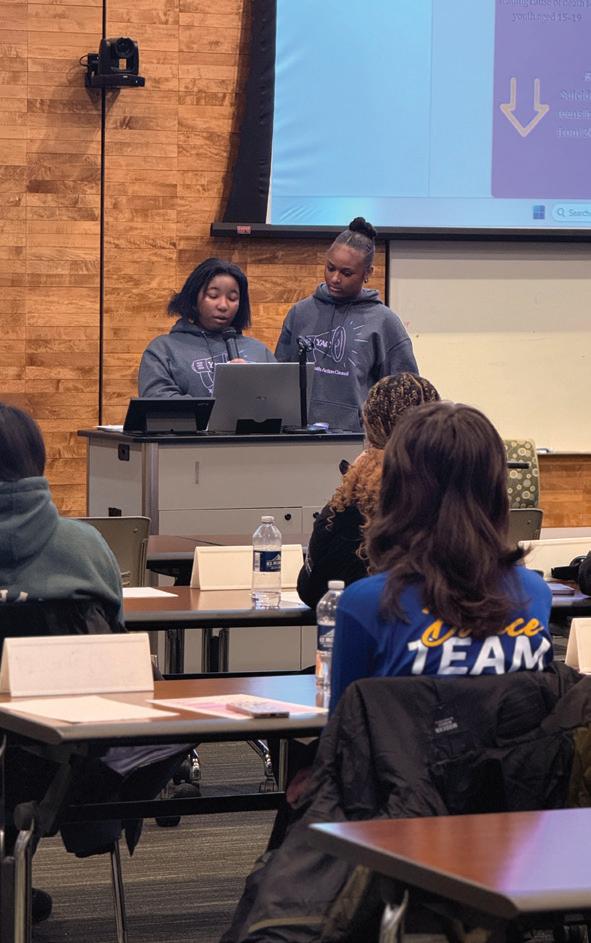
#37 personal power- Youth discover power mapping at advocacy training.
35. Resistance skills: Young person can resist negative peer pressure and dangerous situations.
36. Peaceful conflict resolution: Young person seeks to resolve conflict nonviolently.
37. Personal power: Young person feels he or she has control over “things that happen to me.”
38. Self-esteem: Young person reports having a high self-esteem.
39. Sense of purpose: Young person reports that “my life has a purpose.”
40. Positive view of personal future: Young person is optimistic about her or his personal future.


By ALEXIS MOLINEUX GIBBONS, M.A., CCC-SLP
Today’s world is filled with screens. Most homes contain a variety of smartphones, tablets, laptops, video game consoles and televisions. On average, American households have 17 screened internet connected devices, making them increasingly accessible to children of all ages.
Screen time is not inherently bad, and can support education, creativity and social connection. However, when sleep, physical activity and face to face time with others are impacted by excessive use, children’s health and development can suffer.
Children learn best by exploring their environment and interacting with the people around them. A child’s language, cognitive, physical, psychological and social development is dependent on play. Through play, children develop problem solving skills, improve attention and memory, learn to regulate emotions and interact with others, acquire new vocabulary and improve grammar. Learning through play forms the foundation for academic success and transition in the adult world. We learn to plan and organize, self-control, cognitive flexibility, task initiation and persistence through play. It logically follows that increased screen time equals less play and poorer developmental outcomes.
Research confirms that excessive unregulated screen time does impact brain development and could have long reaching effects. Research into the impact of internet usage and screen time on development and health is relatively new, however preliminary results suggest an association between delayed or impaired development and screen time.
So, how does screen time impact development?
Higher amounts of screen time are associated with lower self-esteem, more frequent and severe mental health issues, and addiction. As children’s social lives have moved away from face-to-face interactions and moved more online, rates of anxiety, depression and selfharm have increased.
Language
Research indicates that toddlers who are exposed to more than one hour a day of screen
time have poorer language development, both in terms of their understanding of language and their expressive language skills. It was also found that reading frequently to a child may have a buffering effect on language comprehension delays but had little effect on verbal expression. Delayed language acquisition can significantly increase the risk of poor reading/spelling skills, and academic challenges.
Executive function begins to develop between six and twelve months old and continues into our twenties, with full development by age twenty-five. Executive function is essentially the “adult” part of our brain that drives our working memory, goal setting, emotional management, and problem solving. It helps us follow rules, negotiate, self-regulate, plan, organize, multitask, make complex decisions, and to attend to tasks, and provides us with the ability to change our response to challenges as needed (cognitive flexibility). Research has determined that there is a correlation between excessive screen use and impaired executive function in children. Excessive screen time or internet usage has been found to negatively impact emotional regulation, behavior, attention, memory, and other aspects of executive function.
What do the experts say about screen time limits? The American Academy of Pediatrics (AAP) makes the following recommendations for children:
• Birth to 18 months: avoid screen time with the exception of video chats with friends and family.
• 18-24 months: small amounts of highquality educational programming viewed with an adult to help them understand what they are seeing/ hearing.
• 2-5 years: one hour per day of high-quality educational content.
For children six and up, the AAP does not provide screen time limits but suggests that parents focus on setting healthy consistent boundaries focusing on content and context, and ensuring that face-to-face social interactions, physical exercise and sleep are not neglected. Evidence has emerged that restrictions focusing on content, co-watching with discussion, and balance
between screen time and other activities are associated with better well-being than rules just focused on limiting screen time. They suggest that parents:
• Create screen-free times and spaces such as mealtimes, parent-child play times, and bedrooms. Parents should model these restrictions by putting away their devices.
• Focus on what kids are doing online, and not just how long they are on screens.
• Create a family Media Plan (the AAP has a template on their website).
• Make sleep and physical activity a priority. Avoid all screens at least an hour before bed to limit blue light from disrupting sleep cycles.
• Avoid relying on screens as the only way to calm children down because it can impact their ability to learn how to regulate their emotions.
How do we evaluate the content of what our children are viewing, or determine if it is “high quality”? The AAP developed the “5 C’s Framework” to assist parents in determining the value of screen time content:
• Child: consider your child’s personality and maturity.
• Content: choose educational, high quality, age-appropriate content over mindless scrolling.
• Context: consider your child’s purpose. Are they connecting with friends, using a screen for entertainment or education, or just “zoning out”?
• Co-viewing: use screens as a shared family activity versus an independent one.
• Crowding out: ensure that screens aren’t replacing other activities such as playing outside, reading, doing homework, face-toface interactions or chores.
It is estimated that kids aged two to five spend 2 hours per day on screens, ages five to eight 3.5 hours, ages eight to twelve 5 hours, and teenagers nine or more hours per day. By following recommended guidelines, parents can minimize the impact of screen time on their children’s development, giving them more time for play, exercise, face-to-face interaction and sleep. ■
By MELISSA WILSON, LCSW
One afternoon I received a slightly startled phone call from a neighbor. She explained that there were a kid and a dog in the field between our houses, wearing a backpack and carrying what looked like a homemade bow.
“Oh yes,” I told her. “That’s my son. He’s out practicing with his homemade bow, shooting at things. Not to worry, unless of course he’s wandered onto your property instead of ours.”
“Oh, no,” she said. “He’s great. I’m just not used to seeing that.”
I had to laugh because, honestly, I could see how unusual it might look. He was fully decked out like he was heading for a monthlong wilderness expedition. In reality, he was on an adventure testing out his homemade bow. He had spent several evenings constructing this bow from a broken branch, some string and an arrow crafted from a stick. In the end, he created a working model that he took out many times to practice his skills aiming, exploring, and shooting.
Part of me struggles with letting him wander so far without me, especially on these kinds of adventures. But I also know it’s exactly what he needs. Those small independent moments are where he’s learning problem solving, creativity, and confidence while figuring out manageable risks. On one of these adventures, he invited his younger sister to come along.
As I watched from our front window, they walked across the field together, talking, I found myself wishing I could hear their conversation. Was he passing down his wilderness knowledge? Were they talking about friendships? Who knows?
What I do know is that I hoped it was a moment of lasting connection between them. They stopped partway across the field, and he pointed at something. A moment later I saw her take her turn with the handmade bow while he stood beside her, carefully helping her aim. My momma heart exploded with pride.
Watching them that afternoon, I kept thinking about how little I had done to make that happen. I hadn’t planned it, scheduled it, or suggested it. I had simply allowed the time and space for it.
That moment stayed with me, especially as I’ve been hearing more and more people
It’s about giving kids room to experience boredom, imagination, and independence.
More than anything, it’s about trusting that kids learn a lot when we step back just enough to let them explore, make mistakes, and figure things out along the way.
talk about “parenting like it’s the 90s.”
What does that actually mean? At its core, it’s a parenting philosophy that allows kids more age-appropriate freedom, encourages unstructured play, and doesn’t rely on constant supervision or planning.
For me, this idea isn’t about nostalgia or trying to recreate my childhood. It’s remembering a time when childhood felt a little less perfect and a little more free. It’s about giving kids room to experience boredom, imagination, and independence. More than anything, it’s about trusting that kids learn a lot when we step back just enough to let them explore, make mistakes, and figure things out along the way.
There’s nothing wrong with the Pinterestworthy craft or the carefully planned playdate; those memories matter too. But the “90’s parenting” mindset is a little different. It hands them the afternoon to decide what to do with it.
Here are a few things to think about from the “90s parenting” mindset:
Independence builds confidence. It creates space for kids to try things on their own, whether it’s exploring the yard, heading out on a backyard adventure or doing something simple like pouring their own cereal. Not every activity needs to be guided by parents. Those small moments of independence often become some of the biggest learning experiences.
Boredom has value. It allows kids the time and space to figure things out for themselves. The “I’m bored” moments happen a lot, but this mindset leaves room for them to be the problem solvers instead of the parents stepping in. More often than not, they do. And when they do, they’re almost always more engaged because they created it themselves.
Kids can do hard things. It leaves room for them to navigate the hard parts, negotiating what to play, compromising on ideas and deciding who leads. These are real world skills, and each time they work through them their confidence grows a little more.
Does it take practice? Yes. Do chores need to get done? Absolutely. But when chores are done, the day is theirs. And honestly, it gives me a chance to catch my breath before following them into whatever world they’ve decided to build. Some days it works beautifully, and I get to watch them settle into their independence. Other days someone is in tears by 10 a.m. and needs a little more support. That doesn’t mean this mindset isn’t working, that’s just parenting. The give and take of being there enough, but not too much and taking in the wonder they gain on their own.
I’m not sure we’ll always get the balance exactly right; parenting rarely works that way. And part of that balance is simply knowing our kids, their developmental stage and knowing the boundaries that help them stay safe, even as they head out on their own little adventures. But we’ll keep trying. And maybe, if we are lucky, we’ll get a few more summers where our kids still want to turn a stick and a piece of string into a bow and arrow, where the backyard becomes the start of an adventure and where we remember to step back just enough to let it all unfold. ■
Sextortion is an alarming form of online exploitation that blends sexual coercion with blackmail. The term combines “sex” and “extortion,” and it describes situations where someone threatens to share private, sexual, or embarrassing images of a victim unless demands—often for money, explicit content, or other favors—are met. According to the Federal Bureau of Investigation, sextortion cases involving children and teens have surged dramatically in recent years, with many beginning on social media, gaming platforms, or messaging apps where young people interact online.
Predators often pose as peers, pretending to be friendly, romantic, or flirty to gain trust. Once the victim is comfortable, the offender may request photos or videos, sometimes under the guise of mutual sharing. After obtaining compromising content, they turn threatening - demanding more material, money, or silence. The shame and fear these tactics generate can leave victims feeling trapped and afraid to seek help. Tragically, cases have shown that this emotional distress can lead to severe mental health consequences, including depression and suicidal thoughts.
Parents play a vital role in safeguarding their children against this growing threat. Awareness and communication are key. There are several red flags families should watch for:
Private conversations — Offenders often move chats from public spaces to private direct messages on apps like Snapchat, Discord, or WhatsApp to isolate their target.
Unfamiliar “friends” showing unusual interest — A supposed peer who rushes into personal or romantic conversation is cause for concern.
Requests for personal details or photos — Even innocentseeming requests (“Send me a selfie”) can expose children to risk, especially with AI now capable of producing fake explicit images from real photos.
Sudden anxiety or secrecy — Victims may become withdrawn, nervous about their devices, or anxious when messages arrive. These behavioral shifts can signal distress or manipulation.
Parents should encourage open, judgment-free dialogue about online behavior, stressing that their child can always come to them for help. It’s also important to keep social media accounts private, limit interactions with strangers, and discuss how easily images can be misused.
If sextortion is suspected, stop communication immediately, save evidence, and report it to local law enforcement or the FBI at 1-800-CALL-FBI or tips.fbi.gov. Above all, remind children they are never to blame—the fault lies solely with the predator.

7641
The number of islands in the Philippines.

The weight in ounces of the worlds smallest flying mammal – a bumblebee bat.

25
The percentage of the Sahara Desert that is sandy.
60,000
The length in miles of your circulatory system. 20


The length in inches of a giraffe’s tongue 10


By JASON C. PECCIA, MSC, LCPC
No one signs up to be an inadequate parent. Parents face unforeseen challenges in their lives and in the lives of their children, all the while nagged with the thought, “Am I doing this right?” At the end of most days, parents are just trying to keep up with the demands of being a parent, and at some point, many parents question their adequacy. If you’ve ever had this thought and feelings of doubt, you are not alone. There are constant invisible expectations and comparisons that seem like they can only be achieved through an impeccable parenting performance. It is a myth that “good parents” must meet every need. Occasional crying and frustration are normal and healthy. What matters is overall love and consistency, not eliminating every problem. It is also a myth that if a parent messes up, they will hurt their child. The opposite is true. Small parental mistakes (followed by repair) teach coping skills. When children see their parents err and then make amends, they learn problem solving skills leading to increased resilience and less anxiety.
It simply does not exist. In fact, striving for perfect responsiveness can backfire. Recent studies highlight that both too little and too much parent-child synchrony can signal trouble. When parents notice and respond to a child’s cues (crying, anger, fear), babies learn that their parent is reliable. Such attuned responsiveness promotes trust and lays the foundation for social and emotional growth. High synchrony often means a parent is trying to “keep-up”; this is a sign of stress in the relationship and not a sign of stronger attachment. Too little synchrony can lead to insecure attachment, emotional distress, and emotional dysregulation. However, perfect parenting isn’t required. If a parent can be in tune with their child one-third of the time, children still get what they need. Consistent reasonable care beats constant hypervigilance. A child does not need a perfect parent to be a good kid and a successful human being, they need a steady parent who is present, shows up and can navigate and learn from bumps in the road. Trust, emotional regulation, and resilience are born out of being present not perfection.
Consistent reasonable care beats constant hypervigilance. A child does not need a perfect parent to be a good kid and a successful human being, they need a steady parent who is present, shows up and can navigate and learn from bumps in the road.
There is no single checklist, but researchers equate a well-adjusted child with secure attachment and emotional health. Securely attached kids explore confidently and handle stress better. Studies have shown that children with secure attachments and supportive parents had more positive moods and better emotional self-regulation. This cannot be achieved through perfect parenting. Seeking perfection sets a parent up to fail. There is no shortage of advice or reading material on parenting - just look at the parenting section of any bookstore. Yes, using information as a guide or starting point along with your own intuition and instinct can produce results, but there is no reason to get bogged down searching for the correct answers that don’t exist. Not every day will be the same. Some days you’ll hit a homerun, and some days will be a swing and a miss. You will learn much more from your strikeouts. When you do fall short, you can always repair it. Talk to your child, let them know that you understand that things could
have been handled differently. Apologizing is not the same as admitting failure nor is it tacet permission for your child to continue to engage in undesirable behaviors. Apologizing teaches empathy and accountability and lets your child know that parenting is important to you. Showing this type of empathy lets your child know they are important to you.
1. Watch and notice your child’s signals (crying, gestures, fussing). Respond with comfort or help when you can. By simply saying, “I see that you are upset” validates their feelings and experience.
2. Set simple routines. Having regular schedules gives kids a sense of safety. Within routines, it is ok to shake up things purposely and mindfully. For example, allow for and promote free play, set small challenges, or have children wait. Small frustrations build patience.
3. Repair gently. If you miss a queue or react sharply reconnect and apologize. Children learn resilience when parents own and fix their mistakes.
Being present doesn’t have to be difficult. Decide with your family what a decent day looks like. For example, everyone eats, some homework is completed, you share a laugh, everyone helps the family at some level, and bedtime happens. Remember, there will always be good day, bad days, and going half mad days. The goal is to be steady and keep expectations doable. When trouble does arise, keep a point of connection. If your child’s behavior does not warrant screen time or video games, a quick card game or bedtime story shows them that things will be okay. When waves are rough, keep things grounded, one chore, one connection and one kindness to yourself. Let the rest go. You can’t expect kids to roll with the waves if you can’t.
At the end of the day, if you are present and attuned to your child 50 -75% of the time, you nailed it. Don’t aim for flawlessness, aim to be a good enough parent. A little imperfection now and then actually builds a more resilient, well-adjusted child (and more relaxed parent). So, forget the 100%, be present, and enjoy being a good enough parent. ■


By BARBARA BESSETTE, CPS

Underage alcohol use is a serious health concern that affects millions of young people each year. Despite laws that set the legal drinking age at 21 in the United States, many adolescents still experiment with alcohol. This early exposure can lead to a range of negative consequences that impact physical health, mental wellbeing, and future opportunities.
One of the most critical issues with underage drinking is its effect on brain development. The human brain continues to grow and mature until around age 26. Alcohol interferes with this process, particularly in areas responsible for memory, learning, and decision-making. As a result, teens who drink may struggle academically, have difficulty concentrating, and make poor choices that can have long-term consequences.
In addition to brain development, alcohol
poses serious risks to physical health. Even occasional drinking can impair coordination and reaction time, increasing the likelihood of accidents and injuries. Underage drinkers are more likely to be involved in car crashes, engage in unsafe behaviors, or become victims of violence. Over time, repeated alcohol use can also damage organs such as the liver and increase the risk of chronic health problems.
Mental health can also be significantly affected by drinking. Alcohol is a depressant, and its use can worsen feelings of anxiety, stress, and depression. Teens who drink are more likely to experience mood swings and emotional instability. In some cases, alcohol use may also contribute to risky behaviors, including self-harm.
Another major concern is the risk of addiction. Research shows that individuals who begin drinking at a young age are more
likely to develop alcohol dependence later in life. Early use can create patterns of behavior that are difficult to break, making it harder to maintain a healthy lifestyle as an adult.
Parents play a crucial role in preventing underage drinking. They can start by having open and honest conversations about the risks of alcohol and setting clear expectations about not drinking. Monitoring their child’s activities, knowing their friends, and being involved in their daily lives can also reduce the likelihood of alcohol use, as does setting a good example by modeling responsible behavior. Creating a supportive environment where teens feel comfortable discussing peer pressure or stress can help them make safer choices. By staying engaged and proactive, parents can significantly reduce the risk of underage alcohol use and support their children in making healthy decisions. ■
Most teens do NOT use alcohol, nicotine, marijuana, or other drugs*
The developing brain is uniquely vulnerable to substance use: 9 in 10 adults with a substance use disorder started drinking, smoking, or using other drugs before age 18*
Prevention is not a single conversation; look for teachable moments and communicate the clear expectation of no use as the health standard for youth

The health standard of no substance use for teens is similar to other health standards like using seat belts, wearing bicycle helmets, exercising, getting enough sleep, and supporting mental health self-care
Youth
8th-12th graders
Live in Genesee County
Attend monthly meetings
Attend scheduled events and outings
Promote healthy lifestyle choices to your friends and family

Our Youth Action Council recently participated in a legislative roundtable with Senator John Cherry at the Fenton Community Center! The
Special
Monthly
for your time and commitment
Gain personal references