
Opening pathways for Māori leadership in STEMM
Tamariki bring play spaces back to life in East Gore
Auckland kaiako growing clarity and confidence in mathematics


He mihi mahana ki a koutou.
A warm welcome to this edition of Tukutuku Kōrero | Education Gazette. It’s a privilege to return as editor and kaitiaki of this special pānui.
This edition set out to explore how you support ākonga to grow as thinkers and problem-solvers, particularly in STEM. What emerged is a broader picture of what it means to nurture a generation ready to shape the future – one step, and playground, at a time.
Across the motu, we found that future-focused learning is found in rangatahi sharing their voices through theatre at Ōtāhuhu College, and in the pathways being strengthened for Māori STEMM leadership in Greater Wellington. It is visible in the small, intentional acts that shape school culture, like a simple “good morning” at Macleans College, and in the opening of new spaces in Twizel built for its unique history and climate.
You will see it in the care taken to grow ethical, thoughtful scientists at Feilding High School, and in the way learning comes alive through place at Kauri Flats School and Te Kura o Hanana. It is there when ākonga take the lead, whether redesigning neighbourhood play spaces in Gore, reducing emissions through active travel in Carterton, or engaging with civics in an election year. And it is supported by the collective work of kaiako, including those across Auckland building clarity and confidence in mathematics for every learner.
Enjoy these stories, and please keep sharing your ideas for future editions.
Noho ora mai, Sarah Wilson
Ētita | Editor
PUBLISHED BY
Education Gazette is published by the Ministry of Education PO Box 1666, Wellington. ISSN 2815-8423 (online)
Get the latest vacancies, notices, and stories: gazette.education.govt.nz.
Follow us on Instagram: @edgazettenz
On the cover
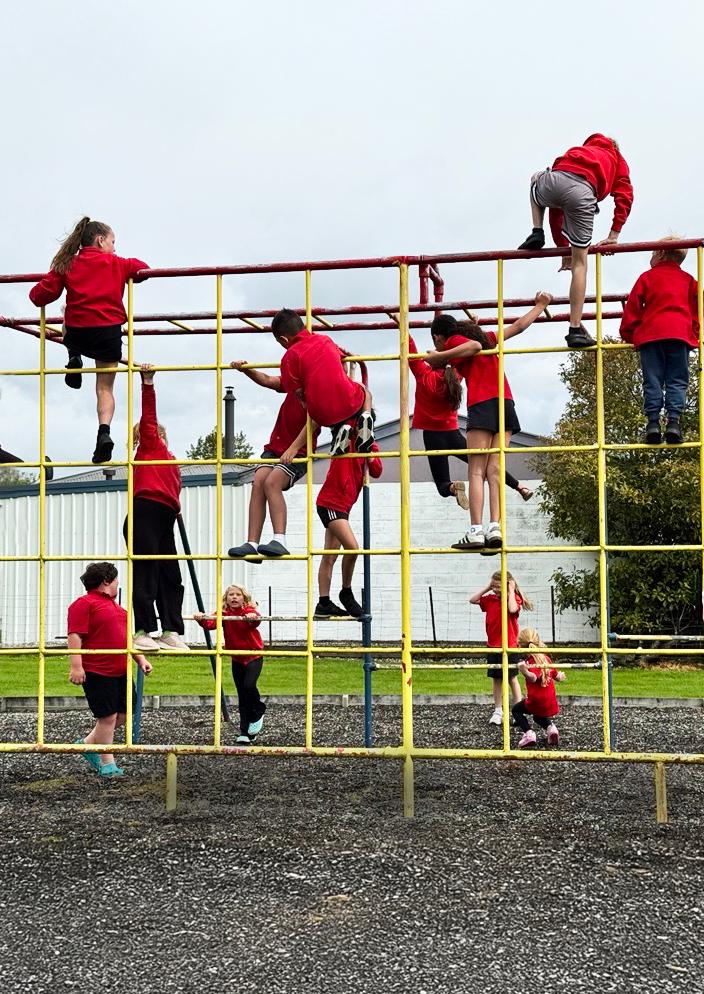
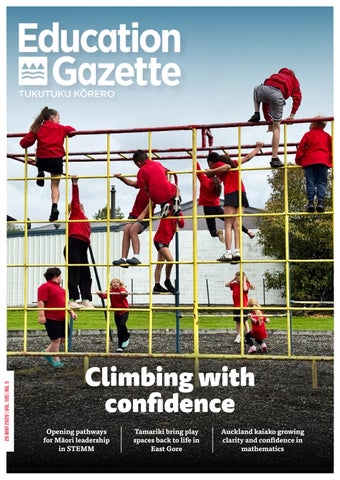
Ākonga from East Gore School had an opportunity to reimagine and take charge of their neighbourhood play spaces. More on page 6. Image by Sport New Zealand - Ihi Aotearoa
The Ministry of Education and Education Gazette do not endorse, approve, or accept responsibility or liability for the accuracy or content of information belonging to third parties, including but not limited to information in links to third party websites.
Terms and conditions: gazette.education.govt.nz/terms-and-conditions © 2026 Education Gazette. All rights reserved.
KEY CONTACTS
Story ideas and feedback
We welcome your ideas and feedback. If you have a story in mind, email us a brief outline (50–100 words). gazette@education.govt.nz
Vacancies and notices listings Vacancies@edgazette.govt.nz
ĀKONGA MĀORI
Grounded in a decade of success supporting rangatahi Māori to thrive, Pūhoro STEMM Academy is now working alongside Te Herenga Waka – Victoria University of Wellington as it extends into Te Upoko-o-Te-Ika. Together, they are strengthening pathways from school into tertiary study, supporting rangatahi to step forward as Māori and as future leaders across science, technology, engineering and beyond.
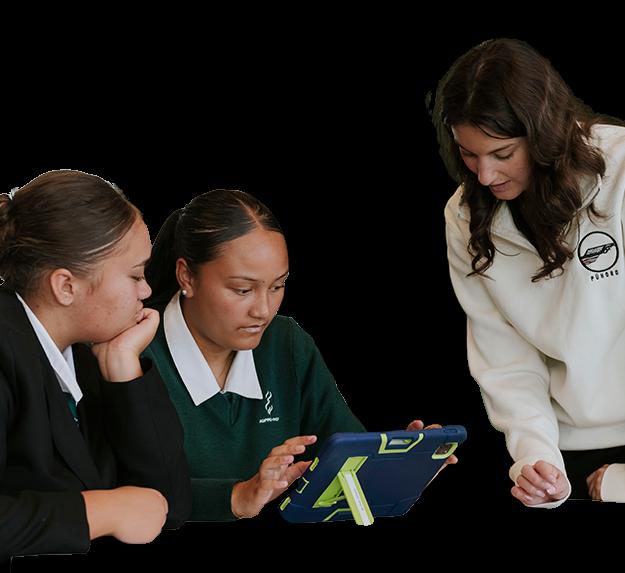
" ūhoro has always been bigger than participation,” says Kemp Reweti, manahautū (chief executive) of the Pūhoro STEMM Academy.
"While increasing Māori representation in science, technologies, engineering, mathematics and mātauranga Māori (STEMM) is important, the kaupapa is ultimately about building confidence, identity and capability.”
Thanks to support from the Ministry of Education, the programme has grown rapidly. During this growth, they have seen that when rangatahi are supported to succeed academically, they naturally begin to step into leadership.
“We want to ensure that our rangatahi not only enter these fields but feel empowered to transform them.”
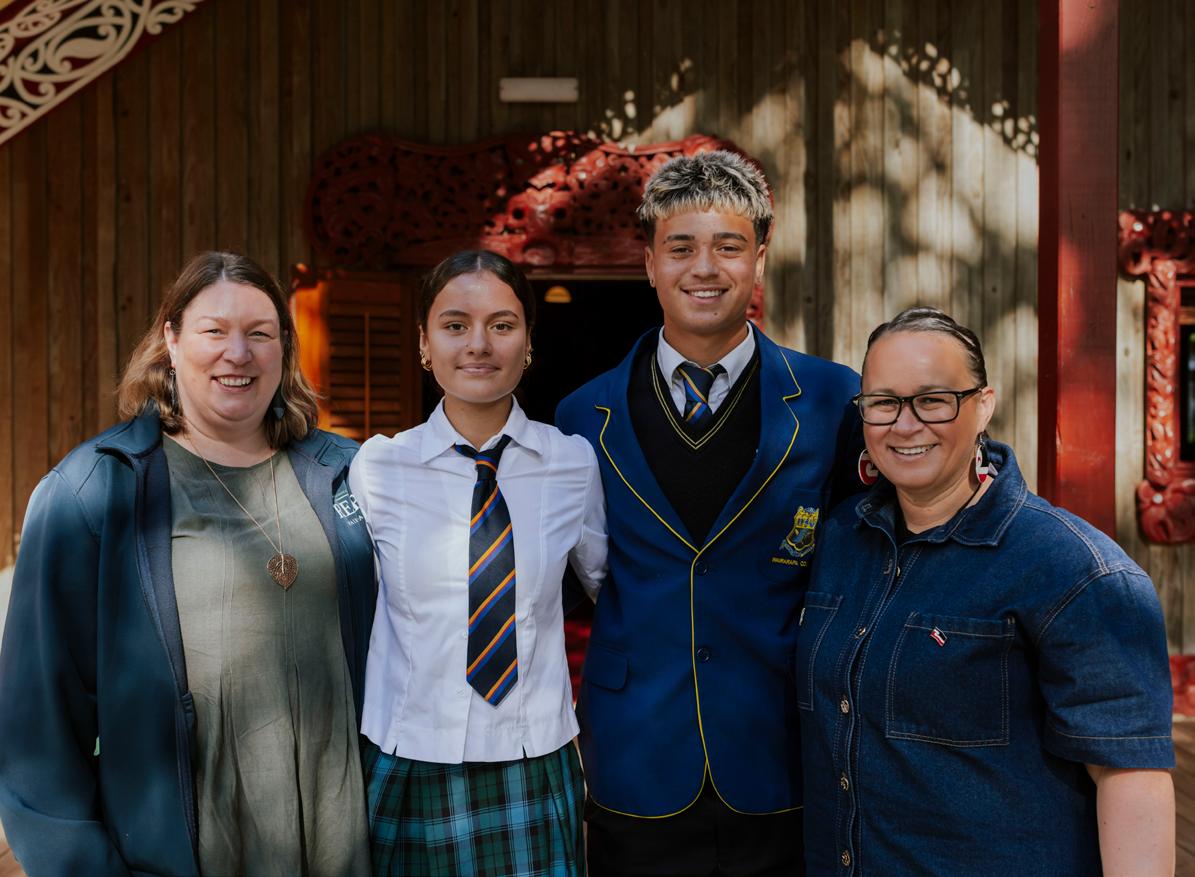
The launch of the partnership between Te Herenga Waka –Victoria University of Wellington and Pūhoro STEMM brought together rangatahi, iwi, educators and partners at Te Herenga Waka Marae on Friday 24 April to celebrate the arrival of the kaupapa in the Greater Wellington region.
Pūhoro STEMM will soon begin its programme at eight partner schools: Newlands College, Te Kura Kaupapa Māori o Porirua, Wairarapa College, Wainuiomata College, Tawa College, Kuranui College and Hutt Valley High School, with strong uptake anticipated in the region in the next two to three years.
The partnership with Te Herenga Waka will support delivery of the programme in the region and connect
rangatahi with tertiary study opportunities, including new on-campus premises.
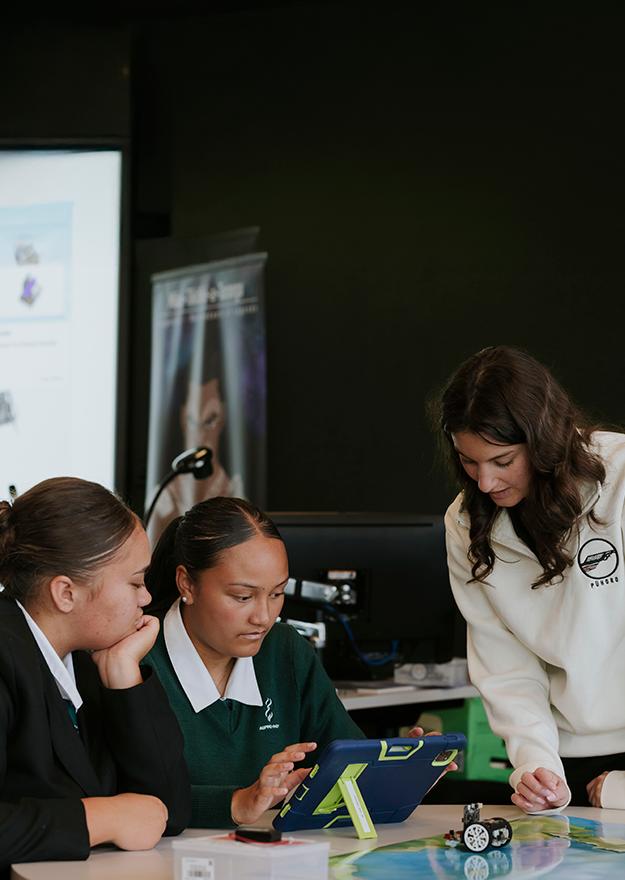
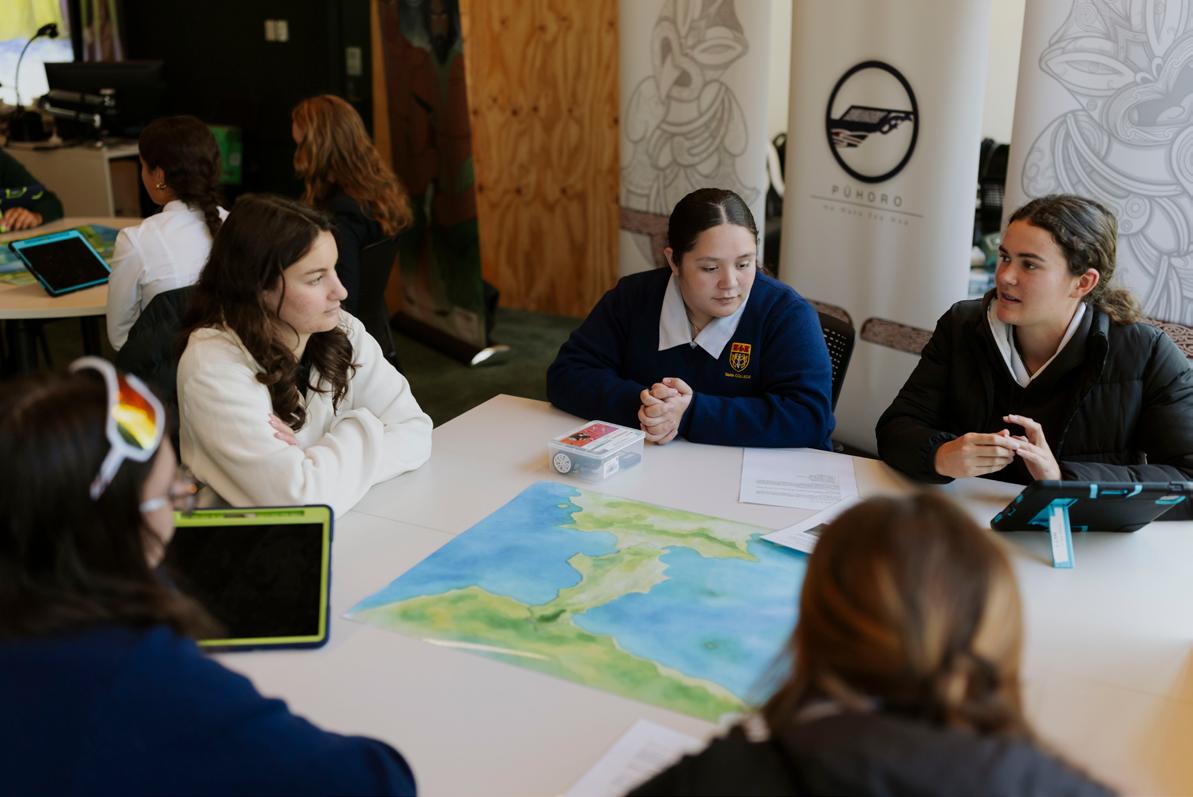
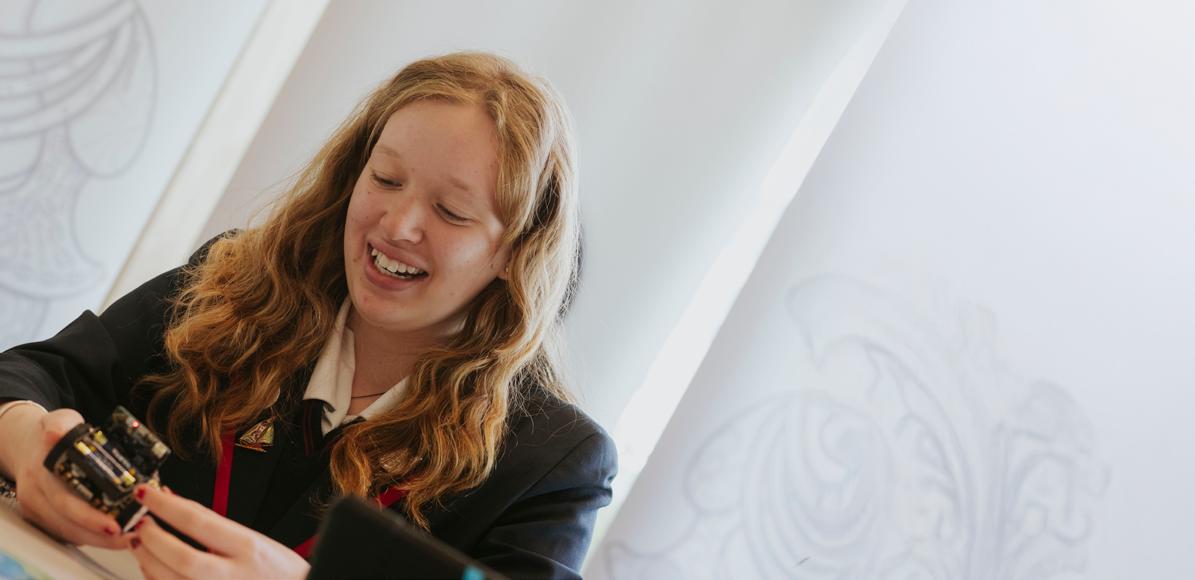
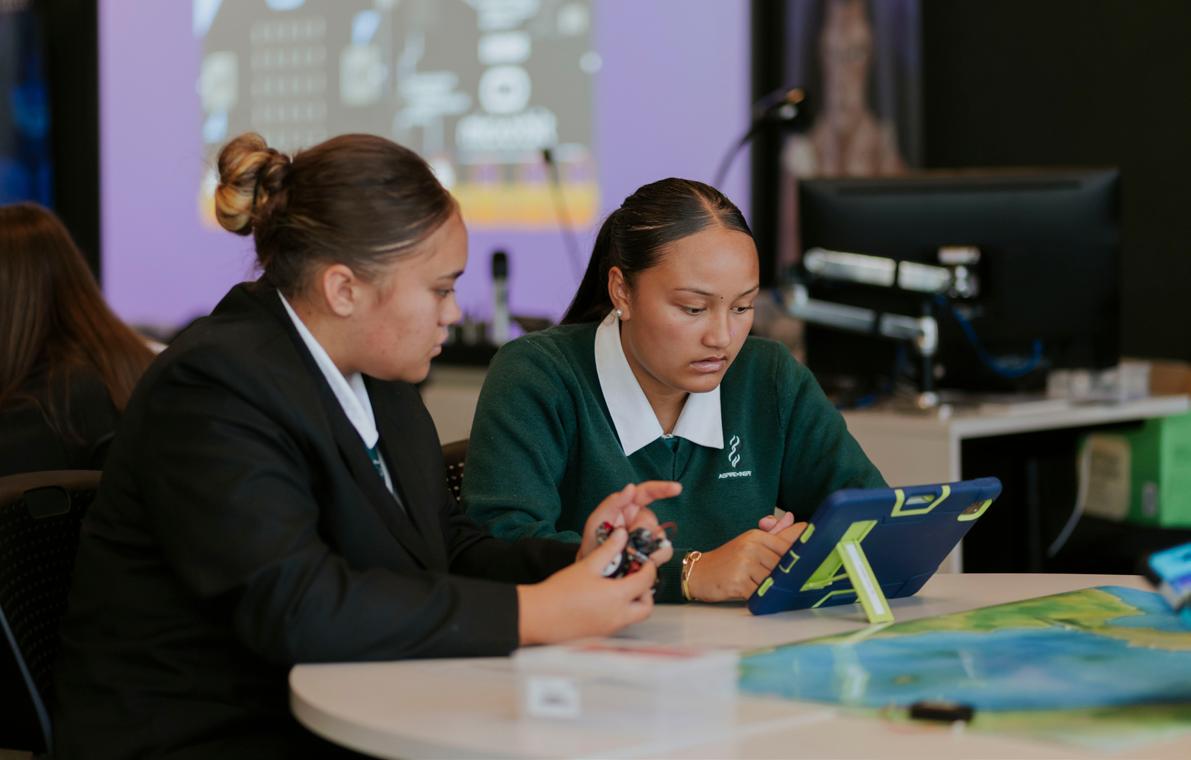
The launch event provided rangatahi with their first introduction to the Pūhoro kaupapa, before in-school visits commence this school term. Pūhoro kaihautū helped them explore the local pūrākau of Ngake and Whātaitai through a hands-on STEMM activity using Maqueen robots and micro:bits – small programmable robotics and coding tools –to bring key moments of the story to life.
Kemp says Māori leadership is unique in that it is grounded in whakapapa, collective wellbeing and a deep relationship with the taiao.
“It means decisions are driven by outcomes that benefit people, communities and future generations. It also means mātauranga Māori is recognised as a legitimate and valuable knowledge system alongside Western science.”
Nicola Nelson, dean of Te Wāhanga a Manaia – Faculty of Science and Engineering at Te Herenga Waka, says it’s important for leadership to reflect the community.
“We want to grow leaders in science and engineering to contribute to our society’s needs including finding solutions for our future, and we need to work hard to attract more diversity.
“Partnering with Pūhoro STEMM means we can support Māori students to understand the pathways open to them, as well as to grow our capability to provide an environment for Māori students that supports them to thrive.”
The new on-campus premises are an important part of this, creating opportunities for connection and a stronger sense of belonging.
“Having Pūhoro STEMM on campus here means we can get to know our incoming cohorts of students, providing connection and community, and demonstrating by our actions that a university is a great place for future leaders to stretch themselves within,” says Nicola.
Pūhoro works closely with kura, whānau, iwi, tertiary providers and industry to create a clear pathway for rangatahi from secondary school through to further study and into careers.
Each part of that system plays an important role – schools provide the foundation, often the first place where rangatahi begin to see what is possible for them, whānau provide support and aspiration, tertiary partners open doors to further education and industry helps connect learning to real-world opportunities.
“Our programme is intended to complement the curriculum and spark an interest in STEMM that ensures our rangatahi continue to engage with these subjects throughout secondary school,” says Kemp.
“The biggest difference comes when rangatahi can see themselves reflected in what they are learning and feel supported to succeed without having to compromise who they are.”
Looking ahead, Pūhoro say their aspiration is to see rangatahi who have come through the programme leading and advocating in STEMM.
More importantly, they want to see rangatahi shaping the system and creating spaces where Māori can thrive, where mātauranga Māori is at the centre and where future generations know they belong.
“Success for us is when this becomes normal; when Māori leadership in STEMM is no longer the exception.”
Education Gazette asked new local kaihautū and Pūhoro STEMM Academy alumnus Aria McKee to reflect on her journey and her vision for the future.
Visit gazette.education.govt.nz to read the full Q&A.
When did you first begin to see yourself not just as a learner in STEMM, but as someone who could lead and shape the future?
I struggle to pinpoint an exact moment where my perspectives switched, and to be honest, I consider that to be the point of Pūhoro.
My time in the academy was filled with big moments: I have travelled across the world to meet leaders of Indigenous STEMM in San Francisco, I have been selected to participate in the Māori student voice group at NZQA, and I have had the opportunity to be surrounded by top scientists, politicians and leaders on Parliament grounds. These opportunities have broadened my horizons and grown my confidence, and I couldn’t have been more grateful to be a part of those events.
But my growth in STEMM was created in the quieter moments – the ones that were more consistent. Since the age of seventeen, I have had a village alongside me. Any moments of doubt have been overshadowed by the infinite belief that Pūhoro had in me. I never had a turning point in the way that I saw myself. Instead, it was a gradual growth – a process of half a decade where, every day, Pūhoro laid down their increasing expectations of me, and at every milestone, I realised I was capable of meeting them.
How did Pūhoro support both your identity as Māori and your confidence to move into spaces that haven’t always been designed for Māori leadership?
Growing up, I learned how to categorise the areas in which my culture was welcome and, alternatively, when to leave it at the door. Pūhoro shattered this perspective I had and proved to me that my Māoritanga was an asset, not a restriction.
Pūhoro instilled in me a belief that I didn’t have to ‘fit in’ to gain a seat at the table, instead they taught me to be unapologetically Māori, and to carry my values, my language and my community into whatever I do.
They exposed me to Māori leaders, not just on the marae, but in STEMM spaces, at Stanford University and other prestigious institutions. After witnessing first-hand, the pinnacles of Māori excellence, it is hard to find a reason why that can’t be me. This is a mindset I have immense gratitude for, and one that I hope all rangatahi across Aotearoa experience.
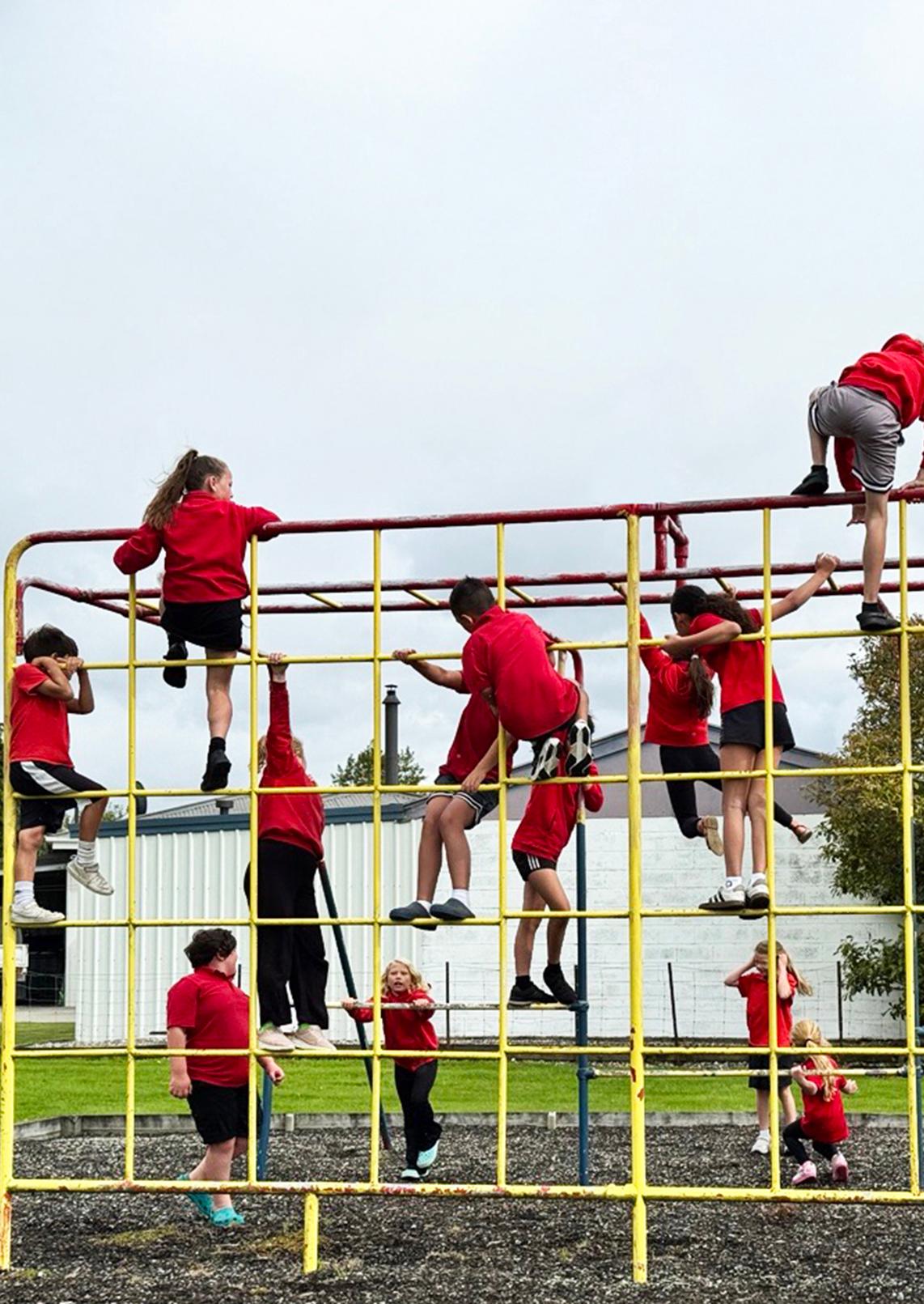
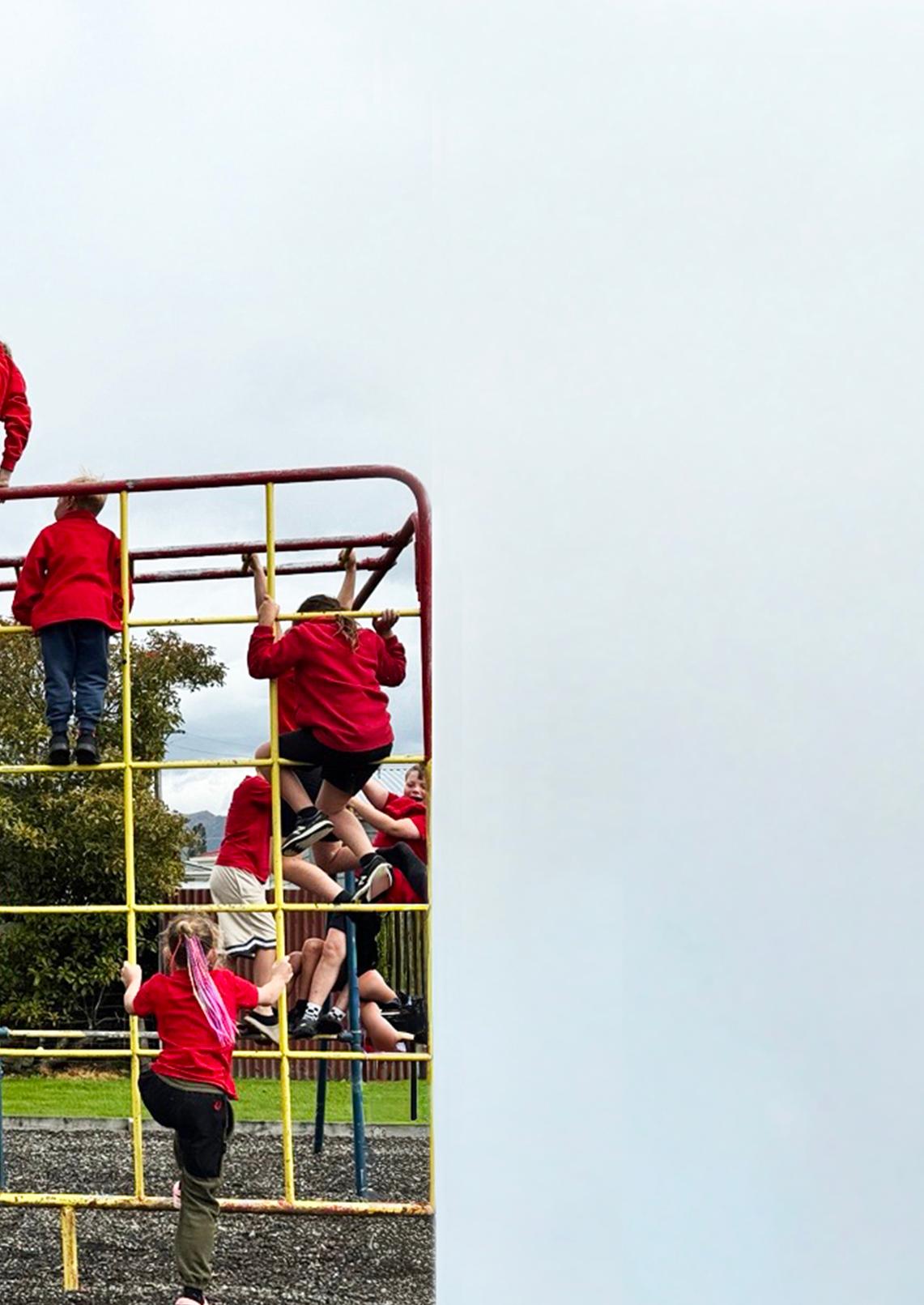
Tamariki at Southland’s East Gore School are taking back their neighbourhood play spaces, thanks to an initiative that turns their ideas into reality.
East Gore School noticed their local environment wasn’t offering tamariki enough variety or challenge in how they played, and they decided to do something about it.
Working alongside tamariki, the school explored where and how they played, and what barriers were getting in the way both at school and out in the neighbourhood.
That inquiry saw East Gore become one of the early adopters of the Sport New Zealand - Ihi Aotearoa neighbourhood play system. It’s a model that brings schools, whānau, councils and community organisations together to create more playful, accessible local environments.
“It’s been really exciting. We’ve seen a dramatic increase in play and the active movement trend,” says principal Dana Turnbull.
“We’ve had such great traction with this kaupapa. Our kids are active in our neighbourhood. Our tamariki are always out with their whānau interacting with our fab resources and play-based systems.”
Right from the get-go, tamariki played a hands on role in reimagining their local parks. With support from Active Southland, they used maps and measurements to work through what they wanted to include and shared those ideas with Gore District Council.
Throughout the process, the council and community took the time to genuinely listen to tamariki and act on what they heard. Seeing their ideas turned into real play spaces helped build a sense of pride and ownership.
Now, as East Gore School student Scarlett says, the neighbourhood has really cool playgrounds.
“We’ve got lots of cool things like slides, monkey bars, swings and wobbly stairs.”
There are also pump tracks, basketball courts and a revamped flying fox.
“We’ve fixed the flying fox, cleaned up the slides and the graffiti. Lots of kids play on the equipment now. It’s awesome,” says former student William.
“We’re so lucky and grateful to have this giant big pump track,” says student Ritchie. “I always see kids on it every single day, with their bikes and scooters.”
“We’ve seen a dramatic increase in play and the active movement trend.”
Tamariki have also cleaned up the parks’ surroundings, picked up rubbish and planted trees, with more due to be planted in future.
Before the transformation, former student Javanee says the parks weren’t very colourful, bright or nice to be in.
“We wouldn’t really enjoy going over there. Now, it’s really nice and fun to hang out there. Sometimes my family goes there and plays basketball.”
The changes have helped bring East Gore’s streets and play spaces back to life, with more people out and about, and tamariki using local parks, playgrounds and courts again.
The project has been strongly backed by Gore District Council, with clear support from the community and a shared sense that this was something East Gore needed.
Council staff were encouraged by seeing tamariki ideas put into action. Many of the tamariki hadn’t expected adults or the council to listen, but their ideas were practical and creative.
Sport NZ play consultant Mark Curr says the project is a great example of what’s possible when communities prioritise play.
“We’ve seen the completion of a great report and some strong recommendations, and then the whole community has galvanised, got together and ticked it all off.
“Play is important to all New Zealanders from a social, physical and wellbeing standpoint.”
“The idea behind the model is for tamariki and their whānau to have the freedom of the neighbourhood,” says Mark.
“They can roam around and have reasons to voyage. Certainly, in East Gore there’s been a string of improvements made. These help kids see themselves in this place, and find something cool to do, all the time, every day.
“Play is important to all New Zealanders from a social, physical and wellbeing standpoint. If we have playful children, we have playful lives.”
Dana agrees, and says tamariki learn through exploration, creativity and positive interactions.
Giving them a strong, powerful voice and bringing their ideas to life is also key.
“It’s that pride, it’s that kaitiaki lens. And it’s the kaupapa of how we operate; it sits at the heart of what we do here,” says Dana.
“We’ve got some amazing stakeholders that sit around our table. With that nurturing relationship, whakawhanaungatanga, the people involved are passionate and dedicated and are on the waka since day one, and are really passionate about making East Gore – our community –a great place to be.”
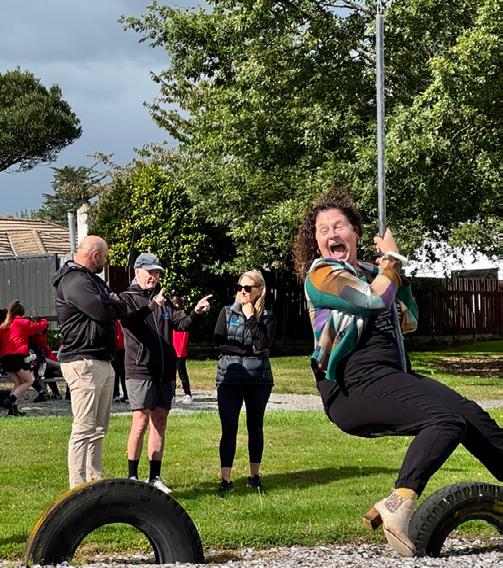
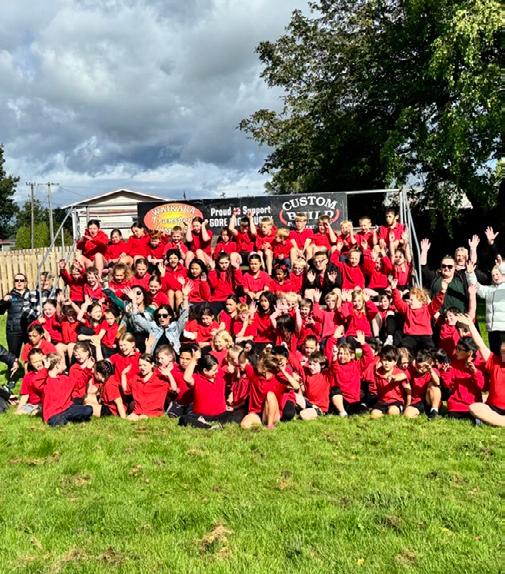
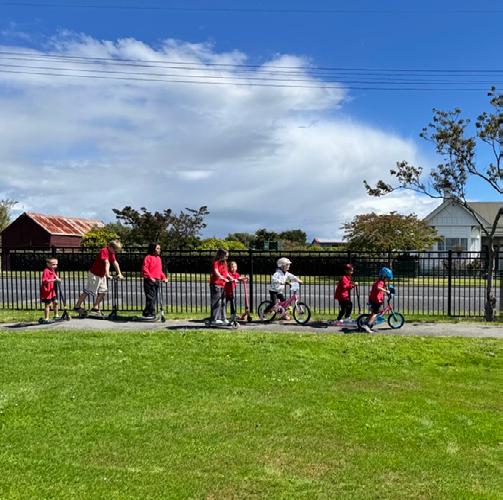
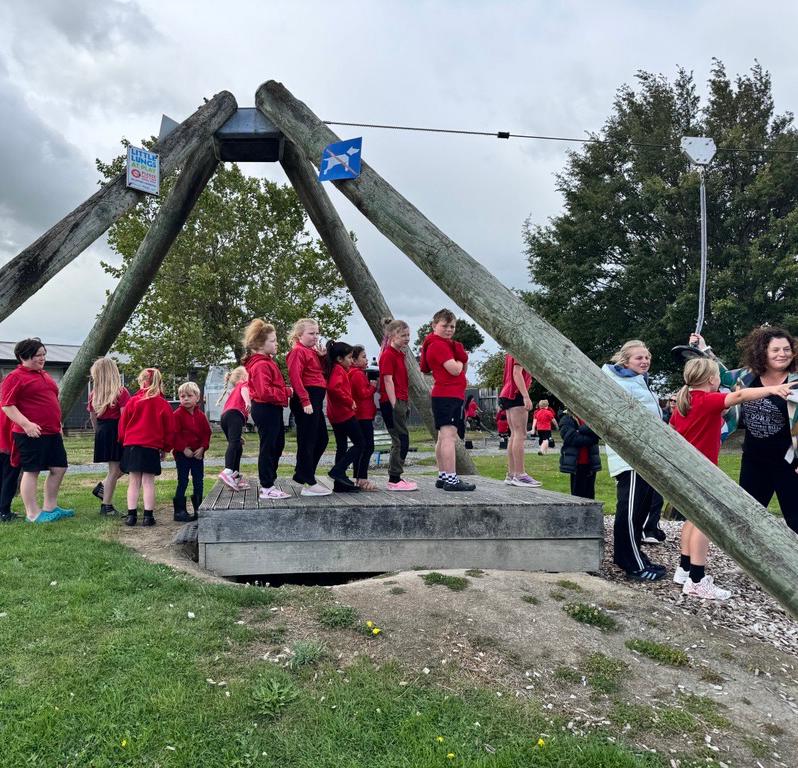
The East Gore School neighbourhood play system project is one of about 50 that have been completed across the motu.
The approach to urban play design places tamariki at the centre of the process. Tamariki share where they play, how they play, and what’s preventing them from playing more at school and in their neighbourhood.
Supported by Sport NZ, neighbourhood play systems bring together a school or kura, local organisations and community groups to bring play projects to life in ways that reflect their needs.
The model recognises that play happens throughout neighbourhoods – not just in playgrounds, but also in driveways, streets, parks, reserves, green spaces and alleys – giving tamariki the freedom to be active and playful right across their neighbourhood.
Each project links with local plans and funding opportunities to help embed ideas from tamariki into public spaces.
Find out more at The neighbourhood play system | Sport New Zealand - Ihi Aotearoa.
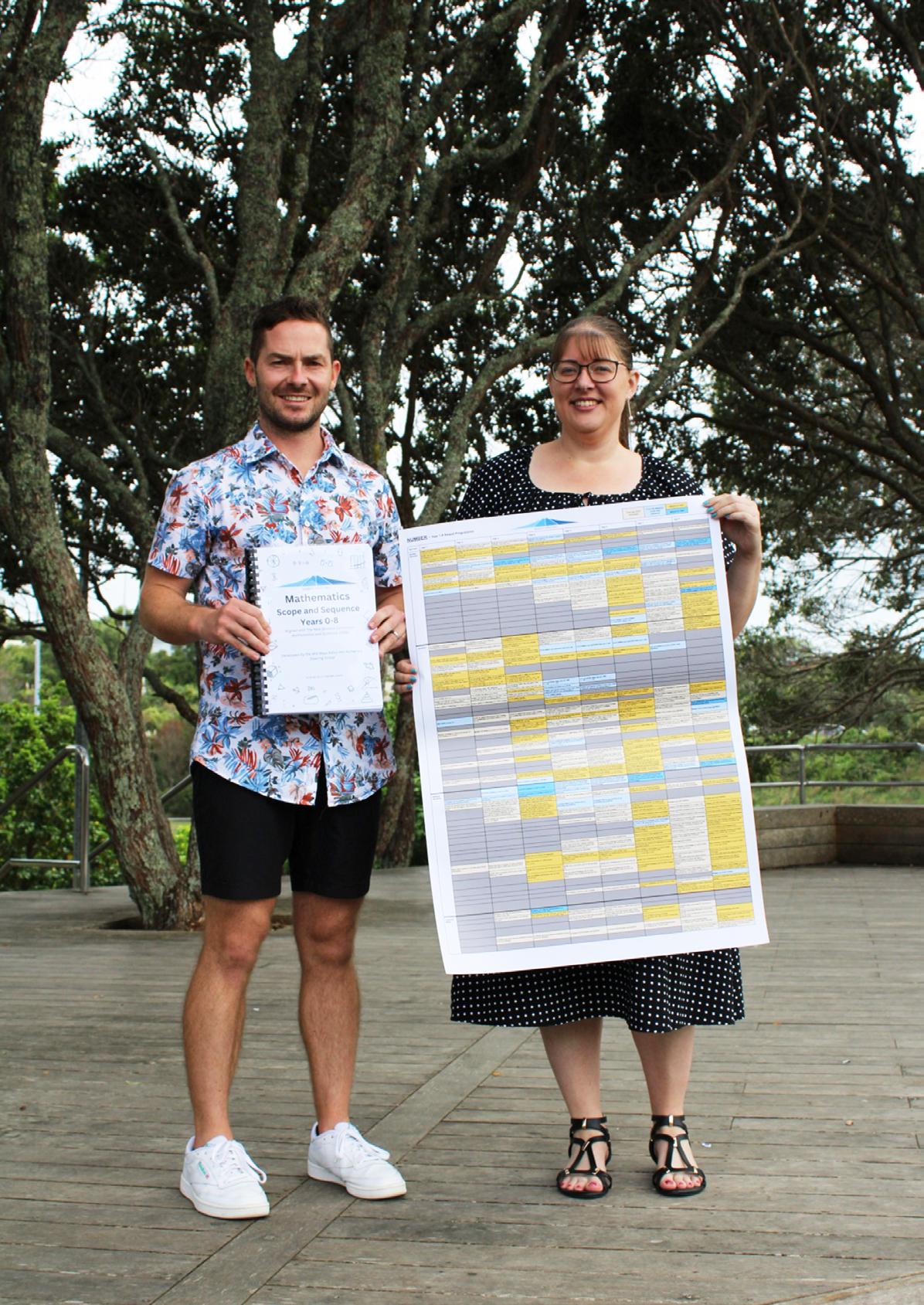
The refreshed New Zealand Curriculum: Mathematics and Statistics came into effect on 1 January 2026. In preparation, a group of schools on Auckland’s North Shore asked a practical question: How do we translate the new curriculum into clear, coherent and workable steps for teachers to integrate in their day-to-day practice?
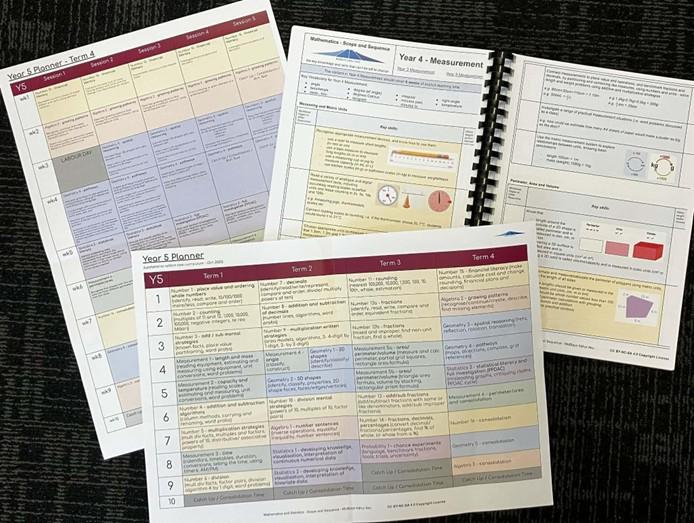
Mathematics Scope and Sequence (Years 0 to 8) is a comprehensive planning resource developed collaboratively across seven schools.
These schools were members of the former MidBays Kāhui Ako, a North Shore Auckland-based community of learning comprising early learning centres, primary, intermediate and secondary schools.
Although communities of learning funding shifted for 2026, the schools remain banded together to collaborate on best practice and continue to deliver on the needs of their thousands of students. They include:
» Rangitoto College
» Browns Bay School
» Campbells Bay School
» Mairangi Bay School
» Murrays Bay Intermediate School
» Murrays Bay Primary School
» Pinehill School.
Aligned to the refreshed curriculum, the Mathematics Scope and Sequence provides detailed, year-by-year guidance on what to teach and when, while preserving teachers’ professional judgement.
“The new curriculum is much more detailed, which is great,” says Lauren Walles, MidBays numeracy team leader and mathematics teacher at Rangitoto College.
“What we have done is unpack it into clear, visual sequences so teachers can see how learning builds over time.”
Organised around the curriculum’s six strands – Number, Algebra, Measurement, Geometry, Statistics, and Probability – the full resource spans approximately 270 pages, with sectioned-off chapters covering Years 0 to 8, with reference to Years 9 to 10 extensions.
Each year level includes structured annual planners, term breakdowns, clearly defined skills aligned to the national curriculum, key vocabulary, examples and diagrams of each skill, suggested teaching time, and space to track coverage.
Strand progression posters visually map when concepts are introduced, revisited, and consolidated.
“We have made the sequencing explicit. It supports collaborative planning by helping teachers see where students sit within the progression and identify when they’re working above or below year-level expectations,” says Lauren.
For principals, the visual mapping strengthens alignment across schools.
“They make professional conversations much easier. You can see how learning develops from Year 0 through to Year 8. It supports alignment to national expectations without taking away flexibility.”
“They sound like a teacher tool, and in many ways they are. But the real benefits are for the students.”
The Mathematics Scope and Sequence is grounded in key principles from the Science of Learning; including careful sequencing, cognitive load management and regular review.
“We were very conscious of cognitive load. If you overload students with too many new ideas at once, you reduce the chances of long-term retention. That is why sequencing out their learning matters,” says Lauren.
Teachers are encouraged to plan for one hour of mathematics each day, she adds, with balanced coverage across strands and deliberate revisiting of prior knowledge.
“When sequencing is built into teachers’ planning documents, it is much easier to consistently implement a comprehensive programme,” says Lauren.
“The resource package is structural, not prescriptive. It does not tell teachers how to teach. Instead, the planning resource provides a clear framework that supports teachers to secure the prerequisite knowledge of students before more complex concepts are introduced. This helps reduce learning gaps across students’ school journey.”
Visible progression
Progression is made explicit from the earliest years. For example, in Year 1, students work through number structure up to 100, addition and subtraction facts, early multiplication and division concepts, fractions, measurement, geometry, algebraic patterns and data.
Each area includes key vocabulary, suggested timeframes, and prompts for reflection.
“When creating the planning resources, we asked ourselves what new teachers stepping into their first classroom would want to know,” explains Lauren.
“We did not want teachers having to research every line of a curriculum document. We wanted the information clearly laid out in one place.”
“When creating the planning resources, we asked ourselves what new teachers would want to know."
As students move through Years 4 to 6, the focus of the New Zealand Curriculum set out by the Ministry of Education shifts to modelling operations, building fluency with fractions and decimals, and applying reasoning to more complex problems.
By Years 7 to 8, students are working with algebraic notation, generalising patterns, operating with integers, and evaluating data.
“Making that progression visible through diagrams and sequencing in the planning resources helps teachers see what they are teaching this year, but also where it is heading within the broader national curriculum.”
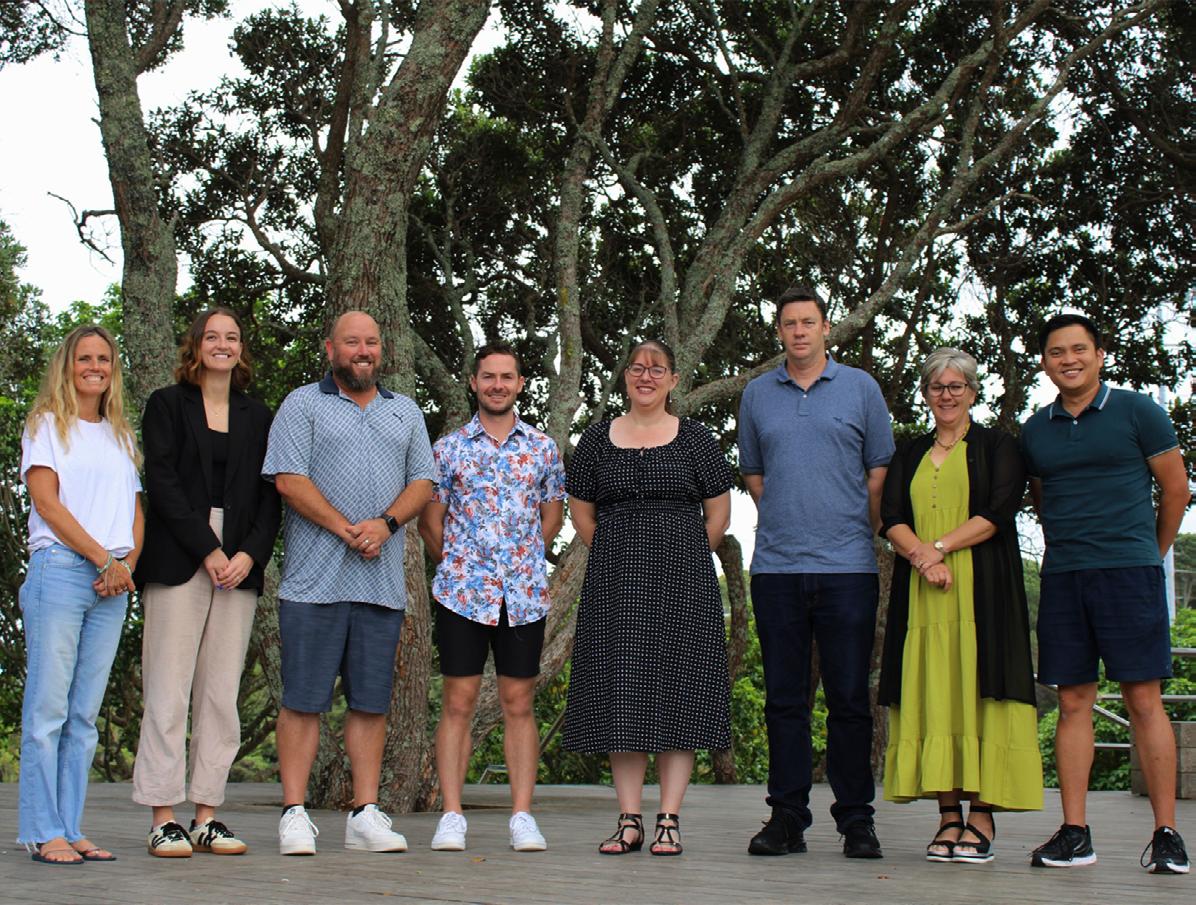
The MidBays Numeracy Steering Group comprises 15 teachers with both subject expertise and the credibility to lead change, representing one secondary school, one intermediate and five primary schools across Auckland’s North Shore.
From the beginning, strong leadership alignment underpinned the development of the planning resources, says Lauren.
“Teacher representatives from each school needed to be people their colleagues would respect and listen to.”
Lauren led the drafting process, sharing updates with the wider steering group twice each term to test ideas and refine the detail.
“I was bringing the progress back to the group to ask: ‘What do you think? What needs tweaking? What will work in your school?’
“Having one or two people steering the ship keeps the work consistent. But it was just as important that teachers from every school across our community of learning were represented – that is what gave it legitimacy.”
Early feedback suggests the implementation of the resulting curriculum planning resources is strengthening
teacher confidence and consistency across the MidBays group, says Lauren.
“One early-career teacher described it as the missing piece she wished she had at the start of her career.
“It meant she could spend less time working out what to teach next, and more time understanding where her students sat against the national standard so she can refine her practice to support their progress,” she explains.
Lauren says the real benefits of the resource are for the students.
“We aimed to provide teachers with what to teach and when to teach it, allowing teacher planning time to be most efficiently spent on the best pedagogy strategies to meet the needs of the students in front of them.”
These planning resources have been shared freely online under Creative Commons licensing to encourage wider uptake in schools on a national scale.
“We would love as many schools as possible to be working from something similar. If we can reduce duplication of effort across the system, that is a good thing, and we are proud to have contributed to that effort,” concludes Lauren.
You can download the resources on Google Drive.
At Kauri Flats School in South Auckland, wellbeing is embedded in the way students learn, move, play and interact with their environment.
Kauri Flats School in Takanini is built upon the site of a kauri swamp. This environment and its history are deeply embedded across teaching and learning programmes and spaces.
“Our learning environment is a physical manifestation of our history and our future,” says school principal Matt Williams.
He explains how the school uses a range of modern resources to support learning, but the true ‘driver’ of their development is the land itself.
“By anchoring our school identity in the strength and resilience of the kauri, we provide our students with a unique sense of place and belonging that informs
every aspect of their academic journey.”
This connection to local land aligns with Te Whare Tapa Whā, a holistic model of wellbeing. Matt explains how this model is brought to life.
“Students learn that their academic growth is deeply rooted in their personal wellbeing, which is made up of a delicate balance of their physical, mental and emotional health, alongside their sense of belonging within their school, whānau and natural environment.
“Just as a kauri requires a strong foundation to grow, our students thrive by recognising that their learning, their history and their wellbeing are all interconnected.”
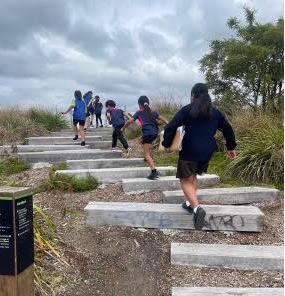
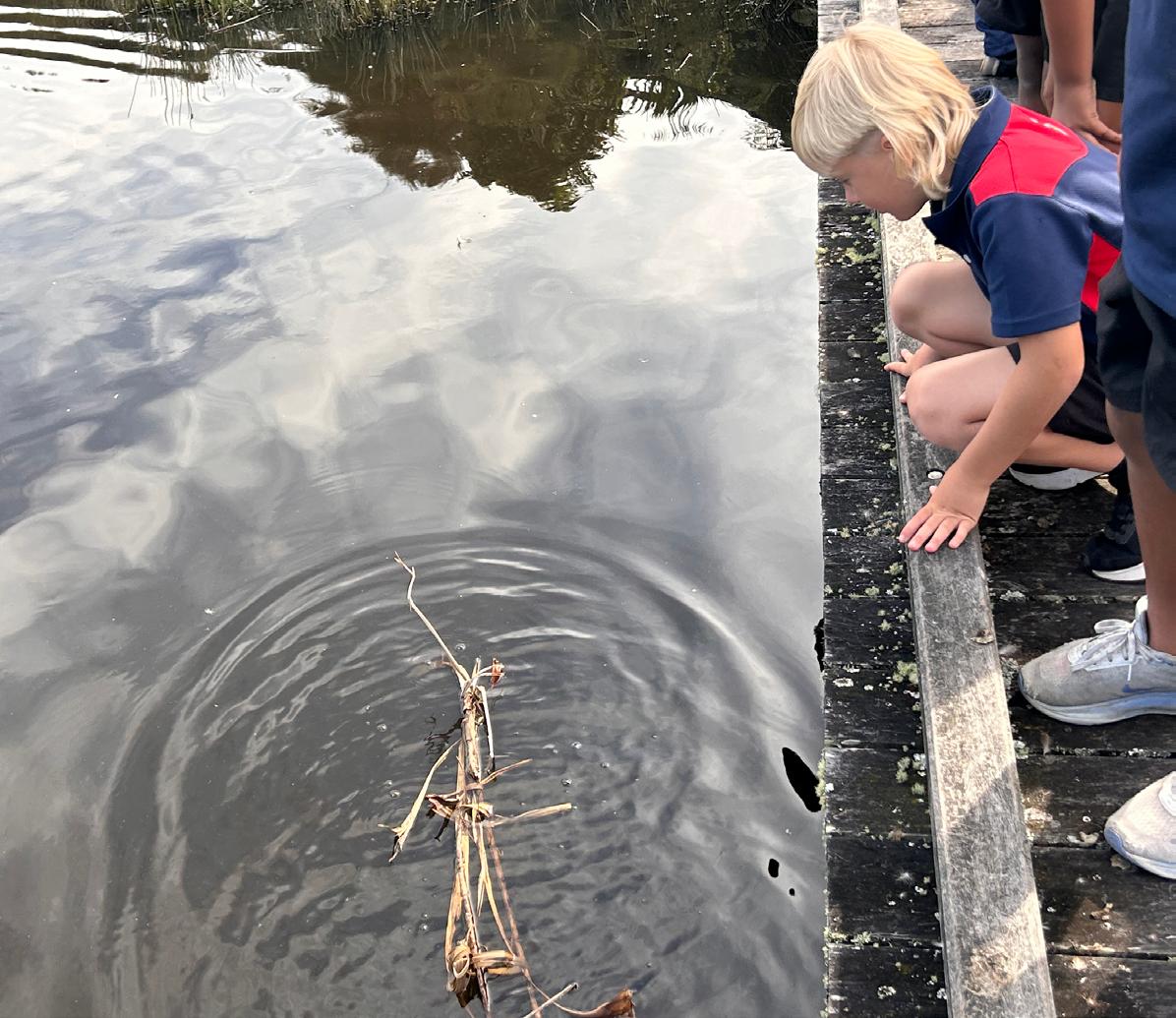
This approach to wellbeing has been brought to life through a recent learning project in the Awakeri Wetlands.
A large-scale stormwater and ecological restoration site, the wetlands offer green spaces, scenic walkways and waterways for both the school and wider community to enjoy.
For years, the school has been working with CLM Community Sport, Healthy Active Learning advisor Dr TraceyLee Dalton, play advisor Taylor Kamuhemu, and Professor Melody Smith from the University of Auckland, alongside researchers from Tampere University in Finland.
Together, they co-designed an initiative for students in Years 1 to 8 that reimagines how the Awakeri Wetlands can be used to support engagement with the curriculum, increase physical activity and deepen ākonga understanding of the local environment through walking audits, classroom workshops and collaborative design sessions.
Students have installed 10 nature homes in the Awakeri Wetlands, each themed around native flora and fauna.
When the school was established in February 2017, the Awakeri Wetlands was identified as a key area for teaching and learning, and community integration.
Auckland Council wants to integrate the school with the channel’s open space as seamlessly as possible to unlock shared benefits.
With high-density housing dominating the surrounding landscape, there is a clear need for natural, communityfocused play and learning spaces.
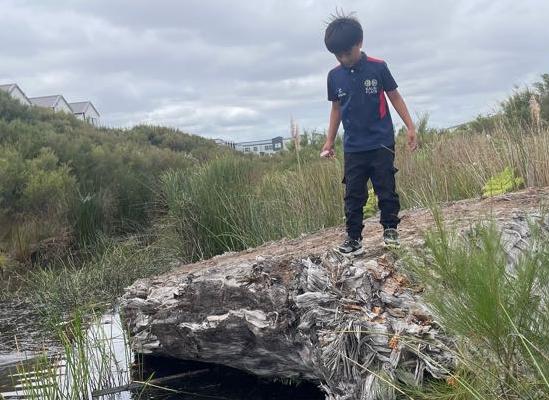
In response, the school has long held a vision for a whare within the wetlands, creating a space where both ākonga and the wider community can connect with nature and appreciate its unique features, including kauri stumps and biodiverse waterways.
This vision continues to guide the school’s direction in 2026 and beyond. As a practical first step, the project has introduced structures inspired by wetland creatures, created by the Boomer Shed at the Beautification Trust.
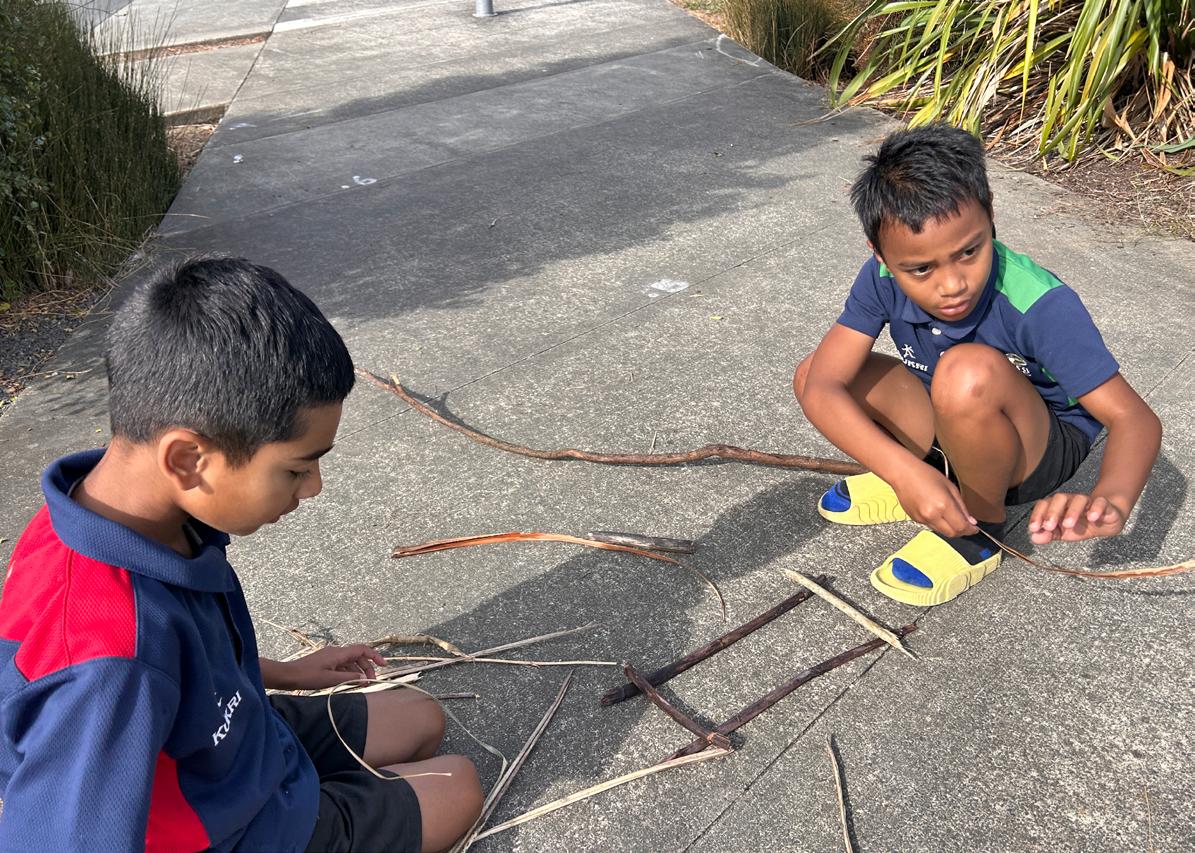
Matt explains that the school’s collaborative approach reflects a deliberate shift away from passive learning towards a more engaging, movement-based model connected to the environment.
“What makes the student cohort at Kauri Flats truly unique is the seamless integration of high-energy, kinaesthetic learning into their daily academic lives.
“Our students … they’re moved by their agility and engagement in a curriculum designed to get them moving,” says Matt.
Matt explains how the school prioritises Healthy Active Learning opportunities, an approach that supports ākonga to explore complex concepts through physical engagement and exploration.
“By anchoring our school identity in the strength and resilience of the kauri, we provide our students with a unique sense of place and belonging.”
He says they commit to learning opportunities outside the classroom from an early age, exposing ākonga to overnight camps and experiences in the outdoors from Year 2.
“This early exposure builds a specific type of independence and grit in our learners, making sure that by the time they reach the senior school, they’re seasoned explorers of their environment.”
This philosophy underpins the Awakeri Wetlands project, where students are not simply consulted but actively involved in designing their learning spaces.
The partnership with CLM Community Sport, Matt explains, is driven by a shared focus on understanding how play and the surrounding environment can support learning and personal development.
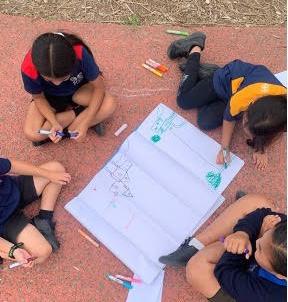
Ākonga develop a strong understanding of navigating real-world constraints such as safety, teamwork, budget and time. For example, as part of the outdoor learning initiative, students are encouraged to design obstacle courses and climbing features, incorporating seating for older adults and areas for young families.
This requires them to consider materials, construction methods and collaboration with their peers to create safe, durable outdoor structures for community use.
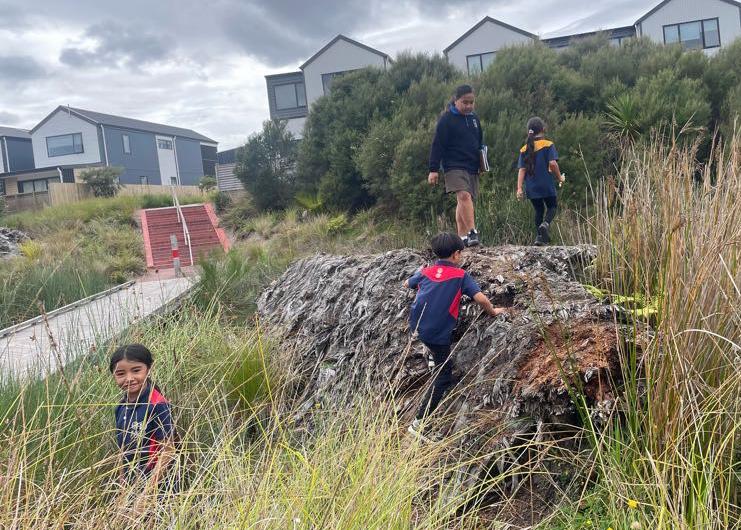
Playful engagement in the wetlands environment.
“Our natural learning spaces get our kids physically moving and ready for the day ahead, while also giving them the opportunity to develop critical skills like problem-solving, working as a team and building structures with their hands.”
Reflection and what lies ahead
Kauri Flats School’s project in the Awakeri Wetlands highlights what is possible when the environment is integrated into student learning.
“We strive to look through a wider lens of change and how we can continue to bring learning to life. However, this isn’t easy and takes a great deal of time and effort, with a dedicated team to drive it. We’re fortunate to have our associate principal, Ezra Feau, who champions our nature spaces project.
“Having a supportive board is also critical, and we have been extremely fortunate to have their full support.”
Looking ahead, Kauri Flats School is focused on expanding its unique approach to other parts of Tāmaki Makaurau Auckland.
“None of this would have been possible without the goodwill of the community, especially given our small budget.
“Our next phase of development will be focused on bringing learning to life for our growing number of neurodiverse learners and supporting outreach to local early childhood centres with similar needs.”
“None of this would have been possible without the goodwill of the community.”
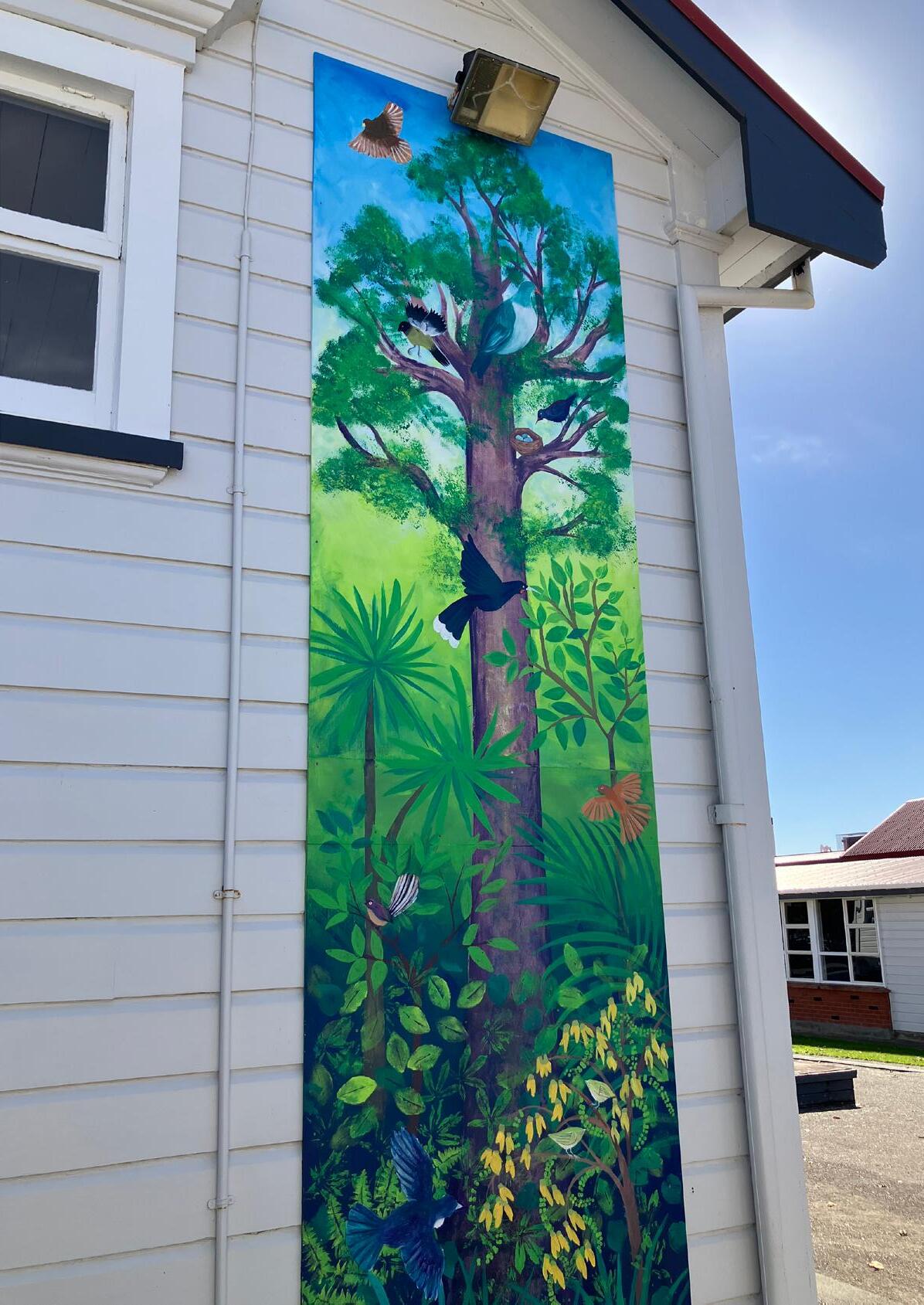
At Shannon School Te Kura o Hanana, a place-based approach is helping ākonga connect deeply with identity and whenua while opening new ways to think, create and share their stories into the future.
Dr Ben Egerton from Te Whānau o Ako Pai School of Education at Victoria University of Wellington explains more. PLACE-BASED LEARNING
hat does it mean to design learning that connects past, present and future? At Shannon School Te Kura o Hanana in Horowhenua, it begins with a deep understanding of who and where ākonga are.
Several years ago, the school partnered with artist Wendy Hodder for a mural project aimed at strengthening the connection with Ngāti Whakatere whenua, identity and pūrākau.
Four years on, the kura, led by Rochelle Thorn (Ngāti Ruanui, Ngā Raururu Kītahi, Ngāruahine), is taking the murals as the focal point for refreshed whole-school planning to embed teaching and learning in rohe-specific place-based learning.
A loud and colourful identity
You can’t miss the murals when you visit Te Kura o Hanana. Large, inviting and detailed, they occupy whole sides of the classrooms and face out onto the playground and extensive playing fields.
The murals showcase local identity loudly and colourfully.
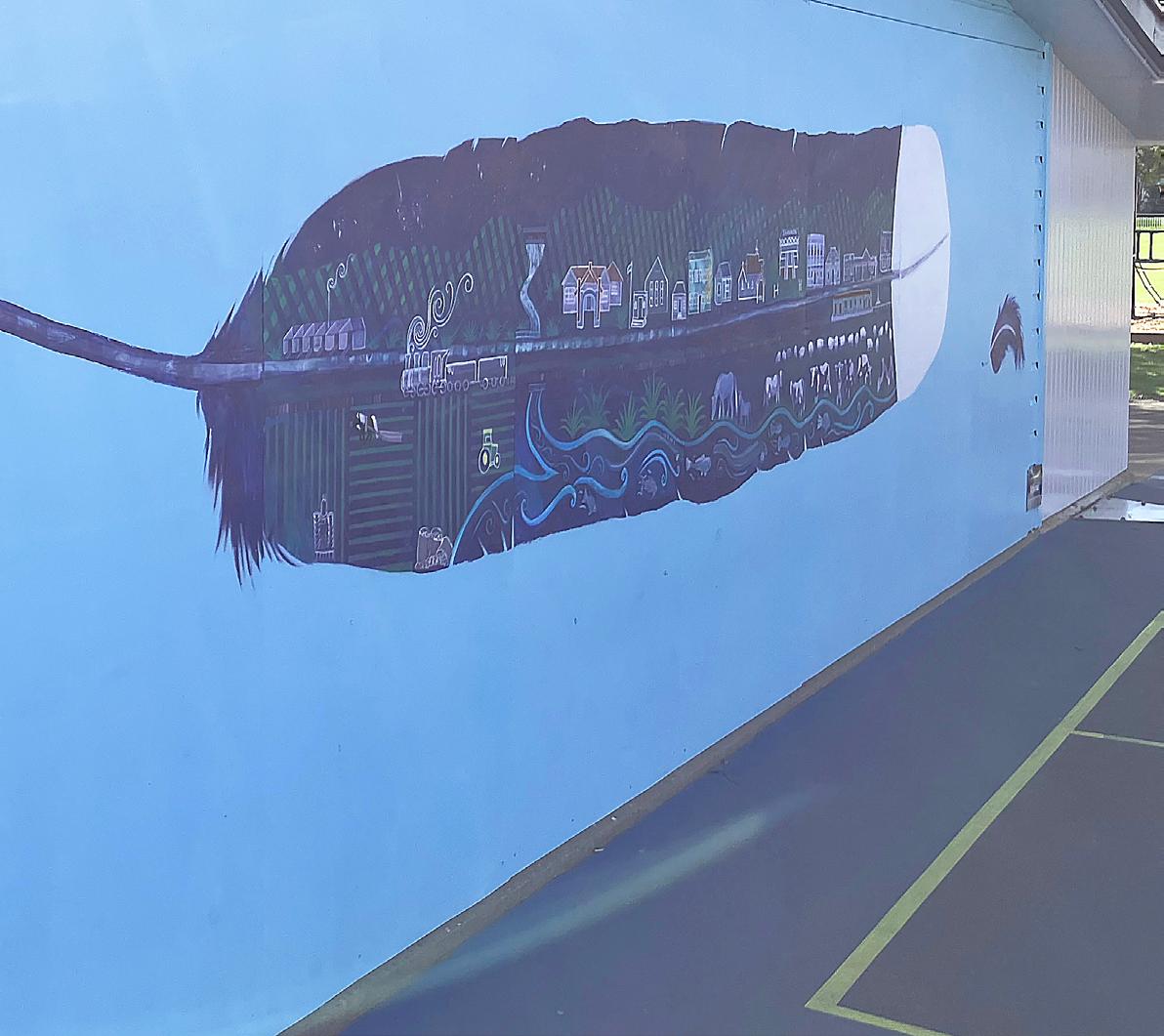
One is a long, beautiful huruhuru, telling of the last of the huia which lived in the Tararua maunga overlooking the kura. Another centres the sacred maunga Te Ao Kaparangi.
One depicts wai falling as rain on the maunga and flowing into the Manawatū awa, alongside harakeke. Another tells of kahikatea, abundant throughout the kura’s rohe, surrounded by potatoes, crops and plants – a reminder that Hanana is an area perfect for growing kai.
Another is a braided image of tipare and tātau, each sharing further pūrākau of atua, kura and kete of mātauranga.
They, as the school website says, “remind us of who we are, where we come from, and the pride we share in our community.” But, as Rochelle says, “they also remind us of where we are going.”
Weaving symbols and stories
The murals depict the identity of the school; and to be central to teaching and learning, they must be central to everything the school does.
With the murals being so prominent on the school grounds, one of Rochelle’s first actions as principal was to refresh their website, so the murals are prominent there too.
“All the murals represent something different and speak to all aspects of who we are,” says Rochelle.
“The murals were co-created by our children, and they need to see them and themselves in their learning and online, as well as at our kura!”
With identity and place now at the heart of the physical and online architecture, it was time to shift to teaching and learning.
“The murals, with their depictions of who we are, ground and inspire us … and we wanted to find ways to build this into teaching and learning so our tamariki are deeply connected to who they are and where they’re from.”
“It’s a great opportunity to connect past and present with the future.”
A two-year learning journey begins Rochelle and her kaiako have begun the process of overhauling their planning. When finished, they will have written a two-year programme that connects to, and is underpinned by, the depictions of place in the murals.
In addition, each of the murals is accompanied by a theme, shaped by Pa Wylie Te Peeti (Ngāti Whakatere). These themes enable kaiako to connect place and tamariki identity to classroom programmes.
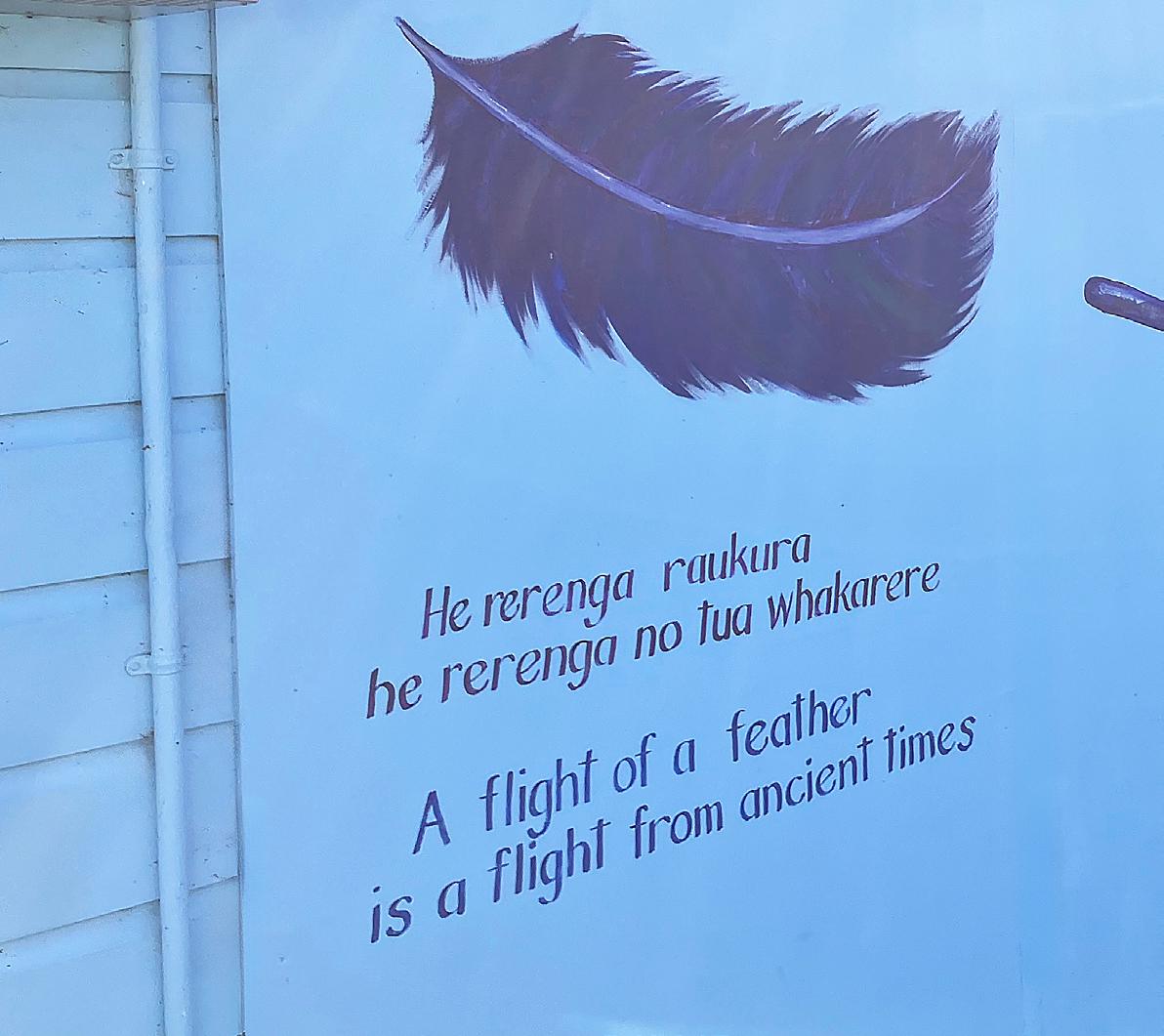
This term, drawing from the mural of the huia and Tararua maunga, the theme is “He rerenga ruakura, he rerenga no tua whakarere. A flight of a feather is a flight from ancient times.”
As kaiāwhina tumuaki and Year 2/3 kaiako Sarah puts it: “It is a great opportunity to connect past and present with the future.”
Across the kura, across year groups, kaiako have made conceptual connections in a multitude of ways.
This includes journeys, remembrance, Anzac commemoration, Matariki, time, maramataka, patterns of growth and harvest, and death and regeneration.
Woven in with reading, writing, mathematics, te reo Māori and science, it all connects to the murals and to the places they embody.
“Our intention is to build a rich, local-context curriculum … and by having a local-context curriculum, we see how this supports engagement.
“All their reading and writing and the rest of their learning is connected to place. Our tamariki see themselves in their learning every step of the way, and it’s grounded in mātauranga Māori.”
Taking advantage of digital technologies
When reviewing the school website, Rochelle and Sophia, kaiako of Year 2, started exploring how AI might bring the murals to life.
Taking the kahikatea mural, Rochelle and Sophia animated the whole thing; the manu in its branches, harakeke and the leaves rustling in the breeze, and the tree came alive!
This now inspires the next step for Rochelle and her kaiako: exploring digital technologies, and how tamariki can surface, show and share their own pūrākau and their own understanding of place.
Over the course of the rest of the year, kaiako and tamariki will be visiting Nōku te Ao Capital E in Wellington, one of the learning spaces under Wheako Pōneke Experience Wellington’s umbrella of arts, education and cultural institutions.
With a first visit planned this term, they will learn the skills necessary for digital storytelling, and to use tools and hardware they’re not exposed to at school.
An exciting partnership
Dr Andrea Milligan at Wheako Pōneke says the opportunity to learn with ākonga and kaiako is amazing.
“[Their] kaupapa underpins careful, detailed and clear curriculum alignment. The clarity provides a supportive basis for connecting our experiences at Nōku Te Ao Capital E to classroom learning.”
Ultimately, Andrea says it also supports them to learn more about how digital education experiences outside the classroom can better support curriculum in a diverse range of schools.
Rochelle and kaiako are excited for this partnership. As Sarah says, “I’m really excited about the opportunities our learners will have to know more about the stories that connect them to their whenua.”
The purpose of the partnership with Wheako Pōneke and Nōku te Ao is clear in Rochelle’s mind.
“It’s about teaching and learning, and about our children. It’s not replacing their own identity, their own understanding of place and pūrākau with someone else’s.
“It’s good for them to visit places outside their immediate area and learn knowledge and skills there to apply and connect back to what they already know about themselves and where they’re from.”
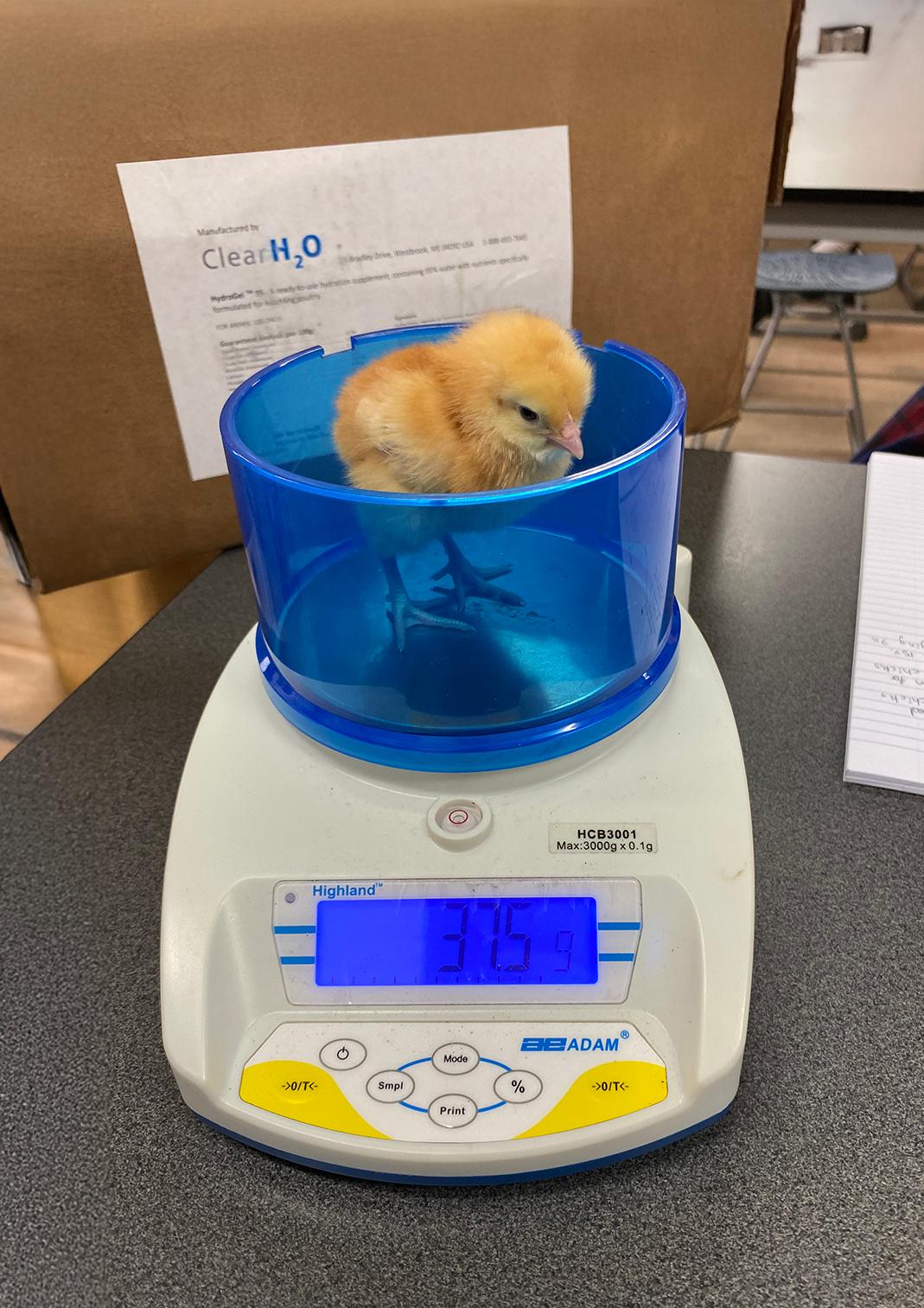
Each year, the Year 12 agricultural science class at Feilding High School conducts a chick-rearing experiment. It’s popular with students and an important part of the learning programme for a school with a strong focus on agriculture and science.
An important aspect of this focus is the responsibility for animal welfare, which includes applying for formal approval from the New Zealand Association of Science Educators’ Animal Ethics Committee.
Kain Nixon is head of agriculture and assistant head of science at Feilding High School. The school operates two working farms: Ngākaunui, a 16-hectare dairy farm, and Manawanui, an 81-hectare sheep and beef unit.
“[Ngākaunui] is only a five-minute walk from the back of our classrooms, which is pretty handy,” says Kain.
The farms are managed by two former Feilding High School students and supported by current ākonga who have farm duties as part of their primary industries classes.
Kain works with the farm managers to get a “solid link” between the students and the farm to support learning in the classroom.
“For example, in our agricultural science class last term, we looked at growth and development. On the farm, we might look at weighing as a management practice, body condition scoring or drenching,” he says.
“Once we’ve done the theory, we take the students up to the farm, and they’ll do that task. Our practical class is also up there at least one day a week doing activities like fencing.”
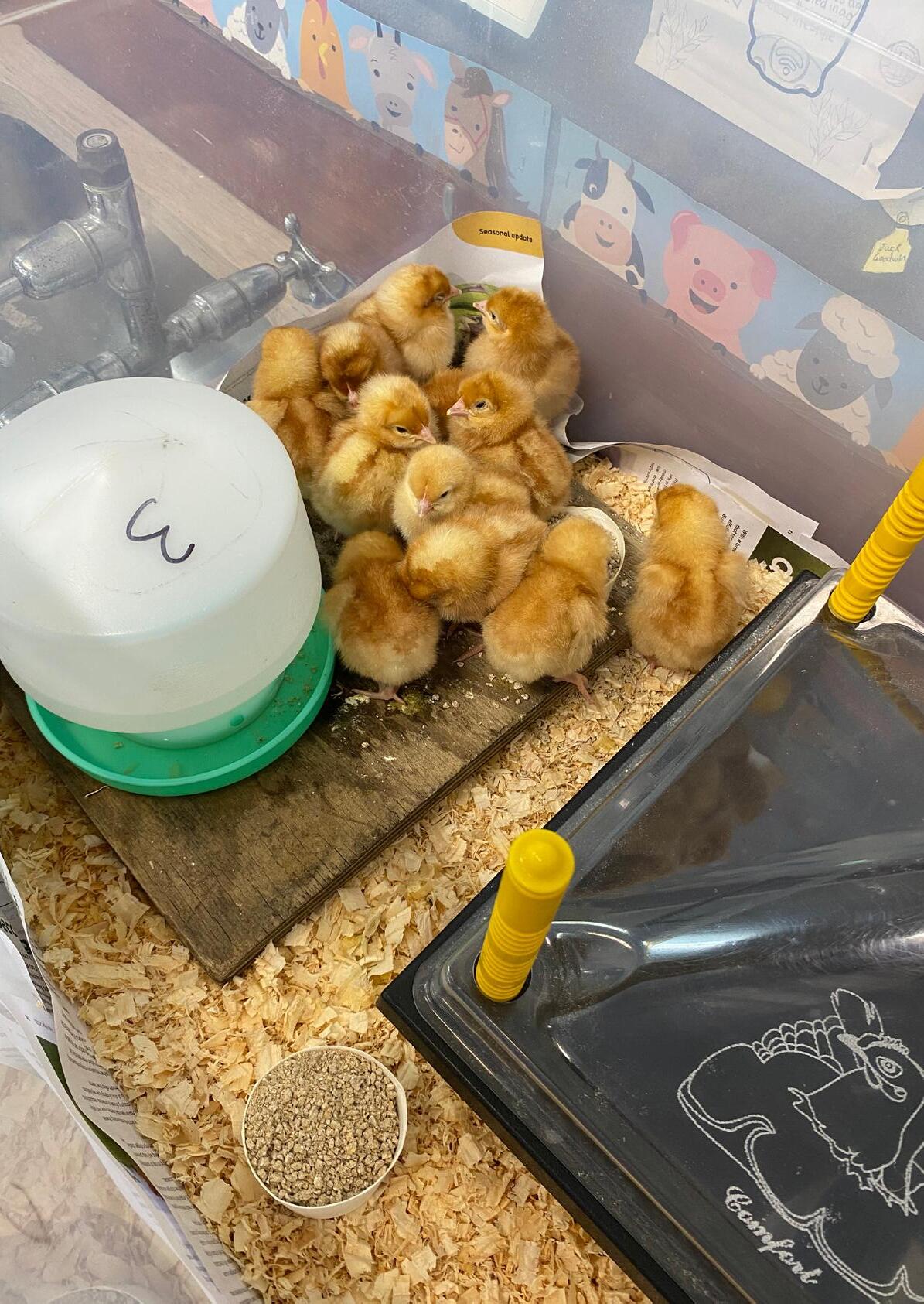
Out of the paddock and back in the classroom, for the past six years agriculture and science students have raised chicks as part of an annual project. Thirty Hyline Brown chicks are given different commercial feed types and students monitor the impact this has on the birds’ growth and development.
But first, Kain must apply for animal ethics approval from the New Zealand Association of Science Educators (NZASE).
Any research or teaching with animals in schools that includes a manipulation requires this animal ethics approval under the Animal Welfare Act 1999, explains Catherine Hunter, code holder for the school’s Animal Ethics Committee (AEC) within NZASE.
Kain explains that, in the case of the chick-raising project,
that ‘manipulation’ is the type of food the chicks are given.
The chicks are separated into three cages, each with a different type of commercial feed containing differing amounts of protein. They live in the back of the classroom for the first week and once they develop their feathers, they are moved outside with heat pads. On completion of the six-week project, the chicks are sold, with one or two kept for eggs at the school.
Kain adds that the chicks always have access to food and water, and their cages are kept clean.
Raising the chicks has become a bit of a tradition at the school, and it’s one ākonga look forward to, says Kain.
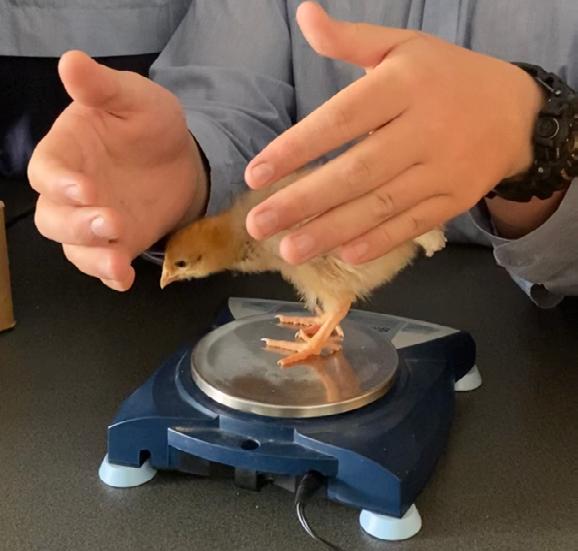
“Every student from Year 9 to 11 who does agricultural science gets to see the chicks in the back of the classroom and they all have that expectation of getting to do it in Year 12.”
Learning about animal welfare, ethically Kain describes the animal ethics approval process as straightforward, and he is able to apply on behalf of the class.
First, he completes an application form which is reviewed by the AEC. He then reports on the chick-rearing project following completion using a statistics return form.
As the experiment is the same each year, the ethics approval lasts for three years before the school is required to re-apply.
“Once you’ve got it set up, you just need to add to your document each time you’re applying for it,” says Kain.
Catherine says many applications are for straightforward projects and are approved outright, or with minor tweaks.
Students can apply as well. Kain says the school’s Year 13 biology ākonga do their own applications as part of an investigation looking at predator monitoring, overseen by teachers.
The NZASE says animal welfare is paramount to all projects involving animals, and a requirement under the Animal Welfare Act 1999.
Before embarking on a project or teaching activity that involves an animal students or teachers need to consider:
» how to reduce the number of animals involved
» what could be used instead of animals like an online model or simulation (replacement)
» how to refine their methodology to minimise any risk or pain to the animals.
Schools must complete the application form at least a week before an AEC meeting and before doing their planned animal activity.
The committee then reviews the application, and projects are either approved, not approved, or approved with conditions which usually means the application requires more clarifying detail.
Projects that have been approved are able to proceed with photos taken throughout for evidence. Some projects will be audited as part of compliance processes which involves an AEC member visiting to check that approved processes and conditions are being followed.
Once the project is completed, a statistics return form needs to be submitted and sent to MPI.
You can read more about the animal ethics approval process at animalethics.org.nz.
Catherine says that, ultimately, the goal is to help teachers and students carry out their projects while maintaining the welfare of animals.
“We don’t want to put individuals off from seeking approval because they think their ideas will be declined.”
Kain’s advice for other schools applying for animal ethics approval is to talk to someone who has previously followed the process and to provide more information than you think they need.
It’s also important to know when to apply. Kain says an animal ethics application is not currently needed for Feilding High School’s farms, as the work they do is common farm practice. If ever in doubt about whether a project does require approval, it should be submitted to the AEC.
Practical lessons he has held, such as collecting data from the milking robot to compare the age of cows and their somatic cell count, did not involve manipulating the animals.
In comparison, the chicks are being handled by multiple students once a week. Teachers are there to make sure the chicks are not handled in extra ways.
“As teachers, we’re always there when the kids are handling the animals. The day that the chicks arrive, we do a demonstration on how we want them picked up and handled.
“We talk a lot about factors that influence growth and the impact that stress can have and how we can reduce stress.”
Kain says the process of applying for consent allows you to look at the project critically for areas where potential impact on the animal can be reduced.
“Only our Year 12 agricultural science students are allowed to handle the chicks. Other students can look at them from a distance but can’t really go anywhere near them. The animal ethics [approval] can help us to justify that to students.”
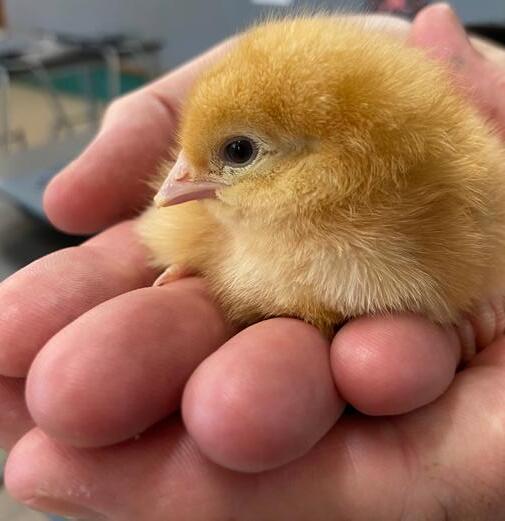
Proper handling is taught to help reduce stress for the chicks.
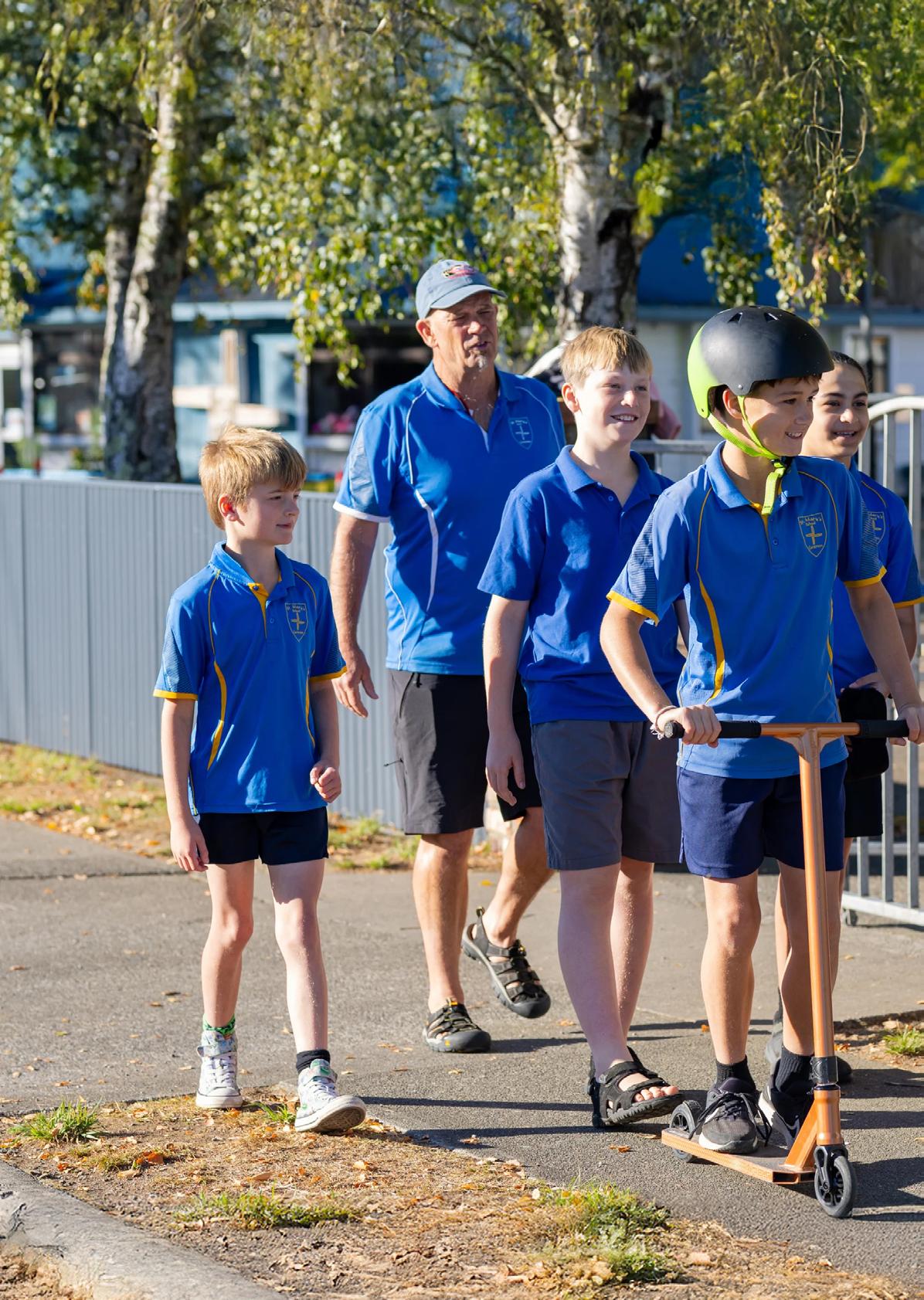
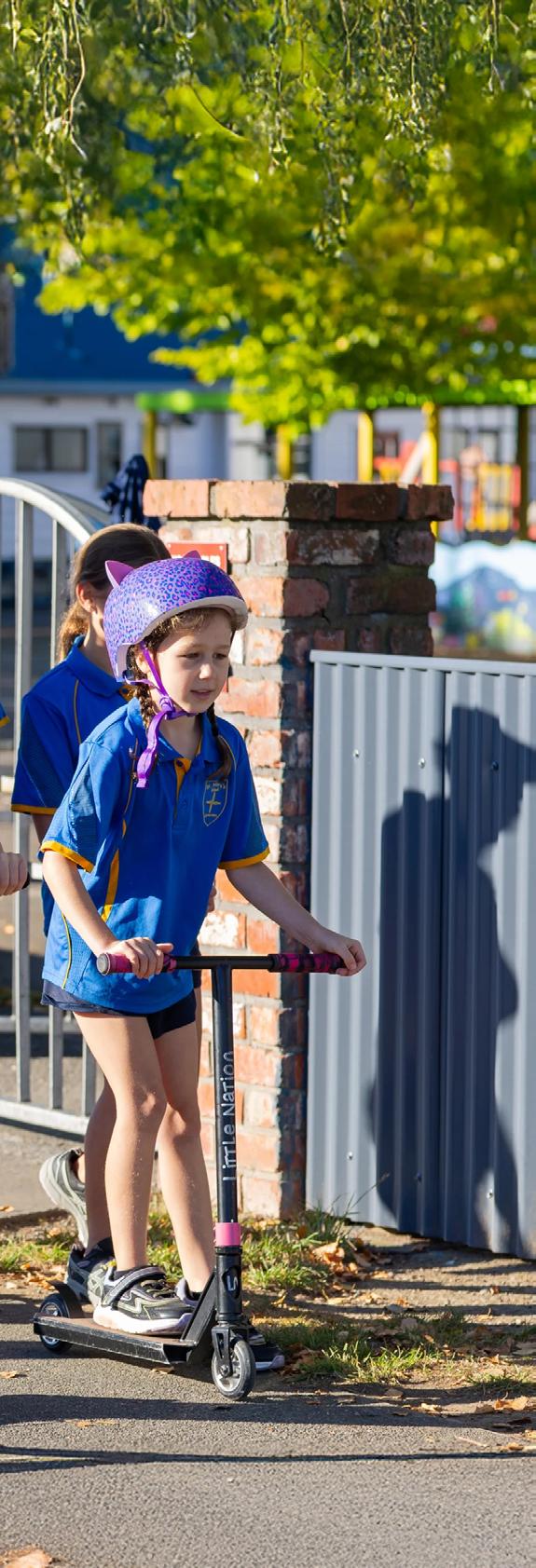
At St Mary’s School in Carterton, tamariki are learning about climate change and turning that learning into action.
By collecting and analysing data on how they travel to and from school, ākonga at St Mary’s School are exploring the climate impact of everyday transport choices and what they could do differently.
The results have been tangible. The school has reduced its weekly transport emissions by 138 kilograms of carbon dioxide equivalent – the same as a car travelling 570 kilometres.
St Mary’s is one of 22 schools across the country that took part in On Our Way in 2025. The cross-curriculum programme from the Ministry of Education, supported by Sport NZ, encourages ākonga to travel to and from school in active and sustainable ways.
Every day, an estimated 835,000 ākonga and staff commute to school, with most trips made in private vehicles. This represents more than 30 percent of the education sector’s total emissions – it’s the single biggest contributor.
On Our Way helps schools to take on this challenge by giving them an all-of-school opportunity to build ākonga climate literacy, by exploring how the climate influences them, and how their actions influence the climate.
By collecting transport data and using it across curriculum areas, students learn to understand, analyse and turn insights into action.
St Mary’s saw an immediate fit between the programme and the school’s values of caring for self, community and environment.
“Our climate is changing and our ākonga want to understand their role and control over that change,” says kaiako Liz.
With support from regional sports trust Nuku Ora, the school’s programme sits alongside wider sustainability initiatives.
These include Enviroschools programmes like the māra kai (food garden) and Movin’ March, an annual initiative that encourages Wellington primary school students to walk, cycle, scooter or ‘wheel’ to school.
Kaiako have also integrated climate and energy concepts into science learning through the House of Science resources, while hands-on activities like tree planting highlight kaitiakitanga and community connections.
“Our climate is changing and our ākonga want to understand their role and control over that change.”
The programme begins with ākonga building a picture of their school’s carbon footprint through collection and analysis.
Supported by teaching resources, they explore their transport environment, assess the climate impact of different choices, and consider alternative options that will work best for their community, now and into the future.
Liz says the use of real-life data helped identify an increase in car travel on Fridays, which has become a future focus for inquiry.
The programme has also reached beyond transport choices. Ākonga are more confident and engaged in hands-on learning inside and outside the classroom.
Whānau are also part on the journey, with more informed discussions about active travel taking place.
“We’ve seen robust discussions and a shift in thinking. Tamariki are asking how we can do things differently.”
The scope of On Our Way has been refined. While data collection and tailored emissions reports are no longer part of the programme, schools and kura can request a copy of their annual carbon footprint reports.
On Our Way learning resources can continue to be accessed via the app. Resources remain available to support teaching and learning.
Kaiako with a school email address (e.g. @school.nz) can access the On Our Way resources by visiting the app, entering their email and following the prompts. The app brings together all key information and resources. Questions should be directed to emissions.reduction@education.govt.nz
Visit the On Our Way app: onourway.glide.page
Liz shares the following tips for schools wanting to champion climate literacy and active travel:
» Find a passionate champion to lead the mahi.
» Ensure you have the support of your board and principal.
» Allocate time and support – resource teacher, teacher aide or learning assistant roles can work well for garden and small group sessions.
» Use the local environment as a classroom for science and wellbeing.
» Integrate movement and sustainability into existing subjects to enhance learning.
» Collect real data – transport surveys are a powerful way to engage tamariki in climate science.
The second biennial APPE Progress Report 2023-2024 from the Ministry of Education highlights progress across the education system to support Pacific learners.

Key highlights:
• Growing support for Pacific languages and culturally grounded learning
• Increased use of culturally responsive teaching practices
• Stronger collaboration with Pacific communities and organisations
• Continued focus needed to make sure Pacific learners feel valued and supported.
These insights are particularly relevant for leaders, teachers and educators working with Pacific learners and their families.
Read the full report here
Summary for educators: Summary of progress report 2023-2024 - Ministry of Education
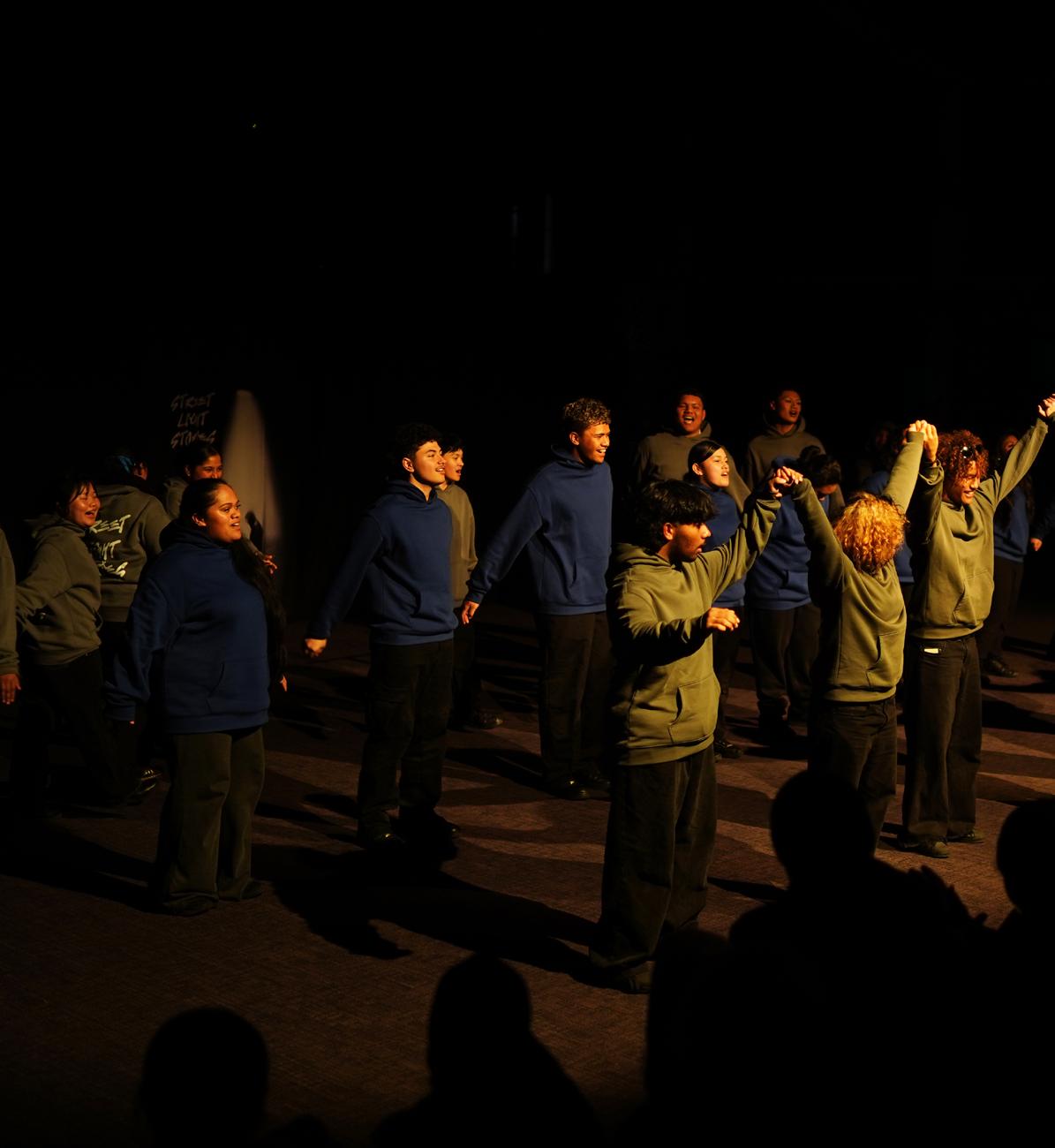
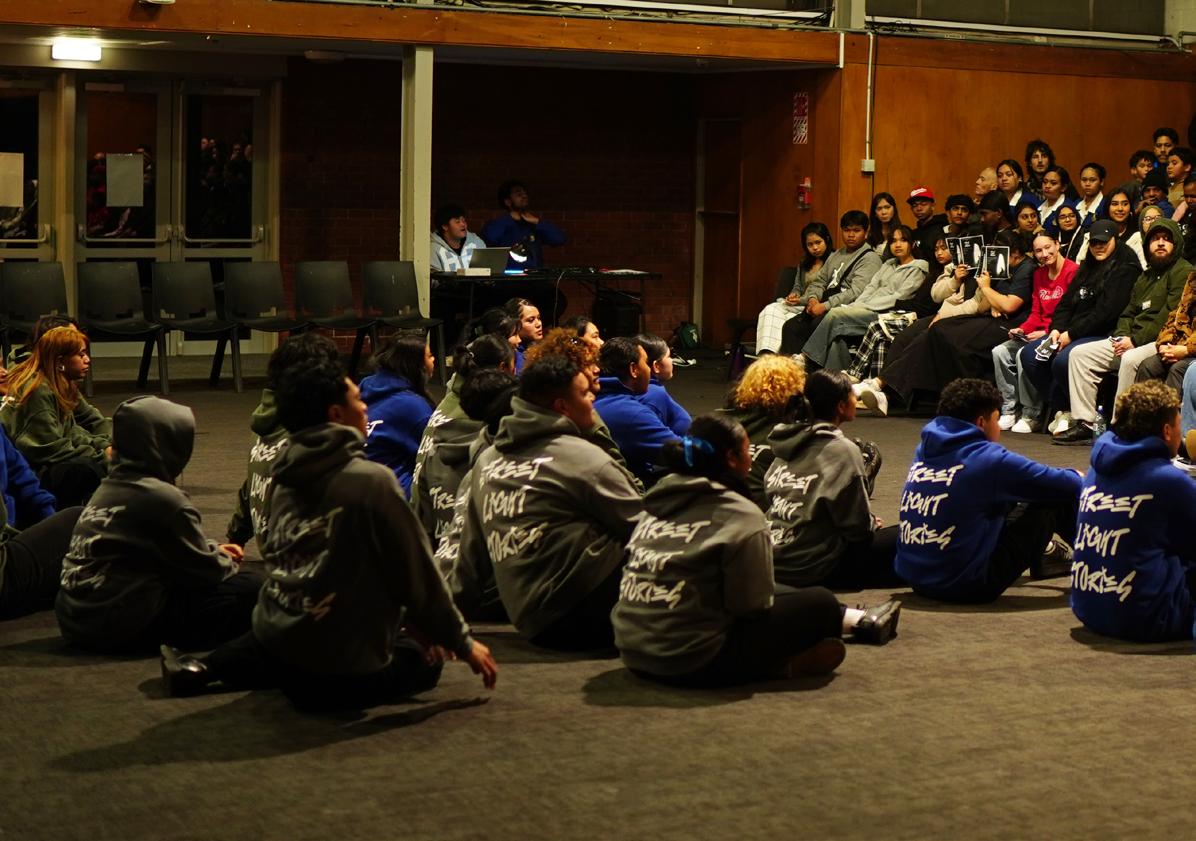
Rangatahi from Ōtāhuhu College stepped into the world of theatre through Street Light Stories, a drama initiative that’s helping young people see themselves, their communities, and their future reflected on stage. After presenting the piece in Tāmaki Makaurau, the group were so energised by the experience that they decided to take the show on the road.
Every production begins with people. That’s the belief of Kerry Lynch, head of dance and drama at Ōtāhuhu College.
“It starts with trust, purpose and looking out for one another. Give young storytellers the space and support to imagine, and they’ll surprise you, sometimes in a hoodie, always with a big heart,” he says.
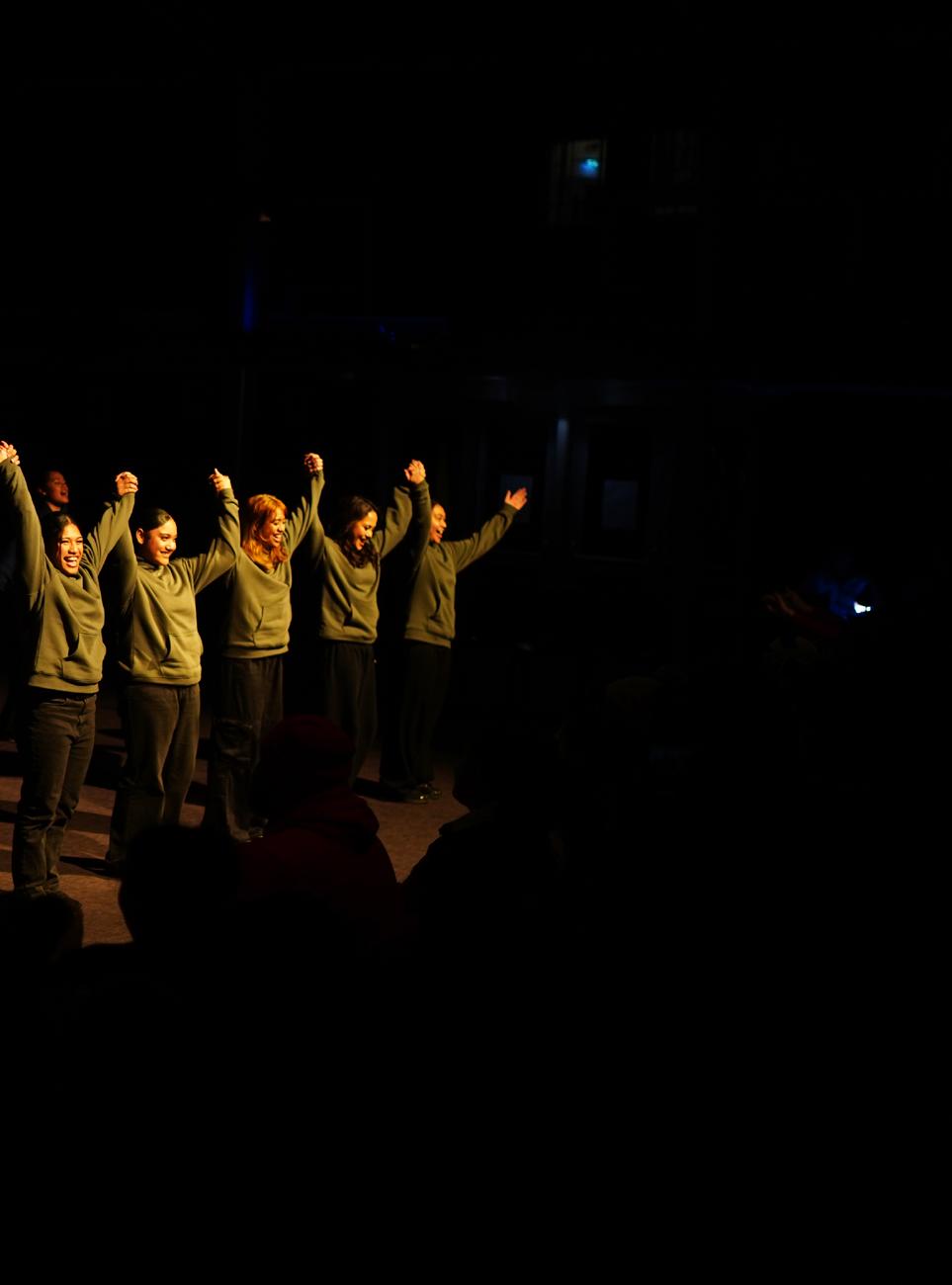
Building on the momentum of their 2023 tour of Southside Riches to Te Tai Tokerau, Street Light Stories returned in 2025, kicking off during the April holidays with a two-day induction.
Students came together to build confidence and team culture, and to dive headfirst into creating theatre.
Kerry worked alongside Lerato Islam, an international PhD student from the University of Auckland, whose guidance added depth and discipline to the early stages of creation.
“Give young storytellers the space and support to imagine, and they’ll surprise you.”
Throughout term 2, 2025, students spent every Wednesday evening with industry experts, including Miriama McDowell, Dominic Ona-Ariki, and Ōtāhuhu College alumnus Villa Lemanu, to refine ideas and work.
Their visits inspired the students and helped them rise to every challenge, shaping them into confident storytellers.
Guided by a student leadership group, they explored themes that mattered most to them: relationships, gender, culture and identity.
By July, the leaders had formed three groups – emotions, cousins, and choir – and during a six-day holiday intensive, around 90 percent of the show came together.
The process was loud, challenging and chaotic at times, but Kerry believes that’s exactly where genuine creativity thrives.
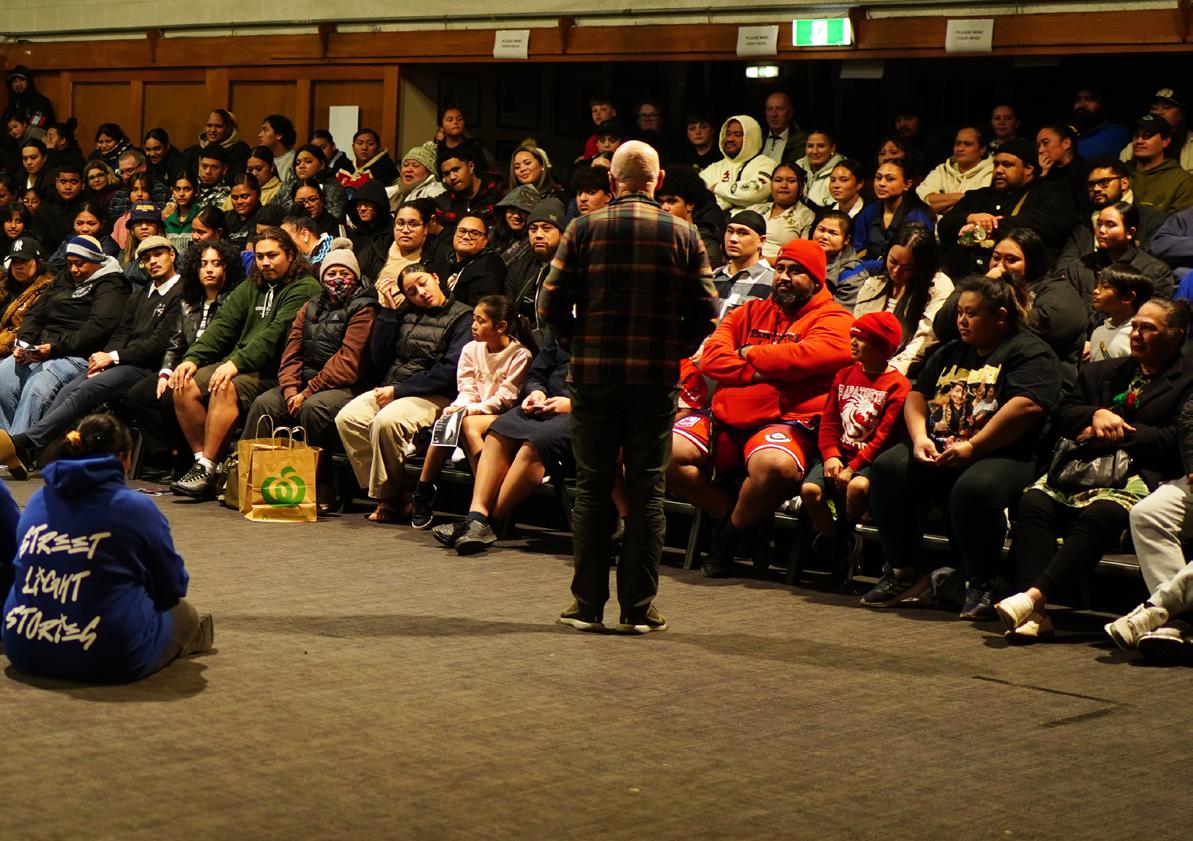
By term 3, the cast was ready. They performed three days of matinees for junior and middle school students before moving into evening shows for whānau, friends, alumni and the wider community.
At the end of each evening performance a public forum was held where the audience were encouraged to share their views. Audiences were moved by the honesty, humour and vulnerability on-stage.
“Those moments when someone stands up and shares how the show made them feel, that’s the power of theatre. It can bring people together in a way that nothing else does,” reflects Kerry.
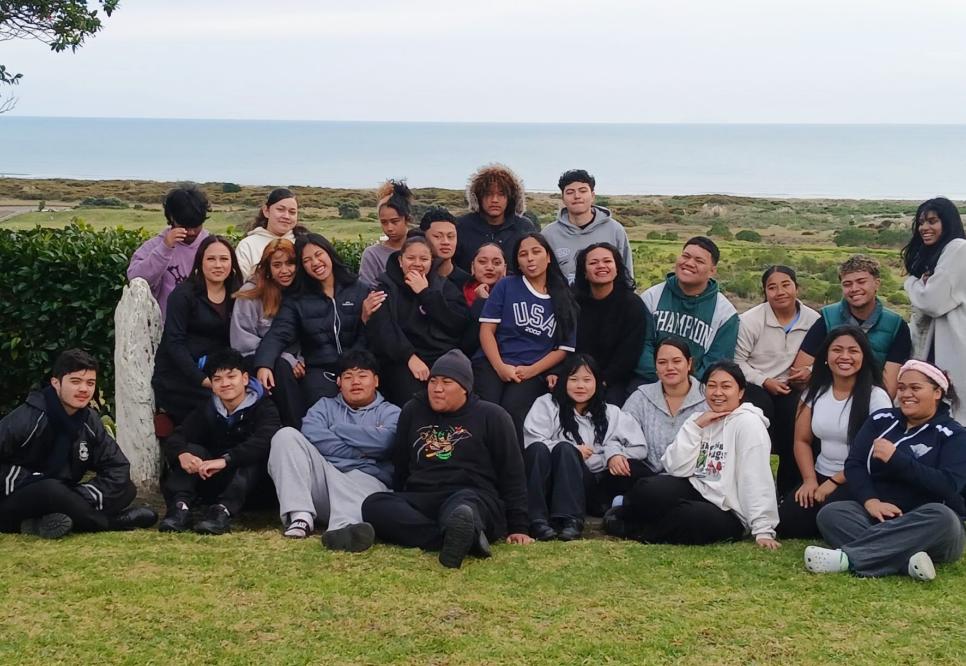
After a short break to recover from winter bugs, 26 students and three staff set off for the East Coast. For many, it was their first time travelling through this part of Aotearoa.
Over four days, they stayed in two marae and performed at four kura, each of whom welcomed the group in their own unique ways. After the pōwhiri, student tour leader Phoenix would respond in Sāmoan with the team then following up with a song from Tonga. The response from elders and kaiako was warm and encouraging.
The students described the tour as unforgettable. They spoke of warm welcomes and moments that stretched their confidence in all the right ways.
Many reflected on reconnecting with their culture, feeling proud to perform as Māori and Pasifika, and appreciating how fortunate they are to have drama as a subject.
Shared meals, long bus rides, laughter and inside jokes turned a group of performers into an extended whānau.
Senior student leaders saw it as a last chance to inspire others before leaving college, while others said the trip helped them build friendships that will last long after the final curtain.
Street Light Stories was able to tour thanks to support from Creative New Zealand’s Creative Communities Scheme, marking the school’s first-ever external funding for the programme.
“Those moments when someone stands up and shares how the show made them feel, that’s the power of theatre.”
Prior to this, Ōtāhuhu College had relied on limited resources and the passion of its staff. This support enabled students to take their work beyond the school gates and build leadership skills, showing why the scheme remains impactful more than 30 years on.
"This tour would not be possible without kaiako Whaea Jude for her amazing connections on the Coast, Sean Klopper and our leadership team, and our cast for their talent and energy.
“Thank you to Mr Watson, the Creative Communities Scheme, Whakaari Aotearoa Drama New Zealand and the schools that hosted us – Ōpōtiki College, Te Kura o Te Whānau a Apanui, Te Kura Mana Māori ō Whangaparāoa, and Rerekohu Area School. And finally, to my Kaumatua, Tarutaru Rankin, for planting this seed years ago," says Kerry.
For the students of Ōtāhuhu College, Street Light Stories is more than a school production. It showed them that their stories can travel all the way to the East Coast and inspire communities far beyond home.
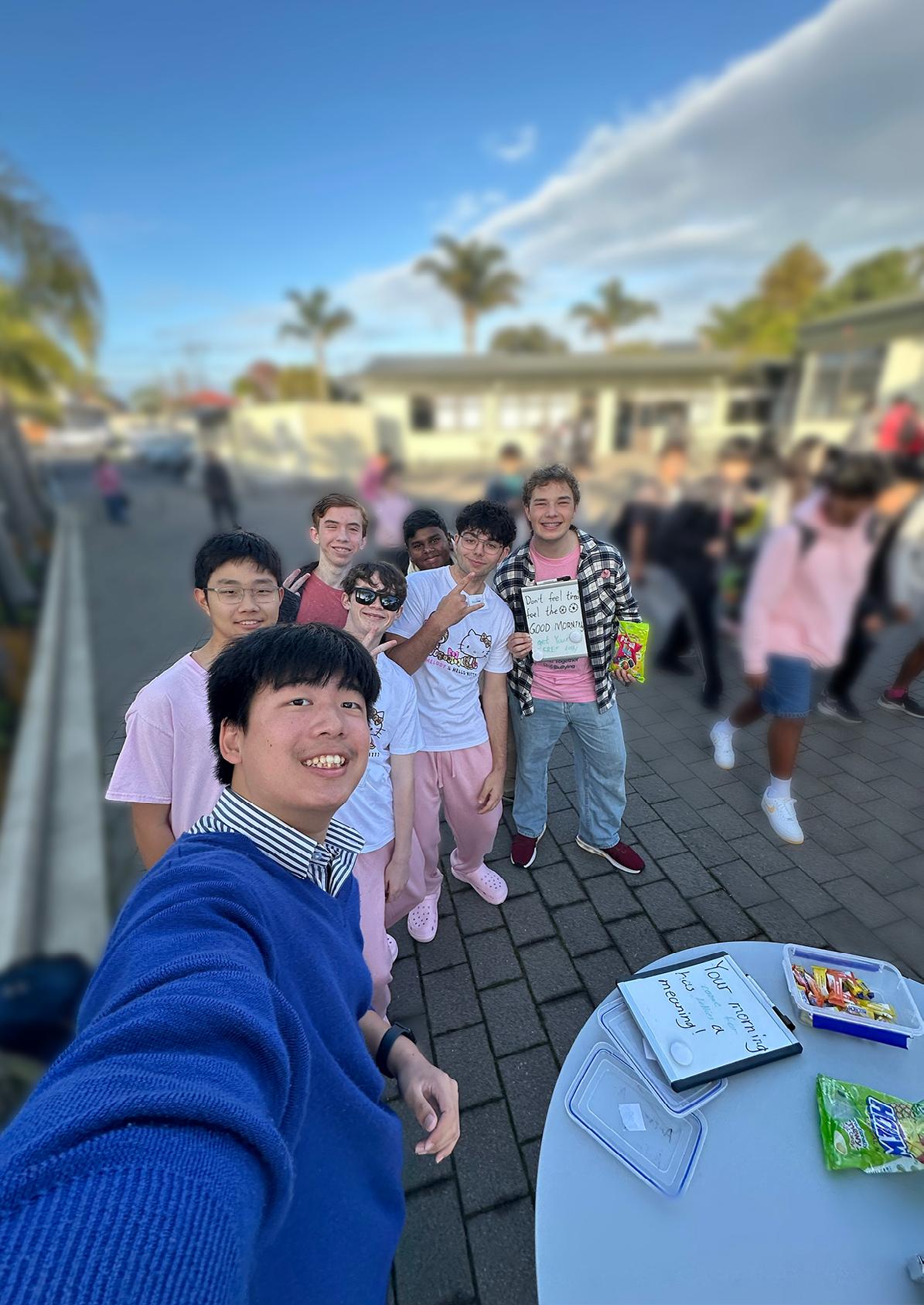
A handshake, a whiteboard, and a warm welcome: Mornings at Macleans College in Tāmaki Makaurau have begun to look a little different thanks to a student led project centred on connection.
What began as one student’s memory from a childhood spent in Singapore has grown into a thriving schoolwide initiative improving students’ sense of belonging and boosting their mental wellbeing before the first class has even begun.
“When I attended school in Singapore, the teachers would greet students at the door by name and with a high five, which made me feel welcome,” recalls Arthur.
"After studying in different countries, I really understand the difficulty of adapting to new schools and talking to people when everyone has their own friends.”
This experience sparked the idea for the ‘Good Morning Campaign’, which aims to help students feel connected.
“One of my goals for the campaign is to create an inclusive environment within the school and the community so that every student can find a sense of belonging,” says Arthur.
Arthur pitched the campaign to his deputy principal, who loved the idea and proposed trialling it amongst Arthur’s school house group.
Arthur was able to recruit student volunteers, Alvia, Jhankriti, Connor, Aarav, Kobe, Kevin, Malindu and Alec, to help get the project underway.
A morning ritual
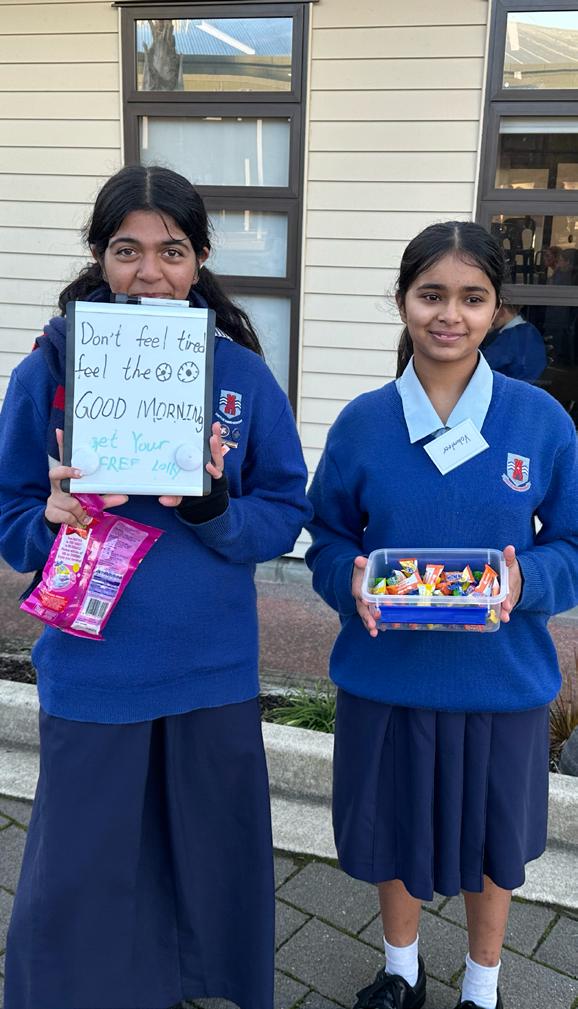
The heart of the project is simple. As students arrive at school, they’re greeted by volunteers offering a cheerful “good morning”.
Students can return the greeting to receive a sweet. They receive a second sweet by completing the signature 'Good Morning' handshake. For those who want to go even further, there are optional press up and riddle stations to earn extra treats.
“Some of the students are better at physical exercises and some are better at more brain-intensive exercises so I’ve chosen activities that all students can be included in,” says Arthur.
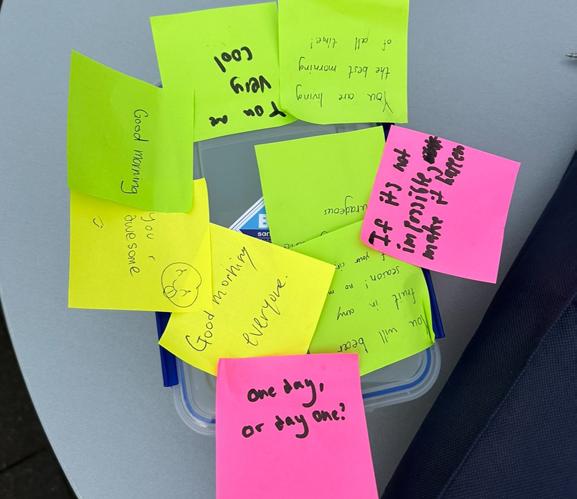
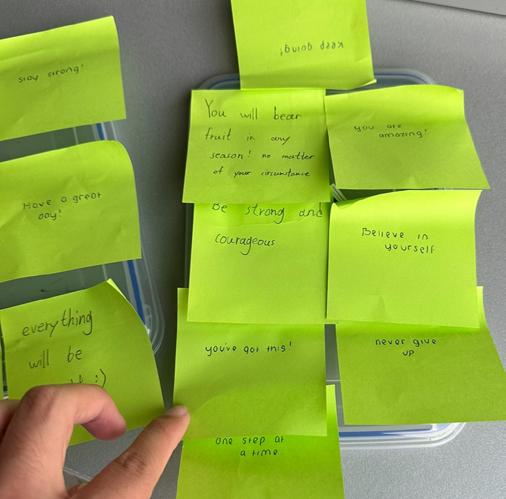
For more introverted students, the Good Morning Campaign also offers a whiteboard with prompts that students can respond to via writing and drawing.
“Some of the whiteboard responses to the prompt ‘What made you have a good morning’ have been things like waking up in a warm house, having a delicious breakfast, or having someone open a door for them,” explains Arthur.
“It can be a great mindfulness practice for students,” he adds.
“One of my goals for the campaign is to create an inclusive environment within the school and the community.”
More than morning treats
The benefits of the campaign extend well beyond sweet treats, and associate principal Bessie Tuialii says this is noticeable.
“Arthur’s approach encourages participation and fosters a positive atmosphere. His work contributes to a sense of connection and boosts overall morale among those involved.”
What Arthur didn’t expect when he launched the initiative was how transformative the experience would be for his own growth.
“This campaign has really grown my leadership skills and helped me to take on more responsibilities,” he reflects.
A journey to leadership
Arthur’s experiences in New Zealand and overseas have impacted his view on education and his growth as a leader.
“Before coming to New Zealand, I always thought high quality education was to train future CEOs, bankers, scientists, or financial elites on Wall Street.
“I’ve now realised it is to give every single person an equal opportunity to find what they love."
Arthur is now the international prefect for 2026, as well as a peer support leader providing guidance for students new to the school.
“Being supported by my friends has been a very important part of my life,” he shares. “It’s something that I want to hopefully let students know through the campaign, that there are people who are there and who are able to support them if they need it.”
Bessie says they are very proud of Arthur and the commitment and energy he brings to his initiatives.
“Students have responded very positively to his efforts, particularly enjoying his presence in the mornings. He engages both students and staff in an inclusive, upbeat, and friendly manner, which has helped to create a welcoming start to the day.”
“[This] approach encourages participation and fosters a positive atmosphere.”
The Good Morning Campaign is gaining momentum, with plans to eventually expand the fully self-funded programme to other schools in East Auckland.
“One of my goals is to be able to collaborate with as many schools as possible and hopefully train student leaders so we can extend our impact and help to build safe and comfortable environments for students to support one another.”
After all, a better morning can start with something as small as a greeting, a sweet and a smile.
Two national programmes are giving kura and schools practical ways to bring civics education to life in 2026, and to build on students’ knowledge, confidence, and participation in democracy.
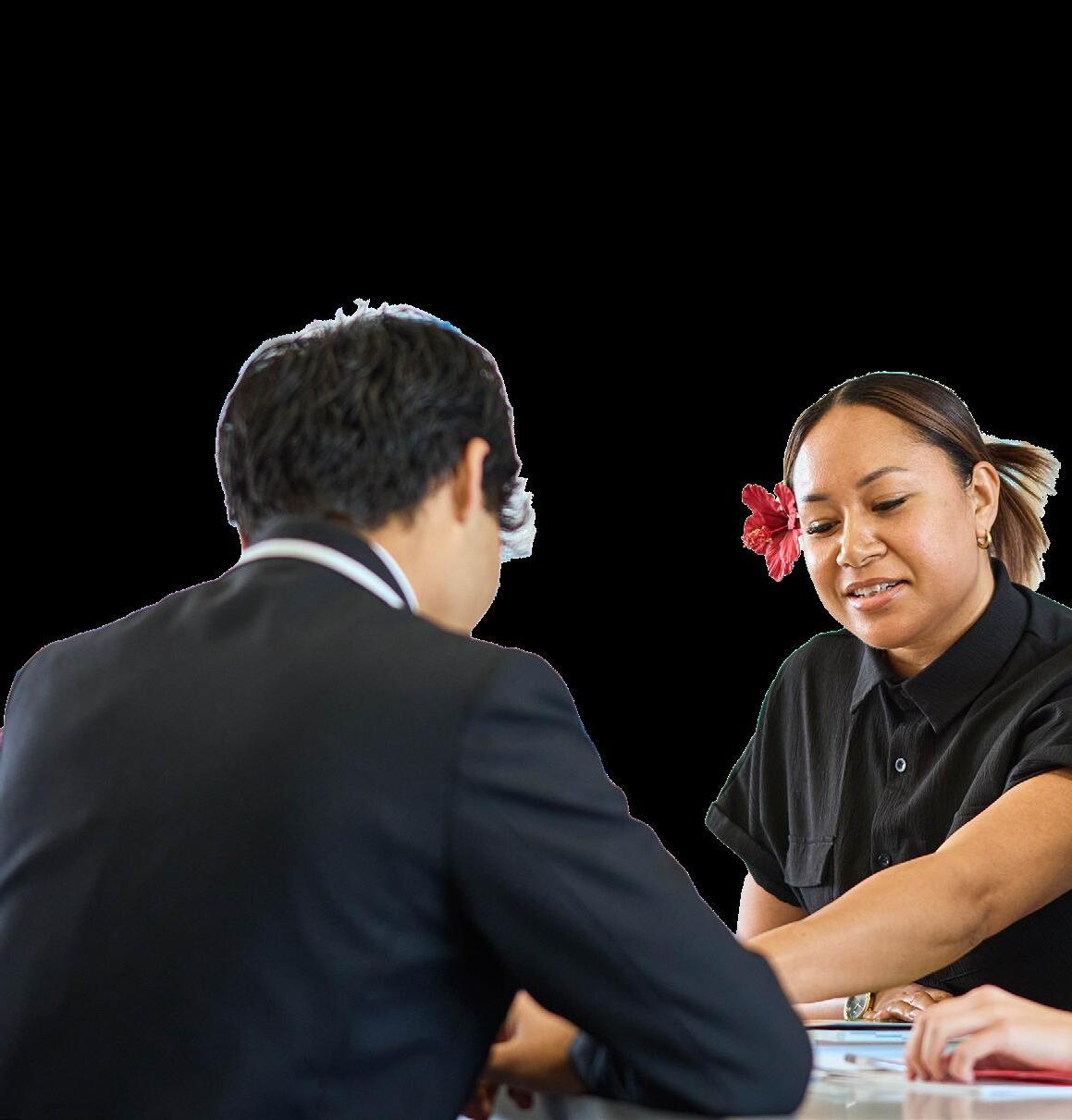
Kura and schools are sent a free pack of resources, like posters, a ballot box and teaching material. They are also given instructions on how to set up a voting place, including things like creating electoral rolls and how to guide voters through the process.
Students can take on roles like in a real voting place that are needed to run the election, such as an Issuing Officer who issues voting papers or Counters who count and record the results.
“Kids Voting is a fun and easy way for students to learn about New Zealand’s democracy and explore real-life election issues,” says deputy chief executive operations Anusha Guler.
Both programmes align with the social sciences learning area of The New Zealand Curriculum (2007) and Tikanga ā-Iwi in Te Marautanga o Aotearoa (2008, updated 2017) while also being consistent with the intent and proposed focus of the draft social sciences learning area and civics strand.
They emphasise active participation, critical thinking and real-world application, which are all key shifts reflected in ongoing curriculum refresh work.
Together, they highlight a growing focus on equipping ākonga not just with knowledge of democratic systems, but with the confidence and capability to engage in them.
In an election year, they offer timely opportunities for schools and kura to connect civics learning to lived experiences and national events.
How is your school or kura approaching civics education in this election year?
We’re keen to hear how you are:
» building understanding of democracy and government
» connecting learning to the 2026 General Election
» supporting student voice and participation
» integrating civics across your curriculum.
Get in touch to share your story for a future Education Gazette feature. Email gazette@education.govt.nz.
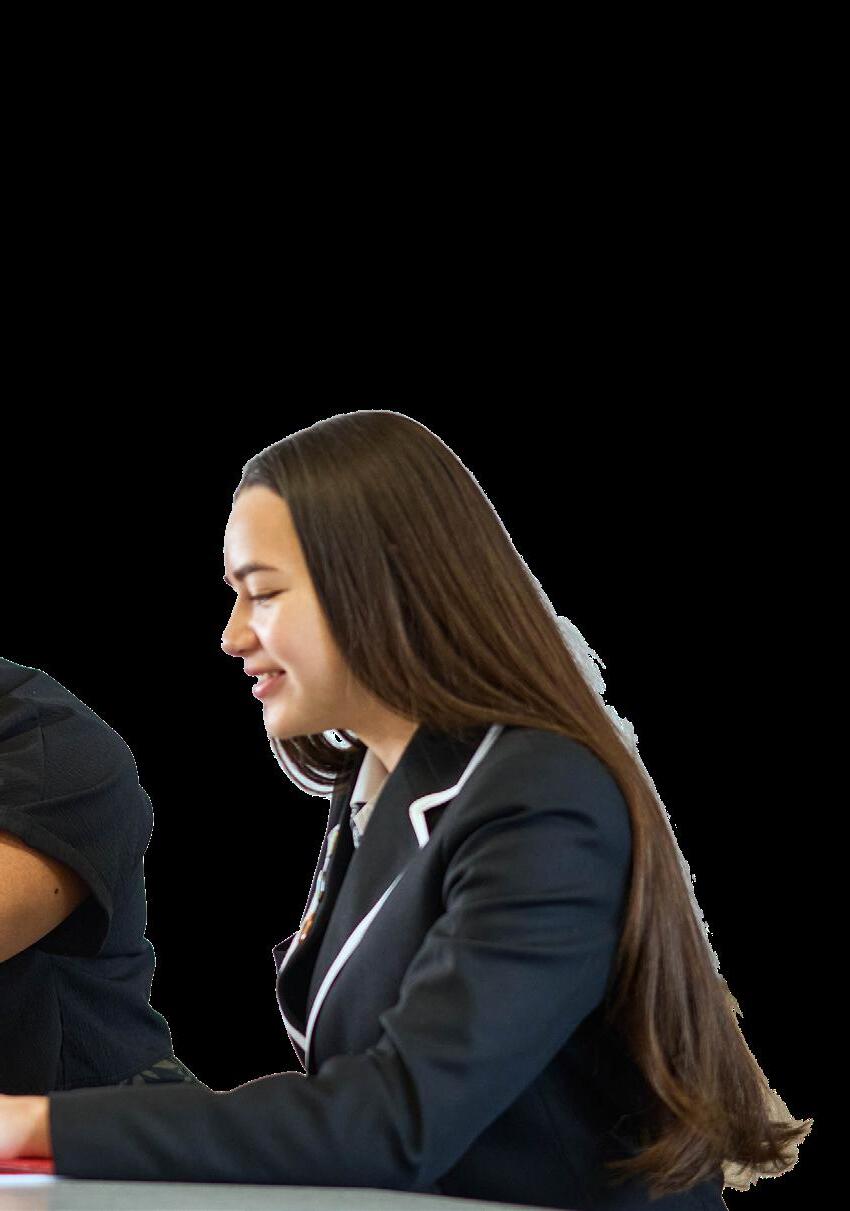
Registrations for Kids Voting – Te Pōti a Ngā Tamariki 2026 are open, and the resource packs will start to be distributed to kura and schools for term 3.
The mock election exercise will be held from mid-October and end before the real General Election date on
Find out more and register now at kidsvoting.nz
Waha will be ready for a national rollout in term 3, with a focus on the General Election. The Waha team is preparing an election package along with other organisations, including Generation Vote and Mana Mokopuna (Children’s Commissioner). The aim is to make it easy for teachers to make the most of the election.
The Waha team is running online introduction sessions and training in June. To find out more, visit and sign-up for updates.
Grounded in the past and designed for the future, the opening of a rebuilt area school in Twizel marks a major milestone for this resilient community. A former student, this writer blends local history with student and teacher voices to reveal what the new spaces mean for learning and community life in the beautiful extremes of the Mackenzie Basin.
Ibuild cottages and prefabs for schools, rolled onto farmland in the Mackenzie Basin.
There, on the flat land among the tussock, they built a little town to house the workforce who came to build the Upper Waitaki power project – a series of power stations from Lake Pukaki to the Waitaki River.
At the height of the hydro boom in the late 1970s, the primary and high schools taught a thousand children from all over the Mackenzie Basin, but by 1983, once the power plants were built, many families left to find work elsewhere.
The Ministry of Works’ intention was to dismantle Twizel and return it to farmland.
But the remaining families had fallen in love with the area and successfully lobbied to let the little hydro town stay.
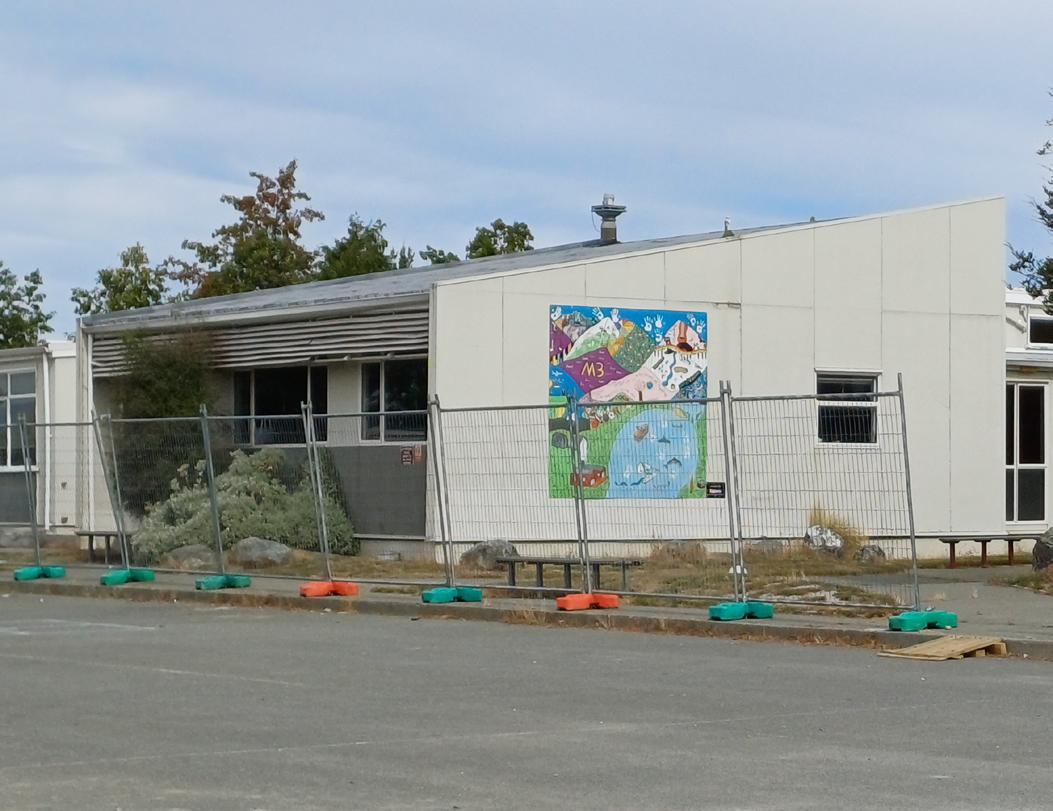
The schools were amalgamated into an area school of just 150 students, both schools now sharing the high school buildings.
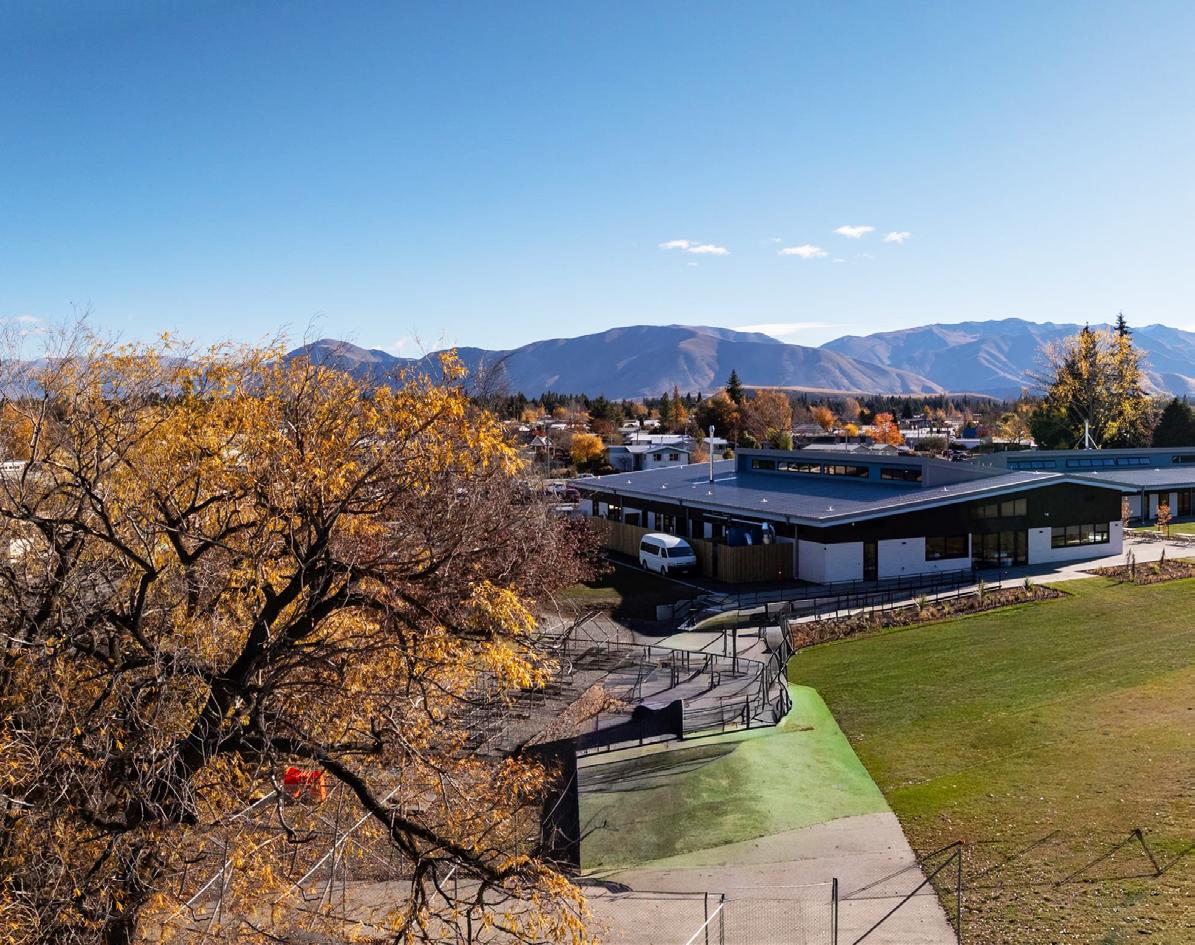
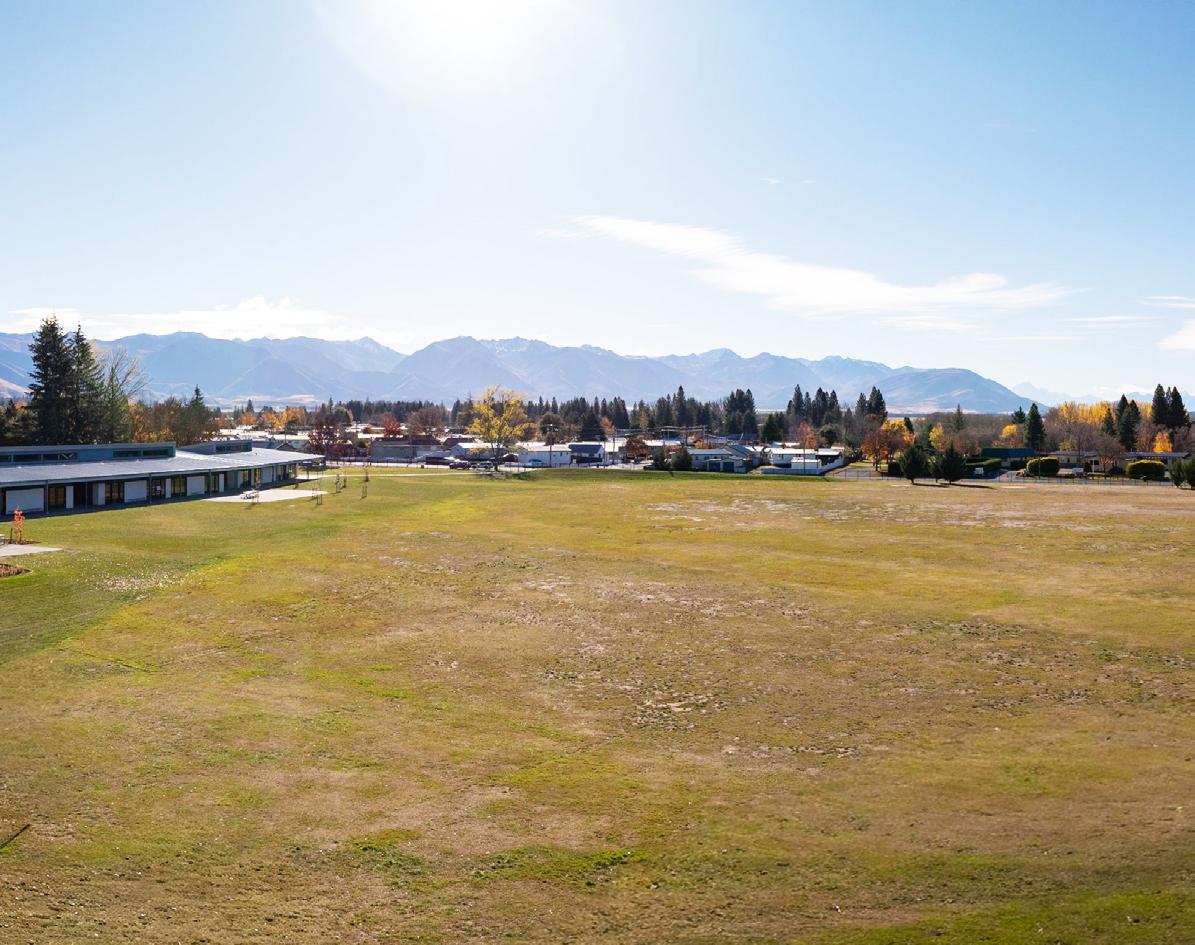
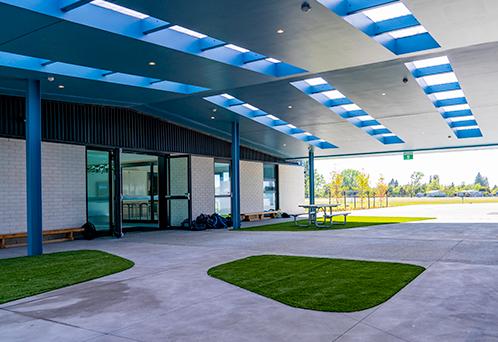
Today, a new Twizel Area School with 250 students has been rebuilt to withstand the freezing depths of Mackenzie Basin winters and the searing heat of its summers.
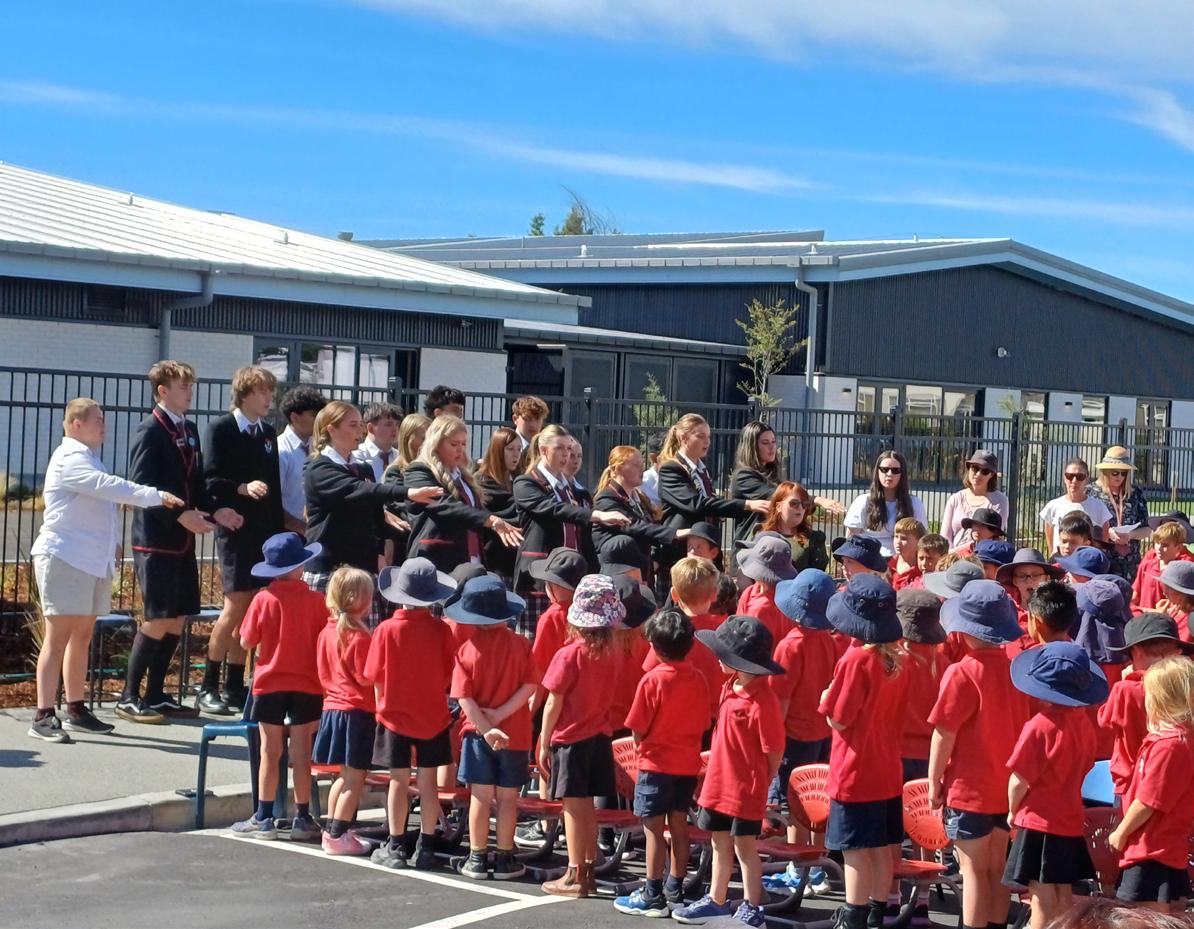
A blessing ceremony led by Kai Tahu sets the tone for the chapter ahead.
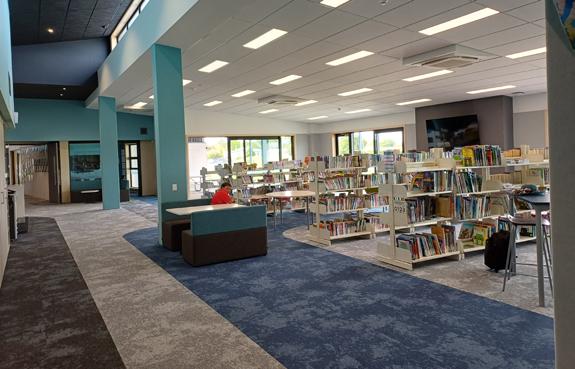
At the centre of the new building is a modern, light-filled library with a glimpse of Aoraki Mt Cook in the distance. It is principal Vicki McIntyre’s favourite feature.
Study spaces and comfortable chairs are dotted among racks of books with lines of classrooms radiating off east and west.
“Quite a lot of our students are from families who have been here for three generations ... It’s a special place to teach."
“You’ll see five-year-olds curled up reading, with seniors studying right next to them. And that’s how an area school should be.”
The Mackenzie Basin is breathtakingly beautiful. The little town is cocooned by hills with flowing golden tussock. Snow-capped mountains peek over the top and shimmering alpine lakes and rivers promise adventure and excitement. The air is crisp and fresh.
At night, the Milky Way and its millions of stars is astonishingly close and magical.
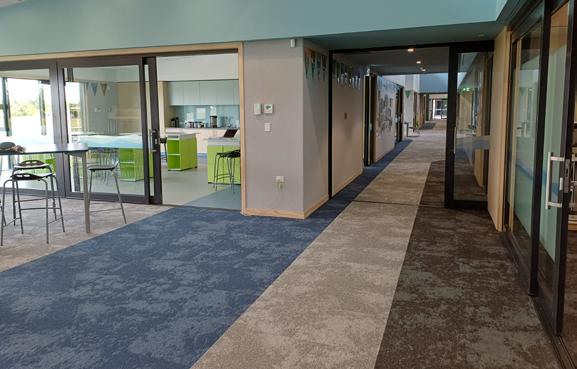
Inside the new school, waves frosted onto the lower halves of the windows separate the teaching spaces, but they still
feel connected to the rest of the school. They bring a sense of movement and reflect the blues of the glaciers, lakes, rivers and big wide-open skies of the area.
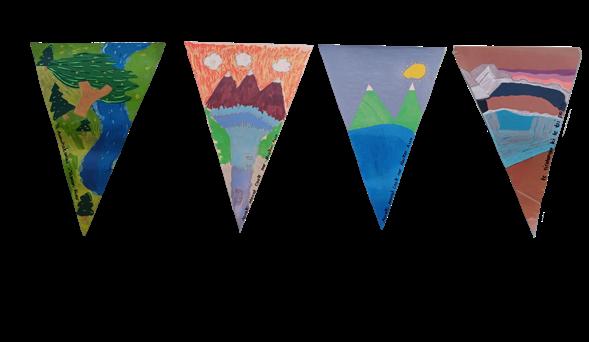
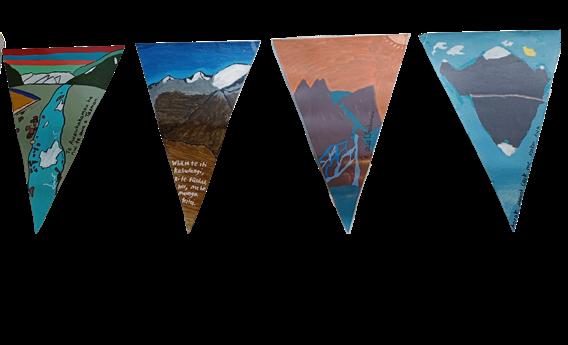
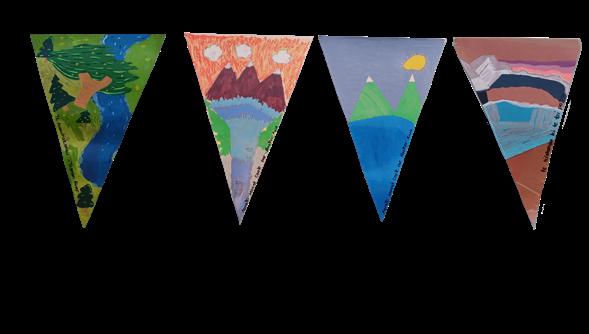
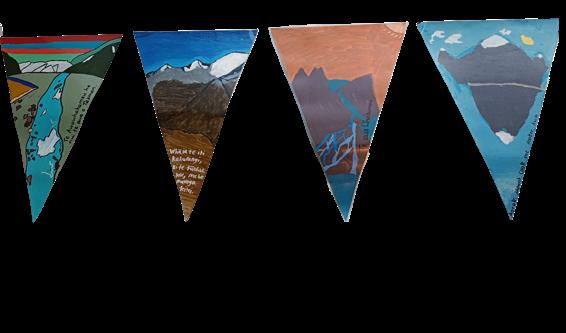
To celebrate the new school’s opening, the students have painted colourful bunting flags which decorate the wide hallway that runs the length of the school – all depicting the beautiful scenes that surround them.
A climate of extremes, the Mackenzie Basin has been known to get as cold as -10 degrees, though usually sits around -3 to -4 degrees in winter, climbing to the late 30s in summer.
The new Kingspan roof is designed for both extremes with a high thermal rating and a substantial snow loading, and is also built to withstand high winds. The walls have climatespecific insulation, and the windows are double-glazed and thermally broken, which keeps the internal temperature consistent.
The ceilings each have ventilation units connected to a central air conditioning system which pumps warm, fresh air through the school, but also allows teachers to adjust the temperature in each classroom.
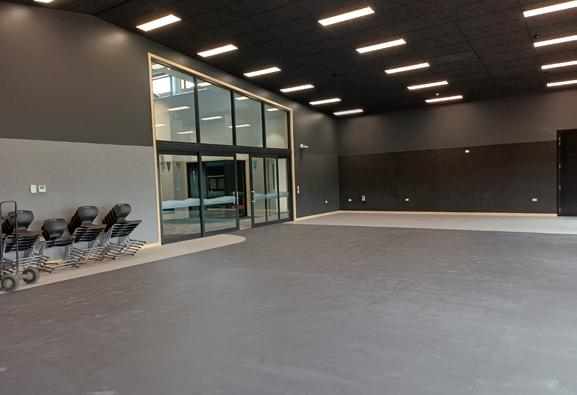
At the far end of the new complex is the Multi-Purpose Room, (MPR) also festooned with colourful bunting. It’s set within a network of music practice rooms – a luxury the school has never had before.
Jayne Evans teaches maths, science and music and is developing the arts and music curriculum. She has big plans for the space and can’t wait to set up a music programme.
“I'm excited that this year, Years 7 to 10 are all taking music, drums, or performing arts with me.
“I would like to see a minimum of 20 senior students studying music and drama in the school. I want to see the middle school have a full drama class at each year level.
“I want to see all the primary school kids doing Ukulele Jam, get them up on stage doing some performances. We’ll have drama games at lunchtime!”
Melissa Sidon teaches English and is the dean for Years 7 to 13. She explains the difficulty they had building school pride in the old, and cold, space.
“On days when it was too cold to go outside, [students] were in the foyer, outside the office and that would be [all year levels] ... Students would have the odd game but usually they were trying to keep warm in the foyers which became a 'managing students' challenge. The new school has numerous spaces and indoor-outdoor flow.
“It was hard for the students to care about the old school, it was run down, rotting, cold and unwelcoming, but they’re certainly proud now – and excited to come to school.”
Though rewarding, the shift has been demanding for all involved. For months, staff laboured for hours after school, moving endless boxes of teaching materials from the old buildings to the new space.
Sandy Nelson who teaches English and social studies, says it’s been a huge effort to shift, even though the buildings are very close.
Reflecting on the old, though slightly gloomy, interiors, Sandy also speaks to a sense of pride in the past, and the weathered resilience built through the generations.
The opening pōwhiri.
“You’ll see five-year-olds curled up reading, with seniors studying right next to them. And that’s how an area school should be.”
“Quite a lot of our students are from families who have been here for three generations – their grandparents fought the Government to keep the town.
“It’s a special place to teach.”
Grief for the old, hope for the new
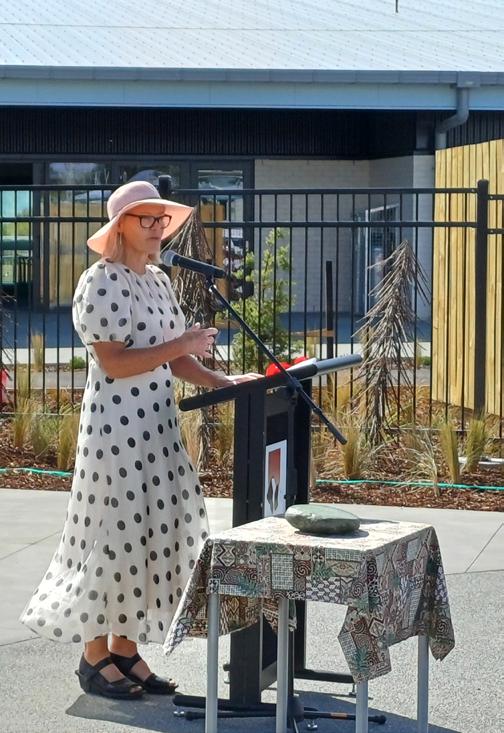
A ribbon-cutting ceremony officially opens the space, with native trees planted by the youngest and oldest students.
The atmosphere is festive, but classes continue among the celebrations.
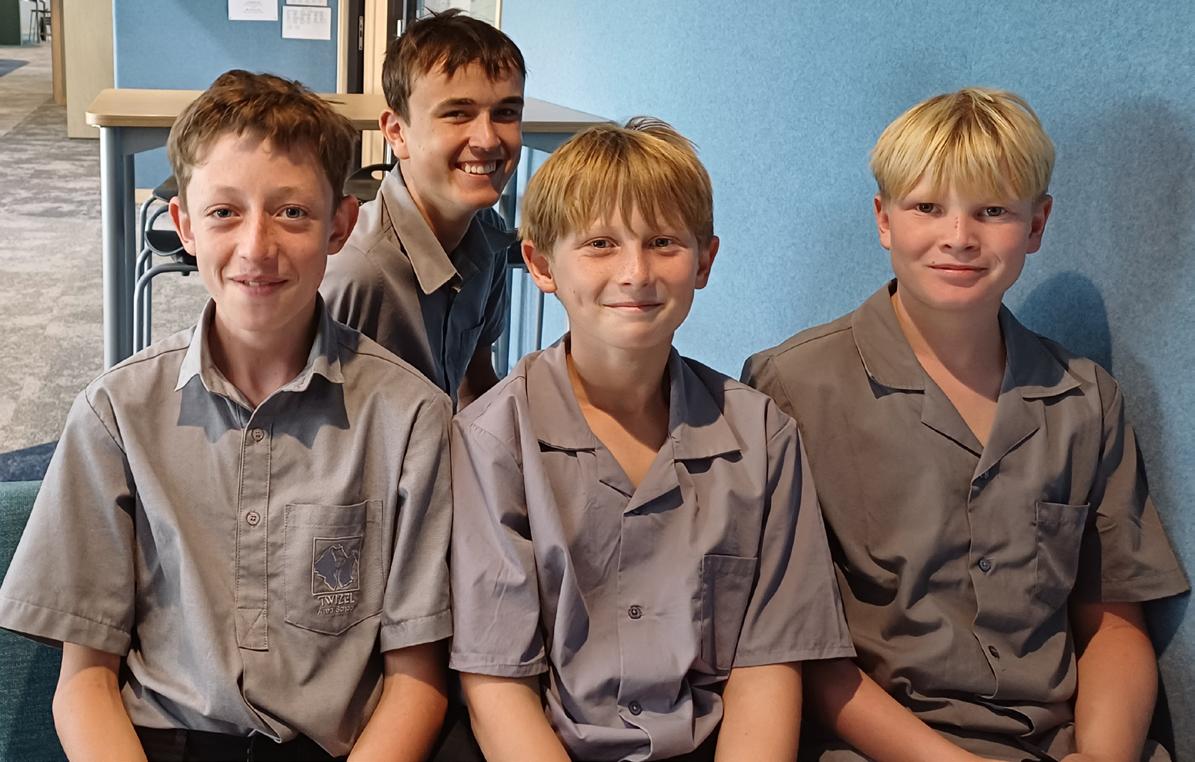
Elyh, Fletcher, Baxter and Dominic are full of 12-year-old bluster and cheekiness and enjoy sharing their dreams for the future.
Two plan to become fishing guides, one intends to become an engineer like his Grandad, while the fourth thinks he might work in a bar.
“There's this guy in town,” says one. “He goes out guiding, teaching people how to fish and I go with them sometimes. I just want to do that when I grow up.”
When asked if they are happy to be in the new school, it’s mostly enthusiastic nods with some sadness for the only space they’ve known until now.
“It’s really cool,” says one. “It’s not as confusing as the old school. The hallways are bigger and there are lots of windows. It’s easier to find your class.”
“I hope it’s a lot warmer than the old school though,” says one emphatically, “Because that school was really cold!”
They’re looking forward to getting a new playground and a basketball court. And they grin enthusiastically at the thought of their own gym for winter sport.
Head girl Lily reflects on how it was colder inside the old school than outside some days.
“The heaters were old and took ages to warm up. Having all these new heat pumps is going to be great for winter.”
Like the juniors, Lily is also a bit sad to see the old buildings go. She tracks her progress through school by those old classrooms, including years when it was hard to turn up. But Lily is proud of what she’s achieved.
“Who would have thought I’d have got head girl? There were teachers who believed in me and took an interest in what I wanted to do. They helped me … respected me, listened to me, wanted me to be there and to have a good learning experience.”
The students agree that at the end of the day, it’s not all about the bricks and mortar.
“It’s the people. It’s the teachers that make it a good school. But the new school helps a lot,” says Lily.
At the ribbon-cutting ceremony, the Mackenzie District mayor, Scott Aronsen, told students, parents and teachers the population in the wider Mackenzie Basin is set to double in the next 20 years from the current 5,500 permanent residents, driven by tourism.
It’s already hard to book a bed in Twizel. The demand for more accommodation is expected to attract hospitality workers to the district to manage those businesses and in turn, more eateries and shops.
With year-round skiing, hunting, fishing, tramping and other outdoor pursuits so close, those workers are likely to stay, put down roots and like many before them, have children who will go to Twizel Area School.
Vicki McIntyre and her board and teaching staff are ready for them.
School roll: 250
What was built: Two new standalone single-story buildings and a carpark
Number of classrooms: 12, plus a specialist block
Construction cost: $21 million
Build time from day one: 10 months
Building company: Southbase