SALES SUCCESS
T O U C H , TA S T E , S O U N D , S M E L L , S I G H T
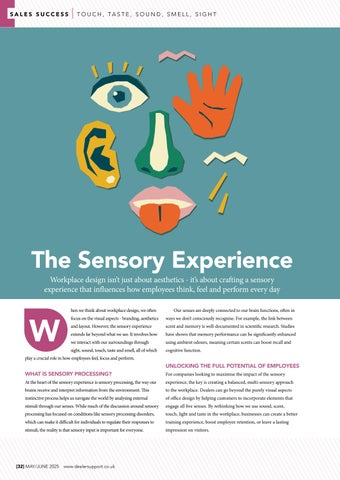
The Sensory Experience Workplace design isn’t just about aesthetics - it’s about crafting a sensory experience that influences how employees think, feel and perform every day
W
hen we think about workplace design, we often
Our senses are deeply connected to our brain functions, often in
focus on the visual aspects - branding, aesthetics
ways we don’t consciously recognise. For example, the link between
and layout. However, the sensory experience
scent and memory is well-documented in scientific research. Studies
extends far beyond what we see. It involves how
have shown that memory performance can be significantly enhanced
we interact with our surroundings through
using ambient odours, meaning certain scents can boost recall and
sight, sound, touch, taste and smell, all of which
cognitive function.
play a crucial role in how employees feel, focus and perform.
WHAT IS SENSORY PROCESSING?
UNLOCKING THE FULL POTENTIAL OF EMPLOYEES For companies looking to maximise the impact of the sensory
At the heart of the sensory experience is sensory processing, the way our
experience, the key is creating a balanced, multi-sensory approach
brains receive and interpret information from the environment. This
to the workplace. Dealers can go beyond the purely visual aspects
instinctive process helps us navigate the world by analysing external
of office design by helping customers to incorporate elements that
stimuli through our senses. While much of the discussion around sensory
engage all five senses. By rethinking how we use sound, scent,
processing has focused on conditions like sensory processing disorders,
touch, light and taste in the workplace, businesses can create a better
which can make it difficult for individuals to regulate their responses to
training experience, boost employee retention, or leave a lasting
stimuli, the reality is that sensory input is important for everyone.
impression on visitors.
[32] MAY/JUNE 2025
www.dealersupport.co.uk