




















Full Colour and Fully Reflect the New SEC Sample Papers INCLUDES 16 EXAM PAPERS FREE Solutions


Full Colour and Fully Reflect the New SEC Sample Papers INCLUDES 16 EXAM PAPERS FREE Solutions




Includes a New and Exam-Focused Guide to Better Grades

Includes 16 Exam Papers – 4 SEC Sample Papers and 12 Edco Sample Papers
Free Online Solutions
Topic Analysis Chart
Revision Essentials
+ Guide to Better Grades
+ Online Study Hub access
+ Map your Progress


Written by Subject Experts




















Student Study Essentials
Exam Paper Analysis Chart (Higher and Ordinary Levels) x Guide to Better Grades ....................................................................................................................... x Map your Progress! ............................................................................................................................ x Online Study Hub – visit www.edco.ie/onlinestudyhub
Completed (3)
Higher Level
2025 State Examinations Commission sample Higher Level exam paper 1 x
2025 State Examinations Commission sample Higher Level exam paper 2 ........................x
Edco Sample Higher Level Paper A........(Included for free in this sample) 1
Edco Sample Higher Level Paper B .....................................................................................x
Edco Sample Higher Level Paper C x
Edco Sample Higher Level Paper D .....................................................................................x
Edco Sample Higher Level Paper E x
Edco Sample Higher Level Paper F .....................................................................................x
Edco Sample Higher Level Paper G x
Edco Sample Higher Level Paper H .....................................................................................x
Ordinary Level
2025 State Examinations Commission sample Ordinary Level exam paper 1 ....................x
2025 State Examinations Commission sample Ordinary Level exam paper 2 x
Edco Sample Ordinary Level Paper A .................................................................................x
Edco Sample Ordinary Level Paper B x
Edco Sample Ordinary Level Paper C..................................................................................x
Edco Sample Ordinary Level Paper D x
2 hours 30 minutes
300 marks
Examination Number:
Date of Birth:
Instructions
There are seven questions on this examination paper. Each question carries 50 marks.
Answer Question 1 and any five other questions.
Write your Examination Number and your Date of Birth in the boxes on the front cover.
Write your answers in blue or black pen. You may use pencil for sketches, graphs and diagrams only.
This examination booklet will be scanned and your work will be presented to an examiner on screen. All of your work should be presented in the answer areas, or on the given graphs, or diagrams. Anything that you write outside of the answer areas may not be seen by the examiner.
You are not required to use all the space provided. There is space for extra work at the back of the booklet. If you need to use it, label any extra work clearly with the question number and part.
The superintendent will give you a copy of the Formulae and Tables booklet. You must return it at the end of the examination. You are not allowed to bring your own copy into the examination.
Data from the Formulae and Tables booklet, including but not limited to fundamental physical constants, particle physics data and electrical circuit symbols should be used wherever necessary.
You may lose marks if your solutions do not include relevant supporting work.
You may lose marks if the appropriate units of measurement are not included, where relevant.
Write the make and model of your calculator(s) here:
(a) In investigating Hooke’s Law, a student carried out a series of measurements on a spring and used them to create this graph.
(i) Discuss whether this graph verifies Hooke’s Law. You may wish to add a line of best fit to the graph.
(ii) If a mass of 125 g was added to the spring, estimate the expected extension. (g = 9.8 ms-2)
(b) This diagram shows the path followed by a light ray as it enters a material from air.
(i) Calculate the refractive index of this material.
(ii) Calculate the value of the critical angle for that material.

A ball is struck from a height of 1.7 m above the ground, at a velocity of 90 km/hr. It initially travels at an angle of 20o above the horizontal.
(i) Calculate the horizontal and vertical components of the ball’s initial velocity.
(ii) Using a suitable model, calculate how far the ball can travel forward before falling to the ground. (g = 9.8 ms-2)
(iii) Mention one limitation to the model you used.
(d) A source that is emitting a sound wave of a certain frequency is approaching an observer. The frequency observed is 20% higher than the frequency of the sound wave emitted.
Calculate the speed of the source. (speed of sound in air = 340 ms-1)
(e) This diagram shows a solitary positive charge, with a charge of 5 mC in air.
(i) Indicate the shape of the surrounding electric field by adding to the diagram.
(ii) Calculate the strength of the electric field at a distance of 10 cm from the centre of the charge.
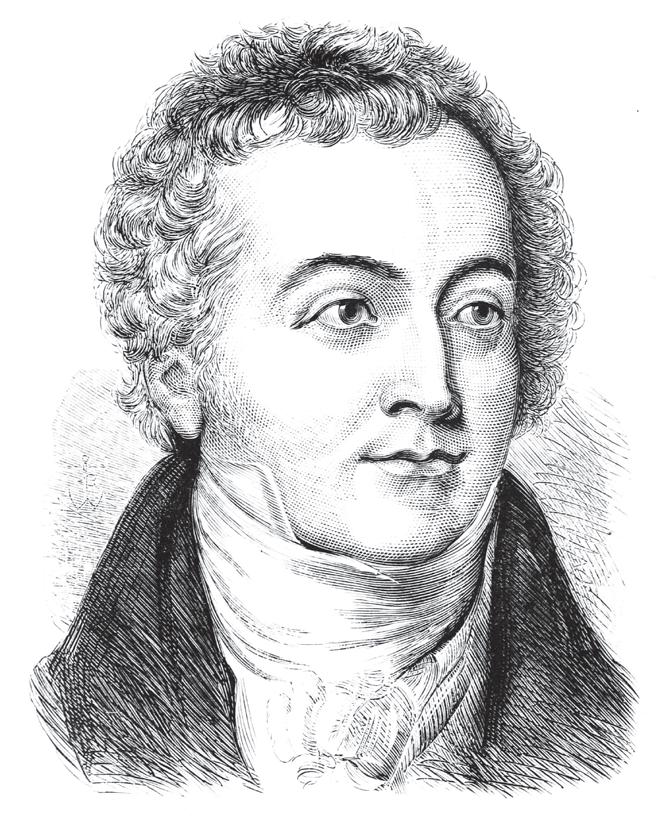
(a) In the early 1800s Thomas Young carried out a series of experiments to establish the wave nature of light. In one famous experiment, he showed that coherent light sources can produce an interference pattern.
(i) Explain what is meant by interference.
(ii) Explain what is meant by the phrase ‘coherent light sources’.
(b) A narrow beam is created with the light coming from a sodium lamp. This beam is passed through a diffraction grating with 300 lines per mm and an interference pattern is observed. An angle of 10.2o is measured between the straight-through position and a first-order image.
n = 2
n = 1
n = 0
n = 1
n = 2
(i) Calculate the wavelength of the light coming from the sodium lamp.
(ii) Calculate the maximum number of images that could be formed on a screen with this arrangement.
(iii) If infra-red radiation was passed through a similar diffraction grating, would you expect the measured angle to be greater than, or less than, that observed with the sodium lamp? Justify your answer
Greater than
Less than
Justification:
(c) Infra-red radiation is often used to keep food hot in a restaurant. Investigating this, a student places a small beaker containing 200 g of water at a fixed distance from an infra-red lamp.
The lamp is rated at 150 W and operates for 5 minutes. During this time, the temperature of the water rises from 20 °C to 24 °C.
(Specific heat capacity of water = 4,180 J kg⁻¹ K⁻¹)
(i) Calculate the energy absorbed by the water.
(ii) Calculate the total electrical energy used by the infra-red lamp.
(iii) A 3 kW kettle takes 45s to bring 150 g of water from 15o C to the boiling point. Compare the efficiency of the infrared system to that of the kettle.
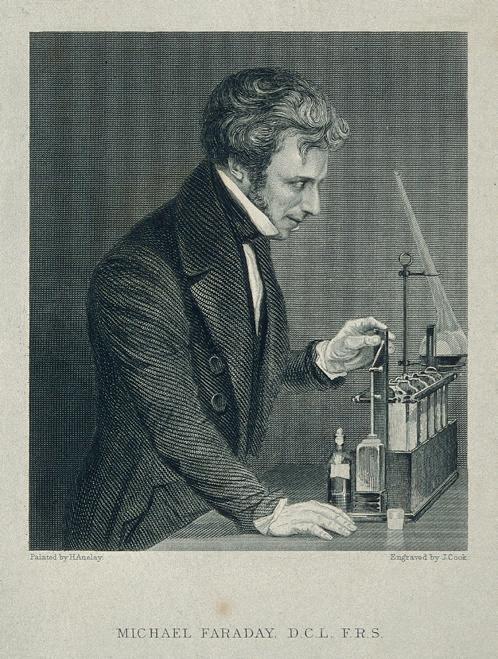
(a) Michael Faraday is a key figure in the history of physics. In 1821 he published work that led to the creation of the electric motor, and ten years later, he discovered electromagnetic induction – the principle behind most modern electricity generators
Complete these diagrams to show the magnetic field about a wire and a solenoid.
(i) A current-carrying wire.
(ii) A current-carrying solenoid.
(iii) How would the field around the solenoid change if an iron core was added?
(iv) State Faraday’s law of electromagnetic induction.
(v) Describe a procedure you could follow to investigate the emf created in a conducting coil by a changing magnetic field.
(b) A square coil of side 20 cm and with 50 turns is arranged as shown so that it is perpendicular to a magnetic field of magnetic flux density 40 mT.
The coil moves about its axis through an angle of 90o in half a second.
(i) Indicate on the diagram the direction of the induced current.
(ii) Using an appropriate model, calculate the average emf induced in the coil while it is moving.
The coil continues to turn at this rate for a prolonged period of time.
(iii) Sketch a graph to show how the induced current will vary with time as it does so.
(iv) State one advantage and one disadvantage of using alternating current in the national electricity grid.
Advantage:
Disadvantage:
A swimmer of mass 70 kg stands on the edge of a 100 kg floating raft which is initially at rest.
(i) Indicate on these diagrams, the forces acting on the raft at the points indicated. The swimmer then jumps forward with a (horizontal) velocity of 4.3 ms-1
(g = 9.8 ms-2)
(ii) Using an appropriate model, calculate the recoil velocity of the raft.
(iii) What assumptions are made in the use of the model you selected for part (ii)?
The swimmer enters the water after 0.9 seconds.
(iv) Calculate the height of the top of the raft above the water level.
(v) Calculate the downward velocity with which the swimmer will strike the water. (g = 9.8 ms-2)
(vi) When the swimmer enters the water, calculate the distance between the raft and the swimmer.
After surfacing, the swimmer begins to swim parallel to the shore, achieving a speed of 0.7 metres per second after 3 seconds.
(vii) Calculate the swimmer’s acceleration during this time.
(viii) What is the minimum force the swimmer must create to achieve this acceleration?
(ix) Explain how Newton’s 3rd law relates to the swimmer during acceleration. You might want to use a diagram in your answer.
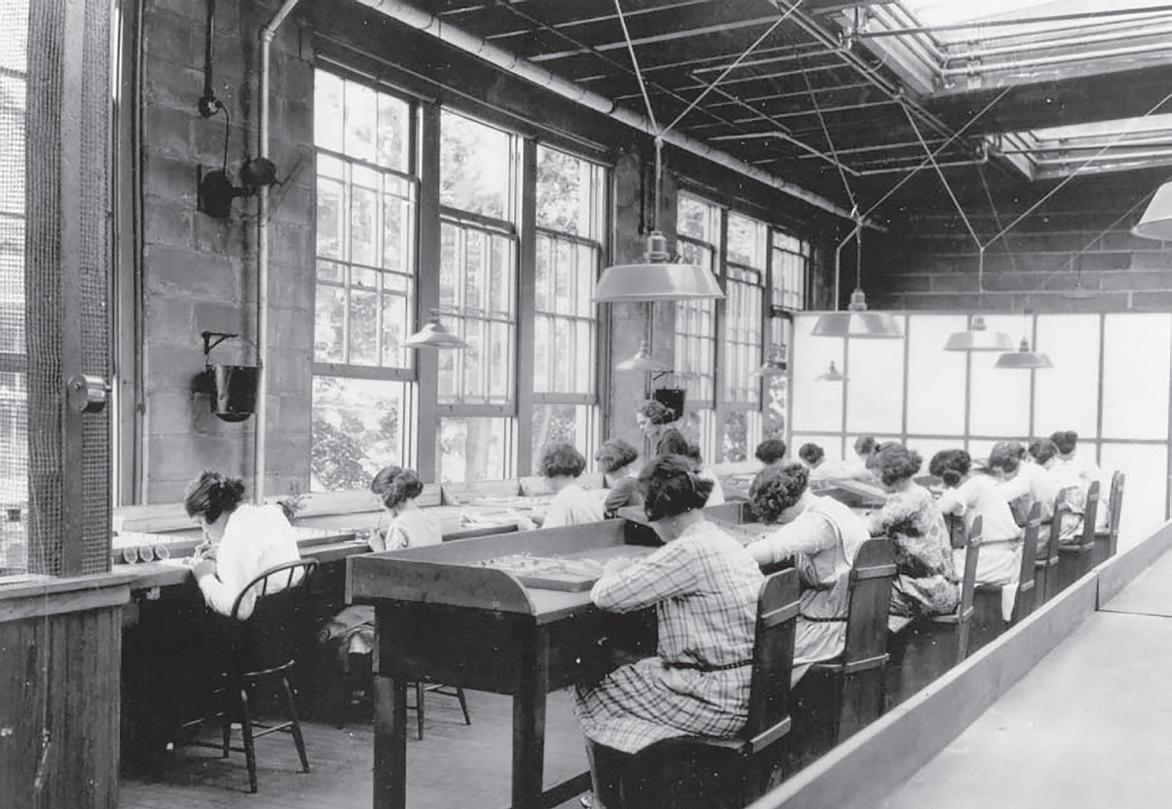
(a) During the First World War many officers had watches whose painted hands were made luminous by the addition of the radioactive isotope Radium-226. The watches posed little risk to users, but a considerable risk to those working on their manufacture, a group who became known as the Radium Girls.
(i) Complete this equation to represent the alpha-decay of Radium-226.
Partial equation:
226Ra = 2 He +
Radium-226 has a half-life of 1600 years.
(ii) Calculate the decay constant of Radium-226.
One such watch contained 2.66 × 10¹² atoms of Ra-226 when manufactured in 1917.
(iii) Calculate the activity of this watch in 1917.
(iv) If it survives intact, in what year will the activity of the watch have fallen to 1/8th of its original value? Justify your answer.
Year:
Justification:
(v) Calculate the energy released in the decay of one Radium-226 nucleus. You might want to use the Formulae and Tables booklet to do so.
(vi) Suggest a reason why the women working on the production of these watches were at greater risk than those who subsequently used them.
(b) If an alpha particle travels at speed into a magnetic field, it follows a curved path, as shown in this diagram.
(i) Indicate on the diagram the path that might be followed by a (a) beta particle, and (b) a gamma-ray entering into the same magnetic field, and explain your answer.
Explanation:
(ii) A mix of radioactive emissions are directed along a path that contains some paper, some aluminium and some concrete. They travel different distances along this path, as shown.
Indicate on the diagram, which is likely to have been the path of (a) an alpha particle, (b) a beta-particle and (c) a gamma ray.
(a) This table shows the resistivity of a number of common materials:
× 10−8
× 10−8
× 10−7
× 102 Teflon 10 × 1023
(i) Distinguish between the terms ‘resistance’ and ‘resistivity’.
(ii) Which of the listed materials is the best conductor, and which would be the best insulator?
Best conductor:
Best insulator:
(iii) Referring to the values in the table, comment on why silicon is classed as a semiconductor.
(b)
A piece of stainless steel with a uniform circular cross-section has a length of 80 cm and a diameter of 0.31 mm is used for a guitar string.
(iv) Calculate the resistance of this wire.
Two crocodile clips are attached to the wire, 40 cm apart. There is a potential difference of 6 V between the clips.
(v) Calculate the current that you would expect to flow through the wire.
One of the strings on a six-string guitar is designed to play the musical note E, at a frequency of 330 Hz. This string will be added to the guitar. Before being added to the guitar, it is found to have a length of 80 cm and a mass of 3.21 × 10 −3 kg. its cross-sectional diameter is 0.31 m.
(i) Calculate the mass per unit length of the string.
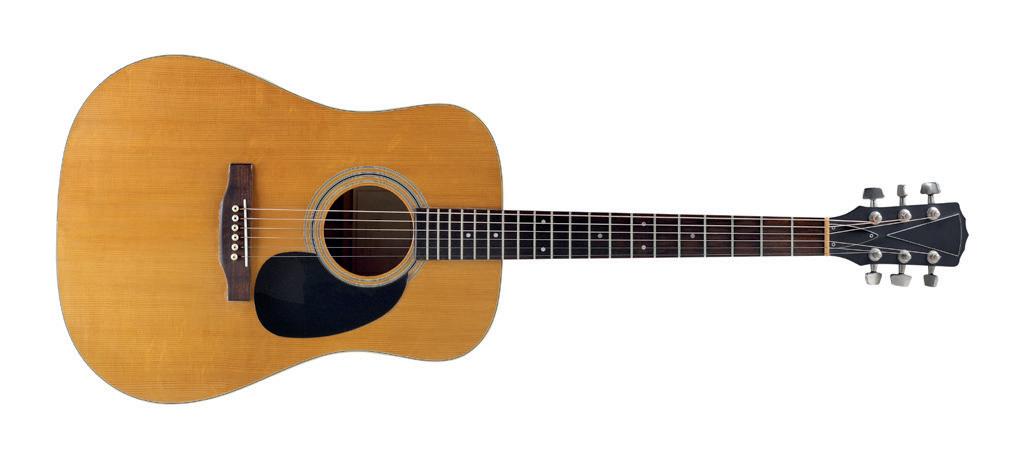
Once the string is added to the guitar, the length that is free to vibrate is 640 mm. A tuning key is used to control the tension of the string and therefore the frequency with which it will tend to vibrate.
(ii) Calculate the tension that must be applied to the string so that it will vibrate at the correct frequency.
(iii) Calculate the frequency of the second harmonic for this string.
By applying pressure to the string close to one of the frets built into the neck of the guitar, a guitarist can change the length of the string that is free to vibrate.
(iv) Calculate the length at which the string would be vibrating at a frequency equal to its second harmonic.
(a) This image shows the emission spectrum of an isotope of sodium, which has a mass number of 23:
(i) Explain what is meant by the term ‘isotope’.
One of the more prominent colours in this emission spectrum has a wavelength of 589 nm. This is created when an electron moves between two energy levels in a sodium atom.
(ii) Calculate the difference in energy between those two levels.
(iii) In the boxes below, insert the number of protons and the number of neutrons in an atom of sodium.
Number of protons:
Number of neutrons:
(iv) What is the total charge on a sodium nucleus, in coulombs?
(v) What is the binding energy of this isotope of sodium?
(b) In his book the Principia Mathematica, published in 1687, Isaac Newton wrote about an imaginary cannon, located at the top of a tall mountain.
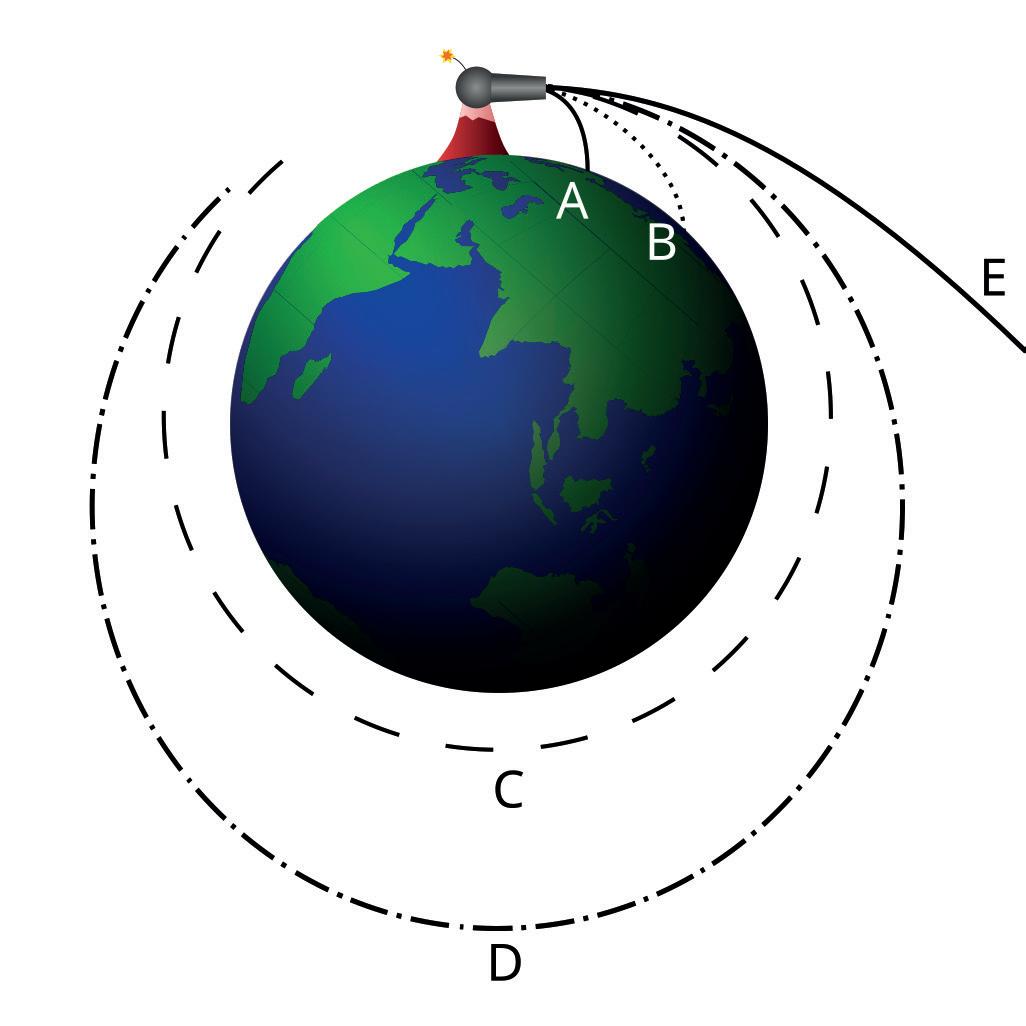
He used this idea to calculate how objects could one day be placed in orbit around the Earth, or how they could even escape from the Earth’s gravitational field.
(i) As an object of mass m leaves the Earth with velocity v, what is its kinetic energy?
Kinetic energy:
(ii) Show that the object’s total potential energy at a distance r from the centre of the Earth is given by E p = GMm r
If the kinetic energy of an object leaving the Earth is equal to (or greater than) its gravitational potential energy, the object will not fall back to Earth and will instead escape the Earth’s gravitational field. We say it has ‘escape velocity’ (ve).
(iii) Show that the escape velocity can be calculated using v e = √2GM r
The Earth has a mass of approximately 6 × 10 24 kg, and a radius of approximately 6,400 km.
(iv) Calculate the escape velocity of the Earth.
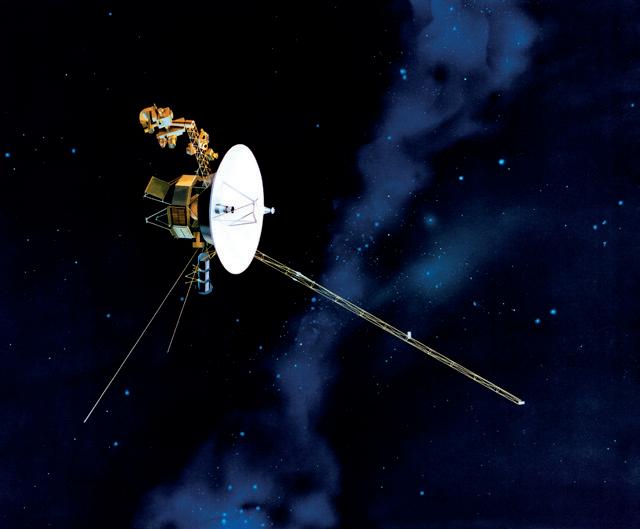
(c) Voyager 1 is a space probe launched by NASA in 1977 to study the outer planets. It has been travelling ever since and it is now the most distant human-made object from Earth.
As of May 2025, it is 24.9 billion km away.
It transmits data to Earth using radio waves of frequency 2.3 GHz.
How long did it take for a radio message to travel from the space probe to Earth in May 2025?
Page for extra work.
Label any extra work clearly with the question number and part.
Page for extra work.
Label any extra work clearly with the question number and part.
Image for Question 1(a): Compuscript
Image for Question 1(b): Compuscript
Image for Question 1(c): PeopleImages / Shutterstock Image for Question 1(e): Compuscript
Image for Question 2(a): Public domain
Image for Question 2(b): Compuscript
Image for Question 3(a): Public domain
Image for Question 3(a)(i): Compuscript Image for Question 3(a)(ii): Fouad A. Saad / Shutterstock
Image for Question 3(b): Compuscript Image for Question 4: Compuscript Image for Question 5(a): Science Photo Library
Image for Question 5(b): Compuscript
Image for Question 5(b)(ii): Compuscript Image for Question 6(b): PrimaStockPhoto / Shutterstock
Image for Question 7(a): MoFarouk / Shutterstock
Image for Question 7(b): Brian Brondel / Wikimedia (CC BY-SA 3.0)
Image for Question 7(c): NASA / JPL / Science Photo Library