The Mu S e u M Gho S TS
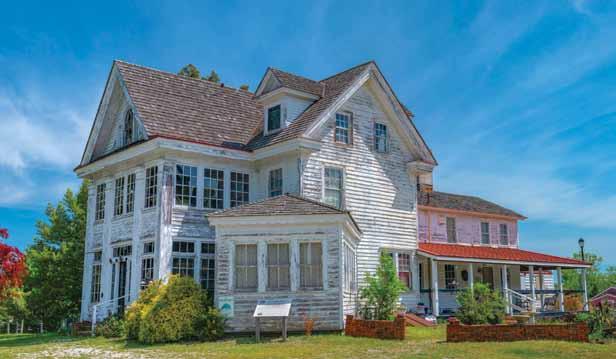
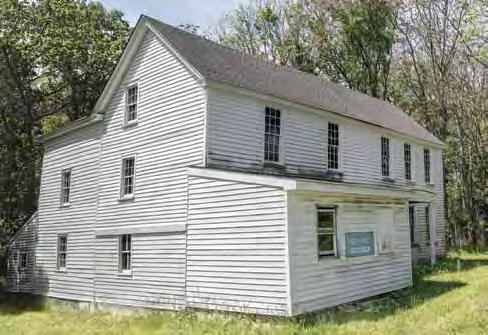
I turn the key and enter the quiet room Shards of sun with dust motes shed light on the gloom.
My shoes strike the floor. I feel a presence near. no menace, just people, who used to live here.
Old dolls, old primers. The school smells of chalk. Eyes seem to follow. Did I hear someone talk?
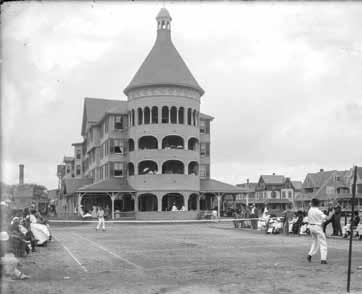
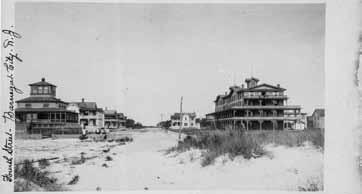
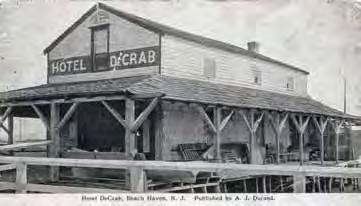
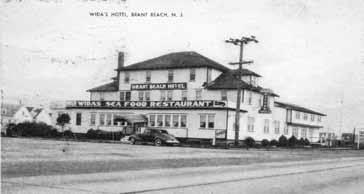
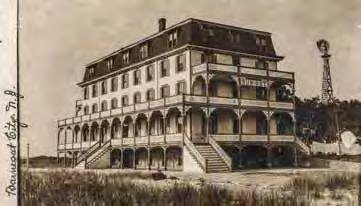
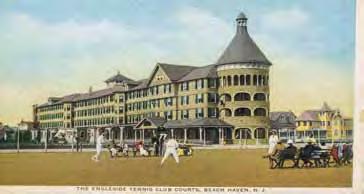
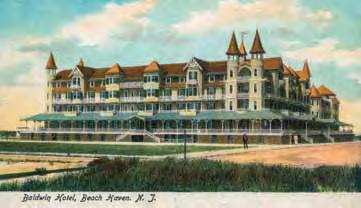
Sepia photos of long-gone hotels. Victrola and records and musty old smells.
A coal stove and ice box, an ancient old table. What tales could be told, If spirits were able…
Into the chapel I sit in a pew Stare at the ceiling, It’s a wonderful view.
It looks like a ship for whaling and fish No phones, no loran, put sailors at risk.
Visitors arrive, I turn on the lights. Ghosts seem to vanish. They do prefer nights!
—Kathleen
Donnelly
BoNeS of TRuST
The Captain’s house could stand a lick of white or two after one too many nor’easters visit and the chronic caress of the breezy brine.
Pursuant to the land’s retreat the residence removed to firmer ground, the widow’s walk now farther from the harbor than to the graveyard
Where we trust the bones of numerous nautical progenitors lie under rain rubbed headstones, namesakes of the port or so infers a peeling sign on the rusty gate
Beyond which anonymous markers float like buoys on a grassy sea. Who knows these souls today? I search for them, vainly sound the depths of electronic oceans.
—John Chmura
My Place
Shells under the stairs
Racing to find sand dollars
Jumping through waves
Grandpa’s garden
Grandma’s love
My special place
Long Beach island
My memories of this place
Splashing in waves
Golfing on green
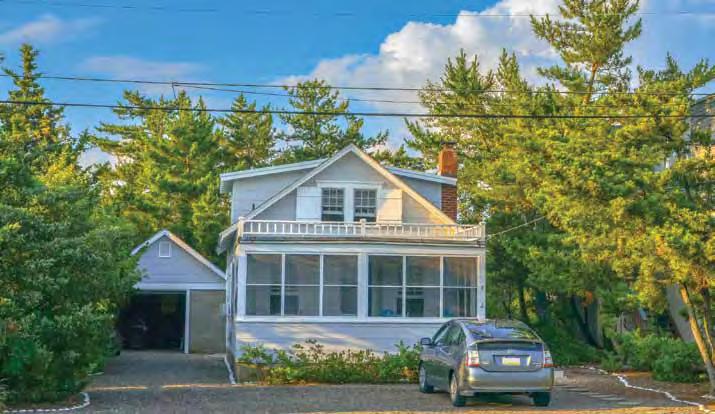
My special people’s once loved house
I beg to come
The joy of finding shells
Hugging my loved ones
Running through waters
My once loved place
Long Beach Island
—Marcella Nicklos
Frank Jackson photo
aB o u N d I NG Beau T y
Like a delicate flower with unblemished fragrant blossoms,
An intricate spider web laced with morning dew, Plush verdant pastures as far as the eye can see, Garden seeds planted, nourished, growing day by day, Song birds landing, singing and then taking flight,
Butterflies emerging and fluttering here and there, Swans performing graceful ballet upon the water, Raindrops falling, splashing, and soaking the earth,
Vibrant colors of a rainbow after a storm,
Clouds in skies of blue with sunbeams peeking through, Shining sun, moon, and stars, casting magic bright lights,
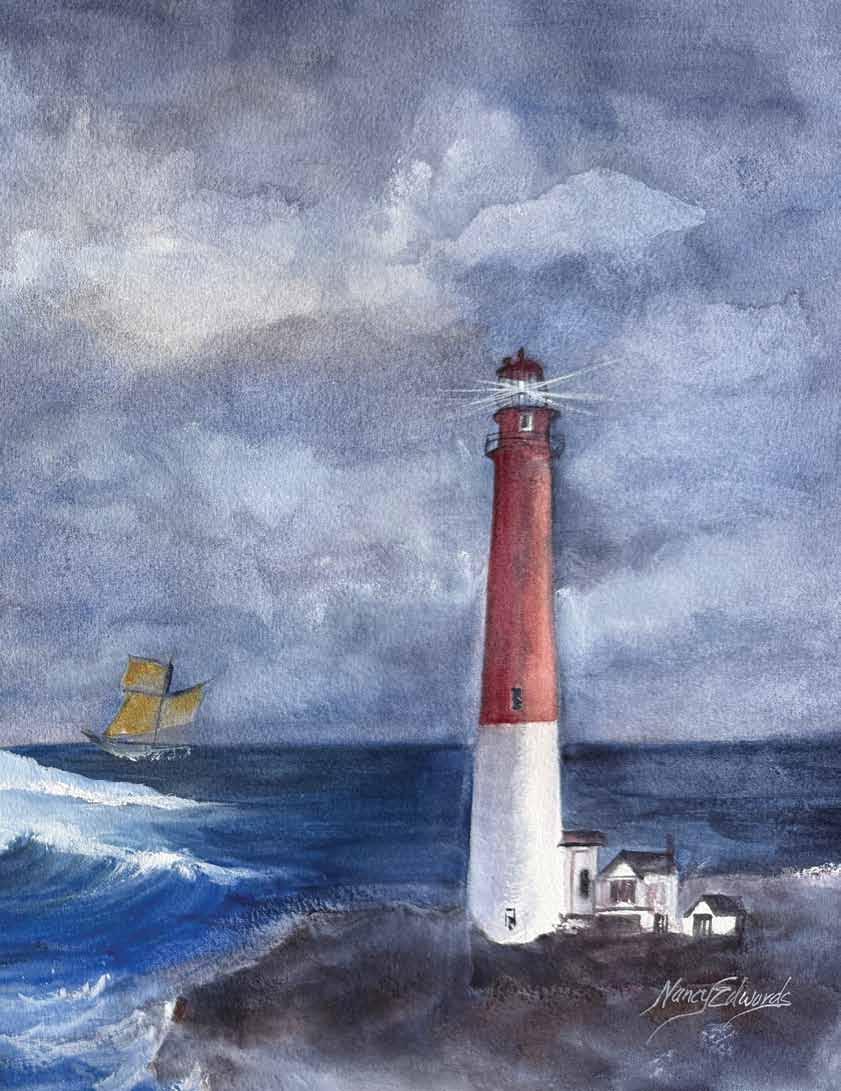
Like a lighthouse beam pointing the way, All of these blessings renew our souls on any given day.
—Maureen Newman Dave Farruggio
photo
A small footprint in the sand whispers “I was here.” Sunlight dances in rhythm with the tide. A sea star waltzes with a wave as the magic of a new day unfolds upon the beach.
—Maggie O’Neill Lauren Einhorn photo
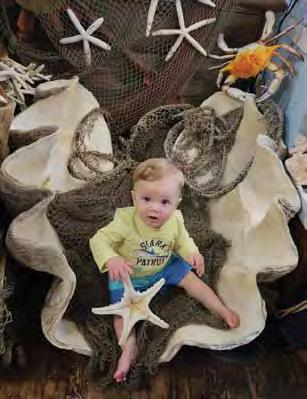
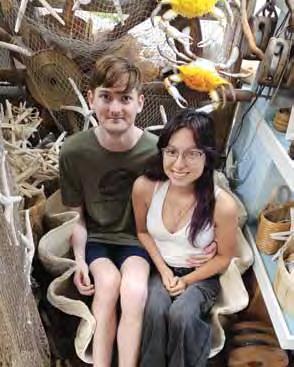
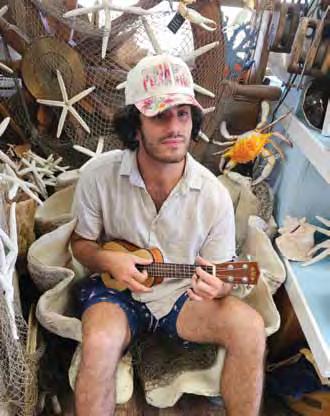
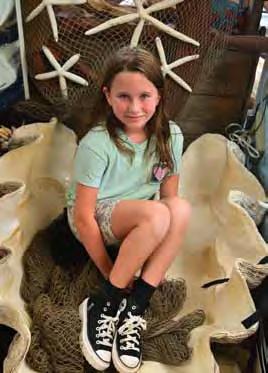
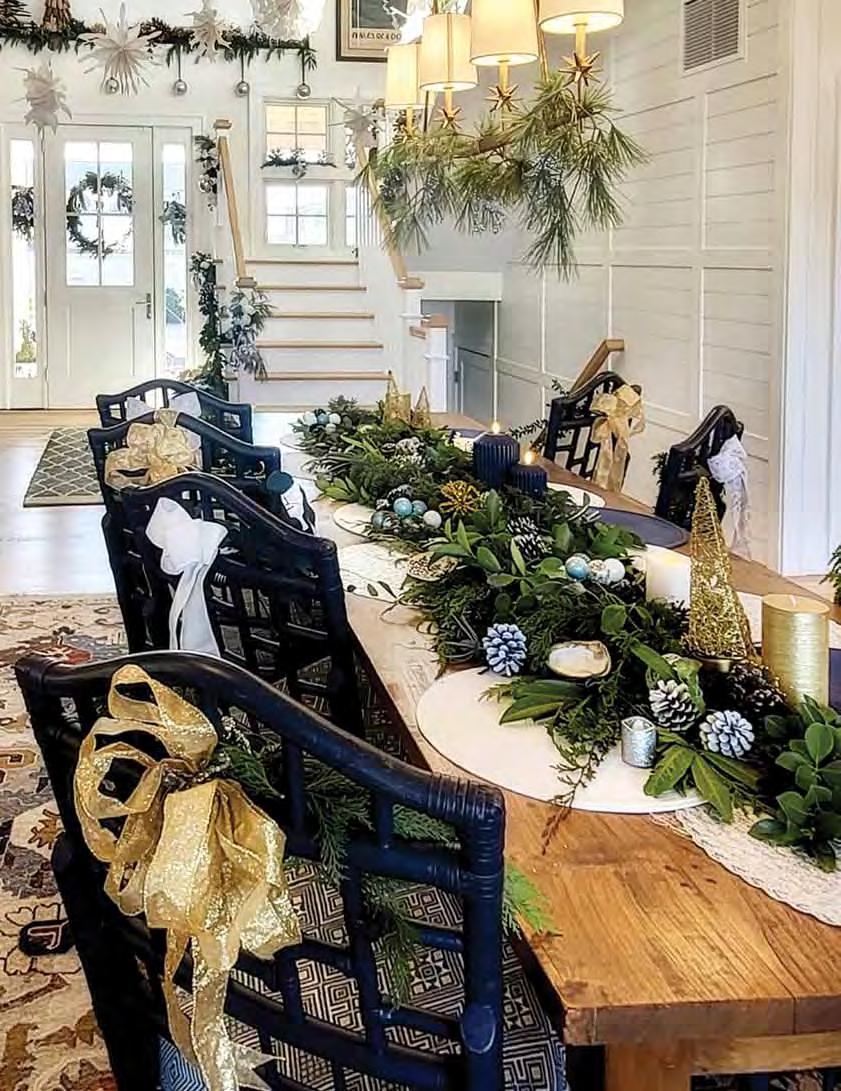
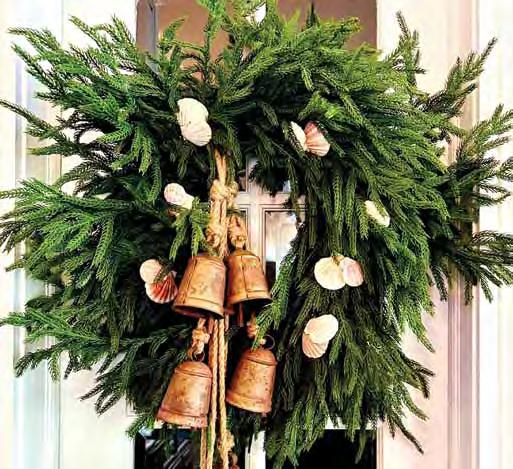
Decorating a mantel, living room, poolsode, or patio with gifts from the sea brings serenity to the home
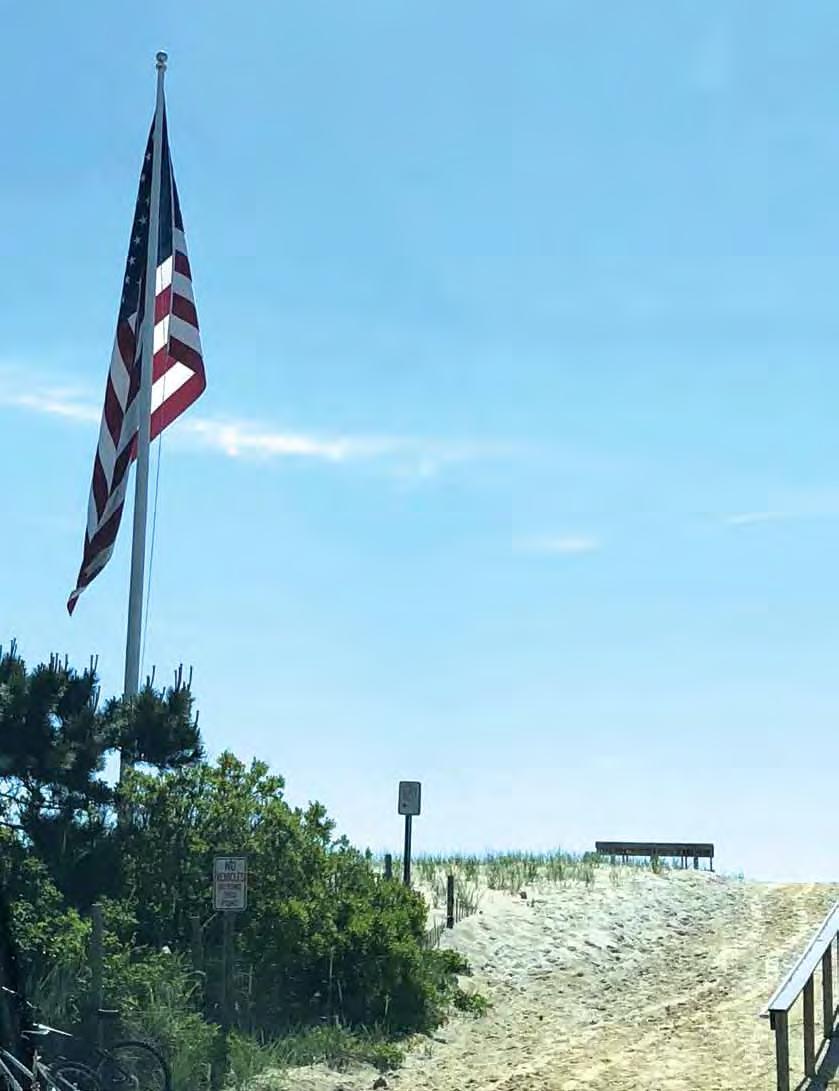
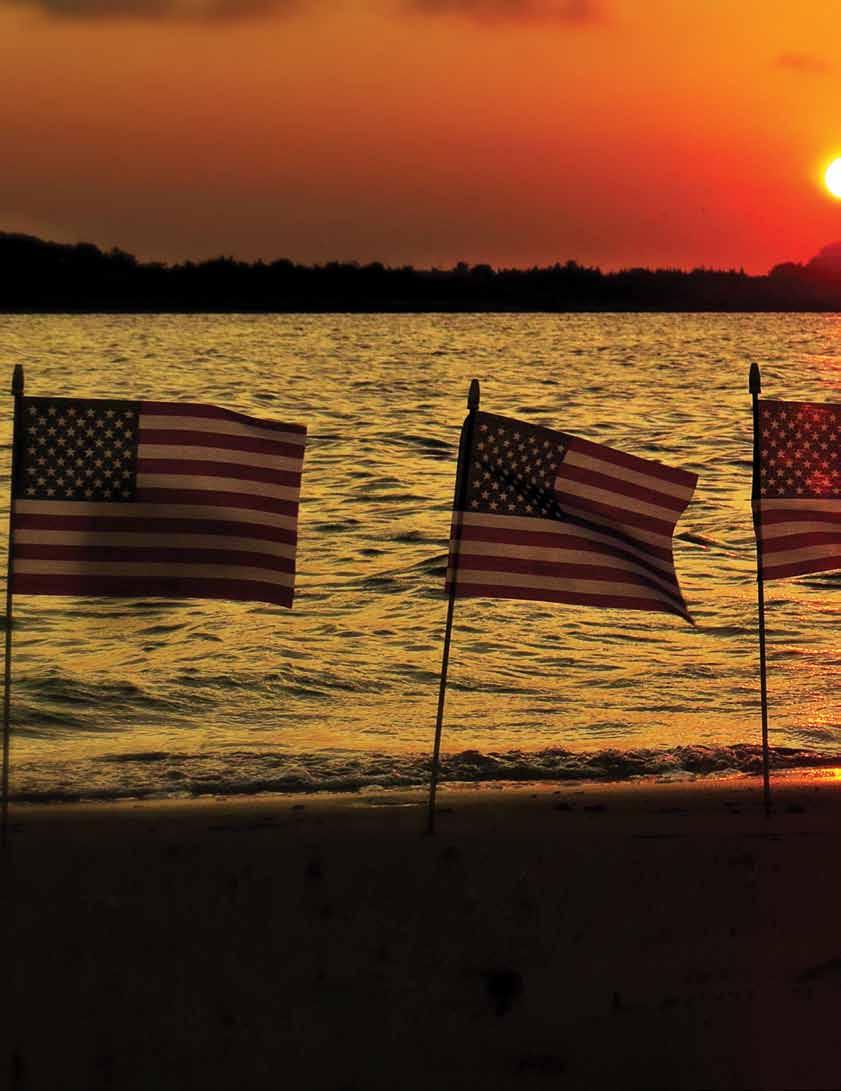
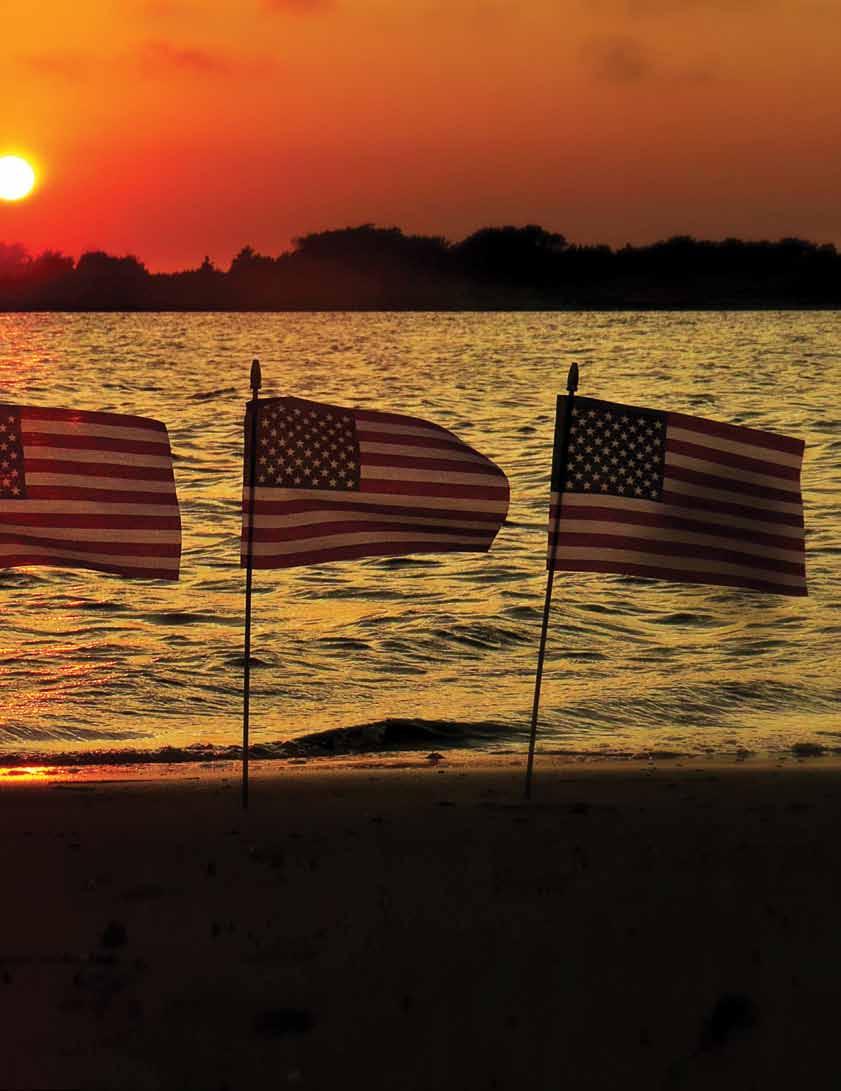
As I walk along the beach today, barefoot in the sand, I’m filled with pride and honor to be part of this land, For because of all the Veterans who sacrificed for me, I’m able to enjoy my freedom wherever I may be.
The wars have left their scars both inside and out, But they’ve also shown what our troops are about. The honor and respect for our country is utmost, It’s felt in the city, the country and along the coast.
America is and always will be the home of the brave, Our focus is simple it’s our people we want to save, From the destruction and threats that face us everyday, For our Vets and Servicemen we need to take time to pray.
We are so blessed to have our flags wave in skies of blue, To those colors each and every one of us need to be true, From the mountains to the valleys, on land and in the sky, We salute all of our soldiers and our flags over LBI.
—Written
and photographed by
Diane Stulga
Hermit crabs are one of nature's most fascinating creatures. Once a year, their body goes through a cycle of growth, known as molting, where they shed their exoskeleton. What makes this otherwise very vulnerable time for them so amazing is that they can regenerate lost appendages. Everything from limbs to eye stalks can be regrown, making these small creatures one of the most resilient animals on Earth. Their rate of regeneration all comes down to age and care.
In the wild, crabs can lose their limbs for a variety of reasons. Oftentimes it is due to an injury caused by a fight with another crab or predator. When an injury occurs, the crab will sever the damaged limb. Once the bad limb is gone, their body begins the process of molting.
Molting usually happens March through November. The number of times a hermit crab will molt per year depends upon its age. Hermit crabs that are one year old and younger will molt several times a year. By age two, they will molt only once a year. Older crabs, those ten years and older may go as long as a year and a half between molts. With good care and quality food, molting can go smoothly.
four to six months after a limb is lost, while older larger crabs may take fifteen to eighteen months before molting. The bigger or more complex the limb, the longer it takes to fully grow back. Big claws and eye stalks, for example, take several molts to return to their full length. Regrown walking legs may appear thinner than the original lost limb. Molting is already a stressful time for your crab; therefore, it is important to provide a stress free healthy environment for your hermit.
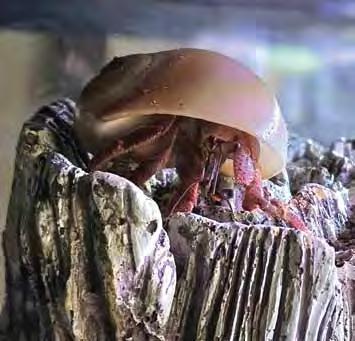
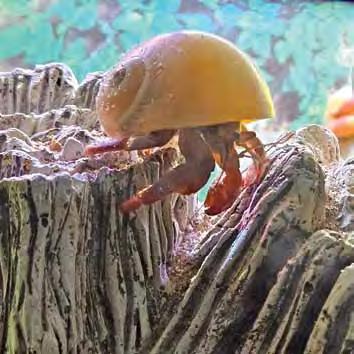
Molting in crustaceans is controlled by the Molt-Inhibiting Hormone (MIH), a polypeptide neurohormone located in the neurosecretory cells of the eyestalks. MIH suppresses molting during the intermolt phase, the longest period between molts. Ecdysteroids trigger the pre-molt phase once MIH levels drop. If conditions are not favorable to molt, such as a stressful situation or not an ideal environment, MIH can halt molting until the time is right. However, if this hormone is continuously released and the molt stalled, it puts the crab at greater risk of death when it finally sheds its exoskeleton. After a limb is dropped, pay attention to the signs of molting to best prepare your hermit crab.
A new limb, also called a jelly limb, will begin to appear at the empty joints along their body. These are very fragile and should not be touched. For younger crabs, molting is likely to happen
As your hermit crab prepares to molt, you may notice an increase in its appetite. If there is a calcium source in its enclosure, a crab preparing to molt may pick at it for extended times. Eventually, a crab preparing to molt may become lethargic or slow down. To ensure the crab has the best chance of regrowing a lost limb, provide it with plenty of high calcium and protein sources. Cooked meats including chicken, fish, shrimp with tails, as well as cooked eggs, eggshells, and unsalted peanuts are some great sources of these nutrients. Make sure the temperature of its enclosure stays between 70 to 75 degrees Fahrenheit with humidity at 80%. Higher temperatures may cause bacterial growth, which can easily invade the thin, soft exoskeleton of a molting crab. Humidity helps to soften their old exoskeleton allowing it to separate more easily from their body. Molting can take a month or longer from start to finish and it is important not to disturb your crab at this time. If disturbed it could interrupt the process and put the crab at risk. It is best to leave it be and let nature do its thing.
Many times, inexperienced hermit crab owners will mistakenly believe that their crab has died when it is just molting. Others may no longer want their crab after it has lost an appendage. This has caused perfectly healthy hermit crabs to be unnecessarily discarded. You should never give up on your crab during a molt or choose not to adopt a crab because it lacks some limbs. They will grow back with time, care, patience, love, and maybe, a few extra pieces of shrimp. —Written and photographed by Sara Caruso
Visitors are always curious about what we do in the off season. For many people, the joy of summer sun and lazy days on the beach overshadow the magic of Long Beach Island in colder weather. While it does get quieter and life moves at a slower pace, it is filled with experiences that are cherished by those who have spent time here during the winter.
December delivers our own brand of holiday magic, starting with the Ship Bottom Christmas Parade. It is a cherished tradition — many years in the making. Added to the extravaganza of lights the Borough displays, December is a highlight for Ship Bottom.
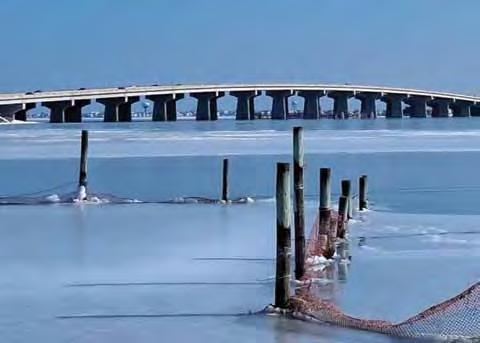
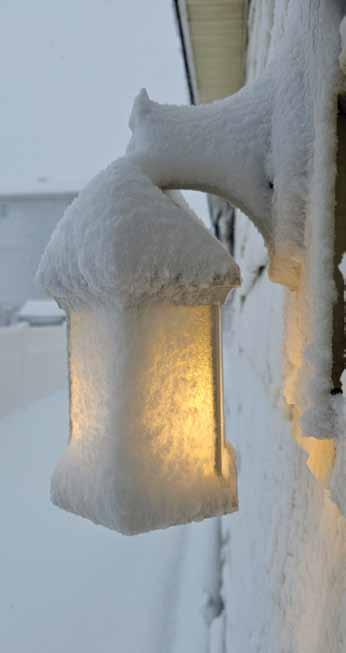
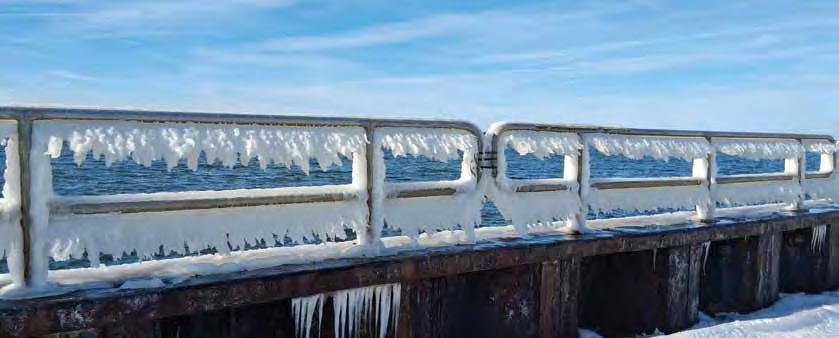
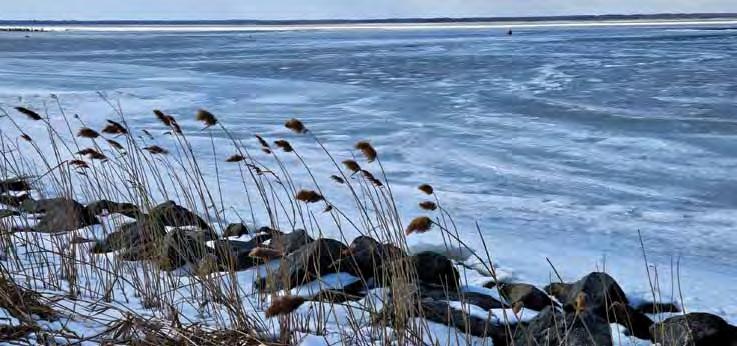
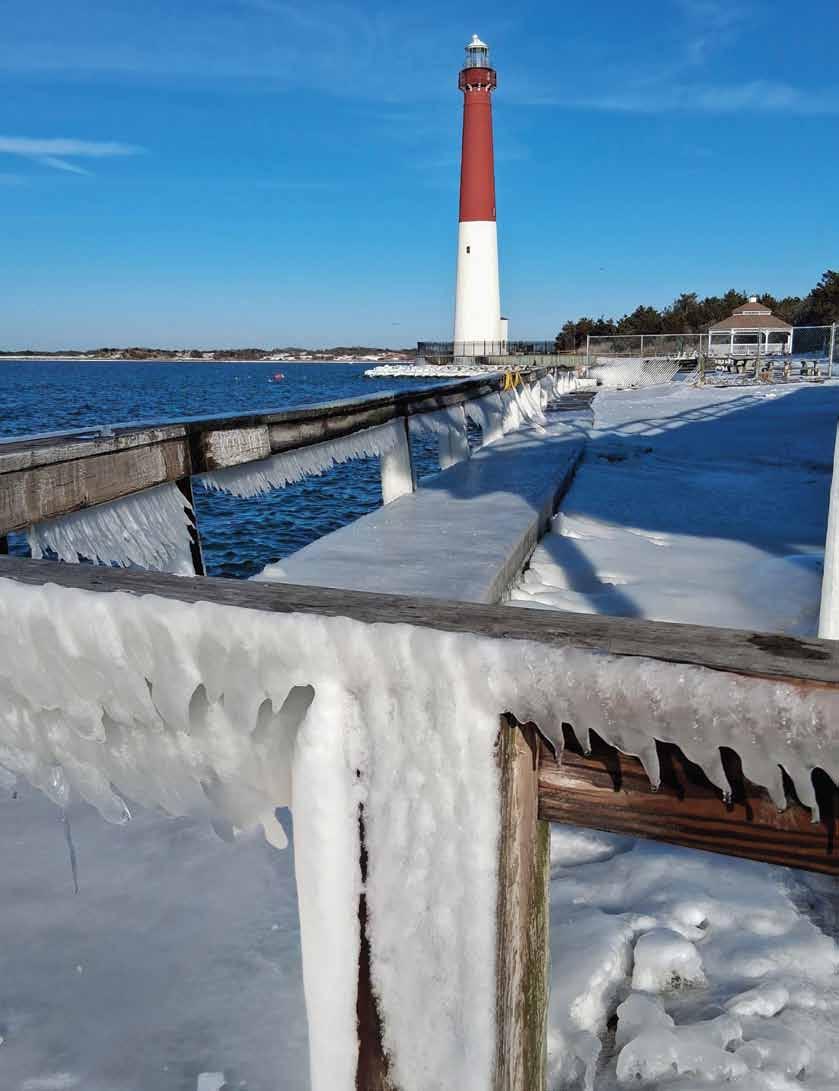
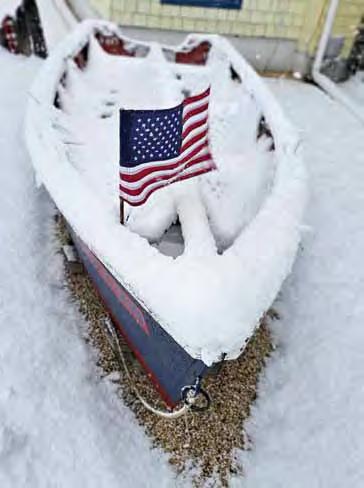
This winter did see arctic temperatures that seemed to go on for weeks, but that patch of cold was felt all over the state, not just here on the Island. At least we had the rare occurrence of a frozen bay and snow on the beach to warm our hearts with their beauty. Every season brings change. One you may notice this year is the Ship Bottom school between 19th and 20th Streets is gone. That block is experiencing a transformation with the consolidation of the Island’s elementary schools.
Joe Pop's Shore Bar and Restaurant in Ship Bottom was sold. The word on the street is the new owners plan to keep it operating under the same name and brand. This is good news. Joe Pops is a true LBI icon.
Construction is something we cope with during the slower time between October and May. We put up with much road reshaping and tweaking so that our visitors have a smooth arrival come June.
So, the answers to the often-asked question “What do you do in the winter?” are not as surprising as you might think. The Lighthouse International Film Festival shows films once a month in our down season. There are some tried and true restaurants that
stay open year-round. Friends gather at each other’s homes for Halloween, Christmas, New Years, Mardi Gras, Easter, and all the other not summer events that are celebrated off island. They keep us gathered together for occasional storm parties and provide a social network without leaving the Island.
We really do live a fun life, even in winter. —Maggie O'Neill
I was once as you are now
Born to a woman brave and proud I crawled along across the ground Observing all that was around
It is so that I had no Father And the other children could not bother To ask from where I came Or include me in their games
But I was not meant to stay And so, on a cold spring day I told my Mother I must go For I was born to turn to snow
So I sat upon the river’s ice
With a vessel of corn with sweetened spice Kahamakum, the People say It nourished me along the way
My Mother pushed the floe away And watched as I began to fade Through the pines and out to sea Never again in this form to be seen
But I told my Mother before I left That I would leave the People with a gift For when the snow falls, it is I Who has fallen from the sky
And as I blanket woods and fields
You will see of what I yield
Tracks revealed upon the snow
That guide your hunters where to go
Each spring as my floe passes by Call out my name from the riverside I will drift toward the shore
And take your gift of sweetened corn
Now I live among the spirits
My voice is soft – you may not hear it
And as my windblown snow flakes swirl I shall lie upon your world
—Randy Rush Denis Kirby photo
How would this house look on Christmas morning? Can I bring a bag of feather boas on a plane from New Orleans? How do I show what boys in the 1940s would do at summer camp? Could that brass peacock in the fireplace be a holiday theme for the whole house?
These are among the many fascinating questions that pop up in preparation for The Garden Club of Long Beach Island’s Holiday Tour of Homes that help pave the way for the creativity of house tour chairs and decorators.
Early each year houses for the tour are selected with an eye toward giving ticket holders a tantalizing glimpse of holiday décor inside five remarkable LBI homes. Garden Club members, friends, neighbors, businesses, and visitors to the Club’s website all contribute to this exciting search up and down our 18-mile island. Once the selection process has ended, five house chairs and their co-chairs begin to work their magic, often a year long process.
With astonishing dedication, as many as twenty decorators volunteer to join each house, selecting color palettes, themes, and designs, as well as flowers and greenery of every imaginable kind. Homeowners share histories of their homes and furnishings to help with themes and designs.
Garden Club members gather en masse to fashion handmade essentials for the design of each house. In their hands, seashells
become beautiful flowers, graceful butterflies, and enchanting decorations. A workshop is held where ribbons become charming bows to adorn wreaths, trees, packages and more.
The Club’s entire membership participates in the annual Holiday House Tour. “We are so proud of our members, and the volunteer work they put toward this event,” says Bev Reitinger, a veteran house chair and chair of Gilded Gimble — Brant Beach . “The friendships that have grown can never be measured.”
In December of 2025, more than 1600 visitors enjoyed The Garden Club’s 58th Annual Holiday Tour of Homes where they delighted in captivating décor created by the Club. Veteran
house chair and chair of Island Fan Ta Sea — North Beach , Diane Barbieri said, “Our team worked together to create a WOW house with whimsical designs in every room.”
The Holiday Tour of Homes is an annual showstopper that helps to fund the important community work of The Garden Club of Long Beach Island. —Gillian Rozicer • Photography by Jeannette Michelson
2026 e v e N TS :
The Outdoor Living, Garden and Art Tour — June 25, 2026 Holiday Tour of Homes — December 9 & 10, 2026 For more information visit: thegardencluboflbi.com
The 59th holiday house Tour is december 9 & 10, 2026
Tickets available at thegardencluboflbi.com
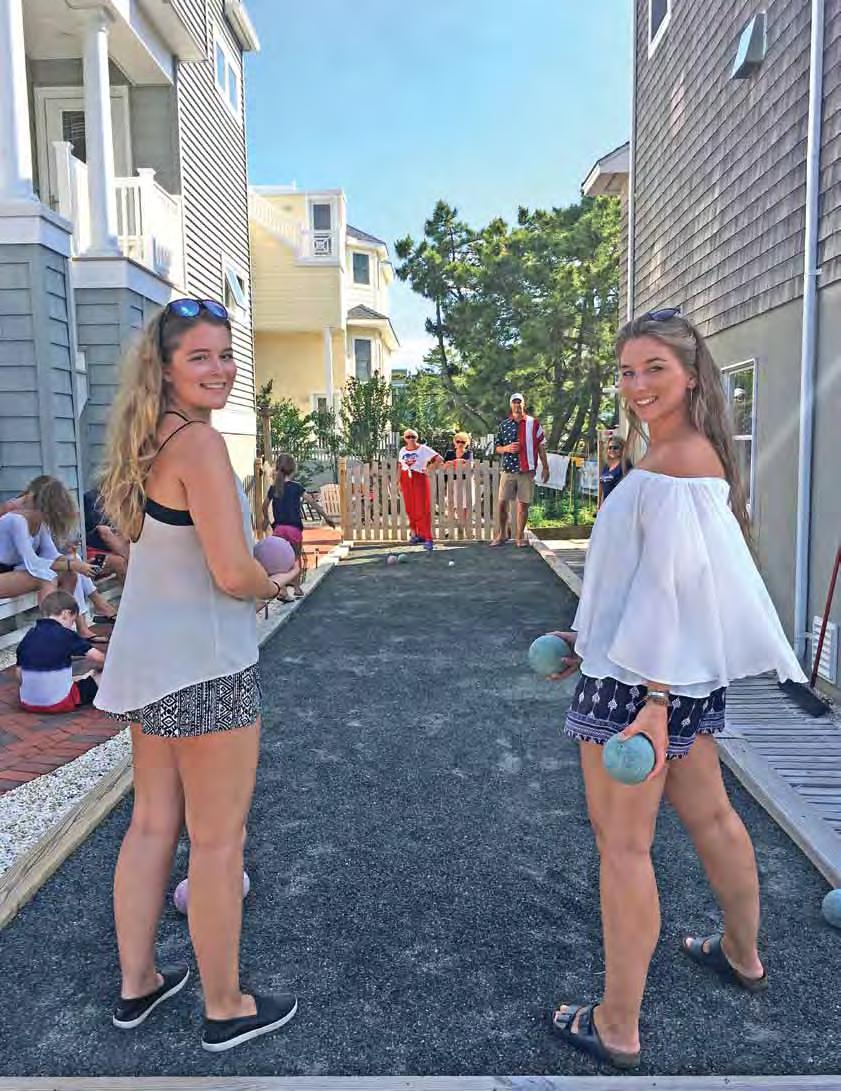
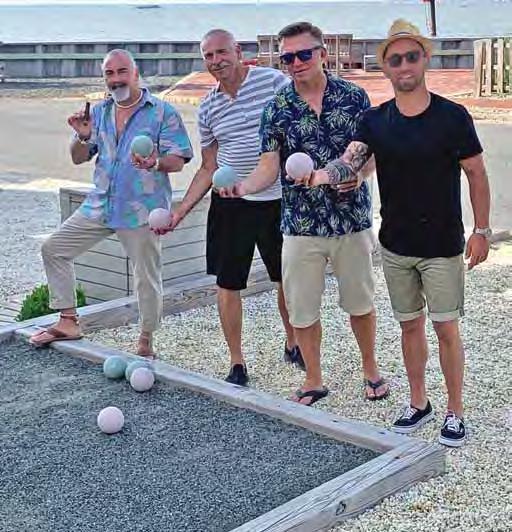
On Long Beach Island, summer days tend to follow a familiar rhythm — crabbing in the morning, afternoons on the beach, and evenings that spill into food, games, and laughter. At our home, that rhythm often comes together on a bocce court beside the bay.
The idea started years ago with my father, Denis, who always wished for a proper court when I was a kid. Back then, we made do on the lawn, rolling balls across bumpy grass, but it was never quite the same. So, when I built our LBI home, I made sure to include one. What began as his dream has since become the centerpiece of our summers.
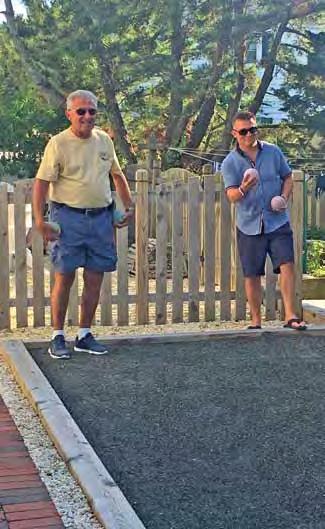
The court is not just for family. It is for anyone who appreciates a good game. With my Italian heritage and my wife, Cristina, having been born in Italy, bocce feels natural, almost inevitable. It is a game that bridges generations, keeps everyone engaged, and has become a low-key centerpiece for gatherings. Whether it is a serious match or just a few casual rolls, the court has a way of drawing people together, adding rhythm to long summer evenings.
Our neighbors enjoy it as well. Larry, the patriarch next door, grew up playing bocce in Italy. So, when I built the court
between our homes, he was more than accommodating. He and his sons play regularly, and it is satisfying to see them keeping the tradition alive.
Beside the court stands our statue of King Neptune, or Nettuno, as we like to call him. He watches over every game, a nod to the sea that surrounds the Island and a playful companion to a pastime that carries generations of Italian heritage. Evenings on the court are often accompanied by beautiful sunsets, the perfect backdrop for rolling balls and friendly competition.
Over time, the bocce court has proven to be more than just a backyard feature. It is where new traditions take shape, where friendly competition meets conversation, and where summer evenings linger a little longer. The clack of bocce balls, the banter over close calls, the laughter of family and neighbors, and the glow of the sunset — those small moments are what make summer on the island feel complete.
What began as my father’s old wish has become a fixture of life on Long Beach Island. The bocce court is not just a place to play, it is a place where summer happens, one roll at a time. —Story and photography courtesy of Dan Marselle
The Youth Committee of the Garden Club of LBI met for its first program of the 2025 school year on Wednesday October 22 to create a Halloween flower arrangement. Many of the young floral designers, grades 3-6, came dressed in their PJ’s as it was Pajama Day at the Long Beach Island Elementary School.
The children’s floral design for the program, led by Co-chairs Ginny Scarlatelli and Jeannette Michelson, along with Garden Club members Paula Cofone and Pauline Gertzen began with bright orange galvanized Jack-O-Lantern containers. For added fun there were Halloween trivia questions:
• Where did Halloween originate? In Ireland and Scotland.
• Why are black cats associated with witches? Because in the Middle Ages people believed witches could turn themselves into black cats.
• Are pumpkins a vegetable or fruit? Pumpkins are a fruit because they start as a flower and have seeds.
• What is the number one trick-or-treat candy? According to a national survey the winner is Reese’s Peanut Butter Cups. Although some of the students disagreed.
The arrangements were finished with ferns, yellow mini-carnations, purple statice, green-ball dianthus, baby’s breath and local sea grass, and topped off with a striking orange gerbera daisy and a sparkly bat pick. Everyone went home with a bewitching Halloween arrangement, and they were already dressed for bed.
From October to May the Garden Club’s Youth Committee sponsors special workshops such as this for children of the LBI community in grades 3-6. For more information see thegardencluboflbi.com/committees/youth. —Written by Gillian Rozicer • Photography by Jeannette Michelson
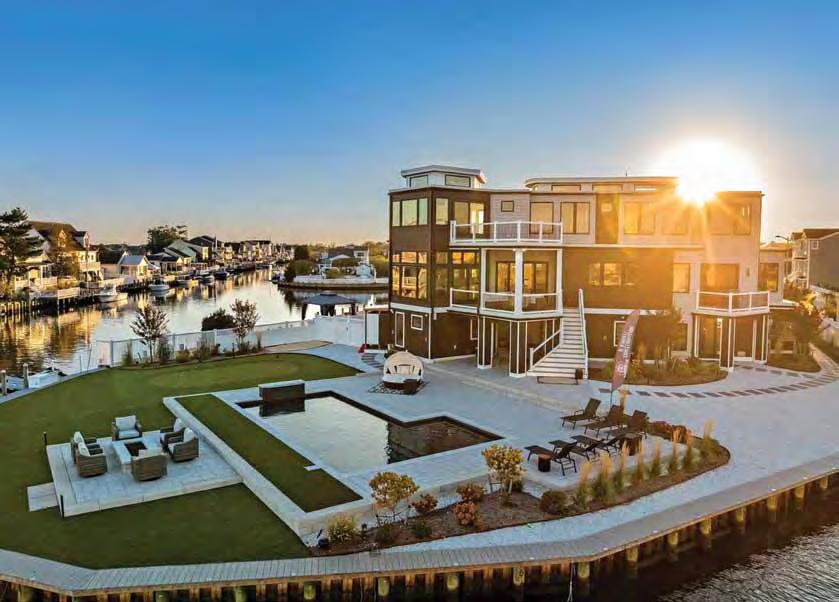
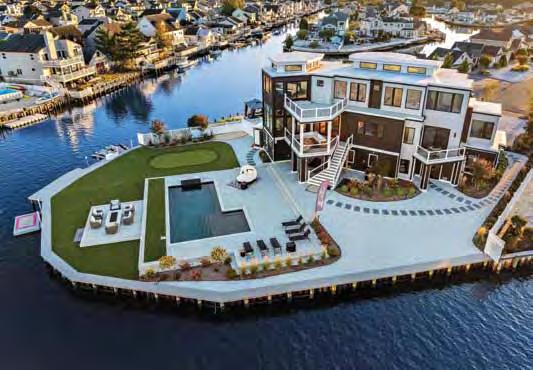
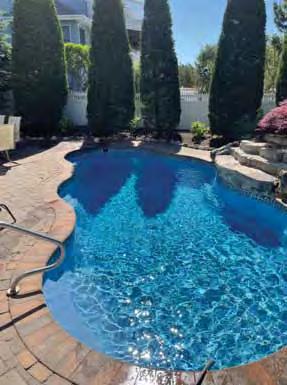
Imagine stepping outside your door into a private coastal paradise. Jersey Shore Pavers brings that vision to life. As a premier landscape design and installation company serving the New Jersey shore, they specialize in custom patios, outdoor kitchens, fire pits, and more, turning ordinary yards into luxurious retreats.
Their expert team combines precision craftsmanship with coastal style, creating outdoor spaces perfect for relaxation and entertainment. Carefully chosen native plantings, from salt-tolerant shrubs to pollinator-friendly perennials, enhance the landscape’s beauty and sustainability, thriving naturally in coastal conditions.
To further elevate your property, the team at Jersey Shore Pavers installs elegant, cultured stone features and low-voltage lighting, blending safety with sophistication. Using advanced 3D design technology, they bring your vision to life before construction even begins — ensuring a seamless, personalized experience.
With a deep commitment to quality, sustainability, and customer satisfaction, Jersey Shore Pavers crafts outdoor living spaces that stand the test of time. Let them help you create the coastal escape you've always dreamed of — right in your own backyard.
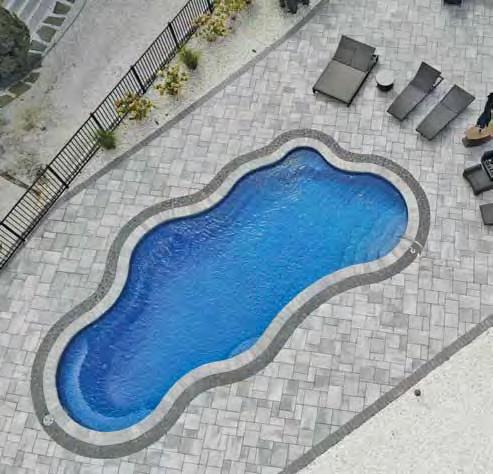
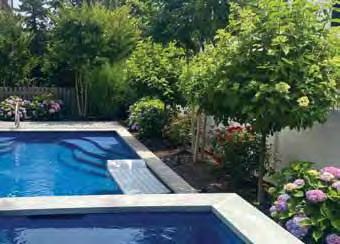
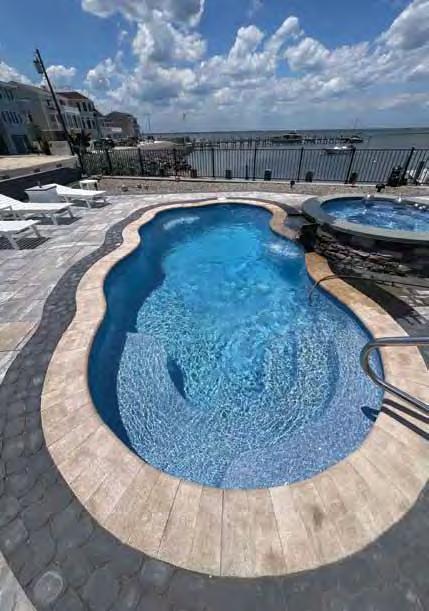
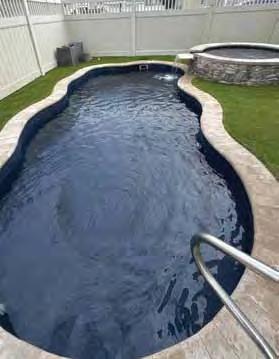
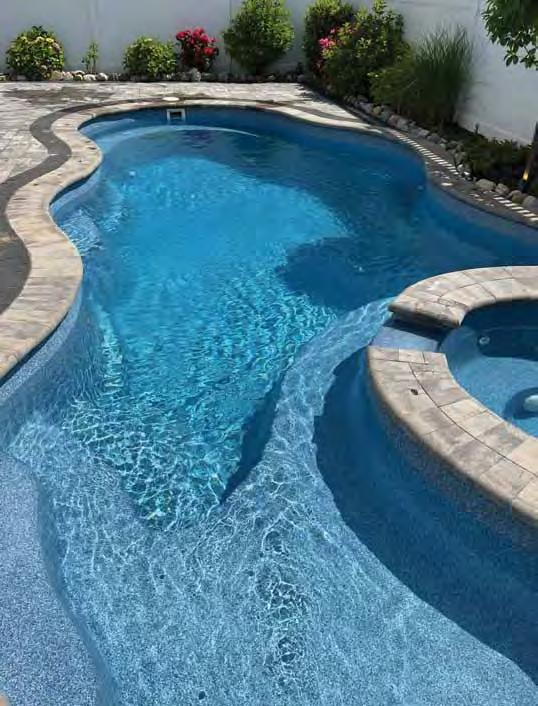
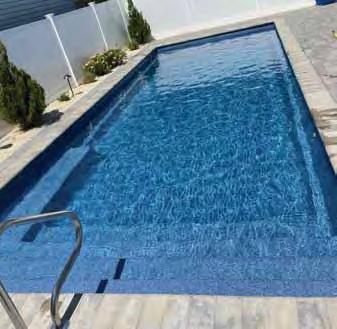
Laura and Joe Hutchison started Hutchison FIBERGLASS POOLS in 2003. Their son, Joe Jr. would go on to become partner and co-owner in 2017. Through hard work, integrity, and an unparalleled commitment to their customers — Hutchison Fiberglass Pools became and continues to be the premier fiberglass pool company of Ocean County.
Today, more than two decades later, Hutchison Fiberglass Pools is an award-winning family business. These days, Joe Jr. and Laura’s two daughters, Alyssa and Nicole, Laura’s father, Al Vero, and Olivia McKittrick, a close friend who is like a third daughter, are all part of the Hutchison’s in-office team.
From day one, maintaining their commitment to upholding the highest degree of integrity and professionalism has always been and continues to be the Hutchison family’s highest priority. When customers choose Hutchison Fiberglass Pools they become part of the family.
Under the direction of Joe Sr. and Nicole Hutchison the installation department is dedicated to turning the backyard of each customer into a personal oasis. Together with a welltrained crew and a relentless commitment to excellence they successfully make dreams of outdoor living come true.
On the service side of the company, Joe Jr. and Olivia have put together an outstanding service department. With an unsurpassed response time to any issue and an all-inclusive service program — Hutchison’s provides weekly service to more than 350 pools and opens and closes more than 500 pools annually.
The Hutchison family of Hutchison Fiberglass Pools is mindful of giving back to their community in many ways. They believe you can only be as good as the community you are a part of.
When John Lennon sang “Imagine” people around the world took that word to heart. They gave the idea permission to reach inside them; to take up residence, even if only for a while, and wonder what would it be like to live in a world without _______? (Insert your imagination here.)
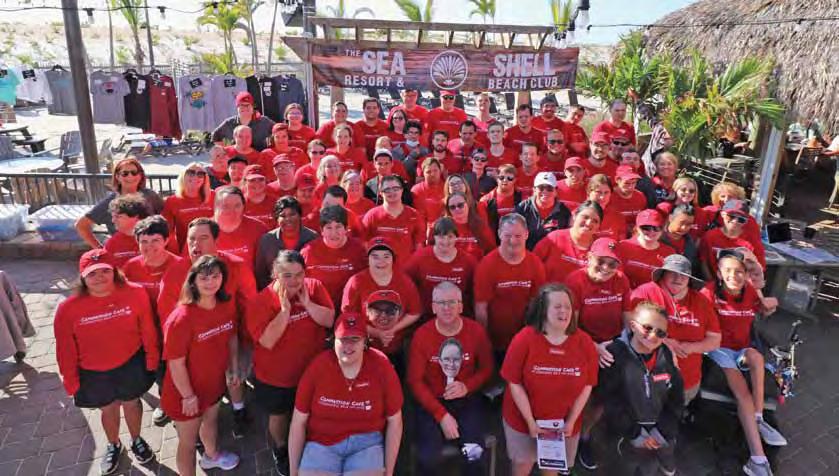
So imagine, if you would, your own workplace. It is payday. At break time you gather together, your boss smiles and congratulates each of you by name, amid the cheers and applause of coworkers, on a job well done! It is a celebration of effort and collaboration! Your workplace then breaks into spontaneous — but nonetheless wellorchestrated — song, dance, poetry, puppetry, oration, laughter, tears, cooking lessons, or even a conga line. Well, dear reader, at Compassion Café we do not have to imagine that workplace, because we have it! Every Monday through Thursday, 7:00 a.m. to 11:00 a.m., from May 11 through September 10, 2026 at the Sea Shell Resort in Beach Haven.
entertainment. These young people use their talents and enthusiasm to navigate some of life’s most difficult challenges. A recent performance of “Hand Jive” was dedicated to the memory of a dear young friend of Compassion Café who had passed; a young girl who did not get to celebrate her 12th birthday here on earth, but who will forever be remembered as part of the Café’s family.
At showtime the Café really comes alive. Staff members take a break from clearing tables and handing out newsletters. There is a palpable air of excitement as passersby stop to look and listen. Staff members buzz by, arranging chairs to sit together, proudly sporting wide smiles and crimson tee shirt uniforms. They lean in with anticipation and enthusiasm — an entire ensemble of shining stars with contagious smiles that spread to every person who puts on a Café logo tee shirt, cap, or bumper sticker or brings a friend to witness a small slice of life as it should be and learn the true meaning of happiness.
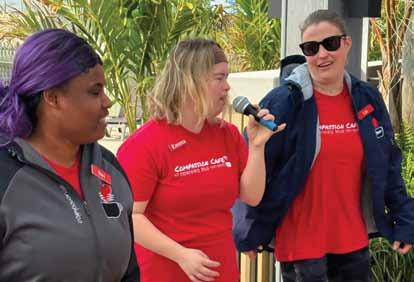
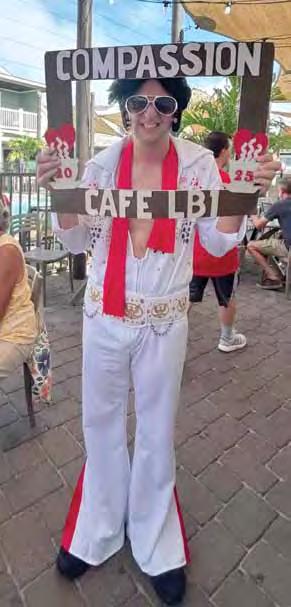
In July of 2024, the Café treated patrons to their wonderfully chaotic version of the lightning-fast dance “Hand Jive”, reprised from their spring performance of the musical Grease at the STAC in Manahawkin. On that night, after almost two months of rehearsal, twenty-nine staff members entertained an audience of more than 700, filling what little space remained in the theater to the rafters with their enthusiasm. Furthermore, in the true spirit of “the show must go on,” the show’s director, Elizabeth Wiedenhof Horn, somehow managed to fit in getting married between rehearsals.
Performing has become an integral part of the Compassion Café experience, for everyone who walks through the door. “I think what we get out of this performance element is more connection to who the staff are,” said co-founder Sue Sharkey in describing the value of entertainment at the Café. They have life, talent, and hobbies that they are willing to share that is just another way to create bridges between people.
Performances at the Café are a shared celebration, going far beyond
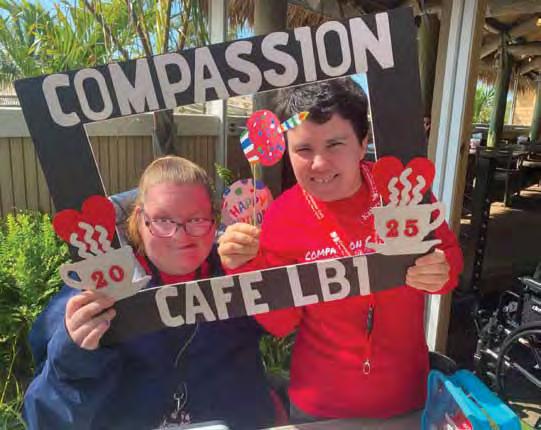
While it is true that there are most definitely hams and fan-favorite performers who cannot wait to get on our stage, the idea of sharing their talent has a different meaning for the Compassion Café community. Not all staff members are comfortable in front of their peers. Some are nervous. Some are shy. Some would prefer to be entertained. Some staff members begin their Café journey with a preconceived notion that they are different from typical young people. Steffi Giufredda says that one of the things she likes best about belonging here is that she can be herself, wheelchair and speech challenges included, and she feels accepted by her peers.
There is an individual behind every poem, pantomime, or puppet show. This is the real nitty gritty of Compassion Café as we get to know, accept and care for the members of our growing community. So, come for the coffee, baked goods, and music, but please stay for the uplifting feeling of witnessing something extraordinary. It is so easy to become part of our community of sharing; just open your eyes, your ears, and your heart. —Written and photographed by Joe Guastella
Compassion Café seeks the integration of teens and adults with intellectual and developmental disabilities through paid part-time summer employment in a small coffee shop environment with free hands-on training and ongoing support in an atmosphere of joy, community, love, and unconditional acceptance. By providing meaningful employment our staff members gain independence, self-confidence, and work skills for future success.
Compassion Café is a 501(c)(3) partnering with local businesses in a true, non-profit model.
Dianna Ivanov is a defining force in New Jersey’s luxury real estate and development landscape. With influence extending beyond how high-value properties are bought and sold, Dianna is reshaping how projects are sourced, financed, and executed — bringing speed, clarity, and access to a process that has long been slow and restrictive.
With more than eighteen years of experience spanning real estate, sales, and marketing, Dianna leads The Ivanov Group at Keller Williams Realty. Based in Bergen and Ocean Counties, New Jersey, her work focuses on luxury homes, new construction, relocation, and builder partnerships. Dianna is known for her strategic approach and her ability to guide homeowners, developers, and investors through complex, high-stakes transactions with confidence and precision.
Dianna’s career began during a challenging market cycle, where she built her business from the ground up by helping homeowners navigate uncertainty. Over time, she expanded into new construction, development partnerships, and luxury real estate. As her relationships with builders and developers deepened, she began to see inefficiencies long accepted as standard. Development remained slow, capital-intensive, and fragmented, creating unnecessary friction and limiting access, particularly for smaller developers and women entering the space.
“The industry was operating on timelines and systems that no longer made sense,” Dianna said. “I was certain there had to be a better way.”
That realization led to her partnership with Builder’s Edge, a technology-driven development platform designed to
dramatically accelerate how projects are evaluated, financed, and delivered. Processes that once required months and multiple layers of coordination can now be completed in days, allowing builders to reduce risk and deploy capital more efficiently.
Expanding on that foundation, Dianna
partnered with Builder’s Edge to launch Build Her Edge, a women-led company and community designed to remove friction, eliminate gatekeeping, and expand access to institutional-grade tools, data, and capital pathways. The platform supports female developers, investors, and real estate professionals through smarter acquisition strategies, advanced technology, and practical education built for real-world execution.
“This is not about asking for a seat at the table,” Dianna says. “It is about building a new table where women have a seat.”
Today, Dianna continues to lead a luxury real estate team while expanding Build Her Edge and working alongside Builders Edge to modernize development. Her work sits at the intersection of real estate, construction, technology, and women’s leadership, with a clear focus on making high-level development faster, smarter, and more accessible.
She also serves on the executive board of the Builders Association of Northern New Jersey and helped launch its first Professional Women in Building council, marking an historic step forward for the organization. Her involvement keeps her deeply connected to local markets while contributing to broader industry leadership. For more information call Dianna at 201.895.1768.
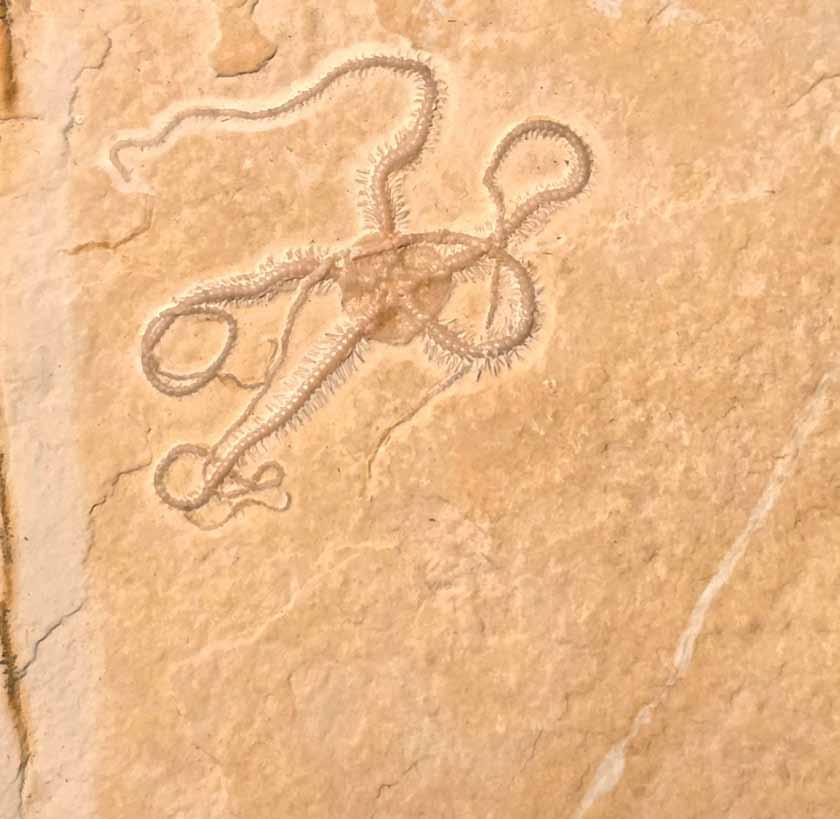
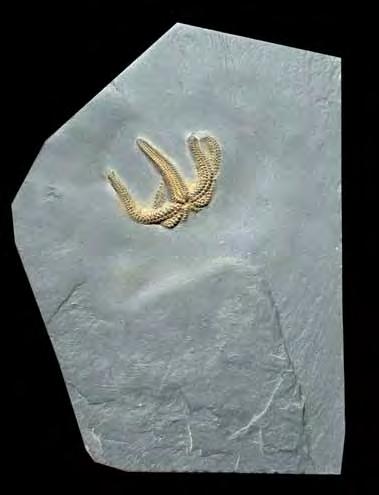
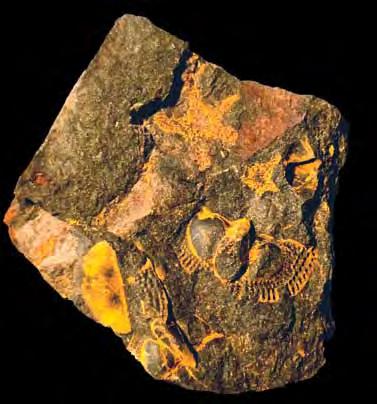
Few fossils spark the imagination like a perfectly preserved starfish. With their graceful symmetry and familiar shape, sea stars seem timeless. However, their fossil record tells a story of rarity, chance, and remarkable preservation. For collectors and scientists, fossil starfish offer some of the most intriguing insights into prehistoric marine life.
A Line Age Stretching B Ack h u ndred S of Mi L L i on S of Ye A r S
Sea stars belong to the phylum Echinodermata, which includes sea urchins, crinoids, and brittle stars. Their origins date back over 450 million years to the Ordovician Period, when early oceans were filled with strange life forms. While modern sea stars usually have five arms, fossil species show greater diversity. Some ancient forms had extra arms or slight variations in structure, suggesting evolutionary experimentation in early marine ecosystems.
Wh Y f o S S i L StA r fi S h Are So r A r e
Despite their long history, fossilized starfish are surprisingly scarce. This is mainly due to their anatomy. Unlike shelled organisms, sea stars consist of thousands of tiny calcite plates called ossicles. After death, these plates quickly break apart, making preservation unlikely. For a starfish to fossilize completely, specific conditions must occur such as rapid burial by fine sediment, very low oxygen levels to slow decay, and minimal disturbance from scavengers. These conditions are rare, making intact fossil starfish exceptional finds.
WindoW S of Pre S e rvAt ion: e xc e P t ion A L
f o S S i L Site S
When nature cooperates, the results can be amazing. Some fossil sites are well-known for preserving delicate organisms with incredible detail:
• Solnhofen Limestone - Location in Germany famous for fine-grained limestone and exceptional fossil detail.
• Bundenbach Slate - Location in Germany known for pyritized fossils that maintain three-dimensional structure.
• Swatara Gap - Location in Pennsylvania that produces fine limonite fossils from the Ordovician age, about 450 million years old.
Life on the Ancient Se A f Lo or
Fossil starfish were active parts of their environments, similar to modern sea stars. They acted as predators and scavengers, feeding on mollusks and other invertebrates. Their presence in fossil groups helps paleontologists reconstruct ancient environments, revealing insights about water depth, seafloor conditions, and the complex ecological relationships that existed.
t r e A S u re S for co L L e ctor S
Among fossil collectors, fossil starfish hold a unique charm. Complete specimens, especially those with intact arms, are visually impressive and scientifically valuable. Their rarity makes them even more desirable. Collectors often assess specimens based on completeness, articulation, and fine detail preservation. Since fossil starfish are naturally fragile, careful preparation and stabilization are crucial to maintain their integrity.
A r A r e g L i M PS e into d e e P t i M e
Fossil starfish remind us that even common creatures can leave behind rare records. Their scarcity does not reflect their past abundance but rather the delicate balance needed for preservation. From the ancient seas of the Ordovician Period to the displays of modern collectors, these fossils connect hundreds of millions of years. Each specimen is more than just an artifact; it captures a fleeting moment of life against all odds. —Written and photographed by Derek Yoost
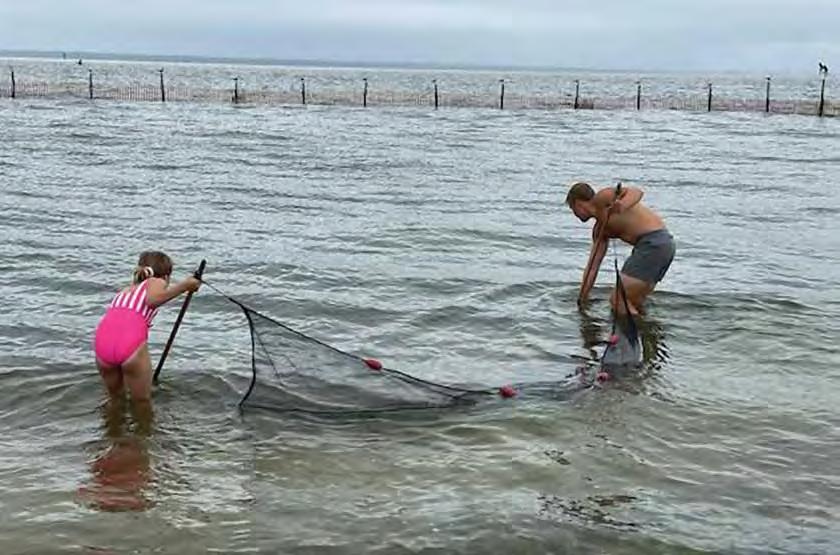
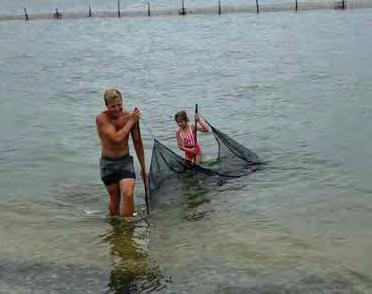
“…hold the net taut beneath the surface of the water — move it slowly — barely touching the bottom.”
During the summer, my grandchildren, Landon and Gwen enjoy seining the waters of Barnegat Bay at the Surf City Bay recreational area. As a young boy, Landon was enthralled by the Tuesday morning summer programs sponsored by "ReClam the Bay." At the end of the program, designed to educate the public on the importance of restoring and protecting the Barnegat Bay ecosystem, one of the presenters always asked for young volunteers to assist with the seine net to bring awareness to the bounty of small marine creatures that live generally unseen beneath the surface before carefully releasing them back into the bay.
Landon, whose home is in Ohio, has been a visitor to Surf City since he was an infant. Later, inspired by the summer program, he got his own seine net, and eventually recruited his younger sister, Gwen, and others to help explore the sea life that lives in the shallows of Barnegat Bay. Those on the shore eagerly wait to see what creatures have been caught in the seining net before they are quickly released to their watery home. Often there are small shiny minnows, silversides, tiny shrimp, pipe fish, baby blowfish, larval flounder, marine hermit crabs and even an occasional sea horse.
Although Landon, who is now in the Navy, may not get back to Barnegat Bay this summer, his sister, Gwen, will certainly carry on the tradition of introducing others to seining. —Written and photographed by Cynthia Andes
have you ever wondered what haunts Beach haven? Want to learn more about the history of LBi? Join us every Tuesday in July (weather permitting). Call 609.709.1425 for reservations and times available.
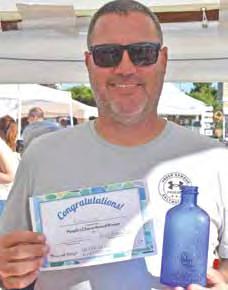
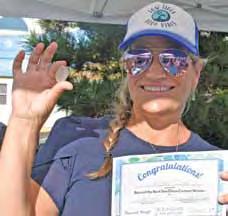
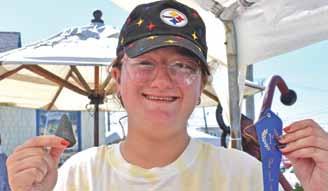
2025 LBi SeA gLASS & Art feStivAL conteSt WinnerS
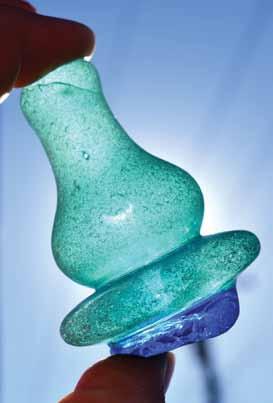
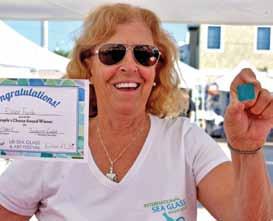
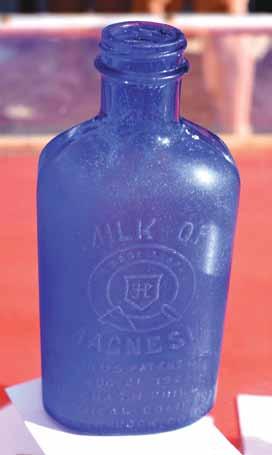
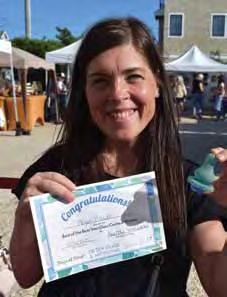
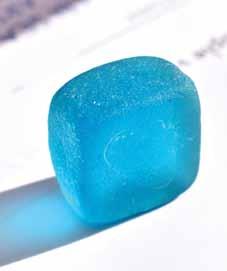
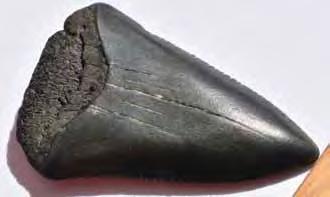
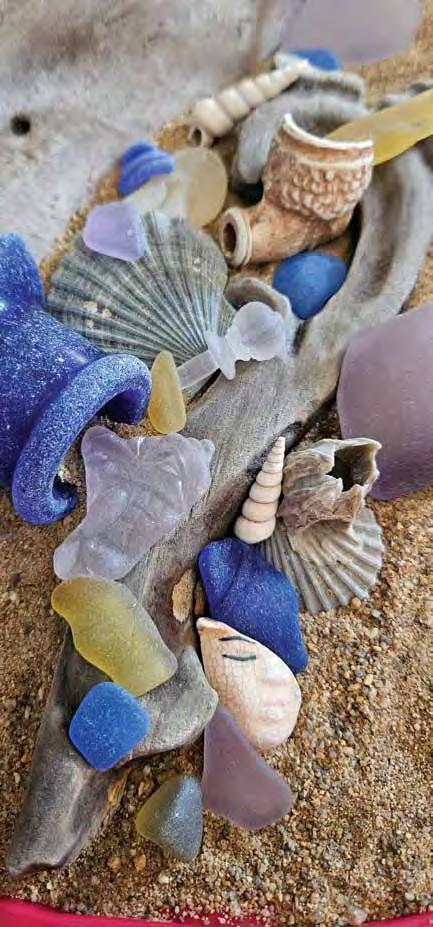
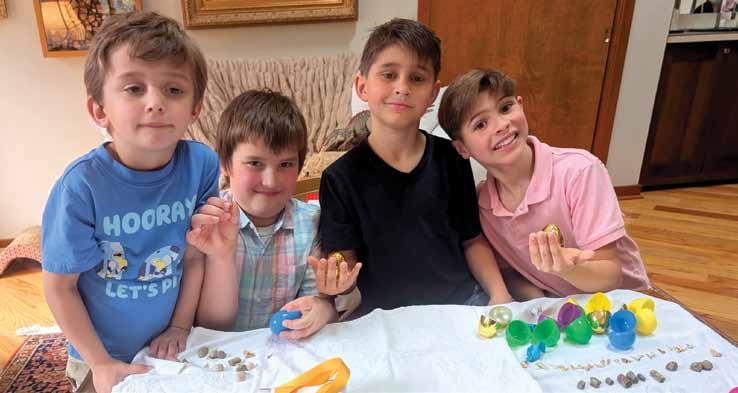
Best Overall Saturday: Megan Brower, teal and cobalt candlestick stem piece found in Bay Head, NJ; Best Overall Sunday: Kristen Tozer, enhydro bonfire clear piece found in Puerto Rico; People's Choice Saturday: Kenny Lore, Milk of Magnesia bottle; People's Choice Sunday: Elaine Furda, turquoise cube found in New York; Best Overall Fossil & Artifact: Brooke Lambert, great white shark tooth found in Harvey Cedars, NJ; Guess the Glass: Paul Kelly, guessed 821, actual total 815. See more and like us on Facebook @lbiseaglassfest
For the protection and safety of your dog and our patrons, NO DOGS ALLOWED. Service dogs, as recognized under titles II and III of the Americans with Disabilities Act, are always welcome. A dog on a leash can create a tripping hazard that may result in serious injury to your dog and to others.
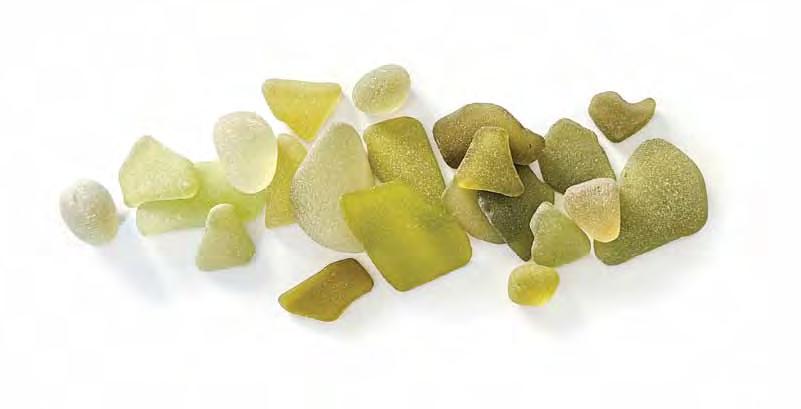
Perhaps the most overlooked color of sea glass, or most often mistaken for another color, is citron. Sometimes referred to as true gold, the color citron tends to be more on the yellow side, but not as vibrant as true yellow. Manmade glass in this color dates back to the ancient Egyptians. It became especially popular in bottles during the late 1800s through early 1900s. Glass containers that were manufactured in citron include bitters, inkwells, medicines, fire grenades, poisons, canning jars, polishes, and even glass fishing floats. However, the history of this color in glass is absolutely amazing.
Yellow-colored glass in the form of Libyan Desert Glass was highly prized by the ancient Egyptians. This natural glass, also known as impactite, was formed 29 million years ago when a meteorite impacted the area known today as the Egyptian/Libyan boarder releasing roughly 100 megatons of superheated force, heating the surface to 2912°F. This extraordinary heat melted the desert sand into beautiful yellow glass pieces that the Egyptians carved into jewelry. A scarab carved from Libyan Desert Glass was found in King Tutankhamun’s tomb. However, long before the Egyptians, neolithic people knapped this natural glass into tools and weapons. Over time, the ancients sought to imitate this yellow color in the glass they made for their compotes, cups, perfume bottles, and jewelry. And so, citron glass was born.
The main ingredient in citron glass is chromium, which was discovered in 1797 by Nicolas-Louis Vauquelin. To create the color citron, chromium oxide was added to potassium. The amount of iron naturally present in the sand used for making the glass caused slight variations in the color. This could result in one batch of citron glass being slightly greener than another. In the sea glassing community, glass with a greener shade is usually referred to as olive or forest green. Citron, on the other hand, leans more towards yellow, leading to some confusion. Citron colored glass would
appear again in the 1800s, predominantly in liquor bottles such as bitters, as well as inkwells and canning jars.
True yellow is much brighter than citron, and gains its color via cadmium, silver, antimony, zinc, or even uranium. Unlike citron, true yellow was more likely to be found in decorative pieces rather than utilitarian vessels, which is why citron is more often found on our beaches. Despite the wide variety of objects citron glass was used for, it is considered one of the rarer colors in sea glass. To understand why we must look back at the history of chromium.
Prior to the 1930s, the United States was a major producer of chromium worldwide and it was affordable for glass makers. As time went on, chromium, or specifically ferrochromium, was used in the production of stainless steel. In the wake of World War II, however, the United States built a stockpile of chromium commodities for national security. This stockpile would not be released until 1991 and the fall of the Soviet Union. In the meantime, chromium became more expensive to obtain. As a result, aside from collectible art pieces and specialty products, citron glass was rarely produced after the 1930s. Today, citroncolored antique bottles and sea glass are highly prized by collectors.
The best place to find citron sea glass is on beaches with a historical past. The beaches of bays, rivers, and creeks on the edge of old towns are great places to search. Ocean beaches that were once near places of high activity, such as lighthouses, factories, military bases, and schools can also be great places to find older sea glass. The best way to tell if you have found a piece of rare citron sea glass is that it looks yellow when held up to bright light and has a brass-like color in regular light. Remember, wherever you search keep looking down as you never know what history you will find. —Written and photographed by Sara Caruso

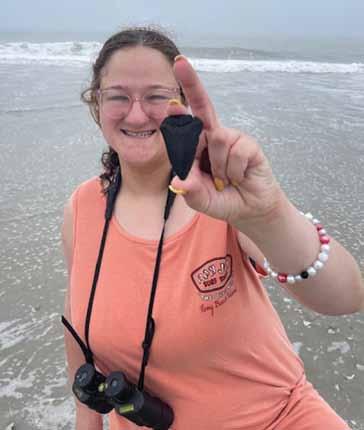
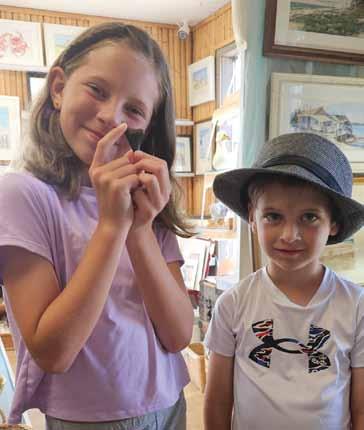
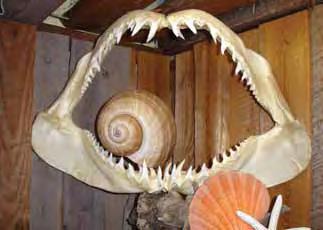
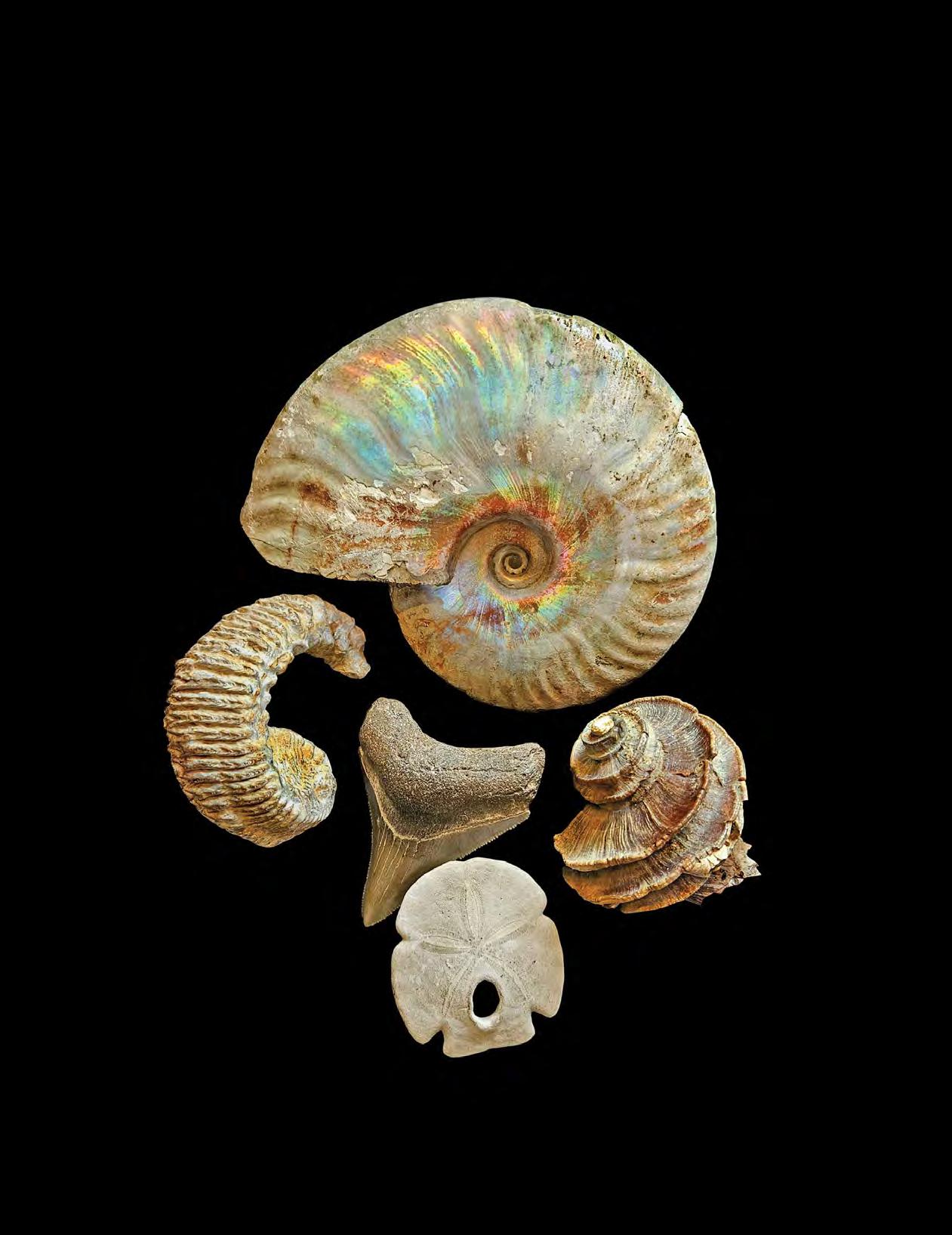
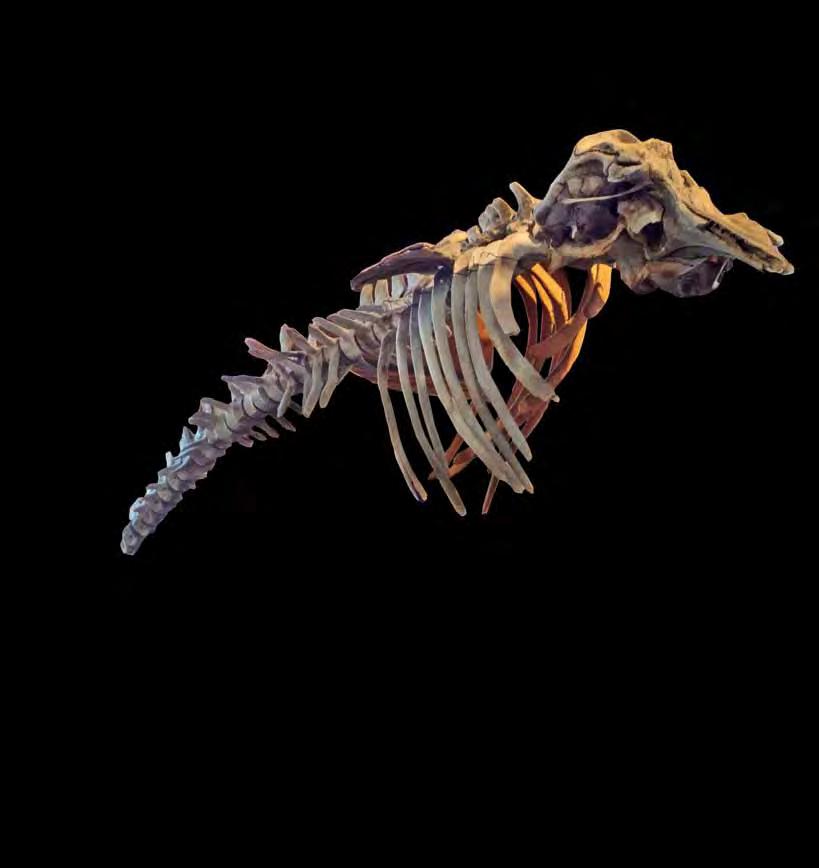
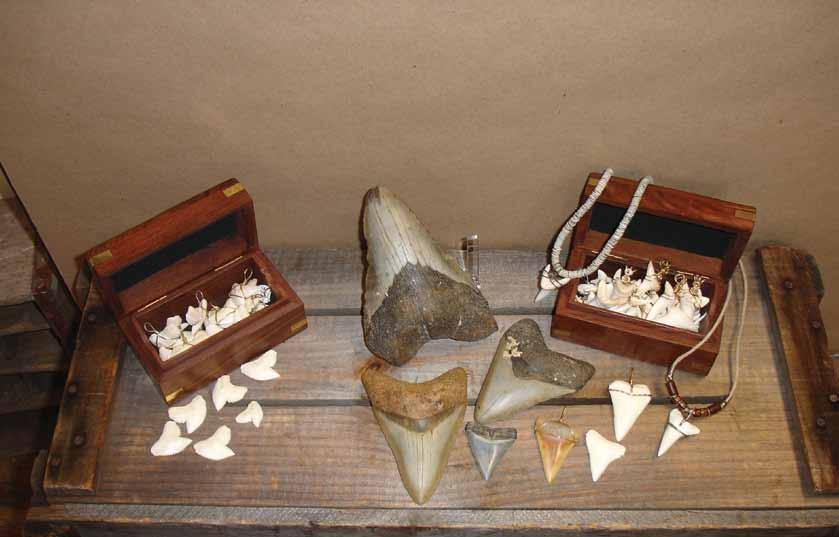
Counterclockwise from top: First, a fossil ammonite, Periephinctes, with original mother-ofpearl shell — from Tulear, Madagascar. It dates to the Jurassic, 160 million years old. Second is a fossil oyster, Alectryona, from the same deposit and age. Third is a fossil Megalodon shark tooth, Otodus megalodon, found in a river in North Carolina. It is from the Miocene, about 20 to 10 million years old. Fourth is a fossil keyhole sand dollar from Florida, Encope, also from the Miocene, 10 million years old. Lastly there is a carnivorous fossil snail from Maryland, Ecphora, from the Miocene about 20 to 10 million years old. This is the state fossil for Maryland. —Derek Yoost
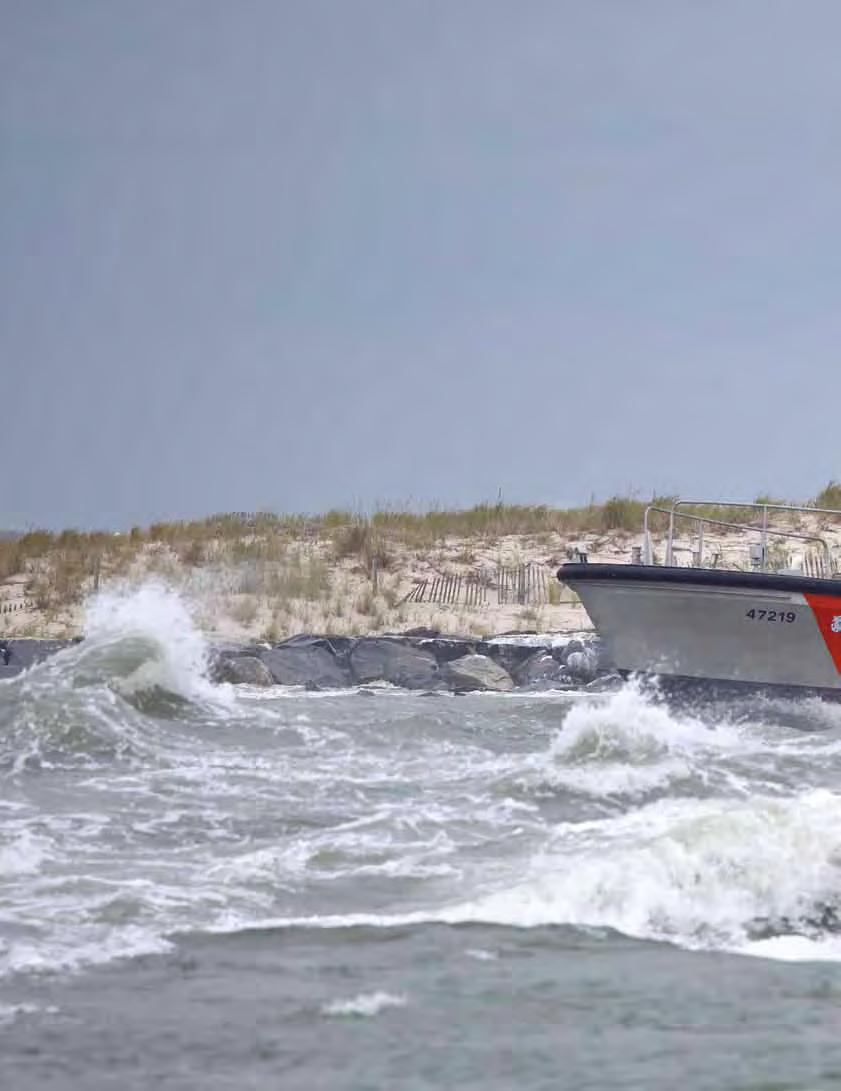
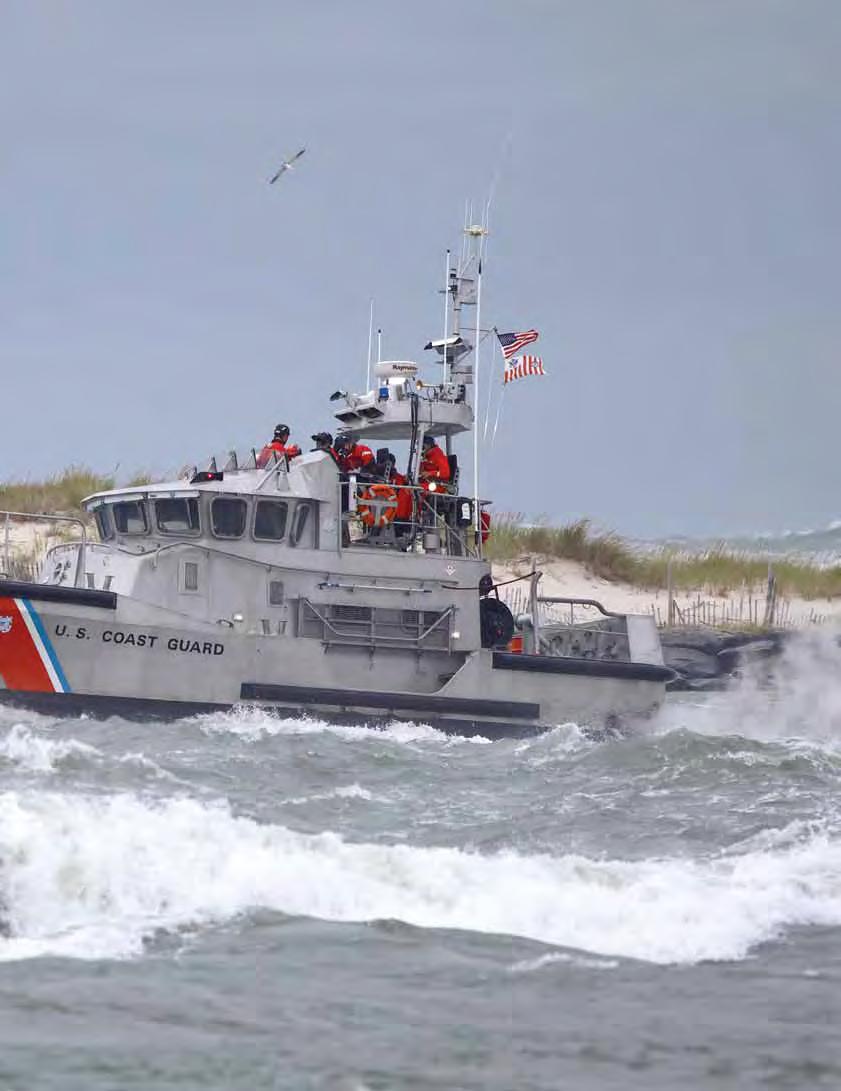
Every minute counts.
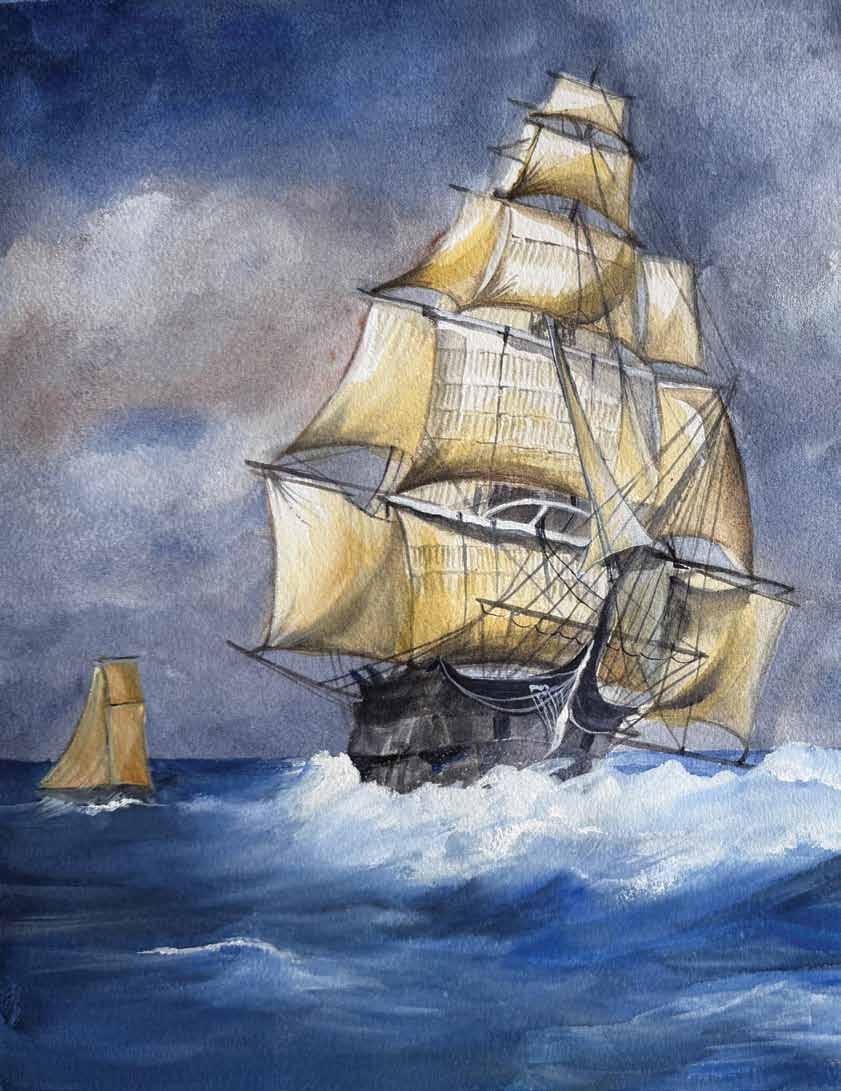
Men face the elements with only instinct, training, and hearts of steel.
Howling winds tear voices apart. Orders from the captain vanish into the roar of the sea.
Still, they hold their course. Eyes fixed through rain and darkness, guiding the vessel far beyond the safety of shore.
As we sleep unaware yet always grateful, under their guard of protection.
—Maggie O’Neill
The family names Bartlett and Mathis descend from the very founding of some of our local towns, as well as the United States. Walter Bartlett, Georgine Mathis, and their many children, grandchildren, and great grandchildren are part of a living legacy that begins in the 18th century.
For the Mathis family, their story in North America began when a 10-yearold boy named John Mathews emigrated from England to Long Island in 1699 to join others who preceded him there. Maturing to adulthood, he bought land in Bass River, New Jersey, and settled down with the widowed daughter of one of Tuckerton’s founders, Edward Andrews. Changing his name to something he thought was easier for public consumption, “Great” John Mathis and his equally great wife, Alice, made their home on thousands of acres of land on Bass River just below what would become New Gretna, while the family would grow and work in the bustling 18th century community of Tuckerton.
The Bartletts arrived in Ocean County,
New Jersey in the 1730s when teenager Joseph Bartlett followed in the footsteps of the Mathis’ and others to the colonies. Finding work on a farm in West Creek, he married the daughter of another Long Island transplant, Phoebe Birdsall. Like many of the time, the Bartletts
became farmers and practiced the Quaker tradition. A grandchild, Nathan, would take on the Mordecai Andrews farm, which once comprised all of Tuckerton west of the lake, while another generation would build the Bartlett-Rockhill House in 1854. —Reilly Platten Sharp
The surnames Bartlett and Mathis have been a part of the history of Tuckerton, West Creek, and New Gretna for many generations. Nathan Bartlett built part of the Andrews-Bartlett Homestead in Tuckerton. Other Bartletts were builders of three-mast ships, as well as farmers. Similarly, their Mathis neighbors in the area developed and farmed much of the well-known communities of today. If it is possible to inherit such talents, it would seem to have been passed on to later generations of Bartletts as each has added to the physical history of this area — block by block, stone by stone and brick by brick.
In a recent interview, Georgine Mathis Bartlett related a brief the history of four generations of the family of her late husband, Walter Bartlett. At age 94, her memories are filled with love and joy.
“Walter’s grandfather was Charles Parker Bartlett. He was born in West Creek, New Jersey in July of 1874. He was member of the Life Saving Service before it became the U.S. Coast Guard. He worked making concrete blocks. Charles married Idella (Ward), and had three children, Harold, Raymond, and Helen. Raymond was my husband’s father.”
“My husband Walter’s parents, Raymond and Ella (Wegst) Bartlett, founded Bartlett Concrete Products on Bartlett Avenue in West Creek. Raymond started that business in 1928 with a block making machine from the Sears, Roebuck and Company. He worked under the trees in their backyard making one block at a time and wound up serving the entire surrounding area. Bartlett Avenue was named many years ago because his concrete business was located there and Raymond owned a lot of property in the area.
I’ve lived in New Gretna and West Creek my whole life,” said Georgine. “My father, Walter Mathis, was the supervisor of the highway department and a bayman,” continued Georgine. “My mother, Alice, was a nurse.”
While attending Tuckerton High School, Georgine met Walter E. Bartlett. “He graduated in 1949 and I graduated in 1947,” said Georgine. “We got married in 1951 at the New Gretna Presbyterian Church.” Georgine and Walter made their home in West Creek where they raised their children, Lawrence, Edward, James, and Patricia.
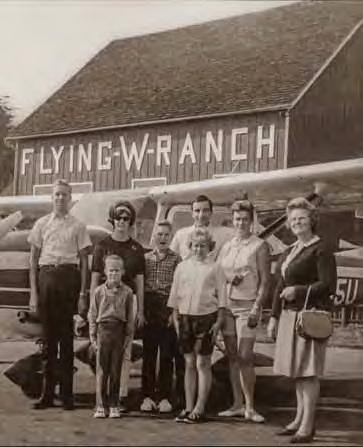
Her husband, Walter was also a lifelong resident of New Gretna and West Creek. He was a U.S. Navy veteran and a lifetime member of the Eagleswood Volunteer Fire Company. One of his life-long passions was flying. “He was a private pilot. We flew to California and all over the country in one of Walt’s two-seater planes,” recalled Georgine. “He flew Cessnas, Piper Cubs, Mooneys, and Cherokee Sixes.”
In the 1960s, Walter founded and built the Eagles Nest Airport in West Creek. His son, Ed, recalled how the family worked alongside their father when he was building the airport. “After church we helped clear out the runway; cutting wood and clearing the landing strip.” Today, the airport continues to operate as a public use pilot owned airport.
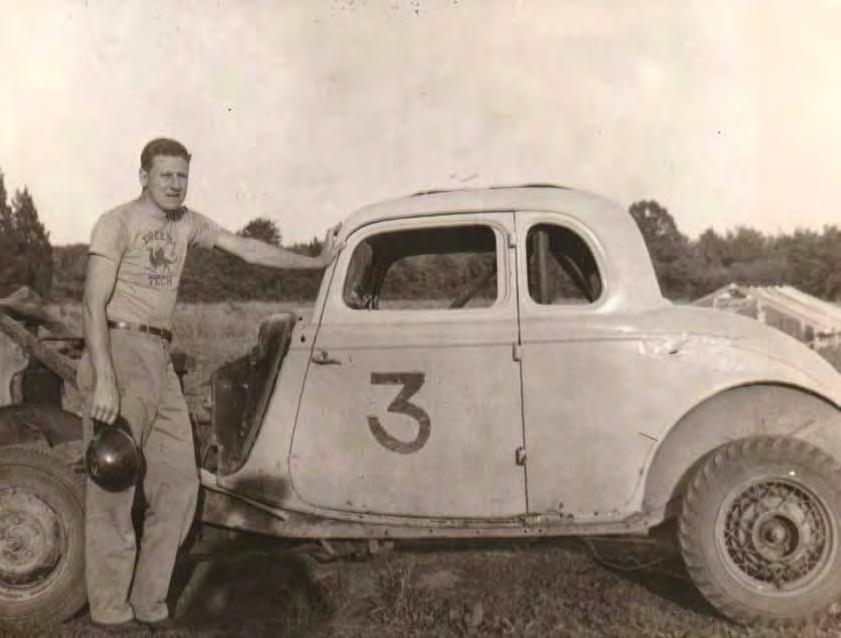
From his pastimes, it is clear Walter had a need for speed — in the air, on the land and in the water. “We went to the races at Tuckerton Speedway,” said Georgine. “Walt raced his Hudson there.” She laughingly recalled Walt saying “Off to the races…” as he left the hospital after their son, Ed, was born and headed back to the racetrack. Georgine particularly loved the boat races on Barnegat Bay. “The speed garvey races were loud, fast and so much fun to watch.”
From the late 1960s through the 1980s, Walter was a masonry contractor. His specialties were fireplaces and chimney work in
both brick and stone. Their sons, Ed, and Jim, worked with him on weekends and during the summer. Walter passed away in September 2007.
Jim went on to found and own Bartlett Construction. Ed created Bartlett and Sons Remodeling, which is now owned and operated by Ed’s son, Ray. Ray’s sons Andrew and Jesse also work in the family business. Ray’s younger sons also help when needed.
Ed and Georgine’s daughter, Pat Bartlett-Courtney has a career in real estate on LBI. As a teenager, their son Larry worked at Harvey Cedars Bible Conference for many summers. He went on to obtain a degree in theology and worked for Cumberland County Christian School and Habitat for Humanity before passing away in 2021.
“Walter and I had four children,” beamed Georgine. “We have twelve grandchildren, two step grandchildren, forty-three greatgrandchildren, and three great-great-grandchildren.”
Through hard work and dedication, generations of Bartletts have strived for perfection. Their skills are a testament to their gifted hands and teamwork. —Diane Stulga • Photography courtesy of the Bartlett Family
Shortly after this interview, Georgine Bartlett passed away. The Echoes of LBI team extends our deepest condolences to her family and friends.

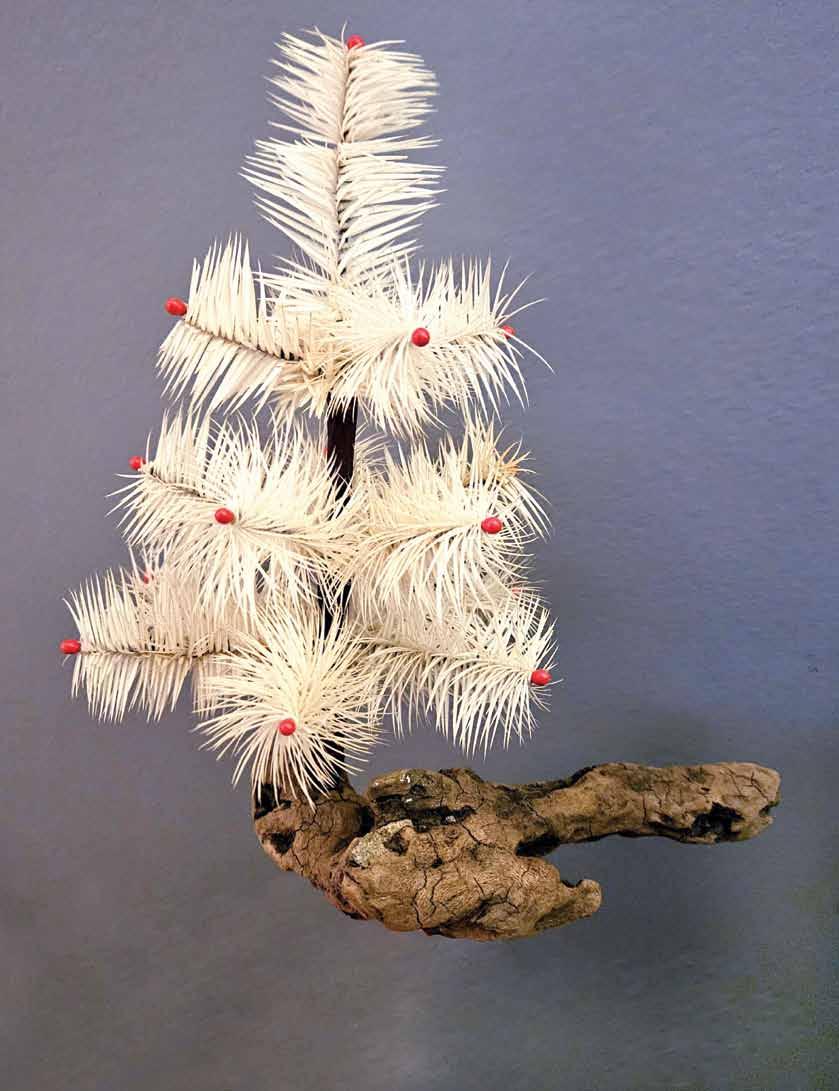
Althought the first record of evergreen trees decorated for Christmas appears in 16th century writings from Latvia, the exact origin of the tradition is largely unknown. However, it is known that by the 17th century, it was common in Germany to decorate evergreen trees in celebration of the Christian holiday, Christmas. Over time, the tradition of decorating evergreen trees, both outdoors and indoors, grew in popularity. Decorations and tree ornaments were sold in the Christmas markets as tens of thousands of trees were felled each year. This had an unforeseen consequence, however, as by the mid-1800s deforestation was so great in Germany that cutting down evergreens was restricted, and in some areas prohibited. Germans needed a new way to preserve their Christmas tree tradition and found it in the form of gansfederbaum, literally a goose feather tree.
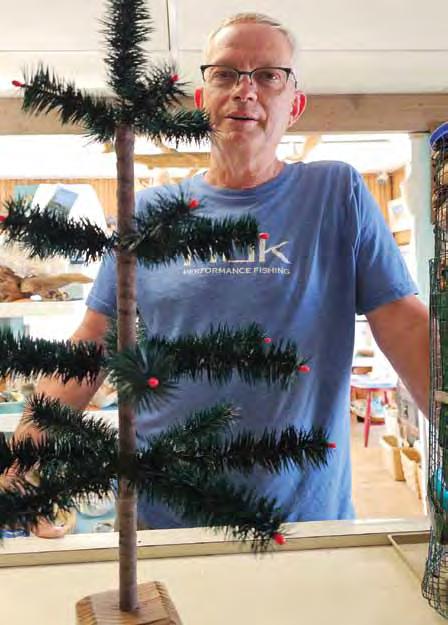
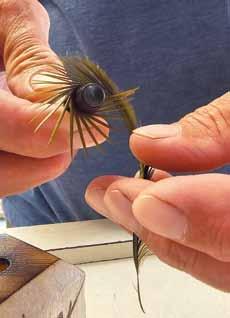
Gansfederbaum became a popular replacement for real evergreen trees during the holidays. Making them took time and required skills that were passed down through generations. Only the biot — the leading-edge feathers from the split shaft of primary flight feathers from geese were used. A central wooden dowel mounted on a wood block acts as a tree trunk and sturdy base. Each branch of the tree was created with paper or thread wrapped wire with a small red bead or ball representing a berry attached to one end. The branches were then wrapped with the strips of biot which fanned out to resemble the needles of a fir tree. Completed branches were fastened to the trunk to form the shape of an evergreen tree. Originally, gansfederbaum retained the natural color of goose feathers. Later, the feathers were dyed green to represent the color of evergreen trees. Interestingly, despite the name gansfederbaum, feathers from other fowl including turkey and swan were sometimes used.
In the late 1800s, German immigrants brought the tradition of gansfederbaum to the United States. During Theodore Roosevelt's presidency, more natural spaces were gaining protection, so harvesting evergreens became restricted. This led to goose feather trees quickly becoming a popular alternative. They were in such demand that they were seen for sale everywhere from five and dime shops to the Sears and Montgomery Ward catalogs. In later years, goose feather trees were even available in a boxed set with lights or ornaments included. Colors like blue and gold, and even pink, were introduced to encourage more sales.
Eventually, feather trees were replaced by aluminum trees opening the door to modern-day artificial Christmas trees. Today, antique goose feather trees command high prices from collectors. With the resurgence of natural and earthfriendly products, feather trees are being rediscovered by younger generations, giving new life to this beautiful tradition. —Blain Bargo • Photography by Sara Caruso
Like many families that become full-time residents of Long Beach Island, New Jersey, it all started with a vacation. “In 1950, my parents, Brett, and Doris Ash, brought my brothers, Brett Jr., Paul, and me to Harvey Cedars for summer vacation,” said David Ash. “We rented on the ocean side of Bergen Avenue and came back for the next two summers. In 1951 we rented a log cabin on Union Avenue. Then in 1952, we rented a bayfront house on South Holly. I learned to swim there.”
Even in those days, some rentals were not as up to date as others. “One of the houses we rented had an old wooden icebox instead of an electric refrigerator,” laughed David. “My brothers and I had to get 12 x 12-inch blocks of ice at the fishery to keep the thing cold.”
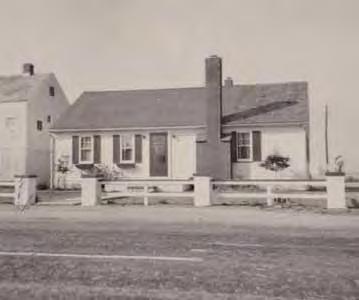
In 1953, David’s family bought a house on South Holly Avenue in Harvey Cedars that became their full-time residence in 1955. “My parents taught us faith and family values. My brothers and I went to Sunday school at Millburn Hall on 73rd Street,” said David. “Our family was like the 1950s sitcom The Ozzie and Harriet Show.”
After relocating to Harvey Cedars, David’s father commuted daily from LBI to the Camden County area for work. His mother, a beautician in Haddonfield, built an at-home clientele in Harvey Cedars. “My mom gave women perms in their homes,” said David.
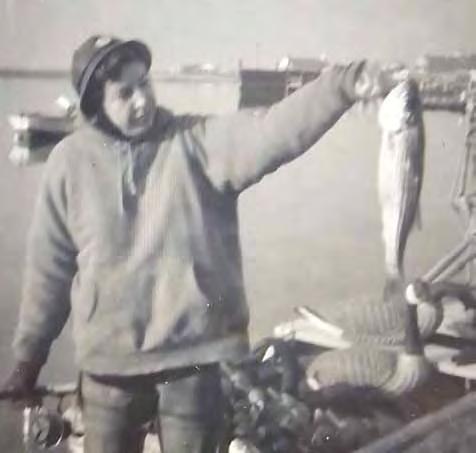
Immersed in the natural beauty of Long Beach Island, the family enjoyed everything Island life had to offer. Brett and Doris enjoyed the relaxation and adventure of surf fishing. They became members of the Long Beach Island Fishing Club in Harvey Cedars.
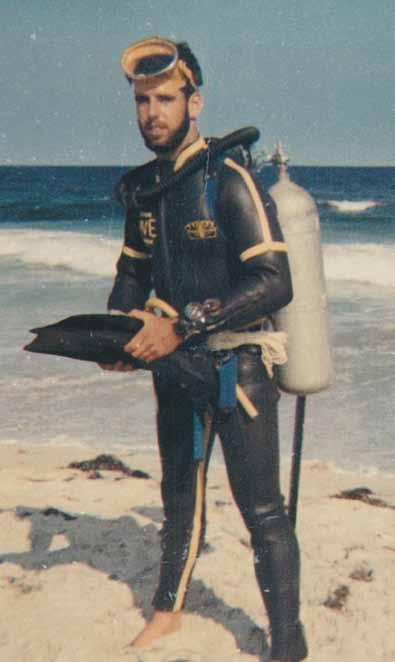
In addition to fishing, David and his brothers loved to scuba dive, clam, and duck hunt. “We spent every minute we could in the ocean or in the bay yearround,” remarked David. “I was also a member of the Surf Breakers Weightlifting Club.” He excelled in competitive weightlifting and bodybuilding; conditioning that would help to save his life and the lives of others.
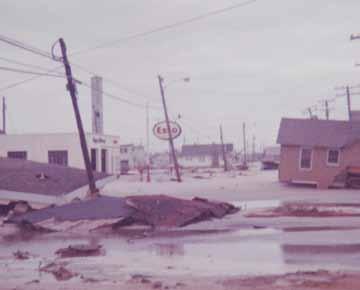
In many ways the stormy morning of Tuesday, March 6, 1962, was routine. Brett, Sr. had left for his long commute to work. Brett, Jr., was at work at the Harvey Cedars gas station and David, now a senior at Southern Regional, was on his way to school. However, that day and the ensuing days would quickly prove to be anything but routine.
After seeing the ocean flooding down Bergen Avenue to the Boulevard, David became concerned about the safety of his mother and younger brother, Paul. Getting home became his only priority. School no longer mattered. “I ran home,” said David. “I ran all the way.”
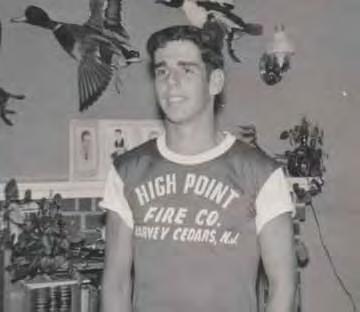
That evening, as one of the worst storms in recorded history ravaged LBI, conditions became increasingly hazardous. Around 6:30 p.m. David headed out into the storm on foot to make his way from his home on South Holly to High Point Firehouse on 80th Street where he was a volunteer firefighter. Because there was no telephone at the firehouse, David pushed on through the high tide to the nearest payphone a few blocks further north to call Tom Snelgrove, a teacher and advisor of the weightlifting club at Southern Regional High. He was inside the 7-foot-tall glass and metal phonebooth when the force of the rushing flood waters pushed it over trapping him within. Working against the force of the water and the weight of the phonebooth, David managed to open the door and lift the booth up to escape and headed back to the firehouse. He
credits God and his physical conditioning as a weightlifter for having the strength that saved his life.
At the firehouse David met up with Bob Van Meter, a high school student and fellow volunteer firefighter. Together, in the true spirit of volunteer first responders, they went back out into the raging storm and headed south in Harvey Cedars to offer assistance to anyone in need. By this time, the electrical service to the Island was out. Houses — pushed off their foundations by the force of the storm — were scattered along the Boulevard. Around Camden Avenue the two teenagers came across several stranded Atlantic City Electric workers sitting on top of their swamped work truck. “The ocean had cut into the Island creating an inlet that was six to ten feet deep,” explains David. Although it was deep and the current was strong David and Bob managed to anchor a rope and risked their lives to get it across the dangerous water to the stranded men, to bring them all to safety. Later, David rescued two more men from a collapsed house. “The next day, the house and the Atlantic City Electric truck were gone,” said David.
After the storm and high school graduation, David worked for Marwood Contracting. While working at the Harvey Cedars summer home of Franklin and Myrtle Clark, he met their daughter, Meredith. “I asked her father for permission to date her,” quips David. “We got married in 1965.”
In 1971, David founded a construction company. He went on to become an accomplished building contractor and developer on Long Beach Island and served as president of the New Jersey Shore Builders Association. High Point Volunteer Fire Company has always been an important part of David’s life, and he was honored to serve as the assistant chief.
Throughout the 1970s and 1980s, David and Meredith served people in need through local missionary work. Both became ordained ministers. “Our religious experiences brought us the greatest sense of purpose and fulfillment,” said David. They were very active with Grace Calvary Church in Ship Bottom for many years. They had been married for forty-nine years when Meredith passed on January 22, 2015 after an extended illness. On that morning Meredith had whispered to David that she wished it would snow. That night as the snow fell, she slipped away. Remarkably, on the first anniversary of her passing there was a blizzard.
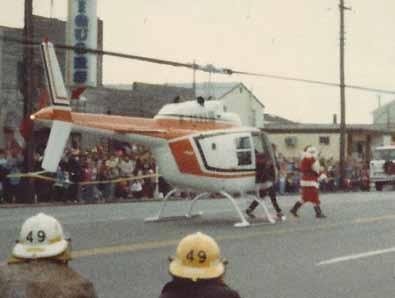
As a licensed helicopter pilot, David participated in search and rescue missions in Colorado, Wyoming, and New Jersey. He has been involved in saving the lives of seventeen people. On a lighter note, for many years, when Santa Claus arrived in Ship Bottom by helicopter, David piloted that important sled.
Several years ago, David remarried. These days, he and his wife, Elaine, remain active at Grace Calvary Church in Ship Bottom. They are involved in the music ministry and Elaine plays guitar at the guitar service.
Retrospect is always clearer, and in looking back over David’s life it is easy to see that at an early age he was given the foundation, skills, and tools he would need in life. Although, sometimes in the midst of the storm it can be difficult to see a silver lining. “All I can say is that God’s plans are perfect,” said David with a hint of gratitude in his voice. “And the rest is history.” —Written by Diane Stulga • Photography courtesy of David Ash


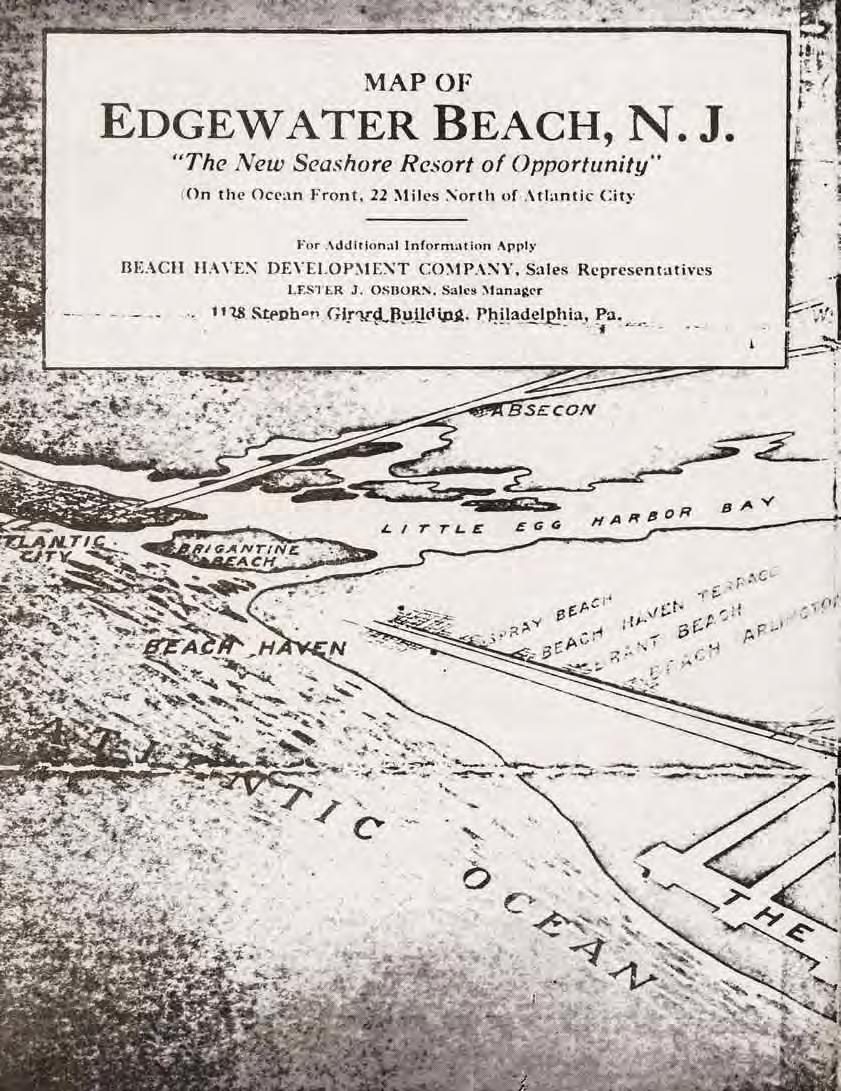
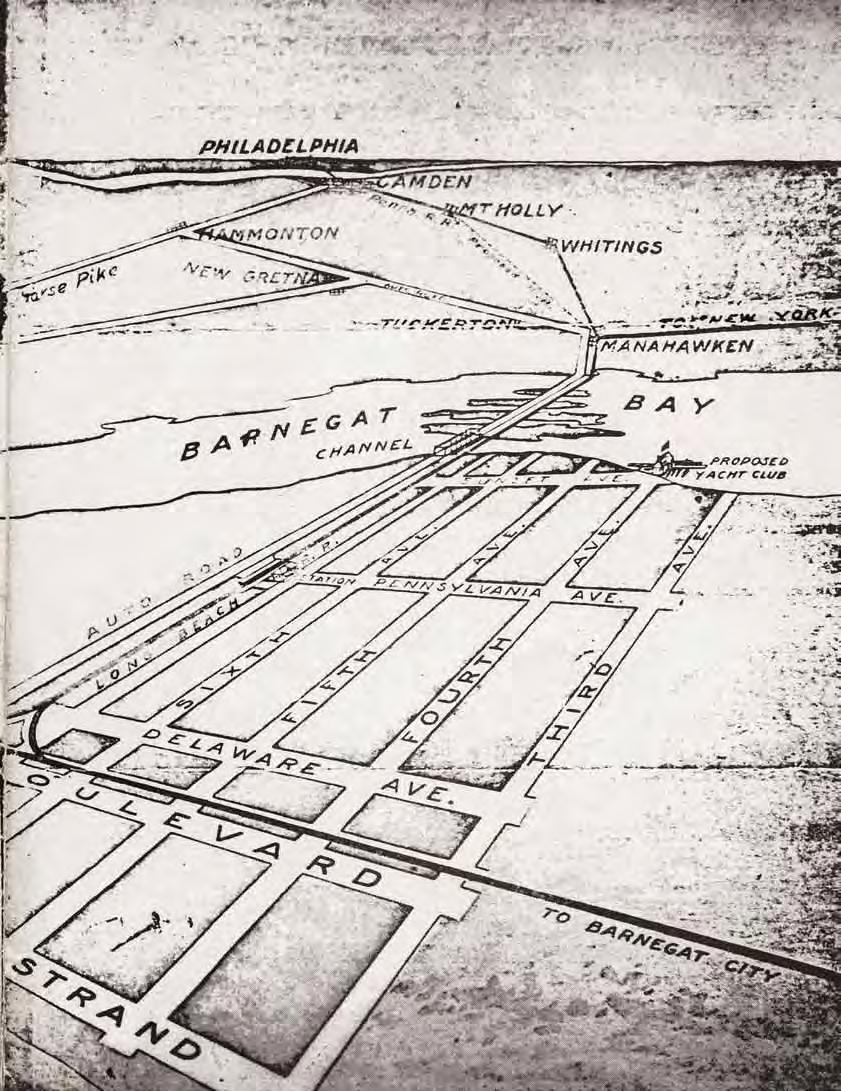
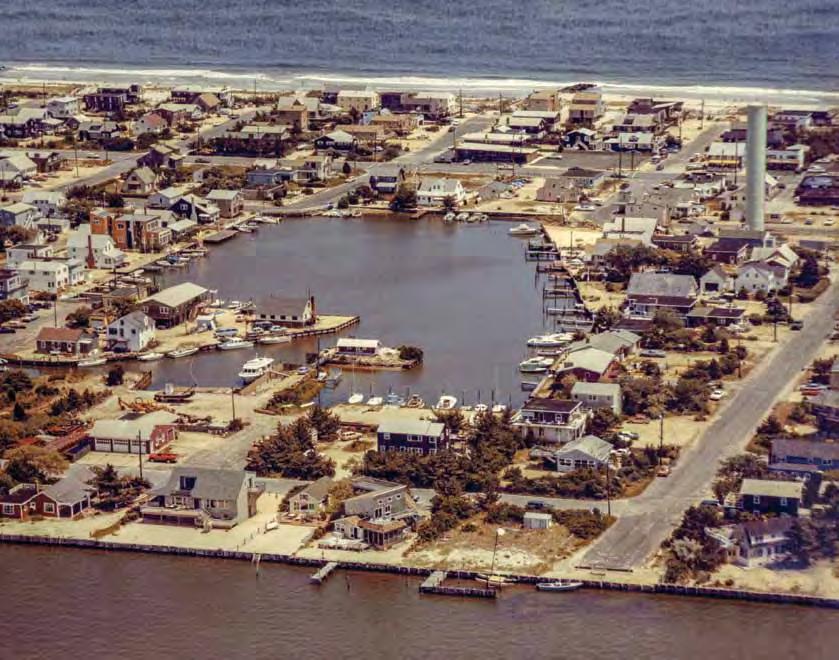
At the gateway to Long Beach Island stands Ship Bottom, which celebrated its 100th anniversary last summer. But before that storied town, the streets and cottages that first populated the dunes along the old train tracks and Route S40 to the traffic circle went by another name — Edgewater Beach. Planned and marketed by Lester Osborn, one of the Island’s storied Osborn realtors, Edgewater put the area on the map leading to today’s bustling hub of Island activity that has greeted generations arriving on our beautiful Island ever since. Keep an eye out in future issues of this magazine for the series Echoes of Edgewater Beach —Reilly Platten Sharp
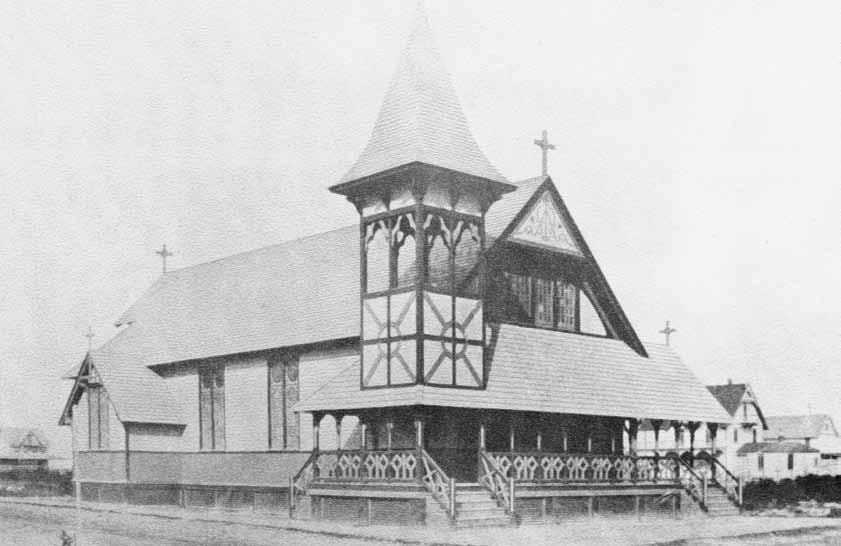
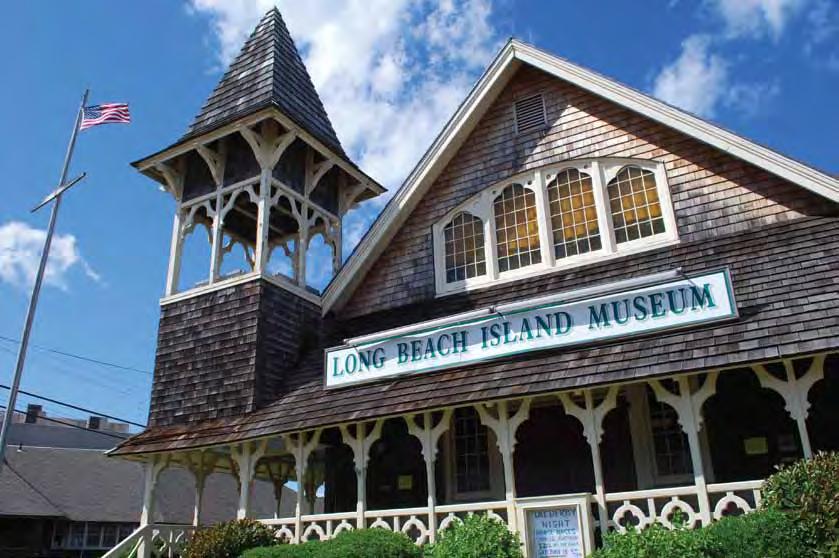
The story of the Long Beach Island Historical Museum is a testament to a community’s refusal to allow its heritage to be lost. Located at 129 Engleside Avenue, the heart of Beach Haven’s historical district, the museum serves as the Island’s collective memory, housed within a structure that is itself a primary artifact of New Jersey coastal development.
The museum’s physical home, originally constructed in 1882 as the Holy Innocents’ Episcopal Church, was born from a moment of both tragedy and profound gratitude.
In August 1881, a fire tore through the Parry House, a prominent Island hotel. While the building was lost, all guests escaped. In thanks for the preservation of life and in memory of their daughter, Clara Parry Hilger, Captain and Mrs. Charles Parry funded the construction of the church.
Designed by the prestigious Philadelphia firm Wilson Brothers & Company, the church, originally built in the Queen Anne style, was converted to the shore shingle architectural style in 1903 after a major storm. The structure served as a church for
many decades. However, by the 1970s the congregation had outgrown the building.
When the Episcopal church moved to a larger facility nearby, the historic structure faced possible demolition; until a group of concerned citizens stepped in determined to keep the history of LBI alive, as the post-1962 rebuilding of Long Beach Island was seeing many historical buildings demolished.
The Long Beach Island Historical Association, LBIHA, was founded in 1975 with a clear mission: to collect, protect, and bring to life the Island’s rich past.
The Association’s first act, purchasing the old church building to prevent its demolition, was its most significant and served a second purpose — the building would house the museum. In 1976, coinciding with America’s Bicentennial, the Long Beach Island Historical Museum opened its doors.
Walking through the museum today, the open floor plan retains the airy feel of the original nave allowing visitors to navi-
gate through distinct eras of LBI’s history from its prehistoric indigenous inhabitants, the early days of whaling, shipwrecks, and the U.S. Life Saving Service, to the gilded age of the railroad and grand hotels. The exhibits are curated to show that this 18-mile barrier island was a hive of activity long before it became a vacation destination.
In 2009, the Association added a Fisherman’s Cottage to the property. This restored structure offers a glimpse into the humble, hardworking lives of the baymen who were the backbone of the Island’s economy.
Today, the museum is a hub of community engagement, hosting signature summer events, like the Chocolate Fair and the S.T.E.A.M. program, as well as historic walking tours. The focus this year will be on the 50th Anniversary and an open house to be held on May 30. The open house is a celebration of fifty years of dedicated service by the museum’s nearly 1000 volunteers along with a dedication to John Coyle, the visionary past president responsible for acquiring the church building and opening the museum.
that changes with every major storm, the museum provides a sense of permanence. It serves as a reminder that while sands shift and buildings change, the spirit of the people who have called this barrier island home remains anchored in the invaluable history kept safe within these shingled walls.
As the LBI Historical Museum celebrates its 50th Anniversary in 2025-2026, its role is more vital than ever. In a landscape
The museum is open from Memorial Day through September, ensuring that every new generation of summer visitors can connect with the 18 miles of history that lie beneath their feet. —Diane Roy • Photography courtesy of Ron Marr and John Fee
My acquaintance with Long Beach Island came through my mother, Vivian Edson Wilson, who answered a job posting in a magazine and moved from a small town in northeastern Pennsylvania to Manahawkin in 1913 without knowing anything about the area. She fell in love with the Island while teaching in Cedar Run. She often sailed over to LBI with a friend to picnic on the beach before heading back to the mainland where she lived with the Bennett family. Even after she left New Jersey, my mother sometimes brought my sister, brother, and me to the Island’s beaches in the summer.
In the late 1940s my parents rented a space at Hartman’s Trailer Park in Holgate for a few summers. In 1953, my mother purchased the Victorian house on the corner of 2nd Street and Beach Avenue in Beach Haven.
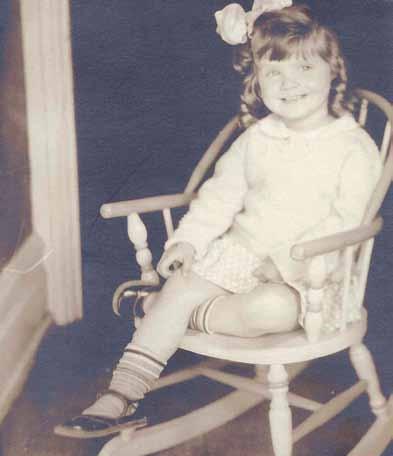
I was born in February of 1927. I joined my parents, Vivian and Ed Wilson, and my older sister, Mary Vivian. Later, my brother, Bob, arrived. We lived in Hackettstown, New Jersey and moved to Emmaus, Pennsylvania when I was two years old. There my parents built a home, and my father built his veterinary practice.
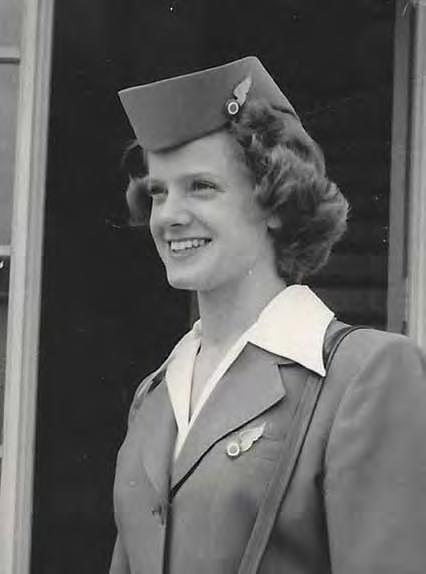
In high school I developed a lasting love of aviation and was determined to become an airline stewardess as they were known at that time.
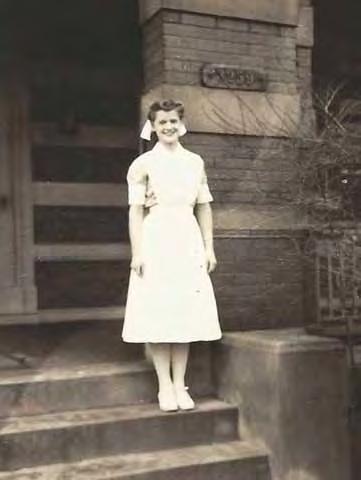
I had read that the airlines would automatically hire women with a nursing degree. Consequently, upon graduating from high school in 1944, I enrolled at the University of Cincinnati as a nursing major. Later, I learned the airlines had changed their requirement to one year of nursing and I had just completed my first year. After my announced plans to leave school and
become a stewardess met with strong disapproval from my father I quickly enrolled at my mother’s alma mater, Temple University as a health and physical education major. While there I began dating Tom Lambert. He was a year behind me due to his military service. Upon graduation I was hired by Northwest. It was a wonderful experience, but I worked as a stewardess for only one year before Tom graduated and we married. We settled in Philadelphia where Tom had a teaching and coaching position.
We always summered in Beach Haven at my mother’s house and in 1959 we moved to LBI to raise our four children, Ginny, Lydia, Colleen, and Tom. We rented various houses before buying our home on 8th Street. It was a difficult time because my husband came home only on weekends because he was still teaching in Philadelphia. This left me without a car and no help unless my mother was around. By 1961 we had our fifth child, Jim. In those days I was terribly busy.
On the evening of September 24, 1960, we were at home
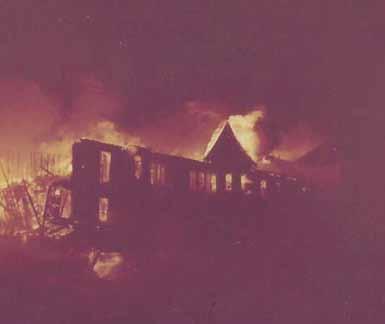
when The Baldwin Hotel, one of the grand old buildings from Beach Haven’s early days, burned. Embers from the fire blew all over town. My family took turns all night wetting down the cedar shingle roof of my mother’s house for fear it would catch fire. It was a sad sight when daylight revealed there was nothing left of that majestic piece of LBI history.
I will never forget March 6, 1962. We had lost power during what appeared to be a nor’easter. While searching for a flashlight I looked out the window and saw the ocean washing down our street. Without modern communications to alert or keep us informed we had no idea that one of the worst storms to ever hit the east coast was even coming. A few days later my children and I were evacuated by school bus. My husband was not allowed to accompany us because it was women and children only. As we rode through Ship Bottom, the incoming tide was hitting against the bus tires. I was never so frightened in my life.
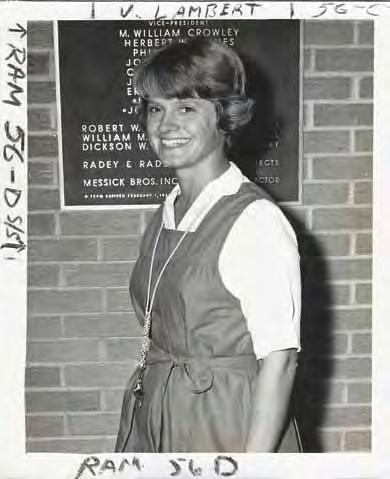
In the fall of 1962, I answered
a knock on our door to find a man dressed in Bermuda shorts, Hawaiian shirt, and sandals who introduced himself as Dr. Harry Packer, Superintendent at Southern Regional High School. He said he was looking for me and went on to explain that he was desperate to find a certified teacher for the women’s Physical Education Department and offered me the job. I told him I could not possibly do it because my youngest child was only 18 months old and I had four others as well. Dr. Packer said he really needed me and would make my schedule as easy as possible. My husband, Tom, and I decided that with five children a second income would be good. I began my teaching career at Southern Regional in October of 1962.
We still only had one car which my husband needed to commute to Philadelphia, so fellow teachers, Bob Hunter, and Fred Brightbill, graciously made sure that I had a ride to school and
back every day. It was still extremely difficult, and I told Dr. Packer that I would not return to school the next year. Consequently, they offered to hire my husband, Tom, to make life easier. You could say neither of us had the typical job interview and hiring experience.
In 1963 a group of girls asked me to coach an interscholastic field hockey team. At the time, Southern Regional had numerous interscholastic sports for boys but none for girls. I am proud to say I was Southern’s first interscholastic girls’ coach. We had a winning season in our inaugural year with a record of 2-1. The following year I concentrated on coaching only the girls’ intramural program. We were able to offer many sports for the girls. The boys had a similar program, but there were many inequities in the facilities, fields, and classrooms and I made it a personal goal to help bring about change. I was thankful
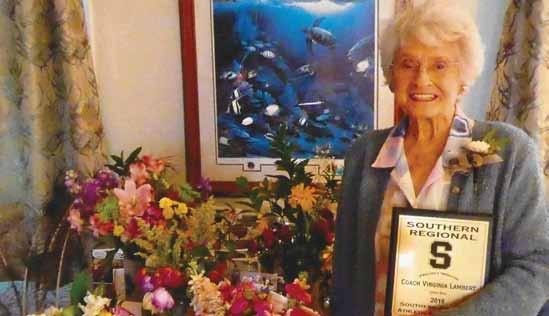
when Title IX passed in 1973 and things were eventually made right. One of my proudest accomplishments at Southern was to be inducted into the Athletic Hall of Fame in 2018 for my efforts to bring equality to the
women’s physical education and sports programs.
I retired from teaching at Southern in 1987 and from the various summer waitressing jobs I had over the years. My daughter and I had a business in Beach Haven called A Summer Place for three years. After my mother passed in 1992, I fulfilled my lifelong dream of traveling to many places on my bucket list. Now my family visits me on LBI. It is a great joy to spend time with my five children, eight grandchildren, Nicki, Andy, Jim, Lindsay, Stephanie, Ryan, Karras, and Niko, and five great grandchildren, Hayden, William, Liam, Camden, and Miya. I have truly been blessed with a wonderful life, and I am so grateful for my family and friends. —Story and photography courtesy of Virginia W. Lambert
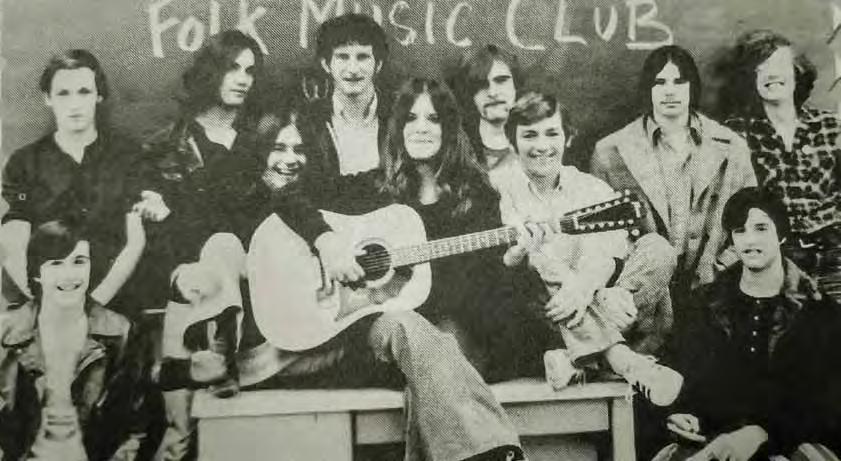
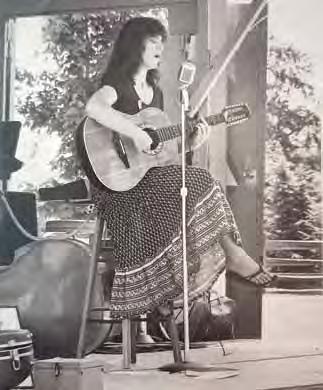
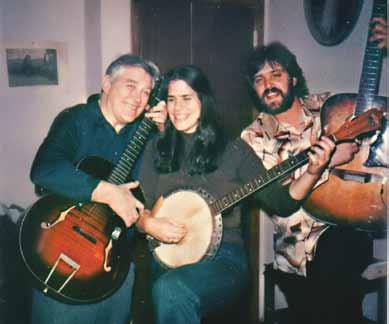
Valerie Vaughn is an award-winning musician and folk singer. As an artist-in-residence at the Tuckerton Seaport she brings history and folklore to life through her original music.
Known as New Jersey’s Troubadour, and musical storyteller, Vaughn’s origins are rooted deeply in her family where she grew up surrounded by music. “My grandfather, who lived in Appalachia, Kentucky played the guitar. So did my father and older brother. Everybody sang,” said Vaughn. “No one took formal lessons. We were just taught.”
By age fifteen, Vaughn had taught herself to play guitar and discovered her voice. A few years after college graduation, she began working in her chosen profession as a social worker in the Pinelands of New Jersey, while performing music programs in schools. By following her instincts, musical creativity, and interests Vaughn rose to become a popular folk music artist.
medieval poets/musicians who composed and performed their own lyrical poetry, Vaughn accompanies herself musically.
Because of the quality of her lyrics and self-composed music, Vaughn is known as a modern-day troubadour. Much like
While traveling abroad with a friend, Vaughn discovered her ability to perform onstage in folk clubs in Ireland, England, and Wales. In 2002, she returned to England on tour. While performing in a pub across from a military base, Vaughn discovered that many of the young men in the audience were Americans from McGuire Air Force Base who had just returned from a mission in Afghanistan. “I sang all their favorite American songs and felt very much like Bob Hope during World War II,” said Vaughn. “It wasn't long before the British ladies were singing ‘The White Cliffs of Dover’ with me!”
Closer to home, Vaughn has appeared at the Kennedy Center in New York and is a familiar face on LBI where she has performed at many venues. Performing in the Atlantic City Casinos on St. Patrick’s Day has always been her favorite event. She knows Irish culture and her audiences. Vaughn fondly recalls meeting and singing alongside folk music legend Pete
Seeger. “He was one of the greats in our field; a kind and humble man.” The collaboration with Seeger expanded Vaughn’s audiences nationally.
Vaughn’s presence on social media further amplifies her appeal across all demographics. She can be seen on YouTube performing one of her hits that continues to captivate audiences, Mrs. Leeds’ 13th Child.
The haunting tale reflects Vaughn’s genius for blending folklore with melody as she tells the spellbinding story of the Jersey Devil.
Over a career spanning five decades, Vaughn has recorded many songs and released several albums. The cover art for Tucker’s Island Rises Again pictures Vaughn in front of a cabin on The Great Egg River where she said, “I wrote my songs and enjoyed nature.” The recording is a testament to her mastery in blending folktales, guitar, and a soulful voice. As a prominent folk musician, Vaughn was the 2017 recipient
of the Ocean County Culture and Heritage Commission Special Award of Merit for giving voice to the stories of Ocean County. In 2023, the New Jersey State Council on the Arts honored Vaughn as one of ten artists selected as the inaugural cohort of New Jersey Heritage Fellows. The fellowships recognize artistic excellence, lifetime achievement, and contributions to New Jersey’s traditional arts heritage.
‘I believe folk music is a solid format for storytelling,” said Vaugh. “It can preserve culture as well as connect generations.”
Vaughn is an important icon at the Tuckerton Seaport where she performs for the museum. Her music boasts a rich tapestry that has shaped the cultural landscape of Tuckerton and New Jersey and continues to make an indelible mark on the world of American folk music. —Fran Pelham • Photography courtesy of Valerie Vaughn
Family memories are a collection of moments in each member’s life, stored in the heart, and revisited in dreams. They are stories retold at dinner tables, whispered to sleepy children at bedtime, and time-faded names penciled onto the back of old photographs. Fleeting, ephemeral, and precious — a priceless treasure made more tangible when combined with small historical documents that are part of the history of a family, preserved and passed from one generation to the next.
Some family memories, more than others, document the history of a place, not only of major events, but of day-to-day life over generations. Such are the memories of the Van Meter family.
“Before there were bridges connecting Long Beach Island to the mainland, my grandparents, Raymond Coyle Van Meter and Edith May Murray, crossed Barnegat Bay to the Island by boat, train and eventually, after it opened in 1914, the wooden
Causeway bridge,” said C.J. Van Meter. “It was around 1906. They came here for a few years with my great-grandmother, Katherine Murray, and camped on the beach.”
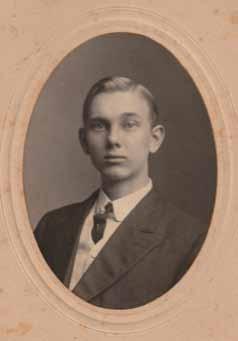
“The families of my grandparents were from Salem, New Jersey. My grandfather, Raymond, was born in 1887 in Salem. His parents were Edmund Van Meter and Meribah Husted (Parris) Van Meter,” continued C.J. “My grandmother, Edith May Murray, was born in 1886. Her father was Robert Murray, and her mother was Katherine (Dean) Murray.”
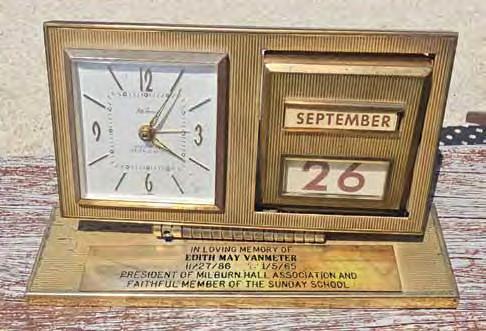
Even in those early years before she and Raymond married, Edith began to lay the foundation for a life in Harvey Cedars as she joined with like-minded women of the Island in the building of Milburn Hall in Harvey Cedars, a community center that would also serve as the location for the local Sunday school.
“According to Aunt Edith, my grandmother traveled back and forth to the Island to help build Milburn Hall,” explained C.J. “Over the years, Aunt Edith, one of my grandparents' oldest daughters, told us that Grammy spoke often about how honored she felt to have served as the president of the Milburn Hall Association. She also became active with the High Point Volunteer Fire Company Ladies Auxiliary.” Edith’s civic mindedness and community service would act as an example
for future generations of Van Meters.
After marrying in 1908, Raymond and Edith resided in Trenton, New Jersey. They started a family and Raymond worked as a machinist at the Peoples Brewing Company on Lalor Street in Trenton. By 1911 they had purchased property on Kinsey Cove in Harvey Cedars known in those days as High Point. Old family records show monthly payments
for the property in the amount of $5 were made to Mr. Kinsey and that by 1918 the note was paid in full. Later they purchased more property from Mr. Kinsey. The monthly mortgage payments were $12.
Raymond and Edith undertook the building of a home on Kinsey Cove for their family. While the house was under construction, Raymond, Edith and their two young daugh-
ters, Genevive, and Edith, returned with their tents to camp on the beach for at least two summers.
By 1918, the house on Kinsey Cove in Harvey Cedars became the Van Meter’s full-time residence. For a while Raymond continued to work in Trenton. However, he had a plan, one that would allow him to have his own business. So, he built a tool and die shop next to the house. Unlike others in the past who had come to the Island to work at the fisheries, build boats, or farm salt hay, Raymond came to the Island because he loved it. And he brought his tools and talents with him, confident he could build a tool and die business in Harvey Cedars far from the normal areas of industry.
“My grandfather was a highly skilled,” said Bobby Van Meter. “He could make copies of any metal part. With his lathe and seemingly endless number of tools, he could make metal parts — large or small — for anything.” As a testament to his skill and talent, Raymond made parts for the Navy hospital ship the USS Hope and as a subcontractor he made parts for NASA — all from his small machine shop on Kinsey Cove.
Raymond and Edith Van Meter had five children. Edith was born in 1909. Genevieve was born in 1912. Robert was born in 1915. Harriet was born in 1917 and Meriba was born in 1922.
“Only one of my grandparents’ children did not end up living on Long Beach Island,’ said C.J. “Aunt Edith (Gambi) lived in Trenton and worked for Stangle pottery as a telephone operator. After retiring, she returned to LBI and stayed for the rest of her life. Aunt Genevieve (Hartpence) moved to a farm in Browns Mills. She never liked the beach because she had camped there so much with her parents while their house on Kinsey Cove was being built. Aunt Harriet married Ray Saddler. His family business, Saddler’s Rowboats, was around the corner from my grandparents’ home on Kinsey Cove. She raised her family in Holgate and lived off Island for a few years. In 1949, she returned to LBI, built Maxie’s Rowboats and spent the rest of her life on the Island. Aunt Meriba (Walker) spent her entire life on LBI. After the house she built on Bergan Avenue in Harvey Cedars was lost in the March 1962 storm she moved to a new location bayside near the Bible Conference. Aunt Meriba had an Irish setter named Pat-a-Cake. When her house washed away in the March 1962 storm, we thought the poor dog was gone. But somehow, Pat-a-
Cake managed to swim out of the collapsed house and made her way back to my grandparents’ house on Kinsey Cove.”
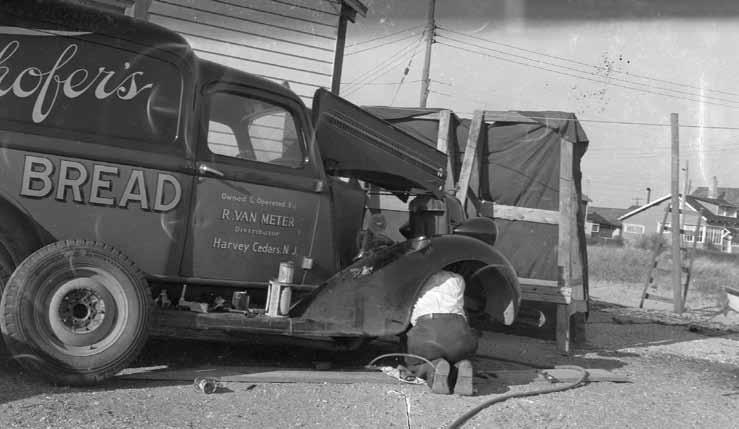
“Other than the first few years of his life, my father, Robert Edmund Van Meter, spent his entire life on Long Beach Island. He grew up on Kinsey Cove and went to school with his sisters, Meriba and Harriet, at the one-room schoolhouse in Barnegat Light and graduated from Barnegat High School. Along with my grandfather, he became one of the founding members of High Point Volunteer Fire Company, which started operating in 1937. It was originally located on the Boulevard and moved to its current location in 1939. He was also one of the founding members of the Harvey Cedars Fishing Club. When we were very young, he had a bread delivery route and also worked repairing cars at Keller’s Garage in Ship Bottom before it washed away in the 1944 hurricane. He was the Chief of Police for Harvey Cedars during the March 1962 storm and retired from the force in 1972.”
In 1939, Robert Van Meter married Eve Penn from Waretown, New Jersey. “My parents settled in midtown in Ship Bottom. Their house was washed away by the Great Atlantic Hurricane of 1944. After the storm, they built a house on Essex Avenue in High Point, Harvey Cedars. My father was determined
to build a house that could withstand a hurricane,” explained C.J. “And my grandfather knew metal. Together, they devised a foundation for the house made of steel reinforced cinder blocks. It also had steel Ibeams. They got it right because our house survived the March ’62 storm. We were home throughout the storm and watched from our windows as neighboring houses collapsed from the force of the waves. The flooding was bad but because of the steel construction, our house stayed square on its foundation and withstood the storm.”
Robert and Eve Van Meter had six children. Nancy Gay “Gay” was born in 1942. Robert “Bobby” Edmund Jr. was born 1944. Cheryl Jane was born in 1946. Merry Jill was born in 1947. Jon Duncan was born in 1951 and Susan April “Susie” followed in 1954.
Raised between the ocean and bay, surrounded by beach plum, bayberry, and the rhythm of the tides, of this generation of Van Meters most chose to make Long Beach Island their lifelong home. “At different times during their adult lives my sisters, Gay, and Susie lived off Island and Gay has since passed away. But they spent most of their lives here,” said C.J. “For Bobby, Merry, Jon, and myself the Island has always been and will always be our home.” In 1950, before there was a vaccine, Gay, was
diagnosed with polio. She recovered after spending nine months in an iron lung at Paul Kimble Hospital in Lakewood, New Jersey. “Her physical therapy was to take dance lessons. So, we all did,” said C.J. with a smile. “Gay was a talented artist and took lessons at the Art Foundation in Loveladies from Boris Blai.”
Merry and Susie agree that they all spent a lot of time at the home of their grandparents, Raymond and Edith Van Meter, on Kinsey Cove. “On Friday evenings we stayed with Grammy and Grandpop while our parents went grocery shopping,” said Susie. Their brother, Bobby, remembers watching their color television in 1954 or 1955. “We all remember sleeping on their screened-in front porch when it was hot,” said Merry. “And we can never forget Grammy and Grandpop’s big rule — said frequently and loudly— ‘Shut the screen door!’ Otherwise, the mosquitoes would eat us alive.”
“In the summer when we were small, we lived on or in the water at Kinsey Cove at Grammy and Grandpop’s. We played on the beach, crabbed in front of the house, fished, and learned to swim. There were blow up rafts, blue tubes, and boats with sails and motors,” recalled C.J. fondly. “Later, there were water skis when we learned to ski off the back of our cousin Leigh’s small aluminum boat.”
“To make the boat go faster, I would swap out the engine from Leigh’s aluminum boat with the bigger engine from Grandpop’s ChrisCraft — without his permission,” said Jon. “It was great fun until I accidently dropped Grandpop’s engine overboard and lost it.”
Their grandfather’s workshop was a fascinating place to visit. But working with the lathe left the floor littered with spiral-shaped metal shavings. “Everyone in the neighborhood knew Grandpop’s rule: ‘Do not come into the shop without shoes on!’ Merry and I liked to put the metal shavings in our hair,” laughed C.J. “We thought they looked like ringlets.”
“We all fished. So, it was good that Grandpop was an expert at removing fishhooks from our hands and feet. Grandpop loved to catch stripers. Grammy fished too but my sisters, brothers, and I remember that she spent a lot of time catching eels. We all vividly remember watching Grammy clean them. She would nail the eel’s head to the bulkhead to hold it in place while she skinned it. Eels were quickly cooked, served up, and eaten right away before any of us kids knew what we were eating,” said C.J. with a laugh.
“Throughout the year, Grammy spent a great deal of time making sure there would be enough food to get through the winter,” recalled C.J. “My brother, Bobby, remembers that in the fall Grammy did less fishing and crabbing and turned her time to canning vegetables and fruits. Whatever was not canned
was turned into jellies and jams. For canning, Grammy used an old-fashioned pressure cooker. My sister, Merry, and I liked to watch the pot while it was on the stove; its jiggler valve rattling, hissing, and spitting steam. Grammy constantly warned us that the pressure cooker could blow up. So, we watched from a safe distance.”
“Anything that Bobby trapped, shot, or caught Grammy would cook for him, no
matter what it was. And he would eat it. It was like a secret pact between them,” explained C.J. “The rest of us did not eat anything he brought home to Grammy for fear of what it might be.”
“Grammy loved to play cards. We all remember how special it felt to be allowed to stay up past midnight if we were playing cards with her. But she never played cards on Sunday. As our cousin Gene can attest, if we played on Saturday night Grammy always stopped the game at midnight. We never minded,” said Merry. “Because no matter what we were doing, every day with our grandparents was special.”
For C.J., surrounded by family history and memories of a lifetime at every turn, there is an unexplainable uniqueness about life on Long Beach Island that makes it unthinkable to live any other place. “The Island has always been my home,” said C.J. with a quiet determination. “I could never live any place else.”
Over the years, the family has seen generations pass away and new generations take their place. It is the natural cycle of life that brings constant change. Unchanged, however, is that the Island continues to be the home and heart of the Van Meters and their descendants — each with their own experiences and memories — adding to the growing history of their family and the story of Long Beach Island. —Susan SpicerMcGarry • Photography courtesy of the Van Meter Family
Slicing slowly through the swells thirteen miles southeast of Little Egg Inlet off the southern tip of Long Beach Island, the threemasted 304-foot, 44-gun American frigate Constitution was headed northeast in the setting sun of Friday, July 17, 1812. Atop the mainmast, a lookout kept watch on the sails dotting the horizon that they had been closing on for the past day. The closest ship was about eight miles northeast closer to shore. Who was she and for whom did she sail?
Captain Issac Hull ordered the ship’s private flag, a unique identifying signal, sent up now that they were finally just in range of this mystery vessel that he hoped was the American squadron he was ordered to
rendezvous with. After an hour in the fading light, there was no return flag flown on the other ship to identify itself, as was custom. After nearly two days of observation, Hull had seen enough. These were not his brethren he had caught up with. Nor were they merchant ships. The approaching ship and the top sails seen lining the horizon like so many shark fins cutting across the water in search of prey were the enemy – the British Navy. The Constitution came about and headed southeast with all haste in the light winds. Lookouts reported signal lights at last from the ship astern. The captain, though, knew the messages were not meant for him. They were signaling the wolfpack behind to rally forward for the hunt.
The chase to capture or sink the USS Constitution was on.
Popular history generally has it that the American war for independence was fought and won within the few years around 1776. From there, the United States of America as we know it was up and running. Later, there was a short fight over something between the United States and the United Kingdom in 1812, wherein Dolly Madison had to carry some of the artwork from the White House before British soldiers set fire to the building. What really occurred over the thirty-nine years from the battles of Lexington and Concord in 1775 to the Treaty of Ghent in 1814 was the long painful birth of a nation, with many chapters in between. Far from
concluding at the cessation of hostilities between American and British forces at Yorktown, Virginia in 1781, the fight for independence merely entered a new fragile peace where foes tolerated one another until open warfare was renewed once again. In the new United States, the domestic battles over the nature and laws of the new nation were immediate, bitter, and dysfunctional. The country that existed bore little resemblance to what came later. Articles of confederation governed and failed several times. Quasi-independent states with a largely powerless federal government and an ineffective congress led to stalemate and quagmire for most issues of national importance that were needed for the new nation to prosper.
Without the unity of British redcoats threatening every corner of the colonies, division and dispute ruled the day, a preview of the bloody civil war that would come nearly a century later. The solution was a constitution outlining an empowered central government balanced among legislative, judicial, and executive branches led by a singular leader, the president. And no one could command such loyalty and unity as revolutionary hero General George Washington. A suspicious coalition among the states lasted as long as the old man could hold them together before partisan politics reshaped the way the nation thought and governed forever more. Upon his final retirement from public service in 1797, Washington remarked to new president John Adams, “I am fairly out and you fairly in! See which of us will be happiest.”
Externally, the fledgling nation was largely defenseless. Its immediate power came through trade. The United States did not have a standing army that could compete with the great forces at war in Europe in the early 19th century. Nor was there a navy to speak of. America was a wary bystander in the raging conflict between its former foe, the United Kingdom, and its former ally, France. Dangling its toes into the water toward one side or the other risked dragging the US into the wider conflict, something the newborn nation could scarcely afford lest they lose the whole long fought for enterprise. Even so, having virtually no means of national defense was a reality that could not be allowed to continue.
One of Washington’s final domestic campaigns with Congress was the establishment of such a sea power. Funds were precious and procurement a nightmare, but by the start of the 19th century, America had a six-ship Navy. Due to budget constraints and tactical compromises, the US built six frigates. Hopelessly outclassed and outgunned by the great ships-
of-the-line that dominated the British and French fleets — massive boats with upwards of 100 guns that displaced nearly 4000 tons — American shipbuilders instead preferred the frigate for its ability to outrun such titans of the sea and their capacity for enough cannons to take on all other warships. Still, six frigates were insignificant compared to those who ruled the high seas. The British fleet alone had nearly 300 frigates, along with over 200 ships-ofthe-line such as Admiral Horatio Nelson’s HMS Victory.
Within a few years of their construction, the frigates United States, Constellation, Constitution, Chesapeake, Congress, and President saw their first action as an expression of US military power in the war against the Barbary states of north Africa, who had for many years harassed and exacted tribute from ships transiting the Mediterranean Sea in a long-simmering conflict that finally exploded into open war in 1801. Subsequent battles fought showed the US Navy, and the new shipboard soldiers called Marines, capable of winning and forcing negotiations, though the dispute continued for another decade.
Amidst the engagements overseas, though staying away from the battles between the forces of Napolean, the Duke of Wellington, and Emperor Alexander I of Russia among others, President Thomas Jefferson pursued improved relations with France, a careful but deliberate move that drew the ire of the United Kingdom, the highlight of which was the desperate sale of roughly onethird of the North American continent to the US for badly needed funds for Napoleon’s campaigns, also known as the Louisiana Purchase. Though they thought little of the threat from the United States, American aid to either side could tip the balance of twelve-year war. In response, British naval ships undertook
a campaign of harassment and impounding against US merchant and combat vessels.
Under the guise of inspection in search of deserters or smuggling of aid to France, American ships were boarded and some or all of their crew impressed into service for the British crown. If alleged British deserters were found, real or illegitimate, some were detained and condemned later. Others were punished with lashes or even executed. What few combat vessels the US had comprising its navy were precious and could ill-afford to be lost. In 1807, peace had already been tested when the Chesapeake and HMS Leopard engaged in a short battle over impressed crew resulting in the Chesapeake’s surrender. So, it was met with alarm in Washington, DC, and London when in 1811 the British frigate Guerriere and American frigate
President were involved in the latest provocations that helped send the fragile peace of 1781 spiraling back into a state of war.
Encountering the American brig Spitfire off the coast of Sandy Hook, New Jersey in May 1811, the Guerriere commanded the ship to submit for inspection of its crew. In the end, they impressed one man into service and allowed the ship to continue on. Outraged, the American government ordered the frigate President, captained by John Rodgers, to track down the Guerriere and retrieve the impressed American sailor. Two weeks later, the President found a British warship off of Virginia and quickly engaged with it, believing it to be the Guerriere As it turns out, the ship was the British sloop Little Belt, a 116-foot 20-gun vessel of similar size. In the engagement during which the President fired
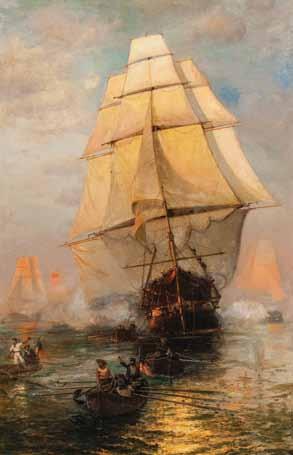
first, eleven British sailors were killed. The firestorm of anger and demands for justice from London that followed tested the limits of diplomacy and served as an embarrassment for the US navy at a precarious time. A year later, it would be the Guerriere and Captain Rodgers who would open up hostilities in the War of 1812, declared by Congress on June 18 after negotiations to resolve the longstanding marine provocations failed.
Returned from war in and around Tripoli, the Barbary capital, the USS Constitution was put into drydock at the Washington Navy Yard for repairs and retrofitting in 1810. The hull was encased in thick barnacle growths, compromising its formerly sturdy wooden hull. With only a limited supply of metal of the size and amount needed, the Constitution saw a partial
plating of her bottom and sides to increase speed and agility. Overseen by her new captain, Isaac Hull, she would be pressed back into service before the work was completed. Days after the declaration of war, Hull received orders from Capt. Rodgers in New York City on June 18, 1812 to prepare for war and join him as soon as he was ready to begin patrols of east coast waters.
But far from sitting around and waiting for the fight, Rodgers and his frigate President set sail days later on June 23 with fellow frigates Congress and United States, plus the sloops Argus and Hornet, to find a large merchant convoy indicated by reports to be headed up from the Caribbean bound for the UK.
Indeed, that same day the American squadron found the convoy, escorted by the British frigate Belvidera, and engaged
them. Drawing them away from the merchant ships, the Belvidera was fired upon by the pursuing President, suffering only minor damage and staying ahead of the squadron until they broke off pursuit. The convoy also escaped safely. Though they were the first official shots fired in the war, to add insult to tactical failure the only American casualties came when a cannon exploded, injuring sixteen, including Rodgers who survived the accident. At the British North American naval base in Halifax, Canada, the Belvidera was repaired and partnered up with three boats that commanders could spare to form a British squadron that would sail down the coast to blockade US ports and hunt down the American squadron and engage it.
In early July, the British squadron comprised of the ship-of-the-line Africa and
frigates Belvidera, Aeolis, and Shannon set course for the mid-Atlantic coast. Far south, at Annapolis where it was resupplying, Capt. Hull and the Constitution set sail for New York harbor to join Rodgers’s squadron. Unbeknownst to the ships leaving Halifax and Annapolis, they were headed for an unexpected confrontation whose outcome could change the course of the young war.
As Capt. Hull sailed his ship away from the stalking British squadron on Saturday, July 18, 1812, they ran into dying winds the further southeast they headed. With the Constitution slowing, the nearest British ship closed to within six miles, while the top sails of the remaining four, including the recently captured American brig Nautilus now renamed HMS Emulous, grew into shimmering white towers growing ever bigger as they closed on their
position. Aiding their approach were smaller boats attached by heavy lines from their parent vessels, manned by crew rowing hard to accelerate the advance.
Fearing the worst, Hull ordered cannons moved to the stern to prepare for a fight to the end. The frigate nearby drew within gun range and fired off salvos, which landed in the water tens of yards behind the American ship. A short time later, another pursuer arrived close enough to test their gun’s range without success.
Desperate for ideas, Lieutenant Charles Morris mentioned an old sailor’s trick – kedging. Hull ordered it at once. Taking out hundreds of yards of hawser line attached to each anchor, the boats rowed one anchor far ahead to the end of its slack, then dropped it 156 feet to the bottom. Pulling with all their might and as fast as the capstan could reel the heavy line back in, the ship was pulled just a little faster forward. Once the
first line was nearly in, the other line attached to the other anchor was dropped far ahead. So passed the remainder of the day as the Constitution clawed its way onward, staying just ahead of an unaffordable fate for one of only six indispensable American frigates.
Seeing this demonstration of brawn, the British ships quickly followed suit and slowed the slight advance gained by the Americans. And it could not have come at a better time for the British pursuers, for they, too, reached the same slack air and saw their sails falling limp in the dying breeze. Moving at only a couple of knots, Hull again thought on his feet and ordered thousands of gallons of the fresh water supply dumped into the sea to lighten the ship and hopefully gain a knot or two.
The now almost glacial waltz between the lone ship and its five dance partners wore on the thousands of men aboard all
the vessels. Hull had the sails doused in water to catch every ounce of energy the air could offer. The British commander ordered extra boats and rowers to the frigate Shannon, their fastest ship at the head. Compounding matters, the wind slowed even further by midnight, and all ships saw their boats, rowers, and kedgers come in for rest.
At dawn on Sunday, July 19, the Shannon was within gun range of the Constitution. Curiously, she did not fire, perhaps due to the previous inaccuracy at long range and the loss of speed firing would cost them. As it was, they merely kept pace with their prey. Under the first light, a sail was sighted on the far north horizon. The British ships raised American flags in an attempt to lure whomever it was. The Americans, identifying the sails as those of another American naval vessel, raised a Union Jack flag high and the ship turned to the west
away from them.
By mid-morning, the boats were back out on the water rowing and kedging. The pace was as slow as ever for all six ships. In the afternoon, clouds moved in from the west. By early evening, they darkened. From experience, Capt. Hull knew a gale was coming. He ordered all sails furled and tied up, lest they be ripped apart in high winds, standard practice for any vessel of the time. The British saw this and, as always, followed the American’s lead. As rain began and the wind increased ahead of a gust front in the fading light, Hull prepared his men for a daring maneuver. If it worked, they could save the ship. If not, it was certainly over for them.
When the wind shifted hard from the WSW, the men unfurled all the sails and wet them. The full blow rocked the ship forward, straining the sails and rigging but not tearing them. In the dark and spray, the
British could not see what was happening until the squall lightened up and the Constitution was now several miles further on than barely a half-hour before. A feeble attempt to follow was self-evidently pointless and the British squadron acknowledged defeat by turning round to head west back toward the coast they were meant to blockade.
Positioned far southeast of New York harbor where the Constitution was meant to meet Rodgers, Hull determined to head with the wind up around Cape Cod to Boston to resupply and send word to his commander. On the way, they passed another American brig heading southeast from Boston and warned them of the British predators by now stalking the waters near Chesapeake.
News of the escape made headlines on both sides of the Atlantic. The British commander was criticized for failing to take one
of the prizes of the so-called American Navy, outnumbered and outgunned as it was. But it was a headline made less than one month later by the Constitution that would set British blood to the boil.
On August 19, Hull’s resupplied and now 55-gun frigate encountered one of its pursuers, the Guerriere, off of Nova Scotia. The British ship raised a signal flag inviting a duel, which the American answered in the affirmative. The two ships faced off broadsides and exchanged gentlemanly volleys. What followed were two hours of call and response in shot. But it was anything but an honorable conversation. The British ship’s lighter shot from its smaller cannons had great trouble penetrating the Constitution’s up to 25-inch-thick oak hull. The sailors remarked at how shot bounced off her old sides as though they were iron, giving her the famous nick-
name. The Guerriere, though, was not so fortified. The heavier American shots punctured holes in her hull and through the most devastating volley — a mere 15 minutes long — toppled her masts. The British captain, James Dacres, surrendered, and he and the surviving crew were treated aboard the American ship. Before departing for Boston with the British captives, the Guerriere’s gun powder reserves were set alight and detonated, shattering the ship into splinters and sending her down to the deep. Later, Dacres tipped his hat to the foe he once pursued for nearly sixty hours from the coast of Long Beach Island, New Jersey to the deep waters off Chesapeake.
“The conduct of Captain Hull and his officers to our men has been that of a brave enemy,” he was recorded as saying.
Bravery was a quality needed in the early American Navy, outgunned and outclassed as it
was then. There were battles to come before the war ended in 1814. Washington burned while Baltimore and its star-spangled flag were still there at the end of British bombardment. These were the final chapters in the war for independence, after which the United Kingdom and United States realized there was more to gain from trade and partnership than war. Though condescending toward America for years yet to come, the British finally saw the young nation as a global player. It took daring and luck to get there, from General Washington’s tactical retreats and timely river crossings to the kedgings of a single ship in a hopeless situation near Long Beach Island nearly forty years later. The long road to liberty reached its destination at last, and is commemorated this July 4th, two-hundred and fifty years after the first daring American shot was fired in ink and pen and declared once and for all. —Reilly Platten Sharp
My Mother’s Story
In my memory, I can see my mother clearly, seated at our dining table, recounting the small dramas and triumphs of her second-grade class. Every year, every student, every day seemed to carry a story worth telling.
Our evenings followed a ritual that rarely wavered. Dinner was ready, the table carefully set, and by 5:30 sharp my father arrived home from a long day at his boatyard in Tuckerton. Conversation flowed easily about school, about boats, about the Island. Through those nightly exchanges at the dinner table, my mother quietly shaped a love of history, a respect for nature, and compassion for generations of children long before anyone thought to call her a local legend.
My thoughts drifted back to the early years — to the winter we moved into our summer cottage full-time when Long Beach Island felt far more remote and far more raw than today.
It was a brutally cold season. My father made a living clamming and worked part-time at Charlie Strickland’s Boatyard in Beach Haven. My mother began substituting at the local school, juggling
teaching with the relentless work of keeping a household afloat. She washed clothes using an old ringer machine set up in the backyard during summer months, the kind that flattened shirts like cardboard. She shook them out and hung them on clotheslines to dry in the crusty salt air. She washed and rehung heavy storm windows herself. All the while, she stepped into classrooms, first as a substitute, then eventually as a full-time second-grade teacher at the Long Beach Island Grade School in Ship Bottom.
My childhood in Surf City remains vivid. There were open lots thick with bayberry and wild grasses, cedar creeks winding behind cottages, and yes, plenty of poison ivy for adventurous children to stumble into. My mother was active in the Surf City Ladies Auxiliary. The Surf City Firehouse was built during those years, and the old borough hall housed the post office where every resident had a numbered post box. Ours was #495, with a combination lock and a tiny window, a small detail, but one that speaks volumes
about how closely knit the town once was.
My mother married her schoolmate sweetheart in 1928 at the Little Church Around the Corner in New York City, as many couples did at the time. My father, Sidney Stiles Pearce, loved boats and building. He carved decoys, clammed, hunted, played baseball, and graduated alongside my mother from Tuckerton High School. The rhythms of bay life defined them both.
She was the daughter of William C. Jones and Nina Jones, growing up in Tuckerton surrounded by history in the making. Her father documented the town through his camera in the early 1900s, photographing Tuckerton Creek, Tucker’s Island, the Wireless Station rising 810 feet into the sky, bustling Main Street, hotels, boat houses, and wooden boats lining the creek. These were not just photographs; they were the only visual record of an era. My mother grew up inside those images, sailing garveys out to the family cottage on Tucker’s Island,
known as Seahaven, strolling Main Street, attending silent films, watching her sister play piano while she cleaned floors after school.
Fast forward to 1937, building lots in Surf City were selling quickly. The summer cottage my parents built that year still stands today. They were a young couple then, raising an active one-year-old son, building a life shaped equally by land and water. We spent summers at the cottage in Surf City until 1946, when we moved there permanently.
Teaching remained my mother’s calling. After graduating from Tuckerton High School, photographed by her father, of course, she attended the New Jersey State Teachers College in Glassboro earning her two-year teaching certificate. When standards changed, she returned
to college at Rutgers to earn her four-year degree. Her first teaching job immediately after Glassboro was as a 3rd grade teacher in Roselle, New Jersey. In the mid-1940s, she was an active substitute teacher on LBI and the surrounding area. Then in the mid-
1950s, she was invited to teach full-time second grade at the Long Beach Island Grade School. An offer made in person by school board vice president Reynold Thomas, who preferred knocking on doors to making phone calls.
From 1952 through the early 1970s, she taught generations of Island children. She was deeply respected by families and adored by students. Warren Hickman, the school’s principal, supported her steadfast belief in educating the whole child. Even as the school changed, she held firmly to her principles.
Her love of nature began early. A pair of binoculars, given to her as a high-school graduation gift, sparked a lifelong passion for birdwatching. Shell collecting that began on Tucker’s Island as a child evolved over the years into an extensive shell
collection that told its own quiet story of curiosity and care, from Surf City down to Siesta Key, Florida.
Later in life, she remained a constant presence as I raised my four daughters and ran my gallery. She preserved, meticulously, her father’s historic photographs from the early 1900s, understanding their value long before others did. Years later, when I was commissioned to paint panoramic murals of Tuckerton Creek for a restaurant in Manahawkin, she brought out his vast archive. It was her way of ensuring that history, once again, would be seen.
This story continues through the voices of her former students: Cheryl VanMeter, Dianne Gove, Karen Larson, James Noble, John Nelson, and others. Some of whom were lucky enough to have her two years in a row. It lives in her diary excerpts, family
photographs, and shared memories from friends like Isabel Marks, Sandi Marti, and Pat Born.
My mother weathered hurricanes: crossed wooden bridges after the 1944 storm to check on our Surf City cottage and stayed on the Island through the nor’ easter of 1962, spending the night at Lillian Moeller’s on 18th Street, now The Cheese Shoppe.
Through it all, she remained exactly who she was: a teacher, a caretaker of stories, and a woman deeply rooted in Long Beach Island.
And perhaps that is her greatest legacy, not just the lessons she taught in the classroom, but the way she showed us how a life, thoughtfully lived, can become part of the fabric of a place. —Cathleen Pearce Engelsen • Photography by William C. Jones
Oceanic H Ot el | Barnegat l i g H t
The centerpiece of the Barnegat City development featured the Island’s first boardwalk spanning 4th to 8th streets. Moved back from the water’s edge after early threats, the hotel’s eager owners struggled along with the town to find success until its shuttering and demolition in 1919-1920.
H Ot el d e c r a B | Beac H
Haven
Originally the Harvey Cedars house of refuge built in 1848, this relic was salvaged and barged to Dock Road in 1874 by Capt. Tilton Fox. The storied hotel stood until the 1980s when it was a private residence.
Surf c i ty H Ot el | Surf c i ty
Built on the site of a storied 1820s hotel, the 30-room Mansion House of 1884 was moved to its current location and was known by many names before it became the Surf City Hotel in the 1920s. Anchoring an 1890s development called Long Beach City, 142 years later this Island landmark continues to thrive.
Harvey c e dar S H Ot el | Harvey c e dar S
First constructed as a smaller hotel by Capt. Samuel Perrine about 1845, the expanded hotel seen here in the early 1900s was another popular 200 room haunt for generations. Now the Bible Conference religious retreat, it remains a landmark still after nearly 200 years.
Hig H P O i nt i n n | Harvey c e dar
S
Formerly on the corner of Lee Avenue and the Boulevard, it served as the first hotel in Isaac Lee’s High Point development. Later owned and operated by seaweed farmer and mayor Josiah Kinsey and wife Anna, it burned down in 1914.
S P r ay Beac H H Ot el | S P r ay Beac H
Originally the 1899 home of Philadelphia banker William Ringgold, the house was added onto and became a hotel centered on the cottages clustered nearby that locals called Spray Beach. It was torn down in 1969 and replaced with a modern motel bearing the same name.
w i da’S Brant Beac H H Ot el | Brant Beac H
Originally the Ockanickon Hotel anchoring the 1920s Brant Beach development, it was bought by Hungarian immigrants Martin and Anna Wida. The famous Silver Grille and bar inside remained a popular nightspot for decades. Today it is enlarged and known as Daddy-O’s.
H Ot el Sun S e t
|
Barnegat l i g H t
The 100-room sportsman’s hotel on the bay was one of two built by Camden developers to showcase the potential in the new Barnegat City being constructed in the early 1880s. A mostly successful life ended in an enormous fire in 1932.
t H e S O c ial | Barnegat l i g H t
This smaller hotel from the 1880s was owned and operated by German immigrants William and Minnie Kroeger along with their daughters for many years. Popular with sportsmen and fishermen, it later became the bed-and-breakfast Inlet of the Breakers. The storied local haunt was torn down in the 1990s.
e n gle S i de H Ot el | Beac H Haven
The brainchild of Parry House manager Robert Barclay Engle, this 1876 competitor to Parry’s hotels featured 200 rooms. An Engleside guest was one of the victims of the infamous 1919 shark attacks that became the inspiration for Jaws. Slow years and aging conditions led to its demolition during WWII.
Baldwin H Ot el | Beac H Haven
Seen here in its Victorian glory, the 155-room showcase was built by Baldwin Locomotives CEO Charles Parry after losing his first hotel to a fire in 1881. Sadly, that same fate would claim the Baldwin 1960.
Martin’S | c e dar B O n net
Opened with the railroad bridge in 1886 and an official stop on the way to the Island, Martin’s Box as locals called it was frequented and headquartered by hunters for many years. After the railroad bridge was washed out in 1935, it continued as a favorite for vacationers until it was demolished in the early 2000s.
—Written by Reilly Platten Sharp • Postcards courtesy of the Barnegat Light Historical Society
In the automotive world it is known as the Henney Kilowatt, an electric car built in 1959 and 1960 by the Henney Motor Company’s Coachworks Division of Canastota, New York, a subsidiary of the National Union Electric Corporation. The car was a special project initiated by C. Russell Feldmann, president and owner of NUEC, who believed in the electric automobile and wanted to prove it could be a factor in the automotive industry.
Because it was impractical and more expensive to build a car from the ground up, the decision was made to convert an existing vehicle. The small four-door Renault Dauphine was selected because of its rear-engine design, and it was capable of carrying the additional weight of multiple batteries. A deal to purchase 100 Dauphines was negotiated. The cars were to be delivered without engines, gas tanks, and other parts pertinent to a gasoline-fueled vehicle.
As part of the public promotional campaign, selected electric utility companies agreed to have their meter readers drive a Henney Kilowatt on their daily route. On March 31, 1960 the first Henney was shipped to Atlantic City Electric in New Jersey. The second was shipped on April 12 to Illinois Power and Light. The cars were in service only a short time when it was realized the battery package lacked the capacity to provide the power needed for the meter readers to do a full day’s work. The issue was resolved with a redesign provided by the Electric Storage Battery Company of Philadelphia (Exide) and Henneys were shipped to additional electric utility companies according to plan.
The promotion of the Henney Kilowatt by electric utility companies proved to be more successful than expected. The innovative electric car was displayed at trade shows and exhibitions. Meter readers driving Henneys attracted attention in every neighborhood. The car gained publicity nationally and internationally, appearing frequently on television, in newspapers and trade journals. The entire program was considered to be more than a nominal success. But the numbers say otherwise. Of the 100 Henney Kilowatts manufactured during the two-year production run, a mere fortyseven were sold.
In late 1965, my husband, Peter Kunz, heard Metropolitan Edison Company, the electric utility in Reading, Pennsylvania
had completed their promotional project with its two Henney Kilowatt automobiles — the sixth and seventh Henney Kilowatts built. One was already sold and Peter did not hesitate to commit to buying the remaining car.
The Henney was a delight for our family. At that time, we had four sons and a baby
daughter. I would often pile the boys into the back seat area, with one up front on a rotating basis, and drive them back and forth to school. The car was convenient for nearby shopping and other short trips. It attracted attention wherever it went. We often towed the Henney to our home in Harvey Cedars and used it for local transportation. Neighbors would often
see it in our driveway being recharged with an electrical cord stretched through the side window of the living room. Peter showed the Henney at several antique automobile shows in Pennsylvania and New Jersey, and it found its way to local vintage automobile shows on Long Beach Island. The Henney received more than its share of attention, and it even took an award at the 2016 National Spring Meet in Vineland, New Jersey.
Eventually, as our children outgrew the Henney, we used it less frequently. In 1973, Peter decided to offer it, on extended loan, to the Boyertown Museum of Historical Automobiles. The Henney had a home at the museum until 2011 when a flood caused severe damage to the museum and it closed for renovations. Peter brought the
Henney back home and had it completely restored by Donald Schafer, who at that time was in Bucks County, Pennsylvania. The Henney had sustained a fair amount of damage and the search for parts was challenging, extending as far as California and
Mexico. The red glass lenses for the brake lights were located in Argentina, and we were excited when DuPont was able to match the original red paint used by Renault in 1960. Once the restoration was complete, the Henney took up residence in our newly built garage and for years it could be seen, to the delight of friends and neighbors, on the streets of Harvey Cedars.
After Peter died in 2025, I once again offered the Henney to the Boyertown Museum, this time as a donation. The Henney left Harvey Cedars last December on a flatbed driven by Mark Serfass, board vice president of the Boyertown Museum. It now holds a place of honor in the museum’s permanent collection. —Story and photography courtesy of Nancy Kelly Kunz

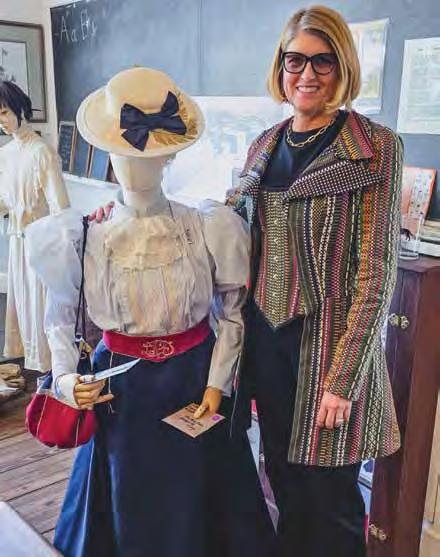
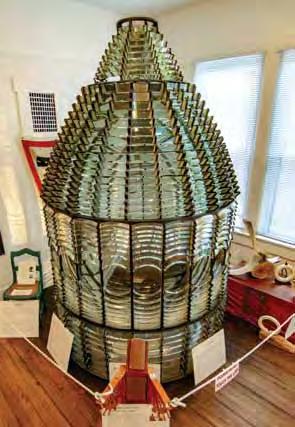

Walking up the path to the front door of 210 Barker Road in Wyncote, PA recently, I just hoped the person who answered the door would understand why I was bothering them and would not send me away like a door and window replacement salesmen. As it turned out, homeowner Julia could not have been more friendly or accommodating. Standing in the vast backyard dominated by a large round pond surrounded by the lushest greenery, colorful plants, and a scattering of chairs and sculptures, I saw for the first time with my own eyes the idyllic refuge hidden in the middle of the block that my family called home for generations. This pond and half of the block spanning eight acres was once Brockhurst, the estate of Philadelphia banker and Republican pol-
itician Wharton Barker. After him, it was home to the Campbell and Viele branches of my family for over 50 years.
A friend of Russian Tsar Alexander II and integral to the elections of presidents Andrew Garfield and William Jennings Bryan, Barker inherited his vast family farmlands that became part of Jenkintown and Glenside. Draped over a hill, his Wyncote farm was divided into several estates by the late 1800s, including Brockhurst just below the summit. Wharton Creek, as it became known, trickled down from up top, pooling into a pond before continuing on into neighboring farms and estates. When he sold off Brockhurst in 1892, with its pond, mansion house, and eight meandering acres of grass, trees, and carriage paths from the
The beauty of the trees, the softness of the air, the fragrance of the grass, speaks to me.
The summit of the mountain, the thunder of the sky, the rhythm of the sea, speaks to me...
—First Nations Chief Dan George
main road, it was bought by another Philadelphian of note – James D. Campbell. A practicing judge and politician, in the coming years Campbell was well-known as general counsel for the Reading Railroad. Originally from Huntingdon in central Pennsylvania, he came to Wyncote by way of Davenport, Iowa, where his father had moved the family in the 1860s to work in the law on the frontier of America. Upon his return to the state, Judge Campbell needed a home for his wife and six children. Wharton Barker’s Brockhurst just happened to be available at the time and fit the bill for James and Ada Campbell. There, generations would be born, live, and die. And like ripples on their beloved pond, the family’s roots would reach far and wide, including Long Beach Island. Like at Brockhurst, they would come to find joy in another special place. For one gentle lady, these two havens were where she was truly happy.
Returning from the beach on a typical summer afternoon over the exhaustingly wide dunes to East 23rd Street in Barnegat Light, I would walk up the pebbled driveway of house number eight, prop my chair and umbrella against the side of the porch then head down the raised walkway over thick green ivy to the back of the house to the outdoor shower. After getting all the sand off and salt water out of my hair, wrapped in a towel I would walk a few steps further to the backyard and clothespin my wet bathing suit and shirt fragrant with sunscreen onto the line. Through the back door onto the small back porch then squeezing my way through the narrow galley kitchen to the even narrower naval-style steep wooden stairs in the middle of the cottage, I would climb up to the second floor and change into clean, dry clothes. Later, as the sun was setting, my family and I would sit at the antique table on the screened front porch for dinner.
In the evening, four of us would sit around the card table inside the small main room near the fireplace for games of Bridge, Hearts, Nertz, or poker until midnight. At the end of the night, we would shimmy our way back up the skinny stairs and plop down on one of the four single beds in the one-room second floor to read a book under a small wall lamp until our eyes were heavy enough for sleep. And in the night, if I had to stumble in the dark to the tiny
bathroom I would always be mindful not to sit up too straight or too quickly for fear I would get stabbed in the head by one of the many long sharp nails that stuck through the rafters of the slanted roof only a few feet above me. Thus, summer life has been daily at my family cottage for over 80 years.
Generation after generation shared this same simple but joyous routine. Birthdays, Independence Days, Memorial and Labor Day weekends, cherished first and melancholy last visits have all been had by many in this little cottage since it was built in
1925 as a pair of sportsman’s fishing cottages by Franklin Archer Develin Sr. and his teenage son. The Develin’s were some of the last of the storied Archer family who helped start the Barnegat Light of today in 1880 with a seaside development anchored by two grand hotels. When that business dream failed to come true quickly enough, the little town that was carried on and grew slowly in the decades that followed. Meanwhile, the Archers dispersed throughout New Jersey, including Bay Head and Moorestown.
When one of the Develin twin cottages
came up for sale in 1936, the granddaughter of Judge James Campbell, ironically one of a set of twin sisters, discovered the property and bought it for $1600 on September 21, 1937. A few years later, her twin sister’s son and his wife would buy the matching cottage, though they would sell it in 1951 so he could start his own marketing business in New York City. Eight East 23rd Street became the summer haven of Mary Stuart Viele, or as we all called her, Stuartie.
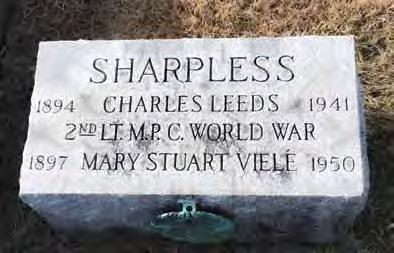
Growing up on the eight acres of trees, grassy fields, and watery meadows of Brockhurst, young Stuartie enjoyed a serene childhood surrounded by family that helped her cope with early emotional strife. Born in 1897 along with her twin sister Katherine Campbell Viele, known affectionately as Tatsie, the girls did not see much of their father in the first few years of their lives. Maurice Augustus Viele, born to a New York family with generations of entrepreneurs, builders, and engineers, married Elizabeth “Bessie” Campbell, the Judge’s daughter. Of his many professions, Maurice counted among them engineer,
soldier, and actor. Gone from home for long periods of time, affairs were sadly common. His daughters saw him only on special occasions when they were young, then not at all as he spent his time on the west coast working on projects and married one of the women with whom he had a relationship from Sacramento.
Dying in a hotel of pneumonia at 49, his ashes went unclaimed by his current wife and were offered to Bessie at Brockhurst. Upon accepting them and burying him in a family plot nearby where she would join him many years later, Bessie said, “I always
knew he’d come home.”
As time wore on, Stuartie married a good man named Charles “Chink” Leeds Sharpless, a Philadelphia commodities dealer, with whom she had one child who they named after his father but called Leeds. Finding the cottage at Barnegat Light in 1937 and the special charm of the Island gave Stuartie and three-year-old Leeds another place to find and revisit happiness whenever they were there. She took to making modest nods to comfort at the rustic and cramped fishing cottage by raising the roof so one could walk about the second floor without crouching and added dormers for additional space to get as many beds in as possible for the legion of children in the family. A Sears kit garage was also added. This sandy retreat from green, suburban city life was cherished and would be needed all too quickly. Tragically, while at his office in the summer of 1941 Charles Sr. would collapse suddenly and die from an abdominal hemorrhage due to injuries sustained in an earlier car accident that left him with cracked ribs and unbeknownst to anyone at the time, a ruptured spleen.
The now widowed Stuartie and orphaned Leeds leaned heavily on family and their beloved sanctuaries at Wyncote and Barnegat Light. Filled with antique furniture from Brockhurst, the cottage was like a home away from home. The younger generations came to know the cottage in these times, too, and fell deeply in love with it and the Island as something truly special.
In early 1950, Stuartie discovered a lump in her breast. By that time, sadly the odds were against her. In July, she died from complications at a Pennsylvania hospital near Wyncote. Two years later, her mother Bessie’s heart finally gave out and she died in October. The grief-stricken younger generations of the family, along with surviving sister Tatsie, were now grown, and had lives and families of their own from Philadelphia to New York. Faced with a heartbreaking decision, it was reluctantly decided that Brockhurst would be sold. In addition to everyone’s established lives elsewhere, the once grand estate was now showing its age. The house was in need of repairs. The grounds were becoming a wild. The idyllic pond was overgrown at the edges and the path down to it choked by brush. No one could afford to do what would be necessary to keep it. A developer made the only offer and so the eight acres were sold in 1953. The mansion was demolished and
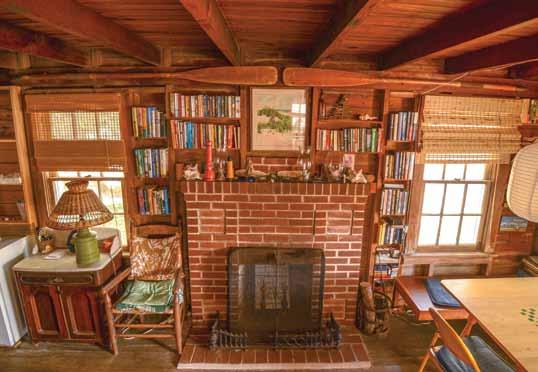
the winding paths plowed over. The pond, as a necessary natural feature of the local creek, was left alone, and so were the stables behind the house that then housed the family cars. The stables remain today as a guest house for one of the eight homes built on the property shortly after, including 210 Barker Road with its lovingly restored pond. Current owner Julia, who grew up at the home her parents had for decades before her, finds happiness and peace on the pond now just as Stuartie and others once did.
Stuartie’s cottage down the shore legally passed to 16-year-old Leeds, but it was carefully maintained, its bills and taxes paid and imbued with happiness by Tatsie’s eldest son and his wife, my grandparents John H. Platten, Jr. and Barbara Avery, after they sold the twin cottage they owned briefly next door. So has it remained in the family to this day.
Eight East 23rd Street was a home, a place of healing and joy for Stuartie. That meaning and spirit soaked into the very beams and clapboard walls, decorated as it is with furniture from that other special place, Brockhurst, along with a little of its magical spirit. Aside from modern appliances, nothing about the cottage has changed since her days. It is that unchanging familiarity and shared daily fun across five generations that endears us all to it even though it is too small, uninsulated to weather, and requires constant upkeep. None of us would change a thing. In fact, the only disagreements there have been over the years have been about what changes are necessary and what changes disturb the essence of the place. Even so, after 89 years the cottage remains Stuartie’s in spirit. We who have been blessed enough to hear its song of joy and healing in our hearts know the rhythm of the sea as it speaks to us down the years and through the heartaches, washing away life’s worries and leaving behind only solace to all those open to it. —Story and photography courtesy of Reilly Platten Sharp
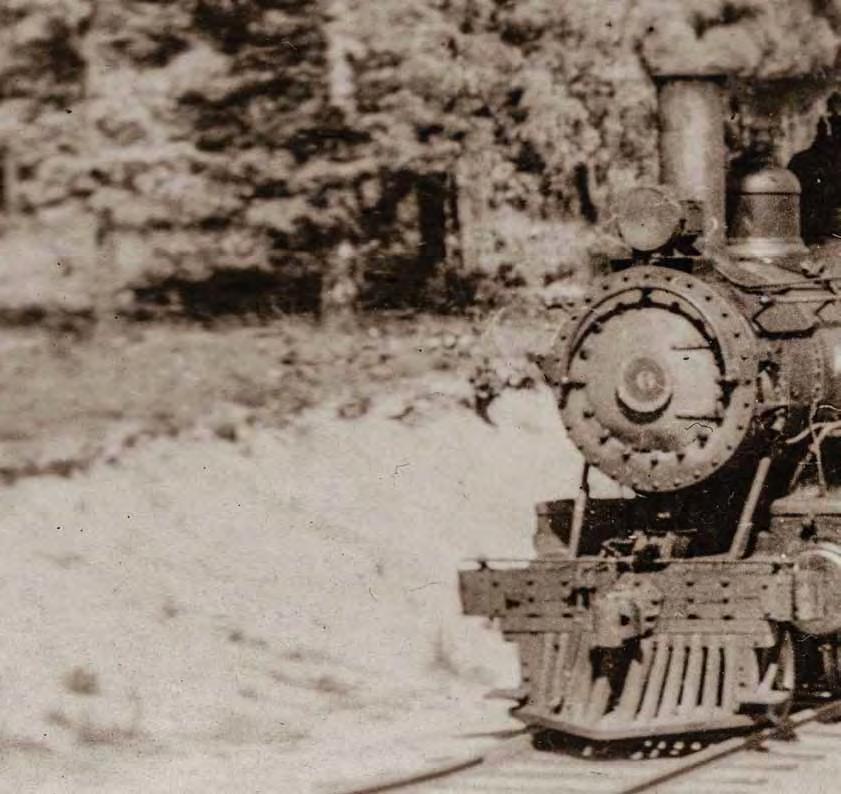
How do you get to Long Beach Island? Do you traverse the Benjamin Franklin or Pennsylvania Turnpike bridges across the Delaware River, navigating Routes 30 or 206 onto 70 then 72, finally emerging from the Pine Barrens onto the Causeway? Do you come from central New Jersey down Route 539? Or does the Garden State Parkway factor into your plans, exiting at the 63 ramp onto Route 72, or maybe Route 9 and its many traffic lights and small shore towns leading to the Causeway at Marsha Drive? However
you arrive at the Island, these are pathways carved by history.
Many of the roads we use today are the culmination of an intricate pattern of ancient pathways created by the indigenous peoples of North America evolving into a complex latticework of roadways that we enjoy today. Since the Stone Age, people have migrated to coastal New Jersey seasonally for food and, surely, enjoyment of the pleasant conditions of the coast from April to October.
What began thousands of years ago by the earliest inhabitants of this region was built upon by the Lenape people. By the early 1600s, Swedish settlers followed the pathways they found. Later that century the Dutch arrived with their horses, widening the trails further. As war descended upon the colonies, control of the land changed hands several times before the Dutch eventually withdrew, leaving the British in control as the new residents at the edges of the bay. Shortly after those British farmers and fishermen
became Americans, the stagecoach was born and the old roads to the shore were further widened and graded for an ever increasing and mobile population.
In 1871, travelers from Philadelphia and New York City were able to eschew the lengthy and bumpy stagecoach ride to the shore, which could take days, for the newly established railway. Inns and taverns were strewn along the way for dining and lodging, catering to coach riders. When the Tuckerton Railroad built the
first spur from Whiting through Barnegat and Manahawkin to Tuckerton, the trip was reduced to two or three hours. Train travel was far smoother and faster than wagons on washboard roads. Great news for travelers: not so much for innkeepers. With the arrival of the automobile in the early 1910s, the journey down the shore became even easier. The construction of the first automobile bridge to the Island in 1914 and the Boulevard from Barnegat Light to Holgate transformed yet again the Island’s identity and accessibility.
One of the most important indigenous trails from antiquity formed the spine of modern Route 9. In their day, it was the main link between coastal villages and hunting grounds up and down the entire shoreline of New Jersey. Today, it is much the same. Longtime Manahawkin resident Larry Oliphant, whose home fronts Route 9, and has been owned and occupied by his family since 1872, recalled the traffic that filled the road night and day before the Garden State Parkway was completed in 1957. Soon after the Parkway opened,
those traffic jams became a thing of the past, only sporadically reappearing. Traffic was so light afterwards, Oliphant said it was possible to cross the road without any trouble during the day. And at night, he marveled, you could look up and down the highway and not see any headlights.
Though it contains portions of indigenous trails, the still rural Route 539 from Allentown through Whiting terminating at Tuckerton was largely a modern construction joining various local roads. The US Army and Navy bases crossing the pine barrens south of Whiting caused several of these roads to be paved for military access. The junction of the Pennsylvania, Tuckerton, and New Jersey Central railroad lines at Whiting also led to some of the finished roads that became 539. Those old enough to remember can recall when 539 was just a compact gravel path, which could only be traversed in a car at around 25 mph. These same people may recall with glee when 539 was first paved, and suddenly, families could speed smoothly at 50 mph up and down the piney hills headed toward the junction with Route 72.
Other historical trails expanded upon in modern times were old 40 and S40 through the Pinelands from the west. Now known as Routes 70 and 72, respectively, they used old trails and cleared new ones to create the earliest east-west roads across Burlington and Ocean Counties, though Route 72
once simply ended in Manahawkin and joined West Bay Avenue. The creation of today’s highway from the Route 70 circle to the Manahawkin Bay Bridge was politically influenced yet fairly straightforward.
Oliphant, whose father worked to clear land for the new Route 72, explained that when S40 was renamed as Route 72 in 1953, the ten-mile stretch within Burlington County was totally rebuilt on a new roadbed adjacent to the original. Curves in the original road were
straightened, and the surface was graded smoother. Though it was labor intensive and costly, the result was a roadway of better quality. The portion of the new highway located in Ocean County, though, was a different story. Engineers in consultation with County officials decided that the new highway from the county line on east would be paved directly over the existing S40 roadway. This represented huge financial savings since no forest needed to be cleared and leveled. This is still seen today driving east on 72 when at the county line the
sandy path on the right side of the highway disappears as it merges with asphalt.
At the eastern end of Route 72 lies the spur from Manahawkin to Ship Bottom on the Island. The last few miles from the interchange with Route 9 to the bridge were added in the 1940s after the railroad finally shuttered and the tracks and bridge were removed. The new highway bypassing Manahawkin followed the old, cleared trackway up to the water’s edge. This was the final evolution in the ways people reached the Island.
The Lenape, in their time, crossed the bay to reach the Island by canoe. This manner was echoed later when sail and steamboats brought locals and tourists alike to the Island from the late 18th to early 20th centuries. The arrival of the Tuckerton Railroad to the coast in 1871 necessitated the use of large steamboats because it was not until 1886 that a direct connection over land was built. A series of trestle bridges mere feet above the water line linked the Manahawkin Bay shore across Cedar Bonnet and Bonnet Islands to Ship Bottom. A swing bridge was added to allow ships to pass by the bridge. This design was followed when the similarly constructed automobile trestle was built in 1914, with a drawbridge south of the train bridge.
The low elevation of both bridges meant that closures were frequent. Storms and unusually high tides often sent waves over the trestle, damaging tracks and breaching the structures. The loss of large segments of the railroad bridge to a 1935 nor’easter
led to its immediate removal. Luckily, the advent of the Garden State Parkway and the modern automobiles of the 1950s made a paved roadway the next logical step in the evolution of the transportation network we enjoy today. The construction of the Dorland J. Henderson Causeway Bridge filled the bill nicely, as its surface was sufficiently raised above the waterline and out of harm’s way when a nor’easter blew. Official records show that construction on the new steel girder bridge began in 1959, culminating with its completion by the end of that year. An astounding feat when one considers that the most recent overhaul, and new bridge we know today, began in 2009, and took eleven years to plan and complete.
The roads leading to Long Beach Island are
more than mere lines on a map. They are a living timeline etched in dirt with grit and determination. What began as footpaths, sandy trails and wagon roads gave way to the whistle of steam locomotives and the gleam of rails, eventually replaced with the hum of rubber wheels on concrete and asphalt. Each era left its stamp not just on the topography, but on the spirit of the Island. In tracing these routes, we follow the evolution of travel and the pulse of a place that beckons to us.
So, how do you get down the shore? Whatever route you take remember how it started, from dirt, to steel to stone. What will be the next step in this evolution? Are flying cars in the not-too-distant future? Who can say? —Randy Rush
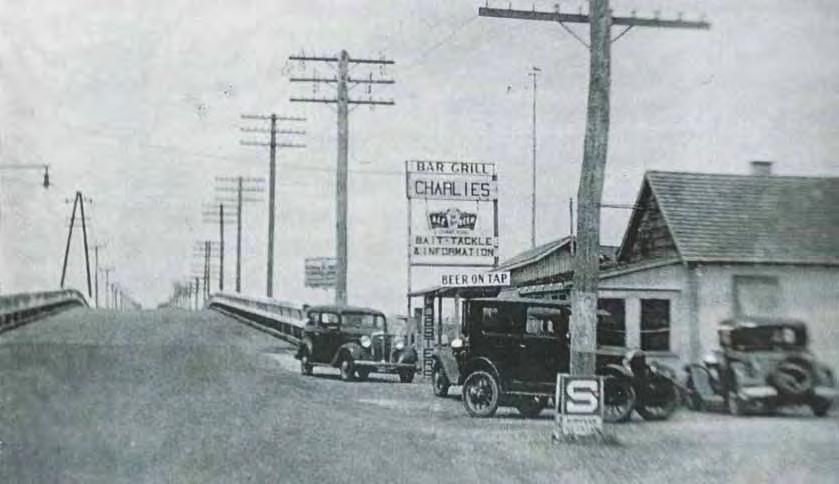
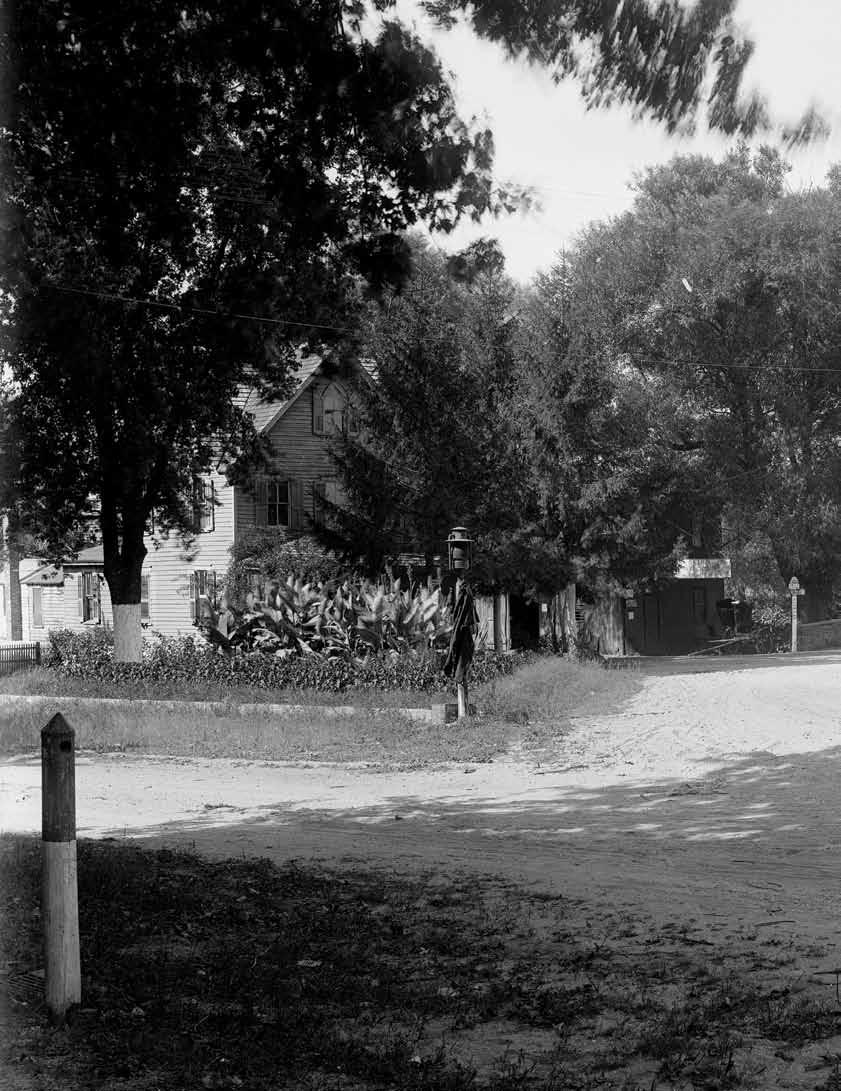
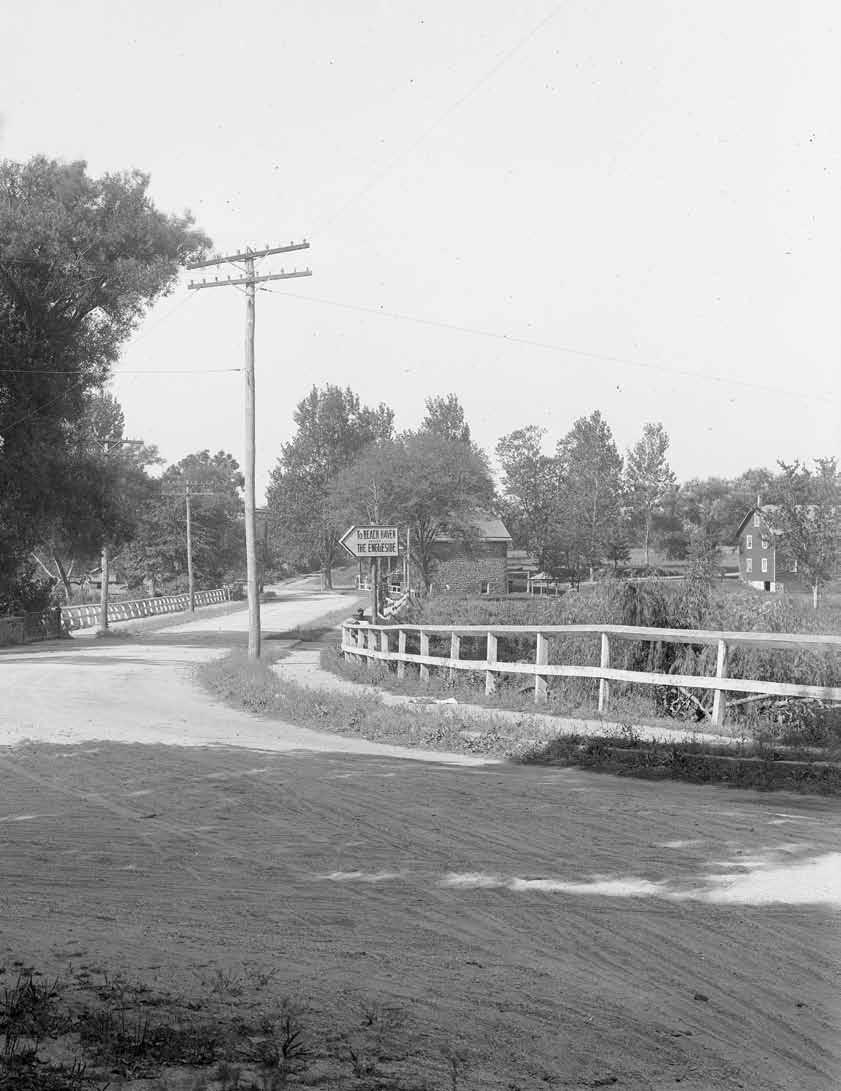
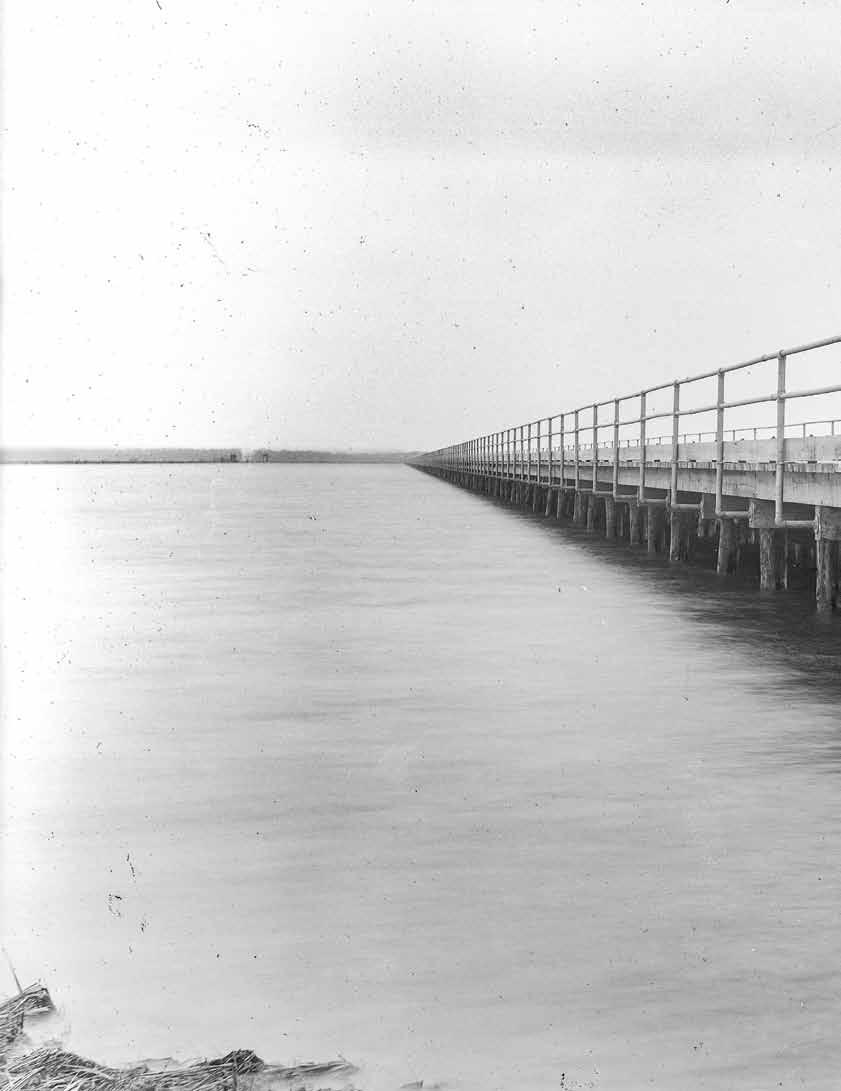
As another summer dawns and we who call this Island home await the returning crowds, another year of bridge work concludes. The saga has become a painfully familiar part of life, with fuzzy memories of a time when there were not orange cones and closed lanes. All roads lead to the bridge and our beaches, as explored in an excellent article by Randy Rush. And at journey's end lies happiness for local and tourist alike in this special place. Happily, the construction does appear to be ending at long last and the pains of the final leg of the trek subsiding. Like the generations before us who endured rocky carriages, inhaled train smoke, and slow clickity-clack crossings like the original Causeway trestle seen in this plate from the Robert F. Engle Photographic Collection of Echoes of LBI, we rejoice in the arrival of sweet summer and joyful destinations reached. —Reilly Platten Sharp