
EXECUTIVE SUMMARY
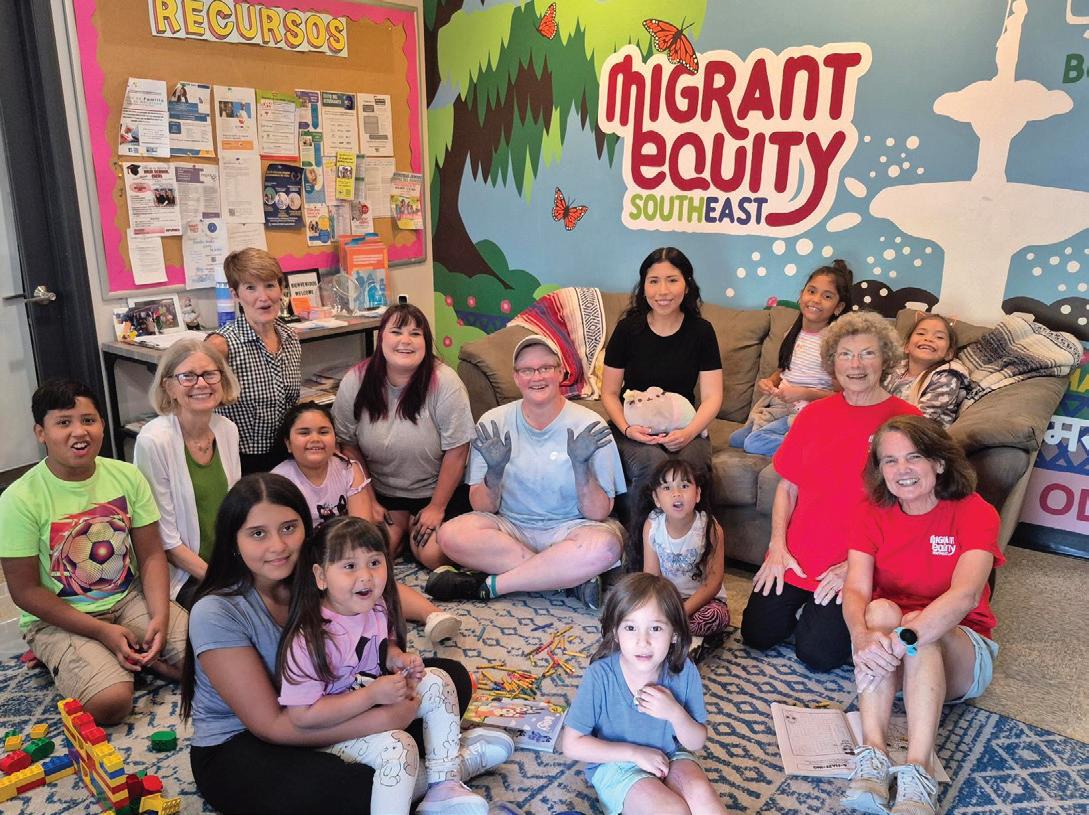
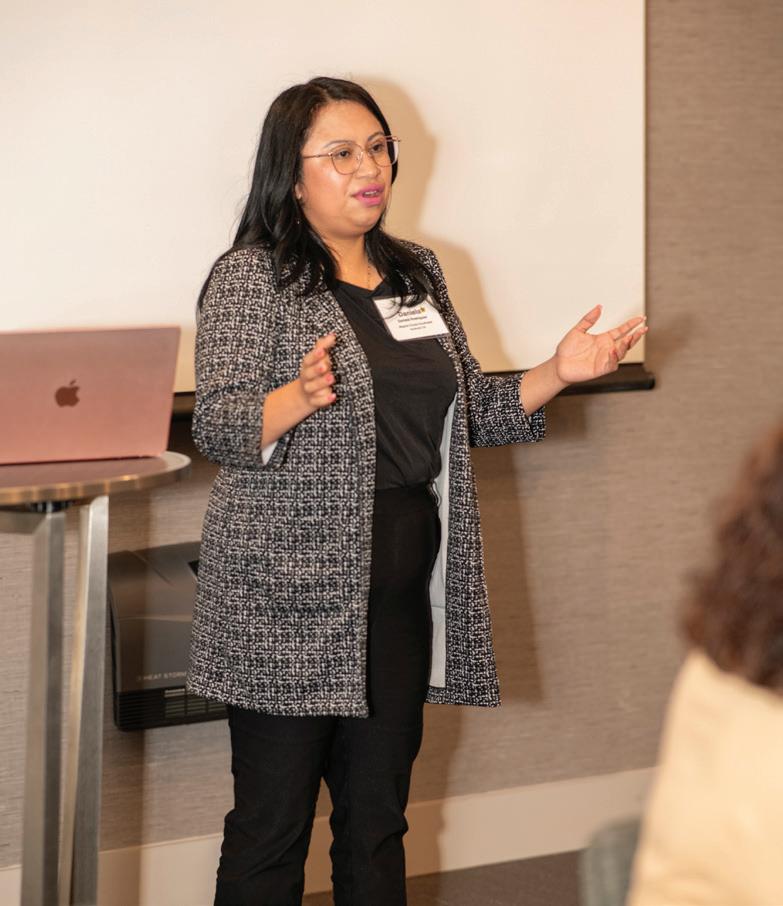
Daniela Rodriguez, Executive Director of Migrant Equity Southeast (MESE), one of RJEF’s first cohort grantee partners, describes their growth as the result of years of persistence and sacrifice in a challenging funding environment. “For every yes, we got 10 nos,” she shares. Despite limited financial resources, MESE has grown into a nationally recognized organization advocating for migrant and refugee children and their families in South Georgia . “I can’t believe it myself... we went from a nonprofit with zero dollars, volunteer run, to now having a budget of over $1 million this year . ”
RJEF’s investment builds on work already underway, providing flexible funding and, more importantly, trust. As Rodriguez notes, “Many foundations are not willing to fund organizations that are less than $1 million.” Prior to RJEF, MESE’s largest grant was $75,000. With this support, MESE has been able to expand its work, deepen its stability, and build credibility in a funding environment where smaller organizations often face barriers to accessing sustained resources .
The Moment We Are In
In 2025, children and families did not simply face challenges, they faced coordinated assaults . Federal safety net programs like Medicaid, the Children’s Health Insurance Program (CHIP), the Supplemental Nutrition Assistance Program (SNAP), and Temporary Assistance for Needy Families (TANF) were targeted for deep cuts, while strained systems left families without access to basic supports like housing, food assistance and healthcare. At the same time, immigration enforcement intensified leaving families navigating fear, separation and economic insecurity .
In this challenging year, the organizations funded by the Racial Justice and Equity Fund (RJEF) did not scale back, shrink or close their doors. They expanded, organized and showed up for children and families where the systems could not
How Are We Doing Things Differently?
From Framework to the Field
In this context, RJEF’s model reflects a different way of doing philanthropy—one designed to meet this moment
Traditional philanthropy often defines early childhood well-being through a narrow lens, focusing on individual outcomes such as school readiness, cognitive development, and access to childcare . While those categories are critical, these measures only address part of the picture
RJEF is advancing a philanthropic model that centers flexible funding, community leadership, and trust-based relationships as key drivers of stronger organizations, healthier communities, and more equitable outcomes for children and families .
Our story is about addressing children’s needs from an intersectional lens and building a groundswell of solutions by supporting grantee partners that are experts in the field.
This Year 1 evaluation tells the story from setting up our framework, to impact stories from the field. Holding ourselves accountable to our original intent and measuring the impact we are making. It also examines how RJEF is implementing its participatory community-centered grantmaking model and what early changes are emerging for grantees, the broader field, and the fund itself. The findings are organized around grantee-level impacts, foundation-level learning, and cross-cutting lessons about evaluation and the Social Determinants of Child and Family Well-Being (SDCFWB) framework.
Key Findings
1. Flexible, unrestricted funding is strengthening grantee capacity.
RJEF’s support is helping grantees build the capacity needed for organizational stability, strategic growth, and long-term planning The low-burden structure reduces administrative demands, allowing organizations to focus more fully to their community work. Flexibility in funding also means organizations can decide where to invest their time, whether in organizing or in policy advocacy, ultimately contributing to systems change
2. Participatory grantmaking grounded in trust-based principles is RJEF’s defining strength.
RJEF’s model centers community leadership in funding decisions, with grants committee members describing an intentionally participatory process in which funders do not hold disproportionate influence. Grantees consistently described RJEF as relational, flexible, and low-burden, especially compared with traditional funders that require extensive documentation and compliance heavy reporting. Trust emerged as a central component of the fund’s value Grantees felt recognized as credible leaders and could focus on the work rather than proving themselves .
3. RJEF has made meaningful early progress in funding sustainability.
RJEF has met important early fundraising milestones and sustained funding by aligning funders around the SDCFWB framework At the same time, the report notes that new funding has come in more slowly than hoped, reflecting the challenges of fundraising in the current political climate and the uncertainty of funders’ evolving directions
4. RJEF’s SDCFWB framework resonates with grantees’ holistic work but requires more consistent orientation to ensure shared understanding among partners and funders.
Most grantees already understand and resonate with the core idea of the SDCFWB framework and
implement it in their work, though familiarity with the term itself varies This shared foundation creates an opportunity to build a larger, intersectional, inclusive tent. However, shared understanding across funders and partners remains uneven, with some still interpreting it through narrower early childhood lenses . This points to a need for more consistent education around the framework to shift thinking and bring it to life
5. Evaluation is shifting from compliance to learning.
Year 1 evaluation is described as an evolving learning system, not a traditional compliance process The approach emphasizes ongoing learning-oriented conversations grounded in transparency and accountability, without returning to extractive reporting structures. This reflects a broader shift toward evaluation as relationship-based learning rather than formal documentation alone
Grantee Successes by the Numbers
Ź 2 organizations surpassed $1,000,000 annual budget since the start of RJEF’s grant
Ź $425,000 in additional funding secured by grantees
Ź 9 organizations added or improved programs for community
Ź 9 organizations increased policy advocacy capacity
Ź 2 Executive Directors brought on as full-time employees
Ź 1 organization increased the number of people served by 40%, reaching over 30,000 individuals
Ź 1 organization received their 501(c)3 status
Recommendations
Conversations with grantees, grant committee members, and RJEF staff revealed the following recommendations:
Ź Create a more intentional structure for grantee connection with RJEF and with one another through convenings, cohort spaces, and practical peer-learning opportunities .
Ź Increase grantee visibility and direct pathways to funders through showcases, briefings, communications, and public storytelling .
Ź Expand practical capacity-building support in areas such as fundraising, proposal development, operations, and evaluation .
Ź Preserve the low-burden, trust-based design as RJEF grows, additional support should remain optional, useful, and aligned with the fund’s relational approach .
Ź Make networking more targeted and strategic by matching connections to mission, geography, growth stage, or practical needs
An Invitation to Do Philanthropy Differently
What this first year reveals is something worth naming clearly: RJEF is not simply funding organizations. It is betting on a different vision of what philanthropy can be.
That vision is grounded in a fundamental belief that flexible funding, community leadership, and relationships built on trust are not just good practices, they are the essential conditions from which stronger organizations, stronger communities, and more just outcomes for children and families can grow and thrive
When families struggle, their needs don’t arrive in neat, fundable categories . Economic hardship is tangled up with housing instability. Health is shaped by safety Safety is shaped by whether a community has power RJEF’s grantees have always understood this . Through multi-year, unrestricted support, RJEF is finally resourcing organizations in a way that honors that reality and allows them to meet urgent needs today while building the capacity and conditions for lasting change tomorrow
The findings point clearly to this: the approach works. RJEF is not only validating a broader, intersectional framework for child and family well-being, it is also making that framework actionable, one relationship, one organization, and one community at a time, and helping resource solutions from the ground up .
This report is not just a documentation of what ten organizations accomplished in a difficult year. It is also an invitation to funders on the fence, and to those still defining early childhood in more traditional terms, to join this work Boldly Visibly With the urgency that children and families have always deserved
And Year 1 is only the beginning, as there is more to the story.*
* At the time of this report, an additional ten grantee partners have been added.
WHY THIS WORK MATTERS NOW
Nearly 1 in 3 of all people experiencing poverty across the United States are children—the highest rate of any age group in the country 1 This is especially true for children of color, children in the South, children under five, and children of single parents .
Across the country, community organizations are operating under the constant pressure from precarious funding, harmful policy changes and growing needs of communities facing instability Over 90% of nonprofits have annual budgets under $1 million, and 88% function on less than $500,000 2 Yet these small, community-led organizations—often closest to the people and most reflective of their lived experiences—remain consistently underfunded, receiving only 2 .9% of total philanthropic giving . 3 4
In 2025, these pressures intensified. Safety net programs such as Medicaid, the Children’s Health Insurance Program (CHIP), the Supplemental Nutrition Assistance Program (SNAP), and Temporary Assistance for Needy Families (TANF) faced significant policy changes and funding cuts. At the same time, immigration enforcement intensified, contributing to fear, uncertainty and disruption for families. In coastal Georgia, a largescale immigration raid at the Hyundai plant had immediate ripple effects, as families navigated the detention of parents, school disruptions, and sudden economic instability. In Texas, North Carolina, Ohio and beyond, families prepared for the possible separation by identifying trusted caregivers for their children, signing power of attorney documents, and planning how to respond if immigration enforcement came to their homes or workplaces .
Within this environment, community organizations are playing a critical role in responding to immediate needs while advancing longer-term solutions Across the cohort, RJEF grantees have sustained and, in many cases, expanded their efforts responding to emerging needs, organizing their communities, showing up at school board meetings, and continuing to build toward longer-term goals . Their work underscores the essential role that community organizations play in addressing complex, interconnected challenges and the importance of supporting locally led work already delivering results
This report highlights the first year of the Racial Justice and Equity Fund (RJEF), which advances child and family well-being by resourcing grassroots organizations and leaders through participatory trust-based grantmaking. The evaluation documents how flexible, multi-year funding supports organizational capacity, strengthens community impact, and advances a broader, more intersectional understanding of early childhood .
1 “Child Poverty ” Childrens Defense Fund, 10 Jan 2024, http://www.childrensdefense.org/tools-and-resources/the-state-ofamericas-children/soac-child-poverty/
2 “Nonprofit Impact Matters: How America’s Charitable Nonprofits Strengthen Communities and Improve Lives” National Council of Nonprofits. 2019 https://www.nonprofitimpactmatters.org/site/assets/files/1/nonprofit-impact-matters-sept-2019-1.pdf
3 “Most Black-led nonprofits operate on less than $500,000, study finds” Philanthropy News Digest. 29 August 2023. https://philanthropynewsdigest.org/news/most-black-led-nonprofits-operate-on-less-than-500-000-study-finds
4 “First-of-its-kind Analysis of Charitable Giving to U.S. Organizations Serving Communities of Color Reveals 2.9% of Philanthropy Supports These Causes Lilly Family School of Philanthropy. 4 June 2025 https://philanthropy indianapolis iu edu/newsevents/news/_news/2025/communities-of-color html
ABOUT THE RACIAL JUSTICE AND EQUITY FUND
RJEF is a collaborative pooled fund advancing racial justice and equity by resourcing organizations and leaders rooted in historically underinvested and underresourced communities and investing in the full ecosystem that helps young children and families thrive .
We envision a world where children from prenatal to age five, their families, and communities flourish together, recognizing that children succeed when surrounded by strong families, safe homes, healthy environments, and caring communities .
To support these conditions, we invest intersectionally across areas such as reproductive justice, early education, childcare, healthcare, housing, food, economic inclusion, birth equity, immigrant rights, and environmental justice Guided by trust, equity, and community wisdom, we practice participatory grantmaking with a committee that includes parents, caregivers, and organizers, and we prioritize addressing chronic underfunding by centering smaller, community organizations with budgets under $1 million .
OUR THEORY OF CHANGE
Our Approach
RJEF is building towards a world where all children have the conditions they need to grow, belong, and reach their full potential through four core areas of impact, shifting where resources go and how change is defined and measured
CORE AREA 1: THE PARADIGM SHIFT
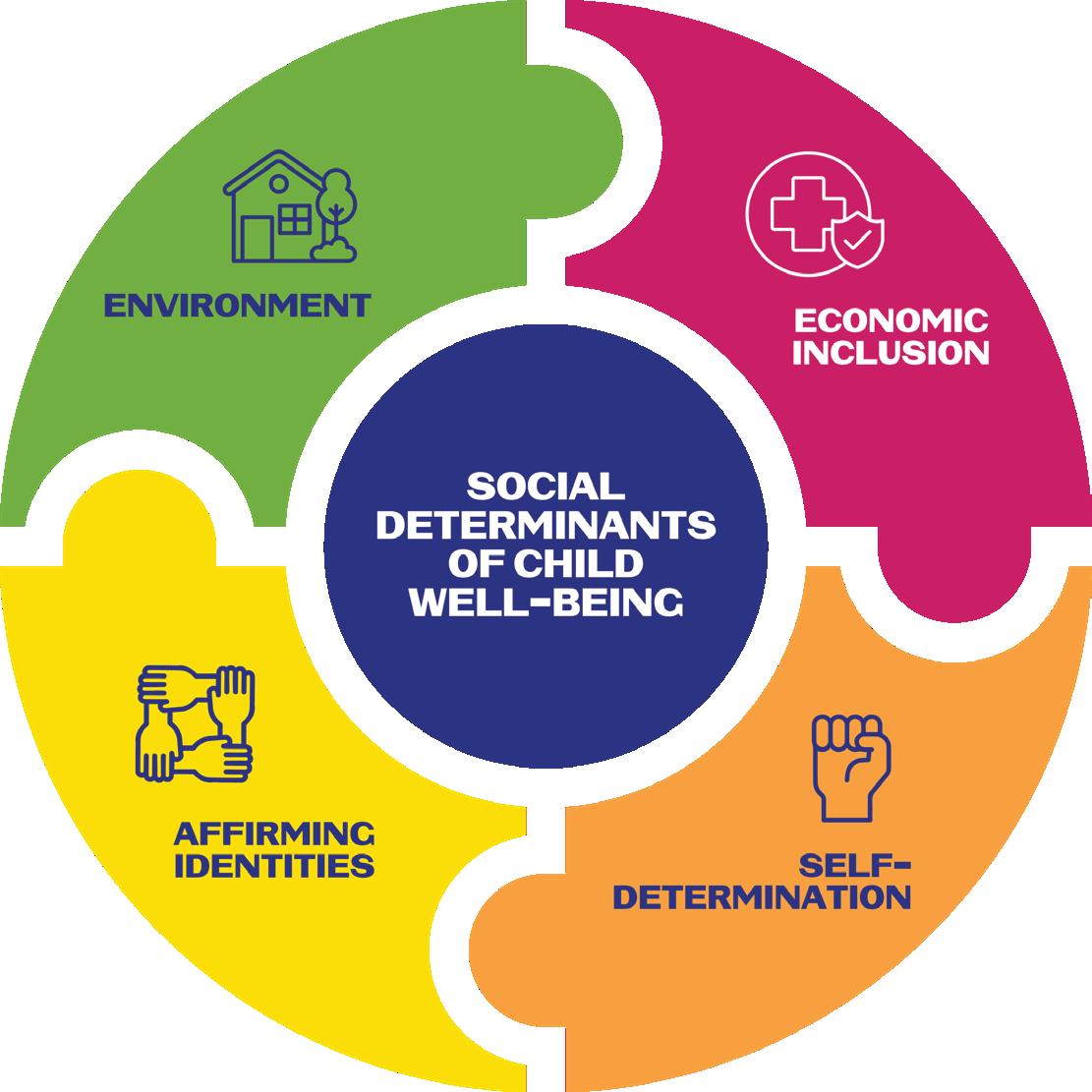
RJEF advances the holistic, intersectional Social Determinants of Child and Family Well-Being (SDCFWB) framework that centers the full ecosystem: environment, economic inclusion, self-determination, and affirming identities.
CORE AREA 2: GRANTMAKING
RJEF prioritizes historically underinvested and underresourced organizations with budgets under $1 million by providing three-year, unrestricted general operating grants and flexible technical assistance
CORE AREA 3: NEW APPROACH TO PHILANTHROPY
RJEF uses a community-led participatory grantmaking process that centers parents, caregivers, organizers, and other community leaders, and replaces traditional applications with relational interviews to reduce burden and build trust We know that those most directly impacted by the issues we seek to address have the solutions, and it is our responsibility to support them
CORE AREA 4: FUNDRAISING
RJEF aims to build a $25 million fund in 3 to 5 years by diversifying support from cross-sector foundations and donors and expanding collaboration among funders aligned with the SDCFWB framework

We work on these core areas for:
Children, families, and communities furthest from opportunity who have been most impacted by systemic racism and structural inequities
We work on these activities in solidarity with:
Funders, nonprofit organizations, and partners committed to serving historically marginalized communities and creating conditions for young children, families, and communities to thrive and flourish.
Because we believe:
Ź Investing resources to underfunded organizations and leaders builds community power from the ground up, leading to transformational policy and systems change that benefits those most marginalized.
Ź Centering voices and recognizing the wisdom of lived experiences ensures that solutions are community informed, and benefit those who are most directly impacted .
Ź Recognizing that power has been distributed unevenly across contexts and its historical influences on philanthropic traditions leads us toward developing more equitable funding practices .
Ź Participatory and trust-based grantmaking ensures that communities have the resources and autonomy to create change as they see fit.

THE PARADIGM SHIFT: THE SOCIAL DETERMINANTS OF CHILD AND FAMILY WELL-BEING FRAMEWORK
Are you part of the solution?
Audre Lorde once wrote, “There is no such thing as a single-issue struggle because we do not live single-issue lives.” This truth served as the genesis for the SDCFWB framework .
The SDCFWB framework was designed to rethink how we understand and respond to the multiple, intersecting forces that shape the lives of children and families . While intersectionality itself is not new, this framework offers a deliberate shift away from siloed approaches and toward a more integrated understanding of what is truly required to support child and family well-being
The SDCFWB framework is a response to a persistent gap in the early childhood field: while public health and public policy research increasingly acknowledge the importance of social determinants, funding and policy decisions continue to prioritize short-term, programmatic interventions that do not meaningfully alter the systems producing inequity RJEF developed the SDCFWB framework to bridge this divide We are offering funders, policymakers, and community-based organizations a shared language and analytical lens to understand child well-being as inseparable from family stability, community conditions, and collective power .
In addition, the SDCFWB framework is not static or prescriptive It is designed as a living framework, shaped and refined through ongoing dialogue with grantees, community leaders, funders, and evaluators . RJEF actively engages stakeholders in reviewing, adapting, and applying the framework across diverse geographic and political contexts, ensuring it remains responsive to real-world conditions and emerging challenges
This framework recognizes that children and families thrive when the conditions surrounding their lives are safe, affirming, and just. Rather than focusing narrowly on services or individual behaviors, this paradigm examines the structural, social, economic, and relational environments that influence daily lived experience, opportunity, and long-term outcomes


ENVIRONMENT
Regardless of where they live, whether urban or rural, families deserve to live in environments that support their heath, safety, and well-being . This includes:
Ź Safe, stable, and affordable housing
Ź Clean air and water
Ź Reliable and affordable transportation
Ź Climate protections
Ź Equitable access to green spaces, parks, and other built environment resources

ECONOMIC INCLUSION
Children and families deserve the stability and resources to thrive, including:
Ź Jobs with livable wages and excellent working conditions
Ź Good and dignified jobs
Ź Guaranteed income and other strategies that provide financial stability and autonomy
Ź Food Security
Ź Affordable, high quality physical and mental healthcare
Ź Affordable and quality early care and education
Ź Caregiving support and safety net services
Ź Community-led systems that reimagine capital and infrastructure to serve the people

SELF-DETERMINATION
Children, their families, and their communities should be able to:
Ź Shape the policies that affect their lives
Ź Assert their rights and identities
Ź Access and participate in the democratic process-including voting, advocacy, and leadership

AFFIRMING IDENTITIES
All children and families deserve to grow up in communities that:
Ź Embrace their culture, language, race, gender, sexuality, and disability
Ź Recognize and honor all family structures and sources of connection and support
2025 FUNDING SNAPSHOT
AMOUNT OF FUNDS DISTRIBUTED TO ORGANIZATIONS
$1,250,000 in non-restricted funding to 10 organizations
$1,000,000 in general operating grants
$250,000 through the Flourish Pot5 to support community care
$2,500,000 in non-restricted funding to 20 organizations in 2026
5 Flourish Pot provides wellness and technical assistance dollars that help nonprofits sustain their teams, maintain a culture of care, and stay strong for the long haul
8 OUT OF 10 organizations focus on Organizing
10 OUT OF 10 organizations focus on Advocacy
4 OUT OF 10 organizations focus on Direct Service/Mutual Aid
6 OUT OF 10 organizations are under 5 years old ANNUAL BUDGET RANGE
$60K – $800K
FUNDING DISTRIBUTION
Ź Alabama: The More Up Campus
Ź Arizona, New Mexico, Utah, and parts of Colorado: Navajo Birthworker Collective
Ź California: Black Californians United for Early Childhood Education
Ź Georgia: SOWEGA Rising, Migrant Equity Southeast
Ź North Carolina: Asheboro Latinxs Services, Equity Before Birth
Ź Ohio: Black Child Development Institute Ohio
Ź Texas: Esperanza de Tejas, Inc.
Ź Wisconsin: Black Child Development Institute of Wisconsin
AMOUNT OF FUNDS RAISED BY THE COLLECTIVE (AS OF JANUARY 2026)
LIST OF FUNDERS INVESTING IN RJEF AS OF JANUARY 2026
Ź Bezos Family Foundation
Ź Buffett Early Childhood Fund
Ź Conrad N. Hilton Foundation
Ź Couch Family Foundation
Ź Foundation for Child Development
Ź Irving Harris Foundation
Ź Pritzker Children’s Initiative
Ź Robert Wood Johnson Foundation
Ź Roots & Wings Foundation
Ź Trust for Learning
Ź W K Kellogg Foundation
$7.5 MILLION DOLLARS
Black Californians United for Early Childhood Education
Navajo Birthworker Collective
The More Up Campus
SOWEGA Rising, Migrant Equity Southeast Asheboro Latinxs Services, Equity Before Birth
Black Child Development Institute Ohio
Black Child Development Institute of Wisconsin
Esperanza de Tejas, Inc.
Grants Committee and Grantee Selection
RJEF’s Grants Committee plays a pivotal role in ensuring funding decisions are community-led, values-driven, and grounded in lived experience. Composed of parents, caregivers, organizers, and other community members with on-the-ground expertise, the committee centers the voices of those closest to early childhood challenges and solutions Rather than relying on a traditional grant application cycle, RJEF uses a community-led, participatory selection process in which grantees are nominated by trusted community leaders and reviewed by a committee, both processes rooted in RJEF’s values
Through facilitated dialogue, grant committee members collectively determined where resources should go, guided by a shared criteria list rooted in equity, community trust, and a demonstrated track record of strengthening the conditions that support early childhood and family well-being
The Grants Committee developed selection criteria rooted in RJEF’s values and paradigm, focusing on the most underinvested and underresourced communities by issue areas aligned with the SDCFWB framework . Final selections were made through a consensus voting process
HOW TO READ THIS REPORT
This evaluation was guided by RJEF’s evaluation plan, theory of change, and the Social Determinants of Child and Family Well-being framework . A program logic model and measurement framework were used to identify key indicators aligned with the nine evaluation questions . Data sources included a review of grant materials, progress reports, and internal documents, alongside primary data collected through surveys and interviews Surveys were administered to grantee organizations, and qualitative data were gathered through interviews with grantee leaders (n = 10), RJEF staff (n = 2), and members of the Grants Committee (n = 3) . A detailed description of methods is included in Appendix A .
As a Year 1 evaluation, this report emphasizes early signals of change, implementation progress, and learning rather than long-term outcomes. Some findings reported are grantee self-assessments at different points over the grant period Over time, grantees have come to see their work as more intersectional, spanning organizing, advocacy, and direct services . Findings highlight how RJEF’s strategies are taking shape and where continued investment and refinement can strengthen impact over time
EVALUATION FINDINGS
How RJEF is doing things differently and making impact
This section presents the evaluation findings in three interconnected areas to show how RJEF is advancing its goals and where change is taking place: foundation-level findings, grantee-level findings, and cross-cutting considerations . The grantee-level findings focus on how funded organizations are creating community impact through the SDCFWB framework, how RJEF support has strengthened organizational capacity and growth, and how multi-year, unrestricted, trust-based funding has shaped grantees’ ability to respond, adapt, and lead change The foundation-level findings examine how RJEF has operationalized participatory grantmaking, sustained and raised funding in a difficult political climate, shifted dominant narratives about child and family well-being, and supported broader systems and policy change . Finally, the cross-cutting considerations highlight themes that cut across both levels of analysis, including shifts occurring across different domains of the SDCFWB and emerging changes in evaluation practice as participatory grantmaking is implemented. Together, these three areas provide a structured picture of RJEF’s approach, its influence, and the broader patterns of change emerging from its funding and relationships

“THE FUNDING EMPOWERED US. ONCE RJEF SEEDED US WITH THAT FUNDING, WE COULD ACTUALLY SEE OUR ROOTS AND THE WHOLE PLANT GROWING.”
AMANDA SINGER, NAVAJO BIRTHWORKER COLLECTIVE
Grantee-Level Changes
“It was really security knowing we had a partner that was like, ‘We’re here with you . We’re going to continue to fund,’ and gave funding we needed to heal, to flourish, to do what was needed to navigate this really, really challenging year . ”
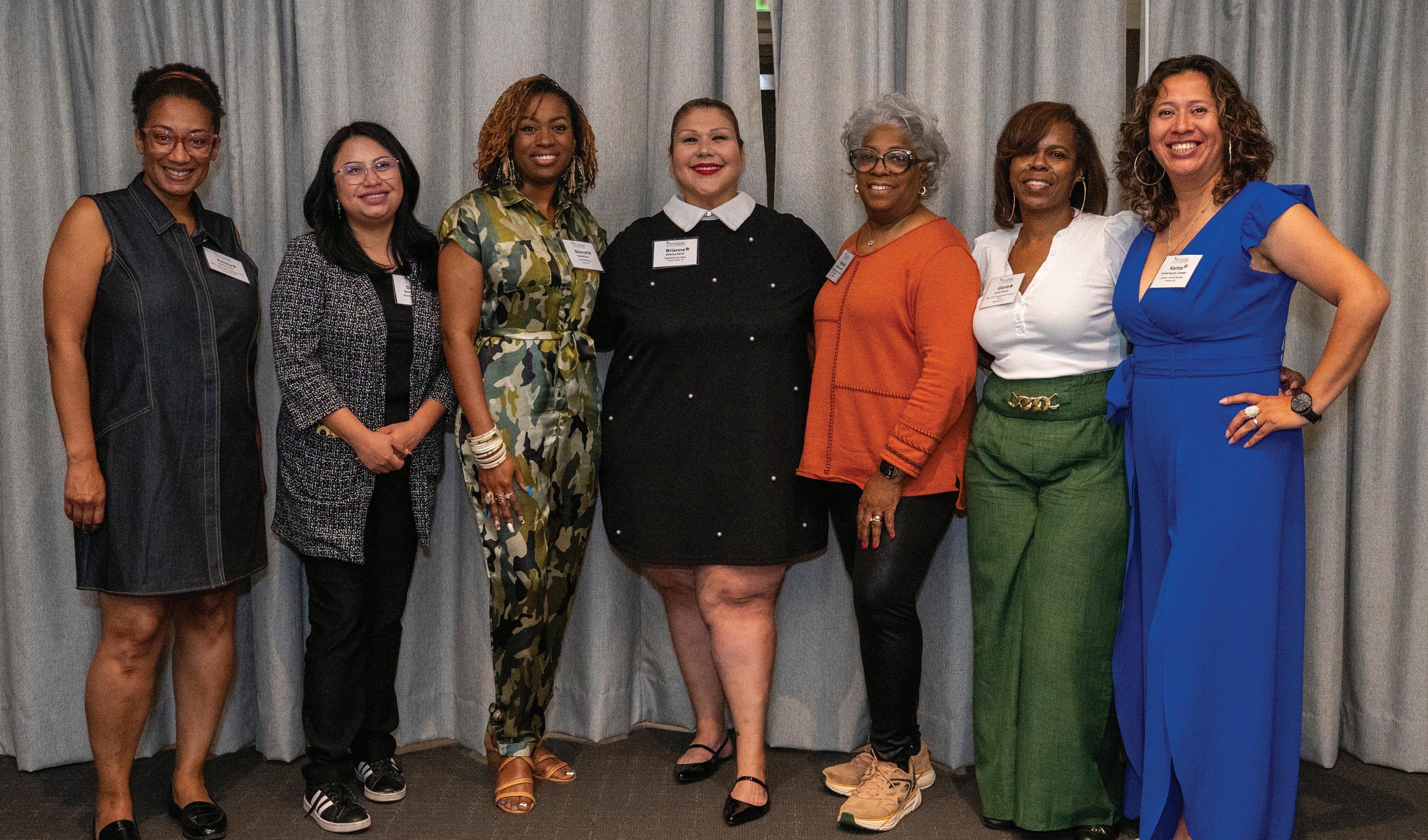
SHERRELL BYRD, SOWEGA
RISING
This section examines the Year 1 impact of RJEF grantmaking at the grantee level, including how grantees have advanced child and family well-being, strengthened organizational capacity, and leveraged multiyear, unrestricted funding to create lasting change. The unrestricted funding functioned as both financial and strategic capital which allowed grantees to create conditions for sustained impact beyond a single grant period .
The evaluation found that:
Ź Unrestricted funding enabled grantees to effectively meet urgent community needs without delays or restrictive budget constraints
Ź Grantees described this support as strengthening their organizational backbone Especially during a challenging political and funding year, leaders were able to move beyond survival mode and strengthen their operations, clarify roles, and invest in infrastructure .
Ź Grantees described RJEF’s multi-year, unrestricted, trust-based model as reshaping the conditions under which they operate. Rather than funding discrete projects, the approach supported stability and flexibility, and removed administrative burden .
Community Impact Through the SDCFWB Framework
Grantees consistently described unrestricted funding as critical to their ability to quickly and effectively respond to urgent and evolving community needs. Flexible funding allowed organizations to mobilize resources without delays, reapproval processes, or restrictive budget constraints .
8 OUT OF 9
grantees increased access to education, healthcare, housing, food, safety services, and other supports for their communities in the past year.
In alignment with the SDCFWB framework, grantees strengthened multiple interconnected determinants of child and family well-being, including economic security, housing stability, healthcare access, and safety Several grantees responded directly to economic hardship by distributing diapers, formula, hygiene items, and food as well as emergency assistance and navigation for families facing housing instability or unsafe situations .
Grantees also increased access to healthcare by reducing language, cultural, and systemic barriers. Examples include breastfeeding education in Navajo, bilingual community outreach, and welcoming spaces such as culturally responsive baby showers that connect
families to ongoing support Several organizations paired direct service with leadership development and coalition-building, framing immediate assistance as the foundation for longer-term systems change .
Examples include:
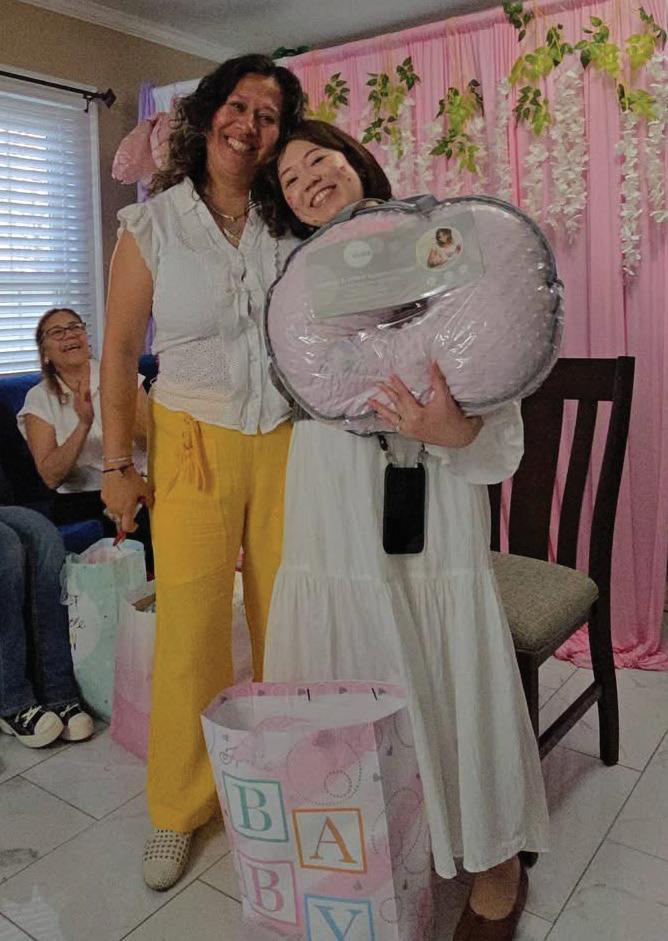
Ź Asheboro Latinx Services (ALS) hosted community baby showers for expecting families, providing diapers, baby supplies, health information, and connections to ongoing support in culturally responsive, welcoming spaces. Many of these women relied on ALS for community care in navigating pregnancy without regular health care access, limited English proficiency, and lack of family support.
Ź Black Child Development Institute-Wisconsin (BCDI-Wisconsin) increased organizational capacity by adding dedicated administrative staff, allowing the organization to respond more consistently to families in need . This strengthened responsiveness to walk-in requests, scheduling needs, and urgent issues for families statewide
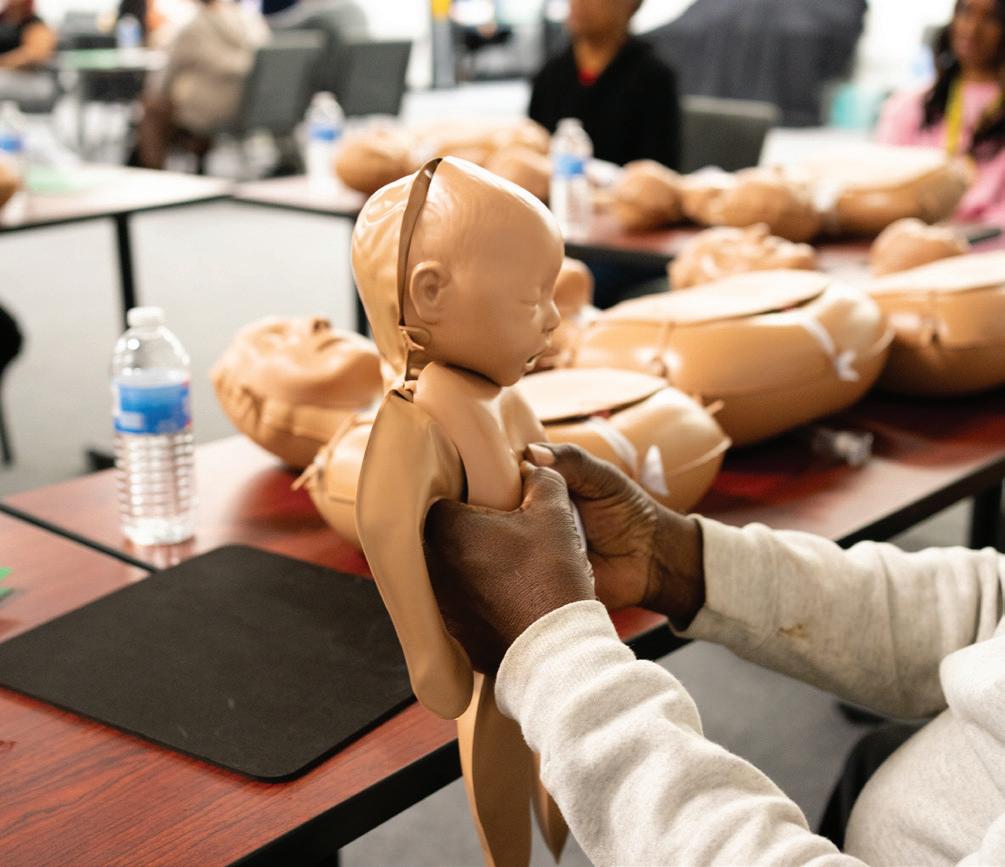
Ź Equity Before Birth piloted Bridge to Stability, a program designed to respond to urgent housing crises among families in its care In cases of families sleeping in cars or facing eviction, the program provided access to short-term housing in hotels or Airbnbs to help provide immediate safety and stability
Ź Esperanza de Tejas used flexible funding to respond immediately to increased community needs during the government shutdown and SNAP disruptions . The organization was able to provide essentials like formula and expand support during crises such as the Texas floods, ensuring families could drink clean water and get enough to eat while also maintaining stability in moments of crisis
While not a complete picture, these examples capture the range of strategies grantees are employing. Taken together, these efforts reflect how grantees are addressing urgent, immediate needs while simultaneously working to shift the social, economic, and structural conditions that determine long-term child and family well-being. Additional stories and examples are featured in the Grantee Highlights section.
Organizational Growth: Strengthening Capacity and Sustainability
“As many folks are having to lay people off, even close their doors, have mission drift, or are afraid to carry out their mission . We stood 10 toes down, and we lived to tell the tale . ”
JOY SPENCER, EQUITY BEFORE BIRTH
Rather than operating in survival mode, organizations were able to strengthen operations, leverage funds, support staff wellness, and focus on mission work. Across interviews, grantees described RJEF’s unrestricted, multi-year funding as strengthening their organizational backbone during a challenging funding environment
Strengthening organizational capacity and operational backbone
Unrestricted funds enabled grantees to expand staffing and clarify roles, moving away from an early-stage of the “everyone does everything” structure towards more defined responsibilities that support growth. Several grantees brought on contractors or new staff which reduced bottlenecks and distributed work more sustainably across teams
In addition to staffing, funding strengthened behind-the-scenes infrastructure including financial systems, audit readiness, internal policies and handbooks, technology upgrades, equipment purchases, and more formal communication systems These investments, often underfunded by traditional project-based grants, strengthened internal operations .
As their internal systems strengthened, grantees were able to expand their reach geographically and increased the frequency of direct services, legal clinics, trainings, or outreach efforts This also enabled a shift in leadership time to strategy and management . Collectively, these examples demonstrate how RJEF funding has functioned as a stabilizer and helped grantees transition from founder or volunteer-dependent models into more sustainable, professionally structured organizations
TOTAL ADDITIONAL FUNDING SECURED BY GRANTEES:
$425,000 MULTI-YEAR: $275,000 UNRESTRICTED:
$50,000
90% of grantees added, improved, or changed programs in the past year.
90% of grantees increased connections, partnerships, or alliances in the past year.
Leveraging funding and expanding their resource base
In 2025, grantees operated in an increasingly precarious funding environment marked by threats to critical safety net programs such as Medicaid, SNAP, Head Start, and housing assistance. This was alongside declining philanthropic investment and unfulfilled commitments to resource community-led work .
Beyond the direct investment, RJEF funding has functioned as a lever for additional resources Several grantees reported securing new funding during the grant period from private donors, foundations, and institutional partners . Grantees attributed this growth not only to strengthened internal capacity, but also to RJEF’s role in increasing their visibility and credibility within philanthropic spaces
RJEF created opportunities for grantees to be introduced to funders, participate in panels and convenings, and elevate their work in broader networks These moments of visibility helped some organizations translate relational capital into new funding relationships
RJEF’s commitment to the field extended beyond its direct grantees. Organizations that were nominated but not selected for funding were not simply turned away Instead, RJEF actively supported them in identifying and securing resources from other funders whenever an oppor-
tunity arose In a philanthropic landscape marked by increasing competition and shrinking funding pools, this kind of connective tissue work reflects RJEF’s broader role as a field-builder, not just a grantmaker.
Staff sustainability and wellness supports
Grantees also used RJEF funding to support staff sustainability Recognizing that the work can be emotionally demanding and that retention depends on well-being, grantees provided wellness support and staff-care approaches to reduce burnout (e.g. group therapy, wellness days, staff retreats, mental health counseling). These wellness supports were not framed as perks They were described as necessary investments that help organizations stay on course and be sustained
Trust-based approach reduced administrative burden and supported authenticity
Multiple grantees suggested that RJEF’s trust-based approach itself acts as capacity support. Grantees described the process as easier and less stressful than traditional grantmaking, particularly compared to template-heavy reporting and multi-step application “hoops ” Several also emphasized that trust-based funding supported authenticity, allowing organizations to focus on what their communities need rather than contorting their work to fit funder requirements. In practical terms, fewer burdensome requirements meant more time for mission work and less strain on small organizations
Grantmaking Approach: Enabling Sustained Change
Not the same old, same old
Rather than funding discrete projects, the approach altered stability, flexibility, and administrative burden in ways that strengthened organizations’ capacity to create sustained change. Across interviews, grantees described RJEF’s multi-year, unrestricted, trust-based model as reshaping the conditions under which they operate .
Stability during uncertainty
Grantees consistently described RJEF’s grantmaking approach as a stabilizing force in an increasingly challenging funding environment The multi-year commitment allowed grantees to plan, retain and hire staff, and continue core services even as other funding sources became uncertain or delayed . This stability allowed grantees to hold their mission steady during periods of disruption reducing the need to pause, scale back, or pivot away from community priorities in response to short-term funding pressures It also signaled that funders were willing to “stay with” the work over time, which supported persistence and longer-term planning Stability did more than protect existing work. It altered decision-making conditions and allowed leaders to prioritize mission alignment over short-term funding survival .
Increased flexibility and responsiveness
Unrestricted funding was repeatedly associated with faster, more responsive action. It made it possible to mobilize quickly during crises and shifting conditions without waiting for approvals or reworking tightly restricted budgets . Grantees described ramping up distributions and meeting urgent needs because they could move resources where they were most needed. This flexibility also supported adaptation when needs changed (e.g., expanding geographic coverage or altering services provided), which grantees framed as central to creating real change rather than delivering a fixed set of pre-planned activities.
Reduced administrative burden
A consistent message was that trust-based practices reduced the administrative load, especially for small teams . Grantees valued processes that relied more on conversation and less on lengthy written reports, describing this as easier, less stressful, and less disruptive to delivering services In practical terms, this meant more time and attention for delivering mission critical work, rather than grant compliance
Expanded Networks and Strategic Relationships
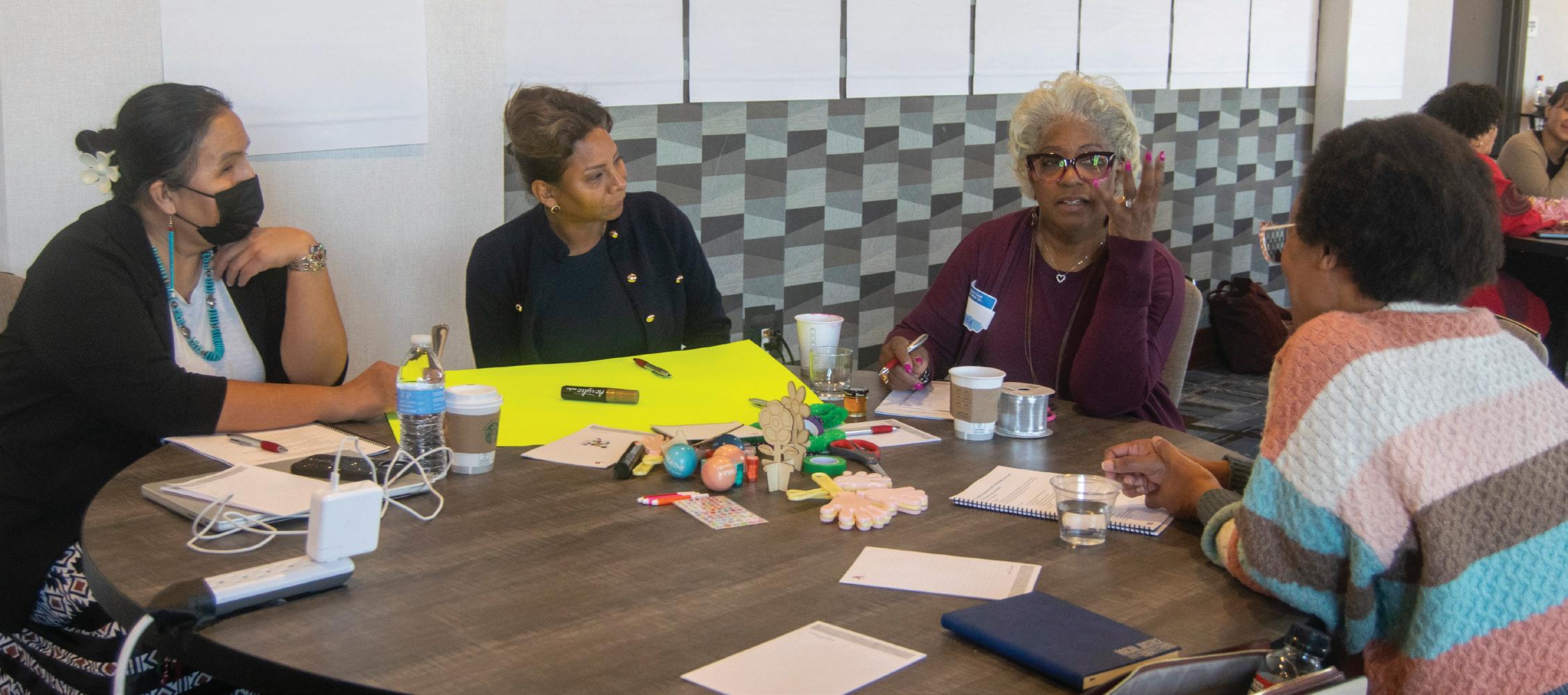
Grantees described RJEF-linked convenings and introductions as strengthening their networks and deepening strategic relationships across sectors These spaces facilitated peer connection, cross-organizational learning, and relationship building with peers, funders and decision makers Grantees emphasized the value of sustained network development, building trust, aligning strategy, and creating pathways for collaboration. These peer networks expanded access to information, resources, and influence, reinforcing their collective effort
Relationship Building and Changing Grantmaking
The current evaluation examined the extent to which RJEF has advanced participatory grantmaking practices, its ability to maintain and grow funding, and its support for grantees advancing systems and policy change . Together, these questions assess RJEF’s role as both a funder and a strategic leader in shaping relationships, resources, ideas, and institutional change
The evaluation has found that:
Ź RJEF’s grantmaking is reflected in a participatory decision-making process that centers community leaders and community knowledge, reduces traditional funder control, and prioritizes grassroots, under-resourced organizations often overlooked by philanthropy. Grantees experienced this approach as flexible and supportive They described their relationships with RJEF as grounded in trust and RJEF demonstrated respect for their expertise and emphasized partnership rather than compliance.
Ź RJEF has sustained funding by meeting early fundraising milestones, using the SDCFWB framework to
align diverse funders around a shared vision, and adapting its fundraising strategy to manage risk and uncertainty in a challenging political climate .
Ź Most grantees already understand and resonate with the core idea of the SDCFWB framework and implement it in their work, though familiarity with the term itself varies. Many experience it as validating, especially when their world already addresses the holistic conditions that support child and family well-being. However, shared understanding across predominantly funders and partners remains uneven, with some still interpreting it through narrower early childhood lenses This points to a need for more consistent orientation and concrete mapping of work to the framework to strengthen buy-in and common understanding .
Ź RJEF supports systems and policy change by providing flexible, trust-based funding that builds grantees’ capacity to engage in policy work, reduces administrative burden, and creates opportunities for relationship building and visibility that strengthen longer-term systems influence.
Each of these themes are examined in more detail in the following:
RJEF’s Participatory Grantmaking Grounded in Trust Based Principles
“The beauty of this fund is that it is trying to be truly participatory and trust the knowledge of the folks on the committee, the years of experience and the work that they do. It wasn’t like we just plucked organizations out . We set forth criteria and really tried to make it more participatory
”
GRANTS COMMITTEE MEMBER
RJEF’s defining strength is participatory grantmaking grounded in Trust Based Principals. RJEF’s participatory grantmaking showed up most clearly in who holds decision-making power and how funding decisions are made. Grants committee members described a structure where field leaders (i.e., people closest to communities and the work) drive nominations and funding recommendations, and where there is an explicit effort to ensure that funders do not carry “extra” influence in those decisions. One committee member described it as an intentionally equal process across all members, with active attention to preventing funders from playing a “higher” or “stronger” role . Another interview reinforced that this approach aligns with a more participatory model of philanthropy in which community leadership is centered in deciding where dollars go
A second practice is how grantees are surfaced and vetted without defaulting to “the usual suspects ” Committee members emphasized that the process begins with committee nominations grounded in on-theground knowledge. Their experiences shaped the parameters that prioritize grassroots and under-resourced organizations that often lack fundraising and development capacity needed to be more visible in traditional philanthropy spaces Committee members also described intentionality around geographic diversity to ensure organizations outside typical philanthropic radar were included In addition, committee members point to relationship-based diligence that includes interviews and conversations with prospective grantees and committee write-ups and summaries used to inform decisions .
Finally, RJEF’s implementation is described as iterative and willing to remove traditional “control” steps that can be extractive. One committee member described eliminating an originally proposed governance step in which another body would “approve” grant decisions. This decision reflected funders/executive members’ confidence in the committee and affirmed that voices from those most directly impacted were enough to guide grantmaking decisions. Members also said that ongoing clarifications about criteria and process helps make sure decision-making is both community-led and transparent From the staff perspective, there is also candid acknowledgment that practicing trust-based principals and values requires actively navigating money and power dynamics, including holding funders accountable to what they committed to while not “bending” the mission to accommodate them
“We’re leading alongside the funder which is very different . We don’t have to pilot something to prove that we know what we’re doing . ”
GLORIA BEVINS, BCDI-OHIO
According to the grantees, a consistent signal of community-centered practice was being recognized as credible leaders with existing expertise rather than being required to pilot or justify their competence. One grantee explicitly valued that they did not have to “pilot something to prove” because they know what they are doing, and described the relationship as “working alongside a funder versus working for a funder . ” Another grantee described trust-based practice in practical terms There was no emphasis on “numbers” or rigid documentation in early conversations, which reinforced a sense that RJEF was listening to the work rather than auditing it
RJEF’s Funding Sustainability
RJEF has made meaningful early progress in funding sustainability. RJEF’s ability to raise and sustain funding showed up as a combination of (1) hitting concrete fundraising milestones early, (2) using the SDCFWB framework as a value proposition for funders, and (3) actively managing funder risk and uncertainty in a heightened political environment RJEF staff described securing $7 5 million and an additional $2 5 million by spring of 2026 Renewals depend on strong relationships, storytelling, and demonstrating alignment with community priorities
The SDCFWB framework helped with sustainability by functioning as a fundraising lever . By articulating a shared, comprehensive vision for child and family well-being, the framework has created a common language that allows funders with different programmatic priorities, entry points, and theories of change to see their work reflected within a larger, cohesive whole and see themselves as part of a solution.
Fundraising in the current political environment has also demanded more compelling framing of our solution to child and family well-being. At the same time, it has added complexity to RJEF’s funding trajectory. A planned June launch was delayed as the team navigated a landscape shaped by heightened scrutiny on reproductive justice work, shifting funder risk tolerance, and an increasingly charged public discourse Rather than simply pushing forward on the original timeline, RJEF took deliberate steps to carefully consider its public positioning, including how to communicate its work clearly and compellingly while anticipating potential scrutiny from external audiences.
RJEF’s Contribution to Narrative Change
RJEF’s SDCFWB framework is shifting the narrative on early childhood—resonating with grantees and showing a need for strengthening shared understanding among funders and partners. Across the interviews, grantees generally understand the core idea of the SDCFWB framework—that children thrive when families and communities have stable, supportive conditions What varies is (1) how familiar they are with the specific label “SDCFWB,” (2) how explicitly they connect or “map” their work to the framework, and (3) whether they experience the framework as community language or as funder/systems language. Overall, most grantees describe the framework as affirming and clarifying: it validates what they already do, and those working across wraparound supports, maternal/early childhood ecosystems, and policy/power-building are often the most able to name clear points of alignment
Funders and partners generally seem aligned with the spirit of the framework. Many already use language like “whole child” or “whole family” but understanding is uneven when it comes to what “whole” actually requires .
A recurring sign of partial understanding is that funders and donors still look for a narrow “early childhood program” hook (e.g., asking where the “Early Care and Education piece” is), which suggests they are filtering the framework through traditional early childhood categories rather than recognizing that the framework intentionally expands the focus to upstream conditions like economic security, housing, clean water, healthcare, belonging, and power .
There is not yet a shared consensus or consistent buy-in The shift is slower than hoped, with hesitancy and resistance, especially among partners and funders most rooted in conventional early childhood funding At the same time, there are clear “champions” who grasp the intersectional logic more readily and can help move the field. A key first-year lesson is that while the framework may seem intuitive once understood, it is not automatically absorbed. It takes repeated exposure and translation. Importantly, once it clicks, it can feel validating particularly for organizations whose work doesn’t fit neatly into traditional early care and education categories, because it confirms they do not need to invent a new program to “qualify.”
To strengthen shared understanding, a simple but powerful tactic is regularly asking people to locate their work within the framework (e.g., visually mapping where each organization sits) so “fit” becomes concrete and shared rather than abstract In addition, a short, consistent onboarding and orientation for funders, partners, and grantees using clear examples of what counts as early childhood work within this “bigger tent” will also reduce repeated confusion, accelerate buy-in, and create a common language before convenings, evaluation activities, and learning conversations .
Examples of how grantees are living out this expanded definition of child and family well-being include:
Ź SOWEGA Rising launched a children’s oral health initiative reaching hundreds of children in Southwest Georgia. After learning that many children were experiencing issues with tooth decay, the organization paired prevention education with dental kits .
Ź Navajo Birthworker Collective strengthened culturally grounded maternal and infant health by expanding birthworker systems and reducing barriers to doula care, lactation support, and reimbursement
Ź Migrant Equity Southeast conducted Know Your Rights training across multiple communities to provide families information to prepare for potential detention or deportation These trainings instructed parents on how to identify trusted adults for their children, coordinate with schools and childcare providers, and secure power of attorney
Ź The More Up Campus expanded its clinical education work by developing a curriculum on the history of medicine, gynecology, and enslavement that centers on women, reproductive health, and maternal health . They also welcomed medical students from across the country for immersive, community-based learning experiences.
RJEF’s Support for Systems and Policy Change
RJEF’s support empowers grantees to engage in policy and systemic change. RJEF’s support for systems and policy change is not “a policy program ” Rather, it shows up through the capacity and flexibility of the funds that makes policy engagement possible. Grantees describe using RJEF funds to do things that directly affect whether they can show up in policy spaces at all (e.g., paying for travel, time, and staffing). For example, a grantee mentioned explicitly that the funding made it possible to take a trip to the state capital to meet with legislators Another grantee was able to hire a policy manager which strengthened their ability to engage in policy work .
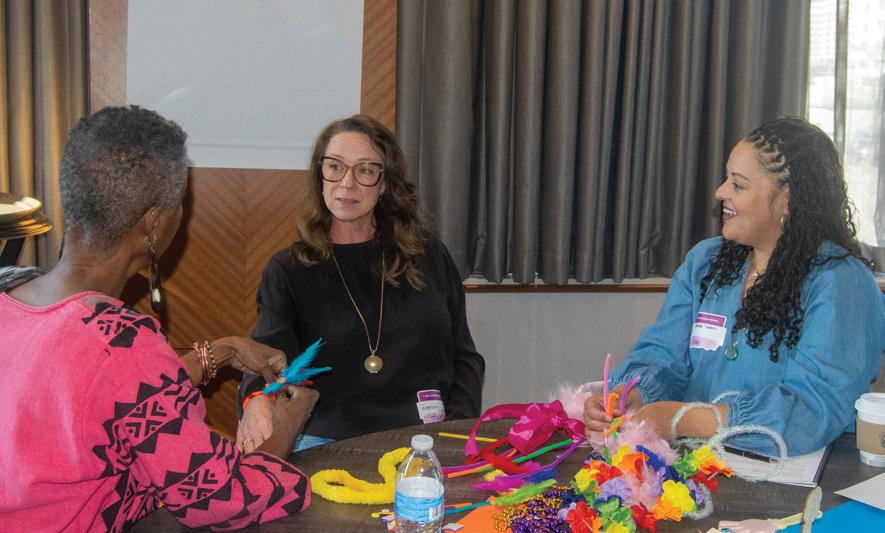
RJEF is also supporting systems change through visibility and relationship-building opportunities that connect grantees to broader networks (e.g., peer learning, funders, and decision-makers). Grantees described convenings and being in rooms where their work was elevated as an important part of strengthening influence and building the conditions for longer-term policy and systems impact .
BUILDING POWER IN POLICY SPACES
Esperanza de Tejas shared that RJEF’s funding made it possible for their executive director to go to the state capital . She noted, “If I hadn’t had the funding, I don’t think my board would have approved me to go.” She set up meetings with state representatives and senators, challenged funding allocations that overlooked community-based organizations like Esperanza and later went back to advocate against a bill that would have restricted unhoused people from being near schools . This legislation would have directly affected the unhoused mothers they serve and the bill ultimately did not pass Beyond immediate advocacy efforts, the visits expanded the organization’s visibility and access within legislative spaces. Legislators have been coming to Esperanza’s events and one legislator outside her district told her, “I already know who you are. I already know the work that you do. I would love to have a chat with you.”
Cross-Cutting Considerations
The evaluation also examined broader learning and changes that cut across RJEF’s work. Specifically, the evaluation focused on what shifts are taking place within different domains of the SDCFWB as a result of RJEF’s support, as well as how evaluation practices are evolving through the participatory grantmaking Together these questions are intended to capture how RJEF is influencing both the conditions it seeks to change and the ways that change is understood and assessed .
The evaluation has found that:
Ź Grantees are addressing the Social Determinants of Child and Family Well-Being paradigm shift by combining direct support with systems-change efforts, helping families meet urgent needs while strengthening longer-term conditions for stability and thriving Across economic security, housing, healthcare, belonging, and community power, their work reflects responsive, culturally grounded, and trust-based strategies that both meet immediate needs and build lasting capacity and influence.
Ź Evaluation under RJEF is shifting from compliance-driven reporting to relationship-based, learning-oriented conversations that emphasize trust, transparency, and shared accountability while reducing burden on grantees . It is also moving away from standardized, funder-imposed metrics toward more flexible, context-rich storytelling and a still-evolving approach in which grantees help shape what meaningful evaluation should look like
Each of these themes are examined in more detail in the following:
Shifts in Social Determinants of Child and Family Well-Being
Grantees are advancing the SDCFWB by directly providing for families’ basic needs, acting as trusted community supports, and affecting change on a policy level through advocacy .
Organizations are advancing economic security by building rapid-response support systems to help families when public benefits are delayed or disrupted. Across multiple grantees, RJEF funds are helping organizations move faster when families’ basic needs are disrupted (e.g. benefit delays, inflation, disasters). Instead of simply referring families to services, grantees are directly providing households with food, formula, diapers, and hygiene supplies, often immediately, and at a scale they couldn’t reach before .
Ź 90% of grantees rated themselves as extremely or very responsive to community needs
Ź 80% of grantees rated themselves as very quick to respond or usually timely when community reaches out
Ź 80% of grantees rated themselves as extremely or very effective in their response to community needs (e.g., appropriateness, tone, quality)
Grantees are strengthening stable housing through a three-pronged approach that spans immediate stabilization, health prevention, and systems change First, some organizations provide direct, short-term housing solutions that keep families safe and reduce the likelihood of a deeper crisis such as helping families avoid eviction or securing temporary placements when families are sleeping in cars or have nowhere else to go . Second, several grantees are explicitly connecting healthy housing to child health, treating housing conditions (e.g., lead exposure) as part of the child well-being ecosystem and linking families to supports that address environmental risks inside the home . Third, grantees are engaging in policy advocacy to prevent
rules and practices that further marginalize unhoused families and to push for more humane, family-centered housing conditions .
Grantees are also strengthening healthcare access by embedding health into trusted community settings and linking prevention to material support As described earlier, after learning that many children’s teeth were “rotting,” grantees described launching children’s oral health initiatives that reached “hundreds” of children through prevention education paired with practical supports like dental kits . Grantees also emphasized maternal and infant health supports that are rooted in community expertise and cultural continuity, including efforts to strengthen birthworker systems and reduce barriers to accessing care and reimbursement. Together, these strategies reflect a shift toward healthcare access through approaches that reduce structural and cultural barriers for families
Belonging and inclusion are being operationalized as trusted space, identity affirmation, and relational safety, especially for families navigating fear, stigma, and heightened surveillance Grantees described how enforcement activity and community-wide fear led families to stop going to work, school, and even doctors appointments, yet families continued to seek support from grantees because “we were trusted ” In this framing, belonging is not a “nice to have” but functions as a protective factor that keeps families connected to critical supports when they are afraid to engage with public systems . Grantees also described inclusion as something built through culturally grounded and identity-affirming practice, not simply outreach. For example, a grantee emphasized approaches rooted “in Blackness,” advancing “linguistic justice for Black children,” and using culturally affirming models that leave participants “changed.” Others highlighted the importance of building community with peers because connection reduces isolation and strengthens a shared sense of purpose .
Grantees are building lasting community influence through coalition-building, policy engagement, and leadership development. Grantees described using storytelling and a “unified platform” to speak with a coordinated
voice, and noted that sustained advocacy requires real capacity. For example, a grantee described having a “full-time policy person” a “game changer” because influence depends on consistent presence where decisions are made Power-building also includes strengthening community readiness For example, distributing “Know Your Rights flyers” and offering trainings so families and local systems can respond quickly to enforcement threats .
Some examples on how Grantees are also building lasting community influence through coalition-building, policy engagement, and leadership development
Ź BCDI-Ohio expanded its power-building coalition with a goal of becoming the informed voice for historically disinvested communities across Ohio By working alongside local leaders and developing a regional framework, BCDI-Ohio is responding to distinct community needs across the state .
Ź Black Californians United for Early Childhood Education increased its policy and advocacy capacity by adding a full-time policy staff person, enabling a consistent presence in decision-making spaces This investment strengthened the organization’s ability to influence policy and build community readiness for sustained power-building at the statewide level .
50% of grantees increased influence at policy/ systems level (ability to sway decisions)
70% of grantees increased power at policy/systems level (collective ability to control decisions and enforce changes)
Shifts in Evaluation Practices
How RJEF is doing things differently
Shifts in evaluation practices strengthen relationships between grantees and funders, capture the stories of work happening on the ground, and collaboratively design meaningful evaluation tools in partnership .
From “compliance reporting” to relationship-based learning conversations. Across multiple grantee interviews, evaluation is described less as producing formal written reports and more as talking through what’s happening, what’s being learned, and what support is needed . Several grantees explicitly contrasted RJEF with funders who require extensive documentation emphasizing that RJEF’s approach reduces “tedious reporting” and instead relies on conversations and check-ins It is also described as an intentional design choice: accountability is “embedded” in the process through transparency, relationships, and ongoing evaluation calls rather than traditional applications and reports
From standardized metrics to context-rich stories of change (and “what the funding made possible”). The grantees repeatedly pointed to evaluation as capturing the story of what changed because of multi-year general operating support (e.g., how operations strengthened, what became possible, and how impact shows up on the ground). There is also a stated hope that this evaluation work can help “tell that story” externally as a model that includes an interest in evaluation that looks different from traditional philanthropy’s focus on outcomes .
From “prove it with data” to “trust, then learn” with lighter burden and shared accountability. Grantees shared that RJEF’s process fits them better (especially for leaders who are “talkers” rather than proposal and report writers) and described RJEF as not forcing them into rigid, funder-defined formats. What makes RJEF a model to emulate is the shift from asking grantees to give reports or data as a condition of funding to acknowledging them as experts—already rigorously vetted through the grant selection process.
From “RJEF evaluates grantees” to “grantees shape what meaningful evaluation looks like.” Several grantees described RJEF as not imposing numeric targets and, instead, being open to what grantees already track and what feels feasible One grantee shared that RJEF “doesn’t ask for numbers,” and that if organizations have numbers they can share them, but the approach is not experienced as requirements-driven. There is also a shift toward co-creating tools and supports . A grantee noted RJEF’s willingness to develop an evaluation tool in partnership . The tool was co-designed to serve the organization’s own learning, rather than being imposed as a compliance exercise.
From a “finished evaluation product” to an evolving learning system (still being defined in Year 1). Year 1 evaluation is described as a work in progress . There’s pride in the model, but also acknowledgement that the evaluation approach is still being figured out, with desire for more continuous feedback and an emphasis on learning . Evaluation could be considered as an ongoing set of regular learning-oriented touchpoints (e.g., evaluation calls) that support transparency and accountability without reverting to traditional, extractive reporting structures.
RECOMMENDATIONS
Across the grantee interviews, five recommendations emerged most consistently. Grantees value RJEF’s relational and low-burden approach . RJEF can strengthen their participatory grantmaking by becoming more intentional in how it facilitates connection, visibility, and practical support . The strongest throughline is that grantees see RJEF as a funder as well as a potential connector, amplifier, and capacity-building partner.
1. Build a more intentional structure for grantee interaction with RJEF and with one another
Grantees value opportunities to gather, learn from one another, and remain in relationship with RJEF over time . Grantees repeatedly described convenings and cohort spaces as useful, meaningful, and energizing Grantees spoke positively about being able to hear what others are doing, compare approaches, and feel less isolated in their work These spaces are not simply “nice to have;” they are part of what makes participation in RJEF feel distinct from a traditional grant relationship
Grantees want this interaction to be more intentional and more consistent . The request is not for more monitoring or more check-ins in a compliance sense Rather, grantees appear to want more structured opportunities for connection that support peer learning, reflection, and shared problem-solving. One grantee explicitly noted the need for “somebody to bring us together,” while another described the experience of gathering with the cohort as “beautiful” because of what it made possible relationally and intellectually .
RJEF could establish a clearer annual interaction strategy: for example, an in-person convening, a small number of virtual cohort sessions, and optional issue-specific gatherings during the year. These touchpoints would likely be most effective if they are organized around practical themes that matter to grantees, such as policy advocacy, operations, evaluation, fundraising, leadership, or staff wellness . This would preserve the relational value of the cohort while making the interactions more useful and more directly responsive to grantee needs
2. Increase grantee visibility and create more direct pathways to funders
Another strong finding is that grantees want RJEF to do more to help them become visible especially to funders, to potential partners, and to wider audiences Grantees described funder-facing opportunities as highly valuable, especially when they created access to people and spaces that would otherwise be hard to enter . Being “in the room” with funders was described as important in its own right, not only because it created immediate opportunities, but because it increased credibility, expanded networks, and helped grantees be taken more seriously. RJEF could formalize this by creating regular funder briefings, grantee showcases, donor roundtables, or invitation-only events where grantees present their work directly
Beyond funder access, grantees would also benefit from a stronger public communications strategy that brings their work more visibility. RJEF could feature grantees in articles, short profiles, videos, panels, webinars, or newsletters This would help raise awareness of their organizations, increase legitimacy with outside stakeholders, and make it easier for others to understand what grantees are actually doing on the ground
3. Provide more practical capacity-building support in
fundraising, proposal development,
operations, and evaluation
Grantees want more practical support that helps strengthen their organizations, especially in areas that make them more sustainable and more competitive in other funding environments . Grantees value RJEF’s trust-based, low-burden model, but many still operate in broader funding environments that require traditional grant writing and formal evaluation reporting RJEF should continue its low-burden approach while also helping grantees build capacity to navigate more conventional systems That includes stronger support in evaluation reporting, data storytelling, proposal writing, and outcome framing . Grantees described these functions as difficult to manage internally because they require specialized expertise, time, or staffing that smaller organizations often do not have. This support would be especially useful if it were practical and applied: short workshops, templates, examples, coaching sessions, and feedback on draft materials The goal would not be to make RJEF itself more report-heavy, but to help grantees also succeed with other funders who still expect those traditional forms of documentation and communication .
Beyond group trainings, there is a need for more individualized support RJEF could complement cohort-wide learning with more one-on-one or small-group technical assistance These may include leadership coaching, evaluation office hours, individualized fundraising strategy sessions, or short-term consulting support around a specific need. This kind of tailored help would be especially useful for smaller organizations that may not have dedicated development, evaluation, or operations staff, and would allow RJEF to respond more directly to the different stages of organizational development across the portfolio
4. Preserve the low-burden, trust-based design even as RJEF expands support
Perhaps the most important finding is that grantees consistently view RJEF’s low-burden, trust-based process as one of the fund’s defining strengths. Multiple interviewees contrasted RJEF with more traditional funders that require heavier reporting, formal renewals, or frequent compliance activities By contrast, RJEF was described as easier, less stressful, more relational, and more human . Several grantees explicitly said that the opportunity to “just talk” rather than produce extensive written reporting significantly reduced pressure
This matters because it means that future improvements should not come at the cost of the very features grantees value most . As RJEF considers adding more convenings, technical assistance, or visibility support, the grantees suggest being careful not to drift toward a more administratively heavy model . Grantees repeatedly describe trust itself, not just the money, as part of what enables them to do their work The fund’s relational design appears to reduce fear, increase openness, and allow grantees to focus their energy where it belongs: on serving communities and building change
For RJEF, this suggests a clear design principle going forward: new supports should remain optional, proportionate, and clearly useful The lesson from the interviews is not that grantees want “more structure, rather, they want more support that still feels consistent with the trust-based approach—lightweight, flexible, and grounded in genuine partnership.
5. Make networking and support more targeted to mission alignment and practical usefulness
Grantees want networking and connection to be more intentional, not simply more frequent Grantees are interested in being connected with peers, advisors, or other organizations when those relationships are likely to be genuinely helpful . In other words, they do not appear to be asking for generic networking . They are asking for well-matched connections based on shared mission, similar challenges, strategic relevance, or concrete opportunities for collaboration
Some grantees appear to want peer learning with organizations doing comparable work; others want introductions to people who have specific expertise in policy, operations, or fundraising. More carefully curated “matchmaking” may be more valuable than simply expanding group networking opportunities. A smaller number of well-designed connections could ultimately be more impactful than a larger number of broad, loosely structured interactions .
This points to an opportunity for RJEF to refine its connective role. Before convenings or introductions, RJEF could gather more information about what kinds of connections would be most useful to each grantee It could then make more purposeful matches by pairing grantees with aligned peers, funders, or technical advisors based on issue area, growth stage, geography, or strategic need. For example, smaller affinity groups—such as rural organizations, birth justice groups, immigrant-serving groups, or policy-focused grantees This can help deepen relevance and make peer learning more targeted and practical
A few additional ideas surfaced in the interviews. Although not as consistently identified across the grantees, these recommendations still seem valuable and may warrant consideration . These include: creating more on-the-ground learning opportunities (for example, low-burden site-based engagement rather than relying only on reports or interviews), doing more to promote and translate the SDCFWB framework publicly through writing and field education, and exploring whether RJEF might use more place-based strategies (for example, concentrating funding geographically or creating a way for grantees to nominate future grantees).
Taken together, these recommendations suggest that grantees want RJEF to deepen its current model . Rather than a desire for more oversight, more formalization, or more stringent accountability structures, the grantees point toward a desire for more intentional relationship-building, more visibility, more practical support, and continued trust .
In this sense, the opportunity for RJEF is not to become more traditional, but to become more strategic in how it extends the trust-based model. Grantees appear to be asking RJEF to do more of what it already does well: connecting, convening, amplifying, and supporting And, at the same time preserving the low-burden approach that makes the fund distinct . If implemented thoughtfully, these recommendations could strengthen RJEF’s role not just as a grantmaker, but as a partner in building stronger organizations, stronger networks, and stronger conditions for child and family well-being
For funders interested in learning more, aligning resources, or exploring co-investment opportunities, please contact RJEF Director Leng Leng Chancey at: lengleng.chancey@ecfunders.org.
GRANTEE HIGHLIGHTS
These grantee highlights reveal something deeper than a collection of programs, but a portal into what becomes possible when community organizations have the stability, trust, and resources to work on issues that matter most .
On one hand, grantees are meeting families where they are at by providing the immediate, tangible support that address urgent need and builds the kind of trust that no institution can easily replicate . Secondly, those same organizations are doing the slower, harder work of shifting the conditions, policies, and systems that determine whether children and families have a genuine opportunity to thrive and not just survive . It is the product of sustained, flexible investment that gives organizations the runway to think and act beyond the crisis in front of them . What these highlights ultimately demonstrate is that community-rooted organizations, when adequately resourced, are not just service providers but architects of the conditions that make long-term well-being possible .
A STORY OF COMMUNITY CARE FROM THE START
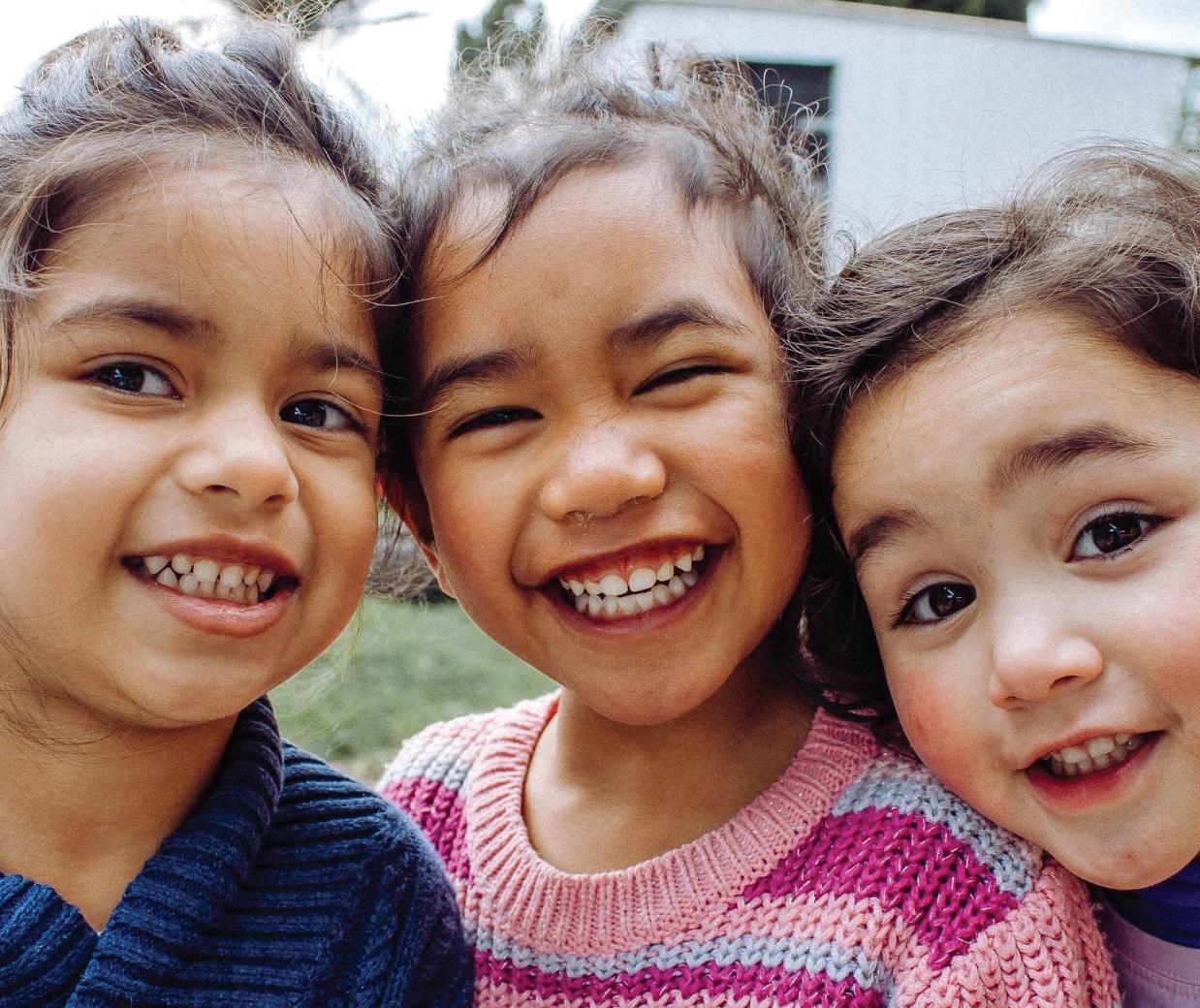
Asheboro Latinx Services (ALS) understands that children’s well-being begins long before birth, shaped by the stability and support surrounding their families By supporting parents and caregivers during pregnancy and early childhood, ALS ensures that children enter the world with love, safety, and stability, laying the foundation for lifelong well-being These conditions are not abstract but an essential reality for young children to thrive. In Asheboro, ALS represents a trusted anchor organization that provides a source of care, connection, and belonging for Latinx families. That trust is built over time through consistent, culturally appropriate services and programs that are marked by systemic gaps and cultural isolation They ensure that no parent navigates these early moments alone and every child is welcomed into a beloved community
Organization Overview
ALS is a community-based organization serving the Latinx community in Asheboro and surrounding rural areas of North Carolina . In a region where language access is limited and many families live with fear related to immigration enforcement, ALS has become a trusted place families call first.
Founded in 2022, the organization began as volunteer-led. For nearly three years, Executive Director Tania Jimenez served as a volunteer or part-time With RJEF support, she was finally able to step into the role full-time and something she described as one of the biggest celebrations of the year . “At the beginning of the year… I was really scared,” she shared about the political climate and funding uncertainty. Since ALS received RJEF funding, she said, “I feel relieved… I’ve been feeling amazing ”
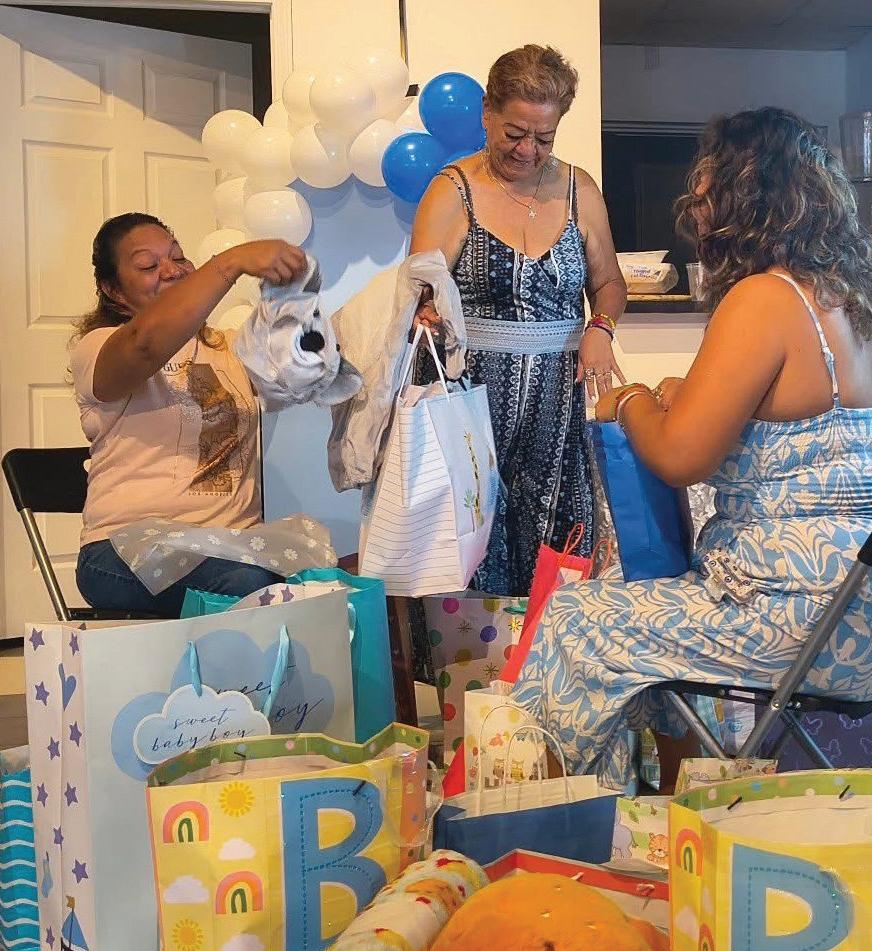
Community baby showers strengthen healthy, dignified, and community-supported child-rearing.
The organization’s mission is to provide basic health services, legal and social counseling, and to advocate for equal rights and equitable access to services for Latinx individuals and families. ALS has become a center for families navigating healthcare systems, legal challenges, and social services
Rooted in community trust and care, ALS supports families navigating healthcare, housing, schools, immigration concerns, and crisis situations . They meet families where they are at, driving them to appointments, buying diapers and food, translating at meetings, and showing up in moments of fear like ICE raids
RJEF Impact at a Glance
In a year marked with fear and uncertainty, ALS grew in its staff and organizational capacity and increased their direct services .
Key accomplishments include:
Ź Provided immediate crisis response such as purchasing diapers, formula, food, and winter clothing for newly arrived families who “literally don’t have anything . ”
Ź Paid for rides to medical appointments and urgent care visits .
Ź Hosted approximately 10+ community baby showers and visited mothers at the hospital or home after birth to provide continued support .
Ź Created wellness spaces for mothers, including yoga and meditation gatherings and a traditional temazcal postpartum healing ceremony .
Ź Supported families facing crisis situations, including providing emergency hotel stays for women experiencing abuse and responding to community calls when immigration enforcement activity increased
Ź Brought families to school board and city council meetings with interpretation equipment so they can speak and understand proceedings
Ź Brought an Executive Director on as full time staff after 3 years of volunteer and part-time work.
Ź Invested in its three staff members . This included new computers and equipment, professional coaching for leadership development, trainings and professional certifications, paid time off for staff wellness and English classes to strengthen service delivery



“IT’S BEEN AMAZING BECAUSE WE’RE BUILDING THIS COMMUNITY. WE HAVE THE POWER TO MAKE CHANGES.”
TANIA JIMENEZ
A STORY OF STATEWIDE POWER BUILDING
Black Child Development Institute-Ohio (BCDI-Ohio) shows what becomes possible when organizations center families in shaping their own future . At the heart of BCDI-Ohio’s approach is centering people most affected by inequitable systems as stakeholders Families are shaping policy priorities, community leaders are influencing systems, and cross-sector partners are aligning around the needs of Black and Brown children Over time, this work is helping to build a future that ensures a successful future for all children in Ohio . BDCI-Ohio is strategic in their efforts to solve issues that impact Black and Brown children through an intersectional lens, from child care to environmental justice .
Organization Overview
Across Ohio, Black and Brown children face persistent gaps in access to safe housing, maternal health care, early learning, and culturally affirming resources Families report challenges ranging from lead exposure to limited access to quality child care and early childhood supports . Since 2017, BCDI-Ohio has served as a bridge between community and policy, listening directly to families and turning their experiences into action. Their comprehensive network of organizations and community stakeholders seek to cultivate and implement equitable systems to support positive outcomes for Black and Brown children While their mission is prenatal to age 18, they are particularly focused on the importance of policy change in the PN-5 area including child care, birth equity, home visiting, etc .
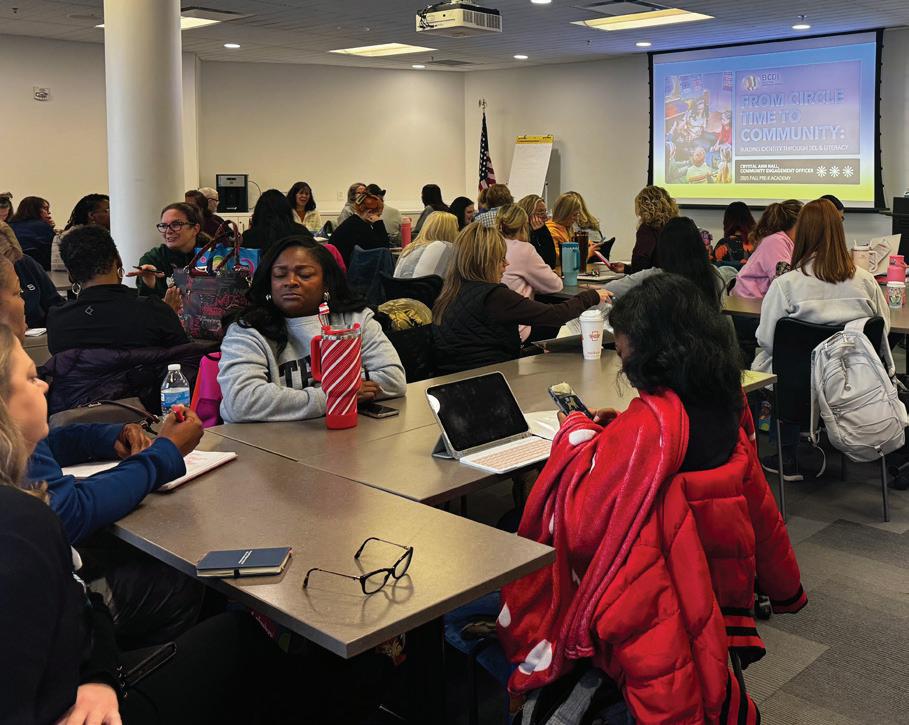
With support from RJEF, BCDI-Ohio conducted statewide listening sessions with parents and caregivers, capturing the realities families face and translating those insights into a community-informed policy agenda. This work led to the release of a statewide report (featured in Zero to Three State of Babies Report 2026), the strengthening of a Prenatal-to-Three coalition, and hosting convening at the Ohio Statehouse bringing community voice directly into policy spaces
RJEF Impact at a Glance
For BCDI-Ohio, RJEF support arrived at a pivotal moment The funding allowed the organization to pause, strengthen its team, and build capacity to expand its work across the state. As Executive Director, Gloria Blevins, reflected, “Growth and having a team with expertise and dedication to the mission has allowed our organization to flourish throughout the state.”
Convening bringing community voices directly to policy spaces.
Key accomplishments include:
Ź Reached up to 1,875 young children and 1,050 parents and caregivers statewide
Ź Hosted 18 community baby showers engaging over 530 families with maternal health education, essential baby supplies, and connections to ongoing family support
Ź Trained 270 educators statewide on trauma-informed care, equity, and culturally responsive practices
Ź Advancing lead screening and prevention efforts by co-chairing a Cleveland-based lead screening initiative, partnering with hospital systems and housing to expand access to testing and reach residents in subsidized housing
Ź Conducted statewide listening sessions with parents and caregivers, documenting challenges ranging from lead exposure to maternal health access and translating these experiences into a statewide report with policy recommendations .
Ź Launched a Power Building Coalition that brings together parents, caregivers, community leaders, and policy advocates to elevate the voices of historically disinvested communities .
Ź Convened early childhood leaders and advocates at the Ohio Statehouse to strengthen collaboration through the Prenatal-to-Three coalition .
Ź Continued expanding from a primarily regional/Cleveland-based organization to a statewide early childhood policy advocacy organization, elevating the needs of Black and Brown families across Ohio .
Ź Strengthened financial infrastructure and completed the organization’s first audit.
Ź Supported staff leadership development, training, and strategic planning to prepare for the organization’s next phase of statewide growth.

“RJEF IS A FOUNDATION THAT CAME AT THE RIGHT TIME WHEN THE WORLD WAS FLIPPED UPSIDE DOWN.”
GLORIA BLEVINS
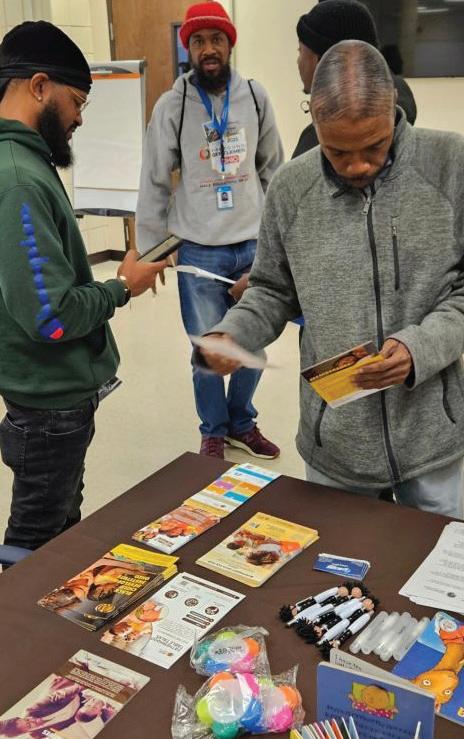
BLACK CHILD DEVELOPMENT INSTITUTE–WISCONSIN
A STORY OF CORE STRENGTH
Black Child Development Institute–Wisconsin (BCDI–Wisconsin) represents what becomes possible when organizations are trusted with unrestricted resources to build sustainably . Today, families are walking into a dedicated space, and staff can respond to what their community needs Over time, this infrastructure growth extends beyond BCDI’s expansion. BCDI-Wisconsin documents the patterns of unmet need, names the systemic failures driving them, and brings that evidence into policy spaces with credibility and moral authority They are shaping policy conversations that determine what are the most pressing needs in the community from Paid Family Leave to literacy. BCDI-Wisconsin ensures Black children and families across Wisconsin have greater access to the resources they need to thrive
Organization Overview
Before BCDI–Wisconsin had a physical office, families would meet with staff wherever space was available, often at fast food restaurants or local eateries. Like many grassroots organizations with
/ WISCONSIN
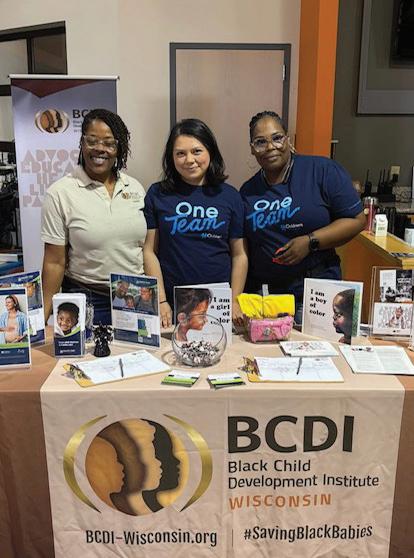
BCDI WI staff and board members with NBCDI Founder Dr. Evelyn Moore supporting Black children and their families.
BCDI attend the 2025 MOMS Symposium sharing resources and information
limited budgets, BCDI-Wisconsin prioritized investing resources in doing everything they could to support Black children and their families instead of paying for a physical office. RJEF support allowed BCDI–Wisconsin to invest in what it already knew was needed .
RJEF Impact at a Glance
RJEF funding helped BCDI-Wisconsin move from operating with limited infrastructure to positioning the organization for the next stage of growth. Their investments were very tangible including paid staff with benefits, a physical office where families and partners can gather and receive resources, and back-end systems needed for BCDI-Wisconsin to grow. Executive Director, Wanda Montgomery shared, “we have never in the history of our organization had full-time staff ”
Key accomplishments include:
Ź Continuing literacy outreach, including distributing books and hosting parent learning opportunities
Ź Hosting a public annual community event that brought families in, increased membership, and helped the organization report back to the community in its own voice
Ź Expanding partnerships across health systems and community institutions, and contributing to statewide coalitions focused on prenatal-to-three priorities
Ź Securing dedicated office space so families and partners have a place to connect. Increasing responsiveness simply by having staff available daily from 8:30 to 4:30 from Monday through Friday at the new office.
Ź Strengthening financial infrastructure, including completing two audits.
Ź Building formal operational systems including financial policies, HR policies, insurance coverage, and strategic planning
Ź Hiring and sustaining full-time staff for the first time in the organization’s history creating consistent capacity to respond, coordinate, and deliver work
Ź Adding a full-time administrative services manager with benefits.
“RJEF HAS TAKEN THE PAIN AND THE BURDEN OUT OF RECEIVING MONEY—MONEY THAT ALLOWS YOU TO BE WHO YOU ARE, AND NOT WHO SOMEBODY WANTS YOU TO BE.”
WANDA MONTGOMERY
BLACK CALIFORNIANS UNITED FOR EARLY CARE AND EDUCATION
/ CALIFORNIA
A STORY OF BUILDING POWER AND VISIBILITY
Over the past year, Black Californians United for Early Care and Education (BlackECE) translated RJEF support into major organizational growth, program expansion, and field-building impact that directly advanced its vision for a culturally affirming early childhood education system in California. BlackECE has not only grown as an organization but has established itself as a key driver of systems change by shaping educator practice, public narrative, and policy advocacy BlackECE’s impact story is one of creating space, building power, and shifting narratives within early childhood systems for Black Californian children and families . Established during the pandemic, the organization created a platform where Black early educators and families could speak directly about their experiences and define solutions on their own terms.
While continuing to navigate the challenges of organizational growth and long-term sustainability, BlackECE represents a critical force in California’s ECE landscape, demonstrating that centering Black children, families and early educators is essential to achieving an early care and education system we all deserve .
Organization Overview
BlackECE is a statewide, Black-led coalition advancing racial justice in early care and education through policy and systems change Inspired in the summer of 2020, following the murder of George Floyd and amid the COVID-19 pandemic, and founded in 2022, BlackECE emerged in response to California’s lack of attention to the specific needs of Black children, families, and early care and education providers. Led by Founder and
Black ECE co-founders stand proudly for language justice
Executive Director Keisha Nzewi, BlackECE centers Black children, families, and the Black ECE workforce, ensuring their experiences and needs are reflected in policy decisions shaping early childhood systems.
BlackECE brings together advocates, civil rights organizations, researchers, university faculty, nonprofit leaders, early educators, caregivers, providers, families, and community-based organizations The coalition is organized around a 10-point policy agenda designed to serve more than 490,000 Black children across California, building on prior advocacy while advancing equity-focused, reparative policy solutions .
RJEF Impact at a Glance
During its RJEF grant period, BlackECE strengthened its role as a leading voice for Black children and early educators in California . RJEF funding supported the organization’s ability to convene stakeholders, elevate Black-led policy priorities, and influence state-level legislative and administrative processes, while continuing to build the infrastructure of the organization. BlackECE Executive Director, Keisha Nzewi, shared “Just the fact that it’s money that we have to help keep our organization fiscally healthy… allows us to be more risk-tolerant and just be us.”
Key accomplishments include:
Ź Convening the first cohort of the Institute for Culturally Affirming Practices for Black Children, with 23 participants from across California, and launching a second cohort in 2026 .
Ź Developing an ancestral coaching model for early educators and caregivers of young Black children, rooted in Black culture and community wisdom rather than deficit-based coaching.
Ź Hosting the second annual symposium on linguistic justice for Black children, featuring distinguished speakers and drawing strong emotional and intellectual engagement from participants
Ź Expanding language justice work by partnering with organizations such as Catalyst California, Early Edge, and Californians Together to advance understanding of Black English in early education
Ź Expanding partnerships with statewide organizations, including First 5 California, to bring early childhood issues into broader statewide education conversations
Ź Producing a series of “Black Papers” on Black language and early learning, with public release beginning in February 2026 and continuing through August
Ź Supporting child care provider advocates to travel regularly to Sacramento for hearings, meetings, and advocacy related to racial wage justice and workplace standards
Ź Growing from a small founding team to five full-time staff plus consultants, strengthening the organization’s ability to sustain programming, policy work, and statewide partnerships .
Ź Bringing on a full-time policy staff person in Sacramento, creating a stronger, more consistent presence in state policy spaces .
Ź Building organizational capacity through an organizational assessment, updated job descriptions for all staff, and relaunching the board with clearer roles and stronger structure .
“WE
SURVIVED… AND RJEF BRINGING US ALL TOGETHER. I THINK THAT IS IMPORTANT. TO KNOW THAT WE’RE NOT ALONE. WE’RE HERE, AND WE’RE HERE STRONGLY.”
KEISHA NZEWI
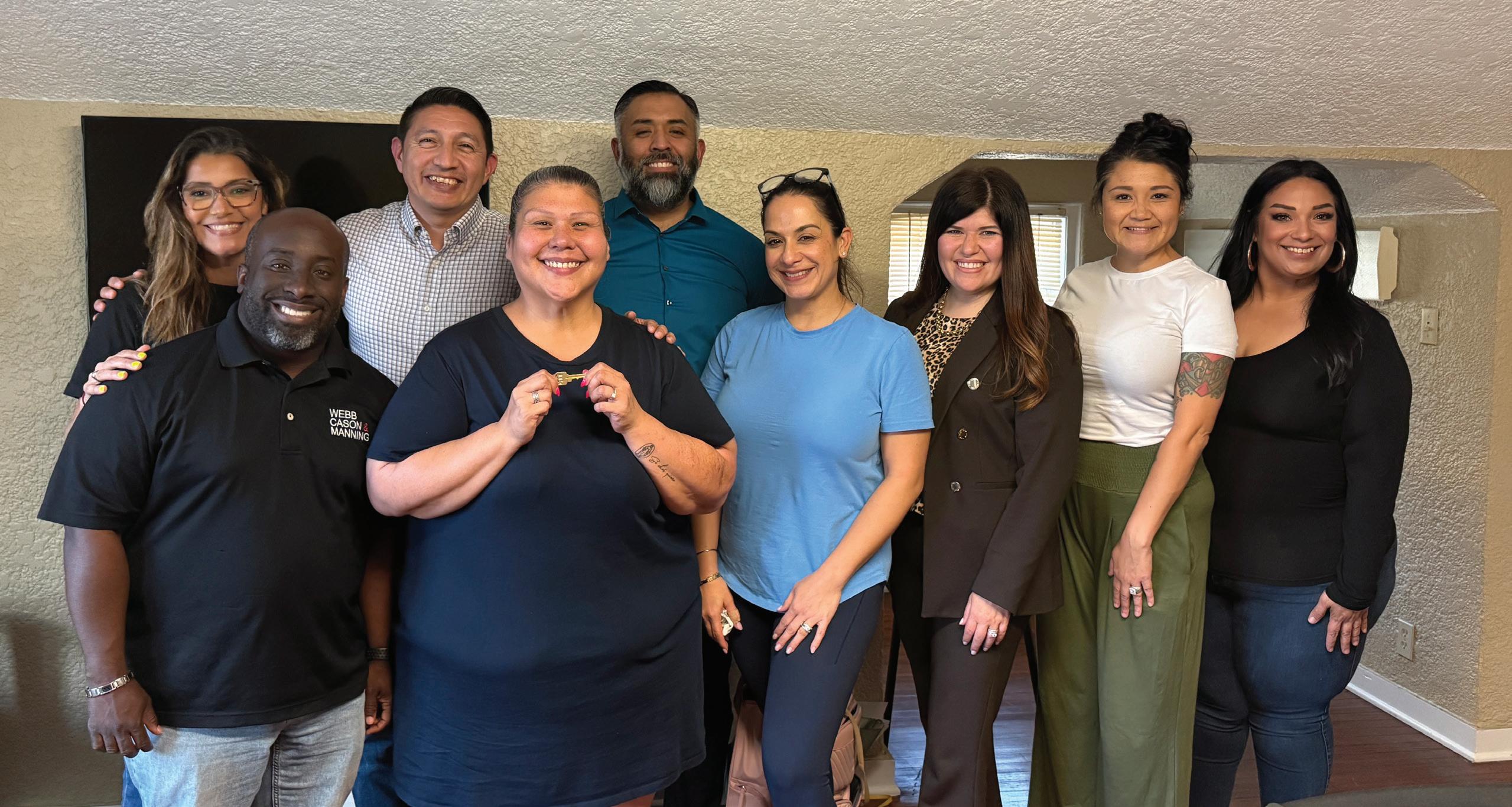
/ TEXAS
A STORY OF GROWTH AND READINESS
Esperanza de Tejas’ first year with RJEF reflects a period of intentional growth paired with stronger organizational foundations. As demand for services increased, the organization expanded its reach while investing in staffing, systems, and financial infrastructure to sustain that growth. These investments allowed Esperanza de Tejas to respond quickly to community needs, expand into new regions, and maintain trusted relationships with immigrant families navigating complex systems. Together, these changes positioned the organization not only to meet immediate needs, but to operate with greater stability, readiness, and long-term impact across Texas. Esperanza de Tejas is building the conditions for long-term community well-being by increasing access to essential resources, strengthening local supports, and creating more equitable systems so that families have greater access to fresh food, educational and workforce opportunities, and healthier, more stable lives .
Organization Overview
Esperanza de Tejas, Inc. is a community-based organization based in Texas that provides culturally respon
sive, language-accessible support to all families including immigrant and mixed-status families navigating complex systems. Founded to meet urgent gaps in access to healthcare, public benefits, and social services, Esperanza de Tejas operates at the intersection of direct service, navigation support, and community trust In a policy environment that is often hostile to immigrants, Esperanza de Tejas serves as a critical access point for families seeking support and stability .
-
ESPERANZA DE TEJAS, INC.
Esperanza de Tejas Board of Directors receiving their keys and holding their first meeting at their resource center
In response to the floods in Central Texas in 2025, Brianna Davis, Executive Director, shared how RJEF funding enabled rapid, on-the-ground support, “Because of the funding, we were able to go to communities affected by the floods and provide diapers and hygiene items… it really has allowed us to just continue the work and increase it in ensuring that we’re able to provide all these items to families.”
RJEF Impact at a Glance
During the first year of RJEF funding, Esperanza de Tejas focused on strengthening internal capacity while rapidly scaling services to meet growing community demand . RJEF’s funding allowed Esperanza de Tejas to invest in organizational infrastructure and staffing while expanding its reach across Texas, ensuring more families could access timely, trusted support
Key accomplishments include:
Ź Ended the year having served nearly 30,000 people, increasing service provision by 40% or 12,000 people
Ź Expanding programs into four additional Texas counties based on urgent needs of the community.
Ź Responding immediately during the government shutdown and SNAP disruptions, including providing formula and other essentials to families when benefits were cut or delayed.
Ź Serving as an official Red Cross partner during Texas floods, distributing diapers and hygiene items in affected communities
Ź Increasing policy influence and visibility by funding travel to the state capital, where the Executive Director met with legislators, challenged funding decisions, and advocated against a bill that would have harmed unhoused mothers and their children .
Ź Hiring a former client as a community outreach specialist and supporting her to become a certified community health worker .
Ź Investing in staff well-being through monthly rest stipends, massages, and a board-staff retreat centered on connection, gratitude, and sustainability .
Ź Expanding to a team of six staff, including hiring a new strategic support lead and growing to five part-time staff .
Ź Invested in leadership by increasing Executive Director compensation and shifting the role from direct service to strategic leadership, strengthening long-term organizational capacity
Ź Developing stronger internal systems, including a succession plan, logic models for each program, and audit readiness through hiring a CPA
“RJEF HAS GIVEN US A TON OF OPPORTUNITIES THAT WE WOULDN’T HAVE HAD BEFORE. WE WERE JUST NICKEL AND DIMING, TRYING TO FIGURE OUT HOW TO GET BY. NOW IT HAS ALLOWED US TO BE IN A POSITION TO BE MORE STRATEGIC IN OUR INVESTMENTS.”
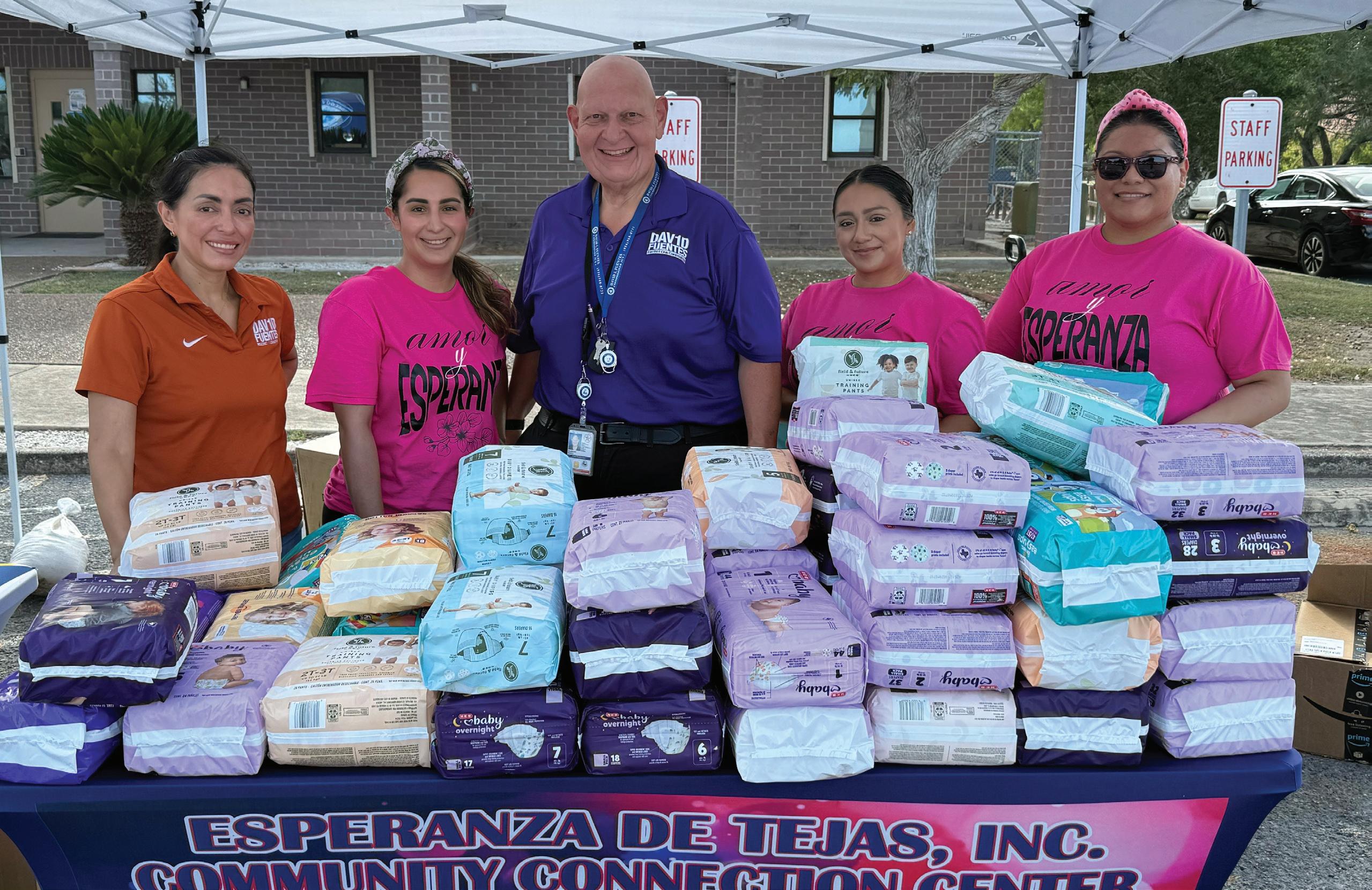
BRIANNA DAVIS
Below: Esperanza de Tejas diaper distribution with the County Commissioner in the Rio Grande Valley
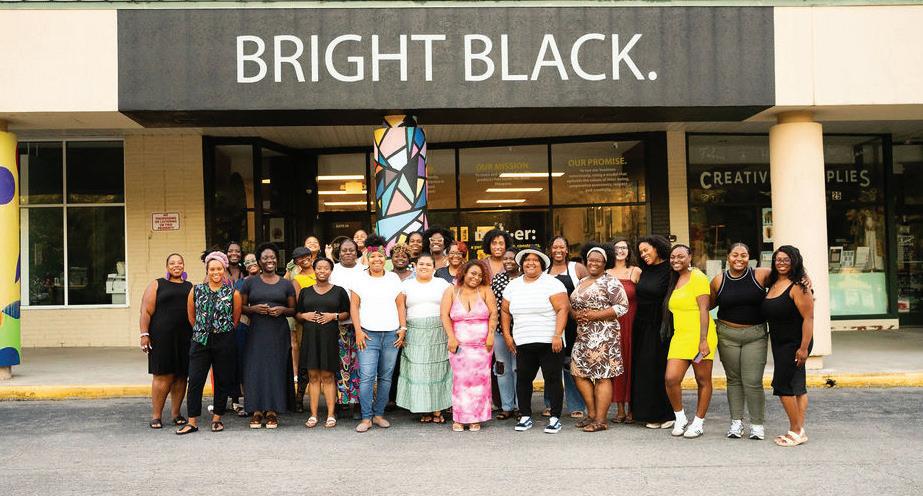
EQUITY BEFORE BIRTH
/ DURHAM, NORTH CAROLINA
A STORY OF STANDING TEN TOES DOWN
Equity Before Birth’s (EBB) first year with RJEF is a story of resilience, care, and collective responsibility. In a year marked by compounding crises, RJEF’s funding allowed EBB to “stand ten toes down” in its mission and respond to urgent needs without compromising values or core services . By trusting families and addressing the interconnected conditions shaping birth outcomes, EBB demonstrates that when parents are supported and empowered, infants are given the conditions they need not only to survive, but to thrive EBB’s accomplishments reflect broader progress toward birth and family equity by increasing access to critical supports, reducing barriers during pregnancy and early parenthood, and helping create conditions where Black and Brown mothers, birthing people, and their infants can experience greater safety, dignity, and well-being.
Organization Overview
EBB is a Black-led birth justice organization based in Durham, North Carolina, led by Executive Director, Joy Spencer Founded during the COVID-19 pandemic, Equity Before Birth emerged in response to persistent racial inequities in maternal and infant health outcomes. Grounded in lived experience and community trust, EBB works to save the lives of Black and Brown mamas, birthing people, and their infants by increasing access to culturally responsive care, advancing economic justice, and advocating for systems change . Through direct service, mutual aid, and policy advocacy, EBB addresses the structural conditions shaping birth outcomes and family well-being
Group photo of EBB annual Mama’s Night Out to support relationship building and respite for mamas
RJEF Impact at a Glance
During the first year of RJEF funding, Equity Before Birth operated amid overlapping crises, including economic instability, delayed public benefits, housing insecurity, and ongoing policy attacks on reproductive rights . RJEF’s funding allowed EBB to remain responsive to escalating community needs while maintaining continuity of care for families during pregnancy and postpartum
Key accomplishments include:
Ź Strengthening core program supporting families before and after birth including doula and midwifery care, therapy, transportation to medical appointments, baby supplies, and peer support
Ź Mobilizing weekly emergency food and baby supply distributions within five days of SNAP delays, creating a rapid-response system for families in crisis The weekly distribution continued even after SNAP was reinstated “because people needed that support like yesterday . ”
Ź Serving a growing number of Spanish-speaking and immigrant families who turned to the organization as a trusted source of food, clothing, transportation, and support during periods of fear and isolation .
Ź Hosting large-scale diaper distributions, with more than 200 families served in two hours during one event.
Ź Launching Bridge to Stability, a housing support effort that helped families avoid eviction or move from cars and unsafe conditions into temporary housing .
Ź Deepening family supports through financial literacy, budgeting assistance, wellness workshops, CPR training, and health education .
Ź Expanding partnerships and advocacy efforts, including advocacy days, Black Maternal Health Week activities, legislative engagement, and being invited to teams drafting legislation for families and children .
Ź Building internal capacity by adding a part-time communications role, upgrading staff laptops, strengthening volunteer coordination, and bringing on new partners for therapy services and childcare support .
“OUR EXPANSION LOOKS LIKE GOING DEEPER INSTEAD OF GOING WIDER.”
JOY SPENCER
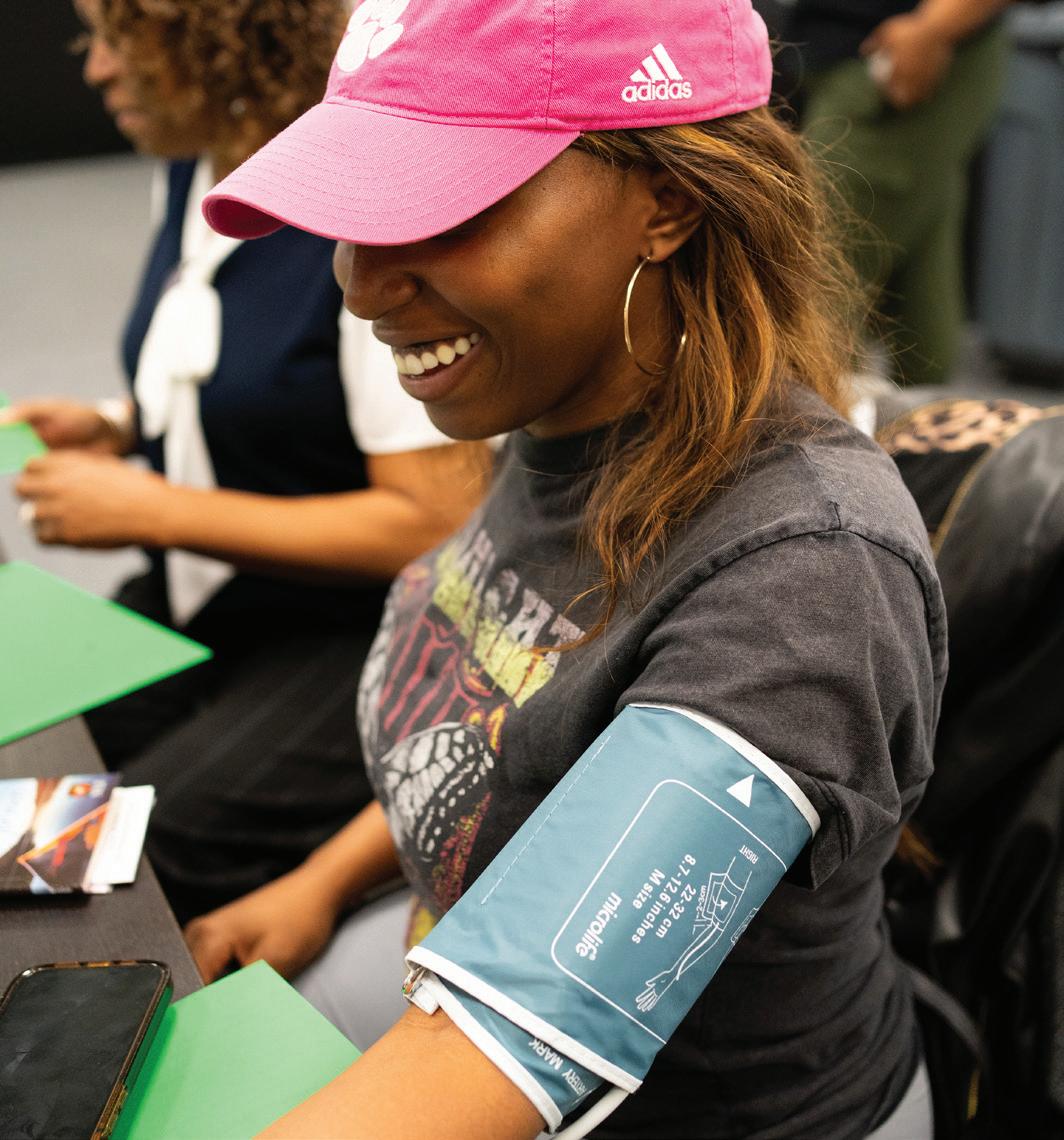
MIGRANT EQUITY SOUTHEAST
/ SAVANNAH, GEORGIA
A STORY OF RESILIENCE AND COMMUNITY
Migrant Equity Southeast’s (MESE) first year with RJEF shows the resilience of immigrant families in Coastal Georgia and their view of MESE as a trusted community partner leading with collective care and respect. Amid targeted attacks on immigrants, families who otherwise would be too afraid to seek help know they can turn to MESE and be received with dignity. RJEF funding strengthened MESE’s mutual aid work and community programming including diaper and food distribution, school supplies, tutoring, after-school support, and summer learning opportunities for families who had nowhere else to turn. MESE also advanced advocacy efforts focused on language justice in healthcare and education, housing and basic needs, and ensuring immigrant families’ voices are included in decision-making spaces where they are historically invisibilized
Organization Overview
MESE is a Latinx- and immigrant-led 501(c)(3) organization based in Savannah, Georgia, co-founded and led by Executive Director Daniela Rodriguez and her team. Established during the COVID-19 pandemic, MESE was created to address the lack of culturally competent, language-accessible support for migrant and refugee families in South Georgia. In a region where immigrant-serving organizations are scarce, MESE’s mission is to work for the liberation, economic justice, and human rights of migrant and refugee communities through empowerment, advocacy, education, and direct support
MESE advocates and community members advocating for education justice for ESOL kids
RJEF Impact at a Glance
During the first year of RJEF funding, MESE operated in a near-constant state of rapid response amid an increasingly hostile immigration climate where they were front line responders to one of the largest single-site immigration raids in history at the Hyundai Metaplant in Ellabell, GA. Funding allowed MESE to strengthen organizational sustainability and build community power while responding to urgent needs from a community reeling from targeted ICE raids and the termination of Temporary Protective Status (TPS), ripping families apart and pushing them into economic precarity as breadwinners are detained
Daniela Rodriguez, Executive Director, shares, “It has helped us to be able to keep up faster with the demand that we have of community needs… With the current immigration climate, every day, every week, that phone doesn’t stop ringing, and also texts. And so, thanks to the funding, we have been able to have a person that is able to cover the office phone full-time.”
Key accomplishments include:
Ź Maintaining a full-time, language-accessible hotline so immigrant families could access immediate support related to immigration enforcement, school concerns, healthcare access, housing instability, and other urgent needs .
Ź Responding after the Hyundai Metaplant raid by helping families navigate fear, school safety concerns, and the immediate disruptions caused by immigration enforcement .
Ź Strengthening the diaper assistance program so families seeking baby supplies could also connect to broader resources and supports related to children’s health, education and other issues impacting their children’s well-being
Ź Increasing in-person outreach across 30 counties in South Georgia, including rural communities located several hours from Savannah
Ź Expanding programming for children through summer classes, after-school programs, and a volunteer-led tutoring program supporting students struggling academically and “to give them a little bit of joy during these difficult times”
Ź Building stronger referral networks with churches, schools, business owners, local leaders, and nonprofit partners that now help connect immigrant families to MESE’s services.
Ź Securing an immigration attorney on retainer to provide free consultations and help families navigate TPS, asylum, and other immigration protections .
Ź Hosting Power of Attorney clinics across multiple counties so parents could establish legal plans to protect their children in case of detention or deportation .
Ź Leading Know Your Rights and family preparedness trainings that helped parents update school records, identify trusted caregivers, and prepare safety plans for their children .
Ź Supporting staff sustainability through monthly group therapy, professional development opportunities, and team-building activities that recognize the emotional toll of frontline immigrant justice work
“SOME OF THE TESTIMONIES WE HEARD FROM THE COMMUNITY WERE AMAZING. THEIR LEVEL OF TRUST AND HOW PEOPLE FELT SEEN BY US. IT WAS A REMINDER THAT THE EARLY MORNINGS, THE LATE NIGHTS, THE NONSTOP HUSTLE, IT’S WORTH IT BECAUSE IT’S MAKING THE LIVES OF SOME PEOPLE BETTER.”
DANIELA RODRIGUEZ
Below: Community leaders from counties across South Georgia advocating for immigrant rights at the Georgia State Capitol for the first time
A STORY OF GROWTH AND MOMENTUM
Navajo Birthworker Collective’s first year with RJEF is a story of growth and momentum. For years the organization worked with limited resources, planning programs around small budgets and volunteer capacity within a community that survived forced sterilizations, cultural erasure, and discrimination and dismissive treatment from healthcare providers. After years of surviving in difficult soil, RJEF funding allowed the team to begin flourishing—expanding its reach, strengthening its infrastructure, and investing in tools that support its collective members. With stronger partnerships, expanded programs, and deeper policy engagement, Navajo Birth Collective is growing in directions that will allow Navajo families and birth workers to shape healthier futures for the next generation.
Organization Overview
Navajo Birthworker Collective works to improve the health of Navajo families and ensure cultural preservation by providing compassionate, unbiased, and accessible care strengthening birthing families and infant health through holistic and traditional practices that have faced extermination by past policies seeking to erase Navajo culture . Serving communities across the Navajo Nation including parts of Arizona, New Mexico, Utah, and Colorado, the organization supports families during pregnancy, birth, and postpartum to combat the high rates of pregnancy-related mortality while promoting healing, cultural knowledge, and language preservation
Navajo Birthworker Collective’s work centers Navajo traditions and community-based and culturally-grounded care by connecting families with doulas, lactation support providers, partnerships with traditional practitioners, and local support networks The organization also helps them navigate the individual-level implicit bias inherent in health systems and public resources and the system-level barriers to access due to the slashed budgets of Medicaid, CHIP, SNAP, Head Start, and housing assistance. Their approach integrates education, direct services, and advocacy to address the broader conditions that shape maternal and infant health
RJEF Impact at a Glance
During the first year of RJEF funding, Navajo Birthworker Collective expanded its ability to support families while strengthening internal capacity and partnerships. Flexible funding was “just the support we really needed,” allowing the organization to grow its team, invest in tools for its collective members, and respond quickly to community needs during crises
Amanda Singer, Executive Director, also spoke about the impact of the funds on their visibility: “We’re able to do more, meaning that we can actually travel to other communities without having to put our own money into it, and be able to table and go out there and present our history, our present, and our future… and being able to help other tribal communities wanting do something similar to what we’re doing . ”
Community healing circle hosted by Navajo Birthworker Collective
Key accomplishments include:
Ź Responding to community needs during regional wildfires by organizing donation drives, delivering hygiene supplies, and distributing traditional herbal respiratory supports Including collaborating with herbalists to develop educational materials on herbal simmer pots families can use to improve indoor air quality during smoke season .
Ź Expanding partnerships with hospitals, home visiting programs, Head Start, and food assistance providers to strengthen wraparound support for families .
Ź Joining the New Mexico BIPOC Early Childhood Coalition and participating in the UNM Early Childhood ECHO network to expand learning and collaboration.
Ź Launching focus groups to guide the development of a gender justice initiative and identify emerging needs within Navajo communities
Ź Advocating with state agencies and partners to address barriers to doula reimbursement through Medicaid and Indian Health Service.
Ź Contributing to policy conversations that led to changes in proposed state regulations affecting doulas and birth workers
Ź Bringing on two additional contractors to expand organizational capacity and support program delivery.
Ź Partnering with a Native-led consultant to design a new website and strengthen the organization’s digital infrastructure
Ź Providing laptops and tablets for approximately 15 collective members to improve coordination, outreach, and service delivery
“WE ALWAYS HAD TO PLAN AROUND THAT SMALLER BUDGET… BUT ONCE YOU ALL SEEDED US WITH THAT FUNDING, WE CAN ACTUALLY SEE OUR ROOTS AND THE WHOLE PLANT GROWING.”
AMANDA SINGER
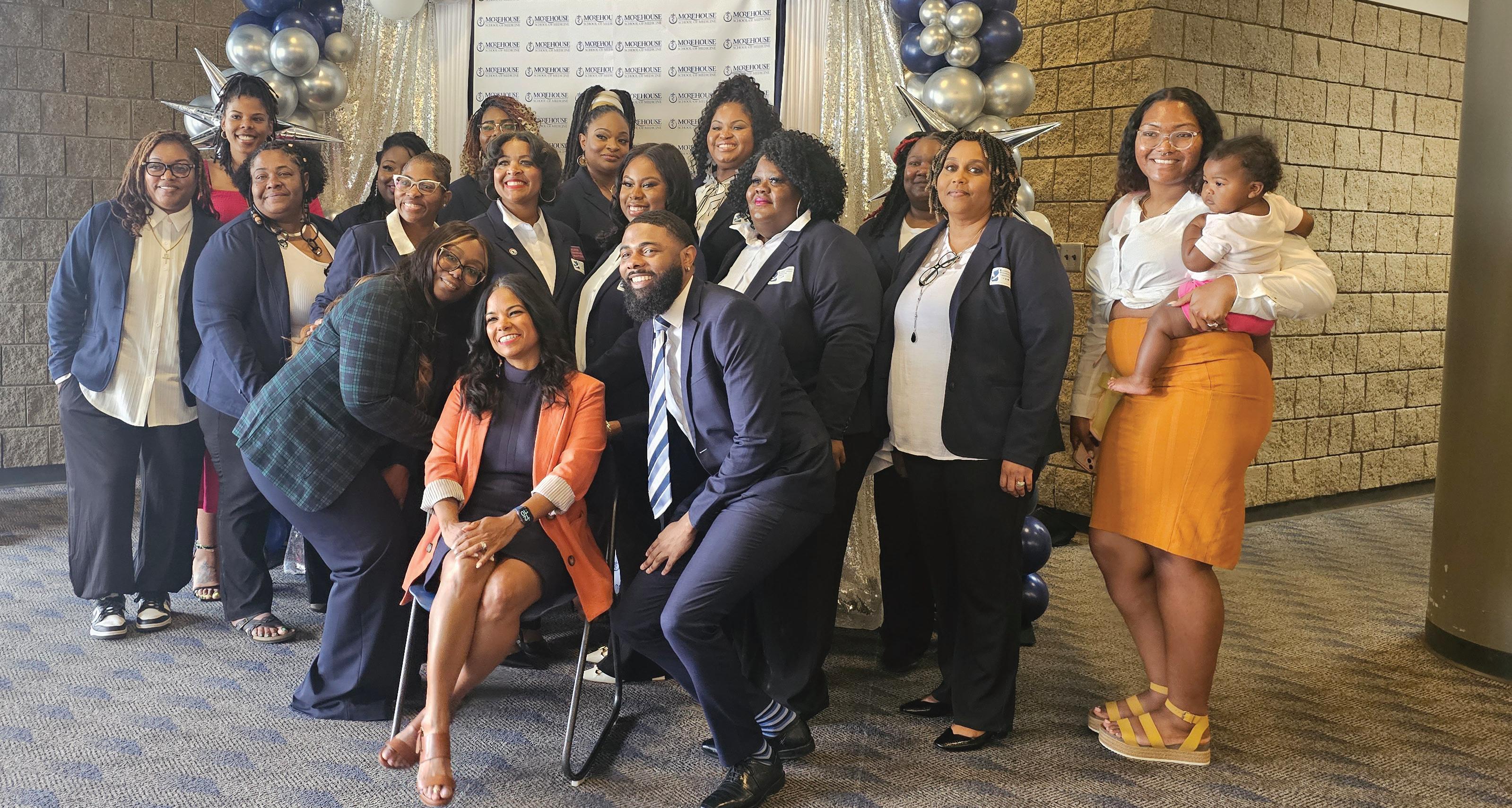
SOWEGA RISING
/ SOUTHWEST GEORGIA
A STORY OF SECURITY, GROWTH, AND RURAL POWER
SOWEGA Rising’s first year with RJEF is a story of stability at a critical moment . In a year when many small rural organizations struggled to survive, RJEF’s multi-year, trust-based support provided the security SOWEGA Rising needed not only to sustain its work, but to grow it The funding allowed the organization to expand staff capacity, respond to urgent community needs, strengthen family supports, and deepen its policy and advocacy work across Southwest Georgia . At the same time, it affirmed that SOWEGA Rising did not need to reshape its mission to fit the fund. Instead, its existing work to improve education, health, economic security, and community power was already essential to child and family well-being . With stronger capacity, deeper partnerships, and growing statewide momentum, SOWEGA Rising is entering its next chapter by becoming statewide in 2026.
Organization Overview
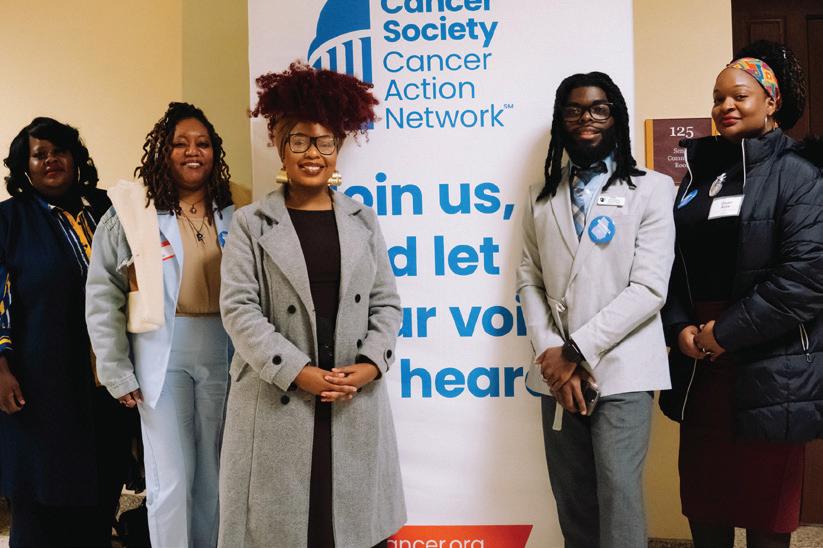
SOWEGA Rising is a Southwest Georgia-based organization that mobilizes people and resources to improve the well-being, quality of life, and political power of marginalized communities across the region . Grounded in
SOWEGA Rising celebrates the graduation of 25 doulas in Southwest Georgia.
Community health workers and doulas pushing for Medicaid expansion in Georgia
community organizing and advocacy, the organization works across multiple issue areas including education equity, food access, rural health, historic preservation, criminal justice reform, housing, climate justice, and economic mobility . SOWEGA Rising’s work is rooted in the realities of rural Southwest Georgia, where long-term economic decline, disinvestment, poverty, and environmental crises have shaped the conditions families face By building local leadership and advancing systems change, the organization helps communities advocate for the resources and policies they need to thrive
RJEF Impact at a Glance
During the first year of RJEF funding, SOWEGA Rising used flexible support to stabilize and expand its work during a difficult funding climate.
Key accomplishments include:
Ź Launching “Dental Tips with Flossy,” a rural oral health initiative after observing that many young children in the region lacked access to dental care and were experiencing severe oral health problems including rotting teeth. The program reached hundreds of pre-K children across Southwest Georgia through Head Starts, daycare centers, and community events . They distributed dental kits including toothbrushes, toothpaste, and floss while building partnerships with local dentists and early childhood programs.
Ź Strengthening maternal and infant support systems by training and graduating nearly 25 community doulas in partnership with Morehouse School of Medicine.
Ź Coordinating baby supply distribution through doulas for families impacted by rising costs, SNAP reductions, and economic instability .
Ź Graduated 25 teacher advocates through a fellowship that trained educators in organizing, advocacy, and policy change
Ź Increasing rapid-response capacity by partnering with Migrant Equity Southeast to distribute Know Your Rights materials and organize trainings in rural communities impacted by immigration enforcement
Ź Building stronger parent power through listening sessions and advocacy trainings in multiple counties, helping parents identify needs and speak directly to school systems and school boards
Ź Expanding organizational capacity by hiring a new education organizer, allowing the organization to deepen its work in parent advocacy, teacher organizing, and education justice
“THERE WERE OTHERS THAT DIDN’T SURVIVE THIS YEAR, ESPECIALLY SMALLER RURAL ORGANIZATIONS... TO HAVE STABLE FUNDERS THAT BELIEVED IN US AND WERE WILLING TO STICK WITH US MEANT EVERYTHING.”
BYRD
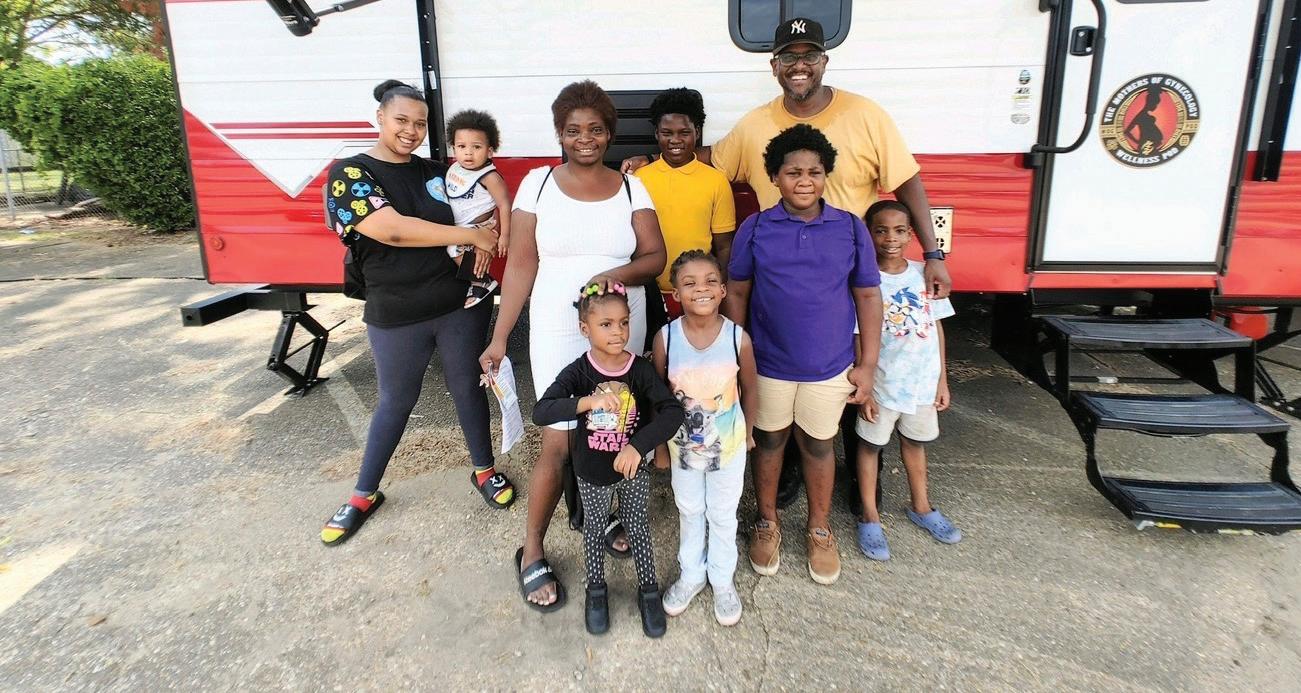
THE MORE UP CAMPUS
/ MONTGOMERY, ALABAMA
A STORY OF RECLAIMING HISTORY AND BUILDING CARE
More Up Campus’s first year with RJEF translated a vision into reality. With stable funding, the organization has been able to move beyond piecing together small grants and instead build a physical and programmatic foundation for its work. By reclaiming the history of Black women, expanding access to maternal health care, and creating spaces for healing and learning, More Up Campus is challenging the medical system to reflect on the cruelty embedded in the field of gynecology, improving Black pregnancy-related and child mortality, and shaping new possibilities for families in Montgomery and across the region.
Organization Overview
More Up Campus is a Black-led organization in Montgomery, Alabama, working at the intersection of reproductive justice, historical truth-telling, and maternal health. Founded by Michelle Browder, the organization emerged from her discovery of the history of enslaved Black women whose bodies were exploited in the development of gynecology . In response, she began creating spaces to honor their stories, including learning to weld and creating sculpture to represent these women .
This work has grown into the development of the More Up Campus, a multi-use space that includes a Gyne-
Families receiving services at Mothers of Gynecology Wellness POD
cology Health and Wellness Museum and a clinical care site. The museum and interpretive center foreground the lived experiences of enslaved women while educating visitors on the history of reproductive health, sterilization, and eugenics . At the same time, the campus is being developed as a place where families can access culturally grounded maternal health care, including support from doulas, midwives, and medical practitioners
Through education, community engagement, and advocacy, More Up Campus is working to reclaim history, shift narratives, and improve maternal and child health outcomes in Alabama and beyond .
RJEF Impact at a Glance
RJEF funding came at the right moment as More Up Campus is transitioning into a nationally recognized organization with physical space, programming, and partnerships. Flexible support allowed the organization to invest in infrastructure while expanding services and community reach. Michelle Browder shared, “we’ve been able to establish our infrastructure, provide more space to give care to the community, and then continue on with our mission with ease.”
Key accomplishments include:
Ź Serving hundreds of families, including supporting over 270 children and caregivers and providing comprehensive care such as housing, doula services, and safe birthing access
Ź Reaching hundreds through education and training, including engaging medical students and community members in learning about the history and evolution of medicine
Ź Acquiring and developing a permanent campus to house a museum, clinical services, and community programming, including space for families traveling from rural areas
Ź Bringing the museum to near completion, sharing the story about the mothers of gynecology, the history of enslavement of women, and reproductive and maternal health
Ź Expanding maternal health services through both a physical site and mobile clinic, providing lactation support, doula care, consultations, and wellness services for women and families
Ź Building strategic partnerships with medical professionals, hospital systems, and consultants to support clinical services, curriculum development, and policy efforts
Ź Leveraging RJEF funding to secure additional local and national funding while advancing policy advocacy, including efforts to open a birthing center in Montgomery.
Ź Securing 501(c)(3) status and strengthening organizational infrastructure, including financial management, compliance, and reporting systems .
“RJEF TOOK THE STRESS OFF THE VISIONARY… WHEN YOU HAVE THE INFRASTRUCTURE IN PLACE AND PEOPLE THAT YOU TRUST, IT MAKES THE WORK SO MUCH EASIER.”
MICHELLE BROWDER
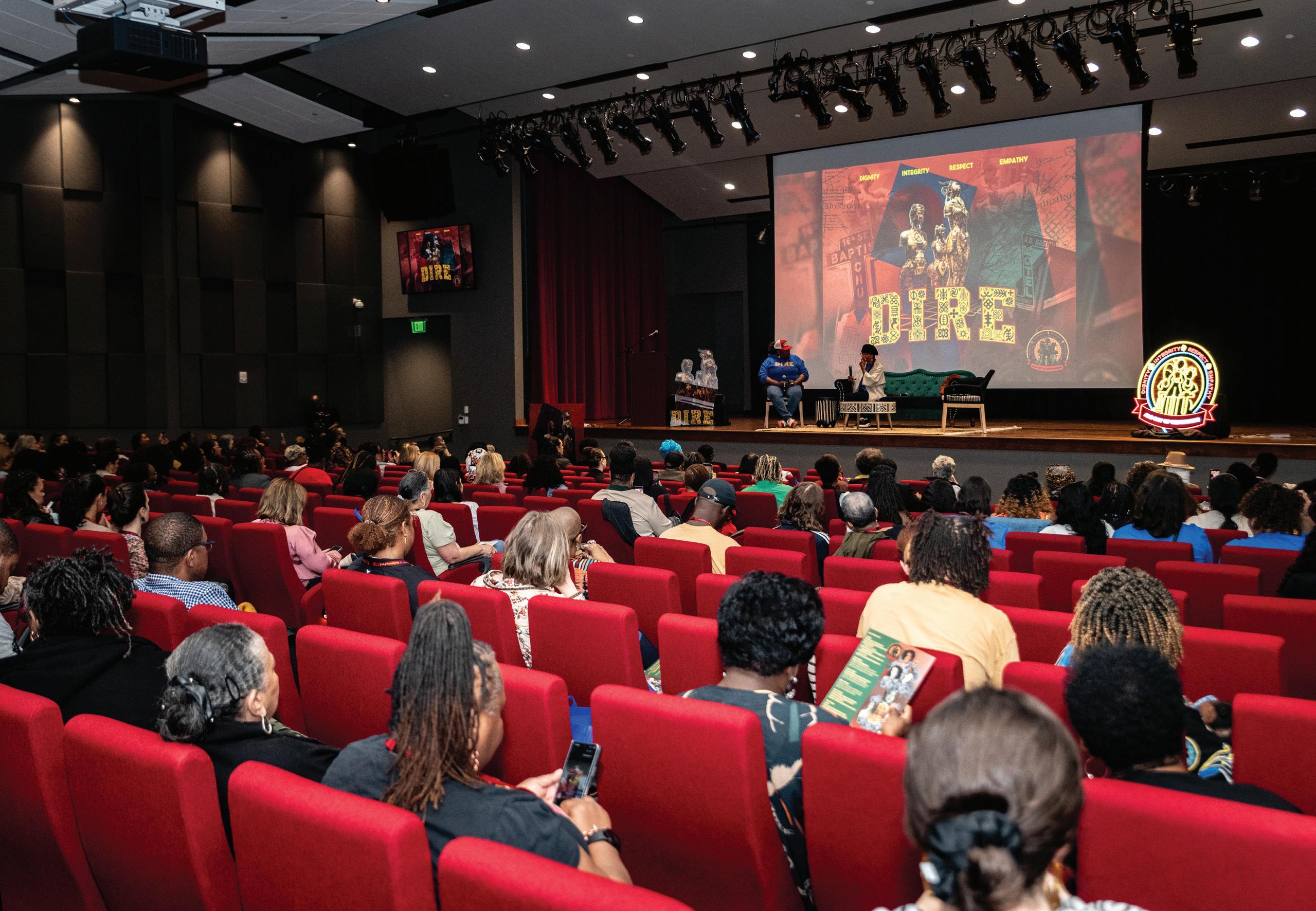
Below: Executive Director, Michelle Browder, speaking at Anarcha Lucy Betsey Day of Reckoning Part 5 Conference
APPENDIX A: EVALUATION METHODS
This evaluation was developed in partnership with reimagine collective . reimagine collective approaches evaluation as a process for collaborative learning and capacity building, grounded in meaningful participation from program staff and stakeholders
Consistent with this approach, the evaluation was conducted in close collaboration with RJEF staff Staff provided input throughout the process, including shaping the evaluation design, refining data collection tools, and reviewing the program’s logic model. They also contributed feedback on emerging findings and lessons, ensuring the evaluation reflects both the implementation and lived experience of the work.
The evaluation employed a mixed-methods approach, integrating qualitative and quantitative data to address the evaluation questions . RJEF’s logic model was created to articulate the foundation’s theory of change by linking its activities to intended outputs, short-term, intermediate, and long-term outcomes . A measurement framework was developed to operationalize the items in the logic model. This framework specified the indicators of change, data collection methods, sources, and frequency, providing a structured approach to track progress and assess impact across multiple levels of RJEF’s work
Data for the evaluation were collected through document review, surveys, interviews, and ongoing check-ins . Each method is described below:
Existing Program Documents were reviewed to assess progress toward outputs and early outcomes by analyzing existing documents and records, and track decision-making processes, stakeholder engagement, and implementation fidelity. These documents included: RJEF meeting notes, messaging documents, grantee check-in notes. These notes were collected since the start of RJEF and throughout the first year of grants implementation The content of the documents were analyzed to identify evidence of outputs and outcomes resulting from RJEF’s activities
Interviews with RJEF Staff and grantees committee were conducted to gather insights on adoption of RJEF’s framework and funded initiatives Some of these conversations occurred informally during monthly check-in calls with RJEF staff The formal interviews with staff and grantee committee members occurred in December, 2025 through January, 2026. These interviews provided a descriptive explanation of the RJEF’s activities and insight into the decision making process .
Grantee Surveys were conducted to systematically gather feedback from grantees on their experiences with RJEF’s trust-based grantmaking approach and the impacts of this support on their work This was a webbased, self-reported assessment completed by each grantee, once at the end of the Year 1 funding period (December, 2025). For example, changes in their capacity to address their community’s emergent needs, their experience with RJEF and other grantees, organizational growth and their work in 2025, their understanding of the Social Determinants of Child and Family Well-Being (SDCFWB) were assessed.
Interviews and Check-ins with Grantees were conducted to gather in-depth perspectives from grantees These included one-on-one or group grantee check-ins and a one-time formal interview The check-ins with grantees occurred throughout the grant period At the end of the Year 1 funding period, each grantee was
interviewed (December, 2025 through January, 2026). These interviews provided a descriptive explanation of the grantees’ work and the changes they experienced as a result of RJEF funding. For example, description of grantees’ relationship with other grantees, changes in their awareness of the SDCFWB framework, and description of grantees’ connections, partnership, and alliances with other entities if their communities were assessed
Data from these sources were analyzed to answer the evaluation questions (see Evaluation Plan), highlight grantee experiences, identify lessons learned, and inform actionable recommendations. The findings aim to strengthen RJEF’s approach and contribute to broader learning on trust-based, community-centered philanthropy .