

In 2025, nearly half of families with young children struggled to meet basic needs—keeping the lights on, food in the pantry, and a roof overhead. Even more parents reported emotional distress in themselves and their children.
At the same time, public funding was pulled back. Service providers persevered through abrupt grant cancellations and a precarious environment. Cruel immigration enforcement tactics separated families and cast fear across communities.
Despite the daunting challenges, families, caregivers, community organizations, and advocates joined in solidarity to protect each other. They are keepers of a vision for a diverse country where all children and families belong and can thrive.
Our role is to show up with them. Now more than ever, the Early Childhood Funders Collaborative (ECFC) is a place where funders make sense of complexity together and move from analysis to action.
Members aligned quickly to defend Medicaid and protect access. They pooled resources to respond when funding gaps put community-led work at risk. They invested in organizing, narrative change, and leadership development because short-term relief alone cannot secure long-term outcomes for young children and families.
Members also deepened their support for Indigenous leadership and sovereignty in early childhood, strengthening relationships rooted in accountability and respect. Through our Raising Child Care Fund, funders invested in community organizing and leadership by parents, providers, and caregivers, building power to advance policy change and secure new public investment.
Now more than ever, ECFC is a place where funders make sense of complexity together and move from analysis to action.
ECFC launched the Racial Justice and Equity Fund (RJEF), grounded in the understanding that children’s well-being is inseparable from housing stability, health care, economic inclusion, environmental safety, and community power. Through participatory grantmaking, community leaders identified changemakers too often overlooked by philanthropy.
The capstone experience of 2025 was our Learning Tour in Montgomery and Selma, which reminded us that today’s inequities are the result of deliberate choices—and that progress requires sustained collective courage. History is not separate from this work. It shapes the decisions we make now.
The moment calls for clarity, alignment, and long-term commitment. ECFC will continue to lead by joining with funders who are ready to meet that responsibility—not by acting alone, but by building power together.
We invite you to reflect on what this work makes possible and the role you can continue to play. Philanthropy can defend what families need now while investing in a more just future. The wellbeing of young children and families depends on the choices we make together.
With gratitude and resolve,
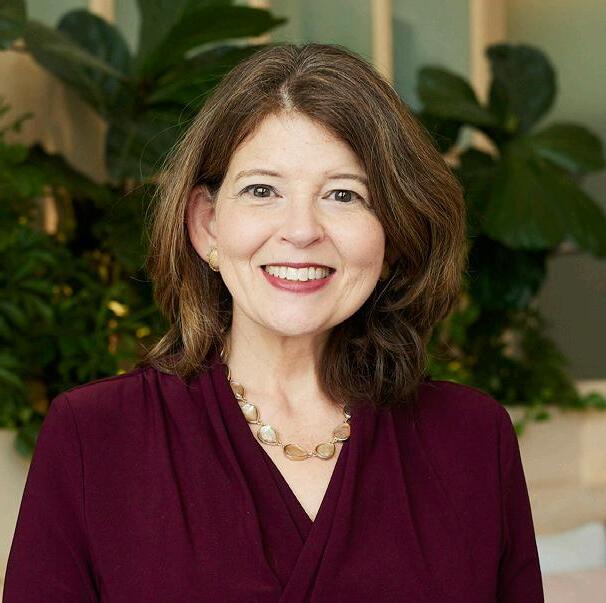
Shannon L. Rudisill Executive Director Early Childhood Funders Collaborative
participants across in-person and virtual convenings
ECFC strengthened a national community of funders connected through ongoing dialogue, shared learning, and collective action. In 2025 alone:
75+ member organizations
140 non-member funders engaged
39 state and local foundations connected through collaboratives
continued
These figures reflect a growing web of relationships across local, state, and national philanthropy, sustained through consistent engagement on the most pressing issues facing young children and families.
ECFC also partnered with 21 philanthropy infrastructure organizations, bringing intersecting expertise into programming on issues such as federal policy changes, state budget and tax decisions, and support for immigrant children and families. Partners included groups like the Alliance for Early Success, Economic Opportunity Funders, Grantmakers for Education, and Grantmakers Concerned with Immigrants and Refugees—reflecting the cross-sector nature of this work.
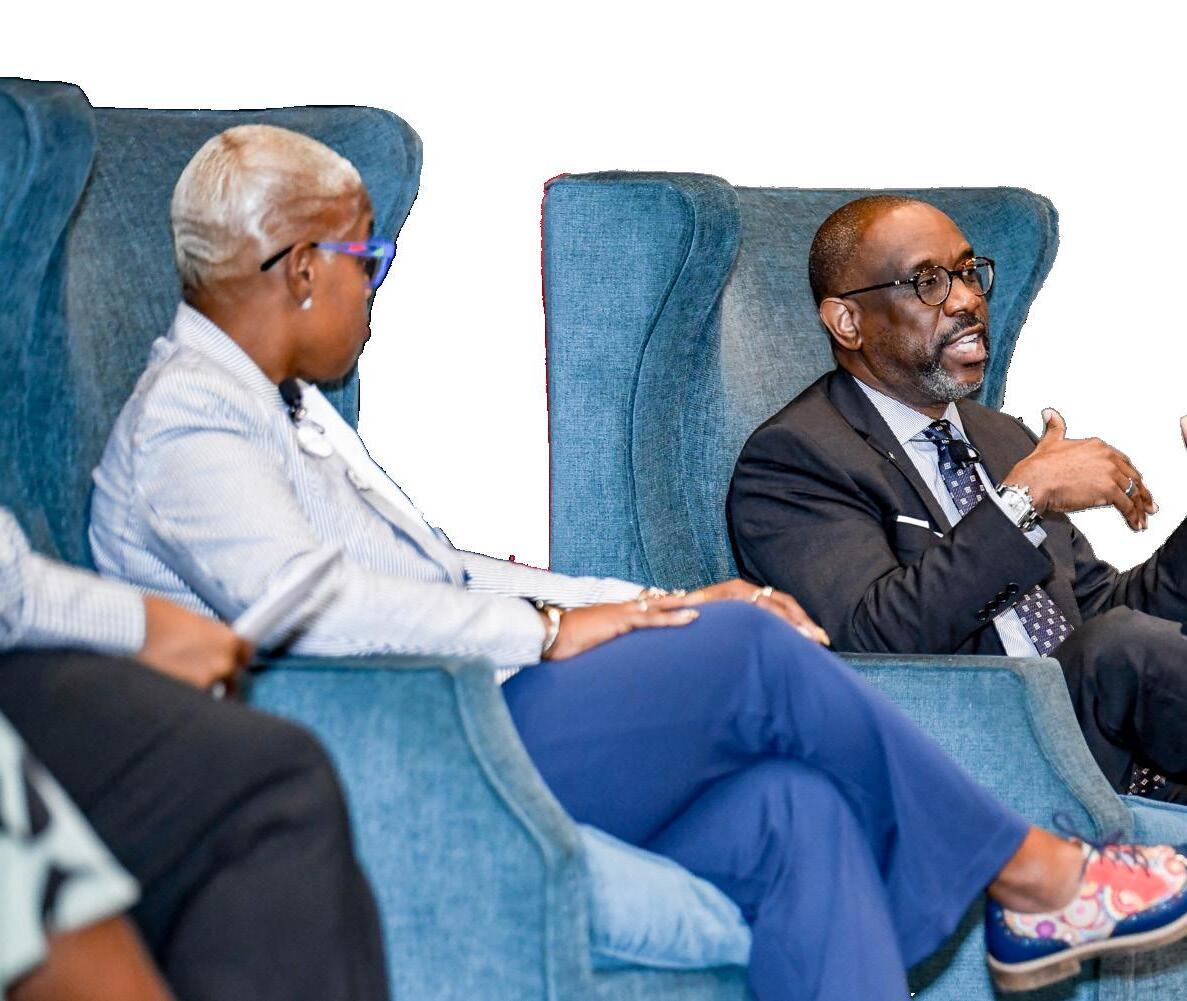
At the state and local levels, these connections are also driving alignment and shared strategy. In 2025, ECFC members came together to strengthen communications approaches, sharing strategies to shift narratives, elevate the experiences of children and families, and engage local media in a rapidly changing policy environment. This collaboration included examples from funders such as Imaginable Futures and Couch Family Foundation, reflecting a growing recognition that effective communication is essential to advancing policy and building public will.
Through regular briefings, huddles, and peer exchange, ECFC maintains a continuous rhythm of connection that allows funders to share strategies, align priorities, and respond to rapidly shifting conditions together.
This work balances breadth and depth—engaging a wide range of partners while building the trust needed for coordinated action. It also reflects an expanded understanding of early childhood, where child well-being is inseparable from health care, economic stability, housing, and belonging.

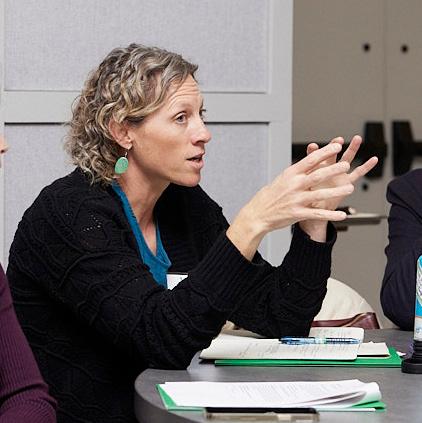
This foundation of relationships made it possible for philanthropy to act with greater clarity and coordination. The sections that follow highlight what this network made possible.
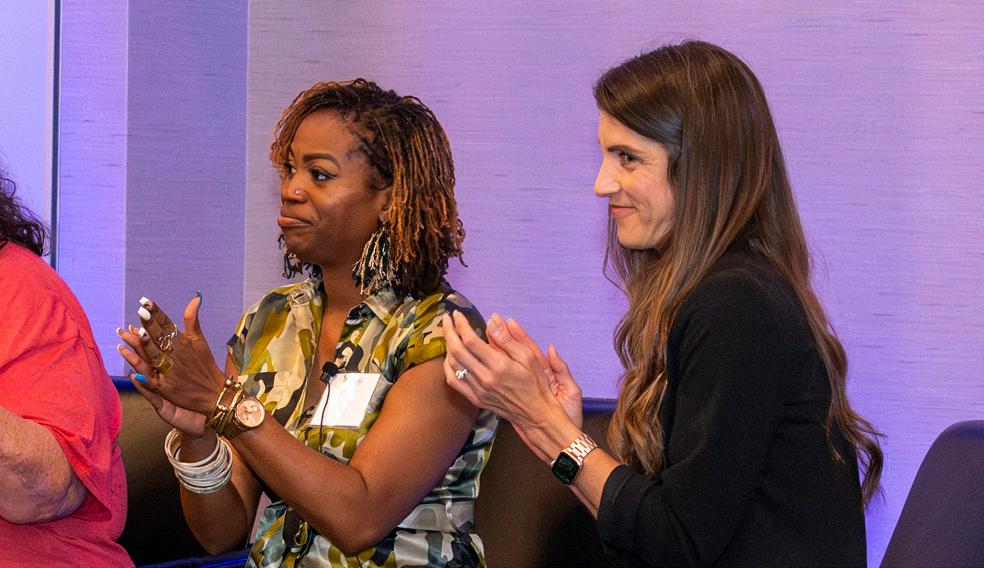
Funders moved in alignment to defend the family safety net and respond to emerging threats, demonstrating what’s possible when relationships translate into action.
What funders aligned around:
• Preserving access to health care through Medicaid
• Protecting children in immigrant families
• Advancing early care and education
• Supporting grantee partners navigating rapid change
ECFC convened national funders to assess risks and opportunities over the next three years, creating space to align priorities, build trust, and act together.
Funding moved quickly and was structured flexibly because of these relationships, enabling grantee partners to respond in real time.
$20M CLOSE TO raised and deployed
The relationships built through ECFC also helped bolster cross-sector initiatives such as the 1 in 4 Project, which centers the experiences of children in immigrant families, and Nonprofit Secure, which strengthens the core infrastructure grantee partners rely on to sustain their work.

Alignment of close to $20M in funding to defend the family safety net and respond to emerging threats
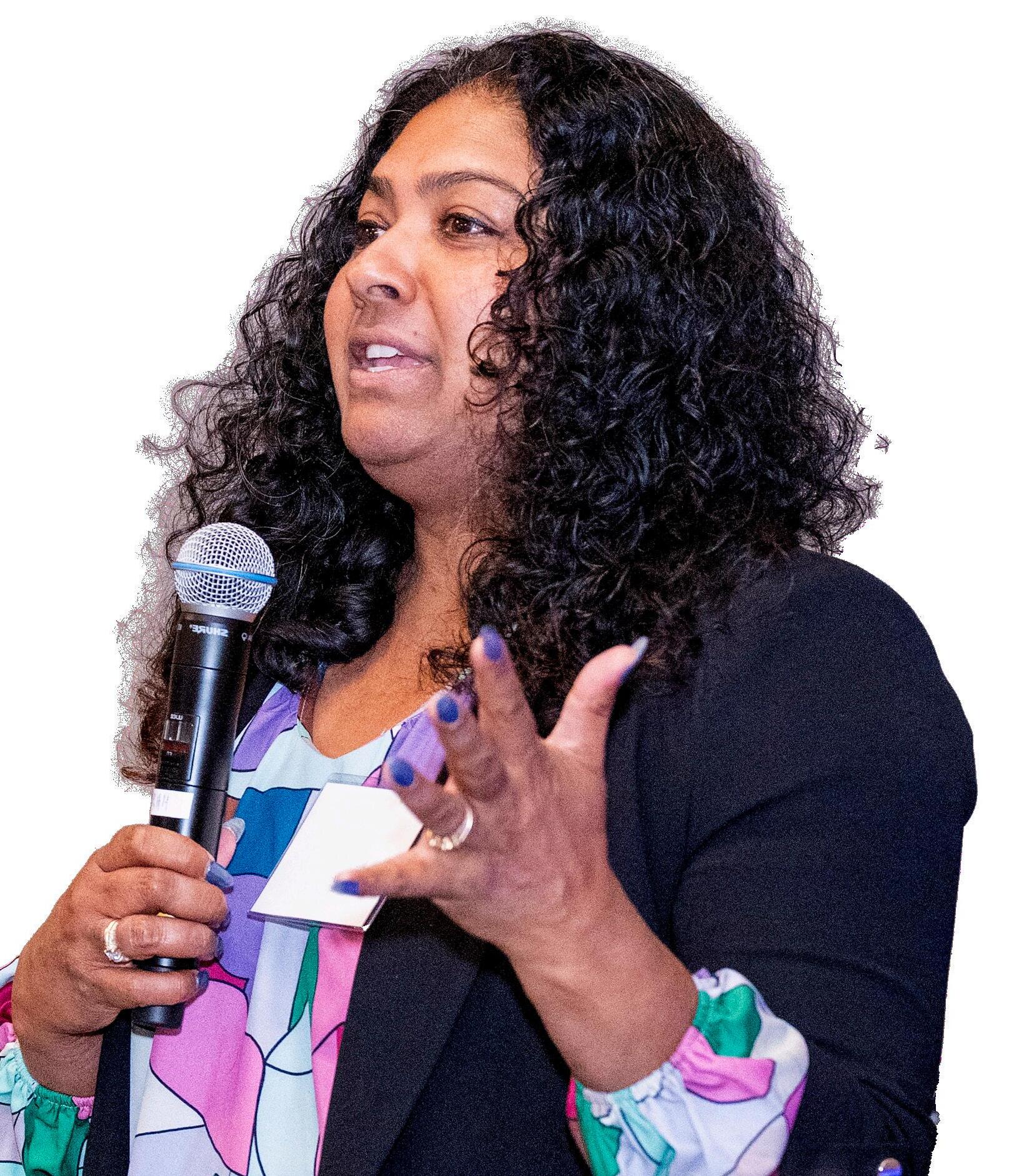
Rapid, flexible deployment of resources to support grantee partners in real time
Cross-sector initiatives seeded through funder relationships, including efforts focused on immigrant families and nonprofit infrastructure
Collective funder action that emphasizes shared impact over individual recognition
In 2024, ECFC convened funders, advocates, and community leaders in New Mexico and Alexandria, VA for our bi-annual member meetings—relational spaces designed to foster trust, value lived experience, support power-sharing, and advance equity-centered philanthropy.
At the Spring 2024 New Mexico meeting, ECFC members explored the decadelong effort to secure a dedicated funding stream for early childhood. They learned how different stakeholders—including philanthropy—played critical roles and used the Power Flower framework, developed by the USC Equity Research Institute, as a tool to examine how funders, individually and collectively, resource the key elements of positive social change.
State leaders and grassroots organizers joined us to examine how long-term advocacy shapes systemic change, including the creation of New Mexico’s Early Childhood Education and Care Department and a constitutional amendment funding early childhood programs. These discussions clarified the role of philanthropy in supporting multigenerational, community-centered solutions.
Our grantmaking has been enhanced by the new relationships we have developed with ECFC colleagues.
— ANN MARIE HEALY Executive Director, Philadelphia Health Partnership
Early childhood work cannot be done by one organization alone. The state of New Mexico has demonstrated that through its policy wins, and we are inspired to continue building together.”
— KAWIN NUNNERY Program Associate, JD Maddox Foundation
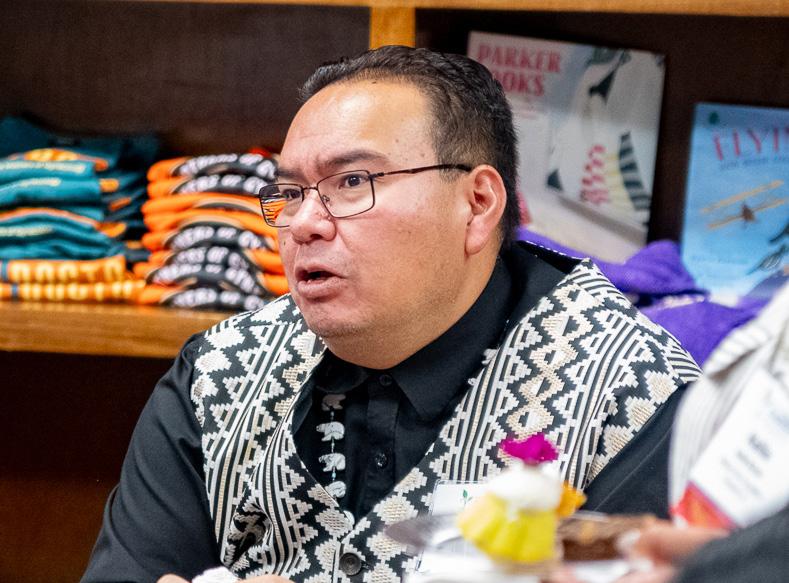
Site visits to Keres Children’s Learning Center in Cochiti Pueblo and Kha’p’o Community School in Santa Clara Pueblo provided firsthand insight into Native-led early learning, language immersion, intergenerational teaching, and culturally grounded approaches. Members engaged with Native leaders, arts, and ceremony, sparking deeper relationships and guiding funders toward reciprocity, respect, responsibility, relevance, and relationships in their grantmaking.
Deepened understanding of Indigenous-led dual-language and Montessori-based programs.
Firsthand learning on policy advocacy in New Mexico, including constitutional amendment for early childhood funding.
Creation of a catalog highlighting ECFC membersupported economic strategies to guide collaboration. Exposure to integrated programs supporting family economic stability, workforce development, and early childhood education.
ECFC Member Work on Economic Opportunity
ECFC members are advancing initiatives that strengthen financial stability and wealthbuilding for kids, families, and early educators. Key areas of focus include:
• Guaranteed income
– pilots, research, and advocacy
• Tax credits and policy
– outreach, advocacy, implementation
• Benefits access
– housing and public benefit navigation
• Improving work
– wages, paid leave, training, workers’ rights
• Wealth building
– baby bonds, savings accounts, generational wealth
The entire experience was wonderful—I feel like I found my tribe! Through our shared work, there is hope in changing the future with respect to how America values its young children — through family focused, strategic financial (public and private) investment, based on the science of human development and with a lens on equity.
— CYNTHIA K. ROWELL Director of Learning & Impact, The Max M. & Marjorie S. Fisher Foundation

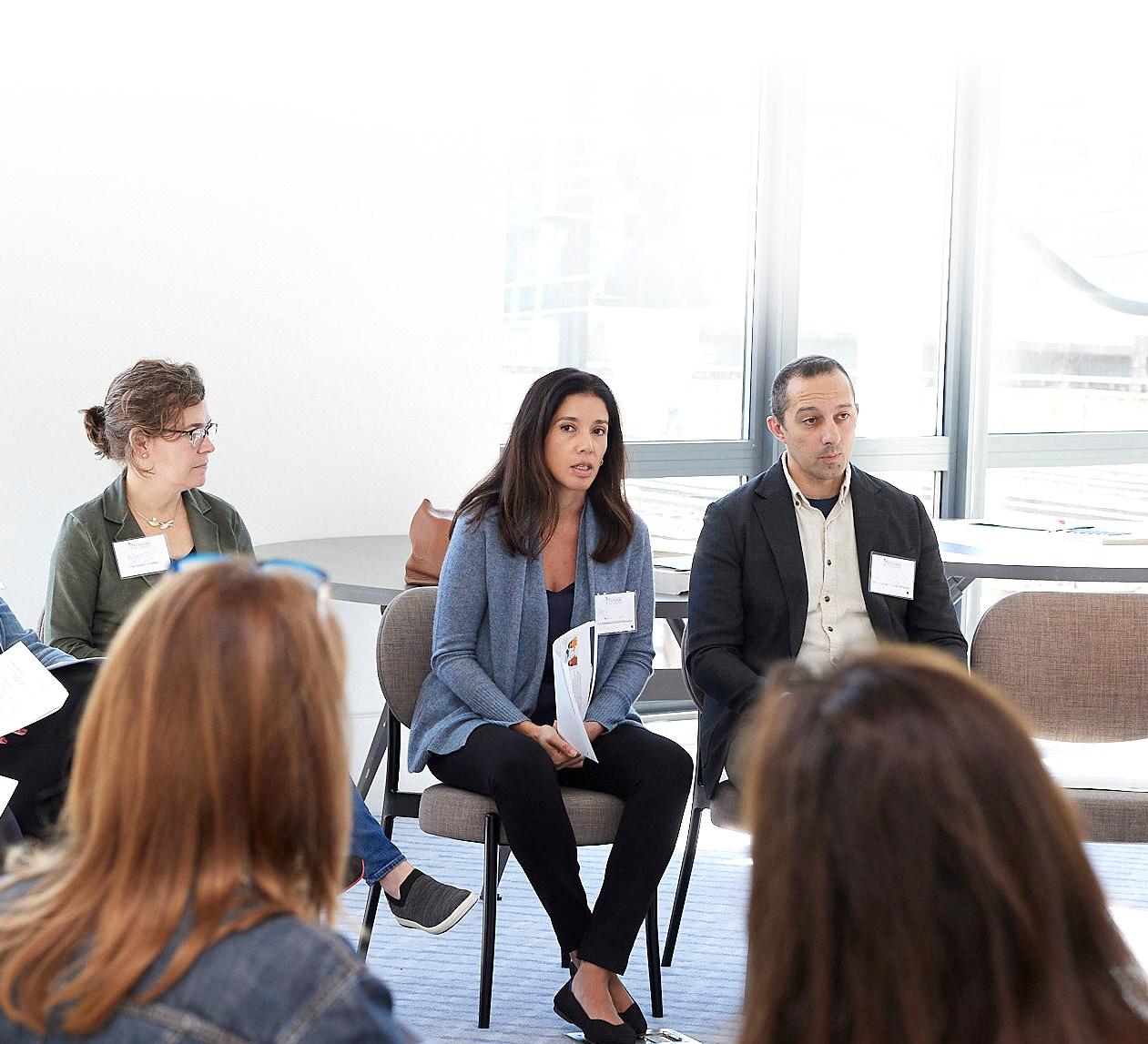
ECFC’s Fall 2024 Member Meeting, Resilient, Ready, and Rising, highlighted how members integrate economic justice into early childhood work. Sessions featured parents, early educators, and community partners and showcased strategies beyond preschool, such as:
• Guaranteed Income Pilots: Magnolia Mother’s Trust (Jackson, MS), The Bridge Project (NY), Hummingbird Indigenous Family Services’ The Nest (Puget Sound, WA), Home Grown’s Thriving Providers Project.
• Multi-Issue Economic Programs: Montana Budget and Policy Center; Medical-Financial Partnership (Los Angeles, CA).
• Workforce & Social Capital Initiatives: LIFT; CASH Campaign of MD; Mississippi Low Income Child Care Initiative.
• Housing Equity for Early Educators: Community Development Alliance (Milwaukee, WI).
These examples illustrate how ECFC members connect child care to broader systems of economic security, racial equity, and family well-being. A key outcome of this meeting was the development of a catalog highlighting ECFC member-supported economic strategies, designed to align philanthropic efforts and encourage collaboration.
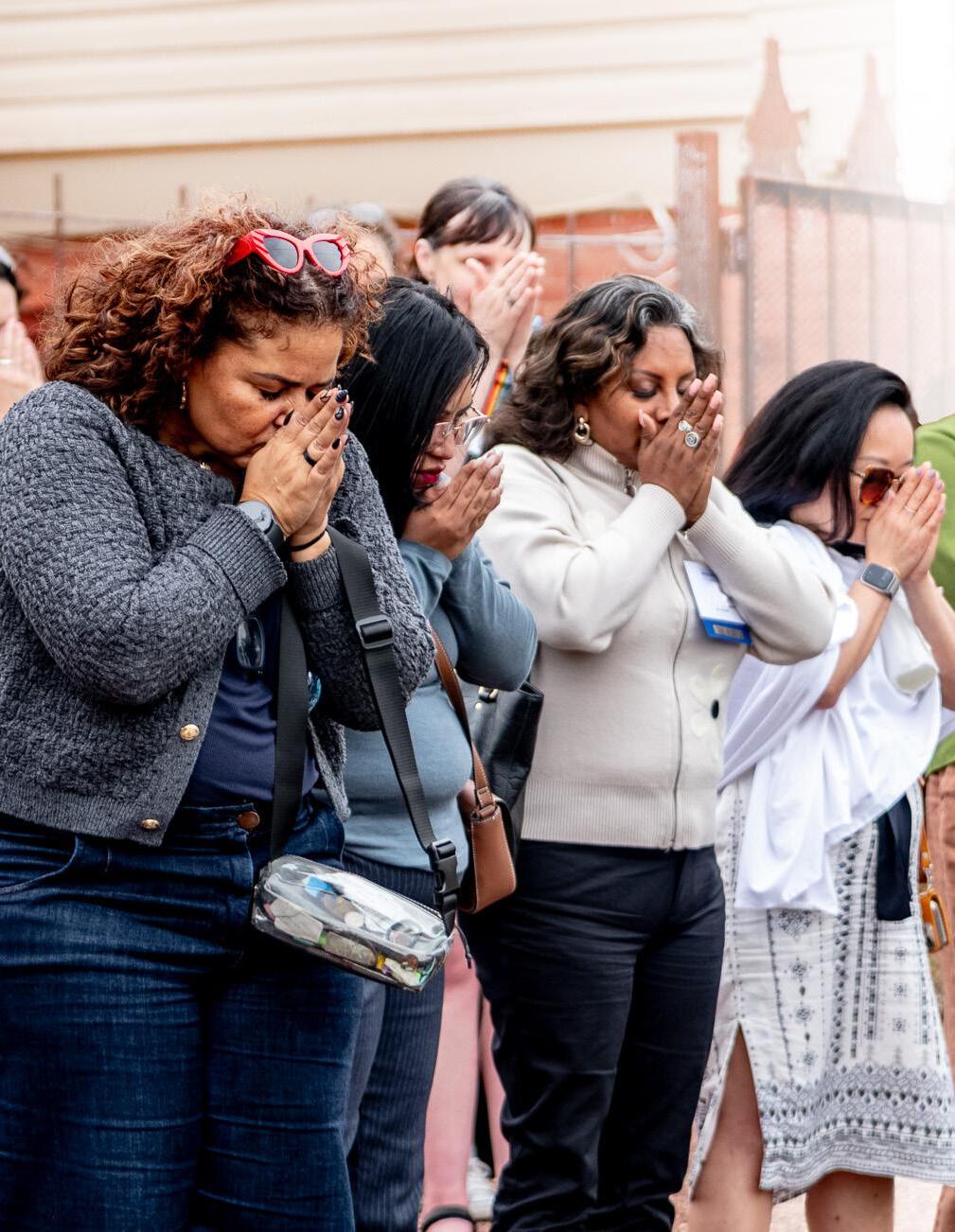

In October 2025, ECFC convened members in Montgomery and Selma, Alabama grounding the Fall Member Meeting in place, history, and community leadership. The Learning Tour invited participants to confront how enslavement, racial terror, and structural exclusion are not relics of the past, but forces that continue to shape systems, policy, and lived experience for young children and families today.
This was not a retrospective exercise. It was an examination of how power has been built, contested, and defended — and how those dynamics remain active in the present.
(For deeper reflections on why Montgomery and why now, see Insights from the Alabama Learning Tour.)
Foot Soldiers Park
National Memorial for Peace and Justice Mothers of Gynecology Monument
McRae Gaines Learning Center Equal Justice Initiative’s Legacy Museum Freedom Monument Sculpture Park Rosa Parks Museum
Dr. Richard Harris House
Each site connected history to the present, illustrating how policy decisions, systems of power, and community leadership intersect over time. Members engaged not only with historical narratives, but with the living movements and local leaders carrying this work forward today.
History is not background.
It is active terrain, shaping who benefits from systems and who bears harm. Understanding today’s policy landscape requires grappling with the forces that built it.
Community leadership is essential.
Parents, providers, elders, organizers, and young people bring strategies forged through lived experience. Their leadership sustains movements and must be trusted, resourced, and protected.
Relationships matter.
Trust, solidarity, and long-term presence strengthen movements, particularly during periods of political retrenchment and democratic strain.
Courage is required.
This moment calls on philanthropy to move resources, shift narratives, and invest in the infrastructure that sustains frontline leadership—not simply observe it.
1 2 Decades of history learning tour. cities. shaping today’s outcomes for young children and families.
The Learning Tour reinforced a central truth for the field: Advancing racial justice and equity for young children requires philanthropy to pair analysis with presence, data with history, and funding with accountability. In a time of democratic erosion and renewed attacks on equity, neutrality is not viable.
These lessons continue to shape ECFC’s work across pooled funds, policy defense, and collective action. Grounded in history and accountable to community leadership, ECFC and its members are advancing strategies that strengthen belonging, protect truth, and invest in the power of families and communities to shape their futures.
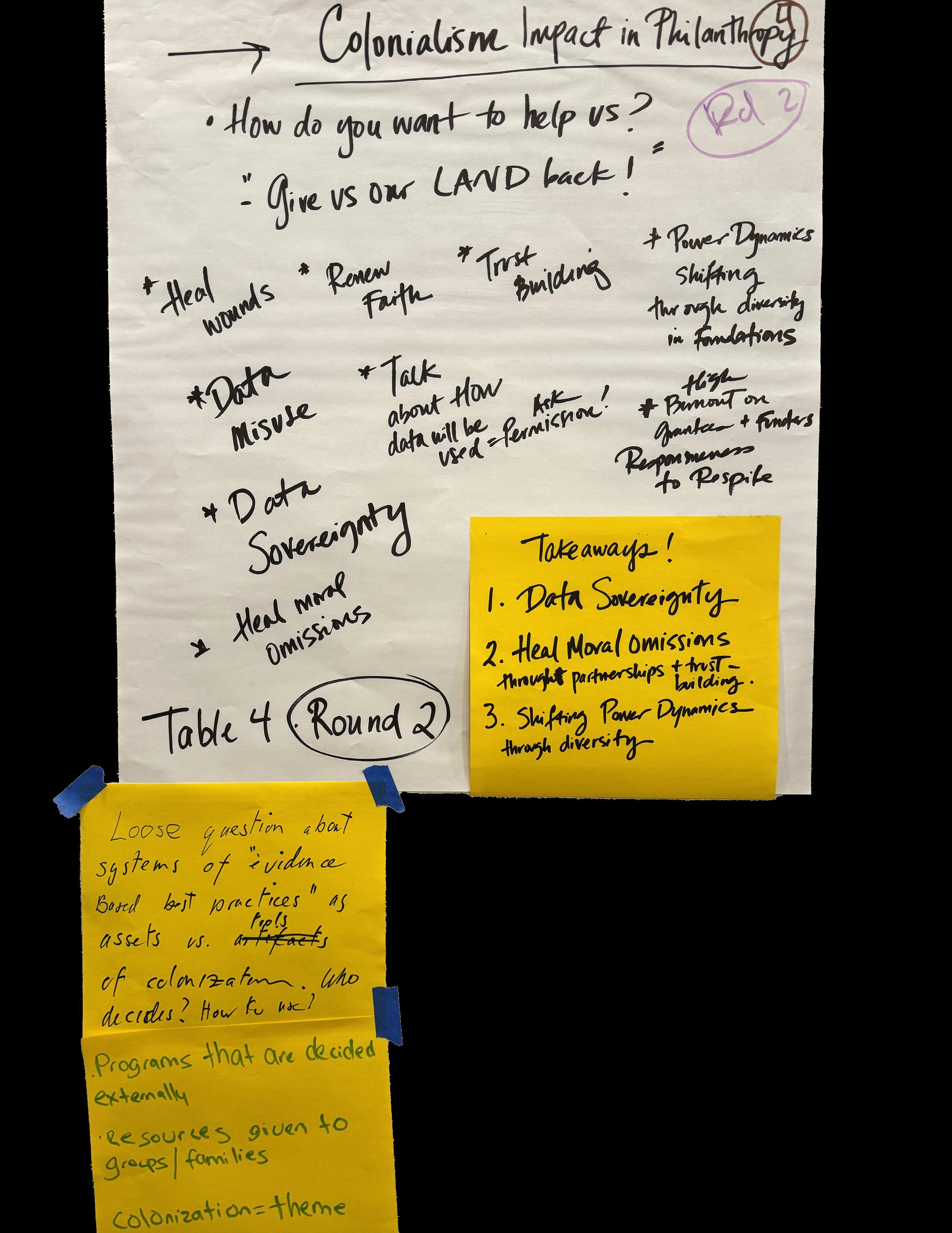
Since 2021, ECFC has convened a dedicated group of funders to deepen engagement in Indigenous early childhood. Through ongoing dialogue with Indigenous leaders, this space has challenged philanthropy to confront long-standing gaps in funding, rethink partnership, and align with communitydefined priorities.
In partnership with Native Americans in Philanthropy (NAP) and Roanhorse Consulting, ECFC facilitated learning sessions and commissioned research that surfaced both barriers and opportunities. The work pointed to a clear shift: from transactional funding toward relationships grounded in trust, reciprocity, and respect for sovereignty.
ECFC members moved from learning to action by supporting the Tribal Early Learning Initiative (TELI), a federal effort that facilitates dialogue and shared planning with early
childhood leaders in Tribal Nations as they define their own visions for children and families and build early childhood systems across fragmented funding streams. In 2023, ECFC and NAP helped convene leaders from eight Tribal Nations, federal partners, and philanthropy in New Mexico—creating space for shared learning, strategy, and relationship-building. Together, they worked on improving continuity and quality of services across the prenatal to kindergarten continuum.

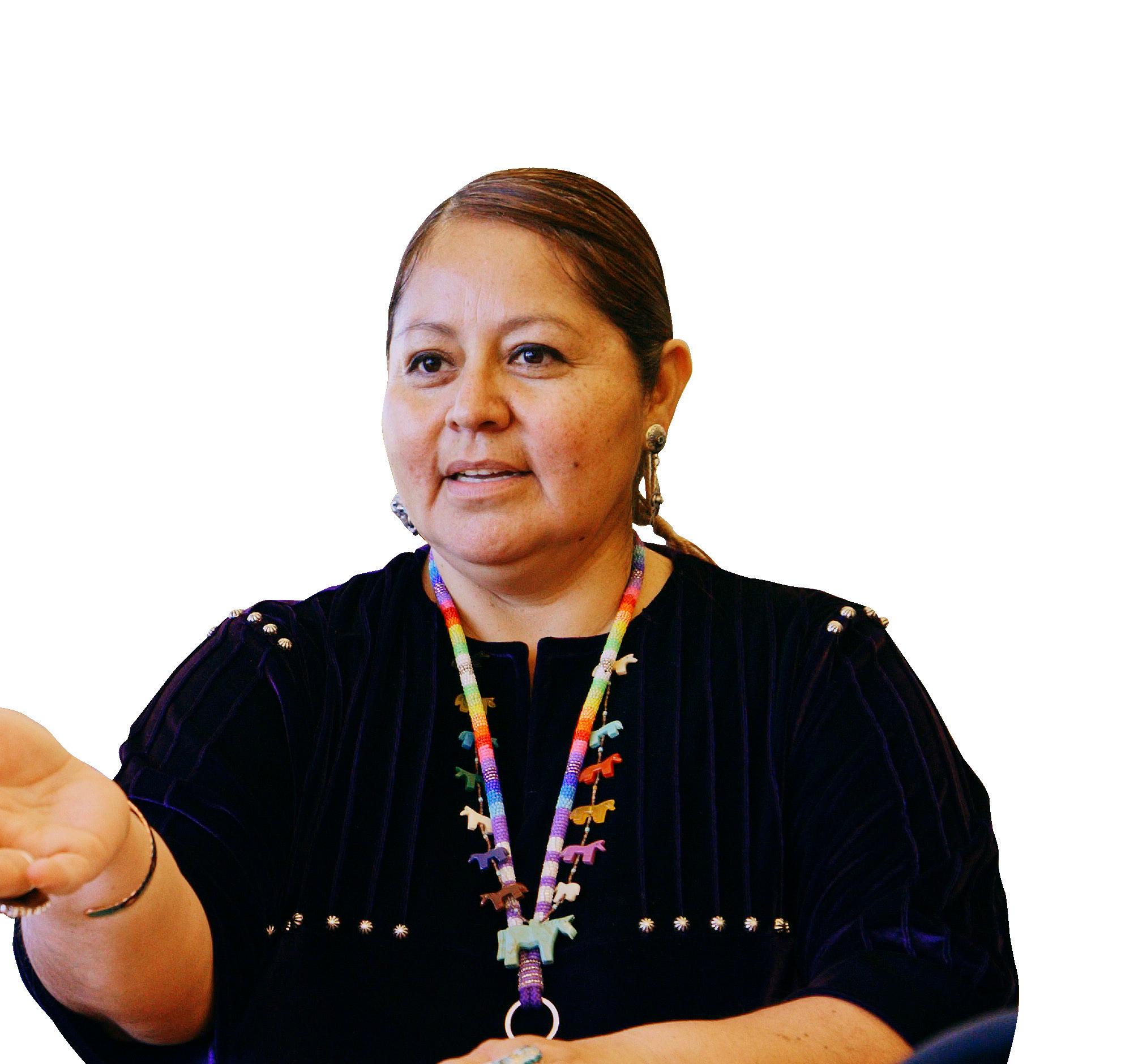
Formation of the Indigenous Family Leader Network, connecting parent leaders across eight Tribal Nations Supporting Indigenous leadership means following community wisdom, relationships, and ways of knowing.
A strong public–private partnership that aligned philanthropy and federal leadership in support of Tribal early childhood systems
Deeper understanding of how to support solutions grounded in Indigenous language, culture, and sovereignty
A key outcome was the formation of the Indigenous Family Leader Network, connecting parent leaders across participating Tribal Nations.
In 2025, ECFC members supported a leadership retreat for family members from the TELI Nations in Washington, DC, where they:
• Built relationships across communities
• Developed a shared vision and guiding principles
• Strengthened advocacy and leadership skills
ECFC, the contributing funders, and our public agency colleagues recognized that systems change is strongest when shaped by families and grounded in community leadership.
Deference to indigenous leadership, vision, and decisionmaking is required for respecting indigenous self-determination
Public–private partnership can unlock new possibilities when resources are aligned and roles are clear
Strengths-based approaches rooted in language and culture honor Indigenous communities
At every stage of this journey, ECFC has been led by Indigenous expertise, called into deeper accountability, and reminded that philanthropy’s role is to stand in partnership by advancing trust, reciprocity, and respect for sovereignty.
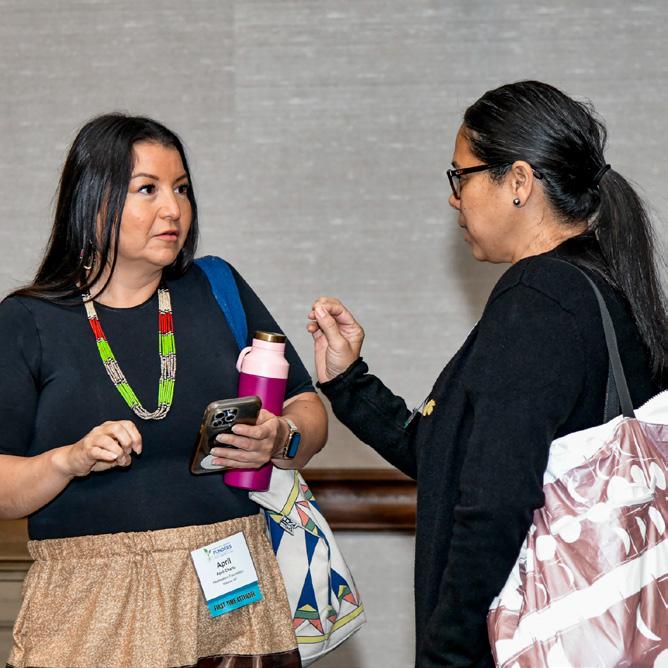

Multi-year, flexible general operating support strengthened long-term capacity

Participatory grantmaking centered parents, caregivers, and community leaders
Trust-based practices reduced burden and shifted decisionmaking power
RCCF supports grassroots organizations led by parents, early educators, and community advocates across 19 states and Washington, D.C., building organizing infrastructure and advancing equity in child care systems.
617,000+ people reached through digital engagement
25,000+ individuals mobilized in advocacy efforts
Grantee partners contributed to policy wins that connect child care to broader systems, including economic security, racial equity, and immigrant rights. In 2025:
New Mexico secured long-term funding for universal child care and early educators, including a five-year funding stream and a commitment of approximately 10% of the state budget to early childhood, along with $60 million in recurring funding for a Wage and Career Ladder.
Ohio providers mobilized to challenge subsidy cuts, with 1,000+ providers engaged in advocacy, elevating their voices through testimony and organizing.
Pennsylvania organizers, including a Latina-led group supported through RCCF partners, helped secure a $25 million new line item for teacher retention grants.
Despite initial commitments from some legislators to oppose budget increases, organizers reframed the issue around workforce stability and turnover costs— language that resonated with business leaders and broadened support for the investment.
In Oregon, the “Hands Off Preschool for All” campaign preserved the Multnomah County program and prompted more than 100 individuals to submit testimony, with many others providing comments online and more than 27,000 emails sent to legislators.
These efforts reflect long-term investment in organizing where community priorities shape both narrative and policy outcomes.
full-time organizers focused on child care across grantee partners
Parents, providers, and educators are shaping the policies that affect their daily lives and communities
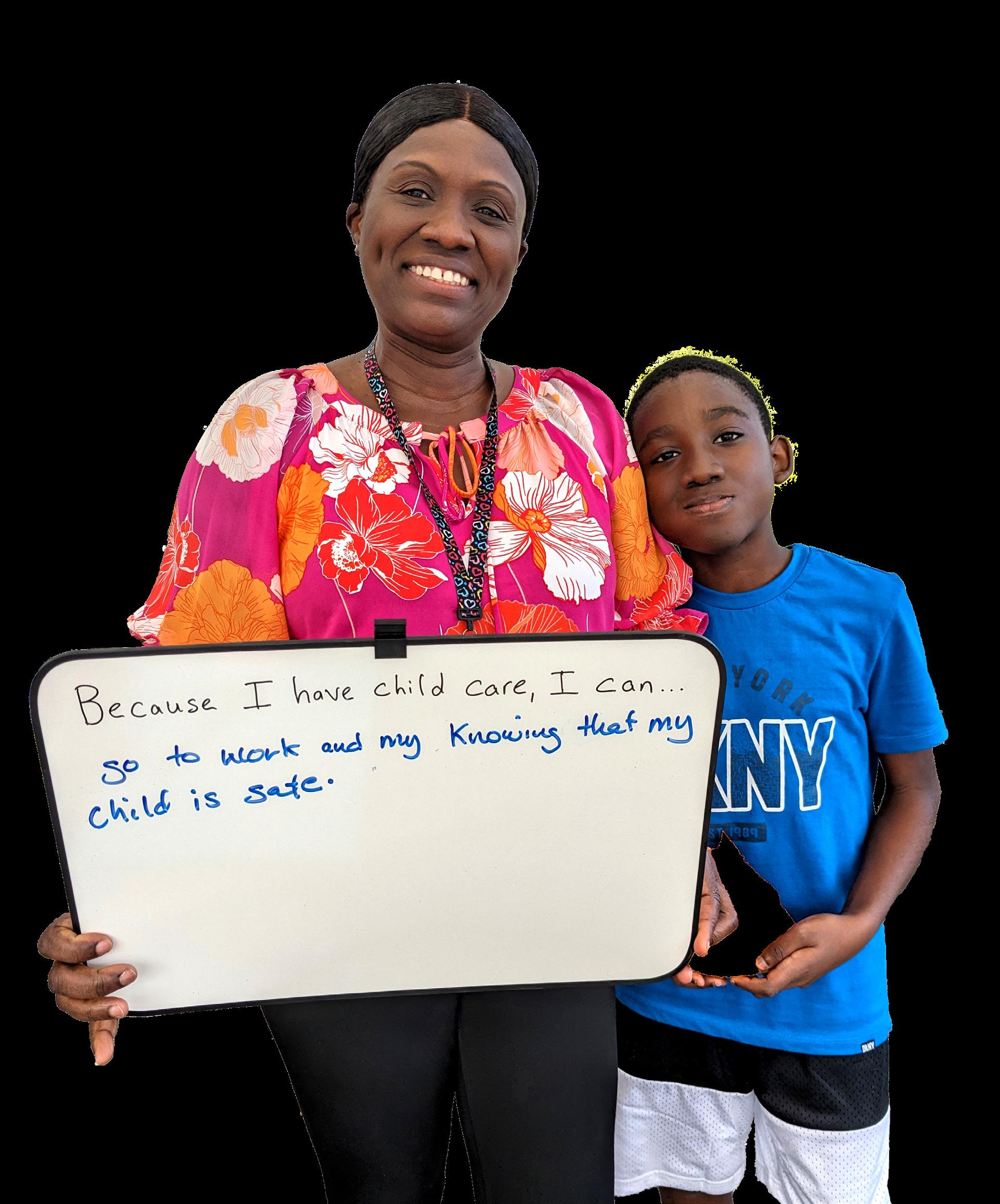
Child care is increasingly recognized as essential economic infrastructure tied to economic security and community stability
Organizing strengthened the ability to secure and defend public investment in early care and education, while expanding the visibility of child care within broader economic and racial justice agendas
Leadership pipelines are expanding to include more Black and brown women in the care economy
Sustained investment in organizing is strengthening long-term community power and systems change
Children don’t thrive in isolation. They flourish when their families, environments, and communities are strong.
The Racial Justice and Equity Fund (RJEF) invests in grassroots leaders and organizations that provide families with what they need now, while working for systemic changes that last.
RJEF was created as a collaborative, community-led pooled fund to confront inequities in early childhood by resourcing organizations that philanthropy has too often overlooked, including immigrant-serving organizations, birth justice groups, and community-based organizations with deep roots and budgets under $1 million.

Through flexible funding and communityled decision-making, RJEF supports
• Build leadership and power
Advance systemic change across issues

$7.5M raised toward a $25M goal
RJEF is a foundation that came at the right time when the world was flipped upside down.”
— GLORIA BLEVINS, BCDI-Ohio Executive Director

RJEF expands the frame of early childhood beyond school readiness or childcare alone. Guided by the Social Determinants of Child and Family Well-Being, we recognize that thriving children require strong families and communities. That means resourcing organizations addressing the full early childhood ecosystem—housing, healthcare, economic inclusion, belonging, and community power.
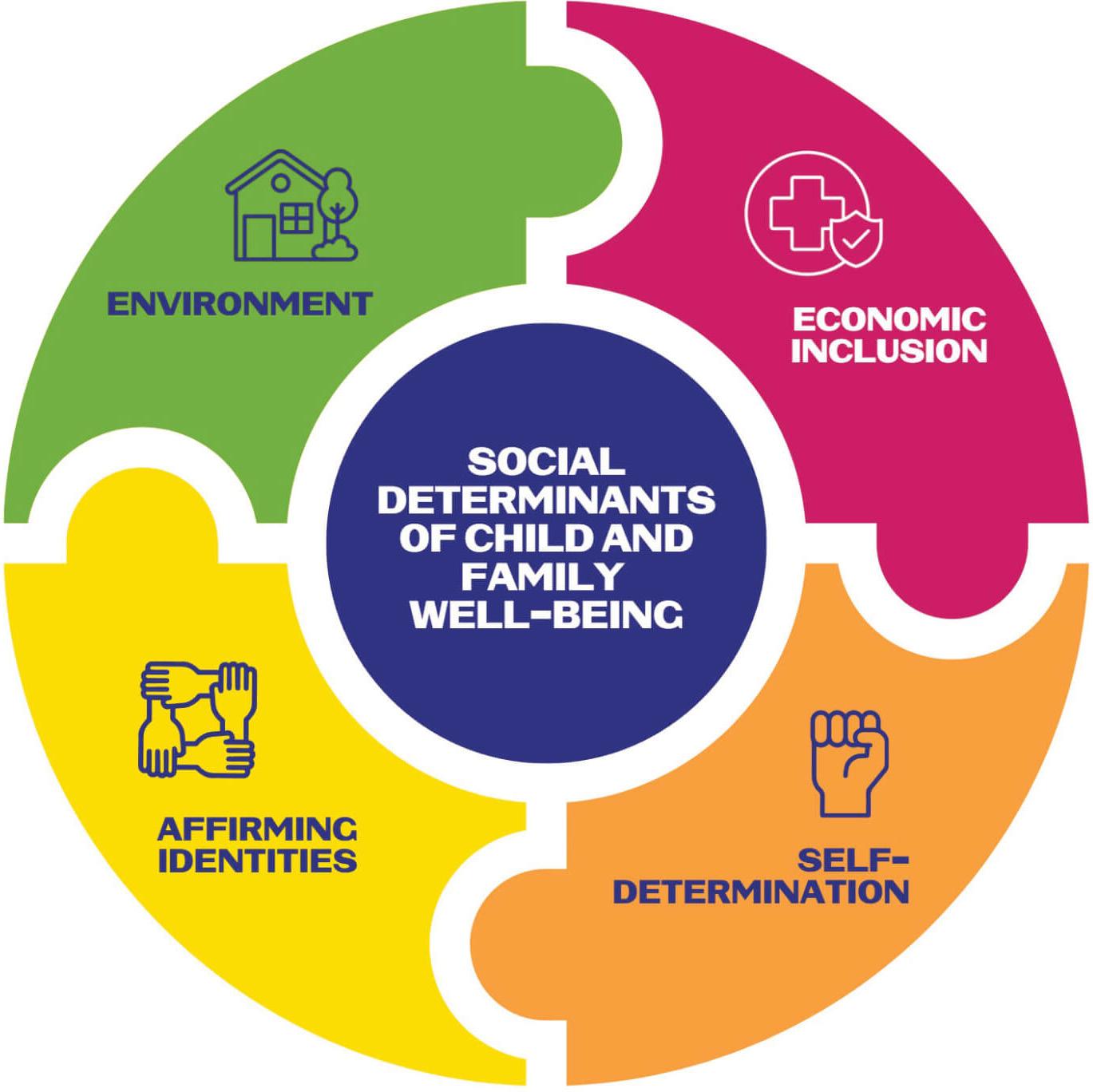
RJEF grantees are building power and stability, with two organizations surpassing $1 million budgets and $425,000 in new funding secured
RJEF helps create an ecosystem where young children, families, and communities have what they need to grow, belong, and thrive.
When immigration enforcement intensified across the South, Migrant Equity Southeast in Savannah, Georgia became the place families called first. RJEF funding allowed them to staff a full-time Spanish-language hotline, host Know Your Rights trainings across 30 counties, and respond in the aftermath of one of the largest single-site immigration raids in U.S. history—all while distributing diapers, running after-school programs, and ensuring children had what they needed to keep learning.
In rural North Carolina, Asheboro Latinx Services hosted more than 10 community baby showers for Latinx families, drove mothers to medical appointments, provided emergency hotel stays for women experiencing abuse, and showed up during ICE raids to help families navigate fear—all while bringing Executive Director Tania Jimenez on as a full-time staff member for the first time in the organization's three-year history.
In Texas, Esperanza de Tejas served nearly 30,000 people in Year 1— a 40% increase— responding to SNAP disruptions, distributing supplies after the Central Texas floods as an official Red Cross partner, and funding the Executive Director's travel to the state capital to advocate against legislation that would have directly harmed unhoused mothers and their children.
These examples show what’s possible when grassroots organizations are trusted with flexible funding: they meet urgent needs today and build momentum for systemic solutions tomorrow.
Small, community-based organizations are carrying enormous weight on limited budgets. They are simultaneously delivering life-sustaining services—baby showers, food distributions, hotlines that don't stop ringing, backpacks before school—and driving systemic change like paid leave policies, tenant protections, and Medicaid expansion. By resourcing grassroots leadership, RJEF helps create an ecosystem where young children, families, and communities have what they need to grow, belong, and thrive.
By aligning funding and resourcing grassroots leadership, ECFC’s pooled funds strengthen an ecosystem where families and communities have the power to shape the systems that affect their lives.
ecfunders.org