
SPRING | SUMMER 2026
SPRING | SUMMER 2026
Welcome to the David Eccles School of Business Faculty Research Newsletter for Spring/Summer 2026. At the Eccles School, research drives our mission to advance knowledge, inform business practice, shape public policy, and strengthen our communities. Our faculty’s work influences how leaders make decisions, how markets function, and how organizations evolve.
This newsletter highlights research on issues defining today’s business landscape, from corporate governance to financial markets to environmental sustainability. Whether you are an Eccles School graduate, business leader, or community stakeholder, we hope these insights inspire new ideas and demonstrate our commitment to impactful, evidence-based solutions.


When people write about a negative customer experience, they recover faster, emotionally and behaviorally, if the review integrates both feelings and reasons (not just venting or just listing facts). That integrated writing makes them feel better afterward and increases their willingness to buy again.
David Eccles School of Business / 6
Alisa Yinghao Wu Department of Marketing
This paper studies what happens to the person writing the review after a bad consumption experience. The authors ask whether the way consumers write a negative review, focused on emotions, focused on rational/factual details, or combining both, changes how quickly the reviewer “gets over it.” Across five studies using both field data and experiments, the central result is consistent: “integrated” reviews (emotions and rational explanations) improve recovery on two dimensions.
Review writers feel better afterward (affective recovery) and show greater willingness to purchase
again or revisit the business (cognitive recovery). Importantly, the mechanism is not “just venting,” it’s connecting emotions to concrete reasons and reframing the experience.
The paper also digs into why this works. Evidence supports two complementary processes: (1) an affective “catharsis” pathway (captured with physiological measures) and (2) a cognitive reappraisal pathway (captured with thoughtlisting and memory recall patterns). The practical implication is straightforward: review platforms and firms may be able to improve customer wellbeing (and future demand) by prompting reviewers to include both how they felt and what specifically caused it.
University of Utah Author: Alisa Yinghao Wu
Publication: Digital Therapy for Negative Consumption Experiences: The Impact of Emotional and Rational Reviews on Review Writers. The Journal of Consumer Research, 2025, Vol. 51, Issue 5, pp. 937–958
Co-Authors: Vicki G. Morwitz

Executive Takeaway
Ethics and compliance officers often trigger defensiveness simply by doing their jobs; Prof. Kreiner shows how they manage a “dual threat” dynamic using identifiable interaction styles and tactics that make ethics enforcement more effective and personally transformative.
David Eccles School of Business / 8
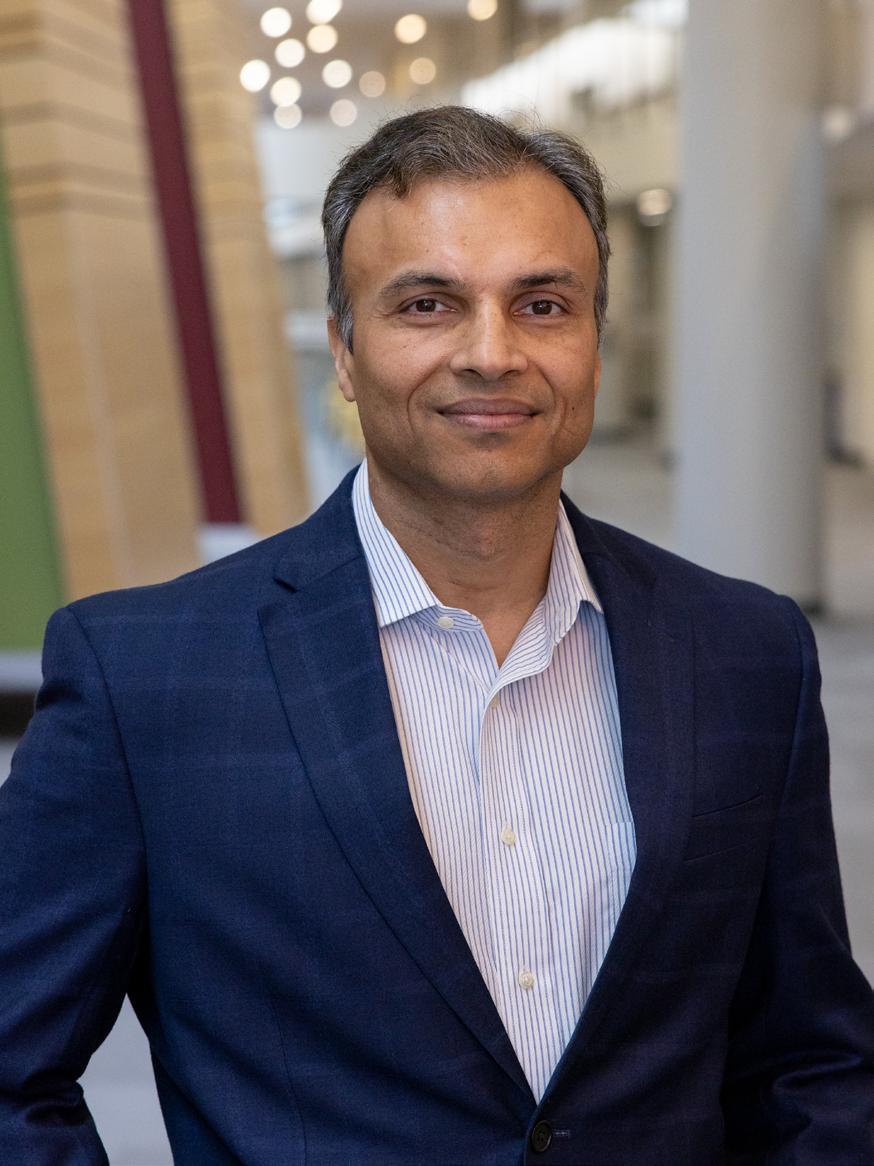
Glen Kreiner
Department of Management
Ethics and compliance officers (ECOs) are charged with getting employees to behave ethically and follow the law, through training, guidance, investigations, and enforcement. The paper’s core insight is that this work reliably creates a social “dual threat” dynamic: when ECOs raise ethical expectations, others can feel their moral self-image is being questioned (and react defensively), and ECOs then feel scrutinized and threatened in return.
To understand how ECOs succeed despite that dynamic, the authors use grounded theory and draw primarily on interviews with ethics and compliance officers. They identify patterns in how
ECOs interpret the interpersonal pushback they face and the ways they adjust how they show up in the role, especially because merely being associated with “ethics” can trigger resistance, even before any substantive conversation begins.
The paper proposes a practical model of “ethical role identity work” with two main components.
First, ECOs navigate recurring tensions in how they interact, pulling between more personalized approaches (e.g., connection / partnering / caring) versus more impersonalized approaches (e.g., independence / policing / clinical distance). Second, ECOs use tactics to handle the threats and tensions, and over time many report “ethical and identity growth” from learning to do the role well.
University of Utah Author: Glen Kreiner
Publication: Growth Through Ethical Role Identity Work: The Case of Ethics and Compliance Officers. Journal of Business Ethics, 2025, Vol. 198, Issue 1, pp. 85–106
Co-Authors: Niki A. den Nieuwenboer, Linda K. Treviño, Derron Bishop, Chad Murphy
Executive Takeaway
Public acceptance of self-driving vehicles is not just about the technology, it’s about trust (in regulators, the technology, and other drivers), and policy design can shift these trust dimensions differently for Republicans versus Democrats.
David Eccles School of Business / 10
Rohit Aggarwal
Department of Operations & Information Systems
Self-driving vehicles could reduce crashes and save lives, but many people are still uncomfortable sharing the road with them.
This article focuses on public acceptance (willingness to allow others to use self-driving technology on shared roads), not personal adoption, because acceptance can shape regulation and the pace of realworld rollout.
The authors examine two concrete policy levers that policymakers could implement: (1) requiring a visual cue to indicate when a vehicle is operating in self-driving mode, and (2) requiring periodic certification for users of self-driving technology.
They theorize that these policies work primarily by shifting trust, especially trust in the regulating
agency (the National Highway Traffic Safety Administration), trust in the technology, and trust that other people will use it responsibly.
The key finding is that policy impacts differ meaningfully across political affiliation. A visual-cue requirement tends to increase trust in government but can decrease trust in the technology, producing a net boost in acceptance among Republicans but a neutral-to-negative effect among Democrats. A certification requirement, by contrast, tends to increase trust in government and in other drivers, improving acceptance more broadly. A combined approach (visual cue plus certification) appears most effective overall because it strengthens multiple trust channels at once.
University of Utah Author: Rohit Aggarwal
Publication: Self-Driving Technology and Its Acceptance: Explaining Differences in Reactions of the Heterogeneous Population to Potential Policies. Production and Operations Management, 2025, Vol. 34, Issue 11, pp. 3457–3474
Co-Authors: Nicholas Sullivan, Vishal Midha

Executive Takeaway
Investors pour money into active mutual funds after strong performance, but a meaningful portion of those inflows gets reversed years later, driven almost entirely by delayed redemptions that are consistent with “investor disappointment” when performance fails to keep meeting elevated expectations.
David Eccles School of Business / 12
Mike Cooper Department of Finance
Most research shows a positive relationship between mutual fund flows and recent performance: funds with strong recent returns attract new money. This paper shows that the story changes once you look far enough back. For actively managed equity mutual funds, the flow–performance relationship flips sign at long horizons: returns from more than about five years ago are associated with lower net flows today, implying that the earlier “performance-chasing” is partially undone over time.
A key contribution is separating inflows (new sales) from outflows (redemptions). Inflows remain positive even when performance is lagged many years, investors still respond to long-run return records. The reversal in net flows happens because
outflows eventually turn positive with respect to older performance: high returns from three to 10 years ago predict higher redemptions today. In other words, the long-horizon reversal is not because investors stop buying winners; it’s because they start selling them late.
The paper evaluates three explanations for why this delayed selling happens: (1) an investment life-cycle story (accumulation followed by withdrawal), (2) tax-loss selling, and (3) a behavioral disappointment mechanism rooted in overreaction to strong past returns. While life-cycle effects and tax-related selling can contribute, the evidence most strongly supports disappointment: redemptions are especially high when prior long-run returns were strong but more recent performance is poor, precisely when expectations would be most likely to be violated.
University of Utah Author: Mike Cooper
Publication: Mutual Fund Flows at Long Horizons. Review of Financial Studies (Forthcoming)
Co-Authors: Hendrik Bessembinder, Shuaiyu Chen, Jinming Xue, Feng Zhang
Executive Takeaway Using Consumer Financial Protection Bureau (CFPB) complaint data as a measure of service quality of financial services, the paper finds that higher-minority communities experience worse outcomes (more complaints), the gap widened sharply during COVID, and firms with more inclusive corporate social attitudes (e.g., inclusive promotion practices and diverse leadership) meaningfully reduce both the baseline gap and the pandemic spike.
David Eccles School of Business / 14
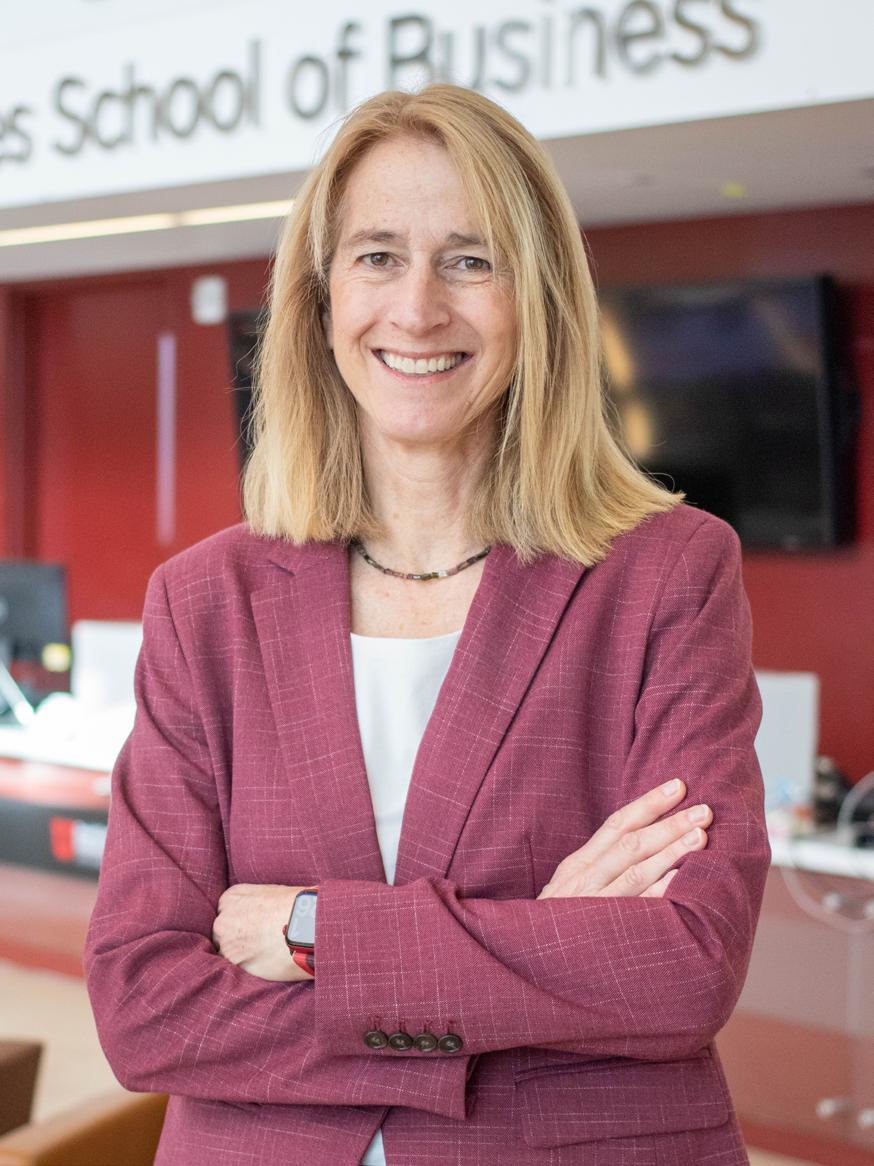
Rachel Hayes School of Accounting
This paper uses consumer complaints filed with the Consumer Financial Protection Bureau as a window into the quality of financial products and services. The authors document a clear racial disparity: communities with higher minority shares file more complaints than communities with lower minority shares, consistent with differences in the treatment and outcomes consumers experience in financial services.
The COVID-19 period provides a stress test. During the pandemic, the racial gap in complaints increased by more than 60%, indicating that the deterioration in service quality disproportionately affected highminority communities. The analysis controls for local economic conditions and demographics and is
consistent with the idea that disruptions and resource constraints can exacerbate unequal treatment and outcomes during crises.
The paper then asks what mitigates these disparities. The central result is that corporate social attitudes, captured through concrete, practice-based measures like inclusive promotion practices and board diversity, play a meaningful role in narrowing the complaint gap and, importantly, limiting the pandemic-period surge in the disparity. The broader implication is that inclusive corporate culture can “filter through” organizations in ways that measurably benefit minority communities.
University of Utah Authors: Rachel M. Hayes, Yihui Pan
Publication: Racial Disparities in Financial Complaints and the Role of Corporate Social Attitudes. Journal of Accounting Research, 2025, Vol. 63, Issue 4, pp. 1289–1333
Co-Authors: Feng Jiang, Huayi Tang

Executive Takeaway
Participation rates in the U.S. innovation system vary significantly across sociodemographic groups. Because individuals tend to innovate for consumers from similar backgrounds, increased participation in invention and entrepreneurship from low-participation groups would raise living standards, especially for consumers from those groups.
David Eccles School of Business / 16
Josh Feng Department of Entrepreneurship & Strategy
Using a wide range of linked data, the authors show that the characteristics of innovators (gender, socioeconomic background, age, and geographic location) strongly predict the characteristics of consumers who buy the new goods created by the innovators. This pattern shows up within narrow product categories and across industries and has remained stable over time. The evidence is consistent with the idea that innovation is a very human endeavor, often motivated by and a product of personal experience.
The results matter when combined with the fact that many groups are underrepresented among inventors and entrepreneurs. If fewer women or lowerincome individuals become innovators, then fewer
innovations will be targeted toward consumers from those groups.
The paper provides a formal growth model to capture this “social push” channel and quantify the implications when combined with underrepresentation. The authors estimate that if individuals from underrepresented groups participate at higher rates in the innovation system, it can generate increased economic growth acrossthe-board and have especially positive impacts on the standard of living for consumers in the underrepresented groups.
University of Utah Author: Josh Feng
Publication: Social Push and the Direction of Innovation. American Economic Review (Forthcoming)
Co-Authors: Elias Einiö, Xavier Jaravel

Executive Takeaway
For self-employed workers, valuing time at zero (common in program evaluations) or at the market wage can be systematically wrong. Using rich choice data and a structural model, the paper argues for a practical benchmark: the value of time for the self-employed is about 60% of the local market wage.
David Eccles School of Business / 18
Erik Snowberg Division of Quantitative Analysis of Markets and Organizations
Cost–benefit analyses often need a “value of time” to assess whether an intervention is truly worthwhile, especially in development settings where many people are self-employed. But for selfemployed households, time isn’t explicitly priced by an employer, and common shortcuts (zero value or market wage) can bias conclusions about which interventions help and which don’t.
The authors run a detailed field study with farming households in western Kenya using incentivecompatible choice tasks that force tradeoffs among money, time, and a productive asset (lottery tickets for an irrigation pump). A central empirical finding is that many households exhibit non-transitive
choices (their implied preferences can form cycles). That means standard “direct” elicitation methods for valuing time, like asking for a reservation wage, can disagree sharply with values implied by other choices, even within the same person.
To reconcile these inconsistencies, the paper estimates a structural model that allows for behavioral “wedges,” especially in choices involving cash. The model produces a more policy-useful estimate of the “unwedged” value of time and lands on a simple rule-of-thumb: about 60% of the market wage. The implication is immediate: evaluations that treat self-employed time as free will overstate the attractiveness of time-intensive interventions and understate the benefits of time-saving ones.
University of Utah Author: Erik Snowberg
Publication: Valuing the Time of the Self-Employed. Review of Economic Studies, 2025, Vol. 92, Issue 6, pp. 3471–3503
Co-Authors: Daniel Agness, Travis Baseler, Sylvain Chassang, Pascaline Dupas


Celebrating Excellence
Yihui Pan | Finance
Sorenson Impact Institute Faculty Grant | June 2025
Yihui Pan received a Sorenson Impact Institute Faculty Grant to support research and teaching that connect rigorous financial economics with measurable social and economic outcomes. Housed within the David Eccles School of Business, Sorenson Impact strengthens the ecosystem for impact investing and trains future impact leaders. This grant recognizes Professor Pan’s contributions at the intersection of finance and real-world impact.
Brian Cadman | Accounting
Emerging Scholar in Employee Participation and Ownership Award | Academy of Management (HR Division), July 2025
Brian Cadman earned this award recognizing his research on how equity incentive plans shape governance and employee ownership outcomes. The honor highlights his paper, “Equity Incentive Plans and Board of Director Discretion over Equity Grants,” published in the Journal of Accounting Research (co-authored with Richard Carrizosa). The award was conferred at the Academy of Management Annual Meeting in Copenhagen.
Nitin Bakshi | Operations & Information Systems
2025 MSOM Service Management SIG Best Paper Award | INFORMS, October 2025
Nitin Bakshi received this award from the Manufacturing & Service Operations Management (MSOM) Society at the Annual INFORMS conference in Atlanta. The award recognizes Nitin’s paper “Service Operations for Justice-on-Time: A Data-Driven Queueing Approach,” published in Manufacturing & Service Operations Management journal (co-authored with Jeunghyun Kim and Ramandeep Randhawa). The paper applies service operations and queueing insights to judicial delays, demonstrating how data-driven operational interventions can significantly improve timeliness of justice delivery.
David Eccles School of Business / 22