





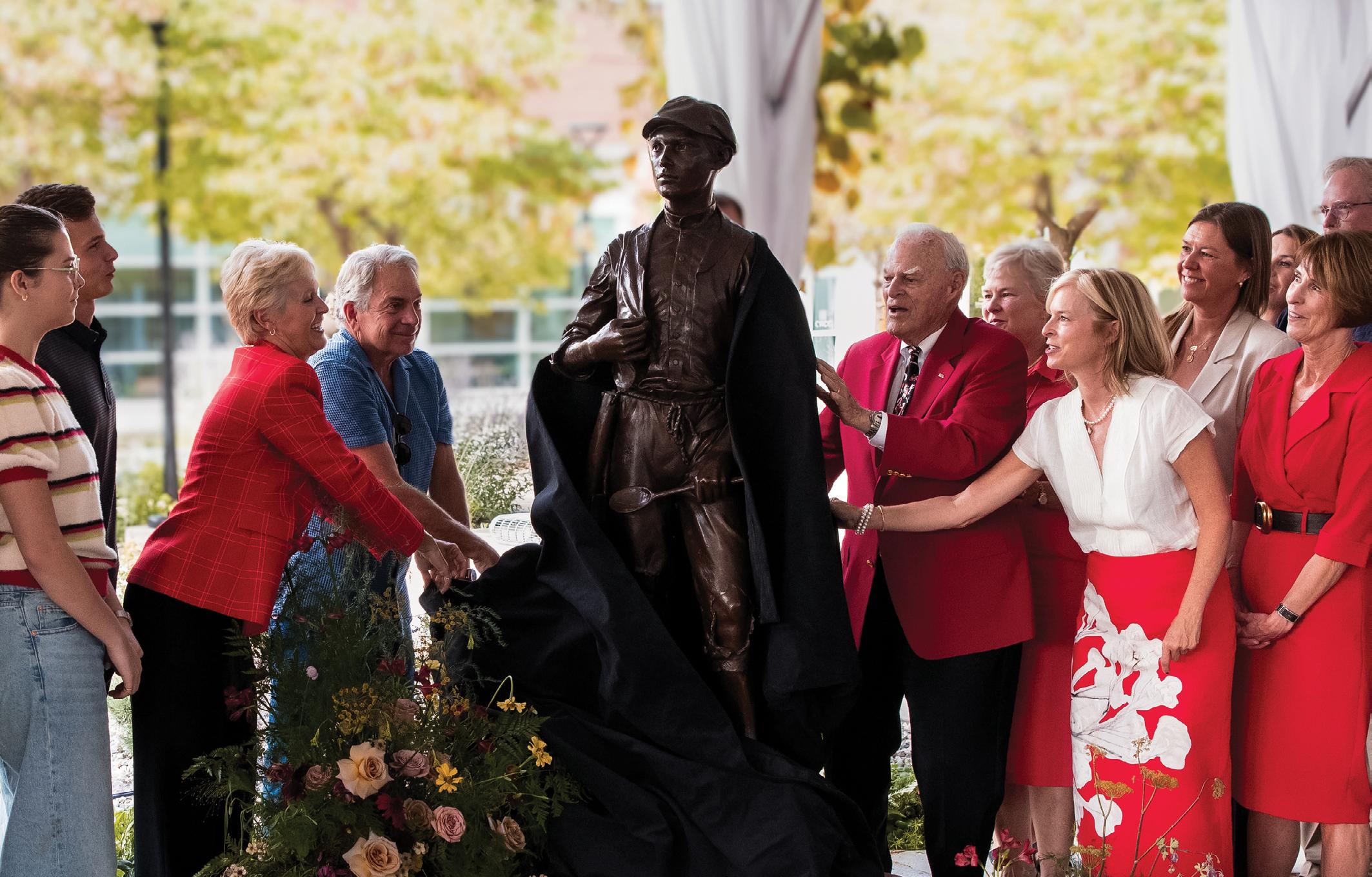
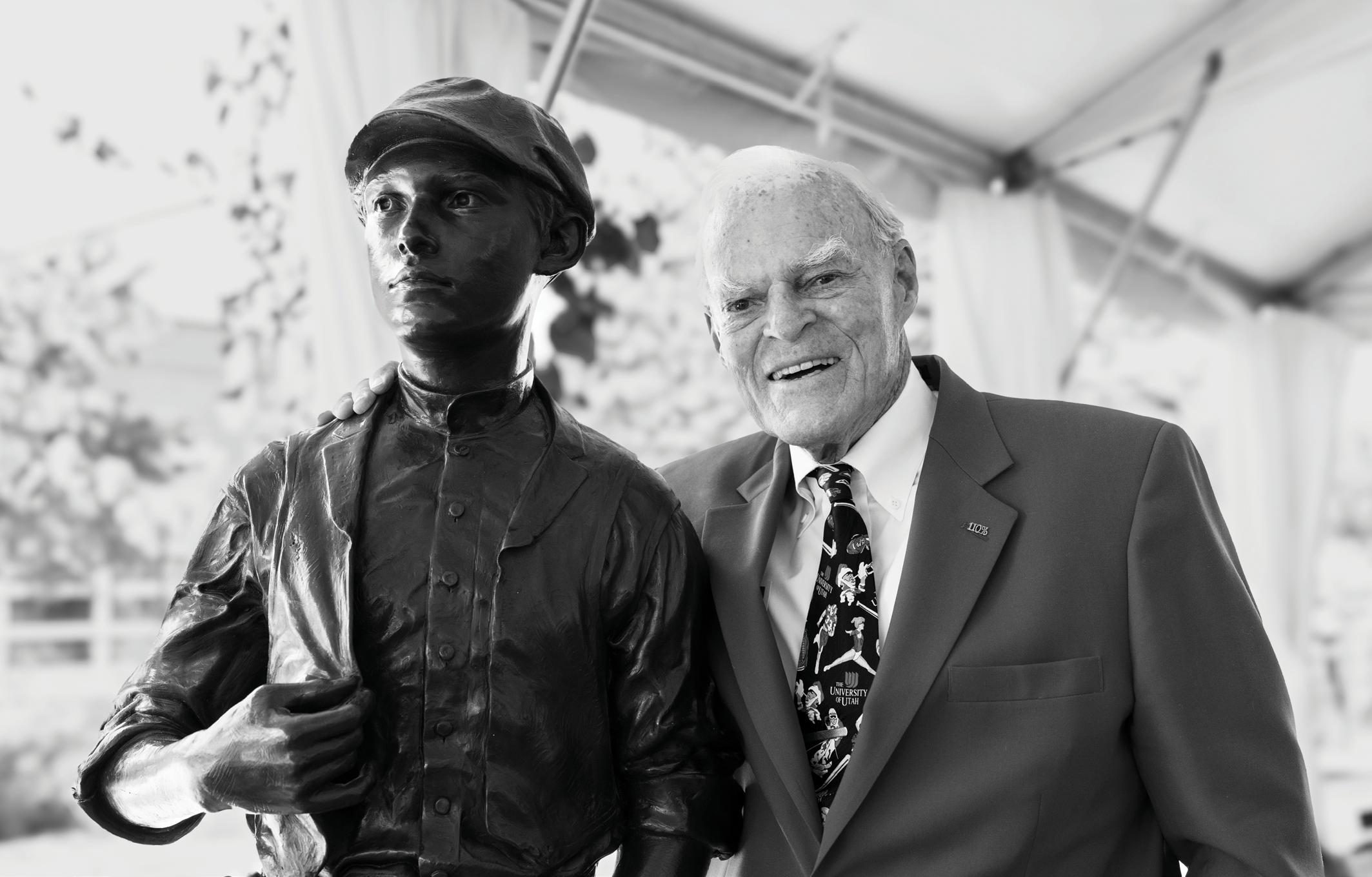
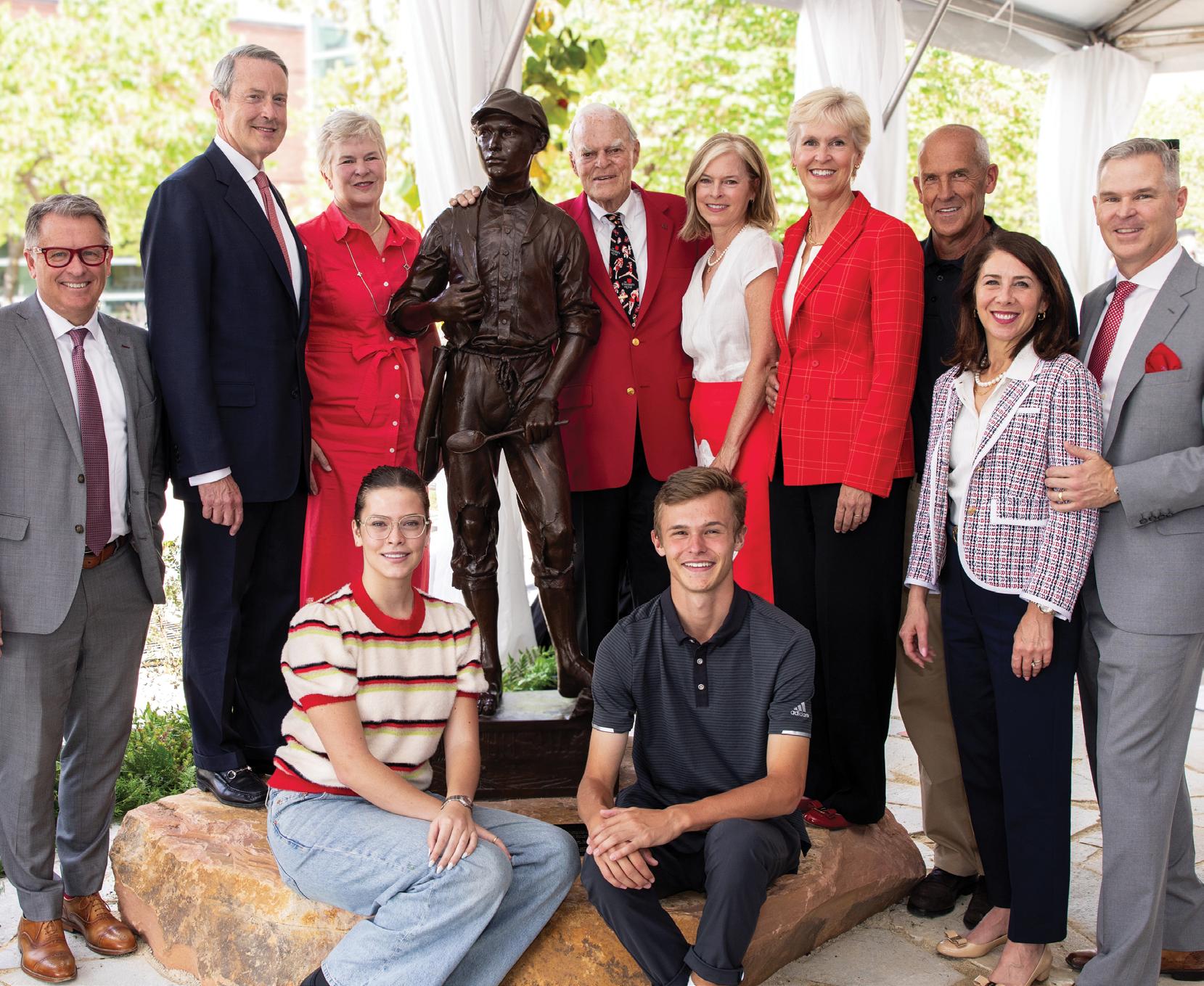
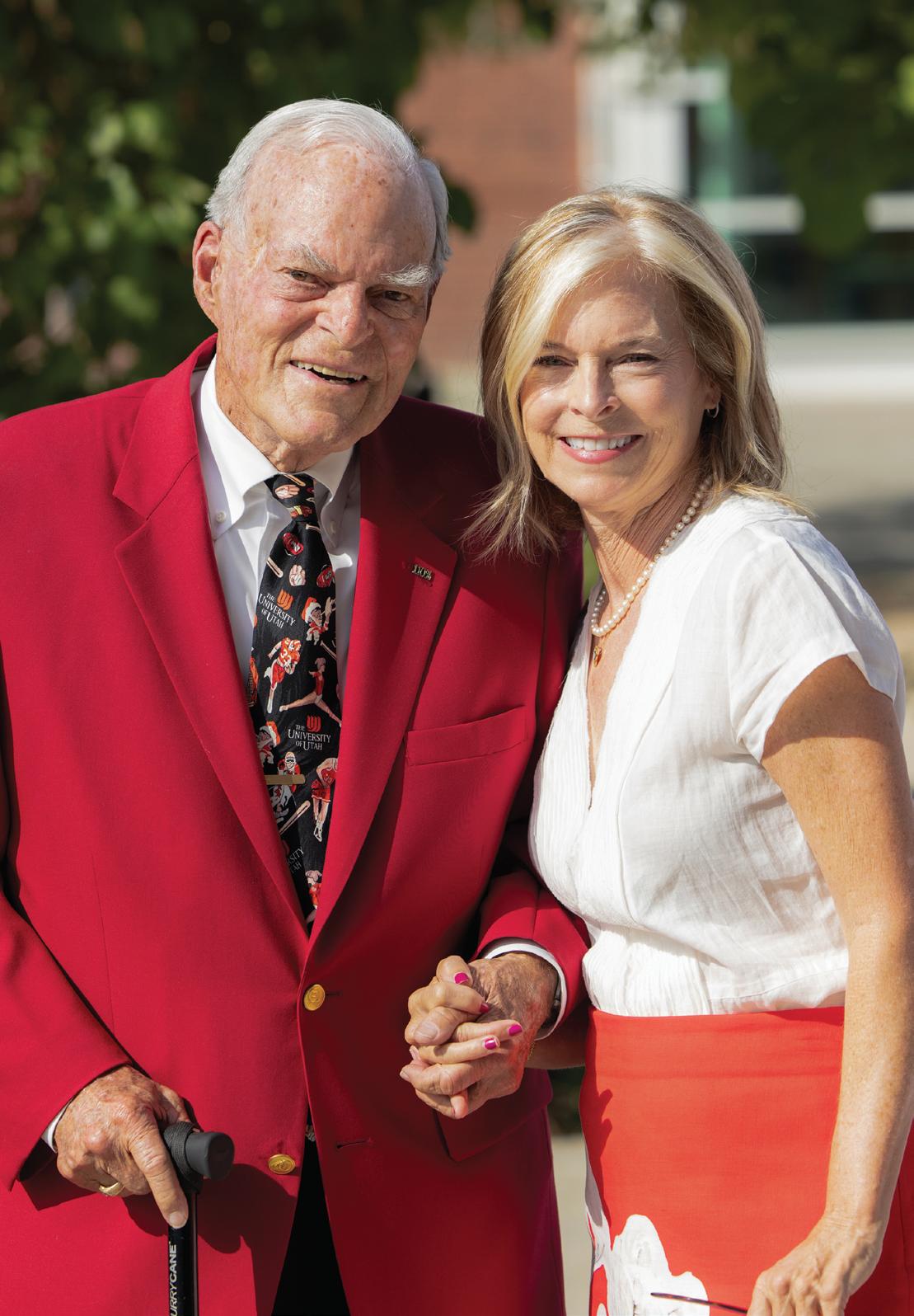
A new statue of David Eccles, namesake of the David Eccles School of Business, now greets students and visitors outside the Spencer Fox Eccles Business Building. The statue was unveiled on Sept. 4, 2025 by descendants of David Eccles, including his grandson, Spencer Fox Eccles, and great-grandchildren Katie Eccles, Lisa Eccles, Hope Eccles, and Spencer P. Eccles.
The statue depicts David as a young man of 14, around the time he came to the United States from Scotland with his family.
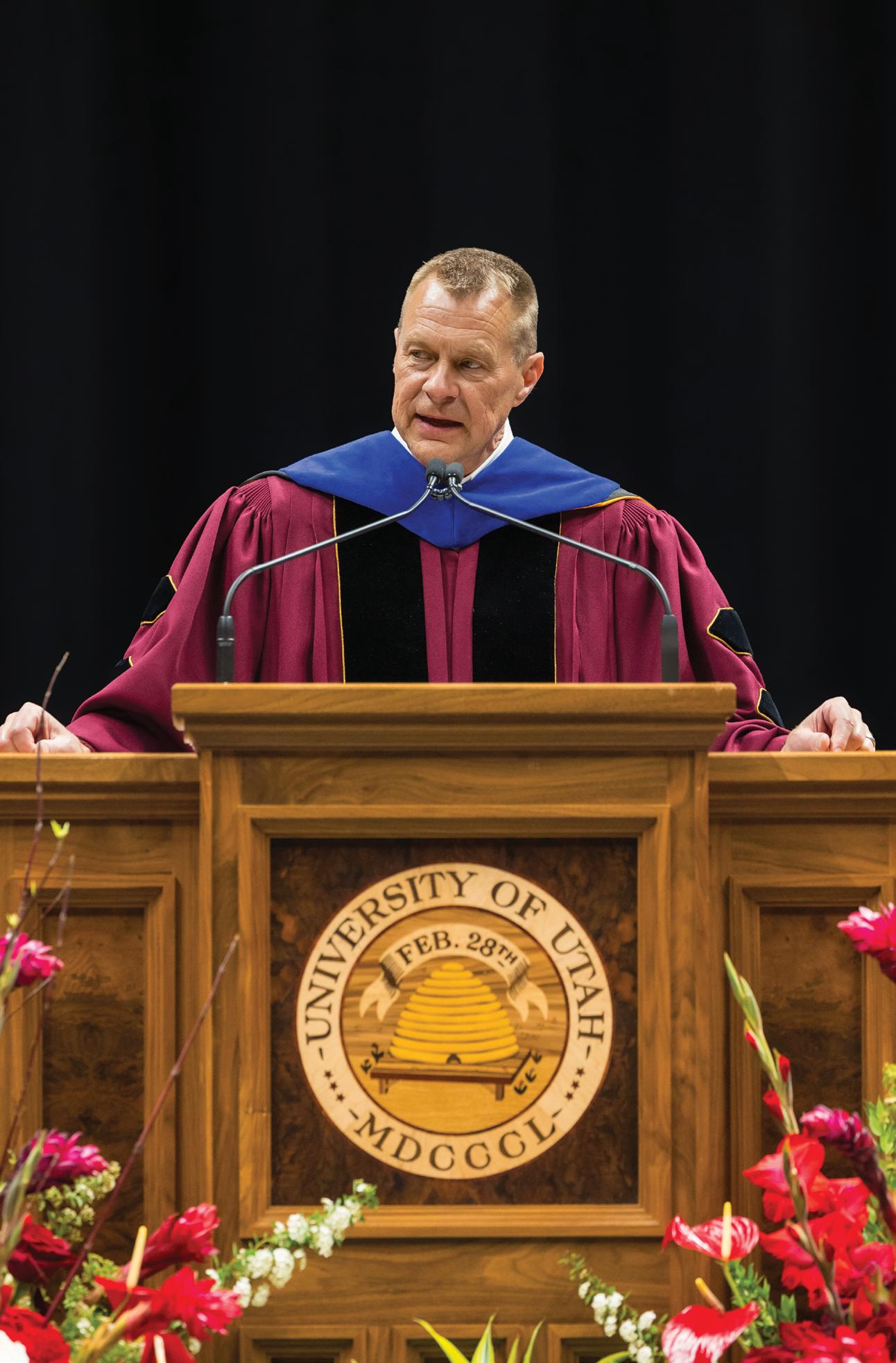
“It is very fitting that this statue depicts David, not at the height of his success, but as a young man, when he was just getting started,” said Kurt Dirks, dean of the David Eccles School of Business, during the unveiling ceremony. “This is where our students are at in life — ready to start their climb. David’s example is a reminder to them of what is possible, regardless of where you start.”





Do you feel the energy of our school and our region as strongly as I do? One of the things I value most about being here is that we are a business school on the move, at a university on the move, in a state that is on the move. The David Eccles School of Business is deeply embedded in a dynamic and rapidly growing ecosystem in Salt Lake City and across Utah. This is a place defined by momentum, and the Eccles School is proud to be part of the engine helping to power it.
Creating meaningful societal and economic impact is a core strategic priority for our school. The success of our business community and the success of the Eccles School are tightly linked. The questions our faculty pursue through research, the skills our students develop, and the leadership roles our alumni assume all contribute to the vitality of our region. We are supporting programs that are particularly important to the Utah economy, such as real estate and health care, and developing new initiatives, such as AI programs, fintech, and the business of sports.
This work does not stop at the edge of campus. It extends outward — into our economy, our communities, and the lives of people across Utah and beyond. What happens in our classrooms, research centers, and alumni network has the potential to shape the trajectory of the places we call home.
In this issue of Eccles Experience, we highlight several of the forces shaping our city and state, and the essential role that Eccles alumni and partners are playing in that work. From advancing professional sports and major entertainment developments to addressing complex challenges such as affordable housing, our community is helping to lead some of the most consequential activity underway in Utah today. I hope you find these stories as inspiring and energizing as I do — and that they deepen your pride in the Eccles School and your connection to the impact we are creating together.

Kurt Dirks Dean, David Eccles School of Business

CAMPUS NEWS
Something big is coming for rising high school entrepreneurs starting summer 2026. The Lassonde Entrepreneur Institute — a top-10-ranked, interdisciplinary division of the University of Utah’s David Eccles School of Business — is introducing the Lassonde Startup Academy, a unique, pre-college, summer program for aspiring business founders, makers, creators and doers.
The Lassonde Startup Academy gives students a unique opportunity to take a deep dive into the world of entrepreneurship, product design and business creation.”
SCOTT HOLLEY
The Academy will allow high school students, ages 14-18, to discover everything the Lassonde Entrepreneur Institute has to offer in a short and fast-paced format designed to inspire the next generation of global entrepreneurs and business leaders. Students will discover one of the best universities for entrepreneurship, learn how to create and sell a product, and explore the University of Utah and surrounding area — all while earning college credit.
“We created a high school program like no other to attract the best up-and-coming entrepreneurs from around the state, country and world,” said Scott Holley, executive director of the Lassonde Entrepreneur Institute.
“The Lassonde Startup Academy gives students a unique opportunity to take a deep dive into the world of entrepreneurship, product design and business creation. Students will learn by doing and get their hands dirty building products and learning what it takes to create a business. We welcome everyone to learn more and apply for scholarships to participate.”
Students in the Lassonde Startup Academy will live at Lassonde Studios — a world-class living-learning center and makerspace for student entrepreneurs and innovators — and they will create and launch products and companies, while collaborating with each other and learning from experienced entrepreneurs what it takes to start and grow a business.
Learn more and apply at lassonde.utah.edu/academy
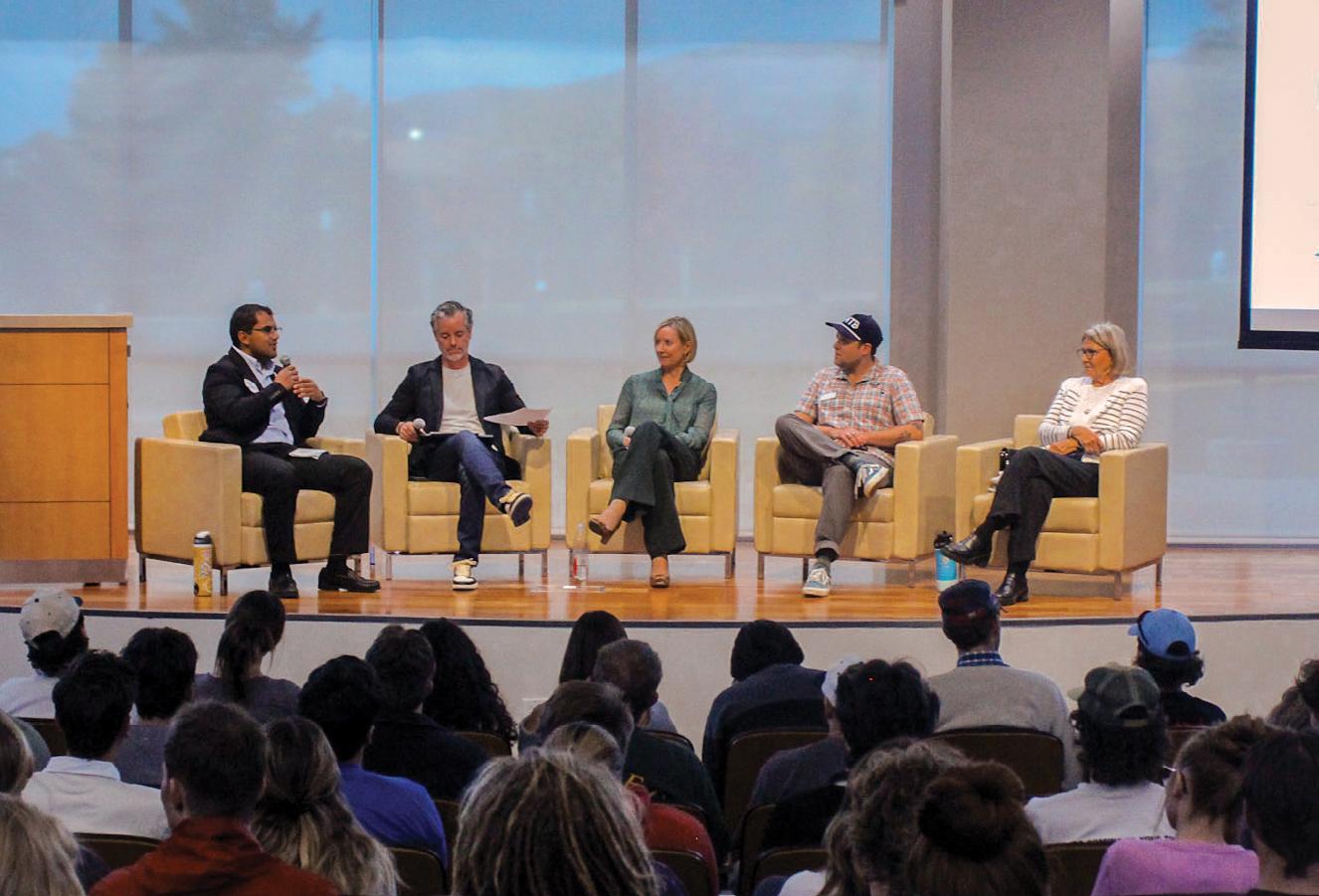
Salt Lake City may not be the first place that comes to mind for a thriving venture capital and private equity ecosystem but, as attendees of the fall David Eccles Alumni Network Forum learned, venture capital and private equity play a critical role in the state’s business ascent — and there is more growth and activity ahead.
Panelists Smit Naik, Senior Director of Impact Investing at the Sorenson Impact Institute, and Aaron Murdock, Managing Partner at Mayer Brown, joined moderator Jack Boren, Managing Partner at Epic Ventures, for a discussion that included:
■ Definitions of venture capital (which usually involves an investor or venture capital firm taking a minority stake in the company in the early stages) and private equity (which usually involves firms buying private companies outright and then taking them public).
■ Impact investing, which asks an additional layer of questions, including how is the world made better because this company exists?
■ Tips for structuring relationships between companies and investors that strike the right balance between control and collaboration.
Panelists also talked about the future of venture capital and private equity in Utah, which Naik referred to as “the land of opportunity.”
However, Murdock cautioned, the ecosystem needs to grow in a way that supports a healthy investment landscape, including affordable housing, accessible educational opportunities, and a high quality of life. While outside the work of investors, all those factors directly impact whether people want to live in and invest in Utah.
Couldn’t make it? You can watch the full recording of the event on our YouTube channel.
Myriad aspects of Utahns' lives are tied to tenets of business — the price of groceries (and the economy in general), availability and affordability of housing, unemployment rates, job benefits, challenges of smallbusiness start-ups, impact of tariffs, suspension of SNAP benefits, and more — and the David Eccles School of Business has a faculty capable of speaking to these issues.

With this in mind, the Eccles School will have a regular feature in the opinion/editorial section of The Salt Lake Tribune. This once-permonth contribution will entail an Eccles School professor writing about their research and how it relates to Utah and Utahns' lives. This arrangement provides timely and pragmatic information to the public and enables the Eccles School an opportunity to showcase the value of higher education.
The first op-ed in the partnership was authored by Bailey Bigelow, an assistant professor in the Department of Management, and focused on the negative impact that food insecurity has on business, and how Utah employers can help.

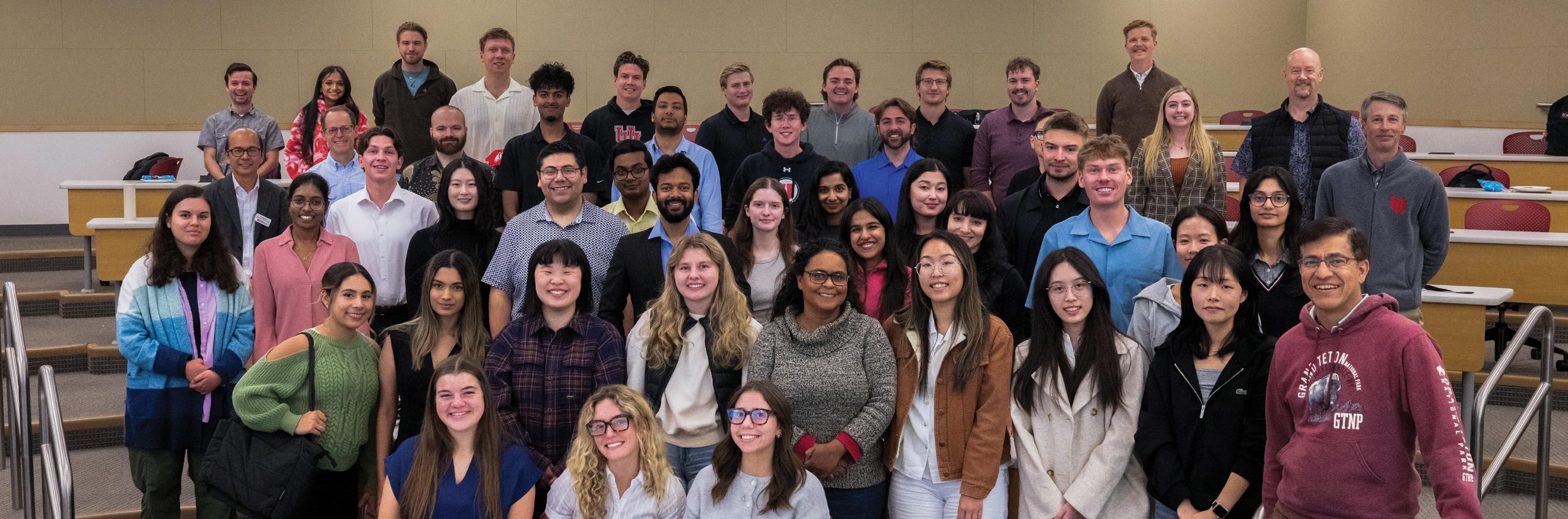
Information Systems 2010 students at the David Eccles School of Business recently participated in their strongest case competition yet. Over eight fastpaced days, teams analyzed a large dataset of simulated campus foot traffic, weather trends, and coffee sales to determine whether the University should launch a mobile coffee cart and how it should operate.
The winning teams consistently identified the same patterns:
■ 7 to 8 a.m. is the busiest hour of the day.
■ The 7 to 11 a.m. window brings in more than $60,000 in historical revenue.
■ Tuesday is the strongest weekday for sales.
■ Fall generates the highest total revenue.
Teams also found consistent patterns in what people choose to order:
■ Lattes lead the menu with more than 8,000 transactions.
■ Hot drinks account for roughly two-thirds of all orders during colder months.
■ Cold drink orders rise by about 3 percent for every 10-degree increase in temperature.
Here’s how the top teams turned their insights into strategy:
1. First Place: Blue Genius. Blue Genius delivered a consulting-style narrative supported by clear analysis. They identified the strongest morning demand, highlighted the top-performing drinks, estimated daily revenue between $395 and $507, and recommended operating from 6 a.m. to 6 p.m. based on demand patterns.
2. Second Place: Payton and Lucy. Payton and Lucy impressed judges with strong visual explanations of weekday patterns, seasonal shifts, and temperature-based drink preferences.
3. Third Place: da Goats. da Goats earned recognition for identifying multiple outliers and explaining their impact. A judge noted that the team clearly understood how to reach their conclusions and confidently stood behind their recommendations.
NEWS
The David Eccles School of Business will offer a minor in Artificial Intelligence (AI) to all University of Utah undergraduate students — regardless of major or college — beginning in Fall 2026.
It is the first AI-related academic program at the U to be officially approved by the Board of Trustees.
The benefit of this minor is to help students gain a skillset that they can apply immediately in the business world.”
CHONG OH
The Business AI minor is a cross-disciplinary program designed to equip students with critical skills in AI technologies and their practical applications in business. It will bridge the gap between AI and business strategy, enabling students to make data-informed decisions, automate processes, and create competitive advantages in diverse industries. This new program reflects the Eccles School’s vision to prepare students who are fluent in emerging technologies and anchored in enduring business fundamentals and durable skills.
“The future of jobs is going to require an understanding of and skills in AI. The benefit of this Business AI minor is to help students gain a skillset that they can apply immediately in the business world,” said Chong Oh, director of the undergraduate Information Systems program. “It will give them ideas about what’s possible, and the know-how to build ideas that are immediately applicable, so that when they go into industry, they become a great resource for the organizations they belong to.”
The minor will entail 16 credit hours, with a core of three required three-hour courses, a required one-hour capstone class, and two three-hour electives. Courses have been designed with minimal coding prerequisites, making AI accessible to students in business, humanities, arts, health, science, and other majors.
Among the offerings are Python Programming, Business Strategy, Machine Learning and Analytics, and Data Visualization and Communication. There will also be an elective focused on “AI ethics,” an area of particular importance in the feedback process with the Academic Senate.
Alumni and Families Celebrate Utes Win at Football Watch Party
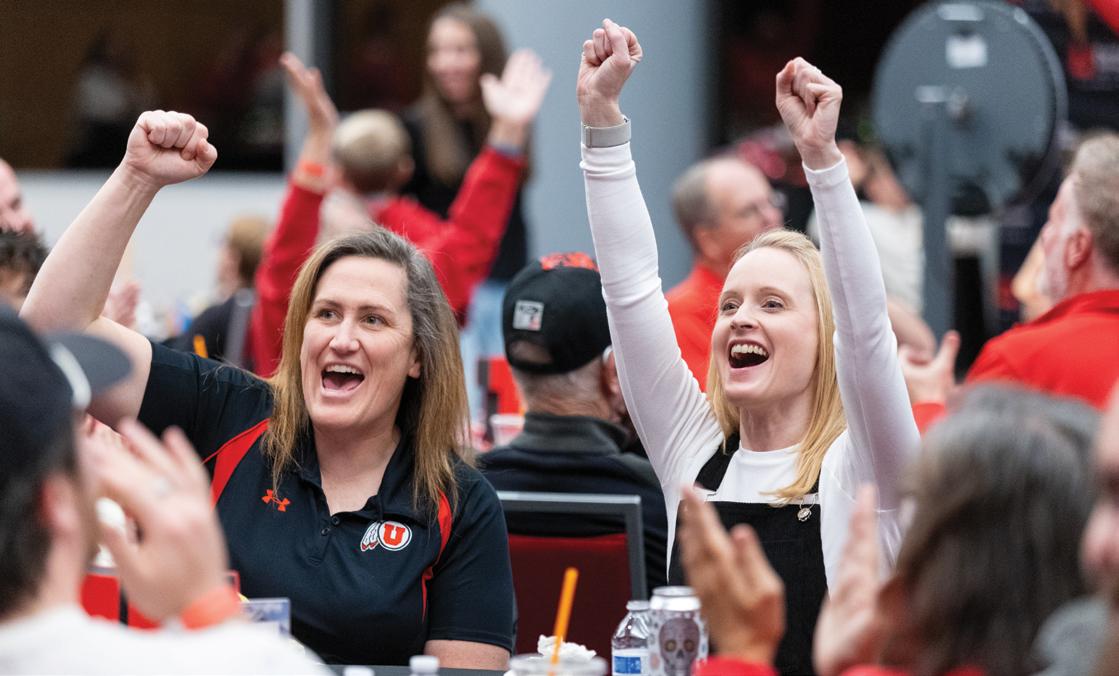


Alumni and their families gathered this fall for a special football watch party, as the Utah Utes defeated the Baylor Bears in a thrilling game. Guests enjoyed delicious food and drinks donated by event sponsor Bewilder Brewing, an Eccles alumniowned company.
Want to stay up-to-date on upcoming alumni events?
Make sure to update your contact information.
Tune in to Eccles Business Buzz Podcast for Inspiring Alumni Stories
The Eccles Business Buzz podcast is currently sharing inspiring alumni stories, exploring the impact of maintaining a connection to the David Eccles School of Business. Recent guests and discussions include:
■ MBA alum and scholarship donor Nelly Griffin, sharing his personal story as a first-generation student and why his own experience motivated him to get involved with the Opportunity Scholars program. Tune in to hear more about Nelly’s personal mantra: don’t let your story end.
■ Ashley Atkinson Williamson, a graduate of the Eccles School’s Master of Real Estate Development program, who talks about following your passion, being open-minded about pivoting, and how the MRED program helped her make a transition from banking to what she felt was her true calling: real estate and community development
■ Finance grad Ben Holley, VP of Finance at Disney, on the power of continuous curiosity and making the most of unexpected opportunities to build a successful and fulfilling career.
Tune in at Eccles.link/businessbuzz or wherever you get your podcasts. You can also watch full video of every episode at youtube.com/@DavidEcclesBusiness.
FACULTY IN THE NEWS
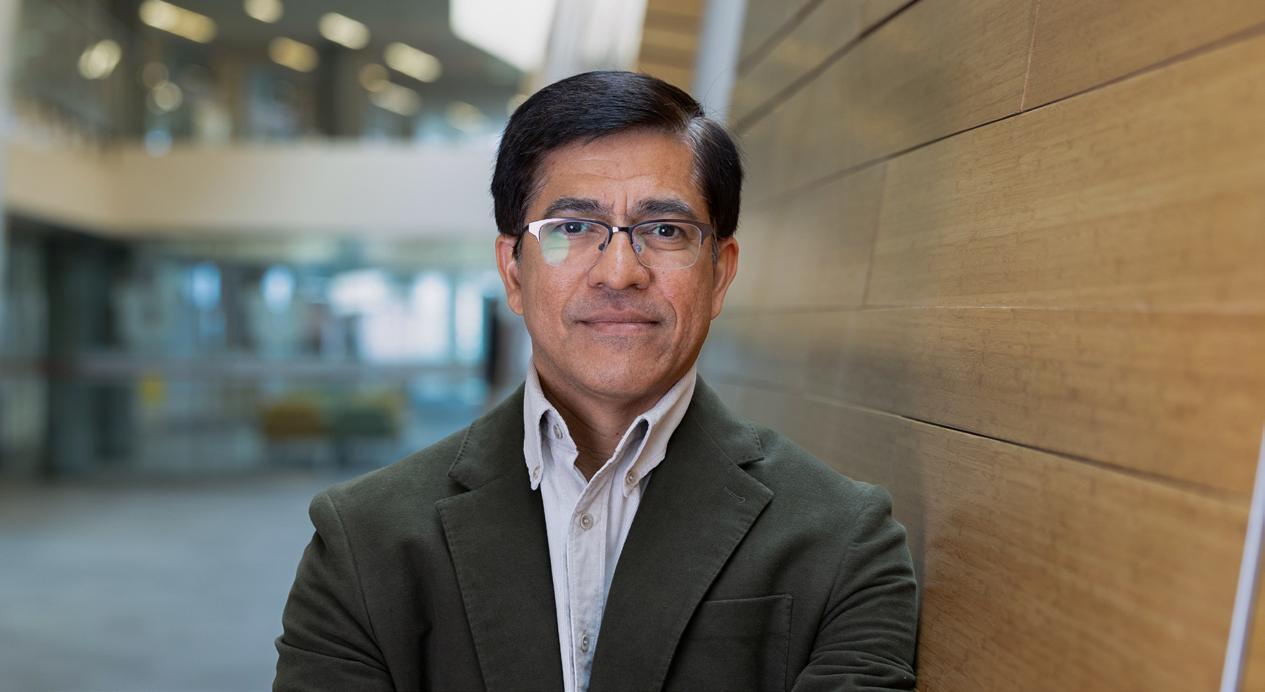
Nitin Bakshi earns Operations Conference’s ‘Best Paper Award’ for Research Investigating Judicial Backlog in India
Nitin Bakshi, chair and professor in the Department of Operations and Information Systems, was honored by the Manufacturing and Service Operations Management (MSOM) Society for his research.
Bakshi’s paper, “Service operations for justice-on-time: A data-driven queueing approach,” co-written with Jeunghyun Kim and Raman S. Randhawa, received the MSOM Service Management Special Interest Group Best Paper Award at the annual Institute for Operations Research and the Management Sciences (INFORMS) conference.
The paper looks at the Indian judicial system, which has a backlog of nearly 41 million cases, about 25% of which have been pending for more than five years — both sources of considerable adverse economic and social impact.
Bakshi and his co-authors show that judicial congestion stems from how courts allocate judges’ time and manage hearings. By rebalancing schedules, their model predicts average delay could drop by as much as 65%, with instances of excessive delay (cases pending over two years) falling from nearly 18% to almost zero. These findings demonstrate how data-driven operational improvements can meaningfully relieve backlogs and offer courts worldwide a practical blueprint for improving the speed and fairness of justice.
Marketing Week made its debut at the David Eccles School of Business this fall, and every event throughout the week drew strong participation.
The purpose of the week was simple: to give students hands-on, résuméready experience they can’t get from lectures alone. As Tara Elggren shared, “this was all about helping students build something real, something they could show a recruiter, add to a portfolio, or talk about confidently in an interview.”
The centerpiece of the week was the TikTok Go-To-Market Strategy Competition featuring two outdoor industry partners as well as the competition’s sponsors:
■ Cardiff Snowcraft: premium snowboard and ski craftsmanship.
■ Board Budder: sustainable board wax built for performance.
Students were tasked with building a 90-day TikTok strategy combining creativity, analytics, and storytelling. Twelve teams competed, mixing marketing, design, entrepreneurship, and communication majors in true cross-disciplinary fashion.
This year’s top teams brought creativity, clarity, and strong data storytelling:
1. First Place — Powder Pals: Aidan Cerecedes, Moises Molina, Soleil Scott, Gracie Watkins
2. Second Place — Trojan: Cali Bourdos
3. Third Place — CRAW: Wesley Booher, Cole Du Plessis, Miles Goldstein, Sawyer Rizza
Cerecedes shared his experience on LinkedIn, summing up what many students felt: “Case competitions like this push you outside your comfort zone and give you real-world experience you simply can’t get in the classroom.”
Beyond the competition, Marketing Week built bridges between students and industry pros.
Case competitions like this push you outside your comfort zone and give you real-world experience you simply can’t get in the classroom.”
AIDAN CERECEDES
The Speaker Panel featured leaders from Ski Utah, Snowbird, the Utah Jazz/Utah Mammoth, and Merit Medical. They gave students a candid look at what modern marketing careers actually look like.
The Career Expo kept the energy high with employer conversations, internship opportunities, and one-on-one connections.
Because of how successful it was, Marketing Week is officially becoming an annual event at the Eccles School, and one that will continue growing, evolving, and giving students the real-world practice they’re asking for.
In the sport of endurance cycling you need a million things to go right in order to win a bike race. It’s three parts preparation and one part luck! That was what was going through my mind waiting at the starting line of LOTOJA 2025.
Three years ago, I set the goal to win this race, which covers 206 miles from Logan, Utah to Jackson Hole, Wyo., twice I had come up short — once with a flat tire less than five miles from the finish line, and once because I ran out of water, got heat stroke, and had to “debike” within 100 feet of where I flatted the year before. Still looking for miracle redemption, over the past year I have been living, eating and breathing cycling. I hired a coach and trained for 1,992 hours, riding 45,719 miles and climbing 2,137,013 feet of elevation. Would this be my year? It’s fair to say, that day, at that starting line, I had never felt more anxiety in my life.
So much racing is about the “now.” You’re so aware of your surroundings and what’s going on, you’re not thinking about the finish line yet. But, as the race got underway, I was feeling pretty good. The early miles went by without incident, and I was enjoying the time with my fellow cyclists, keeping a good pace and making decisions to set myself up for success later in the race.
In prior years, I decided to skip the second aid station in Afton, Wyo., to save a little time, contributing to my downfall the year prior. But this year I made a change —the plan was for my sister, Lorrin, to give me a bottle hand-up, outstretched arm so I didn’t have to put a foot on the ground and stop. I didn’t see her as I approached our designated meeting spot and then, all of a sudden, there she was — sprinting across the park, water bottle in hand. I got emotional in that moment thinking about how thankful I was for all the people who supported me and got me this far.
anything.”
After an excruciating six-minute wait at a stoplight, our lead group rode a blistering 30-mile-per-hour paceline for more than an hour, steadily closing the gap between us and the lone solo leader. Around mile 170 we finally

caught him. Then with 12 miles left in the race I made my attacks to finally break away from the pro field and the realization sunk in: if I can keep this up, I am winning LOTOJA.
It was always in the back of my mind that I might “die” in the same spot where catastrophe had struck the past two years. But as I approached the spot, my Garmin bike computer lit up with messages from my wife, family and my EMBA classmates all cheering me on to the end. With three kilometers left, I made my final attack and rode solo across the finish line to win.
There are so many things that need to go right on race day to have an experience like that, and so many things you have to do before race day to get yourself ready. I still can’t believe how it all played out, but if I’ve realized anything over this experience it’s that with the right support, teammates, dedication, and motivation, you can do just about anything.




Life is too full and too fast to leave anything on the table. You don’t have to slow down to start setting up your self, your family, and the generations that come after. With the first conversation, we’ll begin uncovering the opportunities and blind spots unique to you. Together, we’ll create a financial plan that meets you where you are today and is designed to your money all the way. That’s a better way to money.
Gelder Generational Wealth 111 E Broadway Ste 1400 jeffrey.lewis@nm.com www.jeffrey-lewis.com 801-433-1692
Salt Lake City, UT 84111
07-1004 © 2026. Northwestern Mutual is the marketing name for The Northwestern Mutual Life Insurance Company (NM) (life and disability Insurance, annuities, and life insurance with long-term care benefits) and its subsidiaries. Subsidiaries include: Northwestern Mutual Investment Services, LLC (NMIS) (investment brokerage services), a registered investment adviser, broker-dealer, and member of FINRA and SIPC. Northwestern Mutual Wealth Management Company® (NMWMC) (investment advisory and trust services), a federal savings bank. Not all Northwestern Mutual representatives are advisors. Only those representatives with “advisor” in their title or who otherwise disclose their status as an advisor of NMWMC are credentialed as NMWMC representatives to provide investment advisory services. NM and its subsidiaries are in Milwaukee, WI. To view detailed disclosures regarding individual representatives, view their information at jeffrey-lewis.com.




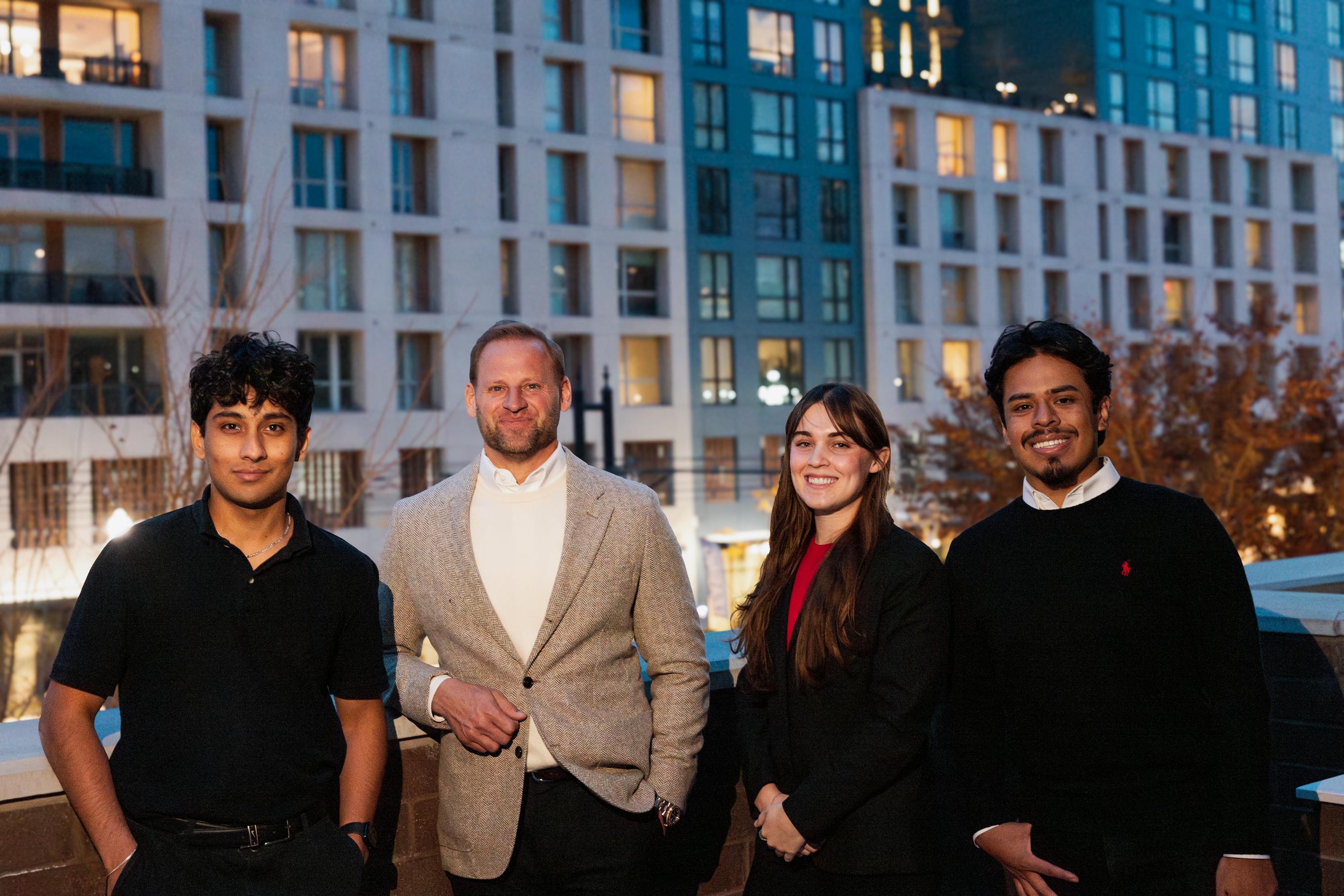










For more than a decade, Utah has led the nation in population and job growth, according to the Kem C. Gardner Policy Institute. This rapid expansion translates into enviable economic strength, but it also puts intense pressure on community infrastructure, including the local housing market. Between 2011 and 2017, home prices in Utah rose at twice the rate of income, outpacing what many families — especially those below the median income — could manage. Rising interest rates, restrictive local policies, high land and labor costs, and expensive materials have all contributed to a shortage that economists predict will only intensify. In four decades, Utah is projected to grow from 3.6 million residents to 5.6 million.
As the University of Utah is experiencing its own period of record-breaking growth, putting pressure on campus housing resources as well, downtown is increasingly becoming an extension of campus. But with housing prices climbing, an important question is emerging: who will shape Utah’s housing future, and how will students fit into it?
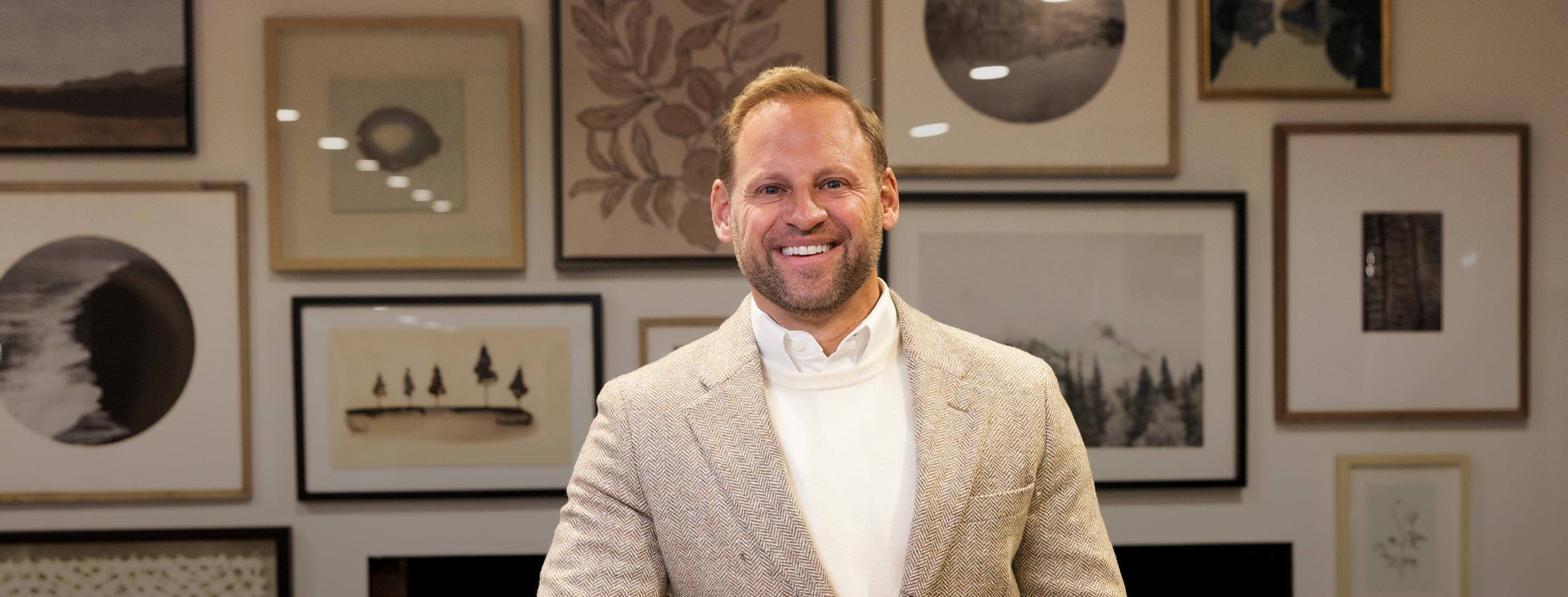
For Colin Wright (Finance BS ’02), owner of homebuilder Cole West, the answer to that question starts with the story of his father, Gary Wright.
A first-generation student who was left to fend for himself as an adult, Gary Wright enrolled at the U and spent countless nights sleeping in a janitor’s closet. Despite being told repeatedly that college “wasn’t for him,” he earned a bachelor’s degree and then an MBA.
During his MBA program, Gary met Ellis Ivory, the future founder of Ivory Homes. Their friendship grew into a business partnership and launched Gary into a career that reshaped development across the Wasatch Front. When he passed away in 2020, he left behind 49 real estate assets and a legacy built on perseverance, opportunity, and generosity.
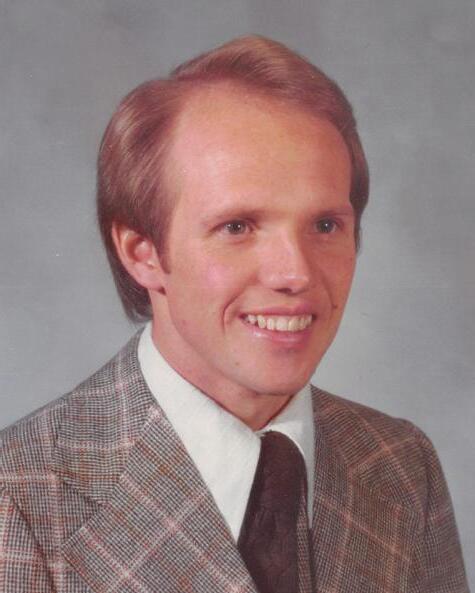
“My dad’s mindset was seeing human beings one person at a time,” Wright said. “The idea was simple, help however many people you can. One, two, twenty. That’s the goal.”
Using a portion of the inheritance left by his father, Wright created the Gary Wright Scholarship at the David Eccles School of Business, ensuring that support for firstgeneration students would continue long after Gary’s passing. For Wright, giving is not an abstract idea. It’s a family expectation and a responsibility he takes seriously.
“When you feel like you’re born on third base,” he said, “you think a lot about how to give back. This is the closest I can get to helping the young Gary Wright as a 19-year-old.”
Wright’s philanthropic connection to the Eccles School has grown alongside his own business success. After earning a master’s degree in real estate development from Columbia University, he brought his knowledge back to Utah and helped develop the curriculum for what is now the Eccles School’s Master of Real Estate Development (MRED) program — the first of its kind in the region. His company, Cole West, employs more than 140 people, many of them Eccles grads who build homes, communities, and neighborhoods that define Utah’s landscape. He supports students through programs like Opportunity Scholars, First Ascent, and Rising Business Leaders, and serves on the Eccles Advisory Board.
Through it all, one issue kept coming up: student housing. Like many universities in fast-growing states, the University of Utah faces two challenges: trying to shake a reputation as a commuter school, and a shortage of affordable student housing.
While research shows that freshmen and sophomores are more likely to thrive when living on campus, juniors and seniors prefer to live independently while staying connected to the university. With limited space near campus, that transition becomes difficult.
Wright didn’t have to go far to see impact of this problem. As a father of five, he had a front-row seat to observe how high school students were making decisions about college — and the U wasn’t winning their attention.
“When I was younger, maybe 30 percent of my high school class considered the University of Utah,” Wright said. “Today, it’s maybe five to 10 percent. It’s a shame the U is not capturing some of the best in-state students.”
One culprit? Housing. Not affordability alone, but also lifestyle, community, and student experience. Wright decided to map out a solution.
In 2023, Wright approached the university with an idea — a pilot program using one of his downtown apartment buildings, Block 44. Though Block 44 is a market-rate property, not designed as student housing, it was perfectly positioned to offer students the type of living experience they were looking for, including independence, access to public transportation, affordability through scholarship support, and proximity to both campus and the city’s growing economic center.
“You have to give students the space to have a meaningful college experience,” Wright said. “College should require sacrifice, but for kids like Angel, it was almost impossible.”
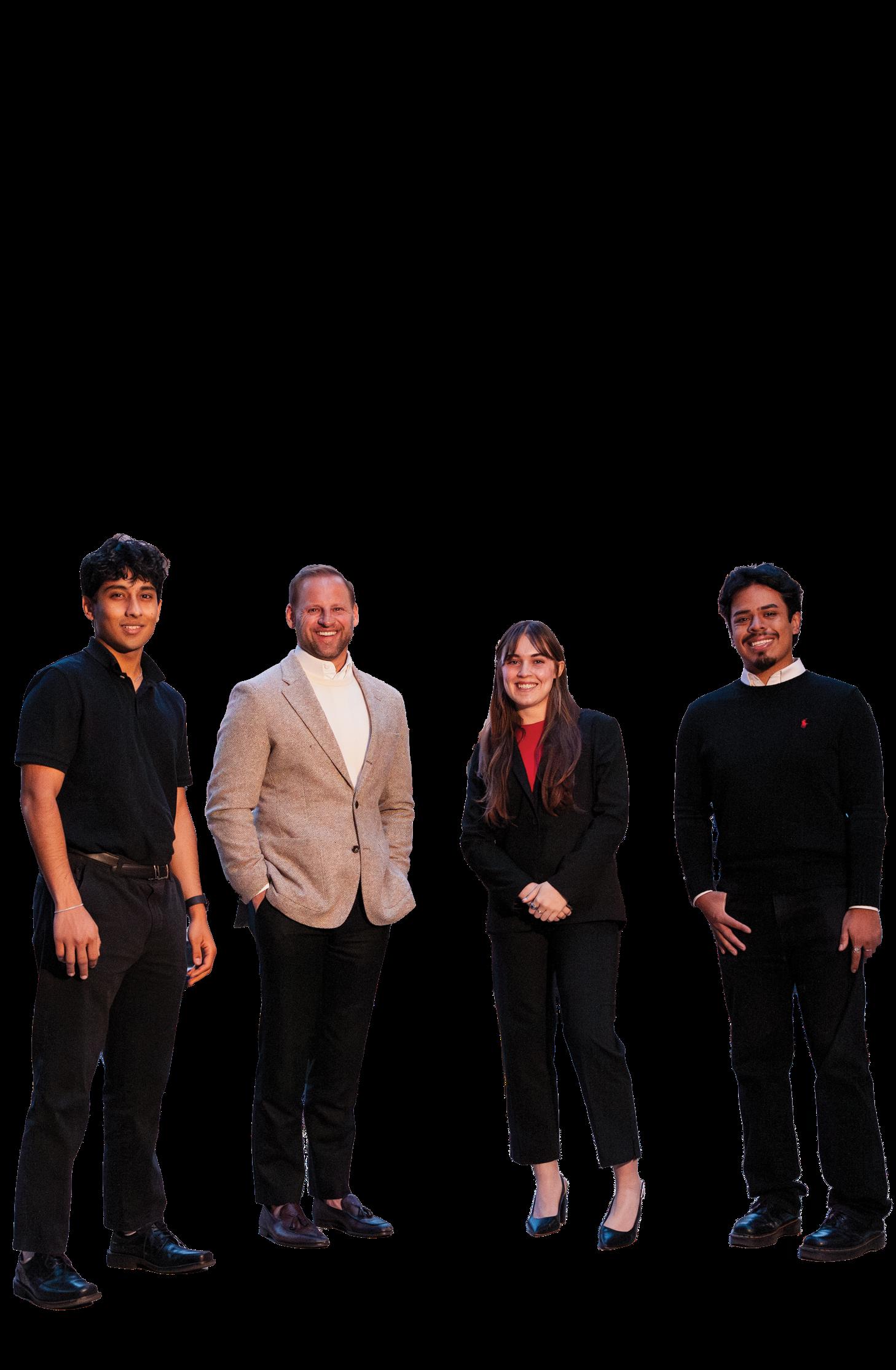
Angel is Angel Pina, a senior majoring in marketing, whose daily commute from his family’s home in Santaquin, Utah used to take nearly two hours each way. After receiving the Block 44 housing scholarship, Pina’s commute was reduced to three train stops.
“With this scholarship, I can commit that travel time to better things,” Pina said. “We learn about risk and return in the business
“My dad’s mindset was seeing human beings one person at a time … The idea was simple, help however many people you can. One, two, twenty.”
COLIN WRIGHT
“This opportunity lets me focus on school without that constant worry about where I am going to live.”
ABBY PAPPAS
school, but we should also think about impact. Colin’s investment changed my life, and I plan to pay that forward.”
Two other students joined the Block 44 pilot program: AJ Chapagain, a finance major from Nepal who moved to Kanab, Utah at the age of 9; and Abby Pappas, an accounting major and first-generation college student. For Chapagain, Block 44 offers access to internships downtown, a diverse community, and independence.
“This isn’t just a place to live,” he said, “It’s where I’m building the skills that will shape my future. Affordable housing is an investment in the next generation.”
Pappas also appreciates this breathing room.
“It is so wonderful to have no stress in the mornings,” she said.
“I jump on the train and I’m at school in minutes. I’m the first person in my family to live alone and this opportunity lets me focus on school without that constant worry about where I am going to live.”
The students and circumstances are different, but the story is the same: without a housing scholarship, the college experience would be very different.
The Block 44 pilot is only the beginning of Wright’s broader plan. He has since purchased several downtown properties and his next major site, the Office Max property at 400 South and 900 East, has the capacity for the first 700 beds of what he hopes will become a larger, purpose-built student housing district. This vision aligns with the university’s long-term goals, while providing endless room to grow.
“If you want to change the school’s reputation of being a commuter school,” Wright said, “you must provide housing for students.”
Wright often thinks about what his father’s life might have been like if he had access to stable housing as a struggling 19-year-old, and that story shapes the work he does every day. For many students, his investment in affordable and accessible housing represents a bridge between college and the real world. This next generation of students will not only learn in classrooms — they will also live, work, and build community in downtown Salt Lake City.
The U helped build Wright when he was a student, he said, and he is honored to now be part of building the university’s future.

BY ANNESLEY WOMBLE
is buzzing with new energy that is redefining what the next decade will look like for the capital city. At the center of this momentum is Smith Entertainment Group (SEG), the organization shaping Utah’s sports, entertainment, and community experience.
Since its 2020 founding by Utah Jazz and Utah Mammoth owners Ryan and Ashley Smith, SEG’s mission has been to strengthen Utah’s communities, build worldclass fan experiences, and position its teams for championship success. Now, that mission is expanding. The organization is making an intentional push to turn Salt Lake City into a premier entertainment hub — one that other cities across the country will look to as a model.
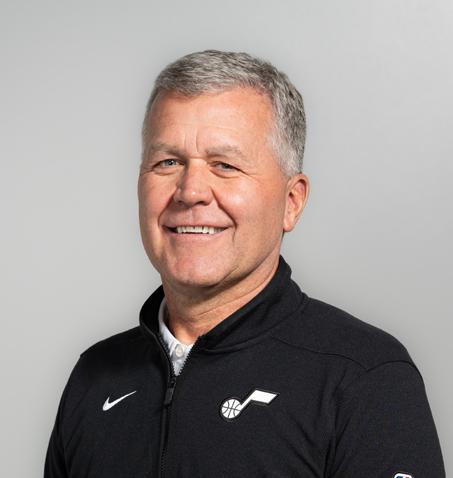
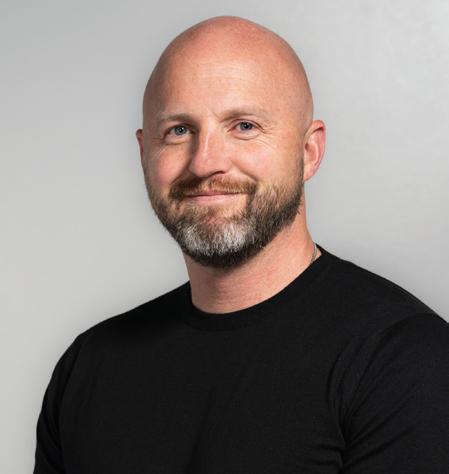
Chris Barney, SEG’s President of Revenue and Commercial Strategy, and Jim Olson, President of the Utah Jazz, both homegrown Utah leaders and University of Utah graduates, are two of the executives helping orchestrate this transformation. Together, they are helping to guide a moment of historic change for both SEG and downtown Salt Lake City.
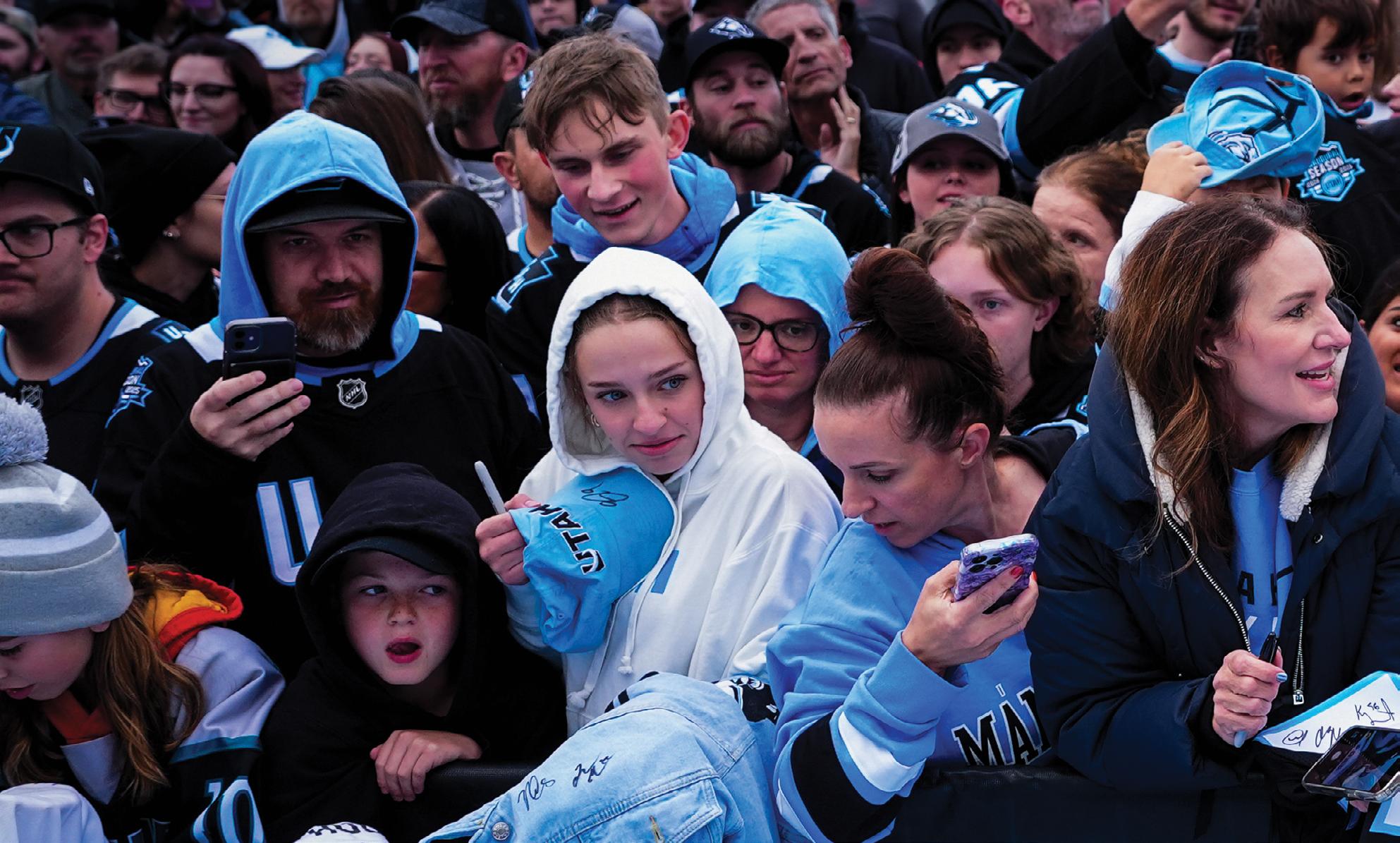
One catalyst for downtown’s transformation was the 2024 arrival of a brand-new NHL team. SEG took that opportunity to rethink the role the Delta Center (home of both the Mammoth and the NBA’s Utah Jazz) plays in the heart of the city. While certain upgrades were necessary to accommodate hockey, the project quickly expanded into something bigger: a vision for a multi-sport, multi-event, multi-night entertainment destination.
“The Delta Center is a place for families and friends to gather,” Barney said. “Our fans show up early, they’re loud, they’re loyal, and that commitment inspires us as an organization to make sure we’re delivering worldclass experiences.”

The Delta Center’s expanding role also intensifies demand for other services and amenities in the downtown Salt Lake ecosystem, Olson said. The Utah Jazz and Utah Mammoth alone bring more than 80 event nights per year. Each sporting event brings between 16,000 and 18,000 people downtown to park, eat, use public transportation, and experience the city. That influx requires a deeply collaborative approach between SEG and the broader downtown area.
“You’re essentially hosting a small city in downtown Salt Lake City every night,” Olson said.
Restaurants, parking operations, transit systems, and local business all become part of the extended event experience. SEG can deliver the arena, but the city must deliver an environment capable of thriving alongside it. When it comes to that thriving sports and entertainment environment, SEG’s vision extends far beyond the transformation of the Delta Center.
“This momentum is not temporary,” Barney said. “[It] will create generational change for Salt Lake City, and it will
become the foundation for the next chapter in sports and entertainment.”
The growth being spurred by SEG also has an impact beyond just entertainment, Barney added. It creates a cultural and economic opportunity as well.
The introduction of the Utah Mammoth is a perfect example of this broader economic impact, Olson said. Utah Jazz fans and Utah Mammoth fans represent two distinct buyer groups, which has broadened the visitor base downtown. This diversification creates more consistent foot traffic and strengthens the economic foundation of the city. At the same time, the Delta Center acts as a brand touchpoint for the entire state.
“Events at the Delta Center can be an advertisement for the state of Utah,” Olson said. “People watching games in their home markets are reminded every time that this is a great place to live and it drives tourism.”
Looking ahead, the upcoming 2034 Winter Olympics in Utah are an unprecedented opportunity to leverage the
“Our fans show up early, they’re loud, they’re loyal, and that commitment inspires us as an organization to make sure we’re delivering world-class experiences.”
CHRIS BARNEY
The multi-year, multi-million dollar renovation of the Delta Center will transform the building into a state-of-the-art, dual-sport venue and anchor Utah’s NBA and NHL franchises in downtown Salt Lake City. The renovation plan also preserves Delta Center’s famous game-night atmosphere while bolstering its reputation as the premier destination for concerts and entertainment in the region.

“We love homegrown talent. We love students who learn here, intern here, and want to come build here.”
CHRIS BARNEY
growth and innovation SEG is working on right now. According to Barney, the Games are more than a global sporting event — they are a platform to showcase how much Utah has evolved since the state last hosted the Winter Olympics in 2002. Visitors returning for the first time in decades will experience a city that has grown culturally, economically, and internationally, and the preparation for showcasing Utah starts now.
“That requires investing in infrastructure, venues, and community space,” Barney said.
The Delta Center will be a focal point in downtown Salt Lake City, providing a place for the international community to gather, experience the state, and celebrate.
One of SEG’s biggest competitive advantages when it comes to identifying and leveraging all the new opportunities in this sports and entertainment space is Utah’s unique workforce. With the youngest population of any state, Utah is a hub of emerging talent. The David Eccles School of Business is an important pipeline for SEG, with
graduates whose entrepreneurial mindset aligns with the company’s culture.
“We love homegrown talent,” Barney said. “We love students who learn here, intern here, and want to come build here.”
Under the leadership of Ryan and Ashley Smith, SEG’s mission is centered on impact and, in the midst of the rapid changes underway, Barney, Olson and SEG remain grounded in the long-term purpose of their work: building for future generations.
“We always look at, does it impact the state in a positive way? Does it bring people together? Does it enhance our community? Does it create jobs?” Olson said.
As SEG continues to emphasize unity, economic growth, community engagement, and innovation, both Barney and Olson believe the Delta Center and Salt Lake City will become a national case study for urban revitalization and shaping the heart of a community.













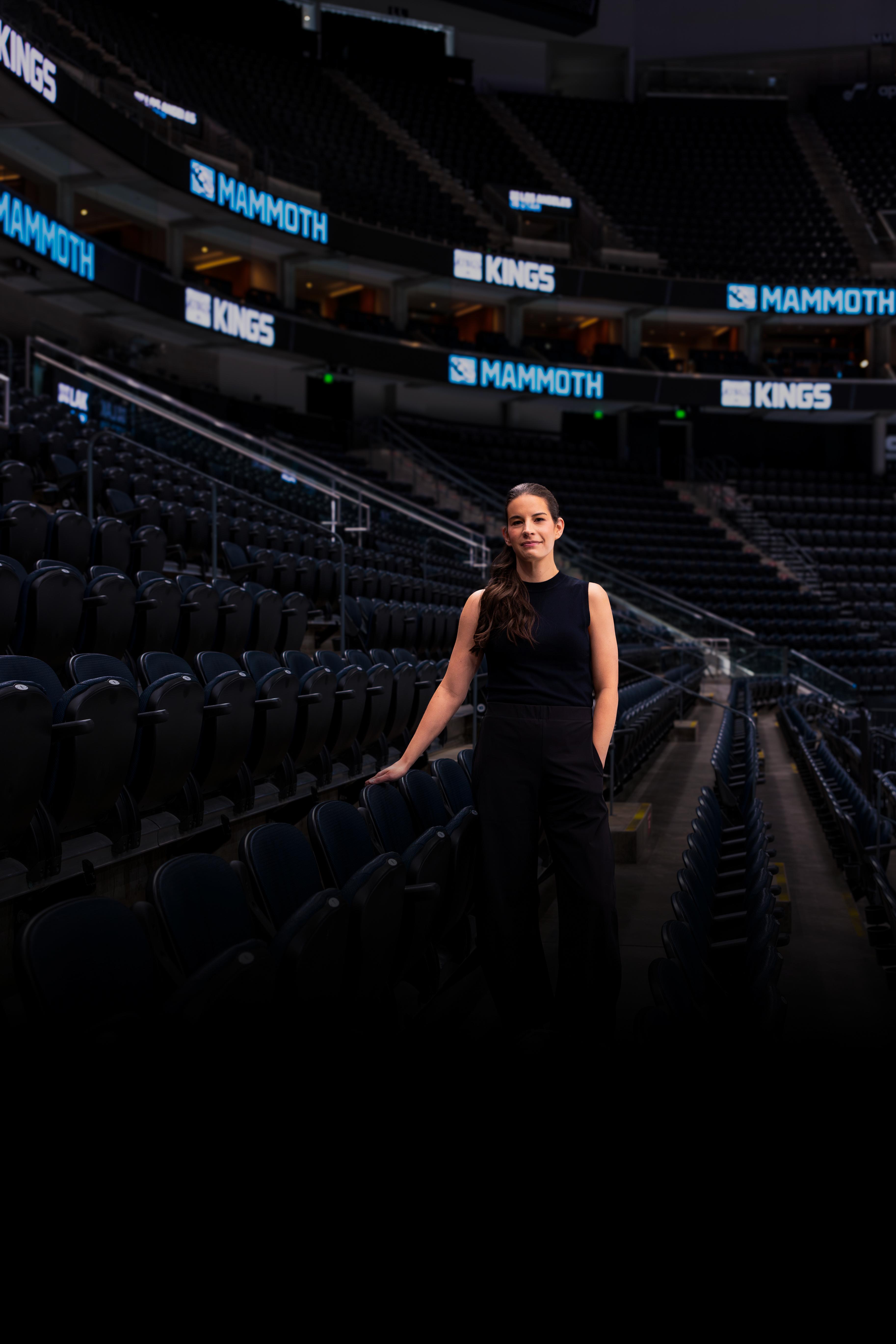
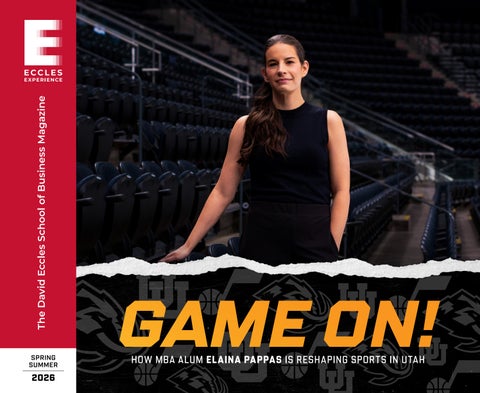
AFTER MORE THAN A DECADE ADVANCING PROFESSIONAL SPORTS IN UTAH, MBA ALUM ELAINA PAPPAS IS JUST GETTING STARTED.





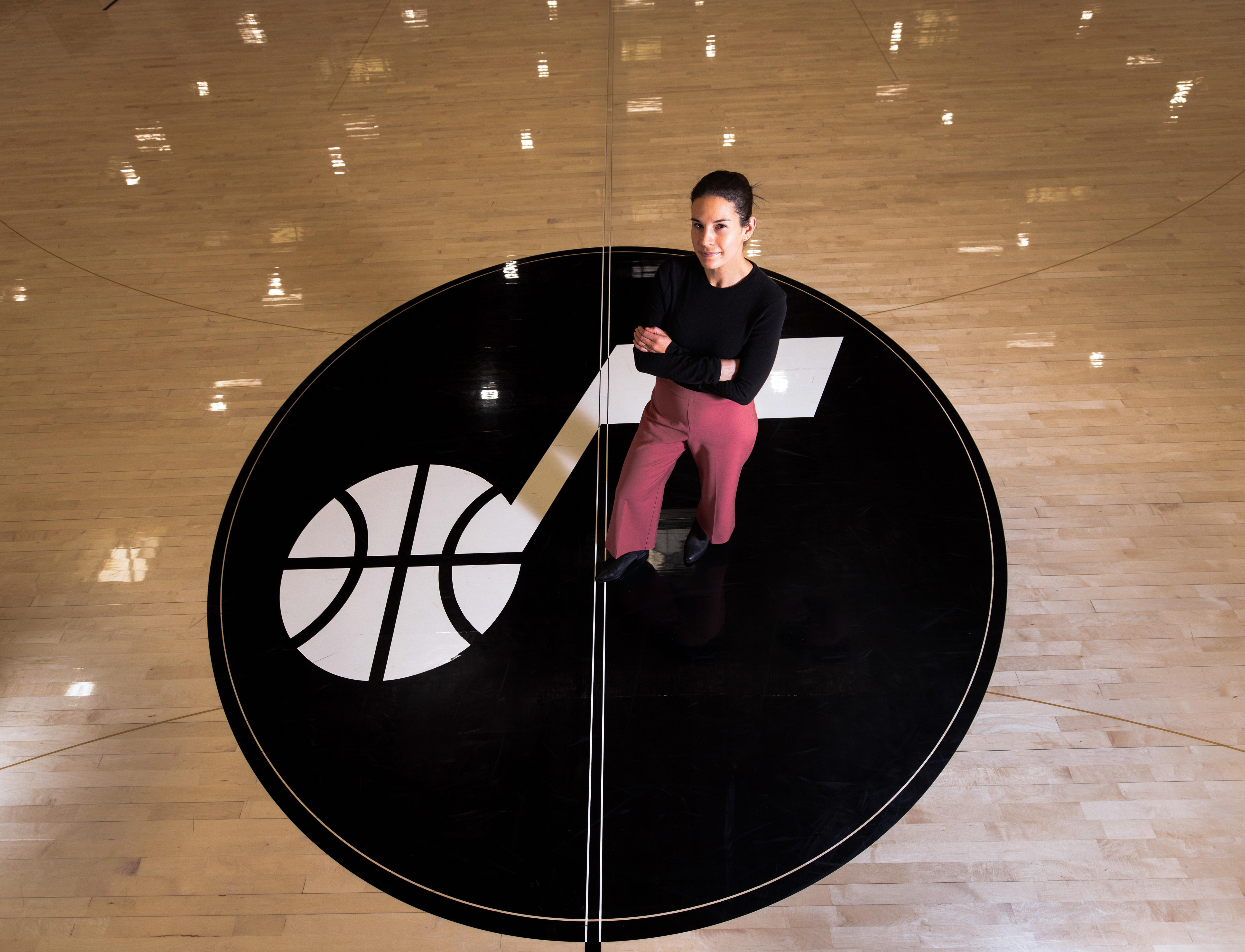
Taped to the whiteboard in Elaina Pappas’ office is a picture of Kings Peak, the highest summit in Utah. Pappas, Head of Marketing for the Utah Jazz and Utah Mammoth, often refers to the image when she meets with her team of nearly 120 people. There are multiple routes to the top of Kings Peak, she tells them, and there are multiple ways to do their jobs and get good results. The environment she works to create is one where people can voice their opinions, take risks, make decisions, and do their jobs according to their own perspectives and ideas. The key is to ultimately all be striving for the same summit.
The image of Kings Peak is also personally meaningful to Pappas. It’s a reminder that, more than a decade into her career in professional sports, her own climb is just beginning, and the summit is whatever she wants to make it.


“I feel like I’m still building my career … I’m still on the climb.”
ELAINA PAPPAS
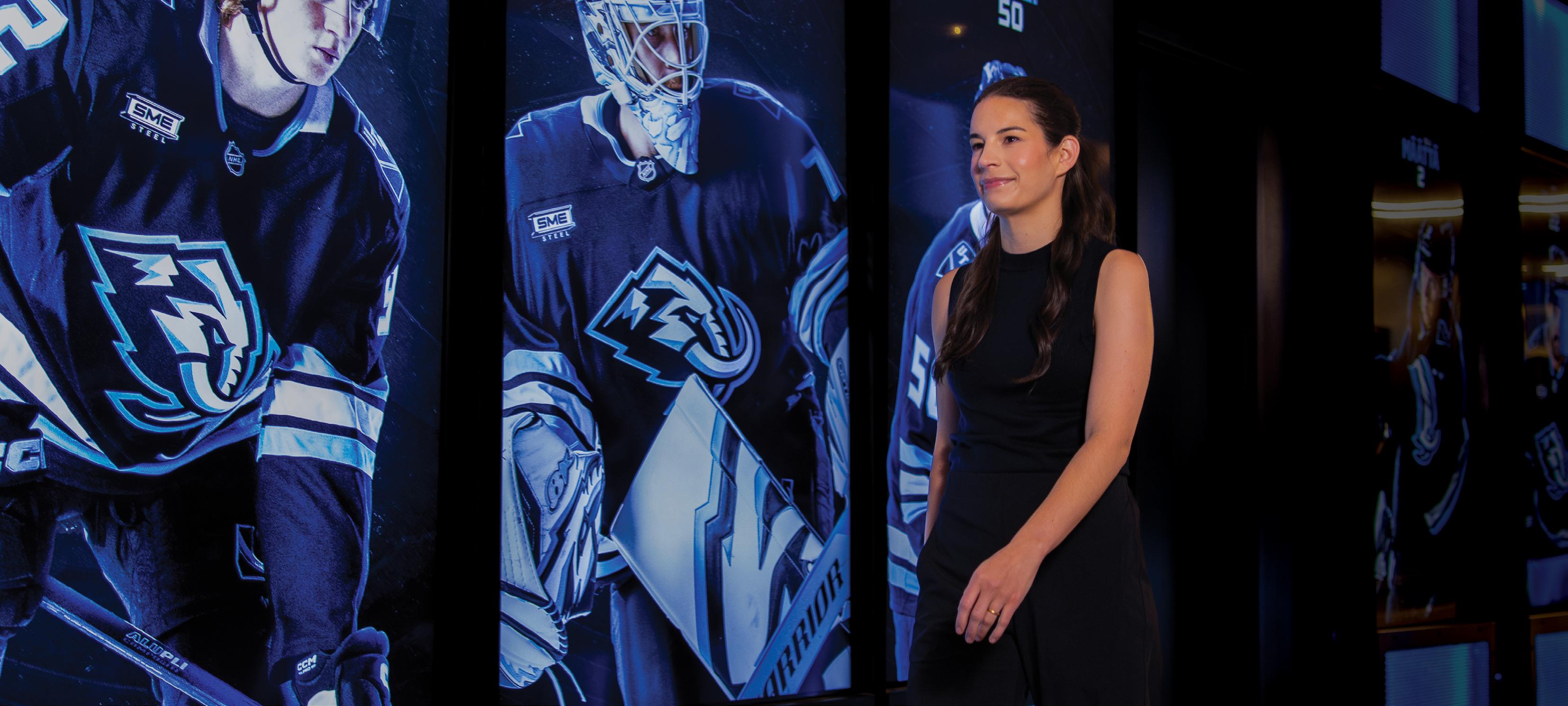
Pappas (PMBA ’20) hears often from people interested in building a career in sports. Her advice is always the same.
First, start with what you know. When Pappas finished her undergraduate degree from what is now Westminster University, she knew two things: she loved sports — an athlete herself, Pappas was captain of the soccer team at Westminster — and she loved helping people.
At the time, there were only two professional sports franchises in Utah, the Major League Soccer team Real Salt Lake, and the NBA’s Utah Jazz. Pappas took an unpaid internship with Real Salt Lake after graduation.
“It was nothing more than following what I knew at the time,” Pappas said. “But those have stayed my guiding principles throughout my career.”
The internship was not in a department Pappas was interested in long-term,
but it was a foot in the door. Once she was there, she set up an informational interview with the Director of Marketing and expressed her interest in any openings that might come up. Which is the second piece of advice she gives people.
“Once I got my foot in the door, I wanted to kick it wide open,” Pappas said. “Make your desires known and once you’re in there, take the opportunity for all it can give you.”
Eventually, Pappas found her way into a marketing role with Real Salt Lake and, after four seasons with the team, she moved over to the Utah Jazz in a similar position. She’s been heading for the summit ever since.
“I feel like I’m still building my career,” Pappas said. “I’m still on the climb.”
TUSKS UP
Tusky’s homeopener debut marked more than a new face on the ice — it signaled a carefully crafted franchise identity embraced by an eager fanbase.



In the milestones that mark Pappas’ career path, launching an NHL team in Utah stands out.
The process of getting an NHL team to the state at all started in uncharted territory. In April 2024, the NHL approved the establishment of a new franchise in Utah to be owned and controlled by Smith Entertainment Group (SEG), after rendering the existing franchise in Arizona inactive. Once the transaction was completed, Pappas and the organization had six months to launch the new team.
“There was no playbook,” Pappas said. “There was nowhere to turn to say, ‘What’s been done in this situation’ because it had never happened before. I knew we had one shot to do right by Utah.”
Pappas also saw the new team as a once-in-a-career opportunity for her. Initial discussions included the possibility of a separate, second marketing group for the hockey team, but Pappas made the pitch that she could take it on, and leadership quickly got behind her.
“We knew launching a new NHL team in Utah was going to be about more than logos and campaigns, it was about identity,” said Chris Barney, President of Revenue and Commercial Strategy at SEG. “Elaina had just played a critical role in the Mountain Basketball rollout, which was a meaningful evolution of the Jazz brand, and she approached it with care and confidence. She brings people together, values input, and knows how to align different perspectives around a shared vision. That combination made her the right person to help build the Mammoth brand from the ground up.”
One week after the team was announced, SEG held a Welcome to Utah event at the Delta Center and filled the arena, with the party spilling out onto the plaza as well. With games selling out, and data indicating that Mammoth ticket holders were primarily different from Jazz ticket holders, it became apparent very quickly that Utah had the appetite and the capacity for another professional sports team.
Ryan and Ashley Smith’s vision has always been to steward Utah’s professional sports organizations as assets by and for the community. So much so that SEG made another unprecedented move and turned the naming of the team over to the fans, who chose Utah Mammoth. The team slogan, “Tusks Up,” also came from the fans. Pappas and her team ran with it all, focusing many of their marketing tactics on Utah’s history as home to ancient mammoths, paired with the state’s reputation for looking to the future and building things — businesses, sports teams and more — from scratch.
“I was very aware of how unique this opportunity was for me,” Pappas said. “This type of thing might never happen in your career. For it to happen to me, I take immense pride in that.”
Pappas and her team handle multiple verticals across the Jazz and Mammoth: marketing, brand, creative services, game presentation, and content. That means her team manages both the in-game fan experience — including mascots and entertainment — and the fan experience online — including social media, the team websites, and other digital platforms — as they work to build brands that inspire loyalty and connection. Pappas understands that there are lots of different ways to be a fan, and every fan is invested in the teams in a different way but, ultimately, her goal is for them to feel a sense of community and become brand evangelists whether they come to every game or not. That, in turn, drives revenue and relevancy for the teams.
When it comes to cultivating and inspiring fans, it helps that Pappas is a fan herself. Each team plays more than 40 home games a season and you can find Pappas at most of them. She might be in her seat, walking the concourse, or on a headset communicating with her team, but she is always observing fan behavior.
“Whether you are courtside or the top of the upper bowl, I want to make sure you are having a world-class experience,” Pappas said.
Now as a parent herself — whenever she’s at a game she always makes sure to say good night to her young children through a monitor in their bedrooms — Pappas said she understands better than ever the importance of giving fans and families a memorable experience they can’t get anywhere else.
“I am trying to curate experiences that make a meaningful impact on people regardless of whether the team wins or loses,” Pappas said. “There’s a lot of power in shared experiences and the feelings associated with building connection and community.”
One major challenge of sports marketing is that you can’t control what happens on the court or the ice. When the Jazz finished the 2024-25 season with the worst record in the NBA, Pappas and her team were faced with the question of how to market a losing team.
For the answer, Pappas went back to Kings Peak.
In June 2024, she rolled out Mountain Basketball, a brand philosophy that embraces the spirit of Utah by tying together a passion for basketball, a dynamic community on the rise, and the impact of Utah’s mountainous environment on daily life. It also meant the return of the Jazz’s well-known purple uniforms featuring a silhouette of the Wasatch Mountains.
Mountain Basketball focuses on core tenets that make the Jazz — and Utah — unique.

“There’s a lot of power in shared experiences and the feelings associated with building connection and community.”
ELAINA PAPPAS
“It’s hard to stay committed in this fast-paced environment, but Elaina loves what she does. She’s as invested as everyone else.”
LISA NILCHIAN, VP OF MARKETING FOR UTAH MAMMOTH
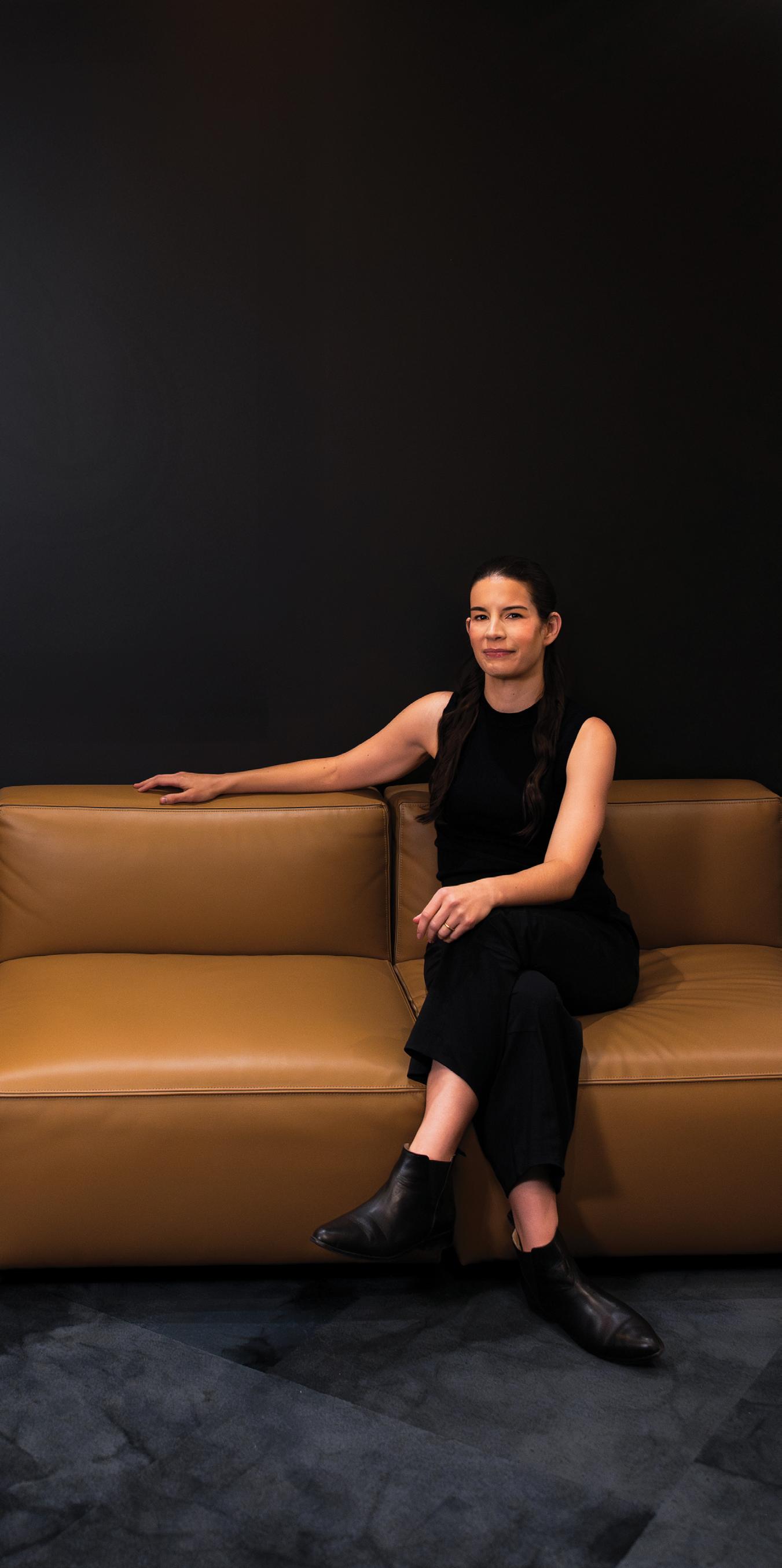
Utah is home to the most basketball courts per capita in the nation, and 85% of the state’s population lives within 15 miles of the Wasatch Front. The team’s youth basketball program is also the largest in the NBA, with 70,000 kids participating every year through Junior Jazz, camps, and clinics.
Then, she focused on the climb. The launch of Mountain Basketball was a way to communicate that climb visually, to show progress, to sell hope, and to bring fans along for the journey.
“Fans appreciate that the team is young, and hungry, and trying,” Pappas said. “I can still impact fan behavior and get them to stay with us and stay loyal. We’re going somewhere exciting and we don’t want you to miss it.”
The Jazz and now the Mammoth have always been lucky to have good stewards, Pappas said. Win or lose, the approach has always been that the teams are community assets, and the goal has always been giving as much as possible to the fans. According to the people who work with her, Pappas is carrying on that tradition of good stewardship and positive community impact.
“It’s hard to stay committed in this fast-paced environment, but Elaina loves what she does,” said Lisa Nilchian, VP of marketing for Utah Mammoth. “It’s really awesome to get to watch someone love what they do and have the opportunity to do it in their home. She’s as invested as everyone else.”
If you had told Pappas two years ago that there would be an NHL team in Utah she wouldn’t have believed you, so when it comes to the future of professional sports in the state, she said nothing would surprise her.
SEG is playing a major role in reimagining downtown Salt Lake City, including a multi-phase plan to renovate the Delta Center — where both the Utah Jazz and Utah Mammoth play — and a new 6,000-seat Live Nation concert venue. In Sandy, at the Shops at South Town site, SEG constructed the Utah Mammoth practice facility which opened in September 2025, and is building a new Utah Jazz practice facility and SEG offices.
With a top economy, top job growth, and the youngest population in the country, Utah is prepared for whatever continued growth opportunities come its way, Pappas said.
And, when it comes to the evolution of her own career, Pappas is ready to welcome more, too.
“Sports can shape a culture and community. There’s really a powerful opportunity to use sport to impact the community, and to engage people. Sports is still a rare opportunity to be a unifier,” Pappas said. “I don’t know what the sports landscape in Utah will look like in 10 years, but I know I want to be a part of it. I’m very hopeful for the future.”

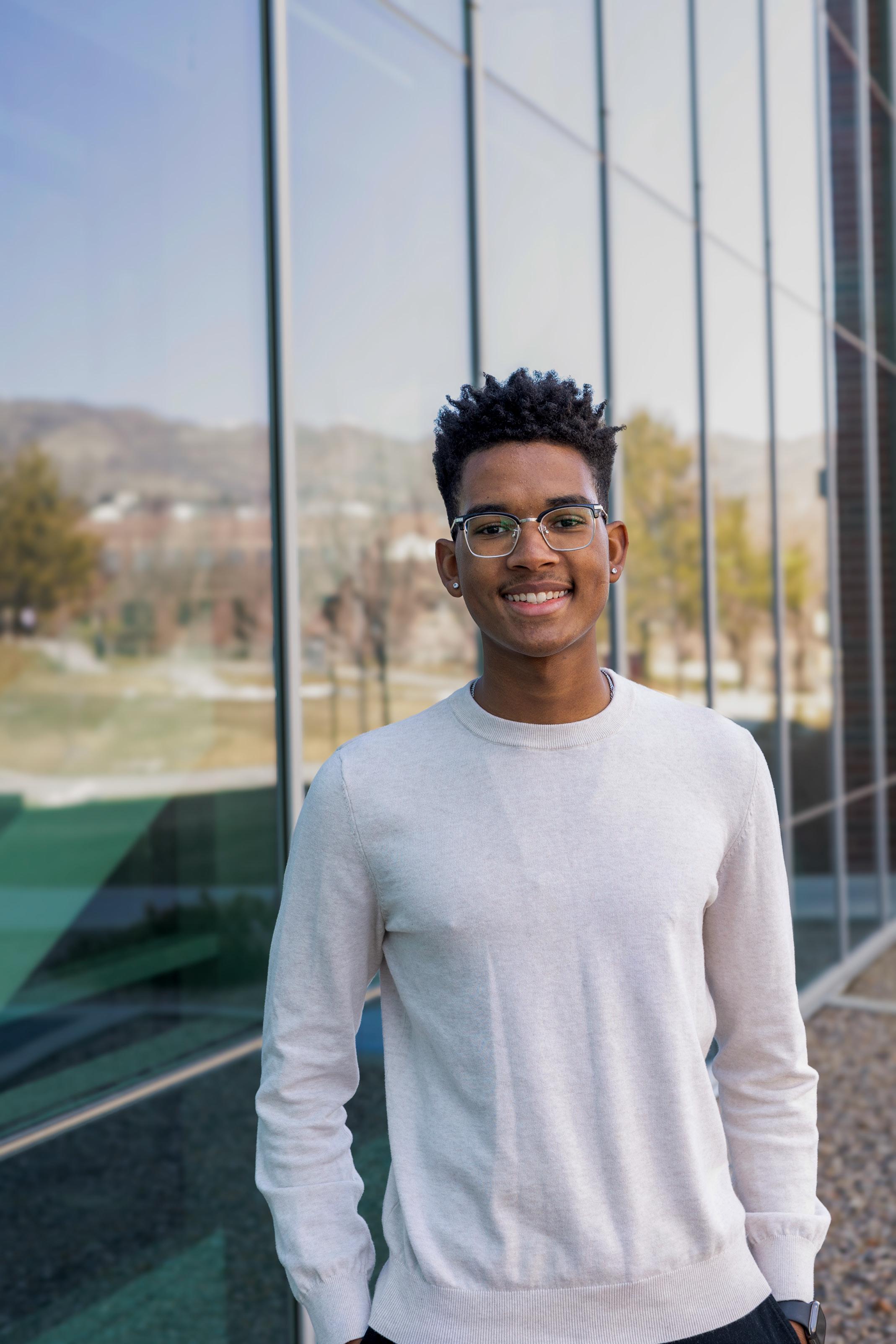
Jhareil Hutchinson (Marketing ’24) never could have imagined that a class assignment he completed as a freshman would eventually lead to his dream job, but that is exactly what happened.
The assignment was to find a person in a job you might be interested in having one day and interview them. A lifelong basketball fan, Hutchinson reached out to Bart Sharp, then a vice president with the Utah Jazz organization.
It could have ended there but, instead, Hutchinson kept in touch. Sharp became an early mentor, and when a position for a team attendant with the Jazz opened up many months later, Hutchinson was the first call he made.
“My advice is to stay connected and make yourself known,” Hutchinson said. “If you want to work somewhere, be annoying about it.”
Hutchinson stayed in the role for three and a half years, through his senior year. He loved sitting courtside at every game and interacting with the players. When it was time to move on to new professional opportunities, he made sure not to leave all those personal connections behind.
So, when Hutchinson was scrolling through LinkedIn after graduation and saw a posting for a junior project manager with the Jazz, he had a lot of people inside the organization to advocate for him and cheer him on. He started his new role in August 2025.
“I’ve loved every minute,” he said.
Hutchinson’s job includes acting as a liaison between project stakeholders to make sure the right marketing assets are delivered to the right departments at the right time. His favorite part of his job so far has been content day — a day at the beginning of the season where his team is part of creating content to be used throughout the season. It’s been especially fun to interact with players again, he said, but in a new way. And, with a rapidly changing sports landscape in Utah and beyond, he sees plenty of potential for personal progress ahead.
“I am so glad to be back, and I can’t wait to grow with the organization,” Hutchinson said. “I feel like I’m where I’m supposed to be.”


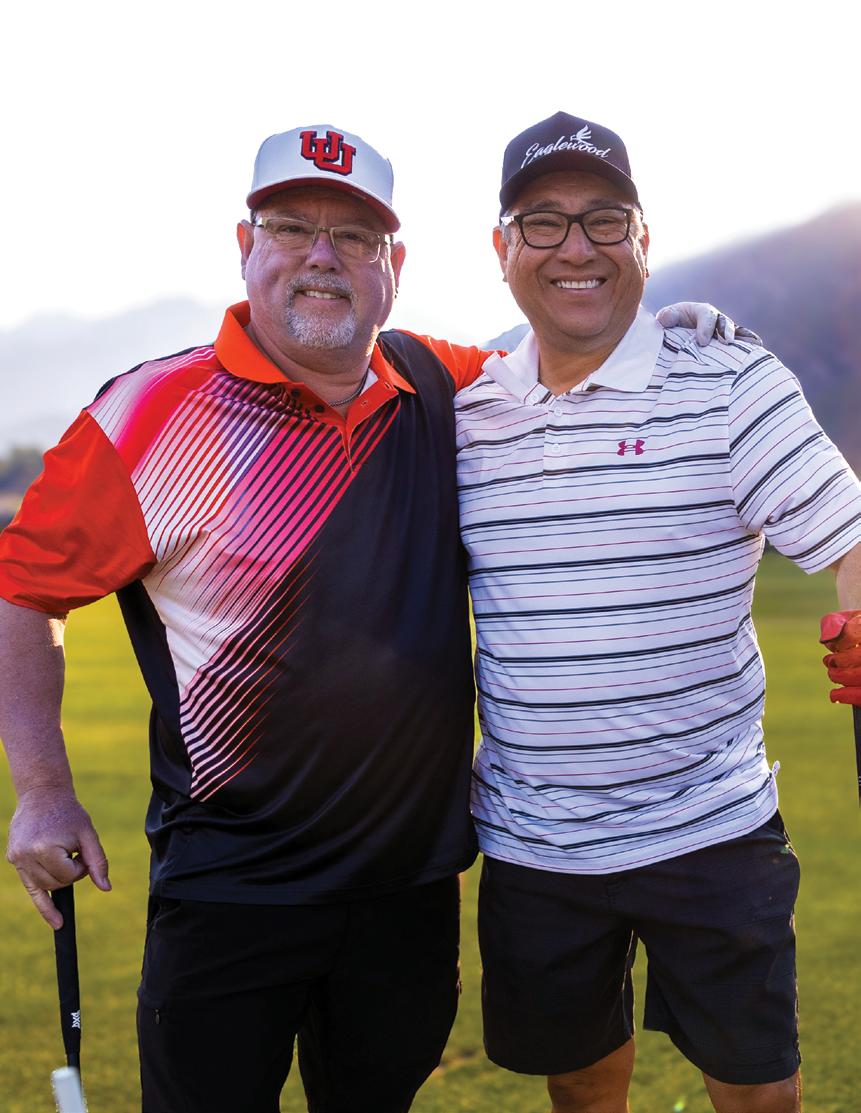
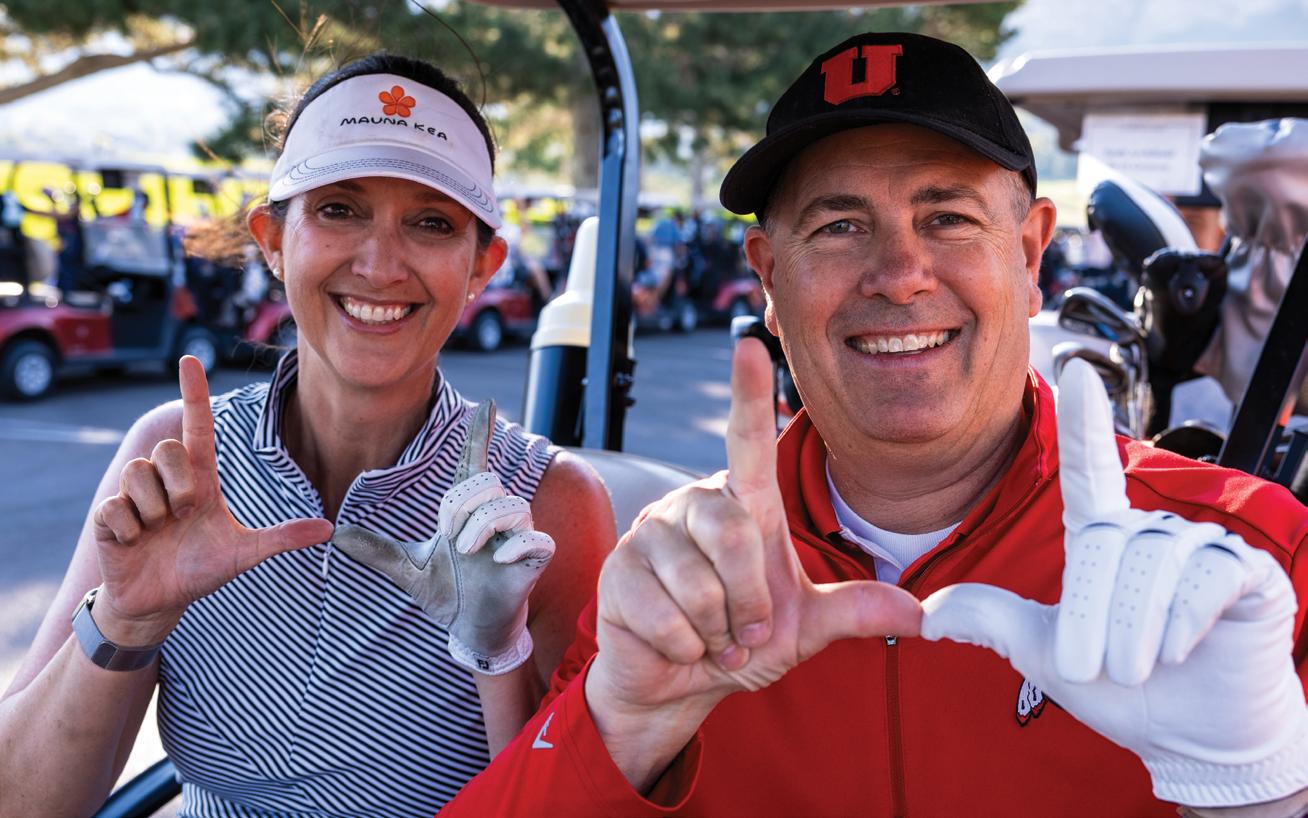
The 29 th Annual Advance Displays Eccles Business Open Scholarship Drive golf tournament raised $159,968.40 in support of student scholarships at the David Eccles School of Business.
The tournament sold out, with 36 foursomes enjoying 18 holes at Hidden Valley Country Club. A silent auction was also open to everyone in the Eccles community with dozens of packages to bid on.


Interested in supporting student scholarships and enjoying a day out on the course?
Help us sell out our 2026 tournament by securing your foursome today at eccles.link/golf









THE 35TH ANNUAL SPENCER FOX ECCLES CONVOCATION
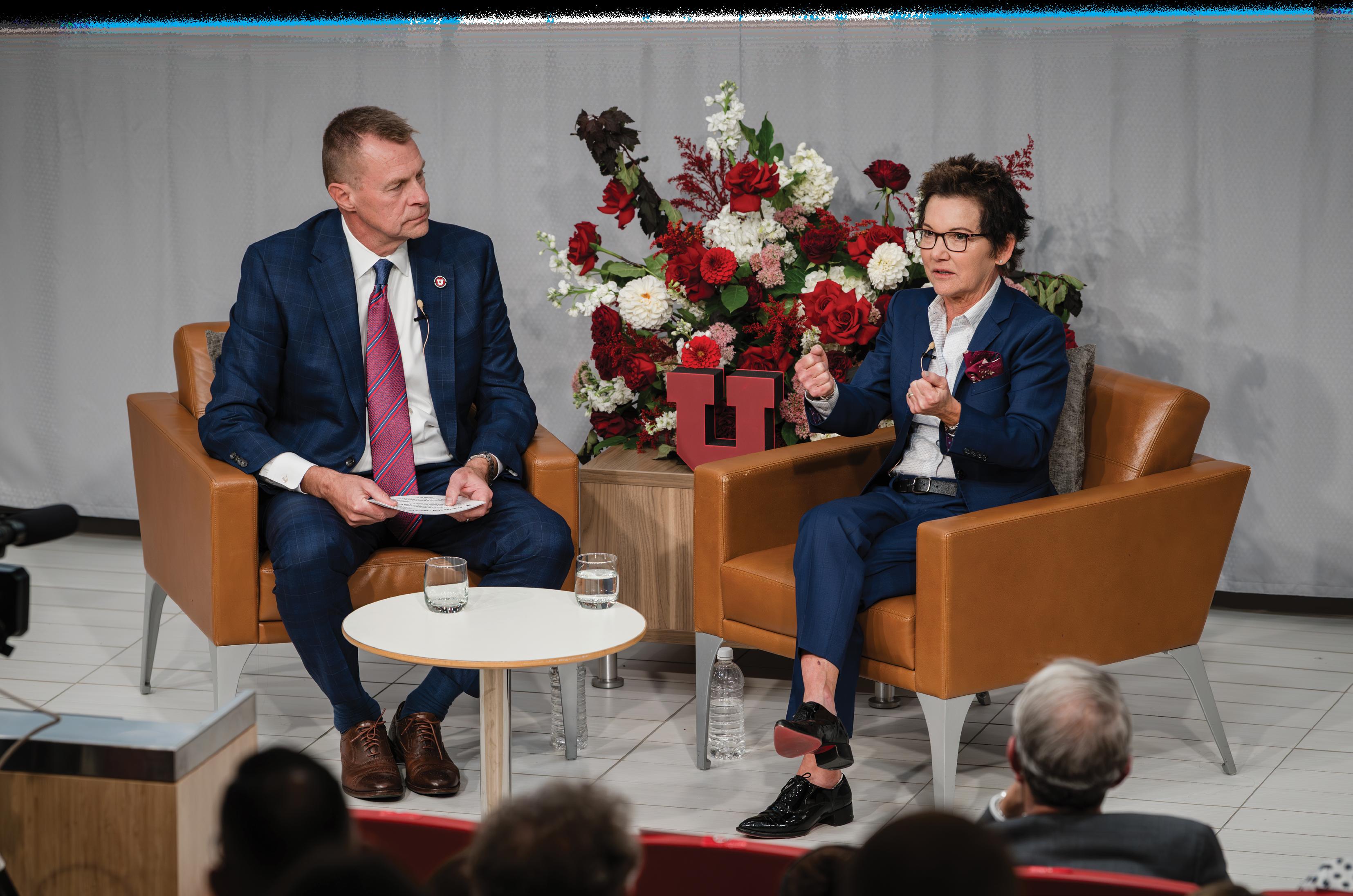
Whether it’s political turmoil, economic uncertainty, or a time of personal doubt, there is a way to stay steady through change. At the 35th Annual Spencer Fox Eccles Convocation, keynote speaker, Mary C. Daly, President and CEO of the Federal Reserve Bank of San Francisco, shared her tips for succeeding in difficult times.
The first step, Daly said, is to anchor yourself in your values and goals. With your goals as your foundation, you can stay grounded in uncertainty and ensure that you are focused on building skills and interests that will get you where you hope to go.
The next step is to assess. This involves understanding what the change around you looks like, Daly said, and then determining how that change will or won’t impact you. For students and business owners, AI is likely top of mind, Daly continued. Asking how AI will impact studies or business processes and understanding what role you want it to play in your education or business, will be essential to making good decisions.
“Deciding to collect more information is not a passive state,” Daly said. “It is prudent preparation for taking action when the time is right.”
And that brings you to the final step: decide. Once you’ve reflected, questioned, and analyzed, you make a choice, maybe to take more classes or to expand your business. This virtuous cycle of anchoring, assessing, and deciding is the best way to steady through any kind of change, Daly said.
In addition to sharing how the Federal Reserve uses this process in setting monetary policy, Daly also used her own life as an example of how to move through uncertainty to build a successful future.
Raised in Missouri, Daly dropped out of high school at the age of 15 to start working to help support her family. Tired of working multiple jobs, she set her sights on being a bus driver, which would pay enough for her to quit her other jobs. When Daly shared this idea with a mentor named Betsy, Betsy said that bus drivers needed a GED, so why didn’t Daly earn one? Once Daly had a GED, Betsy said, why didn’t she try for a semester of college? And then Betsy paid for it.
Change and uncertainty are normal parts of life … Being steady through change takes intention and commitment — commitment to your goals to collecting evidence, and to deciding. And most of all, being humble enough to repeat the process each time a new change comes your way. This is the foundation of your




MARY C. DALY
“Remind yourself that change and uncertainty are normal parts of life. People move through them all the time,” Daly said. “But you can’t leave it to luck. Being steady through change takes intention. And it takes commitment — commitment to your goals, to collecting evidence, and to deciding. And most of all, being humble enough to repeat the process each time a new change comes your way. This is the foundation of your success.”
Eventually, Daly went on to earn a B.A. from the University of Missouri-Kansas City, an M.S. degree from the University of Illinois at UrbanaChampaign, and a Ph.D. from Syracuse University. Through it all she had plenty of moments of doubt, Daly said, but she would remember Betsy and the great confidence she had in her. At Convocation, she encouraged students to think of their own mentors and cheerleaders to see them through difficult times.
“I wondered if I could really do it, and then I remembered Betsy,” Daly said. “If you can put that person in the room with you, you can do anything.”
Daly refers to these people and moments of encouragement as diamonds. Another diamond in her life was Spencer Fox Eccles, who heard Daly speak when she was a junior economist at the Fed, and made a point to tell her that she had something special to offer.
“I put that in my box of diamonds that I built my career on,” Daly said. “You need to take those little things and remember them when you can’t feel them yourself. And if you’re at a point where you can give out those diamonds, please do.”








It’s no secret that the United States has seen a dramatic spike in political polarization over the past few decades. What might be surprising though, is that the modern divide between red and blue is reflected not only in voting trends, policy decisions, and social issues — it has a significant impact on how people invest their money, too.
Yihui Pan and her coauthors were looking for innovative ways to track the trend in an empirical and data-driven way. They developed a simple conceptual framework to uncover Partisan Portfolio Disagreement (PPD), which captures the extent to which Democratic- and Republican-leaning investors hold consistently different equity portfolios.
Their study used data from more than 1,600 independent portfolio investment advisers in more than 300 U.S. counties spanning the years 2001-19, with a focus on high-income investors — the average account size was $4.6 million.
The team also tracked the voting histories of these counties, self-reported political affiliations (from the Gallup survey), and studied the effect of Sinclair Broadcast Group (a conservative news network) entering new markets during this span.
Upon assembling this cache of data, the researchers created PPD to assess how people’s political beliefs affect the way they invest in the stock market. What they found is that more and more stocks are becoming “partisan,” with evidence to show that Republicans and Democrats invest very differently, and that the trend grew significantly during that timeframe.
“We always say diversification is important because you can hedge away idiosyncratic stock risks. In this context, diversification may be — from a societal point of view — even more important because we don’t want a vicious circle of just reinforcing the same ideologies again and again,” Pan said. “… Yes, it’s human nature to invest in the things you care about, but you also need to keep an open mind.”

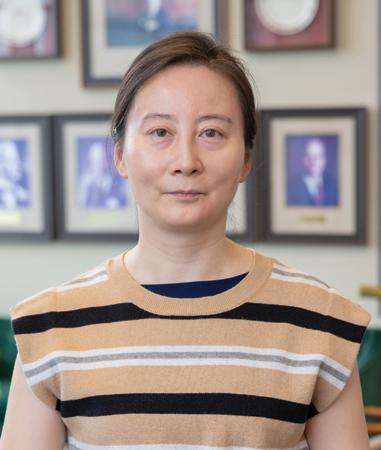
YIHUI
PAN
Associate Professor of Finance at the David Eccles School of Business. Her research focuses on corporate risk and governance, especially on the influence of cultural, political, and social factors on financial and corporate decision-making.
When you’re driving home from work and considering your dinner options, what is it that prompts you to swing by a fast-food drive-thru as opposed to just using the items in your refrigerator and pantry that you’ve already paid for? Yes, convenience certainly plays a role, but as it turns out, happiness with your job could be a significant factor, too.
David Dolifka’s recent and ongoing research has delved into some of the habits, mindsets, and trends that impact consumer spending choices.
In one paper, he considers how people’s well-being at work impacts how they feel about and utilize their finances.
His basic premise was that if someone loves what they do, they may not feel like they require as much compensation to work in their job. As it turns out, irrespective of how much such people objectively earn in their paychecks, those in jobs they enjoy and derive satisfaction from tend to feel like they are well-paid.
“As a result of being compensated for something that you’re getting intrinsic, non-financial reward out of, you feel like, ‘Wow, this is icing on the cake. This is a bonus. I feel like I’m a rich person because I’m being paid so much to do something I love,’” Dolifka explained.
So, given that people who feel wealthy tend to spend more than those who do not, the downstream effect is that happy workers engage in more discretionary spending.
“If people can start to understand their own psychological processes more and realize that, ‘Hey, I’m kind of susceptible on really good days of work, feeling like I’m making more money and then going and [spending] more,’”
Dolifka said, “that can empower them through this awareness to possibly make better financial decisions if they’re so motivated.”
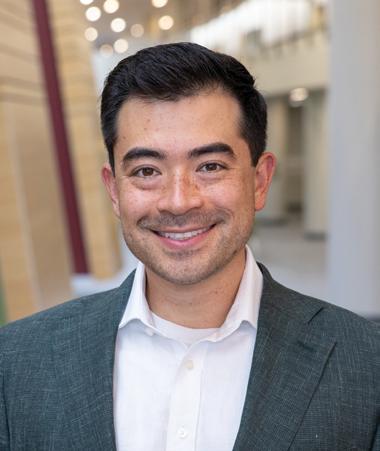

DAVID DOLIFKA
Assistant Professor in the Department of Marketing at the David Eccles School of Business. His research is broadly concerned with how everyday people think (and feel) about their finances, with a goal of better understanding the reasons explaining when people make good, bad, and head-scratching financial decisions.
Hans Harris
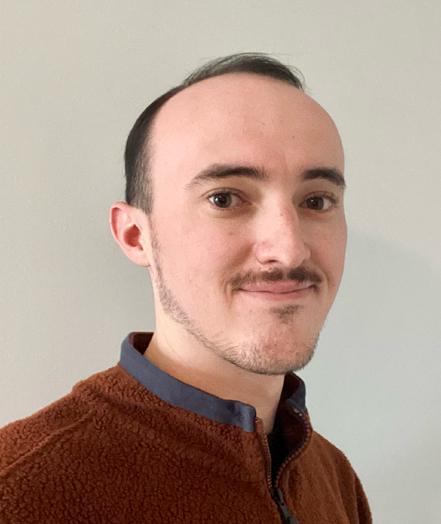
Marketing, BrüMate
To disconnect from work and recharge my creative battery, I enjoy skiing, camping, golfing, rafting, skydiving, and generally taking advantage of Utah’s outdoor opportunities. More recently, I’ve been building out my “urban homestead,” complete with a large garden, greenhouse (my favorite place to enjoy a morning coffee), and chicken coop.
I thrive in ambiguity, relying first on gut instinct (but instinct learned through experience) about how to solve a problem. As it often is in marketing, campaigns start with an initial idea (the creative side of marketing) and later integrate data (the science of marketing) to fine-tune or iterate on the campaign to amplify the result.
My ideal work day starts early, with a cup of black coffee, in the quiet of my home office. It’s always the first few hours of the morning where inspiration strikes and I’m at my best.
Kari Holt Larson
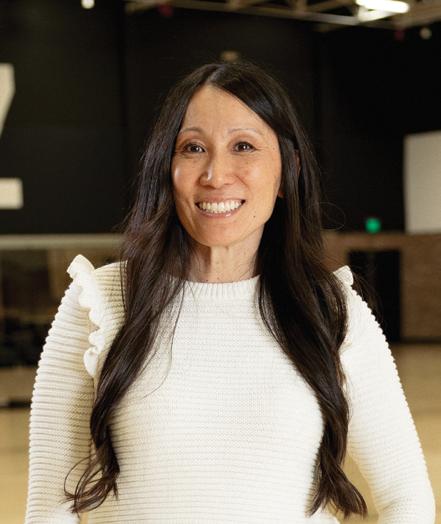
ECCLES DEGREE MBA ‘02
JOB TITLE
Senior Vice President, Community & Foundation Efforts, Utah Jazz
TELL US MORE...
It depends on what it is. I “wing it” in the kitchen, but value research at work.
I am terrible at this game because more often than not, I can’t pick between the two and they both apply equally.
Gerald Prince Pharin
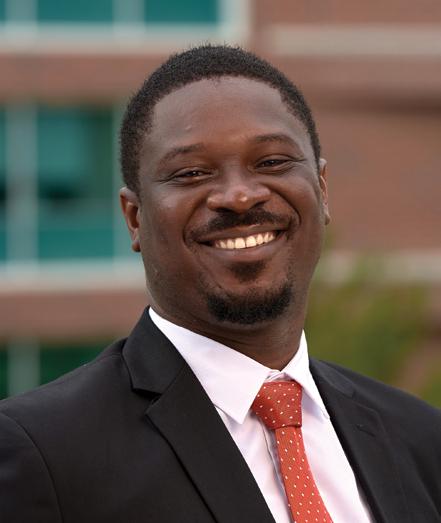
ECCLES DEGREE
MBA, MSBA ’24
JOB TITLE
Engineering Manager at Freezing Point LLC
I’ve seen many Utes games and I’m an avid fan! We should’ve beat the Cougars!
I tend to prefer listening and doing rather than talking. I believe actions speak louder than words, and the world would be a better place if we all listened more and talked less.
Has the bubble burst yet? I believe AI is dangerous, and as of today does more harm than good. It reduces creativity and originality. Should only be used for repetitive, routine work. You know, mundane stuff.
Research is important and it’s the backbone of society, but it’s so exciting when you wing it and it works. It’s super risky of course, but it’s a ton of fun.
Utah’s greatest invention!
I love the smell of coffee, but it is the single worsttasting food that has ever touched my tongue.
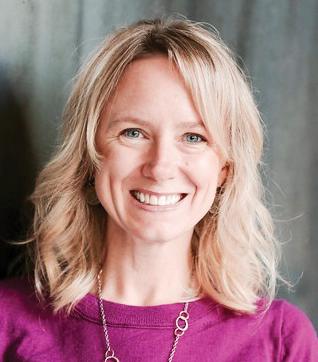
ECCLES DEGREE MBA ‘98
JOB TITLE
Taking a career pause to volunteer as treasurer and board member for several community non-profits
With my son at the University of Utah and season tickets in hand, cheering on the Utes with friends and family is something we look forward to every season.
Spending time in the office is a great opportunity to connect, collaborate, and learn from others. That said, I’m a fan of the occasional work-from-home day.
I grew up skiing in Utah, and it remains something I love doing — especially because it’s an activity our whole family enjoys doing together.
I’ve been fortunate to have great mentors throughout my career, which is why I feel it is important to give back and support others.
Abbey Salamera
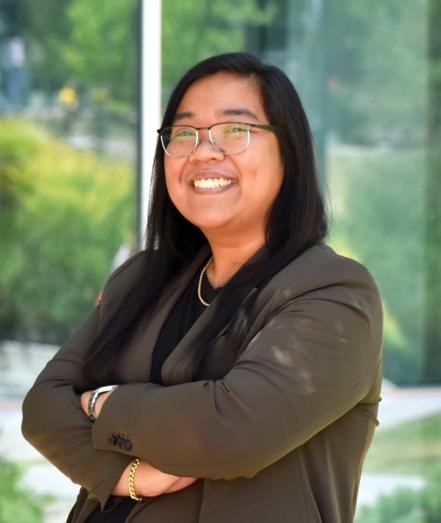
ECCLES DEGREE
Information Systems ‘24
JOB TITLE
Program Coordinator, David Eccles School of Business, Office of Student Success & Engagement
My absolute favorite sport to watch at the U is gymnastics! I love all the events but especially beam and bar. It’s been great watching the teams through the years and watching each athlete progress!
I love being in the office with my coworkers where we connect with one another by going on walks outside, eating lunch together, and getting stuff done! That is also why I prefer talking, an open office, and inperson meetings as it fuels my inner extrovert!
I just learned how to start skiing this season with a group of friends and can’t wait to hit the slopes more this season!
Coming up on 6 years in Utah has taught me that fry sauce is elite!
As great as it is to build things from the ground up, it has been awesome to transform existing systems for the better at work and in my personal life.
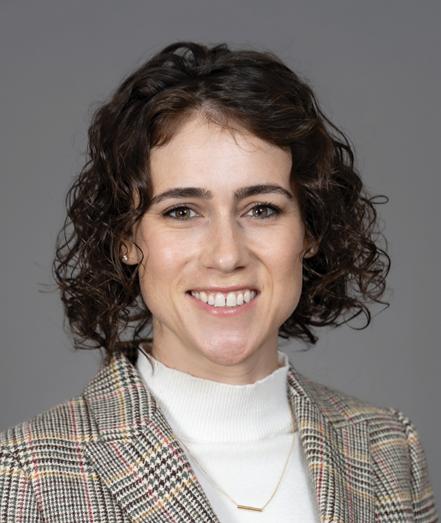
ECCLES DEGREE MBA ’16
JOB TITLE
Data Analyst, Thanx
I was on the Utah Dance Team for four years during undergrad and have the best memories cheering and dancing on the field during football season.
Home is where my dog is, so home beats anywhere.
I use AI tools constantly at work and am so impressed by how well they can elevate a workflow. I took courses about AI during my master’s degree in data science and am fascinated by all the possible applications of this technology.
The best outcomes happen when the whole group can bring their ideas, skills, and talents to the table.
I’m usually data-driven, unless I’m choosing a restaurant. That’s an emotion-based decision!
I love the idea of dedicating time, energy, and focus to becoming very proficient in an area, and I have so much respect for experts in any field.
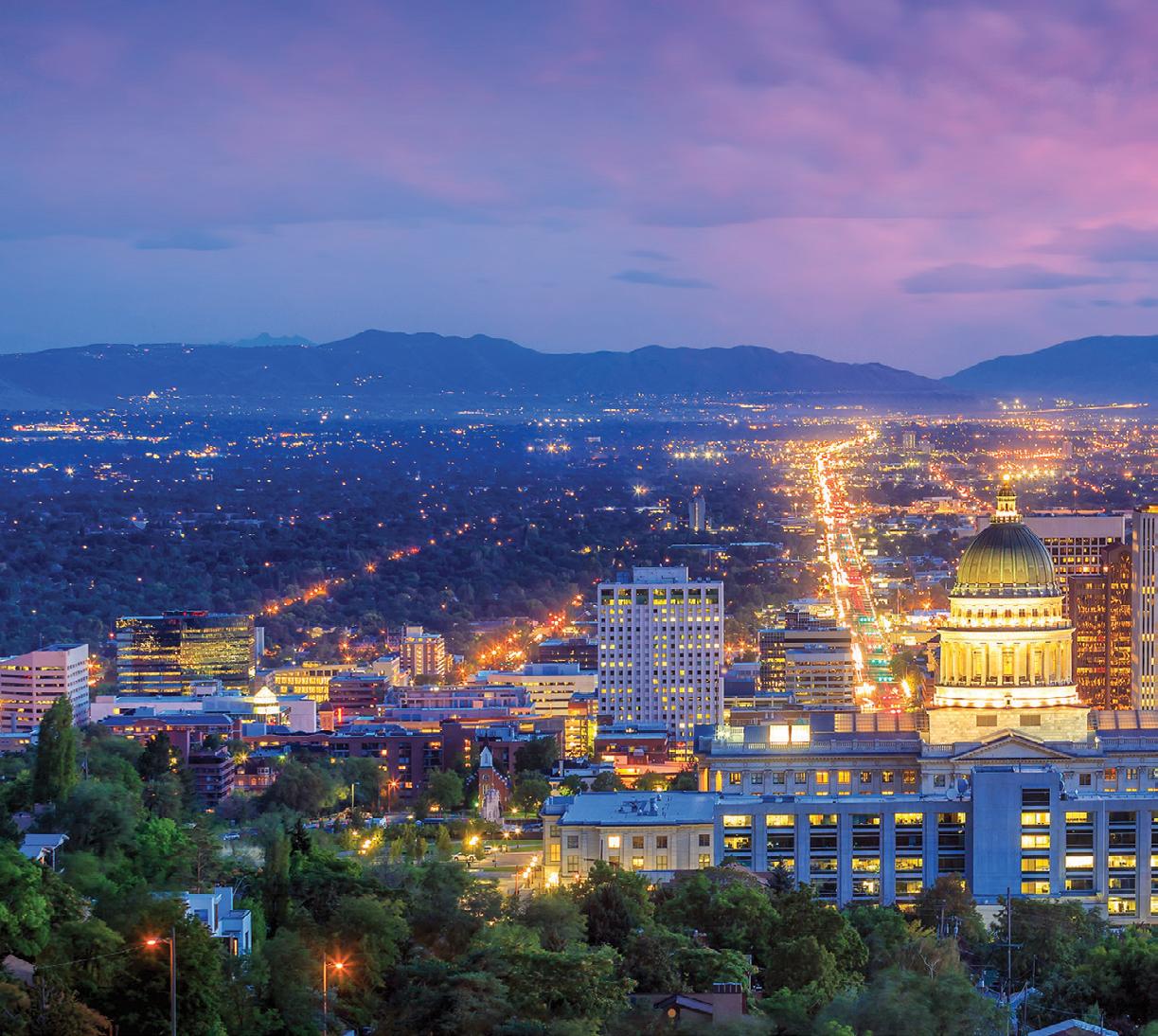
Downtown Salt Lake City sits at the heart of Utah’s identity, serving as the dynamic pulse of our state. As Utahns, we must recognize that our capital city belongs to all of us. Investing in Salt Lake City is investing in a vibrant, thriving sector that reflects the very best of what our state can offer. Each one of us has a stake in its success.
City building resembles a relay race, where each generation contributes to a legacy of resilient growth and innovation. Purposeful investments in infrastructure and cultural assets made over several decades reversed a trend of decline in downtown’s urban core and set a course towards prosperity. The introduction of the light rail, the grandeur of the LDS Conference Center, the vibrancy of City Creek and the George S. and Dolores Doré Eccles Theater, and much more, catalyzed a renaissance for the city’s core.

Today, Salt Lake City continues to climb toward new heights with transformative projects that underscore this renewed momentum. Downtown thrives as a central hub of activity, with more exciting new developments on the horizon that will enhance culture, entertainment, sporting events, and more. The Power District pulses with potential, while the Fairpark neighborhood revives community spirit. The Inland Port emerges as a critical link in global trade. The newly rebuilt SLC International Airport enhances connectivity, and the doubletracking of FrontRunner improves accessibility for all.
These advancements not only sustain our urban revival but also prepare us for the future. As we look forward to hosting the Winter Olympic and Paralympic Games in 2034, Utah will once again welcome the world, showcasing our state’s commitment to excellence and innovation.
The responsibility lies with each of us contributing to this ongoing success. Together, we can nurture the vitality of our capital city and ensure that it remains a prosperous emblem of our collective achievements and aspirations. Downtown Salt Lake City embodies our state’s potential. Let each of us take pride and invest in its future.