BUILDING POWER THAT LASTS
EXECUTIVE SUMMARY
Strategic Context
The Ella Baker Center for Human Rights organizes to shift resources away from prisons and punishment toward opportunities that make communities safe, healthy, and strong.
Named after civil rights hero Ella Baker, we mobilize Black, Brown, and low-income people – particularly those directly impacted by incarceration and policing – to build power and transform systems.
We are living in a moment of both crisis and opportunity.
Rising authoritarianism weaponizes surveillance and punishment against communities of color, while funders navigate pressing demands. The unprecedented conversation about defunding police, closing prisons, and investing in care – which exploded into public consciousness with the racial reckoning of 2020 – is still crucial. The upcoming 2026 and 2028 elections represent critical opportunities to contest for power, with an emerging voting bloc among formerly incarcerated people, a community engaged through our sister organization, Ella Baker Center Action Fund.
The Ella Baker Center (EBC) brings compelling strengths to this moment, including systems-impacted leadership, deep policy expertise, ownership of a physical space we are building into an organizing hub, and decades of community trust This strategic framework is grounded in community power, transformation, and care to create a liberated future for all of us
OUR FIVE STRATEGIC PRIORITIES
01 Protect and Expand Pathways for People to Get Free
Build new routes to freedom through parole advocacy, resentencing, clemency support, Racial Justice Act implementation, and strengthened inside-outside connections, while blocking harmful rollbacks to existing pathways home.
02 Build the Power of Communities Most Harmed
Build organized people power through robust membership infrastructure, youth organizing, the Inside/Outside Policy Fellowship, and create a political home for justice-impacted communities Structure EBC's physical building as an organizing hub and support EBC Action Fund in civic engagement with emergent voters.
03
Shift Public Narratives about Safety, Accountability, and Justice
Center systems-impacted people as storytellers who counter "tough-on-crime" fear-mongering with alternative visions where safety comes from care, accountability happens through relationships, and justice means healing.
04 Transform Policies, Laws, Budgets, and Practices
Contest for governing power by advancing legislation that closes prisons and reduces sentences, blocking expansion of the prison industrial complex, and redirecting budgets from punishment to community-led alternatives
05 Be a Sustainable Workplace
We will invest in the infrastructure that makes sustainability real Our commitment to Black liberation and honoring the full humanity of our staff will guide our policies and rhythms This is strategic alignment in action, practicing internally what we demand externally
Vision for success by 2030, and beyond
Success in pursuing these priorities will result in thousands more people home from prison, a robust base of organized leaders driving campaigns, public narratives centered on community voices, material resource shifts with reduced carceral budgets and increased investment in care, and a thriving organizational culture that centers our team's humanity
We hold these wins as part of a longer horizon: one measured not in legislative cycles but in generations, in which systems of punishment are replaced by new norms rooted in care, healing, and community power.
This strategy honors Ella Baker's legacy by building grassroots power for transformative change and organizing collective power to create the care-centered future our communities need.
ORGANIZING TOWARD A VISION FOR FUTURE GENERATIONS
Freedom & Decarceration
Community is the place for relational accountability and healing; no one is subject to long-term incarceration or family separation.
Community Power Communities are governed by people who are directly impacted by decisions; cooperative structures support liberatory care
Narrative & Culture Safety, accountability, and justice are understood through care, relationships, and healing; these ideas are not just common sense but are systematically put into practice
Policy, Budgets & Institutional Practices
Care, Healing & Sustainability
Public resources flow entirely into networks of care; community institutions govern wealth generation; technology serves communities rather than surveilling them
The physical spaces previously used to incarcerate people have been transformed into spaces for care; freedom and homecoming are the norm; new systems have grown to support community-based accountability and healing.
Communities are exercising liberatory power; community-based organizations are power centers; elected officials are representative of community demographics
The narrative of punishment has lost power; people no longer believe it is a solution; restorative justice and community-led alternatives are widely understood and practiced
Billions redirected from prisons and policing into housing, jobs, healthcare, elder, and childcare; anticarceral policy change is entrenched in law.
The Racial Justice Act has taken root; judges, DAs, and public defenders apply it seriously; the prison population has been significantly reduced; 7+ prisons have been closed
An engaged network of directly impacted people works together across CA to advance freedom priorities; inside-outside organizing is the norm.
Stories of homecomings, healing, and community success dominate; narratives about community come from the community
Pathways to freedom grow; more policies (and consistent implementation) get people home
Everyone's basic needs are met without struggle, including food, housing, healthcare, and education; healing is collective, visible, and celebrated across generations.
Community clinics, mutual aid networks, and crisis response teams are the norm; healing includes mental health and is not tied to employment; Indigenous, Black, and immigrant healing traditions are uplifted
Budget reinvestment at the county and state level; safety budgets are increasingly community-led; governments are spending more on alternatives to incarceration; laws protecting gains are secure
Healing is collective and celebrated, not hidden; mental health crisis response is fully separated from policing; community hubs offer free, accessible support for health and community wellbeing; reparations policies have growing public support
An organized base & coordinated campaigns build momentum to resource thriving communities
A growing chorus of frontline voices sparks empathy and imagination; a "bigger we" embraces community reinvestment and counters "tough-oncrime" fear-mongering
Budgets shift from incarceration to community investment; systems increasingly align with real solutions shaped by communities directly impacted
EBC models internally what we demand externally: centering humanity, practicing Black liberation, and building healing justice into movement work
WHAT GUIDES US
OurVision
We envision communities that foster safety through care, accountability through relationships, and justice rooted in healing.
This means a material shift of resources out of the prison industrial complex and into community-led solutions, centering the communities most impacted by decades of racist policy schemes. This means funding what actually keeps people safe: community clinics, crisis response teams staffed by neighbors, cooperative housing, and schools where learning matters. It means care for children and elders. It means that when someone returns home from prison, housing is waiting, work pays a living wage, and a community is glad to welcome them back. In this world, accountability happens in relationships, not in cages, and conflict is an opportunity for transformation This is a vision of a world where foundational needs are met, and everyone has the opportunity to thrive
Our strategic framework honors Ella Baker's legacy by building grassroots power to win transformative change
Who We Move With
We Prioritize People of Color Most Impacted by Prisons & Policing
We center those most harmed by punitive systems as the leaders, teachers, and architects of the care-centered future we need We transform who holds power and how power operates by organizing with directly impacted communities to build power, grow leadership capacity, and heal With the leadership of those most impacted, we create systems that are for us and by us
At the Ella Baker Center, when we say "directly impacted" or "most harmed," we mean:
Currently & recently incarcerated people
Families with loved ones stolen by police violence or incarceration
Survivors & victims of broader state-sanctioned violence
Deeply policed and criminalized communities of color
We prioritize dismantling the criminal punishment system that harms low and noincome communities of color most, and creating a world with fewer people in cages and fewer police on the streets
At the Ella Baker Center, we win by doing our liberation work in alignment with and guided by our core values: OurValues
Prioritize people most impacted by policing and prisons
Accountability
Black Liberation
Interconnection
Transformation
Culture of Care and Healing
Self Determination
“VALUES
NECESSITATE PRACTICES THAT CREATE THE CULTURES OF OUR ORGANIZATIONS AND COMMUNITIES.”
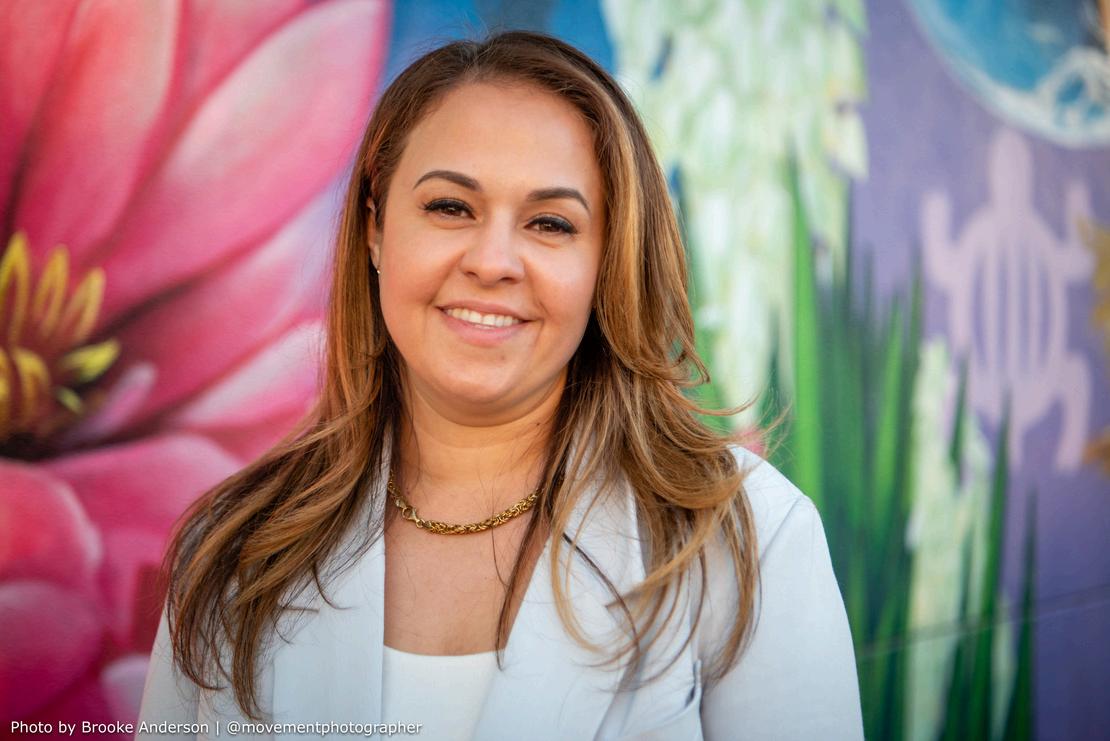
– Marlene Sanchez
Executive Director
THE LANDSCAPE Democracyis underattack
We're organizing in a moment of rising authoritarianism, where systems of surveillance and punishment are weaponized against our communities At the same time, people are hungry for genuine connection and collective action People are hungry to be a part of meaningful organizing that is larger than themselves.
The upcoming 2026 and 2028 elections represent critical moments to contest for power and build toward the world we need. An emerging voting bloc among formerly incarcerated people creates new opportunities to shift who holds decision-making power. At the same time, funders are juggling pressures to meet diverse and pressing needs as organizations like EBC face increased scrutiny and targeting.
The fight over policing versus community-led alternatives continues to play out in budget discussions at every level of government. After decades of "tough-on-crime" rhetoric that devastated Black and Brown communities, an unprecedented conversation about defunding police, closing prisons, and investing in care exploded into public consciousness with the racial reckoning of 2020. We're now seeing fierce backlash: rollbacks of previous wins and renewed attempts to expand criminalization.
EBC is uniquely positioned for this moment We invest deeply in systems-impacted leaders By listening to, investing in, and organizing alongside those most harmed by criminalization, EBC is positioned to transform systems, lift up narratives rooted in community care, and open new opportunities for directly impacted people to move into lasting leadership roles in our communities We bring people power, policy expertise, ownership of a physical space that serves as an organizing hub, and decades of community trust to build toward our vision
WHAT WE’RE UP AGAINST
THE MOMENTS CHALLENGES


Rising Authoritarianism
Surveillance and punishment weaponized against communities of color.
Fierce Backlash
Roll-backs of hard won gains and renewed attempts to expand criminalization
Budget Fights
Public resources continue to flow to punishment instead of care
Harmful Narratives
“Tough on crime” fear mongering dominates public discourse and elections
Increased Scrutiny
Organizations like EBC face growing targeting as the stakes rise.
WHAT WE BRING TO THE TABLE
THE MOMENTS STRENGTHS


People Power
An organization base of systems-impacted leaders driving campaigns.
Deep Policy Expertise
Decades of legal, legislative, and advocacy experience at every level
Community Trust
Relationships built over decades with communities most harmed
Inside-Outside Connections
Unique infrastructure linking people inside prisons to community organizing
A Physical Home
An organizing hub that anchors community life and sustains the work.
OUR ROADMAP: Growing Deep Roots
Strategic Priorities 2026-2030
To build long-term power, we're choosing to go deep in the areas where EBC's leadership is irreplaceable, while building partnerships to share work that others can lead We recognize that we are just one organization within a broader movement for transformative change, and we will leverage our strengths for the greatest impact in concert with our movement partners
Our model is distinctive because it does not separate the legal fight from the organizing fight from the narrative fight. When a person gets free through the Racial Justice Act, EBC is there for the policy win, the homecoming, the leadership development, and the storytelling that shifts what others believe is possible. That integration, sustained over time and led by directly impacted people, is our irreplaceable contribution to this movement.
Holistic strategies moving towards our vision
EBC has applied a holistic lens to identify strategies that BLOCK harm, BUILD solutions aligned with the world we want, and activate beliefs and values to BE in harmony with our vision.
** Block & Build is a framework for fighting authoritarianism while also building the systems we need for the world we want Block, Build, Be is an adaptation developed by organizer Katie Loncke with collaborators from the Buddhist Peace Fellowship We appreciate the explicit inclusion of culture in our strategy, since, in many ways, culture shapes systems
Our five strategic priorities serve as the roadmap for navigating from the current landscape toward our vision for the future.
Over the next five years, we will:
01 Protect and expand pathways for people to get free
02 Build the power of communities most harmed by prisons and policing.
03 Center systems-impacted people as storytellers & narrative architects to shift public narratives about safety, accountability, and justice.
04 Transform policies, laws, budgets, and practices to align with our vision
05 Practice sustainability so our people and organization can go the distance.
Across all five priorities, we activate multiple forms of power to do this work
Disruptive Power
interrupts harm
Economic Power
Narrative Power redirects resources
shifts what people believe is possible
Political Power
Modeling Power contests for decision-making authority
Healing Power sustains people and communities for the long haul demonstrates alternatives in practice
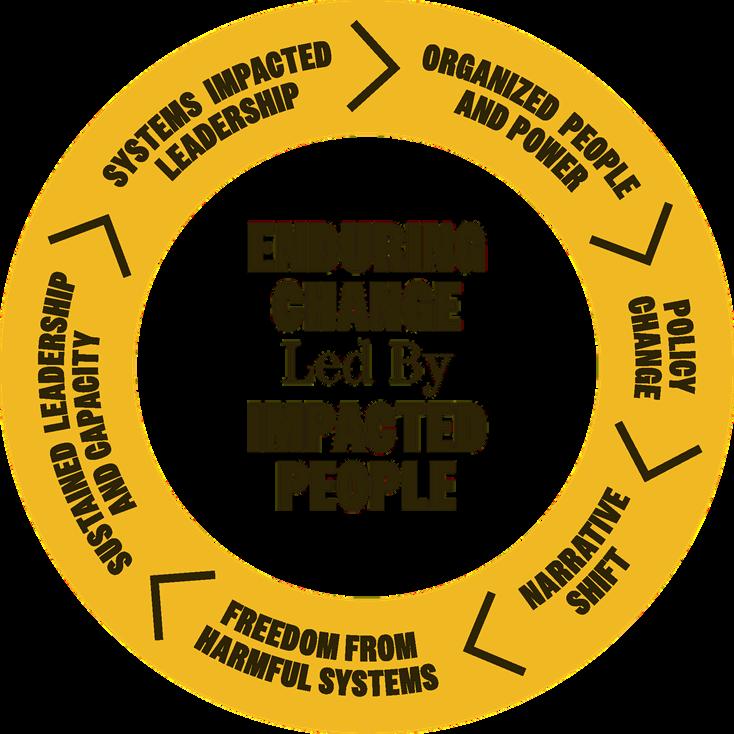
When systems-impacted people build organized power and shift narratives, we create the conditions to win policy changes that free people from harmful systems – while sustaining leadership and capacity to drive lasting change
We apply a holistic approach that simultaneously resists systemic harms, invests in alternatives, and embodies liberatory values We understand that ending carceral power must be paired with creating new systems and transforming culture
PRIORITY 01
Protect and expand pathways forpeople to get free
We build new routes home while blocking rollbacks and defending pathways to freedom. The prison system is designed to cage people, not remedy harm or create collective safety So we work on two fronts at once: building new ways for people to come home, and defending the gains we have already won Our community members deserve to come home, heal, and thrive
Whatwe'll do
BUILD robust pathways home. Examples include:
Support proper implementation of the Racial Justice Act (RJA), ensuring people inside know their rights and can access relief when racial bias influenced their sentencing
Expand parole advocacy and representation for people aging in prison, including those convicted as children and survivors of domestic violence incarcerated with extreme sentences.
Grow our capacity to support successful clemency and commutation campaigns.
Develop and distribute Know Your Rights and Resentencing toolkits and training informed by incarcerated organizers so people inside are equipped to fight for their own freedom
Create and share tools publicly so more organizations can support freedom advocacy in their communities.
Apply RJA tools to support immigrants in the criminal legal system, as part of our commitment to fighting all forms of carceral control
STRENGTHEN inside-outside connections. Examples include:
Resource our prison mail program as a critical information artery.
Amplify the leadership and expertise of those locked inside, particularly in our focus areas of climate justice, democratizing access to power, parole prep, and eliminating extreme sentencing Our emphasis is engaging historically marginalized stakeholders such as trans and gender-expansive people, people with a range of physical abilities, immigrants, and people whose first language isn’t English.
Build an ongoing feedback loop with people inside to ensure our info guides, workshops, and toolkits reflect current conditions and real barriers, with jailhouse lawyers as co-authors rather than just recipients of our materials
Increase in-person visits to stay grounded in the experiences of people inside
BLOCK harmful rollbacks and attacks on freedom. Examples include:
Oppose legislation that creates carve-outs, excluding people with certain convictions from reforms
Defend existing pathways to freedom, including the Racial Justice Act, resentencing provisions, and parole reforms.
Fight attempts to expand felonies, sentence enhancements, and the reach of the carceral system.
Block prison expansion and construction of new carceral facilities
Whythis matters
Every person who gets free is a life reclaimed, a family reunited, a community made whole. Coming home is the beginning, not the end. It means stable housing, work that dignifies, and a leadership role in the community that was waiting for them to come home. It demonstrates that accountability and healing do not require cages. They require relationships, resources, and the belief that every person is worth fighting for.
PRIORITY 02
Build the powerof communities most harmed byprisons and policing
We build organized people power that fuels all our work.
Individual acts of resistance matter, but only collective organizing can transform systems We're building a base of systems-impacted leaders who drive campaigns, shift narratives, and hold decision-makers accountable We are working toward a world where those most impacted by decisions are the ones making them, where elected officials reflect the demographics of their communities and are accountable to them Organized people power is how we get there
Whatwe'll do
BUILD robust organizing infrastructure. Examples include:
Deepen our membership program as the container for power-building, creating clear pathways for people to move from participation to leadership.
Grow youth organizing capacity to engage young people year-round in civic engagement, political education, and advocacy
Sustain the Inside/Outside Policy Fellowship, support alumni in building organizing hubs, and invest in Fellows working toward freedom
Connect and align with statewide organizing networks to link local fights and build coordinated power across California
Support civic engagement with emerging voting blocs in Alameda County by educating and encouraging low-propensity voters in structurally disinvested, targeted neighborhoods, as well as in venues such as shelters and reentry homes that others often exclude from their outreach
BE a political home for organizing and support when communities face threats, and a home base for winning what we need. Examples include:
Create regular spaces for connection, such as dinners, gatherings, political education sessions, healing circles, and town halls, where people process what's happening and strategize together. Offer concrete ways for people to take action and build their leadership: spokesperson training, legislative visits, campaign participation, and skill-building opportunities.
Leverage EBC’s building as an organizing hub that provides holistic support: reentry support, mutual aid, community events, and healing spaces.
Prioritize systems-impacted people, Black, Brown, and Indigenous communities facing displacement in decisions about how the building is used
Support models of community co-ownership, where resources, spaces, and decision-making belong to the people who depend on them, not to systems designed to manage or contain them
MODEL the culture of care we want. Examples include:
Practice healing justice as essential movement work, not an add-on.
Create accessible spaces and practices that honor different abilities and needs
Build cultures of accountability where we address conflict directly, practice restorative justice internally, and grow through our mistakes.
Practice transparent, distributed decision-making in which those who most directly experience the impact of a decision shape outcomes
Demonstrate that organizing can be sustainable, joyful, and life-giving.
t organized people power.
When we grow the leadership of those most impacted, we don't just win campaigns; we shift who holds power in our democracy Ella Baker, whose legacy grounds everything we do, reminded us that “the system under which we now exist has to be radically changed ” Organizing together means we do not have to wait for America’s systems of racial oppression to decide to change, or for cultures to organically evolve We create our own pathway to liberation through the care and power we build together
Understanding Power
Inspired by the legendary activist Ai-jen Pao’s communit power framework, we build and exercise power in six distinct arenas, shown below to advance a new vision of safety and secure transformational social change.
Disruptive Power
The ability to disrupt the status quo, challenge business as usual, and dramatize what’s wrong with the current conditions
Economic Power
The ability to redirect resources at the system level–from local, to state, to national–away from unforgivable policies, programs, or institutions and towards movement-aligned alternatives
Narrative Power
The ability to tell the story of what’s happening in the world and why, capture the imagination of growing numbers of people, and change mass conciousness and culture.
Political Power
The ability to mobilize voters, elect movement-aligned and responsive representation in government,a nd influence legislation agenda’s at local, state, and national levels.
Modeling Power Healing Power
The ability to build, demonstrate, and promote alternatives to existing institutions, systems and practices
The ability to alleviate and repair harm at the level of the individual, community, or society.
PRIORITY 03
Shift public narratives about safety, accountability, and justice
We center systems-impacted people as storytellers and narrative architects. Narrative is infrastructure. What people can imagine as possible is shaped by the stories they have been told, which means that shifting the story is inseparable from transforming systems and structures. For decades, the dominant narrative has criminalized Black, Brown, and Indigenous communities while positioning police and prisons as solutions to harm. That narrative has never been neutral. We are telling a different story: one where safety comes from care, accountability happens through relationships, and justice means healing.
Whatwe'll do
BUILD narrative power rooted in community voices. Examples include:
Lift up systems-impacted storytellers through op-eds, media appearances, podcasts, and thought leadership.
Create accessible content that helps people understand how we got here and what's possible: toolkits, videos, social media campaigns, cultural work.
Practice proximity by bringing decision-makers, candidates, and the broader public closer to the stories and realities of those most impacted.
Document our wins through research and reports that prove community-led solutions work: implementation of the Racial Justice Act, alternatives to incarceration, and conditions improvements.
Support citizen journalism from inside prisons, amplifying the voices deliberately silenced.
Create spaces where our communities can dream out loud about what safety and belonging actually feel like
BLOCK harmful narratives and misinformation. Examples include:
Counter fear-mongering and "tough on crime" rhetoric with data, lived experience, and alternative visions.
Fight false narratives in ballot measure campaigns and elections.
Challenge the framing that positions punishment as accountability or prisons as safety
LEAD the narrative amid political backlash. Examples include:
Be visible and vocal when attacks on our communities intensify.
Offer clear analyses that connect local struggles to national movements.
Model the "Bigger We," showing how liberation struggles are interconnected and how everyone benefits from divesting from carceral punishment
Whythis matters
Narrative power makes other wins possible. When opposition forces controlled the narrative with Prop 36, they rolled back progress. Shifting the story is not separate from material change; it is what makes material change imaginable, and imaginable is where possible begins. When our communities control the story, those directly impacted set the terms for which policies get proposed, which budgets get contested, and which futures get taken seriously. That is the future we are building, one story at a time.

Narrative change is not just about bettermessaging.
It’s about replacing the stories that make punishment feel inevitable with stories that make care, healing, and freedom feel possible and necessary.
When they control the story
Fear drives policy. Budgets flow to punishment. Progress gets rolled back. Communities stay silenced.
PUNISHMENT AS SAFETY
Built to justify disposability and maintain control
Who Tells The Story
Politicians, prosecutors, and media outlets
amplifying fear
What Safety Means
More police, longer sentences, bigger prisons
Who Is The Problem
Black, Brown, and Indigenous communities framed as threats
What Accountability Means
Punishment, isolation, and permanent exclusion
Who Gets Left Out
The voices of those most harmed, deliberately silenced
When we control the story
Communities set the terms. New policies become imagineable. Budgets follow the vision. People come home.
CARE AS SAFETY
Who Tells The Story
Systems-impacted people as storytellers and narrative architects
What Safety Means
Housing, healthcare, community clinics, and crisis response rooted in care
Who Holds The Solution
Communities most impacted, as leaders and architects of change
What Accountability Means
Relationships, repair, and healing. Not cages. Centered Community Voices
Homecoming, healing, and transformation told by the people who lived them
THE DOMINANT NARRATIVE
THE NARRATIVE WE ARE BUILDING
Rooted in communityvoices, healing, & possibility
PRIORITY 04
Transform policies, laws, budgets, and practices
We contest for governing power and redirect resources from punishment to care.
Policy change codifies our values and reshapes the structure of our world. We are not waiting for systems to reform themselves from within. The alternatives we are building are already taking shape: mental health crisis response separated from policing, community response teams, safety budgets controlled by communities, and closed prisons repurposed into housing and healing centers. Policy change is an important mechanism to support this transformation.
Whatwe'll do
WIN concrete policy victories. Examples include:
Advance legislation that closes prisons, reduces sentences, and creates more pathways home
Push for budget reinvestment at the county and state levels: divest from sheriffs and police; invest in community services; redirect funds into the actual infrastructure of safety, like violence prevention, housing, jobs, healthcare, and elder and childcare.
Implement existing wins, like the Racial Justice Act, to ensure people can access relief
Support parole and release regulations that help more people get free.
BUILD alternatives that make the case. Examples include:
Identify and align with viable alternatives to the criminal legal system.
Document and share models that work, like community violence interrupters who know their neighborhoods, mental health crisis teams that respond without weapons, reentry housing where people land safely after incarceration, job pipelines that open doors closed by a record, and youth centers that give young people somewhere to belong.
Use data, stories, and research to prove that our way works: investing in communities creates real safety.
BUILD political power and governing capacity. Examples include:
Proactively advance our vision through a 5-10-year policy blueprint.
Build strong relationships in Sacramento and with local elected officials.
BLOCK expansion of the carceral state. Examples include:
Defeat harmful legislation that would expand surveillance, policing, detention, or punishment
Fight prison construction and prevent closed prisons from being repurposed for ICE detention.
Challenge policies that criminalize poverty, substance use, disability, and immigration status.
Whythis matters
Policy change is a tool for structural transformation. When we pass legislation conceived by people inside, when we redirect millions from law enforcement to community programs, when we close prisons instead of building them, we prove that another world is possible. We shift not just what's legal, but what's imaginable. And none of it is sustainable without the people who show up to do this work. That is why how we take care of our people is essential to our strategy.
PRIORITY 05
Be a sustainableworkplace forsystems-impacted people
We practice internally what we demand externally.
A movement that burns out its people cannot win a long fight We will invest in the infrastructure that makes sustainability real: equitable pay, transparent leadership roadmaps, restorative accountability, and systems that prevent burnout rather than normalize it This is strategic alignment; it is proof of concept We are not building toward liberation somewhere in the future We are practicing it here, now, with each other
Whatwe'll do
CENTER humanity; we are people first. Examples include:
Uplift our practices that honor people's need for rest and life beyond work.
Consistently prioritize what is most important and critical to avoid taking on more than we have capacity for.
Build feedback systems and practice direct communication in low-stakes situations so that we are equipped to navigate higher-stakes tensions when they arise.
Invest in professional development, political education, and relationship-building with the broader movement.
Build internal capacity for healing justice and conflict transformation.
QUEER, Black, Feminist Liberation principles inform our internal practices. Examples include:
Continue to prioritize Black liberation in our leadership development and organizational culture
Invest in cultural practices and behaviors that align with our vision while naming and releasing antiBlackness and patterns of domination and control within our workspace
Create space for joy, creativity, and experimentation alongside the hard work
Practice the accountability we preach: own mistakes, repair harm, grow through conflict
BUILD sustainable infrastructure. Examples include:
Develop clear decision-making structures, especially around the building, to reduce overall decision-making bottlenecks
Balance ambition with capacity: saying no strategically so we can say yes fully.
Conduct an annual assessment of how program resources (including staff capacity) are distributed to align with the coming year’s strategic goals
Create sustainable funding models supported by a broad donor base.
Whythis matters
Ella Baker did not just teach us what to fight for. She taught us how to fight: with care, with patience, and with fierce belief in the power of ordinary people to lead. When we build an organization where our people are sustained, growing, and valued, we are not just taking care of ourselves. We are building the strength to go the distance: to persist, evolve, and lead for generations to come. That world does not begin when we win. It begins here, when we model the world we’re fighting for.
“OPPRESSED PEOPLE HAVE THE ABILITY TO UNDERSTAND AND INTERPRET THE WORLD AROUND THEM, TO SEE THE WORLD FOR WHAT IT IS, AND MOVE TO TRANSFORM IT.”
– Ella Baker
Ella Baker Center for Human
WHAT SUCCESS LOOKS LIKE
By 2030, we'll see:
Thousands more people are home from prison through pathways we built and/or defended.
A robust base of organized leaders, including formerly incarcerated people, impacted family members, and youth, is driving campaigns and influencing decisions.
Systems-impacted people are not just beneficiaries of change but architects of it, shaping policy, culture, and community at every level.
There are movement-aligned elected officials in office at the local and state levels who actively advance our priorities
We'll continue to track our progress through:
The number of people reached inside through the prison mail program, trainings, and direct support
Legislation passed and harmful bills defeated
Budget dollars shifted from punishment to care.
Base engagement: membership numbers, event turnout, leadership development
CURRENT CONDITIONS
Criminalization targets
Black & Brown communities
Communities targeted, locked up, and disempowered by decision-makers
“Tough-on-crime” rhetoric promotes false solutions
Public resources flow to punishment
Risks of burnout
Shifted public narratives where community voices tell stories of healing, transformation, and community-led safety.
Material resource shifts are underway: law enforcement and prison budgets are reduced, carceral facilities are closing, and communityled alternatives including housing, mental health services, and crisis response are increasingly funded and recognized as the real infrastructure of public safety
A thriving organizational culture where staff are sustained, aligned, and growing in their power.
Narrative reach: media placements, social media engagement, community conversations
Staff retention, professional growth, and belonging, especially for historically marginalized team members.
OUR INTERVENTIONS OUTCOMES
Increase Pathways to Freedom
Grow community power
Change the story
Transform policies, laws, budgets, and practices.
Invest in people, infrastructure, and sustainable practices
People get Free
More policies (and consistent implementation) get people home
Organized base
Coordinated campaigns build momentum
A growing chorus of voices from the frontlines sparks empathy, understanding, and imagination of what’s possible.
A “bigger we” embraces community reinvestment
Budgets shift from incarceration toward community investment.
Budgets shift from incarceration toward community investment
Staff belonging and well-being improve, staff members thrive
Leadership roadmaps are clear and supported, including for historically marginalized staff
The organization builds the capacity and culture to go the distance
OUR INVITATION
This is movementwork,which means it's collectivework.We can’t do this alone.
To systems-impacted people:
Your leadership is transformative. Together, we're building the infrastructure to support you stepping into power, whether that's through the Inside/Outside Fellowship, Civic Leaders Hub, membership program, youth organizing, or other pathways. Your vision, your voice, your lived expertise inform everything we do. We know that your path here included systems that excluded you and targeted you for control. We are building something different: spaces where your expertise is not just welcomed but essential, where leadership is something we grow together, and where you belong from the start.
To community members:
Your presence is invaluable Show up There are many ways to be in this work: attending events, joining campaigns, sharing resources, and refusing to cooperate with criminalization The world we are building together is not abstract There are warm meals on the corner and a community garden down the street It is knowing your neighbors Community safety is not something that happens to us It is something we build together, through caring for each other and investing in the people around us
To partners and allies:
Your partnership is foundational Let's coordinate, not compete The forces we're up against are organized and well-resourced. We need aligned strategies, shared analysis, and genuine collaboration. We are stronger when we resist the pressure to compete for resources or visibility. Our communities deserve a movement that models the solidarity we are fighting for. Bring your strengths; we'll bring ours.
To funders:
Your investment is sustaining. This work requires sustained investment in base-building, organizing infrastructure, and long-term power development, not just project funding. We need resources that allow us to be strategic, not just reactive; to build, not just respond. Transformative change does not happen on a single grant cycle. We invite you to be partners in a longer vision, one measured in the freedom, dignity, and flourishing of generations to come.
We also know, because our people have told us, that the root of transformation is a yearning for real safety and stability. That yearning is not naive. It is the beginning of the world we are building. It is the clinic staffed by someone who speaks your language and knows your traditions. It is the young person who has a meaningful leadership role and a community that sees their future. It is the person coming home from prison who finds housing, work, and a network of community members who are glad to have them back.
Everything worthwhile is done in community with other people. We're on the freedom side: building a world where everyone has what they need to thrive, where harm is met with healing, and where the lives of Black, Brown, and low-income people truly matter.
Photos