One nation under God
Celebrate
By Emily Booker
By Emily Booker
s America prepares to celebrate its semiquincentennial, many Catholics are using the celebration as an opportunity to pray for the nation and entrust it to God’s mercy. From the entire country down to individual homes, American Catholics are invited to call upon the loving Sacred Heart of Jesus.
The U.S. Conference of Catholic Bishops (USCCB) will consecrate the United States to the Sacred Heart of Jesus on Thursday, June 11, the day preceding the solemnity of the Most Sacred Heart of Jesus. This consecration seeks “to entrust our nation to the love and care of the Sacred Heart of Jesus.”
“[The bishops] are meeting in Baltimore, all the bishops, and they are consecrating the nation on June 11,” Lisa Morris, president of the Sacred Heart Apostolate, said. “That is huge. It’s such a blessing for our nation, you know, one nation under God, and just everything that we represent as a nation. For them to take that step, I think it is a bold move. I think it’s a fantastic move.”
Bishop Mark Beckman also is excited for the national consecration, which has inspired him to bring it back into the Diocese of Knoxville, into parishes and homes in East Tennessee. He is encouraging parishes and families to participate in this moment with prayer and consecration.
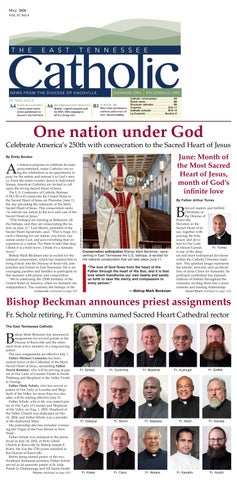
“We’re celebrating the 250th birthday of the United States of America, when we declared our independence. This summer, the bishops of the
“The love of God flows from the heart of the Father through the heart of His Son, and it is that love which transforms our own hearts and sends us forth to bear His mercy and compassion to every person ”
June: Month of the Most Sacred Heart of Jesus, month of God’s infinite love
By Father Arthur Torres
Beloved readers and faithful Christians of the Diocese of Knoxville, Devotion to the Sacred Heart of Jesus, together with praying the holy rosary and devotion to Our Lady of Mount Carmel, is one of the deepest and most widespread devotions within the Catholic Christian tradition. This spiritual image represents the infinite, merciful, and sacrificial love of Jesus Christ for humanity. Its profound symbolism has inspired millions of faithful throughout the centuries, inviting them into a more intimate and trusting relationship
The East Tennessee Catholic
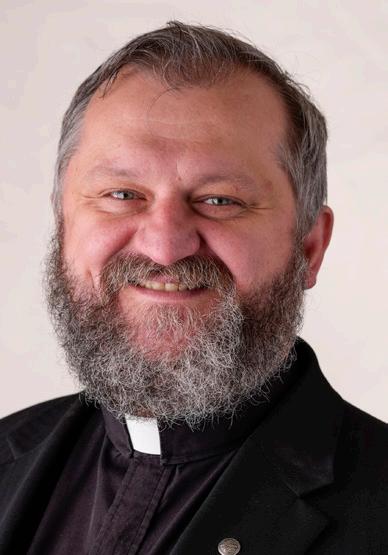
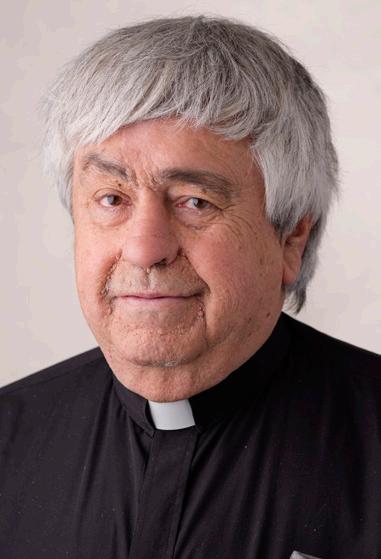
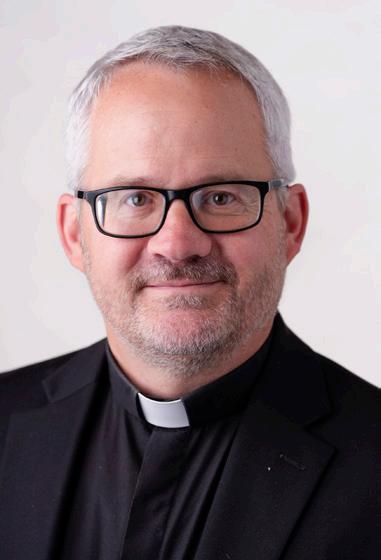
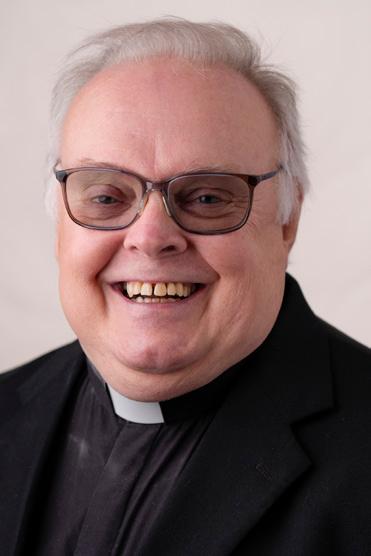
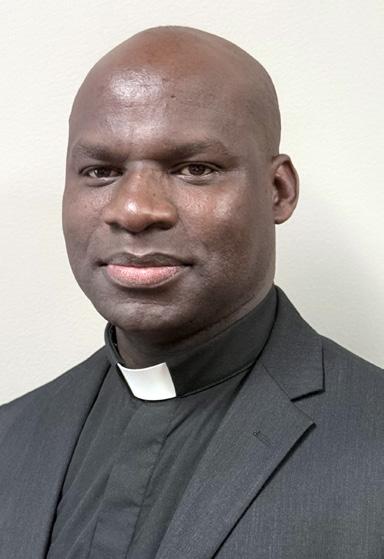
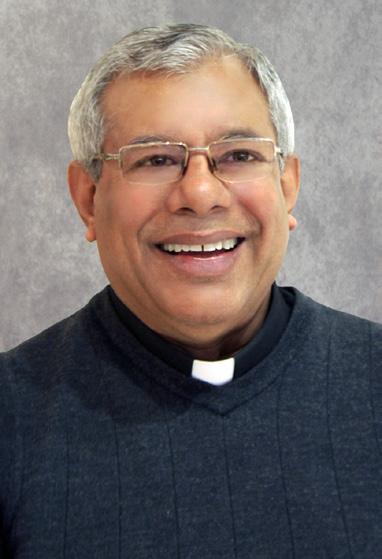
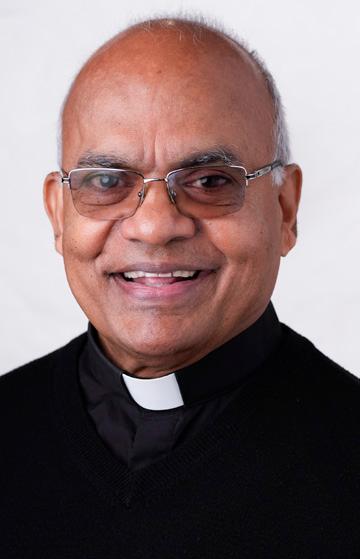
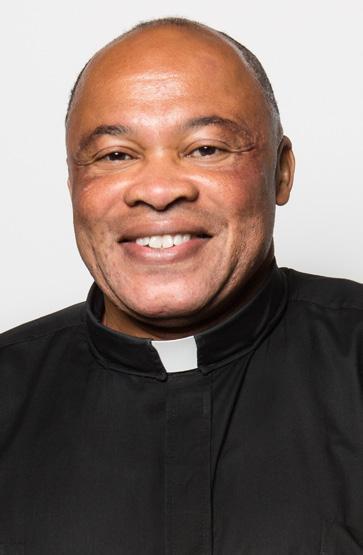
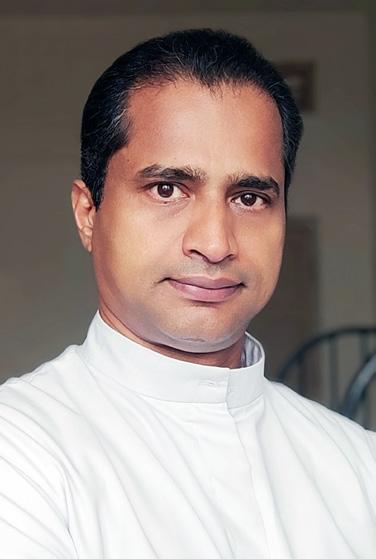
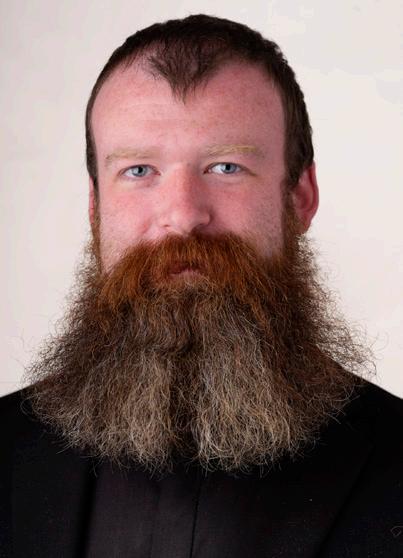
Bishop Mark Beckman has announced assignments for several priests in the Diocese of Knoxville and the retirement from active ministry of a long-serving pastor.
The new assignments are effective July 1.
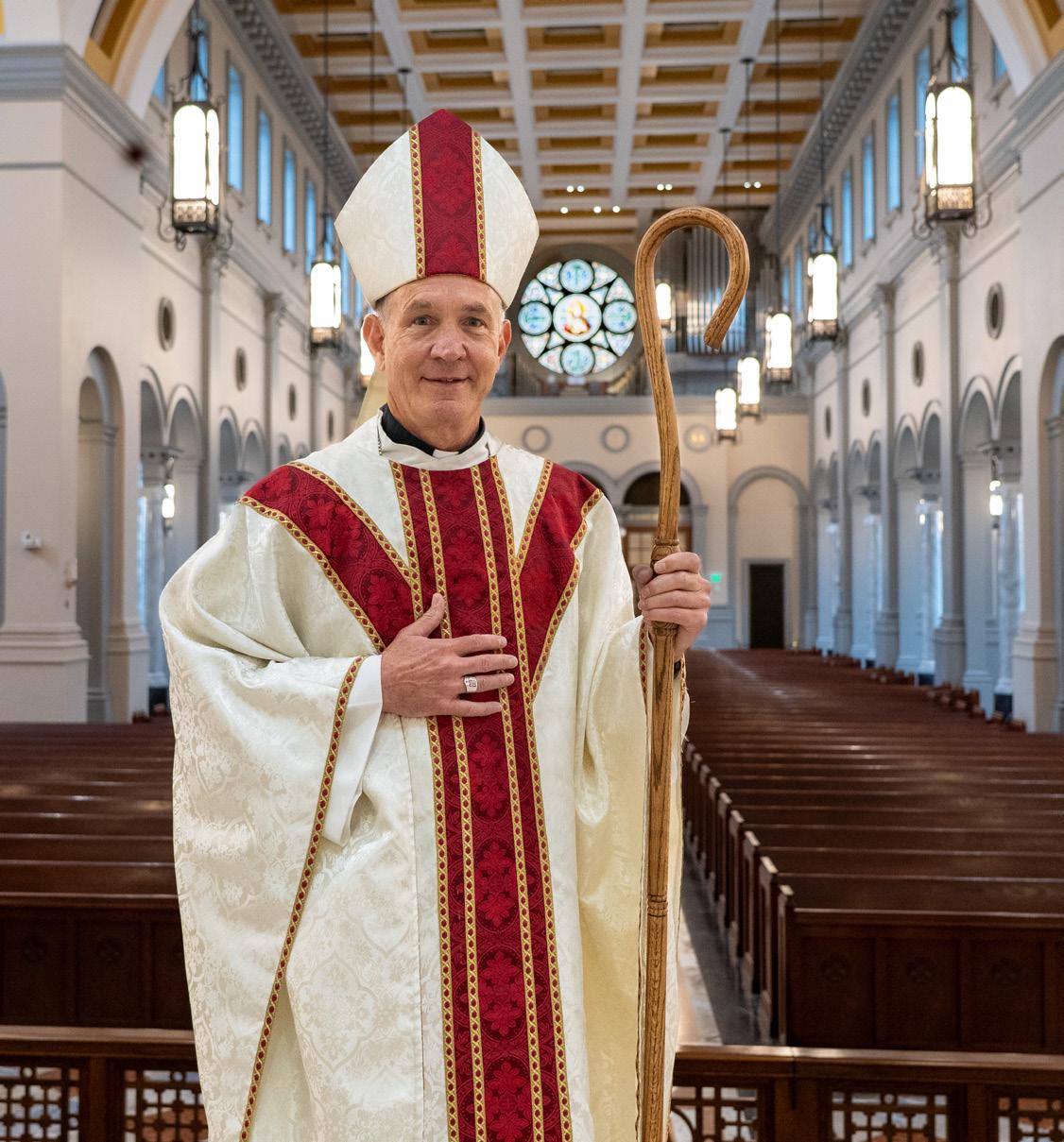
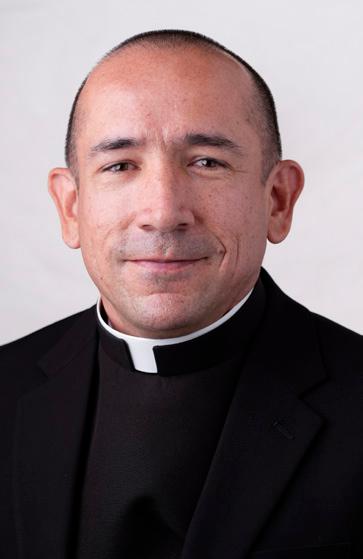
Father Michael Cummins has been named rector of the Cathedral of the Most Sacred Heart of Jesus, succeeding Father David Boettner, who will be serving as pastor of Our Lady of Lourdes Parish in South Pittsburg and Shepherd of the Valley Parish in Dunlap.
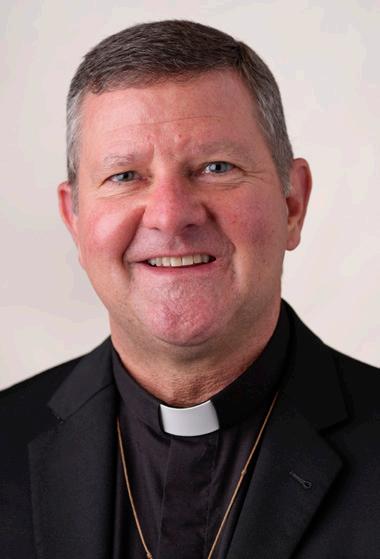
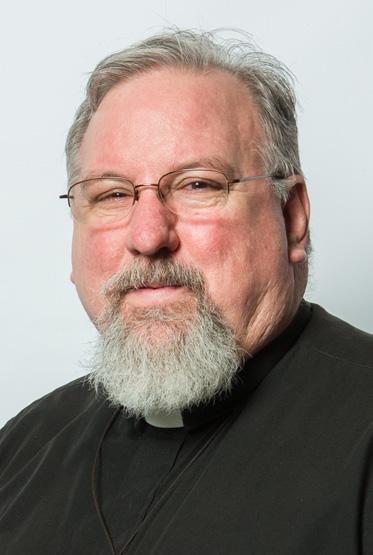
Father Mark Scholz, who has served as pastor of Our Lady of Lourdes and Shepherd of the Valley for more than two decades, will be retiring effective June 21.
Father Scholz, who is 68, was named pastor of Our Lady of Lourdes and Shepherd of the Valley on Aug. 1, 2005. Shepherd of the Valley Church was dedicated on Dec. 16, 2006, and Father Scholz was a presider at the dedication Mass.
His pastorship also has included overseeing the Virgin of the Poor Shrine in New Hope.
Father Scholz was ordained to the priesthood on July 20, 2002, at Holy Ghost Church in Knoxville by Bishop Joseph E. Kurtz. He was the 27th priest ordained in the Diocese of Knoxville.
Before being named pastor of the two Southeast Tennessee parishes, Father Scholz served as an associate pastor at St. Jude Parish in Chattanooga and All Saints Parish
By Lissette Lemus Global Sisters Report/OSV News
Sister Consuelo Peset Laudeña’s morning routine is not what one would typically expect from an abbess. Before prayers and breakfast, she heads to inspect, one by one, cages housing 35 giant rabbits and their young inside the Convent of St. Anthony of Padua in Central Spain.
At 54, Sister Consuelo leads the group of Franciscan Sisters who have taken on the mission of conserving Spain’s giant rabbit, a breed in danger of extinction.
This breed is not only a genetic heritage belonging to Spain but also part of the country’s historical memory, the abbess said. During the Spanish Civil War and the postwar period, raising them was crucial to feeding families and orphanages in times of scarcity.
“Many families have managed to get by thanks to this animal, and now it seems we are forgetting that part of our history,” she told Global Sisters Report
Sister Consuelo said that in Spanish regions such as Valencia, Madrid, and Asturias, numerous farms kept up to 300 breeding females,
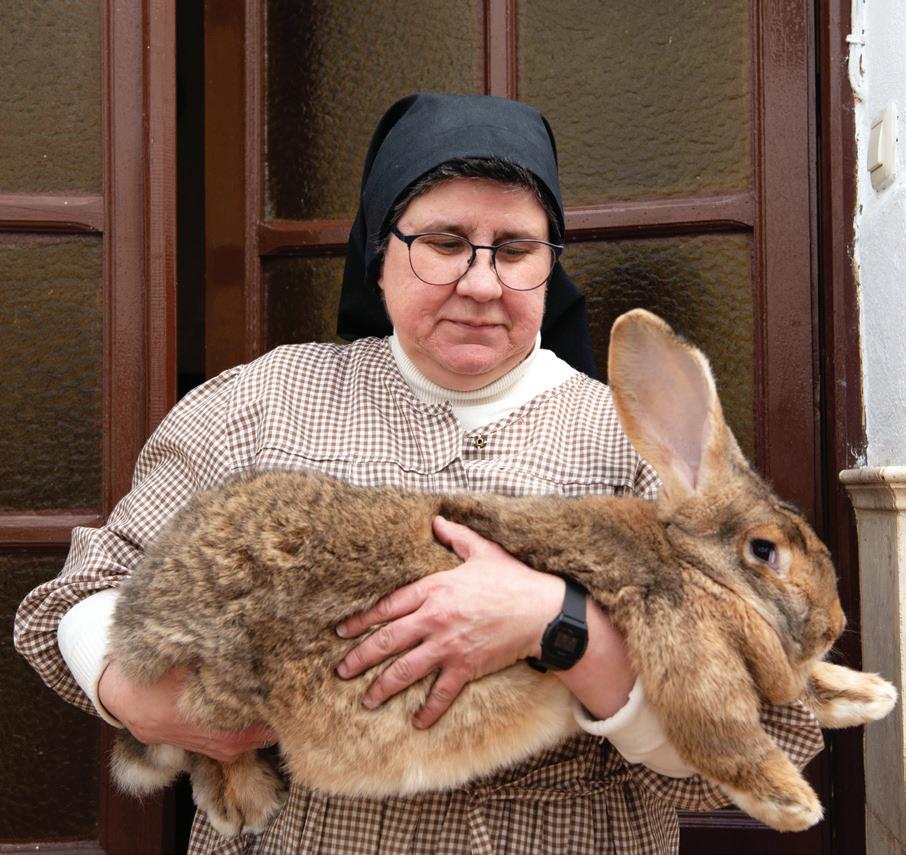
Sisters to the rescue Franciscan Sister Consuelo Peset Laudeña is shown on March 28 holding one of the Spanish giant rabbits the cloistered community breeds at the Convent of St. Anthony of Padua in Central Spain. The rabbits are at risk of extinction.
which made it possible to feed a large number of people, especially those orphaned during World War II.
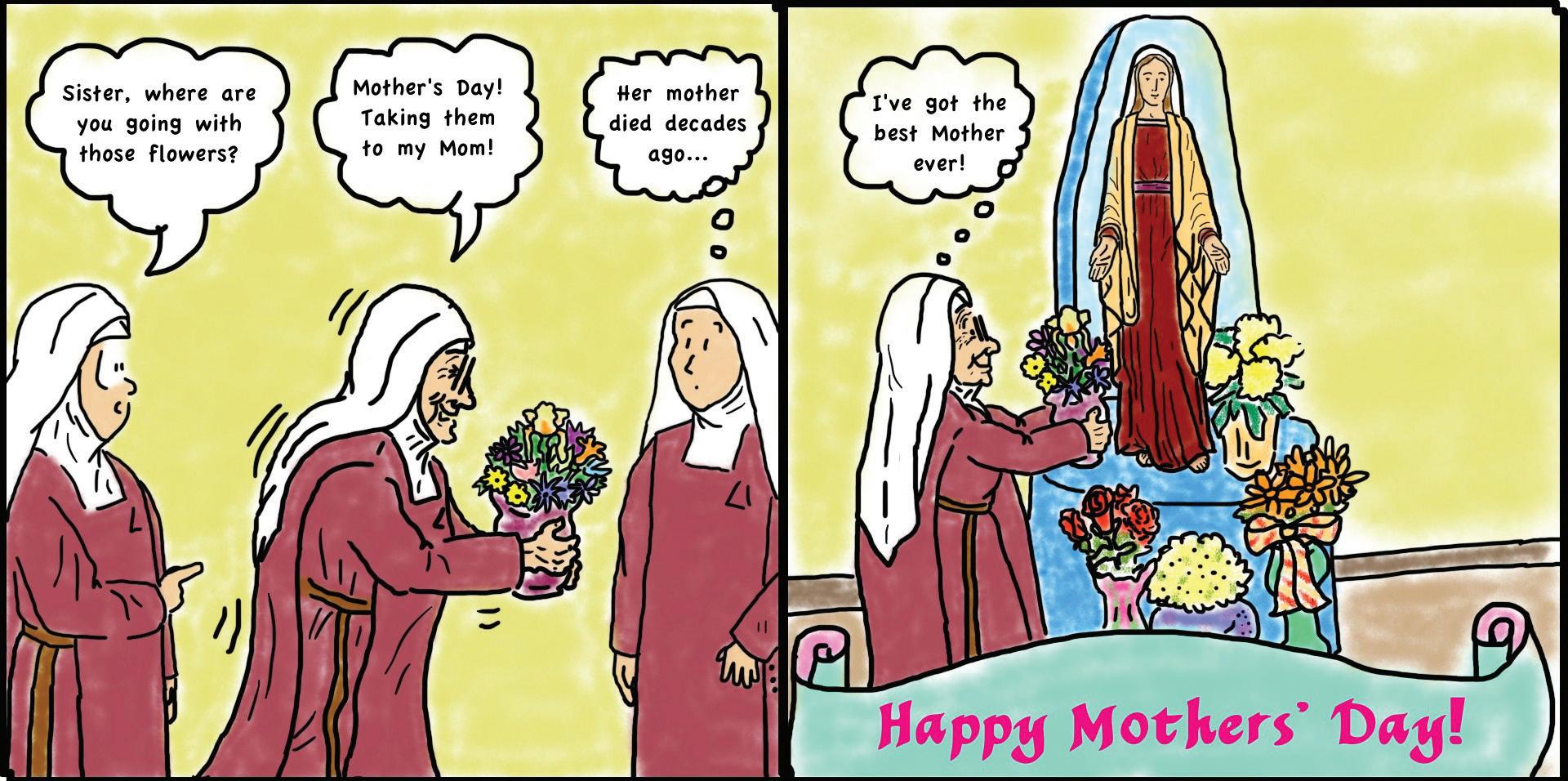
The Handmaids of the Precious Blood this year celebrate the 79th year since their founding in 1947; more than three-quarters of a century of prayer and sacrifice for priests. To receive weekly cartoons and short reflections and news from the Handmaids of the Precious Blood, visit their website, nunsforpriests.org, and sign up for the FIAT newsletter.
A May prayer intention that
“Let us pray that everyone, from large producers to small consumers, be committed to avoid wasting food, and to ensure that everyone has access to quality food.”
Pope Leo XIV


The breed, a cross between the Flanders Giant and Spanish brown-type females, can weigh up to 20 pounds and has a high reproductive capacity, as each female can bear up to 22 pups per month.
Maricarmen Pleite Orozco, a volunteer at the convent, recalled having tasted meatballs made of rabbit’s meat and described it as white, juicy, and very flavorful.
According to data from the Interprofessional Organization for Farm-Raised Rabbit Meat, rabbit meat is lean, rich in protein, and contains high levels of phosphorus, selenium, potassium, and vitamins—qualities that help prevent childhood obesity, anemia in adolescents, high cholesterol, and gout.
Raising the animals at the convent began more than 30 years ago when Sister Consuelo’s parents gave her a pair of rabbits for personal consumption. However, a decade ago, the initiative took a new turn toward conservation when the Sisters discovered the breed was at risk of extinction.
“We contacted an association, I sent some photos, and they told me, ‘You have a spectacular animal, and it’s endangered,’” she recalled.
The Diocese of Knoxville has implemented the CMG Connect platform to administer the Safe Environment Program, which replaces the former Safe Environment Program (VIRTUS “Protecting God’s Children”).
CMG Connect is a web-based platform that will assist in ensuring that all employees and volunteers who are in a position of trust with children and vulnerable adults within Diocese of Knoxville schools and parishes are trained to recognize behavior patterns of potential abusers and provide pro-active measures for preventing abuse in any context.
“Safe Haven-It’s Up to You” is a three-part video that provides vignettes of real-life situations to educate the viewer about methods of grooming, desensitization, bullying, and neglect, all of which can lead to abuse.
Each part of the video is immediately followed by a brief questionnaire to further develop understanding.
Education is a key
element of the Safe Environment Program.
All clergy, employees, contracted school personnel, volunteers, members of groups and organizations over the age of 18 who work, volunteer, or participate in any capacity are required to complete the diocesan Safe Environment training and a criminal-background check before they can begin employment, volunteer, or participate with ministries, groups, and organizations affiliated with the Diocese of Knoxville.
In addition, the mandatory renewal training must be completed every five years and a new background check submitted before the five-year expiration of prior training
The Diocese of Knoxville Safe Environment compliance training and renewal training is a condition of employment and for volunteer ministry in the Diocese of Knoxville.
The CMG Connect platform contains all three elements of the Diocese of Knoxville’s Safe Environment Program: n Annual review of the Diocese of Knoxville’s Policy and Procedures Relating to Sexual Misconduct; n CMG Connect Safe Haven training program to be completed every five years; n Criminal background check to be completed every five years.
In compliance with the Diocese of Knoxville’s Safe Environment Program, all affiliates require that volunteers and employees complete the requirements prior to working and/or volunteering in a parish, school, or through Catholic Charities of East Tennessee and/ or St. Mary’s Legacy Clinic. Go to https:// dioknox.org/safeenvironment on the Diocese of Knoxville website for more information ■




Oby Bishop Mark Beckman
ne of the great joys of springtime for a bishop is the opportunity to journey about the diocese and celebrate the sacrament of confirmation for our young people.
Here in East Tennessee as I have journeyed from parish to parish, the unfolding of springtime in the mountains has been breathtaking to behold, but even more so has been the joy on the faces of our young people who are receiving the sealing of the Holy Spirit in confirmation.
Our parishes are vibrant, growing Christian communities where the Spirit of God is alive and well!
Whenever confirmation is celebrated, I am reminded of two key moments in the ministry of Jesus. The first is narrated in the Gospel of Luke about His arrival in His hometown of Nazareth, where He goes to the synagogue and finds the place in Isaiah the prophet to announce the very purpose of His mission.
“The Spirit of the Lord is upon me because He has anointed me to bring glad tidings to the poor. He has sent me to proclaim liberty to captives and recovery of sight to the blind, to let the oppressed go free, and to proclaim a year acceptable to the Lord. … Today, this Scripture passage is fulfilled in Your hearing (Luke 4:18-19, 21).”
The entire Gospel of Luke reveals the Holy Spirit deeply and powerfully at work in and through Jesus. The oppressed are indeed set free, the blind given new eyes to see, the poor lifted up and embraced, those in need of healing restored to wholeness. The great work of God’s kingdom is all about the healing of the whole human person—body, mind, soul, and spirit!
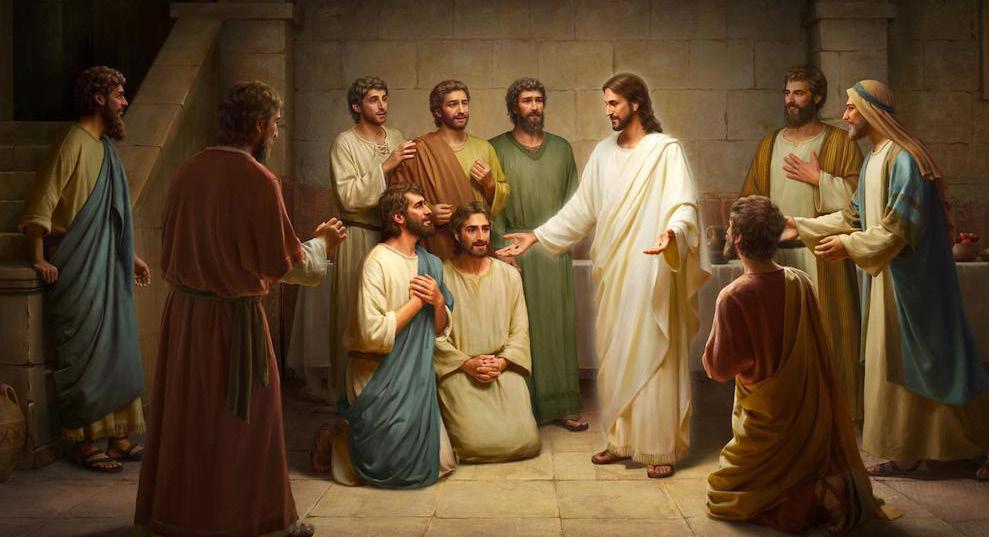
The second key moment I am reminded of during confirmation is narrated in the Gospel of John as the Risen Lord appears to the disciples behind locked doors on the evening of Easter Sunday. “Peace be with you!” He proclaims to disciples still in the grip of fear and shame. His very presence brings joy. “Peace be with you!” He an-
nounces a second time. “As the Father has sent Me, so I send you.” And when He had said this, He breathed on them and said to them, “Receive the Holy Spirit! (cf. John 20:20-22).”
This key moment of the giving of the Spirit is accompanied by the profound peace that comes from God alone. Pope Leo XIV quoted these words of Jesus when he was first elected as the successor of St. Peter the Apostle: “Peace be with you!” He prayed that the peace of Christ would indeed fill every human heart and spread to all parts of the world.
Pope Leo has been in his first year an untiring advocate for this peace during a time of great conflict and turmoil in our world. “Blessed are the peacemakers,” he
reminds us. Immediately after our young people are marked by sacred chrism in the sign of the cross on their foreheads and hear the words “Be sealed with the gift of the Holy Spirit,” the bishop speaks the words of the Risen Lord to them: “Peace be with you!” For all of us who have been claimed by God as beloved sons and daughters in the sacrament of baptism and sealed with the gift of the Holy Spirit, we, too, must bear the peace of Christ to the world.
Christians are called to be peacemakers by the Prince of Peace Himself. As Jesus was sent by the Father, so now we are sent by Him into this world in our own time and place. At every Eucharist we celebrate, the priest prays: “Deliver us, Lord, we pray, from every evil, graciously grant peace in our days…” and immediately following reminds us “Lord Jesus Christ, who said to your Apostles: Peace I leave you, My peace I give you….” May this peace reign in our hearts that we may be free from turmoil and disorder; may we work diligently to build peace in our families and communities; may we be tireless advocates for peace with those who have been elected to public office; and may we ardently pray for the peace of Christ throughout the world. ■
By Jim Wogan
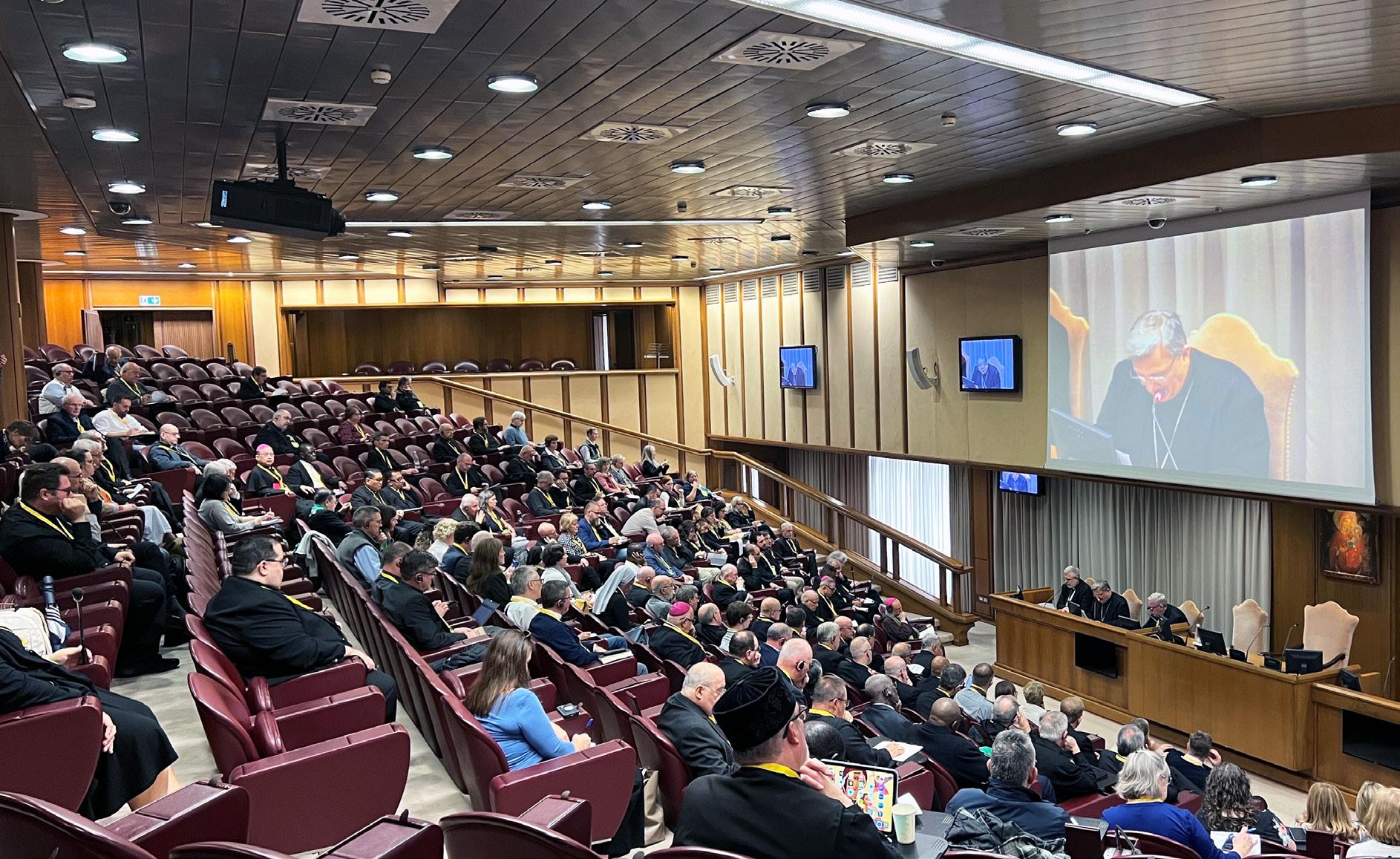
Over the past several years, I’ve watched the Catholic Church undertake one of the most ambitious efforts at renewal and consultation in modern history through the global Synod process. Now, here in East Tennessee, we are entering the phase where all of that listening must finally become action.
The Diocese of Knoxville is preparing to move into what Church leaders call the “Implementation Phase” of the Synod, and in many ways this is where the process becomes real for all of us.
When the Synod first launched in 2021 under the direction of the Vatican, the emphasis was on listening. Catholics around the world, including here in the diocese, were invited to share their experiences, hopes, frustrations, and ideas about the life of the Church. That effort culminated in the release the Synod’s Final Document in 2024, a substantial and sometimes challenging text intended to help shape the future direction of Catholic life.
But listening alone was never meant to be the endpoint.
The Church is now asking dioceses to move from conversation to discernment and practice—from simply hearing voices to responding to them in meaningful ways. At the heart of the Synod is the vision of a more participatory Church where clergy and laity share responsibility more intentionally and collaboratively.
That vision can sound abstract until you begin to see how it might actually unfold at the local level.
In Knoxville, the implementation effort will center on two major Synod-style gatherings this fall. The first, scheduled for September, will take place at the deanery level, bringing together smaller regional groups from across the diocese. All of the deanery meetings will happen on the same day—a symbolic decision meant to emphasize unity while still allowing conversations to remain grounded in local realities.
These gatherings are not being designed as ceremonial meetings or passive presentations. Instead, participants will engage in structured dialogue, guided by members of the diocesan Synod Team.
A second, larger diocesan-wide gathering will follow in November, bringing together delegates from across East Tennessee. That assembly is expected to synthesize the discussions from the deanery meetings and help prepare the diocese for a Vatican-requested Evaluation Assembly in early 2027.
What stands out to me is that participation
begins at the parish level. Pastors are being asked to select two delegates from each parish to represent their communities in the discernment process. Registration has already begun. The diocese also appears mindful of avoiding unnecessary bureaucracy. The Synod Team will handle facilitation and planning, while participants will receive study materials, discussion guides, and online preparation resources ahead of time. Priests are invited to attend, and efforts are underway to include religious orders and other diocesan ministries.
There also is a significant communication effort developing around this process. Updates and study resources will be shared through diocesan media platforms and through a bimonthly newsletter sent directly to pastors and delegates. That may prove especially important because the Synod’s Final Document is not light reading.
As I’ve said to others, it is a rich document, but it’s not easy to digest. The challenge now is helping Catholics connect it to everyday life in the Church.
To guide that effort locally, Bishop Mark
Beckman has identified three key questions drawn from the Final Document. They are simple in wording, but potentially profound in impact.
First: How can parishes strengthen and rebuild community?
Second: What does genuine collaboration between clergy and laity actually look like?
And third: How can the Church become more welcoming and mission-oriented, especially toward the poor, marginalized, and those who often feel disconnected from Church life?
Those questions strike me as timely and necessary.
Each of them are drawn from the Vatican’s Final Document, which can be found—along with many other Synod resources—on our diocesan website ( dioknox.org ) on the “For A Synodal Church” page.
The success of the Implementation Phase in the diocese will not be measured by meetings held or documents produced. It will depend on whether local parishes can cultivate a deeper understanding of participation, shared responsibility, and authentic dialogue. That kind of renewal doesn’t happen quickly.
By Brett McLaughlin
“In the end, we will conserve only what we love; we will love only what we understand; and we will understand only what we are taught.”
Baba Dioum
Deacon Chad Shields is not your average farmer. He wishes he was.
That’s because the deacon of Christ the King Parish in Tazewell believes the work he and his family do on their nearby farm is an extension of their Catholic faith.
On May 2, the Shields family hosted some 50 people at a From Liturgy to Land eco-farm retreat at their Six Stone Jars Farm in Claiborne County. Among those attending were several members of the Care of Creation Commission appointed by Bishop Mark Beckman in June 2025.
“How better to advocate for creation than getting out in it,” Deacon Shields said, adding, “Interaction with creation is part of our faith tradition ... a continuation of our liturgy, not something that can be parceled out.”
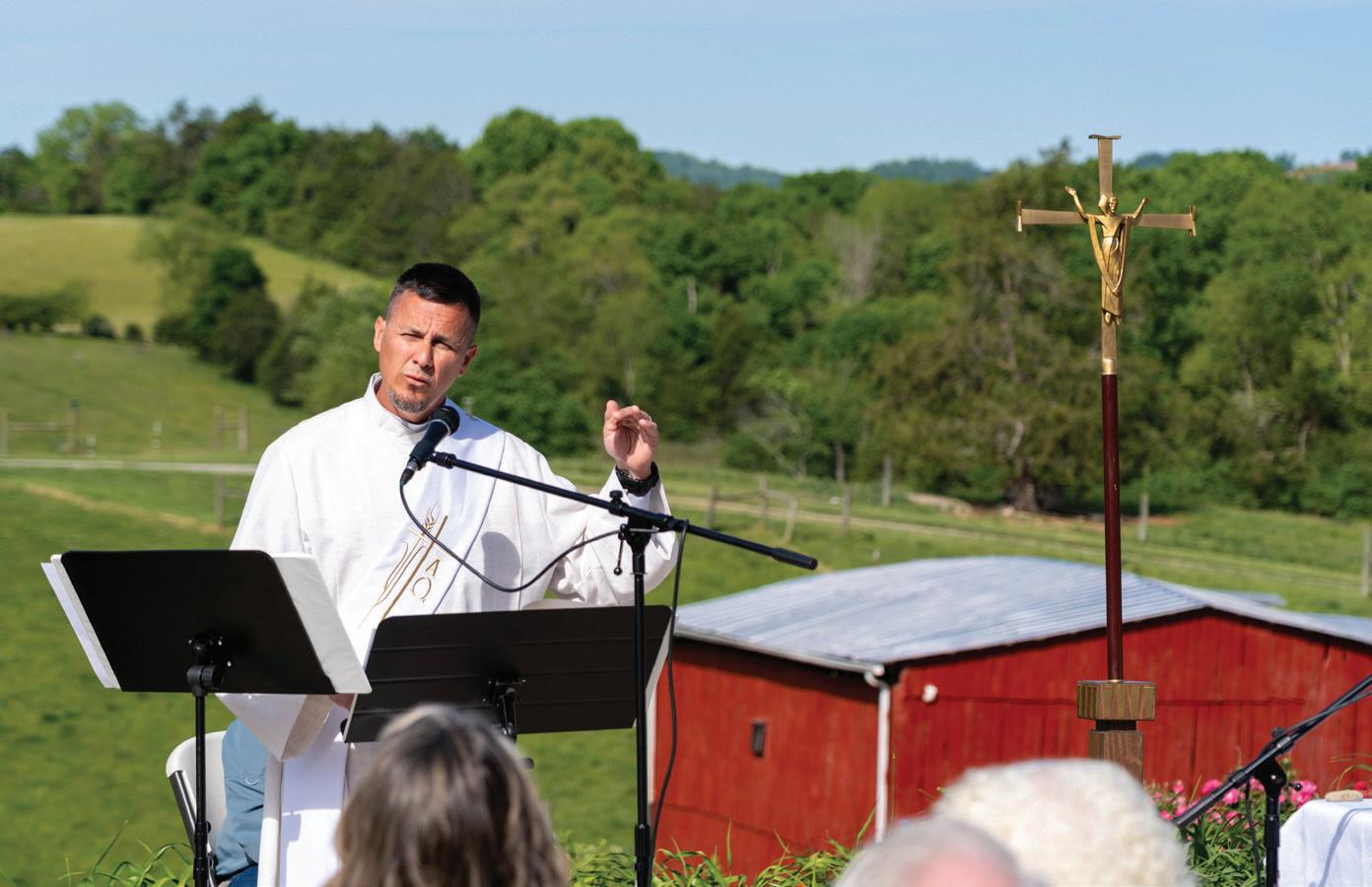
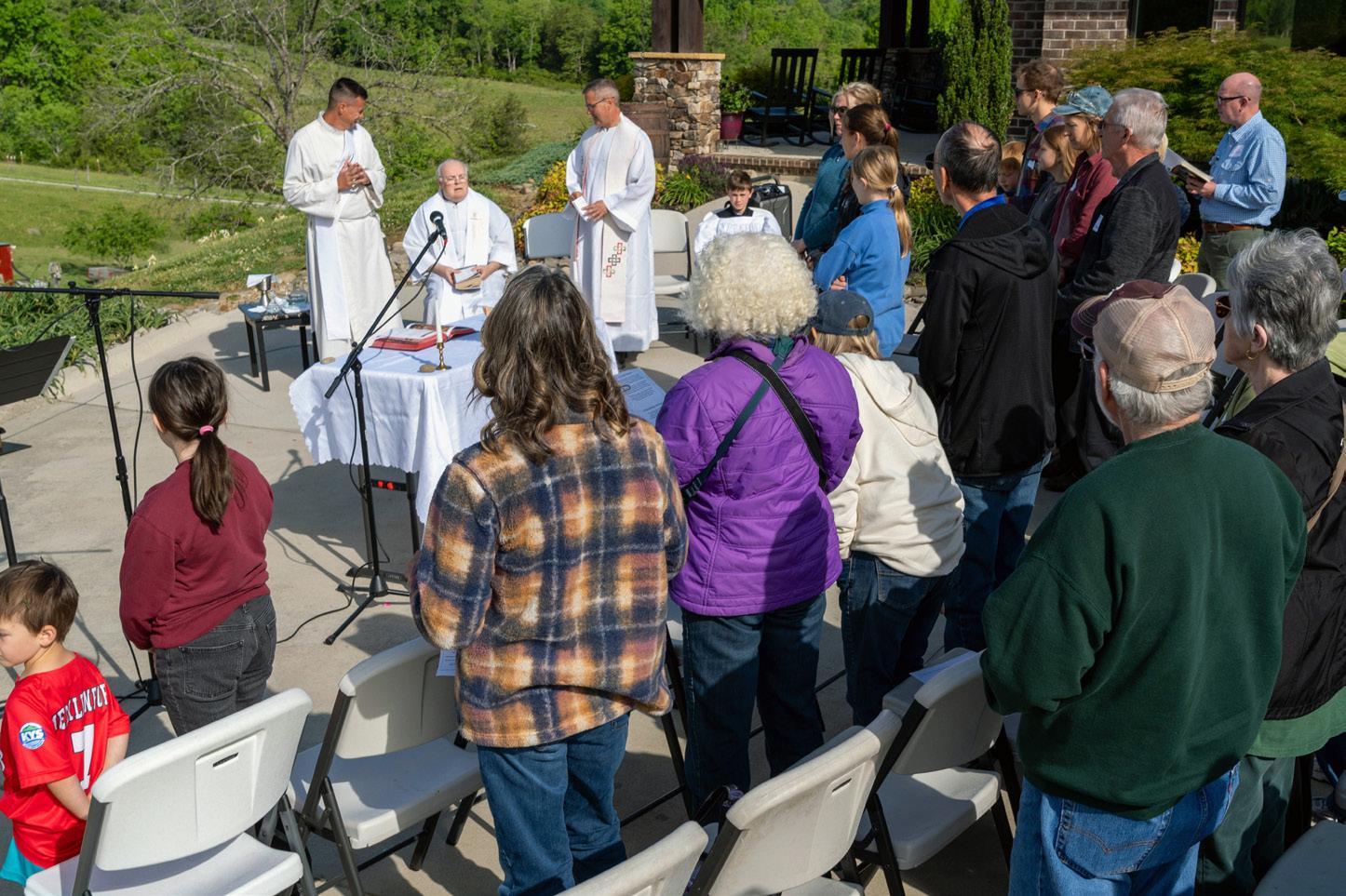
The event began with an outdoor Mass overlooking the pastoral farm. Concelebrants were Christ the King pastor Father Sam Sturm and Father Peter Iorio of Our Lady of Fatima Parish in Alcoa.
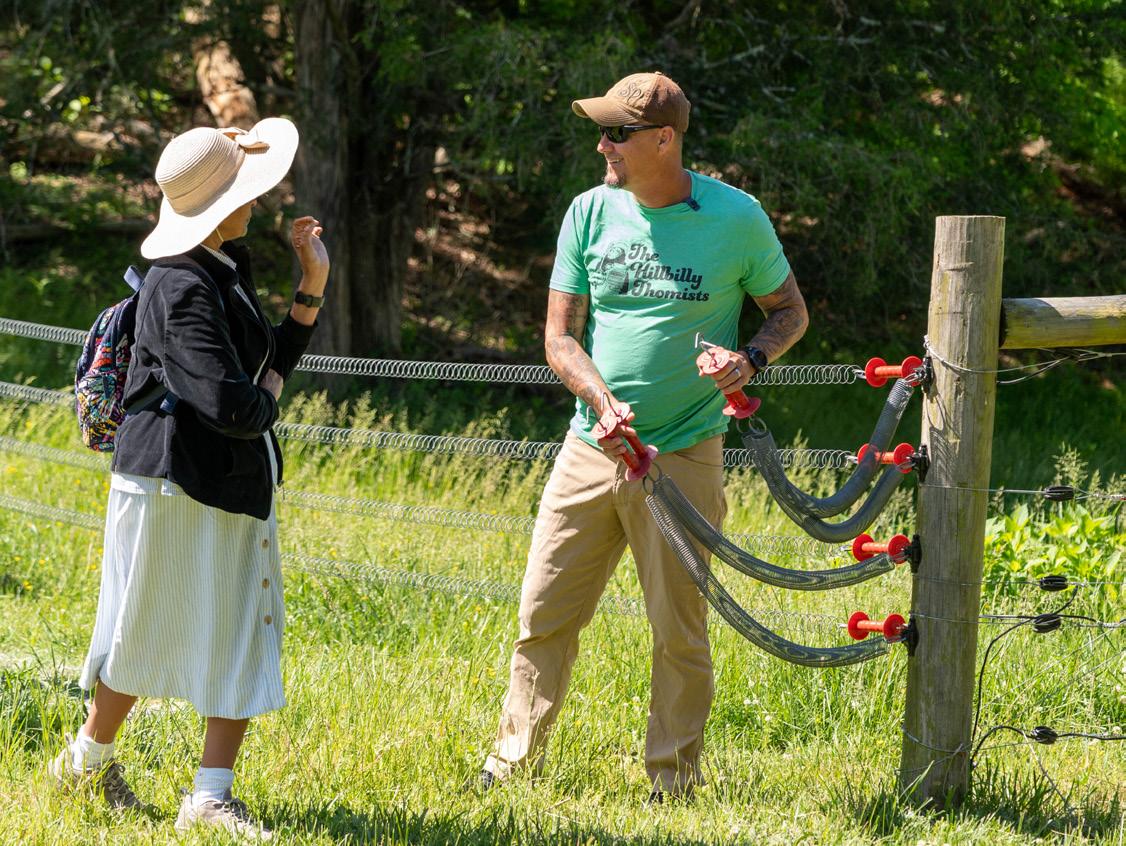
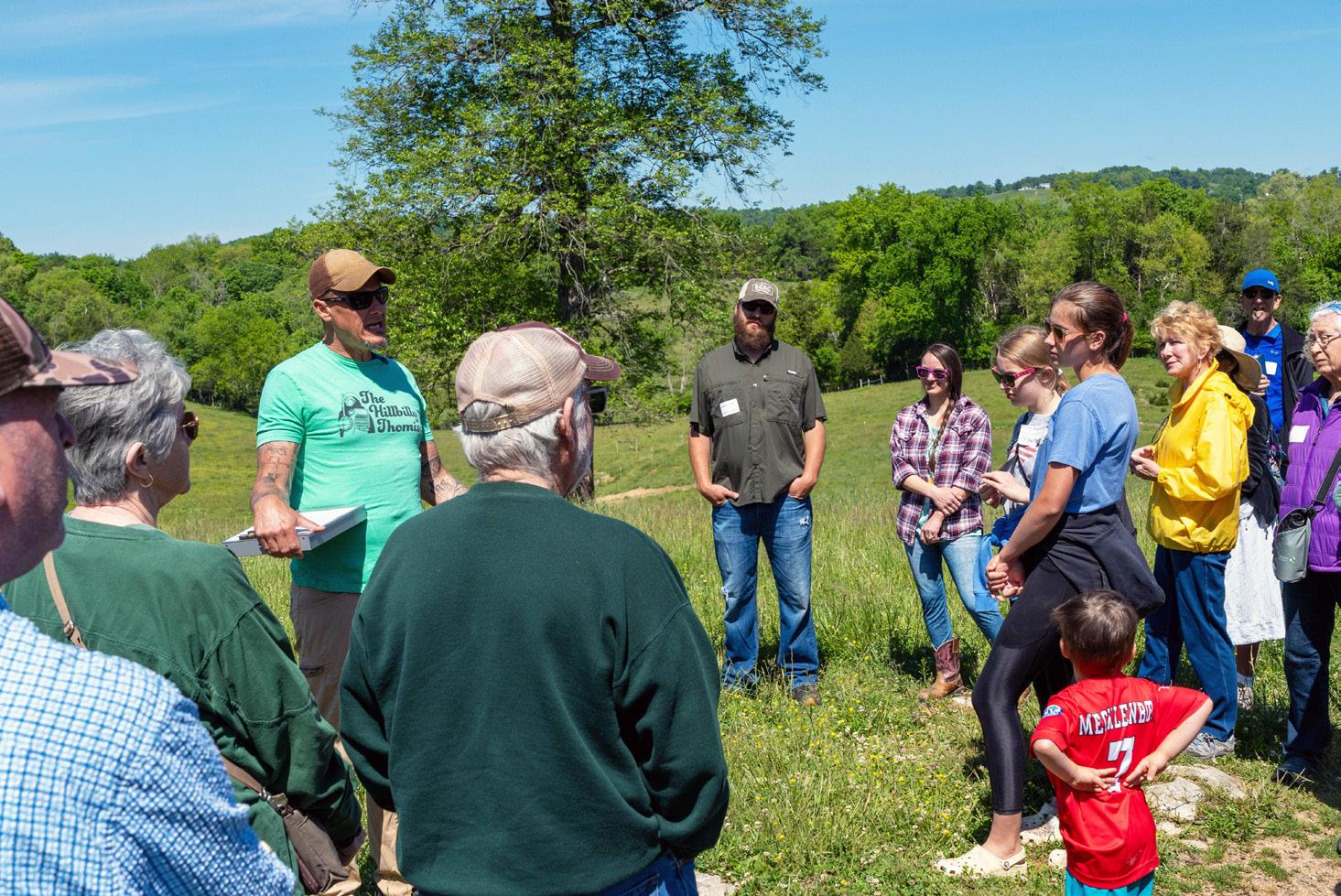
Attendees then toured the farm, making stops to admire pasture animals, garden and pond spaces, and a bit of the farm’s woodlot. At each stop Deacon Shields offered a reflection that focused on ecological education and how faith and family life can model stewardship in practical, tangible ways.
Having shed his vestments and
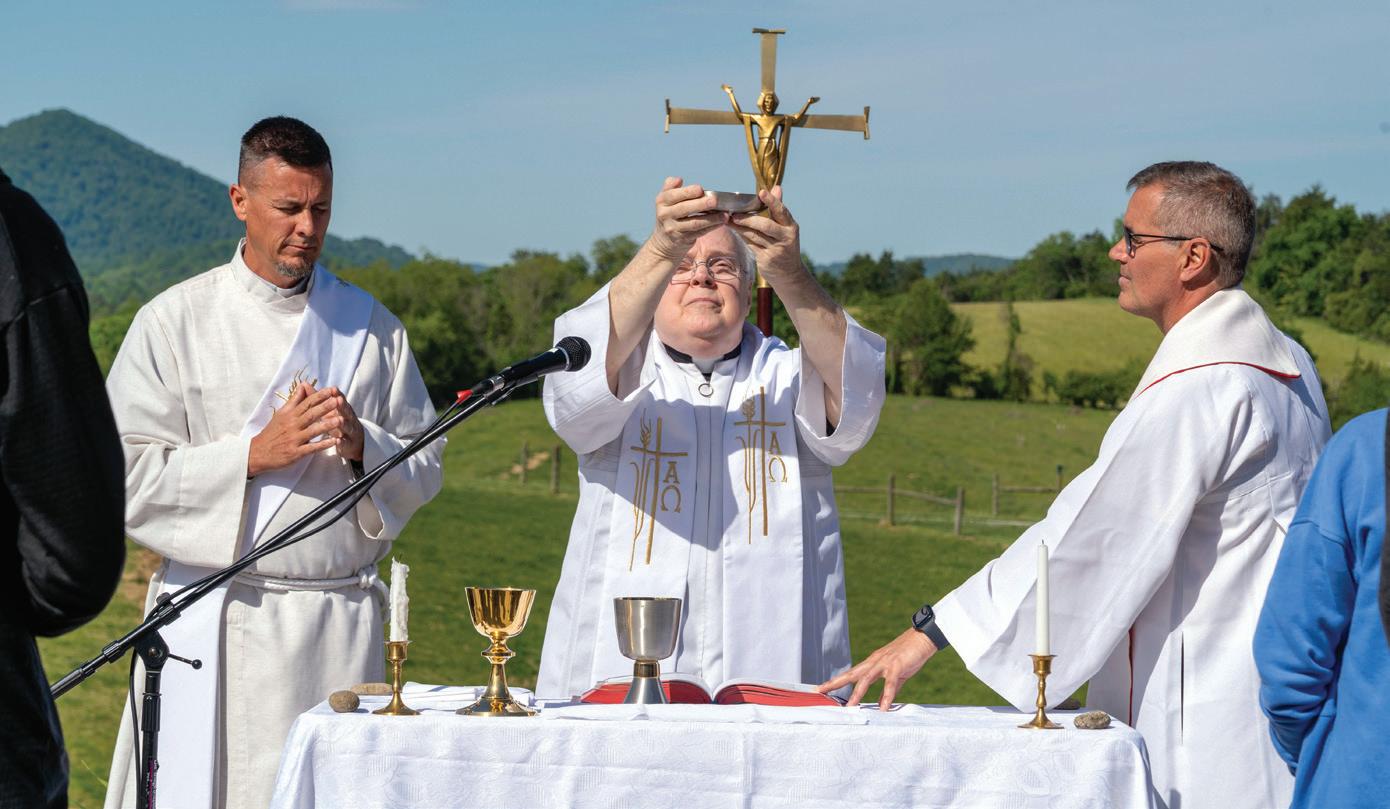
Celebrating the Creator Above: Father Sam Sturm, pastor of Christ the King Parish in Tazewell, Our Lady of Perpetual Help Parish in LaFollette, and St. Jude Parish in Helenwood, celebrates Mass on May 2 during the diocesan Care of Creation retreat at the Six Stone Jars Farm near Tazewell. Concelebrating the Mass is Father Peter Iorio, right, pastor of Our Lady of Fatima Parish in Alcoa, who also serves as vicar general and moderator of the curia for the Diocese of Knoxville. Deacon Chad Shields, left, served as deacon of the Mass and, as owner of Six Stone Jars Farm, helped lead the retreat. Below: Deacon Shields gives the homily during the May 2 Care of Creation retreat Mass.
newborn calves.
“On a good day, you don’t push

" Today (was) not just about farming—it (was) about seeing creation through the lens of the Church. (The day provided an opportunity) for the faithful to see how the grace of the liturgy extends into daily life—especially through stewardship of the land, care for creation, and a sacramental vision of the world "
Deacon Chad Shields
cattle—you call them. And if you’ve done the work well, they’re already waiting at the gate,” he said, noting the contrast between “pushing,” which equals noise, pressure, fear, and urgency, and “pulling,” which equates to trust, desire, familiarity, and expectation.
“Animals don’t have to be forced when things are healthy. They learn the voice, the rhythm, the gate. They anticipate the move. They want the next pasture,” he continued, noting that in his Gospel, John says, “The sheep hear his voice … he calls his own sheep by name and leads them … and the sheep follow him, for they know his voice.”
“This is not incidental imagery. It’s revelatory. Jesus does not describe Himself as one who drives—but one who draws. God does not primarily convert by pressure. He converts by attraction, beauty, and love. The Christian life is not meant to be managed by fear but by desire rightly formed.
“People are rarely argued into the Kingdom,” Deacon Shields said. “But they are often drawn by a life that looks like it has found good pasture. Daily prayer, week-
Creation continued on page A20


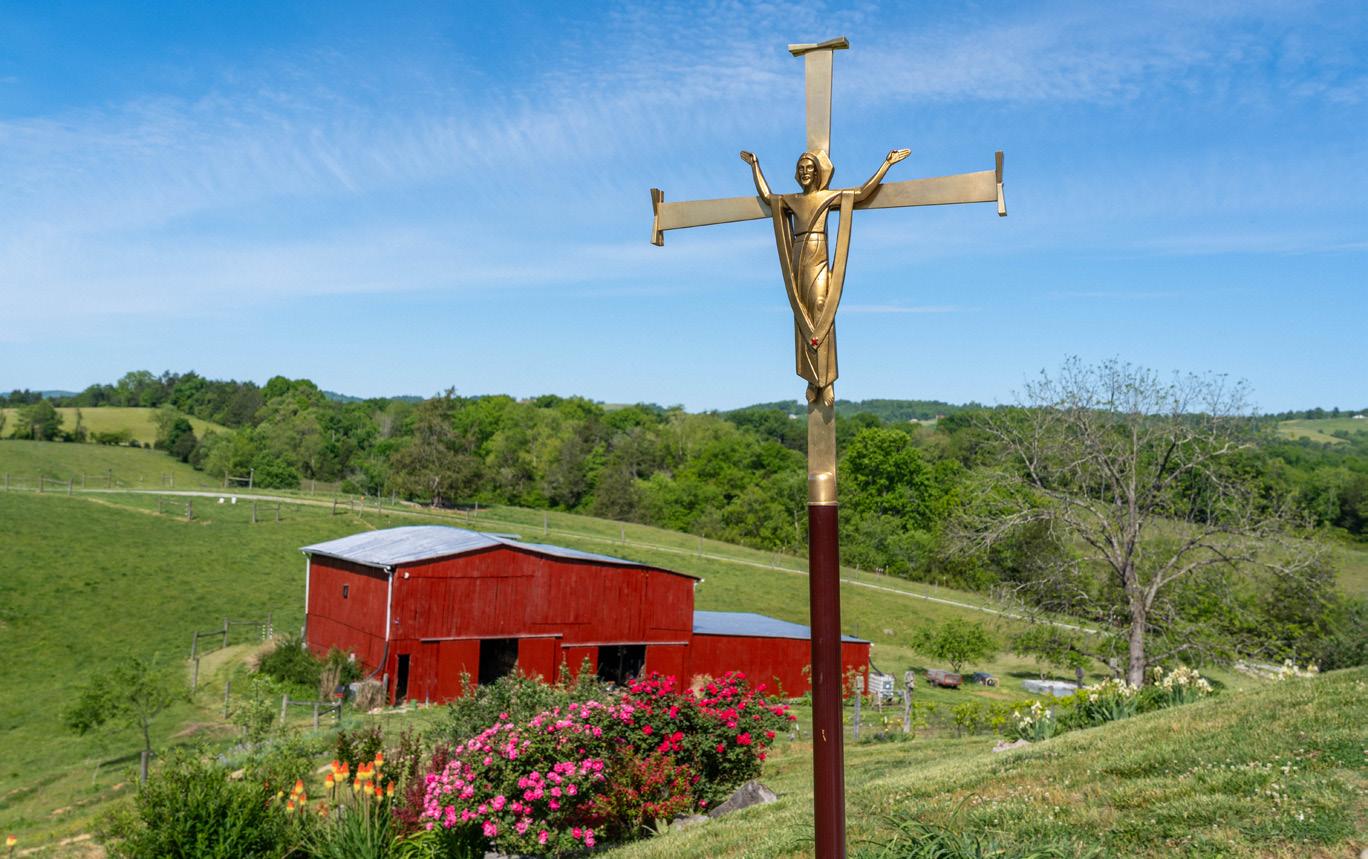
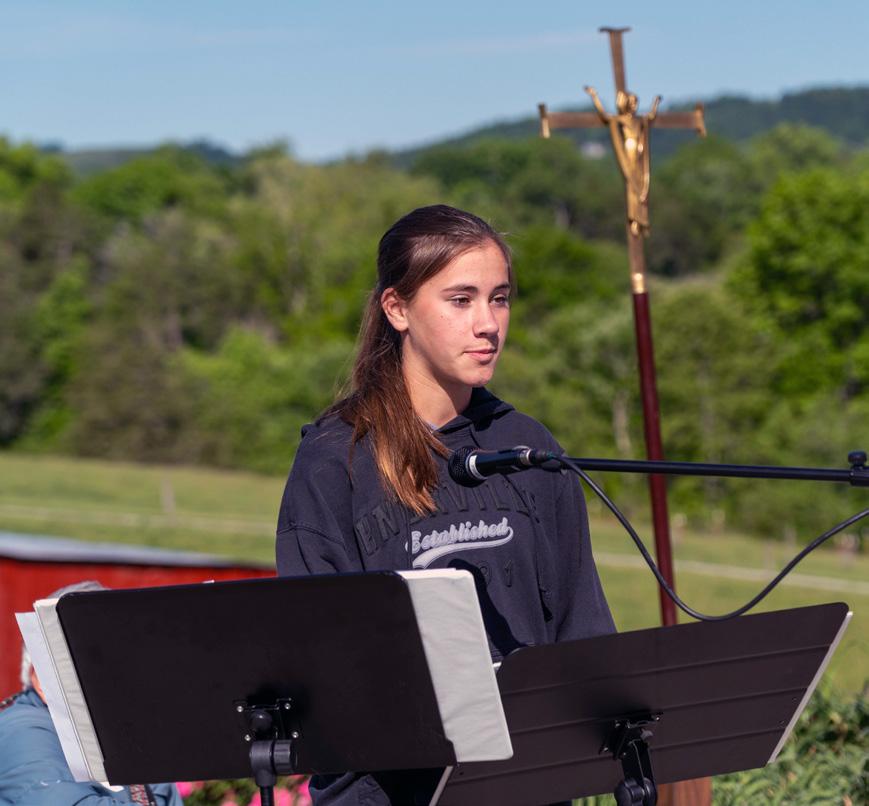
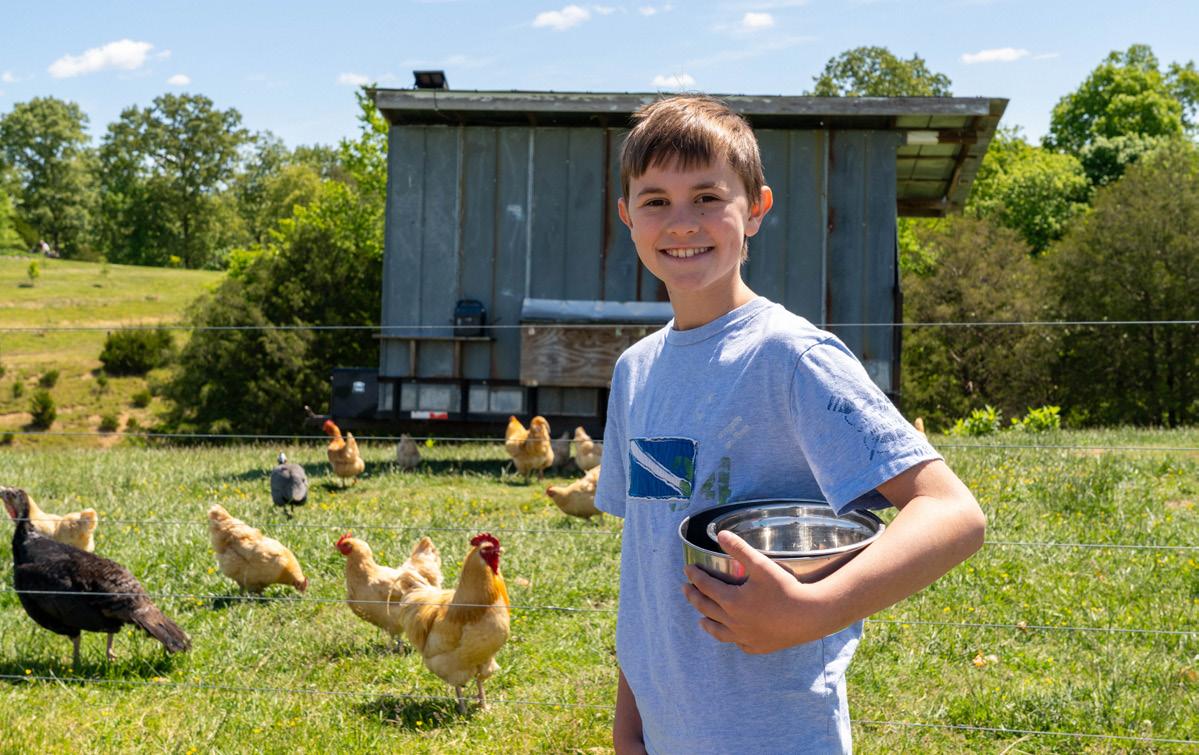
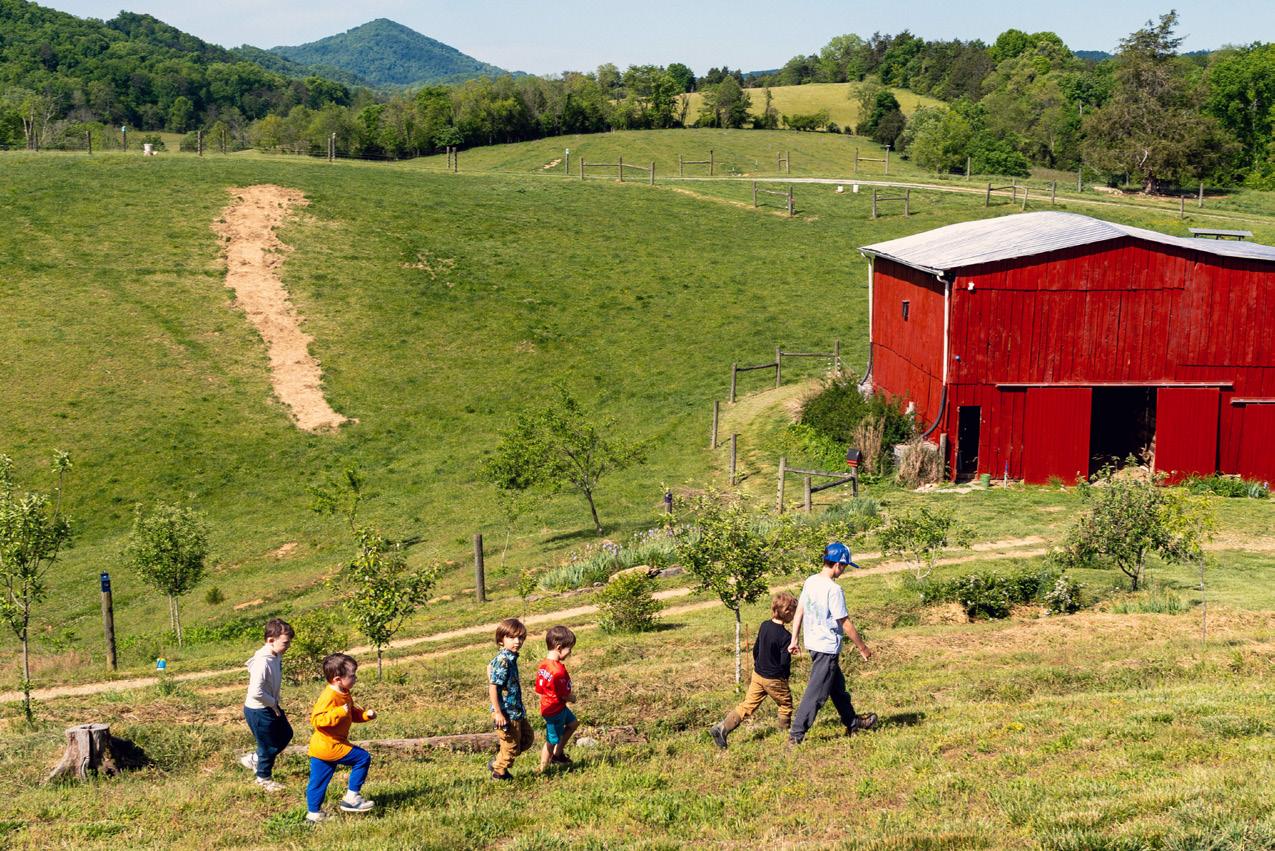
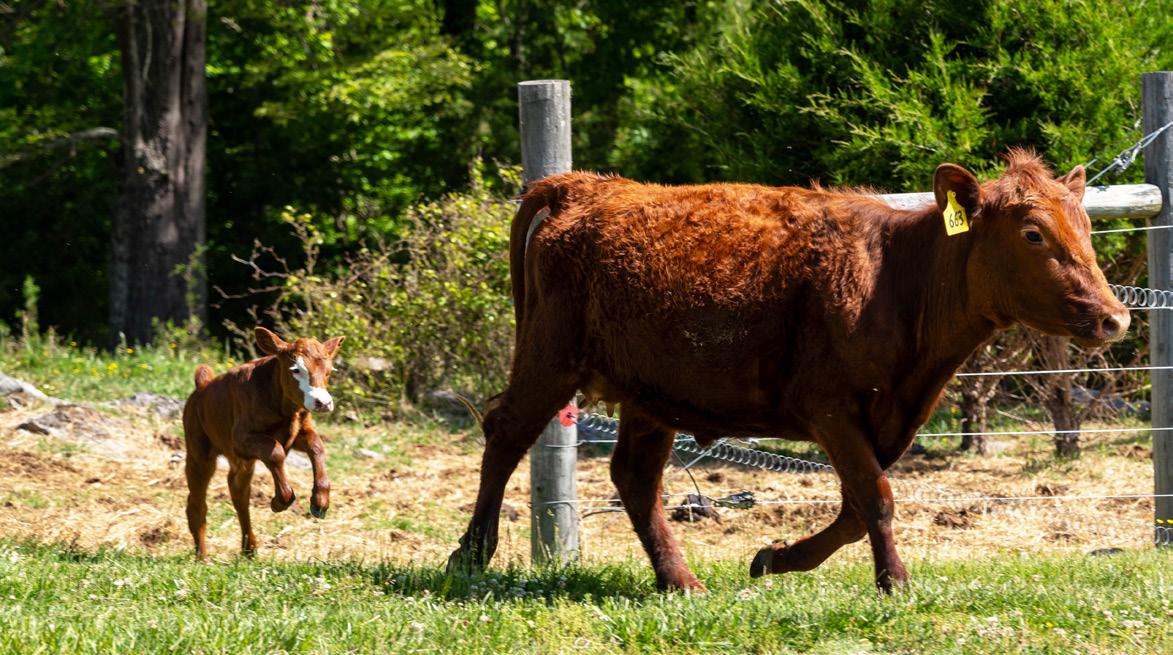
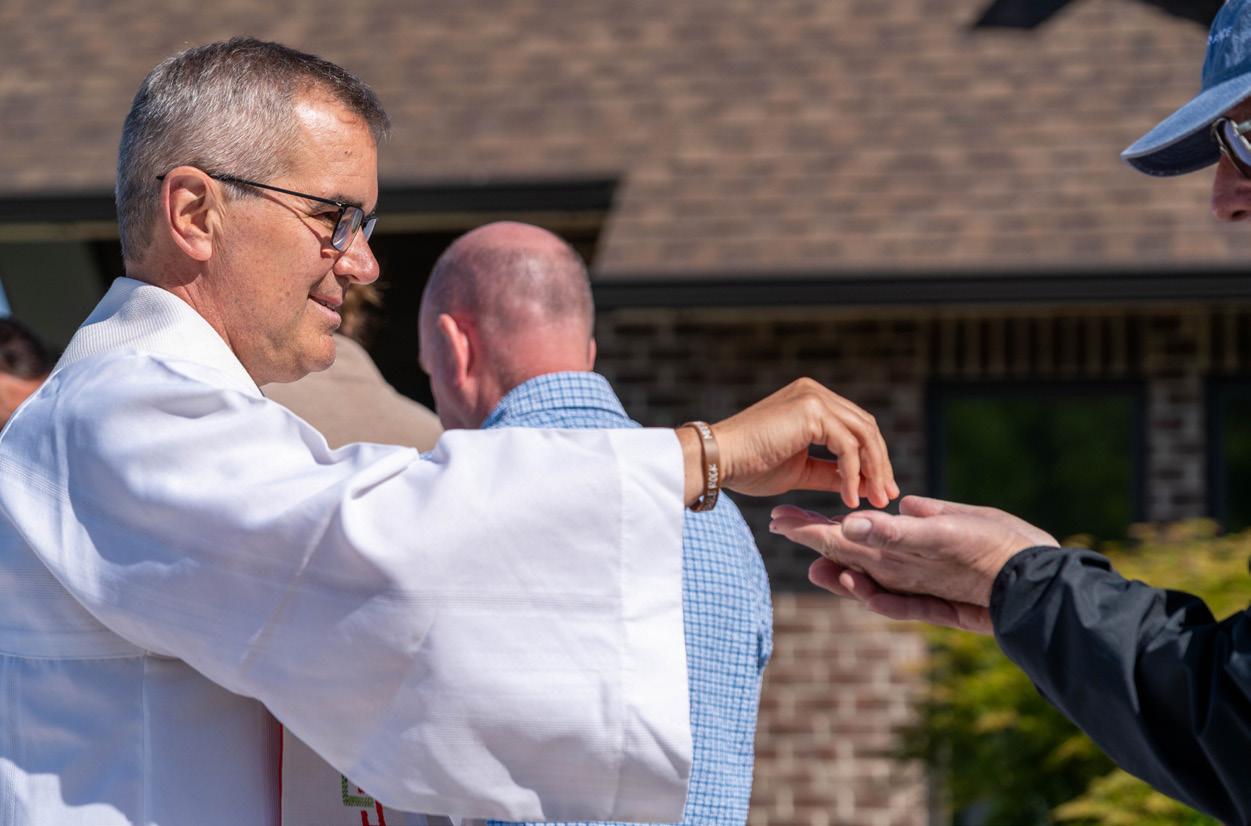
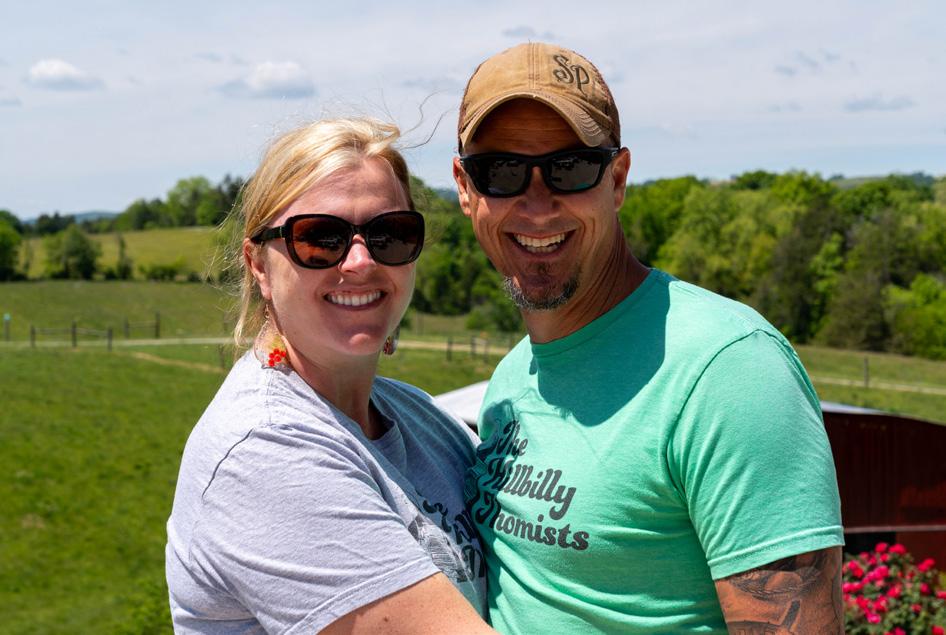
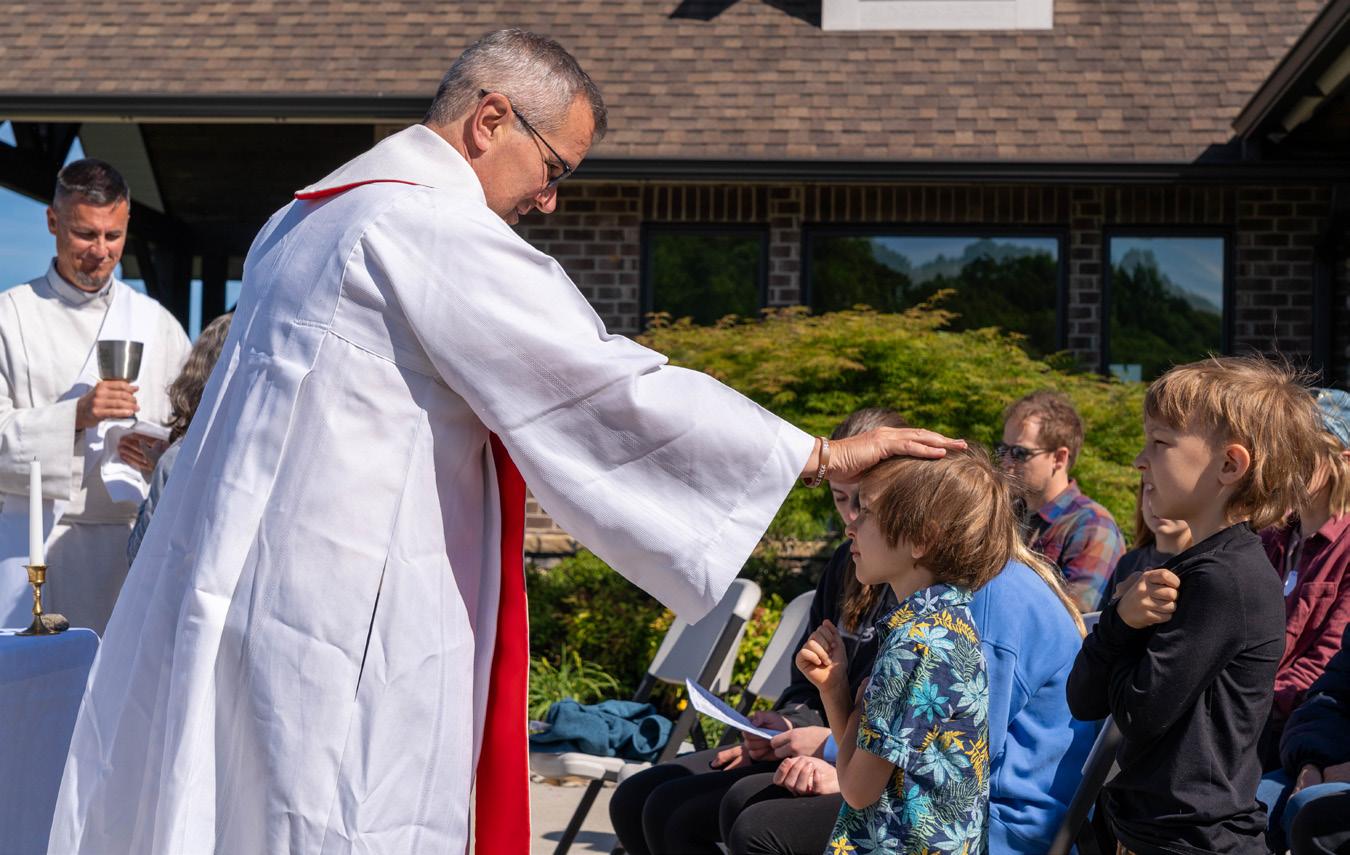
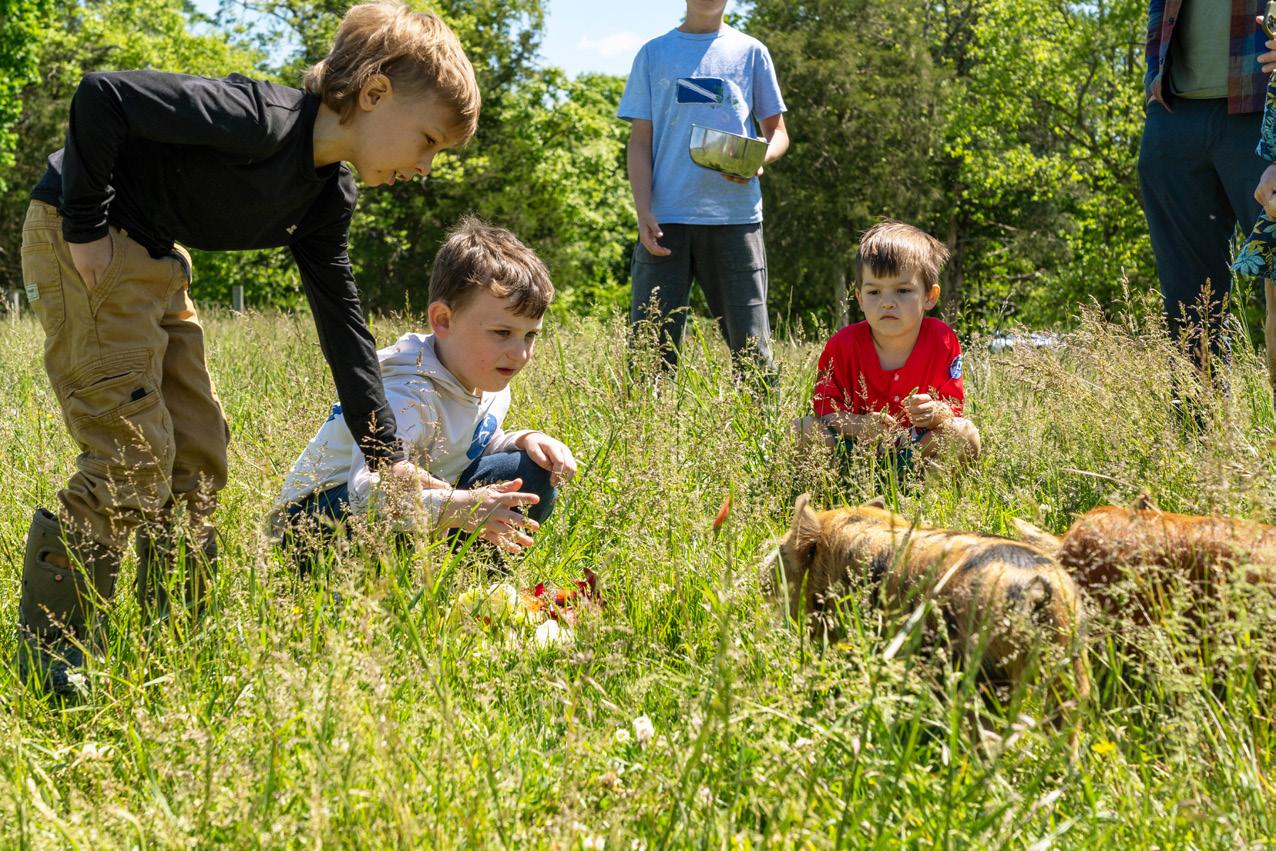
An eco-farm retreat on May 2 at the Shields family’s Six Stone Jars Farm near Tazewell was captured in photos by Diocese of Knoxville communications director John Mecklenborg. The photos illustrate how Diocese of Knoxville parishioners are active in practicing the teachings of Pope Francis’ 2015 encyclical Laudato Si’, On Care for Our Common Home

By Bill Brewer
The Diocese of Knoxville’s 2025 Bishop’s Appeal set a record for funds raised to support important Catholic ministries in East Tennessee, such as Catholic Charities of East Tennessee, the St. Mary’s Legacy Clinic, diocesan schools, seminarians, and programs for youth and young adults.
The appeal ran from March 2025 through this past February, and Deacon Hicks Armor, director of Stewardship and Strategic Planning for the diocese, pointed to a number of factors for the annual fundraising effort’s success.
He cited Bishop Mark Beckman, who has been visiting parishes throughout the diocese and connecting with parishioners. He also credited priests and pastors for their support of the diocese’s ministries that are critical to the spiritual nourishment of communities in East Tennessee.
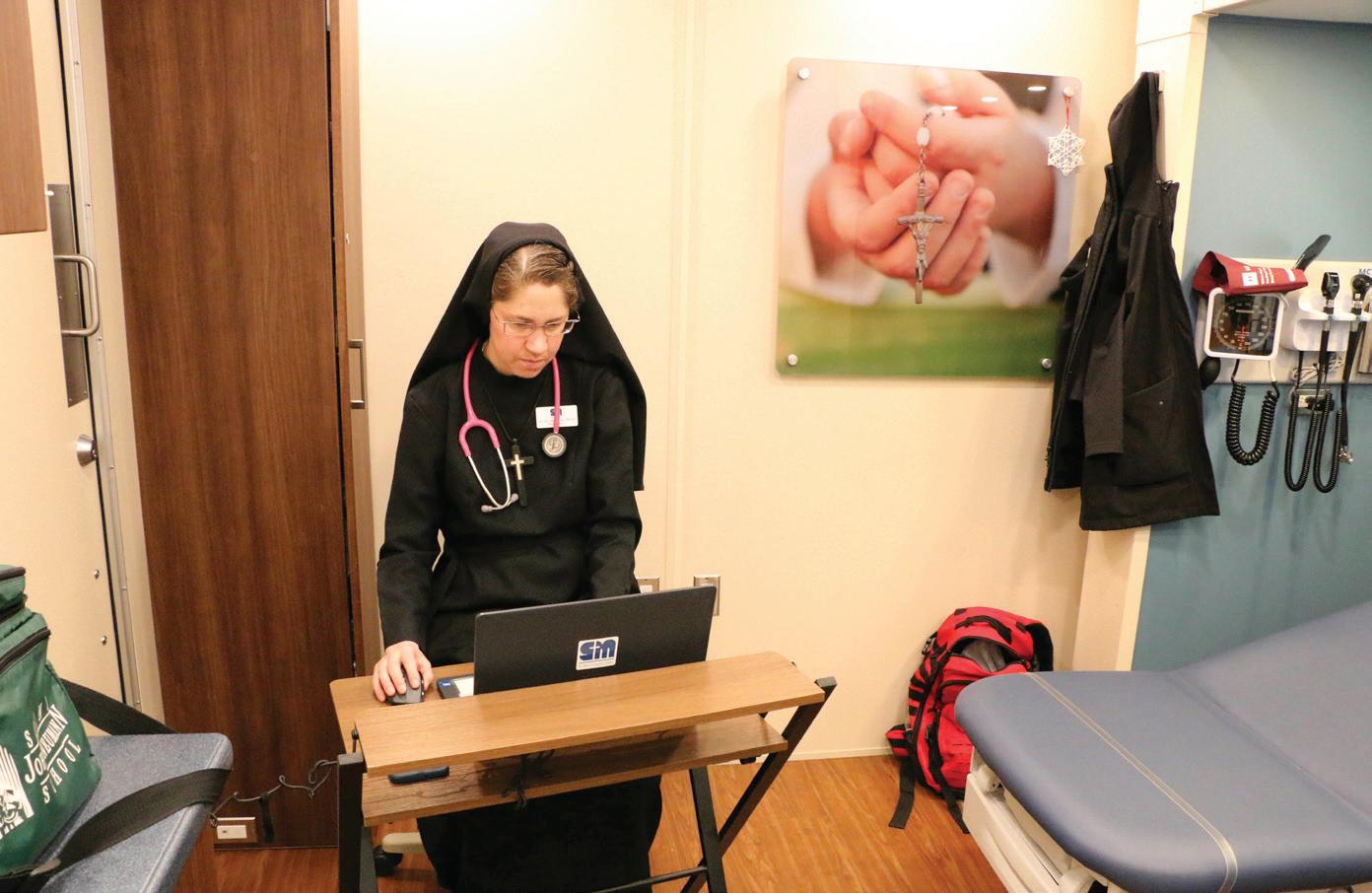
And he praised the ministries that are funded through the Bishop’s Appeal for their tireless work with the residents of East Tennessee, whether they are patients of the mobile Legacy Clinic, clients of Catholic Charities, students of diocesan schools, or seminarians in formation to be the diocese’s next priests.
The six key ministries are clergy formation, which is seminarians; Catholic formation, which is OCIA and religious education for young people; youth and young-adult programming; Catholic Charities; diocesan schools; and the St. Mary’s Legacy Clinic.
“This is the third year that we had a goal of $3 million. Three years ago, in 2023, we were about $93,000 short of our goal. We did
about $2.9 million. In 2024, we had another goal of $3 million, and we exceeded it by a little over $8,000,” Deacon Armor said.
“In 2025, it was the third year we’ve had our goal of $3 million,
and we exceeded that goal by more than 7 percent (or more than $200,000). We brought in $3.221 million. It was one of the biggest surpluses that we’ve had. We have constantly raised our goal. So, to
even make our goal is a challenge,” he added.
The generosity of parishioners throughout the diocese continues to impress Bishop Beckman and the Office of Stewardship and Strategic Planning.
“Last year was one of the best years we’ve had. I think part of it is that Bishop Beckman is very personable, very gregarious. He is very down to earth. He is very engaging. He relates well to people. And his favorite word is gratitude. He is always thanking people,” Deacon Armor said. “That has made a huge difference.”
The deacon said when the Stewardship and Strategic Planning staff began looking at goals for 2026, the decision was made to raise the goal to $3.25 million.
“We almost did that much last year even though our goal was less,” he noted.
He pointed out that typically 60 percent of the annual goal is through pledges, and the funds received and pledged early in the campaign usually are a good indicator of how successful the campaign will be.
“When we look at the end of May after three months, we have found that we have a really good idea of what we’re going to get that year. We come within 1 or 2 percent of being able to estimate the year based on the first three months of receipts,” he said. “Our committed number already is $3,233,000, so we are only $17,000 away from our goal between receipts and pledges. And we typically receive a lot more money than that. Even though we raised the goal to $3.25 million, we are further down the road through April than we have ever been since
Appeal continued on page A18

By Jacqueline Cecalupo
Cursillo is alive in the Knoxville Diocese!
Although you may not have heard of it, Cursillo (pronounced kur-see-yo) means “short course in Christianity,” and it is a powerful Catholic movement designed to strengthen lay leadership. It is available to all Catholics within their diocese, with weekend presentations made to men by men, to women by women, and by deacons and a priest.
Movement founders Father Juan Capo and Edwardo Bonnin originated Cursillo in the 1940s and first introduced it in the United States at St. Francis on the Brazos Church in Waco, Texas, in 1957. This four-day encounter, under the spiritual leadership of Father Gabriel Fernandes along with airmen Bernardo Vadell and Agustin Palomino, was first presented in Spanish. They brought the weekend experience from Mallorca, Spain, as a focus of training for
U.S. airmen. The first English-language Cursillo took place in 1961 and quickly spread throughout Texas and eventually nationwide.
The weekend commitment be-
gins with an application submitted to a Cursillo sponsor—a Cursillista who has attended a weekend retreat—that is eventually forwarded to Knoxville diocesan Cursillo
By Father Francis J. Hoffman OSV News
You could be as wealthy as a king yet miserable if you have no friends. Or you could be as poor as dirt yet happy because you’re surrounded by loved ones.
And what personal relationship could be more important than the relationship with God?
The saints who were notoriously happy gave witness to this reality. Even St. Maximilian Kolbe, the Claretian Martyrs of Barbastro, and the Carmelite nuns of Compiegne sang hymns of joy on their way to martyrdom. Immersed in conditions that would make mere mortals sad, these friends of God faced suffering with joy.
It was their friendship with God that gave them strength and joy.
But friendship takes time and needs to be strengthened by conversation. Couples who have strong marriages will tell you about the importance of getting away for a long weekend to spend time alone in conversation. We need to do the same with God, and that’s why the Church warmly recommends annual retreats for the faithful.
Retreats are a time away from our normal activities to spend time getting reacquainted with God, to examine the priorities of life, and
coordinators Teri and Gary Gabor of St. Jude Parish in Chattanooga. The movement’s spiritual director is Deacon Bill Jacobs of Our Lady of Fatima Parish in Alcoa. When reaching out via the Gabors’ e-mail address, tgabor21@outlook. com, add “Cursillo” in the subject line.
Cursillo weekends are typically held at Christ Prince of Peace Retreat Center in Benton. Each weekend runs Thursday through Sunday evening. A $200 fee includes all lodging, any personal or individual health needs, and meals, as well as time for reflection and prayer. Scholarships are available. Each candidate attends daily Mass, makes lifelong friends, and meets Jesus Christ in new and deeper ways.
During the Cursillo weekend, participants listen to a series of 14 talks (Rollos) delivered by Catholic laity and spiritual directors. Each Rollo builds upon the previous talk. Thursday even-
there is much more
to make concrete and practical resolutions for improvement. Retreats can be a powerful step toward personal conversion.
Before Our Lord began his public ministry, he spent 40 days in the desert praying and fasting as a way to prepare for the important work ahead (see Luke 4:1-13). Those were days of retreat.
During His three years of public ministry, Jesus would sometimes invite His disciples to “come away by yourselves to a deserted place and rest a while” (Mark 6:31). Again, days of retreat.
Retreat continued on page A17

By Claire Collins
Iwant to address my brothers and sisters in Christ who just came into full communion with the Catholic Church this past Easter or who are preparing to very soon. I want to say so many things. First, welcome!
I want to assure you just how excited and grateful we are that you are here. I want to be a source of encouragement and joy. I want you to know that no matter what the journey looked like for you to get here or looks like now that you’ve made this great decision, that it is very, very good that you are here and that God’s grace is eternally being poured out to you.
Several years ago, while doing missionary work on college campuses, the overall attitude I experienced about the American Catholic Church was one of needed rehabilitation; the Church was not thriving and she needed laborers in the vineyard. Many significant moments and figures the prophetic words of St. John Paul II at World Youth Day in Denver in 1993, the work of Mother Angelica on EWTN, the establishment of organizations like the Fellowship of Catholic University Students and Lifeteen, Father Mike Schmitz videos, and Bishop Robert Barron’s Word on Fire to name only a few have paved the way for a revival in the American Church as seen by the record number of people seeking full communion in the Diocese of Knoxville and around the country, particularly this year.
I’m not sure how you found yourself here. Maybe you saw a YouTube video or listened to a podcast. Maybe a particular doctrine or dogma piqued your interest. Maybe a dissatisfaction with your prior community, or your own lack of community, or the lie that is often sold in our culture that nothing matters, made you start asking deeper and harder questions. Maybe you looked around at the beauty of this world and realized there’s no way this all happened by accident. Maybe someone you love or admire led you to consider your own worldview more deeply. And now, you are here. However it was that God drew you to this moment, to this big and momentous decision, I hope you see all the ways that God works for the good of those who love Him. I’m sure there were many moments along the way that could have been easily overlooked as coincidental but surely were nothing less than divine provi-
Collins is a freelance writer whose columns have appeared in Radiant Magazine. Claire and her husband, Andrew, live in Chattanooga with their sons, Joe and Frank, and daughter, Eloise.
Also, know this the Church NEEDS you. She needs your unique gifts and charisms. She needs what you bring with you. She needs your joy and excitement, your experiences, your specific skill set. She needs you exactly as you are, ready to grow and be transformed but also ready to serve and give of yourself wherever it is you feel the Holy Spirit might be calling. Take some time to get the hang of things but also don’t be afraid for whatever it is the Lord might ask of you, whenever it is He might invite you to serve
dence. I hope you see the great plan God has had for your life, full of joys and sufferings, all of which led you here.
I know many of you have had to overcome great obstacles to get where you are now: family members who disagree or misunderstand your decision; communities that no longer welcome you because you are Catholic; friends who think you’ve had the wool pulled over your eyes; even your own self-doubt, still unanswered questions, or difficult teachings you are still wrestling with.
Even those of us who have been here our whole lives have had to wrestle with these questions, tackle these doubts, and come to terms with the countercultural nature of what it means to truly be a Catholic Christian. We’ve been misunderstood, scrutinized, and (hopefully) had to ask question after question ourselves.
By Courtney Mares OSV News
U.S. Secretary of State Marco Rubio met with Pope Leo XIV at the Vatican on May 7, discussing the war in Iran, humanitarian aid, and what the Vatican described as “the need to work tirelessly to promote peace” amid ongoing tension between President Donald Trump and the pope.
Secretary Rubio, who is Catholic, spoke with the American pope for over 45 minutes in a private meeting in the Apostolic Palace before also sitting down with Cardinal Pietro Parolin, the Vatican secretary of state, and Archbishop Paul Gallagher, the Vatican’s foreign minister, for talks that reaffirmed “the shared commitment to fostering good bilateral relations between the Holy See and the United States of America,” according to the Vatican.
“There was then an exchange of views on the regional and international situation, with particular attention to countries affected by war, political tensions, and difficult humanitarian situations, as well as the need to work tirelessly to promote peace,” the Holy See Press Office said after the meeting.
Secretary Rubio wrote on social media that he met the pope “to underscore our shared commitment to promoting peace and human dignity.”
In a separate statement, the State Department said Secretary Rubio's meeting with Cardinal Parolin covered mutual cooperation and pressing international issues, including humanitarian efforts in the Western
Hemisphere and efforts to achieve a durable peace in the Middle East.
Secretary Rubio also welcomed the recent arrival of Archbishop Gabriele Caccia as the new apostolic nuncio to the United States.
It was Secretary Rubio’s second substantive meeting with Pope Leo.
On May 19, 2025, the day after the pope’s inauguration Mass, the secretary and Vice President JD Vance also held a bilateral meeting with the pope, according to Vatican News.
On the eve of the May 7 audience, Cardinal Parolin told journalists that the U.S. government had requested the meeting and that the pope remained open to continued dialogue with Washington, D.C.
“We cannot ignore the United States,” Cardinal Parolin said.
“Despite some difficulties, they certainly remain a key partner for the Holy See, not least because they play a role in almost every situation we face today.”
Cardinal Parolin said that he was expecting to discuss “themes of international politics and above all conflicts,” including issues in Latin America and Cuba “all those that are the most pressing issues.”
On Iran, he said the Holy See would offer no new proposals beyond its long-standing call for dialogue.
“These conflicts cannot be resolved by force but must be addressed and resolved through negotiation,” he said, adding, “Let it be a negotiation of good will, sincere, so that all parties can express their point of view and find points of convergence.”
The visit of the U.S. secretary of Meeting continued on page A9
We’re with you; we don’t have it all figured out either, and we’re in it together.
Now, this family that you are a part of is a messy family. She’s wonderful. She’s full of good things. And she’s full of broken people in need of a Savior. I hope you know this when you have a less-than-ideal encounter with someone in the Church, because you will. The Church is, as they say, a hospital for sinners. Even her most prominent members are great sinners in need of Jesus’ mercy. Though the gates of hell will not prevail against the Church, the people who make up that Church are all fighting a spiritual battle and will fail greatly while doing so. That is kind of the point, I guess, but it still stings to experience it and can shock us to the core when we do.
Also, know this the Church NEEDS you. She needs your unique gifts and charisms. She needs what you bring with you. She needs your joy and excitement, your experiences, your specific skill set. She needs you exactly as you are, ready to grow and be transformed but also ready to serve and give of yourself wherever it is you feel the Holy Spirit might be calling. Take some time to get the hang of things but also don’t be afraid for whatever it is the Lord might ask of you, whenever it is He might invite you to serve. Maybe it's a small group, a service organization, a hidden Holy Hour, a welcoming face at Mass, a children’s ministry. Whatever it is, the Church needs you.
It will take time to build that community you desire in this new place, to make the deep and lasting friendships you hope to find in a Church community. Don’t give up on this too soon, and please don’t think you can do this alone. We are a body with many members, and the members cannot thrive on their own. Get involved where you can, be patient and trust, and don’t be afraid to make invitations. We’re working on getting better at this community thing ourselves, and sometimes we could really use the example of someone who knows what it could look like to get something beautiful started. The Church is eternally rich and full of beauty, so don’t feel like you have to take advantage of every devotion, every saint story, every practice. It would be impossible, and God will draw your heart to the specific ways in which He wants to speak to you. It will probably be different from those around you, and that is a
By Bee Goodman
On a Tuesday evening last August, nearly 50 young adults filled a room in the Chancery, responding to an invitation to join Bishop Mark Beckman. Some were cradle Catholics looking to understand their faith more deeply. Others were converts still finding their footing. A handful weren't Catholic at all but curious and drawn by something they couldn't quite name yet.
What followed was seven months of conversation, community, and encounter. Bishop Beckman’s “Mysteries of Catholicism” series, which debuted in August and ran through its final session on March 24, became something bigger than anyone anticipated.
The bishop already is planning its next chapter.
“This has grown into more than just a class,” said Amanda Henderson, director of Youth, Young Adult, and Pastoral Juvenil for the Diocese of Knoxville. “They leave with more than just information. They leave with a strong foundation and a sense of belonging. This lasts. The hope is that they’ll take what they’ve experienced here and keep growing in their parish communities.”
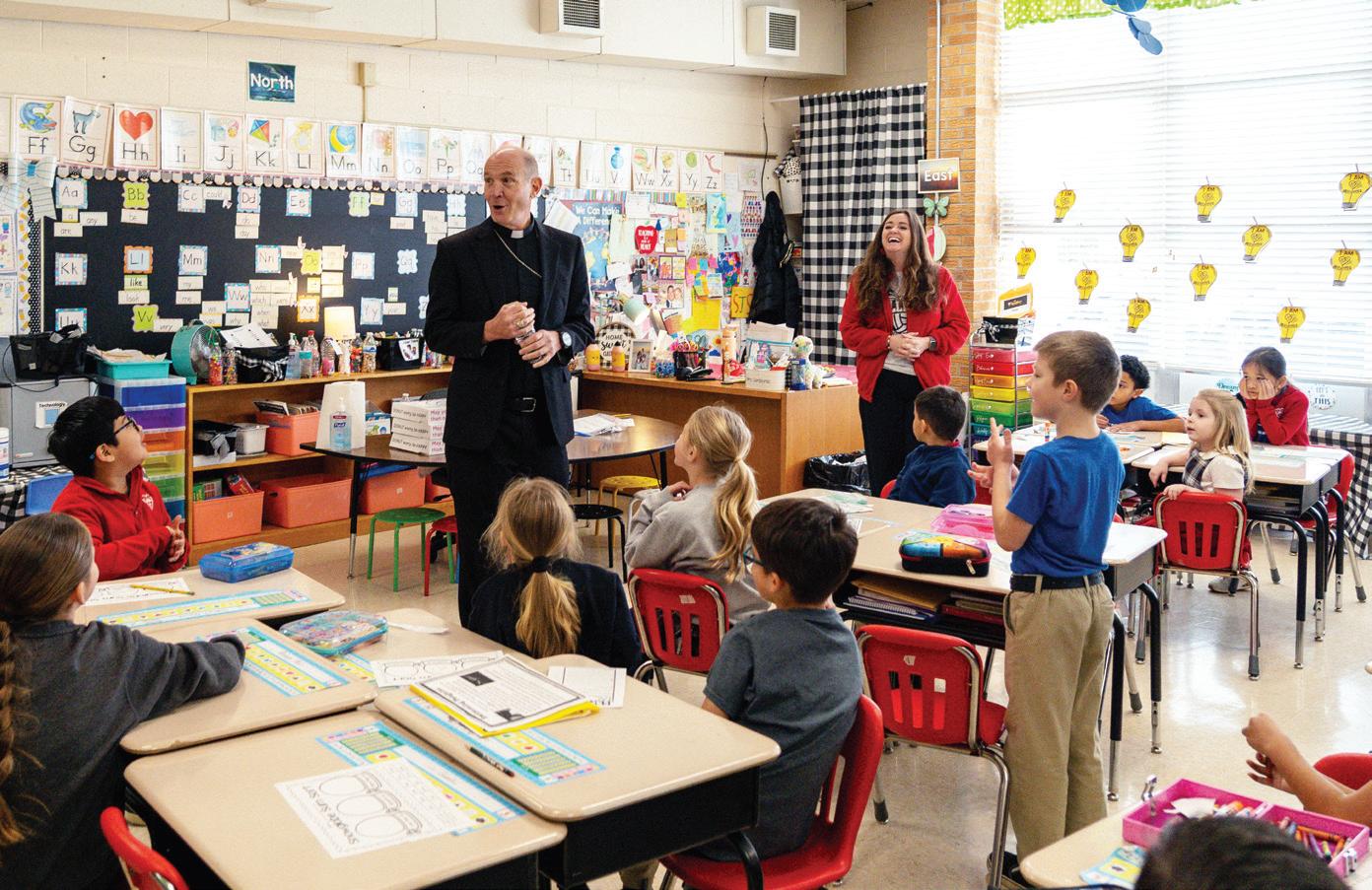
For Bishop Beckman, leading the class was a return to a role he has always loved. Before arriving in the diocese (he celebrated his first year as bishop on July 26), he served as a teacher at St. Henry School in the Diocese of Nashville. That experience never left him.
Teaching the “Mysteries of Catholicism” series gave him a direct, personal way to connect with young adults in East Tennessee and to carry out a broader vision for the diocese.
Following a survey of the diocese last year, Bishop Beckman worked
Meeting continued from page A8
state comes days after President Trump reignited tensions by repeating his claim that the pope “thinks it’s just fine for Iran to have a nuclear weapon” in an interview that aired on May 5, an assertion that Pope Leo swiftly rejected.
“If anyone wishes to criticize me for proclaiming the Gospel, let them do so with the truth,” Pope Leo told journalists outside Castel Gandolfo that evening.
“The Church has spoken out for years against all nuclear weapons, so there is no doubt about this,” the pope added. “I simply hope to be heard for the sake of the Word of God.”
Cardinal Parolin weighed in on recent public clashes between Pope Leo and President Trump, calling the president’s attacks on the pope “a bit strange to me, to say the least.”
At a White House briefing the same day, Secretary Rubio disputed suggestions that his Vatican visit was an attempt to “smooth things over with
Welcome continued from page A8
good thing.
The diversity of saints is one of the most beautiful things about the Catholic Church that this same body can canonize someone who served the poorest of the poor, someone who never left their monastery, someone who was killed for their faith, an intellectual who preached to the masses, and someone who died young with courage. This Church is for everyone, not some cookie-cutter version of who we think we’re supposed to be. And ultimately remember, amid the smells and bells, the opinions and preferences, and various experiences you might have within this sacred and holy Church, our ultimate goal is to follow the One who made us, who loves us, who created us, and who cares for us. We must follow Him and Him alone, and put aside anything that prevents us from doing so. No
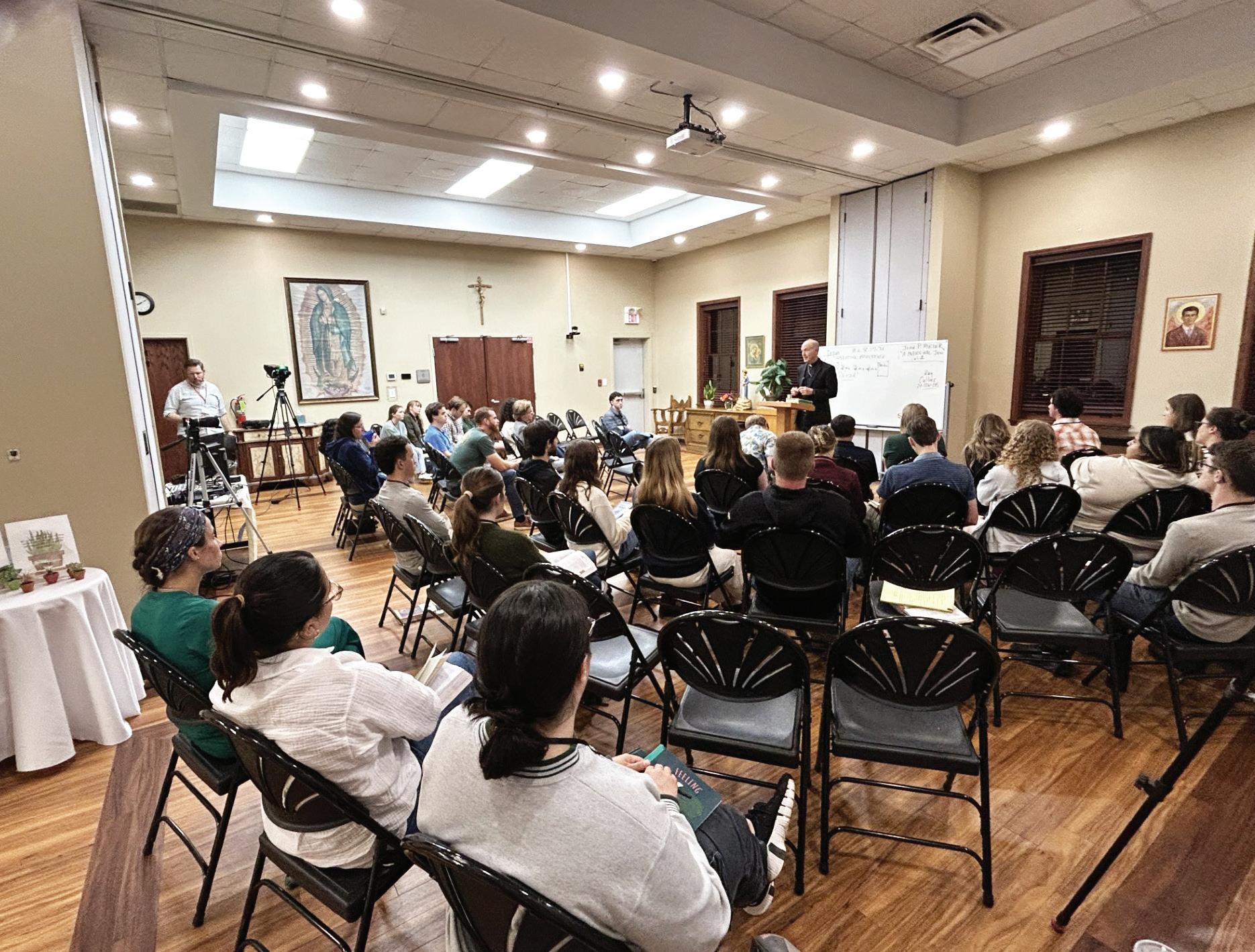
the series of talks was strong as young people engaged with the bishop on faith. Below: Bishop Beckman points to a book he included in one of his discussions on the "Mysteries of Catholicism." The bishop will begin a new series in September.
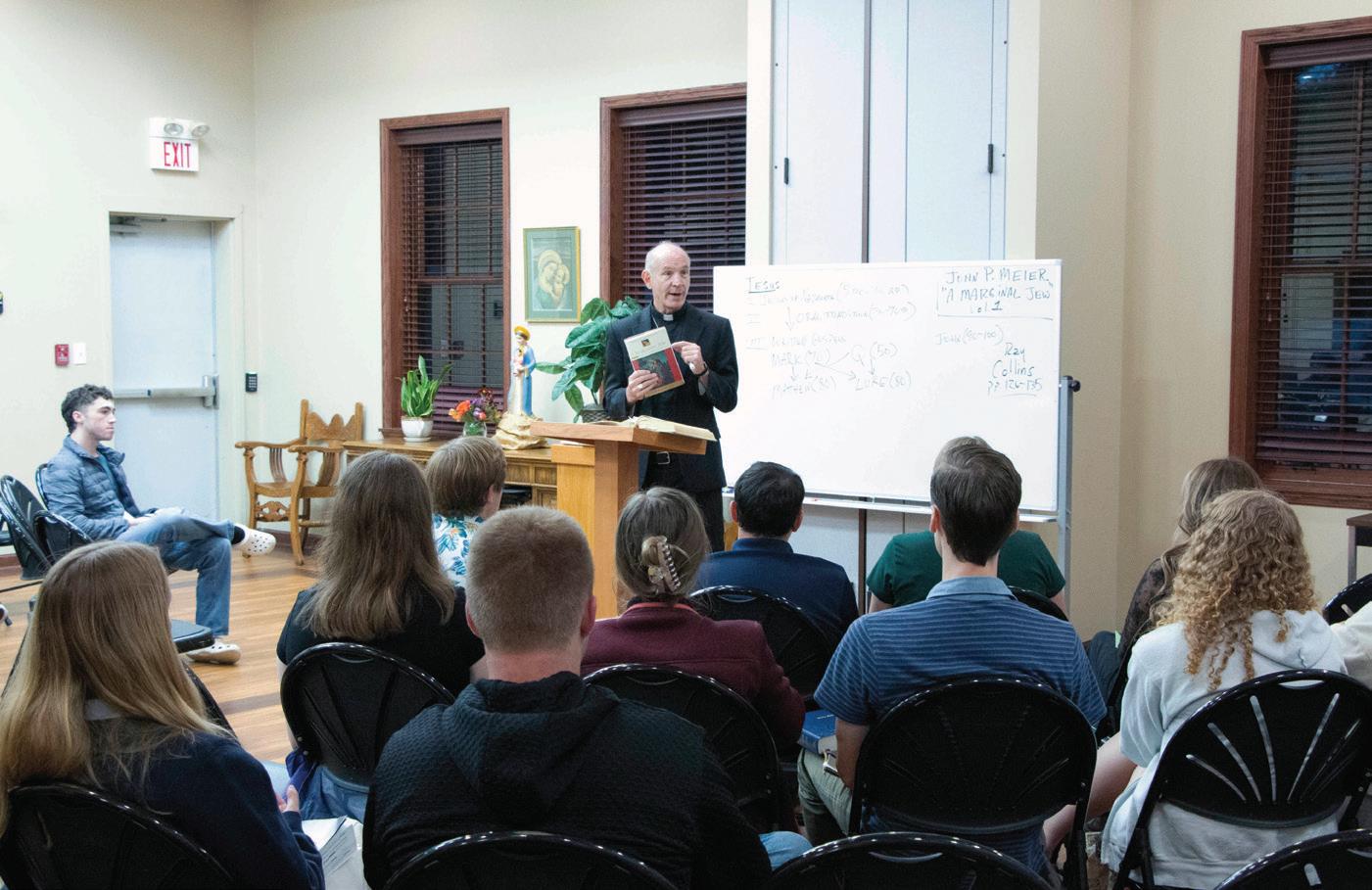
for improvement, with a particular focus on strengthening faith formation among young adults. The class became one of the
the pope,” saying the two sides have “shared concerns,” including religious freedom in Africa and the distribution of humanitarian aid to Cuba.
“We gave Cuba $6 million of humanitarian aid, but obviously they won’t let us distribute it,” said Secretary Rubio, who is the son of Cuban immigrants. “We distribute it through the Church. We’d like to do more.
We’re willing to give more humanitarian aid to Cuba, by the way, distributed through the Church, but the Cuban regime has to allow us to do it.”
On the question of a possible phone call between President Trump and Pope Leo, Cardinal Parolin said on May 6 it was “premature” to say whether one would take place, but he indicated the pope would be receptive.
“The Holy Father is open to all options,” Cardinal Parolin said. “If there were an offer or a request for a direct dialogue with President Trump, I imagine that he would have no difficulty in accepting it.” ■
great voice or example, pious practice, or popular idea can replace the person of Jesus Christ. In times when things are messy or unclear, His clarity will come. In times when we feel alone and isolated, His presence will heal. In times when things seem dismal and dark, His light will shine. This we can know and trust.
What else can I say? So many things. But I will end with this: welcome once again. So many of us want to walk with you, to answer your questions, to get to know you and your families, and to help you know just how good it is that you are here. We hope that you soon find your place among the rows of new faces, that once strangers become dear friends, and that this decision to become Catholic changes the trajectory of your life. Know of our prayers for you and our joy at this great moment in your life. ■
ent—and what kept the same faces coming back each week—was something harder to measure. Many of the young adults were already familiar with each other from their home parish or time together in school, but some were new faces who soon became friends.
The class was just as much a community gathering for the young adults as a formation event.
In October, attendees surprised Bishop Beckman with a birthday celebration. When the class landed on Mardi Gras, several brought treats to share before the fasting of Ash Wednesday began. When Advent arrived in December, the class went deep into the devotion of Mary and her choice to mother the Savior.
As the liturgical calendar turned, Bishop Beckman shaped his lessons around it, letting the seasons of the Church breathe life into the content.
By the time the series ended, the group had gifted the bishop a special plaque: a small but telling sign of how much the experience had meant to them.
Ms. Henderson described the response from attendees as overwhelming. For many of them, being in the Chancery’s Monsignor Xavier Mankel Room with the bishop was unlike anything they had experienced before in the Church.
clearest expressions of that plan in action.
But numbers and strategy only tell part of the story. What made Tuesday evenings feel differ-
“It has been overwhelmingly positive,” she said. “There is something powerful about being seen and prioritized by the bishop. For many of them, it is the first time they have experienced that kind of direct investment from Church leadership, and it communicates clearly that they matter.”
Bishop Beckman believes the young adults made it easy.
“I think that they’re so engaging, Discussion continued on page A22









By Bill Brewer
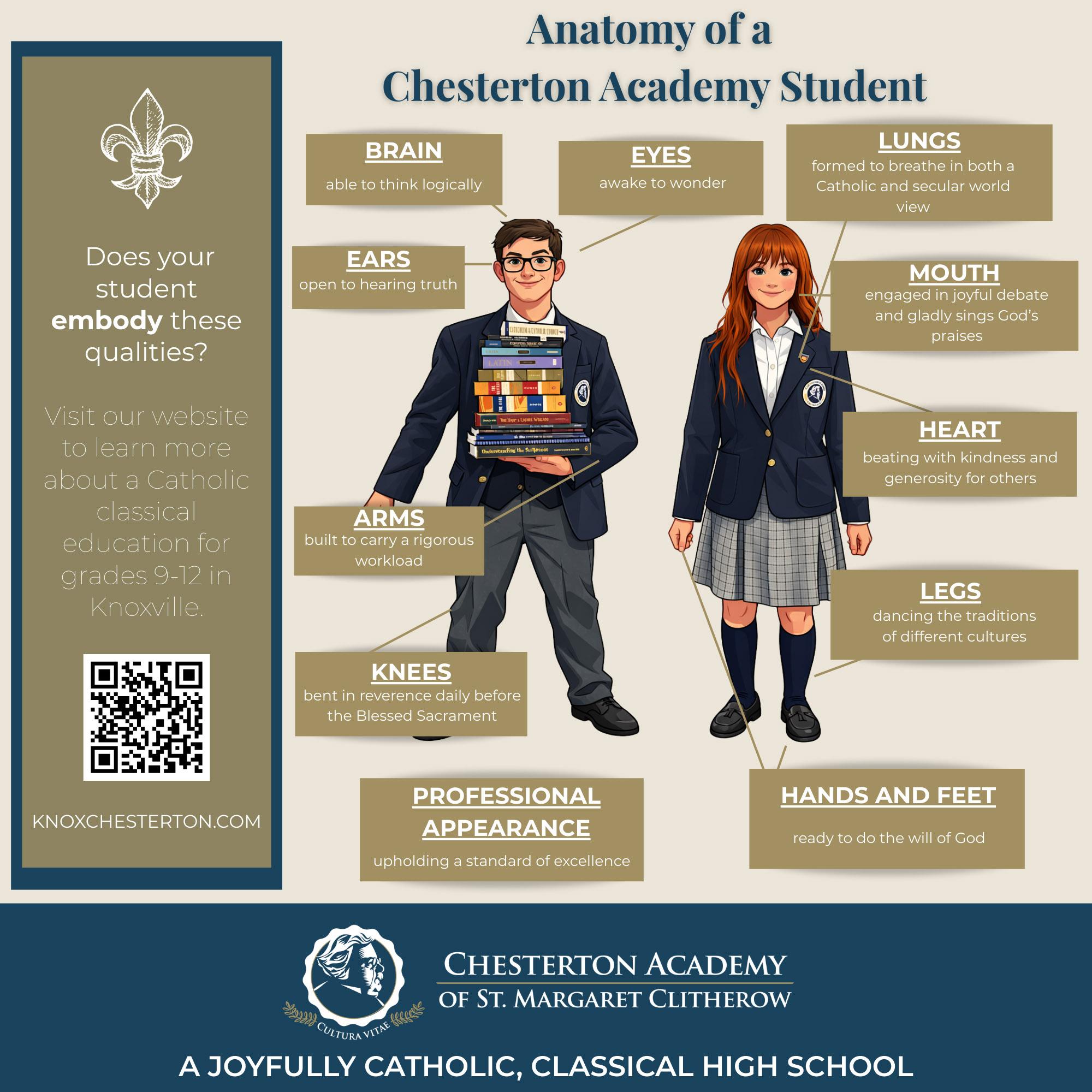
Chesterton Academy of St. Margaret Clitherow has earned not one or two but five high marks in recent months that spell continued growth and success for the Diocese of Knoxville’s newest school.
Zach Summers of Chesterton Academy outlined the “gems” received by the Knoxville school that are prompting rising enrollment and plans for expansion. They include:
n Official recognition by Bishop Mark Beckman as a diocesan school
n Accreditation by the National Council for Private School Accreditation (NCPSA)
n Accreditation by the Chesterton Schools Network
n Eligibility for the Tennessee Education Freedom Scholarship Program as a Category III private school
n Recognition in the Cardinal Newman Society’s The Newman Guide, which recommends top Catholic colleges and universities as well as primary schools.
Mr. Summers, founding headmaster of Chesterton Academy, explained that since Bishop Beckman recognized Chesterton in 2025 as a Catholic school within the diocese, the 3-year-old school is now accredited and meets state and national education guidelines.
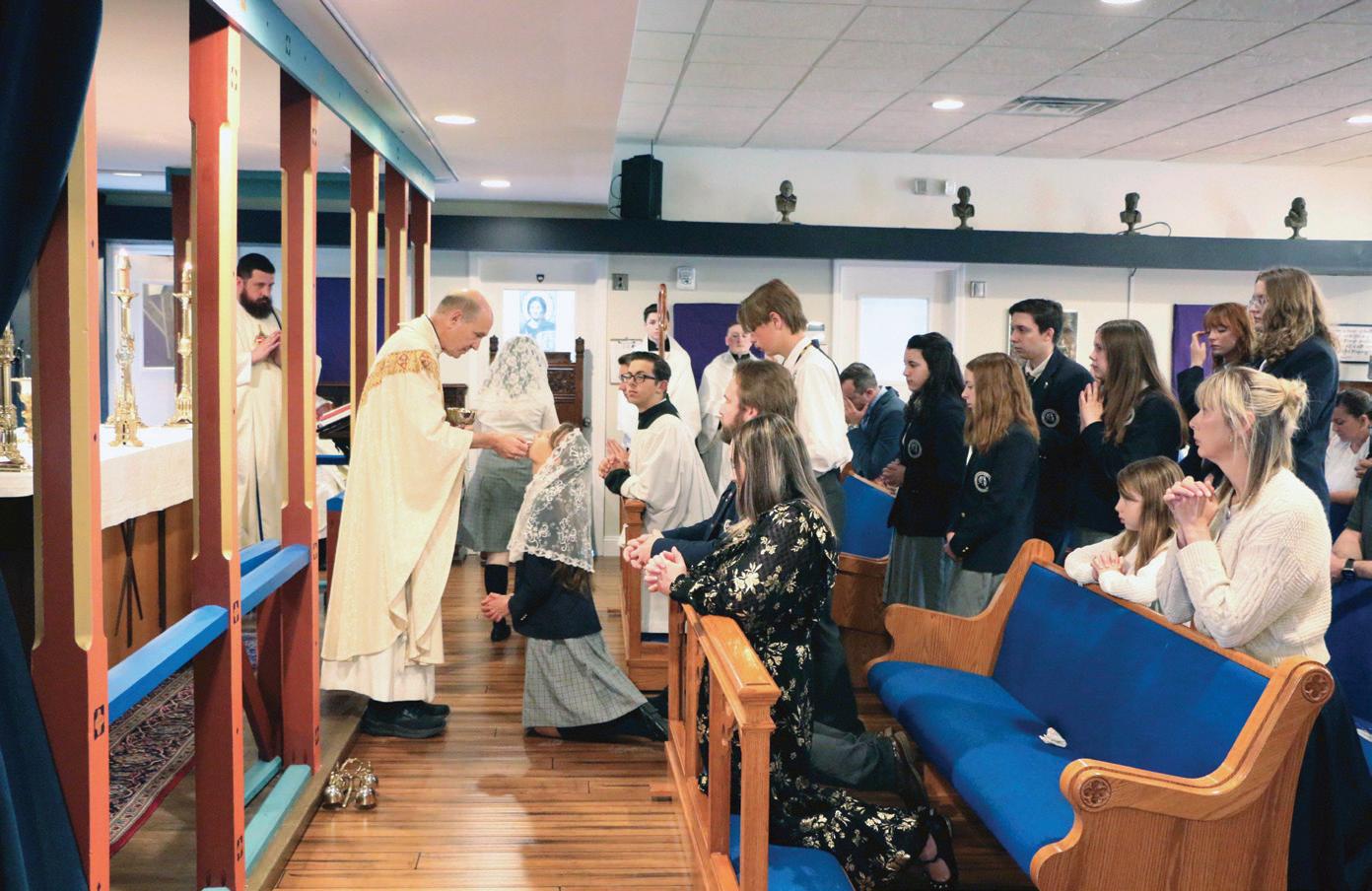
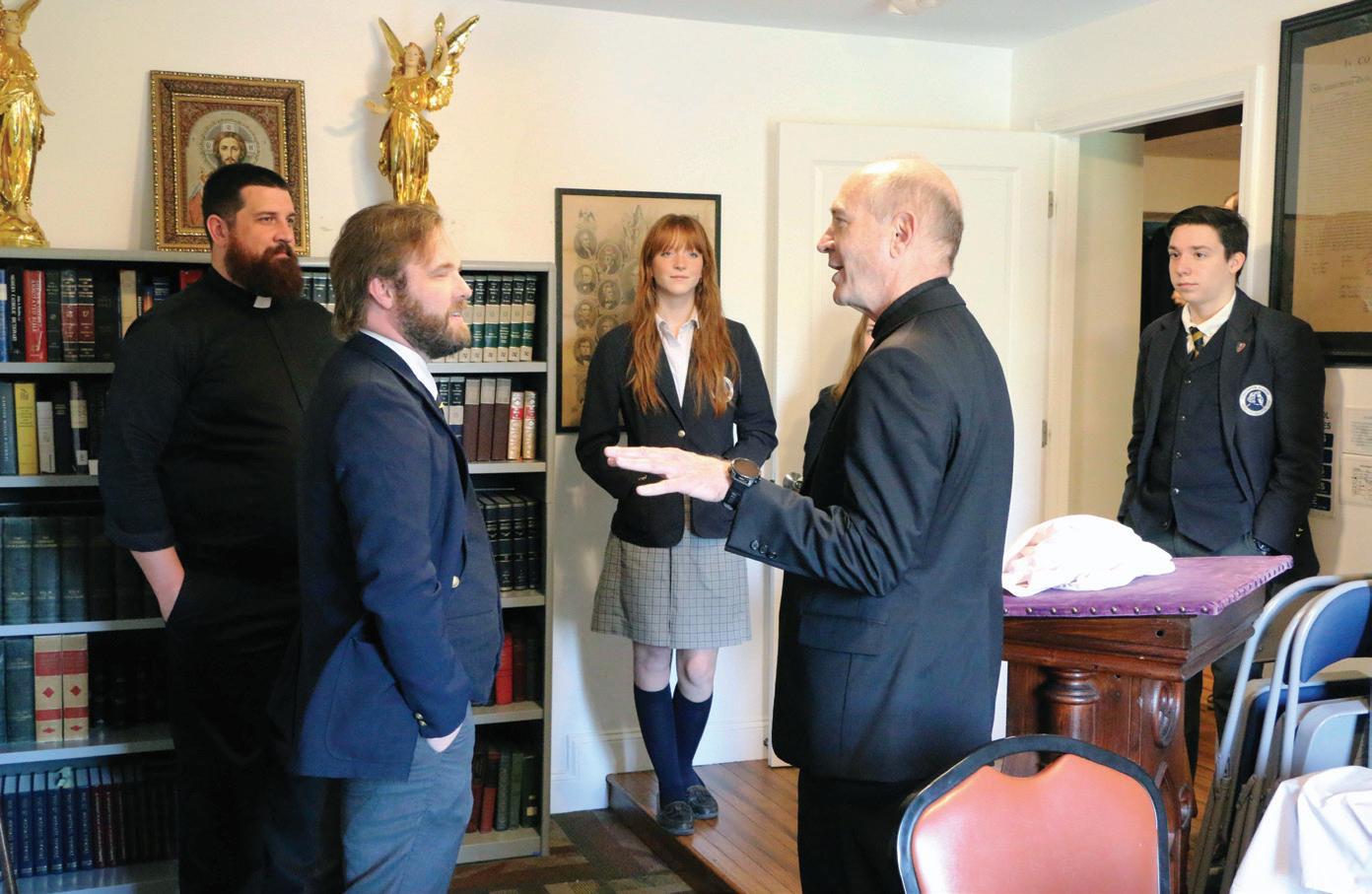
Bishop Beckman visited the school on March 25 and celebrated Mass with the students, faculty, and parents before spending time with the students.
The NCPSA is recognized by the Tennessee Department of Education as an accrediting agency for Category III private schools within the state. NCPSA officials visited Chesterton in February as part of
its accreditation review.
“We believe in accountability and external recognition of the quality work we are doing,” Mr. Summers said. “The site visit by NCPSA, as wonderful as it is, is only the tip
of the iceberg. It’s one-tenth of the process. It’s looking at all of our documents and gathering all the artifacts. They were here for two days, and we received our official announcement two days before our
feast day, St. Margaret Clitherow (March 26).”
“And the next day we were recognized by the Department of Education, which bumped us up from a Category V to a Category III school, which allowed us to be recognized by the state as a voucher school. Then, the very next day we already had an existing student apply their voucher to our school. And an incoming student applied their voucher to our school as well,” Mr. Summers added.
Tennessee legislators have approved expanding the Tennessee Education Freedom Scholarship Program, increasing the number of students who can receive the annual vouchers from 30,000 to 35,000. Each approved student receives $7,500 from the state to attend the private school of their choice.
And now, Chesterton Academy is one of the participating private schools, along with the 10 other Catholic schools in the Diocese of Knoxville: Notre Dame High School, St. Jude, and Our Lady of Perpetual Help in Chattanooga; St. John Neumann in Farragut; St. Mary in Oak Ridge; St. Dominic in Kingsport; St. Mary in Johnson City; and Knoxville Catholic High School, Sacred Heart Cathedral School, and St. Joseph in Knoxville.
“We already have several students who have applied their vouchers toward our school and are fully enrolled next year, either re-enrolled or newly enrolled. We have received everything that is set up for that,” Mr. Summers said.
“We have four to five students presently waiting to finish their enrollment until they receive their vouchers.”
Mr. Summers is anticipating an increase in Chesterton enrollment for the 2026-27 academic year.
Chesterton continued on page A21
By Rick Musacchio Diocese of Nashville
The 114th Tennessee General Assembly concluded its 2026 session on April 23 with legislation that will have an impact on Catholic schools across the state, including bills to expand Education Freedom Scholarships and Education Savings Accounts and plans to implement the Educational Choice for Children Act.
Education Freedom Scholarships (EFS)
Demand for the EFS, which began with 20,000 scholarships for the 2025-26 academic year, far exceeded the number of available scholarships. More than 43,000 people applied for the available scholarships in the first year.
In response, the legislature increased the number of available slots to 35,000 for the 2026-27 academic year. More than 53,000 applied during the December renewal period and the January new-application period.
The legislature also changed the original plan to reserve half of the available scholarships for children from households earning 300 percent of the free and reduced lunch level (about $170,000 for a family of four) to a tiered system that directs the scholarships to lower-income families.
The new law that included the additional scholarships also made several changes to the program. The law now mandates a sequence of categories of applicants for the distribution of scholarships. Avail-
Consecrate continued from page A1

Making an impact Gov. Bill Lee signs the Tennessee Education Freedom Act into law on Feb. 12, 2025, at the state capitol in Nashville. Joining Gov. Lee for the signing, which made school choice the law of the land, were Lt. Gov. Randy McNally and students from St. Edward School, St. Henry School, Holy Rosary Academy, and St. Pius X Classical Academy in the Diocese of Nashville.
able scholarships are awarded to the next category after the previous category is served. Order of application filing will be considered in fulfilling each level:
1. Prior year scholarship recipients who maintain eligibility for the program (students can continue to receive scholarships through grade 12).
2. Students with household income at or below 100 percent of the level that qualifies for free and reducedprice lunch. Currently a family of four earning about $60,000 would qualify.
3. Students with household income at or below 300 percent of the level that qualifies for free and reducedprice lunch. Currently a family of four earning about $170,000 would qualify.
4. Students who are currently en-
United States gather in solemn assembly as part of that 250th celebration of our country’s birth. We are reconsecrating the United States to the Most Sacred Heart of Jesus,” Bishop Beckman said.
“Here in our own Diocese of Knoxville, we will do the same thing on that feast day on June 12, at the Cathedral of the Most Sacred Heart of Jesus,” he added.
The Mass consecrating the diocese to the Sacred Heart of Jesus will be celebrated at noon on Friday, June 12, at the Cathedral of the Most Sacred Heart of Jesus. Father David Boettner, rector of the cathedral, will celebrate the Mass as Bishop Beckman will be traveling back from the USCCB meeting.
Other parishes around the diocese also will be consecrating their parish that day.
Bishop Beckman hopes that people will choose to participate in this moment of prayer by praying the Novena to the Sacred Heart June 3-11, attending Mass on June 12, and enthroning the Sacred Heart of Jesus in their homes.
“In some ways, there can be no better way for us to celebrate together as a community of faith,” he said
He recalled how the Sacred Heart has always been a part of his faith journey, from growing up in Sacred Heart Parish in Lawrenceburg to being the bishop at the Cathedral of the Most Sacred Heart of Jesus.
“I remember growing up at Sacred Heart Church in Lawrenceburg gazing upon the image of Jesus and His Sacred Heart. And through the years, as I ponder the love of God that flows from the heart of God the Father through the heart of His Son Jesus, it is that love which changes our own hearts and sends us forth into the world to bear the love of God, His mercy, and His compassion to each and every person.”
Enthroning the Sacred Heart
The Sacred Heart Apostolate, headquartered in the Diocese of Knoxville, works to share that love and mercy of the Sacred Heart of Jesus to people all over the world through the enthronement of the Sacred Heart of Jesus in parishes, schools, workplaces, and households.
rolled in public schools.
5. All other applicants.
Scholarship amounts, currently $7,295, are tied directly to the base amount of state and local funding per student calculated through the TISA formula. The actual base amount for next year has not been published, but an estimate of $7,530 has been used for budget purposes.
In the 2025-26 school year, 3,900 students in Catholic schools receive the scholarships.
Education Savings Account (ESA)
The legislature also changed the testing requirements of the ESA program that was established in 2019 but was delayed for implementation until 2022 by legal challenges. That program originally required
recipients to take the same TCAP assessment required of publicschool students but now matches the testing requirements of the EFS program.
Students from households earning 200 percent of the Federal Free Lunch Level (about $62,000 for a family of four) and currently enrolled or eligible to enroll in public schools for the first time for the 2026-27 school year in Davidson, Hamilton, or Shelby counties can apply for the ESA program through May 26.
Currently, fewer than 5,000 ESA scholarships have been awarded, leaving approximately 10,000 available. Each scholarship will provide approximately $9,800 for tuition or other eligible expenses. Catholic school families in Davidson, Hamilton, or Shelby counties who are eligible are encouraged to immediately apply.
The Educational Choice for Children Act (ECCA)
The ECCA, implemented through the Education Freedom Tax Credit/ federal tax-credit scholarship program that was part of the One Big Beautiful Bill passed last summer, is expected to begin in 2027. The program provides a federal income-tax credit for donations to scholarship-granting organizations, which can provide scholarships for use at private or Catholic schools. Details of the program are still in development.
Gov. Bill Lee and the General Assembly have both expressed the intent to bring the program to Tennessee when it becomes available. ■
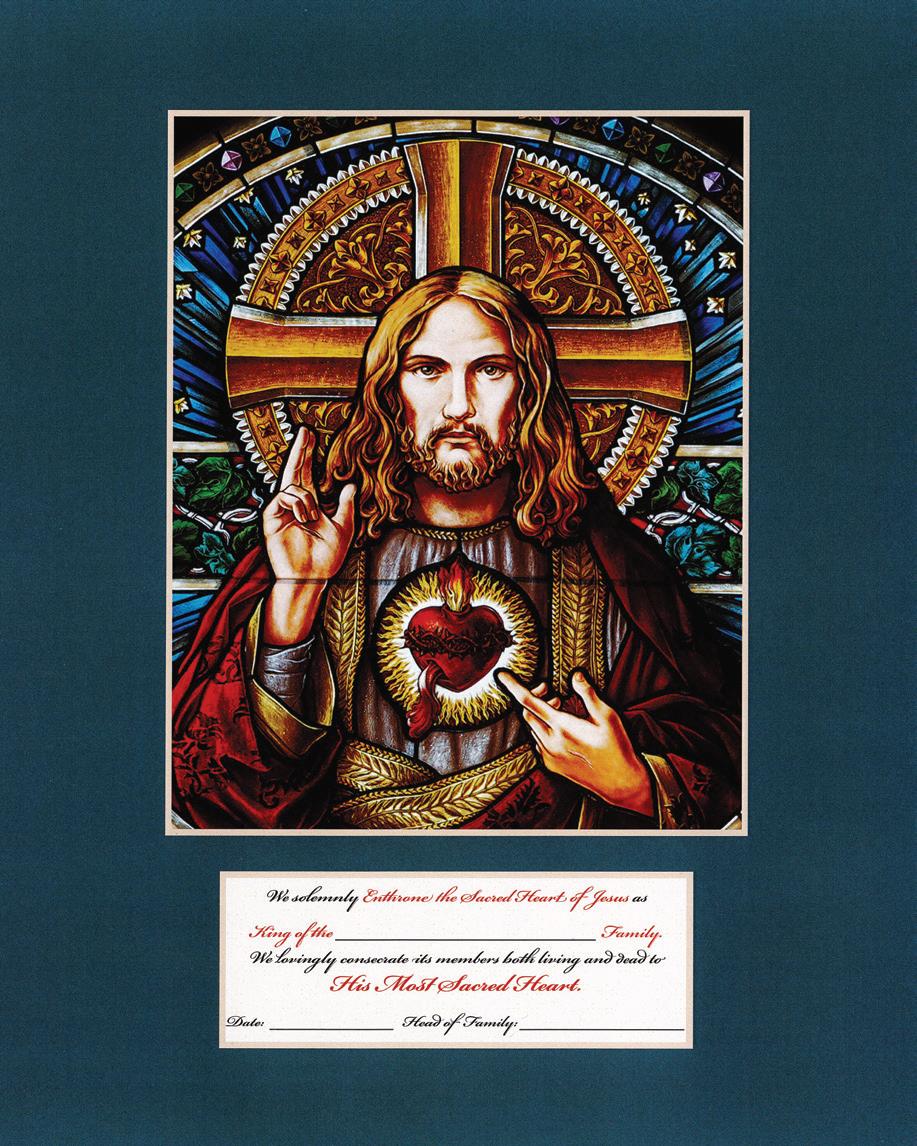
a selected place of prominence in their home. Items such as a statue of Mary, candles, or prayer cards can be placed on a home altar under the Sacred Heart image.
A priest, deacon, or the head of the household can lead the ceremony, in which the family consecrates themselves to the Sacred Heart of Jesus and enthrones Jesus as King of their home.
Mrs. Morris emphasized that anyone can go through the enthronement ceremony.
“It’s not just the traditional mom and dad and kids. It can be a widow, it can be divorced mom, it can be a single dad, it can be whatever that family looks like. The enthronement is for them because Jesus is for them.”
She recalled that she has even seen enthronements in dorm rooms with college students.
For those attending Mass on June 12, the solemnity of the Most Sacred Heart of Jesus, there will be a limited-edition print of the Sacred Heart available to pick up and be used in enthronement ceremonies. This depiction of the Sacred Heart comes from the rose window in the Cathedral of the Most Sacred Heart of Jesus, offering the faithful an opportunity to have a bit of the home of the Diocese of Knoxville in their own homes.
Digital copies of this image will be made available on dioknox.org for those who cannot receive one on June 12.
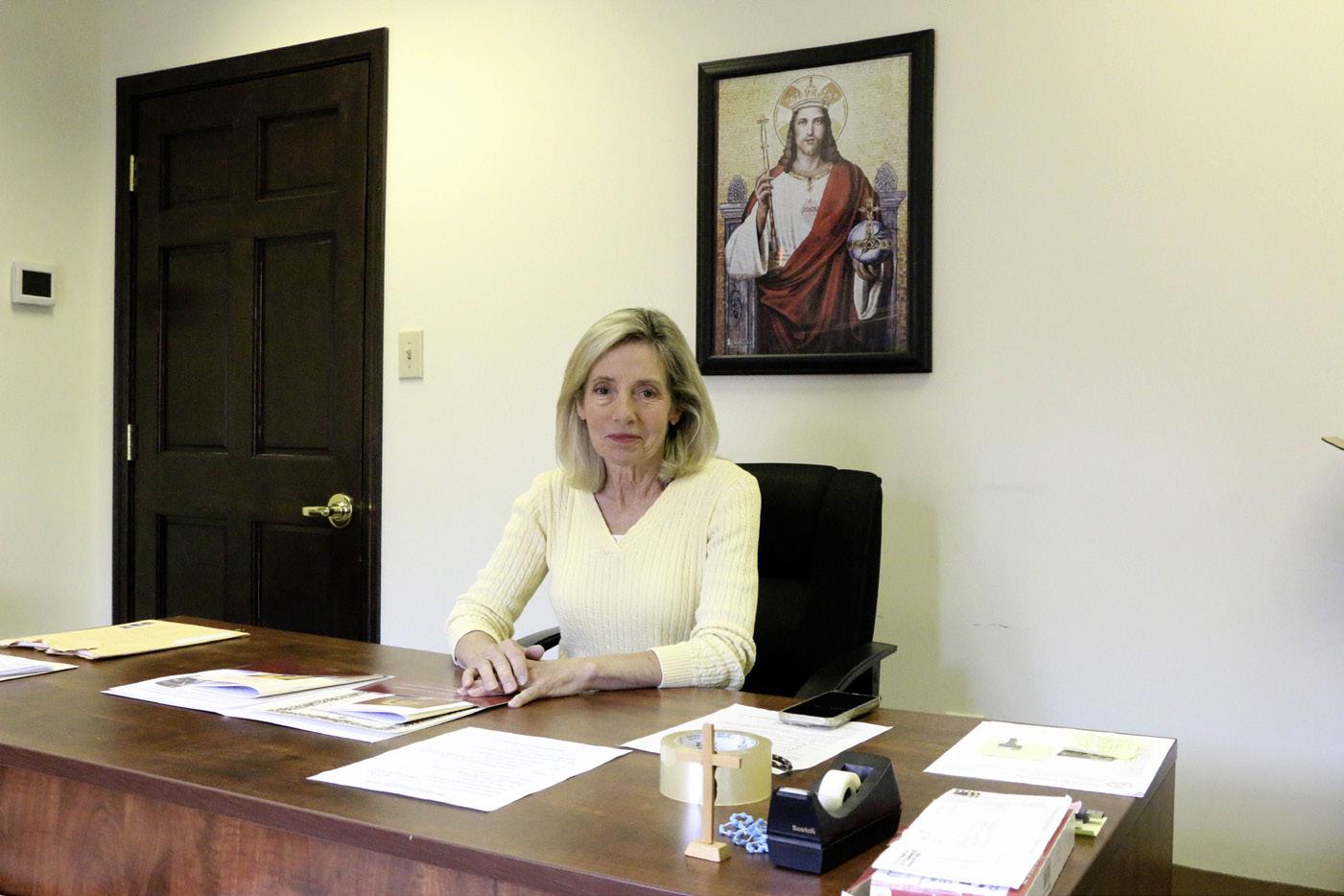
“Enthronement is taking the love you already have for the Sacred Heart of Jesus and going one step further in your faith journey. You publicly proclaim Him as king of your family,” Mrs. Morris said.
She said the apostolate’s mission is to change the world one heart at a time.
To enthrone the Sacred Heart of Jesus in a
home, Mrs. Morris explained, the family prays a nine-day novena in preparation. She noted that the Novena to the Sacred Heart that the country will be praying June 3-11 is a wonderful way to pray with and for the country as well as prepare for enthronement. The novena will be reflecting the Litany of the Sacred Heart. She also said that it is good to go to confession sometime leading up to the enthronement ceremony. At the enthronement ceremony, the family places an image of the Sacred Heart of Jesus in
While the enthronement is a one-time commitment, Mrs. Morris said that it is good to renew it every few years.
“We encourage renewal. So maybe on an anniversary or a special day or if you move, then you would do the whole nine-day novena again and do the renewal. The ceremony is the same, except you’re saying ‘I renew the enthronement of the Sacred Heart,’” she said.
She hopes those who have already gone through the enthronement will go through a renewal during this period, praying alongside those who are going through the enthronement for the first time.
For Mrs. Morris, the moment of national, diocesan, and individual consecration is exciting. She believes the graces and blessings from the Sacred Heart of Jesus will heal the world, and she wants everyone to know the love of Jesus.
“I love doing this,” she said. “There's nothing that is more important right now to me than bringing the Sacred Heart into all aspects of our world.
“All we have to do is look at the news to know we need Jesus as King. We need Him in our lives.”
Resources can be found at www.dioknox.org/ from-the-heart-of-christ ■
Connectivity is a hallmark of St Mary School in faith, family, and community
In the heart of a city known for nuclear energy and the Oak Ridge Boys stands St Mary School which is appreciated for its warmth and vitality
Founded more than 75 years ago in what began as the Secret City, the Diocese of Knoxville school has served as a dynamic center of Catholic education for the region
Today, the city is on the brink of tremendous expansion with the announc ement that more than $12 billion is being invested in energy innovation, with a promise of the addition of 4,000 new jobs
St Mary, the only private school in Oak Ridge, is poised to expend educational energy to meet the need of a growing community
In a community of scientists
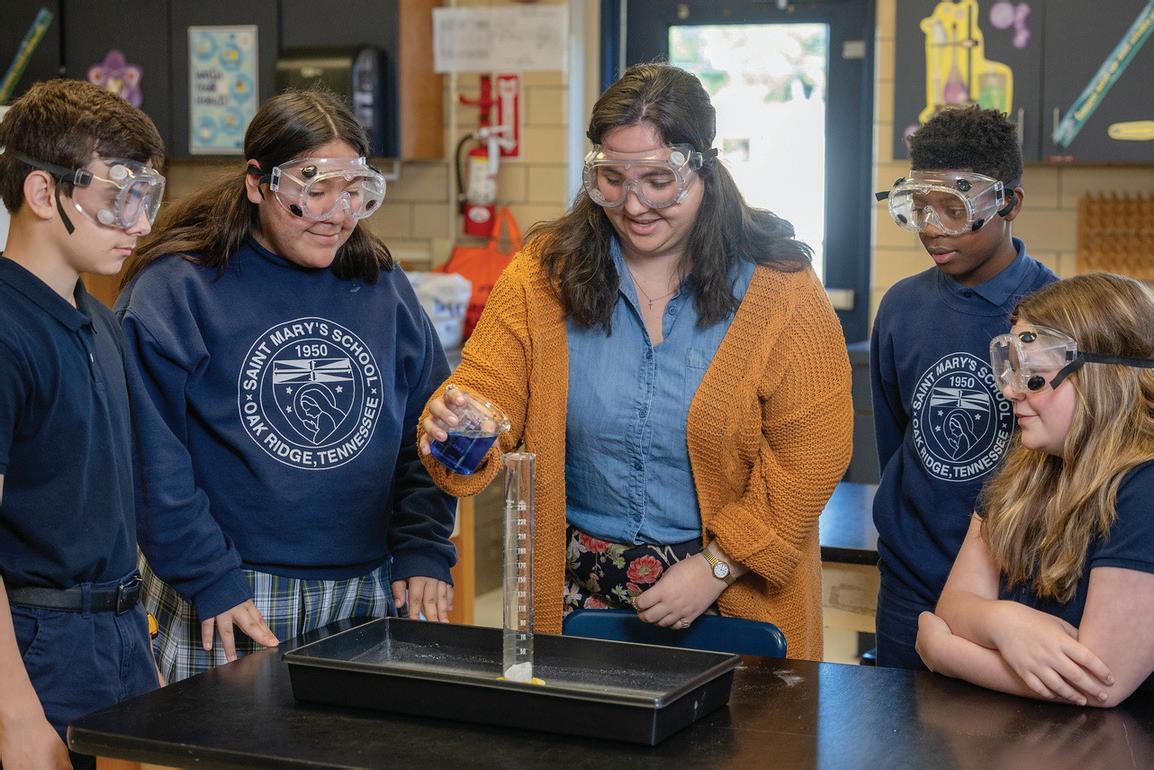
St Mary School offers a well-rounded curriculum to develop the potential of every student Surrounded by professionals in the field of science within and outside its community of parents St Mary has fostered partnerships to enhance existing programs Science fairs are coached and judged by those connected to Y-12 and Oak Ridge National Laboratory
This past year the school hosted a Science Expo inviting scientists engineers physicists medical professionals and professors to share their expertise Students explored exhibits on robotics, magnetism, human anatomy, sound, beekeeping, veterinary medicine, data collection technology, medical research, and research on neuron decay
Starting in August the American Museum of Science and Energy will pilot a hands-on program to include on-site presentations on physics chemistry, engineering, and life science St Mary students will benefit from demonstrations on high-interest topics such as circuits, magnets, states of matter, thermal energy, weather, human anatomy, and space In addition, middle-school classes will have access to podcasts featuring leading sci entists engineers and authors discussing STEM topics
HI over AI
While science pushes the frontiers of human potential, there exists the need for human formation anchored in reality and the values that are eternal St Mary is committed to promoting human intelligence over artificial intelligence
This is not to deny the place of technology in our world today, but as an educational institution, our main focus is developing in our students the capacity to reason, crea te, and experience the joy of learning Children learn best when they are challenged to think and not just receive information
In addition, where social media has supplanted the connections between young people, St Mary provides the environment to learn the importance of direct communication, courtesy, and empathy between people This is emphasized within the classroom but also with deliberate efforts through a weekly middle-school class that also incorporates st udy skills life skills and moral issues
Community and family connection
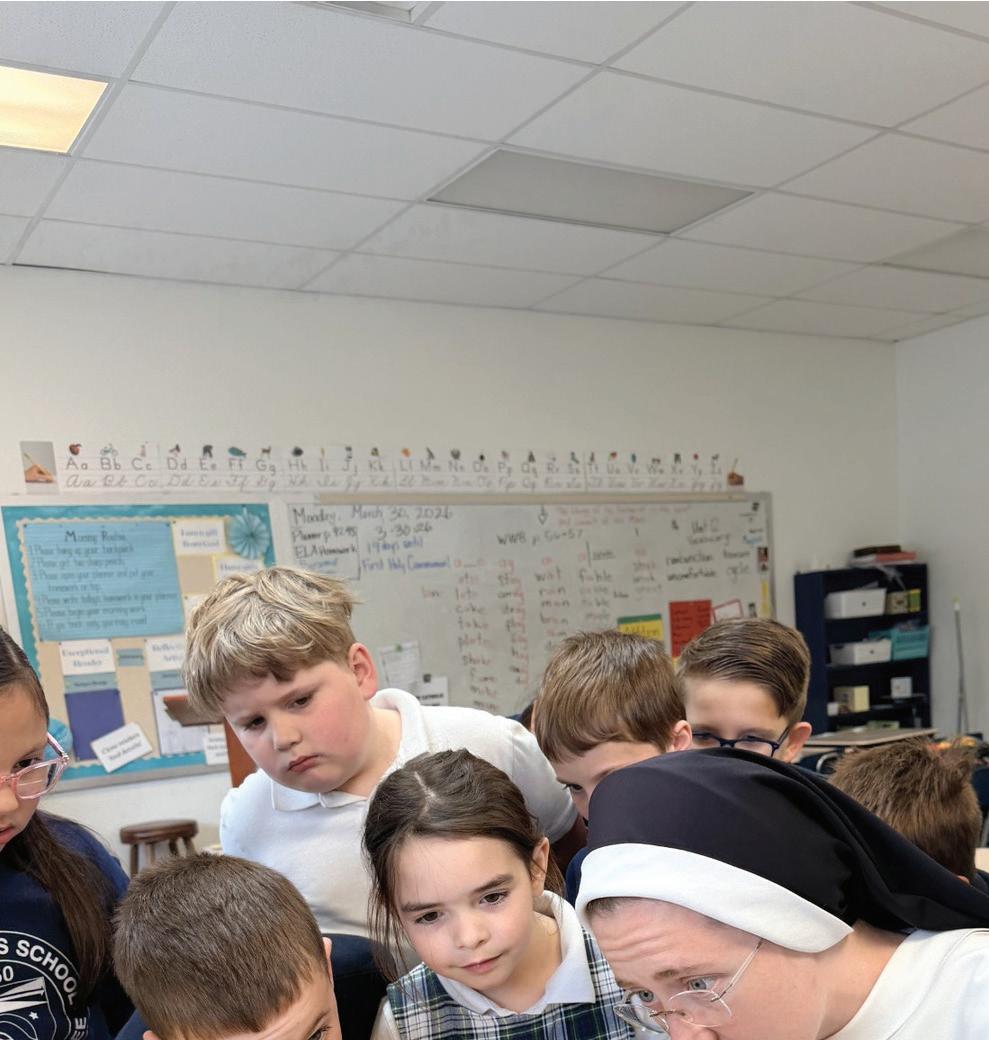
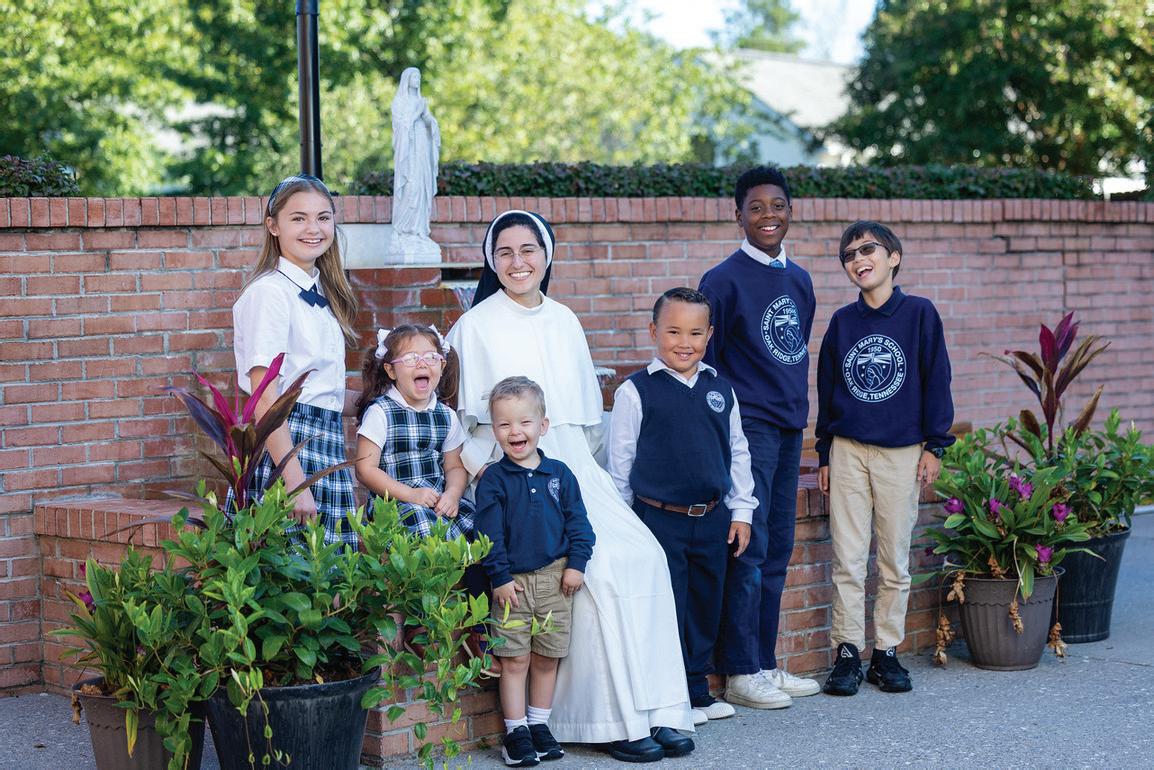
All of this happens within the context of family life and relationships One of the charms of a small school is the close-knit community of involved parents who develop life-long friendships as they contribute to the vibrancy of their children’s school St Mary School is truly a homeaway-from-home where connections between individuals and family are strong
Such connections are not just with c urrent parents Athletic director John Merrill, a past St Mary parent and former pro football player, is having an impact on the students at our school The athletics program is strong, not only with winning seasons in soccer and golf, but through the life lessons learned in the process Parents are very much a part of this effort
First and foremost, it is Christ who holds first place at St Mary with the ever-present love of His Mother It is here, under Our Lady’s patronage, t hat the faith is taught and lived with enthusiasm
In the words of one of our seventh-grade students, “It is great to see smiles and hear laughter fill every inch of this school The environment of St Mary is unlike any other which makes it incredibly difficult to not fall in love with it ”
choolS t Ma Mary r C SCatp ath p thol t olic i S g Sch t choo ool tOak a Ryi Ridg dge, e Te T Tenn nnes esse see r m
From the parent of an eighthgrader:
flourished a without reserve a beginning developed academically, developed that will only is the school blessing students and well day we ’ ve felt nothing but and ove
“My daughter has flourished in a caring environment with freedom to learn, grow, and express her faith without reserve In the short year and a half since beginning this journey, she has developed life skills, grown academically, developed a greater love for God, and built friendships that will last a lifetime Not only is the school a blessing to students but to family and community as well From day one, we ’ ve felt nothing but welcome and love from the staff, students, and families The environment offered here is so special, unlike anything we ve experienced in other schools
ve schools
Our
Our only regret is not beginning this journey sooner!”
o he l o o Me Me! emor

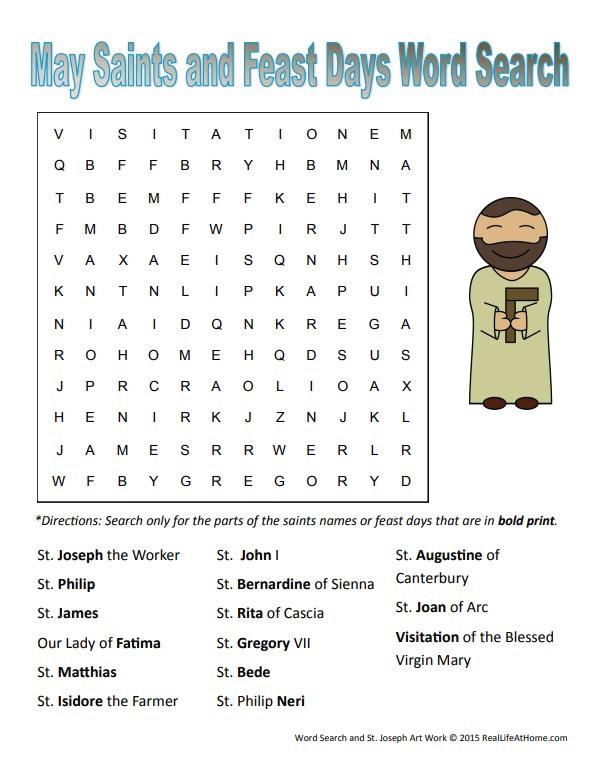
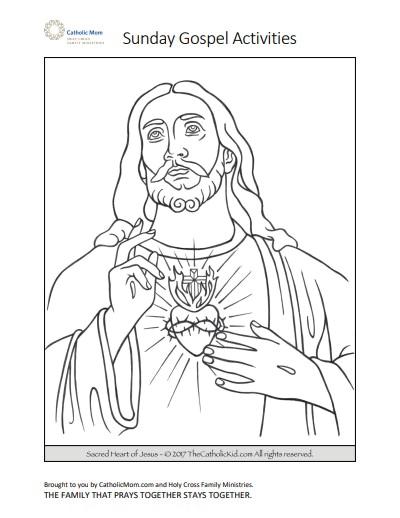
The Most Sacred Heart of Jesus Feast Day: June 12, Celebrated the Friday after Corpus Christi Co lo r Me!














Question Do you have a favorite saint that you ask to intercede for you in your job as bishop? Anna, 6th grade














Ve Vers r e y J afte e B sh uestion rcede as grad















nswer: Ye Y s, oft f en St. Ambrose he great preacher special St in Dav a enport, when college i te
Answer: Yes, I have often asked for the intercession of St. Ambrose because he was a great bishop and preacher (called the “honey-tongued”) and I have felt a special connection to him ever since I studied at St Ambrose College (now University) in Davenport, Iowa, when I was a college seminarian.
k h Bish o p “Children are a heritage from the Lord, offspring a reward from Him ” - Psalm 127:3
By Mary-Hannah MacCurdy
with God.
Last year marked the 350th anniversary of the apparitions of the Sacred Heart of Jesus (1675–2025) to St. Margaret Mary Alacoque. This year, the United States of America commemorates the 250th anniversary of the signing of the Declaration of Independence. In light of this historic milestone, the U.S. Conference of Catholic Bishops joins in the celebration by highlighting the contributions of Catholics and the impact of our faith on the history of this nation.
Therefore, at this significant moment in history, the bishops of the United States will consecrate the nation to the Sacred Heart of Jesus on June 11 and invite all parishes to unite in this act of consecration.
Biblical and theological foundations of the Heart of Jesus
From the beginning of the Christian era, dear readers, believers have shown a profound interest in the Heart of Jesus, as seen already in the earliest disciples of Christ. First, the evangelist Matthew presents Jesus’ own invitation:
“Take my yoke upon you and learn from me, for I am meek and humble of heart, and you will find rest for your souls” (Matthew 11:29).
This is an invitation from Christ to find spiritual rest by embracing His gentleness and humility of heart. By learning from Him, one finds relief from emotional and spiritual burdens, embracing a way of life rooted in service, patience, and interior peace—seen through His Heart, which knows how to love without measure.
The second and third Gospel references to the Heart of Jesus are found in the Gospel of St. John, which presents two powerful scenes. The first depicts the beloved disciple reclining beside Jesus, resting his head on the Master’s chest (John 13:23-25), a gesture of consolation following the announcement of betrayal (John 13:21). The second is the image of Christ’s pierced side on the cross, from which blood and water flowed (John 19:34).
Indeed, the early Church Fathers interpreted these passages through a spiritual lens, uncovering a deeper meaning beyond the literal narrative. According to their reflections, the Gospel of John reveals the Sacred Heart of Jesus as the Fons Vitae—the “fountain of life,” which theologian Hugo Rahner describes as the source of the Church, the Gospels, the sacraments, and grace. St. Irenaeus likewise affirms, regarding the Church’s mission rooted in the Heart of Christ: “The Church is the fountain of living water that flows for us from the Heart of Christ. Where the Church is, there is the Spirit of God; and where the Spirit of God is, there is the Church and all grace. But the Spirit is truth. Those who do not partake of this Spirit receive neither nourishment nor life within the bosom of our Mother Church, nor can they drink from the pure spring that flows from the Body of Christ.”
Thus, we see that devotion to the Heart of Jesus finds its origins both in sacred Scripture and in the teachings of the Church Fathers.
What the Sacred Heart of Jesus means from the perspective of faith
Devotion to the Heart of Christ is not the worship of an organ separated from the person of Jesus. What we contemplate and adore is Jesus Christ in His entirety—the Son of God made man—represented in an image that highlights His Heart.
The physical heart serves as a privileged sign of the innermost center of the Incarnate Son and of His divine and human love. More than any other part of His body, it is the natural symbol of His immense charity. In other words, the Heart is a way of contemplating Christ from within. Therefore, this devotion does not end in fleeting emotion but leads to a deeper knowledge of Jesus, to understanding His way of loving, and to entering into His dynamic of love for the Father and for neighbor.
Origin and development of the devotion to the Sacred Heart
Before the widespread devotion to the Heart of Jesus, there already existed in the Middle Ages
While many dioceses across the country continue struggling with declining participation and the effects of division and disruption, the Diocese of Knoxville finds itself in a different position. Our parishes are growing, new members are arriving in record numbers, and the Catholic population across East Tennessee continues to expand in many different ways. That growth brings energy and opportunity, but it also brings challenges. Building strong parish communities in a rapidly growing diocese will require more than simply accommodating larger numbers. It will require Catholics willing to listen to one another honestly, working collaboratively, and ensuring that growth is accompanied by deeper engagement, stronger relationships, and a shared sense of mission. This Synod is not a one-time event, but an ongoing process. I think that’s important to remember. The Church is not trying to complete
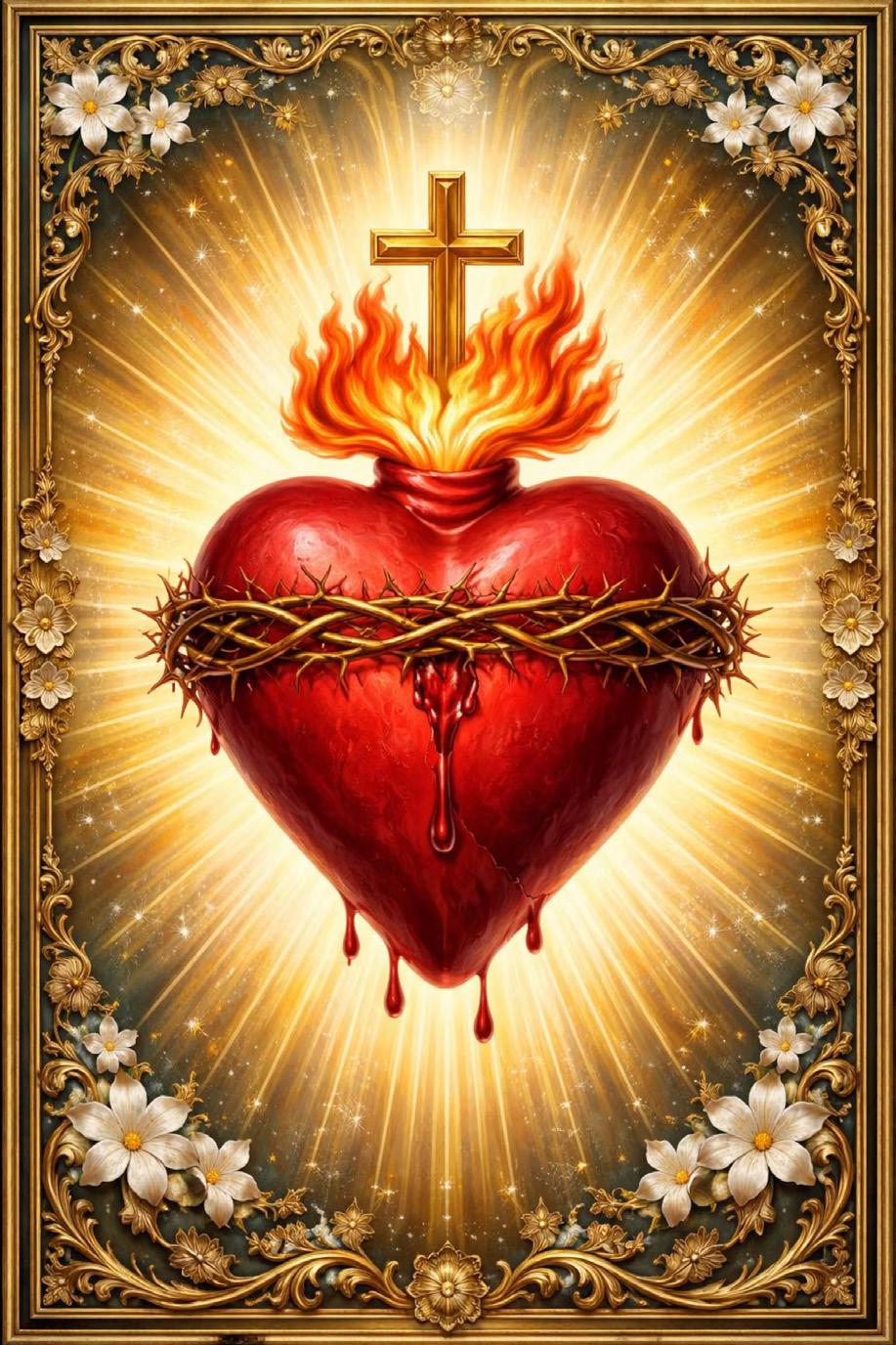
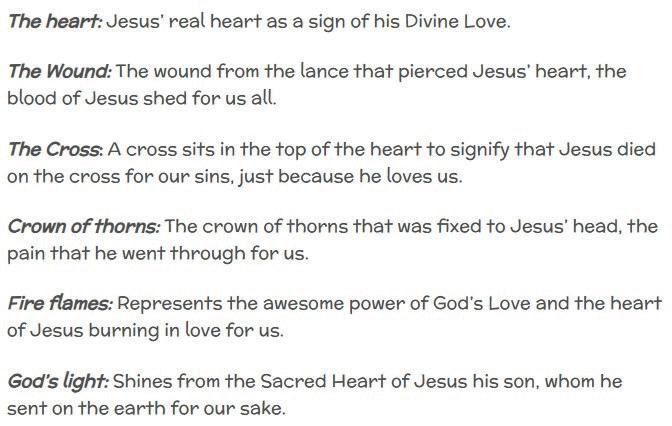
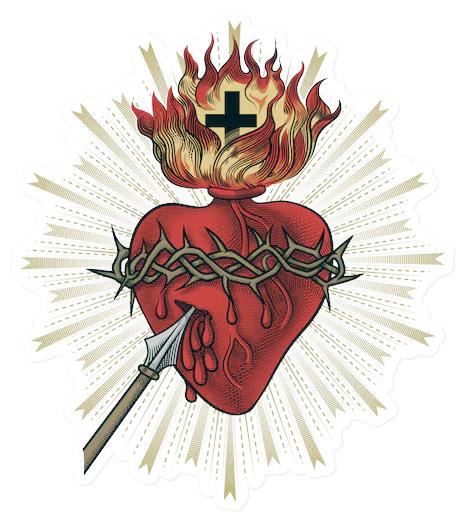
The Heart of the matter Above: this image of the Sacred Heart of Jesus features His heart with flames, a crown of thorns, the cross, and an open wound. Below: this image of the Sacred Heart is shown with Jesus' heart pierced and flowing blood and water in addition to the flames, crown of thorns, and the cross.
the devotion to the pierced side of Christ—a practice centered on His redemptive love, symbolized by the wound in His side from which blood and water flowed.
This wound represents the fullness of His love: “He loved them to the end” (John 13:1); it is the source of the sacraments—baptism and the Eucharist—and of divine mercy. Many medieval saints, such as St. Gertrude the Great (1256–1302), meditated on this mystery as the “icon” of Christ’s unconditional love, as did St. John the beloved disciple (John 19:34). Likewise, St. Mechtilde of Hackeborn (1241–1298) contemplated the “exchange of hearts” with the Divine Savior.
Thus, the pierced side and Heart of Christ become the source of new life and a refuge for all who believe in Him (John 15:17).
Although veneration of Christ’s love has existed since the earliest centuries of Christianity, the specific devotion to the Sacred Heart took clearer form in the 17th century and spread rapidly through the private revelations granted to St. Margaret Mary Alacoque. According to her testimony, Jesus revealed His Heart, burning with love for humanity, and asked that this devotion be promoted as a call to conversion and reparative love. These revelations were supported by figures such as St. Claude de la Colombière, which helped secure their recognition within the Church. Nevertheless, this devotion has not always been universally embraced. Pope Pius XII addressed this in his encyclical Haurietis Aquas, lamenting that such a noble devotion is sometimes undervalued, even among those zealous for the faith and their own satisfaction.
a project and we’re not here to check a box.
In preparing for this column, I was struck by the timing and relevance of some of our Easter season Scripture readings, especially on May 6, which focused on disagreements among the Apostles and others about rules for acceptance to the early Church.
“There arose no little dissension and debate...” (Acts 15:2). To resolve issues, the resulting Council of Jerusalem did not simply impose decisions; it listened, heard testimony, and allowed space for the Holy Spirit to guide it toward consensus.
At the same time, it is important to remember what this process is—and what it is not. Church and pastoral authority are not changing. This is clear.
“All authority in the Church proceeds from Christ and is guided by the Holy Spirit. A diversity of charisms without authority becomes anarchy...”, according to a working document
The symbolic meaning of the Heart of Jesus
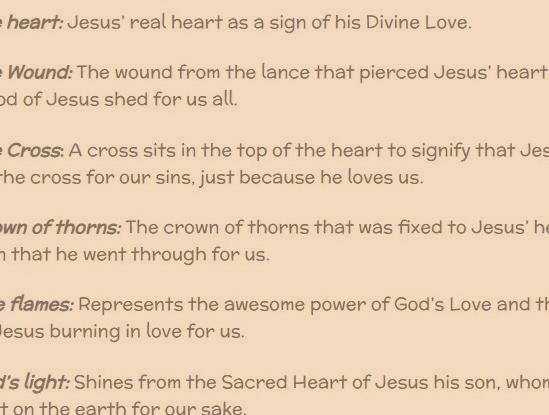
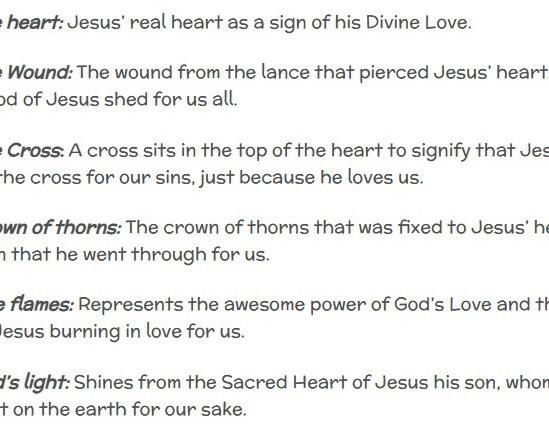
The Sacred Heart is commonly depicted as a human heart surrounded by flames, crowned with thorns, and often topped with a cross. Each element carries deep meaning:
n The Heart: Symbol of Christ’s divine and human love, pierced yet still pouring forth grace.
n The Flames: Represent the living fire of His love for all humanity.
n The Crown of Thorns: Signifies the suffering and humiliation of His Passion, transformed into glory.
n The Cross: The sign of our redemption and the ultimate sacrifice of love.
n The Open Wound: From His pierced side flowed blood and water—symbols of the Eucharist and baptism—revealing the birth of the Church and the outpouring of divine mercy.
This image is not merely artistic but also a spiritual invitation to reflect on Christ’s unconditional love, forgiveness, and total self-giving. It calls believers to live essential virtues such as compassion, humility, and reparation.
Among the most well-known practices are consecration to the Sacred Heart, first Friday Communion, and the Holy Hour of eucharistic adoration. These practices strengthen one’s personal relationship with Christ and foster a more committed life of faith.
The Church celebrates the solemnity of the Sacred Heart on the Friday following the octave of Corpus Christi, as established by St. John XXIII, highlighting Christ’s love manifested in the Eucharist and His total self-gift for humanity.
The contemporary relevance of the Sacred Heart of Jesus
In today’s world, marked by conflict, individualism, and spiritual crisis, the message of the Sacred Heart remains profoundly relevant. It reminds us that love, mercy, and empathy are essential paths toward human coexistence and inner peace.
Beyond its religious dimension, the Sacred Heart of Jesus also is a universal symbol of love that calls every person to open their heart, to forgive, and to live with greater generosity.
Ultimately, the Sacred Heart of Jesus is not merely a devotion but a way of life centered on a love that transforms, heals, and gives meaning to human existence.
Consecration to the Sacred Heart of Jesus On the occasion of the consecration of the United States of America to the Sacred Heart of Jesus by the bishops of the United States: Sacred Heart of Jesus, You know the longings of our hearts and desire that we share in Your friendship.
From Your pierced side, You have poured forth the fountain of life for which we thirst. Your Heart burns with love so that all people may be restored to right relationship with You. We give thanks for the abundant gifts You have bestowed upon this nation, founded upon the self-evident truths that our Creator has endowed all people with the rights to life, liberty, and the pursuit of happiness.
We offer reparation for offenses committed against You and against human dignity within this nation.
May our hearts be united with Yours so that our families and communities may enjoy peace and happiness; that broken relationships may be reconciled, injustices repaired, and the wounds of our land healed.
May Your holy Catholic Church be a sign to all, revealing Your infinite love.
To You, who is the Desire of the Nations and the Center of History, we ask that You bless the United States of America.
You who live and reign with God the Father, in the unity of the Holy Spirit, God, forever and ever. Amen. Sacred Heart of Jesus, have mercy on us! Immaculate Heart of Mary, pray for us! ■
Father Arthur Torres serves as pastor of Our Lady of Perpetual Help Parish and School in Chattanooga and also as assistant vocations director for the diocese.
released by the Vatican when the Synod process began.
As Knoxville moves toward this year’s synodal-style gatherings and the 2027 Evaluation Assembly, our local experience will become part of a much larger global conversation taking place throughout the Catholic world. But for now, the work remains close to home: gathering people, fostering conversation, and taking the first practical steps toward implementation.
If the first phase of the Synod was about listening to the voices of the faithful, this next phase is about what we choose to do with what we heard. ■
Jim Wogan, who is a former communications director for the Diocese of Knoxville, is the diocesan Synod Team leader. He and his wife, Mary, are members of St. Thomas the Apostle Parish in Lenoir City.
in Knoxville. Early in his priesthood, he also served at Our Lady of Lourdes and Shepherd of the Valley.
Father Boettner, 58, has been serving at Sacred Heart Cathedral since 2009 and was named rector on Feb. 1, 2010.
He is one of only six pastors/ rectors who have served at Sacred Heart and is the longest-serving— along with Monsignor Edward Dolan—with 16 years of service there. Sacred Heart is the largest parish in the diocese and also includes a K-8 school.
Father Boettner was ordained to the priesthood on May 28, 1994, at St. Thérèse of Lisieux Church in Cleveland by Bishop Anthony J. O’Connell.
As cathedral rector, Father Boettner oversaw construction of the new Cathedral of the Most Sacred Heart of Jesus, which was dedicated on March 3, 2018, and stands as one of the newest Catholic cathedrals in the United States.
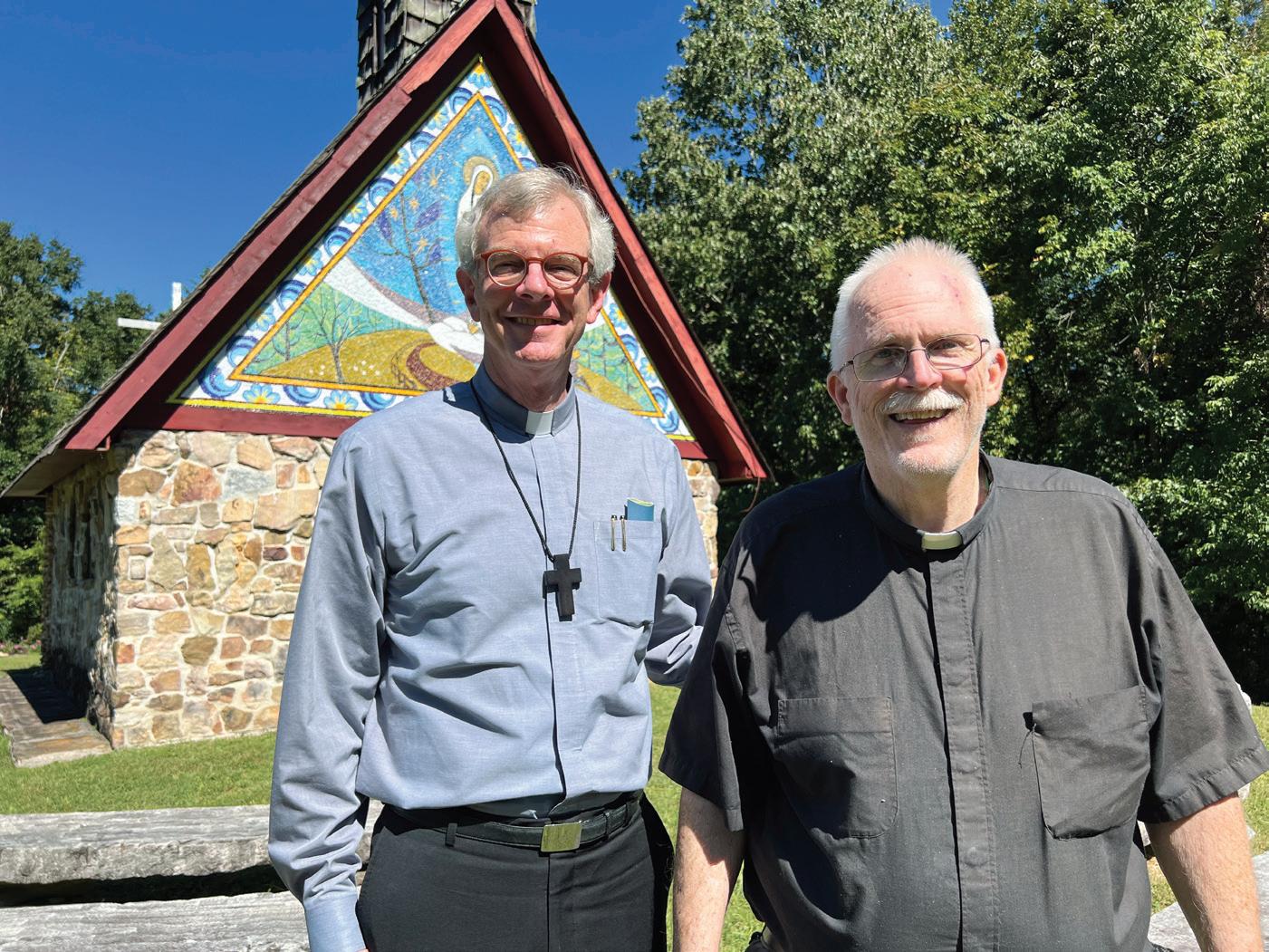
A New Hope ministry Father Mark Scholz, right, pastor of Our Lady of Lourdes Parish in South Pittsburg and Shepherd of the Valley Parish in Dunlap, is pictured at the Virgin of the Poor Shrine in New Hope with Deacon Hicks Armor, who serves at the Basilica of Sts. Peter and Paul in Chattanooga and is the director of Stewardship and Strategic Planning for the Diocese of Knoxville. As part of his pastorate at Our Lady of Lourdes, Father Scholz, who is retiring from active ministry, has overseen the use and maintenance of the shrine.
parish priest, school headmaster, and director of an orphanage. For 11 years, he ministered in New Zealand as an English-speaking parish priest, and he established eight parish communities throughout New Zealand that he supported by celebrating Mass monthly for each one during his time there. In the Jalgaon District of India, Father Akkara again served as a parish priest and director of an orphanage.
Father Akkara arrived in the United States in November 2024 and became administrator of Mary Queen of Peace Parish in the Archdiocese of Louisville on Dec. 16, 2024, where he has continued to serve.
Father Vinod Kanattu, MSFS, has been appointed associate pastor of St. Mary Parish in Johnson City.
Father Kanattu is a native of Kozhikode, Kerala, India, and is a member of the Missionaries of St. Francis de Sales religious congregation. He was ordained to the priesthood on Jan. 3, 2004, at Little Flower Church, Birikulam, in the Archdiocese of Tellicherry, Kerala, India.
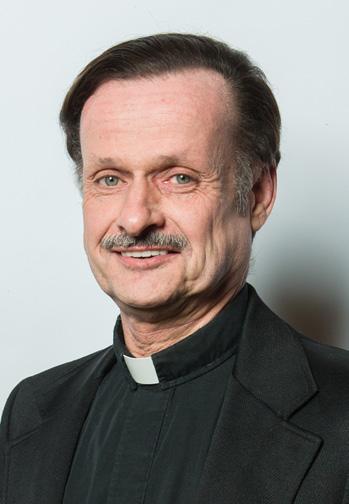
Before serving at the cathedral, Father Boettner was pastor of St. Mary Parish in Athens and then pastor of St. Thomas the Apostle Parish in Lenoir City. Following his 1994 ordination, he was assigned as an associate pastor at Our Lady of Perpetual Help Parish in Chattanooga. He also served as an associate pastor at Sacred Heart for three years, being assigned there in August 1997.
In March 2008, Father Boettner was named moderator of the curia for the diocese, a position he held until August 2017. He also has served the diocese as a vicar general and episcopal vicar.
Other positions in which Father Boettner has served the diocese include coordinator of ongoing formation of deacons for the diocese and coordinator of Hispanic Ministry for the Cumberland Mountain and Smoky Mountain deaneries.
He currently serves the diocese as Episcopal Vicar for Special Administration, a member of the College of Consultors, a member of the Presbyteral Council, and is on the Diocesan Finance Council.
Father Cummins will become Sacred Heart Cathedral Parish’s seventh leader since the parish was founded in 1956 and its fourth rector since the diocese was established in 1988, when Sacred Heart Church was elevated to a cathedral.
In addition to pastoring the diocese’s largest parish, Father Cummins also will be leading Sacred Heart Cathedral School, one of the diocese’s largest schools.
Father Cummins, 58, is currently pastor of St. Dominic Parish and St. Dominic School in Kingsport, where he has served since July 1, 2014.
Father Cummins, a Johnson City native who attended St. Mary School there, was ordained to the priesthood on June 3, 1995, at Sacred Heart Cathedral by Bishop O’Connell following completion of his studies at Mundelein Seminary.
After his ordination, Father Cummins was associate pastor at All Saints Parish in Knoxville until he was named full-time campus minister at Knoxville Catholic High School beginning with the 19992000 school year.
He succeeded Father Boettner as pastor of St. Mary Parish in Athens and has served as chaplain at Notre Dame High School in Chattanooga and the University of TennesseeChattanooga. He also was chaplain at East Tennessee State University and was named an associate pastor at St. Mary Parish in Johnson City. Other positions Father Cummins has held in the diocese are director of deaf ministry, youth ministry coordinator, director of youth ministry, associate director of vocations and director of vocations, dean of the Five Rivers Deanery, and cochair of the Priestly Life and Ministry Committee. He currently serves as dioc-
esan Vicar for Priests, a member of the College of Consultors, and a member of the Presbyteral Council.
Father Boettner and Father Cummins will continue to serve in their roles as diocesan vicars.
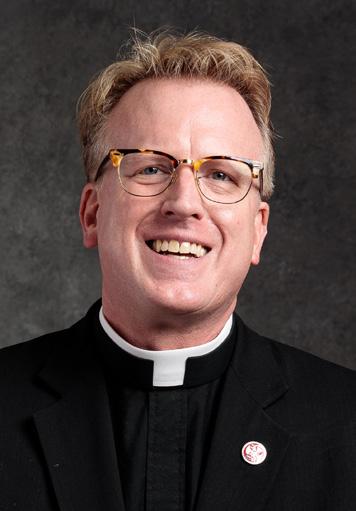
Father Joseph Kuzhupil, MSFS, who has been pastor of Notre Dame Parish in Greeneville since July 1, 2019, has been named pastor of St. Dominic Parish and School.
Father Kuzhupil is a member of the religious order Missionaries of St. Francis de Sales. He completed his primary and secondary education as well as religious and seminary formation in his native country, India.
He was ordained to the priesthood in 1985 in his home parish in Kerala, India, and has been a priest for more than 40 years. He has been in the United States since 2004 and became a U.S. citizen on Aug. 18, 2015.
After ministering in various parts of India as a missionary, Father Kuzhupil was sent by his religious order to the United States, first as chaplain at Alexian Village in Signal Mountain for five years and then as the pastor of St. Augustine Parish, also in Signal Mountain, where he was assigned on Oct. 18, 2010, and served for nine years before being assigned to Notre Dame.
He also was an associate pastor at St. Augustine and at St. John Neumann Parish in Farragut.
Father Zach Griffith is following Father Kuzhupil and will serve at Notre Dame as parochial administrator.
Father Griffith will be leaving his positions as part-time associate pastor at St. Mary Parish in Johnson City and as chaplain of the Catholic Center at East Tennessee State University.
He was ordained to the priesthood on Aug. 29, 2020, at the Cathedral of the Most Sacred Heart of Jesus by Bishop Richard F. Stika. He was ordained with Father Alex Hernandez, associate pastor of the Basilica of Sts. Peter and Paul in Chattanooga, and at the time they were the 54th and 55th priests ordained in the Diocese of Knoxville.
Father Griffith’s first assignment as a priest following his ordination was as associate pastor of Our Lady of Perpetual Help Parish in Chattanooga, where he served for nearly four years before taking the Johnson City assignments.
Father Griffith’s father, Deacon Donald Griffith Jr., serves at St. Mary Parish in Johnson City.
Father Marcin “Martin” Gladysz, who has served as an associate pastor at Sacred Heart Cathedral since Jan. 7, 2019, has been named pastor of St. Therese Parish in Clinton.
The assignment will be Father Gladysz’s first pastorate since he arrived in the Diocese of Knoxville in
January 2019. Father Gladysz, who was incardinated into the Diocese of Knoxville on May 19, 2020, was ordained a priest on May 18, 2002, at the Cathedral Basilica of the Holy Family in Czestochowa, Poland, which is his native country. He was born in 1976 in Krakow, Poland, where he completed primary and secondary education. In 1995, he began his seminary studies, and in 2002 he earned a master’s degree at the Pontifical Academy of Theology (currently the Pontifical University of John Paul II) in Krakow.
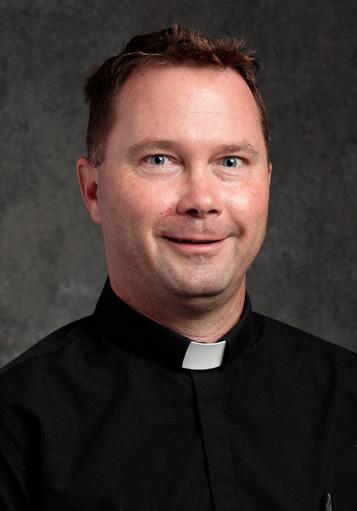
He first served as an associate pastor and catechist in the parish of St. John the Baptist in Nowa Brzeznica (Archdiocese of Czestochowa). After three years of service, he went on a mission to Papua New Guinea. In 2006, he began his Papua New Guinea missionary work in the Diocese of Mendi, where he was a parish priest. In 2012, he moved from the Mendi mountain diocese to the Madang Archdiocese on the Pacific coast, where he served as a parish priest.
In 2014, Father Gladysz took a sabbatical leave, and during that time he visited the United States, where he became an associate pastor at St. Priscilla Parish in Chicago. From July to December 2018, he served as the administrator of St. Priscilla.
In the Diocese of Knoxville, Father Gladysz serves as chaplain to the Polish Catholic community and has been a member of the College of Consultors.
Father Joseph Austin, who is currently associate pastor at Our Lady of Fatima Parish in Alcoa, has been named associate pastor of St. Elizabeth Parish in Elizabethton and St. Anthony of Padua Parish in Mountain City as well as chaplain at ETSU
Father Austin was ordained to the priesthood on June 10, 2023, at the Cathedral of the Most Sacred Heart of Jesus by Bishop Stika. He was assigned to Our Lady of Fatima on July 1, 2023, where he has continued to minister.
He will be working with St. Elizabeth and St. Anthony of Padua pastor Father Jesús Guerrero.
Father Austin attended Franciscan University in Steubenville, Ohio, where he majored in computer science, and spent his six-year seminary formation at St. Meinrad Seminary and School of Theology in Indiana
Father Joseph Akkara, CMI, has been appointed associate pastor of Our Lady of Fatima Parish in Alcoa.
Father Akkara is a native of Trichur, Kerala, India, and was ordained a priest on Jan. 2, 1994, as a Carmelite of Mary Immaculate. He attended major seminary at Dharmaram College in Bangalore, India.
In the Kalyan Diocese in Mumbai, India, Father Akkara served as a
He attended SFS Seminary in Kerala as well as Suvidya College and St. Peter’s Pontifical Institute in Bangalore, Karnataka, India. In addition, he completed studies in electrical engineering and received his master’s degree in business administration from DeSales University in Allentown, Pa., in 2012.
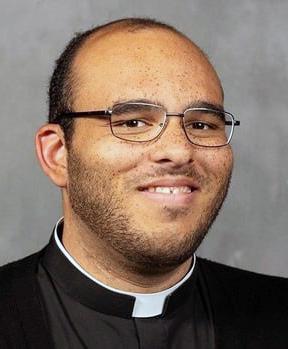
From 2011-13, Father Kanattu ministered and was in residence at Assumption BVM Church in Bethlehem, Pa., in the Diocese of Allentown. He also taught at DeSales University in Allentown.
In India, Father Kanattu worked as finance administrator for SFS Institutions in Bangalore from 200410 and taught at SFS School and SFS Degree College in Bangalore, was associate pastor of St. Francis de Sales Church in Bangalore during that same time, and also has been serving in financial management with SFS Industries and SFS PU College-Kolar as well as the Missionaries of St. Francis de Sales congregation.
Father Dennis Kress, who has served as pastor of St. Therese in Clinton and also St. Joseph Parish in Norris since July 1, 2023, will continue as pastor of St. Joseph while vacating his pastorate at St. Therese to Father Gladysz.
Prior to serving the Clinton and Norris parishes, Father Kress served as administrator of St. Elizabeth beginning on Aug. 1, 2002, and then as pastor of the Elizabethton parish beginning on July 1, 2003.
Before serving St. Elizabeth and St. Anthony of Padua, Father Kress was an associate pastor at St. Dominic beginning on July 14, 1999. He was ordained a priest on June 12, 1999, at St. Thérèse of Lisieux in Cleveland by Bishop O’Connell.
Father Sam Sturm, who has pastored Our Lady of Perpetual Help Parish in LaFollette, Christ the King Parish in Tazewell, and St. Jude Parish in Helenwood since Oct. 1, 2020, will continue pastoring Christ the King but will vacate his assignments in LaFollette and Helenwood to Father Henry Makawa
Father Sturm became pastor of St. Bridget Parish in Dayton on July 1, 2007, and served there until October 2020.
He was ordained a priest on June 26, 1999, at All Saints Church by Bishop O’Connell, and has served as an associate pastor at All Saints, St. Mary Parish in Oak Ridge, St. Francis of Assisi Parish in Townsend, and Our Lady of Fatima. In turn, Father Makawa will be leaving his assignments as associate pastor of Our Lady of Lourdes and Shepherd of the Valley, where he has been assigned since Jan. 1 and has been in residence at St. Augustine in Signal Mountain.
Father Makawa will serve as parochial administrator of Our Lady
By Bee Goodman
It’s hard to be a bystander, just passing by. Most of us simply want to mind our own business and stay out of other people’s way—neither to be a bother nor be bothered. We keep our noses clean, hoping for a little peace. Is that really asking so much?
Simon of Cyrene was doing exactly that. He was just passing by, on his way back from the fields, minding his own business. He wasn’t looking for trouble or meaning. He was simply living his life, like anyone else, expecting an ordinary day.
And then, without asking for it, along comes life. His peace is disturbed, his hands get dirty, and he is thrust into something he didn’t ask for or want to be a part of. Suddenly, he is faced with something he cannot ignore, something he has to do something about.
There is something deeply human about that desire. This world often feels loud, chaotic, and demanding; the idea of simply going about your day unnoticed can feel like a kind of refuge. We wake up with our plans, our schedules, our responsibilities, and we hope the day will unfold according to those plans. We hope for predictability. We hope for calm. We hope, in a quiet way, to be left alone.
And then, without asking for it, along comes life.
Priests continued from page A15
of Perpetual Help in LaFollette and St. Jude in Helenwood. He has taken part in the University of Tennessee Medical Center’s Clinical Pastoral Education program beginning in December 2023, and on March 2, 2024, was granted faculties to serve as needed at Our Lady of Fatima, where he was in residence.
Father Makawa comes to the Diocese of Knoxville from Nigeria, where he was an extern priest in the Diocese of Dedza. He was ordained on July 17, 2010.
Father Andres Cano has been named pastor of St. Catherine Labouré Parish in Copperhill.
Father Cano has been serving as chaplain of Hispanic Ministry at Holy Trinity Parish in Jefferson City and Notre Dame Parish in Greeneville since Sept. 9, 2020. He also has been serving as chaplain for the Handmaids of the Precious Blood, a cloistered contemplative religious order in New Market, since that date.
Father Cano was ordained a priest on June 13, 2009, at Our Lady of Carmel Church in his native Pereira, Colombia, by Bishop Stika. He was named associate pastor of Our Lady of Fatima Parish on July 15, 2019, where he served before his service in Jefferson City, Greeneville, and New Market.
His previous assignments include serving as associate pastor of St. Mary Parish in Gatlinburg, as pastor of Holy Cross Parish in Pigeon Forge, and as associate pastor of Sacred Heart Cathedral and St. Mary Parish in Oak Ridge. He also has served as chaplain to the Hispanic community of St. Alphonsus in Crossville.
In addition, he has been the diocese’s primary bilingual substitute priest.
Father Bede Aboh will succeed Father Cano as chaplain of Hispanic Ministry at Holy Trinity and chaplain of the Handmaids of the Precious Blood as he vacates his current position as associate pastor at St. Dominic Parish.
Father Aboh has been serving at St. Dominic since June 1, 2024. Prior to that, he served as chaplain of the Catholic Center at ETSU from July 1, 2015-May 31, 2024, and as pastor of St. Mary Parish in Oak Ridge from July 1, 2011-June 30, 2015.
Following his Aug. 13, 1988, ordination as a priest, Father Aboh served as a chaplain with Alexian
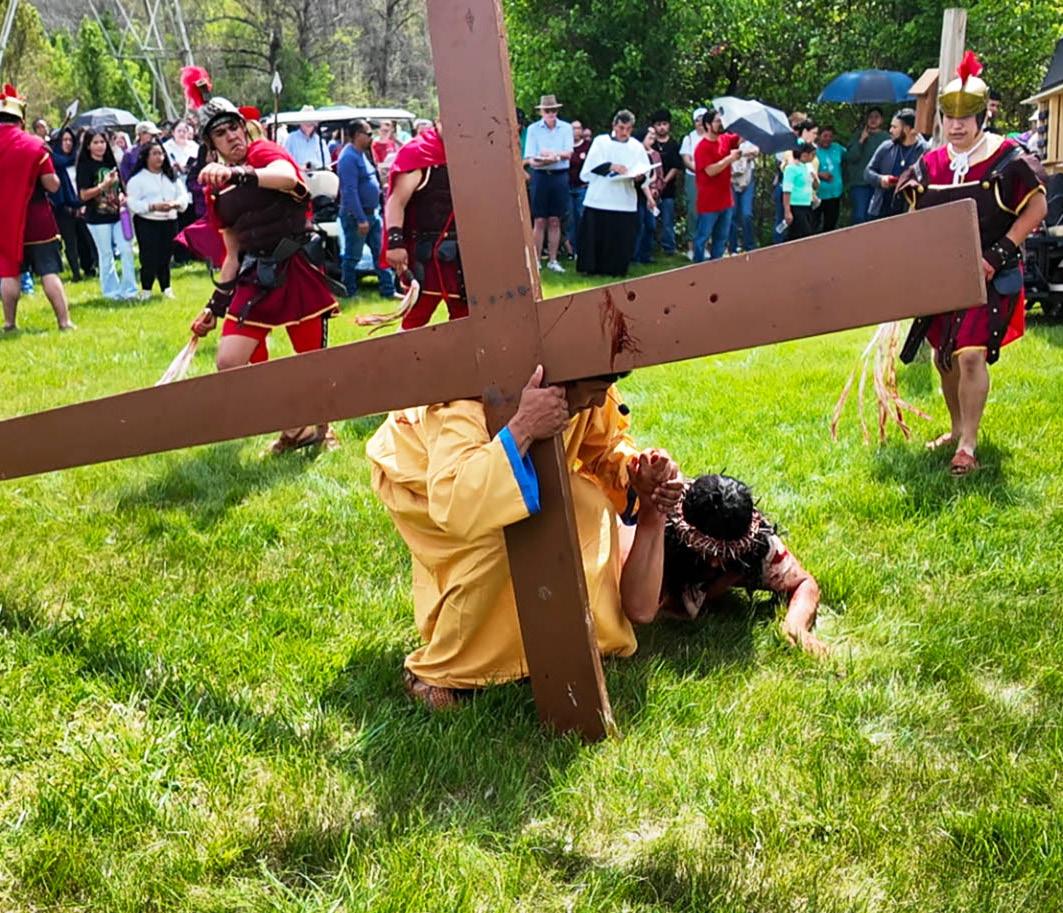
Your peace is disturbed, your hands get dirty, and you’re thrust into something you didn’t ask for or want to be a part of. Suddenly, there’s something you have to do something about. It may be small at first—a moment you could eas-
Brothers in Signal Mountain. He joined the Diocese of Knoxville priesthood in September 2008, when he was incardinated. In July 2006, he was assigned to St. John Neumann Parish as an associate pastor, then in November 2008, he was named pastor of Our Lady of Fatima in Alcoa, and St. Francis of Assisi in Townsend.
He also served as pastor of St. Catherine Labouré and associate pastor of St. Joseph the Worker Parish in Madisonville.
Father Jerry Daniels has been appointed full-time chaplain at Christ Prince of Peace Retreat Center in Benton. He will be vacating his current position as pastor of St. Catherine Labouré, where Father Cano will be ministering.
Father Daniels came to the Diocese of Knoxville from the Diocese of Jackson, Miss., and, in addition to St. Catherine Labouré, has served as parochial administrator and parochial vicar of St. Francis of Assisi in Townsend.
Father Tom Moser is relocating from St. Catherine Labouré to Holy Cross Parish in Pigeon Forge, where he will be in residence.
Father Moser retired from active ministry on Sept. 9, 2020, but continued to serve St. Catherine Labouré in weekday ministry. He was pastor of the Copperhill parish from 2014 to 2019, when he was appointed associate pastor of Our Lady of Perpetual Help in Chattanooga. Prior to that, he was associate pastor of St. Thérèse of Lisieux in Cleveland
Father Moser was ordained a priest on June 11, 1994, by Bishop O’Connell at St. Leo Church in St. Paul, Minn., where Father Moser was born. Father Moser has served in several diocesan assignments, including as associate pastor at St. Dominic, St. Stephen in Chattanooga, St. Thérèse of Lisieux, Our Lady of Fatima, and All Saints, and as pastor of Our Lady of Lourdes and Shepherd of the Valley.
In a continuation of out-of-state ministry roles, Father Brent Shelton will continue to provide pastoral ministry in the Diocese of Tyler in Texas for three additional years.
And Father Michael Maples will continue to serve at Conception Seminary College in Missouri for an additional year as he transitions into the position of director of counseling services for the seminary college Father Shelton, a Texas native,
ily ignore, a situation that doesn’t technically involve you. But something about it lingers. It presses on your conscience. It refuses to let you pass by as easily as you intended.
In those moments, the role of the bystander becomes uncomfortable. Bystanders sometimes just stand around and “watch the show.” As long as they mind their own busi-
was first assigned to St. Mary Parish in Johnson City in 2001 as an associate pastor. In August 2002, he was assigned to All Saints Parish. Then in July 2004, he became an associate pastor at Sacred Heart Cathedral, and in August 2005, he was named associate pastor of Holy Ghost Parish in Knoxville. In November 2008, he became associate pastor of Our Lady of Fatima.
Father Shelton’s first appointment as pastor began in March 2012 at St. Francis of Assisi Parish in Townsend. He was first appointed to St. Francis of Assisi in July 2011 as parochial administrator. He served in the Blount County parish until he was named pastor of St. Mary Parish and School in Oak Ridge in July 2015, where he served until taking a leave of absence in 2023.
He was ordained a priest on June 16, 2001, at Sacred Heart Cathedral by Bishop Kurtz. Among the additional roles he has served in the diocese are as dean of the Cumberland Mountain Deanery and as a member of the Diocesan Consultors and the Presbyteral Council.
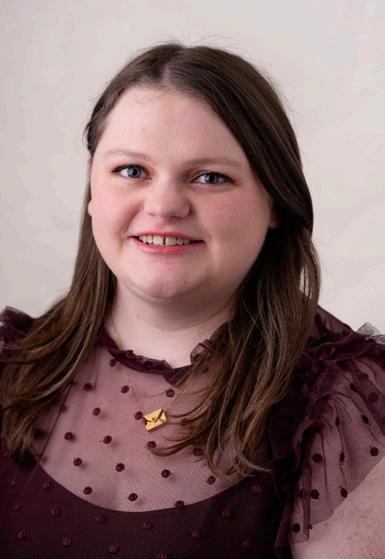
ness, a certain morbid curiosity can take hold. It is easier to observe than to intervene. It is easier to remain distant than to step in. We tell ourselves that someone else will handle it, that it is not our place, that getting involved might make things worse.
We wonder how a young woman can be assaulted in the middle of a party, and yet nobody saw anything, said anything, or did anything. We read stories, watch videos, and shake our heads in disbelief. How could that happen? How could so many people stand by?
More often than we would like to admit, bystanders simply pretend “not to see.”
It is not always out of cruelty. Sometimes it is fear. Sometimes it is uncertainty. Sometimes it is the quiet, persistent desire to protect our own comfort. To step in is to risk embarrassment, conflict, or even harm. To step in is to disrupt the invisible boundary we place between “my life” and “someone else’s problem.”
Simon of Cyrene found himself Simon of Cyrene continued on page A20
Father Maples served as an associate pastor at St. John Neumann, and he was a licensed psychologist who provided counseling to adult individuals and couples at Catholic Charities of East Tennessee before going to Conception Seminary College in August 2025. He was ordained to the priesthood on July 1, 2005, at Sacred Heart Cathedral by Bishop Kurtz. Previously, he has served as an associate pastor at Sacred Heart, St. Thérèse of Lisieux, and Holy Resurrection Byzantine Catholic Mission in Seymour. Father Maples has biritual faculties to celebrate the sacraments for Byzantine Catholics. He also is a Benedictine oblate of St. Meinrad Archabbey.
Deacon Daniel Cooper, who will be ordained a priest on June 6 at the Cathedral of the Most Sacred Heart of Jesus, has been appointed associate pastor of St. Francis of Assisi in Fairfield Glade.
Deacon Cooper has completed his studies at St. Meinrad Seminary in Indiana. ■
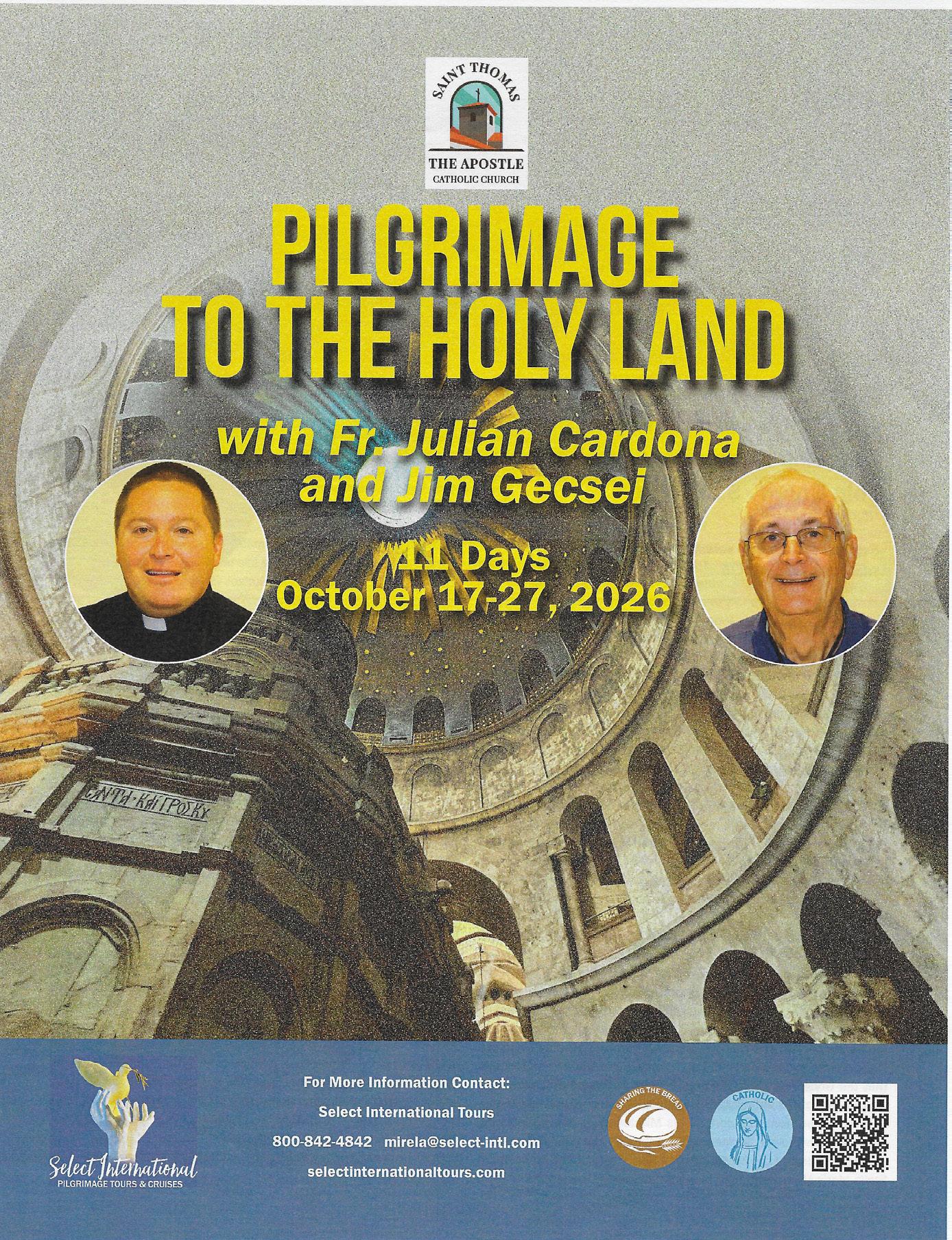
ing focuses on meditation with a silent-retreat phase for reflection. Friday highlights why individuals chose to attend and examines the grassroots of one’s faith. Saturday features and deepens participants’ relationship with Jesus and His love for each of us. On Sunday, candidates explore their relationship with others and the community in which they live, work, and worship.
Catholics in the Diocese of Knoxville who have experienced Cursillo offer powerful witnesses. Among the Cursillistas are:
n John Cecalupo, a member of All Saints Parish in Knoxville, who said, “Cursillo was the greatest spiritual experience of my life. I now can pray the ‘Our Father’ to ‘my Father in heaven’ and not just as an answer to ‘Hey Siri, define a rote prayer.’”
n Lynda Roman of All Saints, who said, “Before Cursillo, I received Holy Communion faithfully. But I was taking it for granted. I became like a robot. But after Cursillo, I will never receive Holy Communion like that again. Now, I am an active participant. There is a deep love, a deep understanding, a deep appreciation, and so much more that wasn’t there before Cursillo. Cursillo can change your life. You just have to experience it. Those three days have made a major change in my heart and in my life. It’s one of the best things I’ve ever done.”
n David Bender of Our Lady of Fatima Parish in Alcoa, who said, “I grew up afraid of God, particularly fearing His punishments. I rejected Him and His Church. When a tragedy came into my life, I began to pray, particularly asking for the help of Our Lady of Lourdes. The granting of a miraculous cure brought me back to Our Lord and the Church, but I was still afraid of
Retreat continued from page A7
When Jesus entered forcefully into the life of St. Paul, He directed him to rise and go into the city, where he would be told what to do. For three days St. Paul neither ate nor drank, preparing himself to receive the spiritual direction of Ananias (see Acts 9:1-9). Those, too, were days of retreat.
Down through the centuries, the Holy Spirit has raised up great saints and founders for the reform and service of the Church. While the methods of the Franciscans, Jesuits, and members of Opus Dei have varied considerably, what their founders shared in common was a profound spiritual experience while on retreat, whether in the forests surrounding Assisi, the caves of Manresa, or in a residence of St. Vincent de Paul.
These saints were seeking solitude in order to listen to God. Jesus was calling them apart to spend some time with Him.
Current Church legislation encourages the parish pastor to organize periodic retreats or missions for the good of the faithful, while all those who are to be ordained are required to make a weeklong retreat. Similarly, priests and religious are asked to make a yearly retreat.
For the good of the Church, as well as for the good of their own souls and the sake of their families, laypeople are also encouraged to get away for a few days each year to rekindle their relationship with Christ.
There are many types of retreats, and many Church organizations, like Cursillo, offer retreats of various lengths and topics. Retreats may last two days or 40 days; they may be organized for men or for women, or for couples together.
Cursillo offers a four-day encounter with God several times each year, and other diocesan organizations lead similar retreats. They may follow a traditional format with a priest-preacher as the retreat master, offering several spiritual conferences or meditations daily. Or they may be more charismatic in tone.
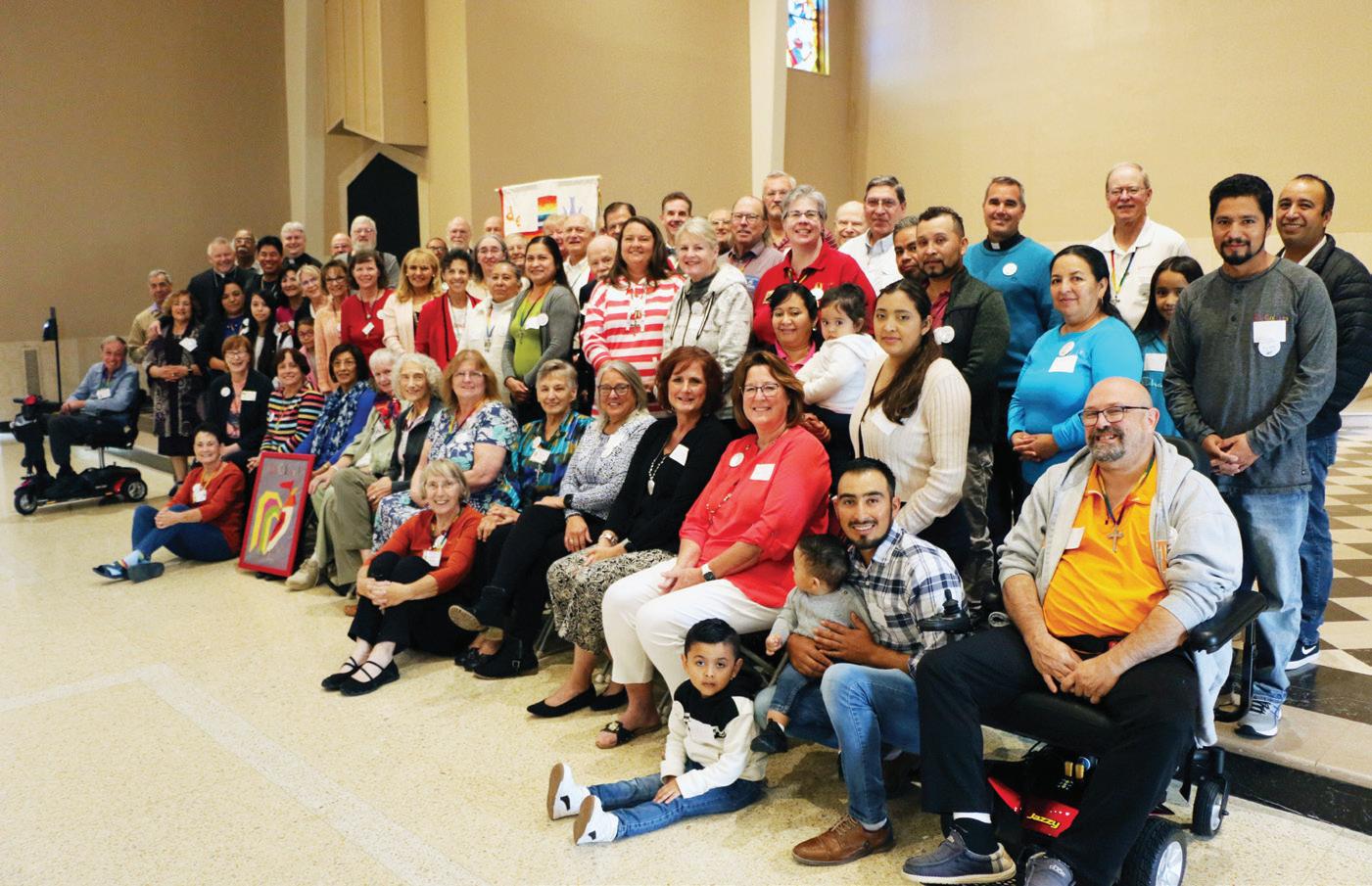
Cursillistas at 25 Diocese of Knoxville Cursillo members gather for a group photo in the Cathedral of the Most Sacred Heart Parish Hall following a Mass and dinner to celebrate the East Tennessee lay organization's 25th anniversary in 2022.
God. Opus Dei opened the door of my fear and the Cursillo movement pushed that door wide open. For the first time, I was able to feel the love of God. My participation in a weekly renewal group continues to keep me on and in the Cursillo method and helps to provide the peace and joy I had been missing for so long. My restless heart has found a home, just as St. Augustine said.”
n Toni Jacobs of Our Lady of Fatima, who said, “I highly recommend Cursillo for anyone who wants to draw closer to Christ. No matter where you are on your journey, God takes you wherever you are. I made my Cursillo 35 years ago, and it is still a huge part of my daily life and my spirituality. It is not just a retreat. It is not just a weekend. It is more than you can imagine because it is truly the Holy Spirit working in the open heart, mind, and soul of the one who wants to grow closer to Him.”
n Giannine Morris of St. Dominic Parish in Kingsport, who said, “It is no exaggeration to say my entire
life has changed since beginning my Cursillo in September 2007. Everything from the way I pray, the way I choose to spend my free time, and the way I interact with others has shifted to an entirely Christ-centered focus. While I have certainly grown spiritually, what stands out most to me is that I can relate my desire to bring others closer to Christ—building Christ’s kingdom of love—directly to my life in the Cursillo movement.
“Cursillo spells out the process to grow closer to Christ while bringing others alongside you in a simple and universally applicable manner. I never could have anticipated the many different ways in which I can see how other people are living a more Christ-centered life simply because I said ‘yes’ to a weekend away from work and my family. If I am totally honest, I really did not want to take the time away, but the dividends from that weekend never cease to amaze me!”
n Betty McDougall of St. Dominic, who said, “Cursillo confirmed my
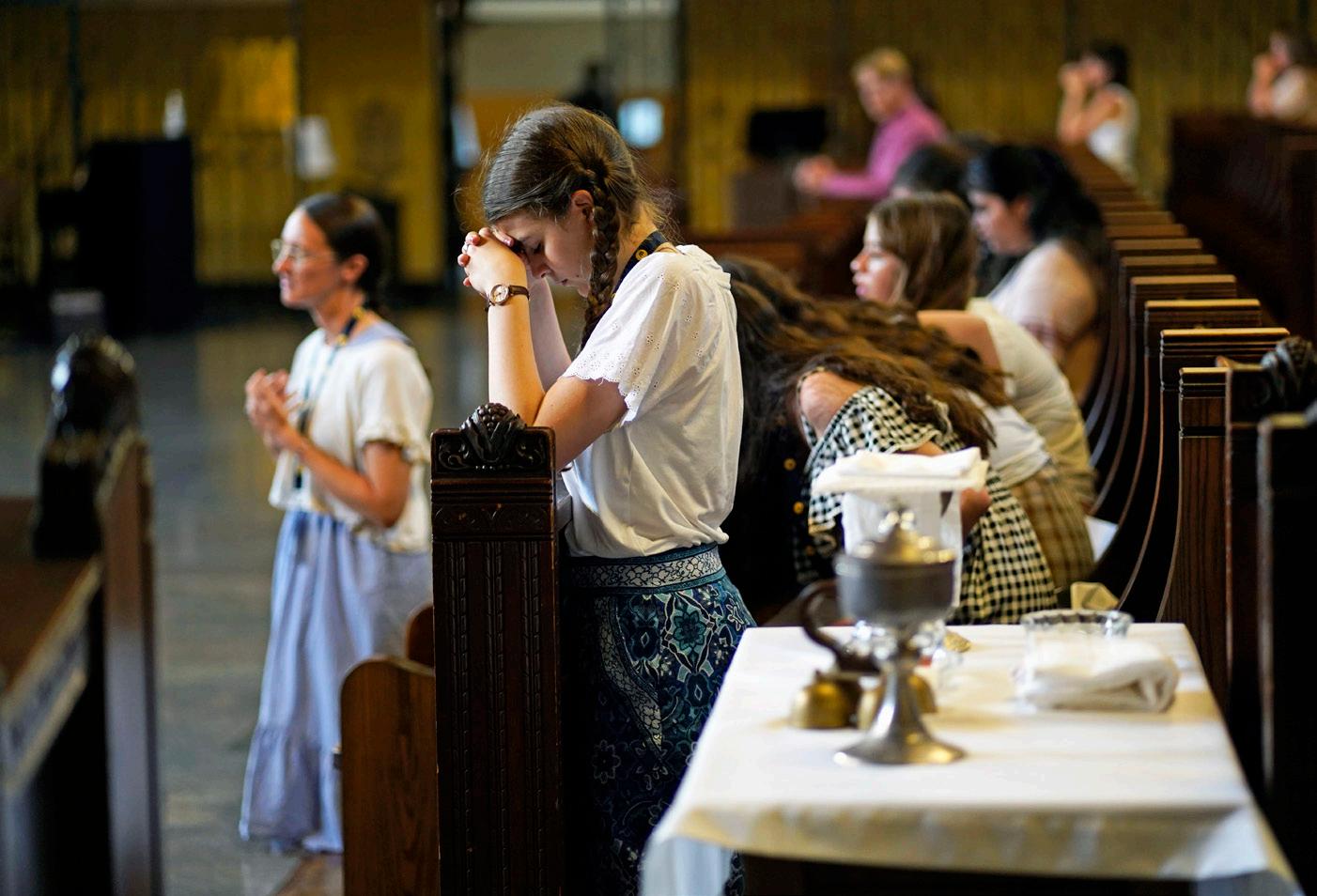
Spiritual retreat Participants pray after attending Mass at Camp Quo Vadis at Immaculate Conception Seminary in Huntington, N.Y., on July 8, 2022. More than 50 high-school students attended the three-day retreat, which featured Mass, a Holy Hour, speaker presentations, and recreation.
They may be directed or undirected. You might make a retreat with a large group in a hotel, or by yourself in a Trappist monastery. In general, however, prudent pastoral experience suggests the following elements are most helpful for making a good retreat: silence, the holy Eucharist, confession, spiritual reading, and closeness to the Blessed Mother.
n First, silence. Look for a retreat setting that fosters an atmosphere of silence, not as a penance, but as a means for listening to the Holy Spirit and getting to know Jesus while getting to know yourself. When you go away for a weekend retreat, you’re going away to be with God and to deepen your friendship with Him. Too often, in daily life, we’re overwhelmed with sensory distractions and can’t hear the voice of God. When you go on retreat, turn off your cellphone and unplug yourself from all cybercommunication. God wants your attention. Everyone else can wait. n Second, the holy Eucharist. Since the holy Eucharist is the body, blood, soul, and divinity of Christ, it’s most helpful for a retreatant to attend Mass and receive holy Communion daily while on retreat. It’s also helpful to spend time in silent conversation in the presence of
beliefs in the Catholic faith, and I met other like-minded women. I joined a small group of women, and we have met weekly since 2009. We pray for each other and encourage each other to trust Jesus for all our needs.”
n Deacon Brian Gabor, who said, “I made my Cursillo in 1998 (Men’s No. 2 for the Diocese of Knoxville.) I will never forget how the weekend changed me in my desire to use time wisely for improvement in my role as a husband, father, and a Christian man. I wanted to go home and throw the television away. (I didn’t but I realized I had to make changes.) The friendships of fellow Cursillistas and the importance of grouping I feel was instrumental in my later discerning the call to the diaconate. I am still in the same but larger reunion/ prayer group 28 years later.”
Anyone who has further questions or is in need of a sponsor can contact Jacqui Cecalupo at 434-9629807 (cell/text) or sasse318@gmail. com
Resources also are available for those interested in Cursillo. An important message from Bishop Mark Beckman along with more information and applications are available on the Diocese of Knoxville Cursillo website, www.knoxvillecursillo. org. The official Cursillo e-mail address is: laydirector@knoxvillecursillo.org
Upcoming Cursillo weekends are: n Women’s No. 62—Aug. 6-10 (applications due June 30).
n Men’s No. 63—June 10-13, 2027 n Women’s No. 64—Oct. 7-10, 2027
Anyone interested in taking part in Cursillo can submit a completed application and $10 deposit to Irene Scoggins. You can contact her by mail at 1215 Clermont Drive, Chattanooga, TN 37415, by e-mail at irene.scoggins@gmail.com, or by cellphone at 423-596-0053. ■
the soul!
Pride of place is to be accorded to the New Testament, and first of all to the Gospels. The soul benefits greatly by reading and thinking about the words and actions of our blessed Savior.
Early in the morning is often the best time to feed the soul and spirit with the words of the Gospel. Many have also found it very helpful to read spiritual works by the saints and great masters.
the Blessed Sacrament and even to participate in Exposition and Benediction of the Blessed Sacrament during the course of the retreat.
The Church so warmly recommends eucharistic adoration that a plenary indulgence can be gained whenever any of the faithful spend 30 minutes in adoration before Our Lord.
n Third, confession. A retreat is all about seeking, finding, and loving Christ. As you spend time in silent reflection and examination of conscience, the Holy Spirit will prompt you to confess your sins to a priest.
Often, the yearly retreat provides special graces to make a deeper examination of conscience, which moves the soul to more profound contrition. Souls sometimes seek to make a general confession of their entire life renouncing pride, envy, lust, and jealousy and so open their souls to the redeeming graces of Christ.
For true and lasting spiritual progress, it's essential that a person make a deep and searching examination of conscience, express heartfelt contrition, and confess his or her sins to a priest.
n Fourth, spiritual reading. What a joy to read the Bible slowly and in silence. How much good it does for
Timeless classics, such as Father Reginald Garrigou-LaGrange’s Three Ages of the Interior Life, or Thomas á Kempis’ Imitation of Christ, or Father Francis Fernandez’s In Conversation with God are always a good bet. n Fifth, closeness to the Blessed Mother. After Our Lord ascended into heaven, the Apostles gathered around Our Lady and accompanied her in prayer. After 10 days, on Pentecost, the Holy Spirit infused grace in each one in the Upper Room, and the Church was born.
Those days of prayer and petition were fruitful because of the Apostle’s closeness to the Blessed Mother.
During your retreat, take time to pray the rosary daily and meditate deeply upon each mystery. As you reflect on the example of the Blessed Mother, you will draw closer to Our Lord.
As your retreat draws to a close, be sure to make a few no more than three practical and generous resolutions to improve in prayer, service, and sacrifice. Be sure to write down those resolutions in your notebook, or save them in your smartphone.
Finally, beware of PRS, also known as “Post-Retreat Syndrome.” This is the tendency to fail in one or more of your resolutions soon after your return. Shake it off and begin again. With God’s grace, and your humble contrition, you will make progress. ■
Father Francis J. Hoffman, also known as “Father Rocky,” is CEO of Relevant Radio (relevantradio.com)
I have been here.”
In addition to Bishop Beckman, the diocese’s priests are paramount to the appeal’s success.
“I have to give the priests and pastors great credit. While we provide the materials, they are the ones who communicate what the Bishop’s Appeal is and what it does,” Deacon Armor said. “The bishop is a big part of it, but there is no way he can go to 52 parishes in the month of January where he can talk about what the appeal is. He is a big part of it, and that is his ministry throughout the year.”
The Office of Stewardship and Strategic Planning finds that while videos, audio recordings, social media, and other communications tools have been used to get the Bishop’s Appeal message out, the most effective tool is the priests themselves.
Also, stewardship is much more than money. It’s time, talent, and treasure, according to Deacon Armor.
“The relationship a pastor has with his parishioners drives the whole relationship. For the last five years, there is a philosophy that we have tried to adopt called the spirituality of stewardship,” he said. “If we reduce stewardship to simply money, I don’t think we’re doing God’s work.”
“People are going to give what they want to give. If you give them the reason to give, that is when they open their hearts first. Our campaign focuses on our ministries,” he added.
The Office of Stewardship and Strategic Planning has a full and very detailed calendar of Bishop’s Appeal activities that go on throughout the year. Highlighting the activities are monthly themes to increase awareness of diocesan ministries.
For example, January and February are when
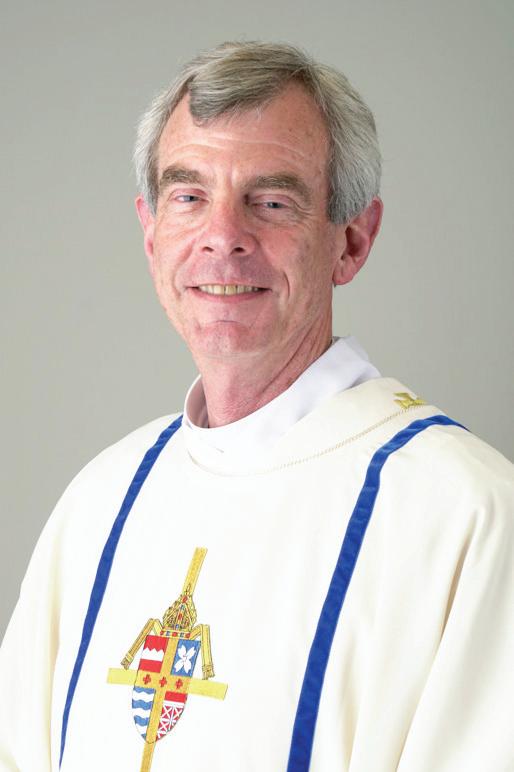
" So, when you look at the reasons for our success, I think it’s the priests talking to their flocks; I think it’s not asking for money; and I think it’s reinforcing what our ministries are We try to educate parishioners on where Stewardship facilitates services to, not just the money. Jesus says, ‘I want your heart.’ I think when you appeal to a person’s heart, that is when their generosity opens up; when they understand and put together that their status in life is a gift from God, and part of our obligation is to thank God for the gifts He gives us."
Deacon Hicks Armor, Stewardship and Strategic Planning director
the communications campaign launches. Then, beginning in March, the ministries are emphasized. In 2026 so far, the March theme was gratitude, the April theme was Christian faith formation, and the May theme is the permanent diaconate. Seminarians, the mobile medical clinic, youth and young adult ministry, college campus ministry, Catholic schools, marriage and family life, and Advent/end-of-year giving also are upcoming monthly featured themes.
“Every month we talk about a different ministry. … We only do one ask and one follow-up and that’s it. The rest of the year we call it nourishment. We are reinforcing the ministries that we promote,” Deacon Armor said.
“So, when you look at the reasons for our success, I think it’s the priests talking to their flocks; I think it’s not asking for money; and I think it’s reinforcing what our ministries are,” he said, noting that his office puts together an impact report each year detailing how the ministries benefit from the Bishop’s Appeal.
“We try to educate parishioners on where Stewardship facilitates services to, not just the
money. Jesus says, ‘I want your heart.’ I think when you appeal to a person’s heart, that is when their generosity opens up; when they understand and put together that their status in life is a gift from God, and part of our obligation is to thank God for the gifts He gives us.
“How we do that is by serving, in many cases, the less fortunate or in how we educate our young on their faith or how we educate people to be ministers,” the deacon shared. “It’s a return to God of the gifts He gives us.”
Additional information on the Bishop’s Appeal and its impact on ministries is quantified in the annual Stewardship report available in print and online.
“The diocese is making a difference, and that is important,” he said. “We can’t solve all the world’s problems, but I do feel like through our ministries we are making a difference in people’s lives. And that’s the important thing.”
More than 6,300 households participated in last year’s Bishop's Appeal. For more information on the Bishop’s Appeal for Ministries and the impact it makes, visit dioknox.org/appeal ■
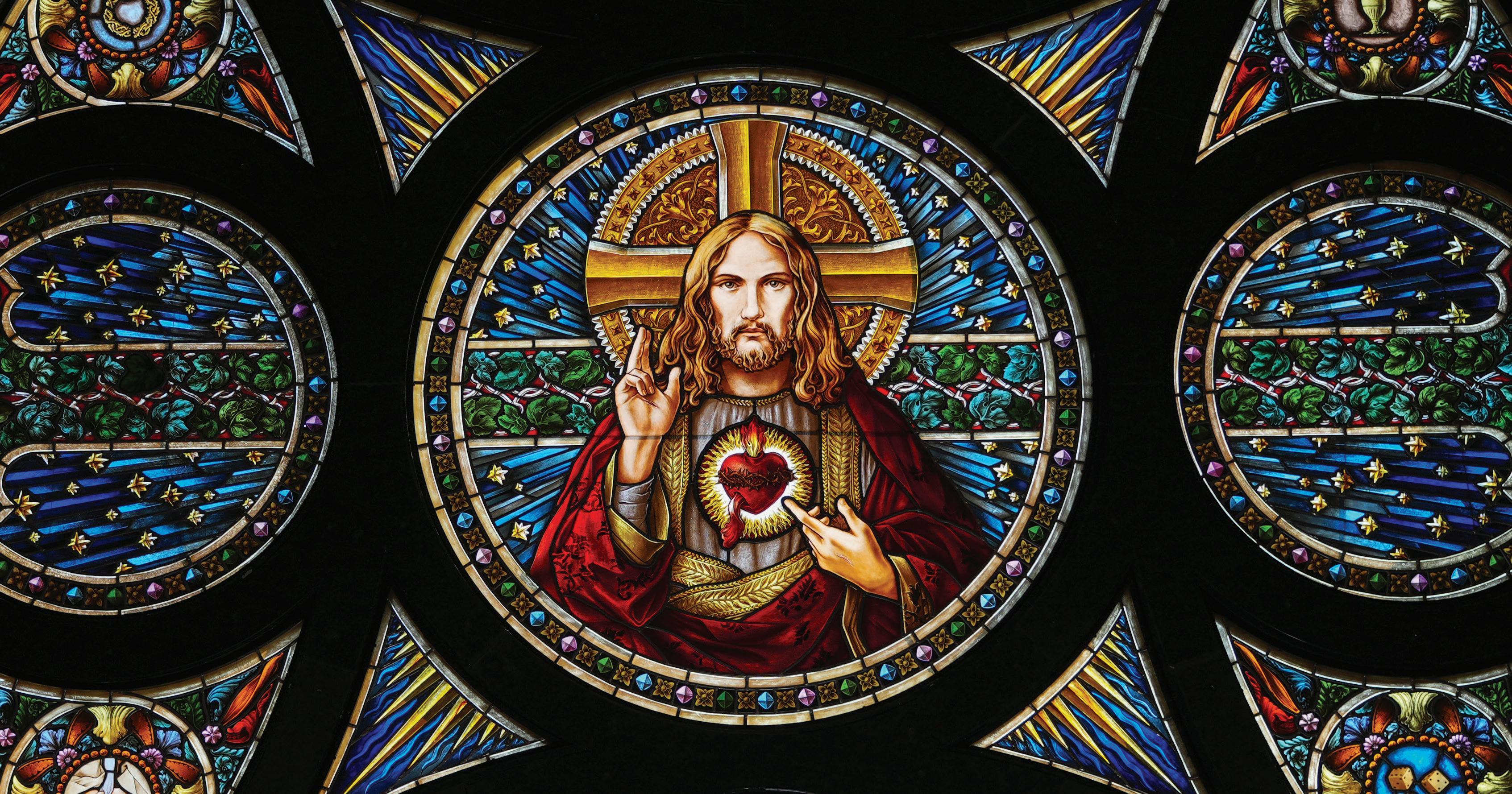
The 2025 Bishop’s Appeal for Ministries exceeded expectations, with over 6,300 households helping raise $3,221,483, surpassing the goal by more than $200,000 and setting a new record. This strong response reflects a generous and engaged community, united in support of essential ministries across East Tennessee.
“The Bishop’s Appeal for Ministries is a living expression of our faith in action, strengthening our ministries and bringing hope and care to those we are called to serve. Your participation and generosity make this mission possible.” – Bishop Mark Beckman
Through the generosity of many, this mission is lived out across five key priorities that guide the life of our diocese: fostering vocations to the priesthood, engaging youth and young adults, serving neighbors in need, forming missionary disciples, and strengthening Catholic schools. In each of these areas, lives are impacted and the love of Christ is made visible.
Thank you to all who generously supported last year ’ s Bishop’s Appeal for Ministries. We are grateful for you!
Together, we are forming disciples, serving others, and strengthening our Church
By Katarzyna Szalajko OSV News
Before he started his general audience, Pope Leo XIV stepped out of his popemobile on May 13 and walked over to pray beside a plaque marking the spot where history took a turn that shocked the world 45 years before.
St. John Paul II was shot precisely there on May 13, 1981—that day of the assassination attempt when it is widely believed Our Lady saved the pope’s life.
“Today we remember the memorial of Our Lady of Fátima,” Pope Leo said, addressing English-speaking pilgrims during his audience. “On this day 45 years ago an attempt was made on the life of Pope John Paul II, and for these reasons I dedicated my catechesis today to the Blessed Virgin Mary.”
On that fateful day right before lunch, John Paul II rode slowly through St. Peter’s Square in an open white jeep, and he bent down to bless a small girl in the crowd. Seconds later, gunshots rang out.
Turkish gunman Mehmet Ali Agca shot the pope at close range. John Paul II collapsed into the arms of his secretary, then-Father Stanislaw Dziwisz. Blood soaked his white cassock as he was immediately rushed to Gemelli hospital, in what his personal secretary later recalled as a “fi ght with time” to get the pontiff to the operating room.
On anniversary of fi rst Fátima apparition
“One hand fi red, and another guided the bullet,” John Paul II would later say, convinced that Our Lady of Fátima had spared his life. The attack took place exactly on the anniversary of the fi rst apparition of the Virgin Mary to three shepherd children in Fátima, Portugal, in 1917. In 1982, the pontiff traveled to Fátima to thank the Blessed Mother for saving his life. The bullet removed from his body was later placed in the crown of the Fátima statue. Italian journalist Alberto Michelini, who covered the pope for decades, told OSV News that for John Paul II the connection was never symbolic. “The Marian pope was saved thanks to the hand that diverted the deadly bullet—thanks to the hand of Mary,” Michelini said. “It was a true miracle.”
Father Miroslaw Cichon, director of the John Paul II Pontifi cate Documentation Center in Rome, told OSV News that the center’s archives preserve moving testi-
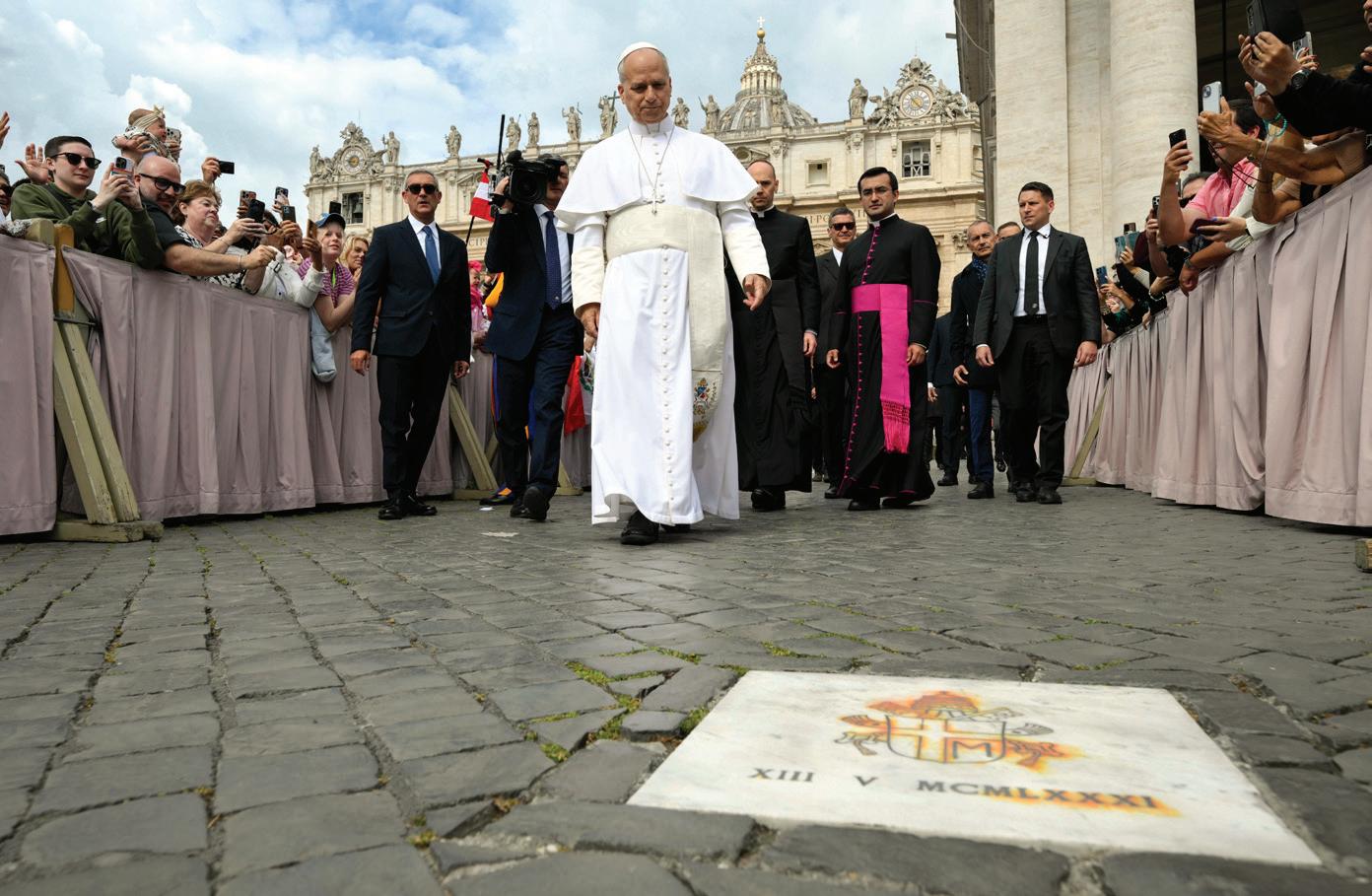
monies of the worldwide prayers that followed the attack, including an image of Our Lady of Czestochowa placed on the empty papal chair in St. Peter’s Square after the wounded pope was taken to the hospital.
Mr. Michelini linked the assassination attempt to the broader collapse of communism in Eastern Europe.
“I covered the pope’s fi rst trip to Poland,” he said. “From that extraordinary encounter with the crowds—something that worried the Kremlin greatly—we witnessed, within 10 years, from the Baltic to the Black Sea, the collapse of the Berlin Wall.”
Geopolitical dimension of attack on pope
For many historians, the geopolitical dimension of the attack can no longer be dismissed as speculation. Pawel Skibinski, Polish historian and former director of the Warsaw’s Museum of John Paul II and Primate (Cardinal Stefan) Wyszynski, said Soviet authorities viewed the Polish pope as a destabilizing force almost immediately after his election in 1978.
“The pontifi cate of John Paul II was undoubtedly a factor changing the situation of believers in the Eastern bloc,” Mr. Skibinski, who is a professor at the University of Warsaw, told OSV News.
He said Soviet intelligence services closely monitored Vatican outreach to Catholics behind the Iron Curtain.
“We do not have proof of a direct Politburo decision ordering the elimination of Karol Wojtyla,”
Mr. Skibinski said, mentioning the highest executive, policymaking body within the Soviet communist party. But the beginning of coordinated activity by Soviet and Bul-
garian services around Mr. Agca is a historical fact.
Mr. Skibinski pointed to fi ndings from investigations conducted by Poland’s Institute of National Remembrance indicating that Mr. Agca—after escaping from a Turkish prison—underwent training linked to Soviet intelligence networks in Tehran, Iran.
“The so-called Bulgarian trail is not speculation anymore,” Mr. Skibinski said. “From a historical point of view, there is no doubt.”
Yet the pope’s survival may have ultimately strengthened his authority rather than weakened it.
“The fact that he paid with his own blood for the truths he proclaimed increased his credibility,” Mr. Skibinski said.
The attack transformed John Paul II into a global moral fi gure during one of the most fragile phases of the Cold War.
More attention to ‘suffering, penance, forgiveness’
“It is a very important date in the pontifi cate,” said Michal Senk, director of the Center for the Thought of John Paul II, based in Warsaw, noting the assassination attempt intensifi ed themes already present in Cardinal Wojtyla’s spirituality.
“It was not a radical change of direction,” he said. “But after the attack he devoted even more attention to suffering, penance, and forgiveness.”
Two years after the assassination attempt, on Dec. 27, 1983, the pope visited Mr. Agca at Rome’s Rebibbia prison and publicly forgave him—a gesture that became one of the defi ning images of his pontifi cate.
Mr. Michelini said Pope John Paul’s embrace of Mr. Agca became stronger than any speech about forgiveness.
“Karol Wojtyla was a man of gestures,” he said. “His ability to speak to the world even without words transformed him into one of the most extraordinary natural leaders of our era.”
Still, Mr. Senk cautioned against romanticizing Mr. Agca or describing the prison meeting as reconciliation.
“Agca never asked for forgiveness,” he said. “John Paul II forgave him without being asked. That is something radically evangelical.”
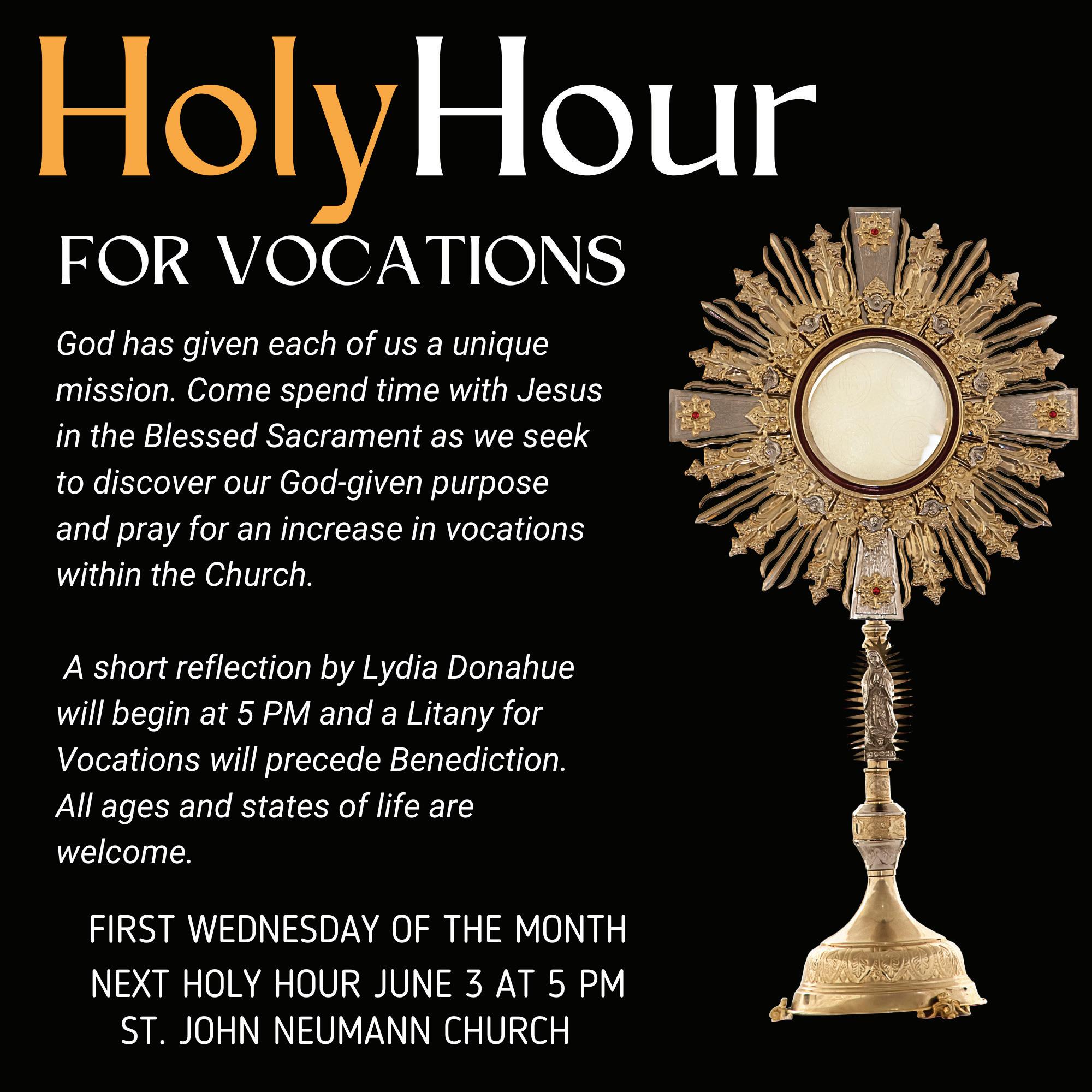
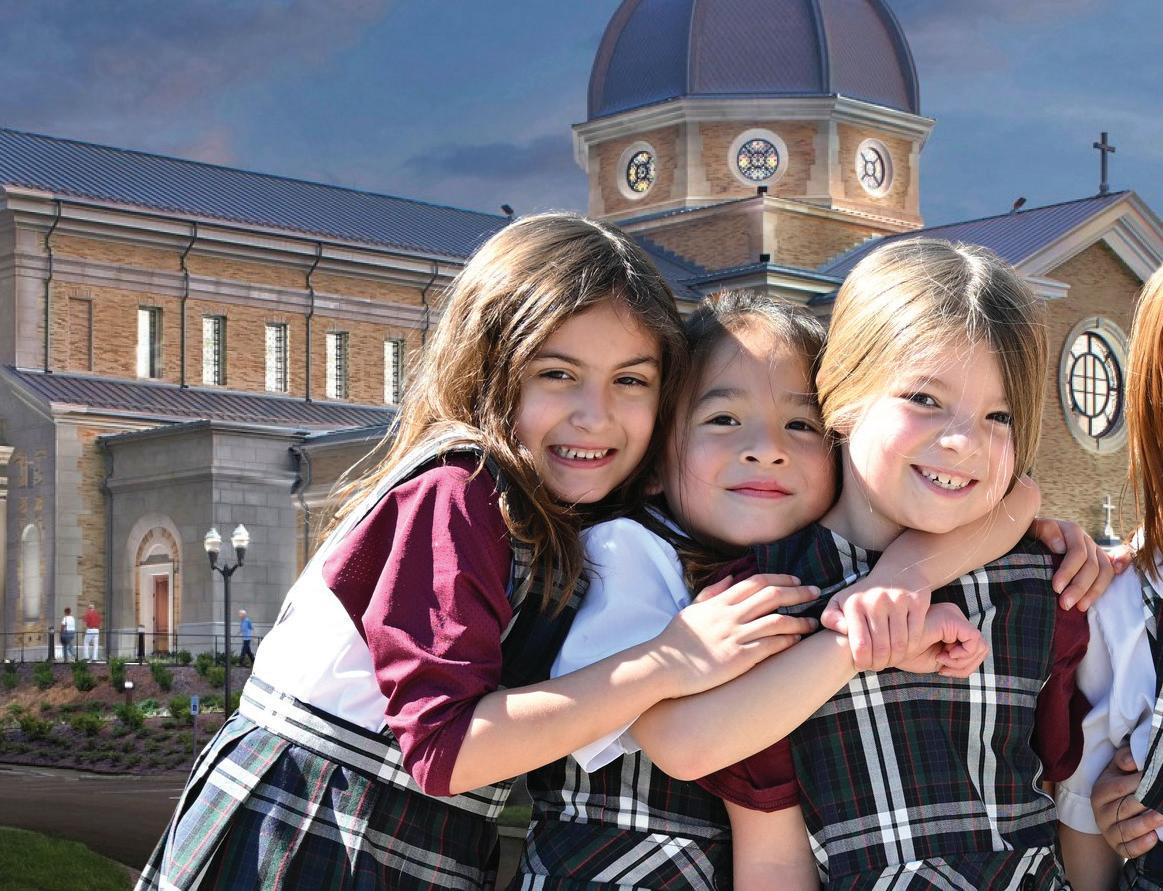


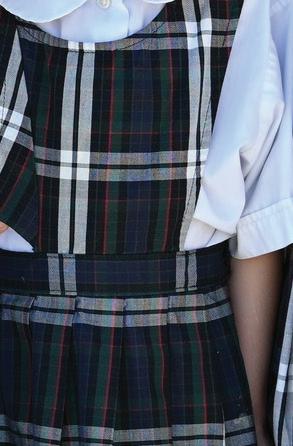
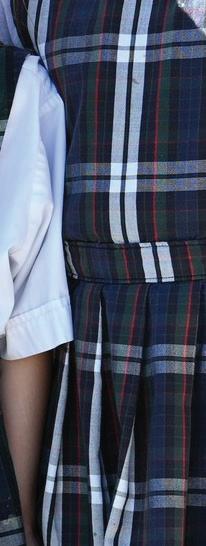



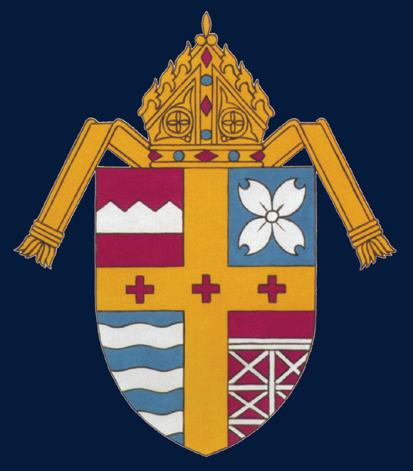


ly Mass, and liturgical seasons are not obligations to ‘push’ us; they are rhythms that train the heart to recognize the Shepherd’s voice.”
Moving on to the edge of the farm’s woodlot, the deacon described what he called “the edges” as the most biodiverse and resilient areas, where there is abundant life and where two environments come together.
Offering examples of riverbanks, where forests meet fields, and of coral reefs in the ocean, he said, “Liturgy is an edge; not just symbolic but real. It is where heaven and earth come together in the Mass, where heaven and earth overlap, where time and eternity touch, and where the visible and invisible meet. What you see in the bread, wine, people, and place becomes the meeting point of what you cannot see, the grace, the communion of saints, and Christ’s sacrifice.”
At its best, he said, the Church lives on the edge—not rigid, not formless, but alive.
“Christian life always happens at the boundary, where something is being given up and something new is emerging,” he said as attendees moved through the woodlot and then emerged overlooking a pasture in which some 40 newborn lambs bounded along and chased
in exactly that position.
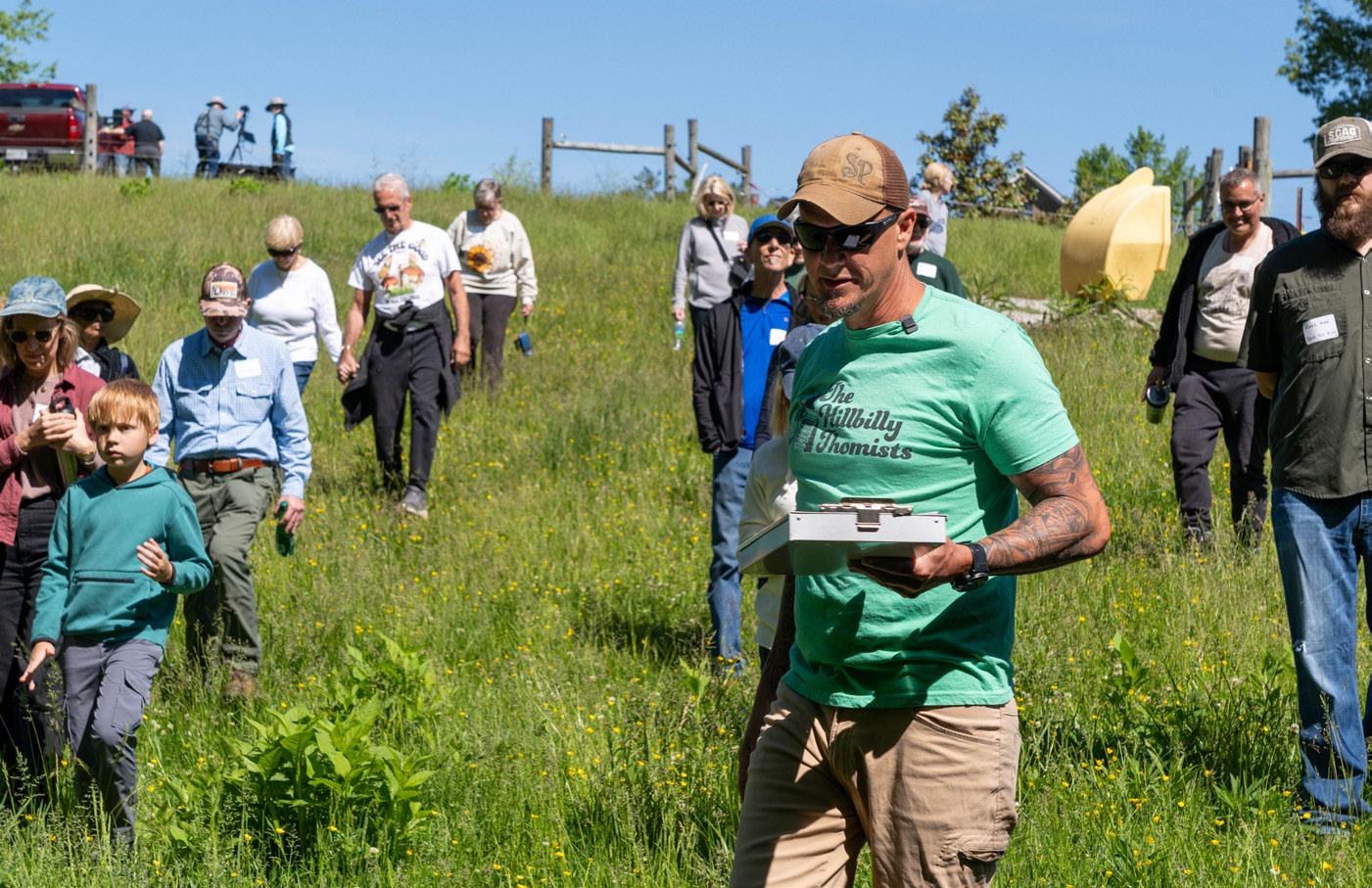
teaching on caring for the environment created by God. The group was taking part in the From Liturgy to Land eco-farm retreat at the Shields' Six Stone Jars Farm on May 2.
their mothers.
During a final stop, Deacon/ farmer Shields discussed the growing of grass.
“You don’t grow grass by grazing it. Grass doesn’t grow because animals eat. It grows because it is given time to rest,” he explained, drawing the spiritual parallel, “Where am I ‘overgrazing’ my own life: constant output, no recovery? Do I treat rest as unproductive, or as essential for fruitfulness?”
Spiritual root growth, he suggest-
Jesus is on His way to His death, sentenced by Pilate to be crucified, carrying His cross out of the city—the same city He entered so triumphantly, as we recall on Palm Sunday. The crowds that once shouted “Hosanna” have either fallen silent or turned against Him. The shift is stark, almost jarring. What was once celebration has become condemnation.
He is clearly struggling, and the Pharisees do not want Him to die along the way—not out of compassion, but because they want to see Him breathe His last breath on a cross, theological proof that He was cursed by God (Deuteronomy 21:22-23). Their concern is not for His suffering but for what His death will signify.
But after a night of horrific physical abuse, a morning trial, a beating that left many men dead, and a brutal mockery of the “king” game, Jesus just might expire along the way. His body, already pushed beyond endurance, begins to fail under the weight of the cross. Each step is a struggle. Each movement is an act of sheer will.
The road to Calvary is not just a physical journey; it is the visible unfolding of sacrifice, humiliation, and love.
Just as Jesus is in the midst of the central act of human history, there comes a passerby on his way back from the fields: Simon of Cyrene. The same man we met at the beginning—the one simply trying to pass by.
Scripture says he was pulled from the crowd and commanded to carry the cross alongside Jesus. There is also a belief that he may have volunteered from the crowd, moved by what he saw. The Gospel accounts leave room for both interpretations, and perhaps that ambiguity invites us to see ourselves in him. No matter.
Hurrying or tarrying along the road, two men came together. One, the Son of God, carrying the weight of the world’s sin. The other, an ordinary man, carrying the weight of his own daily life. Their paths intersect in a moment neither could avoid.
Seeing their reeling prisoner, the executioners looked around and saw a bystander who appeared fit for the job. Simon’s choice was to obey the orders or face a violent fate. There is a certain starkness to that reality. This was not a polite request. It was a command backed by force.
Stepping beside Jesus, Simon encountered Christ during His time of need. He found himself staring at the One for whom he was to “take up His cross and follow” (Mark 8:34), though he could not have known it fully at the time. There is something powerful in that encounter. Christian tradition holds that Simon, at first reluctant, was changed beneath that gaze, from unwilling participant to voluntary servant of the Lord. Whether that transformation happened in an instant or unfolded over the course of that walk, the tradition points to something deeper than obligation. It suggests that proximity to Christ, especially in His suffering, has the power to transform the human heart. It would be easy today for a believer in Christ
ed, happens with prayer, silence, and Scripture while busyness without depth results in greenness for a moment and then collapses.
“Left alone, animals overgraze their favorite spots. A good farmer moves them for the good of both land and animal,” the deacon and farmer pointed out. “The Shepherd leads me not just to feed me—but to protect what feeds me … rest is where God restores what only He can grow.”
Deacon Shields, who moved to
to step in and volunteer to carry the cross for Jesus because we know who He is. We have thousands of years of accounts telling of God’s plans for His Son. We have Scripture, preserved and proclaimed across generations. We have the teachings of the Church, guiding and interpreting those truths.
We have firsthand accounts of miracles attributed to saints who encountered the Holy Spirit. We have stories of conversion, of sacrifice, of lives radically changed by an encounter with Christ. We have art, music, theology, and tradition—all pointing us toward understanding. We have our evidence.
What did Simon of Cyrene have?
Nothing.
He didn’t have the Church spreading teachings across the globe. He had no Bible to read, no catechism to study, no homilies to listen to. He did not have centuries of reflection to help him make sense of what he was witnessing. Nothing.
On the way to His death, Jesus had yet to fully prove His identity as the Lord’s Son in the way we now understand it. He had yet to conquer death and return to give us eternal salvation. The resurrection, the cornerstone of Christian faith, had not yet taken place.
Simon didn’t know who Jesus was, but upon seeing His face, he changed.
The moment was simple, brief, and yet profound, speaking to the mystery of encounter. At times it is not knowledge that moves us, but presence. Not certainty, but recognition. Something in that encounter with Christ, battered and burdened, reached Simon in a way that words alone could not.
While tradition tells us that Simon and his sons became some of the first Christians, we cannot say with certainty what became of him after that day. His story, at least in the pages of Scripture, is brief. But from that day he no longer was a bystander, but a symbol of faith. He reached out his hand to Jesus before Jesus had been revealed to us.
We know this man was not of significance or power. He was not a ruler, not a priest, not a person of influence. He was, by all accounts, ordinary. And yet, he was chosen, or compelled, to take part in an extraordinary moment. Beyond tradition, he faded back into the crowd from which he came.
Still, this was a choice, the choice of a passerby who came across the suffering of another that Good Friday. Whether forced or freely embraced, it required action. It required stepping out of the role of observer and into the reality of participation.
At that moment, Simon, patron of passersby, had a choice—forced yet free—and entered history. There is a paradox in that phrase: forced yet free. It reflects the complexity of many moments in our own lives, when circumstances push us into situations we would not choose, yet within those situations we still retain the freedom to respond.
Almost 2,000 years later, we remember the name of a man who was “coming in from the fields” (Luke 23:26). A simple detail, almost inci-

Tennessee in 2013 after leaving active-duty service with the U.S. Army, was ordained a permanent deacon in the Diocese of Knoxville in June 2022. He will be one of three speakers making brief presentations on Laudato Si’ and ecological spirituality at 5 p.m. on Wednesday, May 27, at All Saints Church in Knoxville. Bishop Beckman and priests of the diocese will then celebrate a Mass marking the anniversary of Pope Francis’ 2015 encyclical. A reception will follow in the parish hall. Bishop Beckman created the Care of Creation Commission as a response to the urgent care needed by people of faith for God’s creation. The Commission’s website, https://dioknox.org/care-ofcreation, is grounded in the seven goals of Laudato Si’ and is designed to serve as a resource for the formation of Creation Care Teams in all parishes throughout the Diocese of Knoxville.
“Today (was) not just about farming—it (was) about seeing creation through the lens of the Church. (The day provided an opportunity) for the faithful to see how the grace of the liturgy extends into daily life—especially through stewardship of the land, care for creation, and a sacramental vision of the world,” Deacon Shields said. ■
dental, and yet it grounds the story in the ordinary. He was not seeking out greatness. He was simply on his way home.
No matter how much we may want to stand aside, along comes Life (John 14:6).
Simon’s actions are admirable, whether forced upon him by soldiers or offered voluntarily. They teach us a lesson: do not be afraid to be changed. That lesson is not always easy to accept. How often do we see someone suffering? How often do we cast judgment before offering a hand? It is easier to analyze than to assist, easier to form an opinion than to enter into someone else’s pain. We create distance through assumptions, through labels, through quiet rationalizations that allow us to move on without engaging. Whether it is an immigrant struggling with English, a homeless man sitting on the street corner, or Jesus too weak to bear the cross—we have the opportunity to be changed by that person. Each encounter carries within it the possibility of grace if we are willing to see it.
And yet, too often we become distracted by our routines and selfishness. We convince ourselves that we are too busy, too tired, too preoccupied. We avoid those in need because we fear losing our comfort. We fear the inconvenience, the emotional cost, the uncertainty of what might be asked of us.
We return, again and again, to the safety of being bystanders.
But the Gospel does not leave much room for comfortable distance. Again and again, Christ calls His followers into relationship, into service, into love that is active rather than passive. “Take up your cross and follow me” is not a metaphor for convenience; it is a call to participation.
Simon of Cyrene did not go looking for the cross. It was placed upon him. And in that moment, he could no longer remain uninvolved. Neither can we.
Life has a way of placing crosses in our path— moments that interrupt, challenge, and invite us into something deeper. We may not recognize them at first. They may not look significant. They may even feel like burdens we would rather avoid.
But within those moments lies an invitation. It’s an invitation to step closer instead of walking away, an invitation to see rather than pretend not to see, an invitation to carry, even if only for a short distance, the burden of another.
It is there, in those unexpected encounters, that we meet Christ.
Not always in ways that are obvious or comfortable, but in ways that are real and transformative. And like Simon, we may not fully understand the significance of what we are doing at the moment. We may not see the full picture. We may not feel ready.
But we are still called to respond.
It’s hard to be a bystander, but perhaps we were never meant to be. ■
Bee Goodman is a multimedia journalist for the Diocese of Knoxville who writes for The East Tennessee Catholic. She is a member of the Cathedral of the Most Sacred Heart of Jesus.

“There are a lot of effects that are going to occur from the various statuses that we have received this semester, things that put us on the national map more than previously,” he noted.
“The Newman Guide is a guide you want to be in as a Catholic college or university. They not only check for academic rigor but spiritual and character rigor and character formation, integrity of the school’s policies and guidelines to make sure they are forming Catholic students and not overly appeasing the world. In short, to make sure they come out the other end of the college still Catholic and stronger,” he said.
“Recently, The Newman Guide extended this to Catholic grade schools—K-8 and high school—and so as of right now over the last two years, of 5,800 Catholic grade schools, only 44 have received that status of being a Newmanrecommended school in The Newman Guide. The Newman Society reached out to us a few months ago as the youngest and newest accredited Chesterton Academy. We have been working with them, and as of the end of our school year, May 22, we will be a Newman Guide high school.”
Mr. Summers pointed out there is only one other Chesterton school in The Newman Guide, and it is a flagship Chesterton school, Chesterton Academy of the Holy Family in the Diocese of Joliet, Ill. The only other Tennessee secondary-high school in The Newman Guide is St. Cecilia Academy, which is a Diocese of Nashville school.
And, according to Mr. Summers, Chesterton’s recognition in The Newman Guide is especially important for families moving to East Tennessee from other parts of the country. He said Catholic families commonly consult The Newman Guide and The Society of G.K. Chesterton when making school choices.
Mr. Summers said the Chesterton Academy is blessed by the “gems” it has received in the last year, and he attributes them to one main reason.
“That’s easy. That is the Lord’s providence. As Gamaliel said in the New Testament regarding the Apostles as they started to preach the Gospel and were arrested; they brought, I believe, Sts. Peter and Paul before the Sanhedrin, and he (Gamaliel) said, ‘If it is of God, it will last. If it is of man, it will perish.’ It is not us. We simply participate in the Lord’s will. But He is really what drives it,” Mr. Summers said.
“I think the school still being here after three years, and after five years of formation, is proof in the pudding of that,” he added.
The Chesterton Academy’s inception was in spring semester 2020, just as COVID-19 was spreading across the country.
Prior to his starting Chesterton Academy, Mr. Summers was a Latin teacher at Lakeway Christian Academy in White Pine.
He said Jeff Baker, who is now Father Jeff Baker, pastor of St. Elizabeth Ann Seton Catholic Church within the Ordinariate of the Chair of St. Peter, approached him first with the idea of starting a Catholic school in the Knoxville area.
“We wanted to see what a Catholic classical academy would look like in East Tennessee. The soil is actually very ripe for it in East Tennessee for this notion of Christian classical academies,” Mr. Summers pointed out.
He explored opening a kindergarten-through-eighth-grade school so students could start their faith formation early.
“However, we became convinced the more we looked at the Chesterton schools model that four years gives a much quicker turnaround time in returning students to the community. Take them where they’re at at the end of their eighthgrade year, whether it’s public, private, Protestant, or Catholic. By the end, they all have the same formation,” he said.
“In many of these Chesterton communities, some of the students return as teachers, as parents, as volunteers. So, they are able to re-
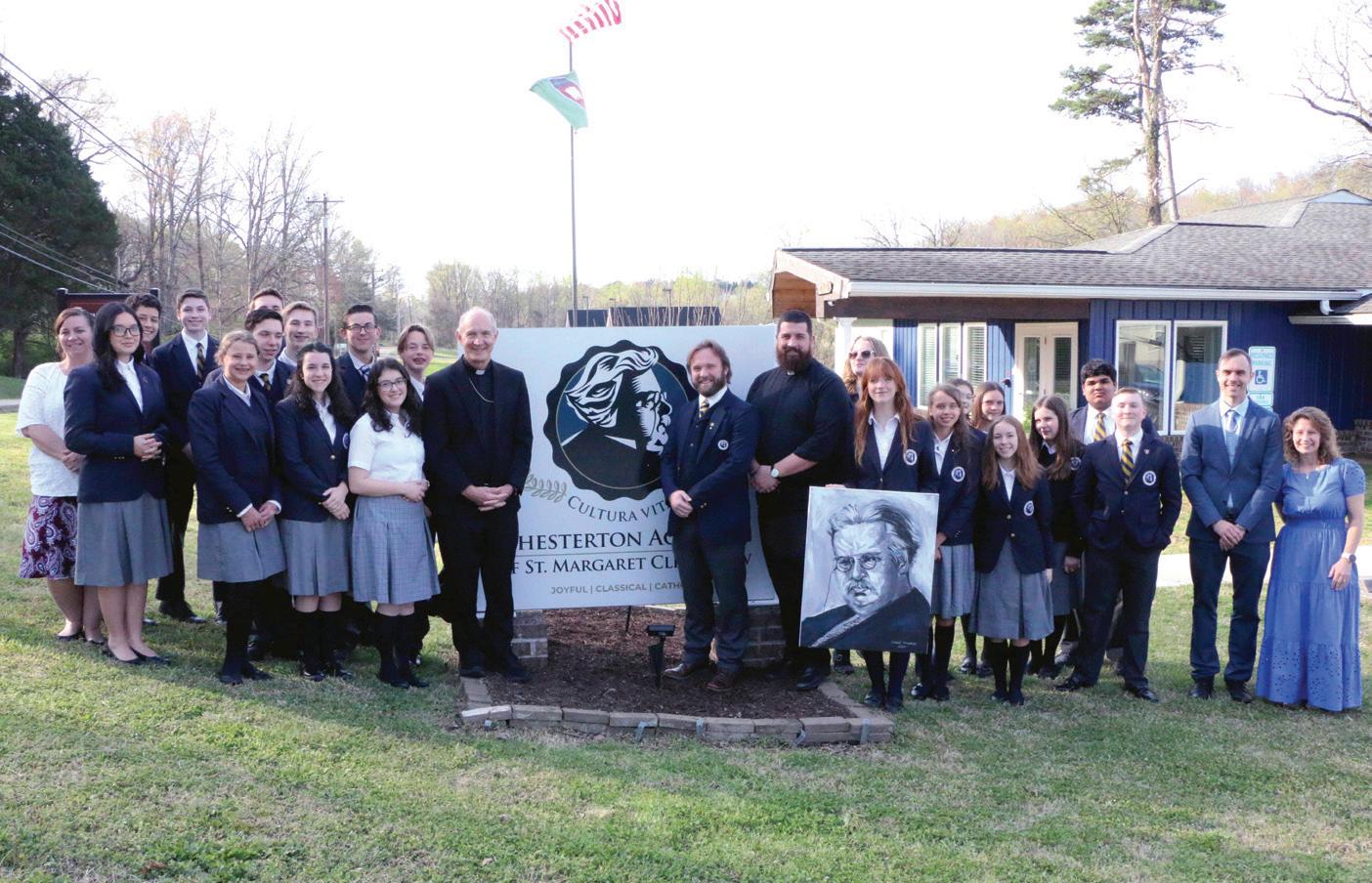
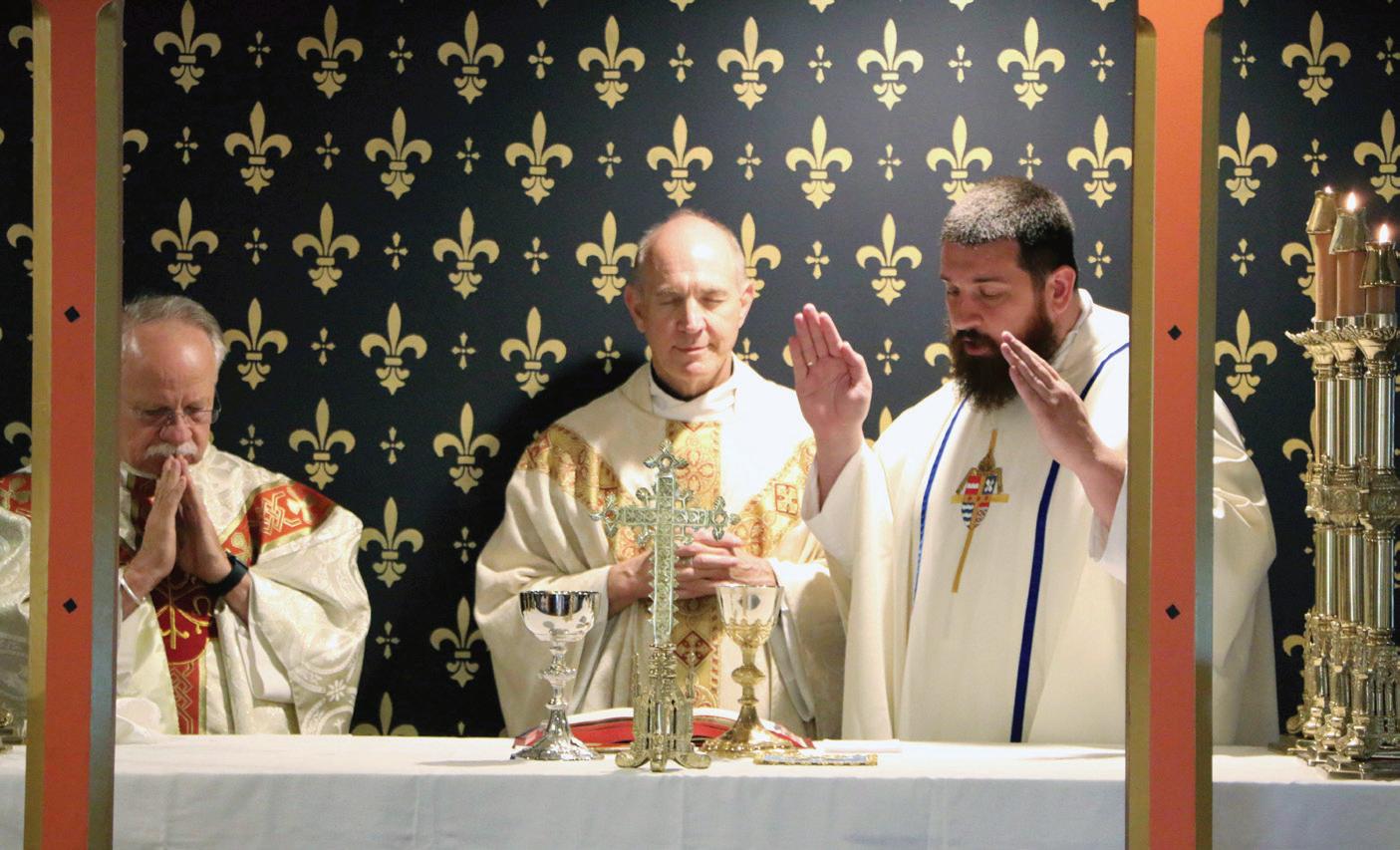
fresh the academy or go out and really till that soil,” he added.
After spending time researching Chesterton schools and how the network organizes its schools, Mr. Summers and Chesterton Academy of St. Margaret Clitherow organizers spent 18 months in training, building a community, holding town-hall meetings, fundraising, and putting together infrastructure.
“We opened our doors in the fall of 2023. We opened over on Rutledge Pike, where we spent our first year. After that first year, thanks be to God, we were able to move over to the west side, where all of our data told us this is the area where we needed to be. We just needed to get started where we were at first,” he said. “We just needed to start however imperfectly. The Lord will lead us the rest of the way.”
In the first two years Chesterton Academy has been at 217 Fox Road near Farragut, the school had nine students each year as it rolled out its high-school curriculum. At the beginning of the 2025-26 academic
year, Chesterton had 18 students. It has since enrolled three transfer students.
“As we go into this next year, we already have 25 students fully enrolled. We have at least another five in the pipeline and we are shooting for 40 students before the start of the next school year,” Mr. Summers shared.
He observed that the current school building can accommodate up to 40 students without any modifications.
“With modifications, we can scale up to 50 in the present building. We have plans to add buildings to the back of our campus, which could get us up to 60 or 70 students,” he said.
The Chesterton Academy leases the building it is in and subleases it to St. Elizabeth Ann Seton Church for its Masses and church activities.
Mr. Summers said the Chesterton Schools Network caps enrollment in each school at 160 students. He acknowledged that the number is small compared with average en-
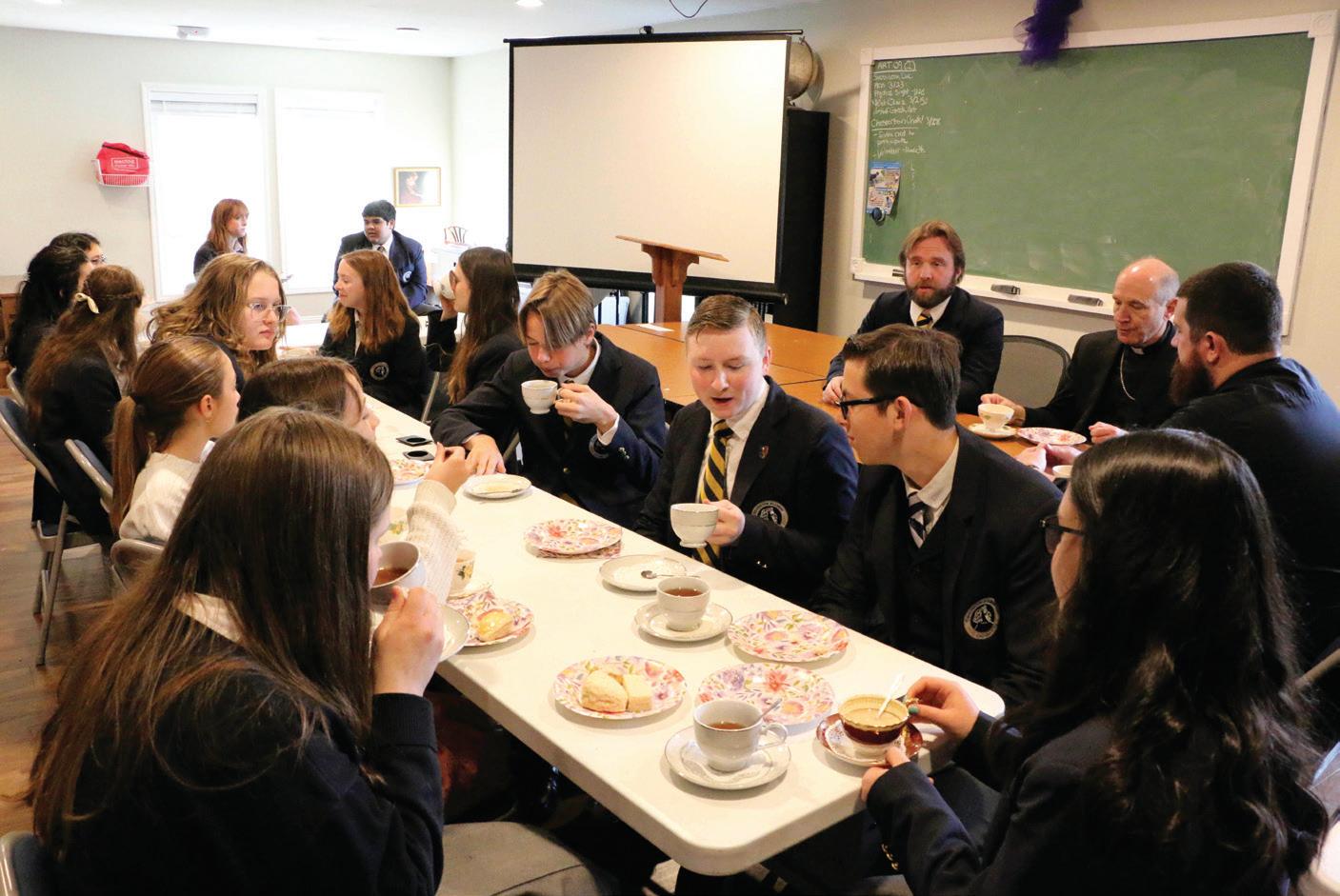
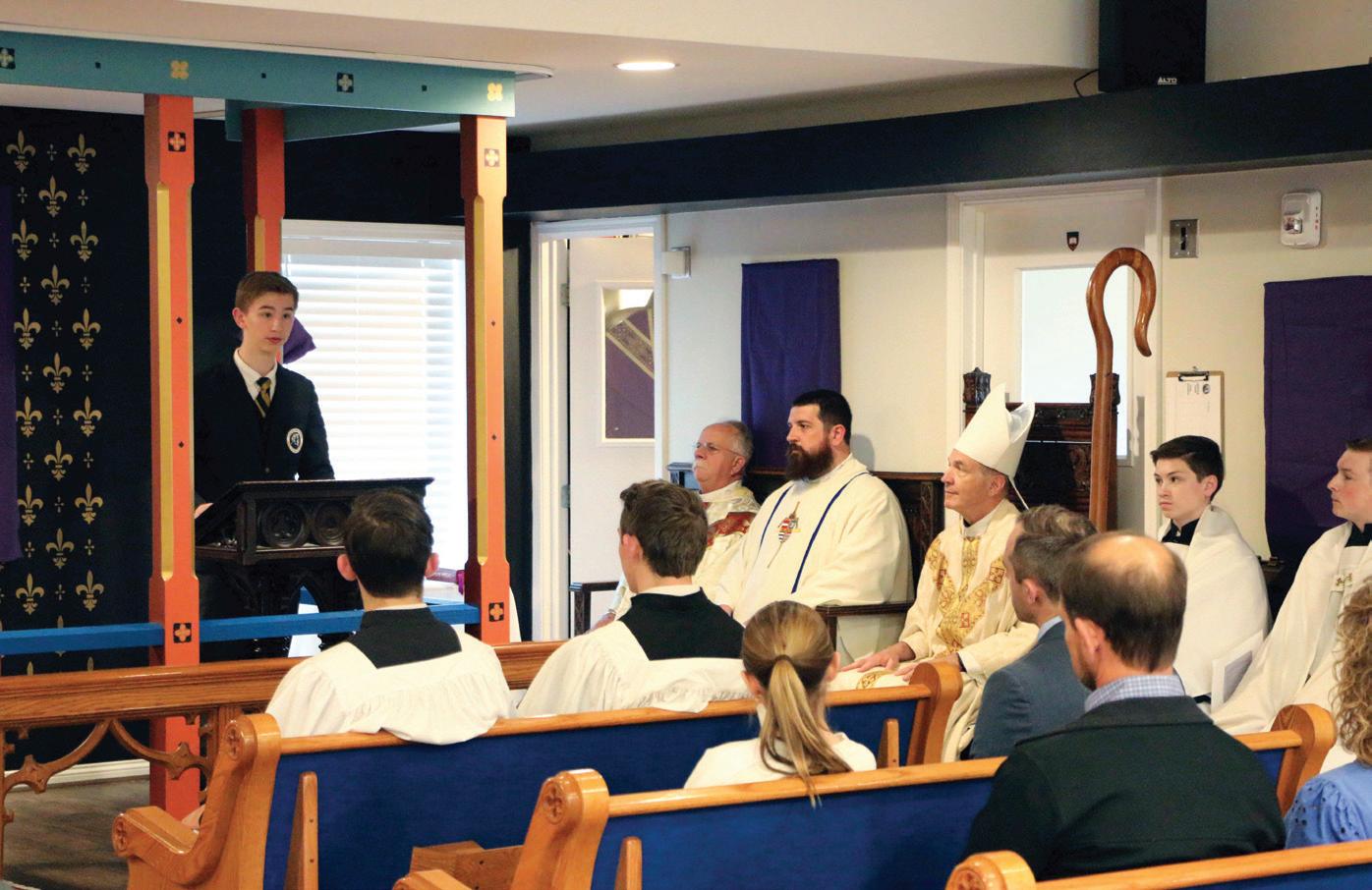
rollment at K-8 schools, which is 225-250.
“That puts us at roughly 40 students per grade in our high school. We don’t envision ourselves going anywhere near that for now. We would like to be able to focus on the quality of the culture and grow enough to be able to provide for a living wage for our faculty, for the quality of our building, and the educational materials,” he said.
As part of Chesterton Academy’s classical approach to education, digital technology, software, and apps as a part of classroom instruction are de-emphasized while hands-on learning and reasoning are emphasized, or as Mr. Summers called it, “the anagogical experience.”
“I always say if you know how to write a paper physically, you know how to type a paper. But if you know how to type a paper, you don’t know how to write a paper. (Students) look for the spell-check; they look for Grammarly to help them with everything. This process cuts down significantly on our expenses. We have chalkboards and pens and pencils. A lot of our expenses go toward quality books,” he explained.
For now, Mr. Summers said Chesterton’s goal is to focus on 80 to 100 students.
Chesterton students take 11 courses each year: theology, philosophy, literature, history, Latin or Greek, mathematics, science, art, music, drama, and dance.
Father Neil Blatchford, associate pastor of St. Thomas the Apostle Parish in Lenoir City, is the Chesterton Academy chaplain. Father Baker celebrates three Masses a week at the academy. Father Bill McNeeley, pastor of Holy Family Parish in Seymour, celebrates Mass there each Monday. Other Diocese of Knoxville priests also have taken part in the school.
An immediate goal of Chesterton is to have all four high-school grades rolled out completely with a full complement of students in each grade accompanied by full faculty staffing.
“We are moving from three fulltime faculty members, including myself, and four part-timers, to five full-time faculty members and one part-timer next school year,” Mr. Summers said, noting that the Chesterton model includes providing ample planning time for teachers to go with their instruction time.
Chesterton faculty members are Mr. Summers; Jared Kimutis, who is deputy headmaster; Sonia Summers, who teaches fine arts; Mary Weaver, who teaches music; and Hannah Dee, who teaches math and science.
Long-term plans, according to the headmaster, are for Chesterton Academy to purchase its own campus that can accommodate up to 160 students.
“For now, we really want to focus on getting the quality of the culture off the ground. The quality of the culture is here; it is established. But it takes several years to make sure that is nurtured and strong and fostered. We would like to make sure that we don’t expand so rapidly that we don’t maintain that culture first. The network highly encourages that,” Mr. Summers said. He underscored that Chesterton Academy is financially stable.
“We are a ministry. We are resting on eagle’s wings. No situation is perfect, but we are at a sustainable model, and we are constantly being met with excellent benefactors who wish to help us,” he said. “The more we see our enrollment increase over time, the more any little inconsistencies in the finances will solidly work themselves out.”
As The Chesterton Academy of St. Margaret Clitherow instills its three pillars of a classical Catholic education in its students—spirituality, character, and intellect—Mr. Summers noted that the school is a “niche” educational model and is not in competition with other Catholic schools.
“Classical education is not for everyone. But it is for some. We like to support our sister Catholic schools however we can,” Mr. Summers said. ■
Gunman ‘a professional killer’
Mr. Senk described the Turkish gunman as “a professional killer” and “a compulsive liar,” insisting the burden of forgiveness rested entirely on the pope, who asked Italy to grant an official pardon to his assassin in 1999—eventually granted to Mr. Agca in the Jubilee Year 2000 by the Italian president.
Father Miroslaw Cichon told OSV News that the assassination attempt left a lasting mark on John Paul II’s teaching, especially in his 1984 apostolic letter Salvifici Doloris , on the Christian meaning of suffering, written in 1984.
“He linked his own fate and the fate of the world even more closely to Mary and the message of Fátima,” the priest said. “The pope’s physical suffering became an integral part of his teaching.”
“That suffering deepened his relationship with U.S. President Ronald Reagan, who had survived an assassination attempt just weeks earlier,” Mr. Skibinski said.
The two men did not form a kind of secret alliance, Mr. Skibinski said, but they did share a common commitment to defending religious freedom and human dignity in Eastern Europe.
Mr. Senk noted that even after recovering, John Paul II never fully regained the robust health of his early years.
“From that point, he became a man who suffered more often and more visibly,” Mr. Senk said.
Yet he did not retreat. Security, however, changed forever. The open vehicle in St. Peter’s Square gave way to the glass-enclosed popemobile.
Pope consecrated the world to Immaculate Heart of Mary
On March 25, 1984, John Paul II consecrated the world—including Russia—although not named specifically in the consecration text—to the
and they’re so engaged,” he said. “They ask great questions. They’re willing to share and discuss and just their enthusiasm for the facts.”
The class was structured to hold space for their enthusiasm. Bishop Beckman opened each session with a lecture, then broke the group into smaller discussions, inviting reflection, questions, and the kind of honest exchange that don’t happen at Mass.
In February, St. John Neumann Parish priest Father Bo Beaty joined as a guest speaker, sharing his story of discernment: from a management role at McDonald’s to answering God’s call to the priesthood. It was the kind of testimony that put skin on everything the class had been discussing as well as offering faithful advice to an audience that often feels lost in looking for the next steps in life, whether it means growing a family or discerning religious life.
One of the things that struck Bishop Beckman most was who showed up.
“I was surprised at how many people came who already know a lot about the Catholic faith, but also how many people came who are not Catholic, who are interested in learning,” he said. “And these videos are posted online to review as well.”
The mix of cradle Catholics, converts, and the curious shaped the texture of the room. Ms. Henderson said it reflects where young adults are right now.
“Young adults are looking for something real, something that holds up in the middle of life’s questions and uncertainties,” she said. “There is a real hunger for truth, meaning, and something that challenges them to grow.”
Bishop Beckman has taught similar material to older adult groups in parishes over the years, and he noted that the dynamic is different with younger audiences in a meaningful way.
“Young adults are also very able to connect with each other and to deepen relationships,” he said. “And I would teach this in parishes with older adults and a lot of them already have long-established
Mary, fulfilling a request tied to the Fátima apparitions.
Weeks later, on May 13, a massive explosion at a Soviet naval base in Severomorsk destroyed a large portion of the Northern Fleet’s missile stockpile. Soviet officials blamed a cigarette; no Western government claimed responsibility.
Mr. Senk cited the episode as an example of symbolic links many Catholics drew between Fátima and the weakening of Soviet power.
“The coincidence of dates is striking,” Mr. Skibinski, a historian, told OSV News.
Mr. Skibinski and others noted that John Paul II viewed history through a spiritual lens, where grace and geopolitics were intertwined.
Father Cichon added that in his 2005 book Memory and Identity , the pope interpreted the assassination attempt “above all in theological terms.”
Berlin Wall falls, communist regimes collapse
By the end of the 1980s, the Berlin Wall had fallen and communist regimes across Eastern Europe had collapsed.
Two years later, the Soviet Union dissolved.
Mr. Michelini, an iconic Italian television journalist, said, “Perhaps the full truth about the assassination will never emerge, but it was clear that the Slavic pope had become a destabilizing force for the last empire.”
of
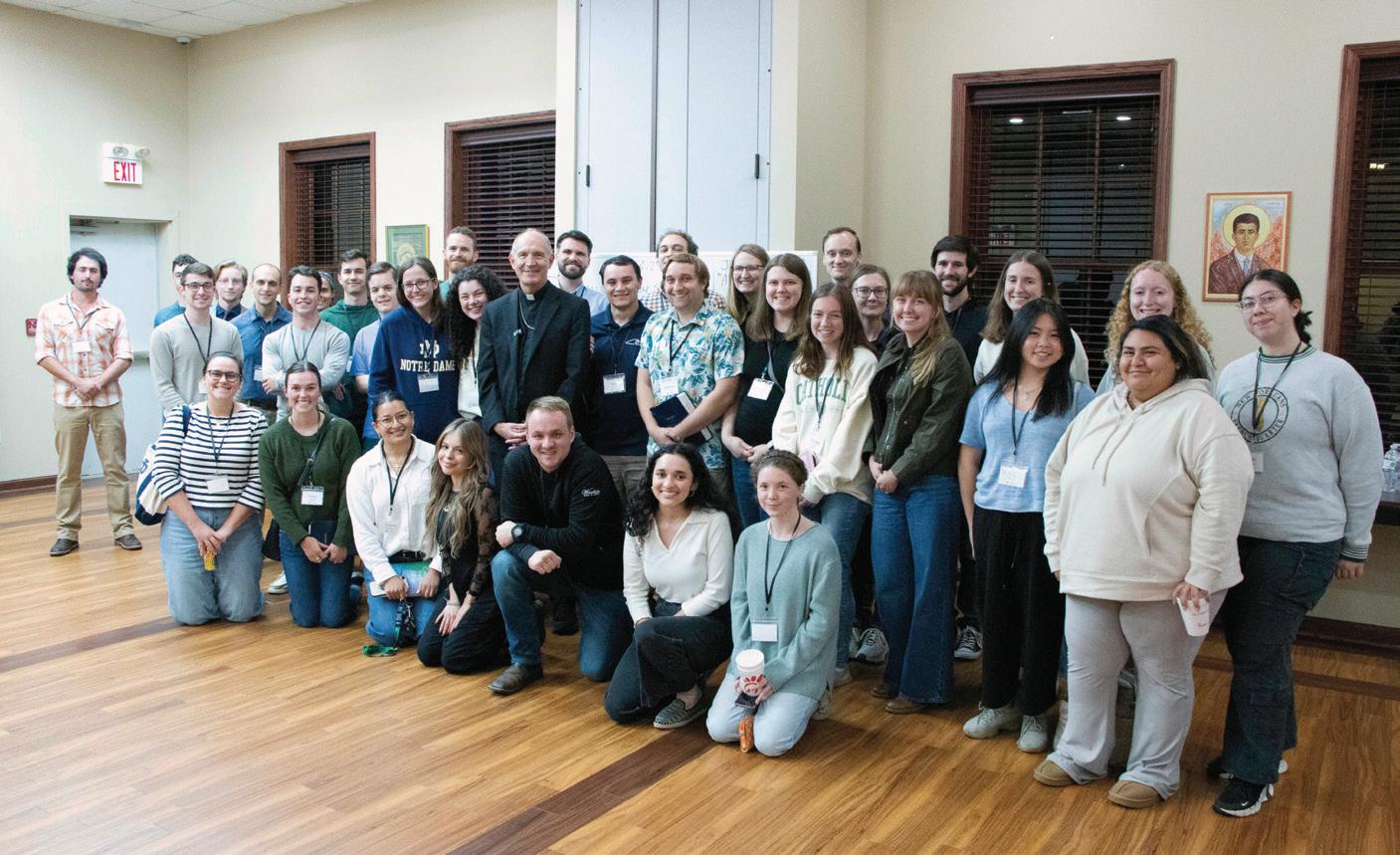
" Young adults are looking for something real, something that holds up in the middle of life’s questions and uncertainties. There is a real hunger for truth, meaning, and something that challenges them to grow "
Amanda
Henderson, director of Youth, Young Adult, and Pastoral Juvenil for the Diocese of Knoxville
friendship groups. So, they were already used to getting together and talking with each other, and so they enjoyed listening and learning new things, or reflecting on them more deeply. Here, the young adults are building a community and learning together.”
That community-building is exactly what Ms. Henderson had hoped for. She said one of the most important things the class accomplished was showing young adults they are not navigating this stage of life alone—the Church sees them, and that other young people are asking the same questions they are.
“The community supported them as they faced some of these times of transition, with honest conversations, shared experiences, and celebration,” she said. “It showed them they aren’t alone in this stage of life.”
Ms. Henderson noted that the impact of the series runs deeper than any single evening. When young
adults understand not just what the Church teaches but why, the faith takes on a different weight.
“When they understand the reasons behind the faith, it becomes personal and shapes how they pray, make decisions, and approach the sacraments,” she said. “Faith becomes part of everyday life.”
Topics across the seven-month run included vocation, virtues, sacred time, prayer, the life of Christ, the sacraments, and the moral life.
It was, in Ms. Henderson’s words, “sharing the whole faith,” an intentional, relationship-based approach to evangelization aimed at forming disciples, not just informing attendees.
As the series continued, Bishop Beckman pointed participants toward many thought-provoking resources to push the learning forward; he recommends two titles for those who want to go deeper after the class’ conclusion.
“A book like The Holy Longing by
Father Cichon added that the assassination attempt marked a turning point—a “threshold moment,” giving John Paul II’s ministry a more “distinctly martyr-like and mystical” dimension. The Holy Father died in 2005 at the age of 84. ■
Ronald Rollheiser is a great introduction to the spirituality of being Catholic that is very accessible to someone who is just now kind of thinking about the faith for the first time,” Bishop Beckman said. He also pointed to Tattoos on the Heart by Greg Boyle, a Jesuit who works with recovering gang members. “That is also a powerful narrative introduction to the power of the Gospel to convert people,” the bishop said.
Ms. Henderson’s hopes for those who attended the discussion series are straightforward.
“My hope is that they stay rooted in prayer, the sacraments, and community,” she said. “That they continue asking questions and seeking deeper understanding. And especially, that they bring this back to their parishes. That they take what they have experienced here and help build up the Church in their own communities, stepping into leadership and creating spaces for others.”
For those who don’t yet have a local community, Ms. Henderson and the diocese are encouraging young adults to step into this space as it returns this fall.
Following the “Mysteries of Catholicism” series, Bishop Beckman will once again invite young Catholics to the Chancery for courses that dive into the Gospels.
Starting Sept. 8, the “Encountering Jesus in the Gospels” courses will be held each Tuesday evening at the Chancery. Details are forthcoming.
Ms. Henderson put it simply: “Start simple and be consistent. You do not need a perfect program. You need a welcoming space and a willingness to invest in relationships. Meet them where they are, take their questions seriously, and invite them into something meaningful. The impact comes from consistency and genuine care over time.”
Though the first series has come to an end, another opportunity begins in September, once again allowing young adults to gather in a like-minded community in formation of their faith with a special opportunity to engage with Bishop Beckman, who steps in to meet them where they are. ■
By Courtney Mares OSV News
As the world awaits Pope Leo XIV’s fi rst encyclical on artifi cial intelligence that was signed May 15 and is being released by the Vatican on May 25, here is a look at what the pope has said on AI since his election a year ago.
The fi rst American pope and a former mathematics major, Pope Leo has returned to the subject of AI again and again in speeches, messages, and interviews since his election in May 2025, leading Time magazine to include him on its 2025 list of the world’s most infl uential people in artifi cial intelligence.
Pope Leo has already addressed AI in a wide range of contexts, telling teenagers gathered in a sports stadium to use AI “in such a way that if it disappeared tomorrow, you would still know how to think,” warning priests not to use chatbots to write their homilies, calling on the media to preserve “human voices and faces,” and telling legislators from 68 countries that AI is a tool meant to serve humans, not replace them.
From a speech in central Africa on AI’s potential to change humanity’s “relationship with truth” to a message to tech developers gathered in Rome, Pope Leo has emerged as one of the most prominent global voices on the ethical challenges posed by artifi cial intelligence even before the publication of his much-anticipated encyclical. Words of wisdom to young people on use of AI
One of the pope’s most direct and memorable statements on AI came in response to a highschool student from Honolulu, who asked Pope Leo about young people’s use of ChatGPT and other AI tools for homework, from writing an essay to solving a math problem.
“Use it in such a way that if it disappeared tomorrow, you would still know how to think,” Pope
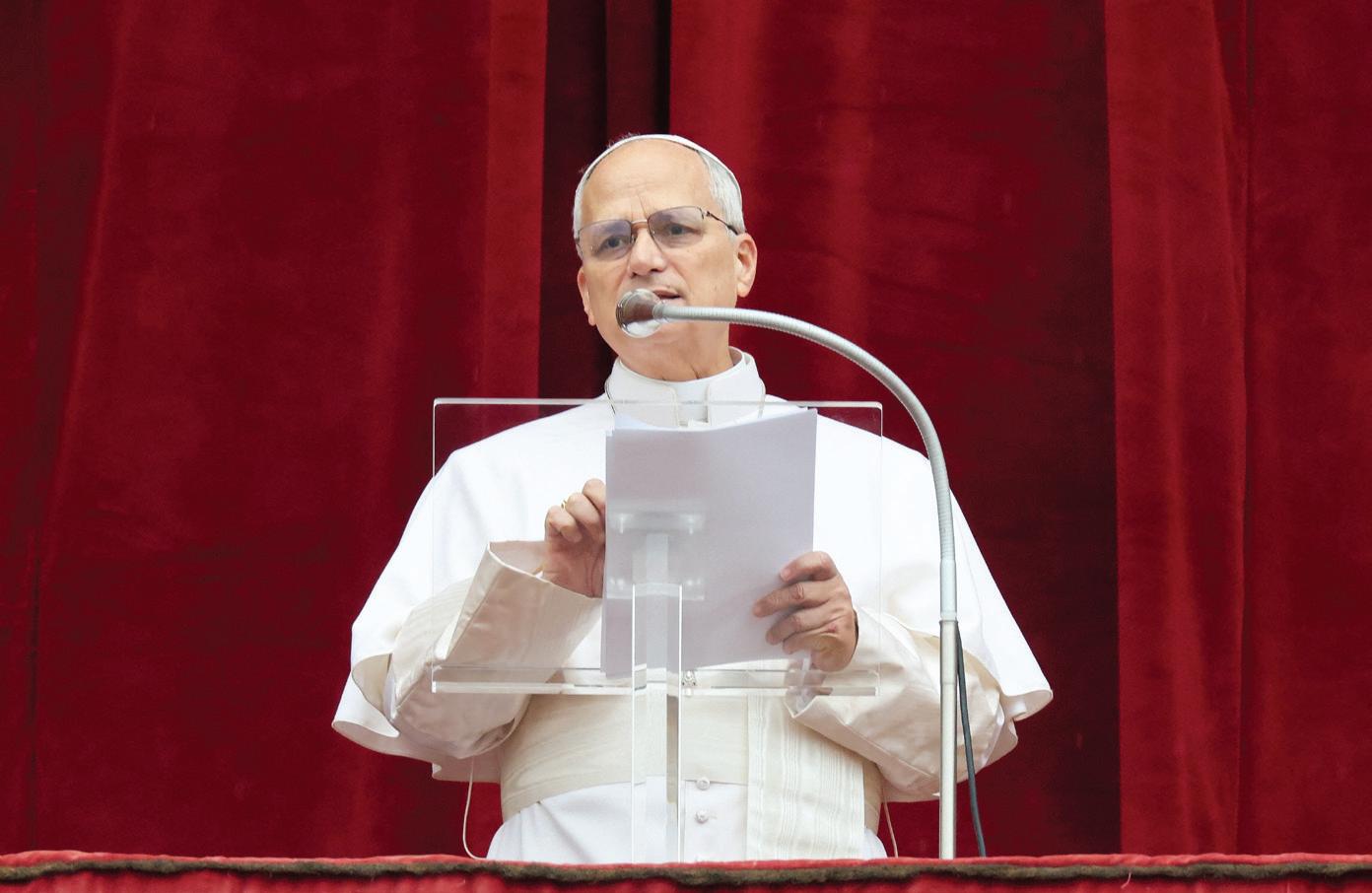
Leo said.
He urged the student to “be careful that your use of AI does not limit your true human growth,” underlining the importance of knowing “how to think, how to create, how to act on your own, how to form authentic friendships.”
The pope spoke via video link to a crowd of 16,000 young people gathered in Indianapolis for the National Catholic Youth Conference in November.
‘It cannot replace human intelligence’
“AI can process information quickly, but it cannot replace human intelligence,” Pope Leo told the students. “And don’t ask it to do your homework for you. It cannot offer real wisdom. It misses a very important human element: AI will not judge between what is truly right and wrong. And it won’t stand in wonder, in authentic wonder before the beauty of God’s creation.”
Pope Leo has also expressed concern for AI’s potential effect on children’s “intellectual and neurological development,” adding “we must pause and refl ect with particular care upon the freedom and inner life of our children and young people.”
Although Sister Consuelo was not leading the convent at the time, her community agreed to participate in the recovery, breeding, and study of the rabbit.
To do so, they obtained permits from local authorities and set up a small farm, with an initial investment of about 5,000 euros, or about $5,700. Since then, the breeding system has changed. Now, each animal must have a pedigree, a feeding log, and have adequate space and ventilation
Of the 11 Sisters in the cloistered community, three are dedicated to caring for the farm. Thanks to her training as a veterinary assistant, Sister Consuelo assesses the animals’ health every morning and can detect if one is sick by the smell of its urine.
In the afternoon and evening, additional checks are conducted to ensure that the rabbits with young have enough food and that the animals have not chewed through the water systems
Unlike traditional breeding, conservation requires stricter conditions such as ventilated spaces, appropriate cages, and temperature control. Cleaning must also be rigorous and consistent. Every two days, the convent team performs a general cleaning, and once a week, they dismantle and pressure wash all the cages. When there are young, maintenance is performed daily. The caretakers check the nests, remove dead animals, and replace the bedding material—except for the fur shed by the mother, which helps keep the young warm.
As for feeding, rations of hay, barley, and corn are calculated to maintain an appropriate weight. Rabbits with young receive special feed and can eat larger quantities. By the end of March, 90 young had been recorded.
The Sisters also have an identification system to prevent inbreeding. Each animal has a microchip with a number that allows its genetic lineage to be traced, key information for controlled breeding.
Despite these efforts, the project faces a significant limitation: The rabbits raised at the convent cannot be sold, as the permit granted by the authorities allows breeding only for personal consumption. ■
“The ability to access vast amounts of data and information should not be confused with the ability to derive meaning and value from it. The latter requires a willingness to confront the mystery and core questions of our existence,” he said.
“It will therefore be essential to teach young people to use these tools with their own intelligence, ensuring that they open themselves to the search for truth.”
AI and the job market
Pope Leo expressed interest in the issue of artifi cial intelligence and the dignity of work from the fi rst week of his pontifi cate, telling the College of Cardinals days after his election in May 2025 that he took his name partly in honor of Pope Leo XIII, who wrote the social encyclical Rerum Novarum in 1891 in the context of the fi rst industrial revolution.
“In our own day, the Church offers to everyone the treasury of her social teaching in response to another industrial revolution and to developments in the fi eld of artifi cial intelligence that pose new challenges for the defense of human dignity, justice, and labor,” Pope Leo XIV said, two days after his election.
In his fi rst interview after his
election, Pope Leo warned of “extremely rich people” who are investing in AI and totally ignoring “the value of human beings and humanity,” adding, “I think the Church needs to speak up.”
Tool for the good of human beings
Speaking to legislators from 68 countries gathered at the Vatican for the Jubilee of Governments last June, the pope said, “it must not be forgotten that artifi cial intelligence functions as a tool for the good of human beings, not to diminish them, not to replace them,” adding that AI can “be of great help to society, provided that its employment does not undermine the identity and dignity of the human person and his or her fundamental freedoms.”
In a December 2025 speech to participants in an AI conference in Rome, the pope asked, “How can we ensure that the development of artifi cial intelligence truly serves the common good and is not just used to accumulate wealth and power in the hands of a few?”
“This is an urgent question, because this technology is already having a real impact on the lives of millions of people, every day and in every part of the world,” the pope added.
Co-workers in creation, not passive AI consumers
“Human beings are called to be co-workers in the work of creation, not merely passive consumers of content generated by artificial technology,” Pope Leo said in the same December speech.
“Artifi cial intelligence has certainly opened up new horizons for creativity, but it also raises serious concerns about its possible repercussions on humanity’s openness to truth and beauty, and capacity for wonder and contemplation,” he added.
The pope expanded on his idea in his message for the 60th World Day of Social Communications, published in January, warning that
AI continued on page
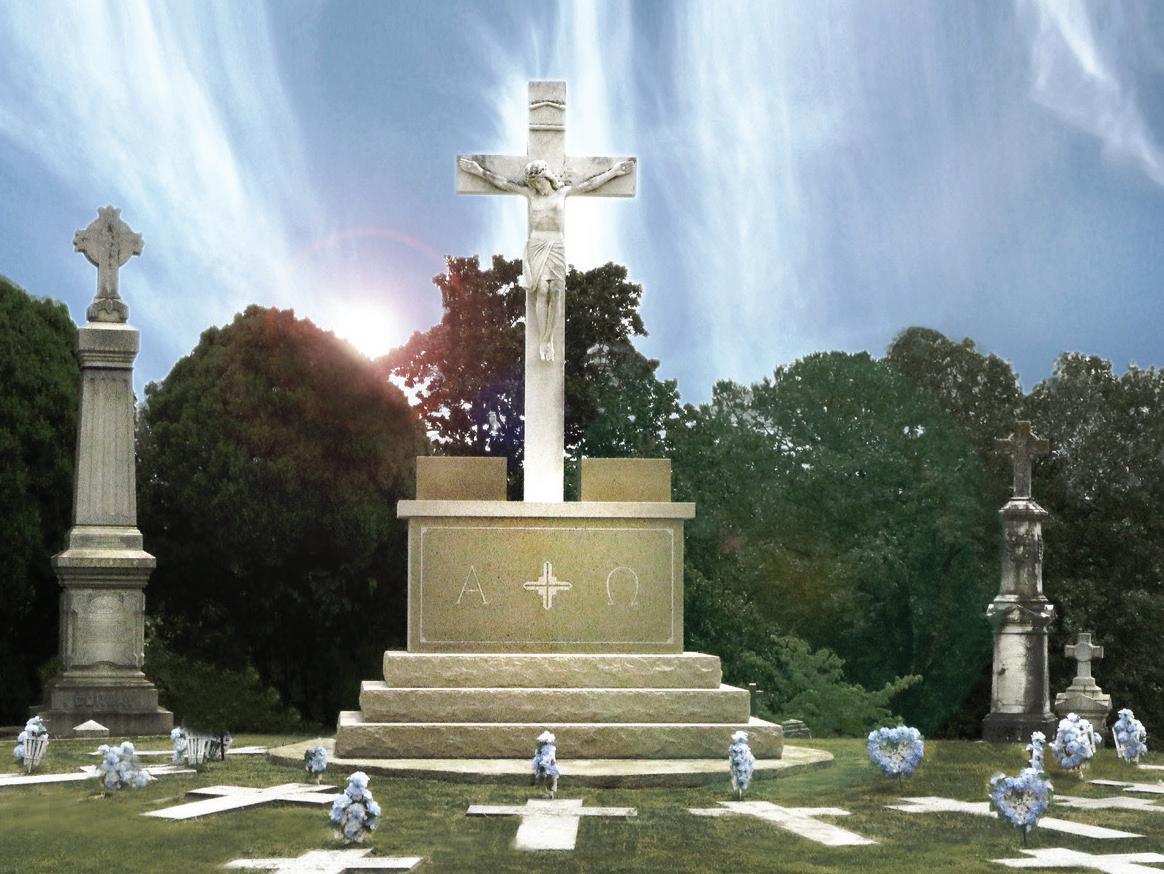

Keith Feltz
Keith Stephen Feltz, 72, of Maryville, passed away peacefully surrounded by his family on March 22 after a brief battle with cancer.
Mr. Feltz was born on Oct. 19, 1953, to Edgar and Helen Nesslein Feltz and grew up in Perryville, Mo. He graduated from Perryville High School in 1972 and from the University of Missouri-Rolla in 1977 with a degree in mechanical engineering.
Mr. Feltz moved to Oak Ridge after his college graduation and worked at the K-25 plant in Oak Ridge before moving to Maryville in 1986. He married Angela McMurray in 1988.
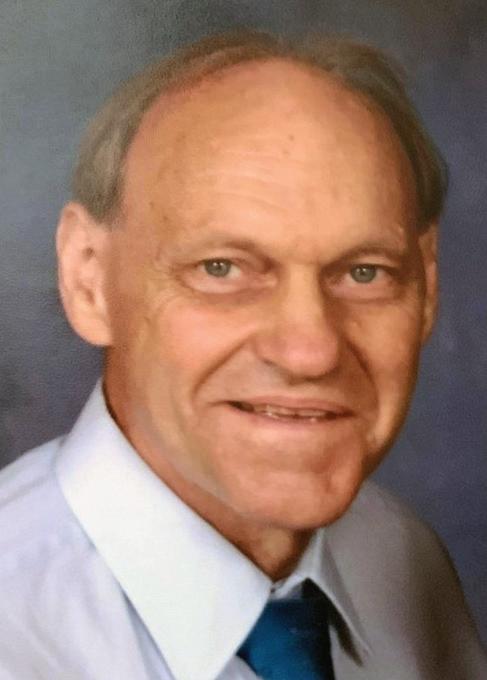
Mr. Feltz, who was a member of Our Lady of Fatima Parish in Alcoa, followed the four facets of parish life: learn, pray, serve, and belong!
He spent many years in volunteer service to God through his involvement in parish ministries. He was faithful and knowledgeable in holy Scripture and led and assisted in Share the Word (an adult Bible study) between Masses, and as the need arrived for a high-school faith formation teacher, Mr. Feltz stepped up. He assisted with the RCIA program as well as continuing in religious education, and Bible studies, and eventually assisted with the current faith-formation program for men called “That Man Is You!”
Mr. Feltz was a facilitator over the years of different programs promoted throughout the Diocese of Knoxville: Renew International and Why Catholic to name just two. He facilitated learning and assisted others in learning their faith with devotion. He also assisted in faith formation at St. Joseph the Worker in Madisonville when that parish had a need for a confirmation teacher. He attended Cursillo and served on many teams encouraging other men to a deeper personal relationship with Jesus Christ
Mr. Feltz participated in eucharistic adoration at Our Lady of Fatima for years. He was an extraordinary minister of Holy Communion and regularly attended Saturday-morning Masses. He enjoyed spending the liturgical seasons with God by joining in the Stations of the Cross and the rosary. He also participated in pro-life activities by joining others in praying at abortion clinics in Knoxville. He would also pray at the Life Chain in Blount County.
Mr. Feltz volunteered as a Boy Scout leader in Oak Ridge and Alcoa, assisting with teaching camping, hiking, canoeing, and other skills to the young boys he was serving. He was an active member of a parish program to assist other parishioners called the “St. Joseph Helpers.” He would help anyone who asked with repairs of lawnmowers, washers and dryers, and other things that needed the expertise of his mechanical knowledge. He was a member of the Knights of Columbus and joined in many ministries of service, including the comfort food ministry, which provides a meal to comfort families following a funeral Mass. He was always behind the scenes in the parish with the never-ending task of washing dishes after many meals over the years. He also was a community volunteer who assisted with the Community Food Connection of Blount County and was always available to pick up food for the organization’s annual food drives
continued from page A23
AI systems “have increasingly taken control of the production of texts, music, and videos,” putting “much of the human creative industry at risk of being dismantled and replaced with the label ‘Powered by AI,’ turning people into passive consumers of unthought thoughts and anonymous products without ownership or love.”
Masterpieces of human artistic genius
The masterpieces of human artistic genius, he added, are being reduced to “mere training grounds for machines.”
“Renouncing creativity and surrendering our mental capacities and imagination to machines,” Pope Leo wrote, “would mean burying the talents we have been given to grow as individuals in relation to God and others.”
The pope has urged priests to resist “the temptation to prepare homilies with artificial intelligence.”
“To give a true homily is to share faith,” and artificial intelligence “will never be able to share faith,” the pope told priests of the Diocese of Rome. “People want to see your faith, your experience of having known and loved Jesus Christ,” he added.
‘Preserving human voices and faces’
Pope Leo titled his 2026 communications day message focused on AI “Preserving Human Voices and Faces.”
“Faces and voices are sacred,” he said. “God, who created us in His image and likeness, gave them to us when He called us to life through the Word He addressed to us.”
Mr. Feltz found a place where he belonged. Over the 40 years that he has attended Our Lady of Fatima, he met and has known many wonderful people who became lifelong friends. He was preceded in death by his parents, and a brother, Michael, and many aunts and uncles. He is survived by his wife, Angela; three children, Derrick (Natalie) McMurray, Adam McMurray, and Andrea McMurray, all of Maryville; four grandchildren, Chloe McMurray of Newberry, S.C., Marley McMurray of Oak Ridge, and Boone and Bayler McMurray of Maryville; two brothers, Donald (Shirley) of Fredericktown, Mo., and Kevin (Jean) of Columbia, Mo.; and several nieces and nephews.
Mr. Feltz was an example of Christian life. In his life, he truly lived the Gospel of Matthew 25:31-46: “Whatever you did for one of these least brothers of mine, you did for Me.”
A funeral Mass for Mr. Feltz was celebrated on April 1 followed by inurnment in the Our Lady of Fatima columbarium.
Donations in Mr. Feltz’s memory may be made to Our Lady of Fatima Parish’s Martha’s Hands or the comfort food ministry of which he served faithfully. Our Lady of Fatima, 858 Louisville Road, Alcoa, TN 37701.
The family of Capt. Edwin Robbins “Rory” DuPont Jr. is deeply saddened to announce his death on April 13.
Capt. DuPont, 49, of Seymour, was born on Feb. 14, 1977, in Jacksonville, Fla., to Edwin R. DuPont Sr. and Blanche Burt DuPont. He was a third-generation U.S. Navy aviator. He met his wife of almost 25 years at the University of Florida in 1997, and they married on Dec. 29, 2001.
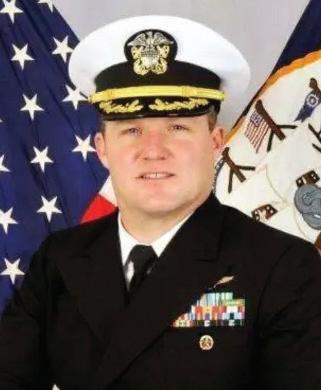
Capt. DuPont received his commission as a naval officer in 2000 and continued to serve until he passed away as a captain in the U.S. Navy Reserve. A fighter pilot and graduate of Top Gun, Capt. DuPont flew the F/A-18, F-5, and T-45 as an instructor pilot over multiple combat tours and aircraft-carrier deployments. In 2012, he and his family moved to Bogotá, Colombia, for a short time to work for the American Embassy in Diplomatic Affairs.
In 2013, in order to focus more on family, Capt. DuPont joined the U.S. Navy Reserve and began work as a performance consultant and business development lead for Latin America at Check-6 Int’l Inc. Meanwhile, he continued flying and pursuing his naval career with multiple command tours, including commanding officer of Fighter Composite Squadron 111 in Key West, Fla. (2018), commander of Training Air Wing One Reserve in Meridian, Miss. (2020), commander of the Naval Aviation Warfighting Development Center Reserve in Fallon, N.V. (2022), and as vice commander, Commander Naval Forces Korea.
In addition to his extensive career ambitions, Capt. DuPont was a member of the Knights of Columbus, Troops of St. George, and a captain in Fraternus. His work with Delta allowed him to travel all over the world, often with his family in tow, and participate in the international community of the faithful, observing firsthand their beautiful works.
By simulating human voices, faces, emotions, and relationships, he added, “the systems known as artificial intelligence not only interfere with information ecosystems but also encroach upon the deepest level of communication, that of human relationships. The challenge, therefore, is not technological but anthropological. Safeguarding faces and voices ultimately means safeguarding ourselves.”
Deepfakes and their capacity to deceive
The pope has also spoken about deepfakes— AI-generated videos, images, and audio—and their capacity to deceive.
Pope Leo recalled how only a few days into his pontificate someone asked him if he was OK after falling down a flight of stairs. “I said: ‘No, I didn’t,’” he recalled, “but there was a video somewhere where they had created this artificial pope, me, falling down a flight of stairs as I was walking somewhere, and it apparently was so good that they thought it was me.”
He also disclosed that someone had approached him with a proposal to create an AI version of the pope, so that visitors to a website could participate in virtual papal audiences. His response was unequivocal: “I said, ‘I’m not going to authorize that.’ If there’s anyone who shouldn’t be represented by an avatar, I would say the pope is high on the list.”
Chatbots as an ‘oracle of all advice’
Pope Leo, the first pope to be an active Twitter user before being elected as a successor of Peter, has observed that “as we scroll through our feeds, it becomes increasingly difficult to
Despite a wide breadth of commitments and activities, Capt. DuPont was passionate about putting his faith at the forefront of all that he did individually and with his family. He will always be remembered for his never-ending zest for squeezing the life out of life every single day and for his quick, witty sense of humor. When faced with difficulty or adversity, he quickly quipped his motto, “Just another adventure!” that immediately became the family motto for him and his wife, Carolina.
Capt. DuPont was a true and proudly devoted family man who deeply loved and lived for his family. Some of his favorite family activities were traveling, hiking in the Smokies, flying, hunting, camping, fishing, and cooking.
Capt. DuPont is survived by his wife, Carolina, and their children, John Andrew, Madeleine Isabel, and Rhett Thomas DuPont; and a sister, Brandi Zetrouer, and her family.
A rosary for Capt. DuPont was prayed on April 23 at Bridges Funeral Home in Knoxville. A funeral Mass for Capt. DuPont was celebrated at the Cathedral of the Most Sacred Heart of Jesus on April 24, with Father Michael Hendershott serving as the celebrant. A burial service at Holy Cross Cemetery in Farragut followed the Mass.
John Saucier
John R. Saucier was promoted to heaven on May 10.
Mr. Saucier was born to George A. and Carmen (Tardif) Saucier in Lewiston, Maine, on Aug. 23, 1950. He is survived by his wife of 54 years, Elaine (Bussiere); his sister, Jane Saucier; children, James Saucier (wife Kathy) of Lewiston, Robert A. Saucier of Knoxville, Jennifer Hartman (husband Monty) of Madison, Tenn.; grandchildren Viktor and Devlin Hartman; and stepgrandchildren Al, Matt, and Trent; great-stepgrandchild Athena; nieces; and many other close loved ones. He was predeceased by his parents and sister, Sue Ann Hebert of Auburn, Maine.
Mr. Saucier was born and raised in Lewiston. He worked in banking and real estate for most of his career. He also worked at Benton Plastics when the company relocated to Knoxville in 1995. He managed Master Battery in Knoxville from 2005 until his retirement in 2020.
Mr. and Mrs. Saucier were members of Holy Cross Parish in Lewiston and served on various committees and boards as well as becoming CYO advisers and Search retreat weekend team members while living in Maine. They became members of St. Therese Parish in Clinton until 2007, when they joined the St. Albert the Great Parish in Knoxville They continued their service to the parish in many different areas and especially valued their roles as team members of OCIA.
Mr. Saucier was a Fourth Degree member of Assembly 1083 and an honorary life member of the Knights of Columbus. He has held the titles of district deputy and Grand Knight. He particularly enjoyed cooking meals to feed the homeless with brother Knights and especially Michael Wrinkle.
Donations in Mr. Saucier’s memory may be made to Michael Wrinkle for His Hands & Feet mission, 10312 Old Rutledge Pike, Mascot, TN 37806-1207.
A funeral Mass for Mr. Saucier was celebrated on May 12 at St Albert the Great Church, with Father Chris Michelson serving as celebrant and Father Christopher Floersh and Father John Orr serving as concelebrants. ■
determine whether we are interacting with other human beings or with ‘bots’ or ‘virtual influencers.’”
Chatbots based on large language models, he noted, “are proving to be surprisingly effective at covert persuasion through continuous optimization of personalized interaction.” Because they are “excessively affectionate, as well as always present and accessible, they can become hidden architects of our emotional states and so invade and occupy our sphere of intimacy.”
The danger, he wrote, is that when people substitute AI systems for real human relationships, they create “a world of mirrors around us, where everything is made ‘in our image and likeness,’” robbing themselves of the “opportunity to encounter others who are always different from ourselves and with whom we can and must learn to relate.”
Pope Leo also questioned the “naive and unquestioning reliance on artificial intelligence as an omniscient ‘friend,’ a source of all knowledge, an archive of every memory, an ‘oracle’ of all advice,” saying that this can “further erode our ability to think analytically and creatively, to understand meaning and distinguish between syntax and semantics.”
Under a subheading of his communications message titled, “Do not renounce your ability to think,” Pope Leo wrote, “Although AI can provide support and assistance in managing tasks related to communication, in the long run, choosing to evade the effort of thinking for ourselves and settling for artificial statistical compilations threaten to diminish our cognitive, emotional, and communication skills.” ■