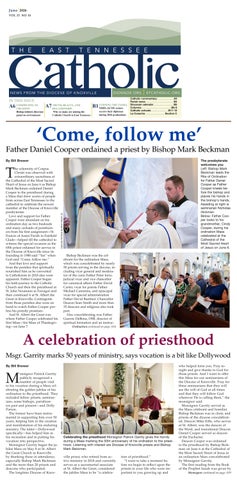
Father Daniel Cooper ordained a priest by Bishop Mark Beckman
By Bill Brewer
The solemnity of Corpus Christi was observed with extraordinary sacredness at the Cathedral of the Most Sacred Heart of Jesus on June 6 as Bishop Mark Beckman ordained Daniel Cooper to the priesthood during a Mass that drew scores of people from across East Tennessee to the cathedral to celebrate the newest member of the Diocese of Knoxville presbyterate.
Love and support for Father Cooper were abundant on his ordination day as two busloads and many carloads of parishioners from his first assignment—St. Francis of Assisi Parish in Fairfield Glade—helped fill the cathedral to witness the special occasion as the 65th priest ordained for service in the Diocese of Knoxville since its founding in 1988 said “Yes” when God said “Come, follow me.”
And that love and support from the parishes that spiritually nourished him as he converted to Catholicism in 2018 also were apparent. Father Cooper began his faith journey to the Catholic Church and then the priesthood at St. John Neumann in Farragut and then continued it at St. Albert the Great in Knoxville. Contingents from those parishes also were on hand to watch Father Cooper profess his priestly promises.
And St. Albert the Great was where Father Cooper celebrated his first Mass—his Mass of Thanksgiving—on June 7.
Bishop Beckman was the celebrant for the ordination Mass, which was concelebrated by nearly 50 priests serving in the diocese, including vicar general and moderator of the curia Father Peter Iorio, judicial vicar and vice chancellor for canonical affairs Father David Carter, vicar for priests Father Michael Cummins, and episcopal vicar for special administration Father David Boettner. Chancellor Deacon Sean Smith and more than 35 deacons and religious also took part.
Also concelebrating was Father Guerric DeBona, OSB, director of spiritual formation and an instruc-
Ordination continued on page A14
The presbyterate welcomes you
A celebration of priesthood
Msgr. Garrity marks 50 years of ministry, says vocation is a bit like
By Bill Brewer
Monsignor Patrick Garrity publicly recognized a number of people vital to his vocation during a Mass celebrating the golden jubilee of his ordination to the priesthood. They included fellow priests, seminarians, some bishops, parishioners past and present—and Dolly Parton.
The former have been instrumental in supporting him over 50 years, helping him in the creation and manifestation of his enduring ministry. The latter—Dollywood specifically—has helped him in his recreation and in putting his vocation into perspective.
Monsignor Garrity began the jubilee Mass on May 8 at St. Albert the Great Church in Knoxville by thanking those in attendance, especially Bishop Mark Beckman and the more than 20 priests and deacons who participated. The longtime Diocese of Knox -
ville priest, who retired from active ministry in 2018 and currently serves as a sacramental associate at St. Albert the Great, considered the jubilee Mass to be “a celebra -
tion of priesthood.”
“I want to take a moment before we begin to reflect upon the priests in your life who were important to you growing up and
who helped form you. Pray tonight and give thanks to God for those priests. And I want to offer this Mass for our seminarians of the Diocese of Knoxville. Pray for these seminarians that they will see the will of God at all times and that they will follow God wherever He is calling them,” the monsignor said.
Monsignor Garrity served as the Mass celebrant and homilist. Bishop Beckman was in choir, and priests of the diocese concelebrated. Deacon Mike Eiffe, who serves at St. Albert, was the deacon of the Word, and transitional Deacon Daniel Cooper served as deacon of the Eucharist.
Deacon Cooper was ordained to the priesthood by Bishop Beckman on June 6 at the Cathedral of the Most Sacred Heart of Jesus in an ordination Mass concelebrated by Monsignor Garrity.
The first reading from the Book of the Prophet Isaiah was given by
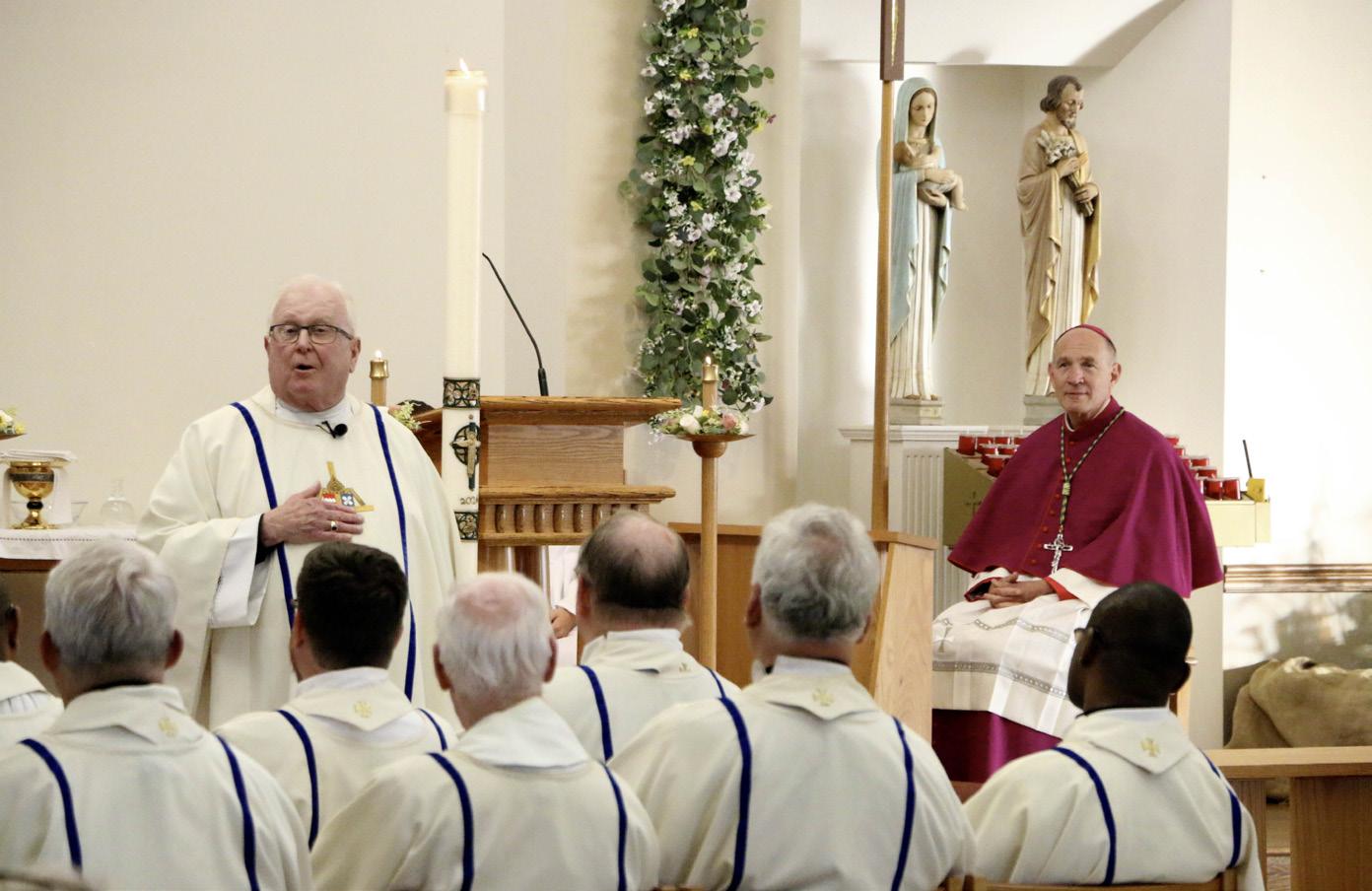
Celebrating the priesthood Monsignor Patrick Garrity gives the homily during a Mass marking the 50th anniversary of his ordination to the priesthood. Listening with interest are Diocese of Knoxville priests and Bishop Mark Beckman.
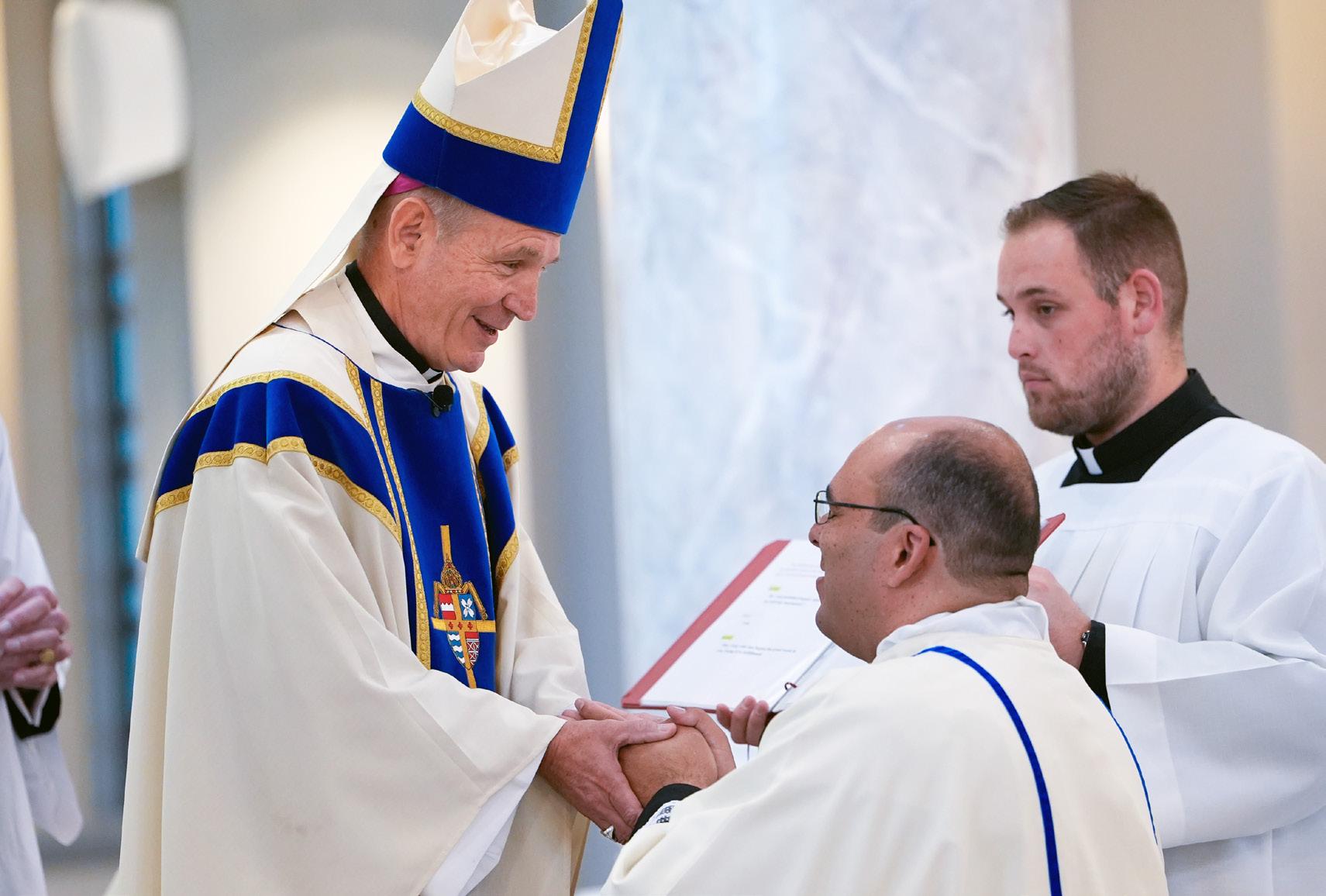
Left: Bishop Mark Beckman leads the Rite of Ordination for Father Daniel Cooper as Father Cooper kneels before the bishop and places his hands in the bishop's hands. Assisting at right is seminarian Nicholas Hickman.
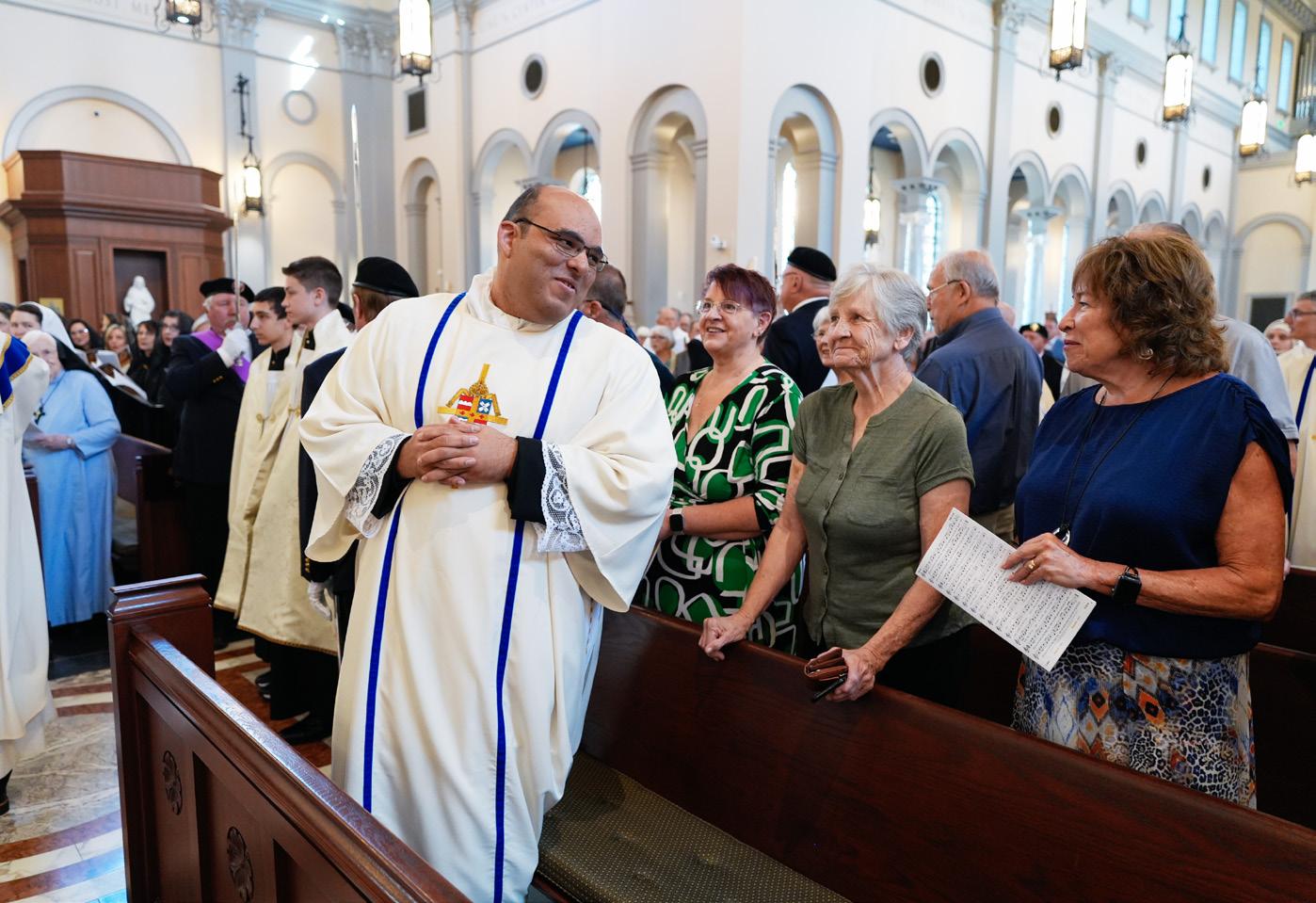
Below: Father Cooper looks to his grandmother, Cindy Cooper, during his ordination Mass celebrated at the Cathedral of the Most Sacred Heart of Jesus on June 6.
An evangelization assist
U.S. dioceses: World Cup is opportunity for pastoral outreach, global encounter
By John Knebels OSV News
As the 2026 FIFA World Cup gets under way, Catholic dioceses across the United States have been preparing for what many see as both a pastoral opportunity and an unprecedented moment of global encounter.
The tournament being played across the United States, Canada, and Mexico will be the largest in FIFA history, featuring 48 teams and 104 matches.
In the United States, 11 host cities are staging games from June 11 to July 19, with the championship scheduled for July 19 at MetLife Stadium in East Rutherford, N.J., which sits just across the Hudson River from New York City.
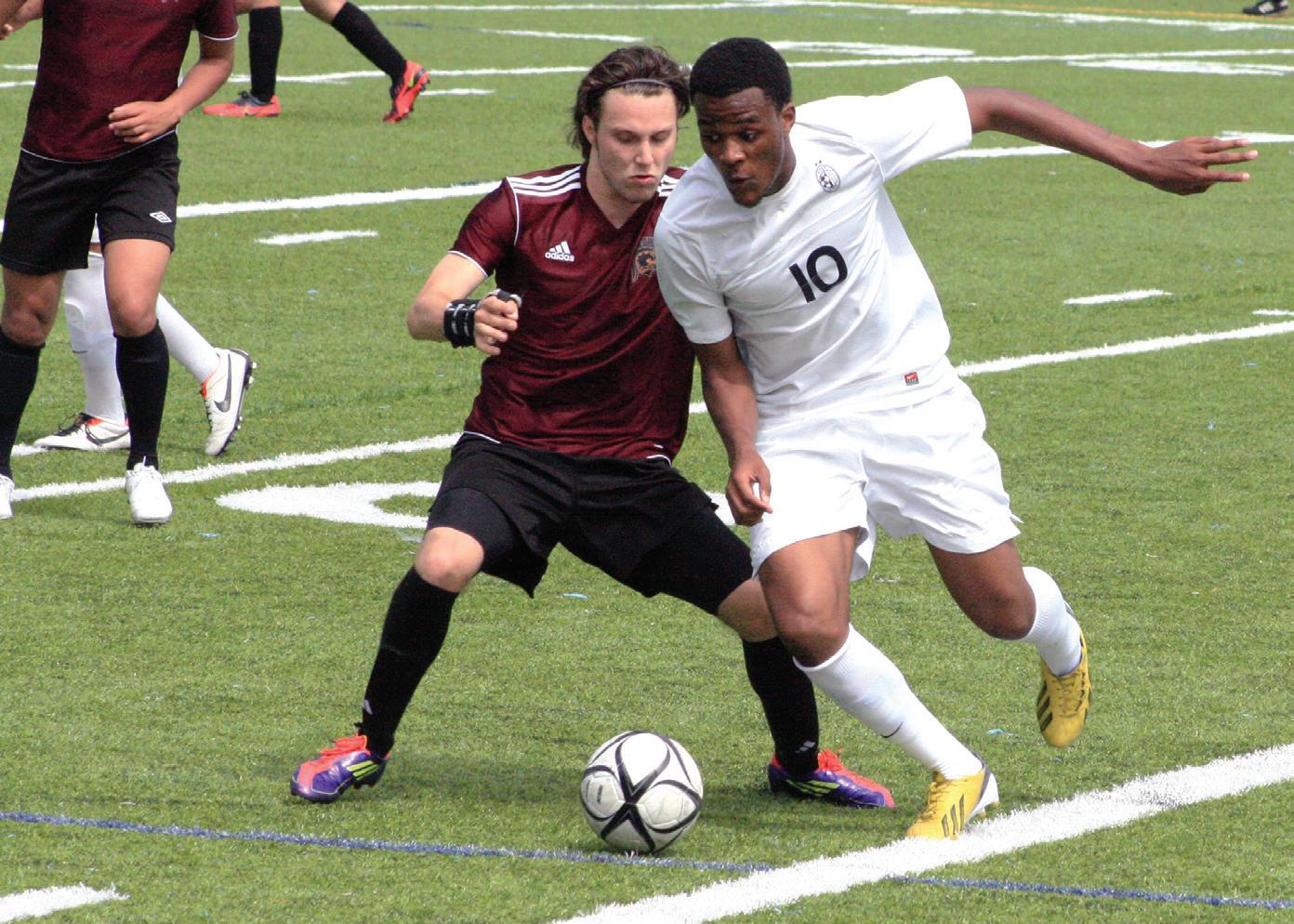
The 11 U.S. host cities are Atlanta, Boston, Dallas, Houston, Kansas City in Missouri and Kansas, Los Angeles, Miami, Philadelphia, the San Francisco Bay area, Seattle, and the New York/New Jersey metro area. Across these cities, Catholic lead-
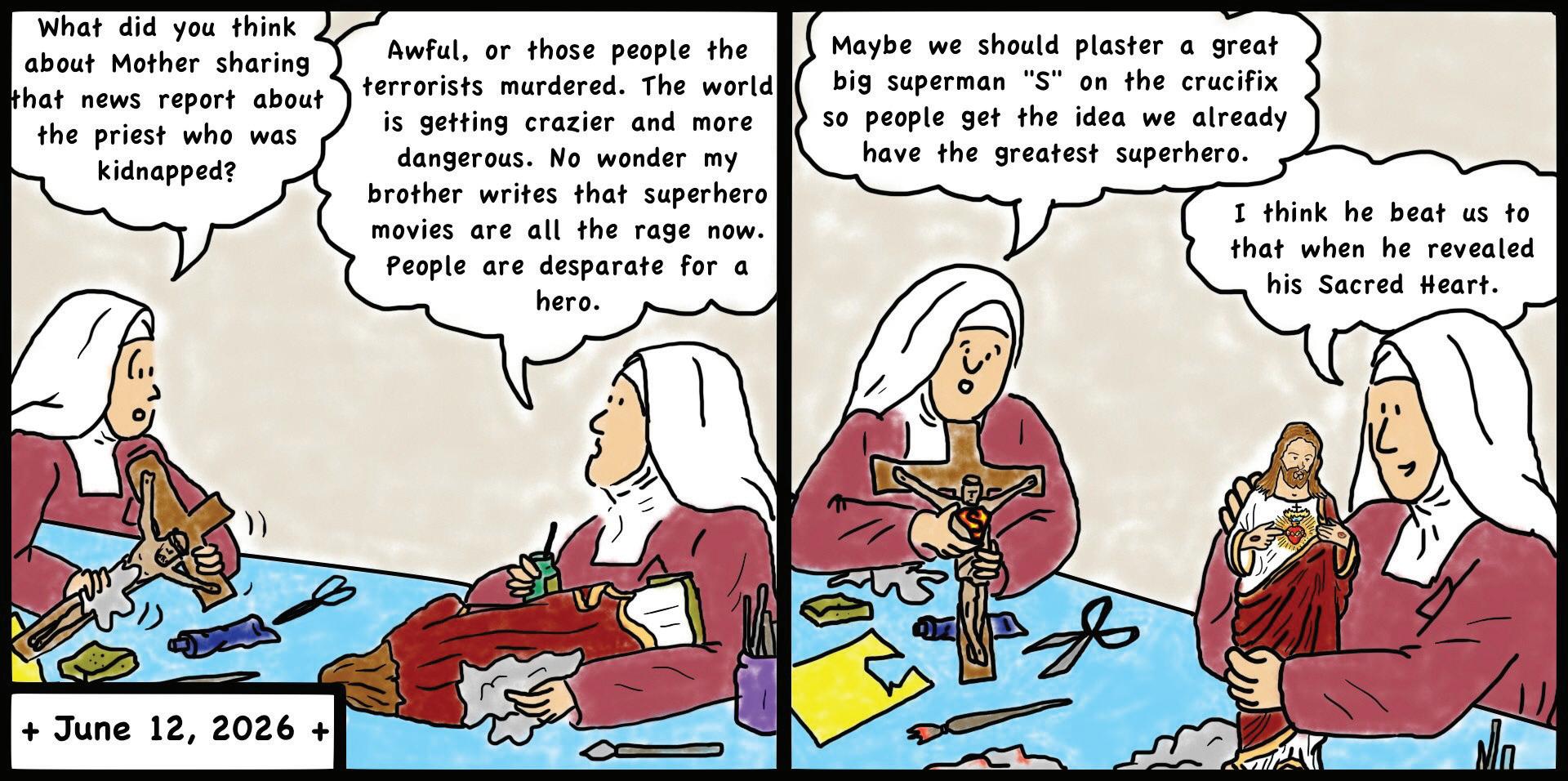
The Handmaids of the Precious Blood this year celebrate the 79th year since their founding in 1947; more than three-quarters of a century of prayer and sacrifice for priests. To receive weekly cartoons and short reflections and news from the Handmaids of the Precious Blood, visit their website, nunsforpriests.org, and sign up for the FIAT newsletter.
A June prayer intention for the values of sports
“Let us pray that sports be an instrument of peace, encounter, and dialogue among cultures and nations, and that they promote values such as respect, solidarity, and personal growth.”
Pope Leo XIV


ers have been preparing for the convergence of international visitors, local parish life, and public
witness.
In Kansas City, a coordinated effort known as OneKC Catholic a joint initiative of the Archdiocese of Kansas City in Kansas and the Diocese of Kansas City-St. Joseph, Mo. has been created to prepare for the influx.
According to its overview, OneKC Catholic is “an effort of evangelization, hospitality, and charity aimed at welcoming visiting Catholics to the KC metro area.”
It adds: “Whether you are visiting, passing through, or considering making the Kansas City area your home, our Catholic parishes are ready to welcome you.”
The initiative includes coordinated parish listings, multilingual resources, and collaboration with Catholic Charities on hospitality and planning during the tournament. A kickoff Mass with Bishop James V. Johnston of Kansas CitySt. Joseph and Archbishop W.
How to sign up and qualify for Diocese of Knoxville’s safe-environment program
The Diocese of Knoxville has implemented the CMG Connect platform to administer the Safe Environment Program, which replaces the former Safe Environment Program (VIRTUS “Protecting God’s Children”).
CMG Connect is a web-based platform that will assist in ensuring that all employees and volunteers who are in a position of trust with children and vulnerable adults within Diocese of Knoxville schools and parishes are trained to recognize behavior patterns of potential abusers and provide pro-active measures for preventing abuse in any context.
“Safe Haven-It’s Up to You” is a three-part video that provides vignettes of real-life situations to educate the viewer about methods of grooming, desensitization, bullying, and neglect, all of which can lead to abuse.
Each part of the video is immediately followed by a brief questionnaire to further develop understanding.
Education is a key
element of the Safe Environment Program.
All clergy, employees, contracted school personnel, volunteers, members of groups and organizations over the age of 18 who work, volunteer, or participate in any capacity are required to complete the diocesan Safe Environment training and a criminal-background check before they can begin employment, volunteer, or participate with ministries, groups, and organizations affiliated with the Diocese of Knoxville.
In addition, the mandatory renewal training must be completed every five years and a new background check submitted before the five-year expiration of prior training
The Diocese of Knoxville Safe Environment compliance training and renewal training is a condition of employment and for volunteer ministry in the Diocese of Knoxville.
The CMG Connect platform contains all three elements of the Diocese of Knoxville’s Safe Environment Program: n Annual review of the Diocese of Knoxville’s Policy and Procedures Relating to Sexual Misconduct; n CMG Connect Safe Haven training program to be completed every five years; n Criminal background check to be completed every five years.
In compliance with the Diocese of Knoxville’s Safe Environment Program, all affiliates require that volunteers and employees complete the requirements prior to working and/or volunteering in a parish, school, or through Catholic Charities of East Tennessee and/ or St. Mary’s Legacy Clinic. Go to https:// dioknox.org/safeenvironment on the Diocese of Knoxville website for more information ■




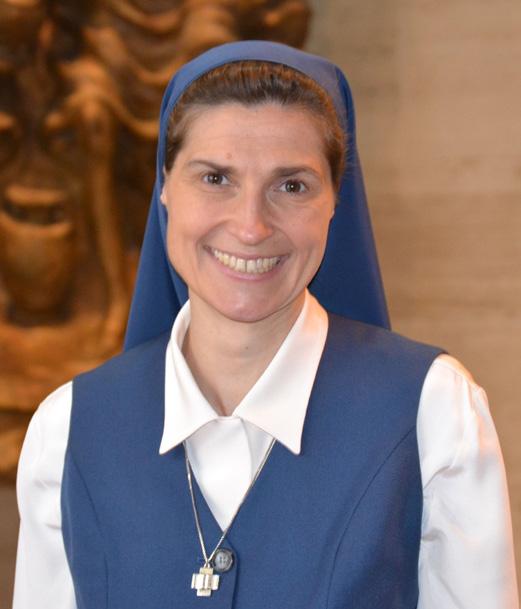
Sr. Regina
World Cup continued on page A18
World Cup outreach Canada's national soccer team competes in this undated photo. Teams from around the globe are descending on the United States for the 2026 FIFA World Cup.
OThe joy of new life
The Lord is calling many, but He also needs our voices of invitation
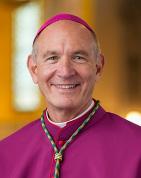
n June 6 a large and festive crowd filled our Cathedral Church to celebrate the ordination of a new priest for the Diocese of Knoxville, Father Daniel Cooper. The beauty and solemnity of an ordination liturgy were palpable.
It was my second celebration of priestly ordination as your bishop, and I must say that the great joy of the day filled me with gratitude for the good work God is bringing to fulfillment in this diocese.
It feels a bit like a family welcoming a new member at the birth of a child. Father Cooper has been serving as a deacon at St. Francis of Assisi Parish in Fairfield Glade along our western boundary. Of the large crowd that filled the cathedral, the majority came from St. Francis to witness this momentous event in the life of our local church.
Many told me they had never experienced a priestly ordination before, and their love for Father Daniel was profound. He, too, was delighted when I asked him to continue priestly service in the parish where he has served so well. It is a good community for a young priest, and the pastor,
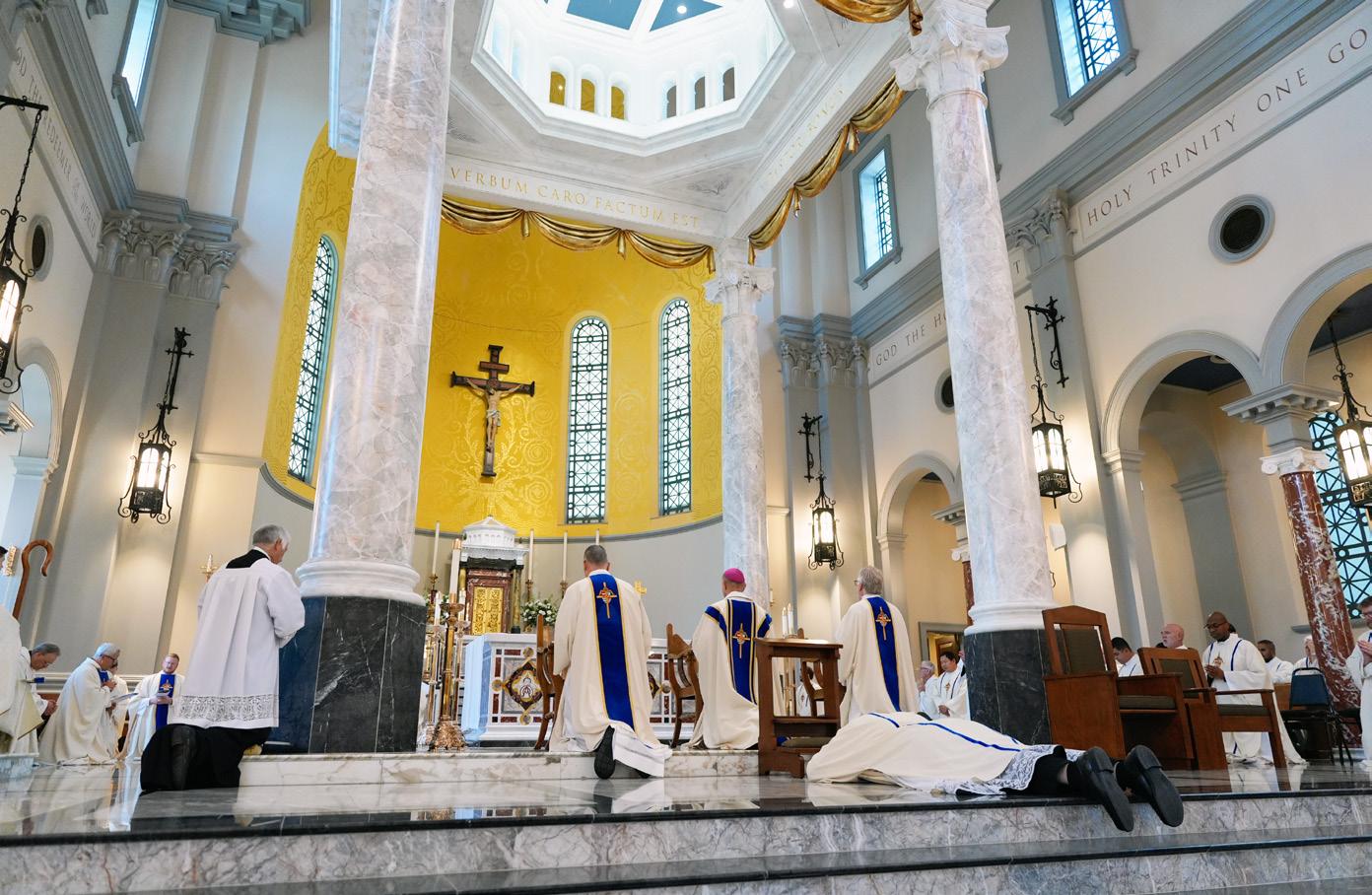
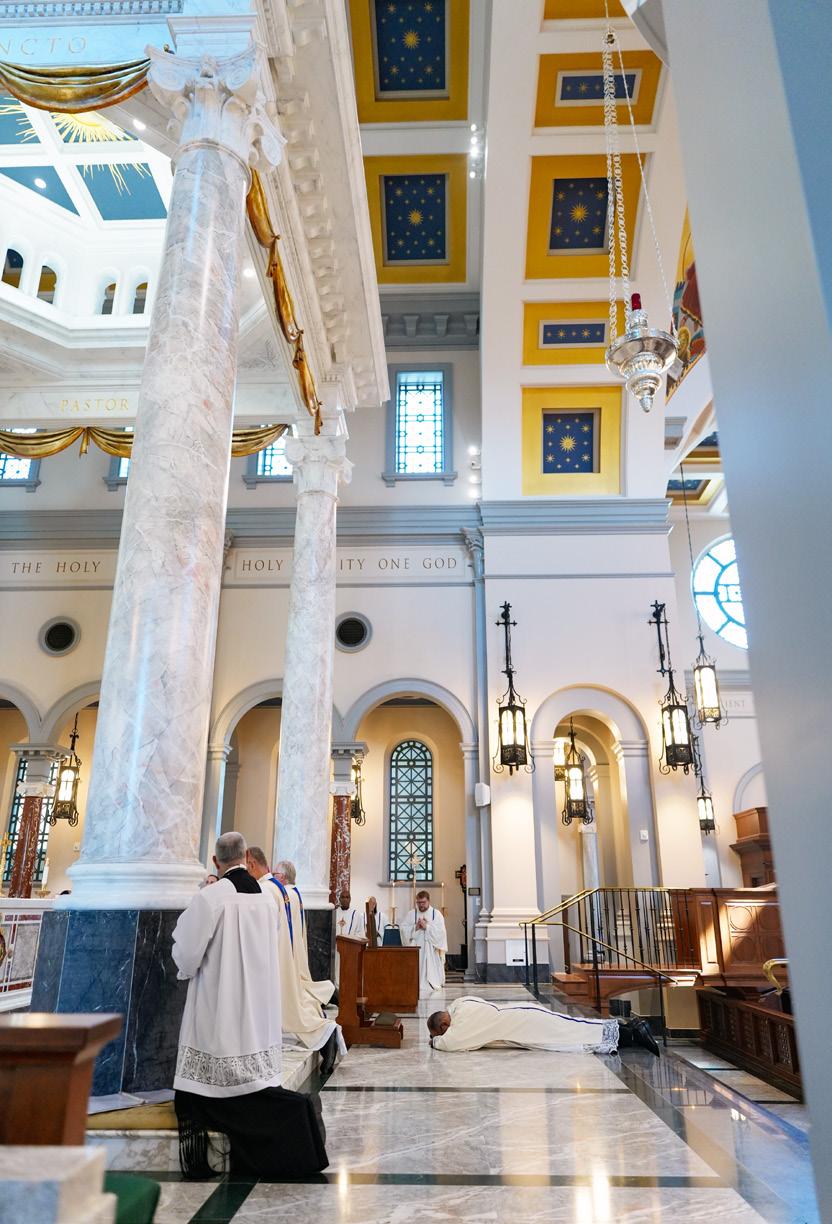
A priest is born Father Daniel Cooper prostrates in the sanctuary of the Cathedral of the Most Sacred Heart of Jesus on June 6 during his Mass of ordination to the priesthood. Kneeling are Bishop Mark Beckman, center, Deacons Walt Otey, far left, Shawn Ballard, left, and Mike Eiffe, right. Surrounding them kneeling are priests of the Diocese of Knoxville. Father Cooper is the 65th priest ordained for the diocese.
Father Michael Woods—soon to celebrate 60 years as a priest—is such a wonderful role model.
The ordination liturgy itself is profoundly moving. As the candidate prostrates on the floor of the sanctuary and all kneel, the Litany of Saints is sung. The gesture is a laying down of one’s life for Christ, and asking the intercession
of the saints is so important as a new priest is born.
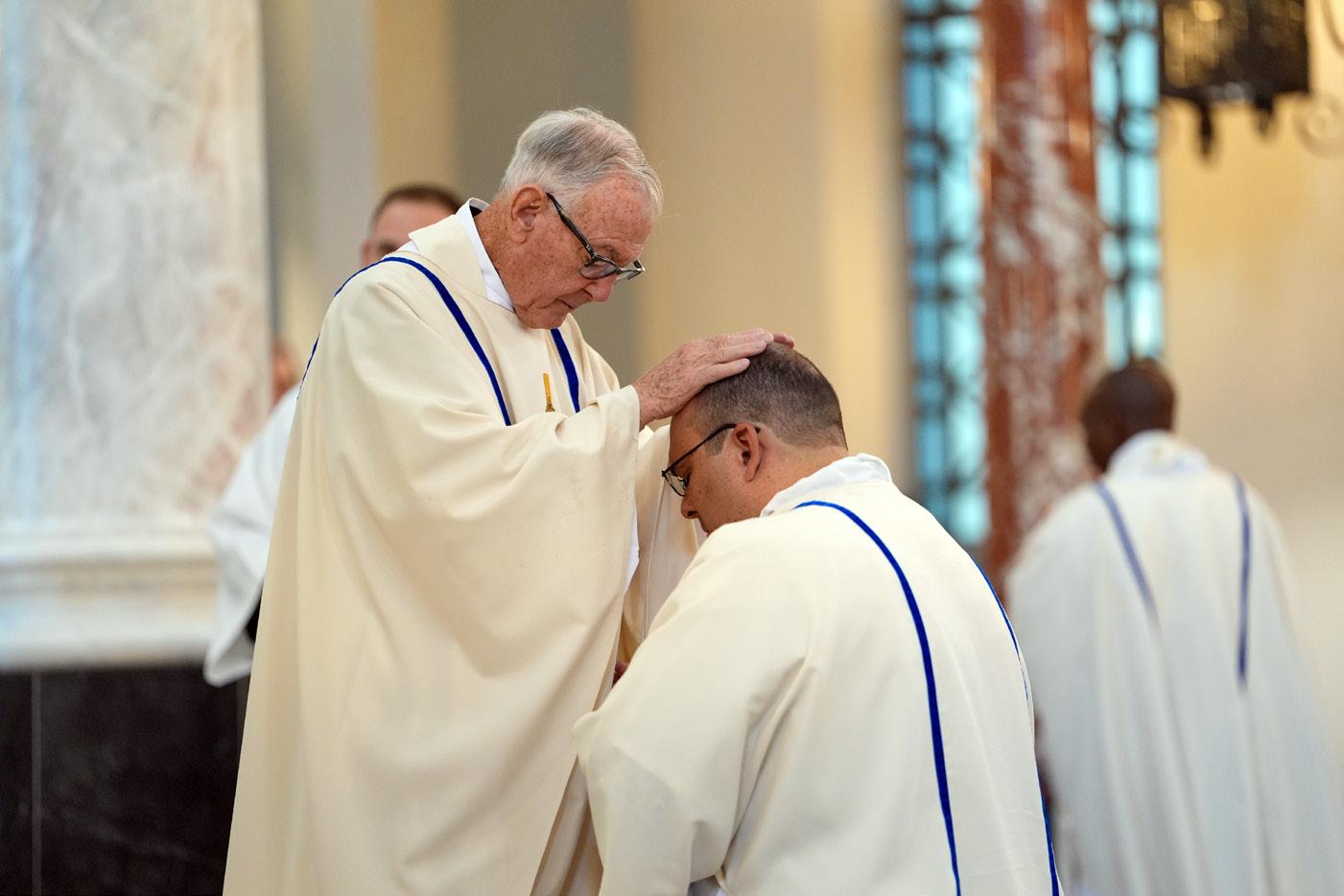
It is the profound act of laying hands on the head of the candidate for Holy Orders by the bishop and the prayer of consecration that marks the new beginning.
Once the bishop has done so, all the priests present also lay hands upon the newly ordained. It is
Magnifica Humanitas and AI
" At the end of the liturgy on Saturday, as I looked at our newly ordained priest, our presbyterate gathered to celebrate, and the entire community of God’s people, I must admit that I felt a bit like a father at the birth of a child. May God continue to bless our diocese with an abundance of Christian vocations, and particularly to the ordained priesthood "
a moving moment as the entire presbyterate participates. The new priest is clothed in priestly vestments for the first time, and he is welcomed into the presbyterate by a solemn greeting of peace. I noticed many in the pews weeping during that beautiful moment. The hands of the priest are anointed with sacred chrism, the same oil used in baptism and confirmation on the head, for sacred use, particularly in the sacramental life of the Church. I noted that Father Cooper was deeply moved at that moment, and it brought great joy to me as well. The sacred vessels, particularly
Bishop continued on page A24
How Catholic social teaching affirms human dignity in a digital world
By Sister Nancy Usselmann OSV News
If you use artificial intelligence for certain tasks, a good Catholic question to ask is simple: Am I aware of how my use of AI— and my support of AI systems—affects human dignity and the common good? Catholic social teaching offers principles of discernment to help answer that question.
As members of society, Catholics are called to turn to the Church’s social doctrine to better understand the world and how we ought to live and interact with one another. When technological revolutions develop at such an intense pace, there is always the risk that innovation can move beyond ethical boundaries in areas such as work, warfare, subsidiarity, relationships, and basic human dignity.
The much-anticipated encyclical by Pope Leo XIV, Magnifica Humanitas, reflects on how the Church understands technological developments in an age of AI and their impact on human dignity, the common good, and responsible use of our God-given gifts.
Catholic social teaching helps everyday Catholics evaluate AI systems and related policies through moral and social criteria rooted in the dignity of the human person and ordered toward the good of all. Pope Leo identifies several principles that guide discernment regarding AI: inalienable human dignity, the common good, universal destination of goods, subsidiarity, solidarity, and social justice.
What might this discernment look like in everyday life? Catholic social teaching can serve as a practical framework for discerning how we engage AI.
1. Human dignity
Human dignity should shape how we think about AI in health care, education, employment, and the justice system—especially in situations where people risk being reduced to data profiles. Are we using these tools in ways that free people for deeper human interaction rather than replacing it?
2. Common good
Does AI widen access to opportunities and resources, or does it deepen inequality? Who truly benefits from AI systems? Are they used solely for profit or efficiency, or also for the flourishing of individuals and communities? What happens to small towns when data centers consume their land, water, and energy resources?
3. Subsidiarity
The moral aim of AI development should include meaningful participation and shared responsibility. Decisions should be made at the most appropriate level possible, preserving genuine human agency and local involvement.
4. Solidarity
Pope Leo emphasizes that social justice must guide our discernment of AI. We should ask:
Does AI protect the vulnerable?
Are certain communities excluded from conversations about AI development and implementation?
5. Preferential option for the poor
The earth and its resources belong to the whole human family. Pope Leo calls us to resist viewing AI merely as a consumer product.
He challenges us to ask whether the benefits of knowledge and automation are distributed in ways that genuinely promote human flourishing for all people, especially the poor and marginalized.
It may seem that these issues are too large for ordinary people to address. Pope Leo acknowledges that innovation today is driven largely by private—often transnational—actors whose resources and influence can exceed those of many governments, making discernment and direction toward the common good more difficult.
So, what can we do?
Catholic social teaching exists to form consciences so Catholics can evaluate public life
and moral choices in a way consistent with the Gospel rather than merely reacting with fear or fascination.
In practice, this means being responsible citizens who support public servants and policies that uphold the Church’s social doctrine. It means becoming a voice for the voiceless and working together to confront injustices in AI development that threaten human dignity and authentic human flourishing.
The everyday Catholic is not called to be a policy specialist, but to be a faithful disciple of Christ the Master, Way, Truth, and Life—using Catholic social teaching as a practical moral lens for how daily choices shape justice, solidarity, and human development.
Catholic social teaching transforms AI from merely a “technology question” into a question of human dignity and the common good, giving conscience a disciplined framework for moral judgment and faithful action.
For more on this subject, go to CatholicFaithAI.com ■
Sister Nancy Usselmann, a Daughter of St. Paul, is director of the Pauline Center for Media Studies in Los Angeles and a media literacy education specialist.
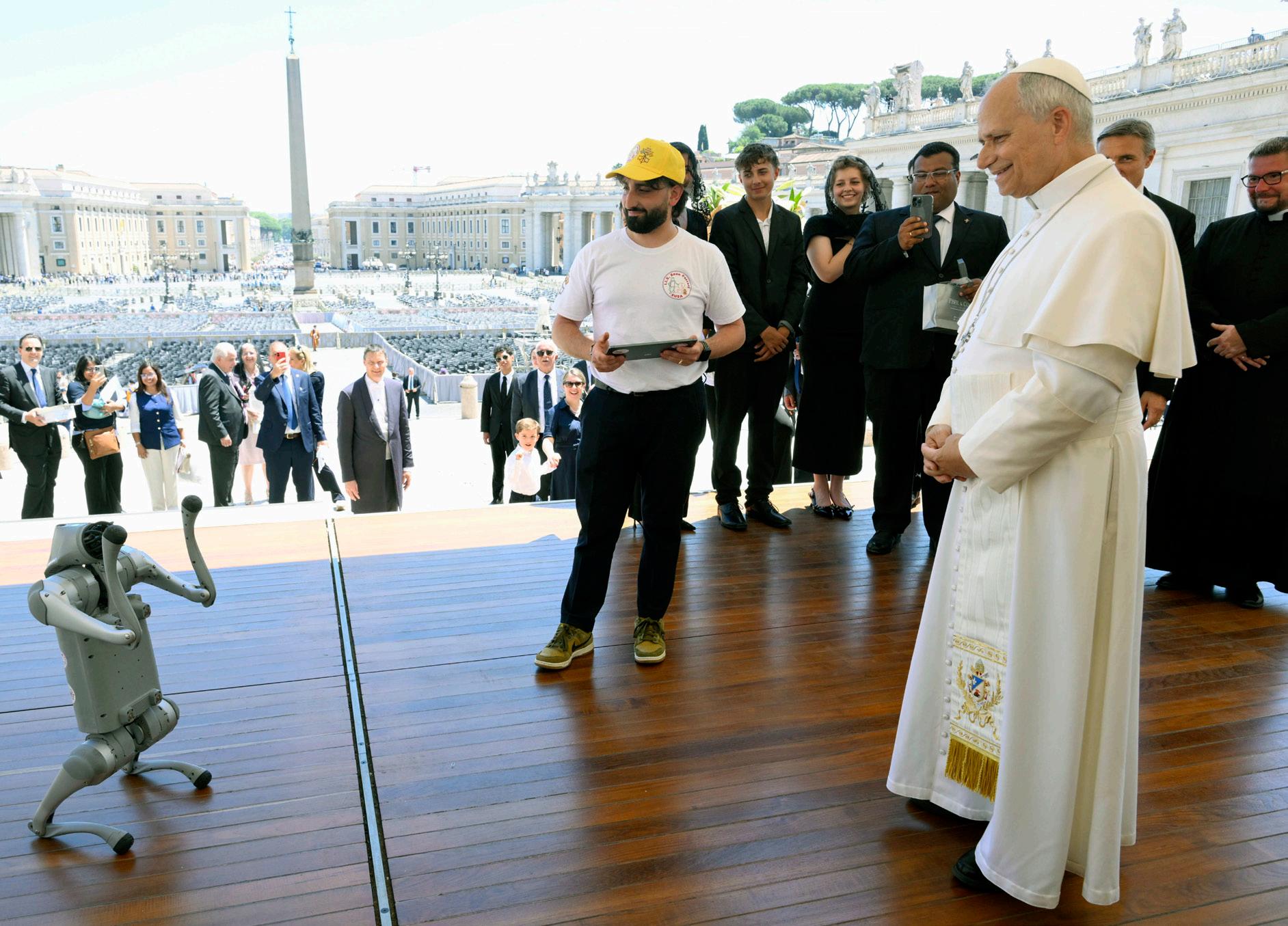
Man's best artificial friend Pope Leo XIV admires a "robot dog" he was presented with following his weekly general audience in St. Peter's Square at the Vatican on May 27. The encounter came two days after the release of the pope's encyclical Magnifica Humanitas, which urges the world to ensure artificial intelligence is placed at the service of human dignity and the common good.
Sr. Nancy
DEACON PATRICK MURPHY-RACEY
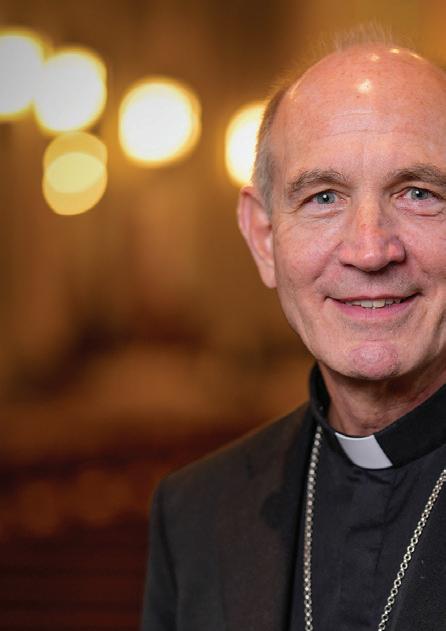
Bishop Mark Beckman
‘Magnificent Humanity’
In first encyclical, Pope Leo urges world to ‘disarm’ AI amid increased reliance
By Josephine Peterson Catholic News Service
Presenting the first encyclical of his pontificate, Pope Leo XIV warned that artificial intelligence must be “disarmed,” urging governments, tech leaders, and society to confront the rapidly growing technology before it weakens human relationships, critical thinking, and peace itself.
With its authoritative teaching, the 82-page encyclical, Magnifica Humanitas (“Magnificent Humanity”), significantly boosts the Catholic Church’s position as an active voice in discussions over artificial intelligence, autonomous weapons, labor, human dignity, and the concentration of technological power among a handful of corporations.
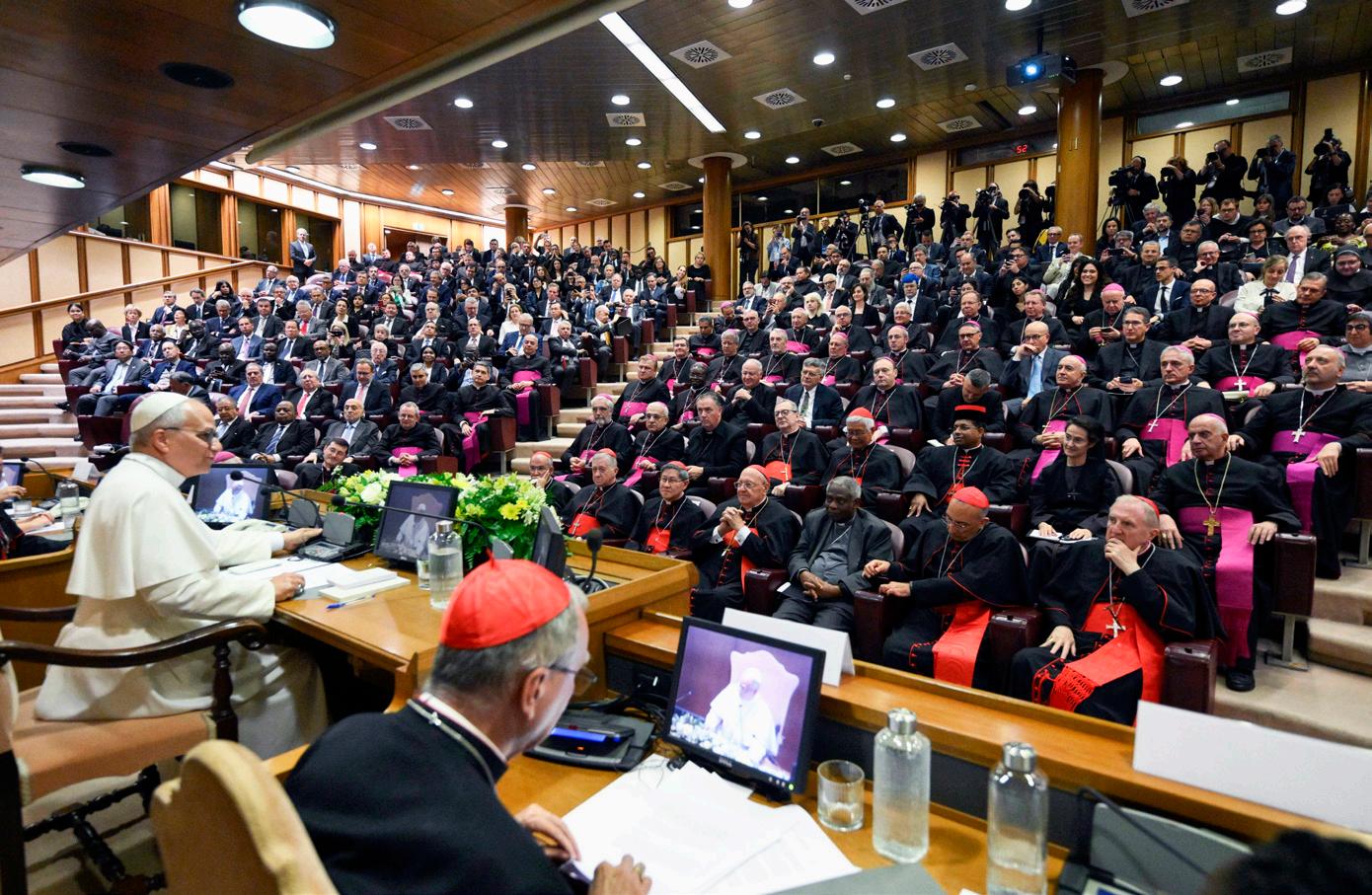
“Peace, not merely the absence of war, is justice at work,” Pope Leo said on May 25 during a presentation unveiling the document in the Vatican’s Synod Hall to an audience filled with members of the Roman Curia, reporters, and special guests. “But when technology weakens our critical sense, peace itself is at risk.”
The pope said he wrote the encyclical after hearing from scientists, engineers, political leaders, parents, and teachers about the promises and dangers posed by artificial intelligence. While some were enthusiastic about the technology, he said others expressed fears over future generations and increasingly autonomous weapons systems.
While he acknowledged the benefits of AI, Pope Leo was clear in saying more scrutiny needs to be applied to this developing technology.
“Artificial intelligence needs to be disarmed,” the pope said. “The word is strong, I know, but deliberately chosen because this moment needs words capable of attracting attention, awakening consciences, and indicating paths forward for humanity.”
Pope Leo has frequently cautioned against the unchecked development of AI since the beginning of his pontificate, warning that the technology risks weakening human discernment, distorting reality, and replacing authentic relationships with simulations of human interaction.
Anchoring his address on the Church’s annual World Communications Day theme, the pope said artificial intelligence is increasingly simulating “human voices and faces” while raising deeper questions surrounding consciousness, responsibility, friendship, and truth.
“We do not possess technical answers, nor do we seek to displace those with expertise,” the pope
Technological
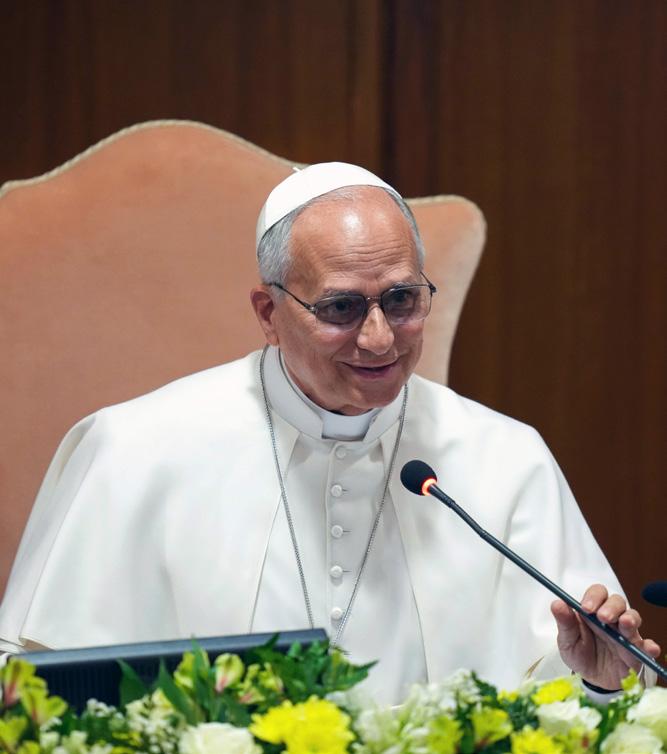
AI Left: Pope Leo
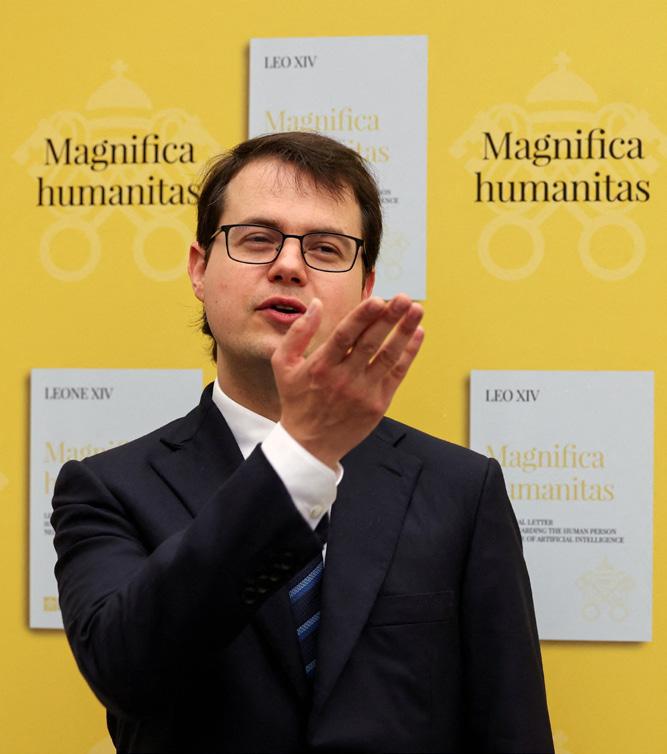
at a presentation of his encyclical, Magnifica Humanitas: On Safeguarding the Human Person in the Time of Artificial Intelligence, at the Synod Hall at the Vatican on May 25. The first encyclical of his pontificate has generated worldwide interest and response. Right: Christopher Olah, co-founder of the U.S. artificial intelligence company Anthropic, answers questions during a news conference in the Vatican's Paul VI Hall on May 25 after the presentation of Magnifica Humanitas
said in his May 25 presentation. “But we bring a wisdom concerning the human that our present time desperately needs: every person is unique and irreplaceable.”
The Holy See’s engagement with major technology companies dates back nearly a decade through conversations known as the “Minerva Dialogues,” which brought together Church leaders and executives from Silicon Valley firms, including Google and LinkedIn.
That’s one of the reasons why one of the most anticipated speakers at the presentation was Chris Olah, co-founder of the artificial intelligence research company Anthropic, who praised the pope’s willingness to engage the industry directly.
Mr. Olah acknowledged that computer scientists alone cannot determine the ethical boundaries of AI because developers themselves are influenced by “incentives” such as ambition, competition, and financial pressure.
“We need informed critics who will tell the labs when we are failing,” Mr. Olah said. “We need
Can Catholics as consumers drive a
better AI future?
moral voices that the incentives cannot bend.”
He said the Church could help shape discussions surrounding the equitable distribution of AI’s economic benefits, the impact of the technology on children and employment, and broader questions about human flourishing.
Mr. Olah also described aspects of advanced AI systems as “mysterious, even unsettling,” saying researchers continue to discover behaviors within models they do not fully understand.
Others speaking at the presentation highlighted themes throughout the encyclical, including economic inequality, labor exploitation, and the concentration of technological power.
Anna Rowlands, professor of political theology and Catholic social doctrine at Durham University in England, was another speaker on the panel with the pope. She said the encyclical “brings the vision of the Gospel to bear on the cultures of AI.”
She said the document challenges the idea that artificial intel-
" Peace, not merely the absence of war, is justice at work. But when technology weakens our critical sense, peace itself is at risk."
Pope Leo XIV
ligence itself can “save” humanity while questioning whether too much influence over modern life is being placed in the hands of a small number of technology companies.
“In the interests of the common good, how can we resist such distorting concentrations of power in the hands of the few?” Ms. Rowlands asked.
Dr. Léocadie Lushombo, another panelist and professor of theological ethics at the Jesuit School of Theology of Santa Clara University, pointed to the encyclical’s criticism of extractive mining industries in the Global South that supply minerals used in AI infrastructure and data centers.
“Yes, AI can very easily be colonial,” Ms. Lushombo said. “It is more likely to do much to further violate the rights of the Global South.”
Cardinal Michael Czerny, prefect of the Dicastery for Promoting Integral Human Development, said the pace of this new technology is unparalleled while the stakes are deeper, concerning “the very nature of human coexistence.”
He went on to say that the most original contribution the Christian faith brings to the discussion on AI is the “conviction that human beings always transcend the sum of their achievements, their data profiles, and any possible technical simulation because they are called to a fullness of life that finds its truth in relationship and its fulfillment in a constant and sincere gift of oneself.”
Cardinal Víctor Manuel Fernández, who serves as prefect of the Dicastery for the Doctrine of the Faith, said the document insists humanity must not lose sight of its own dignity despite technological advancement.
“For every human being possesses infinite dignity and never loses that sublime capacity for love, which God bestowed upon humanity when He created us,” Cardinal Fernández said.
He also emphasized one of the encyclical’s central arguments: that artificial intelligence cannot replicate humanity’s capacity to suffer, grow, and love.
Pope Leo’s encyclical states that humanity carries within itself “the lessons that are etched like scars, a memory of the journey taken between freedom and falls, dreams and disappointments,” Cardinal Fernández said. ■
Encyclical shows need for humanity in health care
By Courtney Mares OSV News
As a small group of tech companies race to dominate the artificial intelligence era, much of the world has been left wondering whether ordinary people have any voice in the AI future that is being built.
But one AI ethics expert says the world’s 1.4 billion Catholics hold more influence than they realize, and that Pope Leo XIV’s new encyclical, Magnifica Humanitas, could be the catalyst for a collective response.
Ron Ivey, a research fellow at Harvard’s Human Flourishing Program and founder of the Noesis Collaborative, a nonprofit focused on steering AI development toward human benefit, says Catholics, through collective action and as
consumers, can help shape the AI landscape.
“We do have alternatives. We do have different ways of using AI,”
Mr. Ivey told OSV News in an interview following the promulgation of Pope Leo XIV’s encyclical, Magnifica Humanitas: On Safeguarding the Human Person in the Time of Artificial Intelligence. “We make choices about how we buy and use these products.”
In Magnifica Humanitas, Pope Leo wrote, “It is difficult for parents by themselves to resist the influence of business models that monetize at-
AI-Future continued on page A23
By Gina Christian OSV News
Shortly after the May 25 release of Pope Leo XIV’s encyclical Magnifica Humanitas, which calls for artificial intelligence ethics to be grounded in Catholic social teaching on God-given human dignity, OSV News spoke with clinical medical ethicist Daniel J. Daly, the founding executive director of the Center for Theology and Ethics in Catholic Health.
Mr. Daly, author of The Structures of Virtue and Vice (Georgetown University Press, 2021) and an associate professor of moral theology at Boston College, shared his thoughts on the current state of AI in health care, and how the Catholic vision of the human person can shape AI ethics in that sphere.
This interview has been edited
for length and clarity. OSV News: How would you summarize Pope Leo’s main message in Magnifica Humanitas?
Mr. Daly: I’d say the main theme or core argument that he’s making is that he wants the peoples and the leaders of the world to engage in a participatory discernment about how AI should be used to promote human flourishing, or “integral human development,” which is an older term in the tradition. It’s really a focus on the whole person, and on all persons: that we might
Mr. Daly AI-Health care continued on page A23
disarmament Pope Leo XIV attends the presentation of Magnifica Humanitas at the Vatican's Synod Hall on May 25. It is the first encyclical of his papacy and focuses on the rise of artificial intelligence throughout the world.
Understanding
XIV speaks
OSV NEWS
PHOTO/YARA NARDI, REUTERS
Mr. Ivey
St. Mary rosary garden receives blessing
Members of Johnson City parish, students work together to create prayer space
By Lillian Isaac
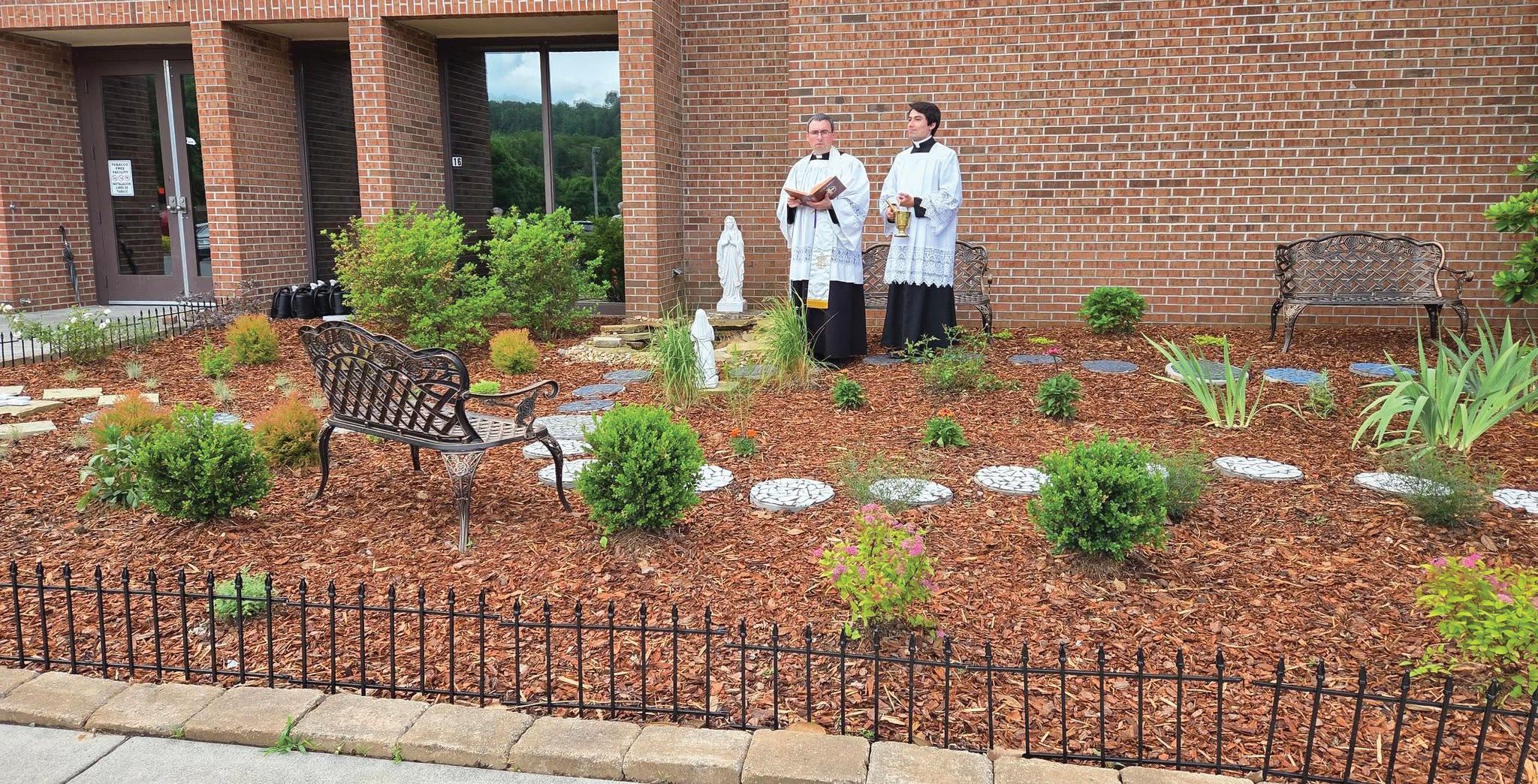
On May 23, after more than two years of planning and several months of construction, St. Mary Parish in Johnson City blessed and dedicated its rosary garden—a peaceful prayer space featuring flowers and plants traditionally associated with the Virgin Mary along with a pathway of stepping stones representing the beads of a rosary.
Following the blessing, members of the Legion of Mary and the Ministries in Spanish led the faithful in praying the rosary beside the garden.
Father Dustin Collins, pastor of St. Mary Parish, expressed for the parish appreciation and excitement at the addition of a rosary garden.
“I am very pleased with the new rosary garden as it provides a prayerful place for the rosary under the intercession of Our Lady of Lourdes. I am thankful for all volunteers who helped to carry out this project and our schoolchildren for making the walking stones,” Father Collins said.
Rosary gardens trace their roots to the Middle Ages, when devotion to the rosary was growing throughout the Church and monasteries maintained enclosed gardens for prayer and meditation. Over time, these spaces evolved into rosary gardens, inviting the faithful to pray while surrounded by the beauty of God’s creation.
St. Mary’s rosary garden continues this tradition as a place where prayer and nature come together. Each step along the pathway offers an opportunity to meditate on the life of Christ through the mysteries of the rosary and encoun-
ter the peace of God.
The statues in the garden depict the visionary St. Bernadette Soubirous and the Blessed Mother under the title of Our Lady of Lourdes, who during her 16th apparition revealed herself as the “Immaculate Conception.”
This Marian devotion was chosen to reflect Our Lady of Lourdes’ role as patroness of Tennessee and Our Lady of the Immaculate Conception as patroness of the United States.
This beautiful prayer space was made possible through the generosity of many parishioners who shared their time, talent, and treasure, es-

the inspiring, feature film based on the true story of a woman who suffered from depression after having an abortion, leading her to the brink of suicide. She was saved by a stunning revelation from her four-year-old daughter who had been having a series of recurring dreams about meeting her older brother in heaven. This film shows that the path to forgiveness and healing for post-abortive women is available to all through reconciliation with God.


To see how a powerful film can change hearts and minds, watch the trailer at HeNamedHimAdam.com

pecially through donations collected during the #iGiveCatholic campaign.
Numerous parish ministries also played an important role in bringing the project to life. By creating this rosary garden on the parish campus, the parish community not only honors the Blessed Mother, patroness of St. Mary Parish, but also provides a peaceful place for people to pray, reflect, and deepen their devotion to the rosary.
It is the hope of the parish that the garden will remain a lasting place of prayer, renewal, and encounter with Christ for generations to come. ■

If you’re passionately pro-life and have the means, please help us get this movie made. We know the power movies have in changing hearts. Pregnancy Resource Centers that show the trailer to women who are contemplating abortion tell us that it has already saved lives. If the trailer can do that, just imagine what the movie will do.
We’re selling profit-participating Preferred shares. Angel Studios (The Chosen, Sound of Freedom, Cabrini) has committed up to $5,000,000 for theatrical distribution. With internationally known actors, Kelsey Grammer, Vivica Fox and Sam Sorbo, we believe a healthy return on your investment is likely.

Why are we making this movie? Because half the people in this country still believe there’s nothing wrong with killing babies in the womb and no amount of logic, reason or science will change their minds. For 50 years, Hollywood has been telling powerful, emotional stories that have normalized abortion. Emotional stories have a profound effect on what a person believes which is why Jesus used the parables to proclaim the Gospel. Movies that tell the truth and reach millions can make all the difference in the world. Only when we change these hardened hearts will abortion be unthinkable.
To find out more, go to HeNamedHimAdam.com. Click on the INVESTORS ONLY link next to the first video. You’ll n eed this password: HNHA to enter. There, you’ll find lots of information about this exciting opportunity.




There are estimated to be over 20 million women and men who regret their abortions. We hope you will prayerfully consider supporting this film to show those who are hurting that there is peace and redemption through Christ.





From the filmmakers who made Father Ryan: A Higher Call comes
A space with grace Father Dustin Collins, left, blesses the new St. Mary rosary garden. Assisting Father Collins is seminarian Gerald Stults.
COURTESY OF LILLIAN ISAAC/ST. MARY PARISH
Diocese commits to caring for creation
Ecological retreat, Mass led by Bishop Beckman launch Care of Creation Commission
By Brett McLaughlin
Long before young Mark Beckman was consciously discerning his future, he was being tugged into a relationship with God the Creator as he explored the fields and forests of his native Lawrenceburg, Tenn. Now, as bishop of Knoxville, he is inviting the faithful of his community to develop Creation Care Teams in every parish of the diocese. He wants to join hands in carrying forth the call of Pope Francis’ 2015 encyclical Laudato Si’ to hear “the cry of the Earth” and “the cry of the poor” and to “respond by rediscovering our responsibility to be true stewards of God’s creation.”
“In the spring, there would be wild roses growing in the ditches; in the summer, we would pick blackberries from the same ditches,” Bishop Beckman said, recalling his childhood during a Mass and ecological retreat on May 27 at All Saints Church in Knoxville.
“As young boys, we would follow the creek through the pine forests that were all around us. … In some ways I was extremely blessed to grow up in Middle Tennessee surrounded by fields, flowers, and farmland,” he continued.
An awareness of God’s creation as “a supreme gift” developed, and he told those gathered that his heart, mind, and body became open to the wonder of that creation. That wonder, he explained, continues today as he wakes each morning, aware of the breath God has given him as he prays: “Thank you God for my breath that I now breathe back to you.”
The bishop’s comments came on the heels of a May 15 letter he wrote to the faithful announcing the establishment of a new dioc-
esan Care of Creation Commission as part of the Diocese of Knoxville's commitment to environmental sustainability.
Guided by Laudato Si’, the bishop asked the entire diocese to commit to a new relationship with
God’s creation. He specifically referenced how truly blessed we are by the beauty of our mountains, streams, forests, and wildlife in East Tennessee, and stressed our spiritual responsibility to be faithful stewards of these gifts.
“Since the release of Laudato Si’, many dioceses around the globe have adopted Care for Creation principles. Some of our parishes in the Diocese of Knoxville have also begun similar initiatives, which I commend,” he wrote.
“As a diocese, we commit to environmental sustainability with a newly formed diocesan Care of Creation Commission. I also invite each parish to develop Creation Care Teams, and for each parish and school to develop action plans according to the unique abilities and resources of each community,” his letter continued. “I invite individuals and families to devise ways to live more simply and sustainably as we mindfully live out our Christian faith, protecting life and beauty. We are a Catholic people of hope!”
Specifically, the bishop invited each parish to: n Hold a parish listening session or other consultation with key advisory bodies to parish leaders; n Develop a Creation Care Team; and n Enroll in the Laudato Si’ Action Platform and submit an action plan.
Prior to the Mass on May 27, attendees gathered in the All Saints parish hall for a series of three short talks offered by members of the newly formed commission.
Juan Alarcon, a physical chemist, focused his comments on the science of climate change and what faith asks of us. Rebecca Harman, a Tennessee native and conservation scientist, spoke of her own personal journey and a relationship with the earth centered on the sacred elements that move through it, and Deacon Chad Shields, permanent deacon assigned to Christ the King Parish in Tazewell, shared
Creation continued on page A18
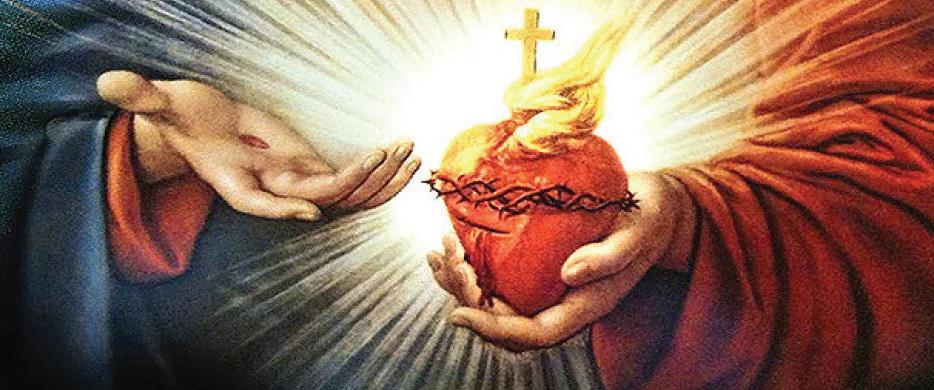
Ent hronement of t he Sacred Heart of Jesus Mission
Join Father Richard McNally, of the Congregation of the Sacred Hear ts, for a mission at St John Neumann on June 28-3 0, 2 026 | 6:3 0 pm
Br ing your family and fr iends to lear n more about the love and mercy of the Sacred Hear t of Jesus and the grace and power of the enthronement! All are welcome! For questions or to volunteer, please contact Lisa Morr is at 865-567-1245 or lccte3@gmail com

infor mation
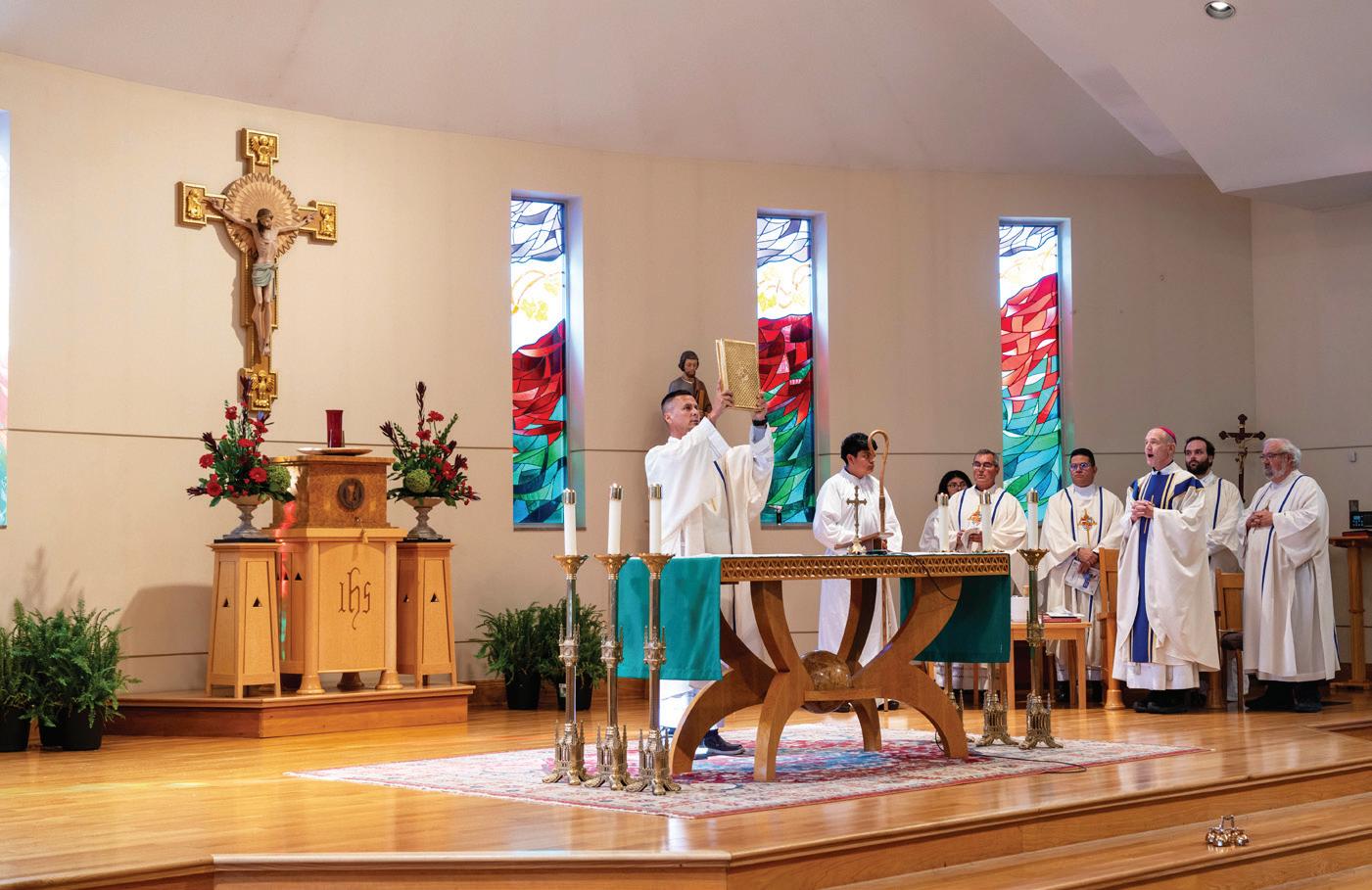
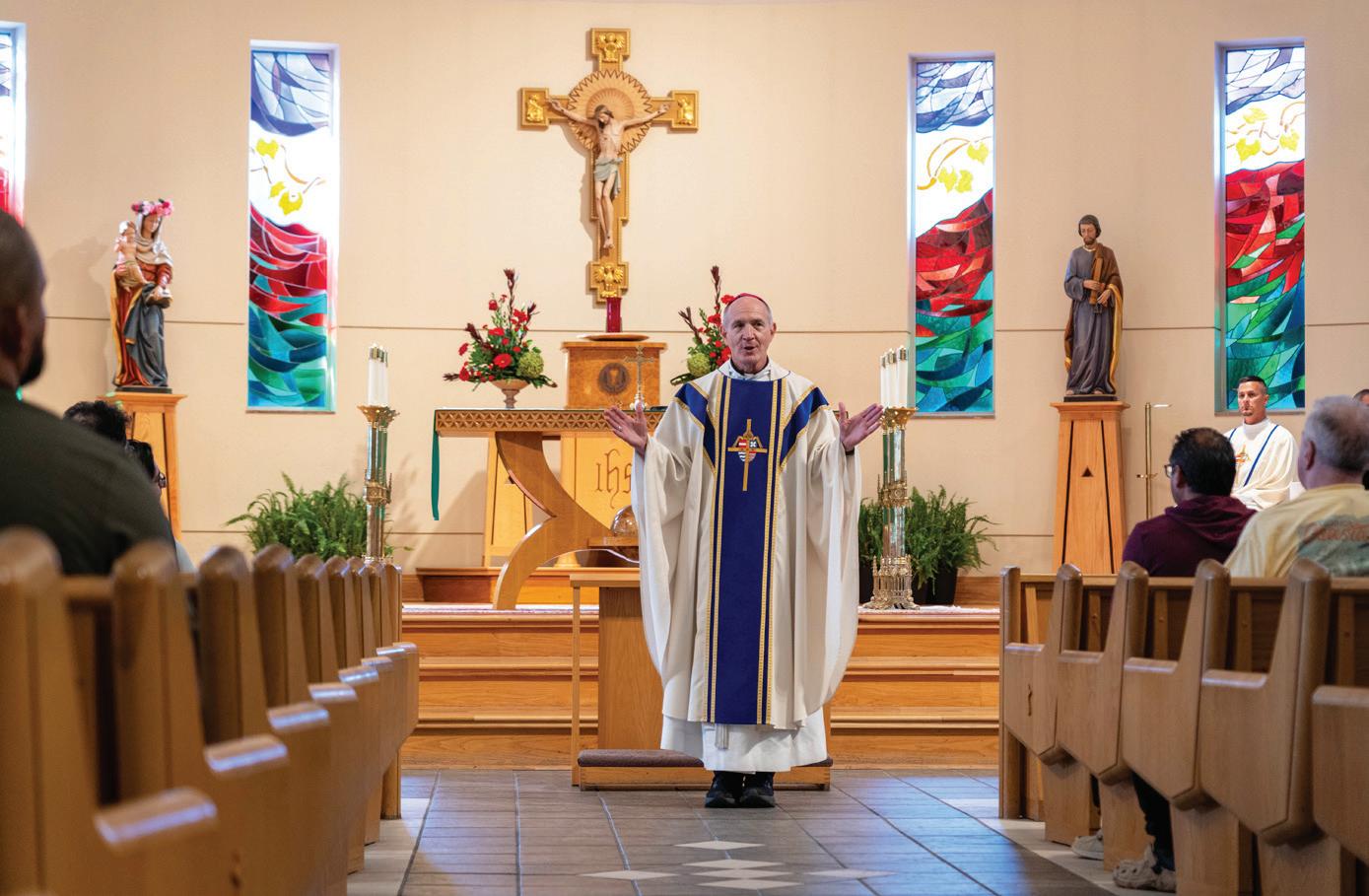
Living simply and sustainably Above: Deacon Chad Shields raises the Book of Gospels during the Care of Creation Mass on May 27 at All Saints Church in Knoxville. Bishop Mark Beckman celebrated the Mass, with Father Peter Iorio, Father Renzo Suarez, and Father Adam Royal concelebrating. Deacon Tim Elliott also assisted. Below: Bishop Beckman gives the homily during the Care of Creation Mass.
Truth, beauty, and relationship
Why people in East Tennessee are coming home to the Catholic Church
By Deacon Jim Bello
The Diocese of Knoxville welcomed nearly 1,100 adults into the Catholic Church during the 2025–26 catechetical cycle. The Rite of Election and Continuing Conversion, celebrated by Bishop Mark Beckman in February for those seeking full communion with the Church, drew a standingroom-only crowd at the Cathedral of the Most Sacred Heart of Jesus in Knoxville.
This momentum has been building for several years, not only in East Tennessee but also in dioceses across the United States and around the world. Even national secular news outlets have taken notice.
In a recent New York Times article, “Roman Catholic Church Sees a Surge of New Converts,” religion correspondent Elizabeth Dias reported that “people are joining the Roman Catholic Church in surprising numbers.” She cited dioceses anticipating their largest infl ux of new Catholics in decades, with some reporting yearover-year increases of more than 50 percent leading up to the 2026
Easter Vigil.
Reports from Catholic news organizations point to a similar pattern internationally. Highly secularized cities such as London and Paris are experiencing notable increases in those entering the Church, particularly among young adults between the ages of 18 and 35.



Conversations with directors of religious education and coordinators of the Order of Christian Initiation of Adults (formerly RCIA) throughout the Diocese of Knoxville reveal a similar sense of enthusiasm. Many describe the challenge of finding addi-
tional space and resources to accommodate growing numbers of inquirers and candidates.
Several parish leaders report that inquiries for the 2026–27 catechetical cycle remain strong, suggesting that this movement continues to gain momentum in East Tennessee.
Parishioners across the diocese have noticed the growth as well. Some wonder whether the increase represents a temporary surge that will eventually level off. Others question whether departures from the faith remain significant enough to offset these gains. Both are reasonable questions, and the answers will become clearer in the years ahead.
For now, however, a more immediate question presents itself: Why are people coming to the Catholic
Thank You




































We would like to recognize and thank the organizations and individuals whose sponsorships and generous donations helped make our annual golf tournament a success
If you would also like to support Ladies of Charity Knoxville, please visit ou website to learn more about our mission and how you can help make a dif ference.
https://www.ladiesofcharityknox.org/ e whose our annual tournament you please how dif ttps://www.ladiesofcharityknox.org/

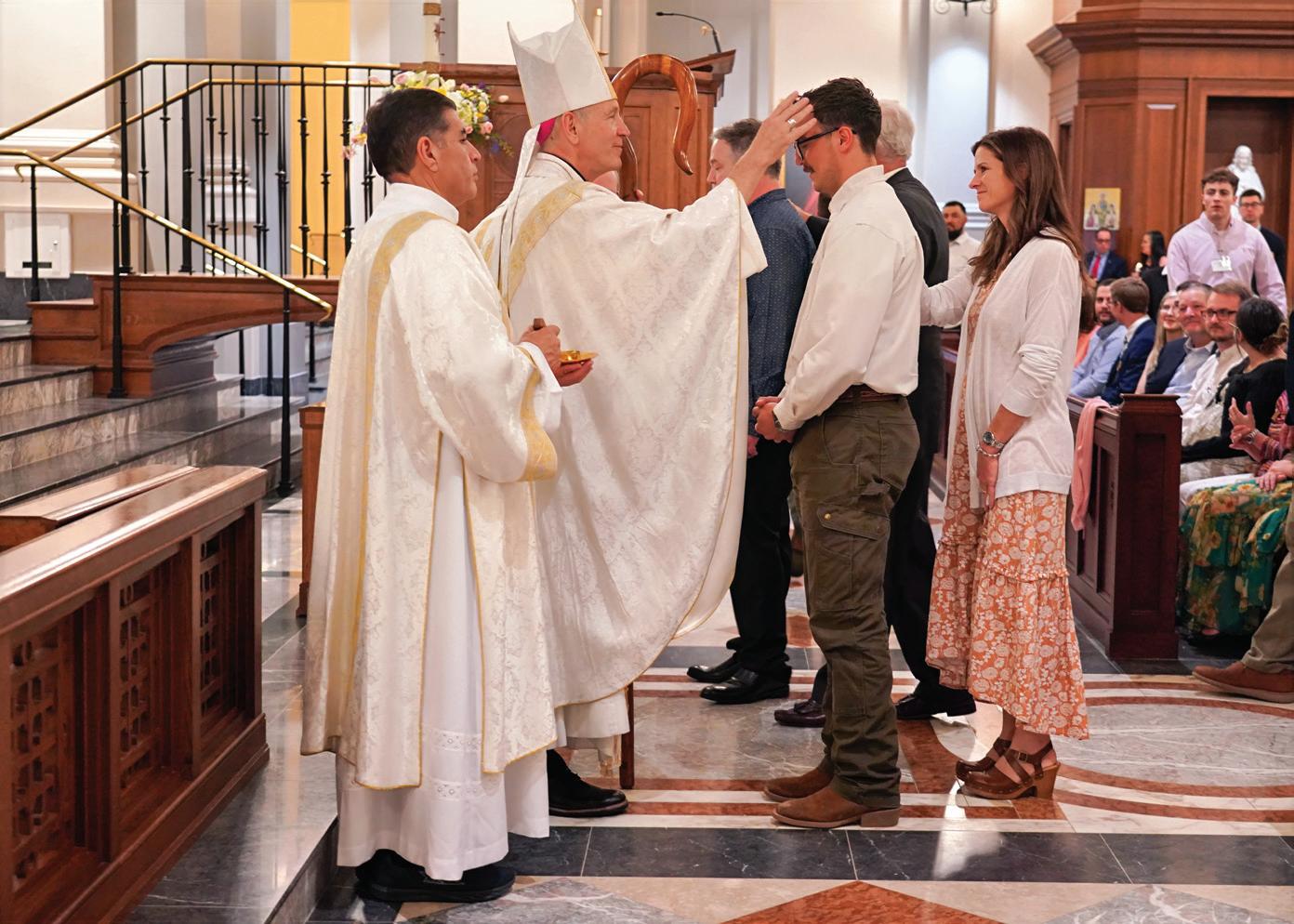
Growing the Catholic Church Bishop Mark Beckman confirms the newest members of the Catholic Church in East Tennessee during Easter Vigil on April 4 at the Cathedral of the Most Sacred Heart of Jesus.
Growing
Deacon Bello
‘Then I will do my best’
Servant of God Charlene Marie Richard: suffering offered and miracles found
By Bee Goodman
She was 12 years old, dying, and in tremendous pain. Yet instead of praying for herself, she prayed for others. That is the story of Charlene Marie Richard, a simple Cajun girl from Louisiana whose extraordinary faith in her final days inspires thousands around the world.
It is the story of an ordinary child, in an ordinary town, who chose to love God and others with steadfast determination, even as her own life was ending.
Charlene was born on Jan. 13, 1947, in Richard, Acadia Parish, La., the second oldest of 10 children born to Joseph Elvin and Mary Alice Richard. Her father was a sharecropper and later a state highway worker, while her mother was a nurse’s aide for homebound patients.
The family home had only two bedrooms shared among 10 children, and the house lacked electricity; yet by all accounts, it was kept clean, orderly, and full of life. The children spoke French at home, and Charlene’s father never learned English.
Within the Cajun community, there was nothing unusual about the little girl or her family. They were hard-working people strongly devoted to their Catholic faith in a culture where deep religious devotion was simply a way of life. As was common in Cajun culture, the boys were altar servers at Mass and the girls sang in the choir. The family would attend Mass three times a week in addition to Sunday.
Charlene grew up attending Catholic school and then Richard Elementary School through sixth grade. She was known as a diligent student who rarely missed classes and participated in school plays and summer programs at nearby
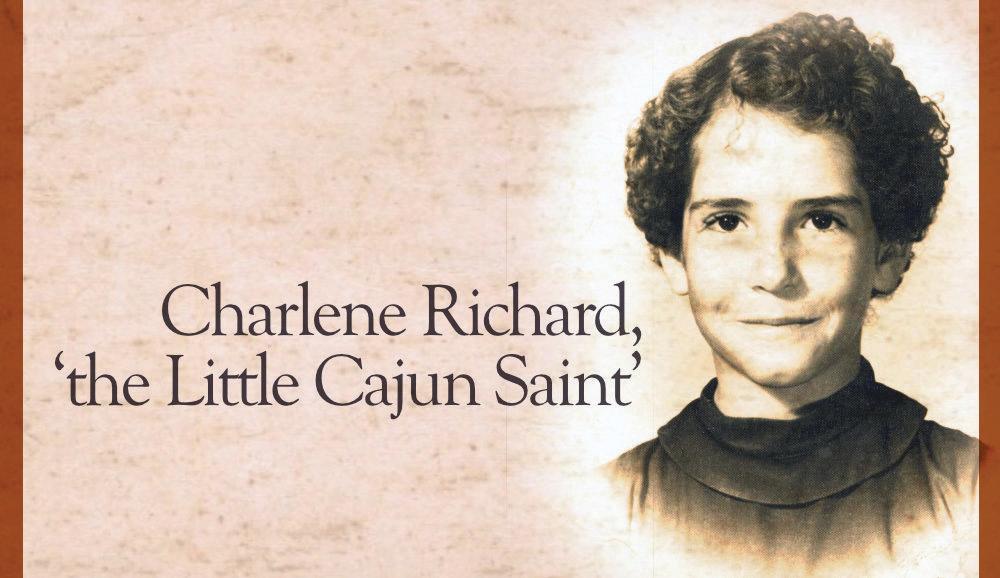
Ordinary and extraordinary Charlene Marie Richard has been declared a Servant of God and her cause for sainthood is under consideration by the Vatican's Dicastery for the Causes of Saints.
St. Edward Church.
She excelled enough in basketball to captain the girls team at Acadia Parish Middle School. She did chores that included picking cotton and bringing in the sweet potato and corn crops. She rode horses into the woods near her home, which backed up to Bayou Plaquemine Brulé.
Her brother, John Dale, recalled fondly: “She could give me a hard slap. She was feisty but she was fair.”
The New York Times once described the girl as “exuberant, loyal, and generous.” She nightly prayed her rosary, which she kept on her bedside table alongside the Bible. She was, in every sense, an ordinary Cajun girl. Such ‘ordinariness’ is precisely what makes her story so powerful.
The seeds of something deeper were planted in May 1959. Charlene read a book about St. Thérèse of Lisieux. After reading it, she told her grandmother she wanted to be like St. Thérèse and asked if she, too, could become a saint by praying like her. Her grandmother answered simply, “All we can do
Eucharistic pilgrimage sets out on Pentecost, prays for a fresh outpouring of the Spirit
By Gretchen R. Crowe OSV News
Asoftening of hearts toward the Eucharist, a greater sense of unity in the Church, and a “fresh outpouring of the Holy Spirit”—these were the intentions held in the hearts of perpetual pilgrims as they set out on the third National Eucharistic Pilgrimage from St. Augustine, Fla., on May 24.
The pilgrimage, which will take six weeks, will follow the eastern seaboard through Georgia, South Carolina, North Carolina, Virginia, Washington, D.C., Maryland, Delaware, New Jersey, Massachusetts, New Hampshire, Maine, and Rhode Island before ending in Philadelphia.
Under the bright Florida sun, on the grounds of the Mission Nombre de Dios and the National Shrine of Our Lady of La Leche, Bishop Erik T. Pohlmeier of St. Augustine celebrated Mass to kick off the 2026 pilgrimage on the feast of Pentecost—nearly 500 years after the fi rst Mass of Thanksgiving there in 1565 in what is now “the oldest site of continuous Catholic presence in the United States.”
In attendance were the nine “perpetual pilgrims” of the National Eucharistic Pilgrimage who will be traveling with the Eucharist, which Catholics believe to be Jesus Christ truly present in His body, blood, soul, and divinity— for six weeks on the “St. Frances Xavier Cabrini Route” up the East
Coast, ending in Philadelphia over the July 4 holiday.
Also present were offi cials connected to the National Eucharistic Pilgrimage and the Diocese of St. Augustine, and as many as 1,500 pilgrims gathered for the fi rst leg of the 2026 pilgrimage.
“Today, on the feast of Pentecost, I’ve really just been praying for a fresh outpouring of the Holy Spirit; that we would be really fi lled with His gifts, and would experience peace and joy and freedom, and that comes by living in an authentic relationship with Jesus,” said Mary Carmen Zakrajsek, a perpetual pilgrim from the Diocese of Fort Wayne-South Bend, Ind., at a press event at the start of the day.
“And so that is my intention today, is that all of us here will allow Jesus to breathe new life into us through the Holy Spirit, and draw us into an even deeper relationship with him,” Ms. Zakrajsek added.
Ms. Zakrajsek, 26, told OSV News that being at Mass at the Mission Nombre de Dios is a “very surreal moment.”
“To be in the place where the fi rst Catholic Mass was celebrated centuries ago in this country is really historic and unique,” she said. “And I think we as pilgrims are on this pilgrimage, we as a country are also on a pilgrimage, right? And it's a beautiful fullcircle moment to see where we started, and where we are now, and where the Lord wants to take Pilgrimage continued on page A18
Saints & Souls
is our best.”
The girl replied quietly, “Then I will do my best.” Within weeks, she would be given a chance to live out those words in ways no one around her could have imagined.
Her final days
Not long after, Charlene began to feel unwell. She had a strange set of encounters around this time. A woman dressed in black with a bonnet covering her face blocked her path twice. Her brother, John Dale, was with her on one occasion but did not see the figure himself. Since Charlene was known to be honest, those around her believed her account. She addressed the fig-
ure directly: “What in the name of God do you want?” The figure then disappeared beneath an old tree. Her teachers noticed she was no longer her energetic, joyful self. Her mother took her to a physician. Only two weeks before her death, she was diagnosed with acute lymphatic leukemia and hospitalized at Our Lady of Lourdes Hospital in Lafayette, La. At the request of her family, a hospital chaplain and newly ordained priest, Father Joseph Brennan, was asked to tell her she was going to die. He introduced her to the Catholic doctrine of redemptive suffering.
Father Brennan told her, “When it’s time, a beautiful lady will come to you and take you with her.”
Charlene then replied, “I know, and I’ll tell Our Lady that Father Brennan says hi.” From that moment forward, rather than focusing on her own suffering, the sick girl offered her daily aches and pains for the conversion of specific souls and for the healing of family, friends, and members of her community. She even made a strenuous visit home during her hospitalization to meet her newborn godson.
Though the illness was painful, she remained cheerful, accepted her fate, and offered her suffering to God. Father Brennan was deeply impressed by her faith and visited her daily. While dying, Charlene prayed for other individuals to be healed or converted to Catholicism. The director of pediatrics at the hospital, Sister Theresita Crowley, OSF, also witnessed her calm acceptance of suffering and prayers for others.
Both Father Brennan and Sister Theresita testified that those for whom she prayed recovered from their illnesses or became Catholic. Father Brennan later reflected on what he witnessed: “She was a
Charlene continued on page A22
Ms. Goodman
A conversation of faith from the heart Ecumenical dialogue brings together Catholics, other faiths in Chattanooga
By Maggie Parsons
What began as two friends having conversations about their differing faith perspectives developed into a friendly ecumenical dialogue to share with their community through the love of God.
Four representatives of different faiths gathered on March 9 at the University of Tennessee-Chattanooga Newman Center to share those perspectives in front of an audience.
The Diocese of Knoxville Commission on Ecumenism and Pray Chattanooga co-sponsored the ecumenical dialogue program, which was moderated by Matt Everhart, networks director for Pray Chattanooga who also is pastor at Hope Fellowship in Chickamauga, Ga.
In a world where differing views can cause division, the dialogue seeks to be able to lead with the heart.
Tyler Ross, who took part in the program, is a canon lawyer for the Diocese of Knoxville who works with the diocesan Office of the Tribunal in Chattanooga. He enjoys being able to share his love for the Catholic faith.
“Part of our goal would be to model how to disagree charitably and help other people on their own enter into these conversations,” Mr. Ross said.
Adam Whitescarver, who also participated in the event, is the
executive director of the nonprofit Christian organization Pray Chattanooga. Its mission is to support the community through involvement and resources leading with their Christian values. It is focused on unifying churches and believers across the greater Chattanooga area through corporate and private prayer, spiritual retreats, and community service.
“It’s building quality relationships between Protestants and Catholics for the purpose of reconciliation with one another (to what-
ever degree that is possible here and now). More than that, however, it is my hope that we can present a unified witness to Jesus Christ being the Way, the Truth, and the Life,” Mr. Whitescarver, who also is pastor of Red Bank Cumberland Presbyterian Church, remarked to the group.
Both men leading the dialogue, above all else, want to be examples of Christ’s life in hope of bringing others to Christ as He calls them to do.
Over the past two years, the dia-
logue has varied in topic as well as having featured guests on the dialogue board.
At the most recent dialogue, Sister Scholastica Niemann, a Dominican Sister who serves in the Diocese of Knoxville, discussed with Mr. Ross the Catholic view of celibacy. Another guest on the panel was the Rev. Philip Hanner, who serves as rector of the Anglican Church of the Redeemer in Chattanooga.
“I hope to just plant a seed and let the Lord provide growth. We shouldn't underestimate the power of joyful witnesses. People who come to listen to the dialogue might not remember how amazing your argument was, but they might very well remember if you looked happy and joyful,” Sister Scholastica said.
One way the dialogue engages the community is the simplicity of being an example of a relationship founded in God.
The dialogue started with Mr. Ross and Mr. Whitescarver opening a chosen topic with statements, quotes, and information they have learned that align with their view. They asked each other questions on why they may hold a certain view on the topic or go further into a point.
“One of the things that I really enjoy the most is when people hear a truth of the faith articulated and being able to make those new connections,” Mr. Ross said.
The dialogue is effective in get-
Where will tomorrow’s priests come from? International priests are meeting critical ministry needs around the world
Society of St. Peter the Apostle
Across parishes in the United States, priests play a central role in Catholic life—celebrating Mass, administering the sacraments, offering spiritual counsel, and proclaiming the Gospel.
Yet as many American priests advance in age, a pressing question faces the Church: who will serve the next generation of Catholics?
In recent years, new vocations have continued to emerge. More than 400 men were ordained priests in the United States last year, answering a call that remains both demanding and deeply needed.
While local parishes and dioceses remain a vital source of vocations, they are no longer the only ones.
Today, roughly one-quarter of Catholic priests serving in the United States were born and formed in other countries. Many come from regions where the Catholic faith is growing rapidly—particularly in parts of Africa, Asia, and Latin America—but where local churches often struggle with limited financial resources.
In some of these places, priests and seminarians pursue their vocations amid poverty, instability, or even persecution, clinging to faith in circumstances that test it daily.
Mission territories across the world depend heavily on international solidarity to sustain their churches, schools, and seminaries. Organizations such as the Pontifical Mission Societies play a central role in that effort, coordinating global support for missionary dioceses and helping ensure that young men discerning the priesthood can complete their formation.
Over the years, this support has translated into tangible results such as churches constructed on multiple continents and formation sustained for tens of thousands of seminarians.
Of the approximately 201,000 seminarians worldwide, about 40 percent are able to maintain their studies because of direct assistance received through the Society of St. Peter the Apostle, one of the Pontifical Mission Societies. Many of those seminarians will eventually serve far beyond their home countries. Priests from places such as Nigeria, Uganda, Kenya, India, Vietnam, Korea, Mexico, and the Philippines are expected to continue ministering in U.S. parishes—particularly in communities where linguistic and cultural diversity is growing. Their presence reflects both the global nature of the Catholic Church and the interconnectedness of its members.
A vocation made possible
In the Diocese of Knoxville, priests from other countries are increasingly serving the Church in
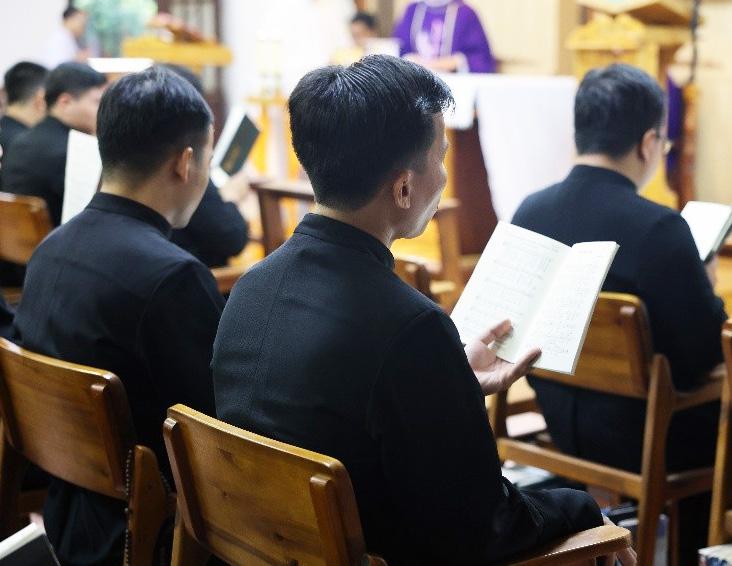
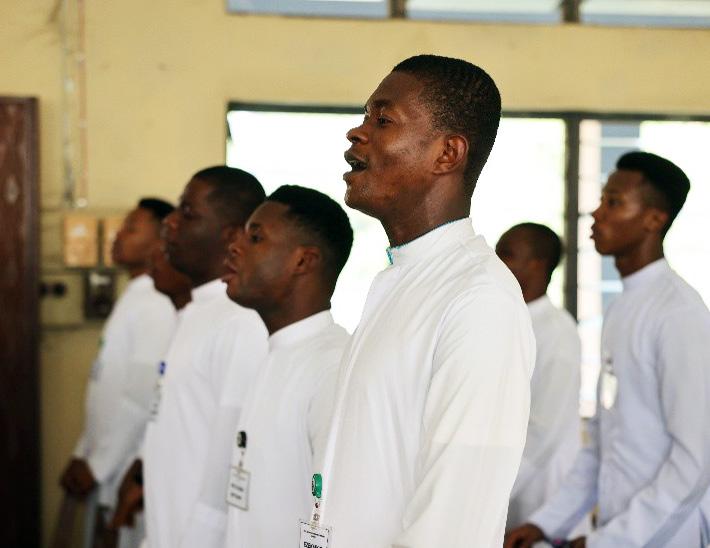
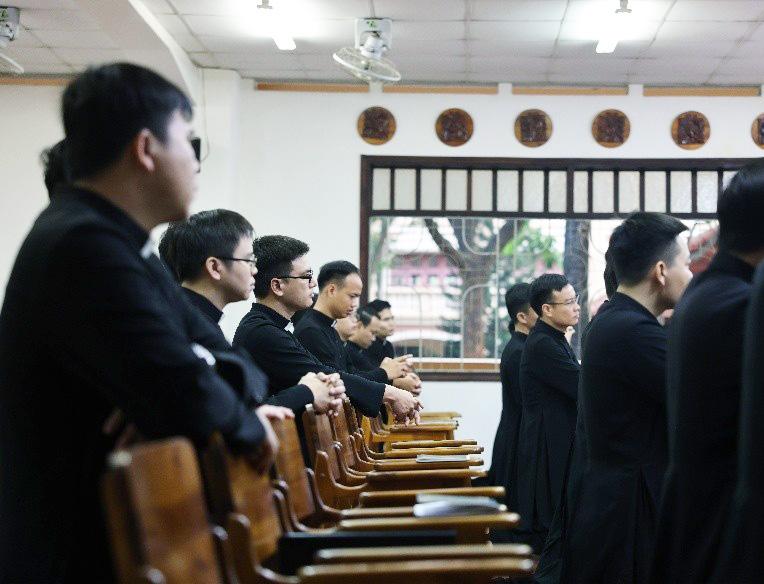
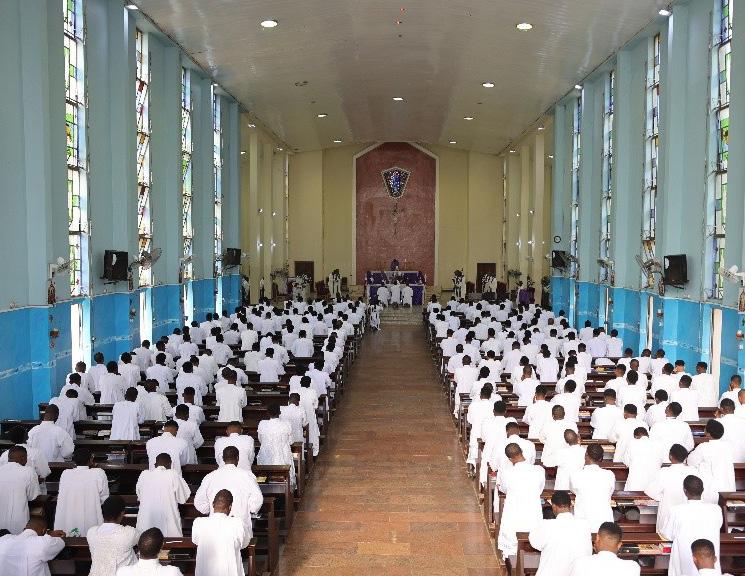
East Tennessee. They are pastors and associate pastors at parishes from Chattanooga to the TriCities area.
As the diocese experiences record growth in people joining the Church, international priests are finding more ministry opportunities to serve the people of God throughout the four deaneries.
Similar experiences are being shared in dioceses around the United States.
Father Augustine Dada grew up in Nigeria in a family of educators who served in Catholic schools—a foundation that quietly shaped a vocation.
Ordained in 2009 in the Diocese of Ondo, a mission diocese where resources remain limited, his path to the priesthood depended on the kind of support the Society of St. Peter the Apostle exists to provide.
Today, Father Augustine serves as associate pastor at Our Lady of Mount Carmel Parish in Elmsford, N.Y., as a Papal Missionary of Mercy appointed by Pope Francis, and as vice president of the Society of St. Peter the Apostle— dedicating his ministry to the same mission that
once made his own vocation possible. It began with a call discerned in a mission diocese, and the solidarity of Catholics who believed that geography and poverty should never silence a vocation.
The Society of St. Peter the Apostle has long focused specifically on supporting priestly vocations in mission countries, ensuring that financial hardship does not prevent men from answering God’s call. Through that work, individual lives are shaped—and entire communities are strengthened—by the presence of well-formed priests.
As the Church looks to the future, one reality is clear: the next generation of priests will come from many nations and cultures, united by a shared faith and mission.
Their journey to the altar often depends on the quiet, sustained support of Catholics who may never meet them but will one day benefit from their ministry. In this way, the growth of the Church—both at home and abroad—continues to be built on faith, perseverance, and a global spirit of communion. For more information, visit www.ppoomm.va ■
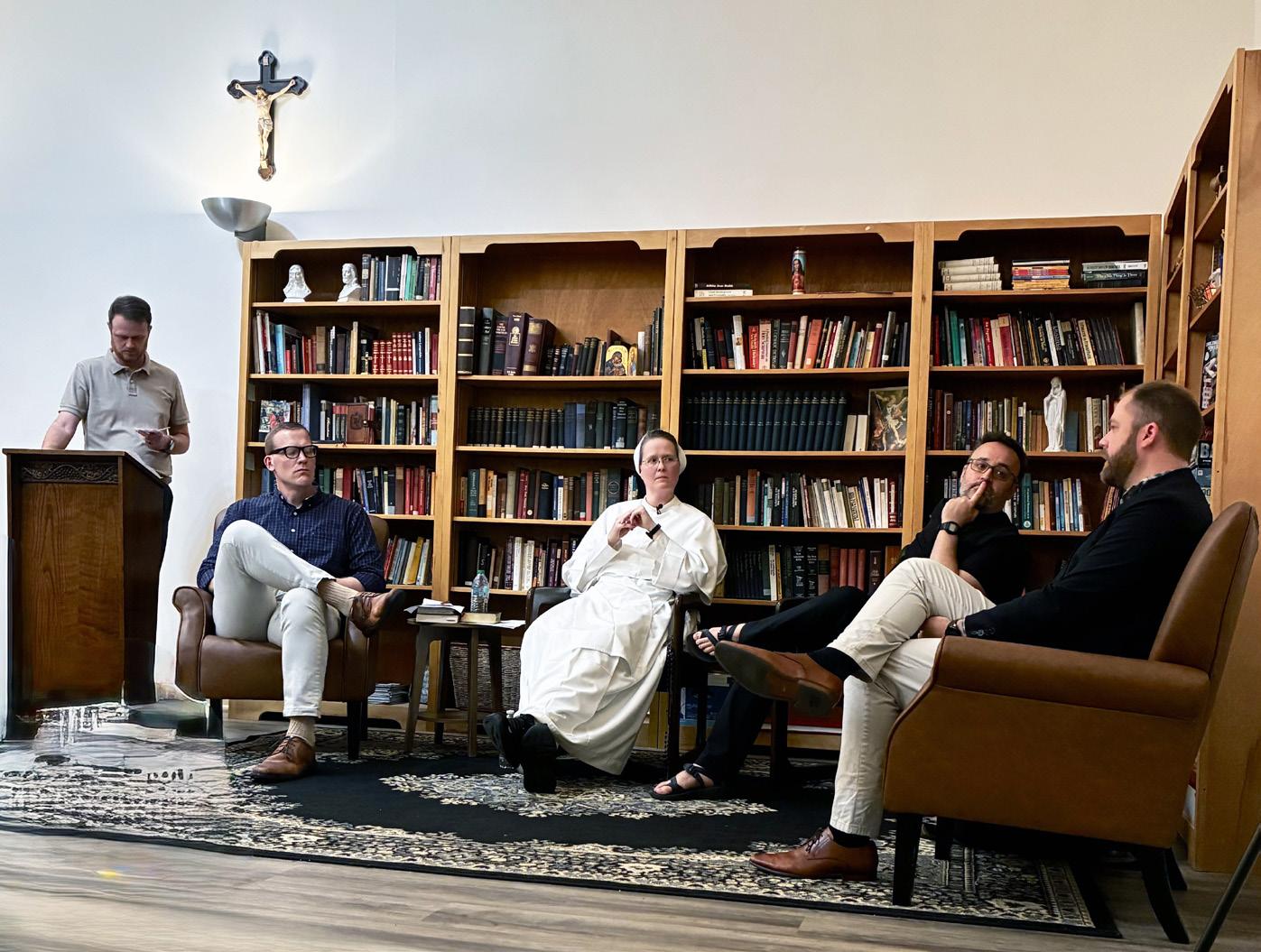
Christian dialogue Participants in the ecumenical dialogue program on March 9 at the University of Tennessee-Chattanooga Newman Center were, seated from left, Adam Whitescarver, Sister Scholastica Niemann, OP, Rev. Philip Hanner, and Tyler Ross. Matt Everhart was the moderator.
MAGGIE PARSONS
COURTESY OF THE SOCIETY OF ST. PETER THE APOSTLE (4)
The mission of vocations Clockwise from top left photo: Young men in formation for the priesthood in Vietnam. Seminarians in class at St. John Paul II Seminary in Awka, Nigeria. A large group of seminarians gather for Mass at Bigard Memorial Seminary in Enugu, Nigeria. Young men study for the priesthood in Vietnam.
MARGARET MURRAY
MARGARET MURRAY
STEPHEN BEAN
STEPHEN BEAN
To be Called by Name
Ministry initiative is aimed at growing vocations in the Diocese of Knoxville
By Maggie Parsons
Following the start of the Diocese of Knoxville Vocation Office’s Called by Name program, young people were invited to have conversations with priests and religious from around the diocese on discerning a vocation.
The Chancery office began to look for ways to increase vocations in East Tennessee. The diocese took its first major step for vocations in January with its first Called by Name nomination.
Father Mark Schuster, director of vocations for the diocese, explained the idea behind the Called by Name system and the nominations.
“The vision was to actively invite people to consider a vocation to the religious life, or the priestly life, but also to encourage people to accurately look and invite other people,” Father Schuster said.
In June 2025, Bishop Mark Beckman and Father Schuster highlighted vocation ministry within the diocese in hope of inspiring parishes to invigorate vocation discernment.
After the nominations were made in each parish, those names were sent to the Vocations Office. From there, the office sent invi-
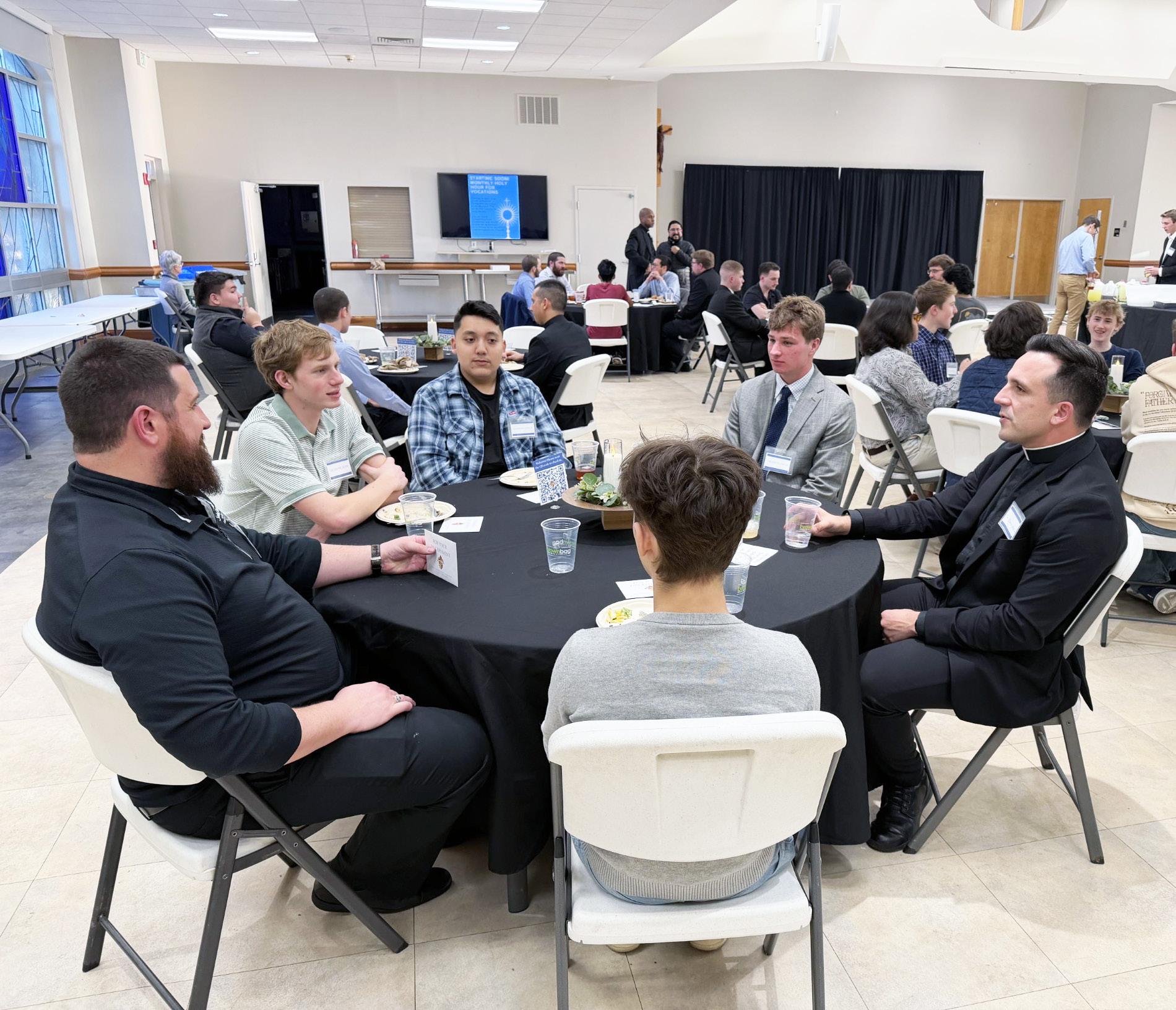
Calling their name Diocese of Knoxville priests, including Father Neil Blatchford, Father Danny Herman, Father Arthur Torres, Father Miguel Vélez, Father A.J. Houston, Father Mark Schuster, and Father Michael Willey, talk at All Saints Church with young men discerning a vocation.
tations to the men and women nominated to participate in gatherings and dinners with priests and religious. This gave those invited an opportunity to become comfortable with clergy and religious and to ask questions involving
discernment.
“I received the invitation months ago, and I have been waiting ever since,” Rosalie Boehm said.
Ms. Boehm, an energized participant of a Miriam dinner with the Religious Sisters of Mercy of Alma,
Mich., at the Sisters’ Knoxville convent, attended from St. Mary Parish in Johnson City. She was eager to spend time with the religious in their community.
Ms. Boehm is an example of having zeal for the Lord and those in faith communities.
“I love visiting convents; I love Sisters, and it was beautiful to pray and enter myself in a little liturgical life,” said Olivia Turner, who shared Ms. Boehm’s excitement.
Ms. Turner drove from the Basilica of Sts. Peter and Paul in Chattanooga to attend the Miriam Dinner, eager to interact with the Sisters.
Visiting the convent was an interactive way for the young women to be exposed to part of a religious Sister’s life.
Father Schuster compared this exposure to that of an internship when someone is gaining an understanding of a profession in which they’re interested. For those beginning to discern the priesthood or religious life, exposure to the daily beauty of a vocation can be a meaningful starting point.
“I think the increase we hope to see is an openness among young people to the vocation God is calling them to and increased support
MAGGIE PARSONS
Vocations
2026 Diocesan Soccer Tournament is a success
Teamwork, fellowship are the real winners as men and women compete
By Magdiel Argueta
More than 250 people participated in the 2026 Diocesan Soccer Tournament held on May 31 at Victor Ashe Park in Knoxville.
The tournament was sponsored by the Diocese of Knoxville Office of Youth, Young Adult, and Pastoral Juvenil.
When the first whistle blew at 8:14 a.m., four fields were ready for an outstanding tournament.
The day began with the qualifying round, where 14 men’s teams competed for a place in the quarterfinals, while four women’s teams battled for a spot in the championship match.
While the soccer play was very competitive, the action led to fellowship and team-building.
But how does sports bring young people closer to God?
For Julio Quinilla, sports reflect many aspects of life itself. They teach self-control.
“When we are on the field with a team, we have to understand one another, be humble, know our role during the game, and think about every step and every movement. That is also how our life is as children of God,” Mr. Quinilla explained.
His words carry an important truth. The soccer field reveals not only a person’s talent and desire to win but also their ability to control their character, which becomes especially evident in a Christian environment.
“We had to learn that different cultures and temperaments exist and recognize the challenges that can arise. At the same time, I encountered a great deal of humility, generosity, and a willingness to share and help one another, creating a true family atmosphere,” Mr. Quinilla shared.
Fraternity is another valuable aspect that emerges through events
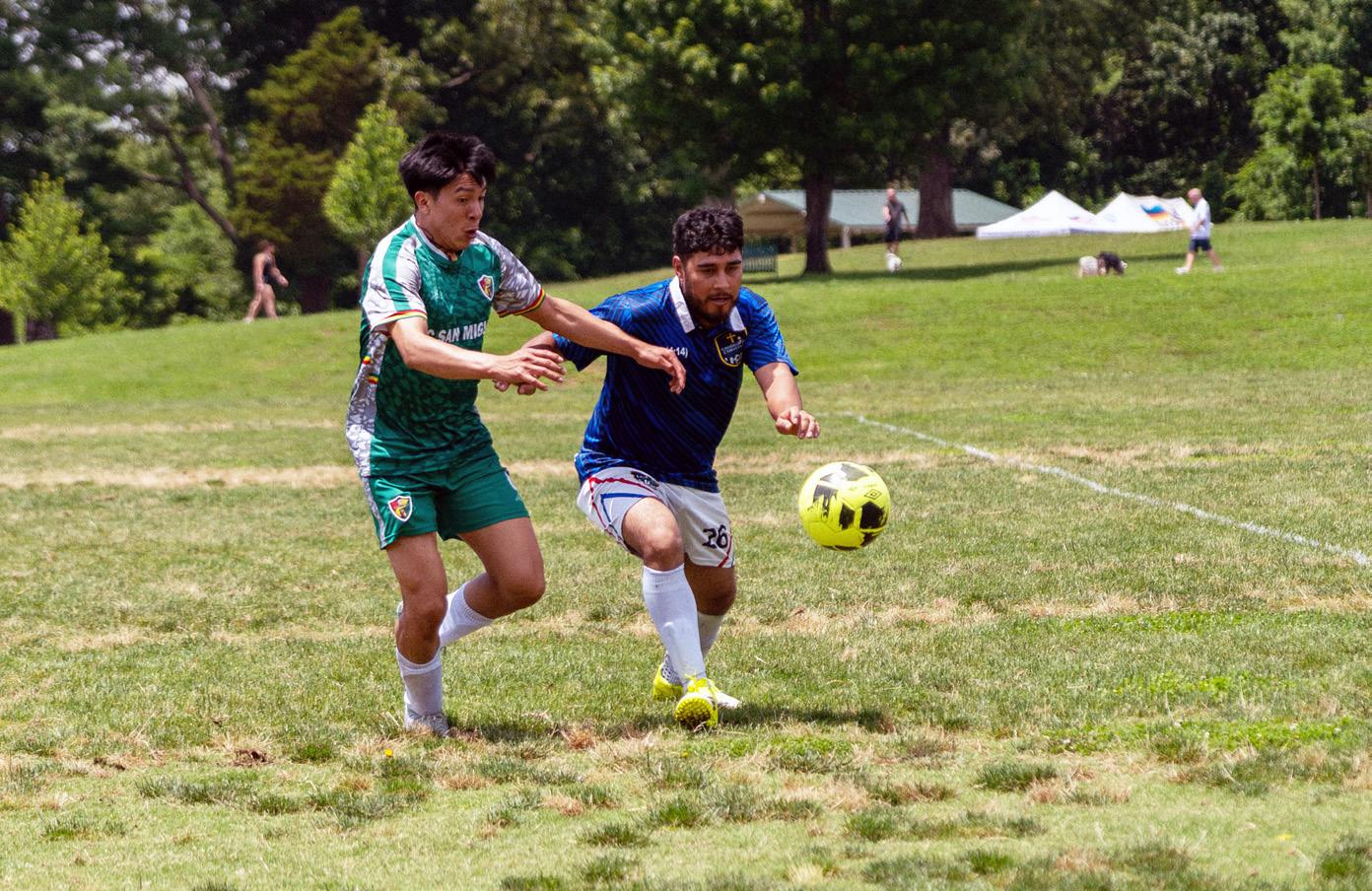
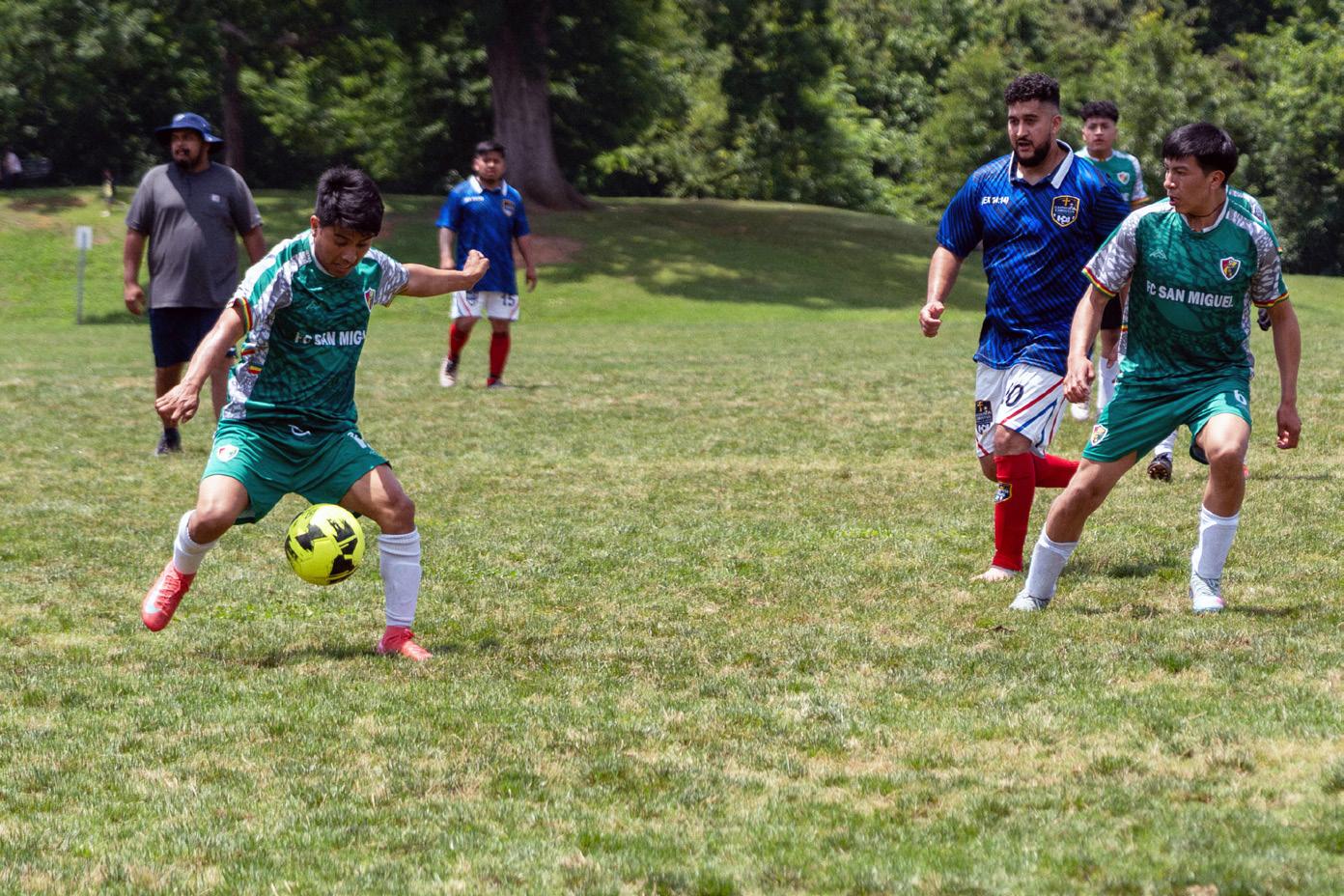
Diocesan world cup Soccer teams representing parishes across the Diocese of Knoxville competed on May 31 at Victor Ashe Park in Knoxville in the first Diocesan Soccer Tournament. More than 250 people participated in the tournament.
like the Diocesan Soccer Tournament, especially when communities from different parishes across the diocese come together.
For Jacky Mejía, this was one of the tournament’s greatest successes.
“It is beautiful to see different parishes come together and participate in events like this. It strengthens the young-adult community,” she said.
Yet fraternity was not the only fruit of the tournament. The event
from their families, parishes, and the diocese for them to follow God’s call,” said Sister Joan Miriam Nelson.
Sister Joan Miriam, a Religious Sister of Mercy serving in the diocese, took part in the event. Three gatherings were held for the Called by Name initiative—one for the men and two for the women. The first event held was the Andrew Dinner, which was given on the campus of All Saints Parish in Knoxville.
This event opened with Bishop Beckman addressing the young men in attendance. It was an opportunity for the men to have conversations at a table with priests from across the diocese in addition to Father Schuster and Father Arthur Torres, who serves as the assistant director of vocations for the diocese.
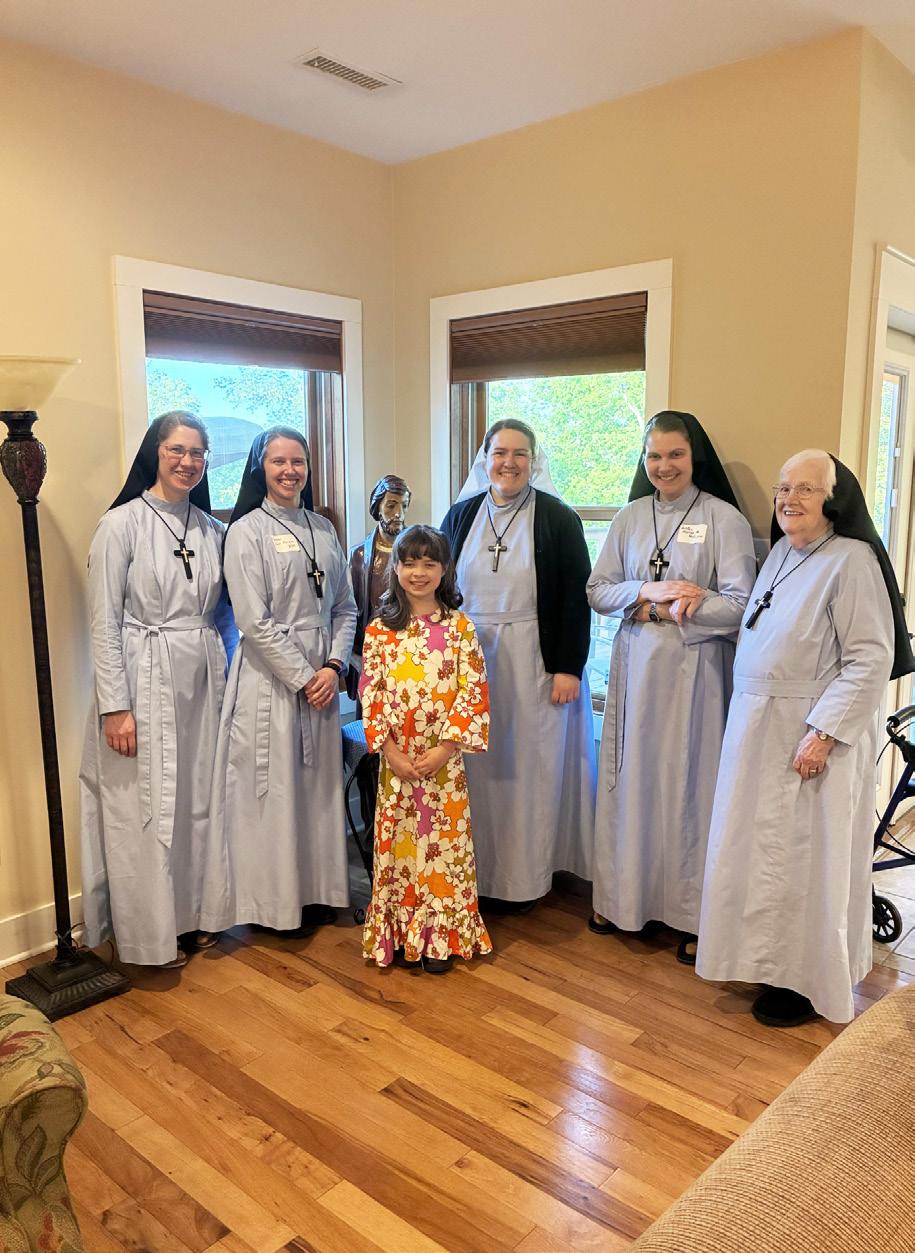
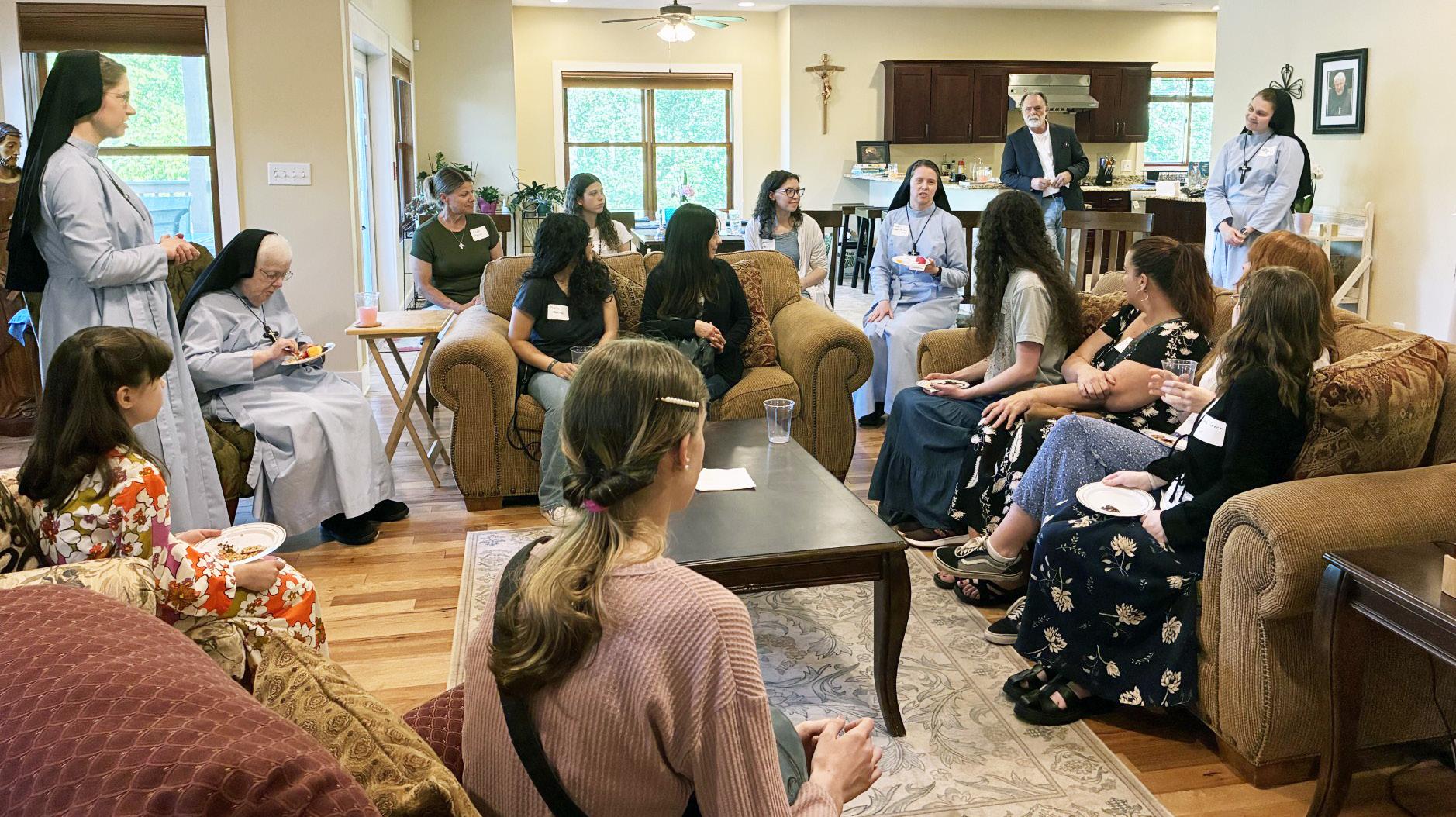
Both gatherings for women were held at the Religious Sisters of Mercy convent. One was for women 18 years and older, and the second was for those under 18. Both offered a glimpse into the Sisters’ daily lives, including Mass, adoration, and the Liturgy of the Hours.
The young women were asked questions about religious life and witnessed firsthand the Sisters’ convent life.
also offered an opportunity to recognize the quiet dedication of those who worked for weeks to make it possible. Mary Euseda expressed the joy she felt when she saw the results of so much effort.
“A great deal of happiness—seeing how the efforts of others bore fruit was truly beautiful. Nothing is impossible for God,” Ms. Euseda said.
Her words remind everyone of
Commentary
something that often is overlooked.
Behind every successful event are hours of preparation, meetings, phone calls, volunteers, and countless people who generously offer their time in service. While much of that work often goes unnoticed, its fruit eventually becomes visible to everyone.
José Barrera shared a similar reflection when he said, “Sacrificing everything, even the smallest things, with great love has its reward.” His words bring to mind Christ’s own teaching: to love without measure.
Perhaps that was one of the most important lessons of this tournament. No pastoral project is built alone. It requires the dedication of many people who contribute their gifts and talents toward a common purpose.
Although the primary goal of the tournament was to raise funds for the upcoming II Diocesan Youth Day on Nov. 14, its impact has reached far beyond fundraising. Friendships were strengthened, new connections were formed among parishes, and young people were given a healthy environment in which to gather and share their faith.
“My favorite moment was taking pictures of the winning teams receiving their awards. In those images, you can see the excitement on the players’ faces as they realize their hard work paid off,” Ms. Mejía said.
Through her talent behind the camera, she captured many of the
“A vocation is given as a gift by God. This means that as young women and men discern, the discernment has to be with God through prayer and the sacraments,” Sister Joan Miriam remarked.
She highlighted one of the most important parts of the path of discernment: Along the journey, it is important to remember the connection with the Lord that He strives to have with each person.
“There was something about the Mass that grabbed hold of me and would not let me go,” said Deacon Daniel Cooper.
Deacon Cooper was ordained a priest for the Diocese of Knoxville on June 6 at the Cathedral of the Most Sacred Heart of Jesus by Bishop Beckman. The diocese’s newest priest was at the Andrew Dinner to share his seminary journey with the young men. He shared his journey of faith and his first experience with Mass and the Holy Eucharist.
Throughout the three gatherings, both the priests and religious Sisters shared their vocation stories with the young men and women. The example of those in the diocese who have said yes to the Lord in their own unique way is something that the young women and men who
are discerning a vocation can look to.
Listening to the words of those who have taken their own vocation journey illustrates how each vocation story is different, but that each is guided by God.
“Don’t be afraid to act. There might not be perfect clarity, and there could still be some doubts as to whether you are called to a particular vocation. God will work with that and guide you, but we have to give Him something to work with,” Sister Joan Miriam said.
Discernment of any vocation should go beyond just a feeling of being drawn toward a lifestyle. The Called by Name program is one of the many ways people can be encouraged to take steps in God’s calling to holiness.
The Diocese of Knoxville and its Vocations Office are continuing to work toward a great growth in vocations for the Church, encouraging those who are sitting in the pews.
“I hope they continue praying for those vocations and for encouragement from their parish and even from their own families,” Father Schuster said.
To join a discernment group or to ask questions regarding discerning a vocation in the diocese, visit dioknox.org/vocations ■
Questions and answers Above: Young women wanting to know more about life as a religious visit with Religious Sisters of Mercy of Alma, Mich., at their Knoxville convent. Left: Religious Sisters of Mercy, from left, Gianna Marie Savidge, Joan Miriam Nelson, Claudia Marie Murray, Marie de Paul Stokes, and Mary Timothea Elliott host a young girl curious about the religious life.
MAGGIE PARSONS (2)
Vocations continued from page A10
Soccer continued on page A21
Mr. Argueta


School Spotlight
chool Spotlight
St. John Neumann: Bigger and better on the way
t. John a
It’s not ready yet but it’s a lot closer than it was
W hile the students and teachers are enjoying their summer away from St John Neumann School in Farragut, the campus will be anything but peaceful Crazy busy might be a better description as full-blown construction continues on the much-anticipated school expansion the Claude and Lydia Melli Building
But before they got away the faculty and staff were given an early sneak preview after having been forced to watch it spring from the ground for the last 10 months
“It’s going to be fabulous,” said principal Kelly Mechelke “I love the way the architect designed the vaulted ceilings and the windows so much natural light W hen you ’ re helping kids in small groups, you have an unexpected need for more and smaller spaces We’ll be better able to provide more extra support not to mention all that will be possible in the new STEM lab I can’t wait!”
Their next visit will be move-in day And that won t be long
With initial site grading having begun last August, the best estimates of everyone who knows say that when fall begins, it will not only bring a new season but also a wealth of new educational opportunities for these K-8 students
Made possible by a generous gift from Lydia Melli in honor of her deceased husband, Claude, this new 8,000-square-foot structure will entail the creation of multiple innovative learning spaces to accommodate evolving education needs
It will include a state-of-the-art classroom, collaborative study areas, a research STEM lab, and student gathering spaces The expansion will seamlessly integrate with the existing campus architecture while embracing sustainable and energy-efficient design principles
W hen the Melli Building is complete, the school also will have the opportunity to expand its middle-school enrollment from two to three sections of each grade
Assistant principal Andrew Cooper offered his endorsement as well
“This space will be a wonderful addition to our facilities here at St John Neumann It will provide more flexible space to better serve our students and modernized facilities to facilitate STREAM and cross-curricular education,” he said
Father Mark Schuster, pastor of St John Neumann Parish and School, offered this tribute to these generous donors: Lydia and Claude have established a tremendous legacy of charitable giving, service to others, and unwavering support of our school and parish We are all deeply grateful for the Mellis’ generosity and the many blessings the Claude and Lydia Melli Building will provide for generations of St John Neumann students and parishioners ”
This wasn t the family s first gift to St John Neumann School Earlier, Lydia Melli had established an endowment to provide student tuition assistance as well as resources for teachers salaries and professional development In recognition of this endowment, the school leadership office suite was named in honor of her husband, Claude
In addition to the new building itself, St John Neumann is using the opportunity to make several other transitions and improvements With previously raised gala funding, the school will be adding a much-needed covered patio as well as an expansion and redesign of the campus cul-de-sac
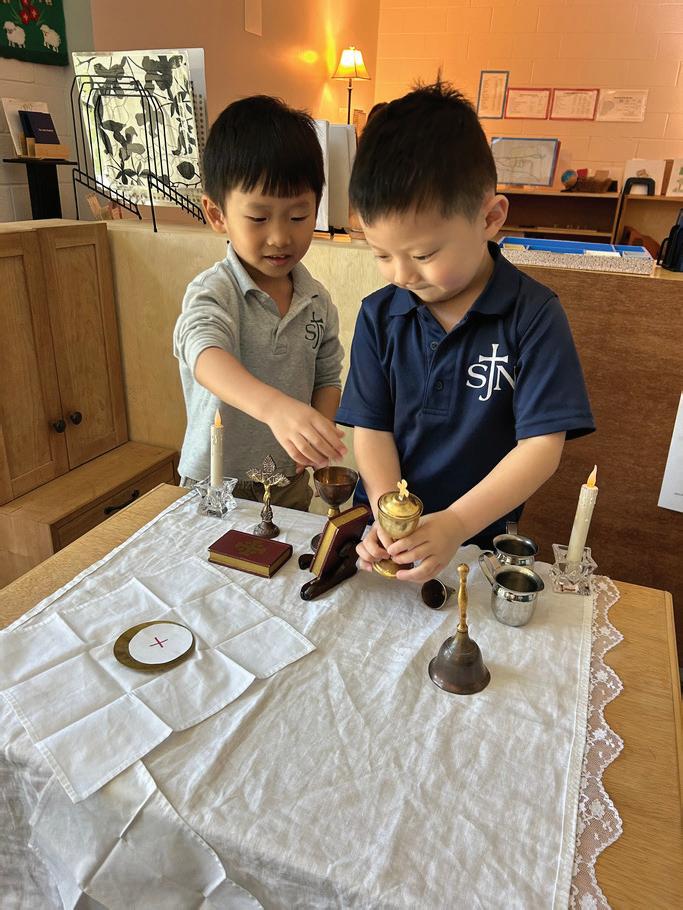
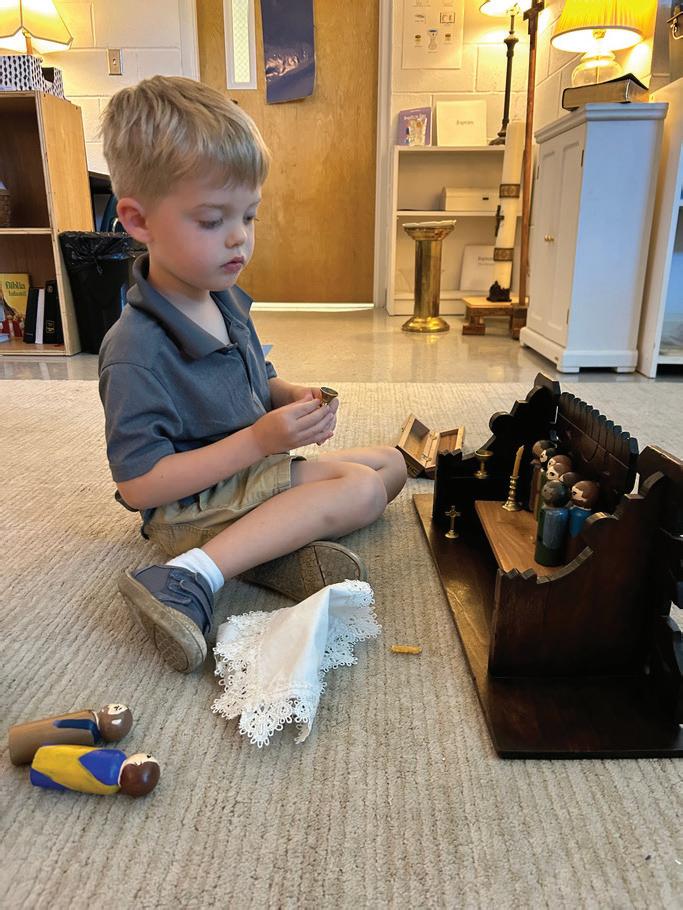
Part of the Melli expansion project is leading to an additional exciting change at St John Neumann: the relocation of the school’s Atrium
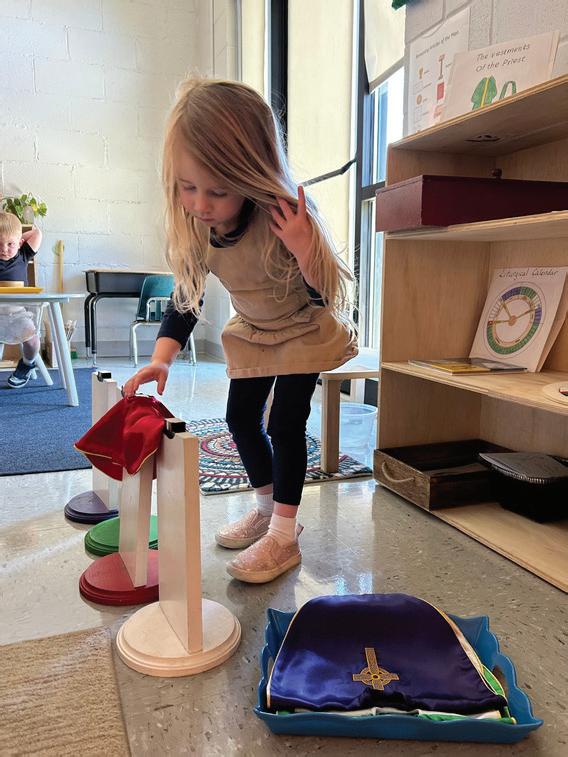
Our Atrium isn t just another classroom for instruction; it is a place of meaningful work, community, and worship through which the children deepen their relationship with God The Atrium can be compared to a retreat house, fostering recollection and silence It s there that our younger students (pre-K-3) engage with Scripture, liturgy, and hands-on materials that open pathways to a personal encounter with Christ We’re blessed to offer them the Catechesis of the Good Shepherd program ” said school communications director Stephanie Greiner
This is actually a gift to the entire parish, concluded school advancement director Patrick Wade, because there are all sorts of adult and youth ministries that are in need of gathering space We’ve shared library and gym space for years But they need extra space as much as we do It’s such a busy parish; this is long-awaited and will be most appreciated by many, many people for years to come ”
Kairos Kids
He avenly Humor
What kind of car did the Apostles drive? A Honda , because the Bible says they were all in one Accord
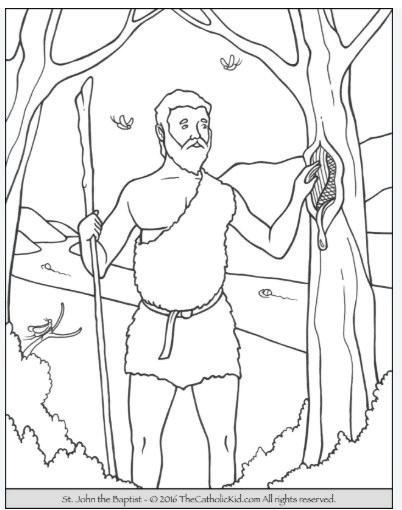
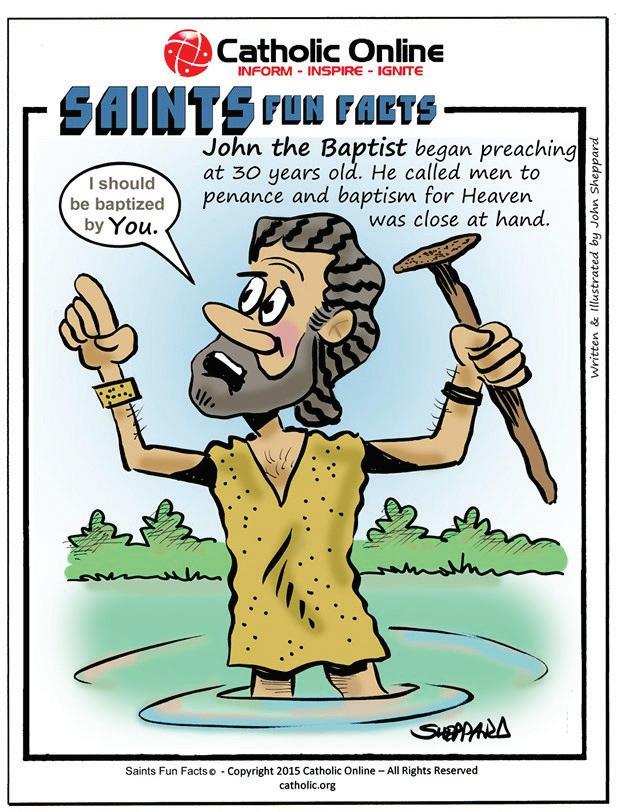
Saint John the Baptist Feast Day June 24th
Co lo r Me!




Question:




























By: Mary-Hannah MacCurdy
tor of homiletics at St. Meinrad Seminary, who has led Father Cooper and a number of Diocese of Knoxville priests in spiritual formation.
Deacon Shawn Ballard, who serves at St. John Neumann, was deacon of the Word for the Mass, and Deacon Mike Eiffe, who serves at St. Albert the Great, was deacon of the altar. Deacons Hicks Armor and Walt Otey served as masters of ceremonies.
Cathedral director of music and liturgy Glenn Kahler conducted the choir of vocalists and instrumentalists, including organist Ryan Seaver and cantors Sarah-Clementine Mire, Michelle Pokelwaldt, and Dylan Fink.
Also taking part in the Mass were Fourth Degree Knights of Columbus, who provided the honor guard, and Knights and Ladies of the Equestrian Order of the Holy Sepulchre of Jerusalem.
Father Cooper began his ordination Mass as Deacon Cooper after having been ordained to the transitional diaconate in November at St. Albert the Great. But that designation would soon change.
“It is indeed a day of great joy as we gather to celebrate the ordination to the presbyteral order of Deacon Daniel Cooper. It is a joy, I know, for you, Deacon Daniel, but also for our whole diocese, a rejoicing in the Lord’s call as He has called you to this moment in time,” Bishop Beckman said to begin the Mass.
Deacon Cooper selected the two readings for the Mass. The first, from the Book of Numbers, was proclaimed by Dorothy Curtis. And the second, proclaimed by Sister Elizabeth Wanyoike, ESM, was from the Letter to the Hebrews. The Gospel proclaimed by Deacon Ballard was from St. Luke.
Answering with a ‘Yes’
To initiate the ordination liturgy, Deacon Smith called forth the ordinand, saying, “Let the one who is to be ordained a priest come forward, Daniel Cooper.” Deacon Cooper answered “present.”
Father Mark Schuster, diocesan director of vocations, then addressed Bishop Beckman.
“Most Reverend Father, Holy Mother Church asks you to ordain this man, our brother, to the responsibility of the priesthood,” Father Schuster said.
Bishop Beckman responded, “Do you know him to be worthy?” And Father Schuster replied, “After inquiry among the Christian people and upon the recommendation of those concerned with his formation, I testify that he has been found worthy.”
The bishop then said, “Relying on the help of the Lord God and of our savior, Jesus Christ, we choose this, our brother, for the order of the priesthood.” The congregation then replied in unison, “Thanks be to God.”
Bishop Beckman began his homily, directed primarily to Deacon Cooper, and in his remarks the bishop cited the readings chosen by the ordinand.
“It is so fitting this weekend as we ordain you, Daniel, to the priesthood that we celebrate the feast of Corpus Christi as a Church. This is the weekend when we remember that the Lord Himself dwells with us sacramentally in a very particular way in the gift of Himself, His body and blood given for us. And just as the Lord God called Levites and sons of Aaron to serve in that most sacred Tent of Meeting, so the Lord God depends upon the hands and words and voice—the very person of priests—so that gift may continue in the Church today,” Bishop Beckman said.
“We are reminded, Daniel, and you selected well these readings, that the priests who are chosen are not chosen because we are perfect, not because we are flawless, but as Hebrews puts it eloquently today, because we are beset by weakness. We, too, can understand the weaknesses of our people,” he continued. “Daniel, I believe just as the Lord
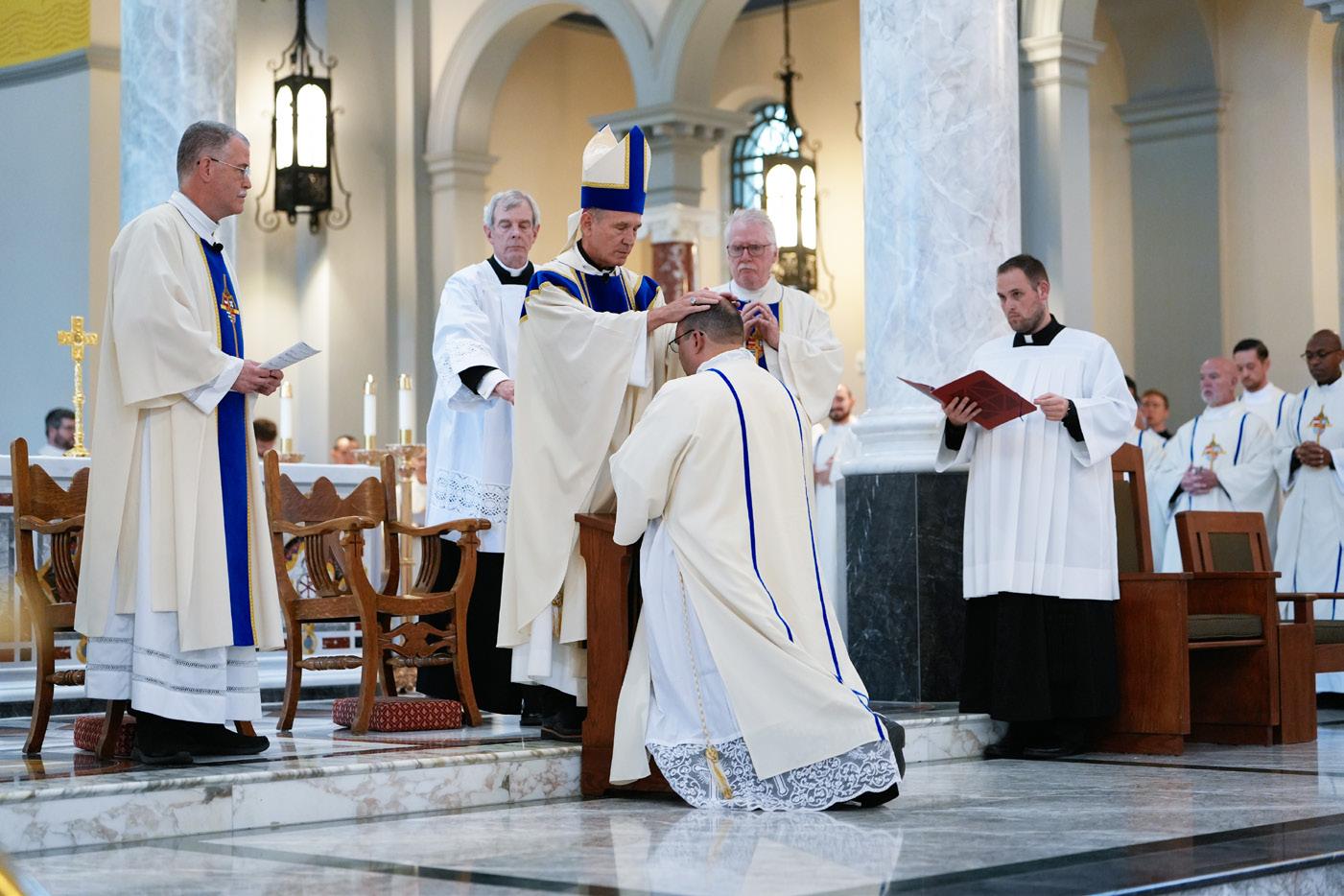
Laying on of hands
Above: Bishop Mark Beckman gives the prayer of ordination as he lays hands on Father Daniel Cooper. Assisting are from left, Deacons Shawn Ballard, Hicks Armor, and Mike Eiffe, and seminarian Nicholas Hickman.
Left: Father Cooper lays prostrate before the altar at the Cathedral of the Most Sacred Heart of Jesus during his ordination Mass on June 6.
Below: Father Michael Woods prays over Father Cooper during the ordination Mass. Father Cooper's first assignment will be at St. Francis of Assisi Parish in Fairfield Glade, where Father Woods is pastor.
intentionally prepared to journey with His people and solemnly prepared for the gift of Himself at that Last Supper, that He has also chosen you with intentionality.”
The bishop emphasized to Deacon Cooper, all the priests, deacons, and religious in attendance as well as the congregation that God dwells in the midst of His holy people and that priests have a special responsibility in serving the sacred mysteries.
“Every moment of your life up until this point, I believe the Lord has been preparing you for this ‘Yes,’ not because you are perfect but because you, too, like the rest of us are beset with weakness. It is the Lord who accomplishes beautiful things in us despite our human flaws, weaknesses, and failures. It’s a humble reminder as we are sent to serve the people of God that God’s intentionality works with us where we are on our journey through life,” Bishop Beckman said to the ordinand.
“So, Daniel, your call to serve the sacred mysteries includes the sacred holy ones of God, to care for their souls. From the moment they come into this world and they come to the Church requesting baptism until that moment when you celebrate their final funeral liturgies and burials, it is the people of God bearing the presence of God’s Spirit that you are called to serve.
“And the Lord makes it so clear today that the Spirit in which we do that is one of humble service. The Son of Man did not come to be served but to serve and give His life as a ransom for many. What a beautiful mystery: God dwelling with us, His people, and the necessary and indispensable role of the priest in that great dwelling of God. Daniel, thank you for your ‘Yes’ to the Lord, and may God, who has begun
responded. He then knelt before the bishop, who laid his hands on and prayed the prayer of ordination for him.
All the priests attending also laid their hands on the head of Father Cooper, who then was invested with his stole and chasuble by Father Iorio.
In the next step, Bishop Beckman anointed the hands of the new priest with holy chrism.
“May the Lord Jesus Christ, whom the Father anointed with the Holy Spirit and power, guard and preserve you, that you may sanctify the Christian people and offer sacrifice to God,” the bishop said.
He placed the bread and a chalice in the hands of Father Cooper as he knelt before the bishop.
“Receive the oblation of the holy people, to be offered to God,” Bishop Beckman said. “Understand what you will do, imitate what you will celebrate, and conform your life to the mystery of the Lord’s cross.”
The bishop gave a greeting of peace to the new priest, as did the concelebrating priests.
Father Cooper assisted Bishop Beckman in the Liturgy of the Eucharist. The chalice used at the altar was a gift to Father Cooper from Monsignor Patrick Garrity, who guided the new priest into the Church and into his vocation.
The new priest then joined Bishop Beckman in distributing Communion to the congregation.
As the Mass concluded, Bishop Beckman said, “I want to take a moment to congratulate Father Daniel. Welcome to our presbyterate!”
The bishop’s welcome prompted a rousing cathedral ovation for Father Cooper.
“I want to take a moment also to recognize that his grandmother is with us. Thank you so much for your presence here and for the gift of your grandson,” the bishop said.
Bishop Beckman then recognized the nearly 200 people from St. Francis of Assisi Parish in Fairfield Glade who attended the Mass. Father Cooper has been serving St. Francis of Assisi as a deacon for several months since he completed his studies at St. Meinrad Seminary in Indiana late last year.
this beautiful and good work in you, bring it to fulfillment through Christ our Lord. Amen,” the bishop said to conclude his homily.
Priesthood promises
Following the homily, the rite of ordination continued as the ordinand made his promises of the elect to Bishop Beckman.
Deacon Cooper promised “to discharge unfailingly, with the guidance of the Holy Spirit, the office of priesthood in the presbyteral rank, as a trustworthy co-worker with the order of bishops in feeding the Lord’s flock”; “to carry out the ministry of the Word worthily and wisely in the preaching of the Gospel and teaching of the Catholic faith”; “to celebrate the mysteries of Christ reverently and faithfully according to the tradition of the Church, especially in the sacrifice of the Eucharist and the sacrament of reconciliation, for the praise of God and the sanctification of the Christian people”; “to implore with us the mercy of God for the people entrusted to you, with zeal for the commandment to pray without ceasing”; and “to be united more closely each day to Christ the high priest, who offered Himself for us to the Father as a pure sacrifice, and with Him to consecrate yourself to God for the salvation of all.”
Deacon Cooper answered “I do” to the first four questions from the bishop, then “I do, with the help of God,” to the final one. He also promised “respect and obedience” to Bishop Beckman and his successors.
The bishop then said, “May God who has begun the good work in you bring it to fulfillment.”
The ordinand then prostrated himself before the altar for the Litany of the Saints as the choir sang the invocations and the faithful
“As a new priest, he will continue his service to you, the people of God. One of the reasons I wanted him to go to your parish was that I knew that you would love him well,” the bishop told the Cumberland County parishioners.
That announcement drew hearty applause from the parish faithful. Bishop Beckman then asked if he could be the first one to receive a blessing from the new priest. Father Cooper gladly obliged.
The clergy, religious, and congregation then followed Father Cooper to a reception in his honor in Cathedral Hall, where a long line of faithful formed to receive a blessing from St. Francis of Assisi’s new associate pastor.
Roland Wicker and his wife were among the St. Francis of Assisi members attending the Mass and said they were present “because of our love for Father Daniel.”
“As a deacon, he was very represented in the church. He was always willing to help out the people such as when he took a two-hour shift to help the Knights of Columbus Tootsie Roll Drive. Everybody loves him. He’s a genuine person,” said Mr. Wicker, who has actively served in the parish and the diocese for 21 years.
“When we heard he was going to be the associate there, everybody clapped, the whole church. Everybody is excited to have him there,” he added. “We love Father Michael (Woods) and the two of them have been working well together. They will make a nice team.”
Father Cooper’s grandmother, Cindy Cooper, who lives in Knoxville, said she was proud of her grandson and how hard he has worked to become a priest.
“Daniel is the type of person who always wants to be perfect. He works very hard. And he has worked very hard to get here,” she said. “I knew Daniel was going to take the religious road.” ■
DEACON PATRICK MURPHY-RACEY (3)
'Come, follow me': The ordination of Father Daniel Cooper
Photography of the ordination to the priesthood of Father Daniel Cooper on June 6 at the Cathedral of the Most Sacred Heart of Jesus was by Deacon Patrick Murphy-Racey as a gift to Father Cooper and the Diocese of Knoxville from Monsignor Patrick Garrity.
Photos of Father Cooper ’s Mass of Thanksgiving at St. Albert the Great Church on June 7 were taken by Jenny Martinez. Father Cooper is the 65th priest ordained for the Diocese of Knoxville.
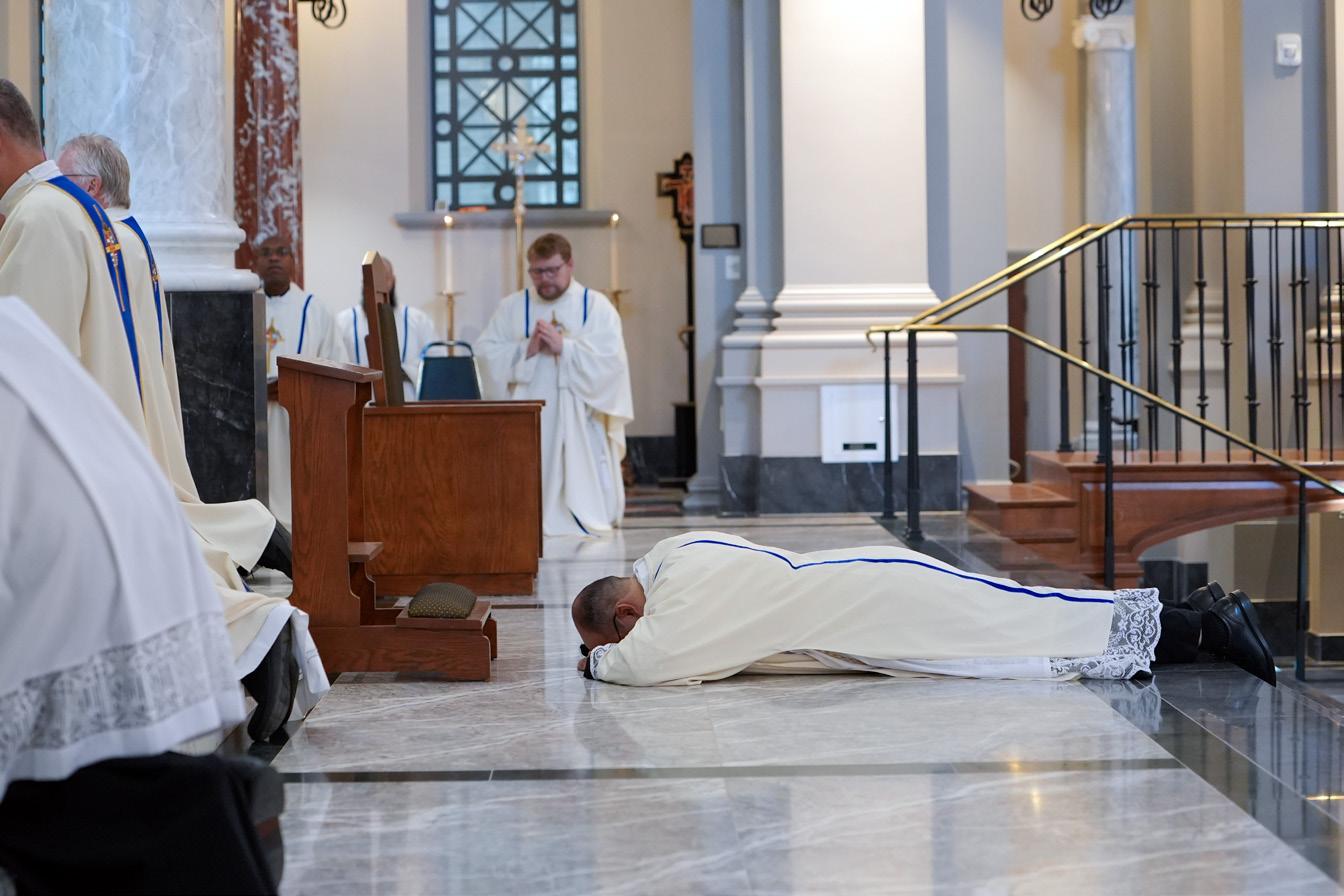
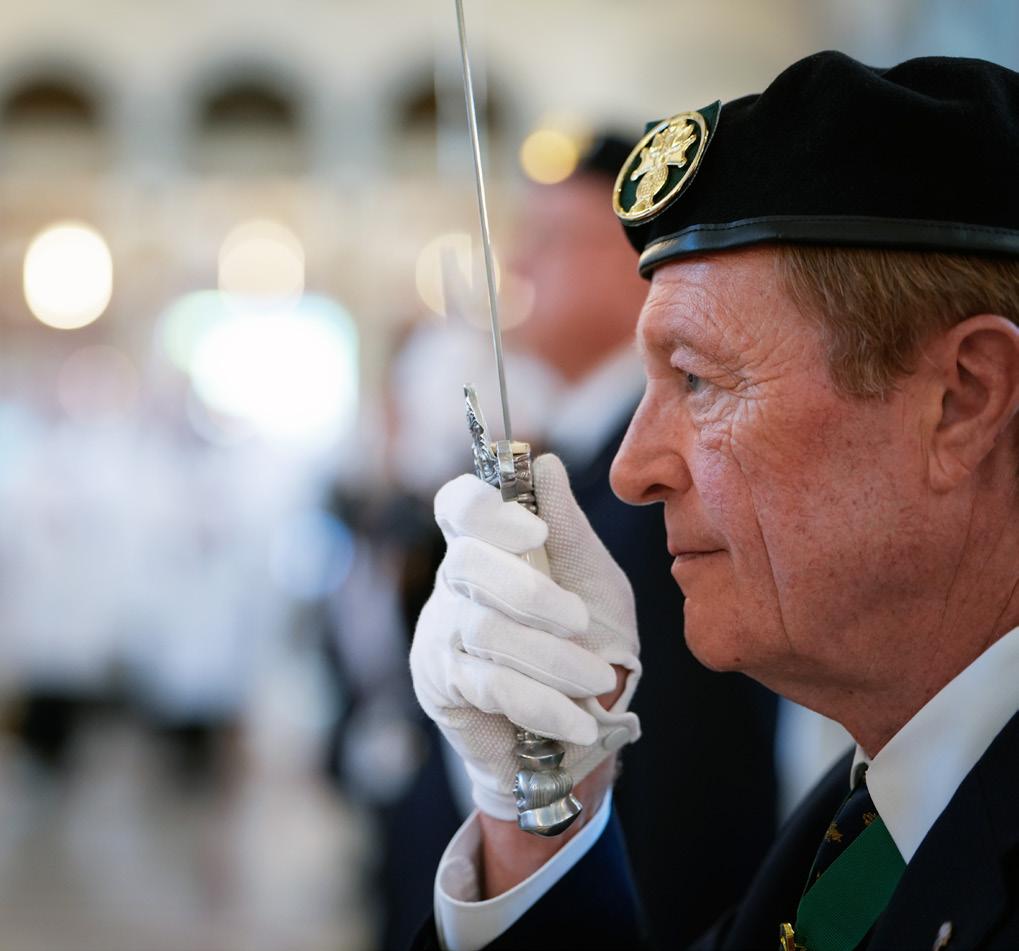
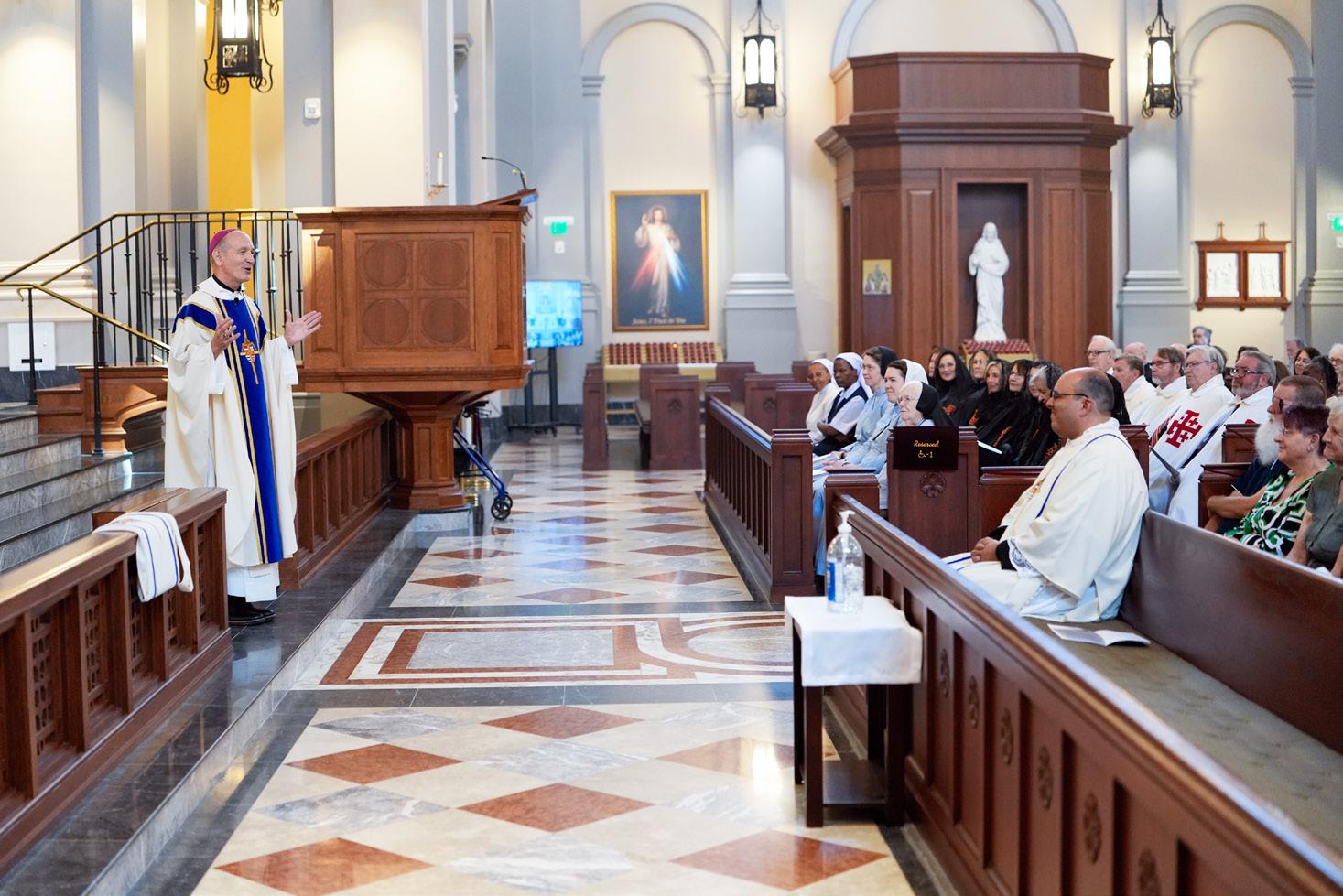
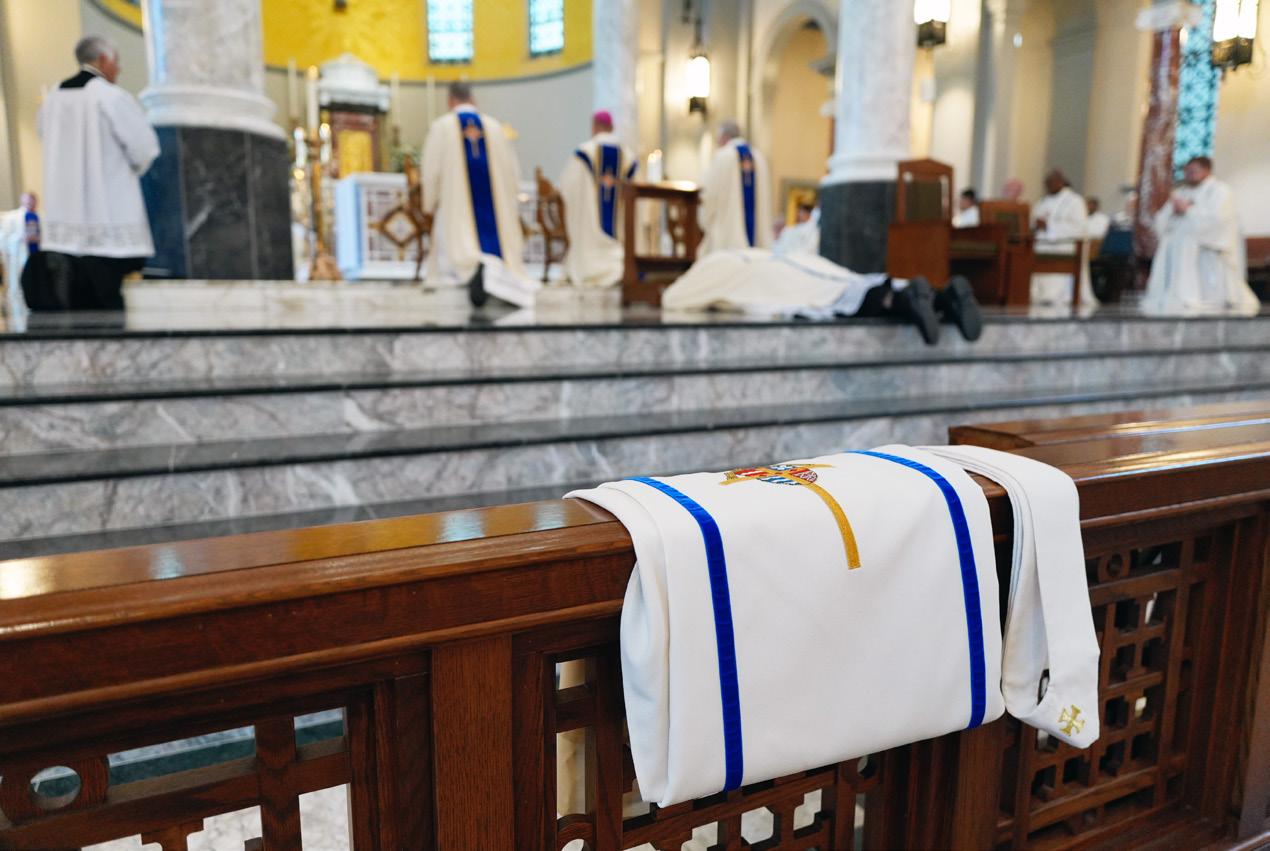
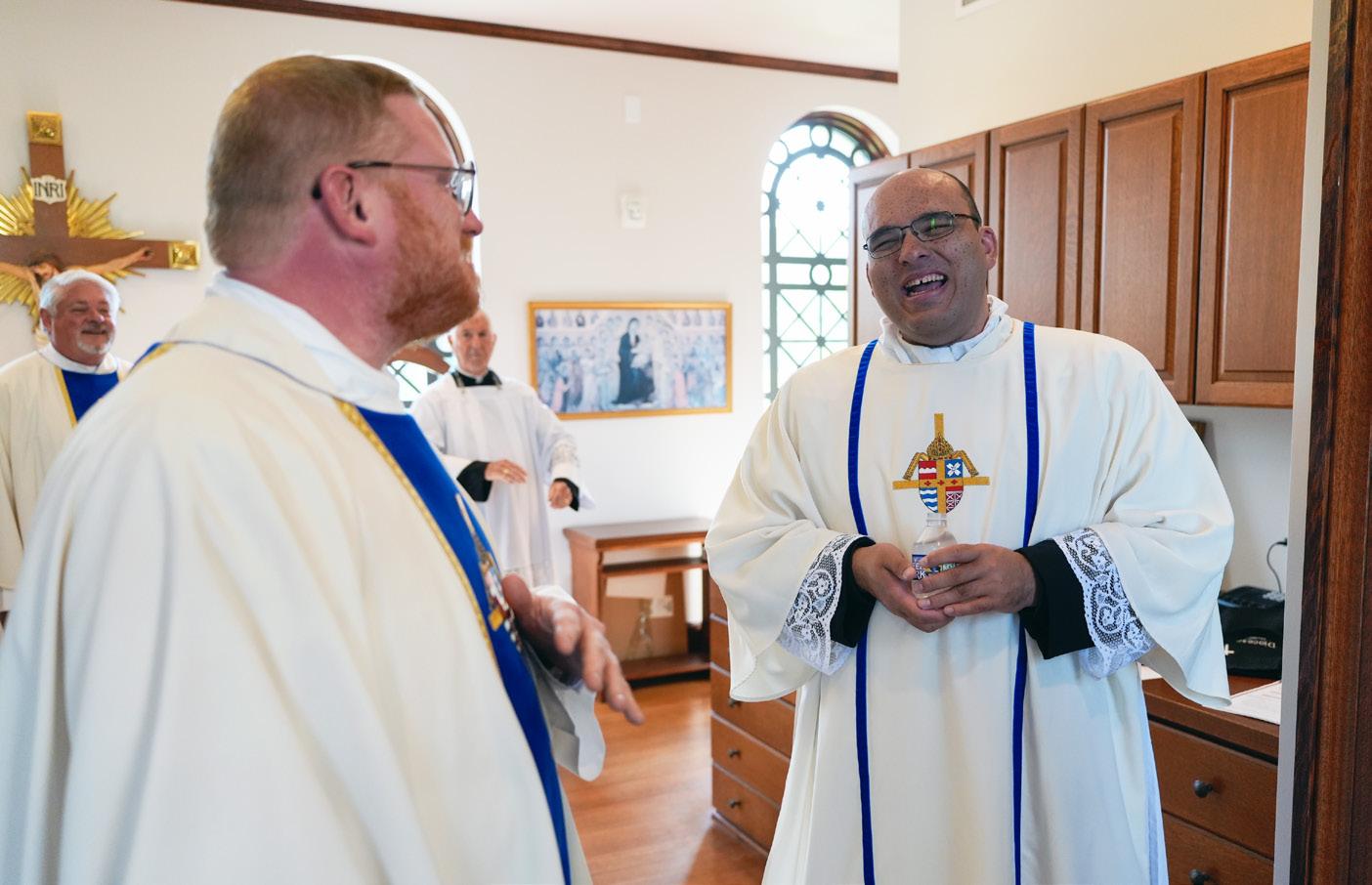
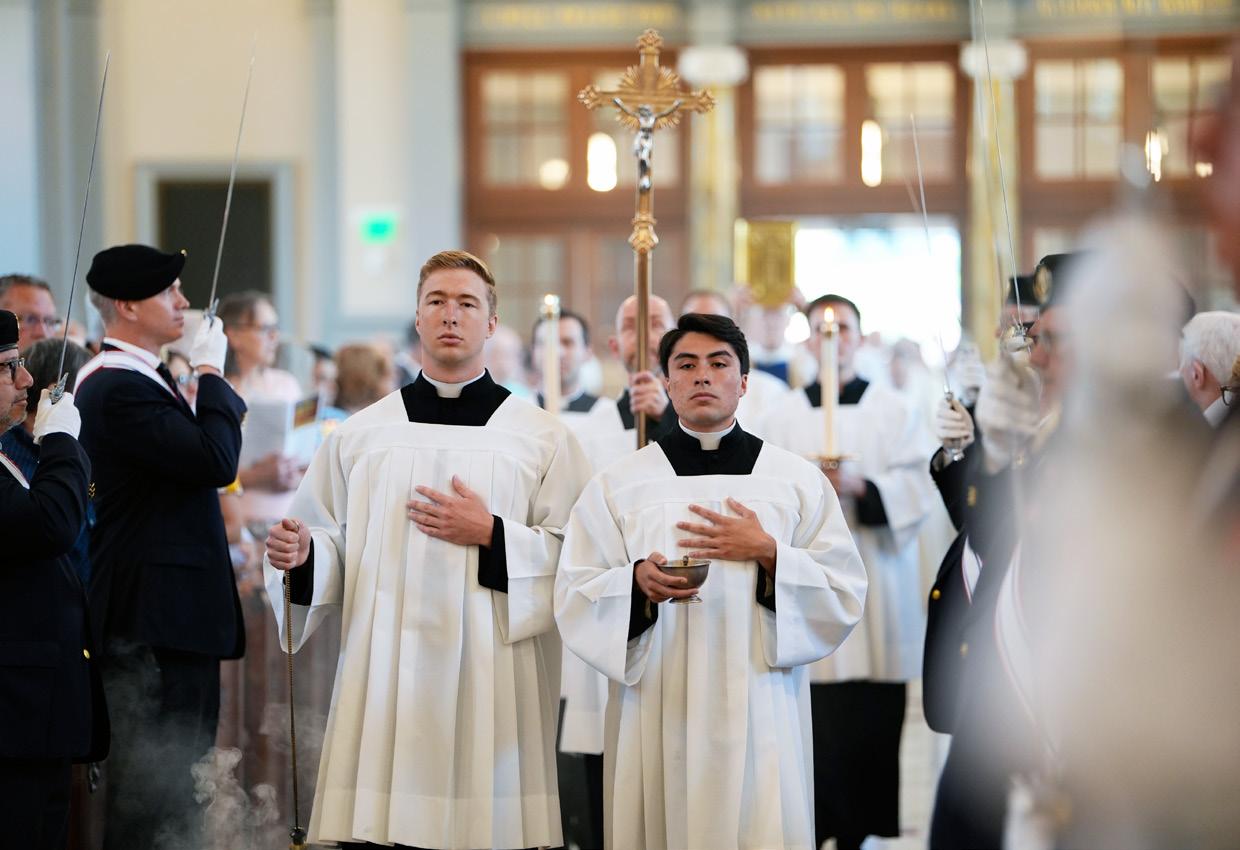
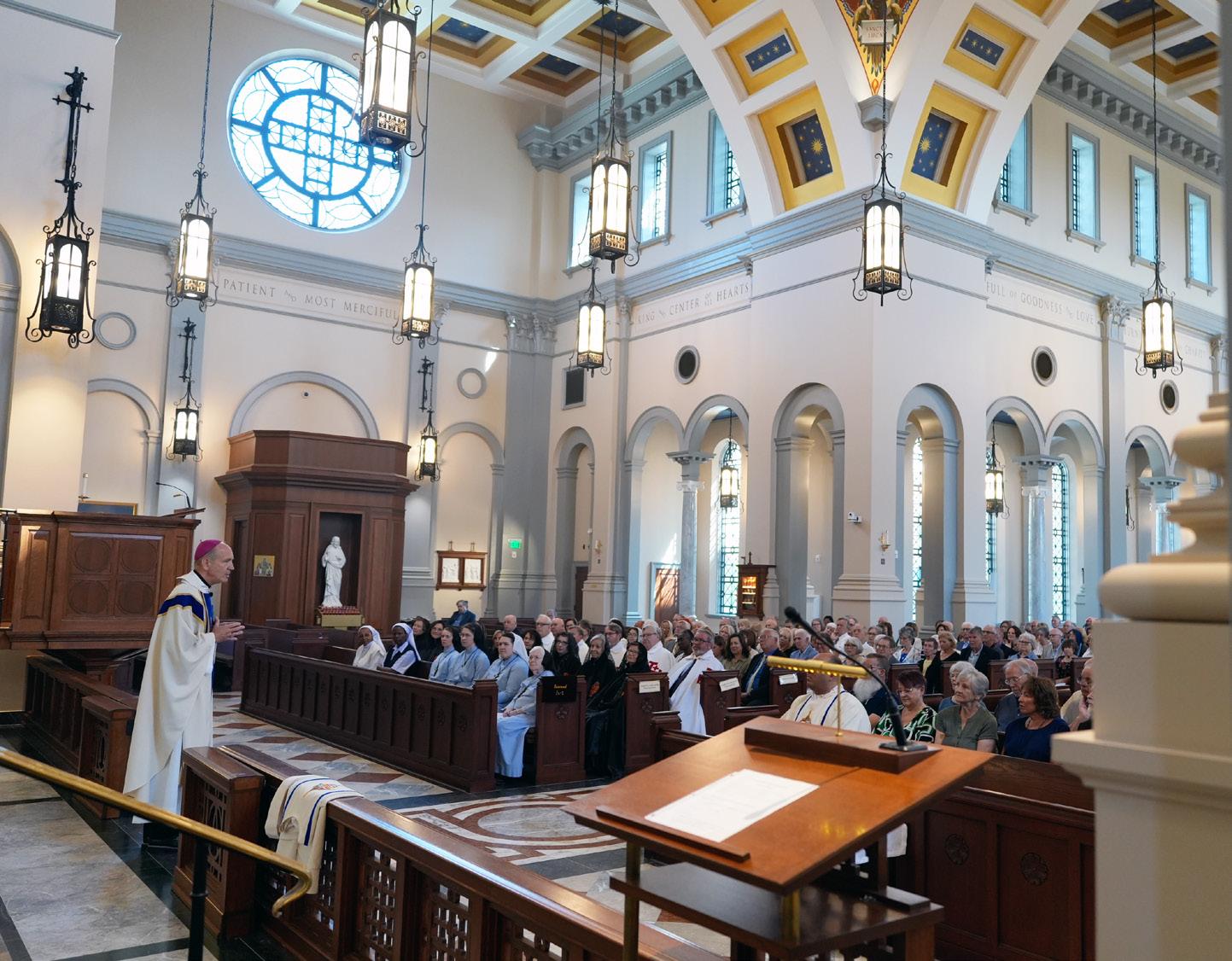
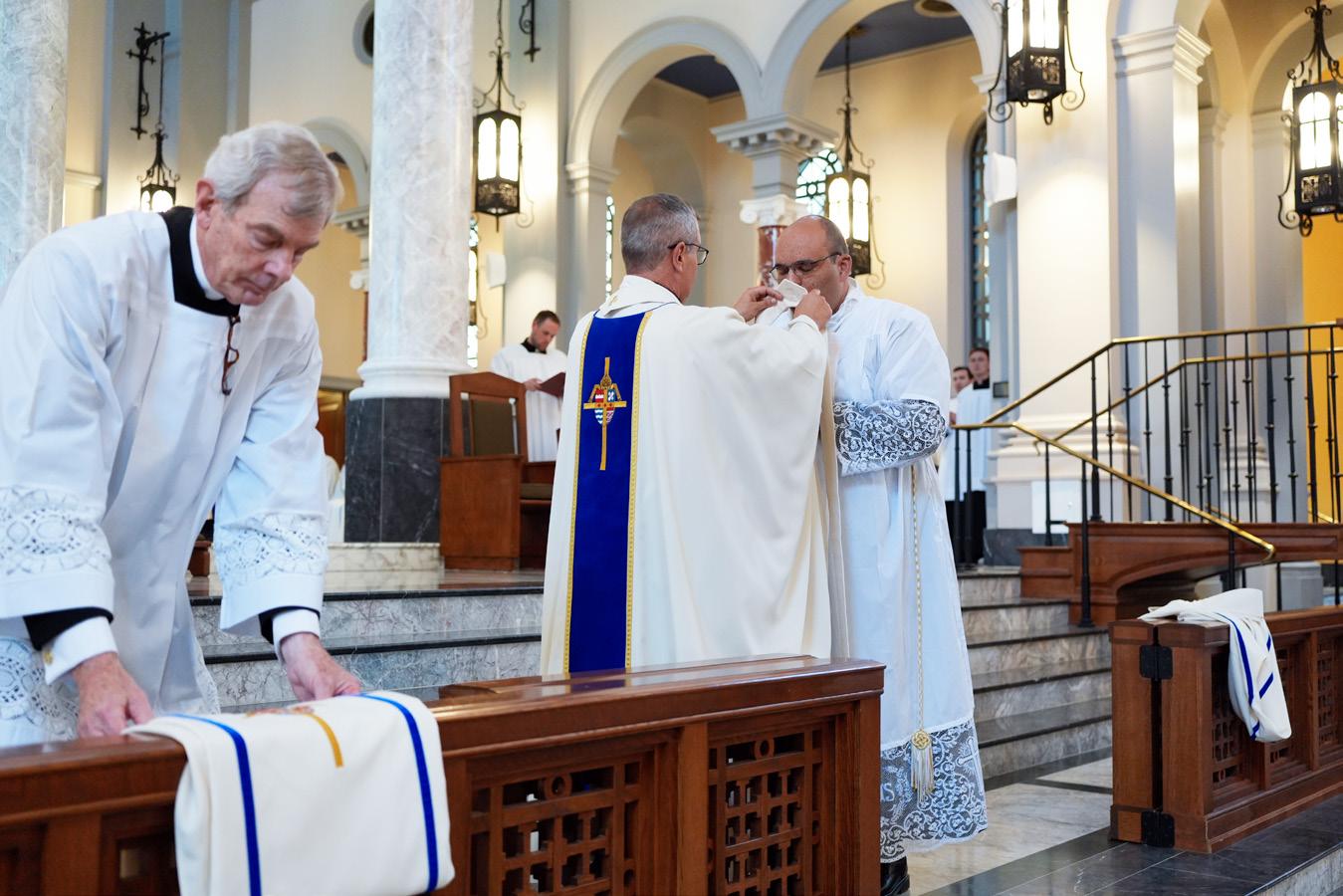
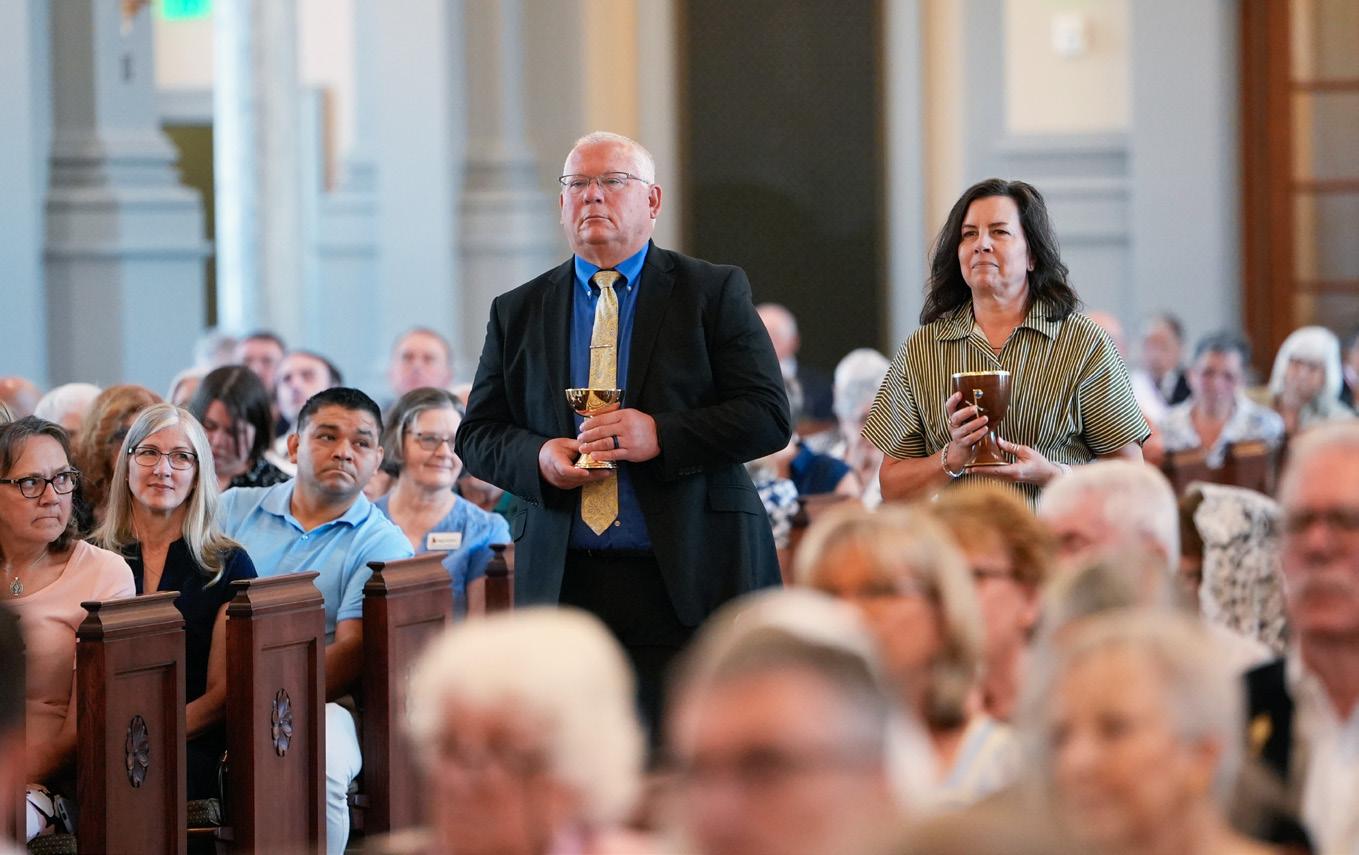
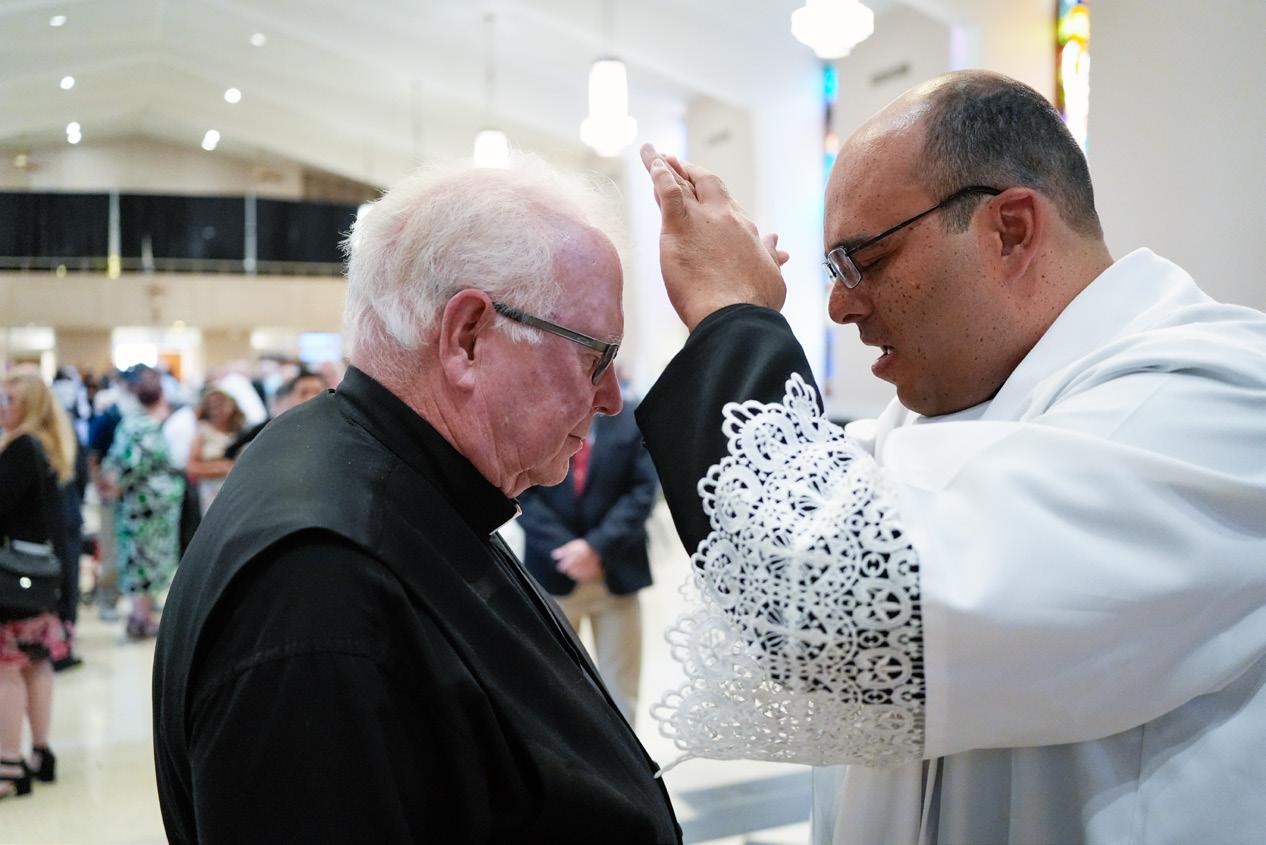
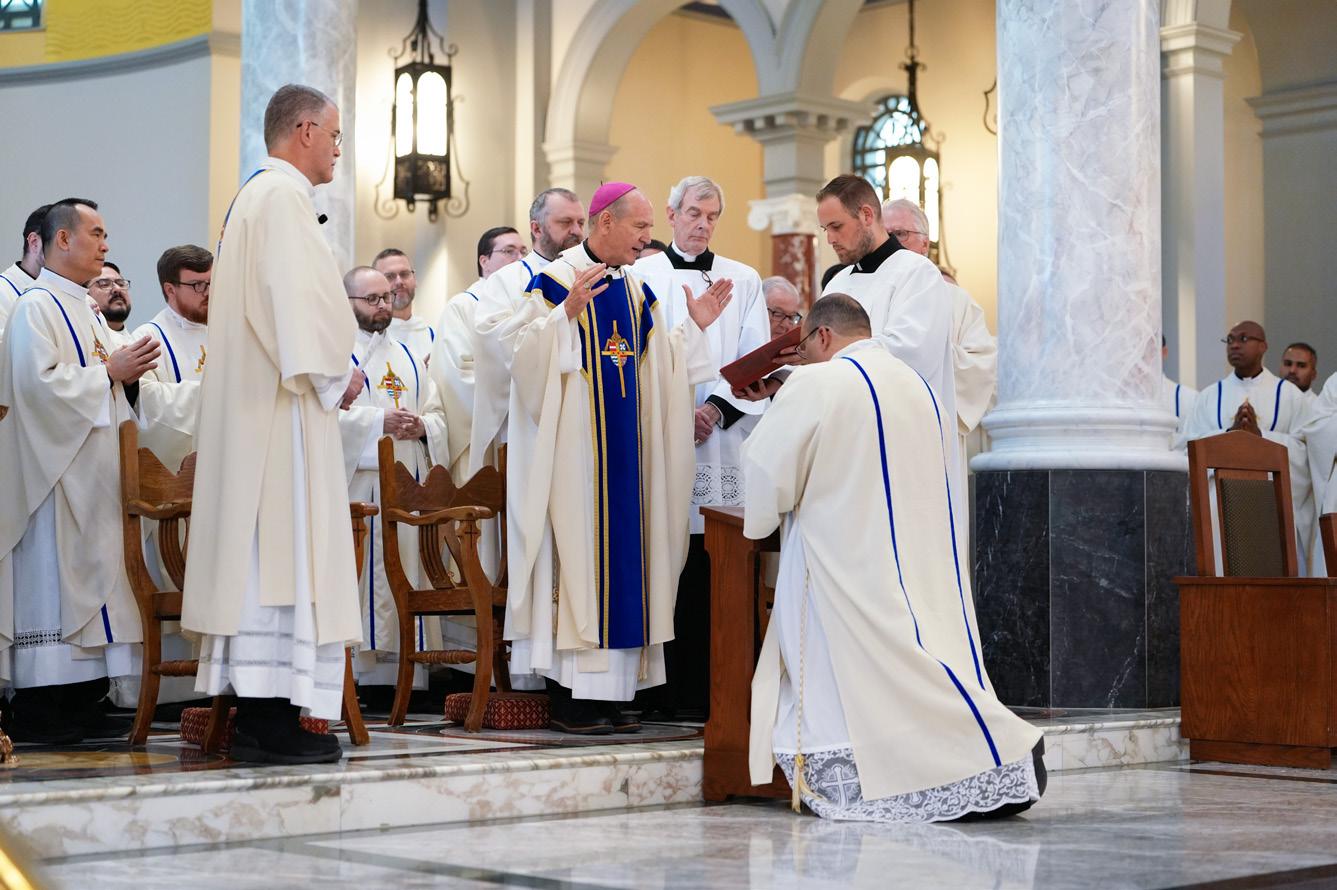
A Mass of Thanksgiving
St. Albert the Great Parish welcomes Father Daniel Cooper ’s first celebration
By Bill Brewer
Father Daniel Cooper’s first Mass, his Mass of Thanksgiving, attracted a large St. Albert the Great congregation to the 11 a.m. service on June 7.
Concelebrating the Mass was Father Christopher Floersh, pastor of St. Albert the Great, Monsignor Patrick Garrity, sacramental associate at St. Albert the Great, and Father Guerric DeBona, OSB, director of spiritual formation and an instructor of homiletics at St. Meinrad Seminary, who has led Father Cooper and a number of Diocese of Knoxville priests in spiritual formation.
Monsignor Garrity delivered the homily, saying the congregation was joining together to celebrate not only the feast of Corpus Christi but Father Cooper’s first Mass of Thanksgiving and the gift of priesthood.
He called that holy order “an awesome gift and an awesome responsibility.”
He pointed to Scripture where Jesus approached the fishermen at the Sea of Galilee and said, “Come, follow me.”
“At some point, Jesus said the same thing to you,” Monsignor Garrity said to Father Cooper. “Come, follow me.”
Monsignor Garrity recounted how in Father Cooper’s early adult years, he served as a Baptist minister. But on a youth mission trip to Savannah, Ga., a nun he was working with invited him to a Catholic church and to attend a Mass. Father Cooper attended Mass with the Sister each day.
“He found something new and different each day that he never experienced before,” the monsignor said. “And that led to a long journey where Jesus said, ‘Come, follow me.’”
Following that experience in Georgia, Father Cooper returned to Maryville College and approached Monsignor Garrity, who then was pastor of St. John Neumann Parish in Farragut, and asked to become Catholic. Monsignor Garrity asked him to look more closely into the Catholic Church in the Knoxville area and put him on the RCIA path
Father Cooper, who is 37, joined the Catholic Church at Easter Vigil in 2018 and almost immediately asked Monsignor Garrity to be a lector, and shortly after that he asked to become a eucharistic minister. Less than a month later, he approached Sister Elizabeth Wanyoike, ESM, about being an RCIA leader.
“He was still discovering what Jesus said, ‘Come, follow me,’” Monsignor Garrity noted. “Then after about a year, he said he was interested in going to seminary to become a priest.”
Father Cooper spent several months discerning a vocation before attending St. Meinrad Seminary
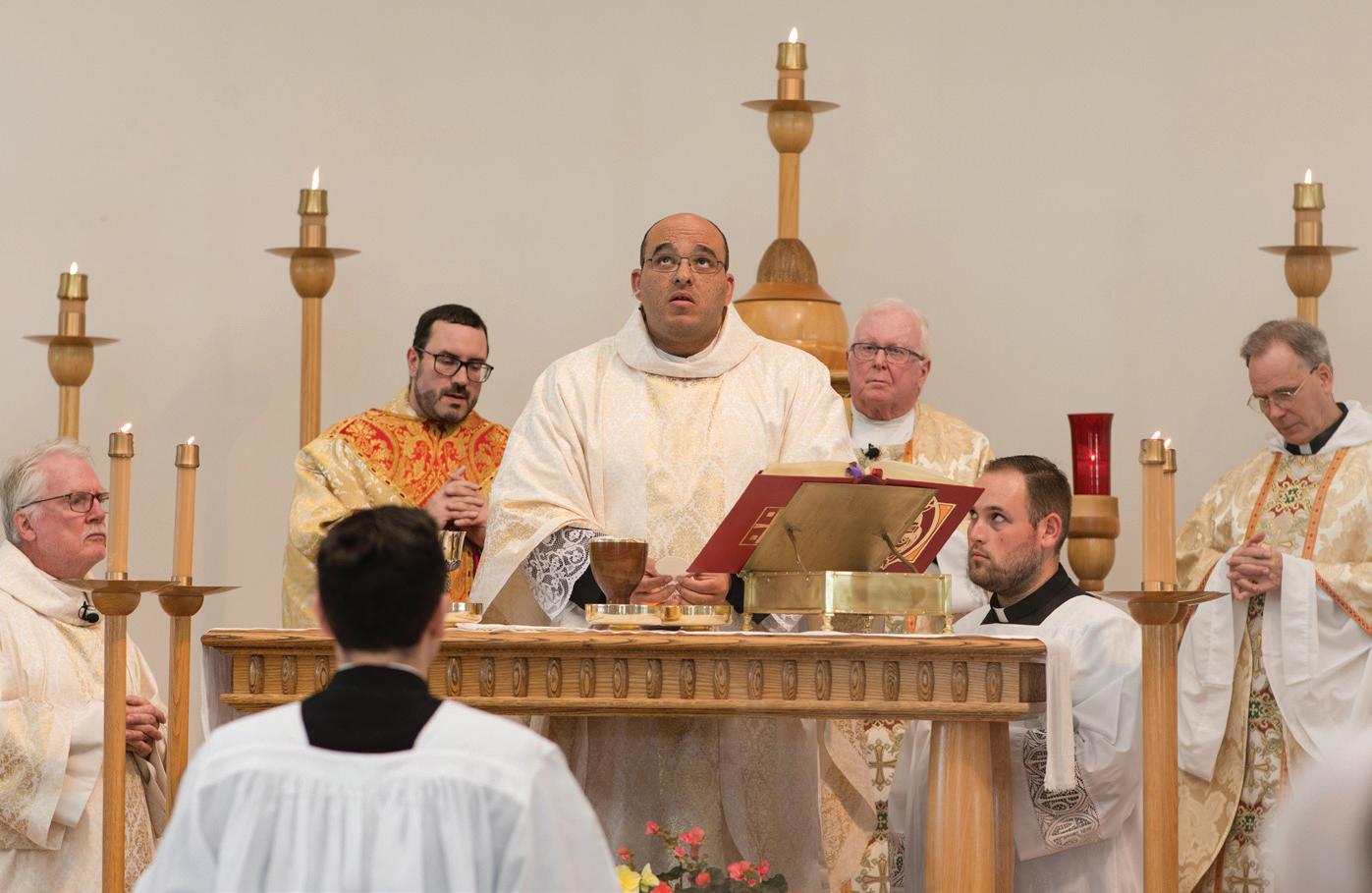
Celebrating his first Mass Above: Father Daniel Cooper celebrates the Liturgy of the Eucharist at St. Albert the Great Church on June 7. Concelebrating the Mass are St. Albert the Great pastor Father Christopher Floersh, Monsignor Patrick Garrity, and Father Guerric DeBona, OSB, of St. Meinrad Seminary. Assisting at the Mass of Thanksgiving are Deacon Mike Eiffe and seminarian Nicholas Hickman. Below: Father Cooper embraces Renee and Steven Hamilton, to whom he presented his maniturgium and confessional stole during his Mass of Thanksgiving.
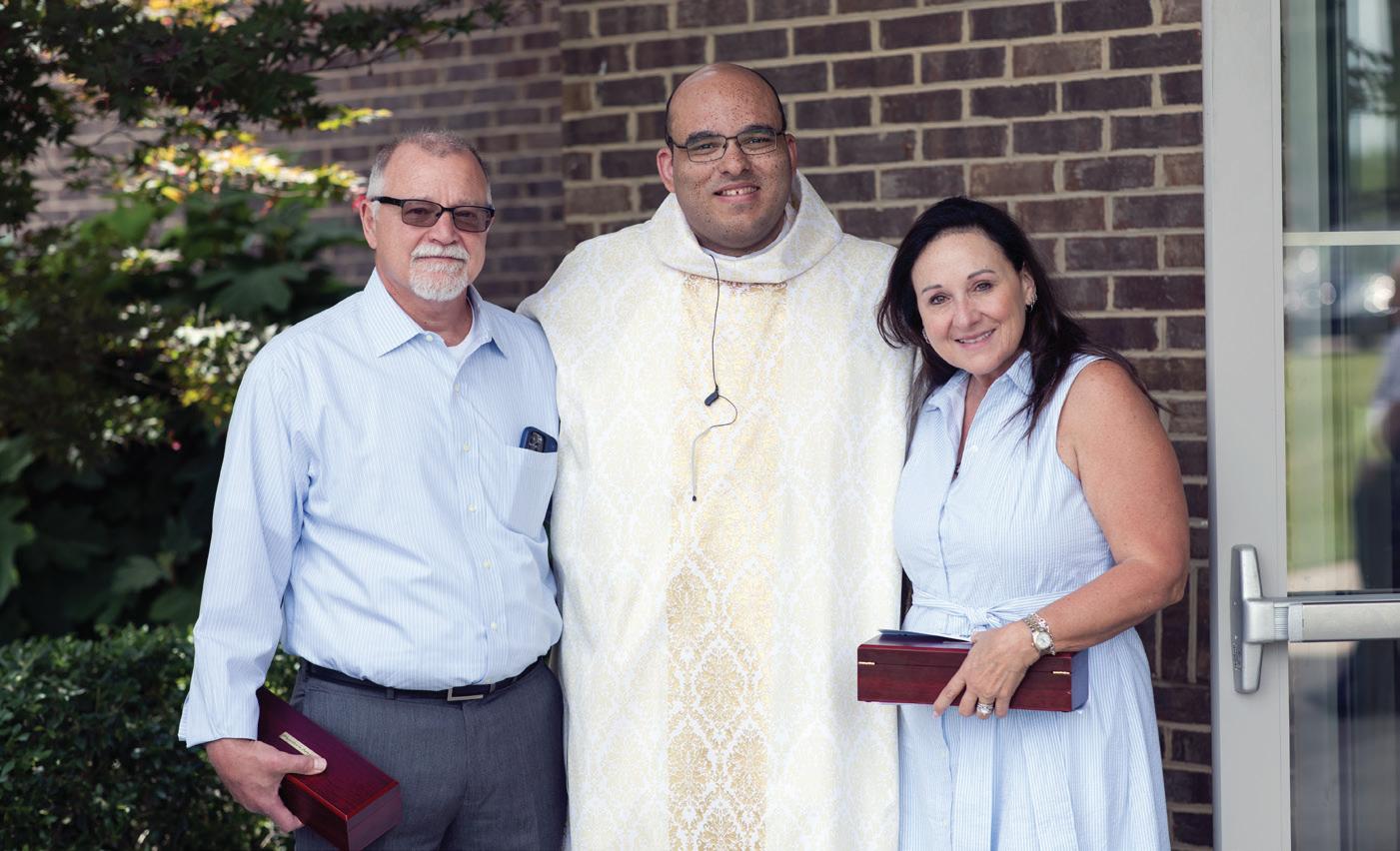
“There he discovered that Jesus was calling him just like He called Peter. Peter spent years walking with Jesus. He didn’t know where it was leading. He didn’t know what was going to be asked of him. But he went. Even with his fears, his human weaknesses, his anxieties, he followed Jesus,” Monsignor Garrity said.
The monsignor, who recently celebrated his 50th anniversary as a priest, reminded Father Cooper that Jesus told Peter, “Feed my sheep,” which means administering the sacraments, including the Eucharist, an especially poignant message on the feast of Corpus Christi
“The people of God are entrusted to you. They look to you to be fed. They look to you to be fed with the Word of God. They look to you to be fed with the Bread of Life,” he said. “That’s what we celebrate today: the Bread of Life.”
He reminded Father Cooper that priesthood is a great gift that comes with great responsibility.
“We pray for you today as you have accepted that gift. You’ve heard that voice of Jesus like Peter did, ‘Come, follow me.’ You’ve an-
swered with a full heart. You said, ‘Yes, I’m ready.’ … We give thanks for your answer to that call, ‘Come, follow me.’ We celebrate the body of Christ, the blood of Christ. We celebrate the priesthood that makes that possible,” Monsignor Garrity said to conclude his homily.
Father Floersh asked the new priest for a blessing and encouraged members of the congregation to continue celebrating Father Cooper at a reception following Mass, where Father Cooper would be giving blessings.
Father Cooper then called Renee and Steven Hamilton to come forward, and he presented Mrs. Hamilton with his maniturgium, the small, white linen cloth used during Father Cooper’s ordination that has absorbed sacred chrism from his hands. He then presented Mr. Hamilton with the stole that he used when he heard his first confession.
The presentations, a cherished tradition, are sacred keepsakes to express gratitude for the Hamilton’s love, prayers, and sacrifices.
Father Cooper shared that he is the only person in his family who
is Catholic and said he considered the couple he first met at St. John Neumann as adopted parents who have been very special to him during his conversion to Catholicism and his journey to priesthood.
“I met Daniel the day he came into the Church at St. John Neumann. And I welcomed him. He didn’t know me, but I had this feeling that I had to welcome him. And so I did. I met him at his car and I knocked on his window and he rolled his window down. I said I just want to welcome you. My heart is so happy to see you here,” an emotional Mrs. Hamilton said through tears. “That was the beginning of him being in our life and we just love him. We just love him.”
“I never would have imagined anything like this,” she added, referring to the gifts from Father Cooper. “I never would have imagined this. This is an honor that I never would have imagined. Thank you, God.”
Mr. Hamilton said Father Cooper and Monsignor Garrity have been part of their lives for several years, and he described Father Cooper as a “wonderful man.”
“It has been such a joy to watch his journey. I never would have dreamed it would be this way, though. This is beyond anything,” Mrs. Hamilton noted
As Father Cooper reflected on his ordination, he said he was filled with an overwhelming sense of peace.
“I’m finally feeling the fulfillment of what God has been preparing me for through years with seminary formation and really being able to say that I am capable of celebrating the sacraments for the people of God in East Tennessee. These people have shown me so much love and so much grace throughout my entire life, not just as a Catholic,” Father Cooper said
“It’s exciting for me to give back to them in a way that I’ve wanted to do for a while,” he added.
Father Cooper is looking forward to serving at St. Francis of Assisi
“I have completely fallen in love with those parishioners. They are so pure in their faith. To be able to tell them that their faith journey is continuing is incredible,” he said He shared that his interest in faith “started showing itself pretty early.
“The director of the RCIA program when I came into the Church, Sister Elizabeth Wanyoike, used to call me Peter because I entered RCIA and had a friend who was going to go with me on a trip to Rome that September. I encouraged him to attend a Mass before we went so he wouldn’t be lost. He went with me and by that weekend he was in RCIA,” Father Cooper said. “As I was coming into the Church, I was subtly casting nets and people were coming along. Sister and I joke that I was a fisher of RCIA candidates.” ■
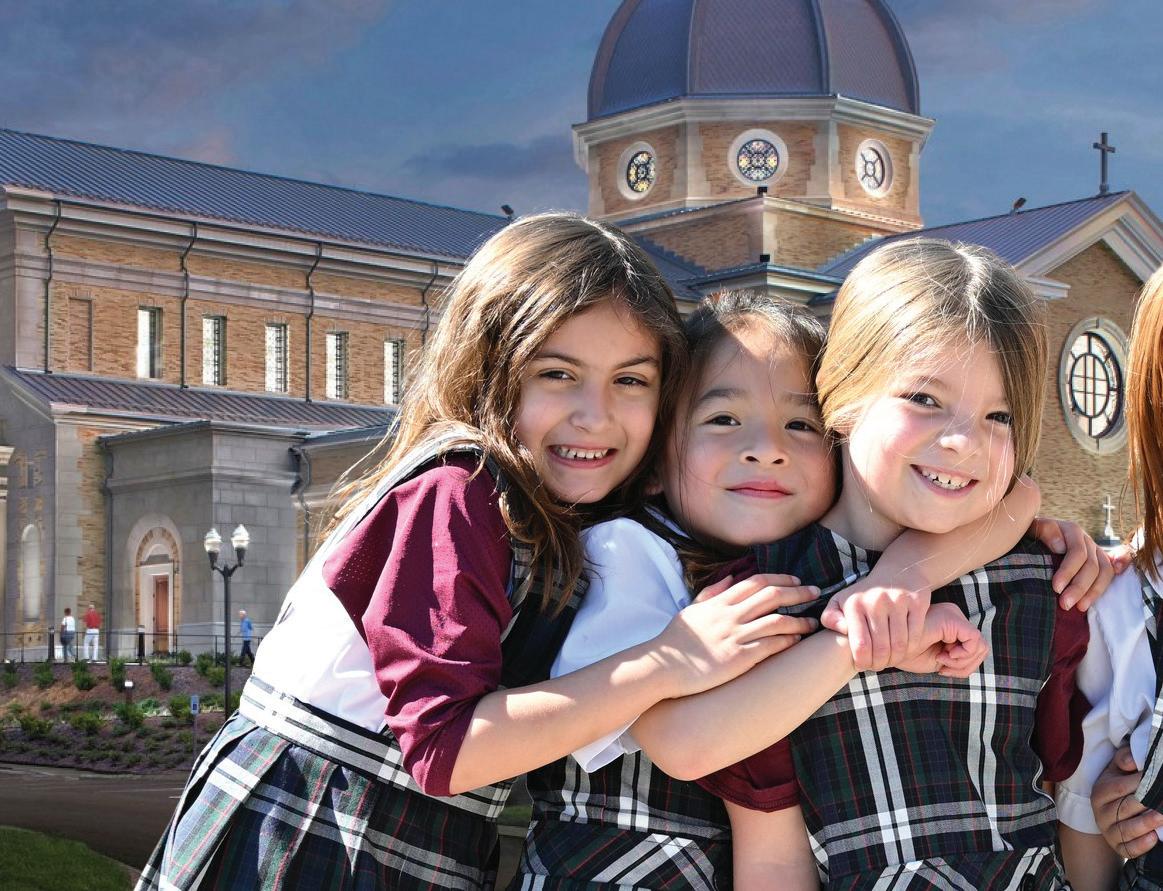




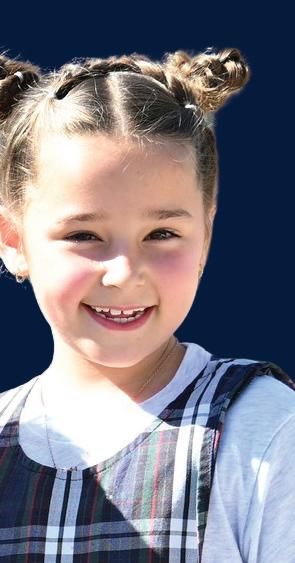

JENNY
MARTINEZ
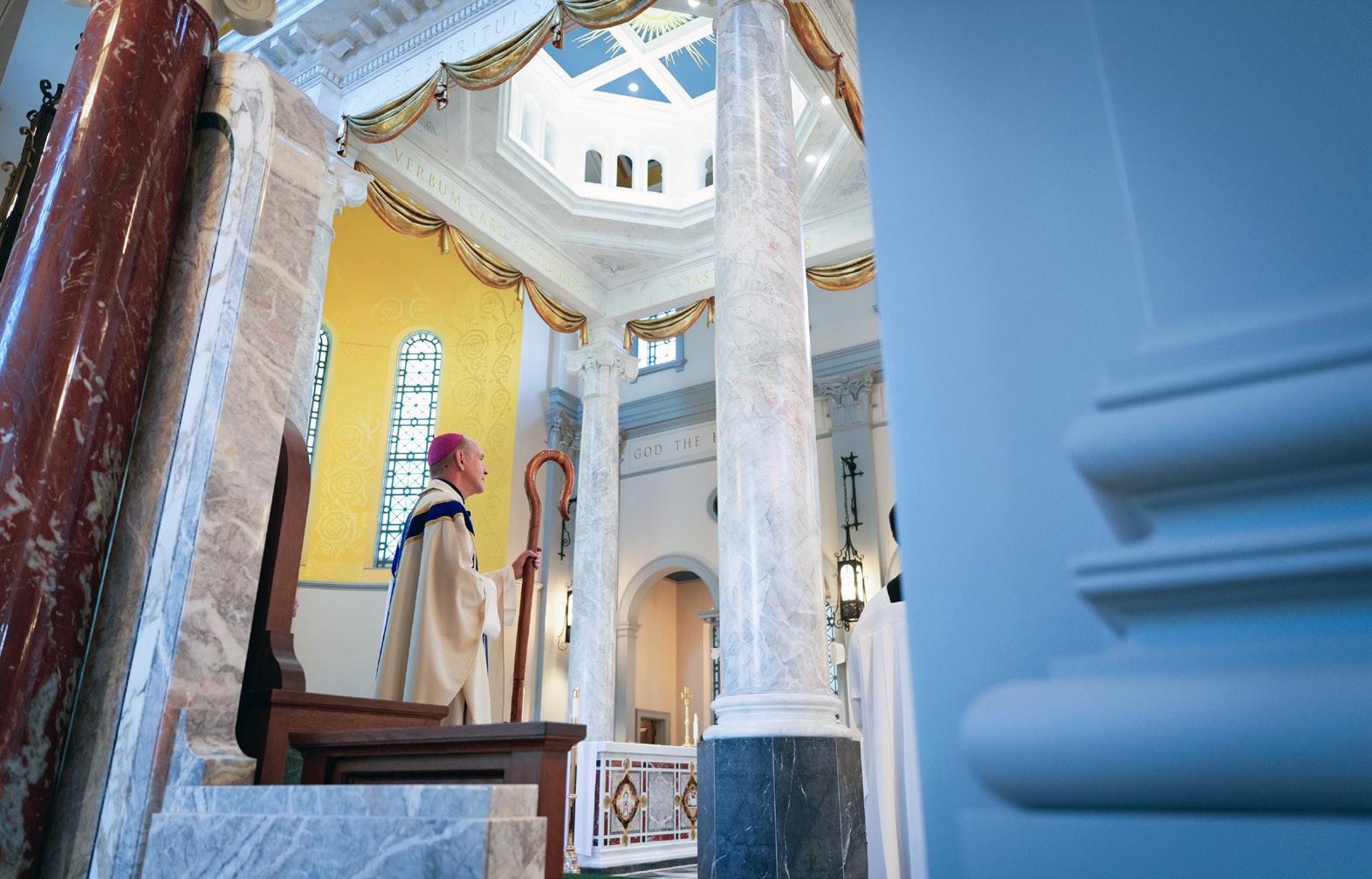
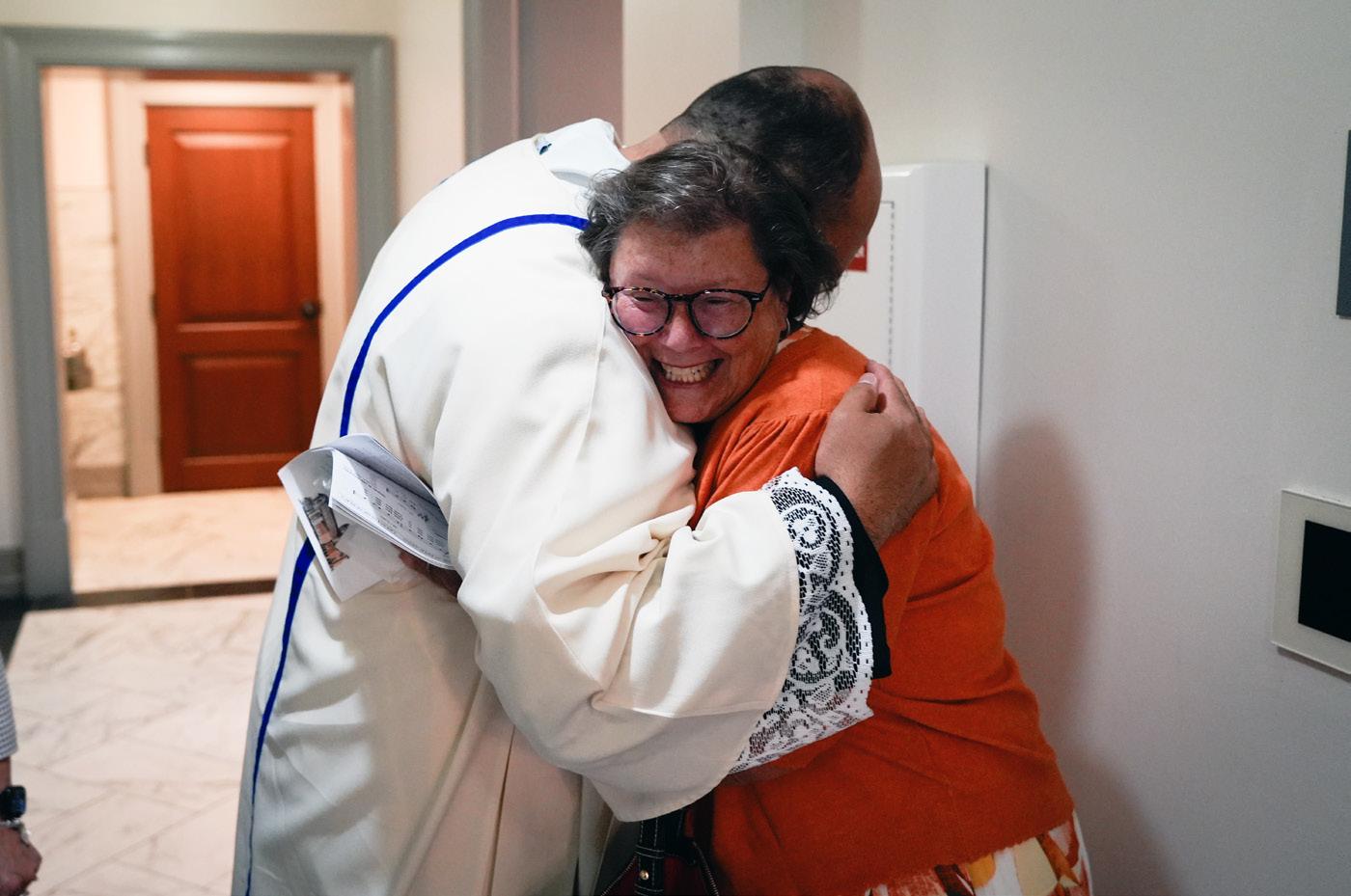
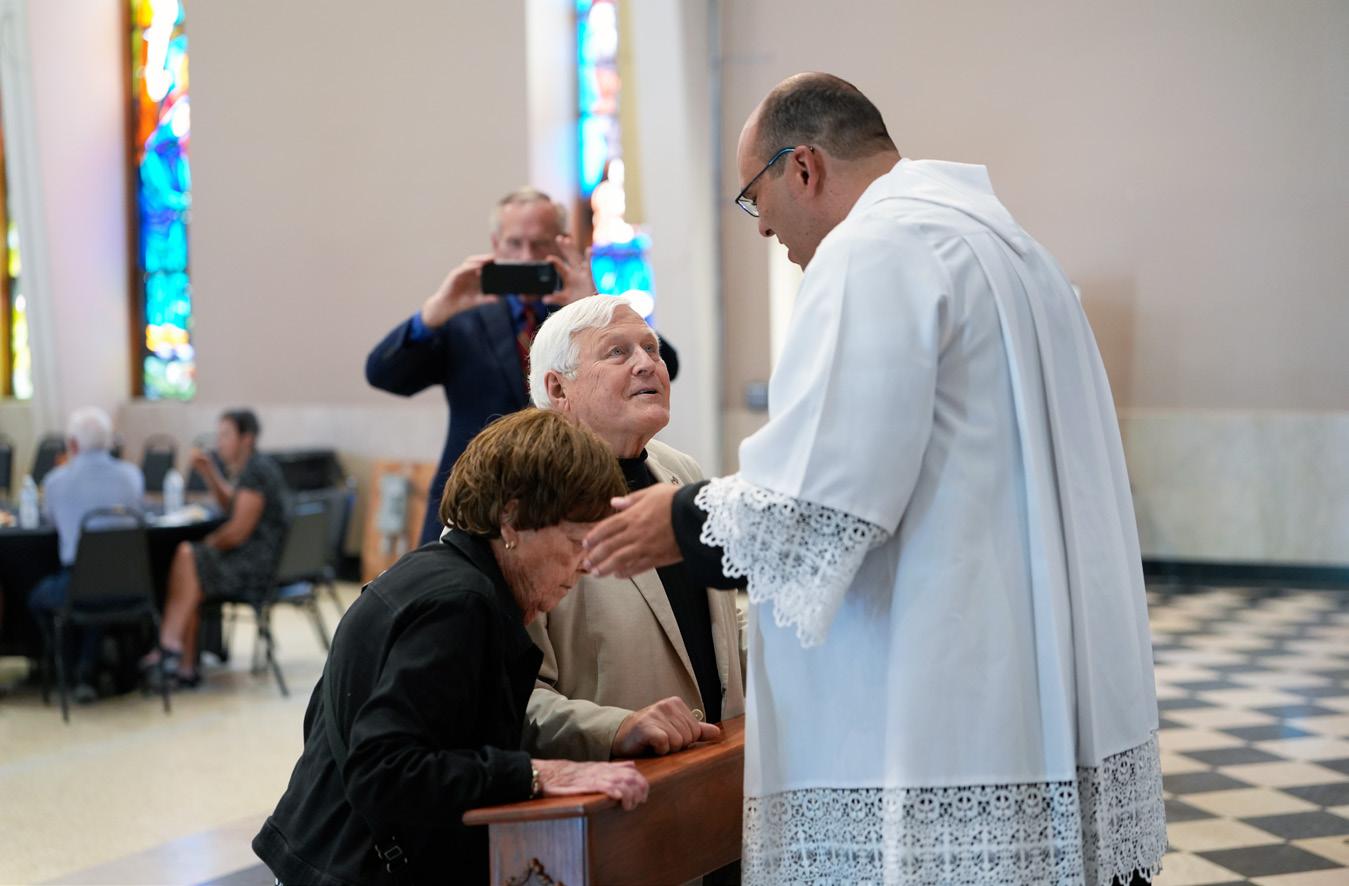
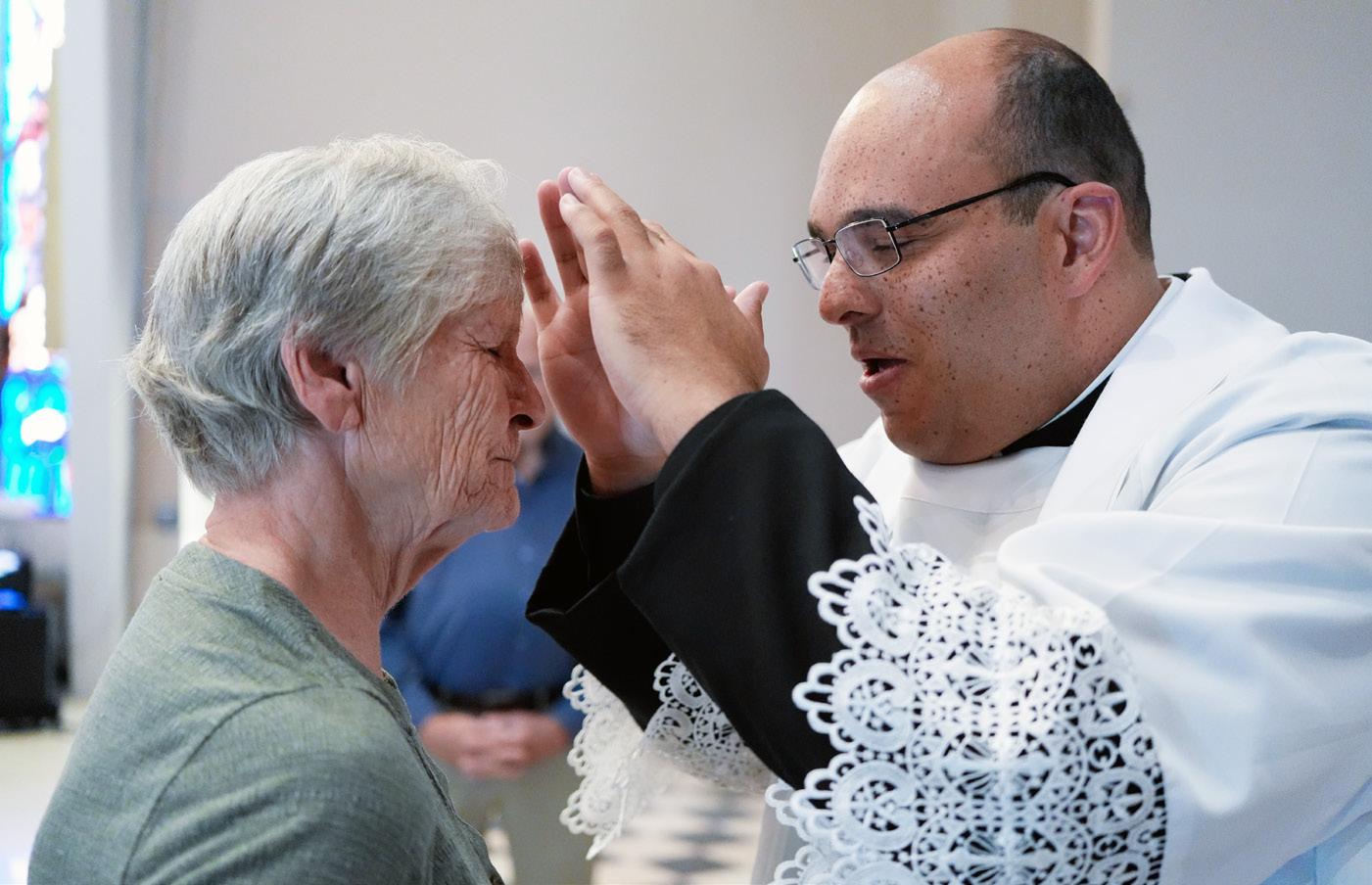
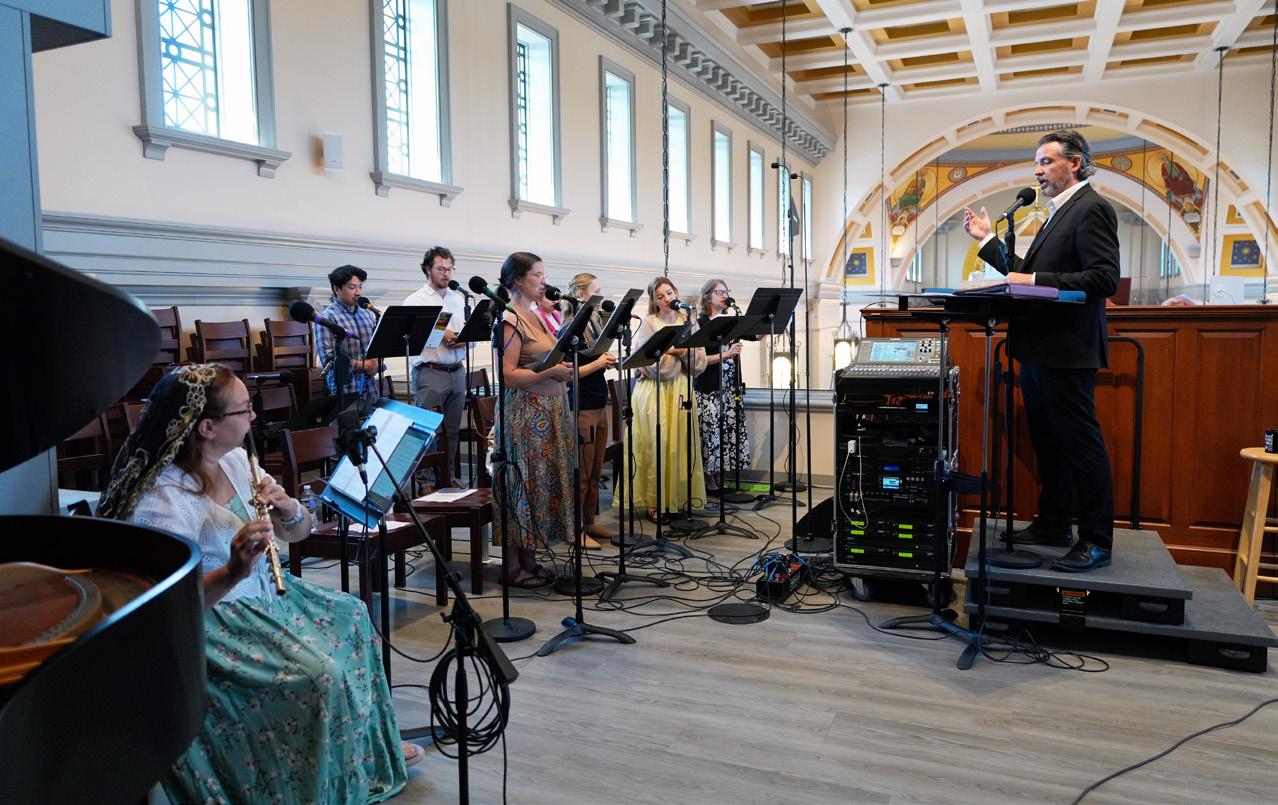
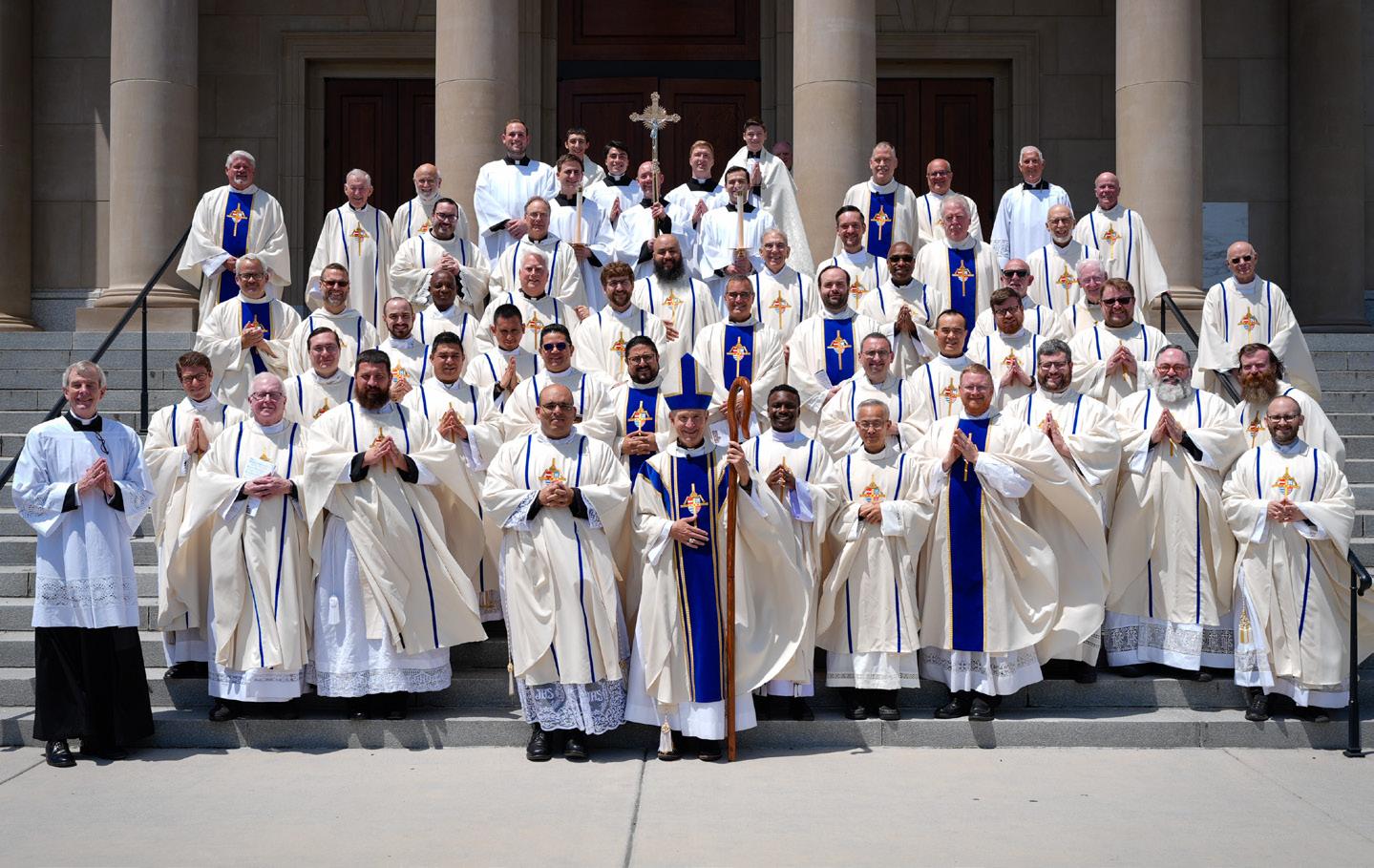
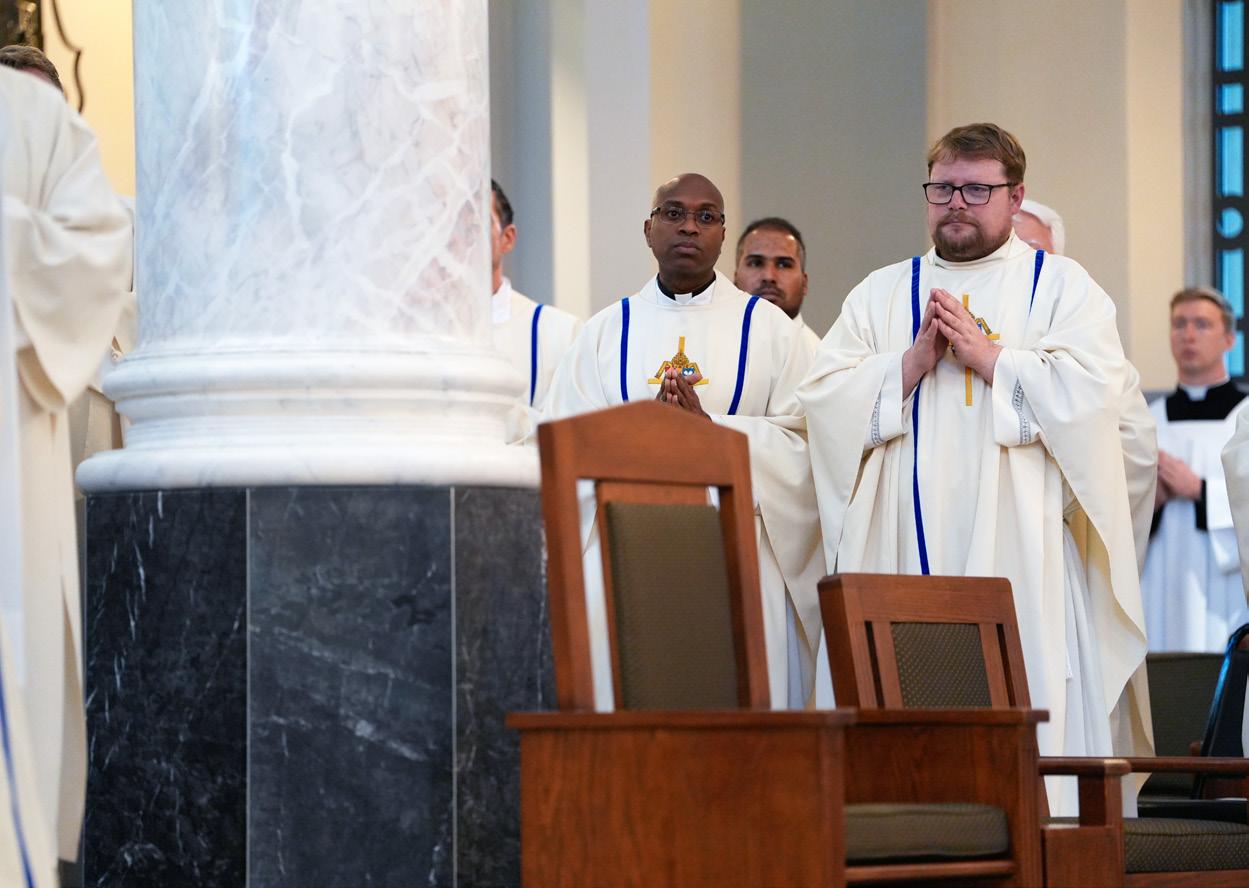
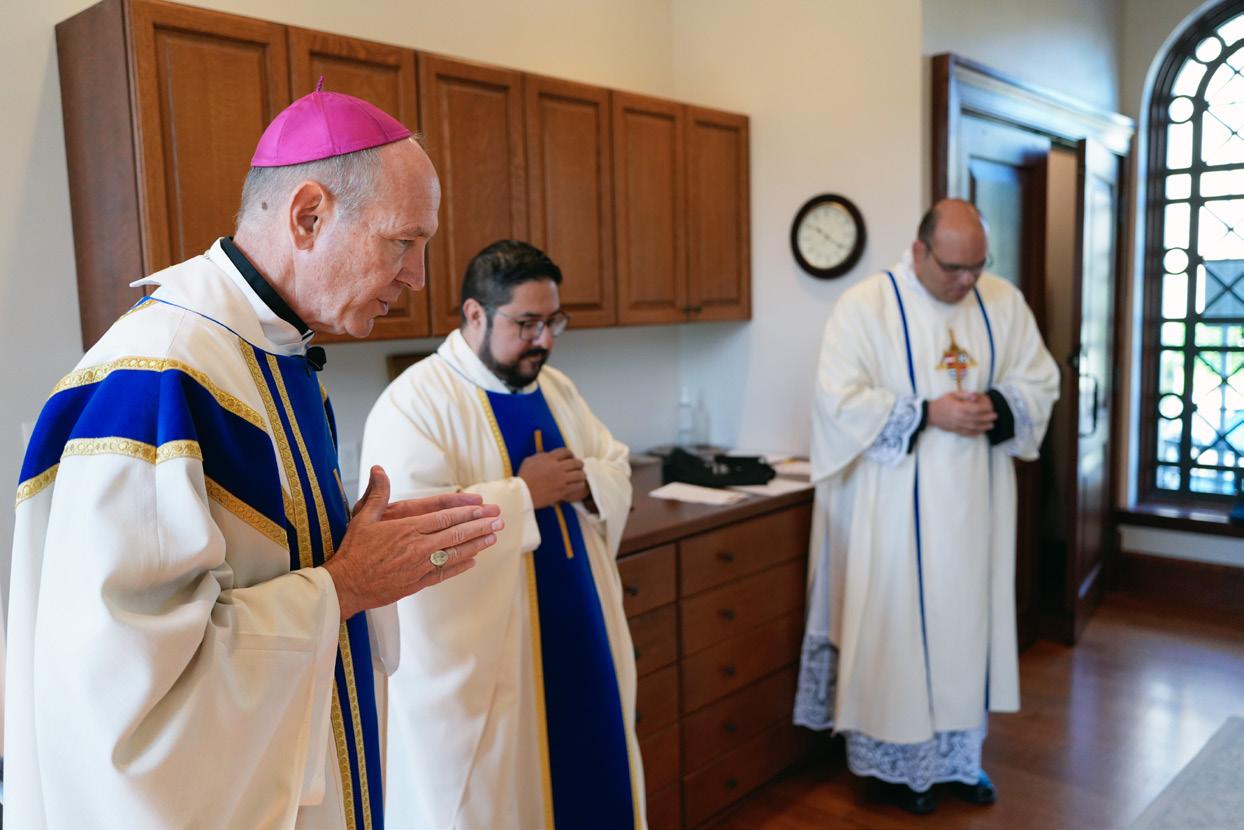
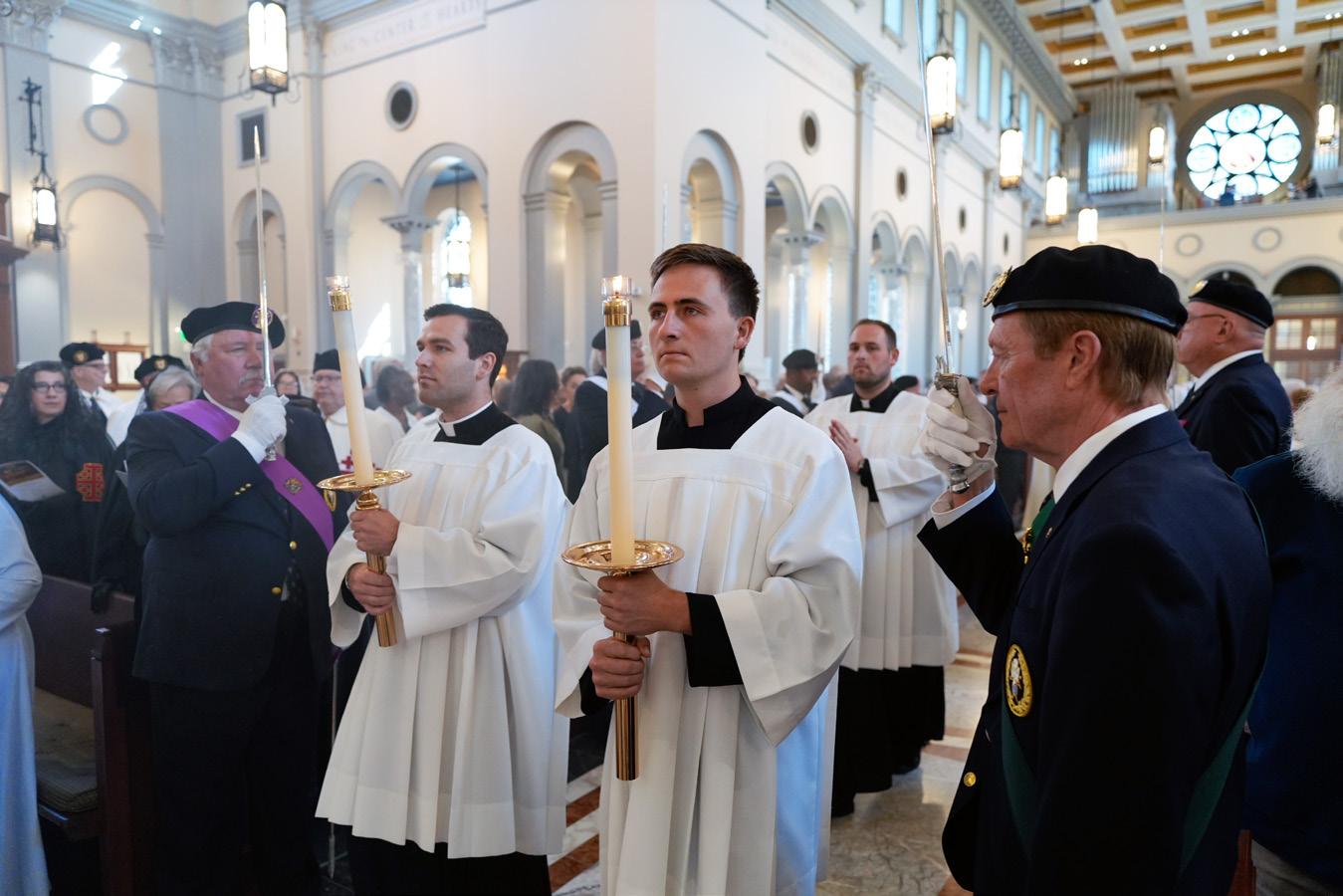
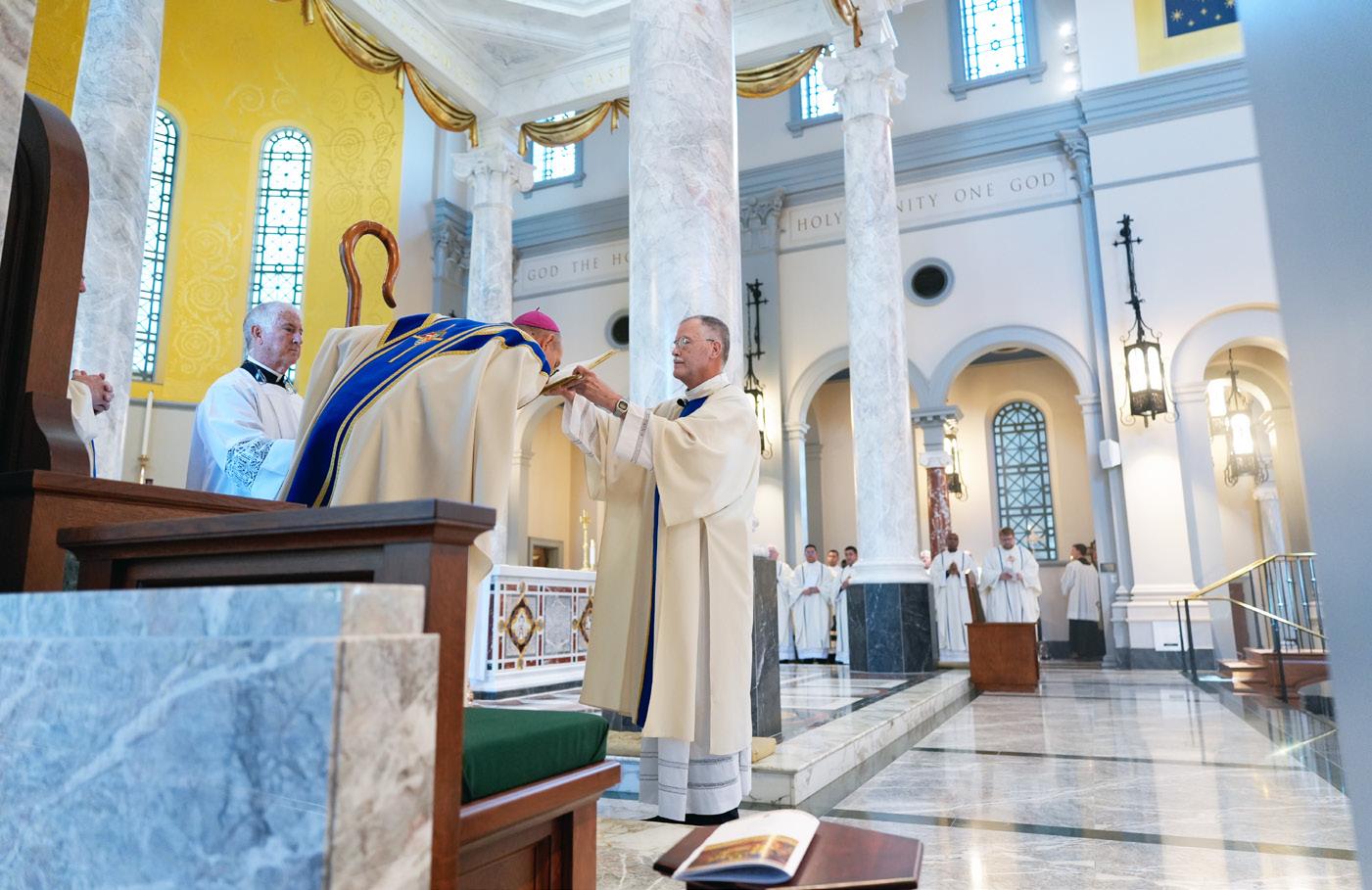
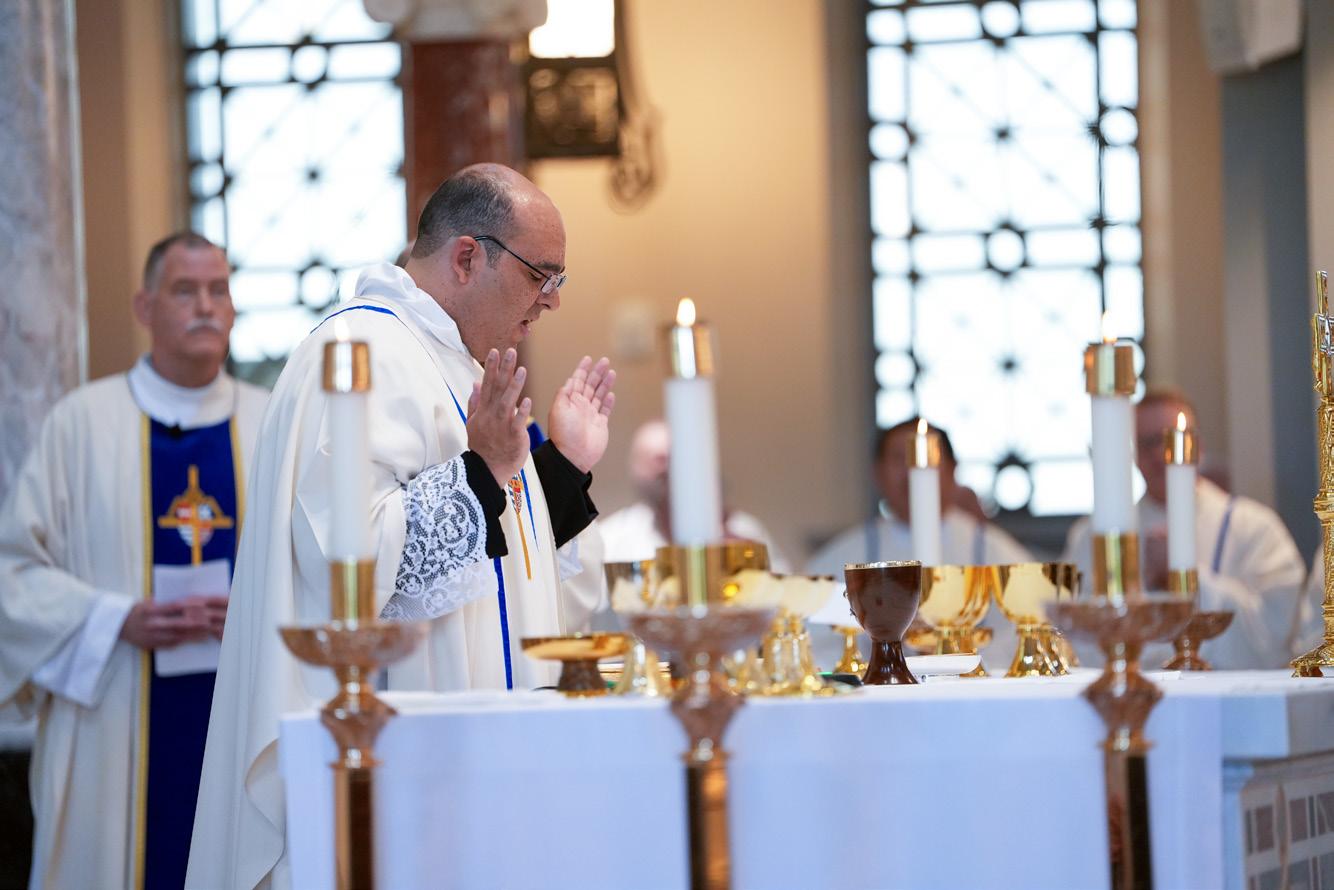
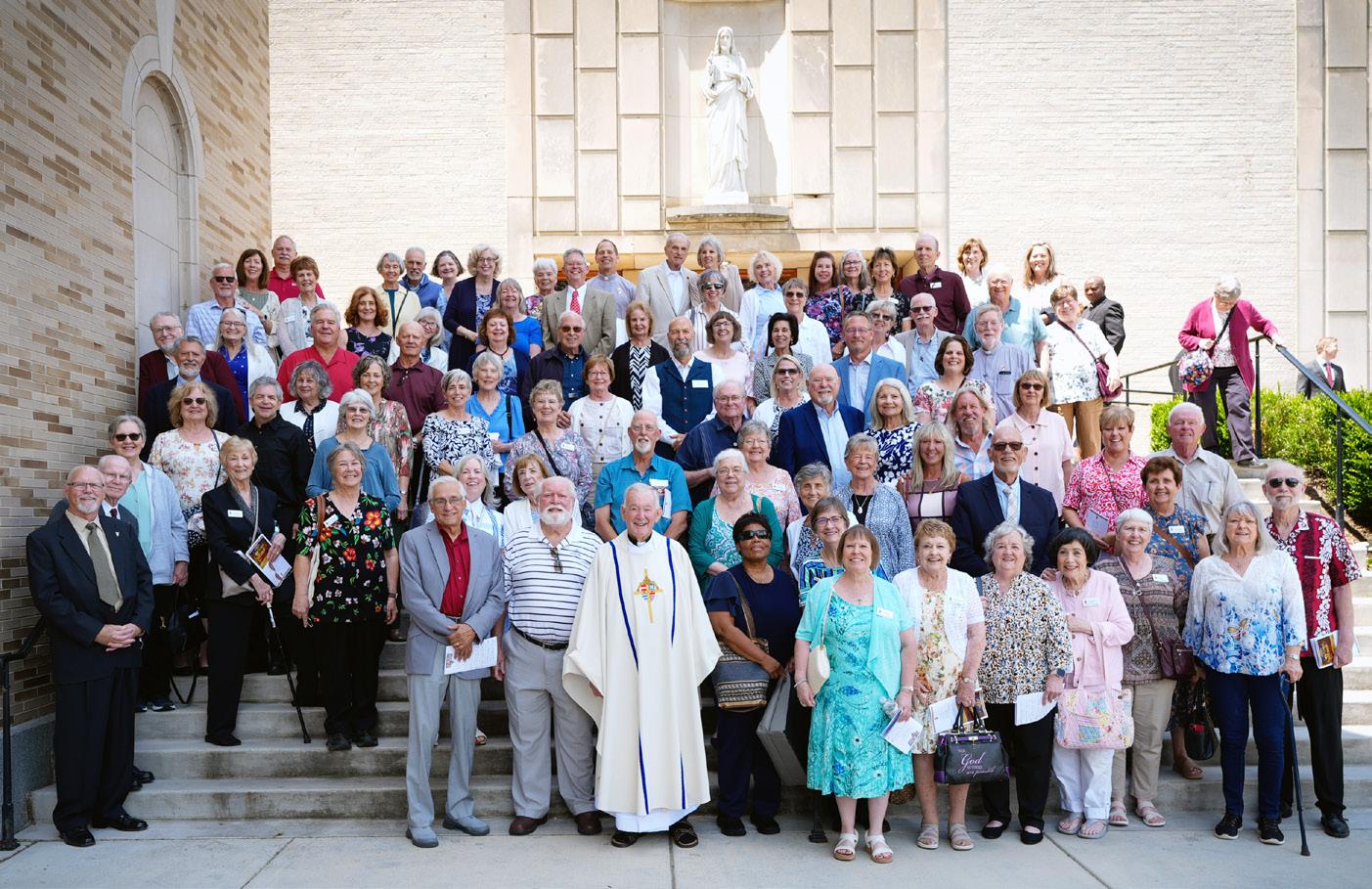
'Come,
me':
of Father Daniel Cooper
comments focused on how his family practices ecological education through sustainable and regenerative practices on their family farm located near Tazewell.
‘Care for creation is not optional’
“This (statement from Laudato Si’) is not a political statement,” Mr. Alarcon said. “It is a moral one, rooted in the conviction that the earth is a gift, that we are its stewards, and that how we treat it reflects how we treat one another and our Creator.”
He went on to offer a basic explanation of global warming, adding that it is not speculation but, rather, measured science.
He pointed to visible effects in East Tennessee such as hotter and more humid summers, increased flooding risks, movement of species that are living in the Smoky Mountains, and the impacts on fish and water quality in the Tennessee River.
“When the air warms, water cycles change; when water cycles change, soil and forests change; when forests change, wildlife changes,” he said. “When all of that changes, the communities that depend on stable land, water, and food are affected, especially the most vulnerable among us.”
Physical changes in the atmosphere are measured facts, he said. Legitimate debate only belongs in determining how we choose to respond to those facts, he added.
“Understanding what is happening is the first step, but faith does not stop at understanding; it requires us to act,” he said, adding that the response begins with noticing the world, paying attention, and making small, concrete choices in how we live and care for creation.
Pilgrimage continued from page A8
us in the future.”
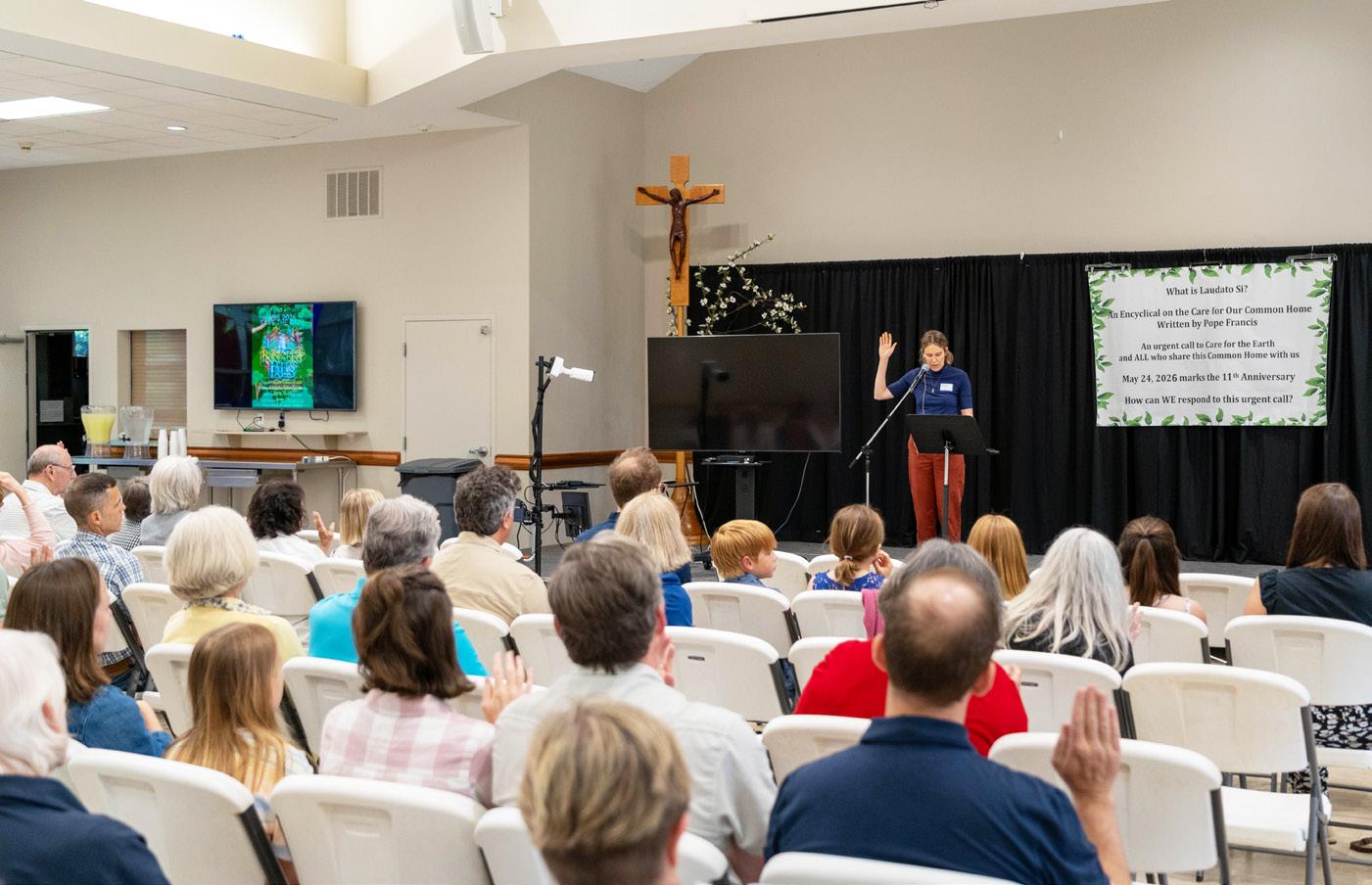
The living world as communion
Using what she referred to as her own “circuitous journey,” Ms. Harman said she was able to “recover a way of knowing the earth that begins and ends with radical love—seeing the living world not as backdrop or resource but as communion.”
Science, history, faith, her life in Southern Appalachia, and the rich contemplative tradition of the Church all contributed to that journey, she said, occasionally with emotion.
Calling on the witness of St. Francis, natural history, cosmic theology, and the contemplative insights of modern spiritualists, she invited attendees to walk with her into a fundamental shift in perception— “from observer to participant, from consumer to giver, from isolation to connection.”
“The coarseness of this world— its hardness, its loss, its sorrow, its unrelenting demand—is not the obstacle to communion with God. It is the medium of it,” she said. “When
Sister Mary Faithful Virgin, a member of the Servants of the Lord and the Virgin of Matara, a missionary order founded in Argentina, said she traveled from central Florida, where she is based, with 40 parishioners.
“It is a beautiful opportunity to be part of this moment of history and to pray for our country and our nation, that we can live truly ‘One Nation under God,’” she said, referring to the 2026 pilgrimage’s theme.
Buddy Odom and his wife, Gina, traveled from Ocean Springs, Miss., to St. Augustine for the launch of the pilgrimage. “We wanted to be part of the beginning of it,” Mr. Odom said. “It’s really a wonderful thing to be a part of, to see everybody coming together for Christ and to demonstrate that to others.”
Maria Basilice attended the Mass with her husband and nine children. The family had participated in the National Eucharistic Pil -
World Cup continued from page A2
Shawn McKnight of Kansas City in Kansas was celebrated.
In Atlanta, the archdiocese also has begun preparations that combine outreach, hospitality, and public-safety awareness.
Maureen Smith, chief communications officer for the Archdiocese of Atlanta, said the city initiated early coordination with the Church.
“The city of Atlanta approached one of our pastors early in the planning process to let him know about training for faith leaders in how to recognize and respond to human trafficking,” Ms. Smith said. “Experts in human trafficking tell us there is always an increase in activity during large sporting events, so we felt like this was an appropriate and important place to start with our own planning.”
Ms. Smith also described a broader effort to welcome international visitors through parish engagement.
“We also wanted to offer a welcome to fans and teams who are coming to Atlanta for the World Cup matches,” she said. “We sponsored a contest for a Catholic artist to design a two-inch sticker welcoming guests. We will provide stickers to the parishes and encourage them to get photos of fans with their stickers at church.”
Parishes also will promote Masses in multiple languages, including Portuguese, Haitian Creole, and Spanish, with social media outreach to help visitors locate worship opportunities.
Other host cities are developing their own pastoral and hospitality responses.
In Houston, an official World Cup 2026 resource page created by the Archdiocese of Galveston-Houston offers access to Mass, confession,
we learn to see the living world through the eyes of the heart, stewardship ceases to be obligation and becomes, simply, the natural expression of love. We are not observers of the living world. We are the living world, remembering itself.”
Ecology put into practice
Deacon Shields believes that some knowledge comes only through experience, and creation is like that, too.
“We can read, study, and quote documents, but ecological education becomes real when we live differently,” he told the assembly.
For him, “differently” means accepting that creation has a lot to teach, something he is still learning as he evolves from suburbanite and former military detachment commander to farmer.
“People ask if I grew up on a farm. Nope … straight suburbanite gone wild,” he said, adding that in the military he was used to being in charge, making decisions, and having resources.
“I had a steep learning curve,” he
grimage when it went through Springfield, Ill., in 2024.
“It’s a beautiful thing,” Mrs. Basilice said about Jesus Christ being brought to the streets of the United States through the Eucharist. “Other people who may not ever encounter Jesus will get to.”
In his homily, Bishop Pohlmeier focused on two effects of Pentecost: the “missionary impulse because of the coming of the Holy Spirit” and “the divine power of the Church’s work because of the coming of the Holy Spirit.”
“From the beginning, we see that the Church is able to carry out the mission entrusted by God Himself—able to carry it out because God provides,” the bishop said. “And what God asks is that we faithfully receive the gifts that He gives. That in receiving those gifts, we step out in faith, allowing God to work in us.”
Following Mass, Bishop Pohlmeier processed throughout the grounds of the shrine with the Eucharist to the “Rustic Altar,” a memorial of
and eucharistic adoration in the city, along with a parish locator tool to assist international visitors. Local ministries also are preparing hospitality and fellowship outreach during the tournament.
In Seattle, Catholic leaders have coordinated pastoral-care initiatives focused on travelers and migrants alongside public prayer efforts for peace during a period of global tension involving some participating nations.
In San Francisco’s host region, Mission Santa Clara on the campus of Santa Clara University has been highlighted as a Catholic focal point tied to the tournament’s presence in the Bay area.
In Miami, Catholic communities are preparing for a large influx of international visitors, with emphasis on multilingual access to the sacraments and parish hospitality. The Archdiocese of Miami also has noted the Catholic heritage connected to the World Cup’s origins, including FIFA founder Jules Rimet, a devout Catholic who envisioned the tournament as a means of fostering international fraternity.
In Dallas, Catholic institutions such as the University of Dallas and parish networks are preparing volunteer participation in tournament-related roles, including FIFA-linked programs such as player escort opportunities.
In Philadelphia, preparations include awareness that World Cup matches will coincide with the 250th anniversary of the United States on July 4, adding a unique national and civic dimension to the city’s hosting role.
In Boston, Catholic communities are preparing for international visitors through parish outreach and hospitality coordination tied to the expected influx of fans.
In Los Angeles, SoFi Stadium will host multiple
said. “The farm humbled me. The land doesn’t care about résumés; animals don’t care about rank and the weather … well, the weather doesn’t care about plans.”
He shared many of the sustainable and regenerative practices that he and his family use on their farm, many of which revolve around biodiversity.
“You cannot monocrop or run only one species and expect longterm resilience, Eventually, you reach capacity,” he explained. “We learned to grow differently. When the cattle reached pasture capacity, we added sheep without reducing capacity because they graze differently.”
Diversity, he said, means more stability. More species produce more natural regulation. The farm uses no chemicals or sprays.
“All I had to do was build a few birdhouses,” he quipped, noting that a pair of nesting swallows can consume thousands of insects daily.
“Maybe creation is not disordered. Maybe we have forgotten how to live within its order,” he suggested. “Creation is very patient, but it is not indifferent. On a farm, if you take more than the land can give, it does not argue, it simply stops producing … if you ignore its limits long enough, reality tells the truth.”
Deacon Shields closed by saying, “The invitation is not simply to think differently; it is to begin living differently.”
The retreat event concluded with a reception hosted by the All Saints Creation Care Team and members of the newly created Care of Creation Commission. Those members are available to support and help parishes and schools create teams and provide ongoing support. Information and resources are available on the Care of Creation website, dioknox.org/care-of-creation ■
where Father Francisco López de Mendoza Grajales celebrated St. Augustine’s first Mass on Sept. 8, 1565. From there, Bishop Pohlmeier carried the Blessed Sacrament to the altar in the historic chapel of Our Lady of La Leche, where he placed Jesus at the foot of the iconic image of Our Lady holding the Child Jesus to her breast. Jason Shanks, president of the National Eucharistic Congress organization, which operates the National Eucharistic Pilgrimage, said the group wanted to begin the 2026 leg in St. Augustine to “highlight the Catholic contribution to this American experiment before there was even a Declaration of Independence” as the United States prepares to celebrate its 250th anniversary on July 4.
“The Catholic contribution for us started with Mass,” he said. “I think with these times of polarization and ideology ... it’s really important for us to go back to the roots. And for us as Catholics, it’s going back to the roots of Mass and the Eucharist.” ■
matches, including games featuring the United States team. Local Catholic communities are preparing for large-scale visitor engagement and multilingual pastoral outreach.
Underlying many of these efforts is a shared theological reflection on universality.
The Catholic tradition itself is rooted in the word katholikos, meaning “universal” or “according to the whole.”
That meaning resonates strongly in the episcopal motto of Pope Leo XIV: In Illo uno unum (“In the One, we are one”), drawn from St. Augustine’s exposition on Psalm 127.
Augustine’s reflection “although we Christians are many, in the one Christ we are one” has often been cited in discussions of global gatherings marked by their cultural and national diversity.
In that sense, Catholic leaders note, the World Cup becomes more than a sporting event. It becomes a lived image of encounter: nations gathered, languages interwoven, cultures present in one shared space.
For Catholic communities across those 11 cities, the weeks ahead represent both preparation and invitation preparation for the practical demands of hosting the world, and invitation to live out a vision of hospitality rooted in faith.
As OneKC Catholic’s mission states, the goal is simple: that visitors “feel known, welcomed, and connected.”
In that spirit, dioceses across the United States are approaching the World Cup not only as an international event, but as a moment of encounter between Church and world, between local parish and global visitor, and, for many, between hospitality and grace. ■
The intersection of faith and ecology Rebecca Harman, a Tennessee native and conservation scientist, gives a presentation related to Laudato Si' during the May 27 ecological retreat in the All Saints parish hall.
JOHN MECKLENBORG
Sister Elizabeth Wanyoike, ESM, of St. John Neumann Parish in Farragut, who served with Monsignor Garrity when he was pastor there.
The second reading from the letter of St. Paul to the Corinthians was given by John Stevens, a friend of Monsignor Garrity who gave the same reading 50 years ago at thenFather Garrity’s very first Mass, his Mass of Thanksgiving, at St. Edward Church in the Diocese of Nashville.
The monsignor said he worked so hard preparing for his first Mass in 1976 that he decided to use the same readings again on May 8.
“I was lucky to find the same reader,” he remarked kiddingly.
In his homily, Monsignor Garrity recalled fondly all the key steps along the way to his ordination on May 14, 1976, at the age of 27. He was ordained by Diocese of Nashville Bishop James D. Niedergeses at the Cathedral of the Incarnation in Nashville. And in 2011 he was elevated to monsignor, a papal honor bestowed on him by Pope Benedict XVI.
He emphasized that he wanted the Mass to be a celebration of the gift of priesthood, not only the gift of individual priests but also the gift of what priests are to the Church.
He spoke of those holy men who planted the seeds of his vocation when he was a child and young man growing up in Wichita, Kan. He said he was blessed to attend All Saints grade school and Kapaun Mt. Carmel, which is a Jesuit high school.
“I think about the Jesuits and how much they helped to form me as a young man. Then I was blessed to go on to St. Meinrad College, where I encountered the Benedictine monks,” he said.
He described the dean of his hall at St. Meinrad, Father Daniel Buechlein, as a man with whom young freshman Patrick Garrity established a code: “I’ll see you in five minutes in my office,” Monsignor Garrity said, recalling what the dean often sternly instructed him to do. “I was not happy when he would do that.”
That recollection drew knowing laughs from the bishop and his fellow priests.
Father Buechlein would become Archbishop Daniel M. Buechlein, OSB, who would serve as president and rector of St. Meinrad School of Theology. He was appointed the third bishop of the Diocese of Memphis in 1987, and then he became archbishop of the Archdiocese of Indianapolis in 1992.
Monsignor Garrity said the two of them became close friends and Father Buechlein preached at Monsignor Garrity’s Mass of Thanksgiving.
The monsignor spoke very fondly of the priests who assisted him.
“All of those men helped to form me and helped me grow, and they helped me see what God was calling me to be,” he said.
In reflecting upon becoming a priest, Monsignor Garrity acknowledged being naïve in understanding what a priest did. He thought the vocation was summed up in celebrating Mass, hearing confessions, baptizing people, and visiting the sick and infirm in the hospital.
“That was pretty much it from what I knew. Boy, I didn’t know much,” he confided.
But along the way, he realized Dollywood, of which he has been a season-pass holder, offered an insightful comparison to the priesthood.
“Dollywood is a very special place. And what makes it special and successful is No. 1, there is a new ride or attraction every year. As soon as they close down, they are building something new—a new roller coaster, which I’m fond of, and sometimes a whole new area of the park. There’s something new and different every year,” he noted.
“And four or five times a year, everything changes. Decorations change. The lighting changes.
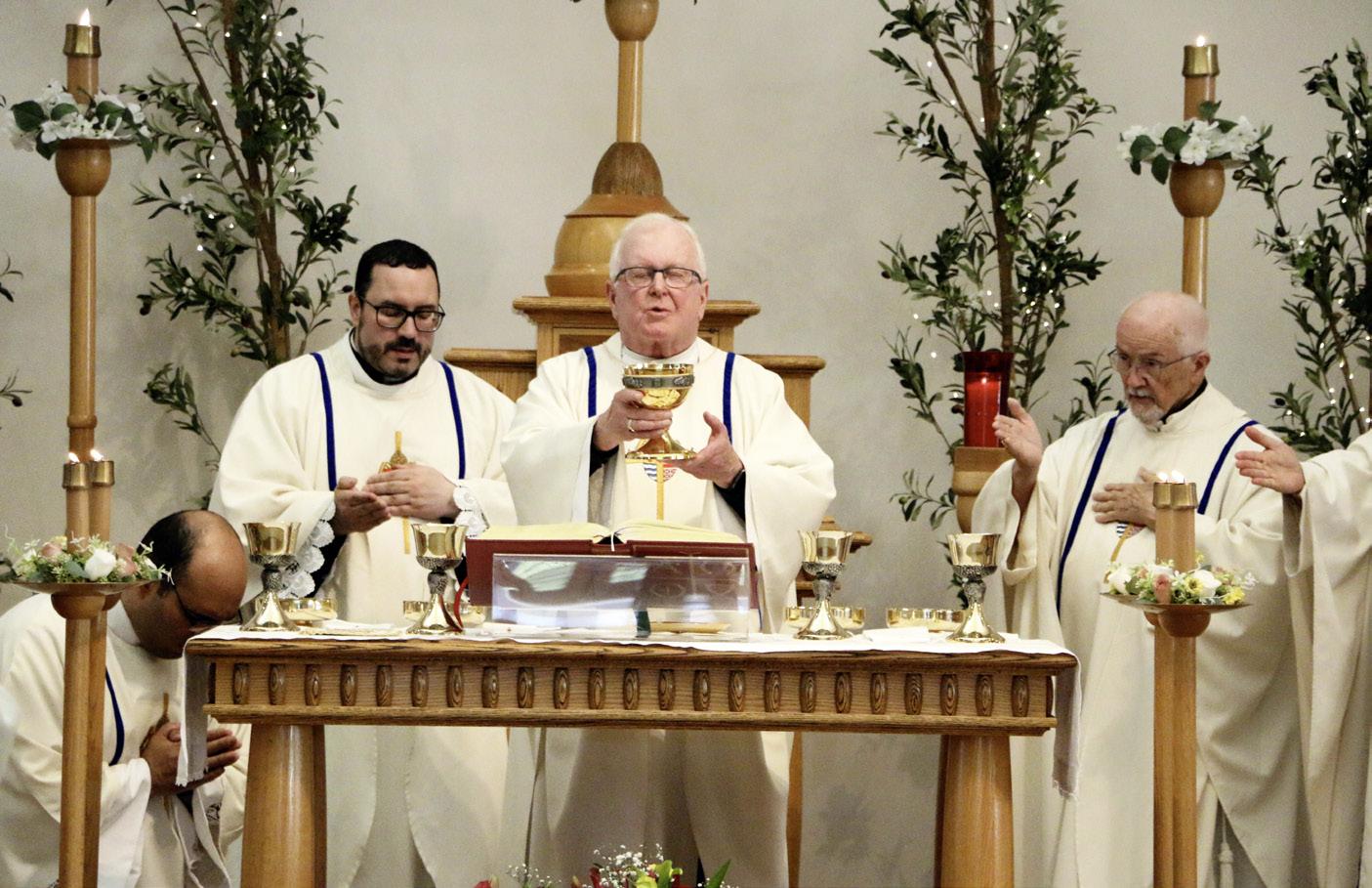
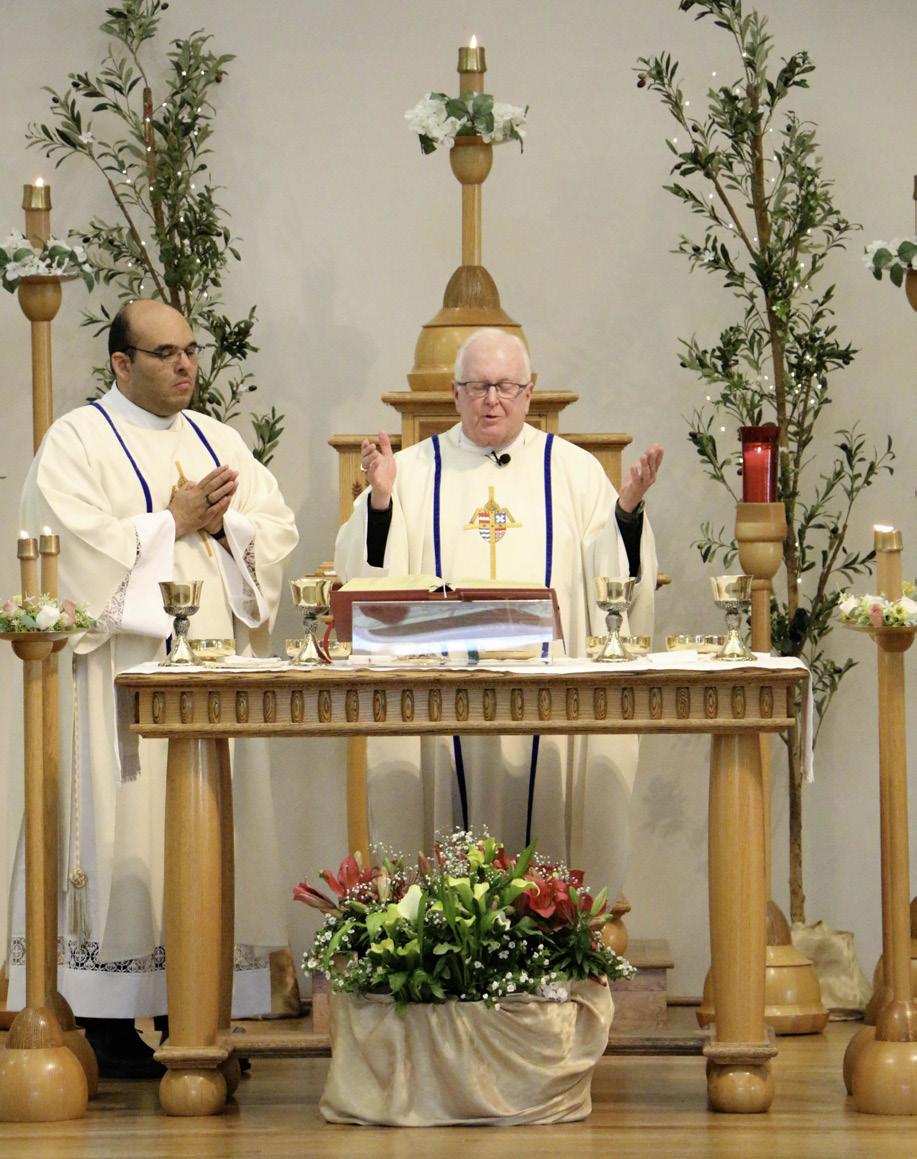
A golden jubilee
Above: Monsignor Patrick Garrity prays during the Liturgy of the Eucharist as, from left, Deacon Daniel Cooper kneels, and Father Christopher Floersh and Monsignor Al Humbrecht concelebrate.
Left: Monsignor Garrity, assisted by Deacon Cooper, celebrates the Mass for the 50th anniversary of his priesthood at St. Albert the Great Church in Knoxville on May 8.
Below: Priests, deacons, altar servers, and Bishop Mark Beckman gather for a photo after the golden jubilee Mass.
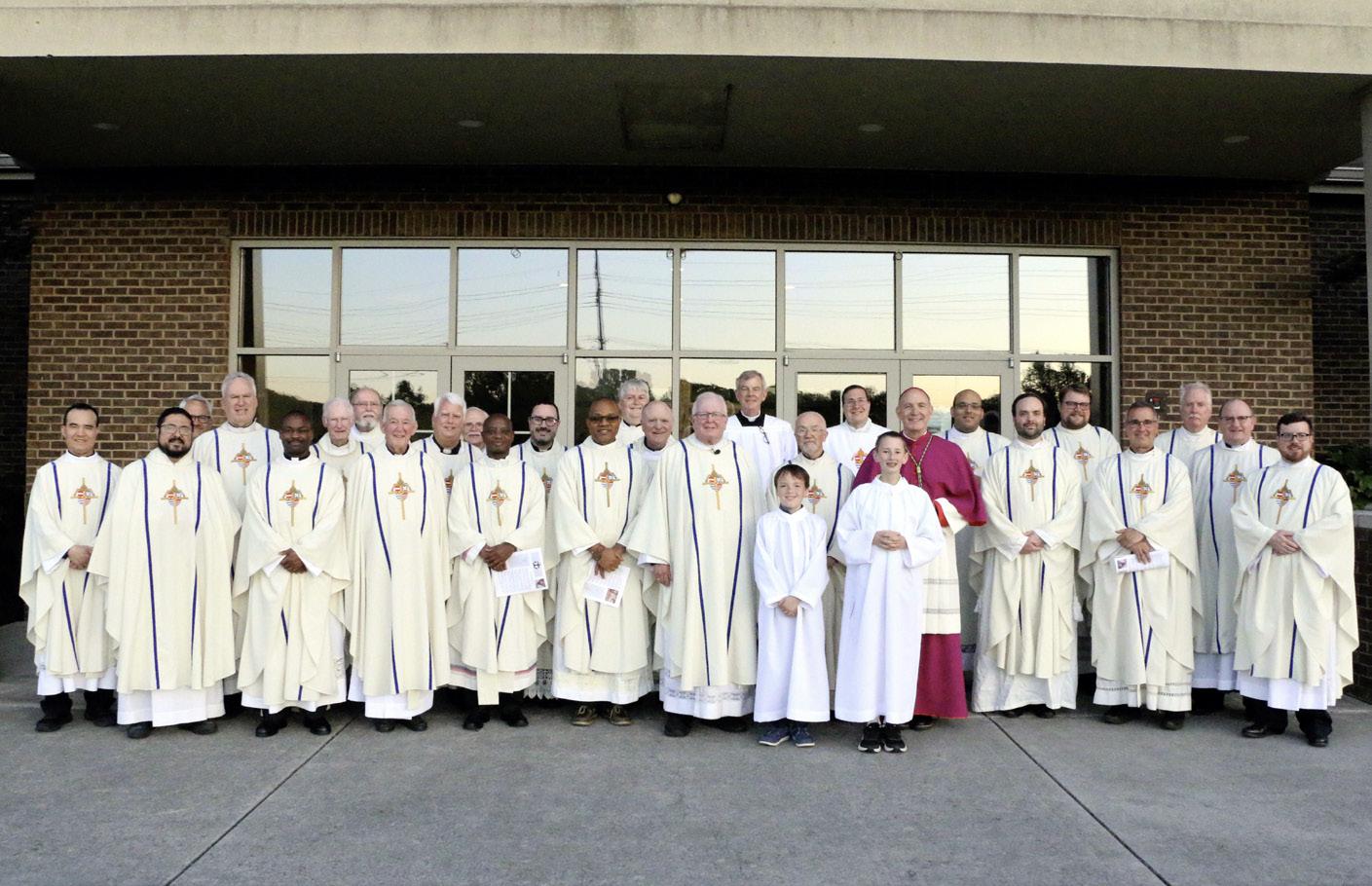
And all the shows in the theaters change,” he added. “That’s what I found out about the priesthood.”
The monsignor recounted how, two weeks before he was ordained, Bishop Niedergeses discussed with him his first assignment and asked what he thought of teaching. “I said, ‘Bishop, I try not to think about it,’” which drew more laughs.
He further recalled that earlier during his discernment, he considered becoming a Jesuit priest, but he ruled that out because one of their charisms is teaching. “They all taught high school at some time. And I never wanted to teach high school.”
But once his priesthood began, routine and rote were not in his vocabulary.
“Every year was a new experience. You had to ask yourself every year, ‘Is this what God was calling me to?’” he said, adding that he reluctantly agreed to teach at a Catholic school.
He went on to spend many years in Catholic education. He also confided that he never believed as a young priest that he would need to learn how to prepare budgets, know how to read them, or know how to read blueprints.
But his duties as a Catholic school principal and parish priest made budget knowledge and construction know-how a necessity.
The schools where he served included Father Ryan in Nashville, Notre Dame in Chattanooga, Knoxville Catholic High School, and St. John Neumann in Farragut.
“You never knew what was going to happen next,” he said. “There was always something new and different—just like at Dollywood.”
Continuing the Dollywood theme, Monsignor Garrity said the priesthood was akin to the popular Sevier County amusement park because some days were crowded,
pray for priests, whether they are their parish priests or those in another parish, and to pray for seminarians.
He also encouraged them to pray for the priesthood.
“It has its days, like at Dollywood when it rains; it has its days when the roller coaster breaks down; it has its days when it is too crowded and a little uncomfortable,” Monsignor Garrity said. “But, by and large, I love my season pass to Dollywood. It has great joy. I have a lot of fun there. I am one of them out there. Just like the priesthood.”
Bishop Beckman congratulated Monsignor Garrity for 50 years in service to the Church in East Tennessee.
“So, Monsignor, you asked us to think about the priests who have impacted our lives. The folks out here are here because you have impacted their lives. For a moment, I want you to think about the countless men, women, and children over these last 50 years who are not physically present here. Some of them have already gone to the Lord. But they have been impacted by the gift of your priesthood,” Bishop Beckman said to conclude the Mass. “Thank you, Monsignor Pat, for your generous and good service to God’s people and the Church. And may God bless you. This is just the beginning of a new adventure—more days in Dollywood ahead!”
Monsignor Garrity then received a standing ovation from those in attendance.
In reflecting on the Mass after its conclusion, the monsignor said, “I loved it. The people here at St. Albert have just been great.”
He credited Father Christopher Floersh, the St. Albert the Great pastor, as well as parish manager Maria Armento and the church choir for organizing the celebration. A dinner for Monsignor Garrity, Bishop Beckman, and the priests in attendance was held at the parish before the Mass.
The monsignor explained that he first attended seminary not to become a priest but to see if he wanted to be one.
some days it rained, and there were days when the roller coaster wasn’t working.
“But by and large they were all fun days—new and different and exciting—just like my priesthood for the last 50 years,” he said.
“I never in my wildest dreams, when I was 18 years old and got on a plane to fly to Indiana to become a priest, thought this is what I wanted to do and was given the opportunity to do. It was a challenge, but it helped me grow to become a priest and do things I never thought I would do,” he continued.
Looking back, the monsignor said he can’t believe he is the same person as the young man who departed Kansas on an airplane.
He has been awed by the intimacy of the priesthood, to be in the presence of Christ, to offer Mass and consecrate the host “so the people can receive Jesus.”
“What an awesome feeling it is to be able to hear somebody’s confession and to give a person absolution. What an awesome feeling it is to be in the room with someone who is dying,” he said. “To anoint someone. What a grace. What an opportunity. What a blessing.”
He pointed out that there are many opportunities as a priest to find joy, excitement, and peace that can offset any struggles, and he noted there are always struggles.
In comments he shared after Mass, Monsignor Garrity mentioned one of those opportunities.
In attendance at his jubilee celebration was a young family with a baby who was born about eight weeks too early. The parents called the monsignor on New Year’s Day to baptize the child because they weren’t sure if the child would survive. He baptized the baby on Jan. 1 at Knoxville’s Dolly Parton Children’s Hospital with sterile holy water and an eyedropper.
He asked the congregation to
“I knew that if I didn’t go, I would wonder the rest of my life if I should have been a priest, no matter how happy I was, married with kids and everything else,” he said. “And you have to ask that question every year in the seminary: Is this where I’m supposed to be?”
Although God never dropped “a little note from heaven” instructing him to become a priest, Monsignor Garrity said God’s call to the priesthood grew stronger to the point he knew that is what he should do.
He said his mother told him before she died that he made the right choice.
He shared that despite his protest to Bishop Niedergeses at the suggestion of becoming a schoolteacher following his ordination, he spent 21 of his 50 years in the priesthood in Catholic education.
He recounted his various assignments, including three years at Father Ryan High School, six years at Notre Dame High School, five years as pastor of St. Bridget Parish in Dayton (his first pastorate), and 12 years as principal at Knoxville Catholic High School. Monsignor Garrity led KCHS from 1985 to 1997 when it was at its former campus on Magnolia Avenue, and the school renamed a wing the Monsignor Garrity Administrative Suite in his honor in 2017.
Other assignments have included St. Patrick Parish in Morristown, Holy Trinity in Jefferson City, St. John Neumann Parish and School in Farragut, and St. Albert the Great.
Monsignor Garrity is St. Patrick’s longest-serving pastor at 12-plus years and led the parish during construction of a new sanctuary dedicated in 2002.
He has also served as dean of the Five Rivers Deanery and as diocesan vicar for priests. In December 2002, he was elected to the National Federation of Priests’ Councils to represent the Kentucky and Tennessee province ■
BILL BREWER (3)
Making disciples of all nations
UT-Chattanooga students an active part of Church youth movement
By Maggie Parsons
In the Diocese of Knoxville, Chattanooga is seeing many hearts say yes to God in both parishes and schools.
Father David Carter, rector of the Basilica of Sts. Peter and Paul in Chattanooga, is experiencing the great growth in the Church at his own parish.
Father Carter, who grew up in the diocese, has seen this increase in recent years and looks at what the future of the Church may hold amid this growth.
“This new wave that’s coming in is bringing a lot of youth and vitality to the Church, which is exciting and hopeful,” Father Carter said.
A hopeful future for the Church in a culture that continuously gets trapped by sin is what the Catholic Center at the University of Tennessee-Chattanooga is aiming for. Students at UT-C are finding that hope within their own community.
During the past school year, 10 UT-C students entered the Catholic Church and were sponsored by FOCUS missionaries and UT-C Catholic Center students.
Bella Grace Roberts, a UT-C freshman, entered the Church at the beginning of December. She was drawn to the faith by having conversations with peers at the Catholic Center.
“Talking with people about faith and meeting people in the faith have helped me become more out of my box,” Ms. Roberts said.
In a college culture full of temptations that pull people toward sin, a community of faith that strives to grow closer to Christ is what students are searching for.
“Something fruitful that has come from it is just being friends with more virtuous people who aren’t going to feed into those sinful desires,” Ms. Roberts said.
Harrison Bean, who is another UT-C student, began learning about Catholicism but knew little about the faith.
Growing continued from page A7
Church, and how can we help form them into lifelong disciples of Jesus Christ?
Every journey to the faith is deeply personal. Each neophyte and candidate has a unique story, yet common themes continue to emerge. Among them are a search for truth, authentic relationships, and beauty. Increasingly, it appears that many seekers are discovering all three within the Church founded by Christ.
One such story belongs to Cara Dixon, a young woman who was received into full communion at the Easter Vigil in 2025 after spending most of her life worshiping in a Protestant denomination.
When asked what first attracted her to the Catholic Church, she recalled attending the marriage celebration of a couple in a Catholic church.
“I attended a Catholic wedding a couple of years ago,” she said, “and it suddenly became clear to me, as I stood in that beautiful church, that what my boyfriend had been telling me about the Real Presence of Christ in the Eucharist was true.”
She continued:
“I had no doubt in those moments, as I looked toward that beautiful tabernacle, that Jesus was calling me to His Church. So, I began my OCIA journey, and here I am, more certain than ever that this is where I belong.”
Cara and her fiancé, Patrick, are preparing to celebrate the sacrament of matrimony at Holy Spirit Church in Soddy-Daisy later this month. She added that through her journey she has discovered a deeper relationship with Christ and a stronger sense of belonging within a faith community than she ever imagined possible.
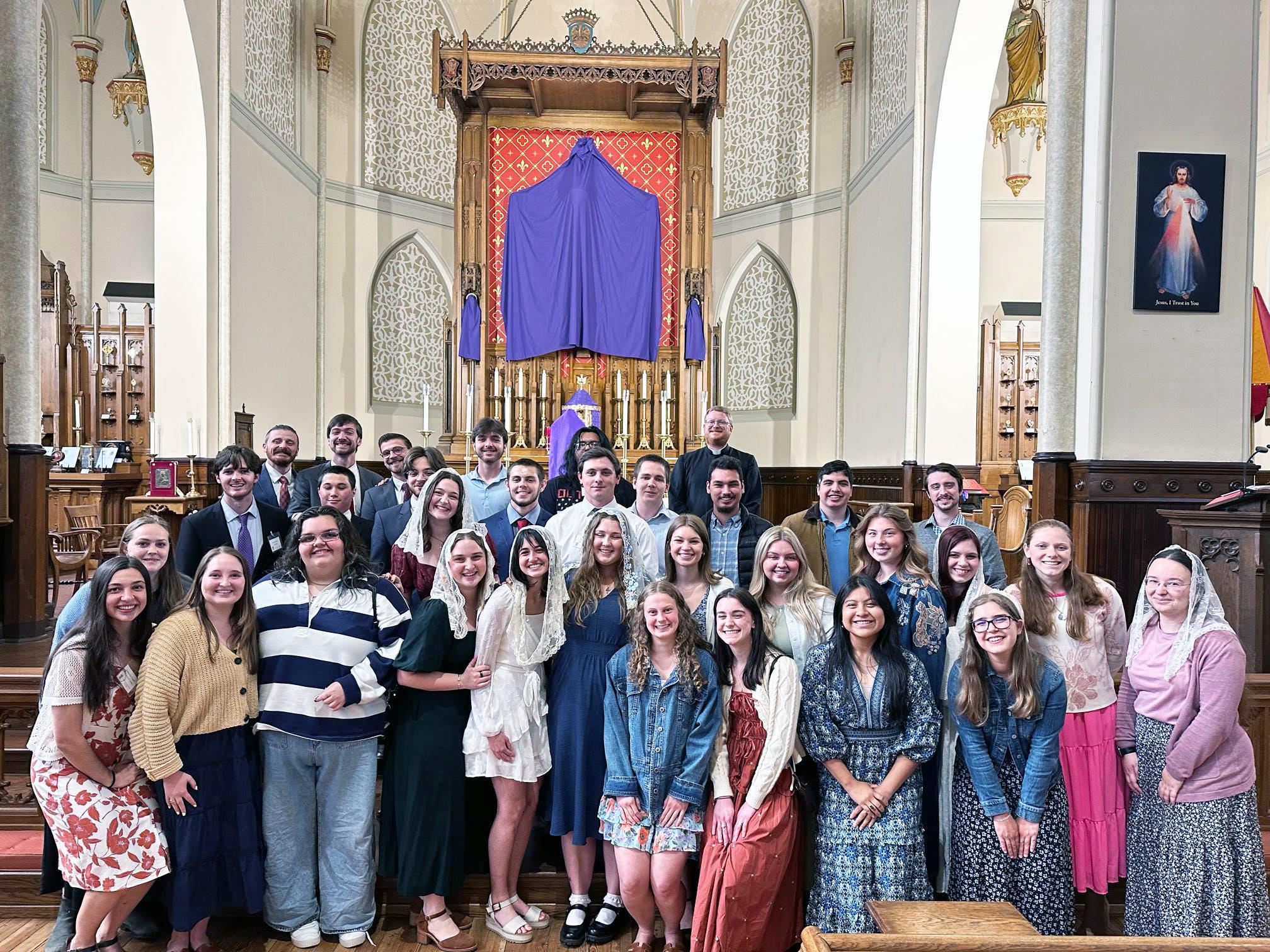
However, he has journeyed toward communion with the Church by being transformed through the sacraments. Along the way, he found the Catholic Student Center, where he attended his first Mass.
To his surprise, the day he attended Bishop Mark Beckman was celebrating Mass, where Mr. Bean would learn God’s promises to His people through Bishop Beckman’s words.
“He talked about the beatitudes: blessed are those poor in spirit, blessed are those who crave righteousness, and that was me,” Mr. Bean said.
The beginning of a faith journey can feel like a fresh start when those on the path find what they are searching for.
The large increase of souls entering the Church brings excitement to the diocese nearly 40 years after it was founded.
“There’s this new excitement, a second wind; the Holy Spirit is still alive, and it’s still at work; it’s still moving among the people of God who bring people to the bride of Christ and sacramental union
with God,” said Father Carter, who expressed joy in the power of the Holy Spirit.
He described how throughout the timeline of the diocese, this increase in members is proof of the Spirit active with His people.
The journey of faith hopefully will lead those graduating from their OCIA classes to the world of mission for the Lord. The university students have been diving deeper into their faith, continuing to say yes to God and as a result continuing to grow with God’s people.
Less than three months after Mr. Bean attended his first Mass, he traveled with other Catholic Center students to the annual SEEK conference in Columbus, Ohio, in January, where more than 16,000 fellow Catholics were in attendance.
He expressed how seeing thousands of young Catholics striving toward something greater than themselves was an extraordinary way to witness the great faith young people have for the Lord.
A few short months after being
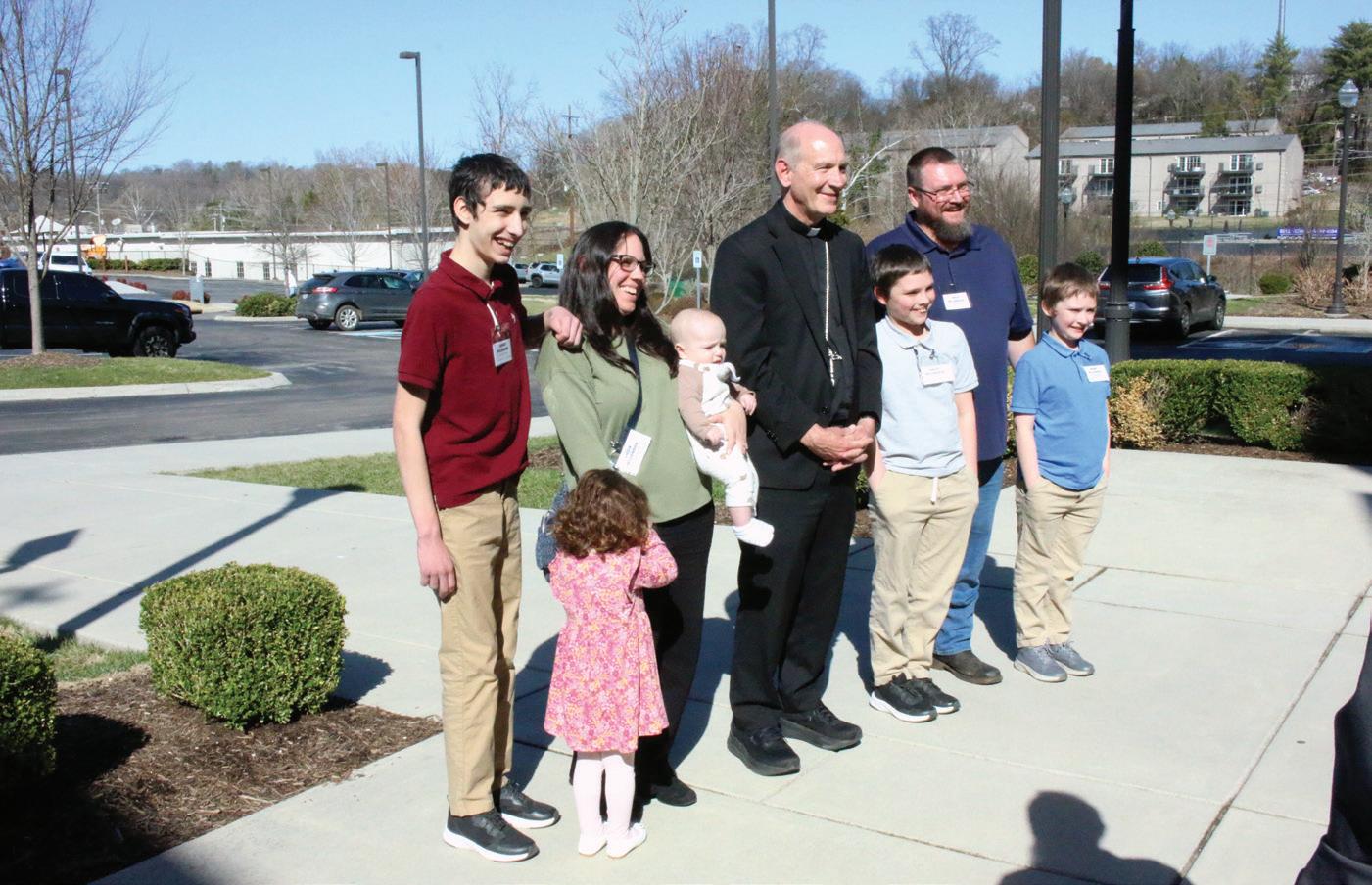
In Cara’s story, truth, relationship, and beauty converged in a powerful way. Her journey began with a simple invitation to explore the Catholic faith and ultimately led her to the sacraments and a new life in Christ.
While personal invitations remain powerful, many converts today begin their journey online. Long before they enter an OCIA classroom or step into a parish, they encounter Catholicism through podcasts, videos, social media, and digital resources that present the faith in compelling and accessible ways.
Deacons, priests, and OCIA leaders throughout the diocese regularly share stories of young Christians, atheists, and even non-Christians whose interest in Catholicism began through podcasts, social media, online videos, or the writings of the early Church Fathers.
One young man recently received into the Church in Knoxville described his surprise upon discovering that much of what he had been taught about Catholicism through-
confirmed in the Catholic faith, Ms. Roberts went on a mission to Belize. While there she was able to take the same faith that led her to be confirmed in the Church and introduce it to others so they could learn just as she did.
“I didn't really think about it before I signed up. I felt ready with my faith and confident in the teachings I learned,” Ms. Roberts remarked.
It can be difficult to trust that the Lord will provide as He guides His people, especially in today’s world. Those like Ms. Roberts illustrate how someone can take that initiative from the Church’s teachings to help others witness the life of a disciple.
Sin is a continuous obstacle in the life of any person of faith, and being a Catholic university student on a secular campus is its own challenge. Those who have embraced the sacramental life with the Lord are tested by the world to stay faithful.
“Not living a double life, don’t claim you’re a Catholic or a person of faith at all, and live another life on the side,” Mr. Bean said.
Living as a practicing Catholic on a college campus and surrendering to live a life in the Lord can be a great challenge in a culture full of temptation.
A community rooted in faith is a way to grow and lean on brothers and sisters in Christ to grow more like the Lord’s disciples, just as He commands.
“I felt welcomed by having a community of people who were accepting the things I didn’t quite understand through their patience and grace,” Mr. Bean said.
Walking with those who are on their own journey with Christ is the true way each person is called to live their faith.
Through the compassion the Lord provides, His people younger and older are called to spread His word to make disciples throughout the world. ■
For Catholics, statistics and sociology can explain only part of the story. Ultimately, conversion is the work of the Holy Spirit.
As members of the body of Christ, however, we are invited to cooperate with that grace. Every authentic witness, every invitation, act of charity, or conversation about faith can become the means through which God draws someone to Himself. By living an authentic and unafraid Catholic life in our families, workplaces, and communities, we bear fruit for the Kingdom.
out his life was inaccurate. His perspective changed as he began studying the origins of Christian worship and recognized the connection between the Mass and the Last Supper.
Another convert explained that his decision to enter the Church solidified when he came to understand the Catholic Church’s role in preserving and canonizing sacred Scripture. He concluded that without sacred tradition, significant obstacles remained to fully understanding God’s revelation and plan for His children.
Catholics have become increasingly effective at using digital media not only to explain and defend the faith but also to showcase the beauty of sacred art, music, architecture, and liturgy. Through platforms such as Hallow, Catholic Answers, and many others, even non-Catholics are being introduced to the richness of Catholic life through faithful voices such as Father Mike Schmitz, Jimmy Akin, Jonathan Roumie, and countless others.
An invitation extended to a Protestant friend may be accepted. A computer screen displaying sacred art may spark a conversation about faith. A compassionate ear offered to a struggling family member may become the first step on a journey back to God.
As we welcome new Catholics into our parishes, we have an opportunity to build relationships that become the foundation for continuing formation and lifelong discipleship. “Make a friend, be a friend, bring a friend to Christ” has long been a guiding principle of the Cursillo movement. It may also be a catalyst for what we are experiencing today. Behind every statistic is a person searching for meaning, truth, beauty, and relationship. Behind many of those stories is a Catholic who befriended, accompanied, and invited. The numbers tell us that something remarkable is happening. The stories remind us that conversion is ultimately not simply about statistics but a relationship with Jesus Christ. ■
Deacon Jim Bello serves at Holy Spirit Parish in Soddy-Daisy and also as director of Christian Formation for the Diocese of Knoxville.
A family affair Bishop Mark Beckman joins a family entering the Church in East Tennessee for a photo following the Rite of Election on Feb. 21.
DAN MCWILLIAMS
A new wave Father David Carter, rector of the Basilica of Sts. Peter and Paul in Chattanooga, is pictured with young adults at the basilica during Holy Week in April.
COURTESY
tournament’s most memorable moments.
That same excitement could be seen at the conclusion of every match. Behind every trophy were hours of training, sacrifice, and perseverance. Yet there also were youth groups cheering from the sidelines, families encouraging their loved ones, and entire communities celebrating each accomplishment.
At the end of the tournament, the men’s division champions were Boys of Jesus from Nova Esperanza Young Adult Group at the Cathedral of the Most Sacred Heart of Jesus in Knoxville. The runner-up title went to Lumen FC from Tras las Huellas de Jesús Young Adult Group from Our Lady of Perpetual Help Parish in Chattanooga.
In the women’s division, Diamond FC of Chattanooga claimed first place, while Testigos del Amor de Dios from St. Patrick Parish in Morristown earned the runner-up title.
Still, it would be unfair to think that the tournament was only about the teams that lifted a trophy. The true success of the event could be seen far beyond the final standings. It could be seen in
Dialogue continued from page A9
ting attendees to understand the very topic they are discussing, not just to hear the different faith perspectives. Those who attend get to hear the many details of each perspective that can be explained in each person’s view.
“A dialogue like this not only gives people a chance to share their ideas, but also a chance to refine, adjust, strengthen, or adapt their reasoning. It’s not about a soundbite or clever comeback, it is truly about deeper understanding, building stronger bonds of community,” Sister Scholastica said.
Through this dialogue, Mr. Ross and Mr.
the volunteers who arrived early to prepare the grounds; in those who spent hours serving food; and in those who assisted with officiating, organization, and cleanup. It could be seen in every person who chose to dedicate part of their time to support this initiative.
Many of the most important fruits of ministry cannot be measured by numbers. It’s true that more than 250 people participated in this tournament. It’s true that funds were successfully raised for the II Diocesan Youth Day. But it’s also true that something deeper took place that day: young people from different parishes spent time together. New friendships began to form. Some were reunited after many years. Others for the first time met fellow young Catholics who, despite living in different cities, share the same faith and the same desire to follow Christ.
Perhaps that is the most beautiful aspect of events like this. They remind us that we do not walk alone.
I would like to extend my sincere gratitude to all the members of the Diocesan Council of Pastoral Juvenil Hispana (DCPJH), to every team that
Whitescarver model how communities with differing views on faith can discuss difficult topics respectfully. During the process, they discover much about their fellow brothers and sisters in Christ and are better able to connect through deeper conversations.
After they complete their points on a chosen topic of the dialogue, they open the floor to questions on the topic and encourage group discussions. This gives those in the audience a chance to share their thoughts and likewise hear what others are saying.
“I have never seen people listen to each other the way I observed people listening to each other.
participated in the tournament, to Giovany Abreu for his constant support from Atlanta, to the Archdiocese of Atlanta for accompanying us and collaborating in this initiative, to Tienda El Girasol in Knoxville for its valuable support, and to every person who helped make this event possible.
At the end of the day, when the final match concluded and cleanup began, there remained the satisfaction of having achieved another important goal. There were certainly challenges, fatigue, and difficult moments. But there were also joy, community, and tremendous learning.
Because when we place our talents at the service of others, God always brings something good from them. And that—more than any score, trophy, or championship title—was the true victory of this tournament.
There is only one thing left to say following the tournament: Dear team, we did it! The glory always belongs to God. ■
Magdiel Argueta serves as coordinator of young adult ministry for the Diocese of Knoxville Office of Youth, Young Adult, and Pastoral Juvenil.
It was as if the entire audience realized ‘I've been misunderstanding these people my entire life and I need to learn something new now,’” Mr. Whitescarver said.
Through the ecumenical dialogue program, Mr. Ross and Mr. Whitescarver demonstrated the love the Lord gives to His people, calling them together. Through the dialogue, the participants are encouraged to grow closer to the Lord and His community of faith through His works, teachings, and examples.
“You never know where the Lord is going to lead you when you make all these connections,” Mr. Ross said. ■
A Community Living Its Faith in Action
The 2025 Bishop’s Appeal for Ministries exceeded expectations, with over 6,300 households helping raise $3,221,483, surpassing the goal by more than $200,000 and setting a new record. This strong response reflects a generous and engaged community, united in support of essential ministries across East Tennessee.
“The Bishop’s Appeal for Ministries is a living expression of our faith in action, strengthening our ministries and bringing hope and care to those we are called to serve. Your participation and generosity make this mission possible.” – Bishop Mark Beckman
Through the generosity of many, this mission is lived out across five key priorities that guide the life of our diocese: fostering vocations to the priesthood, engaging youth and young adults, serving neighbors in need, forming missionary disciples, and strengthening Catholic schools. In each of these areas, lives are impacted and the love of Christ is made visible.
Thank you to all who generously supported last year ’ s Bishop’s Appeal for Ministries. We are grateful for you!
Bishops urge action on U.S. housing crisis
By Kimberley Heatherington OSV News
In recent years, the U.S. housing crunch has turned into a housing crisis, particularly among economically vulnerable Americans, with the U.S. Catholic bishops expressing significant concern about the consequences for families.
According to a March 2026 report from the National Low Income Housing Coalition, “Only 35 affordable and available rental homes exist for every 100 extremely low-income renter households. Extremely low-income renters face a shortage in every state and major metropolitan area.”
Those hoping to buy a house seemingly don’t fare much better, with the National Association of Home Builders sharing data from March 2025 indicating “76.4 million households—57 percent out of a total of 134.3 million—are unable to afford a $300,000 home.”
The U.S. Conference of Catholic Bishops echoed the urgency of both organizations in a May 21 letter to Congress co-signed by Archbishop
faith-filled little girl. I see Richard as a witness for people of all ages to the power of resignation and acceptance of God’s will. She wasn’t different in any way except that when the crisis came in her life, and it came very early, she accepted it with faith and trust and love.”
Twelve-year-old Charlene died on Aug. 11, 1959, and was buried in Richard, La. Her suffering had lasted just 13 days.
Miracles attributed to her
The letters began arriving almost immediately. Letters from those Charlene had held in prayer overwhelmed the Richard family's mailbox after her death, marveling at impossible healings, unlikely conversions, and answered prayers. Word spread through the Cajun community, then across Louisiana, then across the country, and eventually around the world. The Diocese of Lafayette now holds more than 1,600 testimonials of miracles attributed to Charlene’s intercession, and an estimated 10,000 people visit her grave each year.
In 1987, Jean Marcantel was diagnosed with a high-risk pregnancy and gave birth at a hospital in Lake Charles, La. In the delivery room, the attending obstetrician identified the baby as having Down syndrome, pointing out the common features to the medical team. Ms. Marcantel prayed to St. Jude and to Charlene Richard for a miracle. When she awoke, her pediatrician was confused—the baby no longer showed any signs of Down syndrome. Her obstetrician reportedly burst into tears. Ms. Marcantel did not leave her baby’s side for weeks, afraid the condition might return. That child, named Angelique, later became a nun in Tanzania.
Donald Leger, an Army sergeant, shattered both heels in an accident. Doctors told him he would never walk again. After praying to Charlene, within weeks he was not only walking but running. He credits “the little Cajun saint” entirely with his recovery.
Tara Roy developed colon cancer at age 21. She and her parents visited Charlene’s grave on several occasions seeking a miraculous recovery. On her final visit, she traced the letters of Charlene’s name with her fingers. She felt better almost immediately and soon learned her cancer had gone into complete remission. She went on to finish college, earn a master’s degree, and become engaged.
More recently, a Catholic family from New York flew to Louisiana to visit Charlene’s grave after receiving a devastating prenatal diagnosis for their unborn baby. Doctors had told them abortion was “the merciful option.” The family prayed a novena to Charlene. Their baby was
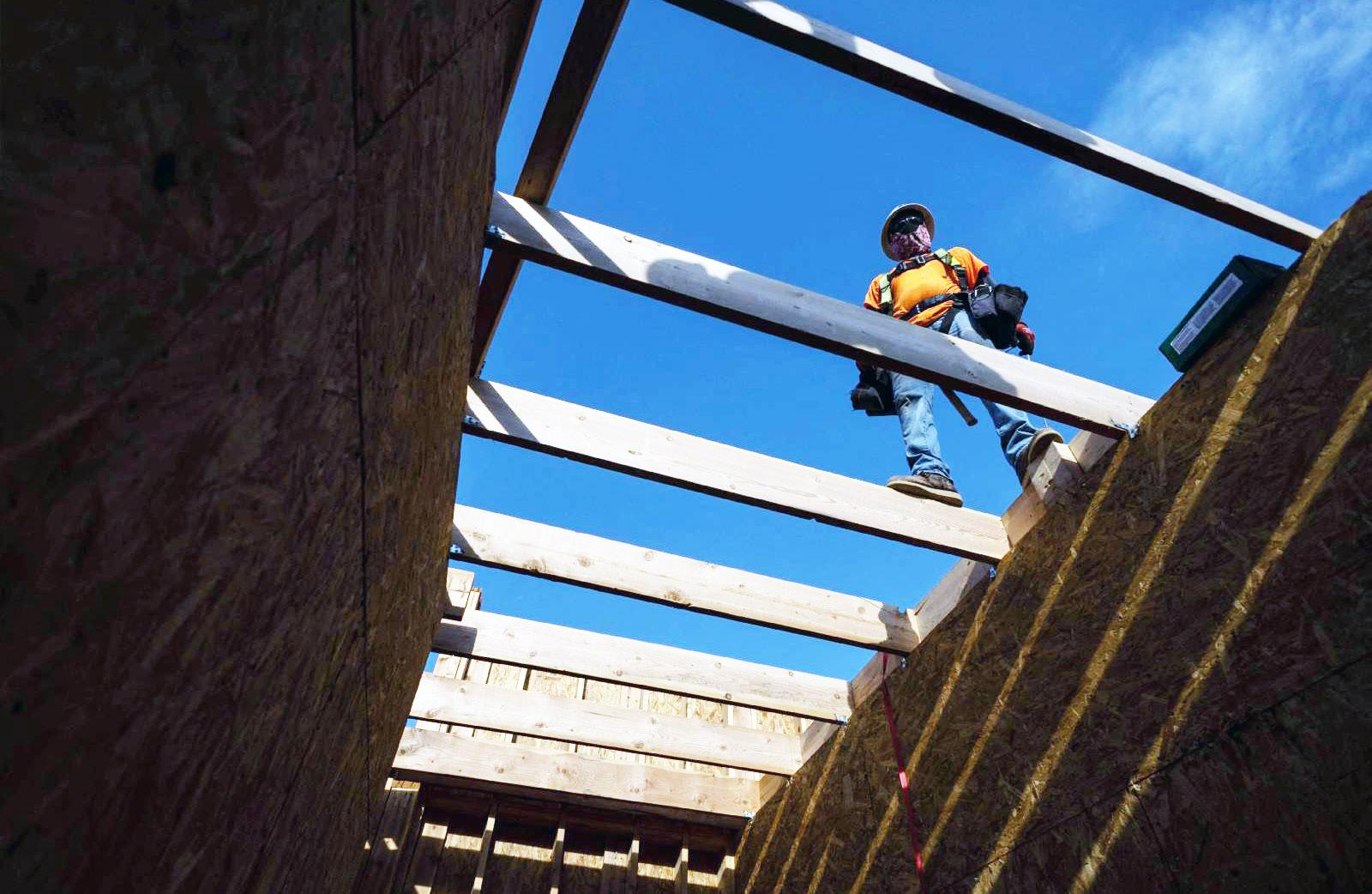
Housing assistance A worker is seen on a construction-site roof in Scottsdale, Ariz., within the Phoenix metro area, on July 28, 2023. The U.S. Conference of Catholic Bishops is advocating that Congress take concrete actions on the national affordable-housing crisis, which experts say is having ramifications for marriage and family formation.
Council of the United States.
This leaves less room in family budgets for other necessities like food, health care, child care, and transportation.”
Further noting an “alarming rise in homelessness” and wages that “have failed to keep up with rising housing costs and inflation,” the USCCB letter included a federal call to action: “Current federal investments in housing programs do not meet the great need we see in our country. Ultimately, we urge you to provide the highest level of funding possible for housing and community-development programs serving families and individuals who are poor and vulnerable.”
(2)
Sheldon J. Fabre of Louisville, Ky., chair of its Committee on Domestic Justice and Human Development; Kerry Alys Robinson, president and CEO of Catholic Charities USA; and John Berry, president of the Society of St. Vincent de Paul’s National
“Our nation is faced with an affordable-housing crisis that sees no sign of improvement,” the letter stated. It added, “Only one out of every four income-eligible households receive housing assistance.
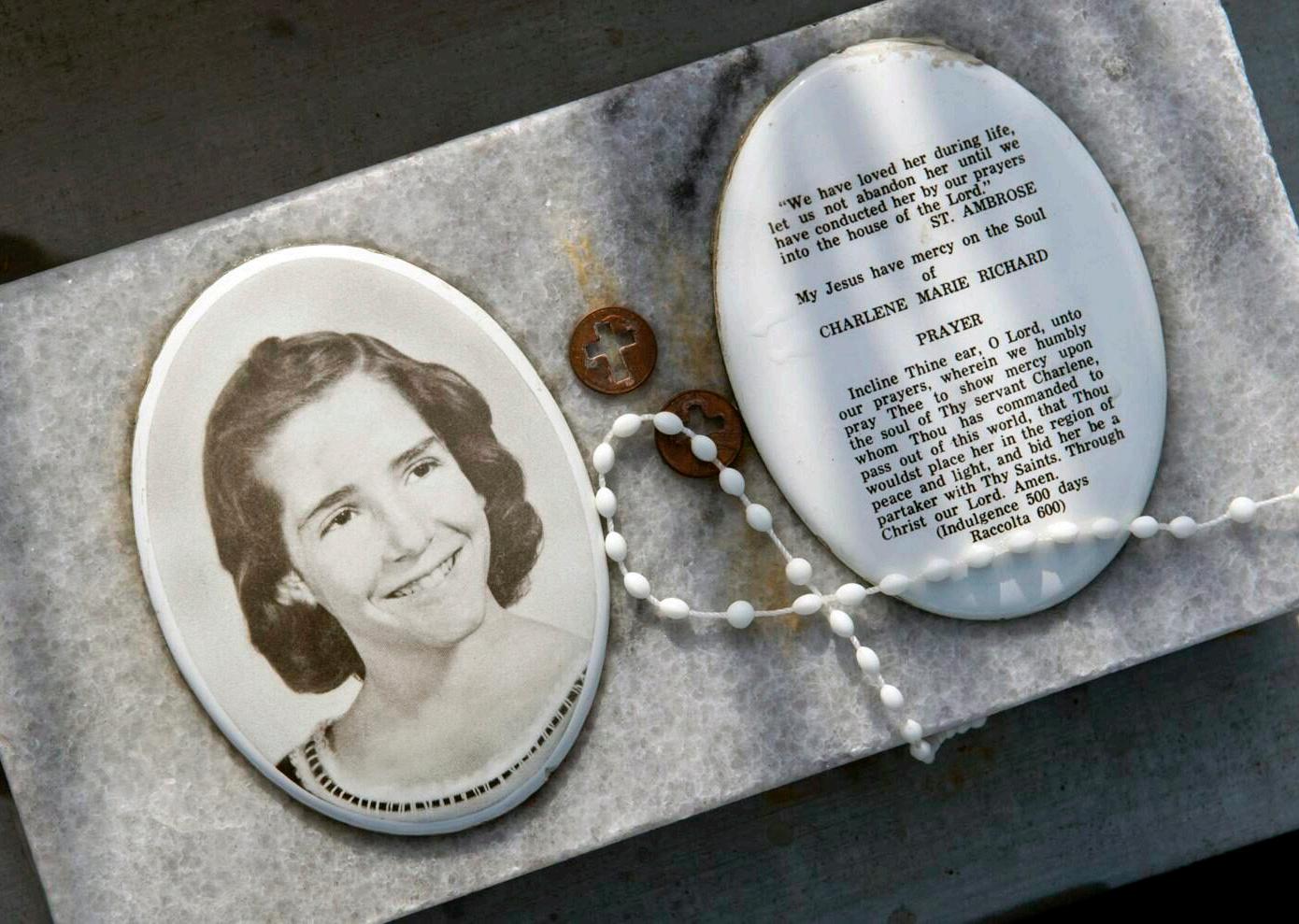
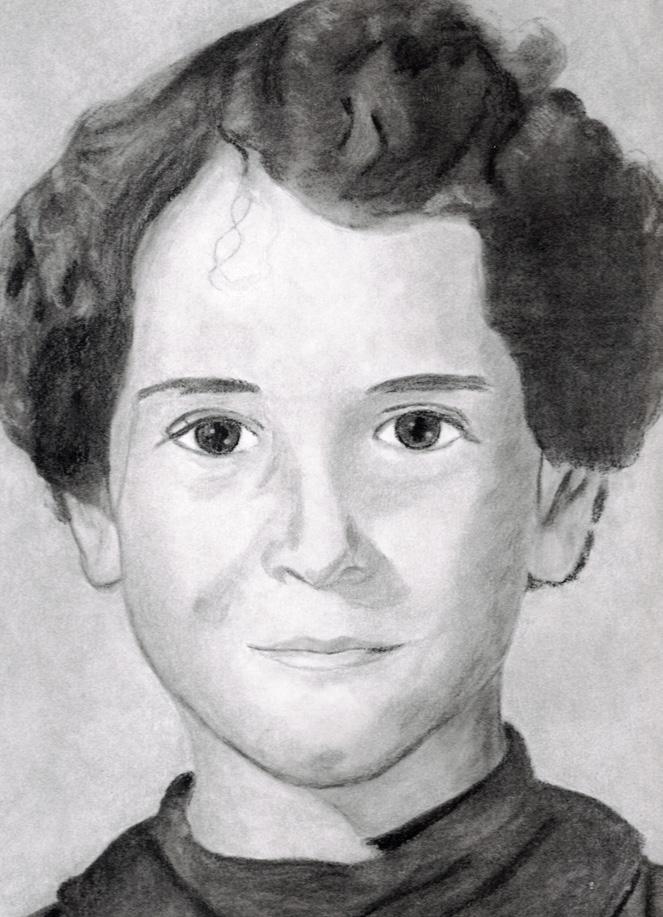
later born completely healthy, with no signs of the previously diagnosed condition.
Another family brought a prayer cloth and a picture of Charlene to place on the chest of a newborn who was not expected to survive. Within days, the little girl’s health began to improve.
These are only a handful of the thousands of accounts that have poured in from across the United States and around the world over more than six decades. In 1999, the television series “Unsolved Mysteries” featured Charlene’s story and the accounts of people who claimed to have been cured through prayer to her, bringing her story to a national audience.
The path to sainthood
The Catholic Church moves slowly and deliberately in matters of canonization, and rightly so.
But Charlene’s cause has advanced steadily and with remarkable support at every level.
As early as the late 1960s, prayer cards marked “for private devotion only” bearing Charlene's photograph, a prayer to her, and a prayer
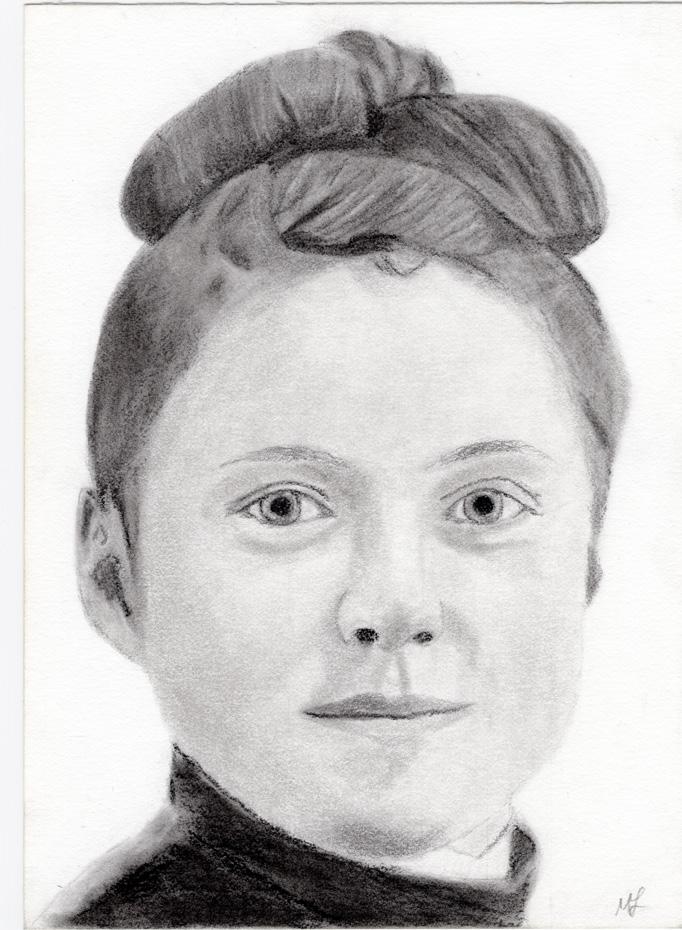
for her beatification were already in circulation. A 1975 series of articles in the newspaper of the Lafayette diocese spread her story further and were republished in a booklet in 1979. By 1989, devotion to Charlene had spread well outside the Cajun region, with hundreds of people each week visiting her grave, which was illuminated so that visits could continue into the evening hours.
On the 30th anniversary of her death in 1989, a memorial Mass was celebrated on the grounds of St. Edward Church attended by an estimated 4,000 people. The event was covered by television stations throughout Louisiana and by CNN. Bishop Harry Flynn of the Diocese of Lafayette presided, saying during the Mass, “A little girl walked among us. She taught us how to accept disappointment and suffering.”
In January 2020, Diocese of Lafayette Bishop J. Douglas Deshotel officially opened her cause for beatification, granting her the title “Servant of God,” the first official step in the canonization process. This title signifies that the Church recognizes her life as worthy of serious investigation and that her cause for saint-
However, as Congress nears possible bipartisan passage of the 21st Century ROAD to Housing Act—which is predicted to be signed by President Donald Trump, and includes 56 provisions related to housing supply; manufactured, veteran, and rural housing; mortgage financing; and community banking—policy experts differ with each other in their assessments of, and suggested solutions to, AmeriHousing continued on page A26
hood may proceed.
On Nov. 17, 2021, the U.S. Conference of Catholic Bishops voted to advance her cause, lending their full support to its progress, a significant milestone in recognizing her as a model of faith for the entire Church.
On Jan. 13, 2024, what would have been her 77th birthday, a ceremony at St. Edward Church officially closed the diocesan inquiry phase of the cause. Bishop Deshotel and a notary received the sworn oaths of all those involved, affirming they had honestly and diligently completed their investigation.
More than 1,000 pages of documents were then transported to Rome by Father Korey Lavergne, pastor of St. Edward Parish, and Father Taylor Reynolds, the episcopal delegate.
The Vatican has since accepted and approved the Diocese of Lafayette’s investigation. The Roman Postulator and the Dicastery for the Causes of Saints are now working to prove her heroic virtue. If declared Venerable, Church officials would then need to authenticate a miracle attributable to her intercession, after which she would be declared Blessed, which is the final step before full canonization as a saint of the Catholic Church.
And yet, when the moment of crisis came when she was given the most devastating news a child can receive, she did not turn inward. She turned outward. She prayed for others. She offered her pain as a gift. She trusted God completely.
Her brother, John Dale, perhaps captured it best when he said, “I always said she was the most extraordinary ordinary person I knew because Charlene loved everybody.”
The Church has not yet declared her a saint. But for the thousands who have knelt at her grave on Charlene Highway in Richard, La.—the sick, the desperate, the grieving, and the deeply grateful— she already is. And for readers of this column, her life offers a simple but profound invitation: holiness is not reserved for the remarkable. It is available to anyone willing to say, as a 12-year-old Cajun girl once said to her grandmother, “Then I will do my best.”
Charlene Marie Richard was not a mystic from a distant century or a martyr from a foreign land. She was a brown-eyed Cajun girl who loved basketball, rode horses through the bayou woods, picked cotton in the fields, sang in the church choir, and played Mass with her brother in the backyard. She was, by every account, beautifully ordinary. ■
Bee Goodman is a multimedia journalist for the Diocese of
who writes for The East Tennessee Catholic. She is a member of the Cathedral of the Most Sacred Heart of Jesus.
Knoxville
Charlene continued from page A8
Prayer for the 'Little Cajun Saint' Above: The Charlene Richard Foundation has been established to preserve and promote the legacy of Charlene Marie Richard, who is a Servant of God and whose cause for sainthood is under consideration by the Vatican. Below: Drawings of Charlene Marie Richard by Mallory Louque, who currently is working in the Diocese of Knoxville as part of Notre Dame University's Echo Program.
COURTESY OF THE CHARLENE RICHARD FOUNDATION
COURTESY OF MALLORY LOUQUE
OSV NEWS
PHOTO/CARLOS BARRIA, REUTERS
Diocesan
News in Brief
Sister Mary Timothea Elliott, RSM, a Scripture scholar who has retired from that position.
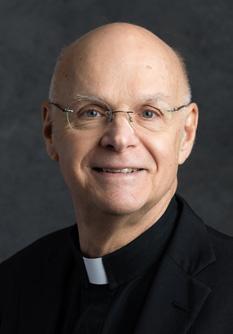
n Father Randy Stice, who serves as director of Worship and Liturgy for the Diocese of Knoxville, has also been named censor librorum. In this position, an ecclesiastical authority appointed by Bishop Mark Beckman, Father Stice will review texts for doctrinal accuracy and give an official declaration that texts contain no elements that are counter to Church teaching. Father Stice s new assignment was effective May 27. He succeeds
AI-Health care continued from page A4
be well in every way.
And what’s interesting is he offers no ready-made solutions. Outside of the section on war, which is very pointed, he’s really interested in raising up values that stimulate that participatory discernment.
And I think that’s where he sees the Church’s role. It’s the language that St. Paul VI used back in the day, that the Church is an expert in humanity and God, but really in nothing else. The Church is not an expert in AI, but what it can do is raise up values that are essential to thinking about how AI should be used to impact human beings, human life, human community.
The encyclical also is a really strong rejection of the “technocratic paradigm,” the term Pope Francis used to describe the view that all problems are essentially technological, and that all we need are technological solutions. It’s a rejection of that perspective, a rejection of this kind of hyperfocus on efficiency as the only justifiable value—the idea that you can only justify things because they generate profit and they’re efficient.
Instead, the human person should be at the center, along with the common good—that shared good that exists among all persons—and our relationships.
OSV News: What is the status of AI’s usage in health care at the moment?
Mr. Daly: Health-care systems are largely and aggressively adopting it. They’re very interested and excited about the possibilities of AI.
The focus tends to be more on the administrative side as opposed to the clinical, patient-facing side. There are important applications that are patient-facing or diagnostic, such as ambient-listening technology, which transcribes the medical notes and populates the medical record.
Yet so much of health-care spending and health care has nothing to
AI-Future continued from page A4
n Father Isaac Anuchem, who has been serving at St. Michael the Archangel Parish in Erwin, has been reassigned to Blakely, Ga., as a sacramental minister for two months and then will be reassigned longer term to St. Teresa of Kolkata Parish in Maynardville and St. John Paul II Catholic Mission in Rutledge. St. Michael the Archangel, St. Teresa of Kolkata, and St. John Paul II are Diocese of Knoxville parishes led by priests with the Glenmary Home Missioners.
n The Diocese of Knoxville Office of Marriage and Family Life will hold Picture of Love Retreats on Friday, Sept. 18, and Saturday, Sept. 19, at St. Albert the Great Church in Knoxville and on Friday, Oct. 2, and Saturday, Oct. 3, at Our Lady of Perpetual Help Church in Chattanooga. The retreats are workshops for engaged couples and will be held from 6:30-9 p.m. on Sept. 18 and Oct. 2 and 8:30 a.m.-7 p.m. on Sept. 19 and 8:30-6 p.m. on Oct. 3. The retreats will include breakfast, lunch, and Mass on Sept. 19 and Oct. 3.
Register for the retreats at www.dioknox.org and go to the events page. ■
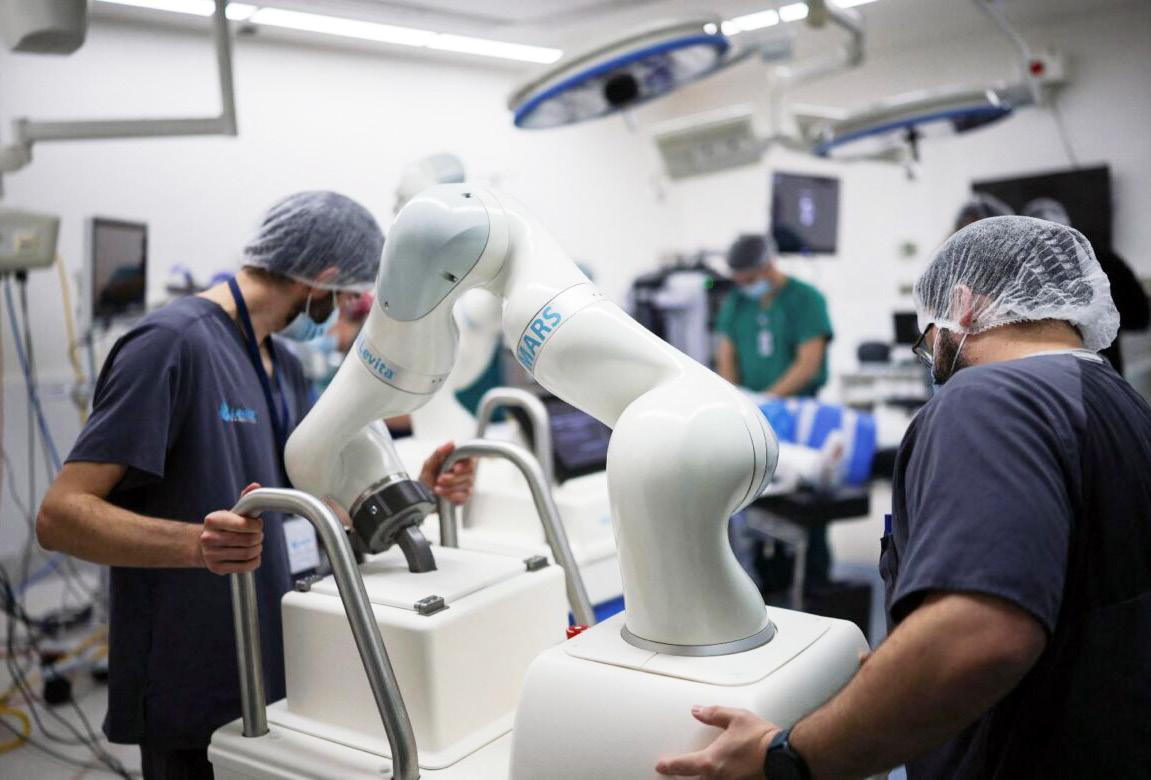
Medically integrating AI Engineers from Levita Magnetics, a Silicon Valley-based medical-device company, move two MARS (Magnetic-Assisted Robotic surgery) robots for an upcoming surgery at Clinica Las Condes, in Santiago, Chile, on Sept. 8.
do with direct patient care but with the administrative apparatuses that support that care. And they’re very important.
Scheduling is one usage case—the scheduling of nurses, the scheduling of physicians, surgical-suite scheduling for efficiency. AI kind of understands, for example, that a given surgery usually takes 45 minutes, and there are 30 minutes of preparation, and it can ensure the surgical suite is most efficiently used.
Insurance is a major application of AI—getting data, coding it correctly, and then getting insurance to reimburse for the procedures.
AI can be leveraged in the administrative area—significantly, and with, ostensibly, less threat to patient care and wellbeing. And adoption (of AI) is ongoing and, for many systems, fairly robust.
OSV News: Pope Leo has raised concerns in his encyclical that AIpowered health-data collection could be used to decide who will receive care and who will be denied.
Mr. Daly: Basically, what we’ve heard is that AI is being used to deny claims at a staggering rate,
tention and time. Therefore, it is essential to form an alliance among policy-makers, educational institutions, and families that is capable of concretely supporting adults in this task.”
For Mr. Ivey, it is exactly the kind of call to action the moment demands.
Mr. Ivey argues that AI companies need customers and Catholics represent a meaningful share of the global consumer base.
Artificial intelligence companies “have to develop customers, and they have to develop business models, and they have to develop revenue sources,” Mr. Ivey said. “And we’re on the revenue-source side. So, we do have cards if we can work together and have collective action and have coordination.”
He pointed to the recent movement to remove smartphones from schools as one example of how public pressure can shift technological norms and argued that faith communities are well positioned to organize similar efforts around AI.
Mr. Ivey also pointed to alternatives on the horizon of open-source, smaller-scale AI models he expects to emerge within months as evidence that the current centralized AI landscape is not inevitable.
“There are going to be two different models that come out in the next six to eight months that are open source, that are small-language models that I think you’re going to see people making different choices that aren’t so inevitable and aren’t necessarily all so centralized and are a little bit closer to the principles of solidarity and subsidiarity,” he said.
Some tech companies creating “AI companions” build business models off of what venture capitalist Marc Andreessen has termed the “loneliness
incredibly quickly—hundreds of claims at once, whereas that would take a human claims person much longer, and they’d have to really sit with the cases. They would see the nuance in the cases.
Health care is not as binary as AI would make it out to be. It’s much more nuanced. We’re talking about human health and providers making decisions about what is in the best interest (of the patient), what is actually medically indicated.
All these medical indications have to be applied prudentially, and that’s something that AI lacks. AI doesn’t have virtues. It doesn’t have prudence. It doesn’t have a conscience. It doesn’t think.
It’s a tool that probabilistically has outputs based on what the inputs are. Now, if the inputs are imperfect, and they are, the outputs will also be imperfect.
AI is seen as unbiased, but that is not the case, because its biases are based on what we feed it. If we’re collecting data mainly on white, wealthier persons when it comes to health care—and that is the case— then the data will be skewed toward
economy,” the practice of designing products to profit off the emotional voids of isolated users.
Mr. Ivey has written extensively about why selling human-like AI to vulnerable people, including children, is financially lucrative but potentially devastating for society.
“While these product strategies are a boon to investment, they could spell doom for future generations that never fully develop social and emotional capabilities,” Mr. Ivey wrote in a recent essay.
Pope Leo XIV addressed this dynamic directly in Magnifica Humanitas, writing that “the subtler forms of addiction linked to the ‘digital-attention economy’ should not be underestimated, since platforms and services are often designed to capture users’ time and attention, exploiting their vulnerabilities and weakening their inner freedom.”
“When business models thrive on human weakness, the person is treated as a means rather than as an end; those who design or finance such systems bear a moral responsibility that cannot be ignored,” the Holy Father wrote in his encyclical.
The encyclical’s call for “more active political involvement that is capable of slowing things down when everything is accelerating” may seem idealistic against the backdrop of fierce commercial competition in the AI industry.
But Mr. Ivey said the development of increasingly powerful AI systems, like Anthropic’s Mythos and Chat GPT 5.5, has brought a new awareness at the policy level that we might have to rethink our model of how to govern these extremely powerful technologies.
“I think there are new risks that very serious players on both the policy side and the company side are realizing that they can’t just let the mar-
those folks.
Black women are seriously underrepresented in the data sets that are being fed to AI technologies, as are persons who are immigrants, and a whole host of other folks. And so the results will be flawed because of the bias that’s already baked into the data.
OSV News: What are some ways in which Pope Leo’s encyclical can be applied to Catholic health care?
Mr. Daly: I think there are a number of ways, although the document doesn’t go in depth on health care.
The rejection of the technocratic paradigm is absolutely essential to health care.
And if you look at the sections in the encyclical on posthumanism and transhumanism, he wants to bring us back to an understanding and acceptance of our human condition.
The post- and transhumanists are basically saying, “We can overcome all of these limitations.” What Pope Leo calls us back to is the realization that our limitations make us human. And if we overcome those limitations, we cease to be human.
Now, he recognizes there’s this drive toward transcendence, to overcoming. And what he does with that—which I think is fascinating and very theological—is to say that we have this drive to be greater than our limits, but we do that through God’s grace. The solution isn’t that we create a technological fix for this, because ultimately there is no final technological fix.
He’s an Augustinian, and he points to St. Augustine’s insight that the only thing that will fulfill our restless heart is God’s grace. Nothing will satisfy the human person’s drive toward transcendence—that drive to be more, to be greater—and we will always be restless, even if we create a trans- and posthumanist future, until we rest in God. This is a core takeaway. The encyclical is more about what it means to be human than it is about artificial intelligence. ■
ket incentives drive the speed of this,” Mr. Ivey said, “because we don’t have the policy and governance infrastructure and the institutional capability to manage these things as they get more sophisticated.”
Mr. Ivey recently helped inform the GUARD Act, legislation restricting human-like AI to adult users that passed the U.S. Senate Judiciary Committee unanimously and has been introduced in the House of Representatives.
Mr. Ivey also advocates for pre-market and post-market testing of AI products to assess their developmental impact on young people, an accountability standard he argues should be a baseline before any AI tool is placed in front of children.
“Until we have that data and that insight, we shouldn’t be putting these things in front of kids because we just don’t know the developmental impact,” he said.
One way to judge an encyclical is what institutions and movements it helps inspire.
Mr. Ivey said he is eager to see what civil society institutions and Catholic institutions emerge from Magnifica Humanitas in the coming decade, and whether a distinctly Catholic ecosystem of AI products and services might take root alongside the dominant commercial platforms.
“There could be an alternative ecosystem of AI tools and AI use that could be very successful even in the midst of a bigger dominant network,” he said.
“There’s a lot of people that have to get to work to both build the institutions and build the tools and build the products,” Mr. Ivey said. “But that’s exciting, and that’s an opportunity, and I think it’s not all in the hands of a few at this point.” ■
OSV NEWS PHOTO/PABLO SANHUEZA, REUTERS
Fr. Stice
The Church in Spain ‘scores an amazing goal’
Soccer-sized crowds drawn to Holy Father as he
By Courtney Mares OSV News
Madrid’s famous Bernabéu soccer stadium, normally packed with fans of the Real Madrid football club, roared with cheers and songs of praise to the Lord on June 8 as 80,000 Catholics prayed together with Pope Leo XIV.
“Behold the Church, dear brothers and sisters! Behold the music of the Gospel, with its compelling rhythm,” the pope told the crowd, which erupted repeatedly in chants of “Papa Leon!” and “Olé, olé, olé!”
In an unscripted moment at the start of his speech, Pope Leo quipped, “I think that for a player, scoring a goal in this stadium is a major milestone in life. But … today, the Church in Madrid scored an amazing goal that will go down in history!”
Pope Leo, whose given name is Robert Prevost, revealed a preference for the home team a few days earlier when a journalist on the papal plane asked whether he supported Real Madrid or its rival Barcelona. “The pope is for all teams,” he said. “But Prevost is for Real Madrid.”
Golden rose before beloved image of Mary
Before arriving at the stadium, Pope Leo visited Madrid’s Cathedral of Our Lady of Almudena, where he laid a golden rose before the beloved image of the Virgin Mary, invoking her intercession for the Church in Madrid.
Cardinal José Cobo Cano, the archbishop of Madrid, welcomed the pope to Bernabéu with quotes from a sermon by St. Augustine, in which the saint wrote, “Sing with your voices, your hearts, your lips and your lives: Sing to the Lord a new song.”
During the evening event of prayer and testimony, Pope Leo was serenaded by many musical performances, including by a group of singing priests.
The pope listened to several
‘sings to the Lord a new song’
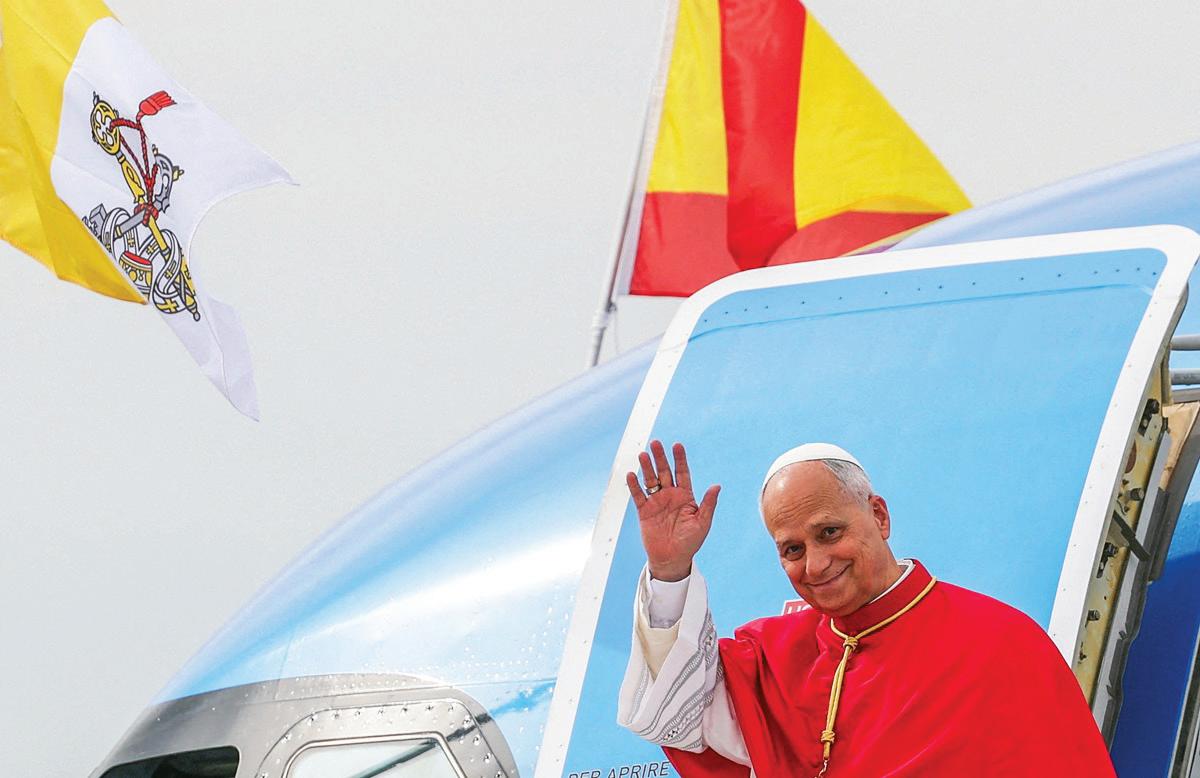
apostolic journey in Madrid, Spain, on June 6. The Holy Father's pilgrimage to Spain, his first to the country as pope, was from June 6-12 and included several stops.
testimonies from Catholics in the Archdiocese of Madrid, including a recently baptized young man, a priest, a couple who emigrated from Peru, and a lay member of a diocesan council.
Among the most moving accounts was that of Álvaro, 33, who described why he decided to be baptized last year. He recounted feeling spiritually empty before an unexpected desire to read the Bible.
‘Felt a strange pull’ from highschool Bible
“I felt a strange pull—a small, old Bible from my high-school religion class that was tucked away in a drawer at my mother’s house. … I felt that Bible calling me to read it,” he said.
“Reading the Bible every day led me to know God, to know Jesus, and that led me to pray, and praying brought me a direct connection with Him, something I had never felt anything like in my life,” he said. “In less than a month, I am getting married, and we would greatly appreciate your blessing. And so, it is no longer about me but about bringing my family closer to God.’
In response to the young man’s
the chalice given to Father Daniel for his ordination, were brought forward and used in the Liturgy of the Eucharist.
This particular moment in the life of our diocese reminds us of the great importance of our priests in the life of the Church. Men are called by Christ to share in His own priesthood in ordained ministry.
It is true that all the baptized also share in the priesthood of Jesus Christ, but in the ordained priesthood the one chosen by God is set apart for the good of the Church. Without the ordained priesthood, the greatest sacramental treasures in the life of the Church are not possible, especially the sacrament of penance and most importantly the gift of the Eucharist itself.
The priest acts in the person of Jesus Christ in the celebration of the sacraments.
Our particular diocese is so blessed with many wonderful priests who serve the people of God here in this time and place. From our newly ordained all the way to men who have served 60 or more years, we are blessed with many pastors who mirror the heart of Jesus Himself.
We have men serving here who are also from other dioceses and parts of the world, and priests from wonderful religious communities who are also making an incredible contribution to the Diocese of Knoxville.
The joy of journeying throughout this diocese and experiencing the pastoral gifts of our priests is a true treasure. For this reason, I encourage all of you to help us to invite young men to consider such a rich and fulfi lling vocation. The Lord is calling many, but He also needs our voices of invitation.
At the end of the liturgy on Saturday, June 6, as I looked at our newly ordained priest, our presbyterate gathered to celebrate, and the entire community of God’s people, I must admit that I felt a bit like a father at the birth of a child.
May God continue to bless our diocese with an abundance of Christian vocations, and particularly to the ordained priesthood. ■
testimony, Pope Leo said, “Baptism truly changes lives.” He encouraged Madrid’s Catholics to “have confi dence in the growing phenomenon of people who return to the faith or come to know it for the fi rst time in adulthood.”
Also among those who testifi ed were Jorge Barco and Liliana Torres, a Peruvian couple who immigrated to Spain with their daughter four years ago. They described fi nding a welcoming home in the Parish of the Missionaries of the Precious Blood, where they serve on the parish council, assist with sacramental preparation, and volunteer with Caritas.
‘Reach the heart of the city’
In the pope’s speech, he urged Madrid’s Catholics to “bear witness to the Gospel in the capital of a great European country.” He said there is “a special relationship between the Church and a city,” stressing the need to preach the Gospel in an urban environment to “reach the heart of the city.”
“Together, as a diocesan Church, you can offer a Gospel witness that will harness the best forces of a humanity that is bombarded with images and words, yet is hungry for justice and thirsty for
truth,” he added. He also warned against reducing parish and diocesan councils to “mere bureaucratic formalities,” saying they should be “spaces of mutual listening for the exercise of discernment,” adding that communal discernment is “one of the greatest opportunities that synodality offers” to the priestly ministry.
After his speech, Pope Leo led the crowd in praying the Our Father together before bestowing his apostolic blessing.
“Be, for everyone, like an open Bible: may the Word of God be found in your faces and in your lives,” he said.
The evening event in Bernabéu stadium was the fi nal public engagement of the Madrid leg of the pope’s seven-day apostolic journey to Spain. On June 9, Pope Leo traveled to Barcelona before continuing on to the Canary Islands on June 11.
On to Montserrat
Pope Leo XIV made a pilgrimage on June 10 to the medieval mountain monastery of Montserrat, entrusting his pontifi cate and the Church’s mission to Our Lady of Montserrat, the beloved Black Madonna known to Catalans as “La Moreneta,” on his second day in Barcelona.
“I am pleased to be able to come to the feet of Our Lady of Montserrat to entrust to her, with full confi dence in her maternal intercession, my Petrine ministry and the Church’s mission in a world that cries out for justice and peace,” the pope said after making the steep and winding ascent up to the Marian shrine perched more than 2,200 feet above sea level and roughly 30 miles northwest of Barcelona.
Pope Leo revealed a personal connection to the Marian devotion, telling those gathered inside the basilica in Catalan that his parish in Peru was named for Our Lady of Montserrat.
“I hold a fond memory of my
Spain continued on page A25
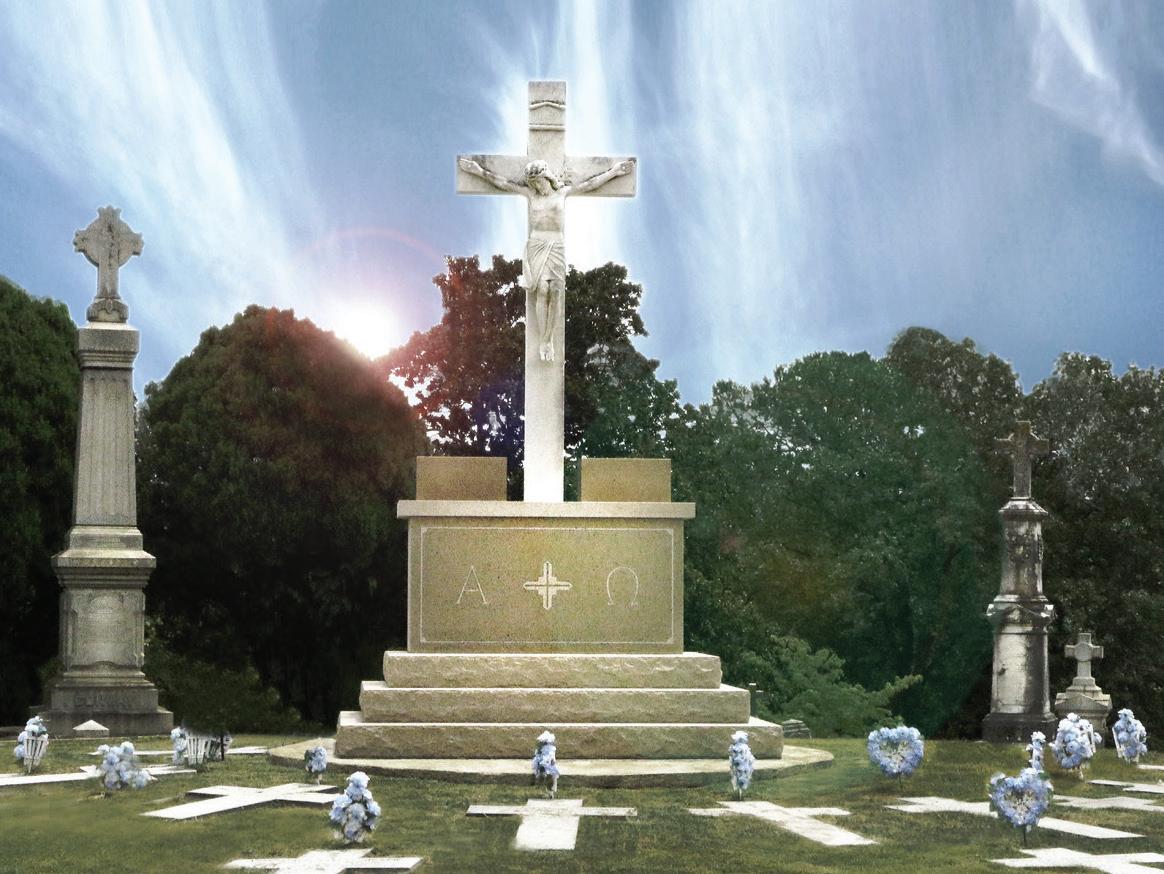

Bienvenido, Papa Leon Pope Leo XIV disembarks from the papal plane as he arrives at Adolfo Suarez Madrid-Barajas International Airport to begin his
Bishop continued from page A3
Patsy (Pat) Watkins
Patsy (Pat) Ruth Greer Watkins passed away on May 14 at the age of 93.
Mrs. Watkins was born on July 5, 1932, to Orpha and Orval Greer in Poplar Bluff, Mo. Her family moved to Kingsport in 1948, where she attended Dobyns-Bennett High School. She received a bachelor’s degree from East Tennessee State College (now East Tennessee State University) with a teaching certificate in English, health, physical education, and history in 1955.
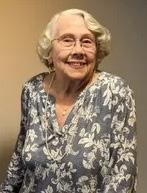
Mrs. Watkins taught school in Bristol, Tenn.; Sarasota, Fla.; and Fort Smith, Ark., before moving to Knoxville. In 1967, she began a long and happy teaching position at St. Joseph School, where she taught for 41 years and instructed many secondgeneration students.
She enjoyed working with middle-school students, planning trips to the Knoxville Zoo, organizing “Reading Buddies” among upper and lower grades, and is best known for “Kite Day,” which she arranged for the entire school each spring. Her students also knew her to be a diehard St. Louis Cardinals fan. After retiring in 2008, she always said she still missed teaching and her students, whom she loved.
Mrs. Watkins had a love for animals and worked for 16 years at the Knoxville Zoo in summer camps and outreach programs (she loved handling the snakes and tarantulas but was most fond of the tigers), and worked in the gift shop.
She also was known for her adventurous nature. In addition to interacting with many of the animals at the zoo, some of her favorite adventures were scuba diving, zip-lining, swimming with dolphins, and travel (by car, plane, bus, and cruise ships). She enjoyed trips with her family to cabins in the mountains, seeing all the sights out west, visits to Hawaii and Japan, and cruises to Alaska and the Caribbean.
Besides her love for teaching, Mrs. Watkins took great pride and joy in mastering the art of cracking and eating crab legs, which was her favorite food. Most of all, she loved spending time with her family, meeting and holding her great-grandchildren, and late-night talks with her grandson, Zach, over Philadelphia Eagles’ games.
years as parish priest of the Parish of Santa María de Montserrat in Trujillo, Peru,” the pope said.
“La Moreneta has always accompanied me. Thank you, Catalonia, for your faith.”
Bells rang out from the abbey as the pope arrived, greeting the faithful from a golf cart before kissing the cross at the entrance of the Montserrat basilica and sprinkling pilgrims with holy water. He was welcomed by Abbot Manel Gasch i Hurios of the Benedictine community that has guarded the sanctuary since the monastery’s founding in 1025.
The pope led pilgrims in the prayer of the rosary and sang the “Salve Regina” together with the faithful. He also spent time in private prayer before the 12th-century Romanesque wooden image of the Virgin of Montserrat, venerated for centuries as the patroness of Catalonia, a title formally recognized by Pope Leo XIII in 1881.
The boy choristers of the Escolanía de Montserrat, Europe’s oldest choir school, dating to the 13th century, accompanied the pope’s prayer at Montserrat, as approximately 50 singers between the ages of 9 and 14 lifted their voices in the sanctuary where, the pope said, “heavenly voices” have echoed through the centuries.
Our Lady ‘moves us to deep conversion’
In his address, the pope pointed out the shrine’s connection to St. Ignatius of Loyola, who spent a night in prayer before the Virgin at Montserrat before entering the priesthood, a significant turning point for the man who would go on to become the founder of the Jesuit order, the Society of Jesus.
“She moves us to deep conversion, as she did St. Ignatius of Loyola, who in this evocative place, after a night spent in prayer before the Virgin, laid aside his knightly arms—a moment that marked
Faithful Departed
Mrs. Watkins is survived by her son and daughter-in-law, Scott and Mary Watkins of California; grandson, Alex Watkins and wife Jenna; great-grandchildren Emma, Andrew, and Milah of Arizona; grandson Zach Watkins of California; daughter and son-in-law, Ann and Ty Norris of South Carolina; sons, Mike and Dan Watkins, of Knoxville; and many beloved cousins, friends, and students.
A funeral Mass and memorial service, celebrated by Father John Orr, was held at St. Joseph School on May 22, with a gathering of family and friends that followed in the school cafeteria.
Donations in Mrs. Watkins’ memory may be made to St. Joseph School, 1810 Howard Drive, Knoxville, TN 37918, or the Knoxville Zoo.
Mrs. Watkins’ family expressed gratitude to Dr. Ahmed, her care team at Amedysis Home Hospice, Gentry-Griffey Funeral Home, and Father Orr, Rita Dunn Cook, Angel Pickering Brewer, and Louise Wyman. And a very special thanks to Andy Zengel, principal of St. Joseph School, who taught with Mrs. Watkins.
Mrs. Watkins wanted to pass on her final words of wisdom to students, friends, and family:
“Learn all you can about everything and pass it on, and do it with a smile. And, in the words of Red Skeleton, ‘May God Bless!’”
Dr. Evelyne Davidson
Dr. Evelyne M. Davidson, 65, of Knoxville, passed away on May 28.
Dr. Davidson, who was born on April 5, 1961, was valedictorian of the Knoxville Catholic High School class of 1979. She then studied at Vanderbilt University, attended QuillenDishner Medical School in Johnson City, and completed her residency at Hanover Hospital in North Carolina.
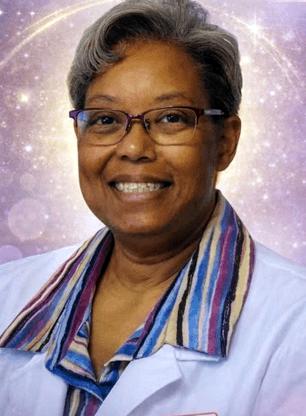
Dr. Davidson returned to Knoxville to take over her father’s medical practice, later serving as medical director for Smoky Mountain Hospice and New Phase Research & Development. She was a member of the Knoxville Chapter of The Links Inc.
Dr. Davidson was preceded in death by her parents, Dr. Elvyn and Mrs. Davidson.
She is survived by her sister, Pamela Chesney;
her brother, Elvyn II (Pamela); nieces and nephews she loved as her own: Robert (Sherra), Aiyana, Abigayle, Elvyn III (Morgan), Benjamin, and Miles; cousins like siblings, Clyde Cowan and Sonya Lopez (Ricky); cousins, Leslie Garner, Kevin Davis, Iris (David) Wallace, and the Marshall families; sister-in-love, Sheretta Dickey; best friend, Barbara Gallagher; close friends, Maxine, Linda, Jonida, Nikki, Pearl, Denise; and caregivers, Latrice, Willie, Armentha, and Sheila.
A Celebration of Life and Legacy service for Dr. Davidson was held on June 9 at Mount Zion Baptist Church in Knoxville. A burial service was held on June 10 at Berry Highland Memorial Cemetery in Knoxville.
Vernon Budde
Vernon Bernard Budde Jr., age 94, of Knoxville, passed away at his home on May 31.
Mr. Budde was born on Aug. 2, 1931, to Vernon Bernard Budde Sr. and Pauline Buck Budde and he grew up in Paducah, Ky.
Mr. Budde graduated from St. Mary Catholic High School in 1948 and then served in the U.S. Army. He graduated from the University of Kentucky with a degree in mechanical engineering.
Mr. Budde moved to Knoxville after his college graduation and worked for TVA. He married his wife of 60 years, Charlotte Price, in 1965. He is preceded in death by his parents and a son, Michael. Mr. Budde is survived by his wife, Charlotte; son, Ron (Tricia); six grandchildren, Stella, Macy, Laney, Aslyn, Stokes, and Kirk, all of Mount Pleasant, S.C.; a daughter-in-law, Heather; sisters-in-law, Linda Weaver and Rosemary Davenport, of Knoxville; a brother-in-law, Robert Price, of Jonesboro, Ga.; and several nieces and nephews.
A funeral Mass for Mr. Budde was celebrated on June 8 at Holy Ghost Church with Father John Orr serving as the Mass celebrant. A burial service followed at the Tennessee Veterans Cemetery in Knoxville.
Donations in Mr. Budde’s memory may be made to Holy Ghost Church, 111 Hinton Ave., Knoxville, TN 37917. ■
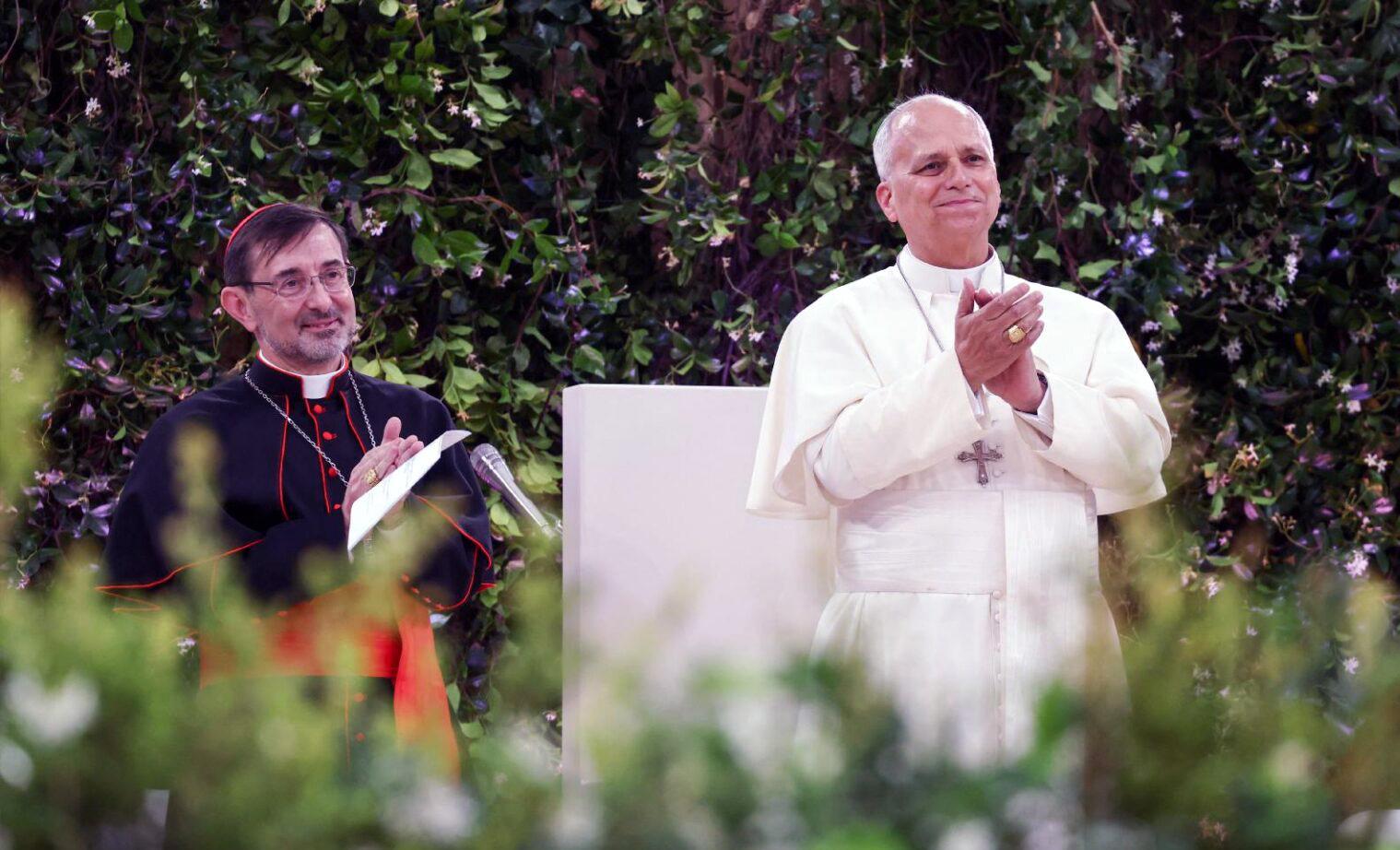

the beginning of a new life in the service of Jesus Christ,” Pope Leo said.
The Holy Father noted that Our Lady of Montserrat holds the globe in her right hand, a sign of her universal maternal care, calling on the faithful to set aside whatever hardens their hearts.
“Let us lay at her feet today the armor that has gradually hardened our hearts,” he said, urging those gathered to “recognize one another as brothers and sisters, so
that no one is excluded and that communion is stronger than every division.”
Appealing for peace, the pope asked Mary to teach the faithful to “renounce hurtful words, hasty judgment, gossip, and slander,” and to nurture love in families, workplaces, on social media, and in political debate.
The Abbey of Our Lady of Montserrat has been a place of Marian devotion for centuries.
According to tradition, the image
of the Virgin was discovered in 880 by shepherd children who saw a mysterious light on the mountain; when the local bishop attempted to move the statue to Manresa, it reportedly became too heavy to transport, a sign interpreted as the Virgin’s desire to remain on the mountain.
Montserrat grew into a major international pilgrimage destination throughout the 12th, 13th, and 14th centuries and today welcomes approximately 2 million visitors annually.
The Holy Father and Bad Bunny
Pope Leo XIV met the Puerto Rican superstar Bad Bunny in Madrid on June 8, after joking days earlier that he would be vying against the singer for Spaniards’ attention as their tours in Spain’s capital overlapped.
Vatican spokesperson Matteo Bruni confirmed the meeting at Madrid’s famous Bernabéu soccer stadium to reporters on June 9.
Bad Bunny “comes from a Catholic family and he wanted to meet the pope, so the organizers found the place inside the Bernabéu stadium, as it was the only day (while the pope was in town) when there was no concert of Bad Bunny at the rival stadium of Atlético de Madrid,” Yago de la Cierva, general coordinator of the papal trip to Spain on behalf of the Spanish bishops, said.
During the papal flight to Madrid on June 6, Pope Leo was asked how he felt about that evening’s prayer vigil with young people coinciding with Bad Bunny’s soldout concert in the same city. Pope Leo replied, “If they are confronted with the question ‘Do you want to go see Bad Bunny or see the pope?’ I think many will go to see Bad Bunny. But I think there will also be people there to see the pope. And that, too, says something. So, I think it’s encouraging and I hope we’ll encourage young people to continue searching.” ■
Mrs. Watkins
Dr. Davidson
Mr. Budde
Spain continued from page A24
OSV NEWS
PHOTO/YARA NARDI, REUTERS (2)
Papal approval Above: Pope Leo XIV applauds alongside Cardinal José Cobo of Madrid after arriving for a meeting with the diocesan community at the Santiago Bernabéu Stadium in Madrid on June 8 during his apostolic journey to Spain June 6-12. Below: Pilgrims inside the stadium hold a banner as they wait for Pope Leo XIV to arrive.
ca’s affordable-housing needs.
“Something you might hear echoed from our partners at Catholic Charities and at St. Vincent de Paul—people implementing programs on the ground—is that we have programs that work, that make a real difference in people’s lives,” Julie Bodnar, a policy adviser for the USCCB’s domestic justice committee, told OSV News. “They need to be scaled up to meet this need.”
Part of that scaling-up requirement, Ms. Bodnar emphasized, actually means just keeping up.
“Even keeping a flat funding rate is a cut—because housing costs are constantly rising. And keeping these programs going, those costs go up every year because of inflation,” she said. “So even a flat funding isn’t going to keep the same number of people housed.”
“There’s not enough affordable housing that’s available to those with the lowest incomes,” Ms. Bodnar added. “More people than ever are spending more than 30 percent of their income on housing—and that’s true for both homeowners and renters.”
In 2023, the federal government spent $67 billion on housing assistance, or just over 1 percent of total federal outlays. About 80 percent of its support for housing is through low-income rental assistance programs.
The Catholic Church, through all its ministries, is one of the largest private providers of housing services for people in poverty and other vulnerable situations in the United States, with Church teaching strongly defending the right to housing as a matter of human dignity.
The Catechism of the Catholic Church states, “The political community has a duty to honor the family, to assist it, and ensure especially … the right to private property, to free enterprise, to obtain work and housing, and the right to emigrate.”
In his 1987 encyclical Sollicitudo Rei Socialis, St. John Paul II said “the lack of housing” should be seen as “a sign and summing-up of a whole
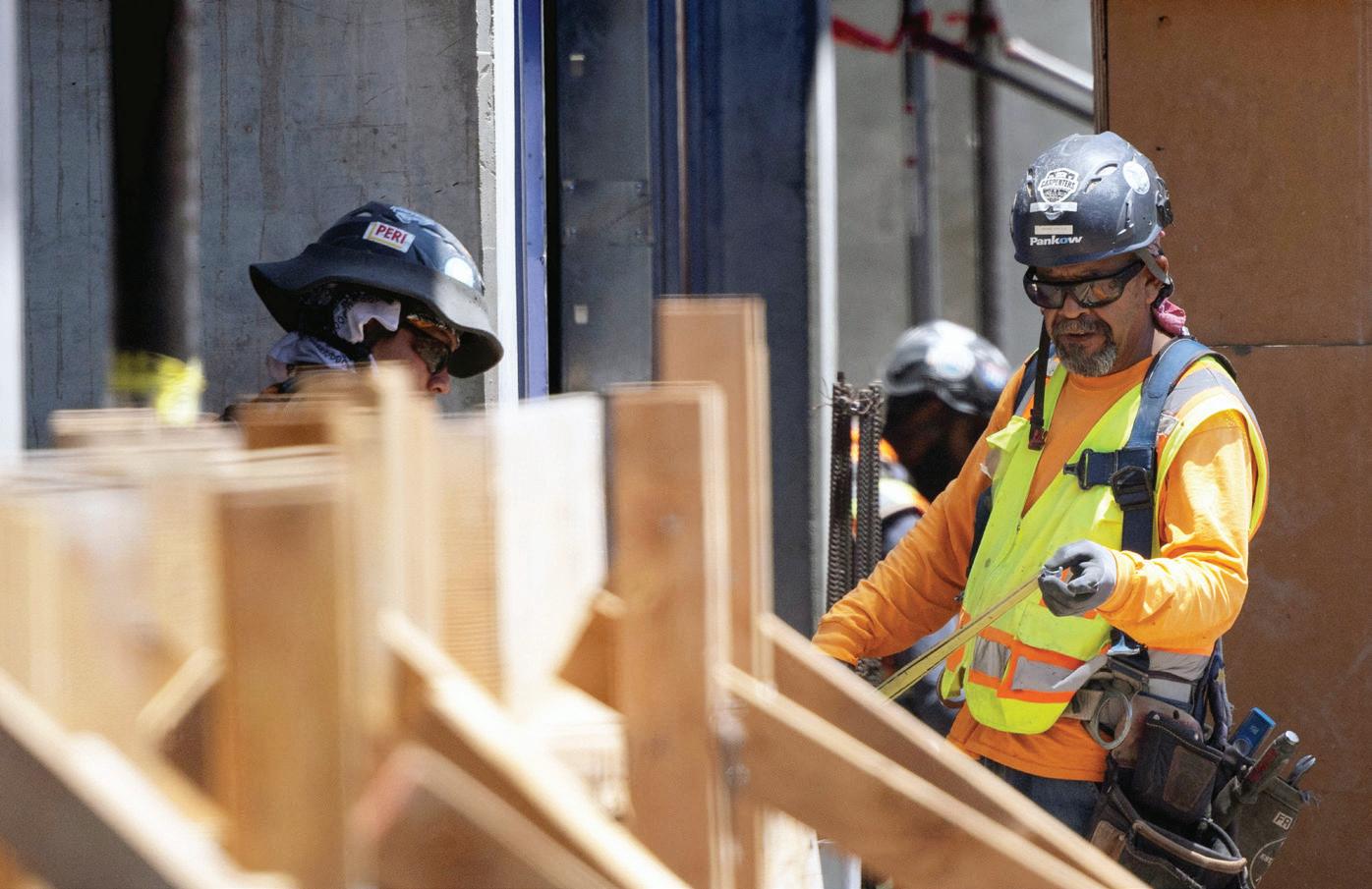
series of shortcomings: economic, social, cultural, or simply human in nature.”
Pope Francis also wrote in his 2016 apostolic exhortation Amoris Laetitia that families have “the right to decent housing, fitting for family life and commensurate to the number of members, in a physical environment that provides the basic services for the life of the family and the community.”
“It’s always been a crisis,” Mr. Berry, with the Society of St. Vincent de Paul, said. “I think people are just maybe in a sense waking up to it now. But in the past, when it was a crunch, it wasn’t a crunch. It was still a crisis.”
Reflecting on the neighborhood of his youth, Mr. Berry’s assessment was blunt.
“I grew up on Long Island—and I don’t know how anybody who lives on Long Island, who’s graduated from college or is coming out of high school into a trade, could ever expect to own a house there,” he said. “The prices are just insane.”
In 2024, the Society of St. Vincent de Paul USA provided more than $78 million in rental assistance to prevent evictions, assist people in securing permanent housing through the Motel to Home pro-

gram, and house thousands of men, women, and children in shelters and transitional housing.
“It’s an outcome of a multi-tiered problem with income disparity, and it’s a lack of available property,” Berry said. “There’s been a lack of a coordinated, bipartisan approach to what do we do about these issues that are all interrelated.”
Independent investigative reporting outlet ProPublica was recently critical of the federal Low-Income Housing Tax Credit, which provides up to $15 billion worth of tax credits a year nationally to help developers build apartments.
ProPublica’s June 3 report noted the tax credit has created “housing that’s often no more affordable than the market rate,” an outcome that has left subsidized units vacant. It cited Portland, Ore., with nearly 2,000 vacant unused subsidized units as one example that can also be seen in Denver, Seattle, and San Francisco.
“Economists and other academic researchers have been warning for decades,” ProPublica noted, “that this was precisely the sort of problem that the Low-Income Housing Tax Credit was likely to create.”
Edward Pinto, a senior fellow and co-director of the AEI Housing Cen-
ter at the Washington, D.C.-based American Enterprise Institute, would not count himself among those surprised. Nor, though he had just met with Catholic Charities USA, does he agree with the USCCB’s conclusions in its letter.
“If one starts talking about—as this letter does—that the supply of affordable housing fails to meet the need, especially among people with very low and extremely low incomes, wages that don’t keep up with rising housing costs, that’s all true. But it varies tremendously as to where you’re living. One-sizefits-all solutions—as are being proposed here—in our opinion, are not the solution.”
AEI’s June 2 Housing Market Indicators report has this take-away: “The winning frame is smaller, more attainable starter homes—built gradually, on smaller lots, near jobs, and by homeowners and small builders.”
“We think the solution lies with the states,” Mr. Pinto said. “They can move the needle on land use; they can implement the mantra of smaller lots; and they can implement the mantra of more starter homes.”
He noted, “The solution is for the government to get out of the way, not more money. That is our basic message.”
Underscoring the gravity of the crisis, the lack of affordable housing may also mean fewer marriages and families, according to a March 2025 report from the Institute for Family Studies.
“Among young adults under age 35, homeownership rates have fallen by almost half since the 1970s,” it noted. “This young-adult housing affordability crisis is a major factor suppressing rates of marriage and fertility in the United States, thus imperiling the health, happiness, and long-term demographic outlook for the entire country.”
“If I were the conference of bishops,” Mr. Pinto said, “I’d be saying, ‘Let’s have more single-family homes. Let’s have more single-family rentals. Let’s have more families. Let’s have more marriage.’ That’s what I’d be saying.” ■
The Assurance of Peace, Quiet Reflection & Prayer


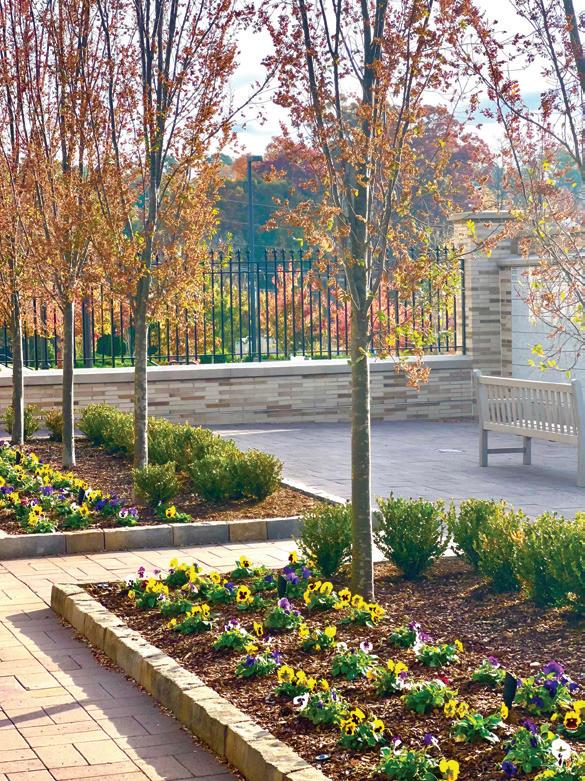
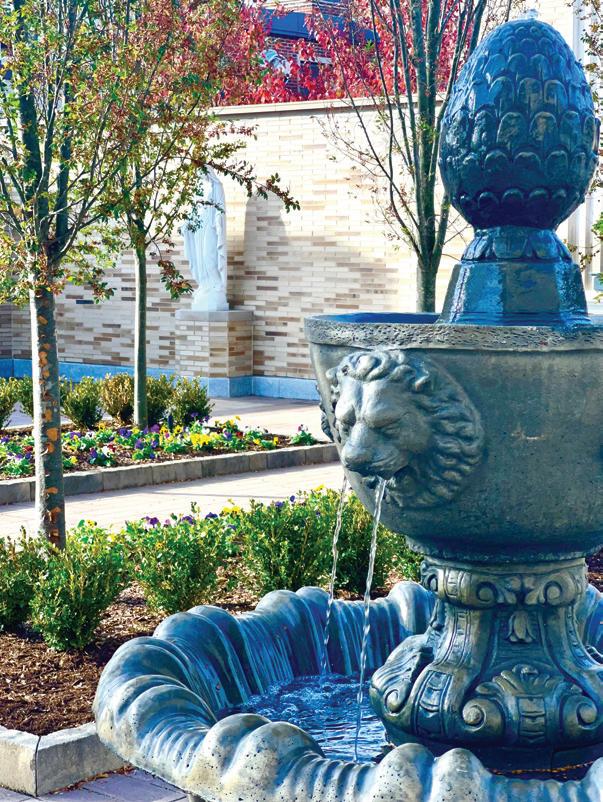
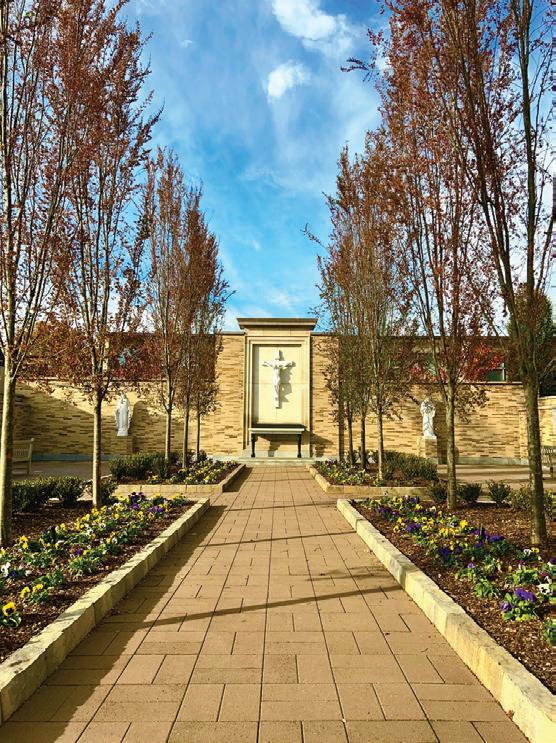
Concrete action called for Builders work on a construction site in Los Angeles on July 5, 2024. The U.S. bishops conference is advocating that Congress take action on the national affordable-housing crisis, which experts say is having ramifications for marriage and family formation.
OSV NEWS PHOTO/ETIENNE LAURENT, REUTERS
Remembering the faithful departed
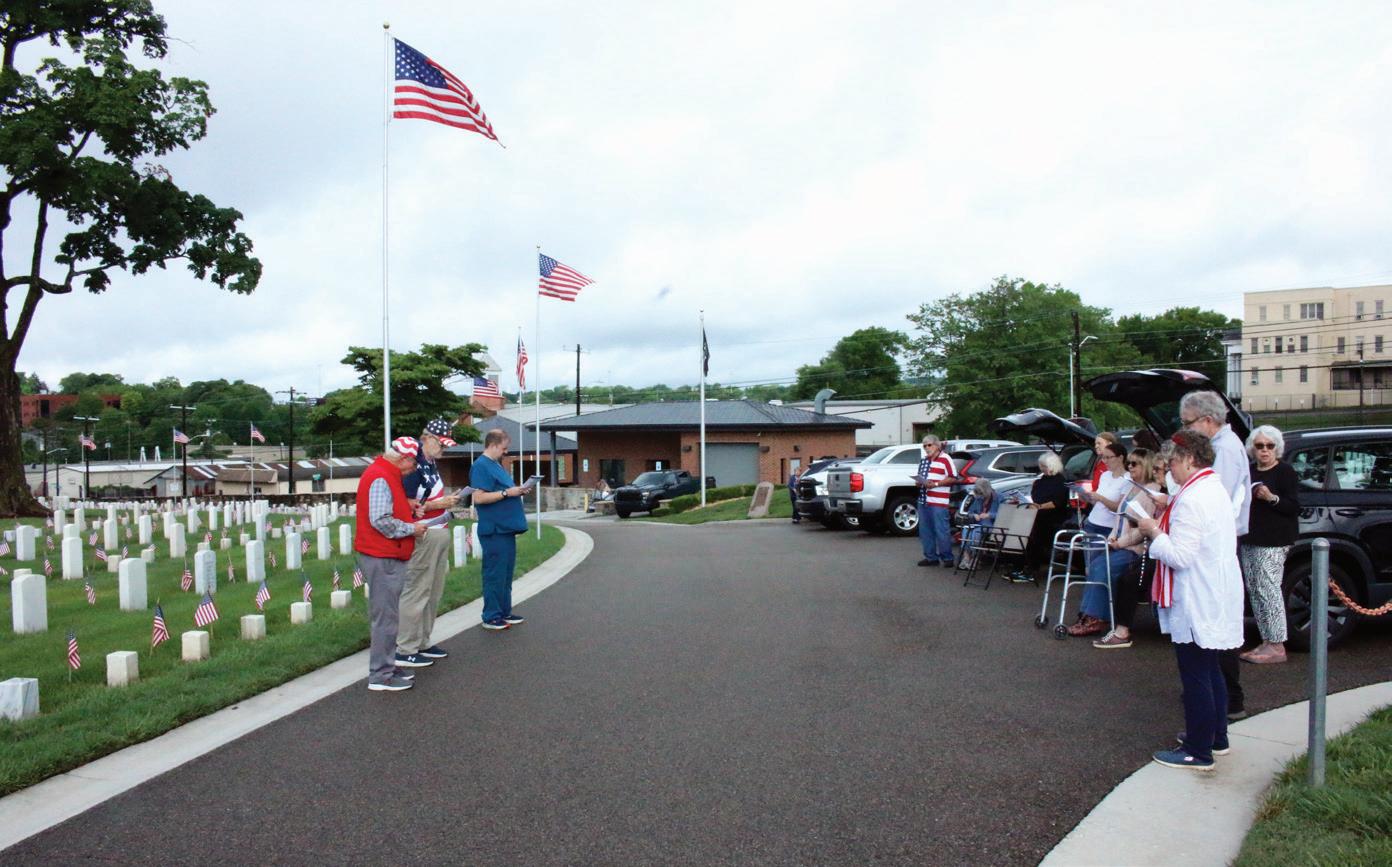
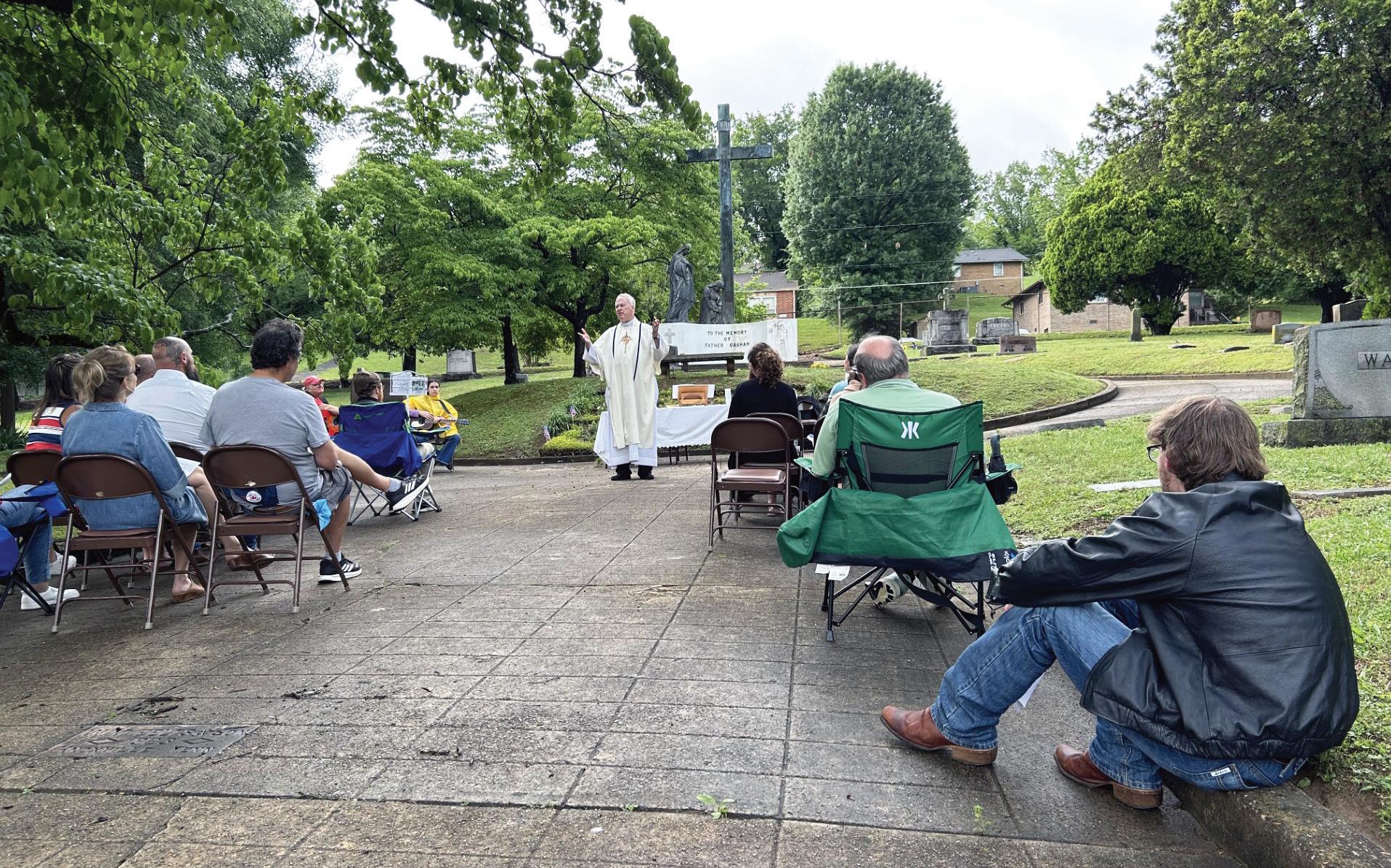
Catholic higher education should form ‘voices for the Church’
By Gina Christian OSV News
The Catholic imagination needs to be reawakened in academic life to nurture leaders who can become voices for the Catholic Church,” a Catholic scientist advised the nation’s bishops.
Mathematical biologist Santiago Schnell, provost of Dartmouth University, addressed the U.S. Conference of Catholic Bishops during their annual spring plenary that took place June 10-12 in Orlando, Fla.
Dr. Schnell was invited to speak on June 10 by Bishop Kevin C. Rhoades of the Diocese of Fort Wayne-South Bend, Ind., USCCB secretary and chair of its Committee on Priorities and Plans.
The talk anticipated the bishops’ discussion of the 25th anniversary of the USCCB’s implementation of Ex Corde Ecclesiae, St. John Paul II’s apostolic constitution on Catholic universities.
During his presentation, Dr. Schnell formerly dean of the University of Notre Dame’s College of Science warned that Catholics were, as his presentation title asserted, “educated, yet absent” from American intellectual life.
“The Catholic paradox is that we have a massive infrastructure of higher education with average outcomes, ” Dr. Schnell said. “We are not educating sufficient Catholics in our Catholic higher educational system. And we re not educating them, actually, to become leaders.”
Catholics have had a “political arrival,” Dr. Schnell explained, noting that while about 20 percent of the U.S. population self-identifies as Catholic, six of the nine (67 percent) current Supreme Court justices are
Catholic.
But, said Dr. Schnell, only 35 percent of U.S. Catholic adults have attained a bachelor ’s degree or higher, according to data from the Pew Research Center.
That figure is despite the existence of some 230 Catholic colleges in the United States, with approximately 675,000 students enrolled in Catholic higher education as of the fall 2023 term, Dr. Schnell noted in his talk.
And, said Dr. Schnell, just 28 percent of the 119th U.S. Congress is Catholic, according to Pew data posted in January 2025.
Dr. Schnell identified secularization, higher-education rankings, and a shift to training rather than education and formation, as key factors driving Catholic universities to “imitate” their secular peers, rather than embody their distinctive identity.
Secularization has seen a dilution of mission at many Catholic colleges and universities, he said.
Everyone wants to be a force for good. Everyone wants to help the poor. Everyone wants to support democracy,” Dr. Schnell said. “But we re doing that in a way that is devoid of religion, of the connection with God.”
He described the nation’s highereducation rankings system as a kind of “rival magisterium.”
Such ratings, curated by U.S. News and World Report, Forbes, and other organizations, have retained significant influence in the United States, helping to drive applications and admissions and, significantly, the bottom line for college and university budgets.
“Our Catholic universities, to be ranked, have chosen the same path of becoming indifferent and indis-
tinguishable from somebody else,”
Dr. Schnell said.
The focus on rankings detracts from Catholic higher education’s role in “training the human person, for the betterment of the human condition, he said.
Even the academic vocabulary has shifted, he said, with words such as “hope,” “heaven,” “soul,” and joy”—the language of human flourishing”—fading from the
lexicon, said Dr. Schnell, pointing to statistical analyses of usage.
Citing Pew data, he added that 43 percent of U.S. adults raised Catholic no longer identify as such currently.
Dr. Schnell underscored the problem of “scholars deviating” from their field of inquiry “because they don’t know how to distinguish between their personal beliefs and their academic work.” ■

SENSORYMASSFRIENDLY REGISTRATION

Join the Diocese of Knoxville Special Friends for a sensory-friendly Mass celebration on Saturday, July 25!




Register by Saturday, July 18 We look forward to seeing you there!
Memorial Day prayers Above left: Members of the Legion of Mary gather at Knoxville's National Cemetery to pray the rosary on May 25 in remembrance of those who have died. Above right: Father Tim Sullivan, CSP, who serves as associate pastor of Immaculate Conception Parish in Knoxville, celebrates a memorial Mass at Calvary Cemetery, one of three Catholic cemeteries in the Diocese of Knoxville, on May 25.
DAN MCWILLIAMS
BILL BREWER



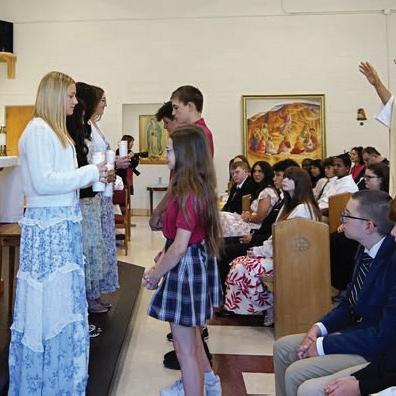


Catholic schools Catholic schools atholic

. Teachers as Ro R le Models

2. Catholic Faith Exposure
Daily exposure to the Catholic faith is important to developing a strong religious foundation. Daily lessons in the Catholic faith create a strong foundation for children. Graduates of Catholic high schools are statistically more likely to continue church involvement as an adult.

. Parents believe that their child’s teachers should erv r e as moral role models. The CA C RA R Institute at Georgetown University t confi f rmed that “strong moral values” is the top reason parents choose to send their child to a Catholic schpool. Many of the parents who choose a Catholic school education want their child’s education at school to be an extension of what they are being taught at home. They are looking fo f r i y nfl f uences on thei g r child that irror their relgigious beliefs f and moral choices.
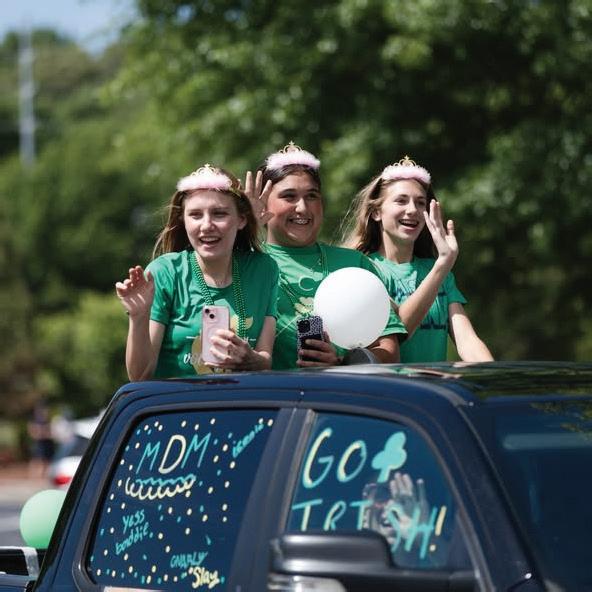

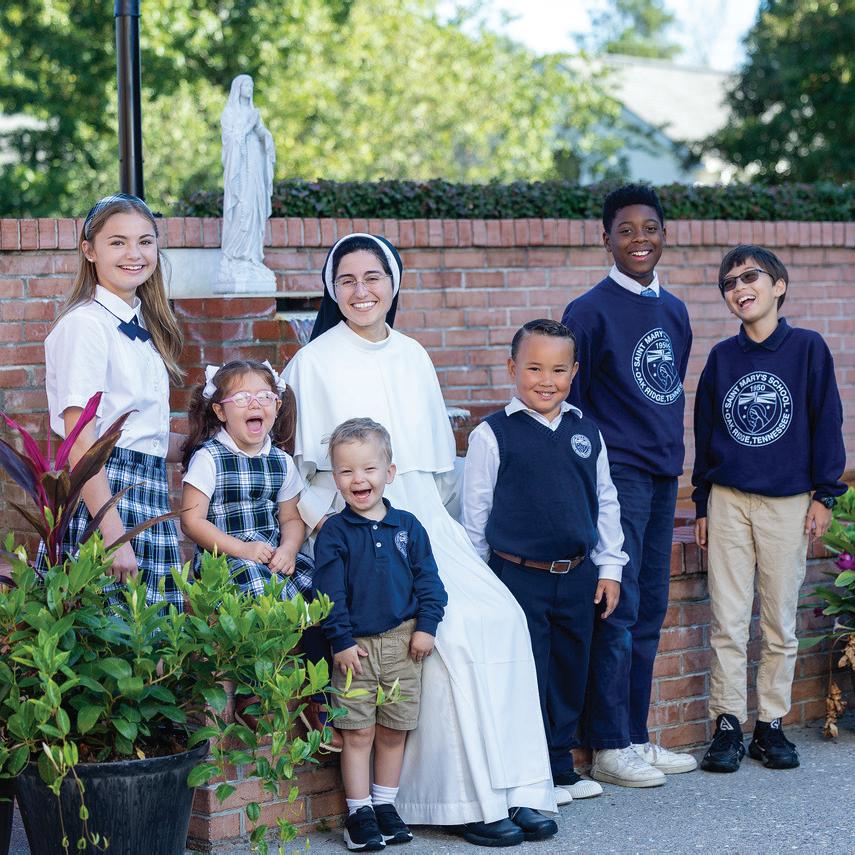


. Community
amilies who have children in a parish school ave an easier time of developing a sense of community with their fellow parishioners. Opportuniti y es for fellowship, friendship, and rvi p ce are available for families and create a warm and welcoming community.
4. Catholic education is a relatively affordable private school education
Private school tuition can be expensive, but many Catholic schools and dioceses offer generous tuition-assistance programs for parish families who need help.

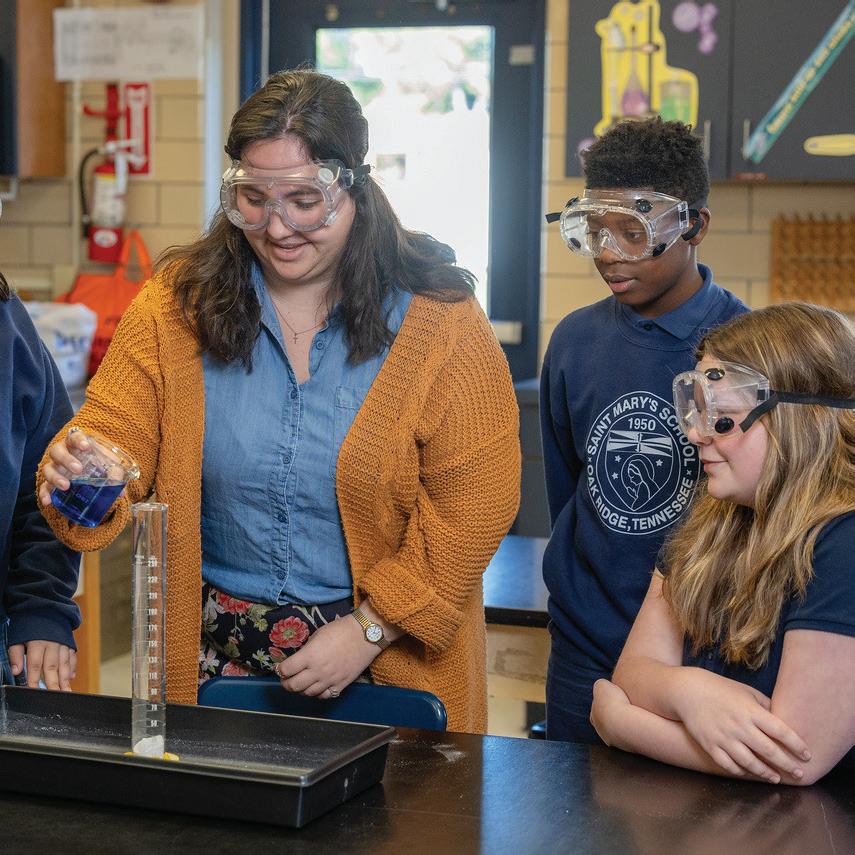
parents choose Choose Catholic

. Catholic schools offer igh-quality education



ccording to The National Catholic Educational ssociation ninety-nine percent (99%) of Catholic secondary school students graduate d eighty-eight percent (88%) go on to college. In general, on national and standardized tests, Catholic schools consistently outperform public and other private schools by as much as 20 percentage points.