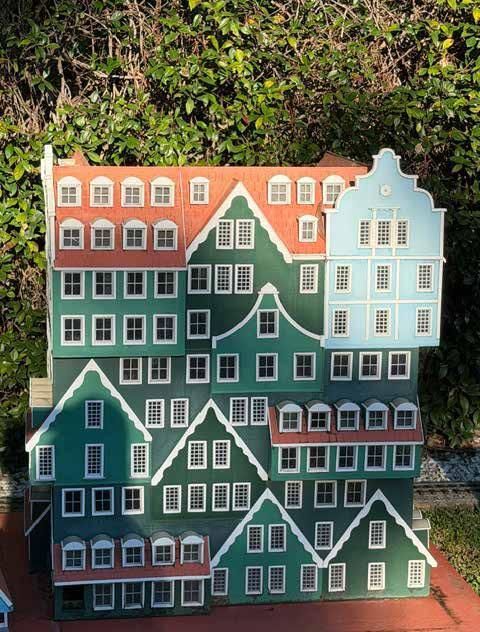
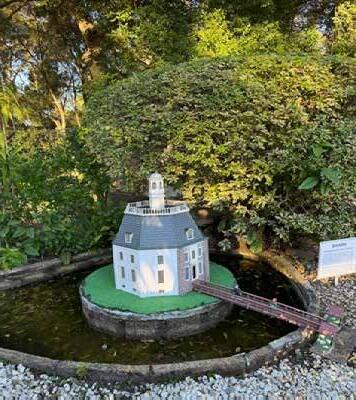
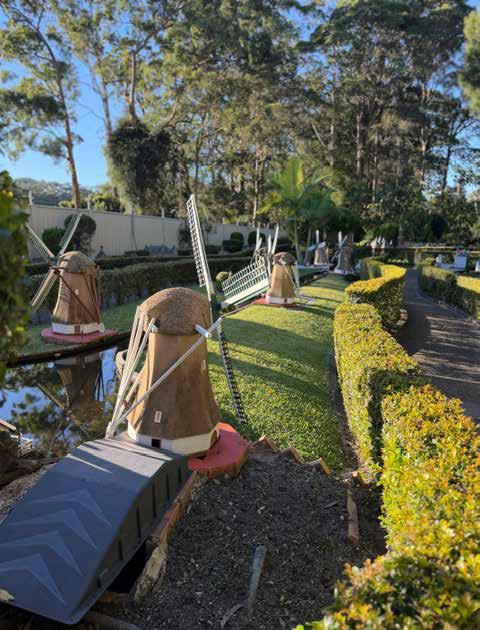



Clog Barn - see story on page 7
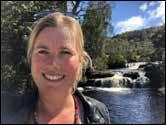
Beste lezer,
Jeah weer een geprinte, digitale en luisterkrant dit keer.
Wat fijn dat dat nog kan.
Er was een tijd dat ik bij mijn vader in de klas zat en elke week 10 spreekwoorden moest leren. Eigenlijk was dat om te leren om te leren zei hij. Die spreekwoorden zijn mij inderdaad erg goed bij gebleven en sindsdien is de fascinatie daarover gebleven. Daarom nu het rubriekje met spreekwoorden.
En als je de krant van begin tot eind leest, valt je waarschijnlijk ook op dat er één datum is die in verschillende onderwerpen terugkomt.
Ook ben ik een weekje in Coffs harbour geweest en natuurlijk is de clogbarn daar bekend en ben ik daar een kijkje gaan nemen, ook hierover een verslag.
Tevens mijn ervaringen van Elmina (in Africa) tijdens Keti koti en ook Marianne haar verhaal over haar reis in America en een verhaal over het sorry zeggen tegen de Molukse gemeenschap in Nederland.
Trots ook dat we de memoires van Marja Rogers mogen delen. Een mooi tijdsbeeld van Nederland van toen. De bezetting door de ogen van een kind.
En ook het geschonken artikel aan de Dutch heritage Centre wordt in deze krant gepubliceerd.
Het goede van publicatie in de Dutch Courier is dat het blijft bestaan voor latere referentie, want de courier wordt bewaard in het Dutch heritage centre in Carnegie en ook de Nationale bibliotheek heeft de meeste exemplaren.
Ook de digitale versie wordt geprint en bewaard in het heritage centre en voor inzage beschikbaar.
Weer met liefde gemaakt
Carole Overmaat
SUBSCRIPTION CHANGES
Please send us your email (or from your kids or neighbour or anyone who maybe can help you set this up)
We want to keep publishing the Dutch Courier, but in a new format.
That’s why we are introducing a multi-platform subscription:
• 11 online editions per year, available on our website, out of those 11 edition 5 printed editions per year, mailed directly to you
• Audio recordings of each edition, also available on our website www.dutchcourier.com
This way, we can continue offering the Dutch Courier
46 dollars for hybrid subscription
40 dollars for only online
Kind regards,
Carole and Ron
Please send an email to us and we set you up for this editor@dutchcourier.com
post: 6a McKay Avenue, Black Rock, VIC 3193 text or phone call: 0437 757 393
PLEASE ASK IF ANYONE CAN HELP YOU TO PRINT IN PDF THE DIGITAL SUBSCRIPITON IF NEEDED.
- You can download via the link we send in email - and change it to PDF - and print

Dutch Courier Nieuws – Belangrijke
Veranderingen
Stuur ons een email naar editor@dutchcourier.com (of die van uw kinderen of buren of iemand die u kan helpen om u op te zetten voor de multi platform subscription. )
We willen de Dutch Courier blijven uitgeven, maar in een nieuwe vorm.
• 11 online edities, beschikbaar via onze website en van deze 11 edities 5 gedrukte edities per jaar, per post naar u verstuurd
• Audio-opnames van elke editie, ook online beschikbaar op www.dutchcourier.com
Zo kunnen we de krant blijven aanbieden
46 dollars for hybrid subscription 40 dollars voor online versie
Met vriendelijke groet,
Carole en Ron
VRAAG, INDIEN NODIG, ALSJEBLIEFT IEMAND OM JE TE HELPEN OM DE KRANT VIA PDF UIT TE PRINTEN.
- Download via de link in email, - Verander het formaat naar PDF en print.
Editorial: Carole Overmaat 6a Mc Kay Avenue Black Rock Phone: 0437 757 393 editor@dutchcourier.com www.dutchcourier.com © Carole Overmaat 2026
The Dutch Courier is available by subscription.
Printed 5 times a year by News Pty Ltd
Online via : www.dutchcourier.com
EFT via bank: BSB 033055 ACCT: 376 516
Please put your name and Postcode in the description field
Ja, lieve mensen,
ik heb het flink te pakken gehad! Over het algemeen kijk ik niet naar sportprogramma’s op de tv, hoewel de Tour de France me af en toe een tijd lang kan bezighouden en ik gedurende de winter Olympics graag naar de schaatsers kijk. Australian football heb ik nooit gevolgd, hoewel ik in Collingwood gewoond heb, en cricket heb ik geprobeerd te begrijpen omdat ik als teenager verliefd was op een jochie dat cricket speelde. Toen dat eenmaal uit was, was mijn flauwe interesse in deze sport ook weg. Voetballen, oftewel soccer, zoals wij moesten leren het te noemen, dat heb ik als kind bij ons in de straat in Amsterdam gespeeld. Samen met Jopie en Bennie en Annie en mijn broertje, Hajo. De oudere jongens leerden ons de termen, zoals “dribble”, waar ik tamelijk goed in was, en “penalty”. Dat laatste woord moeten ze alleen gelezen hebben, want ze noemden het pe-NAL-tie en wij wisten niet beter dan het ook zo uit te spreken. Nu weten we allemaal, jammer genoeg, niet alleen hoe het woord “penalty” uitgesproken wordt, maar wat het uiteindelijk voor een elftal kan betekenen. U zult wel begrijpen dat ik de wedstrijd tegen Marokko gezien heb! Ik was blij te zien op internet dat, hoewel natuurlijk teleurgesteld, veel Nederlanders de Marokkanen die ze tegenk-
wamen van harte feliciteren konden.
Wat onze tegenstanders in deze wedstrijd betrof, was het de eerste keer dat ik Marokkanen buiten Nederland zag, want in begin zeventiger jaren heb ik in Tilburg als maatschappelijk werkster bij de Stichting Bijstand Buitenlandse Werknemers gewerkt. Daar behartigden wij de belangen van werknemers en hun familieleden uit Turkije, Marokko en het toenmalige Joegoslavië De werknemers uit Turkije waren meestal getrouwd, terwijl de Marokkanen vaak veel jonger en ongetrouwd waren en Joegoslavië, een communistisch en dus niet overwegend Moslimland, vrouwelijke werknemers le verde.
Onder de Marokkanen die wij op de Stichting tegenkwamen, waren er een paar waarvan wij wisten dat ze uit Marokko gevlucht waren omdat onder Koning Hassan II arbeiders die prominent in de vakbeweging zaten, vervolgd werden. In Marokko zijn er sommigen die actief voor arbeiders opgekomen waren, vervolgens “verdwenen.” We hadden dus eigenlijk met een soort politieke vluchtelingen te maken.
gert een arbeidstaak te verrichten omdat het werk te vies of te zwaar of te slecht betaald is, geef de taak aan een Nederlandse vrouw. Als die het ook vertikt, dan gaat ie naar een buitenlander, want die zijn al dolblij dat ze hier mogen komen werken en die kan je veel minder betalen.
Zo kwam het dat we na een paar jaar al konden horen: “Dat doe ik niet, want dat is Turkenwerk.” De werknemers uit het buitenland werden aanvankelijk “gastarbeiders” genoemd. Ze zouden tijdelijke hulpkrachten zijn waarvan verwacht werd dat zodra de Nederlandse economie door hun werk genoeg gestimuleerd was, ze terug naar huis zouden gaan. Dat deden ze echter niet, want waarom teruggaan naar de armoede? Ze lieten hun gezinnen overkomen en wilden niet meer “gastarbeiders” genoemd worden, want zoals ze zeiden: “We zijn niet jullie gasten. We komen hier om jullie zware werk te doen.” Het huidige Australië trekt nu ook tijdelijke en minder betaalde werkkrachten uit Fiji, Vanuatu,Tonga,Samoa,de Solomon Islands, en Timor-Leste aan.
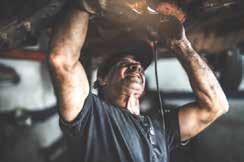
Bezig in de Leerlooierij
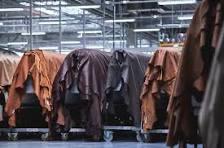
Veel van de werknemers wier zaken wij behartigden, werkten voornamelijk in de leerlooierijen, waar, zo vertelden ze ons, de vieze dampen ze vaak zo misselijk maakten dat ze hun meegebrachte boterhammen niet konden eten. De Joegoslavische vrouwen vond je meestal in de textielfabrieken.
We werkten samen met de rechtsstudenten die als vrijwilligers voor de Tilburgse Rechtswinkel werkten, want er waren soms problemen met, bij voorbeeld, arbeidsvergunningen. De studenten vertelden ons dat ze een document in handen hadden gekregen (op z’n Australisch: “It fell off the back of a truck”), waaruit ze het volgende hadden opgestoken: Als een Nederlandse man wei-
De overgang in Nederland van “tijdelijke” krachten naar “permanente buren” leidde tot politieke, religieuze en culturele spanningen die vaak tot discriminatie leidden en af en toe kunnen er weer spanningen oplaaien. Nederland is echter een multiculturele maatschappij geworden en tegenwoordig is 2.6 % van de Nederlandse bevolking van Turkse achtergrond en 2,4 % van Marokkaanse achtergrond - een totaal van 5% dus uit de niet-westerse “gastarbeider” achtergrond.
Wat betreft “niet-westerse achtergrond”, wat dacht u van de volgende spelers die in 2026 voor Nederland in de World Cup speelden? Allemaal Nederlanders, maar van een diverse afkomst:
Virgil van Dijk Suriname
Georginio Wijnaldum Suriname
Denzel Dumfries Suriname
Crysencio Summerville Suriname
Tijani Reynders Indonesië
Cody Gakpo Togo en Ghana
Nathan Aké Ivoorkust
Guus Til Zambia
Brian Brobbey Ghana
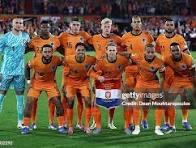
Het Nederlandse multiculturele elftal
De diversiteit deed niets van de saamhorigheid af, niet in het team en niet onder de fans in Nederland en in Dallas, Houston, Kansas City en Monterrey. Vandaar de titel van dit stukje, want samen met het aloude Hup Holland Hup! kregen we niet alleen te horen, maar vooral te zien het Naar Links! Naar Rechts! Het deed me goed te vernemen op internet dat de Nederlandse fans, samen met de Noorse en Schotse fans, zoveel plezier met zich naar Amerika meegebracht hadden, dat ze onder de “Top Three” van internationale fans geplaatst zijn. De Noren met hun trommels en hun kreten van “Roeien!” en de Schotten, de Tartan Army, met hun doedelzakken en onlesbare dorst naar bier, en de Nederlandse aanhangers die van links naar rechts bleven deinen en die door hun massale opkomst hele straten de kleur oranje hadden gegeven – dat alles was doodgewoon fijn om op internet en TV (mijn hartelijke dank, SBS!) mee te beleven! De fans van het Nederlandse elftal worden al sinds 2004 gesteund door de Dutch bus, een omgebouwde oranje dubbeldekker, die voorzien is van een open bovendek, een geluidsinstallatie en kunstgras in het interieur. Deze feestbus, die duizenden fans de straat op krijgt, werd vóór de wedstrijden netjes naar Texas op een vrachtschip verscheept.


Carla van Dokkum (1943) woonde in Lathum, Gld, op het schiereiland Riverparc. Ze is getrouwd met Onno. Samen hebben ze vijf kinderen en dertien kleinkinderen. Ze schreef Eigenlijk heet ik Tsiwja, een boek over haar turbulente leven. carlavandokkum@gmail.com was de buurvrouw van de vader van Carole Overmaat, de editor van deze krant. In haar maandelijkse bijdrage herschrijft Carla stukjes uit haar boek. Dit is column 778
Waarom heet ik Tsiwja?
Daar in Hanni’s woonkamer met mijn kinderen op een rijtje op de bank zit ik in die heerlijke stoel tegenover Hanni. Ik hang aan haar lippen. Ze vertelt dat zij en mijn moeder even snel verliefd werden als dat ze hun interesse weer verloren. En dat de vriendinnen in de bibliotheek van mijn grootvader medische boeken en encyclopedieën doorplozen op plaatjes en informatie over seks. In de loop van de middag nemen we Hanni mee voor een lunch op een terras in de buurt. Dan pas durf ik te vragen of ze weet waarom ik Tsiwja heet. Eigenlijk verwacht ik niets, het is immers tweeënzeventig jaar geleden. Des te meer ontroert me haar antwoord: ‘Toen ik die eerste dag hoorde hoe je vader en moeder je hadden genoemd, heb ik ze gewaarschuwd. Ik herinner me dat ik zei dat het riskant is om je in deze tijd (1943)
Spreekwoorden
De appel valt niet ver van de boom — kinderen lijken vaak op hun ouders.
Oost west, thuis best — thuis is het fijnst.
Wie het kleine niet eert, is het grote niet weerd — waardeer kleine dingen.
Boter op je hoofd hebben — zelf schuldig zijn aan iets waar je een ander van beschuldigt.
Een kat in de zak kopen — iets kopen dat tegenvalt.
Met de deur in huis vallen — meteen ter zake komen.
Het hoofd boven water houden — net kunnen rondkomen of volhouden.
Eigenlijk heet ik Tsiwja is te koop bij www.bol.com. Ook als luisterboek te verkrijgen en als e-boek te downloaden.

een Joodse naam te geven en dat je later zeker zou worden aangesproken op zo’n vreemde naam. Maar het besluit van je ouders stond vast. Op je moeders aanwijzing pakte je vader het witte porseleinen hertje dat op de schoorsteenmantel stond en drukte het in mijn hand’, zegt Hanni terwijl ze mijn arm streelt. ‘Kijk’, zei ze ‘dit kostbare cadeau kreeg ik van Ben afgelopen december op mijn vierentwintigste verjaardag. Ik kan je niet uitleggen hoe prachtig ik het vind en hoe ik eraan ben gehecht. Zelfs tijdens mijn bevalling kon ik mijn ogen er niet van afhouden. Het is zo mooi, zo teer, zo lieflijk. En daarom noemen we haar hertje. Tsiwja in het Hebreeuws.’
Rondom mijn ogen is het vlekkerig en zwart doorgelopen. Ik kan er niet meer onderuit. Ik heb er lang over gedaan en geleerd van
het leven. Ik aanvaard het verleden dat niet meer te veranderen is. Mijn verdriet was functioneel en helend. Ik heb het kunnen verwerken en ik kan ermee leven. Ik heb me ontdaan van alle ballast en twijfels en de laatste bouwstenen komen nu van Hanni. Ik ben heel geworden. Ik voel me wie ik ben. Ik hoef niet te strijden met de Carla die ik was, maar kan vertrouwen op de Carla die ik ben geworden. Ik ga door met mijn leven.
by Henry van Zanden
In 2025, I dared to dream that the Netherlands could finally lift the World Cup, but that changed in 2026 with less than inspiring performances against Algeria, Ecuador and Uzbekistan. When I was asked how I thought the Netherlands would go against Japan, I said that I had more confidence in Australia defeating Turkey than the Dutch winning against Japan. It was not entirely a reflection on the Dutch team, but also an admission that the Japanese side was capable of defeating any opposition.The 2-2 draw put a lot of pressure on the Dutch to defeat Sweden. I was amazed with the 5-1 result. They attacked with speed down the flanks and strength through the middle. However, after analysing the game, the Dutch were aided by the unsung hero, goalkeeper Bart Verbruggen who made crucial saves at key moments. Perhaps the turning point of the match came when the Swedes were denied a goal that would have made it 2-1. It was one of those marginal VAR decsions that would eventually cost Sweden the game for shortly afterward, the Dutch made it 3-0. After that goal, the Swedes were forced to risk everything in an attempt to bridge the gap but only left more space for the Dutch to counter-attack and add two more goals.
9am SBS Radio
and Saturday 11 am
Adelaide. – 5EBI 103.1 FM
Thursdays 9 pm to 12 am
Website: www.5ebi.com.au
Email: ebiradio@5ebi.com.au
Ballarat - 99.9 Voice FM Thursdays 1pm – 3pm
Website: www.voicefm.com.au
Facebook: voicefm
Email: info@voicefm.com.au
Brisbane – Radio 4EB 98.1FM Wij zijn LIVE op 98.1FM op zaterdag om 16h. Onze GLOBAL programmas zijn vrijdag om 18h en zaterdag om 17h.
Website: www.4eb.org.au
Facebook: Dutch-Group-4EB981FM-in-Brisbane
Email: info@4eb.org.au
Radio Fremantle 107.9 fm Broadcasting in the Dutch language sunday from 15.30 to 17.00
De koe bij de horens vatten — een probleem direct aanpakken.
Door de bomen het bos niet meer zien — het overzicht kwijt zijn. Een speld in een hooiberg zoeken — iets bijna onvindbaars zoeken.
Water bij de wijn doen — compromissen sluiten.
Na regen komt zonneschijn — moeilijke tijden gaan voorbij.
Iets onder de knie hebben — iets goed beheersen. Dat is andere koek — dat is iets heel anders/moeilijker. Iemand op handen dragen — iemand erg waarderen. Een oogje in het zeil houden
— opletten of toezicht houden.
De draad weer oppakken — opnieuw beginnen na een pauze of moeilijke periode.
Hoge bomen vangen veel wind — mensen in een zichtbare positie krijgen veel kritiek.
De kogel is door de kerk — een besluit is genomen.
Al draagt een aap een gouden ring, het is en blijft een lelijk ding — uiterlijk vertoon verandert iemands ware aard niet.
Welk spreekwoord gebruikt u nog veel?
With the 3-1 defeat of Tunisia, I was becoming quitely confident that maybe they could progress past the round of 32. Although the team coasted in the second half, there didn’t seem to be a reason to push themselves over the limit for the sake of a couple of extra goals.
However, I was stunned with the 5-2-3 formation against Morocco. I think that it must have been the first time in Dutch footballing history that the Dutch team stooped to such a humiliating formation. The formation meant the Dutch team surrendered most of possession to the Moroccans. In the first half, Morocco had the better of the scoring chances but once again, Bart Verbruggan saved the day for the Dutch. In particular, he made two outstanding saves in the space of three minutes.
In defence of the Dutch team, they were not getting the deserved free kicks, especially Brobbey, who was constantly fouled. On one occasion, as he jumped high for the ball, the goalkeeper fell behind him, and was awarded a free kick. It was clear that there had been no foul. Frenki de Jong wore the same incredulous expression when the Moroccans were awarded a dubious free kick in a dangerous position.
John Paul van Hecke suffered the greatest injustice. A blow to the side of the head which left him with a black eye, went unpunished when it appeared to be an obvious yellow. Even worse was a kick to the head above his temple that left him bloodied. Still there was no punishment, admonishment or yellow for Saibairi. Many might have wondered why a red was issued when compared to other red cards in other games.
More on page 10
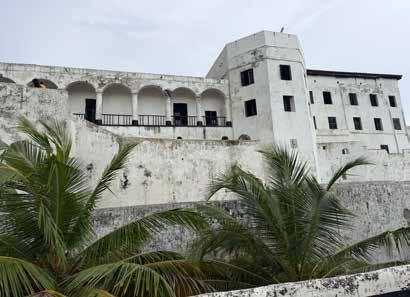
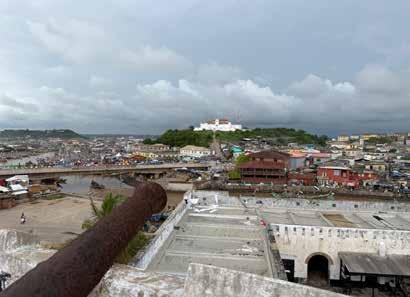
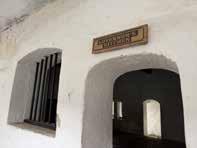
Keti Koti werd dit jaar in Nederland gevierd op het moment dat ik zelf op de plek liep waar ooit de slavenhandel plaatsvond. Eerst door de Portugezen en later door de Nederlanders. Samen met Ron en mijn zoon Joerie bezocht ik Elmina in Ghana. Tijdens de rondleiding kreeg ik letterlijk het schaamrood op mijn kaken. De Afrikaanse gids keek me aan terwijl ze vertelde wat de Nederlandse gouverneur deed in het gebouw waarin wij op dat moment stonden. Vanaf zijn verdieping wees hij een vrouwelijke slaaf aan die naar boven moest komen om hem seksueel te dienen. Weigerde zij, dan moest ze met een kannonskogel in de hitte staan en overleefde ze dat niet. wachtte haar een zware straf.
Sowieso was het bijna onmogelijk om de omstandigheden in de donkere kerkers onder het kasteel te overleven. Er was nauwelijks licht of frisse lucht. Mensen zaten opeengepakt en moesten hun behoeften doen in dezelfde ruimte waarin ze leefden. De stank, de hitte en de wanhoop moeten onvoorstelbaar zijn geweest.
Onze gids vertelde ook over een Portugese vrouw die een brief had geschreven waarin zij haar excuses aanbood voor het slavernijverleden. Tegelijkertijd benadrukte ze dat slavernij niet alleen een Europees verhaal is. Ook binnen Afrika speelden bepaalde groepen een rol in de slavenhandel en in sommige delen van de wereld bestaat slavernij, in moderne vormen, he-
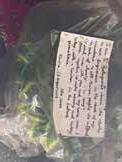
laas nog steeds. ik voelde daar toch een vorm van verantwoordelijkheid. Ik vind dat we eerlijk moeten erkennen wat onze voorouders hebben gedaan. Daarom begrijp ik ook waarom de minister-president Rutte destijds ook namens de Nederlandse overheid excuses aanbood voor het slavernijverleden. Niet omdat hij het zelf heeft gedaan, maar omdat het belangrijk is dat een land verantwoordelijkheid neemt voor zijn geschiedenis. Erkenning is geen schuld overnemen,
maar laten zien dat we begrijpen dat dit onrecht nooit had mogen plaatsvinden. Geschiedenis heeft de neiging zich te herhalen als we haar vergeten. Juist daarom is het belangrijk om stil te staan bij dit verleden, ervan te leren en ervoor te zorgen dat mensen nooit meer op deze manier worden ontmenselijkt.
Wat is Keti Koti?
Keti Koti betekent in het Sranantongo letterlijk ‘verbroken ketenen’. Jaarlijks wordt
deze dag op 1 juli herdacht en gevierd. Op die dag staat de afschaffing van de slavernij in Suriname en de voormalige Nederlandse Caribische koloniën in 1863 centraal. Het is een dag waarop zowel het leed uit het verleden wordt herdacht als de vrijheid wordt gevierd.
Keti Koti kent daarom twee belangrijke aspecten: Herdenken. Er wordt stilgestaan bij het leed en de onderdrukking van de tot slaaf gemaakten. Dit gebeurt met herdenkingen, toespraken, kransleggingen en momenten van bezinning.
Vieren. Tegelijkertijd wordt de vrijheid gevierd met muziek, dans, kleurrijke kleding en traditionele gerechten zoals pom en heri heri.
In heel Nederland worden rond 1 juli evenementen georganiseerd. De grootste vinden plaats in Amsterdam, met de Nationale Herdenking
Slavernijverleden in het Oosterpark en het Keti Koti Festival. Ook steden als Rotterdam en Utrecht organiseren uitgebreide herdenkingen en vieringen.
In Suriname is Keti Koti een officiële nationale feestdag. In Nederland is dat nog niet het geval, al kiezen steeds meer werkgevers en gemeenten ervoor om medewerkers de mogelijkheid te geven deze dag te herdenken of te vieren. Mijn bezoek aan Elmina heeft Keti Koti voor mij een heel andere betekenis gegeven. Wat ooit geschiedenis in een boek leek, werd daar een tastbare werkelijkheid. Het maakte duidelijk hoe belangrijk het is om te blijven herdenken, niet uit schuldgevoel, maar uit respect voor de slachtoffers en vanuit de gezamenlijke verantwoordelijkheid om ervoor te zorgen dat dit nooit meer gebeurt.


Moeilijk recept
± 12 u
± 18 m
Ingrediënten: getoerd gerezen bladerdeeg – voor hartige bereidingen
Voor het deeg
500 gr bloem
12 gr gedroogde gist
12 gr zout
30 gr boter, op kamertemperatuur
1 ei
220 ml water, koud
Voor het toeren
220 gr boter, koud
bloem, voor het werkblad
Bereiding: Getoerd gerezen bladerdeeg
Stap 1
Kneed van alle ingrediënten voor het deeg een soepel brooddeeg. Kneed dit 4-6 minuten door. Maak van het deeg een bol en laat het verpakt in plasticfolie minimaal 1 uur rusten in de koelkast.
Stap 2
Leg de toerboter tussen 2 vellen plasticfolie en rol het uit tot een vierkant van ongeveer 1 centimeter dikte. Verpak het stuk boter in plasticfolie en leg het tot gebruik in de koelkast.
Stap 3
Druk de deegbal op een licht bebloemd werkblad iets plat en rol er 4 punten aan.
Stap 4
Leg de plak boter in het midden en sla de 4 punten deeg eroverheen, zodat de boter bedekt is.
Stap 5
Rol het deeg langwerpig uit tot de lengte 3 keer zo lang is als de breedte.
After WW2 was ended, the former colony Dutch East Indies gained independence and became the Republic of Indonesia. The Moluccas is an island group north of Java, nearer to Papua, its main island is Ambon. They wanted to be independent, not a part of Indonesia.
Stap 6
Vouw het deeg als een brief in drieën.
Stap 7
Draai het deeg een kwartslag en rol het nu in de andere richting uit, tot weer 3 keer zijn breedte. Vouw ook dit stuk deeg weer in drieën. Verpak het deeg in plasticfolie en laat het minimaal 30 minuten rusten in de koelkast. Rol het deeg nog eenmaal in de eerste richting uit en vouw het deeg wederom in drieën.
Verpak het deeg in plasticfolie en laat het nog minimaal 30 minuten rusten in de koelkast. Het deeg is nu klaar om verder verwerkt te worden.
Tip: Werk snel en koel, zodat de boter stevig blijft en niet wegsmelt in het deeg. Zo krijg je het mooiste bladerdeeg.
Met dit recept kan je 10 croissant maken. Het beste bloem voor de croisants is Franse T55 bloem. Maar het kan ook prima met all- purpose flour.
laat de croissants rijzen voor 2 - 3 1/2 uur op 2 baking traces back and forth.
croissants bakken
Verwarm de oven voor op 200°C (392°F) convection. Bestrijk de croissants met ei. Zet de tray in de oven en verlaag de oven naar Brus 180°C (356°F) convection.
Bak de croisantjes voor 17-22 minutes until tot dat ze goud bruin zijn.
van: Rutger bakt
The Dutch-Indian army, KNIL, was centered on Java and sent their Dutch nationality members back to Netherlands, to be absorbed into the Dutch army. Native KNIL members had a choice to be absorbed into the new Indonesian army, or to be dismissed. Many of these members were from the Moluccas, but were in Java and choose to go back to the Moluccas, which had announced independence as the Republic of South Moluccas (RMS).
For political reasons nobody offered to help these former KNIL members to move back to the Moluccas, and in 1951 the option to go to Netherlands was taken
up by over 12,000 Moluccas members including their families. This was considered a temporary move and the Moluccan people were placed in camps, also because of housing shortages in Netherlands. During the following 20 years the Moluccan camp inhabitants often pushed for the Dutch government to organise their return to Moluccas. Unfortunately, the RMS never came to exist as the Indonesian government did not agree, and the former KNIL Moluccans were stuck in Netherlands. In the 1970s the unhappy Moluccans organised a few violent incidents in Netherlands, such as train hijackings and occupation of the Indonesian Embassy and Consulate. These incidents made the Netherlands government and the organisation of Moluccans in Netherlands come together and realise that more needed to be done for the Moluccans. New housing was organised in a va-
riety of towns and educational opportunities were improved. Integration into the Dutch community was facilitated. By now there are about 70,000 Moluccan descendants in Netherlands. It is 75 years ago that the Moluccans arrived in Holland. New generations have been born in Netherlands, many have integrated, but many still have the wish to return to their fatherland.
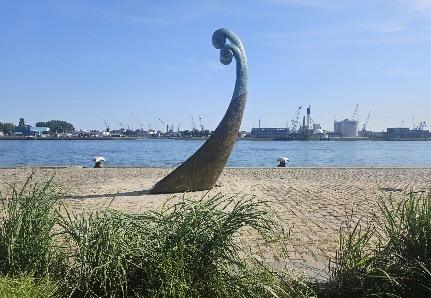
To commemorate this milestone, a national monument was created, designed by two Moluccan descendants and this was recently revealed at the same place in Rotterdam where the Moluccans arrived in 1951. When unveiling the monument, the Dutch prime-minister issues an apology for the mistreatment and lack of support that the former KNIL soldiers had received after settling in Netherlands.
Marianne Pietersen
Griselda Molemans over de excuses van Rob Jetten: ‘
Dit is diep beschamend’
Algemeen Dagblad / 4 Juli 2026
De excuses van premier Rob Jetten aan de Molukse gemeenschap waren historisch. Maar voor oud-Studio Sport-presentatrice Griselda Molemans, die de afgelopen vijftien jaar publiceerde over het uitgebleven rechtsherstel
voor de grote groep ontheemden uit voormalig Nederlands-Indië, miste er iets wezenlijks. „Dit was een aai over de bol.”
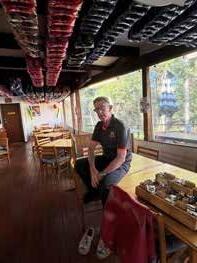
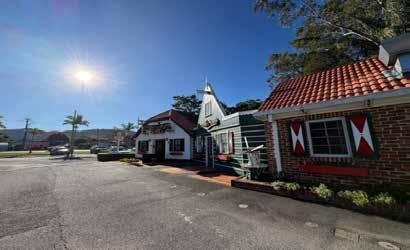
Er zijn van die plekken waar je langs rijdt en dan eigenlijk nooit naar binnen gaat. De Clog Barn was een van die plekken. Het ziet er heel leuk uit van de buitenkant, maar als een Dutchie dacht ik, terwijl ik toch een Nederlandse krant heb in Australie. “Nah. geen zin in.” Toen mijn vriendin kunstenaar Janet Besan çon (Gumbaynggirl French country artist) mij afzette zei ik nog. “Ik blijf hier niet langer dan 10 minuten. Even fotos maken voor wat artikels dacht ik en gaan.” Maar jeetje..wat kan je je vergissen van een idee dat je in je hoofd gezet hebt.
Ik ontmoet John, de eigenaar nu van de zaak. De zaak is eigenhandig gemaakt met zijn vader die nu 93 is.
Ze bouwde de clogbarn in 1985 en kochtte het caravan park daarna.
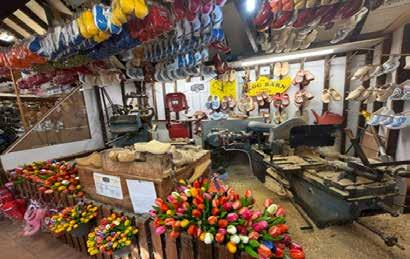
Ook laat hij me de clogmaking machine zien waarvoor hele busladingen langskomen en er zijn 2 keer per dag demonstraties.
Hij weet me te vertellen dat het behoorlijk druk is in de zaak en dat zijn dochter normaal dit soort gesprekken doet. Maar ze heeft net gisteren een
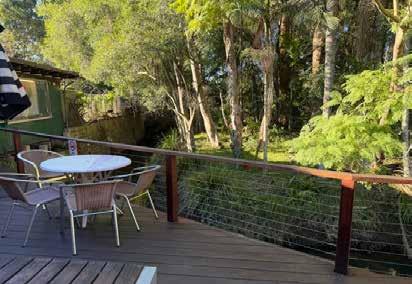
kindje gekregen. Wanneer ik naar het cafe ga word ik weer verrast. Eindelijk een terras op een mooie plek. Ik verbaas me
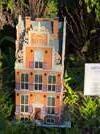
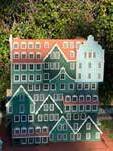
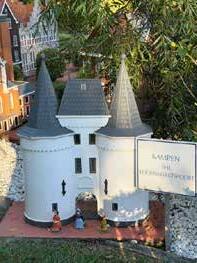
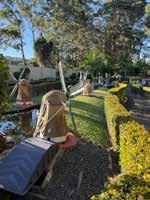
elke keer weer dat een prachtig land als Australie hun terrassen vaak gewoon aan de weg zetten met het razende verkeer langs hem. Hier is het terras achter en heb je een prachtig uitzich op de bomen. Het eerste wat ik mijn vriendin Janet text. “Echt een keertje hier naar toe gaan en lekker de natuur in kijken.” Zij woont hier ook al jaren en .... nooit geweten.
En dan zegt John. “Ben je al naar de tuin geweest naar het miniatuur park?”
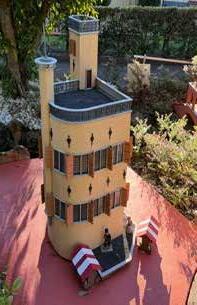
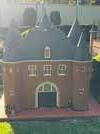
Ook hier had ik een idee bij. Mijn idee was een tafel met daarop miniatuur huisjes of zo. haha..weer verkeerd. De vader van John heeft van heel veel huizen in Nederland huizen nagemaakt, zodat het voor mij gewoon overkwam als Madurodam. “Nee”..zegt John, “zo groot is het niet hier hoor.” Nou ik ben al 30 jaar niet in Madurodam geweest in Den Haag, maar in mijn geheugen is het dus wel zo groot. Maar dus zeker geen huisjes op een tafel.
De vader van John begon in de jaren tachtig met het bouwen van die huisjes. Eerst gebruikte hij boeken over Nederlandse gebouwen, nu kan het gewoon
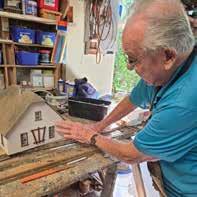
via google earth zegt John en soms krijgt zijn vader gewoon een blue print van de huizen, zodat hij het ook exact na kan bouwen.
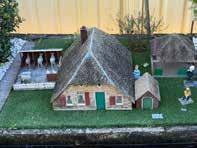
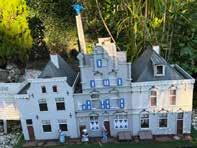
Voor mij is er herkenning. De watermolen in Arnhem, de boerderij. En ook de kaasmarkt in Alkmaar.
Het “madurodam” wordt continu bijgehouden, zodat het ook echt een mooi park blijft.
Elke keer is er wel wat op te knappen en dan gaat John’s vader weer aan de slag. Oh zegt hij ook met het laten zien van een gebouw. “Er is daar een raampje uit. “ Het houdt ook nooit op net als bij gewone huizen zijn deze huizen natuurlijk ook onderhouds gevoelig.
Van elk gebouw heb ik een foto gemaakt en ipv van 10 minuten daar ben ik daar dus 2 uur geweest en zullen jullie daar vast wat verhalen over in de krant zien.
Onder het artikel alvast een impressie van de huisjes.
Zijn jullie al geweest? Echt de moeite waard.
Carole Overmaat
A Dutch-born adventurer who, along with his wife Clary, has spent over 19 years traveling around the world in an expedition vehicle.
After a few days of rest, wildlife watching, and soaking in Alaska’s silence, we set out to explore Denali National Park and Preserve. Travelling in the off-season came with a huge advantage: almost no crowds. While a landslide closed the park road at Mile 32, we still reached far beyond the usual summer limit of Mile 15 — and
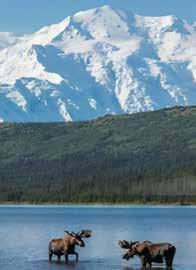
the wildlife seemed to know they had the wilderness mostly to themselves.
Moose wandered the valleys, wolves moved like shadows across the tundra, and grizzly bears blended into the landscape like shifting earth tones. Out here, nature was firmly in
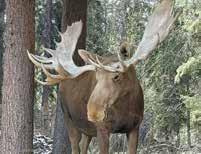
charge, and we were simply passing through.
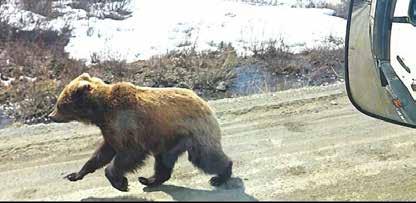
With 22.5 hours of daylight and only a brief twilight before sunrise returned, bush camping beneath the endless northern sky felt unreal. We fell asleep to the haunting howl of wolves and the rustle of unseen animals moving through the brush — wilderness at its most raw and immediate.
Further north, we stopped in Nenana, home of the famous Nenana Ice Classic, where locals and visitors bet on the exact moment the Tanana River ice finally breaks each spring.
Arriving in Fairbanks, we found a place where frontier wilderness meets small-town warmth. Under the glow of
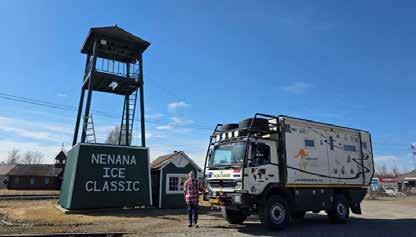

the midnight sun, we slowed down for a few days — restocking supplies, catching up on laundry, and adjusting to life without darkness. From there, we made a three-day escape to Chena Hot Springs, surrounded by forests and steaming geothermal pools.
Back in Fairbanks, we explored the Chena Riveraboard the historic Riverboat Discovery, where members of the local Athabascan community shared stories of survival, resilience, and a culture shaped by more than 10,000 years in Alaska’s interior.
Next stop: the long 800-kilometre drive north to the Arctic Ocean — bringing us within 1,750 kilometres of the North Pole.
In 1969 I moved from Netherlands to NY where I worked for the UN as a secretary and studied university at night. After graduation I got a job as an economist in Houston, Texas, where I lived for 4 years, before moving to South Florida where I worked for local government in Miami.
My brother had moved to Australia in 1969 and lived and worked in many places such as Darwin, Mt Isa and Perth. My mother, who was divorced, had stayed in The Hague. But after she retired from teaching, she had moved to Perth in 1985 to live with my brother and his Australian wife. She would come and visit me in US every year.
However, in 1989 she was diagnosed with a serious heart problem and told not to travel anymore. We decided that I would move to Perth, Australia, and go live with her.
After two years living with my mother in Perth, she died and I moved to Canberra to work for the government.
After my retirement I travelled to Netherlands a few times and continued to live in Canberra, enjoying its cultural facilities. But after some years I moved to the Prins Willem Alexander Village in Queensland, which was my downsizing in preparation for more travel. There were many places I would still like to visit, both in Australia, the US and outside it. Around 2016 I received a small inheritance
from my father, enough for a large trip. I was beginning to feel some effects of aging. Soon it might be too late to do it.
My sister in law from Perth found a cruise from Sydney to Seattle, that was stopping at some Pacific Islands, including Hawaii. It was a so-called repositioning cruise and much cheaper than a normal cruise over that distance. So we booked it. And I decided to expand the trip to see old friends and visit some of my bucket list places.
In April 2018 we sailed from Sydney, to our first stop, Noumea. This place became a lesson in French as the shopkeepers didn’t speak English (or pretended not to). During
my school years in The Hague I had studied French for 9 years, but I had never practised it. Now I started stumbling a bit of French, trying to dig it out of my memory, and by the end of the day I found I could speak in complete sentences again.
The next stop was Hawaii, where we did the obligatory visit to Pearl Harbour. I enjoyed that more than I had anticipated, the history of the place really spoke to me. On our second day in Hawaii I took a bus tour following one of the world’s most dangerous roads, the Road to Hana. It is on the rainy side of the island and the road is very narrow and winding with many bridges over waterfalls. The scenery was fascinating.
Many of the beaches we came past were black volcanic sand. After three weeks on the ship we arrived in Seattle. We spent one day walking around the CBD and next took an early morning train to Vancouver, Canada. This is a beautiful and interesting place, on a bay, wedged in between mountain ranges. It is a rather expensive place, but we stayed a few days in a hotel in the CBD, taking the tourist bus, and attending a Paul Simon concert which happened to be only one block from the hotel. We also visited the most impressive Stanley Park where the indigenous people had a display of More on page 13
One day I was crossing the bridge at the end of our street when a group of Dutch boys in brown uniforms surrounded me. They yelled and asked me if I was Jewish and where was my yellow star. I didn’t know if I was Jewish and said no but had no idea what it meant
Then they made me empty my pockets and threw my few potatoes into the water before they ran off. My mother and my grandfather were furious when I told them. Mum told me I wasn’t Jewish and that those wretched people were worse off then us. Another time I saw a dead horse in a street. A large crowd was slicing bits of him. A pool of blood ran down the gutter. I started to cry and a man said, ‘go home, child.’
One more memory stands out when I was potato searching. I had stopped at the gate of a garrison. Two soldiers were standing just inside. One of them said in German, ‘how old are you?’
I told him.
‘Are you hungry?’ he asked. I nodded.
‘Wait here, ‘he said. He whis-
pered something to the other one and went into the guardhouse. He came back with a large sausage curled up with the ends tied.
‘For you,’ he said and handed it to me through the gate. My mother and grandparents were amazed and happy. We ate it when my father came down and we all felt sick afterwards. ‘Too rich,’ my mother said.
The snow started, burying the branches and sticks and the potato wagons seemed to have gone. Mum tells me that I became listless and stayed in bed. I stopped going to the soup kitchen with Opa. I also didn’t have the energy to go and get my crepe sandwich from my friend’s mother who when she realised that, came and brought it to us each day. Not long after that I went to the country.
‘Why do I have to go?’ I asked.
‘Because there will be food. You’ll become strong again and when the war is over and you come back, you’ll be able to walk and run again.
‘I’m just tired. Opa doesn’t want me to go. Opa said I can have his ration of soup. He’ll find something else.’
‘There is nothing else.’
I sat on my mother’s lap, digging my hands into her armpits for warmth. It was bitterly cold and iced flower patterns covered the windows.
‘Your father and I and Oma don’t want you to go either. But it is for the best.’
“Why can’t you go too?’
‘Because only children are going and I have to look after Oma and Opa and make sure Pappa stays hidden.’
He was our secret. I couldn’t even tell my best friend across the street. My father came down from his hiding place in the afternoon and only then would they use a little coal to heat the stove. He had to walk very softly and whisper in case someone heard him. Some evenings he would tell me a story before I went to bed. My mother would come in and say. ‘Jo, you have to go up now.’
Then I heard them walk up two flights of stairs to the attic room. First a pile of coal would be scraped away, then the lino was lifted under which a small square of floorboards had been cut. My father pulled this up and lowered himself into the hole.
more on page 14
Zie je mijn handen?
Ze zit aan mijn bureau om zich in te schrijven voor een kampeerweekend op het scoutingterrein waar ik dienst heb. Ze zit naast haar medeleiding. Ik pak de reserveringsgegevens erbij, ik overleg over de deelnemers en ik leg een en ander uit.
Eigenlijk praat ik vooral met degene naast haar. Want zij kijkt.
Zij kijkt naar mijn handen. Onbewust beweeg ik mijn handen meer.
Totdat ik mij daar bewust van word.
Dus ik probeer zoveel mogelijk haar blikken te negeren. Maar ik zie dat ze mijn handen volgt.
Mijn lieve, schattige, kleine en zeer lenige handen zijn gehuld in zilverwerk. Ik voel me net Kortjakje!
Dat zilverwerk zit er niet voor het mooi.
Dat zilverwerk is medisch. Het zijn spalken die zorgen dat mijn lenigheid niet ten koste van mijn functioneren gaat. Oftewel: dat mijn vingers niet uit de kom schieten, mijn knokkels niet wegzakken en
mijn hand niet in een permanente kramp schiet.
Maar, ik geef toe; deze zogenaamde Silversplints zien er ook best mooi uit. Een beetje Steampunk meets Cyborg.
Voor de Trekkies onder ons: ik voel me net Seven of Nine met die dingen om!
Regelmatig krijg ik complimenten over mijn zilveren handen.
“Wat heeft u mooie sieraden om uw handen!” hoor ik dan. Zonder de ander verlegen te maken, bedank ik hen voor het compliment: “Ja, ze zijn mooi he? Toch zijn het alleen geen sieraden. Het zijn eigenlijk spalken!”
En dan leg ik vervolgens kort uit waarvoor ik die nodig heb. Ik kan dit inmiddels ook al in het Engels, Duits en Frans uitleggen, alhoewel de laatste wel enige vrije interpretatie behoeft, vrees ik.
Je zou kunnen denken: waarom legt ze dit dan uit! Maar de juf in mij kan het niet laten om toch ook wat kennis over te dragen. Hoe aardig ook, ik draag het niet voor de lol.
En met mij zijn er nog zoveel anderen die ook te dealen hebben met hun hulpmiddelen en
het begrip, maar ook ónbegrip hierover.
Overigens eindig ik zo’n gesprek meestal met een lolletje dat ik mijn splints ook prima geschikt zijn als boksbeugel. Voor in de klas.
Of bij lastige ouders.... Ooit liep ik met oudste dochter in de stad.
Om haar been zat een vrolijke spalk die moest voorkomen dat haar onderbeen brak. Nooit als een geheim verstopt onder haar maillot, maar zichtbaar en in fantastische prints.
Zo’n ukkie, die dapper stapt en zich iedere dag laat inbinden, die heeft al genoeg aan zichzelf en alle sores die hangt om de aandoening die de botzwakte veroorzaakt.
Dat kind heeft niet de starende ogen nodig en de fluisterende opmerkingen die daarmee gepaard gingen.
Vragen vanuit een onschuldig hart waren niet erg, maar volwassen ondoordachtheid raakt diep.
“Oooo, wat errug en wat zielug!”riep ooit eens een vrouw, nadat haar dochtertje uitgebreid stond te wijzen naar de spalk van oudste.
Waarop ik reageerde: “Oooo wat errug als je niet jezelf fatsoenlijk kunt gedragen in het bijzijn van je kind. Wat een goed voorbééld ben jij!”
Kun je nagaan dat dit voor sommige mensen dagelijkse kost is.
Vandaag had ik een kennismakingsgesprek met een mogelijke student voor komend schooljaar. Ook daar zag ik weer de starende blikken.
Zeg ik er dan wat van? Ga ik het uitleggen? Of zeg ik niks?
Verbeeld ik het me? Is het belangrijk genoeg om er iets over te zeggen? Is dit het goede moment?
Ik blijf twijfelen.
Ik wil een ander geen ongemak bezorgen.
De inschrijving voor het kampeerweekend is afgerond.
De brandblusser staat klaar, de aanhanger is geregeld voor het vervoeren van de tenten, de corveelijst is ingevuld.
Deze scouts kunnen aan de slag op hun prachtige kampeerveld.
Ze kijkt nog steeds naar mijn handen.
Dan kijkt zij mij aan en zegt voorzichtig: “Wat heb jij mooie Silversplints om je handen.”
Alleen lotgenoten weten hoe
dat heet, realiseer ik mij meteen.
“Dank je wel! Jij weet waar je het over hebt?” reageer ik. Ze zegt: “ik heb ze zelf ook, ik heb hypermobiele Ehlers Danlos....”
Aah, dat heb ik ook. Zij keek, maar zag iets anders.
Dan vervolgt ze: “Ik wil ze alleen niet dragen. Ik heb het gevoel dat mensen dan van alles van mij vinden.”
Ai, dit raakt me. Ik vertel luchtig wat het dragen ervan mij oplevert. Dan vraag ik haar: “ik zag je kijken naar mijn handen. Had jij een mening over mij en mijn functioneren, toen jij de splints zag?”
Ze reageert direct: “Welnee, helemaal niet!”
Dan pas beseft ze eigenlijk wat zegt.
Wat is het toch jammer dat, wat we een ander gunnen of wat we bij een ander normaal vinden, dat we datzelfde niet voor onszelf kunnen accepteren. Wat leggen we de lat toch hoog voor onszelf en wat laten we ons leiden door het mogelijke oordeel van een ander. Misschien moet ik dat ook eens tegen mijzelf zeggen....
Elke dag yoga
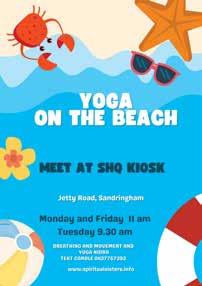
Als je elke dag yoga doet, hoef je echt niet elke keer een heel uur alle oefeningen te doen. Zodra je gewend bent aan de combinatie van ademhaling en beweging, kan tien minuten al voldoende zijn. Je hoeft ook niet per se een yogales in groepsverband te volgen. Je kunt gewoon thuis of zelfs vanuit je stoel ademen en bewegen.
Adem in en breng je armen omhoog. Adem uit en laat je armen weer zakken. Hetzelfde kun je doen met je benen: adem in terwijl je een been optilt en adem uit terwijl je het weer laat zakken.
Je kunt ook afwisselen door één arm tegelijk te bewegen, of juist een arm en het tegenovergestelde been. Daarna wissel je van kant. Zo maak je de oefeningen iets uitdagender, terwijl ze eenvoudig blijven.
Het voordeel van het koppelen van je ademhaling aan je beweging is dat je lichaam tot rust komt. Door rustig en bewust te ademen stimuleer je je parasympathische zenuwstelsel, waardoor je ontspant.
Na tien minuten – of soms zelfs al eerder – kun je daar de voordelen van merken.
Daarnaast helpt een dagelijkse yogaroutine om op een gezonde en ontspannen manier aan je dag te beginnen.
Doe yoga bij voorkeur niet met een volle maag. Misschien is het daarom prettig om eerst een paar minuten yoga te doen, daarna een kopje koffie of thee te drinken en vervolgens te ontbijten.
Traditioneel wordt geadviseerd om ongeveer drie uur voor een yogasessie geen zware maaltijd meer te eten. Zo heeft je lichaam voldoende tijd om te verteren en kun je vrijer bewegen zonder dat een volle maag in de weg
www.spiritualsisters.info
After the game, Van Hecke admitted that the injury affected his vision. “He kicked me in the eye with all his might,” Van Hecke said, per The Mirror. “I was heading for the ball, so I thought something might happen. At some point, it definitely affected my vision. I can’t see very well on that side right now. I hope it will get a little better in a few days. I think it will swell up a bit more later, but that’s also part of the game.” Despite the injury, he played the entire game and had not missed a minute during Netherlands’ World Cup run.
After the game, the referee’s comments were instructive.
“I REGRET MY DECISIONS! “
Chief referee Wilton Sampaio has apologized to the players and staff of the Netherlands following the defeat against Morocco. He admitted that some situations on the pitch were not up to the expected standard and that the pressure of the match influenced his important decisions. Those excuses were not able to calm down Ronald Koeman. The head coach believes that the whole match was spoiled by serious errors of the arbitration. Immediately afterwards, Koeman announced that he would file a complaint with FIFA and demanded clarification about the controversial decisions.
After half time, I thought that Koeman would surely change
his tactics and formation. They were fortunate when Hakim struck the upright and was dangerous again minutes later but for a timely tackle by Mick van de Ven.
Koeman persisted with the formation and tactics, and at first, it appeared to reap the dividends he had hoped for. Koopmeiners punted a long pass to Weghorst who had replaced Brobbey, who in turn headed it neatly to Summerville. Dribbling forward, he slid the ball across to Cody Gakpo who scored an emotional goal. He fell down in tears as he clearly was thinking about the loss of his unborn son.
Unfortunately for the Dutch, the Moroccans scored in injury time sending the match to extra time then penalties. It occurred to me after the Justin Kluivert penalty miss is that it was a carbon copy of his father Patrick’s miss on 29 June 2000. Not only were the dates the same, but both players struck the exact same left post.
A good friend, Keith, commented on facebook on how disappointed he was with the Dutch fans after the game and compared them to the Japanese who demonstrated great respect. I thought of the words of the famous Liverpool coach, Bill Shankly, who once said, “Football is not about life and death. It is much more important than that!”
And so it is with the Dutch fans, but not in the way most outsiders would think. It is not necessarily about winning, but how the team played and how they played is not how a Dutch national team is supposed to play. Defending with five players is not the Dutch style of playing. The Dutch style or the Johann Cruyff style, is a 4-3-3 system. An exhausted Frenki de Jong best summed up the game afterward not just for the players, but for the Dutch supporters.
“I feel empty inside empty inside. We played bad. We played with a numerical disadvantage in midfield. It was really difficult with only two midfielders. I’m disappointed, but that was the coach’s plan and we did our best to follow it. They had more possession of the ball.”
If the Dutch had progressed to the next round, the ciriticism would still have been the same, but perhaps without the extra venom or emotion. When the Japanese team lost, they played their usual, fast, energetic style and didn’t resort to a complete change of national character in the way they played. This is what happened in the Moroccan game. Ask yourself, what would happen if Brazil or Argentinia adoped a 5-2-3 formation.
More on the last page
New Year Special for Dutch Courier subscribers only.
Purchase two books, receive one free.
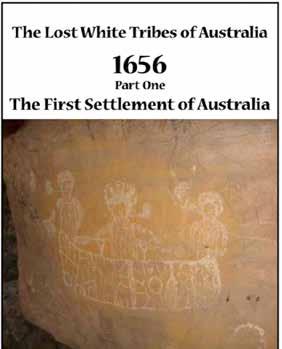
Choose any $60 book from the following: 1606 Discovery of Australia, 1629 Mutiny on the Batavia 2nd edition large print, The Lost White Tribes of Australia Part 3: 1766 Australia’s First Pandemic.
· Buy any two of the above $60 books and get a free $30 book. The free books include: The Lost White Tribes of Australia Part One; 1629 Mutiny on the Batavia 1st edition small print. Note that there are limited copies of unedited versions of Part 3 not listed on the website, also at $30.
· Write the name of the free book in the notes of your order.
· January orders will receive an express post upgrade. Visit australiadiscovered.com.au or write to henry@australiadiscovered.com.au.
2026 - 420th anniversary of the first European discovery of Australia
Any purchase of 1606 Discovery of Australia in January and February will receive an upgrade to express post.
Thank you to Luke Jansen, who sent me the following Facebook message, as well as permission to reprint his correspondence.
Luke Jansen wrote: “This is one of the most amazing books I have read about the discovery of Australia, the amazing life of Willem Janszoon in service of his country, and the founding of the Netherlands. An enthralling and masterful read. Every person of Dutch heritage should read this.
Henry Van Zanden replied: Thank you, Luke. It was difficult to write as I had to translate 16th century Dutch, spend thousands of hours researching, and scour the internet for the very best images that matched either the events or the time period.
Luke Jensen replied, “Henry Van Zanden, well, you did a superb job, and I tell all my Dutch friends about it. Deserving of De Orde van de Nederlandse Leeuw for literature in my opinion.
By Monica de Knecht
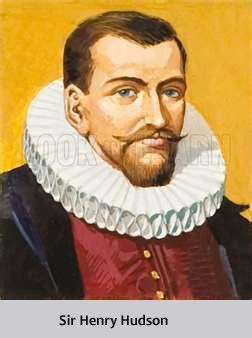
Although he was arrested, Hudson was soon released to sail under the British flag, for his final voyage on the Discovery. This would be his last attempt to find a Northwest passage. His main sponsor was Sir Thomas Smythe, governor and treasurer of the Virginia Company and also of the English East India Company. The English Government ordered him and the English members of the
crew to desist from further explorations for other countries. In my opinion,, this was a very weak punishment for the crime of treason, which was usually punished, at the time, by hang, drawing and quartering, a most terrible punishment, invented by Edward 1st in the 13th century. First the traitor was drawn, that is, tied to a horse and dragged to the gallows. There he was hanged
the Queen and open rebellion. Robert Juet was included among Hudson’s crew for the third time. This was a decision that would eventually cost Henry Hudson his ship and his life. Sir Thomas Smythe only provided eight months of provisions for the crew.
The voyage started inauspiciously with a company man put off the ship and another man brought aboard - Henry Greene, a gambler, who would prove a partner in trouble with Juet. According to the journal of Abacuck Pricket, Hudson promised to make Greene a member of the Prince’s Guard on their return, which speaks of the personal influence Hudson must have had with Henry Stuart, Prince of Wales. Almost from the start there
and cut down while still alive; then he was disembowelled, his entrails burned, beheaded and quartered. (This last step was accomplished by tying each of the four limbs to a different horse and spurring them in different directions.) Remember, this was Stuart England, where this punishment was almost a daily event and could always be well attended by the common people, who almost thought of it as an entertainment. (Children of the time were less squeamish than now). Treason could be anything from just calling the King an idiot to sleeping with
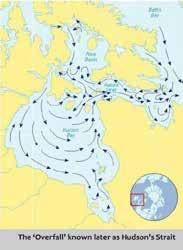
erous to the small ships of Hudson’s day. Water from the bay rushes eastward along the south side, while water from the Greenland current and Davis Bay rushes west along the north. Ice is torn into large dangerous chunks that whirl around in the current. Careful navigation and a steady hand is required: it is easy to be turned around in the conflicting currents, and the small, high ships of Hudson’s day could overturn and capsize in rough waters. By the fall of the year the crew was stuck hundreds of miles south, unable to go further or to get home. They had to endure a harsh winter in that hostile land, during which one crewman died and most others were sickened by scurvy or lack of food. Again, Hudson showed his inability to deal with the natives and his own crew during the cold months they spent ashore. He was a great navigator, but was never in control of his crew.
was trouble with the crew. Hudson’s ability to manage his crew appears even weaker than in previous voyages. There were fights and almost a mutiny within the first few months, before they even reached the area Hudson intended to explore. Discovery ended up sailing through the treacherous Arctic waters north of modern Quebec, the Furious Overfall - known today as Hudson’s Strait although he did not discover it - and into a large body of water now known as Hudsons Bay. The currents in the strait are rapid and turbulent, treach-
The crew just wanted to go home. Because provisions were getting very low, battles broke out over food. Hudson was not able to control the rationing. Eventually a large number of crew members, led by Juet and Greene, met together on 22nd June, with a plan to force Hudson and a group of sick crew members onto a shallop (a small wooden boat). The following morning, the mutineers trapped a loyal crew member in the ship’s hold and then tied up Hudson as he left the cabin.
The men then loaded Hudson, his son and seven other crew members onto the shallop and set it adrift. The explorer and his loyal companions were never seen again. (Journal
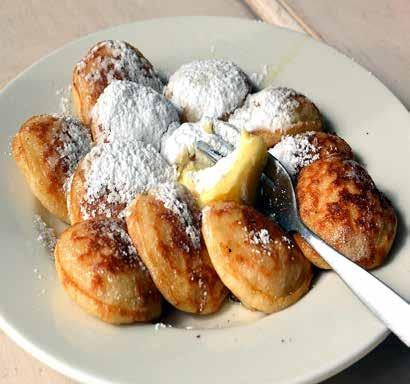
Poffertjes at the RFM Farmers Markets
1st Saturday of the Month Churchill Island and Kingston 8am - 1pm
of Abacuk Pricket). “The full story of Hudson’s saga reveals one of the darker chapters of the European age of discovery.” (Mancall, 2009) On the way back to England, the ship was piloted by Robert Bylot. Many of the crew, including the lead mutineers, died on the return voyage, some from fights with the natives, others of starvation. When the survivors returned home they were arrested for mutiny, but would all be cleared later, including Abacuk Prickett.
VERY STRONG EVIDENCE THAT HUDSON MAY HAVE BEEN A SPY So the case for English espionage on the Dutch is very strong. First of all, what better reason to get your hands on Dutch maps, than to pretend to be working for them. Secondly, as I have said he committed treason under James 1st who had already had an attempt against his life when Guy Fawkes and his Catholic conspirators tried to blow up Parliament with the King. So any treason was treated with the utmost severity in Stuart England. Henry Hudson was not only let off, but he was given a title. Big reward for 2 unsuccessful voyages for the British. Thirdly, Sir Thomas Smythe of the English East India Company gave them limited supplies for a big expedition. Most of all, in my opinion, was the mutiny and possibly cold blooded murder of Hudson, led by the 2 ringleaders that he possibly trusted the most, especially as he promised Greene a commission in the Prince’s Guard and Juet had been with him on his 2nd and 3rd voyages.
More on page 12
2nd Sunday of the Month Williamstown 9am - 2pm Robbertson Reserve (Corner Cole and Hammer Street)
3rd Saturday 34 Homestead Rd Berwick
4th Saturday of the Month Bayside 8am - 1pm
Trey Bit Reserve, Jetty Road Sandringham
Continuation from page 11
Mutiny was usually a hanging offence, especially as Hudson had, presumably, been great friends with Prince Henry.
(Henry was at that time the Prince of Wales, but owing to his premature death from Typhoid fever in 1612, his brother Charles 1st became King on the death of James 1st). How was it possible that again the survivors went ‘scot free’. (Juet seems, to me, to be the same sort of cunning manipulator as Corneliszoon, who totally fooled Pelsaert in the Batavia Mutiny and Massacre. Hudson seems to be just as fooled as Pelsaert by Corneliszoon, for he is trusting Juet as Mate on 3 voyages.)
Maybe the English just wanted to get rid of a man who had spied for them, on the Dutch, in a more subtle, secret way than by executing him. If all his crew went with him – So what?
Spies were always expendable, especially in the serious business of trade. Ironically, Juet died in September 1611, when the returning vessel was within sight of Ireland. So he did not live long after his betrayal of his captain. Henry Greene, the other ringleader, died before, one of those killed in a battle with the local Eskimos. If these men were acting under the British East India Company, the company was probably happy that the ringleaders perished. Added to this the influence of Prince Henry would have diminished
greatly as he was becoming very ill at this time, so his father, James, would not have cared at all about any of his son’s trading friends. He would have been too distraught about his son.
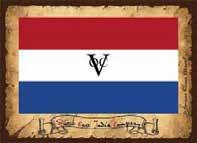
In May 1611 Commander Laurens Reael, left in control of four ships for the East Indies. The flag ship was the Halve Maen. As you may remember from one of my earlier stories, Laurens Reael was the Governor General of the East Indies VOC headquarters, when it was stationed in Ternate in the Moluccas. He was Governor General in 1616 at the time of Dirk Hartog’s discovery of the western coast of the Great South Land or Terra Australis as it was then known .
In 1618, the Halve Maen was destroyed during an English attack on Jakarta in the Dutch East Indies.
In 1909, a replica of the Halve Maen was given to the United States by the Kingdom of the Netherlands, on the occasion of the 300th anniversary of Hudson’s voyage. The ship was constructed at the Rijksmarinewerf in Amsterdam. The keel was laid on 29th October, 1908 and on 15th April, 1909, the ship was
launched and then transported to the US on the Holland America Lines freight liner Soestdijk in order to attend the Hudson-Fulton Celebration in New York. The replica was eventually towed to Cohoes, New York. However it perished in a fire on 22nd July, 1934. So history repeated itself with the replica. However it lasted 25 years. We don’t know much about the circumstances of the fire. Was it deliberate sabotage? Who knows. Another mystery??
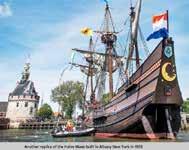
Over eighty years later another replica of Halve Maen (officially Anglicized as Half Moon) was constructed in Albany, New York in 1989 by the New Netherland Museum. The museum contracted with Nicholas S. Benton to design and build the replica. Mr. Benton, a master ship-rigger and shipwright, was president of the Rigging Gang of Middletown, Rhode Island, which specialized in colonial ship restoration and design. To prepare for building Half Moon, a $1 million project, he visited maritime museums in the Netherlands and the United States. After his death while assisting with the rigging of another vessel,the construction of the Halve Maen was completed by the New Netherland Museum.
The year 2009 marked the 400th anniversary of Halve Maen’s voyage. For the anniversary, the Crown Prince of
of the Netherlands, WillemAlexander and his wife, Maxima, were on board, as well as students from a Dutch school. This anniversary was marked in September 2009 with festivals, music and sailing ships parading around New York Harbor. (Wikipedia) So far this replica has outlived both the original Halve Maen and its first replica. Let’s hope 3rd time lucky.
BIBLIOGRAPHY AND REFERENCES
Mancall, Peter, “Fatal Journey: The Final Expedition of Henry Hudson”, 2009 Basic Books
A Journal of Mr. Hudson’s last Voyage for the Discovery of a North-West Passage (Excerpt from a Larger Discourse of the same Voyage by Abacuk Pricket, 1625.
Wikipedia and Encyclopaedia Britannica and Ianchadwick. com Henry Hudson, Explorer - Biography.com and Henry Hudson – Exploration –History.com.
Hunter, Douglas (2009). Half Moon: Henry Hudson and the voyage that redrew the map of the New World. Bloomsbury Press
Robert Juet. Transcribed by Brea Barthel “Purchas His Pilgrimes (Juet’s 28 June 2006. (Journal of Hudson’s last voyage)
Elke week ben ik met poffertjes op de farmersmarkt. Ik begon daar als een fundraiser voor Dutch TV
Nu merk ik dat ik vooral herinneringen verkoop en verhalen hoor over dat land daar overzee.
Het zijn geen zielige verhalen, maar verhalen van de buurvrouw die ook poffertjes maakte en zo maakte ze in Australie een beetje de Nederlandse cultuur mee.
In Australie houden ze van andere culturen. Misschien ook wel omdat het juist zover weg ligt van de rest van de wereld, ik heb eigenlijk geen idee.
Als je in Australie een accent hebt dan wordt dat juist opeens gewaardeerd. Terwijl ik weet dat dat zeker niet zo is in Nederland, dan denken ze NEE
Praat toch gewoon goed Nederlands, terwijl de migrant ws 5 andere talen spreekt. Wordt er gewoon verwacht dat je vloeiend bent ook al drink je alleen maar een kopje thee.
Waarom is een land die eigenlijk zo tollerant was, opeens zo veranderd in de opvatting naar zijn migranten? Waarom wordt de migrant behandeld als een stuk vee?


Gelukkig ervaar ik dat niet zo hier in Australie en ben ik blij dat met mijn accent gewoon geaccepteerd wordt wie ik ben, ook al kom ik van ver over die zee
Continuation page 8
totem poles.
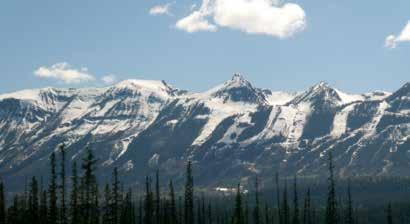
I took the Rocky Mountaineer train across the Rockies to Banff. The train trip provided wonderful views of the most northern region of the Sonoran Desert, some greenish rivers thanks to mineral content, and the many snow-capped peaks of the Rockies. In Banff I visited some tourist spots including Lake Louise, where I had afternoon tea at the terrace of the famous Fairmont Chateau Lake Louise, basking in the late spring sunshine, and then continued on to Calgary. On the Banff bus I ran into some people who lived close to me in SE Qld, small world. I stayed a week in Calgary where I discovered that my Telstra mobile overseas card still didn’t work in Canada. So I had to buy a cheap phone for local use and they told me that in Eastern Canada I would need yet another phone.!
I met up with some people I knew from Canberra, and hired a car to drive to Drumheller, where Alberta’s famous Royal Tyrrell Museum is located. It contains dinosaur skeletons that are still being found in the surrounding Badlands. The site is the centre of palaeontological research and through
a glass wall the scientists can be watched in action.
After a few days I flew to Montreal where I hired a car to drive to Lake Placid (in the US) for a weekend, and then back into Canada, touring Quebec State, practicing my newly regained French and meeting up with friends in Quebec City. From there I drove south into New Brunswick (also French speaking) and then East to Prince Edward Island where I stayed five days with friends who live half the year in Canada and the other half in Australia.
PEI is connected to the mainland with a 13 km long bridge that goes up rather high. Fortunately for me, the sides of the bridge are covered so I couldn’t see how high above the water I was. It was quite stormy when I drove the bridge back to the mainland, but it was not very noticeable on the bridge. I drove to Halifax in Nova Scotia, stopping at the Bay of Fundy to observe the extreme difference between high and low tide there. Then I flew to NY.
In NY I booked into a small hotel in the Chelsea district. There were many flower shops, and plants and trees spilled out onto the sidewalk.
It felt almost like walking through a park. I called up the friends I wanted to see and made appointments. Some came to the hotel, sometimes we met at a museum or restaurant. It was so nice to see my old friends, most of whom date back to my first year in NY. After a week during which I attended a play and also a concert in Carnegie Hall, I flew to Ft Lauderdale, Florida, to stay for five days with an old bridge playing partner. She first helped me buy a new mobile as I had lost the Canada phone (which did work in NY) somehow between NY and Florida. She drove me around to my old neighbourhood and other favourite places, we met with other old friends, including some of my former work colleagues, and had many lunches and dinners.
I was a bit sad to leave so many old friends, but others were waiting for me in the days ahead. I flew to Savannah, Georgia, which was extremely hot and humid, worse than SE Qld where I now live. After a day tour of fabulous Savannah and a great local seafood dinner, I drove to charming Charleston where I took another day tour. These two towns are famous for their French influenced southern architecture and their trees covered with Spanish moss.
From there I drove to Charlotte, North Carolina, actually right on the border of South Carolina. Here I met a distant cousin and his family. The cousin is a nephew of my father in The Hague and the last time I had seen him was when we were both about ten years old. He was a professional photographer, also working on films in the US. My father and mother and I all were avid amateur photographers. Obviously, it runs in the family.
From Charlotte I drove to Dayton, Ohio, which took two days. I drove through Virginia and West Virginia, through a tunnel under the Appalachian Mountains, and was able to see why John Denver wrote a song about his love of West Virginia. It was gorgeously green, forested hills and valleys everywhere.
In Dayton I stayed five days with a friend from working at Delft University in 1965. We had kept in touch all these years and when I lived in NY we did get together sometimes. We had a great time catching up and were sad to say good-bye again. From there I drove to Indianapolis, Indiana, which was only a two-hour drive through corn fields. It was now the 4th of July and I attended a conference in Indianapolis. My hotel room was on the 30th floor, not my favourite height, but I enjoyed watching the fireworks all over town from this great lookout. I stayed five nights, attending many presentations of the conference, and included a visit to a very good American Indian Museum.
From Indianapolis I flew to Albuquerque, New Mexico, where I again visited an Indian history and art museum and bought some pottery. I also visited the old town centre with its many buildings in the picturesque adobe style. It was a bit touristy with lots of souvenir shops, but the many shaded café terraces provided respite from the hot sun. My hotel was also an adobe building with small windows and dark corridors, which caused me to experience a bit of a claustrophobic feeling.
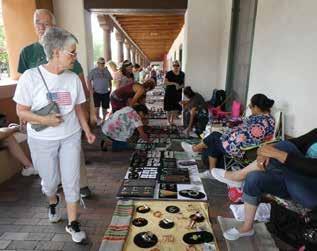
I took a day trip to the town of Santa Fe, a two-hr train trip away (very cheap), and the charming old centre has authentic Spanish-Indian architecture. I had a relaxed lunch in the adobe style Anasazi hotel, its dining room and corridors decorated with Indian artefacts, pottery and paintings, like a museum. The food was a bit pricey, but it was authentic and tasty. Around the corner a long patio alongside the Governor’s Palace was occupied by Indigenous people selling Indian jewellery. Many were the artists themselves who displayed their silver and precious stones creations on blankets on the ground. There were many beautiful creations, but prices were not cheap, and that saved me from buying all the gorgeous stuff.
From Albuquerque I drove to San Francisco in four
days, first heading north to Winslow (Arizona), well known from the Jackson Browne song. In the motel at Winslow my neighbours were also Dutch. They were driving the US in the opposite direction that I was taking. From Winslow I followed Route 66 westward, stopping at the Meteor Crater, created 50,000 years ago, which was very impressive. I continued driving west through the Arizona, Nevada and California deserts. I stayed overnight at a place called Needles which was nothing but an old railway depot and two motels. Further north and west I stopped at Bakersfield, which is an early source of the petroleum industry in California (1890s). I visited the interesting mining museum. The Bakersfield area is still producing oil. I was impressed by the many wind farms in California, strategically placed on the hills. There were also many almond farms lining the roads. Irrigation was all underground. I also passed a few NASA locations, such as Edwards Air Base, the Jet Propulsion Lab and the SETI Institute.
In San Francisco I stayed at a motel near the airport, did a bus tour of the city and the Golden Gate Bridge, and visited some people at the university in Berkeley. Then it was time to go home. I had been travelling for three months and was feeling a bit tired. In total I drove over 6000 km and I had a great time. There were many challenges, most to do with mobile phones, computer access and credit cards. We have become so reliant on these digital aids that we are stuck when they don’t provide us the service we are used to and expect.
I flew from San Francisco via Los Angeles back to Brisbane and although I was flying business class and was able to lie down and stretch my legs, I wasn’t able to sleep during the long flight. I was probably overtired. After I got home in my lovely Dutch retirement village, I needed three weeks to recover from the jetlag. It had been a fantastic trip, especially seeing old friends again and driving the old Route 66. I definitely got my kicks.!
Continuation page 9
memoirs by Marja Rogers
My mother would say, ‘take your medicine, Jo.’ My father said, ‘it gives me headache.’ ‘Better than coughing and getting caught,’ my mother replied. Then she would close up, replace the lino and scatter the coals.
The underground supplied the medicine. I don’t know what it was but it was strong enough to stop him coughing and make him sleep.
When they came it was late in the evening. It was the one time my father had decided to retire later. The front door bell rang, followed by banging on the door and shouting to open up. From my bed I could see my mother frantically rushing my father up the stairs. My grandfather came into my room and my grandmother was screaming, ‘they are bashing down the door.’
I learned later that my mother had accidentally left the key to the front door under the lino while hurrying my father into the hide-out. She realised and shifted the coal again, up with the lino, pick up the key, back with the lino, scatter the coal and run downstairs.
‘I’m coming,’ cried my mother. ‘I’m coming. I couldn’t find the key.’
Four soldiers followed my mother up to the first landing. I heard one soldier screaming at my mother in German, ‘Where is he?’
He was holding a long gun against my mother’s stomach.
‘Search the house,’ he ordered the other three.
‘Where is he?’
‘Please be careful,’ my mother said.
‘Careful? Careful?’ he yelled, pushing her further against the wall. My grandfather moved to her side.
‘He’s not here. He left a few months ago and didn’t return home. I don’t know where he is.’
‘You are lying.’
Then he came into my room..
He spoke Dutch. His voice was soft, ‘darling, where is your Daddy?’
I saw my grandparents, my grandfather was holding my mother’s hand. The man turned around and waved them away. ‘Back,’ he snarled.
‘He left.’ I said. ‘He went away and didn’t come back.’
The bed bounced as the man hit the side of it with his hand. My
grandfather made a move to go to me but my mother stopped him. Instead she looked at me and mouthed shhh while patting her hand downward. We waited. I was still in my bed and my mother in front of her parents while the search went on. Banging walls and floors with their riffles. Finally they left and my mother was so worried about my father who must have heard them.
‘We can’t let him out. Sometimes they come back.’
My father had heard the rifles and no doubt it must have frightened him. From then on my father stayed in his hole for longer periods but they never came back.
The day arrives for me to go to the country. Mum walks me to the city centre to an unused department store. Two trucks with large Red Cross signs are parked outside. Most of my clothes are on my back but Mum packed a small bag. The walk is exhausting because I’m tired but also because I have outgrown my shoes and am wearing clogs. Snow keeps sticking to the soles and we have to scrape it off before we go on again. I heard later that
my mother was too weak to carry me. Inside there are children, mothers and Red Cross people. I’m given a card on a string around my neck which I suppose have my name and details on it. Mum kisses me goodbye, then we troop outside and climb into a truck. There are no seats, we sit on the floor of the truck. I’m sitting near the back. Just before the back doors are pulled up, I see my grandfather running through the snow and he is waving. We are on our way to Vroomshoop, a small village about 150 kilometres from Utrecht. To avoid bombs, mines and war zones, It takes
two days to get there. The night was spent in a sort of a warehouse with rows of camp beds. We are given soup. The next morning the Red Cross people are angry with me because I’ve wet the bed and all my clothes. Back into the truck until we finally arrive at the Vroomshoop railway station. We’re led into a room full of people. One man says, ‘you come with us.’ I follow Mr and Mrs Slot. Mr Slot carries their two year old girl Linie and Mrs Slot carries my bag. We walk. After a while he gives Linie to his wife and carries me the rest of the way. When we arrive home the table is laid with an amazing lot of food. Bread, butter, cheese and wurst. But I’m told I can only have one slice of bread and more tomorrow, otherwise I will be sick. I am to call them aunt and uncle. Their house is very small. From outside one enters a large room with a fuel stove in one wall. A table with four chairs and the cot in which I will be sleeping. This is where we eat and live.
We ended up at the old XV Infantry Battalion camp which now was turned into a central civilian internee camp as we later found out. The situation was slightly better than in our old camp in regard to food . The remainder was the same except that the internal situation was well organised by the Dutch camp leader and his Dutch interpreter. Whatever was possible to do with recreation, education etc. was done and that was very important for morale. There were outside working parties by means of which people could sometimes earn extra food and smuggle things in. This was, however, not easy, as was shown by
the frequent public punishments of not only the internees, but also the women who were caught outside trying to hand over mainly food to the internees. This always caused such an uproar that for weeks outside work was banned and, in the end, completely abandoned.
The front part of the camp included several houses alongside the roads which were occupied by the Japanese military and civilians in uniform who were in charge of the civilian population. Also living there were Italian subjects, who, according to the grapevine, were submarine crews. They had a much better treatment and food than the ordinary internees.
At this time I had to make a big decision. The food situation inside the camp was still below minimum standards. The sickbay was full of patients, mainly suffering from malnutrition-related diseases such as beri-beri, tropical ulcers and all the other sicknesses so common in all Japanese war
camps. My father, who was mentally a very strong man, started to lose so much weight and showing other signs of severe undernourishment, that something had to be done. Outside work did not bring enough to help him, so that when volunteers were asked to work in the Japanese compound I put my name down after long deliberation, for I knew that a kind of ostracism would be applied to people voluntarily working for the Japanese. To make a long story short, I got a job and then was told that we had to shift out of the camp into the Japanese compound. This meant that all the plans I had made fell through, but it was too late now and I had to make the best of it.
I ended up working in the kitchen of the Japanese compound. God must have smiled upon us because, when I looked out of the kitchen for the first time, I saw the bamboo camp wall, and then my old plans came up again. After a few days of looking over the area, I spotted a couple of trees
and bushes and, most importantly, a drain which came out of the camp and which, after a few metres, swung back into the camp again. The plan took more concrete form.
In the meantime the indoctrination into kitchen work had started, accompanied by the usual bashing. Later I found out that the soldiers looked down on kitchen work and that was the reason that the smaller of the two cooks, about l m 60 in height, had an inferiority complex which he worked out on us in the kitchen. The other soldier was far more interested in his books and he never bothered us.
Meanwhile I had informed my father of the plans I had made. At a certain time at night I would throw bamboo containers filled with food from the Japanese kitchen into the drain for him to catch at the other side of the bamboo wall. After emptying them, he would throw them in the drain that returned them to the Japanese compound. It took a few weeks
before we had it down to a fine art, right down to the signalling.
We were bedded down in one of the smaller houses and had a bed and mosquito net. It was only a pity that we could hardly make use of these luxuries as 12 to 14 hour workdays were normal. The Japanese compound seemed to be the hub of the social life in that area and nearly every night there were functions, which explained the long working hours. To come back to my father; much later, after the camp time, I met several people who spoke of his work in camp, so I asked “What work?” and then the whole story came out. He had distributed food to the needy and to people in the sickbay. He must have taken the Dutch camp leader into his confidence to be able to get the food to the sick. It was a marvel of diplomacy and so no- one squealed and informed the Japanese guards. This was also
More on
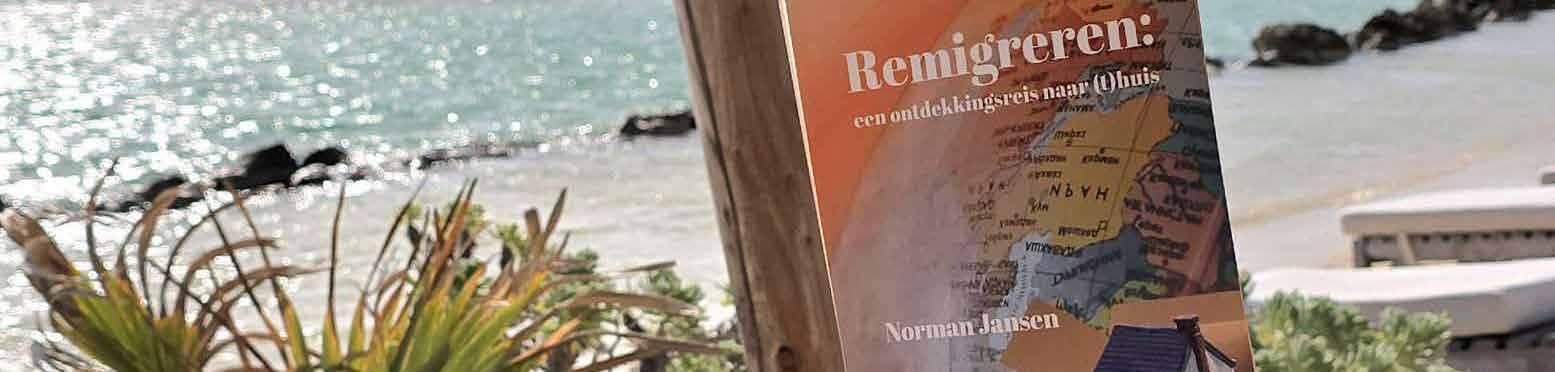
Norman Jansen: Remigratieervaringsdeskundige, auteur, expat, ondernemer, medeoprichter wensambulance Curaçao (FADK), oprichter van: ‘Norman Jansen, thuis in (r)emigreren’.
Remigreren
Ik weet niet of dit bij u in Australië een heikel punt aan het worden is, maar hier in Nederland begint het woord remigratie zo langzamerhand een andere betekenis te krijgen door de politieke verharding en de toenemende polarisatie in de Nederlandse samenleving.
Tot voor kort googelde voormalige Nederlandse emigranten op het woord emigratie, remigratie en/of mijn naam vooral met het doel om meer informatie te verkrijgen over het al dan niet terugkeren naar het eigen land na een langdurig verblijf in het buitenland.
Speciaal voor geëmigreerde landgenoten, die na verloop van tijd toch besluiten om weer terug te keren naar het geboorte/thuisland en op zoek zijn naar tips & tools om deze nieuwe emigratie soepel te laten verlopen.
Groot was mijn verbazing toen ik niet zo lang geleden een telefoontje ontving van een journalist van een groot landelijk dagblad. Zij stelde mij een aantal vragen die te maken hadden met standpunten van een aantal (extreem-) rechtse Nederlandse politieke partijen die veelal gebruik (of noem het misbruik) maken van het woord remigratie. In eerste instantie had ik niet helemaal in de gaten waar dit
gesprek naar toe zou gaan, enige associatie met bepaalde rechtse partijen was mij in ieder geval onbekend. Ik vroeg deze journalist hoe zij op mijn naam was uitgekomen en ze vertelde doodleuk dat dankzij google op de woorden ‘remigratie’ en ‘terugkeren’ mijn naam al vrij snel naar boven kwam. Na doorvragen viel uiteindelijk toch het kwartje en begreep ik het.
In het hele vreemdelingenvraagstuk, de overvolle asielzoekerscentra in Nederland en het groot tekort aan geschikte woonruimte staat in bepaalde Nederlandse politieke partijen steeds vaker de terugkeer van vreemdelingen naar het land van oorsprong centraal. Ik moest ook even zoeken op het internet maar al snel zag ik inderdaad de vele verwijzingen staan. Daar vond ik zelfs een artikel uit 2025 van de NOS waar tijdens een interview het volgende werd gezegd:
“NOS versus Lidewij de Vos: ‘Deze term is extreemrechts!’
Nouschka van der Meijden en Lidewij de Vos (© NOS)
-De NOS interviewt lijsttrekkers in de aanloop naar de Tweede Kamerverkiezingen en dinsdag is het de beurt aan Lidewij de Vos. Politiek verslaggever Nouschka van der Meijden spreekt De Vos aan op het gebruik van een ‘extreemrechtse term’, maar de Forum voor Democratielijsttrekker is zich van geen kwaad bewust.
In de interviews worden kijkersvragen voorgelegd aan de lijsttrekkers. Van der Meijden leest voor: “Waarom is een asielstop niet voldoende en wil u toch remigratie introduceren?” Ze voegt op eigen titel toe: “Remigratie is een term die gebruikt wordt door extreemrechts en waarvan de coördinator terrorismebestrijding ook zegt: ‘Gebruik die niet.’ Maar jullie hebben het wel in het programma staan.”
De Vos vindt niet dat de term beladen zou moeten zijn. “Ik vind het heel kwalijk dat de NCTV een politiek oordeel vormt over deze term. Het is een heel logische term om te gebruiken. Immigratie zijn mensen die hier naartoe komen; emigratie zijn mensen die vertrekken. Remigratie is het vertrekken van mensen die hier naartoe zijn gekomen. Het is een heel feitelijke benaming van een fenomeen.”
Bijzonder toch, dat de connotatie van dit woord aan het veranderen is? En in dit geval bijna een negatieve klank gaat krijgen. Voor mij was dit een nieuw fenomeen waar ik nog niet eerder bewust van was. Maar tijden veranderen en kennelijk ook de betekenis van bepaalde woorden.
In eerdere publicaties probeerde ik als zo min mogelijk het woord ‘terugkeren’ te gebruiken voor die emigranten de na een lang verblijf in het buitenland ervoor kozen om ‘weer terug te keren’ naar het thuis- en/of geboorteland.
Immers, terugkeren impli-
ceert vaak het teruggaan naar het oude en bekende, in dit geval het thuis- en/of geboorteland. En juist daar zit het venijn, want terugkeren naar het oude bekende gaat voorbij aan het feit dat niets meer hetzelfde is zoals het destijds is geweest. Let maar eens op, oude wijken, dorpen, steden maar ook eigen familieleden en vrienden zijn niet hetzelfde gebleven als tien, twintig of dertig jaar geleden toen u naar het buitenland vertrok. Zij zijn ouder geworden, soms zelfs wijzer of hebben heel veel veranderingen mogen meemaken. Maar ook de emigrant, u dus, die ooit vertrok naar het nieuwe land is niet meer dezelfde als tien, twintig of dertig jaar geleden. Alles verandert. Mensen veranderen, de samenleving verandert en onze kennis, ervaring en inzichten zijn aan veranderingen onderhevig.
Dus op iedere presentatie, lezing of tijdens interviews geef ik aan: ‘Gebruik zo min mogelijk de term terugkeren maar spreek van opnieuw een emigratie of desgewenst remigratie. Dan begrijpt iedereen dat je weer opnieuw moet leren aan te passen, acclimatiseren en dat het nu eenmaal tijd kost om je plekje in het andere land weer te (her-) vinden.
Maar nu lijkt het er dankzij de huidige Nederlandse politiek wel op dat ook het woord remigratie/remigreren niet meer voldoende is om te associëren met het ‘terugkeren’ naar Nederland.
Misschien moeten we met z’n allen weer een nieuw
woord uitvinden, een woord dat inhoud en begrip geeft aan de vele tienduizenden Nederlanders die ieder jaar weer besluiten om het nieuwe woonland te verlaten en weer te kiezen voor Nederland. Hoe gaan we dat dan noemen? Heeft u een suggestie?
Best regards, met vriendelijke groet,
Norman Jansen Thuis in (r)emigreren

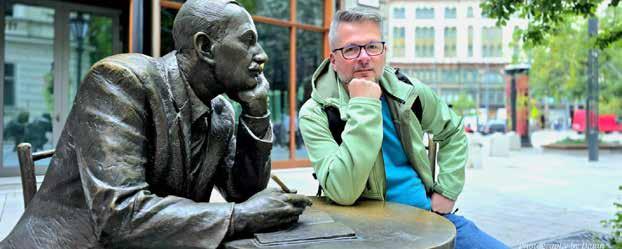
1 July marks the 163rd anniversary of the end of slavery in the Dutch colonies and Keti Koti celebrations are underway around the country.
Slavery was formally abolished in the former colonies of Suriname and the Dutch Antilles on July 1, 1863, ending a period of around 200 years.
Keti Koti, which means ‘broken chains’ in the Surinamese language Sranantongo, has been celebrated in various Dutch cities on July 1 since 2002.
KNVB condemns racist abuse of Dutch players who missed penalties
July 1, 2026
Three members of the Dutch national football team have received racist abuse online after they missed penalties in the World Cup defeat to Morocco.
The football association KNVB condemned the messages that were sent to Justin Kluivert, Cyrsencio Summerville and Quinten Timber following the shoot-out defeat on Tuesday, Kluivert and Summerville disabled replies to their posts, making the messages invisible, but Timber’s account showed dozens of racist comments and images.
Thialf skating arena to stage Winter Olympics races in 2030 June 30, 2026
The Thialf stadium in Heerenveen.
The Netherlands will host an Olympic competition for the first time in more than a century after organisers of the 2030 winter games in France confirmed that the skating events will be held in Friesland.
The International Olympic Committee (IOC) cleared the way last week for Heerenveen to stage the long-track races because there is no suitable venue in the French Alps. The local committee confirmed the decision on Monday.
Sports minister Mirjam Sterk said it was a “unique opportunity” for the Netherlands to showcase its skating facilities at the winter Olympics.
Forget one glass a day: no al cohol is safe, Dutch advisers warn
There is no safe level of alcohol consumption and even a single glass a day carries risk, the Dutch Health Council has concluded, advising the government to actively discourage drinking of all kinds for everyone in the country.
In an advisory report published on Thursday, the independent scientific body said alcohol policy should aim to “denormalise” drinking for all age groups and all sections of society, rather than identifying a level it considers safe.
The council was asked by the health ministry to look at alcohol’s effects on health “in the broad sense” – not only the risk of disease and death, but also road accidents and incidents of aggression and violence.
It found strong evidence that alcohol, in any quantity, raises the risk of seven types of cancer, as well as the risk of organ damage. The old idea that moderate drinking might protect against heart disease, for example by lowering cardiovascular risk, is not proven, it said.
vercrowding and lack of staff could prompt prisons to put more prisoners on day release, according to justice ministry plans leaked to broadcaster NOS.
Prisoners would be allowed to work outside the prison walls wearing an electronic tag and return to the prison at night, sources said, citing junior justice minister Claudia van Bruggen.
An “action plan”, expected to be discussed at a ministerial council meeting on Friday, will propose to broaden conditions so more prisoners can participate in the scheme.
Children were “forgotten” in the Netherlands’ response to the coronavirus pandemic and their rights pushed aside, the parliamentary inquiry into the government’s covid response was told on Wednesday, as two witnesses said decisions had been dominated by medical advisers. Margrite Kalverboer, the Children’s Ombudsman (Kinderombudsman), an independent watchdog for the rights of under-18s, said the
cabinet had “forgotten children” when weighing its decisions. The country had “certainly violated children’s rights”, she told the commission. The government’s expert advisory panel, the Outbreak Management Team (OMT), included no child psychologist, only medical specialists, Kalverboer said, and her written warnings to the prime minister and the education minister went unanswered.
Moluccans have welcomed the Dutch government’s apology for its postwar treatment of their community, but many said it had come too late, as many of the first generation –who the apology is aimed at –have already died.

An ombudsman had no power to force action, she added, and she questioned whether she should have pushed harder.
School closures hit some children hard, Kalverboer said. Secondary schools should have reopened sooner, and vocational students suffered “deep loneliness” trying to follow practical courses from a screen. She also pointed to children left at home with abusive family members during the lockdowns.
Don’t close schools again Paul Rosenmöller, who chaired the secondary schools council (VO-raad) during the pandemic, said he had been “unpleasantly surprised” by the decision to close schools in March 2020, after expert advice flipped within a day.
The cabinet had acted “too lightly”, he said, and the closures had widened inequality of opportunity – some pupils studied “three to a kitchen table” while others had no laptop at all.
Education had not been a priority and the OMT’s advice was too “narrow”, Rosenmöller said. The decisions had been dominated by the health ministry, he added.
His message to the panel was blunt: do not close schools again, and make it a conclusion of the final report. Slob is due to testify on Friday, when the inquiry’s week on education closes.
Prime minister Rob Jetten delivered the acknowledgment on Sunday at the unveiling of a national monument in Rotterdam, a step he had been expected to take in the run-up to the ceremony.
Jetten apologised for the “heartless and dishonourable” discharge of the Moluccan soldiers, for their poor reception and housing, and for the years in which their suffering went unacknowledged. “You are seen,” he said.
Suicide rate drops, but remains top cause of death for under-30s
A total of 1,758 people took their own lives in the Netherlands in 2025, an average of almost five a day and 92 fewer than the year before, according to provisional figures from national statistics office CBS.
At 9.7 per 100,000 people, the suicide rate was at its lowest level since 2010. It had ranged between 9.9 and 11.2 per 100,000 in every year since.
Men accounted for more than two-thirds of the total. There were 1,205 suicides among men, against 553 among women, a gap that holds across almost every age group and is widest among the over-80s.
The overall fall, however, masks a longer-term rise among young people. Suicide remains the leading cause of death for people under 30: it accounted for 22% of deaths among teenagers in 2025 and 28% among people in their twenties, more than road accidents in both groups.
The rate among young women has climbed over the past 25 years. Among girls aged 10 to 19 it has roughly doubled since the early 2000s, and 29 girls in that age group took their own lives last year.
The highest rates are still found among people in their 50s and 60s, who made up 37% of all suicides in 2025.
All students at vocational schools, colleges and universities are to be given a legal right to payment for their internships, under cabinet plans reported by broadcaster NOS on Friday.
The law will not, however, set a minimum wage. Instead, industry sectors and companies offering internships must make “reasonable” arrangements themselves, education minister Rianne Letschert said. “There is real arbitrariness: one student gets paid, another does not.”
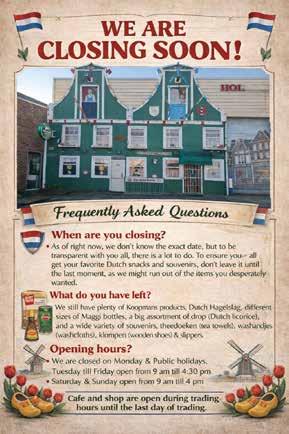
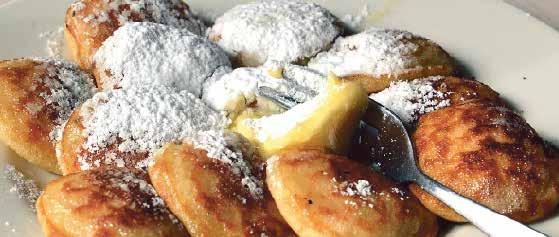
1 vrucht, 3 zegen, 6 onaangenaam, 9 bladeren, 12 vervlogen, 13 windrichting afk., 15 kook- gerei, 17 niet wijs, 19 aangesteld beschermer, 21 minimum, 23 in de rimboe, 24 geliefde, 26 bijbelse figuur, 27 eikehout schil- len, 29 stellig, 30 aanwensel, 32 rechte trompet, 34 beroep, 35 antwoord, 36 rechtskun- dige term, 38 bewonderaar, 40 armzalige woning, 41 bevel, 42 vermoorden, 44 gestold vlees- nat, 46 soort hennep, 48 stuurs mens, 49 beker, 51 deel van het oog, 54 tangens afk., 55 uitste- kend strookje, 57 vliegensvlug, 59 wettelijke aansprakelijkheid, 60 steen, 61 aanbieding, 62 ge- reedschap, 64 baarsvisje, 66 del, 67 insekteneter, 68 plaats in Duitsland, 70 oude zeeman, 71 aanzien, 73 rivier in Afrika, 74 zeiltouw, 76 zekere, 78 wapen, 79 plaats in O-Vlaanderen (B), 80 ouderwetse vrouwenmuts, 82 luchtvaartmaatschappij afk., 84 populier, 85 hoog gaande bal, 87 eekhoorn, 89 dichtbij, 91 voedster, 92 zuignap, 93 nihil, 95 loom, 96 listig iemand, 97 vis- mand, 98 etenswaar, 100 drui- lerig, 102 houten vat, 103 Frans lidwoord, 104 slechts, 107 loslij- vig zijn, 109 loskorrelig, 110 hunkeren, 112 arbeidsovereenkomst afk., 114 bloem, 116 sprong, 117 hommel, 119 soort groente, 121 volgzaam, 122 hals, 123 verpak- kingsmateriaal, 125 plaats in Noord Holland, 127 stuk bouw- land, 129 eetlust, 130 siervogel, 131 mejuffrouw afk., 133 spoe- dig, 136 evenzeer, 137 stoppen met pedaal, 139 wegberm, 140 uurwerk, 141 gesloten, 143 pe- toet, 144 aanhaling, 145 jacht- wild, 146 koud vleesgerecht, 147 chirurg, 148 in het jaar.
1 jonge kip, 2 zwaaien, 3 armoe- dig huisje, 4 en dergelijke afk., 5 hetgeen men verdient, 6 zoet produkt, 7 anno passato afk., 8 stootbalk, 10 sier, 11 marineschip, 12 deel van het gelaat, 14 oom, 16 muurholte, 18 stomme- ling, 19 zeedier, 20 betrekkelijk voornaamwoord, 22 vistuig, 24 etenswaar, 25 deel van een zeil, 28 getralied hok, 29 flauw, 31 calorie afk., 33 kluister, 35 ongerooide boomstomp, 36 bier, 37 boom, 39 teug, 41 onderdeel van de tijd, 42 deel van aalfuik, 43 joker, 45 windvrij, 46 religi- euze groep, 47 sterrenbeeld, 48 wasgelegenheid, 50 lepelspijs, 52 Maleise rijst, 53 symbool voor blankheid, 55 speelgoed, 56 zangvogel, 58 populaire mu- ziek, 61 gek, 62 afgestroopte huid, 63 vogeleigenschap, 65 zonder sap, 68 gestorven, 69 middel, 72 Franse daalder, 73 bek, 75 boom, 77 netto afk., 80 warmtestraling, 81 vuig, 83 vochtmaat, 84 plaats in Gelderland, 85 waterjuffer, 86 tippelen, 88 agent, 90 wilde ha- ver, 91 afgescheurde lap, 94 lie- den, 96 knip, 99 dry, 101 intens, 102 landenteken Australie, 103 coupon, 105 torn, 106 tussenzet- sel, 108 boomscheut, 109 drank, 110 stoot, 111 bijbelse figuur, 113 uitroep, 115 leest, 116 vaste regel, 117 plaats in Noord Brabant, 118 stoten, 120 plaats in Overijssel, 122 zelfkant, 123 naar beneden gaan, 124 papierformaat, 126 ma, 128 paardje, 129 eindje, 130 puist, 132 vliegtuig, 134 snelle draf, 135 grote gehoorzaal, 136 uitroep van schrik, 138 wol- vlokje, 140 boenmiddel, 142 en anderen afk., 144 administratietroepen afk.

MiCare’s Retirement villages offer purpose built units for independent living
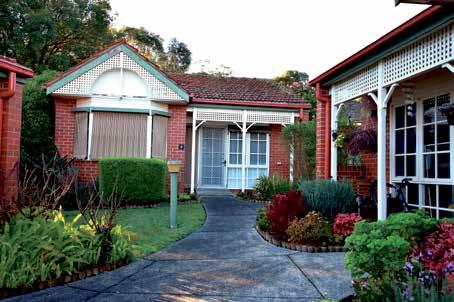
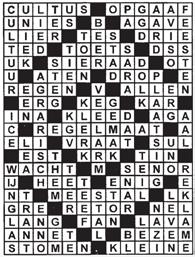
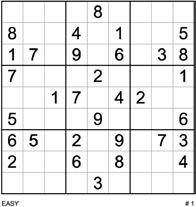
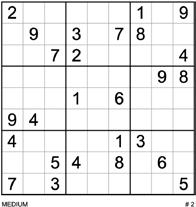
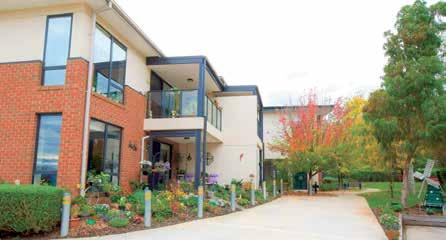
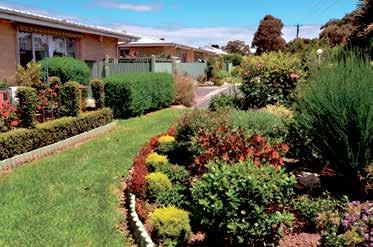
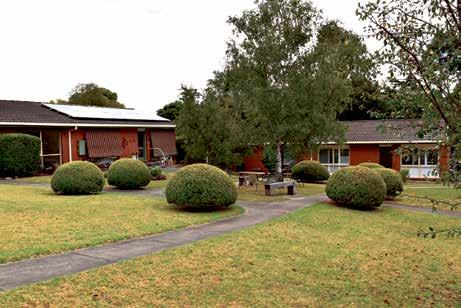
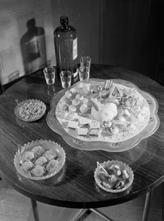
BY ROVERS
Lekkere geschiedenis van de tapas
Wie heeft de tapas bedacht? Waren het de Spaanse boeren, de obers of toch de Spaanse koning Alfonso X die graag wat kleine hapjes nuttigde?
Kwam het door de boeren?
De ene versie zegt dat het kwam door de boeren en de werklieden. Zij hadden behoefte om tussen de zware arbeid door wat kleins te eten. Zeg maar, om het energiepeil hoog te houden tussen het ontbijt en de hoofdmaaltijd. Vaak waren de tapas behoorlijk vettig en tja…dat moest natuurlijk met
een slokje (of twee, drie…) wijn weggespoeld worden. Kijk en dat zorgde er weer voor, dat het lichaam deze ‘broodnodige’ hapjes weer moest verteren. En wat doe je dan…een lekker tukkie (siësta). Daarna kon men weer fris en fruitig aan de slag.
De Spaanse koning at tapas
Of komt de tapas van één van de verschillende versies over de Spaanse koning Alfonso X?
Dat hij tijdens zijn ‘ziek zijn’ kleine hapjes en wijn kreeg toegediend. Hij vond dat zo’n goed idee, dat hij de tavernes de opdracht gaf altijd hapjes te serveren tijdens het drinken. Zo steeg de alcohol trouwens ook niet zo snel naar de kop. Of was het de andere versie? Dat hij tijdens zijn reis in een zand-
storm terecht kwam en moest schuilen in een taverne. Een ober bedekte zijn glas met een plakje ham (tapa betekend deksel), zodat er geen zand in zijn drankje kwam.
De ober bedacht de tapas?
Weer een andere versie is dat het obers waren, die in plaats van een schoteltje op het glas (tegen insecten) tapas gingen gebruiken om zo klanten te kunnen trekken. Bij deze versie kwam er toch echt geen koning aan te pas. Nu we het over obers hebben? Maak ik even een bruggetje….wat drinken we eigenlijk bij tapas? Traditioneel gezien zouden we er een glas lekker gekoelde droge fino sherry bij moeten drinken. Ben je niet zo’n sherry drinker? Wijn of bier mag natuurlijk ook. Of wat dacht je van een zelfgemaakte Sangria?

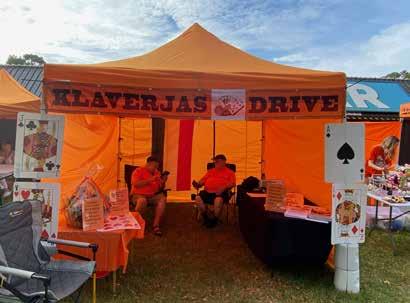
Lieve lezers,
Ik ben GT Rovers. Een vrouw, een vijftiger en moeder van twee fantastische zonen.
Pseudoniem GT Rovers
Mijn eigen voor- en achternaam (Elzeline Koerselman) zijn niet heel gemakkelijk. Gedoemd tot spellen zeg ik altijd. Daarom gebruik ik net als veel schrijvers dat vroeger deden een pseudoniem.
Boeken
Ik hing als klein meisje altijd al aan de lippen van mijn grootouders wanneer zij vertelden over hun leven vroeger. Naarmate ik ouder werd ontstond de passie om te schrijven over de jaren dertig tot begin jaren negentig. De columns die ik daarover schrijf zijn te lezen in TrosKompas, op mijn website en in mijn boeken: ‘Pure nostalgie’ en ‘Meer nostalgie’ en ‘Nederland bevrijd’. Wat was het een eer om te mogen schrijven over Nederland en Nederlands-Indië ten tijde en na de Tweede Wereldoorlog.
Interviews en podcasts
Voor mijn website nostalgieTV.nl interview ik mensen (sommige met dementie) die ons meenemen naar hoe het leven er toen uitzag. Deze video’s zijn voorzien van prachtig beeldmateriaal. Daarnaast kun je op zowel gtrovers.nl als nostalgietv.nl luisteren naar podcasts met natuurlijk allemaal verhalen over vroeger.
Veel plezier met het lezen en luisteren naar al die prachtige verhalen over vroeger.
Veel liefs,
GT Rovers
Teun and his documentary about Dementia
We did write about Teun and his documentary a few months ago..
Last month he was with his movie in Australia and he was succesfull getting media involvement. So was he on sunrise what a lot of momentum gives. Of all the positive reactions he got for standing up for the people who not really can anymore there is also the question.
Yes nice idea Teun, but my mum would have walked away the minute you would have opened that door etc. It shows as well how hard this topic is, but to be fair it is good to talk about it. Who is doing it the best in the world Teun didnt really give answer to that question.
Probably he also doesnt know as he just started a tour now in Australia. Do you know a place in Australia or in the world where you think they have a good balance with people with dementia?
Carole
Nederlandstalig en gezellige
Nederlandse liedjes en muziek
Radio programma’s kunt u beluisteren op maandag van 4-5 en op vrijdag ‘smorgens van 8-9
Wij nodigen u uit om als gast aanwezig te zijn tijdens een uitzending. Bel daarvoor op naar Ina Lewis 98593934.
U mag ook opbellen tijdens een van onze uitzendingen tel 94151923
Als U een programma gemist heeft kunt u het toch luisteren via internet (www.3zzz.com.au)
Wij wensen u veel luistergenot
Continuation page 14
THE FORMER DUTCH EAST INDIES - THE END OF AN ERA Jules Burgemeestre
the way in which we got Red Cross medicaments, held by the Japanese in our house, to the camp. But that is another story.
When this routine had become established, a load fell of my mind and I could concentrate more on the life in the kitchen, where the little cook Yanakisawa had developed an antipathy against me. Later I found out that he did not like my being so tall. He was pretty quick with his bamboo rod and loved to bash you around in the vicinity of your kidneys. In the end I cannot complain if I compare it with the many injuries others got in those
times, for he only managed to slightly damage two vertebrae at the bottom of my spine. In the middle of 1945 I was bashed and fell into a concrete gutter, scraping the shinbone of my left leg from knee to ankle. Through one reason or another it started to infect and as there were no medicines in the camp, even in the Red Cross parcels we had found in the house, it slowly started to develop into a tropical ulcer. To keep the story short, the doctors advised me that within a couple of days they had to make a decision whether an amputation would be necessary. I have had better news in my life.
More in next courier

Het hardnekkige probleem van de (te!) lange wachttijden voor een nieuw paspoort bij verschillende diplomatieke posten is helaas al jarenlang bekend – en daar zijn we achter de schermen veel en vaak mee bezig.
Wat wellicht minder bekend
was, tenzij er zelf mee geconfronteerd, is de rol van VFS Global.
Dit bedrijf wordt door veel landen ingehuurd (waaronder Nederland) om o.a. paspoortverlenging te regelen op plekken waar geen eigen diplomatieke post bestaat. En ook hier is het vaak heel druk.
Geruchten over onderhandse verkoop van afspraken, en het plots moeten bijbetalen voor allerlei soorten diensten die niet goed zijn geadverteerd –een soort Ryanair-isering van de paspoortenhandel – waren ons al eerder ter ore gekomen.
Die geruchten zijn we inmiddels voorbij: een recent artikel van Politico.eu (“How a company visas to Europe turned into big business”), is tot stand
gekomen op basis van een jaar lang journalistiek onderzoek. Dit artikel stond ook al in de laatste nieuwsbrief. Lees en huiver zelf.
Dit is onacceptabel. Tegelijkertijd hebben we nog niet scherp genoeg hoeveel Nederlanders getroffen zijn, noch waar of wanneer.
Vandaar dat de SNBNenquêtecommissie deze enquête heeft opgesteld, met het vriendelijke en dringende verzoek aan iedereen, die ervaringen heeft met VFS Global om de enquête in te vullen.

by
Terugblik juni
Van Nederland naar Australië: kustwaterbouwkundige Arnold van Rooijen verruilde ruim 10 jaar geleden Nederland voor Perth. Nu werkt hij als docent en onderzoeker aan de UWA. Hij vertelde over de verschillen tussen de kustlijnen van Nederland en WA, het belang van mariene ecosystemen zoals zeegras en onderzoek doen in de golfgoot.
Verpleegkundige Teun Toebes en filmmaker Jonathan de Jong maakten samen de bekroonde documentaire ‘Human Forever’, waarin ze de wereld rondreizen om te onderzoeken hoe we mensen met dementie een waardiger en menselijker leven kunnen bieden. Ze waren in Australië ter promotie van de documentaire en schoven aan in de studio.
“Warm, maar heel erg leuk en avontuurlijk”, zo omschrijft Max Magito (31) haar leven in Darwin (NT). Hoewel ze eerder in Amsterdam woonde, geniet ze hier van de rust en natuur. Cyclonen en krokodillen neemt ze op de koop toe. Ze vertelde erover in onze rubriek ‘Groeten uit...’.
Vijf jaar geleden werd Leo op den Brouw uitgeroepen tot Victorian of the Year. In juni kreeg de SES-vrijwilliger er een Koninklijke onderscheiding bij: de Medal of the Order of Australia. Wij spraken Leo over de eervolle titel van OAM en hij vertelt hoe zijn gemeenschap in Mallacoota er, ruim vijf jaar na ‘Black Summer’, voor staat.
Jimmy en Annelies Nijskens lieten zich voor hun emigratie naar Australië omscholen tot Belgische bierbrouwers. Tien jaar geleden begonnen
ze in hun garage als kleinste brouwerij van Australië. Inmiddels is Madocke Beer Brewing Company uitgegroeid tot een succesvolle onderneming en ontving het stel onlangs een BelgianAustralian Excellence Award. Wij spraken Annelies over
“De geschiedenis van Australië en Nieuw-Caledonië zijn op allerlei manieren verbonden, maar de meeste daarvan zijn we vergeten,” dat zegt historica Ingeborg van Teeseling. In de nieuwste aflevering van onze serie ‘Australië tot nu toe’ vertelde ze daar meer over.
SBS Dutch besteede in juni volop aandacht aan het FIFA WK voetbal. Sportjournalist Jaap de Groot was erbij en sprak onder meer met de bondscoach van Curaçao, Dick Advocaat. Het kleinste land ooit op het WK pakte zijn eerste punt ooit op een WK en na afloop kwamen de koning en koningin langs in de kleedkamer.
137 dagen op de fiets en toen de val. De 24-jarige Rick Keijzer fietst een rondje Australië als voorbereiding op een Ironman in Busselton. Maar na een val, waarbij hij zijn spaakbeen op twee plekken brak, moet hij noodgedwongen rust nemen. Wij spraken Rick over zijn avontuur, de tegenslag en hoe hij gemotiveerd blijft.
Onze series: in Astrids Boekencast besprak Astrid van Schoonacker ‘Het einde van Erna Ankersmit’ van Anna Enquist. Leesconsulente Larissa de Rue besprak in onze kinderboekenserie de de reeks ‘Rutger, Thomas & Paco’. En in Leer Nederlands gaf Joyce Diebels van Dutch with Joyce uitleg over woorden en zinnen die te maken hebben met wandelen, het WK voetbal en de fietsenmaker.
Al onze verhalen staan op onze website www.sbs.com. au/dutch en met de SBS Audio App (gratis te downloaden in de App store of Google Play) kunt u SBS Dutch altijd en overal beluisteren.
We zijn ook te beluisteren in uw favoriete podcast app. Meepraten kan op onze Facebookpagina www.facebook.com/sbsdutch en we zijn te volgen op Instagram www. instragram.com/sbsdutch.
Heeft u een tip voor het programma dan wel aanmerkingen? Stuur een e-mail naar dutch.program@sbs.com.au.
Mis niets en luister iedere woensdag- en zaterdagochtend om 11 uur naar SBS Dutch op SBS Radio 2: Adelaide 106.3FM / Canberra 105.5FM / Darwin 100.9FM / Hobart 105.7FM / Melbourne 93.1FM / Perth 96.9FM / Sydney 97.7FM.
Abel Tasman:
60 Rosstown Road, Carnegie
1 August
Dutch Borrel
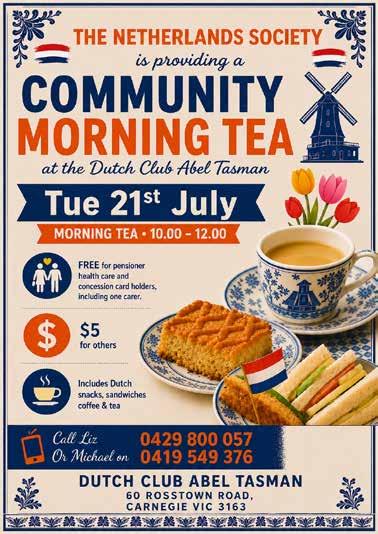
The Dutch Courier also will be there for the people who likes to have help with their digital part off the paper.
Poffertjes at the Farmers markets
1st weekend:
Saturday: Churchill Island and Berwick
2nd weekend in the month:
Sunday: Williamstown
3rd weekend
Saturday: Berwick
4th weekend :
Elly a call (9511 4392), so she can book a table NCCA
Netherlands Chamber of Commerce in Australia (Melbourne)
WARNAMBOOL
summer markets:, bitterballen Poffertjes at the Friday night market in Lake Pertrobe
Dutch Australian Society in Illawara
Cards on Monday afternoon Billiards on Tuesday, Thursday and Friday Pensioner group SVDO meets every second Wednesday
Neerlandia PERTH
Clubhouse details: Neerlandia is using the Rhein-Donau Clubhouse for all their activities.
Address: 110 North Lake Road, Myaree—6154
July 2026
Wed 1,15,29 Bingo 11am
Thurs 2,9,16,23,30 Neerlandia Thursday Night Cards 7pm
Sat 4,11,18,25 Dutch Singers 10am
Morley Windmills
Saturday Sandringham Treybit reserve
Tempo Doeloe Melbourne
Social Lunch at Bintang restaurant at 75 Stud Road in Bayswater. Note Bintang is pay by card only. If there are no hick-ups, we hope to see you there. Don’t forget, if you want to attend, give
Sun 5 Neerlandia Sunday Cards Drive 10:30am
Thurs 9,23 Neerlandia Seniors’ Club 10am
Fri 31 End of Month Drinks 6pm
LMRC Wembley
August 2026
Sat 1,8,15,22,29 Dutch Singers 10am Morley Windmills
Sun 2 Neerlandia Sunday 10:30am
Thurs 6,20 Neerlandia Seniors’ Club 10am
Thurs 6,13,20,27 Neerlandia Thursday Night Cards 7pm
Wed 12,26 Bingo 11am
Sat 15 Neerlandia 57th
Anniversary Lunch Swan Yacht Club, East Fremantle 11:30am Fri 28 End of Month Drinks 6pm
LMRC Wembley Sat 30 André Rieu’s Concert: Viva Maas
Dutch Club Brisbane NAQ Location: 123 Pine Rd, Richlands QLD 4077
Opening Times: Tuesday: 9 AM - 2 PM Friday: 9 AM - 2 PM Saturday: 9 AM - 12 PM
SYDNEY
De Kangoeroe celebrates 25 years
Nederlandse School De Kangoeroe is celebrating its 25th anniversary in 2026, marking 25 years of Dutch language and cultural education in Sydney. The school is looking for sponsors and partners to support its anniversary celebration on Sunday 13 September 2026 at Long Reef Surf Club.
For sponsorship enquiries, please contact David and Ingrid at sponsordekangoeroe@gmail.com.

Elke maand bespreken wij in het kort een boek dat is toegevoegd aan het bestand van Nederlandstalige boeken in de Dutch Club “Mies” bibliotheek, 99 Loftus Street, Leederville, Perth, WA.
Ik ben geen fan van Verhalenbundels: zodra ik goed in een verhaal zit, is het verhaal uit.
Deze verhalenbundel echter, Kwetsuur, geschreven door Anna Enquist, heeft diepe indruk op mij gemaakt.
Anna Enquist weet met mooi en vloeiend taalgebruik een aangrijpend verhaal te vertellen.
En aangegrepen was ik door de 10 verhalen over machteloos-
heid van gekwetste mensen die hetonderwerp van de verhalen waren. Anna’s vaak sombere verhalen van alledaagse situaties is zo realistisch en gevoelig geschreven dat het moeilijk is eigen emoties te onderdrukken. Verhalen over persoonlijk verlies en/of onmacht.
Het laatste (van 10) verhalen brengt een aantal personen uit voorgaande verhalen bij elkaar.
Dat gaf mij een plezierig gevoel van herkenning en het vertelde hoe het de hoofdpersonen verder was gegaan.
Dit laatste verhaal is een afronding van voorgaande verhalen dat, ondanks het open einde, een minuscuul lichtpuntje heeft.
Lees het-het is prachtige bundel. Kwetsuur werd gedoneerd door Sophie de Jong.
Een hartelijke groet! Feedback en vragen Machiel mvdstelt@gmail.com
Lianna lianna_parker@bigpond.com
Het onderhoud van de Mies Bibliotheek wordt mogelijk gemaakt door sponsorship van de Dutch Club WA
Rolf de Heer is a fascinating example of someone whose life bridges different cultures. Born in Heemskerk in the Netherlands in 1951, he emigrated to Australia with his family when he was eight years old. Growing up between Dutch roots and Australian society may have contributed to his interest in people who live between cultures and worlds.
Although he is not Aboriginal himself, de Heer became one of Australia’s most respected filmmakers for his long-term collaborations with Aboriginal communities and artists, particularly with David Gulpilil.
Rather than simply making films about Aboriginal people, he worked closely with Indigenous storytellers, actors and communities to help bring their stories to the screen.
His film Ten Canoes was groundbreaking. Co-directed with Peter Djigirr, it was filmed in Arnhem Land and told a traditional Yolngu story in Aboriginal languages. It became the first feature film shot entirely in Australian Aboriginal languages and won international recognition at Cannes.
Another important collaboration was Charlie’s Country, written with David Gulpilil. The film explores the challenges faced by many Aboriginal Australians trying to maintain their culture while living within modern Australian society.
It presents these issues with both honesty and compassion.
What makes Rolf de Heer’s work remarkable is that he often describes himself not as
the owner of these stories, but as someone helping others tell them. His films created space for Aboriginal voices, languages and perspectives to be seen by audiences around the world.
For someone with Dutch heritage living in Australia, de Heer’s journey is also an example of how migrants can develop deep respect and connection with the world’s oldest continuing cultures while remaining conscious that those stories belong to the communities themselves.
You can watch also now on
SBS on demand a documentary about bringing David back home. Its called : Journey home where is mentioned that Ralf also paid some money to help with that journey
Wat als we niet waren geëmigreerd?
“Wat als we niet waren geëmigreerd?” Die vraag kwam onverwacht. Niet tijdens een groot familiefeest of op een verjaardag, maar op een gewone zondagmiddag, terwijl de regen zachtjes tegen het raam tikte. Het was een vraag zonder goed of fout antwoord, maar eentje die een deur opende naar een leven dat nooit had bestaan.
Misschien hadden we nog steeds in hetzelfde huis gewoond. De buren zouden ouder zijn geworden, de kinderen uit de straat volwassen. We zouden de vertrouwde bakker nog kennen, dezelfde weg naar school hebben gefietst en elk seizoen hebben zien veranderen zonder ooit echt afscheid te nemen.
Misschien waren onze levens eenvoudiger geweest. Geen nieuwe taal om te leren. Geen cultuur waarin alles anders voelde. Geen momenten waarop je je eigen naam anders hoorde uitspreken of moest uitleggen waar je van-
daan kwam. We hadden ons nooit afgevraagd waar “thuis” eigenlijk was. Maar misschien hadden we dan ook veel gemist.
We hadden nooit ontdekt hoeveel veerkracht een mens in zich heeft wanneer alles onbekend is. We hadden geen nieuwe vrienden gemaakt die als familie gingen voelen. We hadden niet geleerd dat thuis niet alleen een plaats is, maar ook de mensen met wie je je leven deelt.
Emigreren betekende afscheid nemen van het bekende. Van gewoonten, herinneringen en vanzelfsprekendheden. Toch bracht het ook nieuwe kansen, onverwachte ontmoetingen en verhalen die anders nooit geschreven zouden zijn.
Soms romantiseren we het leven dat we niet hebben geleefd. In onze gedachten is het vaak rustiger, makkelijker en mooier. Maar ook dat leven zou zijn eigen zorgen, teleurstellingen en gemiste kansen hebben gekend. Elk gekozen pad sluit immers een ander uit. Dus wat als we niet waren ge-
emigreerd?
Dan waren we waarschijnlijk andere mensen geworden. Niet beter of slechter, alleen anders. Met andere herinneringen, andere dromen en andere littekens.
Het leven dat we nu hebben, is niet perfect. Er waren dagen van twijfel, heimwee en eenzaamheid. Maar er waren ook momenten van trots, groei en verwondering. Momenten waarop we beseften dat moed niet betekent dat je nergens bang voor bent, maar dat je toch blijft doorgaan.
Misschien is de vraag daarom niet wat als we niet waren geemigreerd, maar wat hebben we gevonden doordat we het wél deden?
Want uiteindelijk bestaat ons leven niet uit de wegen die we niet namen, maar uit de stappen die we wel hebben gezet. En juist die stappen hebben ons gebracht naar het verhaal dat vandaag nog steeds wordt geschreven.
Harm
Continuation page 14
memoirs by Marja Rogers Groeten uit Zeeland door: MARJO GILJAM
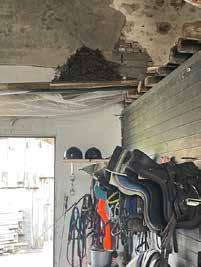
Wij zijn zuunige Zeeuwen, en Jari is verreweg het meest rendabele paard dat ik ooit heb gehad. Reken maar uit: hij heeft me alleen het dekgeld van 350 gulden (als ik het me goed herinner) gekost. Smeer dat uit over dertig jaar en dan kun je maar een ding concluderen: Jari is zijn geld meer dan waard. En ik hoop dat we nog jaren plezier van hem mogen hebben.
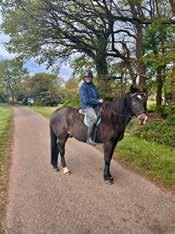
Een tijdje geleden ben ik een paar dagen weg geweest, en toen ik terug kwam stond Teco me glunderend in de schuur op te wachten. Hij wees naar boven, naar het scherm dat we vorig jaar boven de achterdeur hebben opgehangen omdat er een vogel een nest aan het maken was in de nok van de schuur. Die vogel was er nu weer, het was een kauwtje, en het dier probeerde samen met zijn partner weer een nest te
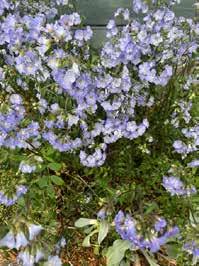
maken, maar de dieren waren in hun ijver vergeten dat takken slecht blijven liggen op een enkel steens muur. Ze bleven maar takjes aanvoeren en begrepen duidelijk niet waarom hun nest niet groter werd. Nee, en dat zal ook nooit gebeuren, want de takjes vallen aan de binnenzijde van de muur gewoon naar beneden en blijven daar liggen op het scherm, waar intussen een hoop van bijna een halve meter takjes ligt. Ik geloof dat de kauwtjes hun fout intussen hebben ingezien, ze nemen blijkbaar genoegen met een kleiner nest, of ze zijn naar een andere plek vertrokken om eitjes te leggen, zoals het vogels in mei betaamt.
Het is niet alleen genieten van de vogels en hun uitbundige gezang, ook de planten doen hun uitertste best. Het is gewoon feest wanneer je gaat wandelen of fietsen, de bomen zijn frisgroen, daarboven die mooie blauwe lucht waar we al dagenlang van profiteren, en de ene plant na de andere schiet in bloei. Ik werk met het grootste plezier in de tuin, want wat is er veel te beleven.
De spirea heeft een waterval van wit kant, de seringen hebben nog nooit zo mooi gebloeid als dit jaar, en wat geuren ze heerlijk!
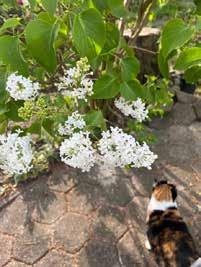
Under the pear tree
A door connects it to the parlour, a smaller room with a round table and chairs in the middle. A window with a lace curtain covered with dark red heavy curtains. The tablecloth is made from more heavy red material. A framed photo of Mrs Slot’s parents hangs on the wall next to the window. Next to the door is a fireplace with a high mantelpiece. Above the door on a wooden beam hang bacon, speck and pork pieces. Meat from their own pigs. The next wall holds a dark oak china cabinet. On the opposite wall are two large wooden cupboard doors behind which are the ‘bedstees’. An ancient way of built-in beds into the walls of cottages. These bedstees have tiny little windows to the outside. A little step pulls out to climb up and in. Mr and Mrs Slott sleep in one and Linie in the other. I can’t sleep there because I am a bedwetter and have to sleep in the kitchen in a cot which is far too short for me. It means that I can’t stretch my legs
The toilet is in a shed behind the house. Mr Slot empties the toilet pan when it is full on his land. I think he has an acre or more behind his place. He grows wheat, potatoes and vegetables, all for their own use. Once a year a machine comes and harvests the wheat and that of the neighbours. Mr Slot works in the peat fields. He doesn’t speak much except to say to me ‘help your aunt.’
I’m a bit scared of him and try to keep out of his way. Every evening after dinner Mr Slot reads the Bible out loud. One day I was leaning on my elbows probably wanting it to end when he stops reading and growls, ‘take your elbows of this table, sit up and learn something.’
Some Sundays after church we visit Mrs Slot’s parents. They live in an even smaller house with stone floors sprinkled with sand. The old man is nice and tells me that I can be his 33th grandchild.
Next door to the Slots is a large ‘boerderij’ (farm house). Mrs Slot tells me they are rich and own most of the land around. There are no children to play with but I make friends with their grown-up children.
I’m afraid of the tethered goat. The goat’s milk I have to drink is bitter and smells. I like watching the two pigs in their pen. They slosh around in mud and filth until they are big and fat enough to be killed,
cured and hung. I only remember what Mr Slot eats. A large white plate with a pyramid of potatoes, meat and vegetables at the side and covered with jus. He eats and doesn’t speak. I sometimes see a girl who was on the truck with me. She’s staying with the headmaster of the local school. When she and his daughter see me, they laugh at me because I speak dialect now.
Mrs Slot has long black hair and combs it often while sitting at the kitchen table. She tells me that having lice is healthy. The end of the war is near. The Germans are retreating. The bombing is starting. We have to go into the bomb shelter at the back of the shed. We can hear the noise of the bombs. We are in there for two days. Different people from the underground with white bands around their sleeves keep coming in with news. ‘They are blowing up the bridge’ and ‘they are coming closer’ and ‘the men are being rounded up and shot’. Mrs Slot cries a lot. At last it is over. The war is over. This part of Holland was one of the last to be liberated. I collect a whole box of empty brass bullet shells. I’m told not to walk away from the house because of land mines.
A card arrives to say that I have a sister. I’m over the moon. Not long after Mrs Slot tells me that I am going home. It is strange but I remember not being overjoyed. I’m eight and I have become used to this life.
Mrs Slot gives me a straw hat with a little silver ship on the front and a puppy. I cry when I wave them goodbye. Back into the back of a truck to Utrecht.
A much quicker trip than the first time. The dog vomits on my legs.
When we arrive in Utrecht someone asks me if I know where I live. I answer yes and I also point at a little boy who lives not far from us. So he and I head for home. I carry my bag and the puppy and wear my beautiful hat. We pass his house and I go on alone. I ring the bell and yell out, ‘open up’ through the letter box in the door.
I hear Mum yelling, ‘it is Marja.’ They all think I have grown. I want to see my sister and am disappointed that she is so small. Mum is standing behind me and says ‘don’t touch.’ She removes my hat and stares in horror, ‘Oh God, she has lice. Jo, go the chemist and get something.
I never see my hat and dog again.
The war is over and school starts again. My father eventually starts working as a book-keeper for a paint business. My grandmother can’t handle the stairs any longer and my grandparents move to a place for the elderly. It’s in the middle of the city on a street next to a canal. One enters through a gateway with heavy wooden doors to a small street with tiny houses on either side. Many years ago, maybe a hundred or two, those gates would be locked at night. Today the front is a restaurant and some of the little houses are still standing and occupied by young couples. My grandmother is bedridden but my grandfather visits us regularly. I also visit him after school. He says, ‘sit kind, sit. Are you hungry?’ He cuts me a slice of bread, spreads it with butter and golden syrup. When I finish eating, he gets my bike out of the hall, and says, ‘go home now before it gets dark.’
My mother becomes sick with diphtheria. I’m not allowed to go to school and a small board is put on our front door saying there is diphtheria in the house. My grandmother, my father’s mother, comes in everyday to help and I have to look after my sister. My friend across the road loves playing mothers. She pays me to look after my sister. It is a good arrangement until my grandmother discovers it. One other time I tie my sister on a long rope to a down-pipe next to our front door. I make sure she is safe and go off to play. All hell breaks loose when I return. Apparently my sister had screamed so loudly causing neighbours to untie her and let my mother and grandmother know what Marja has done this time.
My mother decides to fill my grandparents rooms with two boarders. My sister is in my room and I sleep in the little room on the second landing opposite the one with the large basin. A woman called Greet moves in, she is about the same age as my mother. She wears her blond reddish hair in a plait around her head. She is not married and I can’t ever recall exchanging a word with her. They eat breakfast and dinner with us.
Resident Return Visa 201% duurder, Is dit nog wel redelijk?
Per 1 juli 2026 verhoogde de Australische overheid de kosten van een Resident Return Visa (RRV) van $490 naar $1.475.
Dat is een prijsstijging van maar liefst 201%.
Jaarlijkse indexeringen van overheidskosten zijn niet ongebruikelijk. Maar een verhoging van 201% is allesbehalve een normale indexatie. De omvang van deze stijging heeft dan ook veel verbazing en kritiek opgeroepen.
Een Resident Return Visa is geen luxe. Het is een noodzakelijke reisfaciliteit voor permanente inwoners van Australië die tijdelijk naar het buitenland reizen en daarna weer willen terugkeren.
En reizen is lang niet altijd een keuze.
Soms moet je onverwacht naar Nederland omdat een ouder ernstig ziek is. Omdat je afscheid moet nemen van een dierbare. Vanwege een familiecrisis. Of omdat je werkgever je voor je werk naar het buitenland stuurt.
Juist op zulke momenten is een rekening van bijna $1.500 een flinke extra financiële last.
Veel permanente inwoners wonen al jarenlang in Australië. Ze werken, betalen belasting, bouwen hier hun leven op, voeden hun kinderen op en leveren dagelijks een bijdrage aan de Australische samenleving. Toch zijn zij afhankelijk van een Resident Return Visa wanneer zij tijdelijk naar het buitenland reizen en hun terugkeer naar Australië willen waarborgen.
Wat deze verhoging extra opvallend maakt, is de vergelijking met de kosten van het Australisch staatsburgerschap.
De aanvraagkosten voor het
Australisch staatsburgerschap stegen in dezelfde periode van $575 naar $595 – een verhoging van ongeveer 3,5%.
Dat verschil roept begrijpelijkerwijs vragen op. Niet omdat het Australisch staatsburgerschap voor iedereen de juiste keuze is, maar omdat veel permanente inwoners zich afvragen waarom juist de kosten van een essentiële reisfaciliteit zo uitzonderlijk zijn verhoogd.
Voor Nederlanders speelt bovendien nog een extra overweging.
Veel mensen denken dat zij automatisch hun Nederlandse nationaliteit verliezen wanneer zij Australiër worden. Dat is niet altijd het geval. Afhankelijk van je persoonlijke situatie – bijvoorbeeld wanneer je getrouwd bent met een Australisch staatsburger –kun je in sommige gevallen beide nationaliteiten behouden.
Laat je daarom altijd goed informeren voordat je een beslissing neemt over een eventuele aanvraag voor het Australisch staatsburgerschap.
De forse verhoging van de RRV-kosten heeft inmiddels geleid tot een internationale petitie waarin wordt gevraagd de prijsverhoging te heroverwegen. Volgens de initiatiefnemers treft de maatregel vooral langdurige permanente inwoners die al jarenlang onderdeel uitmaken van de Australische samenleving.
Wat vind jij?
Is een prijsverhoging van 201% voor een Resident Return Visa te rechtvaardigen, of legt deze een onevenredig zware last op permanente inwoners die soms onverwacht moeten reizen voor familie, werk of andere dringende omstandigheden?
Er is een petitie op change.org Tandatangani Petisi
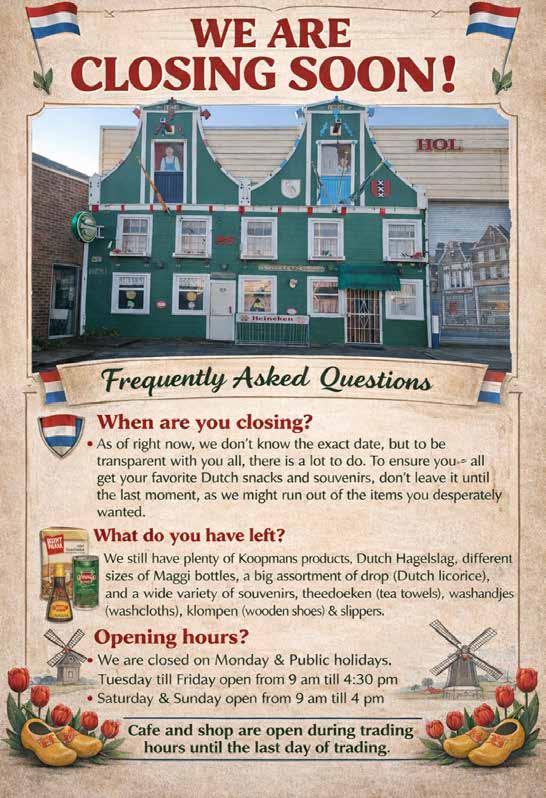
Continuation page 10
Unfortunately, Virgil van Dijk, was unfairly made an escapegoat by some of the Dutch press. He was accused of ‘ruining Dutch football’ and told that his ‘time is up’ as the Dutch media tore into the Netherlands after their insipid exit from the World Cup. Van Dijk was blamed for Netherlands’ early exit and ultra-defensive style which ‘betrays everything our national football stands for!’
Writing in De Telegraaf, journalist Valentijn Driessen said: ‘The way the Dutch national team presented itself to the whole world, defensively and without any initiative, is a great disgrace.
“Koeman and his captain Van Dijk betrayed everything our national football stands for in Monterrey. By opting for an ultra-defensive style of play, Van Dijk did not have his defensive affairs in order during the World Cup group stage. ‘But no matter how many defenders you surround him with, Van Dijk has had his time.!”
Almost every Dutch fan would agree that playing five at the back was simply not the Dutch way to play football. The result was players playing out of their normal position and playing an unfamiliar system where they made adjustments to the Moroccan team rather than the reverse. Despite scoring, staying with the system compounded the problem. Somehow, the Dutch went from a team playing total football against Sweden to a team that was both stifled in spirit and ideas, against Morocco. That is why Dutch fans were upset, not because they lost, but the manner in which they played.
I don’t know if Koeman was pushed or he quickly realised that his time was up for it was not long after the game that he announced his resignation. As speculation grows over his replacement, Pep Guardiola has become the popular favourite.
“Pep Guardiola knows very well that the Dutch federation does not pay 20 million euros as salary. He comes simply to cover the costs because he considers the Dutch bench a post of honor. I really hope Nigel de Jong makes this deal a reality. “ Ronald de Boer.
Other candidates include, Erik ten Haag, Ruud van Nistelrooy and Arne Slot.
Did you know that Cruyff was held at gunpoint to prevent him from playing in the 1978 World Cup?
Johan Cruyff missed out on the 1978 World Cup to Argentina who defeated the Oranje 3-1 in the final after extra time. Cruyff has stated on numerous occasions that a failed kidnapping attempt the year before the finals convinced him not to travel. “I had a rifle in my head, I was tied up, my wife tied up, the children were in the apartment in Barcelona,” he said to Radio Catalunya in 2008. With his family terrified and under police protection, he was not prepared to leave them.
There is a lot of ill-feeling towards Argentina but not just in the Netherlands. Some may remember the biased treatment given to Messi in the quarter-final in the 2022 World Cup. First, there was the very obvious handball to prevent a Dutch attack. Despite Van Dijk objecting to the referee, he was let off. Messi was already on a yellow. However, far worse was Messi slamming the ball from relatively close range into the Dutch bench that caused a on field melee. Messi did eventually get a yellow card in the 100th minute. It will be remembered as a fiery game with 17 yellow cards and one red issued by the Spanish referee.
Fast forward to the 2026 campaign. There was one particular Mesi challenge that left his studs on the back of an Algerian player, Isa Mandy, who was tackled from behind. The studs made contact with the Algerian’s calf but the referee took no action. VAR did not get involved. Many ex-players called it a “100% red card.” Algeria lodged a formal complaint.
The tackle was compared to the US Balogun’s red card where there was clearly no intent as the action was part of the player’s natural movement. VAR got involved and a red was issued, probably because of the injury to the Herzegovina play rather than any good reason.
Egypt were very unhappy with the refereeing decisions in their game claiming that the second goal should not have been disallowed. It was a length of the pitch spectacular goal but the
VAR rewound the tape 17 seconds to tugged shirt a light contact on the Argentinian toe. To me it seemed extraordinary they wound the tape that far back to adjudicate the goal. Henry Winter, Chief Football Writer of the Times wrote “If VAR had rewound nay further into that Egyptian move, Tutankhamen would be involved.”
The BBC’s Dale Johnson wrote, “The decision ran counter to the tournament’s refereeing approach” (regarding light touches).
Conversely, Argentina’s winning goal was not reviewed. Egypt claimed a penalty for a foul just inside the box. Appeals were waved away, the ball sent upfield to Messi who crossed for what would be the winning header by Enzo Fernandez in the 92nd minute. There was no VAR, or review. The Egyptian coach was livid. He said, “ Perhaps they wanted Messi to stay in the running.” Many commentators said the same thing in 2022. After the game, some commentators were comparing the same group stage match with Netherlands playing Argentina. Some noted that Argentina were awarded five penalties in the Qatar 2022 tournament the most any team has ever received in a single world cup.
There has been a complaint made asking why the crucial match between Morocco and France would be made up of an entirely Argentine officiating team. It is the only all single nationality officiating team in the whole tournament.
Against all of the above, there is no proof, only circumstantial evidence.
Lost in all the controversy was that similar claims were made by Australian supporters and staff about the officiating in their game against Egypt. While watching the match, I was consciously adjusting my views for my own bias, but by the end of the game, I felt that Australia was hard done by. If you don’t believe me, ask Jordy Bos. After losing their start player, Jordan Bos, on the stroke of half-time against Egypt, assistant coach Paul Okon described it as a “terrible tackle. We understand the referee played advantage, but he doesn’t come back and book the player.” On field, Souttar
and Irvine argued heavily with the referee, but no yellow or red was given. The Australian camp were furious, especially after Bos was ordered from the field.
There were several incidents involving Egyptian players using a strong physical presence with Nestory Irankunda appearing to be another target.There were no yellow cards issued to the aggressive challenges until the 60th minute, after a foul on Irankunda.
Popovic believed that Australia does not get the 50/50 decisions because we are Australia. After the US match, he remarked, “Today was I wouldn’t say the best day for the referee. Certainly we felt we were Australia today with the referees.”
The problem with controversy, it often leads to more controversy and official complaints. French PM, Emmanuel Macron, made a formal complaint that the European teams were sabotaged. Using the French medical team’s advice as evidence, he used documented evidence that FIFA built a travel schedule so deliberately punishing for European teams that it constitutes a systematic assualt on sporting equity. Macron has even threatened to institute an entire audit of the World Cup scheduling process unless the scheduling was restructured so that France’s travel would be on ane equal basis as their opponents. If this was not done, France would ground its aircraft, forfeit the game in its round of 16, and withdraw from the tournament altogether.
The medical staff provided an example were the French team had to travel almost 5,000 km in a 54 hours while their rivals had only 650 km to travel in 72 hours. The medical staff calculated the European teams travelled 2.7 times more in distance than the North and South American teams and their arrival at their next venue was 19 hours shorter. The financial implications for the sponsors and viewing audiences would be massive should France withdraw.
Whatever happened between France and FIFA had resolved itself as France completely outclassed Morocco in the quarterfinals. It was their third game in a row that they had
by Henry van Zanden
not conceded. Despite missing a limp penalty, Mbappe scored his 20th World Cup goal and his 8th in the 2026 tournament.
The integrity of FIFA and the world cup was sent to a new level when claims were made that President Trump had intefered in overturning the red card on on USA player, Balogun. FIFA denied that they were influenced by President Trump, but the damage was done.
FIFA fined Balogun $40,000 for entering the field to celebrate the win with his team which is against the rules. Regarding the red card and suspension, FIFA issued the following statement:
“The FIFA Disciplinary Committee went on to apply Article 27 of the FIFA Disciplinary Code, under which it has discretion to suspend the implementation of any disciplinary measures, and ordered that the implementation of the one-match suspension be suspended for a probationary period of one year. As a result, Balogun is not required to immediately serve the suspension. Instead, the sanction remains dormant during the probationary period and will only be activated if he commits another infringement of a similar nature and gravity during that one-year period. Should such a subsequent offence occur, the suspended one-match ban would be enforced in addition to any new sanction imposed for the later misconduct.”
They added, “The FIFA Disciplinary Committee is independent and that the referee’s on field sending off of reviewing the legal consequences of red cards in football is nothing new in the modern game. For instance, in the majority of top-tier leagues belonging to UEFA-affiliated member associations – the overturning of red cards is a common disciplinary measure, yet this has never raised concerns about crossing any “red line”. And again, it should be emphasised that in the decision under scrutiny, the red card was not overturned. Suspending the effects of a red card based on an explicit provision of the applicable regulations is a much more balanced measure. Balogun was not reversed. The suspension conditions were changed.”