


Unlocking Talent. Transforming Futures. Driving Ambition.

Education has the power to transform lives, strengthen communities and shape the future of our region. At East Durham College (EDC), we are proud to support students of all ages to achieve their ambitions and develop the skills they need to progress into fulfilling, sustainable futures.
We are in a period of change – politically, economically and technologically. Our new strategy sets out a clear and shared vision for success, it outlines how we will stay

Scott Bullock PRINCIPAL AND CEO

responsive, resilient and ambitious, guided by the values our students and staff have shaped together.
We remain committed to providing high-quality, inclusive education, working closely with partners and employers and investing in our people and environment. With our students at the heart of everything we do, we will create lasting positive impact for East Durham and beyond.
James Bromiley CHAIR OF THE CORPORATION




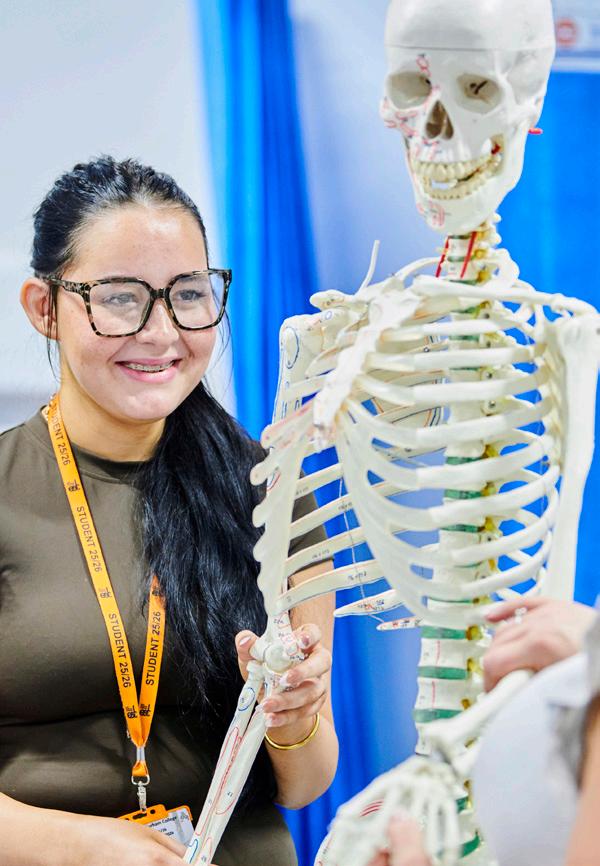

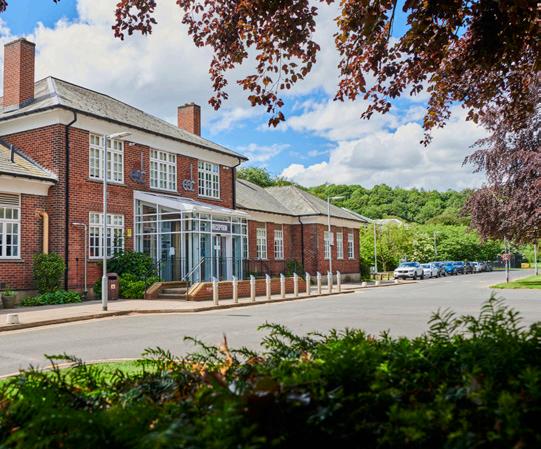

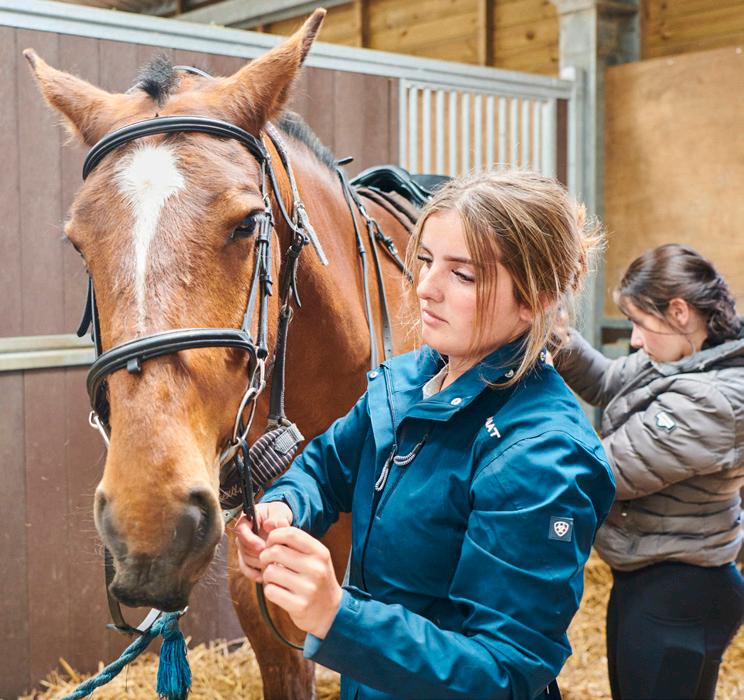




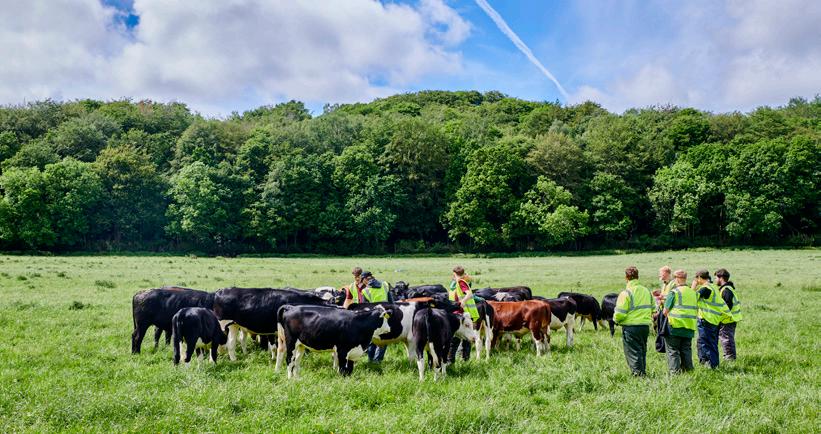

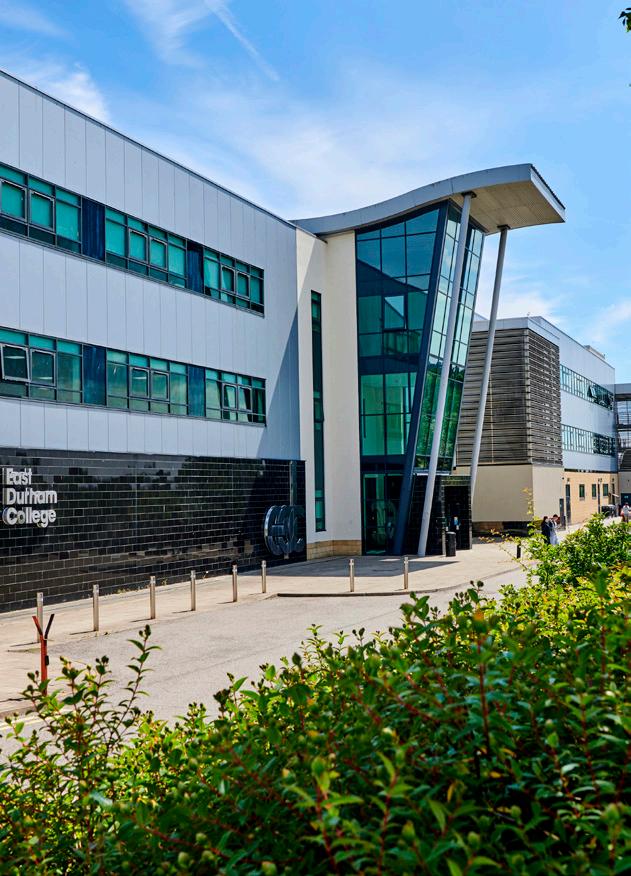




EDC is an important component of the North East skills system. We are dedicated to transforming the lives of our students and delivering the ambitions of County Durham and the North East.
We are proud of our role as an anchor institution for East of County Durham, centred on our local town of Peterlee, and as a regional and national hub for land-based technical education at our Houghall campus, close to Durham City.
We are a welcoming and inclusive College, deeply rooted in our communities and driven by our mission, to create confident and skilled people through life-changing education. EDC is committed to inclusion and excellence for all, in making decisions in the best interests of our students, staff and stakeholders, and in delivering societal and economic impact for our region and country.
The East Durham College Strategy has at its heart a simple purpose; to define the direction of travel for our College and our people, and in doing so, align our priorities with the wider political, social and economic landscape in which we operate. It aims to deliver our vision, to be a life-changing college that unlocks talent, transforms futures and drives ambition, and to do so while operating within the framework set out by our values and remaining true to our mission.
This plan builds on our previous strategy, taking EDC forward to 2030. It sets out how we will address the emerging challenges and changing technologies facing the country and Skills sector, and contribute to government priorities.
We developed this strategic plan with our students, staff and wider stakeholders, analysing our market position, performance and the forces driving change in our sector. We reaffirmed our mission, refocused our vision and committed to a new set of values.
The result is a strategy with a clear set of strategic objectives, that defines what success looks like for our people and the communities we serve. It is adaptable and will ensure we can address challenges and capitalise on opportunities today, while remaining agile to those that will emerge tomorrow.

Find out about our students’ success.
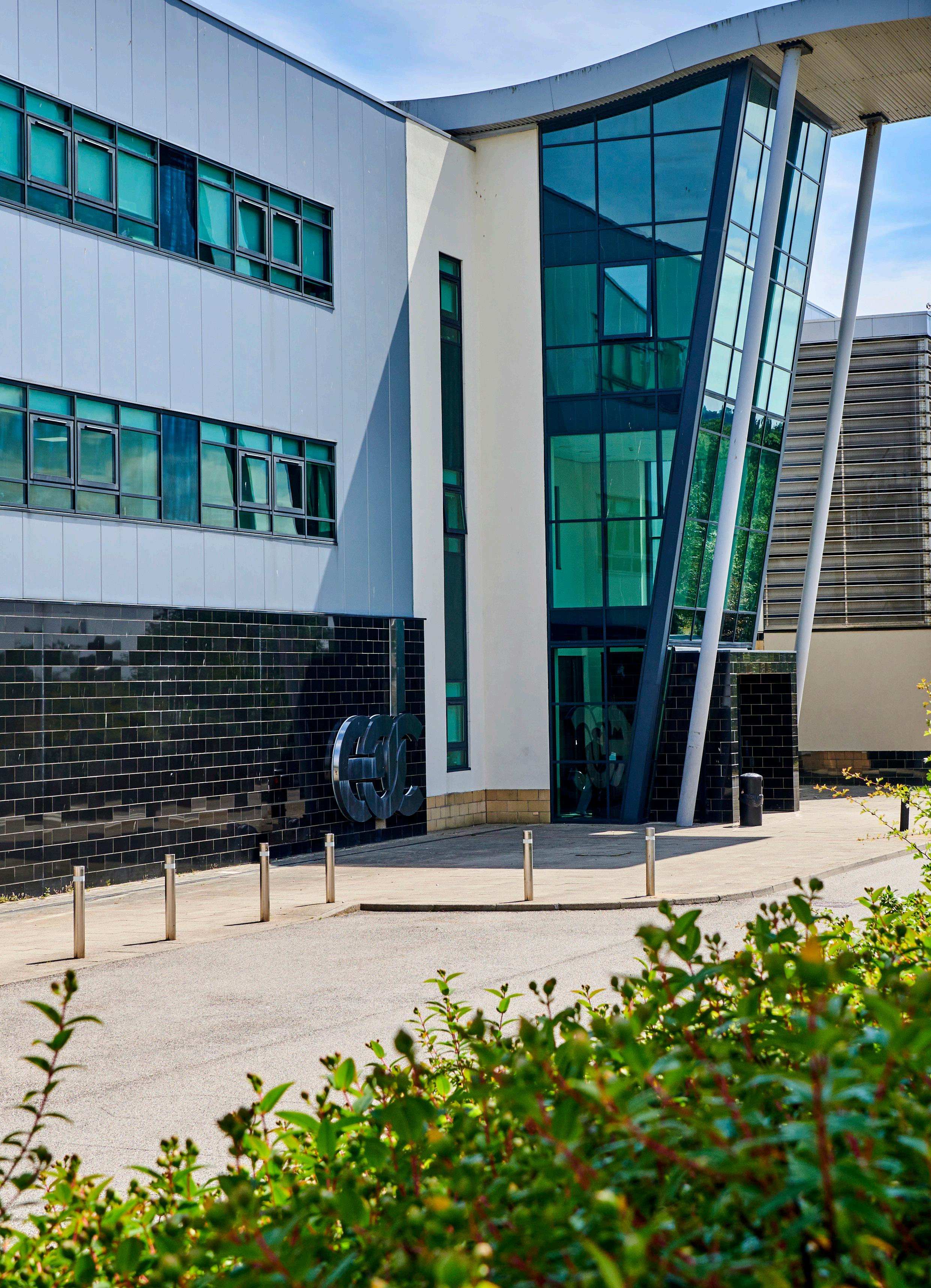
EDC was formed in 2008/09 following the rebranding of East Durham and Houghall Community College, established in 1999 through the merger of East Durham Community College and Durham College of Agriculture and Horticulture.
Our educational history dates back further, in Peterlee to the mid-1950s and at Houghall campus to 1938.


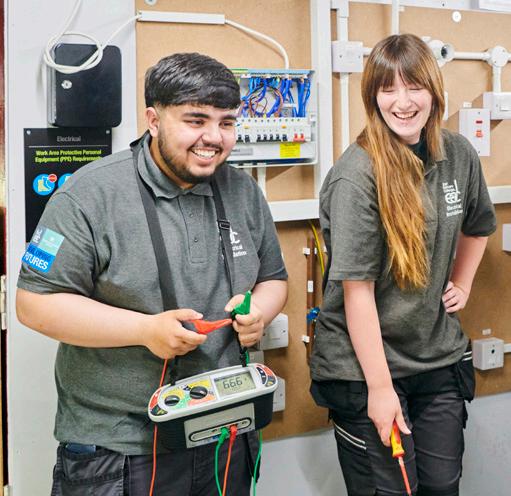

We deliver academic and technical education across all 15 sector subject areas and are one of only two regional land-based colleges, specialising in technical, hands-on skills training for rural communities across the region. We are one of a small number of colleges nationally offering direct-entry provision for 14–16-year-olds.
We are the college of choice for students in East Durham wards, many of whom face significant socio-economic challenges. Of the students who studied
with us most recently, 63.4% came from Index of Multiple Deprivation quintiles 1 and 2, with 49.4% from the most deprived (1). This highlights the importance of our role in improving social mobility and creating life chances.
Houghall is County Durham’s only landbased college. Students travel from across the North East to develop technical skills in green and sustainable sectors, including agriculture, arboriculture, horticulture and wildlife.
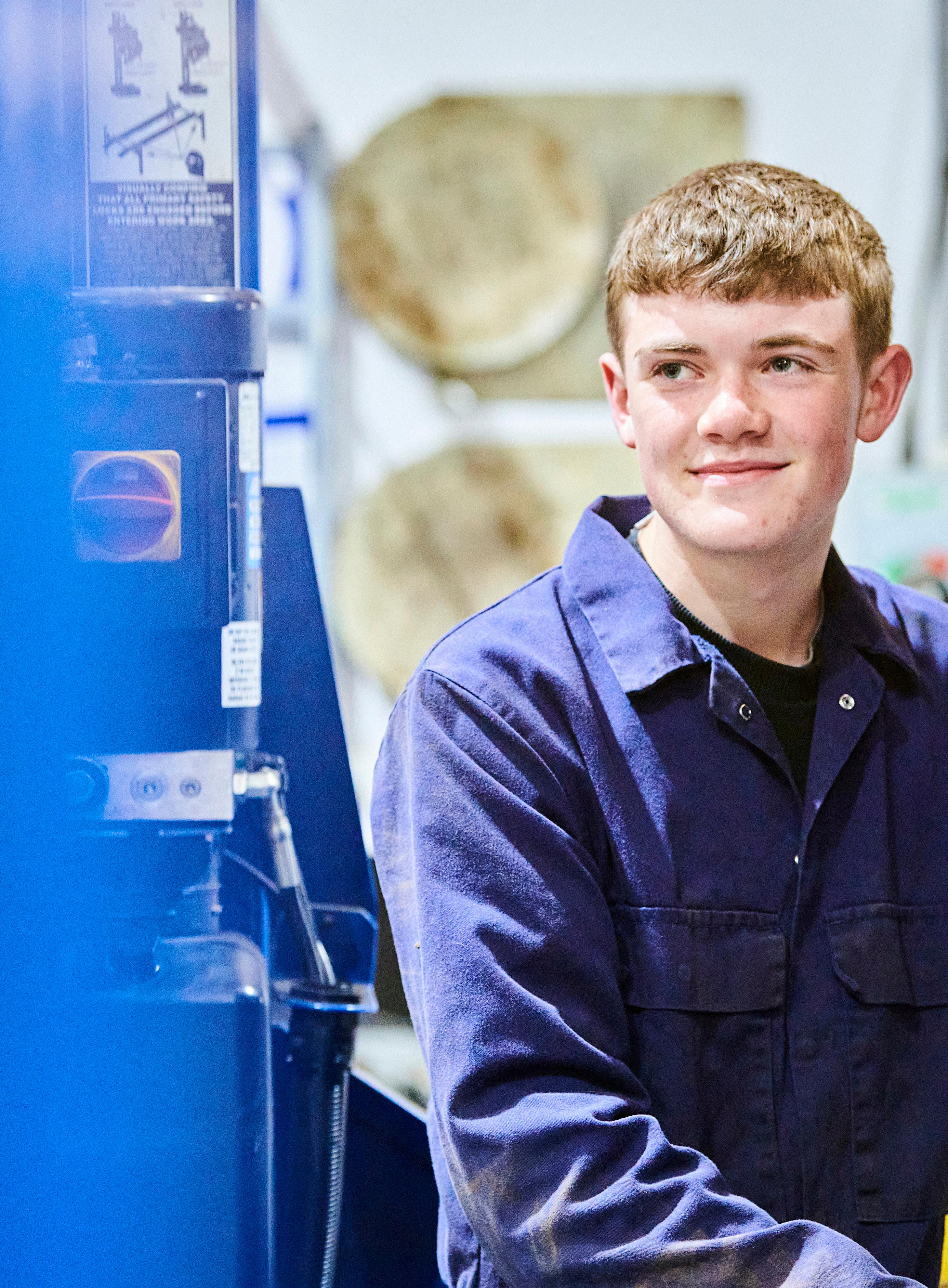
we train and educate more than young people and adults. Every year
5,000
Unemployment has reached its highest in nearly 5 years – driven by a lack of economic confidence among UK businesses and high youth unemployment (2)

June 2025 1M > 200K
March 2023
UK net migration dropped from close to 1 million in March 2023 to c200,000 by June 2025 (3)
If this trend continues, it is estimated that 2026 could see more people leaving the UK than entering it (4)
At the time of developing our strategy, we are in a phase of significant change. Our government has developed the Modern Industrial Strategy 2025, a ten year plan to increase business investment and grow the industries of the future across eight growth driving sectors in the UK.
These shifts are contributing to skills and labour shortages across high-growth sectors in the UK economy.
EDC is in the North East Mayoral Strategic Authority (North East MSA), the secondlargest Mayoral Strategic Authority by area, covering seven local authority areas including County Durham, and home to two million people (5)
Employment rates are below the national average, and economic inactivity has increased since 2020, driven in part by the poor health of residents.
The region has more people with no qualifications than the UK average and fewer residents with level 4+ qualifications, which is critical to filling its technical skills gaps.
An ageing workforce compounds this: many businesses are unable to recruit skilled staff for day-to-day operations and growth, while skills gaps in the existing workforce are limiting productivity (6)

EDC is exceptionally well placed to help the North East navigate these challenges. Our curriculum is high-quality and employer-led.

Industry advisory boards operate across our key sectors and ensure our students receive a relevant, vocational experience, aligned with the priority areas of the North East Local Skills Improvement Plan (LSIP).
We work closely with the region’s FE colleges, forming an alliance of Colleges for North East England, to collectively embrace and deliver the North East MSA’s four priorities within the New Deal for North East Workers:
1. Build a bigger, better skilled and more diverse workforce.
2. Create career pathways that enable employers to recruit and retain skilled staff.
3. Target support to improve employment rates for all residents.
4. Tackle barriers that prevent residents getting into – and getting on at – work.
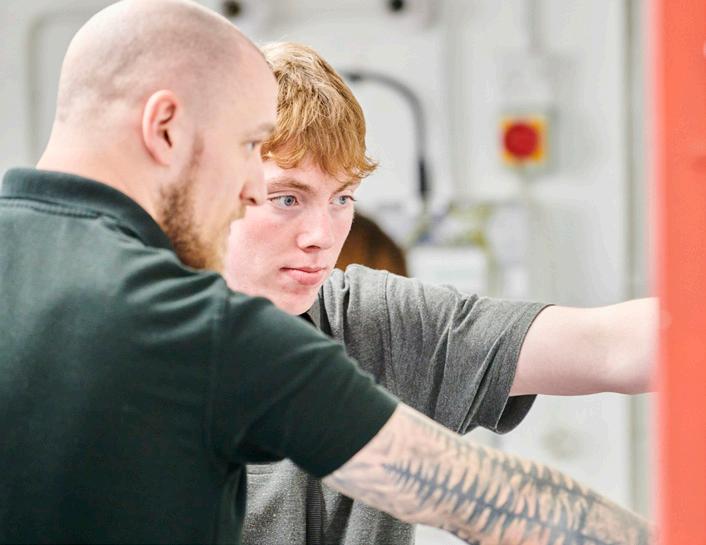
These local skills plans are aligned to the broader UK Modern Industrial Strategy. Our work to date, and robust partnerships with industry ensures EDC is responsive and proactive in addressing these challenges now and in the future.

"The Developing Futures programme helped me progress into an apprenticeship and build the skills I need for a career in construction. Getting up at 4.30am to travel to site was worth it because the support and opportunities from the college gave me the confidence and experience to succeed in the industry."
JACK
In March 2025, the government announced £625 million of investment to increase construction skills, which it expects will deliver up to 60,000 more construction workers by 2029. (7)
As a key delivery partner for the North East CTEC, led by Education Partnerships North East, EDC is working with partners across the region to address the construction skills shortage.
Our Developing Futures partnership with Robertson Homes and a growing subcontractor network is built on employer-led curriculum design. Students
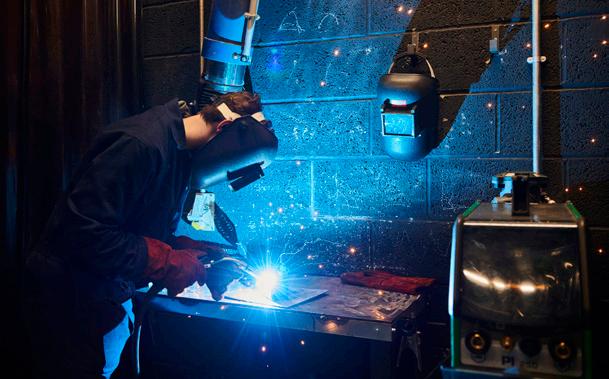
In 2026, working with Peterlee's largest employer, Caterpillar (UK) Ltd, EDC launched engineering Skills Bootcamps focused on employerdesigned welding standards. These short-course programmes have led to direct employment for residents at the Caterpillar site, with 100% positive job outcomes from our first three programmes.
Our work in engineering-allied disciplines aligns well with North East high-growth sectors, including offshore wind and energy transition, advanced manufacturing, and defence, security and space.

Approximately £100 million of this funding is for Construction Technical Excellence Colleges (CTECs).
benefit from site visits, technical masterclasses, one-to-one interviews, careers seminars and work placements. Student numbers have grown by 36% on construction courses, and the programme has directly placed 28 students into apprenticeships or employment in its first two years.

"T Levels had the right balance between academic and vocational work for me. I also got to complete an industry placement, which no amount of classroom training can give you the same experience as.”
PETER
In support of our Mission and Vision as an inclusive provider, we have delivered a bespoke 14–16 building for our growing direct-entry provision,
Although we serve a high-deprivation area, the Department for Education (DfE) (8) ranks us in the top 25% of colleges nationally for student outcomes. According to our internal data, 92% of our students progress to a positive destination with the knowledge, skills and exemplary behaviours that allow them to be successful in their next steps towards education, life and employment. We offer
contributing to the local and regional challenge of addressing a growing proportion of young people not in education, employment or training (NEET).
a broad curriculum alongside extracurricular activities and encourage all students to participate in a wide range of social action projects that address issues important to their lives and the communities where they live and work. Our 2025 internal satisfaction survey found that 94% of our students would recommend the college to a friend.
“The College gave me a fresh start. The teachers listened to me, treated me like a person and helped me find a trade I love. Through their support, I was able to secure an apprenticeship and start my future in painting and decorating.”
JAKE
Recognised as a top 10 apprenticeship training provider nationally (8), and the fastest growing provider in the region in 2025/26, we are playing a leading role in strengthening the regional workforce. Our achievement rates are consistently significantly above the national average (8), reflecting our focus on securing the right apprenticeship opportunities with the right employers from the outset.
As one of the region’s largest providers of adult education, we play a central role in supporting those furthest from the labour market to re-engage, progress and move into work. Through strong partnerships with organisations such as Believe Housing, East Durham Trust and Jobcentre Plus, we can reach local residents and deliver targeted support where it has the greatest impact.
For those already in work, we provide clear routes to upskill, build digital capability and progress

Through strong employer partnerships, a targeted recruitment approach, and a dedicated team of trainer assessors, we ensure apprentices are well matched to roles where they can add value and progress. As a result, we are proud to support both business productivity and long-term employment outcomes for our learners.
within their careers. For those out of work, we focus on developing confidence, resilience and the skills needed to move forward, enabling individuals to retrain, re-engage with education and take sustained steps towards employment.
This approach directly supports the North East MSA Skills Foundation, Activation and Work priorities, improving access to learning, supporting progression into employment, and helping to build a more inclusive and productive regional workforce.
In collaboration with our strategic partner, the University of Sunderland, EDC has obtained University Centre status. We have invested in a dedicated Higher Education University Centre to support progression opportunities for EDC students into locally delivered, cost-effective technical-level education. This responds directly to local and regional demand for technicallevel jobs and to the government's ambition for two-thirds of young people to participate in higher-level learning – academic, technical or apprenticeships – by the age of 25 (9)


"I really couldn't have got this far without the support, guidance and belief of the people around me. Their encouragement, skills and expertise helped me overcome my fears and achieve more than I thought possible"
NIKKI
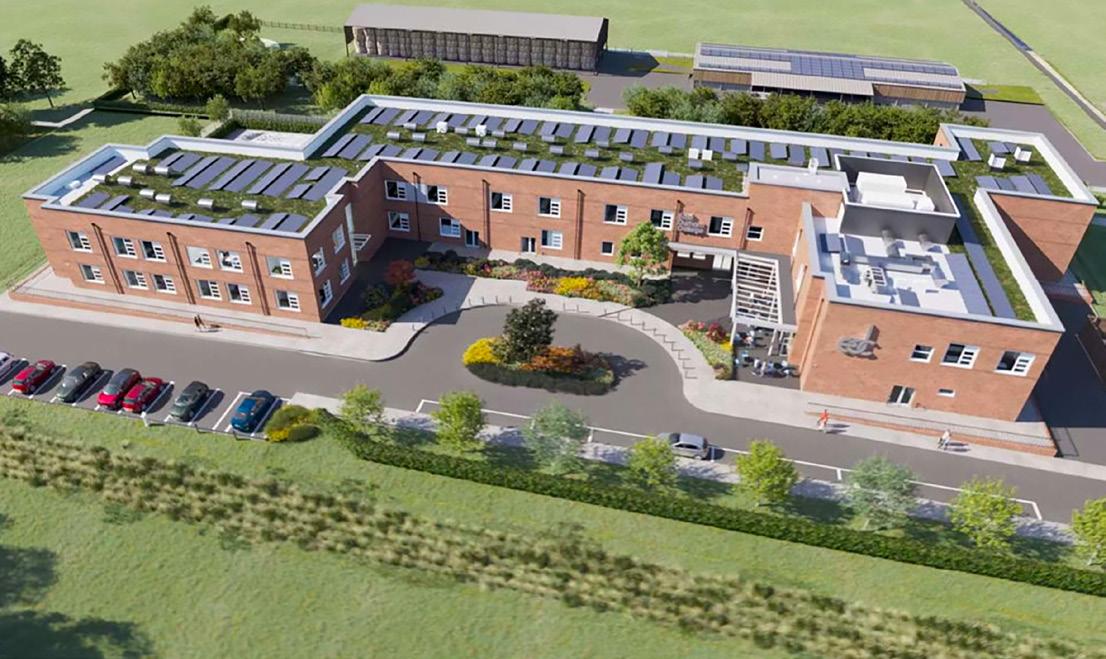

Take a look at the new development



At our land-based campus, the Department for Education (DfE) is investing close to £30M in a new teaching and learning building with specialist teaching, digital and laboratory facilities. It will enable us to develop our work in STEM (science, technology, engineering and mathematics), sustainability and agriculture, supporting the country's and the North East's net zero ambitions and contributing to North East MSA’s Environmental Stewardship, Coastal and Rural Growth Plan.

"As a young woman going into agriculture, you’re aware it’s still a male-dominated industry, especially in dairy farming. Placements like this show that things are changing."
JENNY


The work outlined in this strategy has set a clear direction. There is more to do, but we are confident that we are building on solid foundations.
The government's post-16 education and skills white paper is focused on raising standards so that vocational and technical education matches the academic route in quality and rigour (9). The Department for Education Every Child Achieving and Thriving white paper will have a transformative effect on the way support is delivered to young people in colleges and will directly shape our plan (10)
The Skills Minister, Baroness Jacqui Smith, has acknowledged that colleges are "engines of opportunity" and has set out a vision for local coordination between providers, responding to local skills needs informed by national priorities (11)

The FE and skills sector is being recognised by government for the positive impact it has on people's lives and futures. Accessible learning and high-quality technical training, aligned to real jobs is what EDC delivers, and what our communities, region and country need.

Create confident, skilled people through life-changing education.
As a learning organisation, we provide training and education that positively impacts lives. EDC students don't just gain qualifications – they build the skills and confidence to take opportunities and achieve their ambitions.
We create a community where everyone feels welcome. Where disadvantage is never a barrier. Where all students and staff are supported to thrive.
Our mission guides our strategy, shapes our work and is how we will deliver a better future for the communities and people we serve.


A life-changing college that unlocks talent, transforms futures and drives ambition.
Our vision reflects our belief in the power of education to transform lives and unlock talent that drives ambition and economic prosperity.
We are committed to delivering high-quality technical education valued by students and employers, equipping people with the skills,
confidence and resilience to progress into work and thrive.
Our ambition is for our students, our communities and our College to prosper. Through our people, partnerships and collaboration, we will secure a sustainable future together.
RAt the heart of our College is RAISE – a shared commitment to being Resilient, Ambitious, Inclusive, Student-centred and Empowered in everything we do. A I S E
Being adaptable, flexible and able to bounce back from adversity are fundamental skills. We support our people to build resilience – and to use it.
We are ambitious for our people. We want our students and staff to push themselves and always deliver their best – for themselves and for the College.
We are a welcoming community where everyone can belong and feel respected and heard. We treat people fairly, value diversity and celebrate difference.
Students are at the heart of everything we do. We listen to them, learn from them and involve them in shaping the College.
We believe in giving our people – students and staff alike – the confidence and authority to make decisions, take responsibility and act courageously to achieve our shared goals.

Create a workplace community where staff feel valued and inspired to achieve the best outcomes for our students.
1. Recruit, retain and develop the right people for the right roles to train the workforce of the future.
2. Embed a supportive and open culture which is inclusive, positive, fair to all staff and enables us to achieve our ambitions for our students.
3. Build an environment where health and wellbeing are actively promoted, staff feel engaged with the College’s values and objectives and are recognised for their contribution.

Deliver a high-performing, strategically aligned and accessible curriculum.
1. Deliver an inclusive, ambitious curriculum with career-informed progression pathways to ensure our students have the skills to succeed.
2. Be recognised as a leader of technical education in strategically important areas.
3. Ensure the quality of education is prioritised to achieve consistently high standards and student outcomes.

Secure a financially strong and environmentally responsible future.
1. Strengthen the College’s long-term financial resilience to fuel reinvestment.
2. Further embed environmental responsibility across EDC.
3. Implement a progressive estates and digital infrastructure strategy.

Build on our partnerships and regional skills and expertise to benefit students, the community and local employers.
1. Build strategic relationships and be recognised as a trusted partner in the North East Skills System and an anchor institution delivering better outcomes across East Durham and the wider region.
2. Strengthen our reputation and make a positive impact in our priority areas.
3. Proactively engage with students, parents/ carers and our valued stakeholders to inform our decision-making and ensure we remain responsive to change.

(marked in orange throughout document)
(1) Department for Education (2025). FE Data Dashboard (2025).
(2) House of Commons Library (2026). Unemployment in the UK: Economic indicators.
(3) House of Commons Library (2025). UK Labour Market Statistics and Migration Statistics.
(4) Bowes, J. (2025). Population Migration Estimates 2023–2025. University of Warwick.
(5) North East Combined Authority (2024). Local Growth Plan.
(6) North East Combined Authority (2024). New Deal for North East Workers.
(7) National Audit Office (2025). Construction Skills Funding Report.
(8) Department for Education (2025). National Achievement Rate Tables.
(9) Department for Education (2025). Post-16 Education and Skills White Paper.
(10) Department for Education (2025). Every Child Achieving and Thriving White Paper.
(11) Baroness Jacqui Smith (2025). Ministerial address to the Association of Colleges Annual Conference and Exhibition 2025.