


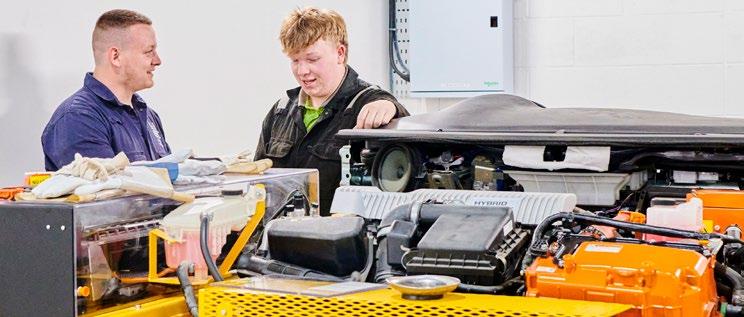

Unlocking Talent. Transforming Futures. Driving Ambition.


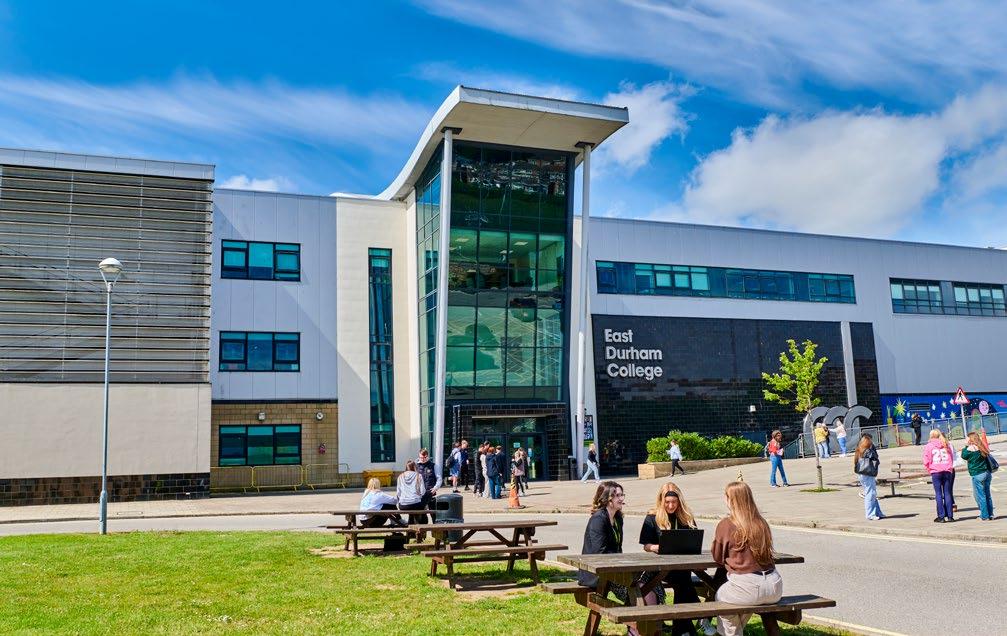
Education has the power to transform lives, strengthen communities and shape the future of our region. At East Durham College (EDC), we are proud to support students of all ages to achieve their ambitions and develop the skills they need to progress into fulfilling, sustainable futures.
We are entering a period of change –politically, economically and technologically. Our new strategy sets out how we will stay

Scott Bullock PRINCIPAL AND CEO

responsive, resilient and ambitious, guided by the values our students and staff have shaped together.
We remain committed to providing highquality, inclusive education, working closely with partners and employers and investing in our people and environment. With our students at the heart of everything we do, we will create lasting impact for East Durham and beyond.
James Bromiley CHAIR OF THE CORPORATION













Our Mission, Vision and Values.
Create confident and skilled people through life-changing education. Our Mission. Our Vision. A life-changing college that unlocks talent, transforms futures and drives ambition. Our Values. Resilient Ambitious Inclusive S tudent-centred Empowered


Creating a workplace community where staff feel valued and inspired to achieve the best outcomes for our students.
Delivering a high-performing, strategically aligned and accessible curriculum. Partnerships.
Building on our partnerships and regional skills expertise to benefit students, the community and local employers.
Sustainability.
Secure a financially strong and environmentally responsible future.
EDC is an important component of the North East skills system. We are dedicated to transforming the lives of our students and meeting the skills needs of County Durham and the North East.
In 2025/26 we served more than 5,500 people aged 14 and over, with five years of growth in our 14–16, 16–18 and apprenticeship numbers. Our broad offer supports communities across the North East, extending beyond the region through our specialist land-based provision.
Our curriculum is ambitious and inclusive. Skills content in priority areas is employervalidated, and outcomes are above the national average for most types of provision.
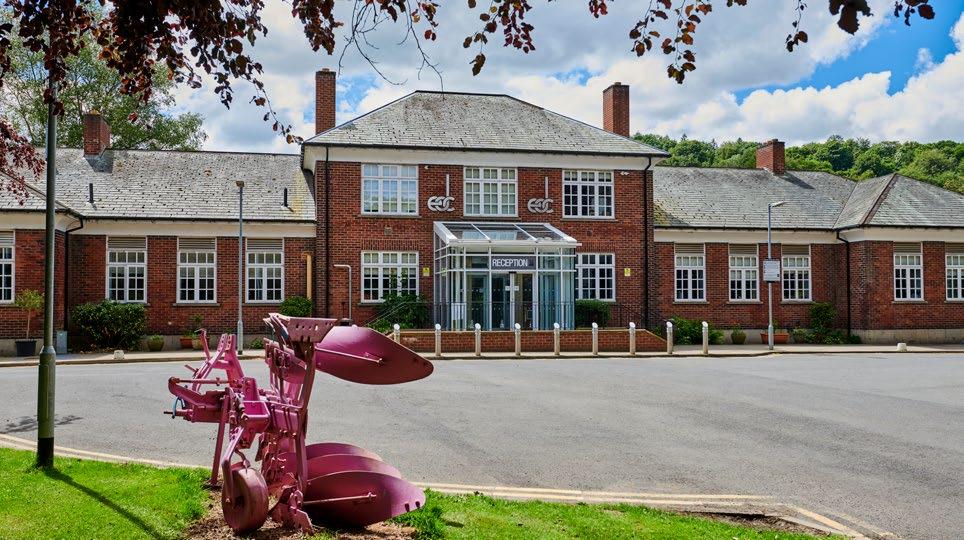
We are proud to be an anchor institution for East Durham, based in Peterlee, and a regional and national hub for land-based technical education at our Houghall campus near Durham City.
We are a welcoming college, rooted in our communities and driven by our mission to create confident, skilled people through life-changing education. We are committed to inclusion and excellence, acting in the best interests of our students, staff and stakeholders, and delivering social and economic impact locally and nationally.
We are one of a small number of colleges nationally offering direct-entry provision for 14–16-year-olds. We deliver academic and technical education across all 15 sector subject areas and are one of only two regional land-based colleges, specialising in hands-on skills training for rural communities across the region.
We are the college of choice for students in East Durham wards, many of whom face significant socio-economic challenges. In our most recent cohort, 63.4% of students came from Index of Multiple Deprivation quintiles 1 and 2, with 49.4% from the most deprived. (1)
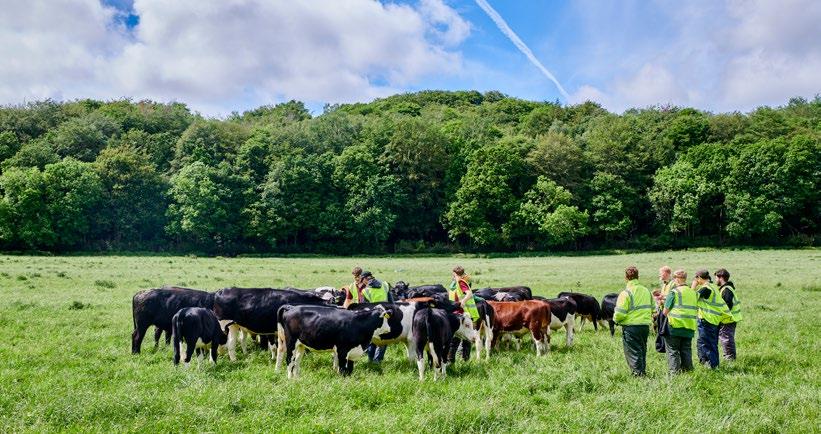
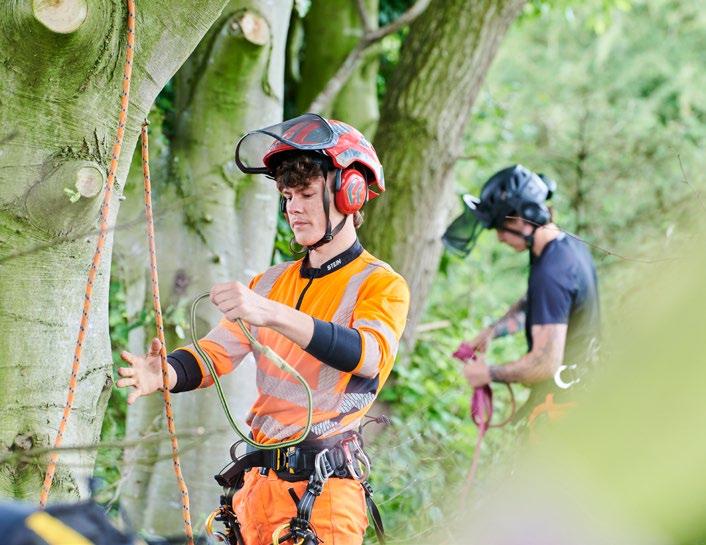
Our Houghall campus is County Durham’s only land-based college. Students travel from across the North East to develop technical skills in green energy and sustainable sectors, including agriculture, arboriculture, horticulture and wildlife.
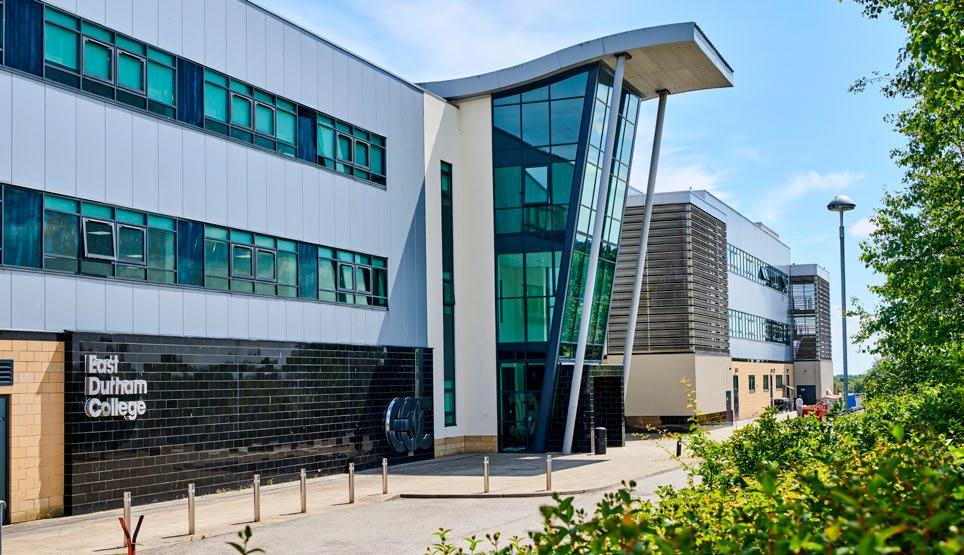
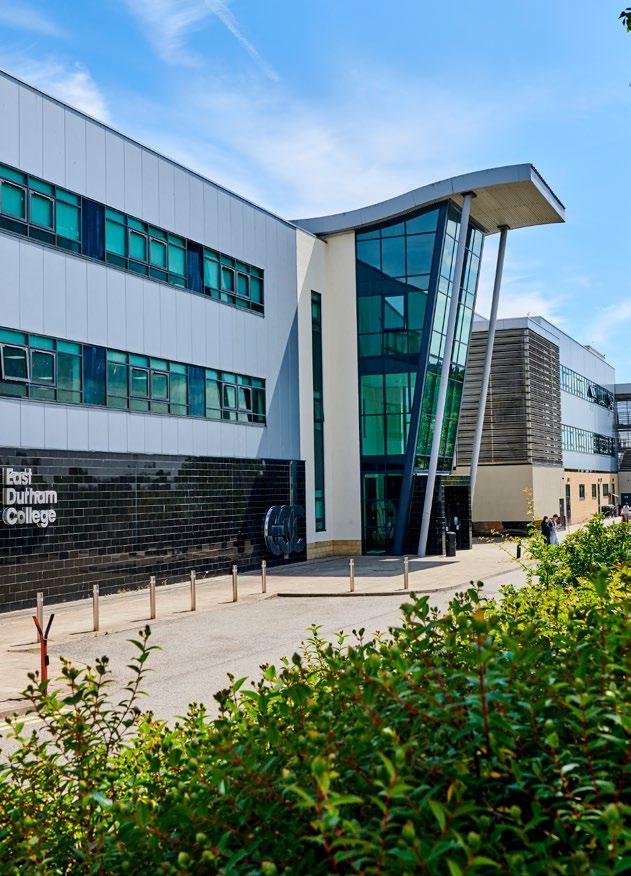
Our Willerby Grove Campus in Peterlee offers vocational and technical study programmes, A Levels, full- and part-time programmes for adults and higher education provision. It also provides full-time provision for directly recruited 14–16year-olds and a programme for home-educated young people.
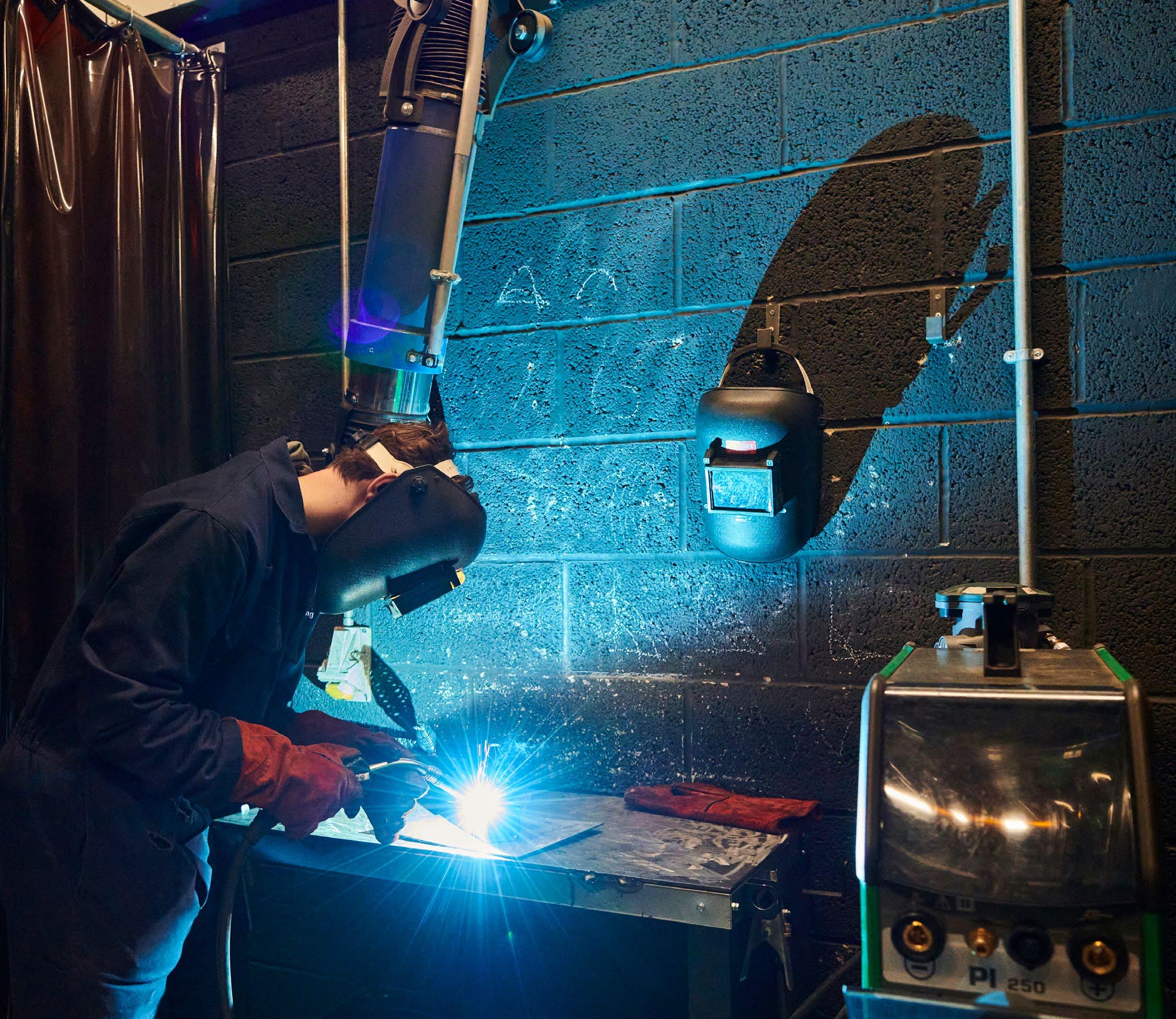
Also in Peterlee, our Technical Academy offers construction and engineering programmes for all age groups.
Most students at our Peterlee campuses are from County Durham and the wider North East, with some travelling from the Tees Valley.
Our Houghall Campus, based in Durham, offers a range of vocational and technical land-based programmes across eight sub-sectors, full and part-time programmes for adults and higher education provision. It also has provision for directly recruited 14–16-year-olds. Many students travel over an hour to study at Houghall.
Apprenticeships are offered across all sites and numbers have continued to grow across the past five years with very high and improving outcomes.
Provision for students with special educational needs is offered from the Willerby Grove and Houghall Campuses with supported vocational pathways and a successful supported internship programme.
The government’s Modern Industrial Strategy 2025 is a ten-year plan to grow industries of the future across eight high-growth sectors. Unemployment is at its highest in almost five years, driven by low economic confidence and high youth unemployment. The North East faces similar challenges.
The region is the second-largest Mayoral Strategic Authority by area, covering seven local authority areas including County Durham, and is home to two million residents. Employment rates are below the national average and economic inactivity has increased since 2020, driven in part by the poor health of residents.


Our region has more people with no qualifications than the UK average and fewer residents with level 4+ qualifications – critical to filling the region’s technical skills gaps. An ageing workforce compounds this: many businesses can’t recruit the skilled staff they need, while skills gaps are constraining productivity. (2)

The North East Mayoral Strategic Authority (North East MSA) Local Growth Plan identifies the key areas which it will focus on to drive economic growth in the region, this includes:
Offshore wind and energy transition
Advanced manufacturing including electric vehicles
Creative industries and content
Life sciences, pharmaceuticals and process industries
Tech, digital and AI
Defence, security and space
There is also a focus on the foundational economy with an emphasis on sectors which support the above, including food, retail, energy, transport, construction, agriculture, care and education.
To drive further growth in these sectors, North East MSA also have the New Deal for North East Workers with four key priorities to grow a vibrant economy for all residents:
1. Build a bigger, better skilled and more diverse workforce.
2. Create career pathways that enable employers to recruit and retain skilled staff.
3. Target support to improve employment rates for all residents.
4. Tackle barriers that prevent residents getting into – and getting on at – work.
The North East Local Skills Improvement Plan, managed by the North East Automotive Alliance (NEAA), has the following priorities:
• Advanced Manufacturing including Electric Vehicles
• Offshore Wind and Energy
• Creative Industries and Content
• Defence, Security and Space
• Tech, Digital and AI
• Life Sciences, Process and Pharma
• Construction
• Health


The College is ambitious for its students and community. We work closely with stakeholders including NE MSA, NEAA, local authorities, businesses, other colleges, universities and training providers to identify priorities and support the region in meeting its ambitions. We also work directly with local employers to identify skills gaps that matter to the local community. We are active members of a range of external networks and collaborative projects including:
• North East Institute of Technology
• Colleges for North East England Group
• UK Shared Prosperity Fund
• Employer Advisory Groups
• North East Chamber of Commerce
• LSIP Sector Specific Sub-Groups
• Durham Learning Alliance

This collaborative approach helps us identify where to focus for maximum impact. It also informs where to add, remove or duplicate provision based on need. This feeds into our Strategic Plan, which is created with and agreed by governors before consulting with external stakeholders.
EDC continues to meet local needs well and received a Strong rating for Skills in the 2024 Ofsted inspection. The College has carried out a comprehensive review of how effectively its provision meets local needs, drawing on labour market intelligence, stakeholder engagement, internal performance data and the curriculum review across the four Durham Colleges within the Durham Learning Alliance.
The review confirms EDC is strongly aligned to priority sectors, particularly health, construction and engineering. It also identifies key areas for development, including:
• Expansion of higher-level technical provision
• Strengthening digital and AI capability
• Increasing employer engagement and work placements
In response, the College has committed to curriculum development, collaborative partnership across the Durham Learning Alliance and targeted growth to ensure provision continues to meet current and future skills needs across the region.
Alongside our collaborative and partnership work, our rigorous curriculum planning process considers employer needs, regional and national priorities and the needs of our community. We meet with governors annually for strategic planning, informed by regional priorities and our partnerships. KPIs are then agreed and monitored through the Full Board and its committees.
In 2025/26 the college enrolled the following number of students on priority programmes:

After reviewing the regional offer, our priorities for the year ahead include:
• Construction
• Advanced Manufacturing
• Health, Care (including childcare) and Life Sciences
• Engineering
• Agriculture, Environment and Animal Care
• Creative Industries
• Digital
In line with the North East MSA New Deal for North East Workers, we support the above priorities by:
• Embedding employability and digital skills across all 16–18 study programmes.
• Reviewing adult provision to focus more resource on routes into higher-level study and employment.
• Growing apprenticeships, particularly for 16–18-year-olds.
• Introducing a Pathways programme for students in discrete specialist provision.
The College will use the Inclusive Mainstream Funding to enhance and strengthen the support available to learners with Special Educational Needs (SEND) within vocational and technical settings.
The College’s approach is designed to support the transition to the reformed SEND system through the continued development of inclusive mainstream provision, effective transition arrangements, and targeted learner support. Funding will be used to facilitate a range of interventions, including in-class support, adaptive teaching strategies, and individualised academic and pastoral support tailored to learners’ specific needs.
The College remains committed to embedding inclusive teaching practices across all curriculum areas to ensure that learners with SEND can progress successfully within mainstream education. Support will be focused on reducing barriers to learning and participation, increasing engagement, maximising progression, and enabling successful transitions into further study, apprenticeships, and employment.
The effectiveness and impact of this funding will be evaluated through the analysis of learner outcomes. This will ensure that support remains responsive to identified learner needs and continues to align with local and national SEND priorities and strategic objectives.
More students move to positive destinations, particularly next level and employment.
Proportion of students sustaining destinations for 6+ months increases to 68% for 25/26 leavers.
Tutorial provision fully reviewed to include a golden thread of employability and digital skills for 16–18-year-olds.
Full review of how adult provision is managed and delivered so that more of our allocation is spent on Skills to Work.
Pathways provision introduced for students with SEN needs on discrete programmes so more make progress.
Transitions staff employed to enable focused IAG for students with SEND needs.
Deliver a high-performing, strategically aligned and accessible curriculum.
Increase the number of students studying in skills priority areas.
60% of students studying at level 3 to be in skills priority areas. Employer advisory groups in skills priority areas to influence curriculum design and delivery. Introduce HTQ in Engineering. Development of standardised careers conversations to be used at all careers events. Effective deployment of capital investment to ensure facilities are fit for purpose and meet industry needs.
Deliver a high-performing, strategically aligned and accessible curriculum.
Continue to grow apprenticeship numbers, particularly for young people.
10% growth in repeat business in 2026/27.
KPIs for growth in repeat business through the business development team and Trainer Assessors.
Increase in new strategic employer apprenticeship accounts.
Deeper relationships developed with priority sector employers.
Build on our partnerships and regional skills expertise to benefit students, the community and local employers.
More students achieve maths and English at grade 4 and above.
Maths and English achievement to be at least in line with national average.
Curriculum delivery model and pedagogy reviewed to include more digital delivery.
Attendance increased through closer working with curriculum delivery teams.
Dedicated maths and English delivery area in college to give ownership and sense of belonging to staff and students.
Tracking system in place to show progress from starting point and progress within a grade.
Deliver a high- performing, strategically aligned and accessible curriculum.
Be recognised as a trusted partner in the North East skills system.
Collaborative bids developed and submitted with FE/HE partners and employers.
Partner for at least two Technical Excellence Colleges in the North East.
One other collaborative bid achieved in 2026/27.
Build on our partnerships and regional skills expertise to benefit students, the community and local employers.
Deliver the Houghall new build project to help grow provision at level 3 and above.
Houghall new build open for September 2027.
Bespoke HE facilities developed to allow growth in SSA03.
HE infrastructure developed in conjunction with University of Sunderland.
Securing a financially strong and environmentally responsible future.
On behalf of the Governing Body of East Durham College, we confirm that this Accountability Agreement reflects an agreed statement of purpose, aims and objectives as approved by the corporation and meets the local needs duty.
Signed Chair of the Corporation
Signed Principal, CEO
2026-30 Strategic Plan
Ofsted Report 2024
Local Skills Improvement Plan
New Deal for North East Workers
Financial Statement
(marked in teal throughout document)
(1) F E Data Dashboard (2025). Department for Education.
(2) N ew Deal for North East Workers (2024). North East Combined Authority.