CORNERSTONE


For many years, our work in the arts and sciences has been guided by a simple belief: when we invest in people, we strengthen the entire region. Thanks to your ongoing dedication and support, we have expanded educational access, encouraged research that improves daily life in eastern North Carolina, and created opportunities that help students serve and lead in the communities they love.
A recent example of this impact is the new transfer agreement between ECU and North Carolina’s community colleges. The program, created through collaboration between the Thomas Harriot College of Arts and Sciences and the School of Dental Medicine, responds to a growing need for skilled dental professionals and generates new career pathways for hygienists across the state. This partnership gives dental hygiene graduates from community colleges a clear route to earn ECU’s Bachelor of Science in University Studies, facilitating them to become community college instructors. I was thrilled to travel to Halifax Community College recently to celebrate our joint commitment to this partnership, and the big smiles in the picture at the right capture how excited we all are about new beginnings.
This is my final message to you before I take the next step in my career, and I want to offer my sincere appreciation for everything you and my colleagues at ECU have done to inspire and support me as a leader. It has been a privilege to be dean of this college for almost seven years, and to share these stories of growth and possibility. Thank you for believing in our mission and for standing with our students, staff and faculty. Although this is my goodbye, the work you do will continue to shape our region for years to come.
Hannah Lewis Biology (BS) and Chemistry (BA) major
“What I appreciate about Harriot College is the supportive learning environment and the opportunity to connect with professors through small classes and hands-on laboratory experiences.”
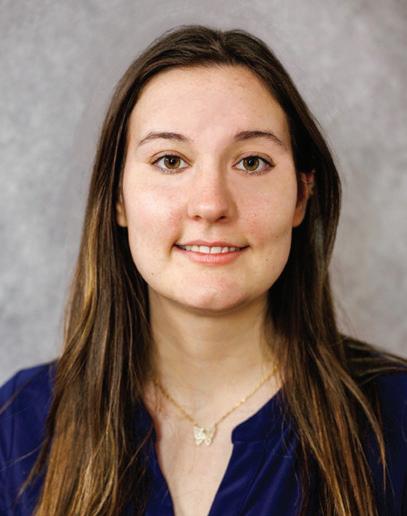
Gaining valuable career and critical-thinking skills as a research assistant at the Brody School of Medicine, presenting research at symposiums and co-authoring a published paper, all reaffirming her passion for helping others and her goal of pursuing a medical degree to become a cardiologist
Learned to speak Spanish, an invaluable skill she feels will help her better serve various communities in North Carolina
Earned scholarships, including the Brandon M. Rasberry Memorial Scholarship, that allow her to focus on her coursework
Strengthening leadership, communication and teamwork skills as an ECU resident advisor and a volunteer with Farmville’s EMS

Professor, Department of Foreign Languages and Literatures
“In the department, there is a genuine commitment to teaching, mentorship and innovation, particularly in creating opportunities for students to engage with languages and cultures beyond the classroom.”
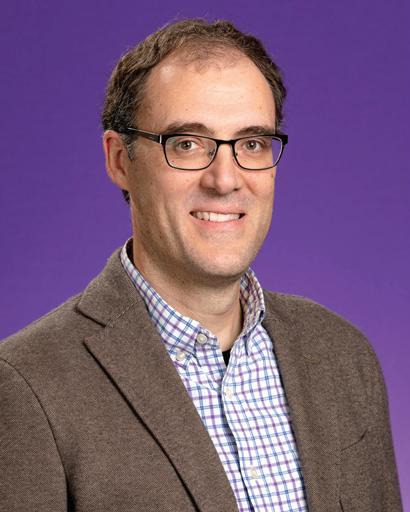
Appointed as the McMahon Distinguished Professor in Foreign Languages in 2025, a position that facilitates his continued research in early modern Hispanic literature and culture, and his engagement in scholarly programming to increase the profile and appreciation of foreign languages and literatures at ECU
Conducting summer research in Spain with ECU students, supported by the McMahon professorship, examining how small museums contribute to national identity
Engages students in foreign language immersion and research opportunities that lead to co-authorship and publication in prominent journals
Mentors ECU faculty in effective online teaching practices and serves on committees that discuss course curriculum and student learning outcomes
Holly Maschenik is not a medical student, but her research may provide treatments for patients with health concerns ranging from bacterial infections to cancer. This is possible through the Master of Science in Physics degree with a concentration in medical physics, which Maschenik highlighted as one of the selling points of attending ECU.
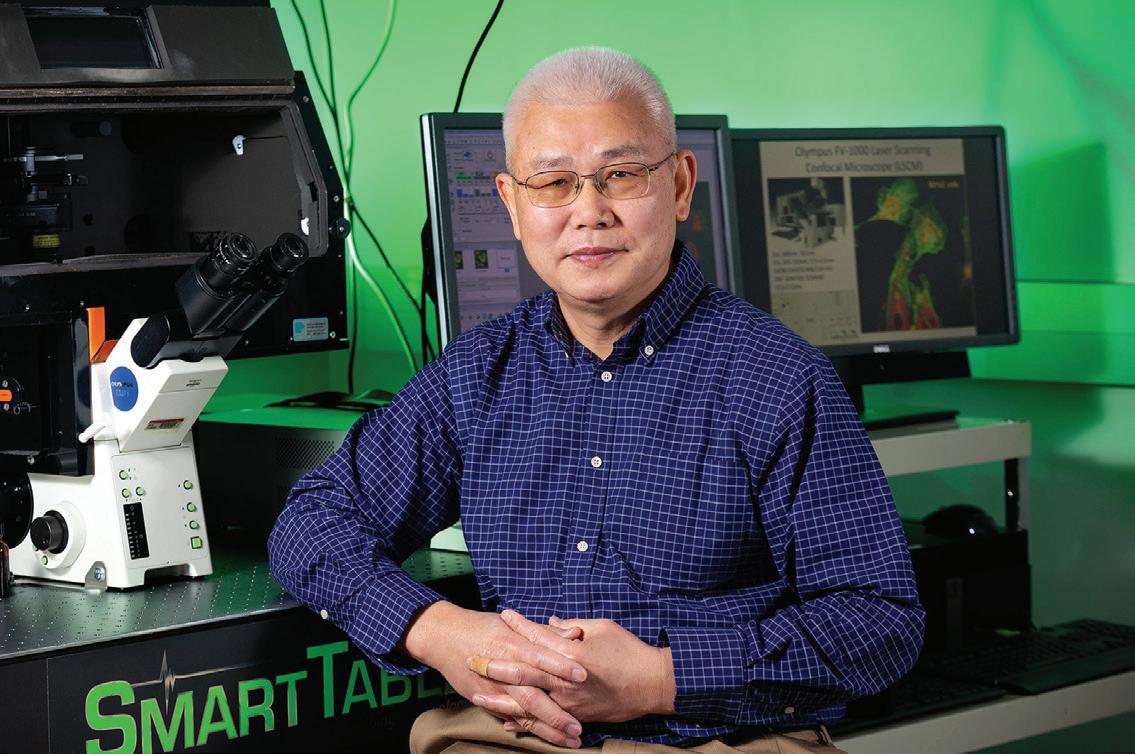
During her first semester at ECU, Maschenik learned about physics professor Dr. Yong-Qing Li’s microscopy lab and his observation of single-cell organisms.
“This was especially fascinating to me, because I saw potential to apply the concepts to medical physics research,” she said.
Under his mentorship, Maschenik researches the germination of single-cell bacteria spores known as Bacillus subtilis. She said that when a group of spores is exposed to a germinant and then exposed a second time, more cells will germinate as the time interval between rounds decreases. She said this indicates that the spores retain some memory of the first exposure, even if they did not germinate the first round and that memory fades with time. Why is this important?
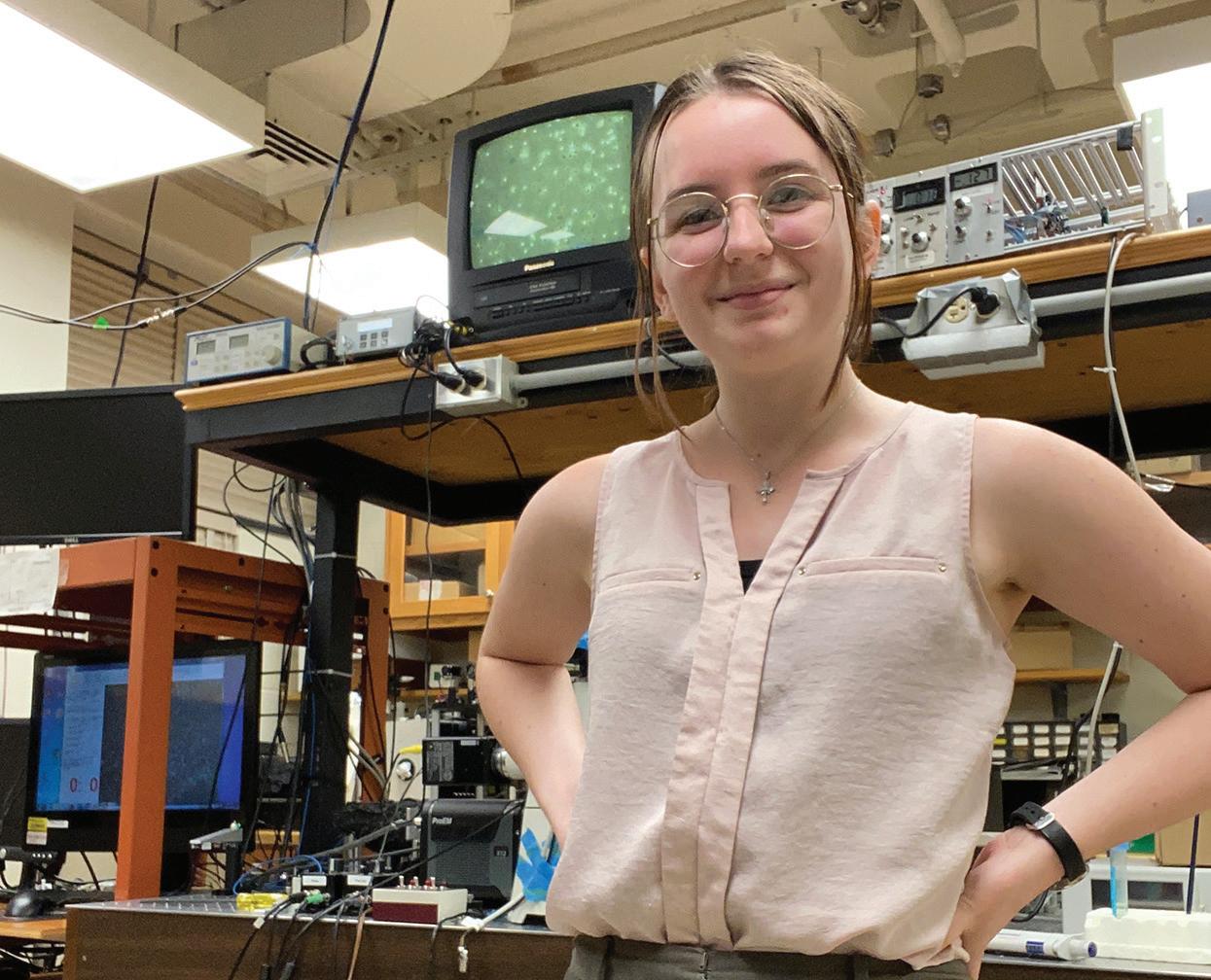
“When spores germinate, their resistance to treatments lowers significantly, which makes them easier to kill. By examining the factors that go into how effectively the spores germinate, we can investigate methods that utilize these characteristics for the purpose of lowering their resistance,” she said.
Maschenik and Li focus their research on how well the cells retain memory of germination pulses and how the type of germinant (which activate different cell receptors) and the way in which they are grown impact that memory.
“Dr. Li has been incredibly helpful in teaching me the fundamentals of the experiments we are running, and by providing clear explanations and answers to my questions,” Maschenik said. “Thanks to his teaching, I can perform independent experiments to acquire the data we need.”
Li said, “I enjoy seeing students perform experiments independently and apply critical thinking in their research. Holly’s research shows strong potential for success in medical physics. She is well-positioned to contribute to innovations in imaging, data analysis and treatment planning.”
Future researchers and patients may benefit from Maschenik’s work.
“I hope that the work we are doing will help in developing more effective antibiotic treatments, and that our research on the inner mechanisms of bacterial germination helps to combat bacterial resistance to those treatments,” she said.
Additionally, Maschenik is learning techniques to help optimize radiation treatments by better predicting biological effects
“I enjoy seeing students perform experiments independently and apply critical thinking in their research.”
– Dr. Yong-Qing Li, professor of physics
such as cell death and DNA damage. Isolating treatments at the cancer site can help prevent damage to healthy cells and reduce patient side effects.
“This area of research is a fascinating next step in the underlying physics of radiation therapy treatment,” she said.
Carrying on a legacy of service
Some faculty members make an impact that lasts a lifetime. Few can make an impact that lasts beyond their lifetimes, but this is the case for Dr. Bradley A. Rodgers, retired emeritus professor from the Department of History and the Program in Maritime Studies, who passed away in October 2024 at the age of 69.
In honor of his legacy and more than four decades of teaching, mentorship, research and service at ECU, Rodgers’ colleagues and friends have established a first-of-its-kind memorial fund. The “Professor Bradley A. Rodgers Thesis Prize Endowment in Maritime Studies” will be awarded to graduates of the program whose thesis has been judged to be exceptional and held in the same regard as Rodgers’ work.
“We wanted to make this award stand out, not only for his excellence, but also for his time and deep commitment to ECU,” said Dr. Nathan Richards, professor in the Department of History and Maritime Studies Program. “I think it will be a feather in the graduate’s cap. Scholarships are important, but to have an award that is a celebration of excellence, that meshes with the expertise that Brad represented, the values that he held and the work that he did, I think that will make sure everyone remembers Brad and will connect that student to his legacy.”
Dr. Vera Tabakova, teaching professor in the Department of Economics, Rodgers’ life partner for 17 years and co-creator of the fund, said, “What is important to me is that he is not forgotten. My goal is that Brad is honored and remembered because he gave his life to this program.”
After his retirement in 2018, Tabakova said Rodgers often told her he would do it all over again.
For 15 years, the ECU Psychology Clinic (formerly the Psychological Assessment and Specialty Services Clinic, or PASS Clinic) has stood as a powerful reminder of a truth too often overlooked: mental health is healthcare. More than just a clinic, this nonprofit institution — anchored within Harriot College’s doctoral program in health psychology — has become a center of excellence in both training the next generation of psychologists and meeting the urgent mental health needs of the community. By blending academic rigor with compassionate care, the clinic has built a legacy of service that proves healthcare is not complete until the mind is cared for alongside the body.
This spring, the clinic moved from ECU’s Rawl Building to a newly renovated location in Building 141, 200 E. 1st St., Greenville. New signage will be installed, and there are 11 dedicated patient parking spots — including two ADA-compliant spaces — in front of the building. Ample parking is available along 1st and Cotanche Street, and for individuals interested in using public transportation, a Greenville Area Transit stop is located across the street near the corner of 1st and N. Greene Street.
The location better accommodates the clinic’s needs, expanding community-focused clinical services and providing easier access for patients from the community. The move was possible due to $500,000 in recurring funding under the “Growing Primary Care Workforce” program expansion, provided by the North Carolina state legislature in 2023.
“He made this job look like the best thing in the world,” she said. “He loved it so much. He never had any doubt in his mind that that’s what he was meant to do.”
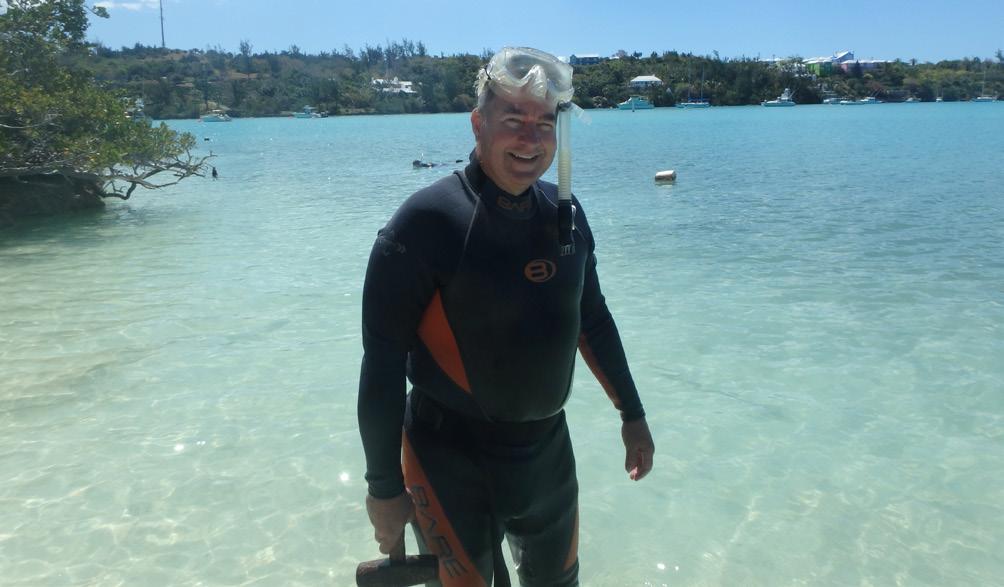
Rodgers became one of the earliest graduates of ECU’s maritime studies program in 1985 and was hired as a staff archaeologist in 1986. During his career at ECU, Rodgers advanced through the faculty ranks, teaching a variety of history and maritime studies courses and directing many successful student field projects. He served as the maritime studies program director from 2012-18, and upon his retirement in 2018, he was awarded the status of emeritus professor. Along the way, he became an experienced scuba diver and boat captain and a gifted model ship builder.
To contribute to the fund honoring Rodgers’ legacy, contact Ashley Harzog, Harriot College director of alumni relations and outreach, at clelanda18@ecu.edu or call 252-737-1753.
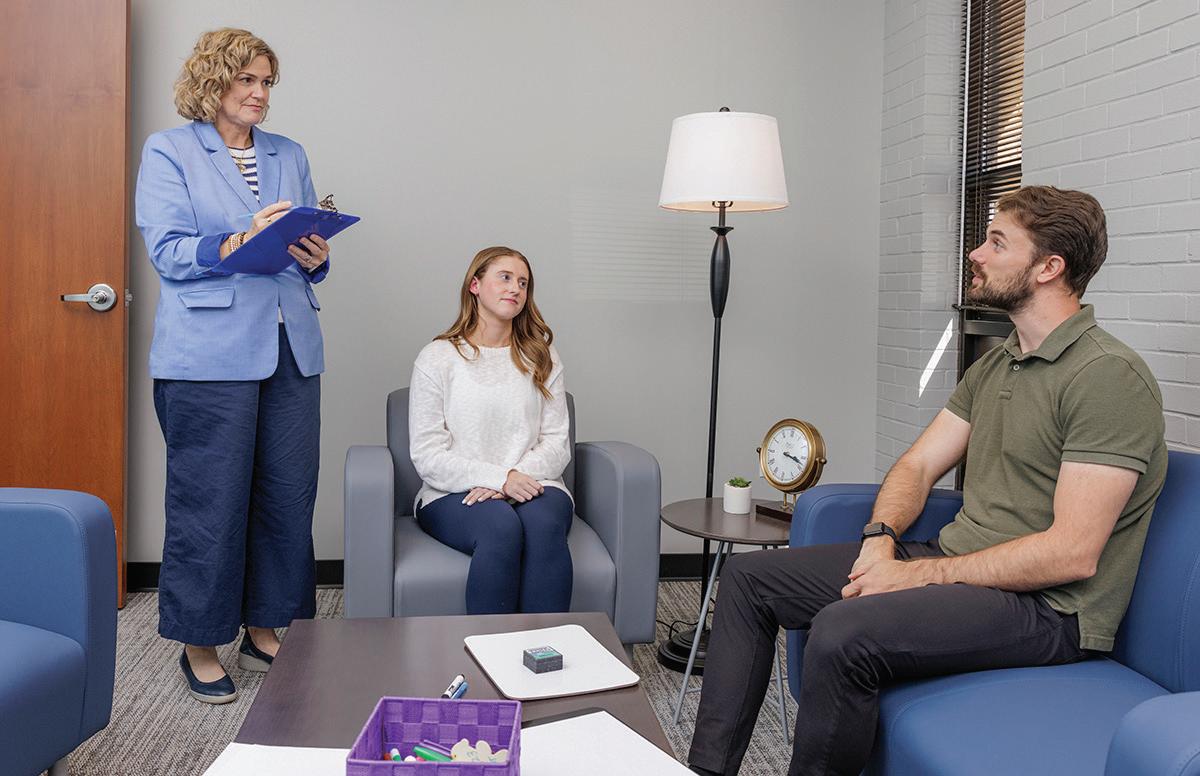
“It’s been a dream in the making for quite some time,” said Dr. Debbie Thurneck, clinical associate professor in the Department of Psychology and director of the clinic. “Not only is it vitally important for our students’ development, but we get to help people in the community by offering evidence-based treatments and assessments.”
The clinic provides services based on a reduced-cost sliding fee scale. Initial consultations are free of charge. To make an appointment, call 252-737-4180. For additional information or questions, email ecupsychologyclinic@ecu.edu.
1002 Bate Building Mail Stop 511
East Carolina University® Greenville, NC 27858-4353
U.S. Postage PAID
Permit #110 Greenville, NC

Jeff Glenn praises Harriot College’s degree program in urban and regional planning, now the BS in community and regional planning, housed in the Department of Earth, Environment and Planning. Planners play a vital role in shaping urban growth and development by preparing for infrastructure such as roads, railways, sidewalks, greenways and housing. Skills acquired through the program allow alumni to apply their expertise to foster sustainable and vibrant communities.
Glenn’s experience as a student in the program included a year-long internship with the City of Durham, an opportunity he attributes to producing lifelong relationships in government, development and engineering that exist to this day. Glenn focused his studies on the concentrations of land use and real estate. He fondly remembers faculty members, now retired — Dr. Mulatu Wubneh and Hank Hankins — who he proudly called his mentors and renowned voices within the national planning community.
“The faculty and staff were instrumental in nurturing and furthering my passion for the responsible growth and management of cities,” Glenn said. “Surprisingly, 67% of the population of our state lives in an urban area, so growth is impossible to ignore.”
Today, Glenn is putting both his hard-earned ECU undergraduate degree and a Master of Business Administration that he later earned from Duke University to good use. He indirectly assists the field of urban and regional planning as the
managing director at Northmarq’s Raleigh offices, a commercial real estate agency that offers debt and equity options for commercial and multifamily real estate. Glenn joined the team in 2021 and advises developers, institutions and investors specifically on multifamily development projects, capitalization and sales.
“I enjoy seeing the intermediate and long-range planning process at work in shaping cities, and my part in making a small contribution where possible, principally on the capital side of the equation,” he said.
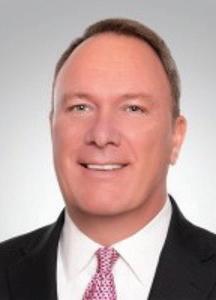
Glenn also has a love of history. His goal for North Carolina is the preservation of history and protection or enhancement of historic areas and their unique sense of place.
“In that regard, effective planning has a critical role, and developers and municipalities should be aligned,” he said.
Drawing on the interdisciplinary foundation of the arts and sciences, Glenn’s work demonstrates how thoughtful planning can preserve the past, address present needs and help communities thrive for generations to come.