Innovation REPORT.



FOREWORD
Innovation continues to redefine the future of cardiothoracic surgery. Our field, which deals with some of the most complex and life critical procedures, continuously pushes the boundaries of what is surgically possible - driven by a commitment to improving patient outcomes, reducing procedural risks, and enhancing long‑term quality of life.
Cardiothoracic surgery has long been defined by its bold pursuit of progress. From the first open heart procedures to today’s complex minimally invasive and robotic techniques, innovation has continually shaped what is possible within this high stakes specialty Each new advancement brings us closer to safer procedures, faster recoveries, and more personalised care, transforming outcomes for patients facing some of the most life threatening conditions.
But innovation in this field is not only about technology - it is about vision, collaboration, and the constant questioning of established limits It requires a culture that embraces change, encourages interdisciplinary dialogue, and supports rigorous evaluation of emerging ideas The EACTS 4th Innovation Summit, held from 23–25 April 2026 near Paris, set out to achieve exactly this through the creation of an environment where innovation can thrive
Through dynamic presentations and open discussions, every idea with the potential to benefit patients was welcomed and explored Topics included emerging technologies in cardiothoracic surgery, the integration of artificial intelligence and robotics in clinical practice, advances in next generation heart valve design, the use of virtual reality for surgical training, and developments in total artificial heart systems In addition, sessions explored the intersection of innovation and entrepreneurship, including guidance on how to initiate and develop a startup
Abstract submissions for this year’s summit increased significantly compared to previous years Therefore, abstract submissions for the upcoming EACTS 5th Innovation Summit in April 2027 will once again be announced early for all.
Innovation is a top priority at EACTS, and through our Innovation Hub and Grant Programme we strive to remove barriers and foster early stage research. We aim to inspire the next generation of cardiothoracic surgery advancements and harness the power of research and innovation to secure better outcomes for patients.
We hope this innovation report will serve as both a source of insight and inspiration, encouraging thoughtful engagement with innovation, promoting the exchange of ideas, fostering constructive debate, and contributing to the removal of barriers to progress in our field
EACTS Innovation Summit Paris, 2026
The 4th EACTS Innovation Summit hosted international cardiothoracic (CT) experts in Paris from 23–25 April to set the CT surgery agenda for the near future with the aim to advance and implement disruptive innovations.
The two-day summit was led by EACTS Past Presidents Friedhelm Beyerdorf and Mark Hazekamp, and welcomed an invited audience of surgeons, cardiologists, allied health professionals, engineers, industrialists, biochemists, scientists, health economists and other academics, who convened to explore, shape and plan the future of cardiothoracic surgical interventions
Delegates from 20 countries participated in the Summit, which showcased 34 presentations in total, including 18 selected abstracts and three delivered by recipients of the Innovation Hub Grant
We can’t progress without innovation It’s critical That’s the concept: idea to bedside That’s what the innovation issue is here.
Joseph Bavaria - EACTS Treasurer
From the 18 selected abstracts presented at the Summit, a dedicated panel of reviewers chose Vera Zut (Department of Cardiothoracic Surgery, Leiden University Medical Center, The Netherlands) as the recipient of the prestigious Innovation Summit Award
The Innovation Hub Grant recognises and supports innovative research. Grant recipients are invited to share their work at the Innovation Summit, providing a platform to showcase novel ideas, foster collaboration, and inspire future innovation This year, presentations delivered by three Innovation Hub Grant recipients highlighted forward-thinking approaches and emerging solutions with the potential to drive meaningful progress
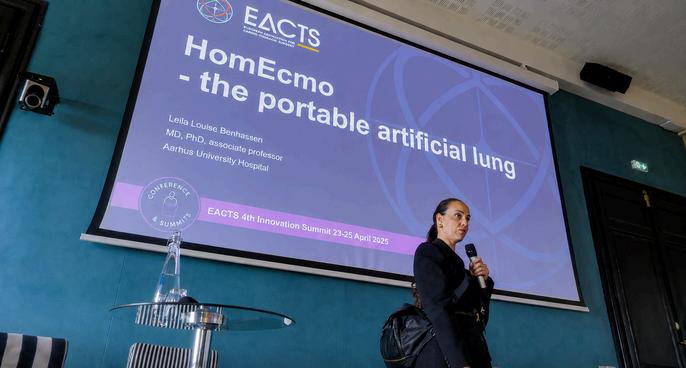
This year’s Innovation Hub Grant Winners were Leila Louise Benhassen from Aarhus University Hospital, Denmark, recognised for her presentation on HomEcmo: The Portable Artificial Lung; Paul Philipp Heinisch from the German Heart Center Munich, Germany, acknowledged for his research on a Hybrid Cellulose Valved Valsalva Conduit for Congenital Cardiac Surgery; and Sarah Wollmann from the Medical University of Vienna, Austria, honoured for her work on A Two Stage Ventricular Assist Device for Paediatric Patients Their innovative contributions reflect the Summit’s commitment to advancing transformative research in cardiovascular medicine.
The Innovation Summit is really an amazing thing EACTS is very unique It’s able to draw in the communities from all over the world, not just in specific areas
Issac George - Columbia University Irving Medical Center, New York, USA
A highlight of the Summit was the keynote address delivered by Aditi Sathe, Satellite System Engineer, ATG Europe for the European Space Agency Her presentation provided an insightful overview of recent advancements in space exploration and satellite technology. She discussed major global missions, the growing role of satellites in everyday life, and the impact of space innovation on healthcare, while also addressing challenges such as geopolitical tensions and space debris Her talk inspired attendees to reflect on the opportunities and responsibilities shaping the future of innovation
Overall, the EACTS Innovation Summit showcased the immense potential of CT surgery to harness cutting edge scientific breakthroughs - including advances in future cardiothoracic technologies, regenerative medicine and bio-engineering, AI, robotics and space and satellite technology. Discussions explored innovations including AI-driven surgical guidance, robotic-assisted procedures, wearable artificial lungs, 3Dprinted implants, regenerative cardiac patches, and virtual reality applications, demonstrating their potential to transform future patient care
To build on the successful momentum in CT surgery, preparations for the 5th Innovation Summit - scheduled for April 2027 are already underway
Watch the 2026 Innovation Summit highlight here


We would like to express our sincere gratitude to our industry sponsors for their generous support of the Innovation Summit. Your contributions have been central to creating an engaging platform for sharing new ideas and developments in cardiothoracic surgery. We are also truly grateful for your continued commitment to EACTS, which enables us to pursue our mission of improving patient outcomes through education, innovation and collaboration.
Keynote Speaker
Space innovation, space for medicine and human space exploration
AditiSathe, SatelliteSystemEngineer, ATGEuropefortheEuropean SpaceAgency, TheNetherlands
This is a hugely important time for space exploration, with a number of exciting missions in development or in progress, according to Aditi Sathe, a satellite system engineer working with the European Space Agency. Meanwhile, governments and businesses are making multi-billion-dollar investments in satellites to meet demand for high-speed connectivity
Artemis II has captured the public’s imagination, successfully completing a manned flight around the moon in 10 days and generating stunning images of the moon’s far side The next Artemis mission is
lunar landing. New rovers are being developed to support astronauts on the moon, learning from NASA’s ongoing missions on Mars, where the Perseverance and Curiosity rovers are searching for signs of microbial life and collecting rocksamples scheduled for mid-2027 as NASA moves closer to launching manned

China’s Tiangong Space Station has been in operation since 2021 It is permanently crewed, hosting three astronauts on six-month expeditions to carry out scientific experiments Meanwhile, JUICE, a European Space Agency robotic mission, is on its way to explore Jupiter and its three large, ocean-bearing moons, arriving in 2031.
As Ms Sathe explained, space is crowded around Earth with 15,000 active satellites meeting growing demand for high-speed connectivity, communications and information Satellites are critical for our daily lives, from tracking the weather and navigation to watching our favourite programmes and staying in touch with loved ones. For example, Galileo, the European Union’s global navigation satellite system, deploys a network of more than 26 satellites to provide sub-metre accuracy. It has more than 4 billion users.
The surge in investment in space exploration has positive implications for healthcare and medicine, said Ms Sathe. There are many examples of space technology that have been repurposed to improve the delivery of healthcare These include MRI and CT scans, which were invented and improved based on digital image technology developed for space, and laser eye surgery Surgical tools like MIRA, robotic surgery, microgravity-enabled 3D bioprinting of nerve implants and shock absorbing foam in prosthetics are spin-offs from technology used in space exploration.
Ms Sathe also identified a number of challenges to emerge from the latest space race.
The current geopolitical situation is a barrier to international cooperation, which has led to the development of a number of competing international programmes.
Some countries are using earth observation satellites for military purposes.
There is a lack of fully enforceable international laws and policies to oversee space activities
The large scale of space debris is also a concern, with thousands of dead satellites and pieces of rockets orbiting the earth There is an urgent need for innovation to recover the debris, such as docking or magnetised removers, and grabbers with claws or nets, said Ms Sathe
INNOVATION IN ACTION
In this section you can read a summary of a selection of the presentations that were presented at the 4 Innovation Summit in Paris. th
Every token has a cost: Energy, AI and the future of compute
SandyEngelhardt, UniversityHospitalHeidelberg, Germany
AI is transforming the delivery of healthcare, with a profound impact on the work of clinical staff and research scientists It makes life easier, in so many ways, particularly by automating routine tasks and streamlining processes This leaves staff free to focus on the more complex aspects of their work.
But the benefits of AI come at a cost that many people are not aware of, warned Sandy Engelhardt, Head of Artificial Intelligence in Cardiovascular Medicine, Heidelberg University Hospital. She told the Innovation Summit that the AI boom was putting energy systems under enormous strain, raising questions about long-term sustainability
A single chat request to ChatGPT or Gemini consumes around 0.2 to 0.3 watt-hours of electricity, explained Engelhardt. This is the equivalent of about nine seconds of TV watching time or one second of oven heating time Extrapolating from this, it means that you would have to pedal for about seven seconds on a 150watt bicycle to generate the same amount of energy
OpenAI's ChatGPT alone processes more than 2 5 billion prompts every day, with AI chatbots becoming a significant alternative to traditional search engines. Globally, across all platforms, including Gemini, Claude, API calls and integrated AI search assistants, total AI requests are estimated to exceed several billion every day No wonder the global AI market is experiencing a boom, with a forecast value of $2 trillion by 2030.
Energy consumption is correspondingly enormous and growing, said Prof Engelhardt
Data centres currently consume around 1 5% of global electricity demand If the AI boom continues unabated, they could account for as much as 3 5% of global electricity consumption by 2030, equivalent to the current energy consumption of the whole of Japan In Germany alone, data centres account for about 4% of the country’s electricity consumption The Federal Network Agency predicts that this could rise to 10% by 2037.
AI organisations are extending their reach by expanding specialist services, including healthcare, said Prof Engelhardt Earlier this year OpenAI launched ChatGPT for Clinicians in the US
The company said that ChatGPT for Clinicians is designed for individual clinicians whose hospitals or clinics do not yet offer a centralised AI tool It is promoted as a “secure clinical reasoning partner ” But Prof Engelhardt said that healthcare organisations should ask whether open-source AI could meet clinical compliance.

An expandable auxetic Fontan conduit
VeraZut, LeidenUniversityMedicalCenter, TheNetherlands
Vera Zut, Department of Cardiothoracic Surgery, Leiden University Medical Center, The Netherlands

Ms Zut set out to address the limitations of conventional, rigid extracardiac conduits used in Fontan procedures, which lack growth potential and can become restrictive as paediatric patients grow.
A single ventricle defect is a rare, life-threatening congenital heart condition where only one of the heart's two pumping chambers (ventricles) works effectively. This causes oxygen-rich and oxygenpoor blood to mix, requiring staged open-heart surgeries to allow one ventricle to support both circulation systems
The Fontan procedure is the final stage of openheart surgery for children born with a single working heart ventricle Performed between the ages of one-and-a half and three, it connects the lower body's veins directly to the lungs This allows oxygen-poor blood to bypass the heart and flow passively into the lungs.
A limitation of the current graft that is available is that it does not grow with the patient It becomes undersized in adulthood and causes suboptimal haemodynamics. This increases the risk of poor kidney function and liver fibrosis, and reduces exercise capacity
To address this limitation, Ms Zut’s research focuses on the design and validation of a new growth-adaptive graft based on auxetic technology to improve haemodynamics in adulthood.
To achieve this, Ms Zut and her team are combining computational and experimental models of both the graft and the cardiovascular system to investigate the optimal graft design and to investigate the haemodynamic performance with the new graft compared to the current graft.
Auxetic materials were chosen because they expand transversely when stretched longitudinally, unlike conventional materials that become thinner. In a conduit, this allows the structure to potentially grow in diameter as it is elongated, fitting better with a child's natural cardiovascular development
The design features an auxetic scaffold of cobalt chromium and an elastic sheet cover made from thermoplastic polyurethane and polytetrafluoroethylene, commonly known as Teflon
The project is a collaboration between the Leiden University Medical Center (Friso Rijnberg and Mark Hazekamp), the University of Amsterdam (Gabor Zavodszky and Giulia Pederzani), and the University of Twente (Libera Fresiello)
Virtual reality for anxiety and pain management in lung cancer patients
Laurent Coopmans, LeidenUniversityMedicalCenter, TheNetherlands
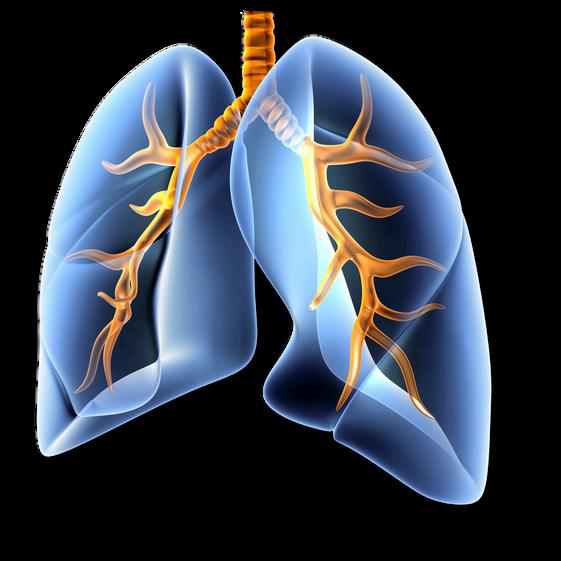
A new study seeks to show that virtual reality can reduce anxiety and help to manage pain for lung cancer patients
The study, led by Laurent Coopmans, of Leiden University Med Center, aims to demonstrate that VR is an effective alternative treatment to traditional analgesics used for pain management, which have severe side effects.
Post-operative pain and anxiety are significant issues for oncological lung surgery patients due to the nature of the disease and the invasiveness of the procedures
Coopmans expressed:
“ Lung cancer causes anxiety and distress. Acute post-operative surgical pain leads to higher use of pain medication, such as opioids Virtual reality has proven to reduce anxiety and pain in hospitalised patients VR can also help to reduce the time patients spend in hospital
To explore this further, a randomised controlled trial will assess the feasibility and efficacy of VR in postoperative pain and anxiety management for oncological lung surgery patients
This study investigates two applications of virtual reality in patients undergoing oncological lung surgery. The first application examines the impact of VR-based patient education on anxiety levels as they prepare for surgery. The second application evaluates the effect of the LUVRE application, which is a relaxation tool, after surgery Through VR, patients are immersed in musical experiences, concerts and festivals
Laurent Coopmans’s team will investigate three outcomes: the effect of a VR modality as an education tool for patients undergoing oncological lung resection, compared to standard-of-care patient education in managing pre-operative anxiety; the effect of VR distraction therapy in post-operative pain management in patients after oncological lung surgery, compared to standard-of-care analgesia; and the effect of VR distraction therapy in pre- and post-operative anxiety management in patients after oncological lung surgery, compared to the standard-of-care
The trial will be conducted at two locations, Leiden University Medical Center and Amsterdam University Medical Center, with a total target size of 146 patients.
Design and rationale: A pivotal clinical trial of a novel 3D-printed, patient-specific, bioresorbable airway splint for pediatric tracheobronchomalacia
RichardG. Ohye, Universityof Michigan, USA
Tracheobronchomalacia (TBM) occurs when the airway cartilage lacks structural integrity and collapses with respiration. TBM in newborns is extremely difficult to treat and often requires a tracheostomy and long-term ventilator Severe forms have a mortality rate of 50% to 80% Thankfully, it is a rare condition affecting one in 2,100 births But this also means there has been limited research into novel treatments.
That’s why, Richard Ohye and his team at the University of Michigan created a bioresorbable airway splint using a 3D printer, based on a computed tomographic image of the patient’s airway The splint is made from polycaprolactone (96%), a biodegradable polyester widely used in biomedical implants and hydroxyapatite (4%)
During a presentation at the Innovation Summit, Ohye shared the story of a three-month-old boy who has received a splint Born at 35 weeks, the infant was initially asymptomatic At six weeks he suffered chest wall retractions and experienced difficulty in feeding. The infant arrested at home and was resuscitated by his father. He was paralysed and sedated, requiring intubation He was treated with a high PEEP (Positive EndExpiratory Pressure) of 15 He suffered multiple respiratory arrests.
Localised TBM was diagnosed and consent was sought for the implantation of the splint Seven days after the procedure, weaning from mechanical ventilation was initiated. Ventilator support was discontinued entirely after 21 days and the child was discharged home with the tracheostomy in place No unforeseen problems related to the splint have arisen
Richard Ohye said that this case shows that highresolution imaging, computer-aided design and biomaterial three-dimensional printing together can facilitate the creation of implantable devices for conditions that are anatomically specific for a given patient.
A multi-centre pivotal trial to measure the safety and effectiveness of the airway splint is underway and is expected to last for eight years. Enrolment began in January 2025, with 11 patients enrolled to date Patients taking part are aged from one week to four years They must have clinically significant TBM and be unable to wean off mechanical ventilation; be dependent on a tracheostomy tube; and meet indications for a tracheostomy or another surgical intervention for TBM.
The splint has already been implanted in 57 patients, usually under emergency-use exemption and with parents’ written consent.
The glymphatic systemwith special emphasis on heart failure and the cardiovascular system
IbenLundgaard, LundUniversity, Sweden
A recent study sought to develop what is known about the relation between heart failure and the brain. Presenting the study at the Innovation Summit, Iben Lundgaard explained that she and her team had established a number of different ways the cardiovascular system affects the brain and its clearance system
“Most people know Cerebrospinal fluid (CSF) is a way to measure biomarkers, and that CSF is made in the ventricular system, which is connected to the subarachnoid space around the brain But how do markers made deep in the brain actually get to the CSF?” said Lundgaard.
“This was not known and had not received much attention until a study by Iliff et al in 2012 that showed a very rapid communication of fluid from the CSF spaces going deep into the brain, which was entirely new” explained Lundgaard
Talking about the glymphatic system and the influx of CSF in perivascular pathways to mediate the clearance of solutes from the brain, “it’s a little bit like adding clean water to a dirty aquarium” said Lundgaard “It is known that heart failure leads to increased and accelerated cognitive decline and almost doubles the risk of Alzheimer’s and dementia”
Lundgaard and her team’s study, which was carried out at the Wallenberg Centre for Molecular Medicine at Lund University, which focuses on organ interactions, highlighted there are a number of ways brain function and brain fluid can be affected by heart failure
The findings of the study, which was the first of its kind to connect blood flow to brain clearance, indicated:
Heart Failure with reduced Ejection Fraction (HFrEF) increased arterial pulsatility
HFrEF increased CSF influx into the brain
HFrEF did not affect brain clearance Cerebral ventricles reduced in HFrEF Blood flow correlated with brain clearance
Vascular smooth muscle function directs both influx and clearance
For Iben Lundgaard, the findings not only show that medications that improve the vascular smooth muscle cell function could be effective in reducing the risk of dementia, but that whether through exercise – or even through the use of saunas that provide a transition from hot to cold and so increase vascular smooth muscle activity and blood flow – we can all do more to look after our vascular health
Friend or Foe? AI in scientific publishing
MarioGaudino, WeillCornellMedicine, USA
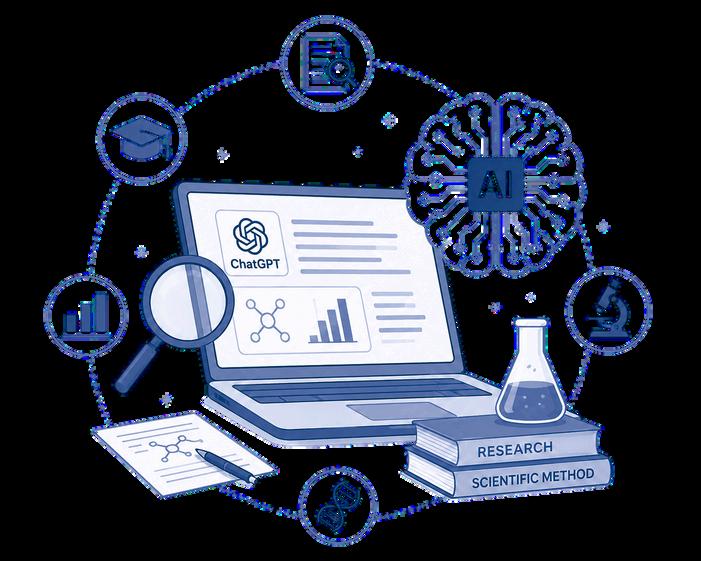
AI can be a powerful tool in scientific publishing but there are also significant risks from an exponential increase in its use, warned Mario Gaudino.
Authors can use AI to automate routine tasks, enabling researchers to focus on the intellectual and innovative aspects of their work AI can also streamline writing processes, refine manuscripts, summarise complex topics and generate plain-language summaries Non-native English speakers can use AI to optimise the grammar, clarity and tone of their manuscripts to share their work across global platforms.
But Mario Gaudino also spoke about AI’s darker side and the risks to scientific publishers This includes a rapid increase in fabricated and retracted research articles and the erosion of critical thinking There are also risks from relying on AI’s vast datasets, which may unintentionally reinforce stereotypes or exclude critical voices from underrepresented populations.
Publishers should beware of concerns around confidentiality, warned Gaudino Data that is fed into AI is likely to be used to train the AI system, without the author’s consent
What is beyond doubt is the exponential growth of AI in scientific publishing Mario Gaudino cited data showing that an estimated 13.5% of abstracts published in 2024 were processed by AI. This is based on a study looking at vocabulary changes in 15 million biomedical abstracts from 2010 to 2024.
Many AI applications are now mainstream For example, Otter AI is used widely to transcribe meeting notes and create summaries. LitMaps creates a local citation network of all articles that cite any input articles. It then identifies the most inter-connected articles, helping to find impactful papers that might have been missed Typeset formats manuscripts to the requirements of target journals, with a database of more than 45,000 publications worldwide. But the rapid evolution of AI has outpaced the development of effective regulatory frameworks and created an environment in which poor practice can thrive
An investigation by Scientific America found fabrication and errors in bibliographic citations generated by ChatGPT. It asked ChatGPT-3.5 and ChatGPT-4.0 to produce reviews on 42 different topics. Overall, 55% of ChatGPT-3 5 and 18% of ChatGPT-4 0 citations were fabricated Of the non-fabricated citations, 43% of ChatGPT-3 5 and 24% of ChatGPT-4 0 had substantive citation errors
Similarly, The Times found that a book published by the German-British publisher Springer Nature included dozens of citations that appear to have been invented, “a sign, often, of AI-generated material ”
So-called ‘AI-giarism’ is a growing problem, warned Gaudino. This refers to the use of AI-generated content without proper acknowledgement or attribution, which raises questions about an author’s scientific integrity. A study looking at 75,172 papers published since 2023 found that while 4% of studies showed signs of use of AI, only 0 1% disclosed use of AI
Recognising AI-fabricated research is also a significant challenge In 2023 a group of authors gathered 50 abstracts from five high-impact journals and asked ChatGPT to create 50 abstracts based on the titles and specific journals included. Blind reviewers assessed all the abstracts and scored them as real or fabricated. The reviewers scored 32% of the fabricated abstracts as real and 14% of the real abstracts as fabricated
Mario Gaudino concluded:
AI is an incredibly strong assistant that can help with time-consuming steps, allowing researchers to focus on more intellectual and innovative steps However, AI use may also erode critical thinking Clear oversight of every AI-driven step is needed.
Importance of IP for disruptive innovationsview from a patent attorney
UweRösler, RöslerPatent LawFirm, Germany
A comprehensive IP strategy is essential to protect the value of disruptive innovations, advises Uwe Rösler, one of Germany’s most experienced patent attorneys.
He told the Innovation Summit that clinicians and scientists often focused on developing their ideas and overlooked the importance of filing a patent application before sharing their concepts with a wider audience, putting at risk their ownership claim. Intellectual property is an intangible asset which can be as critical to business success as any physical resource
An invention is a new idea, which solves an existing problem in a creative way, explained Mr Rösler. Innovation is the successful application of the invention, creating economic value and making things better.
Disruptive innovation is a different type of innovation, a game changer that fundamentally changes or creates new markets Disruptive innovation in medicine fundamentally changes the delivery of healthcare
Examples include:

mRNA vaccines: faster and flexible vaccine development.
Telemedicine and remote doctor consultations
AI diagnostics
Wearable devices and continuous health monitoring
CRISPR gene editing, with potential to cure genetic diseases.
“In the beginning there is an idea,” said Mr Rösler. The first test is to consider whether this idea has the potential to become an invention Is your idea genuinely new? Steps you can take to establish whether your idea already exists include a wide internet search to include scientific databases Use AI tools like ChatGPT or Claude in a smart way without disclosing your idea, mindful that confidentiality might be compromised Key sources include Espacenet (European Patent Office) and national patent offices.
At this stage it is absolutely critical not to publish your idea or to make an oral or printed presentation, advised Mr Rösler “Keep your idea secret ” If an early presentation is critical for future development, it is possible to make an emergency patent application by fax.
Once you have established that your idea is new, the next step is to consider whether you are an employee or self-employed If you are an employee, you must inform your employer. If you are self-employed, it is time to begin the IP process.
IP toolkits are available, with resources that provide practical guidance on many aspects of IP licensing, such as patents, utility models, trademarks and design. A patent attorney can support your patent application
“Only after filing can you publish your idea, but often it can be an advantage to wait up to a year,” said Mr Rösler This is because the filing date sets a number of important deadlines for further decisions and the first 12 months after filing is a critical year.
During this period, you can file an improved patent application, with new ideas to complement the original application text by claiming the priority date of the original application “This is why you should not stop working on your idea and you should not publish your basic idea before filing the improved application.”
Inventors can expand the intended patent protection to other countries by filing the improved patent application as an International Patent Application to secure protection in other countries of interest.
IP is of critical importance for start-ups, offering protection against counterfeiting and a competitive advantage Filing a patent application is often a prerequisite for applying for government grants. The number of patents is a key factor in determining a company’s value and exit strategy, and is an index of innovation and reputation Owning patents forms the basis for licensing and cross licensing in the event of potential IP conflicts.
During the first 12 months, the Patent Office will complete a search or examination report to determine whether your invention can be patented. “If a patent is not granted, don’t give up,” advised Mr Rösler. “Seek advice from your patent attorney.”

INNOVATION GRANT RECIPIENTS
HomEcmo: The Portable Artificial Lung
Leila Louise Benhassen, Aarhus University Hospital, Denmark
Leila Louise Benhassen was awarded an EACTS Innovation Grant for her project, HomEcmo: The Portable Artificial Lung, an innovative concept aimed at transforming long-term respiratory support for patients with severe lung failure
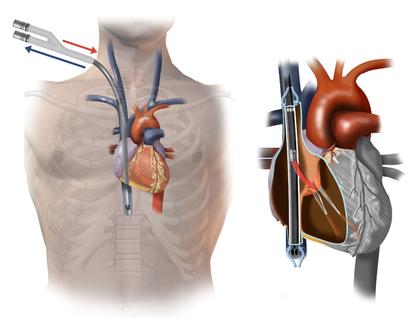
Her work focuses on developing HomEcmo, a portable artificial lung system designed to give patients greater mobility and independence than conventional extracorporeal membrane oxygenation (ECMO) By reducing the size and complexity of current systems, the project aims to support earlier rehabilitation and improve patient outcomes
The study showed that HomEcmo is safe and feasible, with promising results in reversing respiratory failure and maintaining stable haemodynamics
Receiving the EACTS Innovation Grant recognises both the originality and future potential of Leila’s work. Her project reflects the growing importance of patient-centred innovation within cardiothoracic care and demonstrates how emerging technologies may shape the future of extracorporeal support
As part of the EACTS Innovation Summit, Leila presented her research and shared her vision for how portable artificial lung technology could evolve to benefit patients worldwide
It’s a unique opportunity to really advance your project from experimental stages onto clinical stages
Hybrid Cellulose Valved Valsalva Conduit for Congenital Cardiac Surgery
Paul Philipp Heinisch, German Heart Center Munich, Germany
Paul Philipp Heinisch received an EACTS Innovation Grant for his project, Hybrid Cellulose Valved Valsalva Conduit for Congenital Cardiac Surgery, which focuses on advancing surgical solutions for patients with congenital heart disease.
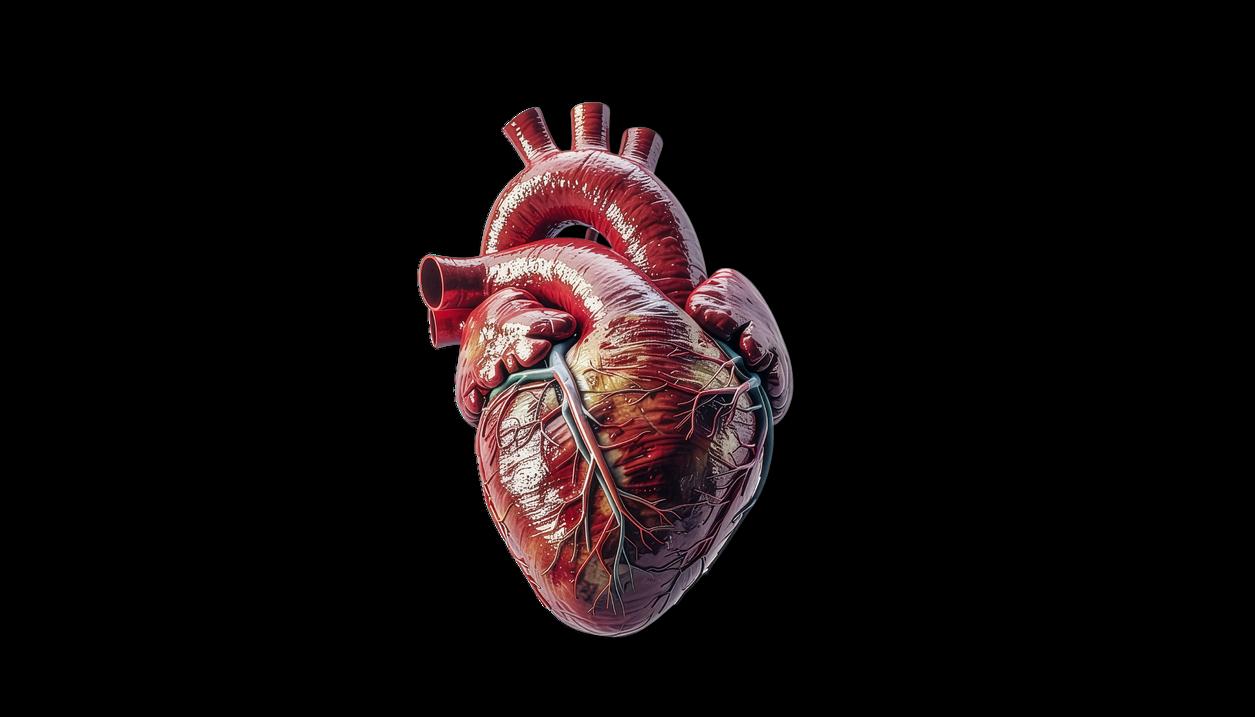
The research explores the use of bacterial cellulose, a biocompatible material with strong mechanical properties and favourable interaction with human tissue By combining this material with advanced fabrication techniques, the project seeks to develop a nextgeneration valved conduit that is more durable, adaptable, and capable of supporting growth in children, potentially reducing the need for repeated surgical interventions
Ultimately, the successful development of a biogenic polymer valved conduit has the potential to reduce the number of reoperations in childhood and improve long-term quality of life for paediatric patients with RVOT abnormalities
Paul Philipp expressed that the support from the EACTS Innovation Fund is essential to move this novel valved conduit technology to the next stage of development. The funding will provide access to specialised testing and manufacturing resources, support fabrication and analysis, and help accelerate progress toward future clinical translation and improved outcomes in congenital cardiac surgery.
By enabling this next translational step, EACTS support would position the programme to advance a novel, non-animalderived valved conduit concept with growth potential for future preclinical validation and long-term impact in CCS
A Two-Stage Ventricular Assist Device for Paediatric Patients
Sarah Wollmann, Medical University of Vienna, Austria
Sarah Wollmann was recognised with an EACTS Innovation Grant for her project, A Two-Stage Ventricular Assist Device for Paediatric Patients, an initiative focused on improving mechanical circulatory support for children with severe heart failure
Sarah’s project focuses on developing a ventricular assist device (VAD) designed specifically for children VADs are already used successfully in adults with heart failure, but there are limited options for children because their hearts and bodies are much smaller and more complex
Sarah’s idea is to create a two-stage support system that can better adapt to paediatric patients. This could help children who are waiting for a heart transplant or recovering from serious heart conditions
Sarah expressed:
“
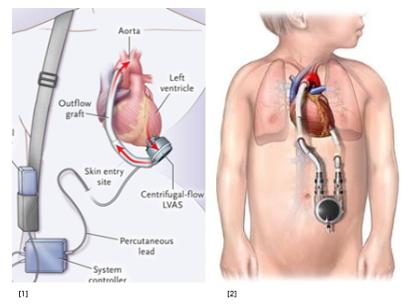
This award is a powerful validation of our mission: bridging a critical medical gap by providing a dedicated, implantable two-stage ventricular assist device for our youngest patients.
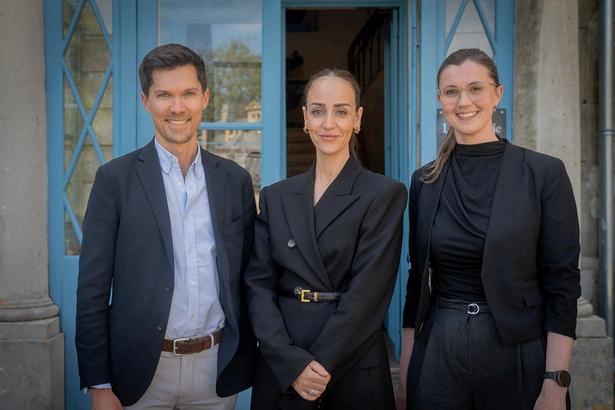
Sarah described receiving the EACTS Innovation Grant to be essential momentum to the transition of her research towards pre-clinical testing
Her work reflects the growing role of engineeringled innovation in shaping the future of paediatric cardiac surgery and demonstrates the importance of developing technologies specifically tailored to younger patients
ANDSO, TOBARCELONA!
Celebrate 40 years of excellence in cardiothoracic surgery at the 40th EACTS Annual Meeting –Honouring our History, Inspiring our Future
th
The 40 EACTS Annual Meeting will take place in Barcelona from 7-10 October 2026 and will marka major milestone as EACTS celebrates 40 years of excellence in cardiothoracic surgery Innovation will once again play a central role in this year’s Annual Meeting and members will gain the opportunity to further discuss and develop proposals put forward in Paris earlier this year.
th
The 40 EACTS Annual Meeting will feature plenary sessions with world-recognised experts, specialty tracks across key surgical areas, technical skills training and live case discussions. It also includes industry exhibitions showcasing the latest innovations and networking opportunities for collaboration and career development.

The Techno-College continues to be one of the highlights of the Annual Meeting, offering delegates unique access to emerging surgical techniques and engagement with the latest innovations in cardiothoracic surgery. Attendees will also benefit from interactive training sessions led by specialist faculty, gain insights to trends and hear from this year’s Innovation Award Winner. The TechnoCollege attendance carries a separate fee.

Registernow forTechno-College to gain exclusive access to cutting-edge cardiothoracic surgical techniques.


Barcelona Spain 7-10 October 20 26