NEWS
THE QUARTERLY PUBLICATION FOR EACTS MEMBERS
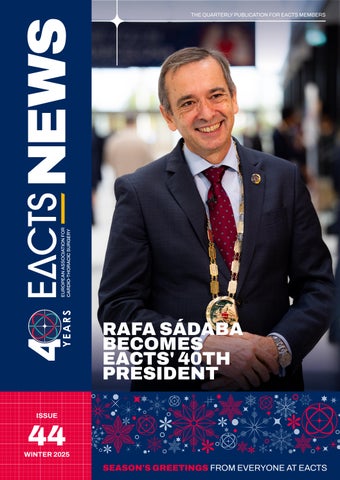
RAFA SÁDABA BECOMES EACTS' 40TH PRESIDENT ISSUE
44
WINTER 2025
SEASON'S GREETINGS FROM EVERYONE AT EACTS
EACTS NEWS
CORPORATE
NEW EACTS OFFICERS AND COUNCILLORS New Officers and Councillors have been elected to EACTS Council following the General Assembly at the 39th EACTS Annual Meeting in October. Volkmar Falk handed over the Presidential Chain to Rafa Sádaba and Lorenzo Galletti became the new Vice-President. Many congratulations to Rafa and Lorenzo. We welcome the following new Officers and Councillors: Lorenzo Galletti Vice-President
Mario Gaudino Editor-in-Chief
Gloria Färber Acquired Cardiac Disease Domain Chair
Michael Borger Councillor at large
Eduard Quintana Councillor at large
Edoardo Zancanaro Residents’ Representative on Council
BUILDING ON OUR SUCCESSES Rafa Sádaba EACTS President Rafa Sádaba is Chief of Cardiac Surgery at the Navarra University Hospital and Associate Professor of Surgery at the Public University of Navarra in Pamplona, Spain. He is also Area Coordinator (Cardiovascular and Renal Diseases) at the Health Research Institute of Navarra (IdiSNA). He has been a member of EACTS since 1999, holding several different positions including Chair of the Education Committee. He served as EACTS Secretary General from 2021-2022.
“Becoming EACTS President is a highlight of my professional career. I have been involved in EACTS for many years, so it is incredibly humbling to be chosen to represent the organisation, particularly in our 40th year. “It is a big responsibility to keep the organisation growing but I consider myself fortunate to work alongside some phenomenal people. There are three key priorities that I would like to address during my time as President. 1 “We have an exciting opportunity to broaden our reach and build EACTS’ reputation as the home for the global cardiothoracic community. We already have a good footprint in Latin America with a well-established meeting with LATAM, and we have the capability to expand the education we provide
3
to more of the surgical community in Africa. A new event taking place in September 2026 will be a positive first step. “We have to seize the opportunity to engage more surgeons so that all patients in need of heart or lung surgery, including those in underserved countries, have access to well-trained surgical teams. 2 "Over the decades our focus has rightly been on improving surgical skills and using the latest techniques which ensure the best outcomes for patients. Surgical teams have had tremendous success improving mortality data to ensure fewer deaths from surgery. Given this success, I would like us to make the other aspects of treatment more prominent, including more reflection - with our patients - on the wider value of healthcare.
How do we strike the right balance to reduce the risks of surgery for patients? What action can we take to reduce co-morbidities, limit other complications, and accelerate faster recovery post treatment? We know patients often need to get back to work quickly and won’t welcome avoidable repeat procedures. This means thinking more broadly to ensure the treatment we provide reflects the values and priorities for each patient. 3 “Finally, in our 40th year I want to honour our past and the achievements of our founding fathers who started an organisation which is now the fastest growing cardiothoracic organisation in the world. Our 40th anniversary is also a time to celebrate our future and use our successes in recent times as a springboard to achieve even greater things.”
LOOKING TO THE FUTURE Patrick Myers EACTS Secretary General The General Assembly also saw EACTS Secretary General, Patrick Myers, re-appointed to serve a second term. Here, he reflects on recent achievements and outlines his vision and goals for the next three years. "It is an honour to be re-elected as EACTS Secretary General. With the support of Council, our active members and the team in Windsor we have made considerable strides during the first three years of this term, with the launch of the Innovation Hub and Outreach Programme and the success of the Aortic Forum, the MCS Summit and the EACTS Annual Meeting, which achieved record attendance this year. We are in a strong position, but we remain ambitious, committed to supporting our members and ensuring we are well placed to meet the challenges facing the cardiothoracic community in the years ahead." Achieve stronger global ties and expand the bridges across the heart and lung teams. "Greater collaboration with other societies was a focus in the first term and we have built some fantastic relationships over the past few years. For example, we recently published a joint guideline between EACTS, STS and AATS on temporary mechanical circulatory support, which is the first clinical practice guideline that we have developed collaboratively.
"We have a stronger voice when we work together as a global specialty and, as one of the largest cardiothoracic organisations, EACTS is uniquely positioned to continue building stronger ties." Expand and build joint educational content and scientific documents with other societies worldwide and provide data bridges. "Our joint working extends to developing education content at major meetings and spearheading new initiatives. The STS/EACTS/LACES Latin America Cardiovascular Surgery Conference is a great success and consequently we are planning a similar event in Africa working jointly with CSIA (Cardiac Surgery Inter Association Alliance) and STS. "By providing data bridges between databases, we have an opportunity to run truly global and cross-specialty real-world data analysis and trials."
We remain ambitious, committed to supporting our members and ensuring we are well placed to meet the challenges facing the cardiothoracic community in the future.
EACTS NEWS
CORPORATE
Expand the Innovation Hub and continue evolving the Innovation Summit to deliver ground-breaking technologies that expand treatment options and improve patient outcomes. "Progressing a great idea into a product that is used in clinical practice takes time and requires specific knowledge and skills such as how to protect intellectual property, how to get funding and bring a product to market. "The Innovation Summit and Innovation Hub have become great forums to share ideas and encourage new thinking and expanding these initiatives will allow us to bring tools, knowledge and support to help our members advance their innovative ideas and make a difference to patients." Provide access to services, tools and resources so our members can design, get funding and execute high-quality trials that shape practice and improve patient care. "In recent years, EACTS has provided trials assistance to several investigators, but we have an opportunity to formalise this support by leveraging our network and membership to support in recruiting patients to trials with potential to transform practice. This can help our members secure funding with major agencies." Articulate what it means to be a cardiothoracic surgeon in 2035 and begin the work of training them today. "We must continually look to the future of cardiothoracic surgery and consider how we train our surgeons to meet patient needs and challenges over the next decade. How will innovation and technology change our specialty and what skills and knowledge will surgeons need to deliver the highest standards of patient care?" Positioning our journals at the forefront of cardiothoracic surgical science. "Our journals are already exceptionally positioned, but we aim to elevate them to the next level and make them the
most sought after within the specialty. The recruitment of an outstanding new Editor-in-Chief represents a good step towards achieving this goal. "There are an increasing number of surgeons running highquality trials with the potential to transform practice, and maintaining close engagement with these trialists will be key to positioning our journals at the forefront of cardiothoracic surgical science." Position EACTS as the Netflix of Cardiothoracic Surgery. "Our Academy programme has grown considerably in recent years and the Annual Meeting presentations show valuable insights on subjects covering our entire specialty, providing increased learning and education opportunities and reaching more people around the world. There is more we can do to help our members navigate this fantastic, high-quality content by offering intuitive, personalised, global, and universal access." Looking ahead to our 40th anniversary. "We celebrate our 40th anniversary as one of the leading organisations for the cardiothoracic community and, in this second term, we look forward to building on this success."
Progressing a great idea into a product that is used in clinical practice takes time and requires specific knowledge and skills.
MEMBERSHIP
5
TAKE ADVANTAGE: BE PART OF THE EACTS COMMUNITY We are delighted to welcome 875 new members to the EACTS community this year. This includes a rise in members who are operating in some of the most economically challenged countries in the world. The number of pre-trainee members also continues to increase thanks to the extended benefits available, including tailored Academy courses and dedicated pre-trainee annual meeting and travel electives grants.
More people are recognising the value of EACTS membership and joining our community of over 4,000 members to be connected to the cardiothoracic specialty around the world. As an EACTS member, you can enjoy these great benefits: • Free access to the European Journal of Cardio-Thoracic Surgery • Free access to Adult Cardiac Database • Free access to educational webinars • Member exclusive rates to EACTS Academy courses & Annual Meeting • Apply for exclusive fellowships, grants & bursaries • Join task forces & committees to shape surgical standards & practice
TYPE OF MEMBERSHIP Active Member €300
Resident/Trainee €125
Low-Income Countries €60
Allied Health Professional €50
Lower-Middle Income Countries €60
Pre-Trainee - does not include access to EJCTS €20
Industry €250 Senior Member does not include access to EJCTS No Fee
MEMBER COMMUNICATIONS MEMBERSHIP RENEWAL
Annual membership expires on 31 March 2026. Look out for a renewal request in your inbox at the end of February to continue benefiting from your EACTS membership.
MEMBER SURVEY
Feedback from our members is very important, and we welcome comments or suggestions on how we can continue to provide the best support and services to our members. We would be grateful if you could complete a short survey which will be arriving in your inbox early next year.
Tell your colleagues: Join EACTS now
EACTS NEWS
ANNUAL MEETING
THE 39TH EACTS ANNUAL MEETING
A RECORD-BREAKING MEETING OF DISCOVERY Over 5,400 delegates from around the world made the journey to Copenhagen in October for the 39th EACTS Annual Meeting, setting a new attendance record for the largest meeting of the cardiothoracic surgical community. Keynote speakers encouraged delegates to step out of their comfort zone with two thought-provoking presentations. Danish scientist Nicklas Brendborg explored health, ageing and the biological mechanisms that shape our lives, and Jens Krause from Humboldt University of Berlin examined the collective behaviour and intelligence in animals and humans. In his powerful Presidential Address EACTS President Volkmar Falk considered the current opportunities and challenges for academic freedom and warned that the right to research, teach and express ideas without undue interference is under threat. He outlined practical ideas to support and protect academic freedom for future generations including engaging in public dialogue and fighting alternative truths with the hard facts of science.
This year’s Meeting delivered three and a half days of world-class science and education, with a busy scientific programme providing new insights, innovation and inspiration across the four EACTS domains - acquired, congenital, thoracic and aortic disease. Energetic exchanges, discussions and debates contributed to a vibrant and lively atmosphere as delegates took the opportunity to network with leaders in their field, industry partners and peers.
Techno-College The EACTS Techno-College continues to set new milestones. Over 1,000 delegates attended the two programme streams - cardiac and thoracic - keen to learn more about the latest innovations that will impact daily practice.
digitalisation and AI era was a focus for the thoracic stream which also explored current trends in robotic surgery, from costsaving strategies in robotic surgery to mitigation strategies of early implementation of a robotic surgery programme.
In the cardiac programme delegates were able to observe live surgical procedures including new epicardial ablation and leftatrial appendage, frozen elephant trunk, Bentall procedure and robotic repair case transmitted live from Chicago. The latest advances in transfemoral transcatheter aortic valve implantation and new options for transaxillary aortic valve replacement were also discussed. The afternoon session provided a glimpse into the future with presentations showcasing new technologies on the horizon such as a new robotic platform for cardiac surgery, endoscopic saline testing for David repair and novel connector technology for automated coronary bypass construction. Live surgery also featured in the thoracic programme including a unique first in Europe with a 3D live in a box single port robotic thymectomy. The transformation of thoracic surgery in the
A separate workshop gave delegates the opportunity to practice their skills on new simulators including the 4th generation da Vinci Xi platform and test drive the Ion robotic bronchoscopy platform, or da Vinci SP.
7
Techno-College live surgery update
UPDATE
Please see below the postoperative status (day #1) of the patients Malakh Shresta et al: Frozen Elephant Trunk in Combination with RapidLink. Extubated in the morning, no neurological deficits, stable haemodynamics with low dose catecholamines, planned for transfer to normal ward.
Christoph Starck et al: Maze Procedure using Encompass-Clamp. LAA Occlusion with AtriClip Flex-V and Aortic Valve Replacement (Epic Max). Early extubation, antihypertensive medication, stable haemodynamics, no neurological deficit, planned for transfer to normal ward.
Jakub Staromlynski et al: Bentall-Procedure using Konect through partial upper hemisternotomy.
David Holhey et al: TAVR-Explantation, Aortic Valve replacement with Magna Ease and Bypass LIMA-RIVA.
Extubated in the morning, no neurological deficits, stable haemodynamics without catecholamines, transferred to normal ward.
Extubated, no neurological deficits, stable haemodynamics with low dose catecholamines, expected transfer to normal ward for Saturday (3rd POD), CO2 retention due to COPD and extensive pain due to chronic pain syndrome.
MORE HIGHLIGHTS FROM THE 39TH EACTS ANNUAL MEETING Guidelines
Guidelines featured prominently throughout the scientific programme with discussions around the latest recommendations from the guidelines published this year by EACTS and collaborating associations. These include EACTS/STS/AATS guidelines on temporary mechanical circulatory support in adult cardiac surgery and EACTS expert consensus statement on the Ross Procedure in adult patients.
CT Surgery Residents Showdown
The CT Surgery Residents Showdown produced another fascinating battle of cardiothoracic knowledge. Congratulations to winners Atılay Koltuk and Nazlı Melis Coşkun from Hacettepe University Cardiothoracic Surgery in Turkey.
WiCTS
The Women in Cardiothoracic Surgery Committee held an interesting session, open to all delegates, exploring gender medicine and why women are under-represented in CABG clinical trials.
Allied Health Professionals Committee Key aspects of patient recovery, including physical, emotional and social factors, were discussed in a session organised by the Allied Health Professionals Committee. The Committee also held an abstract session showcasing highquality research by AHPs.
Residents’ Committee
The popular ‘Escape the Coffin’ session, organised by the Residents’ Committee, brought together residents and trainees for a highly interactive discussion of clinical cases.
EACTS TV
More lively debates and discussions featured on EACTS TV with key opinion leaders sharing their views and insights on hot topics from the scientific programme.
Joint society sessions
Joint sessions featured across the scientific programme including an EACTS/AATS joint session on the management of congenital aortic stenosis in children and an EACTS/ESTS session on the ‘Surgical treatment of hyperhidrosis’. Thoracoabdominal aortic surgery was explored in a joint EACTS/ STS session and an EACTS/ASCVTS session on Type A intramural hematomas examined which patients benefit from immediate surgery and which patients benefit from watchful waiting.
e-Posters
Delegates had access to over 395 e-Posters, including 80 moderated e-Posters, offering more high-quality scientific research.
EACTS NEWS
ANNUAL MEETING
NEW IN 2025!
LIFETIME ACHIEVEMENT AWARD
Every year the Annual Meeting evolves to enhance the experience of delegates. This year a new programme of activity was introduced at the EACTS booth including a series of presentations from start-ups and a residents’ open mic session focusing on global perspectives on cardiothoracic training. The popular EACTS Learning Labs expanded to include sessions for pre-trainees, offering the opportunity to experience a different style of operating that many pretrainees do not have access to in their home countries.
Marko Turina was presented with the EACTS Lifetime Achievement Award in recognition of his pioneering work in cardiothoracic surgery and his instrumental role as one of the founders of EACTS. A true innovator in his field, Marko Turina’s achievements include the development of the infant pump oxygenator which facilitated the first open-heart surgeries on infants worldwide. Through his tireless efforts EACTS has become a leading organisation for the cardiothoracic community. As Marko Turina remarked when accepting his award, “From humble beginnings in 1986, the Annual Meeting has become the world’s biggest meeting of cardiothoracic surgery. I am proud of this achievement.”
9
THE 39TH EACTS ANNUAL MEETING
EACTS AWARDS
Many congratulations to the winners of this year’s prestigious EACTS awards.
Techno-College Innovation Award Awarded for technological breakthroughs in all areas related to thoracic and cardiovascular research – particularly for new surgical methods or devices – that have the potential to revolutionise our standard practice. Winner: Isaac George, New York Presbyterian Hospital, Columbia University Irving Medical Centre, USA Photochemical Tissue Passivation (PTP) technology Finalist: Şeyda Örs, Chest Diseases and Research Hospital, Izmir, Turkey
President’s Choice This award honours the top abstract presentations from across all four EACTS domains. Aortic
Congenital
Oncological disease emergence after TEVAR: Assessing long-term risks in aortic repair patients
10 years of RossPEARS: Preliminary experience in 100 cases
Joseph Kletzer, Freiburg im Breisgau, Germany
Ana Redondo, London, UK
Thoracic
Cardiac
Using finite element analysis to evaluate the improved mechanical behaviour of silk-hybridised three dimensionally printed long segment tracheal substitutes
Computational fluid dynamics analysis of artificial aortic valves: impact of tilted implantation on hemodynamics
Sujata Syamal, Cambridge, USA
Manuel Berger, Innsbruck, Austria EACTS Awards are based on self-nomination and application. Applications for Young Investigator, Hans G Borst, EACTS/ STS and EACTS/GHC-PASCATS are via the EACTS abstract submission process which opens on 1 February 2026. Find out more
EACTS NEWS
ANNUAL MEETING
Young Investigator Awards
Best e-Poster in the cardiac field
The silent cost of gender in mitral valve surgery: a propensity score matched analysis
Post operative bleeding in myocardial revascularisation under cardiopulmonary bypass for patients treated with aspirin or dual antiplatelet therapy using reduced goal directed anticoagulation
Leo Polzl, Medical University of Innsbruck, Austria
Maroua Eid, Angers University Hospital Center, France
Congenital
Best e-Poster in the aortic field
Adult Cardiac
Endocardial fibroelastosis on the right side of the heart – endothelial-to-mesenchymal transition in pulmonary atresia with intact ventricular septum
Sex-dependent differences in aortic morphology in type A aortic dissection
Julia Gaal, German Heart Institute Berlin, Germany
Simone Gasser, Medical University of Innsbruck, Austria
Thoracic
Best e-Poster in the congenital field
Elimination of hemodynamic changes during ex vivo lung perfusion improves dynamic compliance
Mid-term outcomes of paediatric coronary osteoplasty
Ryaan EI Andari, University of Alberta, Canada
EACTS/STS Award 2025 Targeted sequencing of human aorta tissue reveals undiagnosed heritable thoracic aortic disease Lee Ha, Ewha Woman’s University Seoul Hospital, South Korea
EACTS/AATS Foundation Academic Excellence Award 2025 Dynamic monocyte subset remodelling following heart transplantation: a window into early innate immune activation Bilal Khan Mohammed, Northwestern Memorial Hospital Arkes Pavilion, USA
Hans G Borst Award for thoracic aortic surgery Proximal anastomotic new entry tear following surgical repair of acute type a aortic dissection: anatomical location, risk factors, and impact on long-term outcomes Go Yamashita, Kurashiki Central Hospital, Japan
Best presentation during the Nurse and Nurse Physician programme A real-time clinical data platform for AI-enabled operation room planning: a technical allied healthcare professional review Laurent Coopmans, Leiden Leiden University Medical Center, Netherlands
Kai Ma, Chinese Academy of Medical Sciences and Peking Union Medical College, China
Best e-Poster in the thoracic field Pleurodesis with autologous blood versus talc: do nonsteroidal anti-inflammatory drugs reduce inflammation and fibrosis? Finn Amundsen, Odense University Hospital, Denmark
Residents' Corner Award Sam Heut, Limberg, Netherlands
Top Performer – Robotics Workshop Max El Baghai, London, UK
CT Surgery Residents' Showdown Winners: Atılay Koltuk, Nazlı Melis Coşkun, Hacettepe University Cardiothoracic Surgery, Turkey Finalists: Vinci Naruka & Gowthanan Santhirakumaran, London Harry Smith, London and Fadi Al-Zubaidi, Oxford
QUIP
11
REACHING NEW MILESTONES
The EACTS Quality Improvement Programme (QUIP) has achieved significant milestones this year following the relaunch of the Adult Cardiac Database (ACD) and the continued success of EUROMACS.
ADULT CARDIAC DATABASE Cardiac data relating to 84,000 procedures have now been added to the ACD. Most recently, we welcomed the Swedish Cardiac Surgery Registry, part of SWEDEHEART, to contribute data. The Swedish Cardiac Surgery Registry collects national cardiac surgical procedures from Swedish hospitals and is a highly complete and accurate resource of patient characteristics and surgical procedures. Hospitals that contribute data to the ACD enjoy additional benefits including free access for up to five hospital staff and the option to download bespoke reports with analyses of their hospital data. EACTS members can also benefit directly and are now able to access the database free of charge. Simply set up an account in the ACD and access the interactive viewer to understand cardiac procedural trends. Edgar Daeter, Chair of the Quality Improvement Programme Committee, said, “With tens of thousands of data available
EUROMACS This year, hospitals from Israel, Saudi Arabia and Romania are amongst the new institutions contributing their data to the European Registry for Patients with Mechanical Circulatory Support (EUROMACS).
across all stages of patient care the ACD is a powerful instrument for benchmarking and research, providing huge potential for hospitals to identify areas of improvement in local clinical practice, drive innovation and ultimately improve patient outcomes.” Sign up now
84,000
procedures
31
Data from
charters signed with hospitals
11 countries
Felix Schoenrath, EUROMACS Committee Chair, said, "EUROMACS is a valuable point of reference enabling research and outcome monitoring with over 10,200 baseline records and 93,356 follow-up records. The more centres that join EUROMACS and the Adult Cardiac Database, the richer the data that can inform clinical practice and improve patient care."
Currently, EUROMACS collects procedural updates and scientific data for patients receiving durable MCS from 59 hospitals across Europe and beyond. Earlier this year, these hospitals agreed to provide access to anonymous data and align to a standardised format and data dictionary to improve the quality of their data. Use of data from EUROMACS can help address the incidence of several major complications, improve understanding of clinical procedures ongoing across European countries and can inform clinical decision-making to improve the quality-of-care management of this important population of patients with advanced heart failure. Data from EUROMACS have been used in over 90 research studies of which 60 have been published. EUROMACS data were presented for the first time at the ISHLT Annual Meeting earlier this year.
Find out more about QUIP
EACTS NEWS
PUBLICATIONS
DELIVERING AN ENHANCED EXPERIENCE At the recent General Assembly Mario Gaudino, MD, was appointed as the new Editor-in-Chief of EJCTS. He is Professor of Cardiothoracic Surgery, Clinical Epidemiology and Health Services Research at Weill Cornell Medicine – New York Presbyterian. Mario Gaudino has been involved with EACTS’ journals for several years as a reviewer and most recently as Associate Editor for both EJCTS and ICVTS. He outlines his ambition to make EJCTS the leading forum for innovative, practice-changing research in cardiothoracic surgery worldwide. "It is an honour to be selected for the role of Editor-in-Chief. Scientific publications have always been an important part of my career and practice. I believe EJCTS is the most prestigious of all the cardiothoracic journals and its strategic and political influence on the cardiothoracic field is unparalleled. "The primary role of the Editor-in-Chief position is making strategic decisions about the journal, making sure it meets the needs of the cardiothoracic community and becomes part of the day-to-day life of cardiothoracic surgeons globally. The journal must serve a diverse community - from fellows and residents to the very senior members of the profession."
Broadening the content "Journals need to adapt to new technologies and reflect the different ways we communicate with our members and the wider cardiothoracic community. As such, we must broaden the content of EJCTS beyond the latest scientific updates. We need to help the community navigate the profession and provide news updates, professional guidance and support. For example, young surgeons would benefit from guidance on preparing for a job interview and the factors to consider when looking for a new programme or starting their careers. We can also offer advice on how to balance personal life and families. These are issues that affect us all. "With this in mind, we are delighted to introduce new regular features, including: • Surgeons’ Notes and Residents’ Corner will prepare developing surgeons in technical and non-technical areas such as interview guidance, planning for maternity leave during training, regional variations in practice and recommendations for training programmes.
Mario Gaudino, Editor-in-Chief, EJCTS
• Clinical Trials Corner will explore cutting-edge trials, consider controversies, and explain research methods in an engaging and accessible way for surgeons. • Data Capsules are concise mini-reviews that distil essential information, helping to frame common clinical problems and support scientific writing."
Improving the author experience "With over 2,000 papers submitted to the EJCTS each year we need to overhaul the reviewing process for manuscripts. This includes introducing an initial filter for manuscripts that reflect the priorities and direction, both strategic and scientific, of the Journal. "We will also be implementing major changes to the journal’s workflow that will result in important improvements in the author experience: • Making submission easier: very limited formatting requirements for first submission will be required. Full formatting is only required for revisions. • Faster turnaround time: for most papers we commit to a first decision within 10 days. For manuscripts selected for in-depth review, we are committed to a first decision within four weeks. • Increased visibility on social media: thanks to the support of our dedicated editors and journal ambassadors. "I have a strong group of editors working with me to ensure we can fulfill the manuscript assessment function. It will be a team effort, and we will be very accessible. If an author has an idea for a manuscript we are introducing a process for their ideas to be reviewed early so we can provide an early indication as to whether their paper has a good chance of publication. "I am confident that these planned changes will enhance the experience for both authors and readers, and will ensure EJCTS continues to be the most prestigious CT surgery journal in the world." Learn more about EJCTS
PUBLICATIONS
13
PUBLICATIONS
Our world-renowned, high-quality publications are trusted within the cardiothoracic surgical community for advancing knowledge, disseminating best practice and promoting research excellence.
Editor’s Choice EJCTS
Can We Trust the References? The Challenge of Misinformation in Medical Research
MMCTS Tutorial
Paul Kurlansky, Stephen Fremes, Craig Smith
Cone repair and right ventricular resection in an adult patient with Ebstein’s anomaly
ICVTS
Federica Torchio, Alessandro Varrica, Massimo Chessa et al
Histological Analysis of Arterial and Venous Grafts Used in Coronary Bypass for Patients With Renal Insufficiency: A Prospective Multicentre Observational Study Valentina Grazioli, Michele Di Mauro, PierSilvio Gerometta et al
MMCTS
MMCTS Case Report Robotic resection of parathyroid adenoma in the middle mediastinum Valeria Megretsky, Ibrahim Mashni, Harbi Khalayleh et al
Right thoracotomy for surgical repair of Kommerell’s diverticulum with a right-sided aortic arch and aberrant left subclavian artery: a video case report Kensuke Ozaki, Susumu Oshima, Tomohiro Hirokami et al President’s Choice Abstracts from the Annual Meeting 2025
Latest articles/ videos EJCTS
Comparison of 3 Surgical Procedures for DeBakey Type I Acute Aortic Dissection: When Is Frozen Elephant Trunk Recommended?
Join our hosts Can Gollmann-Tepeköylü and Miia L Lehtinen for the President’s Choice abstracts presented at the 39th EACTS Annual Meeting in Copenhagen, including: 1. Computational Fluid Dynamics Analysis of Artificial Aortic Valves: Impact of Tilted Implantation on Hemodynamics by Manuel Berger
Hiroshi Sato, Yutaka Iba, Takuma Mikami et al
2. Oncological disease emergence after TEVAR: Assessing long-term risks in aortic repair patients by Joseph Kletzer
ICVTS
3. 10 years of Ross-PEARS: Preliminary experience in 100 cases by Ana Redondo and Conal Austin
Expanding Lung Volume Reduction Surgery Indications: Outcomes in Patients Beyond Conventional National Emphysema Treatment Trial Criteria Christelle M Vandervelde, Anthony Meyers, Anaïs David et al
4. Using finite element analysis to evaluate the improved mechanical behavior of silk-hybridised three dimensionally printed long-segment tracheal substitutes by Sujata Syamal
LISTEN NOW
EACTS NEWS
GUIDELINES
A PROACTIVE APPROACH TO TEMPORARY MECHANICAL CIRCULATORY SUPPORT IN HIGH-RISK PATIENTS The first dedicated guidance on the pre-emptive use of temporary mechanical circulatory support (tMCS) in highrisk adult cardiac surgical patients has been published by EACTS. Developed by a multidisciplinary task force chaired by Roberto Lorusso, the Expert Consensus Document on Protected Cardiac Surgery poses clinical pathways for patient selection, defines criteria for tMCS initiation and provides practical algorithms for various scenarios. Roberto Lorusso outlines how this guidance presents a paradigm shift in cardiac surgery, advising a proactive strategy to avoid complications in high-risk surgical patients. Perioperative low cardiac output syndrome (LCOS) is a significant complication in adult cardiac surgery and incidences of LCOS are rising due to the evolving complexity of referred surgical patients. Factors such as multiple co-morbidities and additional issues such as preoperative cardiac dysfunction, peripheral vascular disease, diabetes and renal failure are contributing to prolonged intensive care and higher mortality rates. There is growing evidence to support a proactive preventive strategy to prevent or reduce postoperative low cardiac output syndrome and improve patient outcomes through the timely implantation of temporary mechanical circulatory support either preoperatively or in the protective environment of the operating room. One of the most important sections of the Expert Consensus Document on Protected Cardiac Surgery is classification of high-risk conditions to support clinical decision-making in three Types or Patterns.
Type one (bridge-to-surgery) For patients with advanced heart failure, cardiogenic shock or cardiac arrest, who may therefore be in poor clinical conditions, the preoperative use of temporary mechanical circulatory support has shown, in several publications, to provide significant benefits by stabilising and/or improving the patient’s condition. The use of tMCS enables the patient to undergo surgery with a much better chance of having no or very limited complications. Type one Protected Cardiac Surgery Pattern is also considered a bridge to decision-making because in cases where the patient has a cardiac arrest and it is unclear whether the patient’s neurological status is not significantly and irreversibly injured thereby making the patient ineligible for cardiac surgery, the use of tMCS allows for an attempt to accomplish a thorough neurologic assessment before deciding whether the patient is still a candidate for surgery.
Type two (bridge-to-recovery or bridge-to-advanced therapies) For patients with a high risk of developing intra- or postoperative low cardiac output syndrome, the expert consensus document advises careful preoperative patient assessment and planning with a multidisciplinary team. Such an evaluation should identify patients who would benefit from early and prophylactic temporary mechanical circulatory support to prevent or reduce the risks of severe and refractory cardio-circulatory compromise in the perioperative phase. The pre-emptive approach might also be executed to transition the patient to more advanced therapies in a protected strategy, like patients undergoing durable left ventricular assist device implantation with a high risk of developing a post-implant right ventricular failure.
Type three (bridge-to-recovery, bridge-to-advanced therapies, bridge-to-decision) Type three is patients in good condition with no indication preoperatively of any high risks but surgery unexpectedly becomes complicated. In this situation, the document advises that the patient should undergo a timely application, in the protected and appropriate environment of the operating room, of temporary mechanical circulatory support avoiding often deleterious and prolonged attempts to sustain a compromised hemo-metabolic condition with high numbers and dosages of vasopressors or inotropic drugs. Often, this condition announces a very complicated postoperative course in the ICU, with the presence of hemodynamic instability, severe or refractory compromise of the cardio-circulatory system, hypotension, metabolic acidosis and other signs of endorgan hypoperfusion and, ultimately, multiorgan failure. In this case, Type three accounts for not delaying the application of temporary mechanical circulatory support in the ICU, often too late to enhance a favourable patient outcome, and characterises the need for an appropriately and timely institution of a bridge-torecovery or bridge-to-more-advanced-therapy, but also a bridgeto-decision to allow the observation of the patient response and, hence, a decision on which further action might be accomplished. The Expert Consensus Document on Protected Cardiac Surgery does not open the door to an indiscriminate use of these support devices. A very careful patient assessment before or during surgery in the presence of the above-mentioned circumstances is required to weigh the benefits and potential complications of using temporary mechanical circulatory support. A prophylactic, not reactive strategy to the use of temporary mechanical circulatory support is a new concept and a remarkable paradigm shift for cardiac surgeons, but this preventative approach has been increasingly applied in many medical fields. We need to take pre-emptive action to prevent or reduce complications during high-risk surgery to improve management and outcomes for our patients. View the Expert Consensus Document on Protected Cardiac Surgery
ACADEMY
15
A SELL-OUT YEAR
The EACTS Academy programme looks set to continue this upward trend into 2026 with an exciting calendar of courses planned. Find out more about some of these courses on page 16-17.
98%
of attendees said the Summit met their expectations
96%
of attendees felt attending the Summit was a good investment
ENCES
ITS
WHAT PARTICIPANTS SAY ABOUT THE 9TH EACTS MCS SUMMIT IN BERLIN
ER
& SUM
'My experience attending EACTS MCS has been nothing short of incredible. I found it to be better than many other MCS related programmes' ‘A highly relevant, world-class event’
98%
of attendees said they would recommend the Summit to a friend or colleague
* Of those attendees who completed the evaluation
M
Since January over 6,500 people have attended an Academy course, a 100% increase on the previous year. New additions to the course calendar included a Mechanical Circulatory Support workshop and a webinar series launched by the Allied Health Professionals Committee.
A fantastic range of in-person courses provided an opportunity to learn and practice a range of techniques under the guidance of leaders in the field. The 3rd EACTS Aortic Forum, which took place in June, cemented its position as EACTS' second-largest scientific event of its kind after the EACTS Annual Meeting.
F
The programme set an ambitious calendar of in-person and online courses this year and demand has reached an all-time high thanks to EACTS’ reputation for delivering expert-led, high-quality learning and education.
The Academy programme is designed by EACTS Domains and Committees to equip the cardiothoracic community with fundamental skills and knowledge as well as to explore some of the prominent issues and innovations in cardiothoracic surgery. With 36 webinars available in 2025, EACTS continues to deliver on its aim to increase global access to education. Thousands of participants logged on to an online course this year from around the world.
CON
Surgical Aspects of Cardiopulmonary Transplantation, Fundamentals in Thoracic Surgery and the Robotics Revascularisation Training Course were amongst the many Academy courses to sell out in 2025, marking another highly successful year for the EACTS Academy programme.
‘From a young surgeon’s perspective, the meeting was amazing’
MEET YOUR EDUCATION GOALS IN 2026
Aortic Valve Repair: A Step-by-Step Approach
4-6 March | Windsor, UK
VE
L 1
Course Director: Alicja Zientara Our Level 1 coronary course is the gateway to master the fundamentals of coronary artery disease management—designed specifically for residents of all levels who want to extend their skills and knowledge. We dive into a dynamic curriculum that blends expertled lectures with interactive case discussions where participants are guided through clinical decision-making, advanced diagnostics, and cutting-edge medical therapy. Under the mentorship of expert surgeons, residents build the technical confidence and precision needed for real-world success by using surgical simulation during wetlab sessions.
We will step into the heart of collaborative care with MDT discussions that mirror real clinical environments. We invite you to work alongside cardiologists, surgeons, and imaging experts to solve complex cases—because modern coronary care thrives on teamwork. Participants gain essential knowledge, hands-on skills, and collaborative experience. Your career in coronary artery surgery starts here! Find out more and register
Learn more from the course directors about some of our popular courses taking place in early 2026.
25-27 March | Paris, France
LE
Fundamentals in Coronary Artery Disease LE
EACTS NEWS
ACADEMY
VE
L 3
Course Director: Emmanuel Lansac The new 2025 ESC/EACTS guidelines for the management of Valvular Heart Disease recommend aortic valve repair procedures as the preferred treatment for root or ascending aortic aneurysms. This recommendation represents a paradigm shift in the way we treat patients and signifies a move into a time of generalisation for aortic valve repair. The guidelines and the recent consensus papers on aortic valve repair and the Ross procedure highlight the need to take a patient-centred approach and broaden the implementation of valve-sparing and repair strategies. This course provides a deep dive into aortic valve repair techniques, including in-depth training of aortic valve repair from valve-sparing root replacement (for root aneurysms) to isolated aortic valve repair (for isolated aortic insufficiency). Participants will engage in a step-bystep guide to repair techniques for tricuspid, bicuspid and unicuspid valves as well as Ross standardisation with annuloplasty and PEARS procedures in accordance with the latest guidelines.
This course is aimed at cardiac surgeons and echocardiographers who are starting, or are already part of, a valve-sparing aortic root replacement and aortic valve repair programme. Wetlab training allows participants to practice techniques on cadaveric hearts within the historic laboratory of anatomy in Paris, du Fer à Moulin. This course is aimed at cardiac surgeons and echocardiographers who are starting, or are already part of, a valve-sparing aortic root replacement and aortic valve repair programme. Participants who have previously attended this course will discover valuable insights into new developments in this field and learn how the latest guidance will impact daily practice. Find out more and register
17
Fundamentals in Aortic Surgery 19 - 21 March | Windsor, UK
LE
Allied Health Professionals (AHPs) webinar series Course Director: Cristina Ruiz-Segria The Nursing and Allied Health Professionals Committee has organised another full year of learning for 2026. We are excited to introduce a brand-new course: Atrial Fibrillation Management for Nurses & AHPs, developed in collaboration with AtriCure and EACTS. This course will explore the management of atrial fibrillation, extend into the physiopathology, review both surgical and nonsurgical treatment options, and highlight the importance of structured follow-up. We will also host three webinars throughout the year:
Cardiac Arrest (Next-Level Session)
VE
L 1
Course Director: Florian Schoenhoff Fundamentals in Aortic Surgery covers the major aspects of aortic surgery, from the aortic valve to the descending aorta. Special attention will be devoted to the various options in sparing the aortic valve and on the modern approach to aortic arch surgery. Guidance will be available for those cardiac surgeons wishing to embark upon an endovascular programme with case examples around endovascular treatment in the distal aortic arch. This year’s course will include a hands-on wetlab on valve-sparing aortic root replacement and simulation sessions with TEVAR simulators (for in-person participants only).
12 February We will explore how emerging technologies can enhance training and improve patient outcomes. The session will include case reviews delivered in an interactive and innovative format—moving forward with the future. Register today
Drain Management (The “Unforgotten” Topic) 9 April Drains are used daily, but how often do we discuss the management of drains and best practice? This webinar aims to shed light on this essential, yet often under investigated subject. Be notified when registration opens
Wounds & Long-Term Mechanical Devices 4 June We will take a deeper look into wound care, focusing specifically on patients supported with long-term mechanical devices. Please remember to cascade this information to all members of your team so no one misses these valuable learning opportunities. Be notified when registration opens
Special attention will be devoted to the various options in sparing the aortic valve and on the modern approach to aortic arch surgery. Find out more and register
EACTS NEWS
ACADEMY
2026
UPCOMING COURSES How the guidelines change surgical practice in mitral valve disease
14 January, Online
Fundamentals in Congenital Heart Disease Webinar 1: Venous anomalies and septal defects
21 January, Online
Thoracic Webinar 1: Neoadjuvant immuno-chemotherapy in resectable non-small cell lung cancer: From clinical trials to surgical practice
22 January, Online
Case Corner: Aortic Valve – Intervention vs Surgery
29 January, Online
Next Generation: An introduction to aortic root surgery and valve-sparing aortic surgery
29 January, Online
Nurses & Allied Health Professionals Webinar 1: Cardiac Arrest – level up!
12 February, Online
Case Corner: Hybrid Revascularisation
19 February, Online
Next Generation: Mechanical Support
19 February, Online
Aortic Webinar 1: Aortic Dissection Task Force
26 February, Online
Fundamentals in Coronary Artery Disease
4 – 6 March, Windsor, UK
Fundamentals in Congenital Heart Disease Webinar 2
4 March, Online
Thoracic Webinar 2: Pleural Diseases Task Force
11 March, Online
For the most up-to-date course details visit www.eacts.org Courses and dates subject to change
FELLOWSHIPS
19
FELLOWSHIPS Pragmatic Clinical Trials Fellowship in partnership with Weill Cornell Medicine One of the new Francis Fontan Fund Fellowships launched this year by EACTS is the Pragmatic Clinical Trials Fellowship in partnership with Weill Cornell Medicine. Designed to provide an in-depth understanding of cardiothoracic pragmatic clinical trials design and implementation, this fellowship also offers an exciting opportunity to gain experience with one of the world’s leading cardiac surgery clinical trials units.
Kai Muenker Kai Muenker, the inaugural recipient of this fellowship describes how the fellowship experience is a valuable step to achieving his career goals. “I am extremely grateful for the opportunity to be part of such a prestigious programme and very honoured to be the first recipient of this fellowship. This is a once-in-a-lifetime opportunity and a reward for all the hard work. I am a fifthyear resident, and my goal is to be an academically active surgeon. As agreed with my supervisors, this stage of my career is a good time to focus on research.
EBCTS RECOGNISING EXCEPTIONAL PERFORMANCE
Congratulations to the recipients of this year’s Hans Huysmans Award. This award recognises the highest scoring candidates in the Level 1 MEBCTS examinations across both adult cardiac and thoracic.
"This fellowship provides a fantastic opportunity to gain theoretical training in pragmatic clinical trial design and statistics and work with Mario Gaudino, one of the top academic surgeons in the world. I have ideas for research topics so through this experience I hope to gain a good understanding of what is feasible and also be able to help others with their ideas." Applications for the Acquired Cardiac Disease and Other Initiatives Fellowships open on 1 March 2026. Find out more
I am extremely grateful for the opportunity to be part of such a prestigious programme.
Stephen Clark, Chair of the European Board of Cardiothoracic Surgery (EBCTS), said, “This prestigious award recognises outstanding academic achievement and excellence in the MEBCTS exams. Both recipients gave an exceptional performance which distinguished them from a competitive cohort.”
This year’s recipients are: Adult Cardiac - Bogdan Okiljević Thoracic - Amr Ashry Learn more about EBCTS
Adult cardiac recipient, Bogdan Okiljević with EBCTS Chair, Stephen Clark
T H E 4 0 T H E AC T S A N N UA L M E E T I N G
HONOURING OUR HISTORY, INSPIRING OUR FUTURE
I N N O VA T E , D I S C O V E R , E D U C A T E
20 26
Barcelona Spain 7-10 October
YEARS