3 minute read
KM 10

from Ciudad del Este - Building a Transit Metropolis: An Integrated Transit & Land Use Plan
by E.Kennedy
Existing Conditions
Advertisement
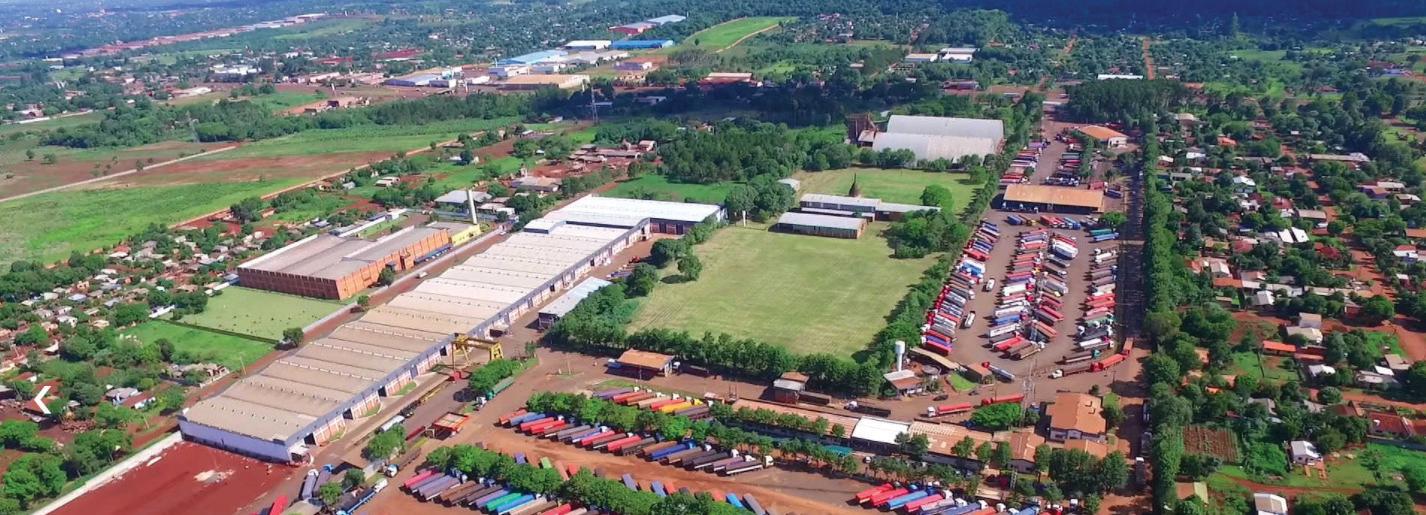
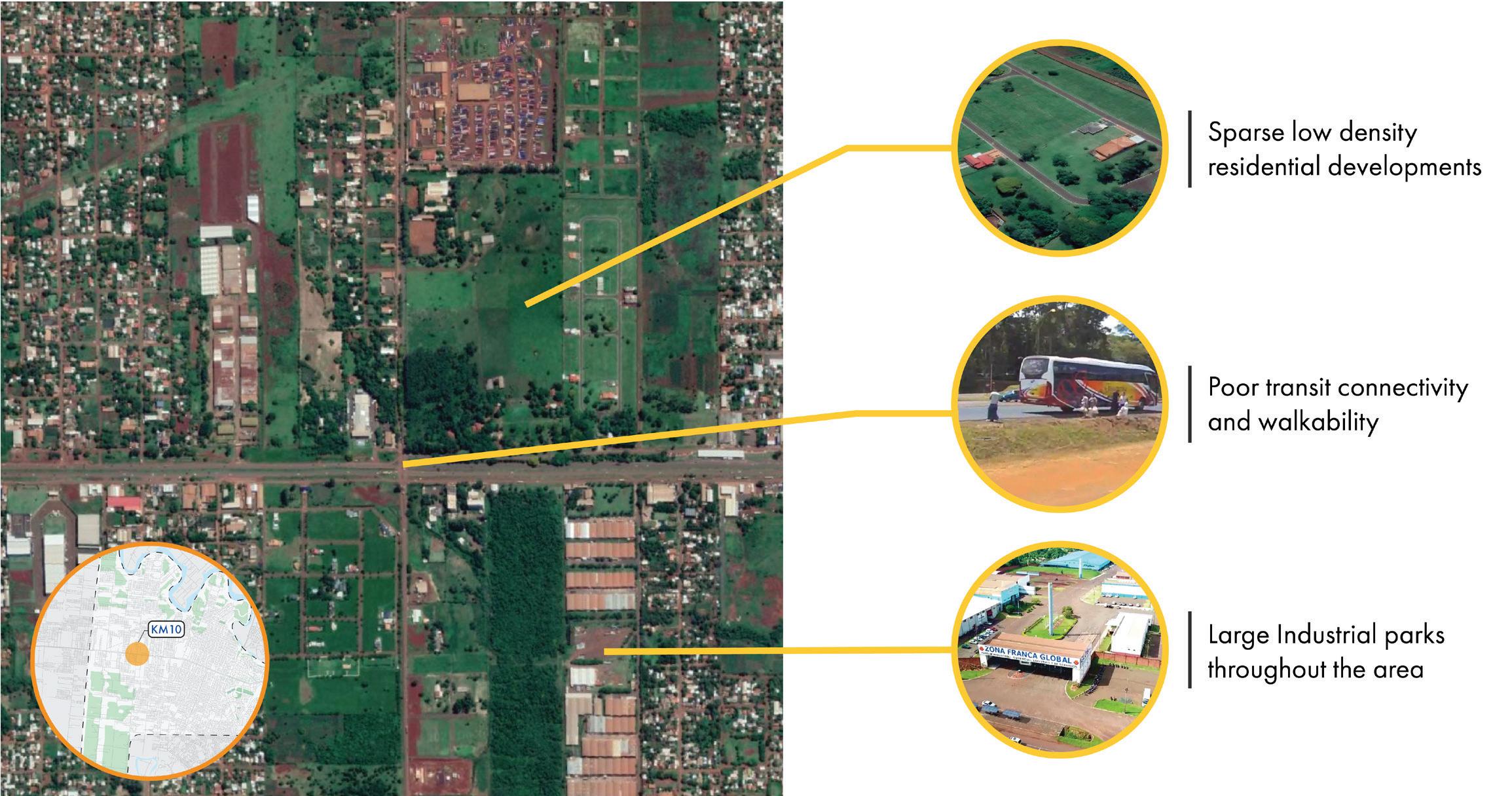
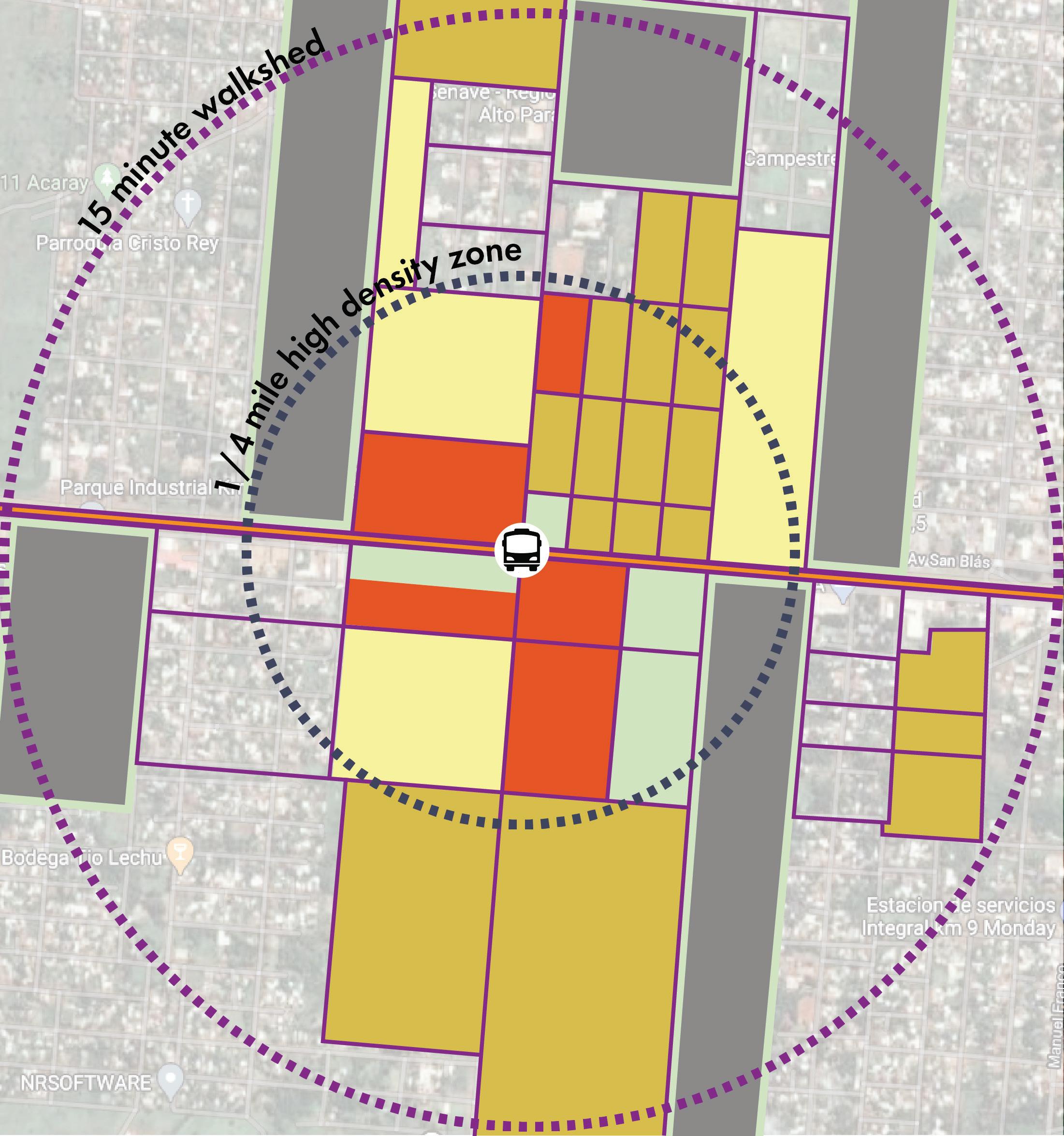
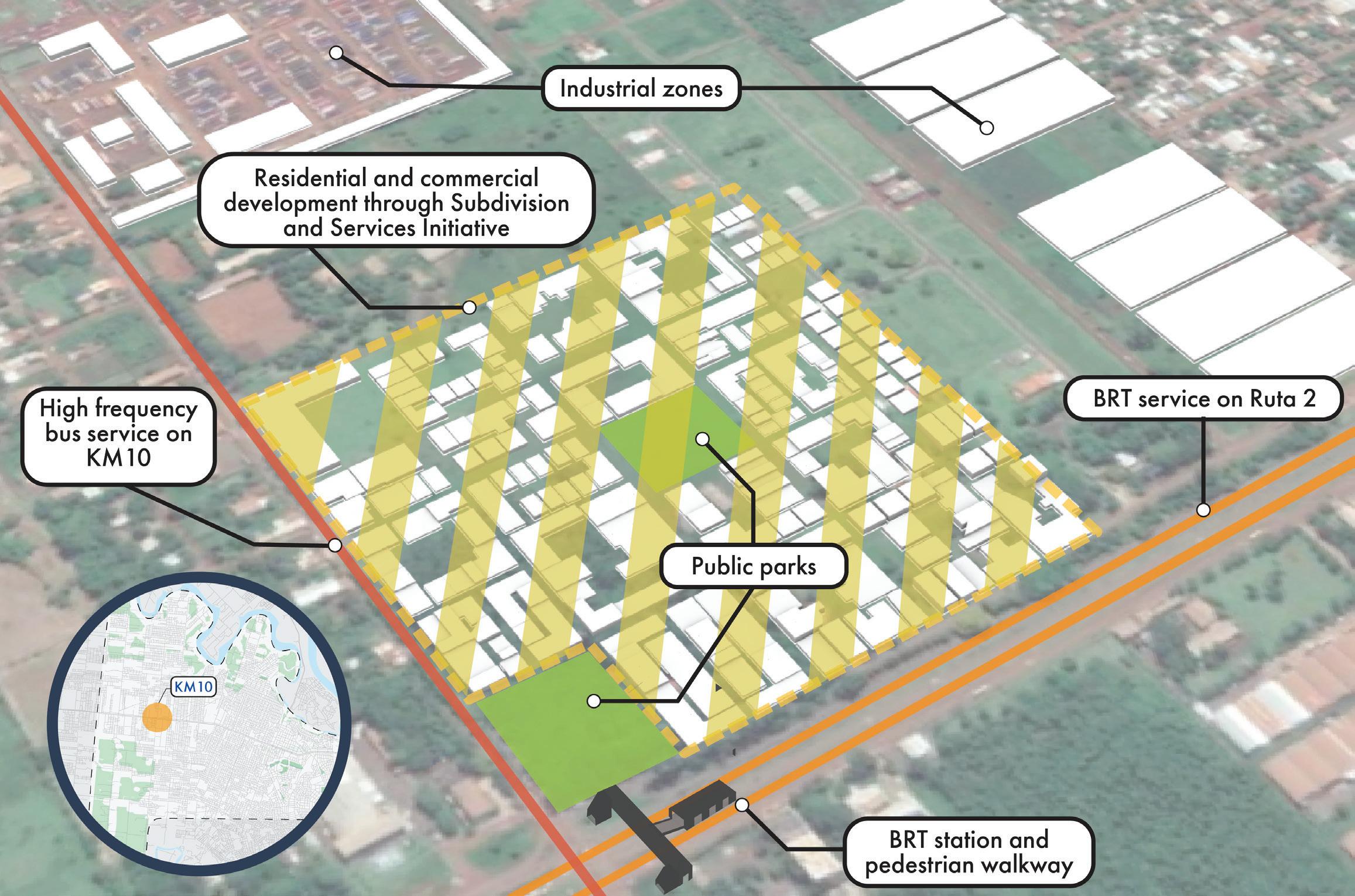
The Km 10 node is an area characterized by sparse residential development with connectivity to the industrial parks in the western part of Ciudad del Este. In order for this area to develop efficiently around the new transit routes, it will be important to further facilitate connectivity to industrial areas of the region not only by creating walkable neighborhoods but by also providing increased access to transit. This can take place with denser residential and mixed-use development focused around the newly implemented BRT line.
In addition to allotting more land to both residential and commercial purposes, the government will subsidize land in a program called Subdivision & Services, dedicated to helping residents in low income and floodprone areas access land and better utilities.
Developing for Density
Vacant & Low-density parcels near Km10
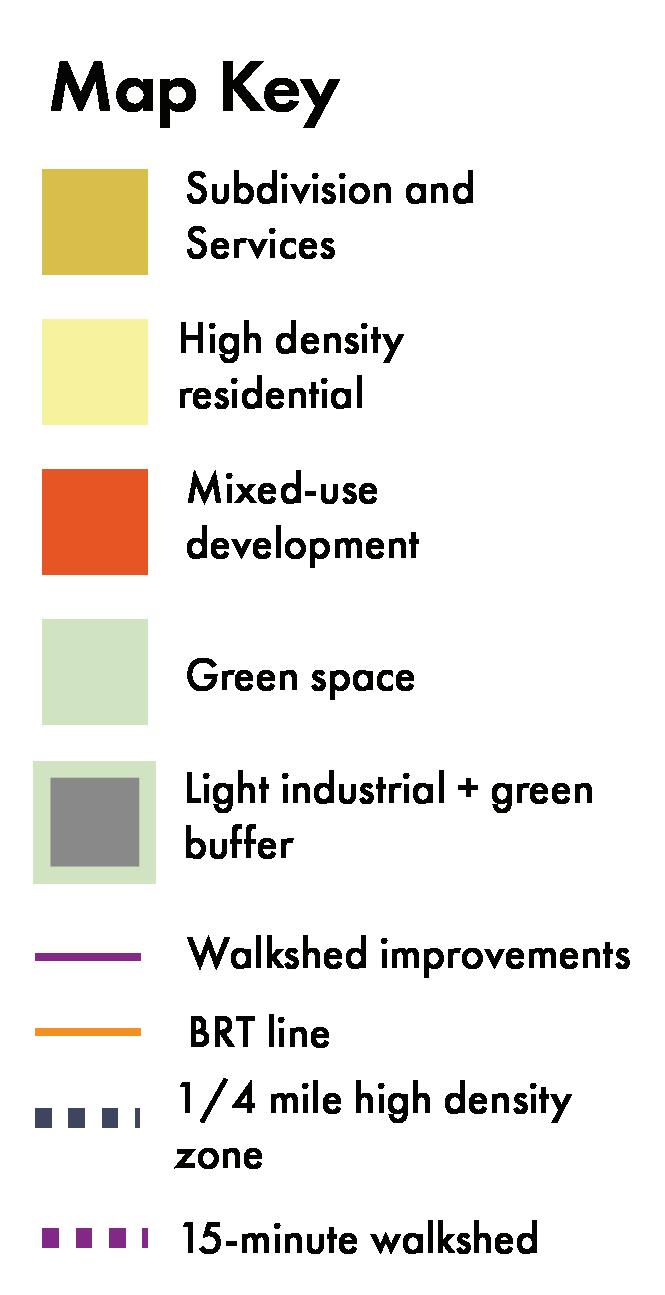
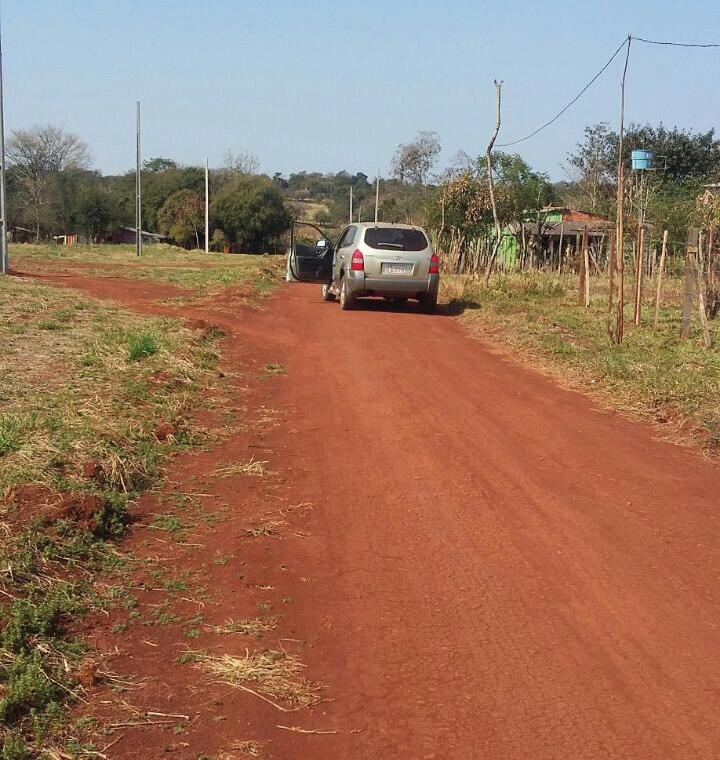
Currently, this area of Ciudad del Este contains many vacant parcels and underutilized space. In order to create a transit line that is convenient and accessible to residents of the city, we have designated zones along the BRT line to promote both mixed-use and residential development.
The vision for this plan is to develop horizontally as opposed to vertically, as residents tend to prefer living in their own homes as opposed to tall high-rise apartments.
By also promoting commercial growth in the area in conjunction with the increased residential land use, this part of the city can become more walkable as resources become located closer to the homes of residents.
Subdivision & Services
Given the amount of vacant land in the area, Km 10 is an ideal location for a government-led subdivision and infrastructure provision initiative (Subdivision & Services), which also helps to promote density around this node. In this initiative, the municipal government of Ciudad del Este is to purchase vacant land on the designated plots in the area and will subdivide them into parcels to provision to residents of Ciudad del Este who reside in areas at high risk of flooding or in lowincome neighborhoods. These parcels will have access to utility services, like running water and electricity, that those relocated did not have access to previously. Once granted the land, residents can use the self-help model to construct homes to fit their needs and specifications, or can use local businesses to assist with the process. The main objective with the Subdivision & Services is to provide utilities to residents in areas less susceptible to natural disaster, as well as provide more housing to those in less stable living conditions, which also achieves the goal of building more density around the Km 10 node.
Sites and Services Housing Example
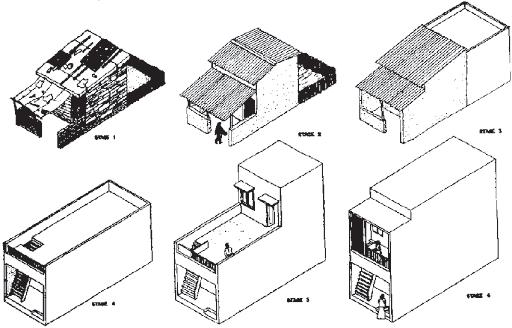
Graphic from UN Habitat
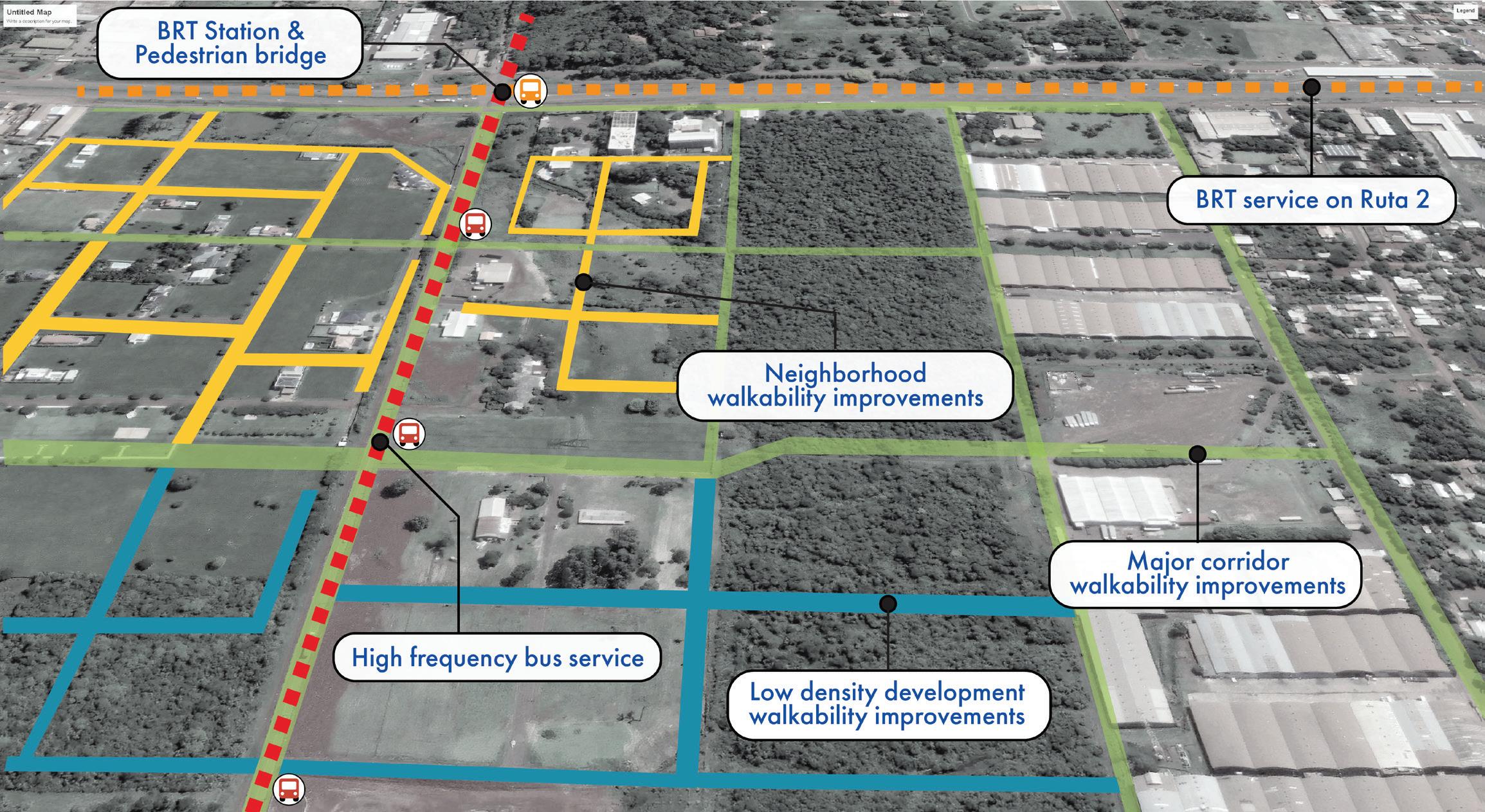
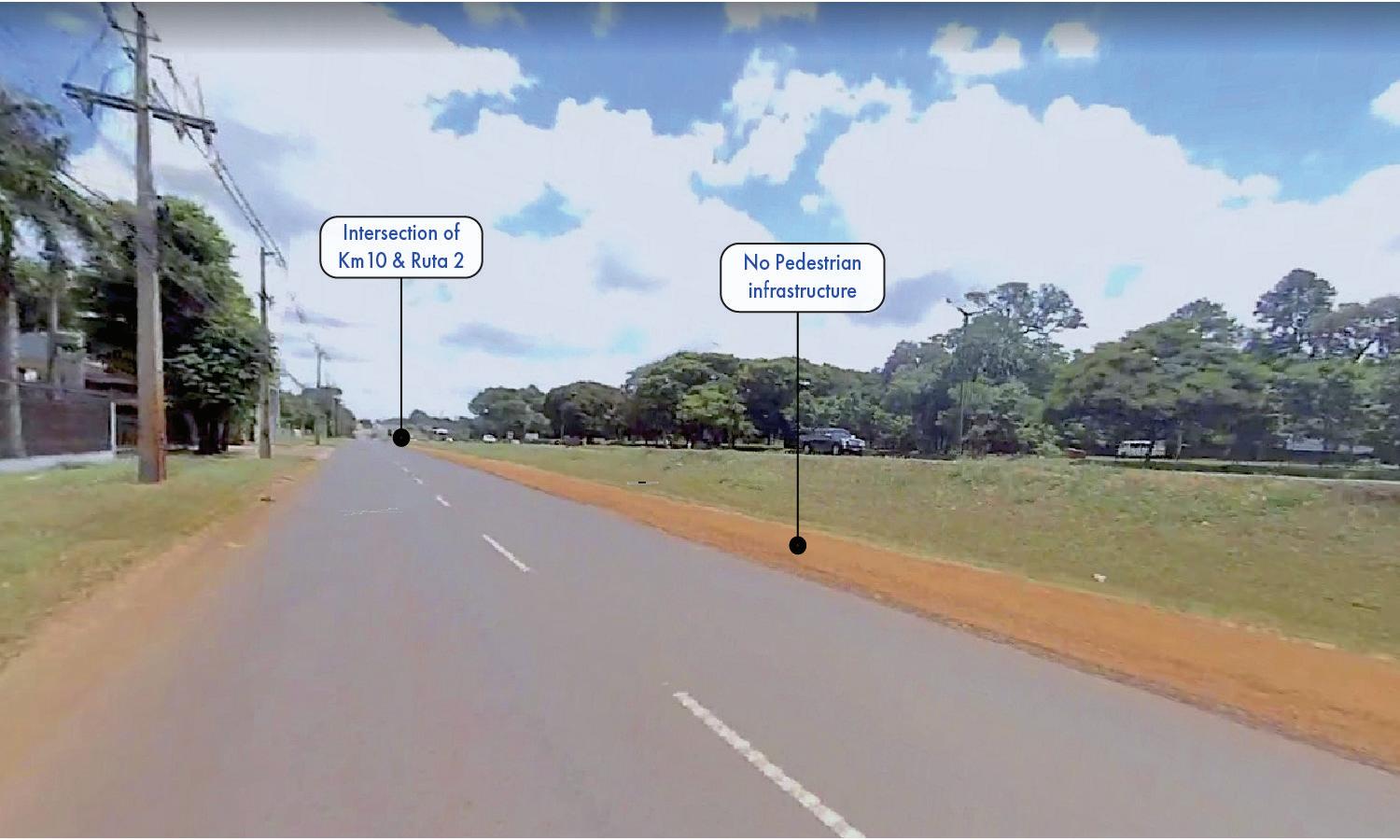
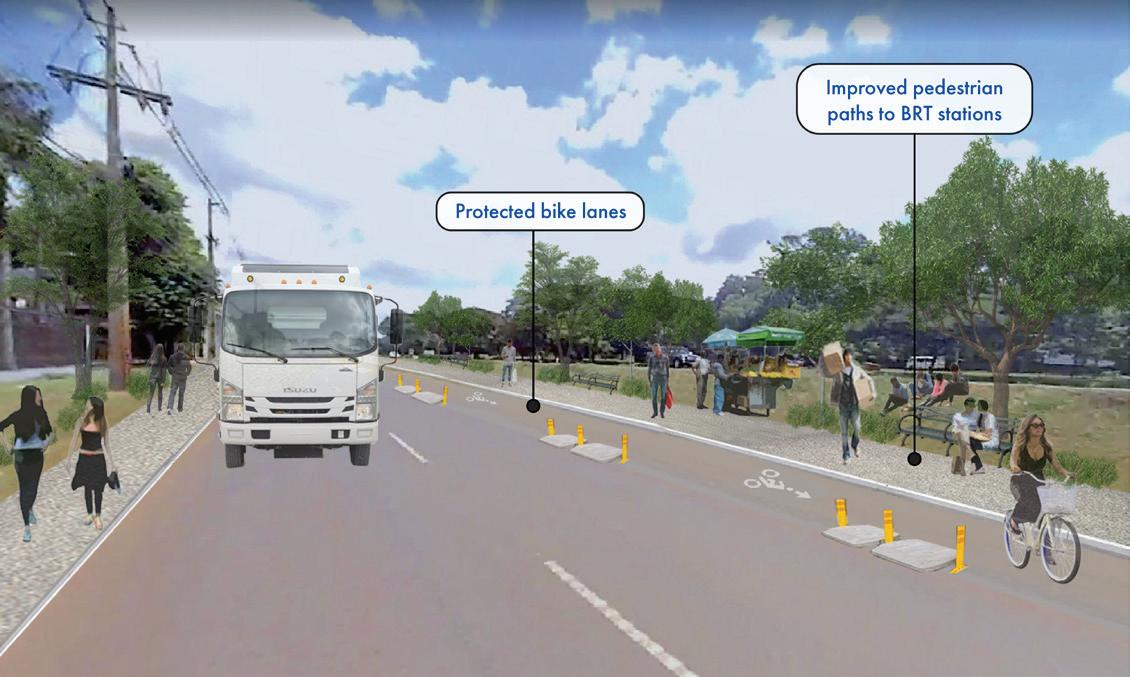
While Km 10 is already well-connected by automobile to industrial areas, this plan also seeks to make these centers and other employment zones more accessible by foot and bicycle with the implementation of elevated bridges and ground-level paths for these modes.
Before After
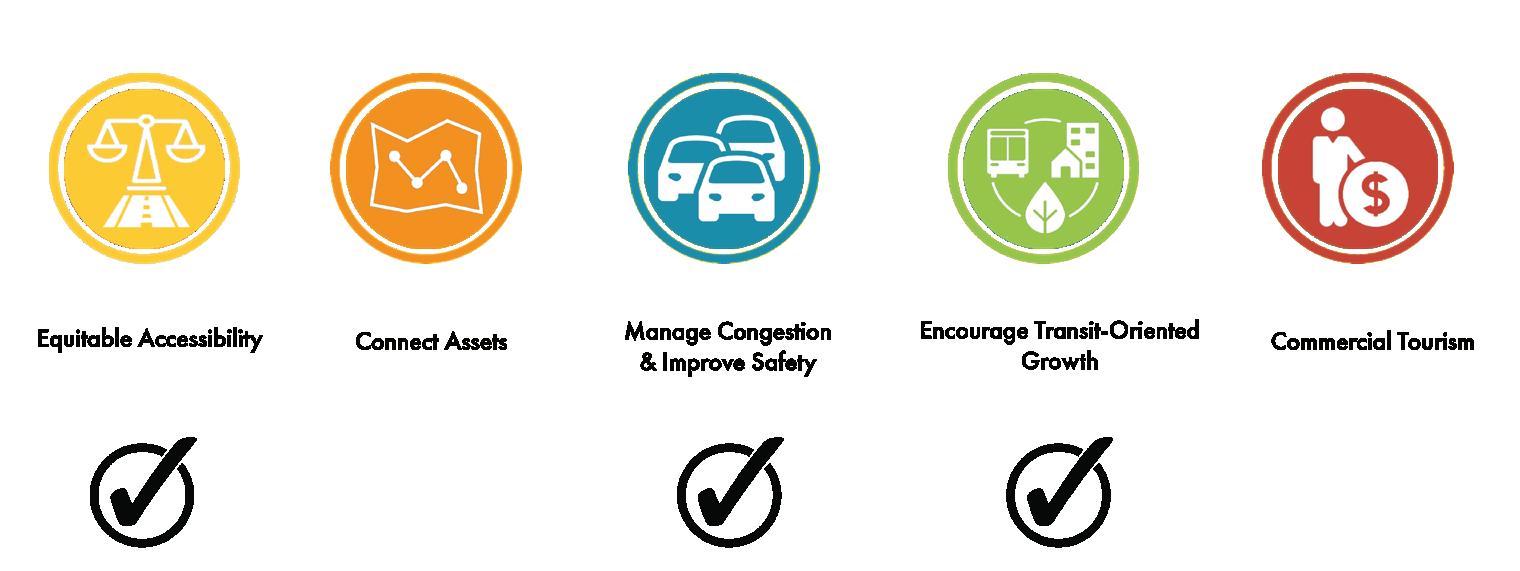
Key Objectives Fulfilled
CONCLUSION
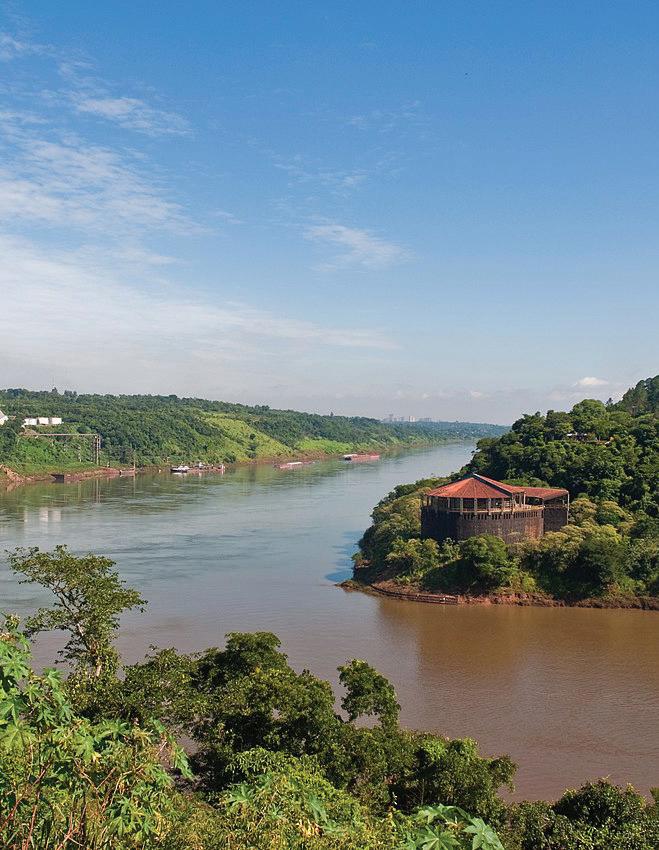
A CITY CONNECTED
a city for all...
This plan envisions Ciudad del Este as a transit metropolis that ensures accessibility for all residents by integrating successful transit service with strategic land use policies. The plan seeks to address the city’s current challenges of lacking transit connectivity, road congestion and safety, as well as flooding. Through an improved transit and land use plan, Ciudad Del Este has the potential to better connect people to regional assets, ease congestion into the bustling Microcentro, encourage transit-oriented development along transit nodes to the west to support economic growth, as well as reclaim the waterfront as a more integrated public amenity. With these recommendations, Ciudad del Este can become a more inviting place that both residents and visitors can be proud to enjoy, now and in the future.
