The Engineering Trade-off: Damping vs. Transmissibility

Page 1


The Engineering Trade-off: Damping vs. Transmissibility

It's important to understand that damping involves a trade-o . At frequencies well above the natural frequency (typically >√2 times fn), damping slightly increases vibration transmission compared to an undamped system. However, this trade-o is almost always worthwhile because:

1. The increase in transmission at high frequencies is minimal (typically <10%)

2. The reduction in resonance amplification is dramatic (50-90% reduction)

3. Real-world systems spend time at or near resonance (start/stop, variable speeds)

4. Transient control and stability benefits far outweigh minor high-frequency transmission increases

For most industrial applications, a damping ratio (ζ) of 0.05 to 0.15 provides optimal balance between resonance control and high-frequency isolation.
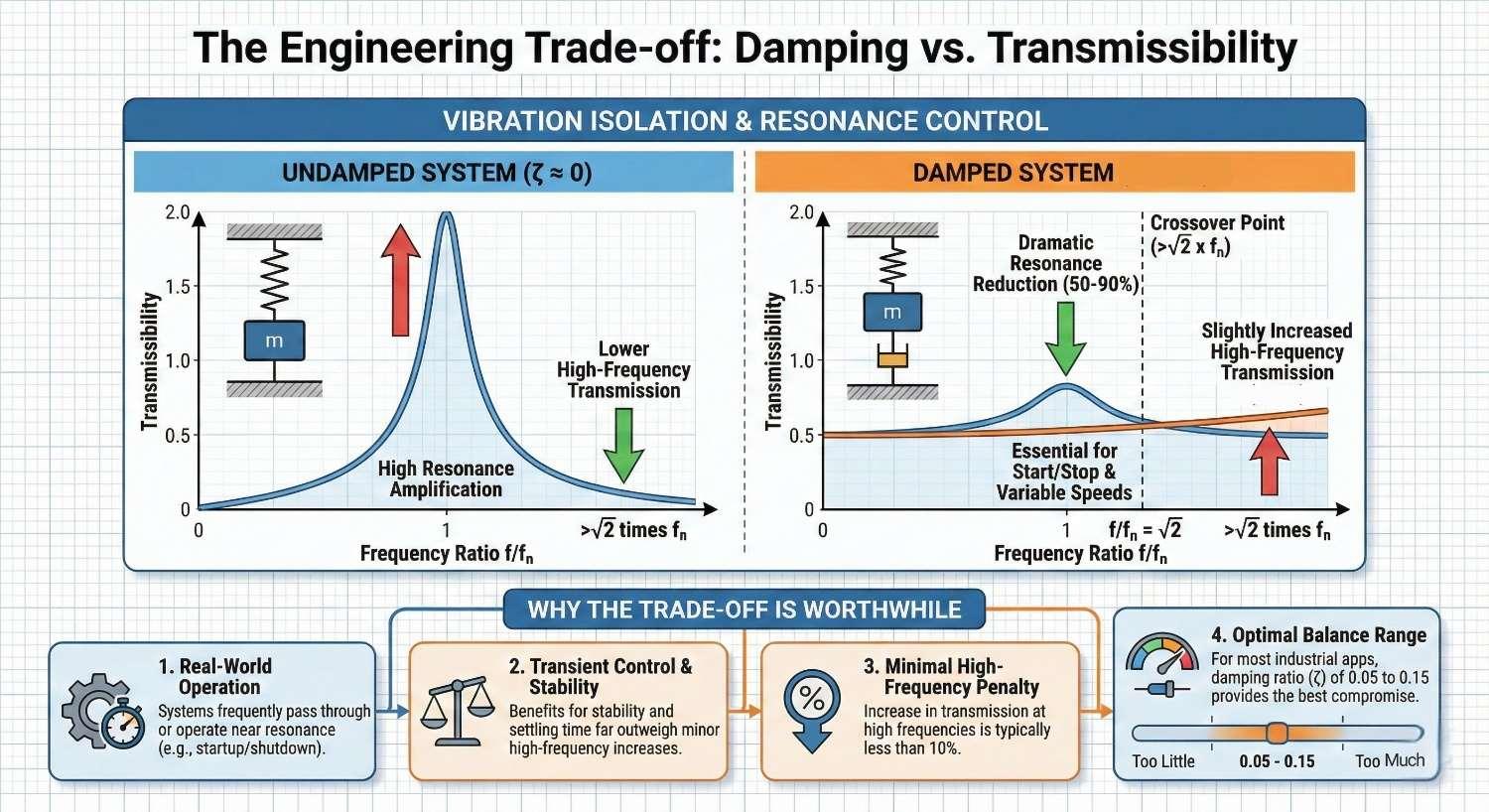
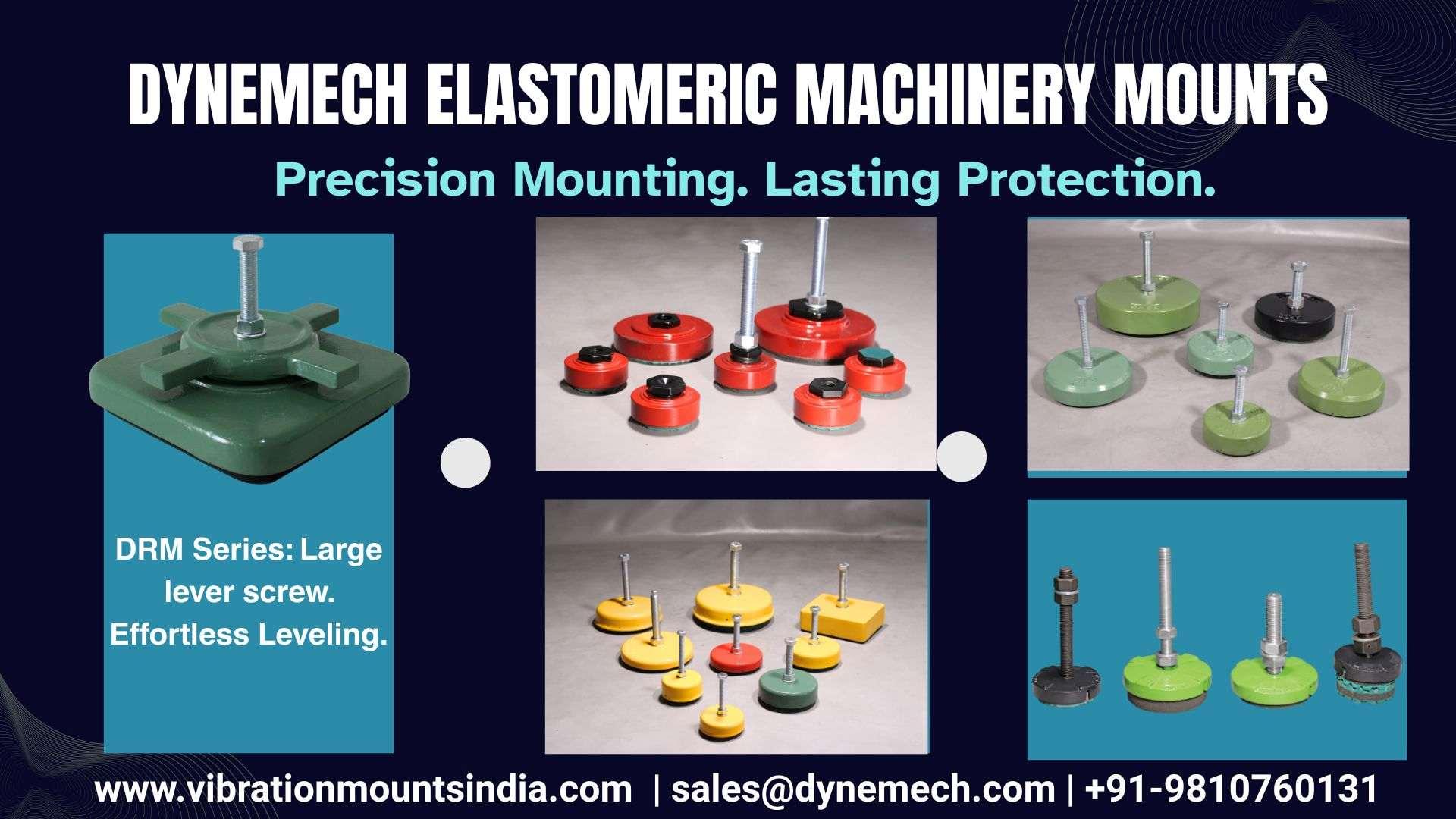
Figure 4: Damping vs Transmissibility

Practical Implementation

Di erent isolation systems achieve damping through various mechanisms:

Elastomeric Isolators:

Pneumatic Systems:

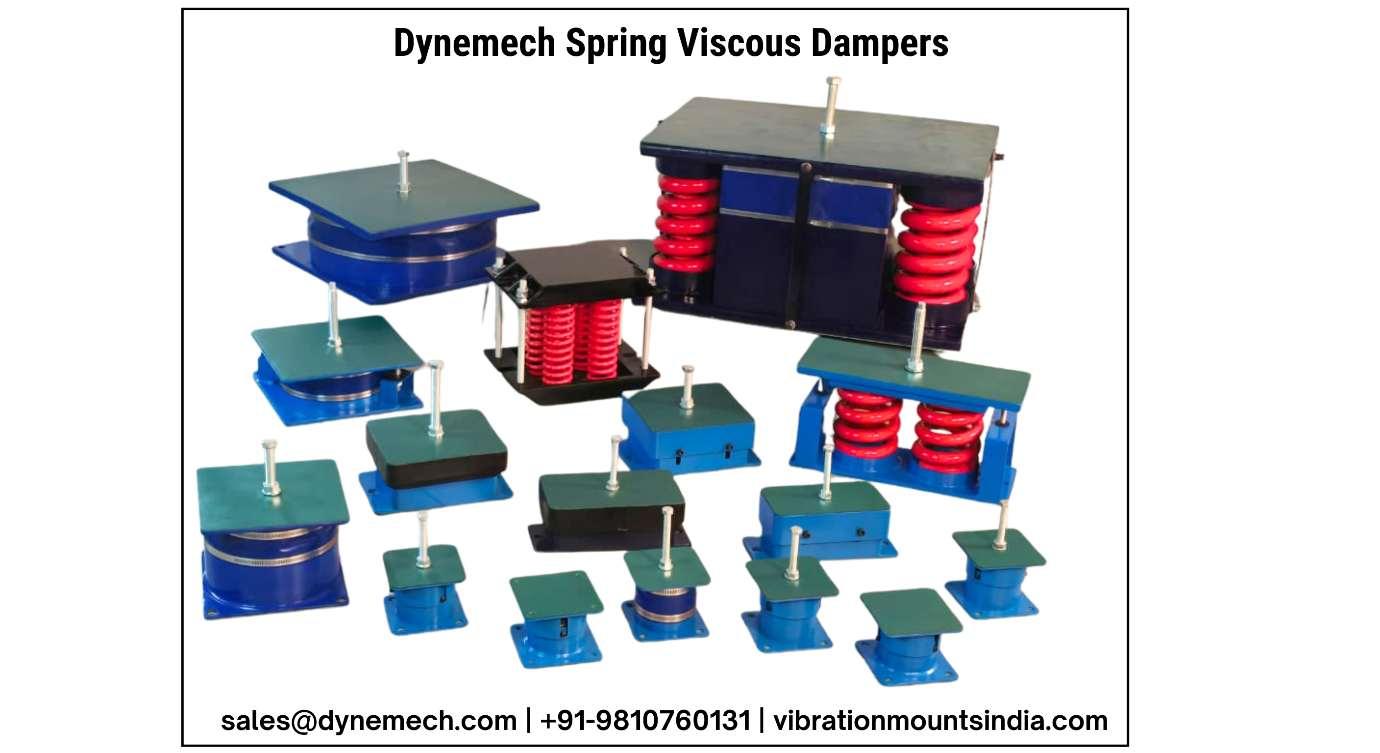
Spring Isolators:

The key is selecting the appropriate damping mechanism for your application. Heavy presses may need robust friction dampers, while precision equipment might require carefully tuned viscous damping.

Need help selecting the right vibration isolation solution for your equipment? Our engineering team at Dynemech Systems specializes in damped isolation systems for precision manufacturing, heavy machinery, and challenging industrial applications. Contact us to discuss your specific requirements.

Contact Dynemech Vibration Technology today:

sales@dynemech.com www.vibrationmountsindia.com +91-9810760131

Engineering vibration-free solutions since 2000 – transforming vibration challenges into competitive advantages.

Turn static files into dynamic content formats.

Create a flipbook