4. Precision and Adjacent Equipment Protec on
Modern factories o en place precision instruments near vibra on-genera ng machines. How Damping Helps:
Improves accuracy and repeatability of CMMs and metrology systems
Reduces vibra on transmission to nearby equipment
Minimizes probe oscilla on and measurement noise
Prevents posi onal dri
Supports high-precision manufacturing environments
For micron-level measurement systems, even minor vibra ons can cause errors—damping ensures stability at the source.
Final Thought
Damping is not just an add-on—it’s a cri cal design parameter. Without it, even the best isola on system can fail under real opera ng condi ons. With it, systems become stable, efficient, and durable.
#An Vibra on, #Dynemech, #An Vibra onMounts, #An Vibra onPads, #Vibra onControl, #Damping, #Vibra onIsola on, #MachineStability, #IndustrialEngineering, #PrecisionEngineering, #Metrology, #HeavyMachinery, #ManufacturingExcellence
+91 9810760131
sales@dynemech.com
www.vibra onmountsindia.com / h ps://an vibra ons.in/
Alt Text:
Industrial vibra on isola on system demonstra ng the importance of damping for controlling resonance, improving machine stability, protec ng founda ons, and ensuring precision in nearby equipment.
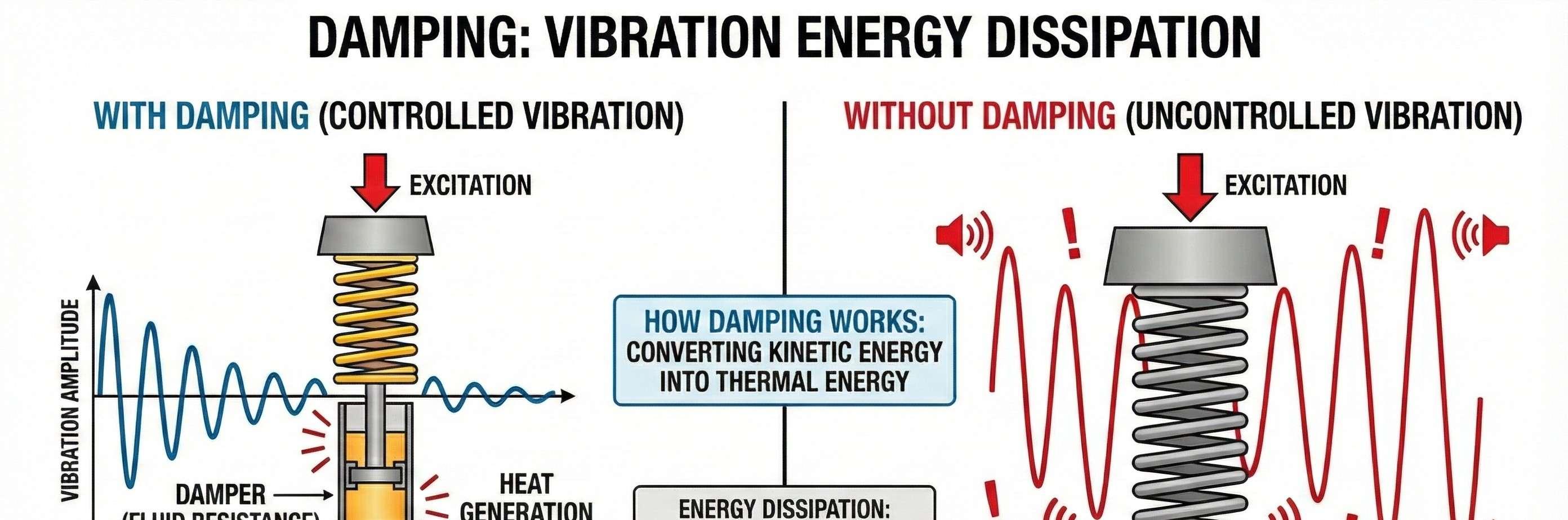
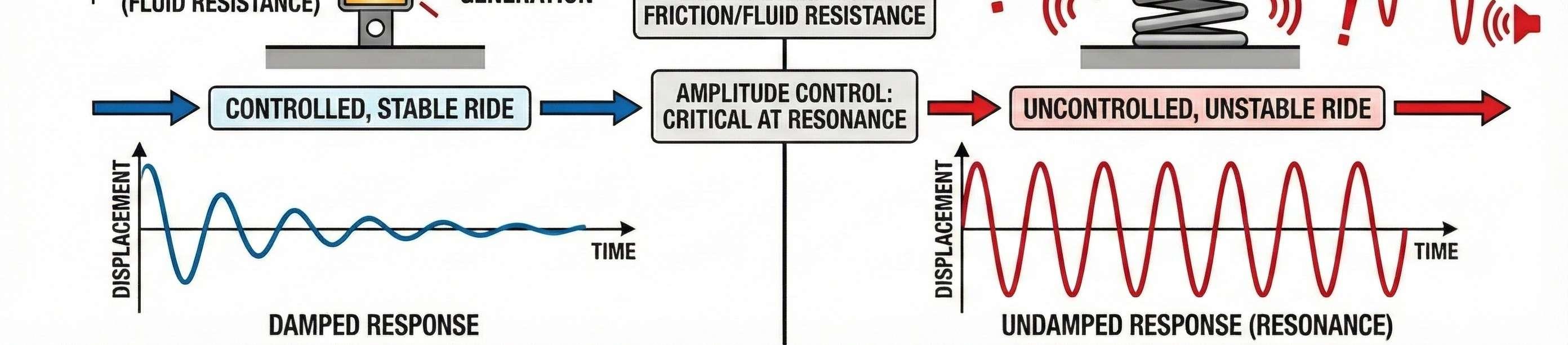
Every system has a Natural Frequency. When Opera ng Speeds approach this frequency, Vibra on can amplify drama cally.
How Damping Helps:
• Controls Resonance Amplifica on
• Prevents excessive Displacement during start-up/shutdown
• Absorbs Shocks from Presses, Hammering, and Load changes
• Reduces Peak Accelera on (g-levels)
• Speeds up Vibra on Decay
• Improves system se ling me
This is especially cri cal for gensets, pumps, motors, power presses, and forging equipment, where repeated start-stop cycles can otherwise cause structural stress and failure.
So isolators improve isola on but can introduce instability like rocking or l ng.
How Damping Helps:
• Minimizes rocking and swaying
• Controls excessive spring mo on
• Prevents over-travel in coil or air springs
• Maintains alignment of sha s and tooling
• Enhances se ling behavior
��������������������: Damping allows the use of low natural frequency systems (2–3 Hz) without sacrificing stability—cri cal for advanced pneuma c isola on systems.
�� ����������������������������������������������������������������
Con nuous vibra on leads to fa gue in structures, fasteners, and founda ons.
How Damping Helps:
• Prevents bolt loosening and cracking
• Reduces cyclic stress in machine structures
• Improves isola on performance near resonance
• Extends machine and founda on life
• Reduces maintenance and down me
For heavy-duty machinery, this directly translates into lower lifecycle costs and higher opera onal reliability.
Modern factories o en place precision instruments near vibra on-genera ng machines.
How Damping Helps:
• Improves accuracy and repeatability of CMMs and metrology systems
• Reduces vibra on transmission to nearby equipment
• Minimizes probe oscilla on and measurement noise
• Prevents posi onal dri
• Supports high-precision manufacturing environments
For micron-level measurement systems, even minor vibra ons can cause errors—damping ensures stability at the source.
������������������������
Damping is not just an add-on—it’s a cri cal design parameter. Without it, even the best isola on system can fail under real opera ng condi ons. With it, systems become stable, efficient, and durable.