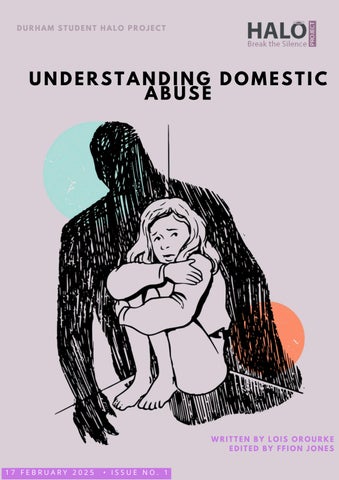

UNDERSTANDING DOMESTIC ABUSE

1 Introduction
Understanding Domestic Abuse
BY OROURKE, LOIS
Domestic abuse is a pervasive issue that affects millions of individuals worldwide. It remains a hidden epidemic, with victims too afraid to seek help due to fear of retaliation, judgment, or a misguided sense of responsibility for their own suffering. While both men and women experience domestic abuse, it disproportionately affects women, with a staggering number of female victims. This article seeks to understand domestic abuse, highlighting data from the UK and the US, in the hope that it encourages victims to recognise their abuse and come forward.
Definitions
of Types of Domestic Abuse
Domestic abuse is not limited to physical violence but includes various forms of control and harm:

Physical Abuse: Involves any physical violence, such as hitting, slapping, or other forms of bodily harm. It is one of the first forms of domestic abuse that people recognise because it’s the most visible1. Emotional: This includes manipulation, gaslighting, constant belittling, and threats aimed at diminishing the victim's mental well-being Financial Abuse: The perpetrator controls the victim’s access to financial resources. The perpetrator uses money to control their partner’s freedom. This can include using credit or debit cards without permission or building up debts in their partner’s name 2 Coercive Control: A pattern of controlling behaviour that isolates the victim from others and limits their freedom, often involving intimidation and threats. Coercive control creates invisible chains and a sense of fear that pervades all elements of a survivor’s life. It works to limit their human rights by depriving them of their liberty and reducing their ability for action.
1 Article
Durham Student Halo Project
UK Data
Recent figures highlight the alarming prevalence of domestic abuse. In the year ending March 2024, it was estimated that 1.6 million women and 712,000 men aged 16 and over experienced domestic abuse, equating to 6 6% of women and 3 0% of men4 This statistic underscores the gendered nature of domestic abuse, with women suffering from each form of abuse at twice the rate of men. Furthermore, women are overwhelmingly the victims of domestic homicide, comprising 65 4% of domestic homicide victims between 2021 and 2023 5 Despite the alarming numbers, many cases of abuse go unreported, and data held by the police can only provide a partial picture of the actual level of domestic abuse experienced. The National Policing Statement 2024 For Violence Against Women and Girls has estimated 2 million total incidents, with only just under 900,000 crimes officially recorded 6
Violence against women and girls (VAWG) has been categorised as a “national emergency” in England and Wales7. Police chiefs have warned that 1 in every 12 women in the UK will be a victim of male violence each year, with recorded cases of VAWG increasing by 37% over five years.
US Data
In the United States, domestic abuse is similarly rampant, with a 2024 report by the National Domestic Violence Hotline that indicates that over 10 million people in the US experience domestic violence annually Again, Women experience domestic violence at a higher rate than men do According to the National Domestic Violence Hotline, 29% of women (nearly 3 in 10) and 10% of men (1 in 10) have experienced rape, physical violence, and/or stalking by a partner 8
Moreover, people of colour experience domestic violence at disproportionately higher rates than their white counterparts. At around 9.2%, Black individuals experience the highest rates of domestic violence, followed by Hispanic individuals (8 6%), American Indian/Alaska Native (8 2%), and non-Hispanic whites (5 7%) Notably, 12 5% of multiracial individuals reported experiencing domestic violence in the past 12 months.9
Conclusion
The shocking statistics from the UK and the US serve as a stark reminder of the scale of the problem, while men in positions of power continue to overlook the global crisis against women and girls that take place within the confines of their own home Addressing this issue requires a concerted effort to recognise, support, and empower survivors, ensuring that no victim is left behind.
Bibliography
“I’m Not Sure If My Relationship Is Healthy” (Women’s Aid, November 10, 2022) <https://www womensaid org uk/information-support/the-survivors-handbook/im-not-sure-if-my-relationship-ishealthy/#unhealthy-behaviour> accessed January 24, 2025 Crime OC for and Justice, “Domestic Abuse Victim Characteristics, England and Wales” Office for National Statistics (November 27, 2024) <https://www ons gov uk/peoplepopulationandcommunity/crimeandjustice/articles/domesticabusevictimcharacteristicsenglandandwales/yearendingmarch2024> accessed January 24, 2025 Office H, “Violence against Women and Girls National Statement of Expectations (Accessible)” (GOV UK, April 29, 2022) <https://www gov uk/government/publications/violence-against-women- and-girlsnational-statement-of-expectations-and-commissioning-toolkit/violence-against-women-and-girls-national-statement-of-expectations-accessible#a-strategic-system-wide-approach-to- commissioningincluding-acknowledging-the-gendered-nature-of-vawg> accessed January 24, 2025 Dodd V, “Violence against Women a ‘National Emergency’ in England and Wales, Police Say” The Guardian (July 22, 2024) <https://www theguardian com/society/article/2024/jul/23/violence- against-women-national-emergency-england-wales-police> accessed January 24, 2025 “Domestic Violence Statistics” (The Hotline, August 25, 2020) <https://www thehotline org/stakeholders/domestic-violence-statistics/> accessed January 24, 2025
RECOGNISING DOMESTIC ABUSE
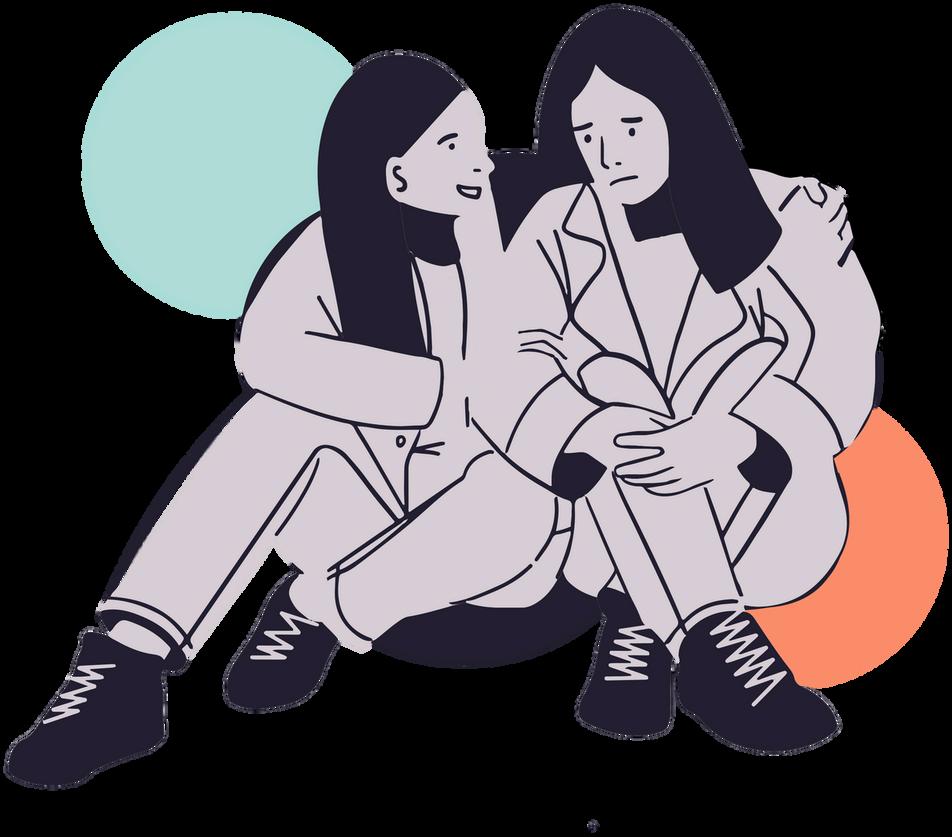
Recognising Domestic Abuse
BY CRUMP, CHARLOTTE
Recognising the Signs of Domestic Abuse and How to Help
Recognising the signs and knowing how to respond is crucial in supporting victims and ensuring their safety. Domestic abuse can be difficult to detect, yet it remains a pervasive issue that affects people of all genders, ages and backgrounds. Abuse is not always physical; it often involves emotional, financial, or psychological control.
Signs of Domestic Abuse
Abuse may manifest in various ways, including:
Emotional and Psychological Signs:


Low self-esteem or self-blame for the abuse
Isolation from friends, family or support systems.
Fear of seeking help or outside intervention.
Physical Indicators:


Bruises, cuts, or other unexplained injuries.
Damage to personal belongings, property, or home
Financial abuse

Limited or no access to money or financial resources.
Exploitation or control over finances.
Behavioural Indicators

Fear or withdrawal in the presence of the abuser
Verbal abuse or public humiliation.
Coercive and Controlling Behaviour
Coercive or controlling behaviour is a core part of domestic violence. It is a pattern of actions used to isolate, intimidate and dominate victims.
Signs of coercive behaviour can include:
1.Threats, intimidation, or acts of violence.
2 Restricting access to support networks
3.Controlling daily activities, such as what someone wears, eats, or where they go
4 Exploitation of finances or resources
5.Gaslighting or manipulating someone to doubt their perception of reality.
Control may also extend to monitoring communication, such as checking phones or restricting internet use, leaving victims with limited autonomy This behaviour often escalates over time, making it harder for the victim to leave or seek help.
What to Do if You Suspect Abuse
If you believe someone is experiencing domestic abuse, follow these steps:
1 Create a Safe Space: Offer to talk privately in a location where they feel secure
2.Listen Without Judgement: Let them share their experience at their own pace.
3 Reassure and Support: Emphasise that the abuse is not their fault and that help is available
4.Signpost Professional Help: Encourage them to contact a support service or seek professional advice.
It is important not to pressure the victim into taking action, but instead empower them with information and options.
Resources for Support
Help is available 24/7 for victims of domestic abuse and those concerned for loved ones.
Key services include:

England: Refuge’s National Domestic Abuse Helpline - 0808 2000 247.

UK-wide (Male Victims): Men’s Advice Line run - 0808 801 0327

Bright Sky App: A free app offering guidance and support for those experiencing abuse (ensure your device is secure before downloading)

Women’s Aid: Email helpline@womensaid.org.uk for support.

Victim Support: Confidential advice for victims of any crime - 08 08 16 89 111

Safe spaces: Available in Boots, Morrisons, Superdrug and Well pharmacies, TSB banks and independent pharmacies across the UK. Providing confidential rooms for victims to access information or contact loved ones.
Domestic abuse thrives in silence. Recognising the signs and taking action, whether for yourself or someone you know, can save lives. If you think you may be experiencing domestic abuse, remember that you are not alone and support is always available
Durham Student Halo Project

DEFINING SEXUAL ABUSE

WRITTEN BY HANUMANT PURI
Defining Sexual Abuse
BY PURI, HANUMANT
Definition of Sexual Abuse, Sexual Coercion and Consent
The United Nations High Commissioner for Refugees (UNHCR) in the UK has defined sexual abuse as follows“Sexual abuse means the actual or threatened physical intrusion of a sexual nature, whether by force or under unequal or coercive conditions Any sexual activity with children (persons under the age of 18 years) constitutes sexual abuse.”
According to the United States Department of Health and Human Services, Office on Women’s Health sexual coercion is- “Sexual coercion is unwanted sexual activity that happens when you are pressured, tricked, threatened, or forced in a nonphysical way. Coercion can make you think you owe sex to someone. It might be from someone who has power over you, like a teacher, landlord, or a boss. No person is ever required to have sex with someone else ”
Consent has been defined by the Sexual Offences Act, 2003 Section 74 as- “Someone consents to vaginal, anal or oral penetration only if s/he agrees by choice to that penetration and has the freedom and capacity to make that choice. Consent to sexual activity may be given to one sort of sexual activity but not another, e.g. to vaginal but not anal sex or penetration with conditions, such as wearing a condom Consent can be withdrawn at any time during sexual activity and each time activity occurs. In investigating the suspect, it must be established what steps, if any, the suspect took to obtain the complainant’s consent and the prosecution must prove that the suspect did not have a reasonable belief that the complainant was consenting.”
Durham Student Halo Project
Evolution of Laws Addressing Sexual Abuse
R v R [2003], R v C [2009], R v B [2013], and R v Brown [1993] are examples of cases that highlight important legal developments in addressing sexual abuse and consent, covering issues like voluntary consent, deception, intoxication, and the limits of consensual harm. While the following case reflects the difficult realities of sexual abuse, it also exemplifies the importance of continued legal progress and the need for greater protection and support for victims.
Case Study: Operation Sanctuary
The Operation Sanctuary case, which resulted in the conviction of 18 men for the sexual exploitation of vulnerable women, serves as a powerful reminder of the need to protect and empower adult women, particularly those from marginalised ethnic minority backgrounds. The perpetrators, manipulated and coerced these women, many struggling with addiction, poverty, or mental health issues, into situations of sexual abuse This case highlights the importance of ensuring that all victims, regardless of their ethnicity, feel supported and safe in coming forward. It calls for a culturally sensitive approach in both law enforcement and social services, emphasising that exploitation, whether physical or psychological, should never be dismissed or ignored. By raising awareness and standing up against all forms of sexual abuse, we can create a society where survivors are heard, believed, and given the opportunity to reclaim their lives with dignity and justice
Support Resources for Survivors of Sexual Abuse

Sexual Assault Referral Centres (SARC’s) offer practical, medical and emotional support to any individual who has been raped, sexually assaulted or abused. One can get help from a SARC by booking an appointment with one ’ s nearest SARC office.
Voluntary organisations, such as Rape Crisis, Women’s Aid, Victim’s Support, The Survivors Trust or Male Survivors Partnership

https://www haloproject org uk/get-help-W21page-99 01642 683 045
24-hour freephone National Domestic Abuse Helpline, run by Refuge, on 0808 2000 247.
The rape and sexual abuse support line run by Rape Crisis England and Wales, helpline number for call or online chat, 0808
500 2222
Call NHS 111 or get help from 111 online
In an emergency, dial 999.

UNDERSTANDING ‘HONOUR’-BASED ABUSE

Durham Student Halo Project
Understanding ‘honour’-based abuse?
BY MANGHNANI, ADHISHA
Understanding ‘Honour’-Based Abuse (HBA)
Domestic violence can be defined in many ways Honour-Based Abuse (HBA) is one of its many manifestations, claiming thousands of lives each year in countries like India, Pakistan, Saudi Arabia, and Egypt. HBA is perpetrated to protect the so-called “honour” of a family or community, rooted in patriarchal cultural practices that prioritize honour over the lives of women Notably, Amnesty International observes that honour killings are a collective and premeditated act of violence, often planned by members of the family, including both men and women
Reasons behind Honour-Based Abuse
HBA arises when there are deeply ingrained patriarchal influences within a community These influences lead to societal expectations, thus resulting in the so-called “honour” these families seek to defend. Some of the most common, but not exhaustive, list of motives for HBA include:
1.Differences in caste or religion, particularly in countries like India and Pakistan, where inter-caste or interfaith marriages are deemed dishonourable
2.Attempting to divorce or flee an abusive relationship is regarded by some cultures as bringing shame upon a person ’ s family.
3.Homosexuality, which is sometimes considered shameful in conservative and religious communities.
4.Unconventional defiance of social and cultural norms as well as gender roles.
Durham Student Halo Project
Global
Statistics
While ‘Honour’-Based Abuse is a global phenomenon, it predominantly occurs in regions such as South Asia and the Middle East, where cases are reported frequently
One of the most well-known cases of HBA is the case of Qandeel Baloch, a 26-year-old woman from Pakistan. Baloch was murdered by her brother in 2016 due to her Social Media presence, which conflicted with her family’s conservative values; after the murder, her brother claimed that he killed her ‘for dishonouring the Baloch name ’ While the perpetrator was then sentenced to life in prison, his parents soon called for his release Qandeel Baloch’s death highlighted the terrifying consequences and led to a widespread discussion about the far-reaching impact of Honour-Based Abuse
Notably, the issue of Honour-Based Abuse has gained recognition in the United Kingdom, with recent statistics from the UK Home Office (2023-2024) revealing 2,755 police-recorded HBA-related offences. Although there was a decrease in overall HBA offences compared to the 2,905 cases reported the previous year, cases of Female Genital Mutilation and forced marriage increased by 25%
While the available data proves insufficient in representing the true scale of honour killings worldwide, it gives us a glimpse into the extent of the issue.
Remediation Measures
In recent years, efforts to address the impact of ‘Honour’-Based Abuse have increased significantly.
Several projects have been established to support vulnerable women who have fallen victim to oppressive societal and cultural practices. Organisations such as Karma Nirvana, Savera UK, and the Halo Project provide educational resources to raise awareness about HBA and offer confidential support to victims. Additionally, these organisations advocate for legislative changes to criminalize such practices and create safer environments for those at risk.
THE ROLE OF THE COMMUNITY IN FIGHTING ‘HONOUR’-BASED ABUSE
The Role of the Community in Fighting ‘Honour’-Based Abuse
BY FERRO, ISABELLA
Role of Shame
‘Honour’-based abuse refers to crimes committed to preserve the perceived honour of a family or community (Metropolitan Police). In most cases, it occurs ‘when [a] victim [is believed to have brought] or may bring shame on their family and/or the wider community’ (Safeguarding Network)
Shaming is described as ‘ a noxious phenomenon by which an individual is publicly chastened by the “herd” without so much as a debate, a trial or even a justified reason ’ (The Individual and Society: The Social Role of Shame, pg 37). It functions as a mechanism of social control, compelling individuals to conform to what their community deems acceptable
Because the concept of honour is directly tied to what a society considers shameful, ‘honour’-based abuse cannot be separated from shame. What is perceived as dishonourable is entirely shaped by cultural and traditional beliefs within a given community. However, ‘honour’-based violence is not confined to a single culture, religion, or nationality, cutting across diverse groups (Safeguarding Network). Thus, shame is socially constructed, dictated, and reinforced by the community itself.
Durham Student Halo Project
Community-Perpetuated Violence
‘Honour’-based abuse is rarely an isolated act; it is typically collective in nature. ‘Because [it is framed as] protecting the honour of a group whether that be a family or a community it is often perpetrated by more than one person ’ (Reducing the Risk of Domestic Abuse). Their goal is to ‘correct’ the victim’s behaviour in order to restore their reputation and erase perceived shame.
Moreover, the involvement of a wider network of abusers makes it particularly difficult for victims to escape. Victims of ‘honour’-based abuse often find that their communities are complicit, either by actively participating, remaining silent, or denying that the abuse is taking place. This creates significant barriers to leaving the abusive situation without leaving the community. However, shifting community attitudes could disrupt these networks, making it harder for perpetrators to continue their actions and easier for victims to escape without being forced to leave their communities.
Path Forward
Because communities play a central role in perpetuating ‘honour’-based abuse, they are also the key to ending it. Community and religious leaders, in particular, can challenge persistent, patriarchal norms of masculinity and gender roles in ways that actively oppose ‘honour’-based violence.
Education is also crucial to dismantling the shame and honour mindset that sustains this type of abuse Harmful gender norms that normalise violence against women and girls must be directly confronted. Teaching young people, particularly boys and men, to reject these underlying values can help prevent future violence.
Ultimately, eradicating ‘honour’-based abuse requires a fundamental shift in community values Communities must actively reject ‘honour’-based violence, support survivors, and challenge the underlying beliefs that perpetuate abuse Without community-led change, lasting progress cannot be achieved.
Bibliography
Brock H, ‘“Honour” Based Abuse (HBA)’ <https://reducingtherisk org uk/honour-based-abuse-fgm/> accessed 10 March 2025
Safeguarding Network, ‘Honour-Based Abuse’ (Honour-based Abuse, February 2024) <https://safeguarding network/content/safeguarding-resources/harmful-practices/honour-basedabuse> accessed 10 March 2025
‘So Called “Honour-Based” Abuse’ <https://doncasterscb proceduresonline com/p honor based viol html> accessed 10 March 2025
‘So-Called “Honour” Based Abuse’ (Devon Safeguarding Children Partnership Procedures, 16 April 2024) <https://swcpp-devon trixonline co uk/chapter/honour-based-abuse> accessed 10 March 2025
‘So-Called Honour-Based Abuse’ (House of Commons 2023) HC 831 <https://committees parliament uk/publications/40929/documents/200424/default/> accessed 10 March 2025
‘What Is Honour-Based Abuse?’ (Metropolitan Police, 2025) <https://www met police uk/advice/advice-and-information/honour-based-abuse/honour-based-abuse/> accessed 10 March 2025
‘Your Choice: ‘Honour’-Based Violence, Forced Marriage and Domestic Abuse’ (SafeLives 2017) <https://safelives org uk/wp-content/uploads/Your-choice-Spotlight-on-HBV-and-forcedmarriage pdf> accessed 10 March 2025
UNDERSTANDING FEMALE GENITAL MUTILATION
WRITTEN BY JOSIE SAMPLE EDITED BY ISABELLA FERRO
Understanding Female Genital Mutilation
BY SAMPLE, JOSIE
Definition
As defined by the World Health Organisation, FGM comprises all procedures that involve partial or total removal of the external female genitalia or other injury to the female genital organs for non-medical reasons. It is also referred to as ‘circumcision’, ‘cutting’, or ‘sunnah’.
Traditionally, FGM was carried out in 29 countries in Africa, parts of Asia, Latin America, and the Middle East It is now practised globally as a result of migration
Types of FGM
Type I – Clitoridectomy: partial or total removal of the clitoris (a small, sensitive, and erectile part of the female genitals and/or the prepuce) and/or the clitoral hood or fold of skin surrounding the clitoris.
Type II – Excision: partial or total removal of the clitoris and the inner labia, with or without excision of the outer labia (the labia are the ‘lips’ that surround the vagina).
Type III – Infibulation: narrowing of the vaginal opening by creating a covering seal. The seal is formed by cutting and repositioning the inner or outer labia, with or without removal of the clitoris
Type IV – all other harmful procedures to the female genitalia for non-medical purposes, e.g. pricking, piercing, incising, scraping, and cauterising (burning) the genital area
Key Indicators
FGM is usually practiced on girls between infancy and 15 years old
Signs that a girl is at risk of FGM
If a girl comes from a community affected by FGM or has family members who have undergone
If a mother has requested re-infibulation following childbirth
If a family indicates that FGM is considered to be integral to their cultural or religious identity
If a girl’s family has limited levels of integration within the UK community
If a girl is withdrawn from classes like PSHE as her parents wish to keep her uninformed about her body, FGM, and her rights
If a girl references FGM in conversation
If a girl is to be taken out of the country for a prolonged period, especially during the summer holidays which is known as the ‘cutting season ’
If a girl requests help from a teacher or another adult as she is aware or suspects that she is at immediate risk
Signs that FGM has occurred
Prolonged absence from school
Frequent need to go to the toilet
Long break to urinate
Urinary tract infections
UK Legal Frameworks
FGM violates the rights and dignity of women and girls and is illegal regardless of the age of the female on which it is performed.
FGM was made illegal in England, Wales, and Northern Ireland by the Prohibition of Female Circumcision Act of 1985
The Female Genital Mutilation Act of 2003 updated the original Act, making it illegal to undertake FGM abroad or to assist in the carrying out of FGM It carries a sentence of up to 14 years in prison
The Serious Crime Act of 2015 marked the introduction of FGM protection orders, a mandatory reporting duty, and parental liability. The Act requires regulated professionals like teachers, health professionals, and social workers or report all known cases of FGM for those under 18 to the police.
Durham Student Halo Project

FGM AND WOMENS’ FGM AND WOMENS’ REPRODUCTIVE HEALTH REPRODUCTIVE HEALTH
Introduction
FGM and Womens’
Reproductive Health
BY JONES, FFION
Female genital mutilation (FGM) is a deeply harmful practice that continues to affect millions of girls and women worldwide While the immediate physical pain and health risks may be more apparent, the long-term emotional and physical consequences, particularly around sexual health, menstruation, and childbirth, are often less visible but no less damaging These hidden effects can have a profound and lasting impact on a woman ’ s well-being, shaping her experience of intimacy, motherhood, and overall health throughout her life Durham Student Halo Project Article
Immediate Physical Consequences of FGM
FGM involves altering or removing healthy genital tissue, which interferes with the body’s natural functions The procedure is often carried out without anaesthesia or proper medical care, leading to a range of immediate health complications, including:
Extreme pain
Impaired wound healing
Haemorrhaging
Swelling
Shock
Infection
Fever
Pelvic inflammatory
Urinary problems (painful urination, UTIs, urine retention)
Tissue damage
Cysts, abscesses and ulcers
Death
Women who have experienced FGM often face a lifetime of hidden pain and distress. The trauma of the procedure extends far beyond the physical scars
Durham Student Halo Project
Psychological and Emotional Trauma
FGM can be a profoundly traumatic experience, leaving deep psychological scars. Many women experience depression, anxiety, flashbacks to the time of the cutting/ post-traumatic stress disorder, nightmares and other sleep problems, low selfesteem etc These emotional struggles can persist into adulthood, affecting relationships, sexual health, and overall mental well-being.
Challenges in Menstruation
Menstruation becomes a painful and distressing experience for many women after FGM. The narrowing of the vaginal opening can cause difficulty in passing menstrual blood, leading to cramps, infections, and prolonged periods. In some cases, blood retention can cause cysts and abscesses, increasing the risk of reproductive complications In some cases, complications related to menstruation require medical intervention to relieve pain or prevent infections.
Complications in Pregnancy and Childbirth
FGM directly contributes to maternal and infant mortality. Women who have undergone Type III FGM/C are 70% more likely to experience haemorrhaging during childbirth, have twice the risk of dying in childbirth, and face an increased likelihood of stillbirth due to obstructed labour They are also at greater risk of other complications, including obstetric fistula, foetal asphyxia, and perineal tears.
Impact on Sexual Health
The need for additional surgeries is a significant consequence of FGM, particularly with Type III, which involves the sealing or narrowing of the vaginal opening. This often necessitates cutting open the sealed vagina (deinfibulation) later to enable sexual intercourse or childbirth In some cases, the genital tissue is repeatedly stitched closed, including after childbirth, leading to repeated opening and closing procedures. These practices significantly heighten both immediate and long-term health risks
Sex is often painful and traumatic for women and girls who have undergone any form of FGM. Those who have experienced Type III FGM may need to be re-cut to engage in sexual activity or may endure forced penetration The pain is not limited to the first encounter; for many women, scar tissue can cause ongoing pain during sex throughout their lives.
Available Support
If you or someone you know has been affected by FGM, support is available:
If someone is in immediate danger, call the police at 999. For confidential advice, contact the NSPCC helpline at 0800 028 3550 or email fgmhelp@nspcc org uk Charities such as the Halo Project (www.haloproject.org.uk) offer support for survivors of FGM, forced marriage, and honour-based abuse.
If you have experienced FGM, specialist NHS services are available to provide medical and emotional support Speak to your GP, midwife, or a healthcare professional to access these services.